Tag: Weekend initiative

  • The best thing Mike Klein ate this week: Chicken roulade at Academy Grill

    The best thing Mike Klein ate this week: Chicken roulade at Academy Grill

    White-tablecloth restaurants in Eastern Montgomery County are few and far between nowadays, which makes the recent arrival of Academy Grill in Fort Washington something of a throwback.

    Tucked off Bethlehem Pike near Germantown Academy, the restaurant took over the building that for years housed Cantina Feliz. (Last year, the Mexican restaurant left Fort Washington for Ambler, 10 minutes away.) The sleek Academy Grill is taking a decidedly different approach: polished, contemporary American cooking with chef Jeffrey Power in the kitchen.

    Power is no stranger to the area. He was the longtime chef at Dettera, the ambitious Ambler restaurant that closed earlier this year, and before that worked at Blackfish in Conshohocken and Le Bec-Fin downtown. Though Power is turning out steaks and seafood at Academy Grill, one other dish connects those chapters of his career.

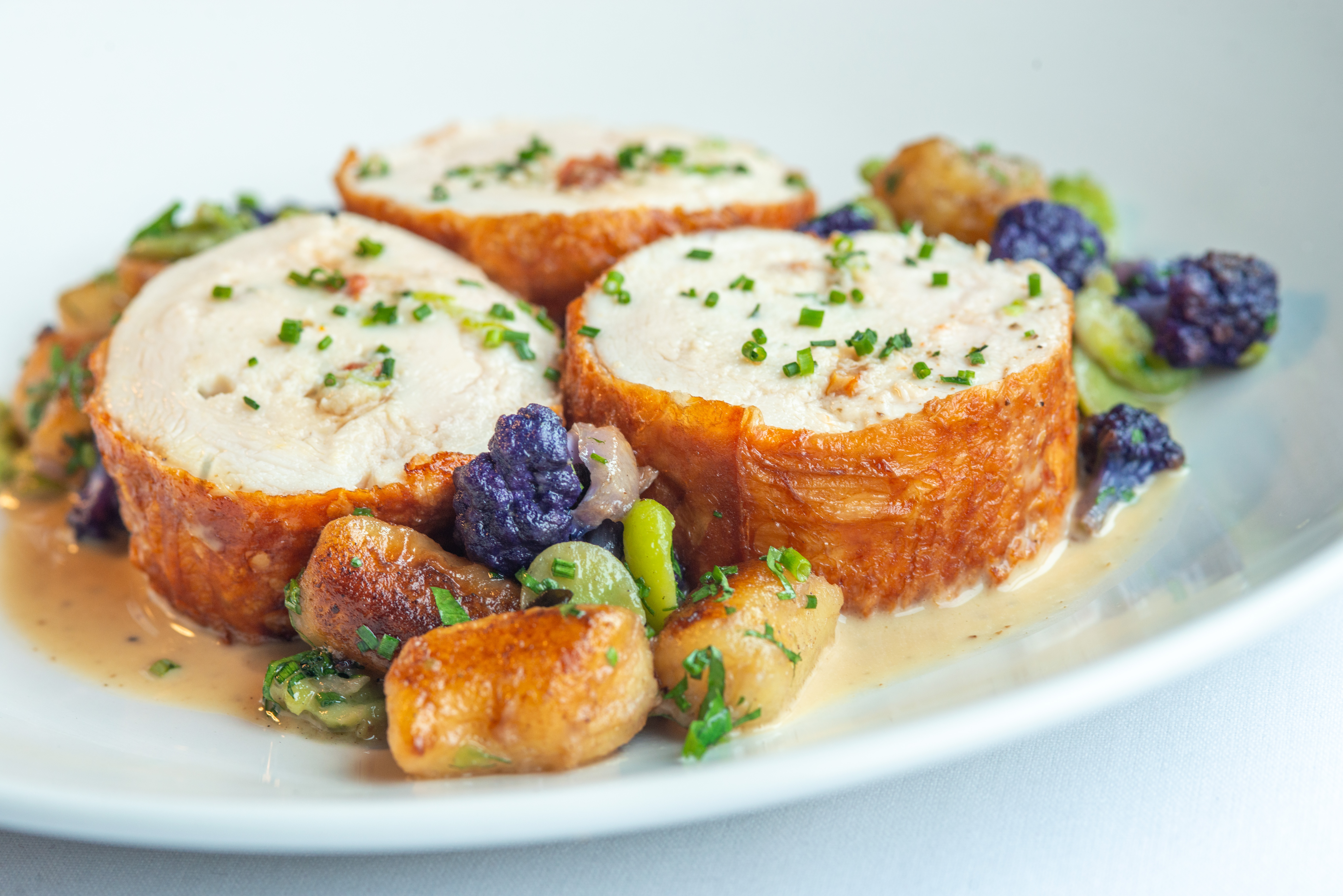
    Power’s chicken roulade — once a staple at Dettera — traces its roots back more than 20 years to Le Bec-Fin, though the technique has evolved. Power completely debones a whole chicken, removes the legs and thighs, and wraps the breast in its skin around a chicken mousseline studded with sun-dried tomatoes, oregano, basil, parsley, and scallions.

    At Le Bec-Fin, the roulade was rolled, tied in the old-school fashion, then pan-seared. Power now forms it into a cylinder using cellophane and cooks it sous vide, setting the proteins and helping the roulade hold its shape. It is then deep-fried to evenly crisp the skin around juicy chicken and herb-flecked mousseline.

    The dish is unabashedly rich, but its accompaniments have changed with its surroundings. At Dettera, Power plated it with English peas, smoked fingerling potatoes, and cremini mushrooms. At Academy Grill, pillowy potato gnocchi and earthy truffle crema add to its lushness. Cauliflower brings sweetness, while fava beans provide a fresh counterpoint — green, slightly nutty, and mildly bitter.

    In that sense, the roulade is both a new Academy Grill dish and a snapshot of Power’s career: a Le Bec-Fin idea refined at Dettera and carried into his latest kitchen.

    Academy Grill, 424 S. Bethlehem Pike, Fort Washington, 610-424-5000, academygrill.com.

  • VA loan helped two 23-year-olds buy a home in Germantown | How I Bought This House

    VA loan helped two 23-year-olds buy a home in Germantown | How I Bought This House

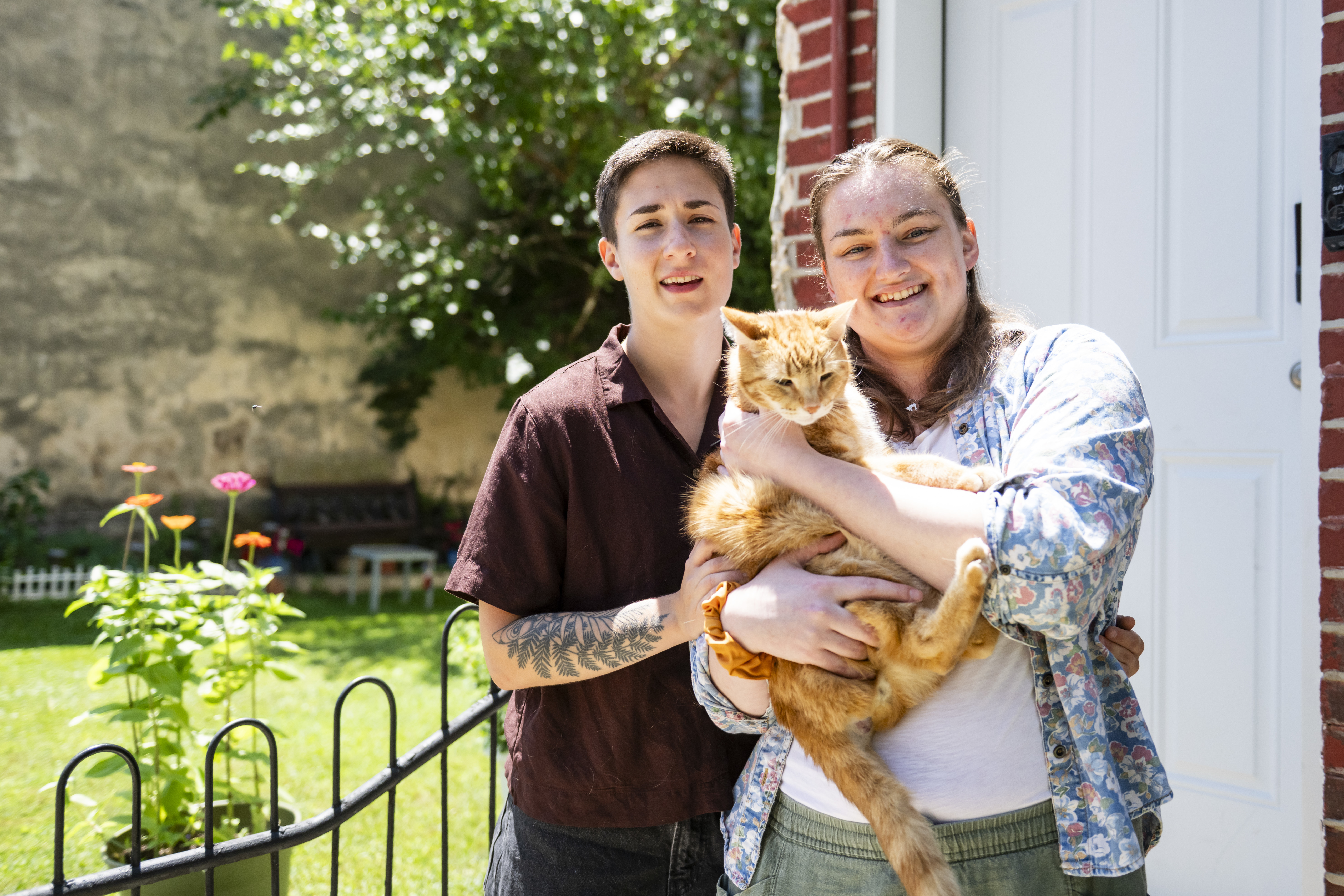
    The buyers: Mia Spolansky, 23, U.S. Air Force active duty military personnel, and Annabel Harp, 23, daycare worker and early childcare assistant

    The house: A 784-square-foot home in Germantown with two bedrooms and one bathroom built in 1950.

    The price: Listed for $250,000, sold for $265,000.

    The agent: Christine Mantwill with REMAX

    The ask: Mia Spolansky, originally from Willow Grove, and her partner, Annabel Harp, originally from Hagerstown, Md., were ready to move out of their one-bedroom rental apartment in Mount Airy and buy their first home. They both liked the area’s access to nature for running and biking in Wissahickon Valley Park, plus a location that allowed for easy commuting to their jobs. They didn’t want to stray too far.

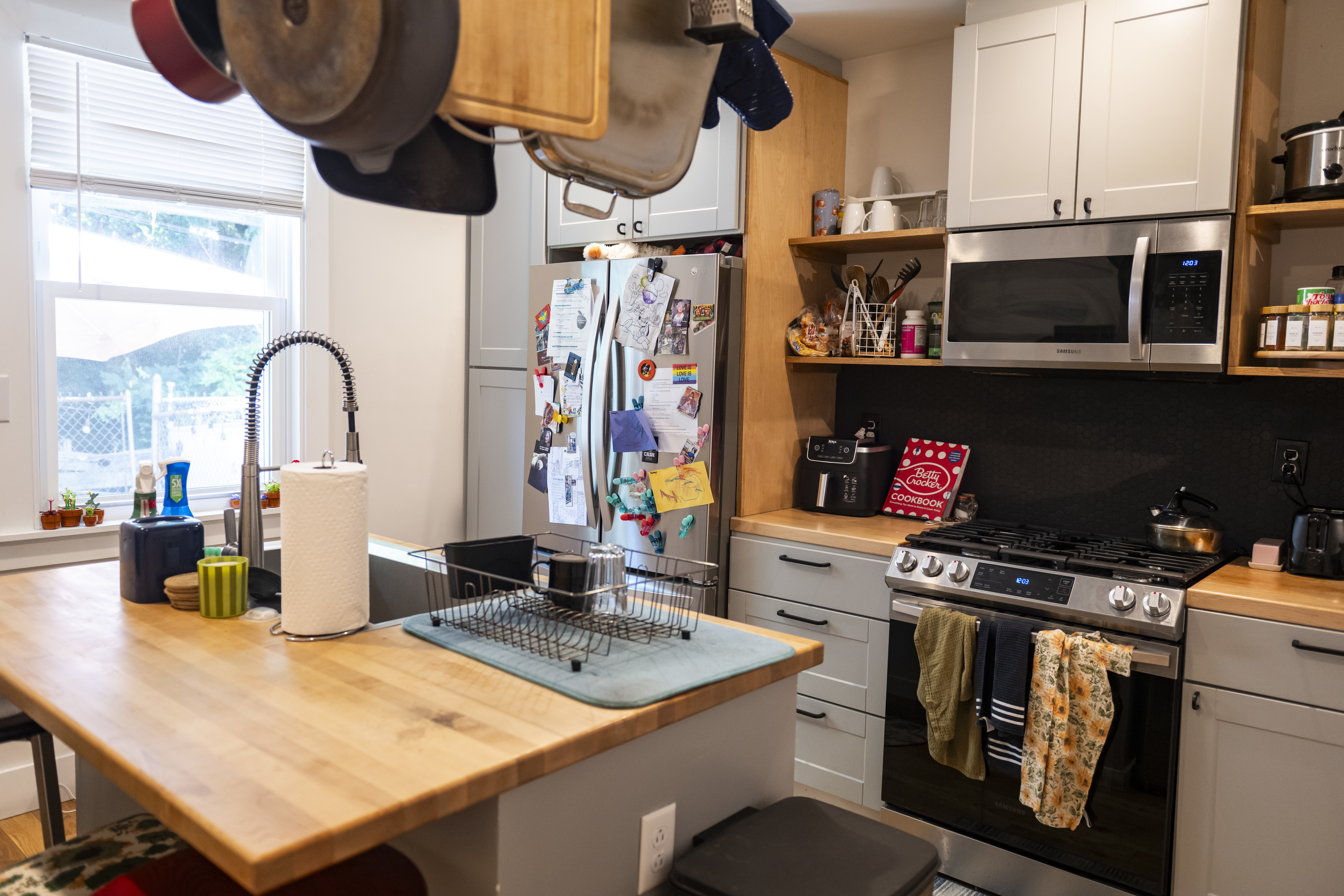
    The kitchen in Mia Spolansky and Annabel Harp’s home in Germantown.Allie Ippolito / For The Inquirer

    “We were looking to buy in Mount Airy,” Spolansky said. “Those prices were out of our range, so we decided on Germantown.” They started their search in November.

    The search: Harp and Spolansky began touring homes in East Germantown with their real estate agent. They wanted to be efficient with their space, so they narrowed the search to smaller homes. They were seeking a rowhouse for both the neighborly feel and value.

    “A lot of detached homes were out of our price range,” Spolansky said.

    They also wanted an older home “with some character” but with modern amenities. They toured six houses and all of them felt too large or had issues. Their agent helped Spolansky access the multiple listings sites used by real estate professionals so she could browse, and one house caught her eye.

    The appeal: With their agent’s help, Harp and Spolansky went to see the house that day. It was a two-bedroom with a front patio and backyard, which was not yet on the market.

    When they visited, they were delighted that “the neighbors actually came up and introduced themselves,” Spolansky said, “We were like, whoa, this is an actual community.”

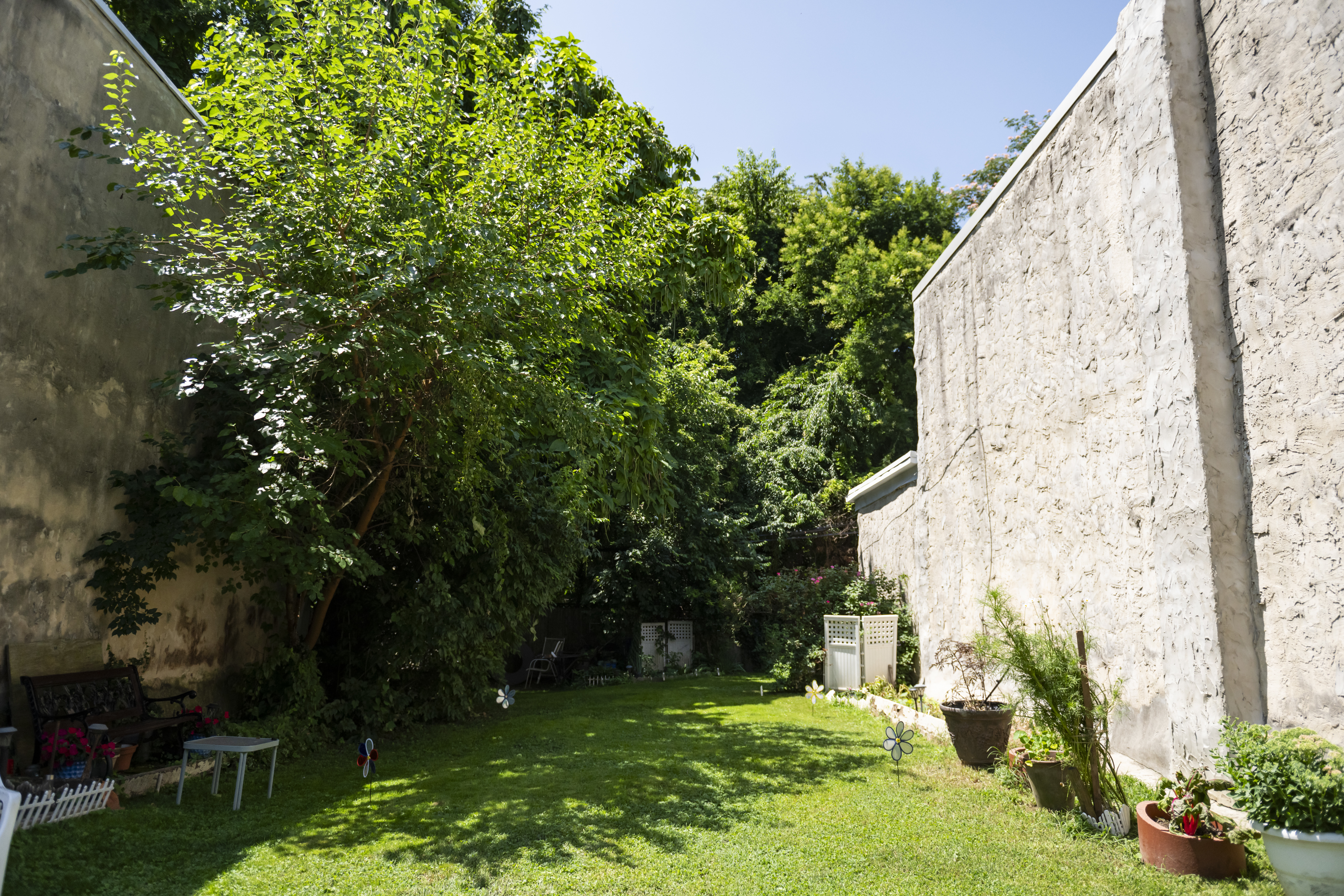
    The empty lot next to their home, which the pair uses to garden, growing peppers and cucumbers.Allie Ippolito / For The Inquirer

    The house was an older style with new appliances — exactly what they were looking for — and the owners had renovated both the bathroom and kitchen and installed central air and heat in 2021. “It was nicer than I grew up with,” Spolansky said. The couple put an offer in right away.

    The deal: Harp and Spolansky made an offer on a Thursday. The sellers had an open house scheduled for the following Saturday. The sellers said they would accept the offer and cancel the open house if the couple agreed to go $15,000 over asking to beat the potential offers they might get from the open house.

    Harp and Spolansky agreed and closed in mid-April.

    The money: They purchased the home for $265,000 after negotiation. They used a VA Home Loan of $270,000 and put 0% down. The mortgage interest rate is 5.625%. They received a $5,500 seller credit for some repairs needed. The closing costs were $1,780. The monthly payment is $1,834 with escrow, interest, and principal.

    The move: They moved in late May, with a two-month buffer period until the lease on the apartment ended.

    They used a moving company to ease the process, which helped, because the home had small doors and tight corners.

    The inspector had found some rotten floor joists in the basement, but after move-in, the couple realized there was water getting in as well. They brought in a masonry company to waterproof the wall and added a chimney liner when their carbon monoxide detector started going off. They also had some electrical and AC issues.

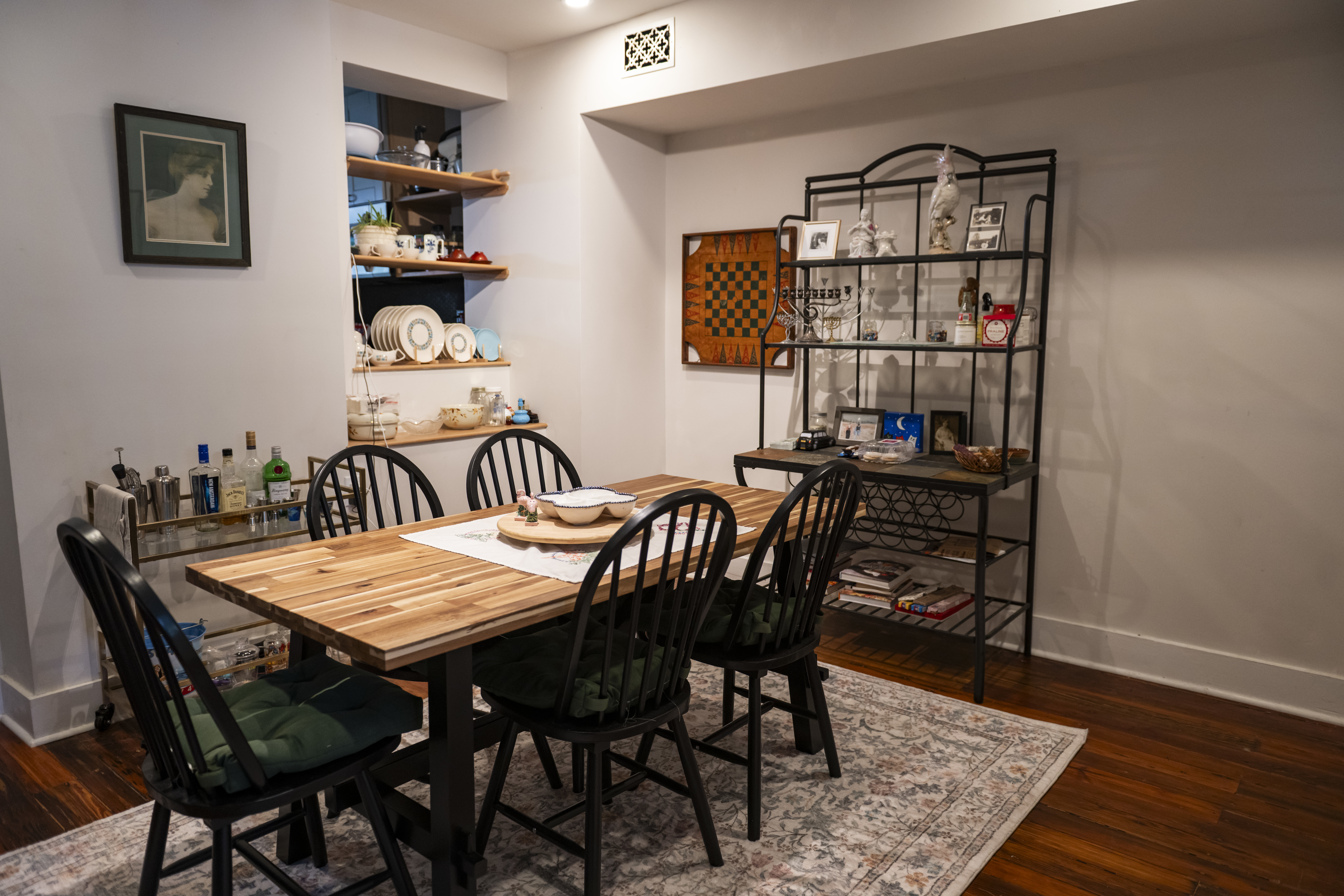
    The dining room in Mia Spolansky and Annabel Harp’s home.Allie Ippolito / For The Inquirer

    “I’ve only ever lived in rentals,” Spolansky said. “My family doesn’t have experience with upkeeping a house. I think having a buddy or known contractor come on the inspection would’ve been helpful, especially for negotiations because I didn’t know how much it costs to put in a chimney liner.”

    However, the pair remain satisfied with their choice and their ability to manage repairs themselves, rather than rely on a landlord.

    Life after close: The couple and their cat, Morty, have adjusted well. After living in a one-bedroom, they love the space, including their backyard and front porch, especially in the summer for barbecuing and being outside. The Wissahickon is a five-minute bike ride away. The rowhouse is exposed on one side to an empty lot, which the pair uses to garden, growing peppers and cucumbers they got from their neighbors. They especially love the community.

    “We go to parties, clean up the block, do community events,” Spolansky said. “I never had that before. Knowing our neighbors has been the biggest plus. Having good neighbors, you can’t replace that.”

    Did you recently buy a home in the Philadelphia area or South Jersey? Share the story of how you did it. Email Inquirer real estate reporters at properties@inquirer.com.

  • LeBron James could live in New York while playing in Philly. Wilt Chamberlain did it first.

    LeBron James could live in New York while playing in Philly. Wilt Chamberlain did it first.

    The trolleys stopped running at midnight, so Tom Hoover waited outside the Philadelphia Warriors locker room for a lift back to Villanova. He was a teenage college student and his ride after sitting in the stands at Convention Hall was the passenger seat of Wilt Chamberlain’s purple Cadillac El Dorado.

    A 40-minute drive, Hoover said, became a 10-minute sprint as Chamberlain burned rubber before dropping his buddy off at the dorm.

    “Dippy had a heavy foot,” Hoover said. “Back then, you didn’t pay attention. You were just talking and riding. But you would be like ‘Damn, how’d we get here so fast?’ It was one of those kinds of things.”

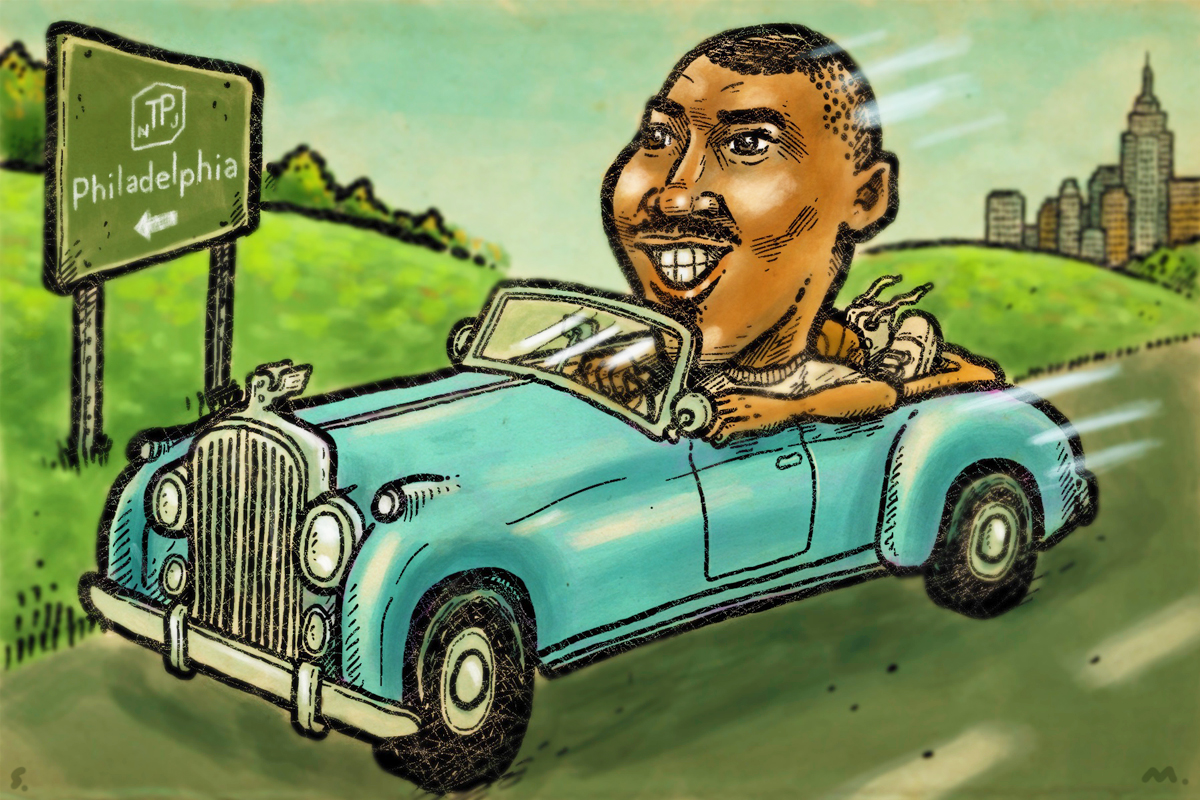
    Chamberlain then jumped on the turnpike and headed for New York, as he lived in the 1960s in an apartment overlooking Central Park while playing in Philadelphia.

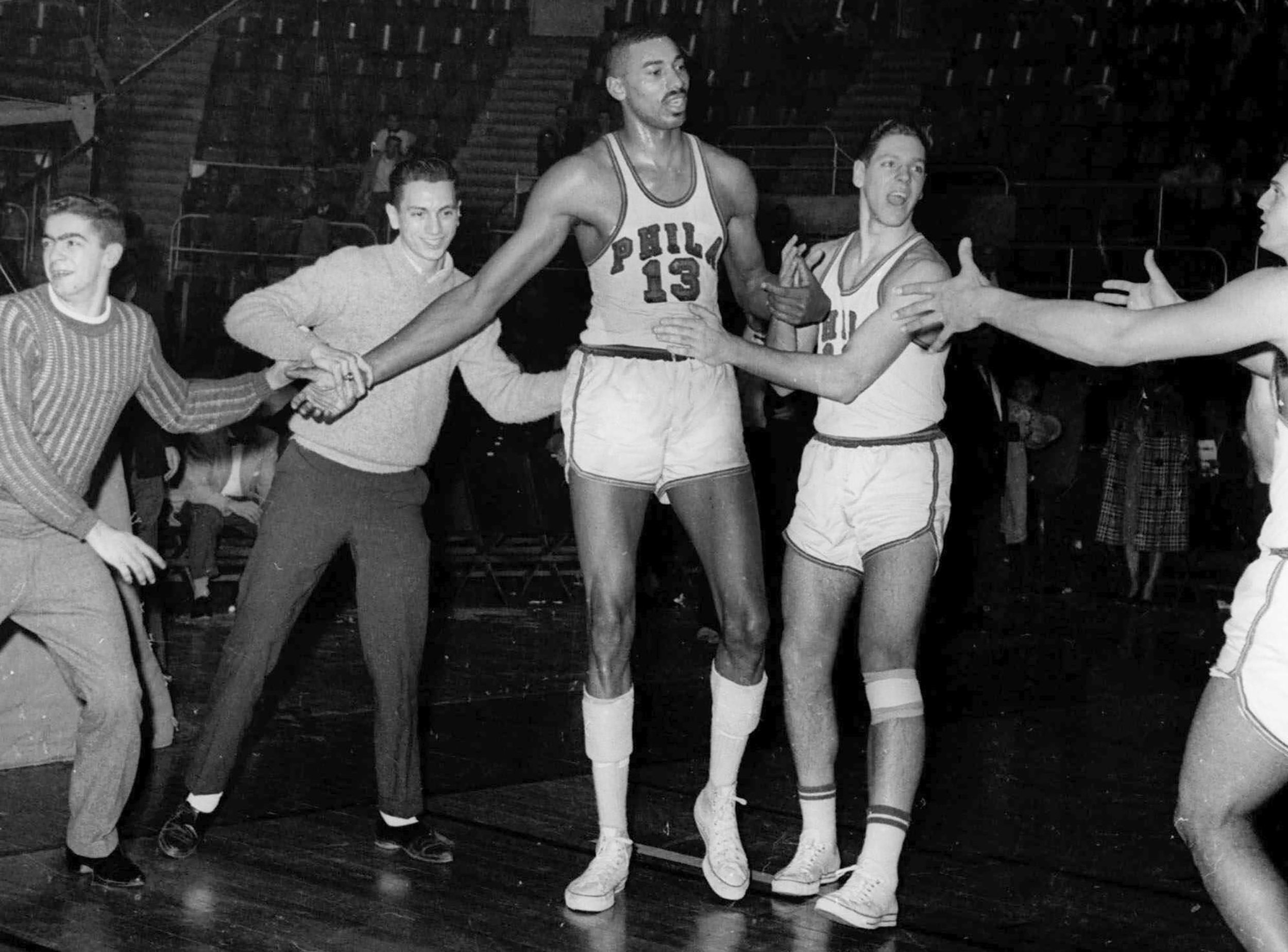
    He maintained a residence in Philly but spent most nights in New York, from which he’d commute for games and practices while owning a popular club in Harlem. Chamberlain even hitched a ride from Hershey back to New York in 1962 with Knicks players after his 100-point game.

    “He would do 90 to 100 [mph] all the way up the turnpike,” Hoover said of Chamberlain, who died in 1999. “And if he got stopped. ‘Oh, it’s Wilt Chamberlain. Can I get your autograph?’ Back then it was a different time. It was really different.”

    Fans and teammates rush onto the court to congratulate Wilt Chamberlain after his 100-point game in 1962 in Hershey, Pa. He hitched a ride back to New York with Knicks players after the game.PAUL VATHIS / AP

    Chamberlain’s commute could be copied this season as several NBA insiders reported last month about the possibility of LeBron James living in New York while playing for the Sixers. James, one report suggested, could use a helicopter to get to games and practices. Not even Chamberlain’s heavy foot could keep pace with that.

    “I was thinking LeBron might do the same thing,” said Hoover, who played for the Knicks after leaving Villanova and now lives in Manhattan. “Philly is not his kind of town. And that’s not a knock against Philadelphia. But I just think he’s a New York City kind of guy after living in L.A. That kind of lifestyle. So I can see him living in New York and making that trip back and forth.”

    A New York ‘magnet’

    Chamberlain purchased Smalls Paradise in 1959, spent $200,000 to renovate the club on Seventh Avenue and 135th Street, and renamed it Big Wilt’s Smalls Paradise. It became the spot.

    “Oh, that was jumping, man. You kidding me?” Hoover said. “That was just a wonderful time in my life and a wonderful time to be growing up as 20-some years old, living in New York, and hanging in that place.”

    Chamberlain told Ebony magazine that he spent 18 hours a day at Smalls to learn everything about owning a bar. Sammy Davis Jr. played Smalls, as did King Curtis, Jerry Butler, The Coasters, and Willis “Gator” Jackson. James Brown would perform at the Apollo Theater and then stop by Smalls.

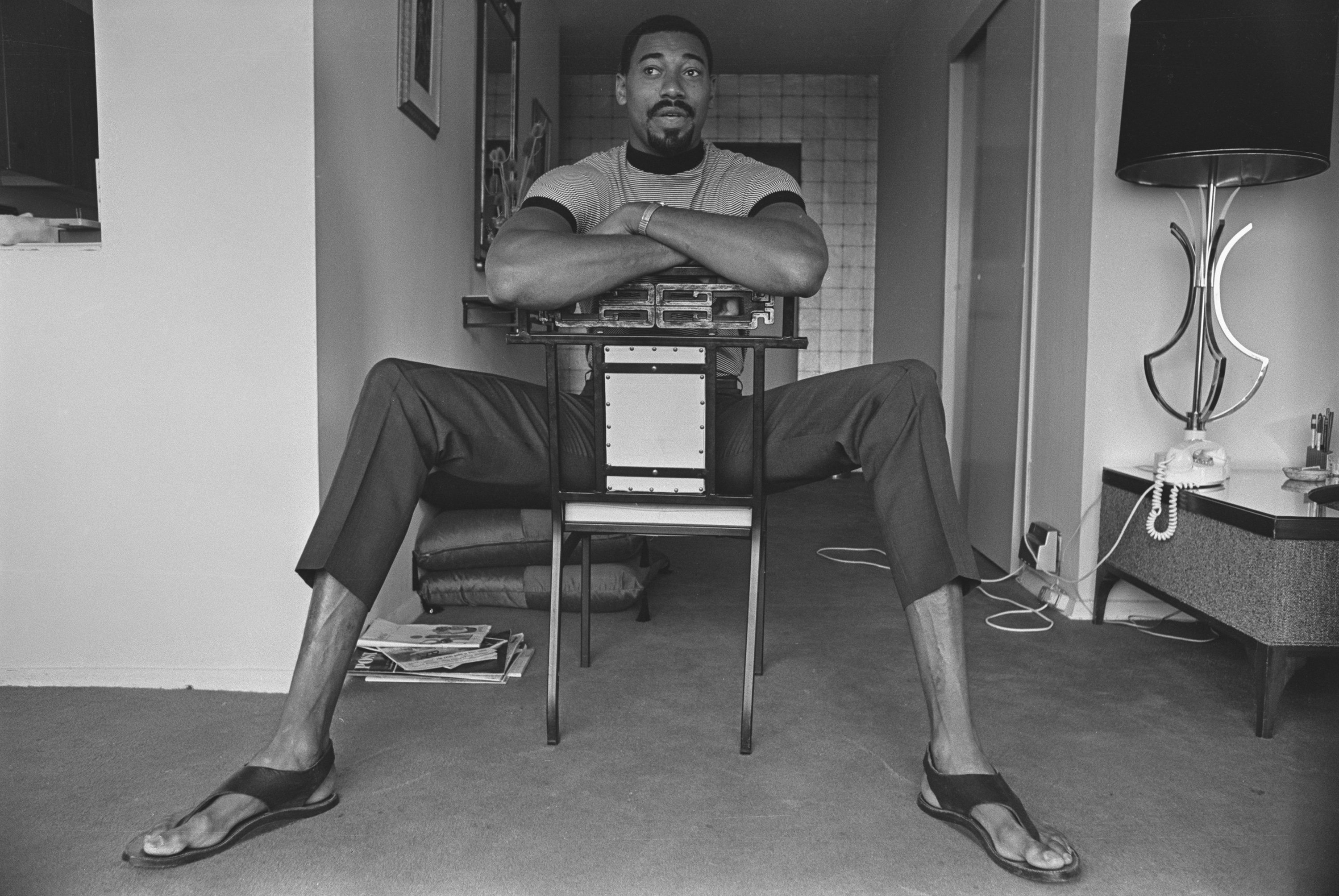
    “Dip was a magnet for everyone,” Hoover said. “People just wanted to be around him. They would come in there and just look at him. They had never seen a guy who could dress like that and looked like that. He was a 7-foot athlete who wasn’t gangly and uncoordinated. Plus, that big diamond he wore on his finger. They never saw anything like that.”

    The club was a hub for Black entertainers, drawing “everybody who was anybody.”

    Wilt Chamberlain “was a magnet for everyone,” said his friend Tom Hoover. “They had never seen a guy who could dress like that and looked like that.”Harry Benson/Express/Hulton Arch

    “My mother always tells the story that she met Sidney Poitier at the club,” said Gloria Miller, whose father, Vince, was Chamberlain’s childhood best friend and often drove with him back to Philly.

    Chamberlain’s Manhattan apartment was on the top floor of Park West Village, then a ritzy high-rise near Central Park. The apartment had a terrace and windows that overlooked the park with a view downtown of the Empire State Building.

    Kareem Abdul-Jabbar — who hung there as a high schooler still named Lew Alcindor — described the apartment as “the ultimate bachelor pad.”

    “A two-bedroom place done up in antique gold finish with a big couch in the living room, paintings on the walls, good stereo, great record collection,” Abdul-Jabbar wrote in his autobiography Giant Steps. “Wilt was known for his expensive taste, and the place showed it. I walked in and I clammed right up tight. I didn’t know what cool was, but I knew very strongly that I didn’t want to be uncool.”

    Abdul-Jabbar played “Dirty Hearts” at Chamberlain’s dining room table with Chamberlain, Hoover, and Cal Ramsey. Chamberlain’s crew used to close Smalls at 4 a.m. and then play cards at the apartment. Abdul-Jabbar called them “hearts junkies.”

    They ate sandwiches and swapped stories: What did Bill Russell say? What was Elgin Baylor complaining about? What’s up with Oscar Robertson? The loser of the card game had to chug a quart of water.

    “But he would never drink,” Hoover said. “So it was like a wrestling match with that big guy.”

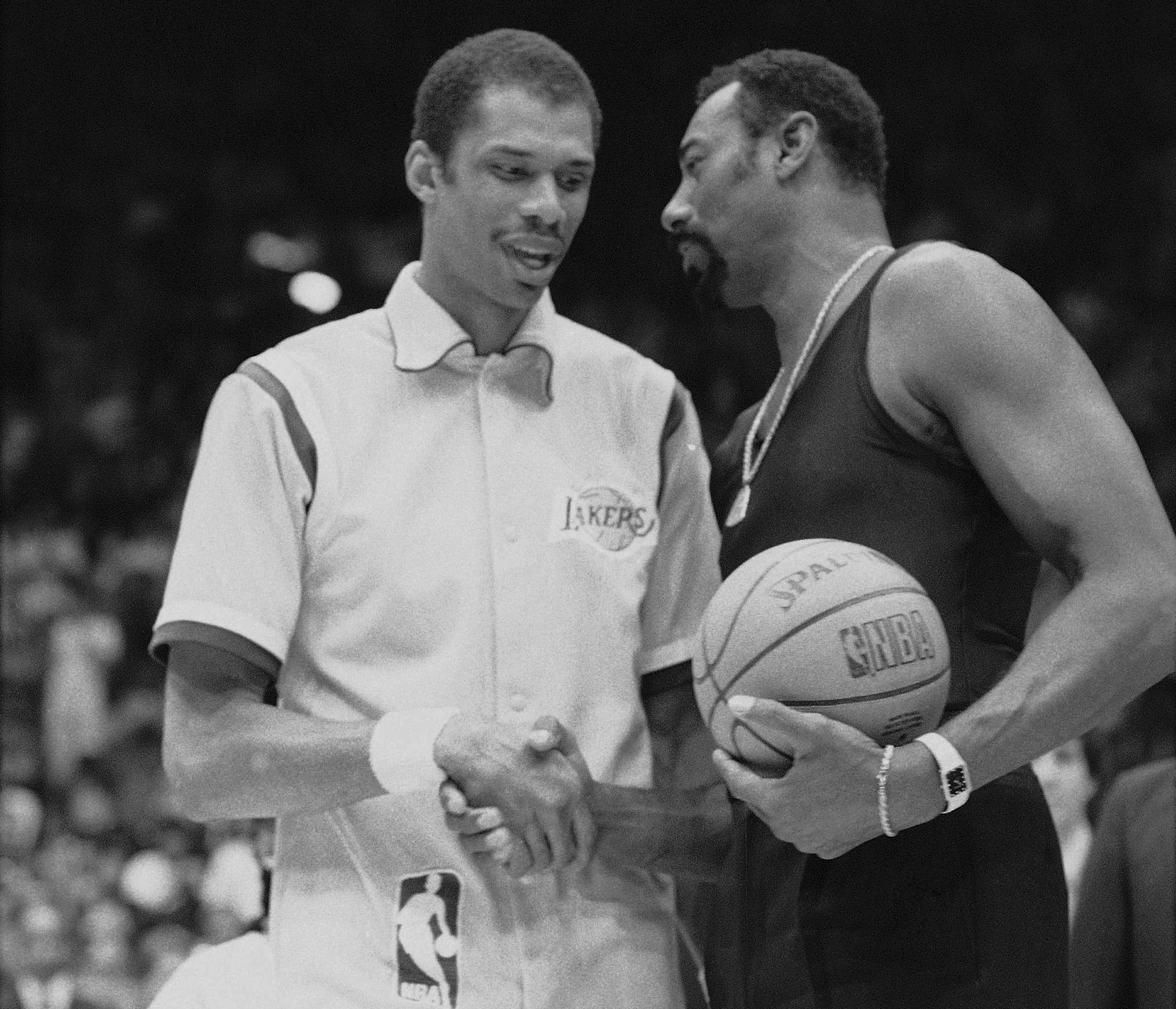
    Kareem Abdul-Jabbar (left) is congratulated by Wilt Chamberlain in 1984 after Abdul-Jabbar passed Chamberlain’s NBA all-time scoring record. LeBron James has since passed Abdul-Jabbar’s record.Mark Avery

    Living in Elkins Park

    The Sixers traded for Chamberlain in February 1965, bringing him back to Philadelphia after the Warriors had moved three years earlier to San Francisco. There were a few weeks left in the regular season, and Sixers owner Ike Richman didn’t want Chamberlain spending nights in New York.

    “He had a driver who he used to pay to take him up to New York,” said Richman’s son, David. “My father used to pay him under the table to not drive him to New York.”

    Richman instructed Chamberlain to live at his home in Elkins Park for the rest of the season.

    “I came home from Cheltenham High School and my mother, with our domestic helper, was putting my twin beds together and doing all this stuff to my room,” Michael Richman said. “I said, ‘What are you doing?’ She said, ‘Wilt’s moving in. Daddy’s making him.’”

    Chamberlain shot baskets in Richman’s driveway, hung out with the kids, and ate dinner with the family. Richman and Chamberlain usually drove together to Convention Hall, but once Richman had to be there early for a playoff game against Cincinnati. So he asked David — who had just earned his driver’s license — to drive Chamberlain.

    The 16-year-old usually drove a 1959 Austin-Healey Sprite, but that wouldn’t be big enough for Chamberlain. Neither would the Pontiac Tempest. So the teenager drove his dad’s Cadillac.

    “He used to sit in the back seat of the car and hang his body over the front seat,” Richman said. “It was like having a cobra in the car. He was in the back, but his head and body was in the front seat.”

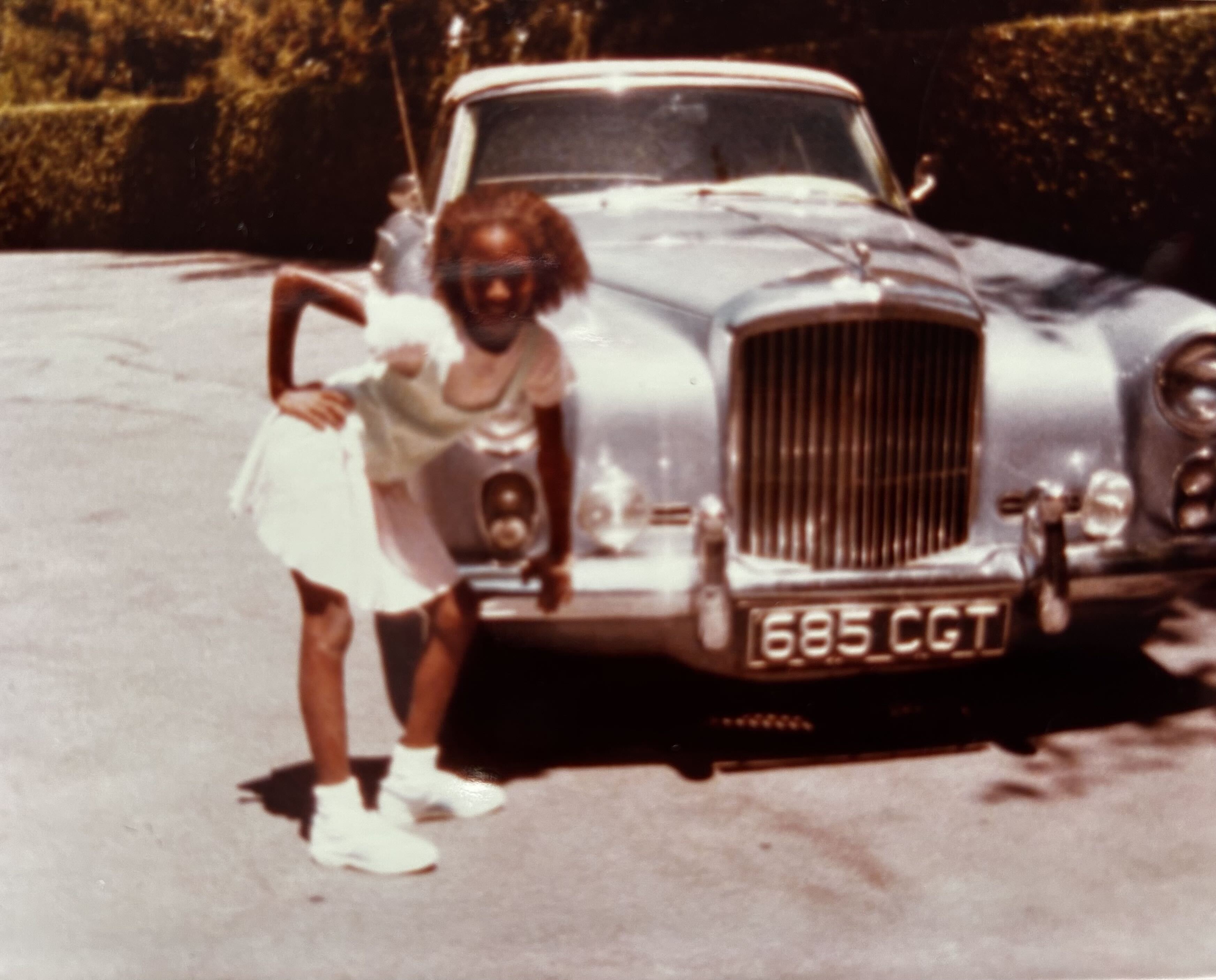
    Gloria Miller as a child standing in front of Wilt Chamberlain’s powder blue Bentley.Gloria Miller

    The season ended that April when the Sixers lost to Boston in seven games. Chamberlain shared an apartment the next season with Miller on the Benjamin Franklin Parkway but spent most of his time in New York. He often commuted by train or driving to Philly with Miller in a powder blue Bentley that was delivered to his Manhattan apartment.

    The press ripped Chamberlain every time he missed a practice and chided him for living in another city. He once shoved a reporter into a locker after the writer kept asking him after a playoff defeat — in which Chamberlain scored 46 points — if he would have made more free throws had he not missed practice that week.

    “He wasn’t kidding when he played. He really meant it,” said Richman. “Whether he was going up to New York to party or whatever, when it came to game time, he was never half-hearted about it. He was really into it. When it was time to play ball, this wasn’t a game to him. It was a war.”

    Family in Philly

    Chamberlain drove after each season to Los Angeles, where he had built a beautiful house off Mulholland Drive in Bel Air.

    “He used to jump in his Bentley and drive for three days straight without stopping,” Richman said. “He didn’t need to sleep. Then he would get there. He was basically an insomniac.”

    The powder blue Bentley was there in the 1970s when the Millers — who lived in South Jersey — visited Chamberlain.

    “He called my father ‘Miller’ so he would call me ‘Little Miller’,” said Miller, whose father worked as a scout for the Sixers. “My mom was going to make dinner so we had to go to the store. He said, ‘Come on, Little Miller. Come to the store with me.’ I was getting my shoes on and he had no patience. He said, ‘You don’t need shoes. Come on.’ We got in the Bentley and we’re riding down the freeway and I’m like, ‘Why are they all looking at us?’ I didn’t realize I’m in a beautiful Bentley with Wilt Chamberlain. But it fit him.”

    Chamberlain retired in 1973 and spent most of his time in L.A. but still kept close ties to Philly. He was the best man in Miller’s wedding and became Gloria Miller’s godfather. The basketball icon kept a tight circle of friends from his childhood. Chamberlain, just like when he lived in New York, was always close to Philadelphia.

    “He was family,” Miller said. “He never forgot where he came from. Whenever Wilt came to town, he would come to my parents’ house and my mother would make him fried chicken and cobbler. Wilt and I would pick up the cobbler pieces together. It was just home. It was family.”

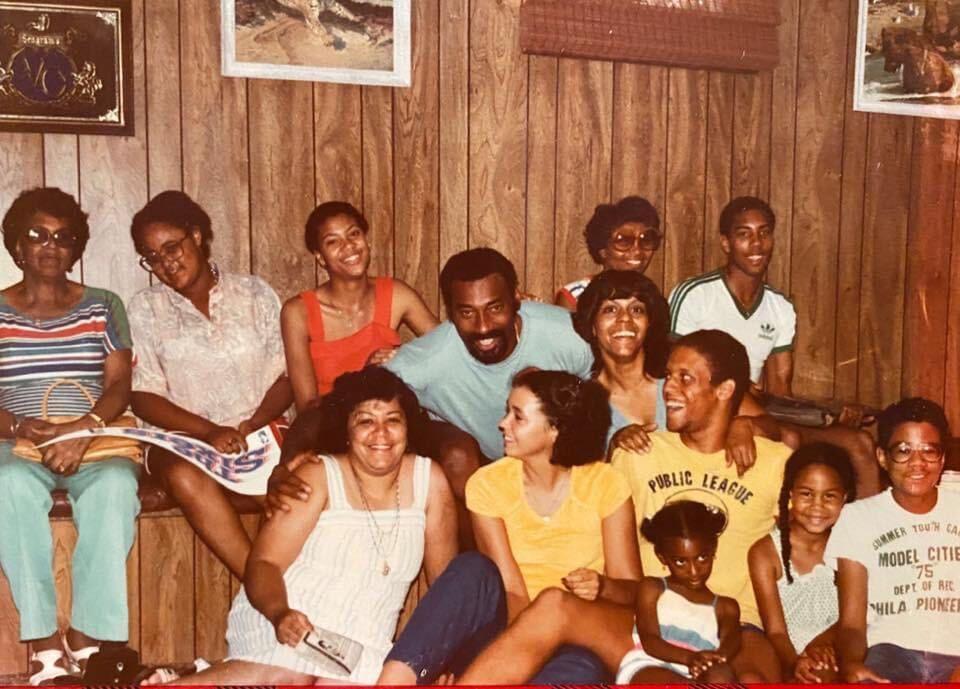
    Wilt Chamberlain visiting the Miller family in Philadelphia in the 1970s.Gloria Miller

    Hoover said he never thought much about Chamberlain living in New York while playing in Philly. The 7-footer belonged in the big city. And Hoover wouldn’t blame James for thinking the same.

    Hoover met Chamberlain when he was playing a summer game in New York — “Wilt Chamberlain knows my name,” Hoover thought after Chamberlain watched him play — and they soon became friends. Chamberlain dropped him off at his dorm and sped to New York. Hoover said no one even noticed the basketball superstar dropping off the college kid. It was normal.

    “Nobody saw me. It wasn’t necessary,” Hoover said. “The key to having relationships with guys is just having relationships. Not taking pictures, getting autographs, and jumping out saying, ‘Look who I’m with.’ That kind of thing makes you have lasting relationships with guys. If you’re always in front and always going to be out front with them, then that relationship is not going to last at all.”

  • Lucky tuna salad and fanny pack meatballs: What Phillies fans bring to Citizens Bank Park

    Lucky tuna salad and fanny pack meatballs: What Phillies fans bring to Citizens Bank Park

    “What is your spaghetti policy here?”

    Once a throwaway joke from a 2010 It’s Always Sunny in Philadelphia episode, the question has become shorthand for gauging whether a ballpark allows food from the great beyond — Ziplocked bags of cold spaghetti and red sauce included.

    Most do. At Citizens Bank Park and 26 other Major League Baseball stadiums, fans can bring in food as long as it’s sealed and can fit inside a stadium-approved bag (12 inches by 6 inches by 12 inches‚ in the Phillies’ case). Naturally, there are exceptions: The Athletics strictly prohibit outside food, while the Tampa Bay Rays and Detroit Tigers require a doctor’s note for a spaghetti bag. (The San Diego Padres even have a special exemption for food that “can be thrown as a projectile,” so hot dogs are no-go, at least in the hands of a Philadelphian.)

    Baseball’s lax food policies have long been viewed as a way to keep America’s pastime accessible, especially as ticket and concession prices continue to rise. Generally, most fans keep it simple: sandwiches, chips, fruit, or a bag of precooked glizzies.

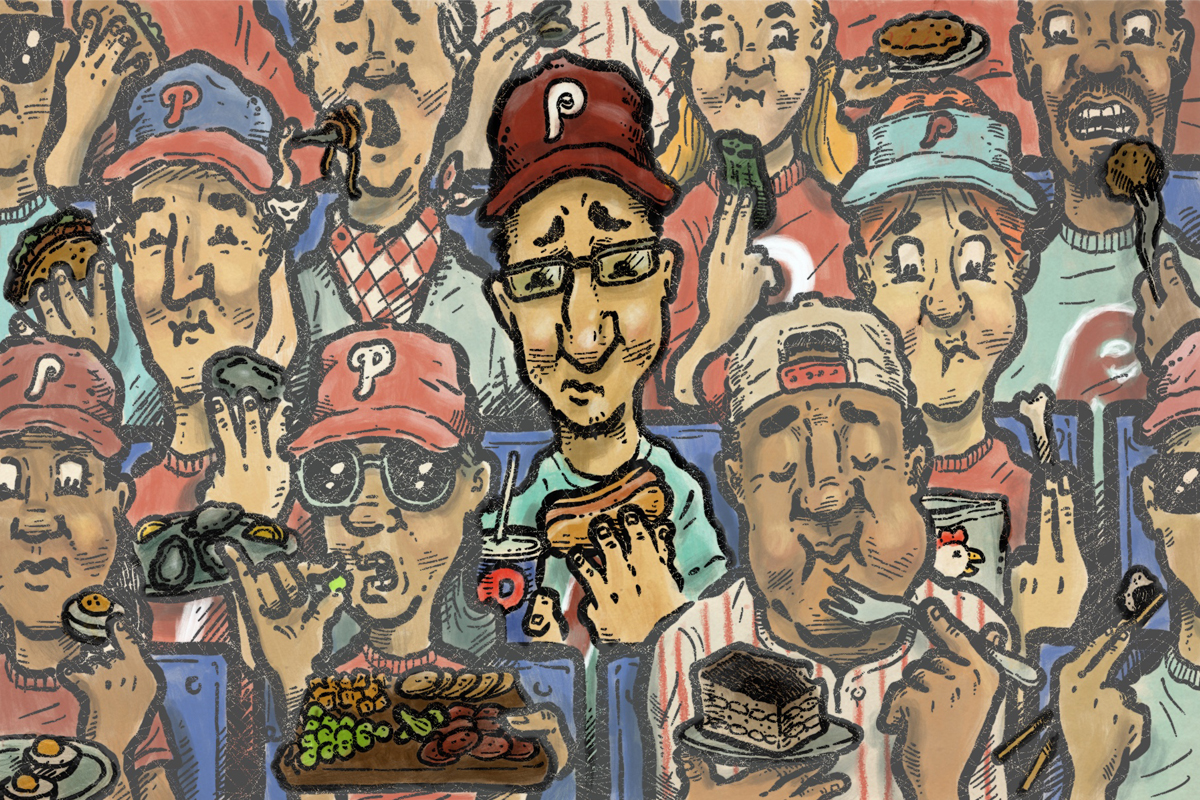
    But in Philly, the Bank’s spaghetti policy has taken on new life as Phillies fans redefine what’s considered acceptable ballpark food, smells and food safety be damned. For some, smuggling in tiramisu or seafood is a sign of dedication. For others, it’s about committing to a bit.

    Regardless, Philly wouldn’t have it any other way.

    “As much I as love ballpark food, I don’t want to miss anything because I’m waiting in line” at concessions, said Laura Bider, a season ticket holder who prefers to tote a fanny pack full of meatballs and what she called “pocket pickles.”

    (function() { var l = function() { new pym.Parent( ‘cbp-meatballs3__graphic’, ‘https://media.inquirer.com/storage/inquirer/ai2html/cbp-meatballs3/index.html’); }; if(typeof(pym) === ‘undefined’) { var h = document.getElementsByTagName(‘head’)[0], s = document.createElement(‘script’); s.type = ‘text/javascript’; s.src = ‘https://pym.nprapps.org/pym.v1.min.js’; s.onload = l; h.appendChild(s); } else { l(); } })();

    At the start of this year’s baseball season, we asked Phillies fans to tell us about the best food they’ve taken inside the ballpark. We fully expected to hear about supermarket rotisserie chicken, booze-soaked fruit, and the best BYO condiments.

    We did. But we also received 100-plus submissions of the most outlandish things we’d ever heard: fresh mussels, hard-boiled eggs, racks of ribs, and oysters tucked inside hoagie rolls, among others. (We don’t judge, we just listen.)

    “Bring whatever feels lucky to you, whatever is going to pack you with enough protein and joy to get you through a game,” said Sarah Dlugos, 28, of Graduate Hospital. She believes her curried tuna salad helped the Phillies sail to the National League Championship in 2023. She also had a retort for skeptics: “It’s none of anybody else’s business.”

    Actually, it’s our business. Here are the wildest foods people have taken inside Citizens Bank Park, for better or worse.

    Seafood, apparently?

    Ideally, a baseball game is like an airplane: You respect legroom, and never, ever eat smelly food that spoils easily.

    Not here. In Philly, fish and mollusks are totally acceptable ballpark fare.

    Dlugos packed a tuna salad sandwich on untoasted whole wheat bread to all eight Phillies games she attended during the 2023 season. And while the flavorings ranged from dill to sriracha and sesame, the outcome remained the same: Every time Dlugos bit into her mushy, slightly warm sandwich, the Phils won.

    (function() { var l = function() { new pym.Parent( ‘cbp-sardines__graphic’, ‘https://media.inquirer.com/storage/inquirer/ai2html/cbp-sardines/index.html’); }; if(typeof(pym) === ‘undefined’) { var h = document.getElementsByTagName(‘head’)[0], s = document.createElement(‘script’); s.type = ‘text/javascript’; s.src = ‘https://pym.nprapps.org/pym.v1.min.js’; s.onload = l; h.appendChild(s); } else { l(); } })();

    “I even had tuna salad for game two of the NLCS when the Phillies beat the [Arizona] Diamondbacks 10-0,” she said. “Lucky tuna.”

    Dlugos assured us that she downed her sandwiches quickly, to limit any odor, and she recommends copycats eat their tuna before the third inning at the latest. After all, her sandwiches had already survived several Broad Street Line stops before making it to the stands.

    Haters, she suggested politely, can go kick rocks. “Whatever you do is between you and the tuna,” said Dlugos.

    Not everyone is so lucky.

    It was June 2012 when Jersey resident Dom Ellis walked into Citizens Bank Park with a bag of fresh mussels taped to his back and a dream: for Chickie’s & Pete’s to steam his shellfish and top them with a drizzle of their cheese dip.

    (function() { var l = function() { new pym.Parent( ‘cbp-mussels2__graphic’, ‘https://media.inquirer.com/storage/inquirer/ai2html/cbp-mussels2/index.html’); }; if(typeof(pym) === ‘undefined’) { var h = document.getElementsByTagName(‘head’)[0], s = document.createElement(‘script’); s.type = ‘text/javascript’; s.src = ‘https://pym.nprapps.org/pym.v1.min.js’; s.onload = l; h.appendChild(s); } else { l(); } })();

    “For some reason that popped into my head, and I thought it sounded really good,” said Ellis, now 34, of Pennsauken.

    His hopes were dashed when the Chickie’s & Pete’s staff in section 126 refused to so much as touch the mollusks. “I remember the lady looking at me like I had three heads,” Ellis recalled. “The manager was like, ‘Do you think anyone here knows how to cook mussels?’”

    Ellis said he would’ve paid at least $50 for cheesy ballpark mussels. Instead, he dumped them in the trash. To date, Ellis is so scarred that he refuses to bring food inside any ballpark.

    “A lot of people lost that day,” Ellis said. “I lost. The Phillies lost.”

    More recently, someone did succeed in getting shellfish to the stands.

    Last year, Ty, a local influencer who goes by “the Hippie Meathead,” smuggled 60 oysters inside the Bank by stuffing them in hoagie rolls, shells and all. He wrapped the rolls in tinfoil to avoid any interrogation. (The 25-year-old Rittenhouse resident declined to share his last name out of fear that his seafood habits could hurt his career.)

    Once inside, Ty put the oysters on ice that he retrieved from concessions and shucked them with a screwdriver. He slurped some straight, while others topped hot dogs and pizza slices that were shared with strangers. A few went into a beer bat filled with Yuengling. Ty chugged it like an oversize shooter.

    “It tasted like the ocean,” he said. “Oh, and victory.”

    The home cook special

    Forget peanuts and Cracker Jack: The new frontier of baseball fandom is bringing elaborate spreads to the ballpark. Dozens of Inquirer readers responded to our survey with tales of dinners spread across several innings.

    A reader from Point Breeze prepped a full steak with potatoes and shrimp scampi for night games. Another wrote via Reddit that they managed to get a full barbecue spread — smoked brisket, mac and cheese, cornbread, and baked beans — inside for a World Series game.

    Kevin Kilroy’s most memorable Phillies game involved eating lasagna and tiramisu in the stands for a birthday party. It wasn’t exactly a five-star meal: The cold lasagna was “just edible.” The tiramisu, a family recipe, was a toppled mess. Not that Kilroy minded.

    (function() { var l = function() { new pym.Parent( ‘cbp-tiramisu2__graphic’, ‘https://media.inquirer.com/storage/inquirer/ai2html/cbp-tiramisu2/index.html’); }; if(typeof(pym) === ‘undefined’) { var h = document.getElementsByTagName(‘head’)[0], s = document.createElement(‘script’); s.type = ‘text/javascript’; s.src = ‘https://pym.nprapps.org/pym.v1.min.js’; s.onload = l; h.appendChild(s); } else { l(); } })();

    “Each Phillies game is special because of the people I’m with,” said the 33-year-old Olde Kensington resident. “The food is a way to celebrate that.”

    First-time season ticket holder Alex DiDonato, 28, has already built a reputation in section 317 for bringing ornate dinners: a rack of ribs, crab cake sandwiches with homemade aioli and grilled corn, a charcuterie board, and, more recently, a DIY taco kit with ground beef, guacamole, shredded cheese, and lettuce.

    (function() { var l = function() { new pym.Parent( ‘cbp-tacos__graphic’, ‘https://media.inquirer.com/storage/inquirer/ai2html/cbp-tacos/index.html’); }; if(typeof(pym) === ‘undefined’) { var h = document.getElementsByTagName(‘head’)[0], s = document.createElement(‘script’); s.type = ‘text/javascript’; s.src = ‘https://pym.nprapps.org/pym.v1.min.js’; s.onload = l; h.appendChild(s); } else { l(); } })();

    The new tradition started as a way for her to make each game feel special. The Spring Garden resident hasn’t had a single miss yet, she said, and has plans to bring a tray of baked ziti next. The only downside: her seats.

    “We sit at the edge of our section, so every time someone comes into our [row], we have to stand up and take all of our food and dips and drinks with us,” DiDonato said. “It’s a bit of a problem.”

    Bider, with her meatball-filled fanny pack and back-pocket pickles, isn’t into all the flash. The 46-year-old from Swedesboro just wants the Phils to make the playoffs.

    (function() { var l = function() { new pym.Parent( ‘cbp-pickels__graphic’, ‘https://media.inquirer.com/storage/inquirer/ai2html/cbp-pickels/index.html’); }; if(typeof(pym) === ‘undefined’) { var h = document.getElementsByTagName(‘head’)[0], s = document.createElement(‘script’); s.type = ‘text/javascript’; s.src = ‘https://pym.nprapps.org/pym.v1.min.js’; s.onload = l; h.appendChild(s); } else { l(); } })();

    The one time she splurged on a stadium hot dog and an ice cream helmet last year, the Phillies lost to the Los Angeles Dodgers in the first game of the division series, Bider said.

    “It was all my fault,” she said. “And, no offense to the stadium, the food was nasty.”
  • Building a file photo legacy

    Building a file photo legacy

    In late July when I covered Montgomery County’s District Attorney announcing charges in connection with two assaults in a Cheltenham High School football locker room, I knew the story was something we would be writing about for some time.

    Aware that we used the same photo, taken in 2018, with stories about the high school hazing leading up to the indictments, I left from the DA’s office across the street from the Courthouse in Norristown and drove to the school in Wyncote to take “fresh” ones.

    I wrote last week about the web’s appetite for photos. But there’s another kind of photo: the thumbnails that are attached to every story, whether or not they are “live” photos.

    Most of those little horizontal photos — none are verticals — of flashing police lights or yellow tape; headshots of politicians; city street scenes and skyline, or many, many photos of signs and buildings are file photos.

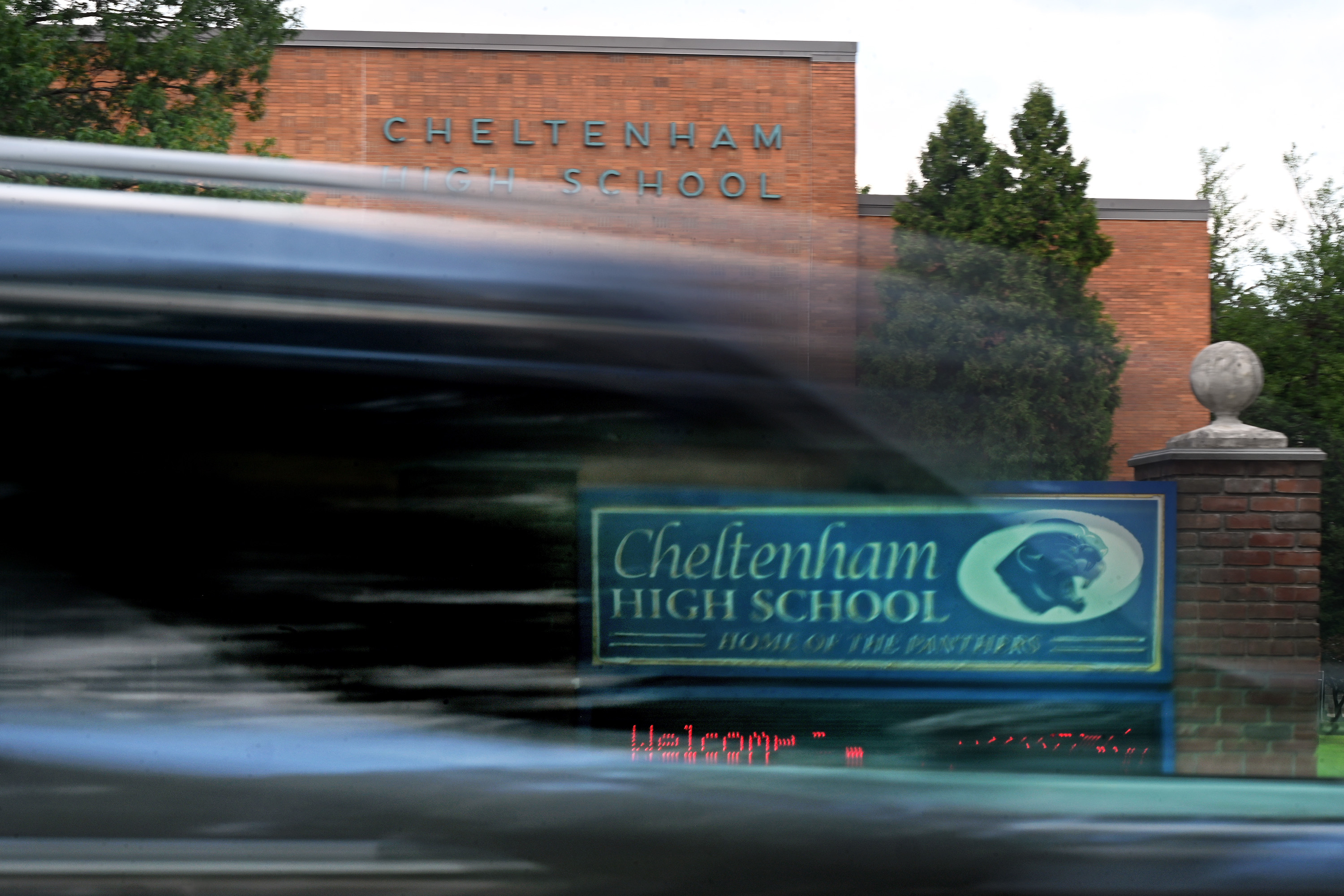
    Like the 2018 one of Cheltenham High School. And the July 2026 version — in a variety for views — that I made last week, that already have and will be used again and again.

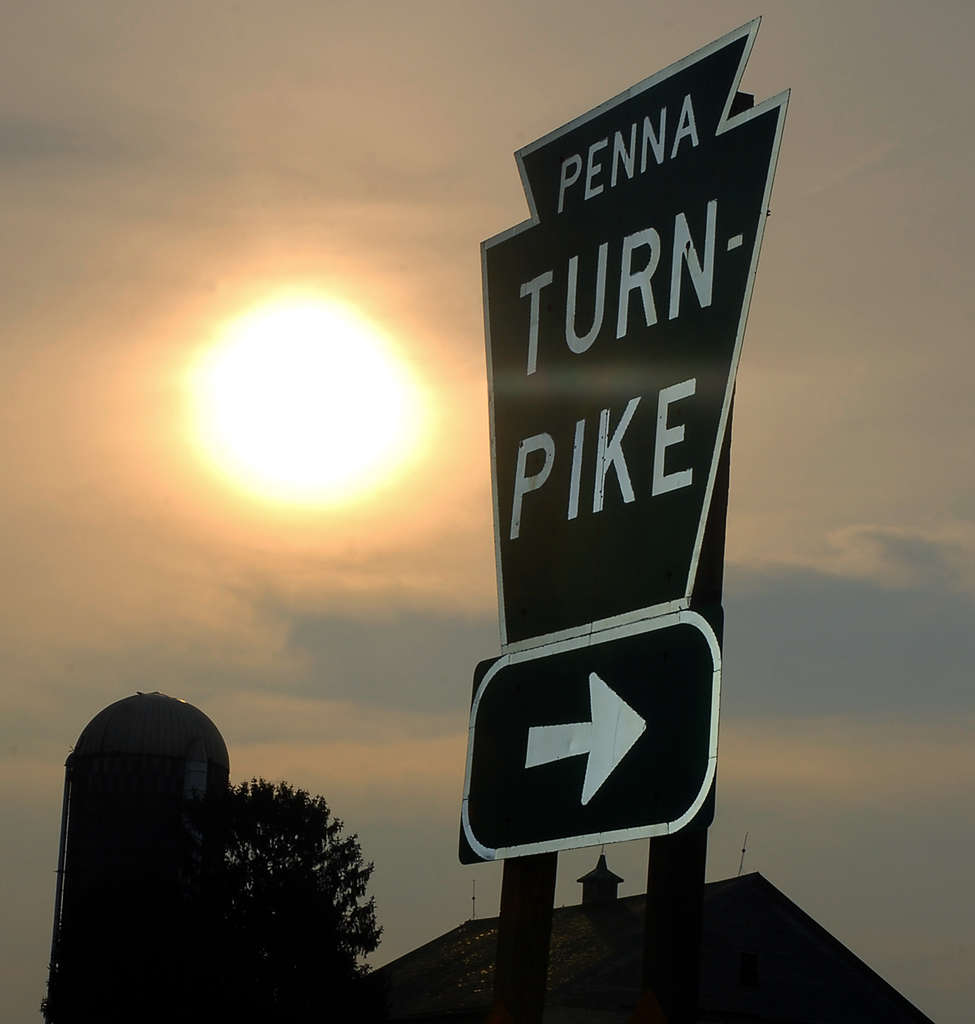
    The frame at the top was made with a aperture of f/22 so I could get both signs in focus, at shutter speed of 1/15 second to blur the passing cars. Getting the window was just good luck.

    I thought of file photos this week when another one of mine was used in a story about N.J. Gov. Mikie Sherrill declaring a steak place in Camden has better cheesesteaks than the “millions” she has tried in Philly.

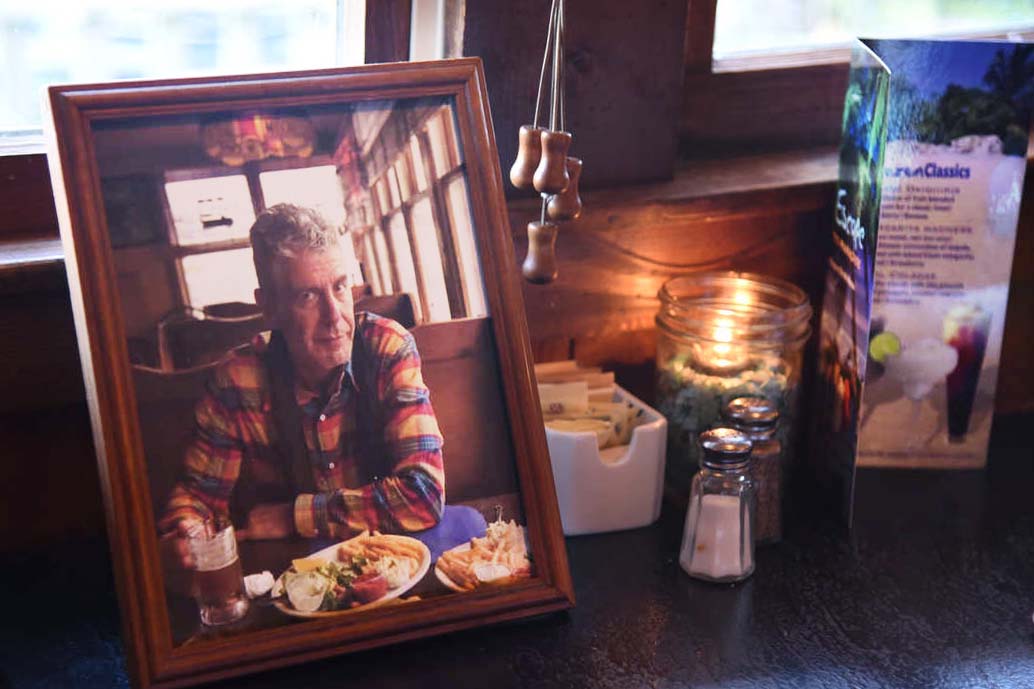
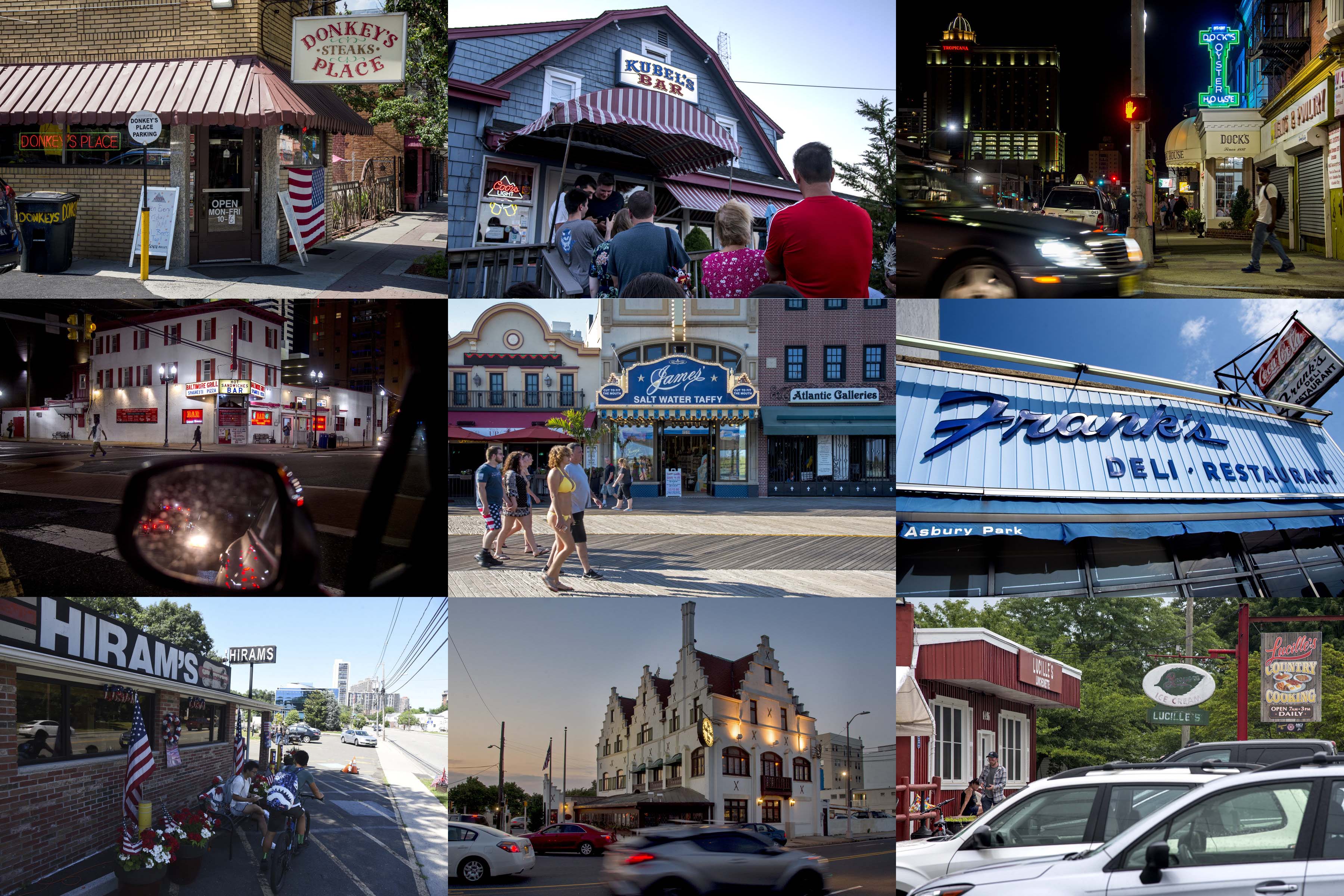
    After celebrity chef Anthony Bourdain died in 2018 I set out to photograph — and eat — at some of the food destinations he visited on his Emmy Award-winning CNN show Parts Unknown.

    The booth at Kubel’s in Barnegat Light, where Bourdain ate clams with his brother, Chris.TOM GRALISH / Staff Photographer

    Following in the footsteps of the globe-trotting adventurer, I flew not to some far-flung place with exotic cuisine but drove instead to all 10 spots he featured in an episode on the food and culture of his home state, New Jersey.

    It was one of my top 10 favorite stories of my career. Foodstagrammers had visited many of the places featured in the episode but I couldn’t find any foodies who had been to all of them.

    Each one had its own history, personality, and flavor, but together all captured exactly what Bourdain loved about New Jersey: community and authenticity, and incredible food without the pretense.

    Donkey’s Place in Camden was one of the most memorable. I made three trips there for the story, and took hundreds of photos while sitting at the bar with cheesesteak aficionados and talking with third generation owner Rob Lucas (his grandfather, Olympic boxer Leon Lucas, had a punch they said was like the kick of a mule).

    I could go on about the memories served at each of the places Bourdain was drawn to, but getting back on the file photos track, of all the photos I made that summer, the one image that gets reused the most often is one from Donkey’s, made as I was walking to my car after my last visit.

    I paused, waiting for anyone to walk in or out. I’d just spend a couple hours there, and it was slow by then, mid-afternoon, and the light wasn’t that great anyway, so I took a quick picture and left, figuring it’s close by (compared to the other places) and I could come back at lunchtime later.

    Of course that never happened before the story published, and the straightforward photo of the outside of the restaurant was used. I had lots of other really good photos (if you haven’t already, click through the embedded gallery). So, no big deal. Except that exterior view ends up being the only photo in our photo library with the Donkey’s sign so it gets used every time we write about the place! And the only picture among the dozens from all the other nine places that ever gets republished (I really need to go back and update).

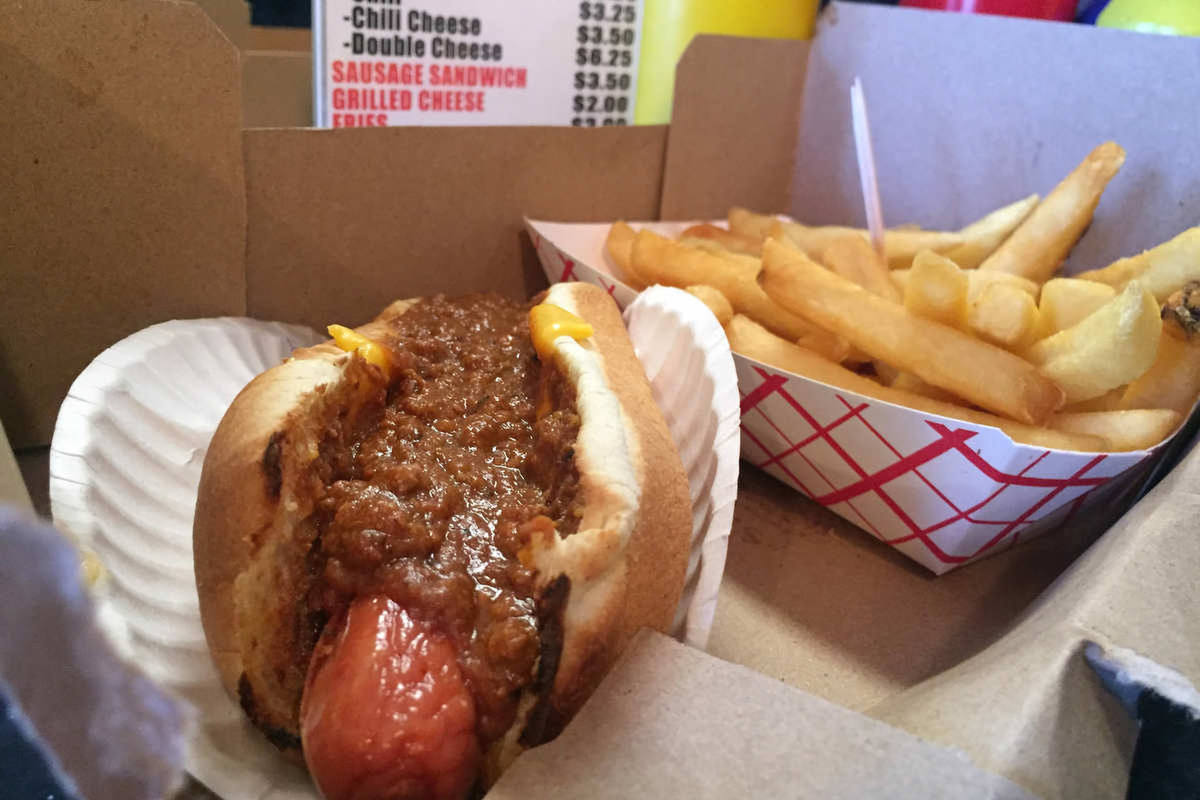
    The “ripper” fried hot dog and French fries (with wooden toothpick) at Hiram’s Roadstand, in Fort Lee, one of ten eateries Anthony Bourdain visited in a 2015 episode of his ‘Parts Unknown” TV show in New Jersey.TOM GRALISH / Staff Photographer

    Another file photo I have updated, among my most-published, is a photo I first took at the University of Pennsylvania. We do lots of stories there, and once while leaving a parking garage, I noticed a logo on the window of the elevator.

    I rode it up and down, over and over, looking for the cleanest spot on the glass, trying different camera exposures — just like with the Cheltenham signs — and getting different angles in the background.

    I have also photographed sculptures, signs, and scenes around campus when on other assignments, but the parking garage image seems a favorite whenever a generic Penn file photo is needed.

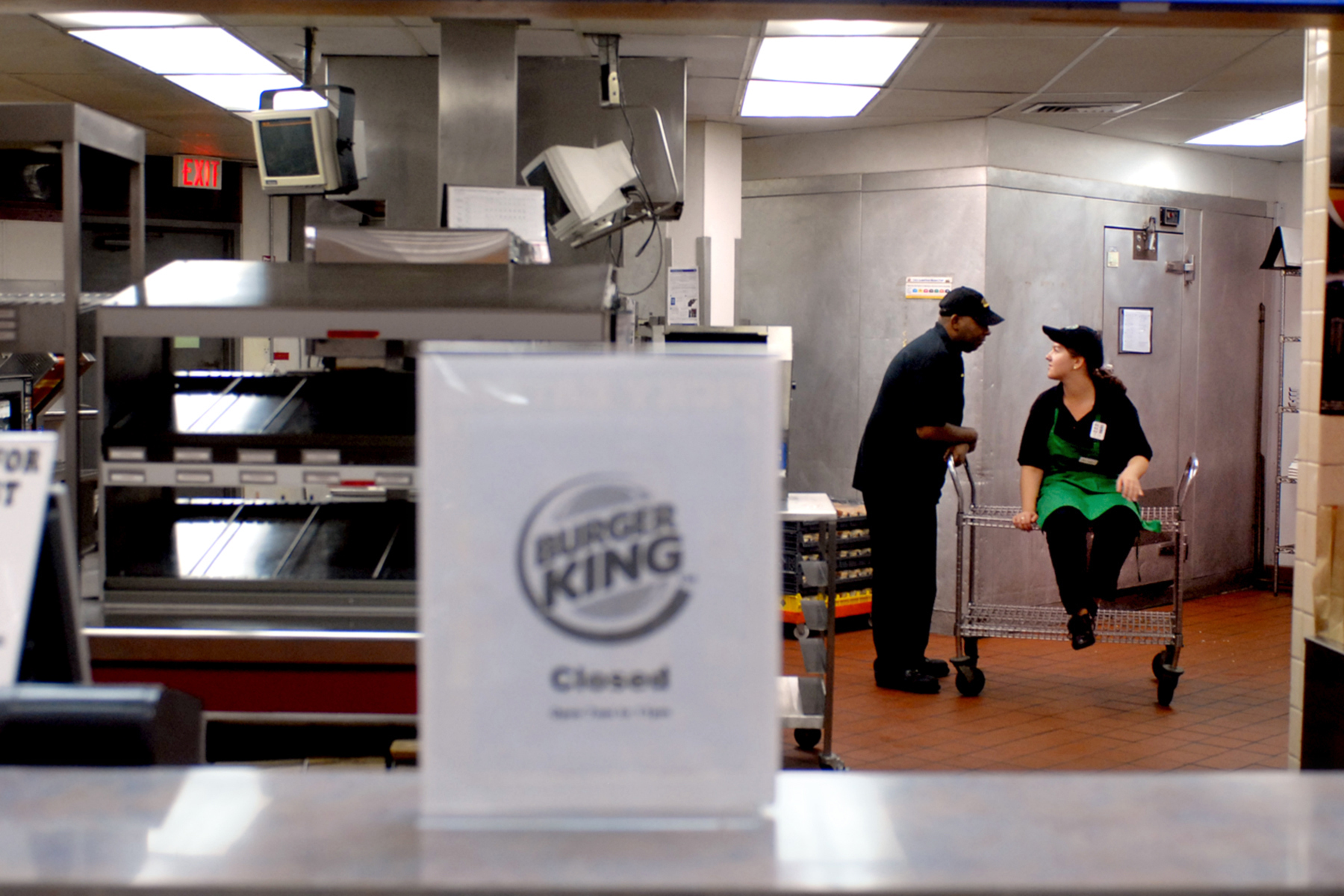
    Finally, in the early days of the web, my most-used file photo was one I made during this column’s first summer (then, in 2007, called a blog). While making weekly roadtrips and posting every day or two about the places and pictures I went, I spent one late night that faded into early morning.

    Rahsan Allen (left) and Tanya Krekmanova talk in the closed Burger King during a break at 4:45 a.m. July 19, 2007, on their night-shift jobs at the North Neshaminy Service Plaza, Westbound on the Pennsylvania Turnpike. They make up two thirds of the overnight shift at the rest stop. Allen works at the Travel Mart and Krekmanova is a Starbucks barista. She is a university student in Sofia, Bulgaria, one of twenty-four International students working at the rest stop. The others come from Russia, Turkey and the Ukraine, for four months with the U.S. State Department’s Summer Work and Travel Program.Tom Gralish / Staff Photographer

    I stopped at service plazas along the Pennsylvania Turnpike. The story is here — but with only one photo (a future column will lament how even when stories get archived by newspapers the pictures that accompanied them are often not saved).

    While getting on and off the turnpike at different exits to backtrack, I photographed the sun rising behind a turnpike sign. It was a vertical, but has been recropped many times to fit the web’s 3:2 thumbnail ratio.

    I still drive the turnpike, and update that photo every once in a while. Versions are still used.

    I guess you could call it one of my “greatest hits.” My legacy.

    Since 1998 a black-and-white photo has appeared every Monday in staff photographer Tom Gralish’s “Scene Through the Lens” photo column in the print editions of The Inquirer’s local news section. Here are the most recent, in color:

    » SEE MORE: Archived columns and Twenty years of a photo column.

  • The Phillies’ grand experiment, Gov. Shapiro’s music video cameo, and another sweaty week | Weekly Report Card

    The Phillies’ grand experiment, Gov. Shapiro’s music video cameo, and another sweaty week | Weekly Report Card

    The Phillies’ game of musical chairs: B-

    The Phillies spent the trade deadline doing the baseball equivalent of rearranging an entire office while everyone was still working.

    Luis Arraez arrived to play second base. Bryson Stott moved to third, where he had all of two major league games of experience. Alec Bohm slid over to first. Bryce Harper returned to right field for the first time since 2022. Trea Turner, despite having the roughest defensive numbers of the bunch, stayed exactly where he was.

    Nobody complained.

    Stott’s response was basically: Tell me where to stand. Harper volunteered to move before the trade was even finished. When the two-time MVP agrees to return to the position where he tore his UCL four years ago because it’s what gives the team the best chance to win, everyone else loses the right to be precious about their assigned seat.

    For one night, the whole thing looked inspired. Arraez drove in two runs in his debut, Harper caught everything hit his way, and the Phillies won, 5-0. Then Wednesday arrived with an 11-inning loss, two injury scares, six runs allowed in the final frame, and a reminder that moving the furniture around does not repair the entire house.

    Still, the Phillies needed something different, and different is certainly what they got. Arraez has already brought the bat and the energy… the rest of the lineup just has to remember where it’s playing.

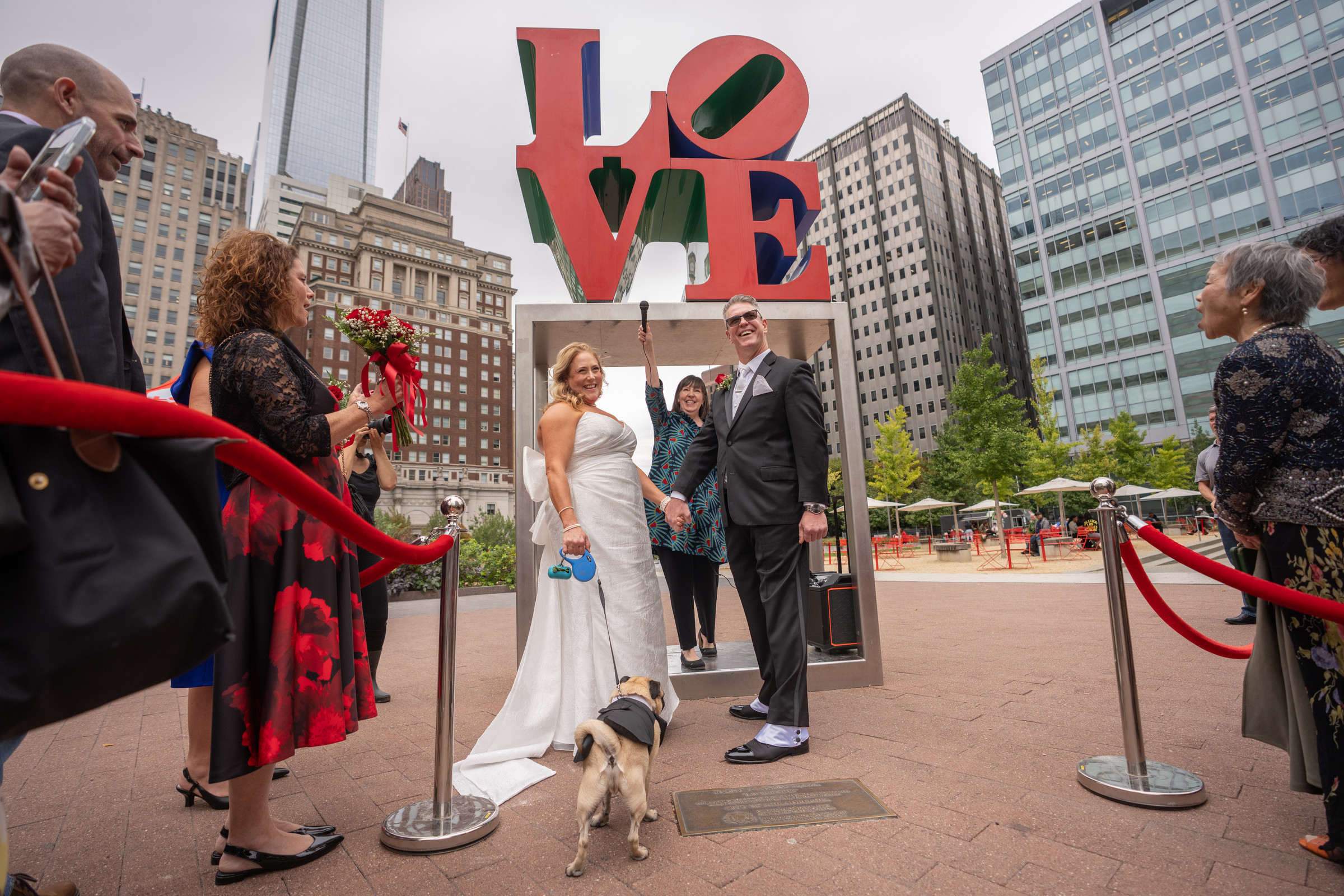
    Katherine Ross, left, and John Pacewicz, right, get married in Love Park surrounded by friends and family and their dog Hoagie, in Philadelphia, October 8, 2025.Jessica Griffin / Staff Photographer

    LOVE Park’s 1,000th wedding: A+

    The average wedding comes with a carefully curated guest list.

    A LOVE Park wedding comes with whoever happens to be walking through Center City that afternoon.

    Nearly 1,000 couples have decided that’s exactly how they want to begin married life, Philly Voice calculated, exchanging vows beneath one of Philadelphia’s most recognizable landmarks while the city keeps doing what it does around them.

    Maybe there’s a SEPTA train rumbling underneath. Maybe someone wanders into the background of your photos. Maybe a guy with a microphone decides this is also the perfect place for his performance. Whatever happens, it’s part of the ceremony, which really is part of the allure.

    Gov. Shapiro’s music video debut: B+

    There are plenty of places you’d expect to see Gov. Josh Shapiro.

    The Capitol, a Phillies game, maybe the Pennsylvania Farm Show judging the butter sculptures.

    A Meek Mill music video isn’t one of them.

    Shapiro’s cameo in the sequel to Dreams and Nightmares only lasts a few seconds, but it’s enough to make you rewind and ask, “Wait… was that Josh Shapiro?” Turns out it was. The footage came from a backstage meeting at the One Philly: Unity Concert.

    It actually makes perfect sense given Shapiro and Meek’s long relationship through criminal justice reform. But context disappears pretty quickly when you’re watching one of Philadelphia’s most iconic rap songs and the governor suddenly walks onscreen.

    The Great Cheesesteak Ketchup Debate: B

    There are certain questions guaranteed to start an argument in Philadelphia. Pat’s or Geno’s? Wiz or Cooper Sharp? Is Dallas Goedert underrated?

    This week, Reddit tackled another one: Does ketchup belong on a cheesesteak? The answer, according to multiple Philadelphians, is… maybe.

    The comments were surprisingly reasonable. Plenty of people argued that a great cheesesteak shouldn’t need ketchup, but a dry one absolutely benefits from it. Others pointed out that “salt, pepper, ketchup” has been a standard order for decades, while one former South Philly steak shop worker declared, “The ketchup pump is there for a reason.”

    The real plot twist wasn’t ketchup, though. It was the original poster casually revealing that his wife puts mayo and pickles on her cheesesteaks… and dips plain cheese pizza in ketchup. Suddenly, everyone stopped arguing about him.

    For once, Philadelphia found common ground.

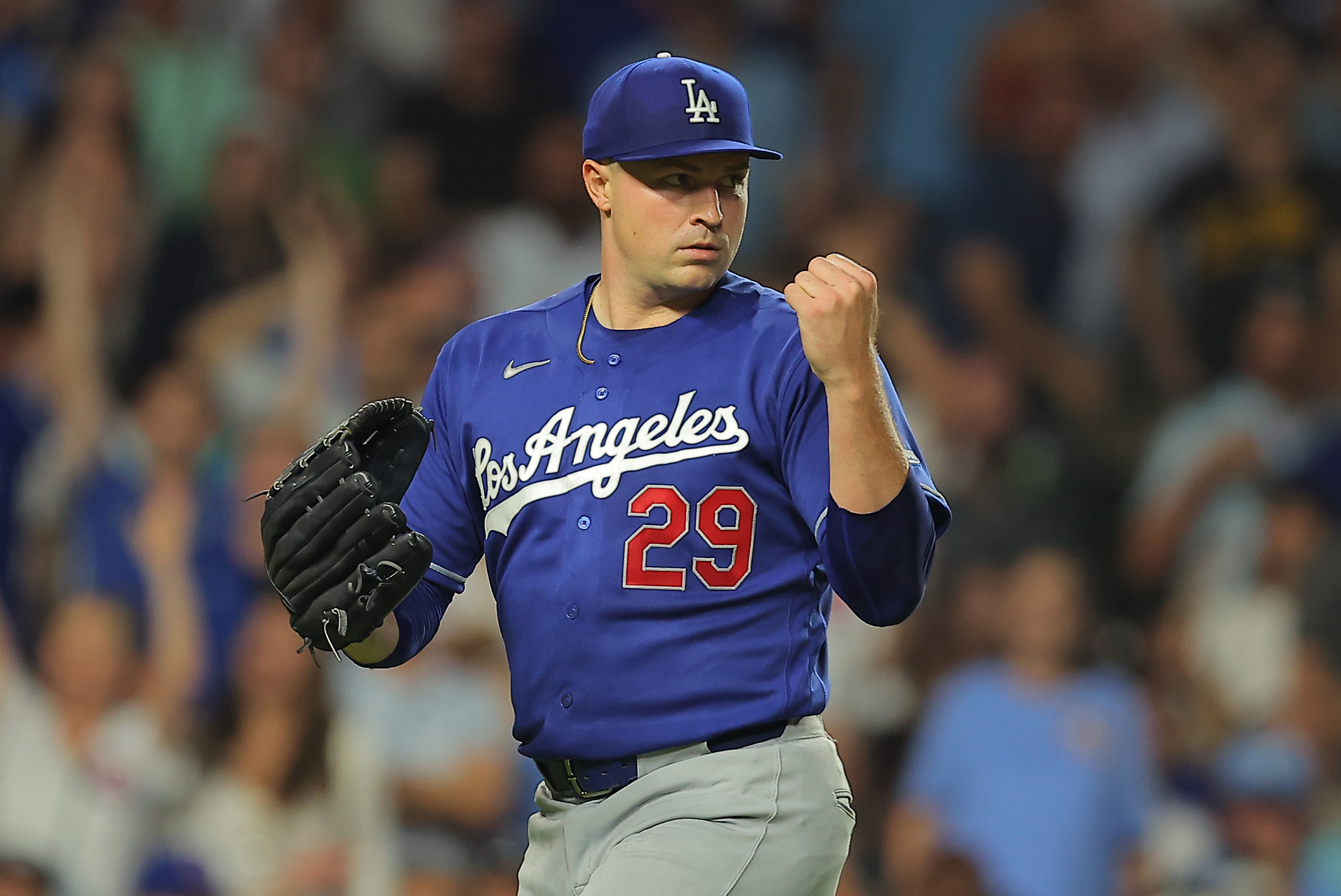
    Los Angeles Dodgers’ Tarik Skubal reacts after a play at home plate during the sixth inning of game against the Chicago Cubs on Tuesday in Chicago. (AP Photo/Melissa Tamez)Melissa Tamez

    The Dodgers do it again: D

    The Dodgers traded for Tarik Skubal, because apparently the two-time defending World Series champions with Shohei Ohtani still needed the two-time reigning Cy Young winner.

    It’s the baseball equivalent of the kid who already got the biggest slice of birthday cake asking if anyone’s going to finish theirs.

    The Dodgers have built one of the best organizations in sports. They draft well, develop prospects, spend money, and somehow all at once. GOOD FOR THEM.

    It’s also exhausting (and boring). Part of what makes sports fun is believing more than one team has a legitimate shot. When the same handful of franchises keep adding MVPs and Cy Young winners, it starts to feel less like a pennant race and more like everyone else is competing for second place.

    Still, nobody in the clubhouse seemed interested in panicking. Stott said the Phillies aren’t scared of anyone, and Schwarber’s message was simpler: First, make the postseason. October has humbled plenty of superteams before.

    Still… it would be nice if the Dodgers took a trade deadline off every once in a while.

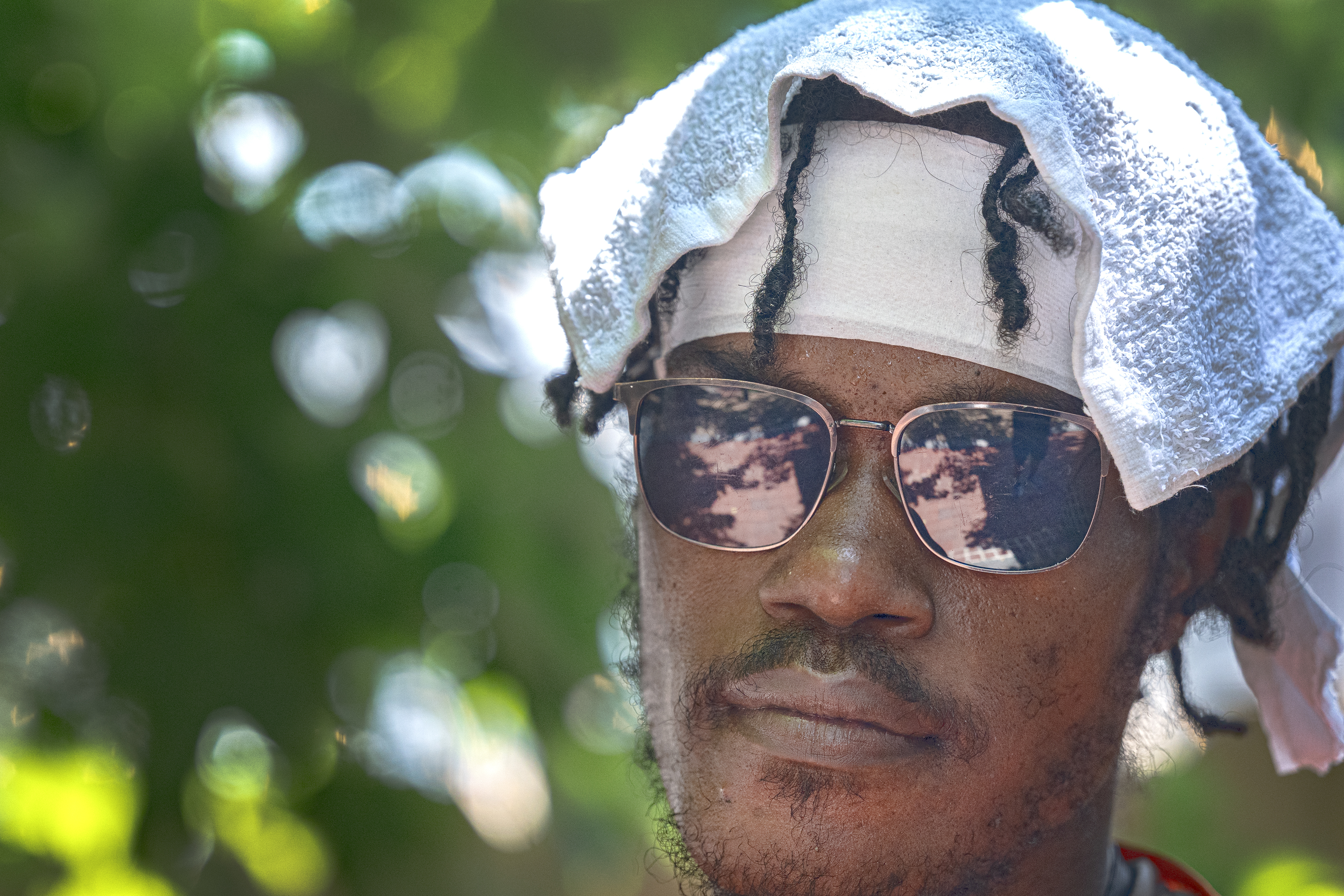
    David Elder cools off with a cold towel draped over his head as he walks through South Philadelphia on Thursday, Aug. 6, 2026. Forecasters are predicting a heat wave across the region over the next several days.Jose F. Moreno / Staff Photographer

    Summer’s greatest hits: F

    The forecast has basically been on repeat for weeks now.

    High around 90. Humidity that makes your shirt stick to your back before you finish your morning coffee. Then, somewhere between lunch and dinner, a downpour pops up just long enough to flood one neighborhood while the next one barely gets a sprinkle.

    The weather has reached the point where nobody asks, “Is it supposed to rain today?” We just assume the answer is yes and hope it doesn’t happen during the 15 minutes we’re outside.

    The worst part is the false hope. Every time the forecast teases a “slight relief,” it lasts about 12 hours and then we’re right back to sweating through our shirts and wondering whether the afternoon commute will include flash flooding.

  • He lives with his wife — and his husband, and his partner, in a 6-person polycule

    He lives with his wife — and his husband, and his partner, in a 6-person polycule

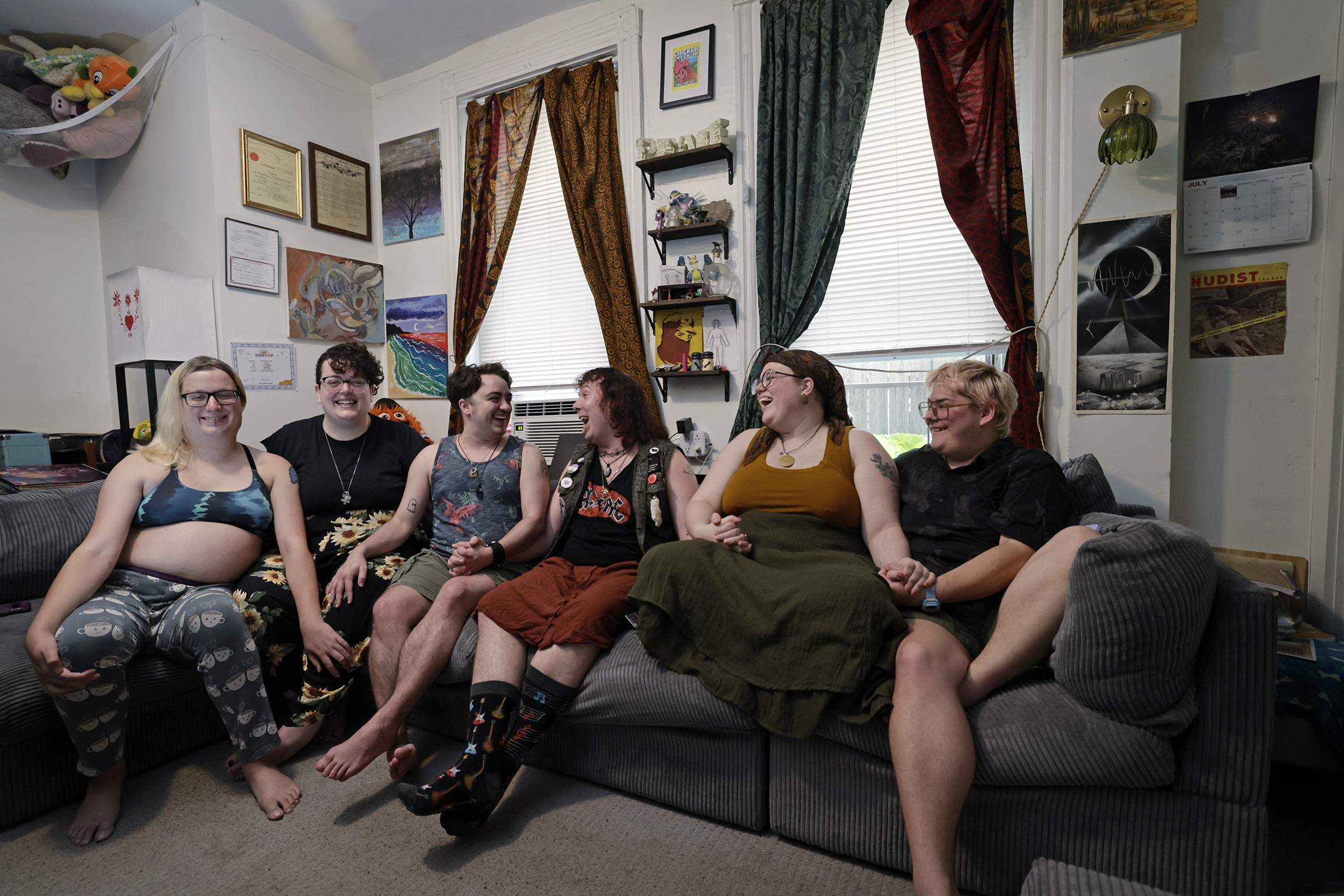
    Linden Curhart describes his home as a “spider web of connections.”

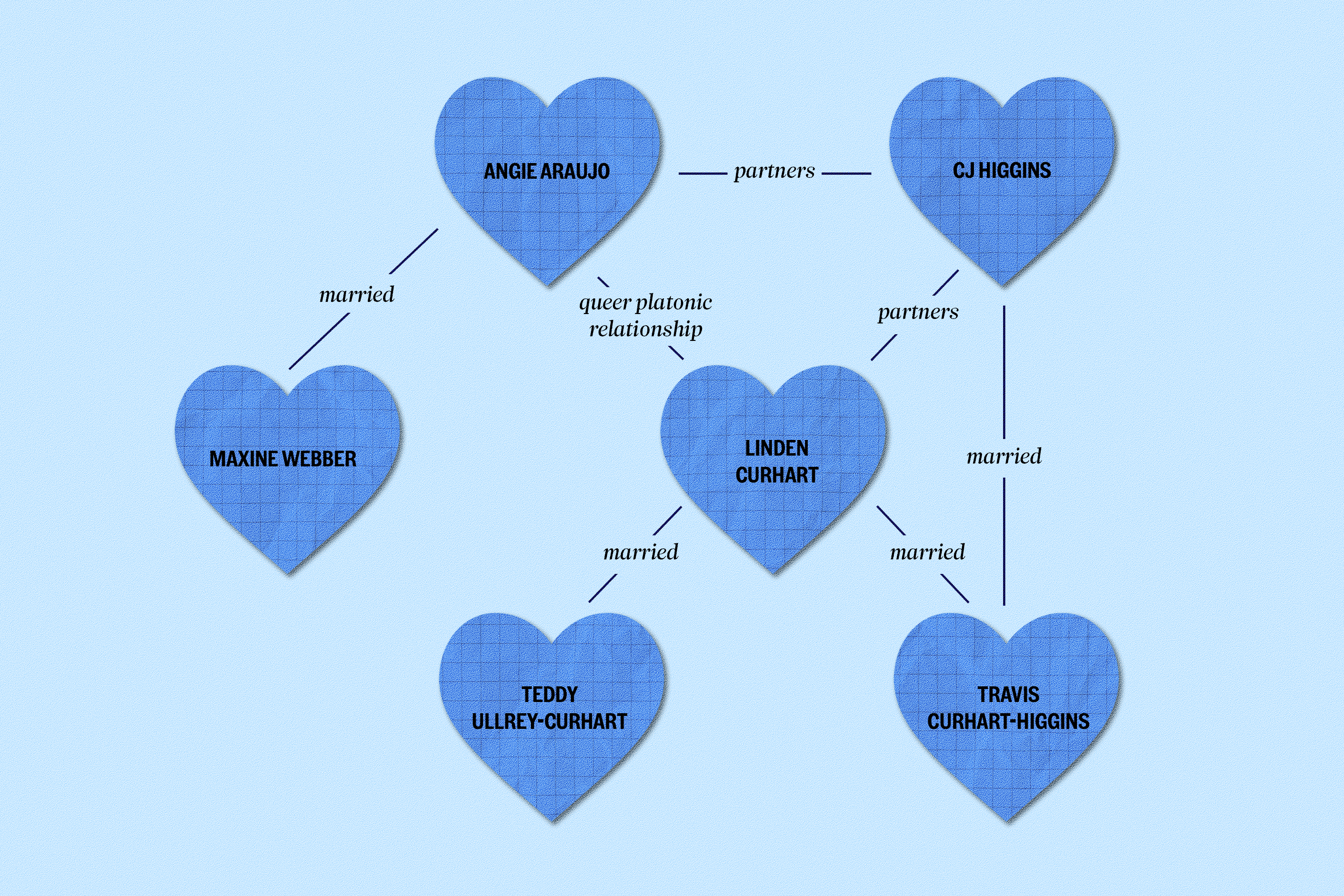
    There’s his husband, Teddy Ullrey-Curhart, whom Curhart met when he was an isolated teenager growing up in a conservative town in Virginia. The two always dreamed of getting married, and in June they celebrated their 13-year commitment in a big pink ceremony at Pastorius Park in Northwest Philadelphia.

    There’s Curhart’s wife, Travis Rosemarie Curhart-Higgins. They bonded as the two most sober people at a friend’s birthday bar crawl in 2019, and got married in 2023. (Curhart wears two stacked wedding rings on his left hand, one for each spouse.)

    Then there’s Curhart’s partner, CJ Higgins, who asked prospective dates to fill out a short Google Form expressing their interest, which Curhart did. Rounding out the group is Curhart’s best friend and “queer platonic partner,” Angie Araujo, who is married to Maxine Webber, and dating CJ. Travis and CJ are also married.

    “It’s a whole constellation,” Curhart, 28, said. Ullrey-Curhart is also in his late 20s; the rest of the crew are in their early 30s.

    The six live together as one family in a narrow, rented rowhouse near Drexel. They each have their own room.

    The polyculeJulia Duarte / Staff Illustration

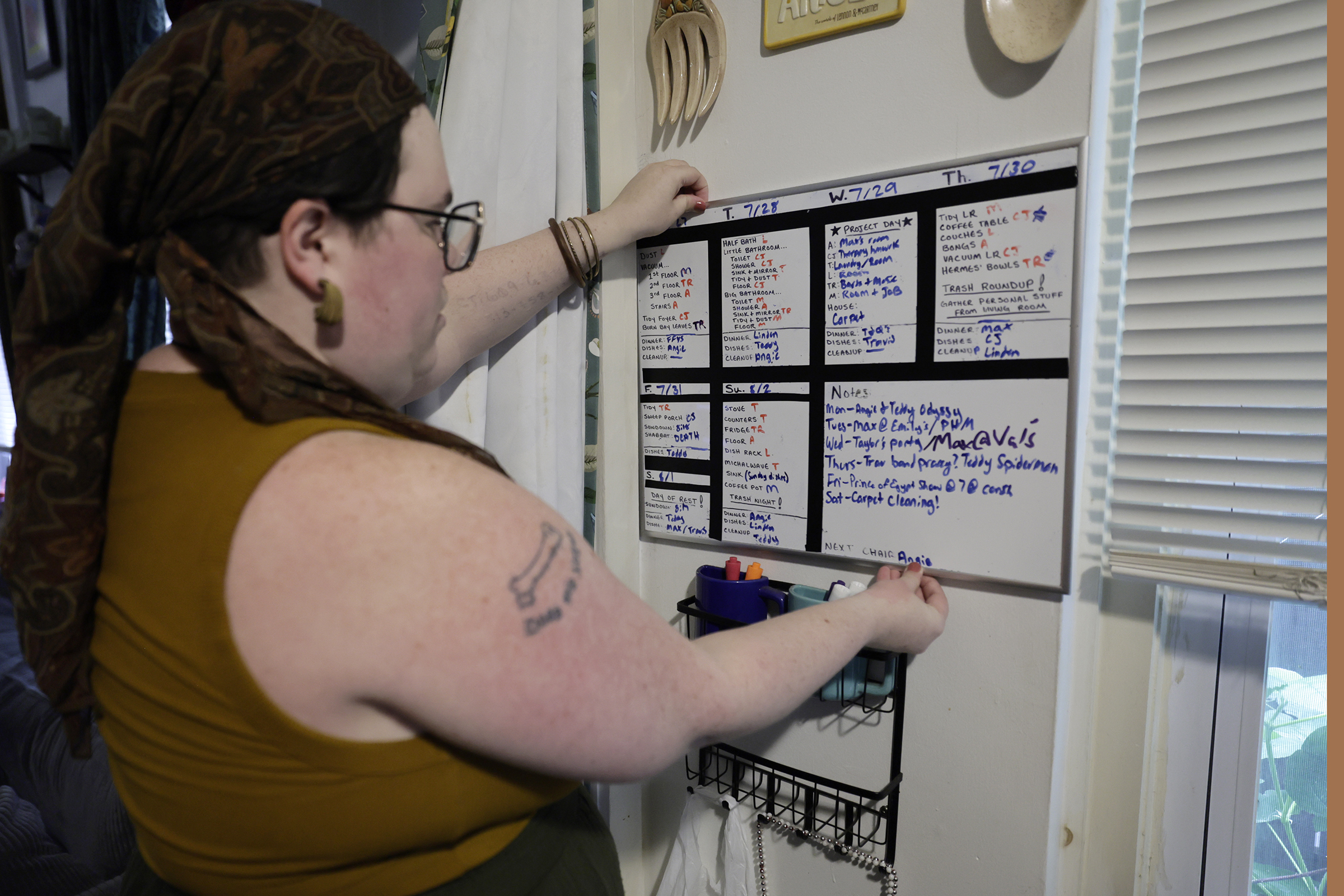
    The polycule — the textbook term for a group involved in polyamory together — shares costs, and meets weekly to discuss chores and meals (usually each person cooks one night a week). They also collectively care for three cats and a hermit crab named Linda.

    “Honestly, the biggest daily challenges that we deal with are just things like, ‘please rinse your mug before you put it in the sink,’” said Curhart.

    The household is Jewish and everyone is an anarchist, Curhart said. They keep the closets stacked with street medic supplies to bring to protests and homeless encampments.

    Some of the members work in theater and some in tech; some don’t work. (Curhart is disabled and relies on the polycule to support him; Ullrey-Curhart is looking for work.) They’ve lived collectively for two years.

    “As a species, humans are pack animals,” said Curhart. “That isn’t to say that everybody should be polyamorous, but I think everybody should live in community.”
    The following, as told to Zoe Greenberg by Linden Curhart, has been edited for length and clarity.

    On proposing marriage

    I had planned a big romantic public proposal for Travis, and then COVID lockdown hit. So instead I got flowers and made dinner at home. I set it up really romantically, with candles, and proposed. We both cried.

    Teddy proposed to me while the whole polycule was apple picking. He got down on one knee and did that dramatic thing where he said my whole name in front of everybody. He talked about how long we’ve been together and how much change we’ve been through.

    Travis and I got married on the winter solstice, so Teddy and I got married on the summer solstice.

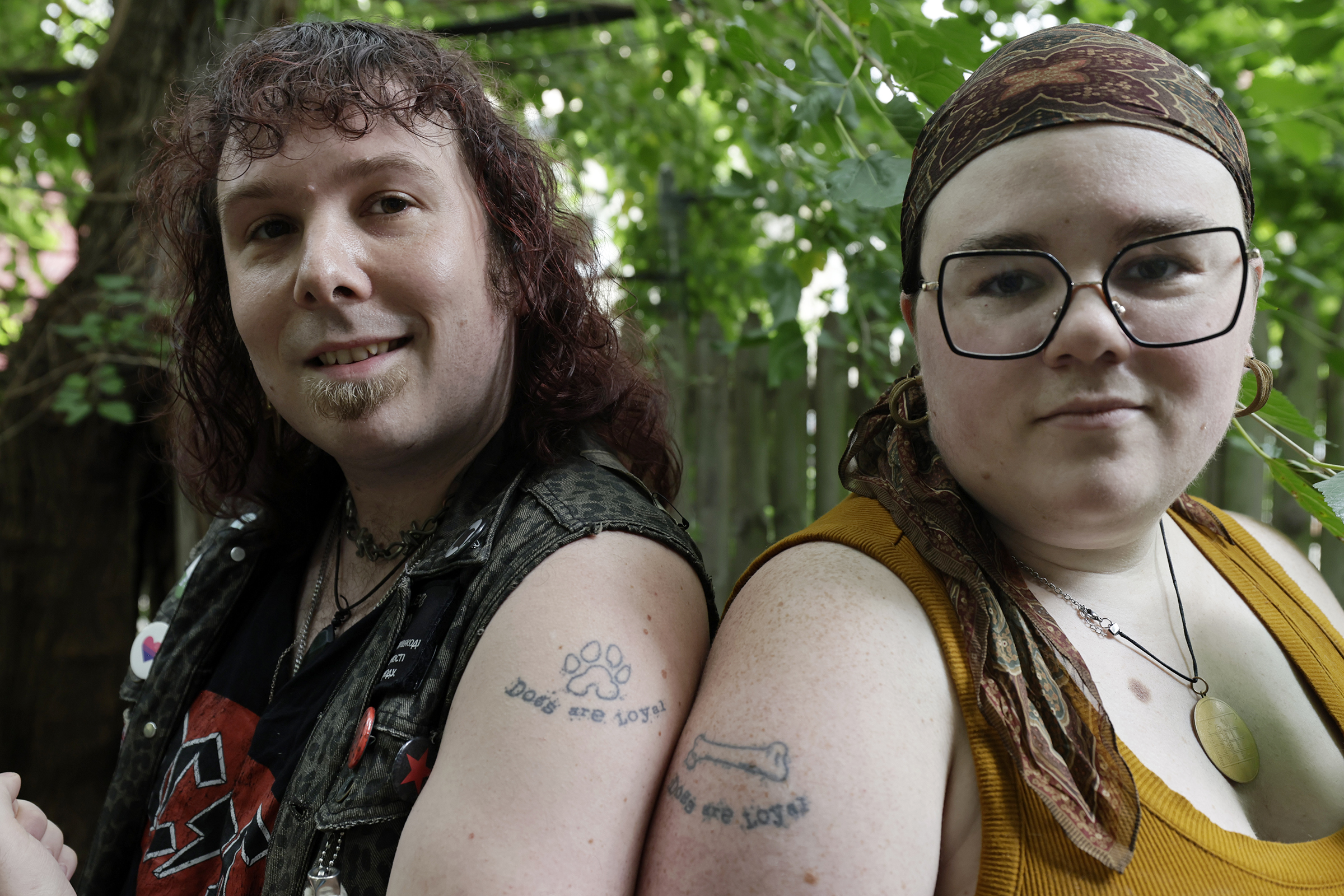
    Travis Curhart-Higgins (left) and Linden Curhart show the tattoos they got after their wedding in 2023.Elizabeth Robertson / Staff Photographer

    On what marriage means

    When I’m talking to people who are not in the polyamorous world, I’ll describe it as a “commitment ceremony.” Because I’m not legally married to anybody. But within our own communities, we just say that we’re married.
    There’s this sense of security that comes with making that decision and having it witnessed by all of the people that you love.

    On leaving the state out of the polycule

    The way that I see it is that our personal relationship, who we share our lives with, who we have sex with, who we choose to raise our kids with, that’s not the government’s business.

    But even if you’re not getting the state involved, it’s a big decision to permanently entangle your life with another person. It’s not something that I am actively seeking to do again.

    On moving in together

    All of us were living in various apartments that we hated, scattered around West Philly. We all had landlords that were crappy.

    The pitch was: all of us are broke and we all love each other, and we’re already making dinner together three times a week. We might as well just all do that in the same place. So we came together and pooled our resources and found the rowhouse.

    All of us understood that this is a family commitment. I really want to have kids someday, and these are the people who will help me raise my kids.

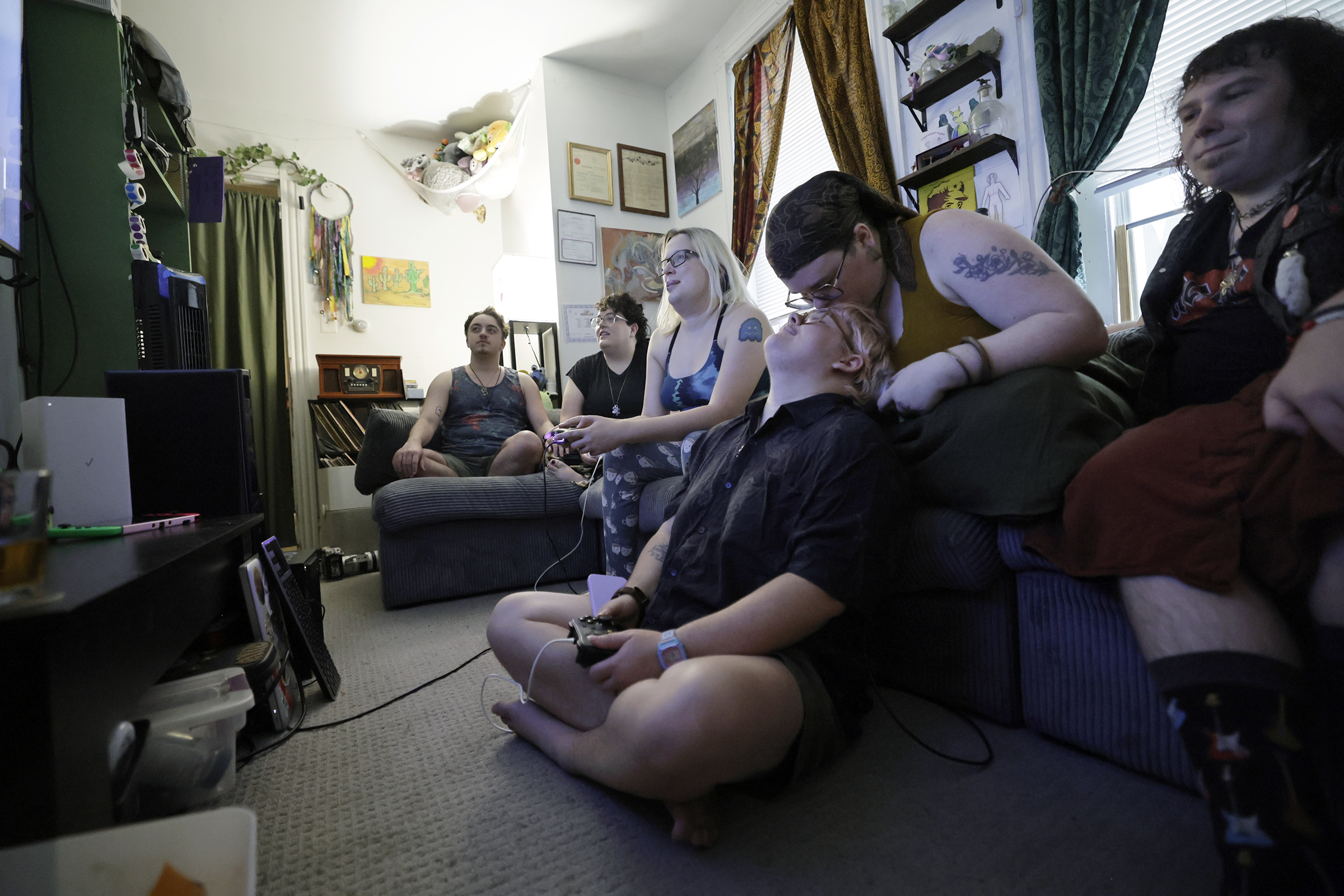
    Linden Curhart kisses his husband, Teddy Ullrey-Curhart, while his wife, Travis Curhart-Higgins (right) looks on. Elizabeth Robertson / Staff Photographer

    On sharing money

    We haven’t officially pooled our finances because it’s important for all of us to have financial independence and some financial privacy.

    Somebody will go grocery shopping for the whole house and then calculate an even split. If somebody can’t contribute that amount, they’ll just say, “Hey, I can’t cover mine this week,” and that’s not usually a big deal. Somebody else will step up.

    Generally speaking, we try not to give each other loans. You don’t give somebody money unless that is money that you can afford to lose.

    On distributing labor

    We try to split the work: the financial labor, the actual physical labor, and the emotional labor, so that everybody’s contributing whatever they have the most of.

    Because I contribute less money, I try to make sure that I’m doing things like making big lunches that people can have during the week. I run a garden so we can grow some of our own food.

    The polycule meets on Sundays to discuss tasks for the week. Elizabeth Robertson / Staff Photographer

    On potential breakups

    Because we’ve been together for so long, we don’t really worry about that. We don’t have concrete contingency plans, but our overarching philosophy of how we treat each other doesn’t stop if we break up.

    Fun fact: Travis and Angie are exes. They broke up before we chose to live in a house together. They had dated for a few months and then decided they didn’t have romantic feelings for each other.

    On the most important house rules

    I was worried about us getting on each other’s nerves in close quarters.

    We have a rule that we don’t have serious emotional conversations in the living room. That’s a bedroom conversation. If a conversation starts in the living room and gets tense, one of us will be like, “Oh, I don’t think this is a living room conversation.”
    Don’t gossip. If somebody tells you something emotional, you assume that it’s for your ears only.

    You try not to drag everybody in the polycule into conflicts that are just between two people.

    On a future spare bedroom

    My 10-year vision is a house with a big vegetable garden and kids and maybe a dog. And hopefully a spare bedroom where we can host people who need a place to crash.


    This story is part of a new series about life partners across the Philadelphia area.

    If you want to share your story about who you’re navigating life with, romantically or otherwise, write to lifepartners@inquirer.com. We won’t publish anything without speaking to you first.

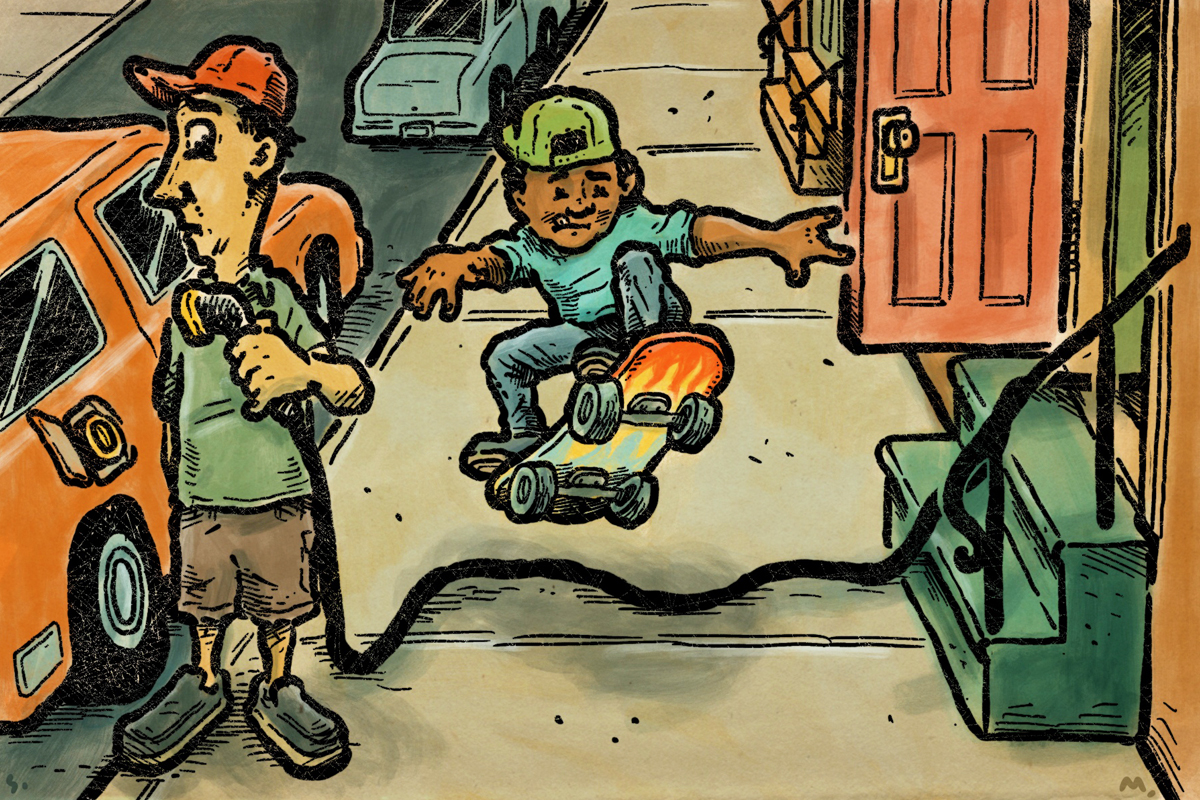
  • Should I run a cord across the sidewalk to charge an electric car?

    Should I run a cord across the sidewalk to charge an electric car?

    This week’s question (Have your own? Submit it here.):

    I’m thinking of getting an electric car even though I don’t have a driveway. I’ve seen some of my neighbors run the cords out of their rowhouses across the sidewalk to charge their cars. I’m intrigued! What’s the etiquette?

    Mike Newall, Life & Culture reporter

    Hey, Intrigued-by-Electric! I think it was Emily Post who wrote in her foundational 1922 text on manners and etiquette: “Don’t be a bozo and run electric chargers out of your rowhome!”
    Zoe Greenberg, Life & Culture reporter

    The etiquette is you must secure the wires to the sidewalk, but I have a stroller these days and the sidewalks are like an obstacle course.

    Mike Newall

    Do you want this young mom and her babe to jump rope over your car charger?

    Zoe Greenberg

    But electric cars are better for the babe’s future…

    Mike Newall

    It’s a tripping hazard and probably a city violation (and if there is one thing the city excels at, it’s enforcing violations).

    Zoe Greenberg

    Would you say electric cars are a no-go entirely?

    Mike Newall

    I love electric cars! (Disclaimer: I know nothing about electric cars except they are better for babies’ futures.)

    But when you live in a city, you have to think of your neighbors.

    Find a neighborhood charging station. If they’re filled up, you can always reserve one with a cone or folding chair (kidding… maybe).

    Zoe Greenberg

    I say you can run the cords from the rowhouse, but you have to REALLY secure it to the sidewalk. Make it like a ramp!

    Mike Newall

    Intrigued-by-Electric, you are making me and a wonderful new mom who has to jump over cables put on our public service hats.

    There aren’t enough public stations, but don’t run it from your house.

    If you have a garage, there are companies that will come out to your house and install a charger the right way so you don’t have parents and kids playing double dutch over your new plug-in wheels.

    But a little Googling has led me to another possible solution.

    Zoe Greenberg

    Look at you.

    Mike Newall

    The city seems to be planning a new program called ChargePHL where they will be installing 800 new charging ports across city neighborhoods by 2027.

    Zoe Greenberg

    Wow! So wait until 2027 to get your electric car.

    Mike Newall

    Like so many of these questions, the answer comes down to that famous passage at the end of Grapes of Wrath when Tom and everyone are walking on the road and someone talks about being part of a bigger collective struggle (they were driving a jalopy, not electric).

    When you live in a shining city like Philadelphia, you’re part of that collective struggle. You don’t thrive if your neighbor struggles.

    If you want to go electric (see above about babies’ futures) then be smart and responsible and do it in a way that doesn’t have everyone tripping.

    Zoe Greenberg

    In solidarity.

    Mike Newall

    Your heart is in the right place, Intrigued-by-Electric. Do it smart. Safe. Look up the private installations. Check out current neighborhood options, and possibly go gray waiting for the city. You came to us looking for help, so you obviously got your head on right. I trust you in this endeavor.

    Zoe Greenberg

    We’re in it together. Godspeed.

  • A pair of sassy chairs at the Museum of Art in Wood and summer evenings with Rodin are your best art to-dos this week

    A pair of sassy chairs at the Museum of Art in Wood and summer evenings with Rodin are your best art to-dos this week

    A summer evening oasis with Rodin

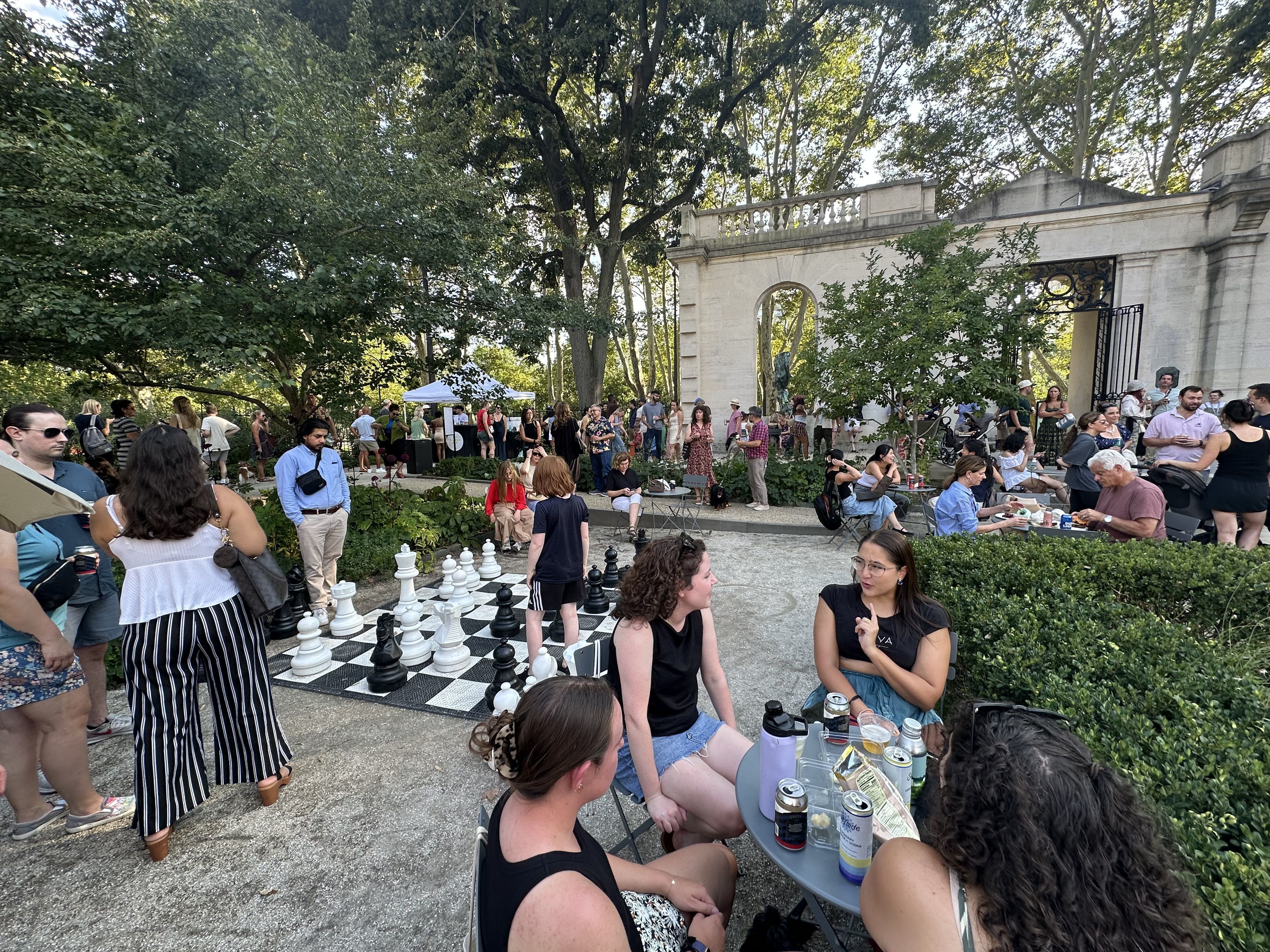
    In Rodin Museum’s courtyard last Friday evening, you could run into old friends, play a game of gigantic chess, or try to keep up with your toddler toddling through the garden.

    Or you could just sit back, sipping white wine and taking in the scene.

    This weekly urban oasis at the Rodin has often featured live music to accompany drinks and snacks in the gorgeously landscaped courtyard. The event is now in its seasonal homestretch, continuing each Friday evening with recorded music through the end of August.

    A Friday evening gathering at the Rodin Museum on the Ben Franklin Parkway, July 31, 2026.Glenn Holsten

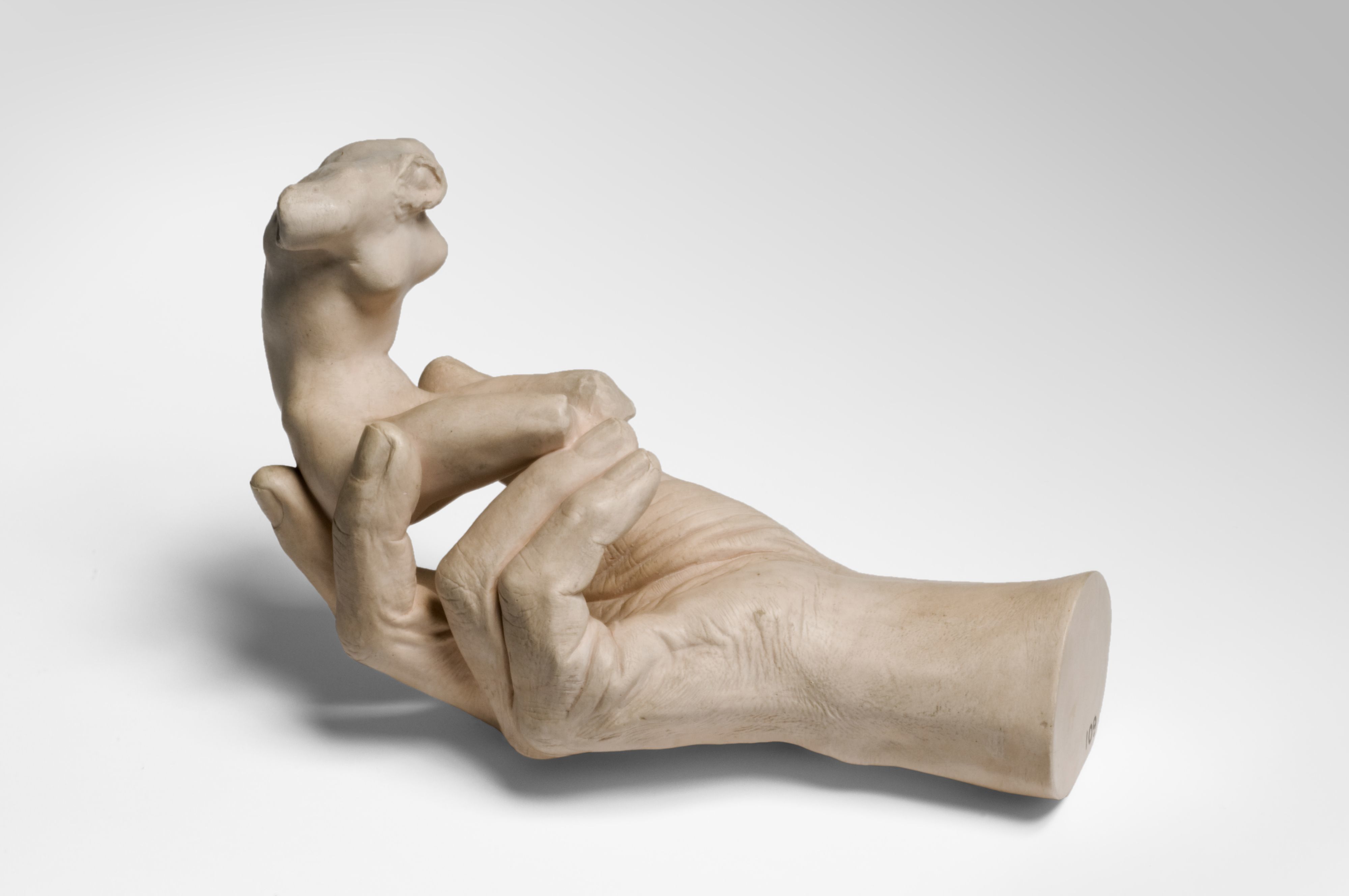
    Oh, and while you’re there, you could also take in the jewel-box of a museum, which offers a choice selection of works by the French sculptor. The current show, “Rodin’s Hands,” features 15 bronzes and plasters, some of which relate to Auguste Rodin’s famous The Burghers of Calais.

    The Rodin Museum, 2151 Benjamin Franklin Parkway, Friday-Monday, 10 a.m. to 5 p.m., and on Fridays until 8:30 p.m. through Aug. 28. Friday evenings are pay-what-you-wish. philamuseum.org.

    — Peter Dobrin

    Eddie Veddie with Charlie Hall to his right and Imelda Mae to his left in a tribute to the late Glen Hansard at the Dublin concert hall Vicar Street.Screenshot from YouTube

    A devastating Glen Hansard tribute

    The last Irish funeral I watched on YouTube was Shane MacGowan’s.

    The musical peak of that celebration of the Pogues songwriter, who had been beset by health problems before his death in 2023 at 65, came on a thrilling duet between Glen Hansard and Lisa O’Neill on the whiskey-soaked holiday classic “Fairytale of New York.”

    I watched another this week. This time, it was for Hansard, the Frames and Swell Season singer who had been working on an album in Philadelphia before his death at 56 in a Dublin motorcycle accident, on July 29.

    The funeral mass, which was livestreamed Aug. 4 from St. Patrick’s Cathedral in Dublin, — and is archived online — had a feeling of unwanted deja vu. Less than three years after MacGowan had been laid to rest, many of the same musician mourners again gathered to pay tribute to one of their own, in this case a life brought to an unexpected tragic end.

    Mourners included U2’s Bono, who led the congregation in an a cappella “Beautiful Day,” and played a voice note recording of Patti Smith singing a lullaby she wrote for Hansard. Eddie Vedder of Pearl Jam, whom Hansard opened for in Philadelphia in 2024, sang “A Song of Good Hope” with the Swell Season’s Marketa Irglova.

    The service is a beautiful, devastating watch. Eulogies were given by Hansard’s wife, Maire Saaritsa, and his brothers Richard and Gary, the latter of whom sang the heartbreaking ballad “I Can See God,” written by the Hansards’ uncle Paul Cahill.

    O’Neill, who was among the Dublin musicians who played with an expanded Pogues at Franklin Music Hall in Philly last September, was particularly moving on “Old Note,” a song she wrote in a Dublin apartment that Hansard lent her so she could work on her music.

    The Philadelphia crew who worked with Hansard at Elm Street Studios in Conshohocken in 2025, and this year, was represented by producer Charlie Hall of the War on Drugs. He can be spotted in the church choir as the service came to a close with a fevered rendition of Bob Dylan’s “Forever Young,” mashed up with George Harrison’s “My Sweet Lord” and led by Hot House Flowers singer Liam Ó Maonlaí.

    The night of the funeral, Hansard was further celebrated at Dublin’s Vicar Street concert hall. Vedder led the way on Neil Young’s “Rockin’ in the Free World,” with Hall on guitar on his right, and Asbury Park repped by Jake Clemons of the E Street Band, and photographer/musician Danny Clinch.

    Philly musicians who worked with Hansard, including Hall, Luke Carlos O’Reilly, Ben Arnold, and Kevin Hanson, shared their remembrances of him on the Craic Radio Hour on WPPM-FM (106.5). The show can be heard on Mixcloud.

    — Dan DeLuca

    The fabric of a person

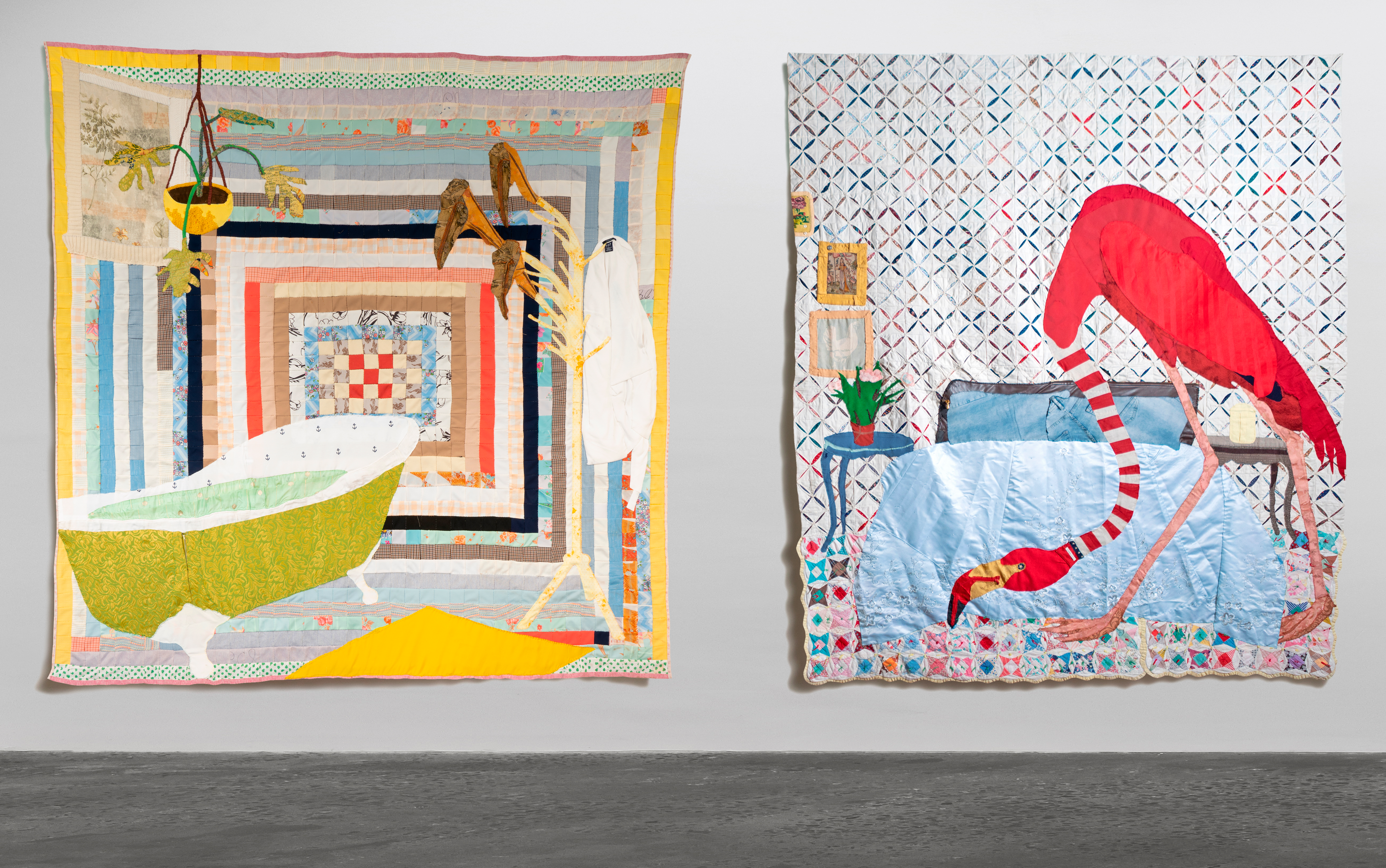
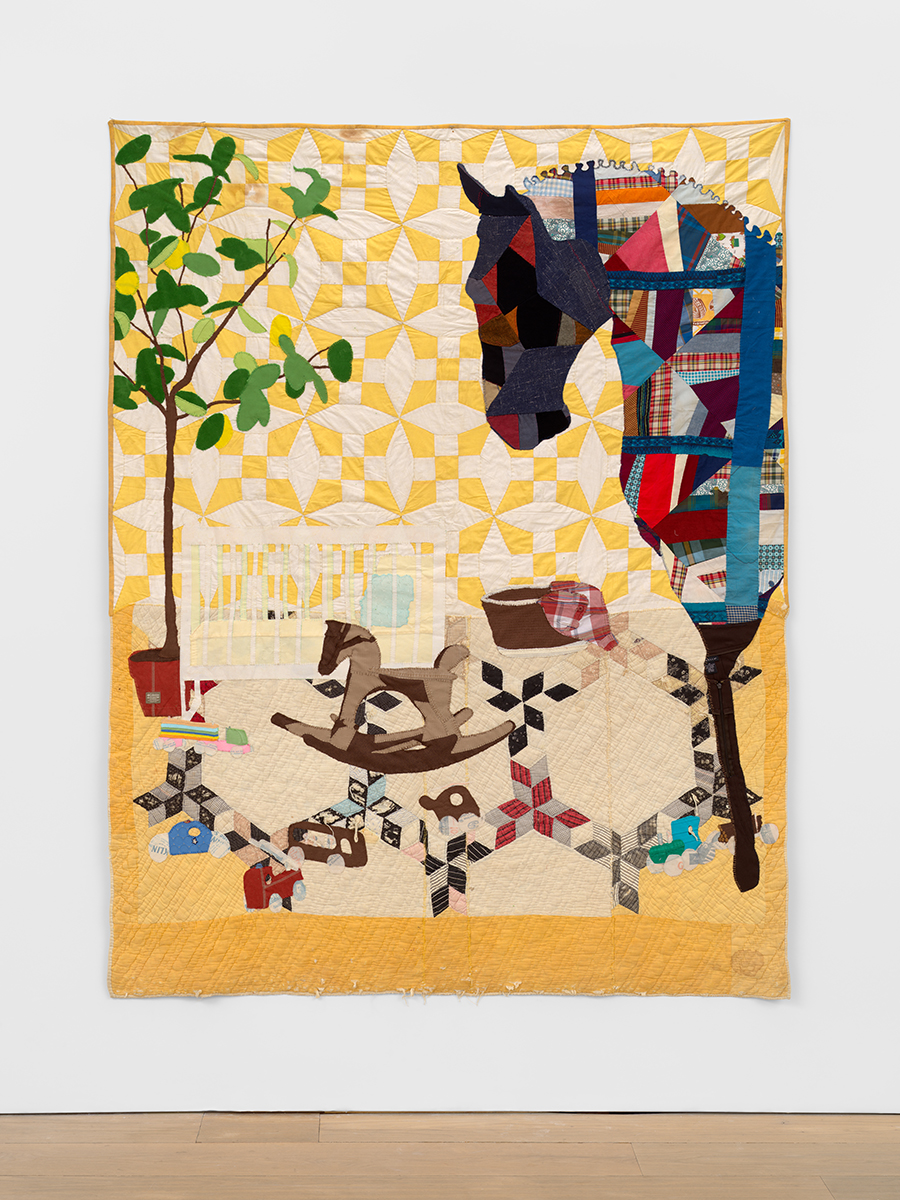
    For incarcerated individuals with long-term or life sentences, life outside of prison may seem unimaginable. Artist Jesse Krimes brings those future visions to life through his Elegy Quilts.

    The quilts, currently on display at the Fabric Workshop and Museum, are made up of pieces of clothing from incarcerated individuals. Krimes then asks the subjects of these quilts to name three elements: a piece of furniture, an animal, and an object, all meant to represent the person’s identity.

    Jesse Krimes. Installation view from left to right: “Arrowhead,” 2021; “Redwing,” 2021. © Jesse KrimesCourtesy of Jesse Krimes and Jack Shainman Gallery, New York

    Some commonalities are present, with multiple individuals selecting a bird or a bathroom setting. However, each quilt feels like its own distinct insight into this person’s life, whether that’s a memory they cherish or the life they wish to return to.

    Krimes himself was incarcerated for five years, and used art as a creative outlet during his sentence. All of the pieces in the show are named after prisons.

    Jesse Krimes’ 2026 quilt “Riverside” will become a mural in Spring Garden that will be unveiled on June 3. Description: Jesse Krimes, “Riverside,” 2026. Antique quilt, used clothing collected from incarcerated people, assorted textiles, 87 1/2 x 54 inches.Courtesy of Jesse Krimes and Jack Shainman Gallery, New York

    The quilts feel incredibly personal, thanks to the elements that Krimes requested of the subjects. Particularly in pieces like Florence, where I could almost see the sadness of the quilt horse as he looks at this childhood playroom scene.

    At the same time, as deep as the pieces feel, their ultimate message or theme can’t be known without knowing the subject’s intention. It creates this emotional reaction while also raising questions about these people’s identities and how they perceive themselves: What makes someone feel like they’re an owl? Or a flamingo?

    Jesse Krimes, “Florence,” 2021. Antique quilt, used clothing collected from incarcerated people, assorted textiles 89 x 65 1/2 inches. © Jesse KrimesCourtesy of Jesse Krimes and Jack Shainman Gallery, New York

    The quilts are striking, and all I want to see besides a million more are the actual stories behind them. That being said, the mystery is heartbreakingly beautiful, too.

    “Elegy Quilts by Jesse Krimes” is on display until Nov. 1, 2026, at the Fabric Museum and Workshop, 1214 Arch St., Phila. fabricworkshopandmuseum.org

    — Morgan Ritter

    Wonders in wood

    Inside the quiet, well-air-conditioned Museum of Art in Wood, visitors can explore dozens of wondrous artworks that will leave them asking, “How did the artist make this?” Two floors in Old City are packed with treasures primarily inside humidity-controlled glass cases, though I’d encourage you to check every corner — and make sure to look up! — so you don’t miss a thing.

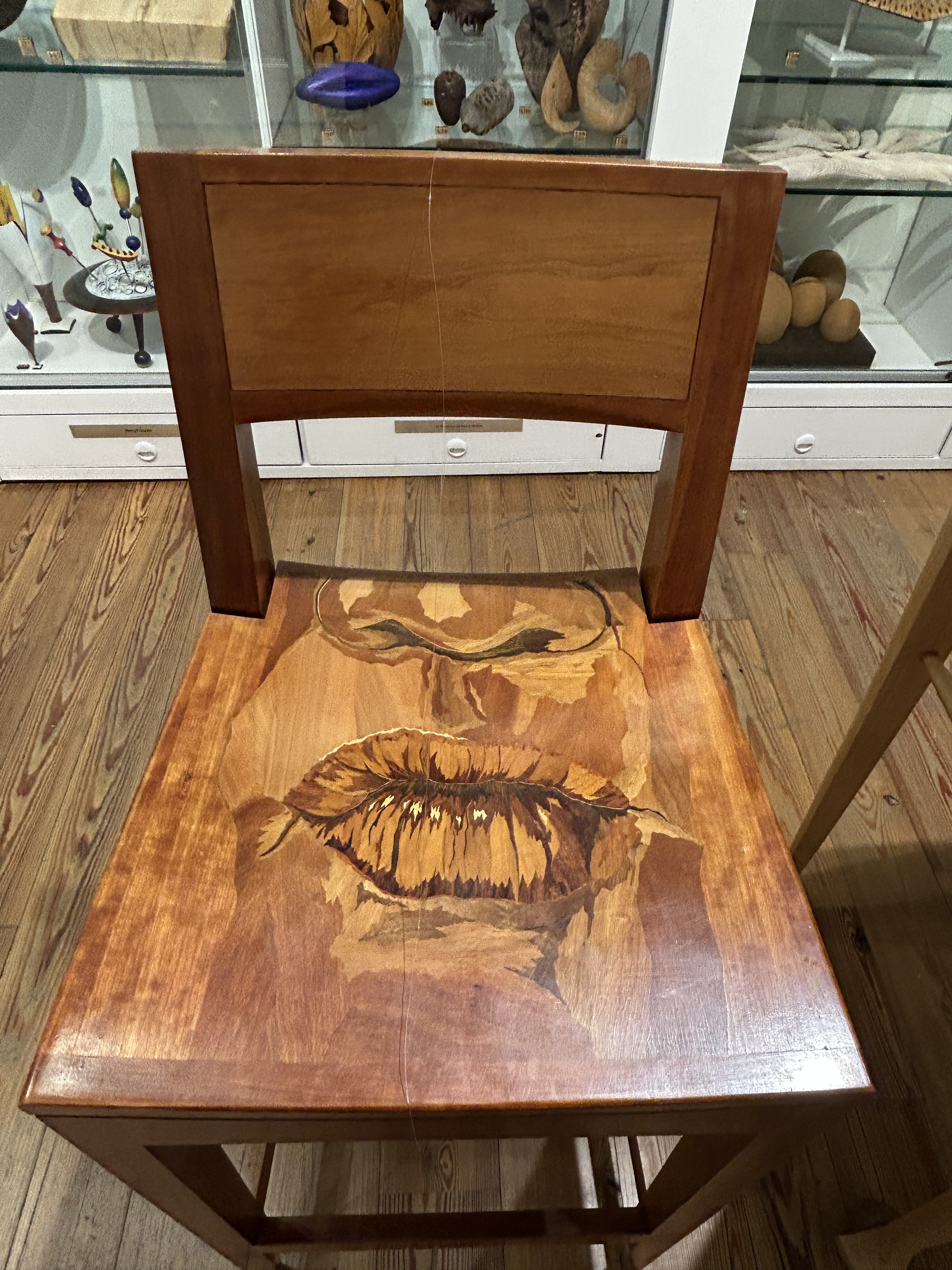
    One disarmingly funny work that I loved was a pair of tall bar chairs made of cherry wood with a special design on the seat: meticulously crafted luscious lips. Artists Silas Kopf and Thomas Coughlin fittingly called them Kiss My Ass Chairs, but I was fascinated even before I learned the cheeky title. The lips (and nose) are multicolored to indicate texture, light, and shading with such impressive skill.

    Kopf is particularly renowned for his expertise in marquetry, a style of woodworking that incorporates thin pieces of material (in this case, assorted types of wood) to create a design.

    One of the “Kiss My Ass Chairs” by Silas Kopf and Thomas Coughlin, on view at the Museum of Art in Wood in Old City.Rosa Cartagena

    See also: Louise Hibbert’s stunningly shiny seashells, Daniel Forest Hoffman’s unbelievably realistic Ram, Jason Marlow’s enigmatic helmet, and John H. Williams’ Solar Storm, a deep orange vessel with fingerprint-like swirls.

    Those picks are from the permanent collection — the museum also hosts rotating exhibits, with the latest spotlighting their artists-in-residence. (The gift shop is another must-see.)

    Plus, if you’re looking to enjoy the air-conditioning a bit longer, enter the museum’s wooden games library and try your hand at various puzzles or the ancient Egyptian board game senet.

    Museum for Art in Wood, Wednesday-Sunday, 11:30 a.m.-5 p.m., 141 N. Third St., Phila. museumforartinwood.org

    — Rosa Cartagena

  • The best thing Hira Qureshi ate this week: the spanakopita at Stina

    The best thing Hira Qureshi ate this week: the spanakopita at Stina

    It’s been three years since my parents visited me in Philly, and I needed a restaurant that would impress the toughest critics I know.

    One place came immediately to mind: Stina.

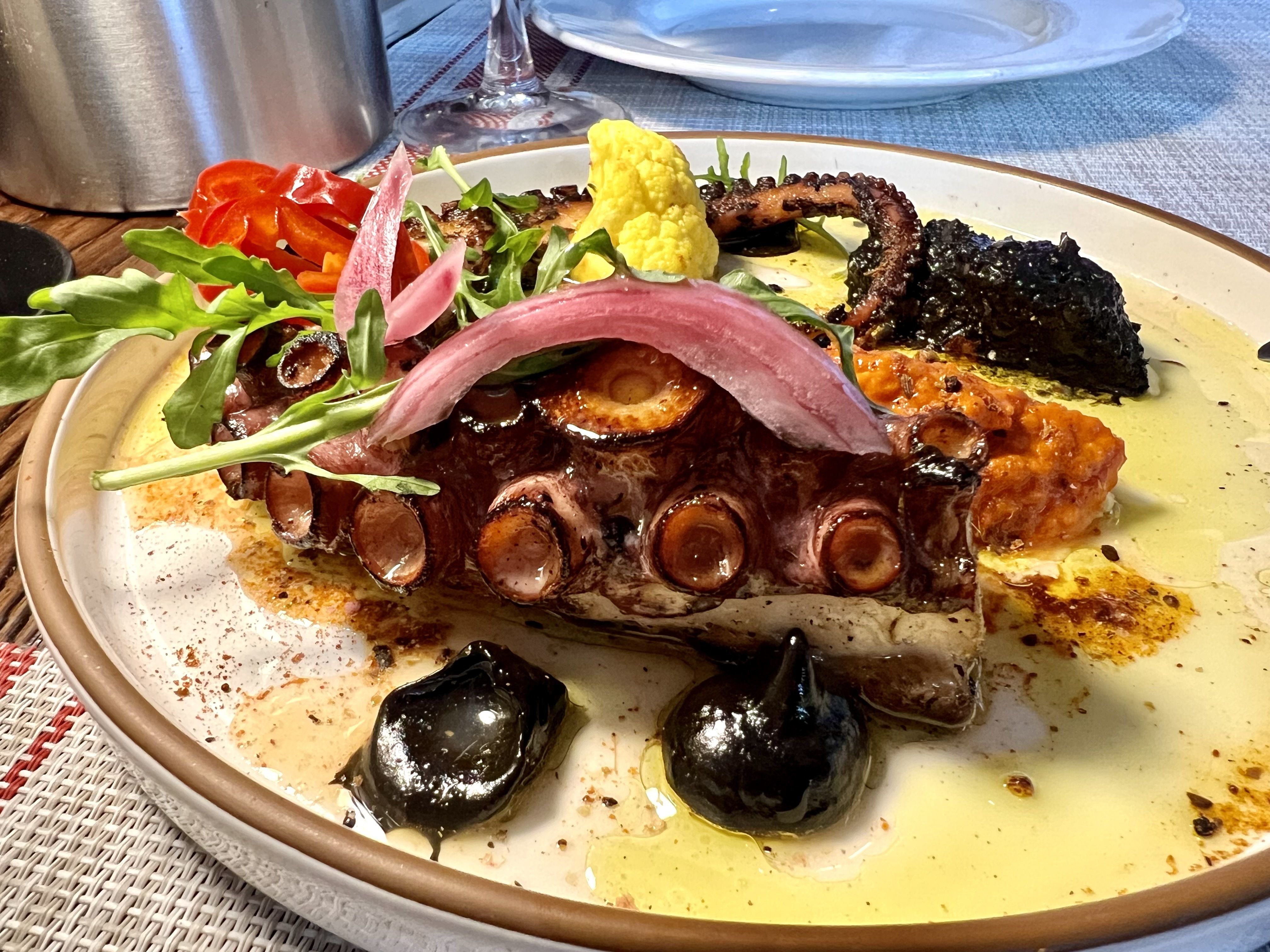
    Chef-owner Bobby Saritsoglou’s Snyder Avenue restaurant leans Greek, showcasing the joy of wood-fired dishes. It’s a crowd-pleaser, and a perfect spot to bring out-of-town visitors. The slow-cooked octopus is one clear example why.

    My father, who usually stays clear of octopus due to previous bad experiences, instantly fell for the gorgeous char on the S-shaped tentacle we got, which comes from the three-hour slow cooking. Dunking chunks of octopus into the almond romesco and black garlic purée on the plate, we devoured the crisp yet tender tentacle with awe and delight.

    “I didn’t think I’d be eating an octopus again,” my father said. “This is the best I’ve had in a long time.”

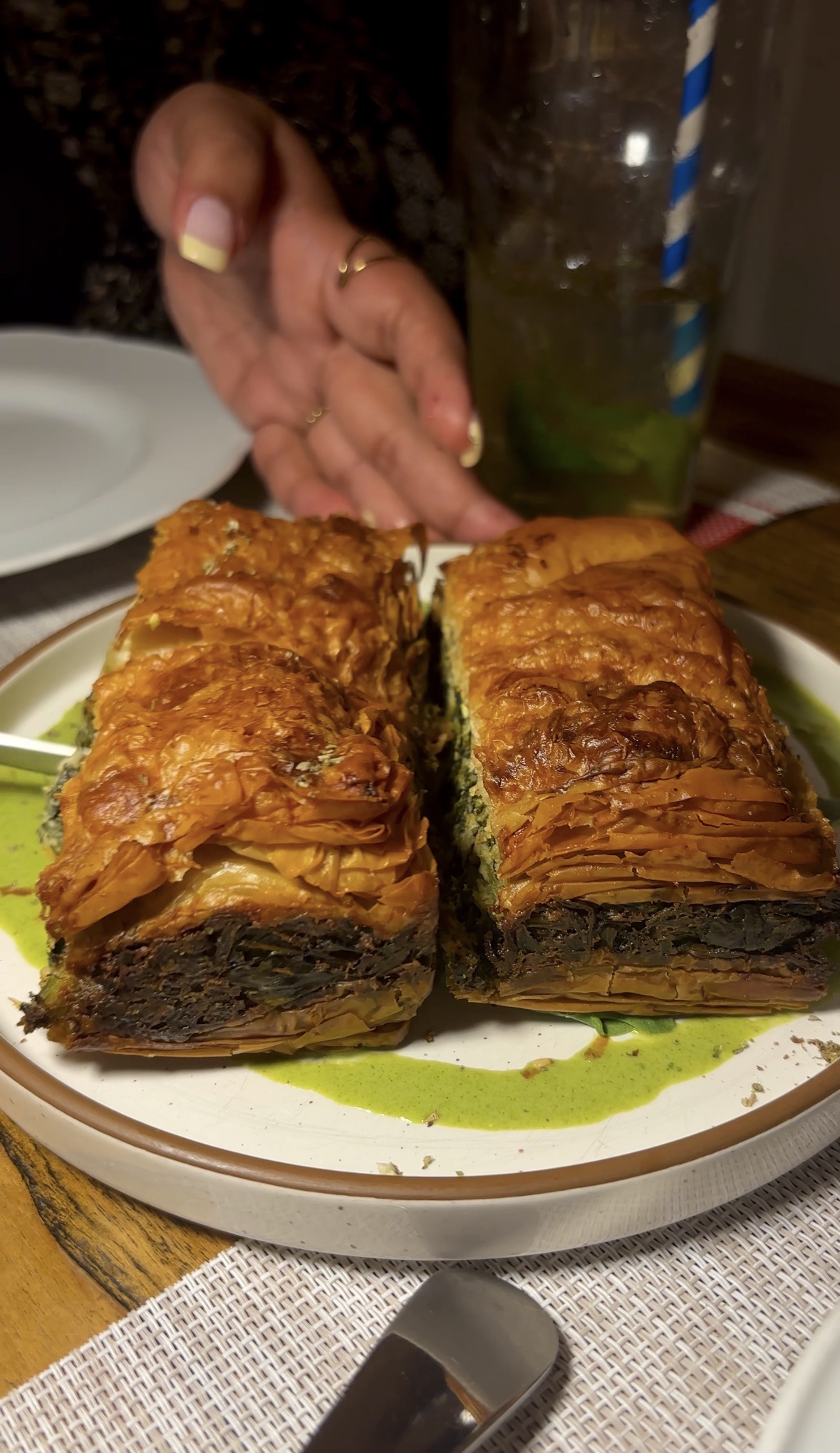
    The spanakopita at Stina.Hira Qureshi

    But then, a glorious crackling sound moved our attention away from the octopus to my sister, who was cutting into an overstuffed piece of browned, crispy phyllo. My mother, eager to sink her teeth into the spanakopita, couldn’t help but take two pieces for herself. “[With] that [sound], I know it will be good.”

    And she was right.

    The savory tastes of fresh spinach and barrel-aged sheep’s milk feta, with subtle notes of shallots, lemon zest, dill, parsley, and cracked black pepper shine through with each bite.

    Both dishes were the highlight of my Stina visit — and the best things my parents ate on their Philly trip. They even received high praises on my dad’s Facebook posts.