Classics scholar Emily Wilson was in Greece’s Costa Navarino last year when she heard the news that would change her life: Filmmaker Christopher Nolan was planning to release a star-studded adaptation of The Odyssey, the epic poem that Wilson had spent years painstakingly translating from Homeric Greek into English.
Nolan’s film crew, Wilson learned, had just left the Greek town where she was now staying. As she walked along the beach, the University of Pennsylvania professor imagined what scenes of adventure had been conjured on the ground where she stood.
The seductively scary sirens calling out to Odysseus? The giant Cyclops who eats his men? (Spoiler alert: It was the latter, shot at Nestor’s Cave in nearby Messenia.)
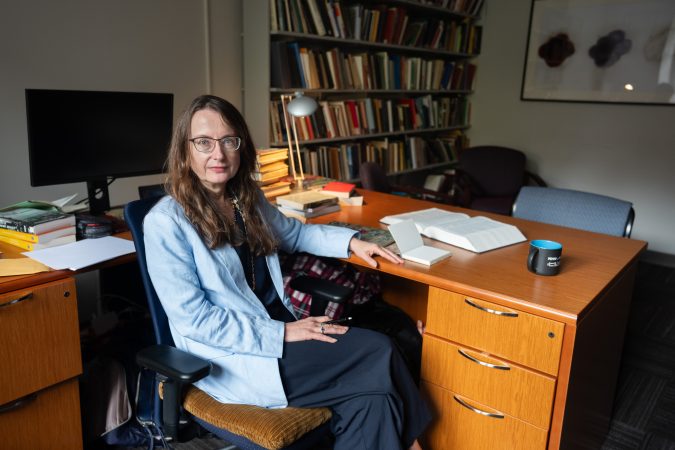
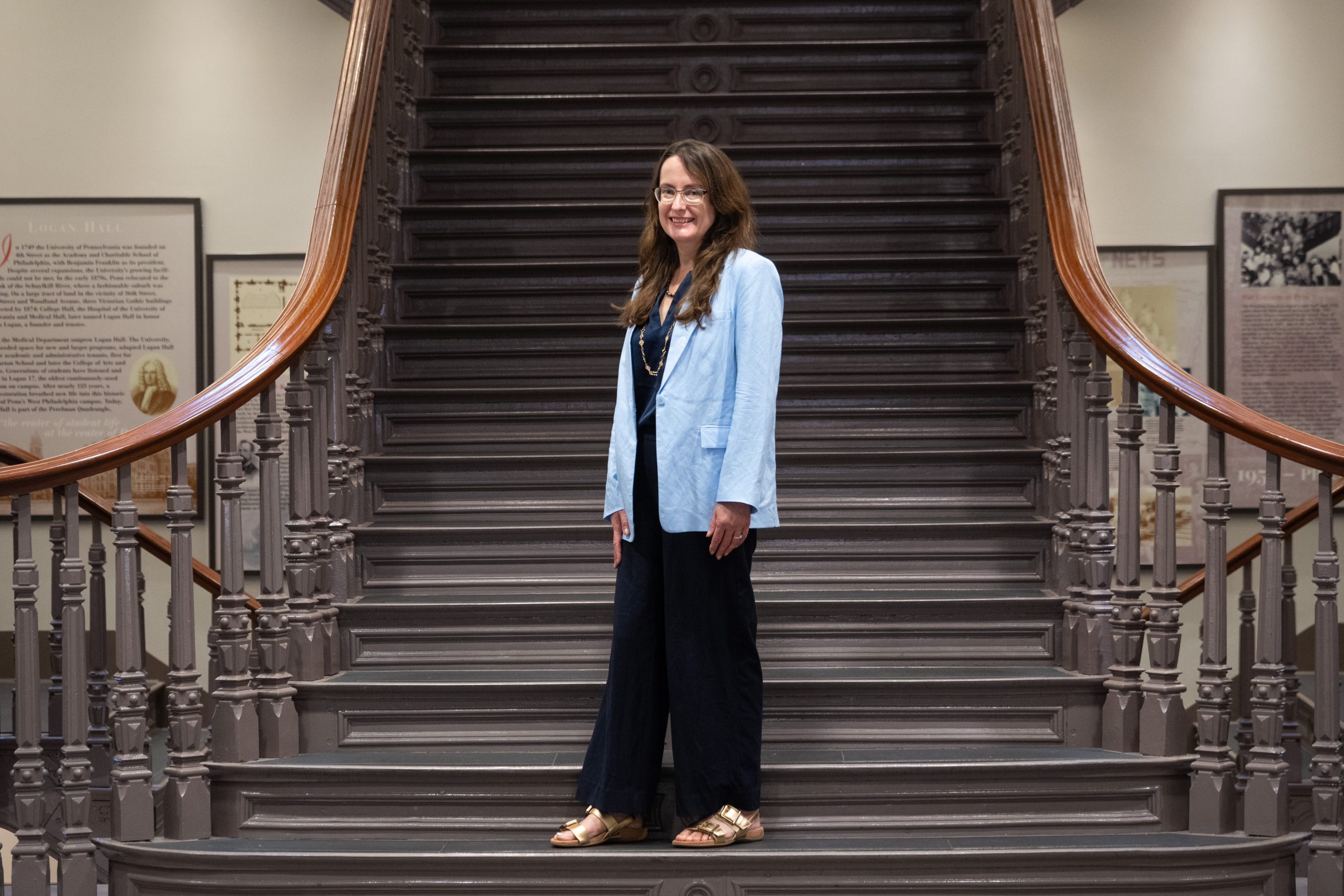
Professor Emily Wilson, in her office at the University of Pennsylvania, in Philadelphia, July 4, 2026.Jessica Griffin / Staff Photographer
Nolan’s film was a thrilling prospect for the classicist who made her name penning a quick-paced and strikingly contemporary translation of the nearly 2,700-year-old story for modern audiences. While the Oppenheimer director wrote his own version for the big screen, along with partner-collaborator Emma Thomas, he has cited several translations, including Wilson’s, as references.
“It’s great that there’s going to be a whole new wave of people who may not have thought much about The Odyssey, may not even be familiar with the narrative, who may then get excited about it, because Christopher Nolan is a big name,” said Wilson, who lives in West Philly with her partner, David Foreman, a Swarthmore College administrator, her two younger daughters, Psyche and Freya, their cats, Pumpkin and Spice, and their dog, Pepper. (Her eldest daughter, Imogen, just graduated from Temple University.)
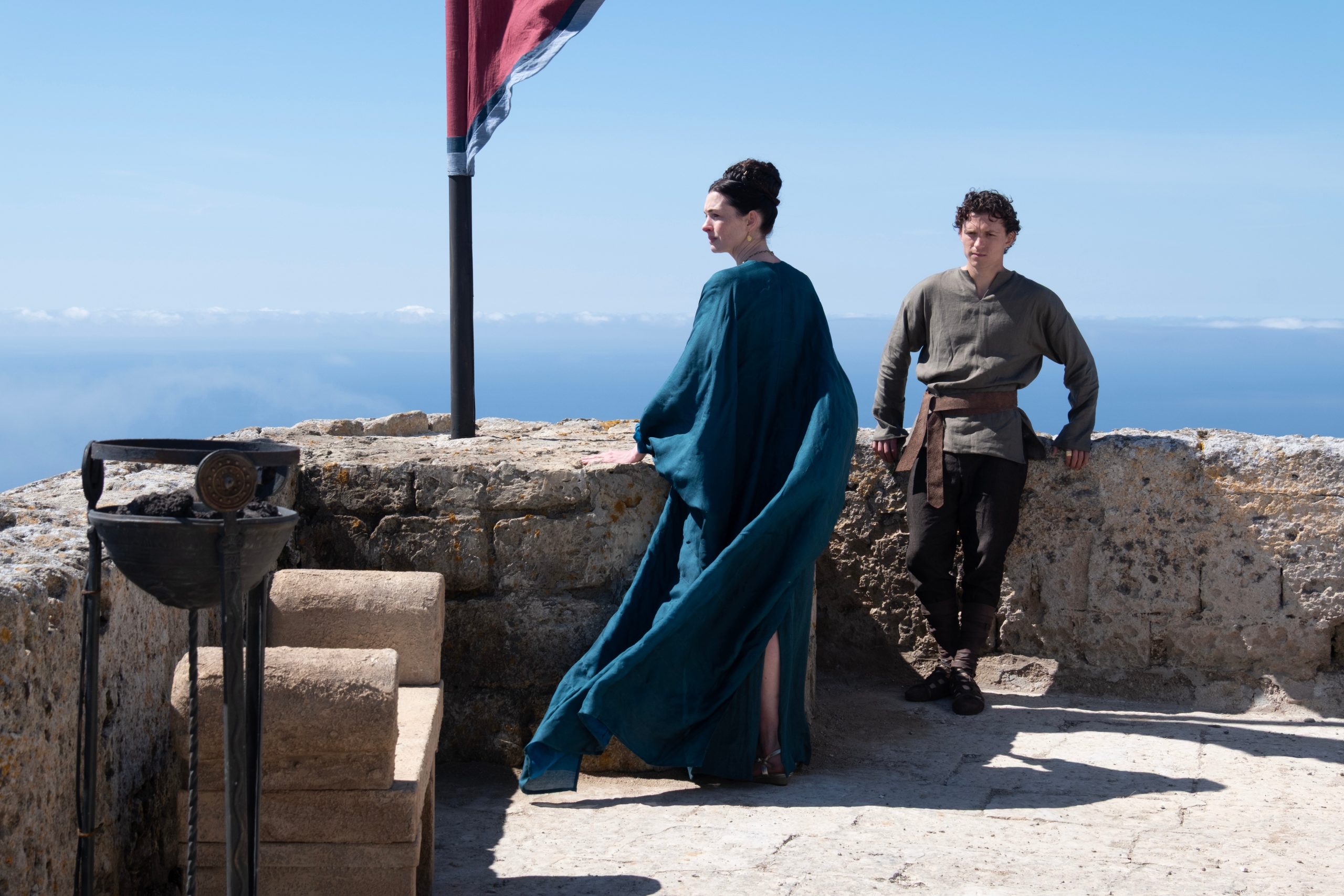
This image released by Universal Pictures shows, from left, Anne Hathaway as Penelope, and Tom Holland as Telemachus, in a scene from “The Odyssey.” (Melinda Sue Gordon/Universal Pictures via AP)Melinda Sue Gordon
The Nolan bump is already in effect: The Odyssey made $263.7 million globally on opening weekend, and it has been hailed as a total triumph for the filmmaker behind Inception and Interstellar. The cast features Nolan regulars like Matt Damon (Odysseus), Anne Hathaway (Penelope), Robert Pattinson (Antinous), and Elliot Page (Sinon), as well as Tom Holland (Telemachus, son of Odysseus and Penelope), Zendaya (Athena), John Leguizamo (Eumaeus), and Lupita Nyong’o (Helen of Troy/Clytemnestra).
But even before the red carpets and glitzy media tours, Wilson saw a surge of interest in her 2017 translation. Last year saw a significant increase in book sales following the film announcement, and those numbers have continued to rise into 2026, said Louise Brockett, head of communications at W.W. Norton & Co., Wilson’s publisher.
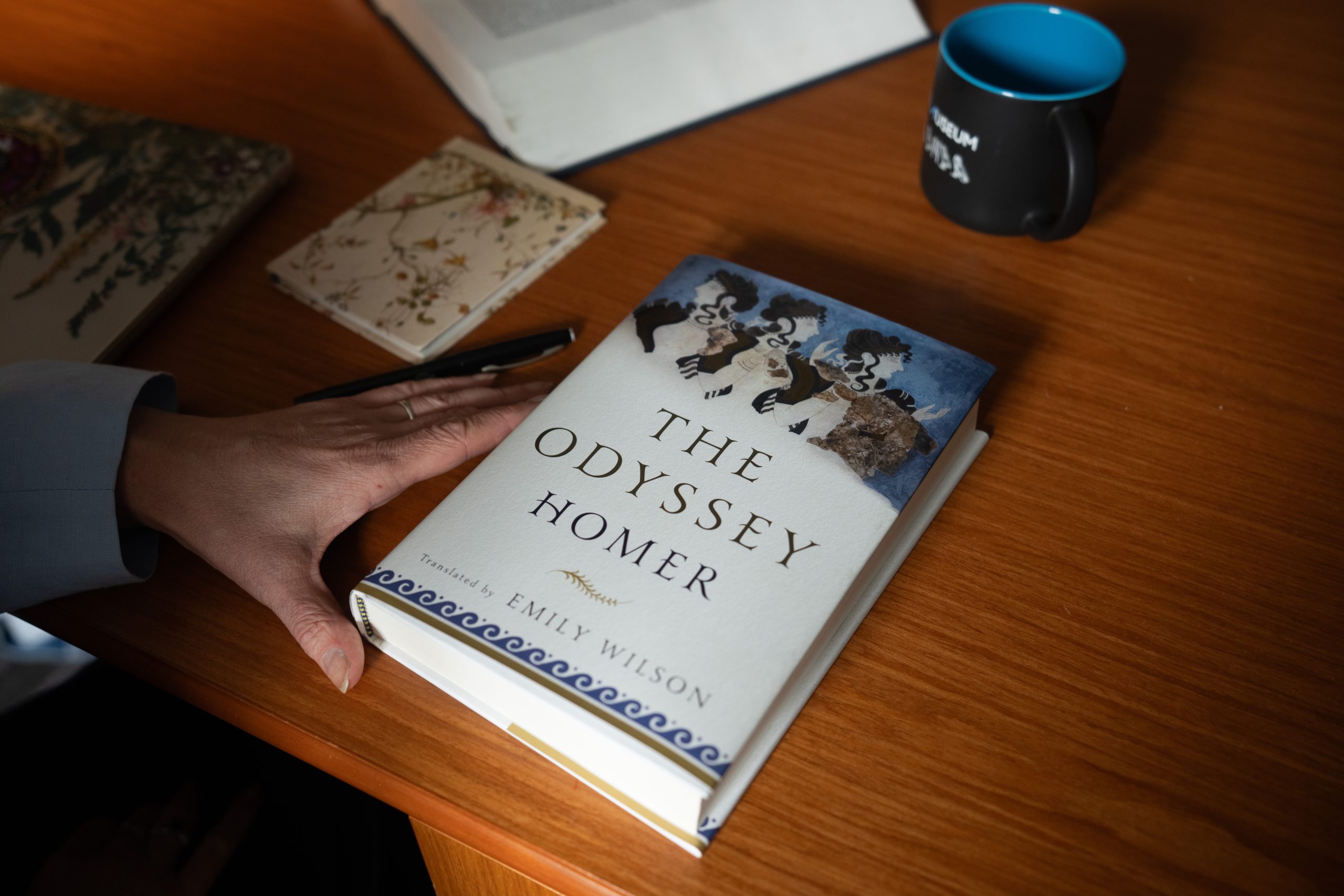
Professor Emily Wilson, in her office at the University of Pennsylvania, in Philadelphia, July 4, 2026.Jessica Griffin / Staff Photographer
As of July 2 this year, total sales reached a major milestone: “In 2026, notably, domestic sales across all formats surpassed 1,000,000 copies,” Brockett wrote in an email.
For Wilson, the overwhelming response has been stunning to witness. Long before The Odyssey again seized the zeitgeist, she took on the project with rather low expectations of readership.
“I remember being very much aware that most retranslations maybe sell 1,000 copies if you’re lucky … you’re going to work very, very hard on it for five years, and then maybe a tiny number of people will read it — and of course I thought it was still worthwhile,” said Wilson, who first became enamored with Greek mythology as a child growing up in Oxford, England.
Her book was a success, lauded for its compelling storytelling and accessible, modern language; it led to her being named a prestigious MacArthur “genius” fellow. With its release, Wilson also earned special recognition that initially surprised her: She was the first woman to publish an English translation of The Odyssey.
This image released by Universal Pictures shows director Christopher Nolan on set of “The Odyssey.” (Melinda Sue Gordon/Universal Pictures via AP)Melinda Sue Gordon
“I used lots of translations of Homer in my teaching, and it hadn’t actually occurred to me that they were all by men. It was only once that became the headline about my translation that I then looked back at it, and realized how there is a pattern here,” she said.
But that distinction does not quite resonate with her. While classical studies still tend to be male-dominated, Wilson said, literary studies feature many women scholars in classics who have made major strides in scholarship across generations before her.
“So I guess I partly want to push back against the idea that it’s completely unique to be a woman in classics, because it certainly isn’t,” she said. “There are many other women classicists, and I don’t want the headlines to serve as a way of erasing their work. It makes me really uncomfortable.”
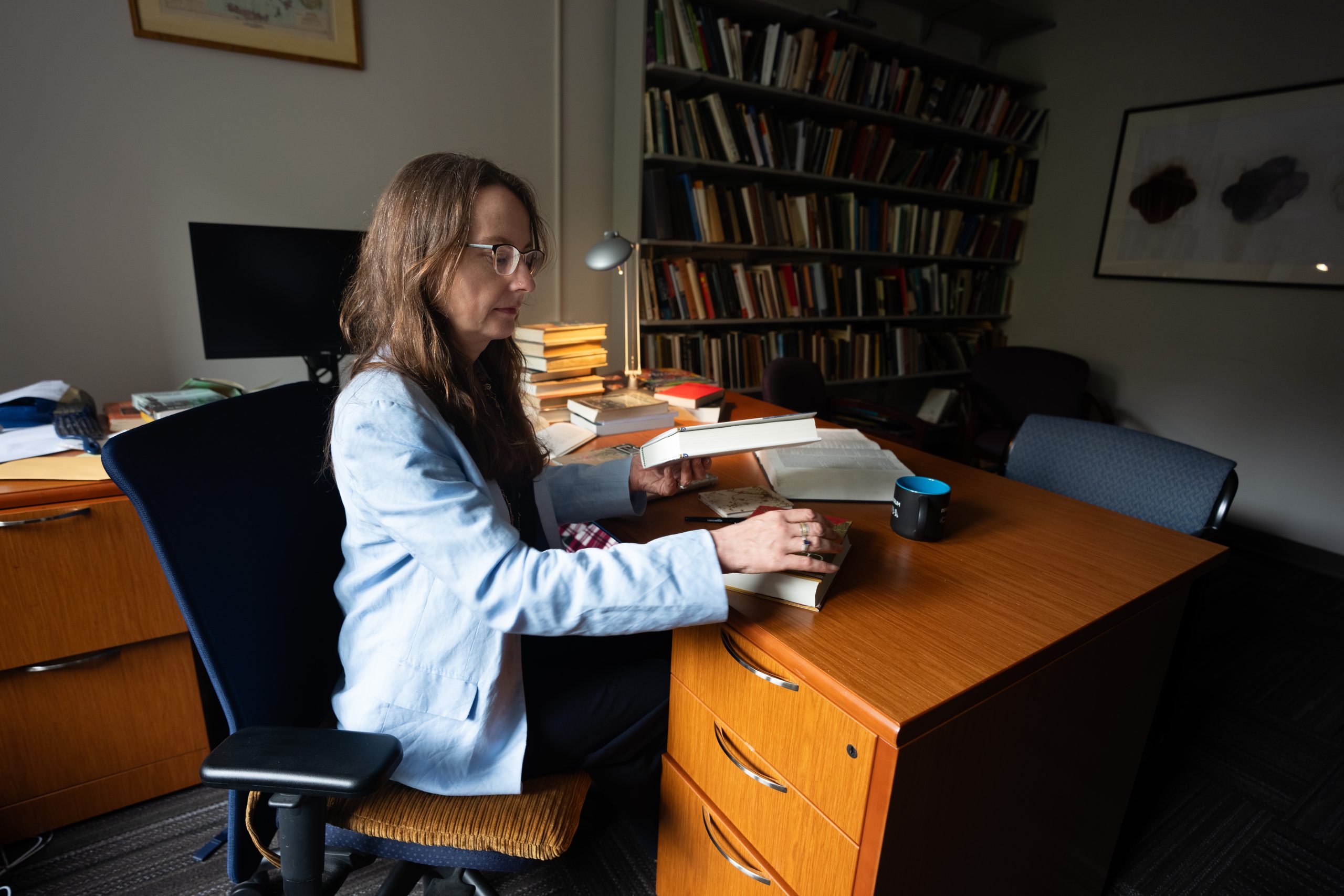
Professor Emily Wilson, at the University of Pennsylvania, in Philadelphia, July 4, 2026.Jessica Griffin / Staff Photographer
She doesn’t think her translation is inherently feminist because she has earned the title of “first.” A better example of a feminist retelling, for her, is Circe, Madeline Miller’s popular fantasy novel adaptation of several Greek myths, including The Odyssey. (Miller’s bookfocuses on the perspective of the eponymous witch who turns men into animals, played by a chilling Samantha Morton in the Nolan film.)
Still, Wilson’s translation provided new language that stripped away some of the previous translators’ gendered biases: For instance, when the poem mentions the servant women in Ithaca who cater to Penelope’s suitors, other translators called them “sluts” and “whores,” but Wilson eschewed those derogatory terms and instead opted for “slaves” and “house girls.”
That nuance, however, was lost when Nolan’s Odyssey became a proxy for culture wars on the internet. Scores of mostly male critics decried Nolan’s casting decisions as inaccurate for racist and transphobic reasons (many claim Helen of Troy, portrayed by Nyong’o, cannot be a Black woman).
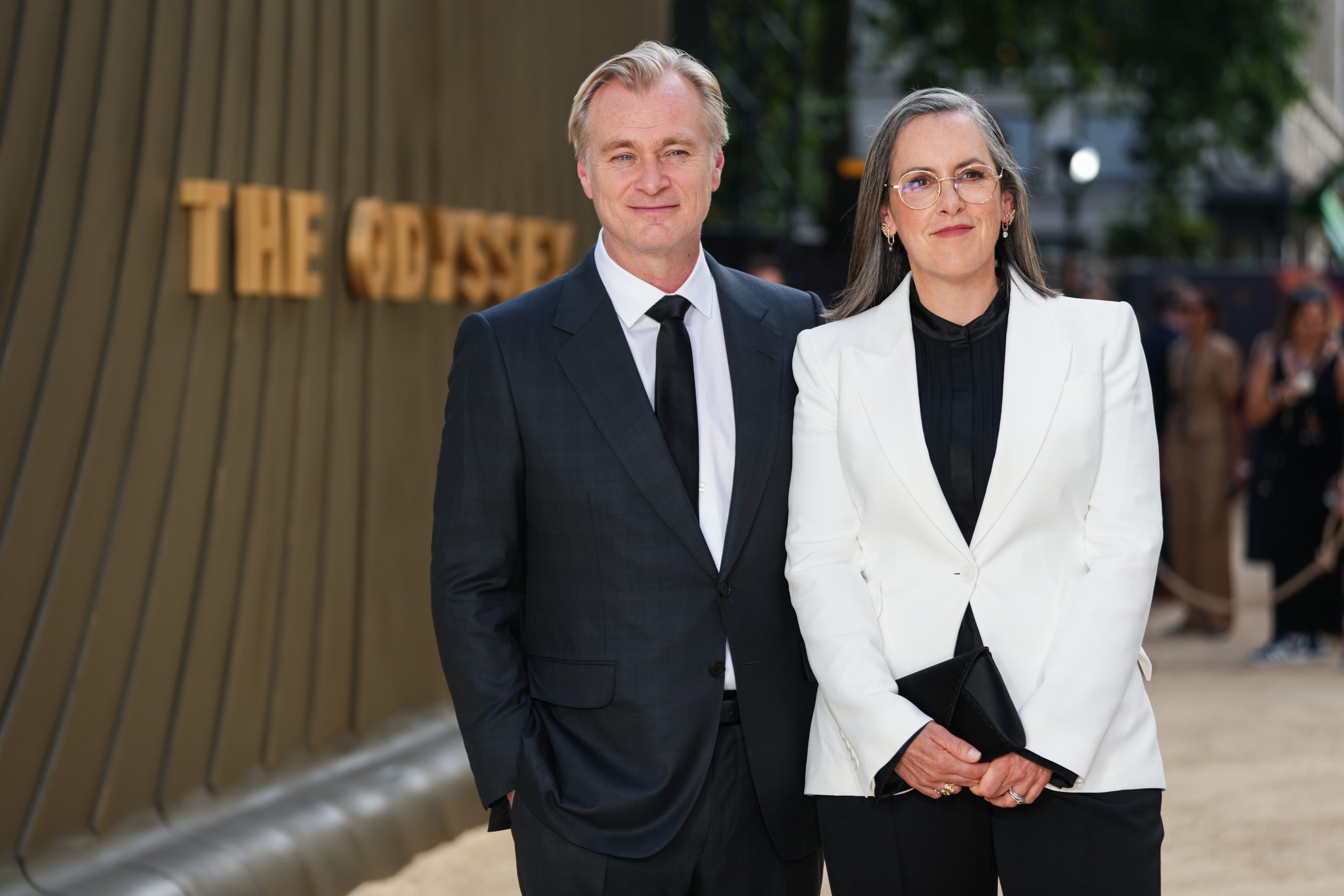
Director Christopher Nolan, left, and Emma Thomas pose for photographers upon arrival at the premiere of the film ‘The Odyssey’ on Monday, July 6, 2026, in London. (Photo by Scott A Garfitt/Invision/AP)Scott A Garfitt
Wilson herself has become a target for much of the outrage, too — so much so that she added a contact form to her website specifically marked for “misogynistic trolling” alongside the other button for “kind words and praise.”
She has brushed off the noise, though, and kept working at her craft with little regard for the haters who believe The Odyssey is meant to portray only one demographic.
From more than two decades of teaching, she knows they are simply wrong because these myths hold universal power.
“It is really exciting to see just how many young people, especially young women, are fired up about ancient literature and classics in a new way,” she said. “It’s a whole wave of current classical scholarship and books for the general public that are showing that these texts are not just for men, not just for white people, not just for any particular modern demographic. … This is a subject that anyone from any background can engage with.”
Wilson’s teen daughters have been swept up in the Nolan excitement, too. After Zendaya was pictured holding her book, Wilson’s daughters were thrilled.
“There’s nobody cooler than Zendaya, obviously, so now I’ve made it,” she said, laughing.
Beyond all the film news, Wilson is now hard at work on another translation of The Odyssey with different parameters than her first; primarily that it will be longer. Maybe Nolan’s film will spark some new ideas.
Her next release, Crossing the Wine-Dark Sea: Journeys Through Ancient Literature, comes out this fall. It is a series of essays about her translation process and the work of connecting modern audiences with ancient literature.
It can serve as a blueprint for anyone else eager, like her and Nolan, to take on an epic challenge.
The headline and the article were updated to reflect updated information from the publishing house. The book’s all-time sales surpassed 1 million in 2026.
My neighbor installed a camera doorbell that can see my entire porch. We do have packages taken occasionally, so I get the desire to have one, but I don’t want to be constantly filmed when I’m on my steps. Our houses are so narrow that I don’t know if it would be possible for him to have one of those doorbells without filming my steps. How do I approach this with him?
Mike Newall
OK, BackThatCameraUp, given the presence of one of Philly’s premiere music writers in this chat, we should begin with a musical exercise.
Play “What’s He Building” by Tom Waits, a song about a possibly creepy neighbor and suburban paranoia. If that song sounds even remotely like your neighbor, then we have a different conversation.
If not, I think we got some questions, like let’s talk porch dimensions here.
Earl Hopkins
Haha you hit it right on the head, Mike! Ask if the camera can be adjusted so you’re not being surveilled.
Plus, that will stop triggering so many false alarms to his phone or devices.
Mike Newall
Yeah, I think there are a few questions and realities here.
The porch: Are we talking South Philly top step or the great vastness of a northwest porch. Are you resting in the sun on this porch? Or throwing groovy bacchanals?
Also, if you live in the city, you’re on tape my friend.
Earl Hopkins
That’s true. If you’re in South Philly, there’s not much that can be done. I understand the discomfort of being surveilled by your neighbor, but it’s not like the camera is pointed in your living room. That’s a part of rowhouse living you have to accept. It doesn’t hurt to ask though.
Mike Newall
You got a right not to be surveilled like a common criminal (or an adult person who very likely enjoys picking your nose in privacy on your top step because who doesn’t?) and your neighbor has a right to feel protected.
The answer to so many of the questions are: have a conversation.
But, Earl, you’re a younger and cooler dude than me. What happens if the conversation fails?
Earl Hopkins
If conversations fail, it’s simple: A war of doorbell cameras will break out, forcing each of them to point one at one another — like cowboys’ revolvers in the Old West.
Mike Newall
Yeah and the upside is you’ll have access to all those cute front porch videos, like when a raccoon sniffs your mail slot (does that only happen in East Passyunk?).
Earl Hopkins
But seriously: I can’t imagine the conversation will veer too far left. More likely than not, the neighbor will adjust his camera, or try to make some kind of concession. At worst, there will be clarity from both sides.
Have you had a similar dispute Mike? You’re a South Philly resident, through and through. How did you handle it?
Mike Newall
No, I haven’t. My neighbors are all pretty tight knit. We do right by each other and look out. And I have definitely never ever picked my nose on the top step. Doesn’t happen.
Earl Hopkins
Let’s pull the tape and see for ourselves. For journalism purposes, of course.
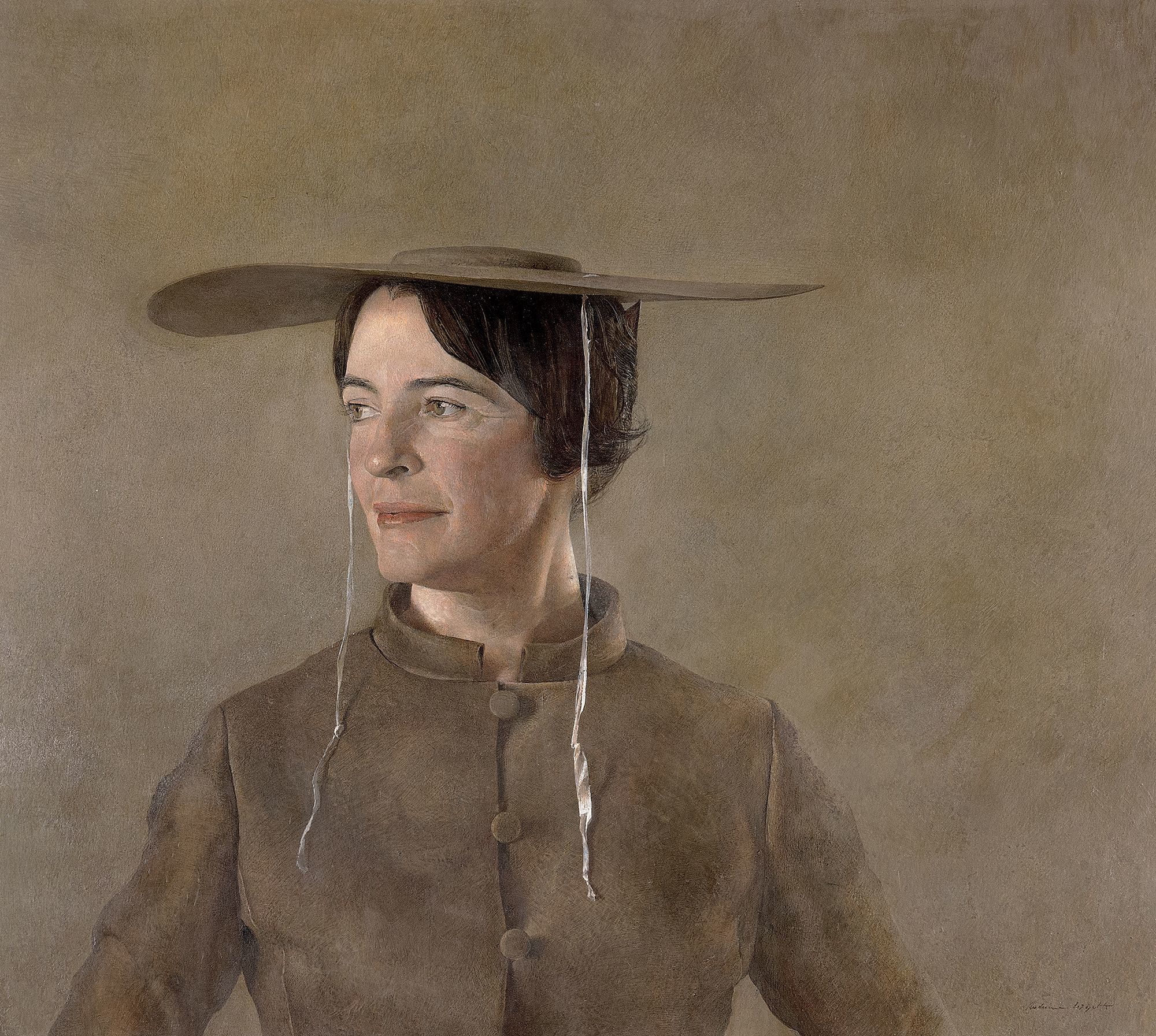
There’s plenty of and about Betsy Wyeth’s potent aesthetic in “By Design: The Worlds of Betsy James Wyeth,” currently on view at the Brandywine Museum of Art. In her adaptive reuse of early American buildings in Maine and the Brandywine — in everything she touched, really — Wyeth’s design sense is specific and immediately recognizable: a cool, austere echo of Shaker and other American vernacular styles.
The show’s star is Brinton’s Mill, the Chadds Ford complex of 18th-century (and later) structures that, with Betsy’s extensive renovations, became the distinctive place where she and her husband, the artist Andrew Wyeth, lived and worked. The shrine is now open to visitors for the first time.
But to take the full measure of Betsy Wyeth, you will want to read the show catalog of the same name (Rizzoli Electa, $65). Here, in a series of essays and reminiscences, Wyeth emerges as a shrewd businesswoman and impresaria — mastermind of a “generally understood, unified Andrew Wyeth brand,” as Wyeth curator and administrator William L. Coleman puts it in the opening essay.
As you’d expect, the book is filled with illustrations: Andrew Wyeth paintings, striking photos of the craggy Brandywine and Maine landscapes, and structures that make up the familial Wyeth visual language, as well as images of Betsy, always formidable.
Perhaps the sharpest image, though, comes in written form, from author David Michaelis on the partnership between Betsy and Andrew.
We already knew that she handled just about everything that needed doing in order to free her husband to paint. But what Michaelis beautifully details is how deeply involved she was in the art itself — giving titles to his work and exerting influence over the color, composition, and subject matter.
In many ways, Betsy spent her life creating the aesthetic for which Andrew is known.
She urged him to simplify, to take things out of paintings he wanted to include.
“You’re going to ruin it,” he would protest.
Then, Michaelis wrote, he would go off and do exactly as she said.
“By Design: The Worlds of Betsy James Wyeth” is on view at the Brandywine Museum of Art, 1 Hoffman’s Mill Road in Chadds Ford, through Jan. 10. Related exhibitions are running at the Farnsworth Art Museum in Rockland, Maine, through Dec. 31; and at Colby College Museum of Art in Waterville, Maine, through Nov. 2. brandywine.org/museum
— Peter Dobrin
A portal to Black girlhood in a Library Company artifact
Nearly every Friday night when I was a child, my mother washed my hair, conditioned it, sectioned it into four parts, and let it dry overnight.
The next morning, we’d take our places next to the kitchen stove and turn the channel to Soul Train on our small black-and-white TV. Mommy oiled my scalp again then, with a fiery iron comb that had the tiniest teeth, she straightened each section of my hair; making my tresses sizzle. Sometimes the comb would kiss my ear. When she was done, I had shiny shoulder-length hair with a flip on the bottom.
I don’t remember when she first told me about Sarah Breedlove, also known as Madam C.J. Walker. But by the time I was 10, I knew, without a shadow of a doubt, that because of her, Black women everywhere knew how to press hair. Her haircare business made her the first Black woman millionaire during the early 1900s at the dawn of the Harlem Renaissance.
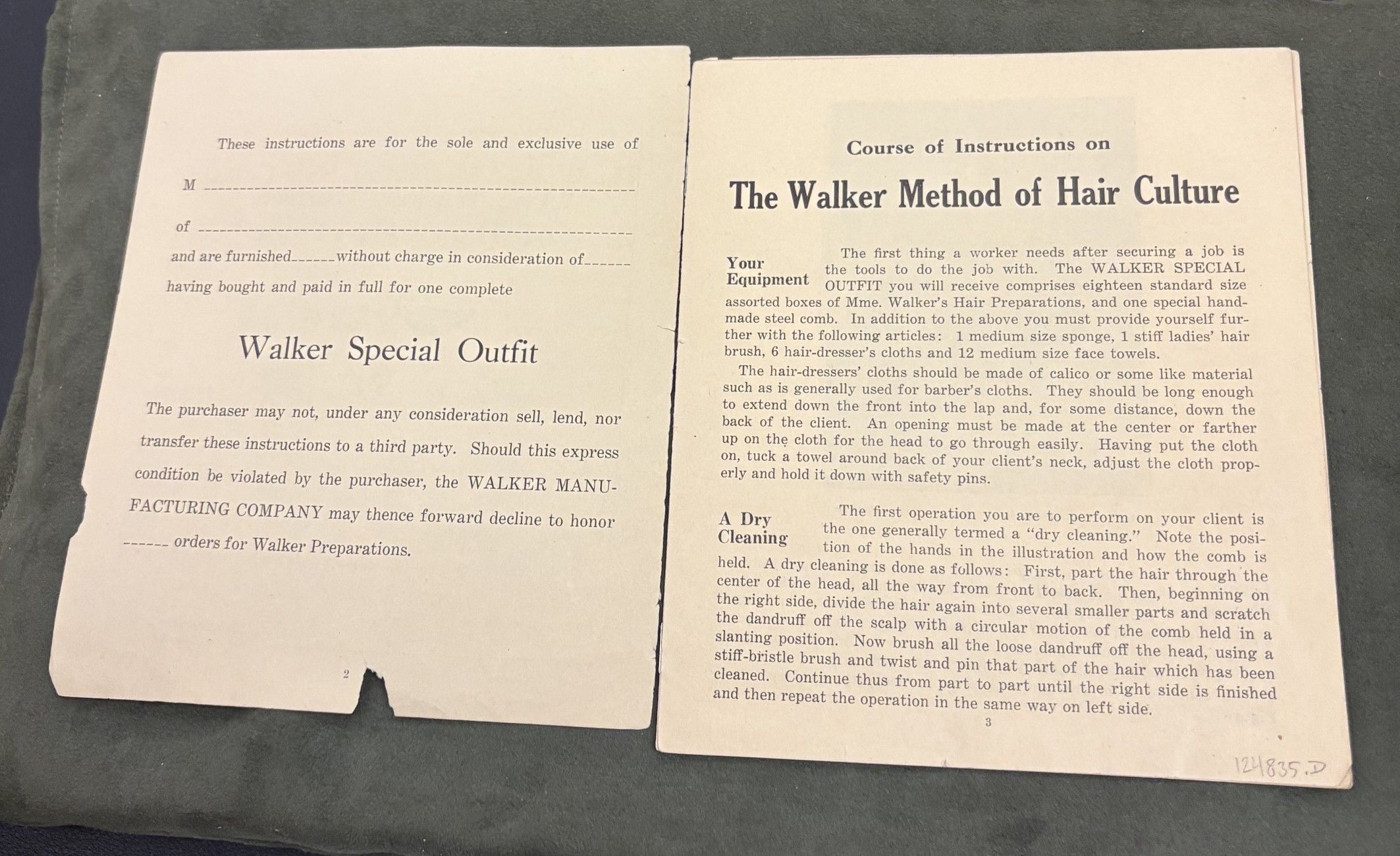
The first page of this early 1900s pamphlet explaining Madam CJ Walker’s Walker Method to salon owners.The Library Company of Philadelphia
Walker trained hundreds, possibly thousands, of Black women on how to use the hot comb in a technique she called the Walker Method. Black salons practicing the method became staples in Black neighborhoods and raised many Black women entrepreneurs.
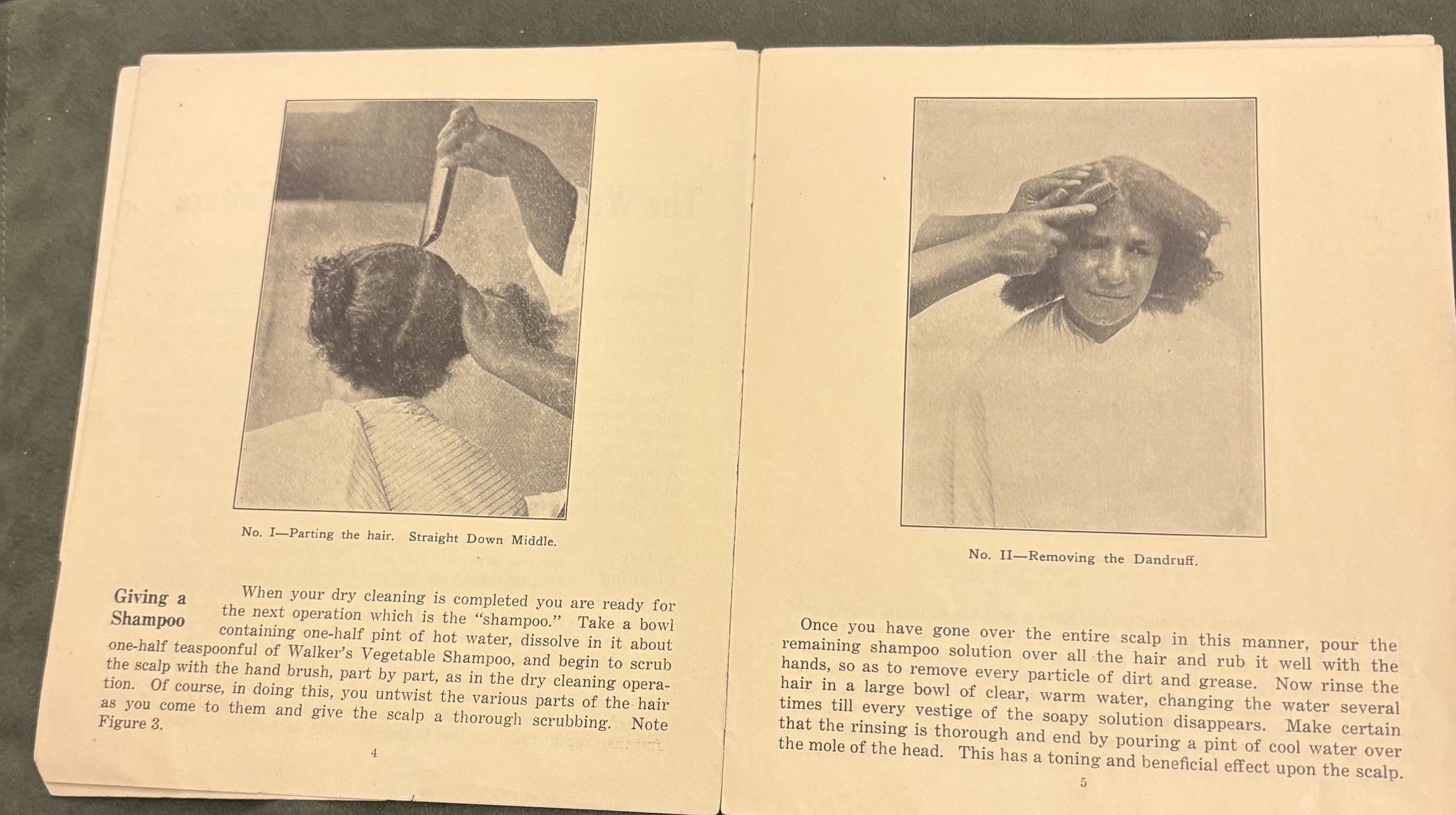
The Library Company of Philadelphia recently purchased one of the original pamphlets describing the Walker Method, step-by-step, and what was included in the Walker Special Outfit, the all-inclusive entrepreneurial kit. That included a stiff hair brush, face towels, Walker’s specially formulated conditioning concoction, a smock — that Walker refers to as a hairdresser’s cloth — and, of course, a handmade steel comb.
After a thorough shampoo and conditioning, the hairdressing is applied and each section of the hair is methodically straightened.
Just reading these instructions brought me back to my girlhood, before chemical relaxers, weaves, and extensions became the norm.
Step-by-step instructions of how to do Madam CJ Walker’s Walker Method to salon owners. The pamphlet was given to Black salon owners in the early 1900s.The Library Company of Philadelphia
Wynn Eakins, the Library Company of Philadelphia’s African Americana subject specialist, acquired the pamphlet earlier this year, paying a few thousand dollars for it.
Like her, I believe it was worth every penny.
Getting my hair pressed every week wasn’t just my introduction to a beauty regimen, it was how I bonded with my mother and other Black women.
Funny thing is, I took for granted that Black women always knew how to do press hair. For better or worse, this skill is in our DNA. The Walker Method pamphlet reminded me of a time when pressing hair was new technology and it’s a reminder that every American experience has a history that’s worth saving and remembering.
The Library Company of Philadelphia is located at 1314 Locust St., librarycompany.org
— Elizabeth Wellington
A Bicentennial logo makes a nostalgic comeback during the Semiquincentennial
A vintage print of the logo that was sold by Sales by Helen in 2023.Courtesy of Sales by Helen
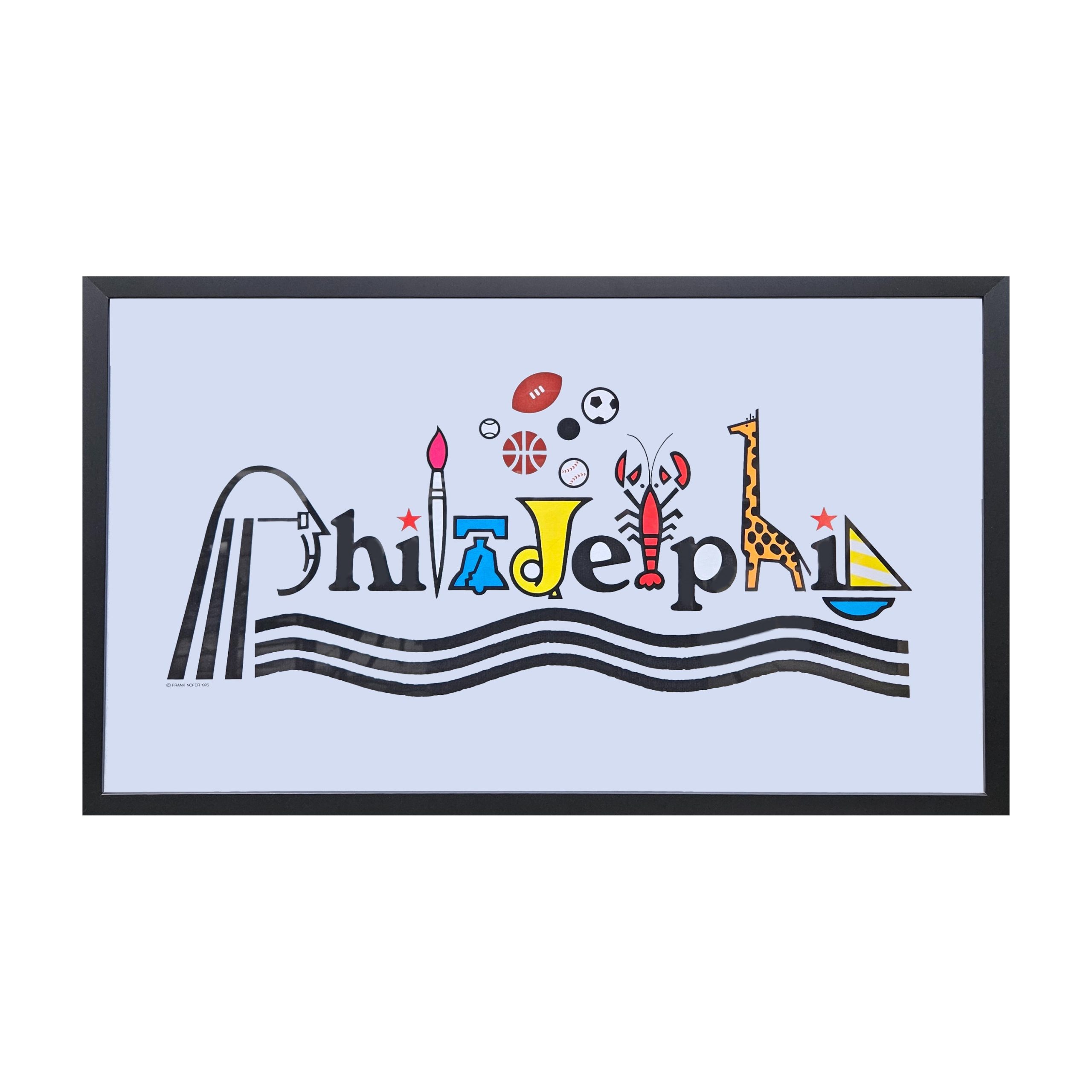
How much has Philly changed from the Bicentennial to the Semiquincentennial? Not much, by the looks of the 1976 Bicentennial logo.
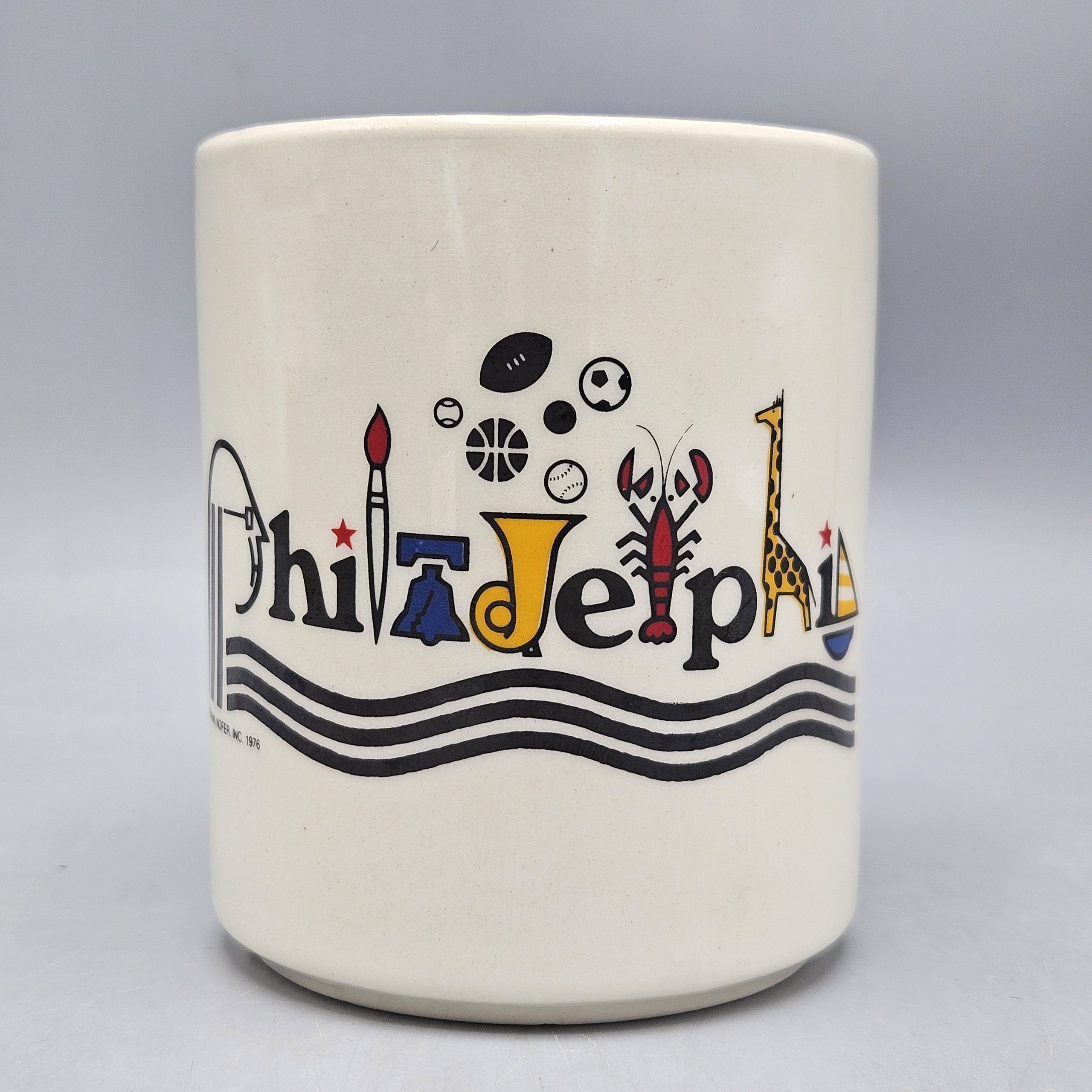
Created by Philadelphia graphic designer and watercolor painter Frank Nofer, the logo features several iconic symbols of Philadelphia standing in for the letters in the city’s name. After copyrighting, Nofer’s logo was printed on seemingly infinite pieces of merchandise, from T-shirts to mugs to ashtrays.
There are historic references, like Benjamin Franklin and the Liberty Bell. The logo also features a paintbrush and tuba to represent the city’s arts scene, sports balls for our athletic passion, a giraffe for the zoo, and a sailboat for the rivers on either side of Philly.
There is one outdated reference: a lobster as the second “l,” a reference to the now-closed seafood restaurant Bookbinder’s. The Old City spot, which shut down in 2009, was world famous for its oysters and lobster. Though it may not be relevant to 2026 Philadelphia, that little lobster is sure to spark nostalgia for anyone who lived in the area before the 2010s.
Frank Nofer’s “Philadelphia” logo featured on a mug, one of many pieces of merchandise.Courtesy of Sales by Helen
Now, 50 years later, merchandise featuring the logo is no longer sold anew. But vintage pieces have been popping up on eBay (which is where I saw it). Per the comments on a Facebook post from someone who purchased a Nofer “Philadelphia” T-shirt on eBay, several people have held onto their merchandise, praising the design.
The logo feels timeless, while also maintaining the funky nature of the 1970s. If you have a piece from 50 years ago, I say hold onto it — whether to admire it, or to make a pretty penny from it online.
— Morgan Ritter
Ben Vaughn. His new song with Deer Tick is “Imitation Wood Grain.” Vaughn’s just-announced album “Magnetic East: The Deer Tick Sessions” is due on Yep Roc Records in October.Shana Cassidy
A vintage Ben Vaughn brings back the romance of “the South Jersey pines”
Now, Vaughn is getting the elder statesman treatment himself. Back in 2019, Providence, R.I., rock band Deer Tick did a cover version of Vaughn’s 1990 song “Too Sensitive for This World,” featuring John Hiatt whistling in the background.
The band’s fandom has resulted in a friendship and playing shows together, and now a forthcoming Ben Vaughn album called Magnetic East: The Deer Tick Sessionsdue out Oct. 30 on Yep Roc Records.
This week, “Imitation Wood Grain,” the first track from the album was released.
“Inspired by a visit to the thrift store, it’s probably [the] most nostalgic song I’ve ever written,” Vaughn wrote in a Facebook post. It’s also vintage Vaughn; a clever, well-crafted ironic-yet-not-ironic song that meshes with Deer Tick’s own bemused sensibility (and features Vanessa Carlton on backing vocals).
Kitschy details in the lyrics — the sight of an old clock radio or a fake wood-paneled hotel hallway — do the Proustian job of bringing back memories of the romance of cruising through “the South Jersey pines” in the good old days, “when you were mine.”
Before you start pointing out that he’s 41, remember who we’re talking about. This is arguably the greatest basketball player of his generation — one of the few athletes whose name alone can change the mood of an entire city. There will be plenty of time to debate how much he has left in the tank.
But now isn’t the time.
Now is the time for imagining LeBron in a Sixers jersey. It’s for checking the schedule, texting your friends in all caps and wondering how quickly the team store can stock No. 23.
Will this end with a championship? Nobody knows. But sports are supposed to be fun, and this is fun.
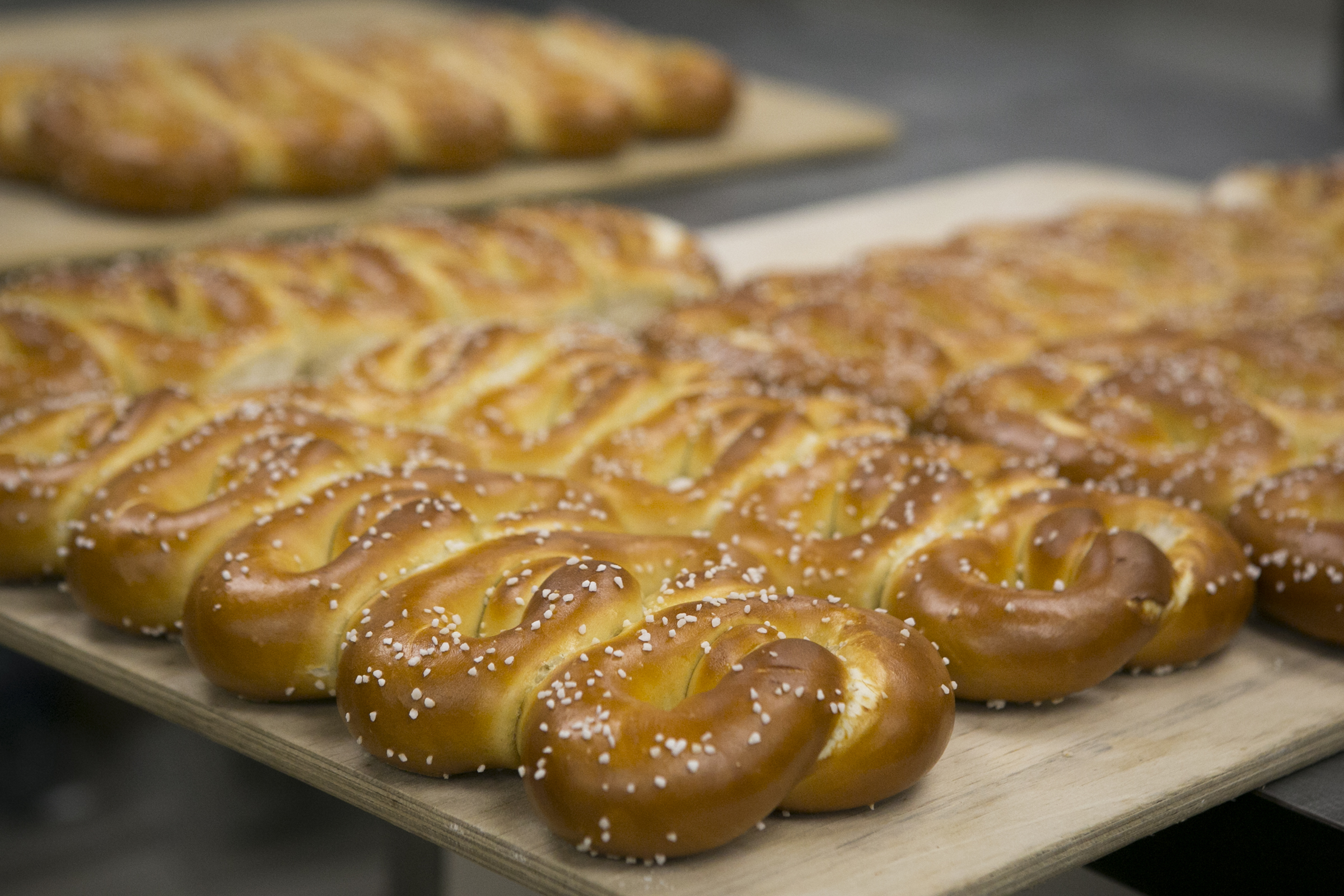
Freshly baked “penny pretzels” cool in the test kitchen at Philly Pretzel Factory headquarters in Bensalem, Pa., on the morning of Thursday, August 9, 2018.MAGGIE LOESCH / Staff Photographer
Keep your protein out of my pretzel: C
There are plenty of places to squeeze in an extra 20 grams of protein. A Philadelphia soft pretzel shouldn’t be one of them.
Sure, the business logic is there. But some foods don’t need to become “functional.” They already have a purpose.
A Philly soft pretzel isn’t just a snack. It’s breakfast after a youth soccer game, lunch when you’re running late. It’s something you grab at a Wawa, a corner store, or outside the stadium without giving a second thought. It’s warm, salty, a little messy, and unapologetically carb-heavy.
We’ve spent years turning ice cream into protein shakes, cookies into protein bars, and cereal into a dietary supplement. Now we’re coming for the pretzel? Somewhere, Gritty is shaking his fuzzy orange head.
If you want more protein, eat some chicken. Leave the pretzel alone.
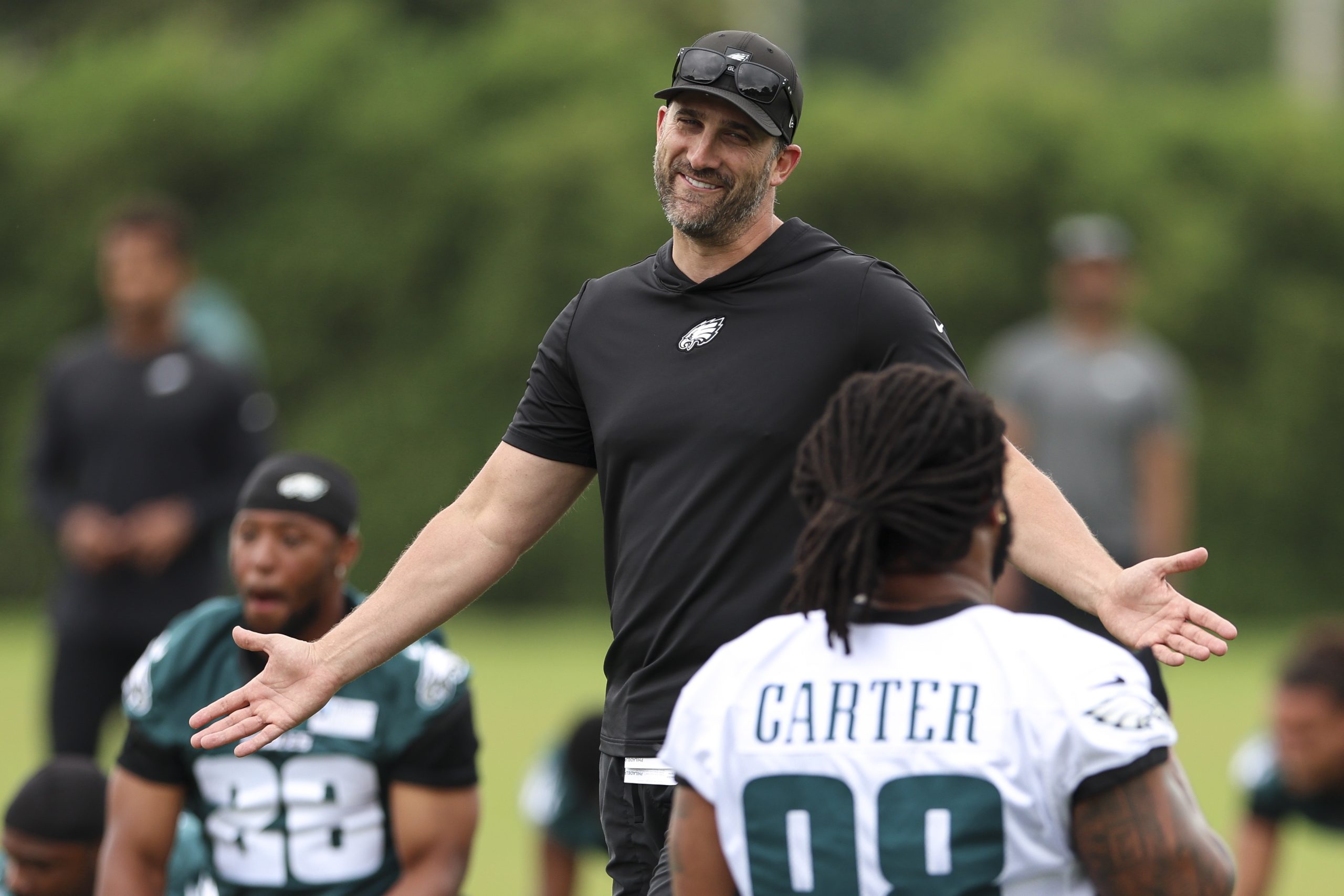
Philadelphia Eagles head coach Nick Sirianni laughs with defensive tackle Jalen Carter during mandatory mini-camp at the Jefferson Health Training Complex on Wednesday, June 10, 2026, in Philadelphia.Monica Herndon / Staff Photographer
Nick Sirianni’s AI pep talks: D
The robots aren’t taking over the Eagles playbook just yet. Instead, Nick Sirianni says he’s been using ChatGPT to find inspirational sports stories to share with his players, according to The Athletic.
Somewhere, decades of coaches who relied on Remember the Titans, grainy YouTube highlight reels, and laminated printouts with motivational quotes are shaking their heads.
Apparently even locker room speeches have entered the AI era.
It’s objectively funny to imagine Sirianni sitting at his computer typing, “Give me a great relentless effort true sports story,” before walking into a room full of NFL players.
Then again, maybe this is just what coaching looks like in 2026. At least he’s using ChatGPT to inspire the team — not to draw up game plays.
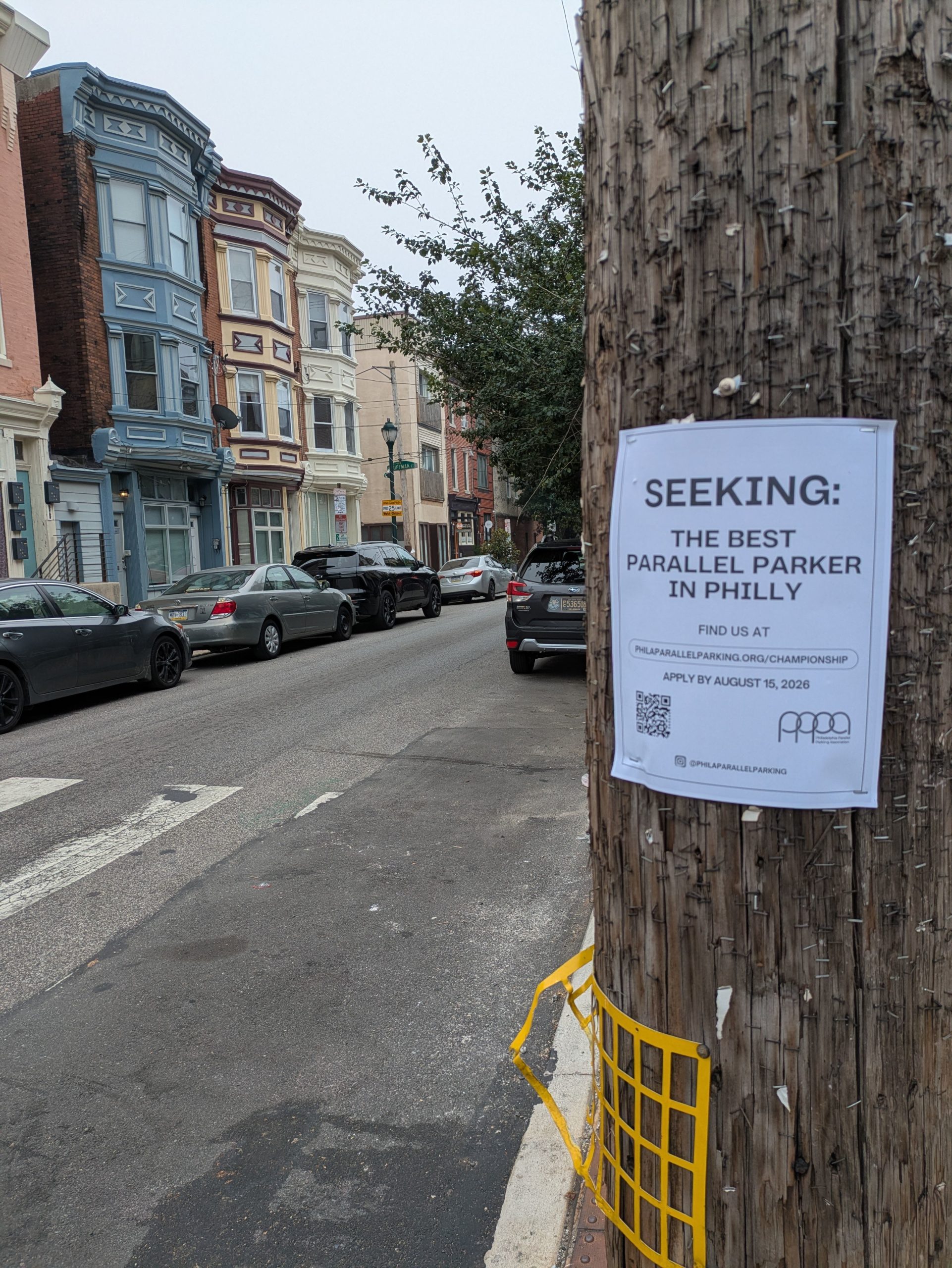
A sign advertising the 2026 Philadelphia Parallel Parking Association Championship is affixed to a pole across from some fine examples of parallel parking in the city.Courtesy of Adam Wodka
Competitive parallel parking: A
There are two types of Philadelphians. Those who dread parallel parking, and those who quietly believe they’re among the best to ever do it.
This is a city where successfully squeezing into a parking spot the size of a shoebox earns applause from strangers, where people take it personally when someone leaves three feet between bumpers, and where every South Philly resident has at least one story about fitting into a space they probably shouldn’t have.
The organizers somehow made it even more Philly by including an “under duress” category, complete with a savesies chair, an angry neighbor yelling that the spot is reserved for their granddaughter, honking traffic, and other distractions. That’s less a competition than an average Tuesday.
The winner gets $76… just enough to cover your next parking ticket, and the most Philadelphia prize imaginable.
The worst part? Players from the Nationals, Yankees, and even the Dodgers got it right. Come on, Bryce. You’ve spent years playing in the birthplace of American democracy. We weren’t expecting a dissertation on the Continental Congress, we just wanted 1776. Heck, the basketball team that plays across the parking lot isn’t called the 75ers.
Then again, if the price of 40 home runs is occasionally forgetting what year America declared independence, that’s probably a trade Phillies fans are willing to make.
$1,500 in Philly rent: B
Nobody is going to look at 591 square feet and say, “Wow, what a palace.” That’s about what $1,500 a month gets you in Philadelphia, according to a new RentCafe study. It’s smaller than the national average and not even enough for a typical one-bedroom apartment.
But perspective matters.
In Manhattan, the same $1,500 gets you about 210 square feet — roughly enough room for a bed, a mini fridge and an existential crisis (a dorm room, essentially). In Boston, it won’t even cover a studio.
So suddenly, Philly’s 591 square feet starts looking… respectable.
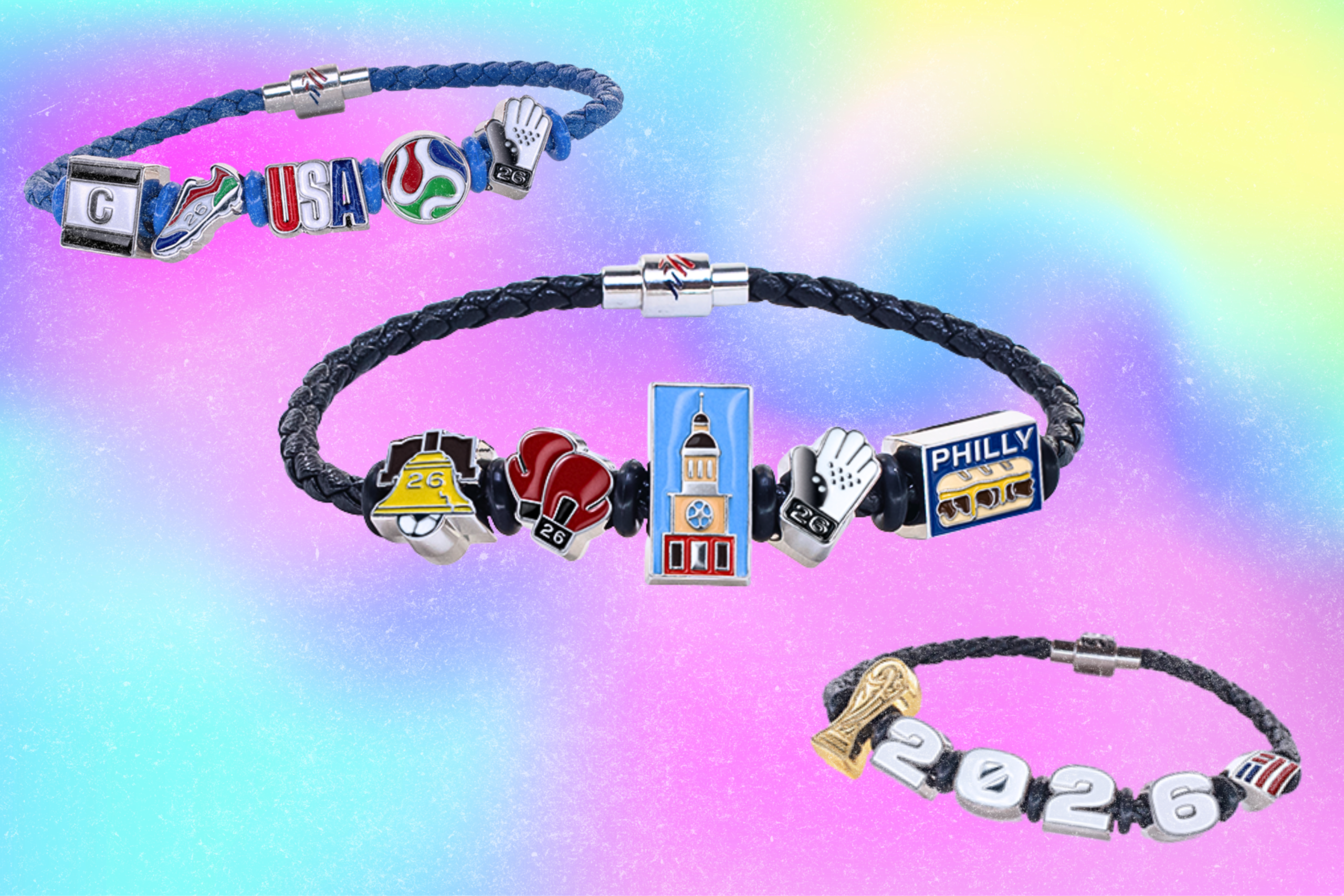
A free charm bracelet available at FIFA Fan Festivals nationwide, including Philadelphia’s in Lemon Hill, had fans waiting hours in line to get one. Bank of America is behind the coveted Fan Bands, drawing hours-long lines.Emily Bloch / Staff illustration / Bank of America
Nothing stays free for long: A-
The World Cup ended, everyone went home, and right on schedule, the internet got to work.
Remember those free Bank of America charm bracelets that had people waiting in line for hours at Lemon Hill?
Honestly, you almost have to respect the hustle. If someone is willing to pay $150 because they didn’t want to stand in a four-hour line for a tiny cheesesteak charm, that’s capitalism doing what capitalism does.
Did you know islands dwell on the Delaware and Schuylkill? We’ll show you a photo taken on a Philly-area island, you drop a pin where you think it was taken. Closer to the location results in a better score. Good luck!
Round #43
Question 1
Where is this historic house?
Loading…
ClickTap on map to guess the location in the photo
ClickTap again to change your guess and hit submit when you're happy
You will be scored at the end. The closer to the location the better the score
Don Nigroni / Spotlight PA
Pretty good/Not bad/Way off! Your guess was from the location.Spot on! Your guess was exactly at the location. Here's also where a random selection of Inquirer readers guessed.
Fort Mifflin, an American Revolutionary War historic site, is located on Mud Island along the Delaware. Situated in the shadow of Philadelphia International Airport, the surrounding wetlands were drained in the 19th century, connecting the island to the western bank of the river.
Quiz continues after ad
Question 2
Where is this mural?
Loading…
Jose F. Moreno / Staff Photographer
Pretty good/Not bad/Way off! Your guess was from the location.Spot on! Your guess was exactly at the location. Here's also where a random selection of Inquirer readers guessed.
Viewed from the Manayunk towpath, this mural is located on Venice Island, one of the city's lowest-lying areas. A narrow wedge of land spanning nearly 70 acres and approximately 1.7 miles in length, the island lies between the Schuylkill and the Manayunk Canal.
Quiz continues after ad
Question 3
Where is this trail?
Loading…
Jose F. Moreno / Staff Photographer
Pretty good/Not bad/Way off! Your guess was from the location.Spot on! Your guess was exactly at the location. Here's also where a random selection of Inquirer readers guessed.
The Fairmount Water Works Trail and Boardwalk is a short section of the Schuylkill River Trail that extends onto an island behind Lloyd Hall. According to Billy Penn, the island is unofficially known as the Isle of Jean, named by Philadelphia resident Jean Knight.
Your Score
ARank
🏝️ Amazing work. Isle be impressed.
BRank
⛵Good stuff. That was smooth sailing.
CRank
🚣♀️ C is a passing grade, but you meandered a little.
DRank
🤿 D isn’t great, it’s low-lying territory.
FRank
🌊 We don’t want to say you failed, but you disappeared beneath the tide.
You beat % of other Inquirer readers.
We’ll be back next Saturday for another round of Citywide Quest.
There was one especially pleasant weekend back in June, as summer was officially arriving and Philly was in the middle of hosting three Group Stage matches for the World Cup. It was breezy with sunshine and low humidity and temperatures in the mid-80s; nothing like two weekends later as America turned 250 and temperatures hit 101 degrees or higher for three days in a row, the first time that happened in over 150 years of record keeping.
Between covering some news that weekend, I walked around Center City just soaking up the street scene. It wasn’t just the wonderful weather, but an international vibe that was welcoming and friendly. I watched visitors speaking multiple languages rolling suitcases in and out of hotels and ride share cars, and saw sidewalk cafes overflowing with different colored jerseys and scarves.
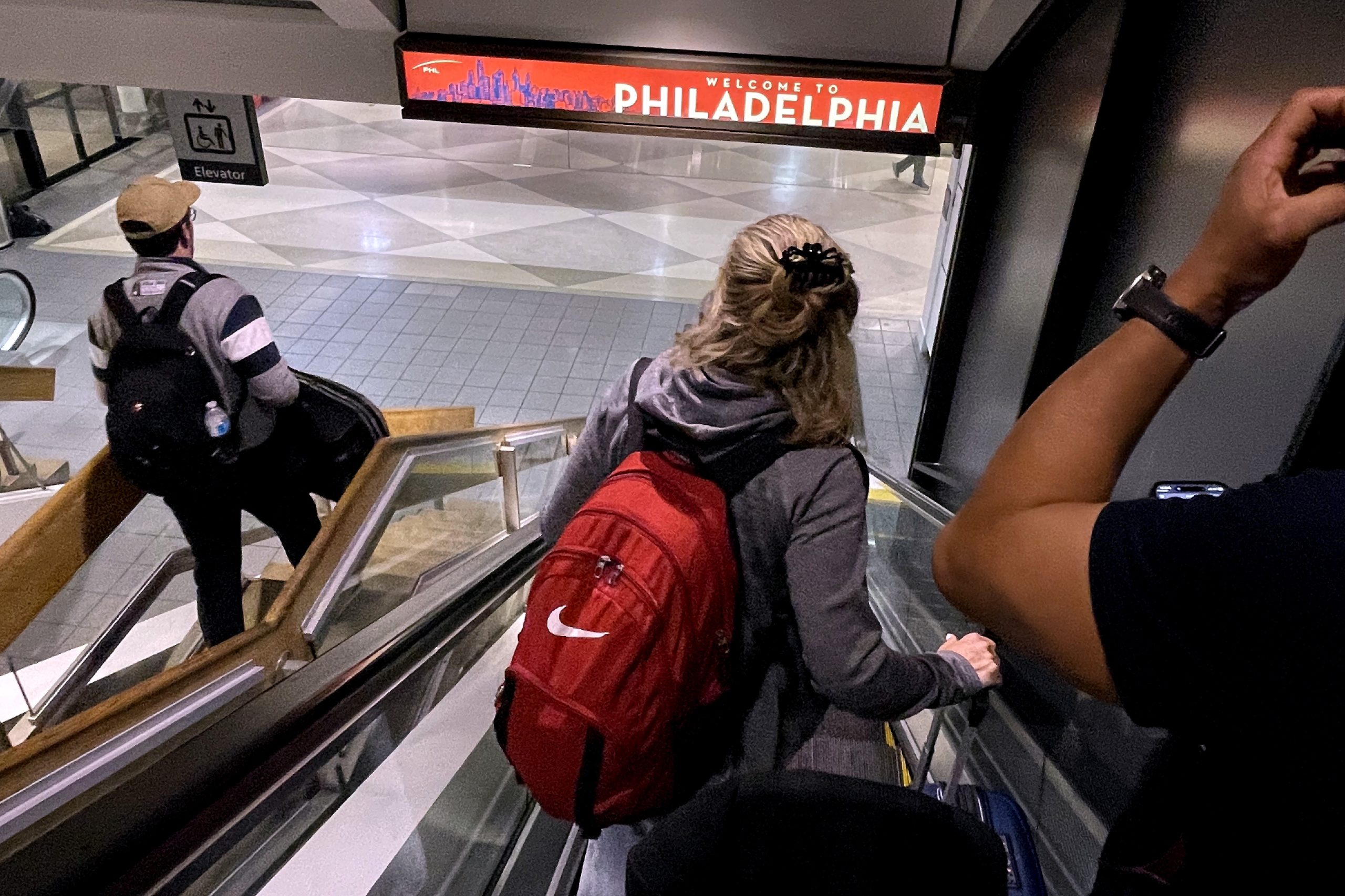
Philadephia International Airport arrivals June 21, 2026.Tom Gralish / Staff Photographer
It reminded me of the energy I feel almost every time I walk around the city, going back to my first night here and the weeks spent in my early days at the newspaper with unhoused men.
We’ve long known we have one of the most walkable downtowns in the country, but USA Today told everyone else again this summer, naming Philadelphia number one — for the fourth year in a row. Center City is compact and easy to explore on foot, with many stores, restaurants, museums, attractions, and parks all within a short walk.
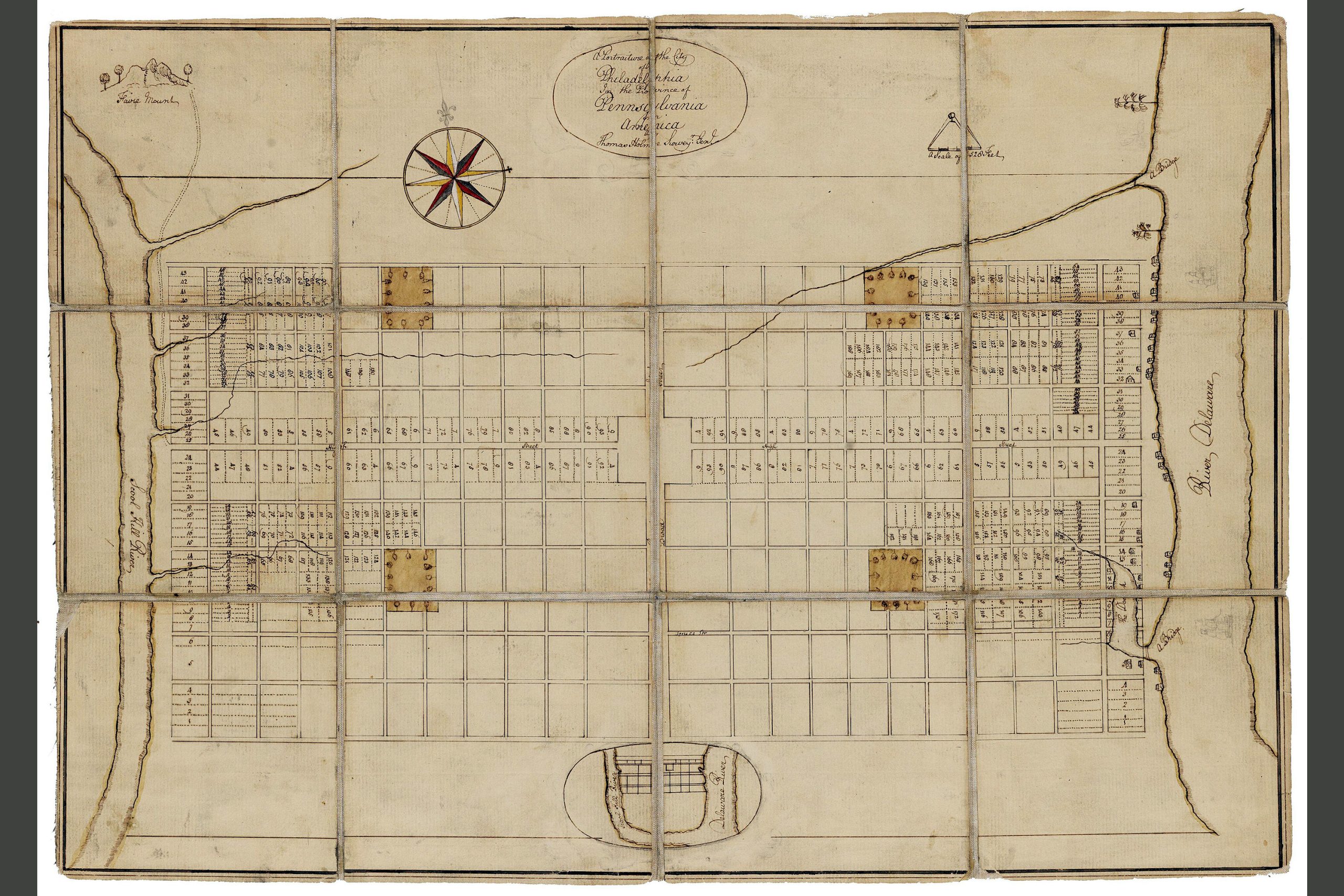
“A Portraiture of the City of Philadelphia, In the province of Pennsylvania in America” by Thomas Holme. In 1682, William Penn appointed Holme surveyor-general of Pennsylvania and charged him with the task of laying out the “greene country towne” that Penn envisioned. This map, printed in London, was used for both reference and promotional purposes to show the unique layout of Penn’s emerging city.Historical Society of Pennsylvania
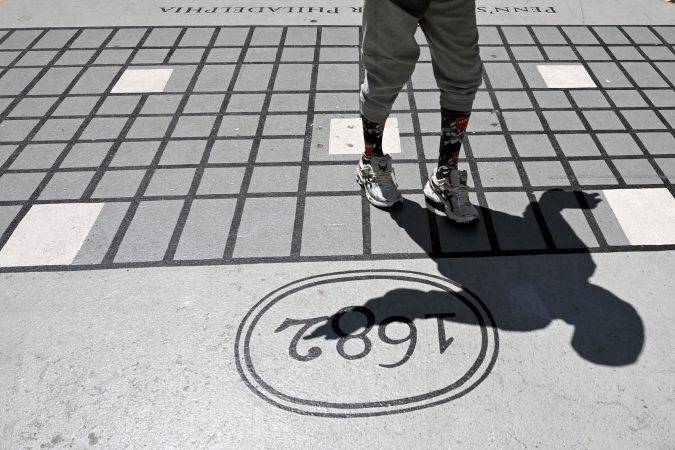
Credit William Penn’s 1682 street plan that created small rectangular blocks with straight, predictable streets. I was thinking about that as I looked down at the grid on the ground in the courtyard of City Hall, when Lyn-el “The Torch” Wright paused right in front of me: “take a picture of my sneaks.” That’s his shadow above.
I did, and asked if they were special, wondering if they had something to do with Adidas, the official World Cup sponsor and match ball provider. No, not really, he said, but then educated me on what the kids today were wearing: Asics and Saucony. And Salomon.
So, being a history nerd, I had to enlighten him on the design he was standing on. Titled “Compass Rose,” it was commissioned by Edmund Bacon in 1994 as a gift to the city to mark Penn’s 350th birthday. It was painted by David Salama and Pat Sprott and updated by Mural Arts Philadelphia in 2004, 2015 and 2022. It marks the exact center of the middle of Penn’s five squares (Franklin, Logan, Rittenhouse, and Washington being the others).
I didn’t actually say all of that (unlike similar “TED Talks” my grandson is subjected to), but our conversation is the other thing I like most about walking around Philadelphia. Meeting and talking to people.
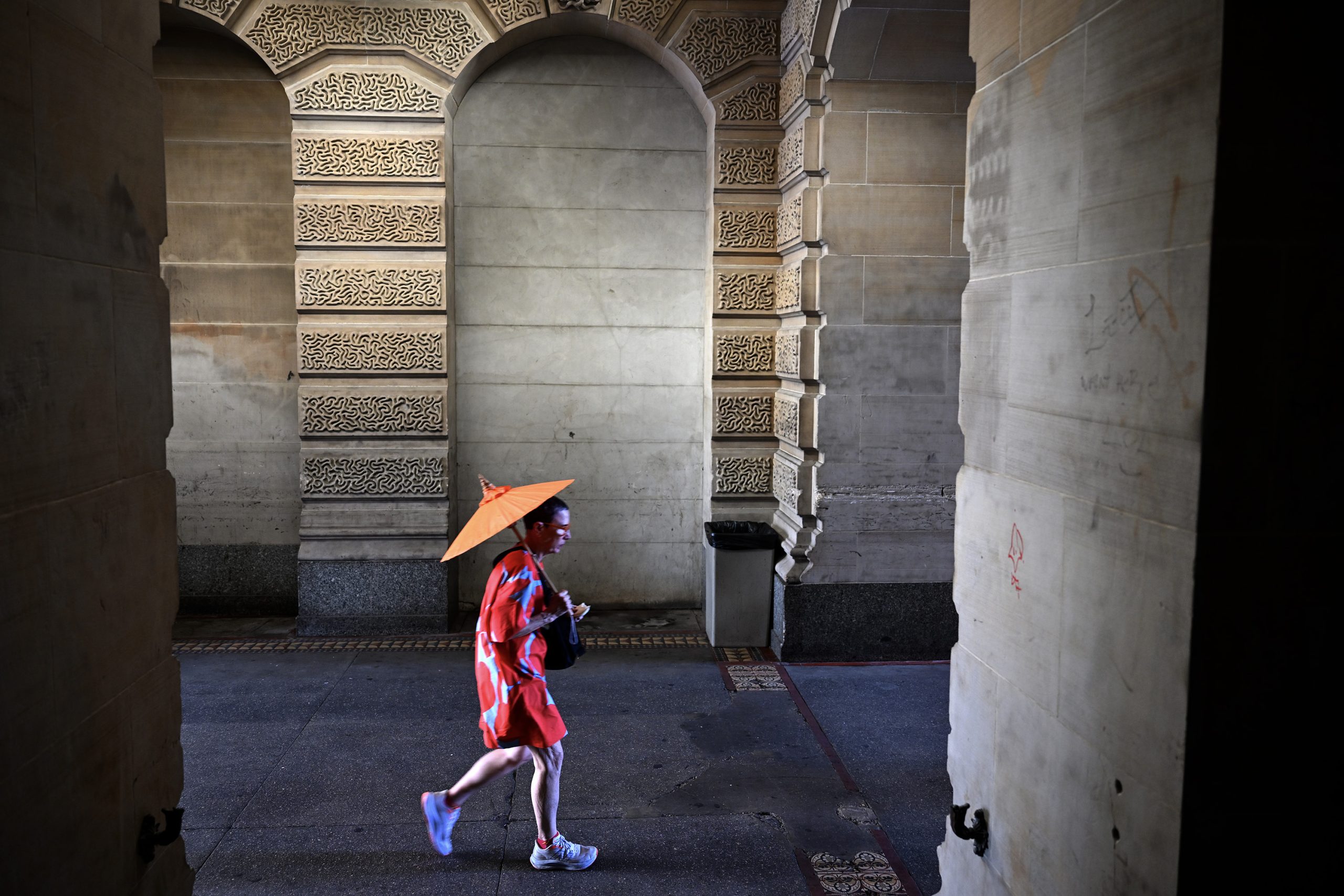
Passing through the south portal of City Hall on Monday, July 20, 2026. She said the umbrella was a recent purchase. “Anything to keep cool in the heat.”Tom Gralish / Staff Photographer
The day was a remarkable one in Center City, similar to the summer solstice back in June. And it was coming off the week of heavy rains, microbursts, and then, the Canadian and Great Lakes wildfire smoke that moved into the region.
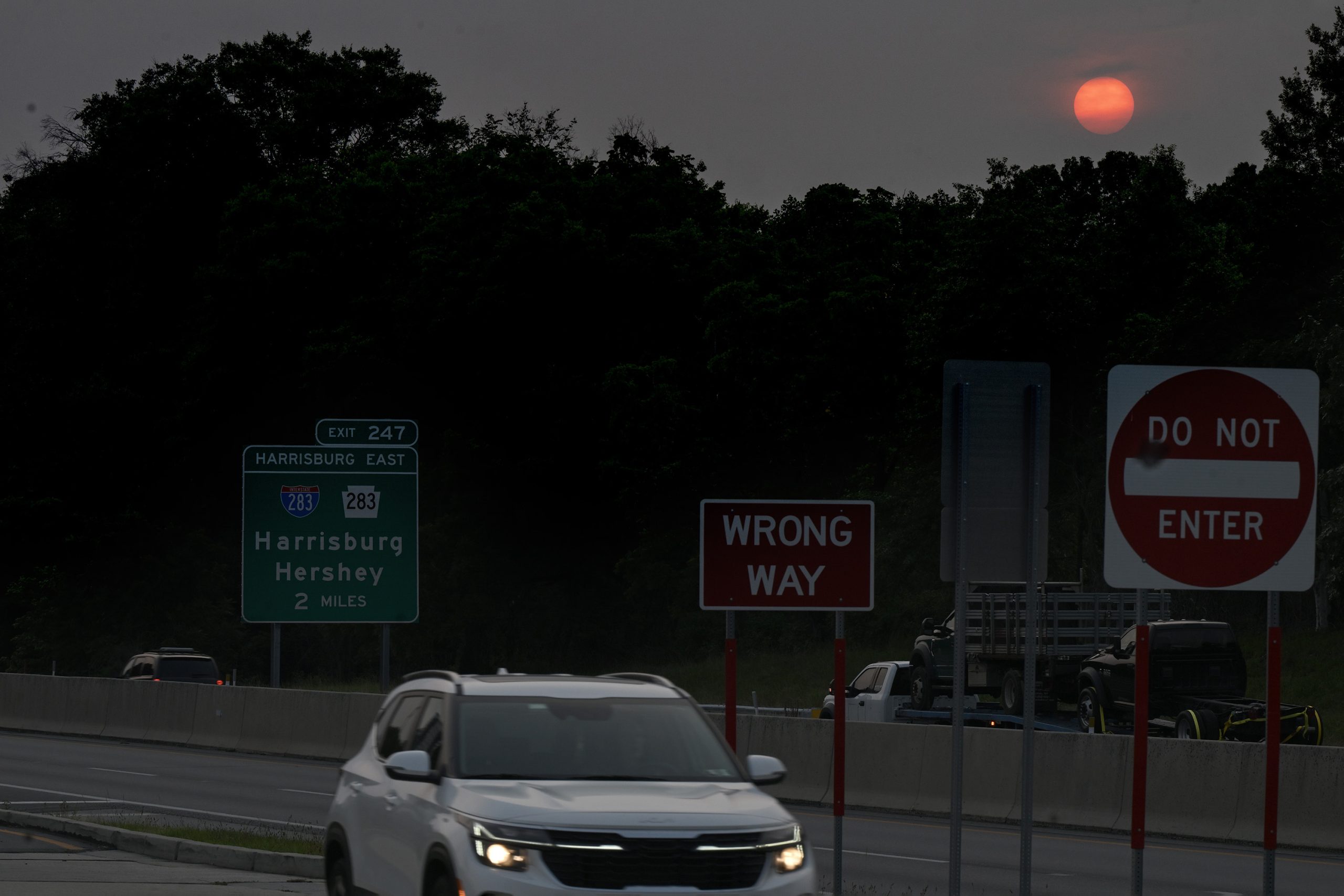
The sun sets in a hazy sky over the Pennsylvania Turnpike Wednesday, July 15, 2026.Tom Gralish / Staff Photographer
When the skies finally cleared last Sunday, I joined hundreds of outdoor enthusiasts taking advantage the improved air quality and photographed along the Schuylkill River Trail.
I scouted angles to get as many people — and a variety of runners and walkers — in the same frame. But, perhaps because I covered a memorial for Barbara Friedes, a 30-year-old CHOP doctor who was killed on her bike by a drunk driver in July 2024, my attention drifted toward the bicycles.
When I saw a patch of backlit trees I knew if I panned with my camera and a slow shutter speed the highlights would turn into nice blurs — while the biker would be (somewhat) sharp and in focus.
One of the advantages of digital photography is that you can get immediate feedback and adjust your camera settings for the effect you desire. I wanted to get a colorfully outfitted biker, and by the time the “right” one passed in from of me, I was set (1/20th second at f/22, with an ISO of 640 on my Nikon Z8 with a 24-70mm lens).
Finally, here’s one more “nice day” photo I made after talking with “The Torch.”
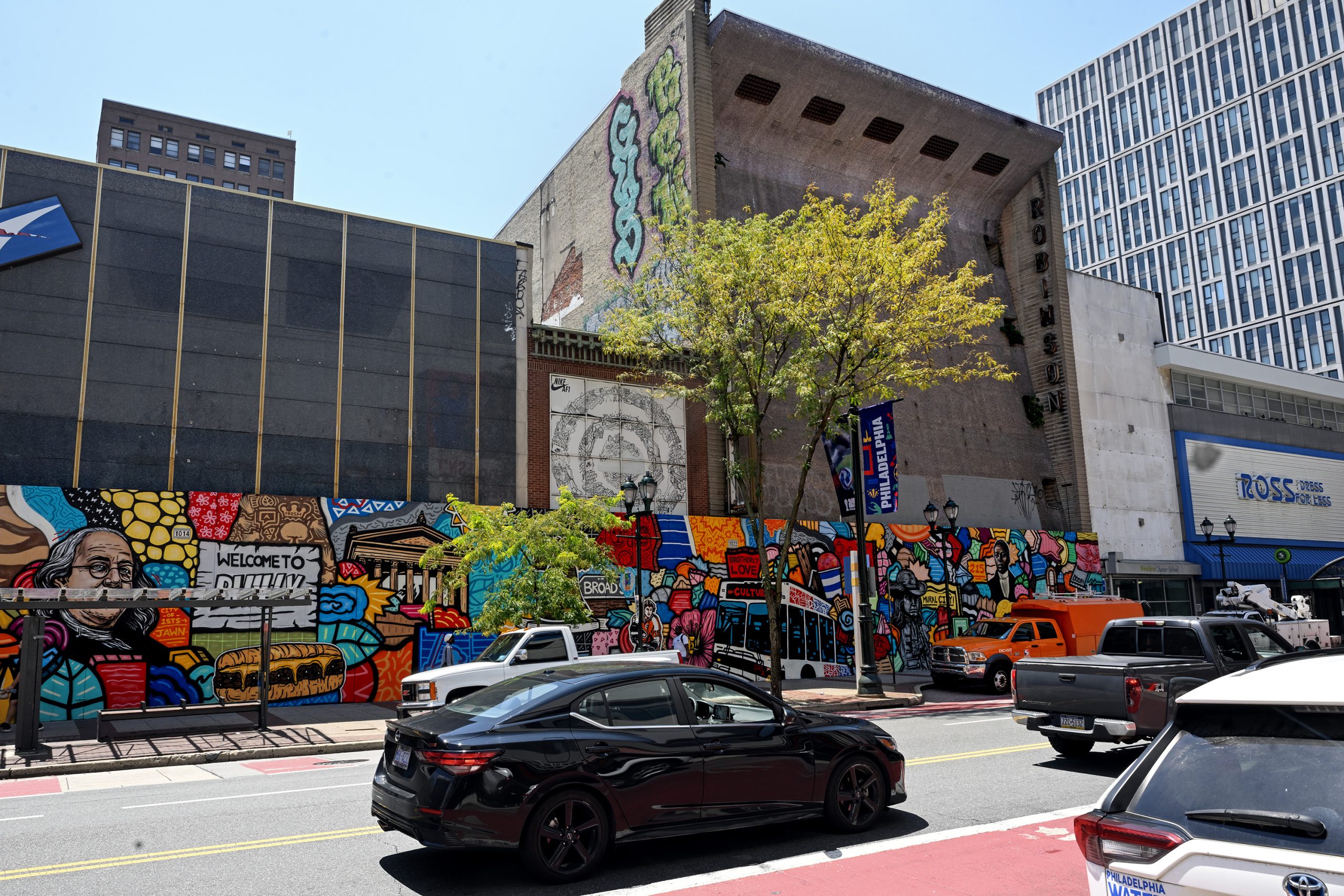
I spent a good part of the winter and early spring of 2024 along an eight block stretch of Market East while the city was dreaming and debating its potential driven by later-scraped plan by the Sixers to build a $1.55 billion downtown arena.
It was a tattered corridor, especially the south side of the 1000 block that was mostly boarded up storefronts. The city started trying to freshen it up before our summer of celebrations.
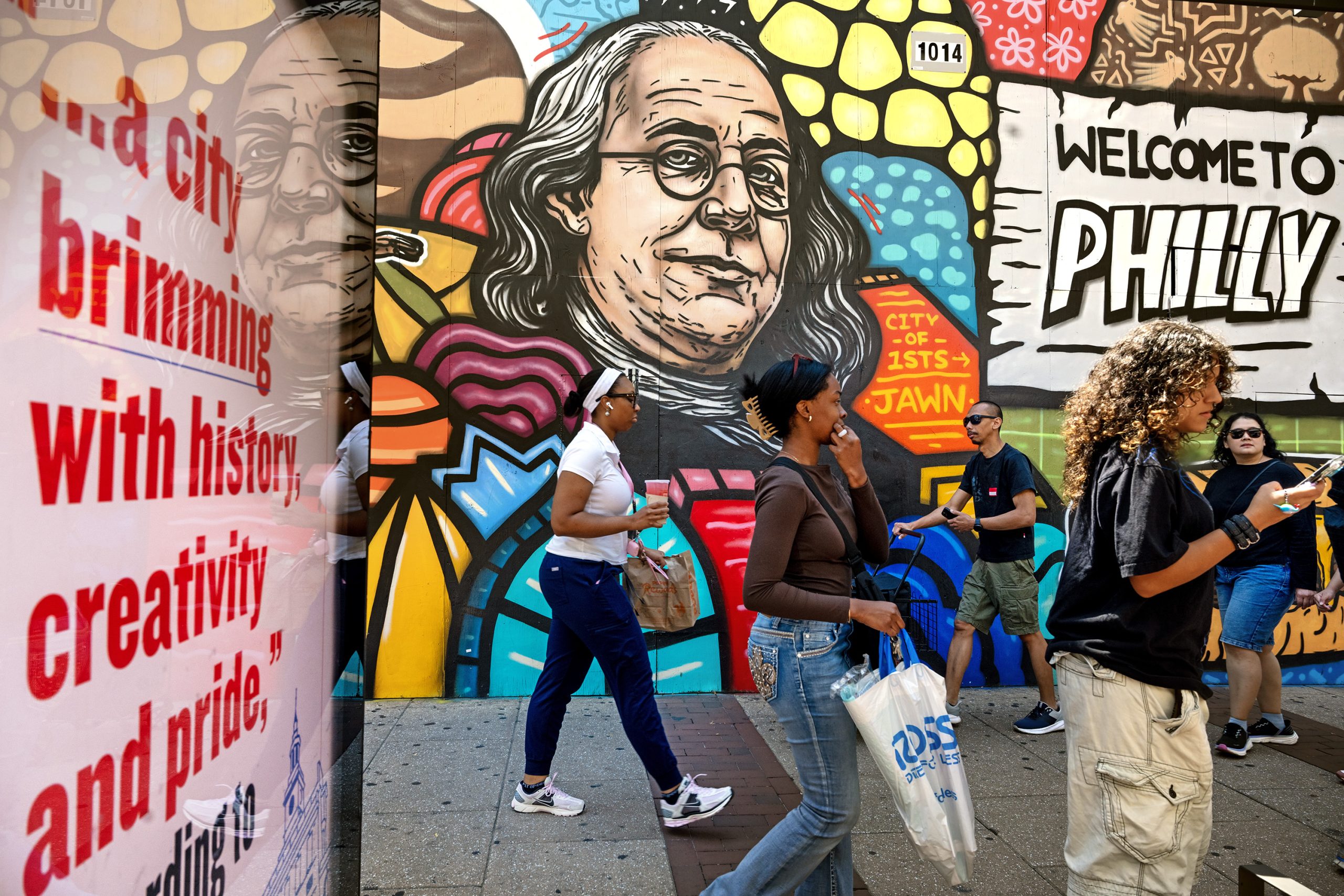
Walking there on Monday I admired the 150-foot mural “Welcome to Philly” artist Alloyius McIlwaine was commissioned to paint there before the big summer. I didn’t want to merely record his month-old work, but as I stepped into a bus shelter to get out of the flow of pedestrian traffic, I was immediately stuck by Ben’s reflection in the shelter’s glass — and the words of an unrelated advertisement.
I didn’t want a photo that called too much attention to a single fellow walker, so I waited patiently for that magic moment when my frame was filled with a half-dozen people.
Since 1998 a black-and-white photo has appeared every Monday in staff photographer Tom Gralish’s “Scene Through the Lens” photo column in the print editions of The Inquirer’s local news section. Here are the most recent, in color:
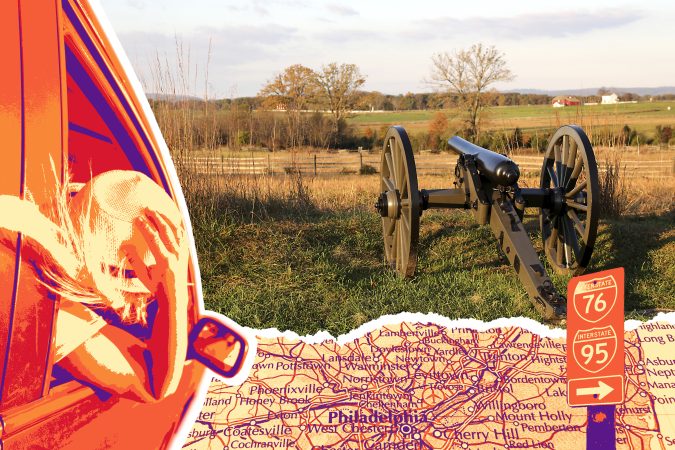
From July 1 to 3, 1863, the Confederate and Union armies faced off in the bloodiest battle of the Civil War. The South’s defeat at Gettysburg became a turning point in the conflict, and an entire tourism economy has grown around the town’s significance.
This Field Trip gives that history its due, but Gettysburg isn’t a one-trick pony. Expect battlefield landmarks and ranger talks alongside viral doughnuts, lake swims, craft cider, and Syrian food; all about 140 miles west of Philadelphia.
It’s worth timing your trip to arrive in Gettysburg for Fritter Friday, the weekly tradition that has turned Devil’s Den Doughnuts into a viral sensation. Lately, the little bakeshop on the outskirts of downtown Gettysburg has been running a berry version cloaked in a magenta glaze. If it’s sold out by the time you arrive, don’t worry. The bakery is still packed with chocolate-iced, cinnamon-sugared, and honey-drenched options; plus over-the-top cold brews to wash them down.
📍 16 Deatrick Dr., Gettysburg, Pa. 17325
Stay: Union Hotel
From its beginnings as an 18th-century stop for westbound travelers to today’s best boutique stay in downtown Gettysburg, the Union Hotel has history in abundance. Its four-story brick facade, striped awnings, and gold marquee give it the look of a classic Main Street landmark. Inside, the 12 suites offer kitchenettes, full-size sofas, and beds wrapped in Brooklinen sheets.
📍 27 Chambersburg St., Gettysburg, Pa. 17325
Learn: Gettysburg National Military Park Museum & Visitor Center
No surprise the 1863 Civil War battle of Gettysburg is the area’s main tourism driver. Even visitors who are typically snoozy on history need to do the circuit when they come here, and that starts at the Gettysburg National Military Park Museum & Visitor Center. Doing this first sets the context for the entire historical gravitas of Gettysburg and its pivotal role in the war, and a standard admission ticket includes the museum galleries, filled with battlefield artifacts; the iconic 360-degree Cyclorama painting of Pickett’s Charge; and A New Birth of Freedom, the introductory film. You can add on the bus tour of the Gettysburg Battlefield, but it’s unnecessary since that site will be covered separately in this itinerary.
About 20 minutes north of Gettysburg, Pine Grove Furnace State Park offers a welcome change of pace once the weight of Civil War history starts to settle in. Nearly 700 acres of forest feature more than a dozen hiking trails, including a stretch of the Appalachian Trail, along with mountain biking, bird-watching, swimming at Fuller Lake (lifeguards in season), and kayaking on Laurel Lake.
The Three Springs Fruit Farm apples you love at the Headhouse Square Farmers Market? Farmer Ben Wenk’s generational orchards grow them right outside Gettysburg in the Adams County countryside. While his Jonagolds and Nittanys make great fresh eating, many of the more arcane heirlooms get fermented into Wenk’s liquid spinoff, Ploughman Cider. He tends a cozy taproom right in downtown Gettysburg, where you can try the whole cider portfolio, along with seasonals and limited-edition runs that might not even make it to the city. Hillbilly Banana blends Stayman Winesaps with our native “tropical” fruit, the pawpaw.
📍 14 Lincoln Square, Gettysburg, Pa. 17325
Dine: Jamilie Syrian Kitchen
Syrian cooking in Gettysburg? Yes, please. Jamilie Syrian Kitchen, with its exposed brick walls, hand-painted plates, and full cocktail menu, is open all day, making it an ideal spot for the early dinner you need in order to get to your nighttime plans. The extensive menu ranges from hot and cold mezze — including tangy muhammara and za’atar-and-cheese flatbreads — to kebabs, hearty entrees, and excellent pistachio ice cream.
📍 28 Carlisle St., Gettysburg, Pa. 17325
Visit: Gettysburg National Military Park
Aim to reach Gettysburg National Military Park around 6 p.m., when the lowering light lends the battlefield an especially powerful atmosphere. Access to the park is free, and there are both free and paid apps to download that correspond with the self-guided Auto Route, which follows the battle’s timeline from McPherson Ridge to the National Cemetery as it covers 24 miles. If you’re visiting on a forthcoming Saturday, plan your drive to end at Pitzer Woods Amphitheater for the free Campfire with a Ranger program at 8:30 p.m. The hourlong talks blend military history with local lore, all beside a crackling campfire.
📍 Auto Tour begins at Gettysburg National Military Park Museum & Visitor Center, 1195 Baltimore Pike, Ste. 100, Gettysburg, Pa. 17325
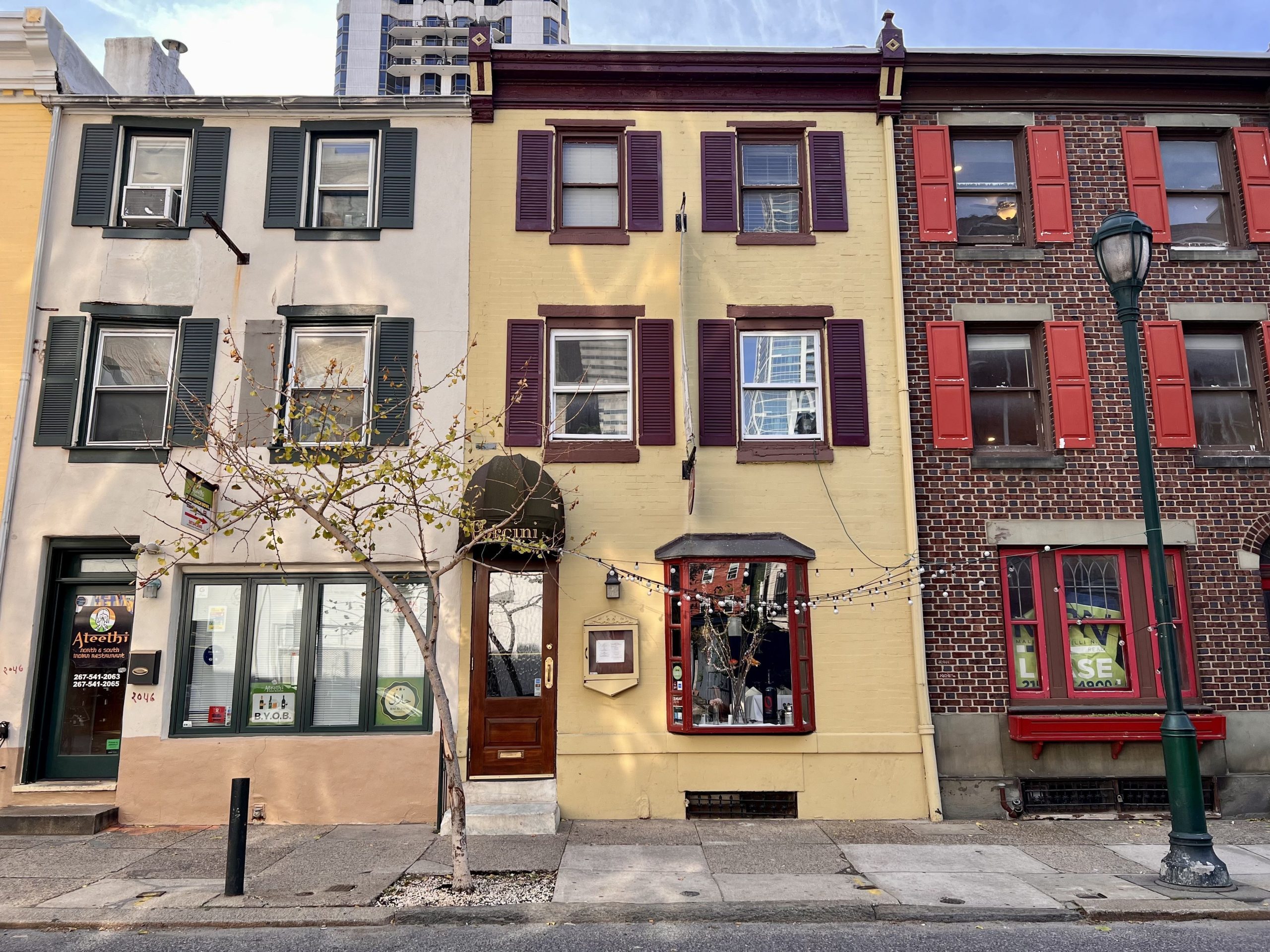
When Porcini opened in 1996, few people expected the brothers Steven and David Sansone to do much business, with only 30 seats stuffed into a dining room the size of a shoebox, debuting in an era when there were no other restaurants on Sansom Street. A BYOB? Philly hardly knew what that was aside from the original Dmitri’s across Broad Street.
And yet, 30 years later, this block of Sansom Street near Rittenhouse Square has become a mini-restaurant row. There are now hundreds of Italian BYOBs flourishing across the city, and the pioneer of them all, Porcini, is still kicking as the Sansone brothers continue to host lively Italian meals for their loyal following.
There’s David at his lookout post near the door, chatting with guests then scampering back to whisk plates of chicken Milanese in sloshy wine-and-butter sauce through the dining room. (“It’s not an Italian meal if you don’t get some on your clothes!” he consoled one guest, dabbing a plate-landing splash of sauce on his shirt.) And there’s self-taught chef Steven, just back from double cataract surgery (“I can see the tickets again!”), overseeing a tiny kitchen whose clattering plates and passionate banter frequently cuts in over the opera soundtrack wafting through the dining room. “It’s just like Big Nighthere, an argument with my brother every night,” jokes Steven. “We can’t get it out of our blood.”
Porcini, 2048 Sansom St., on Nov. 29, 2022.Michael Klein / Staff
Whatever it is that propels these two siblings, now in their late 60s, to keep going — be it a pride in their Sicilian and Neapolitan heritage, their top-notch Caffè Motta espresso, or the pure love of hospitality — they’ve preserved the sense of warmth, handcraft, and quirky personality that first endeared this cozy nook to the city. At my recent visit, two handmade pastas were vivid reminders of Porcini’s homey charm.
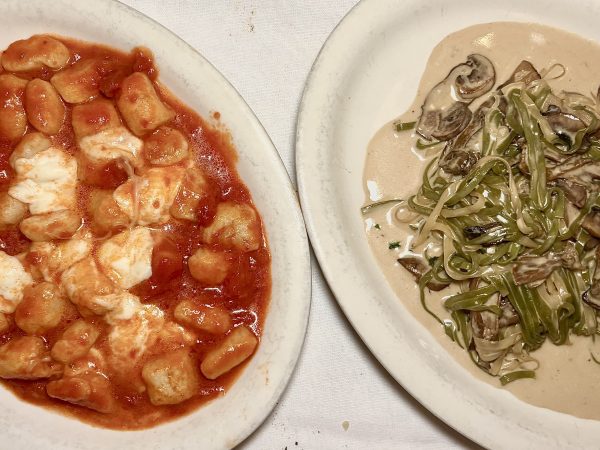
Some of the airiest potato gnocchi I’ve eaten all year bobbed light as a feather in a bright San Marzano tomato sauce dabbed with creamy clouds of Claudio’s fresh mozzarella. My favorite, though, was paglia e fieno, a plate of hand-cranked green-and-white linguine meant to evoke the changing seasons of “straw” and “hay.” The two-toned noodle dish has been served multiple ways over the years here, but it seemed fitting that I was able to swirl those delicate pasta ribbons through a rich, tan-colored cream sauce infused with the restaurant’s namesake porcini mushrooms. Like the restaurant itself, this humble plate of browns and khaki greens was more about the satisfaction of good, handmade flavors than culinary flash or trends. Four decades later, this kitchen’s simple touch still resonates.
SEA ISLE CITY, N.J. — This is not the same old Sea Isle.
Jason and Kylie Kelce are mired in a four-year wait for membership to the Sea Isle City Yacht Club. They are currently No. 78 of 251, up from last year’s 149.
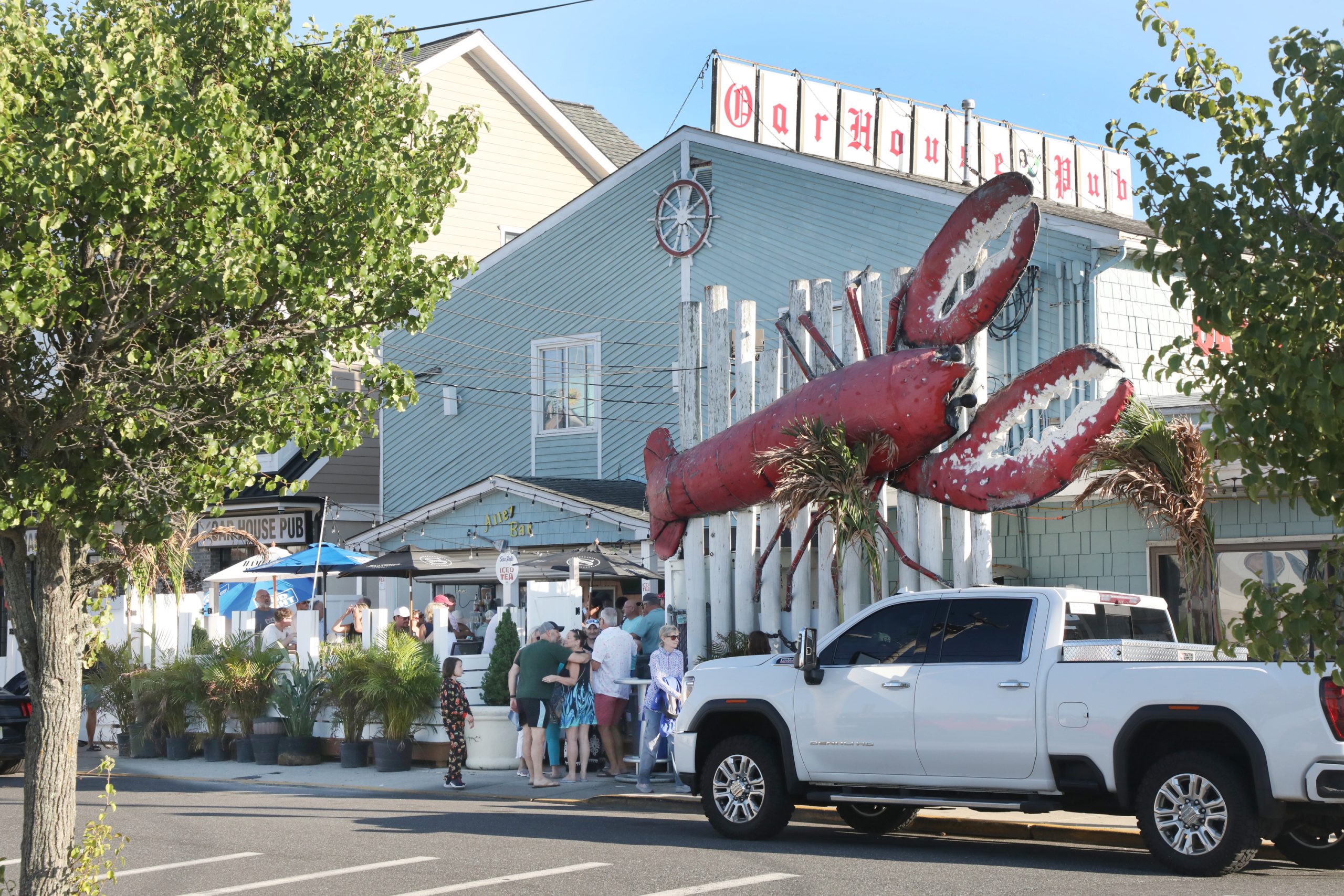
Neighbors are fighting over noise from the Oar House Pub, which expanded this year into two nearby buildings.
Prices in this Shore town have skyrocketed: The median home sale price for the three months ending in May 2026 was $1.8 million, according to Redfin, up 27% from the year before. For May alone, it was $2.2 million.
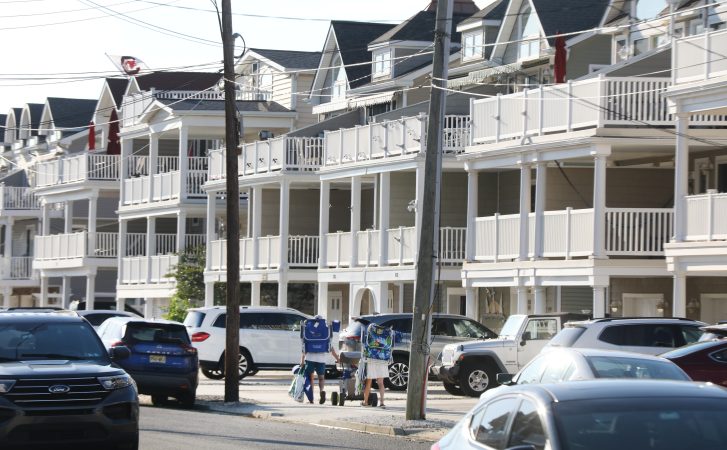
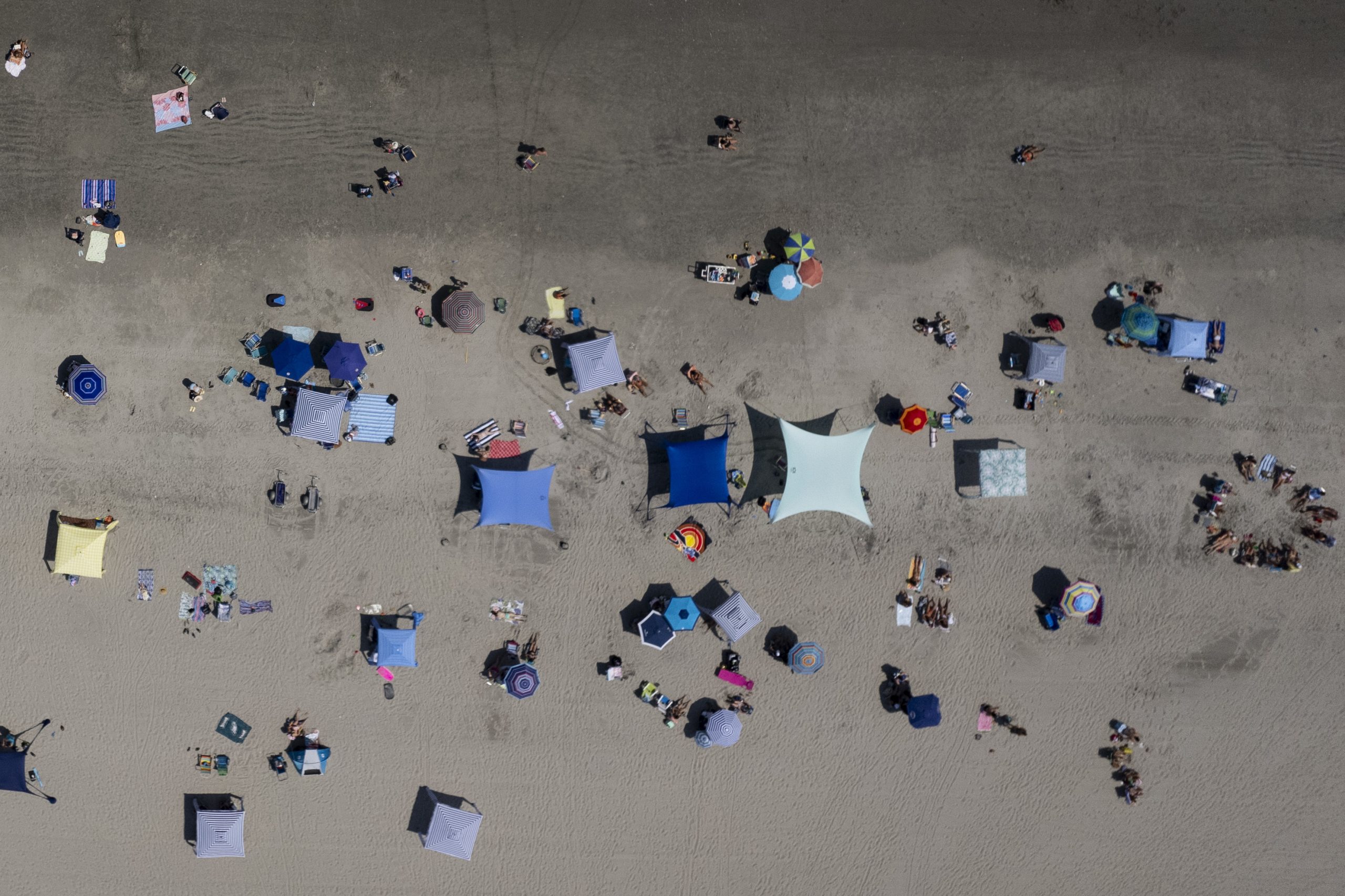
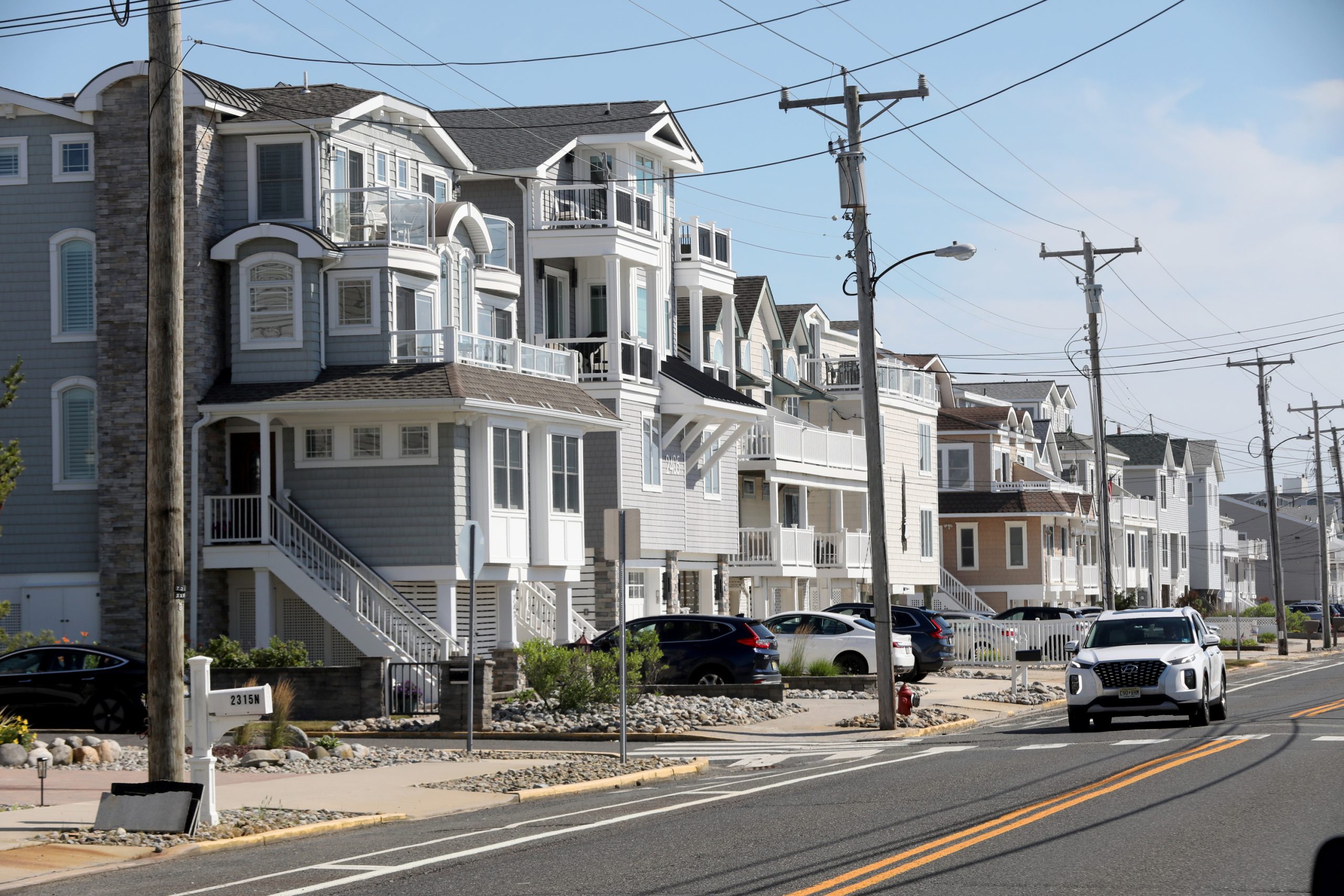
Blocks in Sea Isle are stuffed with new, side-by-side construction, multiple SUVs in pebbled front yards, with few trees or backyards. People sunbathe in their driveways. Silverados have near-collisions with Audis in the Acme parking lot, as golf carts idle out front.
Is it still pleasant on Pleasure Avenue?
People line the beach in Sea Isle City on Wednesday, June 25, 2025 in Sea Isle City, NJ.Monica Herndon / Staff Photographer
Depends on whom you ask. For some, the changes feel more like a maturing of Sea Isle, certainly an upscaling, from the beloved Shore town’s raucous old party days. Houses cost too much to risk renting to the rowdy Shore house crews of years past, homeowners say.
But for others, the town’s rash of new construction, the pricing out of old blue-collar regulars, the impossible parking, even the price of an entree at a restaurant all feel like a betrayal.
Workingman’s beach
Colin Ratner, 53, of Fairmount, global director of sales at a medical software company, raves about Sea Isle’s enduring charms, a place where his daughters have found a sense of freedom they don’t have in Philadelphia, riding their bikes barefoot and playing outdoor basketball games to cheering crowds.
“In Philly, they’re not leaving the street without us knowing where they’re going,” he said. “Here, it’s like ‘Come back before we go to sleep.’ I call Sea Isle Middle America.”
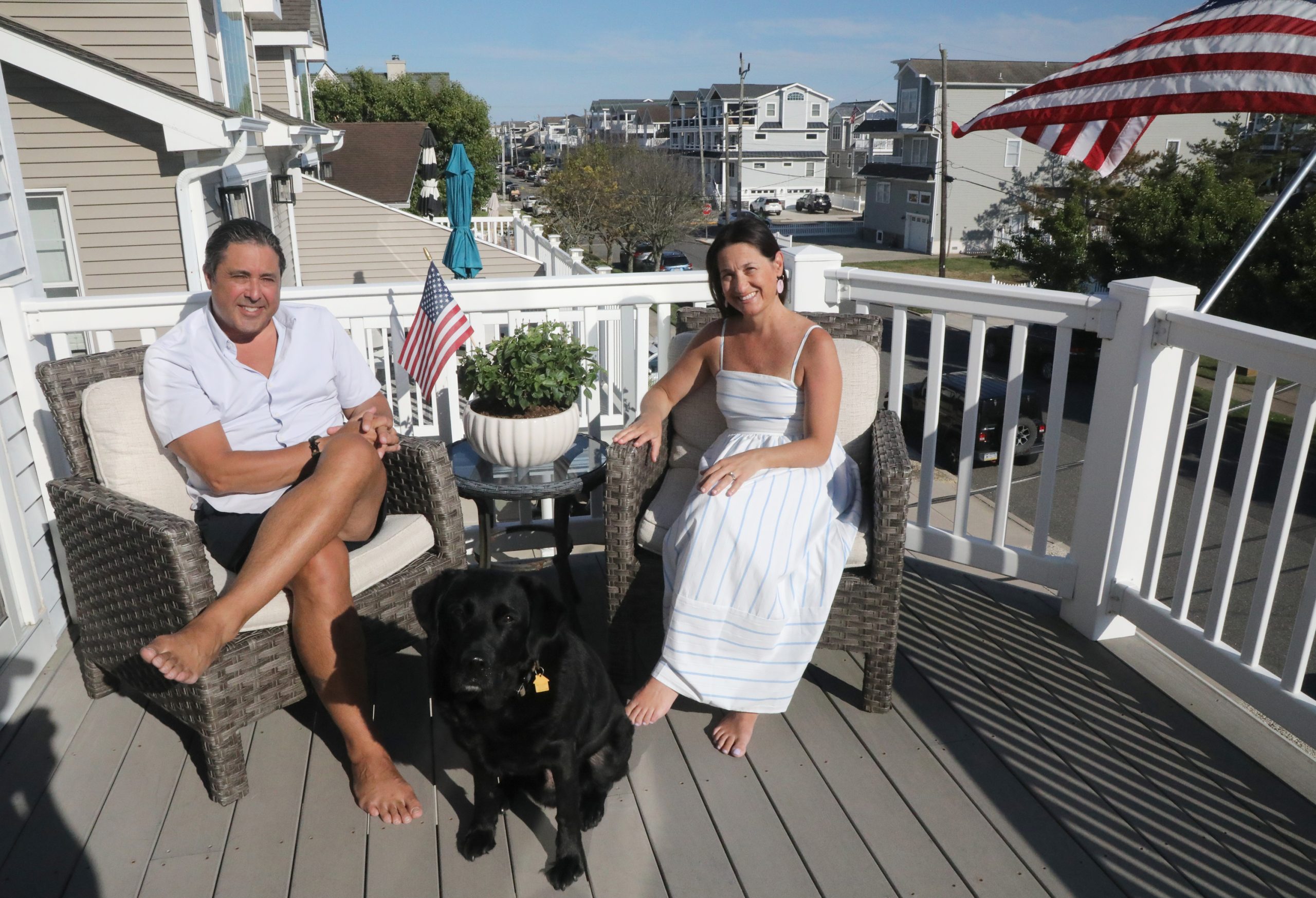
Colin Ratner and his wife, Cindi, of Center City, at their home in Sea Isle City for the summer think the town has matured in a good way, Wednesday, June 24, 2026.Vernon Ogrodnek / For The Inquirer
A rowhouse dweller in Philly, he is not bothered by the density or the parking crunch. “Our property[value] has more than doubled since 2018,” he said. “I’m seeing less renters, and more people using their property, less of the crazy house parties. It’s really kind of settled down.”
Jo Ferenchak bought in 2017 and rents out to cover costs. Her parents bought their Sea Isle house in 1977, she said, for $20,000.
“When my parents bought their house, it was called the Working Man’s Beach,” she said via Facebook message. “No more!”
In a sign of the times, she said her children and grandchildren love to go mini golfing, “but we go to Pirate Island in Avalon because it is so hard to find parking at Pirate Island in Sea Isle.”
‘Saturation point’
It has been more than a decade since a town survey found that 62% of responders said traffic was a problem. The survey, taken for a master plan, drew comments that included “Feeling of too much density and congestion,” “Seashore feeling is being lost,” and “We’ve reached a saturation point.”
Things are more overstuffed than ever, many residents, summer and year-round, say.
Sea Isle’s year-round population is 2,019, fairly stable despite some declines in the years after Hurricane Sandy and some increases after COVID-19. But it can swell to 70,000 on a busy summer weekend.
The change in the housing stock is more dramatic. Between 1990 and 2020, there were about 17% more units created, mostly for seasonal residents, according to the city’s data. Although some old bungalows remain, the town is essentially built out, city officials say.
Sea Isle even proposed partnering with a mainland town to essentially outsource its required share of affordable housing units as required by New Jersey law, but that was not allowed.
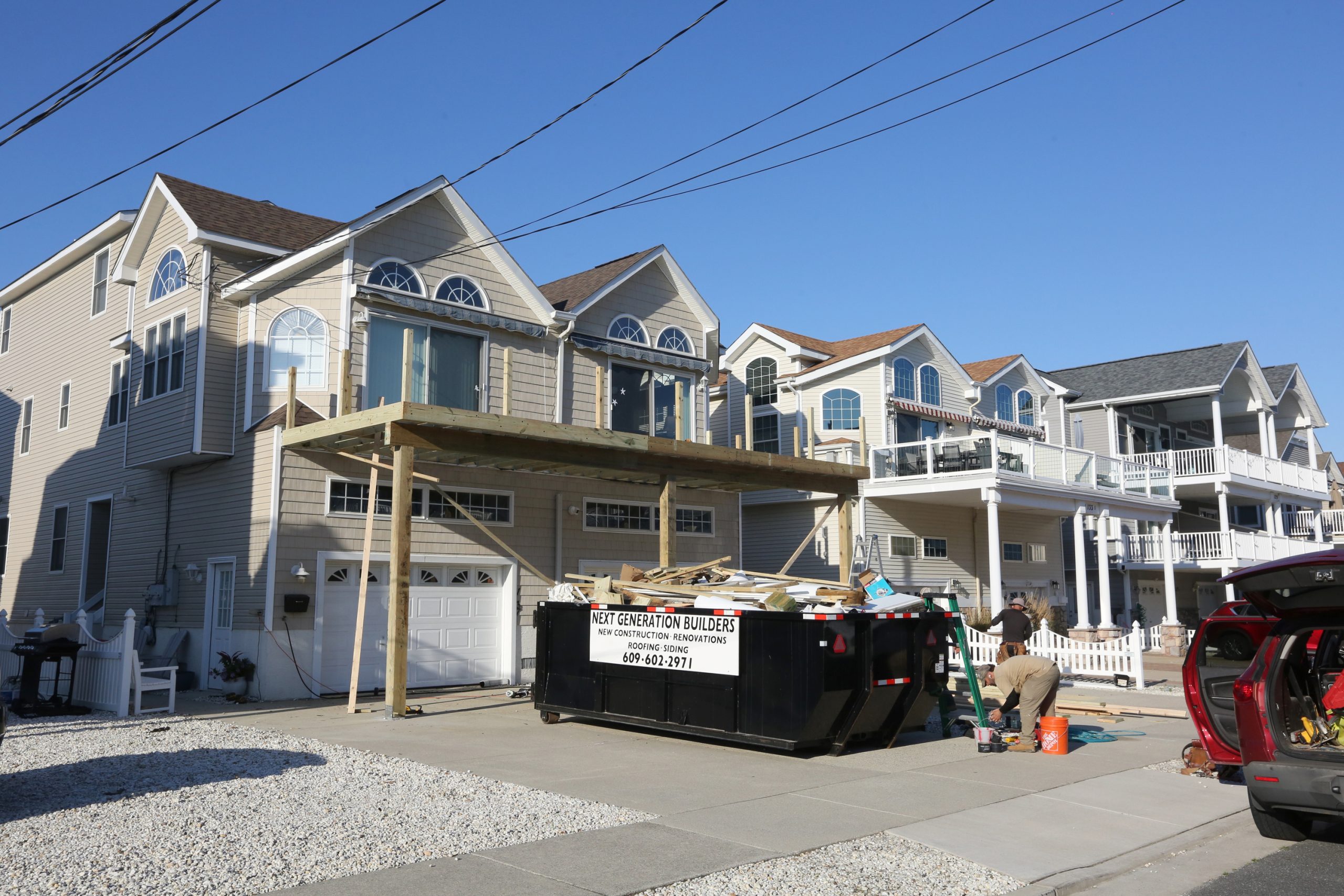
New construction off 57th Street, in Sea Isle City, Wednesday, June 24, 2026.Vernon Ogrodnek / For The Inquirer
In a town long known for its rowdy bar scene, there is less tolerance than ever for the spillover effects in dense neighborhoods.
In June, a dispute erupted between the Oar House Pub and its neighbors, including Mike’s Seafood owner Mike Monachetti, a prominent figure around town and a pal of the Kelces’.
Monachetti told the city council that the noise from the pub was regularly so loud “the water cups were vibrating on the tables” at his place.
“Think about what you’re doing,” he scolded the council. “My neighbors suffer from noise, loud noise, smoke going right up into their properties, and, yes, people out on the streets, beer cans on my property. Please, look at your own laws and ordinances. You are putting an alcohol license closer to a church, as well as underneath a residence that was never intended to be a bar.”
Council President Michael Jargowsky, 64, says with the town nearly entirely built out, there is not much to do in terms of stemming overdevelopment.
The city is always looking at adding parking, he said, though he notes that not everyone wants to cross the causeway and see a multistory parking garage.
“Our town has changed a lot physically,” said Jargowsky, a former city police officer who grew up in Sea Isle and paid $205,000 in 1995 for a century-old bungalow. “A lot of single-family bungalows and Victorian homes are now the side-by-sides: three bedrooms went to a combined 14 bedrooms in some places.”
The increase in property value has brought new revenue to the town, and a robust capital project agenda, including a new community center. Longtime residents who sold, or whose children sold, did very well, he noted.
Some things about the town have stayed the same.
“You still see a lot of banners for Delco,” he said.
The Oar House Pub, off 42nd Place, at right, would like to expand to the empty lot adjacent to it, and found itself in a controversy with neighbors over the noise, in Sea Isle City, Wednesday, June 24, 2026.Vernon Ogrodnek / For The Inquirer
‘Like a bad AI-generated image’
Rick Kane, who worked at a family friend’s business for eight years in Sea Isle and lives just on the mainland, said the town is a shell of its former self.
“Many of the affordable family restaurants and cheap bars are gone, replaced by high-dollar places,” Kane said. “Sea Isle has lost its charm and personality. It’s now like a bad AI-generated image of a ‘Shore town.’”
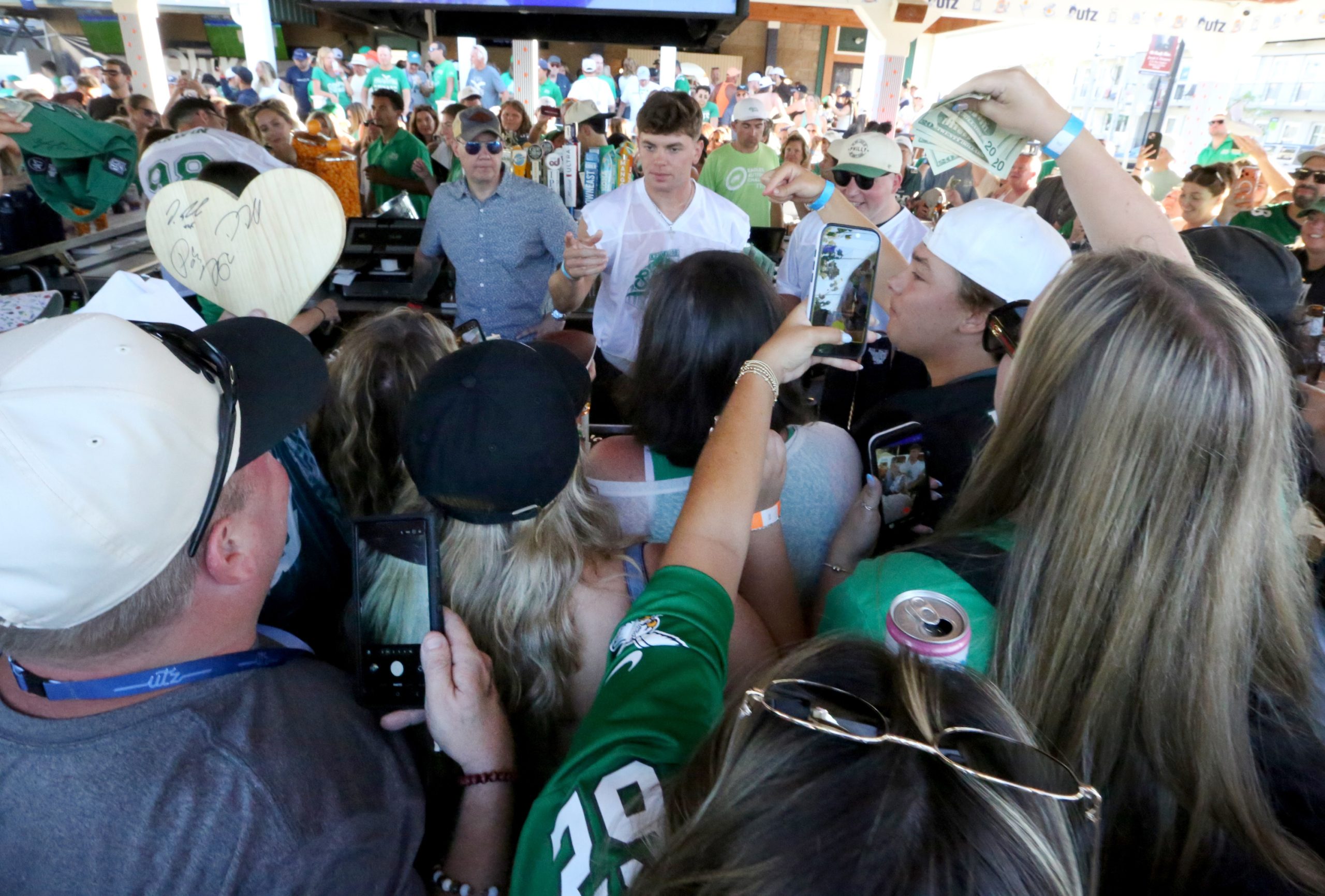
Eagles cornerback Cooper DeJean signs autographs for fans as a celebrity bartender at former Eagle Jason Kelce’s annual Team 62 fundraising event for the Eagles Autism Foundation at the outdoor Paddy’s Green in Sea Isle City, Wednesday, June 24, 2026.Vernon Ogrodnek / For The Inquirer
Christopher Capuzzi, 42, a New York City capital markets attorney originally from Delaware County, said he bought on Long Beach Island even though his extended family gathers in Sea Isle and continues to own houses there.
Capuzzi said he paid $2.8 million in 2022 for a 3,500-square-foot house on LBI, one house from the ocean.
On LBI, he said, “My money’s stretched a lot further, and we actually have trees.”
“When it came time for me to buy, I just felt like Sea Isle has gotten so overdeveloped, the way they cram homes in, every home is basically a side-by-side. The garages don’t fit a single car in them. Parking has become a nightmare.”
Some things haven’t changed
For some diehards, like the 165 members of the extended Mannion family of West Chester and other Philly burbs that for a half-century has rented a half-dozen houses in Sea Isle for the last two weeks in June, the Sea Isle memories compound every year, albeit as the rents, along with all the new construction, go up.
It is a destination they wouldn’t change for anything, family members say.
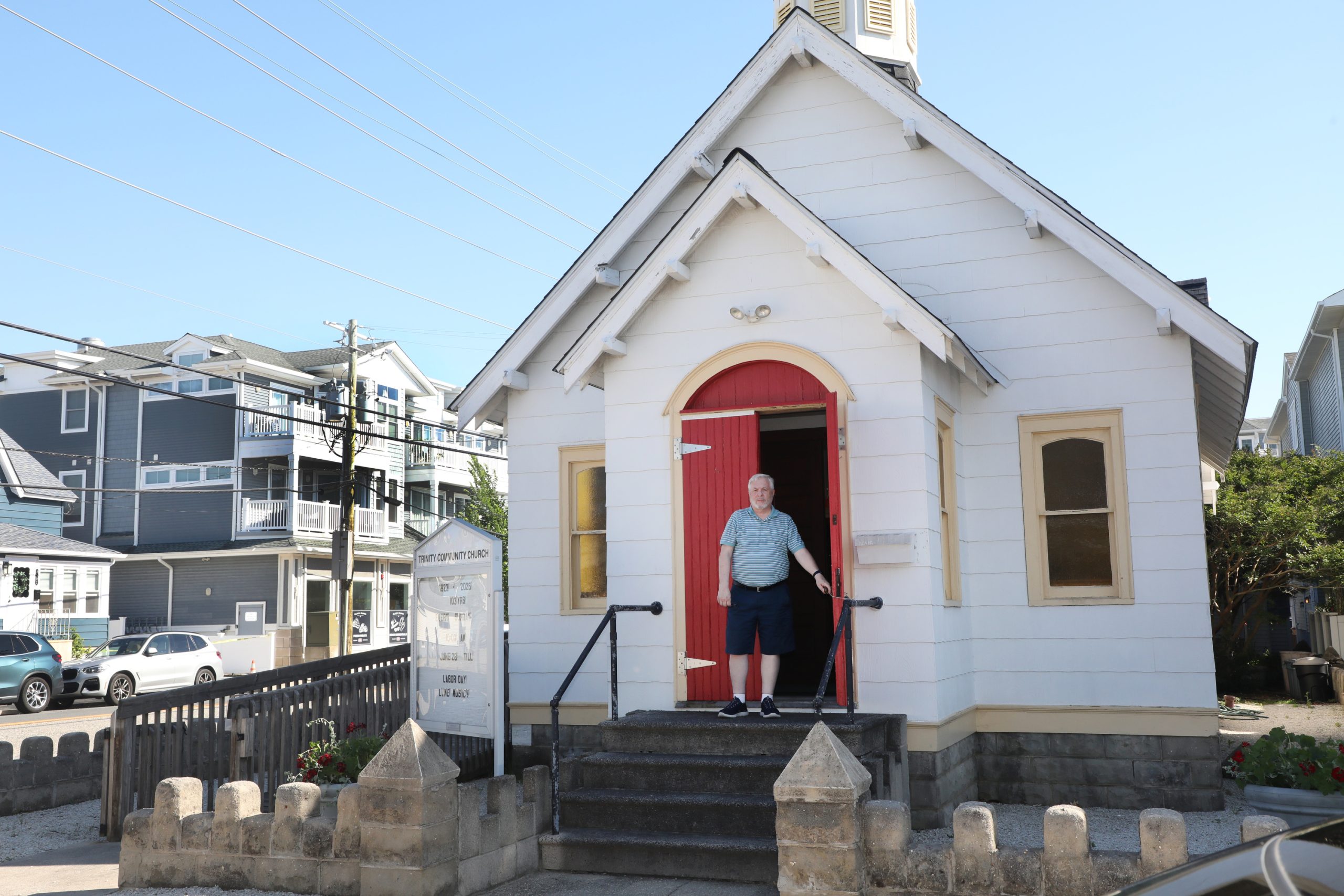
Over at Trinity Community Church of Sea Isle City, pastor Chuck Swanson says his church has been a constant amid all the changes. A seasonal nondenominational place of worship, the church has been at 85th and Landis for 103 summers.
Chuck Swanson, pastor of the historic Trinity Community Church, off 85th Street and Landis Avenue, in Sea Isle City, says the resort town has significantly changed in that the old character of the town has been fundamentally altered, but the change is mostly good and the city is preparing for the future, Wednesday, June 24, 2026.Vernon Ogrodnek / For The Inquirer
“Sea Isle City has changed a lot of late,” Swanson said. “Lots of destruction of older homes and construction of new ones … the old character of the town has been fundamentally changed. Change is mostly good and the city is preparing for the future.
“One thing that hasn’t changed is our church.”
Jim Albright of Bordentown, whose family has owned a house in Sea Isle since 1998, said the town is no longer affordable for most people.
“My dad was an electrician for GM and my mom was an elementary school teacher in Trenton, and on their salaries they were able to buy this house,” he said. “They would absolutely be priced out now.”
Homes along Landis Avenue, here near 23rd Street, have grown higher as the summer bungalows are replaced with more elaborate, and expensive, contruction in Sea Isle City, Wednesday, June 24, 2026.Vernon Ogrodnek / For The Inquirer
The Kelces can still make Sea Isle the center of the party universe when they hold the Eagles Autism Foundation fundraising days every year in June, but Albright and others see a vibe shift.
“There’s been a massive influx of money. You can tell even by looking at the cars being driven around town,” Albright said.
Regina Lewallen lived full time in Sea Isle from 2020 to 2025. “We loved how friendly everyone was,” she said.
But in those five years, the town transformed, she said. “Many houses were torn down, more people bought homes, parking became scarce, and it was obvious that the powers that be didn’t have a specific plan for what Sea Isle City could be,” she said.
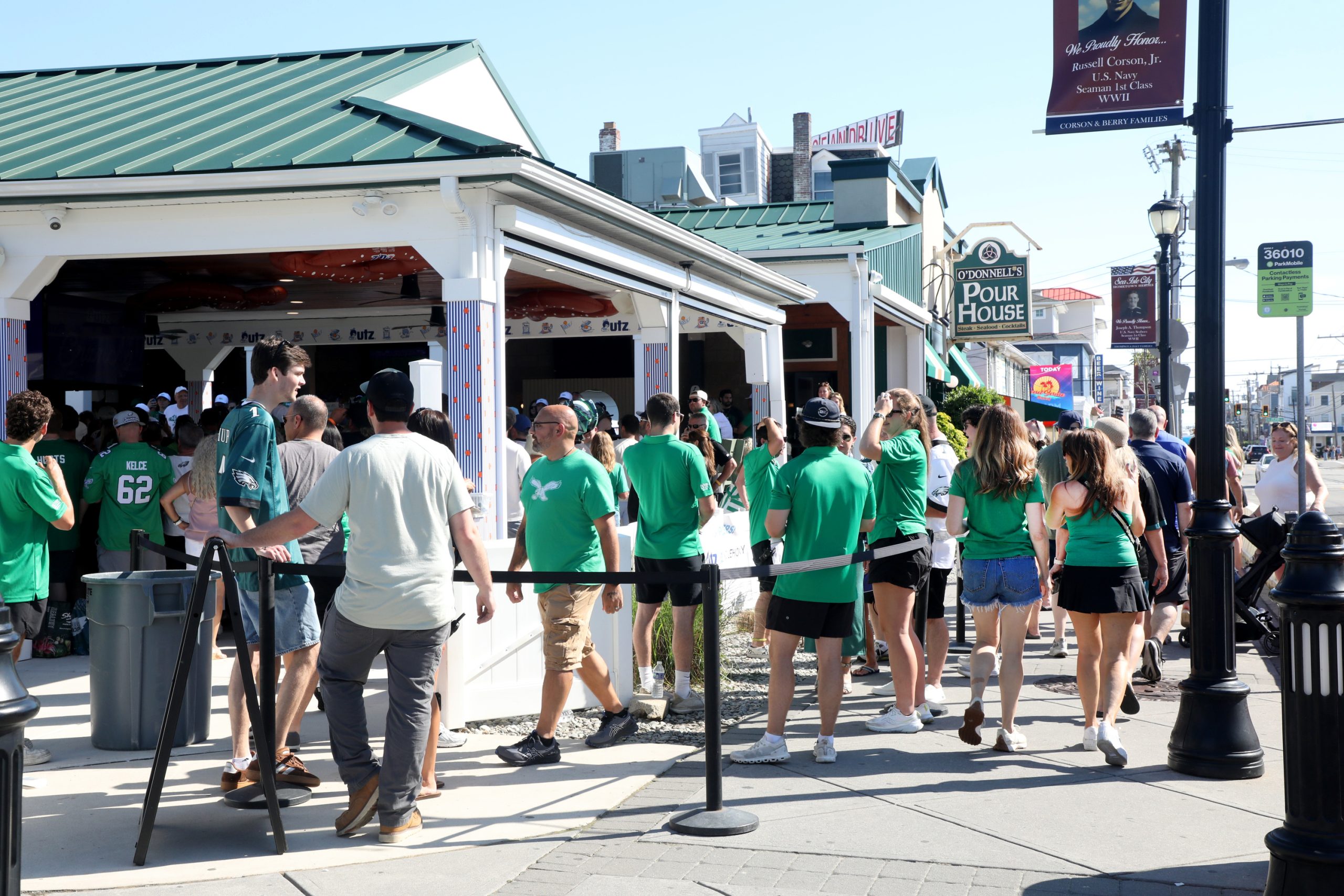
Former Eagle Jason Kelce draws large crowds when he hosts his annual Team 62 fundraising event for the Eagles Autism Foundation at the outdoor Paddy’s Green in Sea Isle City, Wednesday, June 24, 2026. The two-day event features celebrity bartending and a Beer Bowl, drawing thousands of fans and raising hundreds of thousands of dollars for the cause.Vernon Ogrodnek / For The Inquirer
Jen DiMartino, 54, of West Chester, has been going down to Sea Isle for more than 50 years, to 36th and Pleasure Avenue, the third generation of her family to call Sea Isle its summer home.
She says she misses the “ma and pa shops and everyone knowing who you are,” but says there is still pleasure to be found.
The buyers: Eric Murchison, 35, vice president and commercial loan officer
The house: A 2,617-square-foot townhouse in East Falls with 4 bedrooms and 3 baths built in 2025.
The price: Listed for $525,000; purchased for $490,000.
The agent: Marvin Capps, Marvin Capps Realty, Inc.
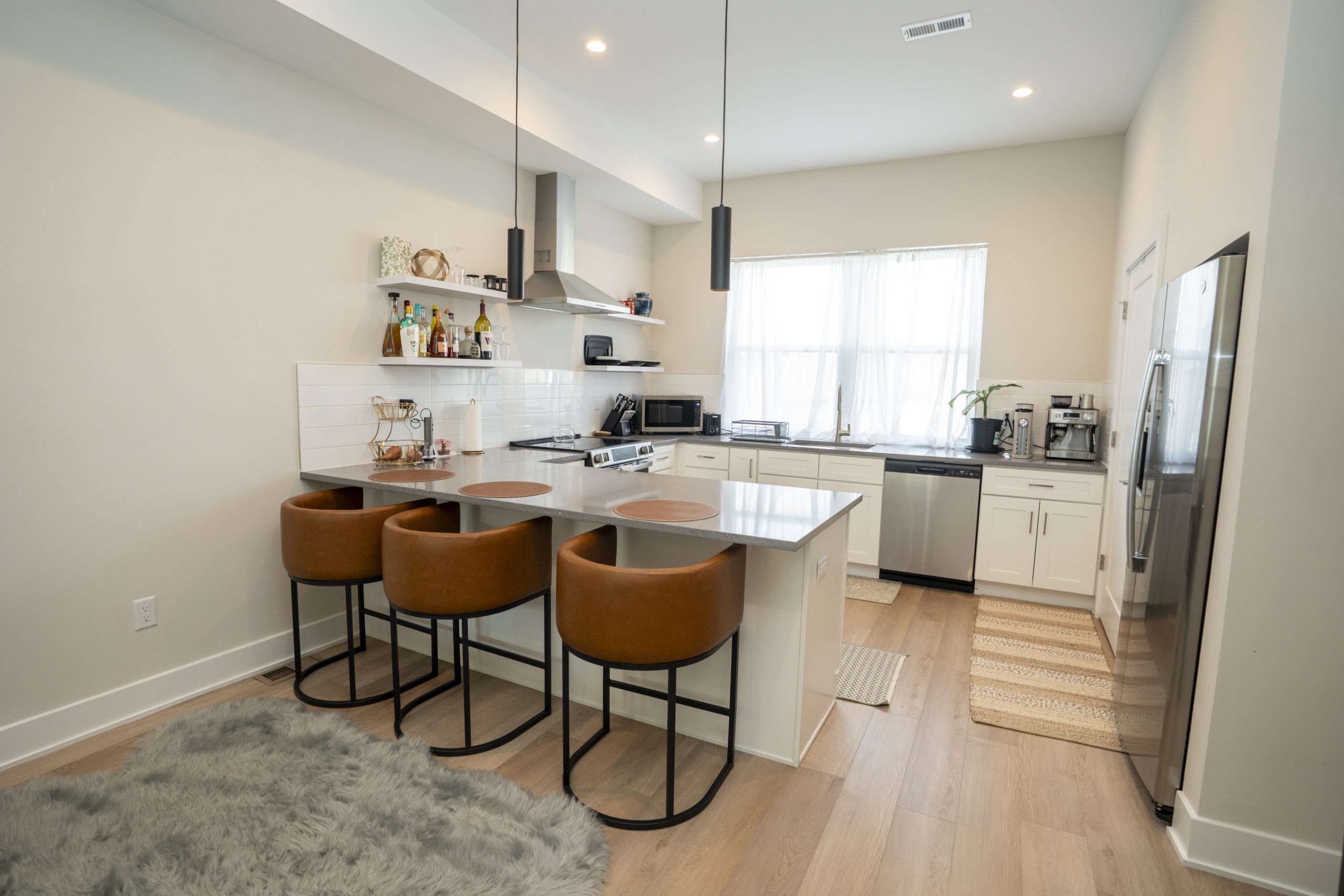
The kitchen of Murchison’s new East Falls townhouse.Jessica Kourkounis / For The Inquirer
The ask: The idea of buying in Philly had begun to feel impossible to Eric Murchison.
Born and raised in North Philly, he’d watched prices in the city skyrocket for years, convincing him that in order to own a nice home, he’d need to move somewhere like Texas. He’d already begun telling friends that he’d be gone within two or three years.
But when a work client urged him to think about buying in his home city — Why would you leave your hometown? Why not own a piece of it? — he began to think seriously about the possibility.
“I kind of couldn’t sleep at night after he said that to me,” Murchison said.
What he was looking for wasn’t extravagant. He wanted a garage and a rooftop space, along with a separate bathroom for his 16-year-old daughter — which he didn’t have in his rental in Bala Cynwyd. And to be “in an area where you could visually see that developers are in this space.”
He hoped to find all that under $500,000, even as his real estate agent tried to temper expectations.
“When I said ‘under a half-million,’” Murchison recalled, “he said, ‘Eric, are you kidding me? That’s [probably] not going to happen.’”
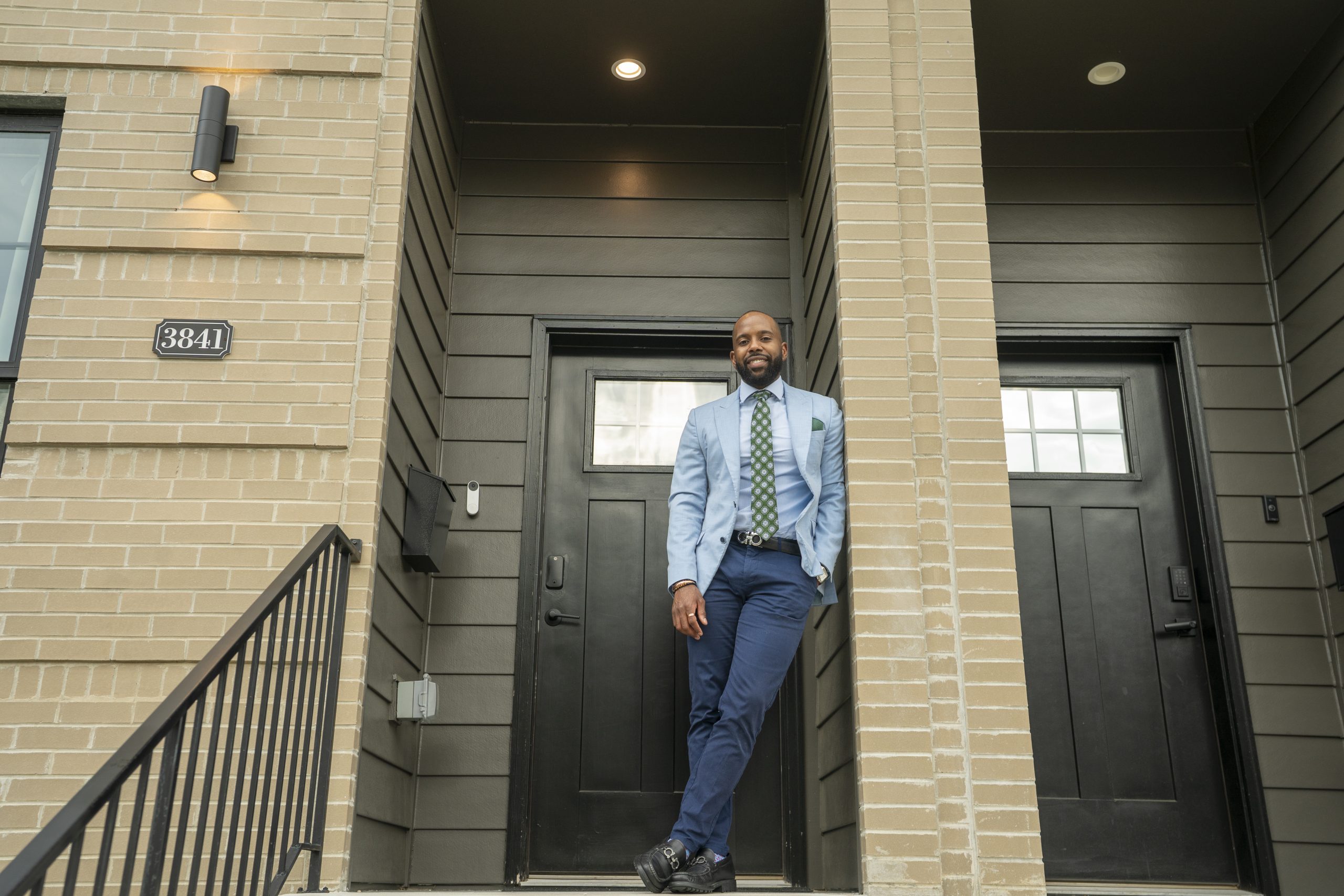
Eric Murchison, 35, on the front steps of his new East Falls townhouse.Jessica Kourkounis / For The Inquirer
The search: By his own admission, Murchison’s search was “very spontaneous and random.” He’d see a potential home while searching online during his lunch break and decide to go check it out.
One — a duplex near Temple University — was well over his budget, at $750,000. (He’d liked the idea of buying a duplex and renting out one of the units while living in the other.)
Another home he liked in South Philly was priced around $550,000, with no wiggle room. “The guy just was not budging on the price,” Murchison said.
Discouraged, he let his property manager know that he was renewing his lease for the following year.
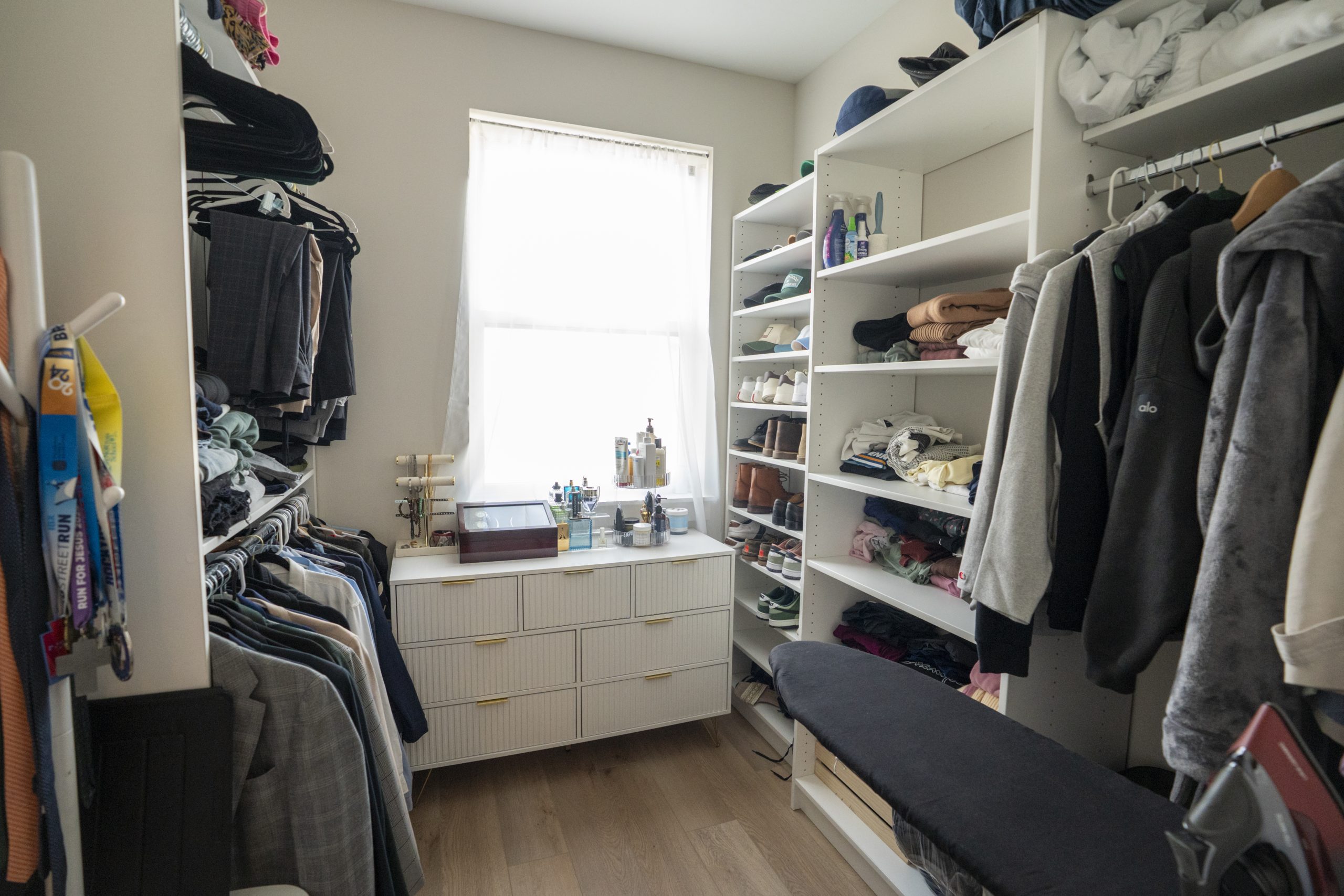
The primary suite includes a walk-in closet.Jessica Kourkounis / For The Inquirer
The appeal: The first time he came across his future home was on Zillow. It was also on his drive to work, so he’d passed it on his commute, admiring the newly constructed townhouses.
But when he randomly met the developers through work, he said, it felt like kismet.
The development was across from a cemetery and a bit over budget at $525,000. But it was just a 10-minute drive to Center City and a half-mile walk to Kelly Drive, where Murchison liked to go running. He liked the neighborhood, too, which he felt was poised for a boom.
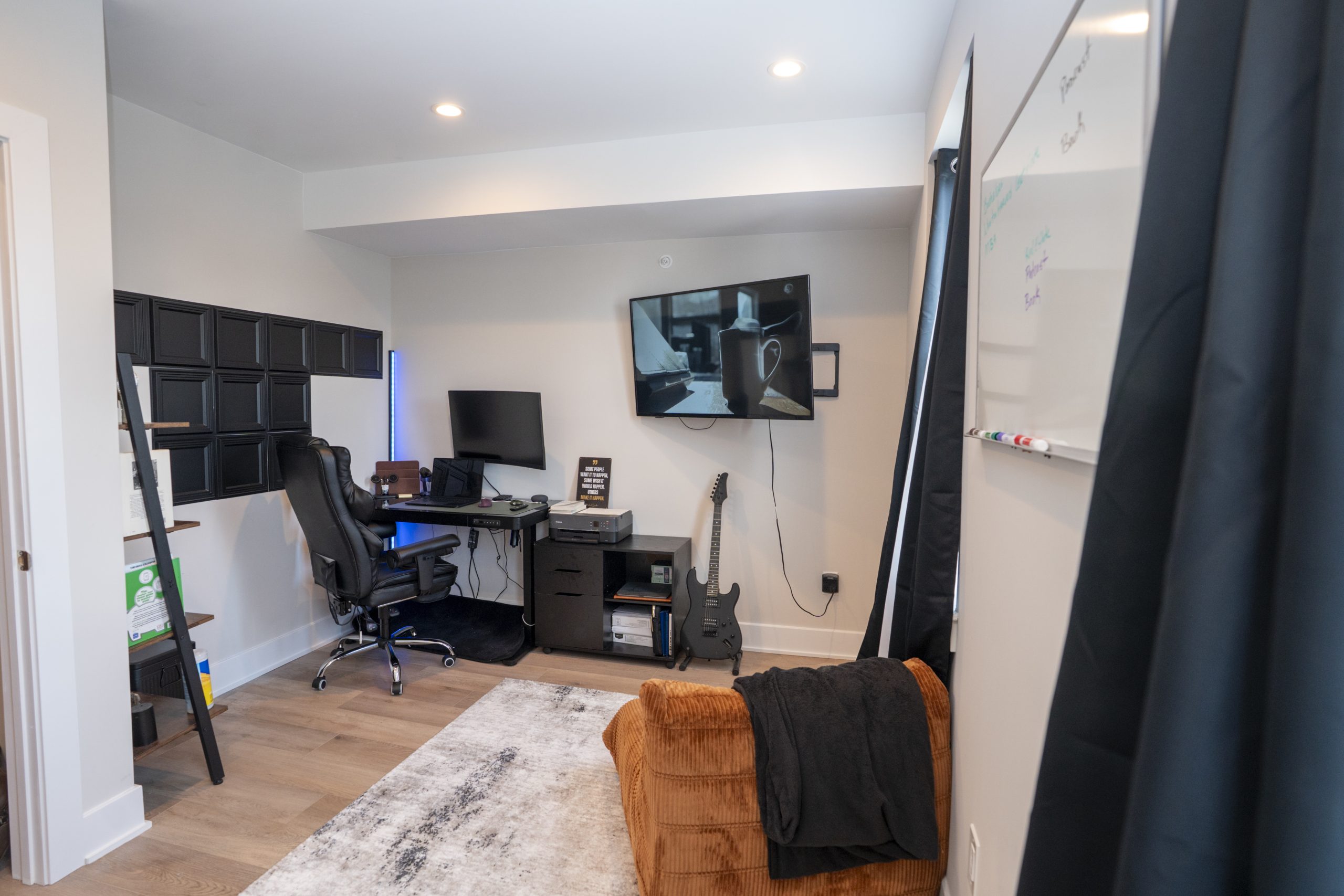
Murchison turned one of the home’s four bedrooms into an office and meditation space.Jessica Kourkounis / For The Inquirer
Because it was a newly constructed home, it was part of a city program that provides a 10-year tax abatement to buyers who bought into certain new construction projects in the city.
“But what ultimately made me move on it was that feeling like, ‘This feels like it could be home,’” he said. “I remember having that feeling, and seeing my daughter, envisioning us like having popcorn and watching TV, and I kind of had in mind where I could put the furniture.”
By the time he toured a second time, he was sold.
The first floor of Murchison’s new townhouse. At 2,617 square feet, it’s more than twice the size of his previous rental. Jessica Kourkounis / For The Inquirer
The deal: Listed at $525,000, Murchison initially offered $480,000 before settling on $490,000, with a 6% seller’s assist.
Though it was a new home, an inspection turned up some minor issues — a loose faucet and a noisy kitchen range fan — that the developer agreed to fix.
The money: Murchisonwas prepared to put 3% down on the new home.But when he inquired with another lender, he said, he was able to get a more attractive deal, in which a down payment wasn’t required.
“I actually got a refund at settlement because I had the 6% seller’s assist,” he said. “So the only down payment was like transfer tax, closing cost, all those things.”
Today, his mortgage is $3,400 — $400 more than his previous rent — and because of the tax abatement, he pays just $68 a month in taxes, he said, instead of the roughly $500 he’d otherwise owe.
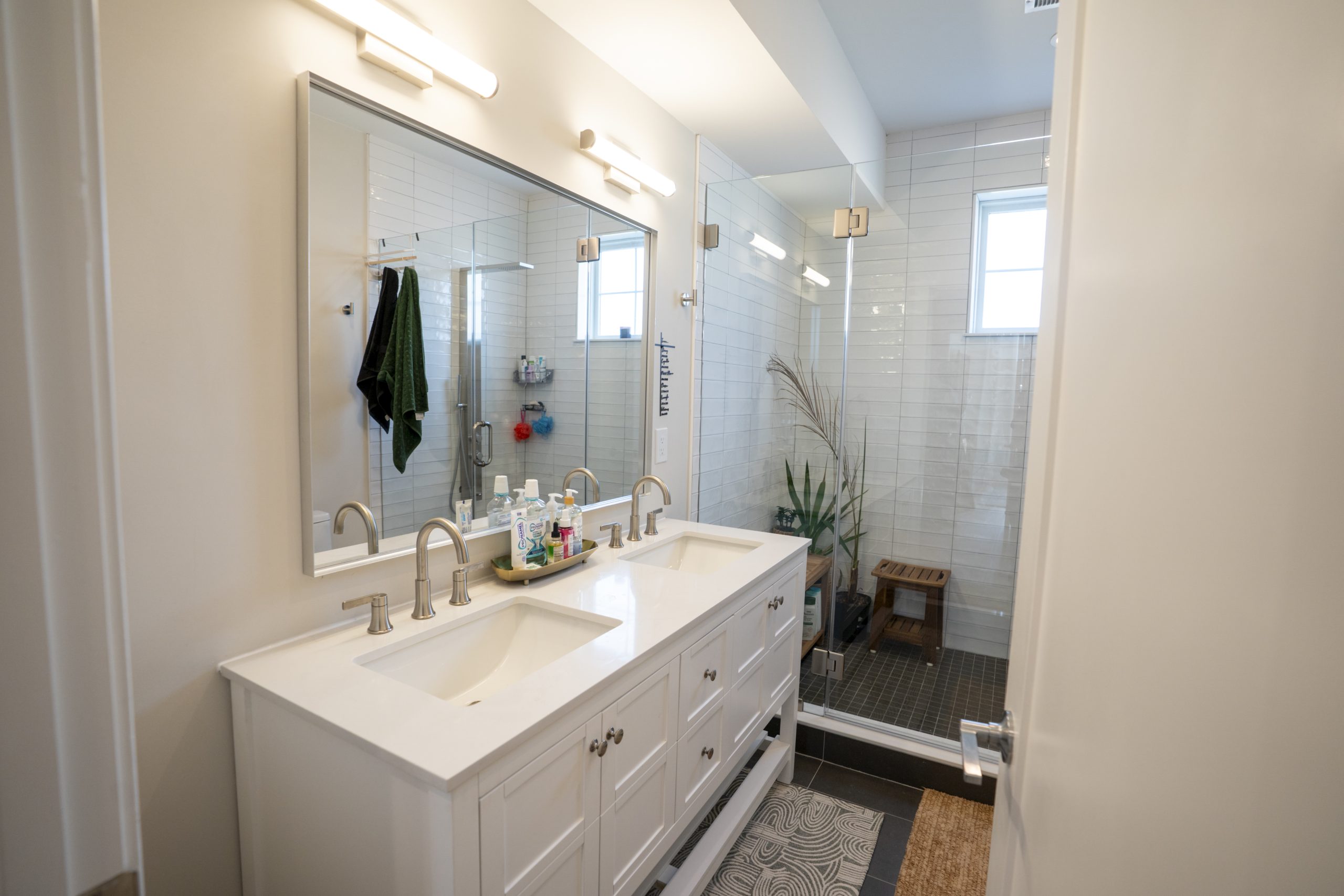
The primary bathroom in Murchison’s new townhouse.Jessica Kourkounis / For The Inquirer
The move: With the money he was able to save by not putting down the 3% down payment, he was able to pay for movers, plus a nice dinner for his first night in his new home.
He moved in the same day he closed on the home. “Iclosed Feb. 6, I think at like 10 a.m., [and] the movers were done by 1 p.m.,” he said.
Life after close: At more than 2,500-square-feet, the new home dwarfs Murchison’s previous rental, which was about 1,000 square feet.
In addition to bedrooms for both him and his daughter, he also has a meditation/prayer room.
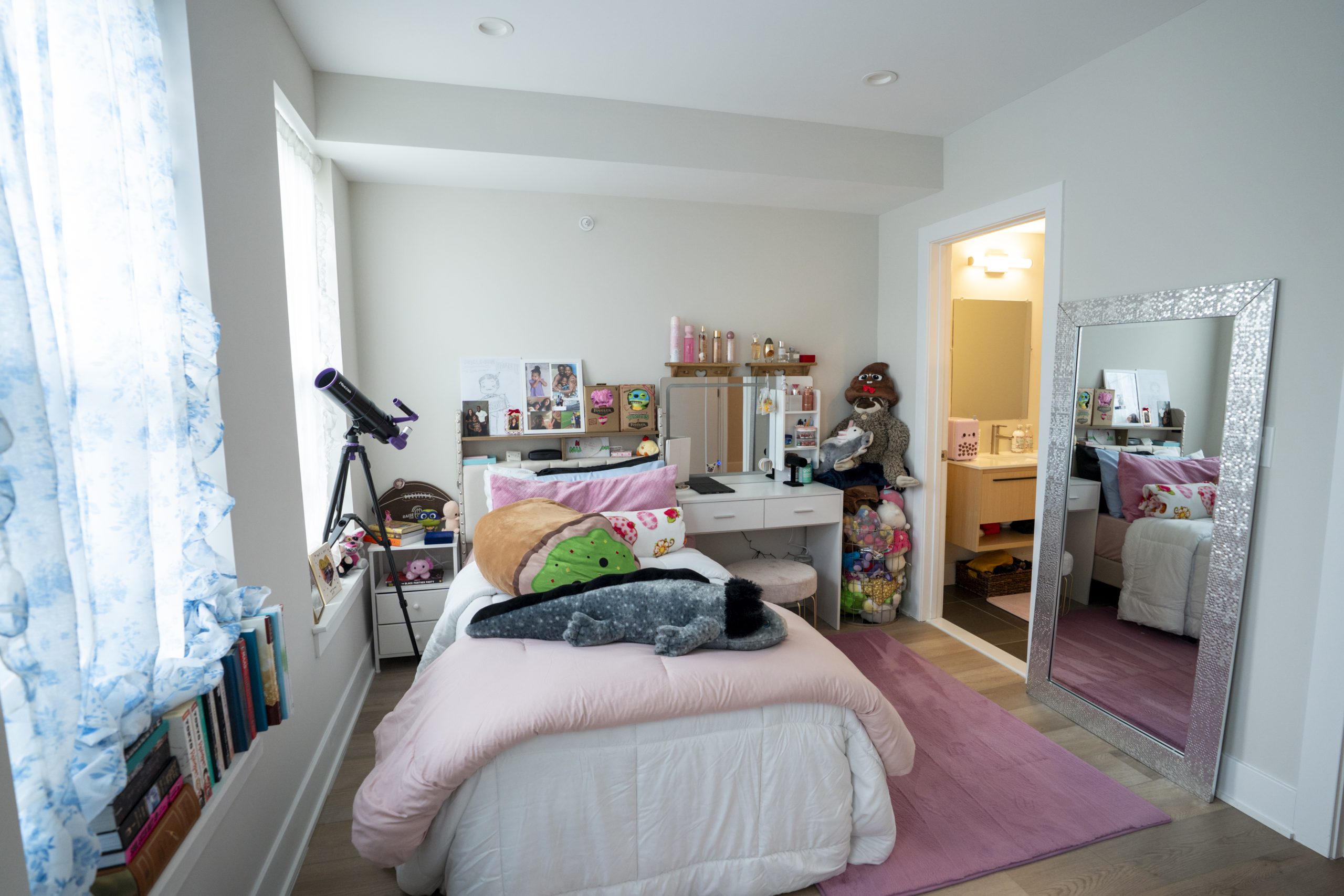
Eric Murchison’s daughter’s bedroom in his new East Falls townhouse.Jessica Kourkounis / For The Inquirer
So far, he’s had one small renovation project done — removing some shelving in a hallway between his bedroom and bathroom — with plans to make two more improvements in the not-too-distant future: adding a sauna, as well as some shade to the rooftop.
He considers himself “very happy” with his new home, and hopes his story inspires other Philadelphians that homeownership in the city remains possible.
“People need to know — especially Philadelphia natives who think they have to leave — like, hey, if you have a good real estate agent and you have creative financing, you might as well buy.”
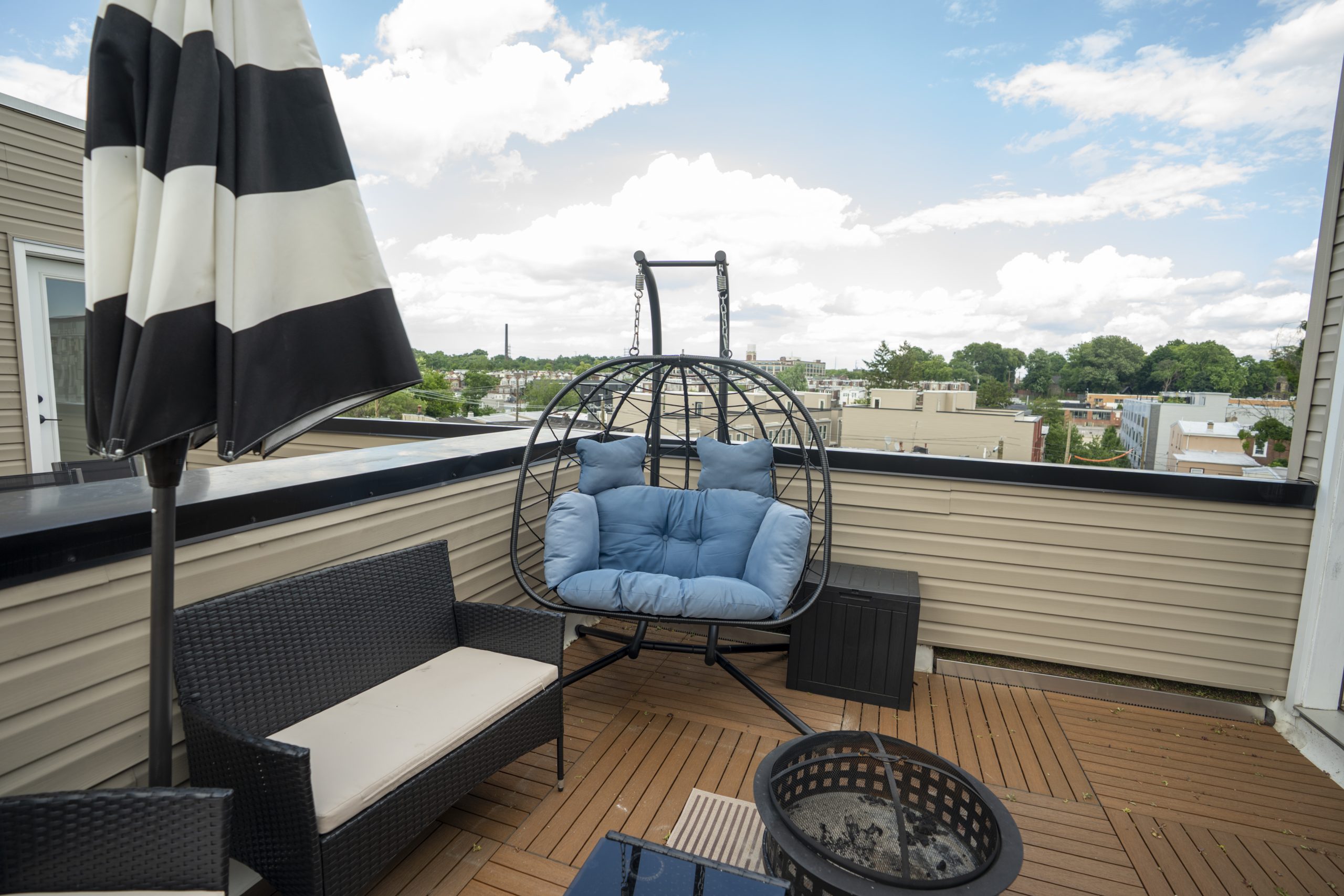
A rooftop deck is one of amenities Murchison was seeking in his new home. He got it.Jessica Kourkounis / For The Inquirer
Did you recently buy a home in the Philadelphia area or South Jersey? Share the story of how you did it. Email Inquirer real estate reporters at properties@inquirer.com.