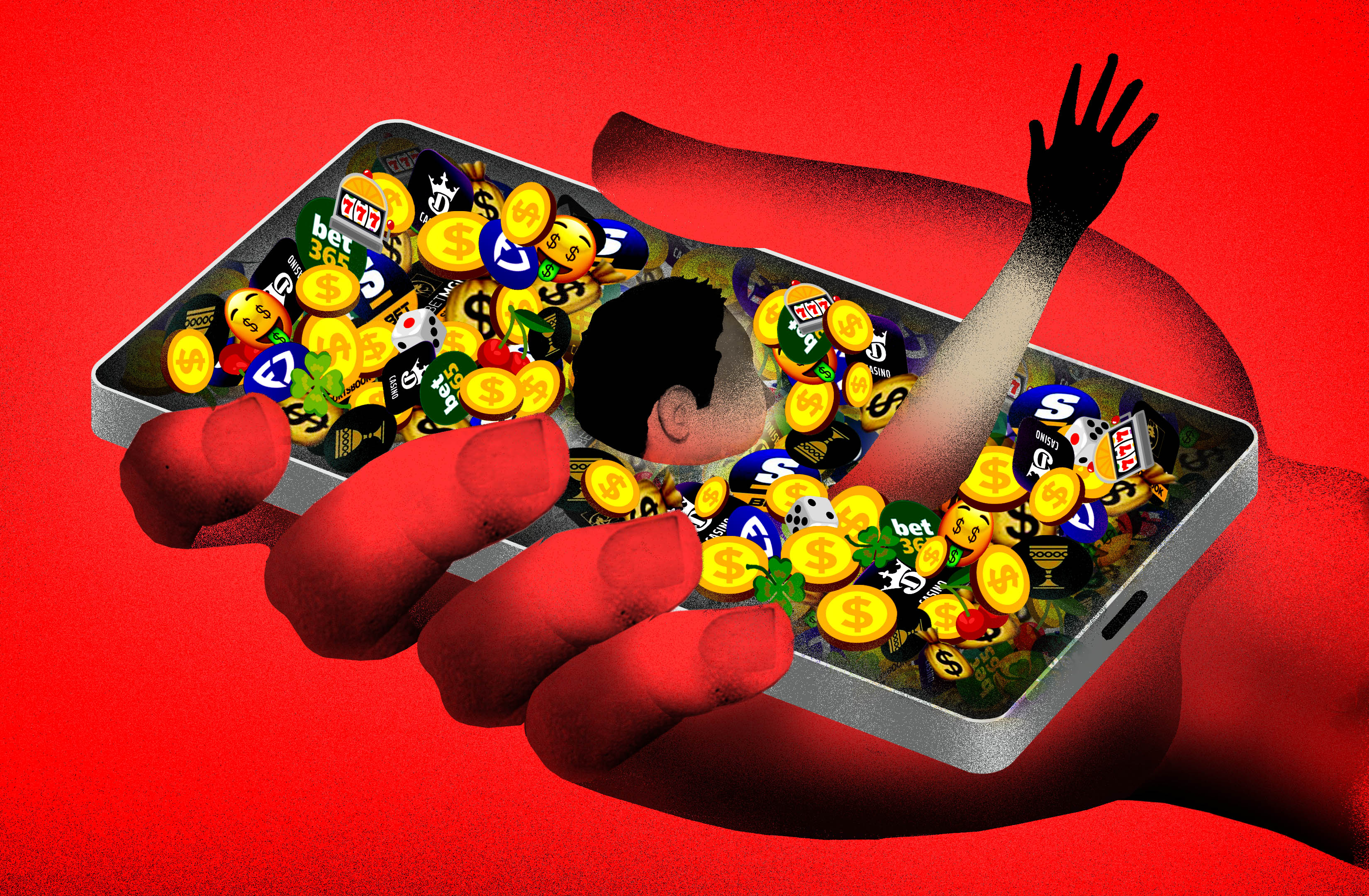
Tag: Weekend initiative

  • In Pennsylvania, the epicenter of online gambling, anger over addiction and loss fuels a backlash

    In Pennsylvania, the epicenter of online gambling, anger over addiction and loss fuels a backlash

    Reynaldo Rivera had little interest in sports betting. He preferred playing slots and table games at casinos around Philadelphia, where he’d unwind a couple times a week after covering the graveyard shift as a tow truck driver.

    But when the COVID-19 pandemic left most forms of indoor recreation off-limits in 2020, Rivera downloaded some sportsbook apps, and sampled their digital simulations of casino games.

    He soon discovered that he had no reason to ever return to Rivers Casino on Delaware Avenue, or Parx Casino in Bensalem, to play slot machines and Ultimate Texas Hold’em.

    “You open your phone,” he said, “and it’s right there.”

    Occasional after-work gambling turned into constant on-the-job gambling. Rivera sat for hours in the cabin of his tow truck, the outside world dark and still, while he tapped and tapped on his phone.

    Hundreds of dollars in losses became thousands. Then, tens of thousands. By this spring, he’d wagered about $2.4 million, losing $137,000.

    As his losses ballooned, the gambling companies made sure he knew how valuable he was to them. They granted Rivera VIP status and supplied him bonus credits and gifts, like a Peloton bike, courtesy of DraftKings.

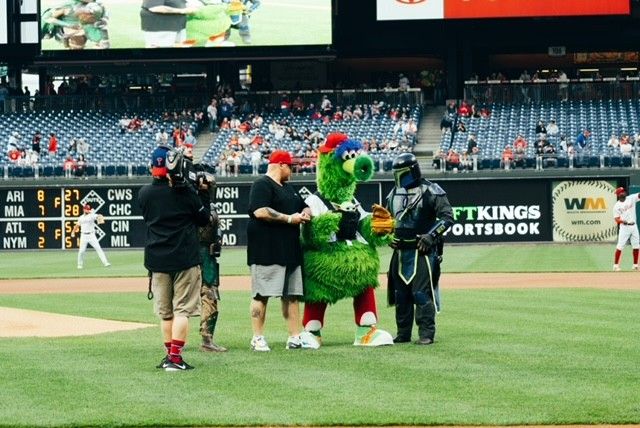
    BetMGM arranged an even more remarkable reward through a sponsorship deal with the Philadelphia Phillies. On a spring evening in May 2022, Rivera was led onto the lush infield grass at Citizens Bank Park, before the Phillies played the Texas Rangers. As thousands of fans watched, Rivera tossed a ceremonial first pitch.

    Yet the constant gambling and losing left Rivera feeling ashamed and foolish. He was struggling to get by, instead of living comfortably from the money he made driving a tow truck.

    He just couldn’t stop.

    “Listen, I don’t have a drug addiction,” Rivera, 56, said in a recent interview. “But if that’s what it feels like, that’s crazy.”
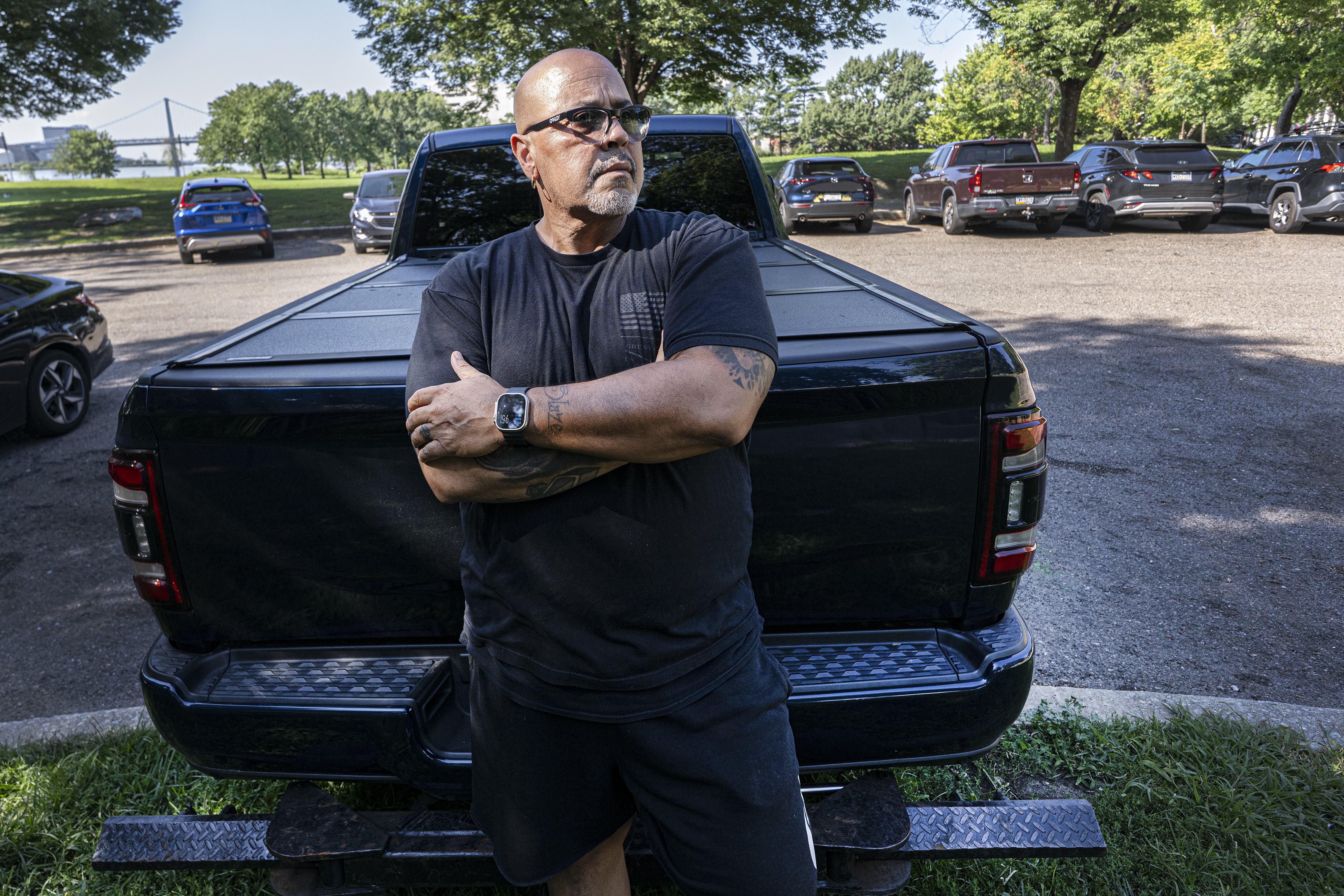
    Reynaldo Rivera said he grew addicted to playing online casino games on his phone while working as an overnight tow truck driver in Philadelphia. Earlier this year, his attorney filed a lawsuit against DraftKings and FanDuel over his addiction.Jose F. Moreno / Staff Photographer
    As Rivera’s gambling losses deepened, he said companies granted him VIP status and enviable rewards, like throwing out the first pitch before a Phillies game at Citizens Bank Park in 2022. Courtesy of Reynaldo Rivera

    Less than a decade ago, gamblers had to invest time and physical effort if they wanted to bet on sports or play casino games, whether it meant going to Las Vegas or Atlantic City, or meeting up with a bookie. Now, it takes only the flick of a thumb to open an app.

    And it’s no longer a fringe activity that needs to be sought out. Nearly everywhere Americans look, there are advertisements about sports betting or prediction markets: billboards alongside highways, banner ads in stadiums, sponsored segments in sports broadcasts, and TV and online pitches featuring global stars-turned-well-paid ambassadors, including Philadelphia 76er LeBron James, tennis legend Maria Sharapova, and Academy Award winner Jamie Foxx.

    But a corollary backlash is also taking shape, as the repercussions of nearly unlimited access to gambling have become impossible to ignore.

    Lawmakers are demanding greater control over how sportsbooks and prediction markets operate, while a wave of litigation is attempting to hold those companies responsible for their customers’ addictions, echoing similar legal action that’s been taken against social media companies. (Meta agreed in August to pay up to $18 billion to settle lawsuits it faced over claims that it designed its products to be addictive to children and teens.)

    The impact of the gambling industry’s skyrocketing growth might be felt more acutely in Pennsylvania than anywhere else. In March, the American Gaming Association wrote in a report that Pennsylvania had the largest online gambling market in the U.S., generating $3.46 billion in revenue in 2025 — a 27.9% increase from the year before.

    Pennsylvania recorded $7.7 billion in overall gambling revenue in 2025, a sum that trailed only Nevada, according to the gaming association. Pennsylvania is also one of just eight states that have thus far legalized both online gambling and sports betting.

    Philadelphia, meanwhile, is the seventh-largest commercial casino market in the country, having generated $1.4 billion in 2025, the gaming association said, and last year was the top market for online gambling advertisements.

    “The casino itself has expanded basically into infinity,” said Timothy Fong, the co-director of the UCLA Gambling Studies Program, which researches gambling disorders and evidence-based addiction treatments.

    While brick-and-mortar casinos have long wooed bettors with offers of free meals and hotel rooms, the modern gambling industry bears little resemblance to the neon palaces of past generations.

    “If you go back in time, like 25 years ago, and you compare the differences, it’s obviously not the same world,” Fong said. “It’s not even the same universe, and it’s because gambling is frictionless right now. It takes very little effort to get bets down. And you also have a much wider array of choices of how to bet, what types of wagers are out there.”

    The state’s Gaming Control Board last week published an annual overview of its regulatory activity, and reported that 30,000 people are enrolled in its self-exclusion programs, which prevent bettors with addictions from being able to legally gamble.

    Researchers at Pennsylvania State University’s Criminal Justice Research Center have found that between 60% and 73% of adults in the state had engaged in some form of betting in 2025, with as much as 30% gambling online. The average age of online gamblers was 37, and more than 77% were men, with 61% identifying as white.

    Overall, Penn State found that between 2.4% and 6.4% of Pennsylvanians might be problem gamblers — more than double the reported national average of 1% to 3%.

    “That’s an inordinate amount of people,” said Eric Webber, a senior behavioral health therapist for Caron Treatment Centers, which offers addiction rehabilitation services in Pennsylvania, Florida, Georgia, New York, and Washington, D.C.

    Webber, since 2013, has been treating people who have gambling addictions. The number of his patients — who include lawyers, executives, and college students — has climbed steadily since the U.S. Supreme Court ruled in 2018 that states could adopt their own sports betting laws.

    He described one young client whose compulsions led him to coordinate a phone, laptop, and tablet to play multiple hands of blackjack simultaneously.

    “I tell people this is the new epidemic,” Webber said, and Pennsylvania “is at the epicenter of it.”

    Rivera is among a half dozen former customers of FanDuel and DraftKings who have recently sued the companies in Common Pleas Court of Philadelphia. Their lawsuits allege that the apps use “hyper-personalized algorithms” and loyalty programs to target “the most addicted, problem users” that make up a disproportionate chunk of the sportsbooks’ revenue.

    Rivera’s lawyer, Jennifer Hoekstra, said her Pensacola, Fla.-based firm, Aylstock, Witkin, Kreis & Overholtz, has retained about 15,000 clients with similar claims, and has filed lawsuits against sportsbook operators in Delaware, Massachusetts, and New Jersey.

    “FanDuel and DraftKings have created, essentially, an addiction crisis,” Hoekstra said. “They built an addictive product intentionally.”
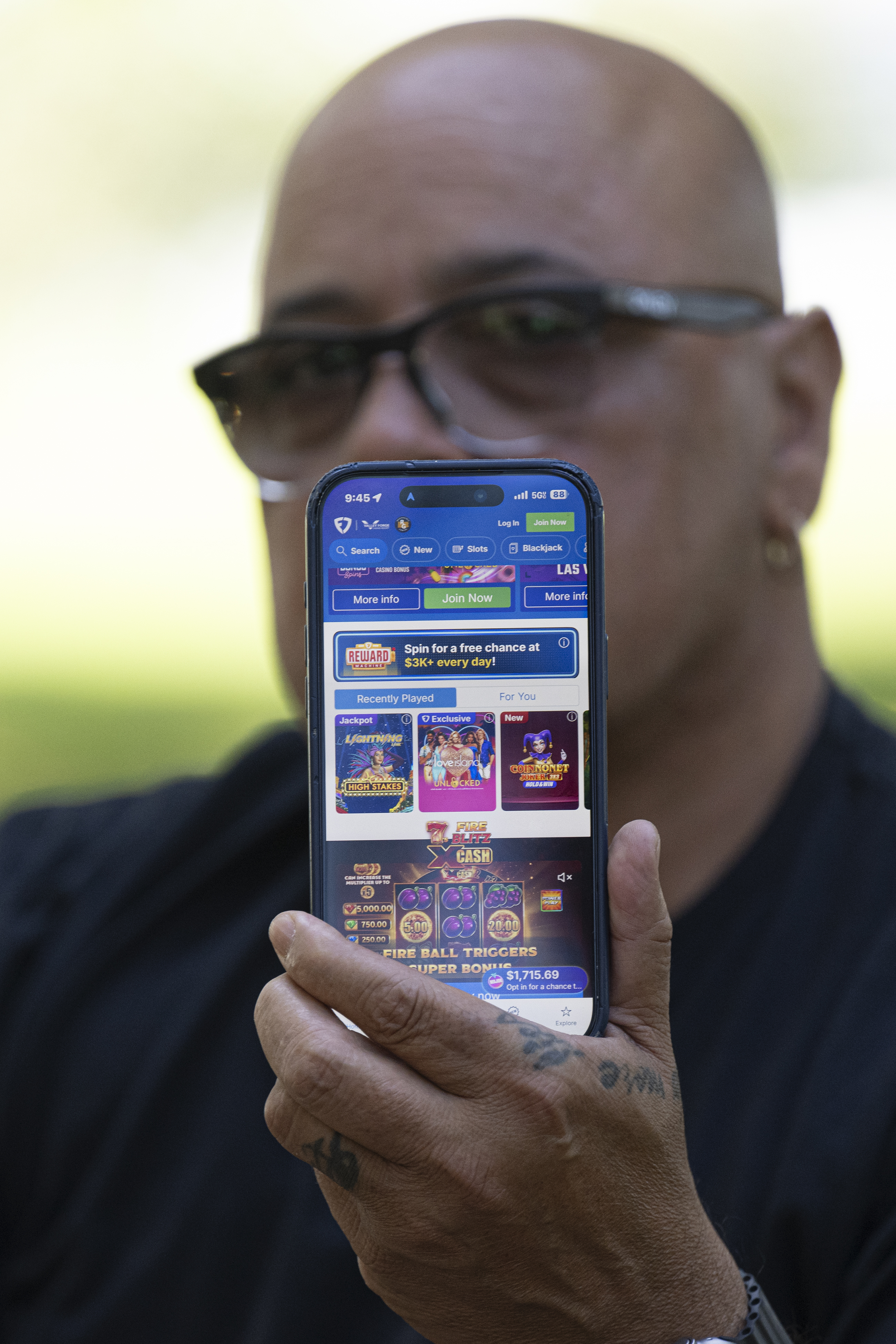
    Rivera’s attorney, Jennifer Hoekstra, said DraftKings and FanDuel banned him from their apps after he sued the companies. Rivera said he still can’t bring himself to delete the apps. Jose F. Moreno / Staff Photographer

    The companies have rejected that characterization and said they offer tools that allow players to monitor and set limits on their deposits, wagering, and playing time.

    FanDuel “supports and exceeds the comprehensive requirements set by Pennsylvania regulators for how we monitor customer behavior and respond to signs of harm,” a spokesperson wrote in an email.

    In 2025, the company spent $158 million on responsible gaming technology, conducted 58,000 account reviews, and removed 5,700 users from FanDuel’s platform, the spokesperson said.

    A DraftKings spokesperson wrote that while the company won’t comment on pending litigation, it “takes responsible engagement concerns very seriously” and has a team of more than 50 full-time employees and a chief responsible gaming officer who focus on that issue. “Responsible engagement is embedded across our business and essential to DraftKings’ long-term sustainability,” the spokesperson said.

    The sportsbooks have asked judges to dismiss other lawsuits that have accused them of product liability and violating state consumer protection laws. Their attorneys have argued that FanDuel and DraftKings don’t sell an actual product, but instead offer a free app and have no obligation to protect customers from placing lawful bets, even if their gambling becomes excessive.

    Shortly after Rivera’s lawsuit reached the court docket in July, DraftKings and FanDuel banned him from their apps, and the friendly VIP managers who had once texted him regularly no longer responded to his messages, his lawyer said. Yet Rivera can’t bring himself to delete the sportsbook apps from his phone. The urge to place a bet remains just under the surface, an itch he can’t scratch. Sometimes, he imagines winning back the money he’s lost.

    “If I had access to them apps, I’d probably be on them,” he said. “I know I’d be on them.”
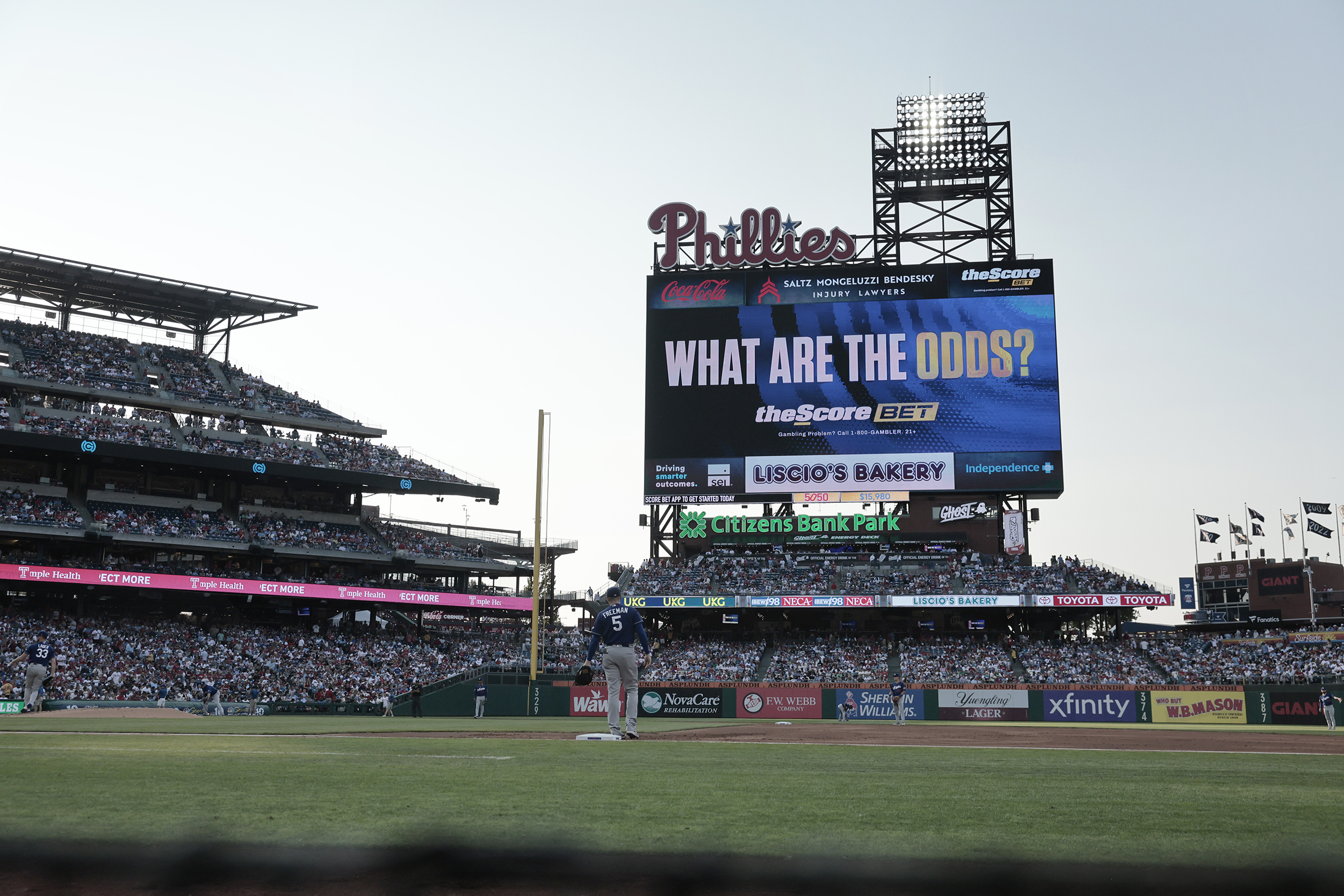
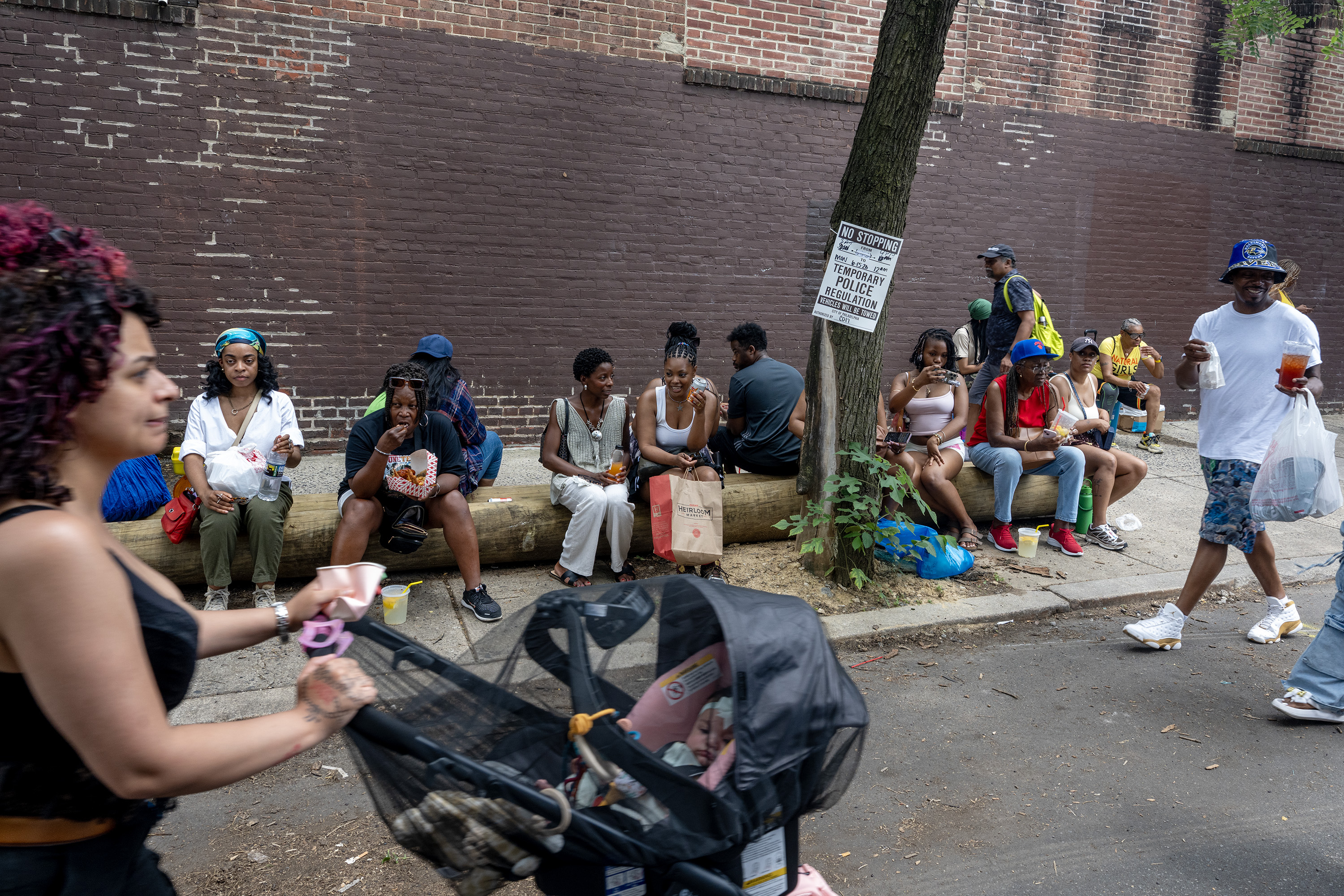
    Advertisements for sports betting can now be easily found at professional sports stadiums and during broadcasts of games. Elizabeth Robertson / Staff Photographer

    A bond, broken

    On Sept. 23, a cluster of parents walked through the echoey halls of the Russell Senate Office Building in Washington to a small, cream-colored room. Once inside, they unspooled personal accounts of how gambling addiction had impacted their lives. Politicians and advocates listened and nodded solemnly, and discussed the urgency of a newly announced gambling reform movement.

    Raymond Mikesell described the inseparable bond that he shared with his son, Ray, who at the age of 4 began helping out at Cafe Raymond, the breakfast and lunch spot that Mikesell operated for 17 years in Pittsburgh, beginning in 2007. Ray became a full-time fixture in the restaurant as he grew older, whipping up blueberry ricotta pancakes in the kitchen while his father amiably chatted with customers.

    By age 20, Ray had enough money to buy his own house. That picture of success was punctured when Mikesell one day received some of his son’s bank statements by mistake, and discovered that his account had been repeatedly flagged for insufficient funds.

    “I said, ‘Ray, what’s going on here? You got to explain this to me,’” Mikesell recalled. “He said he was betting.”

    Mikesell wanted to help his son climb out of debt. He began managing his finances, giving him an allowance, and sometimes paying his mortgage. Mikesell said he also avoided mentioning professional sports altogether, for fear that it would drive his son to place more wagers.

    “Within a month, he was kicking my door down to tell me I’m ruining his life,” he said. “We all knew what it was. It was the addiction to gambling. He just wanted to bet all his money.”

    Mikesell said his son spiraled deeper into addiction. He maxed out his credit cards, and his home fell into foreclosure, and then was sold at a sheriff’s sale.

    Among those who had assembled in the senate room with Mikesell were U.S. Sen. Richard Blumenthal (D., Conn.) and U.S. Rep. Paul Tonko (D., N.Y.). In 2025 the lawmakers introduced the SAFE Bet Act, which would prohibit sportsbooks from marketing during live games and using artificial intelligence to inform the promotions they offer to bettors.

    Blumenthal and Tonko each addressed the parents, who represented a nonprofit, Families and Friends of Gamblers, which was created with the help of the Public Health Advocacy Institute. (Lawyers for the institute in March sued FanDuel, DraftKings, and the NFL on behalf of Terry Thompson and Christopher Sage, men from the Philadelphia suburbs who developed sports gambling addictions.)

    Blumenthal accused sportsbook companies and prediction markets of exploiting their customers’ compulsions.

    “It drives families apart. Ruins people’s careers,” he said. “It basically decimates lives, because gambling can be an addiction. We know it’s an addiction. It’s a disease, like every addiction.”

    Tonko and Blumenthal in August demanded that FanDuel end its VIP services, citing reporting from The Inquirer that revealed that a FanDuel VIP host had sent a personalized video of Phillies star Bryce Harper to Thompson, who earlier this year planned to end his life after gambling away the last of his family’s savings.

    A FanDuel executive disclosed to the lawmakers in a Sept. 24 letter that the company has sent approximately 30 personalized videos from athletes and entertainers to its customers during the last two years, but said such perks are not meant to encourage betting.

    In response to the congressional scrutiny, the Major League Baseball Players Association has said it would support prohibiting players from doing promotional work for gambling VIP programs.

    Such measures arrived too late for Mikesell’s son.

    A few days before Thanksgiving in 2024, Mikesell spoke by phone with Ray, who was still staying in his foreclosed-upon house in South Fayette. Neither knew that Allegheny County Sheriff’s Office deputies planned that day to serve Ray with an eviction notice.

    When the deputies later arrived and knocked on Ray’s door, they heard a single gunshot.

    Ray, 24, had died by suicide.

    Mikesell later said that he didn’t believe his son had planned on taking his life — he had already packed his belongings and his two cats in his car — but might have panicked when he saw police at his property.

    “We found a note in his garage,” Mikesell recalled. “It said, ‘Please take care of my cats.’”
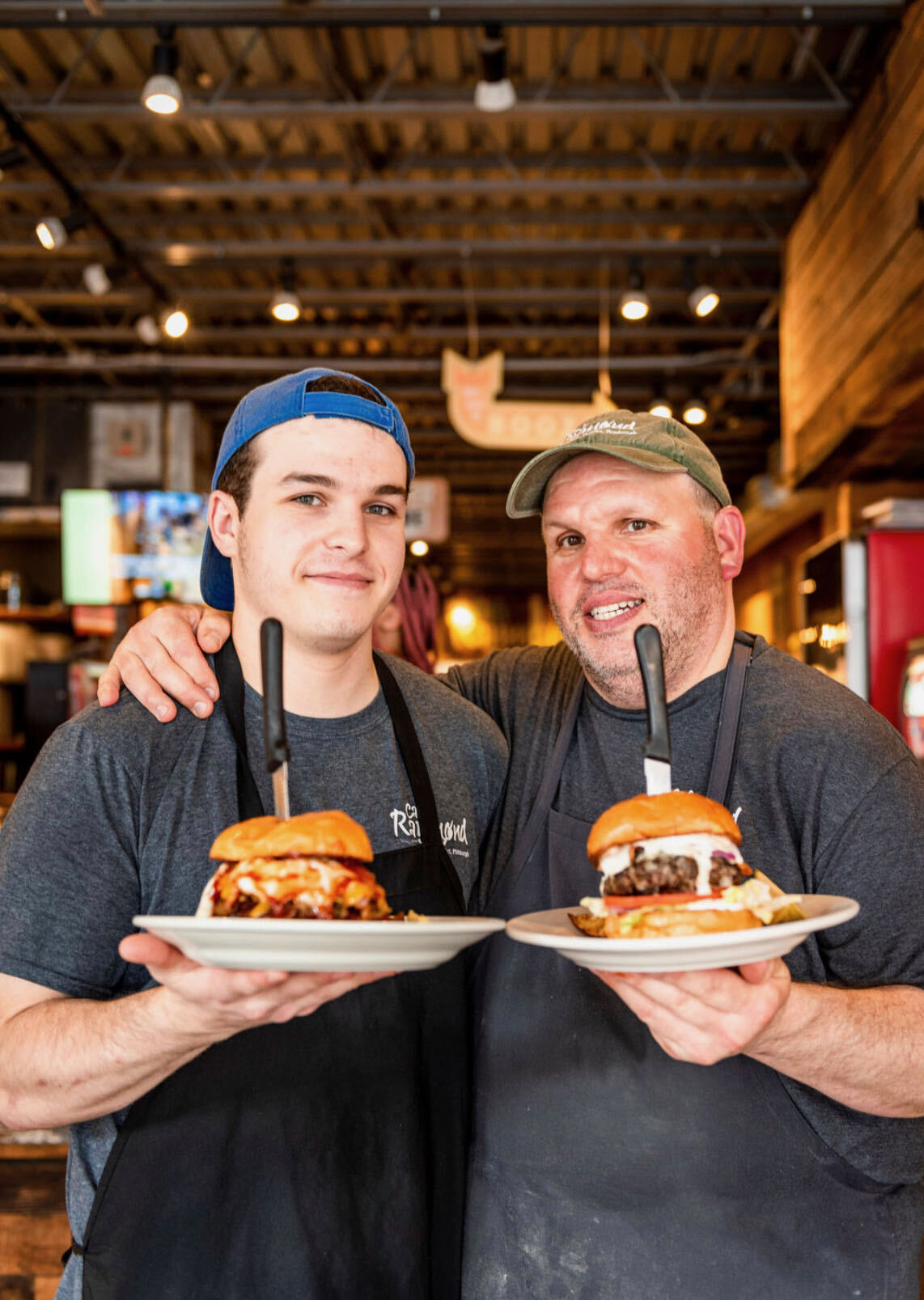
    Raymond Mikesell (right) and his son Ray (left) worked together daily at Cafe Raymond, Mikesell’s restaurant in Pittsburgh. Courtesy of Raymond Mikesell

    Grief-stricken, Mikesell contacted Rep. Jason Ortitay, an Allegheny County Republican, to ask if anything could be done to address gambling addiction. Earlier this year, Ortitay introduced a bill that would prevent betting apps from being accessed within Pennsylvania schools.

    “I called my wife and daughter, and we cried,” Mikesell said, his voice breaking. “Because it’s a small step in a big thing that’s going to mean a lot someday soon.”

    After police closed their investigation into Ray’s suicide, investigators returned his cell phone to his parents. They discovered that a month after his death, Ray’s phone was still buzzing with promotional offers from gambling companies.

    “There was one text from DraftKings,” Mikesell said, “asking him, ‘Are you betting with someone else? What’s going on?’”

    Advertisements that encourage viewers to try online gambling or prediction markets have become nearly inescapable. Staff Illustration

    ‘The gambler’s fallacy’

    Tales of tragedy and heartache like Mikesell’s have spurred other legislative and legal efforts to rein in sportsbooks and prediction markets.

    Pennsylvania lawmakers are drafting legislation to ban in-game microbets and curtail VIP programs, and have introduced additional bills to prohibit consumers from using credit cards to place wagers, restrict gambling entities’ ability to send push notifications to customers, and ban insider trading on prediction markets.

    The Sports Betting Alliance — a national advocacy organization whose members include FanDuel, DraftKings, BetMGM, bet365, and Fanatics — has said it would oppose legislation to eliminate microbets, and has likened VIP services to rewards that retailers like Starbucks offer to frequent customers.

    New York Attorney General Letitia James has sued prediction markets Polymarket and Kalshi, accusing each of operating illegal gambling platforms. The federally regulated markets are available in 50 states, and customers can be as young as 18, while the legal gambling age remains 21.

    Prediction market officials insist that their products are not gambling apps — even after recording tens of billions of dollars in sports wagers during the FIFA World Cup — but rather a financial product similar to the stock exchange.

    In early September, New Jersey Attorney General Jennifer Davenport petitioned the Supreme Court to decide whether states should have the authority to regulate prediction markets as they do gambling.

    Amid those legal tussles, researchers are still assessing the complex picture of addiction that has been associated with the widespread growth of online sports betting and prediction markets.

    In early September, Bank of America Institute published an analysis that showed the largest share of customers who engaged in online betting in July came from lower- and middle-income households.
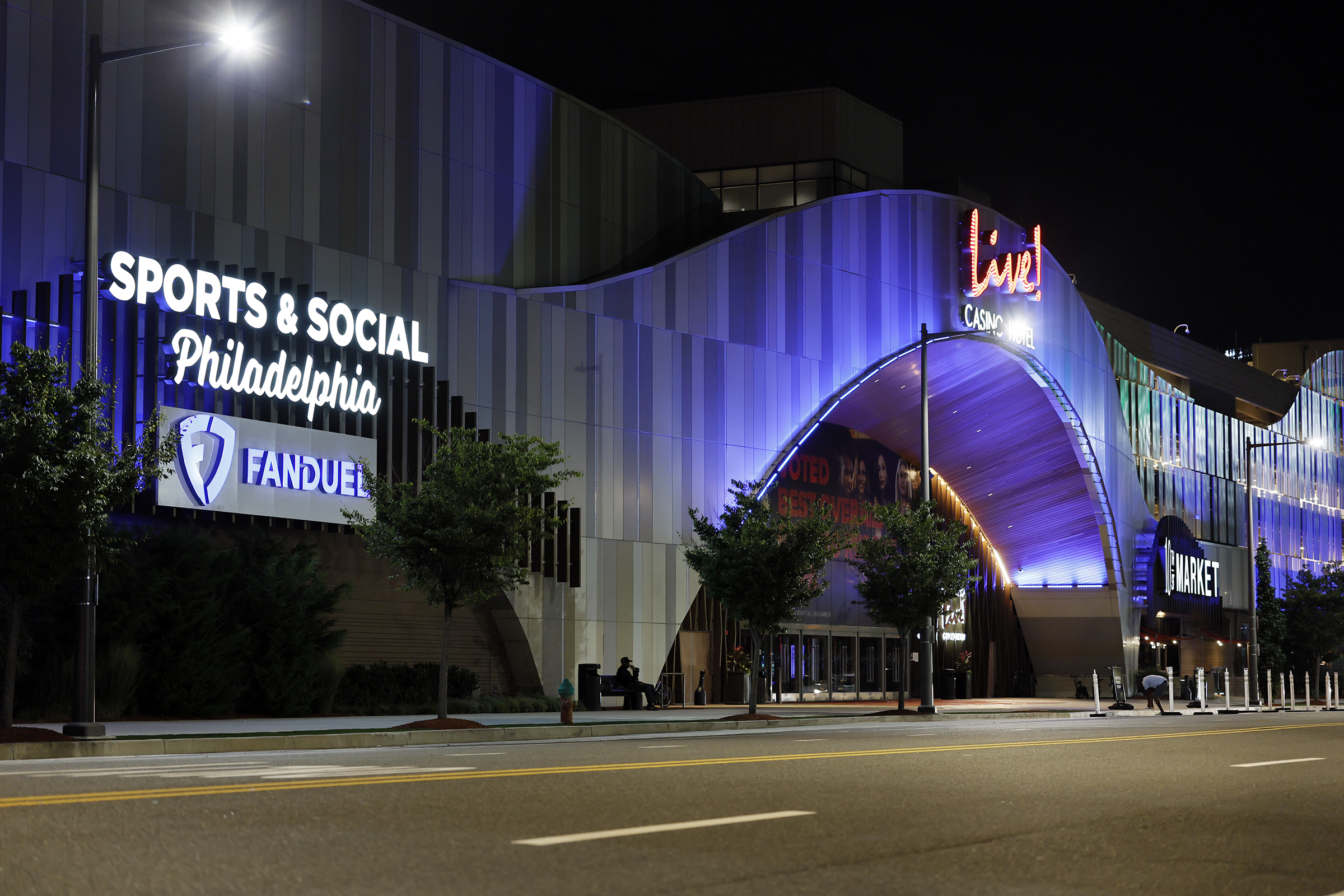
    FanDuel’s logo can be found next to the entrance of Live! Casino & Hotel, which sits about a block north from Citizens Bank Park in South Philadelphia.Elizabeth Robertson / Staff Photographer

    The institute said that median account balances of households that participated in online betting was 59% of those that did not, but didn’t include demographic or other details about those customers.

    “There’s something called the gambler’s fallacy, which basically goes like this: ‘If I keep doing this, I have to win,’” said Webber, who conducts inpatient rehabilitation at Canon’s 110-acre campus in Berks County.

    “From a biological standpoint, it’s a dopamine rush, so even if I’m losing, I’m getting a reward. It’s the excitement of the chance — ‘I might get this. And VIP [rewards] are going to make me feel like the man.’”

    In June, researchers from West Virginia University and the University of Oviedo published a study suggesting that the legalization of sports betting could lead to a 3% increase in the annual divorce rate. “Effects emerge gradually and are driven almost entirely by online wagering,” the authors wrote. (The study, which examined state and county data from 2012 to 2024, has not yet been peer-reviewed.)

    A 2025 report from the Democrat-leaning Progressive Policy Institute, meanwhile, found a 36% decrease in bankruptcies between 2019 and 2024 in states that legalized online sports betting, with “no sign of a tidal wave of bankruptcies or consumer credit downgrades.”

    That same year, The Lancet Regional Health-Europe published a study that showed suicide was the leading cause of death among 6,899 patients in Norway who had a gambling disorder between 2008 and 2021.

    Though those patients had a higher suicide risk than the general population, the researchers found that gambling addiction had a lower suicide risk than substance use disorders, alcohol dependence, psychotic disorders, or mood disorders.

    None of that research, though, captures how easily even a new gambler’s experience can escalate from a fun diversion to a life-altering obsession.
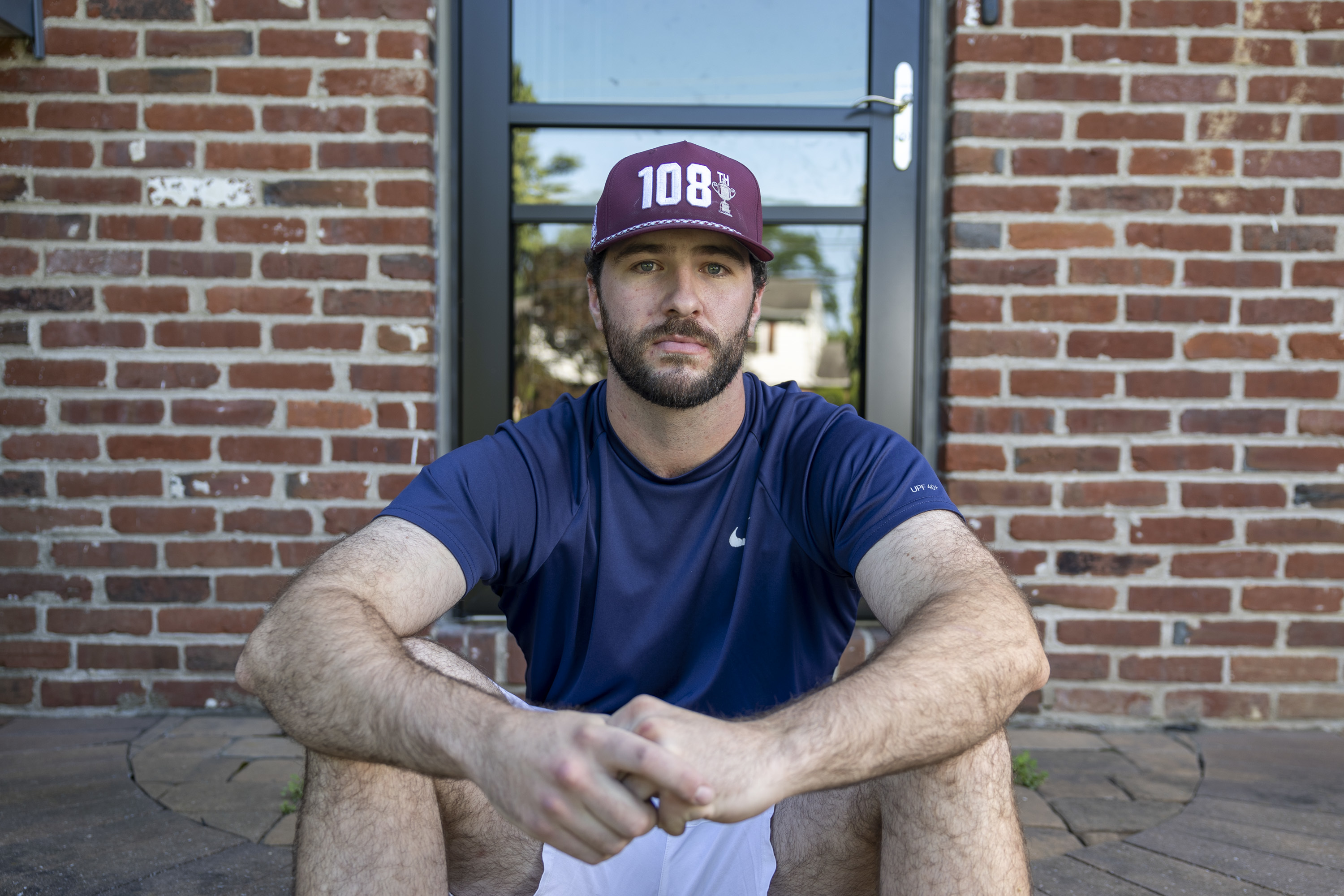
    Hiding his online gambling addiction from those closest to him left John Field feeling like he was living a double life, and ultimately drove him to lose a long-term relationship. Tyger Williams / Staff Photographer

    A double life

    When John Field turned 21, he opened accounts with DraftKings and FanDuel, and occasionally placed football parlay bets when he hung out with friends. Eventually, he tried the apps’ casino offerings, and became hooked on slots — 20 cents a spin at first, then 50 cents, then 5 bucks, then 10 dollars.

    He gambled nonstop at a warehouse job that he held in Clifton Heights, but hid this newfound compulsion from those closest to him. He felt like he was leading a double life.

    “Have you ever seen the show Severance?” Field asked, referring to the Apple TV sci-fi show in which office workers live separate lives in and out of work. “It was just like that. I had to basically pretend like I was a completely different person.”

    One person knew the truth: Field’s mother, Debbie. She still had access to his bank account from when he was younger and observed that Field was regularly moving money to a FanDuel account.

    “It started off slow,” Debbie said, “and then every year, it got worse.”

    Field recognized that he had a problem, and said he tried several times to close his FanDuel or DraftKings accounts. But then he felt a maddening urge to start gambling again.

    “Every time I’d run out of money, I’d see an ad, like, ‘Deposit 50 bucks and get $500 in casino credit.’ So when I was down real bad I’d download the other apps,” Field said. “I knew they’d give me a bunch of money to start with.”

    His phone eventually held apps from Fanatics, BetRivers, Borgata Online, BetMGM, Caesars Palace Online, SugarHouse, Stardust, and Bally Bet. Some weeks, he gambled away nearly his entire paycheck.

    Debbie Field saw that her son’s bank account was plunging into negative figures, and accruing overdraft fees. She implored him to disclose his addiction to his longtime girlfriend. The couple had started dating when they were sophomores at Penncrest High School in Middletown, Delaware County, and were planning to get an apartment together.

    “I was like, ‘John, you can’t move in with your girlfriend without telling her. You tell her, or we will,’” Debbie recalled. “He was petrified.”

    Field told his girlfriend about his struggles with addiction. The couple forged ahead and moved in together in February 2025.

    “I figured we got our own place, I got rent, bills, I really should probably stop this,” Field said. “And it just, again, got way worse. Because then when I lost money, I was like, ‘Holy s—, I have to pay rent, I have to get groceries.’”

    He chased his losses, diverting more money into gambling apps.
    After losing his apartment, Field moved in with his parents and began undergoing treatment for gambling addiction. He said he still encounters numerous daily ads for gambling on social media. Tyger Williams / Staff Photographer

    By March 2025, Field needed his parents to pay his rent. Two months later, he and his girlfriend broke up. Heartbroken, he moved back in with his parents, and agreed to participate in online therapy sessions through ETHOS Treatment.

    Field’s therapist, Phil Waibel, said there is so much demand for gambling addiction treatment, he now has a waiting list for his group sessions. “It’s taking the hearts and minds of young people — especially young men — at an astonishingly high rate,” he said.

    Waibel has treated patients who discovered that it was difficult to escape gambling marketing and push notifications even when they attempted to quit.

    “They’re seeking out even those people who have gone out of their way to block or delete contacts, to self exclude or unsubscribe from email lists,” Waibel said. “They continue to be bombarded, which would indicate a predatory or extremely offensive stance, to loop people back in as soon as possible.”

    Field, 27, said he now feels like his addiction is under control. He excluded himself from all gambling activities in Pennsylvania, secured a union job with a construction company, started going to a gym, and began repairing relationships with friends and family members.

    “Every aspect of my life is significantly better,” he said.

    Yet gambling isn’t out of the picture entirely.

    Recently, Field used Venmo to send some money to his sister, and faced a pop-up ad from a casino app that offered a $1,000 deposit match and up to 1,000 spins.

    “Sign up today,” the message read.

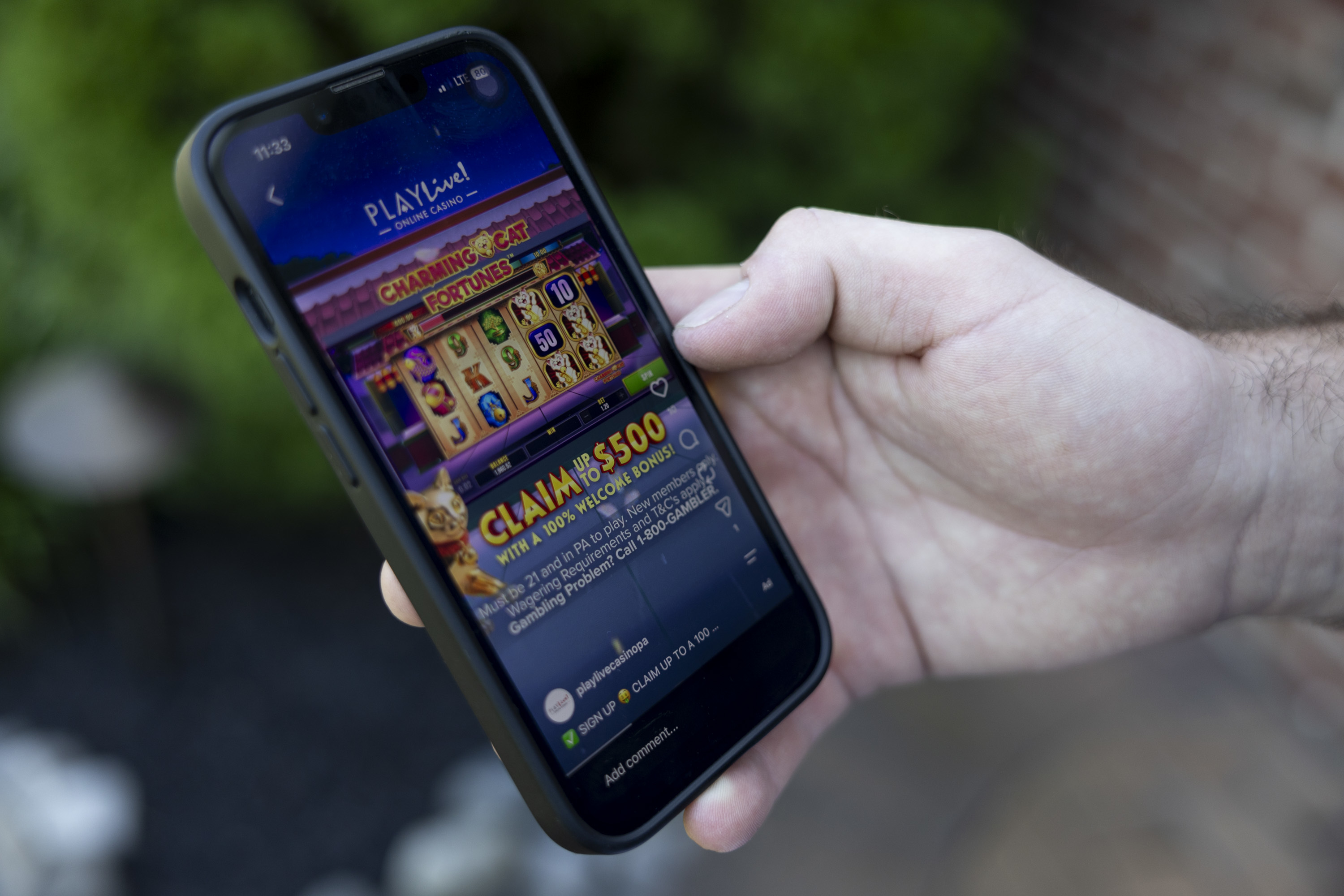
    After opening his Instagram app, he encountered ads for Charming Cat Fortunes — a slots game from PlayLive! Casino whose motto is “Stay entertained 24/7” — in addition to ads for a gold digger-themed slots game from betParx.

    Field estimates that he sees nearly 20 gambling ads across various social media platforms each day. “I’d be having a good day, not thinking about it,” he said, “and then boom, you’d see an ad, and feel that little itch, and you just kind of got to get rid of it.”

    He now considers the barrage of advertising to be a form of motivation.

    “It’s like, ‘F— these guys.’ All they’re trying to do is shove it down my throat,” he said. “It’s just insane how inescapable it is.”

    The Inquirer will continue to report on issues related to the growth of gambling addiction — among teens and adults — across Pennsylvania. If you, or someone you know, wants to speak with a reporter, please contact David Gambacorta or William Bender at dgambacorta@inquirer.com and wbender@inquirer.com

    <style>
    h6.font-inquirer-headline.antialiased.font-normal.text-white.text-5.leading-[26px].sm:text-6.sm:leading-8.mt-2.sm:mt-4.lg:mt-4.px-4.lg:px-0 {
        max-width: 450px;
        margin-left: auto;
        margin-right: auto;
    }
    
    blockquote.inq-blockquote.my-7.lg:my-12.text-center {
        max-width: 430px;
        margin-left: auto;
        margin-right: auto;
    }
    
    .inq-icon.inq-icon--link {
      color: red;
    }
    
    a.relative.z-1.text-blue-mid.hover:shadow-lightmode {
        color: #db1f1f;
    }
    </style>
  • Once Upon Main Street: Portraits from Darby, Pa.

    Once Upon Main Street: Portraits from Darby, Pa.

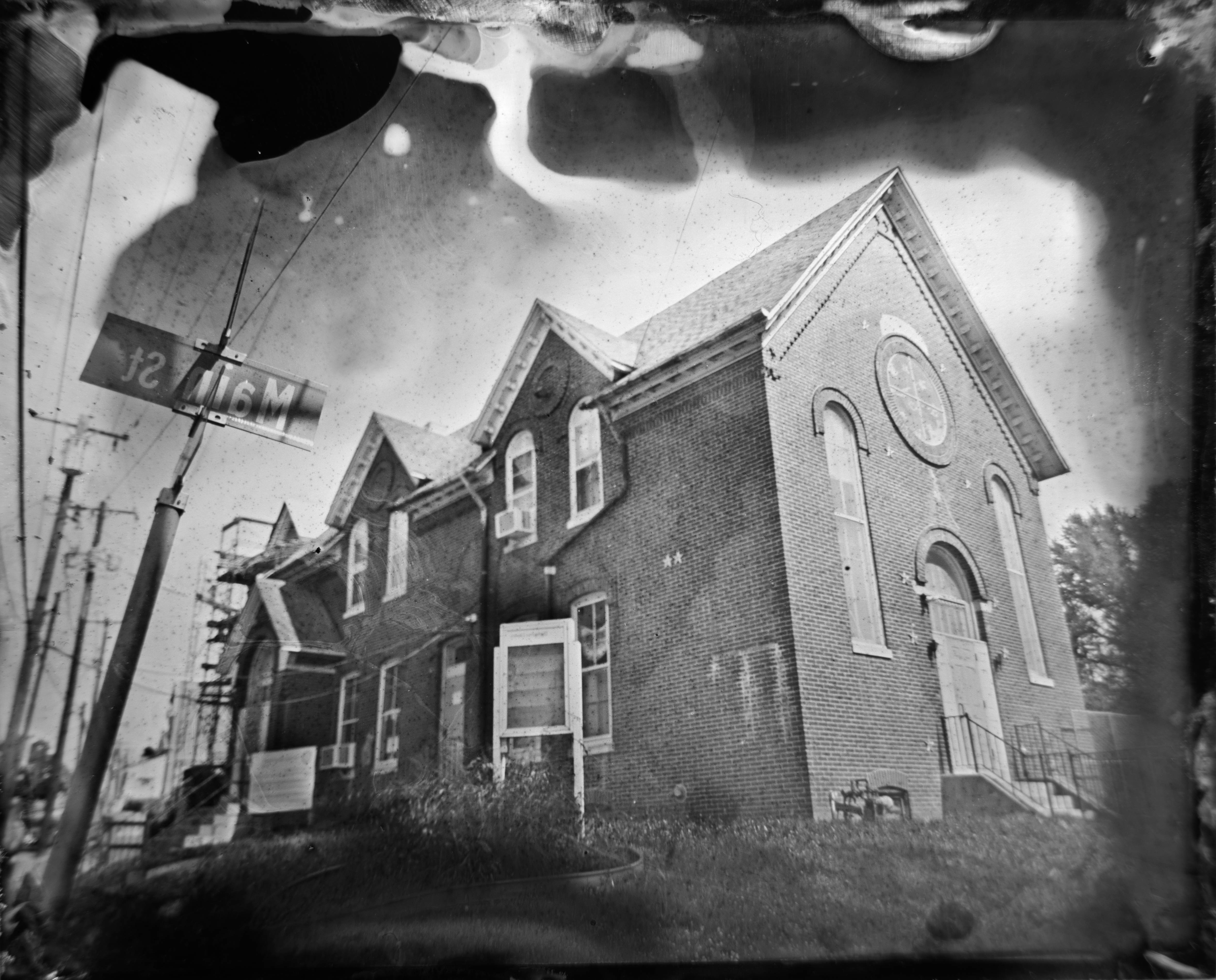
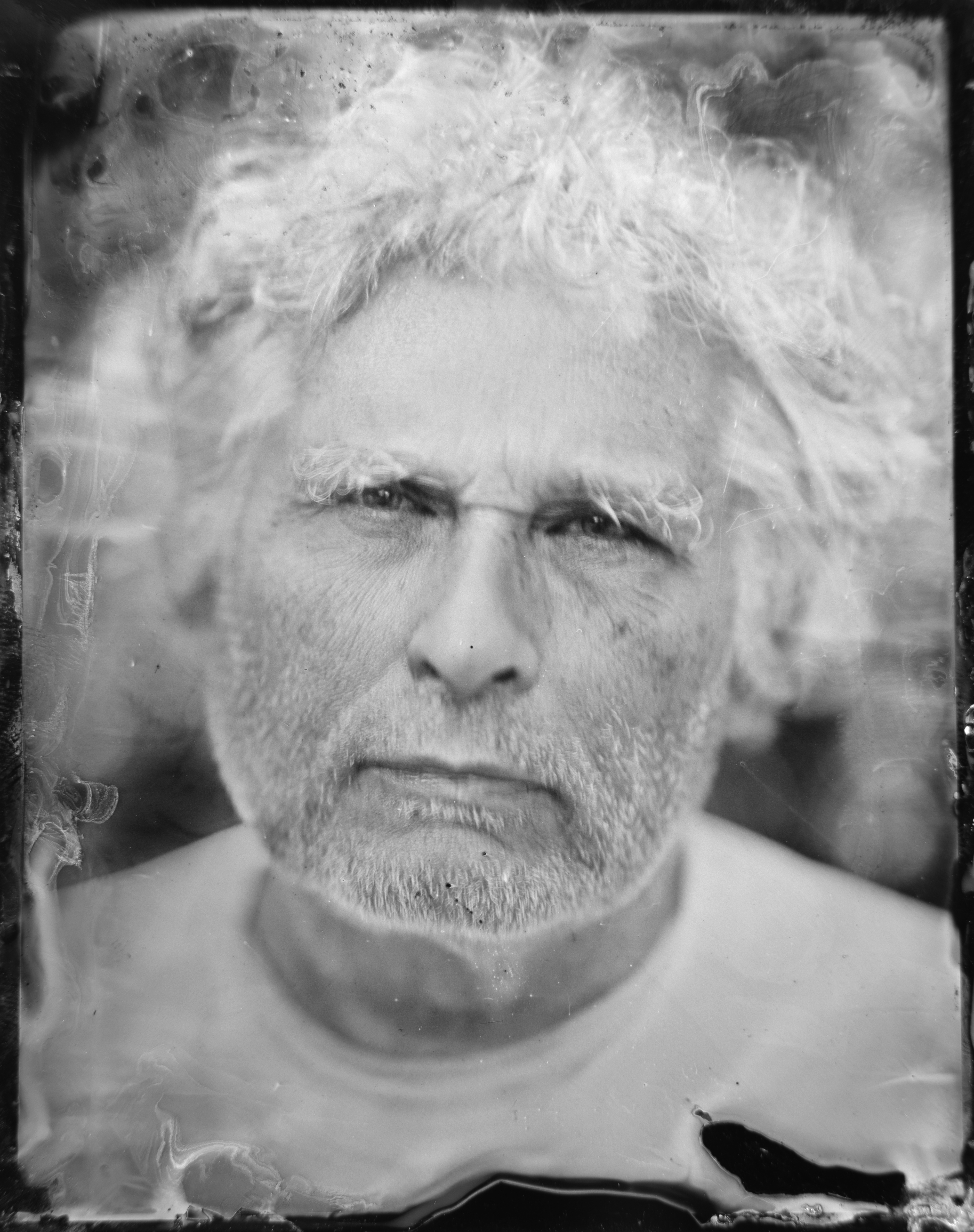
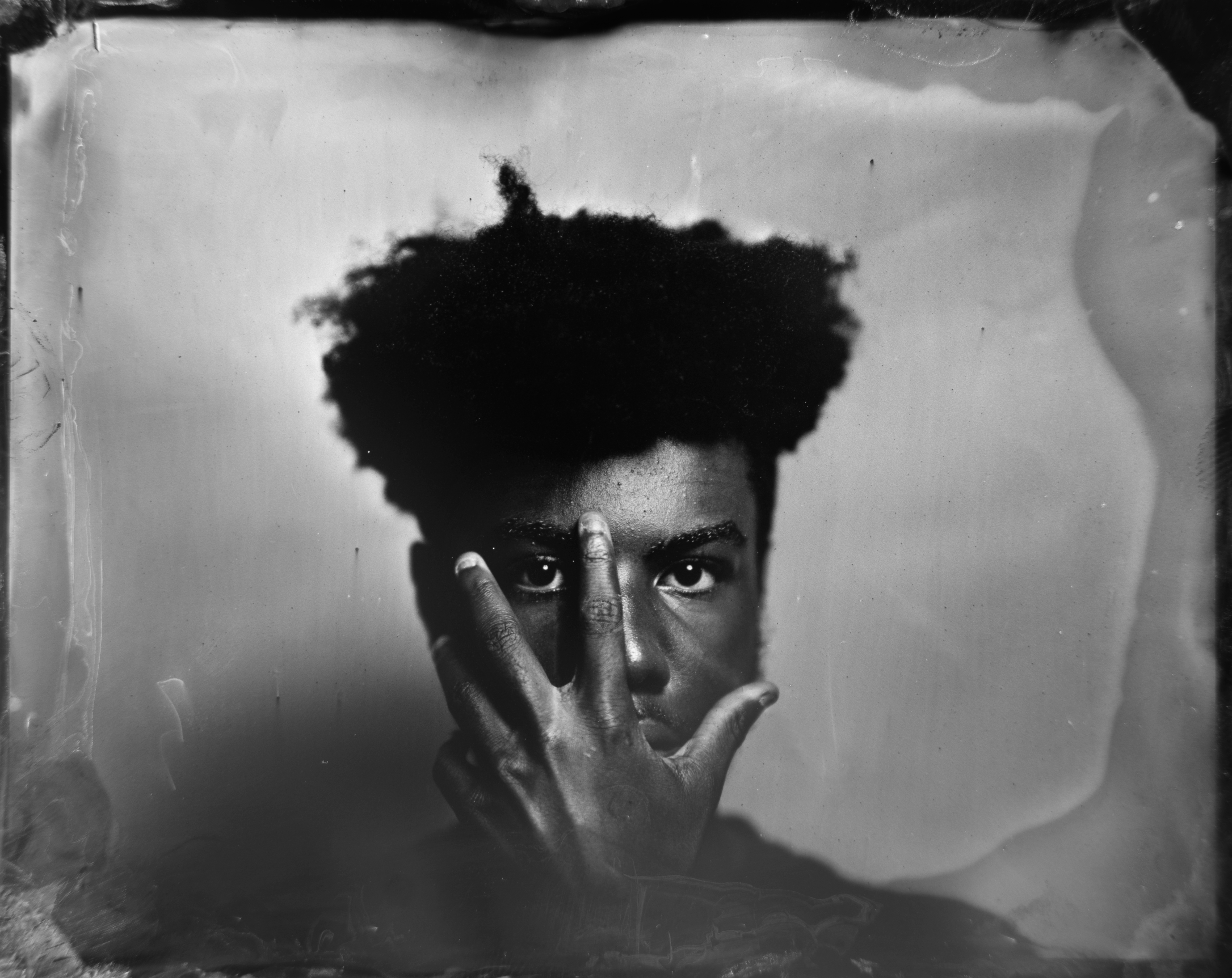
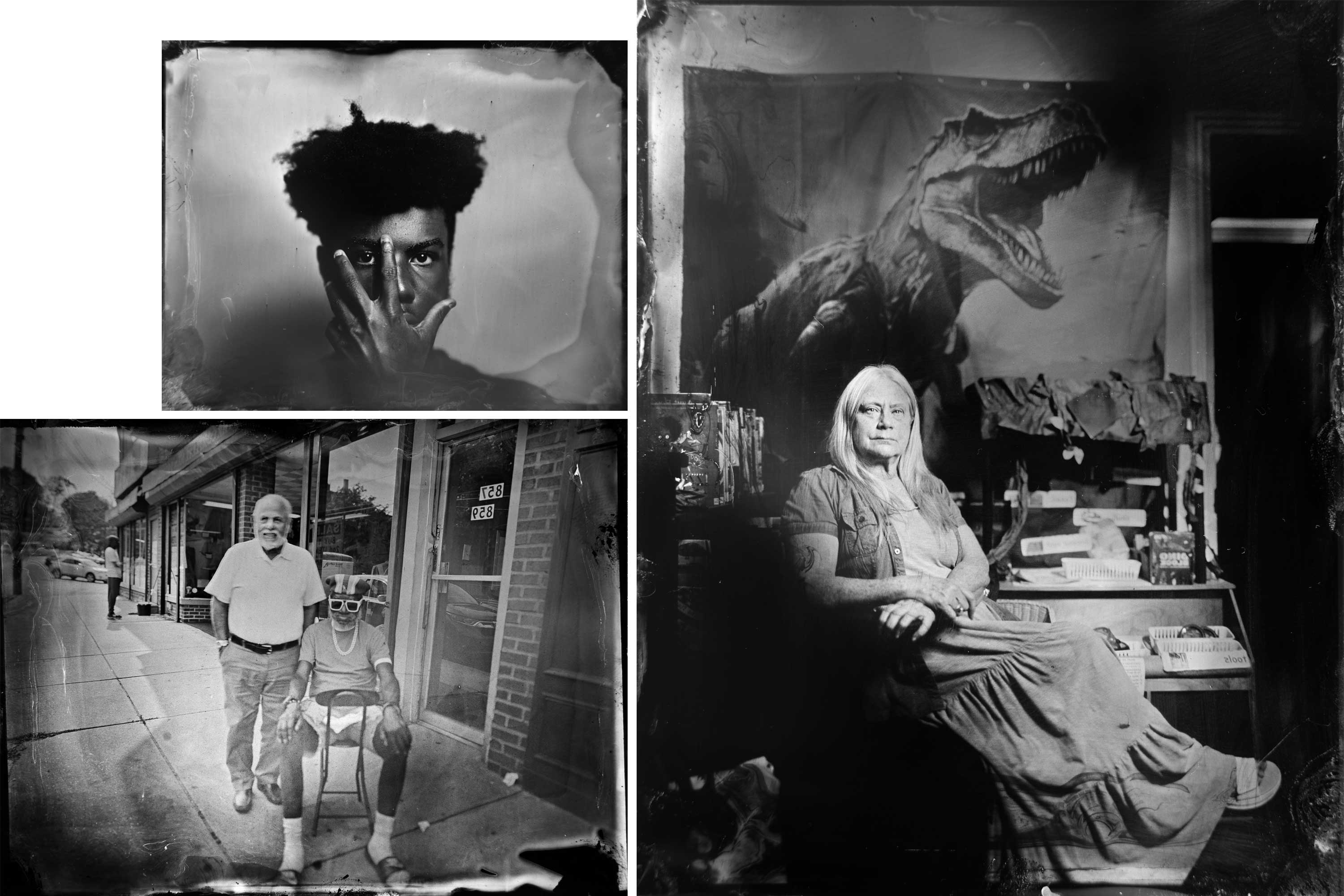
    Armed with a vintage camera, the photojournalist John Pendygraft spent several weeks approaching people along Main Street in Darby, Pa., to ask if they’d like to collaborate on creating a photograph. Specifically, he asked if they wanted to create a tintype, a photographic process invented in the 1850s.

    Tintypes need to be developed immediately on-site in a portable darkroom, and each one is a unique creation. It is a purely chemical process that takes time, embraces inefficiency, and is open to surprises.

    During the process, subjects were invited to share their stories with Pendygraft. Together, the words and photos create a complex portrait of a changing town.

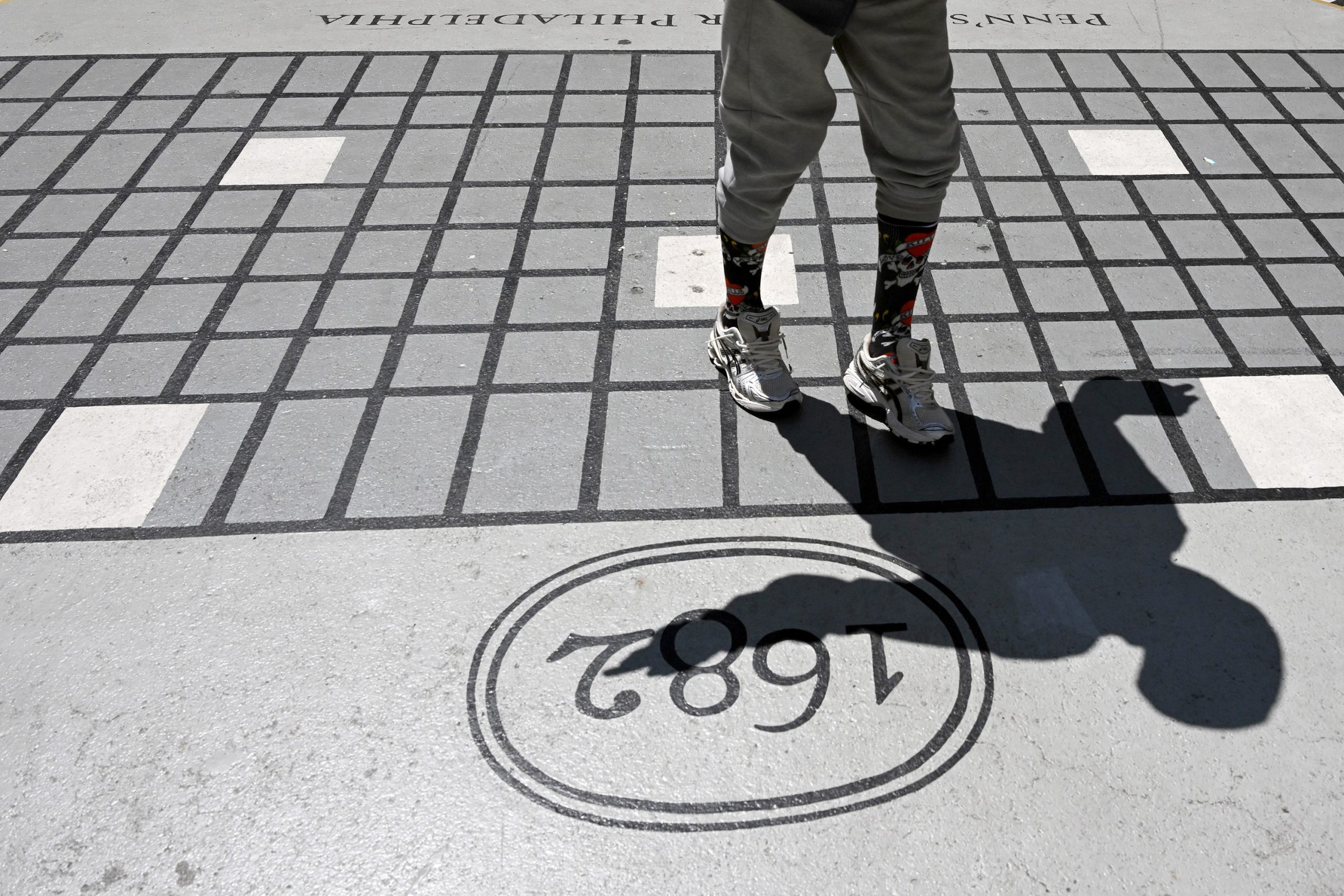
    Main Street originated along the Great Minquas Path, and was settled by Quakers in 1682. Along the way, Main Street was a 1777 battle site, a historic foundation for the Underground Railroad, center of a boom town that busted, home to a growing African diaspora community, and ground zero to Hurricane Floyd’s destruction.

    Through it all, Main Street in Darby has consistently been a place defined by the grit of people who call it home.

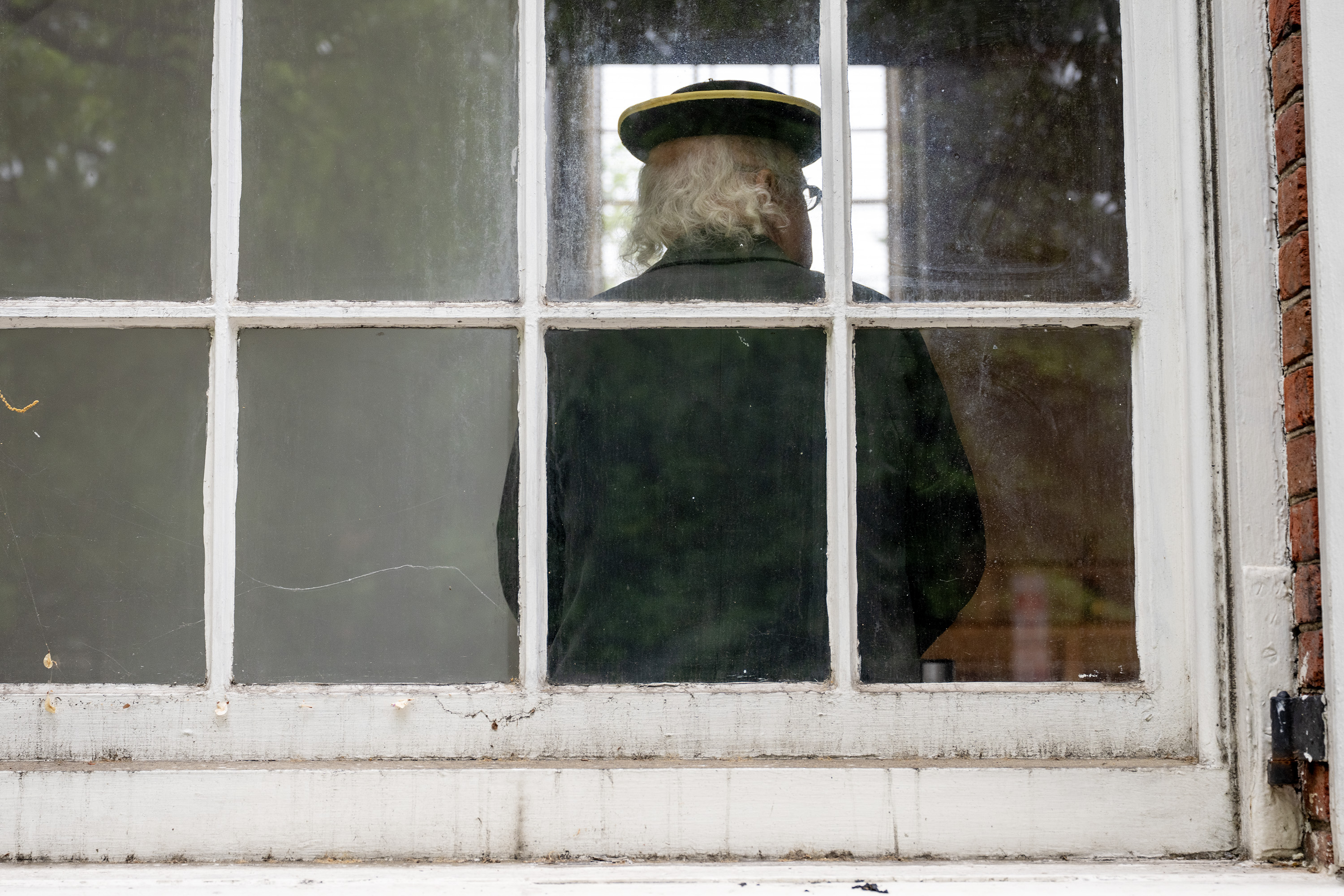
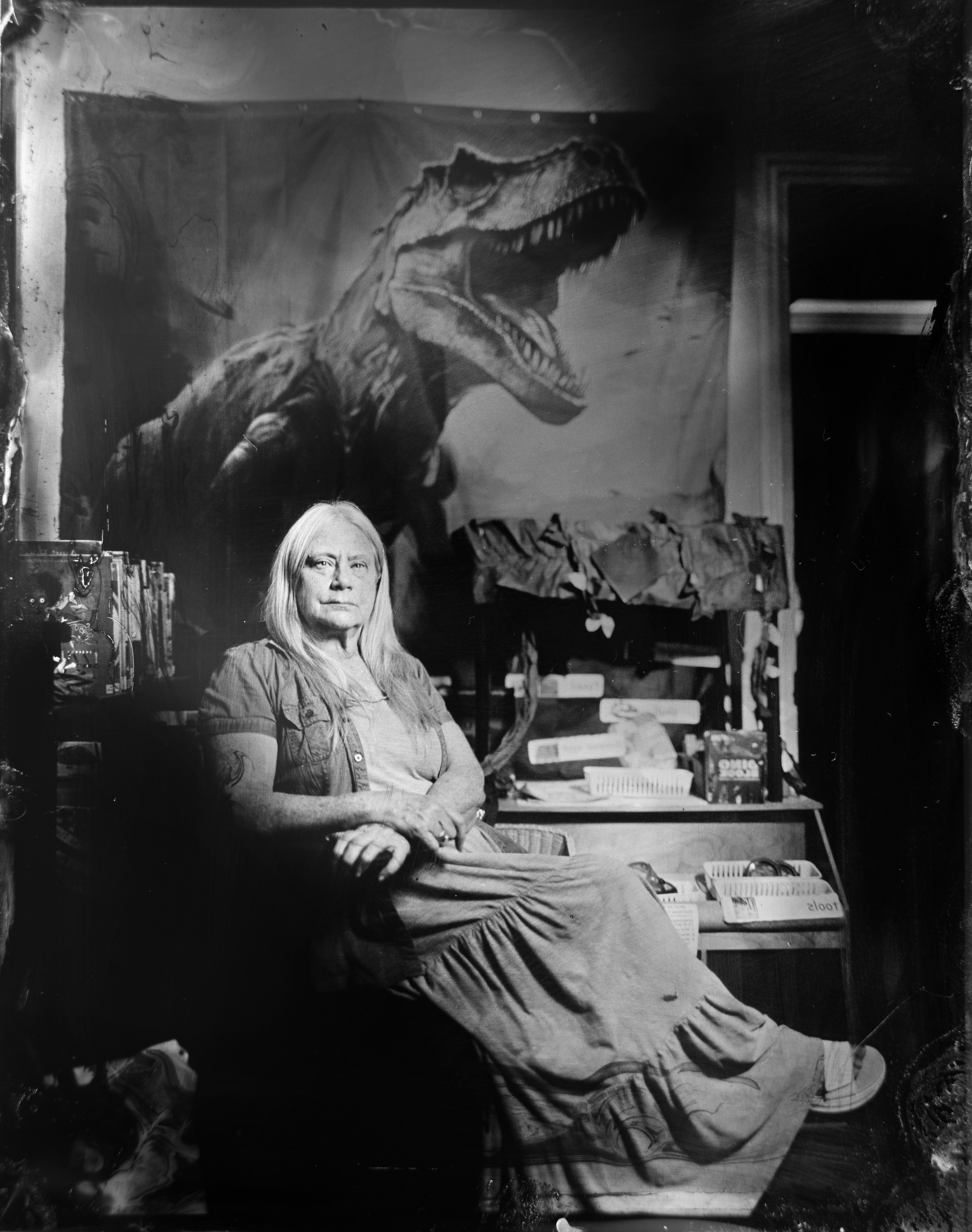
    Susan Borders, 68, director of the Darby Free Library, poses in the children’s reading room, which was decorated with dinosaurs as part of the “Unearth a Story” 2026 summer reading theme.John Pendygraft / For The Inquirer

    Susan Borders

    The Darby Free Library is the country’s oldest library in continuous operation. The library was established in 1743 by 29 Darby Quakers. It was modeled after Benjamin Franklin’s Library Company of Philadelphia, which formed in 1731. The Darby library claimed the title “oldest library in continuous operation” when Franklin’s Library Company closed for repairs after a fire. The librarians who work there claim it is haunted.

    For 34 of its 283 years, Susan Borders has been the heart and soul of the nation’s second-oldest library. She knows a nearby homeless shelter closes between 9 a.m. and 4 p.m., and makes sure the library is a welcoming place, rain, shine, or snow.

    “I meet people who other people might be afraid of. The community needs us and we need the community.”

    The Darby Free Library is the country’s oldest library in continuous operation. It was established in 1743 and modeled after Benjamin Franklin’s Library Company of Philadelphia, which formed in 1731. John Pendygraft / For The Inquirer

    She takes a call about late fines: “Just bring the books in and we’ll waive the fees. I just want you to keep reading.” The caller got off easy. Normally, she makes people tell her a story before she waives the late fees.

    She deals with a flustered dad and a grumpy toddler trying to make a letter-size print from an email attachment on an iPhone. “Just try to send it and we’ll see if the size is right. First one is on me.”

    “The history of this place isn’t about dates. This is a living library. It is about 280-something years of days with people.”

    Harold Finigan is a historian, educator, project manager of the Darby Library Company, and manager of the Darby Friends Meeting. John Pendygraft / For The Inquirer

    Harold Finigan

    Harold Finigan is untroubled by the sweat saturating his shirt or the record-breaking summer heat. He paces an open lot at 1000 Main St. with a cell phone to his ear, walking first toward the historic library, on the southwest side of the lot, and then toward the historic Darby Friends Meeting house on the north side.

    Finigan is supervising renovations on both. He guides his days through time-honored Quaker principles: simplicity, peace, integrity, community, equality, and stewardship.

    He traces his own Quaker values to 1682 — one year after King Charles II granted William Penn a charter for the land that would become Pennsylvania. That year, the Darby Quaker meeting was established along the Great Minquas Path by John Blunston as a foundation for Penn’s “holy experiment” — a country unified by a commitment to freedom of religion, equality, and democratic government.

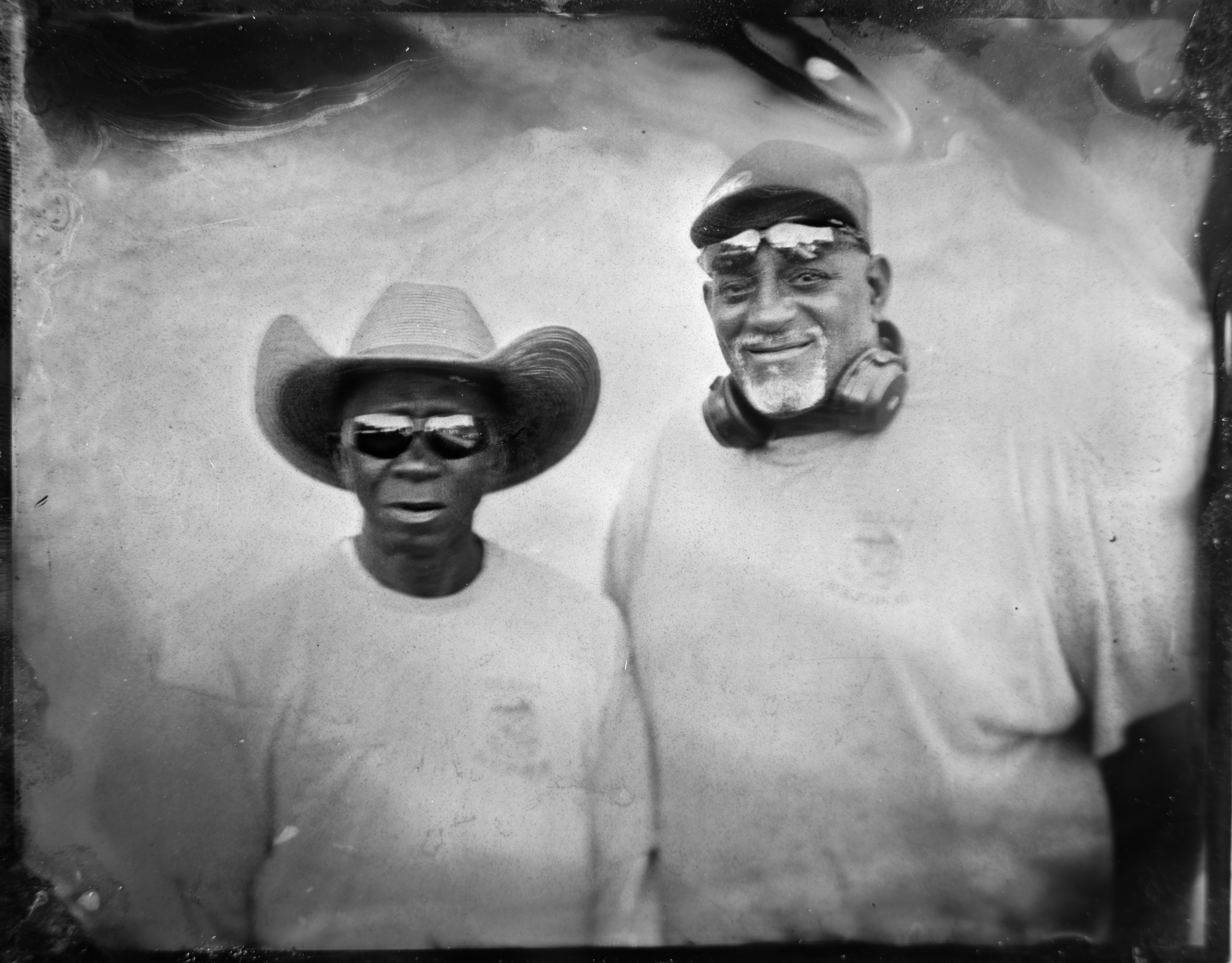
    Bernard Freeman, 56, (right) and James Vani, 71, (left) take a break from mowing and edging the vacant lot on Main Street where Woolworth once stood.John Pendygraft / For The Inquirer

    Bernard Freeman

    As Bernard Freeman, assistant foreman for Darby Borough Public Works, rides his lawnmower across the now-vacant lot at 870 Main St., he remembers when it was Woolworth. He points to the corner of the lot where the cafeteria counter used to be. “Main Street back then was bustling. We had jewelry stores, hardware stores, shoe stores. You didn’t have to go to the mall for nothing. Christmas time? You did all your shopping here. Everything was right here in Darby. You could get everything you needed. Everything. Man, it was bustling. But now? People don’t do the small towns anymore. At least, not here.”

    There was a huge Christmas parade, a Memorial Day parade with a tank kids could climb on, a parade to open Little League season, and a parade for the high school homecoming football game.

    “Last parade I can remember must have been 15, 20 years ago?”

    Freeman has five children, born between 1987 and 2006. Only the child born in 1987 had the opportunity to play Little League, PAL football, or was able to join a swim club. Local organizations dried up in the ’90s.

    “We didn’t have the volunteers and parent participation. Recreation-wise, we didn’t have anything anymore.”

    And then Floyd hit. The storm took one life, impacted 330 homes and 59 businesses. Many of the businesses never reopened. Scores of properties were purchased by the government, who relocated families and leveled homes.

    Freeman was hired by the city as part of the cleanup. The job, which he still holds today, hit home. “I have aunts, uncles, sisters, cousins, all kinds of family here. 10th Street is named after my uncle, Marine Lt. General Ronald S. Coleman.”

    This is his hometown, come what may. “If you can make it here you can make it anywhere. Darby makes you tough. It’s a no-nonsense type of town.”

    James Vani

    James Vani, 71, who is also with Darby Borough Public Works, fled Liberia’s civil war with his wife in 2002. They joined his parents in Florida. “My wife went to nursing school. She graduated and everything, but she couldn’t find a job. She tried to find a job in Florida, but she couldn’t because of our accent,” Vani explains. “A friend of my wife was here [in Darby] and she said ‘Come over here. You will be able to find a job because there are a lot of Africans here.’”

    There are. According to Data USA, 20% of Darby Township is foreign-born, and 79% of that population comes from Africa. If you drive down Darby’s Main Street a short distance to the Philadelphia city line, the road turns into Africatown. The organization website touts the area as “the premier destination for the global African Diaspora, celebrating arts, culture, and business.”

    As soon as Vani’s wife got a job, she called her husband to join her. “I’m lucky,” he says. “I have a job in Darby and I live in Darby. Thanks be to God.”

    Machi Hall, 17, poses in the Darby Free Library after applying for a library card.John Pendygraft / For The Inquirer

    Machi Hall

    “Almost nobody from my generation is going to be able to buy a house,” laments Machi Hall, 17. His family moved to Darby two years ago from West Philly because “the crime here is lower and the houses are cheaper.”

    Hall worries about AI replacing jobs, a future that might soon spin out of human control, and the possibility that current conflicts will escalate into a global war. He dreams of a career in 3D film animation, but what if AI takes those jobs?

    He has also made plans to enroll in a four-year electrical contractor apprenticeship program, with an eye to joining a union. “I won’t get rich, but it will put food on the table,” he says.

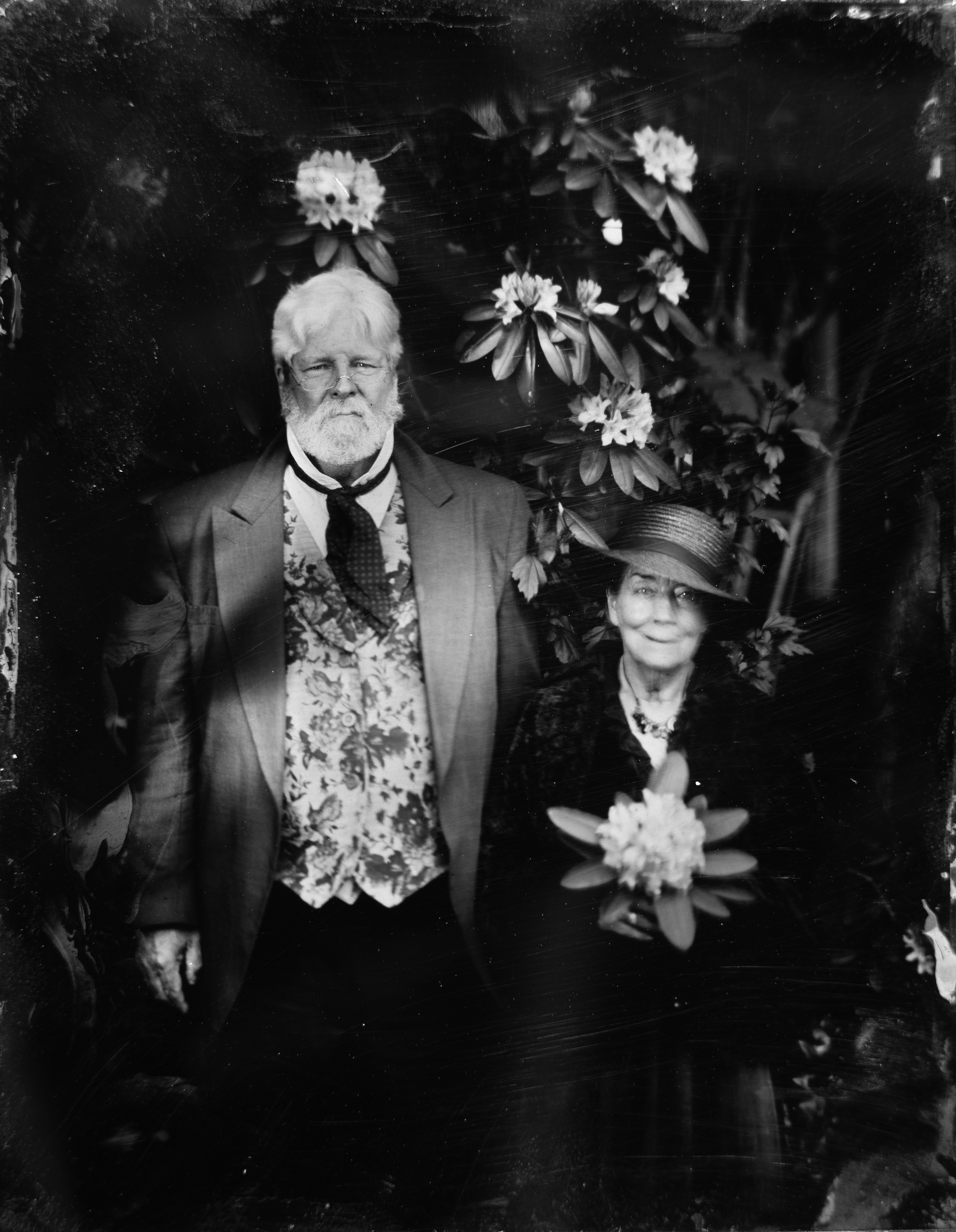
    Jan and John Haigis, who jokingly describe themselves as “vaguely Victorian,” pose in front of their home on Main Street in Darby.John Pendygraft / For The Inquirer

    Jan and John Haigis

    Jan and John Haigis, who jokingly describe themselves as “vaguely Victorian,” pose in front of their home at 1006 Main St. The home was once owned by Passmore Williamson, who, along with “Father of the Underground Railroad” William Still, was jailed in 1855 for helping Jane Johnson and her two sons escape slavery.

    Early on in any conversation with the couple, you will very likely hear about at least one of their two quirky obsessions. They will either sing a duet of one of the hundreds of songs they have written together (“I can always make a harmony,” Jan explains. “I don’t know what key he is going to be in, but we never stop singing.”) or they will dive into the minutiae of Darby history.

    Their shared love of Darby history began in 1985 when John rode his bicycle past the Blue Bell Inn, a crumbling tavern at the very end of Main Street. He didn’t know that it was once frequented by George Washington, housed troops during the American Revolution, or was the site of an epic battle in 1777 led by Lord Cornwallis and 2,500 soldiers. But he was curious.

    The couple learned the Blue Bell was on a list to be destroyed and approached the city about saving the inn.

    “The city council told us ‘it would cost money to tear it down, so let’s see what they can do,’” John explains. They leased it to the couple for $1 a year.

    A small grant allowed Jan and John to replace doors and windows and find a caretaker. The couple created Friends of the Blue Bell. The group of new friends became a kind of family.

    They leased the inn from 1985 until 1999 and did what they could. Then Hurricane Floyd hit and flooded the interior. Today, the city maintains the exterior and the Haigises curate a website to preserve Darby history.

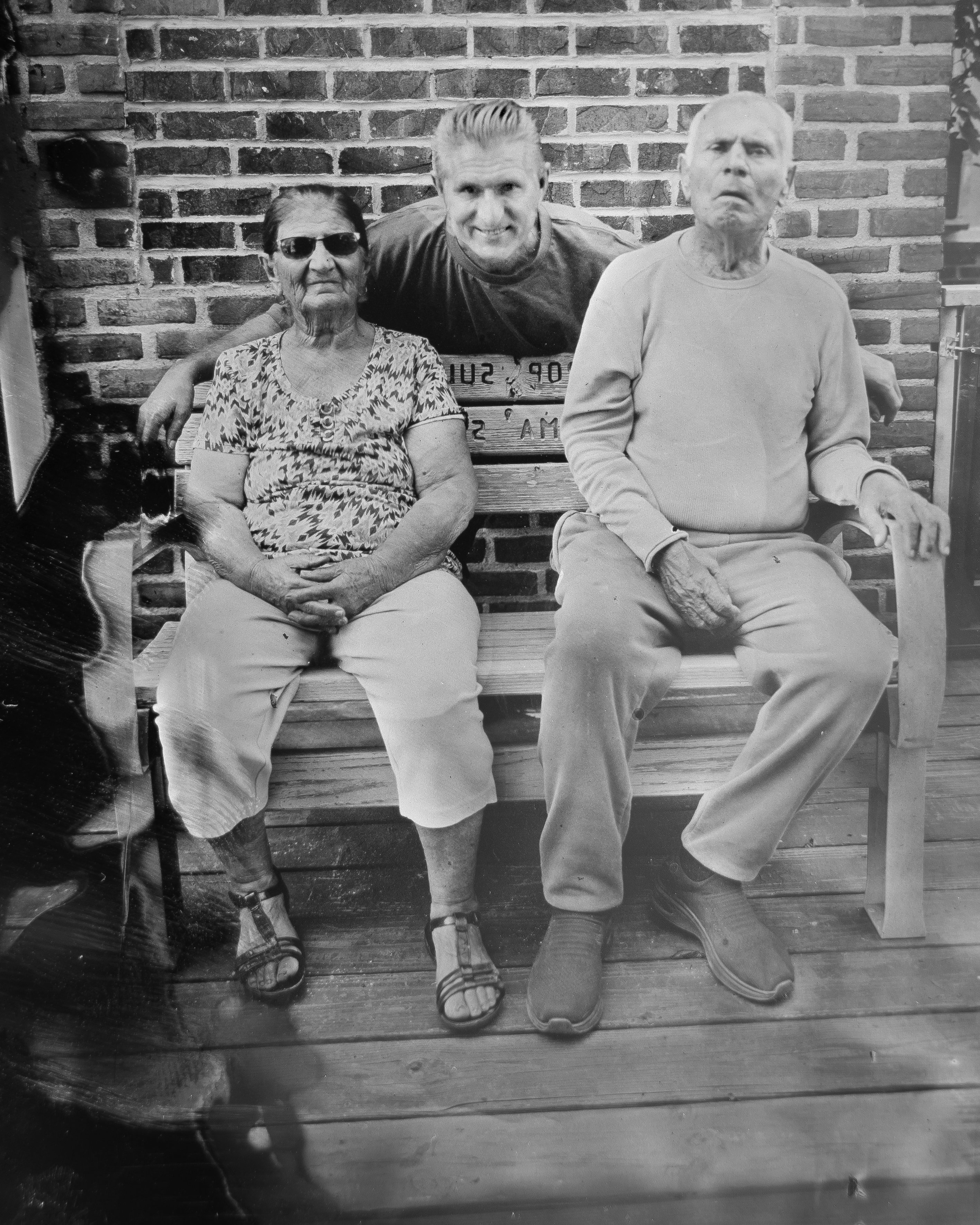
    Artan Sulollari, 56, the owner of Main Street Pizza, poses with his mother Lule, 88, and father Irfan, 92, on the back porch of their home on Main Street in Darby.John Pendygraft / For The Inquirer

    The Sulollari family

    In 1990, Artan Sulollari was serving in the Albanian army. One day, they brought him in for questioning. At the time, he had no idea that one of his brothers had fled the communist country.

    “They beat me up very good, to tell them what I knew. I didn’t know anything,” he says. He still suffers from hearing loss as a result of his injuries.

    “It was a crazy life there. The communism was the worst communism. They would say ‘this guy does propaganda, this guy is a spy.’ They would arrest you. They’d beat you. They put you in jail. They’d take your family. They’d incarcerate you far, far away.”

    The Sulollari family was granted political asylum in the early 1990s. Today, Tony and his brother run Main Street Pizza in Darby and care for their aging parents, who live just a few houses down from the restaurant.

    “Have you ever seen the movie The Outlaw Josey Wales? Clint Eastwood says to the Apache chief, ‘I’ve come to live with you, because the government will follow you. I’ve come to live with you or fight with you. To die is easy. To live is hard. Because life is hard, and death is easy.’ That’s how it is.”

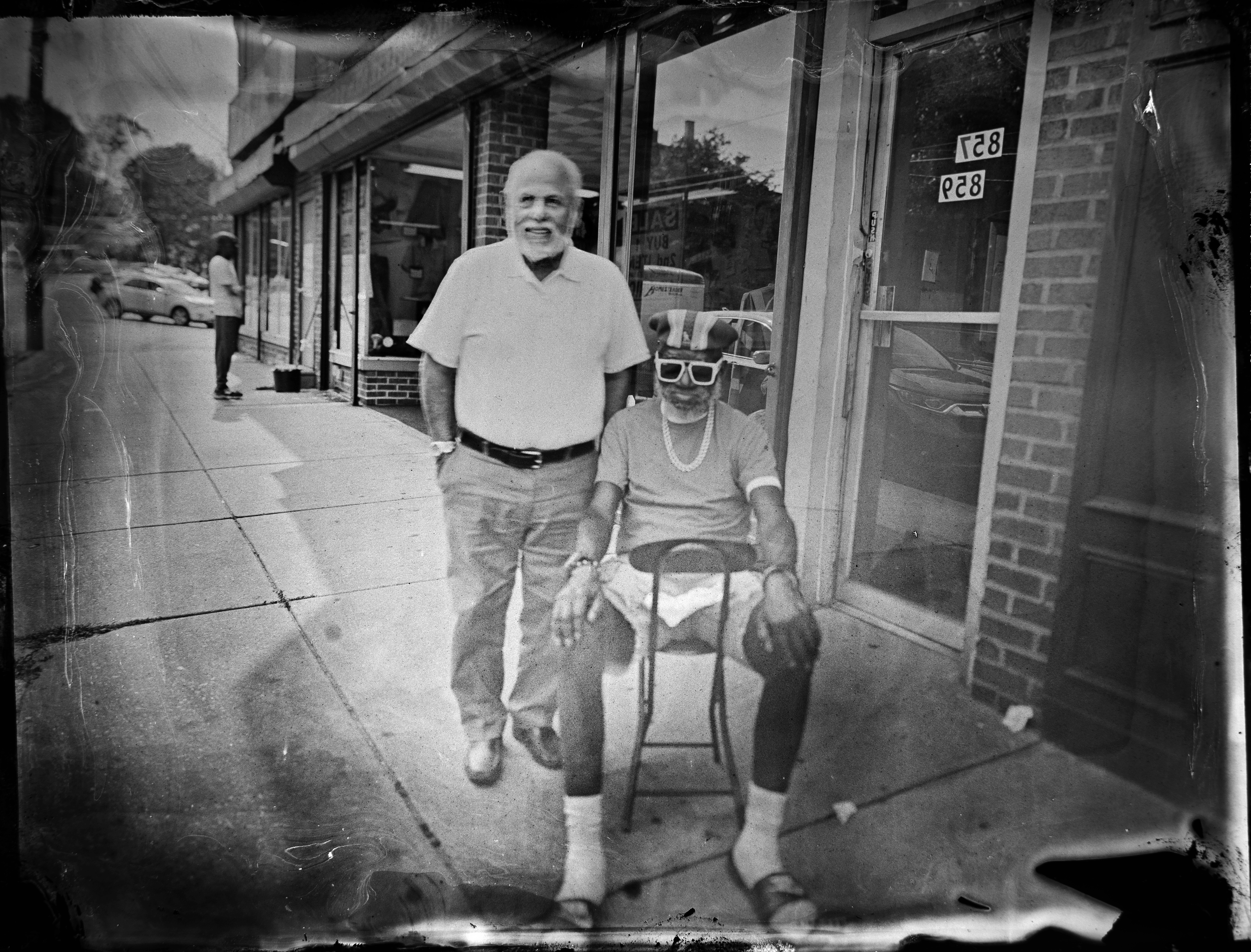
    Benett’s menswear store owner Paul Feldman, 79, (left) and William Hall, 73, pose in front of Feldman’s store on Main Street.John Pendygraft / For The Inquirer

    Paul Feldman and William Hall

    Paul Feldman was born Sept. 18, 1947, one day before his father opened Benett’s menswear store on Main Street. “I remember as a kid my dad giving me a check to deposit in the bank on Friday night. I had to walk in the streets because the sidewalks were so crowded,” he remembers.

    “You know how many stores there were in Darby that were run by a father and a son? I am the only one that is still around. Everyone else closed.”

    Feldman looks around. “This place is starting to fall apart. I am, too.”

    William Hall, 73, works a couple of days a week at the store. He remembers coming in as a young boy.

    “My mother used to do a day’s work for $6 a day. So, I used to collect cans and bottles to take them back for the refund. I would bring my money here and put my clothes on layaway,” he said. “Heavens to Betsy, I didn’t know I’d be working here today.”

    Two years ago, Hall was diagnosed with throat cancer. As the treatments wore on him, he turned to store manager Bud Teaford, who has navigated his own health challenges, for advice and support. Hall believes the friendship helped save his life.

    “Now when I come in, I won’t say to him, ‘Hi.’ I say ‘Bud I love you.’ Every day.”

    “I love you too,” Bud answers.

    “If you don’t have love, you don’t get no love. You get that mental aggravation.”

    Bud says with a laugh, “We get plenty of that here, too.”


    John Pendygraft is a photojournalist who teaches visual storytelling at Penn State University.

    <style>
    .inq-image.inq-image-topper-style {
        max-width: 1200px;
        margin-left: auto;
        margin-right: auto;
    }
    
    .inq-p--has-dropcap::first-letter {
      font-weight: 400 !important;
    }
    
    .-mx-4.md:mx-0.md:w-full.w-screen {
        max-width: 1000px;
        margin-left: auto;
        margin-right: auto;
    }
    
    img.inq-image.max-h-75vh {
      max-height: none !important;
    }
    
    div.topSpacer {
      margin-top:50px 
    }
    </style>

  • The Phillies run backward, a cheesesteak becomes a weapon, and Philly gets an even weirder robot | Weekly Report Card

    The Phillies run backward, a cheesesteak becomes a weapon, and Philly gets an even weirder robot | Weekly Report Card

    Another October, an even earlier exit: F

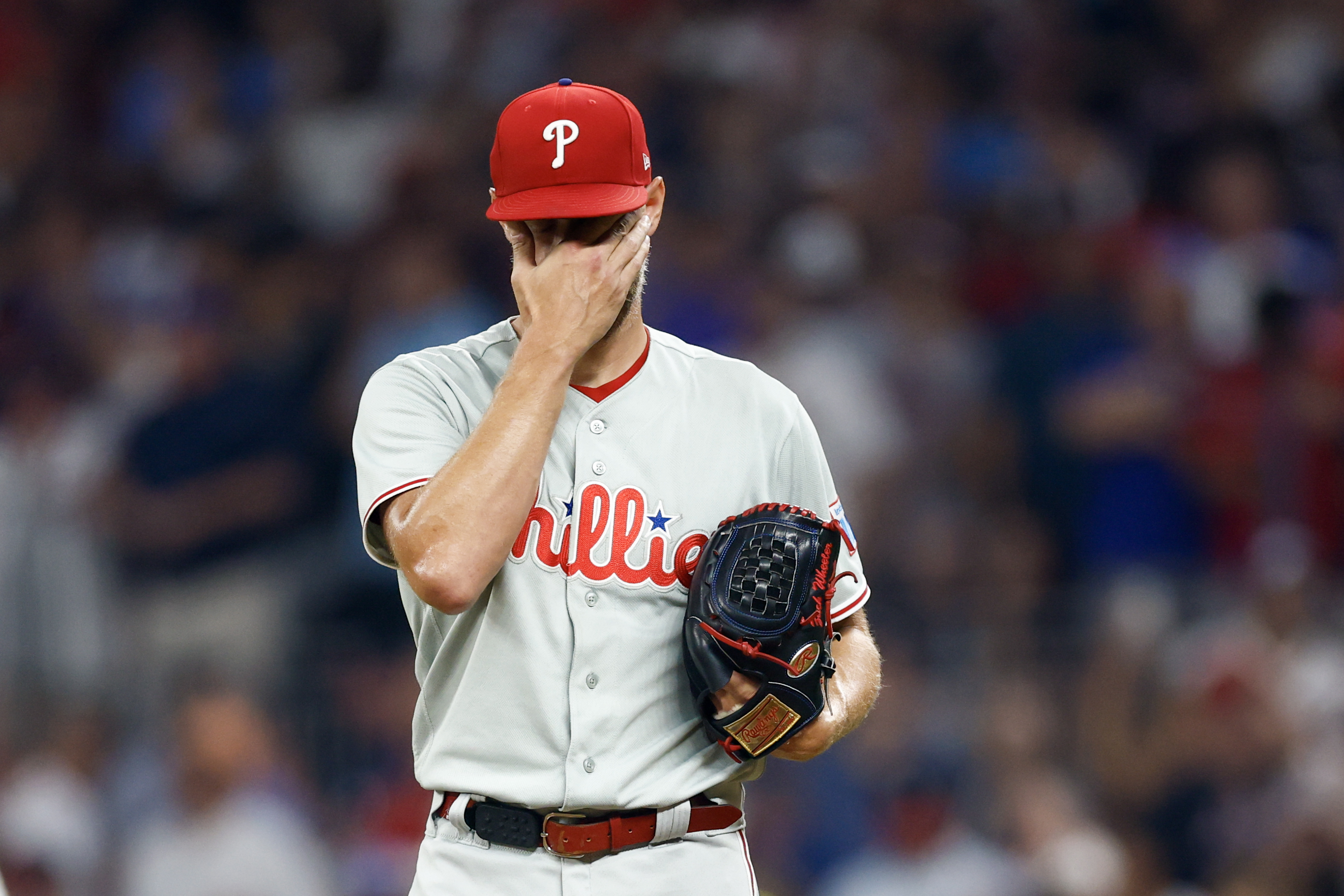
    There wasn’t even a moment Thursday night when it felt like the Phillies were going to do it.

    No big hit that made you sit up. No inning where the lineup started stringing things together. No “here we go!” moment. Aaron Nola gave up a three-run homer in the first inning of an elimination game, and from there, the Phillies mostly just watched their season end.

    And maybe the most frustrating part is how familiar it all felt.

    The bats disappeared again. The Phillies scored just two runs and never found a way to consistently get people on base and keep an inning moving. Bryce Harper’s eighth-inning at-bat almost felt like a snapshot of the whole problem: Facing Chris Sale, he chased three pitches outside the zone, struck out, and initially didn’t even realize the third strike had gotten away from the catcher.

    This team has become far too dependent on Harper or Kyle Schwarber hitting the ball out of the park. The Phillies haven’t won a playoff game without a homer from one of them since Game 4 of the 2023 NLDS. Sometimes you need a single up the middle. Sometimes, somebody just needs to get on base.

    And now look at the trajectory: World Series in 2022, NLCS in 2023, NLDS in 2024, NLDS again in 2025, Wild-card exit in 2026. That’s not running it back. That’s running backward.

    Everyone feared last winter that bringing back essentially the same core would produce essentially the same problems. Somehow, it produced an even worse result. And now changing course gets harder: Harper, Schwarber, and Realmuto will all be 34 or older next season, while Trea Turner turns 33 with seven years left on his contract.

    The window isn’t necessarily closed. The rotation alone gives this team too much talent to say that.

    But the chance to change this roster before another wasted October has already passed.

    They can’t spend another winter convincing themselves that next year the same group will finally be different.

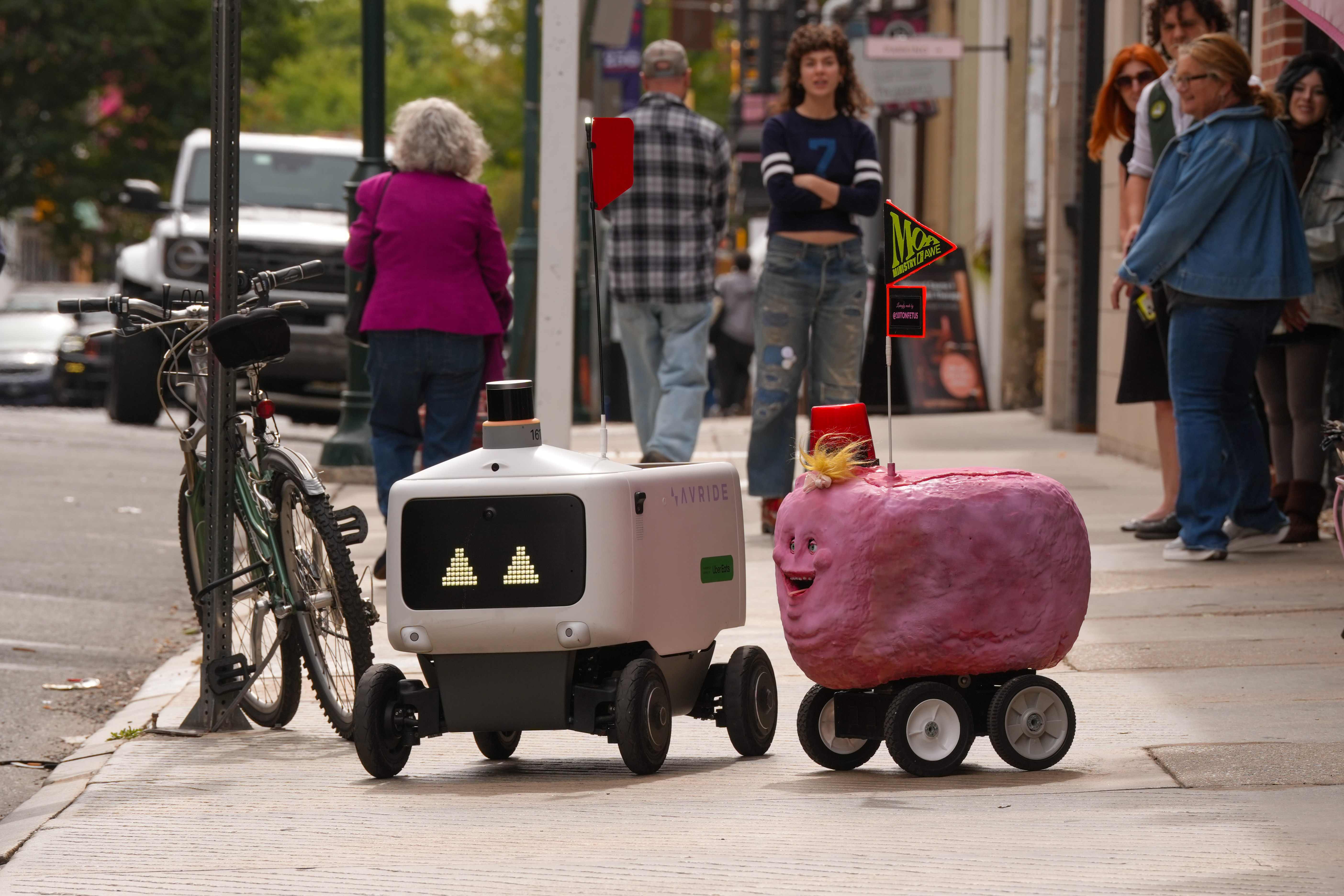
    The pink, fuzzy, potato-shaped Awebot encounters an Uber Eats delivery robot in Old City, Philadelphia, Sept. 25, 2026. Awebot was created by artist Madison Polidoro.Jessica Griffin / Staff Photographer

    Philly fights robots with a weirder robot: A

    The Uber Eats robots rolling around Philly have been called dystopian, creepy, and a sign of our increasingly automated future.

    Naturally, Philadelphia responded by making a much weirder robot.

    Meet Orifice the Awebot, a two-foot-tall pink creature with blinking blue eyes, blond hair, a permanently hanging tongue and — because apparently those features weren’t enough — an actual orifice on its rear end, as Stephanie Farr reported.

    Artist Madison Polidoro created Orifice for the Ministry of Awe to act as a lighthearted counterpoint to the delivery bots, and it now roams Old City remotely controlled by a human, startling tourists, confusing dogs, and occasionally confronting Uber Eats robots.

    Imagine knowing none of this and turning a corner near the Betsy Ross House to find that thing silently rolling toward you. Is it less dystopian than an Uber Eats robot? Debatable. Is it significantly more Philly? Of course it is.

    Man throws cheesesteak through Pat's window
    Video: Man throws cheesesteak through Pat’s window

    Please don’t make cheesesteak throwing a thing: F

    Of all the things Philadelphia could become known for on social media, throwing cheesesteaks at people cannot be the next one.

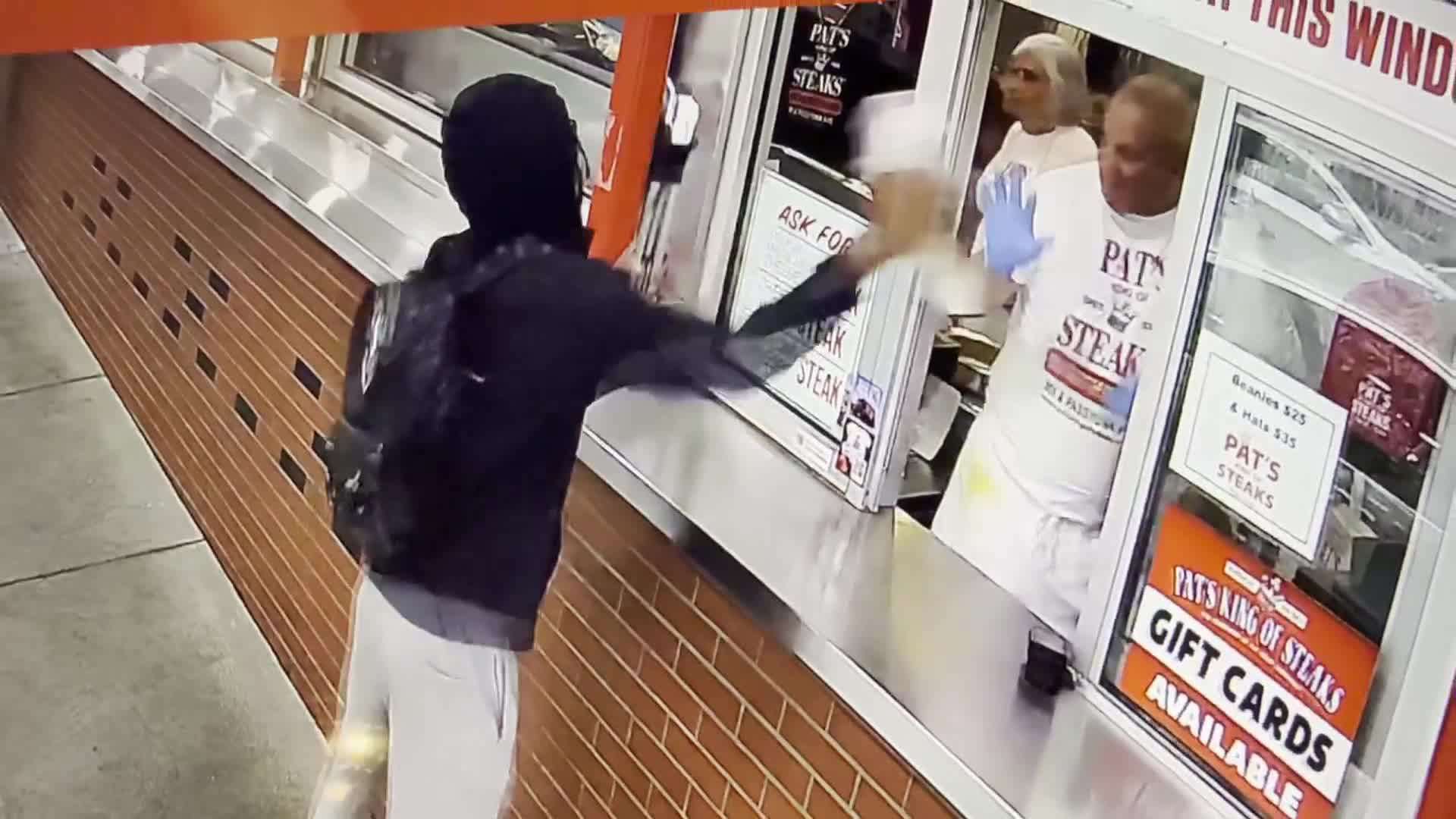
    A customer at Pat’s ordered a cheesesteak with Whiz and onions Wednesday, and instead of sitting down to actually eat it, the customer exchanged words with general manager Tom Francano, hurled the sandwich through the window at him, and ran away.

    And yes, he was filming the whole thing.

    The video later appeared online as a “food review” — titled “I Threw This Cheesesteak in His Face Geno’s Steaks.” Wrong cheesesteak shop, guys.

    Pat’s owner Frank Olivieri offered a $5,000 reward, his IT team traced the video back to social media accounts, and by Thursday, the man had turned himself in.

    Police charged him with harassment, and YouTube terminated the account where the video appeared. As Olivieri put it: “Thank God for stupidity.”

    Hopefully that brings an end to Philadelphia’s brief experiment with cheesesteak-based assault. But seriously, let’s just eat the cheesesteak. There’s no need to weaponize it.

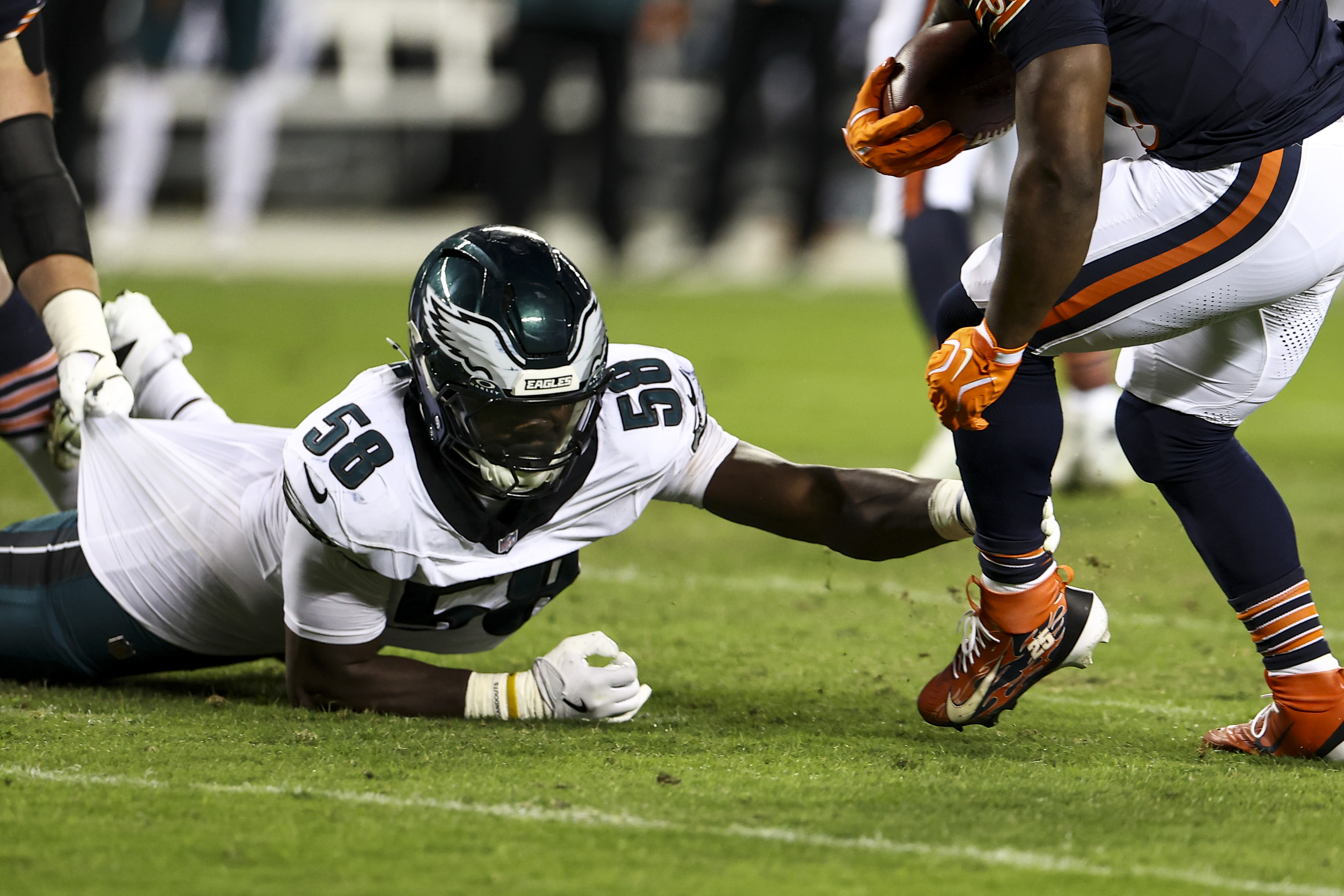
    Philadelphia Eagles linebacker Jalyx Hunt grabs Chicago Bears running back Kyle Monangai during the Chicago Bears game against the Philadelphia Eagles at Soldier Field on Monday, Sept. 28, 2026 in Chicago.Monica Herndon / Staff Photographer

    Can we stop embarrassing ourselves?: F

    As if the Phillies hadn’t already done enough damage this week, the Eagles and Flyers decided to contribute.

    The Eagles set the bar pretty low Monday night with a 27-7 loss to the Bears, a game in which the offense turned the ball over three times, the defense got picked apart by 38-year-old third-string quarterback Case Keenum, and Nick Sirianni acknowledged afterward that pretty much nobody played or coached well.

    Two nights later, the Flyers opened their season at home with more excitement surrounding them than there’s been in years.

    They lost 7-0. To the Penguins. The same rival they knocked out of the playoffs last spring. The Flyers were booed off the ice after getting outshot 38-19 and looking nothing like the team that made hockey fun again six months ago.

    Thursday was better, if only because it would have been difficult to be worse. Backup goalie Joseph Woll made 41 saves against the Devils and somehow kept the Flyers in it. They even held a 2-1 lead in the third before giving up the tying goal and losing, 3-2, in overtime.

    So, progress? Technically?

    The Phillies are done. The Eagles just got blown out. The Flyers are 0-1-1 and have already been outscored 10-2.

    We’re not even a week into October. Can everybody please stop embarrassing us?

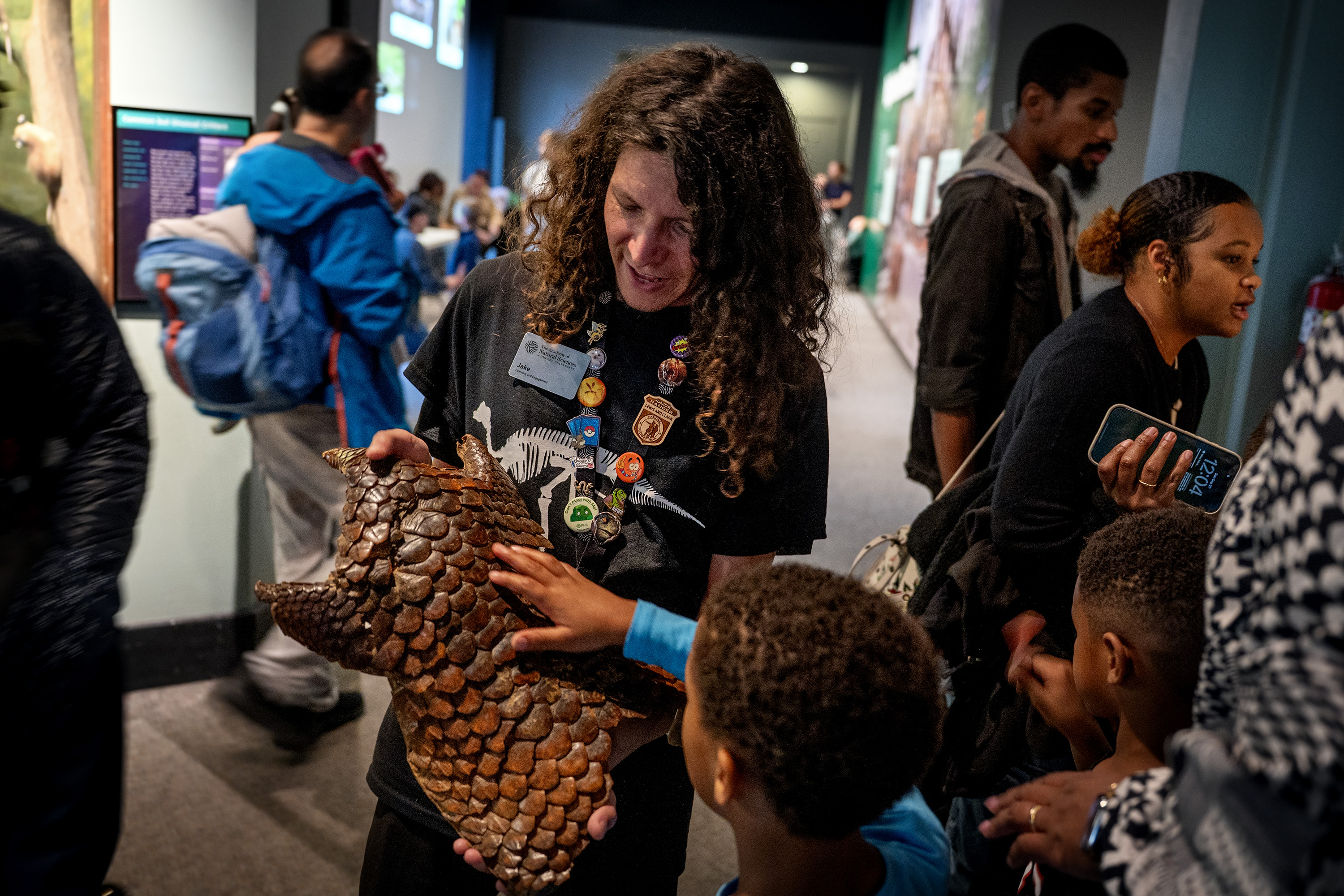
    Science educator Jake Cook lets visitors feel the skin of a pangolin — a scaly anteater — at the Academy of Natural Sciences of Drexel University on Sunday, Sept. 27, 2026, on the last day that the museum is scheduled to be open.Tom Gralish / Staff Photographer

    Can someone please save the Academy?: D

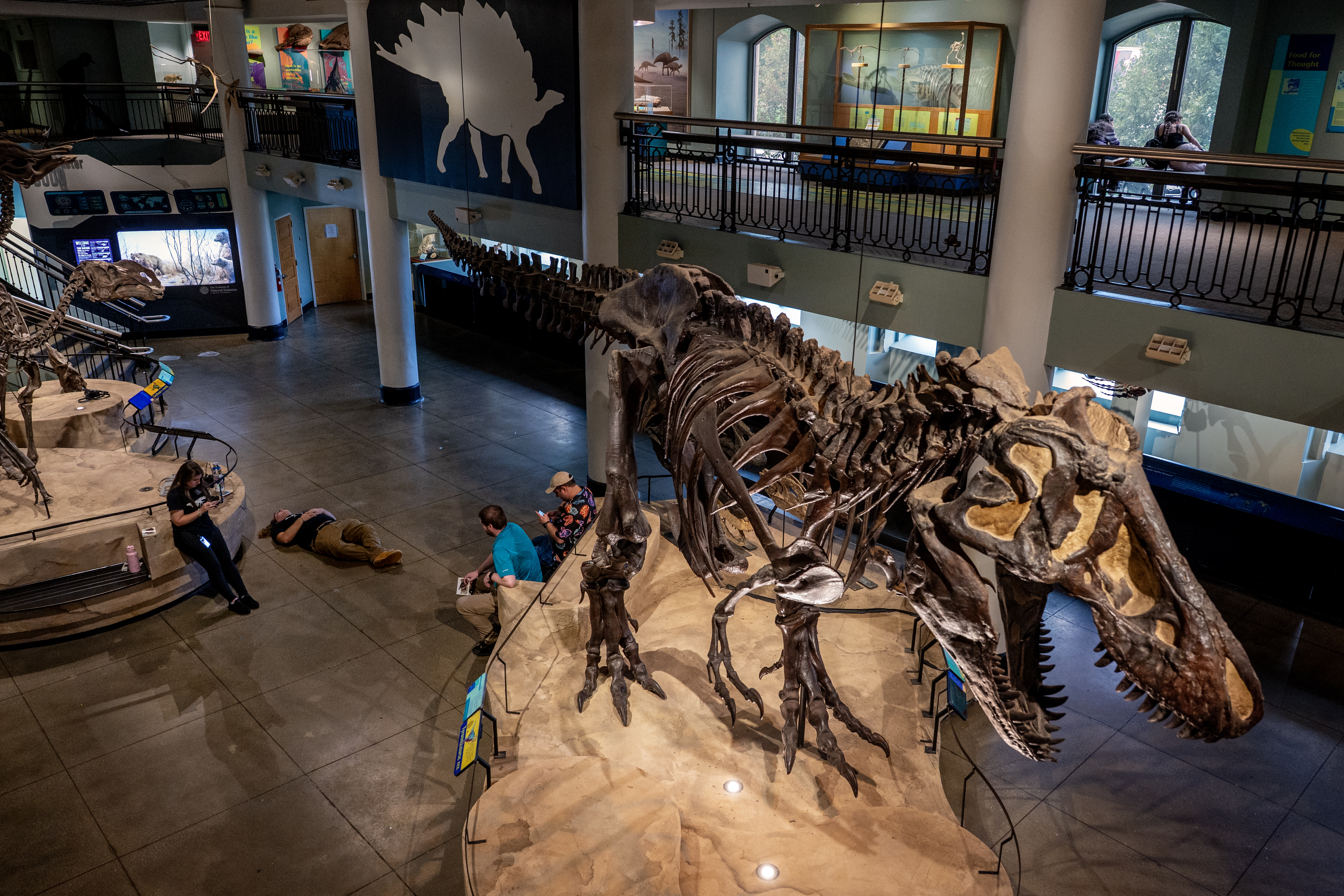
    The Academy of Natural Sciences closed Sunday after nearly 200 years of welcoming the public. About 8,000 people visited Saturday alone, more than 100,000 people signed petitions to save it, and families spent its final day leaving notes on the walls and saying tearful goodbyes.

    And yet, there may still be a lifeline.

    The William Penn Foundation has offered to cover the operating subsidy Drexel had been providing for at least another year, giving everyone time to figure out whether there is a sustainable way to keep the museum alive.

    Drexel hasn’t said yes. It hasn’t said no, either. The university says it needs more specifics and that the building has significant maintenance needs, which are all reasonable things to be sorted out. But sort them out.

    This people of Philadelphia just spent a month making it abundantly clear how much the Academy means to people. The money being offered wouldn’t solve every problem, but it could buy something Drexel claimed it didn’t have when it announced the closure: time.

    The dinosaurs are already behind locked doors. At least give this a real chance before deciding they stay there.

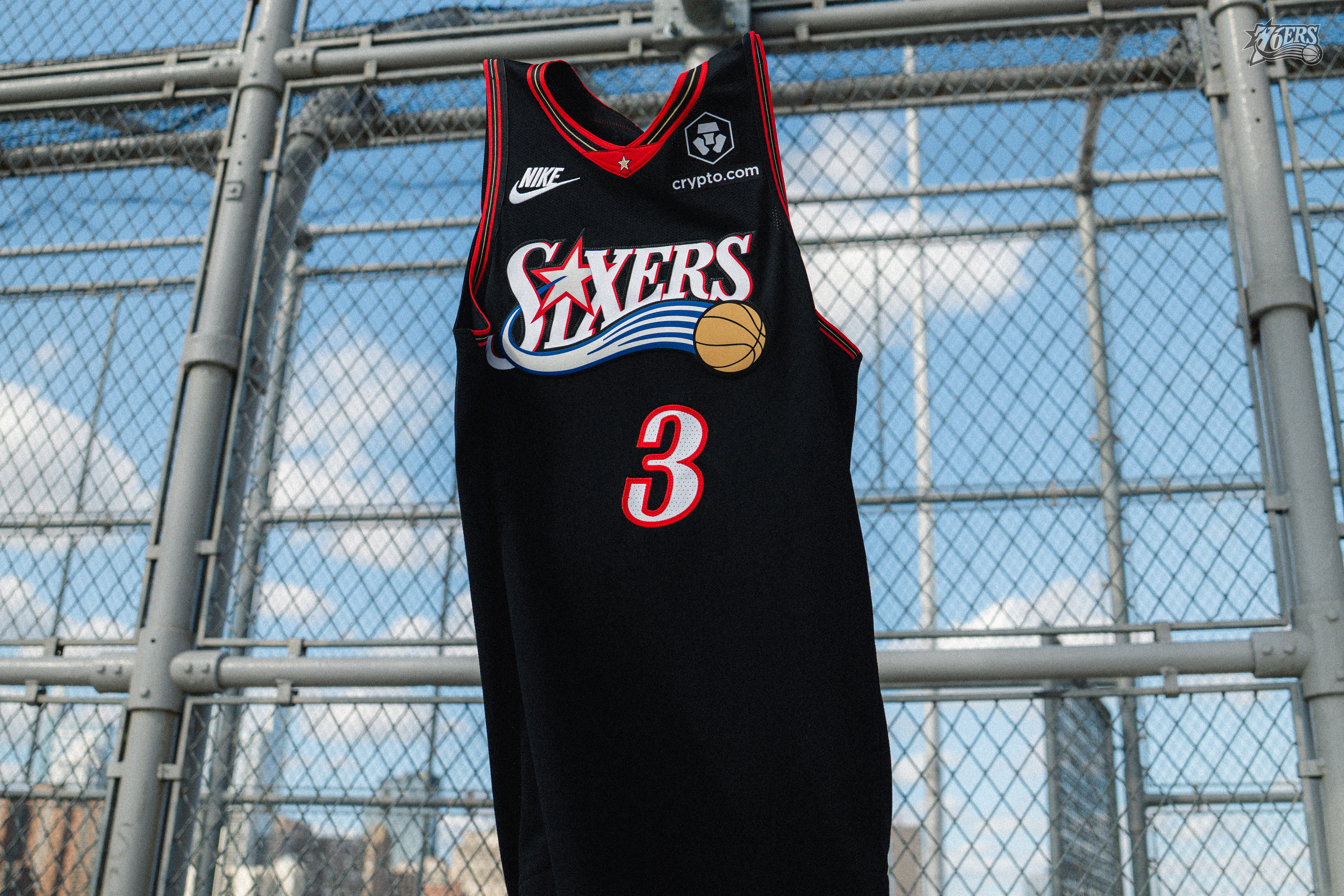
    A closer look at the Sixers’ black jerseys from the Allen Iverson era that are set to return for the 25th anniversary of their NBA Finals appearance.Courtesy of the Sixers

    The black jerseys are back. Again.: A+

    Last year, the Sixers brought back the Allen Iverson-era black jerseys for the 25th anniversary of the 2001 Finals team. They were supposed to be a one-season nostalgia trip.

    Apparently, everyone took one look and said, actually, let’s keep those.

    The Sixers announced their six-uniform rotation this week, and the beloved black alternates made the cut again, despite classic uniforms typically being reserved for anniversaries. Which means this season we get the slightly surreal sight of LeBron James wearing an Iverson-era Sixers jersey!

    Honestly, what more evidence do we need? They looked great in 2001, they looked great last season, and they’re going to look great on LeBron, Tyrese Maxey, and Jaylen Brown.

    Definitely a uniform we should NOT retire any time soon.

  • Go the way of the dinosaurs

    Go the way of the dinosaurs

    It’s one of the many places I guess I’d just assumed would always be there.

    But the Academy of Natural Sciences of Drexel University is not the first museum in Philadelphia to close in the past decade.

    In 2018, it was the Atwater Kent Museum. It housed a collection that told over 300 years of the city’s history: everything from a 1682 Lenni Lenape belt to Joe Frazier’s boxing gloves. Its closing was followed by the Neon Museum (2022), the Insectarium & Butterfly Pavilion (2023), and the Art Alliance (2024).

    Sure, I know nothing lasts forever and cities change as time marches on. A favorite restaurant, bookstore, movie theater, the beautiful old home you walked past in your neighborhood. Suddenly one day they disappeared behind a construction fence.

    But it was surprising when the Academy closed last weekend after 198 years of being open to the public.

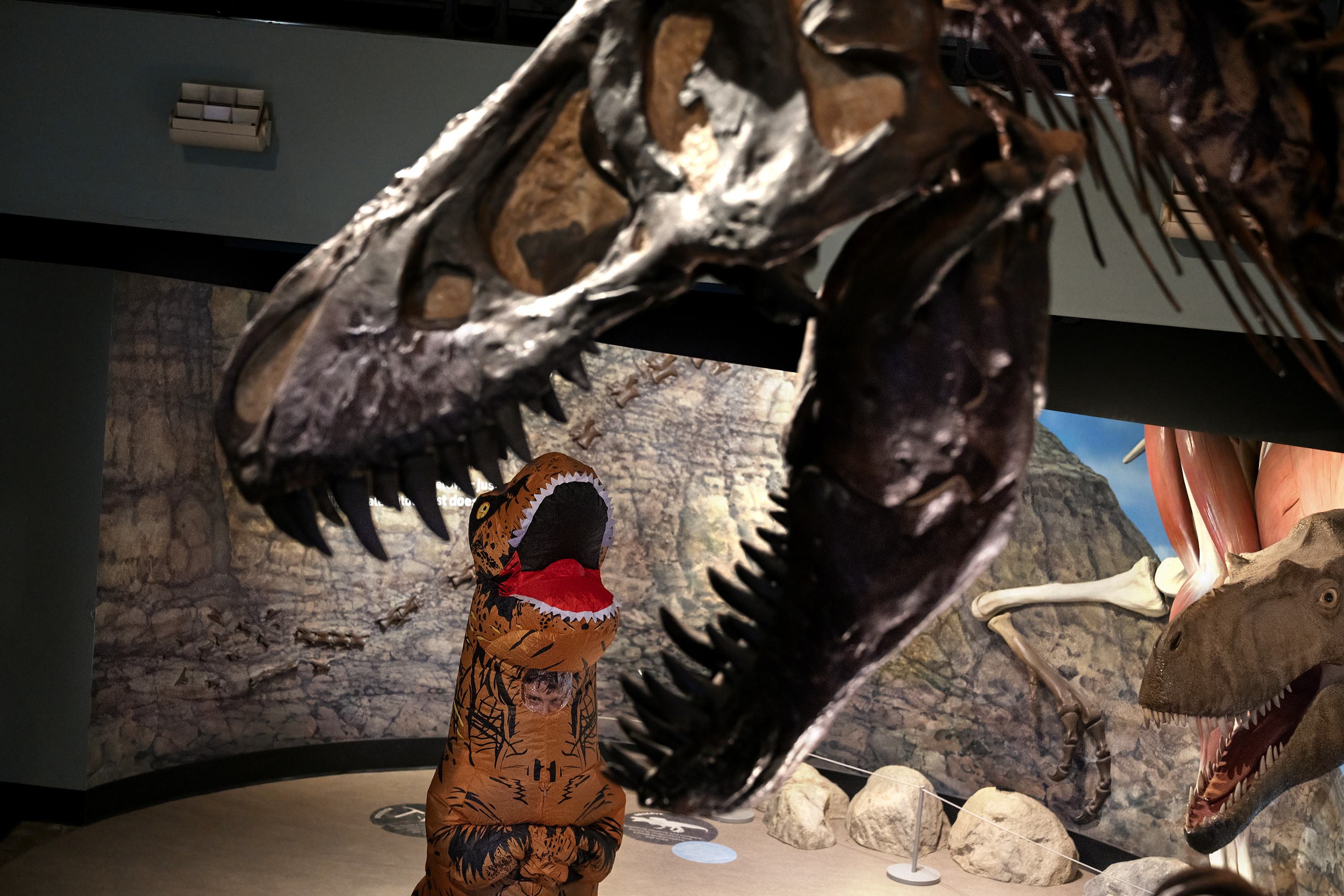
    A dinosaur-costumed visitor passes behind the T-rex in Dinosaur Hall on Sunday, Sept. 28, the last day the museum was open to the public.Tom Gralish / Staff Photographer

    Like everyone else who in the past few weeks has shared their memories on social media, in interviews with reporters or in conversations with others in parents groups or on the playground, I found myself thinking not only about the dinosaur skeletons but also about the feelings and sense of wonder I had experienced there.

    I didn’t grow up here, so I don’t have any of the childhood memories many Philadelphians do, but I did visit often for fun as a young adult, with my own children and even as a grandparent. I also photographed many memorable stories there as a visual journalist.

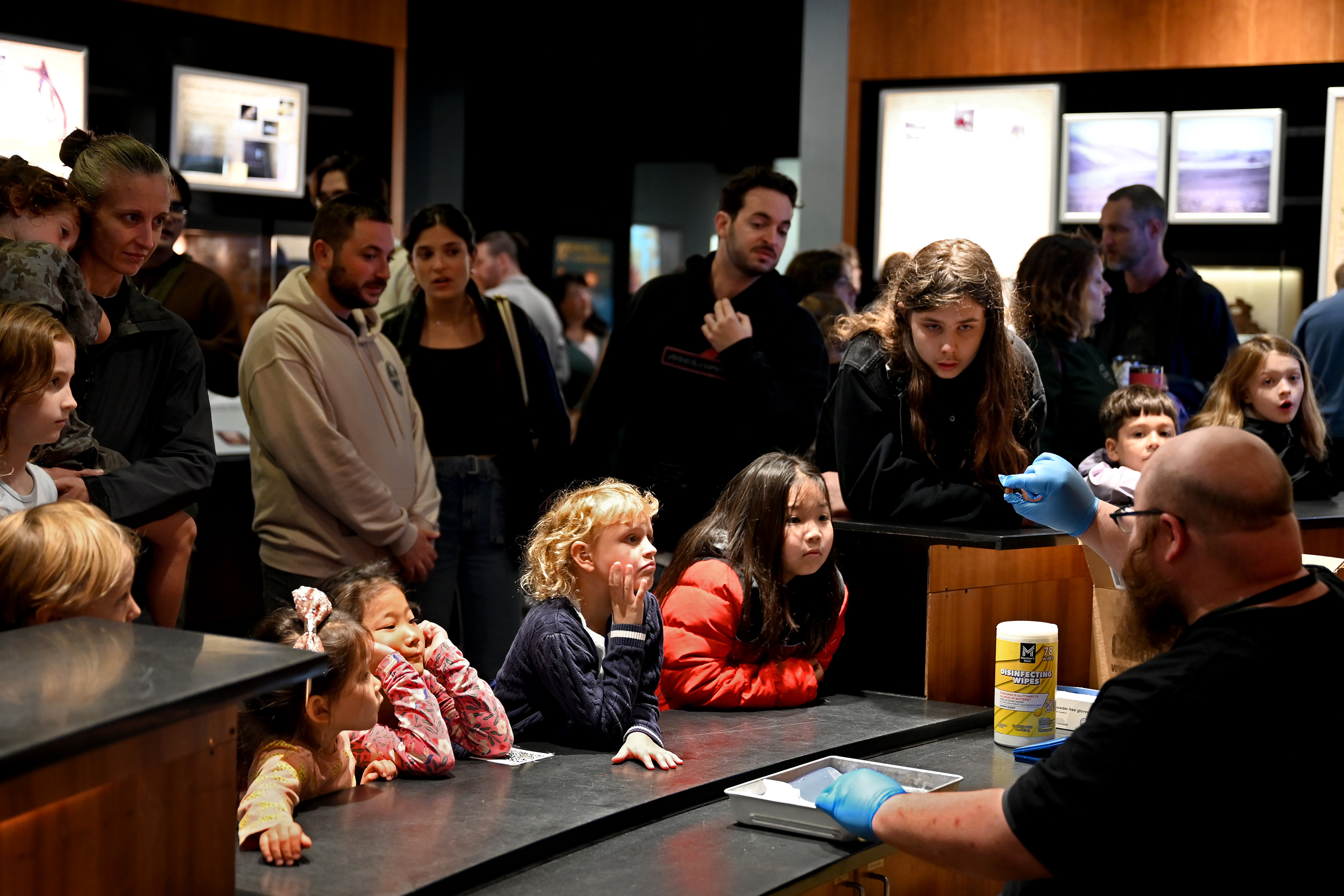
    Science educator Buddy Muhler shows visitors the eyeball of a cow, during a talk on the Academy’s closing day.Tom Gralish / Staff Photographer

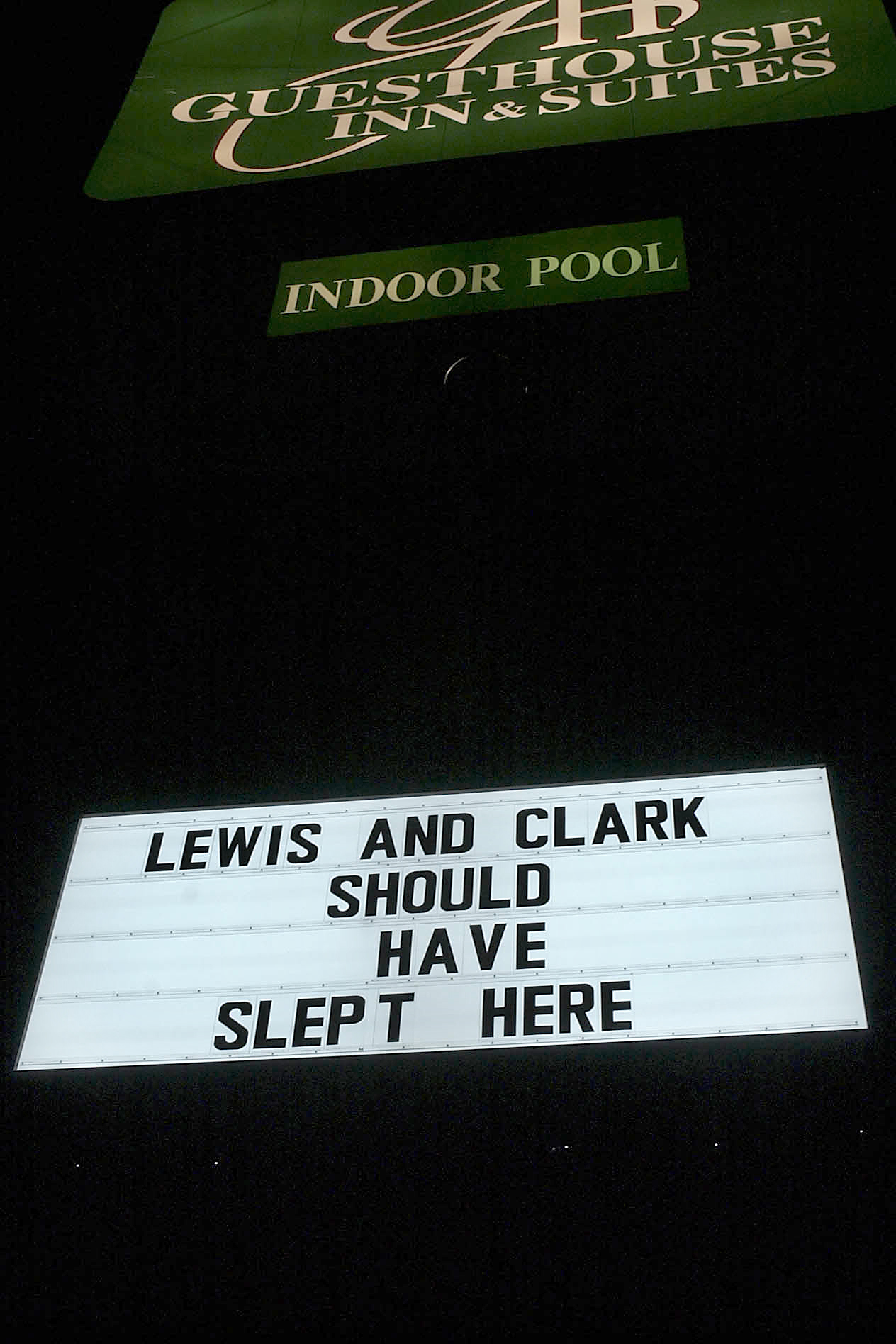
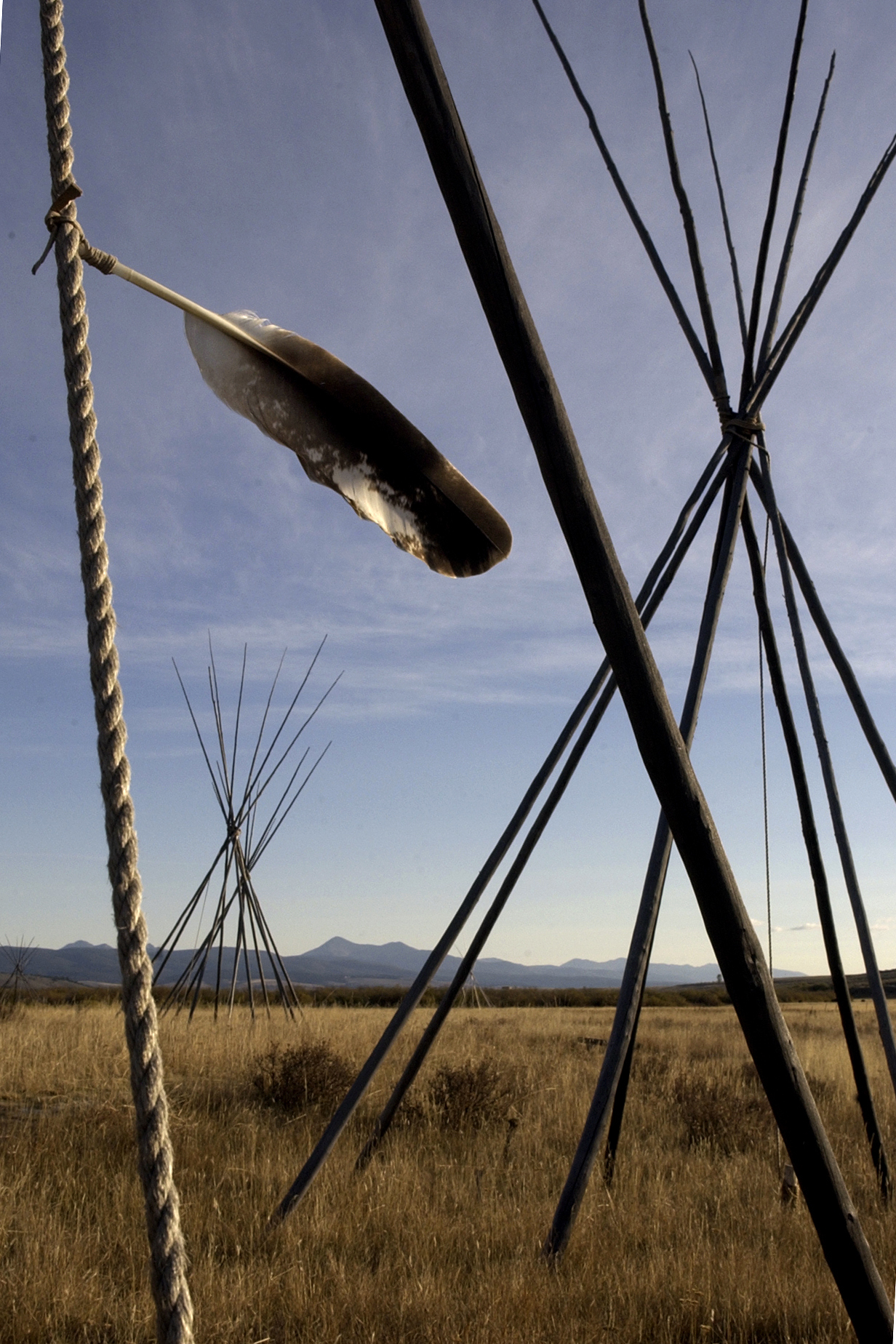
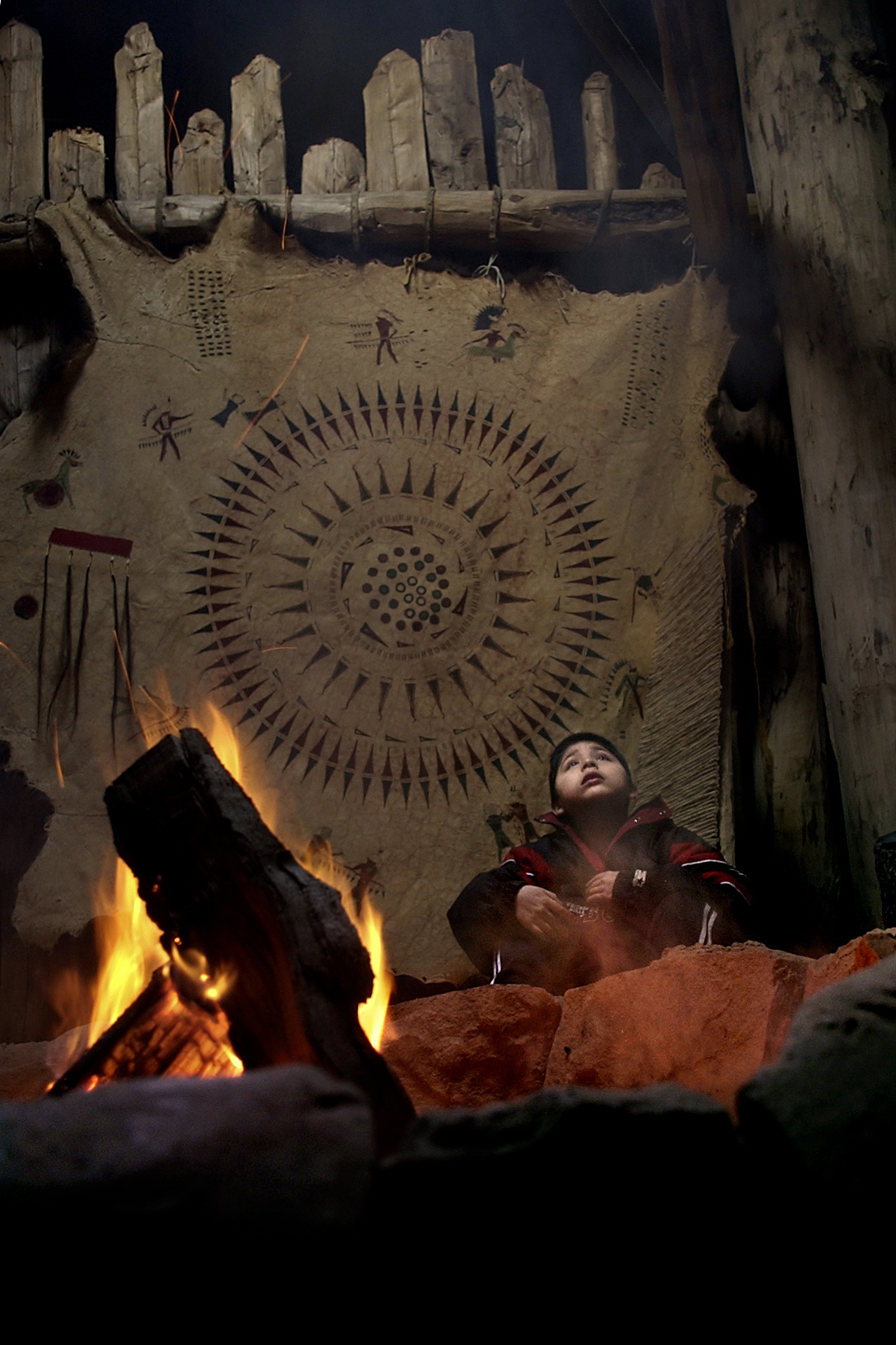
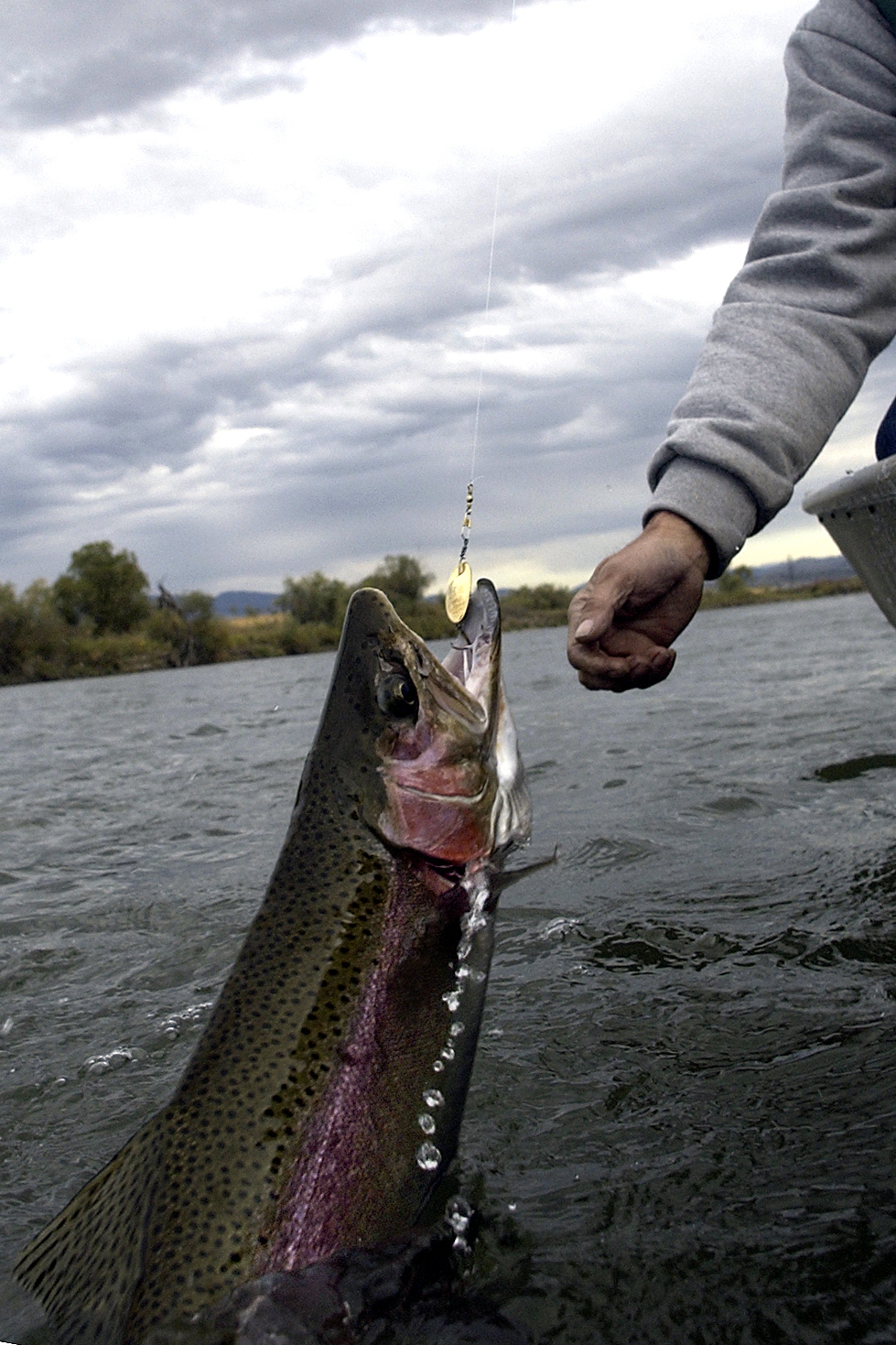
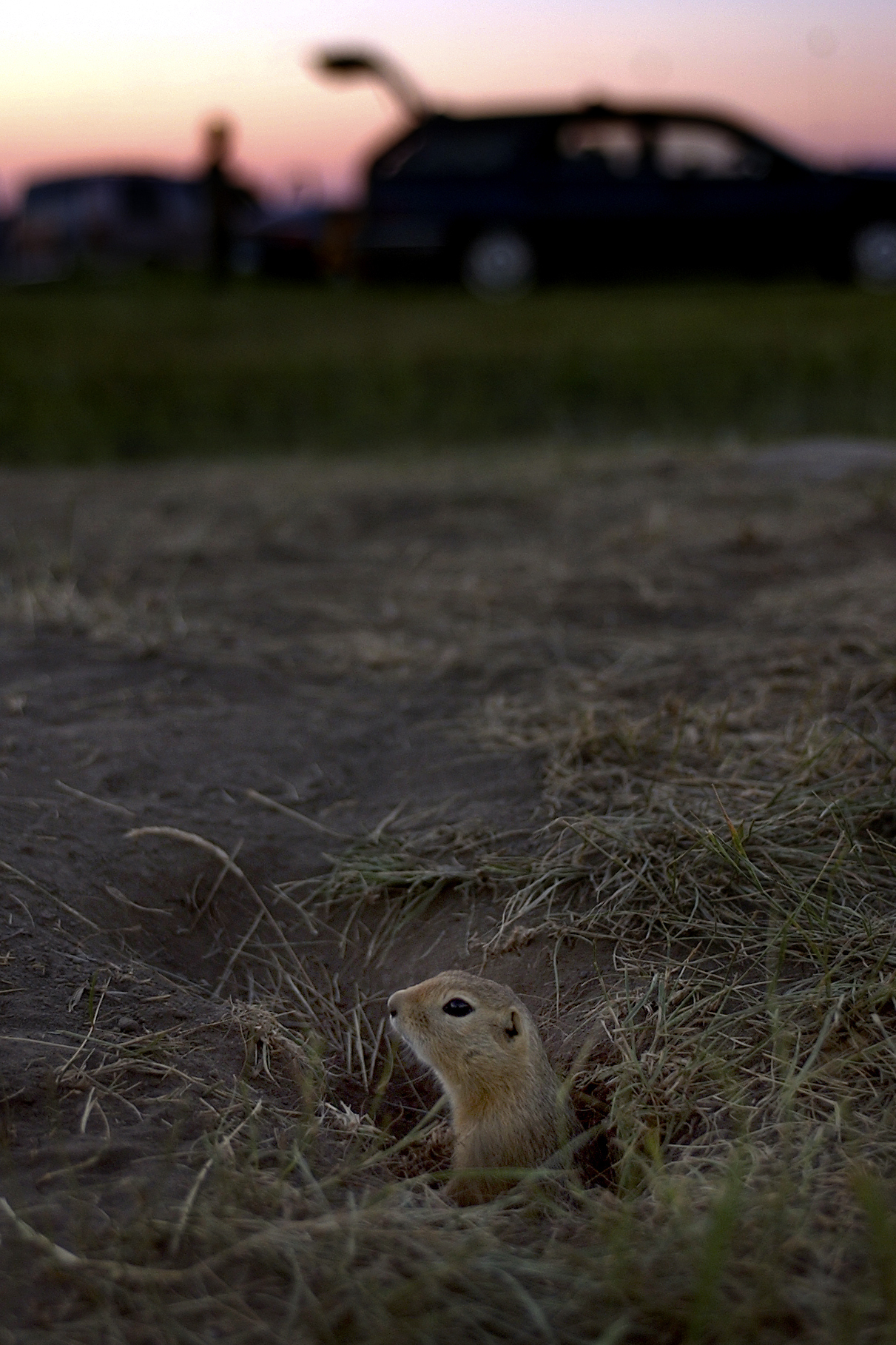
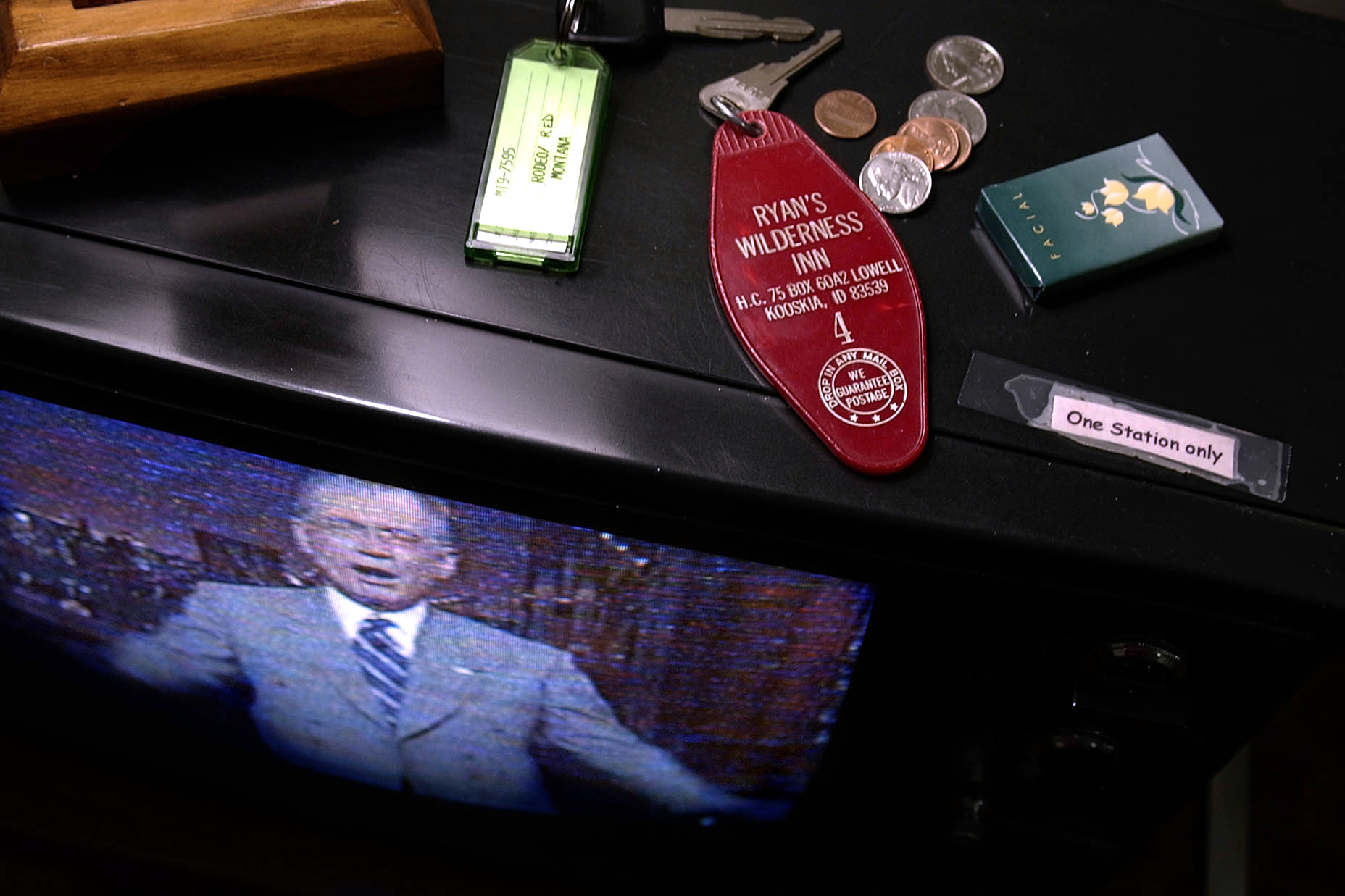
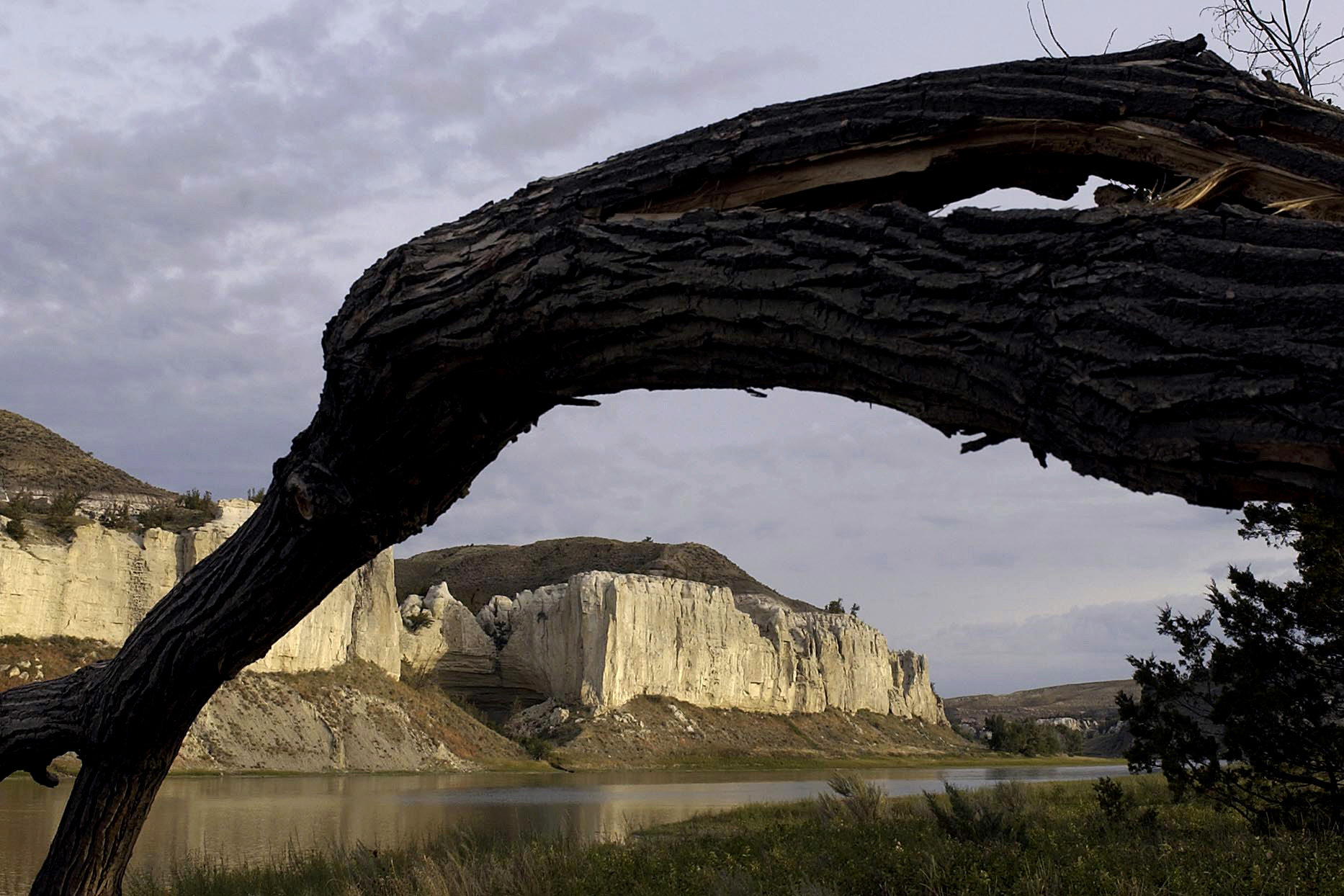
    One of my favorites was a project I did for the 200th anniversary of the Lewis and Clark Expedition in 2004. I made four trips out west logging thousands of miles on rental cars, seeing all the places I read about in history class. Those stories all start out west, where the explorers paddled up the Missouri River in 1804 to see the Louisiana Purchase and find an easy water route to the Pacific Ocean.

    But it was in Philadelphia where it all started.

    When Thomas Jefferson was elected president in 1801, he picked a U.S. Army captain, Meriwether Lewis to pursue his dream of a scientific exploration of the unmapped West. To prepare for the journey Jefferson sent him to the intellectual, medical, scientific and trading center of the new United States: Philadelphia. Here, he spent a month in the spring of 1803 gaining specialized training and purchasing supplies for the expedition.

    Flash forward a few years, and among the 122 animals they “discovered” were 178 plants that were “new” to science (Western science anyway — of course Native Americans already knew about everything the explorers found).

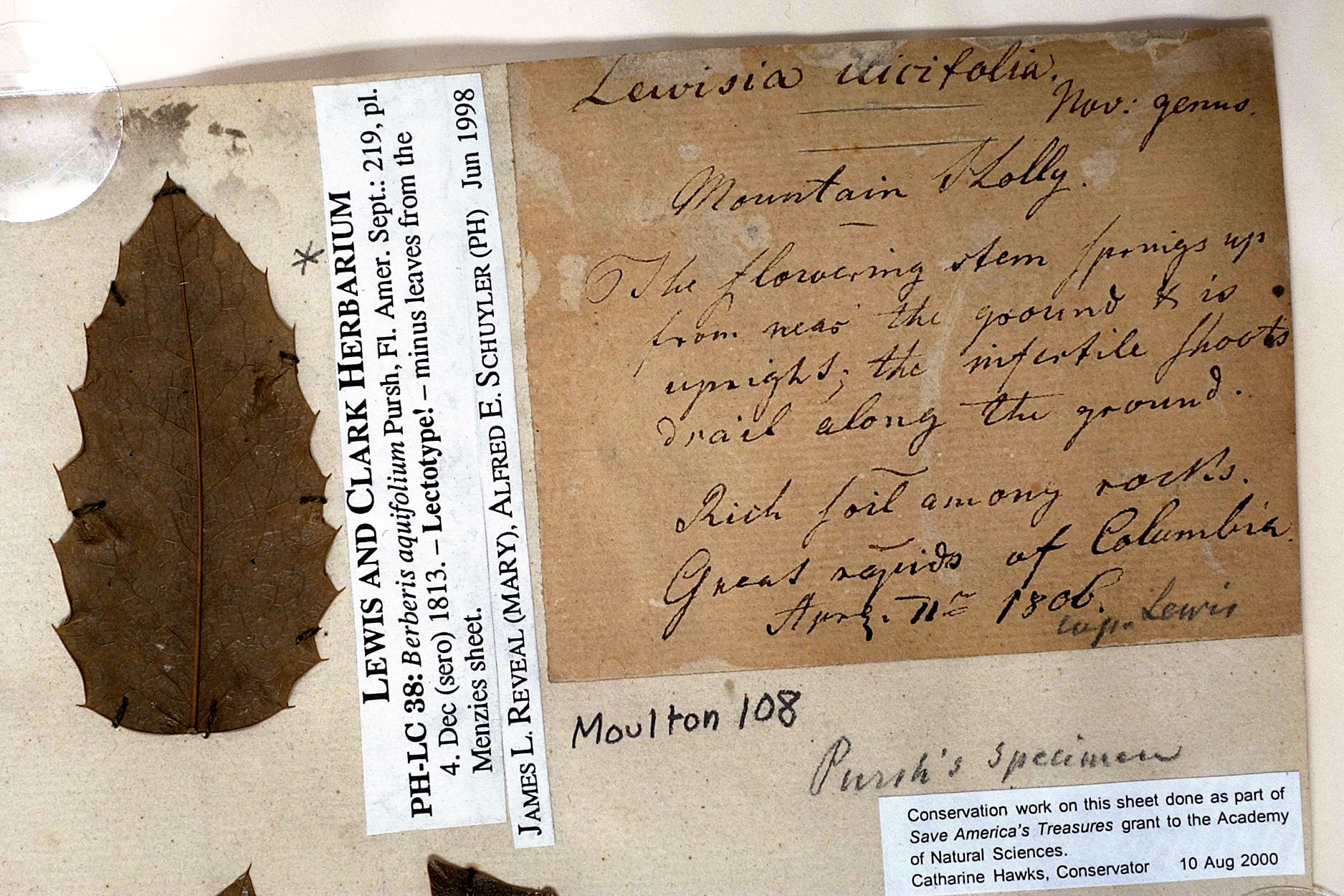
    A few horns are all that still exist from the animal specimens Lewis and Clark collected for Jefferson. But almost all of those plant specimens survived to this day, and nearly all of them are now housed at the Academy.

    Close up detail of labels and mounted dried specimen of Berberis aquifolium, the Oregon grape, collected by Lewis and Clark on Feb. 12, 1806 near present-day Astoria, Oregon.Tom Gralish / Staff Photographer

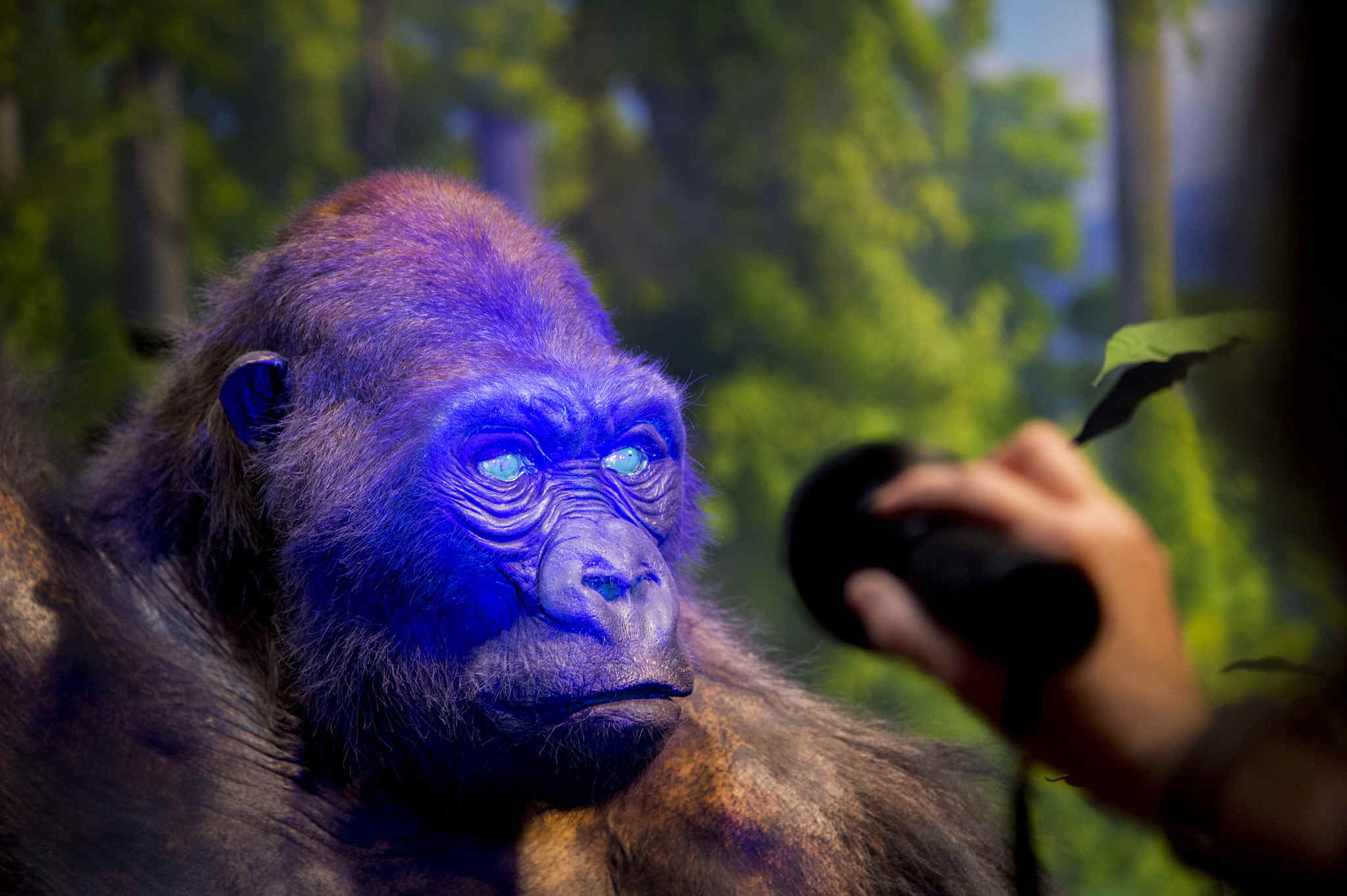
    In 1938 a taxidermied Western lowland gorilla from what is now the Central African Republic was sealed behind glass in a diorama — and was not touched by human hands for decades. In 2018 workers opened the case and the Academy allowed me to go behind-the-scenes as it embarked on the monthslong historic renovation of their dioramas.

    Workers use different wavelength lighting to find imperfections and repairs in the gorillas before they are removed from the Academy in 2018. TOM GRALISH / Staff Photographer

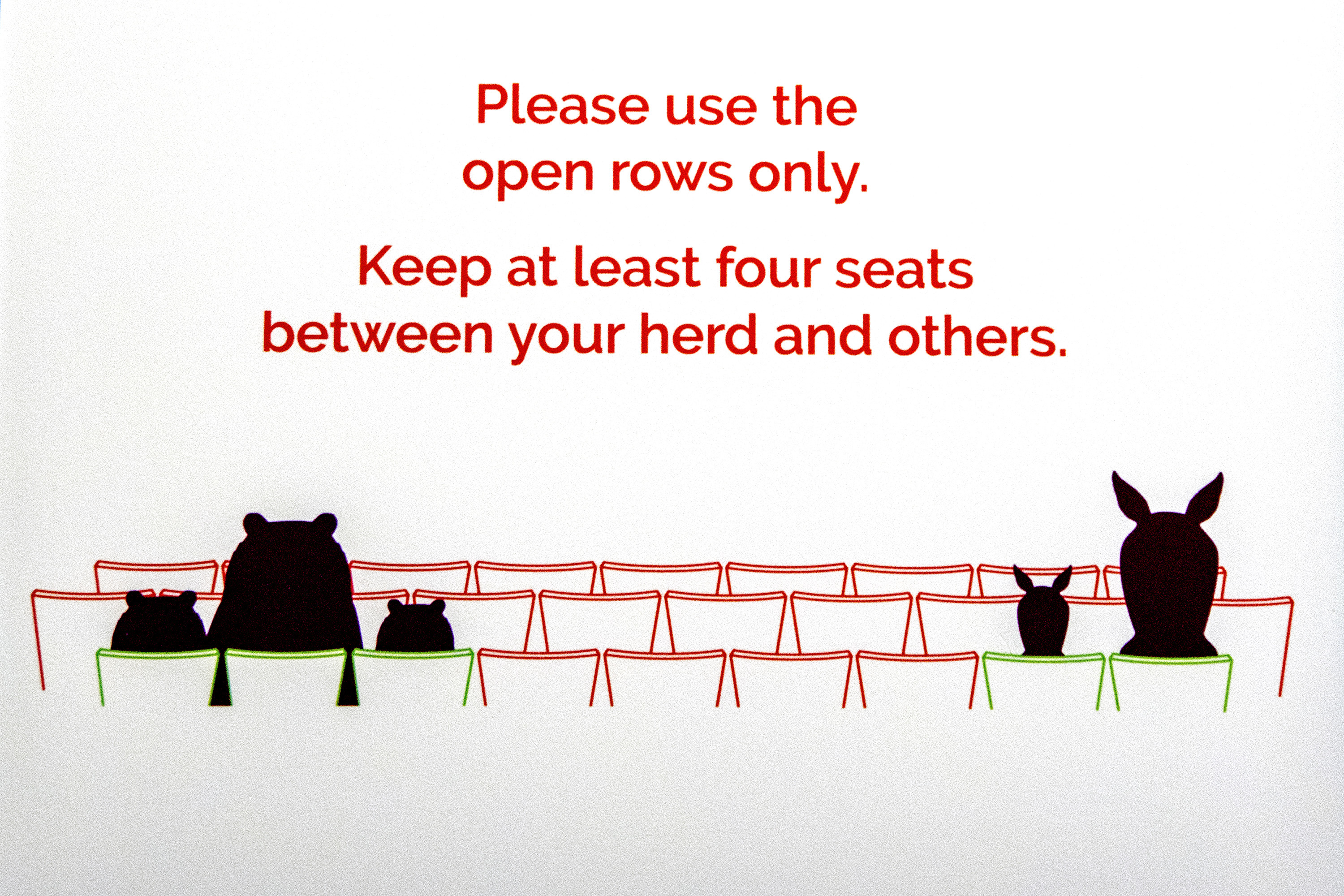
    During the days of COVID-19, I photographed Stephanie Gleit a designer at the Academy who created interesting social distancing signage for their public spaces. “Maintain 6 feet between your herd and others,” said one of the signs.

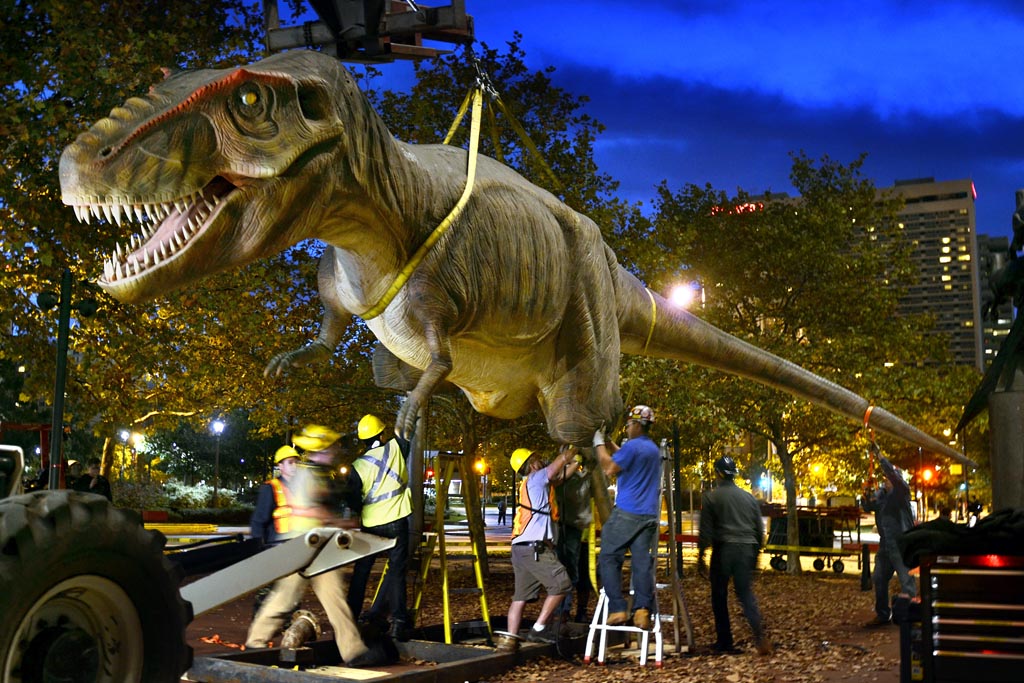
    I spent an early morning in 2013 as 40-foot-long animatronic Tyrannosaurus rex was installed on the sidewalk outside the Academy’s front door. It was part of an exhibit that featured more than a dozen realistic, animatronic full-bodied dinosaurs, as well as skeletons, fossil casts of skulls, claws and horns, real specimens of mosasaur and spinosaurus teeth, an Oviraptor egg, and the ever-popular coprolite (dino poop).

    I was judicious when deciding the very few newspaper assignments I would take one of my kids on. I tried never to take advantage or exploit my position at the newspaper, and I was always concerned with their safety as well as that of the subjects of our story. I worried about the ethics and appropriateness and what the impact might be with their presence. But there were a few times I had to ask — my editors and the subjects — if it would be okay.

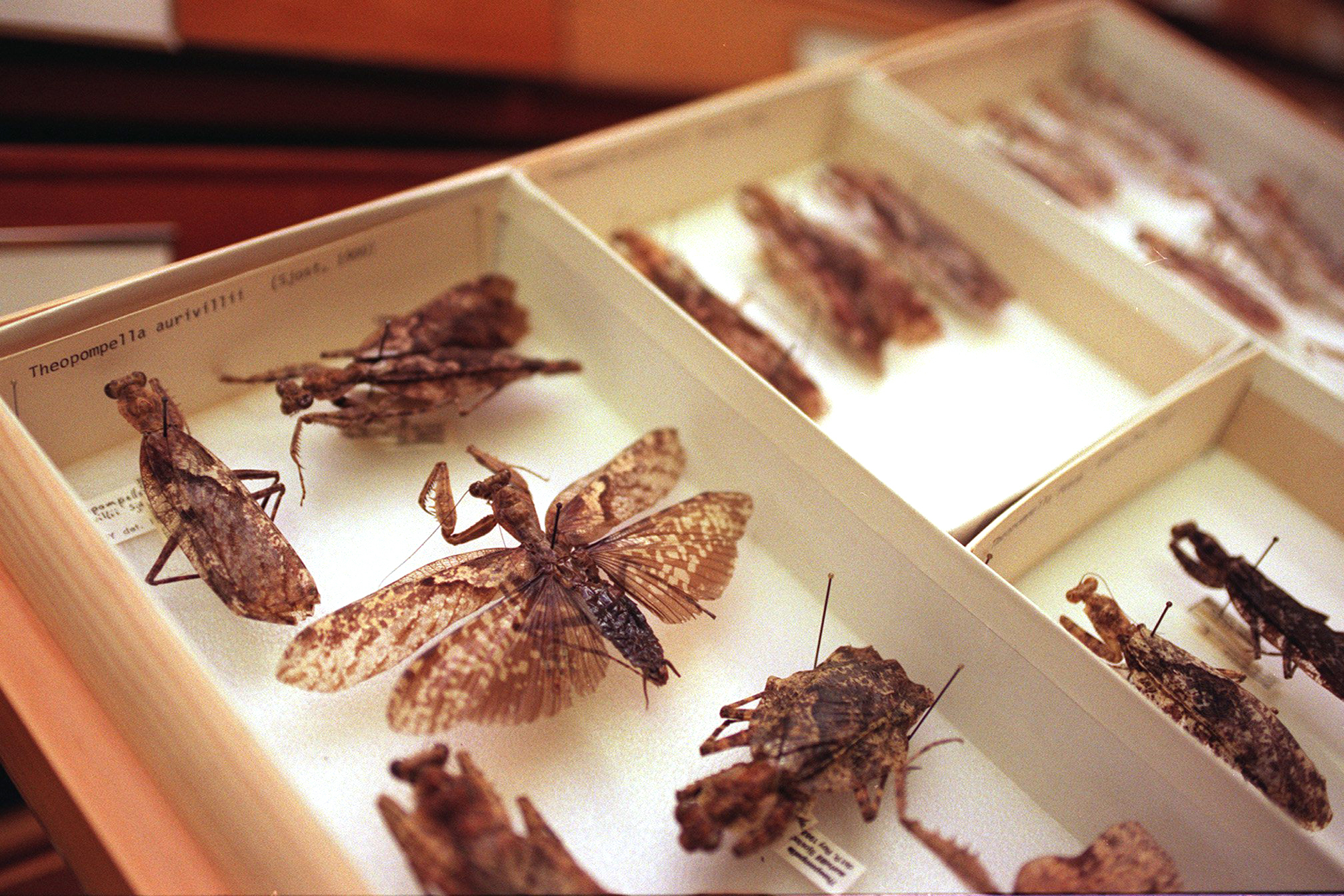
    Among the 28,000 or so species of orthoptera (jumping insects) at the Academy are these leaf mimicking mantids are from Africa, photographed in 1999;Tom Gralish / Staff Photographer

    One of those was a time I got to go ”backstage” in one of the world’s largest repositories of natural specimens: bird carcasses, fish, mollusks, minerals, bones … and bugs. My son’s favorite animals. My day as “Cool Dad.”

    Since 1998 a black-and-white photo has appeared every Monday in staff photographer Tom Gralish’s “Scene Through the Lens” photo column in the print editions of The Inquirer’s local news section. Here are the most recent, in color:

    » SEE MORE: Archived columns and Twenty years of a photo column.

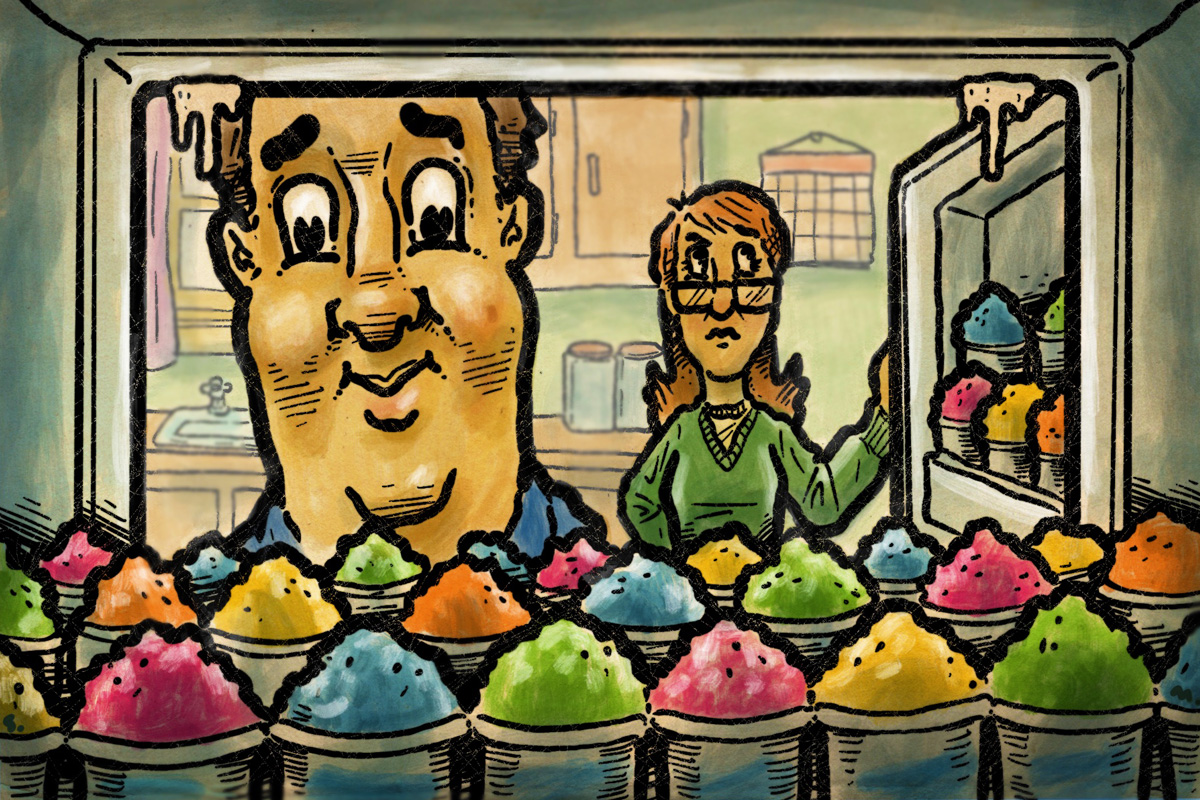
  • Did I buy too much John’s Water Ice for the offseason? My wife thinks so.

    Did I buy too much John’s Water Ice for the offseason? My wife thinks so.

    This week’s question (Have your own? Submit it here.):

    John’s Water Ice just closed for the season, so I decided to do something smart this year: I stocked up. Almost half our freezer is filled with it.

    But, my wife says it’s too much, that we have to have people over soon to eat through it so we actually have freezer space, and that it won’t even taste as good a month from now. But I say: Some John’s is better than no John’s. Did I go too far? Or not far enough?

    Mike Newall, Life & Culture reporter

    Do not second-guess yourself for a moment. You are a good husband and a good man. You saw water ice and you got it and you gave it a home for the winter and now many of your neighbors will want to be your friends. Congrats, you are a local hero.

    If anything, I’d start clearing freezer space for the water ice ahead of time.

    Abigail Covington, Life & Culture reporter

    Listen, I love John’s too. But I am firmly with your wife on this one. Do you want to be the kind of guy who stocks up on stuff? Get a second freezer for the garage. Everybody knows that’s where overflow goods go. You cannot waste precious freezer space on a seasonal treat.

    Mike Newall

    Oh, Abigail, we have been through so much together — I think maybe two of these advice chats, at least — and now we part ways — or at least opinions. Water ice! Water ice! Water ice!

    I see your point on the basement freezer (that’s where my pop kept his pickled pig’s feet). But it’s not like this is last month’s leftovers — it’s water ice. It’ll be gone before Halloween.

    Abigail Covington

    Yes, maybe a compromise is in order. Give the water ice an expiration date. It has to be gone before the holidays when leftovers will inevitably need to move in. Or, I like Mike’s idea — Halloween.

    Mike Newall

    Here’s my thing: Let’s fast-forward a couple weeks or even more to the heart of fall. Leaves are falling. Eagles are on TV. Chill in the air. And you’re in your living room enjoying some fine — possibly maybe a little bit freezer burnt if you don’t really shut the lids — pineapple water ice. To me the appeal is enjoying something when you normally can’t. It’s more than a treat. It’s a little seasonal nostalgia.

    Freezer burn is a reasonable fear, and the sugar and water can over-crystallize over time, making the ice somewhat grainy. But I’m sure that takes time. More than enough time for you to kick back with some well-preserved lemon ice after Thanksgiving dinner.

    Abigail Covington

    I’m sorry but who in Hades wants to eat water ice in November? It’s not ice cream! You can’t serve it with pumpkin pie. I get the nostalgia element, but the joy of a seasonal treat is that it’s seasonal. Make it available year-round and it will undoubtedly lose its luster, especially if it’s got the freezer burn fuzzies.

    Mike Newall

    Oh boy, I got a chill from “freezer burn fuzzies.”

    You know what, Abigail. You convinced me.

    In the spirit of compromise, a solution: Why don’t you and your wife make a water ice date on the next lovely evening. Sit out on the stoop. Enjoy it. Pass it around. Talk about the old days and good times. And then go back inside and chuck the rest out.

    Abigail Covington

    Agreed. There are plenty of water ice spots that stay open year-round for the diehards like yourself. Venture out of the house when the craving hits and let the contents of your freezer change with the seasons. Your wife will thank you.

  • The best thing Beatrice Forman ate this week: Panettone from a Fishtown pop-up

    The best thing Beatrice Forman ate this week: Panettone from a Fishtown pop-up

    On one block of Martha Street, it feels like Christmas came early. Panettone — sliced and dolloped with whipped cream — is already officially for sale.

    The traditional Italian holiday sweet bread is part of the lineup at Formosa, the pop-up bakery from James Beard-nominated pastry chef James Matty that’s taking over the bottle shop inside Picnic on Saturday and Sunday mornings this October.

    Matty, who oversees the pastry program for Defined Hospitality restaurants including Suraya and Condesa, said Formosa is shorthand for Aquaformosa, the tiny mountain village in Calabria, Italy, where his grandfather was born. Likewise, the pop-up’s menu spans bread-forward (and seasonally anachronistic) sweets that are meant to evoke a sense of warmth. There are oversized cinnamon rolls swirled with blueberry jam, a sticky-sweet plum upside down cake, and doughnut shop-style maple pecan cruellers, among other delights.

    At Formosa inside Picnic, pastry chef James Matty’s panettone will be served as $9 slices topped with whipped cream.Monica Herndon / Staff Photographer

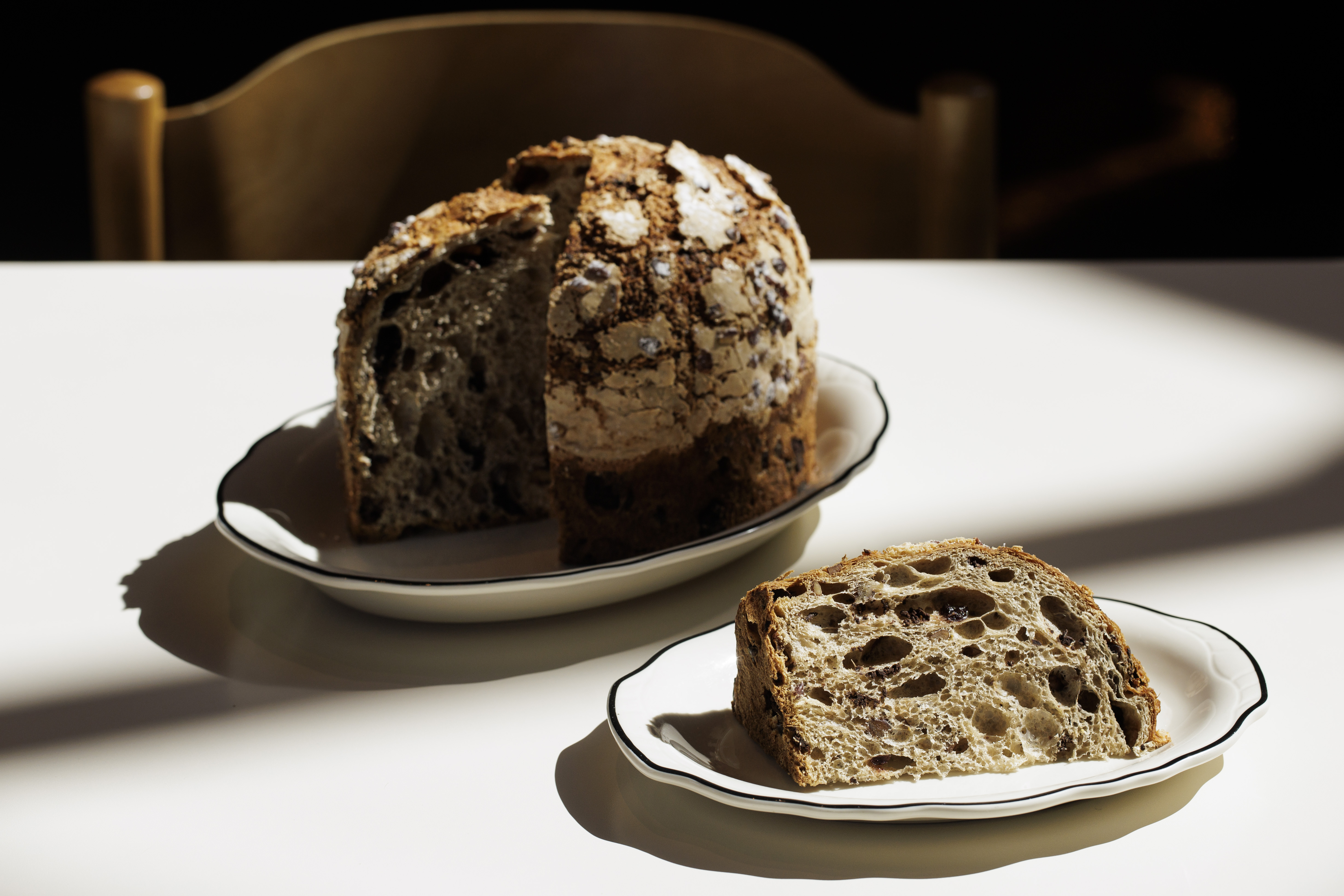
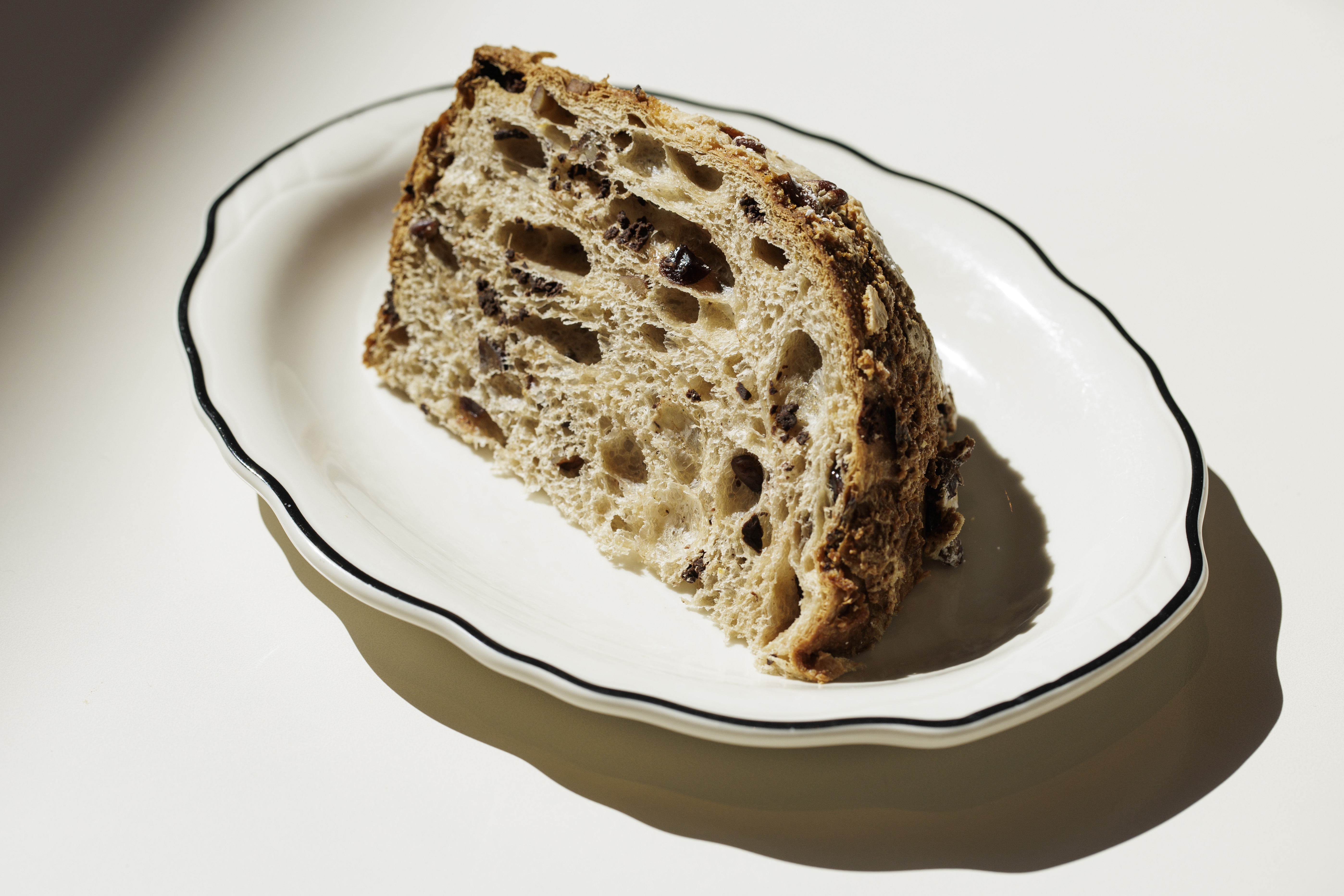
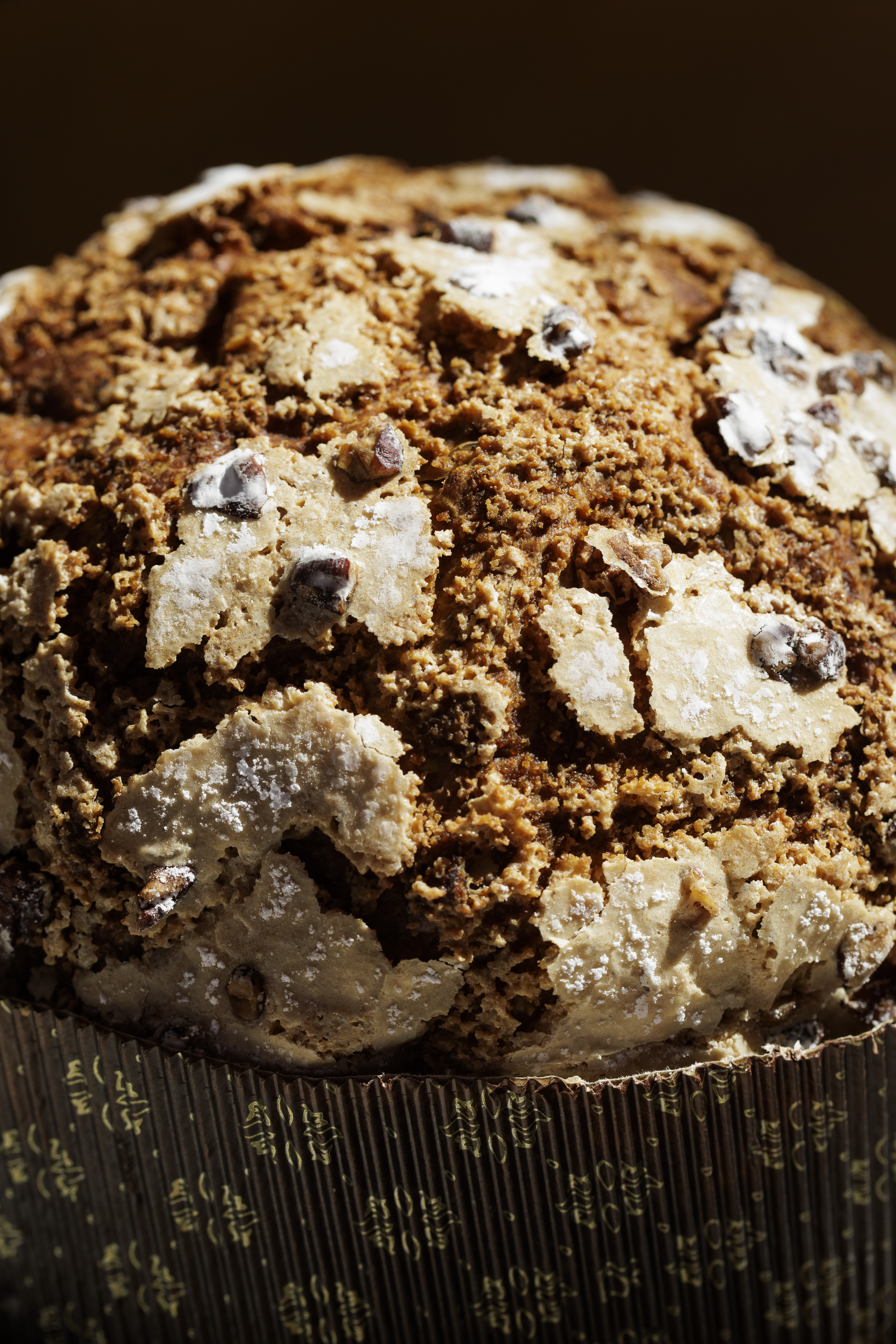
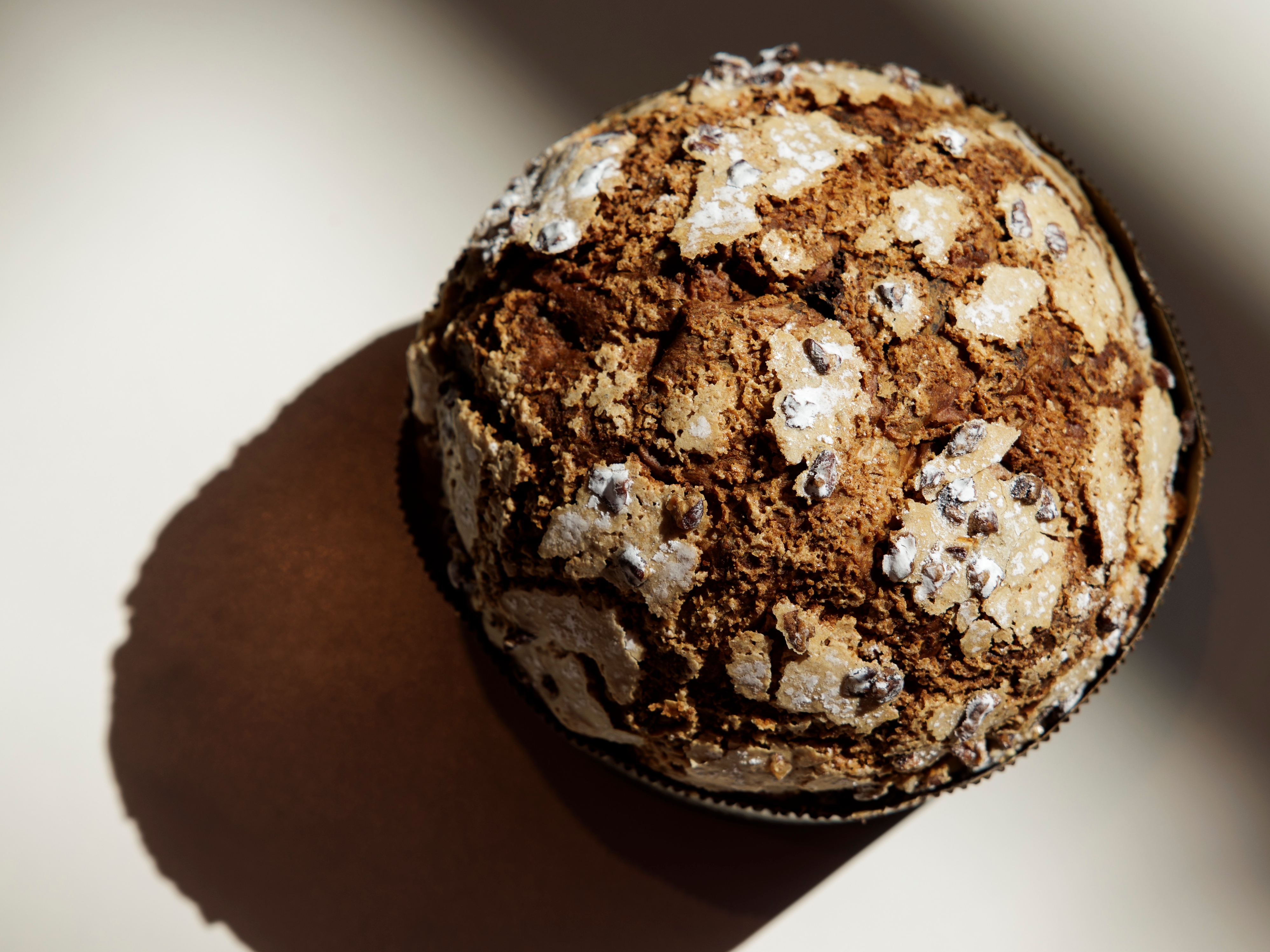
    The panettone is Formosa’s crown jewel. Flecked with dark chocolate chips, pecans, and Luxardo cherries, Matty’s version splits the difference between classic and new-aged panettones, which tend to be airier and more voluptuous. His bread is buttery soft and light, with a crackly crust that’s fun to peel off.

    To me — a panettone novice — it tasted like a cross between the world’s moistest poundcake and a sourdough loaf.

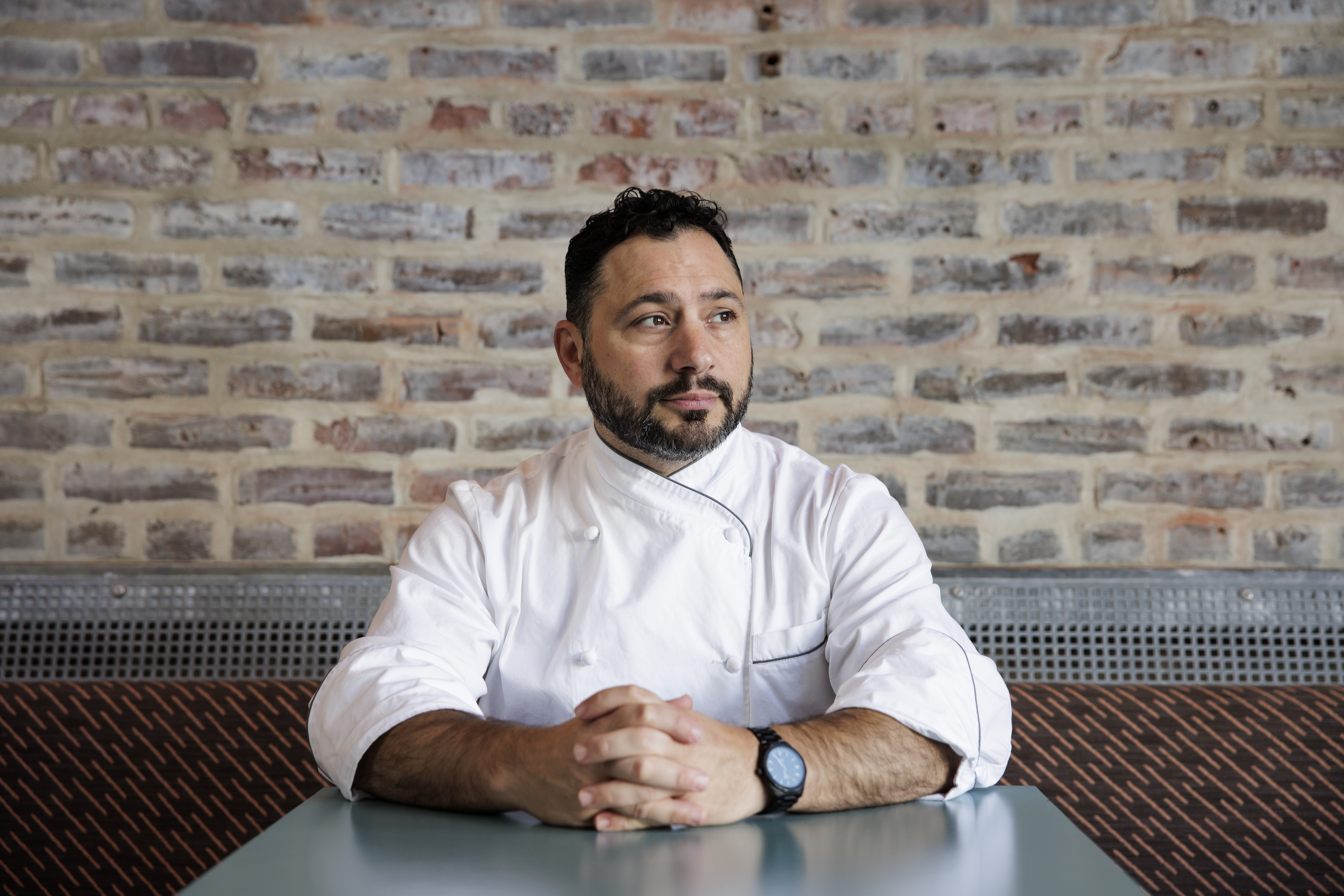
    Matty, who grew up in Trooper, Montgomery County, was also not raised in a panettone family. His fixation with the bread began in adulthood while studying at the Culinary Institute of America, where he became enamored with the craftsmanship good panettone requires.

    Pastry Chef James Matty poses inside Picnic, the restaurant hosting his Formosa pastry pop-ups during October 2026.Monica Herndon / Staff Photographer

    Panettone is “like the mountaintop” of bread, said Matty. “It’s the most difficult to pull off consistently.”

    Formosa’s version takes the equivalent of a work week to prepare. The dough must ferment for three days, said Matty. It takes another two to proof and bake. The most stressful test comes at end: Panettone must hang upside while cooling so it doesn’t collapse inward under its own weight.

    The first time Matty made panettone, he said called it a “complete flop.”

    Formosa’s panettone takes five days to prepare.Monica Herndon / Staff Photographer

    “It literally flopped out of the mold,” he said. Upwards of twenty retries later, and Matty’s panettone hangs steadily on the cooling rack, sort of like muffin-shaped bats.

    At Formosa, Matty’s panettone will be served in $9 slices topped with whipped cream. As for selling whole rounds in time for the winter holidays, Matty said to “wait-and-see.”

    For now, I’ll just be adding it to the top of my wish list.

    Formosa at Picnic, 2421 Martha St., instagram.com/formosa.philly. Hours: 8 a.m. – 12 p.m. (or sell out) Saturday – Sunday from Oct. 3 to Oct. 25.

    Panettone’s real test come at the end: To cool, the Italian sweet bread must hang upside down. If prepared incorrectly, it flops.Monica Herndon / Staff Photographer
  • A horse opera, surprise murals in Kensington, and some exquisite china are our favorite Philly art this week

    A horse opera, surprise murals in Kensington, and some exquisite china are our favorite Philly art this week

    A country hip-hop horse opera at the Mann, all thanks to Shaboozey

    Shaboozey make both kinds of music: Country & Western.

    That’s a Blues Brothers joke, but it’s also spot on when it comes to the artist born Collins Obinna Chibueze, particularly when it comes to the Virginia-raised rapper and singer’s 2026 release The Outlaw Cherie Lee & Other Western Tales. That’s his ambitious, cinematic, and loaded-with-guests album that’s the follow up to Where I’ve Been, Isn’t Where I’m Going, the 2024 breakthrough that made him a star.

    That album, of course, included “A Bar Song (Tipsy)” that, along with Lil Nas X’s “Old Town Road” and Ella Langley’s current world dominating “Choosin’ Texas,” is one of the biggest country mega hits of the past decade.

    Shaboozey performs during the Roots Picnic at the Mann Center in Philadelphia on Sunday, June 2, 2024.Monica Herndon / Staff Photographer

    To his credit, Shaboozey followed that breakout success with “Tipsy,” and multiple contributions to Beyoncé’s Cowboy Carter, by swinging for the fences with Cherie Lee, a horse opera of an album that tells a story about a woman who sets out to sense her father’s death as not to make some bad relationship choices that put her own life in peril.

    To tell the tale that plays like a Black cowboy spaghetti Western by way of Sergio Leone and Quentin Tarantino, Shaboozey enlists a stellar cast.

    That includes Teyana Taylor, Jamie Foxx, Leon Bridges, Sam Elliot, Gunna, Kehlani, and Orville Peck on a set of songs that lean into Old West gunfighter tropes while mixing country, hip-hop, and film score flourishes.

    When Shaboozey brings this shoot ‘em saga to Philadelphia with his “Outlaws Never Die Tour” — which is playing the Highmark Mann, where he made his local debut at the Roots Picnic in 2024 — he surely won’t have all those big name co-stars with him.

    Or maybe he will, on screen.

    The tour will include “cinematic pre-shot visuals that unfold throughout the performance, complementing the songs and immersing audiences in the world of the album,” so this show promises to be not just a concert but also a night at the movies.

    Shaboozey’s “Outlaws Never Die” tour at the Highmark Mann, 5201 Parkside Ave, at 8 p.m. Tuesday. Highmarkmann.com

    — Dan DeLuca

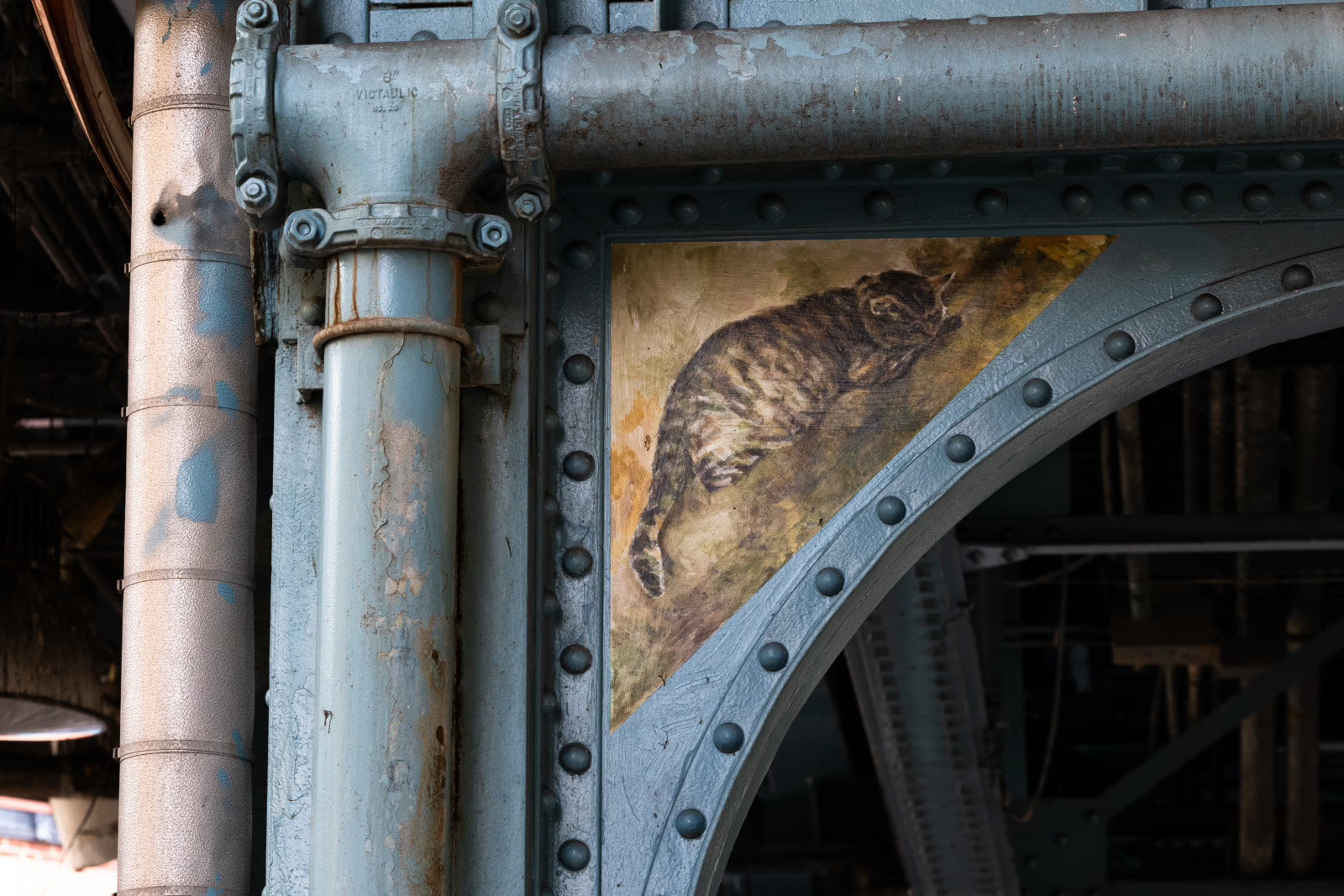
    Best art, for, always emerges from the most unexpected places. Like gusset plates seen through the length of the Kensington Ave. underbridge; the triangular metal sheet piece that connects the horizontal and vertical beams of the SEPTA Metro track.

    After getting my order of the excellent yuzu ginger cider from Càphê Roasters, I looked up on my way to the L. The afternoon sun fell on the avenue and lit up the art on each little triangle of metal. The artwork — dragons, cats, Pride flags, flowers, monkeys — is part of Mural Arts’ “Heart of Kensington Creates,” a community arts initiative. Each piece — there are more than 400 peeping out from under the bridge from Huntingdon to Tioga — has been drawn by Kensington residents.

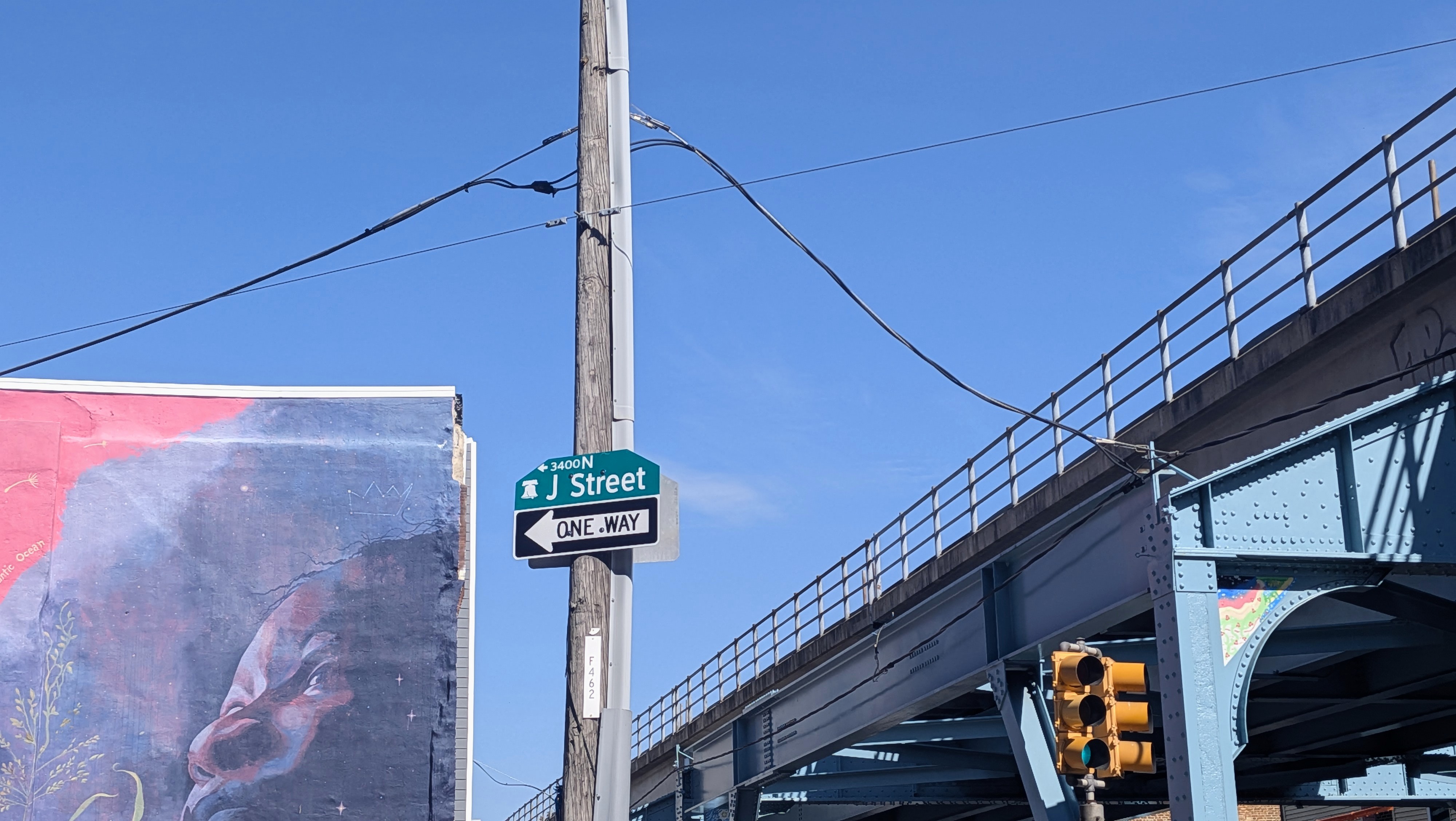
    The Kensington Ave. mural “The Future Is Worth The Fight Just Hold On & You Will See” on the left stands side by side with the little triangle of art on the underbridge. That art was created as part of Murat Arts’ “Heart of Kensington Creates” initiative. Photo taken on Oct. 1 2026.Bedatri D. Choudhury

    Right outside Càphê Roasters, at the intersection of J Street and Kensington Ave, a little triangular sea blue, red, yellow, and green peeps out from under the bridge. Right beside it, a mural called The Future Is Worth The Fight Just Hold On & You Will See by artists Jess X. Snow and Frisly Soberanis lights up a wall in its swathe of purple and pink.

    A little street corner witnessing a conversation between artworks before the rush of the L took over the moment.

    — Bedatri D. Choudhury

    Dainty fine china fit for a president

    Fine china is one of the most utilitarian pieces of art work a person can own; delicate and sturdy like the familial connections that use and enjoy it.

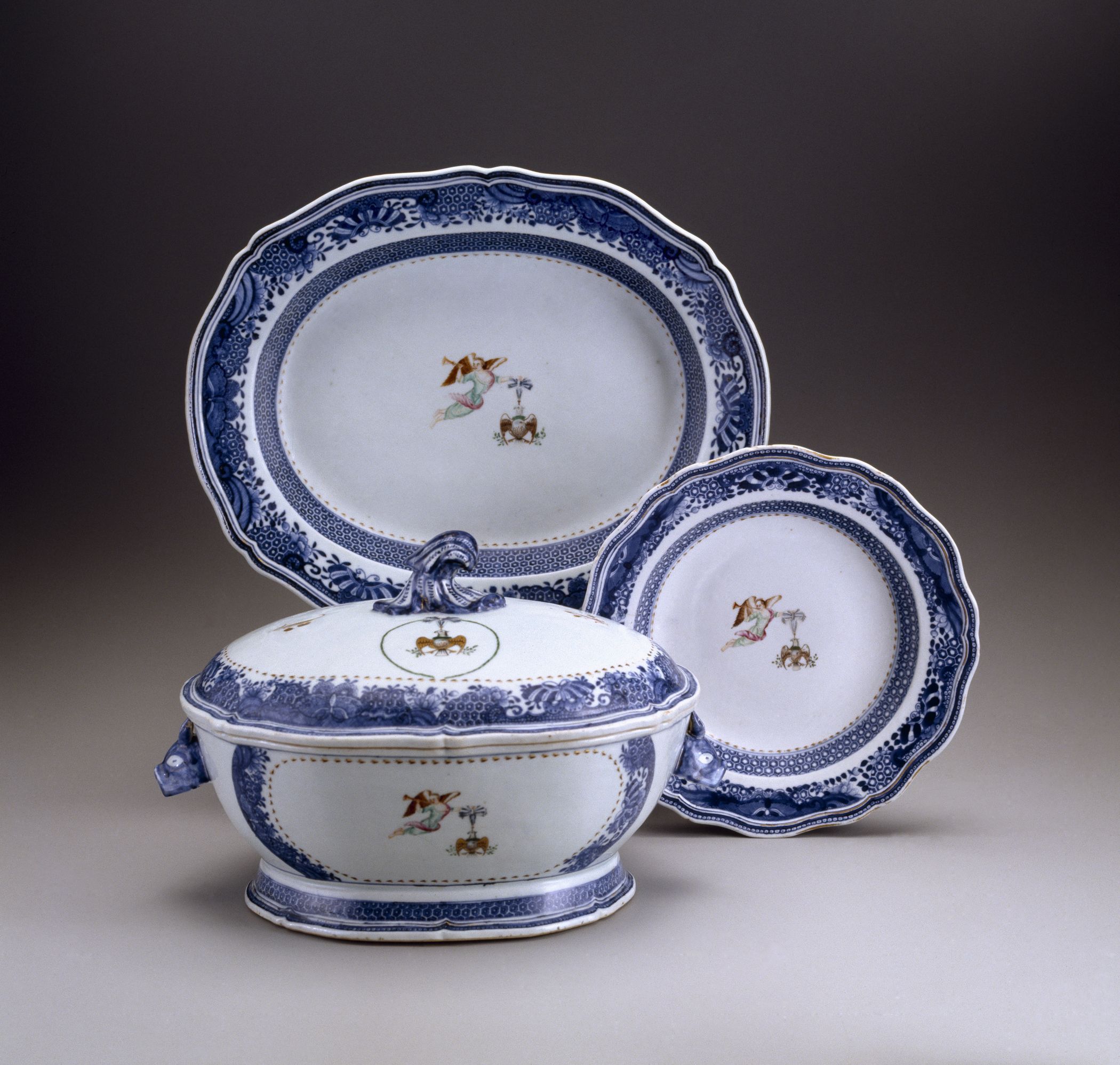
    Winterthur Museum, Garden, & Library offers a peak at a famous family’s fine china: George Washington’s. Several pieces from his 302-piece set called “The Society of Cincinnati” are on display at the Delaware museum. “The Society of Cincinnati” was an elite organization of Revolutionary War officers of which Washington was the first president general.

    The president and his family used this very set of china while living at the President’s House at Sixth and Market.

    Three pieces: a tureen, platter, and plate that are on display at Winterthur Museum, Garden & Library as a part of George Washington’s china collectionWinterthur Museum, Garden & Library

    Each piece features a blue border with the Society of Cincinnati’s emblem: a winged figure blowing a trumpet.

    What an interesting way for war and art to come together.

    With 74 pieces in its collection, Winterthur has the largest number of surviving pieces, acquired by the Delaware estate’s owner Henry Francis du Pont in the early 20th century.

    Visitors to Winterthur can view the porcelain works of art in two places in the museum: the Du Pont Dining Room and on the fifth floor in China Hall.

    We can only imagine how many slices of cherry pie were served on these dainty plates.

    Winterthur Museum, Garden & Library is located at 5105 Kennett Pike. Hours are Tuesday-Sunday 10 a.m. to 5 p.m.

    — Elizabeth Wellington

  • How to have a perfect Philly day, according to author Deesha Philyaw

    How to have a perfect Philly day, according to author Deesha Philyaw

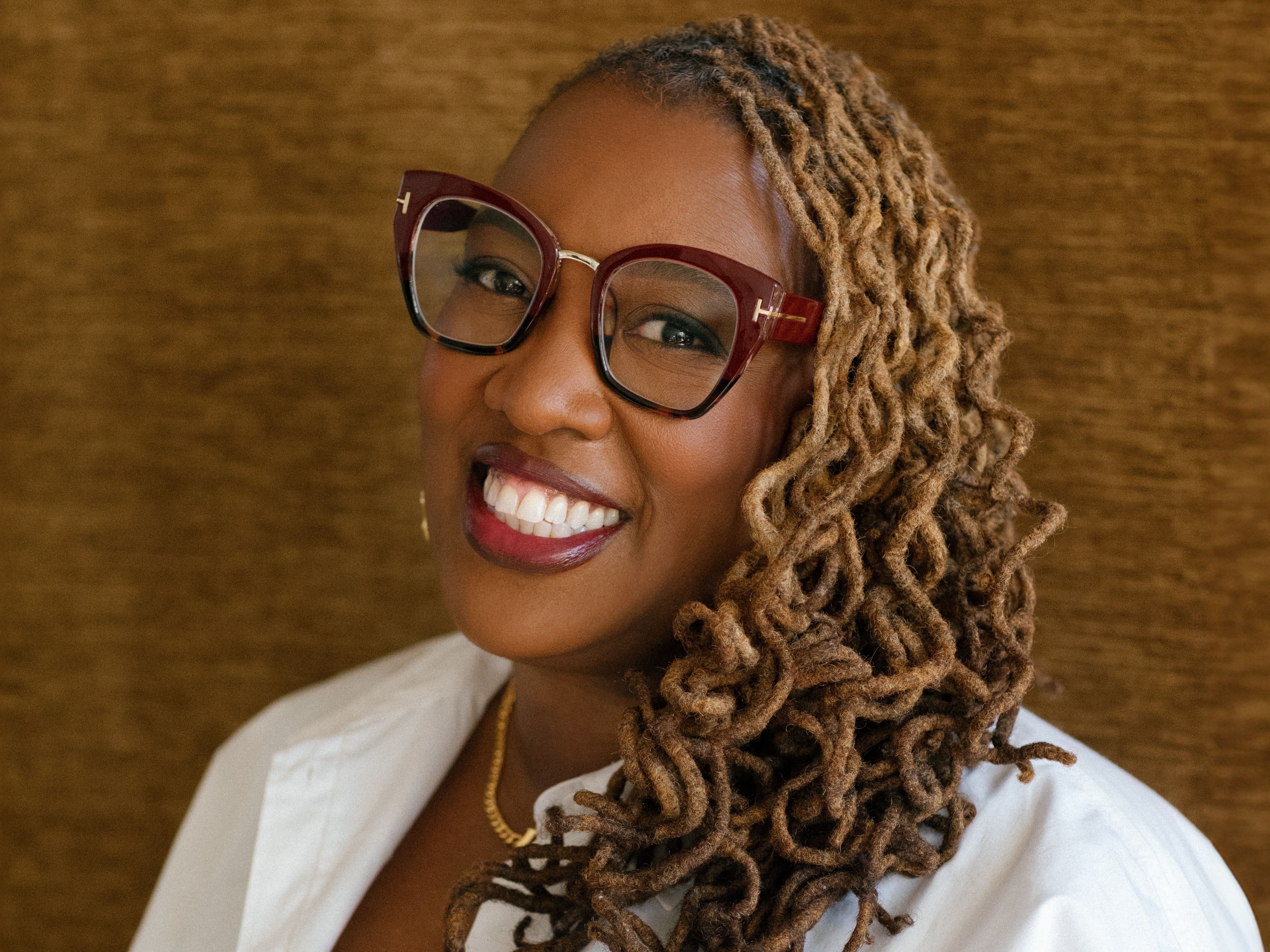
    Despite her Philly sounding surname, award winning author Deesha Philyaw is not a Philadelphian — yet.

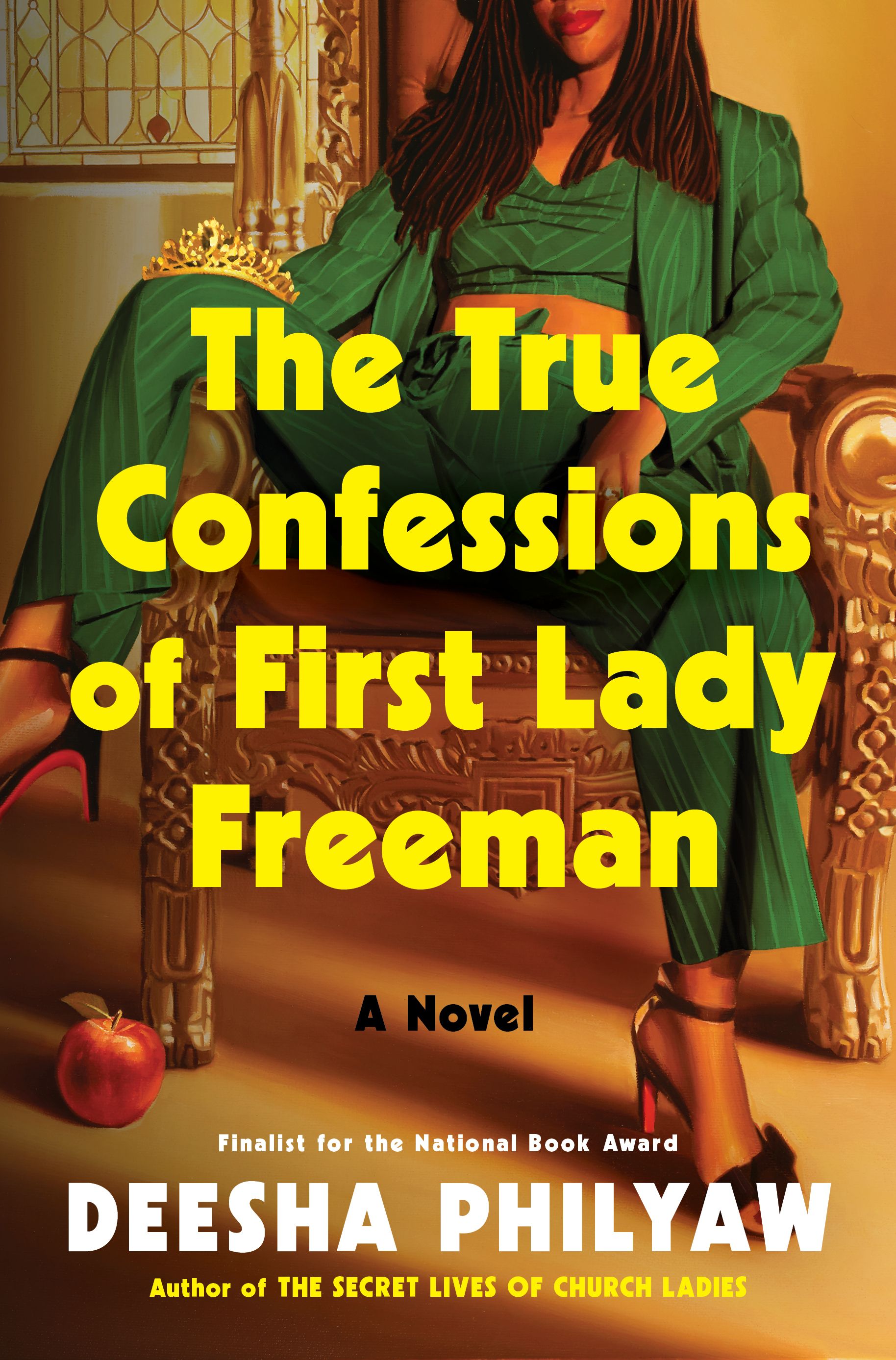
    Philyaw, whose first book The Secret Life of Church Ladies (West Virginia University Press) won the 2021 PEN/Faulkner Award for fiction and was a finalist in 2020 for the National Book Award for Fiction, is planning to move to the City of Brotherly Love next spring.

    Over the years she’s spent a fair share of weekends in the city visiting restaurants, shopping haunts, and art museums. Philly friends keep her up on the latest happenings. She already has plans to connect with the women and nonbinary literary group The Claw when she moves to town. And she’s on the BlackStar Film Festival’s host committee for its forthcoming gala.

    And Philadelphia, she noted, is extra special to her because it is home to the preeminent Black church, Mother Bethel AME.

    There is a lot of history here.

    The highly anticipated debut novel ‘The True Confessions of First Lady Freeman” by Deesha Philyaw was released Sept. 29. Philyaw appear at a book signing on Oct. 5 at 6 p.m. at the Center City Barnes & Nobles.HarperCollins/Mariner Books

    Philyaw grew up in the Black church and respects its storied past. Still, she says she doesn’t see eye-to-eye with the dogma, patriarchy, and misogynoir.

    That was as apparent in The Secret Life of Church Ladies as it is in her latest novel The True Confessions of First Lady Freeman (HarperCollins, Mariner Books). True Confessions centers on the extravagant life of Atlanta first lady Scharisse Freeman as she tries to fit in with other first ladies in the mega church world. Just as she’s starting to fit in with the catty group, a sex scandal erupts. Scharrise is treated like a pariah and readers are left wondering how such cruelty can be perpetuated in His name.

    “The stories in Church Ladies and True Confessions are not a middle finger to the church or its true believers,” Philyaw said. “They do, however, point out where the institutions have failed and hurt Black people, particularly Black women and queer folks. I don’t feel like I need to protect the church. That has been the problem. In doing so, we look the other way, remain silent, and down play these things.”

    Philyaw, a mom of two who is queer, lived in Pittsburgh for 25 years before moving to Oxford, Miss. where she served as the 2022-2023 John and Renée Grisham Writer-in-Residence at the University of Mississippi before settling in Miami. She’ll be in town on Monday for a talk at Barnes & Nobles and in between book signing and book pedaling, she’ll be taking in the scene of her next homebase.

    This is her idea of a perfect Philly Day.

    One of Akwaaba Bed & Breakfast’s six overnight suites, The Blue Note, named after The Sound of Philadelphia’s most iconic group’s Harold Melvin and The Blue Notes.Akwaaba Bed & Breakfast

    6:30 a.m.

    I’m a woman of a certain age so I’m both an early bird and a night owl. On a wonderful morning, I’d wake up at Akwaaba, the West Philly bed-and-breakfast owned by Monique Greenwood. It’s so beautiful. I’d enjoy a lazy morning that would include having a breakfast of oatmeal without fruit. (Something about fruit and oatmeal irks me.) I’d also have some herbal tea and honey. I’m not a coffee girl.

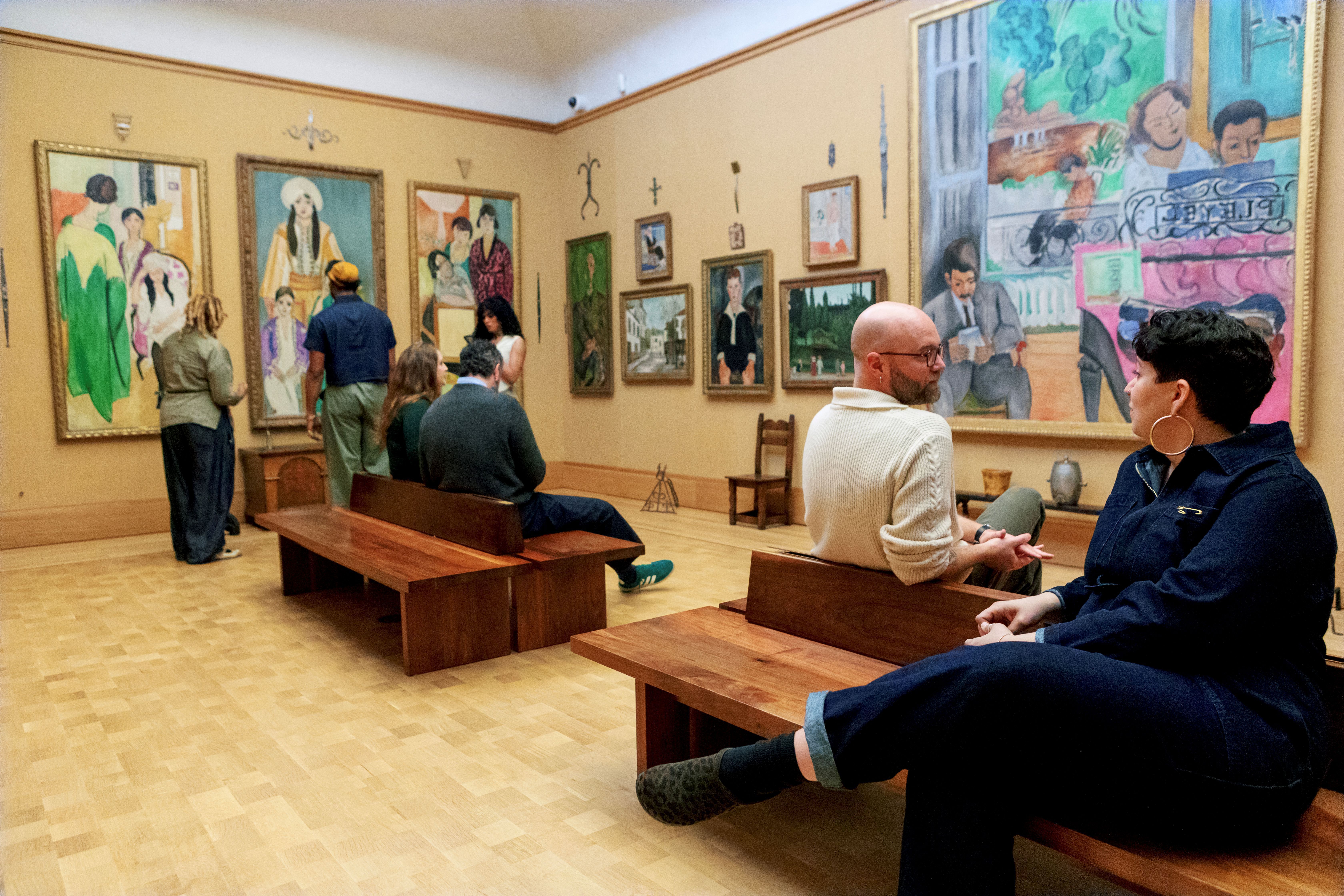
    Inside of the Barnes Foundation’s galleries. The Barnes Foundation

    10 a.m.

    I would check out one of the private collection tours at the Barnes. I really enjoy the art. They always have such great curated exhibitions like [Maori Karmael Holmes and James Claiborne’s] “Freedom Dreams.” On a perfect Philly day, that exhibit would still be open.

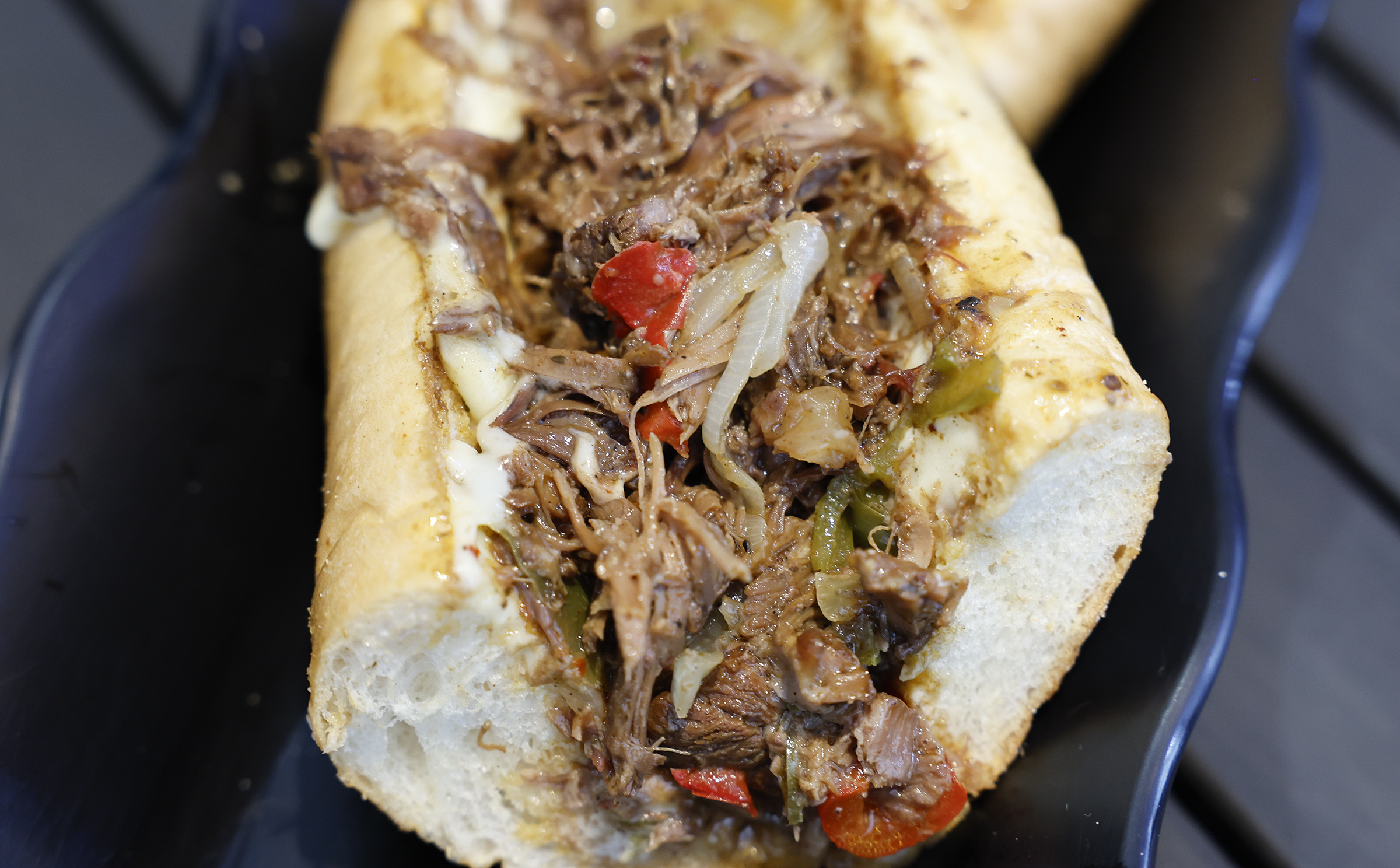
    The oxtail cheesesteak from the Taste Cheesesteak Bar in Center City on Friday, June 14, 2024.Yong Kim / Staff Photographer

    Noon

    I’d have lunch at Logan Square’s Taste Cheesesteak Bar for the oxtail cheesesteak. Then maybe I’d visit the BlackStar film offices in the Bok Building, and definitely catch a movie if the festival was going on.

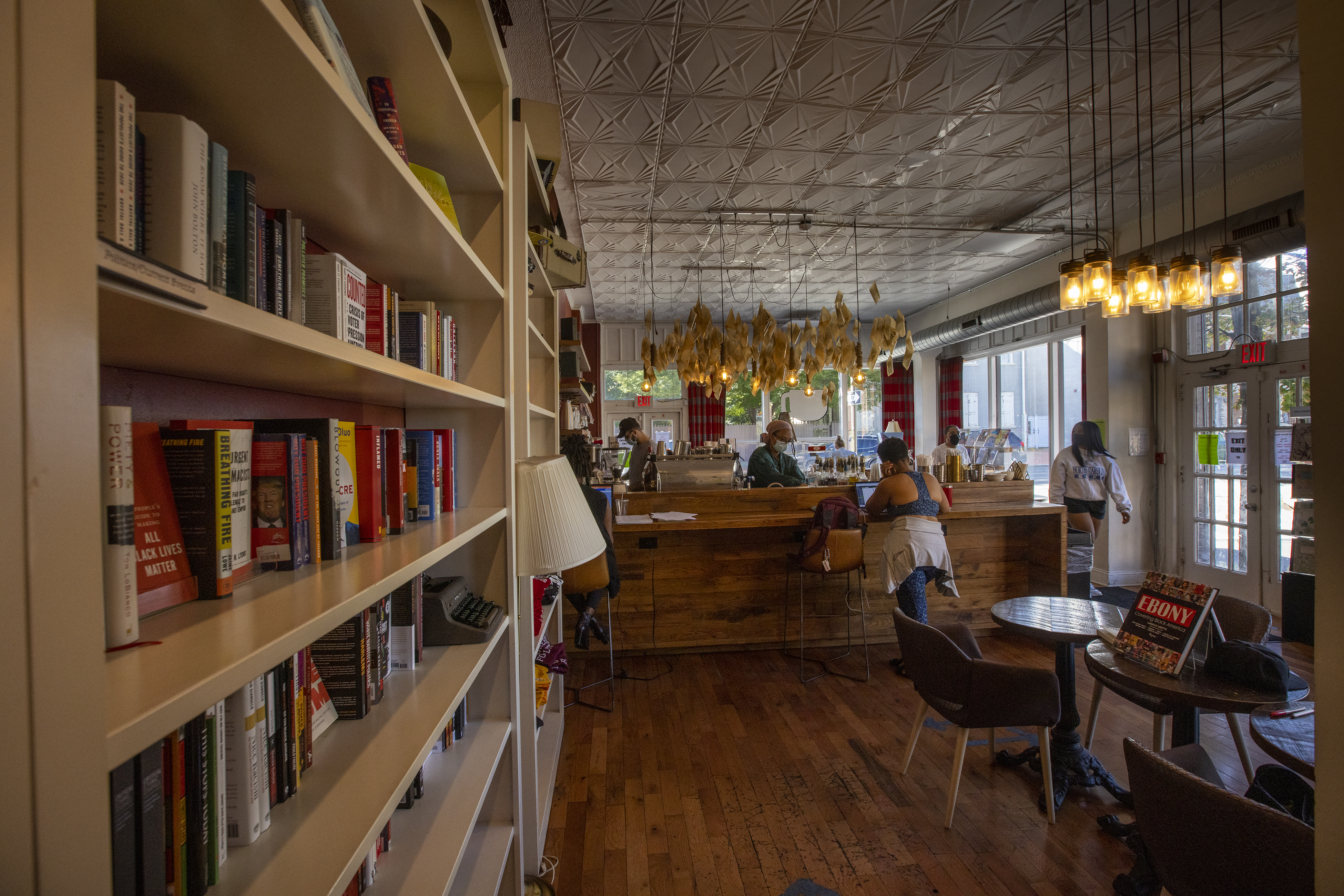
    Interior of Uncle Bobbie’s Coffee and Books.ALEJANDRO A. ALVAREZ / Staff Photographer

    3 p.m.

    I’d swing by Uncle Bobbie’s Coffee & Books for a cup of tea and add to my TBR reading list, that is a mile long. On my list right now is Queenie is Working On It by Candice Carty-Williams and They All Fall in Love at The End by Halili Blassingame.

    5:30 p.m.

    I still mask indoors so Sally in Rittenhouse Square is one of the few places where I can eat outdoors year round. My friend Tre Johnson took me there a few years ago when I was in town for the AWP Conference (the Association of Writers and Writing Programs). It was in March and they had heated seats. I’d start with the Japanese eggplant, move on to the fennel sausage pizza and I’d have to get that sangarita

    The Philadelphia Parkway Central Library on Logan Square.

    7:30 p.m.

    I’d end the night at a talk and book signing at the Free Library of Philadelphia. These are great events for writers and readers. There is so much to pick from.

    This interview was edited for length and clarity.


    Deesha Philyaw will appear Monday, Oct. 5 for a reading, book signing and live recording of Barnes & Nobles Poured Over podcast hosted by Miwa Messer. The event starts at 6 p.m. Barnes & Nobles Philadelphia, 1708 Chestnut Street, at 6 p.m. Tickets include the cost of the book are $34.56. Ticket information here.

  • To get closer to God, these six women moved into a ‘house of discipleship’

    To get closer to God, these six women moved into a ‘house of discipleship’

    Peace Ike was raised Christian, but in 2017 she found herself in a “low-faith place,” as she describes it. Demoralized and uncertain of what to do next, she traveled to Greece with three close friends.

    During hours of conversation and reflection there, she had a revelation: God wanted her to open a communal space. So upon returning to Philadelphia, she purchased a six-bedroom house in Germantown. She was single, without roommates, or a plan for how to pay the mortgage.

    “When I hear things clearly, I go for it,” Ike, now 41, said.

    Within two months, the rooms were filled, she said.

    Originally, the house didn’t have a spiritual focus, though Ike, who works as a strategist on workplace culture and conflict, would sometimes host worship nights. She hadn’t selected for religious roommates, but she saw her role as helping people to “live well” and grow spiritually. She began her own mornings with devotional time; she would invite people to stay who had nowhere else to go, and pray with strangers who were suffering.

    By its second year, the house had become an intentional “Christ-centered” place. As Ike described it in a recent post for a new roommate, “We range in ages from 29-47 and we truly love the Lord and each other … The greatest thing that bonds us is our passion for Christ.”

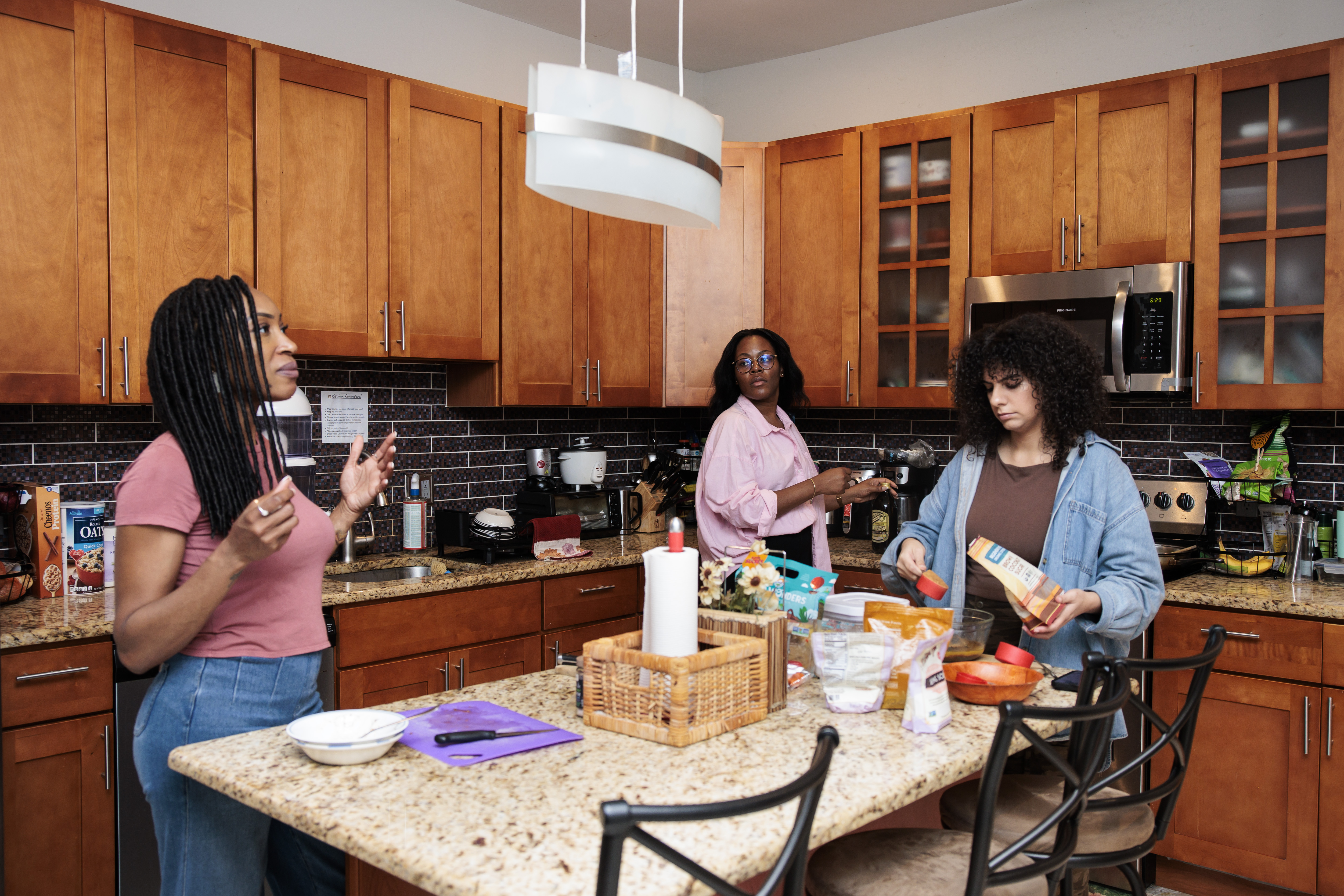
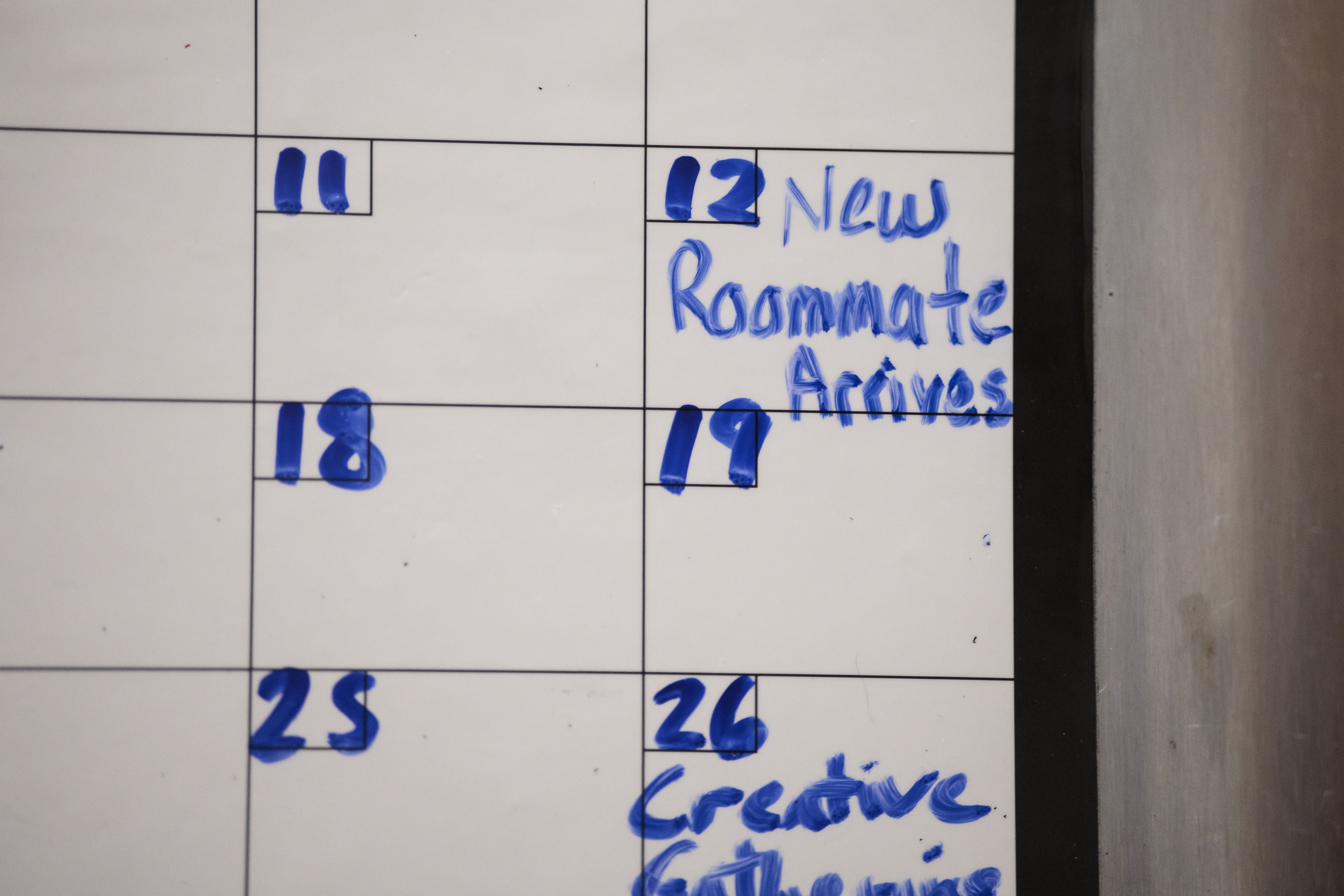
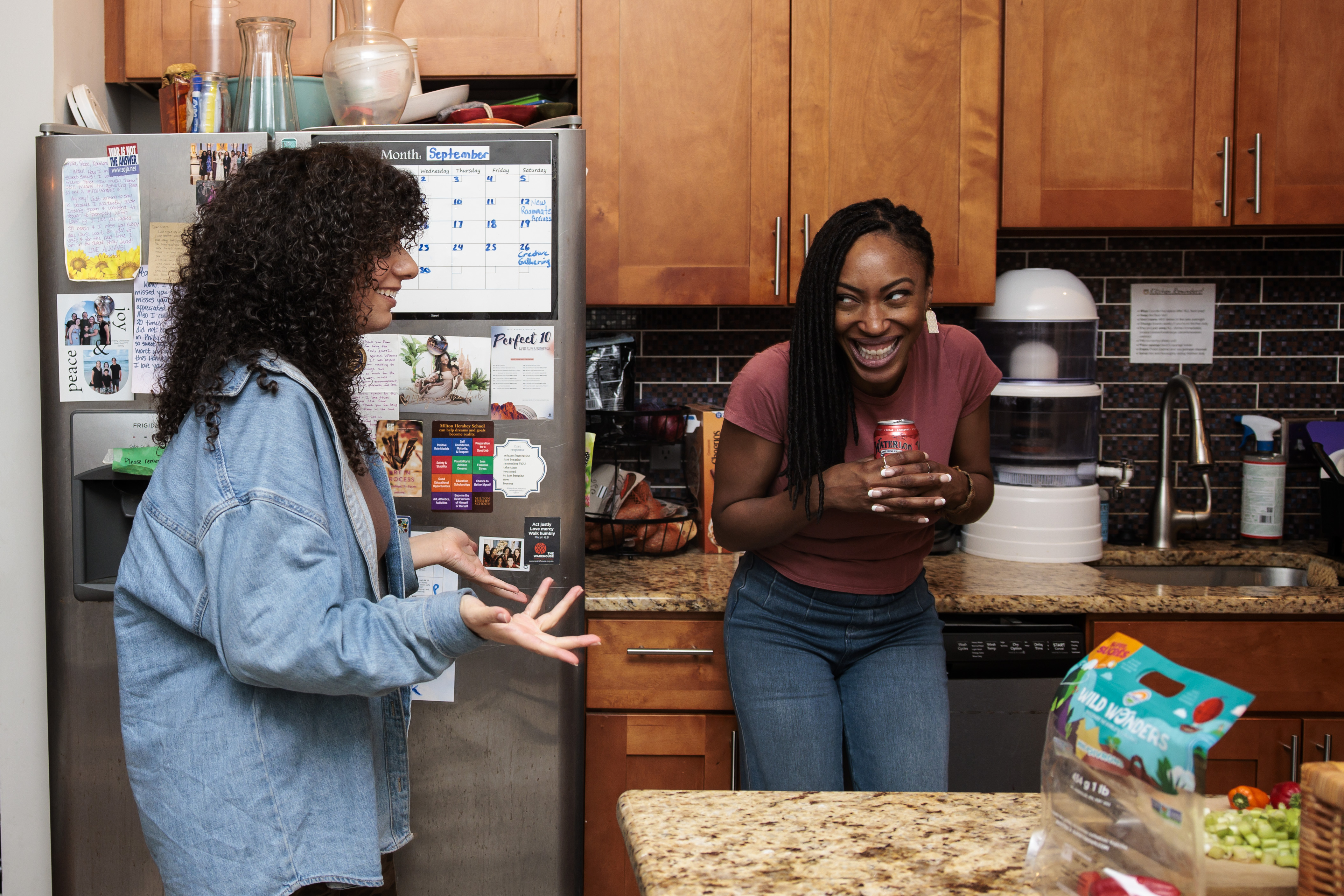
    When a new roommate moves in, the women have a long hangout where they ask about pet peeves and personality types. Monica Herndon / Staff Photographer

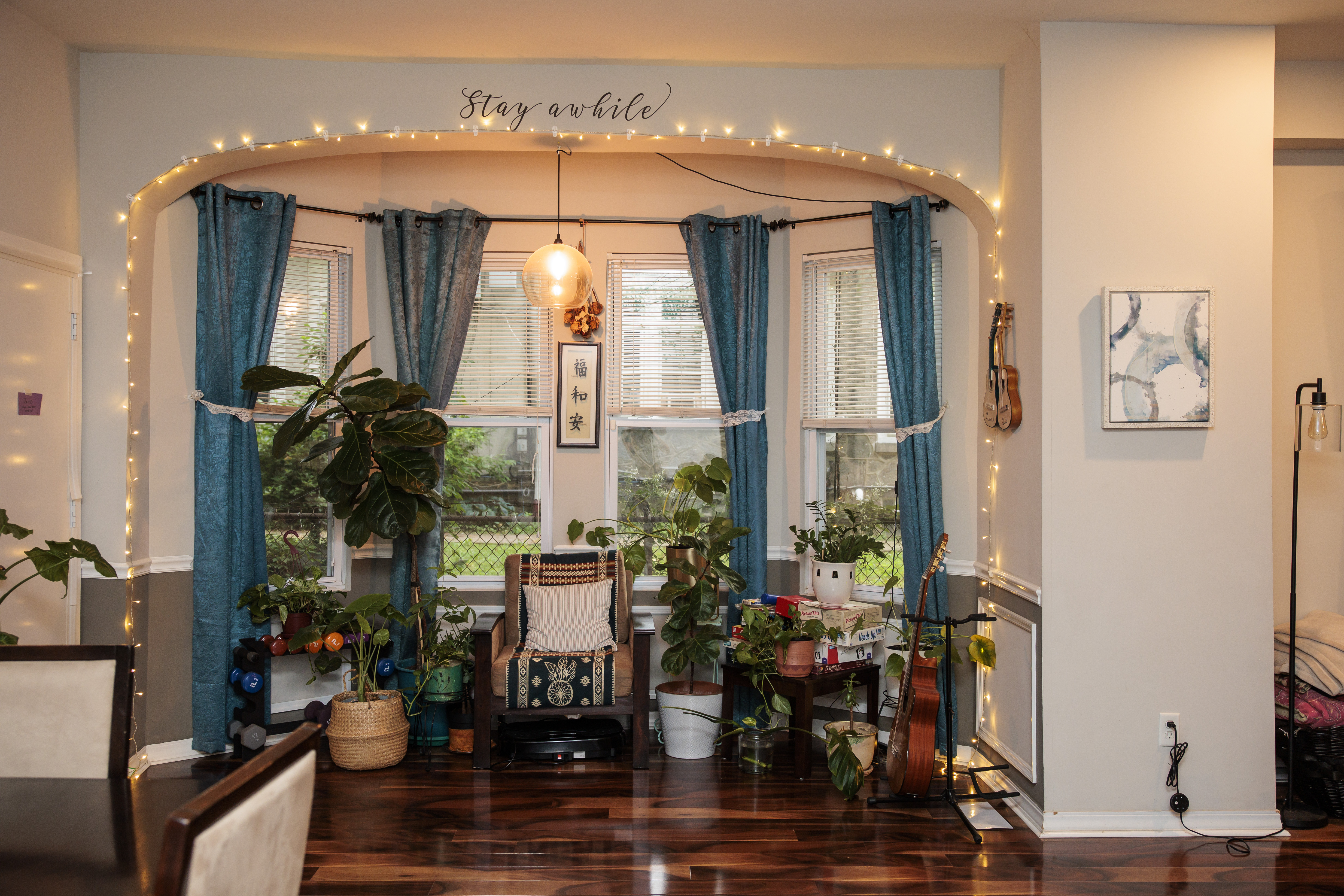
    The house is now in its ninth year and is home to six women.

    Christina Levy, 31, has lived in the home for almost six years. Levy was born into a Christian Apostolic home in Jamaica; her father was a minister and her mother did missionary work. When she enrolled in Penn’s Graduate School of Education, she moved directly from her family’s home in New Jersey into Ike’s house.

    The women are all independent, with different schedules, but with a common vision for how they want to live. They joke that their kitchen island, where they bring their complaints and longings, is like church. Three of them also attend the same church in Bristol on Sundays.

    “It really feels like we’re sisters and we’re all connected by the same Father, and that’s God,” Levy said.

    The following, as told to Zoe Greenberg in separate interviews, has been edited for length and clarity and combined.

    On deciding to move in

    Levy: I tend to be the kind of person who looks for signs. Like, “Should I do this?” I felt like the Lord was really leading me toward this house.

    Even before the house was intentionally Christian, Ike hosted worship nights for neighbors and friends. Monica Herndon / Staff Photographer

    On welcoming new housemates

    Ike: Any time a woman moves into the house, we have a long hangout, and we get to know her. We go over personality types. We go over pet peeves. Are you a night owl or a morning person? How do you prefer to handle conflict? All of the things that you would want to know about someone that you’re going to be spending your life with.

    On becoming a ‘house of discipleship’

    Levy: No one’s trying to be Christian here. It’s not a rigid thing. All the girls that come in, it’s like they carry something that someone else in the house is going to need.

    Ike: There’s a term called ‘disciple’ in Scripture. Jesus had 12 disciples. He taught them everything he knew, and he always directed people back to God. Oftentimes, I’ll talk about this as a discipleship house. When it started, I was certainly discipling a lot of young women who needed direction in life. Now it’s like we are discipling each other.

    On whether non-believers can live there

    Ike: I always tell people, you don’t have to share our faith to be a part of this home, but I want them to know that it is the central thing that glues us. It’s in all of our conversations. When someone comes home and they’re having a hard day, we sit and we listen and we pray with them.

    On being a landlord among peers

    Ike: I have been very adamant about that — don’t treat me like a landlord. I am just one of y’all, but when something needs to be done, come and call me, and I’ll get it done right away. It allows me to feel like I’m at home with my sisters and not on the job all the time.

    On house rules

    Ike: With six women, we do not have men overnight. My experience has taught me that it’s really easy to get into conflict when we don’t know your boyfriend as well as you know your boyfriend. If you want to go spend time at his house, that’s fine. We also don’t do drug use.

    Peace Ike, right, bought the Germantown house after she had a revelation to do so. She lives there with five other women, including Kallie Jalal, left. Monica Herndon / Staff Photographer

    On kicking people out of the house

    Ike: It hasn’t always been roses. There have been girls who’ve just been dishonest, wanting to do those things that we agreed we would not do as a home. Part of the contract is when you do that, then we ask you to leave.

    On what comes next

    Levy: If anything would make me leave my sisters here, I feel like it would be a door opening for me to get my PhD or career elsewhere. And of course a man.

    Ike: When I pursue a relationship, I’m not going to live in the home with five other women with my spouse. The house can continue as a community house if there are women here who are invested in that. Anything is possible. I think that I am going to enter a season where I will enjoy some privacy with my spouse. I would love that for a short period. But then I know myself: Two years in, I’m like, “Oh, we should really rent out that spare room.”


    This story is part of a series about life partners across the Philadelphia area.

    If you want to share your story about who you’re navigating life with, romantically or otherwise, write to lifepartners@inquirer.com. We won’t publish anything without speaking to you first.

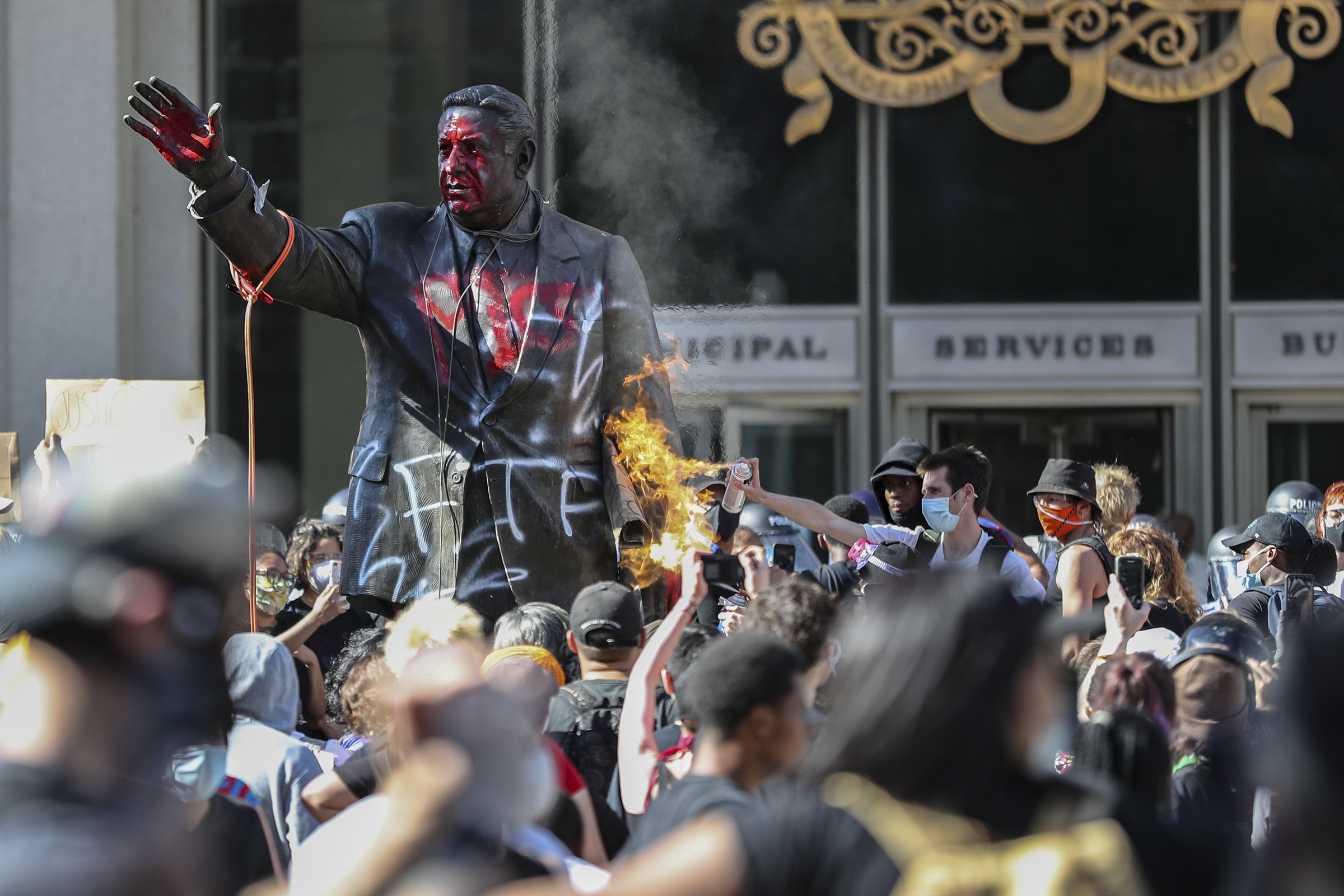
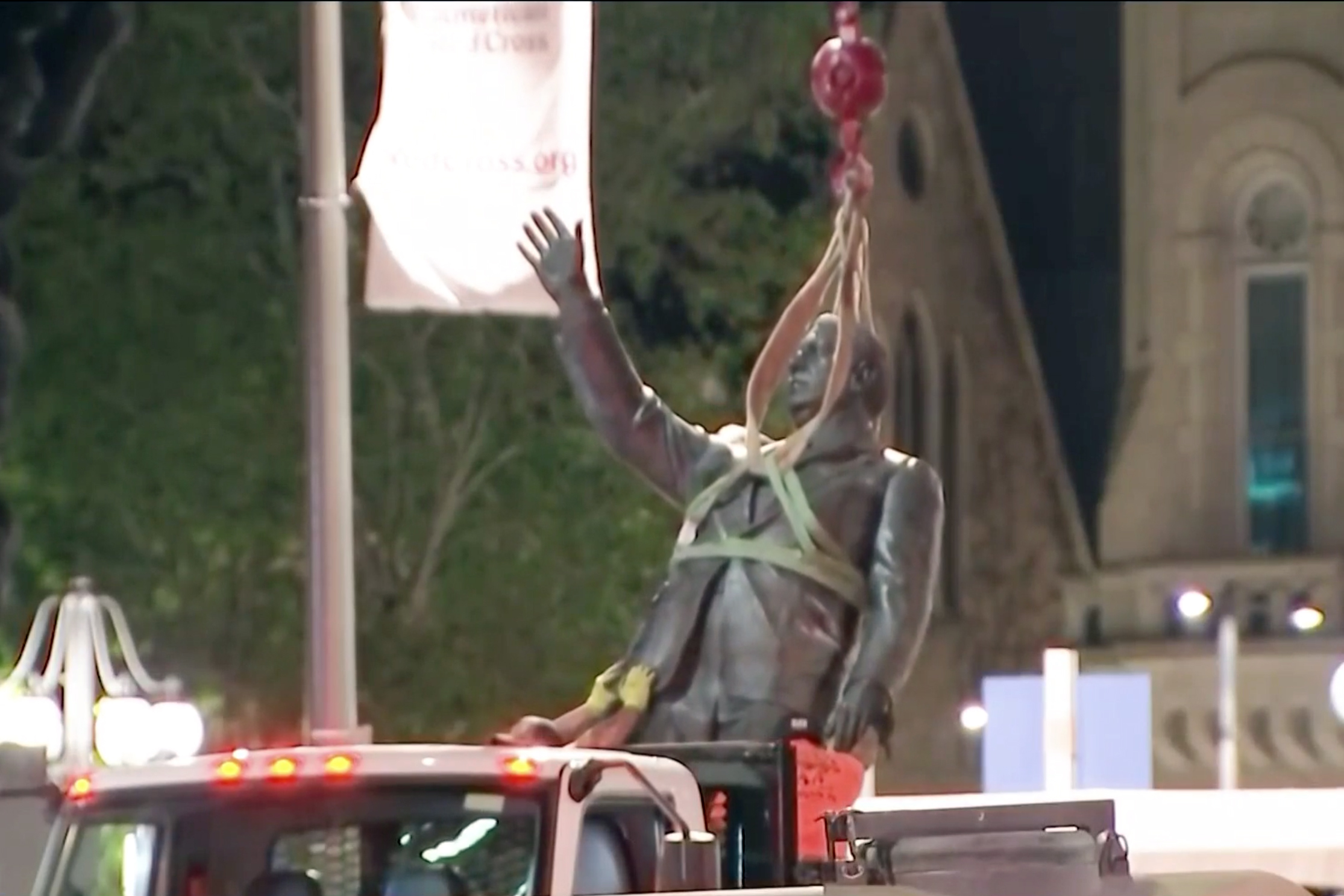
  • He made one of the greatest pieces of public art in Philly. He also made the Rizzo statue.

    He made one of the greatest pieces of public art in Philly. He also made the Rizzo statue.

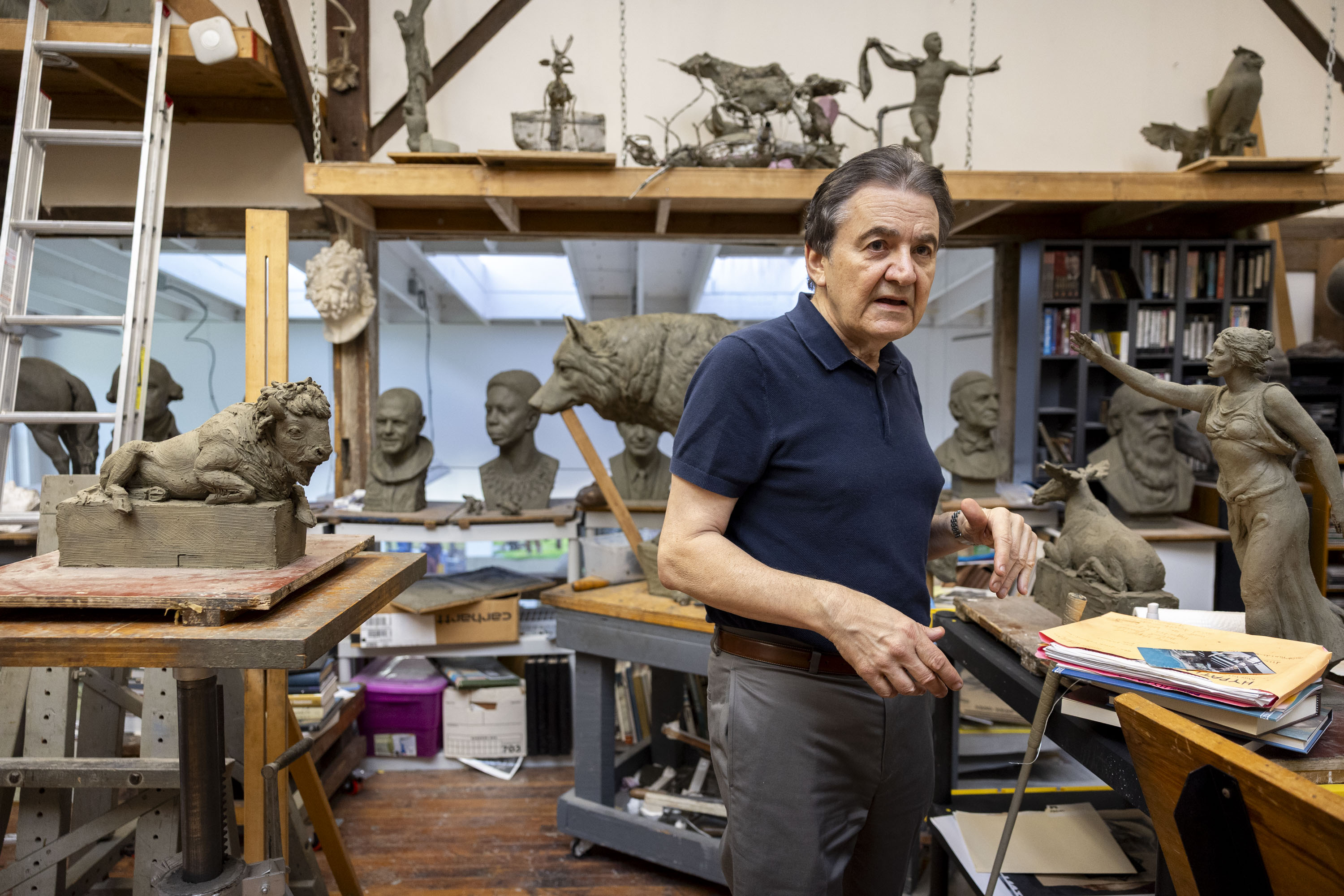
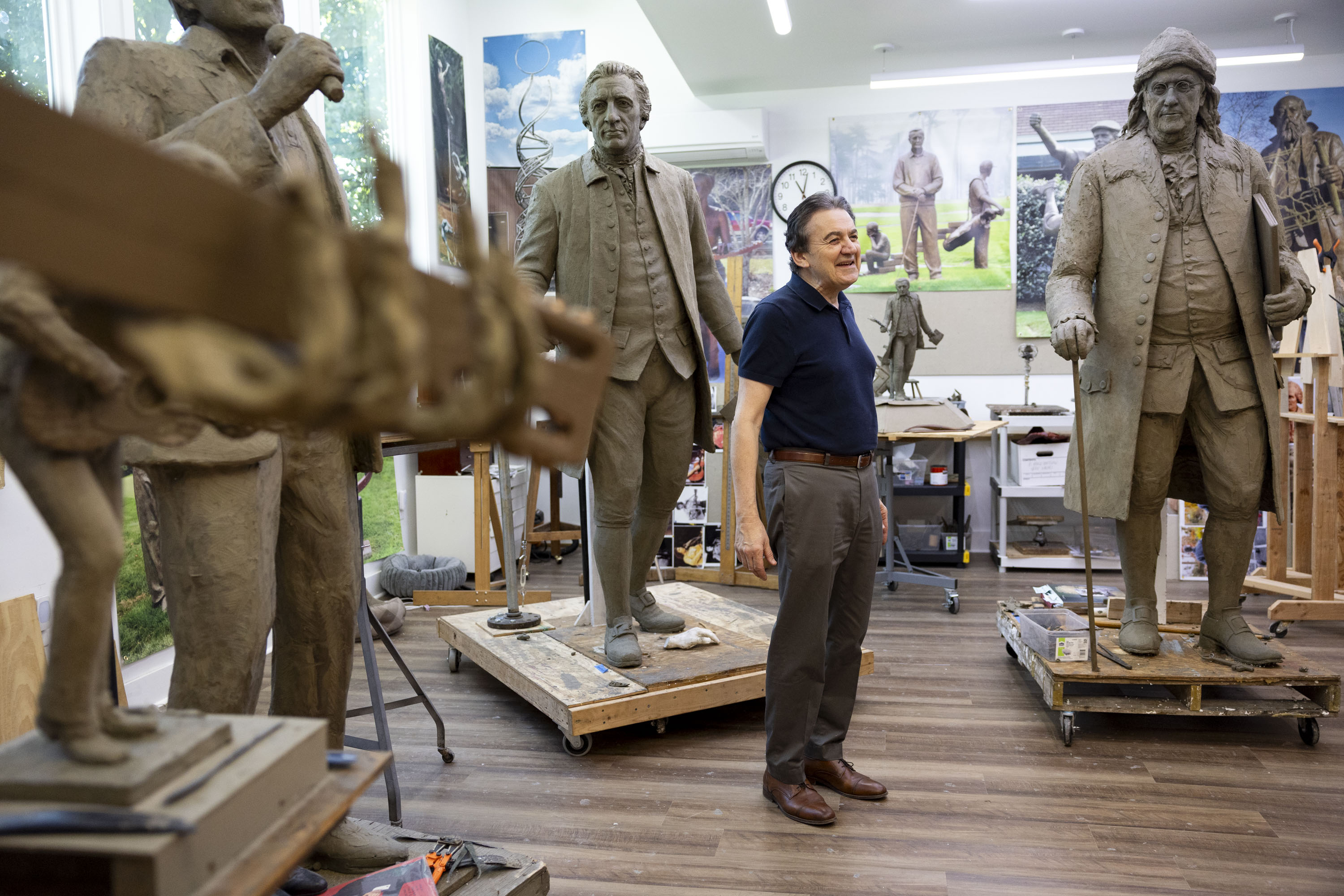
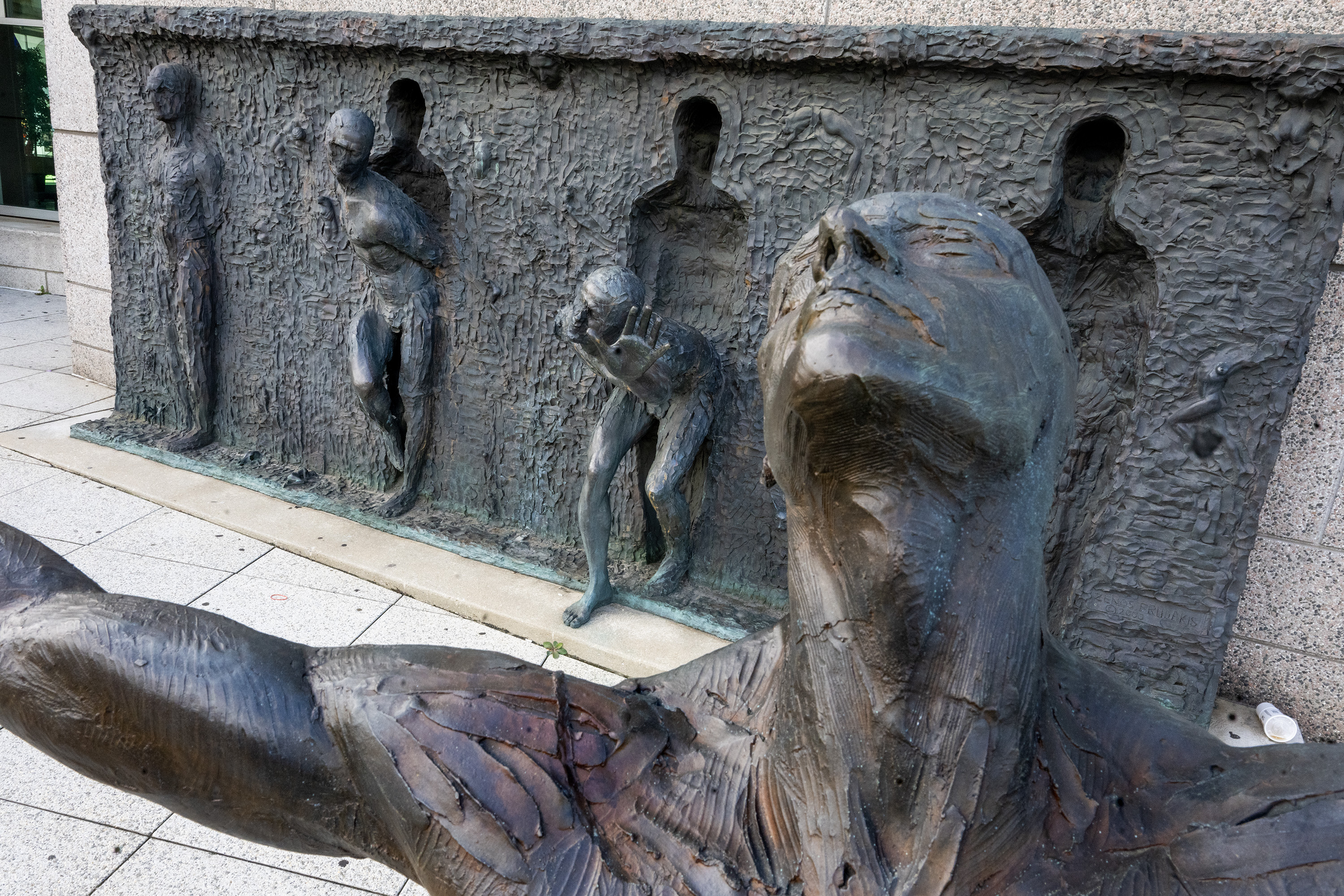
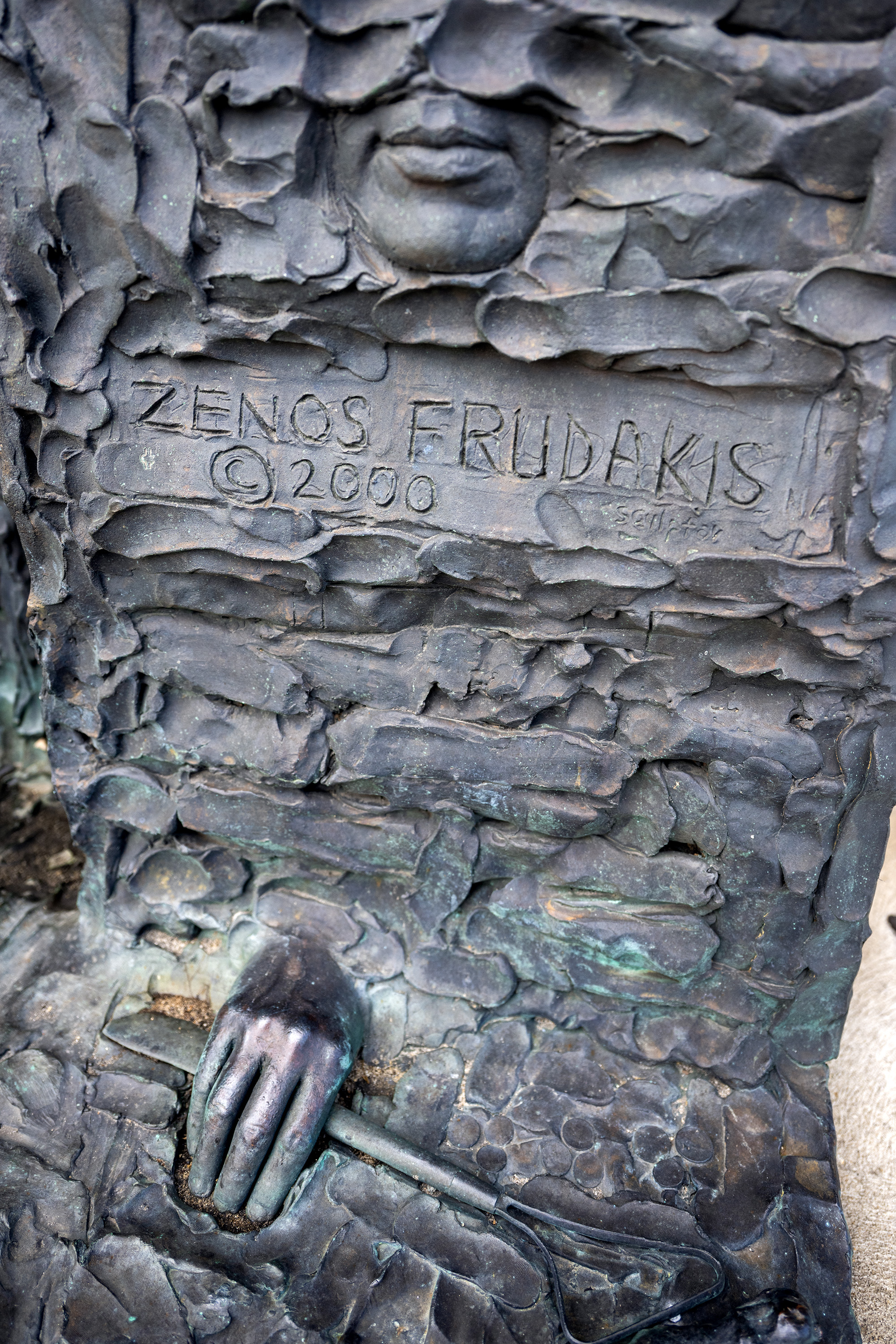
    The invitation to visit sculptor Zenos Frudakis’ studio arrived unexpectedly in my inbox this summer, soon after I included his Freedom sculpture in The Inquirer’s 76 neighborhood gems article.

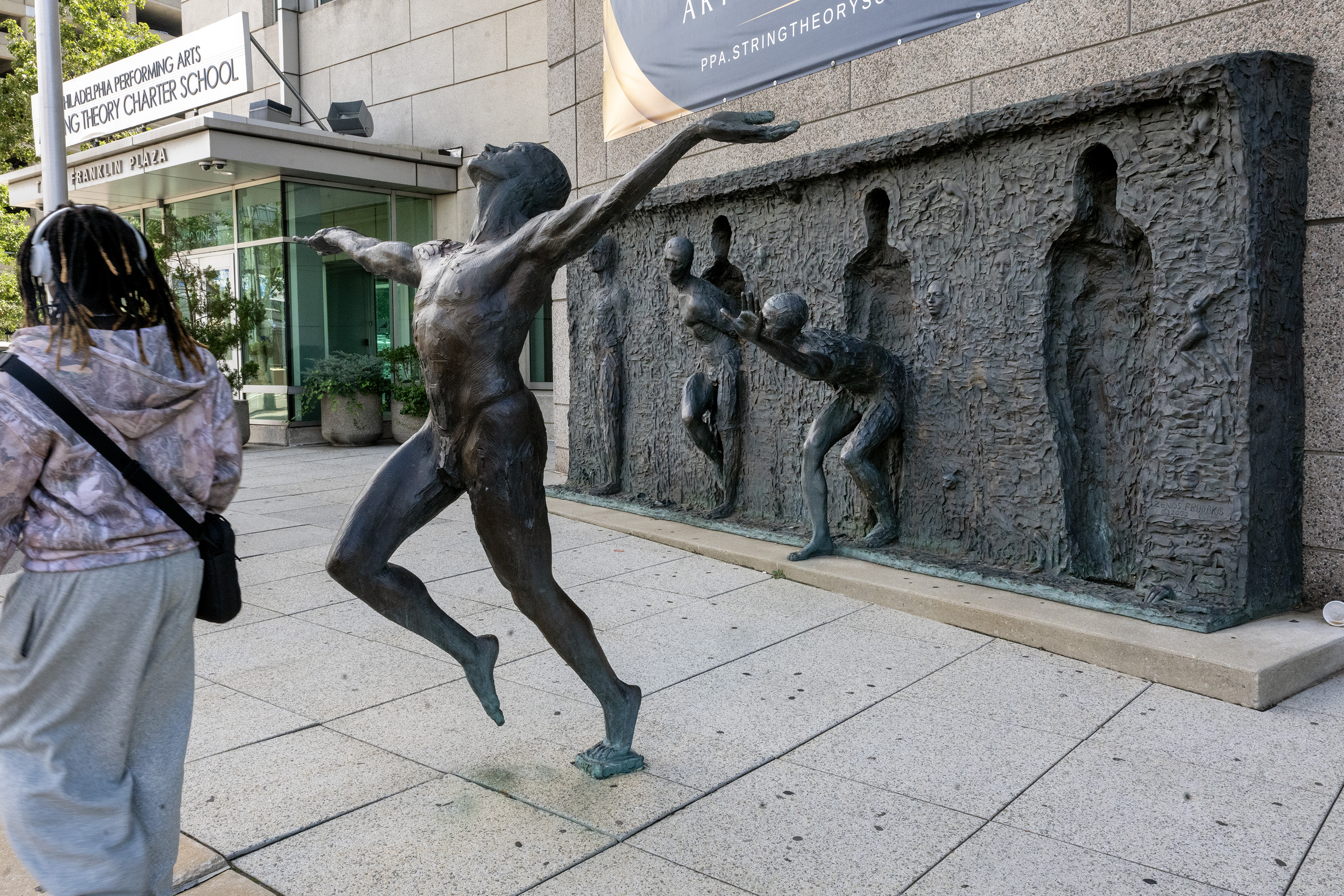
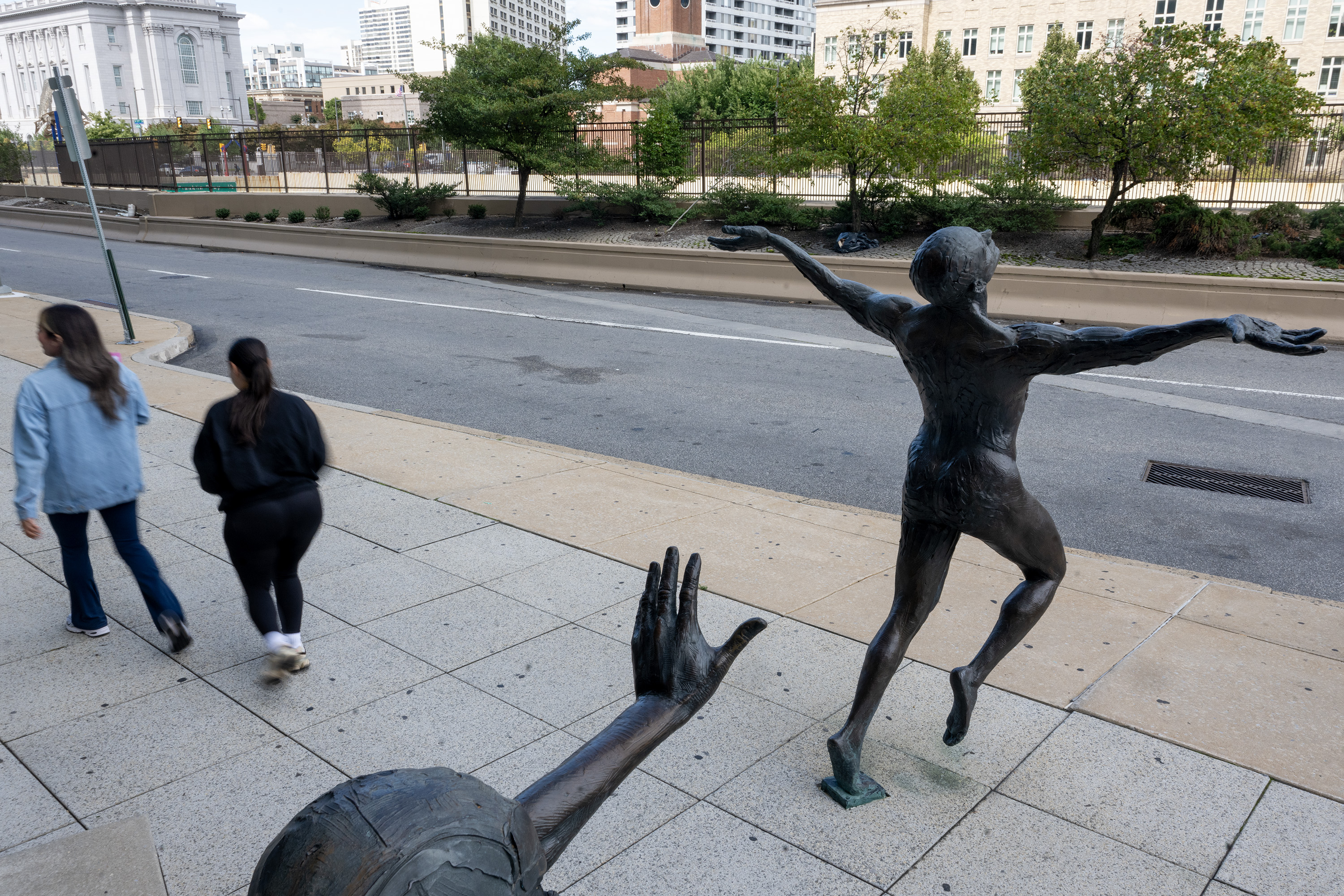
    I’ve always thought the 20-foot bronze piece, on Vine Street near 16th, depicting a human figure breaking free of a wall in four stages, with the final figure on the sidewalk, his arms outstretched and face lifted, makes our city a more interesting place.

    Artist Zenos Frudakis’ “Freedom” sculpture on Vine Street near 16th in Center City. Tom Gralish / Staff Photographer

    “I think on my deathbed, if I’m conscious, I’ll think about that piece,” Frudakis, 75, later told me. “That’s something that I’ve done that I feel good about.”

    Frudakis also feels good about sculpting the four 10-foot statues of Phillies players at Citizens Bank Park, including one of Mike Schmidt, who sat for him in his studio. He also has sculptures at the Elmwood Park Zoo, the University of Pennsylvania, Washington Square, and Philadelphia International Airport, along with more than 160 works across the country and around the world.

    In this 2004 file photo, Mike Schmidt helps unveil the Mike Schmidt statue outside of the third base entrance to Citizens Bank Park on opening day. Sculptor Zenos Frudakis, center, was also on hand for the unveiling. Jerry Lodriguss

    It was only after I accepted the invitation and was researching for our interview that I realized Frudakis also created one of the most divisive pieces of public art in Philadelphia history: the statue of highly controversial former mayor and police commissioner Frank Rizzo.

    Flooded with art and light

    When I arrived at Frudakis’ Glenside studio I was met by his business partner and co-owner of his studio, Rosalie Frudakis. She’s also his best friend and ex-wife (it’s not just Frudakis’ sculptures that are complicated).

    Entering the 275-year-old renovated carriage house behind the artist’s home, I was captivated by how the space was flooded with art and light. Frudakis’ 7-foot statues of Benjamin Franklin and Thomas Paine, still in clay, dominated the center of the room, along with similarly sized sculptures of musicians Bobby Rydell and Don McLean. Busts of historical figures by Frudakis lined the shelves and poster-size pictures of his many commissions papered the walls.

    Zenos Frudakis in his studio. To the left of Frudakis is a sculpture of Thomas Paine he’s working on and to the right, is his sculpture of Benjamin Franklin. Tyger Williams / Staff Photographer

    Frudakis told me he’s juggling a dozen commissions right now, including two full-size replicas of his Freedom sculpture — destined for where, he won’t say, but he promises it’s exciting. He often works until 2 a.m. in his studio with his cat, Mr. Gray, and hopes that sculpting will lengthen his life. After all, his older half brother — noted sculptor EvAngelos Frudakis, who made The Signer statue at Fifth and Chestnut Streets — lived to be 97 and sculpted right up to the end.

    For three hours, Frudakis and I talked about his childhood growing up in a Greek family in Gary, Ind., where his first sculptures were made with his mother’s bread dough; about his move to Philly in 1972 on a scholarship to the Pennsylvania Academy of the Fine Arts; and about his commitment to reading because, if Leonardo da Vinci spent time studying every day, he figured he should, too.

    “I wasn’t going to let anybody outwork me or have more knowledge if I could … because that’s your resource, that’s where your ideas come from,” he said.

    A puzzle piece featuring Albert Einstein is part of a project that Zenos Frudakis is working on in his Glenside studio.Tyger Williams / Staff Photographer

    As if to make his point, Frudakis quoted more than a dozen authors and philosophers by name during our chat including: Albert Camus, T.S. Eliot, Aristotle, D.H. Lawrence, Friedrich Nietzsche, and Jean-Jacques Rousseau.

    He spoke of science and reason, of being a humanist and of the balance between the emotional and cerebral. He talked about life as a working artist, of the commissions he took and the pieces he created. And he spoke of how history is not set in stone, even for a sculptor.

    “You live long enough and sometimes pieces come down,” he said.

    A pachyderm and people

    Frudakis’ first public large-scale commission was in 1982 for a bronze sculpture of a boy riding an elephant in the now-shuttered Burlington Center Mall.

    Sculptor Zenos Frudakis looks over his first commissioned piece at the now-closed Burlington Center Mall in Burlington, N.J., in 2018.DAVID MAIALETTI / Staff Photographer

    In the following years, commissions came for busts of W. Wilson Goode, the city’s first Black mayor, and Joseph E. Coleman, the first Black president of City Council.

    In 1989, Frudakis did a commissioned bust of the Rev. Dr. Martin Luther King Jr. for the U.S. Embassy in Pretoria, South Africa, and traveled there to present it while the country was still under apartheid. It’s one of many commissioned busts he’s done of King, including a 4-foot bronze one for MLK Park in Chester.

    Sculptor Zenos Frudakis in his Glenside studio with the plasticine bust of the Rev. Dr. Martin Luther King Jr. that was cast in bronze for the city of Chester in 2010.

    It wasn’t until 1994 that Frudakis received his first commission for a public, full-body sculpture of a person in a suit, from the Frank L. Rizzo Monument Committee.

    “That’s most commissions that you get, a person who does my kind of work, is men in suits. And the hardest one to get is the first job,” he said.

    ‘I survived another day’

    Rizzo was a polarizing figure as police commissioner (1967-1971) and mayor (1972-1980), and the controversy has only grown since his death in 1991. While some praised his law-and-order style, many see his tenure as an era of unchecked police brutality that targeted members of the Black and LGBTQ+ communities.

    But back in the 1990s, the Philadelphia Art Commission approved a public sculpture of Rizzo, which was paid for by private funds. After some controversy about its placement — backers wanted it in a more prominent place like LOVE Park — it was unveiled in 1999 on the steps of the Municipal Services Building.

    Sculptor Zenos Frudakis, left, looks on as Rizzo’s statue is placed on the steps of the Municipal Services Building ahead of its unveiling in 1999.Eric Mencher

    In 2016, amid the Black Lives Matter movement, a petition began circulating for the statue’s removal and in the following years, it became a lightning rod for civil rights protests and was repeatedly defaced.

    But it wasn’t until the civil rights protests in the wake of the murder of George Floyd in 2020, when then-Mayor Jim Kenney called the statue “a deplorable monument to racism, bigotry, and police brutality,” that it was removed. It remains in storage.

    Protesters attempt to burn and bring down the Frank Rizzo statue outside of the Municipal Services Building in Center City during a protest against the death of George Floyd in 2020.HEATHER KHALIFA / Staff Photographer

    While I’ve received plenty of hate mail in my career, I can’t imagine having a piece of my work so publicly reviled.

    Throughout our chat, I tried to ask Frudakis indirectly about the statue — were there any sculptures he struggled with? Any lessons he’s learned from his career?

    But he didn’t take the bait.

    Finally, at the end of our interview, I asked him about the Rizzo statue. He wasn’t taken aback and in no way tried to skirt my questions. I felt he answered honestly, even if, at times, he seemed conflicted.

    Frudakis told me that when the work was commissioned, he had second thoughts — he didn’t vote for Rizzo, and has always been concerned with civil rights and social issues. But the statue was going to be built one way or another, he figured, and he needed the work.

    “I got to do a lot of sculptures because I did that [commission],” he said, adding that the Phillies chose him for their ballpark sculptures because of the Rizzo statue.

    “I survived another day as an artist.”

    ‘A weird blip’

    Frudakis says he agrees with the Rizzo statue being removed, for safety reasons. He didn’t want protesters to get hurt trying to topple it. “I made sure I put it in so it couldn’t be pulled out very easily,” he said.

    But if he had his way, he’d have liked the statue to have remained up, placed next to a statue of a prominent Philly civil rights leader, like the late Rev. Leon Sullivan, to promote education and dialogue.

    “If you take it down, they’re not gonna learn anything. People who love him will still love him. People who hate him will still hate him,” he said.

    The statue of former Philadelphia Mayor Rizzo is removed from the Municipal Services Building in 2020. Courtesy NBC10

    I came to Philly in 2007, and I didn’t really learn about what happened under Rizzo’s tenure until the protests ramped up around the statue. I agree with its removal, but I have to wonder if I would’ve ever learned so much about that dark chapter in Philly’s history if the statue was never there at all.

    One of the last things Frudakis said to me before I left was: “I’ve tried to make up for the Rizzo statue.”

    Should he have to? Should I feel torn now about my love for his other work? I called up Conrad Benner, founder of the Streets Dept, a local media organization focused on public art. I remembered the popular videos he did in 2024 with Frudakis at the Freedom sculpture and wanted to get his thoughts on the Rizzo statue too.

    “It’s this really weird blip in his career. It seems like everything he’s done since then and probably before then supported maybe a clearer vision of what he’d like to see in the world,” Benner said. “My impression was he was young, he made a decision, and then his career grew and he got more opportunity to have more control over his work.”

    Benner pointed out that it’s very uncommon to create bronze monuments to people who’ve lived recently and that Philadelphia doesn’t have any other statues of its mayors.

    “You might think the monuments in your city and country are some representation of true history when really they are the culmination of powerful and cultural interests,” Benner said.

    “But we get to choose. Every generation gets to choose. We don’t have to inherit anything, whether that be a political dynasty, tax policy, or a monument. Just because they’re on a podium doesn’t mean we can’t change them.”

    ‘A one-man show’

    A year after the Rizzo statue was unveiled, Frudakis’ Freedom sculpture was installed on the exterior of what was then GlaxoSmithKline and is now the Philadelphia Performing Arts Charter School.

    It was a piece born of his own heart and mind. It was the kind of work that taking commissions for other less passionate projects made possible.

    “I had to do something more philosophical and poetic for myself,” Frudakis said.

    When I thought about our conversation later, I couldn’t help but wonder if in some ways, for Frudakis, the figure in Freedom symbolized his own desire to break free of the art that pays the bills for the art that fills the soul.

    Zenos Frudakis’ “Freedom” sculpture on Vine Street near 16th in Center City. Tom Gralish / Staff Photographer

    “It’s not an accident that my favorite piece, my most popular piece by far, is the one that I got the most freedom to do,” he said.

    Frudakis sculpted Freedom on a small scale, but he had to get the 20-foot-long version commissioned by GlaxoSmithKline in order to cast it in bronze. When he scaled it up, Frudakis decided to get weird with it.

    Details in Zenos Frudakis’ “Freedom” sculpture include part of a face and a cast of the artist’s hand with a sculpting tool. Tom Gralish / Staff Photographer

    “Since I was having trouble getting in a gallery in Philadelphia, [I decided] that I would put about 20 pieces of mine in the background so I’d have a one-man show that was ongoing,” he said.

    Among the many Easter eggs Frudakis hid within Freedom are a self-portrait, a cast of his hands with a sculpting tool, and a sculpture of his cat’s head. One of my favorite details is carved into the empty space where the final figure has broken free from the wall. There, the words STAND HERE are written, inviting you to become a part of the piece.

    The words “STAND HERE” appear in an empty space in Zenos Frudakis’ “Freedom” sculpture, inviting the viewer to become a part of the piece. Tom Gralish / Staff Photographer

    Photos of Freedom have appeared in self-help and scholarly books and it has been cited as one of the most fascinating sculptures in the world by Architectural Digest.

    “It’s the most personal sculpture I’ve ever done and it’s the most universal,” Frudakis said.

    ‘It was creating me’

    Of course there are other pieces Frudakis is proud of — his sculpture for the National Air Force Memorial Honor Guard in Washington, D.C.; a statue of Nina Simone in Tyrone, N.C., that includes some of her ashes; and a sculpture of Clarence Darrow at the Tennessee courthouse where the Scopes Monkey Trial was held.

    The statues of Franklin and Paine he’s working on now are intended for the U.S. Capitol building and the National Mall, respectively. If pending legislation to approve their placement is ever passed (both were first proposed years ago), the bronze castings will be paid for with private funds, Frudakis said.

    Artist Zenos Frudakis in his studio working on his sculpture of Thomas Paine. Tyger Williams / Staff Photographer

    With an oeuvre of work behind him and his larger-than-life-size bronze figures fetching $400,000 or more today, Frudakis now has the freedom to do statues and commissions he truly believes in.

    Frudakis still has sculptures he wants to create for himself too. He dreams of doing one of Hypatia, a female scientist from ancient Greece who was “murdered by religious zealots who tore her whole body apart.” He’s got busts of Amelia Earhart in his studio that he’d love to see in bronze someday. And like he did with Freedom, Frudakis wants to tackle another big human concept through his work — time.

    One of the subtle details in Zenos Frudakis’ “Freedom” sculpture. Tom Gralish / Staff Photographer

    Just like every story I’ve ever written forged me into the journalist I am today, even those that make me cringe in hindsight (and there are plenty), every sculpture Frudakis created made him the artist he is now, including the Rizzo statue.

    But I don’t think any of his pieces has had a more profound effect on the landscape of Philadelphia, or people around the world, than the one that had the most profound effect on him as well.

    “I was a different person when I finished my Freedom sculpture. I wasn’t just creating it, it was creating me,” he said.

    The final figure breaks free in Zenos’ Frudakis “Freedom” sculpture. Tom Gralish / Staff Photographer