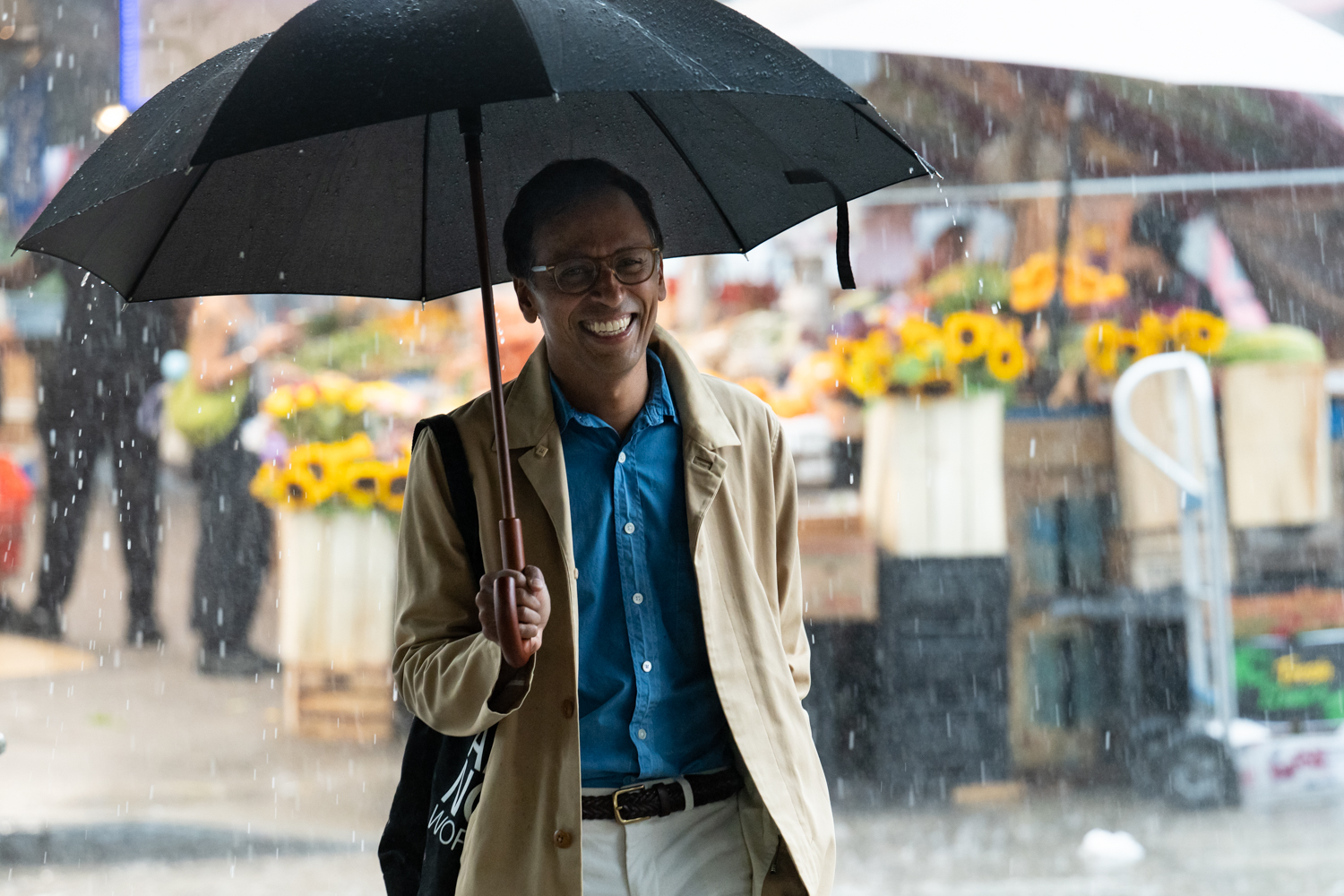
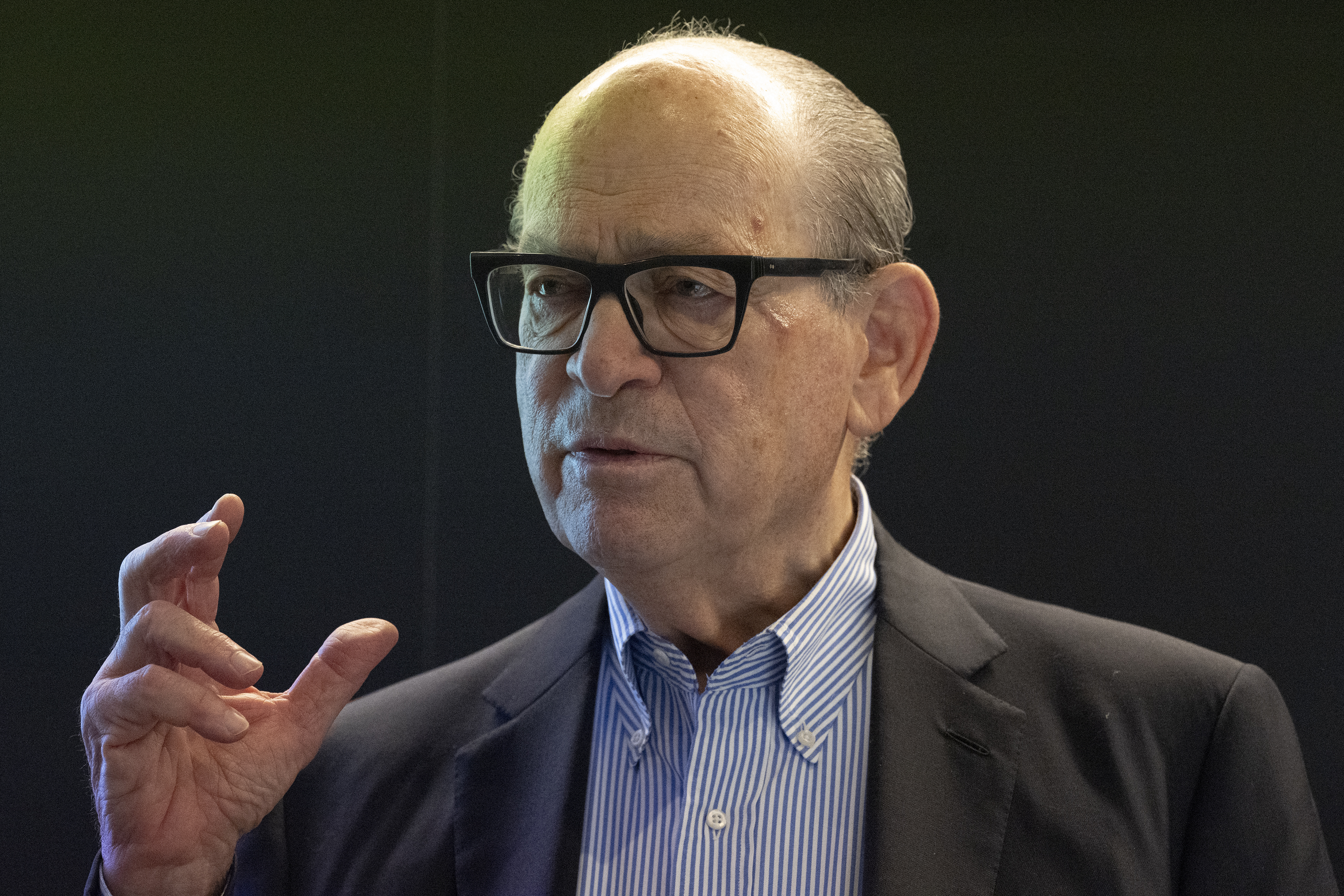
State Sen. Nikil Saval’s favorite glimpse of Philadelphia comes at dawn, on the return leg of his run across the Ben Franklin Bridge. Lately, he’s been listening to Lizabeth Cohen’s 2019 book Saving America’s Cities along the way.
“It feels like you’re experiencing the city at a moment of total possibility,” Saval, 43, said.
Saval was a journalist before he was a politician, writing about architecture and design for the New York Times and the New Yorker and publishing Cubed: The Secret History of the Workplace, a book about the evolution of white-collar work.
When he first ran for state Senate in 2020, the New York Times dubbed him the “N+1 candidate,” a reference to his time as co-editor of the Brooklyn-based literary magazine. (He remains on its board).
Now, the Democratic Socialist represents the Pennsylvania Senate’s 1st District, stretching from the Philadelphia International Airport across South Philly up to Port Richmond. He is perhaps best known for sponsoring the state’s Whole-Home Repairs program, which funds homeowners to repair and adapt their homes and served as a model for a federal pilot program that became law last month.
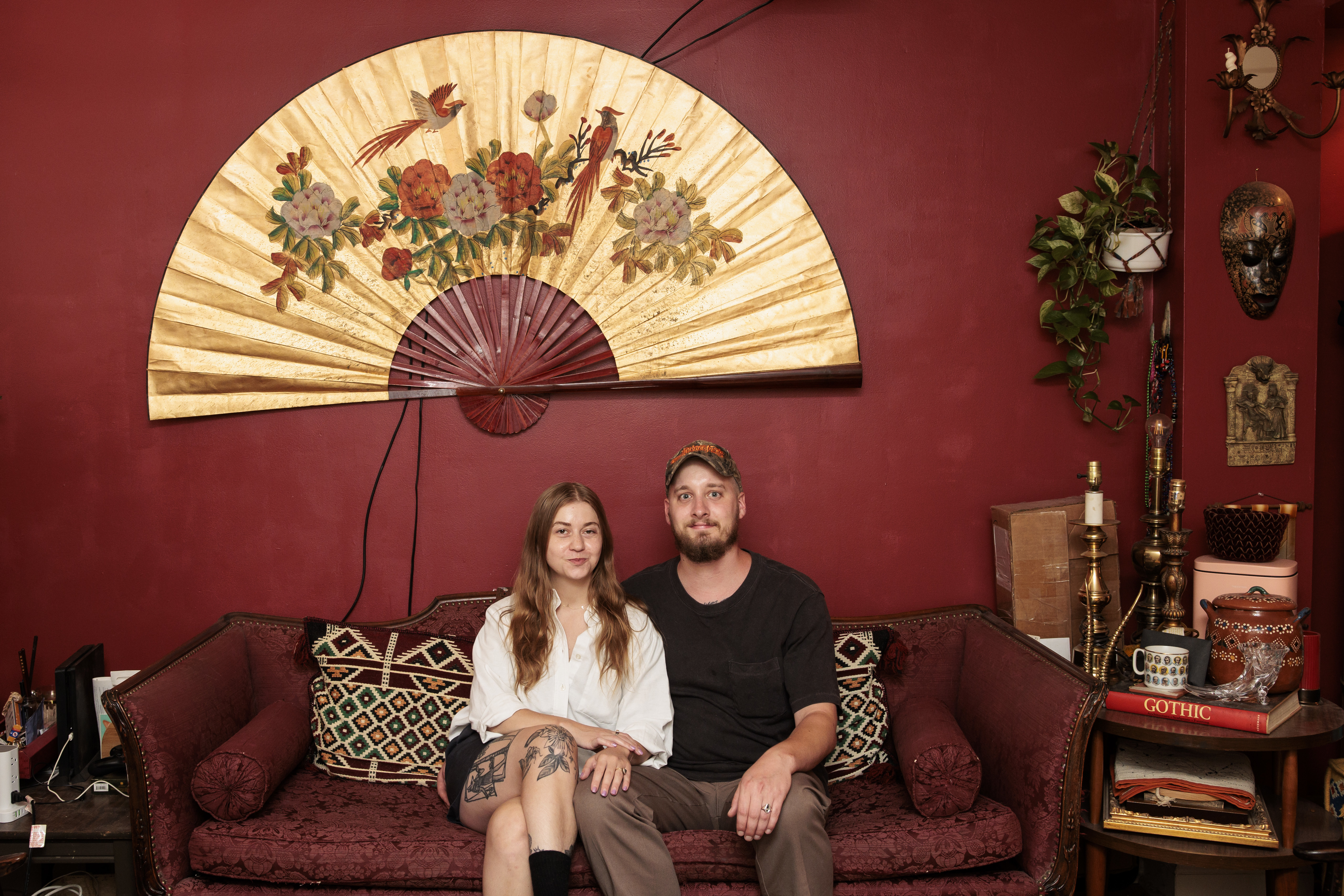
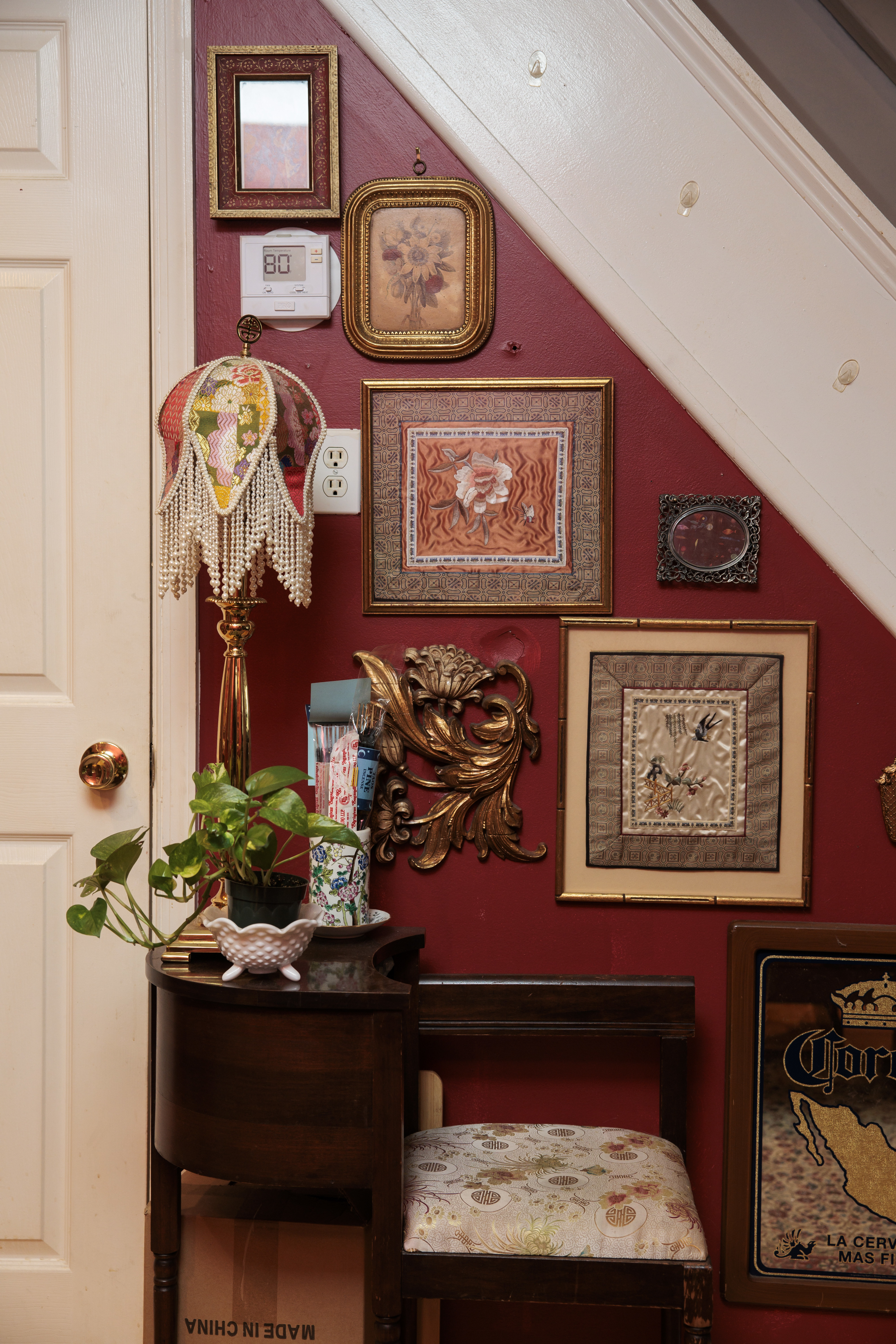
He lives in the Italian Market with his wife and two young children. On his perfect Philly day, he buys fresh tortillas, strolls down Fabric Row, and plays a game at the Philadelphia Museum of Art inspired by the Surrealists.
State Sen. Nikil Saval lives in the Italian Market with his wife and two young children. Erin Blewett / For The Inquirer
5:30 a.m.
I’m up slightly before my children. It’s a magic hour and I try to go for a run. My favorite route at that hour is to go up Fifth Street to the Ben Franklin Bridge, and then over the bridge to Camden and back. You get the best view of the city on the way back.
7 a.m.
My kids are up. We’ll make coffee and put breakfast together at home. We’re usually supplementing that with another coffee at some point. I’m a partisan supporter of Shot Tower Coffee in Queen Village. I feel like everyone gathers there — there have been times when it’s so populated that we will defect to Gleaners Cafe in the Italian Market, which is warm and friendly.
9 a.m.
My son has been taking golf lessons through First Tee at the Walnut Lane Golf Club, which is a public course in East Falls. I’m not a golfer, I have no interest. But he’s gotten into it. First Tee is really diverse.
It turns out to be this nice morning ritual. He’s chipping balls with a bunch of kids, we sit at the snack bar with our younger son while he colors. We read the newspaper, and he eats a pretzel, because that’s naturally what you have for breakfast.
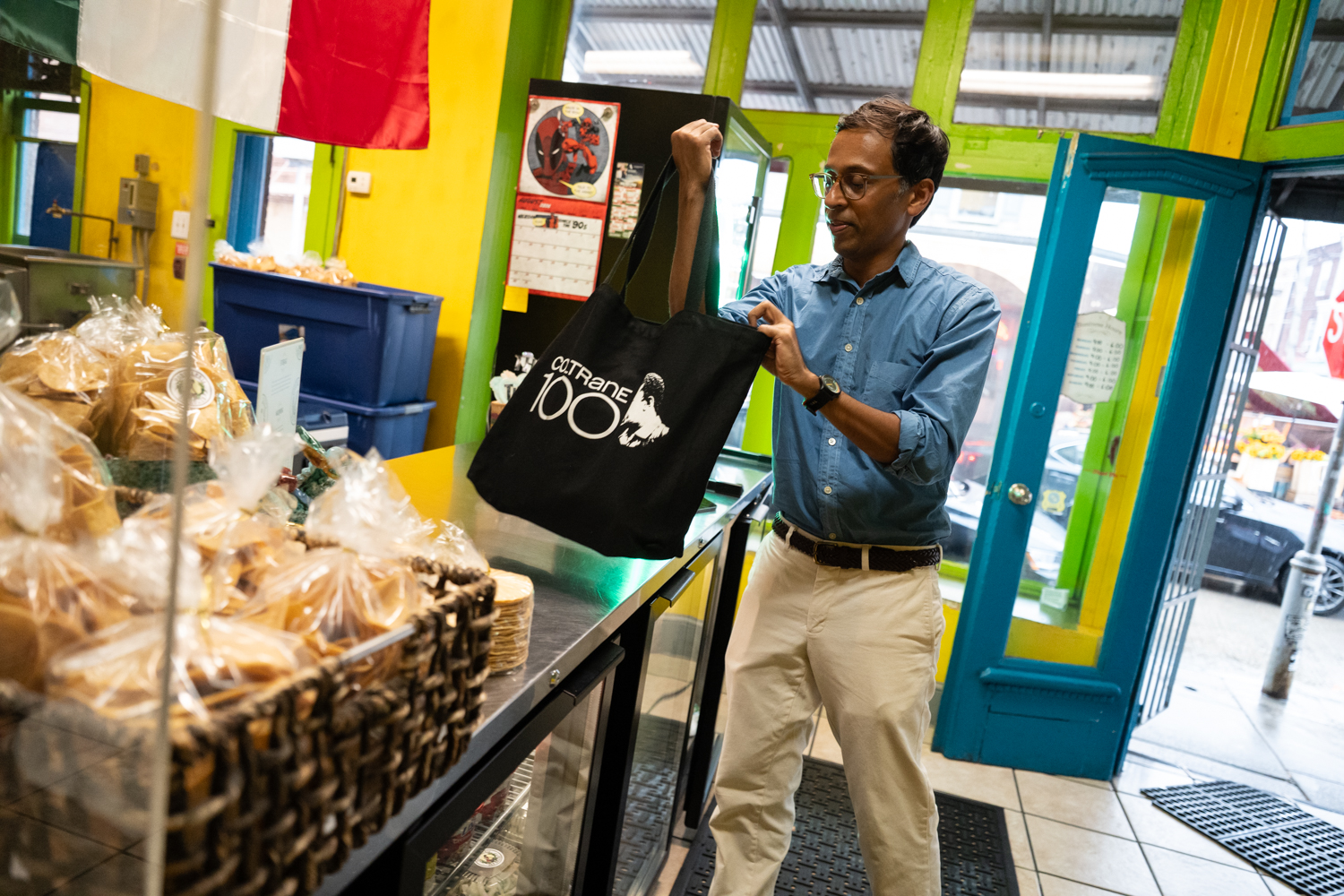
Nikil Saval buys tortilla chips and beans at Tortilleria San Roman in the Italian Market. Erin Blewett / For The Inquirer
11 a.m.
Then we’ll go to Headhouse Farmers Market. We’ll get the lonsa fromAaji’s, a local brand. It’s Indian tomato relish, and it’s amazing. I give those out as Christmas gifts to my colleagues in the Senate.
We travel by SEPTA to the Art Museum. They have an Art Kids program, where we drop off our younger son to do an art project.
Then we’ll spend an hour and a half with my older son in the galleries. We’ve developed this game that came out of the Surrealism exhibit. We’ll do an “exquisite corpse,” where someone draws the top third of a drawing, and then someone does the middle third, but you don’t look. Then you unfold the paper at the end and see what you come up with.
Each of us will choose a sculpture or a painting to draw as one section.
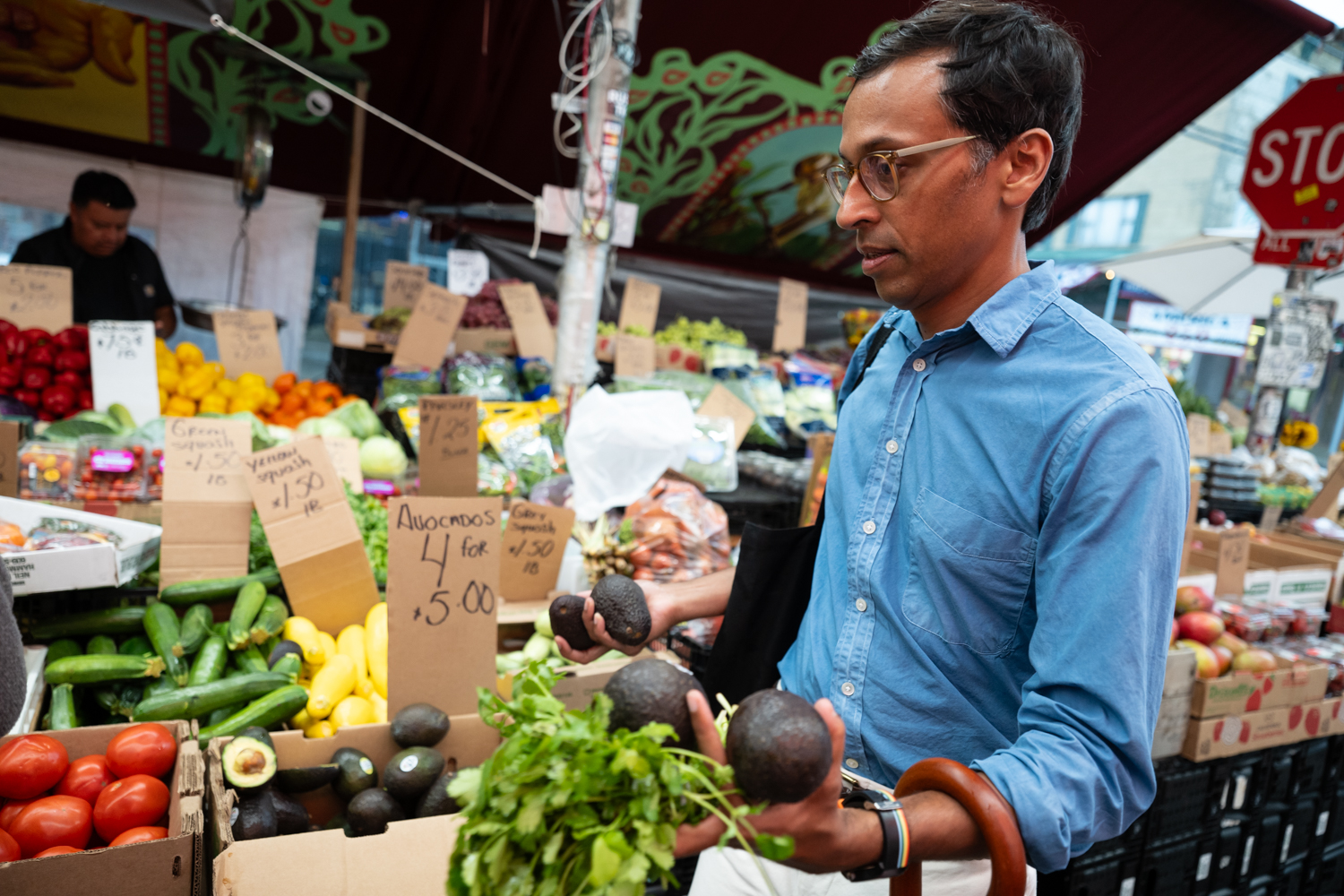
Nikil Saval buying produce in the Italian Market. Erin Blewett / For The Inquirer
2 p.m.
Next we go to South Kensington. There’s a really good vegan Puerto Rican place there, Casa Borinqueña. We also love the falafel from the Al Amana Grocery store that’s attached to the Al Aqsa mosque. They’re the best in the city.
Then we take the 57 down to Fourth Street, Fabric Row. It’s one of these great commercial corridors because it maintains everything that’s historic, but over time it has integrated new businesses that are of a piece, like Approved Textiles. They sell really amazing products, especially this brand of Palestinian soap that we buy there. Yowie has awesome designers for goods as well as clothes. Brickbat Books has great records and an extraordinary selection of books.
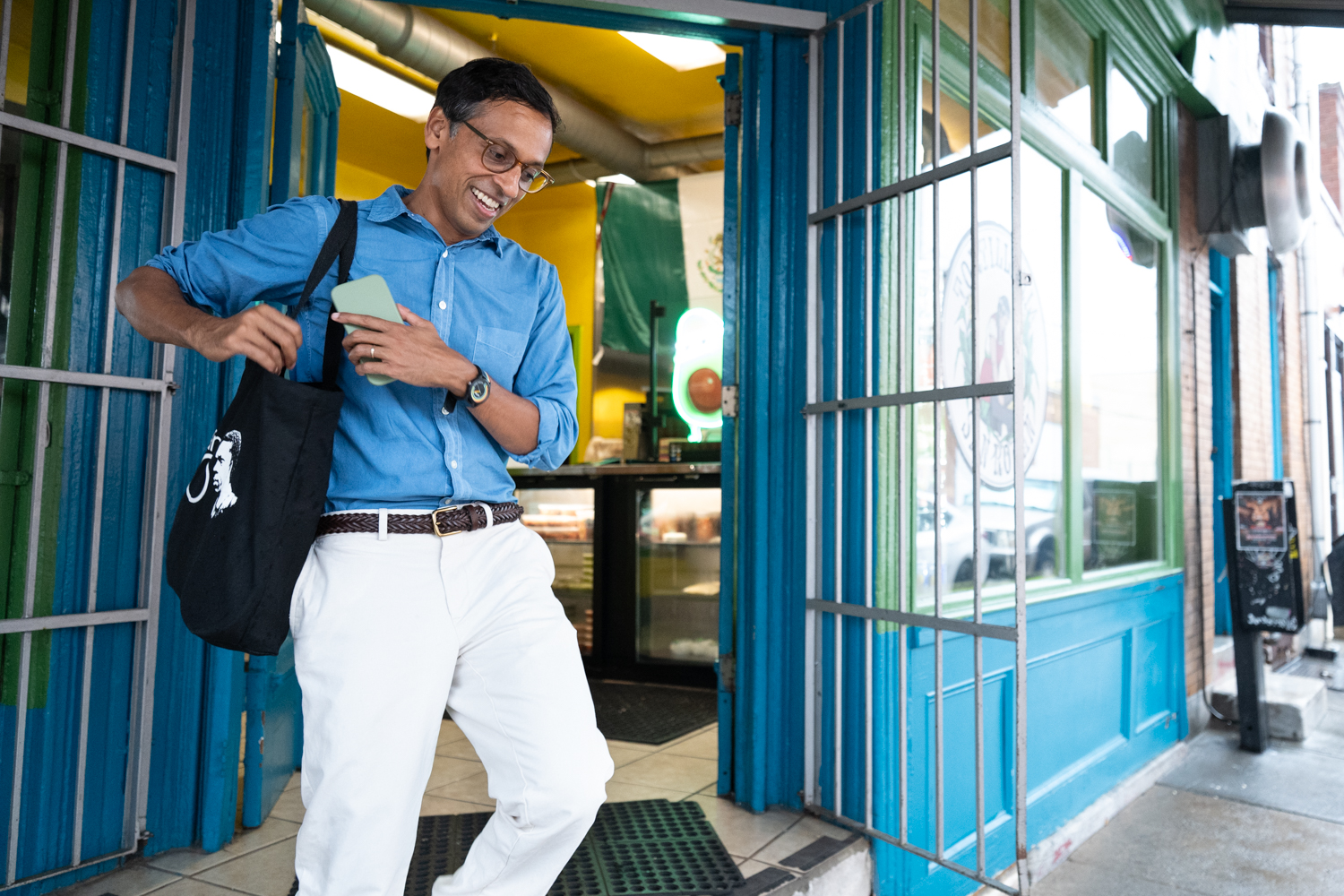
Nikil Saval leaves Tortilleria San Roman in the Italian Market with his groceries. The state senator loves to cook. Erin Blewett / For The Inquirer
6 p.m.
We get a babysitter and order from Tamalex, a Mexican restaurant in our neighborhood. We have a go-to order of nachos that the kids like.
6:30 p.m.
We loveMish Mish. It’s a good place to go with friends and get lots of things. I’m vegan, and there’s always something exciting there.
8 p.m.
Then we go see performing arts, anything that’s unexpected. We’re members of the Film Society, so we’ll go to a “Surprise 35!″ showing. Once a month, they’ll show a movie on 35 mm film; you don’t know what it is until it starts. We’re in a good age of repertory film in the region — the Philm Club newsletteris a good resource.
We go to shows at Solar Myth, where they have free jazz. We also have an Opera Philadelphia subscription. That’s always novel and shocking. They’re frequently new productions. You pay $11. The audiences are totally transformed.
10 p.m.
If we had the energy for a post-all-of-this drink, I would go to Southwark. It feels boisterous, but private in this way where you can have a conversation. The bartenders are incredibly welcoming.
The conversation has been edited for clarity and brevity.
The buyer: Tessa Maropis, 29, property manager for her family’s realty business in Texas.
The house: An 896-square-foot rowhouse in South Philly with three bedrooms and one bath built in 1923.
The price: Listed for $280,000; purchased for the same.
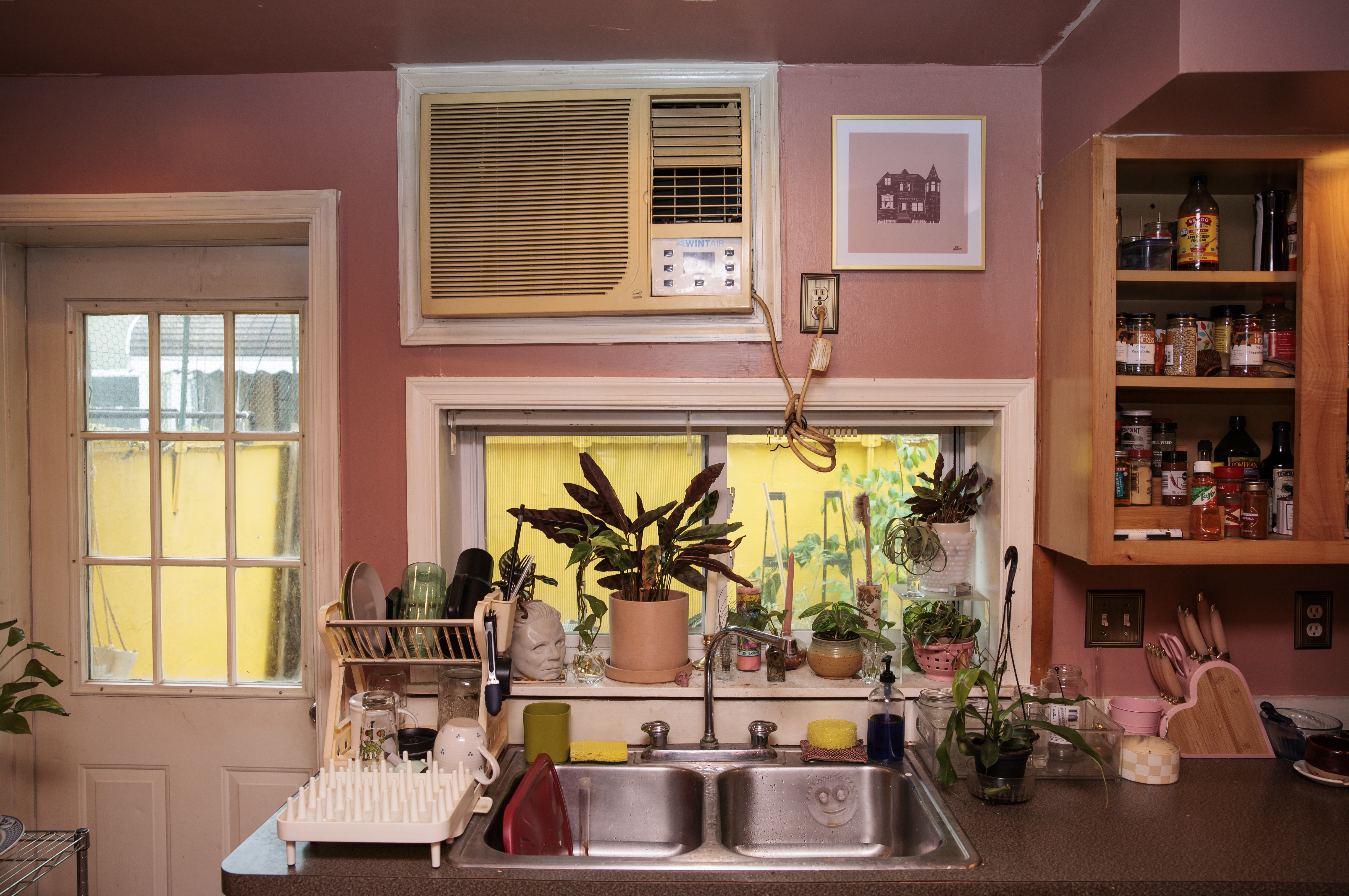
Maropis knew her mahogany and silk couch would fit perfectly in the living room. Monica Herndon / Staff Photographer
The agent: Salvatore Emma, Exit Elevate Realty.
The ask: Maropis moved to Philly from Austin, Texas, in 2022 for a job, bringing her then-boyfriend with her. They signed a 15-month lease in South Philly but broke up after five months. Then they kept living together.
When the lease finally ended, Maropis wanted to start fresh. She hoped to find a rental with a bathtub and a private outdoor space that retained its original details. She didn’t want millennial gray or a sleek Ikea remodel.
The bathroom at Maropis’ house. Monica Herndon / Staff Photographer
She also knew she wanted to stay in the 19147 zip code. A frightening incident had left her committed to the area: Two weeks after arriving in the city, Maropis was drugged at a bar and left near her house, she said. A good Samaritan found her and drove her safely home, unharmed.
“As much as something terrible happened,” she said, “it showed me how surprisingly gentle and kind the community here was.”
Maropis said she “lucked into the best community” in South Philly. Monica Herndon / Staff Photographer
The search: Maropis had bad luck on the rental market; the apartments she liked kept getting snapped up. As her search dragged on, she found what seemed like a perfect house, but the owners were offering only a short-term lease because they planned to sell soon. Not wanting to move immediately, Maropis looked into buying the house. She prequalified for a mortgage but didn’t have enough cash to make the monthly payments affordable.
It dawned on her that buying could be a real option if she found a less expensive place.
The appeal: The first house her agent showed her had attracted little interest. It was filthy; the stairs and second floor hallway were covered in poorly maintained blue shag carpeting from the1960s, and there were holes punched in the smoke-stained walls.
Maropis especially loved the original bamboo parquet floors in the living room. Monica Herndon / Staff Photographer
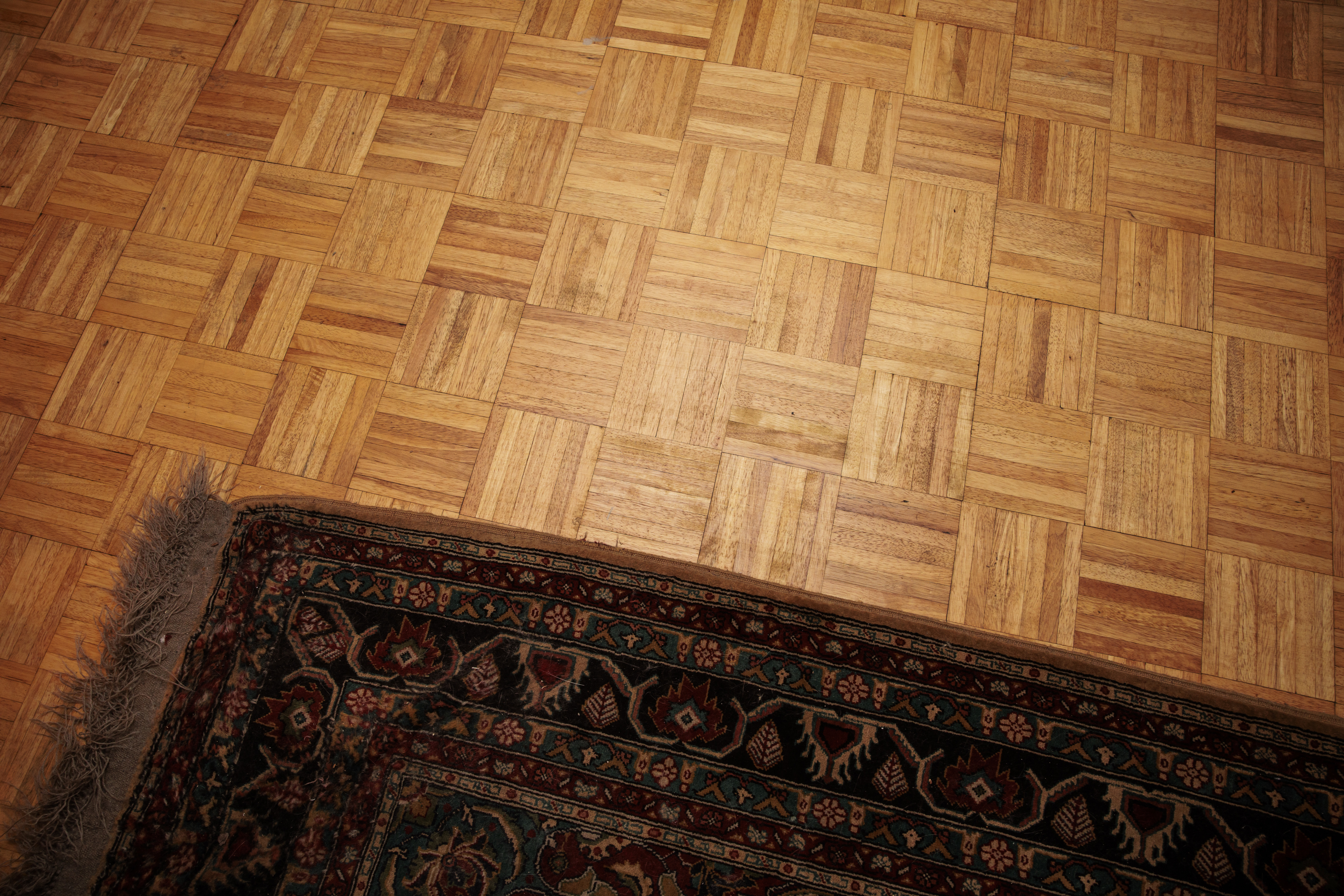
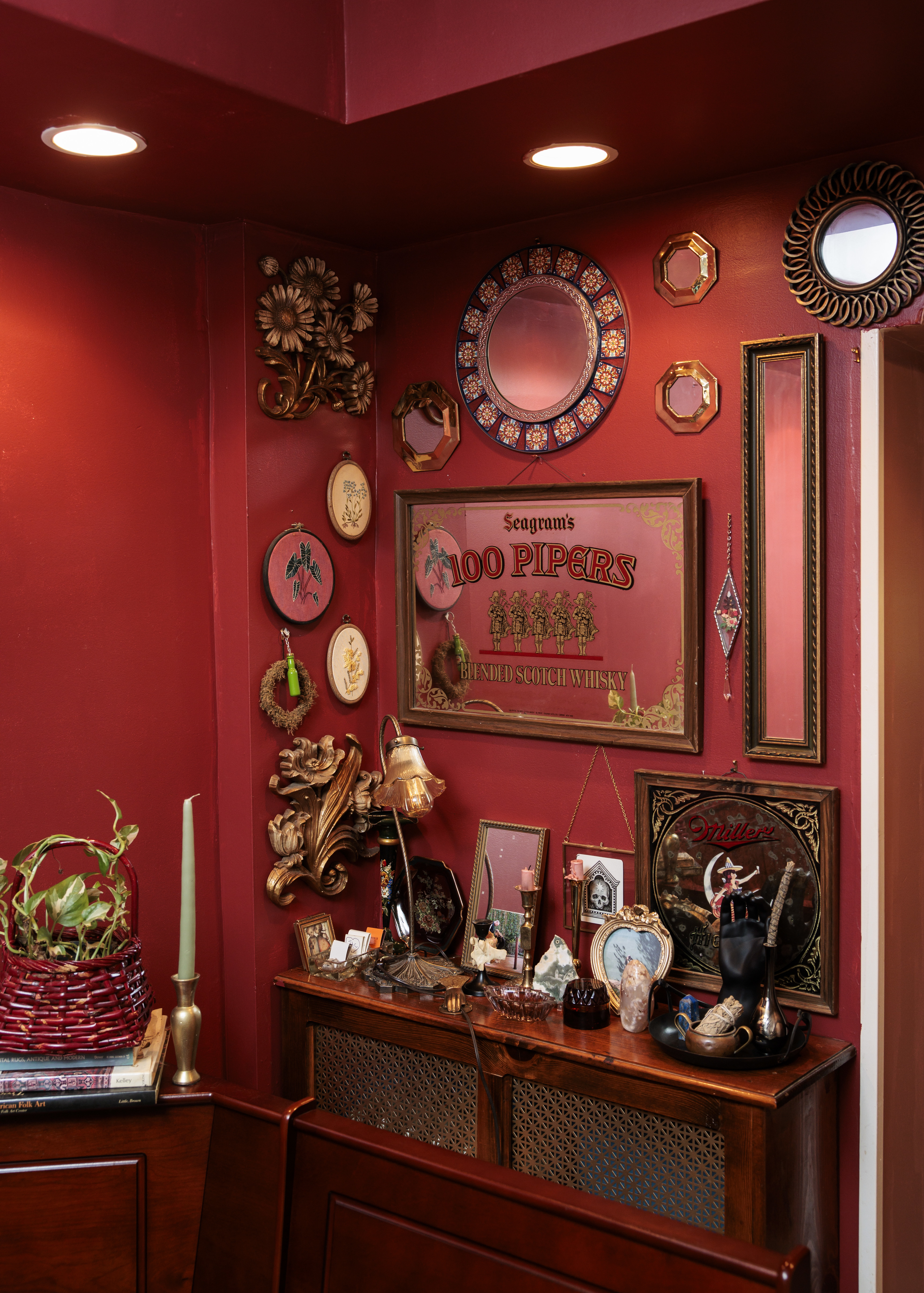
“It was a total dump, so every person who looked at it hated it,” Maropis said. Yet right away she loved the wooden radiator covers, which looked like Victorian mantelpieces with brass grates, and the bamboo parquet floor in the living room. She could already picturea place for her mahogany and silk couch.
She had grown up fixing houses, and she thought she could manage about 99% of the problems herself.
“It had great bones and just needed somebody to love it a little bit,” she said. “The first time I toured it, I had a little tingle of the feeling that maybe I could actually live here.”
The radiators have wooden covers with brass grates. Monica Herndon / Staff Photographer
The deal: From the outset, Maropis knew she was in a good position to negotiate because theowners wanted to sell quickly. Her agent was in the same brokerage as the seller’s agent, so they were both incentivized to make it work.
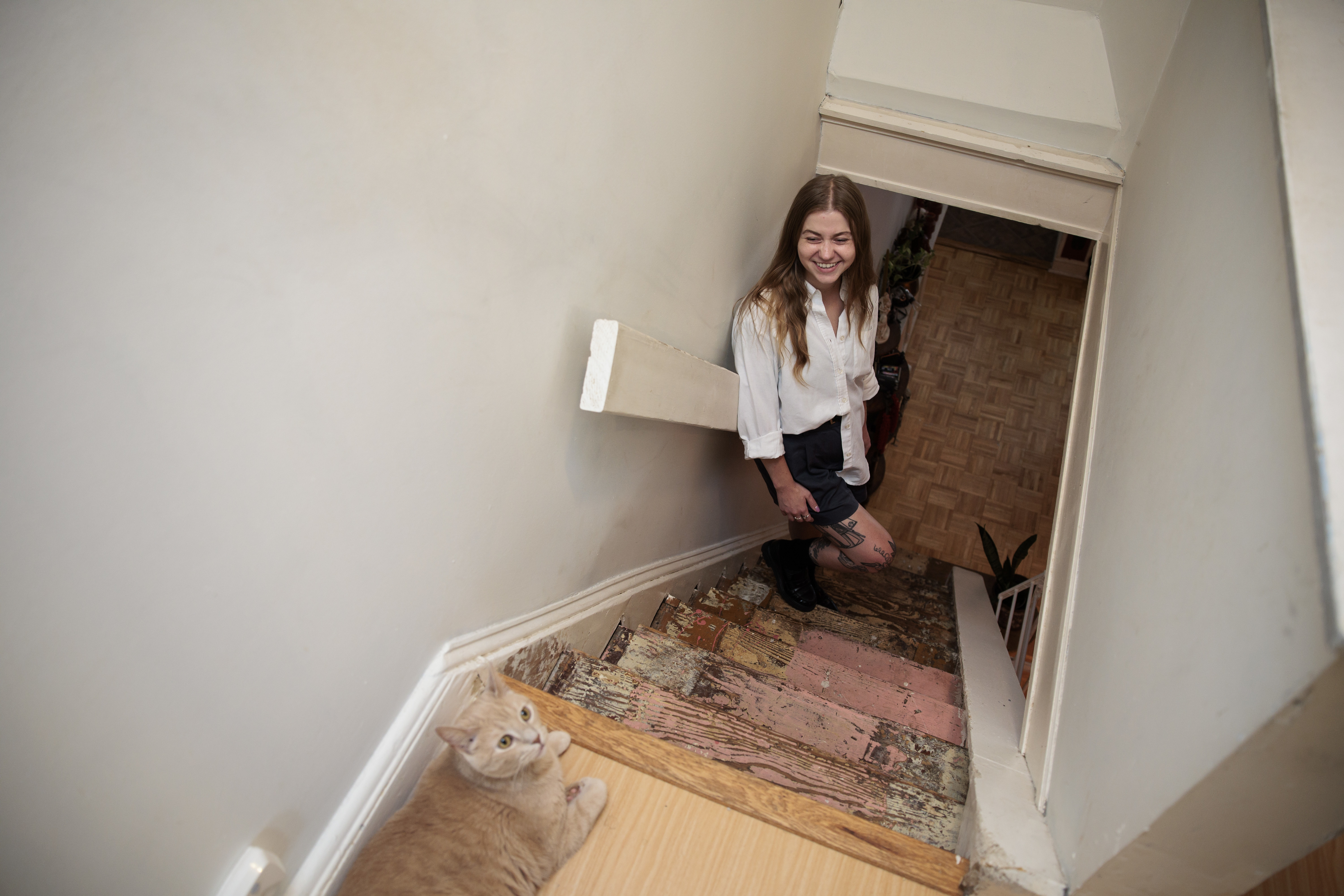
Maropis describes the stairs as the bane of her existence. Monica Herndon / Staff Photographer
She also had leverage because of the state of the house. The inspection revealed lead pipes in the basement, a furnace that was leakingcarbon monoxide, and a foundation partly chewed through by termites.
The house had a reverse mortgage so the sellers did not want to budge on the purchase price. But Maropis negotiated a $15,000 seller’s assist, which went partly toward her closing costs and partly toward her down payment. She visited twice more before deciding to buy.
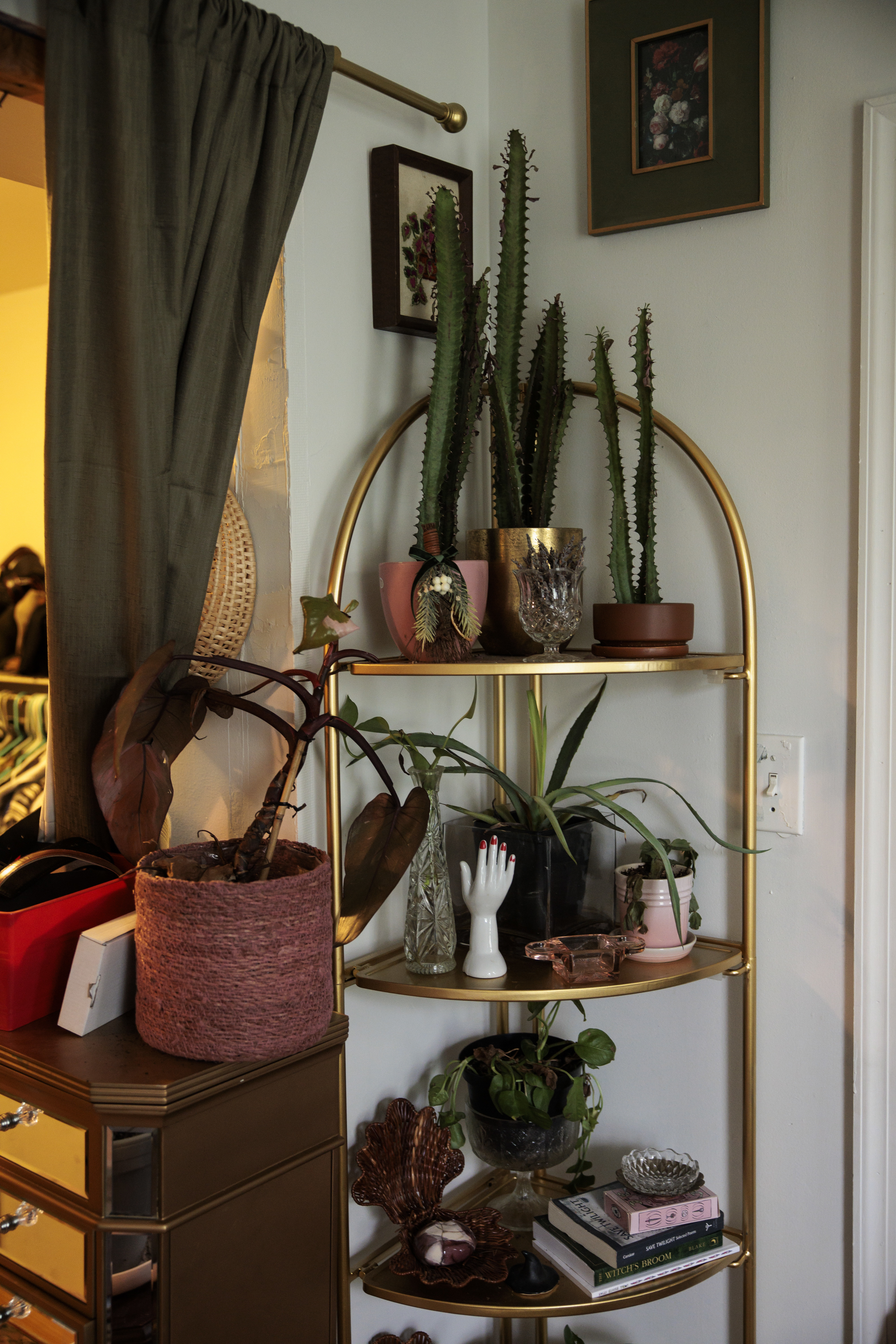
Plants fill a corner shelf. Monica Herndon / Staff Photographer
The money: Maropis’ decision to buy wasclinched when she learned she could withdraw money from her 401(k) to put toward her down payment. For three years she had been working for the consulting company GLG, contributing 7% of her salary to her 401(k), with an equivalent company match.
“I always considered my 401(k) Monopoly money because I don’t really think my generation will ever be able to retire,” she said. She ultimately withdrew $11,000 from her retirement account to buy the house.
Maropis described her style as Victorian modern; she felt the house had an “old-school feel.” Monica Herndon / Staff Photographer
She then used her end-of-year bonus to put down an additional $5,000, bringing her down payment to 6%. She secured a Federal Housing Administration (FHA) loan for the rest, with an interest rate of 6.2%. Because of the seller’s assist, she paid only $2,100 in closing costs.
She wanted to keep her monthly costs under $2,000, but ended up paying $2,200 per month until she refinanced in winter 2024, bringing her monthly payments down to $1,800.
The move: Maropis closed on the house at the end of March 2023, two days after her 26th birthday.
She moved in two weeks later, with the help of Broad Street Movers and her dad, who had flown in from Texas.
Maropis said her next project is a renovation of the tiles, countertops, and appliances in the kitchen. Monica Herndon / Staff Photographer
Life after close: Maropis’ life as a homeowner began with hours of scrubbing. She hired a contractor to tear out the carpets and replace them with luxury vinyl plank, but he did a shoddy job, and the vinyl is already peeling.
Three months after moving in, she was laid off, which scuttled some of her financial plans. She had aimed to pay back her 401(k) from her salary that same year but insteadowed a small tax penalty.
Still, she’s thrilled with her home and the community it brought her. Her now-husband moved in with her in 2024, and they share two cats, Daddy and Little Cat. Grumpy’s Tavern is nearby, and she says the dive bar regulars are like her neighbors.
Her next big project will be renovating the kitchen, replacing the counters, tiles, and appliances.
“The progress of this house,” she said, “is one of the things I absolutely love the most.”
Did you recently buy a home in the Philadelphia area or South Jersey? Share the story of how you did it. Email Inquirer real estate reporters at properties@inquirer.com.
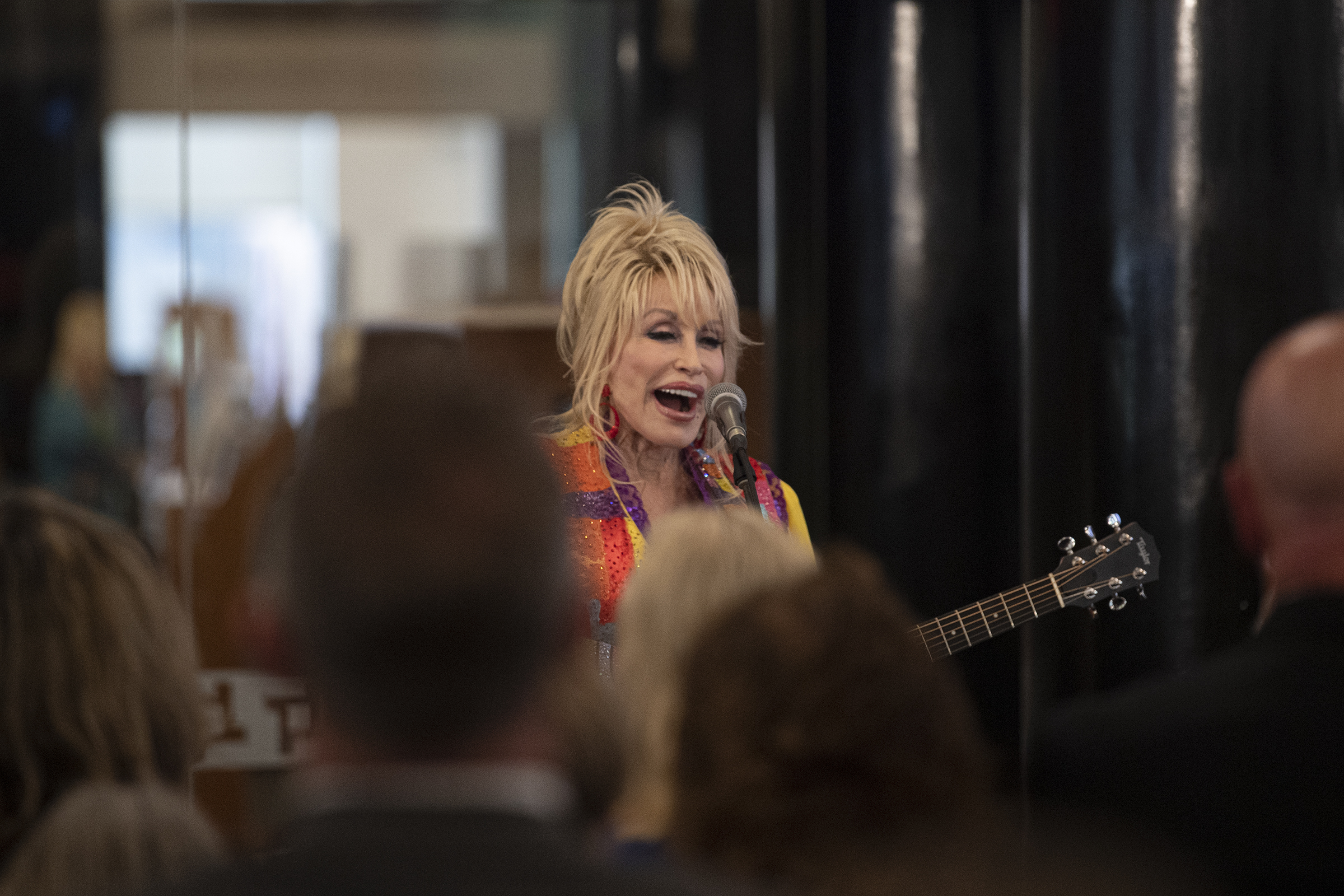
A favorite Dolly Parton, Doc Watson musical memory
Dolly Parton’s death this week spurred innumerable tributes celebrating her kindness and generosity of spirit from seemingly everyone who ever knew, worked with, or even had a chance encounter with the beloved country singer.
And along with the heartfelt testimonials to a truly one-of-one cultural figure also came the outpouring of video clips that flood social media when a cherished performer dies. The digital grieving ritual reminds us why we fell in love with our heroes in the first place and maybe shows us something to make us treasure them even more.
Lots of cool clips have been circulating, all easily findable if they haven’t already shown up in your feed. Among them is a 2019 snippet from backstage at the Newport Folk Festival that’s barely over a minute long, with Parton dressed in an embroidered cowboy suit, leading the Highwomen in a version of her song “Eagle When She Flies.”
Other charmers includes an adorable duet with Los Lobos’ David Hidalgo on Texas country singer Freddy Fender’s “Before the Next Teardrop Falls,” which Hidalgo posted with a note remembering how Parton could tell how nervous he was and put him at ease telling him, “You’re shy and I’m not.”
There are two clips of performing for a clearly smitten Johnny Carson on The Tonight Show in the 1970s, each playful and clever, but also displaying what a fine finger picking guitarist she was.
And her excellent taste is also apparent in a 1988 episode from her ABC variety show Dolly in which she headed to the Crescent City for Dolly Down in New Orleans and teamed with Allen Toussaint, Irma Thomas, and Dr. John for a delightful take on Lee Dorsey’s “Workin’ In a Coal Mine.”
My favorite of the bunch, however, is of Parton paired with the late guitarist Doc Watson in rehearsals and on stage in 2001 at MerleFest, the North Carolina traditional music festival named after Watson’s son, Merle, who died in 1985.
Parton and Watson work up a tender “The Last Thing on My Mind,” the Tom Paxton song she and Porter Wagoner recorded as their first single in 1967. She shadows Watson vocally, perfectly complementing him with her angelic voice. The furtive camera grants us the privilege to witness a private moment between a pair of legends working together for the first and only time, both now sadly gone.
— Dan DeLuca
A treasure trove of a coffee-table book celebrating Black art collectors
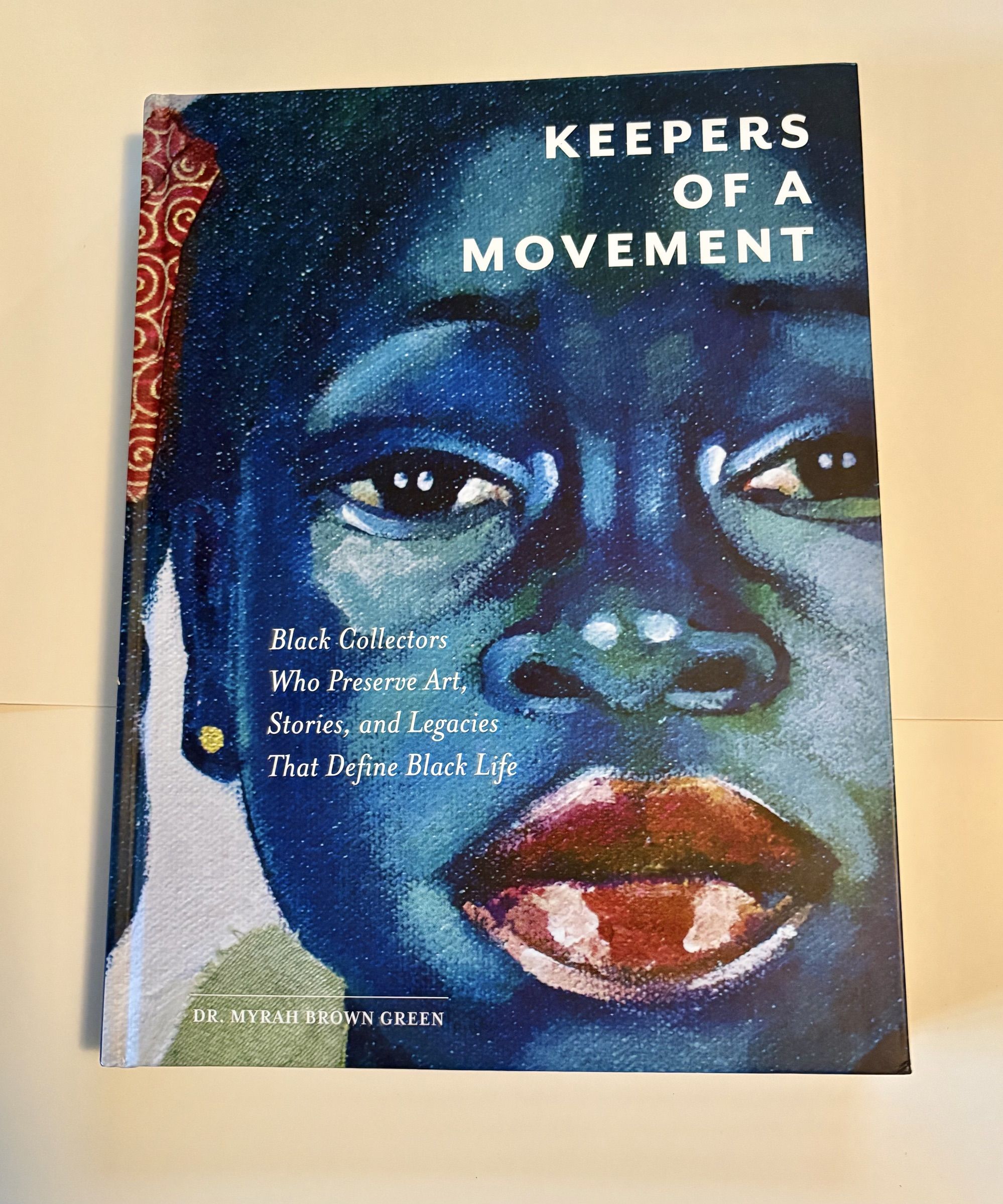
The 272-page text written by art historian, archivist, and curator Myrah Brown Green features the collections of Philadelphia-based art connoisseurs including Donnell Walker, founder of Fine Art for All Roots, a Lansdowne-based community arts organization; Vashti DuBois, founder of Germantown’s Colored Girls Museum; and the late Danny Simmons, owner of North Philadelphia’s Rush Gallery.
Cover of “Keepers of a Movement: Black Collectors Who Preserve Art, Stories, and Legacies That Define Black Life.”Elizabeth Wellington
(Simmons’ widow, Keia D. Carter Simmons, associate director of Temple Contemporary Art Gallery, penned the foreword.)
Portraits by Philadelphia artists Tara “Misty Sol” Pearson, Nile Livingston, and Chantelle Phillips are also featured. A sculpture by North Philadelphia potter and ceramicist Roberto Lugo is pictured, too.
The glossy volume is a beautiful work of art overflowing with pieces that are timeless, unique, and oozing with history. Images of rare prints from African American masters including Elizabeth Catlett’s 1957 portrait Nina, part of 94-year-old Brooklyn-based sculptor Otto Neals’ collection, are in the book. As is a Romare Bearden 1980 watercolor Man Seated with Red Rooster from the collection of the late Brooklyn-based attorney Patricia Scipio-Brim.
Six paintings from actress CCH Pounder’s massive collection are photographed in Keepers.
Even more important than the art of the masters are the works from lesser-known artists. Often without recognition, they too document the lives, history, and experience of Black Americans and all who consider themselves part of the diaspora.
Simmons’ collection of comic books, toys, and superhero figurines is the kind of art I grew up with but didn’t consider art until recently. New York-based jewelry designer Donna Chambers’ collection of 19th-century Black cameos by unknown artists are a window into my obsession of the untold stories of the lives of my ancestors. Ohio-based quilter and historian Carolyn Mazloomi’s social justice textiles expanded my idea of art with a purpose.
“This book is the appropriate response to the current conditions that are removing Black art and Black history,” DuBois told audiences at the end of the show. “Black collectors have always done this work. We will continue to do this work as keepers of the movement.”
Amen. Alleluia.
“Keepers of a Movement: Black Collectors Who Preserve Art, Stories, and Legacies That Define Black Life” is available for purchase at the Colored Girls Museum located at 4613 Newhall St. in Germantown.
— Elizabeth Wellington
The newly restored ceiling at Philadelphia’s 30th Street Station.Bedatri D. Choudhury
A ceiling like no other
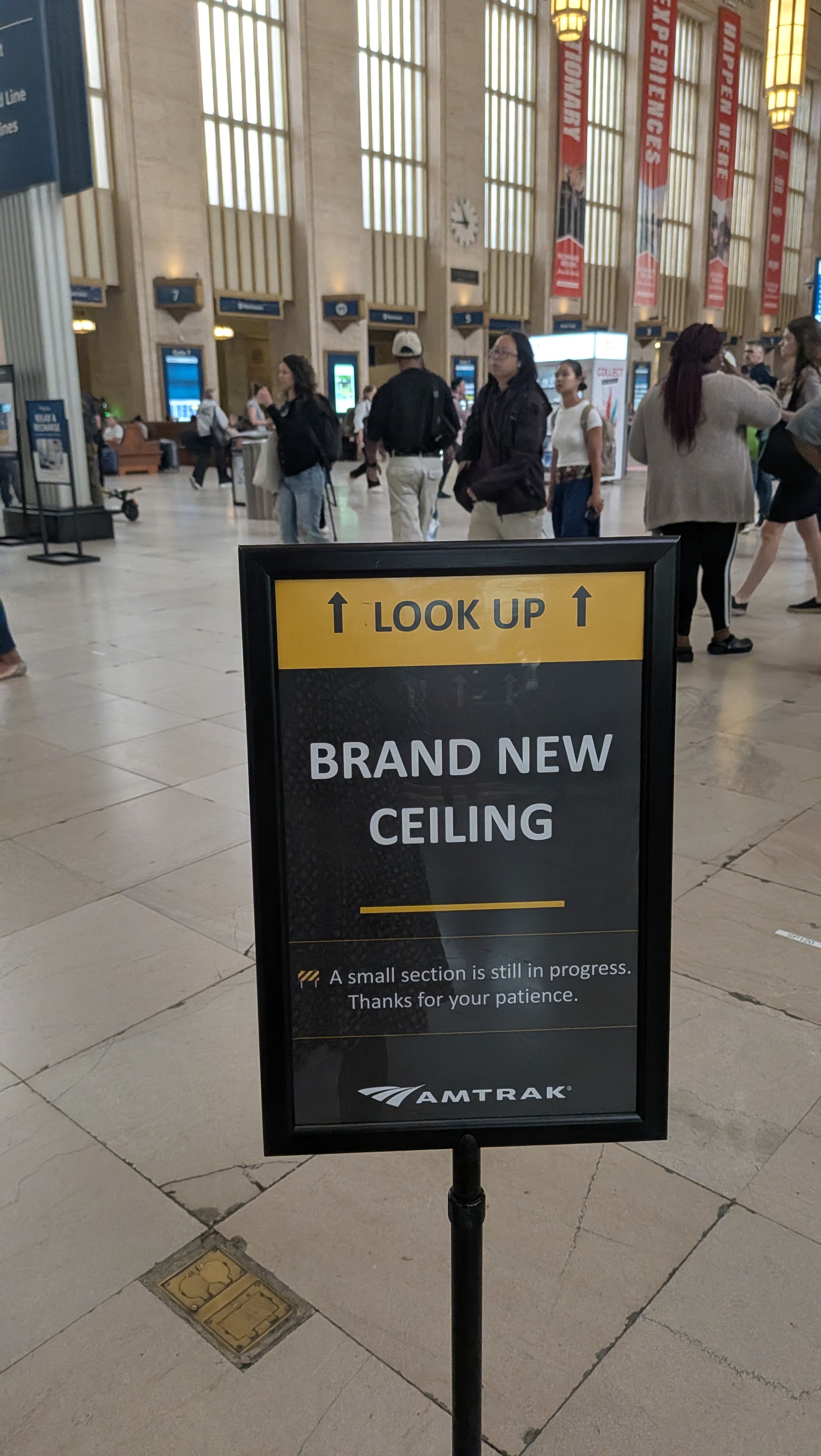
Like many other people going in and out of Philadelphia, I had gotten used to the scaffolding at 30th Street Station until this week a little sign from Amtrak urged me to look up. The scaffolding pipes were gone and a newly restored ceiling gleamed. Innumerable perfect squares with more perfect squares nested within. The sienna (the exact shade is called Tuscan Red, a reader pointed out), gold, and cream colors look different as the light streams in from the 50-foot-tall windows and plays with the patterns and solid blocks of color along the length and breadth of the 93-foot-high coffered ceiling.
The indented panels are clean, the ornate art deco chandeliers are glowing, and the pendant lights are on. Philadelphia union workers have painted, fixed, and restored the station’s ceiling and it’s breathtaking in its art deco glory. A grand entry into a grand city.
The station, which opened in 1933, was designed by the Chicago-based firm Graham, Anderson, Probst, and White. It was part of the City Beautiful movement where, in the late 19th- and early-20th-centuries, governments took to designing grand and beautiful public spaces.
A sign asking people to look up and view the newly restored ceiling at Philadelphia’s 30th Street Station.Bedatri D. Choudhury
As part of a recent $550 million restoration, there’s talk of a food court and other things that’ll crowd into the main concourse of this awe-inspiring building that is on the National Register of Historic Places. A small corner of the ceiling above the Dunkin’ kiosk remains unrenovated. Just outside, a world of steel, glass, and concrete awaits along with a news cycle of reflecting pools and algae.
But for the minutes we can spare, as we rush in and out of our commutes, the grandeur of the ceiling and the building do their very best to make us forget that outside world and immerse us in a bygone time when wrecking balls didn’t charge through the White House but governments believed in investing in grand, beautiful spaces accessible to all.
— Bedatri D. Choudhury
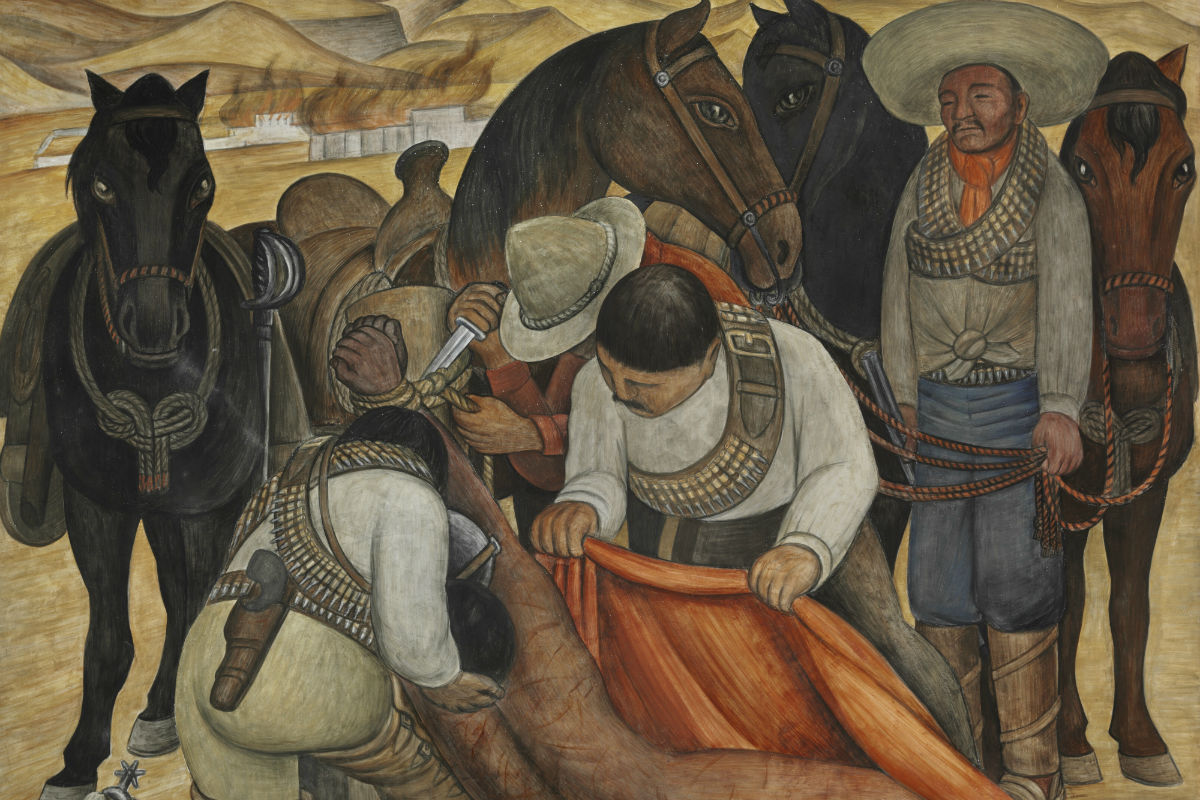
“Liberation of the Peon” (1931) by Diego Rivera is on view at the Philadelphia Museum of Art.
A meeting of worlds with Diego Rivera and Gabriel García Márquez
There’s a pair of stunning Diego Rivera paintings at the Art Museum from 1931 — depicting scenes of harsh, back-breaking, intensive labor in Mexico — that I can’t stop thinking about.
The bright bluish-green stalks in Sugar Cane tower above the workers who hunch over, some attacking the crop with curved knives while others hoist overweight bundles onto their backs for transport. In the background, a white foreman reclines on a hammock above two sleeping dogs while another overseer is on horseback with his whip at the ready. The exploitation cuts across age groups, too, as a little Indigenous girl is pictured, helping her mother harvest papaya.
The violence of Sugar Cane is quieter than that of its companion, on view across the narrow hallway, called Liberation of the Peon.
Both illustrate the devastatingly difficult reality for farmworkers forced to labor under inhumane and cruel conditions. In Liberation, four revolutionary soldiers come to the aid of a worker who was stripped naked, tied up, and ruthlessly whipped. The men gently hold the victim, placing a vividly orange sheet around his bloody body and supporting his head as they cut the ropes on his wrists. Waiting patiently behind them are gorgeous horses; they are the only figures staring out from the fresco, their tender, wide eyes captivating the viewer with probing gazes that feel fittingly accusatory.
These artworks feel directly in conversation with the exquisite-yet-underrated show One Hundred Years of Solitude, the Netflix adaptation of Colombian author Gabriel García Márquez’s 1967 masterpiece of the same name that just released its series finale this week. It’s a beautifully shot, profoundly magical, and deeply tragic story following multiple generations of the Buendia family.
García Márquez used his incredible writing to condemn exploitative labor practices in Colombia as one major storyline took aim at United Fruit Company, an American corporation that monopolized land and resources across Latin America to violent excess (today it’s called Chiquita). One Hundred Years follows the expansion of banana plantations with horrifically abusive working conditions — concluding in the shooting of thousands of striking workers and their families, based on the Banana Massacre of 1928 — and mirrors the kind of greed-fueled brutality that Rivera captured in his paintings.
“Sugar Cane” and “Liberation of the Peon” are on view at the Philadelphia Museum of Art; “One Hundred Years of Solitude” is streaming on Netflix.
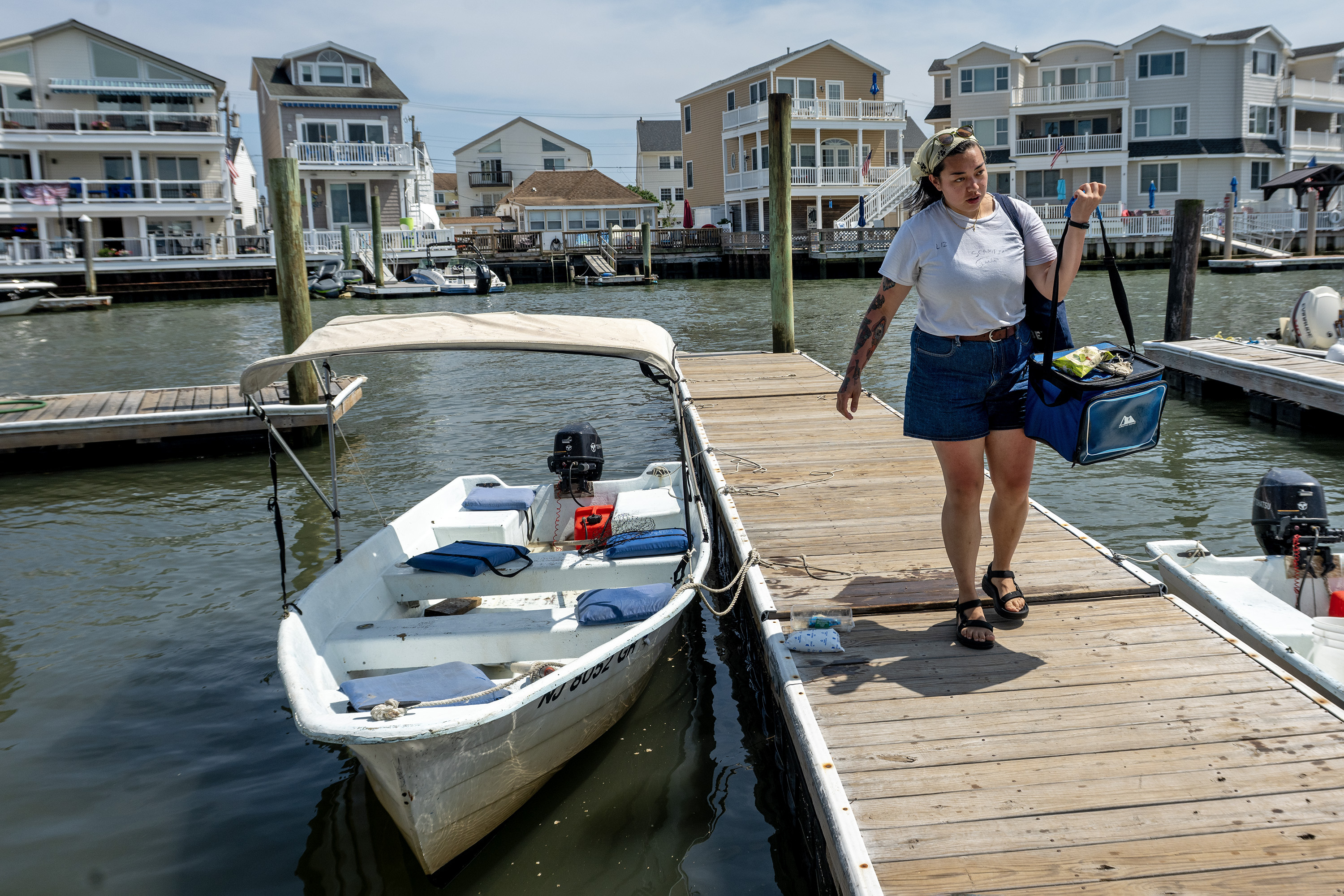
Sitting on a skiff on the bay in Sea Isle City, chef Liz Grothe slowly pulled up a submerged string from the lapping waters while holding onto a half-eaten Wawa hoagie.
On the string, a blue crab emerged, clinging to the severed fish head at the end of the bait holder, called a handline. The crustacean was too small for New Jersey’s recreational size minimum (3 inches long), Grothe and her companions determined. With a sigh, she dropped the crab back into the water.
It was an hour into Grothe’s Sunday crabbing expedition, and her crew had already caught a handful of crabs.
Chef Liz Grothe washing the day’s catch of grabs in the laundry-room sink of her partner’s family home in West Cape May, Sunday, Aug. 2, 2026. Grothe spent the afternoon crabbing out of Sea Isle City and was making dinner for the family Tom Gralish / Staff Photographer
With bright skies and calm waters that day, she rented two skiffs from Bay Breeze Marina with her partner, Jacob Lance, and Lance’s family to embark on her favorite Shore hobby: crabbing on the bay — and later, cooking up her catch in Cape May.
“We get all our ‘beach’ time down the Shore at the bay,” Grothe, who owns the Italian-ish Queen Village restaurant Scampi, said. “[The bay] is more like Oklahoma-style waters, where it’s just a shallow lake rather than like the rough seas of the ocean. So this is more my speed.”
Grothe grew up catching catfish in the creeks of Oklahoma. But it wasn’t until six or seven years ago that an ex-boyfriend introduced her to Sea Isle City’s bay and its crustaceous inhabitants. “He took me on his boys’ excursion, which was crabbing,” she said. “We broke up later — being the kind of girl I am, I stole it. I go to the same place they rented their boats; we do it in the same way I learned.”
Grothe named her restaurant after a seafood dish, so it’s no surprise she has strong feelings about crabs, the scavengers of the sea. Don’t expect these to show up on her menu, though — they are for personal eating only. The once-a-summer hobby lets her “touch grass, so to speak, and have something to do that’s not the harrowing day-to-day that we deal with in the kitchen,” she said.
Being close to water was always a priority for her family — Grothe’s mom is originally from the Philippines. Her interest in seafood, however, comes from the love of catching and cooking it. “Eating is just the secondary part of the fun,” she said.
“I’m in it for the love of the game, not the catch,” she said, while tossing the handline back into the water.
Bay Breeze Marina rents a boat for $109 for four hours, including gas, cushions, anchor, paddle, cutting board, and a net. The rental also offers a map of the best areas to catch the crabs. It was a no-brainer for Grothe and crew.
Around 10:30 a.m., she and Lance took one boat, and Lance’s brother and sister-in-law hopped into their own. (Grothe and Lance’s boat didn’t have a bucket, so they improvised, throwing their crabs into a cooler.)
For four hours, the crew tossed their baited handlines in various areas of the bay — deep waters, shallow areas, just off the coast — to catch as many crabs as they could. They found that chunky pieces of bait — like the trout head — were the best lures.
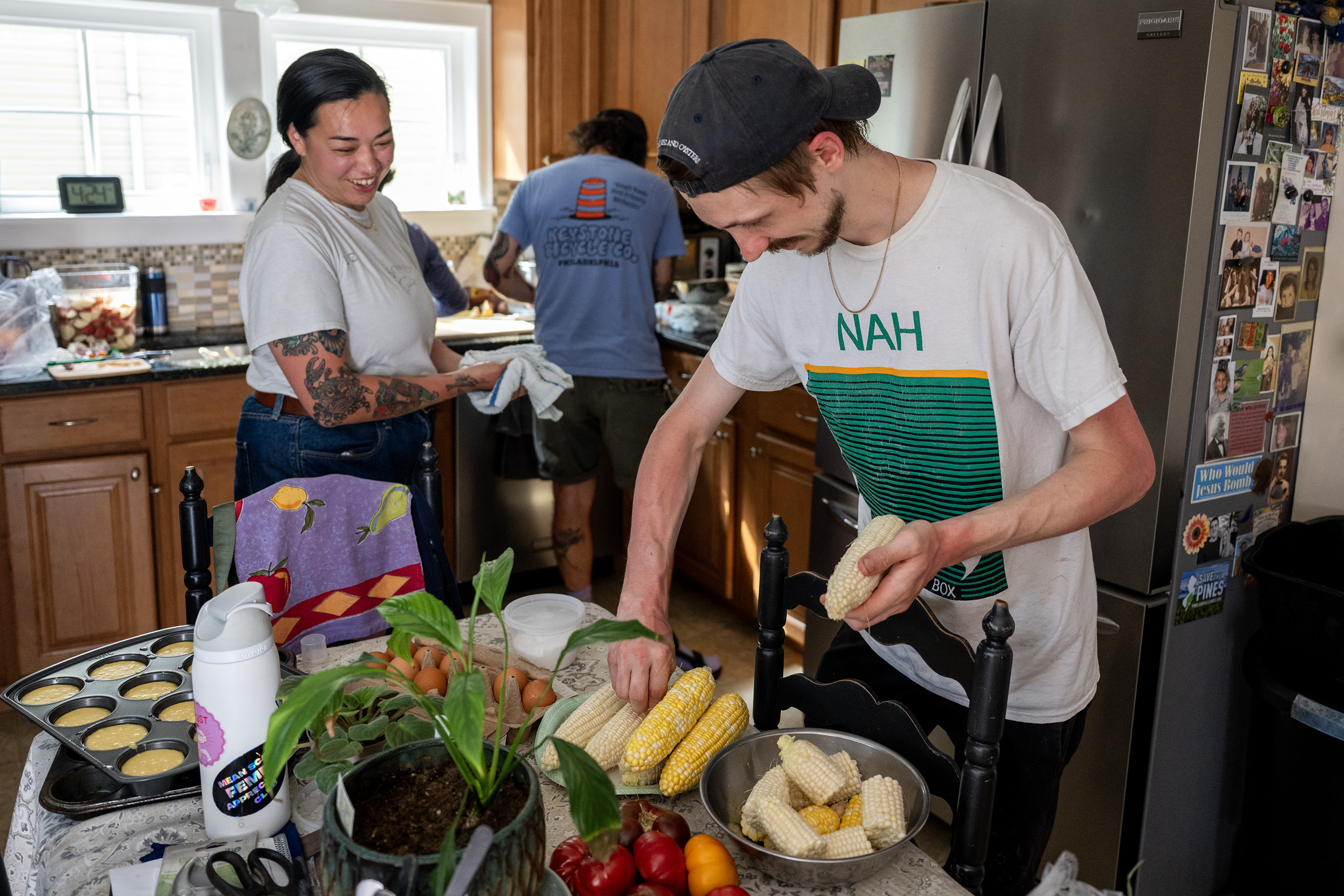
Chef Liz Grothe (left) as her partner Jacob Lance preps the corn at his mother’s home in West Cape May, Sunday, Aug. 2, 2026. They spent the afternoon crabbing out of Sea Isle City and were making dinner for the family Tom Gralish / Staff Photographer
“What kind of music do crabs like?” Lance asked the group. “They don’t seem to be digging country.”
“Crabs are chaos; try house music,” Grothe said. “I could see them vibing to it.”
But Daft Punk and Prince were the “certified crab bangers,” as Grothe put it.
By the end of the excursion, the crew caught more than a dozen crabs of varying sizes. After docking their skiffs, Grothe assessed which crabs were too small to keep and dropped those back in the water.
Left with 14 crabs,the crew decided to supplement their haul with other catch for a big boil. They stopped by the fish market at the Lobster House in Cape May to pick up mussels, shrimp, and clams before heading to Lance’s mom’s house in West Cape May, where the live crabs were washed and tossed into the boiling water.
The key to cooking a crab boil, according to Grothe: a lot of Tony Chachere’s Creole Seasoning. “Maryland and up, people use Old Bay. But if you go south, those who know reach for Tony Chachere’s,” said Grothe, shaking a big container of it into a pot inside the Lances’ kitchen. “Tony is a saltier, spicier, better Old Bay,” Lance added.
Family members fill their plates at dinner by Liz Grothe, of Scampi, at her partner’s family home in West Cape May, Sunday, Aug. 2, 2026, after an afternoon crabbing out of Sea Isle City.Tom Gralish / Staff Photographer
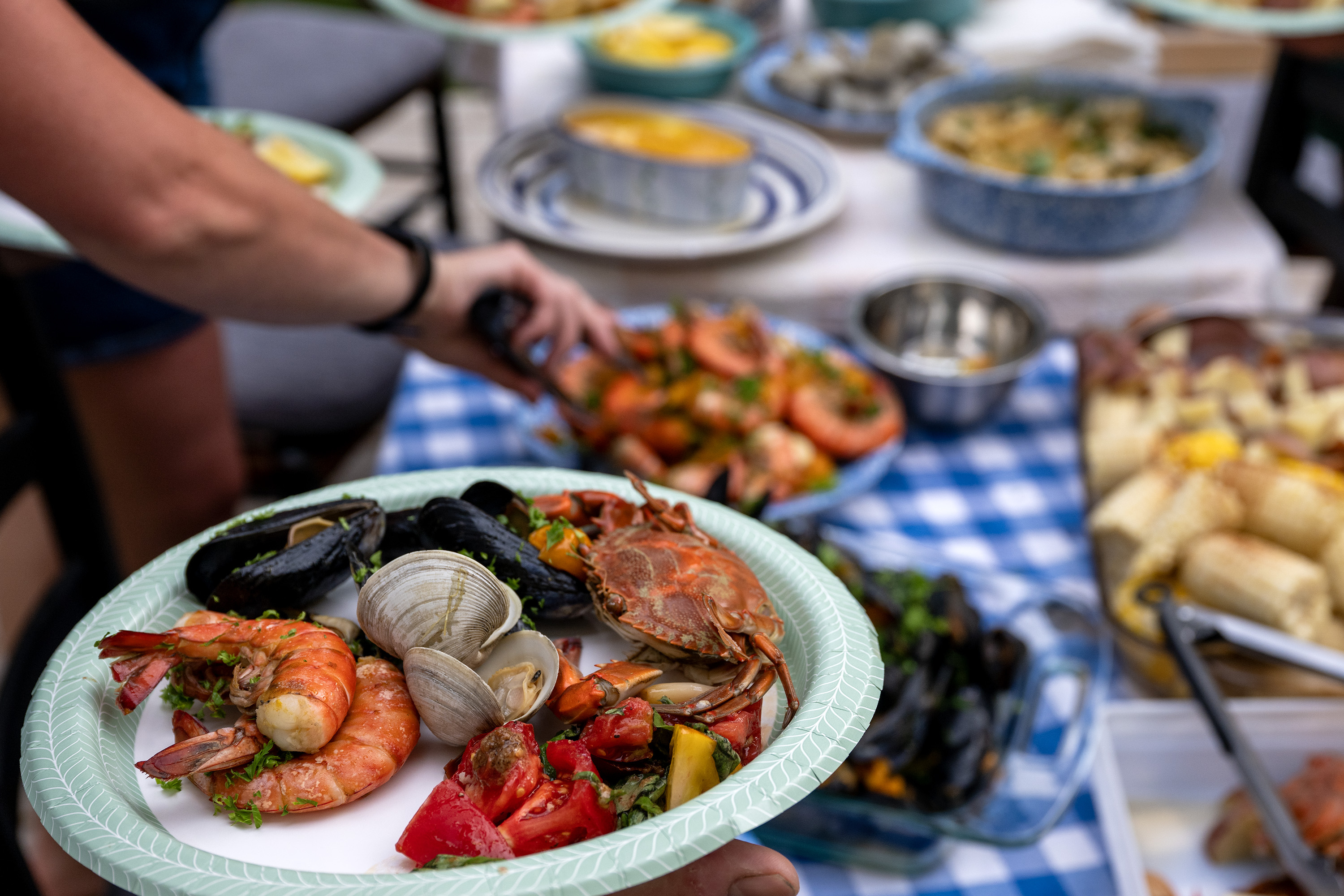
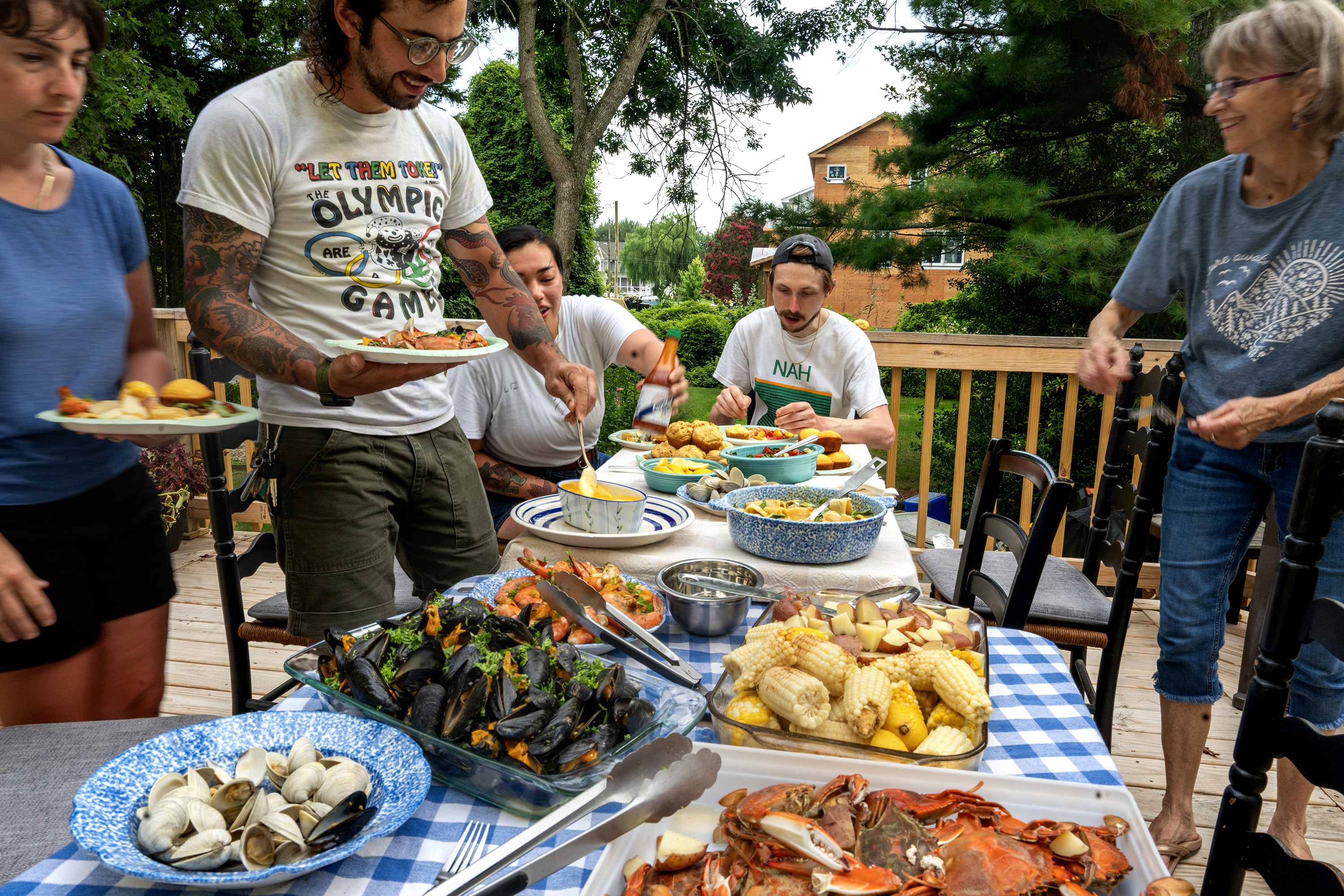
By 5:30 p.m., the table was set with plates of steamed mussels, poached and steamed shrimp with a sungold tomato broth, calamarata pasta, boiled crabs and clams, gluten-free and regular cornbread, and tomato salad. The menu was prepared with leftover ingredients, including sungold tomatoes, basil, and butter from Scampi — “things that were going to go bad and that we had excess of, just a little something to share with the crew.”
After an almost seven-hour expedition, Grothe and the Lances settled down on the backyard patio, cracking crabs and enjoying the fruits of their labor.
“If you’re gonna go crabbing, that’s gonna be your activity for the day — you catch them, and then you gotta deal with them,” Grothe said.
“Doing something that is very labor-intensive, sharing a part of me with other people that’s fun and interesting — even if it’s not the most industrious or profitable thing — is what I love about cooking,” Grothe added. “Just bringing the family together and showing them that I care via doing this stuff makes me feel good.”
Chef Liz Grothe of Scampi (rear, center) and her partner Jacob Lance eat dinner at his mother’s house in West Cape May, Sunday, Aug. 2, 2026. At left are Lance’s brother and sister-in-law Shmem Rose and Zachary Rachelle, and on the right is his mother, Christina Johnson.Tom Gralish / Staff Photographer
Within minutes of waking up, I can’t help but reach for it. The iPhone on my nightstand has a gravitational pull.
I swipe through my Instagram feed before my eyes have even adjusted to daylight. Of course, there is nothing urgent in this sea of vacation pictures, pregnancy announcements, adorable dog videos, and ads for products I Googled the day before.
Yet I can’t stop scrolling.
Last month, I became hyperaware of my dependence on this unhealthy habit when I deleted Instagram — my millennial social media of choice — for two weeks. It was for “work purposes,” I told myself, and would inform this story about how much time and money some consumers have spent trying to pull themselves from their screens.
I ended up deleting Facebook, too, after a day spent filling Instagram’s absence with rambling posts from neighborhood groups.
After my experiment, I see why people are willing to pay to unplug from social media.
Chen Wang, an associate professor of marketing at Drexel University’s LeBow College of Business, said she gets it, too. Not only because she observes the habits of her Gen-Z students, but also because she researches consumer technology and self-regulation.
The human-smartphone relationship, Wang said, has become “a paradox.”
“It makes our life so convenient. We can do almost everything on our phone,” Wang said. “At the same time, we’re also wishing we could use it less.”
Why some pay to unplug
Someone scrolls on their phone in this 2019 file photo.Heather Khalifa / Staff Photographer
As consumers have become increasingly aware of how social media and screen time affects their mental health, a cottage industry of social-media-detox businesses has emerged.
And an array of phone applications — ironically — block other apps. Some of those app-blockers are free. Others offer paid tiers from $40 to $100 a year.
Others struggling with social media overuse have spent hundreds of dollars on wellness retreats, where screen time is limited. In May, Cristen DeDomenico, a Philly-based bartender and therapist-in-training, spent about $1,300 to attend a weeklong retreat at the Kripalu center in Massachusetts.
“It definitely involved turning off and stepping away” from the digital world, said DeDomenico, 35, who felt less tempted to scroll social media in the retreat environment. “No one else was on their phone, so you didn’t feel the urge to be on yours.”
Closer to home, for a nominal fee, community leaders and small-business owners around the Philly area have been organizing social gatherings and workshops where attendees have to put their phones away.
Glenside educator Charlie Price started her digital-detox and wellness business, Time and Space, during the pandemic, when she noticed her own bad phone habits while stuck at home. Price, 36, said she’d often scroll Instagram for more than 30 minutes at a time.
Now, Price hosts regular events, including hikes and art workshops, for which people pay between $5 and $25 per person. Attendees abide by an honor system: Keep phones out of sight.
The focus, Price said, is “getting together in person and in nature … getting out IRL,” — in real life, in internet parlance.
What works best for reducing screen time
A man looks at his phone while walking his dogs.David Zalubowski
At its core, the solution to our scrolling problem is free: We all could just turn off, hide, or simply walk away from our devices.
DeDomenico said she learned that when she returned from her retreat. For the first few weeks, she was more present in her daily life, she said, but then old habits crept back in — and her post-work scroll got longer.
I’ve found this, too, since redownloading Instagram. Grabbing my phone to check the weather or pull up a photo can quickly turn into a waste of 15 minutes or more on mindless swiping.
I don’t think going cold turkey is the answer. I do enjoy those adorable dog videos and the funny reels, and the photo dumps from people I haven’t seen since grade school.
After Wang’s reassurance about the effectiveness of external motivators, I’ve been reading more articles about the best app-blockers — and even toying with the idea of investing in one of them.
Peace of mind is probably worth at least $50, right?
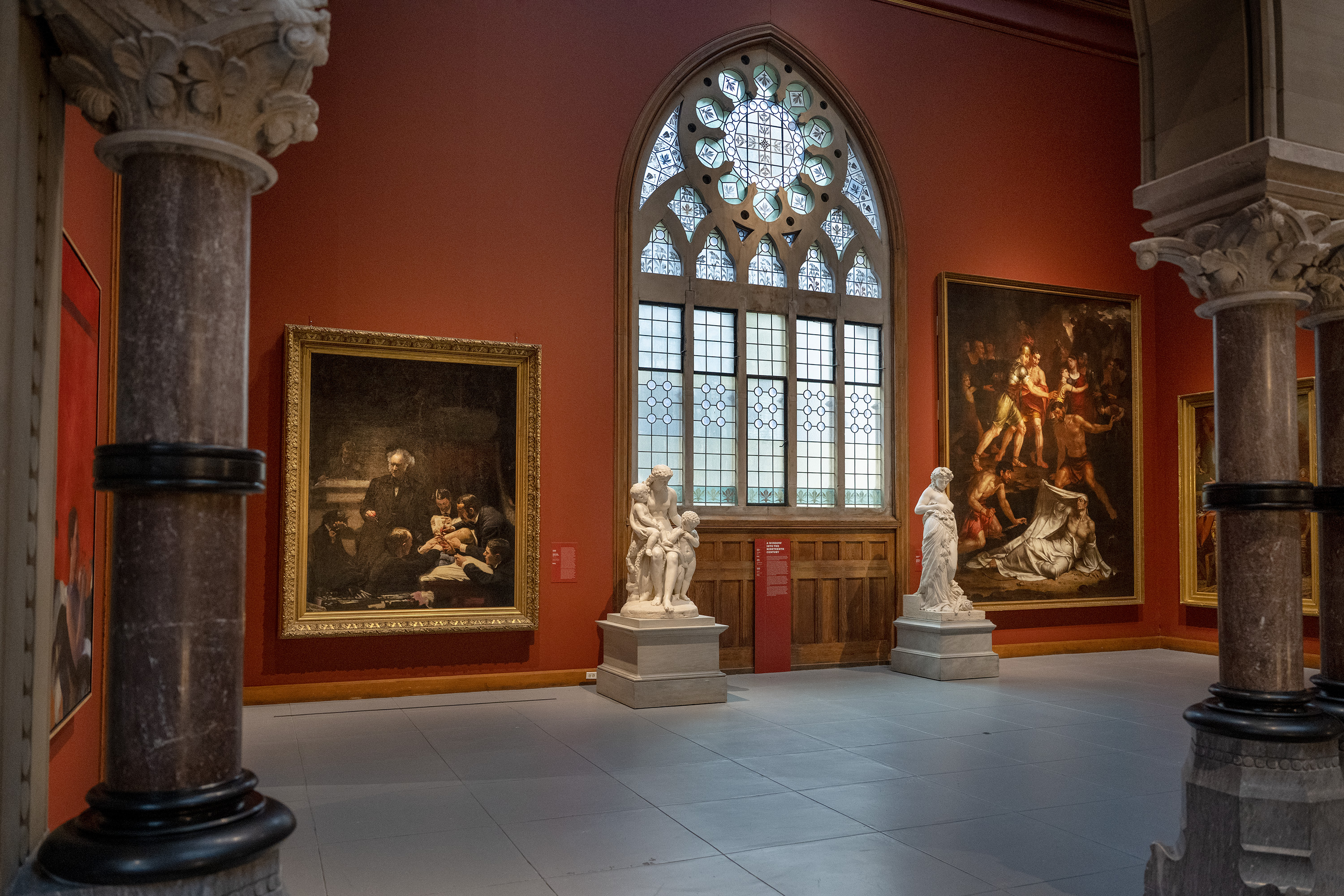
One painting stands out among the stately portraits, vast landscapes, and elaborate tableaux of figures in the Philadelphia Museum of Art’s early American art galleries.
And not just for its size.
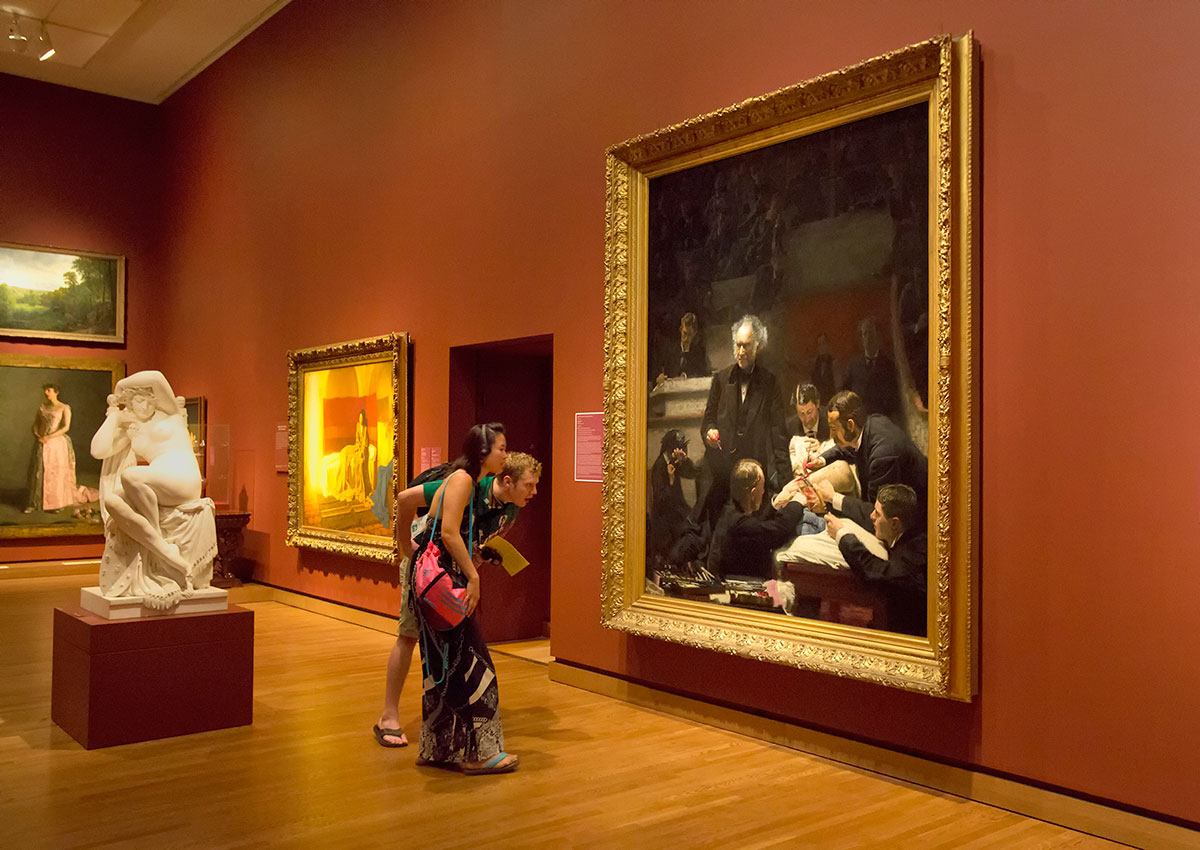
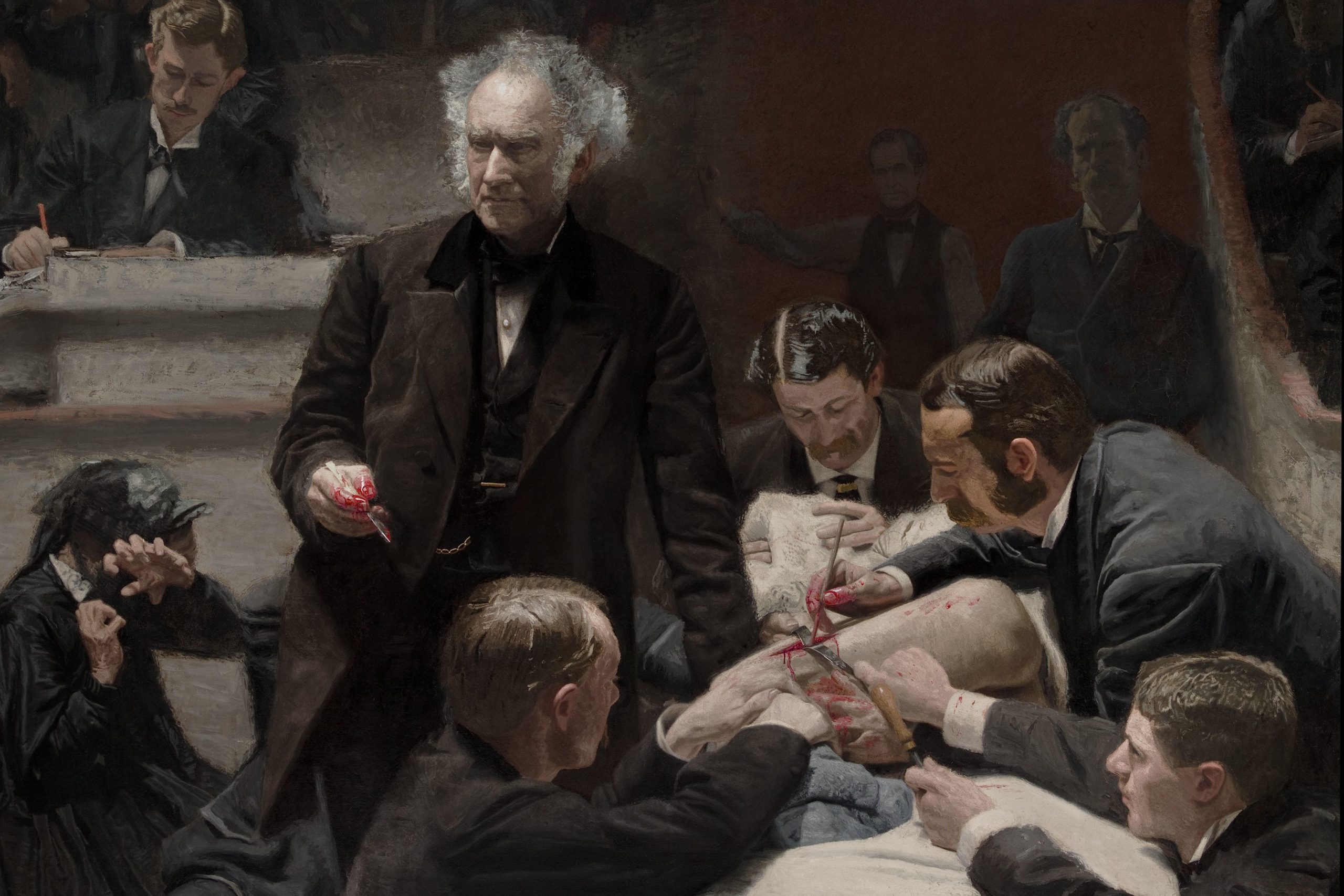
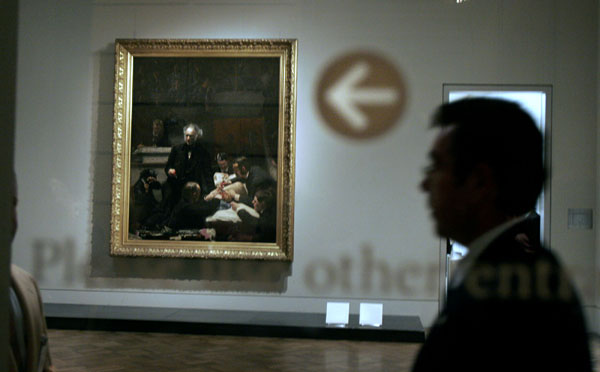
In the 8-by-6.5-foot oil painting, a stern-looking man with fluffy gray hair stands next to an operating table. A crowded amphitheater watches him and a group of doctors operate on a boy’s leg. The wound, their hands, and their scalpels are covered in bright red blood.
A detail from “The Gross Clinic.” Courtesy the Philadelphia Museum of Art and the Pennsylvania Academy of the Fine Arts
The painting is currently owned jointly by the PMA and the Pennsylvania Academy of the Fine Arts (PAFA), where Eakins studied.
But the story of the journey to that ownership is not a simple one.
In 2006, after 128 years of displaying the painting at Jefferson, the university sold it in a surprise deal. Local institutions had 45 days to match the price: $68 million.
PMA and PAFA started a public fundraiser, and Philadelphians took swift action — no one was going to take their painting away from them.
Twenty years ago, Philadelphia almost lost The Gross Clinic forever. Almost.
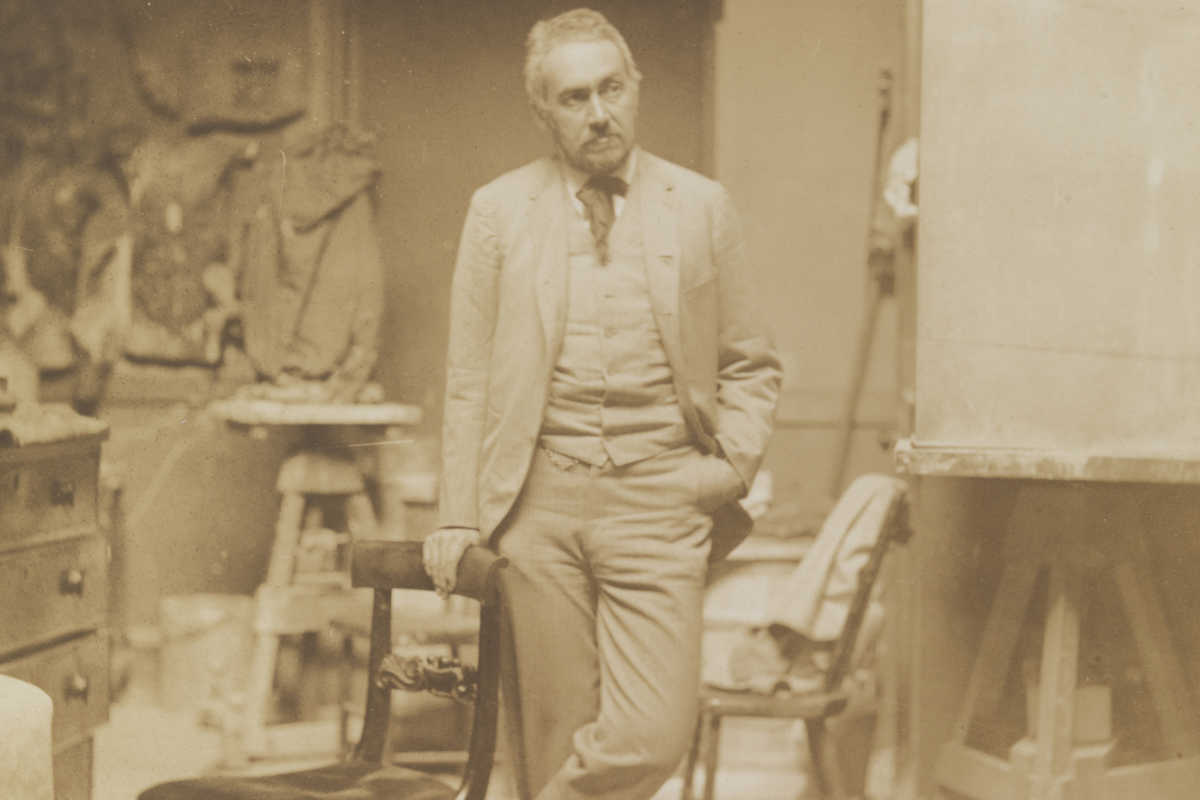
Thomas Eakins in his Chestnut Street studio.Photo taken by Samuel Murray.
The slow burn of ‘The Gross Clinic’
Eakins was incredibly passionate about the medical profession. So much so that while studying at PAFA, he also enrolled in anatomy and dissection courses at Jefferson, where Gross was teaching.
“He was very obsessed with the accuracy of the body because as a painter, knowing the human body and depicting it is the highest skill level to attain,” said Reisa Mukamal, a PMA museum guide.
In The Gross Clinic, Gross is operating on an adolescent boy with osteomyelitis, a bone infection that had previously been treated with amputation. The painting depicts the doctors performing a newer procedure for the disease involving removing the damaged bone tissue rather than cutting off the limb — a stunning medical advancement.
Works in the newly renovated Furness and Hewitt building at the Pennsylvania Academy of the Fine Arts, including “Portrait of Dr. Samuel D. Gross (The Gross Clinic)” by Thomas Eakins.Tom Gralish / Staff Photographer
“The light is shining off Dr. Gross’ head and it’s almost like your eye goes there. It’s a dark painting, and then your eye goes to his forehead, sort of symbolizing his intellect. … This is a live surgery, which was a brand new thing to paint,” said Mukamal.
Eakins was excited to show off The Gross Clinic at the 1876 World’s Fair in Fairmount Park, which doubled as a Centennial celebration and exhibition.
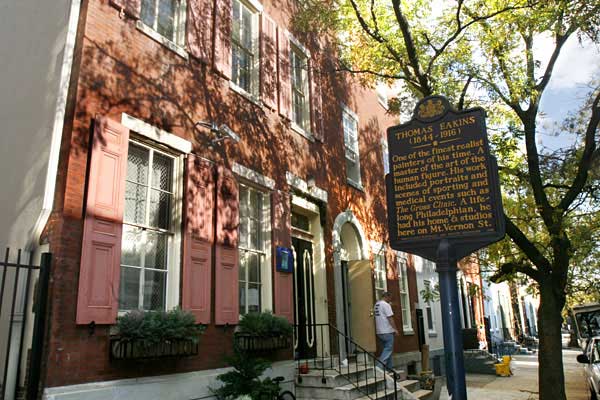
Thomas Eakins lived virtually his entire life in Philadelphia, including at 1729 Mount Vernon St. He was a student and later a teacher at the Pennsylvania Academy of the Fine Arts.Gerald S. Williams / Staff Photographer
Unfortunately for the young artist, it was perceived as too disturbing for the art jury. The painting was moved to the fair’s U.S. Army field hospital exhibition due to its medical nature. Jefferson alumni gifted it to the university two years later.
‘It belonged here’
But 128 years after receiving that gift, Jefferson made a shocking announcement. On Nov. 11, 2006, university officials said The Gross Clinic was to be sold to a museum partnership between the National Gallery in Washington and the Crystal Bridges Museum of American Art in Arkansas, for $68 million.
The money from the sale would help finance an ambitious expansion plan for the medical school.
“This is a big undertaking, a transformational undertaking, and it requires a redirection of our assets,” said Robert L. Barchi, Jefferson’s president, in a November 2006 interview with The Inquirer’s Stephan Salisbury.
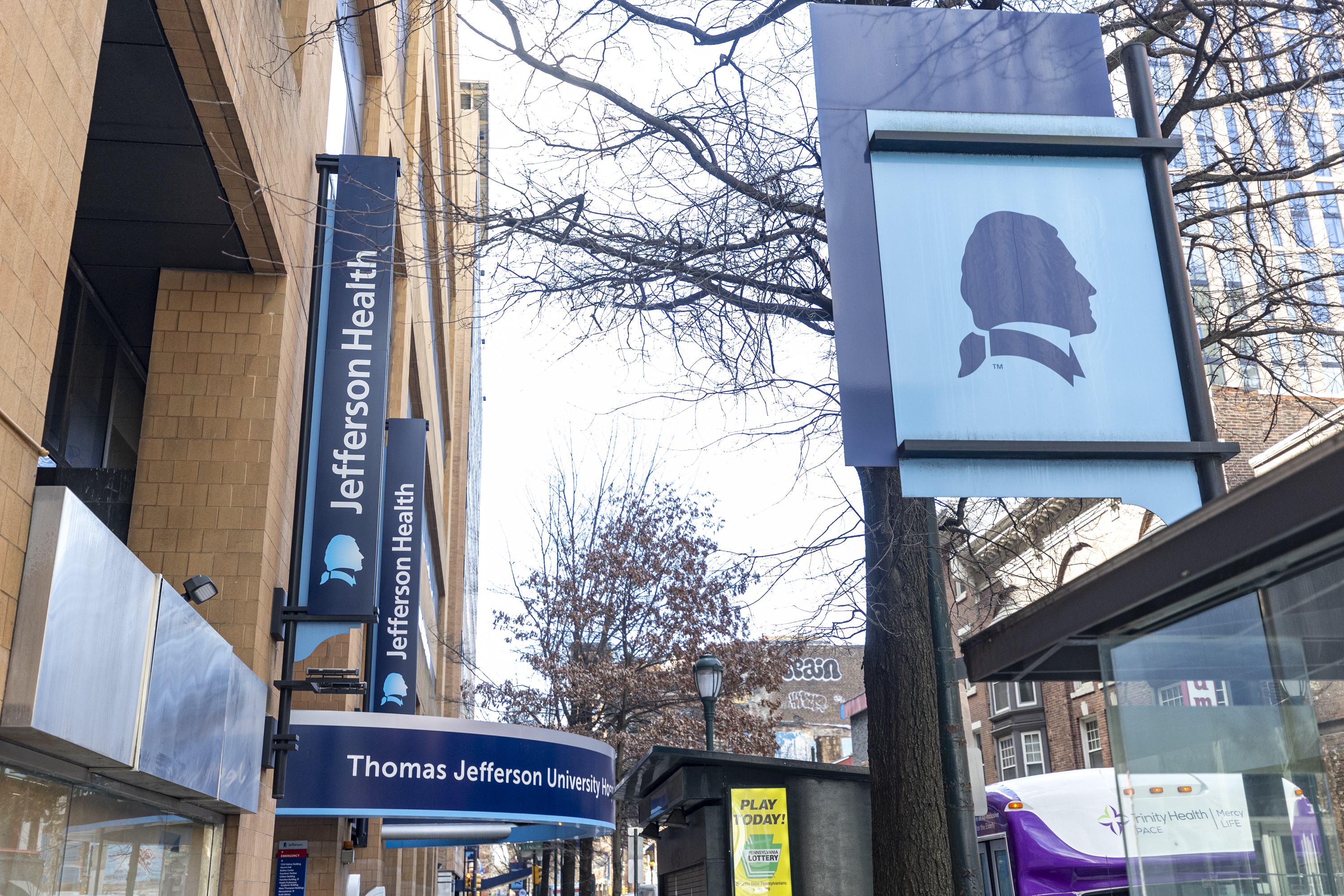
Thomas Jefferson University Hospital entrance at 11th Street in Philadelphia.Tyger Williams / Staff Photographer
“We’re not a museum. We’re not in the business of art education,” he added.
Jefferson’s chairman of the board, Brian Harrison, said, “Our first obligation as trustees of the university, if we are going to release an asset like this, is to maximize value.” He acknowledged the “importance of the painting” to Philadelphia and noted that “the [Jefferson] alumni revered” it.
Once the deal brokered by the auction house Christie’s was struck, an additional clause was added to the agreement. It allowed Philadelphia to keep the painting if it could match the sale price. Jefferson gave the city 45 days to do so — a month and a half to raise the largest amount ever paid for a pre-World War II American painting up until that point.
“There’s no museum, in fact I can think of no nonprofit in the U.S., that can raise $68 million in 45 days,” said Kathleen Foster, senior curator and director of the Center for American Art at the Philadelphia Museum of Art. “There wasn’t really time to twiddle our thumbs, we had to just dive in.”
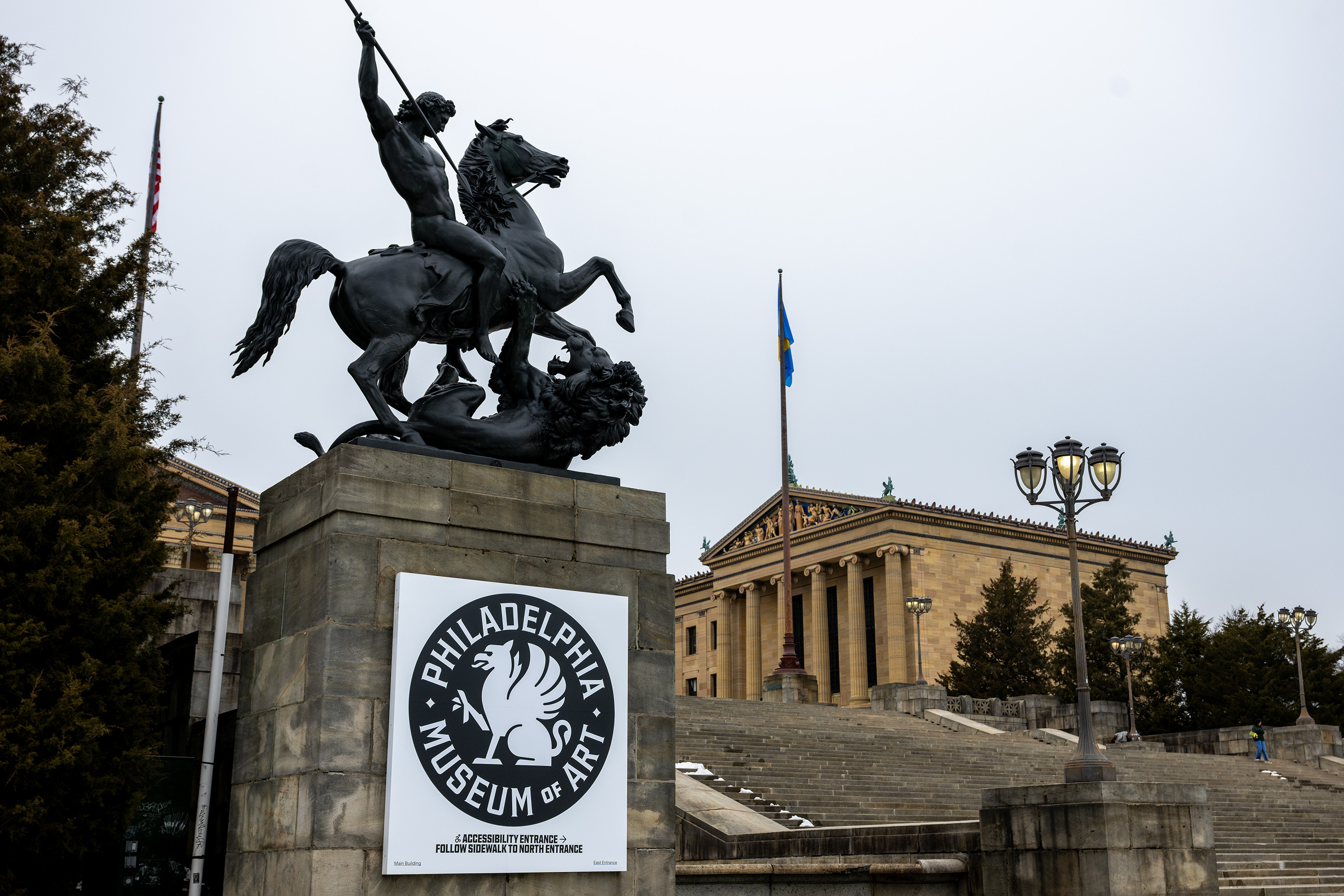
One of the newly installed signs at the Philadelphia Museum of Art.Tom Gralish / Staff Photographer
Anne d’Harnoncourt, the director and CEO of PMA at the time, “was never ever dissuaded,” Foster said. She started a fundraising campaign and immediately put the museum staff on phones calling government officials. She had them giving talks to the public, updating them on the campaign, and she suggested partnering with PAFA.
The museums met with bankers and coordinated to receive donations from Philadelphia-based philanthropists. The Annenberg Foundation, Gerry Lenfest, Pew Charitable Trusts, Nicholas and Athena Karabots, and Joe Neubauer all pledged donations in the millions, making up about a third of the funds raised.
Joe Neubauer, chair of the Neubauer Family Foundation.Jose F. Moreno / Staff Photographer
Neubauer, formerly CEO of Aramark, has supported several institutions through his family foundation, including the Pew Research Center, Brandeis University, the Jewish Theological Seminary, and Calder Gardens.
“I like challenges. This seemed to me to be in the essence of Philadelphia,” said Neubauer, who donated $3 million to the cause. “An artist, who was the greatest artist in Philadelphia in his period, this was his greatest piece that he had ever done. It’s been in Philadelphia from the beginning. He lived in Philadelphia, worked in Philadelphia, went to art school in Philadelphia, went to Central High School. It belonged here and to take it out seemed to be just not fair.”
A few Eakinses for an Eakins
Both the PMA and PAFA parted ways with several of Eakins’ other paintings they owned via a process called deaccessioning — selling work from the collection and using those funds to keep The Gross Clinic.
Among Eakins’ paintings that the PMA sold was one of a cowboy playing the banjo. Several Dakota landscape paintings went to a Western art collection in Denver. PAFA had to sell a more beloved Eakins piece, called The Cello Player, to a private collector.
The Pennsylvania Academy of the Fine Arts’ Frank Furness-designed building on North Broad Street.Tom Gralish / Staff Photographer
“That was sort of a necessary tragedy. Because it’s a private collector, they could come up with money fast, and the academy could get the money quickly,” said Foster. “For the museum it was a happier ending because the paintings [it deaccessioned] went on view to the public. For the academy it was sadder because the painting has basically disappeared, gone underground.”
As PMA and PAFA acquired big-name donors and sold beloved artwork, the story of the campaign reached the public. Civic outrage ensued.
‘Hopping mad’ Philadelphians
Steven Conn, a history professor at Miami University of Ohio, was invited to discuss the matter on a local AM talk radio show, then known as The Big Talker, after he criticized the sale of the painting on NPR.
“I had expected to defend the idea that we should care at all about the sale of this painting and was caught off-guard when I realized that not only the host but several of the callers were hopping mad about it too,” Conn wrote in the 2012 essay “Local Hero: The Gross Clinic and Our Sense of Civic Identity.”
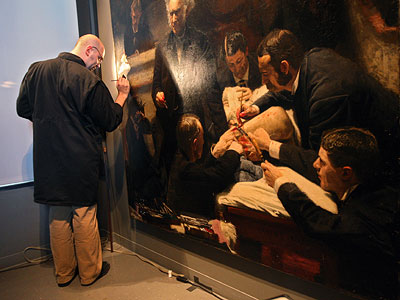
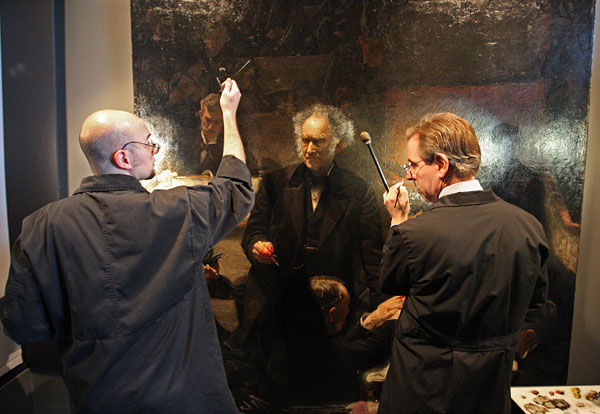
Allen Kosanovich, a Mellon Fellow in Conservation, works on restoring the part of the “Gross Clinic” painting where the gallery is watching the surgery.Michael Bryant / Staff Photographer
Kathleen Foster recalls that even Conn’s taxi driver, who picked him up at the airport, became “incensed” when Conn brought up the possible sale of The Gross Clinic. The public was angry, and so were public officials.
“I had to give this talk and in the front row, there was Ed Rendell leaning forward in his chair, drinking up every word I was saying. Who knows whether he had any idea who Thomas Eakins was before he got this pep talk,” said Foster.
Rendell was governor of Pennsylvania at the time, and had previously served as the mayor of Philadelphia.
Hugh C. Long of Wachovia’s MidAtlantic Banking Group, with Art Museum director Anne d’Harnoncourt (center) and Rebecca Rimel, president and CEO of the Pew Charitable Trusts. (MICHAEL BRYANT / Inquirer Staff Photographer)
“He called up the director of the National Gallery and screamed at him,”said Foster. “Hejust said, ‘How dare you take this away from Pennsylvania? For shame!’ I heard the director had to hold the phone away because he was being yelled at by the governor of Pennsylvania. That kind of energy I think is pride that this is a gem for our city and for the state.”
But more important than how angry they were was how willing people were to donate. Before Reisa Mukamal was a PMA guide, she was living in Swarthmore, raising four children and working as a synagogue teacher and writing tutor. When she heard about the campaign, she knew she had to donate.
“I must’ve read about it in the news,” she said. “I didn’t contribute a lot, it was a modest amount of money. But there was no way I was going pass that up and it seemed like a once-in-a-lifetime story.”
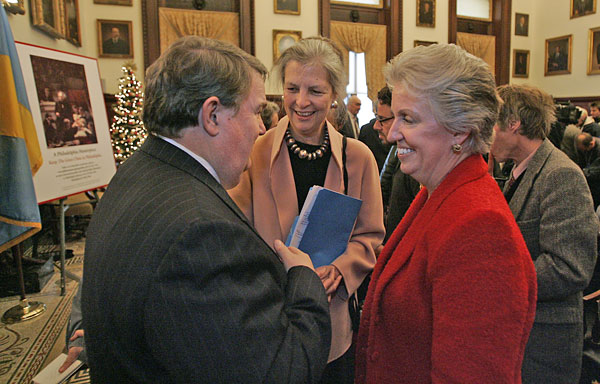
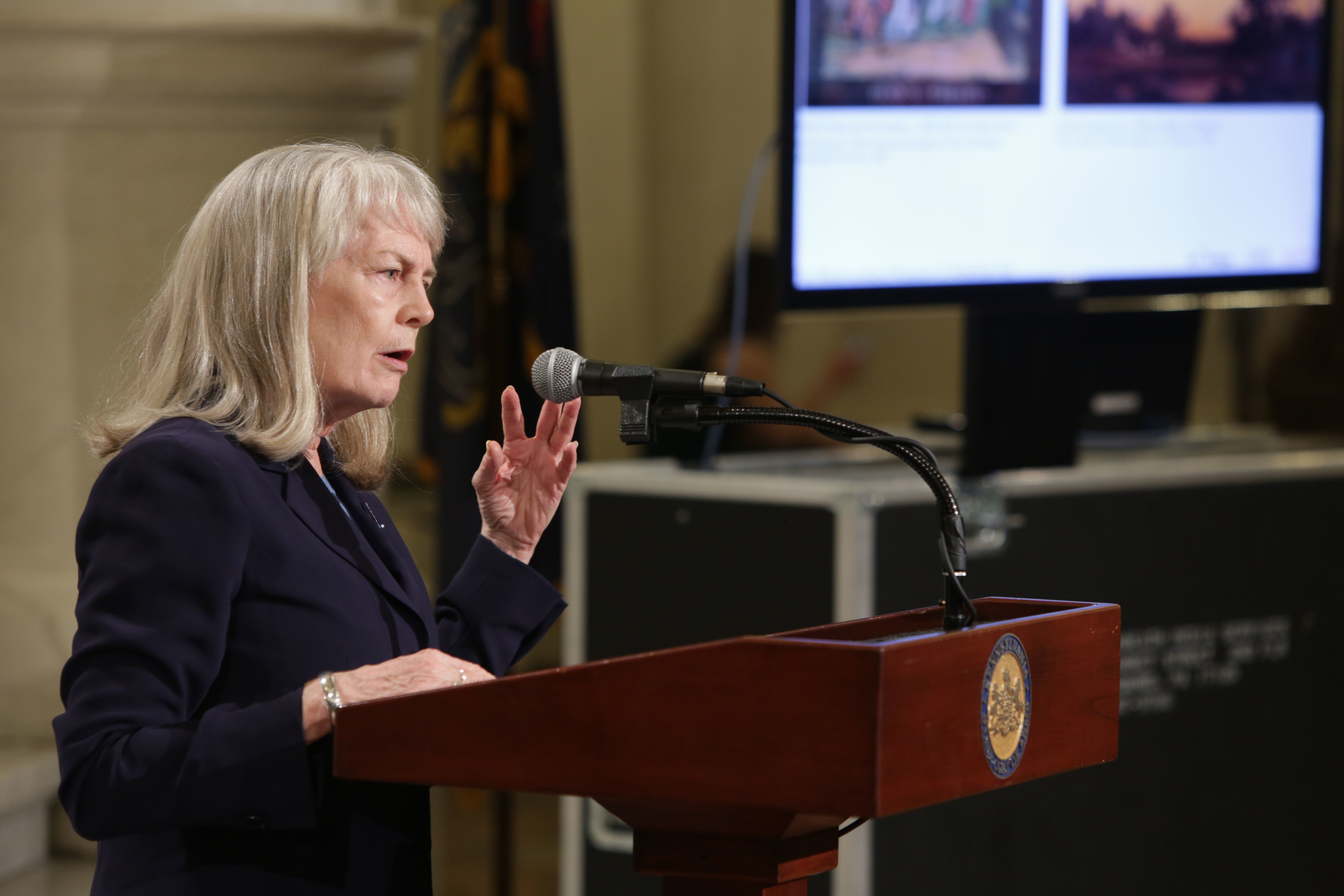
Kathleen Foster, senior curator and director of the Center for American Art at the Philadelphia Museum of Art, discusses the art-sharing initiative during a press conference at the Pennsylvania Capitol, on April 29, 2019.GK Visual
‘Why would we want to let a cherished piece of art leave the community?’
Foster’s favorite story is of a little boy who donated $2.46 (his piggy bank savings) to the cause after watching his grandfather become infuriated after hearing about the story on television.
“It’s that kind of anecdote that just was so heartwarming that we just had Philadelphians at home in their living rooms listening to the television, maybe reading stuff from Stephan Salisbury in The Inquirer, and being outraged. We had this torrent of small gifts that were so adorable. Students, people with no money, and then there were the Annenbergs of the world giving a million dollars. We had this amazing spectrum of people.”
In Salisbury’s original coverage in The Inquirer, he reported that “a woman in Wyoming sent in $25 because her daughter, who lives in Philadelphia, said she wanted a ‘donation to this fund’ as a Christmas present” and “a woman from Philadelphia sent in $100 and noted that she had taken her whole family to see The Gross Clinic over the Thanksgiving holiday.”
Faculty members at PAFA started selling buttons at the foot of the Rocky steps for a dollar; they said “Keep ‘Gross’ in Philadelphia.” From time to time, they’d bring their jar of dollars into the PMA to donate toward the fundraiser.
Former Mayor Ed Rendell during opening night of 1776: The Musical at the Philadelphia High School for Creative and Performing Arts on Wednesday, June 24, 2026.Elizabeth Robertson / Staff Photographer
“It’s amazing to me that people hear about things in the news, whether they read it or watch it somewhere, and all of a sudden, $10, $15 dollars, $5, $1,” said Neubauer. “Contributions now are much more easily made than writing a check and putting it in an envelope and putting a stamp on it. It caught the spirit of the people. Philadelphians are proud of their city, and this was a pride in the city. Why would we want to let a cherished piece of art leave the community?”
The PMA and PAFA say the campaign received money from between 3,400 and 3,600 donors from across the nation.
A last-minute fundraising drive kept “The Gross Clinic” in Philadelphia and staved off its sale to two out-of-town museums.Eric Mencher / Staff Photographer
“I hope people appreciate that it’s not contemporary art, it’s 19th-century art. When I was younger I always marveled at cave drawings. Why did people draw in the caves? Because it was important to them to show what nature was,” said Neubauer.
The PMA and PAFA raised enough money by the Dec. 26 deadline to keep The Gross Clinic at their institutions indefinitely.
“I think it’s very important for people in Philadelphia to go see it and understand that it was done in Philadelphia by Philadelphians for Philadelphia,” said Neubauer.
Supporters packed into the PMA’s Great Stair Hall to cheer on this victory for the Philadelphia art world.
Conservators Allen Kosanovich (left) and Mark S. Tucker work on Thomas Eakins’ “The Gross Clinic.”Michael Bryant / Staff Photographer
“Ed Rendell came to the microphone, put his arms up like Rocky, and just bellowed in triumph over the acquisition of this painting,” said Foster. “This cheer goes up from the room, I thought the roof was going to lift. It was like we had won the Super Bowl.”
“The Gross Clinic” is currently on display in the Historic Landmark Building at the Pennsylvania Academy of the Fine Arts, 118-128 N. Broad St., Philadelphia, Pa. 19102.
[Editor’s note: Morgan Ritter is The Inquirer’s first recipient of the Stephan Salisbury Internship for Arts Journalism. Salisbury died in 2024, after a long career as an arts and culture reporter for The Inquirer — including his reporting on the proposed sale of “The Gross Clinic.” ]
This week Philly teachers were prepping for the start of a new school year and I went to Fanny Jackson Coppin School in South Philadelphia to photograph them hanging posters, arranging desks, taking new books out of boxes, and opening packages of supplies,
I walked from classroom to classroom, saying hi and introducing myself. Most were happy to have me come in and show the newspaper’s readers how they spend hours making their room feel welcoming and comfortable.
I was definitely feeling at ease by the time I got to the first grade classroom of teacher Lauren Cucinotta.
Because I wrote just last week about the senses triggering memories I was expecting all morning that what’s known as the “Proust phenomenon” would kick in. But it wasn’t the waxy smell of the crayons.
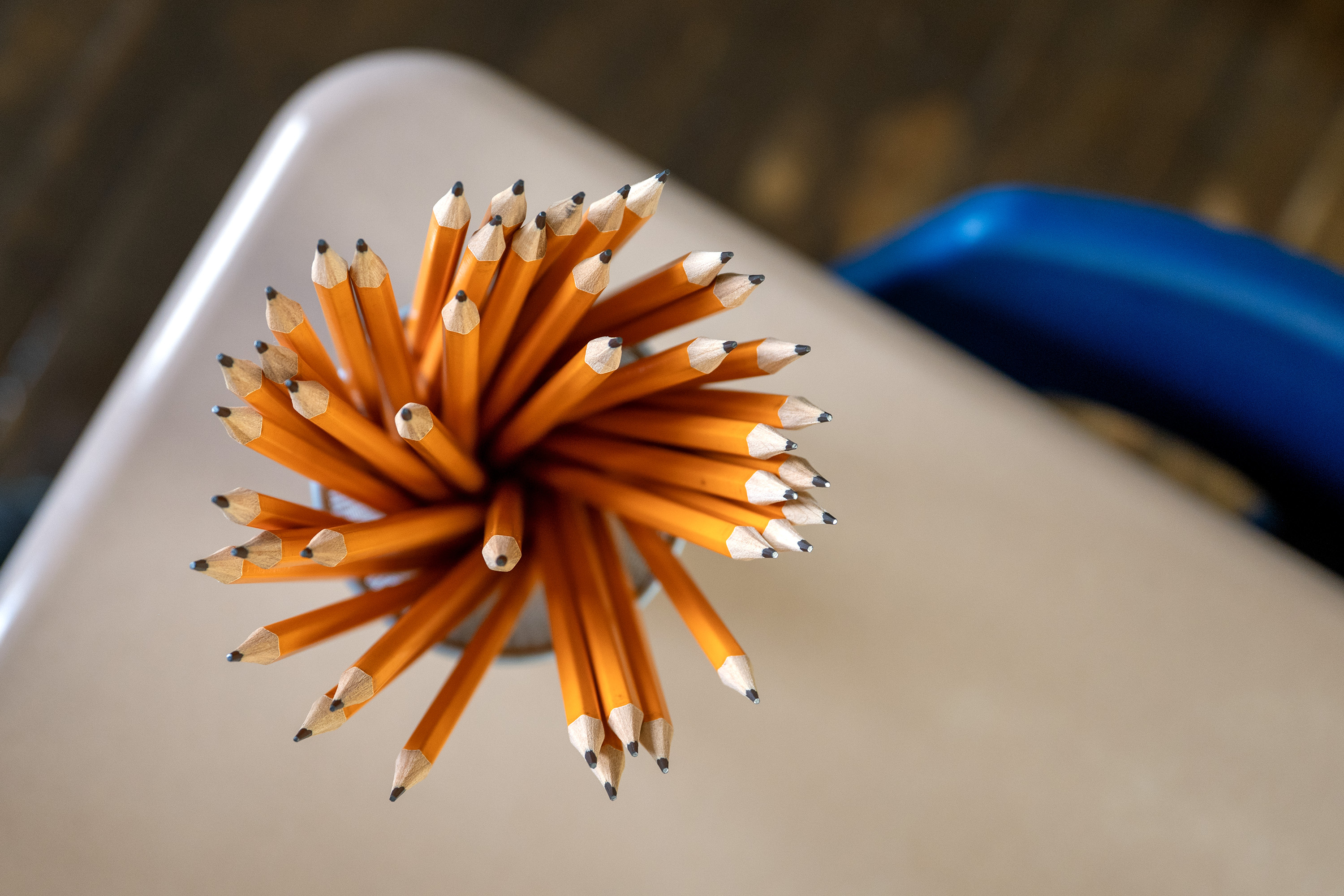
No, as a visual person it was the sight of a cup full of freshly sharpened pencils.
There is nothing more basic, more ordinary than a pencil — well except maybe for paper. But then we get into a chicken or the egg thing, and I don’t want to go there, so I’m sticking with pencil.
All those little points of graphite evoke a feeling of possibility. More than being ready to make the first marks of a new school year, I see them representing a clean slate (page) or even a new way to look at an annual recurring photo assignment.
You can’t see them in the photos, but for a moment even the erasers at the other end of the pencils evoke memories of my own first days of school and remind me that yesterday’s mistakes do not have to follow me into today, that there is always something new to see and photograph.
That’s enough navel gazing for one column, so let’s talk about this week’s installment of my colleague Elizabeth Wellington’s series highlighting a Philly “first” for the ongoing celebration of America’s 250th birthday. This week celebrated the first selfie still in existence, which was taken in Philadelphia in 1839.
They were first called self-portraits, and before smartphones, they involved putting cameras on tripods or tabletops and using timers or long cable shutter releases. Photographers — especially after small 35mm cameras came along — did use a wide-angle lens with the “extend your arm” technique, and the first I can remember seeing was when our wedding photographer took one of himself with me and my bride.
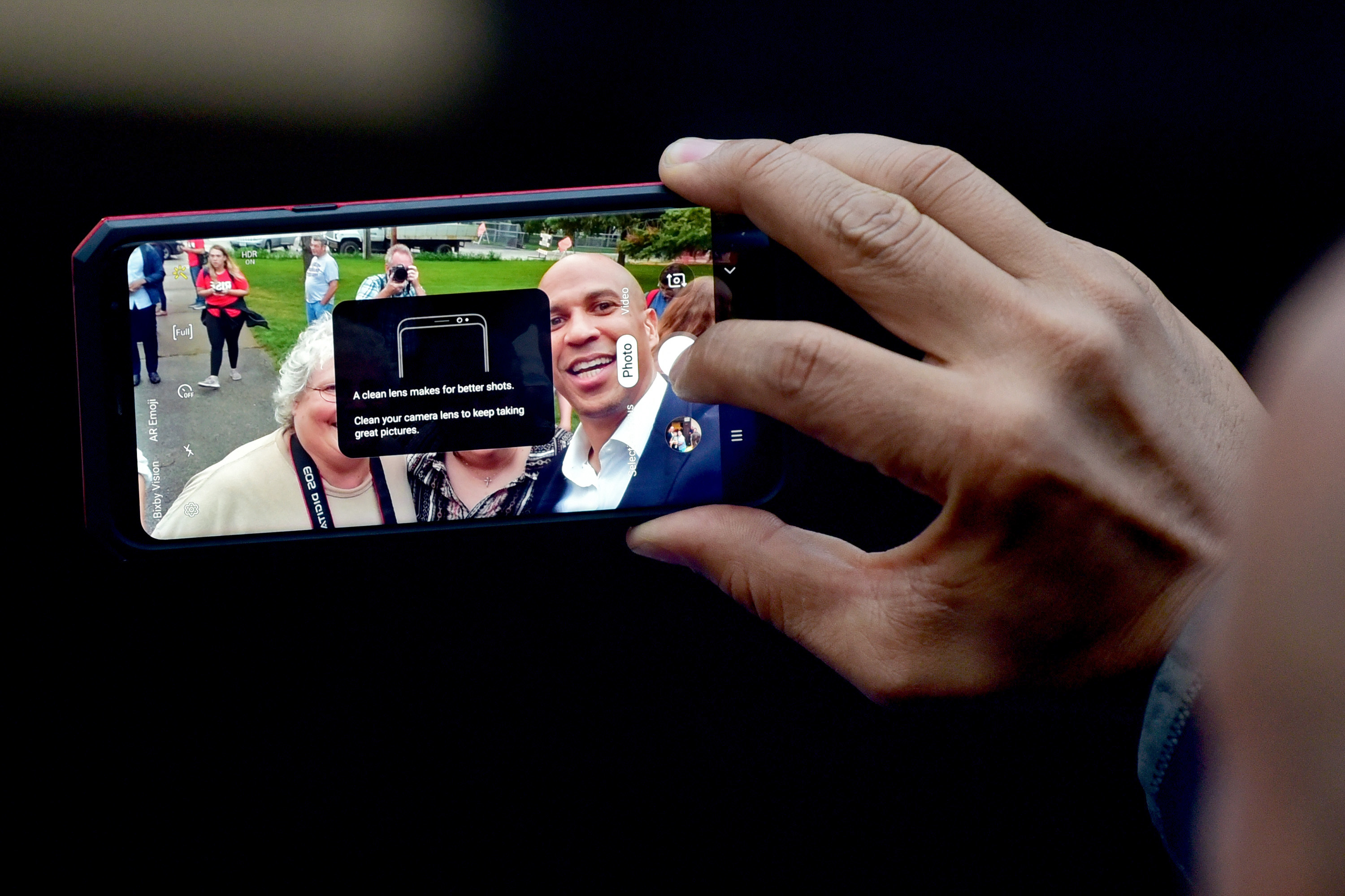
That’s a cherished selfie, but my all-time favorite selfie is one with U.S. Sen. Cory Booker when I spent time with him in Iowa during his short-lived 2020 presidential campaign. And since then, often on his home turf, in New Jersey. You can see me in the background — right behind the helpful photography tip a supporter’s cell phone offered (he cleared the message before taking the photo).
Which brings me to a few other photos to share from this week:
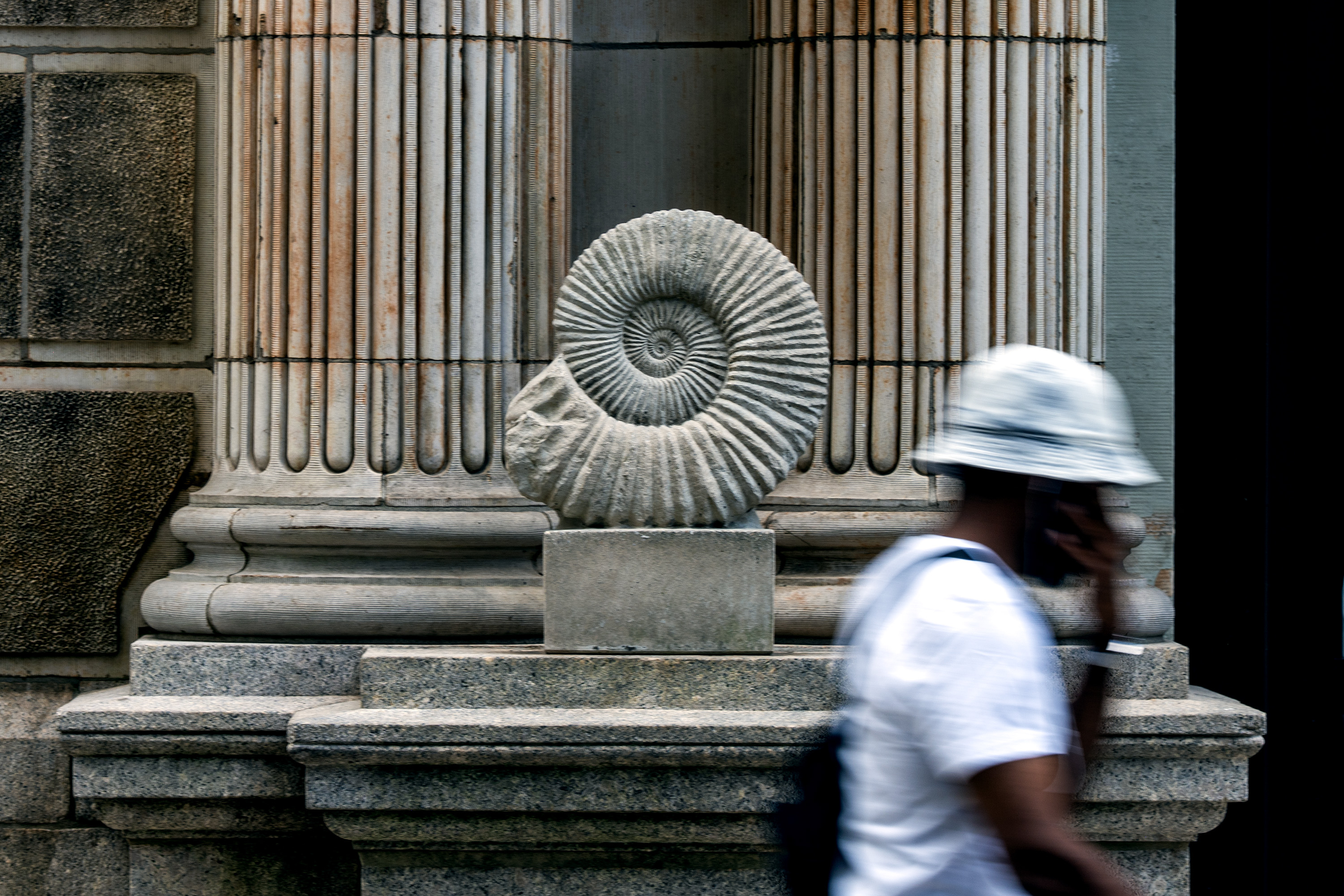
Flags and a bright blue sky are reflected in the windows of a Center City Philadelphia hotel on Monday.Tom Gralish / Staff PhotographerOne of two shell sculptures placed on either side of the entrance on the 19th Street entrance to the Academy of Natural Sciences of Drexel University on Monday. Created by unidentified artists and installed in 2010, a Philly public art website describes the small shell sculptural details as a “complement [to] the museum’s historic focus on malacology (the study of mollusks and their shells).”Tom Gralish / Staff Photographer
And a story I wrote this week on viral French singer-songwriter and animal advocate Loris Assadian, known as Plumes, who sang for tortoises at the Philly Zoo.
Assadian serenades Abrazzo, a Western Santa Cruz Galapagos tortoise estimated to be around 97 to 100 years old.Tom Gralish / Staff Photographer
Since 1998 a black-and-white photo has appeared every Monday in staff photographer Tom Gralish’s “Scene Through the Lens” photo column in the print editions of The Inquirer’s local news section. Here are the most recent, in color:
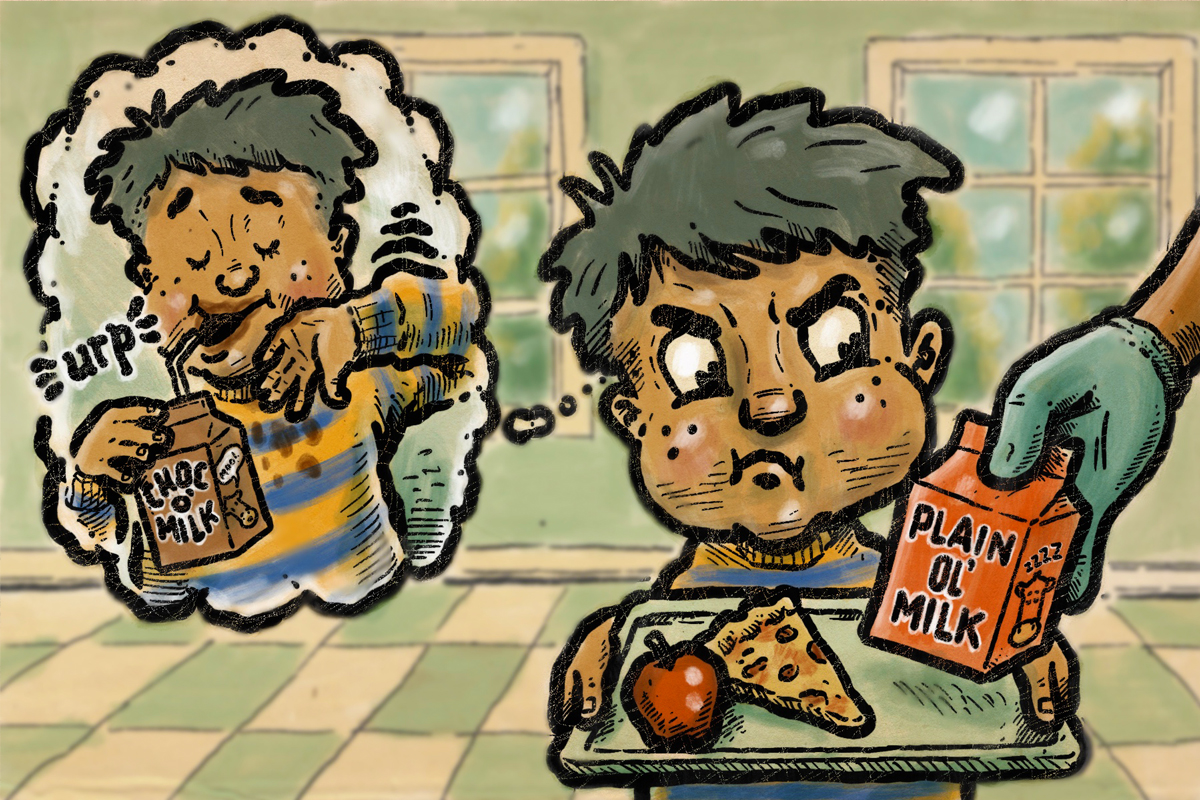
My child is about to start kindergarten and is excited about the school-provided lunch (he knows there is regular pizza). The menu looks mostly fine and I won’t stop him from enjoying it if everyone else is, but I noticed that he can choose to have chocolate milk every single day, which seems like a lot to me. Am I overthinking it or should I tell him he can only choose it once a week? I won’t even be there to see if he’s telling the truth. Do I ask the school to restrict it?
Jason Nark, Life & Culture reporter
I also have a child starting kindergarten, but we have to supply all the lunches.
Zoe Greenberg, Life & Culture reporter
Will you be packing chocolate milk every day?
Jason Nark
No way, but I’m not horrified by the idea. I was recently scolded for packing her marshmallows for summer camp lunch.
Leaving it up to the kid seems like a bad idea. I have to explain this to my parents, often, when they watch my daughter. They will argue “well, she likes (insert ice cream, gummy bears, YouTube, etc.) so we give it to her.”
Zoe Greenberg
So I was just rereading an article about “fat activist” (her words) Virginia Sole-Smith, the author of Fat Talk: Parenting in the Age of Diet Culture. She talked about her own method for “unhealthy” foods — she lets her kids decide, and thinks it’s a way for them to figure out what they actually want/need.
For example, she serves brownies and Cheez-Its and chicken and broccoli at the same time on the dinner table, and the kids decide what to eat, how much to eat, and in what order. I was intrigued!
Jason Nark
I wonder if she’s teaching this kindergarten class.
Zoe Greenberg
Jason, would you talk to the school, or would you tell your daughter chocolate milk is a once-a-week delicacy?
Jason Nark
I would talk to the school, first, and if this was their policy, I would talk to my daughter and set some limits.
Zoe Greenberg
I feel like drawing attention to the chocolate milk as an everyday option, and saying it’s not allowed, makes it seem so much more interesting and desirable.
Jason Nark
We don’t treat kids like adults (or shouldn’t) for a reason.
Zoe Greenberg
I might just say nothing and assume the kid won’t drink it every day? But I also have a five-month-old and he hasn’t ever gotten to drink chocolate milk.
In your school could you have chocolate milk at lunch? I feel like maybe I could, but I didn’t much. I’m picturing the little brown carton.
Jason Nark
I think we could. I drank Pepsi at lunch every day, so that’s even worse. I grew up before people drank water.
Zoe Greenberg
You wish you’d been restricted?
Jason Nark
Maybe not restricted, just more informed. I wish my wrestling team had a nutritionist.
My daughter brings a water bottle to school every day and that’s her drink. If we go out somewhere, she can get chocolate milk or juice.
Funnily enough, a few weeks ago, we were eating pizza and I asked her if she wanted a sip of soda and she seemed horrified.
Zoe Greenberg
Wow. She wants WATER.
How would you deal with the fact that you won’t know if she does or doesn’t drink the chocolate milk, even if you set limits? To me it’s better to not introduce the “you can’t have this” and then the kid has to lie or find a workaround. (Or I guess follow the rule.)
Jason Nark
My daughter is a pretty straight shooter, so I think she’d follow the plan. I wouldn’t ban the chocolate milk, though.
My bigger fight is with the grandparents.
Zoe Greenberg
It’s true, the grandparents will say, “He didn’t want to nap so he didn’t” and I’m like of course he didn’t want to nap, but he really does.
Jason Nark
As an aside, I’ve interviewed a lot of dairy farmers who tell me real milk in schools is key to their survival.
Zoe Greenberg
Oh wow. And I think it’s a USDA requirement. The daycare center required us to sign a waiver if our child was allergic to cow’s milk, otherwise he has to get it.
Do you place restrictions on the grandparents?
Jason Nark
I try, but…
Zoe Greenberg
Sometimes we have to learn to let go.
Jason Nark
Particularly if they’re babysitting.
Zoe Greenberg
Yes. Unlimited chocolate milk is a small price to pay.
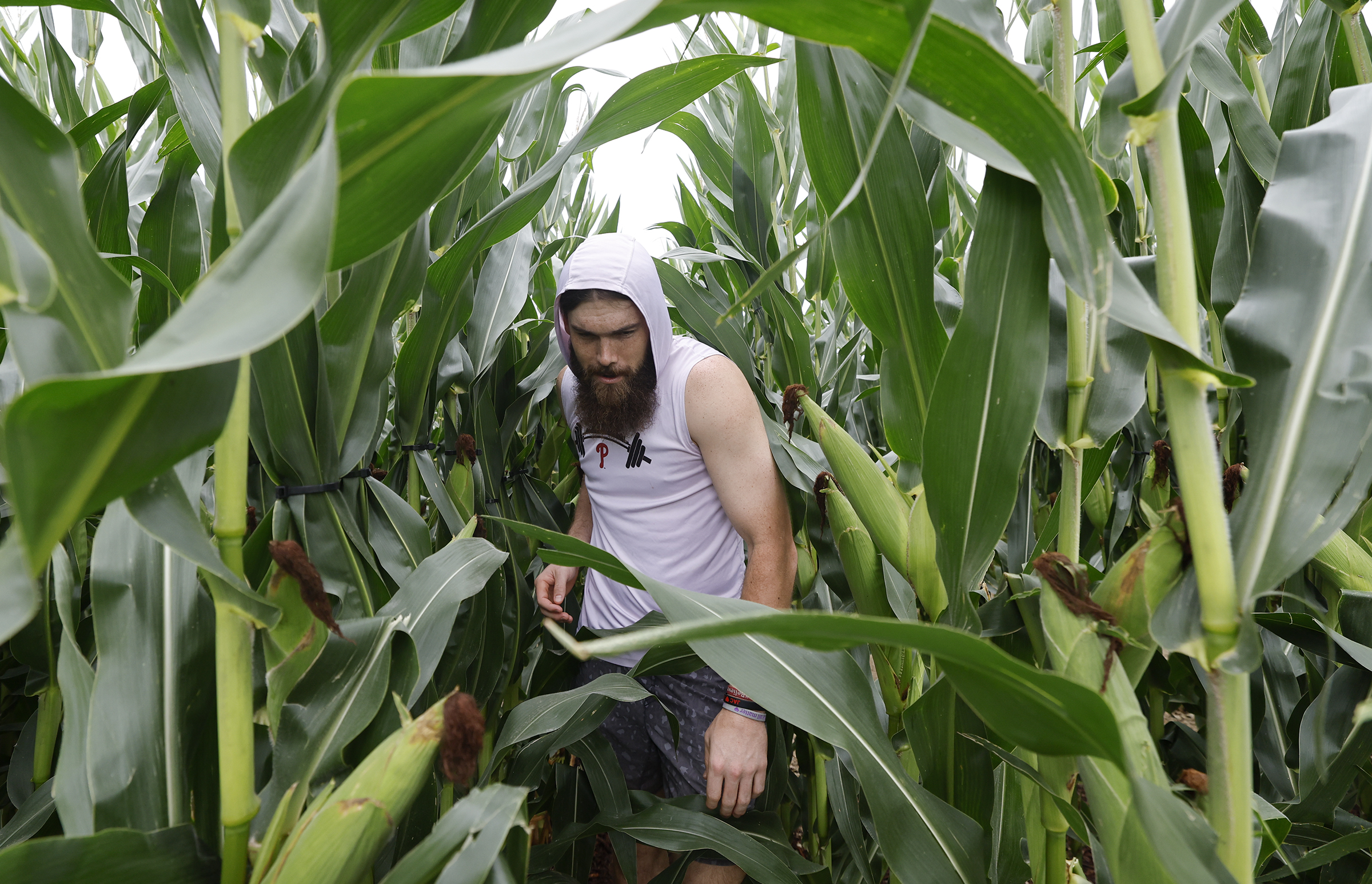
The Phillies crawled into Iowa for MLB’s mystical Field of Dreams game and haven’t lost since. The Fightins peeled off seven in a row since emerging from the cornfield in what’s become baseball’s most spine-tingling summer happening (Sorry, All-Star Game, but Mike Schmidt coming out of the corn was one for the ages.)
Powered by a suddenly divine offense — in the name of the Harper, Bohm, and Bryson Stott, amen — and a resurgent Aaron Nola, the Phillies’ season-best streak put the team 12 games over .500 for the first time all season. By Aug. 20, they enjoyed a two-game cushion for the second NL Wild Card spot. Whether the Phillies celestial good fortune has a Hollywood ending remains to be seen — and will depend largely on the trinity of Zach Wheeler, Cristopher Sánchez, and Jesús Luzardo, and saintly wisdom of Donny Baseball. Is it Heaven? Maybe not. But it’s August in Philadelphia, and the Baseball Gods are smiling.
A bar at McGlinchey’s, 259 S. 15th St.MPN Realty
‘The Gray Wave’ hits Philly restaurants: B-
I’m a sucker for the city’s past. Especially its boozy, foodie past. My sepia-toned Philly time-machine daydreams include strolling bygone Jazz Age South Street speakeasies, clinking a Diet Coke to the swoosh of the gilded curtain at Palumbo’s nightclub, and touring the handsome booths of the 19th-century Reading Terminal Market. All to say, it’s a bummer to mark the passing of iconic Philly-area eateries like Kelly’s Seafood and Steve Stein’s Famous Deli, both in Northeast Philadelphia, and both closing by the end of the month.
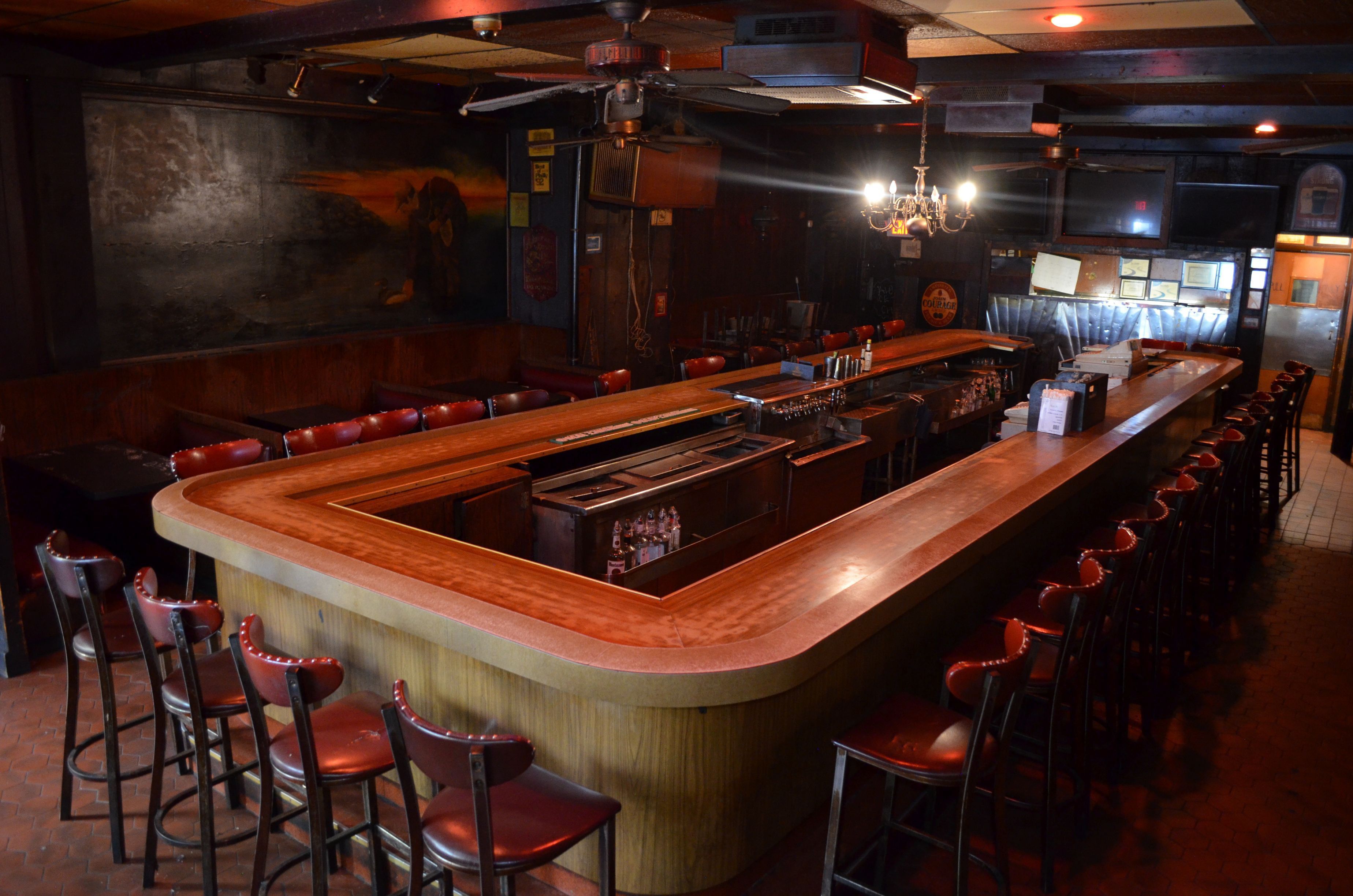
Other landmarks — including the Medieval-inspired Pennsauken steakhouse, The Pub, and legendary Center City spots like Cherry Street Tavern and McGlinchey’s — are on the market. Some in the Philly restaurant scene have coined a phrase for what they say is a broader generational transition among small businesses as longtime owners reach retirement without children interested in taking over: “The Gray Wave.” Raise a Diet Coke — or something stronger, if you wish — to all the old great ones saying goodbye. But, alas, since a grand metropolis such as our own is nothing if not an ever-regenerating engine, offer too a hearty huzzah to the future greats that will surely follow in their boozy wake. Sláinte.
Jamika W. for President: A
Philadelphians pride themselves on providing local news reporters with profoundly entertaining and refined recountings of crimes and catastrophes. It’s in our blood — and unique vowel shifts. But for sheer charm and grace, few surpass everyone’s new favorite Philadelphian, Jamika W., who this week exuberantly reenacted kicking a masked menace near City Hall during a now-viral ABC7 Eyewitness News report.
On Aug. 17, Jamika W. saw something (a masked marauder chasing a woman into a coffee shop) and did something about it (calmly delivered a debilitating and flawless front kick to said marauder’s chest). Even more winsome than the kick itself — which Jamika W. displayed with wide-eyed enthusiasm and cool confidence — is the ironclad and incontrovertible reasoning behind her Roundhouse of Reckoning. “He just seemed disorientated about what his goals actually were,” she said, with a smile. “I had bags, he wasn’t reaching for those. He didn’t seem like he had a clear goal to actually get into La Colombe to do anything, so I was like, ‘OK, well, let’s see if you can fight, and he couldn’t.’”
Willie Nelson performs during the Outlaw Music Festival at Freedom Mortgage Pavilion in Camden on Friday, September 12, 2025. On Sept. 24, Willie Nelson & Family and Neil Young and the Chrome Hearts will play a coheadlining date at the Highmark Mann.Elizabeth Robertson / Staff Photographer
Willie and Neil Philly bound: B+
For the first summer in years, Willie Nelson will not be bringing his Outlaw Music Festival to Philadelphia. At 93, and fueled by love, music, and his own THC-infused drink, Willie’s Remedy, the Outlaw Oracle needs a break. But all is not lost in Willieville. Turns out Nelson isn’t skipping Philly after all. On Sept. 24, Willie Nelson & Family and Neil Young and the Chrome Hearts will play a coheadlining date at the Highmark Mann. (Teenage songwriter phenom Ty Myers is also on the bill.)
Personally, I bawl like a baby every time I hear Willie Nelson sing “Blue Eyes Crying in The Rain.” See you soon, Willie.
The new limited-edition Phanatic Caramel Curveball Cream Smoothie was announced Aug. 17 at Wawa’s Penrose Avenue store. Jessica Griffin / Staff Photographer
The new Phanatic smoothie: C-
Few can fault the limited-edition Phanatic Caramel Curveball Cream recipe, though vanilla ice cream, caramel sauce, whipped cream, salted caramel syrup, and sea salt pretzel pieces doesn’t exactly scream Galápagos Islands. Also, can you really call it a smoothie if it’s … 950 calories?
But what disappoints most is a Philly fan taste-tester who cheerfully testified that the drink contained a salty-sweet savor similar to a “sprinkling of Mets tears.” Mets?! They stink. An embarrassment, last in the division. Why is anybody concerned with them? Haven’t you read the news baby, we’re two games behind the Diamondbacks for the second Wild Card! Do rattlesnakes cry?
Last week, the Philly band played its biggest ever hometown show as the first act at the Foo Fighters’ “Take Cover” tour at Lincoln Financial Field. Dressed in Eagles green, the band commanded attention, with singer Marisa Dabice stripping down to a T-shirt with a meme of Family Guy’s Peter Griffin proclaiming: “I will die for my country Philadelphia.”
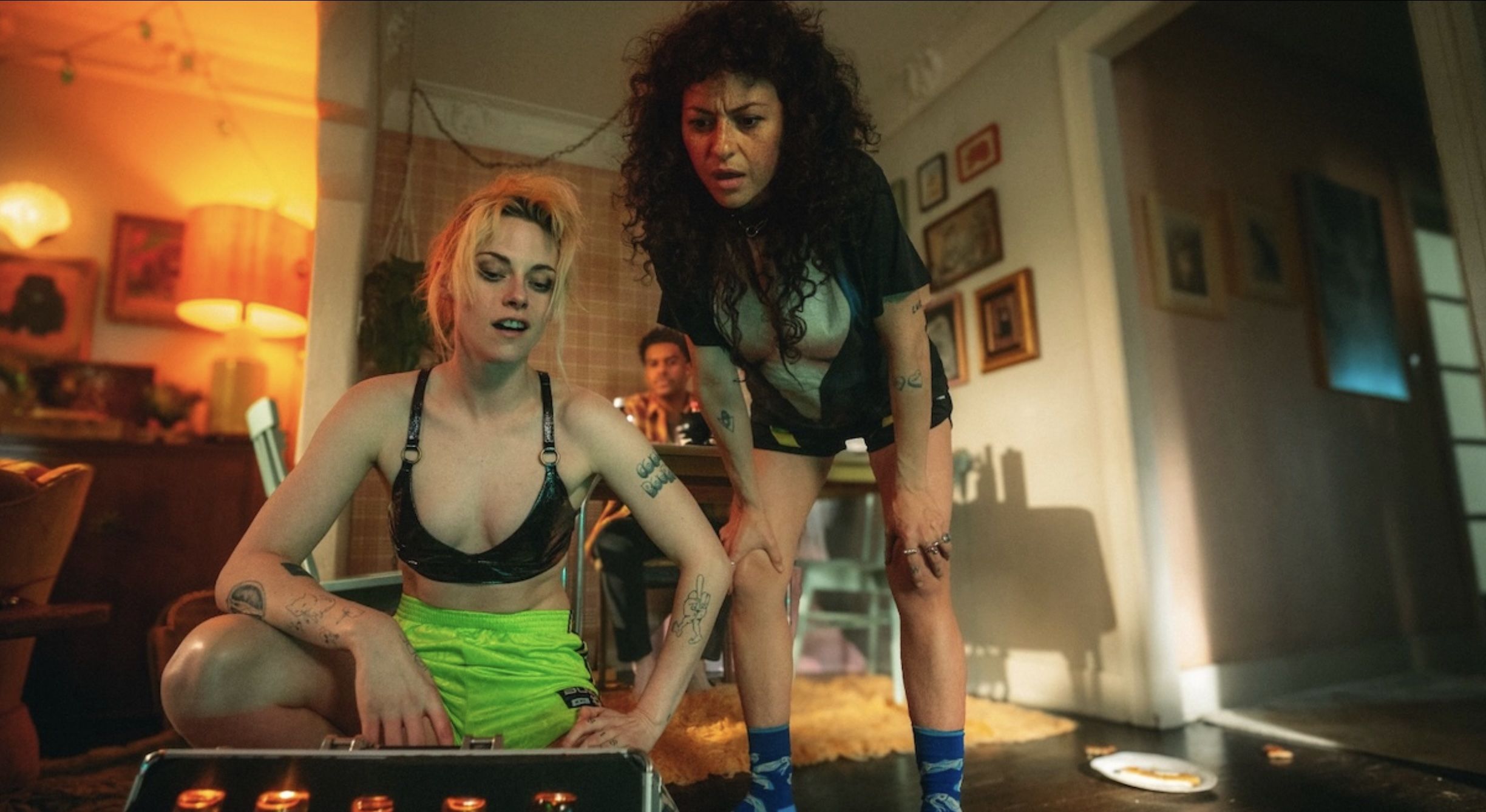
Kristen Stewart and Alia Shakwat in Dylan Meyer’s stoner comedy ‘The Wrong Girls,’ which features performances by Philly punk band Mannequin Pussy and music by Sheer Mag.NEON
Now, the band is also featured prominently in The Wrong Girls, the frequently hilarious new stoner comedy starring Kristen Stewart and Alia Shawkat. It’s written and directed by Stewart’s wife, Dylan Meyer, and the loaded cast includes LaKeith Stanfield, Kate McKinnon, Zack Fox, with Seth Rogen and Kumail Nanjiani voicing a pair of cats.
In The Wrong Girls, the plot turns on a mistaken identity encounter that Stewart’s delivery driver/secret genius character Frankie has at a Mannequin Pussy show.
Just as they did onstage at the Linc, the band makes the most of its screen time, turning in ripping versions of “Patience” and “I Got Heaven,” the title track from the 2024 album that the band, who opened for Florence + the Machine this year and was featured in a NPR Music Tiny Desk Concert, continues to support on the road.
They play European dates this month and will rejoin the Foos in North Dakota and Canada in September.
Besides Mannequin Pussy, The Wrong Girls, which is playing at area theaters, also features a Philly-connected garage-punk soundtrack that reflect Meyer’s excellent taste. The opening credits song is “What You Want” by Philly’s Sheer Mag, the score is by Ty Segall, and songs are heard by Tacocat and Slutever, the 2010s L.A. punk led by Philly natives Nicole Snyder and Rachel Gagliardi.
Mannequin Pussy is playing the First Unitarian Church, 2125 Chestnut St., Oct. 28, r5productions.com.
— Dan DeLuca
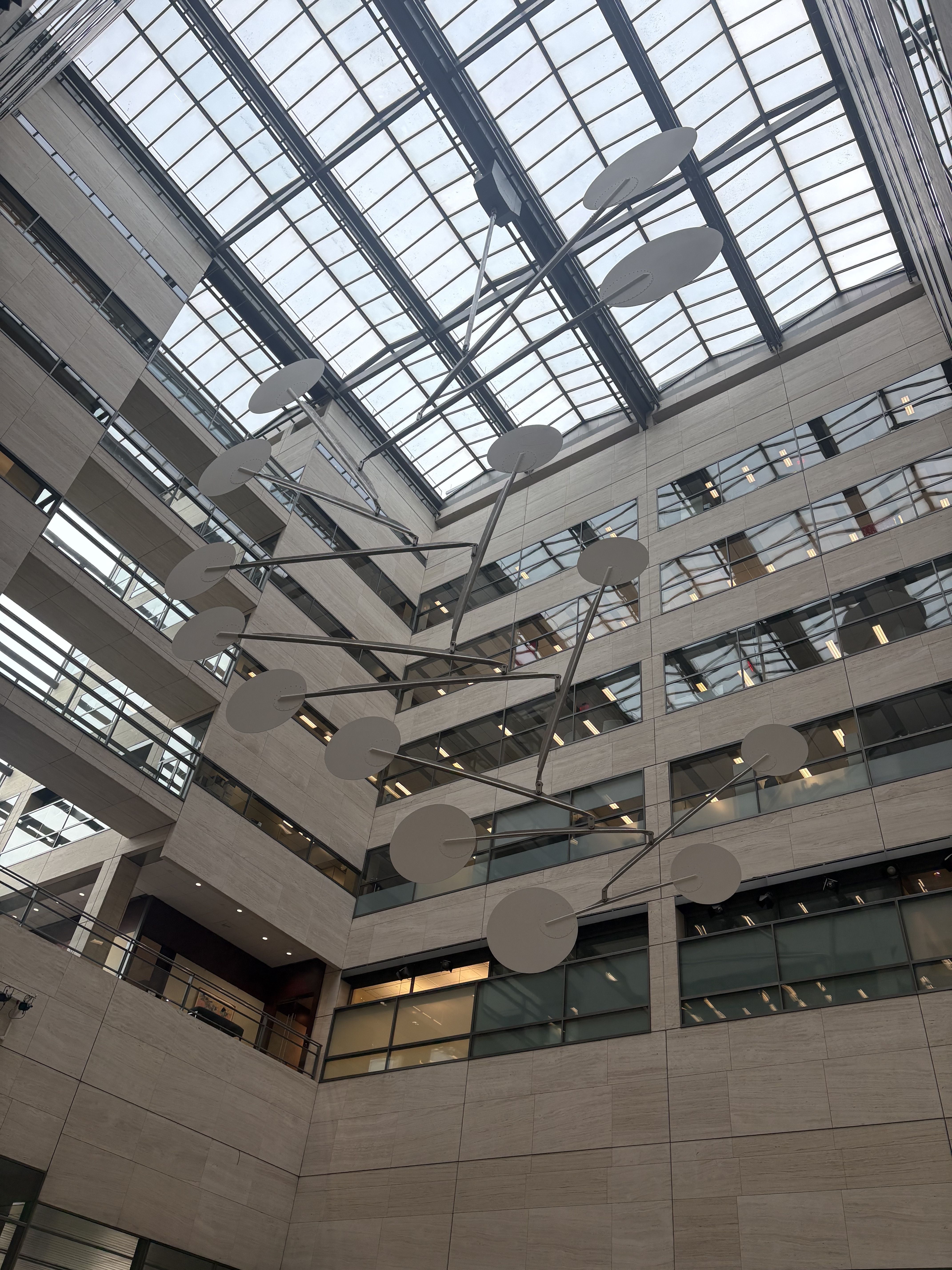
“White Cascade” by Alexander “Sandy” Calder at the Federal Reserve Bank of Philadelphia.Peter Dobrin
The largest mobile in the world
When Calder Gardens opened nearly a year ago and the spotlight was on the pioneer of the mobile, Calder fans were unable to see the artist’s largest contribution to the genre. That’s because public access to White Cascade in the Federal Reserve Bank of Philadelphia was closed off for a year during an exhibit renovation in the atrium.
In June, though, the Philadelphia Fed reopened access to the piece, one of Alexander “Sandy” Calder’s last before his death in 1976.
You do wish it were a little more accessible. The piece is hung quite high, so you have to try a few spots to fully appreciate it. Employees looking into the atrium from areas not open to the public probably have the better view.
Still, one overcast morning this week, its lithe, hypnotic presence belied the superlative statistics. White Cascade is not only Calder’s largest piece — it is 100 feet tall, and weighs almost 10 tons — it is often cited as the largest mobile in the world.
And yet, it has a way of disappearing.
“We get folks who stop and look up at it,” said Todd Zartman, the Philadelphia Fed’s economic education manager, “and then other folks, they might work here two or three weeks and they’ll walk right under it and not realize what it is until someone points it out to them.”
What might not be obvious to either kind of viewer is that the mobile isn’t static. It’s hung from a motor that rotates the entire work at a very slow — though adjustable — speed.
“It’s been at this speed for quite a while, as long as I can remember, but I know it has been quicker at times,” said Zartman.
The gradual journey, which takes about 45 minutes per cycle, adds to the arresting effect. White Cascade moves so slowly, you can find yourself standing there for a while trying to prove to yourself that it does move.
If there’s any larger meaning to the piece, it’s up to the individual viewer to find it.
“The economy is constantly moving, it’s also not static, so I often tell people it kind of fits well here,” said Zartman.
“To most people who look at a mobile,” Calder once said, “it’s no more than a series of flat objects that move. To a few, though, it may be poetry.”
The artist might have appreciated the response of one visitor.
“I had a young girl who said it reminds her of the wintertime, of snowflakes coming down,” said Zartman, “and I thought about that, and I was like, ‘That’s kind of relaxing.’”
“White Cascade” can be seen at the Federal Reserve Bank of Philadelphia, 10 Independence Mall (Sixth St. between Arch and Race), Monday through Friday, 9:30 a.m. to 4:30 p.m. Admission is free.
— Peter Dobrin
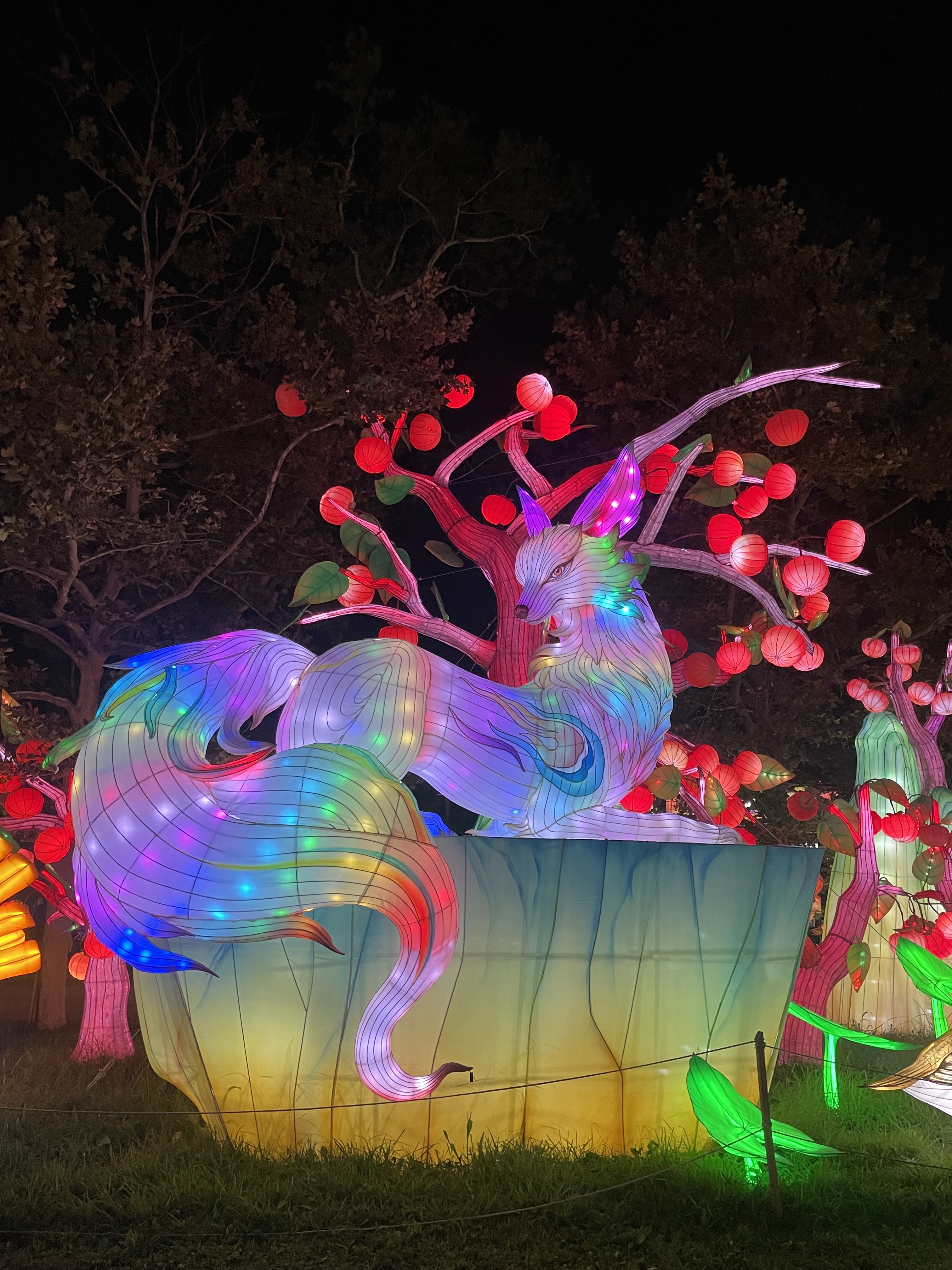
A display at the Philadelphia Chinese Lantern Festival, running through Aug. 30.Rosa Cartagena
Lit snakes, foxes, flowers, and butterflies
I played tourist last weekend as my parents were visiting and finally made my way to Franklin Square for the annual Philadelphia Chinese Lantern Festival. Unlike the weather in recent nights, it was a perfect evening to stroll through the wow-worthy sculptures of steel and silk.
At points, I felt like I was walking around an animatronic zoo as a giant bear scooped up salmon and raccoons played around. (I could skip the ones that talked.) Artisans from Zigong, China, created rows of flowers and families of animals like tigers, horses, and otters that completely take over the park. The central fountain is dotted with lit-up lily pads and dazzling swans while nearby there’s an entire jungle habitat with monkeys, birds, butterflies, an elephant, and a sassy snake whose automated mouth opens like a greeting.
The welcome arch features an array of traditional lanterns with multicolored silk and cool graphics that make for an excellent photo op as does the massive dragon that takes up nearly an entire block.
The shining star of the night for me was the stunning fox from the persimmon tree display meant to express “blessings of happiness, harmony, and success in the year ahead.” It lounged in front of the bright red fruit tree with a Mona Lisa smile, its mostly white fur illuminated by rainbow lights along its body and bushy, multilayered tail.
This diva deserves its own animated movie because its presence was pure magic.
The Philadelphia Chinese Lantern Festival runs through Aug. 30.
— Rosa Cartagena
RDZ Parfum’s latest fragrance, Wooder Ice, smells exactly like lemon water ice, a favorite Philly sugary-sweet summertime treat. It costs $160 for a 100 ML bottle and is available at Perfumology and online at RDZParfums.comAlex Rodriguez
A wooder ice perfume for your pulse points
With top notes of Italian lemon, sweet orange, and bergamot, perfumer Alex Rodriguez’s latest fragrance, Wooder Ice, smells exactly like lemon water ice, a favorite Philly sugary-sweet summertime treat.
But the perfume’s black currant middle notes and cedar wood and vanilla base gives it a musky vibe turning the warm weather-inspired scent into one that boasts sultry fall redolence.
And I love it, surprising even myself. I’m not a fan of florals or citrus scents but warm amber and musk notes ground me in reality. A few sprays of RDZ Parfum’s Wooder Ice on my pulse points lit up my summertime glow. Yet, I could see myself cozying up by the fireplace in the wintertime with Wooder Ice wafting in the background.
That’s the point, said Rodriguez, who released RDZ’s 15th perfume Friday.
“This is a lemon vanilla gelato,” Rodriguez said. “I want people to take their summer memories into the cold, winter months.”
Rodriguez, the 40-year-old founder and creative director of RDZ Parfum, was born in Camden and spent his preschool years in Puerto Rico before moving back to live in South Jersey and North Philadelphia. He now lives in Pottstown.
He launched his prestige perfume collection in 2023 to make scents that celebrate his Puerto Rican heritage and Philly-area upbringing. Leyenda 21, his first scent is a salute to Pittsburgh Pirates’ rightfielder Roberto Clemente — one of the first Puerto Ricans to play in the MLB. RDZ’s Art Museum scent, infused with palo santo, is an olfactory nod to the Philadelphia Museum of Art.
But wait a minute. If Wooder Ice is an ode to Philadelphia, shouldn’t the first scent be cherry?
He kind of already did that.
Two years ago, Rodriguez released Philadelphia.
In addition to geranium, rose, and grass notes in honor of Longwood Gardens and Fairmount Park and salty hints for the soft pretzel, Philadelphia had a very cherry vibe.
Rodriguez decided to center lemon as the first in his Wooder Ice grouping because it’s his favorite flavor, reminding him of the days when he would frequent Rita’s Ice on South Jackson Street in Camden. “It was just so refreshing,” he said, adding that he’d like to expand Wooder Ice to center other flavors like cherry, grape, and mango.
“RDZ is about my landscapes, my memories, my culture, and my background,” he said. “Wooder Ice is an extension of that.”
Wooder Ice is $160 for a 100 ml bottle. It is available at Perfumology, 25 N. Third St. and on RDZParfums.com
— Elizabeth Wellington
The return of Isaiah Rashad
The past five years for Tennessee-born rapper Isaiah Rashad haven’t been quite as blissful. In fact, by the emcee’s own account, it’s been pretty awful.
In February 2022, an alleged sex tape involving Rashad was leaked on social media, prompting the introverted artist to address his sexual fluidity in media interviews. His bouts of alcoholism, substance abuse, and family drama only added to the descent, which led to a five-year stretch of inactivity.
That was until Rashad released It’s Been Awful in May. It’s an album unveiling his thoughts at the height of the descension, and the journey he’s undertaken to climb out of it.
His performance on Thursday started on shaky ground. He opened the show to “The New Sublime” and dropped the mic while leaping from one platform to the other. The crowd recited his lyrics as Rashad, smiling from the embarrassment, walked around to find a quick fix.
Right before the final verse, someone from backstage handed him a fresh mic, and he reverted into rap mode without missing a step.
Despite the technical missteps and Rashad’s irritated vocal chords, it was incredible seeing him fight through it all to perform records like “Free Lunch,” “4r Da Squaw,” “Heavenly Father,” and other records that span his decade-long career.
But no track was more symbolic than “The New Sublime,” an especially breezy song that signals his personal ills, and the ones shared among those closest to him. Even with everything he has been through, Rashad calls for prayer and self-reflection to keep his mind at ease. Like the contrast of the song’s lyrics and instrumental, it’s chaos contained.
That level of resilience, even in conditions as awful as this one, is why Rashad is considered a high-caliber artist. And why I walked away from his performance feeling like I not only “found” the real Isaiah Rashad, I understood him deeper as a man and artist.
It’s Been Awful is available on all music platforms.