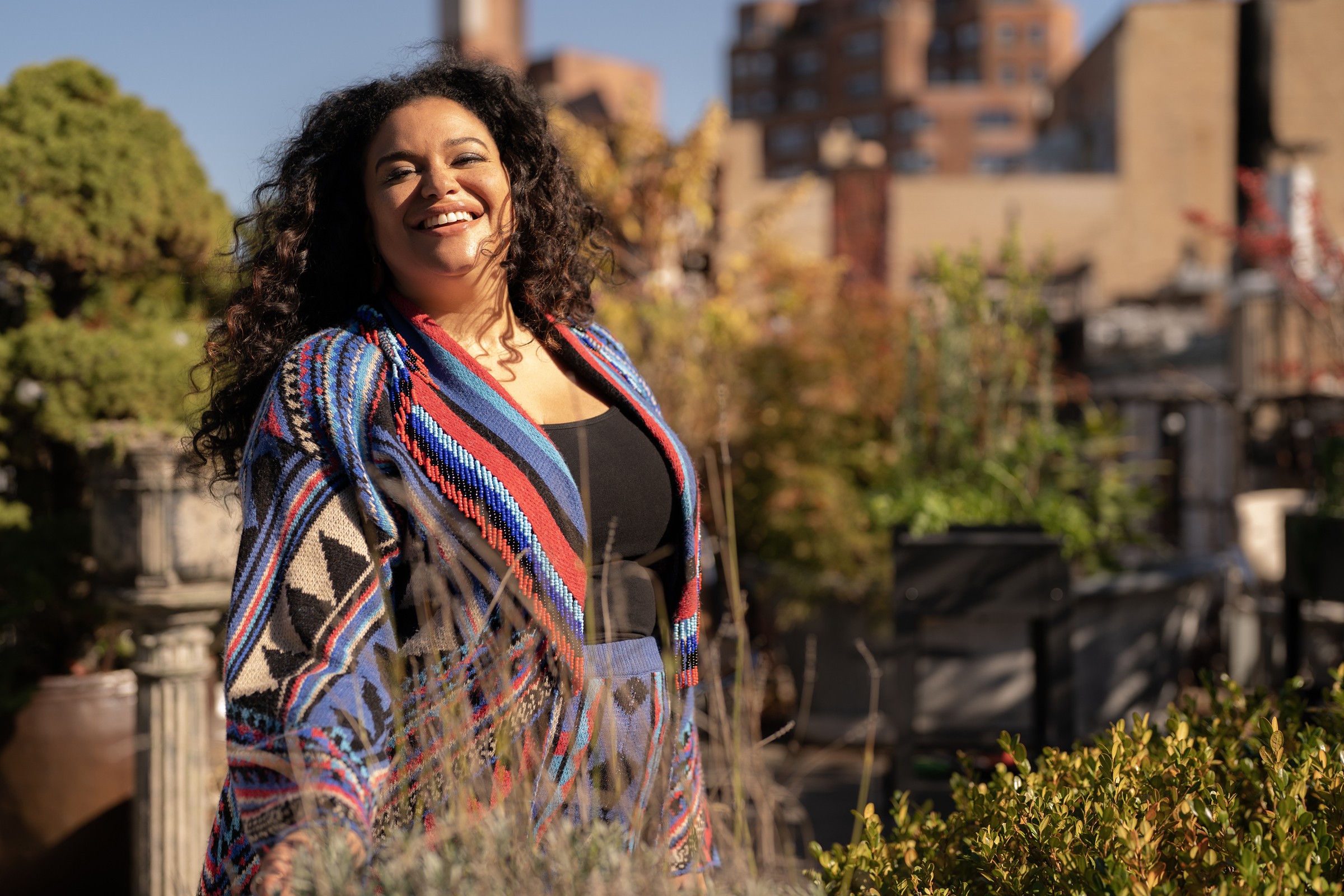
Tynan knew she wanted to retire back in 2020, when she signed her last contract with the station, which will end next month just as her youngest daughter heads off to college.
Since then, it had been something of an open secret inside the 6abc newsroom that Tynan’s time at the station was coming to an end. Any chance of her extending her contract ended a few years ago, when she experienced a short but intense bout of vertigo.
“For most of the day I couldn’t do anything, and I thought this must be what it’s like to be really old and infirm,” Tynan said. “I didn’t want to work all the way up to get to that stage, so it kind of sealed the deal.
“I’m 57, which is relatively young, I guess, for retiring,” Tynan added. “But I wanted to retire while I’m healthy and active.”
So rather than stick around 6abc or move up the national ladder, Tynan and her husband, Greg, plan to split time between their homes in Delaware County and Florida after her last day, Aug. 31. She even turned down a chance to come back to host Philadelphia’s Thanksgiving Day parade, something she has done for close to 25 years. But the idea of being able to cook Thanksgiving dinner for her family for the first time won out.
“My children have never spent the night before Thanksgiving in their own home. We’ve always been in a hotel by the parade route, and I’ve never actually cooked,” Tynan said. “I’ve always picked it up from Whole Foods and reheated it.”
Tynan discussed her decision to retire, what’s next, and the best and worst weather events she has covered in her three decades at 6abc. This conversation has been edited for length and clarity.
How do you plan on filling your retirement? Is it just going to be water-skiing and enjoying life?
That sounds pretty great!
That’s definitely a big part of it. That and visiting and watching all my daughters’ cross-country and track meets. I do want to stay active in animal rescue. … I’ve been really active with Providence Animal Center. I’m not sure exactly how I’ll do it, but I would definitely still want to be involved in that.
And I’d like to be able to go to bed at a decent hour.
What do you make of the reaction to your decision to retire?
I’ve been talking about it for months with my personal friends and they’d be like, “Philadelphia’s gonna freak,” and I’m like, “No, everyone’s gonna be fine.” I get it because I’ve been here for almost 31 years, so for a lot of people it seems like they’ve been watching me their whole lifetime. I think that Philadelphians have a special relationship with Action News that you don’t see in a lot of other cities or stations.
Are there any on-air memories that stand out?
One fun moment was when my earring fell off, and Jim Gardner got up. I saw him stand up and take off his microphone, and there was a frenzy behind the scenes, like, “Jim’s on the move. Traveler’s on the move.”
I tried to ignore it, and then I saw this white thing go behind my head, which I thought was a cloud animation. Then I realized it was his hair. It was hilarious and then it went viral — it was on Live With Regis and Kelly the next day and stuff, and that was fun.
Another one was when I was on the morning show with Monica [Malpass] and Rick [Williams], I would always try to crack them up by dancing off camera.
One time Rick told the director, “Record Cecily when she’s dancing.” I dance like Elaine from Seinfeld, but worse. And so they aired that.
Is there a reason you stayed in Philadelphia vs. moving to national television?
I was born and raised in Newtown, Conn., so I always watched the New York stations.
I thought I would work here a few years and then go to New York. Then I had I had some opportunities early in my career to go up. I filled in on Good Morning America for a full week with Charlie Gibson and Diane Sawyer, which was a great experience. Gibson gave me a bottle of champagne when the week was over.
I talked about going to New York with Tom Kane, who was the general manager of WABC and was the GM when I came to Channel 6. … But then I spent the rest of my week there and was like, “Man, I want to get back to Philadelphia.”
Philadelphia felt like home. … Even when I walked in for my interview, I felt really at home with everyone and they were all nice and welcoming. No backstabbing at all.
Also, once you have children, that really grounds you. Your children are growing up in a community, and you don’t want to uproot them and leave.
What are the best weather events to cover, and what are the worst?
The worst are tornado warnings because we get a lot of those nowadays, because we have more advanced radar … and we do have a warmer climate. But tornado warnings freak people out, because I’m telling them to get in their basement.
I was at the airport back in the spring … and the people in front of me recognized me and thanked me. They live in Mullica Hill, and they were there when they had the tornado warning and I told them to get in their basement. They said they got their kids and their pets down there … and when they got out of the basement, their house was destroyed. But they were OK. … That really hit home about the importance of our job. I kind of teared up.
I’m sure you hear the other side, too, when the weather shifts and your forecast might be off.
Oh, yeah. The whole saying, “Oh, I wish I had a job where I could be wrong 90% of the time and still keep my job.” I get that all the time. Anybody who says that doesn’t really understand the complexities of the atmosphere. … But I feel like when you’re in the public eye, you do have to grow a thick skin. Especially in Philly. They’re going to tell you what they really think, so they’re not going to sugarcoat it.
Is there a weather thing people still get confused by?
One thing I think people really don’t understand is tornado watch vs. warning.
When a tornado watch is issued, it usually means there’s like a 2% chance of a tornado happening in your neighborhood. It’s pretty low.
I think a lot of people think when there’s a tornado watch it means warning, which it doesn’t. It just means heads up. The warning is when you have to go to your basement.
The novelist Emma Copley Eisenberg is not supposed to write about her new South Philly neighborhood.
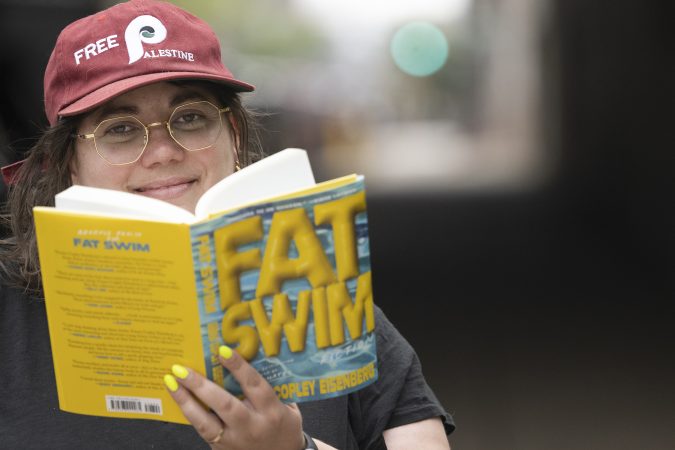
A longtime resident of West Philly, Eisenberg wove its eccentricities and institutions into two books of fiction: the 2024 queer road trip novel Housemates, and the newly released Fat Swim, an interconnected short story collection featuring, among other local allusions, a pool inspired by the one at West Philly’s Kingsessing Rec Center.
Then about a year ago, Eisenberg and her partner, Art Phung, moved together across the river. Phung suggested that maybe Eisenberg could avoid writing about their new environs, so they wouldn’t have to move again. (Eisenberg made no promises.)
On her perfect Philly day, Eisenberg treks between fresh and familiar haunts, floats in the city pool immortalized in Fat Swim, and browses at least three bookstores.
8 a.m.
In a perfect world, I wake up at 8, and I go to Café y Chocolate, a wonderful Mexican brunch and breakfast spot in our new neighborhood. I read my book for a little bit until meeting a friend. The mocha they make is pretty life-changing. When my mom was in the hospital, she was like, “All I want is café con chocolate from there.”
I like to look at all the dogs. I don’t have a dog, my partner says I’m not responsible enough. So I force a friend who has a dog to bring their dog to the park to meet me. I like to run into people and hear the queer gossip of the day — who went out last night, what’s going on.
A lot of my friends have kids now, so it’s usually a good excuse to see some of their kids and hear about theirgossip at school.
Noon
At the Kingsessing pool, I like to just kind of flop around and float. I can’t ease my way into the pool, I have to jump all the way in. I’m not a particularly good swimmer per se, but it makes me happy. After doing the pool, I always feel 10% less dead inside.
Walking from Old City back to South, I stop at Head House Books. It’s kind of magical: whatever the book is that I want, they always have it. They have good book clubs, they’re supportive of local authors, they do a lot of events.
Head House has a really good children’s section. I usually try to buy a couple of board books because they’re good for little kids and they’re cheaper. I also have a soft spot for the classic things that I read when I was a kid, like The Baby-Sitters Club and Nancy Drew. I buy a couple of kids’ books and put them in little free libraries because I find that joyful.
I also cut over to Giovanni’s Room, because they have all those $1 paperbacks out. I’ll browse around to see if they have anything that’s cheap that I want to buy for my library or for one that I pass on the way home. I might wind through a few little free libraries. I could hit the one at the Singing Fountain on East Passyunk, and say hi to Little Yenta Books.
6:30 p.m.
My partner and I go to Cafe Nhan at least once a week. I love their vermicelli bowl with grilled pork, and fried spring rolls. They have an amazing limeade too. If you follow Cafe Nhan on Instagram, they often show what broths and soups they have going that day, so you can get excited.
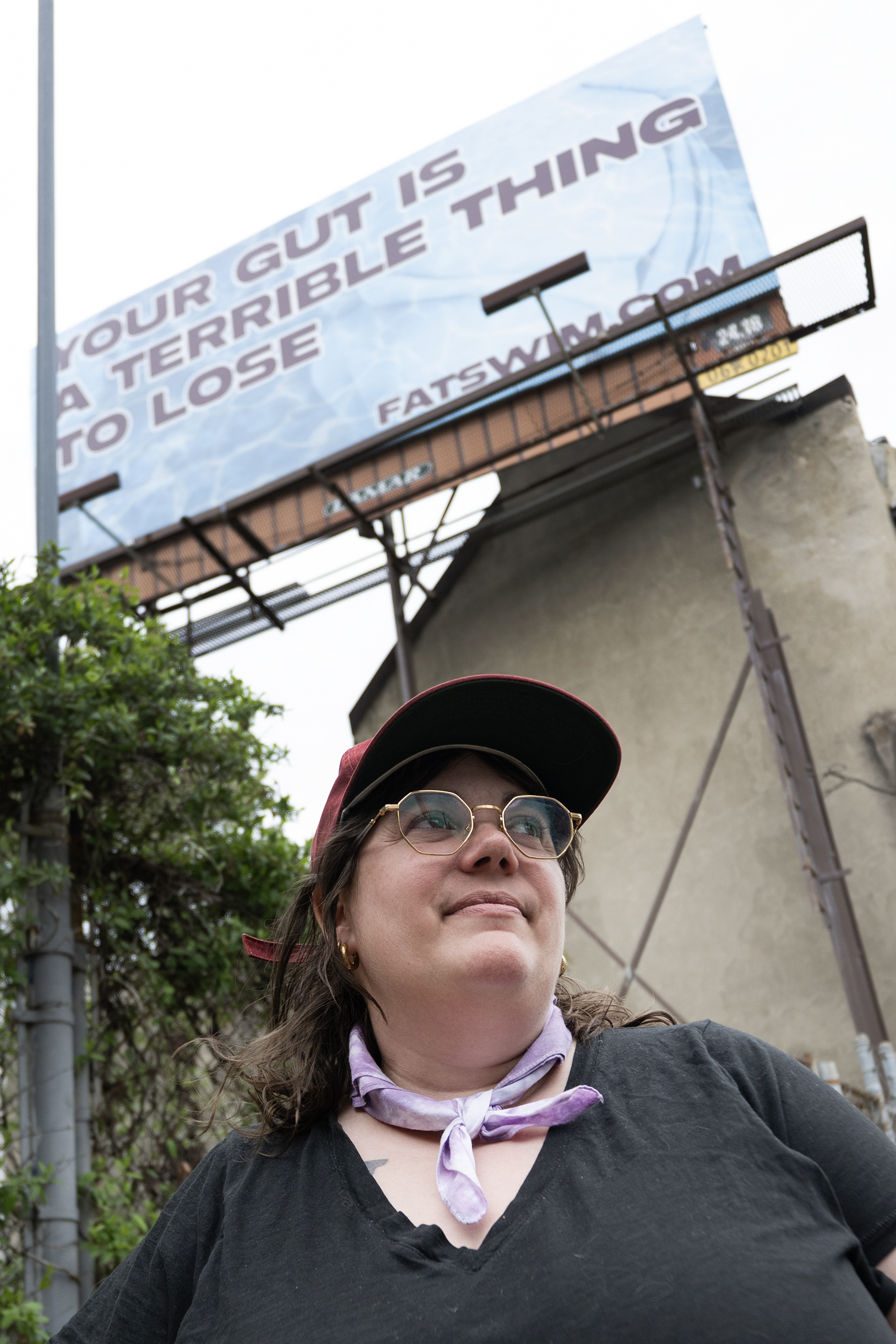
Eisenberg poses with a billboard along Interstate 95 promoting the release of “Fat Swim.” Jose F. Moreno / Staff Photographer
8 p.m.
I used to be partial to Fred’s on 54th and Chester. I put Fred’s in Fat Swim. However, I will say that at Chuck’s Water Ice [on Snyder], the texture is incredible. It’s very fluffy. The flavors they have are really special — tangerine, blood orange. I like to get a gelati of tangerine and vanilla custard. I eat it as I walk home.
8:15 p.m.
If I’m feeling like I want a little nightcap, I go to Brewery ARS.They have good beer and it’s kind of a hole-in-the-wall, but not in a sports way. More in a “we might have a weird musician” way. They probably wouldn’t have the game on, but they would have a Sun Ra music video on.
10 p.m.
I watch a comfort episode of television or read a book. Right now I’m doing a rewatch of Girls, like everybody else. I get into bed at 10 and go to sleep by 11, if I’m honest.
The conversation has been edited for clarity and brevity.
I’ve visited At My House a couple of times, scouring the aisles for quirky vintage pieces, loving the eclectic vibe of the store even when I didn’t buy anything. So I was not surprised to see them hosting what is possibly the most whimsical art show I’ve ever been to, displaying art about the size of a postage stamp.
The Queen Village clothing and homewares store is run by Kelly Braun who, in collaboration with artist Fabiola Lara, started the mini art show last year. They invited artists to create art that was 3 inches x 3 inches, so this year, it had to be even more silly, cutting it in half to 1.5 inches x 1.5 inches.
Prints by artist Fabiola Lara for sale at “The Mini Mini Art Show” at the store At My House on Fourth Street in Philadelphia on Friday, July 24, 2026.Elizabeth Robertson / Staff Photographer
The opening reception for the show was absolutely buzzing, with people grabbing cocktails and lining up around the store to view the wall of tiny pieces. There was tiny clothing, houses, rooms, closets, and classic art pieces — those were made by Lara, who is no stranger to mini art.
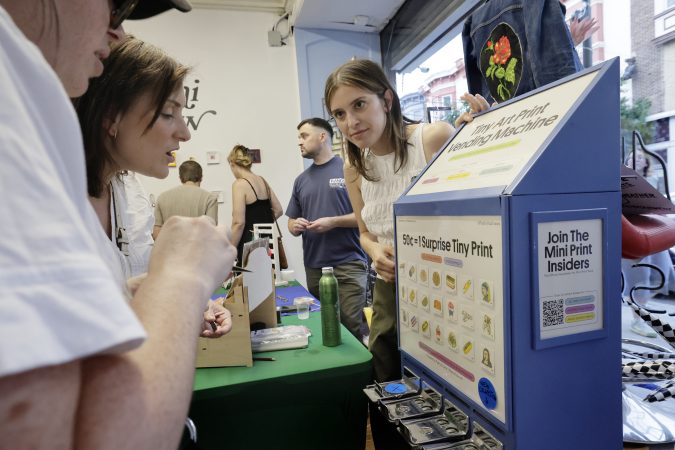
You may have come across her mini art vending machines, of which there are 13 around the city.
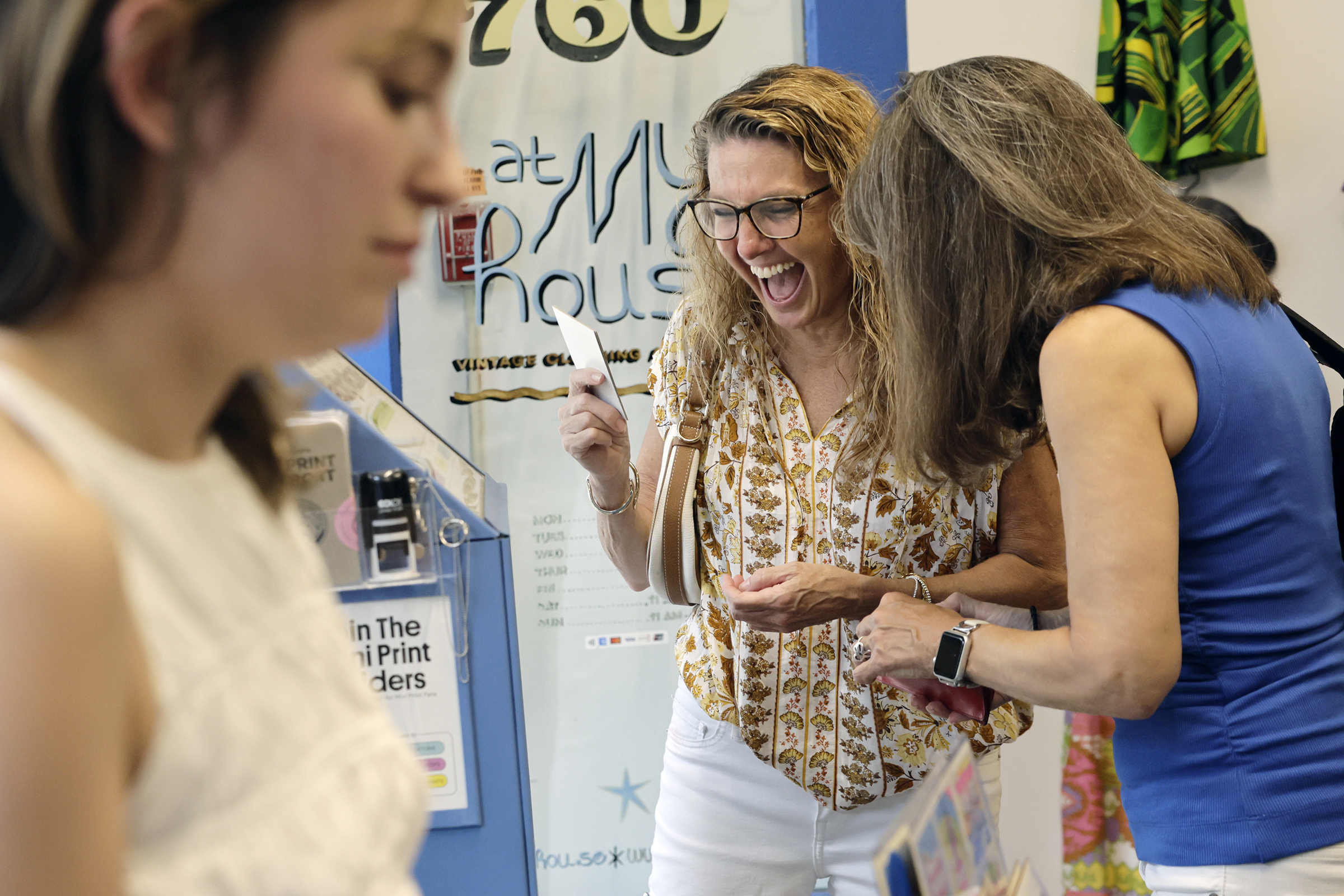
Leann Curly (middle) and Karen Sarappo (right) were thrilled with artist Fabiola Lara’s (left) mini art print that they purchased from the mini art print vending machine during the opening/public reception of “The Mini Mini Art Show” at the store At My House on Fourth Street in Philadelphia on Friday, July 24, 2026.Elizabeth Robertson / Staff Photographer
After visiting several major museums with grandiose pieces, I never thought I would see people get the most excited over art that can fit in the palm of their hands. But there was an infectious energy and a sense of joy at At My House.
In a world where large-scale exhibits are so heavily celebrated, getting giddy over comically tiny art felt like a therapeutic break from artistic snobbery.
“The Mini Mini Art Show” is on display through Aug. 2 at At My House, 760 S. Fourth St., Philadelphia. atmyhou.se
— Morgan Ritter
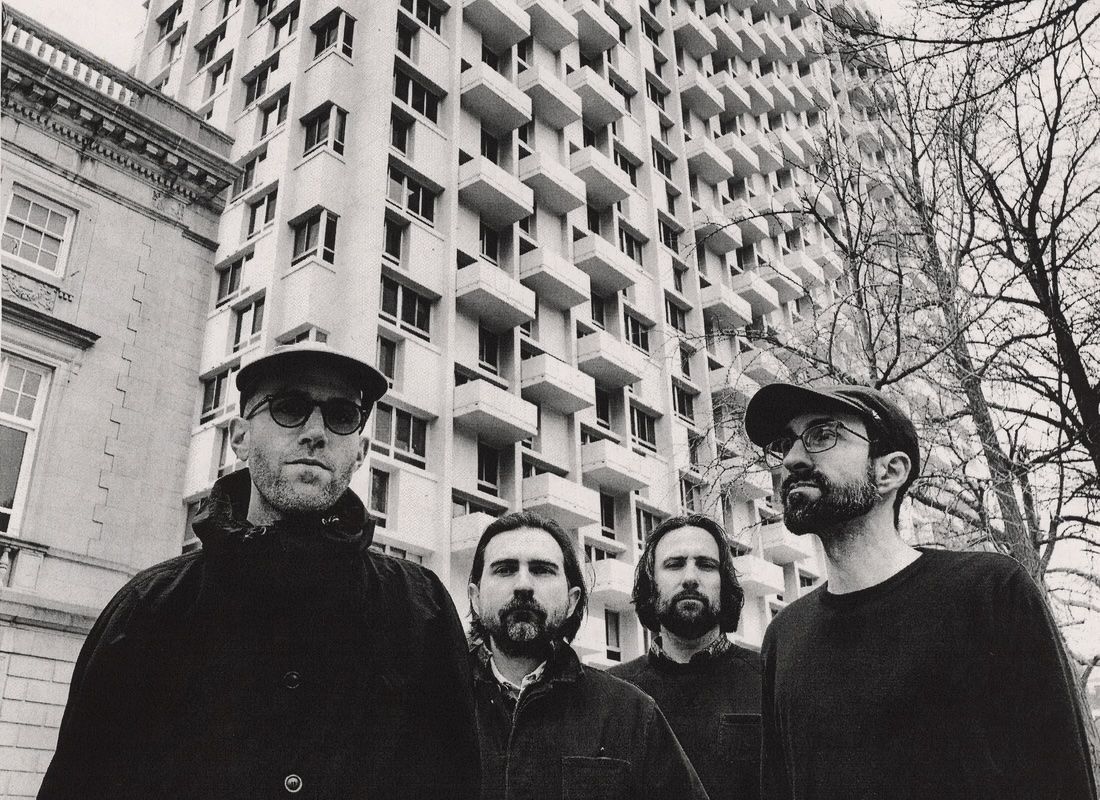
Philly band Hurry’s new album is “Zoned Out.” They play Main Street Music in Manayunk on Aug. 1 and Philly Typewriter on Aug. 22. Luke Ivanovich
Harmony-happy Hurry is back with ‘Zoned Out’
Matthew Scottoline is Zoned Out. That’s the title of the transporting new album by Hurry, the jangly Philadelphia band that has been his creative outlet since 2012, when Scottoline — previously the bassist in Philly emo band Everyone Everywhere, stepped out as leader of his own power-pop project.
Now six albums in, Scottoline continues to refine the harmony-happy Hurry approach, where longing and yearning and experiencing a bittersweet melancholy is elevated to an art form.
In his notes to the album — which began as home recordings on cassette and was completed at the Metal Shop in East Kensington — explains that the dreamy, hypnotic song that gives the collection its name came about because “I tend to disassociate. I zone out and sort of crawl into my own head.”
In this case, that dissociating is a result of facing life changes — the end of one relationship, the beginning of another, and the decision to become a parent — “and how [expletive] scary that is,” as Scottoline puts it in his notes.
But while that tension exists as an undercurrent, Scottoline’s knack for breezy, cascading melodies mean that Zoned Out is always riding a pleasurable, reassuring wave. The album — which features a cameo from Gerard Love of Scottish power-pop heroes Teenage Fanclub — conveys a sense that any conflicts or “Complications” that may arise will ultimately resolve themselves, just as the melodies do on this seriously catchy set of 10 songs.
Hurry will perform for free Aug. 1 at Main Street Music, 4444 Main St. in Manayunk with Planette Automatic, mainstreetmusicpa.com. After heading to England and Scotland for a short tour, the band will be back in town at Philly Typewriter, 1735 Passyunk Ave., with Chime School and Te Vista on Aug. 22. r5productions.com.
— Dan DeLuca
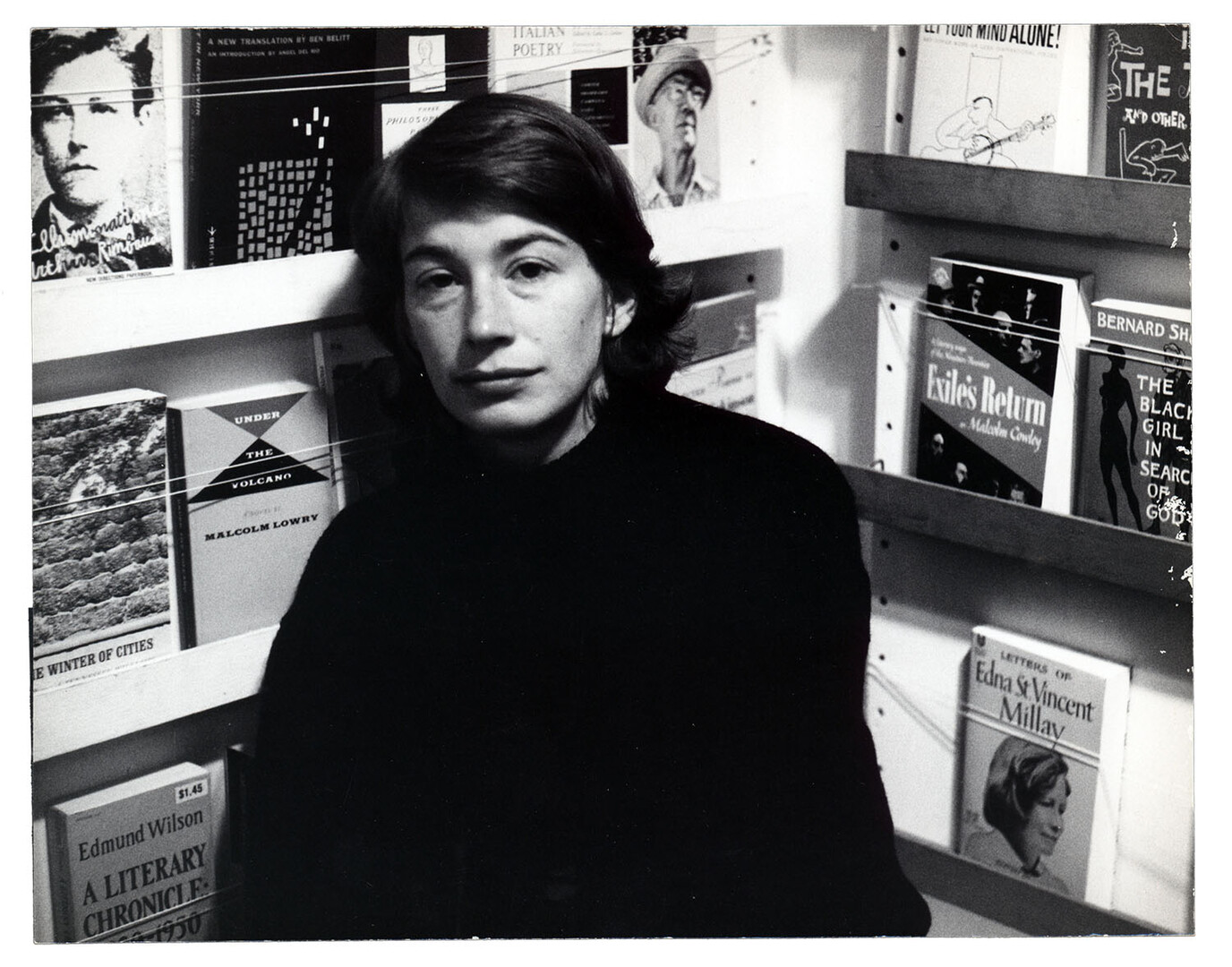
A photograph of Mary Oliver from Sasha Waters’ documentary, “Mary Oliver: Saved by the Beauty of the World.”Courtesy of Kino Lorber
Saved by Mary Oliver
Before Mary Oliver’s poems became the stuff of Instagram inspiration posts, she was the patron saint of college girls discovering love and nature for the first time. I was 16 when I read “Wild Geese,” almost crying at the lines: “You do not have to be good. / You do not have to walk on your knees / for a hundred miles through the desert repenting.”
In the years since, I have met so many women in love with her words: a former coworker had a tattoo of her lines, a friend will often quote from Oliver’s “The Summer Day” from memory just to describe her joy of being in a beach on a day so hot that the water shimmers as it evaporates in the horizon.
Oliver, who lived with her partner, Molly Malone Cook, in Provincetown for several years, is also a queer icon whose words never fail to soothe a soul in need of a reminder of the love and tenderness in this world.
Now, a documentary on her life and career — featuring readings of her poems by the likes of Helena Bonham Carter and Oprah Winfrey — celebrates the poet who died in 2019. Peppered with poetry, remembrances, interviews, photos, and notebook pages, Sasha Waters’ Mary Oliver: Saved by the Beauty of the World is a treat to those who love Mary Oliver and those who are waiting to start.
“Mary Oliver: Saved by the Beauty of the World”plays July 31-Aug. 6, at the Bryn Mawr Film Institute, 824 W. Lancaster Ave., Bryn Mawr. brynmawrfilm.org
— Bedatri D. Choudhury
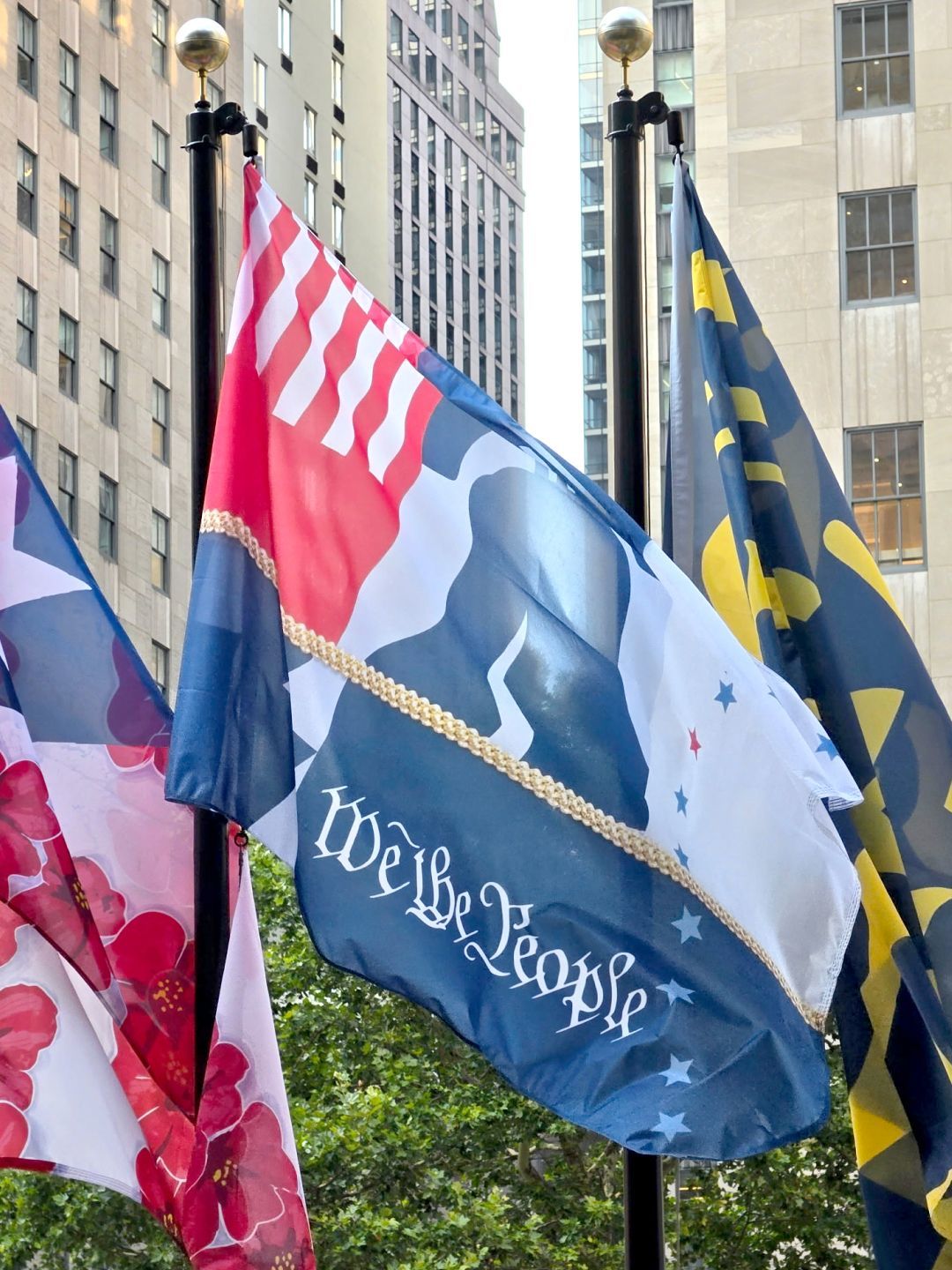
Jeweler Steven Lagos’ flag is among the 120 flags from national and international designers celebrating America’s 250th birthday in Rockefeller Center. The flags will be up through Sept. 4, 2026.Lagos
Steven Lagos’ Philly pride at Rockefeller Center
Philly master jeweler Steven Lagos’ flag blows along the perimeter of Rockefeller Center with graphic images of a cracked bell, 13 stars, and red-and-white striped detail. At first glance, it does not look much different than other art shouting out Philly’s history.
Then, I noticed Lagos’ golden caviar bead ribbon dancing in the center of the red, white, and blue canvas and thought this is special in a Lagos loves Philly kind of way.
Those caviar beads are Lagos’ trademark, a part of the design dictionary of Philadelphia, where Lagos has lived and worked for more than 50 years. It’s amazing to see him continuing to integrate Philly in his work.
Lagos’ flag is among 130 featured in the “United Flags of Fashion,” a joint project between the Council of Fashion Designers of America, Vogue, Rockefeller Center, and America 250 to honor the country’s milestone birthday. CFDA describes the project as a “sweeping tribute to American creativity, identity, and design.”
Other household-name fashion brands with flags flying high are Tommy Hilfiger, Vera Wang, Calvin Klein, Gap, and Kenneth Cole. Bucks County-born Thom Browne’s flag is steely gray flag and features a crest; Main Line-bred Tory Burch’s red, white, and blue flag also showcases a Liberty Bell, but her image hovers over the words virtue, liberty, and independence. These Pennsylvania makers are full mast.
While those designers proudly say they are from the Philly area, Lagos — whose red and white stripes represent the columns at the Philadelphia Museum of Art — stayed in Philly. His flagship business is on Philly’s toniest street and, as evidenced in his Rockefeller Center banner, Lagos reps Philly in everything he does.
The flags will fly at Rockefeller Center through Sept. 4.
— Elizabeth Wellington
Michelle Buteau as Mavis in the Netflix comedy “Survival of the Thickest.” MUST CREDIT: Netflix photo by Vanessa Clifton
God bless you please, Michelle Buteau
It’s hard to say goodbye to one of my favorite shows, but the third and final season of Survival of the Thickest felt like a fitting ending for Michelle Buteau’s witty comedy. She plays Mavis, an aspiring fashion designer who wants to make clothes that fit all body types — thick girls, genderqueer folks, and anyone else who thrives outside of the fashion world’s narrow beauty standards.
In this season, (part-time) Delaware County resident Wanda Sykes joins the cast as Mavis’ fertility doctor and she’s a cool-headed, hilarious scene partner who deflates her patient’s babbling anxiety with well-timed precision.
The show remains funny, warm, and sassy, but the emotions reach new depths as Mavis experiences a miscarriage and struggles in her recovery. Nothing keeps her down for long though, and it’s such a comfort to see Mavis get back up. It’s an uplifting and heartwarming story that could help any viewer overcome summertime (or other time) sadness.
Market Day Canelé’s savory tart is a scrapbook of sorts for owners Gil Ortale and Nem Ngo. It’s sold at farmers’ markets on weekends, each tart a collection of every interaction they’ve had through the week, shopping from their fellow vendors at Rittenhouse, Headhouse, Chestnut Hill, and Swarthmore Farmers’ Markets, and filling in the gaps at Reading Terminal Market, where Ortale once ran Fireworks, a charcoal-grill stall four decades ago.
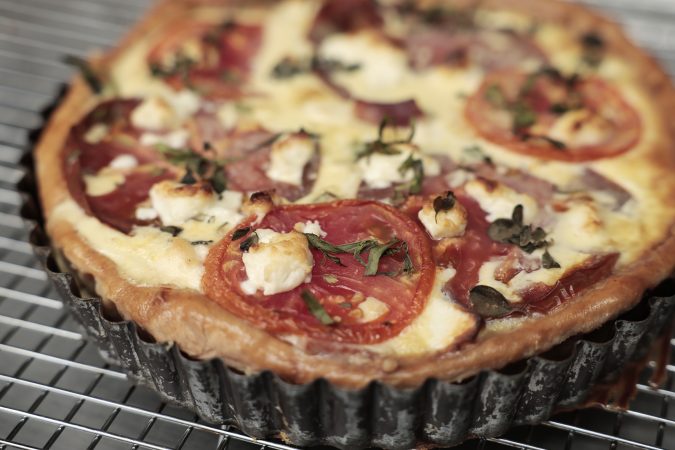
It’s tomato season, and the Market Day savory tomato tart ($30) is an ode to this area’s most covetable, most anticipated fruit. Crimini and white button mushrooms, corn, herb-roasted cotto ham from Claudio, Alderfer Farm eggs, and gruyère play supporting roles to the tomato slices splayed across its top. It’s a tart that’s also a philosophical meditation on produce.
“Flavors [in my cooking] should be crystal clear examples of the very thing you imagine,” said Ortale, whose resume reads like a highlights reel of Philadelphia’s most storied restaurants, as he has worked everywhere from Frog to La Terrasse. “Like when you’re a child and tasting herring or Roquefort for the first time.”
Ortale’s goal is to make food that tastes exactly like one’s first recollection of tasting any food. And so, his tomato tart reminds me of the first time I tasted fresh tomatoes cooked gently on a pizza, when I was five years old. It made me think of the first time I had sweet, fresh corn and the kernels burst in my mouth, and the savory British pies I ate growing up in Hong Kong.
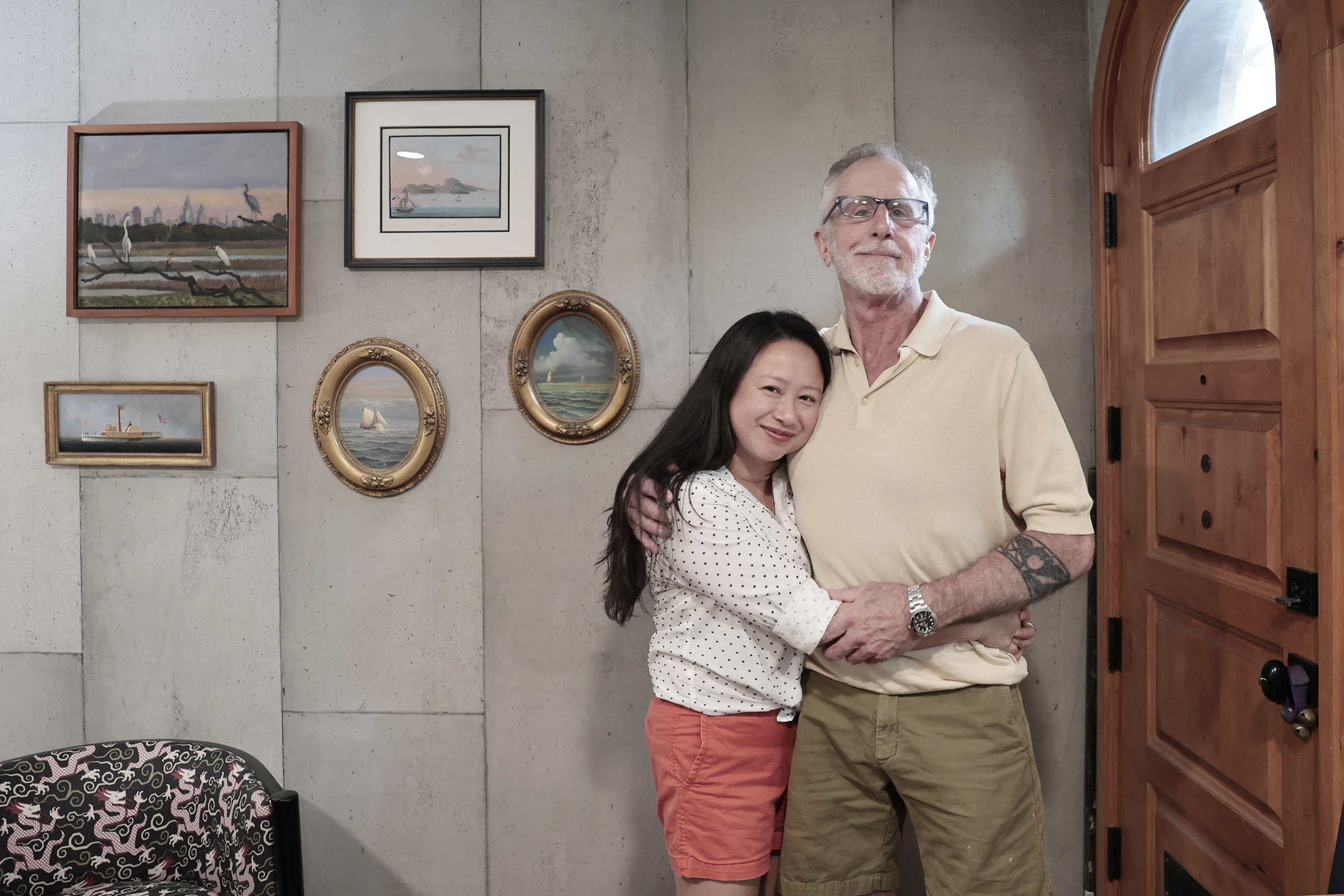
Nem Ngo and Gil Ortale are the folks behind Market Day Canelé. They were photographed in their Philadelphia home on Thursday, July 30, 2026.Elizabeth Robertson / Staff Photographer
It’s so good that I was hesitant to write about it, as Ortale and Ngo usually only make two dozen to sell every week, and if you get one, there’s far less of a chance I’ll be able to get one.
The crust is intentionally imperfect and not uniform, which makes it so flaky, it will stop you in your tracks, mid-bite. Ortale makes every single tart by hand. He doesn’t use a mixer or a Robot Coupe. “He blends the butter into the dry ingredients for each dough ball. That’s why they taste the way they do, they’re light and never stodgy,” said Ngo. “You can’t get that without elbow grease. It can’t be done with a machine.”
This approach is also why Market Day Canelé has never opened a brick-and-mortar bakery. They have no desire to scale up.
“We’re not hardcore capitalists. We just genuinely want to make good food. The farmers’ market industry is the most supportive and values-driven part of the food economy. People are shopping there because they want to know where their food is coming from and they want to see the faces of the people who make the food. We try to uphold that by doing everything by hand, with love, and to the best of our ability,” said Ngo.
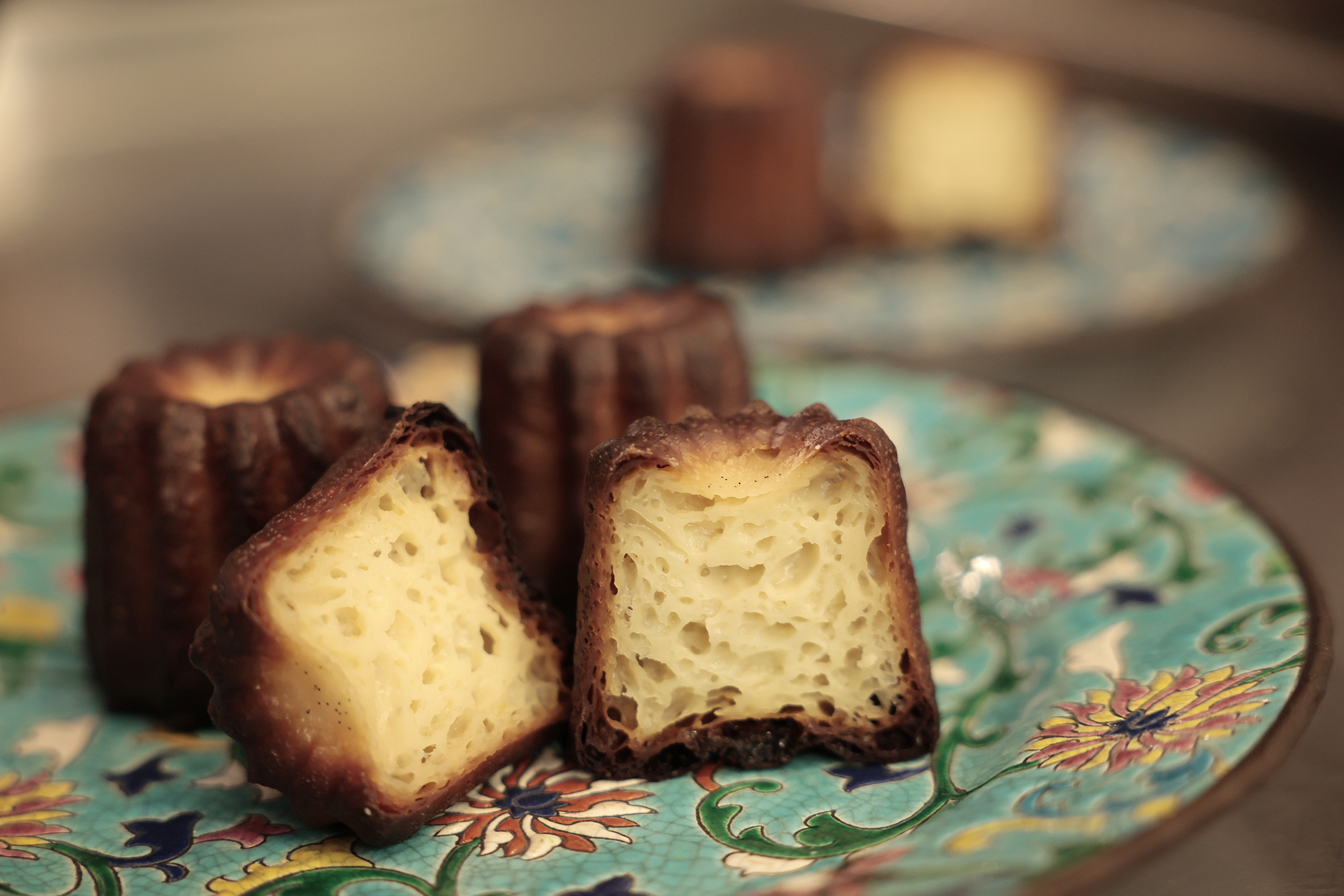
The canelé by Market Day Canelé is a vanilla custard pastry that is the traditional pastry of Bordeaux. It was photographed in Philadelphia on Thursday, July 30, 2026.Elizabeth Robertson / Staff Photographer
The airy, honey-combed crevices of beeswax and butter-slicked canelés may be the emblem of their business. They certainly have sent Ortale and then Ngo down an obsessive path of perfecting a corner of French-rooted baking traditions. But their savory tarts, with a rotation of ultra-local ingredients, many sourced from their friends, are the finest illustration of how skilled hands and devotion to one’s community can produce extraordinary things.
Market Day Canelé, instagram.com/marketdaycanele. Hours: Every Saturday, 9 a.m. to 2 p.m. at Rittenhouse Farmers’ Market and every Sunday, 10 a.m. to 2 p.m. at Headhouse Farmers’ Market. Every other Saturday: Chestnut Hill Farmers’ Market and Swarthmore Farmers’ Market, 9 a.m. to 12 p.m.
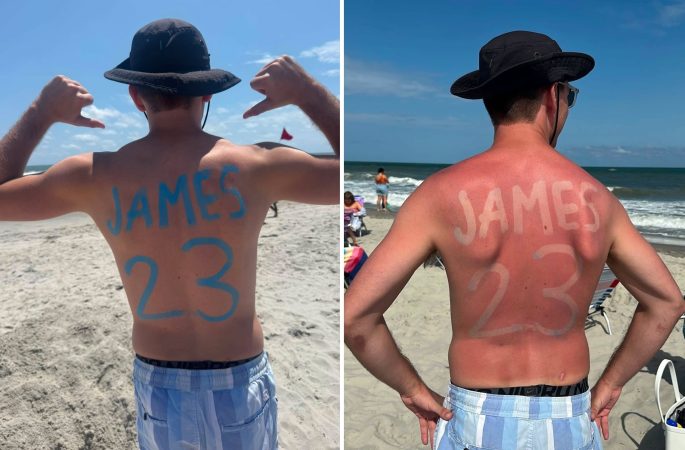
LeBron James announced he was coming to Philadelphia. Within days, someone had intentionally sunburned a No. 23 jersey onto his back. That’s commitment.
A Delco man spent a day at the beach in Sea Isle using zinc sunscreen to leave behind a perfectly outlined “James 23” sunburn. His family thought he’d lost his mind, and beachgoers assumed he’d lost a bet. But later that night he got to proudly show it off at Ocean Drive like he’d just gotten fresh ink.
The man called it “Philly toughness” … sure. This is exactly why Philadelphia sports fans have the reputation we do. We climb poles, tattoo the Phanatic on our bellies, and name our dogs after backup quarterbacks. And now someone has a LeBron jersey they can’t take off for a week.
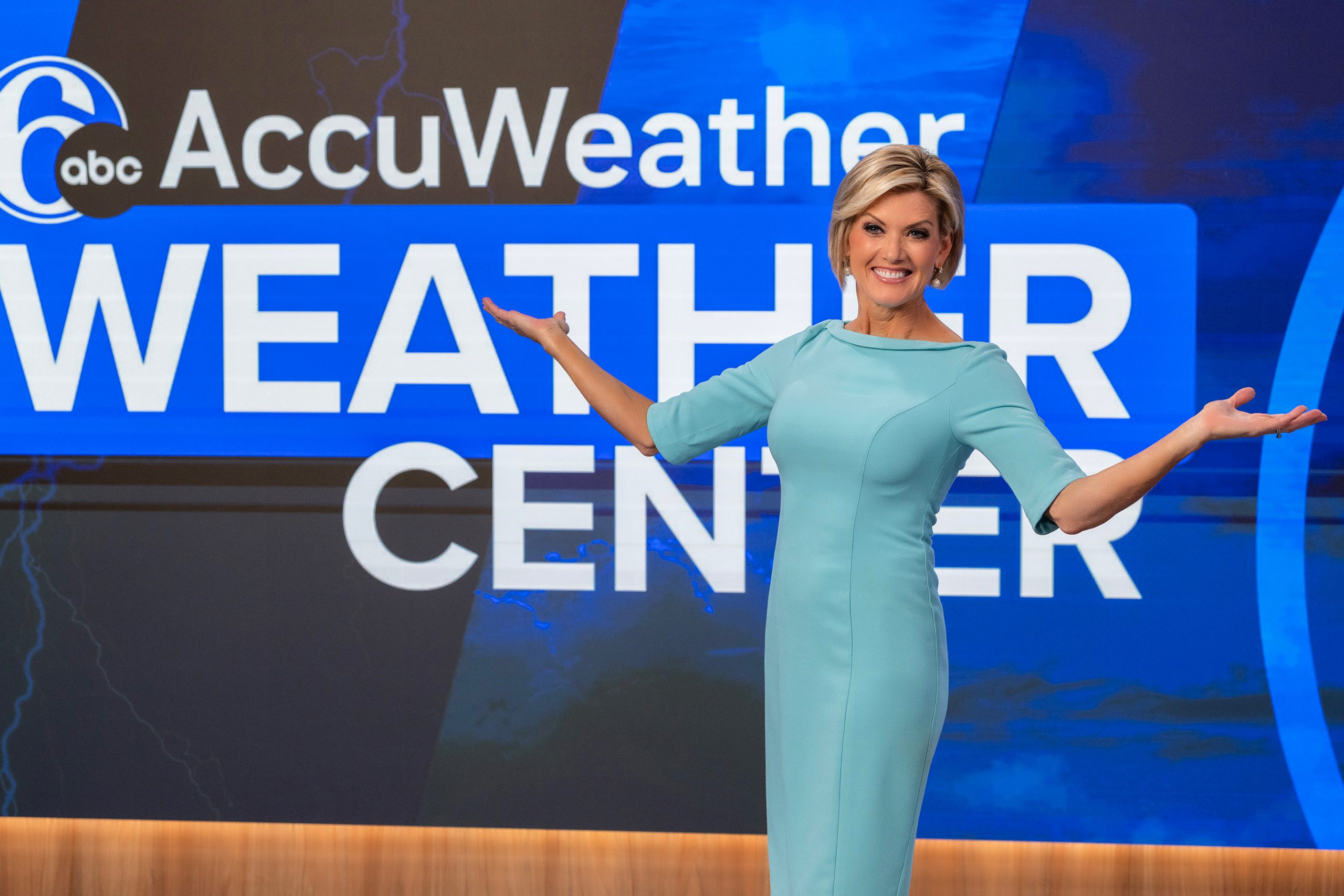
Longtime 6abc meteorologist Cecily Tynan has spent more than 30 years as a member of the Action News team.6abc
The end of another Action News era: F
Thirty years is long enough for someone to become part of your routine without you even realizing it.
For decades, Cecily Tynan has been the person telling Philadelphia whether to grab a jacket, brace for a blizzard, or enjoy a sunny weekend. You hear the forecast while making dinner or before heading out the door and rarely stop to think about who’s delivering it.
Cecily Tynan leaving feels a little bigger than another broadcaster calling it a career because Action News is part of the city’s daily rhythm. Generations have eaten dinner while those familiar voices played in the background.
But it’s hard to argue with her reason. She’s retiring while she’s healthy enough to spend more time with her family, cheer at her daughter’s track meets, water ski in Florida, rescue animals, and, perhaps most shocking of all, cook Thanksgiving dinner for the first time instead of picking it up from Whole Foods.
First Jim Gardner. Now Cecily Tynan.
Good luck to whoever has to tell Philadelphia there’s snow coming next. Those are big rain boots to fill.
One of the best parts of watching a movie or TV show filmed in Philadelphia isn’t the plot. It’s playing, “I know where that is.”
The trailer delivers plenty of that. You get SEPTA stations, Market East, the Benjamin Franklin Bridge, Center City rooftops — Reacher himself even slams a guy’s head against an Inquirer vending box. We knew Reacher was filming here last summer but seeing the finished product is still oddly satisfying.
Maybe the action scenes will be great. Maybe the mystery will keep us hooked. But let’s be honest: Half of Philadelphia is going to spend every episode pointing at the TV and announcing exactly where they filmed it. (Bonus points if you can call out shots of Toronto masquerading as Philly.)
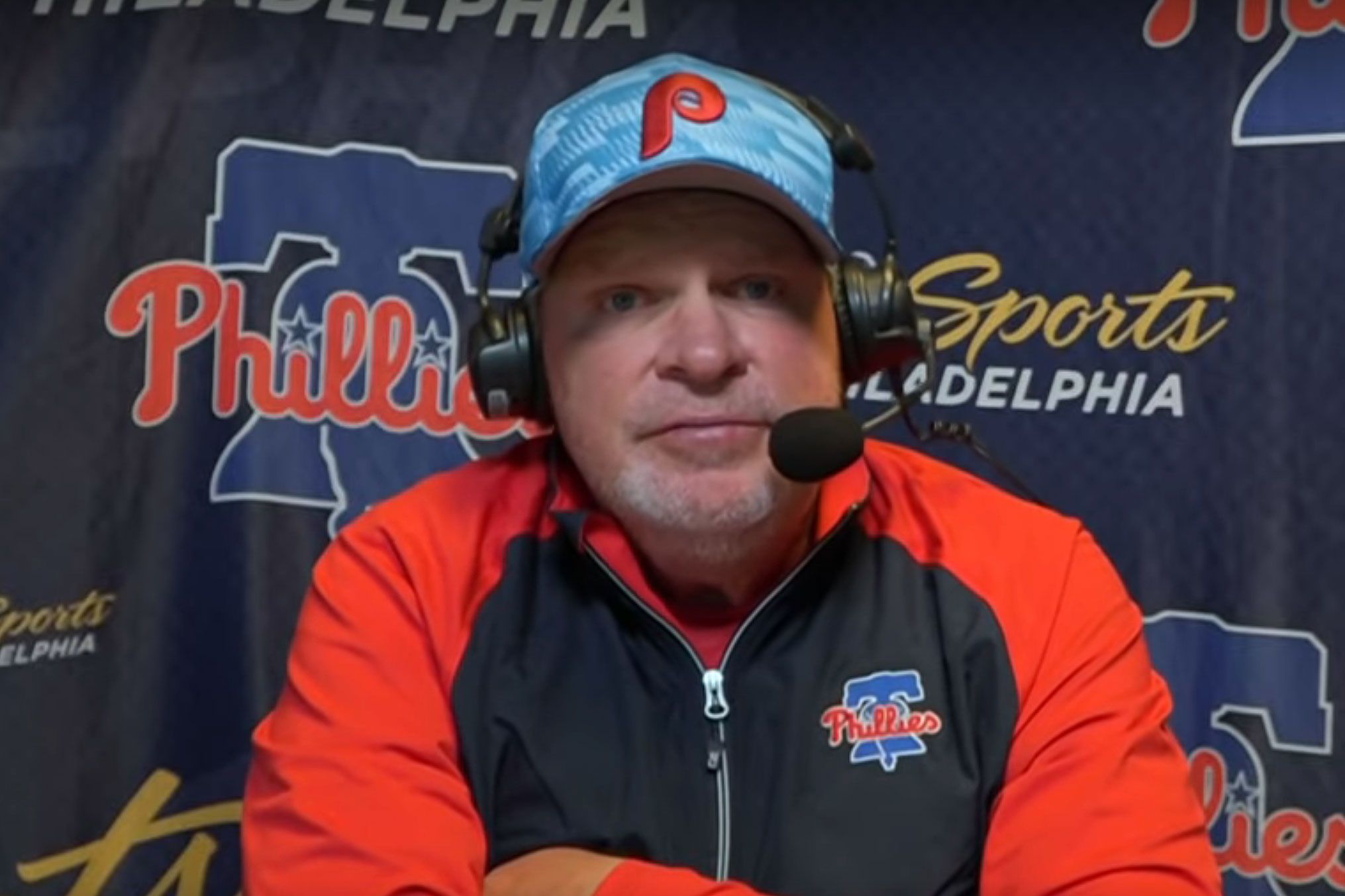
NBC Sports Philadelphia analyst John Kruk following the Phillies’ loss to the New York Mets on Tuesday.NBC Sports Philadelphia
John Kruk on national TV: A
Every time John Kruk joins the Sunday Night Baseball broadcast, it feels like someone accidentally invited your funniest uncle to a black-tie wedding.
This week, the conversation somehow turned into Kruk admitting he doesn’t really own ties, that most of the ones he brought were clip-ons, and then struggled to button his collar while Joe Girardi and Jason Benetti narrated the ordeal like it was Game 7 of the World Series. At one point, Kruk declared facing Randy Johnson was easier than putting on the tie.
That’s why Philadelphia loves him.
Kruk makes millions of viewers feel like they’re sitting in the living room watching baseball with a friend who wandered in wearing whatever he found in the closet. He’s knowledgeable without acting like the smartest guy in the room, and he’s never afraid to laugh at himself.
Sure, NBC can put him in a jacket and hand him a tie, but they can’t make John Kruk stop being John Kruk.
From left: Former Eagles receiver Terrell Owens, the Phillies’ Bryce Harper, and former Flyer Eric Lindros.Associated Press
LeBron James is the latest reminder that the biggest names in sports don’t just tolerate Philadelphia anymore — they want to play here. And once you start thinking about it, the list is pretty impressive: Bryce Harper, Saquon Barkley, Terrell Owens, Jim Thome, Cliff Lee, Dr. J, Eric Lindros, Moses Malone. Each arrival felt like a holiday. Not every move worked out perfectly. (Sorry, T.O.) But that’s beside the point.
For decades, Philadelphia fans carried around the idea that stars preferred bigger markets, warmer weather, or flashier franchises. We were the “underdogs.” Now, one of the greatest basketball players of all time looked around the NBA and decided he wanted to spend the final chapter of his career was South Philly. (We just have to convince him to move here now.)
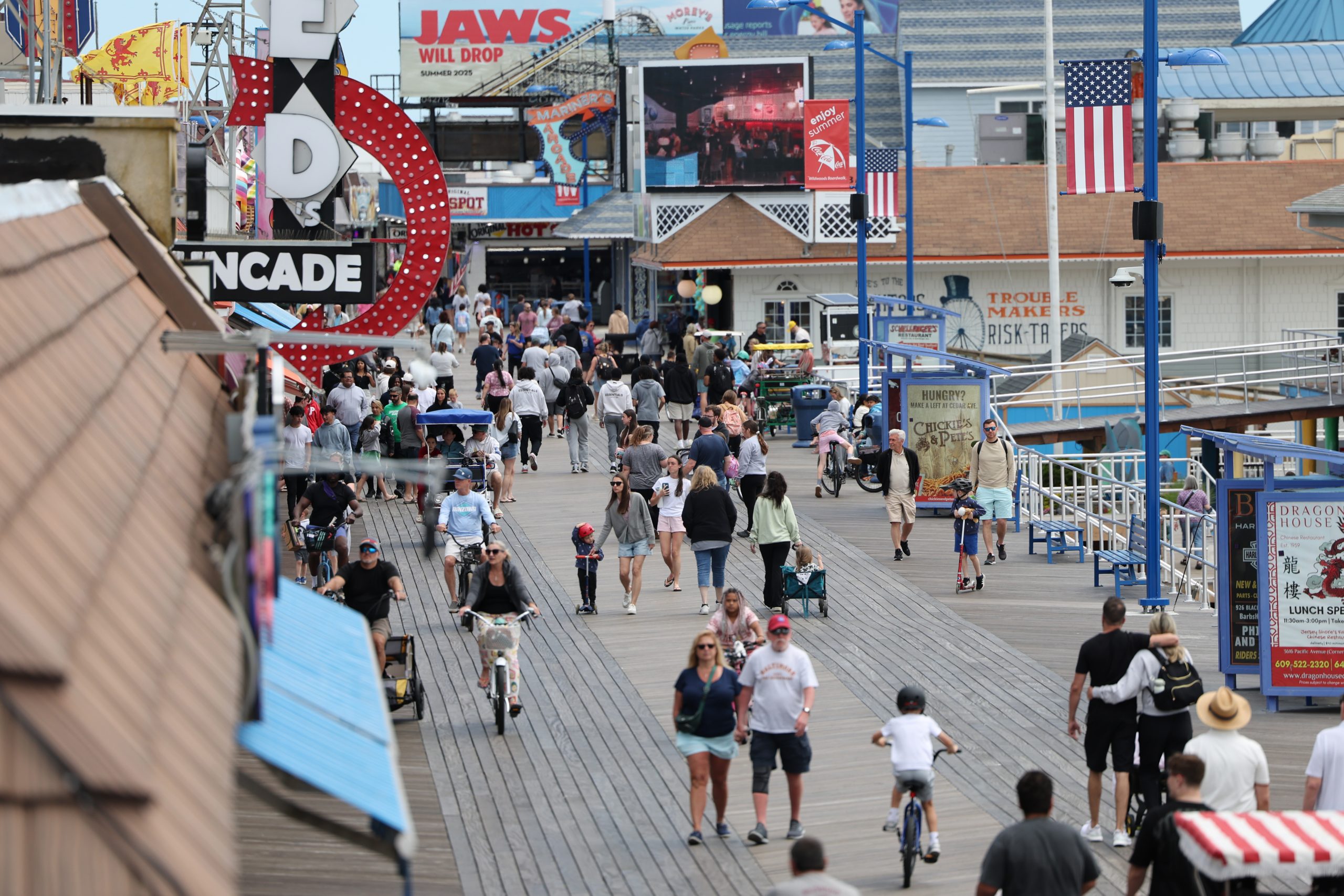
A crowd strolls along the boardwalk in Wildwood on Monday, May 26, 2025.David Maialetti / Staff Photographer
Now comes the important part: Please film it there.
Hollywood has a habit of setting shows in one place and shooting them somewhere completely different. But Wildwood has too much personality to fake. The boardwalk, the neon motels, the tram car. If you’re going to call the show Wildwood, you have to earn it.
Besides, if The Four Seasons can film down the Shore and Reacher can turn Philadelphia into an action movie backdrop, there’s no reason this one can’t let Wildwood play itself.
If nothing else, we deserve a season of spotting familiar landmarks instead of arguing online, “That’s clearly not Jersey.”
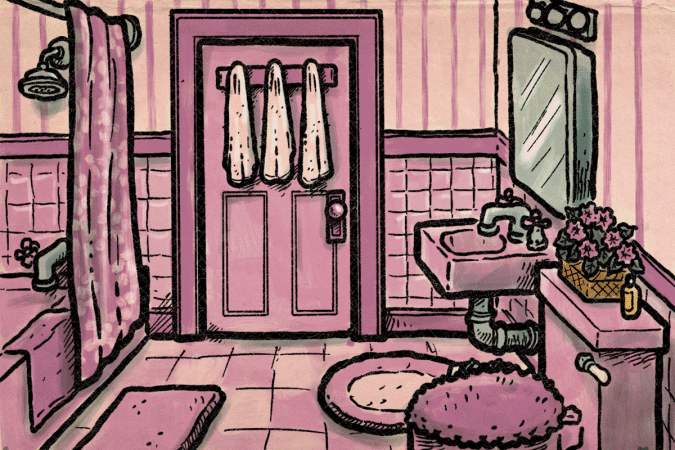
I just bought a South Philly house with a pristine 1950s bathroom. Everyone who sees it says I MUST keep it, pink toilet and all. But I want radiant heat flooring, marble, and a moody paint scheme. Am I a monster?
Earl Hopkins
NO, you are not a monster! As a homeowner, you have free will to do whatever you want with YOUR property. I’m all for architectural character, so a ’50s-style bathroom sounds beautiful. But if you want to scrap it for a more modern style, who am I — or anyone for that matter — to tell you differently? Go for it!
What do you think, Stephanie?
Stephanie Farr
As someone who has pink tile in her bathroom and initially hated it when I moved in, I’d urge this reader to sit with it for a while (beyond just sitting on the toilet). My pink-tiled bathroom has grown on me over the years and now I kind of love how it feels anachronistic. I’m in the modern era in the rest of my house, but when I go to the bathroom I’m transported back to the 1950s. It’s a bathroom time machine!
Earl, how much do you think you should let others influence your decisions with your house? Do you take input from guests? Should guests even be offering input on someone’s bathroom?
Earl Hopkins
No! This reader shouldn’t let any guests sway their opinion or steer their vision.
No. 1: Buying a home is hard.
No. 2: What may be odd or strange to one person, may be the very quirk that convinced them to purchase the home in the first place. In this case, they may have fallen out of love with the bathroom, or knew a remodel was in the cards. Either way, it’s their business.
Stephanie, I feel like a bathroom is such an intimate place in someone’s home. What do you think?
Stephanie Farr
I totally get that. I think complimenting someone’s bathroom is fine but criticizing it — or the homeowner’s style preferences — is rude.
I agree that if this person wants to renovate it they have every right to make their bathroom look like something out of the Beetlejuice house instead of out of 1950s South Philly. But, in case they feel like these comments from guests are coming out of nowhere, there is a deep appreciation for old Philly places stuck in time, particularly in South Philly. There’s an entire Instagram account called South Philly Time Capsules that features houses that haven’t been changed in decades and the first pinned post is of a pink bathroom.
Earl, do you think there’s a way to pay homage to the old bathroom if and when it is completely modernized? Should this person take a photo of the bathroom now, frame it, and hang it up in the redone bathroom or is that just asking for more criticism?
Earl Hopkins
Oooh, that would be a nice touch; a great way to pay homage to the home’s roots. Plus, it could make for a great story to share with new visitors.
Stephanie Farr
And maybe they should save a few pieces of the tile to incorporate somewhere in the new bathroom or home too. And before the remodel, they should definitely throw a bathroom potty to send off their old restroom in style.
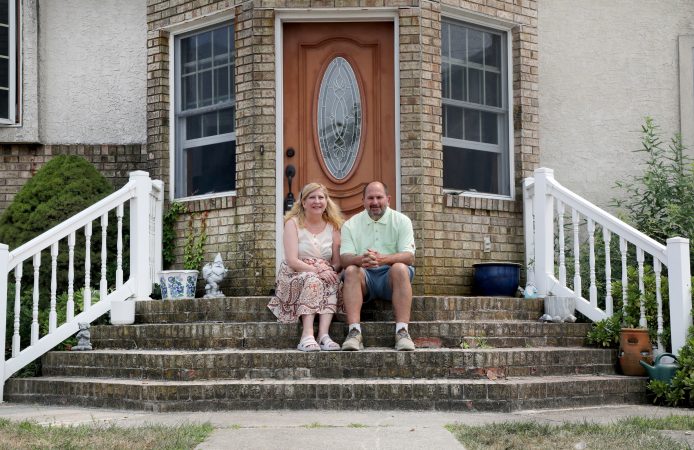
The buyers: Nick Matteo, an accountant, and Sandy Matteo, a nurse, both 63.
The house: A 2,282-square-foot split-level coastal colonial with 3 bedrooms and 2½ baths built in 1993.
The price: Listed for $699,000; purchased for $650,000.
The agent: Maria Sacco Handle, Berkshire Hathaway HomeServices Fox & Roach-Margate
The ask: The Matteos were ready to sell the home in Willow Grove where they raised their family to fulfill the dream of moving year-round to the Shore. They wanted a place that their children and grandchildren would want to visit and that would combine their love of the Shore during the summer with enough year-round community appeal.
“By the time I was 58, I was trying to convince my wife to move down there full time in Wildwood,” Nick said. “That took a lot of convincing.”
Nick and Sandy Matteo wanted a home that combined their love of the Shore with enough community to keep it interesting all year long. Vernon Ogrodnek / For The Inquirer
The search: The Matteos shared two condos with another family in Wildwood and initially focused on the Wildwoods in their search. But people kept talking to Sandy about the charms of Brigantine.
“People were telling us that you’ll get much better value than you would in Wildwood,” Sandy said.
They were very close to making an offer on a house in Wildwood, when Sandy decided they should drive back up the Garden State Parkway, down the Atlantic City Expressway, and over the bridge to Brigantine.
“We looked at 10houses in twodays in Wildwood,” Nick said. “We found one we thought we liked, looked at it the second time, and put a bid in for $130,000 less than the asking price of $880,000. The offer never made it to the seller.”
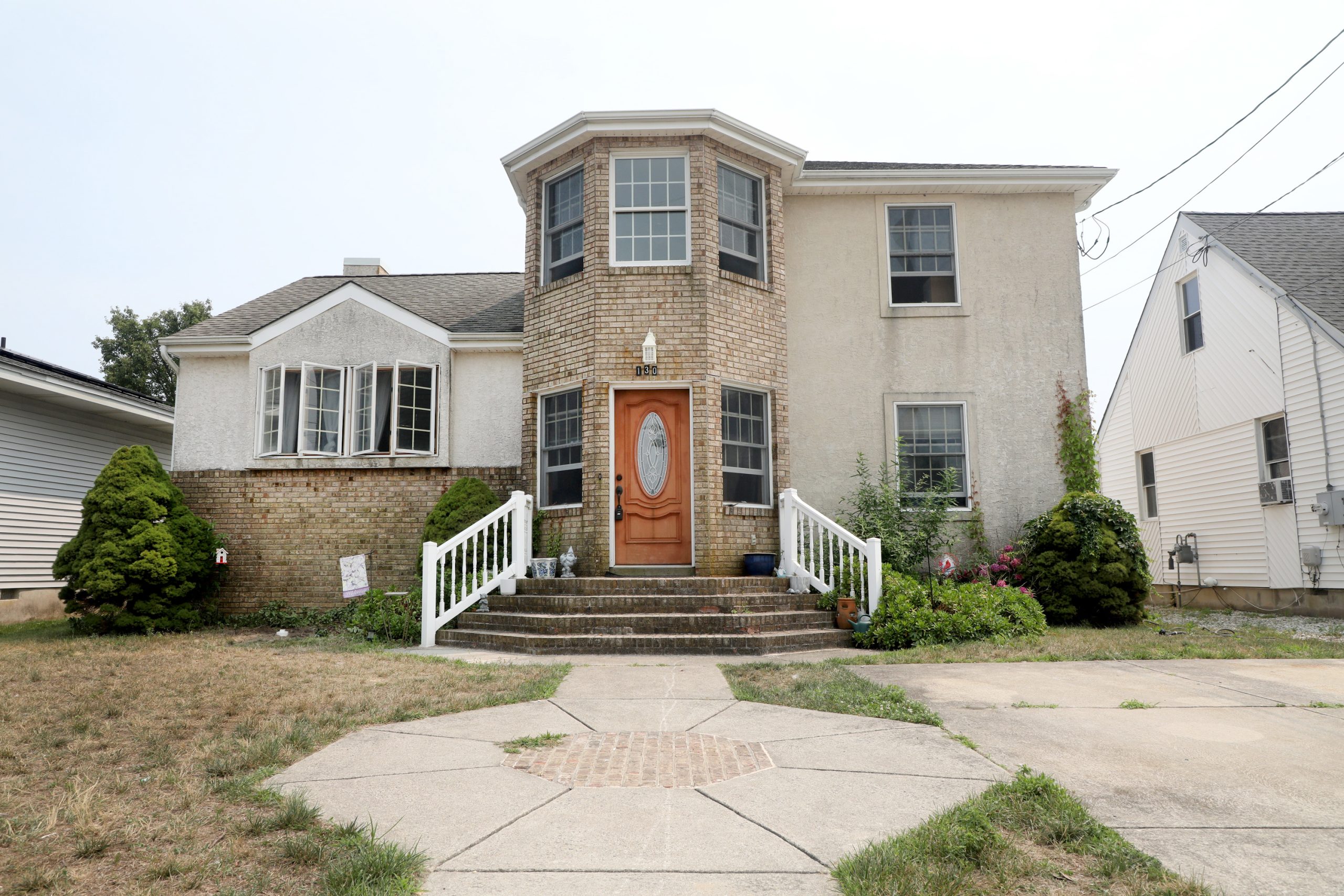
In Brigantine, they fell immediately in love with asplit-level house facing the golf course with a for sale sign out front.
“It was 5:30 p.m., and I looked on my phone and saw a couple places, and we drove by here,” Sandy said. “I said, ‘This is the one.’ ”
They called the listing agentfrom out frontof the home, and she offered to show it to them the next day. “I said, ‘No, we’re about to buy a house. Can you show it to us, you know, any chance tonight?” Sandy recalled.
“She said, I’ll be there in 15 minutes.’”
Nick and Sandy Matteo were in love at first sight with this Brigantine split-level. They called the real estate agent from the car. Vernon Ogrodnek / For The Inquirer
The appeal: Although the house needed some upgrades, it immediately spoke to them, combining the Shore location, across from Brigantine’s golf course, with the sturdy bones of a year-round house. “We went from one split-level to another,” said Nick.
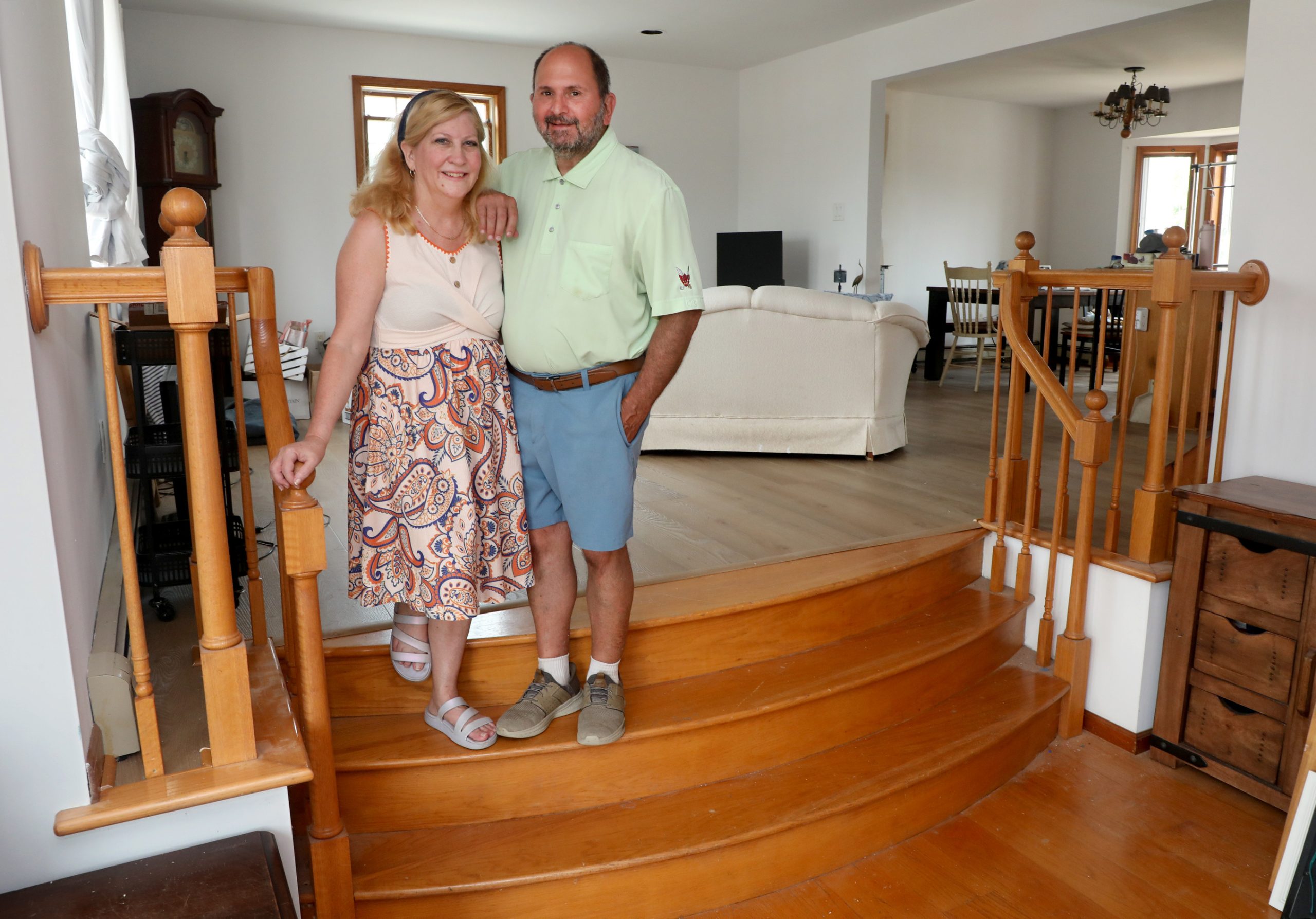
“We came in and I saw the staircase, and the fact that it was all split-level, I just love that,” Sandy said.
The deal: The house was listed for $699,999, and they offered $600,000. The seller came back at $650,000, which they accepted. The seller, whose sisters had lived in the house, later offered a $1,000 credit for the non-working oven.
The money: Nick says that once he was able to sell the shared condos in Wildwood, one for $450,000 and the other for $569,000, the couple cleared enough money to start their search. They started with a budget of $800,000.
Selling their family home in Willow Grove, which they’d bought in 1992 for $152,000, meant they would be able to pay off the mortgage soon after closing. But to get there, they first put 20% down, and the rest in a 6.25% mortgage. Once the money from the Willow Grove sale comes in (sale price was $640,000), Nick says they will pay off the Brigantine mortgage.
“Brigantine was economical for us,” Nick said. “It will allow us to maybe buy other things, like a pontoon boat.”
The move: They closed on the Brigantine house May 29 but didn’t make the full-time move until July 16, after their Willow Grove house sold. Sandy went down first with the movers.
Life after close: The first week afterthey moved in, the drains backed up with seaweed and other unappealing things, requiring an urgent visit from theplumbers from Zoom Drain. The oven needs replacing, and the Matteos are awaiting the installation of a new deck, a hot tub, and new shrubbery out back. They’d like to freshen the facade and get to some other upgrades, like central air, but have discovered the near impossibility of getting contractors down the Shore in summer.
The oven is one of the things that needs to be replaced or updated at Nick and Sandy Matteo’s Shore house. Vernon Ogrodnek / For The Inquirer
Despite those challenges, the family is ecstatic. Their son, daughter-in-law, and 6-month-old grandson claimed a sunny upstairs room with a bay window, and everyone is raving about the view of the golf course and community garden across the street.
“My kids are elated,” Nick said. “They want to come down every weekend. My daughter-in-law said, ‘I’m going to bring the baby, and I’m going to set up shop down there.’ That was just the home run.”
They’ve been warned about Brigantine’s notorious buzzing greenheads, but otherwise think they’ve found a warm and active year-round community, with Atlantic City right over the bridge if they need any excitement. The beach is just a few blocks away.
“I love it,” Sandy said. “It’s a true community.”
Did you recently buy a home in the Philadelphia area or South Jersey? Share the story of how you did it. Email Inquirer real estate reporters at properties@inquirer.com.
After nearly 50 quizzes, it’s time to bid adieu to Citywide Quest! We’ll show you a photo taken in the Philly area, you drop a pin where you think it was taken, and we’ll tell you a fun story behind the photo. Good luck.
Round #44
Question 1
Our very first Citywide Quest question was this photo. Where was it taken?
Loading…
ClickTap on map to guess the location in the photo
ClickTap again to change your guess and hit submit when you're happy
You will be scored at the end. The closer to the location the better the score
Tom Gralish / Staff Photographer
Pretty good/Not bad/Way off! Your guess was from the location.Spot on! Your guess was exactly at the location. Here's also where a random selection of Inquirer readers guessed.
The theme of our first ever Citywide Quest was arts and culture institutions in Philadelphia. The “Paint Torch” sculpture by Claes Oldenburg was installed at the Pennsylvania Academy of the Fine Arts in 2011.
Question 2
Where is this mall outside of city limits?
Loading…
Tyger Williams / Staff Photographer
Pretty good/Not bad/Way off! Your guess was from the location.Spot on! Your guess was exactly at the location. Here's also where a random selection of Inquirer readers guessed.
Back in November 2025, we asked you to pinpoint this photo taken at King of Prussia Mall. We received a lot of reader emails about this. One reader pushed back, saying, “It says Philly quiz and the second answer was King of Prussia Mall. Not in Philly is it?”
We do say the photos are in the Philly area, but they are right: The mall is not within city limits. Of the 132 questions, this was easily the one with most feedback.
Quiz continues after ad
Question 3
Where is this Easter egg?
Loading…
Jasen Lo
Pretty good/Not bad/Way off! Your guess was from the location.Spot on! Your guess was exactly at the location. Here's also where a random selection of Inquirer readers guessed.
Our Easter-themed quiz had to be an Easter egg hunt. Interactives journalist-engineer Jasen Lo hopped on his bike with a bag full of eggs and took photos across the city – including this one taken of the German Society Of Pennsylvania, from the median of Spring Garden.
One reader presumed the eggs were Photoshopped into existing photos. We could have done it that way, but where’s the fun in that?
Question 4
Where is this sundial, which is definitely where it’s supposed to be?
Loading…
Jasen Lo
Pretty good/Not bad/Way off! Your guess was from the location.Spot on! Your guess was exactly at the location. Here's also where a random selection of Inquirer readers guessed.
For a time-themed edition of Citywide Quest, we asked you to identify the location of this Calder-created sundial sculpture — but not before we unintentionally caused a small panic at the Fairmount Park Conservancy.
When we sent a photographer to Fairmount Park to capture the sculpture, it could not be found! We called park officials, worried that it had been stolen. Another visit and more accurate coordinates quickly resolved the mystery and put everyone’s concerns to rest.
Question 5
For our final question, where is the room where Citywide Quest happens?
Loading…
Jasen Lo
Pretty good/Not bad/Way off! Your guess was from the location.Spot on! Your guess was exactly at the location. Here's also where a random selection of Inquirer readers guessed.
The Inquirer office building is located on 100 S. Independence Mall West, where – every week since October – the Interactives team has created a new round of Citywide Quest. We’ve asked you to guess the locations of photos taken all over the Philly area, from down the Shore to islands on the Delaware and Schuylkill.
Our summer intern last year, Levi Jiang, designed and developed the game that you’ve come to know and love. Thanks, Levi!
Your Score
ARank
Amazing work. We hate to say adieu.
BRank
Good stuff. Take a bow, and we’ll take our leave.
CRank
C you later, alligator.
DRank
D isn’t great. We’d hoped to depart on a better note.
FRank
We don’t want to say you failed, but maybe it’s for the best we all moved on.
You beat % of other Inquirer readers.
We would like to thank everyone who played Citywide Quest over the past year. Unfortunately, we have some sad news: this is the last ever weekly edition of Citywide Quest. Thanks for playing, and stay tuned to the Inquirer, as Citywide Quest isn’t the only quiz in town.
Staff Contributors
Reporting: Jasen Lo, Garland Fordice, Charmaine Runes, and Sam Morris
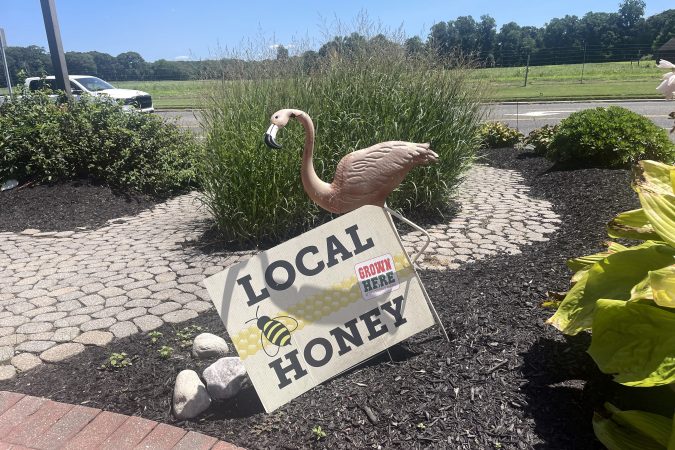
The juxtaposition of a flamingo and a honey bee may not have doubled you over in laughter, but it had me pause while walking into a South Jersey farm market. And it made me smile.
Then I started to overthink it. Am I missing a joke here? “Q: What’s the difference between a flamingo and a honey bee?” Or, “a bee and a flamingo walk into a bar.”
Nope. That doesn’t work either. Nor does a meme about having “the” birds and the bees “talk.”
All this to justify picking that picture to feature with this column. Some weeks it’s an easier choice, and this week’s got me thinking about what in the newspaper business is called a standalone photo.
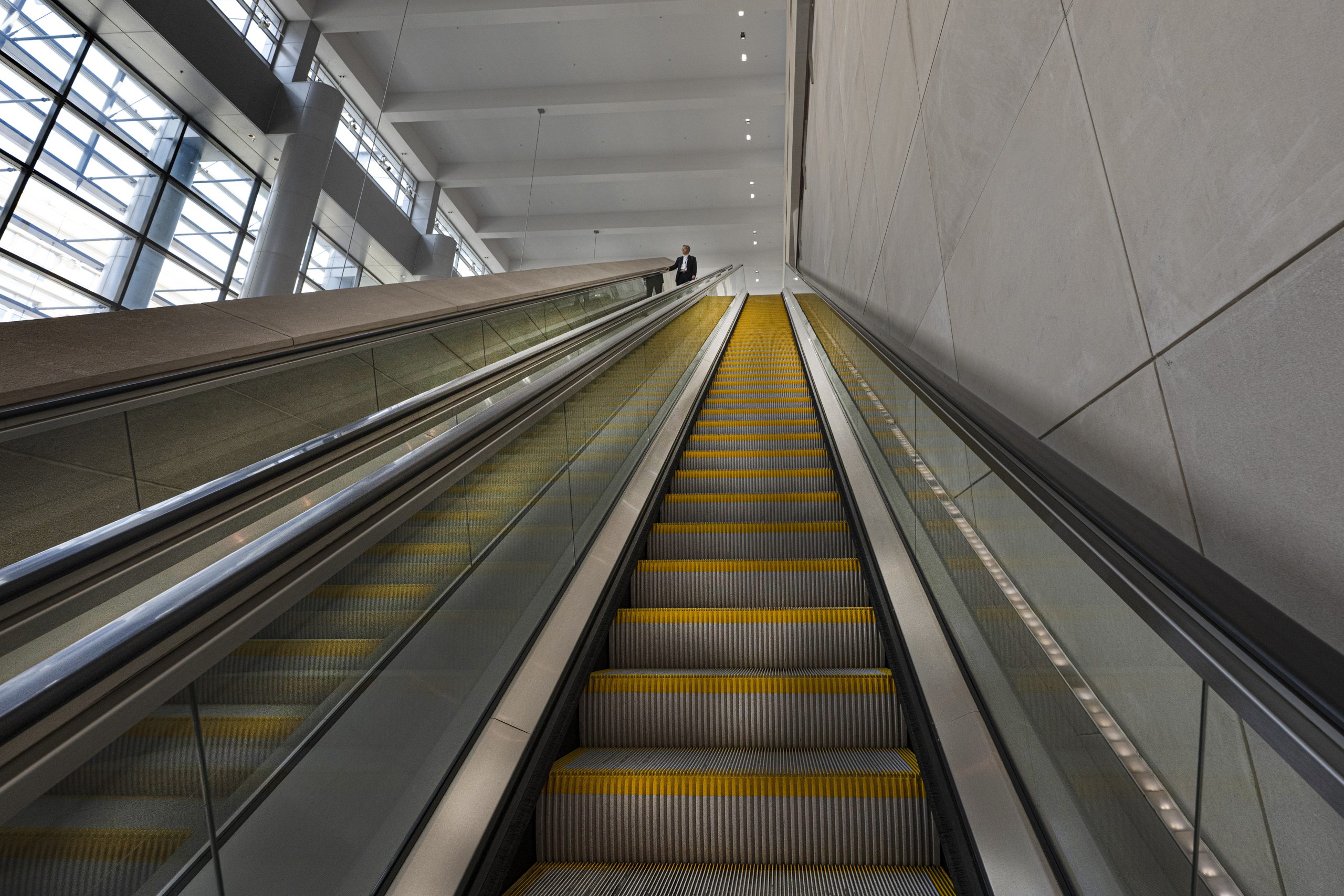
A standalone photo made while my colleague was taking the escalator to his assignment at the International Congress of Mathematicians at the Convention Center on Monday.Jose F. Moreno / Staff Photographer
Aka, a photo feature or wild art, a standalone is a picture published without an accompanying article. I talked about it in a previous column (click bonus: the photos there are from a cold, snowy January day. Maybe refreshing to look at now, as we’re here in the dog days of summer).
In the heyday of dead-tree, printed ink-on-paper analog versions of newspapers not every story had a picture, so standalones were used when editors wanted to add some visual variety to a page that was all gray. That is precisely the 1998 origin of this column: it broke up a text-heavy page containing community news, calendars, traffic reports, school information, and volunteer listings.
Online publishing changed everything, and digital design evolved toward image-heavy layouts. Since our brains process pictures much faster than words, photos make a story more likely to grab a reader’s attention while scrolling.
Suddenly every story on news websites had an image attached. Pictures became plentiful.
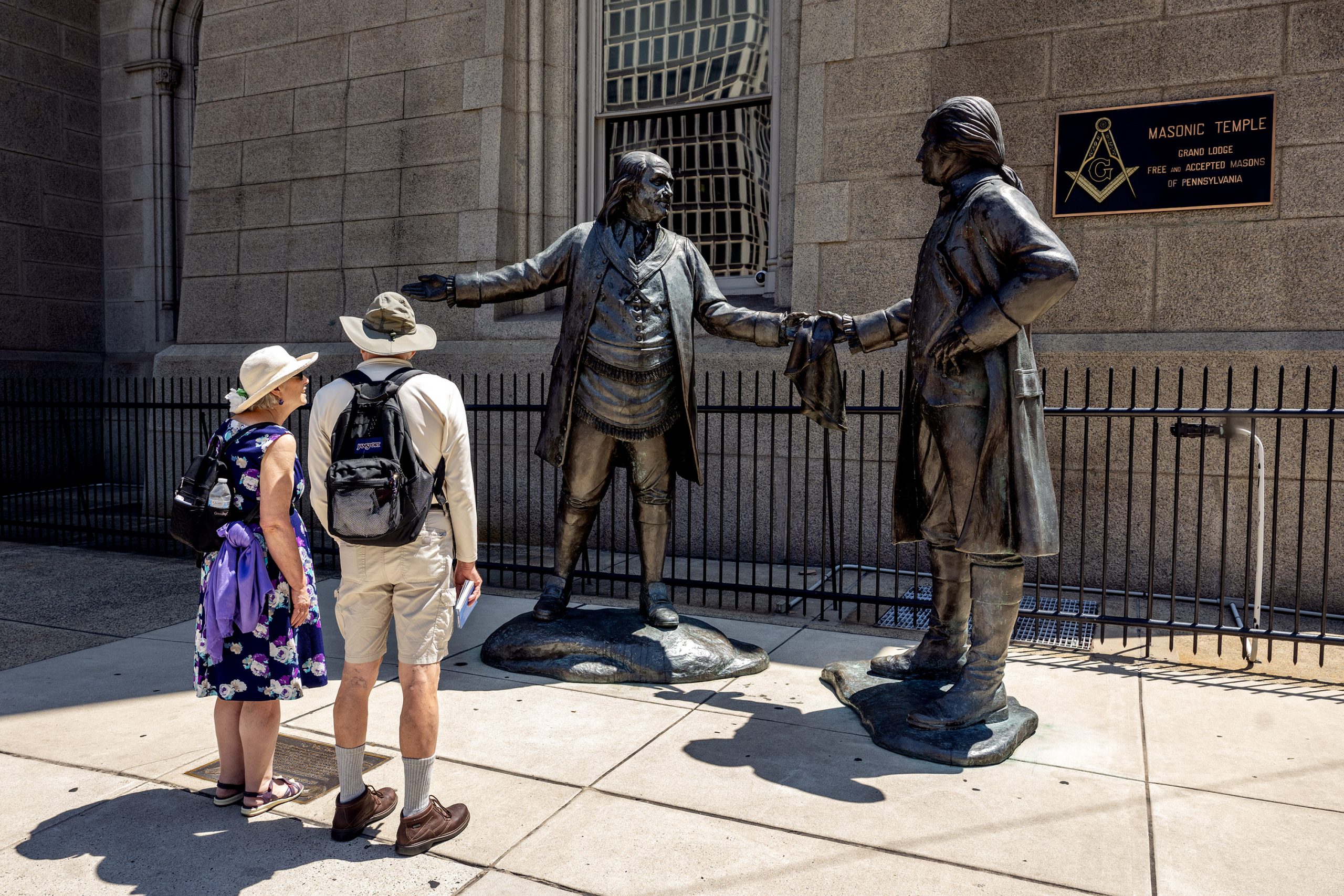
A standalone of two prominent Freemasons – Benjamin Franklin and George Washington – standing in bronze outside the Grand Lodge Masonic Library and Museum across the street from City Hall. (“The Bond” was created by sculptor Jim West in 2018.)Tom Gralish / Staff Photographer
And that’s the paradox. Even though the internet is highly visual, it favors rapid consumption rather than contemplation. Lost in the mishmash array of thumbnails on a website, it is harder to appreciate a storytelling standalone photo, or enjoy the much slower experience of pacing through a dozen images and captions in lengthy photo essays.
And that brings me around to a photo I saw this week. A reader submitted a picture they’d snapped of a young man outside Reading Terminal Market dressed in a solid-color button-down shirt with trousers held up by suspenders instead of a belt and wearing a broad-brimmed straw hat closely examining a parked Uber Eats’ delivery bot.
I reacted to it just as I did with the flamingo/honey bee, with a smile.
For decades the old weekly LIFE magazine had a standing feature on the last page called Miscellany. It was mostly pictures of people and animals in unexpected or humorous situations. A standalone.
Even with an abundant canvas there really isn’t a place on our website for a standalone photo — like the bot — without an attached story.
Or maybe there is. I have this column where my unattached images are displayed every Saturday and I’m happy to share some of the space (means less writing for me). So readers, if you see and take a picture like those on LIFE’s back-of-the-book page, email it to me.
(By the way, even though it was taken in a public place we wouldn’t have used the Amish/bot photo anyway. The subject may belong to a community that doesn’t enjoy being photographed, and he was minor. The photographer needed to talk to him — and a parent — to provide more context. But then it would no longer be a standalone.)
And remember, if a bee lands on you, freeze. Let it investigate and it will leave without stinging as long as it doesn’t detect a threat. If a flamingo lands on you, well, you’ve got a different problem.
Since 1998 a black-and-white photo has appeared every Monday in staff photographer Tom Gralish’s “Scene Through the Lens” photo column in the print editions of The Inquirer’s local news section. Here are the most recent, in color:
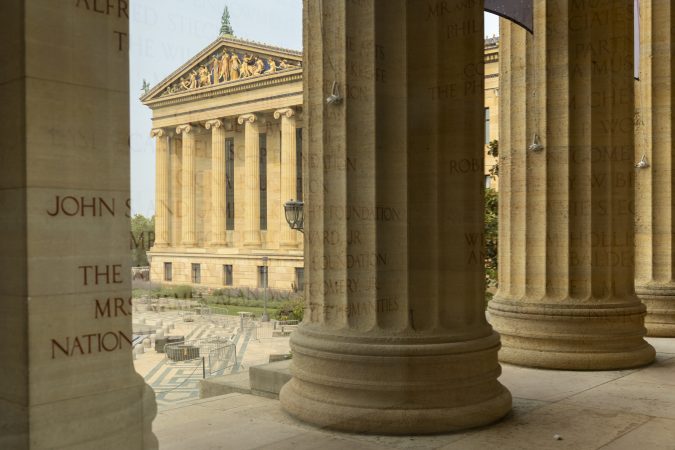
When art world veteran Daniel H. Weiss took over the Philadelphia Museum of Art in December, he quickly recruited a new team, including a chief financial officer and chief fundraiser. That team has begun to assess the museum’s financial condition and what can be done about it.
The picture that is emerging is not a pretty one.
Preliminary figures seen by The Inquirer show that the museum ran a deficit of about $10 million on a budget of $76.5 million for the fiscal year that ended June 30.
That is on top of a deficit of $5.4 million for the year before, and leaders say the outlook does not promise to improve soon. For the fiscal year that has just begun, the museum anticipates the deficit will be comparable to last year’s $10 million, but in planning the budget the museum has outlined the possibility that it could be as high as $15.9 million.
The shortfalls are the museum’s largest in recent history, leaders say.
Weiss said the museum’s financial situation is “substantial, but solvable.”
“I have no doubt that we will have a balanced budget in about three years,” he said, “but we have real work to do to get there.”
Financial pressures are not threatening the museum’s ability to remain open, but the run of red ink cannot continue. The museum is covering the deficits by drawing on a pool of money that includes cash and reserves — sometimes referred to as quasi-endowment — whose use was not restricted by donors for any specific purpose.
“The way I would describe it is, we have a savings account for rainy days. We’re spending it,” Weiss said. “We need to stop doing that.”
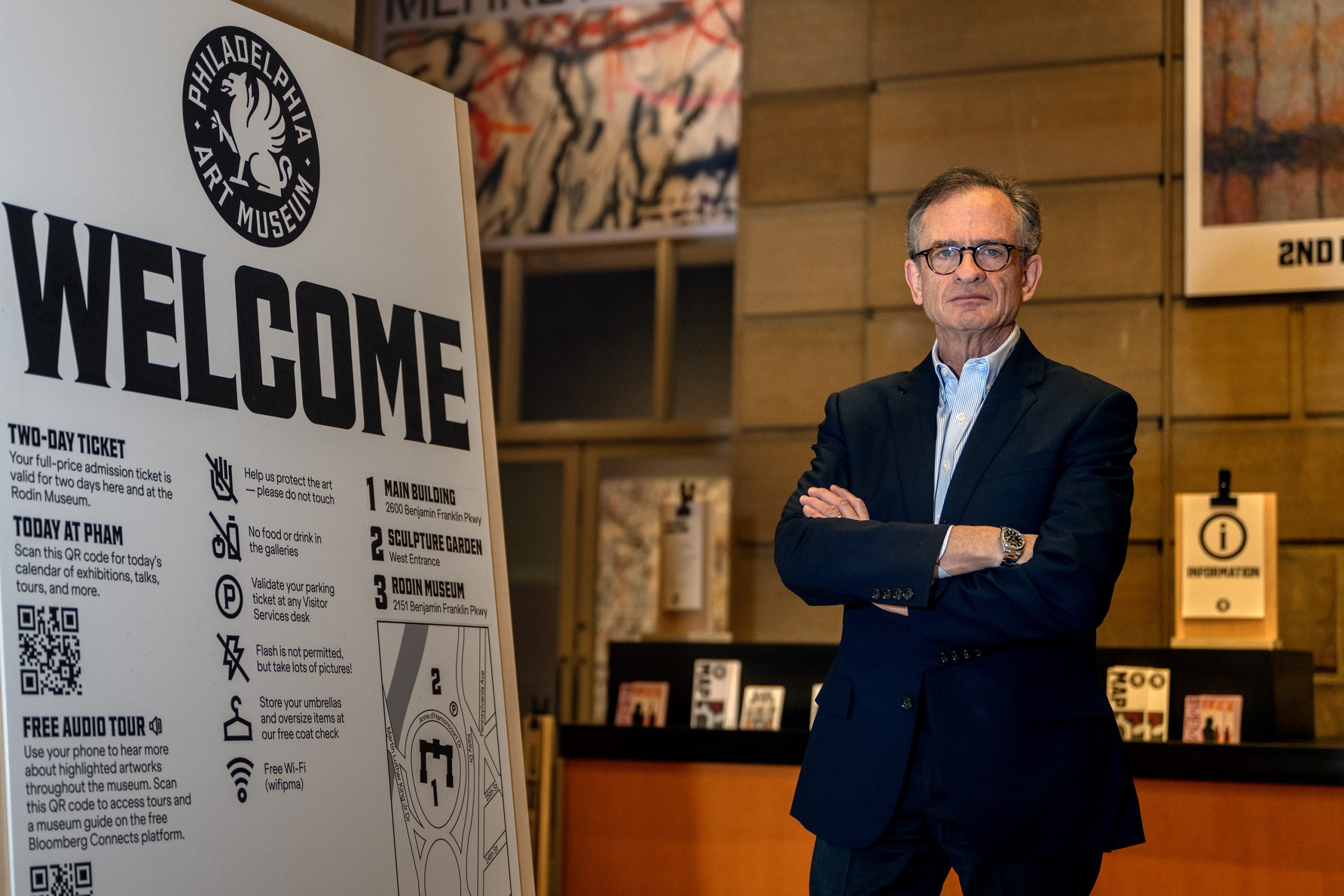
Daniel H. Weiss, director and CEO of the Philadelphia Museum of Art, at the museum in January.Tom Gralish / Staff Photographer
The museum’s struggle to right its finances comes as it faces some urgent needs and considers the fate of key projects. Among the unsettled questions is how to pay for deferred maintenance to both the main building and the Perelman building, the annex to the north that was closed to the public during the pandemic and never reopened.
The combined cost of work on the two buildings has a preliminary price tag of around $300 million.
As for a much sexier project, the museum’s much-trumpeted expansion envisioned by architect Frank Gehry: That will have to wait. Given the current challenges, the ambitious idea of carving out new spaces beneath the east terrace continues to be on hold; the timeline is uncertain.
“It is not, at this time, appropriate for us to be evaluating the feasibility of a very substantial new capital project which would be required to implement the Gehry plan,” Weiss said. “We need to determine the priorities and sequencing of capital work that needs to be done. And over the long term, we need to figure out what this institution can afford in a sustainable way.”
The famed architect died late last year.
The priority now is ringing the alarm that all is not well at one of the city’s two largest arts groups (the other being the Philadelphia Orchestra and Ensemble Arts) and rallying support around a rescue plan.
Weiss said:
“We want to be transparent and we want to be accessible to people, and they have a right to know — it’s their institution. But we don’t want to do it in a way that turns people away. It’s just an institution that needs repair. So how to tell that story is part of what we have to work on.”
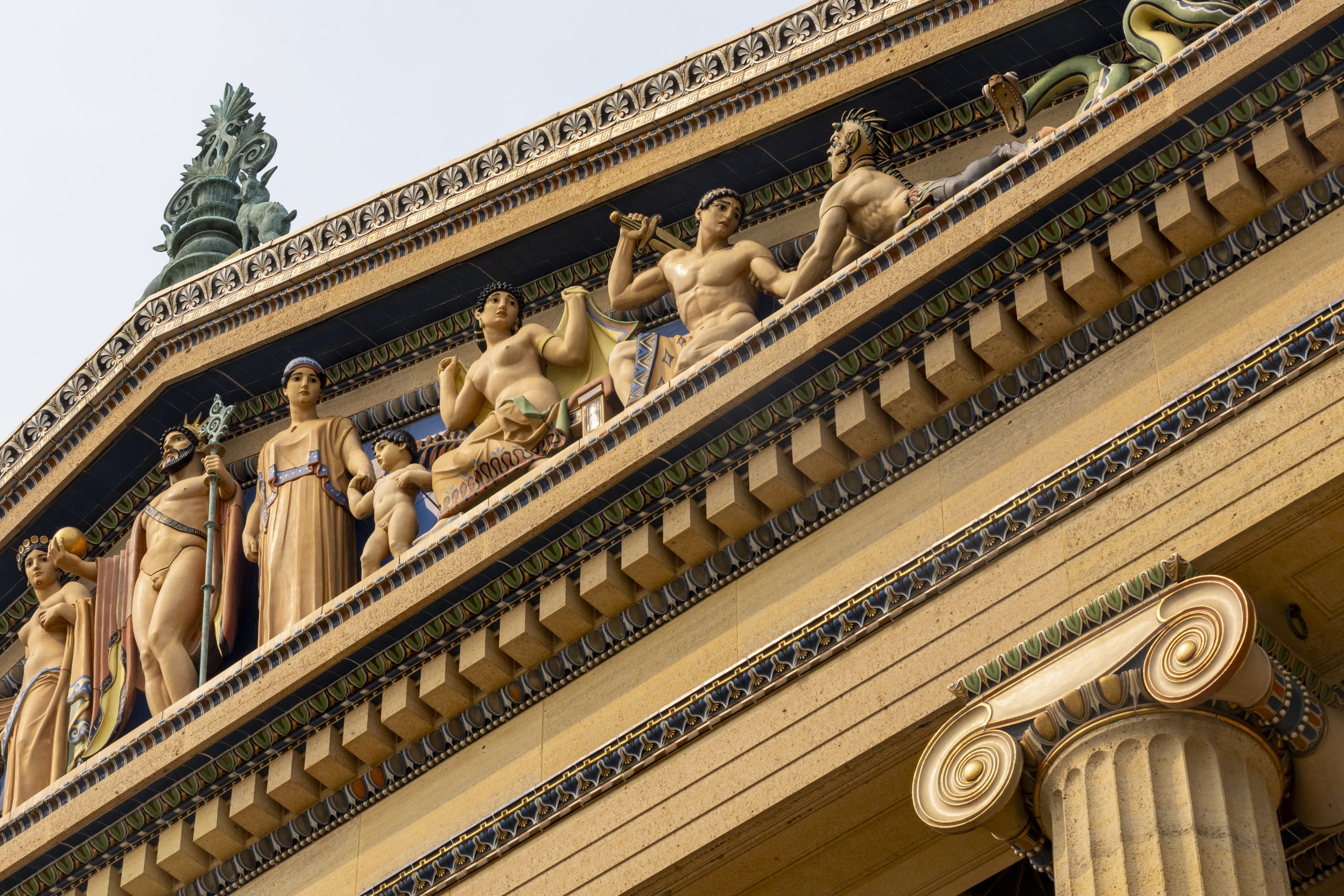
The polychrome high-relief sculpture on the north pediment of the Philadelphia Museum of Art. The high-relief sculpture depicts 13 figures from classical mythology.Aidan T. Gallo / Staff Photographer
Ambitions despite deficit
The pool of money is finite, and the museum would like to stop tapping its reserves as quickly as possible. Instead of funding the deficit, it could be helping grow the nest egg.
Referring to what is being spent this year alone to cover the deficit, Weiss said:
“That’s $10 million of assets earning at least 5% a year till the end of time we’re foregoing. We’ll never get that back.”
And yet the museum does not expect to balance its budget this year or next.
“We anticipate getting within shouting distance of a balanced budget within three years. We don’t have the luxury of taking longer,” Weiss said.
Even as it struggles, the museum has not shelved ambitious projects. The idea of creating a new learning and engagement center on the north side of the museum is still very much in play, Weiss said. Design development for the facility could begin within a year.
Blockbuster exhibitions like the 1982 show of Nigerian art seen by 197,000 visitors or the Cézanne retrospective in 1996 that drew 548,741 are hard to come by, but the museum is working on a number of shows that it believes would draw 100,000-plus visitors each.
“We will have exhibitions that will be of very significant public interest that will draw large numbers that will be exciting and powerful,” said Weiss, who declined to give specifics on the exhibits.
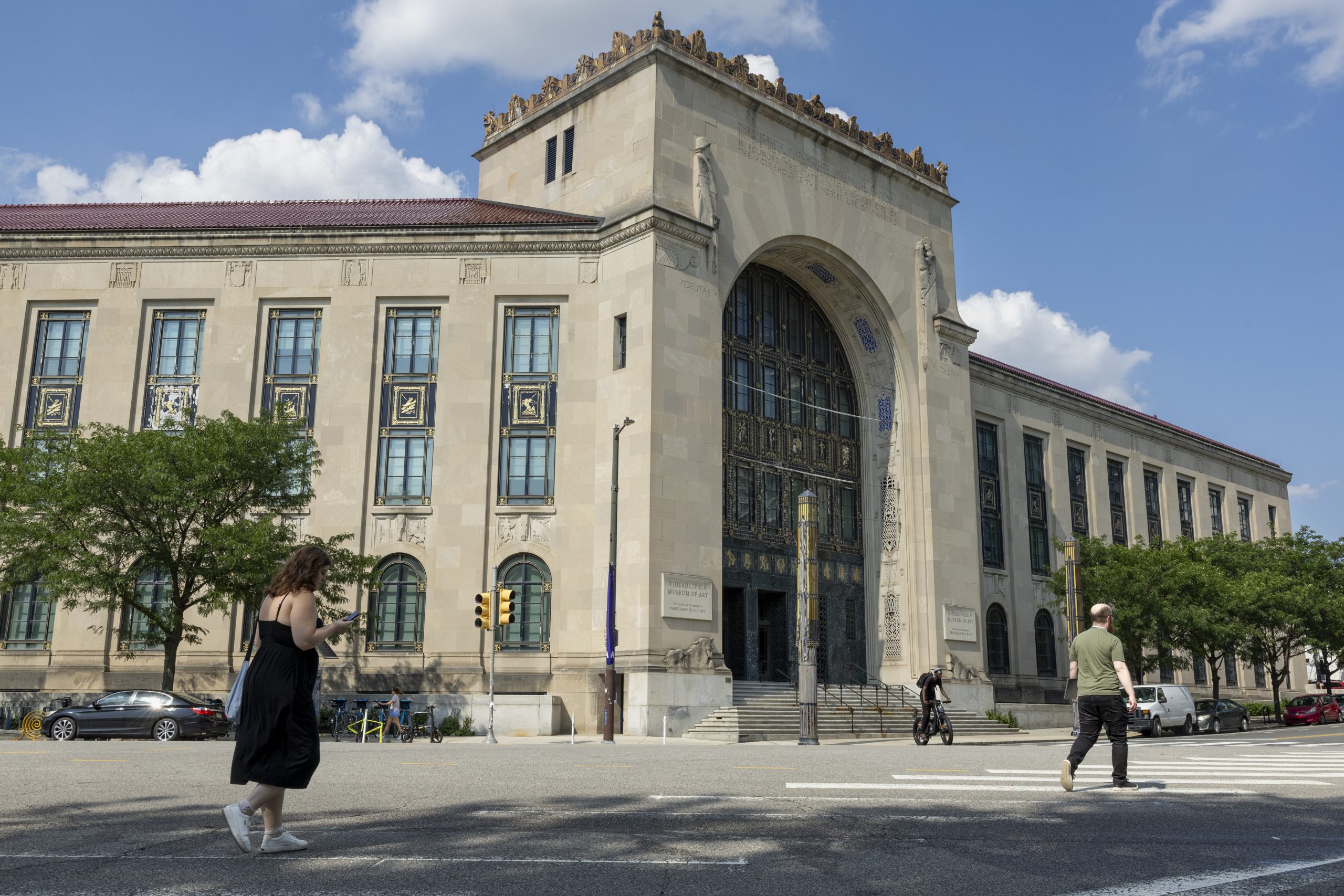
The Perelman building, an annex to the Philadelphia Museum of Art containing exhibition galleries, offices, conservation labs, and the museum library.Aidan T. Gallo / Staff Photographer
About the future of the nearby Perelman building, Weiss said the museum is searching for ideas.
On the one hand, the highly decorated art deco structure contains the library, art conservation studios, and administrative offices for which there is no space in the main building. On the other, the costs of operating and maintaining it are high. It is more building than is needed, and the location across two busy streets limits the number of visitors who will make the trip to reach it.
A revenue stream that’s been flat
The museum’s new leadership has analyzed finances from the last 10 to 12 years — a period that includes the pandemic, plus the periods before and after — and determined that the deficit is the result of a revenue stream that has not grown much, while expenses have.
“Functional revenue — contributions, admissions, membership, and earned revenue — has grown by only 0.3%, effectively flat,” said Mitchell Wein, the museum’s executive vice president and chief financial and operating officer.
The museum has not fully yet developed a plan for reversing the trend, but is “modeling lots of scenarios and coming up with the best approach on how to do that,” Wein said.
“Part of this process is evaluating everything. Everything is on the table,” Weiss said.
Reducing expenses in some areas will be considered, but that cannot be the only answer.
“We also know we need to focus on revenue generation and supporting the museum for the long term,” Wein said.
But revenue from where?
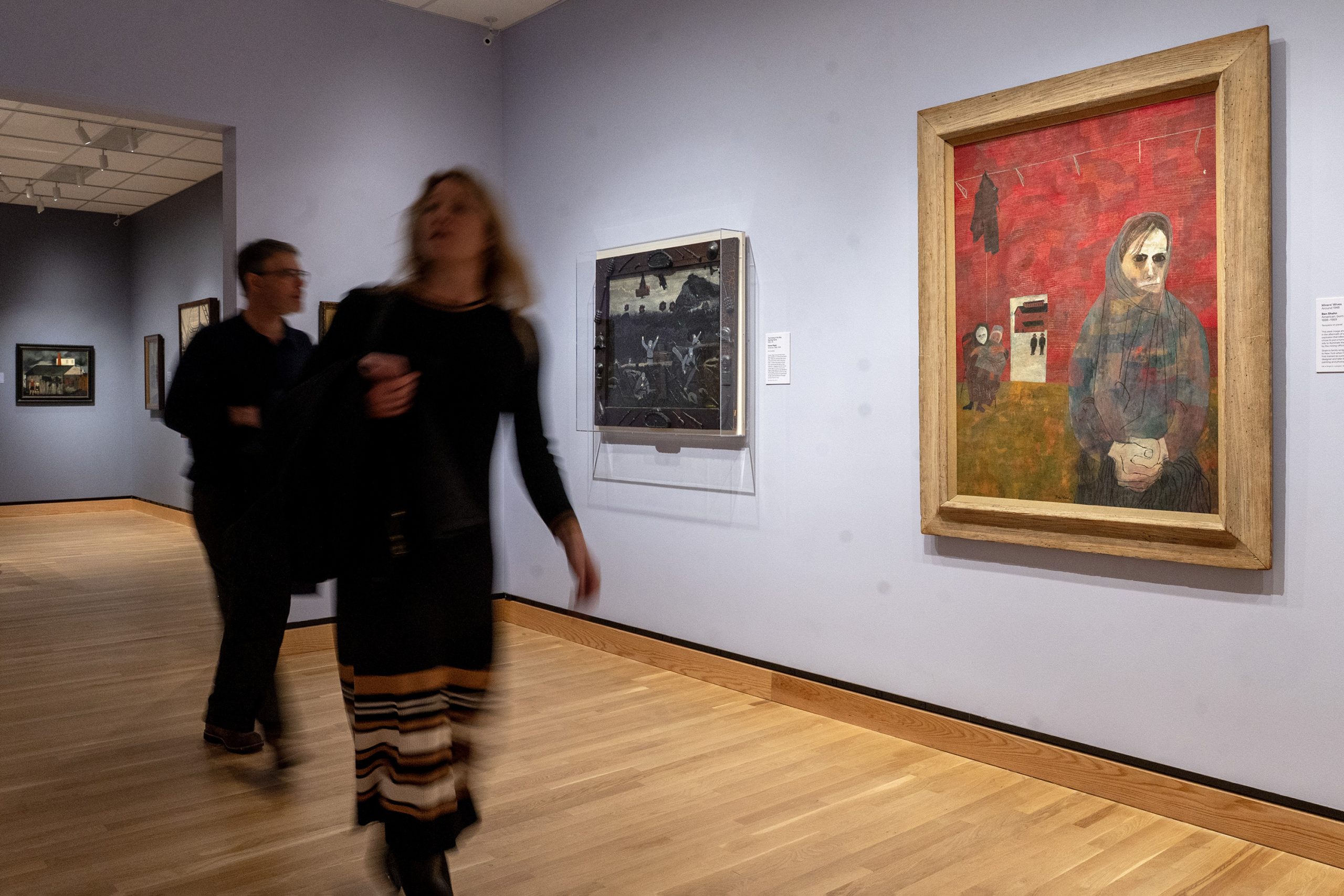
‘Miners’ Wives’ (right) by Ben Shahn and ‘The End of the War, Starting Home’ by Horace Pippin in the ‘A Nation of Artists’ show at the Philadelphia Museum of Art.Tom Gralish / Staff Photographer
Six keys to securing solvency
Ticket sales is one obvious place to look, but a big boost from admission is probably not in the cards. The museum once aspired to attract a million visitors a year, but that goal was floated before the pandemic, and the museum has not yet recovered its pre-COVID numbers.
This past fiscal year, the forecast called for 731,000 visitors; 672,753 showed up.
So the goal for next year has been adjusted down to 705,000, which the museum feels is more realistic. Attendance was 773,511 in the last full year before the pandemic.
The museum’s difficulty in coming back from the pandemic is not unusual. Over half (55%) of U.S. museums of all kinds were reporting lower attendance in 2025 than in 2019, according to a report from the American Alliance of Museums.
Daniel H. Weiss, director and CEO of the Philadelphia Museum of Art, looking out onto the museum’s east terrace.Tom Gralish / Staff Photographer
Weiss says the museum needs to focus on six key areas to achieve solvency:
Optimizing endowment income.
Boosting earned revenue, including income from retail, restaurants, special events and membership, and admissions. “Each of those needs to be examined to determine what’s possible,” he said.
Evaluating how much can be brought in through philanthropy.
Working toward more city and state government support. “We want to try to make the case to them that a larger investment in these facilities is in everybody’s best interests, and that’s a work in progress.”
Reviewing the operating budget. “The operating budget can be improved, but there’s not a ton of opportunity for us, for example, to lay people off. Our staffing levels are already down. We don’t think that’s the answer. But there are certain things we can cut and manage better or maybe outsource or streamline to improve the operating budget.”
Assessing programs, such as making better and more economical use of the Perelman building.
“If you add all of those things up and we do all of those things — even if we don’t also find a private equity guy who falls in love with us who’s going to give us $100 million — we’re going to balance our budget,” Weiss said.
Hundred million-dollar gifts may or may not be in the future, but the suggestion raises a salient question being pondered by leaders: What is the fundraising capacity of the museum?
“How much can that be, how much can we raise? I don’t know,” Weiss said. “What is this city set up to do? Most of the people who give money to an institution like this are local. So what is the philanthropic opportunity for one of the leading cultural institutions in this city?”
What Weiss is sure of is that fundraising depends on resetting the profile of an institution known more recently for organizational turmoil than for success.
“People who invest in an organization at lower levels as members, at higher levels as donors or major philanthropists, they always invest in winning organizations, and they rarely invest money to remediate problems. And one legacy I would like to leave is that we become an organization that’s known for being really good at what we do.
“The positive is a world-class institution with a great collection. If we can’t figure this out, then we’re the wrong people. It’s just not that hard.”