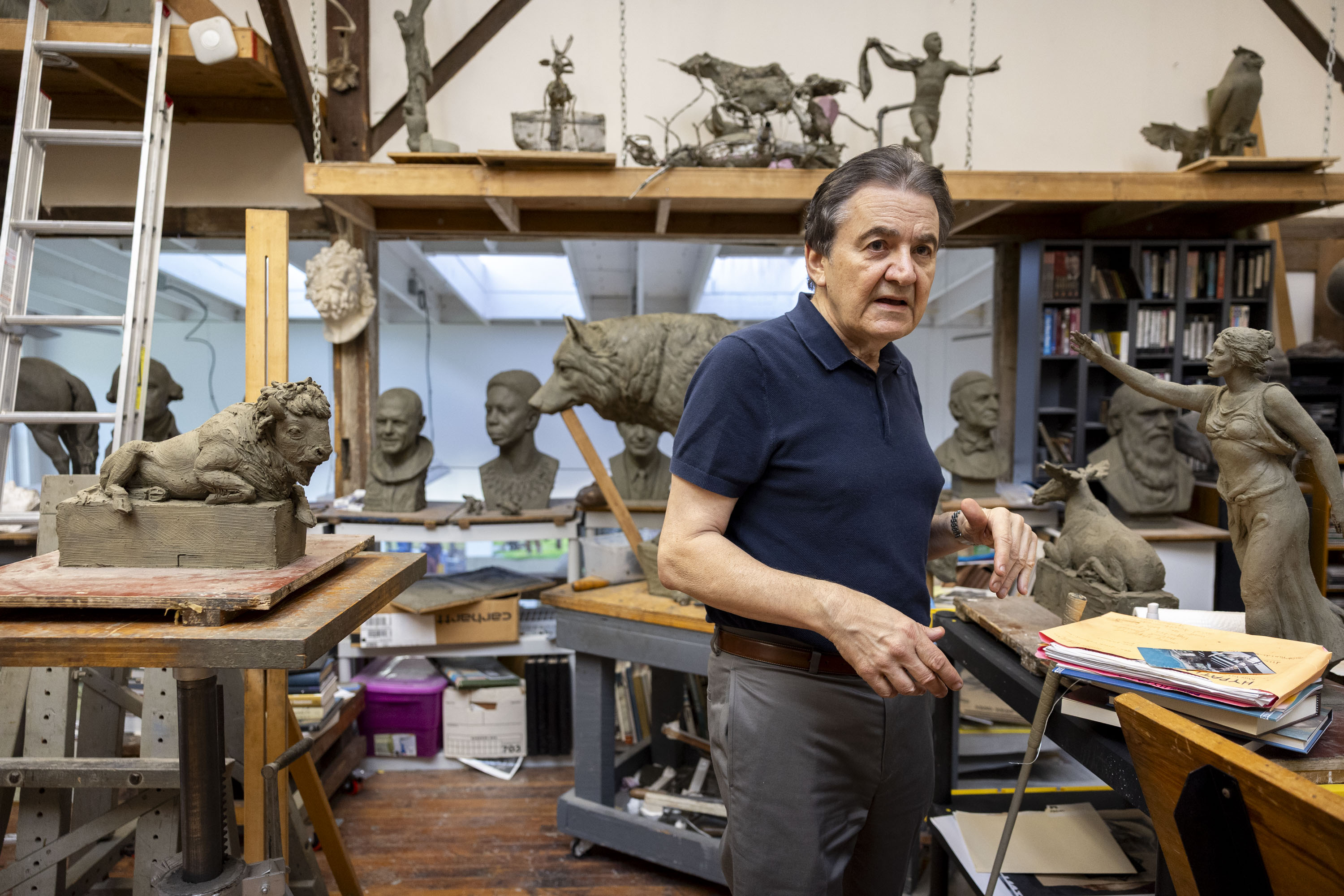
The invitation to visit sculptor Zenos Frudakis’ studio arrived unexpectedly in my inbox this summer, soon after I included his Freedom sculpture in The Inquirer’s 76 neighborhood gems article.
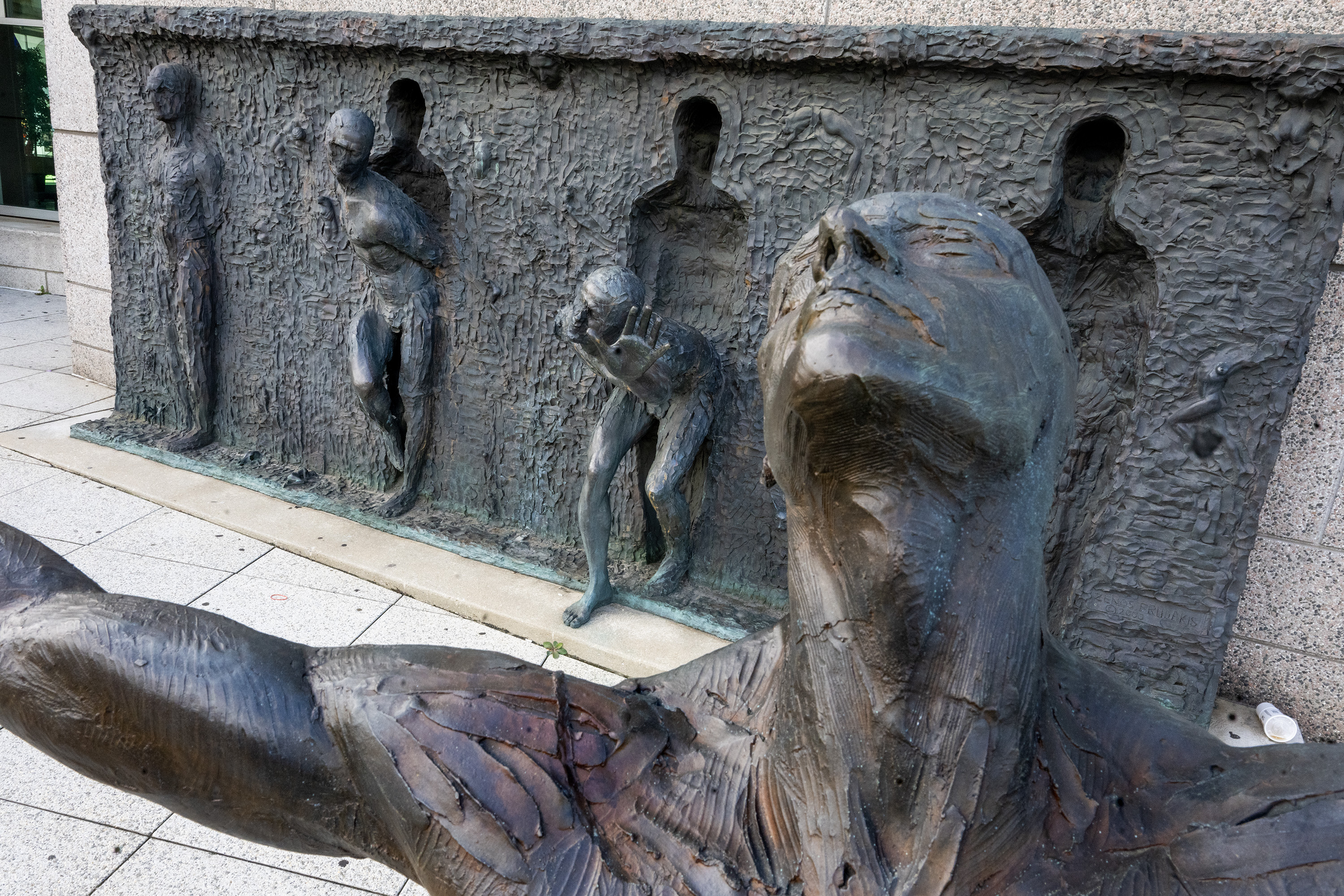
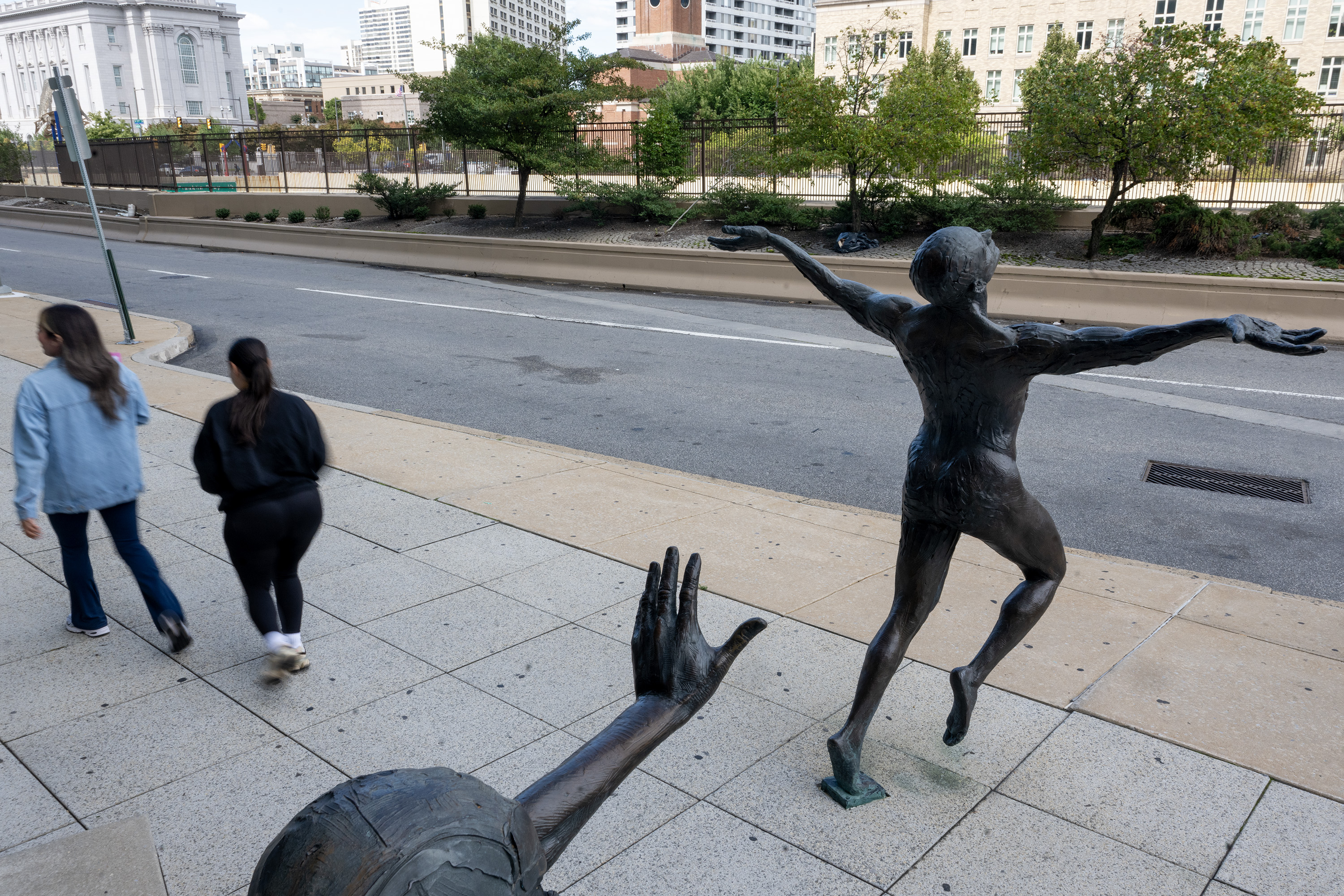
I’ve always thought the 20-foot bronze piece, on Vine Street near 16th, depicting a human figure breaking free of a wall in four stages, with the final figure on the sidewalk, his arms outstretched and face lifted, makes our city a more interesting place.
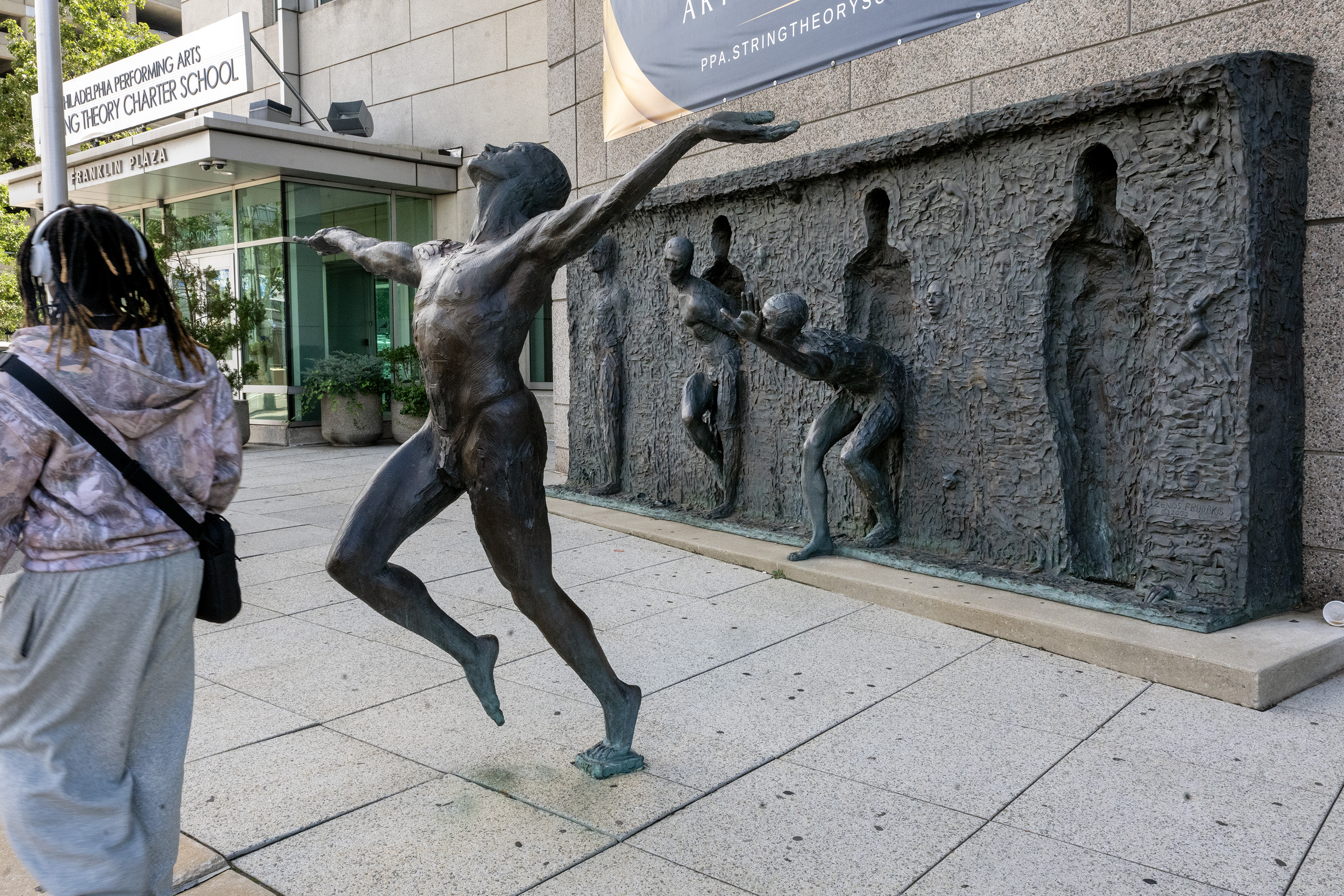
“I think on my deathbed, if I’m conscious, I’ll think about that piece,” Frudakis, 75, later told me. “That’s something that I’ve done that I feel good about.”
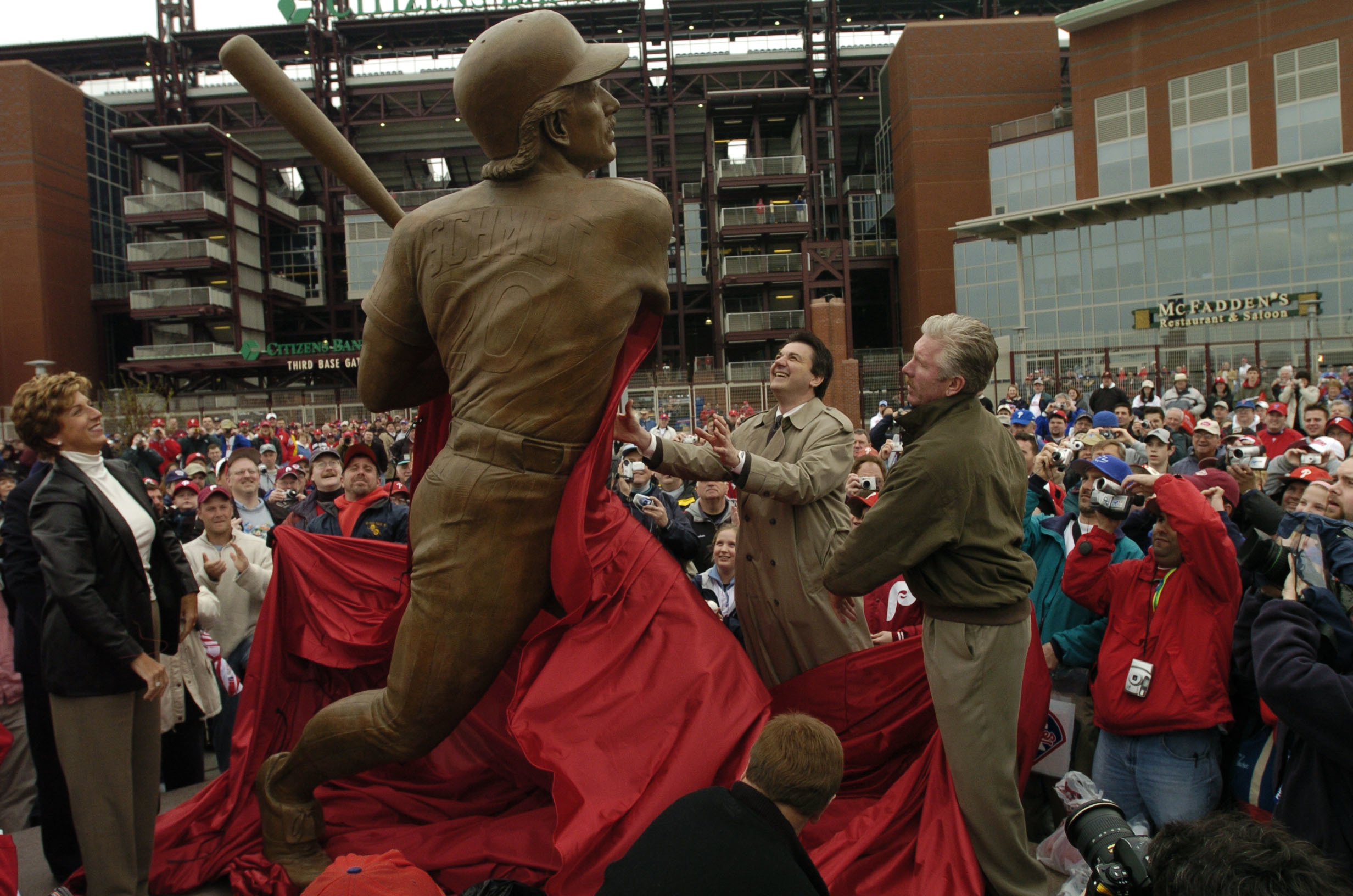
Frudakis also feels good about sculpting the four 10-foot statues of Phillies players at Citizens Bank Park, including one of Mike Schmidt, who sat for him in his studio. He also has sculptures at the Elmwood Park Zoo, the University of Pennsylvania, Washington Square, and Philadelphia International Airport, along with more than 160 works across the country and around the world.
It was only after I accepted the invitation and was researching for our interview that I realized Frudakis also created one of the most divisive pieces of public art in Philadelphia history: the statue of highly controversial former mayor and police commissioner Frank Rizzo.
Flooded with art and light
When I arrived at Frudakis’ Glenside studio I was met by his business partner and co-owner of his studio, Rosalie Frudakis. She’s also his best friend and ex-wife (it’s not just Frudakis’ sculptures that are complicated).
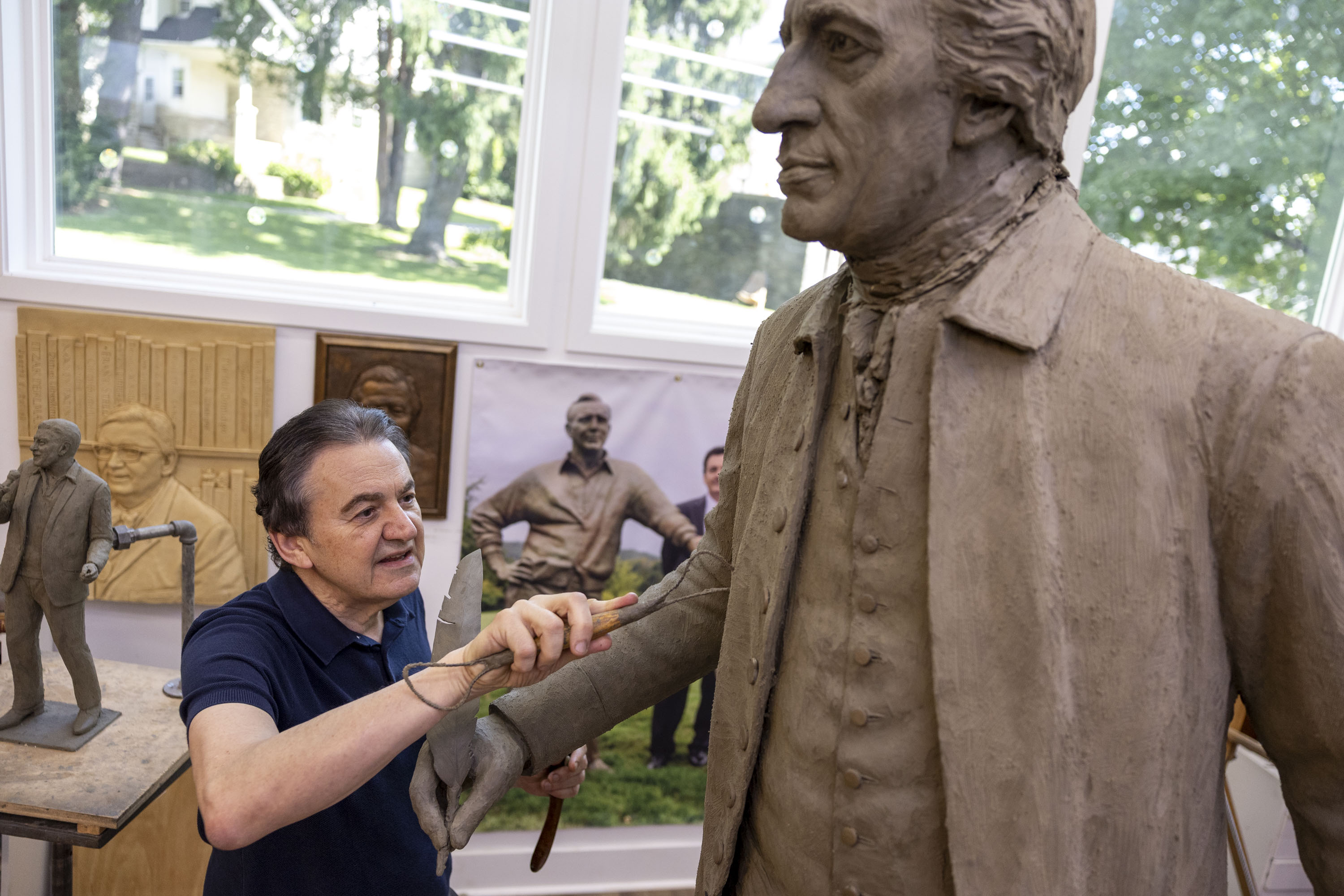
Entering the 275-year-old renovated carriage house behind the artist’s home, I was captivated by how the space was flooded with art and light. Frudakis’ 7-foot statues of Benjamin Franklin and Thomas Paine, still in clay, dominated the center of the room, along with similarly sized sculptures of musicians Bobby Rydell and Don McLean. Busts of historical figures by Frudakis lined the shelves and poster-size pictures of his many commissions papered the walls.
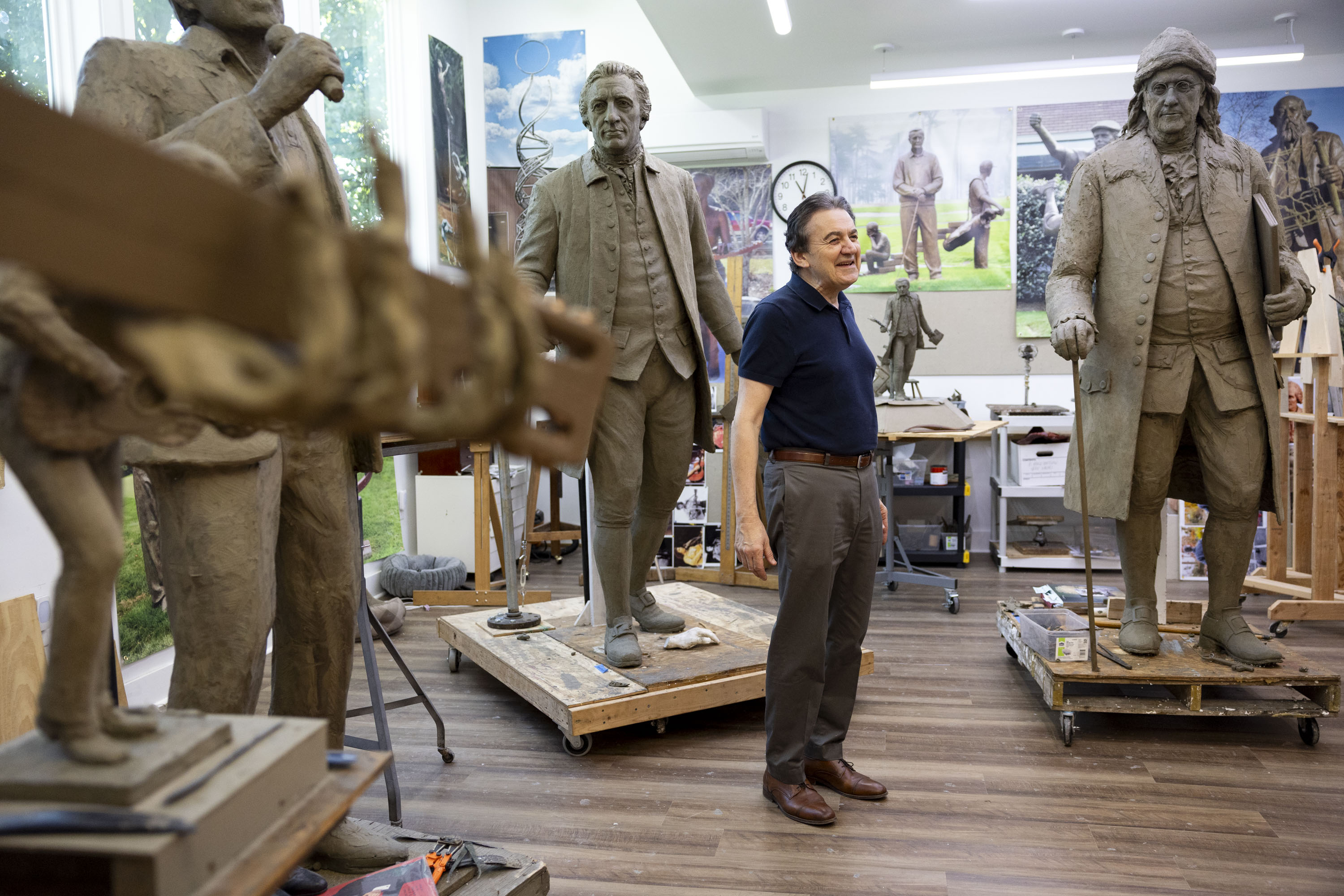
Frudakis told me he’s juggling a dozen commissions right now, including two full-size replicas of his Freedom sculpture — destined for where, he won’t say, but he promises it’s exciting. He often works until 2 a.m. in his studio with his cat, Mr. Gray, and hopes that sculpting will lengthen his life. After all, his older half brother — noted sculptor EvAngelos Frudakis, who made The Signer statue at Fifth and Chestnut Streets — lived to be 97 and sculpted right up to the end.
For three hours, Frudakis and I talked about his childhood growing up in a Greek family in Gary, Ind., where his first sculptures were made with his mother’s bread dough; about his move to Philly in 1972 on a scholarship to the Pennsylvania Academy of the Fine Arts; and about his commitment to reading because, if Leonardo da Vinci spent time studying every day, he figured he should, too.
“I wasn’t going to let anybody outwork me or have more knowledge if I could … because that’s your resource, that’s where your ideas come from,” he said.
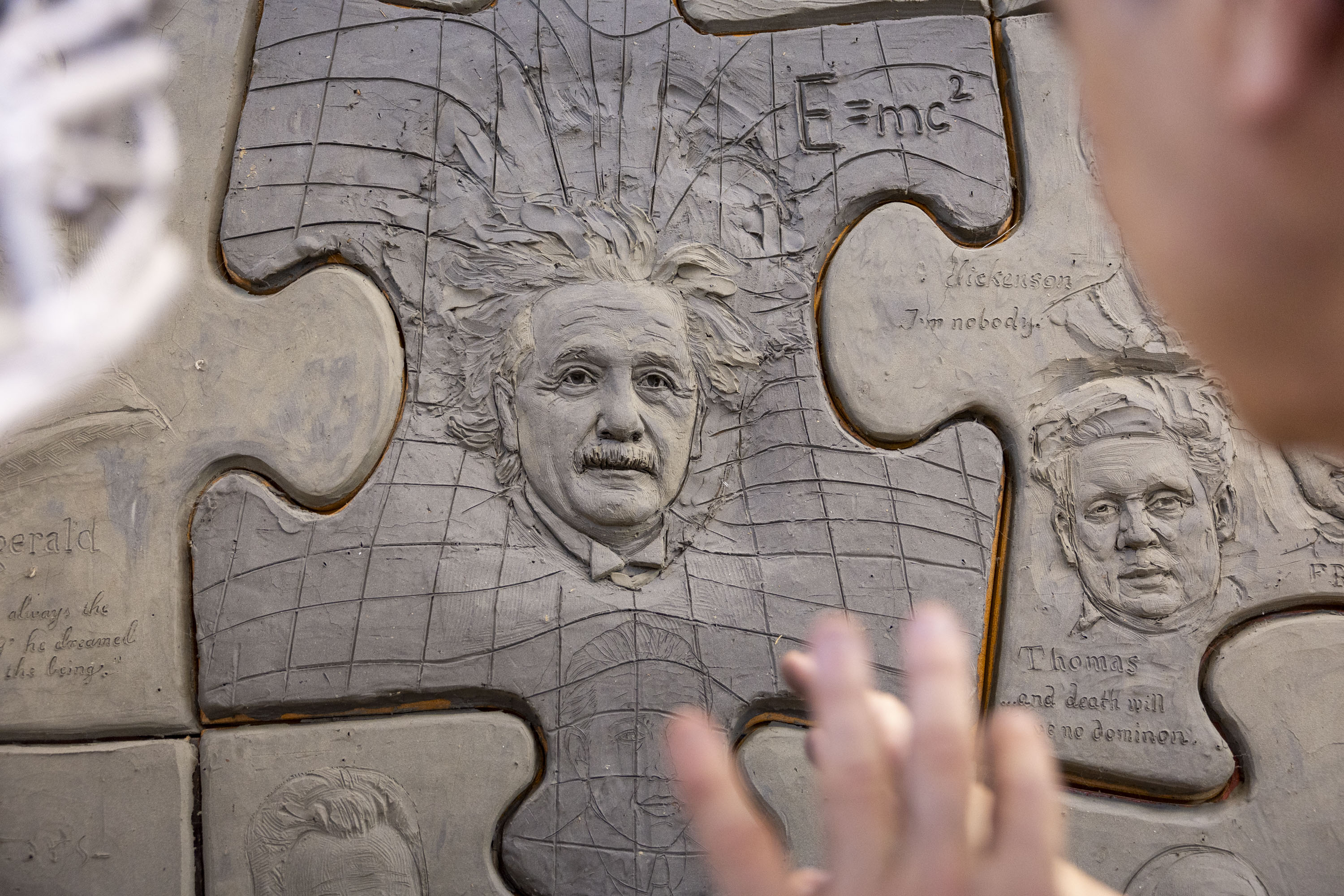
As if to make his point, Frudakis quoted more than a dozen authors and philosophers by name during our chat including: Albert Camus, T.S. Eliot, Aristotle, D.H. Lawrence, Friedrich Nietzsche, and Jean-Jacques Rousseau.
He spoke of science and reason, of being a humanist and of the balance between the emotional and cerebral. He talked about life as a working artist, of the commissions he took and the pieces he created. And he spoke of how history is not set in stone, even for a sculptor.
“You live long enough and sometimes pieces come down,” he said.
A pachyderm and people
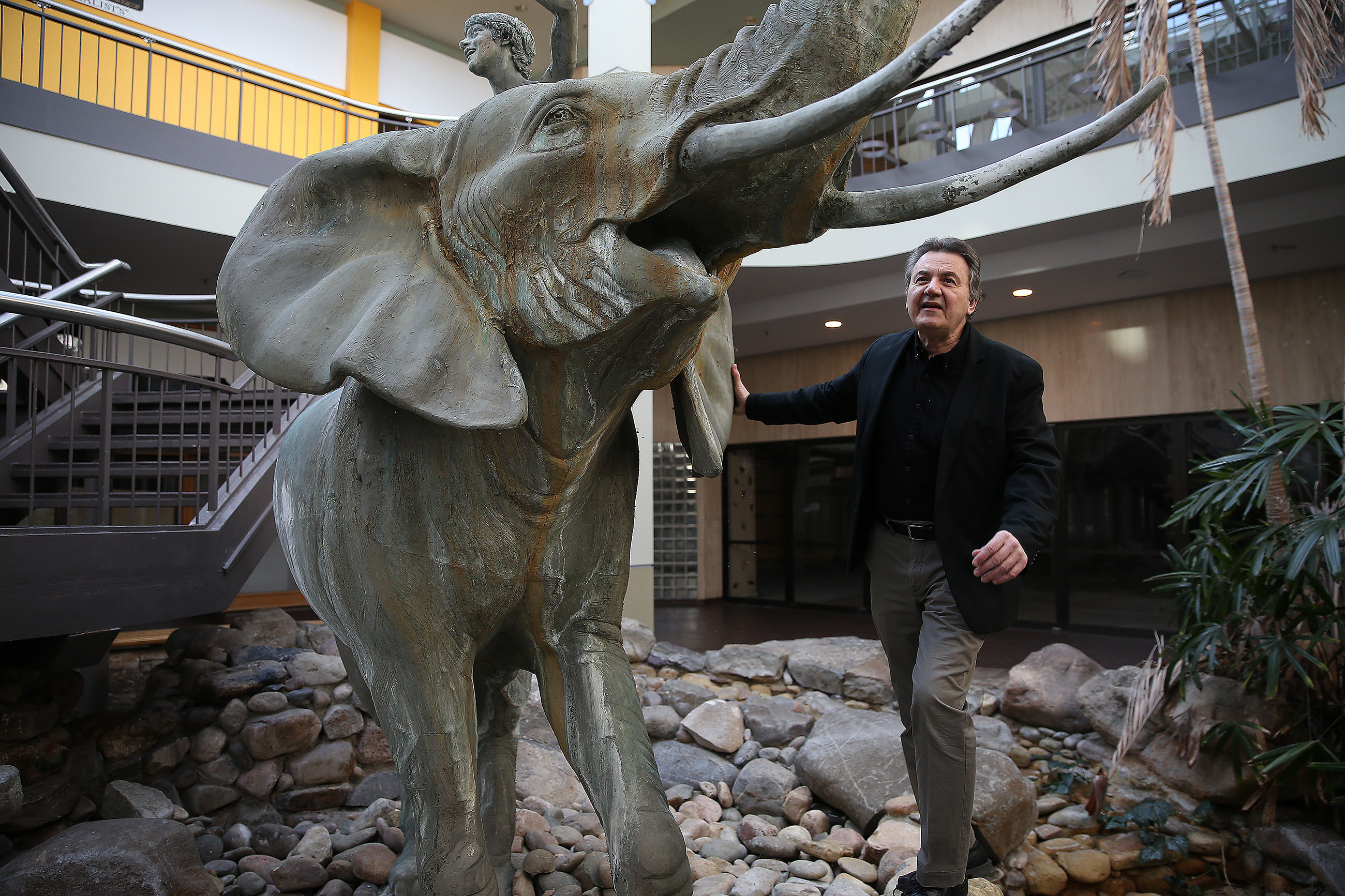
Frudakis’ first public large-scale commission was in 1982 for a bronze sculpture of a boy riding an elephant in the now-shuttered Burlington Center Mall.
In the following years, commissions came for busts of W. Wilson Goode, the city’s first Black mayor, and Joseph E. Coleman, the first Black president of City Council.
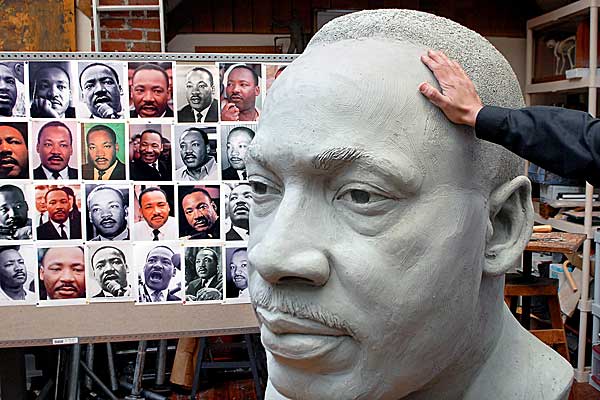
In 1989, Frudakis did a commissioned bust of the Rev. Dr. Martin Luther King Jr. for the U.S. Embassy in Pretoria, South Africa, and traveled there to present it while the country was still under apartheid. It’s one of many commissioned busts he’s done of King, including a 4-foot bronze one for MLK Park in Chester.
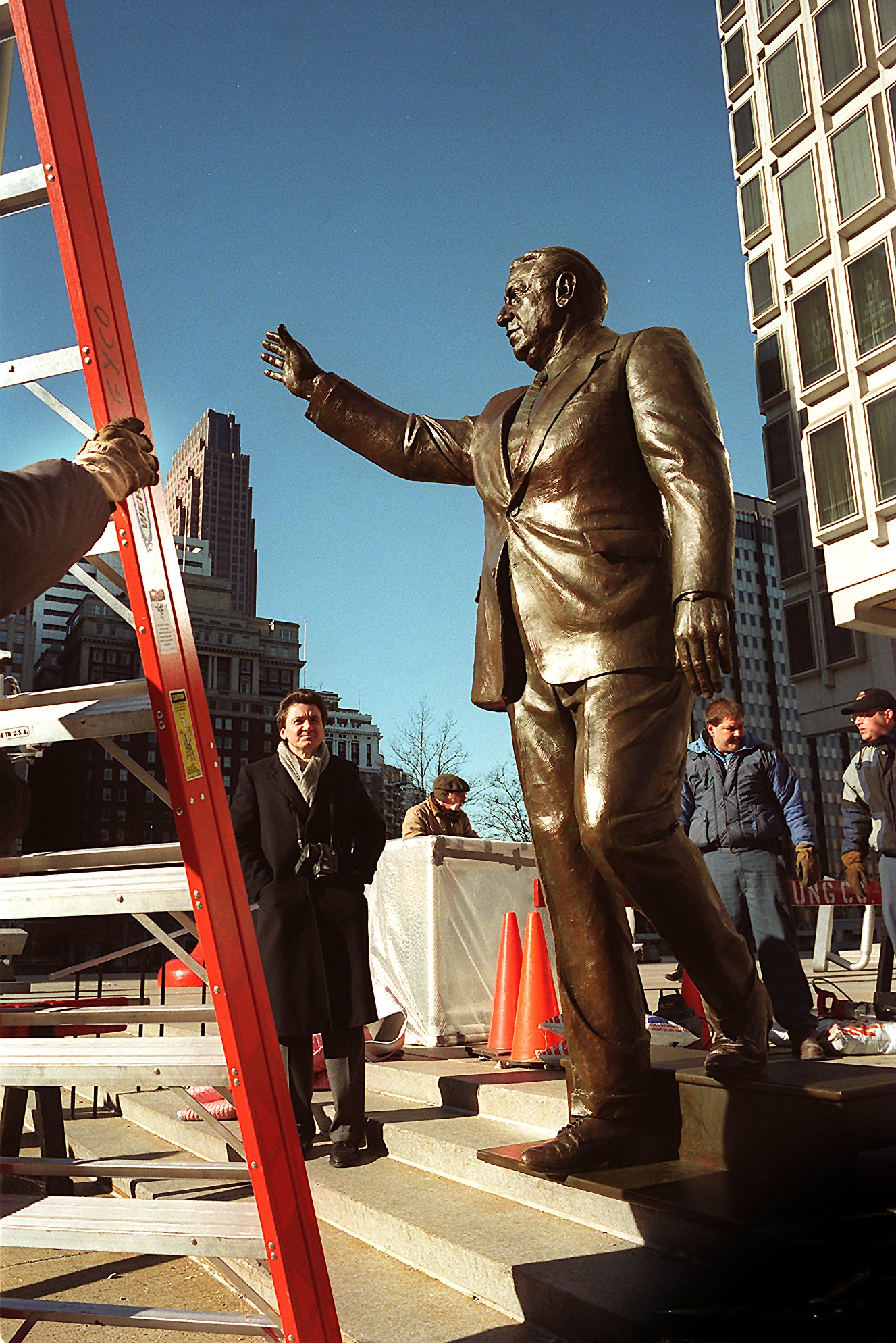
It wasn’t until 1994 that Frudakis received his first commission for a public, full-body sculpture of a person in a suit, from the Frank L. Rizzo Monument Committee.
“That’s most commissions that you get, a person who does my kind of work, is men in suits. And the hardest one to get is the first job,” he said.
‘I survived another day’
Rizzo was a polarizing figure as police commissioner (1967-1971) and mayor (1972-1980), and the controversy has only grown since his death in 1991. While some praised his law-and-order style, many see his tenure as an era of unchecked police brutality that targeted members of the Black and LGBTQ+ communities.
But back in the 1990s, the Philadelphia Art Commission approved a public sculpture of Rizzo, which was paid for by private funds. After some controversy about its placement — backers wanted it in a more prominent place like LOVE Park — it was unveiled in 1999 on the steps of the Municipal Services Building.
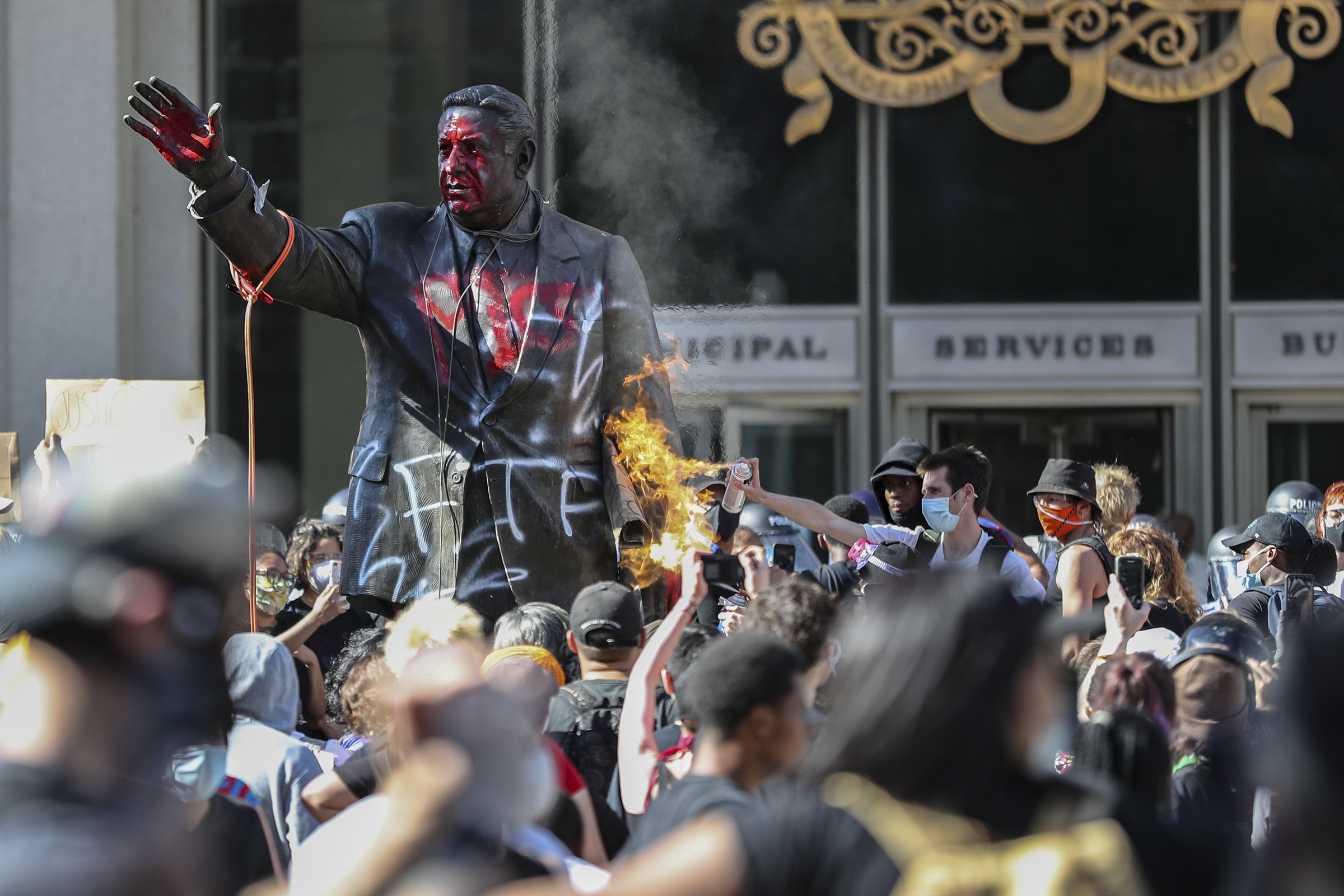
In 2016, amid the Black Lives Matter movement, a petition began circulating for the statue’s removal and in the following years, it became a lightning rod for civil rights protests and was repeatedly defaced.
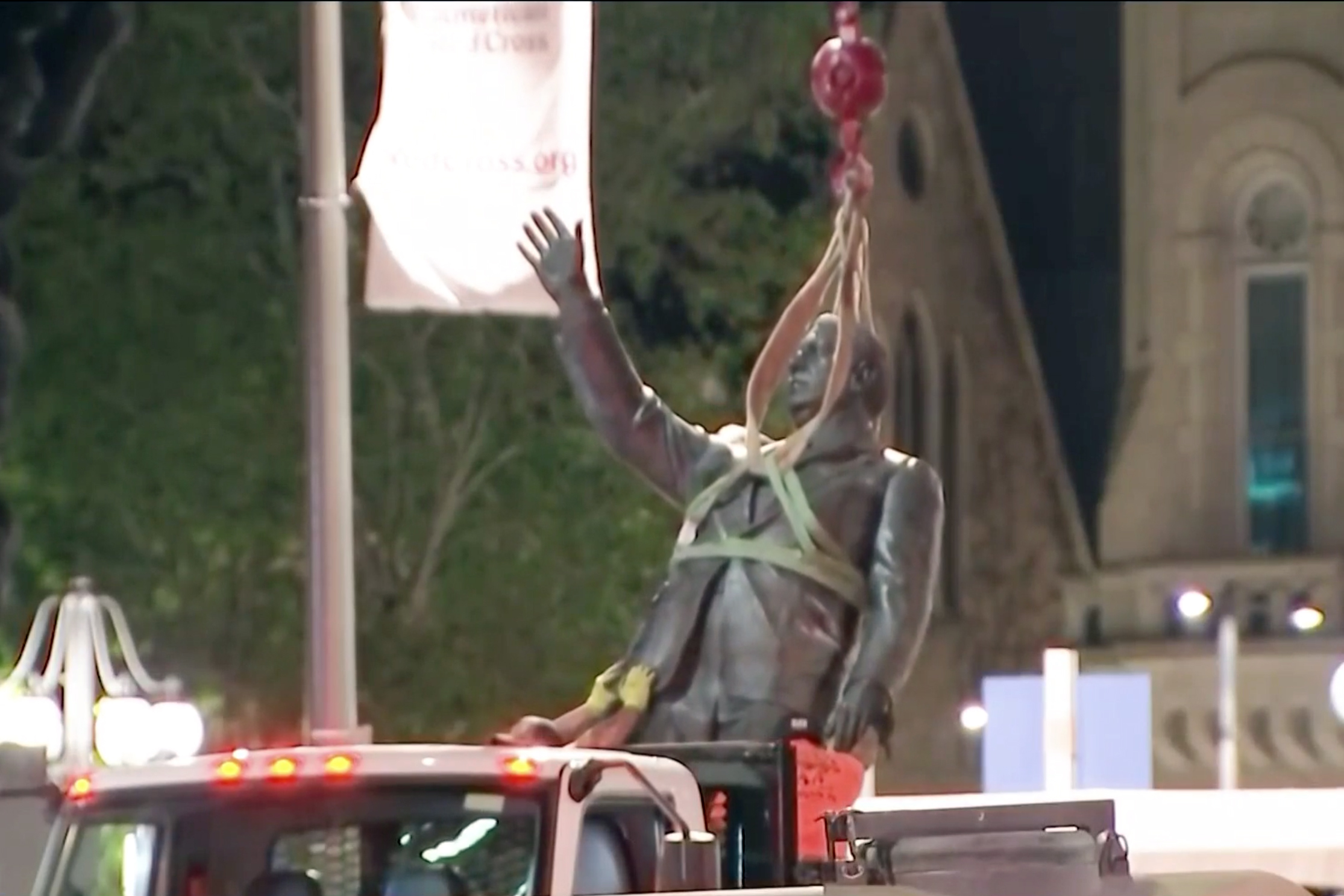
But it wasn’t until the civil rights protests in the wake of the murder of George Floyd in 2020, when then-Mayor Jim Kenney called the statue “a deplorable monument to racism, bigotry, and police brutality,” that it was removed. It remains in storage.
While I’ve received plenty of hate mail in my career, I can’t imagine having a piece of my work so publicly reviled.
Throughout our chat, I tried to ask Frudakis indirectly about the statue — were there any sculptures he struggled with? Any lessons he’s learned from his career?
But he didn’t take the bait.
Finally, at the end of our interview, I asked him about the Rizzo statue. He wasn’t taken aback and in no way tried to skirt my questions. I felt he answered honestly, even if, at times, he seemed conflicted.
Frudakis told me that when the work was commissioned, he had second thoughts — he didn’t vote for Rizzo, and has always been concerned with civil rights and social issues. But the statue was going to be built one way or another, he figured, and he needed the work.
“I got to do a lot of sculptures because I did that [commission],” he said, adding that the Phillies chose him for their ballpark sculptures because of the Rizzo statue.
“I survived another day as an artist.”
‘A weird blip’
Frudakis says he agrees with the Rizzo statue being removed, for safety reasons. He didn’t want protesters to get hurt trying to topple it. “I made sure I put it in so it couldn’t be pulled out very easily,” he said.
But if he had his way, he’d have liked the statue to have remained up, placed next to a statue of a prominent Philly civil rights leader, like the late Rev. Leon Sullivan, to promote education and dialogue.
“If you take it down, they’re not gonna learn anything. People who love him will still love him. People who hate him will still hate him,” he said.
I came to Philly in 2007, and I didn’t really learn about what happened under Rizzo’s tenure until the protests ramped up around the statue. I agree with its removal, but I have to wonder if I would’ve ever learned so much about that dark chapter in Philly’s history if the statue was never there at all.
One of the last things Frudakis said to me before I left was: “I’ve tried to make up for the Rizzo statue.”
Should he have to? Should I feel torn now about my love for his other work? I called up Conrad Benner, founder of the Streets Dept, a local media organization focused on public art. I remembered the popular videos he did in 2024 with Frudakis at the Freedom sculpture and wanted to get his thoughts on the Rizzo statue too.
“It’s this really weird blip in his career. It seems like everything he’s done since then and probably before then supported maybe a clearer vision of what he’d like to see in the world,” Benner said. “My impression was he was young, he made a decision, and then his career grew and he got more opportunity to have more control over his work.”
Benner pointed out that it’s very uncommon to create bronze monuments to people who’ve lived recently and that Philadelphia doesn’t have any other statues of its mayors.
“You might think the monuments in your city and country are some representation of true history when really they are the culmination of powerful and cultural interests,” Benner said.
“But we get to choose. Every generation gets to choose. We don’t have to inherit anything, whether that be a political dynasty, tax policy, or a monument. Just because they’re on a podium doesn’t mean we can’t change them.”
‘A one-man show’
A year after the Rizzo statue was unveiled, Frudakis’ Freedom sculpture was installed on the exterior of what was then GlaxoSmithKline and is now the Philadelphia Performing Arts Charter School.
It was a piece born of his own heart and mind. It was the kind of work that taking commissions for other less passionate projects made possible.
“I had to do something more philosophical and poetic for myself,” Frudakis said.
When I thought about our conversation later, I couldn’t help but wonder if in some ways, for Frudakis, the figure in Freedom symbolized his own desire to break free of the art that pays the bills for the art that fills the soul.
“It’s not an accident that my favorite piece, my most popular piece by far, is the one that I got the most freedom to do,” he said.
Frudakis sculpted Freedom on a small scale, but he had to get the 20-foot-long version commissioned by GlaxoSmithKline in order to cast it in bronze. When he scaled it up, Frudakis decided to get weird with it.
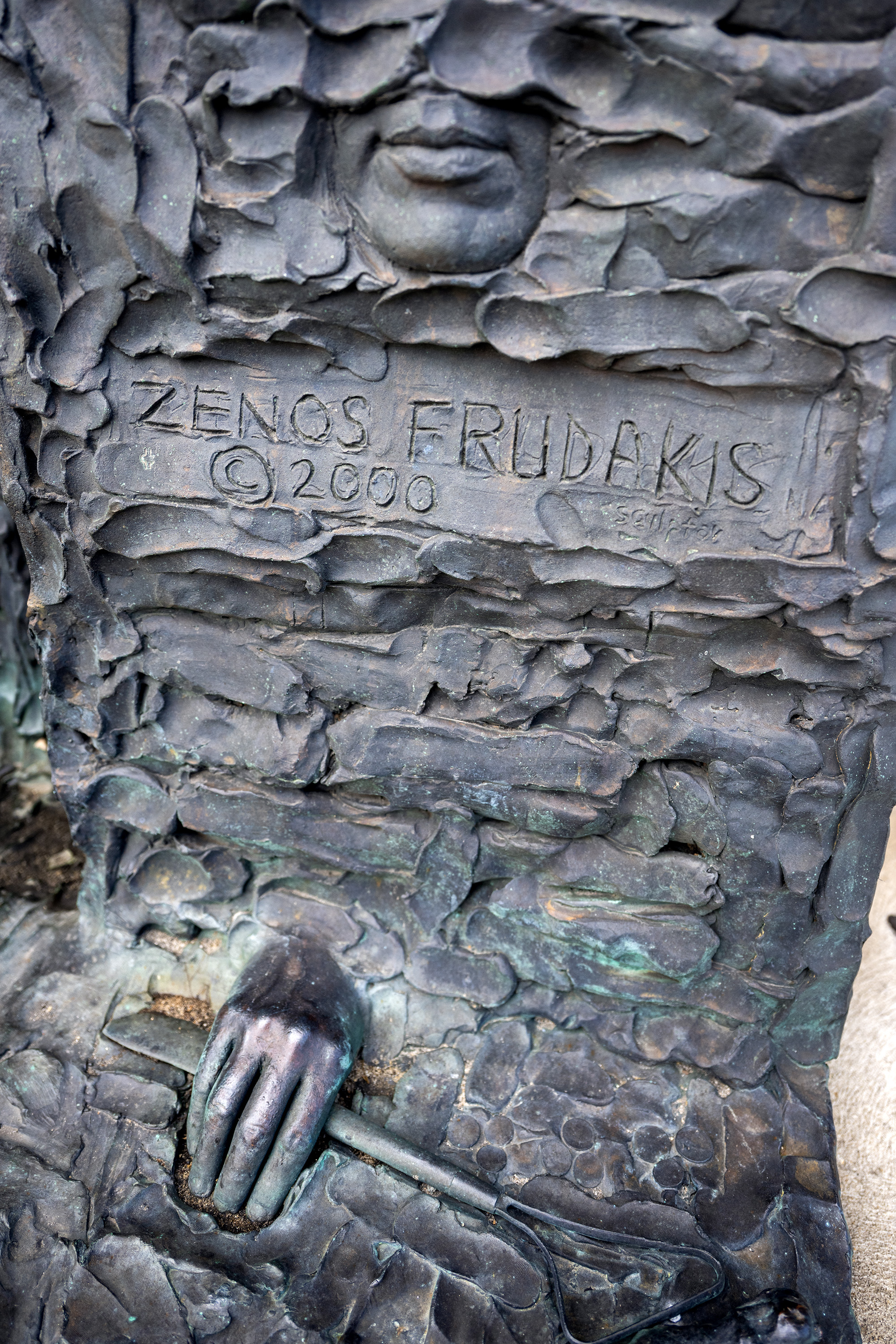
“Since I was having trouble getting in a gallery in Philadelphia, [I decided] that I would put about 20 pieces of mine in the background so I’d have a one-man show that was ongoing,” he said.
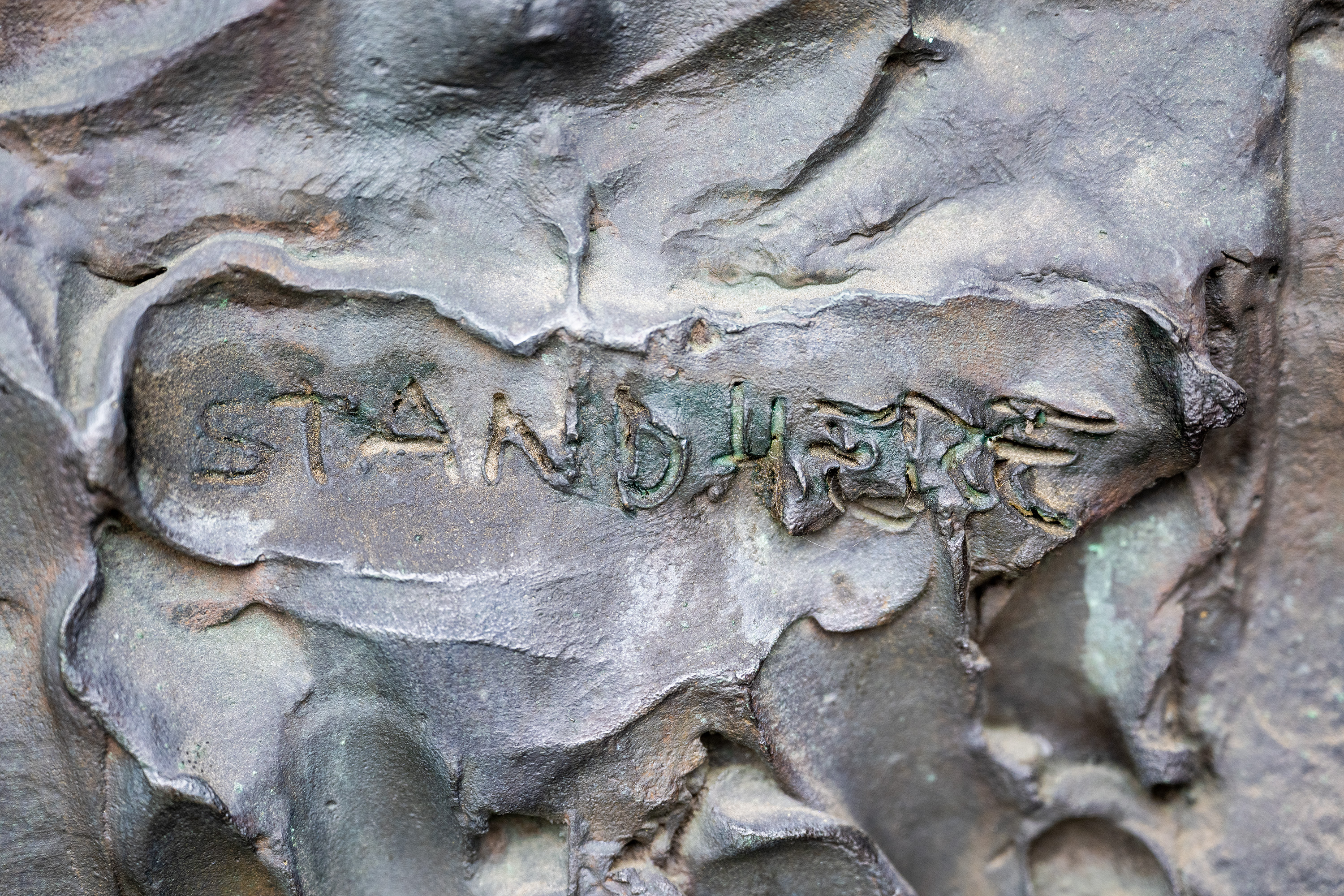
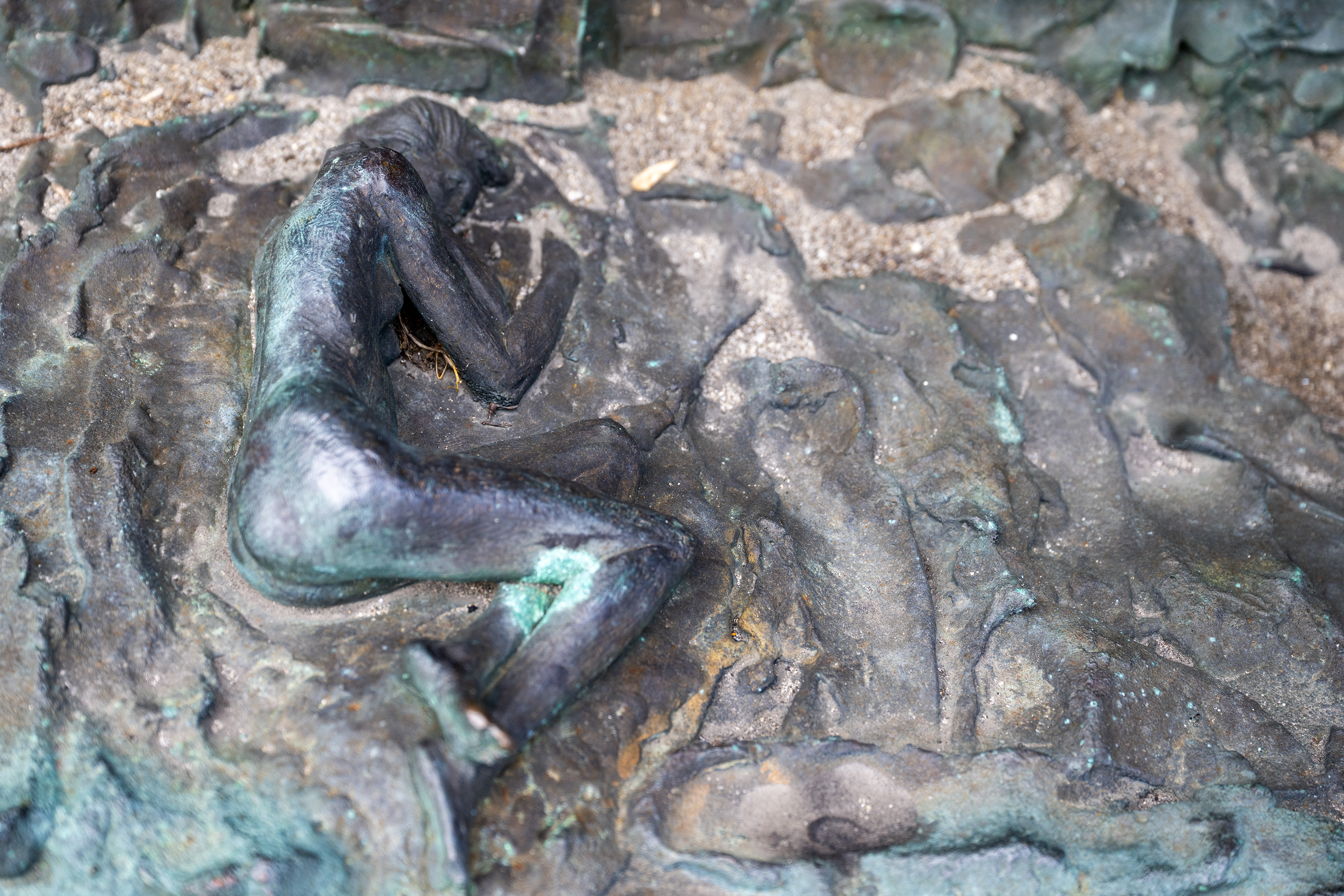
Among the many Easter eggs Frudakis hid within Freedom are a self-portrait, a cast of his hands with a sculpting tool, and a sculpture of his cat’s head. One of my favorite details is carved into the empty space where the final figure has broken free from the wall. There, the words STAND HERE are written, inviting you to become a part of the piece.
Photos of Freedom have appeared in self-help and scholarly books and it has been cited as one of the most fascinating sculptures in the world by Architectural Digest.
“It’s the most personal sculpture I’ve ever done and it’s the most universal,” Frudakis said.
‘It was creating me’
Of course there are other pieces Frudakis is proud of — his sculpture for the National Air Force Memorial Honor Guard in Washington, D.C.; a statue of Nina Simone in Tyrone, N.C., that includes some of her ashes; and a sculpture of Clarence Darrow at the Tennessee courthouse where the Scopes Monkey Trial was held.
The statues of Franklin and Paine he’s working on now are intended for the U.S. Capitol building and the National Mall, respectively. If pending legislation to approve their placement is ever passed (both were first proposed years ago), the bronze castings will be paid for with private funds, Frudakis said.
With an oeuvre of work behind him and his larger-than-life-size bronze figures fetching $400,000 or more today, Frudakis now has the freedom to do statues and commissions he truly believes in.
Frudakis still has sculptures he wants to create for himself too. He dreams of doing one of Hypatia, a female scientist from ancient Greece who was “murdered by religious zealots who tore her whole body apart.” He’s got busts of Amelia Earhart in his studio that he’d love to see in bronze someday. And like he did with Freedom, Frudakis wants to tackle another big human concept through his work — time.
Just like every story I’ve ever written forged me into the journalist I am today, even those that make me cringe in hindsight (and there are plenty), every sculpture Frudakis created made him the artist he is now, including the Rizzo statue.
But I don’t think any of his pieces has had a more profound effect on the landscape of Philadelphia, or people around the world, than the one that had the most profound effect on him as well.
“I was a different person when I finished my Freedom sculpture. I wasn’t just creating it, it was creating me,” he said.
Leave a Reply