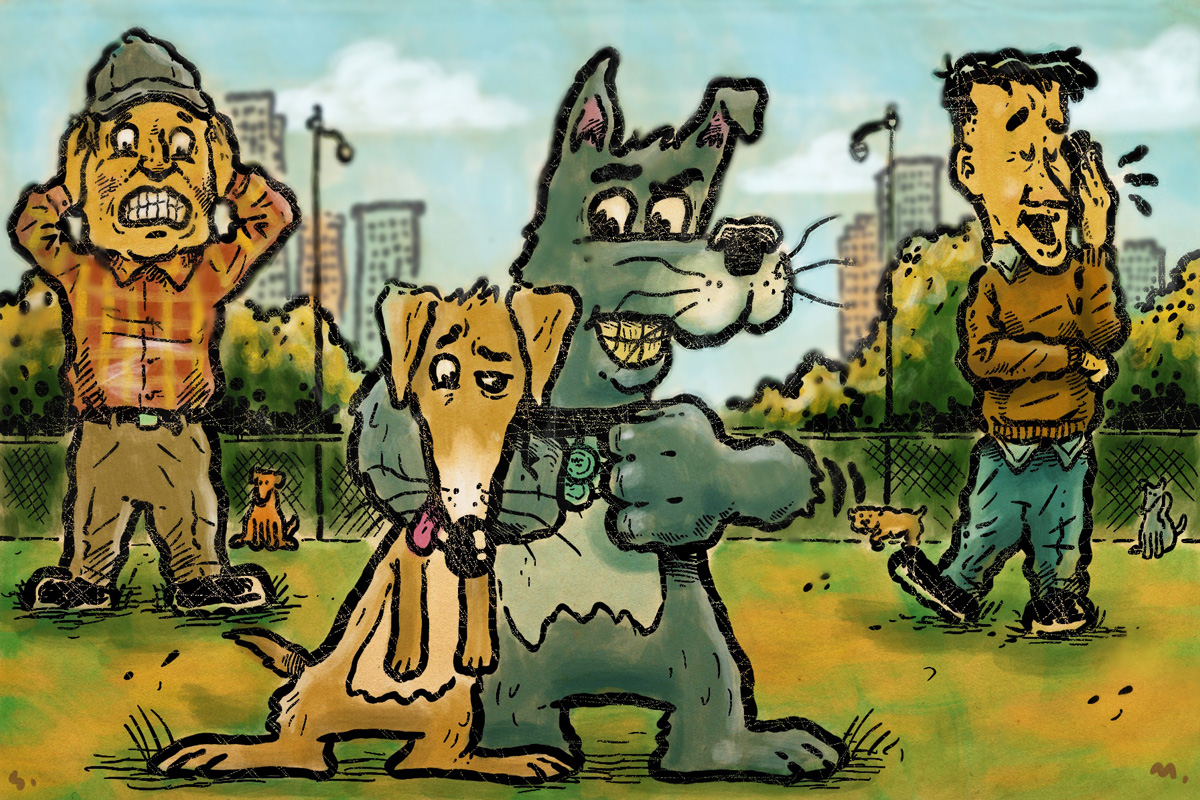
Another dog owner lets his dog overwhelm mine at the park, then laughs it off as “just playing.” My dog really does not like the intense physical play and yelps for help. But we keep running into each other. How do I set a boundary without making it totally uncomfortable every time I see this person? There is no other close dog park.
Abigail Covington, Life & Culture Reporter
I actually don’t take my dog to the park because she is, objectively, a very bad dog. She’s anxious, aggressive, and can’t play for squat. Whenever she tries to play, her flight-or-fight instincts kick in and she ends up scaring all the other dogs and their owners away. Super fun for everyone!
It sounds like you are dealing with a similar kind of dog, but, unfortunately, an obtuse owner. You are well within your rights to ask this person to keep their dog away from yours. The number one rule of dog ownership is don’t let your dog be a jerk.
Jason Nark, Life & Culture Reporter
I agree. My least favorite type of pet owner is someone who rationalizes/reinterprets clearly bad behavior, so I empathize. I’ve had dogs who behaved poorly, so I kept them out of dog parks. It seems unlikely you’d run into this specific dog every time you go there, but if that’s the case, maybe try going there at completely different times: early morning, nighttime, etc.
Abigail Covington
That would be a very effective and nonconfrontational way of dealing with it. If you don’t want it to be uncomfortable when you see them, just don’t see them. Problem solved.
Or you could choose to put this dog owner in their place, for everybody (and everydog’s!) sake. Simply say, “It looks like our dogs have different ideas of what “playing” means. Maybe we should keep them separate?” It’s for their dog’s good, too, and you can say that. God forbid their dog hurt yours. That could get them in and the owner in serious trouble!
Jason Nark
Yes, this person likely knows their dog is misbehaving, but if they’re not dealing with it, you should say something for your dog’s sake. I have a pit bull who is super friendly and lovable and melts hearts wherever she goes. As a pit bull owner, though, I take even extra precautions around other dogs because, god forbid, she ever reacts to an out-of-control dog, she could do real damage.
Abigail Covington
Exactly. And she could get in trouble too! I believe Pennsylvania has a single-incident rule, so all anyone’s dog has to do is hurt another dog or person, one time, for any reason, to face consequences.
Maybe this dog owner doesn’t know that. I think if you frame the conversation around protecting their dog too, they’d welcome what you had to say and the distance between your two pups.
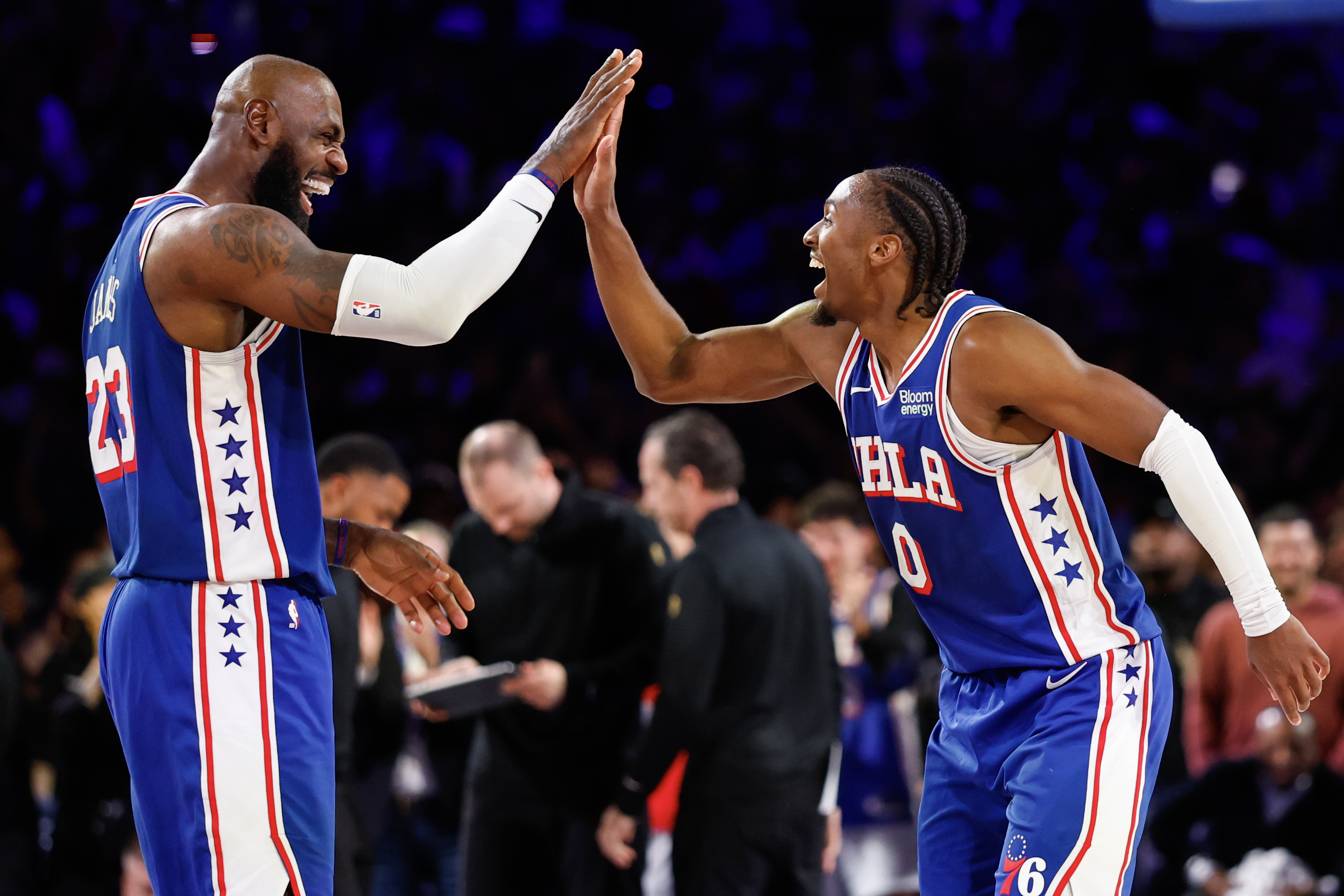
The Sixers are 2-0, LeBron James is wearing a Philadelphia jersey, and he and Tyrese Maxey are already doing cute little postgame handshakes.
Are we allowed to be happy about sports again?
With the Eagles’ season unraveling amid mounting injuries and Jalen Hurts potentially out for the year, another disappointing Phillies postseason, and the Flyers’ historically awful start, Philadelphia sports fans could really use something to celebrate.
And Thursday night, the Sixers delivered. In LeBron’s first regular-season home game, they somehow turned a 29-point deficit against Cleveland into a 114-106 victory. The crowd went from cheering LeBron’s signature chalk toss to booing the team to absolutely losing its mind as the Sixers stormed back.
Maxey scored 32, Jaylen Brown took over down the stretch, and LeBron looked right at home.
But the handshake with Maxey might be the best part. We’re watching these guys develop routines like they’ve been teammates forever. And after years of wondering whether the Sixers could ever get it together, it’s pretty fun to see a team that already seems to enjoy playing together.
Sure, falling behind by 29 points isn’t exactly a championship strategy. But after everything Philadelphia sports fans have endured lately, we’ll gladly take a little drama with our victories.
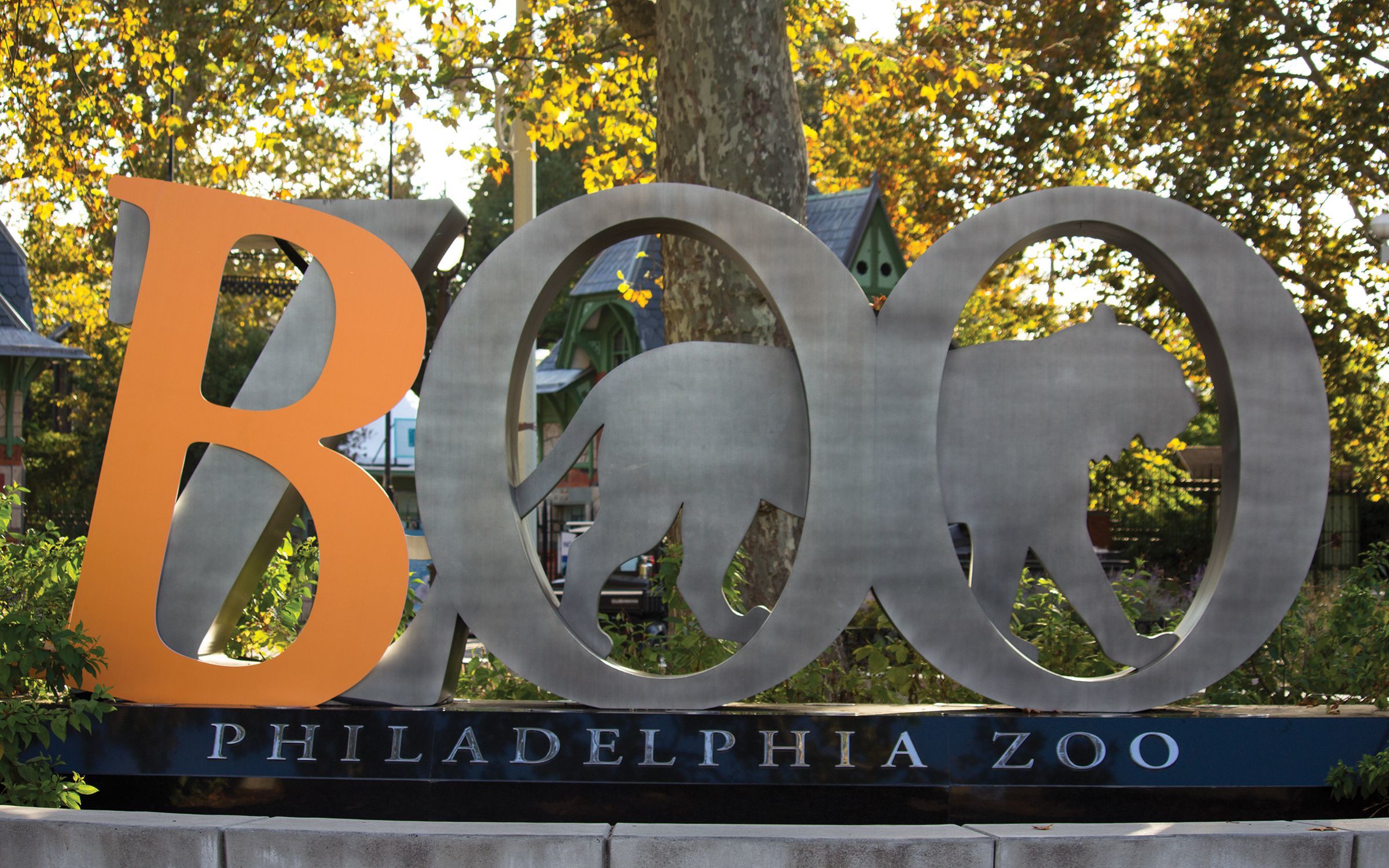
Boo at the Zoo returns to the Philly Zoo for three weekend of spooktacular fun.Philadelphia Zoo
FanDuel takes the kids to the zoo: F
Apparently, losing money gambling now comes with a family outing.
Because nothing says wholesome family fun quite like a sportsbook thanking you for all the money you’ve wagered.
Don’t forget, FanDuel’s VIP programs have already drawn scrutiny over concerns about gambling addiction. Maybe bringing children into the rewards system wasn’t the smartest next move.
Even the zoo had to clarify that this wasn’t a partnership or endorsement.
The Philadelphia Zoo is a place to take your kids to see lions and giraffes. It shouldn’t be a loyalty perk for your gambling habit.
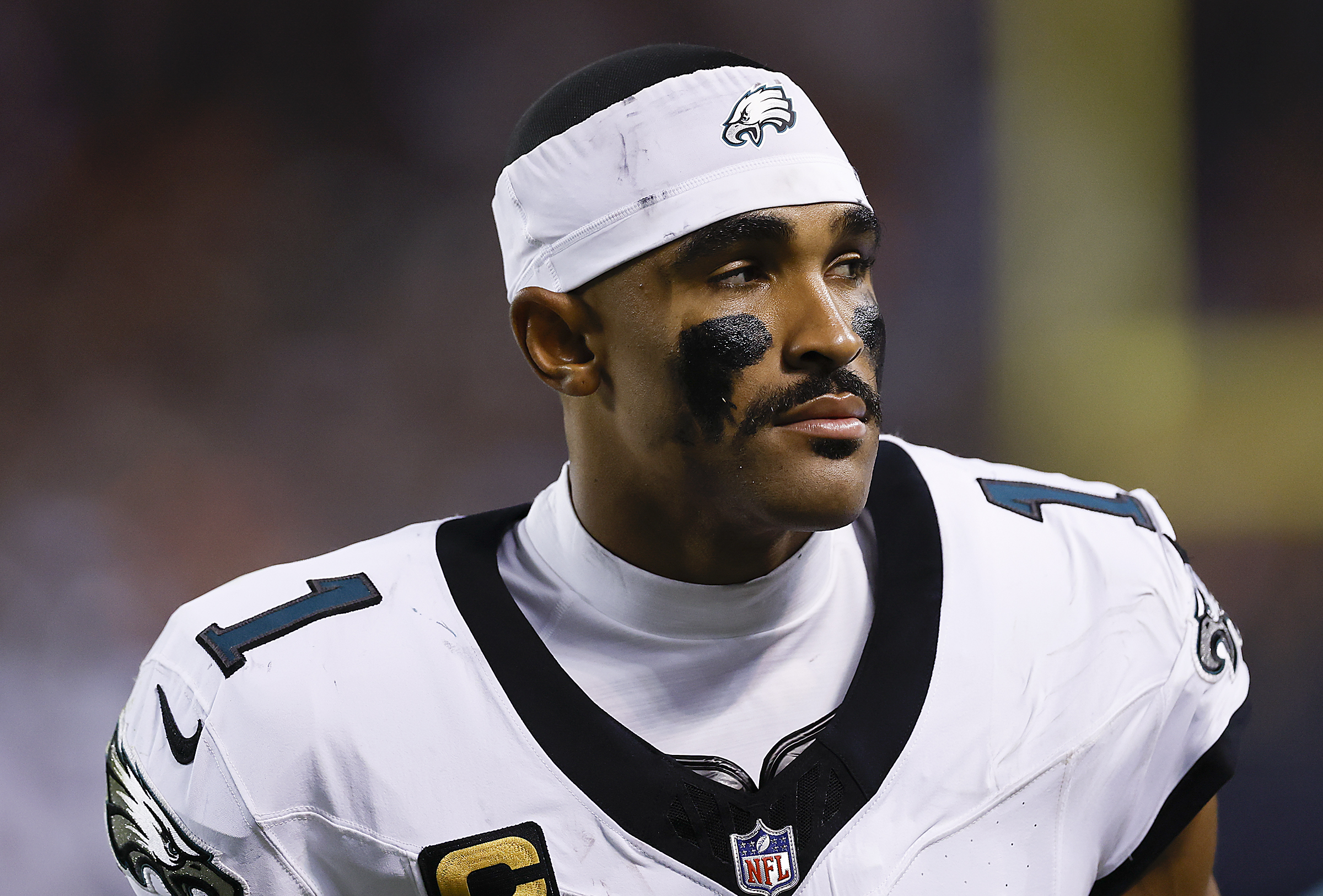
Eagles quarterback Jalen Hurts during a game against the Chicago Bears at Soldier Field in Chicago, ILL., on Monday, Sept. 28, 2026.Yong Kim / Staff Photographer
A much bigger concern than football: F
Four straight losses suddenly feel like the least of the Eagles’ problems.
Jalen Hurts is out indefinitely after doctors discovered multiple blood clots in his lungs. He could miss the rest of the season, but thankfully, his prognosis is good, and doctors expect him to make a full recovery.
That’s the news worth celebrating … the rest is harder to make sense of.
Hurts played in London after a clot was discovered in his calf, then flew home and practiced before further testing revealed the more serious condition. The NFL says medical protocols were followed. The players union wants an investigation. And the Eagles have offered little public explanation of the decisions involved.
For once, the most important thing about the Eagles has absolutely nothing to do with winning.
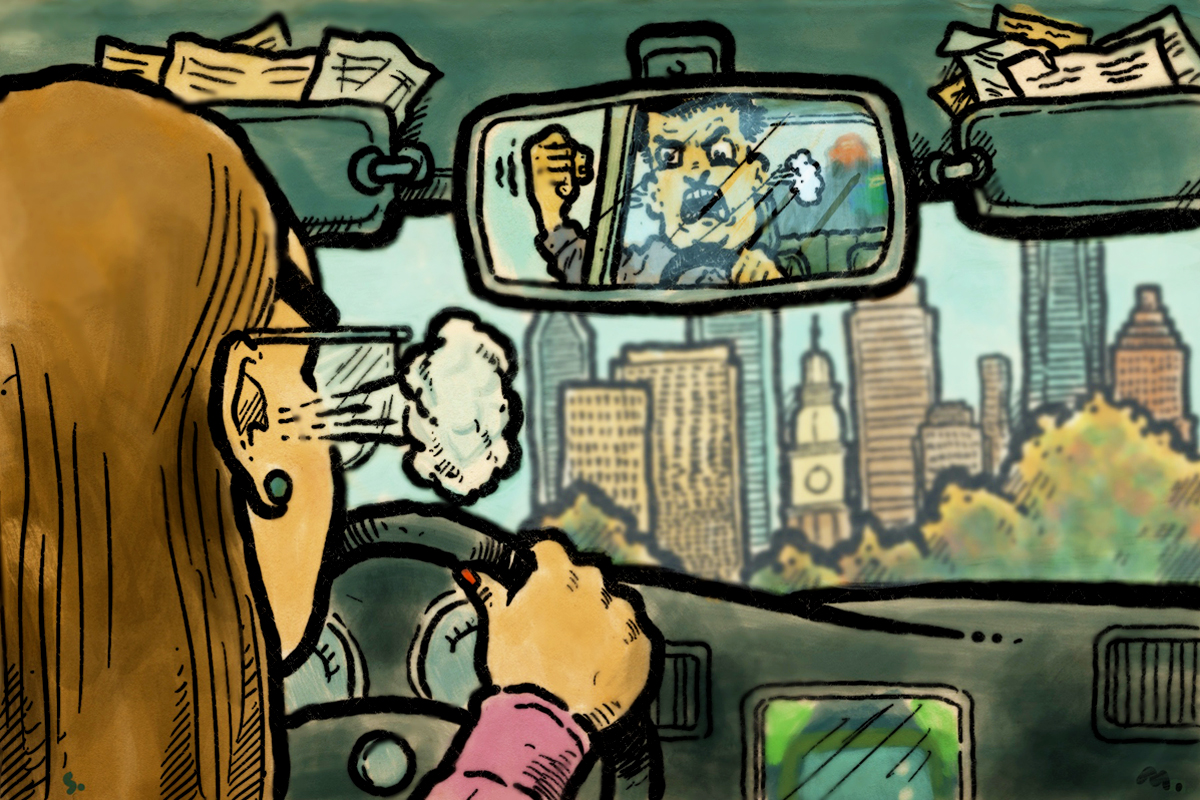
Her list of eight terrible Philly driving habits includes the usual suspects: double-parking, ignoring turn signals, treating red lights as suggestions, and driving on Kelly Drive like you’re auditioning for Fast & Furious.
But the real standout? An Uber driver watching videos of Vladimir Putin on a second phone while driving on the highway.
And let’s discuss the people who double-park directly next to an empty parking space. That’s not a parking problem. That’s a personality problem.
The worst part is how normal all of this has become. We barely react when someone makes an illegal U-turn across Broad Street, but seeing a driver actually use a turn signal feels like witnessing a random act of kindness.
Give Cody back: F
There are plenty of things to complain about in Philadelphia. But stealing someone’s dog? That’s a special kind of awful.
Surveillance video captured two people taking Cody, a shih tzu, from outside a North Philadelphia corner store Sunday, reported NBC10. Cody belongs to Jamal, a man with cerebral palsy who has limited mobility and relies on his dog for companionship.
His mother, Diane Newman, says Jamal keeps asking her the same heartbreaking question every time she comes home: “Did you bring my dog back yet?”
How do you hear that and not feel absolutely sick?
Whoever took Cody has the opportunity to do one decent thing here. Return him. No excuses, no questions. Somebody knows where Cody is. Let’s get him home to Jamal.
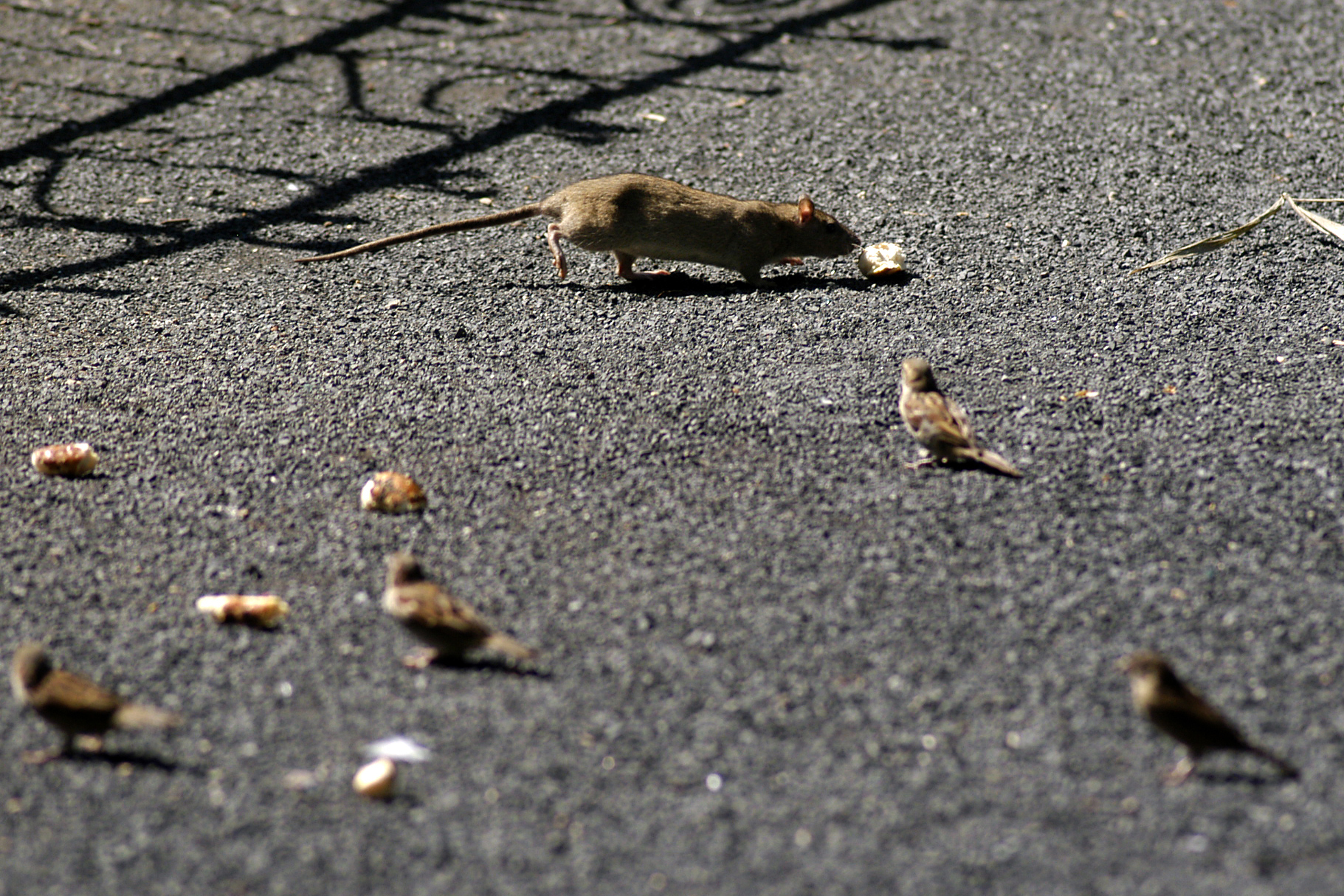
A rat in Franklin Square.Tom Gralish / Staff Photographer
Yes, we’re discussing the reproductive rights of the rats living under our rowhouses.
PETA sent Mayor Cherelle L. Parker a letter suggesting contraception instead of poison, along with a promise to send her a “Rats Have Rights” mug. Because obviously, that’s what was missing from the city’s rodent-control strategy, merchandise.
And here’s the truly bizarre part: It might actually work.
Other cities have tested rat contraceptives with promising results, including Boston, where one pilot program reported a 60% drop in rat activity. Philly’s health department isn’t convinced yet, and more research is needed.
But we have to admit, the idea of a rat chewing through your car’s wiring in Oxford Circle and the city’s response being to offer it family planning services is pretty funny.
We can’t get people to stop double-parking, but maybe we can convince the rats to stop reproducing.
A secret Philly connection in the season’s hottest documentary
I saw You Can See Everything in a packed theater at the Ritz Five on Monday night and it was one of the most delightful moviegoing experiences I can remember — we all gasped, groaned, and laughed together.
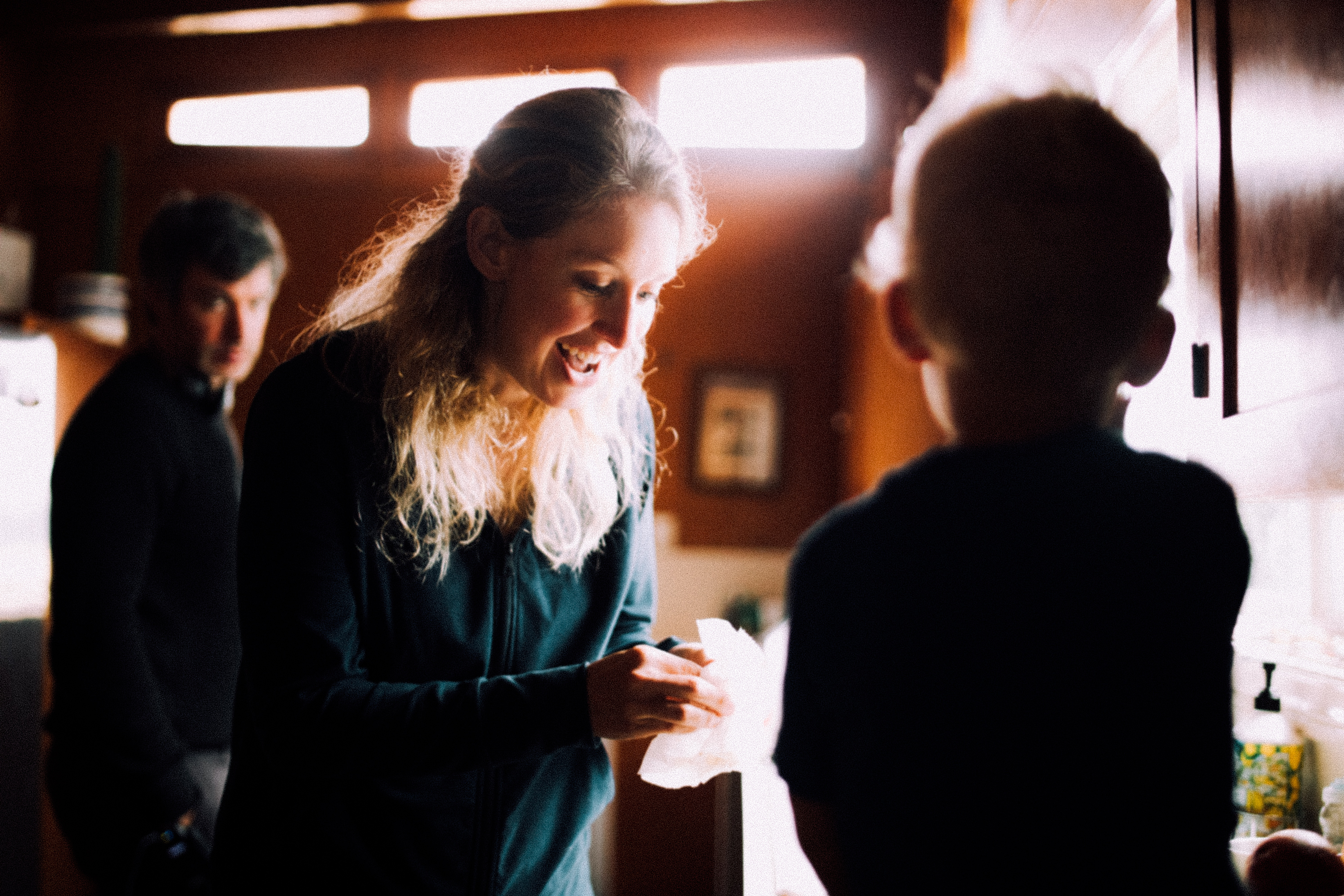
In the documentary, Nathan Fielder (of Nathan for You and The Rehearsal) moved in with Theranos’ famed founder and fraudster Elizabeth Holmes in her home during the final days before she went to prison. Their time together is delightful and confounding. It may become the most talked about movie of the year — not because it will be the most-seen movie, but because everyone I know who has seen it cannot stop talking about it.
But there are great movies that come out all the time — why would I write a Philly-specific blurb for this one? Well, I can’t really tell you. Or, I don’t want to because it would serve as a major spoiler.
I will say: There’s a major Philly-area connection. Go see it in a packed theater.
“You Can See Everything” is playing in theaters across the region.
A Bryn Mawr author’s bestselling novel is getting the Amy Poehler treatment
Kate Myers’ best-selling novel, Excavations, is a window into the drama, sizzling romances, and deep-rooted deception of the archaeological world.
The story follows four women who travel to Greece to uncover historical finds at the ancient site of the original Olympics. They soon discover an object buried in the dusty terrain that reveals the significant role women played in early athletic competition. But the most compelling element, for me anyway, was the secret deals transpiring behind the scenes.
Myers, a Bryn Mawr native and University of Pennsylvania graduate, was inspired by an archaeological trip to Greece in 2008. The long hours and sweltering heat convinced her archaeology wasn’t necessarily the career for her, but the experience fueled her appetite for travel and storytelling.
After shopping the manuscript for seven years, Myers landed a deal with HarperCollins Publishers, and the book was released in 2023. The bestseller caught the attention of Amy Poehler and Parks and Recreation co-creator Michael Schur, who adapted the novel into a new Peacock series, Dig. All 10 episodes premiere Nov. 23.
Admittedly, I don’t read much fiction. My growing book collection is far more steeped in self-help books and biographical works. The stacks of books wedged on the shelves of my entertainment center are proof my interests stray far from a title like Excavations. Yet, I couldn’t put the book down for more than five minutes. I was hooked.
I don’t know much about archaeology, but I was fully immersed into the world Myers built from the opening chapters. It’s a credit to her ability to shape these characters, and cohesively weave each of their plot lines into one singular story. It was a true page turner, and I think the episodic nature of the chapters and the audible laughs the story generated, are prime for a project helmed by the likes of Poehler and Schur.
Along with my excitement for the series, Myers’ book is making me reconsider my stance on fiction. It’s inspired me to step outside my comfort zone, as Myers has done throughout her career in entertainment and media. Her journey as an author, and now co-executive producer of a Peacock series, is proof of the power of conviction. Excavations was a leap of faith worth making, and in one month viewers will see her story take on a new form.
— Earl Hopkins
For Camden-native and journalist Trymaine Lee, the root of the Black vote is in Philadelphia
America Amended, Pulitzer Prize-winning journalist Trymaine Lee’s docuseries exploring what America’s constitutional rights mean in the everyday lives of its Black citizens, is overflowing with Philadelphia-based brilliance.
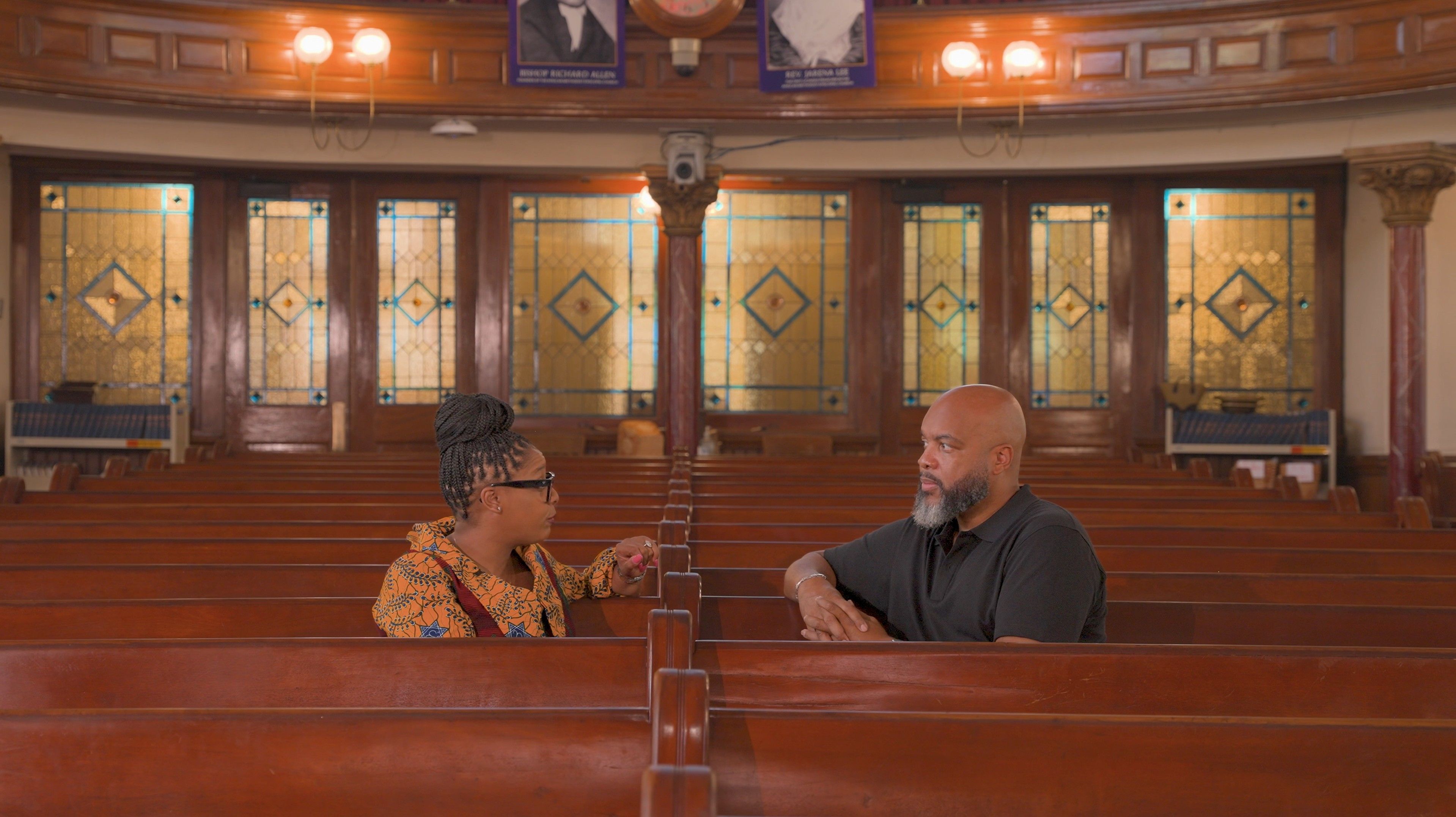
The first episode, “Philadelphia: Does the Ballot Equal Power?,” streaming now on The Root’s YouTube Channel, studies the 15th Amendment, the Reconstruction-era addition to the Constitution guaranteeing Black men the right to vote. Because, according to Carolyn C. Cavaness, pastor of Mother Bethel A.M.E. Church, Philadelphia was the nation’s center of Black power in the 19th century.
Mother Bethel pastor Carolyn C. Cavaness talks to Pulitzer Prize-winning journalist and Camden native Trymaine Lee about the 15th Amendment and it’s relation to Philadelphia. The conversation is featured in the first episode of “America Amended,” a six-part docuseries produced by The Root and Watering Hole Media.The Root/Watering Hole Media
It was also in Philadelphia that activist and educator Octavius C. Catto was murdered in 1871 for encouraging Black men to vote, despite the ratification of the 15th Amendment the previous year. His death made him an early martyr for Black voting rights.
It’s a history we should all take care to remember in the weeks before the midterm elections.
Episodes drop each Sunday through Nov. 14.
In addition to Philadelphia, other major American cities including Detroit, Atlanta, Milwaukee, Houston, and Jackson, Miss., have their own episode. Each city focuses on a particular amendment like the 19th, which prohibited denying voting rights based on sex, and the 13th, which abolished slavery. Sunday’s episode focuses on Atlanta and the Second Amendment right to bear arms.
Lee, a Camden native and author of A Thousand Ways to Die: The True Cost of Violence on Black Life in America, is an earnest journalist. He’s well-versed in history, clearly knowing the answers to questions before he asks, yet he inquires in such a way we see he’s still learning. It’s what makes the conversations so engaging.
Camden native Trymaine Lee is the host of a six-part docuseries for The Root and Watering Hole Media, “America Amended,” exploring what America’s constitutional rights mean in the everyday lives of its Black citizens.The Root/Watering Hole Media
Temple University’s director of the Center for Anti-Racism Timothy Welbeck chats with Lee in front of the Constitution Center. Narrative strategist for 1838 Black Metropolis Joi’ C. Weathers is pensive at Catto’s South Philly mural. State Rep. Andre D. Carroll is thoughtful in his Germantown office.
Their message is clear: The right to vote drives their activism in Philadelphia.
Lee reminds us why it’s imperative Black folks exercise our hard-fought constitutional right, instead of chastising those who chose not to. By the end of the 15-minute episode, we understand why Philly is at the center of Black people’s storied history at the ballot. We are also gently reminded what the world might possibly look like if Black people lose the vote.
A still image from the documentary “We Are The Shaggs,” which screens at the Philadelphia Film Festival this weekend.We Are The Shaggs / Courtesy of Bob Merlis
Two picks for the final weekend of Philadelphia Film Festival
It’s the final weekend of the Philadelphia Film Festival, and with it comes a last chance to catch two music-related movies with widely varied subject matter that tell equally compelling stories.
First up screening on Saturday, Oct. 24, is Once Upon A Time In Harlem, the documentary whose direction is credited to the late William Greaves and his son David, whose daughter Liana is a producer. The film chronicles a 1972 gathering at the home of the great jazz composer and bandleader Duke Ellington that reunited many key figures of the Harlem Renaissance, the Black cultural and intellectual movement of the 1920s and 1930s
The elder Greaves, who died in 2014, shot footage of the cocktail party but never found a satisfying use for it. Now, David Greaves has revisited the footage, which features a staggering number of luminaries looking back on one of the most important cultural movements of the 20th century.
They include writer Richard Bruce Nugent, poet Arna Bontemps, and musicians Noble Sissle and Eubie Blake, who quips that “being here with all these intelligentsias, I’m afraid to open my mouth!”
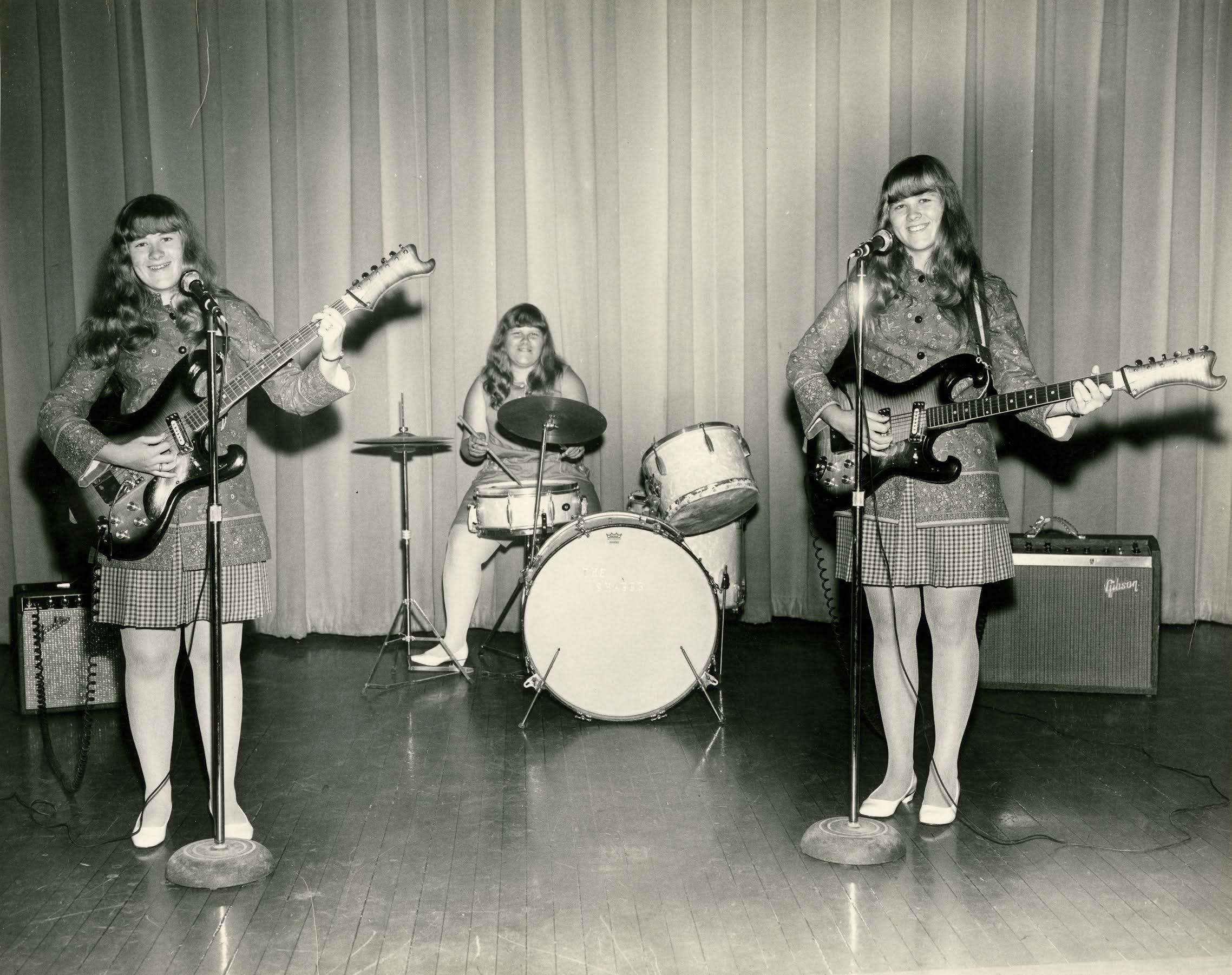
The second music-centric doc is We Are The Shaggs, which tells the story of the love ‘em or hate ‘em trio of Dot, Helen, and Betty Wiggin. Their father, Austin, forced them to form a band to fulfill a prophecy from his mother that he would one day have daughters who played in a famous band.
The Shaggs’ 1969 album, Philosophy of the World, both has been derided for its rank amateurism and revered as a exemplar of intuitive Outsider Music by super fans such as Kurt Cobain and Frank Zappa, who helped spawn a cult of the Shaggs.
And along with director Ken Kwapis’ humanizing of the Wiggins, that gets to the crux of the movie: The question of how it gets decided what music and culture is good (and bad), and who gets to make that decision.
“Once Upon A Time In Harlem” screens at Film Society East, 125 S. 2nd St. at 11:45 a.m. on Saturday, Oct. 24. “We Are the Shaggs” screens at 9:15 p.m. at Film Society Bourse, 400 Ranstead St., filmadelphia.org.
The house: A 1,100-square-foot rowhouse in East Falls with three bedrooms and one bath built in 1945.
The price: Listed for $350,000; purchased for $343,000
The agent: Shannon Vottero, Compass Real Estate
The dining room and kitchen space at Ross’ home in East Falls.Allie Ippolito / For The Inquirer
The ask: After growing up in Lower Merion, post-school life took Ross to Washington, D.C., then Seattle — two cities where home-buying on a single salary felt impossible.
But after moving back to Phillyin 2025, she decided it was time to see what was out there.
Her new-home wish list wasn’t long. She wanted something in the city. She wanted at least two bedrooms (with either an additional third bedroom or basement), good kitchen space, some kind of outdoor area, and — preferably — central air-conditioning.
Her only non-negotiable? “I didn’t want to live on Lincoln Drive,” she said. “It zigzags, and I hate it.”
The living room at Ross’ new home.Allie Ippolito / For The Inquirer
The search: She’d heard from friends that a home search could be a monthslong journey — and she went in with the expectation that hers would be, too. After reaching out to herreal estate agent in mid-April, though, “it was pretty much like foot on the gas,” she said.
Every morning, while getting ready for work, she checked heragent’s internal portal for new leads, which turned up a number of promising prospects.
In all, she toured close to 10 homes — a couple in East Falls, a couple in Manayunk. None was quite right.
Ross turned one upstairs bedroom into a reading room.Allie Ippolito / For The Inquirer
The appeal: Even before stepping inside for the first time, Ross was smitten with her future home.
“I loved the front porch right away,” she said. “Also, the street … was tree-lined, people actually sit on their porches.” Because it was on the end of a stretch of homes, it shared only one wall — a rarity with rowhouses.
“It had all that in its favor even before I opened the front door,” she said.
Inside, it didn’t disappoint. Though some updates had been made, the homemaintained some of its original features, including the wooden staircaseand the archways between rooms. What’s more, it checked nearly all of her boxes: three bedrooms, a basement, a front porch, and a sizable kitchen.
Good kitchen space was one of the things on Ross’s new-home wish list. Allie Ippolito / For The Inquirer
The only downside was that it was slightly over her budget.
Over dinner that night with her parents, Ross weighed the pros and cons, deciding that, though it was a bit overbudget, the third bedroom and basement made it worth the stretch. After dinner, she called heragent, and they submittedan offer the following morning.
The deal: The home’slistingprice had recently dropped from $360,000 to $350,000, and Ross offered less than that — $343,000.Her offer was accepted within a day.
A subsequent inspection turned up a few issues — most notably, the house was outfitted with knob-and-tube wiring, a potential fire hazard — and she was able to negotiate a $4,000 sellers credit that ultimately went toward closing costs.
The home has an original wooden staircase. Allie Ippolito / For The Inquirer
The money: Ross had begun saving for a home at the start of the pandemic, so she was able to put around $17,000 down, with a mortgage around $1,800 per month. Closing costs came to roughly $6,000.
A Philly first-time homebuyer program helped her lock in a 5.3% interest rate. She explored other grants and programs, too, but either didn’t qualify or found them inapplicable.
She was, however, able to geton a waiting list for a program that would provide a rebate for the electrical work she had done to replace the wiring.
The move: Movers handled the big stuff, Ross’ parents helped with some fragile things, and the majority of the move was handled in a single day.
And though the schedule was a bit tight — she wanted the home’s wiring fixed before moving in — things ultimately worked out.
“My dad, bless him, was doing the closing walk-through with the electrician [while] me and the movers were en route to the house,” Ross said.
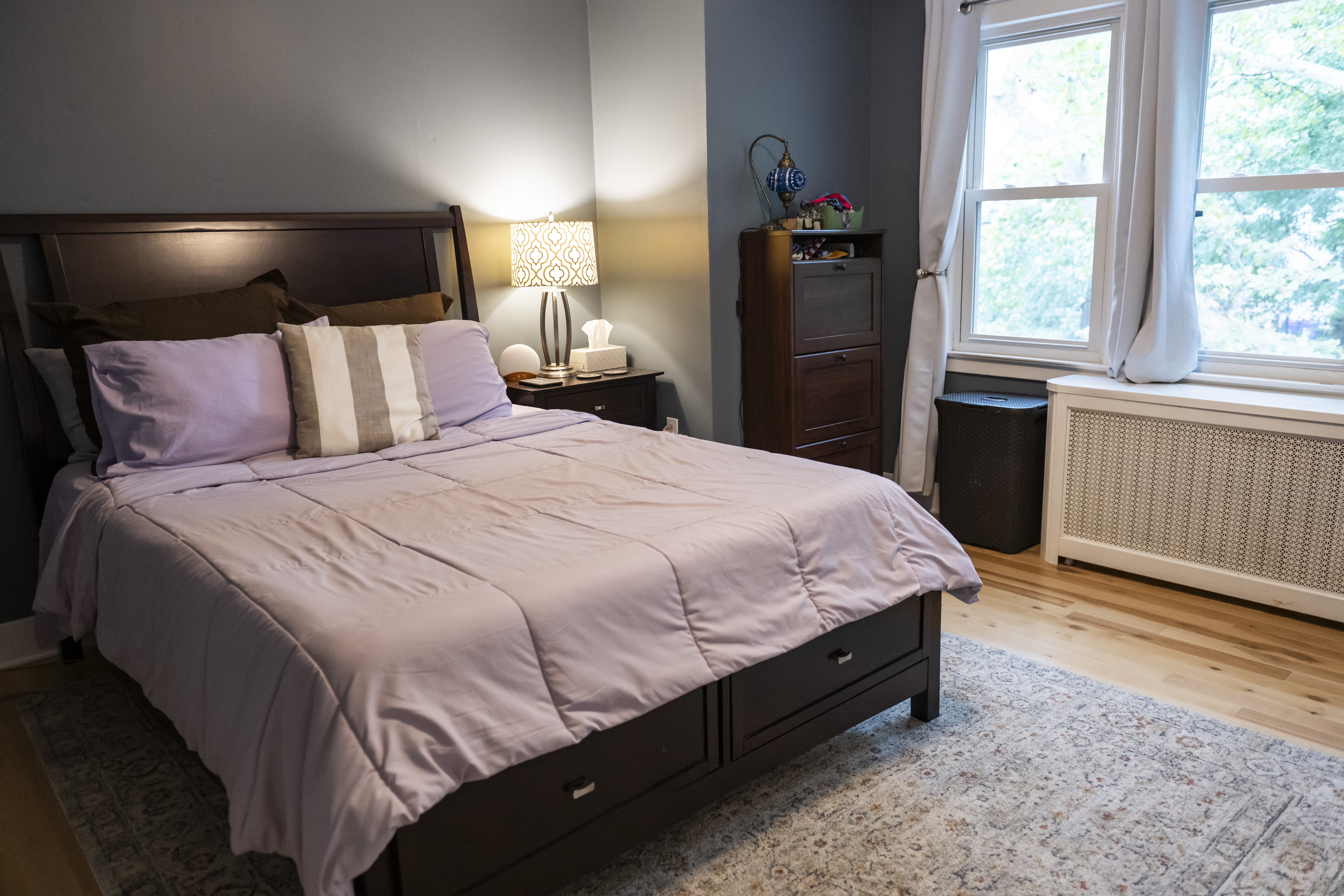
The primary bedroom is currently gray, but she has plans to paint the house soon. Allie Ippolito / For The Inquirer
Life after close: Aside from a few small hiccups — the first week after moving in, she realized the kitchen sink wasn’t working — things have beenpeaceful.
The inspection showed that the water heater was in need of replacing, so the plumber fixed that, along with the sink. She has plans to paint soon, and because the home is bigger than her former apartment, there’s one room still in need of furniture.
But she’s enjoying taking her time with things.
Ross was able to get the outdoor space she was looking for.Allie Ippolito / For The Inquirer
“Sometimes at the end of the day, I’ll be sitting down on the couch and it hits me that I own this place,” she said. “And I don’t have to leave it unless I want to.”
Did you recently buy a home in the Philadelphia area or South Jersey? Share the story of how you did it. Email Inquirer real estate reporters at properties@inquirer.com.
There is maybe nothing else I find more sublime than crispy chicken skin. Golden, oily, and succulent, it is to me the very best part of the bird. And if nothing else, the yakitori set at dancerobot, served only on Wednesdays, is a riotous celebration of chicken skin. But it is also so much more.
At $35,this is a stunningly good deal considering the amount of labor that goes into creating the set, the price point of dancerobot’s menu (where appetizer crudos hover around $22 and a katsu curry platter costs $28), and how much food you get (enough for two to have a light dinner).
A generous ribbon of chicken skin is laced onto one skewer. Another is stackedwith plump chicken thigh nuggets painted with pineapple tare (a soy glaze with caramel notes) and interspersed with grilled shishito peppers. One plate is devoted to tebasaki, or Nagoya-style chicken wings lacquered with orange tare and spiked with fragrant, citrusy-peppery yuzu kosho scallion oil. Next to those, a crisp monaka rice wafer — ordinarily stuffed with ice cream or red bean paste — is filled with chicken liver mousse and pickled persimmons.
Dancerobot’s Lancaster golden chicken yakitori dish. The set includes most parts of the chicken, broken out into sticks, skins, and a liver-filled monaka.Jose F. Moreno / Staff Photographer
To wash it down, there’sa bowl of spicy, deeply nourishing chicken broth, hit with the bright tang of yuzu juice.
This multi-plate, whole-chicken experience is the solo project ofStina Betz, 32, dancerobot’s executive sous chef. She spends Friday or Saturday night breaking down eight chickens, while the rest of the kitchen executes dinner service.
Putting yakitori on the menu was a joint decision between Betz and executive chef Justin Bacharach, whom Betz met as a line cook at Royal Izakaya. She followed him to dancerobot a year ago. The special, according to Bacharach, started as an attempt to draw some happy hour revelers away from Center City Sips and into dancerobot.
Chef Justin Bacharach in the kitchen of dancerobot, 1710 Sansom St., in 2025.Monica Herndon / Staff Photographer
My very favorite part of the set is the rice bowl, with steamed koshihikari rice topped with niku miso, a condiment or side that’s made of seasoned ground meat — in this case, the rest of the Pennsylvania golden chicken. “The skin is really golden and the meat is a deeper red than a normal chicken,” said Betz of these free-range heritage birds, whose flaxen skin is thanks to a diet rich with organic yellow corn.
Crispy bits of chicken skin are mixed into the niku miso. It packs a little heat that is tempered by mixing it into the floral steamed rice. It’s rich in umami and remarkably chicken-y: “I salt everything for a few days and when the chicken cures, the flavor is so intense,” said Betz.
Dancerobot’s Lancaster golden chicken yakitori dish on Wednesday, Oct. 14, 2026, in Philadelphia. The set includes most parts of the chicken, broken out into sticks, skins, and a liver-filled monaka.Jose F. Moreno / Staff Photographer
Betz butchers eight chickens every week (enough for 16 yakitori sets), neatly separating their parts, roasting their bones, making a stock that takes 14 hours to cook, grinding up the meat for niku miso, and roasting everything else individually.
“The set has evolved a lot,” said Betz. “I’m finally at a place where every single piece of the chicken is reflected in it.”
You’ll find bits and pieces of other golden chickens scattered about dancerobot’s menu, as their new hamburg set is also simmered in its rich stock. But only on their yakitori set will you find an utterly fanatical approach to celebrating every part of the chicken, and of course, that marvelous chicken skin.
The floats had been decorated, the public officials assembled, and now the parade was underway — a convoy of colorful trailers and pickup trucks rolling slowly through downtown.
Firetrucks passed grandmothers in lawn chairs and young children, squealing with delight as they fetched candy tossed by the fistful from passing floats.
It was Goose Day in Mifflin County — honoring an animal believed to bring good fortune and prosperity in the coming year — and everywhere you looked were geese: ceramic geese standing sentry on street corners, inflatable geese atop parade floats, goose meat soup over at the Square Cafe, $6.29 a cup.
But the day’s joyous tone belied a grim reality.
In the midst of the state’s deadliest measles outbreak in decades, Mifflin County — this rural enclave of 46,000 tucked into the rolling hills of the central Pennsylvania valley — had recently achieved a troubling distinction:
It now countsthe highest rate of infection of any county in the state.
(function(){function e(){window.addEventListener(`message`,function(e){if(e.data[`datawrapper-height`]!==void 0){var t=document.querySelectorAll(`iframe`);for(var n in e.data[`datawrapper-height`])for(var r=0,i;i=t[r];r++)if(i.contentWindow===e.source){var a=e.data[`datawrapper-height`][n]+`px`;i.style.height=a}}})}e()})();
For weeks, the nation’s rapid spread of measles — once deemed eradicated in the U.S. thanks to the measles, mumps, and rubella vaccine — had been met with growing national alarm. Public health experts issued increasingly sober warnings. News outletsacross the country published the latest case totals and measles-related deaths, in a kind of macabre box score.
Less than a mile and a half from where paradegoers gathered stood Geisinger Lewistown Hospital, where an 18-year-old Amish girl had been reportedly treated for the measles before ultimately succumbing to a rare complication ofthe infection last month. She was the state’s fourth measles-related death. A fifth and sixth, in Lancaster and Franklin Counties, soon followed.
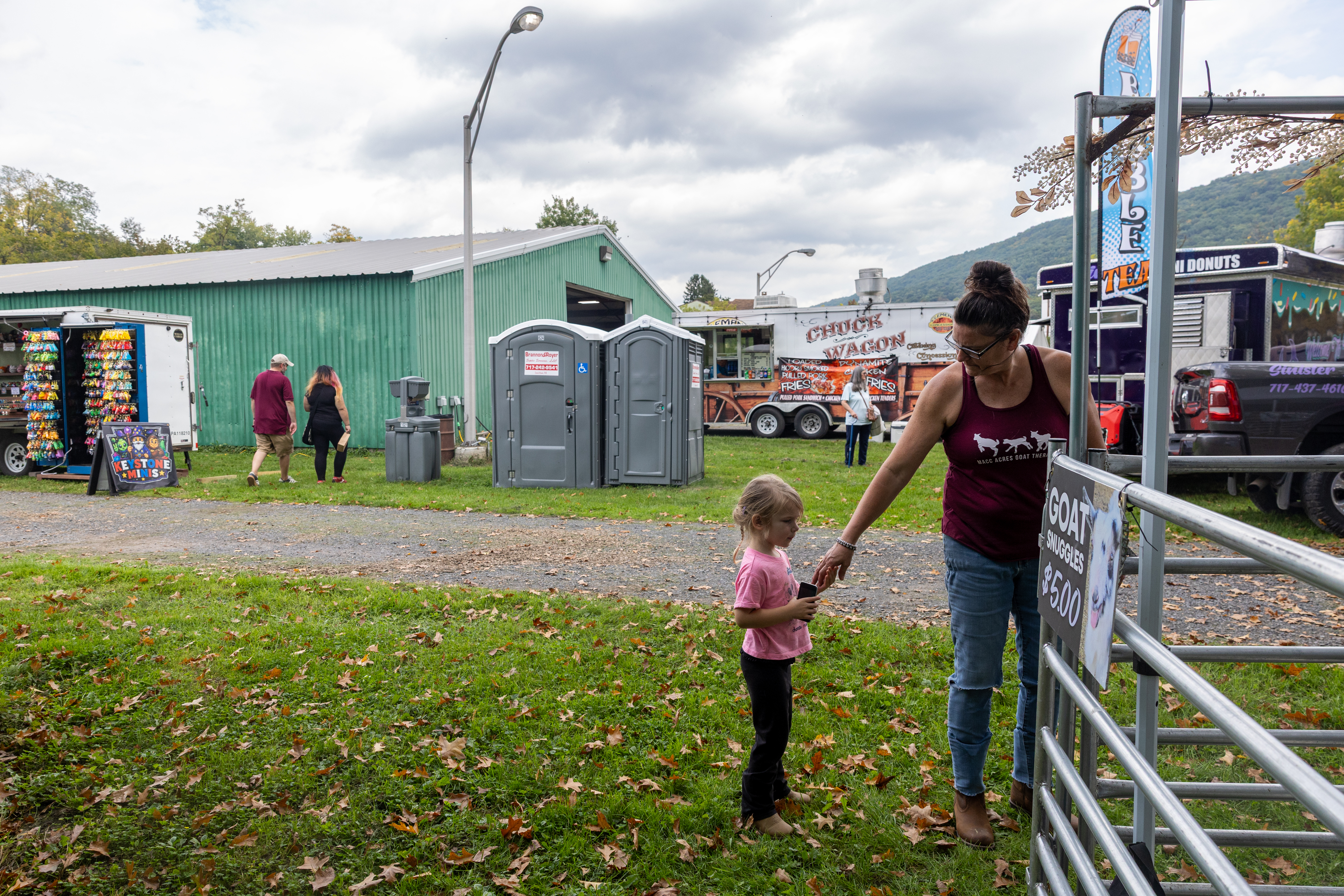
Jeanette Russell, 53, of Reedsville, Pa., reaches out to her granddaughter Jaycee Specht, 3, during the town’s Harvest Festival on Oct. 2. Russell is not too concerned about the rise in measles cases in the area as her children are all vaccinated. When asked about the rise in cases within the Amish community and how that might affect her, she said most of them “keep to themselves anyway.”Aidan T. Gallo / Staff Photographer
Yet during a visit to Mifflin County earlier this month, and in conversations with area members of the Amish and non-Amish communities, there were few tangible signs of concern. No widespread panic. No state-held news conferences, like the one organized this summer in Lancaster County, to extoll the benefits of vaccination.
At the epicenter of the state’s outbreak, measles seems to have been largely met with a sort of shrugging detachment.
By locals outside of the Amish community, who largely see the outbreak as not their problem.
By elected officials, who have been reluctant to address publicly the community’s growing public health crisis.
Even by members of the Amish community themselves, who — hit disproportionately hard due to low rates of vaccination — have insisted that the virus is simply part of life.
As cases here continue a troubling rise, there seems to be, for many, little sense in fretting.
“My dad used to say, ‘Worry is from the devil,’” says Mose Yoder, a member of the local Amish community.
“We still have to do what we have to do.”
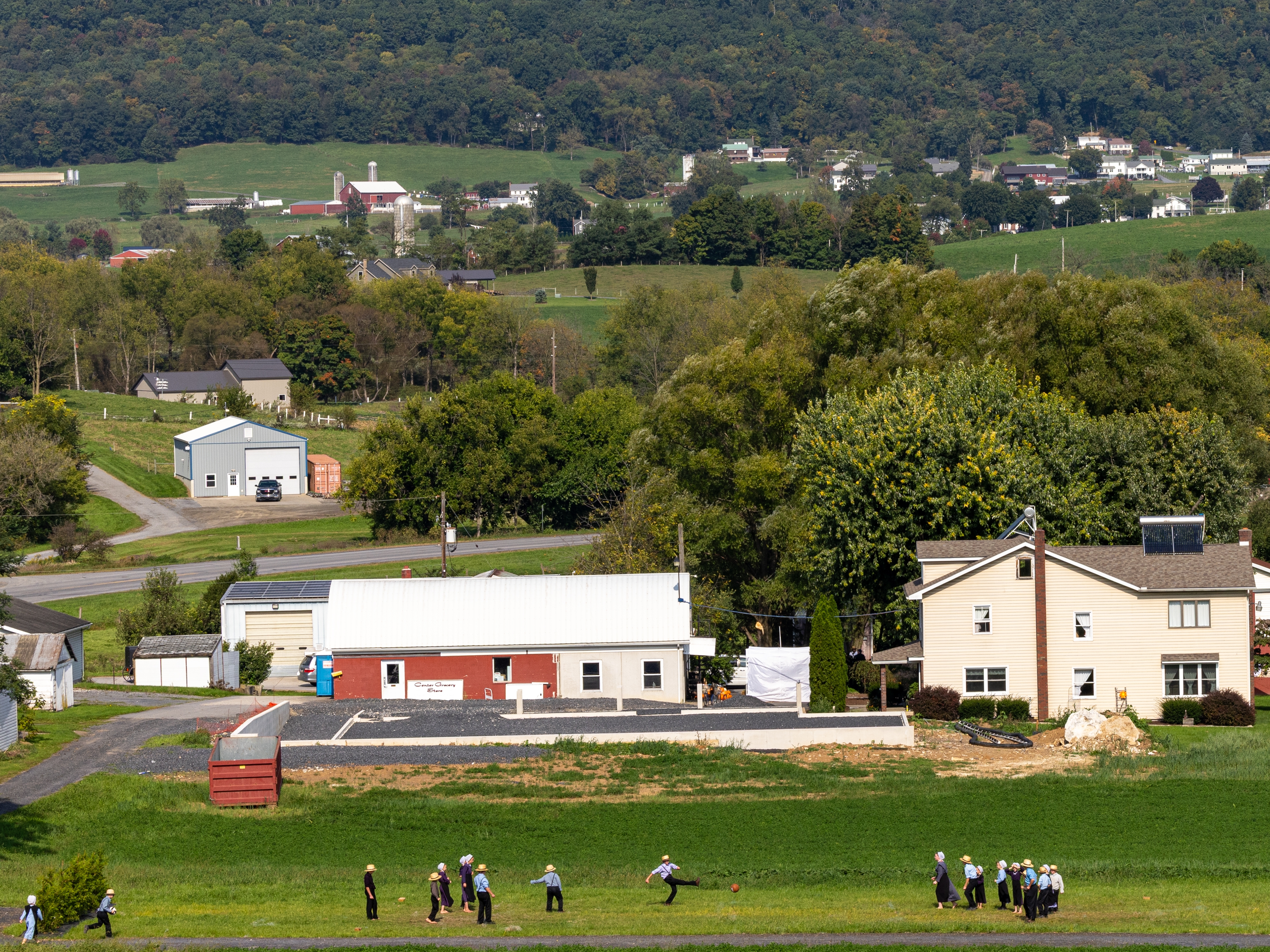
Amish school children play with a kickball during school hours in Belleville, Oct. 2. Mifflin County’s Kishacoquillas Valley, where many Amish and Mennonites live, spans 27 miles and ranges 2.5 miles wide.Aidan T. Gallo / Staff Photographer
A community poised for trouble
Mifflin County is home to an estimated 5,500 Amish people, a community long leery of modern advances, at times includinghealthcare andvaccines. Mifflin County’s Amish communitiestend to be more conservative and traditional than those living inLancaster County, which has the highest total case counts in the state.
The county as a whole trends heavily Republican, a faction in which vaccine skepticism is higher. Seventh-grade measles vaccination rates in the county — which include both Amish and non-Amish students— sit at around 77%, among the lowest in the state. (Philadelphia County, by contrast, is at 97%.)
It remains unclear whether — and how far — the outbreak has extended beyond the Amish community to the county’s other residents.
But the outbreak has clearly spread widely among the area’sAmish.
Vaccination efforts in Mifflin are likely complicated by the local Amish communities’ attitudes aroundtechnologies and interaction with outsiders, said Steven Nolt, professor of history and Anabaptist studies and director of the Young Center for Anabaptist and Pietist Studies at Elizabethtown College.
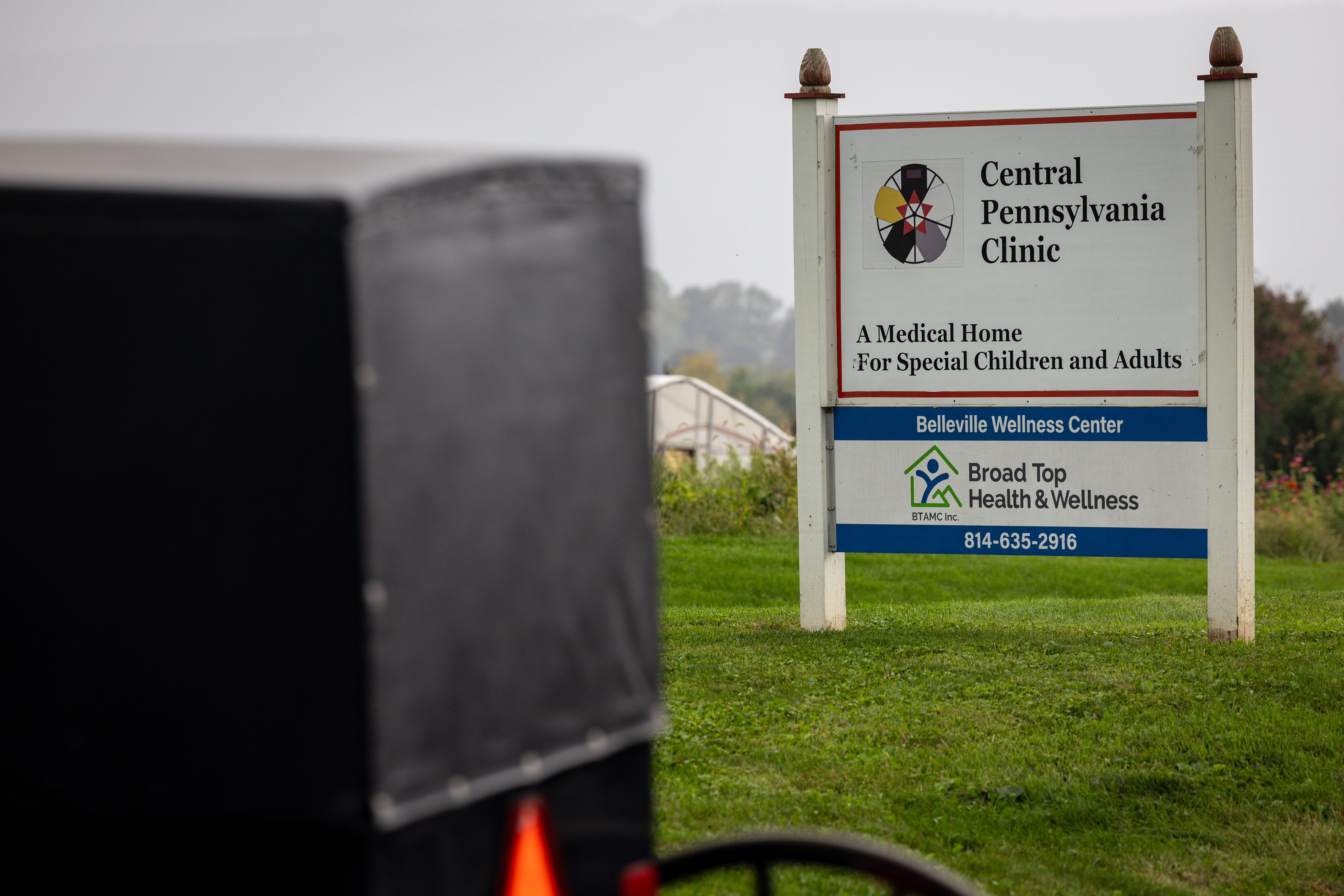
“You can’t just say, ‘It’s the law of the land,’” says Helge Hartung, a physician at the Central Pennsylvania Clinic in Belleville, which treats a large number of Mifflin County Amish and has been working to vaccinate them. “That doesn’t work.”
Since July, 193 cases have been confirmed in Mifflin County, with 76 new cases reported in the last two weeks — more new cases than any county in the state over that period. Both numbers, experts say, are almost certainly significant undercounts.
Yet, during a visit to Mifflin County earlier this month, it seemed to largely be business as usual.
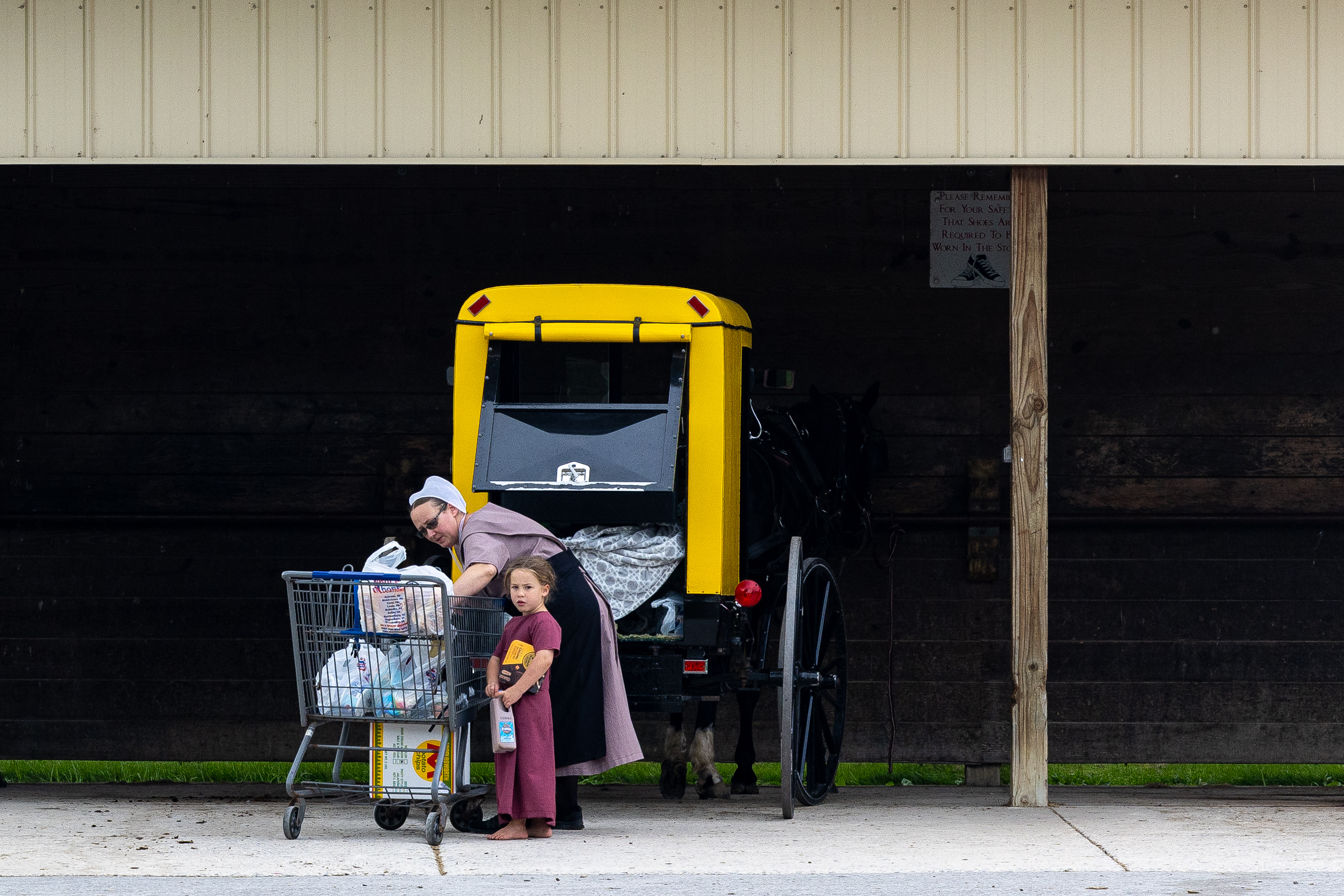
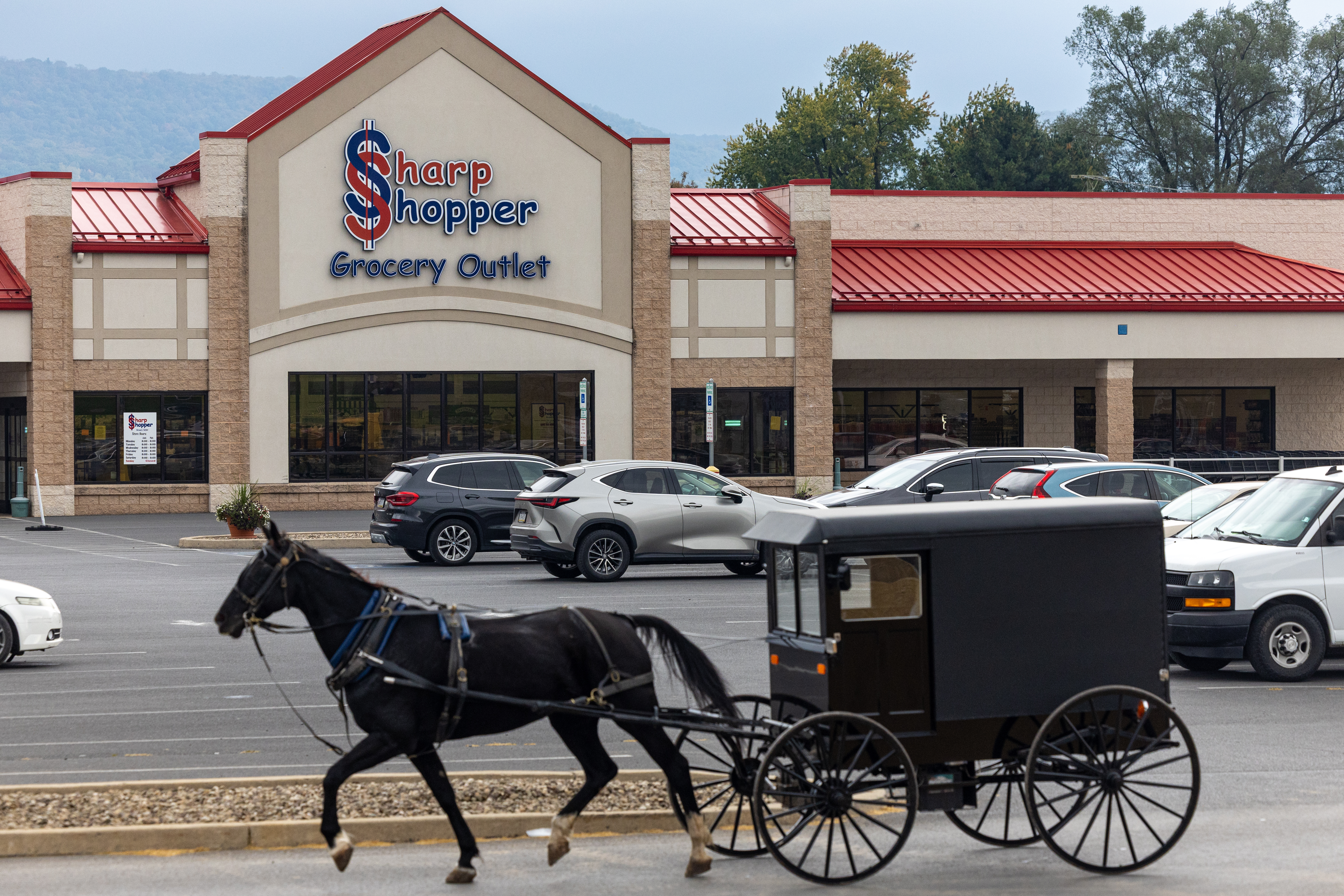
An Amish mother and daughter load up their buggy with groceries outside the Sharp Shopper grocery store in Belleville. Members of Mifflin County’s Amish community have insisted that the measles virus is simply part of life.Aidan T. Gallo / Staff PhotographerThe Sharp Shopper grocery store in Belleville. Mifflin County is home to an estimated 5,500 Amish people, a community long leery of modern advances, at times including healthcare and vaccines.Aidan T. Gallo / Staff Photographer
At the Sharp Shopper grocery store in Belleville, both horse-drawn buggies and late-model SUVs still fill the parking lot.
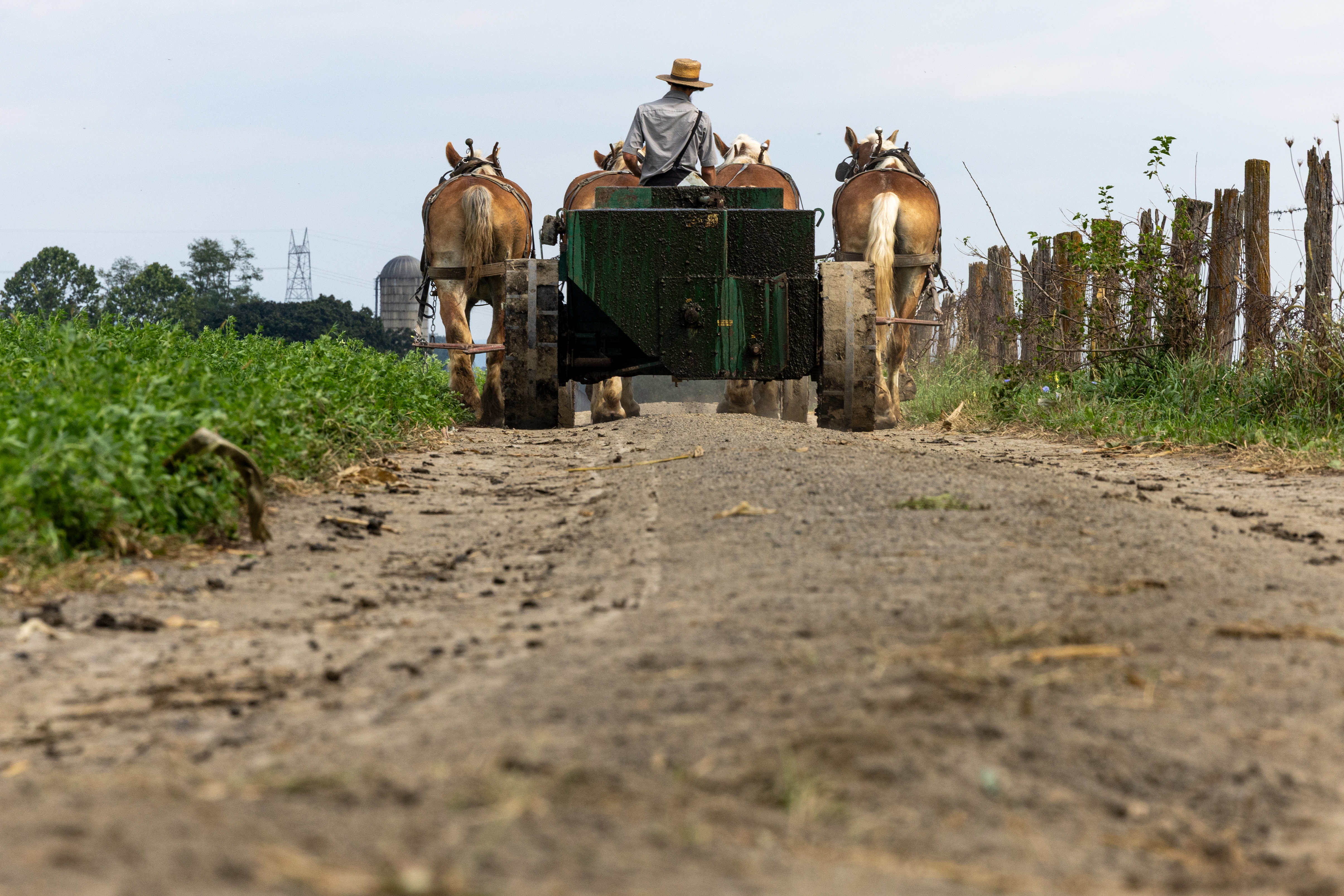
At the Wednesday livestock auction and farmers market, a heavily attended weekly event, men in straw hats and suspenders commingle with guys in pickup trucks and novelty T-shirts (“My wife says I only have two faults: Don’t listen and something else.”).
In the small shops and restaurants of downtown Lewistown, patrons talk about the weather and the Eagles’ offense — but not the virus spreading rapidly through their county.
“I haven’t heard one customer talk about it,” says Deb Guard, who owns the Lemon & Lime craft shop in downtown Lewistown. “Seriously, not one.”
Even the online rumblings that have been known to percolate here — politically infused back-and-forth about vaccine safety and efficacy — rarely spill into public, residents say.
Over at radio station WMRF-FM 95.7, just off the town square, morning host Rocco Pallotto routinely wrangles a chatty stable of listeners. “You ask them [whether] they like apple, pumpkin spice, or caramel better — oh, boy,” he says.
But when Pallotto put out a call recently to discuss news of the local measles outbreak, he didn’t receive anything in response.
“There’s just nothing there,” he says.
Asked about the rising cases, Amanda Haines, a home health aide and mother of two vaccinated sons from Lewistown, shrugged last week as she sipped coffee outside the East End Coffee Co.
As she put it: “I’m more worried about my kid [coming home with] lice.”
Bennie Peachey, 33, works on his farm in Belleville. Two of Peachey’s children were sick with measles, and he would check in on them during the day. Peachey believes that getting the virus as a young child is better for one’s immunity.Aidan T. Gallo / Staff Photographer
Among the Amish, little concern
In Belleville, home to many of Mifflin County’s Amish, it’s difficult to find anyone who hasn’t been touched by the current measles outbreak.
It reached Bennie Peachey’s family not long ago, leaving two of his five children — the 9- and the 7-year-old — bedridden, covered “head to toe” in rash.
The father himself has so far been spared — “unless I have it now,” said Peachey, a lithe man of 33, as he fussed with a tractor outside the family’s barn. If so, he noted, “It’s not too bad.”
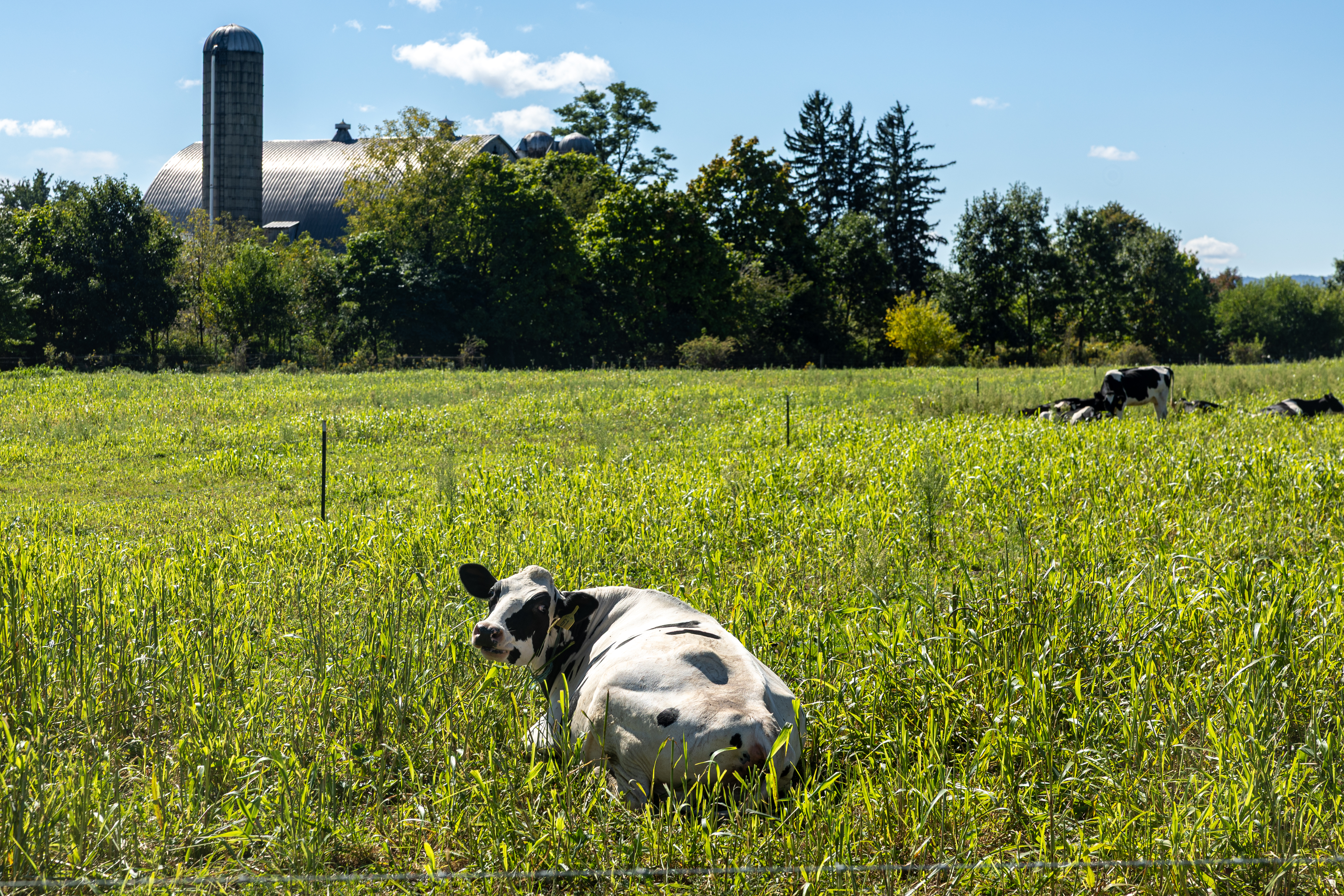
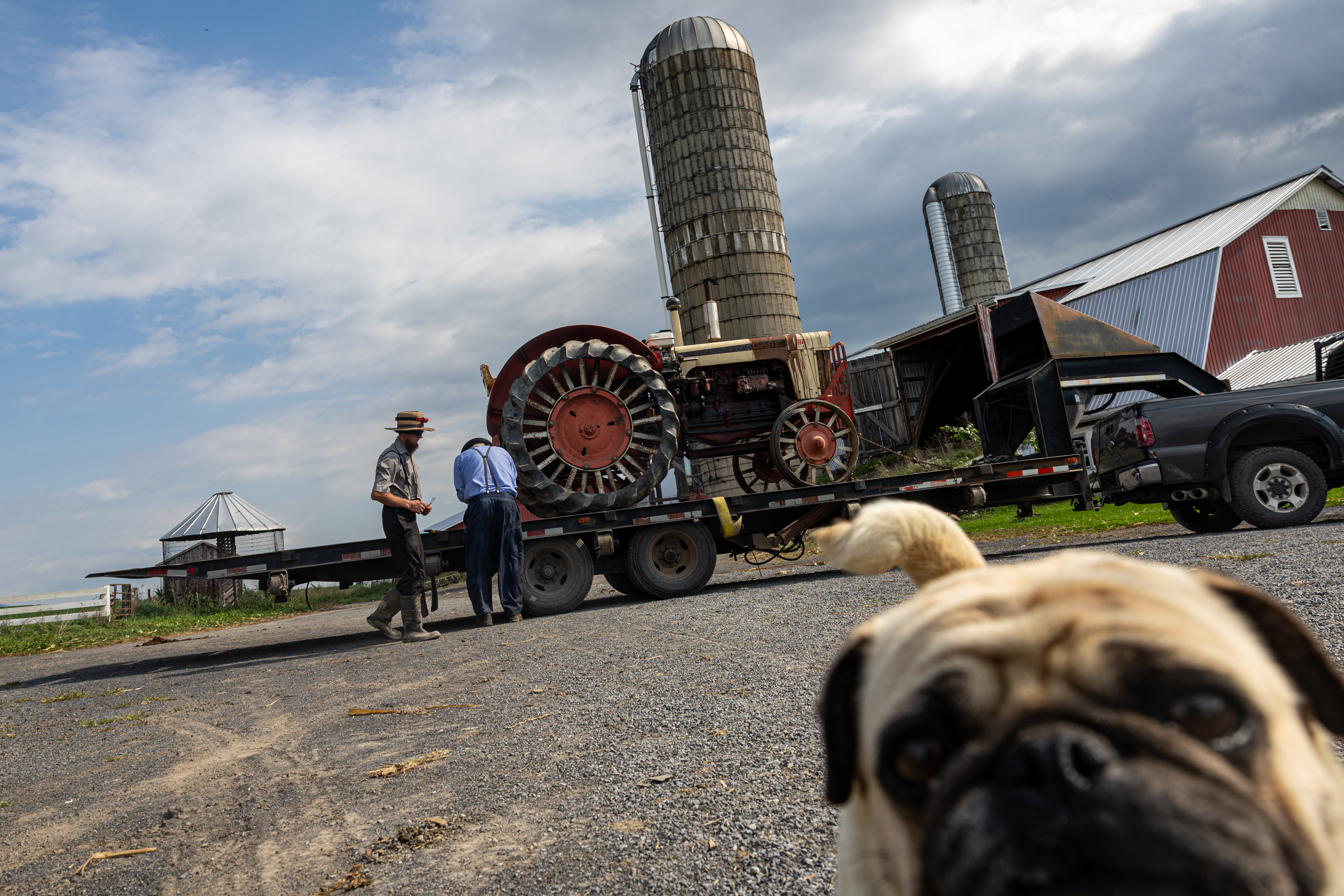
Cows rest across from Bennie Peachey’s farm in Belleville on Oct. 3.Aidan T. Gallo / Staff PhotographerBennie Peachey (left), 33, walks past as neighbor Harvey Yonder, 81, straps in Peachey’s tractor to his trailer while the family’s pug, Debbie, roams on the farm in Belleville. Life has mostly gone on amid the measles outbreak in Mifflin County.Aidan T. Gallo / Staff Photographer
The Amish have looked out for each other.
They know which neighboring farmhouses are grappling withthe infection. They trade home remedies for mitigating the virus’ effects — blackberry juice and yarrow tea for hydration, sunglasses for a sensitivity to light. Some make a point not to bathe while ill, out of an unfounded fear it might push the virus deeper into the body.
“We want to take care,” said one Amish woman who declined to give her name. “But we feel that God is in control.”
A lack of information — both inside and outside the Amish community — has been an ongoing issue.
At least one local Amish newspaper — Die Botschaft — decided not to publish the infection totals and has opted not to wade into coverage of the outbreak, including any recommendations regarding the vaccine.
“We just don’t get into that stuff,“ says David Lapp, owner and editor of the Millersburg-based publication. ”It’s not really our focus, or our target.”
(function(){function e(){window.addEventListener(`message`,function(e){if(e.data[`datawrapper-height`]!==void 0){var t=document.querySelectorAll(`iframe`);for(var n in e.data[`datawrapper-height`])for(var r=0,i;i=t[r];r++)if(i.contentWindow===e.source){var a=e.data[`datawrapper-height`][n]+`px`;i.style.height=a}}})}e()})();
A spokesperson for the Pennsylvania Department of Health said last week that its efforts to curb the spread of the disease in Mifflin County include distributing “educational materials and … flyers about vaccine clinics.” The state is working with local healthcare providers to build trust on outreach and vaccination efforts.
State Secretary of Health Debra Bogen recently traveled to Mifflin County to meet with local healthcare providers, the spokesperson added, to ensure they “have the tools they need to continue to provide educational information and MMR vaccinations to the affected community.”
Local officials, however, have been reluctant to discuss a topic that has routinely devolved into politically infused rhetoric.
“We don’t think that we can add much to your inquiry,” Robert Postal, one of three Mifflin County commissioners, said in an email.
Some in Mifflin County have filled the void with rumor and innuendo, especially in the weeks following the 18-year-old’s death.
The county coroner, a Republican, posted a news release on Facebook saying the young woman died of acute disseminated encephalomyelitis, a rare and serious neurological complication of measles.
Yet the gossip that reached Randy Wilsoncroft, a local who runs a stand at the weekly Belleville auction and market, speculated erroneously the girl suffered from underlying health issues that had exacerbated her infection — even as her father described her, in a September interview with the Pittsburgh Post-Gazette, as “perfectly healthy.”
“I heard she had West Nile and Lyme disease,” Wilsoncroft said.
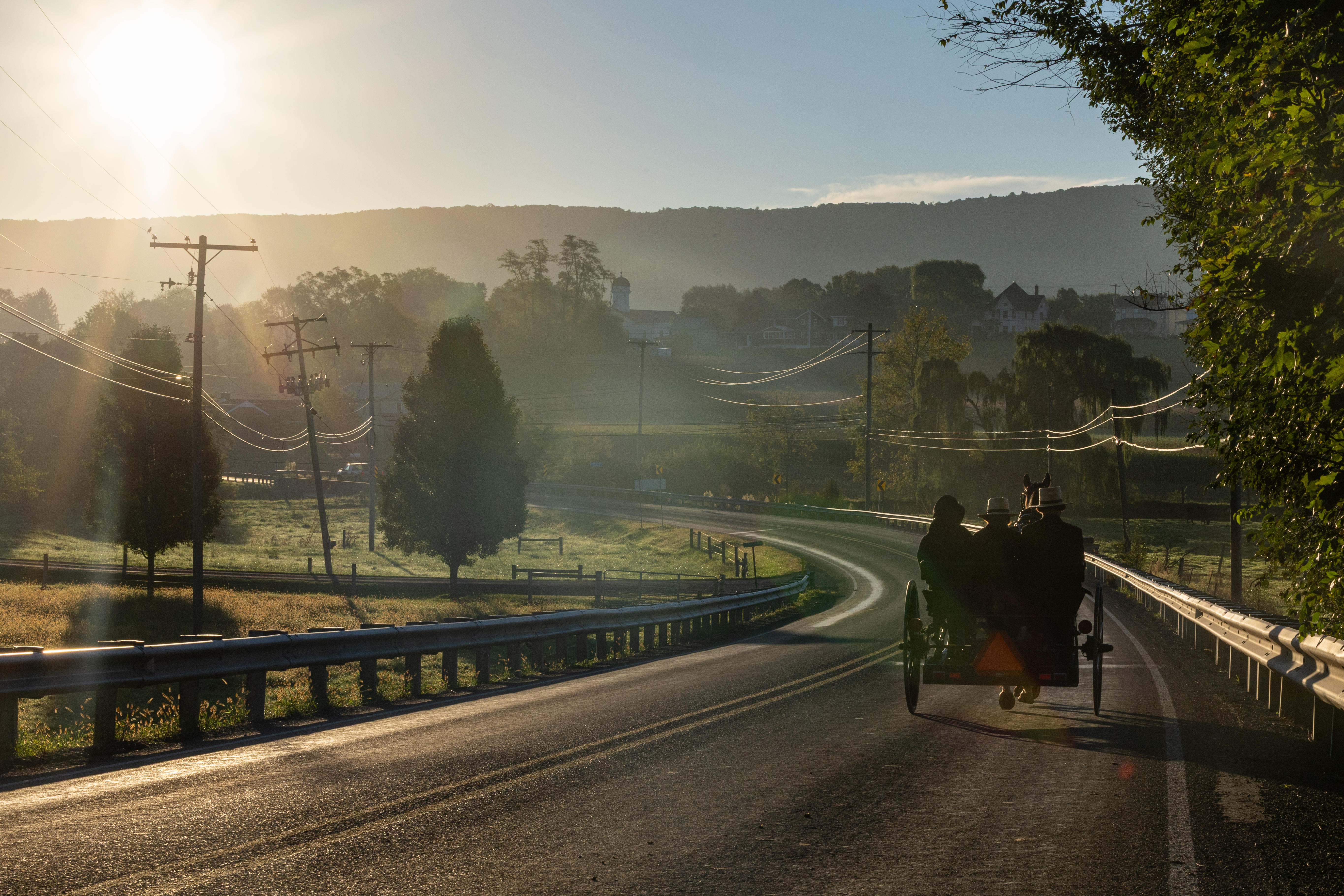
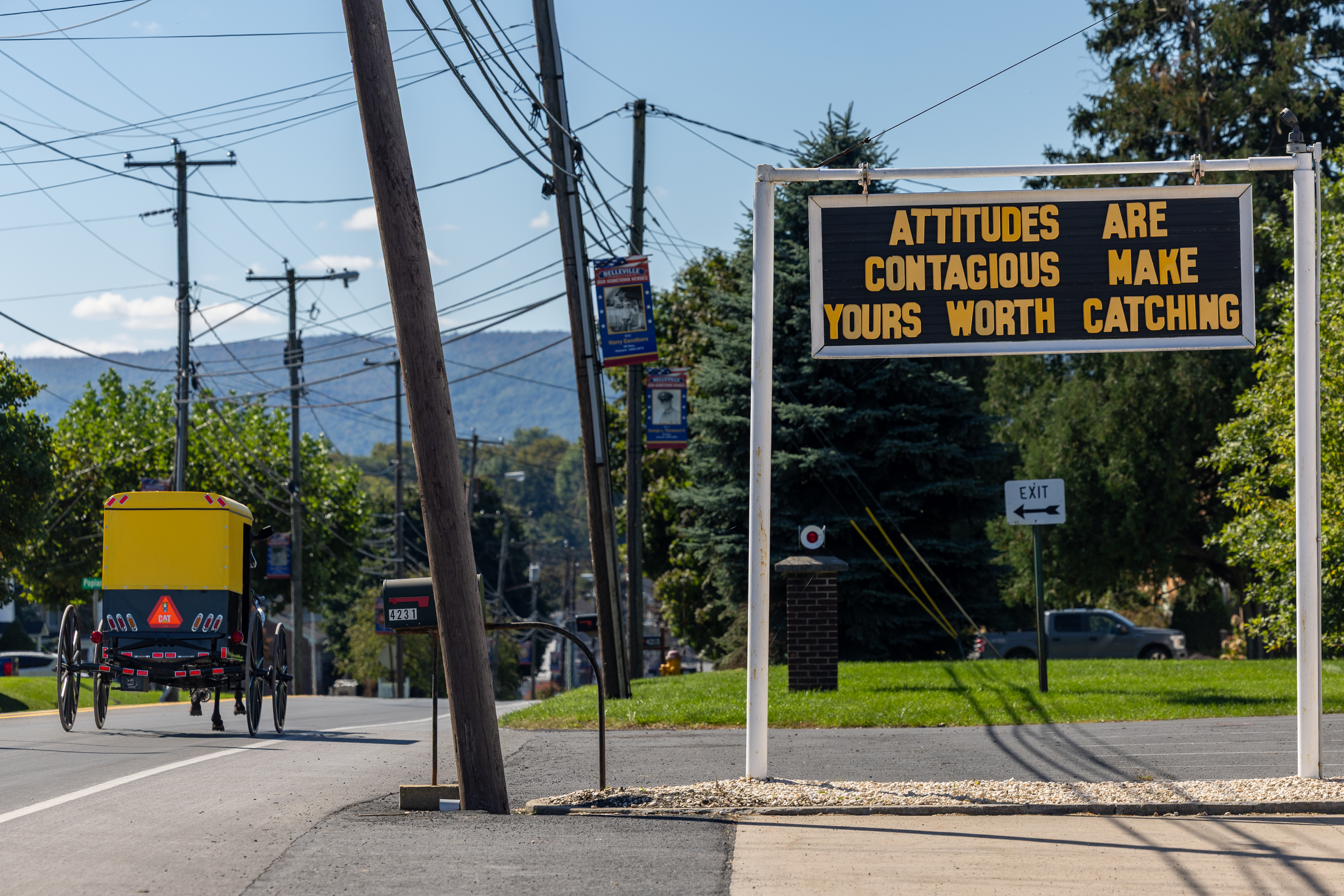
A horse and buggy passes a sign that reads ‘Attitudes Are Contagious Make Yours Worth Catching’ outside of the Belleville Fire Department in Belleville, Pa on Saturday, Oct. 3, 2026. Mifflin County has the greatest number of measles cases in the state, per capita, with 229.8 cases per 100,000 residents as of this week. There have been five reported deaths due to the measles virus in the state, according to Pennsylvania Department of Health, including an unvaccinated 18-year-old resident of Mifflin County.Aidan T. Gallo / Staff Photographer
‘I see a lot of fear’
Back in medical school, when Katie Mascia learned about the measles, the lesson had the feeling of a long-ago relic.
“It was almost like a historical lecture — like, ‘Oh, yeah, this is what measles looked like back in our grandparents’ age,’” said Mascia, now director of clinical services at the Central Pennsylvania Clinic in Belleville. “I never expected to see a measles case when I graduated from medical school, that’s for sure.”
Ever since the first patients began showing up this summer with coughs and fever, she and other local healthcare workers nowfind themselves on the front lines of responding to an outbreak that has sickened more than 1,200 people statewide.
Though most people recover frommeasles without incident, nearly one in five infections reported in Pennsylvania has resulted in hospitalization. In the worst cases, patients arrive struggling to breathe, or must be life-flighted out of Lewistown to larger facilities across the state. Measles-positive mothers in the state have passed the virus on to their newborns, who are sometimes born with rashes and at risk for other severe diseases. Two Lancaster County infants with confirmed cases have died.
In the sterile corridors of the county’s clinics and hospitals, patient stoicism can quickly turn to panic.
“I see fear,” says Alexander Haines, an inpatient nursing manager at Geisinger Lewistown Hospital, which has treated 72 measles cases to date. “I see a lot of fear.”
At the Central Pennsylvania Clinic, physicians have done their best to pierce an often staunch reluctance to a vaccine that has proved 97% effective at preventing the infection.
The Central Pennsylvania Clinic has provided measles vaccinations to the Amish in the area. Director Katie Mascia said she never expected to ever see a measles case. Amid the current outbreak, vaccine resistance might be waning. Aidan T. Gallo / Staff Photographer
The Amish people who spoke with The Inquirer this month shared a range of opinions that varied widely — sometimes within a single home. Some called the decision not to vaccinate a religious one. Some expressed concern that the side effects of the shots could be greater than the infection itself. Others have received one shot of the MMR vaccine, offering strong protection, but not a second, which experts recommend.
“It’s a personal decision,” says Aaron B. Kanagy, a father of eight in Belleville, who contracted the measles as a child, which means he should now have immunity to further illness.
Amid the current outbreak, vaccine resistance might be waning.
In August and September alone, healthcare providers in Mifflin County administered nearly 800 MMR vaccinations, according to figures provided by the state — a significant jump from the 50 to 75 vaccinations typically administered each month.
Last month, meanwhile, the Central Pennsylvania Clinic, which largely treats members of the local Amish and Mennonite communities, held a vaccination clinic locally. Originally, only 15 people signed up to be inoculated. By the time the event was held — just a few days after the death of the 18-year-old on Sept. 11 — 73 people arrived to receive a shot, Mascia said.
Still, a wide swath of the area’s Amish — and many other residents — likelyremain vulnerable to an airborne disease known to infect nine of 10 unvaccinated people exposed to it.
Sitting inside the Belleville clinic, Mascia described the “heartbreak” of the ongoing spread, one that — with cold-and-flu season fast approaching — she fears could pose new challenges, including fewer available hospital beds.
As she spoke, the clinic’s executive director appeared in the doorway.
“A van with a big 6 on it just pulled in,” the woman reported.
Mascia glanced out an office window, watched as an out-of-town TV news truck eased into a parking spot.
She smiled warily.
“We’re very popular lately,” she said.
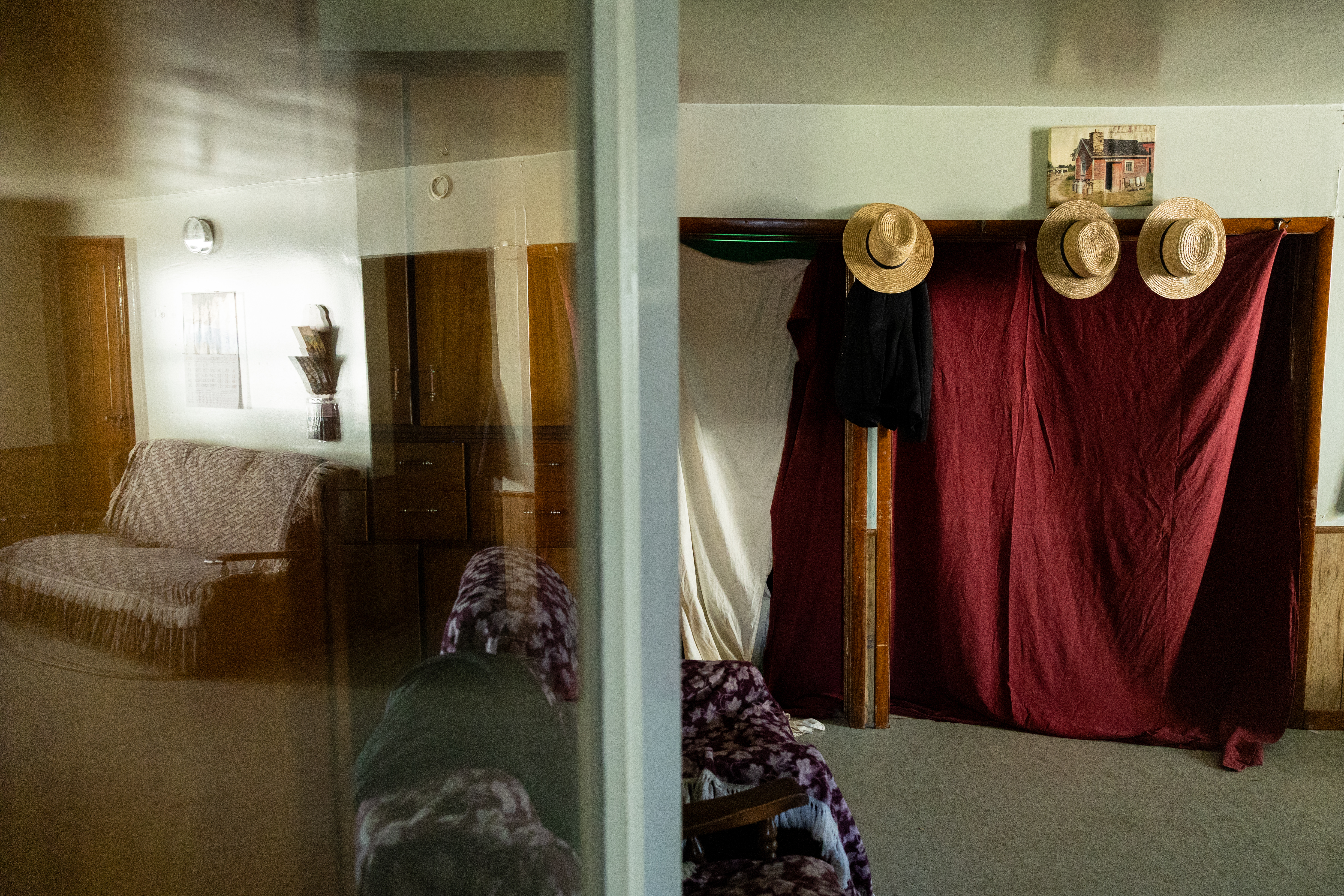
In Belleville, home to many of Mifflin County’s Amish, it’s difficult to find anyone untouched by the measles outbreak. A red sheet covers the entrance to the dark room in the Kanagy family home where daughter Lizzie, 12, was sick with measles for over a week.Aidan T. Gallo / Staff Photographer
Hit at home
On a vast plot of Belleville land, inside a simple farmhouse, is a small, dark bedroom where the Kanagy family keeps its ill.
When the 12-year-old, Lizzie, first contracted the virus last month, the family — Aaron and Katie Kanagy and their eight children — did their best to keep their daughter quarantined even as they braced for a household barrage.
By early October, the twins — Lomie and Lena, both 8 years old — hadn’t been feeling well, though they were still on their feet. At the height of the 12-year-old’s illness, Aaron Jr., 7, spent hours at his sister’s bedside, fetching her glasses of water and regaling her with tales from the school day.
“I’m pretty much expecting it,” says Katie Kanagy.
When 12-year-old Lizzie Kanagy first contracted the virus last month, parents Aaron and Katie Kanagy dedicated a room for Lizzie to rest all day in the dark, to ease her sore eyes. The family of 10 is unvaccinated.Aidan T. Gallo / Staff PhotographerPlastic cups, measuring cups and thermometers rest on a chair by a mattress inside the room where daughter Lizzie Kanagy (not pictured), 12, was sick with measles for over a week in Belleville, Pa on Saturday, Oct. 3, 2026. The Kanagy family dedicated a room for Lizzie to rest all day in the dark, as the family felt the darkness would help ease the daughter’s sore eyes. The youngest, Aaron Jr. Kanagy, 7, would bring water to his sister and would often lay down to comfort her. As the family is currently unvaccinated out of personal preference, there is a high-risk that the whole family has already caught the contagious viral illness.Aidan T. Gallo / Staff Photographer
The Kanagys, like many of the area’s Amish, are old enough to remember the region’s last significant measles outbreak, in the late 1980s, when the infection roiled the Amish community and at least three of the 10 Amish schools across Lawrence and Mercer Counties were temporarily shuttered.
But they made it through that OK, they insist.
This time will be no different.
If the infection is coming, Aaron Kanagy said one recent afternoon, as he looked out over the family’s 63 acres of farmland, he would prefer it come soon.
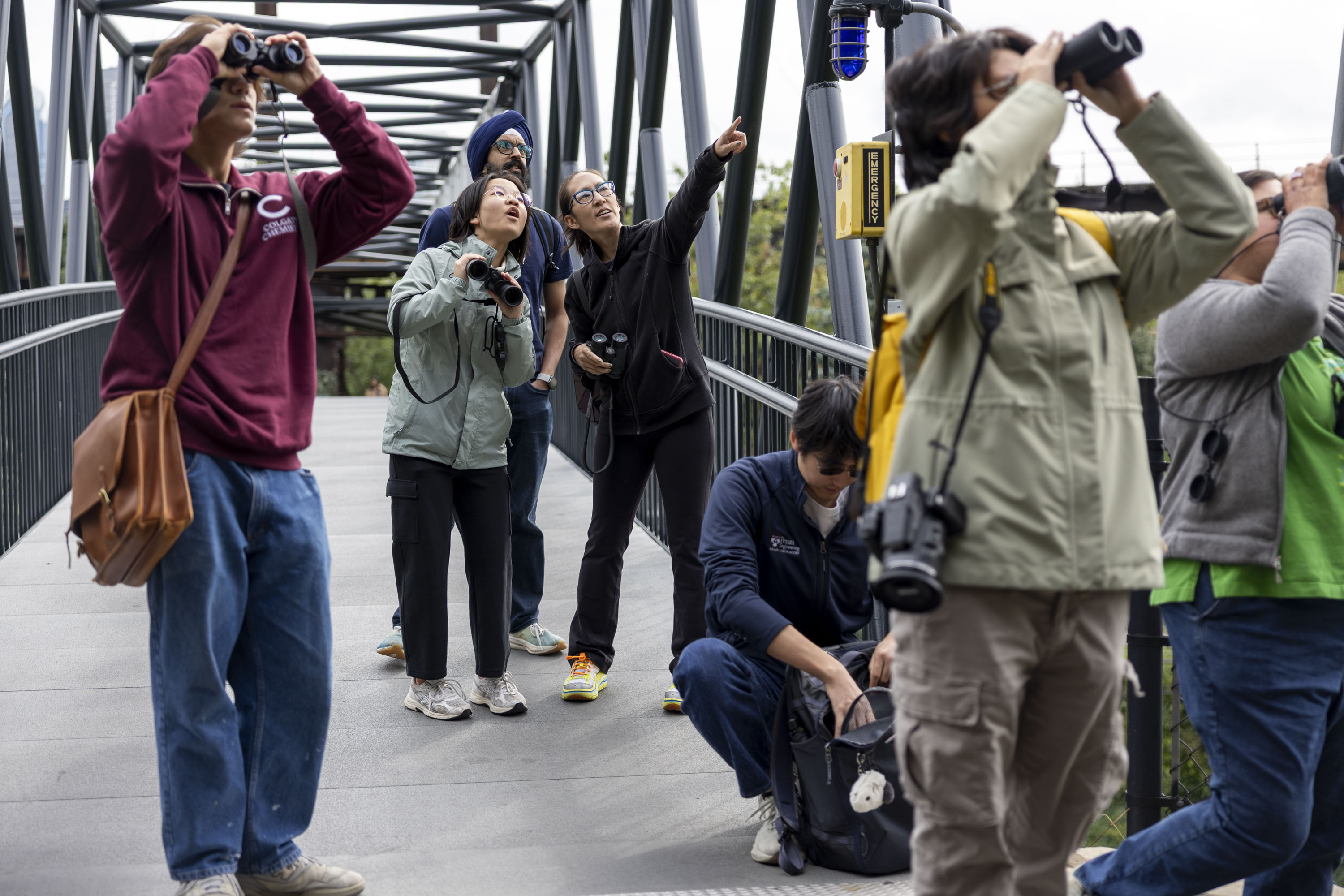
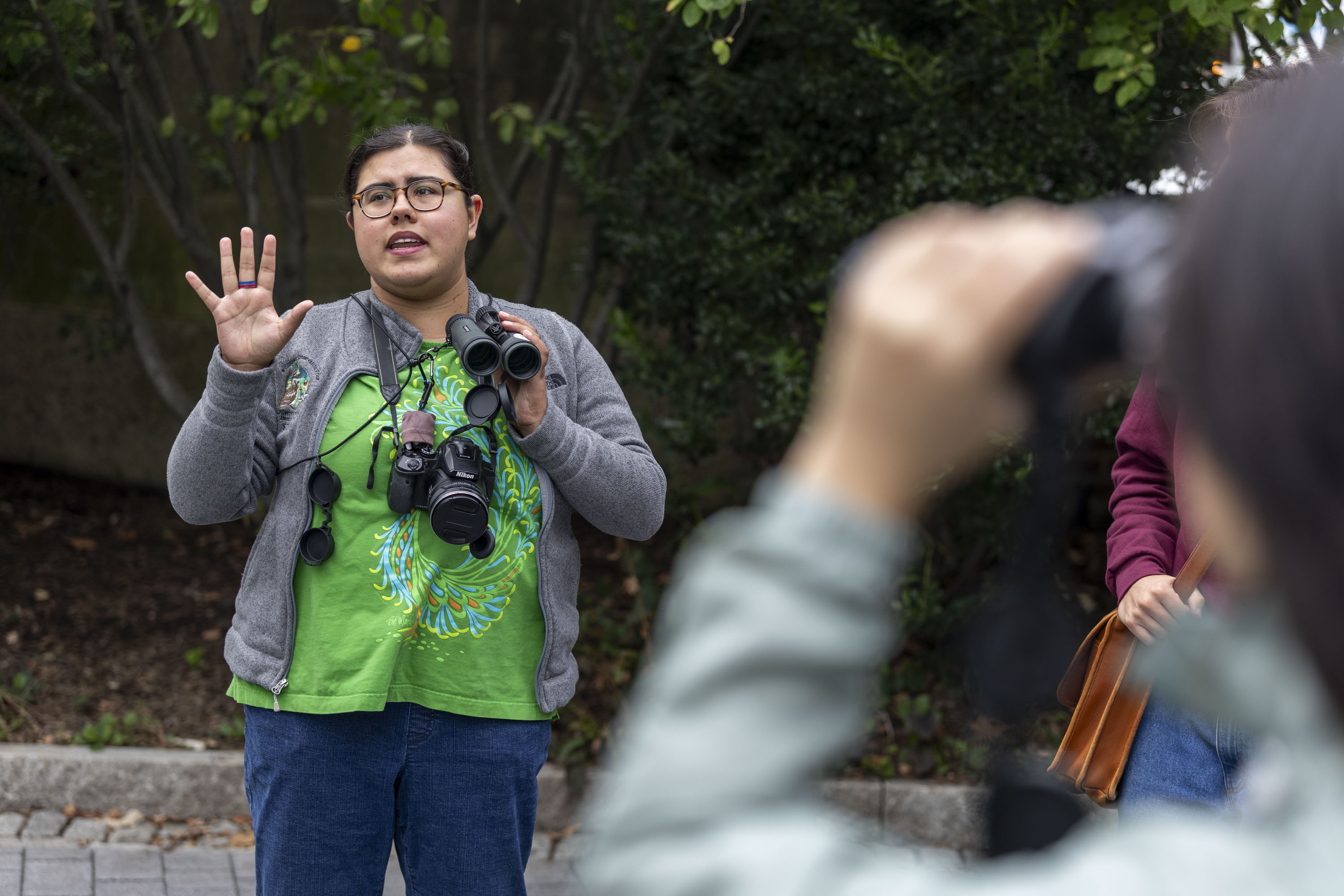
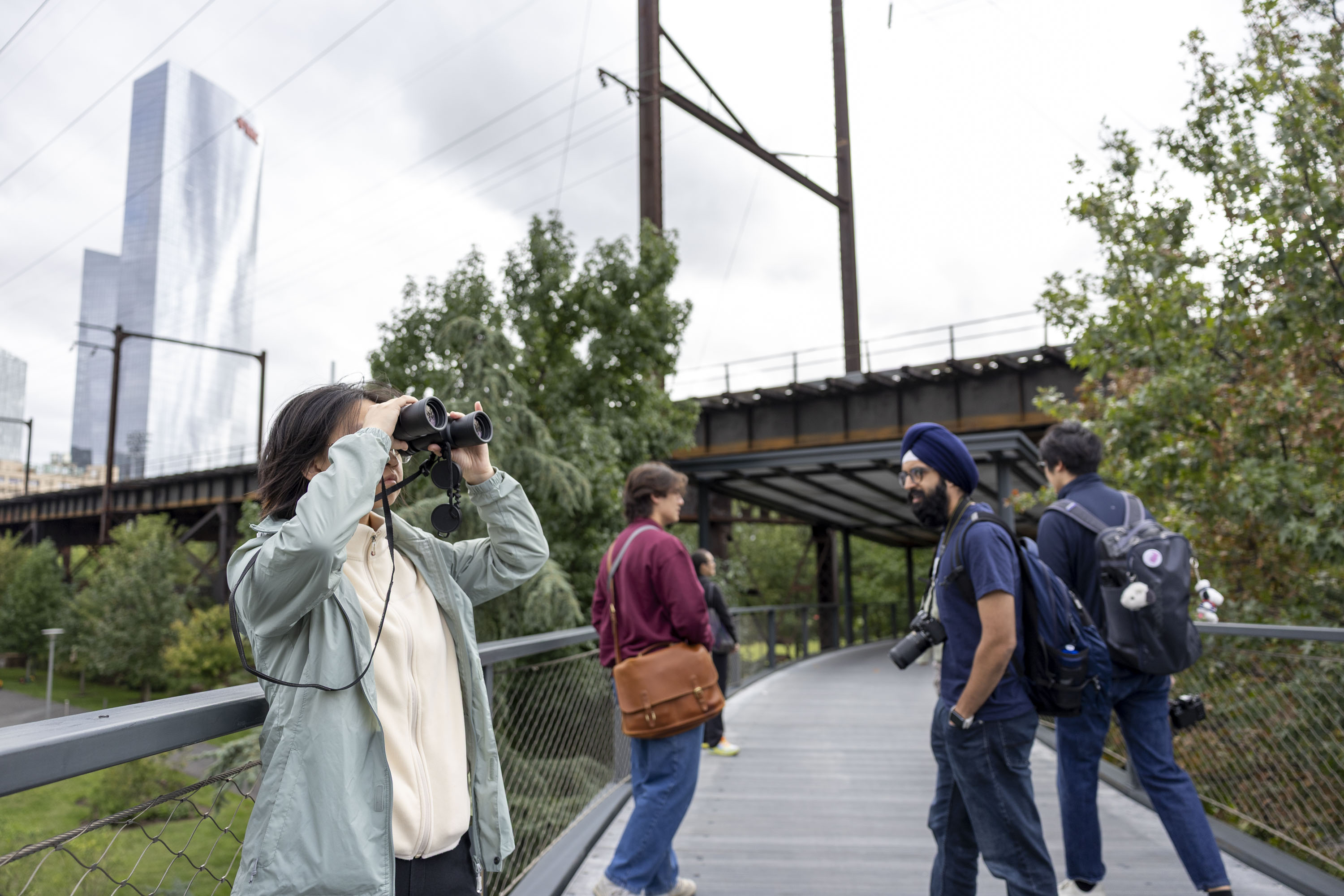
Victoria Sindlinger led a six-member flock from the Quackers Bird Club across the University of Pennsylvania campus, peering into hundreds of trees and shrubs along the way.
Binoculars dangling, the crew navigated past Franklin Field, traversed a steel bridge, skirted past tennis courts, and ducked into a pocket park.
For two hours on a recent walk they tracked a northern mockingbird tucked into a willow oak, caught a yellow warbler mid-hunt, pinpointed a monarch butterfly resting on goldenrod, and observed other flora and fauna, including a giant hornet nest.
Sindlinger, a 22-year-old senior environmental science major from West Philadelphia, launched the club during her freshman year, pitching itto a small group chat of classmates. The group has grown to 120 members and is an official university organization.
The Quackers are part of an expanding wave of young, city-dwelling birders reshaping the hobby with a distinct urban tilt. While regional sanctuaries like Cape May and Berks County’s Hawk Mountain draw international recognition, the popularity ofurban birding across Philadelphia and its dense suburbs is soaring, according to some of the region’s most enthusiastic bird-watchers.
“I think there’s been more interest in birds and more research and more activity around birds here in the Philly area than any other place in the Western Hemisphere,” said Keith Russell, program manager for urban conservation at Audubon Mid-Atlantic.
Victoria Sindlinger, founder of the Quackers Bird Club at the University of Pennsylvania, leads a birding walk across campus.Tyger Williams / Staff PhotographerA northern mockingbird spotted in a tree next to Franklin Field during a Quackers Bird Club outing at the University of Pennsylvania.Tyger Williams / Staff Photographer
The convergence of COVID-19 isolation and modern nature applicationshelped trigger a surge in urban birding. Campus clubs are multiplying, groups of like-minded people are gathering, and loose local networks are banding together through informal meetups.
“The really nice thing about birding in general — and running a bird club — is that it’s actually pretty easy to do,” Sindlinger said. Her club takes excursions by SEPTA, via rented car, or even by foot.
“The birds are out there. Especially on Penn’s campus, which is so beautifully green.”
<iframe title="The number of eBird users in Pennsylvania, New Jersey grew by nearly 50% after 2020" aria-label="Line chart" id="datawrapper-chart-1KZr7" src="https://datawrapper.dwcdn.net/1KZr7/1/" scrolling="no" frameborder="0" style="width: 0; min-width: 100% !important; border: none;" height="498" data-external="1"></iframe><script type="text/javascript">(function(){function e(){window.addEventListener(`message`,function(e){if(e.data[`datawrapper-height`]!==void 0){var t=document.querySelectorAll(`iframe`);for(var n in e.data[`datawrapper-height`])for(var r=0,i;i=t[r];r++)if(i.contentWindow===e.source){var a=e.data[`datawrapper-height`][n]+`px`;i.style.height=a}}})}e()})();</script>
Indeed, the growth of birding in the region, and particularly Philadelphia, has been extraordinary, according to data from eBird, a citizen-science project by Cornell University’s Lab of Ornithology that allows birders to log the species they see and the locations.
Consider:
In 2020, Pennsylvania had 9,559 eBird users. In 2025, it had 15,830, a 66% increase.
New Jersey had 6,098 users in 2020. It had 11,082 by the end of last year, an 82% increase.
And Philadelphia went from 1,035 eBird users in 2020 to 2,754 last year — a 166% increase.
Add to that, the growth of Philly Birding Weekend, which celebrated its fifth year on Oct. 10 and 11. About 140 people registered for 10 trips. Birders spotted 36 species during one of those outings at the Discovery Center in Fairmount Park.
Video: Birding finds a new flock of enthusiasts in PhiladelphiaTyger Williams
A tech-fueled birding boom
For Russell, of Audubon Mid-Atlantic, urban birding should rarely require a personal vehicle, trips to remote coastal reserves, or thousands of dollars in camera gear.
“When I was a kid here in Philly, I couldn’t drive. I had to walk, so I had to just go in my neighborhood,” Russell said.
He champions unheralded urban pockets, like a stormwater retention pond off 51st Street near Bartram’s Garden, accessible by public transit. That single basin routinely attracts rare shorebirds, including red knots, phalaropes, and Baird’s sandpipers.
“Studies show that people who observe birds become healthier, happier, and more content,” Russell said. “We live in a very stressful time and a very stressful world.”
The Delaware Valley Ornithological Club, founded in 1890, helps link birding groups in the region through its jam-packed calendar of walks and events.
Services like eBird lower the entry bar, opening direct channels to the natural world. eBird, launched in 2002, lets users tap a global database.
Merlin, an app also developed by the Cornell ornithology lab, helps users identify birds. Merlin introduced photo identification in 2014 and audio identification in 2021.
Pennsylvanians logged 32,000 checklists — digital records of birds spotted during field trips — into eBird in August alone, said Kathi Borgmann, a spokesperson for the Cornelllab.
“We are seeing month-over-month growth of 10% to 20%,” Borgmann said of the service.
Though Cornell does not officially track user demographics, Borgmann added, “We see all these young people on social media talking about eBird and Merlin.”
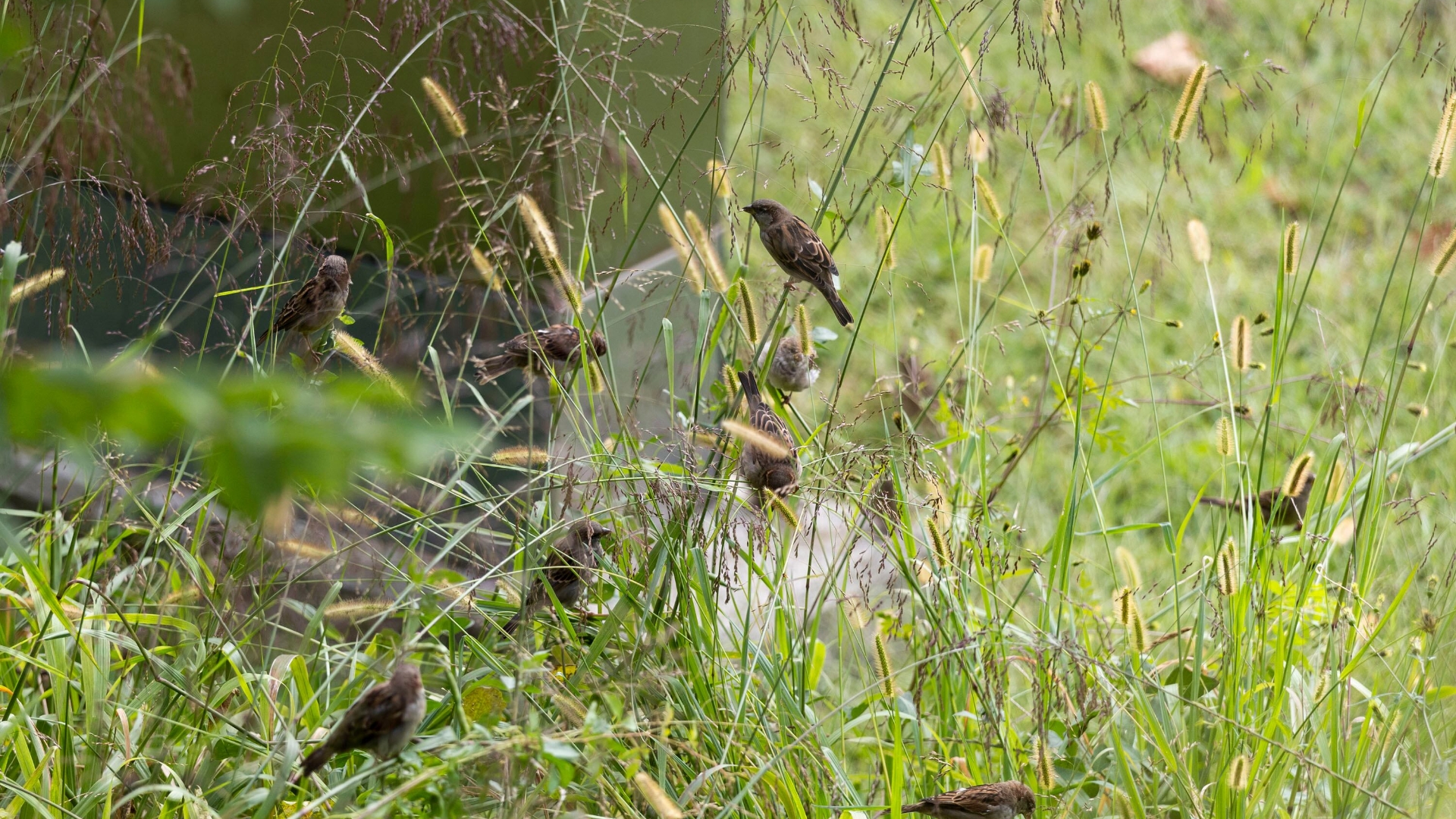
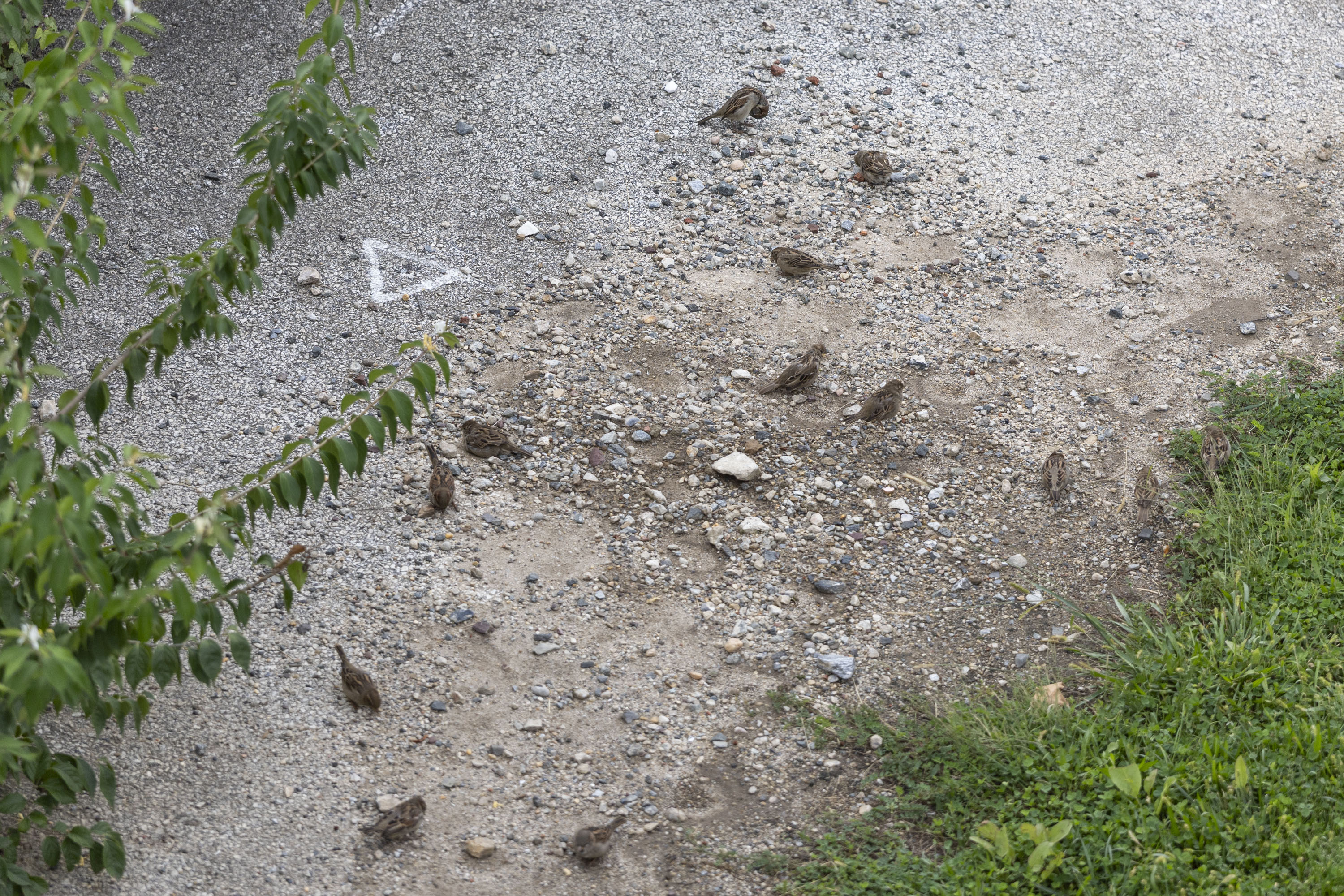
House sparrows on the University of Pennsylvania campus during a Quackers Bird Club outing.Tyger Williams / Staff Photographer
Driven by curiosity
For Katrina Clark, a 47-year-old literacy specialist from Cobbs Creek, eBird helped draw her to the urban birding scene.
Shefirst picked up binoculars during the 2020 lockdowns. Strolling through her neighborhood, a friend pointed out a gray catbird, a species Clark assumed belonged in a zoo, not a neighborhood of concrete.
Driven by curiosity, she checked eBird, studied local maps, and eventually joined the board of the In Color Birding Club, a groupfounded in 2020 to cultivate a safe, inclusive environment for Black birders.
“I did not think about birds except that they were far away, not connected to the city,” Clark said.
While large sanctuaries like the John Heinz National Wildlife Refuge offer massive species tallies, Clark finds equal satisfaction watching a downy woodpecker work a solitary tree along Cobbs Creek while city trolleys rattle past.
A house sparrow nestled in a tree on the University of Pennsylvania campus during a Quackers Bird Club outing.Tyger Williams / Staff Photographer
Finding community
Elise Greenberg, 35, founded Philly Queer Birders in 2021 to merge her background in biology with a desire for community during the pandemic.
“I wanted to get outside, I wanted to be around other people, and I was missing the queer community and missing birding,” Greenberg said.
What began as a small outing quickly exploded. Today, her informal walks draw up to 100 people, backed by an Instagram community of over 7,000 followers. Her group draws an intergenerational mix that leans heavily toward young adults and young families.
Greenberg focuses the itinerary on transit-accessible locations like the Woodlands and the Discovery Center, with occasional trips out to Chanticleer Garden or Tyler Arboretum.
Unusual sightings often spark massive interest. When a rare tundra bean goose landed near Fairmount Park along the Schuylkill in 2021, birders from across the region flooded the riverbanks.
“The joy they found seeing it provided a spark,” Greenberg recalled.
It is a sentiment shared by other bird-watchers.
Manchi Wang, of Shanghai, China, on the lookout during a Quackers Bird Club outing on the University of Pennsylvania campus.Tyger Williams / Staff Photographer
‘Outlets that bring us together’
Jonah Perelman, a 22-year-old biophysics major at Penn, moved from suburban New Jersey to Philadelphia, assuming his passion for birding would be put on hold. But a poster hung by Sindlinger in a dining hall pointed him toward the Quackers.
Now he helps coordinate the group’s outings to locations such as Cape May, Middle Creek Wildlife Management Area in Lancaster County, and an owl-banding site in Chester County.
Yet their core routine includes one distinctly local stop: the campus Biopond at James G. Kaskey Memorial Park.
For a generation raised on screens, Perelman views birding as a vital offline sanctuary.
“We are now really one of the first generations who grew up with iPhones and iPads,” Perelman said. “A lot of us realize we don’t want to be so technologically plugged in. We want outlets that bring us together and offer new ways to connect with the world.”
Data editor Stephen Stirling contributed to this article.
I work Sundays so I’m fortunate I get to document all the parades and festivals that celebrate the varied cultures that make Philadelphia so special. I get to show readers the events where people share their heritage, learn about one another, and come together as a community. There are too many to list.
So this past Sunday I was looking forward to covering another. But the remnants of Hurricane Isaias changed that.
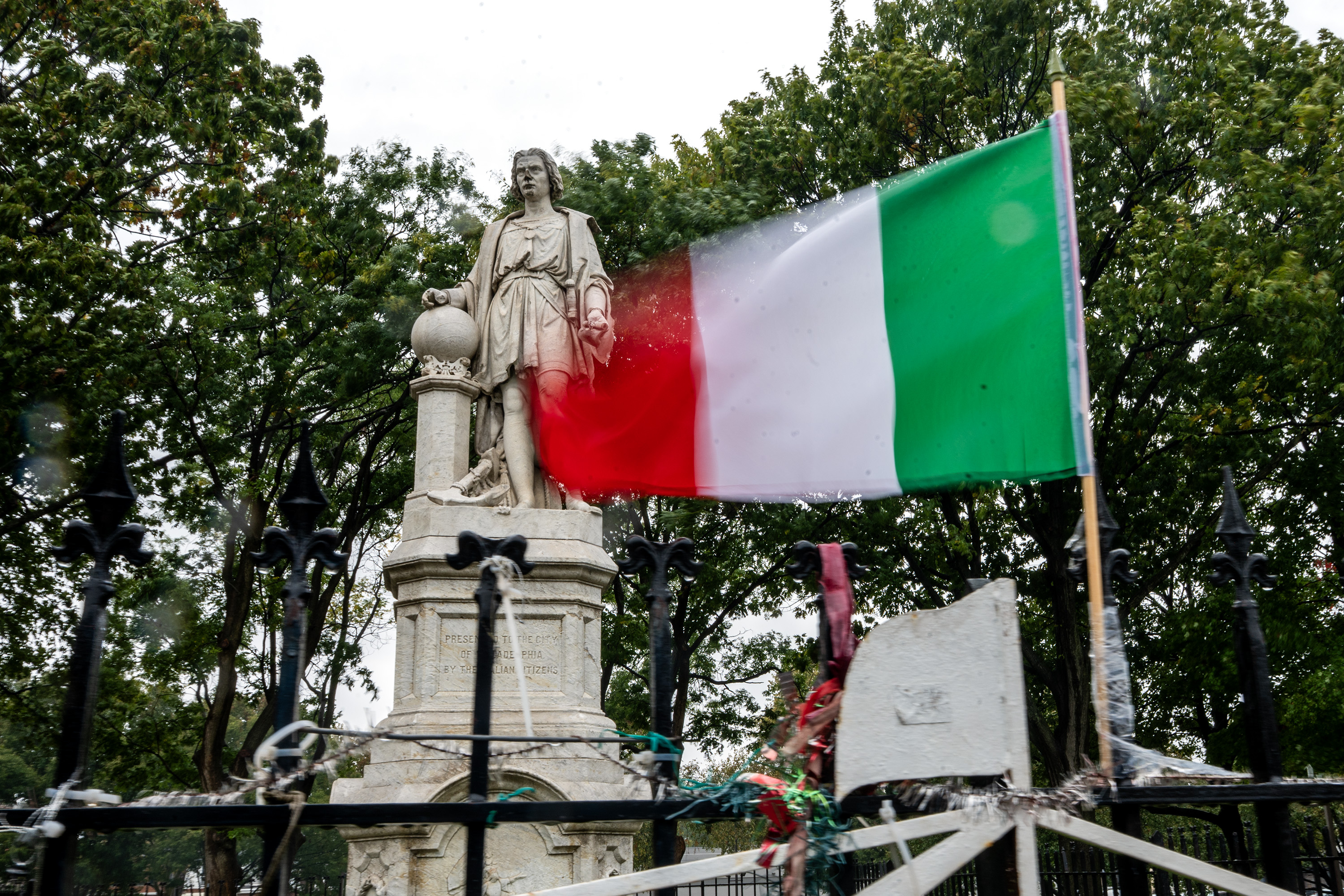
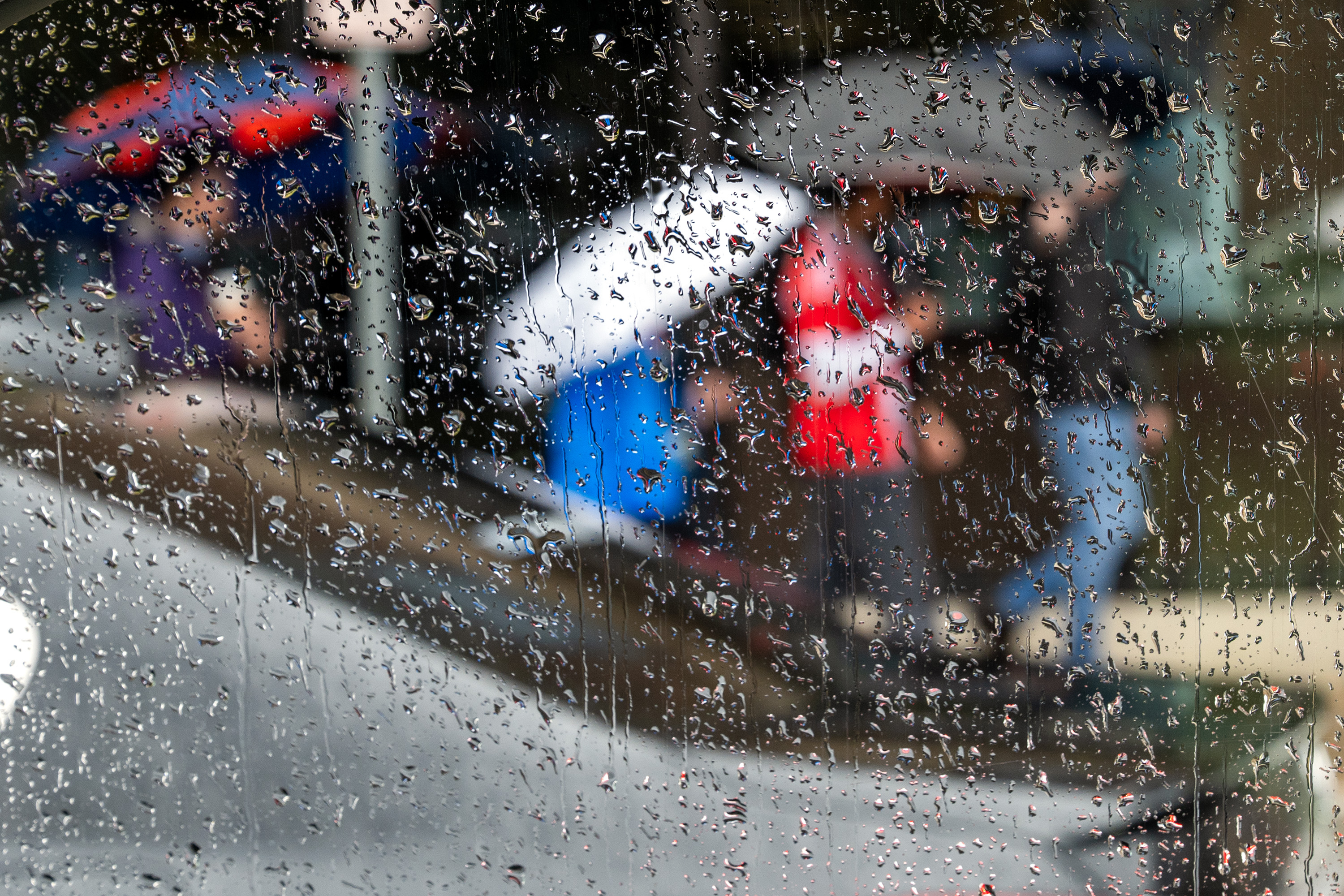
I still had to go out in the rain to make weather feature (and cover the parade cancellation) so I stopped at Marconi Plaza and photographed what I found there, as well as in other parts of the city.
An Italian flag flutters in the wind by the statue of Christopher Columbus in Marconi Plaza.Tom Gralish / Staff PhotographerThe umbrellas are out on the Penn campus Sunday with the remnants of Hurricane Isaias.Tom Gralish / Staff Photographer
I didn’t know what to expect. Maybe I could photograph parishioners arriving under umbrellas — wearing their Eagles jerseys (the game was already underway).
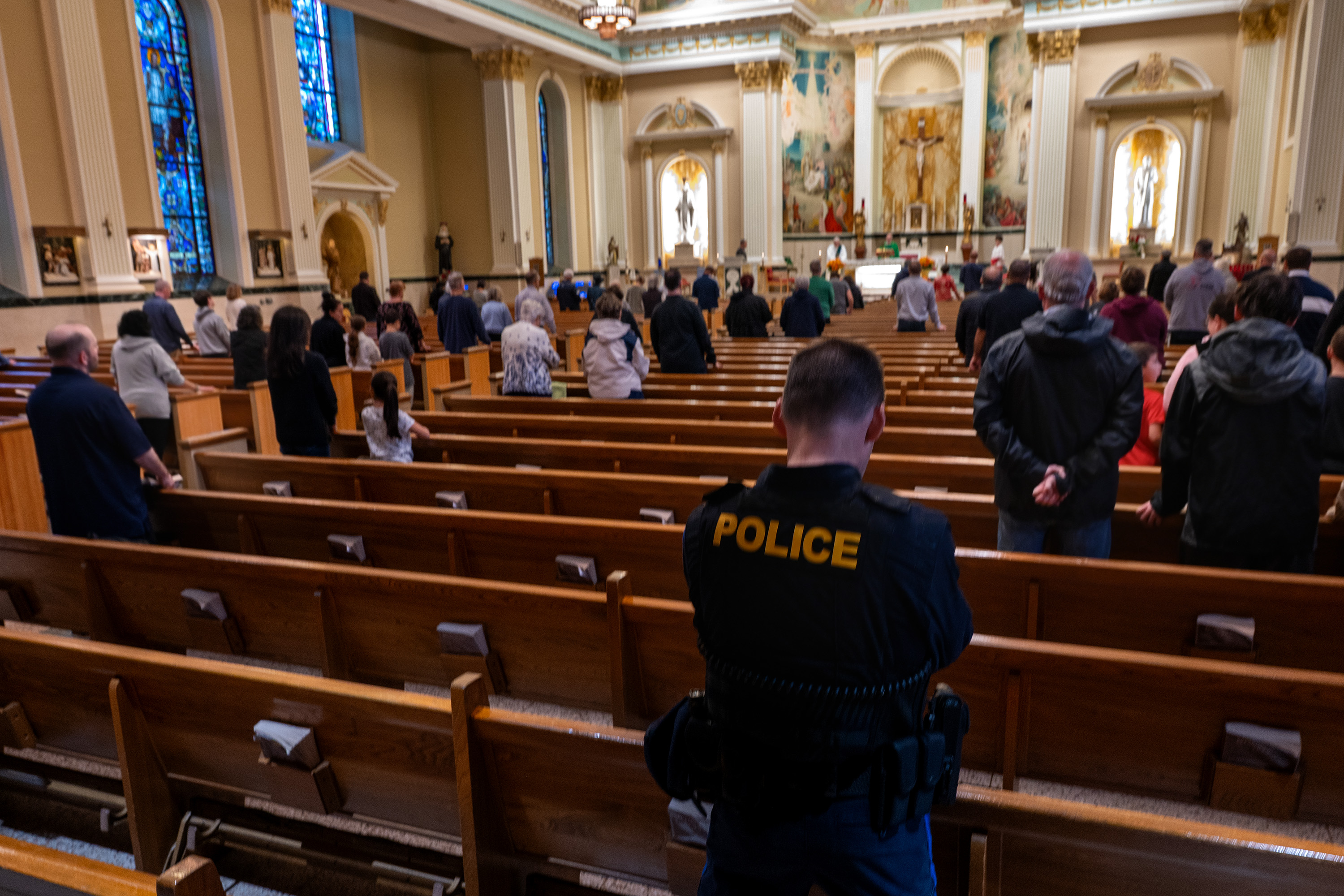
Going inside the church when the mass began, I watched a uniformed police officer enter and sit in the last pew. I photographed him from behind and when the congregation stood to sing, I approached officer Mike Rafferty, quietly introduced myself and expressed my sorrow for the loss of a colleague. He was fine with the newspaper using his photo.
I doubt Officer Rafferty saw himself as symbolizing the collective mourning of the police and the entire community, but I thought the image of him in uniform in the church that morning represented the duty, sacrifice, and the weight of grief that words cannot always express.
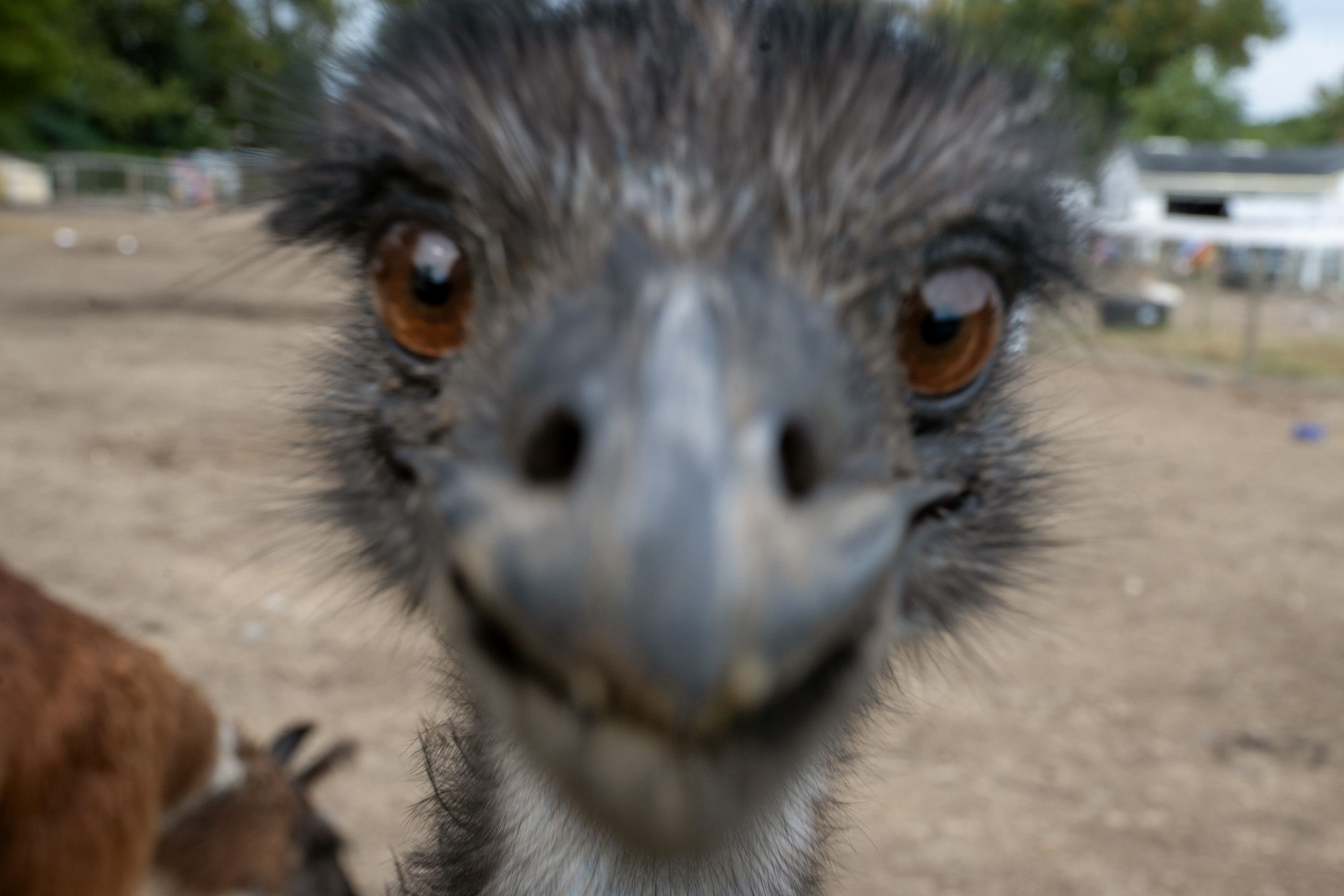
After that, for me, it was a week of politicians, as I covered not just one governor, but two. Plus a U.S. Senator. And since “all politics is local,” I even got to photograph a county commission candidate. That’s his emu — microseconds before it pecked the front element of my 24-70mm lens (it, and I survived. The candidate’s story will publish next week).
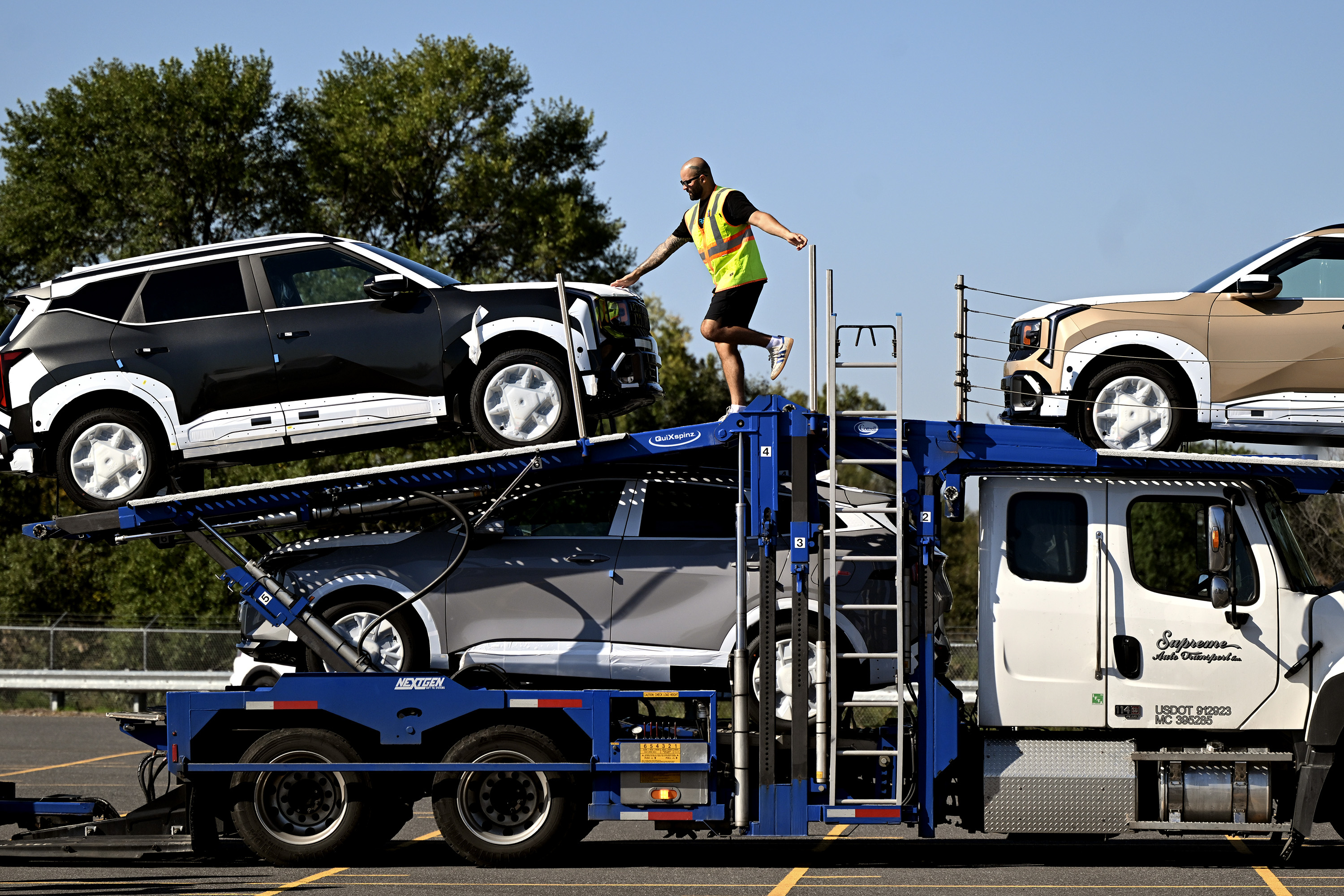
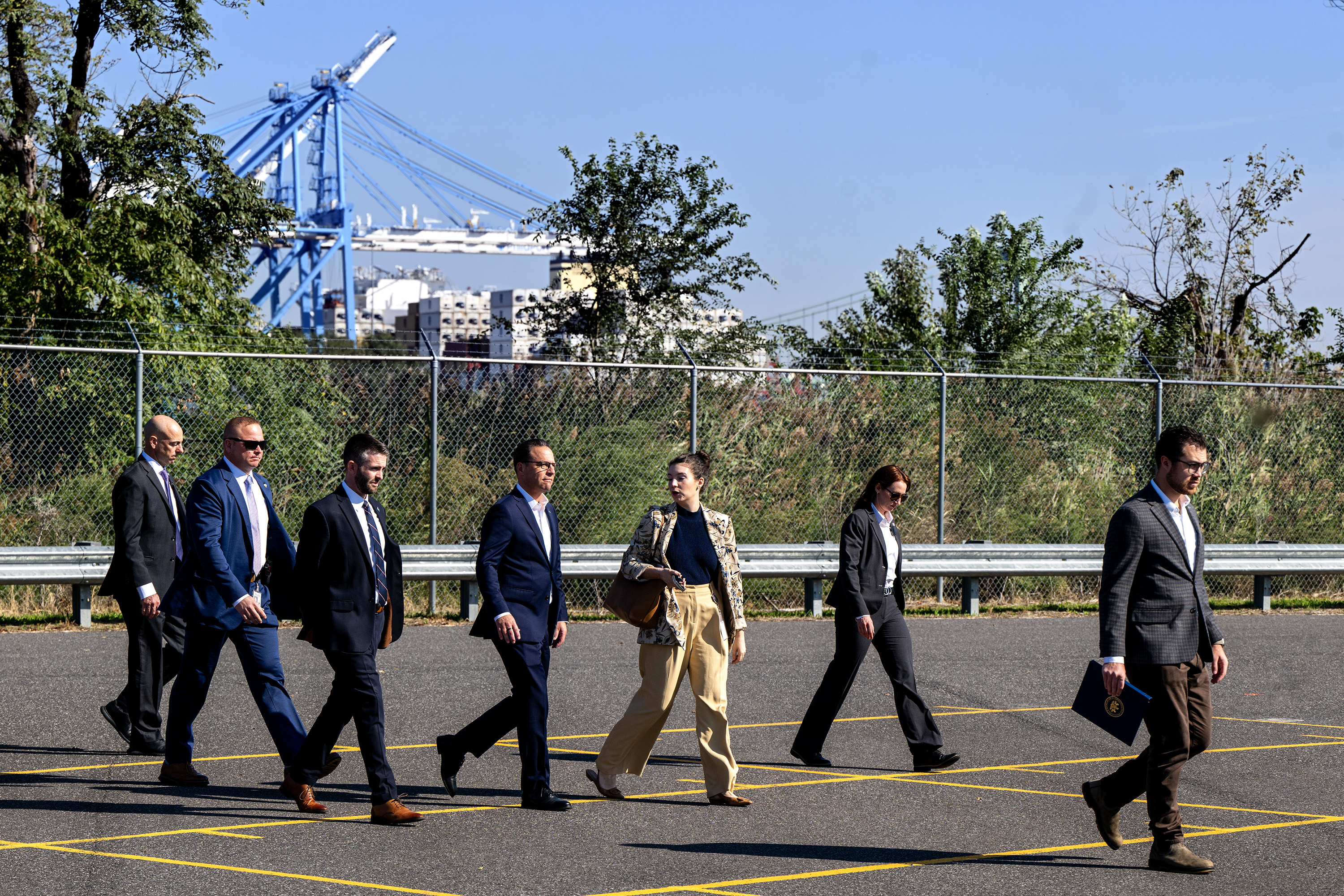
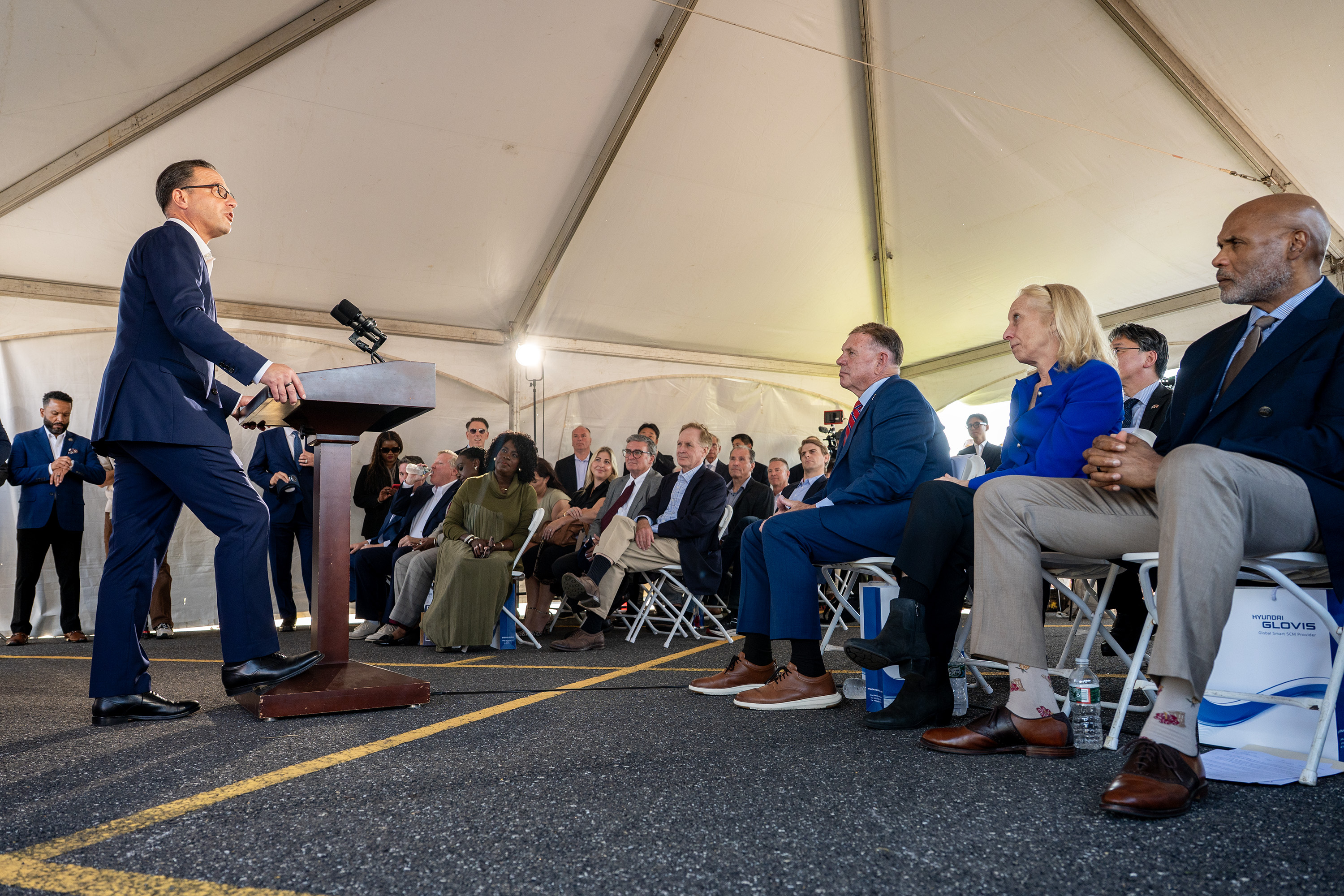
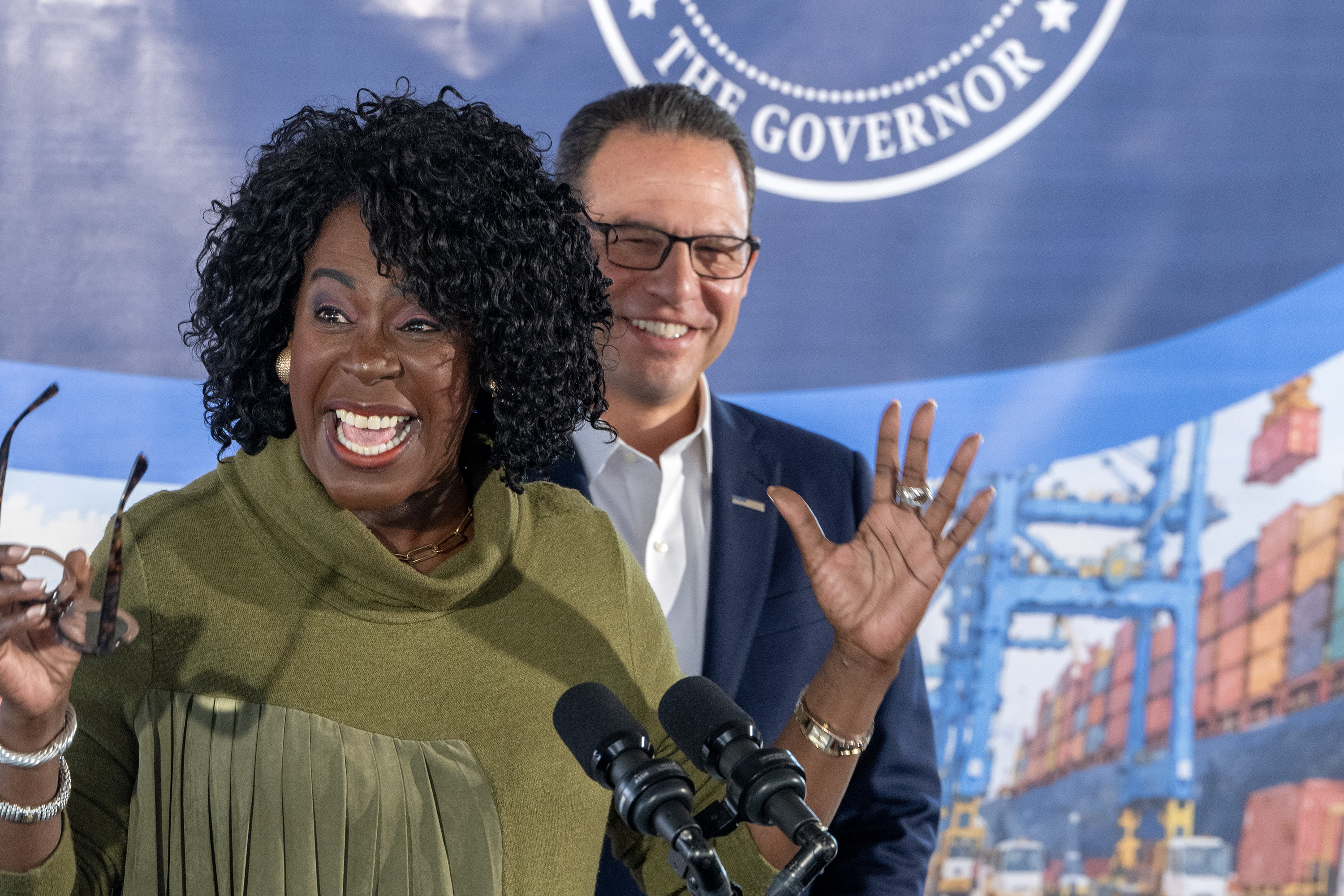
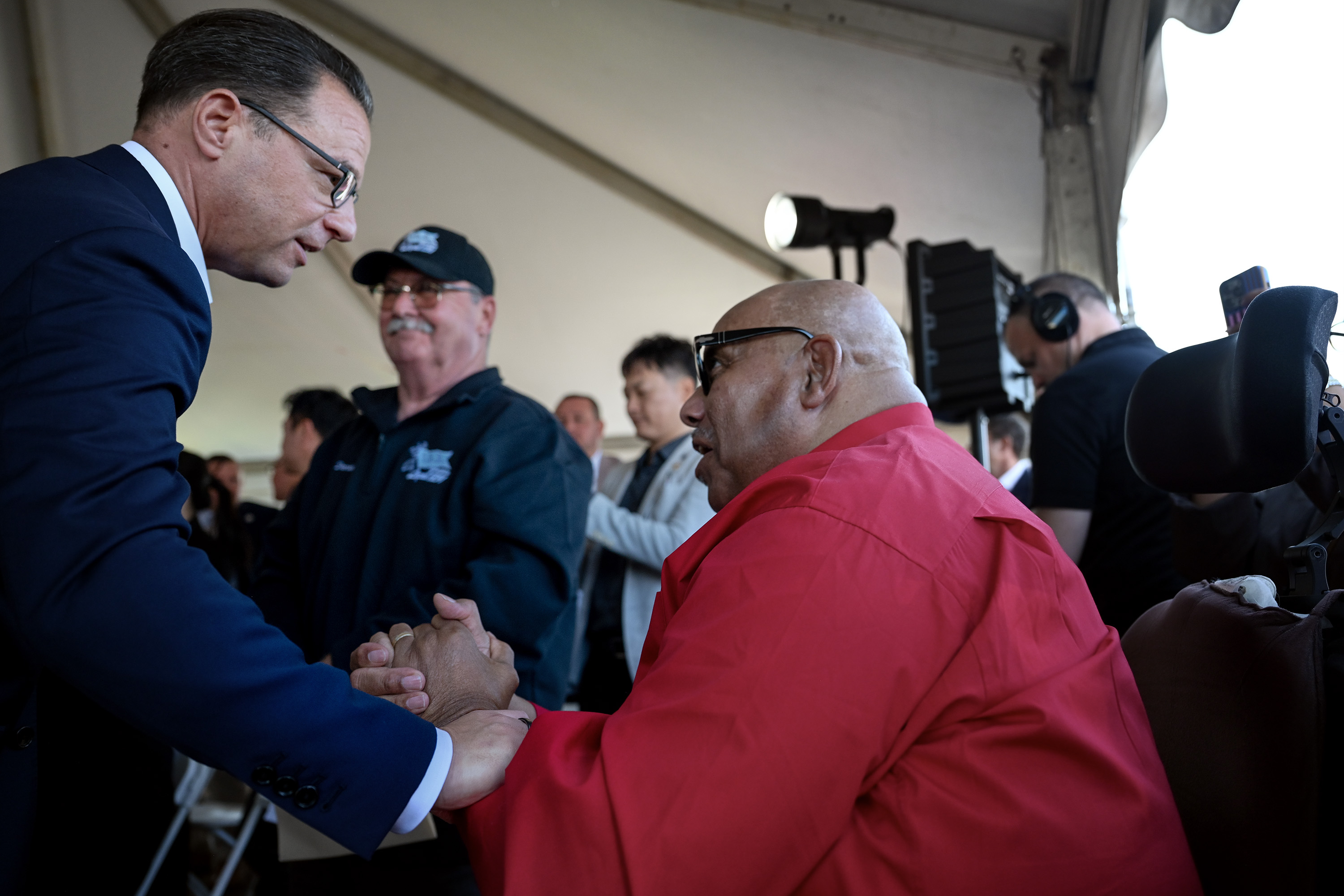
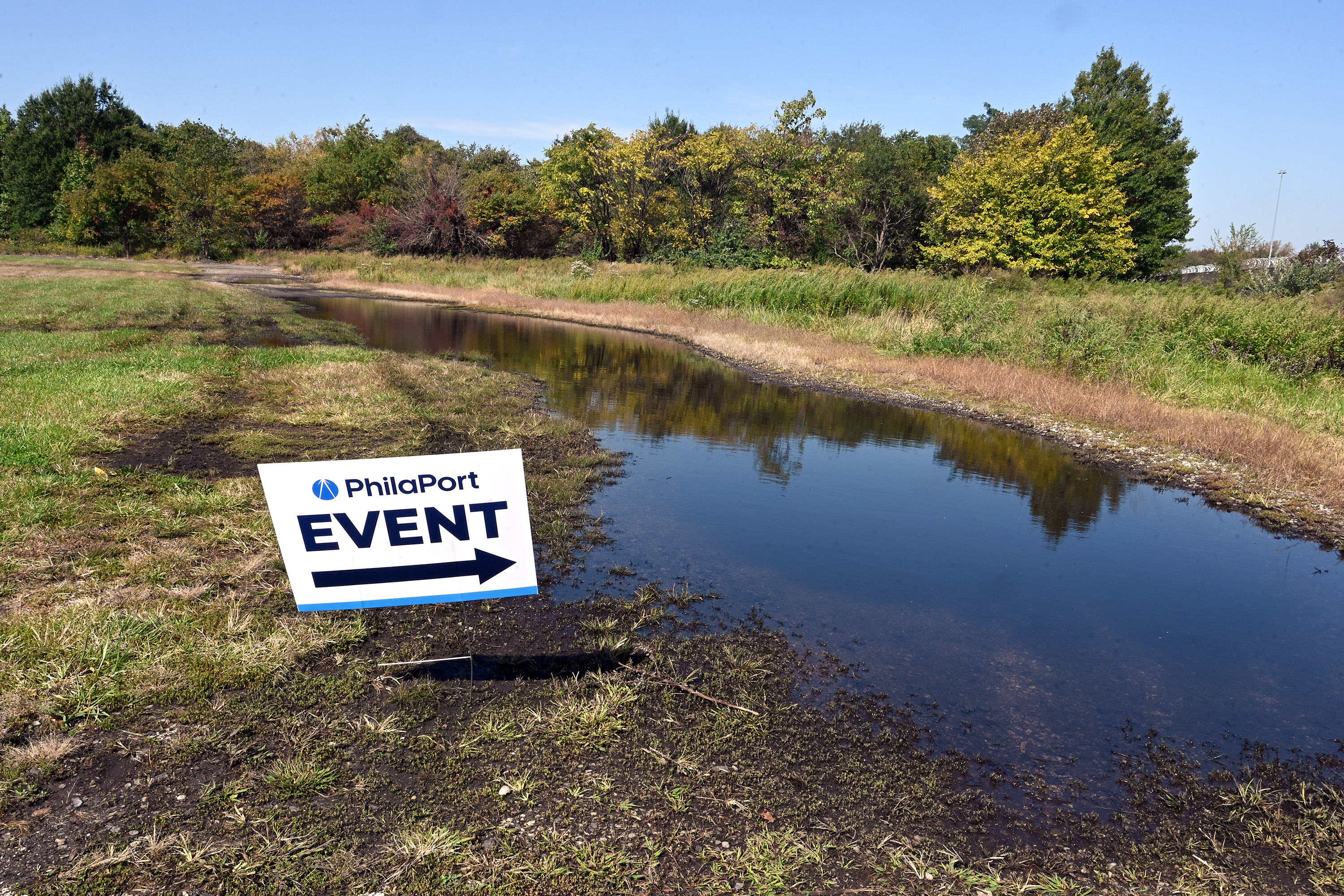
On Tuesday Pennsylvania Gov. Josh Shapiro visited the Port of Philadelphia to announce the state will invest $371 million there. To get to the event everyone drove past hundreds of imported Hyundais and Kias parked at the edge of the Navy Yard.
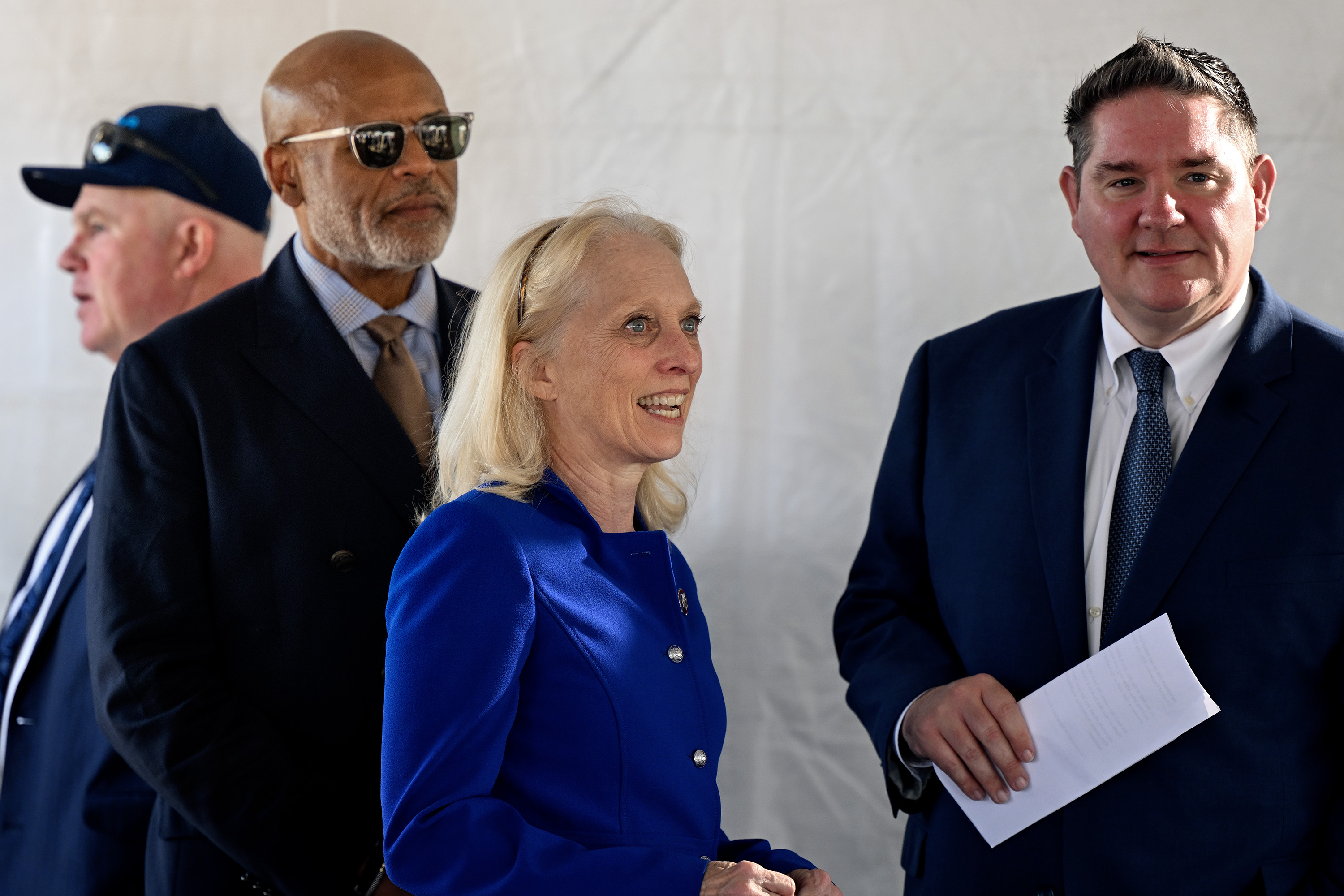
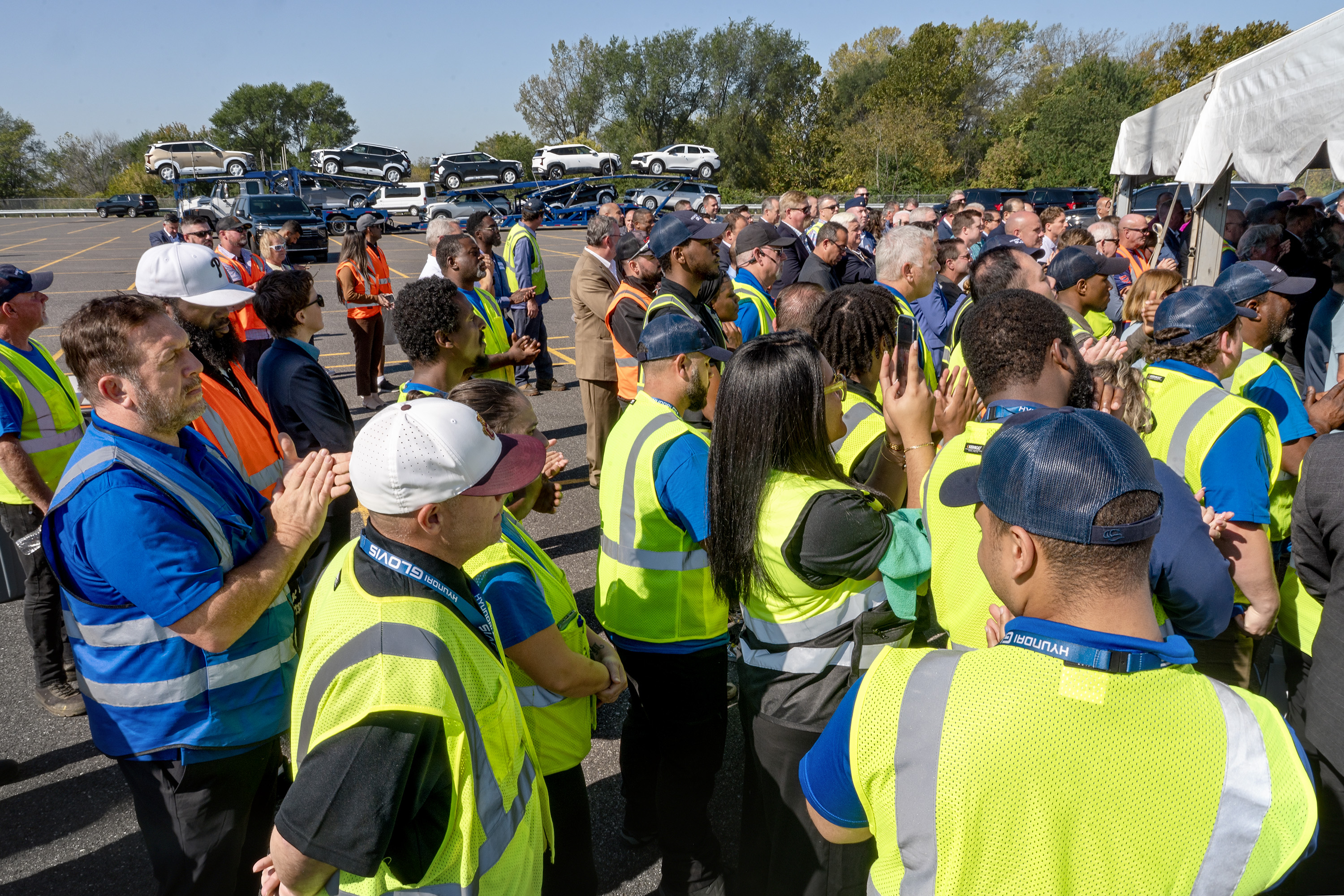
Imported Hyundais and Kias fill the Glovis America lot at the Southport Auto Terminal on the eastern edge of the Philadelphia Navy Yard Tuesday, Oct. 13, 2026. The Walt Whitman Bridge and Packer Avenue Marine Terminal in South Philadelphia are in rear.Tom Gralish / Staff PhotographerA worker positions a car carrier before Gov. Josh Shapiro arrives.Tom Gralish / Staff PhotographerJae Yong Lee (center) head of consulate of the Republic of Korea in Philadelphia talks with Rich Lazer (right), CEO & executive director of PhilaPort before the arrival of Gov. Josh Shapiro at the SouthPort Auto Terminal Tuesday, Oct. 13, 2026. At left is Soo Yeon (Jessy) Jang, on the Consular Affairs staff.Tom Gralish / Staff PhotographerU.S. Rep. Mary Gay Scanlon waits with (behind her, from left) Leo Holt, president of Holt Logistics Corp; Mike Pearson, board chair, and Rich Lazer CEO & executive director both with PhilaPort, before the arrival of Gov. Shapiro.Tom Gralish / Staff PhotographerGov. Josh Shapiro arrives at the SouthPort Auto Terminal on the eastern edge of the Philadelphia Navy Yard. The Packer Avenue Marine Terminal Port in South Philadelphia is in rear.Tom Gralish / Staff PhotographerGov. Josh Shapiro is interviewed.Tom Gralish / Staff PhotographerRich Lazer (left), CEO & executive director of PhilaPort greets Gov. Josh Shapiro at the SouthPort Auto Terminal.Tom Gralish / Staff PhotographerGov. Josh Shapiro.Tom Gralish / Staff PhotographerEmployees of Glovis America watch from outside the tent.Tom Gralish / Staff PhotographerMayor Cherelle L. Parker and Gov. Shapiro.Tom Gralish / Staff PhotographerLeo Holt (at lectern), president of Holt Logistics Corp, is with his bothers and nephews from the family-owned supply chain and marine terminal operations company, joining Gov. Josh Shapiro during the announcement.Tom Gralish / Staff PhotographerGov. Shapiro greets Boise Butler (right) president of the International Longshoremen’s Association, Local 1291, following the event. In rear is Dan Duffy, also an IILA Local 1291 member.Tom Gralish / Staff PhotographerEntrance to the Glovis America lot at the SouthPort Auto Terminal on the eastern edge of the Philadelphia Navy Yard. Tom Gralish / Staff Photographer
Anytime I have flown into nearby Philadelphia International Airport it must have been night or I was on the wrong side of the airplane because I had never noticed the ginormous lot of vehicles in storage waiting to go to dealers.
The state funds will boost the port’s capacity to handle more imported vehicles (as well as container cargo) so I wanted to somehow get the governor in a photo with cars. Besides those in his motorcade.
But it was not to be.
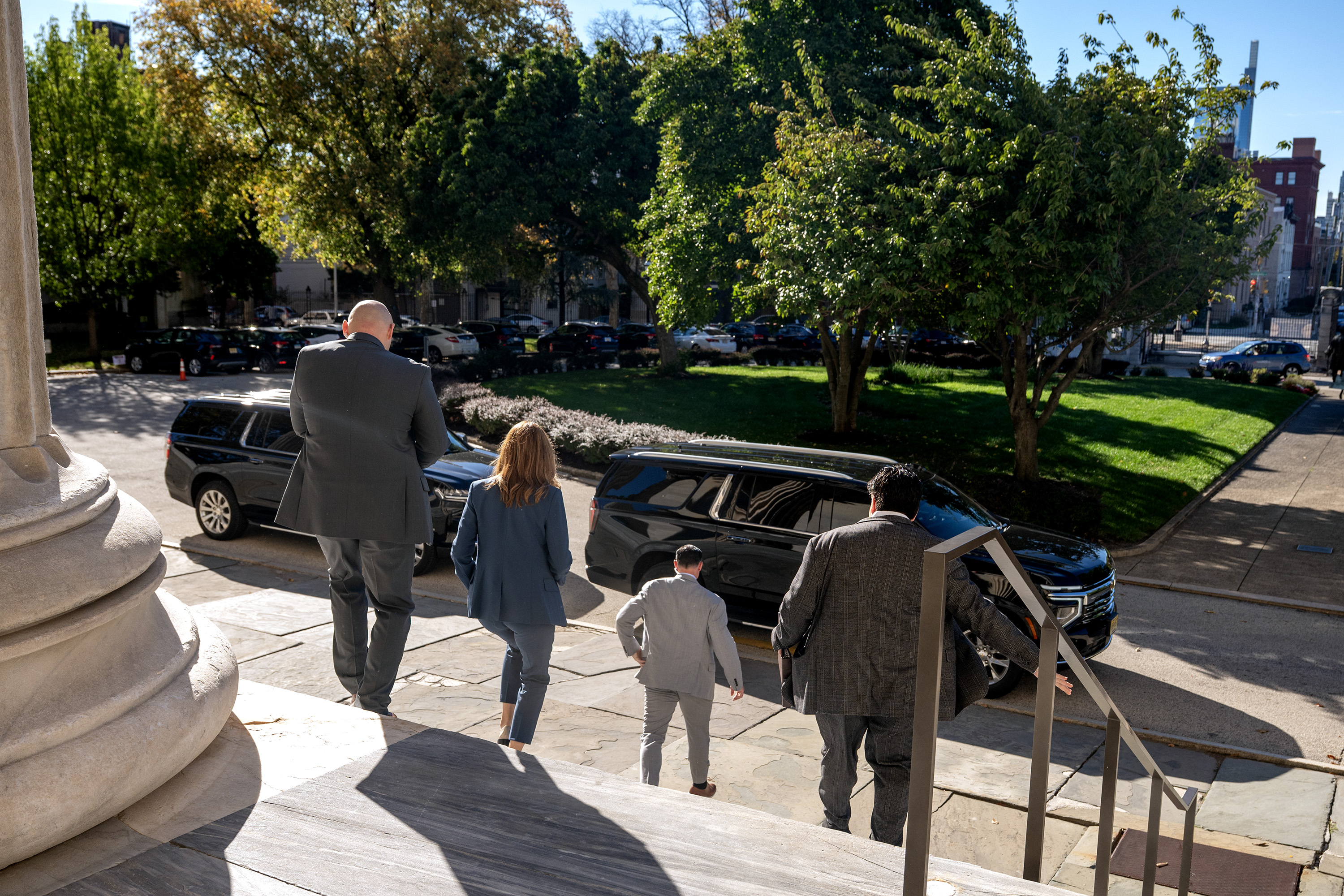
A few days later it was New Jersey Gov. New Jersey Gov. Mikie Sherrill’s turn. She stopped in at Girard College in Philadelphia to give a 10-minute speech, before rushing to catch the Acela to headline a high-profile political event in Washington, D.C.
I didn’t know why she was rushing — and didn’t even notice that she arrived early (how often does THAT happen with elected officials?) for her talk, but I followed behind her security detail as they headed out.
Suddenly I realized she was going out the front door (what elected official does THAT anymore?) And remembered from previous events there that the city skyline was visible from the front steps of the school’s iconic Founder’s Hall. So I immediately thought of making a wide view photo when they got outside.
But that memory must’ve been from winter — or a time before the trees grew tall — as when we went through the door the trees were blocking the view of the city! Had I known — or had more time to react — I might’ve tried to frame the scene with the iconic building’s columns.
N.J. Gov. Mikie Sherrill (second from left) rushes to catch a train after delivering remarks at the Economy League’s 21st Annual Greater Philadelphia Leadership Exchange at Girard College Thursday, Oct. 15, 2026. She was headed on the Acela to a political event in Washington, D.C.Tom Gralish / Staff Photographer
Finally, later in the week, U.S. Sen. Dave McCormick hosted a discussion at Temple University on government regulation and its effect on business growth.
Unlike the cars-that-weren’t-there Port of Philadelphia event, this had plenty of visuals on hand, in the form of theater lighting and lots of American flags.
U.S. Sen. Dave McCormick and former Arizona Gov. Doug Ducey (right) finish a plenary session “Unleashing American Enterprise.” on stage during a meeting of and policy leaders hosted by McCormick at Temple University Thursday, Oct. 15, 2026.Tom Gralish / Staff Photographer
Since 1998 a black-and-white photo has appeared every Monday in staff photographer Tom Gralish’s “Scene Through the Lens” photo column in the print editions of The Inquirer’s local news section. Here are the most recent, in color:
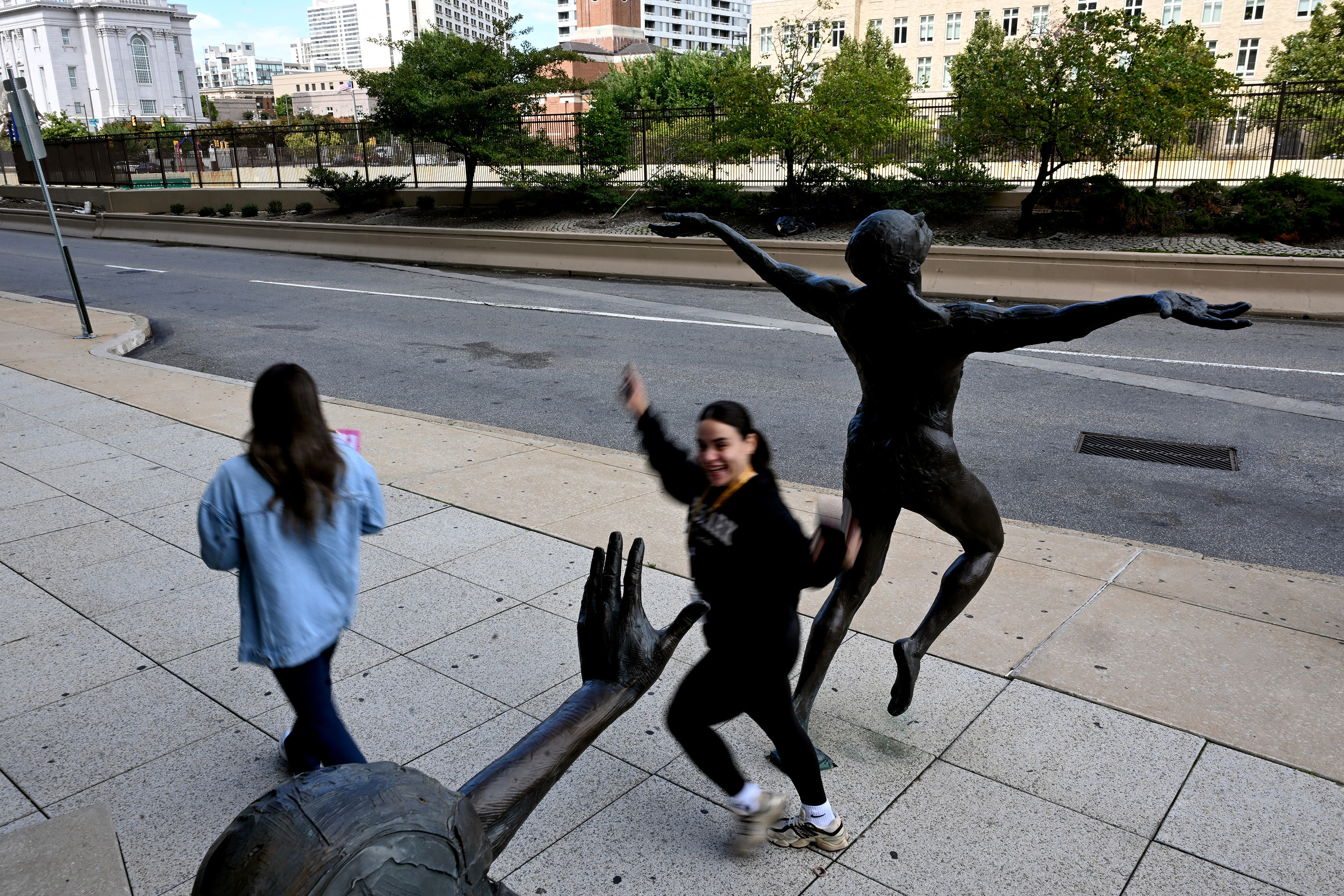
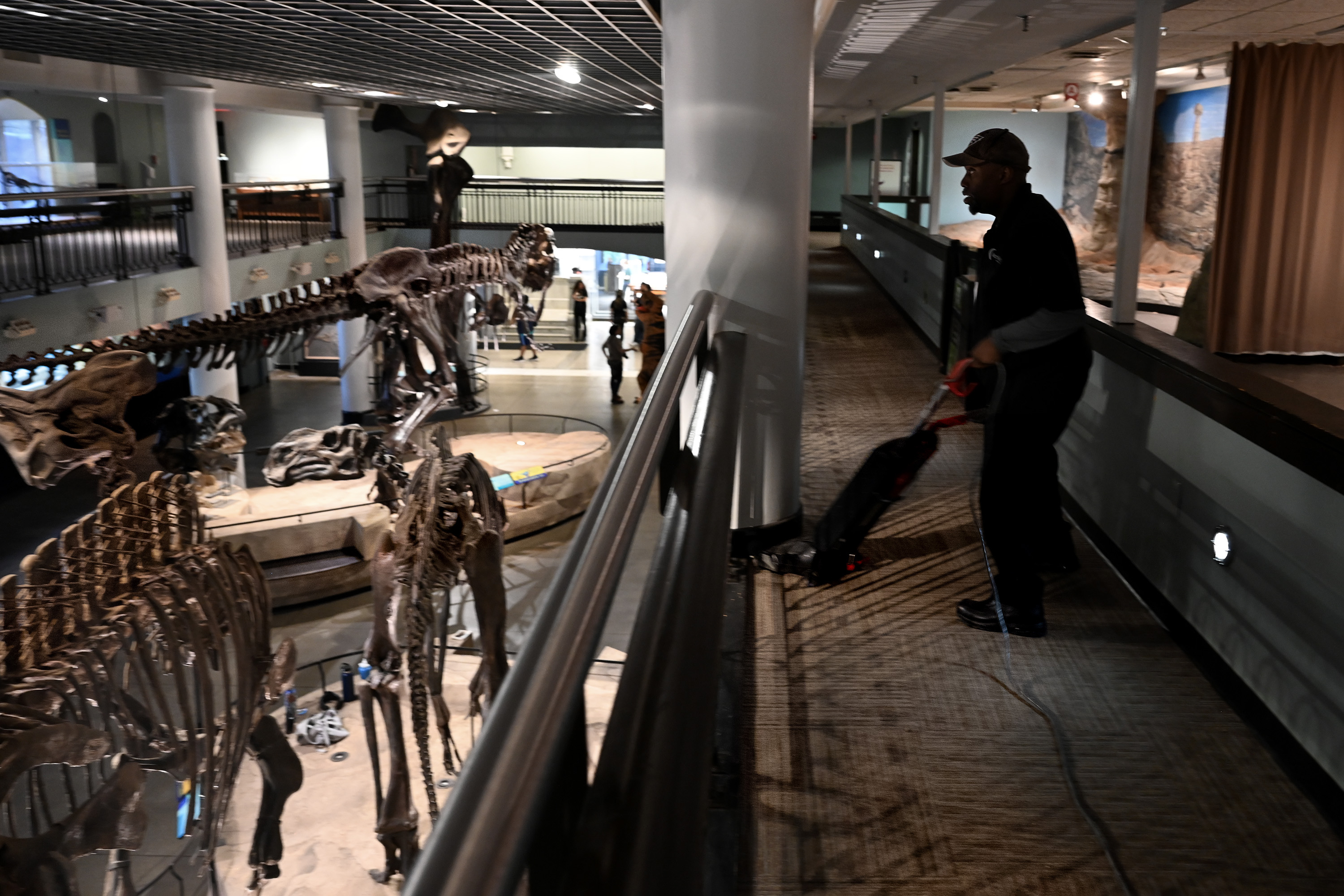
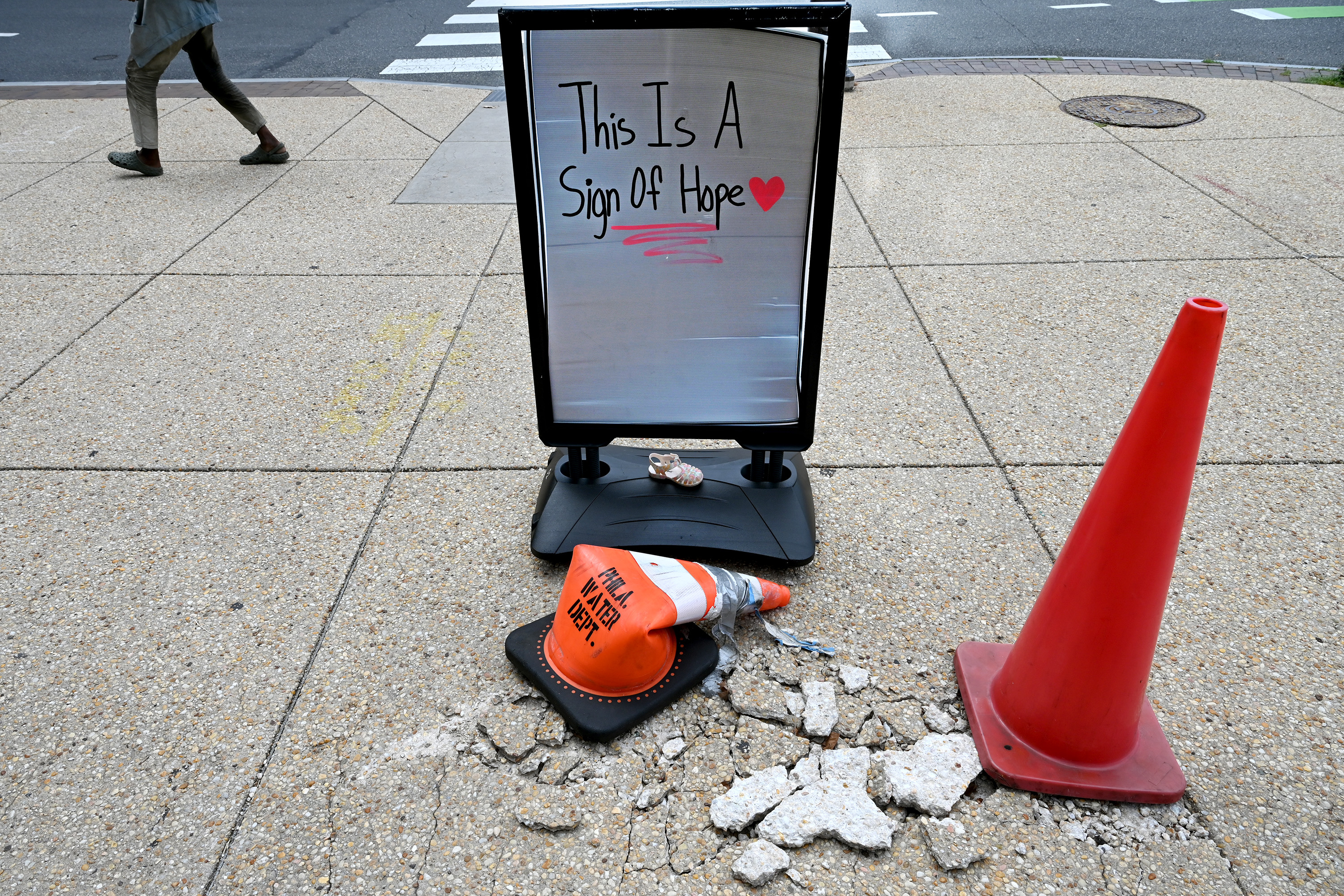
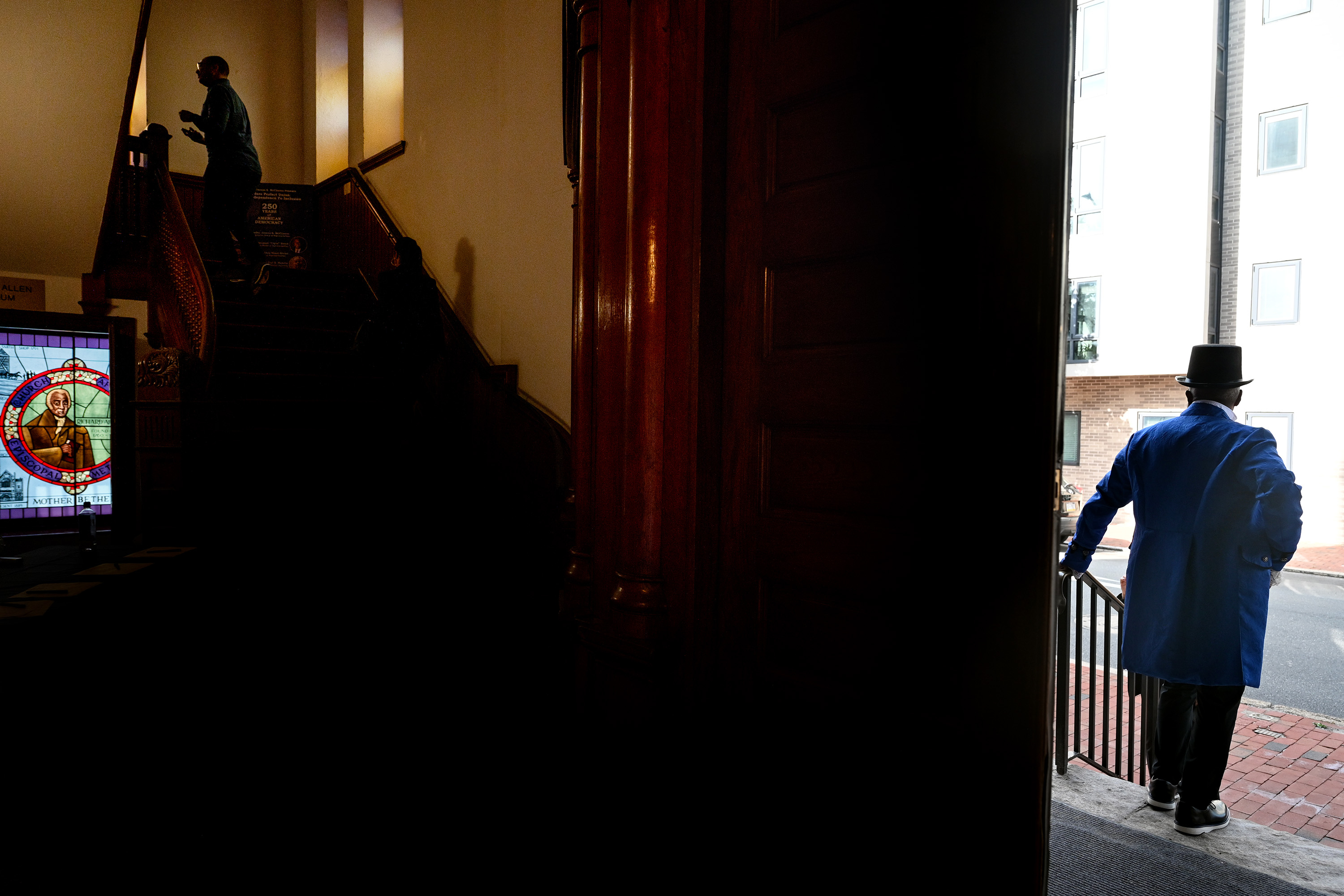
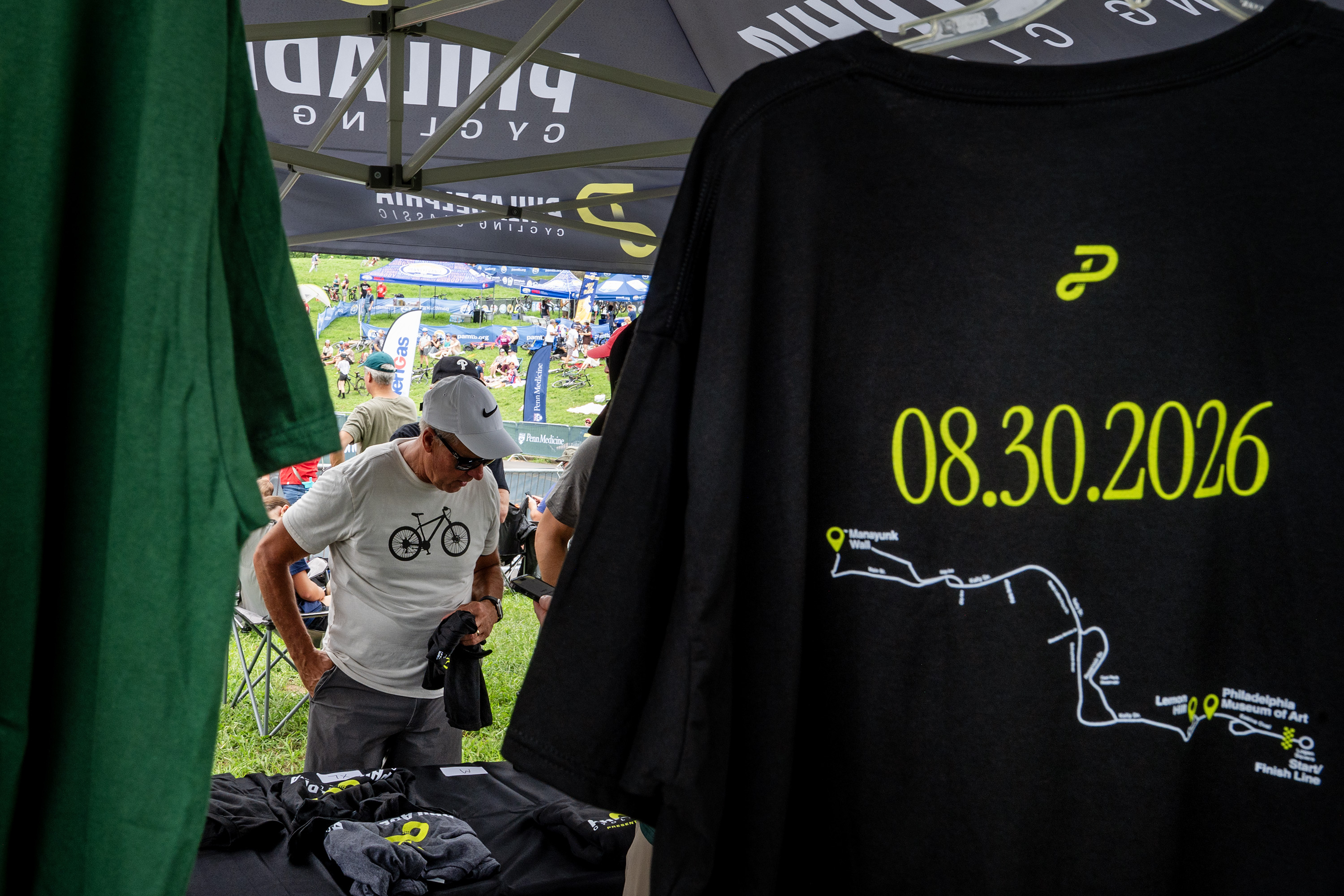
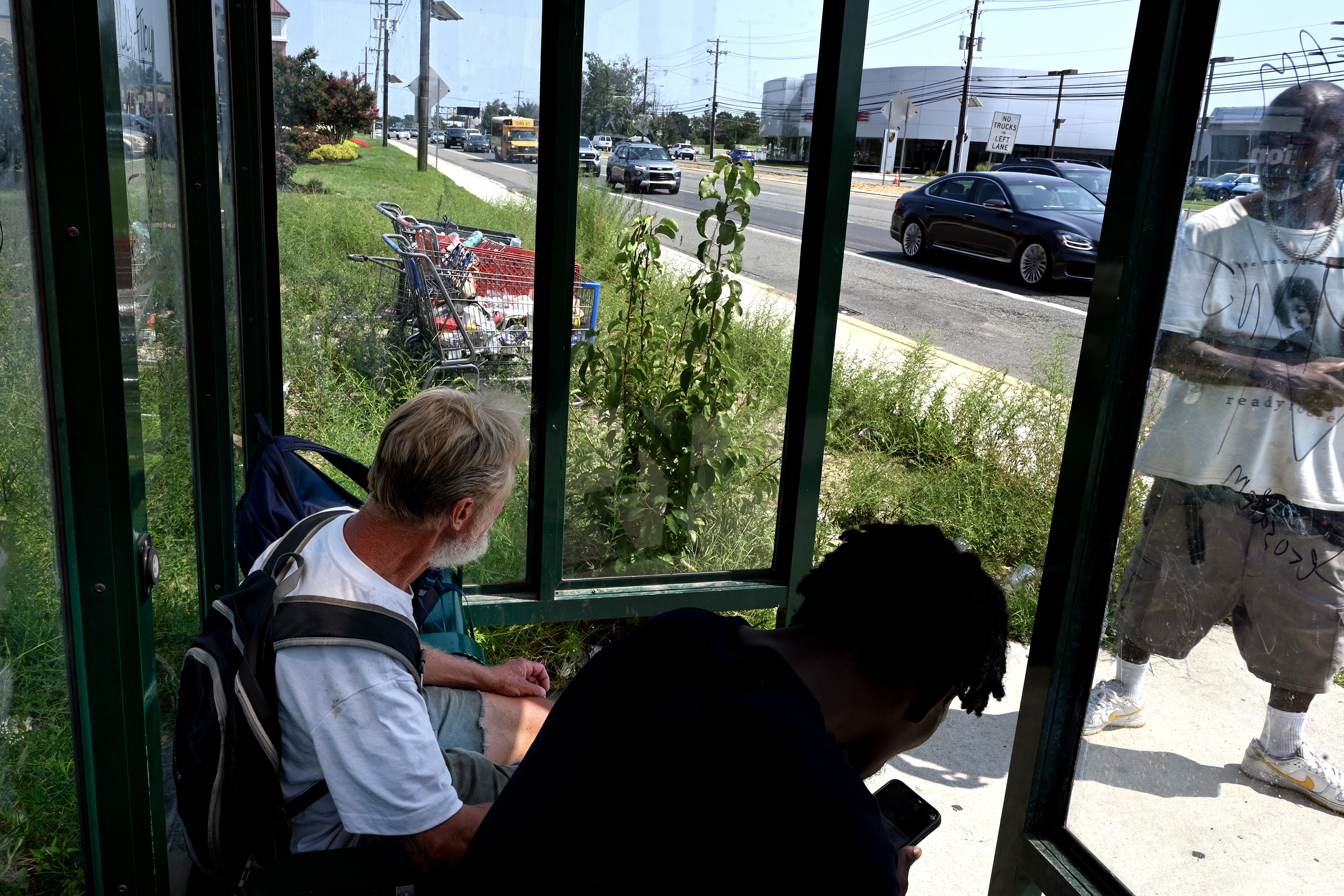
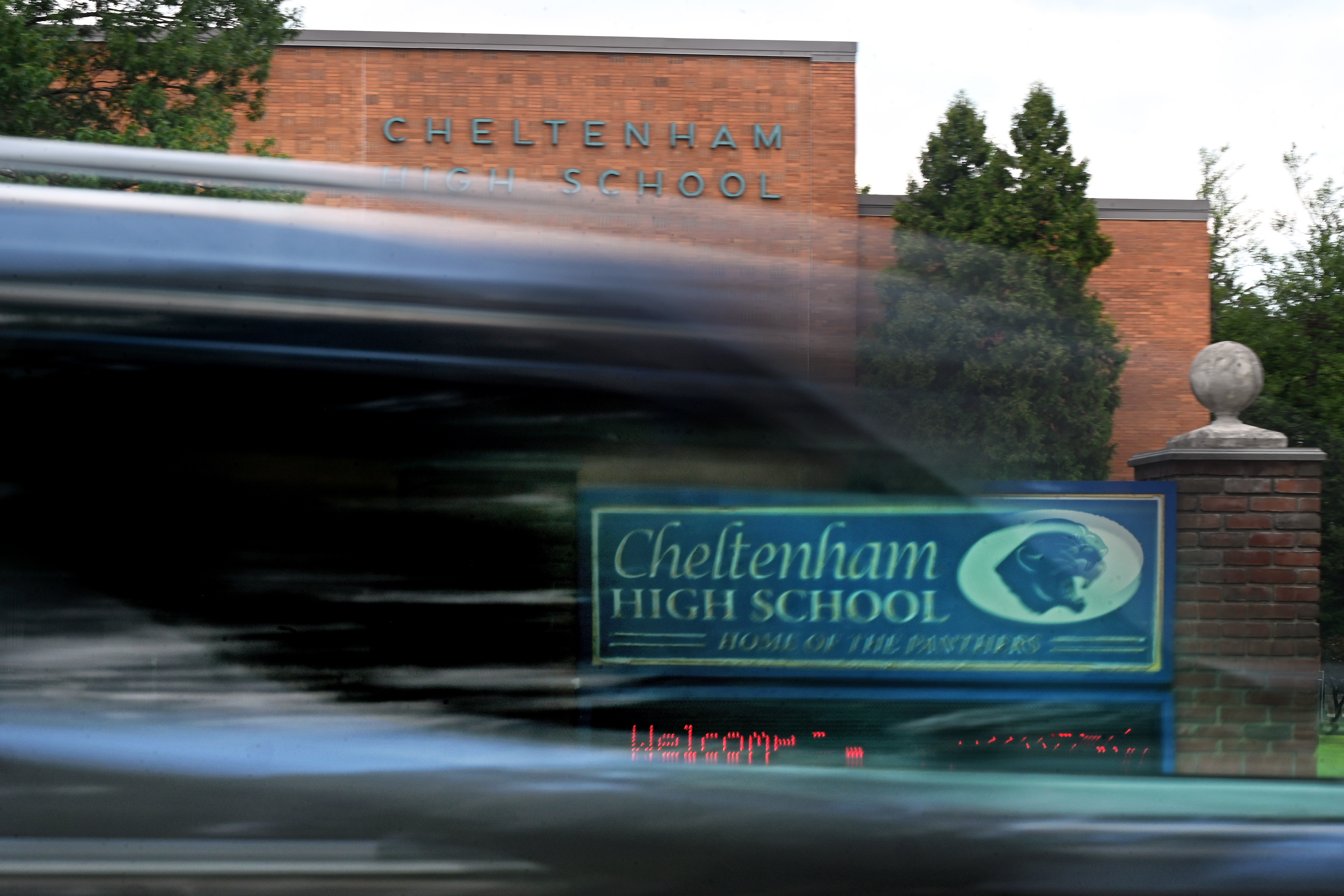
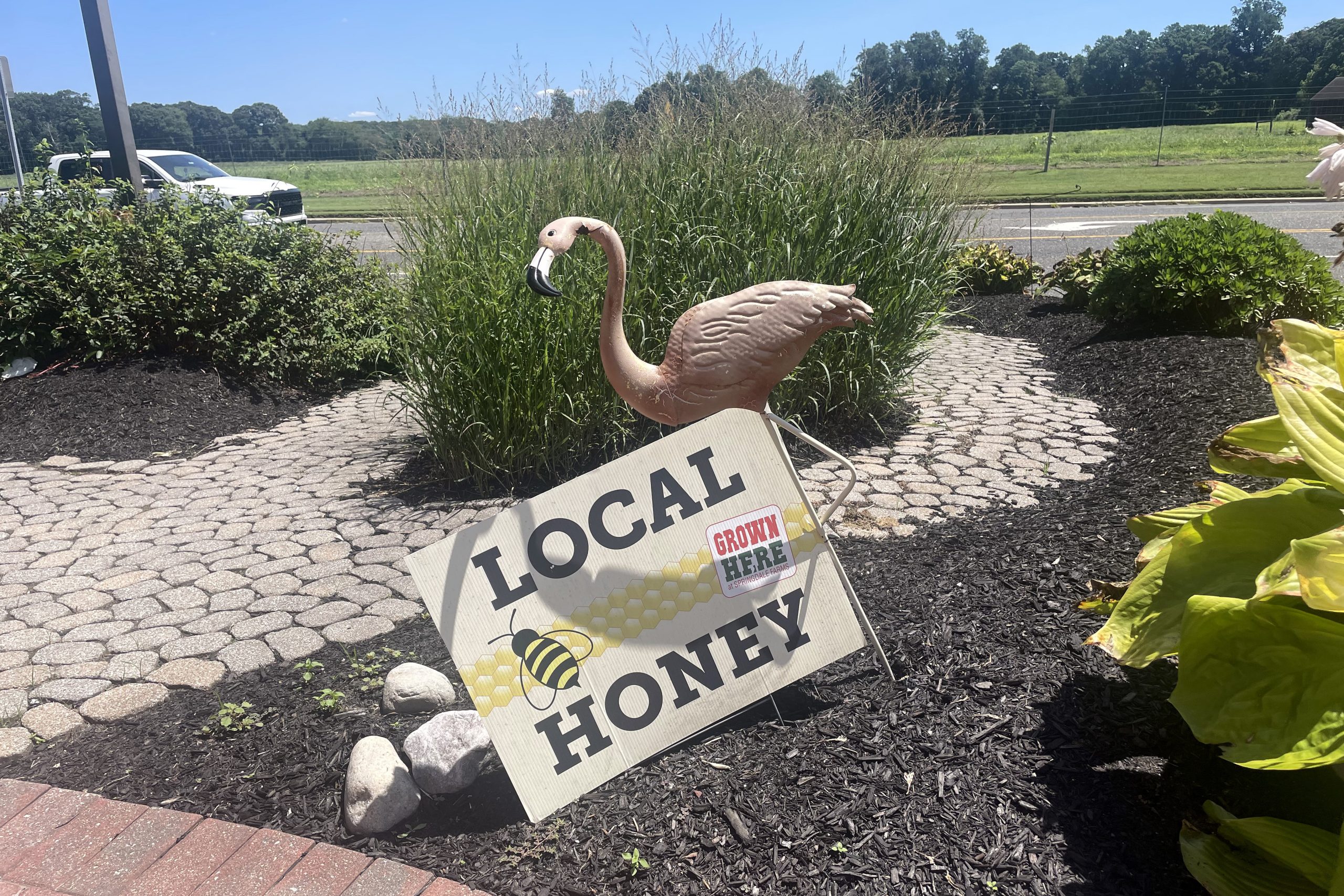
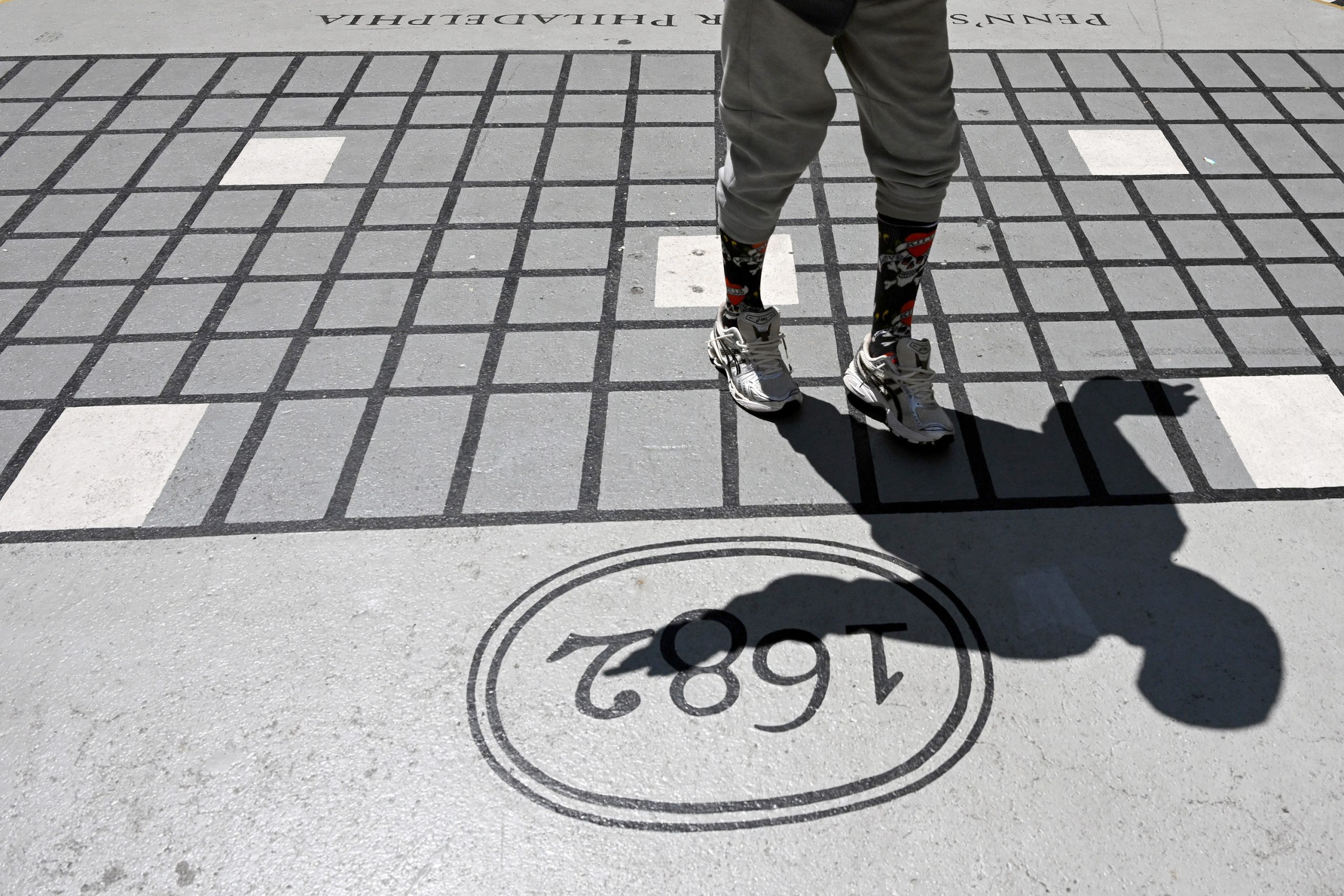
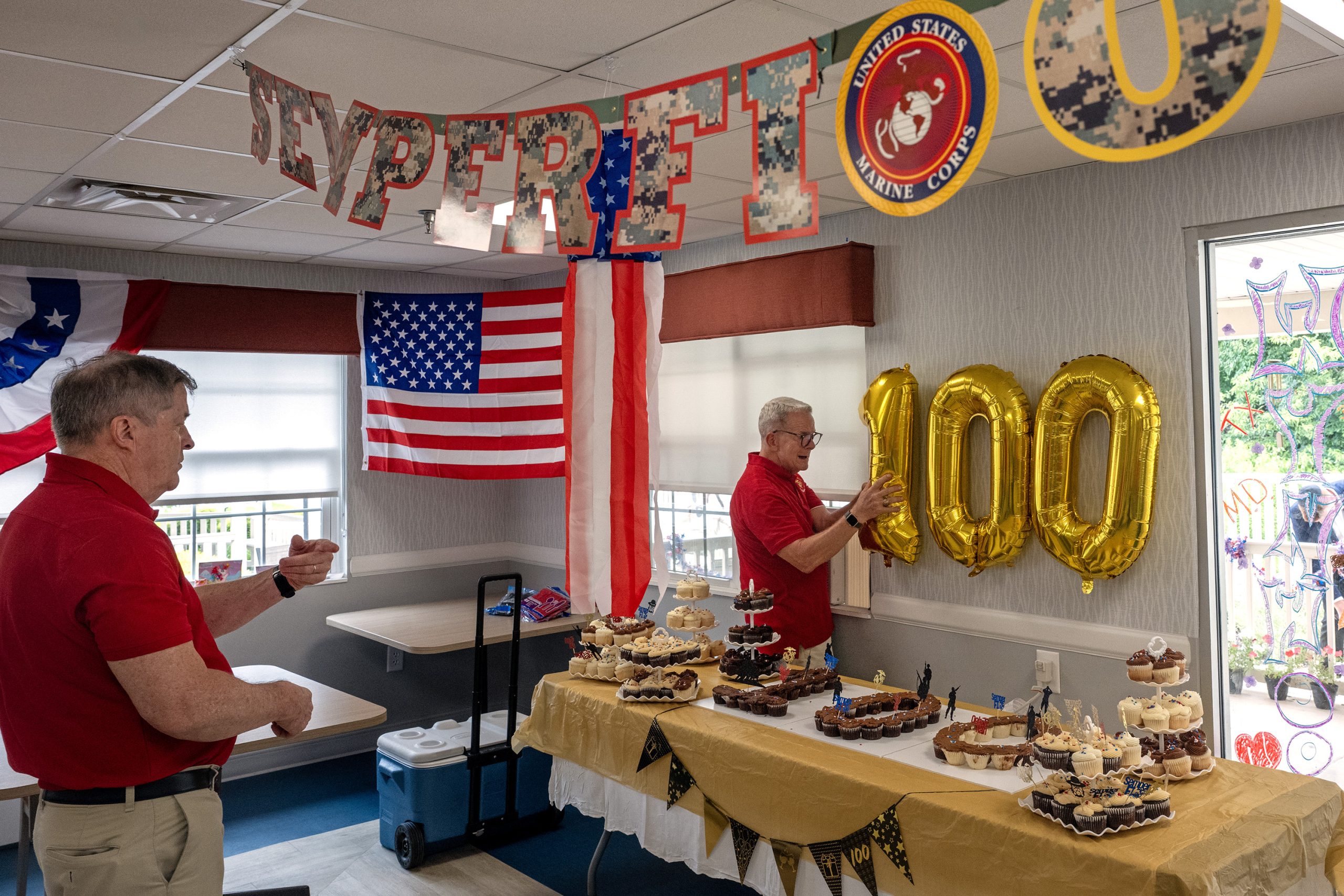
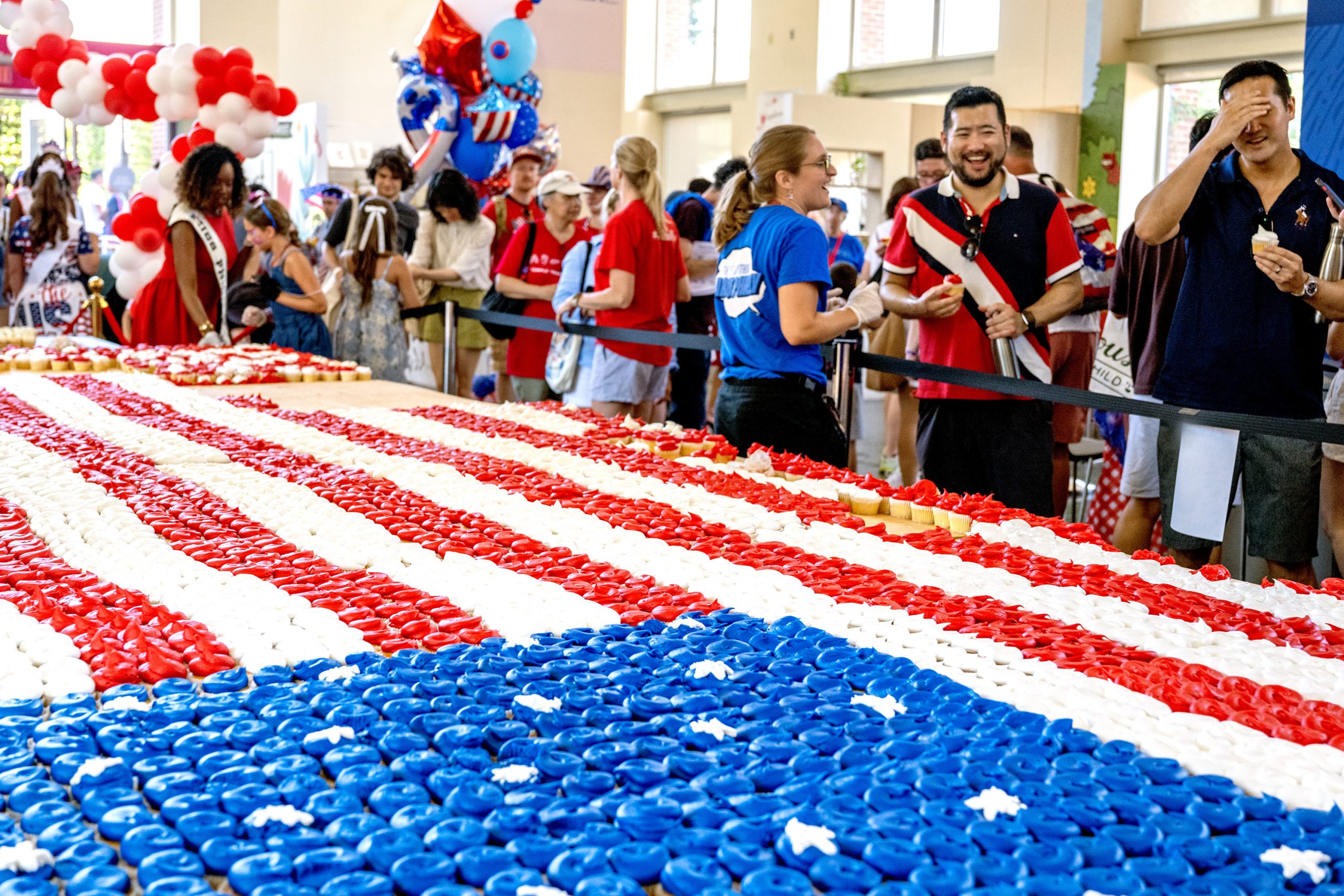
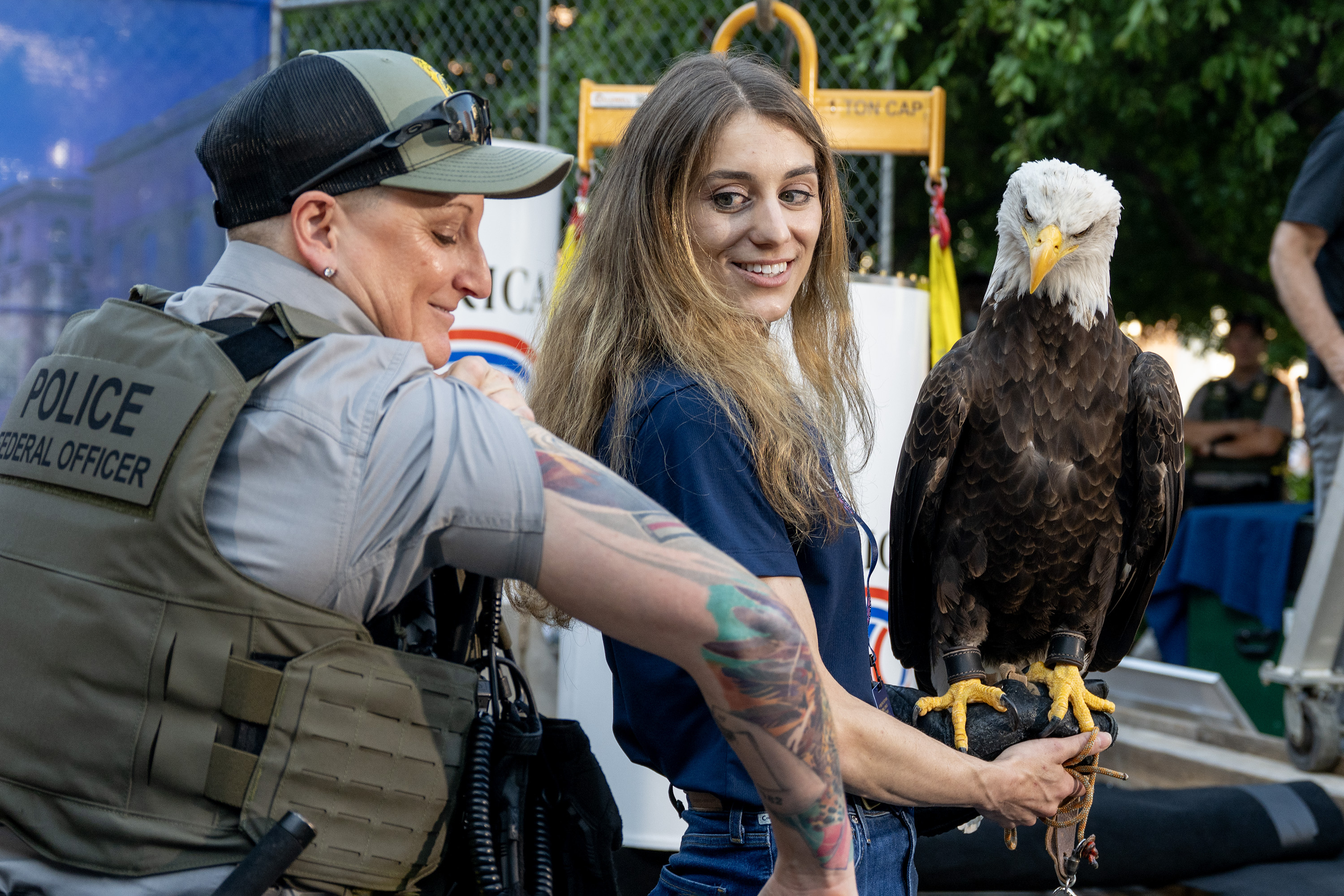
October 12, 202^: “Freedom” by Zenos Frudakis at 16th and Vines Street is one of the most recognized figurative sculptures in Philadelphia. The 7000 pound, 20-foot-long bronze piece created in 2000 depicts, the artist says, “the struggle involved in breaking free from all that holds us back.”Tom Gralish / Staff PhotographerOctober 5, 2026: Jerry Atwood vacuums inside the Academy of Natural Sciences of Drexel University after it closed the doors at 5 p.m. on the final day the museum was open to the public Sunday, September 27, 2026. Tom Gralish / Staff PhotographerSeptember 28, 2026: A hopeful sign a sidewalk repair might be imminent, in the Logan Square neighborhood where residents have apparently been waiting a while for something to happen.Tom Gralish / Staff PhotographerSeptember 21, 2026: Students wait in the auditorium before the arrival of Eagles linebacker Jalyx Hunt at an assembly at Little Flower Catholic High School for Girls where he announced the establishment of three scholarships and an endowment to support students. Tom Gralish / Staff PhotographerSeptember 14, 2026: Chris Lewis (right), portraying James Forten, an abolitionist, activist, and sailmaker in colonial America, greets visitors outside Mother Bethel A.M.E. Church as they arrived for an America 250 Conversation hosted by Pennsylvania House Speaker Joanna McClinton on Sept. 10. The stainedglass window at left depicts Richard Allen, founder and first bishop of the African Methodist Episcopal Church in 1816, the first independent black religious denomination in the United States. Tom Gralish / Staff PhotographerSeptember 7, 2026: Joe Ackler of Skippack shops for a race T-shirt during a lull between laps in the Philadelphia Cycling Classic on Aug. 30. He is wearing a shirt he bought in 2003 when he attended the Tour de France. Tom Gralish / Staff PhotographerAugust 31, 2026: Robin P. Cooper (upper right) watches as Superintendent Tony B. Watlington Sr. (far left) gathers school and city officials for a group photo outside the district bus, stopped at McClure Elementary on the first day of school in Philadelphia. The bus was on its annual back-to-school celebration visit to schools throughout Philadelphia. Cooper later left the bus to join in the photo. Tom Gralish / Staff PhotographerAugust 24, 2026: Pencils were sharpened in the first-grade classroom of teacher Lauren Cucinotta at Fanny Jackson Coppin Elementary as she prepared for the start of the new school year for the Philadelphia School District on Monday.Tom Gralish / Staff PhotographerAugust 17, 2026: Wayne Peters (left) and Bobby White (right) wait for the #406 bus to Camden, on Rt. 70 in Cherry Hill, near the entrance to stores at the Garden State Pavilion shopping center and NJ Transit’s Cherry Hill station. Peters says it “Gotta be the worst bus stop in the state,” with White adding, “You’d think something in Cherry Hill would be better. How hard would it be to put a trash can here?” Before their bus arrives, Peters, trying to be positive about the shelter, reminds him “They fixed a broken window once.”Tom Gralish / Staff PhotographerAugust 10, 2026: Cheltenham High School in Wyncote, on the day the Montgomery County district attorney announced charges in connection with two assaults in the school’s football locker room. A photo of the static signs was made more visually interesting by using a slow camera shutter speed to blur the passing cars. Tom Gralish / Staff PhotographerAugust 3, 2026: Sign for locally “grown” honey outside the market at Springdale Farms, the only working farm left in Cherry Hill. Before WWII, when it was still known as Delaware Township, there were 82 farms in operation feeding South Jersey markets and supplying the massive fresh vegetable and crop demands of the Campbell’s Soup Company in Camden. Tom Gralish / Staff PhotographerJuly 27, 2026: Lyn-el “The Torch” Wright pauses on the City Hall Courtyard’s rendering of William Penn’s Philadelphia city grid plan. Penn designed the 1,200-acre “Greene Countrie Towne” between the Delaware and Schuylkill rivers with wide, crisscrossing streets to prevent the overcrowding and fires he had witnessed in London. July 20, 2026: Pat Dailey (left) and Ken Hopper with the Tun Legacy Foundation prepare a room at the Wynwood Rehabilitation & Healthcare Center in Cinnaminson, N.J., for a surprise 100th birthday party for WWII U.S. Marine Corps veteran Stephen Anderson. Dailey founded the nonprofit that supports veteran causes, Masonic charities, and educational scholarships. The organization is also rebuilding and reestablishing an authentic reproduction of the original Tun Tavern building in Philadelphia. The Tun, constructed in 1693, was the first documented lodge in North America and the birthplace of the U.S. Marine Corps in 1775.July 13, 2026: The Independence Visitor Center offers free birthday cake to the public on the Fourth of July, in the form of a massive American flag made of 5,000 cupcakes frosted red, white and blue.July 6, 2026: National Park Police Deputy Chief Rebekah Spedaliere shows off her own bald eagle tattoo while posing for a photo with bald eagle “Indy” and handler Amanda Sweeney with the Auburn University Raptor Center, during ceremonies over the July Fourth weekend. Indy came to Auburn, in Alabama, in 2018 after suffering a wing injury as a young bird and imprinted on humans during rehabilitation, so she couldn’t be released back into the wild. Now, she serves as an ambassador bird, teaching people about raptors, conservation, and the ecosystems that sustain them. Not her first rodeo in Philly, she made her first appearance at the Linc for an Eagles’ game in 2023. Tom Gralish / Staff Photographer
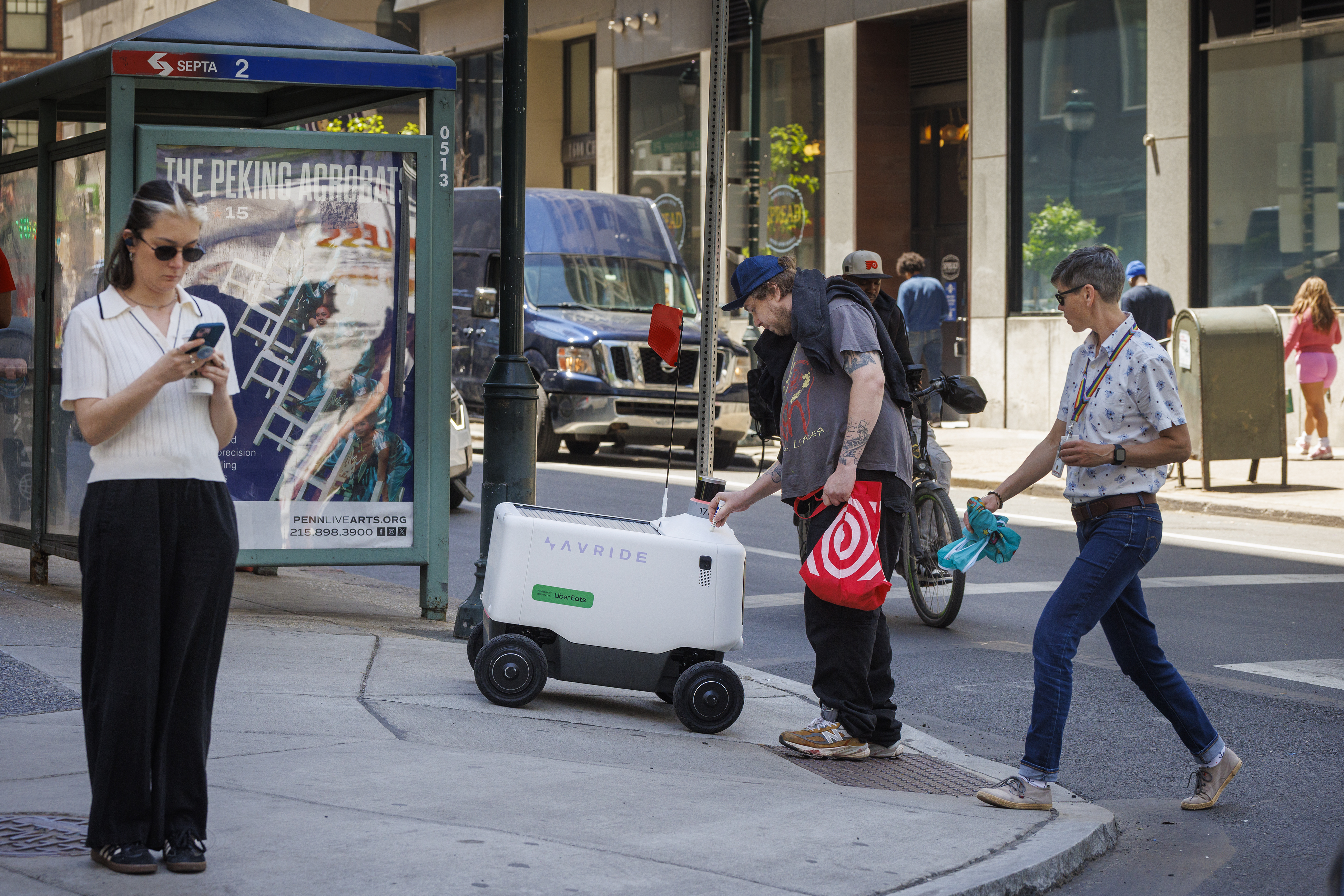
Philadelphia’s war on delivery robots has officially escalated from dirty looks and occasional kicks to an actual arrest.
A Center City woman was charged with disorderly conduct allegedly after repeatedly blocking an Uber delivery robot near Reading Terminal Market and refusing police orders to move, reports 6abc.
Her reasoning? The robots are taking jobs from human delivery workers and somebody has to stop them.
Apparently, she’s been doing this for a while. During an earlier encounter, a witness asked whether a robot had hit her. Her response? “No, I have to stop this. They’re taking over the world.”
Only in Philadelphia could a tiny robot trying to deliver somebody’s lunch become the center of a labor protest and involve the police. The woman says she has no plans to stop. But, first she’ll have to answer to the charges.
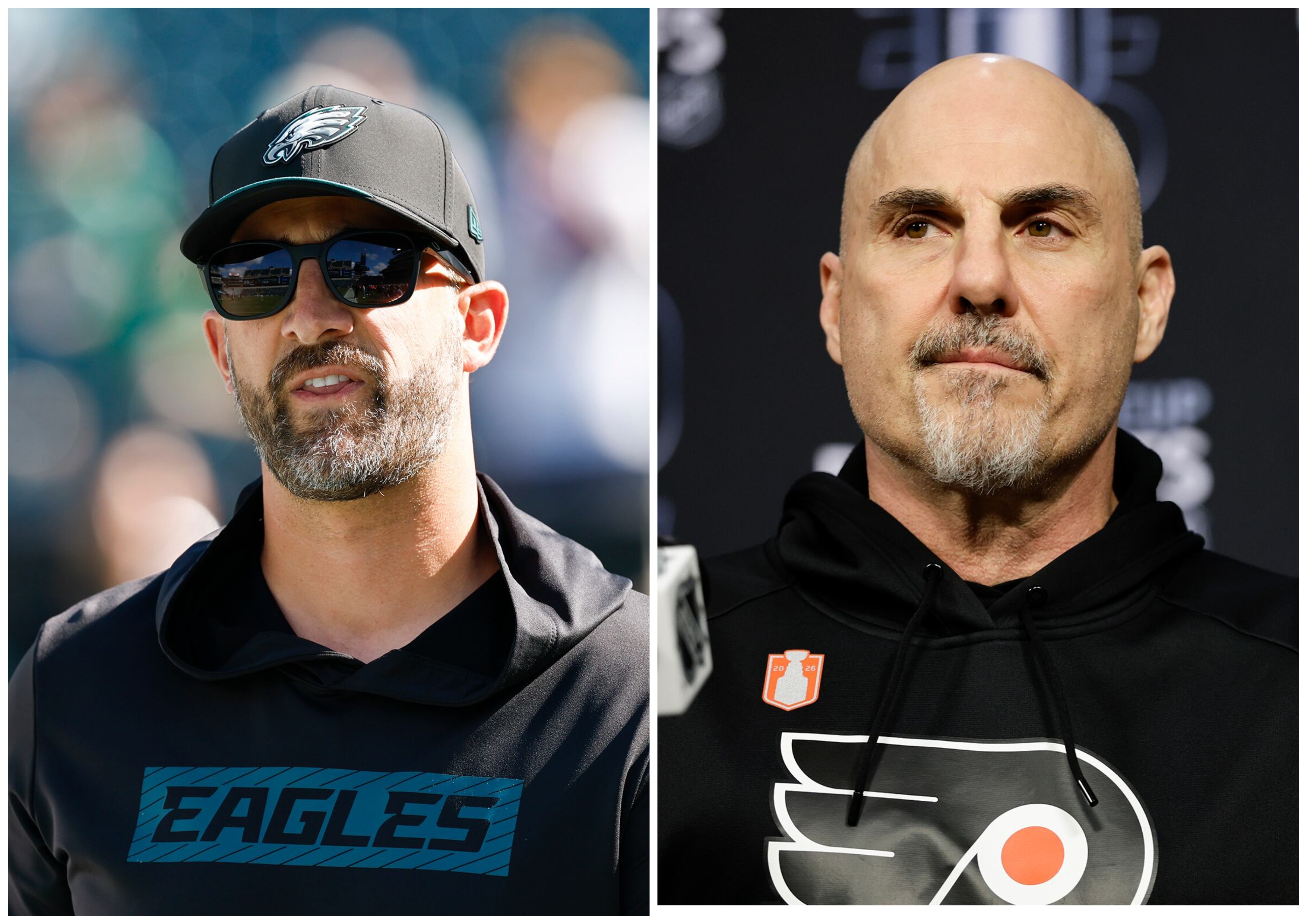
Nick Sirianni and Rick Tocchet might be plagued by the same issues.Inquirer Staff Photographers
Sunday was particularly painful. The Eagles flew all the way to London just to botch the final minute against Jacksonville, including a play in which rookie Makai Lemon ran toward the sideline when staying inbounds was what the team needed.
Meanwhile, we’re already at the point in the Flyers’ season where players are reassuring everyone that they love their coach. Wonderful. Everybody likes everybody. Can somebody win a game?
Nick Sirianni and Rick Tocchet are both known as players’ coaches, and there’s something to be said for building a locker room where everyone gets along. But at some point, the good vibes have to translate into something resembling competent sports.
We’re not suggesting anybody start throwing chairs. But maybe a little less reassurance and a little more accountability wouldn’t hurt.
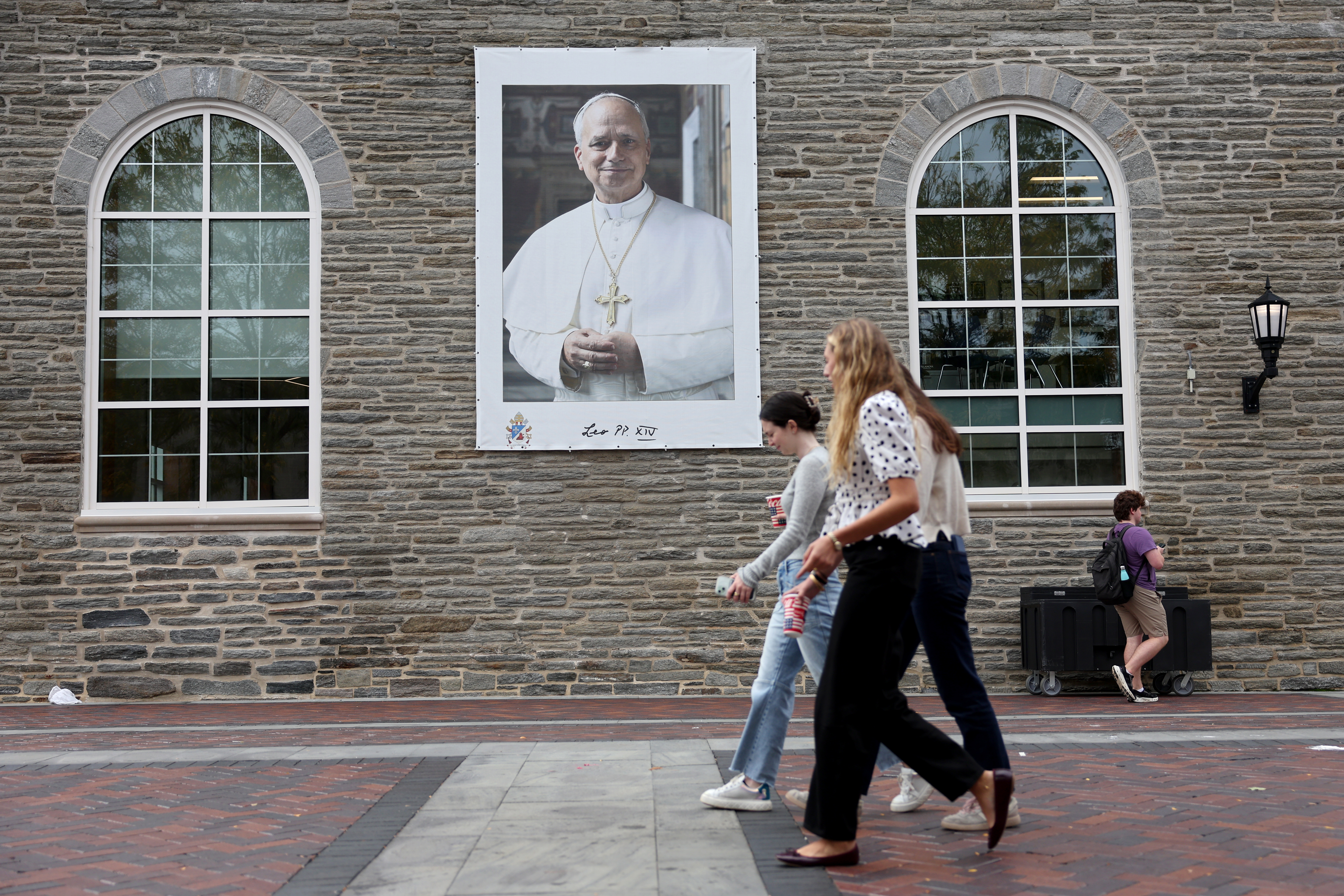
Students walk by a large poster of Pope Leo XIV at Villanova University in Villanova, Pa. on Wednesday, Sept. 30, 2026. Pope Leo attended Villanova.David Maialetti / Staff Photographer
Villanova has the pope on speed dial: A+
Most universities would be thrilled to have a famous actor, billionaire, or professional athlete among their alumni. Villanova has the pope.
Villanova’s president, the Rev. Peter Donohue, has exchanged about 25 emails with Pope Leo XIV since his election. Imagine casually emailing the leader of the Catholic Church to ask whether he’d like to come to your college reunion. (He declined, by the way.)
The pope has also met with students, helped promote university programs, and even served a cappuccino to a Villanova professor’s wife. Her husband asked for tea, prompting perhaps the most reasonable response ever: If the pope offers you coffee, you drink the damn coffee.
Now thousands of Villanova fans are headed to Rome for basketball games against Notre Dame, though a possible papal audience remains uncertain.
And with this week’s news that Pope Leo has been diagnosed with cancer, the excitement understandably comes with concern. His surgery was successful, and the Vatican says his recovery is progressing well.
Here’s hoping Villanova’s most famous alum is back on his feet soon.
A small soup? For a 6-foot-9 NBA player? LeBron James has spent more than two decades maintaining one of the most impressive physiques in professional sports, and we’re supposed to believe he’s calling it dinner with a pint of wonton soup?
To be fair, the order included so many extra wontons and shrimp dumplings that Sang Kee had to put everything in a bigger container.
Still, no roast duck? No fried rice? Live a little, King. LeBron hasn’t confirmed the order, and given that he’s been commuting from New York by helicopter, there’s a decent chance some other LeBron J. is enjoying his unexpected fame.
But if it really was him, somebody get that man a full meal. We’ve got a basketball season to get through.
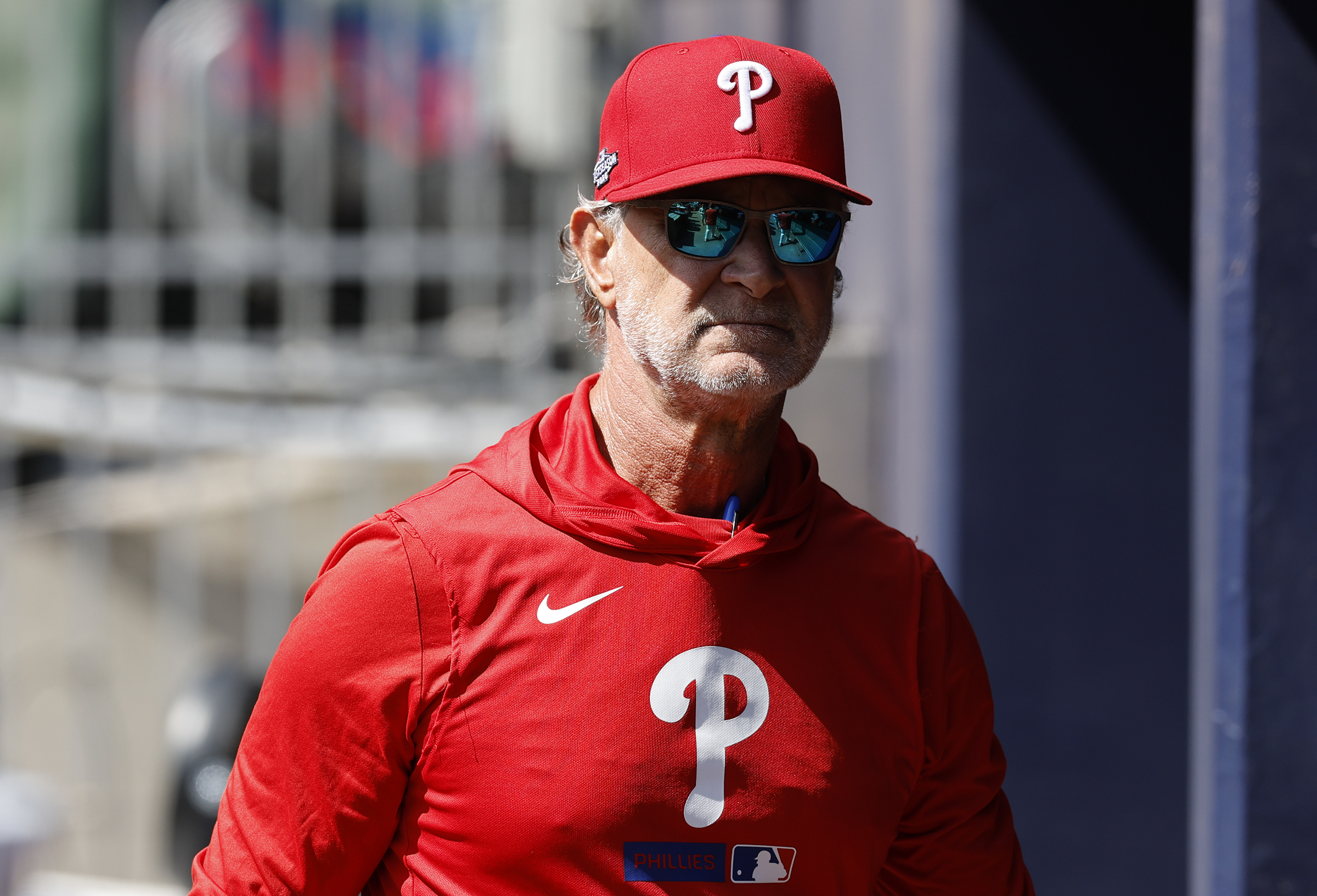
Phillies interim manager Don Mattingly before game 2 of the National League wild-card series against the Atlanta Braves on Sept. 30, 2026 in Atlanta.Yong Kim / Staff Photographer
New (?) manager, same Phillies problems: C
Don Mattingly is officially sticking around. The Phillies removed his interim tag and gave him a two-year contract, which is fair enough considering he went 79-55 after taking over for Rob Thomson.
But forgive us if we’re not throwing a parade down Broad Street.
We’ve seen this movie before. The Phillies have a talented, expensive roster, a manager who seems perfectly capable of doing his job, and an October exit that leaves everyone wondering what went wrong.
Mattingly isn’t the problem; he’s probably not the solution, either.
Alex Cora reportedly turned down the job twice, and maybe he saw what the rest of us are starting to realize: You can change who’s filling out the lineup card, but eventually you have to change the lineup.
The Phillies have already tried replacing the manager. They’ve spent hundreds of millions of dollars. And somehow, October keeps ending earlier.
Mattingly deserves a chance to lead this team for a full season. But the bigger question is what kind of team he’ll actually be managing.
Because if the Phillies’ big offseason change is removing the word “interim,” we’re going to have a problem.
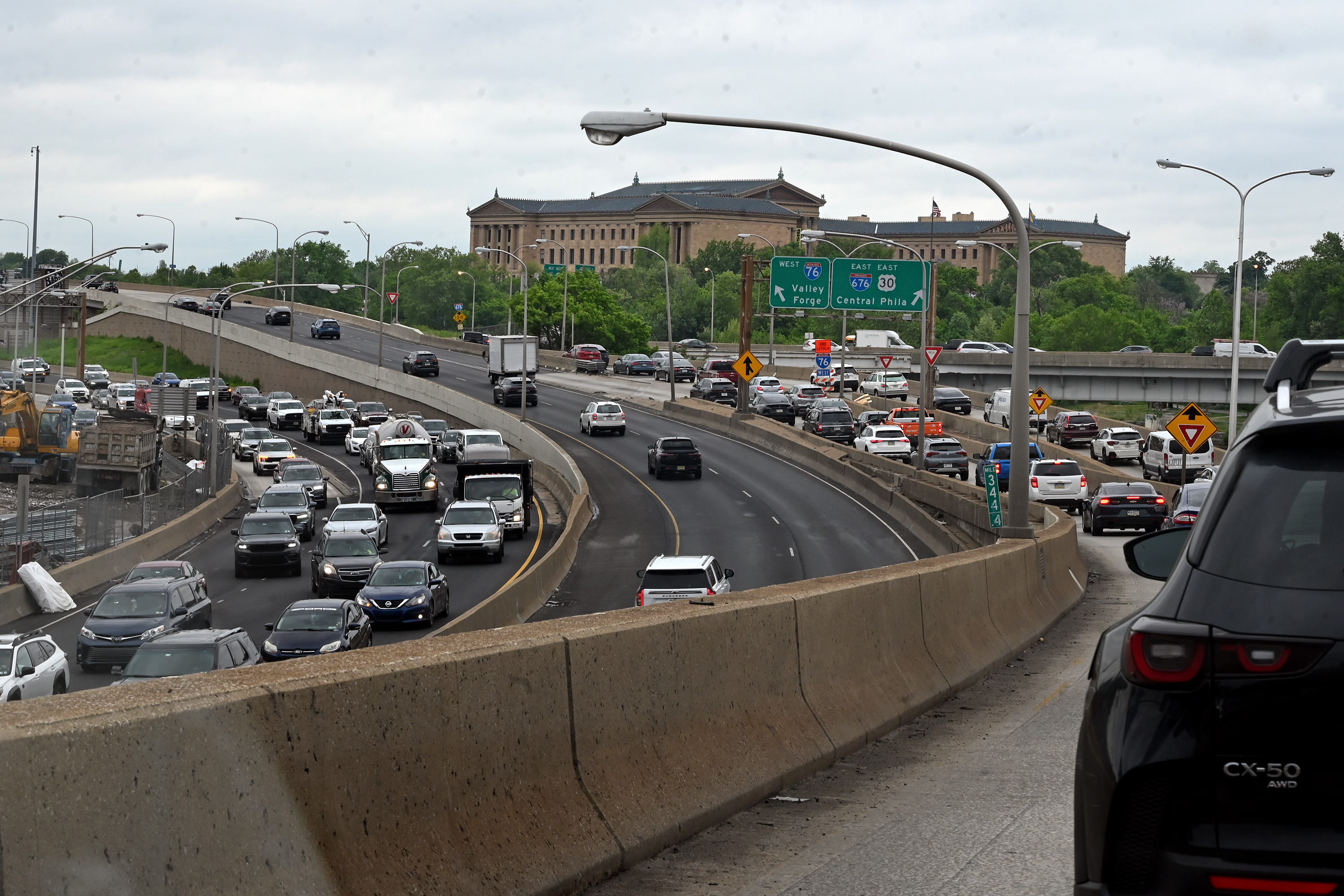
Traffic on the Schuylkill Expressway I-76 May 6, 2026.Tom Gralish / Staff Photographer
Driving in Philly is a contact sport: F
Philadelphia was named the worst big city in America for drivers, finishing dead last out of 100 cities in a new WalletHub ranking.
Anyone who’s ever driven down Washington Avenue, navigated the Schuylkill Expressway, or tried to find parking in South Philly is probably wondering how this was even a competition.
Driving here requires a specific set of skills. You have to dodge potholes big enough to swallow a tire, anticipate when the car in front of you will suddenly double-park with its hazards on, and accept that a 15-minute trip can somehow take 45 minutes at 2 p.m. on a Tuesday.
Then there’s the Schuylkill, where rush hour apparently starts at sunrise and ends sometime after dinner.
Pour one out for the Phillies daycare. The mural of Alec Bohm, Brandon Marsh, and Bryson Stott at Garage in Fishtown has been painted over.
And it’s a little sad. Those three were such a fun part of this Phillies era, and with Bohm potentially on his way out, it feels like we’re watching the band break up.
But also, thank God.
That mural went up before the 2024 postseason, and the Phillies haven’t won a single playoff series since. At some point, walking past three giant smiling faces of guys who keep breaking our hearts every October starts to feel personal.
A Phillies fan account says LeBron James is taking over the wall. Nothing says Philadelphia sports fandom quite like painting over the last group of guys who disappointed us to make room for the next guy we’re putting all our hopes into.
Welcome to Philly, LeBron. Please don’t make us paint over you, too.
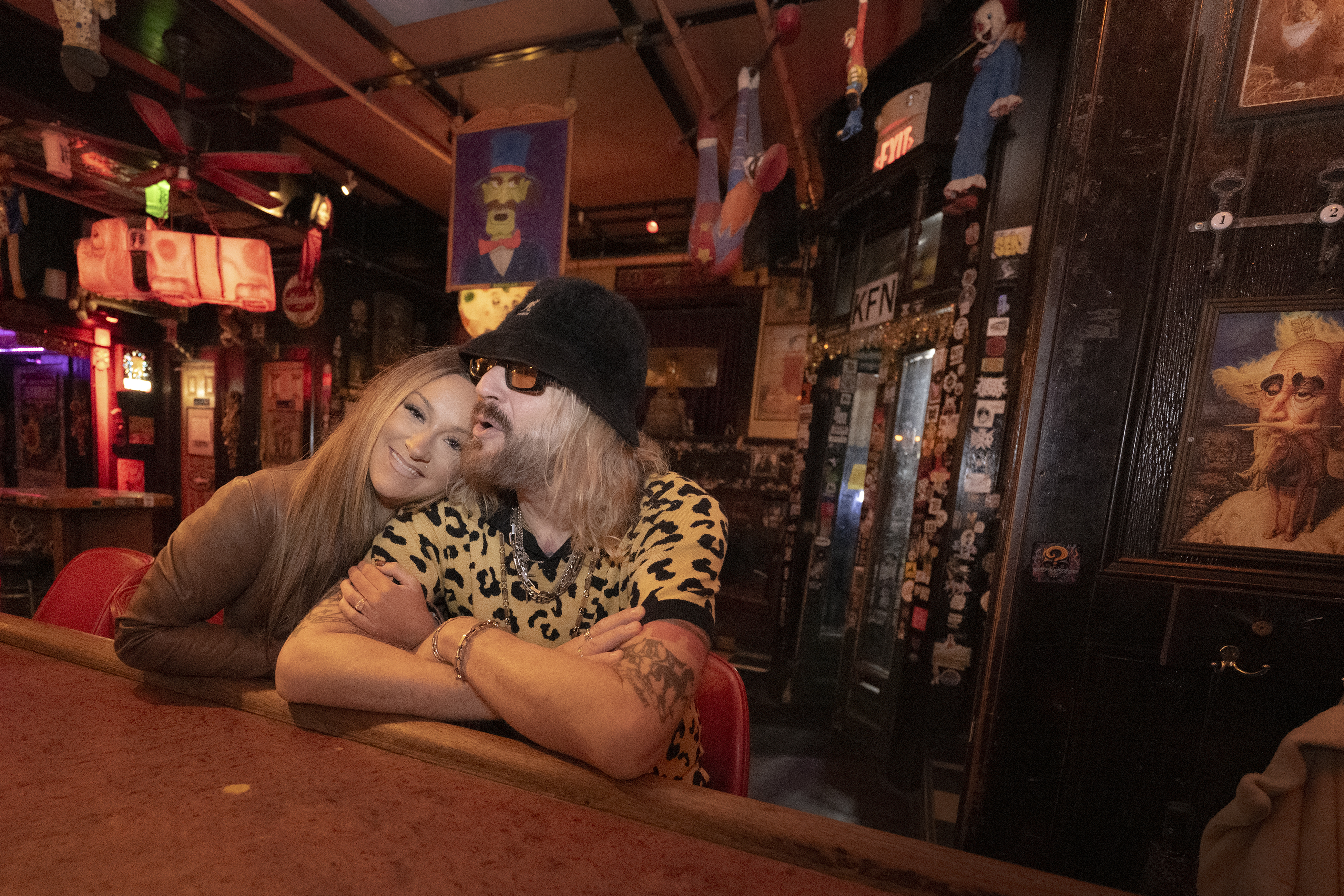
One night at the Kung Fu Necktie bar in Fishtown, Lauren Herman spotted an intriguing man across the room. Most patrons were dressed in black, to match the night’s emo theme, but he was wearing an outlandish blue suit and a matching feather-topped hat.
Lauren, an extrovert with a direct approach, walked over and asked the first question on her mind: “What is this, a pimp table?”
The man was not, in fact, a pimp, but instead the owner of the bar, James Herman. Everyone knows him as “Chicken,” a nickname from his days as an artist in New York City in the ‘90s.
The two spent the evening talking about their lives and their shared interest in art. (At the time, Lauren managed security at the Philadelphia Museum of Art). Both fresh out of difficult relationships, neither was looking for a new one. And yet, they became inseparable over the next few weeks.
So by the time Lauren learned Chicken’s age — 62, and 37 years older than her — it didn’t matter.
A year later, in October 2025, the two got engaged on Fox29’s “Good Day Philadelphia” and this summer they got married at City Hall. They live together above Kung Fu Necktie, next to Chicken’s second bar, the Neon Clown Dream Lounge, a psychedelic music venue packed with salvaged clown art. Chicken runs both bars and Lauren is studying drawing and painting at the Community College of Philadelphia.
“He’s different than anyone I’ve ever known,” Lauren said. “So I just wanted to keep spending time with him.”
The following, as told to Zoe Greenberg in separate interviews, has been edited for length and clarity and combined.
On meeting at Kung Fu Necktie
Lauren: I was like, “Do you come here often?” He’s like, “Honey, I own the place.”
Chicken: I can’t use my position as a bar owner to approach any woman to date, because I’m so much older than all these people. I’m not gonna get labeled as a creep. She came up to me, and she was chatting it up, but then she asked, “Are you going to make a move?” I’m like, “Nope.”
Lauren Herman and James “Chicken” Herman live next to the Neon Clown Dream Lounge, a bar Chicken runs that is packed with salvaged clown art. Jose F. Moreno / Staff Photographer
On their first date
Lauren: He took me to a steakhouse. I think he was trying to impress me. Towards the end of the date, I asked, “Can we go somewhere fun now?” So we went to Oscar’s and just had cheap beer, more my vibe.
Chicken: We went to Butcher and Singer. It was our first date. What, am I going to take her to Burger King?
On learning about their age difference
Lauren:It’s actually funny because I didn’t find out how old he was until two months into us dating. He didn’t tell me. I was like, “So how old are you?” And he’s like, “Why does it matter?”
I think he thought I might not want to be with him. I really wouldn’t have cared. I thought he was in his 40s. About two months in, he left his ID out in the bathroom, and of course, I’m gonna take a look. I did the math, and I’m like, “There’s no way!” Because he looks so much younger and sounds so much younger than he is.
Chicken: My ex-wife would ask, “Why don’t you date somebody your own age?” I’m like, “So I have something in common with a 60-year-old because they’re 60?” I like to go out and be social five to six nights a week. I’m not Peter Pan trying to relive my life. I’ve always been this same person.
On what drew them to each other
Lauren: In the past, I’ve been with people who dulled my spark. If I wanted to be a little kooky one day, they’d be embarrassed. With him, he fully embraces it. He’s super weird, too.
Chicken: She’s not judgmental. She’s not big on herself. The core basis of her is that she’s such a good person. We’ll go out, and she’s talking to everybody and anybody.
On telling friends and family
Lauren: Obviously I had to tell my parents at some point. They were surprised.
Chicken: I don’t think her parents know how to approach me because I’m older than them by 15 years. All her friends are about her same age, and when we started first dating, they were giving me the stink eye. Now they all love me, so it’s all good.
On sharing finances
Lauren: A common assumption is that any woman who’s with an older man is doing it for money. Which is obviously not true. When we first met, I was making pretty good money and I had a good job.
Chicken: When I was getting engaged, my oldhead friends asked, “What are you doing? Protect yourself, get a prenup.” Why would I do that? My parents are dead. Who am I gonna leave all this to? Money means nothing to me. I got plenty of it.
On denial and diverging interests
Lauren: He’ll say things in public that he definitely shouldn’t say, but he says it so loud because he can’t hear. And I’m telling him, get your ears checked because you’re so loud right now. He’s in denial, I think, because he’s in denial that he’s old.
Chicken: Lauren’s caught up in TikTok and all this other stupid social media. That’s not a big part of my life. It’s kind of funny to watch her get excited about Addison Rae or John Pork. I personally don’t care about it.
On aging together
Lauren: He’s in such good health for his age. I don’t think he’ll need any help. Obviously, I’m going to be willing to help, he’s my husband, of course. But I think we have a long time until then, at least 30 or 40 years. I hope that our life is pretty much going the same way it’s going now. I don’t want anything to change.
Chicken: In 30 years, I’ll be dead. I’m sure about that.
This story is part of a series about life partners across the Philadelphia area.
If you want to share your story about who you’re navigating life with, romantically or otherwise, write to lifepartners@inquirer.com. We won’t publish anything without speaking to you first.