I encounter art almost every day while traveling around the city on assignment as a newspaper photographer.
Public art isn’t unusual in cities around the world, but Philadelphia stands out for the way it has made art part of its infrastructure and identity.
The city has had a civic strategy for creating it since 1959, when it established the Percent for Art program, dedicating a portion of public redevelopment budgets to public art projects. More than 350 works have been commissioned over the decades. And since 1984, Mural Arts Philadelphia has been telling stories, celebrating neighborhoods, and addressing social issues through more than 4,000 murals.
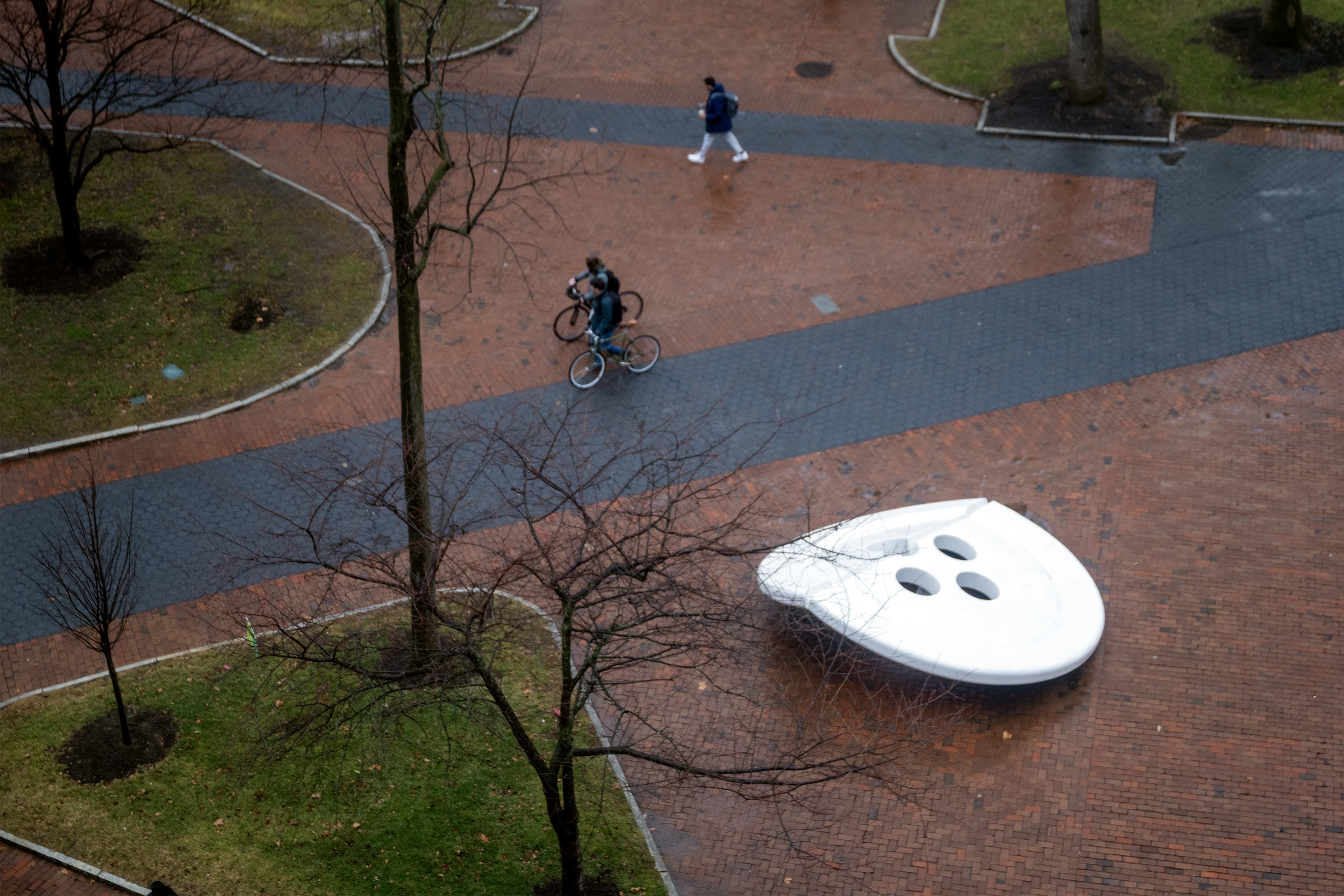
The 1981 painted aluminum sculpture “Split Button” by Swedish-American Pop-art sculptor Claes Oldenburg and Dutch art historian Coosje van Bruggen, on the University of Pennsylvania campus Feb. 6, 2025. Tom Gralish / Staff Photographer
I could spend decades trying to document them all, but I’m not that kind of photographer. I’ve always wrestled with how to “rephotograph” another artist’s work. They are expressing a personal vision, emotion, or concept, while my job is to inform the public by documenting real events as they happen.
But even as I show readers what the art looks like, I want my pictures to reflectwithout distracting from the artist’s work, being accused of infringing, or making it all about me. (Disclaimer and apologies: Some of those links contain only text. None of the photos survived our digital archiving.)
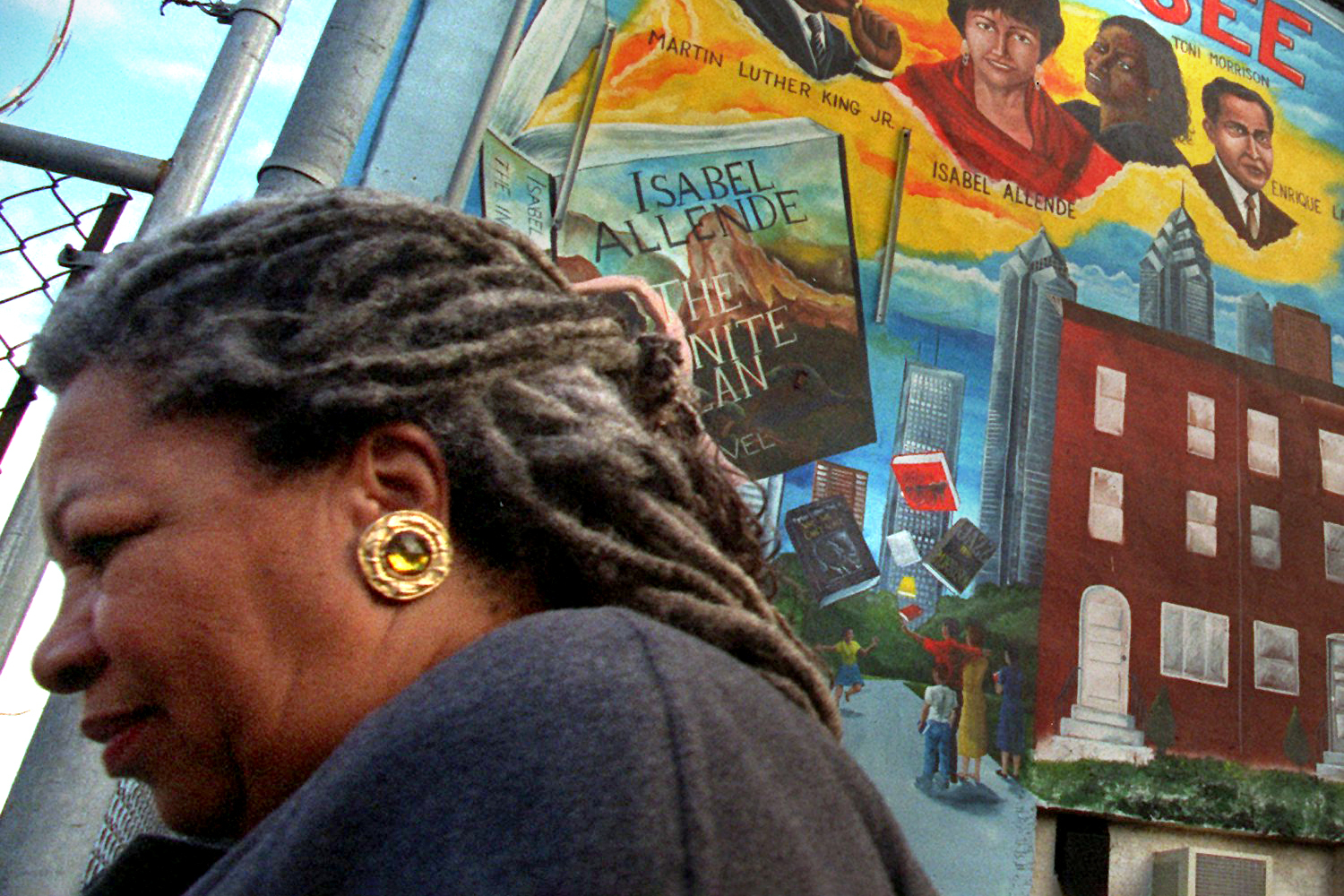
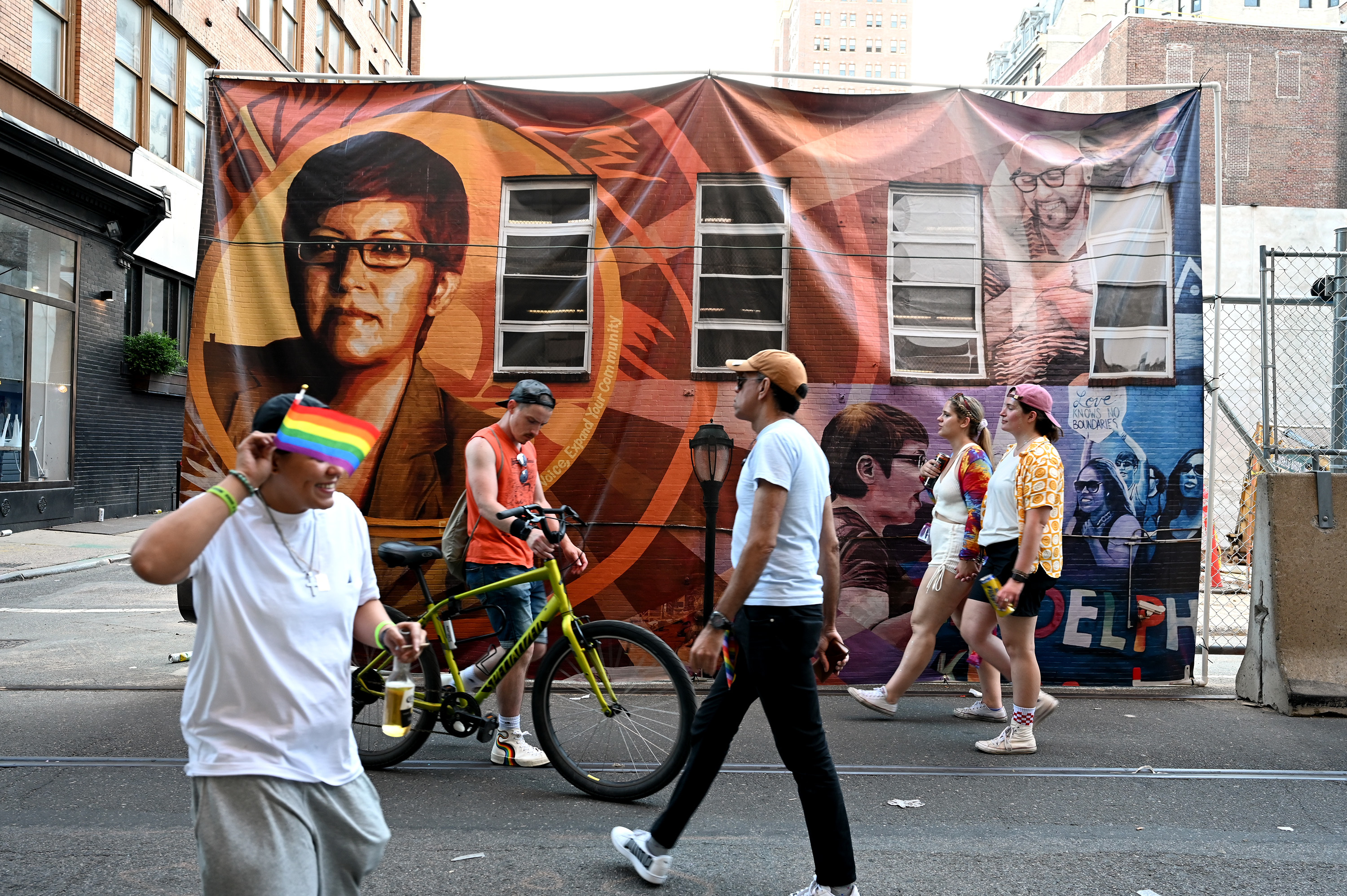
Author Toni Morrison (who passed away in 2019) at the dedication of a mural at 6th & Lehigh in 1996 painted by North Phila. artist Danny Torres. (The mural no longer exists)Tom Gralish / Staff PhotographerA large copy of the 2015 mural, “A Tribute to Gloria Casarez” by Michelle Angela Ortiz hangs on a construction fence in 2022 during the city’s 50th annual Pride celebration. The original mural on South 12th St. was painted over by a developer two years earlier without any warnings. Casarez, the city’s first director of LGBT affairs, died in 2014, after a five-year battle against breast cancer. Tom Gralish / Staff Photographer
So while I often stop to admire and study other artists’ work, I tend to avoid photographing it. Unless something changes. Or there’s a good reason.
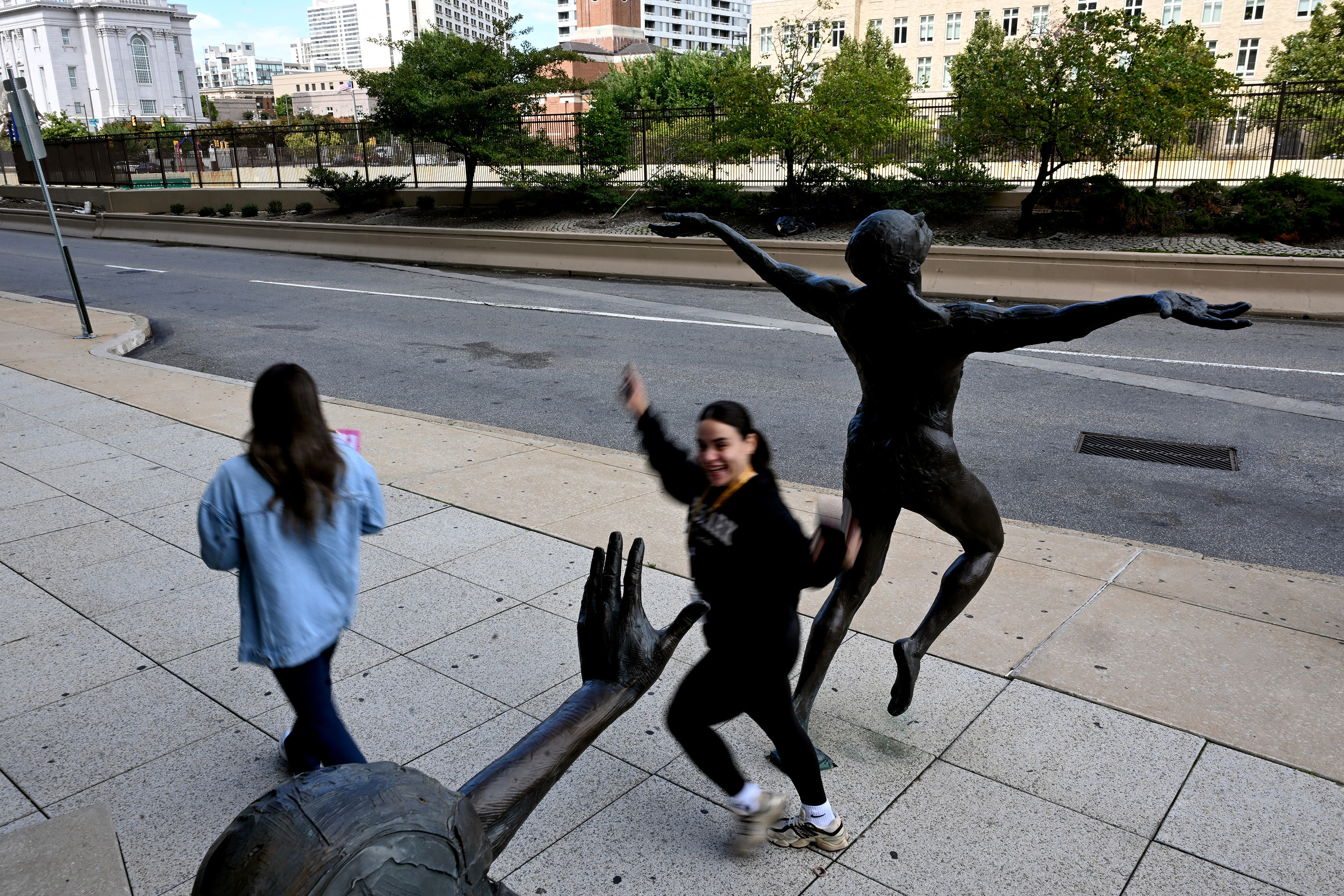
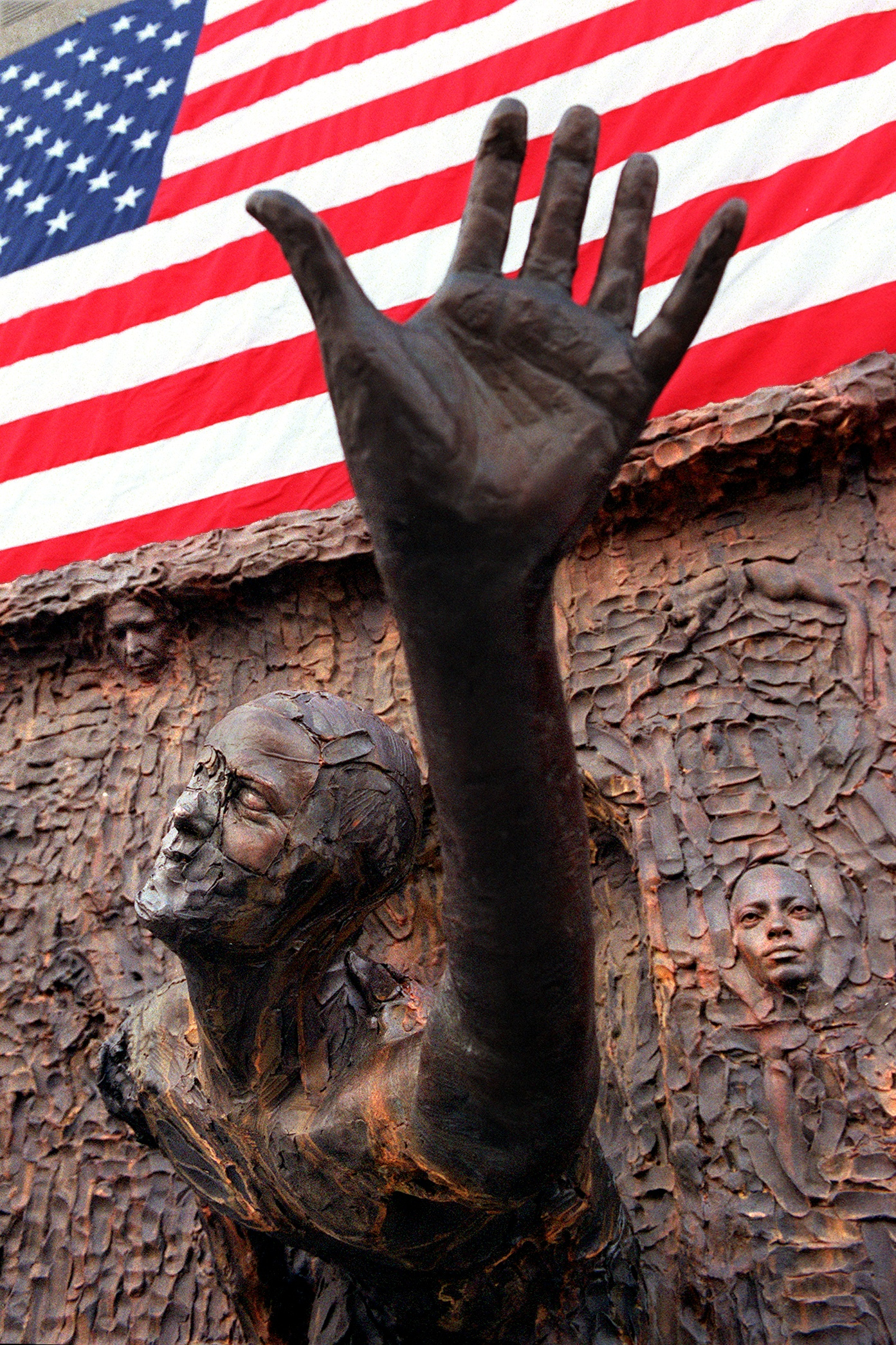
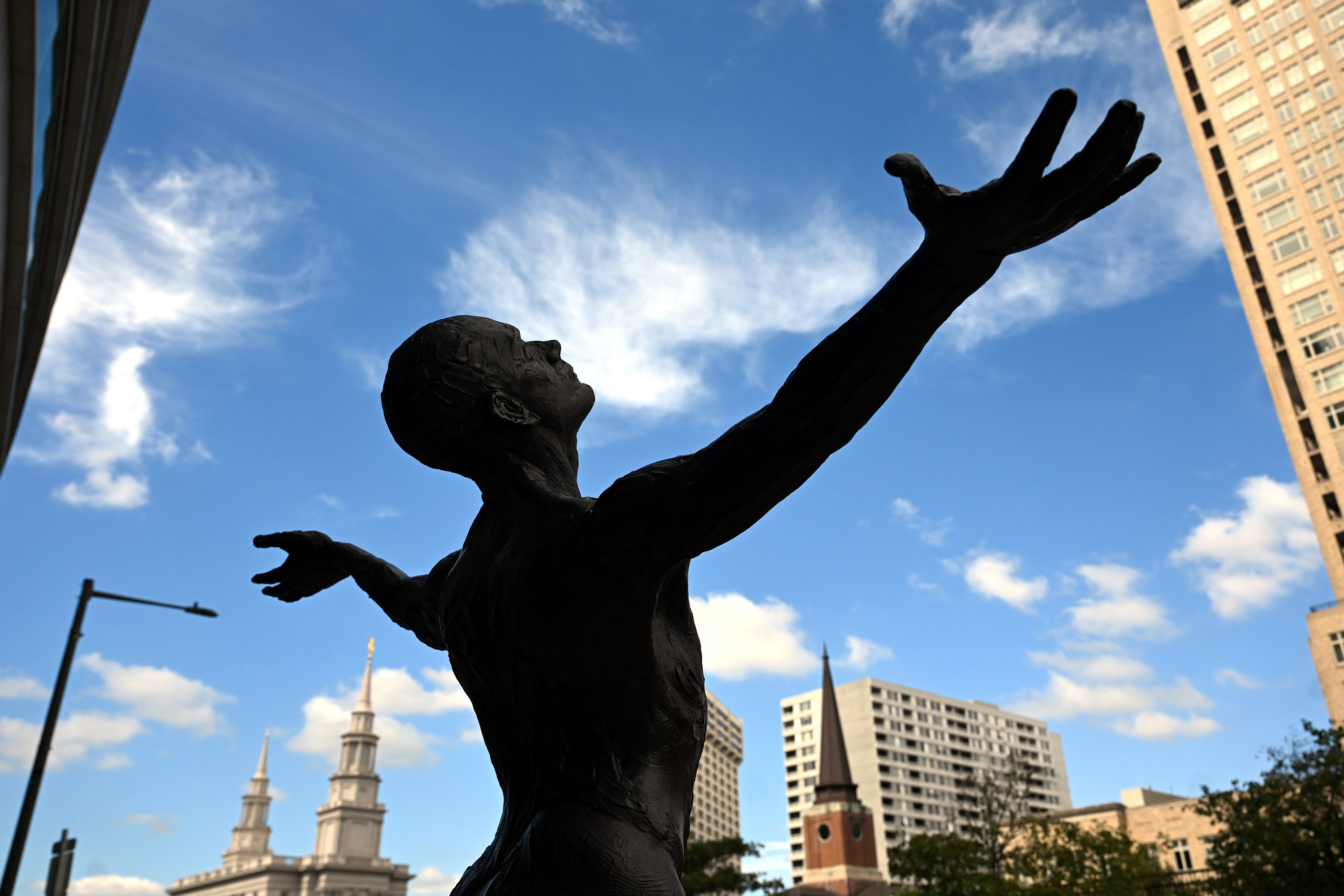
Like after 9/11. While documenting local reaction to the terrorist attacks, I spotted an American flag added to Freedom, the sculpture by Zenos Frudakis at 16th & Vine Streets. The 7,000-pound, 20-foot-long bronze piece had been dedicated just a few months earlier.
Frudakis later invited her to his studio, and while other photographers captured his work for her story, I was assigned to “update” our file photo of Freedom.
And as if I needed another reason, Frudakis invites passersby to become part of his art. He included the words ‘stand here’ inside the empty space from which the figure has broken free. So I dove right in, photographing it from plenty of other angles, too.
Finally this week, almost two years to the day after photographing another prominent celebrity working at McDonalds, I kept my “sports photographer” membership active.
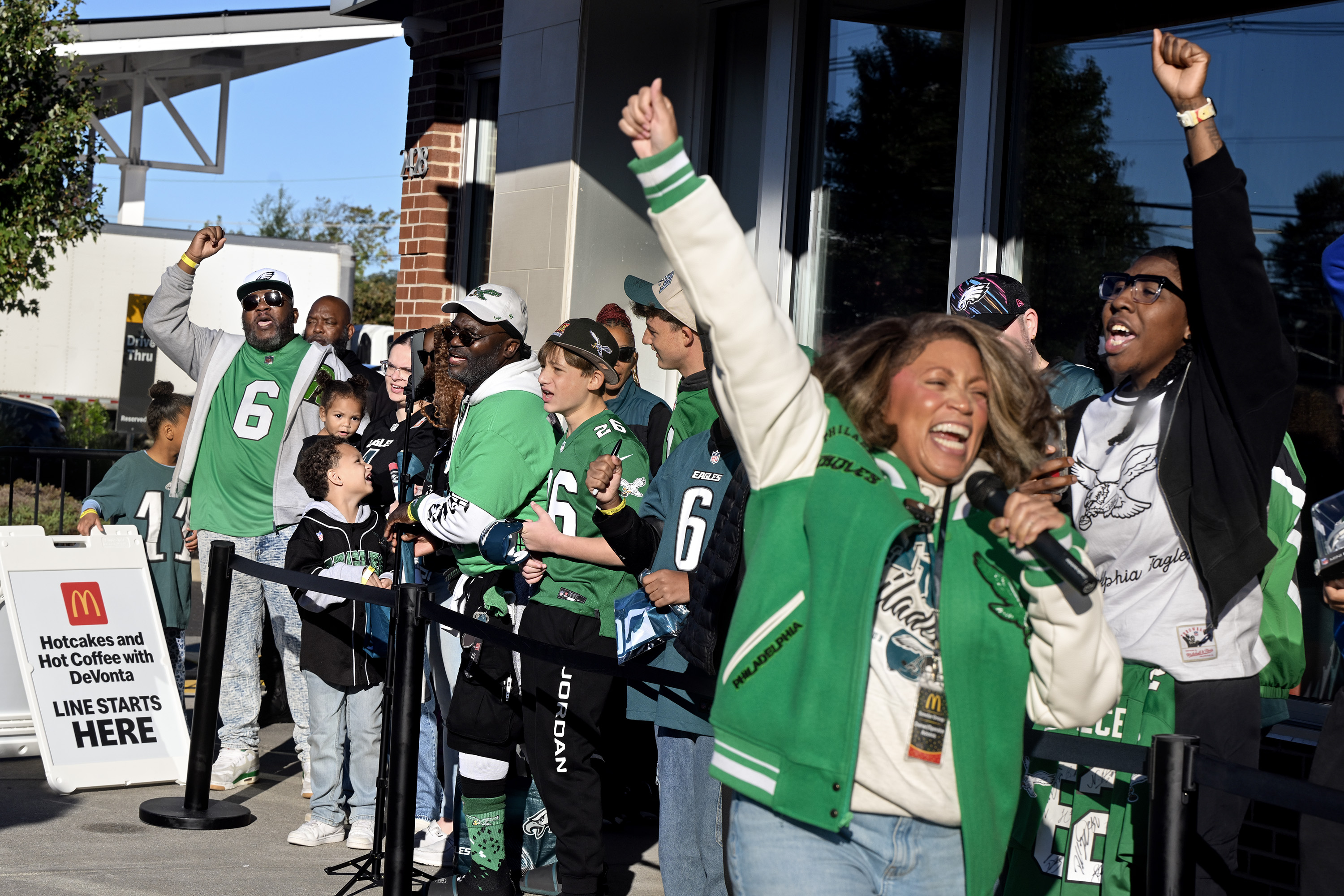
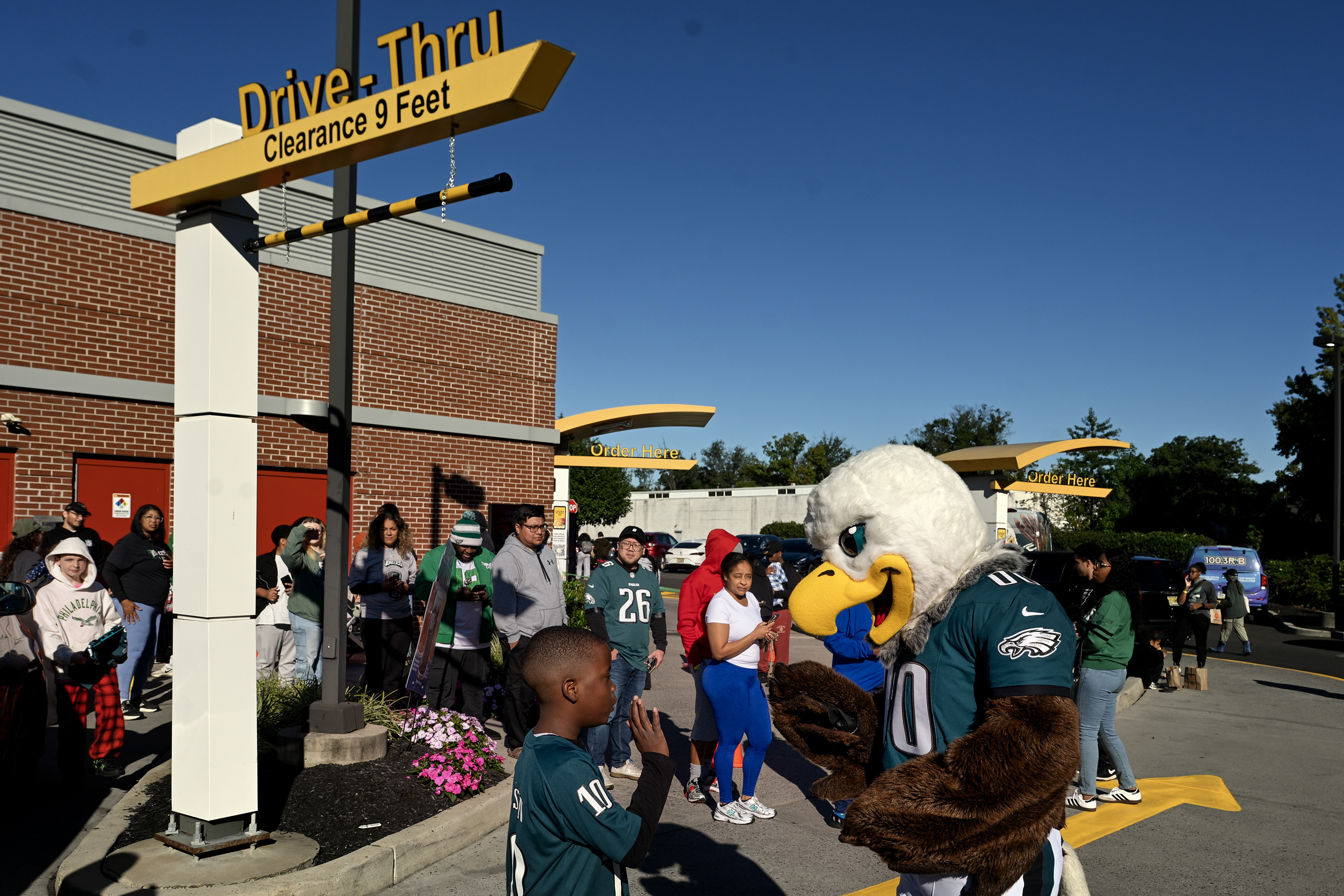
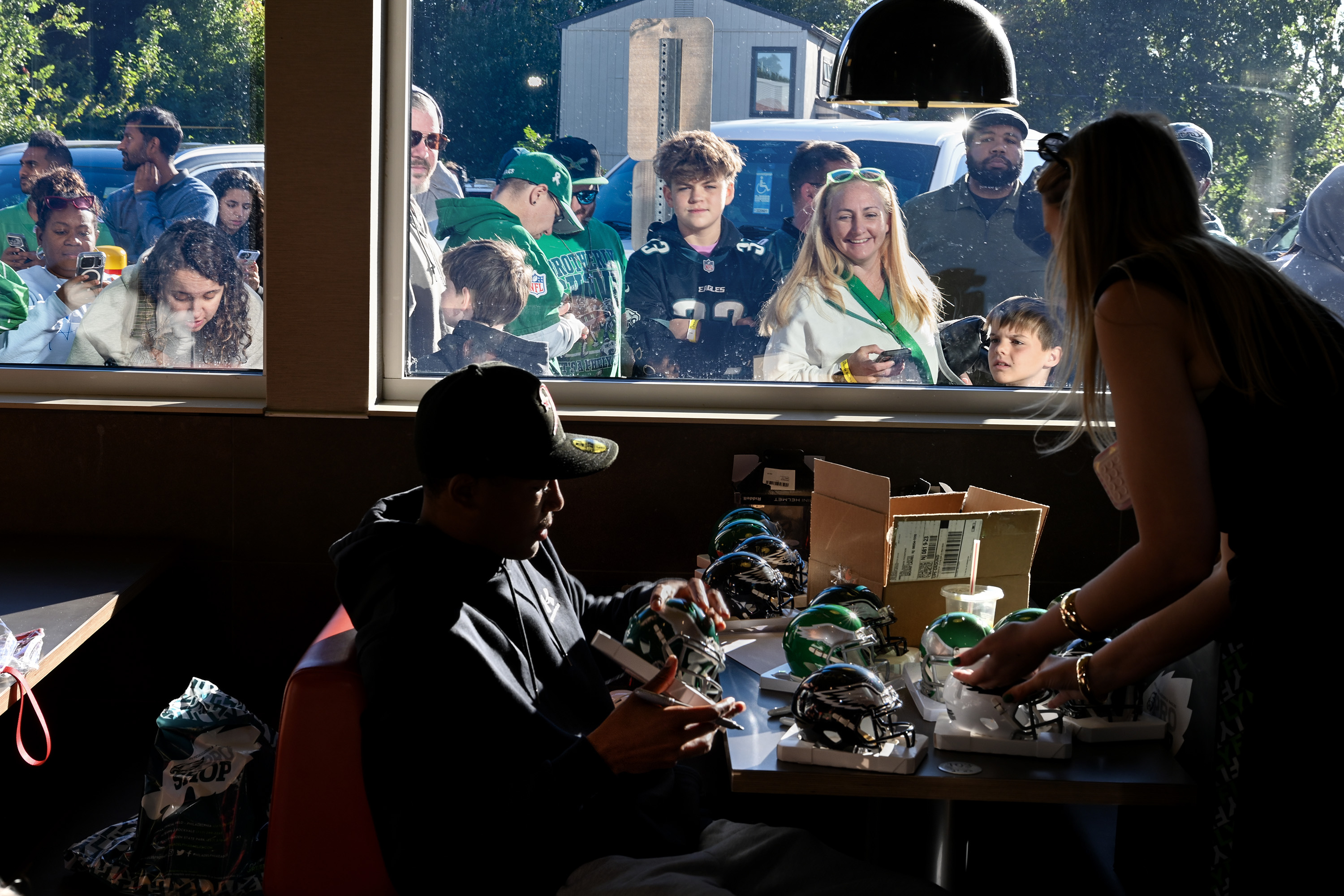
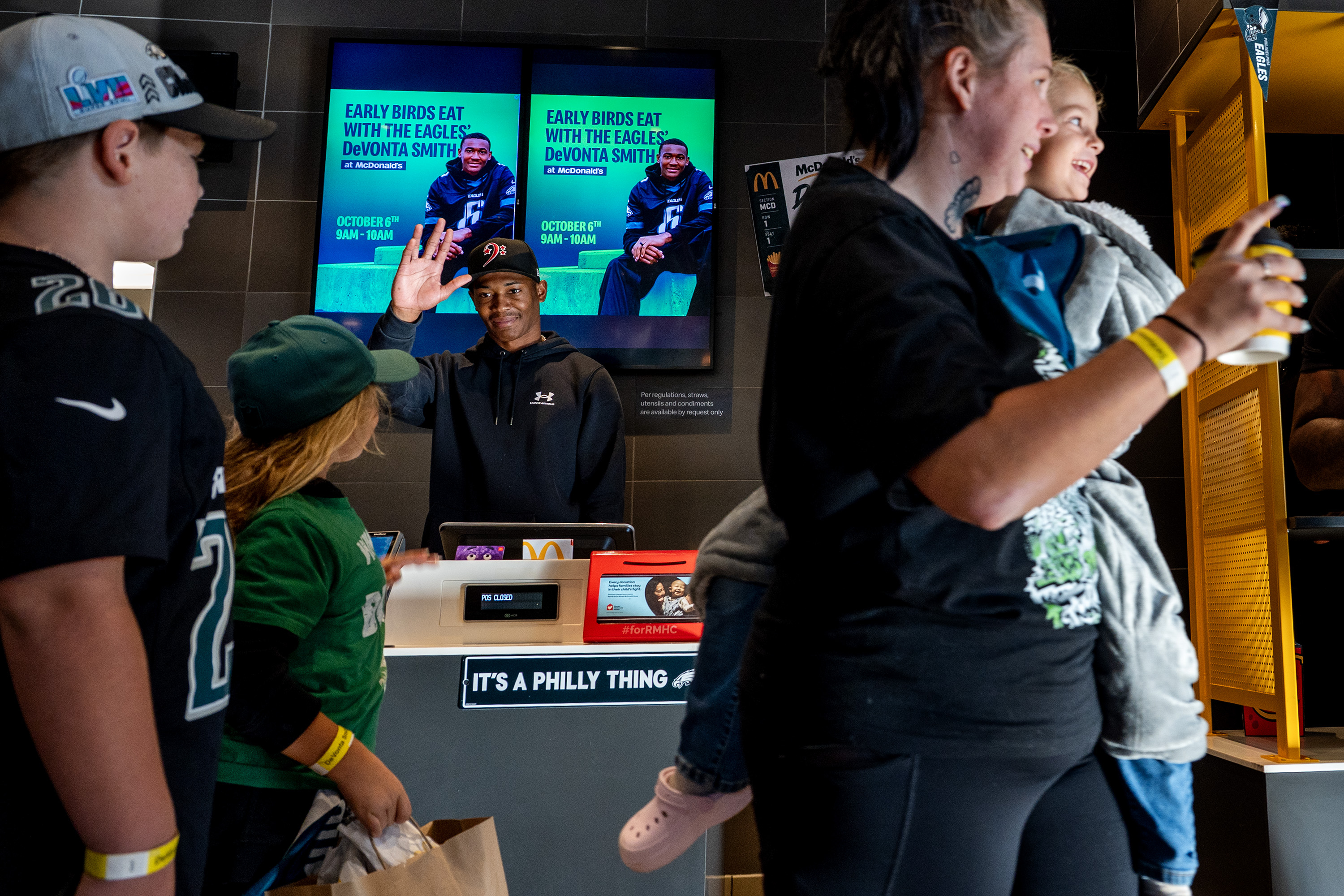
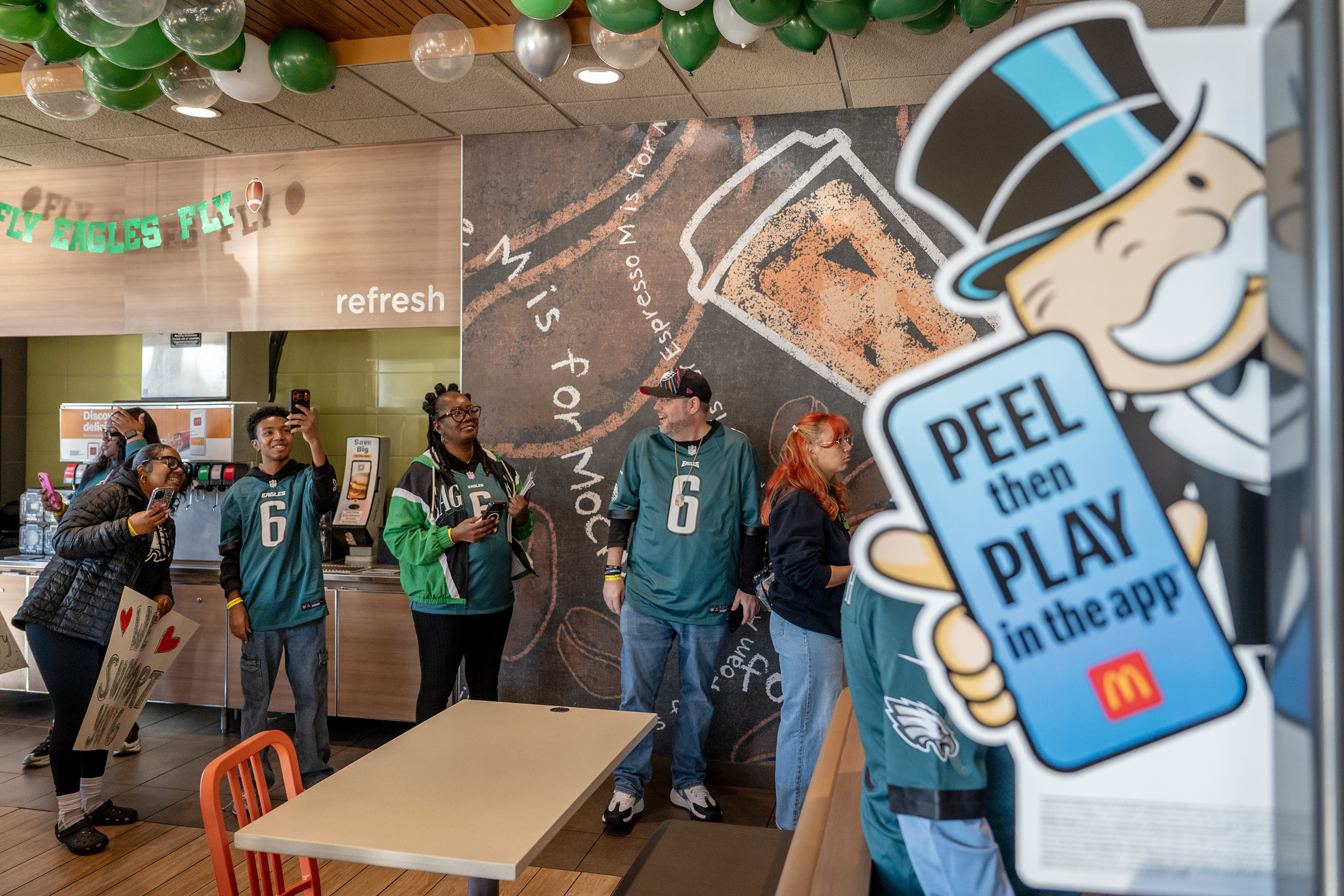
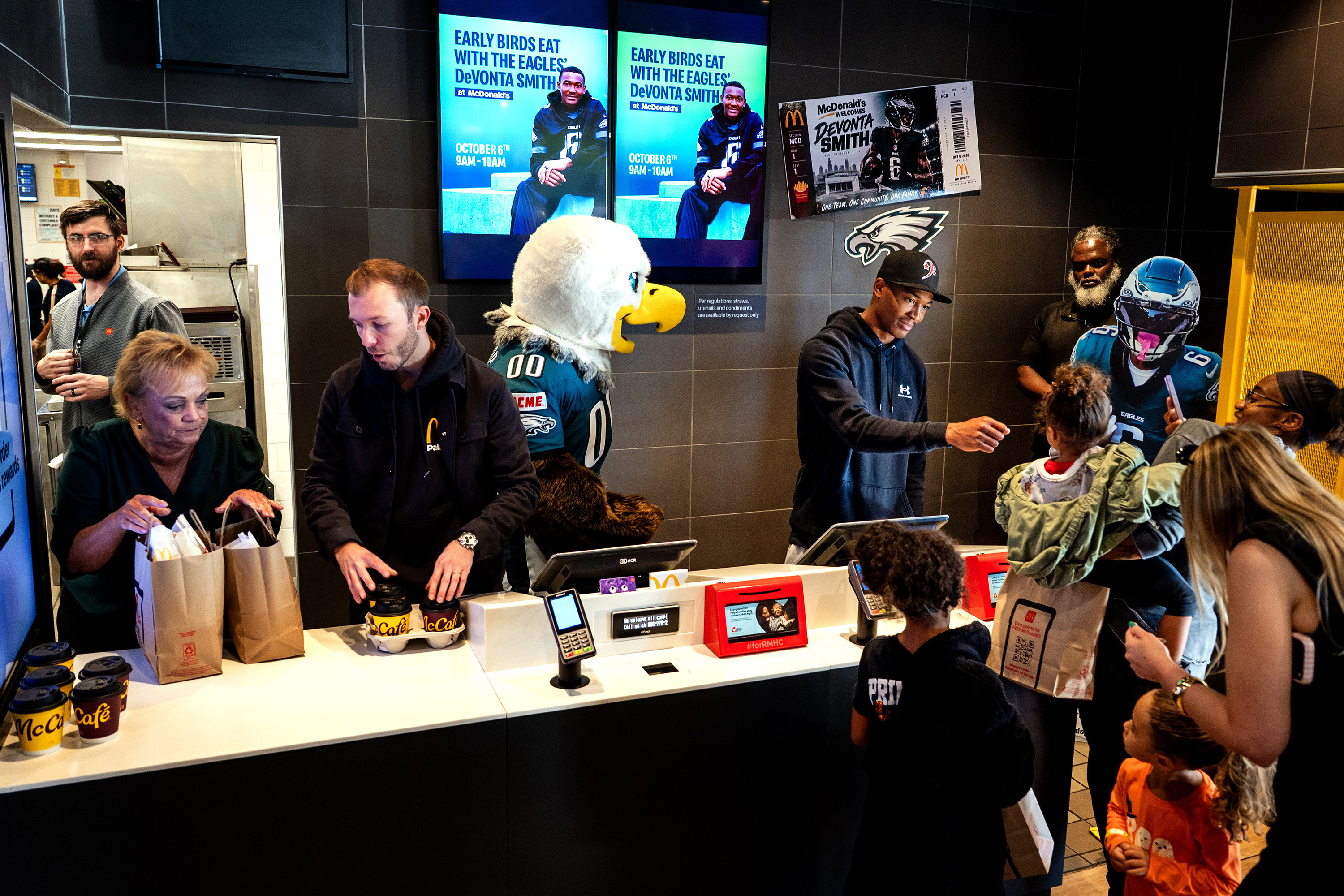
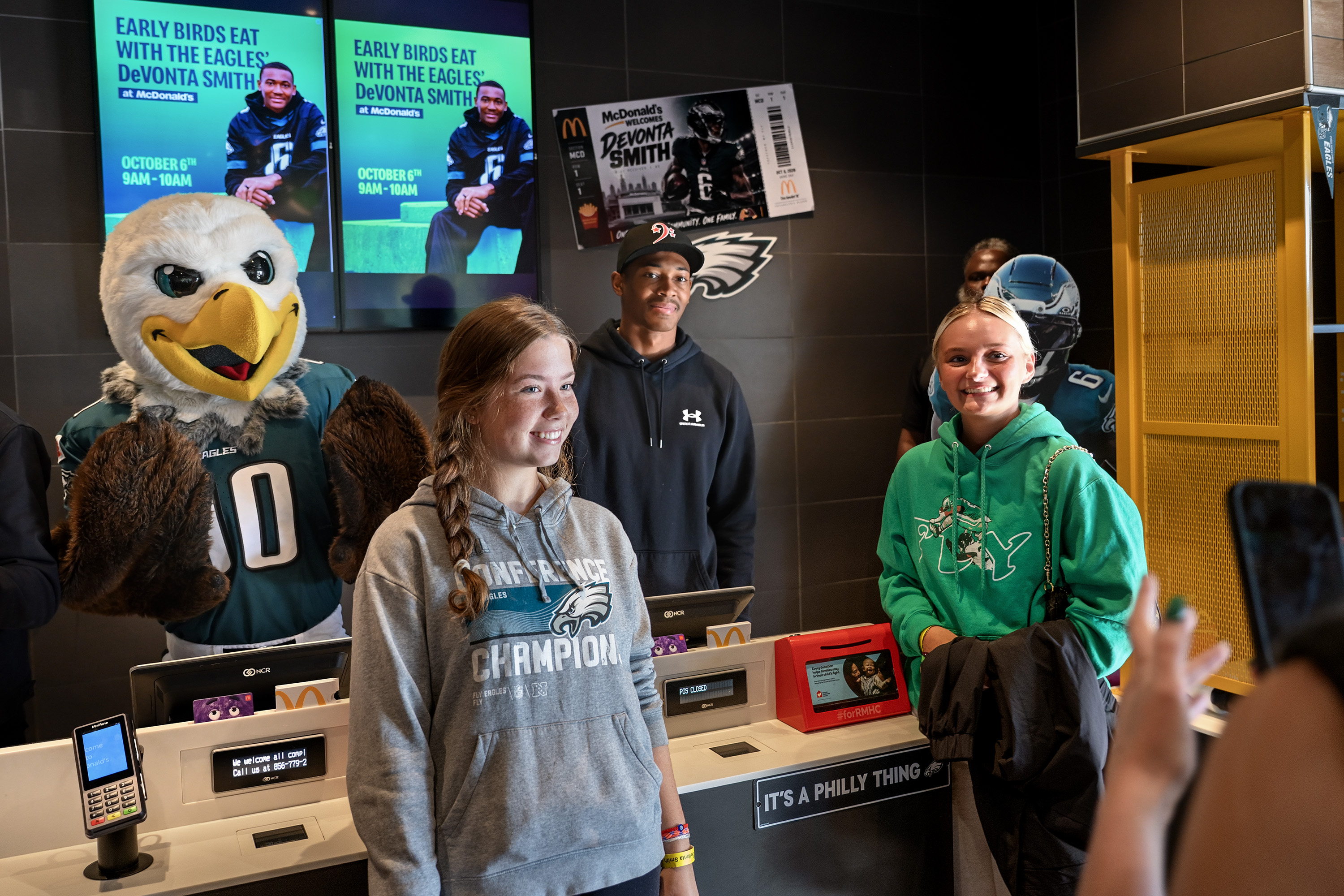
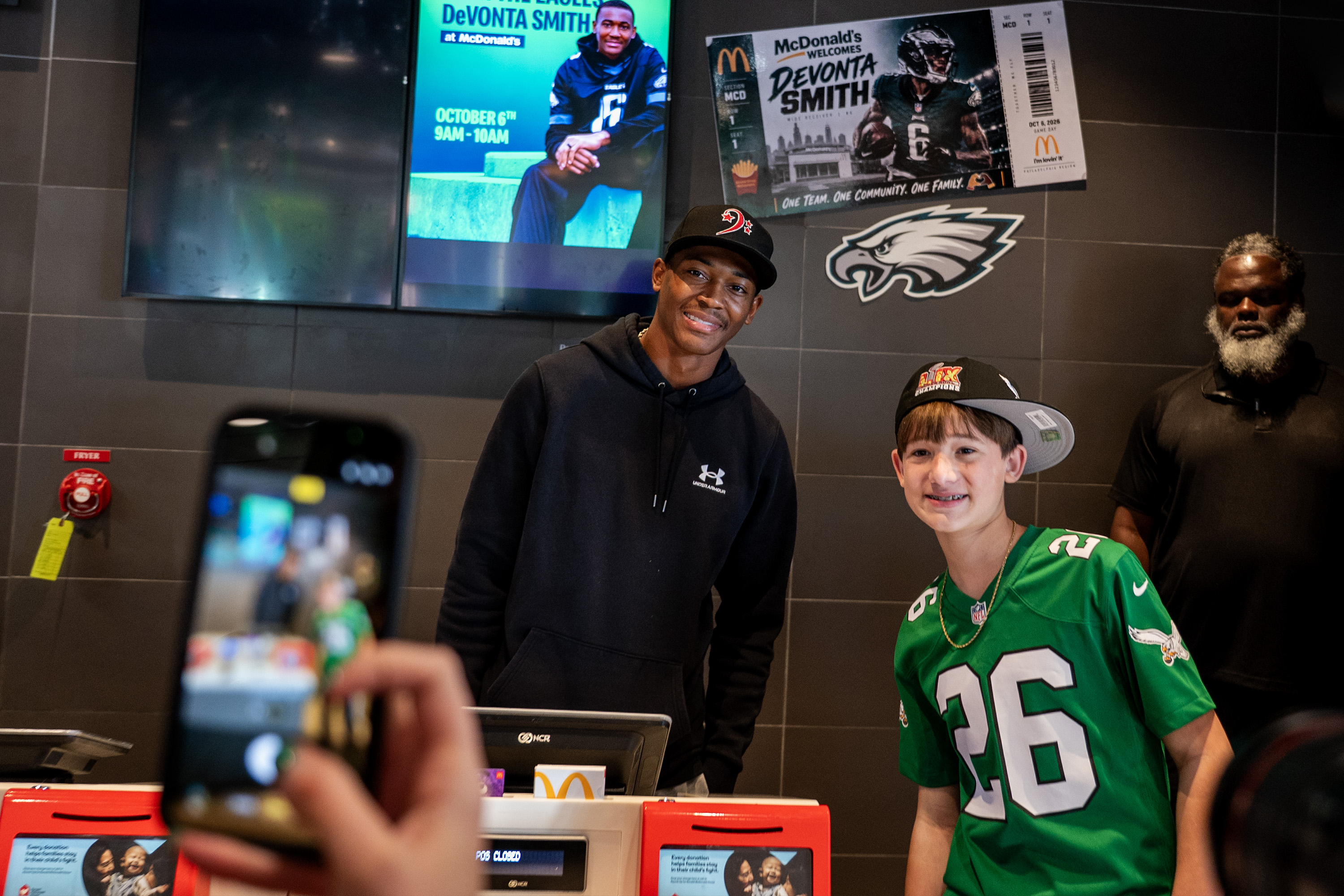
I made The Inquirer’s Big Picture gallery of the week’s best sports photos with my usual non-action coverage, this time of Eagles star wide receiver DeVonta Smith greeting fans and posing for photos at a McDonald’s in Cherry Hill.
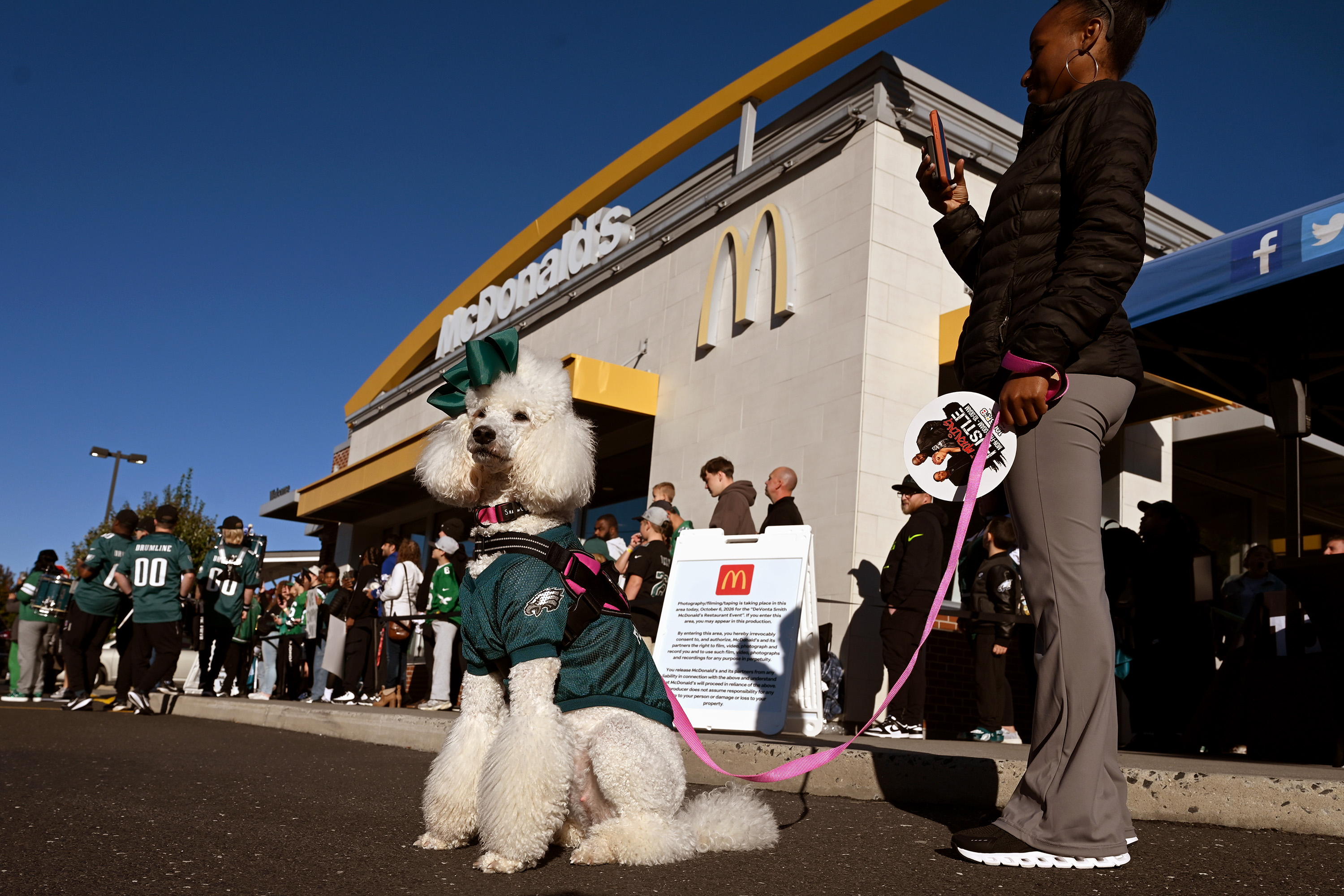
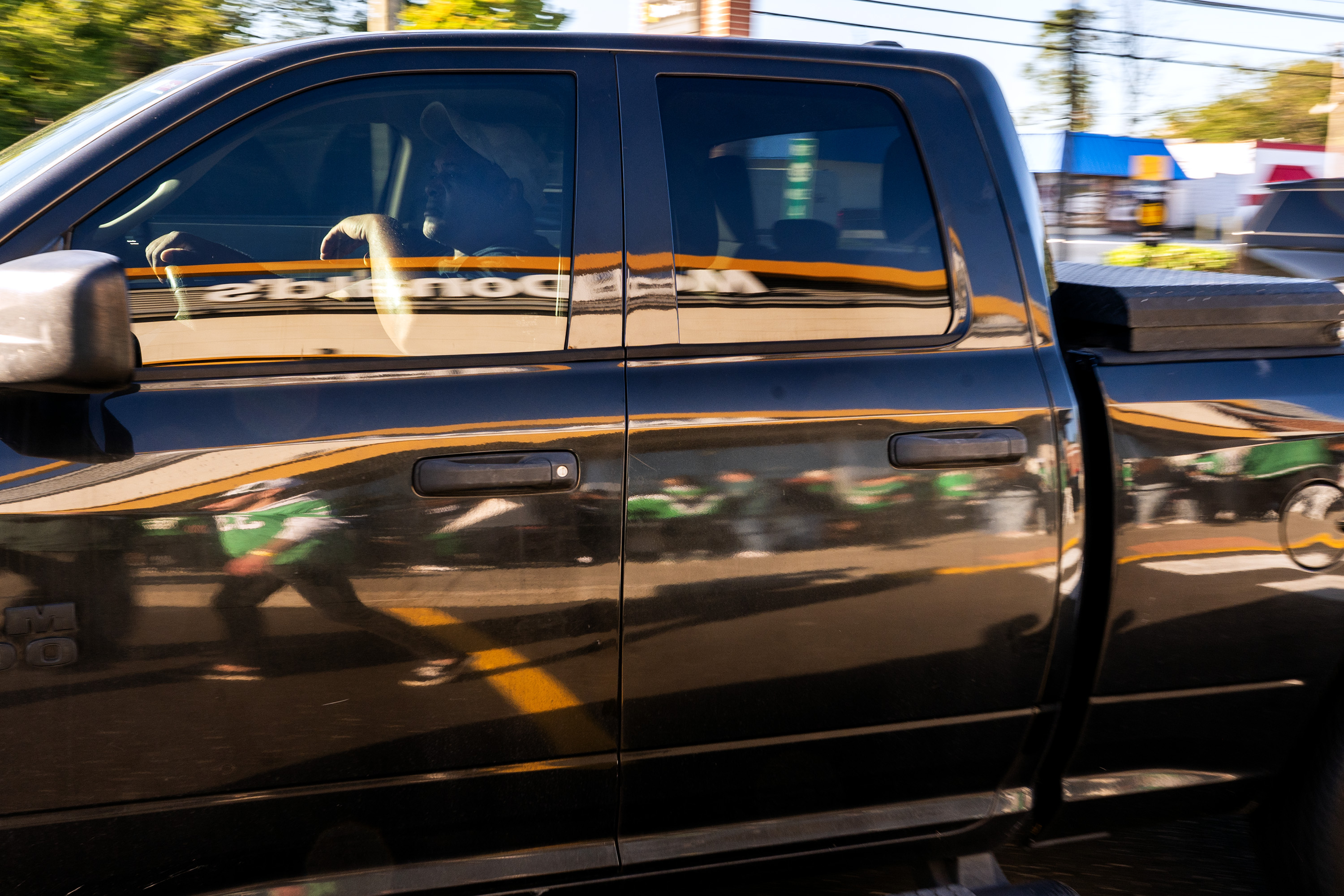
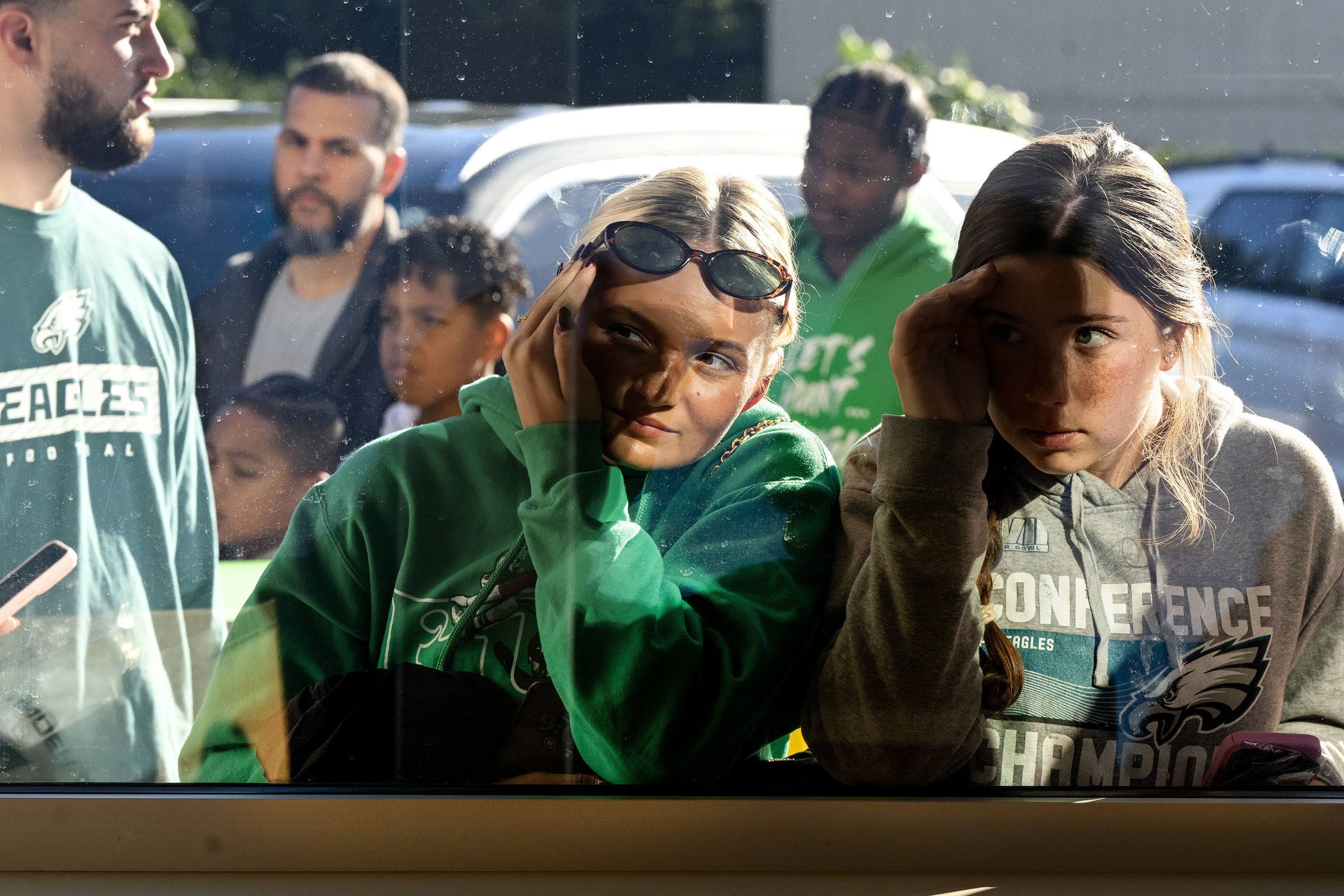
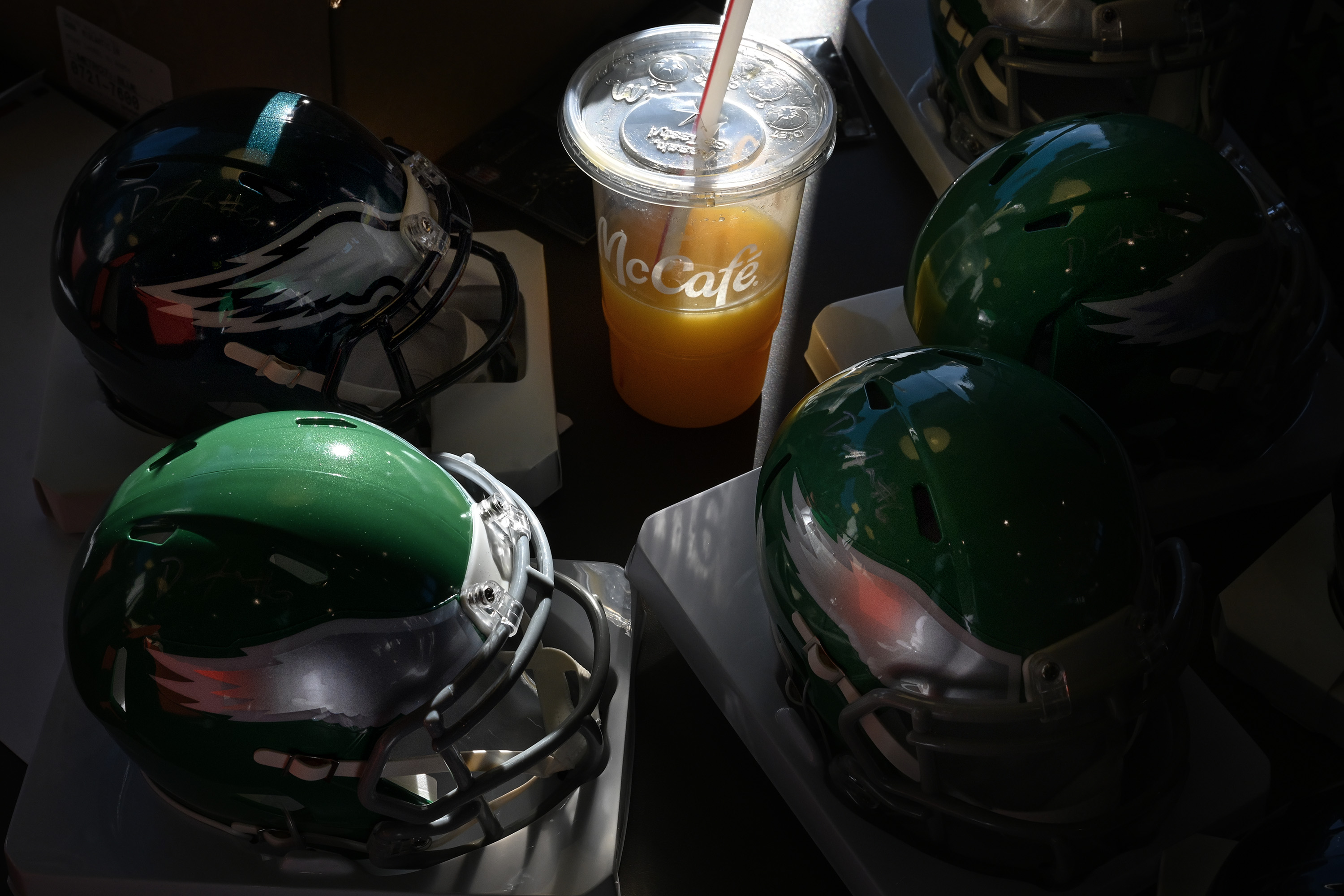
Fans wait outside for the arrival of DeVonta Smith on Tuesday at the McDonald’s on Rt. 38 in Cherry Hill.Tom Gralish / Staff PhotographerJemai Gibson, from Camden, waits outside with her standard poodle, Jem, Tom Gralish / Staff PhotographerSwoop greets fans lined up all the way back to the drive-thru lanes.Tom Gralish / Staff PhotographerFans waiting in line outside look in as Smith signs miniature helmets inside the restaurant before they opened the doors.Tom Gralish / Staff PhotographerSmith greets fans while the restaurant serves free coffee and breakfast.Tom Gralish / Staff PhotographerFans wait in line inside the McDonald’s.Tom Gralish / Staff Photographer“McDonald’s does a lot with the community with Ronald McDonald House and things like that,” Smith said, noting it’s more than just fast food.Tom Gralish / Staff PhotographerThe drive-thru remains open during the event.Tom Gralish / Staff PhotographerAva Cannon (left) of Mount Laurel and Kelsey Cepas (right) of Haddon Township, both 20, look through the window as they wait in line outside…Tom Gralish / Staff Photographer…and then get their turn posing for a photo with Smith – and Swoop.Tom Gralish / Staff PhotographerMiniature helmets signed by Smith that were later raffled off for fans.Tom Gralish / Staff PhotographerEagles star wide receiver DeVonta Smith poses with fans at the McDonalds in Cherry Hill.Tom Gralish / Staff Photographer
Since 1998 a black-and-white photo has appeared every Monday in staff photographer Tom Gralish’s “Scene Through the Lens” photo column in the print editions of The Inquirer’s local news section. Here are the most recent, in color:
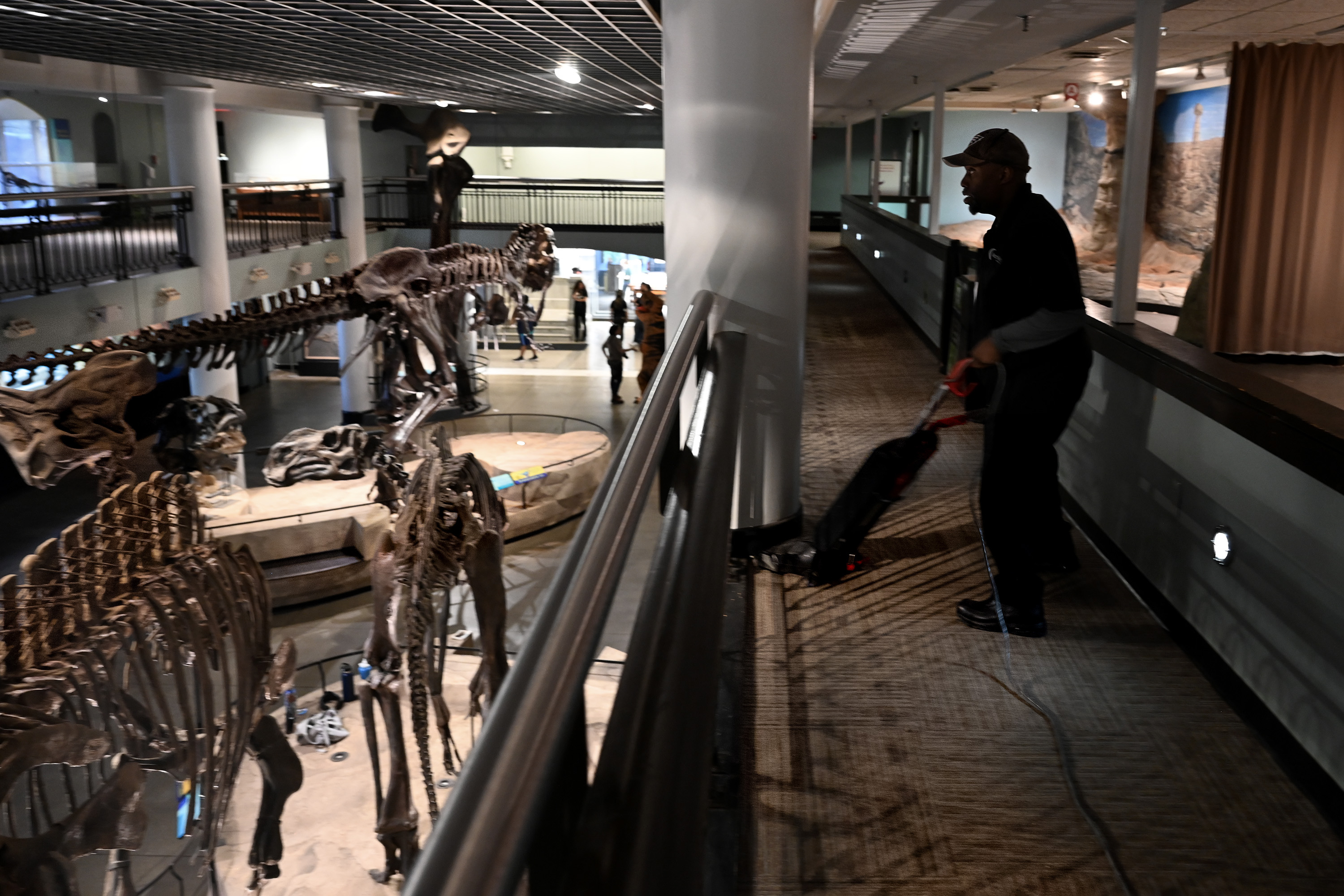
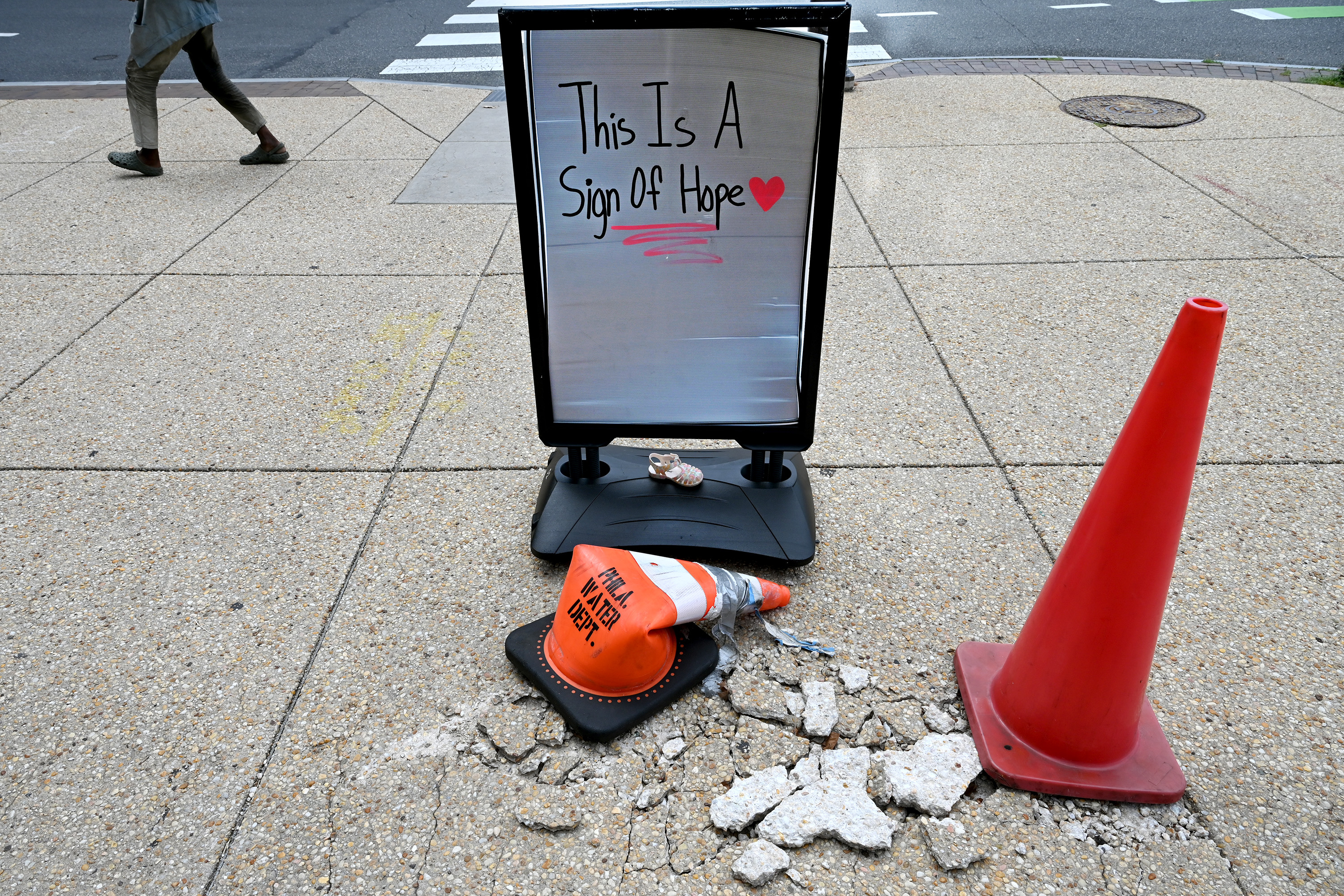
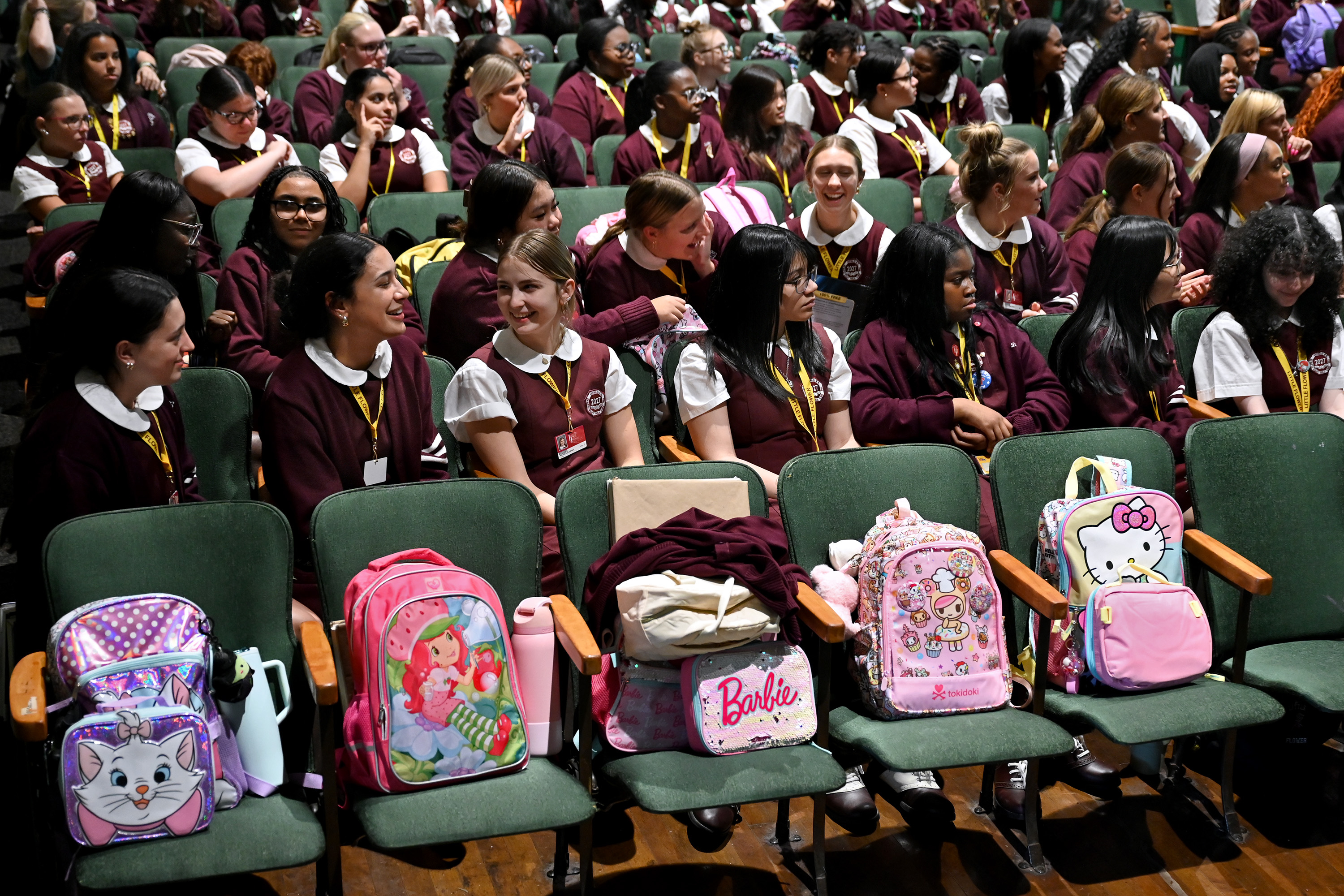
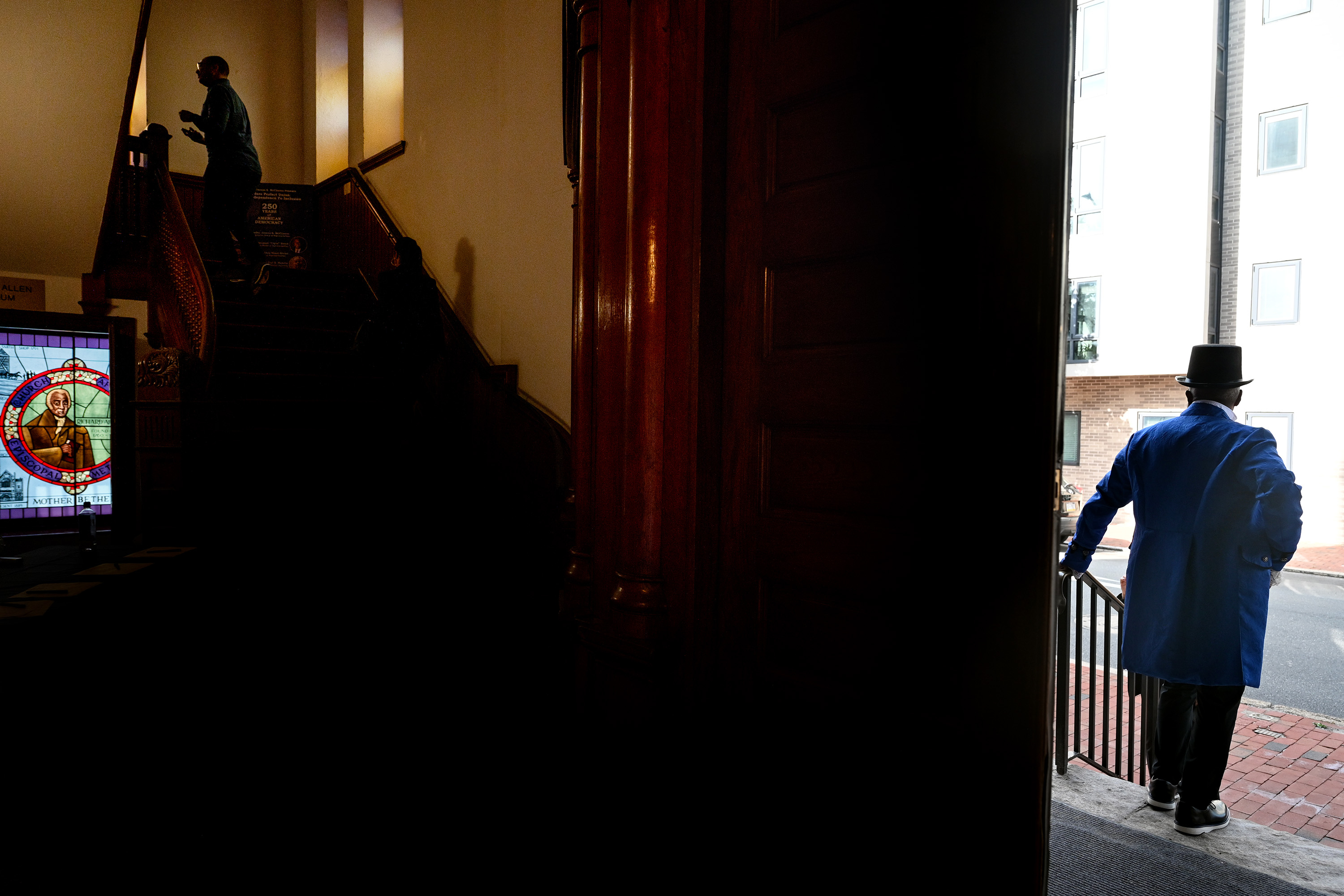
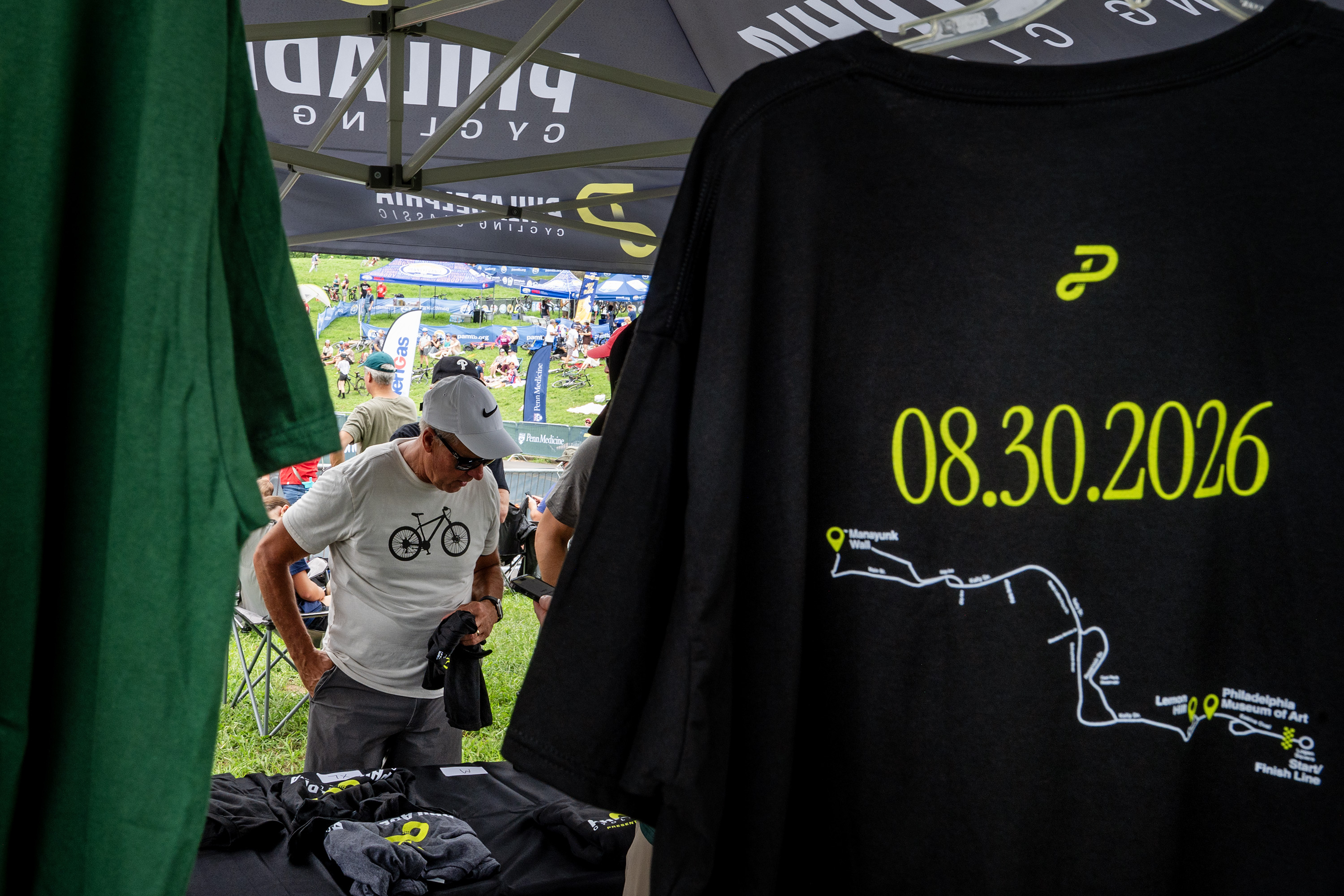
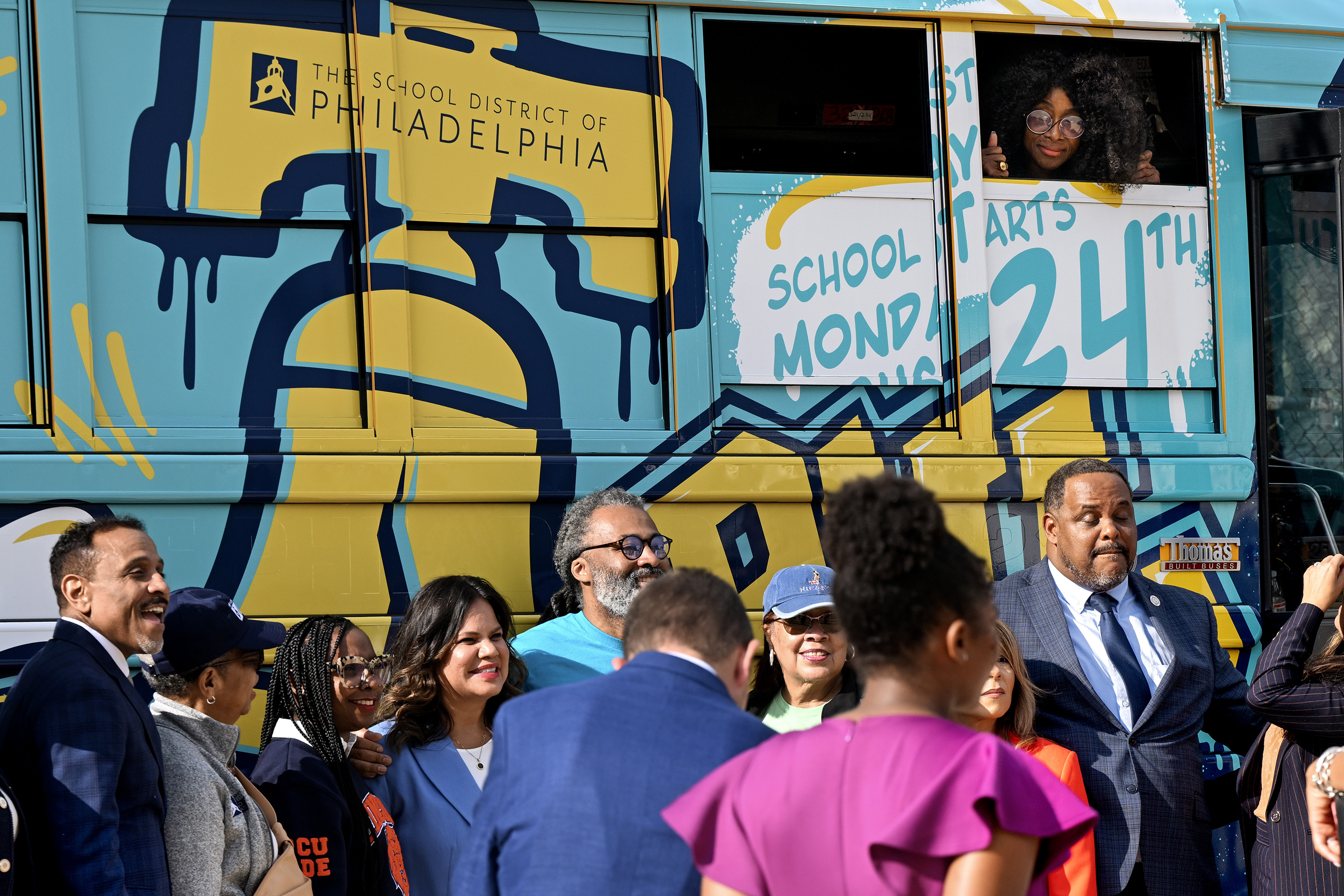
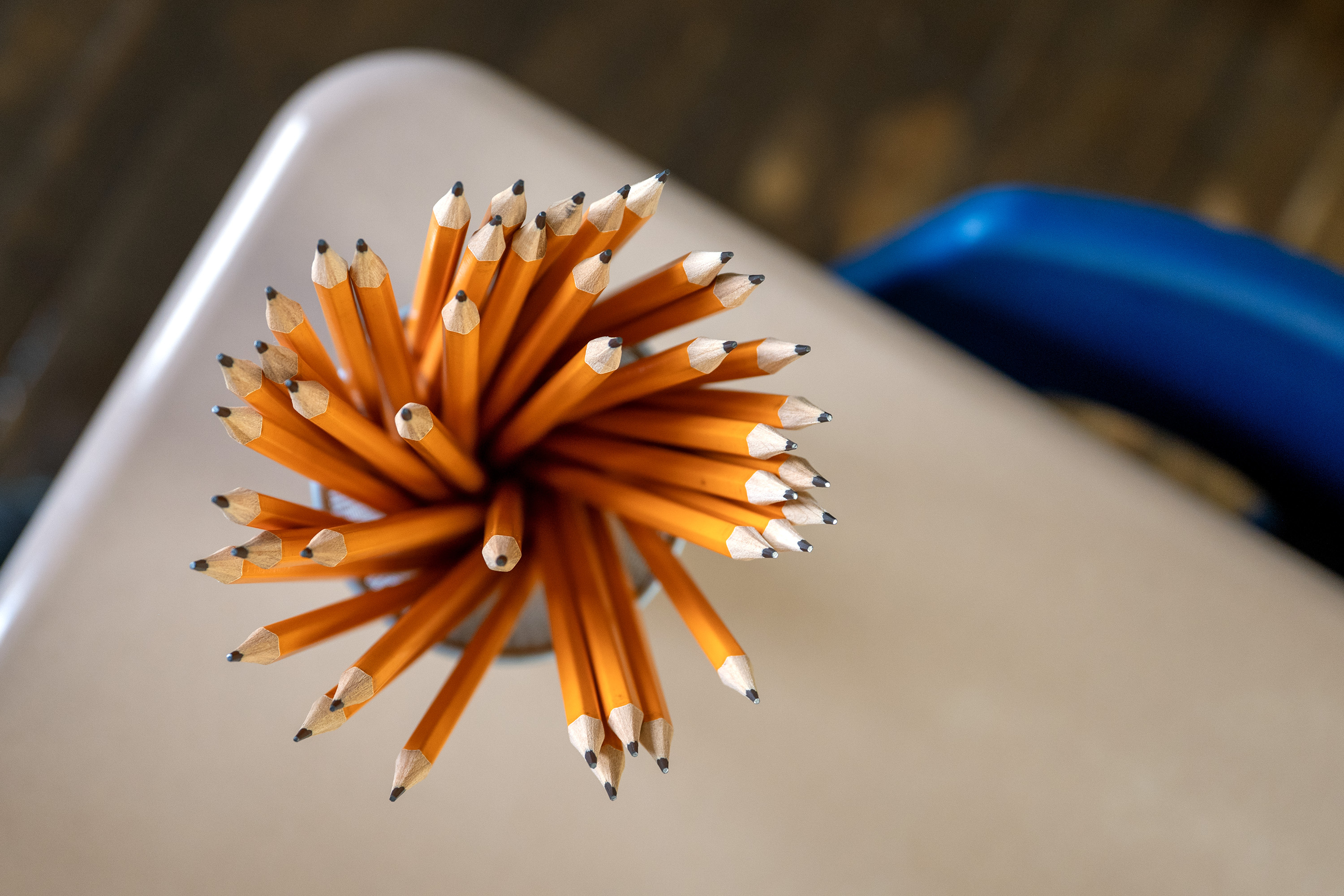
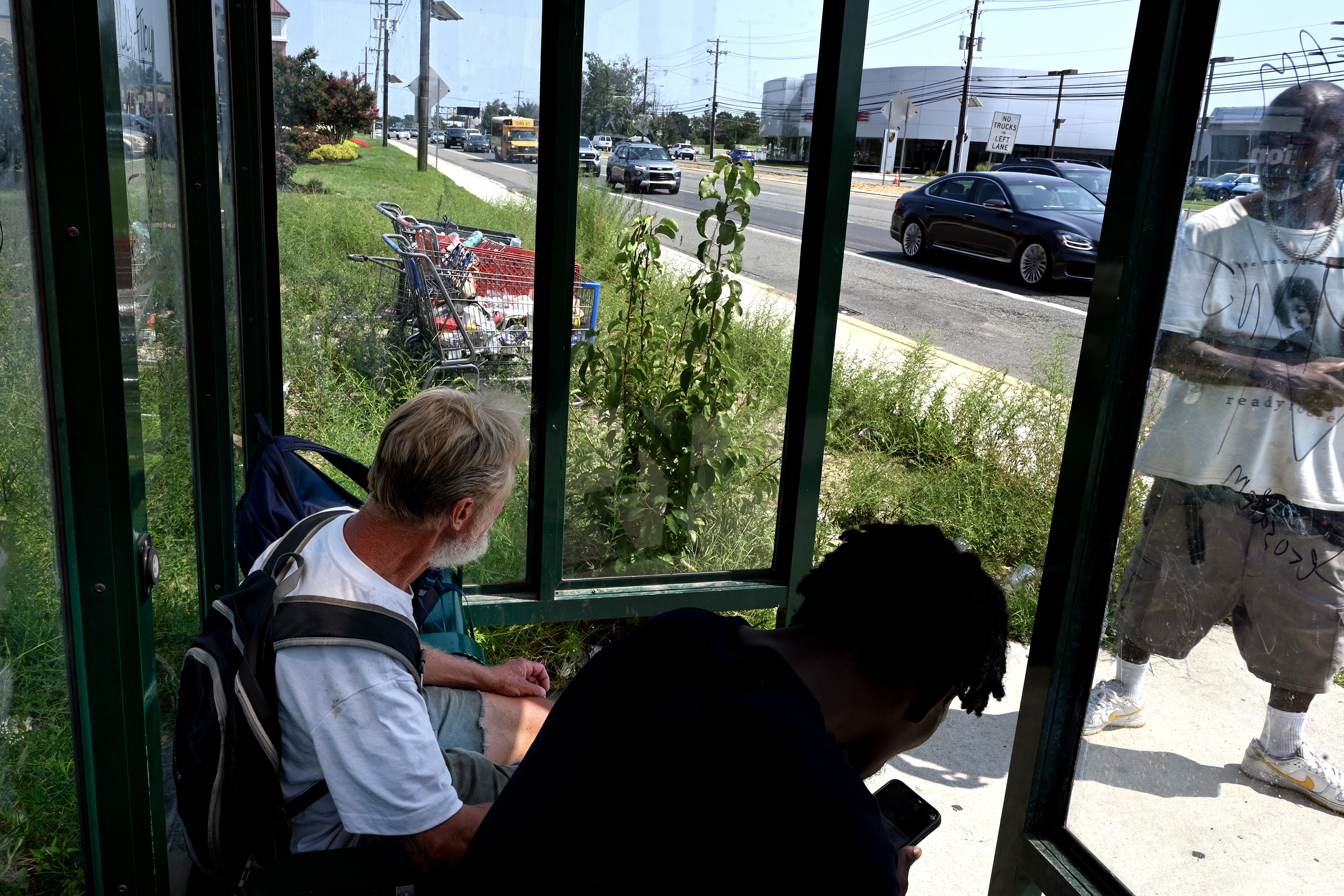
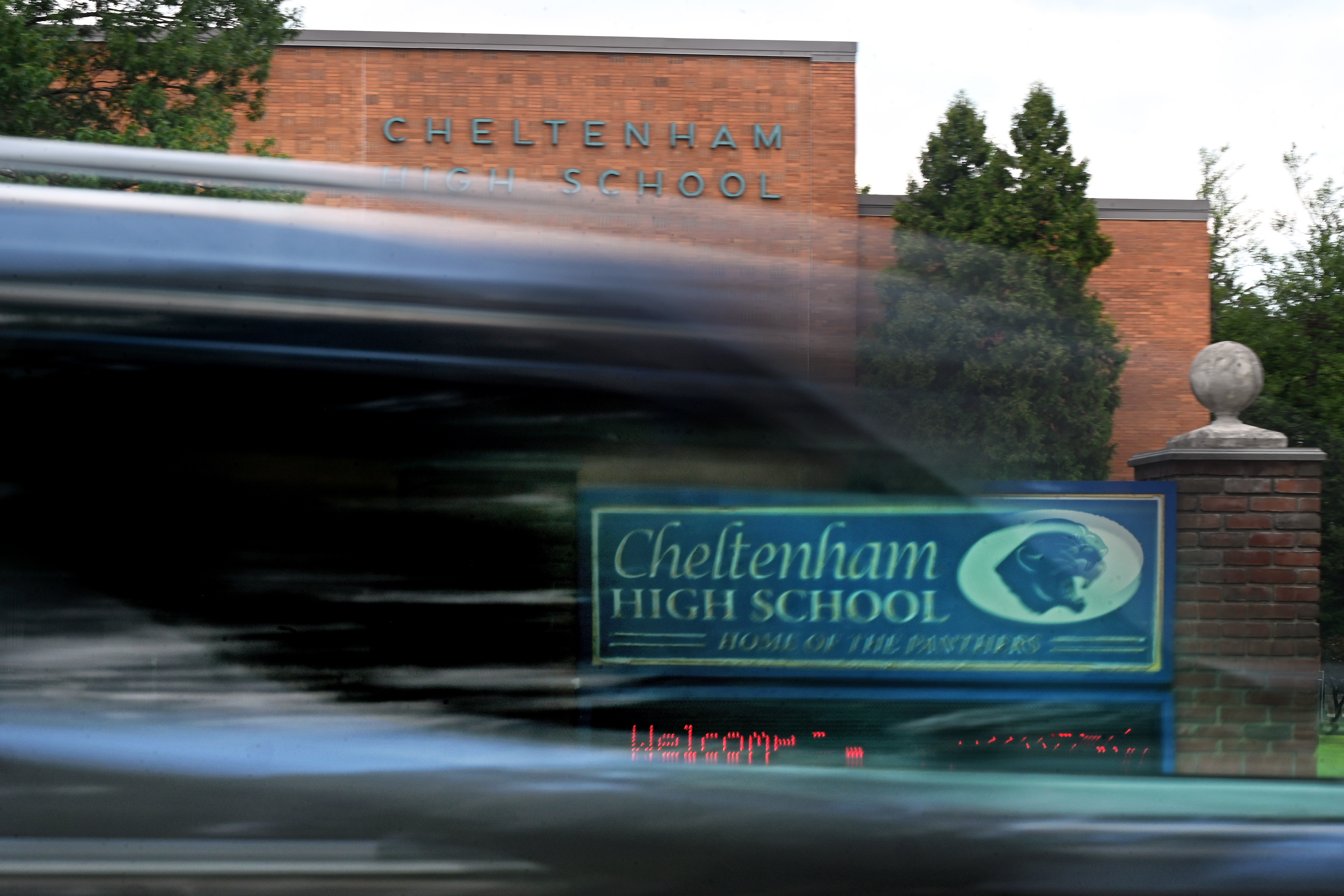
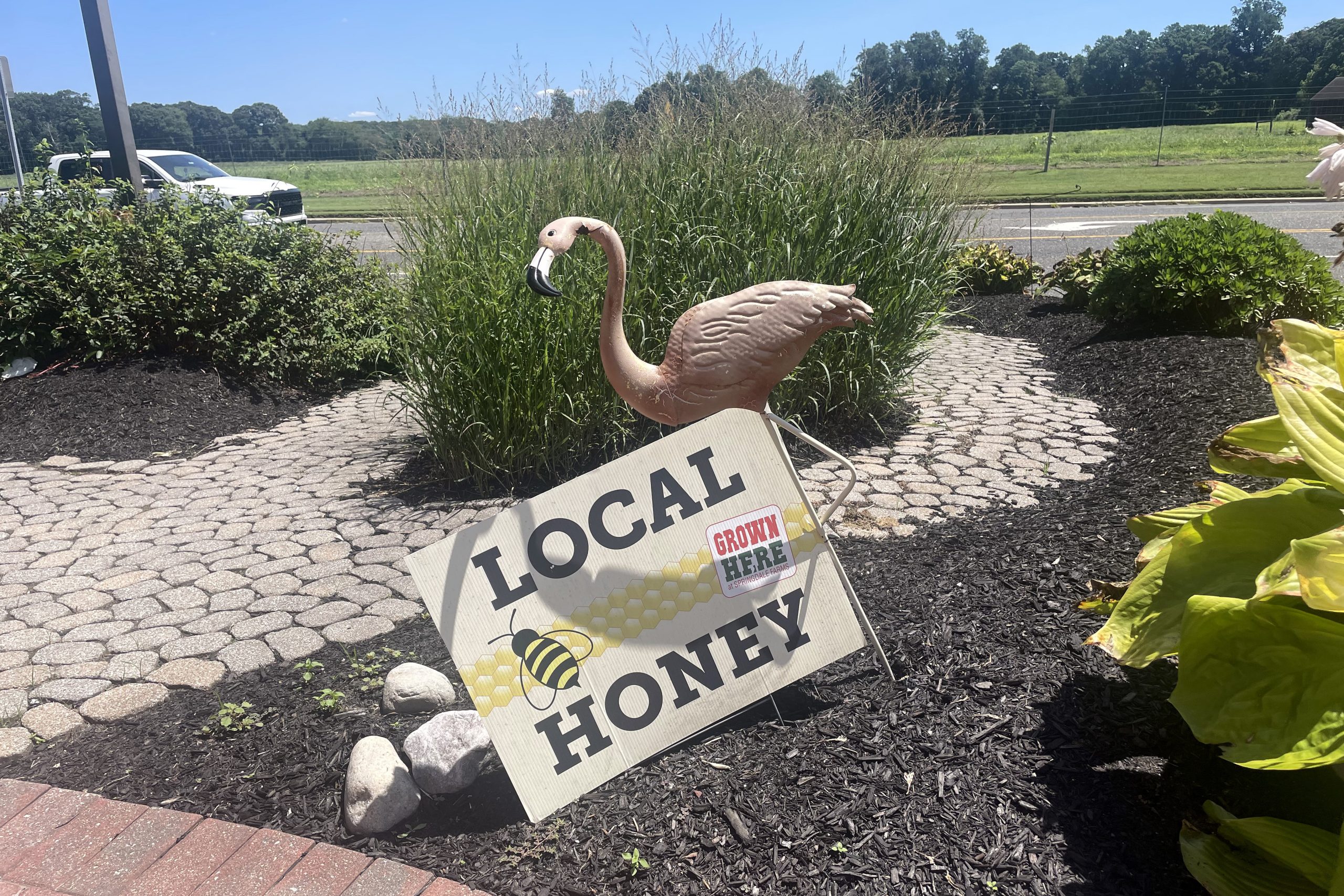
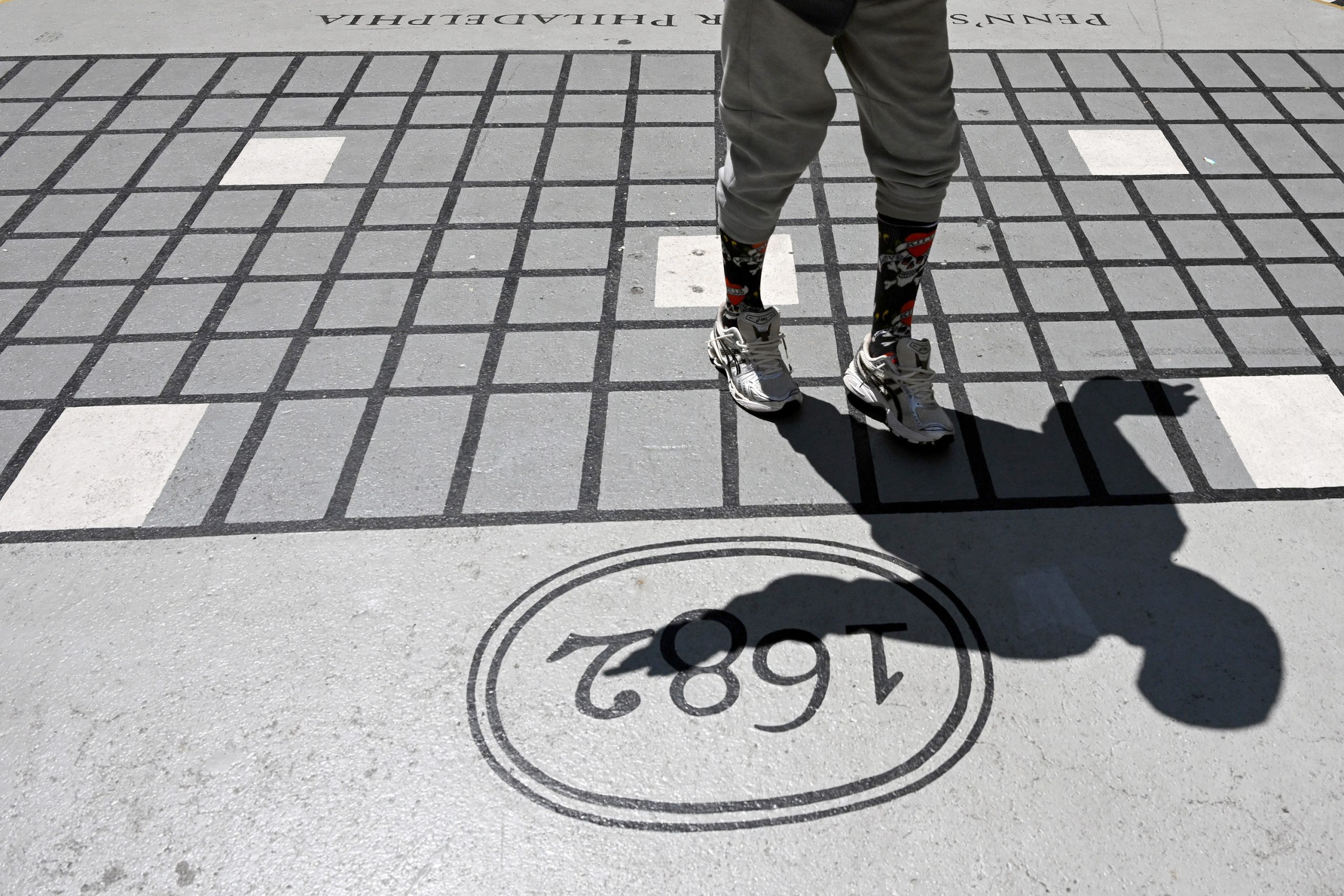
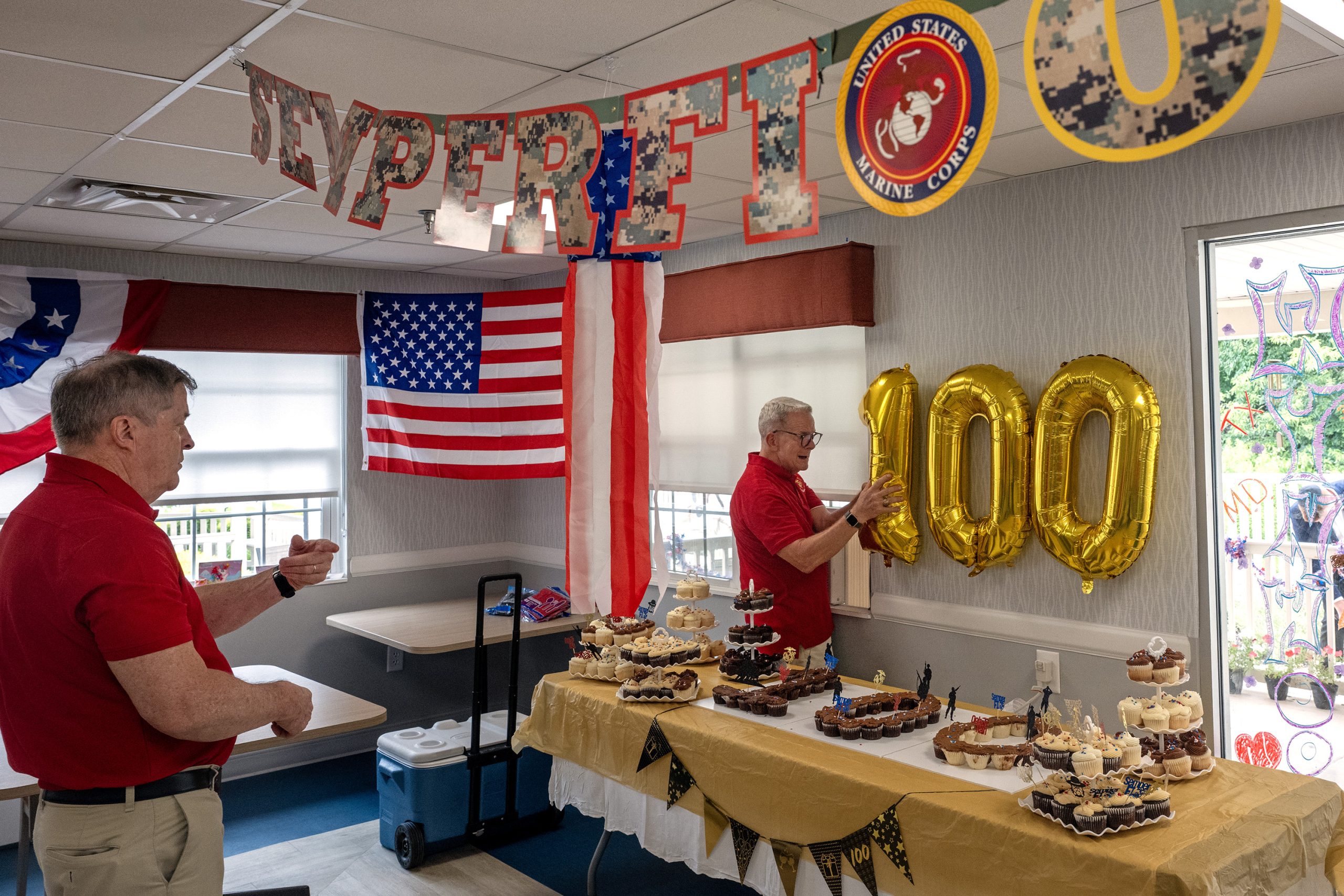
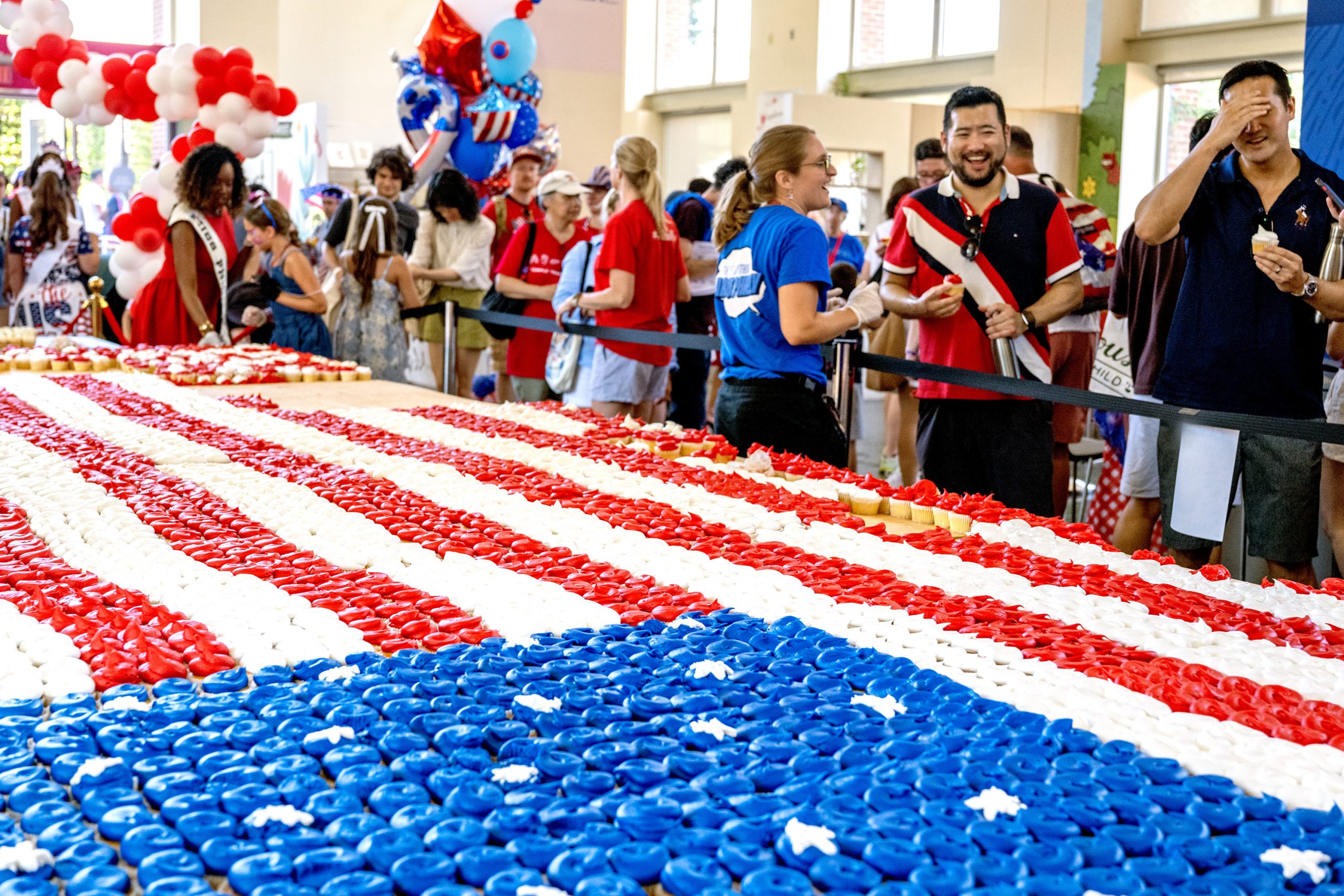
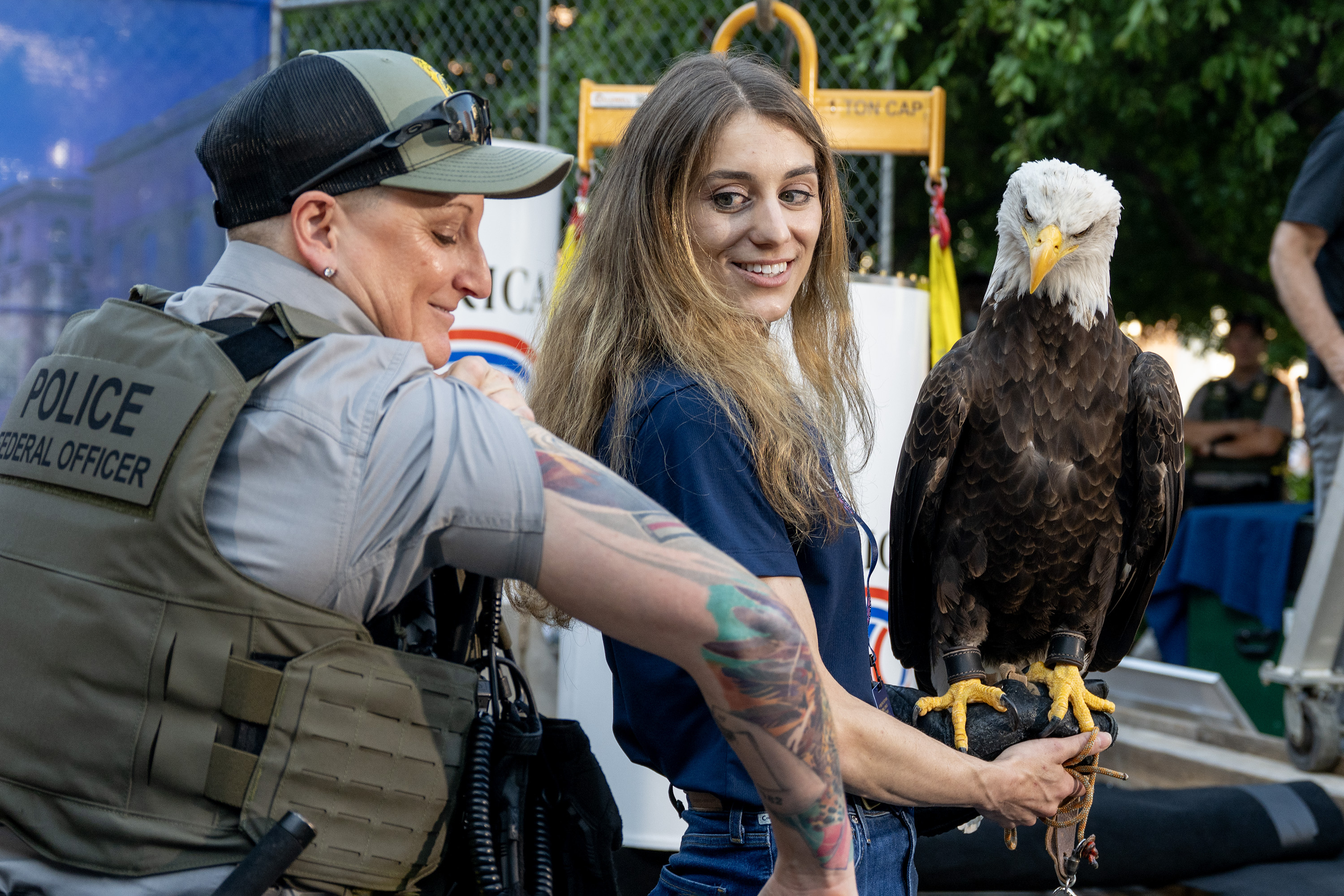
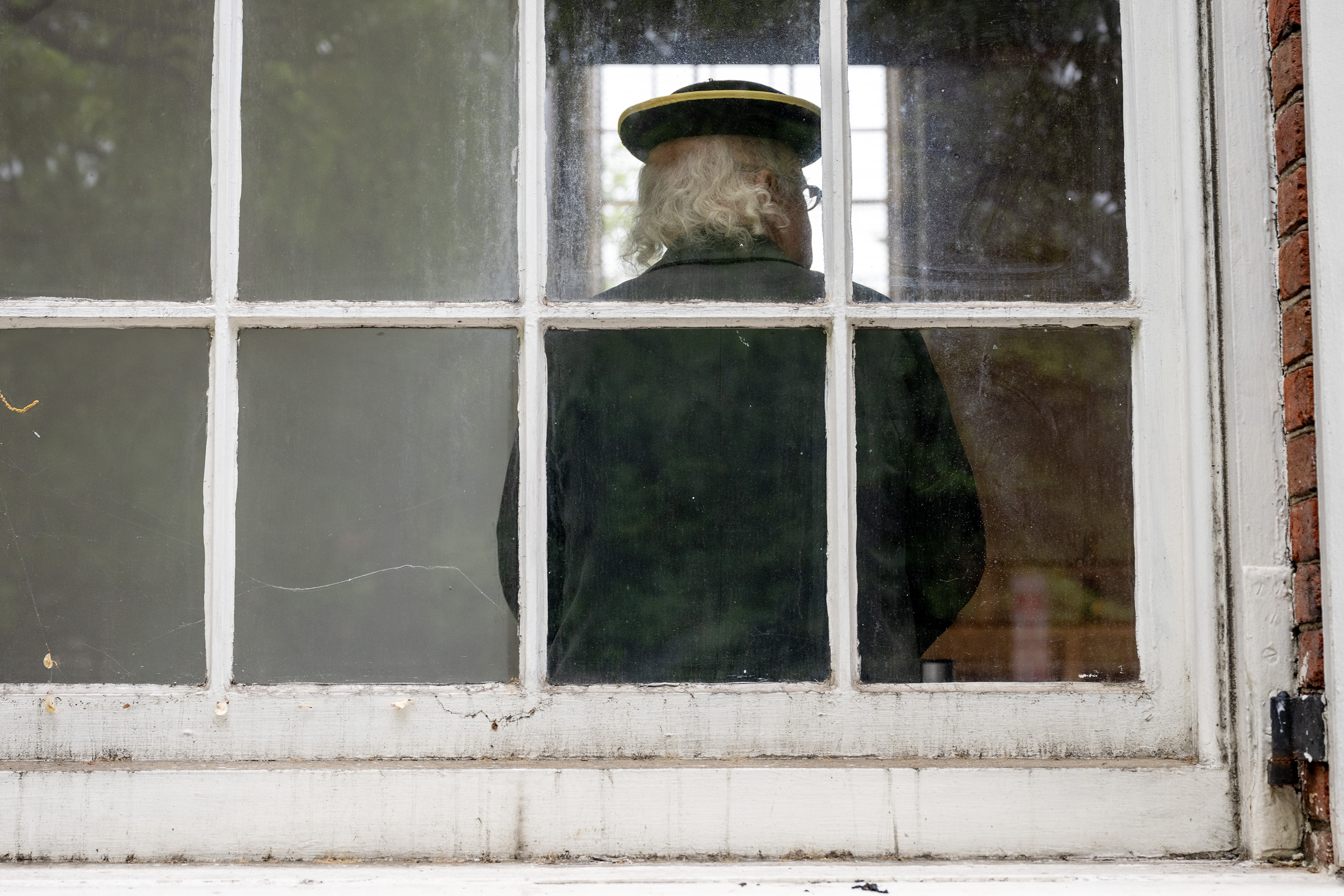
October 5, 2026: Jerry Atwood vacuums inside the Academy of Natural Sciences of Drexel University after it closed the doors at 5 p.m. on the final day the museum was open to the public Sunday, September 27, 2026. Tom Gralish / Staff PhotographerSeptember 28, 2026: A hopeful sign a sidewalk repair might be imminent, in the Logan Square neighborhood where residents have apparently been waiting a while for something to happen.Tom Gralish / Staff PhotographerSeptember 21, 2026: Students wait in the auditorium before the arrival of Eagles linebacker Jalyx Hunt at an assembly at Little Flower Catholic High School for Girls where he announced the establishment of three scholarships and an endowment to support students. Tom Gralish / Staff PhotographerSeptember 14, 2026: Chris Lewis (right), portraying James Forten, an abolitionist, activist, and sailmaker in colonial America, greets visitors outside Mother Bethel A.M.E. Church as they arrived for an America 250 Conversation hosted by Pennsylvania House Speaker Joanna McClinton on Sept. 10. The stainedglass window at left depicts Richard Allen, founder and first bishop of the African Methodist Episcopal Church in 1816, the first independent black religious denomination in the United States. Tom Gralish / Staff PhotographerSeptember 7, 2026: Joe Ackler of Skippack shops for a race T-shirt during a lull between laps in the Philadelphia Cycling Classic on Aug. 30. He is wearing a shirt he bought in 2003 when he attended the Tour de France. Tom Gralish / Staff PhotographerAugust 31, 2026: Robin P. Cooper (upper right) watches as Superintendent Tony B. Watlington Sr. (far left) gathers school and city officials for a group photo outside the district bus, stopped at McClure Elementary on the first day of school in Philadelphia. The bus was on its annual back-to-school celebration visit to schools throughout Philadelphia. Cooper later left the bus to join in the photo. Tom Gralish / Staff PhotographerAugust 24, 2026: Pencils were sharpened in the first-grade classroom of teacher Lauren Cucinotta at Fanny Jackson Coppin Elementary as she prepared for the start of the new school year for the Philadelphia School District on Monday.Tom Gralish / Staff PhotographerAugust 17, 2026: Wayne Peters (left) and Bobby White (right) wait for the #406 bus to Camden, on Rt. 70 in Cherry Hill, near the entrance to stores at the Garden State Pavilion shopping center and NJ Transit’s Cherry Hill station. Peters says it “Gotta be the worst bus stop in the state,” with White adding, “You’d think something in Cherry Hill would be better. How hard would it be to put a trash can here?” Before their bus arrives, Peters, trying to be positive about the shelter, reminds him “They fixed a broken window once.”Tom Gralish / Staff PhotographerAugust 10, 2026: Cheltenham High School in Wyncote, on the day the Montgomery County district attorney announced charges in connection with two assaults in the school’s football locker room. A photo of the static signs was made more visually interesting by using a slow camera shutter speed to blur the passing cars. Tom Gralish / Staff PhotographerAugust 3, 2026: Sign for locally “grown” honey outside the market at Springdale Farms, the only working farm left in Cherry Hill. Before WWII, when it was still known as Delaware Township, there were 82 farms in operation feeding South Jersey markets and supplying the massive fresh vegetable and crop demands of the Campbell’s Soup Company in Camden. Tom Gralish / Staff PhotographerJuly 27, 2026: Lyn-el “The Torch” Wright pauses on the City Hall Courtyard’s rendering of William Penn’s Philadelphia city grid plan. Penn designed the 1,200-acre “Greene Countrie Towne” between the Delaware and Schuylkill rivers with wide, crisscrossing streets to prevent the overcrowding and fires he had witnessed in London. July 20, 2026: Pat Dailey (left) and Ken Hopper with the Tun Legacy Foundation prepare a room at the Wynwood Rehabilitation & Healthcare Center in Cinnaminson, N.J., for a surprise 100th birthday party for WWII U.S. Marine Corps veteran Stephen Anderson. Dailey founded the nonprofit that supports veteran causes, Masonic charities, and educational scholarships. The organization is also rebuilding and reestablishing an authentic reproduction of the original Tun Tavern building in Philadelphia. The Tun, constructed in 1693, was the first documented lodge in North America and the birthplace of the U.S. Marine Corps in 1775.July 13, 2026: The Independence Visitor Center offers free birthday cake to the public on the Fourth of July, in the form of a massive American flag made of 5,000 cupcakes frosted red, white and blue.July 6, 2026: National Park Police Deputy Chief Rebekah Spedaliere shows off her own bald eagle tattoo while posing for a photo with bald eagle “Indy” and handler Amanda Sweeney with the Auburn University Raptor Center, during ceremonies over the July Fourth weekend. Indy came to Auburn, in Alabama, in 2018 after suffering a wing injury as a young bird and imprinted on humans during rehabilitation, so she couldn’t be released back into the wild. Now, she serves as an ambassador bird, teaching people about raptors, conservation, and the ecosystems that sustain them. Not her first rodeo in Philly, she made her first appearance at the Linc for an Eagles’ game in 2023. Tom Gralish / Staff PhotographerJune 29, 2026: Shecky Perlman as Ben Franklin is inside the Free Quaker Meeting House on Independence Mall as he and other historical reenactors receive their diplomas after weeks of intensive, immersive training for the 21st season of Historic Philadelphia’s Once Upon a Nation program — where costumed actors perform first-person interpretations of real 18th-century Philadelphians in the Historic District and at Valley Forge National Historical Park.Tom Gralish / Staff Photographer
Leave a Reply