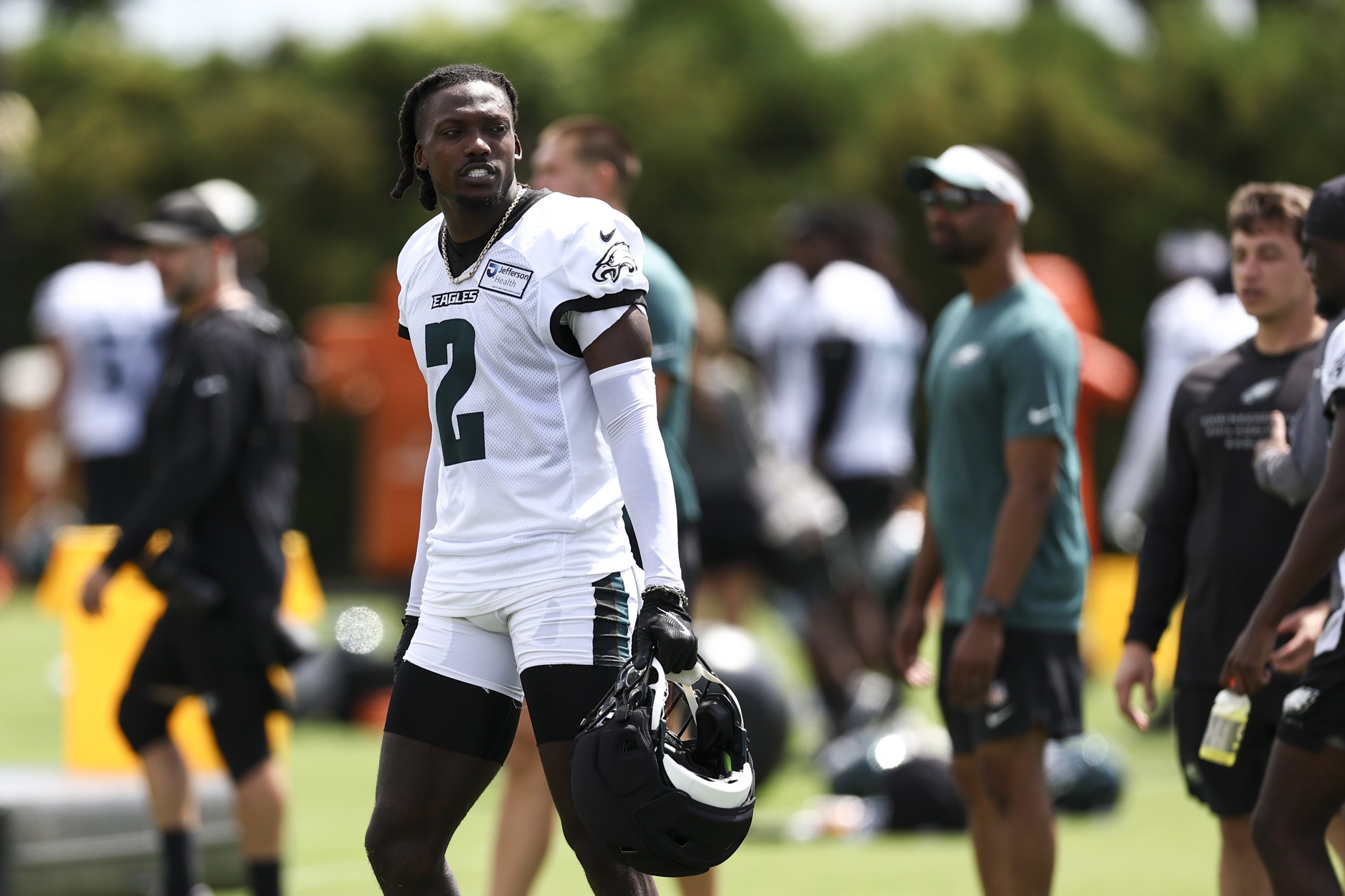
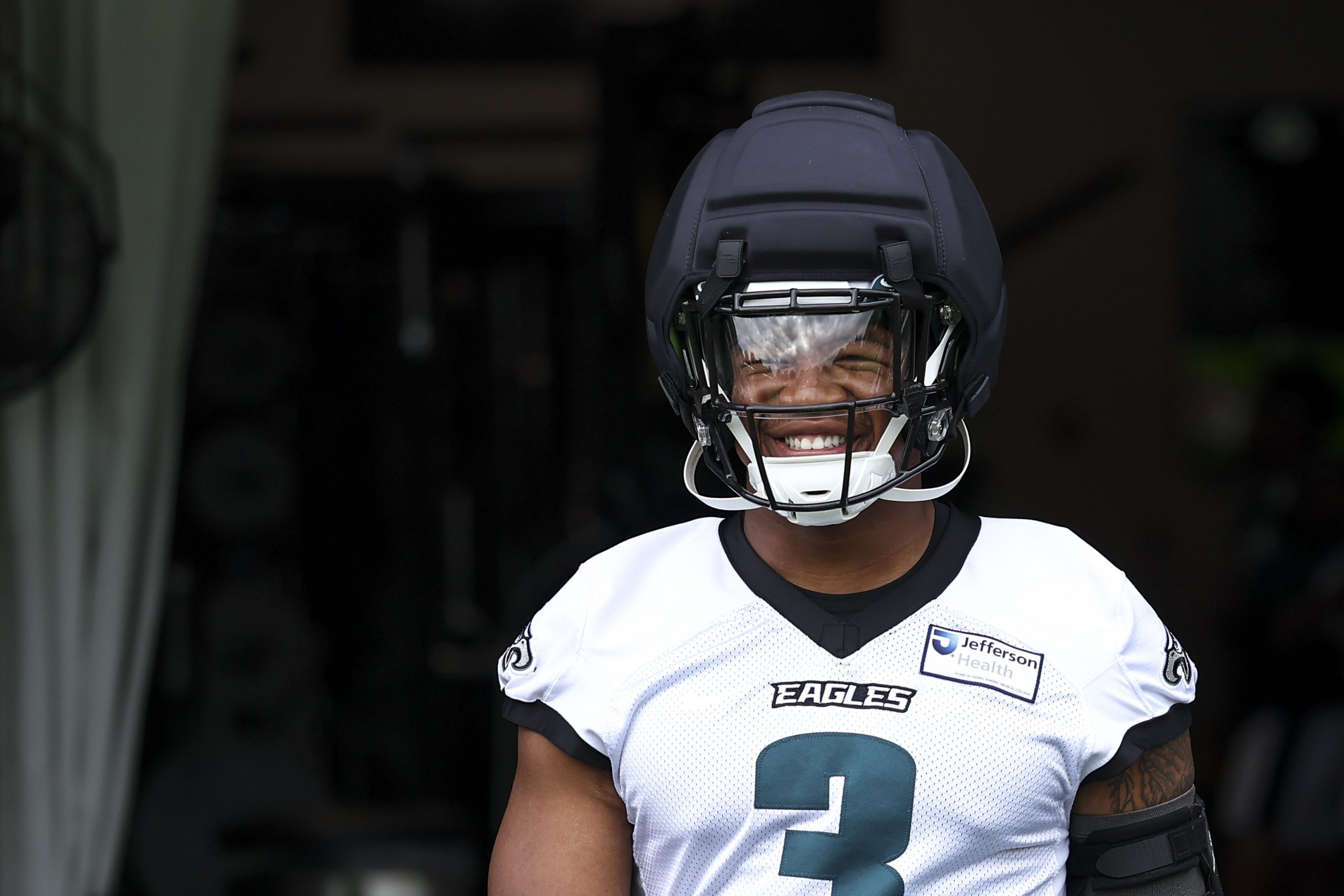
Riq Woolen stopped in his tracks. Following Thursday’s practice, the newest Eagles defensive back was sprinting off the field when he was waved down by one of his all-time favorite players: Hall of Famer Brian Dawkins.
Woolen — who is the second tallest cornerback in the league — was enamored by the Eagles legend’s build at 52 years old.
“He’s big as hell,” Woolen said with a laugh. “I didn’t expect him to be that big, bro.”
People inside the building have been saying similar things about Woolen since he signed with the Eagles. Woolen, 27, is not your typical corner. Whereas other defensive backs stand at an average height of 5-foot-11 according to Joker Mag, Woolen has an impressive 6-foot-4, 210-pound frame. This physical advantage made him a Pro Bowler in 2022 and a key cog in the Seahawks’ Super Bowl run last season.
These traits are the reason why general manager Howie Roseman handed him a one-year deal worth up to $15 million in March. With Woolen, Quinyon Mitchell, and Cooper DeJean in the defensive backfield, the Eagles now have three Pro Bowl cornerbacks for the first time in team history.
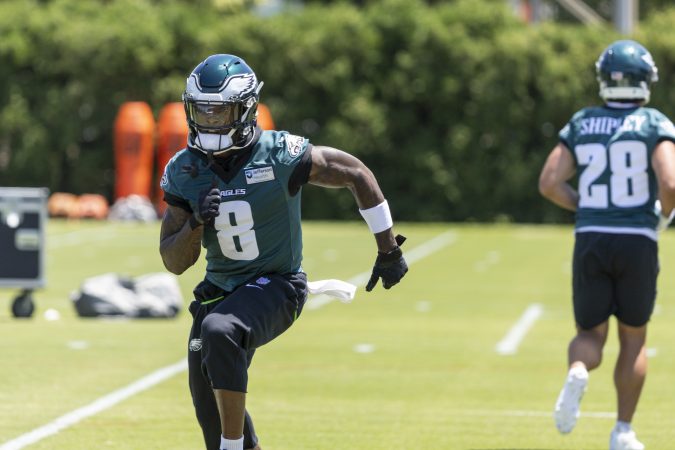
Riq Woolen has an atypical build for an NFL cornerback. Monica Herndon / Staff Photographer
So, how are things going with this potentially dominant trio so far?
“It’s pretty cool because it’s just learning how to fit in with these guys,” Woolen said Thursday. “I know my personality, I get along well with everybody. So just being able to become close with these guys, that’s all I really care about.
“I’ve got to be the best version of myself, and for me to do that, I’ve got to be comfortable with them, and they’ve got to be comfortable with me, and they’ve got to get to know me, and I’ve got to know them.”
Woolen has had an excellent start to his NFL career, collecting Super Bowl hardware and 12 total interceptions. He could have signed with plenty of teams in free agency, but he said team culture brought him to the Eagles.
“Honestly, just the culture here is just an amazing culture,” Woolen said. “They preach to us we got to work hard. It’s a hard working team. Everybody in this organization works hard. So just being able to be coached by them, I feel like it’s going to help me as a player and it’s going to push me to be a great person.”
Riq Woolen reached a Pro Bowl and won a Super Bowl in four seasons with the Seahawks. Kyusung Gong
It might not be a long-term marriage. The Eagles still need to pay Mitchell and DeJean, so Woolen could possibly serve as a one-year mercenary. But if he can replicate his elite production from Seattle with the Eagles, Roseman certainly won’t complain. Since his rookie season, Woolen has limited quarterbacks to a 54.2 completion percentage, which ranks 14th of the 139 corners (with at least 100 targets). He recorded his fourth consecutive season with 10-plus passes defended last year.
Woolen’s new defensive coordinator, Vic Fangio, is thrilled about what he can do in the Eagles’ defense.
“Well, he’s a rare guy in that you don’t see many corners in the league that are 6-foot-4,” Fangio said in May. “You don’t see many that are 6-foot-2 or even 6-foot-1 and there’s a reason for that. It’s hard to find guys at those heights that can move and mirror receivers that are hard to cover. He can do that for a guy his height. He can get in and out of breaks. He obviously has good downfield speed and his length is more of an asset than a detriment in his case.
“I’m excited to have him. He’s been here since we started the offseason. Seems to be a great guy. He’s into being here and really looking forward to working with him.”
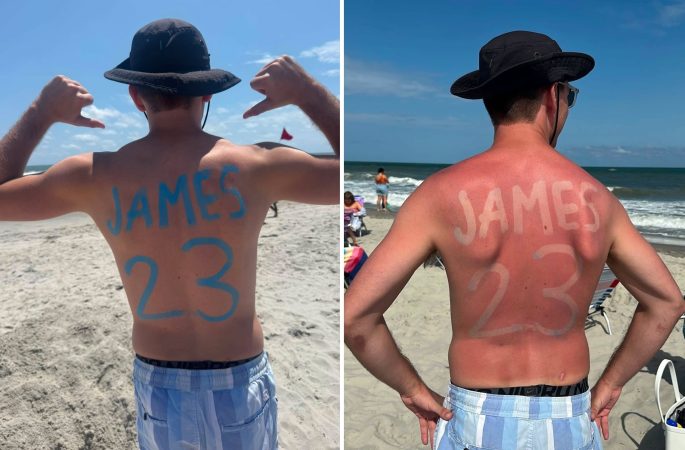
LeBron James announced he was coming to Philadelphia. Within days, someone had intentionally sunburned a No. 23 jersey onto his back. That’s commitment.
A Delco man spent a day at the beach in Sea Isle using zinc sunscreen to leave behind a perfectly outlined “James 23” sunburn. His family thought he’d lost his mind, and beachgoers assumed he’d lost a bet. But later that night he got to proudly show it off at Ocean Drive like he’d just gotten fresh ink.
The man called it “Philly toughness” … sure. This is exactly why Philadelphia sports fans have the reputation we do. We climb poles, tattoo the Phanatic on our bellies, and name our dogs after backup quarterbacks. And now someone has a LeBron jersey they can’t take off for a week.
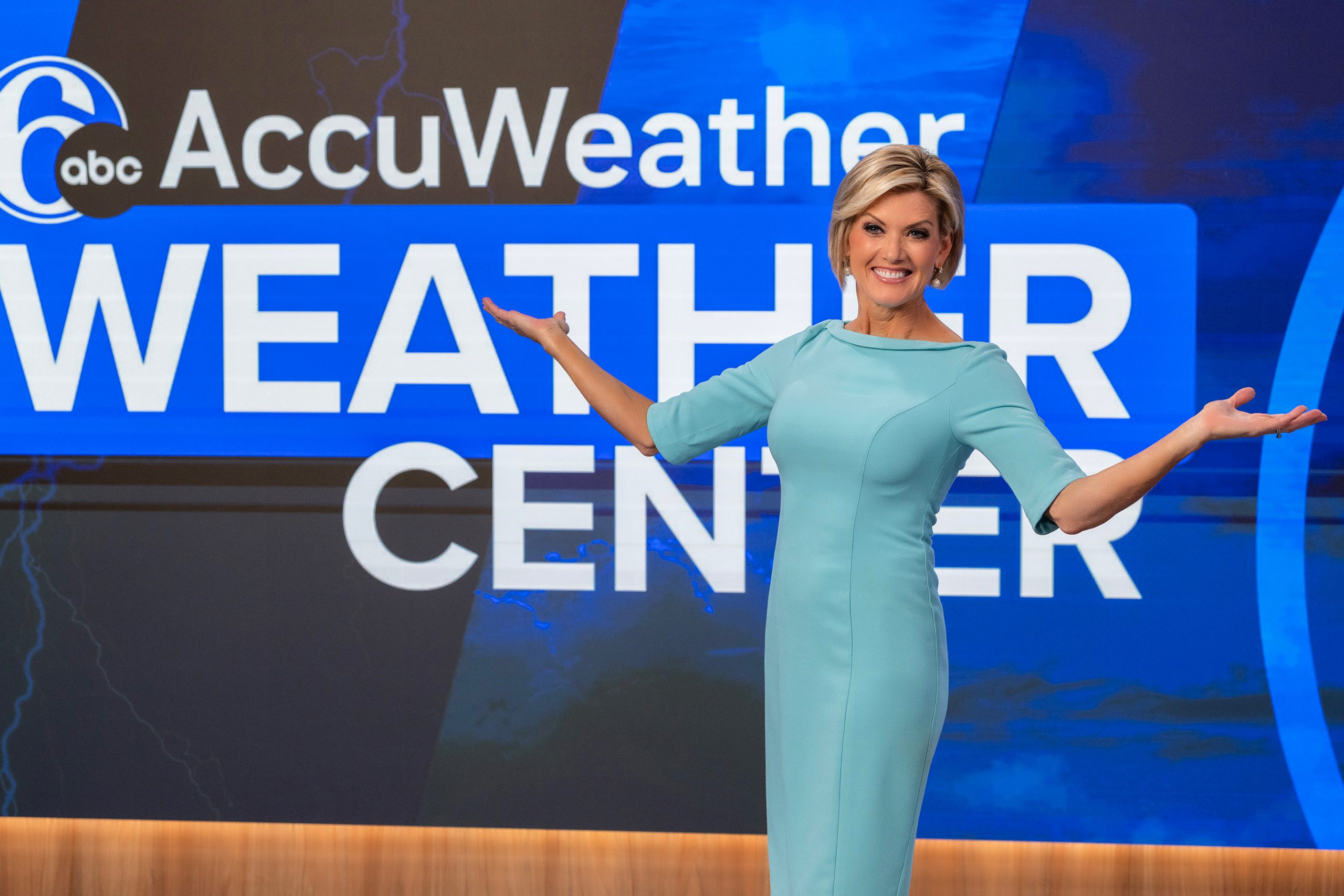
Longtime 6abc meteorologist Cecily Tynan has spent more than 30 years as a member of the Action News team.6abc
The end of another Action News era: F
Thirty years is long enough for someone to become part of your routine without you even realizing it.
For decades, Cecily Tynan has been the person telling Philadelphia whether to grab a jacket, brace for a blizzard, or enjoy a sunny weekend. You hear the forecast while making dinner or before heading out the door and rarely stop to think about who’s delivering it.
Cecily Tynan leaving feels a little bigger than another broadcaster calling it a career because Action News is part of the city’s daily rhythm. Generations have eaten dinner while those familiar voices played in the background.
But it’s hard to argue with her reason. She’s retiring while she’s healthy enough to spend more time with her family, cheer at her daughter’s track meets, water ski in Florida, rescue animals, and, perhaps most shocking of all, cook Thanksgiving dinner for the first time instead of picking it up from Whole Foods.
First Jim Gardner. Now Cecily Tynan.
Good luck to whoever has to tell Philadelphia there’s snow coming next. Those are big rain boots to fill.
One of the best parts of watching a movie or TV show filmed in Philadelphia isn’t the plot. It’s playing, “I know where that is.”
The trailer delivers plenty of that. You get SEPTA stations, Market East, the Benjamin Franklin Bridge, Center City rooftops — Reacher himself even slams a guy’s head against an Inquirer vending box. We knew Reacher was filming here last summer but seeing the finished product is still oddly satisfying.
Maybe the action scenes will be great. Maybe the mystery will keep us hooked. But let’s be honest: Half of Philadelphia is going to spend every episode pointing at the TV and announcing exactly where they filmed it. (Bonus points if you can call out shots of Toronto masquerading as Philly.)
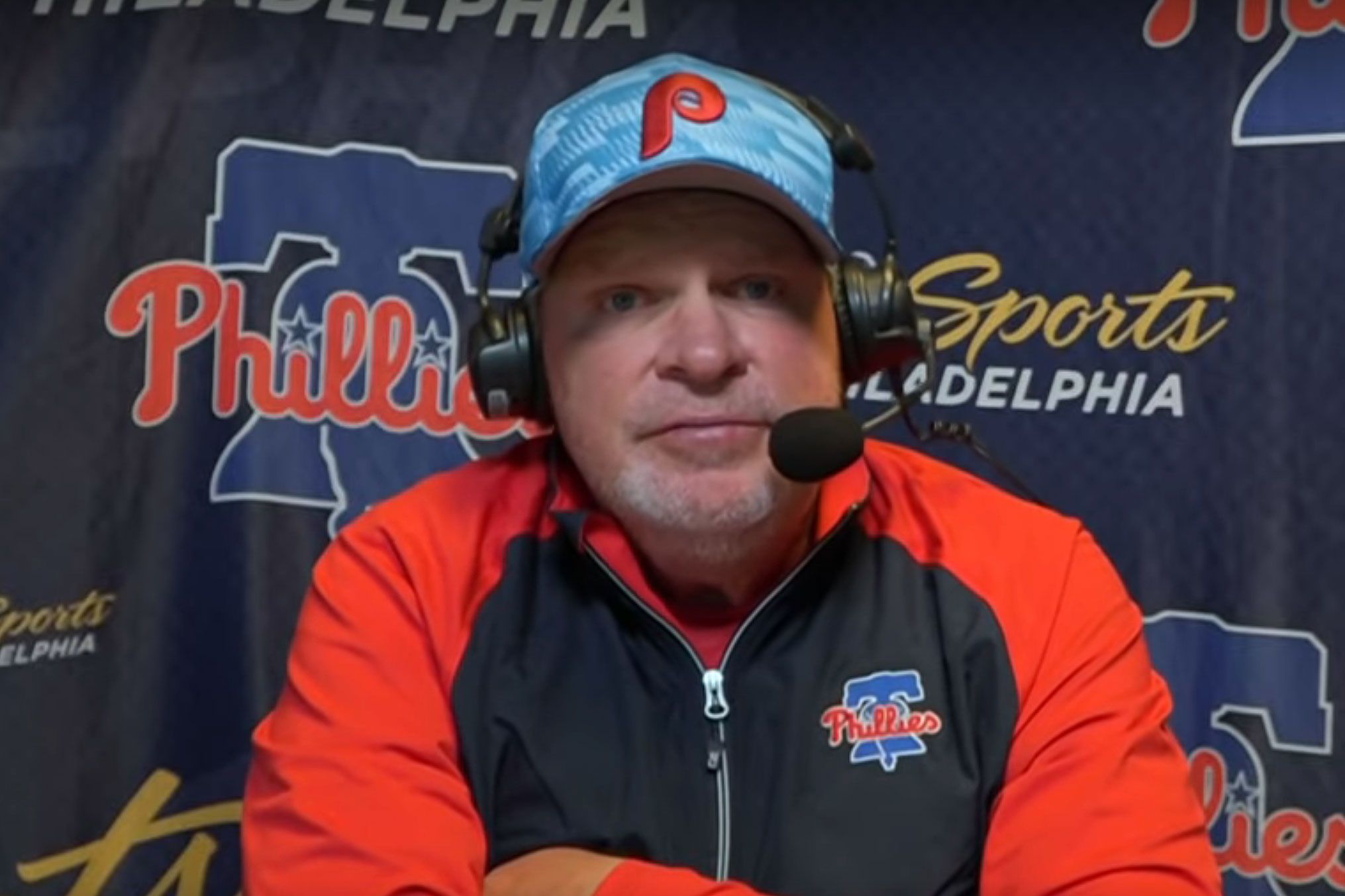
NBC Sports Philadelphia analyst John Kruk following the Phillies’ loss to the New York Mets on Tuesday.NBC Sports Philadelphia
John Kruk on national TV: A
Every time John Kruk joins the Sunday Night Baseball broadcast, it feels like someone accidentally invited your funniest uncle to a black-tie wedding.
This week, the conversation somehow turned into Kruk admitting he doesn’t really own ties, that most of the ones he brought were clip-ons, and then struggled to button his collar while Joe Girardi and Jason Benetti narrated the ordeal like it was Game 7 of the World Series. At one point, Kruk declared facing Randy Johnson was easier than putting on the tie.
That’s why Philadelphia loves him.
Kruk makes millions of viewers feel like they’re sitting in the living room watching baseball with a friend who wandered in wearing whatever he found in the closet. He’s knowledgeable without acting like the smartest guy in the room, and he’s never afraid to laugh at himself.
Sure, NBC can put him in a jacket and hand him a tie, but they can’t make John Kruk stop being John Kruk.
From left: Former Eagles receiver Terrell Owens, the Phillies’ Bryce Harper, and former Flyer Eric Lindros.Associated Press
LeBron James is the latest reminder that the biggest names in sports don’t just tolerate Philadelphia anymore — they want to play here. And once you start thinking about it, the list is pretty impressive: Bryce Harper, Saquon Barkley, Terrell Owens, Jim Thome, Cliff Lee, Dr. J, Eric Lindros, Moses Malone. Each arrival felt like a holiday. Not every move worked out perfectly. (Sorry, T.O.) But that’s beside the point.
For decades, Philadelphia fans carried around the idea that stars preferred bigger markets, warmer weather, or flashier franchises. We were the “underdogs.” Now, one of the greatest basketball players of all time looked around the NBA and decided he wanted to spend the final chapter of his career was South Philly. (We just have to convince him to move here now.)
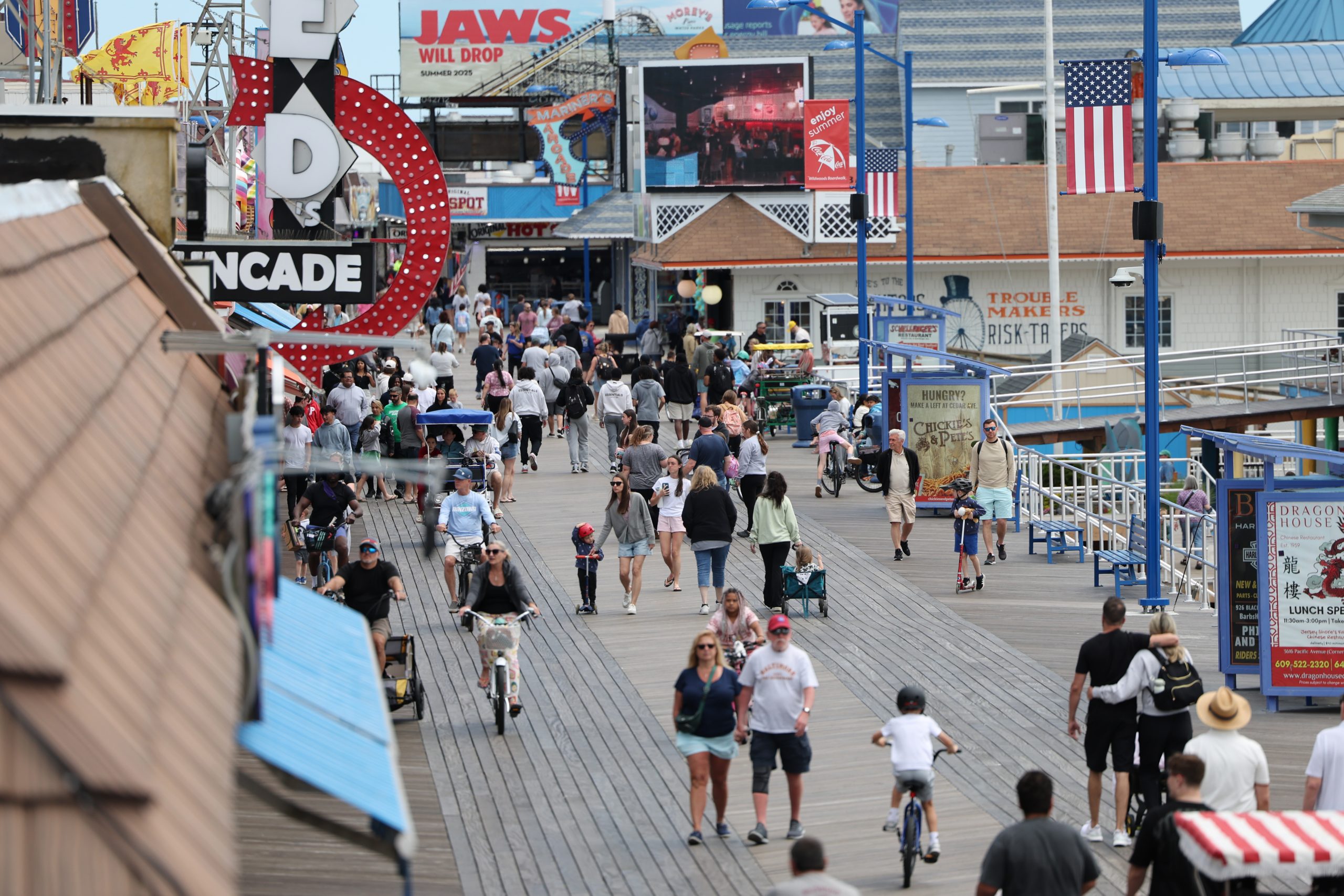
A crowd strolls along the boardwalk in Wildwood on Monday, May 26, 2025.David Maialetti / Staff Photographer
Now comes the important part: Please film it there.
Hollywood has a habit of setting shows in one place and shooting them somewhere completely different. But Wildwood has too much personality to fake. The boardwalk, the neon motels, the tram car. If you’re going to call the show Wildwood, you have to earn it.
Besides, if The Four Seasons can film down the Shore and Reacher can turn Philadelphia into an action movie backdrop, there’s no reason this one can’t let Wildwood play itself.
If nothing else, we deserve a season of spotting familiar landmarks instead of arguing online, “That’s clearly not Jersey.”
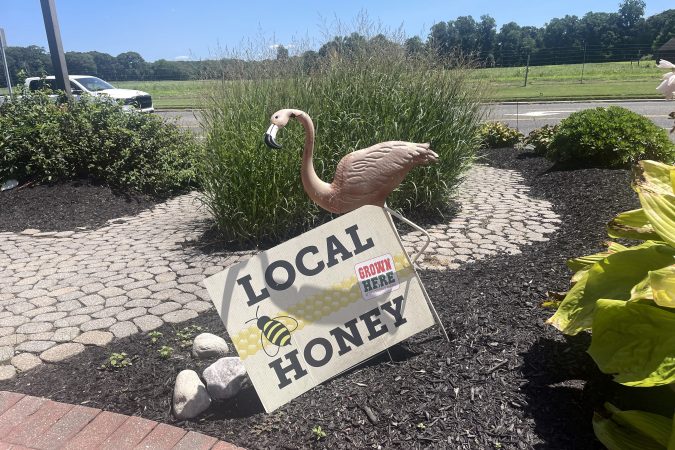
The juxtaposition of a flamingo and a honey bee may not have doubled you over in laughter, but it had me pause while walking into a South Jersey farm market. And it made me smile.
Then I started to overthink it. Am I missing a joke here? “Q: What’s the difference between a flamingo and a honey bee?” Or, “a bee and a flamingo walk into a bar.”
Nope. That doesn’t work either. Nor does a meme about having “the” birds and the bees “talk.”
All this to justify picking that picture to feature with this column. Some weeks it’s an easier choice, and this week’s got me thinking about what in the newspaper business is called a standalone photo.
A standalone photo made while my colleague was taking the escalator to his assignment at the International Congress of Mathematicians at the Convention Center on Monday.Jose F. Moreno / Staff Photographer
Aka, a photo feature or wild art, a standalone is a picture published without an accompanying article. I talked about it in a previous column (click bonus: the photos there are from a cold, snowy January day. Maybe refreshing to look at now, as we’re here in the dog days of summer).
In the heyday of dead-tree, printed ink-on-paper analog versions of newspapers not every story had a picture, so standalones were used when editors wanted to add some visual variety to a page that was all gray. That is precisely the 1998 origin of this column: it broke up a text-heavy page containing community news, calendars, traffic reports, school information, and volunteer listings.
Online publishing changed everything, and digital design evolved toward image-heavy layouts. Since our brains process pictures much faster than words, photos make a story more likely to grab a reader’s attention while scrolling.
Suddenly every story on news websites had an image attached. Pictures became plentiful.
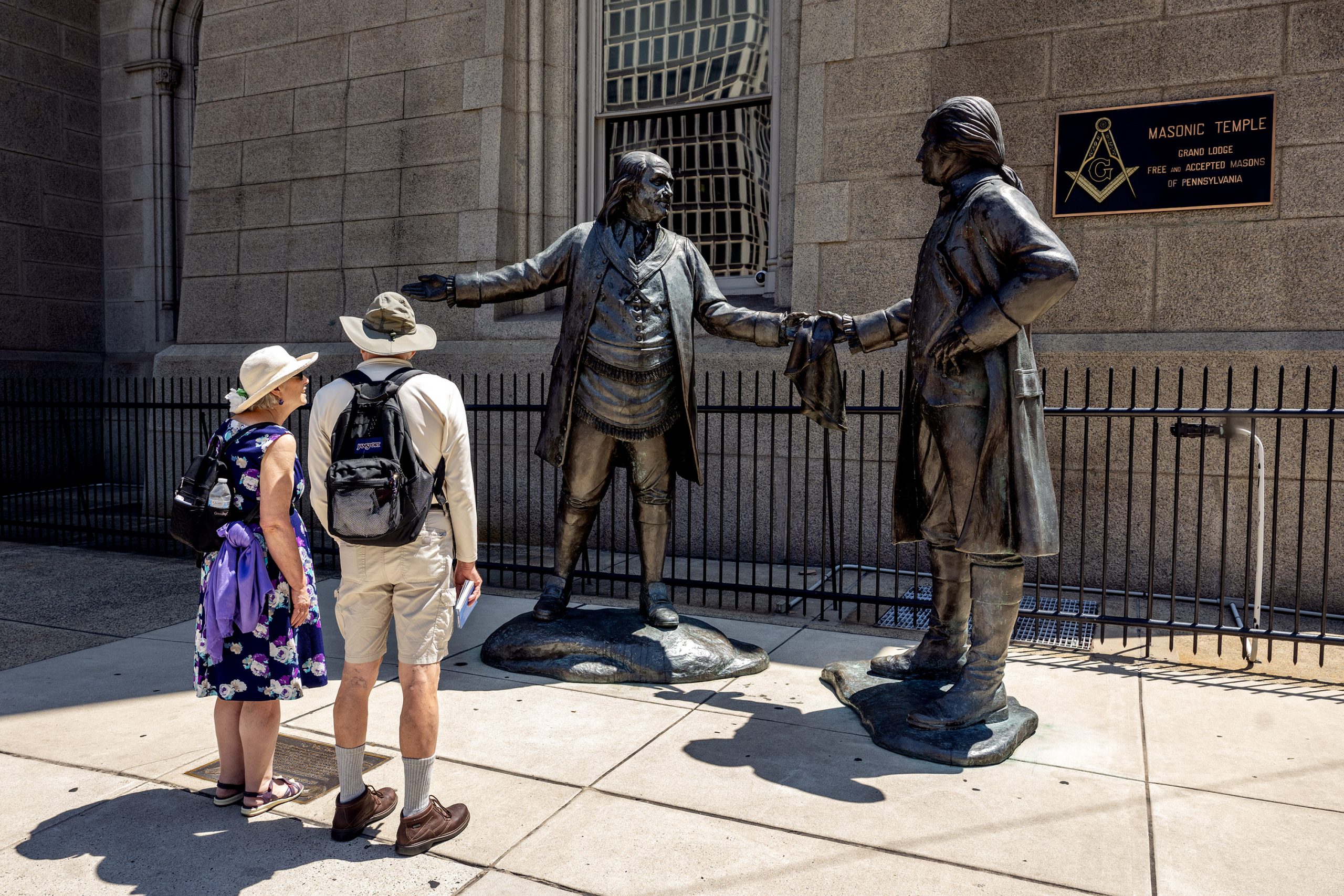
A standalone of two prominent Freemasons – Benjamin Franklin and George Washington – standing in bronze outside the Grand Lodge Masonic Library and Museum across the street from City Hall. (“The Bond” was created by sculptor Jim West in 2018.)Tom Gralish / Staff Photographer
And that’s the paradox. Even though the internet is highly visual, it favors rapid consumption rather than contemplation. Lost in the mishmash array of thumbnails on a website, it is harder to appreciate a storytelling standalone photo, or enjoy the much slower experience of pacing through a dozen images and captions in lengthy photo essays.
And that brings me around to a photo I saw this week. A reader submitted a picture they’d snapped of a young man outside Reading Terminal Market dressed in a solid-color button-down shirt with trousers held up by suspenders instead of a belt and wearing a broad-brimmed straw hat closely examining a parked Uber Eats’ delivery bot.
I reacted to it just as I did with the flamingo/honey bee, with a smile.
For decades the old weekly LIFE magazine had a standing feature on the last page called Miscellany. It was mostly pictures of people and animals in unexpected or humorous situations. A standalone.
Even with an abundant canvas there really isn’t a place on our website for a standalone photo — like the bot — without an attached story.
Or maybe there is. I have this column where my unattached images are displayed every Saturday and I’m happy to share some of the space (means less writing for me). So readers, if you see and take a picture like those on LIFE’s back-of-the-book page, email it to me.
(By the way, even though it was taken in a public place we wouldn’t have used the Amish/bot photo anyway. The subject may belong to a community that doesn’t enjoy being photographed, and he was minor. The photographer needed to talk to him — and a parent — to provide more context. But then it would no longer be a standalone.)
And remember, if a bee lands on you, freeze. Let it investigate and it will leave without stinging as long as it doesn’t detect a threat. If a flamingo lands on you, well, you’ve got a different problem.
Since 1998 a black-and-white photo has appeared every Monday in staff photographer Tom Gralish’s “Scene Through the Lens” photo column in the print editions of The Inquirer’s local news section. Here are the most recent, in color:
NEW YORK — Farah Berent, a physician assistant in Holland, Michigan, used to learn about politics from channels like ABC, CBS and CNN. But that changed as she decided that coverage of the war in Gaza was irreparably biased.
“I couldn’t stand all the lies on the stations,″ said Berent, arguing that there wasn’t enough attention being paid to Palestinian suffering. “I started going to Instagram to get my news.”
Berent is among many progressive-minded Americans who have sworn off legacy media institutions. They’re turning to a widening mix of independent podcasts, social media accounts and digital news sites, part of an increasingly influential ecosystem that has boosted this year’s wave of anti-establishment, left-leaning candidates who may not have gotten as much attention otherwise.
Liberals remain more likely than conservatives to trust mainstream outlets, but the splintering echoes how conservatives skeptical of their party created a collection of insurgent news sites years ago. The shift has elevated individual commentators with opinions on the news, some of whom have proven influential in driving people’s votes.
Ryan Grim, a co-founder of Drop Site News and a veteran of online political debates, said progressive politicians have sought out his platform to reach voters. In a change from previous election cycles, “they have ways to get covered even if the mainstream just basically ignores them,” he said.
One of those candidates is Abdul El-Sayed, who is running for U.S. Senate in Michigan and faces the more moderate U.S. Rep. Haley Stevens in the Aug 4. primary.
“I think in a lot of ways, where traditional media has been gatekeepers, we’re watching that gatekeeping function fall away,” El-Sayed said.
Anti-establishment media has exploded lately
These changes have been on display this year in places like New York City, where a slate of progressive congressional candidates endorsed by Mayor Zohran Mamdani defeated establishment-backed candidates.
Sara Hyler, a policy analyst in East Harlem, originally planned to support incumbent Rep. Adriano Espaillat in last month’s Democratic primary. But then Hyler started learning about progressive outsider Darializa Avila Chevalier through YouTube videos and podcasts, including from the liberal media company MeidasTouch.
“My actual beliefs are to the left of Democrats. I don’t want a moderate,” said Hyler, who ultimately voted for Avila Chevalier in hopes she could help nudge Congress toward progressive policies.
The rise of independent media has been part of a digital transformation that transcends politics, as chronically online Americans are turning toward news from social media and content creators. But it’s not just the popularity of smartphones driving that change.
“There’s a complete lack of trust in any and all institutions now,” said Mike Nellis, a Democratic consultant who hosts a podcast, writes a Substack and posts political analysis on social media. “That has led people to turn to individuals, and so now you’re picking your flavor of person to listen to.”
Among conservatives, faith in mainstream media and in the more moderate wing of the Republican Party faltered years ago, with the rise of the Tea Party movement paving the way for an alternative right-wing media ecosystem, including sites like the Daily Caller, Breitbart and The Blaze. Trump also tapped into a loose constellation of podcasts, including “The Joe Rogan Experience,” for his successful comeback campaign.
Reece Peck, a media culture professor at the College of Staten Island, said the left-wing version of that has happened slowly, beginning with the momentum of Sen. Bernie Sanders’ first presidential run in 2016. At the time, left-wing, anti-establishment YouTube accounts and podcasts like “The Young Turks” and “Chapo Trap House” were gaining attention but didn’t reach the majority of Democratic voters.
Now Democrats have realized their faith in institutions didn’t prevent Trump’s return.
“The ground has been made fertile for an anti-establishment media politics, where it just wasn’t quite there with the voter base in those previous cycles,” Peck said. Even older, moderate liberals, he said, have started to ″throw their hands in the air and look for alternatives.”
YouTube accounts like ”Secular Talk” and “Breaking Points,” streamers like Hasan Piker and new digital journalism organizations like More Perfect Union and The Lever are among those that have seen their audiences multiply.
Grim said Drop Site has amassed 800,000 free and 60,000 paid subscribers since launching two years ago — more than he’d anticipated.
Saul Levin, a Michigan progressive organizer who recently started his own podcast about artificial intelligence data centers, said Trump’s attacks on the existing media landscape are part of the reason for that growth.
“The investigations and raids on numerous different journalists, the appointment of specifically aligned billionaires to lead various major news agencies, is very troubling,” he said. “Creators and new media outlets are stepping in and trying to fill gaps.”
Alternative media is prominent in the Michigan primary
The Michigan primary will be the latest test of the evolving media ecosystem, which El-Sayed, a longtime podcaster himself, has tried to harness. Various progressive outlets, creators and organizers have aggressively promoted his campaign.
El-Sayed said the rise of independent media has let voters compare news across different channels and notice biases, but he doesn’t turn down opportunities on legacy media, either.
“I go on Fox News, I go on podcasts, I Twitch stream, we have a YouTube channel,” he said.
Stevens, who received endorsements from outgoing incumbent Sen. Gary Peters, Michigan Gov. Gretchen Whitmer and Senate Democratic Leader Chuck Schumer, has a more traditional approach. She’s also backed by the American Israel Public Affairs Committee, or AIPAC, and its affiliated groups, which have spent close to $30 million on the race.
Stevens’ campaign declined to comment for this story.
Reporting from progressive outlets has influenced how the race has unfolded. For example, Stevens parted ways with a campaign consultant when Drop Site revealed that she had also worked for tech company Palantir, which is controversial in liberal circles because of its government contracts involving immigration enforcement.
Democratic officials said Trump’s return to the White House has also revived interest in the party’s official channels. The Democratic National Committee’s relatively new digital media offering, a rapid-response clipping and messaging account with the handle @FactPostNews, has amassed more than 2 billion impressions on Threads, X, Facebook, Instagram and Bluesky in 2026 alone.
“I remember thinking to myself, there’s a chance that this flops and doesn’t get any traction,” said DNC Deputy Chief Mobilization Officer Paulina Mangubat. “It’s been really, really successful.”
At times, the mix of new voices on the left has erupted in public tensions.
Grim recently faced criticism for boosting failed Democratic candidate Graham Platner in Maine, and he was accused of trying to undermine the credibility of the sexual assault allegation that torpedoed Platner’s campaign. Grim said while he recognized people were angry, his reporting on the allegation was meant to share additional context.
“If we’re going to litigate allegations in the court of public opinion, we can’t pick and choose what details we want to share with the public out of a fear of how they’ll be received,” he said.
More recently, when Drop Site interviewed progressive U.S. Rep. Ro Khanna of California, one of its journalists pressed Khanna on whether Hamas was justified to attack Israeli soldiers on Oct. 7, 2023. Khanna refused to agree.
But Grim said those are the kinds of tough questions independent media are there to ask — and that American voters increasingly want to see their representatives in Congress answer.
“People want to see you being accountable to questions, and if they don’t agree with you, sometimes that’s fine,” he said. “I think the smarter politicians are starting to recognize that.”
The Cheltenham School District’s “level of incompetence didn’t just fail one child — it put every young man on the football team at risk,” the Montgomery County grand jury that recommended the charges against four coaches and six players said in a report released Wednesday.
The August and September 2025 assaults threw the football program into turmoil, with the district canceling last year’s season in October and announcing this spring that the forthcoming fall season would also be scrapped. While district officials shared little about what happened in the locker room, videos were widely circulated within the school community depicting one of the attacks, the grand jury found.
Yet the district did not punish any players; a Title IX investigation that could result in discipline is still underway. The two players charged as adults, Isaiah Simpson and Josiah Peeler, both graduated from Cheltenham High School this year, district officials said. While the district parted ways with all of its football coaches, at least one charged this week had been hired by another local school: Neumann Goretti tapped Benjamin Johnson as head football coach in January, but on Wednesday the school announced he no longer had the job.
When the mother of the 15-year-old who was attacked reported to the high school administration that her son had been jumped by hisPanther football teammates in the locker room last September, injuring his genitals, an employee who texted two other employees about the allegation said the student had “a chip on his shoulder” from not making the varsity team, the grand jury report said.
District employees took the team’s then-head coach, Terence Tolbert, at his word and included him in “every step” of their investigation, according to the report. Tolbert, whose lawyer did not return a request for comment Thursday, was charged Wednesday with endangering the welfare of a child and conspiracy.
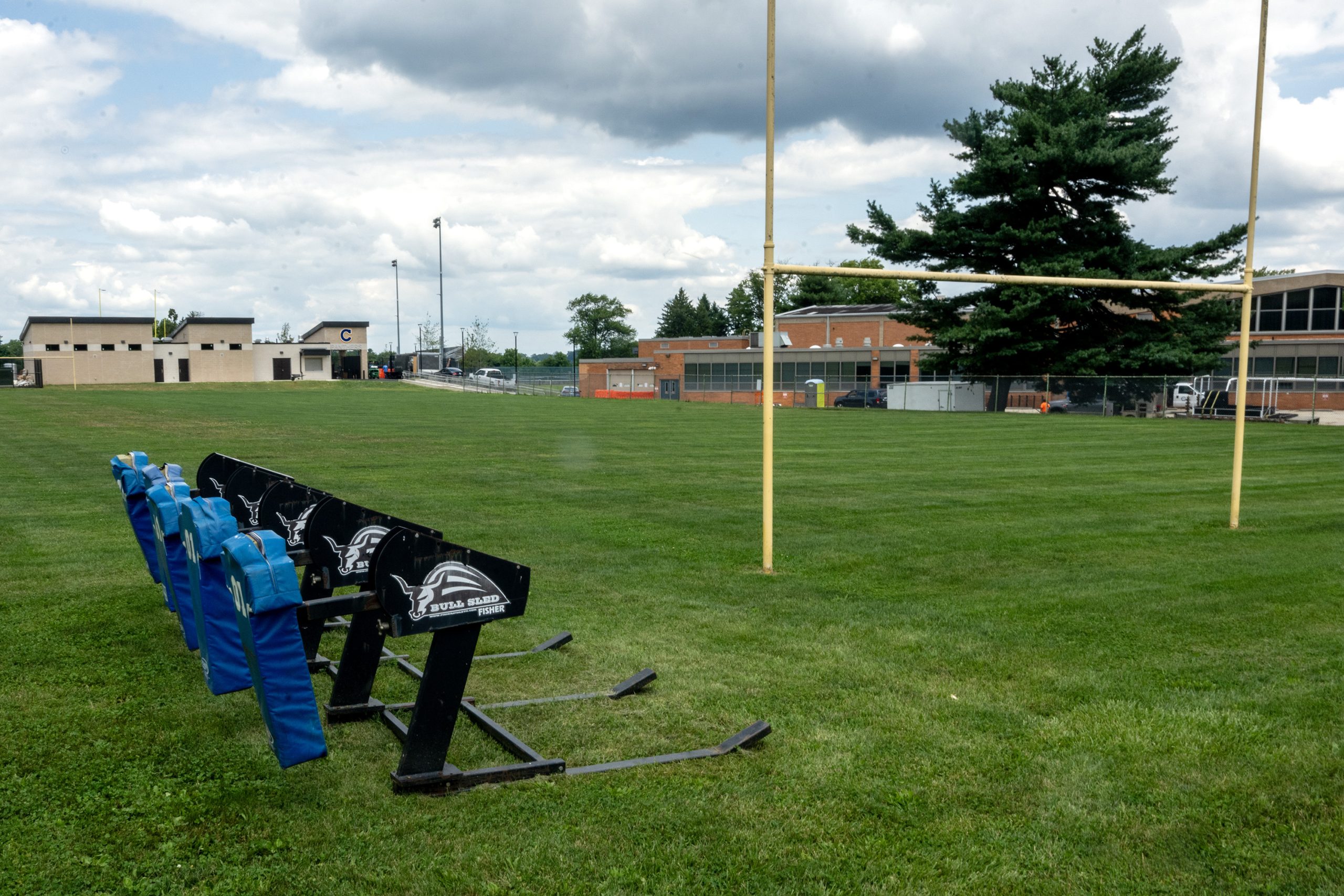
The football practice field and stadium at Cheltenham High School in Wyncote, Montgomery County, Wednesday, July 29, 2026.Tom Gralish / Staff Photographer
Employees were also confused about their requirements to report child abuse allegations to law enforcement, the report said.
Cheltenham Superintendent Brian Scriven said in a statement Wednesday that “every report brought to the district’s attention was addressed based on the information available at the time.” He also noted that “individuals did not cooperate with the investigative process.”
On Thursday, Scriven addressed some additional questions about the district’s response. “At no point in time was Coach Tolbert involved in planning or executing any investigation,” he said in a written response to questions.
He also said the Montgomery County District Attorney’s Office had directed the district to pause its Title IX investigation into the allegations while it was investigating.
Now that charges are filed, the Title IX investigation “has resumed and will be concluded promptly,” Scriven said, withpossible “school-based” discipline.
‘Backed her off coming to the building’
In addition to issuing findings supporting criminal charges, the grand jury released a separate report focused on the school district that included recommendations for new legal requirements for schools to report hazing allegations to law enforcement.
The report described the actions of three employees at the high school, identified only as Employee #1, Employee #2, and Employee #3.
The mother of the student who was attacked told The Inquirer earlier this month that she had texted Mark Hoff, then the assistant vice principal at the high school, on Sept. 7 after learning that her son had been jumped in the locker room. Hoff was named vice principal at Wyncote Elementary School in the district on July 20. Hoff could not be reached for comment Thursday.
The high school’s principal, Benjamin Hammond, referred a reporter to the district’s spokesperson Thursday.
The person identified as Employee #1 in the grand jury report, who texted two other employees about the student having a “chip on his shoulder,” also suggested in the text exchange that the administration was trying to keep the mother from the school.
“I THINK I backed her off coming to the building in the AM,” Employee #1 texted, according to the report.
Employee #2 called Tolbert that same day, and texted the other two employees that the coach denied that anyone told the student not to tell his mom.
“At this point in the conversation, all three employees vouched for Tolbert’s credibility,” the report said.
Employee #2 began his investigation by interviewing Tolbert, who said he did not know anything, according to the report.
He also spoke to other coaches and took them at their word because he “thought that they would be forthcoming, mature adults and do the right thing and not lie to him,” the report said.
Scriven did not address a question Thursday about employees’ response to the mother. But he said they appropriately went to Tolbert to ask “what he knew of the situation.”
“At the time, there was no reason to believe Coach Tolbert was being untruthful,” he said.
Tolbert had previously served as head coach of the varsity team at Abington Senior High School for the 2023-2024 season. An Abington spokesperson said on Thursday that the district had opted not to renew his appointment after one year.
Insufficient supervision
The grand jury also found fault with Cheltenham’s supervision of the football program.
While there was an office for coaches in the football locker room, “they rarely used it,” the report said. (Tolbert had become the head coach in June 2025; coaches had used the office the season before, according to the grand jury.)
Employee #2 testified to the grand jury that he did not do anything to ensure that football players were supervised, the report said.
The grand jury also found that “at least” five paid Cheltenhamfootball coaches were not up to date on Act 126 clearances. The Pennsylvania law requires schools to provide employees who have direct contact with children with at least three hours of child abuse recognition and reporting training, every five years.
In releasing findings from its investigation in January, the district acknowledged “insufficient student supervision in the locker room by the coaching staff” and “a failure to prioritize student safety by the coaching staff” and volunteers.
Montgomery County District Attorney Kevin Steele announces at press conference Wednesday, July 29, 2026 multiple charges in connection with two assaults in Cheltenham Township High School locker room that injured a 15-year-old player and led to the cancellation of the 2026-2027 football season.Tom Gralish / Staff Photographer
Circulating video footage
There were two videos taken of the Aug. 15 assault, prosecutors said. The grand jury findings characterized the footage — which it said depicted a student moving a broomstick toward the bottom of the student’s shorts while at least one player chanted “broomstick him” — as circulating widely within the school community.
One witness told the grand jury there was a TikTok video “going around where two boys were making fun of the juvenile victim with a Meek Mill video playing in the background.”
The victim testified that he believed many people had seen a video, because “random people” approached him about it in the cafeteria and hallway. Another student, who was not on the football team, told the grand jury she had been shown a video at school of the victim being kicked by multiple people.
While the district had been aware only of an incident on Sept. 3, questioning of one of the players by the grand jury in January led to the discovery that the video footage depicted an Aug. 15 assault.
Players told the grand jury that an administrator, identified only as “Administrator #2″ in the grand jury findings, met with the team after the Sept. 3 incident.
One player reported that “days” later, the administrator “addressed the team about ‘stuff’ and warned the players if there’s ‘another one,’ the season would be canceled,” according to the grand jury findings.
Another told the grand jury that the administrator met with the team while coaches were present, and told players not to fight with one another and that there would be consequences “if anything else occurred.”
That player said neither the coaches nor the administrator “encouraged anyone with information about the incident to come forward,” according to the grand jury findings.
‘Consistent confusion’ about reporting requirements
Prosecutors said the district contacted Cheltenham police after an anonymous Sept. 18 tip through the state’s Safe2Say hotline. The mother previously told The Inquirer that the tip was how she learned a broomstick was involved.
The grand jury report said district employees were unclear on their requirements as mandatory reporters.
“There was consistent confusion about what type of assault allegation would prompt an immediate report to ChildLine and the police,” the report said. It said the unidentified Employee #3 displayed “especially concerning judgment” by concluding that coaches never told the student not to tell his parents “simply because a coach said it never happened.”
Mandatory reporting laws currently do not require that allegations of hazing, committed by a child on another child, be reported as suspected child abuse — unless sexual assault is alleged, the grand jury report said.
Acts of hazing that “fall short of a completed sexual assault, touching or exposure, such as the threatened sexual assault in this case,” do not meet the mandatory reporting threshold, the report said.
It recommended that hazing be incorporated into mandatory reporting requirements. If it had been, the report said, “the Cheltenham High School administration would not have had the opportunity to mishandle the juvenile victim’s disclosure and the ensuing investigation as poorly as they did.”
In his statement Wednesday, Scriven said the district would welcome additions to the mandatory reporting laws. But he said hazing would not necessarily be immediately identifiable to school staff, noting that the law defines the offense as “for the purpose of initiating, admitting or affiliating a minor or student into or with an organization.”
Scriven did not address questions Thursday about employees’ understanding of reporting requirements.
Asked why the district did not contact police after the mother’s Sept. 7 report of an assault, Scriven said Thursday that it was “not reported as a sexual assault.”
“A ChildLine report was properly made when the district learned that a reportable offense may have been committed,” Scriven said.
In testimony, the player who was attacked described being stomped in the head and groin with cleats during the September assault, and being “tucked up” on the floor as teammates tried to poke him in his butt with a broomstick, according to the grand jury findings.
“He said that he feared for his life and did not want to go back to school or play football for the team anymore,” the findings said.
Staff writers Jess Rohan and Vinny Vella contributed to this article.
The Eagles held the second practice of their 2026 training camp on Thursday at the Jefferson Health Training Complex. These were my observations from Day 2 (and this reminder of Day 1):
Kicking and redeeming
I’m going to start with how practice started: Jake Elliott kicking field goals. It might not be as sexy as the new offense or how the rookies look, but the Eagles need Elliott to return to form this season. He’s coming off back-to-back down years, and yet the team didn’t add competition in camp. Kickers are essentially competing with whoever is on the street. But special teams coordinator Michael Clay’s comment about Elliott during the spring — that his job was to help the 10-year veteran “fall in love with the game again” — made me wonder if Elliott could have benefited from additional pressure.
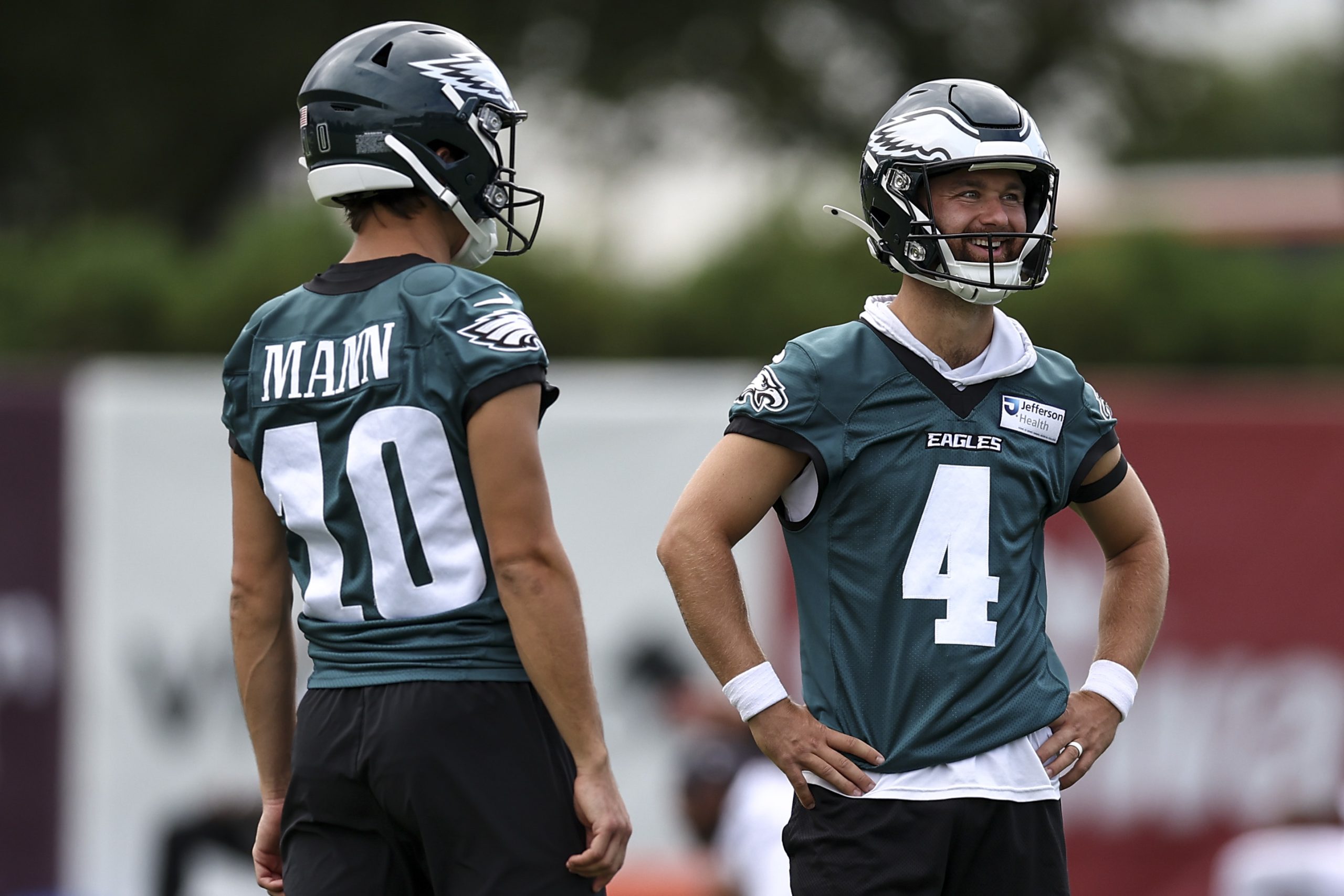
Eagles punter Braden Mann (left) talks with kicker Jake Elliott during the second day of training camp at the Jefferson Health Training Complex on Thursday.Monica Herndon / Staff Photographer
His camp got off to a solid start in windy conditions. He made 6 of 7 kicks, hitting from around 33, 35, 37, 43, 43 and 46 yards. He hooked a 40-yard try wide left. Elliott has a natural tendency to draw the ball, and the wind was blowing in that direction, so it was a tough kick from the right hash mark. Nevertheless, he has more riding on this summer’s performance than he has in years.
Running it up
The Eagles’ best (offensive) seasons during the Nick Sirianni–Jalen Hurts era have come with a dominant run game. Last season’s regression on the ground can be attributed to many factors, but the switch to the Kyle Shanahan-Sean McVay scheme could be just the medicine needed for a unit that has many of the same returning parts. There were positive signs on Day 2 with running backs Saquon Barkley and Tank Bigsby bolting into space on outside zone runs.
There was one stretch when Barkley jetted through a gaping hole off the left only to be followed by Bigsby a play later turning the corner on the right. There was success up the middle, too. Bigsby benefited from wide receiver Makai Lemon’s misdirection motion and had a seam through the front seven into the secondary.
The defense is still limited in terms of contact without pads. So I don’t want to get ahead of myself. But clearly the offensive line is already taking to the increased usage of wide zone blocking. How Hurts fits into the equation remains to be seen, but I can’t see the Eagles completely abandoning him as a plus-one factor in the run game.
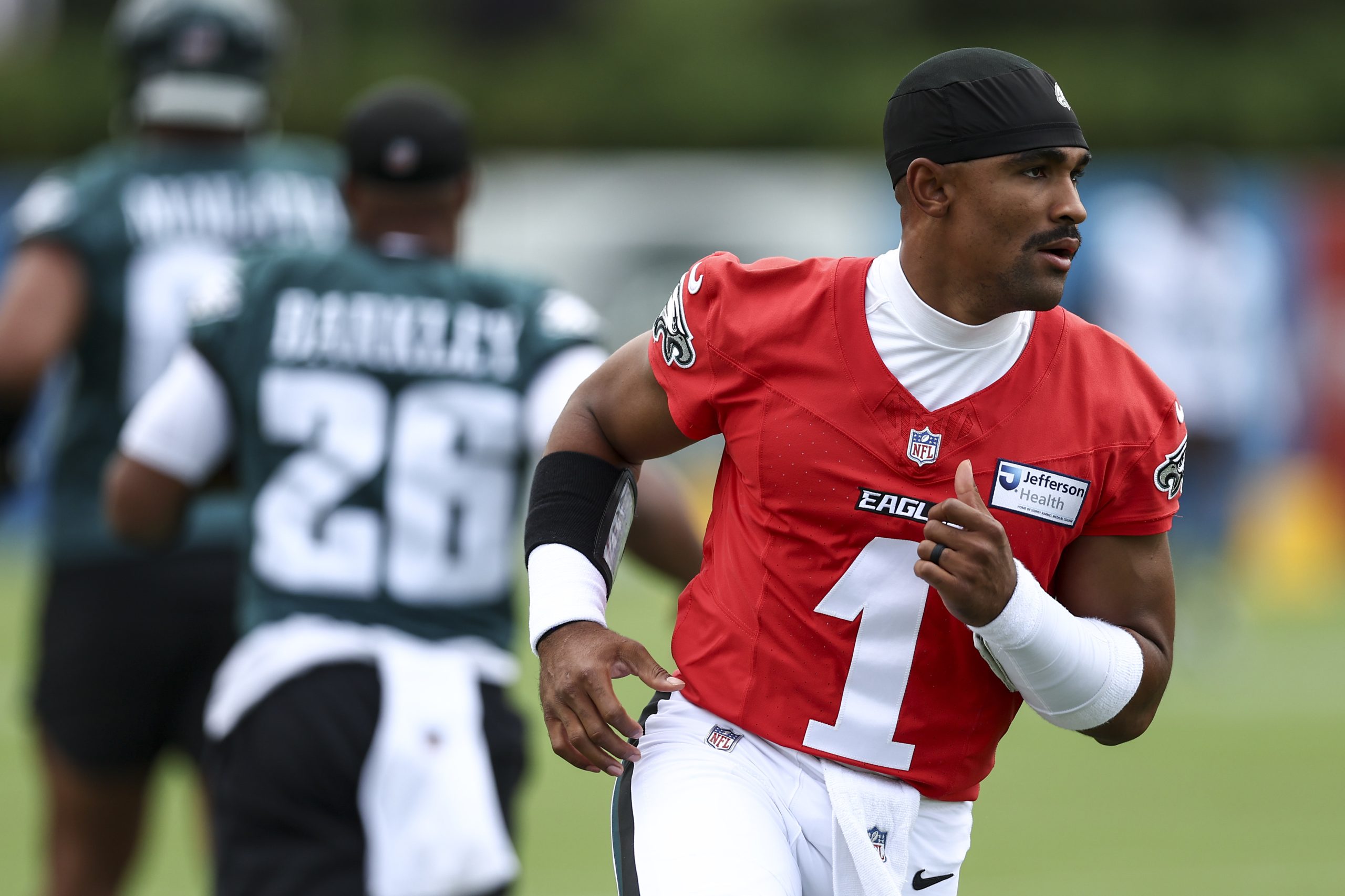
Some of the new looks should benefit quarterback Jalen Hurts and the offensive line. Monica Herndon / Staff Photographer
Marrying kind
That being said, there’s likely going to be less of Hurts on the ground on designed runs because of the marrying of the run with the pass off under-center plays. A perfect example of its effectiveness came off a play-action fake to the left as Hurts rolled naked to the right and hit a wide-open DeVonta Smith on a short crosser. These aren’t just layups for the quarterback, but also for the offensive linemen, who don’t have to necessarily block at the point of attack.
There were still struggles in the pass game. Hurts completed just two passes on his first six dropbacks. He tucked the ball and scrambled on two pass plays and once threw the ball away — not necessarily “bad” decisions — but there was a toss to receiver Darius Cooper that linebacker Zack Baun deflected from underneath and a wounded duck to a double covered-Smith that fell short.
Passing through
Hurts and Smith had more chemistry during 7-on-7s. In fact, it looked like child’s play, even with the receiver up against Quinyon Mitchell. Smith flashed late hands near the sideline on a pass thrown just out of the All pro cornerback’s reach. Lemon has often lined up in the slot, but he motioned outside during one repetition, and caught a pass underneath corner Riq Woolen during 7-on-7s. Woolen nearly had an interception a play later, but Hurts’ forced throw sailed through his hands.
The pass offense had some nice moments late in the workout. Hurts sidestepped a rusher and hit receiver Dontayvion Wicks at the second level in team drills. And Wicks ended the main portion of practice by high-pointing a jump ball his quarterback threw up for grabs.
Mac McWilliams (22) and Riq Woolen (2) are part of a deep cornerback group. Monica Herndon / Staff Photographer
Cornering the market
The Eagles’ starters at cornerback are set, but they also have depth and could be open to moving players like Kelee Ringo or Jakorian Bennett if some youngsters develop and trade partners open up. Here’s how I see the depth chart at the position (knowing several players are cross training at outside/slot cornerback and safety):
Safety plan
Vic Fangio confirmed that the safety job opposite Andrew Mukuba very much remains a competition, although it will likely be a by-committee approach with Cooper DeJean at the spot in base personnel and maybe more than one guy filling the role in nickel.
Marcus Epps and Michael Carter II have taken turns working alongside a combination of DeJean and Mukuba. Sometimes it’s just been the two of them at safety with the first unit. I think the best I can say about each of them is that neither has made a glaring mistake or busted a coverage.
Fangio said both starting safeties — whoever they are — will take over the departed Reed Blankenship’s responsibility as the main communicator on the back end. Baun will once again wear the “green dot” on his helmet and call plays for the entire defense.
Jonathan Greenard’s absence puts Nolan Smith Jr. and others under increased scrutiny. Monica Herndon / Staff Photographer
Greenard days
Fangio wasn’t as sanguine about the injured Jonathan Greenard as general manager Howie Roseman was the day prior. The Eagles don’t expect the outside linebacker, who recently strained a pectoral muscle, to be out long term. But what exactly does that mean? They wouldn’t have placed him on PUP if there wasn’t at least a chance he’d miss part of the regular season.
No Greenard by Week 1 would likely mean the Eagles are back to where they were a year ago when it was clear they lacked a top-end edge: with Nolan Smith Jr. and Jalyx Hunt starting. Both have shown obvious promise, and there are options off the bench. But Fangio threw some cold water on the notion that all is well with Greenard.
A few of the reserve edges stood out on Thursday. Arnold Ebiketie shed a block and stopped Barkley at the line on a run play. A.J. Epenesa was Johnny-on-the-spot after a Cole Payton pass deflected off receiver Danny Gray’s hands to him.
Payton had a rough day. While the Epenesa pick was hardly his fault, he tossed two other interceptions. Linebacker Chance Campbell undercut a seam route by tight end Dae’Quan Wright for one, while rookie linebacker Keyshawn James-Newby had the other on a poorly thrown pass during the developmental period.
Carson Steele has gotten his share of handoffs, but not as a fullback. It’s unclear how much coordinator Sean Mannion will feature the position in his offense. Tight end Cameron Latu handled the job at times last season, but veteran tight end Johnny Mundt could fill the role. He’s been the primary second blocking tight end in “12″ personnel so far.
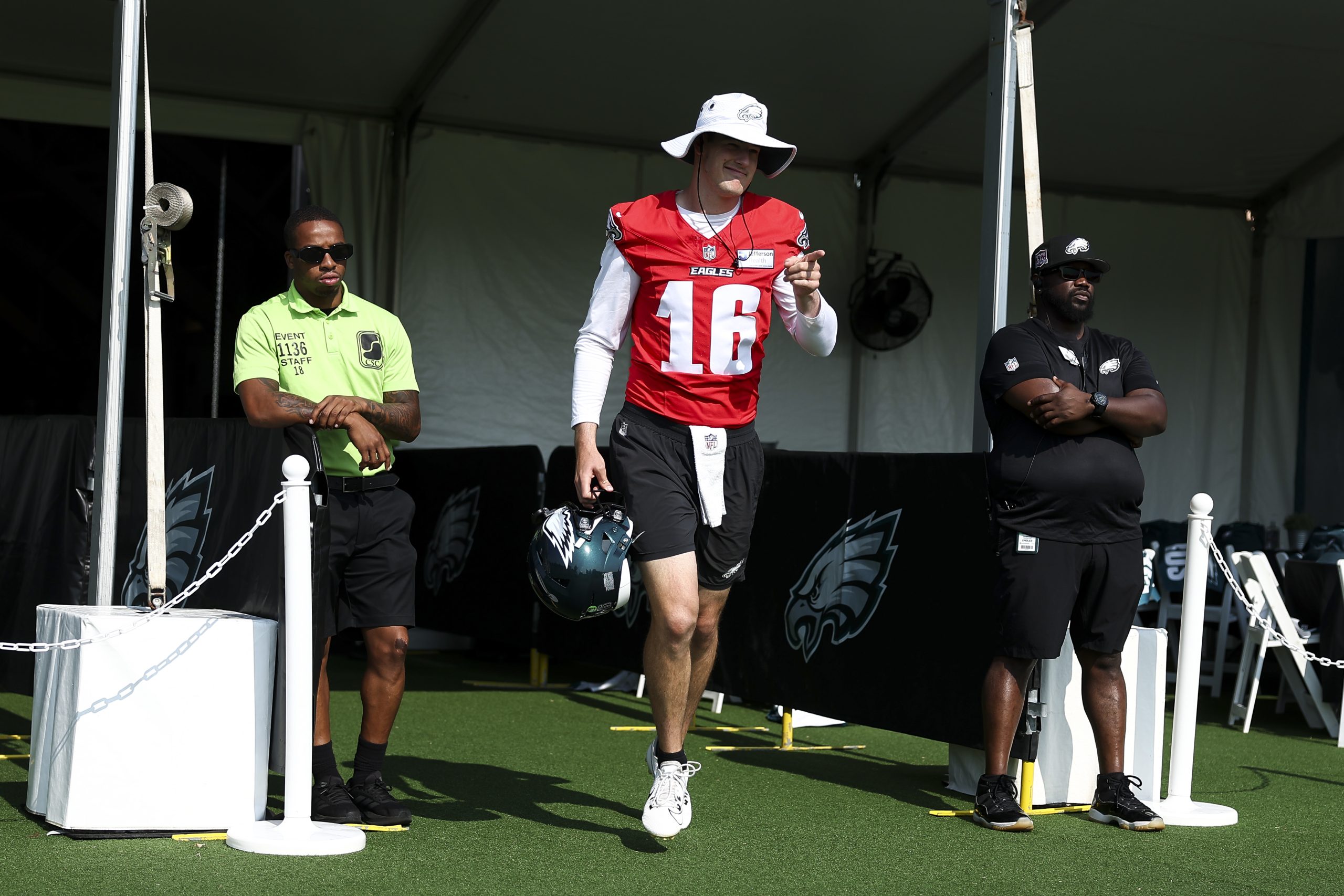
Tanner McKee (16) has some competition for the No. 2 job from Andy Dalton. Monica Herndon / Staff Photographer
Quarterback view
Payton’s potential could factor into whether the Eagles feel comfortable enough to trade Andy Dalton. I can’t see Tanner McKee being on the market, although the two quarterbacks continued to split snaps with the second unit.
Dalton hooked up with receiver Quez Watkins and rookie tight end Eli Stowers on short passes in team drills. Latu couldn’t hang onto a heave into traffic later in the set. McKee found receiver Britain Covey alone off play-action and later in the soft spot of a zone during 7-on-7s.
The Eagles had their first injury of camp when second-year tackle Cameron Williams went down during team drills. He waved off a cart, then walked off the field with trainers. Williams never returned after a visit to the medical tent. … Fangio said rookie defensive tackle Uar Bernard, who never played organized football, was on the “PP plan — lots of patience, lots of persistence.” You don’t have to be an expert to see the native of Nigeria is extremely raw. … Eagles legend Brian Dawkins was in attendance and watched practice. … Friday’s walk-through is closed to reporters. We’ll be back at the Jeff for Saturday’s session.
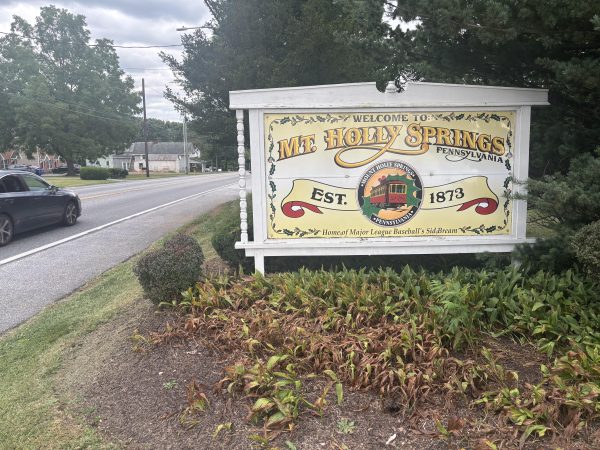
MOUNT HOLLY SPRINGS, Pa. — Still hailed for its trout fishing, this bucolic Central Pennsylvania borough in the shadow of South Mountain was a big draw for tourists at the turn of the 20th century who flocked here to cool off in its mineral-spring waters.
In 2026, this tiny municipality about 25 miles southwest of Harrisburg is developing a much less welcoming reputation. The new notoriety began with an agreement between borough police and U.S. Immigration and Customs Enforcement that has turned Mount Holly Springs into a kind of “speed trap” for unsuspecting immigrants — one with life-altering consequences.
What had been a simmering small-town controversy since the start of the year boiled over into an international incident on July 15 when a prominent Chinese dissident and U.S. asylum seeker named Wu Shaoping was pulled over by a borough officer who claimed Wu had blown through a stop sign. The Amazon delivery driver was then taken into custody by ICE agents who had been running an operation just down the road.
But the outcry over the arrest and detention of Wu — taken to ICE’s Moshannon Valley Processing Center and crammed into a room with 60 other detainees for 10 days before winning his release on bail — also exposed an even darker story.
In March, Mount Holly Springs became the only municipality in Cumberland County and one of a handful across Pennsylvania to execute a formal cooperation agreement with ICE under a controversial program known as 287(g). The program gives local cops expanded powers to arrest suspected undocumented immigrants, while offering training and financial incentives in return.
In just four months, the borough’s four police officers have pulled over and checked the status of dozens of motorists — mainly commercial truck drivers — and turned over 32 arrestees to ICE, the Mount Holly Springs Police Chief Tom Day told me on Wednesday.
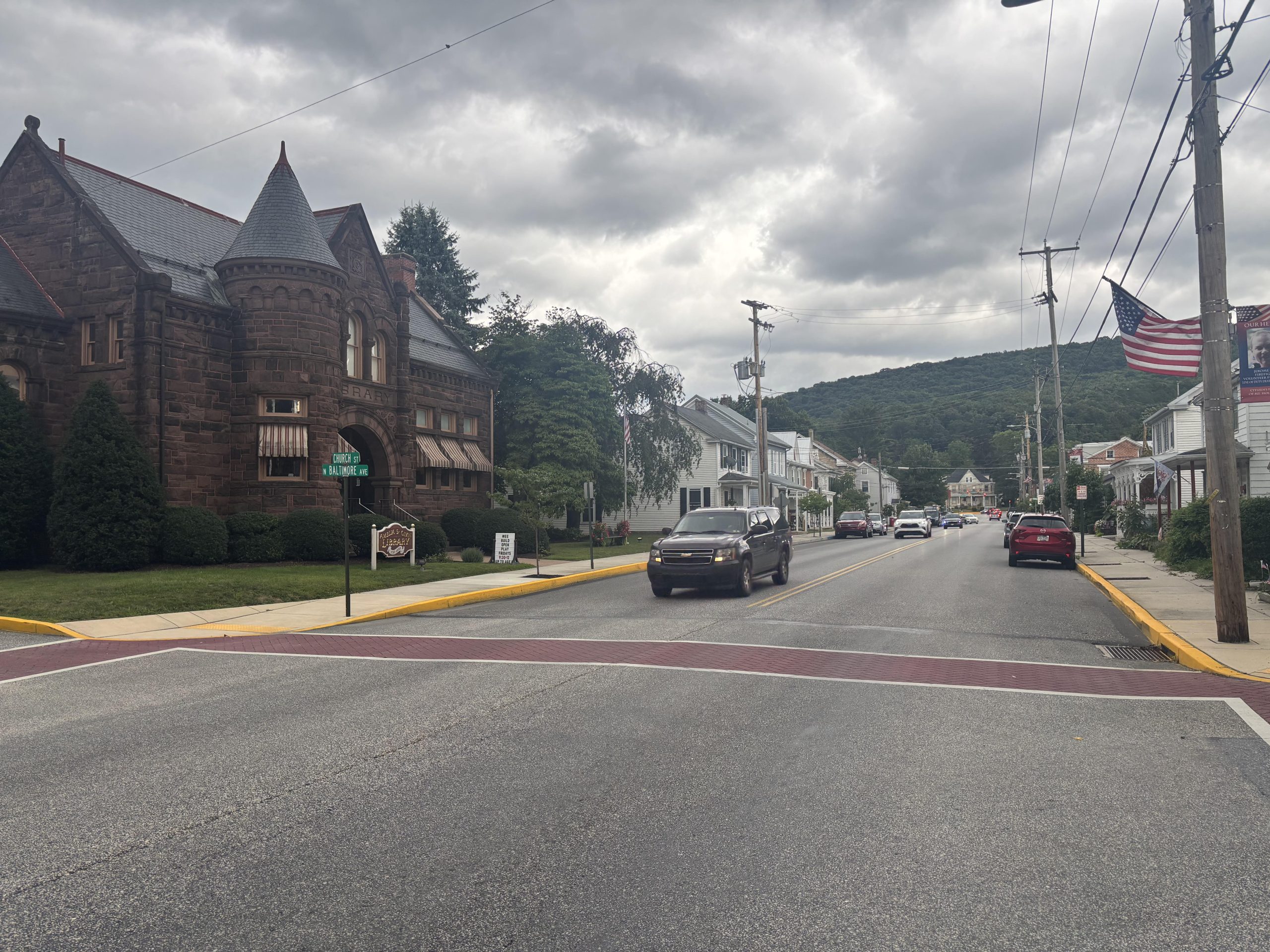
The main drag in Mount Holly Springs, a small borough in Cumberland County, Pa., on Wednesday. The community has seen controversy over local police cooperation with federal immigration authorities.Will Bunch
Day, a gruff ex-Marine in a Nittany Lions cap and blue jeans who doubles as borough manager, insisted to me that the traffic stops and ICE cooperation have nothing to do with racial profiling and everything to do with road safety in a borough with aging bridges and narrow streets.
“There’s no racial profiling of or ethnic profiling of drivers,” the police chief maintained. “We have no clue until we step up on the side of that truck who we’re even dealing with.” Day also said “it’s not that we don’t have a heart” — that he believes in the American dream and understands why refugees want to come here, but when immigrants show up without permission “actions have consequences, you know.”
Minutes later, I met with a gaggle of local residents and business owners who told a very different story — that the wave of immigrant arrests has created a climate of fear that permeates Mount Holly Springs. The growing uproar has riven their once-placid borough into a distrustful cauldron of angry Facebook comments, muttered asides, and occasional threats — a kind of modern civil war just 25 miles north of Gettysburg.
“What I’m hearing from my customers, our people are afraid,” saidRachel Bear, the co-owner of a popular local boutique. “Immigrants are afraid. It’s out there.” She said she’s decided to speak out against the borough’s relationship with ICE because some neighbors are intimidated. “I think they’re just scared.”
Andrew Dapkins, the owner of The “Bird Guy” Tours of local wildlife, told me he’s stopped bringing his excursions into Mount Holly Springs since the deal with ICE was signed. “If I was to bring someone of color, or they were not heterosexual male, I would feel like I was bringing them into a potential hostile environment,” he explained. “So I can’t do that.”
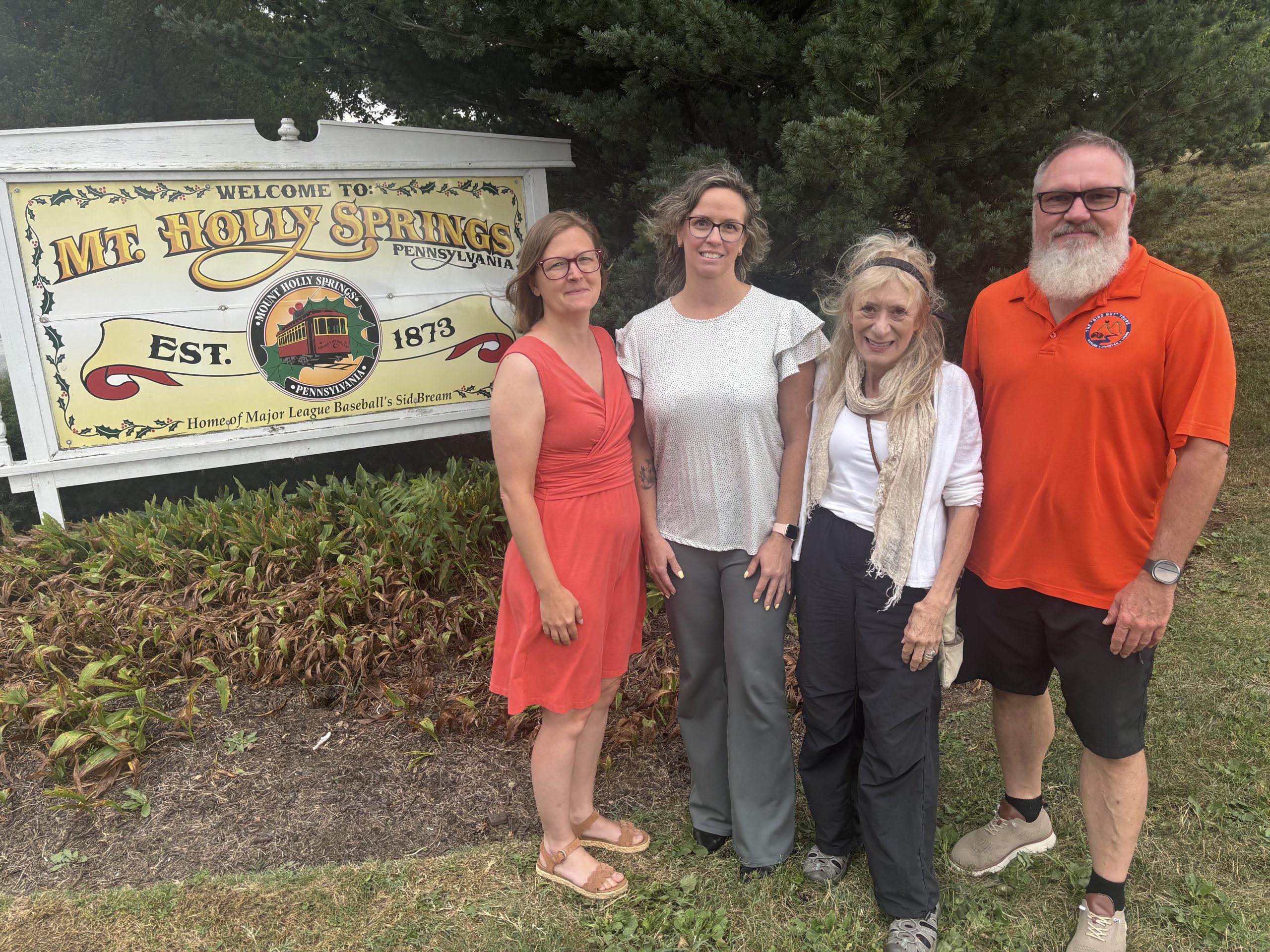
Some local residents who oppose Mount Holly Springs’ police federal immigration arrests include (left to right) Democratic legislative candidate Jessica St. Clair, precinct leader Mandy Taylor, borough council member Pamela Still, and business owner Andrew Dapkin.Will Bunch
What’s happened in Mount Holly Springs since the ICE program began this winter feels in many ways like a microcosm of Donald Trump’s America. It’s the rage, distrust, and paranoia that only metastasizes as the demagogue’s fiery campaign tirades get translated into harsh reality at a small-town stop sign.
But it’s also exactly the chaos that some immigration policy experts warned about when the Trump regime dramatically expanded the 287(g) program, named for a section of 1996 federal immigration law that grants broader immigration enforcement powers to trained state or local police.
Despite warnings about the potential for racial profiling and seeding distrust in immigrant communities, the number of 287(g) agreements has exploded from a few dozen when Trump first became president in 2017 to more than 2,000 today, with at least 88 on the books now across Pennsylvania.
Still, the immigration arrest total in tiny Mount Holly Springs, which covers just 1.4 square miles and has a population of fewer than 2,500 residents, seems staggering. As recently as February, there were only 67 monthly immigration arrests by local police across the entire state. But now this one borough is on a pace for nearly 100 arrests in just one year.
“This is an agenda that’s being driven by numbers for numbers’ sake,” Nayna Gupta, policy director at the American Immigration Council, told me Thursday. “There is an arrest quota that the White House is pushing, and they’re leaning on local police departments to do that work for them” — even as that work paralyzes local immigrants when they learn of increased traffic stops.
“Communities become afraid to go to the grocery store, to go to work every day, to use public transit, even,” Gupta said.
There have been festering recriminations in Mount Holly Springs since January, when residents first learned that Day — seen as a local power broker because of his dual role and his close allies on borough council — had signed the paperwork with ICE to become a 287(g) department. A handful of angry residents denounced the plan — revealed at the same time as two ICE-related killings in Minneapolis sparked national outrage. But the lone Democrat on the seven-member board, Pamela Still, failed to get a second on her push to rescind the deal.
Human rights attorney Wu Shaoping, on the campus of the Massachusetts Institute of Technology in Cambridge, Mass., in an undated photo, was arrested on July 15 and taken into custody by U.S. Immigration and Customs Enforcement.Handout art
Trump received just over 62% of the vote in Mount Holly Springs in the 2024 election, although local residents said there are now growing numbers of Latinos and refugees from Nepal who’ve flocked to Central Pennsylvania living in the borough that census data had reported as more than 95% white.
There is clearly considerable local support — often voiced in angry Facebook comments about “illegals” — for Day and his department’s work with ICE. “You guys are doing the right thing; don’t listen to the childless cat ladies,” borough resident Derek Scheuren told a contentious council meeting in February, as reported by PennLive. He also called undocumented truck drivers “illegal invaders” and offered to buy a beer for any officer responsible for detaining one.
That would be nearly a half-dozen six-packs, based on Day’s updated tally. We don’t know if Scheuren has made good on that, but then there’s a lot that local officials and residents don’t know. There’s been little to no information about the multiple arrests since March, and while ICE is bringing the detainees about two hours north to Moshannon Valley, next to nothing is known about their fates.
Locals like council critic Still have also pressed for answers on the carrot of federal dollars that state and local supporters of these 287(g) programs cite as a key benefit. Day only volunteered to me that in addition to federal training of all four borough officers, he has so far put in for just $1,100 in reimbursement for officers’ time on 287(g) stops. But in an email he also sent to local leaders Wednesday, which was shared with me, Day further acknowledged that Mount Holly Springs has received some $130,000 for vehicles and equipment.
The July 15 arrest of Wu, which drew the attention of the New York Times, the Guardian, and other outlets, has so far brought more questions than answers about what’s really happening with immigration arrests in Mount Holly Springs.
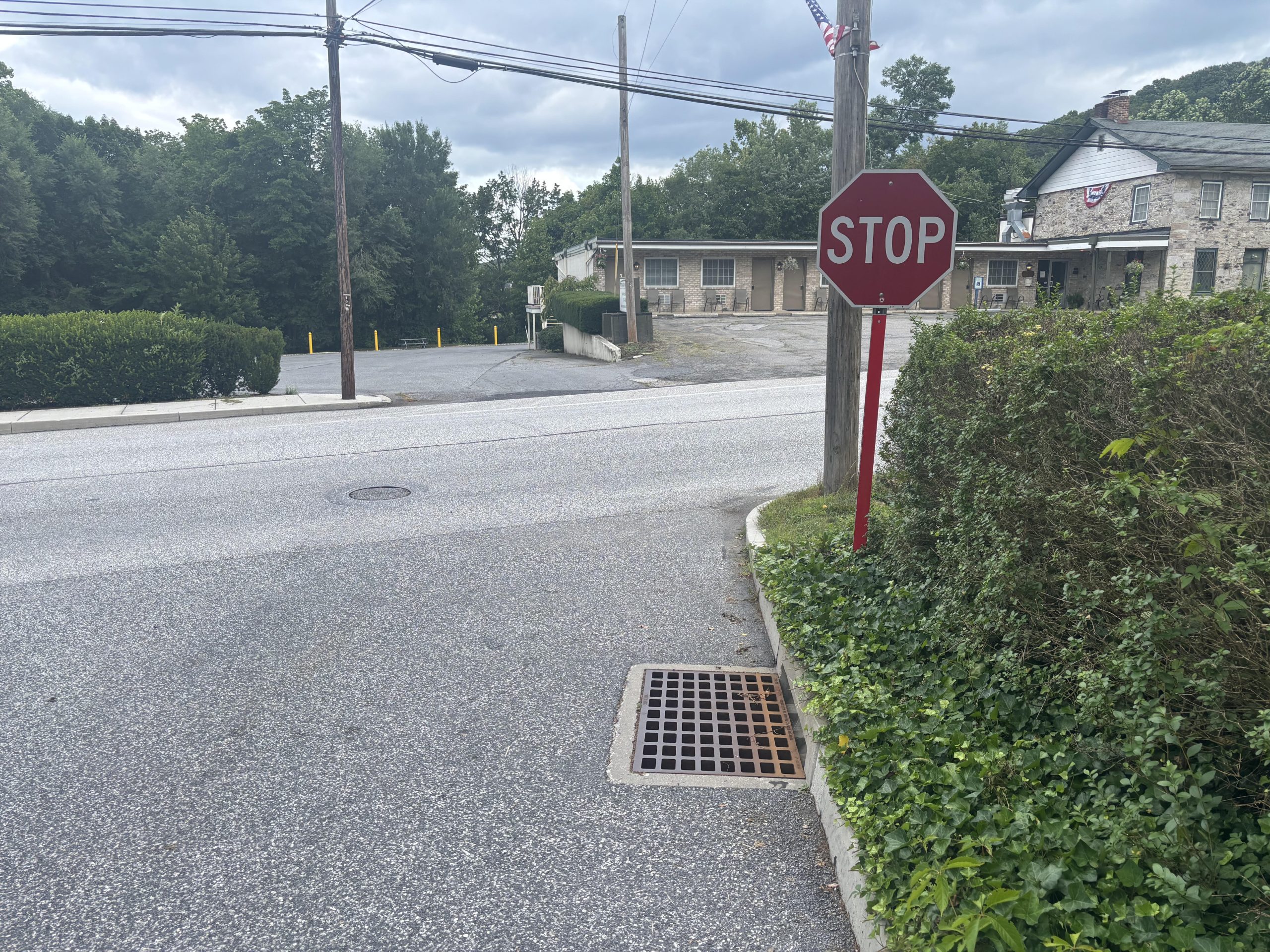
The stop sign at Hill Street and State Route 34 in Mount Holly Springs, Pa., where Chinese dissident and asylum seeker Wu Shaoping was stopped by a local police officer on July 15. Wu’s arrest sparked controversy over the borough’s relationship with federal immigration.Will Bunch
Day insists that Wu, making Amazon deliveries in his Toyota Camry, ran the stop sign at the bottom of steep Hill Street and nearly collided with his officer who happened to be patrolling the main drag, State Route34. The chief said Wu exacerbated the situation by refusing to roll down the window and instead calling his lawyer — causing a commotion that attracted attention from ICE agents who happened to be in Mount Holly Springs doing truck inspections almost right across the street.
Wu disputed that account to Lancaster Online, insisting that he did stop at the intersection, then rolled a bit forward because of its poor visibility. ICE later said Wu was sent to Moshannon Valley because he’s overstayed his 2020 tourist visa, even though he has an active asylum application and a work permit. He was released on bail after two members of Congress formally complained about his detention.
Still, Wu’s arrest — along with the high number of other detentions in Mount Holly Springs — has only fueled suspicion among the program’s critics that cops are racially profiling drivers. Day has repeatedly insisted in past comments and in the Wednesday interview that undocumented truck drivers who can’t read English and don’t follow signs about restricted streets and bridges are a danger to the community.
“I don’t want to sound mean over it, you know, or that I’m not sympathetic,” Day told me. “But they can’t be driving 18,000-pound vehicles and not understand our roadway signs.”
But local critics say cops working so closely with ICE isn’t making Mount Holly Springs safer — not when immigrants are afraid to shop, landscaping crews that largely employ Latinos have seemed to vanish, and a quaint rural town that seeks outside tourists for trout fishing or bird watching starts getting a bad reputation.
“A lot of times, it is this overweight thing — going over the bridge on the Pine Street extension or something is what they get pulled over for, and you know it’s like don’t ruin somebody’s life because their truck was packed or because their GPS didn’t tell them,” said longtime local resident Jen Dieter.
The arrest surge in Mount Holly Springs seems to confirm the fears of immigration experts who’ve found in earlier iterations of the program that immigrants were less likely to call 911 for emergencies or report other crimes. Critics also believe that cops will ignore their public-safety duties to focus instead on immigration arrests, especially as the carrot of federal dollars is dangled before small departments.
“There’s plenty of evidence and data to show that 287(g) agreements undermine trust in the communities where these agreements exist and are used extensively, because the community becomes less likely to report crimes, or to report instances of domestic violence, out of fear that doing so could translate to detention and deportation,” Gupta said.
Experts also say what’s happening in Mount Holly Springs may be the future of mass deportation under the Trump regime. While high-profile, publicity-seeking operations like the ones that targeted Minnesota or Chicago are out, ICE is increasingly relying on its 287(g) partners to make arrests without attracting as much public outcry. The wave of arrests in the Pennsylvania borough came as ICE is nationally reporting as many as 1,400 immigration arrests in a day, an all-time record.
Some longtime residents of Mount Holly Springs are worried that things will never be the same.
Bear, the shop owner, spoke about moving here 25 years ago and slowly building a community around her business. “This is a small community,” she said. “We all know each other. You know these people that we’re talking about, [that] I’ve done business with. You know, hopefully we’ll do it again. But who knows?”
“But more than it being about business, it’s about community. And I think this isn’t how I would treat my neighbors.”
For Minara Rahman and her husband, a move to Philadelphia was supposed to be a fresh start.
She and Md Mahfuzul Haque met while attending medical school in their native Bangladesh in 2000, married soon after, and remained nearly inseparable for 21 years,most of them spent in Canada.
Their love story came to a tragic conclusion early this month when Haque, a 43-year-old doctor who was driving for DoorDash to support Rahman’s optometry career, was shot and killed during a robbery outside a Southwest Philadelphia home.
It was one of at least three shootings involving delivery drivers in the city this summer.
“I still can’t believe it,” said Rahman, 43. “I’m crying, I’m mourning, I’m in grief, but I’m still not believing he’s not with me.”
Philadelphia had only recently become home for Rahman, Haque, and their 14-year-old son.
In 2023, the family moved from Vancouver, where much of Haque’s extended family lives, as Rahman began her studies at Drexel University’s optometry school, she said.
She and Haque had both been practicing physicians in Bangladesh and worked in the healthcare industry in Canada, where they moved in 2011 after receiving skilled immigration visas.
In Philadelphia, Rahman saw the opportunity to get an American medical license and earn enough to support her family.
Haque, she said, sacrificed his own professional ambitions to support that move, doing odd jobs and driving for DoorDash to earn money while she completed school.
Rahman graduated from Drexel last year and began practical training while the family worked to extend their U.S. visas. Part of her work involved conducting eye exams forpolice and security guards, she said.
“It was me who wanted to do something more, and he always supported me,” Rahman said of her husband. “Without him, it would have been impossible.”
A photo of Md Mahfuzul Haque.Minara Rahman
Though Rahman worried that Philadelphia could be dangerous, she said, she and Haque believed that life in the United States would offer their family safety and security.
She no longer thinks so.
Just days after Haque’s killing, police made an arrest in a separate homicide case involving a food delivery driver. They accused a 14-year-old Queen Village teen of luring the man, Anshul Kuncha, to an abandoned North Philadelphia rowhouse, where he was found dead with a gunshot wound to the head.
And on Tuesday, police said, a 31-year-old delivery driver was shot in the hand after getting into an argument with two women in Northern Liberties. He was placed in stable condition at a nearby hospital.
Since the July 7 shooting of Haque, Rahman has been in touch with police seeking to gather more information about her husband’s killing.
Officers responded to the 1000 block of South Ithan Street in the city’s Kingsessing neighborhood around 9:30 that evening to find Haque on the ground with a gunshot wound to the head.
His car was still running, investigators said, and a bag of delivery food was found nearby. They soon identified three suspects, masked men wearing dark clothing.
Johnson, of East Mount Airy, was charged with murder in Haque’s killing last Friday while he was in custody in connection with an unrelated crime. He is being held in prison without bail.
The teen is expected to appear in court for a preliminary hearing on Aug. 10.
Rahman said she was struck by the fact that the gunman who police say took her husband’s life is so young — just a year older than her own son.
“I can’t imagine any boy like my son’s age treating anybody else like that,” she said. “I have no idea what they were thinking — what was their motive, and how did they get that firearm that easily?”
Haque was buried in Vancouver, where Rahman and her son moved to be near his extended family, and she has abandoned her pursuit of a medical career in the United States.
In an interview, she spoke sorrowfully of plans abandoned: a family trip to Florida, an Atlantic City wedding anniversary celebration set for the last week of July.
And each day, Rahman said, she struggles with nagging worry that by moving her family to Philadelphia for her career, she was somehow responsible for her husband’s death.
The only thing she wants now is justice.
“We both did counseling for tons of patients,” Rahman said, recalling the years of challenging medical work caring for people at their worst moments.
“Now I’m in that situation,” she said. “I can’t take it anymore, and I need help.”
AVALON, N.J. — For Three and One singer and guitarist Gus Thompson, 25, the music died on Dune Drive shortly after 8 p.m. on Friday, July 17.
“We noticed the police out front,” the band’s front man said in a phone interview, recalling the night at Avalon’s new bar and restaurant with a patio for live music and other events. “Our set was ending very soon, so we didn’t think much of it. The owner said we’re being shut down. He said no more music.”
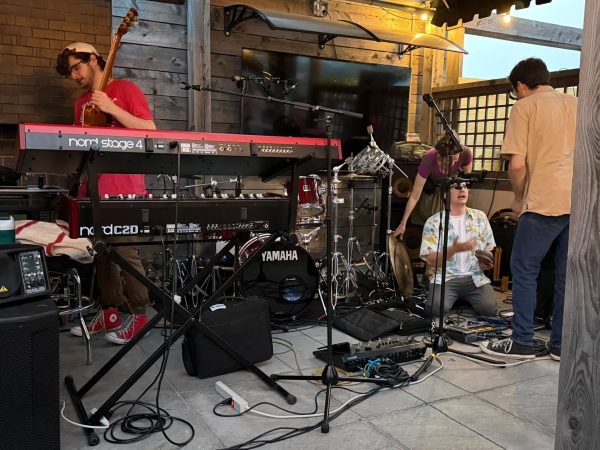
The band was scheduled to play until 10 p.m., and had finished the early set with Thompson’s original song “No Idea,” but Avalon’s restrictions on Gully’s and all other bars in town prohibit any outdoor music after 8 p.m.
Out in the crowd, Kate Nunan was incensed. At 8:36 p.m., she posted a picture of the band breaking down its setup in the Facebook Group Seven Mile Shenanigans, and wrote, “WTH is wrong with Avalon??? Shutting down a band at 8:30 because of a noise complaint??”
The outrage has only grown, spilling over into a July 22 council meeting, with residents expressing concern that Avalon, long a place of late nights and live music, but now increasingly a place of private clubs and multimillion-dollar houses, was in danger of losing its small businesses and essential character.
Gully’s has appealed the special conditions of Avalon’s liquor license to the state’s Division of Alcoholic Beverage Control, saying the ban on outdoor music after 8 p.m. is “arbitrary, capricious and unreasonable.”
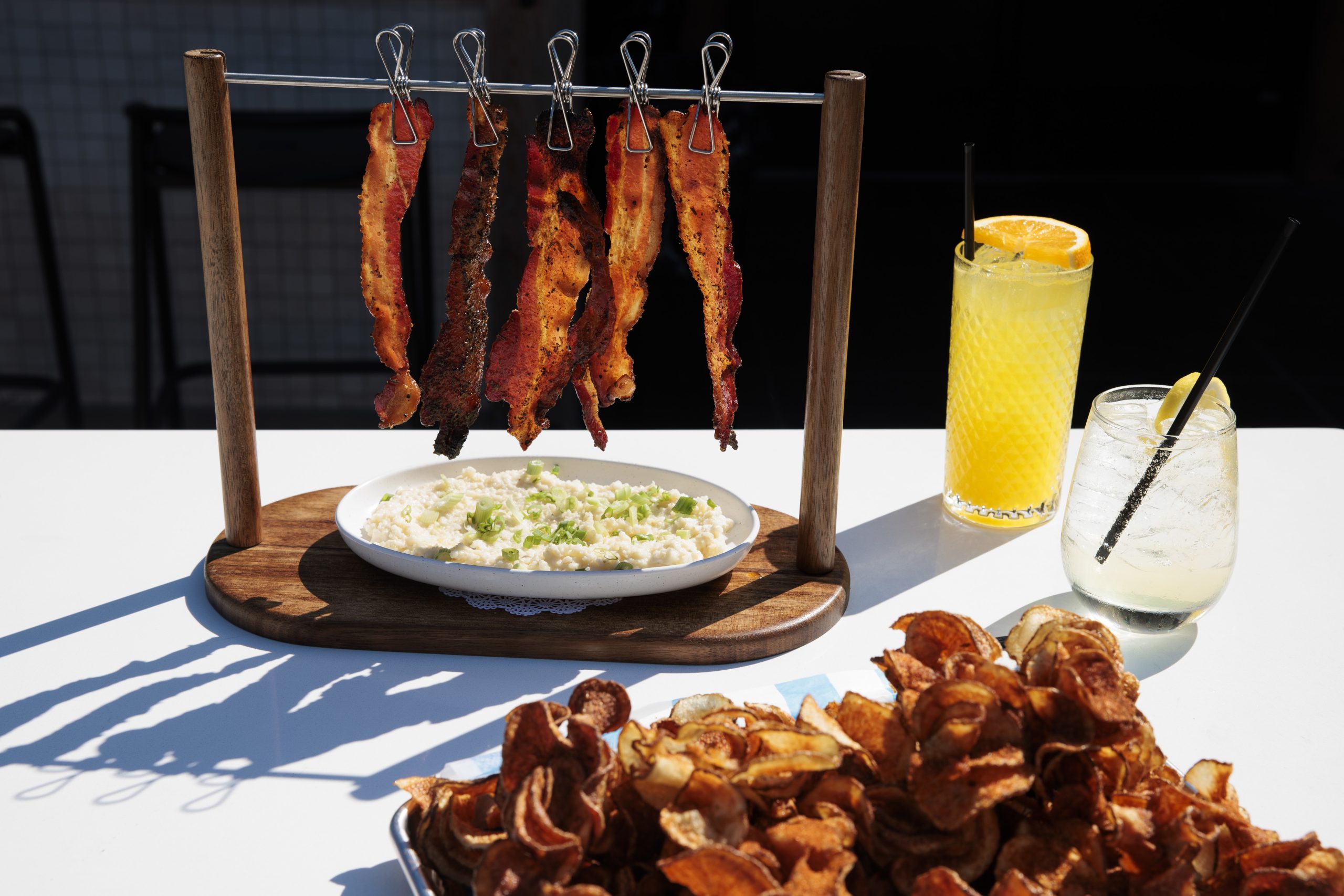
At the council meeting, locals like Merri Jones, who said she was a second-generation graduate of Avalon Elementary, stuck up for Gully’s, which replaced the Black Cactus restaurant with a restaurant touting “old school beachy vibes.” (Inquirer restaurant critic Craig LaBan praised its “clothesline of candied bacon.“)
The hanging candied bacon served over grits and Gully’s blooming potato on Wednesday, June 17, 2026, in Avalon, N.J.Monica Herndon / Staff Photographer
“They’re a breath of fresh air,” she told the council, which had been cautioned by Nicole Curio, the municipal solicitor, not to respond to comments about Gully’s since the liquor license restrictions were now a legal action with the state ABC, a division of the Office of the Attorney General.
“It’s just a couple more hours to let them make their money,” she said. “We support it. A lot of locals do as well.”
But neighbors on the 100 block of 27th Street, which has Gully’s at one end and Wawa on the other, and regularly idling 18-wheelers making deliveries to both, pleaded their case about the noise from Gully’s, including the amplified music and games like its Monday Minnow Races announced over a loudspeaker.
Larry Hayes said he lives 450 feet from Gully’s, but the sound is causing an “unreasonable disruptive intrusion into our quiet enjoyment of our home.” The Avalon noise ordinance restricts any amplified sound that’s audible more than 50 feet away, he noted.
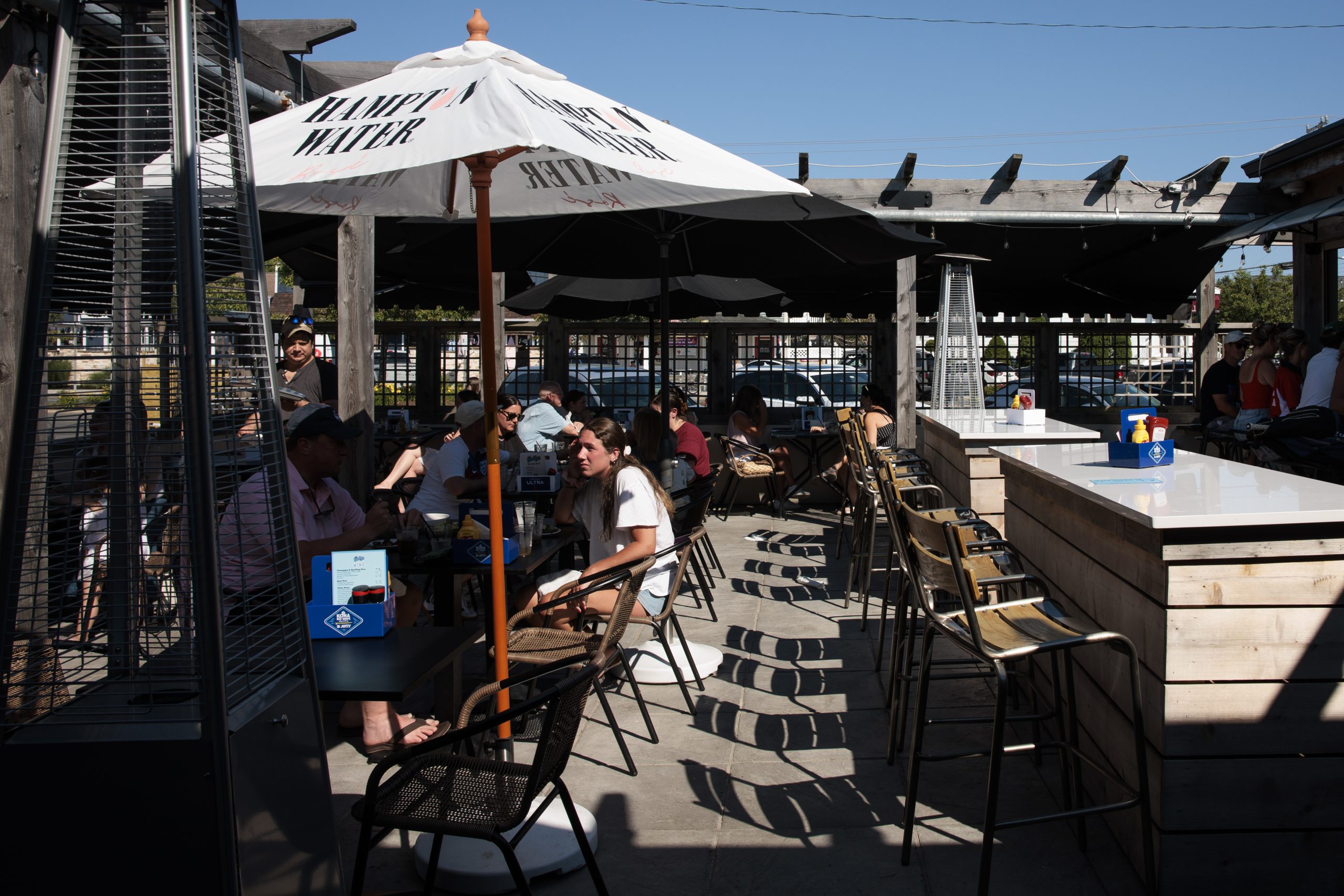
The patio at Gully’s on Wednesday, June 17, 2026, in Avalon, N.J.Monica Herndon / Staff Photographer
“We want to be good neighbors,” said neighbor Matt Tumasz. “We love the idea that there’s a family restaurant. But when you have a five-piece band playing and blasting music, and speakers that are 15 feet in the air, it’s just a little bit out of control.”
Gully’s owner Beth Pearce did not respond to several messages from The Inquirer.
On Facebook, Pearce posted: “From the beginning, our goal has been simple: to create a place where neighbors, families, visitors, and friends can come together and make memories.
“We have tremendous respect for the role of our local officials,” she wrote. “We remain committed to working collaboratively, being good neighbors, and contributing positively to our community.”
At the council meeting, she noted that several council members had patronized Gully’s with their families (and one admitted to being a fan during the council meeting).
“The hope is we’re going to elevate all businesses,” Pearce said. She pledged to try to “figure out what the appropriate sound level is.”
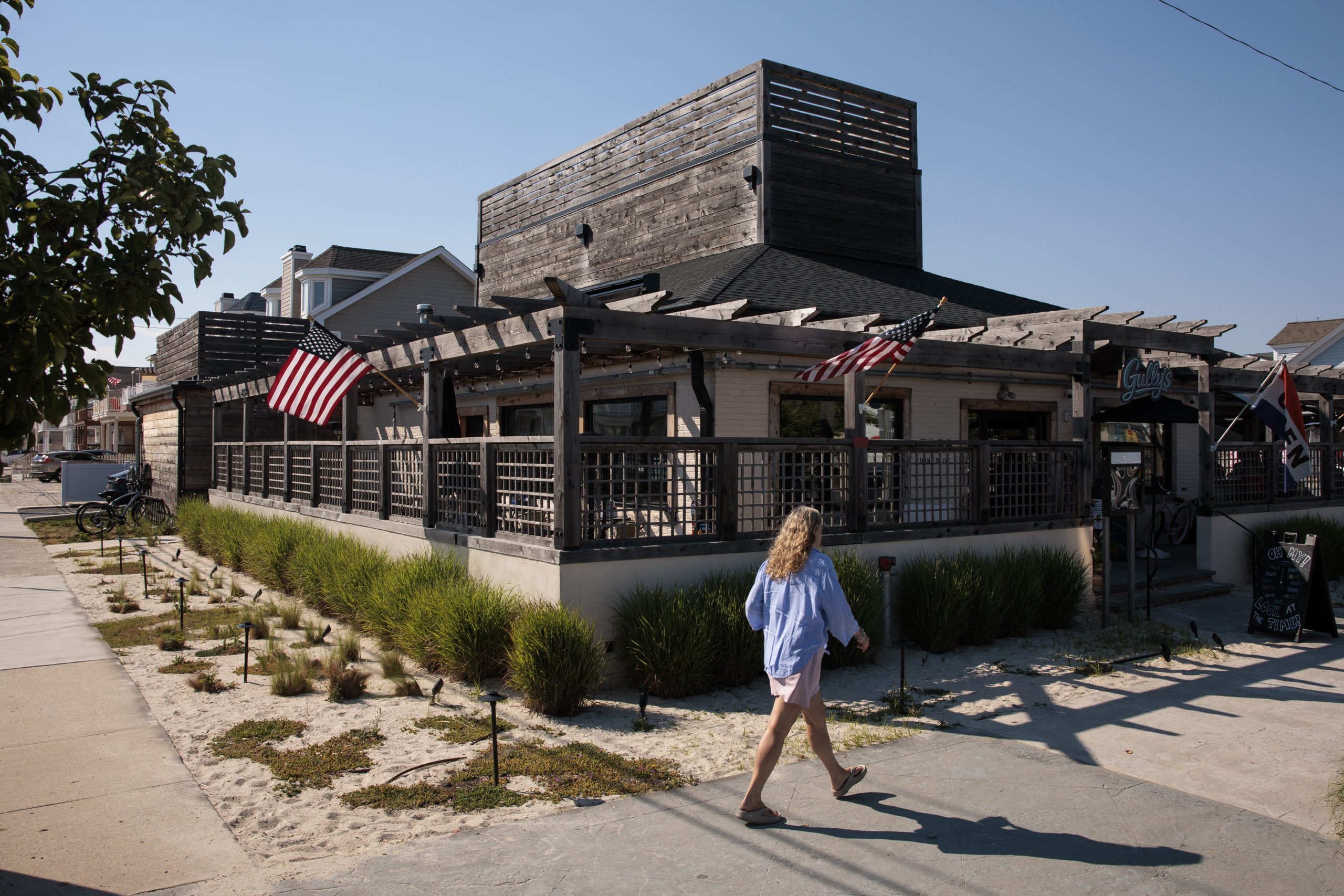
The exterior of Gully’s on Wednesday, June 17, 2026, in Avalon, N.J.Monica Herndon / Staff Photographer
“I think we can find something where we can thrive together,” she said. “All we’re asking for is the same conditions as similar businesses within the district.”
In an email, Avalon administrator Scott Wahl noted that the special conditions that permit outdoor music only between noon and 8 p.m. were adopted in June by council and apply to all seven holders of liquor licenses in Avalon, including the Union League, which took over the Whitebrier last year.
Still, Wahl said, “I believe the Borough Council will attempt to revisit the issue to balance the interests of the business community and the residential community.
“I think it’s fair to say both sides want to figure this out collaboratively,” he said.
Three and One will be back at Gully’s this Friday. Thompson said the owners initially assured them the usual 6 p.m. to 10 p.m. gig would be fine but have since asked them to play from 4 p.m. to 8 p.m.
Unlike Philadelphia — a city, county, and school district all in one — the collar counties are a mesh of townships, boroughs, and informal neighborhoods.
That geographical maze, along with the centuries-long evolution of the U.S. Postal Service, means some suburbanites are not even sure what town they live in.
He is from Abington Township and, like many Abingtonians, he has been living a lie.
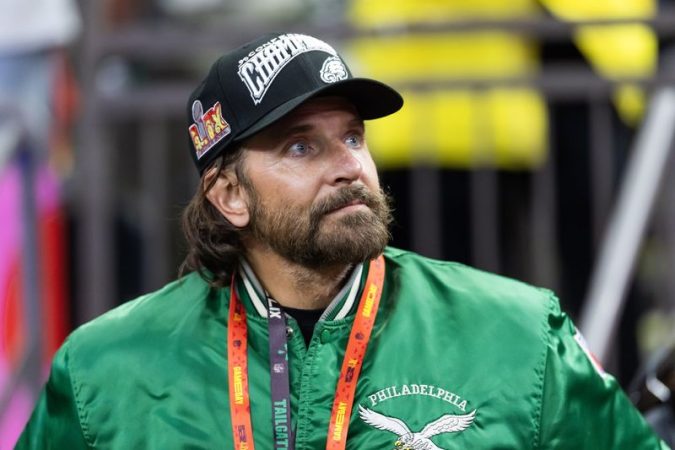
Where is Bradley Cooper from?
Cooper grew up not in Jenkintown, but a mile away in the unincorporated Abington community of Rydal, in a house his parents bought before he was born, property records show.
In the 1980s, he attended Rydal Elementary, where he played a mime, according to a playbill shared on social media.
The Oscar-nominated actor later enrolled at Germantown Academy, a private school in Whitemarsh Township whose reunions he still attends.
Cooper is known to call nearby Jenkintown his hometown from time to time — maybe because the borough is more well-known, and because that is what his childhood mailing address was. His reps did not return a request for comment this week.
Some Abingtonians don’t know where they live
But unlike people who grew up in the tiny enclave, Cooper could not have attended Jenkintown School District or participated in its National Geographic-famous Color Day.
“As someone who grew up in Jenkintown and loved cute boys and is about the same age as Bradley Cooper, I can tell you he is not from the Borough of Jenkintown,” writer Lauren McCutcheon said.
Many Abingtonians think they live in J-town, borough manager George Locke has said — so much so that his staff starts resident service calls by asking for an address. Otherwise they could spend 45 minutes on the phone, Locke said, before realizing the caller is in Abington.
Residents of unofficial neighborhoods like Glenside, or towns that span counties like Telford, may be more aware of their official designation. Some Glensiders attend school in Cheltenham, while others attend Abington School District.
For people without a kid in public school, an invisible municipal boundary may not matter much day to day. But it matters for local elections and during tax season.
Nye Stevens, a longtime Postal Service expert for the U.S. Government Accountability Office and the Congressional Research Service, said mailing addresses can also affect people’s insurance rates, which are often based on zip code instead of municipality.
And a zip code across two towns is nothing, Stevens added — some people get their mail from another state.
Bob O’Brien of Wyncote used to think his practice, Relief Counseling & Art Therapy, was located in Jenkintown — until the tax bill from Abington arrived.
“It was confusing,” O’Brien said — especially since there is a Jenkintown post office in the same building.
“How it got this way, I’m not sure,” he added.
The demands of mail delivery
U.S. post offices began primarily as a pickup service in cities until the agency introduced home delivery in the late 1800s.
Then cars expanded the suburbs, townships shifted, and assigned post office locations grew increasingly messy.
“As townships grow, post offices seem farther away,” a New York Times headline about South Jersey observed in 1997.
The U.S. has also closed tens of thousands of post offices in the last several decades, Stevens said, which may mean losing a mailing city that reflects where people actually live.
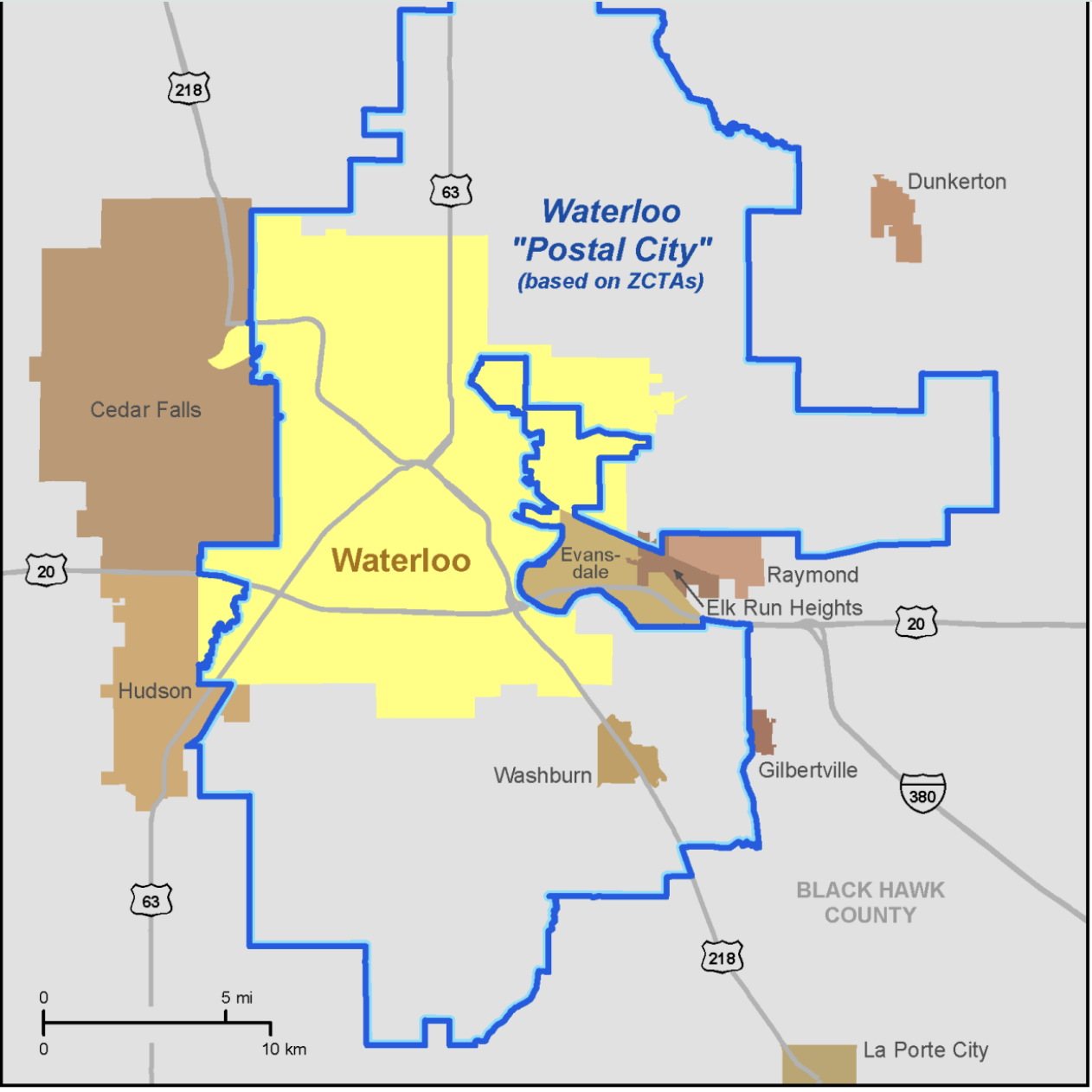
A map shows the city limits of Waterloo, Iowa, in yellow, while a blue line shows the boundaries of the “Waterloo” zip code.U.S. Census Bureau
Around 1990, some in Congress tried to fix the issue with a bill requiring the Postal Service make zip codes match municipal boundaries if towns request it.
But such a change would “absolutely ruin the postal system,” Stevens said. “You can’t have a post office for every little borough.”
The bill failed, and years later, the Postal Service was routinely rejecting zip code change requests, Stevens wrote in a 2006 Congressional Research Service report.
“Some communities that lack delivery post offices complain that the need to use mailing addresses of adjacent areas robs them of a community identity,” he noted in the report.
But at the end of the day, “zip codes are basically a delivery system. They’re not a neighborhood recognition system,” Stevens said this week.
As for Bradley Cooper, the confusion around his addresses in the Philly suburbs has not ended.
He supposedlyowns an estate in New Hope. But he really lives in Solebury Township.
This suburban content is produced with support from the Leslie Miller and Richard Worley Foundation and The Lenfest Institute for Journalism. Editorial content is created independently of the project donors. Gifts to support The Inquirer’s high-impact journalism can be made at inquirer.com/donate. A list of Lenfest Institute donors can be found at lenfestinstitute.org/supporters.