Tag: Weekend Subscribers

  • In ‘Dear Lara,’ violinist Lara St. John confronts rampant sex abuse in classical music in Philadelphia and beyond

    In ‘Dear Lara,’ violinist Lara St. John confronts rampant sex abuse in classical music in Philadelphia and beyond

    When famed violinist Lara St. John thought about the soundtrack for her new documentary, Dear Lara, she already had a classic composition in mind: Franz Schubert’s Death and the Maiden.

    It’s a story about death coming for a young girl who begs him to stay away, but he tells her there’s nothing to fear, his touch won’t hurt. The perilous interaction has long fascinated composers, musicians, and artists who frequently sexualized the relationship in the retelling over some 200 years.

    For St. John, the parallels felt strikingly relevant to her film as she completed interview after interview with survivors of sexual assault, most of whom were raped and abused as children by their classical music teachers in conservatories around the world.

    It’s her story too.

    In 2019, St. John came forward publicly with her experience from her time studying at Philadelphia’s Curtis Institute of Music, alleging in a Philadelphia Inquirer investigation that her violin teacher, Jascha Brodsky, assaulted and raped her.

    At the time, Brodsky was 79 years old and she was 14.

    Brodsky died in 1997 before accusations of his misconduct from St. John and other students came to light. His family said the alleged behavior was “completely inconsistent with the man we knew and loved.”

    After speaking out, the Canadian violinist received a deluge of letters and calls from fellow survivors in the classical music world, primarily from women who were abused as girls by older, powerful men considered too talented to be stopped.

    Hundreds of “Maidens” came forward to share their harrowing and haunting encounters with “Death.”

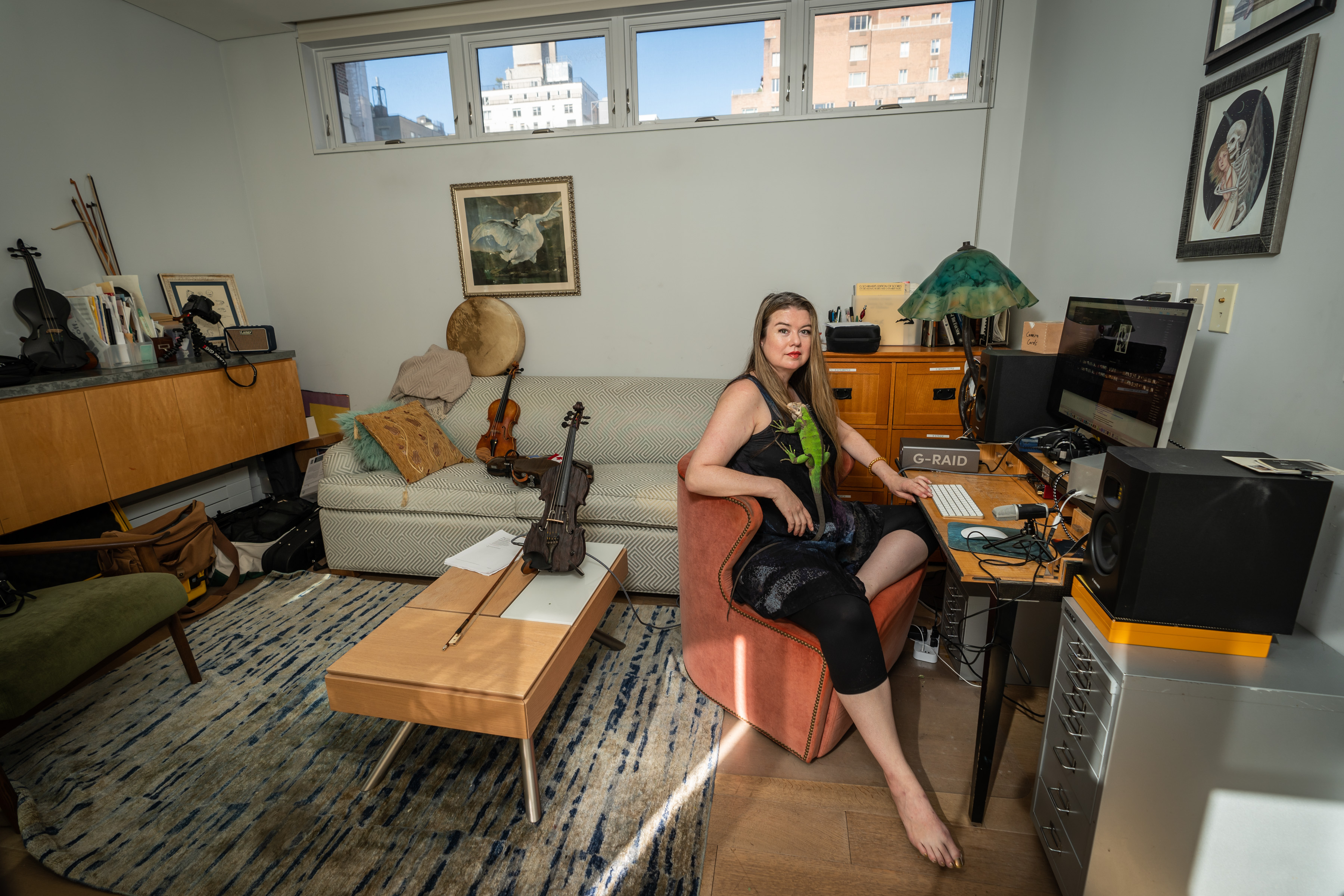
    Lara St. John at her home in New York City on Sept. 10, 2024.Jessica Griffin / Staff Photographer

    Their stories followed a familiar pattern, painting a horrific picture of systemic abuse and institutional complicity. Bright and skilled young girls enrolled in prestigious, competitive institutions to learn from world-renowned maestros treated with godlike reverence. In private lessons, those men forced themselves onto their students repeatedly, brazenly, and without consequence. They threatened their victims with expulsion or other punishments to keep the children quiet. If a girl did come forward to report her assault, school leadership rarely took disciplinary action against the abuser.

    The men continued teaching, founded music programs of their own, racked up awards, and secured illustrious titles. The girls faced ridicule and retaliation, struggled to recover as their lives were derailed, and some stopped playing music entirely. Many attempted suicide. A few died that way.

    Rewind, replay.

    “It’s a small world, and I knew I wasn’t alone in this, obviously, but I didn’t realize the breadth of it — how global it was and just how endemic it was,” said St. John, 55, who now lives in Manhattan. “Once they knew about me, everybody had their own story that they wanted to share.”

    St. John felt a profound responsibility to take action.

    Three months after she went public with her own story, she picked up two cameras and began interviewing fellow survivors, starting a seven-year-long filmmaking process.

    Dear Lara, which premiered earlier this year at the Santa Barbara Film Festival, features accounts of eight survivors of sexual abuse at the hands of teachers, concertmasters, and once-renowned classical music stars: Pianist Lusiana Lukman, violinist Lisamarie Vana, violinist Mascha van Sloten, double bassist Heather Bird, violinist Zeneba Bowers, oboist Katherine Needleman, opera singer Samuel Shultz, and the late cellist Robie Brown (as told through her widower, Frank Powdermaker).

    Their stories are intertwined with archival footage and images as well as interviews with legal experts and journalists (including The Inquirer’s classical music critic, Peter Dobrin) who investigated assaults at various schools and orchestras. The film will have its Pennsylvania premiere on Monday, Oct. 5, with two screenings at the Free Library of Philadelphia on the Parkway.

    It arrives amid renewed conversations about women’s safety on school campuses and criticism of educational institutions who shield perpetrators of sexual assault from accountability following the alleged rape of a Cornell University student by members of a fraternity house.

    Lara St. John shooting in Philadelphia for her 2026 documentary “Dear Lara.”Courtesy of Lara St. John

    “I certainly never set out to be a filmmaker … It was an ambitious undertaking. I made a lot of rookie mistakes [at first],” said St. John, whose previous film experience consisted of editing her own music videos. “I’m really glad that I set out on my own as early as October 2019 because various situations have changed, and I wouldn’t have gotten some of those stories if I had waited until I had a team together.”

    The heart-wrenching film follows St. John on her interview trips to Toronto, Amsterdam, Winston-Salem, N.C., and Philadelphia. In some Zoom interviews, St. John’s pet iguana, Cain, made a cameo. (He died in 2021 but during our interview, St. John introduced her new baby iguana, Octavius.)

    Shooting in Philadelphia was especially difficult. While standing in Rittenhouse Square, across the street from Curtis, she felt physically sick as she recounted attempting suicide during her third year. In the aftermath of her allegations, Curtis commissioned a report from law firm Morgan Lewis that concluded St. John was credible.

    The school eventually apologized in a statement acknowledging that leadership “failed to provide her with a safe learning environment, failed to carefully investigate her claims, failed to communicate our grave disappointment in how she was treated by Curtis, and repeatedly failed to communicate the steps that were taken to prevent such abuse from occurring in the future.”

    Curtis has since implemented policy changes, like disallowing private lessons at teachers’ homes, hired a Title IX coordinator, and established a trauma fund for free counseling for victims of sexual abuse within the Curtis community. In a 2024 statement to The Inquirer, the school said these efforts, among other changes, “have made Curtis an incredibly safe and nurturing place.”

    A still from the documentary “Dear Lara,” picturing violinist Lara St. John in Rittenhouse Square discussing the abuse she experienced as a teenage student at Curtis Institute of Music.Courtesy of Lara St. John

    Since the release of Dear Lara, another school was pressured to conduct an investigation.

    In the documentary, Lukman, a pianist who left home in Indonesia at 14 to pursue music, detailed allegations of sexual assault by her teacher Boris Berlin at the Royal Conservatory of Music in Toronto in the 1980s. After the documentary screened in Canada, Lukman created a petition demanding an independent investigation into sexual abuse at the institution that earned thousands of signatures; the conservatory has since hired a law firm to investigate. Berlin died in 2001.

    “I felt devalued and betrayed, because if anything is worse than being molested, is coming forward about these things and being betrayed by the people that supposedly protect children,” Lukman says in Dear Lara.

    Lukman and St. John are continuing to pressure the school to make the report public when it’s completed. Their efforts are part of St. John’s relentless advocacy work beyond the documentary to support survivors and denounce music schools worldwide that have fostered what she calls a culture of silence and abuse.

    “We’re trying to create a movement, really, to get rid of this ridiculous — well, honestly, it’s overused now, but — patriarchy in classical music. I believe many, many women have just been abused out of the field, and some men, obviously, as children as well,” said St. John.

    The violinist is now deeply familiar with Pennsylvania politics as she’s traveled to Harrisburg three times to advocate for amending the statute of limitations for childhood abuse. In Dear Lara, St. John appears with ChildUSA founder and University of Pennsylvania professor Marci Hamilton at Philadelphia’s City Hall to garner support for House Bill 462, which would provide a two-year window for survivors to file lawsuits that otherwise could not be prosecuted because the statute of limitations has expired. While the bill passed in the House in 2025, it has stalled in the Senate.

    A still from “Dear Lara” picturing Lara St. John at Philadelphia’s City Hall for a rally with Child USA to advocate for Pennsylvania to change its laws regarding the statute of limitations for childhood sexual abuse.Courtesy of Lara St. John

    “If it’s murder, there’s no statute of limitations. … Child sex abuse is, in many ways, like the murder scenario because the victim is so disempowered as compared to the perpetrator, and the average age to come forward is in the early 50s,” Hamilton explains in the documentary. “Twenty years ago, 15 years ago, there were a lot of states where you had two years from the date of the act. So if you were six years old, you had two years to get a lawyer and press charges.”

    St. John hopes that the film will encourage audiences to take action, too.

    Dear Lara is a groundbreaking and searing examination of the classical music industry, which rarely is represented on screen.

    (The Emmy-nominated Tár, which cast Cate Blanchett as a fictional, predatory lesbian conductor, is one recent and prominent example. St. John thought it was “ridiculous” and “idiotic” that the perpetrator was female. “There are thousands of men Társ out there, and they made this a woman, like come on,” she said.)

    After serving as Dear Lara’s director, writer, cinematographer, and participant, St. John also contributed original music. In addition to using her arrangements of Death and the Maiden, she composed a theme song beginning with A and E strings as a nod to how every child first learns the violin.

    Some of the featured musicians on the soundtrack include fellow survivors like Needleman, the principal oboist at the Baltimore Symphony Orchestra who discussed her experience of sexual harassment in the film, and Cara Kizer, a French horn player who was allegedly raped by two of her New York Philharmonic colleagues.

    St. John plans to release a Dear Lara soundtrack with their recordings, including those she had to cut from the film, like an aria from Shultz, a participant who described being raped as a graduate student in Texas.

    Eventually, St. John wants to create a foundation to support survivors pursuing justice against their abusers and the institutions who failed them.

    “That will be my life’s work,” she said.

    ‘Dear Lara’ will screen twice on Oct. 5 at the Free Library of Philadelphia’s Parkway Central Library, 1901 Vine St., Phila., 833-825-5357 or libwww.freelibrary.org.


  • Both NY Philharmonic and the Philadelphia Orchestra played Mahler’s ‘Symphony No. 5′ recently. Who did it better?

    Both NY Philharmonic and the Philadelphia Orchestra played Mahler’s ‘Symphony No. 5′ recently. Who did it better?

    The symphonic world has evolved into an ongoing Mahler festival, so much that the composer’s Symphony No. 5 surfaced in adjacent performances this week — the New York Philharmonic under its new music director Gustavo Dudamel and the Philadelphia Orchestra under Yannick Nézet-Séguin.

    I heard both — Dudamel on a livestream Tuesday at Lincoln Center and Philadelphia on Friday at the Kimmel Center.

    Then there’s Mahler 7th in Boston and Mahler 3rd in Paris, available on radio broadcasts.

    Is Mahler ruling the world?

    Only a few years ago, any Mahler symphonies beyond the amiable 1st and 4th were heard occasionally. But the stormy 5th symphonies being heard almost simultaneously (Philadelphia’s will be repeated at Carnegie Hall Oct. 13) show that Mahler performances are rarely redundant experiences.

    Even with expansive running times from 60 to 100 minutes, Mahler symphonies are packed with content. With so many performance instructions (the composer was a micro manager) any conductor/orchestra combination connects the dots quite differently.

    Consider the contrasting personalities of the PHL and NYC orchestras.

    Gustavo Dudamel opened his inaugural season as Music and Artistic Director of the New York Philharmonic by pairing the world premiere of Tania León’s “Imágenes Mestizas” with Gustav Mahler’s “Symphony No. 5.” Photo taken on Sept. 29, 2026 in New York City’s David Geffen Hall.©Copyright 2026 Brandon Patoc.

    NYC’s hot, Dudamel-appointed hornist David Cooper nearly turned the 5th Symphony into the world’s biggest horn concerto. He seemed to lead the Tuesday performance almost as much as Dudamel.

    That wouldn’t do in Philadelphia with its tradition of blended sonorities dating back more than a century. The NY Phil has been called an orchestra of soloists. The Mahler 5th encourages that with high-profile incidental solos. But the amassed sonorities in Philadelphia have one-of-a-kind power.

    Gustavo Dudamel opened his inaugural season as Music and Artistic Director of the New York Philharmonic by pairing the world premiere of Tania León’s “Imágenes Mestizas” with Gustav Mahler’s “Symphony No. 5.” Photo taken on Sept. 29, 2026 in New York City’s David Geffen Hall.©Copyright 2026 Brandon Patoc.

    Consider, also, the different conductor personalities: Nézet-Séguin’s treatment of the opening trumpet solo — at the start of a funeral March — felt like a dire warning. Dudamel’s was like a requiem. (Considering what his home country of Venezuela has been through lately, could it be any other way?) Nézet-Séguin generates excitement, often uses speed and clarity of intention. Dudamel creates a kind of frenzy seldom heard since Leonard Bernstein. But not always. The final moments of Dudamel’s Mahler 5th had it. But while his performance had solid playing and steady electricity, there were few surprises.


    It was safe, which is understandable.

    The pressure on Dudamel is enormous. His mandate isn’t just great music making but outreach, including concerts at Radio City Music Hall. He’s building an ensemble whose last three music directors, most recently Jaap van Zweden, didn’t make the orchestra their own. Dudamel himself recently came off a curtailed tenure at the Paris Opera. And he has left his longtime comfort zone, the Los Angeles Philharmonic.

    At the end of Tuesday’s Mahler 5th, the floor-to-ceiling livestream video screens at David Geffen Hall showed Dudamel looking relieved, not joyful.

    On the other hand, few orchestras have a history of stable leadership as the Philadelphians, and it shows with artistic consistency and ability to take risks with confidence. At this point, the Philadelphia Orchestra commands as much attention with supersoft playing as with fortissimos.

    Yannick Nézet-Séguin and Julia Wolfe whose “Liberty Bell” was played by the Philadelphia Orchestra along with Mahler’s “Symphony No. 5” on Oct. 1 in Marian Anderson HallJeff Fusco

    But the orchestra has not grown so refined that it can’t rock ‘n’ roll in the final section of Julia Wolfe’s Liberty Bell, co-commissioned by the orchestra, and also in Friday’s program. It’s apocalyptic as well as celebratory. Having grown up in the area, Wolfe spent formative weekends on South Street, and you hear that in this piece. But then, in the middle of the last section, comes an explosion sounding like World War III. Say it isn’t so.

    Explosions, softness bode well for Mahler.

    In the symphony’s long spans of music, Nézet-Séguin finds an underlying element that makes them more cogent, whether the underlying bass lines, the waltz rhythms of the third movement, or something less discernible in the finale where everything is happening at once. Layers of counterpoint, fugues plus antiphonal effects between upper and lower strings all tumble out at warp speed — and not with the light touch Nézet-Séguin employed in past years.

    In Nézet-Séguin’s Carnegie Hall concerts with the Metropolitan Opera Orchestra, every symphonic motif behaves like a stage character. It comes naturally to those players, and I’m hearing more of that in his Philadelphia Mahler. It’s a great fit. These are some of the more fully realized Mahler performances I ever hope to hear.

    The program will be repeated at 8 p.m. Saturday at the Kimmel Center. Tickets: $29-232. philorch.ensembleartsphilly.org

  • The same structural failures cost the Phillies again in the playoffs. The onus falls on Dave Dombrowski

    The same structural failures cost the Phillies again in the playoffs. The onus falls on Dave Dombrowski

    ATLANTA — You can blame the manager for his handling of the pitching staff. You can blame the front office for forcing him to handle a grenade. I suppose you can blame the pitchers themselves: Jhoan Duran for giving up the decisive three-run home run in Game 1, Aaron Nola for doing the same in Game 3.

    But before we blame anybody for the way the Phillies’ season ended, a 6-2 loss in a decisive Game 3 at Truist Field on Thursday night, let’s at least take a moment to acknowledge what they accomplished.

    A baseball season is a maddening, fluky, grind of a thing. Qualifying for the playoffs in five straight seasons is an extraordinarily difficult task. The Phillies are one of only nine franchises in major league history who have ever done it. Their current streak is the second-longest active one in the majors, behind only the Dodgers (14). That’s not apologetics. It’s reality.

    Just ask the Braves, who were down to their last four outs in Game 1 when Austin Riley homered off Duran. Or, heck, ask the Dodgers. Los Angeles made the playoffs seven straight times without winning a World Series before finally breaking through in 2020. That initial stretch included three National League Division Series losses. They’ll be favored against the Braves in this year’s NLDS, which starts Saturday. They know how little it means.

    “It’s just as frustrating as last year, and the year before that,” said Kyle Schwarber, who had two of the Phillies’ six hits against a Braves team that used six pitchers, none for more than 10 outs. “We have to keep finding ourselves in position, first off, to be in this position. Because it’s never going to be a guarantee that you’re in a postseason. You have to keep fighting to be in those spots and when you are in the postseason, keep trying to find a way to win a game.”

    Alec Bohm walks off the field after the Phillies lost to the Braves in Game 3 on Thursday.Yong Kim / Staff Photographer

    None of this is meant to serve as consolation. Nor does it nullify the litany of criticisms one can and should direct at these Phillies. As difficult as it is to make five straight postseasons, it is nearly as difficult to lose four straight postseason series on luck alone. There are clearly some structural issues here.

    • In their last nine postseason games, the Phillies have scored a total of 10 runs in the first six innings. About a third of those runs came in one inning, when they scored three off Shohei Ohtani in Game 1 of last year’s NLDS loss to the Dodgers.
    • In those same nine postseason games, the Phillies have allowed a remarkable 19 runs in the seventh inning or later.

    Just as obvious as these KPIs are their underlying causes. The Phillies are a top-heavy team in both phases of the game. Dave Dombrowski’s biggest failure over the last three-plus years has been his inability to address either.

    The last time the Phillies won a playoff game where neither Bryce Harper nor Kyle Schwarber homered was Game 4 of the 2023 NLDS. In fact, the duo has combined for at least two home runs in five of the six wins since. It is neither sustainable nor reasonable to place that much responsibility on two members of a nine-man lineup.

    Same goes for the pitching staff, which has leaned so heavily on its key members that you can’t help but wonder about the cumulative effects.

    In Game 3, 36-year-old Zack Wheeler was out there throwing 68 pitches on three days rest. This was two days after Jesús Luzardo threw 77 pitches in his first start off a three-week stint on the injured list. Which was the same day Duran threw 27 pitches in the seventh and eighth innings and wasn’t heard from again.

    Zack Wheeler threw 68 pitches in Game 3 on three days’ rest.Yong Kim / Staff Photographer

    You can second guess some of what interim manager Don Mattingly did with his pitching staff against the Braves. Bringing Duran into Game 1 when he did, allowing him to throw as many pitches as he did, starting Nola in Game 3. None of these decisions looked much different from the ones the previous guy would have made. This is how it looks when a manager feels like he does not have enough options.

    “I don’t think it’s the time right now to try to evaluate why or whatever happened, what’s good, what’s bad,” Mattingly said after the loss. “It’s like any situation. You look at your club, you evaluate it, what went wrong, what went right, what’s the positive, what’s the negative, how do you move forward.

    “But again, that’s not my place to talk about that. I think that’s the organization’s place. It’s Dave’s spot to — how they build the club. I’m sure those are things they’ll be thinking about over the winter.”

    Mattingly is right to defer to his boss. The onus is clearly on Dombrowski, obviously. Credit him for drafting Alex McFarlane in the fourth round in 2022. The rookie setup man is the kind of arm the Phillies needed to find to have any hope at solving their longest running issue. Of course, we once said the same of Orion Kerkering.

    You can’t fault Dombrowski’s effort. He’s taken plenty of swings. The whiff rate is the issue. Neither of the two relievers he acquired at the trade deadline was on the playoff roster: Caleb Kilian due to injury, Brooks Raley due to ineffectiveness. Same goes for Dombrowski’s biggest offseason acquisition. Setup man Brad Keller went down in early July with an elbow injury that will likely sideline him through next season. Kerkering finished the season in triple A, capping a steady downward slide from his promising debut in late 2023. Dombrowski’s best move of the year was acquiring righty Jonathan Bowlan from the Royals for lefty Matt Strahm. But Bowlan, too, spent most of the series on ice, appearing only after the Braves had taken a 5-0 lead in Game 3.

    The issues with the lineup will be even more difficult to solve. The Phillies still haven’t found a replacement for Rhys Hoskins behind Schwarber and Harper. Whit Merrifield, Austin Hays, Adolis García, none even managed to offset the decline and fall of Nick Castellanos.

    These aren’t just nitpicks. These are issues that will almost certainly need to be solved before the Phillies are capable of winning three or four straight playoff series, let alone one. And, really, they transcend whatever transaction-level pass-fail grades you assign to Dombrowski’s moves. The Phillies’ structural issues extend to their payroll. For the most part, their big-money guys performed about as well as can be expected, at least when grading against typical aging curves (i.e. in the case of J.T. Realmuto and Nola).

    The one significant exception is shortstop Trea Turner, who has seven years and roughly $190 million remaining on his contract and is coming off a 33-year-old season in which he posted a career-low .675 OPS. He went 1-for-11 with no walks in three games against the Braves. Turner is 8-for-55 in his last 14 playoff games dating back to Game 5 of the 2023 NLCS.

    “I think it starts with me,” Turner said of the offense’s struggles. “I take a lot of responsibility for it.”

    Phillies shortstop Trea Turner has seven years left on his $300 million contract.Yong Kim / Staff Photographer

    Even with some improvement from Turner, Dombrowski will need to take a careful look at every level of his organization and consider how to better balance this team beyond spinning the roulette-wheel of mid-level free agents and living trade deadline to trade deadline. He will need to explore the offseason trade market. He will need to come up with an accurate assessment of top hitting prospect Aidan Miller’s short- and long-term future after he missed most of the year with a back injury. He may need to consider whether Brandon Marsh can be swapped for a better lineup fit as the outfielder heads into his walk year.

    These are difficult decisions. But they are the reason Dombrowski’s job exists.

    The issue with the Phillies is not their heart, or their brains, and it certainly isn’t their grit. It isn’t their age, or their two best hitters. They came back from a disastrous start that earned their beloved manager a pink slip. They came back from a disastrous seventh inning in Game 2, one day after a victory slipped away from them late. Schwarber and Harper were as good a tandem as any in the league, all the way through this loss to the Braves.

    The hardest general managin’ is taking a roster from good to great. Here we are, seeing it once again.

  • Judicial disciplinary court weighs whether Philly Judge Scott DiClaudio should be removed from the bench

    Judicial disciplinary court weighs whether Philly Judge Scott DiClaudio should be removed from the bench

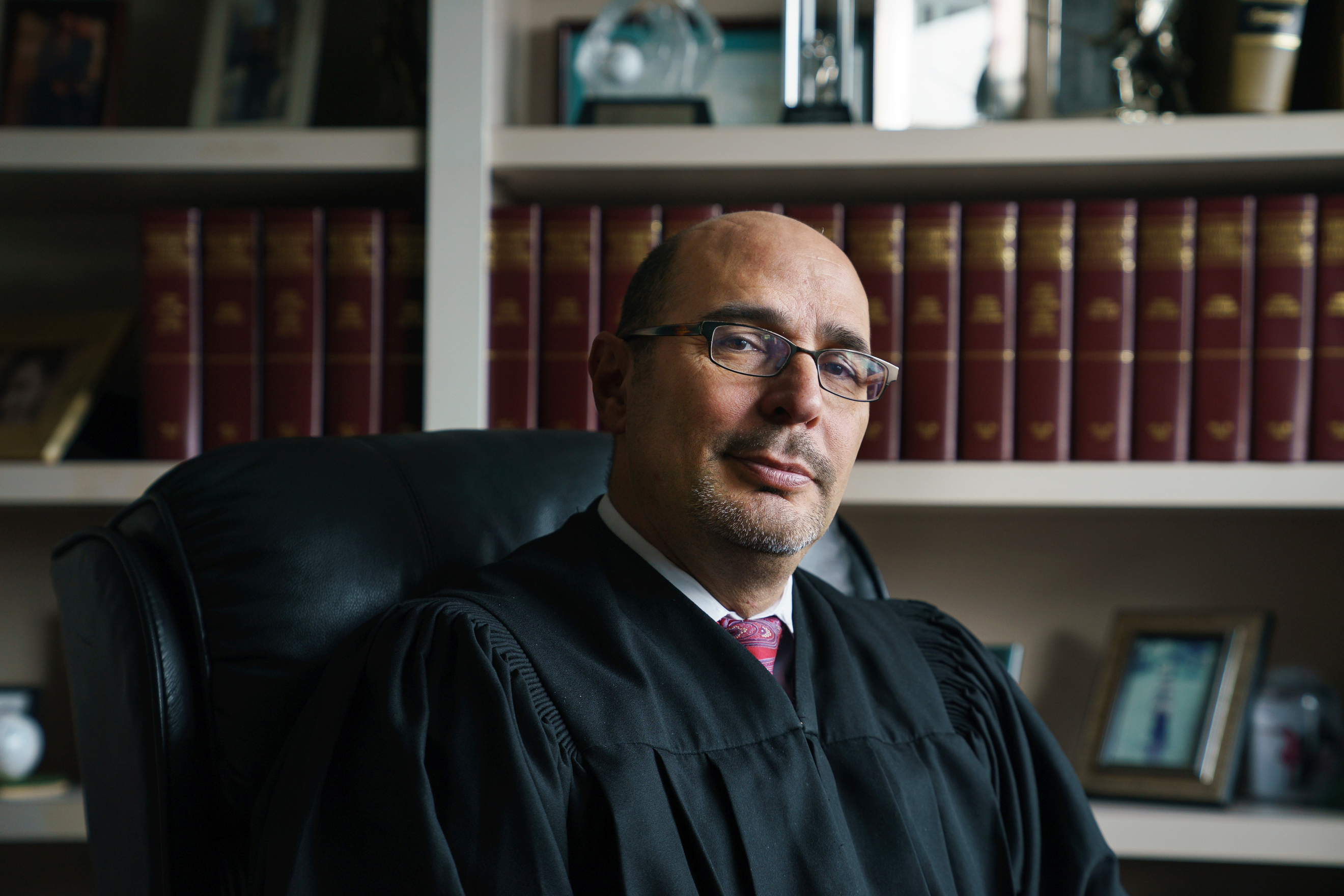
    HARRISBURG ― Pennsylvania’s Judicial Conduct Board on Thursday urged a judicial disciplinary court to permanently remove a Philadelphia judge from the bench, saying he had displayed a pattern of unethical and “boorish” behavior that culminated in an effort to influence a colleague’s decision in a criminal case last year.

    Common Pleas Court Judge Scott DiClaudio showed “little respect for the court and little respect for the rules of the court,” said Elizabeth Hoffheins, deputy counsel for the Judicial Conduct Board.

    DiClaudio had a history of disciplinary issues, she said, and he had not taken adequate responsibility for his actions.

    “Anything less than removal would fall short of restoring the public’s trust,” Hoffheins said.

    The board’s request came after two days of testimony before the Court of Judicial Discipline, which is expected to determine DiClaudio’s fate as a judge in the coming months.

    DiClaudio acknowledged Thursday that his remarks to fellow Common Pleas Court Judge Zachary Shaffer were improper, but insisted it was a complete misunderstanding and was never meant to tilt the scale of justice.

    “I wish I never said it. I regret ever saying it,” DiClaudio said of the comments to Shaffer. “I wasn’t thinking.”

    Shaffer testified that he was on the bench in his courtroom on June 12, 2025, when DiClaudio’s personal assistant, Gary Silver, walked in and said DiClaudio wanted to see him.

    Shaffer said he and his clerk, Nicole Vernaccio, had been in touch with DiClaudio that week about buying T-shirts from the cheesesteak shop owned by DiClaudio’s wife. They assumed the request was to go pick them up.

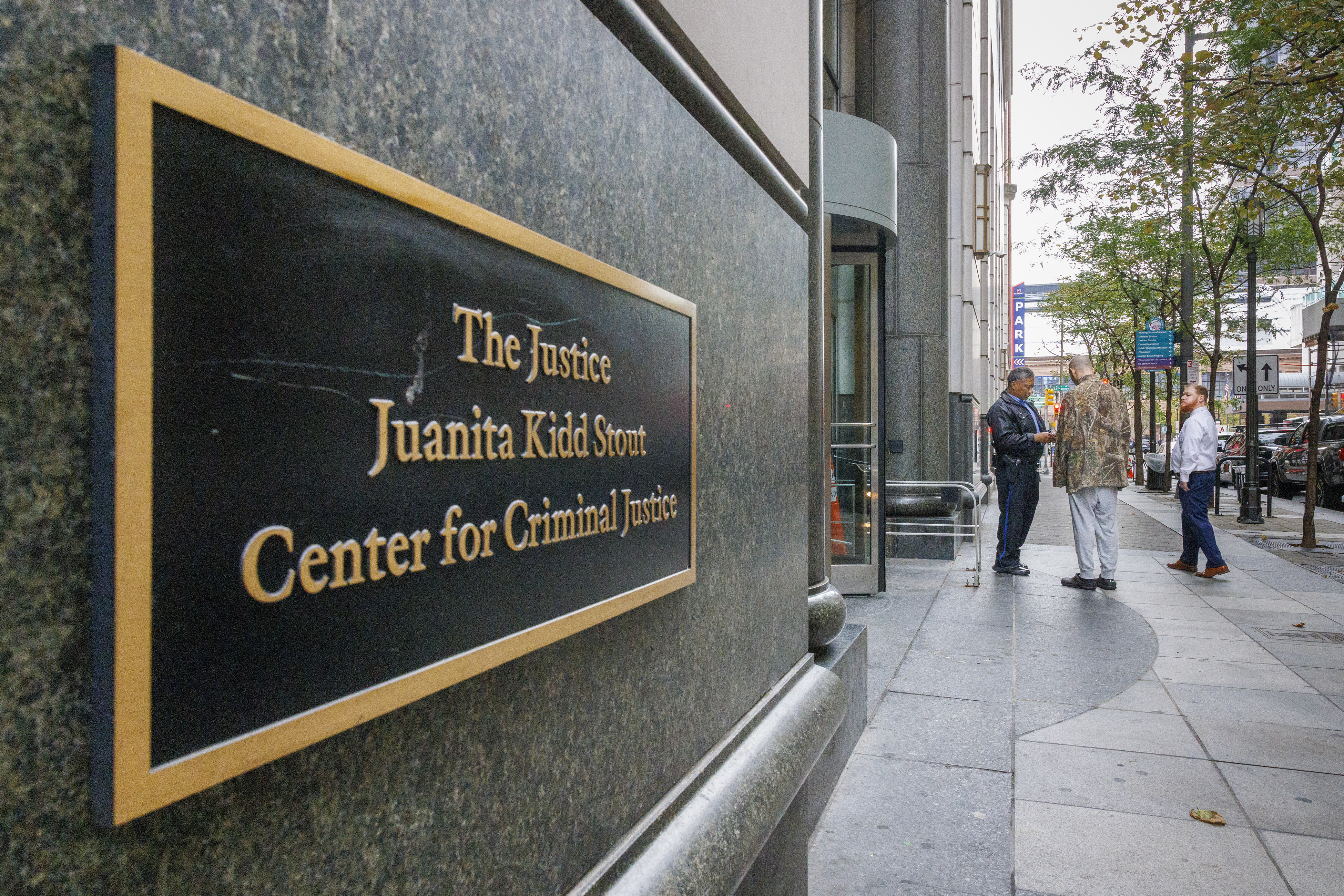
    The exchange occurred in the robing room of DiClaudio’s former courtroom inside the city’s criminal courthouse. Alejandro A. Alvarez / Staff Photographer

    The two walked to DiClaudio’s courtroom, then gathered in his robing room. They spoke for several minutes about various topics, he said, before DiClaudio asked Vernaccio to leave. Vernaccio also testified that she was asked to step out.

    Shaffer said DiClaudio then pulled out a piece of lined paper with “Dwayne Jones, courtroom 905, and Monday’s date” written on it.

    DiClaudio held it out at his side, he said, then looked at him and said, “OK?”

    Shaffer said he was confused, and hesitantly said, “OK.”

    He said DiClaudio ripped up the paper and threw it away.

    As Shaffer started to leave, he said, DiClaudio told him: “‘You probably would have done the right thing anyway.’”

    Shaffer said he was shocked and believed DiClaudio was suggesting he should give a favorable sentence to Jones, who was scheduled to appear before him in the coming days on charges of illegal gun possession connected to a fatal shooting.

    Shaffer reported the conversation to his supervisors the next morning, and they referred the matter to the Judicial Conduct Board. He recused himself from Jones’ case.

    The board charged DiClaudio with multiple ethical violations last September. He was later suspended without pay.

    DiClaudio’s testimony during a hearing last fall and again this week clashed with Shaffer’s in nearly every way.

    All of this came to be, DiClaudio said, after he attended the Roots Picnic in June 2025 — where he said he hung out backstage with Philadelphia rapper Meek Mill. In the common area, he said, Jones approached him and said he had a forthcoming sentencing before Shaffer.

    DiClaudio said he didn’t know Jones, and told him only that his colleague was “a good judge who would do the right thing.” When Jones handed him his business card, he said, he put it in his wallet, not wanting to be rude.

    DiClaudio denied that he later summoned Shaffer to his courtroom, despite an audio recording that showed that shortly before his assistant went to retrieve Shaffer, DiClaudio asked: “Is Judge Shaffer on the bench right now? Can you call down there and see if he’s still on the bench please?”

    DiClaudio said he only asked about Shaffer because he had just addressed a case where a defense attorney Shaffer is dating did not appear in court. He said he wanted to ask Shaffer why she didn’t show. (The courtroom audio confirmed that DiClaudio addressed the woman’s case just before inquiring about Shaffer.)

    He said he did not instruct Silver to visit Shaffer, and was surprised when the judge walked in.

    Once inside the robing room, DiClaudio said, he, Shaffer, and the clerk discussed various topics. It was only as Shaffer went to leave, he said, that he picked up his phone and wallet holding Jones’ business card, and remembered the concert exchange.

    He said he took out the card and told Shaffer: “I saw this guy at a concert. I told him you’re a good judge and you’d do the right thing.”

    Then, he said, he tossed it into the trash.

    “It was improper and wrong. There was no good reason to say that even though it wasn’t my intention to influence the case,” he said Thursday, adding: “I never wanted him to do anything with that statement other than to say thank you.”

    The board had initially said that DiClaudio sought to sway the case because Jones was a friend of Meek Mill. Jones, in an interview last year, also said he was a friend of the artist’s.

    DiClaudio, too, is close to Mill.

    But Hoffheins did not introduce evidence of that during Thursday’s hearing. She said this week that the board still believed that to be true, but did not need to prove a motive in its case.

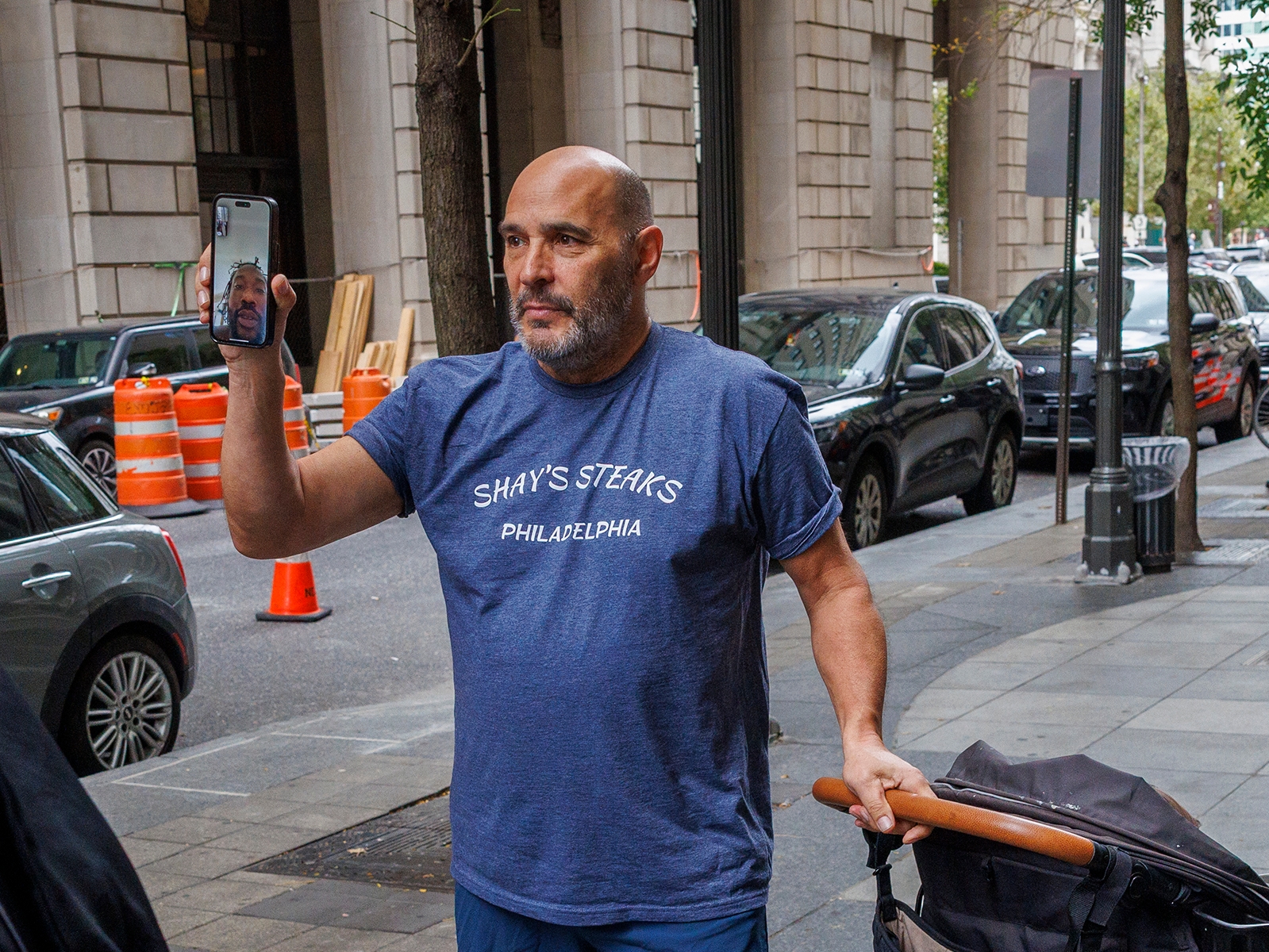
    Common Pleas Court Judge Scott DiClaudio speaks with rapper Meek Mill on Facetime outside the Philadelphia courthouse on Sept. 16, 2025. DiClaudio, while on the call, approached the family of Tyree Musier, whose murder conviction was overturned, and said he thought they would appreciate Mill saying hello.Alejandro A. Alvarez / Staff Photographer

    “This remark was not simply a compliment, not simply an off-the-cuff remark,” she said. “It was calculated to occur three days prior to this man’s sentencing.”

    DiClaudio was elected to Common Pleas Court in November 2015, and took the bench in January 2016. Before his suspension last year, he mostly heard cases filed by people seeking to have their murder convictions overturned.

    He presided over many high-profile exonerations and wrongful-conviction cases, and approved the release or resentencing of dozens of people who had been serving life in prison.

    DiClaudio was known for working long hours, moving cases efficiently, and thoroughly explaining his decisions to the families of victims and the defendants. But he was also unconventional in his at times brash communication style on the bench.

    That was on display again Thursday. He often rambled in a stream of consciousness from the stand, breathlessly veering between accepting responsibility, disputing Shaffer’s testimony, and even relaying his colleague’s dating history. His attorneys, Samuel Stretton and George Bochetto, struggled to reel him in.

    “Just stop,” Stretton interjected several times.

    Hoffheins pointed to the display, as well as DiClaudio’s previous disciplinary record, as proof of a pattern of misconduct.

    Before becoming a judge, DiClaudio was censured by the Pennsylvania Supreme Court for “serial misconduct,” including violating legal ethics rules. Shortly after he took the bench in 2016, Hoffheins said, the Judicial Conduct Board sent him a private disciplinary letter for engaging in “boorish behavior” toward his court staff.

    Then, in 2020, the Court of Judicial Discipline determined that he violated the code of conduct for judges when he failed to report debts on annual financial disclosure forms and repeatedly defied a judge’s orders to pay thousands of dollars in overdue bills to a Bala Cynwyd fitness club. He was suspended for two weeks, and placed on probation through 2026.

    And last April, the Judicial Conduct Board accused him of using his position as a judge to promote his wife’s cheesesteak shop, eroding public trust in the judiciary, and abusing the prestige of the office for personal gain. DiClaudio has denied the allegations, and the case remains ongoing.

    “What I am hearing, what I am feeling, is a persistent theme of your doing things and saying things … that are not wise,” said Judge Charles L. Becker, of the disciplinary panel.

    Judge Carolyn Nichols called it “a painful trail of incidents.”

    In a final plea, DiClaudio, 63, said if he returned to the bench, he would only work the few weeks necessary to secure his pension and lifetime health insurance to support his wife and two young children. Then he would retire, he said.

    He teared up as he spoke of his children and defended his integrity and career.

    “I talk a lot, but it’s my greatest strength and my greatest weakness,” he said. While he might be a “crazier judge,” he said, he’s “a judge who makes the right decisions.”

    “That may be an explanation,” Becker said, “but, frankly, I’m not sure that’s a defense.”

    Stretton, in his closing remarks, asked the panel for mercy.

    “Yes he did something bad. And some of his conduct here can get a little rambunctious,” he said. “… But I see a great, decent judge. He’s done a lot of good in the community and on the bench. He’s well-respected.”

    The tribunal will now weigh the matter, a process that could take months.

  • After an identity hoax, one Philly educators’ group dissolves and another goes on hiatus

    After an identity hoax, one Philly educators’ group dissolves and another goes on hiatus

    After being duped by Hannah Gann, one organization closely affiliated with the Philadelphia School District teacher and activist is dissolving, and another is on a two-month hiatus pending a decision about its future.

    The moves come after Gann admitted she lied for years about her identity, claiming at times to be Palestinian, Tunisian, and Black — devastating both groups and drawing national attention to her deception. Gann recently admitted to being a white, Jewish woman, with relatives who she said were Israeli settlers.

    “After much reflection, Philly Educators for Palestine has made the decision to dissolve,” a statement read. “We are deeply grateful to everyone who participated, supported, organized, learned, taught, and stood alongside us. We are proud of what we accomplished together and of the community that was built through this work.”

    The group, which was not affiliated with the Philadelphia School District but whose members taught in the district, began in early 2024, after charter members, including Gann, organized a “teach-in” about Palestinian history and the conflict in Gaza.

    The Racial Justice Organizing Committee, established as an independent group in 2020, is “taking a two-month hiatus to rest, process, and decompress,” the joint statement said. “A decision regarding its future and next steps will be shared by the end of the year.”

    Gann’s deception was publicized by both groups earlier this month. The organizations’ members were “stunned, saddened, and angered by this betrayal,” they said at the time.

    Gann, in a 10-minute video released after the groups revealed her yearslong hoax, said that she “allowed half-truths and obfuscations to grow into outright lies,” but that she “genuinely wanted to commit to the work I was doing in spite of those lies.”

    She has said in a social media post that she was “so, so sorry. It’s so far from being enough, but I don’t know what else to say.”

    ‘Cosplaying Black’

    Most of the teachers and activists who organized with Gann have asked for privacy as they sort through the complicated “why” around her deception.

    But one organizer, furious at the damage done by Gann, shared details around Gann’s deception with The Inquirer. The activist asked that her name not be used because she feared reprisal from the community.

    Gann sought her out, deliberately befriending her, the organizer said.

    At times, the organizer said, Gann was “a little ambiguous” about her background.

    “She has moments when she tries to act extra Black, like cosplaying Black,” the organizer said. Gann often wore African print clothing and large earrings, and used African American Vernacular English. “She told people she was mixed. She told someone she was Lebanese.”

    But Gann seemed to act differently around different people, slipping on different identities as they suited her.

    Gann once talked about having attended an international school in Virginia, the organizer recalled. When the organizer asked Gann how her family, who Gann said had few resources, managed that, “she said, ‘I just used my grandmother’s address; you know how we do.’”

    And though it was not a secret that Gann attended the University of Pennsylvania, “she never ever talked about that stuff with me,” the organizer said. “She would always gloss over the Ivy League.”

    In some ways, Gann “was such a good friend; she’d do anything for you,” the organizer said — cook a dish, do a favor, show up when you needed her.

    But Gann also did things that, in hindsight, give the organizer pause.

    “She is intricately involved in teenagers’ lives, and that is very, very concerning to me,” the organizer said. “I’ve seen kids stay at her house because they got kicked out. I’ve seen her going to kids’ parties as a chaperone.”

    Members of the Racial Justice Organizing Coalition and the former Philly Educators for Palestine said in a statement they believed Gann, who teaches at the Workshop School, a project-based district high school, deserved consequences from her employer for her actions.

    A school district spokesperson said that the district cannot comment on personnel matters, but that support is being provided for any Workshop student or adult who needs it.

    The organizer agrees with the call from the Racial Justice Organizing Coalition and former Philly Educators for Palestine group for consequences.

    “I think Hannah should get fired,” the organizer said. “This has got to be so traumatizing for those kids. This is a group of kids that don’t trust adults anyway, living in Philly at this time. And they had an adult they thought they could trust, and she was lying about something so fundamental.”

    The organizer feels deeply personally duped, too.

    “She was trying to get my perspective as a Black woman, and she was white that whole time,” the organizer said. “It was disgusting. The emotional labor that she has utilized from me is so unbelievable — I can never get that time back, I can never get that trust back. I will never speak to her again in my life.”

    Further questions

    Gann’s actions had troubled some Jewish families in the district long before her deception came to light.

    Jason Holtzman, chief of the Jewish Community Relations Council of the Jewish Federation of Greater Philadelphia, said families in the district began raising concerns about Gann to the organization three years ago.

    “The communities whose identities and experiences she misrepresented were wronged by that deception and deserve honesty and respect,” Holtzman said in a statement.

    Gann’s admission that she lied about her identity “also raises serious questions about her conduct as a teacher,” Holtzman said.

    “Ms. Gann taught and spoke publicly about Israel and Palestinians while invoking a personal identity and lived experience she now acknowledges were not her own. She testified before the Board of Education as a Palestinian teacher, speaking about ‘our homeland’ and ‘my family living in a war zone.’”

    Black, Palestinian, and Tunisian communities “deserve to have their identities and experiences treated with honesty and respect,” Holtzman said. “Jewish students also deserve a classroom where they can be fully themselves, without feeling singled out or ashamed of their Jewish identity or their personal or familial connection to Israel.”

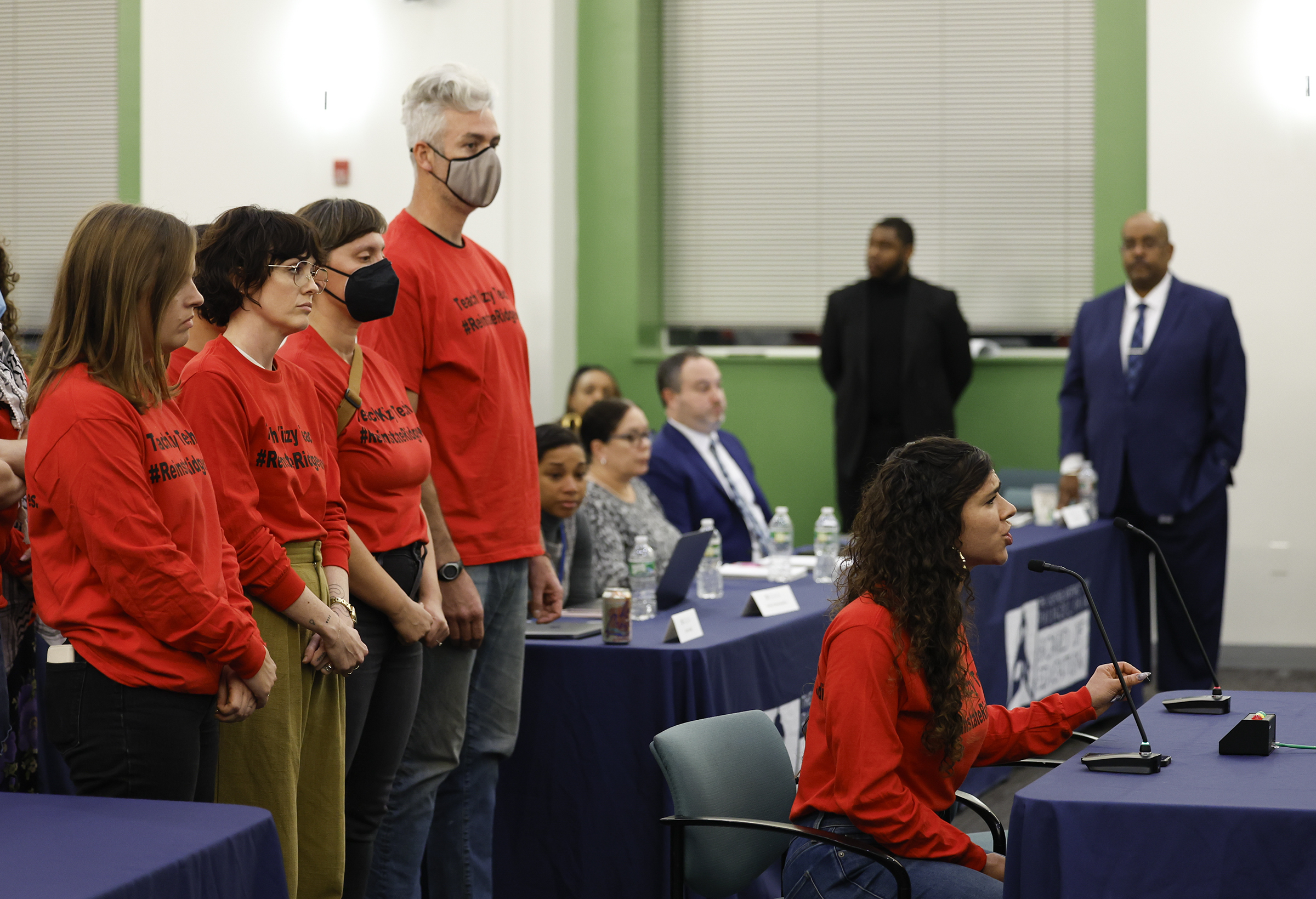
    The Jewish Federation of Greater Philadelphia in 2024 filed a complaint against Keziah Ridgeway, another Philadelphia teacher, accusing Ridgeway of injecting antisemitism into the curriculum and using her personal social media posts to threaten some Jewish parents.

    Ridgeway was ultimately kept out of the classroom for a year before she was reassigned to a new school. She has sued the district, alleging anti-Islamic bias. The suit is still pending.

    Gann was a staunch defender of Ridgeway, who posted on social media that she confronted Gann when her lies came to light.

    “I can no longer be in community with someone who caused so much harm,” Ridgeway wrote. “I hope that she gets the help that she needs.”

    This article has been updated to include the name of Jewish Community Relations Council chief Jason Holtzman.

  • The Morris House is a restaurant Bermuda Triangle. Can the new Soufiane finally break the curse?

    The Morris House is a restaurant Bermuda Triangle. Can the new Soufiane finally break the curse?

    The Morris House Hotel has always had the bones to host a hit restaurant. Its Georgian-style brick buildings boast some genuine historic character dating back to 1787, when the Constitution was being written just a few blocks away. There’s a gracious courtyard oasis tucked behind an iron gate with room for 75 diners beneath a garland-draped tent ringed by dogwood and magnolia trees. A cozy indoor space with room for 45 more beside that garden and a plush bar offer a dramatic view through red curtains onto Eighth Street. Situated close to Washington Square, surrounded by residential neighborhoods and the vital pulse of a hospital district, it’s not lacking for foot traffic.

    And yet, the Morris House has long been the Philadelphia restaurant equivalent of the Bermuda Triangle. Over the last 20 years since it was refurbished into an elegant inn, several talented chefs have come along in hopes of unlocking its potential as a destination dinner hideaway — only to succumb to its more profitable use as a wedding party factory. The fits and starts of multiple new operators, most recently the bistro-style Morris, which closed after less than a year in 2023, have continued to cloud the public’s perception of what happens at 225 S. Eighth St.

    The outside of Soufiane at the Morris on Sept. 10, 2026, in Philadelphia, Pa.Tyger Williams / Staff Photographer
    Soufiane Boutliliss shows off the outdoor dining in the garden during a friends-and-family preopening of Soufiane at the Morris in Philadelphia on May 27, 2026.Elizabeth Robertson / Staff Photographer

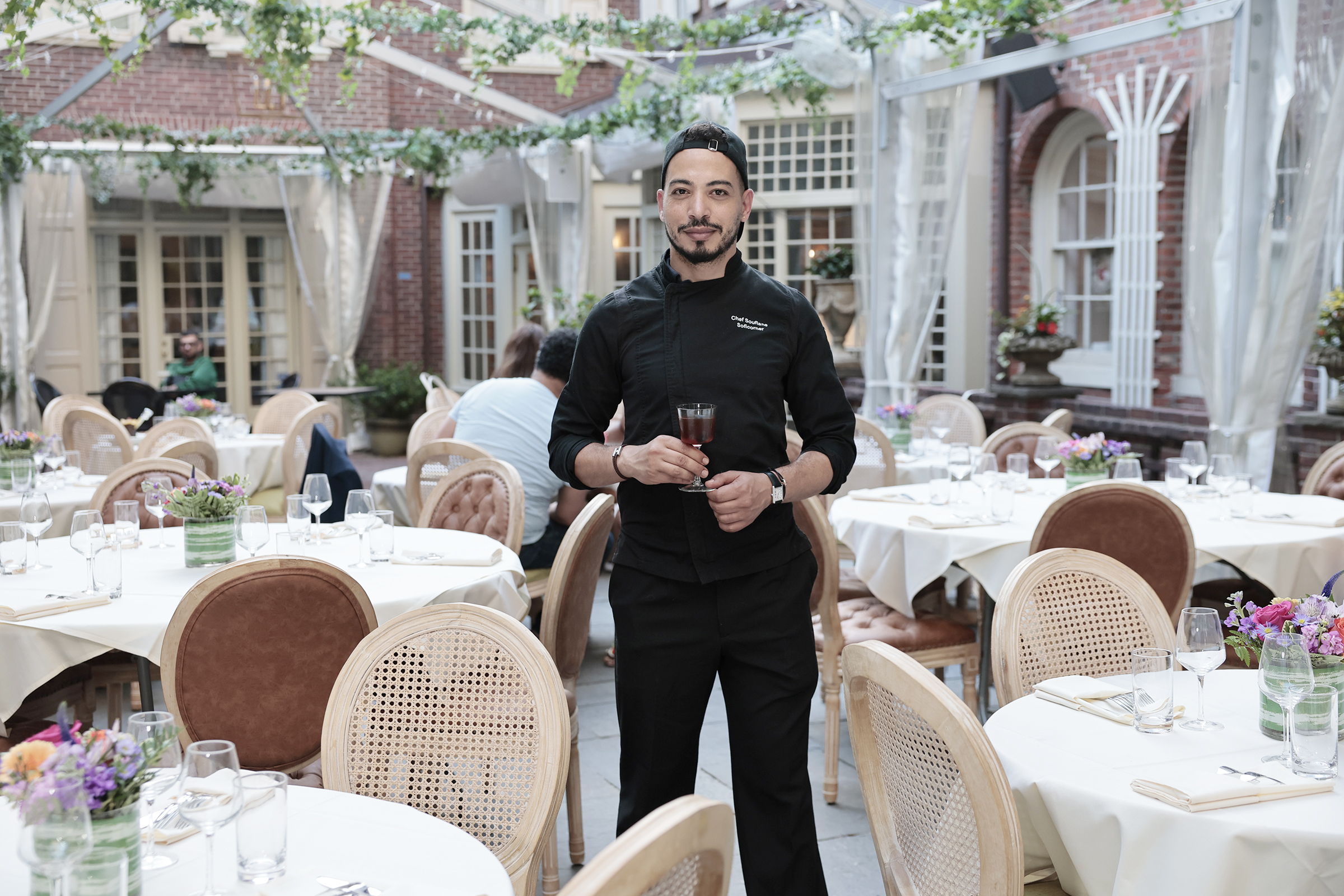
    What this space needs is a restaurant with a distinct identity. So I could not have been more excited to learn that Soufiane Boutliliss and Christophe Mathon of Sofi Corner Cafe were bringing a more expansive expression of their Moroccan-French magic to the fine-dining setting of the Morris House.

    I still daydream of the couscous royale I once ate at Sofi Corner, the casual, counter-service breakfast-lunch cafe this married couple still operates for daytime service a few blocks away on Locust Street. I was thrilled to find another rendition of that cultural keystone dish celebrated here, a deep-green painted terra-cotta platter of mounded couscous scented with nutty aged butter draped with heaps of stewed veggies, tagine-braised chicken and lamb, sesame-speckled dried fruits, and a cuminy link of merguez rocking over top like a sausage seesaw.

    Couscous royale with meat at Soufiane at the Morris on Sept. 10, 2026, in Philadelphia.Tyger Williams / Staff Photographer

    But something was missing. It wasn’t just the need for a more generous splash of the deeply steeped broth kissed with rose water that should unite these disparate elements. (You can always ask for extra broth with your couscous.) This centerpiece to our dinner also arrived 90 minutes after our arrival, pointing to much bigger issues of service and inexperience with a project this large that are hampering this duo from realizing their vision at the Morris House.

    The restaurant was so completely unprepared on a midweek evening for a busy room that what might be a boon of customers for most restaurants became a crisis here. The frantic staff was stretched so thin that it took a server nearly 30 minutes to take our drink orders, and then only with a sigh while leaning halfway through the doorway to the patio, where several more customers waited. Menu items kept dropping out of our reach before we could ask for them. The Moroccan briouats pastries? Gone. The piperade roast peppers and toast? Gone.

    Inside dining area at Soufiane at the Morris on Sept. 10, 2026, in Philadelphia.Tyger Williams / Staff Photographer
    Soufiane Boutliliss, owner of Sofi Corner Cafe, and his husband, Christophe Mathon, pose for a portrait in front of the restaurant in Philadelphia on Dec. 29, 2023.Tyger Williams / Staff Photographer

    “Let me send you a roasted marrow bone compliments of the house!” a manager offered my unlucky-in-ordering guest as a consolation. It never came. Neither did the duck confit, substituted without mention by a seared duck breast, which was salty, tough, and small for $37.

    “A couple people did not show up in the kitchen today,” conceded yet another staffer who ultimately took our order. That might also explain why an otherwise wonderfully seasoned duck pâté en croûte marbled with pistachios and herbes de Provence arrived with its underbaked pastry crust still pale and doughy.

    It does not take skilled kitchen labor, however, to realize that four hungry diners could use more than a few miserly slices of baguette to dig into a trio of flavorful Moroccan eggplant and carrot salads. “Some more bread, please?” we begged politely, knowing it would be at least another 20 minutes until we saw it.

    All new restaurants go through growing pains, and some will take longer to sort them out than others. But it would be unfair to suggest that Soufiane at the Morris is not worth the trouble. To the contrary, there were several glimmers of hope in my first meal here. The bar has been beautifully refurbished with wood paneling and pilasters salvaged from Lynnewood Hall along with a gilded antique French rococo mirror. The cocktails served to the diners at cushy barstools there incorporate fun Moroccan touches, from a gin-infused mint tea to an old-fashioned that arrives inside a dome of cinnamon and bay wood smoke.

    People enjoying food and drinks at the bar at Soufiane on Sept. 10, 2026, in Philadelphia.Tyger Williams / Staff Photographer
    A Moroccan old-fashioned at Soufiane at the Morris on Sept. 10, 2026, in Philadelphia.Tyger Williams / Staff Photographer

    The kitchen also delivered some memorable plates, including a soulfully stewed chicken tagine scented with cardamom, olives, and preserved lemon. We also especially loved an obscure French standby called veal Marengo, a wine-stewed tumble of tender meat, mushrooms, and pearl onions with silky mashed potatoes. It’s a dish that Coast Guard veteran-turned-chef Henry McGuigan (Zahav, Laser Wolf, Lucky’s Last Chance, June BYOB, Tavern on Camac) has been mastering for years. They were both so good we would come back just for them.

    In fact, we did. A few weeks later, the service was far more focused and the menu’s bicultural aspirations (with both hits and misses) came into clearer view. The menu is a split concept, more than pure fusion, and is very much a reflection of the couple behind this restaurant, the Tangier-born, Paris-raised Boutliliss and his husband, Mathon, a Frenchman who moved to the States as an executive with Coty.

    The Veau Marengo (braised veal with white wine, pearl onions, mushrooms, house purée) served during a friends-and-family preopening of Soufiane at the Morris in Philadelphia on May 27, 2026.Elizabeth Robertson / Staff Photographer

    With McGuigan digging deep into his repertoire of French standards, some of the Gallic flavors were among the most satisfying, from a standout beef tartare with a quail egg shrouded in rosemary smoke to some tender escargots broiled with garlicky breadcrumbs inside their shells (worth it just to use the pincerlike escargot tongs!). I’d place Soufiane’s French onion soup among Philly’s best. Made over the course of two days with slowly caramelized onions and both beef and veal stocks steeped in-house, this soup has cognac-splashed layered depth and the satisfaction of a generously cheesy molten Gruyère lid.

    The steak frites is also a winner, a perfectly cooked prime-grade hanger lavished with a garden green spoonful of a zesty parsley purée enriched with shallots, confit garlic, and anchovies. Those shoestring frites cooked in beef tallow were also a crucial, sauce-soaking vehicle for la mouclade de moules, one of the most distinctive mussel dishes in town that taps a traditional preparation from the French coastal town of La Rochelle, its shellfish jus enriched with crème fraîche and curry.

    The Escargots de Bourgogne (garlic and herb butter) served during a friends-and-family preopening of Soufiane at the Morris in Philadelphia on May 27, 2026.Elizabeth Robertson / Staff Photographer
    Steak frites at Soufiane at the Morris on Sept. 10, 2026, in Philadelphia, Pa.Tyger Williams / Staff Photographer

    Where this kitchen most frequently fell short was on the Moroccan side of the menu, where the flavors were often good, but the execution and touch were off — a symptom, perhaps, of the fact that Boutliliss is less involved in the kitchen’s day-to-day operations.

    The fish tagine’s tomato-based sauce was appealingly fragrant with cumin and smoked paprika, but the red snapper fillet was overcooked and dry. Chermoula sauce is one of Boutliliss’ family treasures, a velvety green purée of cilantro, parsley, lemon, and olive oil whose aromatics of garlic and cumin must be added in order and in proper balance. (“You have to respect the grandmother’s touch,” says Boutliliss.)

    But the tiny bay scallops that arrived inside a terra-cotta crock of that bubbling hot chermoula were terribly overcooked. In both cases, though, McGuigan has recognized the flaws and altered the dishes since my visits, changing the technique on the fish and subbing in larger sea scallops to better showcase the flavors.

    Chef Henry McGuigan plates the Tartare de Bœuf “On a Cloud” during a friends-and-family preopening of Soufiane at the Morris in Philadelphia on May 27, 2026.Elizabeth Robertson / Staff Photographer

    When it came to dessert, however, it was the Moroccan-inspired flavors that were most successful, a “pain perdue” French toast soaked in orange blossom syrup with caramel and pistachios, as well as a simple lemon tart inspired by Boutliliss’ grandmother with a lime zest-dusted condensed milk custard set into a crust of crushed Biscoff cookies.

    It was a pleasant enough finale, but Mathon and Boutliliss must have sensed things had not gone smoothly and could be seen circulating among the room’s lingering guests with complimentary pours of Rémy Martin 1738 Cognac.

    “We know we can do better,” Mathon told our table, tipping the brandy our way. “We never want you to leave without a smile.”

    That kind of personal touch, the one that earned them fans at tiny Sofi Corner, is certainly the right idea, and when a Frenchman breaks out the cognac you know he means it. But if they hope to change two decades of precedent and transform the larger challenge of Soufiane at the Morris into a lasting restaurant success, they’ve got bigger issues of staffing and kitchen consistency to solve.

    The crème brûlée served during a friends-and-family preopening of Soufiane on May 27, 2026.Elizabeth Robertson / Staff Photographer

    Soufiane at the Morris

    225 S. Eighth St., Philadelphia, Pa. 19106, 646-724-9667; soufianeatthemorris.com

    Dinner Tuesday through Sunday, 4:30 p.m. to midnight.

    Wheelchair accessible through garden entrance.

    About 35% of the menu is gluten-free or can be modified.

    Entrees, $30-$48 (couscous for two).

    Menu highlights: beef tartare; Moroccan briouats; escargots; chermoula scallops; French onion soup; couscous royale; chicken tagine; steak frites; veal Marengo; la Mouclade curried mussels; tarte au citron.

    Drinks: Cocktails are the focus, with a range of classic ideas executed with a North African flourish, from a Casablanca old-fashioned smoked with cinnamon and bay wood to a gin- and Carpano-infused Moroccan mint tea. About a dozen wines by the glass, largely French, offer a solid range of standard choices for $16 or less.

    The entrance of Soufiane at the Morris on May 27, 2026.Elizabeth Robertson / Staff Photographer
  • Philly DA Larry Krasner said the federal judge who accused him of crimes should be removed from the case

    Philly DA Larry Krasner said the federal judge who accused him of crimes should be removed from the case

    Philadelphia District Attorney Larry Krasner said Wednesday that the federal judge who accused him of potentially breaking the law while overseeing a post-conviction case had reached “baseless,” illogical, and legally unsupported conclusions — and that the judge should be removed from the case because he had acted more like “an advocate against DA Krasner” than an impartial arbiter.

    In a series of documents filed in federal court overnight, Krasner took the unusual step of openly criticizing U.S. District Judge Paul S. Diamond — sometimes using strikingly pointed language.

    In one brief, signed by Krasner and a subordinate, the district attorney said Diamond’s suggestion that Krasner might be guilty of criminal conspiracy relied on allegations “more closely resembling fever-dream conspiracy theories than evidence.”

    Other suggestions of criminality by Diamond — which revolved around actions Krasner took while overseeing the case and his staff — were equally wrong, Krasner wrote.

    “When it comes to all of these nominally-serious-but-actually-wafty accusations of criminal conduct, tempered by ‘coulds’ and ‘mights’ and ‘may haves,’ [Diamond’s] analysis rests on nothing of substance,” he wrote.

    Then, in a separate nine-page letter signed only by Krasner, the city’s top prosecutor said Diamond’s “factual findings and accusatory legal conclusions twist the truth to the point of breaking in ways that defy logic and employ Orwellian language.”

    And if Diamond’s assertions had been made in a setting other than a court case, Krasner said, “these accusations could be litigated as civil claims of defamation, slander, or libel.”

    Finally, in a third document, Krasner and Assistant District Attorney Thomas Gaeta wrote that Diamond’s actions had been so out of line that he should no longer oversee the case. At one point, they said the proceedings had become a “circus,” with Diamond the “ringmaster.”

    And they said Diamond — who was appointed by President George W. Bush, a Republican — had displayed his biases against Krasner, a Democrat, in a number of ways, including by asking improper questions of witnesses, reaching inconsistent conclusions about which witnesses were credible, and improperly blaming and discrediting Krasner for not testifying — even though Diamond had never asked him to.

    Diamond’s conduct, they wrote, “provides a clear and obvious view into the type of unfair and improper proceedings and decisions [Diamond] deigned to make.”

    The filings served as the latest chapter in a saga that has been marked by a series of explosive developments about Krasner’s office in recent months. The episode has also raised legal and political questions about Krasner’s future.

    Most recently, in mid-September, Diamond filed a stunning memorandum in which he said Krasner and one of his top supervisors, Matthew Stiegler, may have committed crimes including conspiracy, obstruction of justice, or perjury while participating in the underlying case. Diamond also said he had referred the matter to the U.S. Attorney’s Office for potential investigation. Federal prosecutors have declined to comment.

    Krasner has consistently disputed the notion that his actions were improper and appealed Diamond’s ruling, which also disqualified him and Stiegler from participating in the case moving forward.

    The underlying matter is centered on Dennis Johnson’s attempts to have his 2009 murder conviction overturned; Krasner’s office had once supported that effort, but reversed course earlier this year after some of his staff discovered that a previous prosecutor had made mistakes in her handling of the appeal.

    Wednesday’s filings served as Krasner’s most extensive response yet to accusations that he had committed misconduct while his staff tried to rectify those errors in court.

    In Krasner’s view, the fact that his office was seeking to correct its own mistakes in open court was just one example of how Diamond’s conclusions — including that Krasner may have conspired to concoct a false cover story about the episode — “cannot logically be reconciled with each other.”

    “I know many of the facts found by [Diamond] and conclusions inferred by [Diamond] are not correct from personal knowledge,” Krasner wrote. “I lived it.”

    Dispute over ‘false narrative”

    The roots of the controversy date to 2022, when then-Assistant District Attorney Jaclyn Mason filed a brief supporting Johnson’s bid to have his conviction overturned.

    Krasner was unaware of the case at that time, he said in his new filings. But he became involved this spring, when some of Mason’s supervisors in the law division concluded that she had made significant errors in her brief, and that they needed to try to withdraw it.

    Krasner approved a document alerting Diamond to the mistakes and apologizing for Mason’s errors.

    Mason, meanwhile, resigned and said Stiegler — her former boss — was most at fault.

    Diamond, in his Sept. 15 memorandum, said that in the aftermath of Mason’s resignation, staff in Krasner’s office discussed how the errors occurred. And in those discussions, he said, Krasner and Stiegler worked to create a “false narrative” to blame Mason, including by considering a Stiegler proposal: to review all of Mason’s old cases and find additional errors they could use to cast Mason as a “rogue” prosecutor.

    Diamond said such an effort could amount to criminal conspiracy.

    But Krasner, in his filings, called that conclusion “baseless,” saying Stiegler’s proposal was to review Mason’s old cases to see if there were additional errors — not to manufacture problems they could improperly attribute to her.

    “Nothing in the record supports the Court’s determination that providing a broader account of their competence would have advanced a ‘false narrative,’” Krasner wrote. “They either had or had not made errors in other cases, and there was absolutely no testimony indicating that DA Krasner (or Stiegler, for that matter) suggested submitting false allegations of error.”

    In addition, he said, Stiegler’s proposal was never actually pursued once other law division supervisors voiced opposition to it — further diluting any notion that Krasner was seeking to force his staff into lying to Diamond.

    “Stiegler proposed a strategy that DA Krasner considered, but DA Krasner also considered and accepted the Law Division supervisors’ advice that it was inadvisable,” Krasner wrote. “This is not misconduct.”

    ‘Reasonable’ consequences?

    Diamond, in his Sept. 15 memorandum, also took issue with Krasner threatening “consequences” for prosecutors who told the judge about another issue roiling the district attorney’s office: whether to refer Johnson’s case to the state attorney general’s office.

    The law division supervisors handling the case after Mason’s resignation — Katherine Ernst, Steven Wildberger, David Napiorski, and Peter Andrews — generally agreed that was the appropriate course of action because of the inner-office drama consuming the matter. And they repeatedly urged Krasner to refer the case to avoid what they viewed as a conflict of interest.

    But Krasner disagreed. And in his filings, he said that as the referral discussions took place over several weeks, he had consulted with several ethics experts who generally agreed there was no conflict necessitating a referral.

    As for the threat of consequences, he said, he was not seeking to prevent his staff from telling Diamond the truth about their deliberations — which the judge later said could amount to obstruction of justice. Instead, Krasner said, he was seeking to prevent them from submitting court documents without his approval.

    “That is particularly so where, as here, those pleadings are premature, legally incorrect, and unnecessary,” Krasner wrote. “It is reasonable to expect consequences for filing a pleading the District Attorney disapproves of while he is still examining the issue and determining the correct course of action.”

    Seeking the judge’s recusal

    In addition to disputing Diamond’s conclusions about his actions — and whether they constituted crimes — Krasner went on to say the judge should no longer oversee the case, which remains pending.

    He said Diamond’s “apparent bias is evident from a number of remarkable circumstances,” all of which should lead to his removal, according to the district attorney.

    One example, Krasner said, was that as Diamond questioned witnesses in his courtroom this summer about what happened in the case — including asking questions of lawyers who still work in Krasner’s office — the judge “departed from [his] role as a neutral arbiter and undertook an active inquisitorial and advocacy role.”

    “The Court’s questions and assertions reflected the Court’s apparently preconceived view that the DAO’s conduct in all cases is inherently suspect,” Krasner wrote.

    Diamond also made “selective credibility determinations” about which witnesses he believed and which ones he discredited, the DA wrote. And he took particular issue with what he cast as Diamond’s reluctance to criticize Mason: Krasner, in his filing, said there were “many additional reasons to question the honesty of Mason’s testimony, all of which were ignored by the Court.”

    Then there was the issue of Krasner’s failing to testify.

    Diamond, in his memorandum, blamed Krasner for not taking the stand. But Krasner, in his filing, said Diamond — who scheduled the hearings and set the witness list — “appears to have taken pains to avoid having DA Krasner testify.”

    In any case, he said, it was improper for Diamond to assume that Krasner’s lack of testimony was somehow “concession by silence.”

    Overall, Krasner said in his motion, the judge “served as a prosecutor for DA Krasner and his office,” thereby requiring his recusal from the matter.

    In his nine-page letter, Krasner went even further, saying he believes Diamond should be recused “from this matter and every other matter involving the Philadelphia District Attorney’s Office for the foreseeable future.”

    It was not immediately clear how Diamond might respond to such a request. On Wednesday, he said any additional paperwork on that issue must be filed within a week.

  • The student journalists who never let the Cornell assault case go

    The student journalists who never let the Cornell assault case go

    ITHACA, N.Y. — Editors of The Cornell Daily Sun clustered around their computers late Monday night, getting ready to send out a letter from the editor. They looked bleary-eyed, and one reporter confessed she had skipped her class on Nietzsche that day.

    These student journalists at Cornell University were pressing through a dizzying two weeks following the story of a student’s allegation that she was raped on campus in 2024.

    The case had long had their attention; now it had burst into the national spotlight, and their high-risk decision to publish the names of the accused was being discussed not only in Cornell’s libraries and walkways but in the national media.

    Back in November 2024, students at Cornell were shaken by an alert they received over email: “Crime ALERT: Sexual Assault,” the email read, referring to the case of a woman who told Cornell police she had been assaulted at a fraternity house.

    There was outrage on campus. Students threw eggs at the fraternity house, Chi Phi, that the woman named. The university convened a sexual assault task force, which compiled a series of recommendations for teaching students about consent and the processes for reporting assault. Then much of the campus attention moved on.

    But Cereese Qusba, 22, a senior and reporter for the Sun, couldn’t shake her concerned curiosity about the case. She got in contact with Jane Doe, the plaintiff, and built a relationship with her and her lawyer. Qusba interviewed university administrators about their approach to disciplining students accused of assault.

    Qusba made her obsessive dedication known to the student paper’s higher-ups. When a new editor-in-chief, Sophia Dasser, 20, took over the paper in early 2026, she immediately received a phone call from Qusba, who was studying abroad in Sydney.

    “Sophia, I’m working on this story — I want it to be a focus of the Sun,” Dasser recalled hearing over the phone. She added, “The Sun never really let go.”

    This month, when Jane Doe filed a lawsuit against the university, the fraternity and her sorority, Qusba was ready to hit publish on her investigation, which was 23 months in the making. “Cornell, Chi Phi Sued by Victim of Alleged Gang Rape, Drugging in 2024,” read the headline on her Sept. 18 story, which traced Jane Doe’s allegations in detail throughout the night that she said she was assaulted.

    The Sun is the oldest continuously independent college daily paper in the country. Dasser, who speaks with a cool and quick precision, was adamant that she wanted the paper to dominate the story not just in its reporting, but in its editorial response. Why be financially independent, she wondered, if not to publish sharp-edged views of the biggest campus issues?

    This was the sensibility that emboldened her, days later, when she decided to publish the names of the seven fraternity men named in the lawsuit on the paper’s front page and in a fiery editorial. It was a sensitive decision, she knew, given that the men were named in the suit but had not been criminally charged.

    Dasser said she decided to publish the names to display the transparency that some students felt was lacking from university leadership. On Saturday night, Sept. 19, she was at the Sun’s office in downtown Ithaca celebrating the paper’s 146th birthday. Over cake, she turned to her fellow editors and asked: “Can we just put the names on the front page of the paper?”

    “We called up our lawyer, and we were like, ‘Can we do this?’” she recalled. “He was like, ‘I mean, it’s kind of a risk.’ And we were like, ‘OK, I guess that’s how we’re going to start the editorial.’”

    Dasser and her co-editors got to work designing a print page, with Qusba’s investigative story on top and the list of men’s names underneath in a box colored the Sun’s official shade of red.

    “First it was just a line of the names, and I was like, ‘Wait — this looks like a byline,’” Dasser recalled. She was sitting in her constitutional law class when the headline came to her: “Cornell Won’t, We Will.”

    The Sun has set up a tip line, and Dasser and Qusba said their inboxes have been flooded with emails from students who say they have also been the victim of assaults on campus, or experienced frustrations filing Title IX complaints alleging sexual misconduct or discrimination.

    Dasser gestured around her office — a dimly lit room cluttered with piles of papers and books, including a style manual — and emphasized how seriously the Sun takes its independence from the university administration.

    “The office that you sit in is obviously off campus, and that’s for a reason,” she said. “Our main obligation is accountability. Whether that looks like something that many people do not want to hear, or something that many people do want to hear, it’s our obligation to report on it.”

  • Central Bucks engaged in a ‘concerted cover-up’ of abuse at elementary school, lawsuit says

    Central Bucks engaged in a ‘concerted cover-up’ of abuse at elementary school, lawsuit says

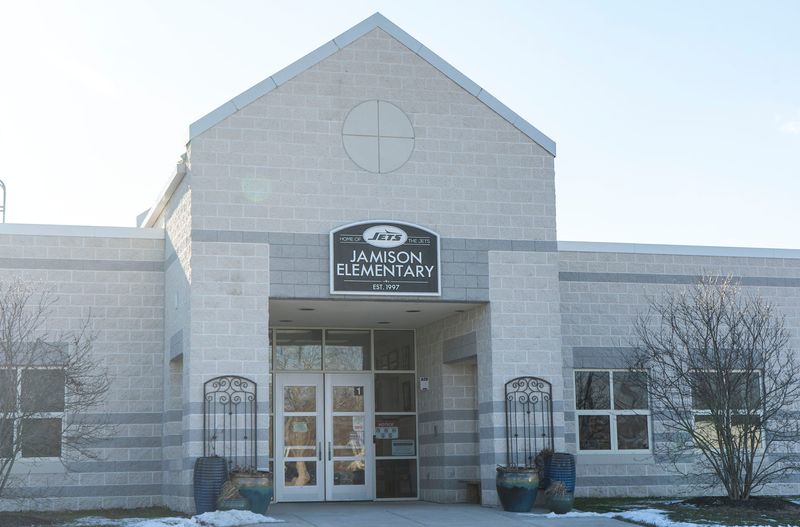
    The parents of a nonverbal autistic 10-year-old who was among the students the Central Bucks School District has said were abused in an elementary school classroom in 2024 have filed a lawsuit against the district and nearly a dozen former and current employees.

    James Pepper, a former school board member, and his wife, Lisa Pepper, say their son’s “horrific abuses” at Jamison Elementary School amounted to a “calculated pattern of debasement” that district and school leadership failed to report as part of a “concerted cover-up.”

    The bulk of the 92-page complaint, filed Tuesday in federal court in Philadelphia, outlines events that began in fall 2024, when a special education aide reported the abuse. Her allegations rocked Pennsylvania’s third-largest district, spurring an investigation by a disability rights watchdog, a public outcry, and a series of terminations that included the district’s superintendent.

    Now, the Peppers are suing Central Bucks, as well as former Superintendent Steven Yanni, former Jamison principal David Heineman, other former district administrators, the special education teacher and educational assistant accused of misconduct, and teachers union representatives.

    The district continued to endanger the child after learning about the abuse, and the alleged “cover-up” was motivated by James Pepper’s position as a board member and history of advocacy, the suit says.

    “This case involves an extraordinary betrayal of a child who depended entirely on the adults around him for his safety, education, and care,” M. Stewart Ryan, the attorney representing the parents, said in a statement.

    Central Bucks spokesperson Michael Petitti said in a statement that the district “has acknowledged what occurred” in that classroom.

    Petitti said the district “took the actions within its power” to discipline employees, including firing Yanni, Heineman, and the former special education director, Alyssa Wright. It also “fully litigated” terminations of the teacher and educational assistant, Petitti said, and “implemented significant changes at Jamison Elementary School to make sure that nothing like this ever happens again.”

    “The district understands that none of these actions can change what happened,” Petitti said.

    The allegations

    District officials learned about the allegations in November 2024 from Alyssa Kline, who was assigned as the one-on-one aide for the Peppers’ child.

    Kline said special education teacher Gabrielle McDaniel and educational assistant Rachel Aussprung had improperly restrained and punished the Peppers’ child, among other forms of abuse.

    The abuse included “nearly 3,000 illegal restraints … water restriction, corporal punishment, forced exposure to nudity and sexual self-stimulation, screaming, mocking, belittling, and concealment of a head injury in a series of events that were intended to, and indeed did, dehumanize” the boy, the lawsuit says.

    The nonverbal child could not share his experience in school, and his parents were not initially informed of the accusations, the suit says. The district reassigned Kline days after she made the allegations, telling the Peppers the reason for the change was a “personal conflict” between the aide and classroom staff, according to the complaint.

    The Peppers learned about the allegations of abuse only in December, when Kline reached out to share what she had reported with the parents, the suit says. But in an official letter that month, the district said its investigation found “no evidence of abuse.”

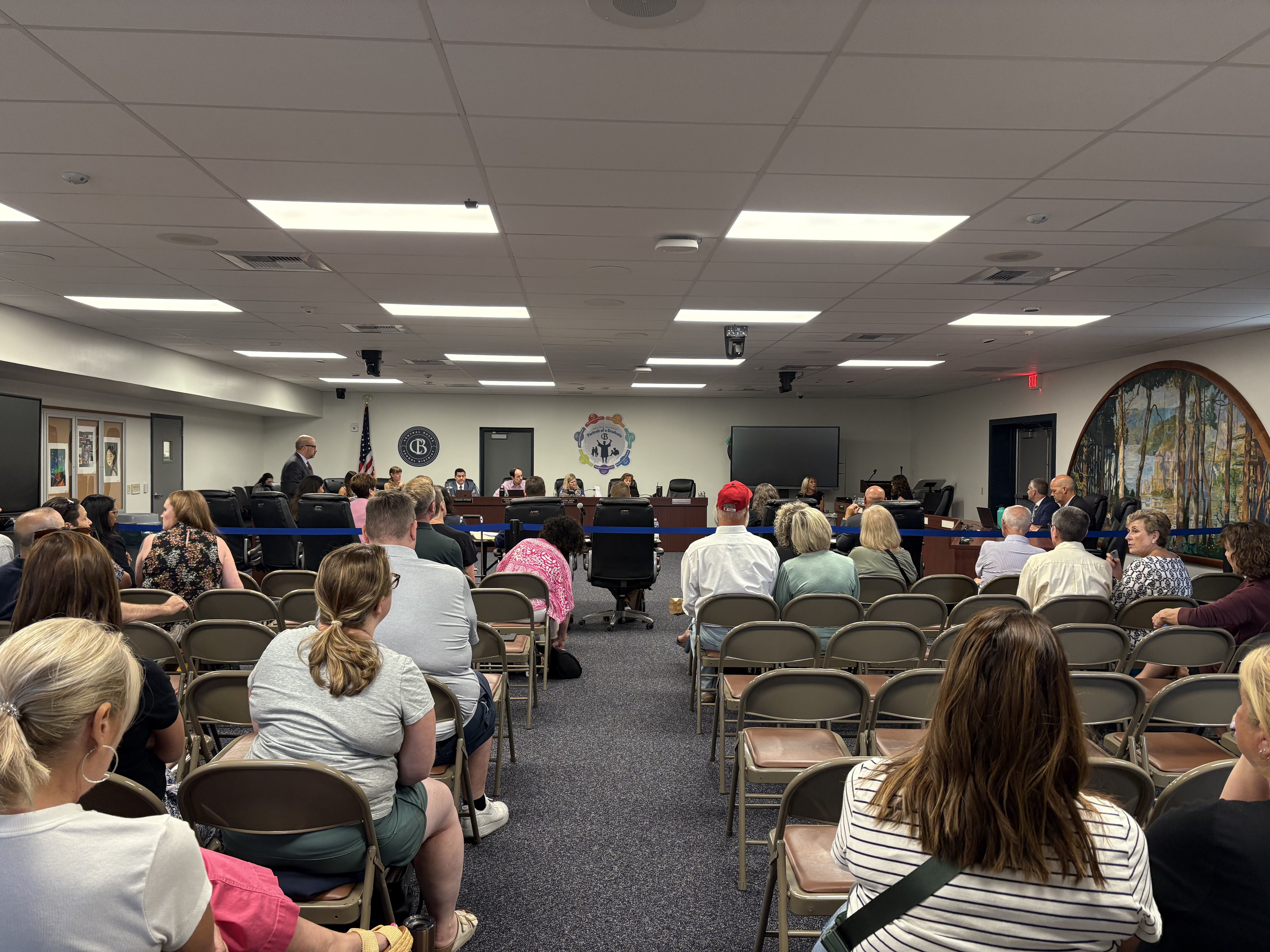
    Members of the public watch the joint termination hearing of Central Bucks Superintendent Steven Yanni and Jamison Elementary School Principal David Heineman in August 2025.Fallon Roth / Staff

    School board members initially stood by district officials, who noted police had not found any abuse. But that changed in April 2025, when a report from the watchdog group Disability Rights Pennsylvania found that the teacher and assistant had illegally restrained students, creating a “reasonable likelihood of bodily injury” and likely interfering with their breathing, among other abusive behaviors.

    It also faulted Yanni and other administrators for failing to adequately investigate the allegations, and accused Yanni of withholding information from police.

    The school board terminated Yanni and Heineman in October. Pepper recused himself from the vote and the termination hearings that preceded it.

    Yanni, now the CEO of Northwood Charter School in Philadelphia, did not respond to a request for comment.

    A lawyer for Heineman did not return a request for comment. Neither did a lawyer for McDaniel and Aussprung, who have sued the district since their terminations. Wright, whose lawyer did not return a request for comment, has also sued the district, saying she was scapegoated.

    The Peppers’ lawsuit says district and teachers union officials, whom Kline also informed, failed to report the abuse.

    Cara Alderfer, the union president, declined to comment Tuesday.

    The ‘cover-up’

    The Peppers’ lawsuit alleges a sprawling cover-up that started the moment Kline made the allegations.

    The accused teacher and assistant were not removed from the classroom, and the district recommended that McDaniel or Aussprung take the Peppers’ child to therapy sessions after Kline was reassigned, according to the complaint.

    The district did not turn over an email outlining Kline’s allegations to Disability Rights Pennsylvania, the suit says.

    Yanni and other officials “were actively engaged in a conspiracy to bury the reports of child abuse they had received,” the complaint says.

    The complaint blames a few factors as motivating the alleged “cover-up.”

    Yanni, who took over the deeply divided district after a bitter and highly publicized school board election won by Democrats, said one of his goals was to keep the school system “out of the newspaper,” the suit says.

    And the district was motivated to retaliate against Pepper — then the only Republican on the board — for stances he had previously taken against the district, the suit says.

    The actions of the school district and its employees deprived the Peppers’ son of “safety, liberty, and bodily integrity,” the complaint says.

    “It is devastating to learn that our son was treated this way by the very people we trusted to care for and protect him,” the Pepper family said in a statement. “Our son and entire family have been changed forever. This can never happen again to another child.”

  • After tragedy hit, Alex McFarlane lived with his former teachers in Georgia. Now he faces their favorite team

    After tragedy hit, Alex McFarlane lived with his former teachers in Georgia. Now he faces their favorite team

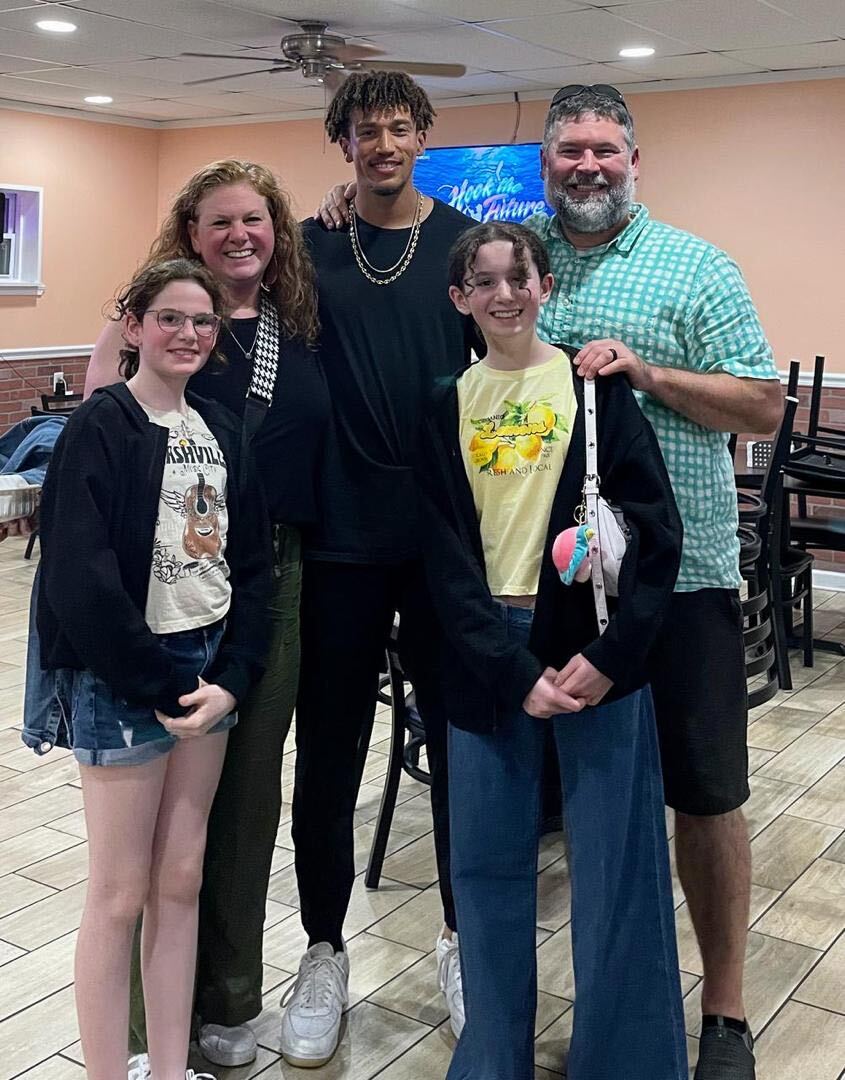
    The island of St. Thomas and the city of Cornelia, Ga., seem different in almost every conceivable way. One is surrounded by the turquoise waters of the Caribbean Sea; the other, tucked into the foothills of the Blue Ridge Mountains.

    One has yearlong heat and humidity; the other has four seasons. But the two communities, roughly 1,600 miles apart, share an unlikely similarity. Both played a role in Alex McFarlane’s journey to the Phillies.

    McFarlane was born and raised on the eastern side of St. Thomas. It was hardly a baseball hotbed; only 16 of the sport’s 23,804 big leaguers have come from the Virgin Islands. Nevertheless, word of his athleticism — and arm — spread quickly.

    There were early signs. As a boy, the future Phillies reliever would spend his days with a milk carton full of tennis balls, fooling around with different grips, and throwing them against the side of his garage.

    His mother, Tami Noel, had to get the siding replaced because of the dents imprinted by her hard-throwing son. “He beat the crap out of it,” said McFarlane’s former math teacher, Liz Elger.

    In the seventh grade, during a dodge ball game, McFarlane accidentally beaned a classmate in the head. Of course, he was not the only culprit. Plenty of other middle schoolers were slinging red projectiles across the gym.

    Phillies rookie reliever Alex McFarlane had a 2.84 ERA in 19 games during the regular season.Elizabeth Robertson / Staff Photographer

    But none were slinging with the force McFarlane was. And the kid who got hit looked “dazed,” according to Elger’s husband, Joey, who taught the future big leaguer P.E. and history.

    “It wasn’t like a concussion,” he said, “but we had to go to softer balls.”

    When he was 15, one of McFarlane’s coaches in St. Thomas connected him with Team Elite, a travel team out of Georgia. Up until that point, he’d only played recreational baseball; high school baseball didn’t exist at his academy.

    Team Elite provided plenty of exposure (he committed to the University of Miami his junior year) but also had its limitations. McFarlane couldn’t experience the ups and downs of a full season. Their program was more about development and garnering scouts’ attention than winning a championship.

    High school baseball was where most players learned this side of the game. But it was never an option for McFarlane, until tragedy struck his hometown. In September of 2017, two Category 5 storms, Hurricane Irma and Hurricane Maria, hit the Caribbean.

    St. Thomas was destroyed. It took over 100 days to fully restore power. The island was crowded with trucks, helicopters and military equipment. The already-limited athletic facilities were being used as staging grounds for FEMA.

    Liz Elger moved back to her hometown of Cornelia, Ga., with her young daughters, while her husband helped with relief efforts. McFarlane stayed with his family, making sure they were settled.

    Phillies celebrate clinching a fifth-consecutive postseason berth
    Video: Phillies celebrate clinching a fifth-consecutive postseason berth

    In 2018, the pitcher decided to take a risk. He was about to embark on his senior year, but would have little access to baseball or physical training on the island, due to disaster recovery efforts.

    So, his mom reached out to the Elgers and asked if her son could stay with them. McFarlane moved to northeast Georgia that fall, living with Atlanta Braves fans, while playing for Habersham Central High School.

    And this week, McFarlane, a 25-year-old rookie who has emerged as a trusted reliever for the Phillies, will face their favorite team in the National League wild-card series, 80 miles south of the mountain town he once called home.

    “A huge credit to them for taking me in, and helping me out,” McFarlane said. “It’s something that I’m forever grateful for.”

    Alex McFarlane and the Elger family in the summer of 2025.Liz Elger

    A ballplayer who could do it all

    The Elgers have worked as international educators for the past 16 years. They’ve taught everywhere from Saipan to Lithuania to Tanzania, where they’re based now.

    But before they traversed the globe, Liz and Joey were two Habersham students who loved the Braves. This was especially true for Joey, a bat boy for the team in the 1980s.

    He was a baseball broadcaster for Stanford throughout college, and an intern at the Baseball Hall of Fame after graduating, but eventually returned to Habersham with Liz in 2005 to accept their first teaching jobs.

    When the couple moved to St. Thomas in 2012 to work at the VI Montessori School & Peter Gruber International Academy, they found a community that was just as tight-knit as Cornelia.

    The school’s principal called it a “three-legged stool.” Because the academy was small, with only 400 students from pre-K to 12th grade, it had a strong sense of cohesion. Parents and teachers would often see each other socially.

    This is how the couple got to know Noel, a small-business owner on the island.

    McFarlane was not the first St. Thomas athlete the Elgers took in. In 2017, Liz was contacted by the mother of two aspiring soccer players, Quinn and Grant Farrell, who asked if they could stay with her in Georgia.

    Grant spent his senior year playing for Habersham, and soon secured an athletic scholarship at Division II Emmanuel University, in nearby Franklin Springs, Ga. The high school’s baseball coach, Chris Akridge, took notice.

    Alex McFarlane with his high school baseball coach at Habersham Central, Chris Akridge, in Atlanta earlier this month.Chris Akridge

    “Chris was kind of teasing us,” Joey said. “‘Do you know any baseball players?’”

    As it turns out, they did. By the fall of 2018, McFarlane was at Habersham’s workouts. To Akridge, the timing was almost too good to be true.

    The Raiders had only secured one playoff berth in their last 50 years. They’d recorded only one winning season in their last six. All of a sudden, Habersham had a player who could do it all: hit leadoff, roam center field, and start every seven days.

    McFarlane led his team in all offensive categories, batting .480 with a .570 on-base percentage, and a 1.270 OPS. He led (or tied) his team in all pitching categories as well, posting a 1.80 ERA with 68 strikeouts and a 1.074 WHIP across 10 starts.

    Even as a teenager, he emanated the toughness he’d later show as a Phillie. Akridge remembers one outing, against Appalachee High School, when McFarlane gave up a cheap home run to an eight-hole hitter in the third.

    At first, he looked rattled. Then he settled in, and threw a complete game in a comeback victory. The next day, McFarlane approached his coach at school.

    “He said, ‘You know, coach, that was awesome,’” Akridge recalled. “‘I’ve never experienced anything like that.’”

    Joey and Liz and their daughters, Grady and Niall, attended every game, often FaceTiming Noel so she could see her son pitch. They quickly realized that they were not alone.

    Joey Elger grew up a big Braves fan, and even served as a bat boy for the team in the 1980s.Joey Elger

    When McFarlane took the mound, scouts flocked to Habersham; usually 20 to 25 of them, leaning against the fence and crowding the stands. They began to visit the Elgers’ home, talking to the prospect at their living room table.

    Because Noel was back in St. Thomas, Joey and Liz supervised these visits. This led to some interesting encounters. One afternoon, former Braves infielder Keith Lockhart showed up to their door.

    He was scouting for the Chicago Cubs. Liz asked the former big leaguer if he wanted any water, and went to the kitchen to grab a cup. The one she chose happened to be a giveaway from the 2001 NLDS, when Lockhart was on the Braves’ roster.

    “It was a plastic cup, and he was on there,” she said, laughing. “It was a picture of their celebration after they won.”

    Scouts would often ask McFarlane who his favorite player was growing up. The young pitcher didn’t hesitate, and as a Braves fan, Joey never forgot his answer.

    “Chris Sale,” he recalled. “And I remember him mentioning his approach as much as anything. He said that he just had such an even keel out there. Watching him, he never felt like he was out of control.”

    Grady Elger (left), Alex McFarlane, and Niall Elger at a Jersey Shore BlueClaws game in 2025.Liz Elger

    From Braves fans to Phillies fans

    After McFarlane graduated from Habersham in 2019, and attended Miami, the Elgers moved to Lithuania for another teaching assignment.

    They still managed to keep track of their favorite pitcher though, sending texts after his outings, and catching the occasional minor league game whenever they were back in the United States.

    In the summer of 2025, they drove 10 hours from Georgia to Aberdeen, Md., to watch McFarlane pitch for single-A Jersey Shore. His game was rained out, so they found a Caribbean restaurant nearby and reminisced over dinner.

    The family stayed for his game the following night, before flying to Tanzania, where they now live. They have become somewhat accustomed to seeing McFarlane in a baseball uniform, but what he’s done for the Phillies has been surreal to them.

    And the Elgers have seen real growth in his demeanor. Joey pointed to the home run McFarlane gave up to the Braves’ Ronald Acuña on Sept. 6 as an example.

    “When he started pitching in the Phillies organization, we noticed that the stuff that had just happened [in the game] was gone,” Elger said. “And he really was able to reset himself. I think probably three or four years before, if that Acuña home run had happened, we would have tensed up, ourselves.”

    Rookie Alex McFarlane has quickly emerged as a crucial part of the Phillies’ bullpen.Elizabeth Robertson / Staff Photographer

    Now, not so much. McFarlane had one of his best outings of the season just over a week later, when he struck out the Mets’ Juan Soto on three fastballs. Elger woke up in East Africa to a slew of text messages from family and friends.

    He had to watch the video twice to believe it. So did Akridge, who sent the clip to his entire coaching staff.

    “It’s crazy that seven years later, here he is, blowing the ball by Juan Soto,” Akridge said. “It’s amazing.”

    The Elger and the Akridge families will be following closely on Tuesday night, from opposite corners of the world, as McFarlane goes up against their favorite team (and his favorite pitcher).

    But they won’t waver in their support. Even if it comes at the expense of the Braves.

    “We will be rooting for the Phillies with all of our hearts,” Liz said.