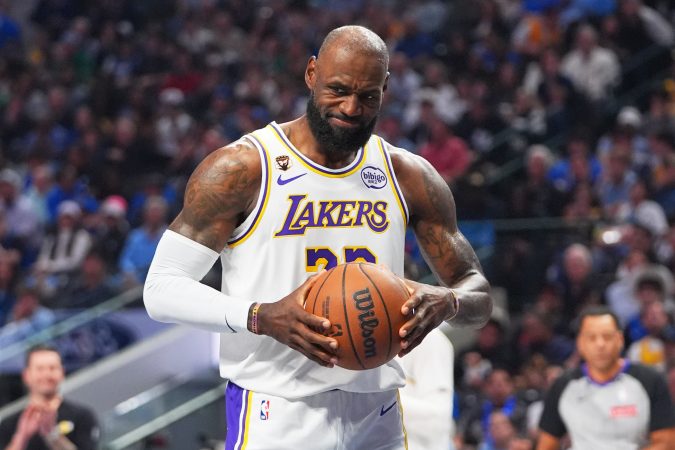
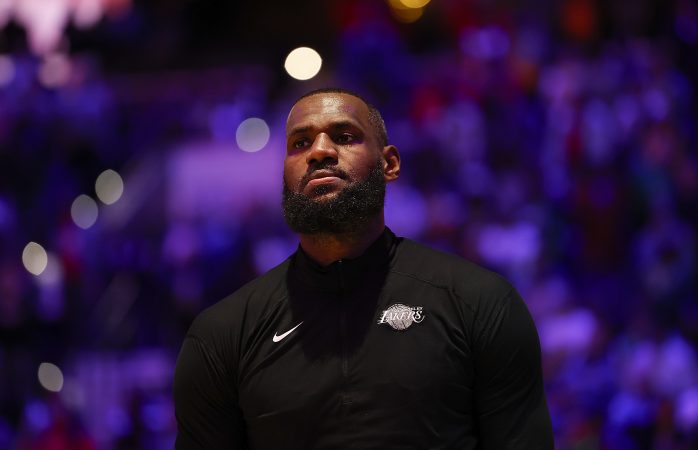
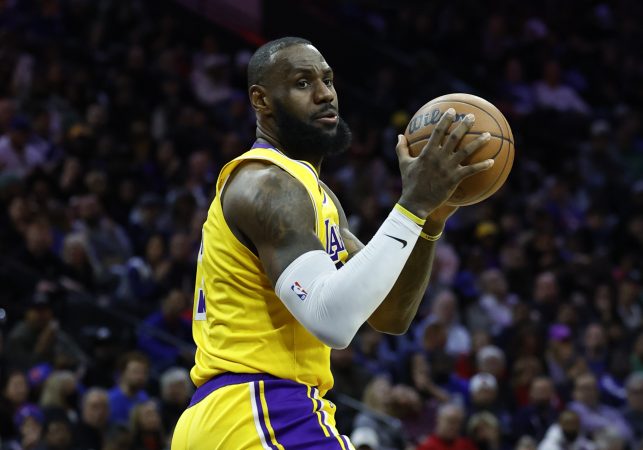
LeBron James is bringing his talents to the City of Brotherly Love after signing with the Sixers on a two-year, $8 million contract, making Philly the King’s new home — kind of.
On Monday, ESPN’s Brian Windhorst said the 22-time NBA All-Star could potentially live part time in New York.
“This whole thing is outrageous, and I don’t say that critically, I say that just from a fascinating situation,” Windhorst said on ESPN’s Get Up. “This a one-off moment in the history of the league. We’ve never seen a player ever say the following things, ‘I don’t care about money, I don’t care about my family.’
“He doesn’t even that much apparently care about the city because he doesn’t seem like he’s going to be living in Philadelphia full time, it seems like he’s going to live at least part time in New York. So, this is a — I don’t even know how to frame it because it’s really truly unbelievable.”
Brian Windhorst says the whole thing about LeBron James joining the Sixers is outrageous:
“This a one-off moment in the history of the league we’ve never seen a player ever say the following things, I don’t care about money, I don’t care about my family. He doesn’t even that… pic.twitter.com/5NVElFavQP
ESPN’s Shams Charania first mentioned James making the commute to Philadelphia from New York via helicopter on The Pat McAfee show on Friday after James’ decision.
“The last step for him was just making sure his family was on board,” Shams said. “Savannah, his wife, lives in L.A. with his young daughter, Zhuri. Bronny also plays right now with the Lakers in L.A. Bryce, his youngest son, is in Arizona.
“So, he’s going all the way to the other side of the coast. And we’ll see, will he live in Philly, will he live in Jersey, will he live in New York, will he take a chopper back and forth? We don’t know those answers yet. But, we do know he’s going to the East Coast now and that’s a big lifestyle change for LeBron James at this age of his career. And he made it very clear that it wasn’t going to be about money. And at the end of the day, it’s not.”
James wouldn’t be the first Sixers player to make the commute from New York. His former coach J.J. Redick made the commute from his family’s home in Brooklyn to Philly during his time with the Sixers (2017-19).
And NBA Hall of Famer Wilt Chamberlain primarily lived in New York during the season while regularly traveling back and forth to play with Philly while owning a night club in Harlem — giving James and Chamberlain, both four-time MVPs, even more in common.
In his book, Wilt: Just like any other 7-foot black millionaire who lives next door, Chamberlain mentioned how the media resented him for living in New York.
“I had missed one practice that week — just one — because I had the flu, and the press had played it up big,” Chamberlain wrote. “They had always resented my living in New York, first with the Warriors and now with the 76ers; they thought it was an insult to Philadelphia (which, I guess, it was — a richly deserved insult), and when the sportswriters had asked Dolph [Schayes] where I was that day I was sick, he had mishandled the situation, as usual.
“I had called and told him I was sick, but he just shrugged at the reporters, and said, ‘Who knows?’ The press had a field day with that —another example of the double standard I’d always been subjected to. Bill Russell missed more practices than I ever dreamed of missing, but no one ever criticized him for it; Tom Gola had lived in New York before I even joined the Warriors, but no one ever accused him of insulting Philadelphia.”
The decision to live in New York has already ruffled some feathers for James.
“This guy is so disgusted by the city of Philadelphia that he’s commuting in from Manhattan,” said Barstool Sports’ Dave Portnoy. “To quote Dick Vitale ‘Are you serious?’ … This is the biggest spit in the face to any city I’ve ever seen. … This is a dark day for Philadelphia and I’m outraged.”
Dave Portnoy after finding out that LeBron is planning on living in New York while he plays for the Sixers:
But New York’s Governor Kathy Hochul is all for it, posting “LePied-a-Terre” on social media, referencing the term pied-à-terre, which is a part-time second home in the city.
— Governor Hochul Press Office (@NYGovPress) July 27, 2026
Although James could potentially be living in the city of the New York Knicks, the team that bounced the Sixers out of the playoffs, Sixers fans should at least be happy he didn’t choose to live in this house.
LeBron James chose the Sixers the only way he could.
By letting everyone think there was no way he would.
It all makes a little more sense now, doesn’t it? The weeks of deliberations, the radio silence, the professions of ignorance from those close to James, the cryptic dispatches from the Man Behind the (Recording Studio) Curtain. For nearly a month, the world watched and waited and speculated amid a maddening self-muzzling interrupted only by the occasional communication via proxy. What we knew came almost entirely from a handful of podcast episodes where Rich Paul sounded more like a bystander than James’ agent and confidant.
Eyes were rolled. Deep breaths were sighed. Every lapsed news cycle was another shell in the stockpile of the critics and skeptics and purists who prefer brands of basketball to basketball brands. James’ most hostile audience has always been those who would rather live in a world where the Greatest of All Time is not first and foremost a business, man. But let’s give them their due. Even someone who is unbothered by the primacy of the 1099 in sports could have found their patience tested by James’ monthlong melodrama.
In hindsight, James’ actions seem perfectly reasonable. This wasn’t attention-seeking behavior. It was the private torment of a man who was about to choose, via his own free will, to move from Los Angeles to Philadelphia.
But it is deeper than that. Everybody involved needed it to go down this way. The significance of James’ signing with the Sixers is that he had every reason not to. He had other options, all of which had won championships within the last decade-and-a-half. They had superstars, some of the greatest to ever play the game: Steph Curry, Nikola Jokić, Giannis Antetokounmpo, James Harden.
They had stronger personal ties, more spotlight appeal. They had the tech scene, the outdoors, the party scene. James said he was looking for basketball bliss. Which means there is a lot of political capital in the fact that he chose the Sixers. The basketball is all they had to offer.
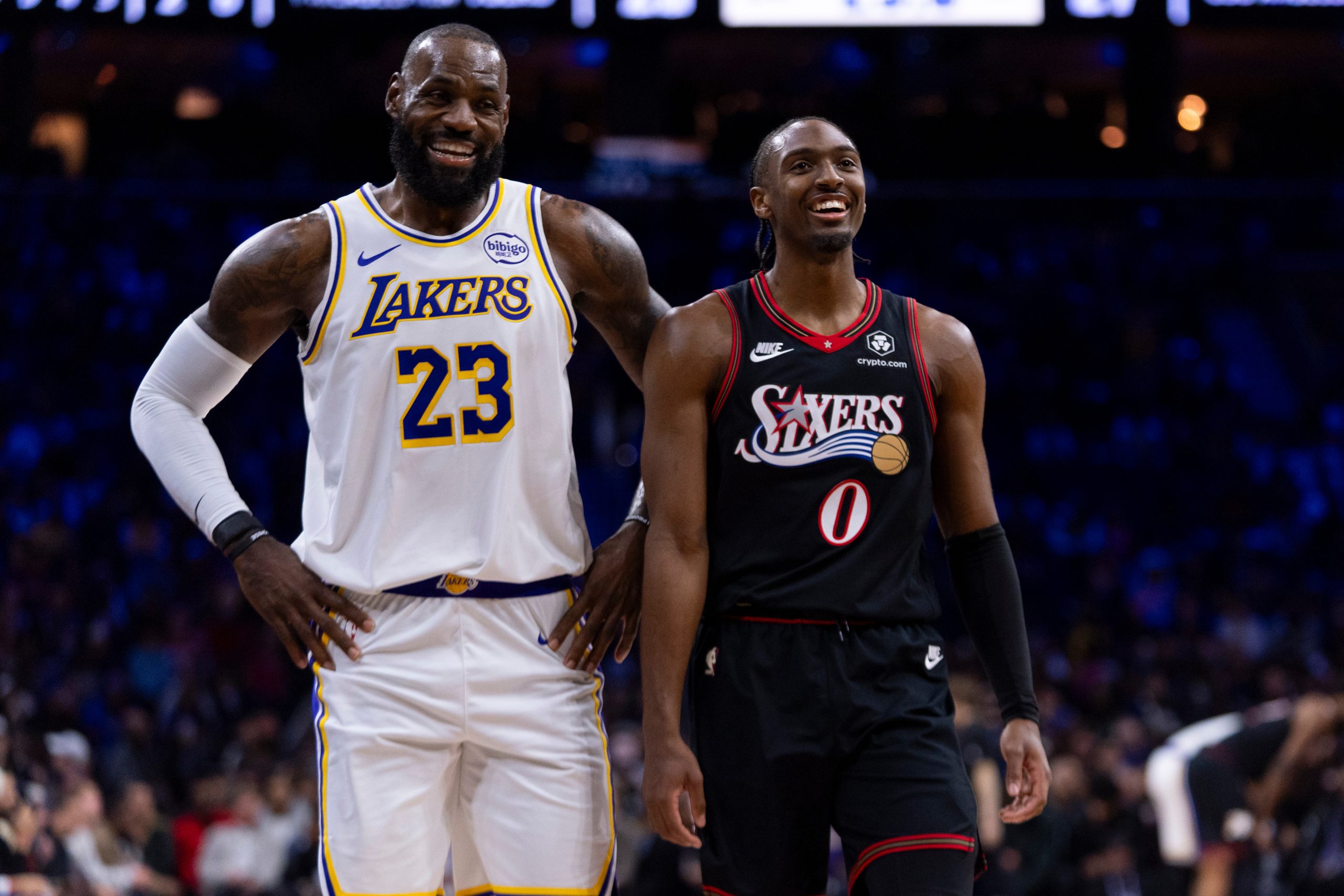
LeBron James has a well-documented friendship with Tyrese Maxey with both being part of Klutch Sports.Chris Szagola / AP
It’s perfectly valid to question whether James at 42 years old will create the on-court impact worthy of the hoopla surrounding his decision. There are plenty of scenarios where the sum of the parts exceeds the whole. That’s true even before you factor in age and injury. In James, Jaylen Brown, and Joel Embiid, the Sixers have three players who are accustomed to having the loudest voice in the room. In Tyrese Maxey and VJ Edgecombe, they have two young players who have been plagued by bouts of deference when sharing the court with more established veterans.
Yet, therein lies the significance of James’ deliberate evaluation of his options. The great general Charles de Gaulle once said that silence is the ultimate weapon of power. For weeks, everyone wondered what he would decide, and why. They thus imbued his ultimate decision and explanation with a tremendous amount of power. It meant something when James finally picked Maxey, and Edgecombe, and Brown, and, yes, Embiid. Everybody assumed James wouldn’t pick the Sixers because they were the Sixers. But he did pick them, which automatically makes them something nobody thought they were before.
Intentional or not, James’ decision-making process has empowered both his new organization and his new teammates before he has even arrived.
You probably saw the social media video Maxey released in the wake of James’ signing. It was just a few seconds of him yelling spastically. You have to think that there was a little bit of that going on inside Brown and Embiid as well. At various points over the last few years, both players have allowed their veils to slip from their insecurities. Brown, passed over for the Olympic team after winning NBA Finals MVP, second fiddle to Jayson Tatum, inefficient, overpaid, not a real superstar.
Embiid, injured, maybe finished, soft, selfish, supplanted by Maxey and Edgecombe as the heart and soul of a franchise. Who knows how those insecurities would have played in a power vacuum like that which could have existed without an unquestioned adult in the room. Insecurity is mostly thirst for validation. To be good enough for the best is a heck of a quench.
Part of me wonders whether LeBron’s real attraction to the Sixers is an opportunity to lead. Not that he hasn’t always led, in both spirit and example. But the Sixers offer him a unique opportunity.
More than any of the teams that pursued him this offseason, maybe even more than any team he has been on to this point, the Sixers were a team that genuinely needed exactly a player and a person like James is right now. It will be fascinating to see how the whole thing will look on the court, and what part James will play. Don’t be surprised if his biggest impact has already been made.
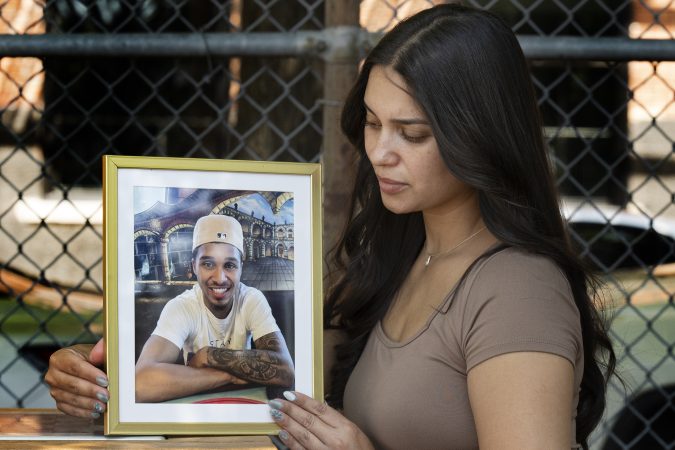
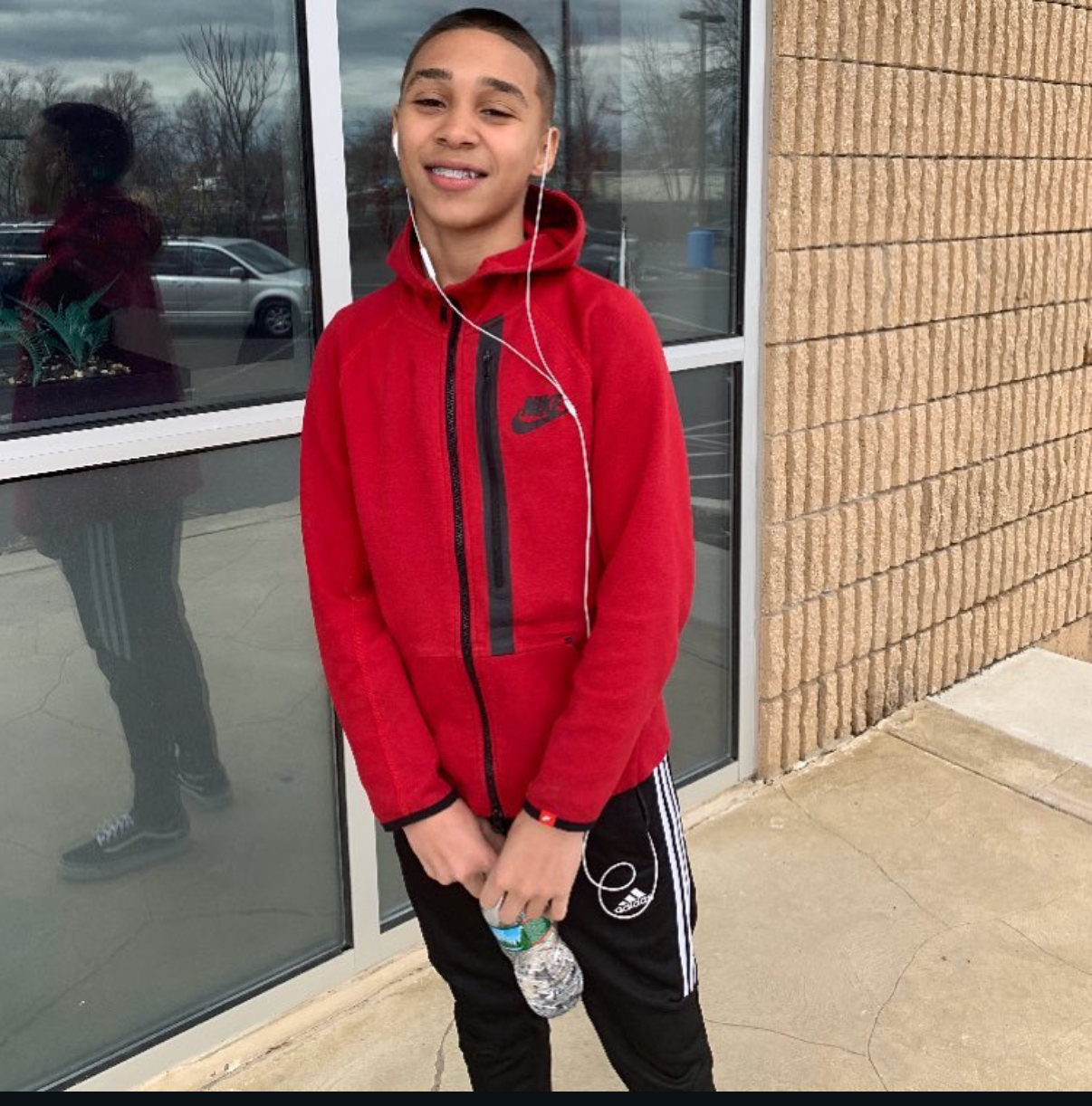
The first thing people noticed about Jadin Aviles was his smile. It was bright and big, and became part of his identity. Not just because of his youthful spirit, but the work that shaped each glistening tooth.
When Aviles was 9, his mother, Emelissa Gonzalez, saw that he was closing his mouth in photographs. Sometimes, he’d cover it with his arm. She asked why; Aviles explained that he was insecure.
Gonzalez turned to her son.
“Don’t worry,” she said. “Once we hit a certain age, we will get them done.”
A few years later, the mother surprised him with a trip to the orthodontist in Northeast Philadelphia. Not every child would react with enthusiasm, but this child did.
Aviles eagerly picked out the colors of his braces — red and blue — and was diligent in wearing his rubber bands. Tightening the wires was hardly a chore; the teenager saw this as a necessary (albeit painful) step to getting the grin he wanted.
By age 15, he finally had it. Aviles smiled constantly — so much so that his friends began to tease him. But he didn’t mind. Gonzalez had invested her hard-earned money. He had treated that investment with care. Wasn’t that something to be proud of?
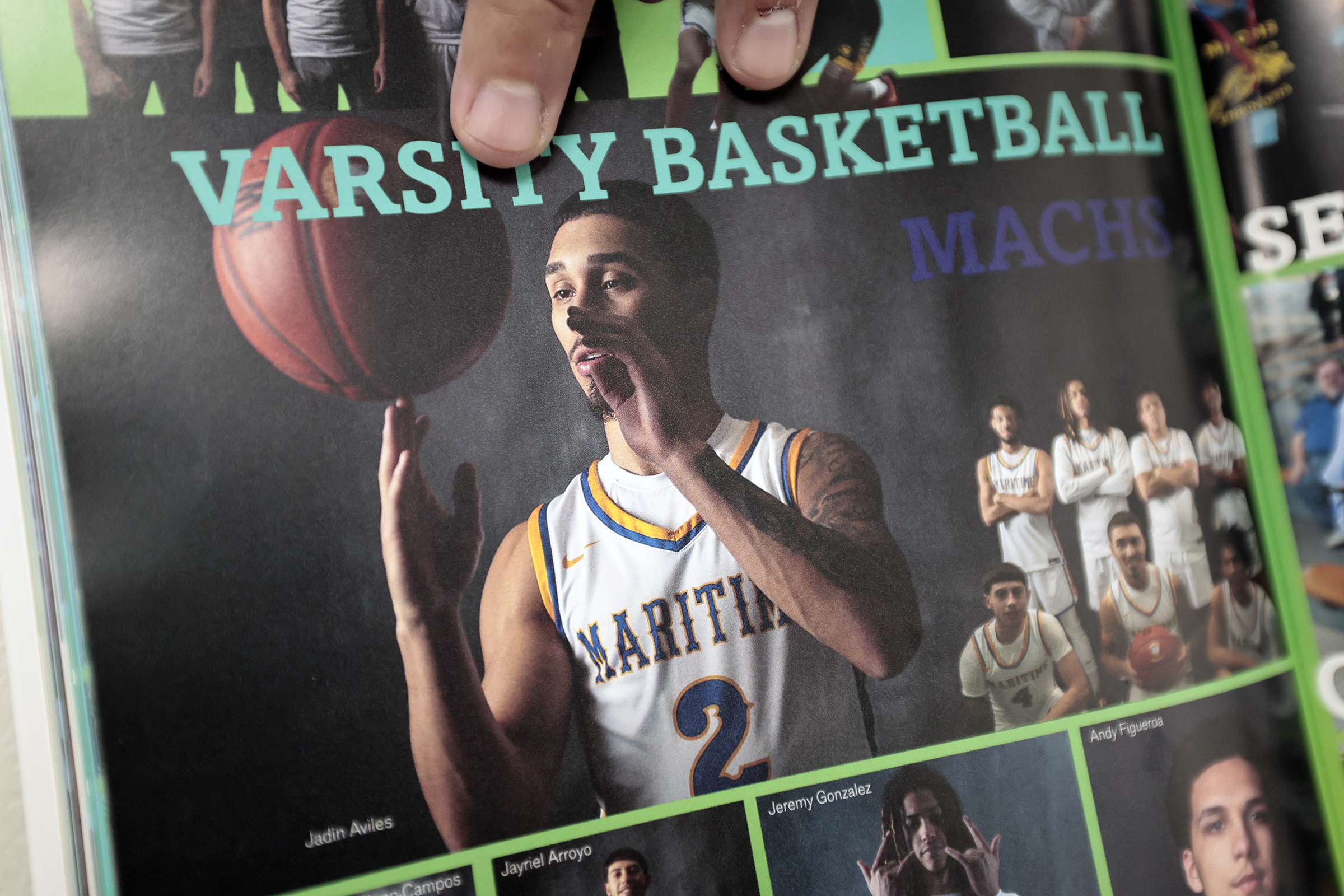
Aviles brought the same industrious energy to basketball. He played in two youth leagues — La Liga Del Barrio and Timoteo Sports — as well as on his high school team, Maritime Academy Charter.
Athletic director Kevin Schultz would let the shooting guard and his teammates into school early, so they could shoot from 5:30 a.m. to 7:30 a.m.
“Class started at 8:02 [a.m.],” former Maritime teammate Andy Figueroa said. “So we was in the building before all the teachers.”
Aviles wasn’t competing in front of a packed Palestra, but he did become a “street legend” in North Philadelphia, according to those who knew him.
This was as much about his ferocity as it was his empathy. The teenager would rarely, if ever, jaw at referees. He’d often extend a helping hand to an opponent who’d fallen on the court.
“He would come to our church sometimes,” said Pastor Rob Whitmire, executive director of Timoteo, “and to see how he cared for people, it was something unique. Because, if I’m thatguy, if I’m that player, that’s really not how they carry themselves. It’s not a caring spirit. And he just had a caring spirit.”
His community is now trying to keep it alive. On May 12, Aviles was riding his moped in a bike lane on Aramingo Avenue. A pickup truck, turning left, ran him over. Aviles suffered extensive brain damage, and died that night.
He had just turned 20.
It is a devastating loss, one that friends and family have struggled to reckon with. To many, Aviles, with his beaming smile, was brightness incarnate. He seemed to make all the right choices. How could things go so horribly wrong?
As North Philadelphia celebrates his past, and mourns his unfulfilled promise, they’ll continue to point to Aviles as an example. Proof that a life built on kindness and respect can be a life well-lived, no matter how it ends.
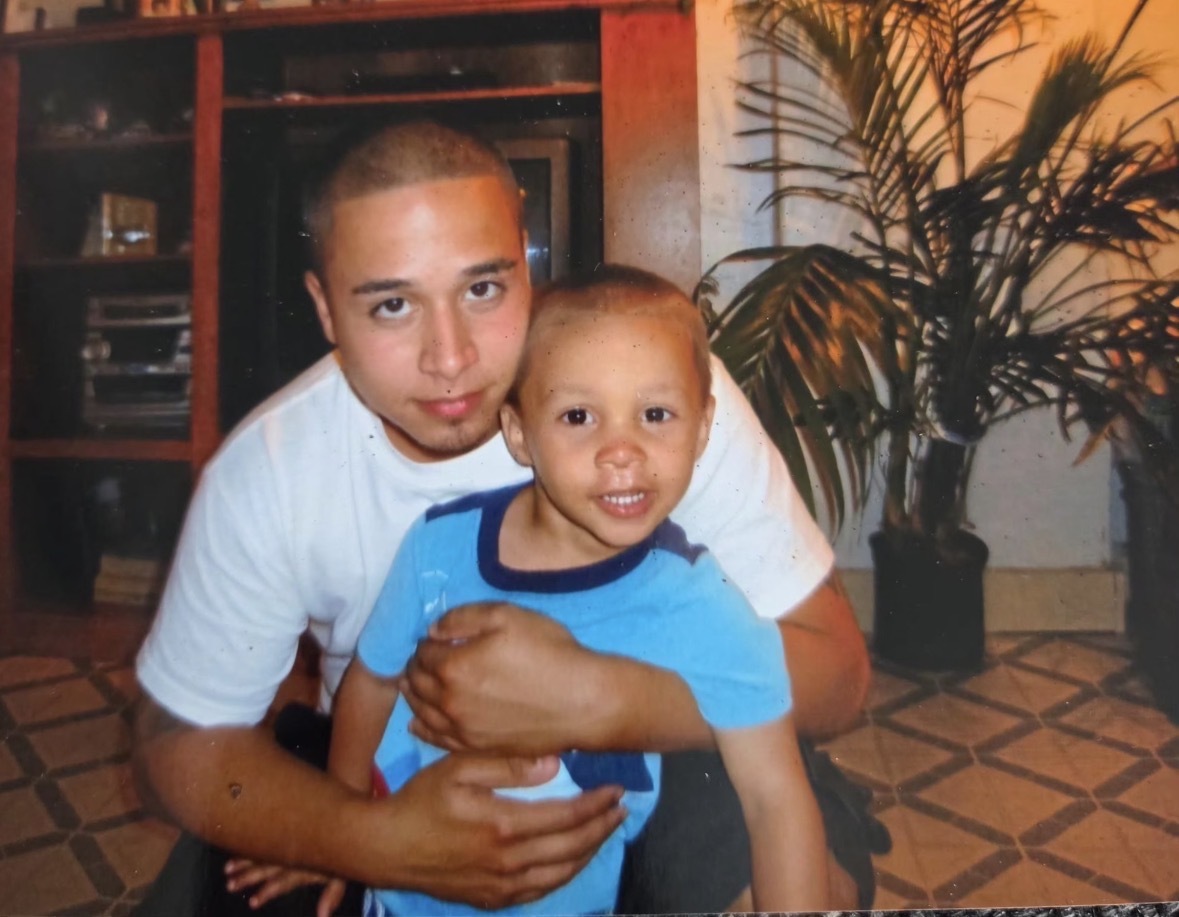
Sam Aviles with his son, Jadin.courtesy of Sam Aviles
Bonding through basketball
Aviles grew up with his mother. His parents broke up when he was 2 but maintained an amicable relationship. Even as a child, the future basketball star was self-sufficient.
He wasn’t the kind to throw a temper tantrum in a toy store. He rarely cried. If he did, his father, Sam, could quickly calm him down with a meal and some TV.
By the time he was 9, Jadin’s uncle and grandfather, who worked in electricity and construction, were teaching him odd jobs around the house.
The third grader knew how to navigate a switchbox and how to repair a lamp fixture. Once, when a pipe burst in the bathroom, Aviles called Gonzalez’s brother, Emanuel.
“‘Hey Tío, how do I fix this?’” she remembered him saying. “And over the phone, he’s literally fixing a pipe.”
Sam introduced the younger Aviles to basketball at age 5. He’d heard about La Liga through a cousin and signed Jadin up. One day, in the fall, they went to Towey Playground, around the block from Gonzalez’s home.
Jadin Aviles took early to multiple sports, but basketball quickly became his greatest love.courtesy of Emelissa Gonzalez
Sam was a new father, with no experience in youth sports. He did not realize that his son would be playing on a smaller court, with a hoop eight-feet high. So, they started practicing at the regulation-sized Towey, with Jadin chucking basketballs from above his head.
The boy didn’t complain, but once he and his father showed up to La Liga in December, it dawned on them that they had overestimated these dimensions. Even still, Jadin took to basketball, and began to participate in La Liga every winter.
Shortly after, Sam joined the organization as a coach. The father and son became inseparable; often watching games together, and taking extra shots at the Mariana Bracetti Academy gym (where La Liga is based).
The younger Aviles soon added another league, Timoteo, in the hopes of further refining his skills. At both stops, he established himself as a tough and bullish guard, who played far beyond his stature.
Whitmire became familiar with Aviles through his church, Grace and Peace Community Fellowship, where the teenager would volunteer. When the pastor first saw him play, in 2020, he didn’t recognize him.
The Jadin Aviles Whitmire knew was quiet and reserved. This kid was anything but. Eric Moore, assistant director at Timoteo, remembers that day vividly.
Aviles was in eighth grade, battling older students at the Esperanza High School gym. Moore and Whitmire stood in the back corner.
“And he was like, ‘Yo, is that Jadin?’” Moore recalled. “And I’m like, ‘Bro … yeah.’ And he’s like, ‘His defense is phenomenal.’
“And I was like, ‘Wait till he gets the rock. Wait till he handles the rock.’”
Added Whitmire: “I saw him come down and pull up on a guy and shoot, and I’m like, ‘Oh.’ There was something about his form that’s like, ‘No, that’s not normal. That’s not a rec player.’”
Jadin Aviles became a factor on the court and an approachable mentor to younger teammates.courtesy of Emelissa Gonzalez
At La Liga, Aviles always competed above his age group, and consistently held his own. His father called him a “giant slayer”; fully grown, Jadin stood at only 5-8, but was unafraid of opponents who were taller and larger than he was.
The numbers back this up. For five years in a row, Aviles averaged at least 11.1 points per game. He increased his scoring in 2025, with 24 and 46-point games. But despite his offensive output, he also devoted time and energy to his shortcomings.
One of the guard’s proudest moments came in 2023, when Timoteo named him defensive player of the year.
“[A coach] started working out with him, and he would ask what they wanted to do that day,” Sam said. “And Jadin was like, ‘Defensive drills, defensive drills, defensive drills.’”
Sam joined Timoteo as a coach in 2021, with the goal of spending more time with his son. But then an unexpected opportunity presented itself.
In 2022, Maritime’s head coach, Ercel Ballinger, contacted Sam to see if he would be interested in running the junior varsity team. He agreed, and took a job at the school a year later as a member of the support staff.
Jadin, who spent his freshman year at Roman Catholic, transferred to Maritime to play for his father. It turned out to be a life-changing decision. The younger Aviles thrived in the Philadelphia Public League.
He was reunited with childhood friends like Yozuet Pagan, an older kid on the block who taught him ballhandling and finishing at Towey. And as he matured, Aviles became comfortable taking on that role himself, with younger teammates.
Jadin Aviles flourished as a player after transferring from Roman Catholic to Maritime.Elizabeth Robertson / Staff Photographer
Andy Figueroa was the biggest example of this. Like Aviles, he’d tried Roman Catholic, only to find it wasn’t a fit. The veteran guard began to check in on his pupil, and one morning, he approached the 16-year-old in the hallway at school.
Jadin knew Figueroa had been struggling, and was at risk of becoming ineligible.
“He was like, ‘We need you on the court for our next game. So make sure you’re doing everything right,’” Figueroa recalled. “That made me realize that I got to make sure I do well, not just for me, but for my teammates, too.”
Aviles’ words were only bolstered by his play. By senior year, he was putting up career numbers, in points (15.3), rebounds (4.3), assists (2.5), and steals (3).
The teenager’s magical season came to an end on Jan. 23, 2025, Maritime’s senior night. A few hours earlier, Aviles told his father, who had since been promoted to varsity head coach, that he would “leave it all out on the court.”
And he did. Facing Hill Freedman World Academy, which sat atop the conference, Aviles dropped 25 points with four rebounds and five steals. The Juniata Boys & Girls Club was packed to capacity, and their crowd was going berserk, almost as if it were a cathedral all their own.
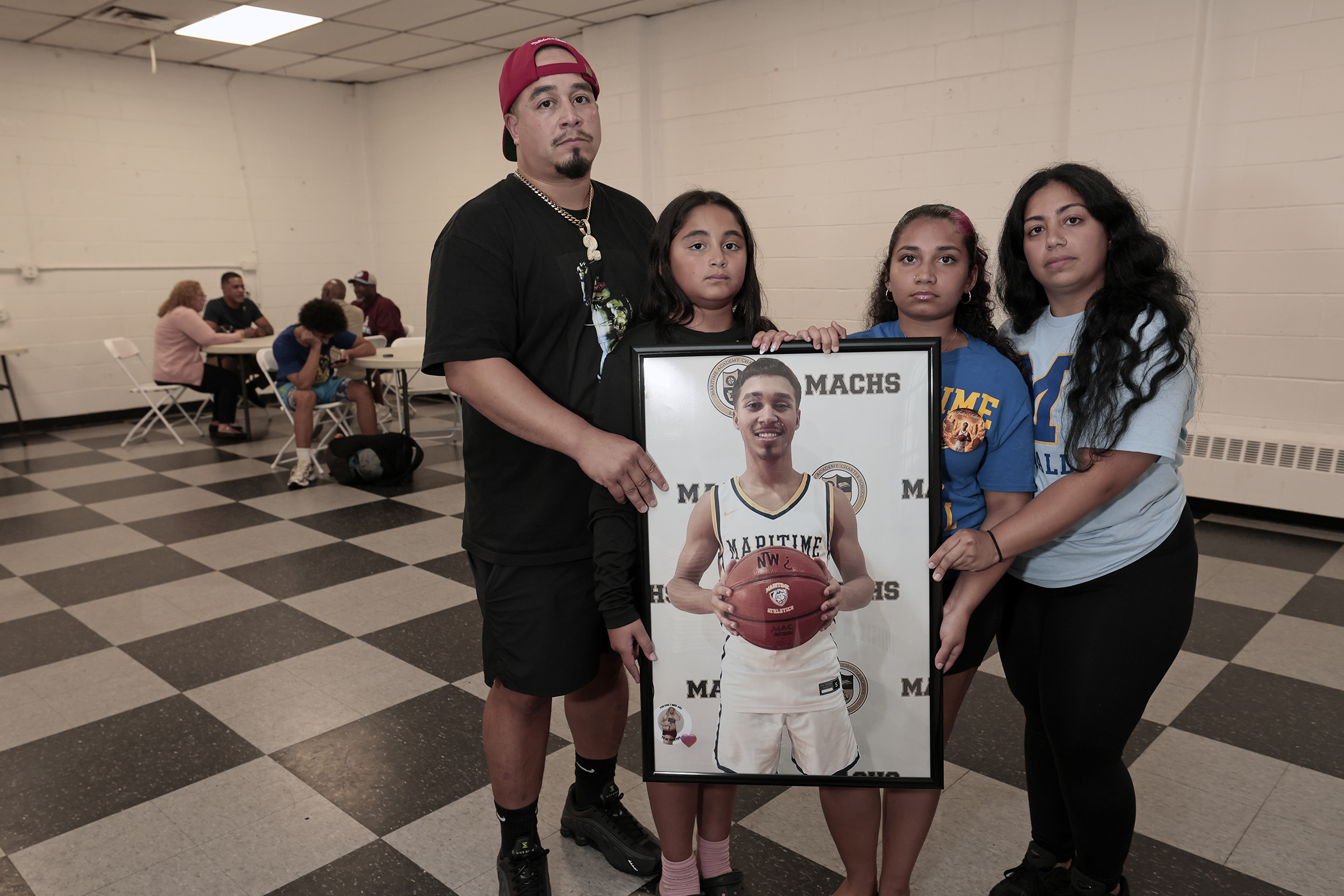
Sam Aviles (left), with Jadin Aviles’ sisters Madison and Mia Valerio, and stepmother Alexis Ferranti, witnessed Jadin’s development on the court. Elizabeth Robertson / Staff Photographer
A bright future, a brutal end
Aviles could have gone to college if he wished. Small institutions from Philadelphia and the surrounding areas sent him letters in the mail. Sam found a trade school in Media with a basketball team.
But none of this was enough to persuade him. Jadin wasn’t interested in sitting in a classroom, or accruing student debt. He was interested in working, though, and 30 days after he graduated, he was hired at Menasha, a packaging company on East Erie Avenue.
Two of his cousins worked there, as well as his uncle, James Arroyo Jr. It was an unnatural transition; Aviles was hired to work the night shift, from 11 p.m. to 7 a.m.
But as with most challenges in his life, the teenager embraced it. Before long, he was training for a promotion, going from stacking boxes, an entry-level role, to running the label machine.
“He got in there and [excelled],” said Arroyo Jr. “He hosed up pretty good.”
The job provided a good salary and strong benefits, giving Aviles a level of financial freedom he’d never experienced. He was proud of this, telling family and friends that he had “all of his bills on auto pay.”
In February, Aviles and his girlfriend, JaedaRodriguez, rented an apartment at Roosevelt Boulevard and C Street. It was a big step for them; Aviles had never lived apart from his mother or father.
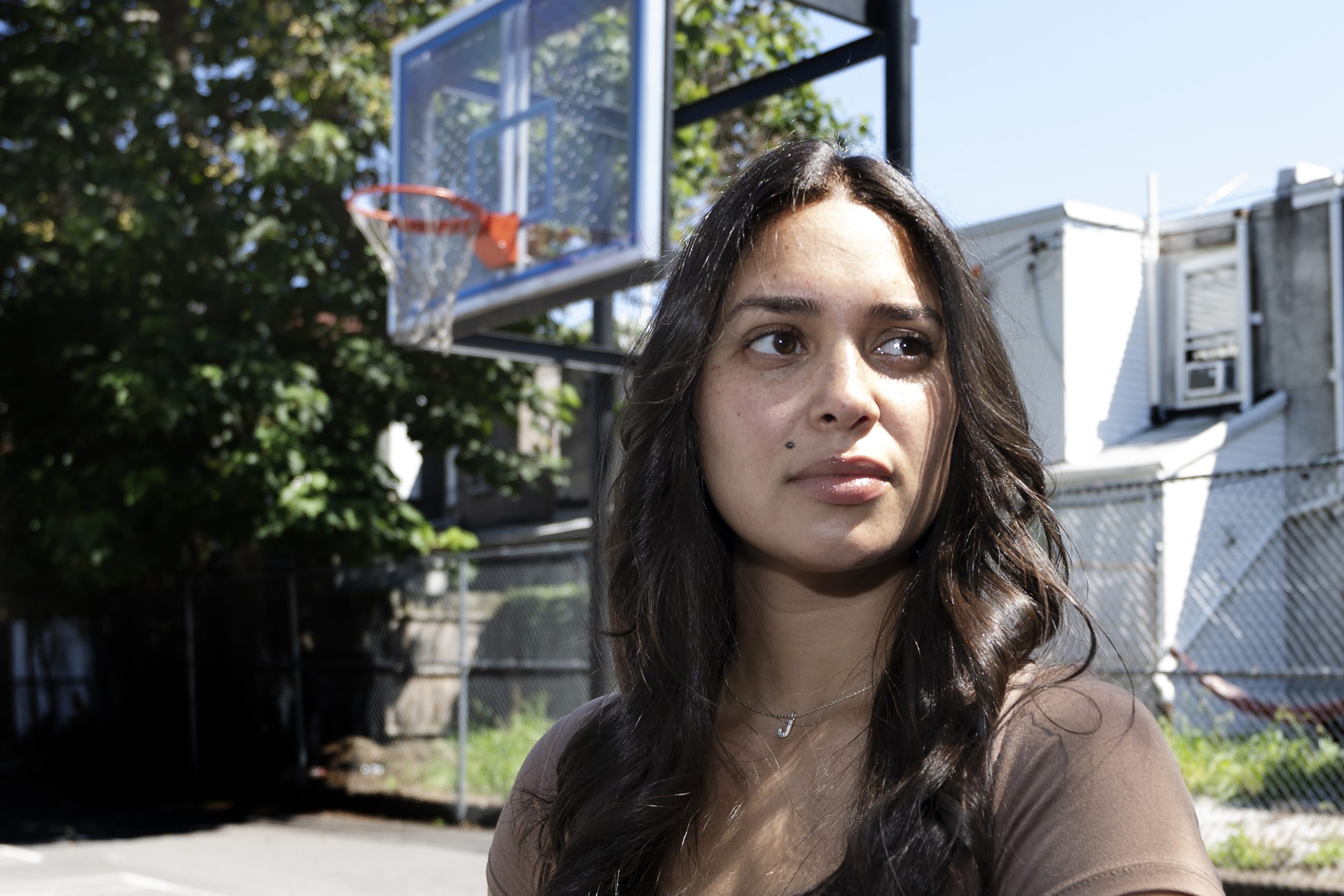
Emelissa Gonzalez was proud of her son, Jadin Aviles, but had reservations about how quickly he had become self-sufficient. Jose F. Moreno / Staff Photographer
And Gonzalez was skeptical at first. She can still remember the day he told her; how nervous he was.
“I was like, ‘Is she pregnant?’” Gonzalez recalled. “‘Don’t tell me that I’m a grandma!’”
Aviles explained that he was moving out. His mother’s response was short and succinct: “Boy, no. You can’t be doing that.” But eventually, she warmed to the idea, and as Gonzalez packed her child’s belongings, in his new home, she began to cry.
“What’s wrong?” he asked.
“One day you will understand,” she replied.
The couple loved their newfound life. Within weeks, they’d adopted a pit bull from a local animal shelter — “Bubba” — and began to put him through dog training. Aviles suddenly had access to things like trips to the Shore and a newer car.
From a young age, he was drawn to bikes. Sam bought his son a black moped when he was 16, a miniature-motorcycle from Walmart that had a “lawnmower for an engine.”
Now, Aviles was able to purchase one of his own, and on May 11, he and a family friend, Kenny Enrique, drove to Allentown to retrieve it. They loaded the two mopeds into Enrique’s car, and brought them back to Philadelphia.
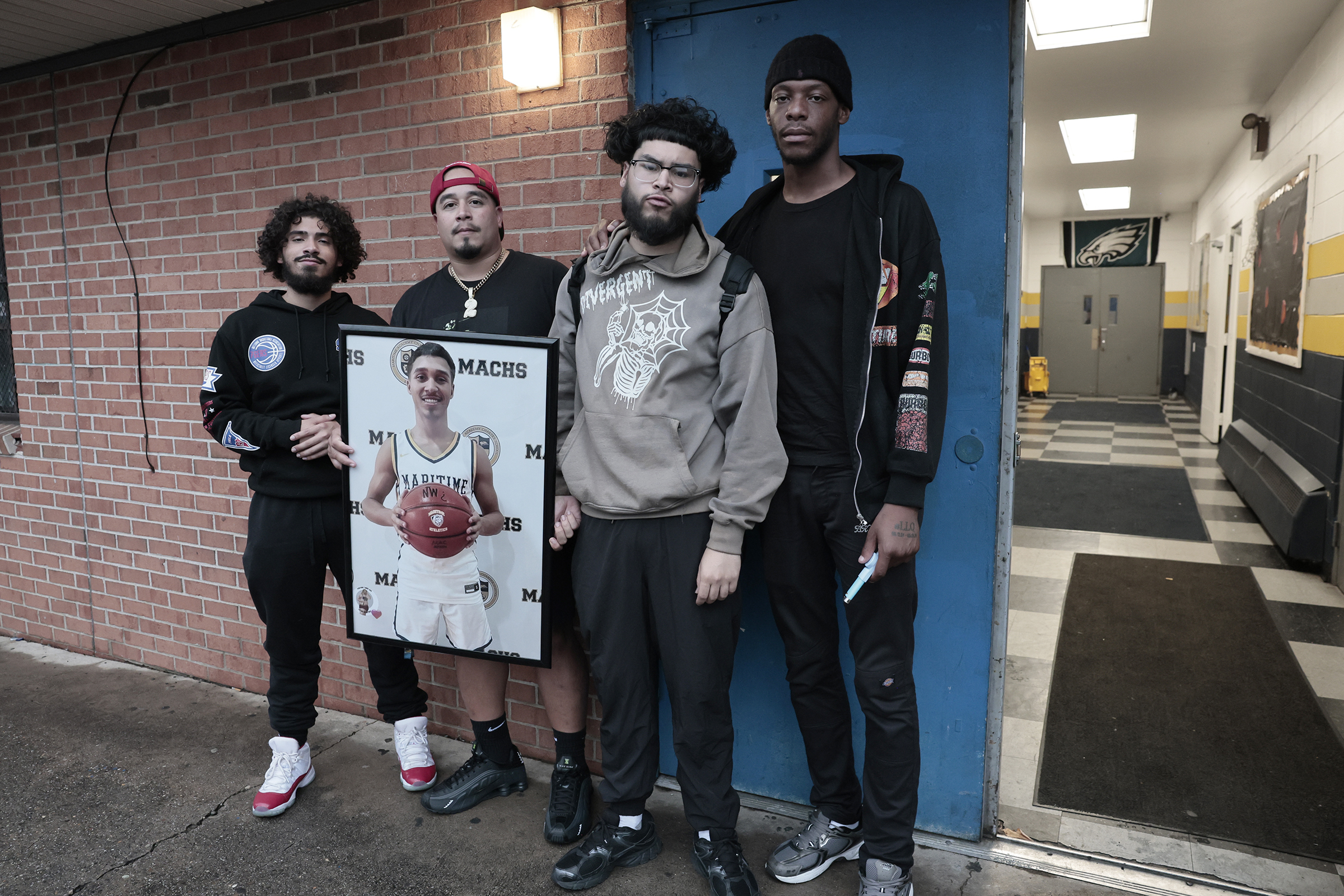
Hector Rosado (from left), Sam Aviles, Lucardo Marrero, and Sincere Jackson hold a photo of Jadin Aviles as they stand outside of the Juniata Park Boys & Girls Club earlier this month. Elizabeth Robertson / Staff Photographer
The next afternoon, the two men departed Aviles’ apartment in Olney, riding the mopeds to visit Sam at Maritime. They turned onto a bike lane on Aramingo Avenue; Jadin in front, Enrique behind him.
As they approached the four-way intersection, a pickup truck emerged in the left lane, heading northbound. A Philadelphia police report stated that the driver turned while the light was green, but failed to yield the right of way.
The right side of the truck hit Aviles. He fell to the ground and was run over. Enrique ran to find his friend face down, with his hood over his head, the moped laying a few feet away.
Enrique knelt and placed his hand on Aviles’ arm. Traffic began to slow; a few passersby stopped to call an ambulance. As Enrique went to retrieve his bike, he noticed something out of the corner of his eye.
“The [driver of the truck] was still moving,” he said. “I’m not going to say he left, but he probably would have left if I didn’t start yelling at people to make him stop.
“So, I started yelling, ‘Stop that truck, stop that truck!’”
The driver remained at the scene, where both men were questioned by the police. Throughout his interview, Enrique asked whether or not officers would give an alcohol or drug test to the driver.
“He said that our officers are trained to identify when somebody is under the influence,” Enrique recalled. “And I said, ‘Well, what’s an opinion versus an actual drug test or a blood test?’
“And he just ‘never minded’ what I said. I said the same thing to the next officer. They just ignored me.”
Officers later discovered that the driver of the truck had twice had his license suspended for driving under the influence, and did not have insurance at the time of the crash, according to a copy of the police report obtained by The Inquirer.
The police department’s Crash Investigation Division obtained footage of the fatal collision. One of the responding officers’ body cameras was “activated through the duration” of the interviews at the scene, the report shows.
A police spokesperson said that the crash remains under active investigation, and that the driver is cooperating with authorities.
The department did not respond to additional questions that The Inquirer submitted about the investigation, including why the driver of the truck was not required to undergo testing to determine if he was under the influence of drugs or alcohol.
Aviles was transported to Temple University Hospital, where his parents joined him. Sam’s girlfriend, Alexis Ferranti, met them there, as didRodriguez.It wasn’t until 7:03 p.m. that the family was able to see Jadin, who was unresponsive.
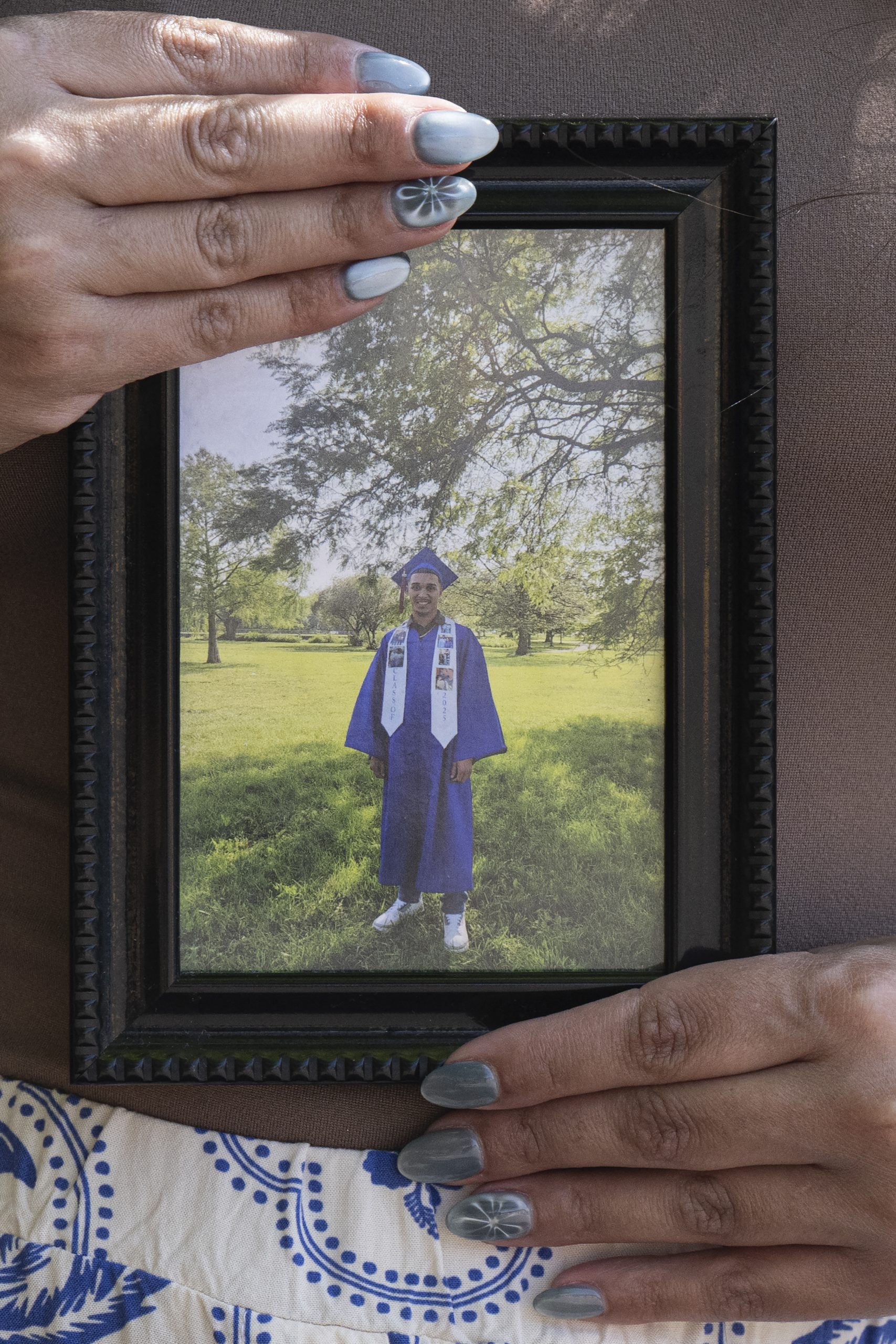
The 20-year-old’s face was wrapped in a bandage, covering the smile he’d worked so hard for. He couldn’t move or speak. Doctors told Gonzalez and Aviles that they had about an hour to say goodbye.
The parents prayed, and listened to Christian music, and told their child how much they loved him. That they were there for him, even if he couldn’t see them, and that they’d always be there for him.
“And we all watched,” Gonzalez said, “my son go with the Lord.”
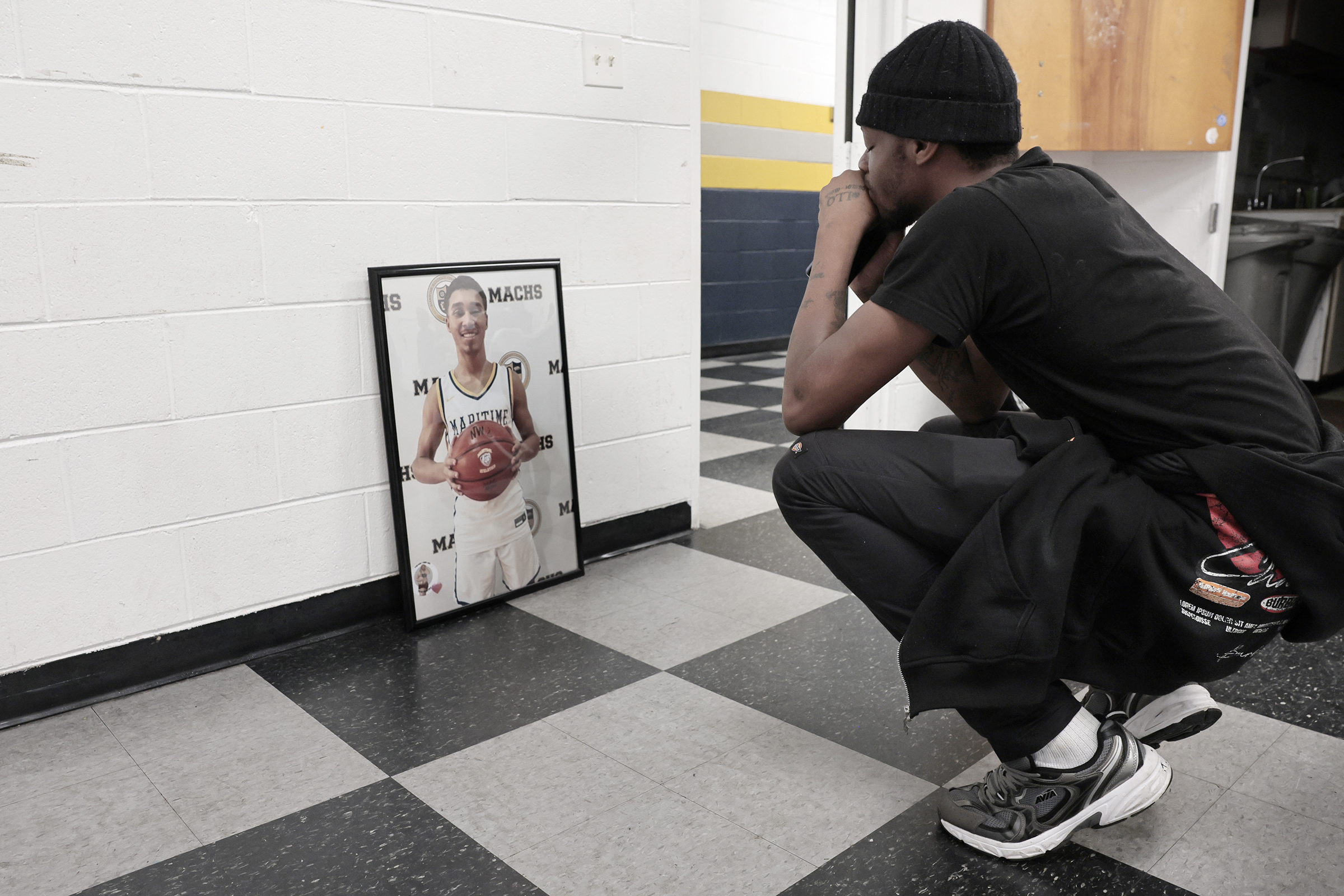
Jadin Aviles’ friends and former teammates, including Sincere Jackson (pictured), remember a good person who developed himself into a basketball standout. Elizabeth Robertson / Staff Photographer
A funeral on hardwood
The funeral was held on the morning of May 22. Initially, Gonzalez and Aviles planned to use her church, but realized it couldn’t contain the large crowd they were expecting.
So, they moved the service to the Juniata Boys & Girls Club, a place where their son had some of his greatest moments. Building employees took out the scorer’s table, and angled team benches toward the court.
Rows of chairs were stacked in the middle, all facing a casket underneath the hoop. Just like on Jadin’s senior night, the gym was filled with people; so many that a line wrapped around the block onto Castor Avenue.
They came from all corners of the neighborhood — Hunting Park, Olney, Kensington — shuffling in and out to pay respects. At one point, the funeral director had to turn mourners away, because the family was able to rent the gym for only two hours.
It was a surreal day, especially for those who had played with Jadin on that same floor. Dominic Lopez, a Maritime teammate, thought about Aviles’ 25-point game.
Andy Figueroa did, too. After it was over, he walked up to Eric Moore, who’d watched Jadin grow up at Timoteo, to ask how he was doing.
“And I told him, ‘You are Jadin,’” Moore recalled. “‘Own it. Because you are him. You are that person.’”
Jadin Aviles’ family and friends are attempting to move on from his loss while honoring his memory. Jose F. Moreno / Staff Photographer
There has been an emptiness in North Philadelphia since Aviles passed. Spaces he used to frequent are quiet. Ray and Esther Alvarez, who run La Liga, returned to their home gym in June.
Esther found herself thinking back to that kind boy, who would always greet her with, “Bendiciones, Titi.”
“I knew I wasn’t going to physically see him,” she said, “but I was waiting for my bendición.”
Aviles’ spirit will continue to permeate. La Liga is planning a memorial fund in his name. Sam is thinking about hanging one of his jerseys in the Maritime rafters.
But perhaps the best way to honor him is to emulate him. To tell young people about a giant on the court and a leader off it, who was so remarkable, and so loved, that he drew hundreds, maybe a thousand, to his funeral.
And that he did it all on his own, with hard work and a big smile, and that someday, they could, too.
A year ago, Priya Brown spent many weekday afternoons sitting in traffic, inching home to Northern Liberties from her job in the Navy Yard.
Since moving into the new apartments at South Philly’s converted military base in January, the 27-year-old said her daily routine has gotten much more relaxing — with far fewer brake lights. An assistant buyer at Anthropologie, Brown walks 10 minutes to her office at Urban Outfitters’ Navy Yard headquarters.
“My life is so much easier,” Brown said last week as she walked her tiny basset hound, Momo, around her building, AVE Constitution. The air was quiet, save for an occasional bird chirping and the steady hum of planes making their descent into Philadelphia International Airport.
“I’m not a city person,” added Brown, an Annapolis native who moved to Philly for work. In Northern Liberties, “I missed grass a lot.”
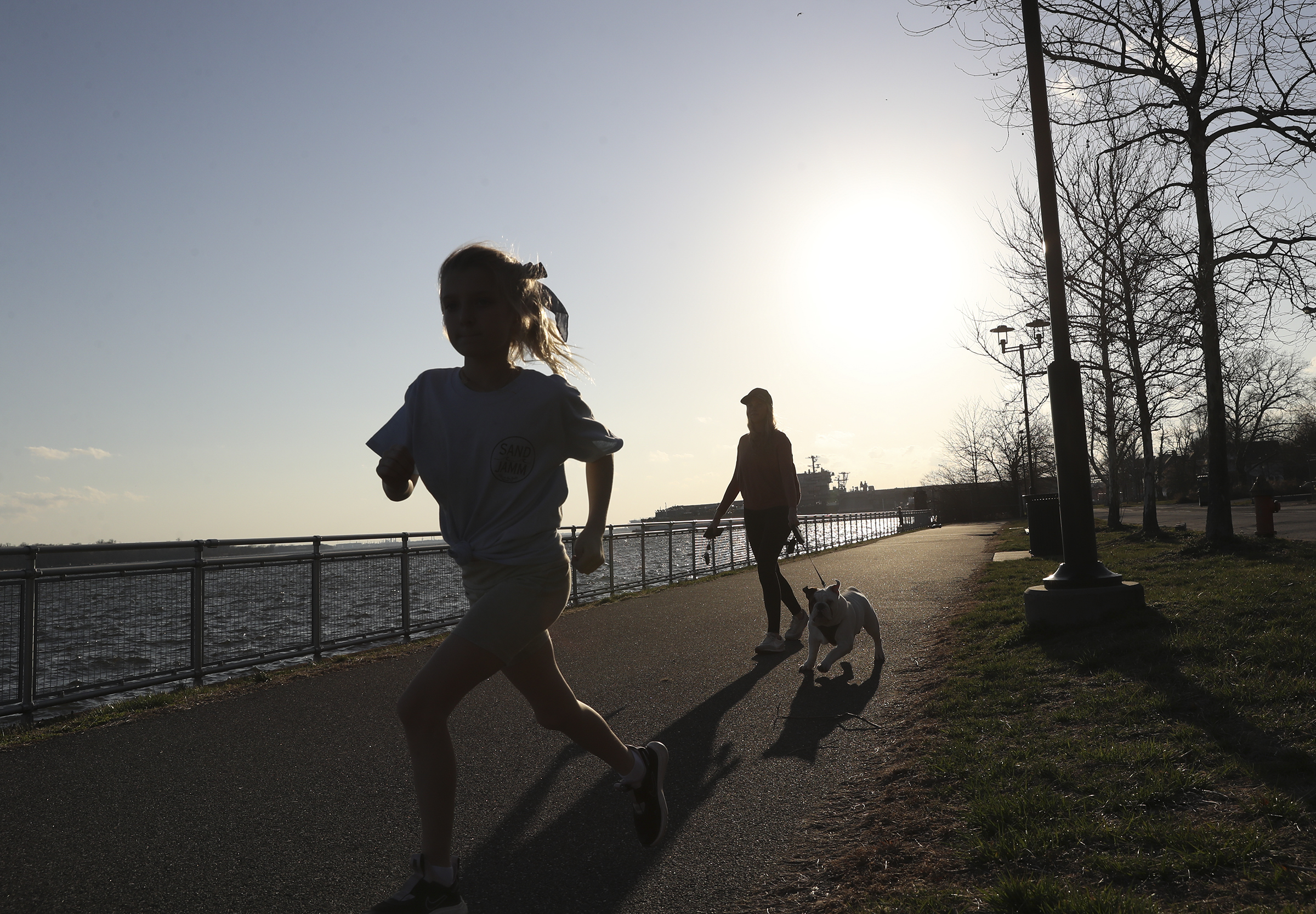
The Navy Yard has open space and paths for walking and running, as seen in this 2022 file photo.Yong Kim / Staff Photographer
Brown pays about $2,400 a month for her one-bedroom, she said, and takes advantage of the free and abundant street parking, a rarity elsewhere in the city.
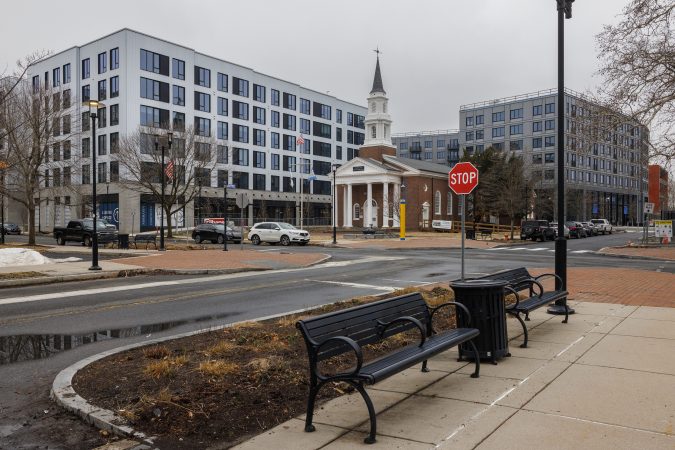
It also includes more than 20 acres of parks and miles of walking paths, some along the Delaware River, as well as a restaurant and hotel.
Now, it is also home to a small but growing number of residents.
More than a third of the 347 units in Constitution are leased, according to Sam Korman, AVE’s director of operations. Next door at Normandy, which opened this spring, more than 20% of the 267 units are leased, according to Korman. Normandy includes unfurnished apartments for tenants, as well as furnished ones that are marketed to business travelers. Lease-ups for buildings of this size typically take about 18 months, a spokesperson for the company said.
“We are extremely pleased with the reception to AVE Navy Yard through our first few months of operations,” Korman said last month in a statement. “This past month has been our most successful for both furnished and unfurnished leasing, a positive trend that we expect to continue throughout the summer,” a busy season for rentals.
Navy Yard stakeholders eventually want the property to have 4,000 apartments, along with more retail space and a second hotel, according to its 2022 redevelopment plan.
A one-bedroom apartment at AVE Normandy as seen in March.Alejandro A. Alvarez / Staff Photographer
Some Navy Yard residents love their ‘secluded spot’
As cars drove by from the Navy Yard office complexes, headed toward I-76 and I-95 on a recent afternoon, only a handful of people were out and about near the apartment buildings.
Several food couriers dropped off orders in the Normandy lobby. Nearby, in front of floor-to-ceiling windows, someone walked on the treadmill in an otherwise-empty gym. On an outdoor deck above, people could be heard splashing in the pool.
Otherwise, passersby were few.
Brown said she enjoys the suburban-esque solitude, though she’s glad more tenants are moving in. This winter, it felt like only a handful of other people lived in the building, she said, but now her floor seems like it’s almost full, making it “less spooky.”
A communal space at AVE Normandy in March.Alejandro A. Alvarez / Staff Photographer
Across the street at Normandy, resident Integra Feliciano has picked up a similar vibe.
“I have the sense that I’m definitely one of the earlier tenants,” said the 29-year-old, who moved in April and was drawn to the area’s tranquility after living near Passyunk.
Feliciano commutes to her job at a life sciences company in West Philly. She looked at apartments in Center City but couldn’t find anything as quiet and luxurious — without “ridiculously expensive” parking.
At her last apartment, she said, she paid more than $300 a month for parking, a rate that was set to hit $500 around the time she moved. Like Brown, she now parks on the street for free.
The Navy Yard is “a secluded spot, a little gem,” said Feliciano, who pays $2,510 for her one-bedroom. “I like being in proximity to the city, but I don’t like being right in it.”
The Navy Yard itself is “still up-and-coming in terms of having more restaurants and stuff,” Feliciano said, but there’s plenty to do.
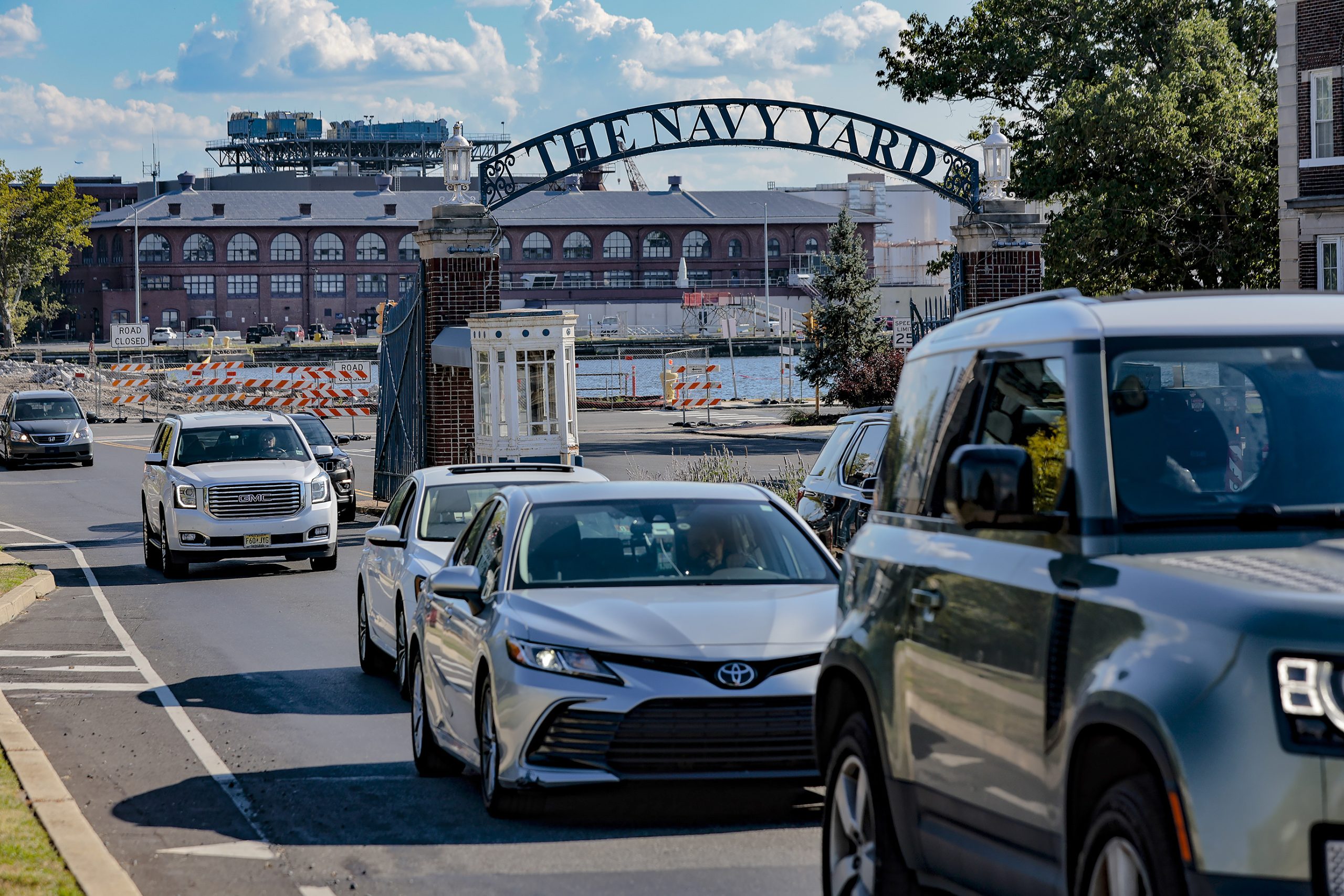
People leave the Navy Yard at rush hour in August 2022.Steven M. Falk / Staff Photographer
In the spring, she said, she and her boyfriend bought last-minute tickets to a Sixers playoff game and walked over to Xfinity Mobile Arena. While out for a run one day, she discovered the Southeast Asian Market in FDR Park.
She swims in her building’s pool whenever she can, she said, and often invites family and friends over. And she said her guests love that they don’t have to “circle the block for an hour” to find a parking spot.
“I had a friend come over, and she just parked right in front,” Feliciano said. “She said, ‘Oh, that’s it?’”
Why the first resident was drawn to AVE Navy Yard
Gokul Krishnan is glad more people are discovering the Navy Yard apartments. The 51-year-old, who works as the chief sourcing and global trade compliance officer for URBN brands, was the first person to sign a lease and move into Constitution last November.
“It feels like home,” said Krishnan, who moved to Philly from the San Francisco area. “It’s so calm.”
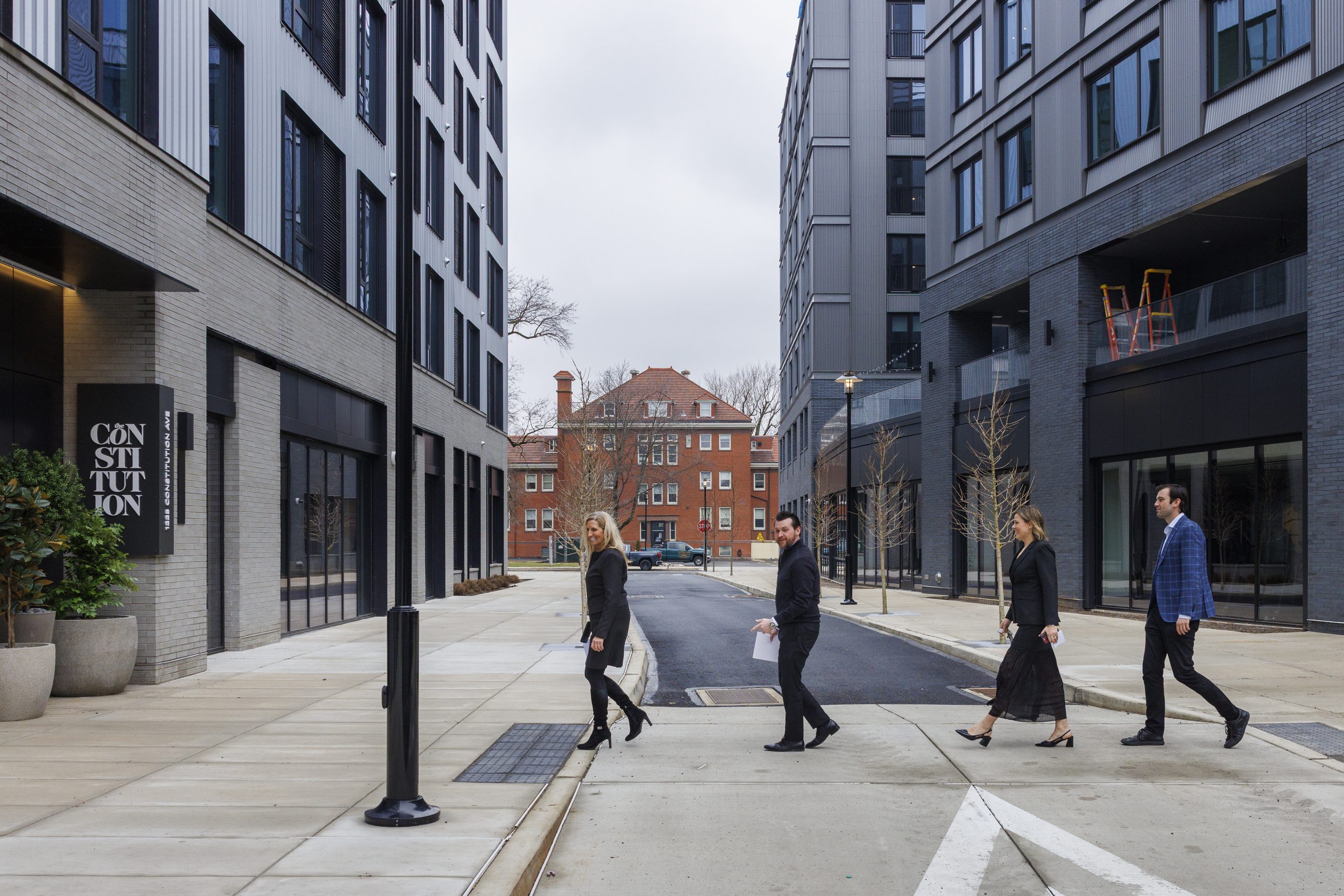
AVE Navy Yard executives walk between the Constitution and Normandy apartment buildings in March.Alejandro A. Alvarez / Staff Photographer
He enjoys taking walks around the Navy Yard, using the gym, and spending time in the building’s lounge and outdoor courtyard. The AVE staff is kind and communicative, he said, and he, too, enjoys a 10-minute walking commute to his office at the Urban Outfitters headquarters.
Krishnan signed an 18-month lease, he said, and pays about $3,000 a month for his one-bedroom, plus parking in the complex’s covered garage. He may upgrade to a larger unit next year, he said. His wife plans to move from California once their son graduates high school, and she’s bringing the couple’s 6-year-old goldendoodle, Simba.
Editor’s note: This story has been updated with additional information about leasing plans.
Republican pollsters and political groups are raising the alarm that their party faces a listless and demotivated base ahead of November’s midterm elections.
A raft of discouraging data from polling, door knocking, and focus groups is unsettling Republicans as their party heads into a midterm election season that would be challenging no matter what, given President Donald Trump’s low standing in polls and the fact that the party in control in Washington almost always loses seats.
The lack of enthusiasm is reaching deep into Republicans’ loyal base, spreading to the party’s most consistent voters — who have shown up to vote in all of the past four primaries and general elections, according to an analysis done by Americans for Prosperity Action, a conservative super PAC that was founded by billionaire Charles Koch. This new issue with the base adds to the party’s more enduring problem of turning out less-frequent voters who support Trump but often skip midterm elections.
About 1 in 5 reliable Republican base voters are at risk this November, according to Nathan Nascimento, executive director at AFP Action. Those voters in Iowa, Ohio, North Carolina, Montana, New Hampshire, and Michigan are either saying they may stay home or are weighing voting for Democrats, according to their data, which is based on polling and extensive efforts to engage targeted Republican voters by knocking on their doors. The voters are primarily worried about inflation and the economy.
“This is a big chunk,” Nascimento said. “This is a scary number.”
The group has found that reaching these voters at the door usually moves them toward Republican candidates — or at least away from Democratic ones and toward undecided, he said.
The 20% of Republican base voters the group sees this issue with does not take into account low-propensity conservative voters who tend to turn out in general election years to support Trump but skip other elections. Motivating those Trump voters is a separate issue Republicans face in November.
“We have a high-propensity base problem,” Nascimento said.
Washington Post and Ipsos polling shows that Democrats have a 10-percentage-point advantage over Republicans among voters who say they are absolutely certain to vote in November. If that number doesn’t narrow, it could lead to a decisive advantage for Democrats, even though overall they lead by just three percentage points over Republicans on a generic ballot.
Mitchell Brown, a Republican pollster at the firm Cygnal, said Democrats are as enthusiastic about voting as they were at the same time ahead of the 2018 midterm elections, when they swept back into power in the House. But Republicans are far less excited to vote at this point than they were then, posing an issue for the party.
“It’s not that the Democrats are outperforming a topline number that we’d expect, it’s that Republicans are underperforming,” Brown said.
He pinpointed men under 40 as the group that is most at risk among Republican voters, saying they have concerns about the economy and prices. This group proved pivotal to Trump’s 2024 electoral victory, which included a sweep of some of the same battleground states holding critical elections this year.
The decline in support among those voters may change closer to the elections, once more people tune in, Republican strategists stressed. And Trump’s unprecedented redistricting efforts have also sought to give the party a structural advantage that could mitigate GOP losses.
“Republicans are united, on offense, and armed with our largest war chest in party history because voters are energized and understand what’s at stake in November’s election,” said Natalie Baldassarre, a spokesperson for the Republican National Committee, in a statement.
This dynamic is playing out in the red state of Iowa, where Republicans face open races for governor and a Senate seat that polling shows are surprisingly competitive. A recent door-knocking session in the Des Moines suburb of Urbandale with AFP Action turned up voters critical of the war in Iran and high inflation, with a handful saying they planned to support Democrats in the fall.
In western Iowa, three-time Trump voter Lance Sulentic, a resident of Iowa’s rural Harrison County, described the past three presidential elections as “the worst three mistakes I’ve ever made in my life,” saying that the president has failed to fulfill his campaign promises. Higher gas prices have been costing him an extra $300 to $500 every month to ride his motorcycle, he said.
“We voted for Trump, and he did the opposite of what he said he was going to do,” said Sulentic, a 56-year-old retired insurance agent. “Gas prices were going to be two dollars, food was going to be cheaper, energy prices was going to be in half, we were going to get two rebate checks to the American people, and we weren’t going to have any new wars, and we were going to build a wall and deport 30 million illegal aliens, and he did none of it.”
He said he would either sit out this year’s election or vote for Democrats.
Republican lawmakers are worried about such comments as their party remains mired in internal disagreements in Washington that have hampered them from passing signature agenda items that could motivate core supporters.
“We need to do something to re-energize our base,” said Sen. Ron Johnson (R., Wis.). Johnson, who does not face reelection until 2028, has triumphed in tough races in his closely divided state.
Johnson said GOP base voters may think the lawmakers “haven’t been … trying hard enough.” The party has been unable to pass a law to require ID to vote and proof of citizenship to register to vote called the Save America Act, which Trump has lambasted them for. They also have done little to tackle cost-of-living issues since the bill extending tax cuts in 2025.
A spokesperson for Trump, Abigail Jackson, called the voting legislation a top priority but added that the administration “continues to deliver on the President’s affordability agenda by lowering drug prices, reshoring American jobs, lowering gas prices, and more.”
Other senators have pressed Trump to use his large platform and $400 million MAGA Inc. war chest to activate lower-propensity voters. Trump has had far more success motivating supporters when he is on the ballot.
Sen. Kevin Cramer (R., N.D.) said he told the president in the Oval Office last week that Trump is the key to turning out his voters.
“Well, they will [turn out] if you pass the Save America Act,” Trump retorted, according to Cramer.
The White House is hopeful the Republican Party’s planned midterm convention in September in Texas will help juice enthusiasm among the base as well.
Sen. Thom Tillis (R., N.C.), who declined to run for reelection in his purple state, said he believes the traditional Republican base will ultimately turn out in November. But he fears the party’s brand has been damaged among moderates by the economy and inflation, and that the Iran war is becoming an additional political drag. Low-propensity Trump voters need to turn out to close that gap, he said.
“The question is whether the coalition he has that’s unique to the president, if he can mobilize them to come out and vote for others,” Tillis said.
Eighteen months after leaving the White House, the 83-year-old former president moves within a narrowed circle of relatives, old friends, and longtime aides as he undergoes treatment for metastatic cancer.
The treatment appears to be working, according to five former aides and others close to Biden, many of whom spoke on the condition of anonymity to candidly discuss his health and private life. But the disease — and the toll of treating it — has left him visibly frail.
Those around Biden describe a post-presidency constrained by illness with his days increasingly organized around treatment, family, and efforts to shape his legacy.
Unlike some recent predecessors, Biden has maintained a limited public schedule, has yet to build a sprawling philanthropic or policy operation, and has struggled to raise money for a presidential library, leaving him with fewer avenues to influence how his presidency is remembered.
That frailty is likely to become harder to keep private this fall, when Biden begins promoting a memoir scheduled for publication on Nov. 17, two weeks after the midterm elections. The timing has unsettled some friends and former advisers, who worry not only about Biden’s well-being, but also about how much his visible health struggle could revive the bitter arguments of 2024 just as Democrats are trying to make the election a referendum on President Donald Trump.
Trump has repeatedly mocked Biden’s age and acuity and replaced his portrait along a White House colonnade with an image of an autopen, a visual taunt built on the unsupported allegation that aides used the device to exercise presidential authority for a debilitated commander in chief.
Those close to Biden bristle at the way his illness and physical decline have become part of his critics’ case against him and his party.
Hunter Biden gave voice to the family’s frustration last month after a critic attacked his father’s cancer diagnosis on social media.
“Listen man — I understand if you don’t like my Dad’s politics and you hate me because you believe everything Fox News has told you,” he wrote. “I’m fine with that, but my Dad has cancer. How is that an issue you want to attack. What sickness is in you that makes that fair game?”
The Biden health debate may soon be reignited. On Tuesday, a federal appeals court cleared the way for the Heritage Foundation, a conservative think tank, to obtain redacted transcripts and audio recordings that were among the evidence a special prosecutor used to portray Biden as an “elderly man with a poor memory.”
Questions about Biden’s age, stamina, and mental acuity shadowed much of his presidency and eventually overwhelmed his campaign for a second term.
The health concerns became an acute political crisis after Biden’s June 27, 2024, debate against Donald Trump. Speaking in a weak, hoarse voice, Biden repeatedly lost his train of thought, struggled to complete answers and at times appeared unable to press a forceful case against his opponent.
Biden’s performance intensified doubts among Democratic lawmakers, donors, and voters about both his ability to campaign and his capacity to serve through January 2029. Biden initially rejected calls to withdraw, attributing the performance to a cold, exhaustion, and a bad night. But after more than three weeks of mounting pressure, he ended his reelection bid on July 21.
Biden’s planned return to the spotlight presents an awkward political challenge for Democrats. Many remain personally fond of Biden, grateful for the accomplishments of his presidency, and sympathetic to a man battling a serious illness. But they are also trying to distance themselves from a 2024 campaign in which questions about his age, health, and decision to seek reelection damaged public trust and divided the party.
“President Biden has every right to tell his story. But Democratic candidates are already working their tails off to overcome the political damage he left behind,” said Sawyer Hackett, a Democratic strategist who worked on presidential campaigns for Barack Obama and Hillary Clinton. “The best thing Biden could do to help that effort is to get as far away from the spotlight as possible.”
In May 2025, four months after leaving the White House, Biden was diagnosed with an aggressive form of prostate cancer that had spread to his bones. He is undergoing treatment for the disease, which can be managed but is not considered curable.
In media interviews, former first lady Jill Biden has described her husband’s diagnosis as deeply unexpected, saying the family was shocked to learn that the cancer had already reached Stage 4 and metastasized to his bones. Since then she has offered a cautiously optimistic assessment of her husband’s health, saying his treatment is working and that he is maintaining a regimented schedule.
Since leaving office, Biden has addressed the issue intermittently, generally offering upbeat but limited public accounts of his condition. He has made a handful of appearances, at Democratic Party events in South Carolina and South Dakota, and at the dedication of Obama’s presidential library, where he beamed alongside several other former occupants of 1600 Pennsylvania Ave.
“Given all the health diagnoses, he was energetic, in good spirits,” former Democratic National Committee chair Jaime Harrison said of Biden at the South Carolina Democratic Party convention in May. Like many Democrats, Harrison knew the seriousness of Biden’s prognosis and wondered whether he would seem like his old self. Instead, the former president — also the convention’s keynote speaker — moved through a full slate of events, many of them organized to honor him.
“He was fired up,” Harrison said. “You sure as hell couldn’t tell he was an 83-year-old man battling cancer.”
Biden’s post-presidential office declined to answer questions about his day-to-day activities, medical treatment, or ongoing prognosis. Through a spokesperson, the former president declined an interview. His office disclosed in fall 2025 that he was receiving radiation and hormone therapy and that he had undergone Mohs surgery to remove cancerous skin cells. When he announced his forthcoming memoir earlier this month, Biden offered another brief update, saying that he was undergoing treatment and that it was going “really well.”
The fallout from Biden’s 2024 campaign also sharpened scrutiny of how his aides — and even his successor, Vice President Kamala Harris — had managed his public exposure. Subsequent reporting described a presidency increasingly structured around shorter meetings, tightly controlled appearances, and greater reliance on senior advisers to serve as intermediaries.
The public, jarring image of his shaky debate presentation made some voters feel that they had been misled — not only by the White House, but by a broader Democratic establishment that had defended his reelection bid and discouraged a competitive primary.
Republicans have seized on those lingering questions, portraying Biden’s decline as evidence not only of the former president’s failings but of a coordinated effort by Democratic leaders they accuse of concealing his condition.
In speeches, posts, anecdotes, and asides, Trump has repeatedly mentioned Biden’s health — often using the nickname “Sleepy Joe,” according to a Washington Post analysis.
Last month, he referenced it nearly every other day, compared with about 1 in 5 days during the previous June, according to the Post’s review of Trump’s speeches, interviews, social media posts, and other public remarks.
Biden’s aides and other Democrats reject the idea that a book tour by a former president who has not shaped policy in more than a year — and is now undergoing cancer treatment from his Delaware home — will meaningfully influence the midterm elections.
“No one is going to be thinking about Joe Biden in November,” said one former aide, who requested anonymity to speak candidly about a former boss. “They’re going to be thinking about filling up their tank and putting food on their table, and Joe Biden has nothing to do with that.”
Harrison, the former DNC chair, argued that voters have more immediate questions about the health of the man now occupying the Oval Office, who turned 80 in June.
“It was amplified, it was even caricaturized when Biden was president, but Trump falls asleep during meetings. He is literally sleeping,” Harrison said. “But yet it’s like a blip. The man has more blemishes and marks on his skin — that says something is going on.”
The White House has consistently pushed back on such criticism, insisting Trump remains in strong health and dismissing questions about his physical condition.
Trump has made three trips to Walter Reed National Military Medical Center since April 2025 as persistent bruising on his hands and swelling in his lower legs have drawn scrutiny. His most recent examination involved 22 medical specialists — an unusually large team — though his physician pronounced him in “excellent health,” attributing the swelling to chronic venous insufficiency and the bruising to frequent handshaking combined with aspirin use.
Health inevitably shapes what presidents can do after leaving office.
Before age and illness restricted his public life, Jimmy Carter devoted decades to election monitoring, diplomacy, public health, and Habitat for Humanity — work that transformed his reputation and earned him the Nobel Peace Prize.
Bill Clinton, who will turn 80 next month, remained highly visible, building a global foundation, writing books, delivering paid speeches, and campaigning for Democrats, including his wife. George W. Bush largely stepped away from partisan politics, focusing on veterans, the Bush Institute, and painting. Obama has been more selective, emerging for major political moments while devoting much of his time to books, media projects, his foundation, and, most recently, the Obama Presidential Center.
Biden’s allies are raising money for a presidential library in Delaware, imagined as a center for public service and civic life. But his library effort has so far attracted only a fraction of the money raised for the legacy projects of recent presidents: His foundation expected to collect about $11 million by the end of 2027, compared with the hundreds of millions raised by Bush and Obama in the first years after they left office.
There was one especially pleasant weekend back in June, as summer was officially arriving and Philly was in the middle of hosting three Group Stage matches for the World Cup. It was breezy with sunshine and low humidity and temperatures in the mid-80s; nothing like two weekends later as America turned 250 and temperatures hit 101 degrees or higher for three days in a row, the first time that happened in over 150 years of record keeping.
Between covering some news that weekend, I walked around Center City just soaking up the street scene. It wasn’t just the wonderful weather, but an international vibe that was welcoming and friendly. I watched visitors speaking multiple languages rolling suitcases in and out of hotels and ride share cars, and saw sidewalk cafes overflowing with different colored jerseys and scarves.
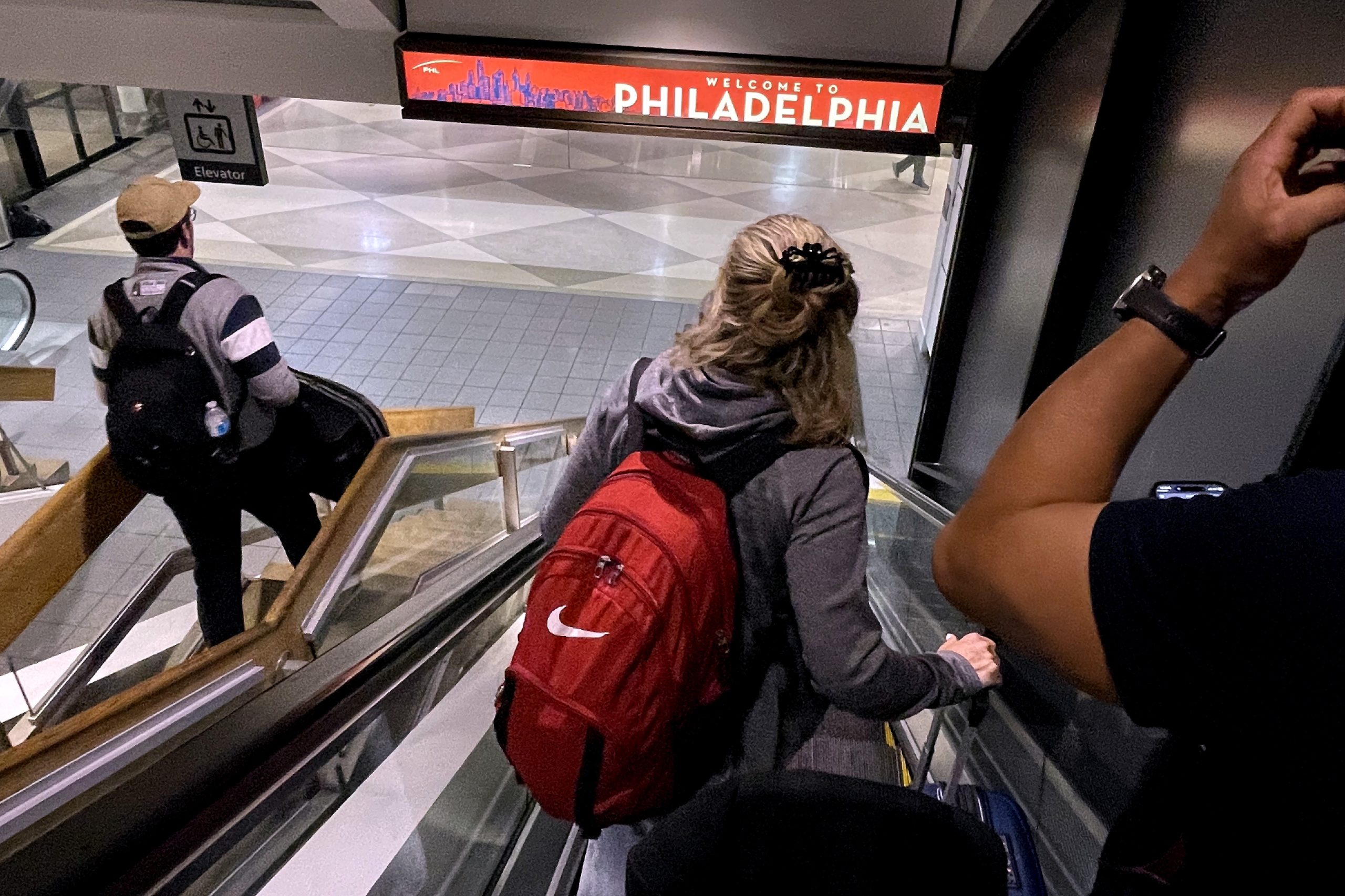
Philadephia International Airport arrivals June 21, 2026.Tom Gralish / Staff Photographer
It reminded me of the energy I feel almost every time I walk around the city, going back to my first night here and the weeks spent in my early days at the newspaper with unhoused men.
We’ve long known we have one of the most walkable downtowns in the country, but USA Today told everyone else again this summer, naming Philadelphia number one — for the fourth year in a row. Center City is compact and easy to explore on foot, with many stores, restaurants, museums, attractions, and parks all within a short walk.
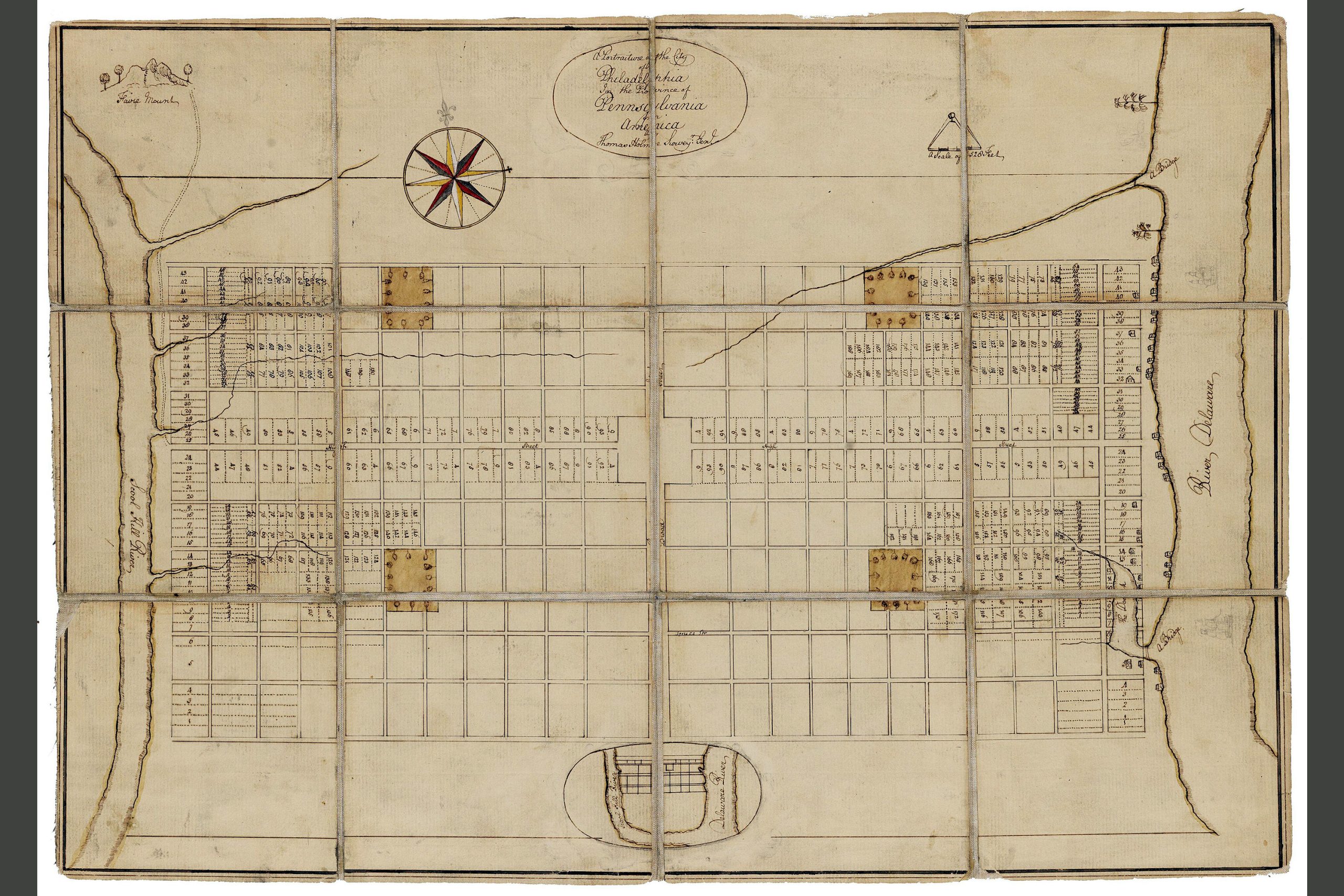
“A Portraiture of the City of Philadelphia, In the province of Pennsylvania in America” by Thomas Holme. In 1682, William Penn appointed Holme surveyor-general of Pennsylvania and charged him with the task of laying out the “greene country towne” that Penn envisioned. This map, printed in London, was used for both reference and promotional purposes to show the unique layout of Penn’s emerging city.Historical Society of Pennsylvania
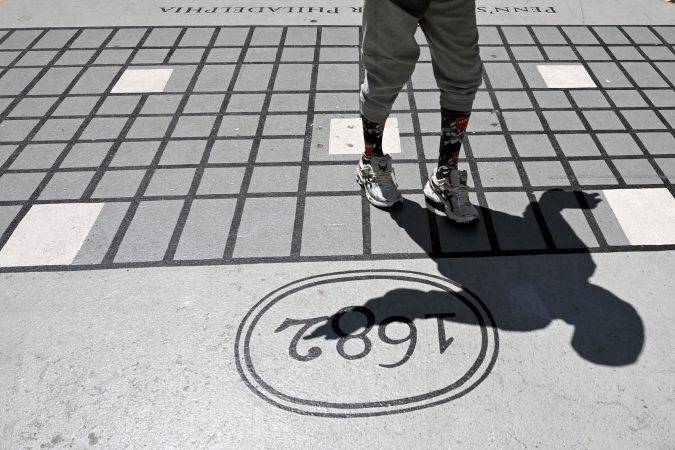
Credit William Penn’s 1682 street plan that created small rectangular blocks with straight, predictable streets. I was thinking about that as I looked down at the grid on the ground in the courtyard of City Hall, when Lyn-el “The Torch” Wright paused right in front of me: “take a picture of my sneaks.” That’s his shadow above.
I did, and asked if they were special, wondering if they had something to do with Adidas, the official World Cup sponsor and match ball provider. No, not really, he said, but then educated me on what the kids today were wearing: Asics and Saucony. And Salomon.
So, being a history nerd, I had to enlighten him on the design he was standing on. Titled “Compass Rose,” it was commissioned by Edmund Bacon in 1994 as a gift to the city to mark Penn’s 350th birthday. It was painted by David Salama and Pat Sprott and updated by Mural Arts Philadelphia in 2004, 2015 and 2022. It marks the exact center of the middle of Penn’s five squares (Franklin, Logan, Rittenhouse, and Washington being the others).
I didn’t actually say all of that (unlike similar “TED Talks” my grandson is subjected to), but our conversation is the other thing I like most about walking around Philadelphia. Meeting and talking to people.
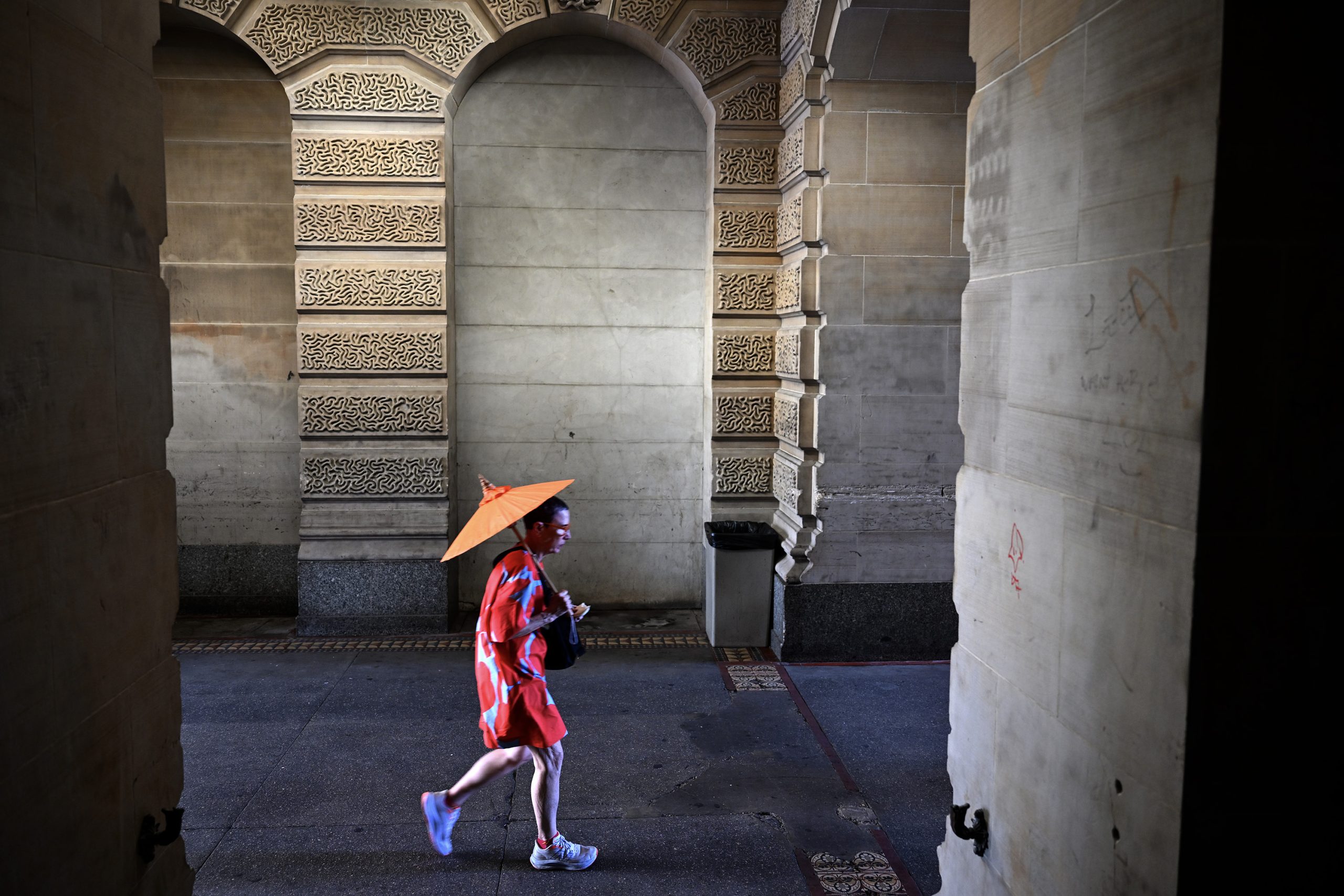
Passing through the south portal of City Hall on Monday, July 20, 2026. She said the umbrella was a recent purchase. “Anything to keep cool in the heat.”Tom Gralish / Staff Photographer
The day was a remarkable one in Center City, similar to the summer solstice back in June. And it was coming off the week of heavy rains, microbursts, and then, the Canadian and Great Lakes wildfire smoke that moved into the region.
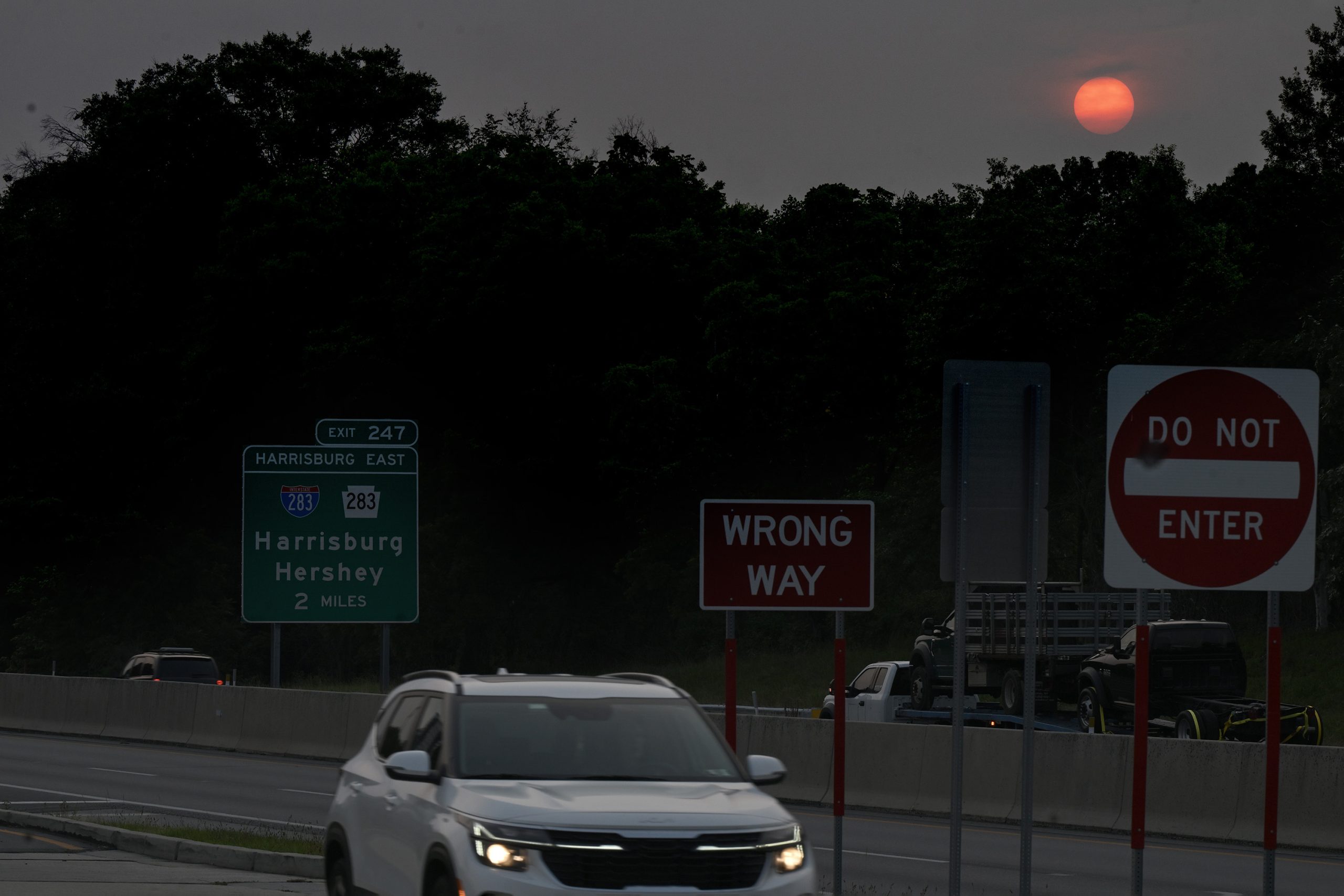
The sun sets in a hazy sky over the Pennsylvania Turnpike Wednesday, July 15, 2026.Tom Gralish / Staff Photographer
When the skies finally cleared last Sunday, I joined hundreds of outdoor enthusiasts taking advantage the improved air quality and photographed along the Schuylkill River Trail.
I scouted angles to get as many people — and a variety of runners and walkers — in the same frame. But, perhaps because I covered a memorial for Barbara Friedes, a 30-year-old CHOP doctor who was killed on her bike by a drunk driver in July 2024, my attention drifted toward the bicycles.
When I saw a patch of backlit trees I knew if I panned with my camera and a slow shutter speed the highlights would turn into nice blurs — while the biker would be (somewhat) sharp and in focus.
One of the advantages of digital photography is that you can get immediate feedback and adjust your camera settings for the effect you desire. I wanted to get a colorfully outfitted biker, and by the time the “right” one passed in from of me, I was set (1/20th second at f/22, with an ISO of 640 on my Nikon Z8 with a 24-70mm lens).
Finally, here’s one more “nice day” photo I made after talking with “The Torch.”
I spent a good part of the winter and early spring of 2024 along an eight block stretch of Market East while the city was dreaming and debating its potential driven by later-scraped plan by the Sixers to build a $1.55 billion downtown arena.
It was a tattered corridor, especially the south side of the 1000 block that was mostly boarded up storefronts. The city started trying to freshen it up before our summer of celebrations.
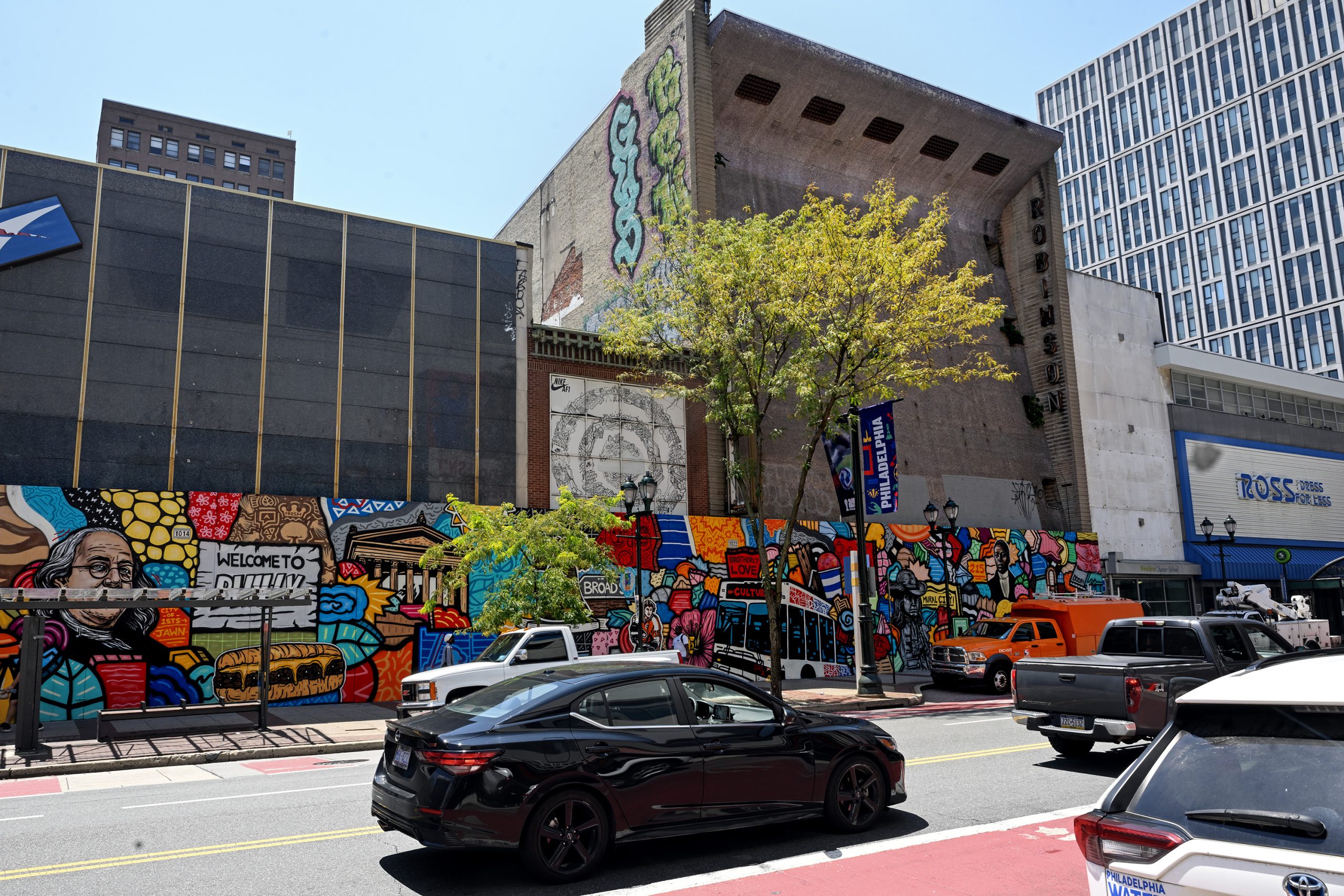
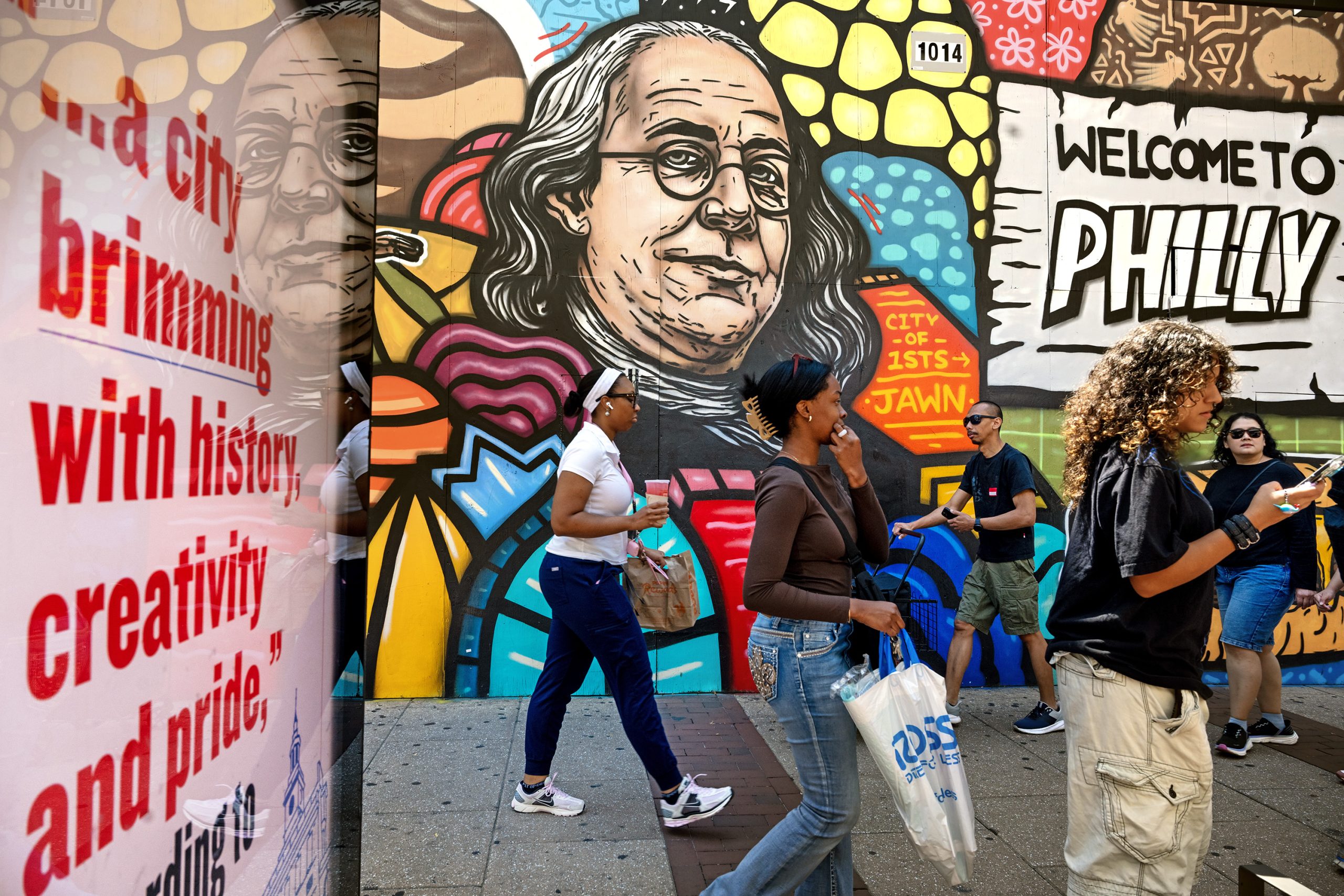
Walking there on Monday I admired the 150-foot mural “Welcome to Philly” artist Alloyius McIlwaine was commissioned to paint there before the big summer. I didn’t want to merely record his month-old work, but as I stepped into a bus shelter to get out of the flow of pedestrian traffic, I was immediately stuck by Ben’s reflection in the shelter’s glass — and the words of an unrelated advertisement.
I didn’t want a photo that called too much attention to a single fellow walker, so I waited patiently for that magic moment when my frame was filled with a half-dozen people.
Since 1998 a black-and-white photo has appeared every Monday in staff photographer Tom Gralish’s “Scene Through the Lens” photo column in the print editions of The Inquirer’s local news section. Here are the most recent, in color:
LeBron James met Donovan McNabb, ordered a cheesesteak in South Philly, and stayed at a hotel just a few blocks from City Hall when he visited Philadelphia for the first time. But James — then a high school senior — had no interest in trekking to the Liberty Bell.
“LeBron was giving me a lot of flak about it,” said Jeremy Treatman, who organized the showcase at the Palestra in December 2002 that brought James to Philly. “I said, ‘I cannot in good faith let you come to Philadelphia and not go to Independence Hall and the Liberty Bell.’ I remember him saying, ‘I don’t want to see no damn bell.’”
James returned to Philadelphia on Friday as an all-time great, signing a two-year contract with the Sixers that should cap his NBA career in the city he toured as a teenager. He arrived here in 2002 as a 17-year-old who just wanted to play basketball six months before turning pro.
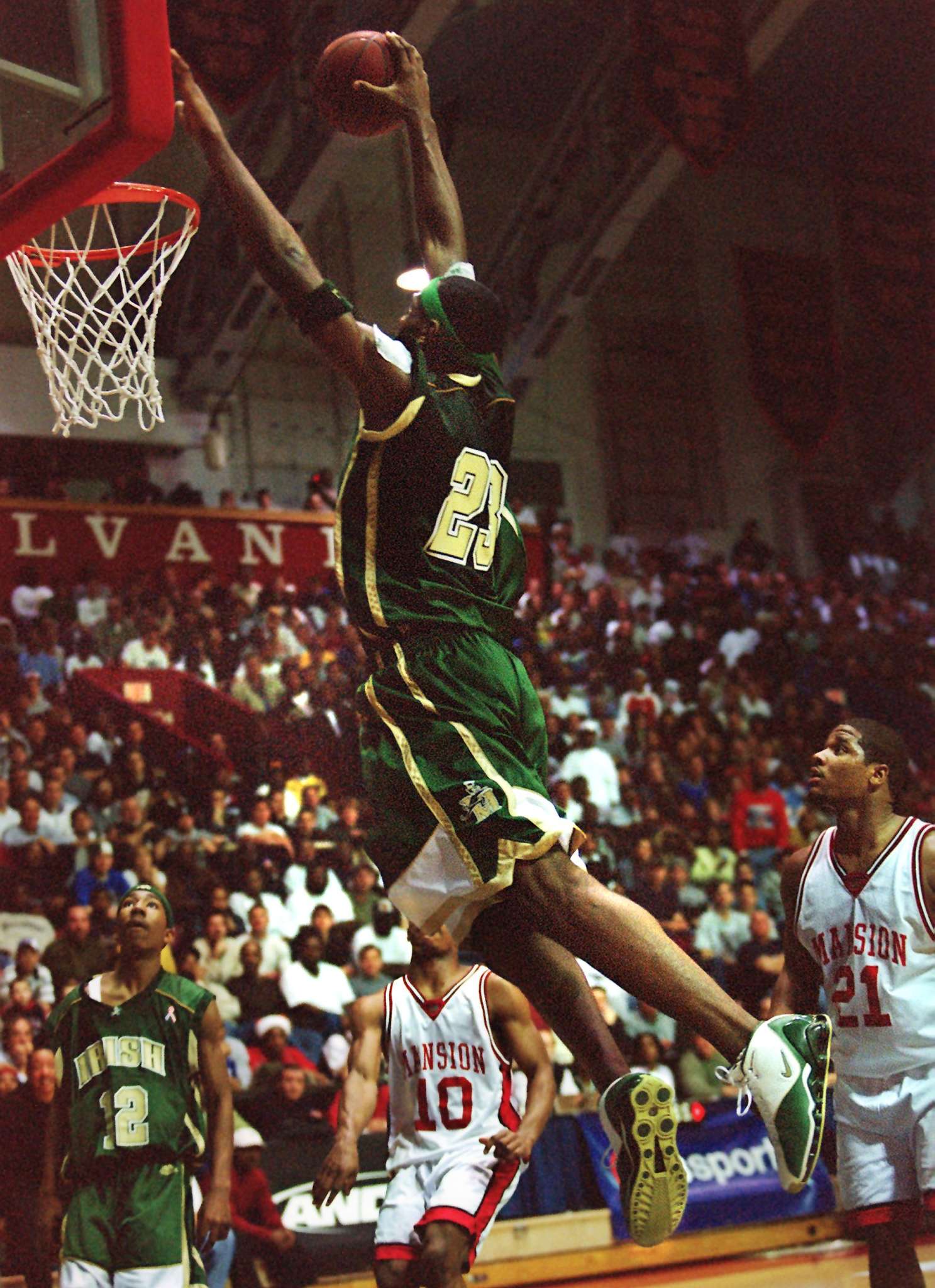
James was such a draw — Sports Illustrated labeled him “The Chosen One” earlier that year — that Treatman sold out the Palestra without advertising the game between James’ St. Vincent-St. Mary High of Akron, Ohio, and Philly’s Strawberry Mansion.
James was an attraction like the Liberty Bell.
“I had an office at 1420 Walnut St. and people were just coming off the street and coming up the elevator and buying tickets left and right,” said Treatman, who started organizing high school basketball games three years earlier. “It was great. Once or twice or three times in my lifetime, I could imagine a moment like that.”
Treatman heard about James a year earlier and went to Akron to see him play. Treatman had been an assistant at Lower Merion when Kobe Bryant was a high schooler. He called Gregg Downer, the Lower Merion coach, and said he was watching another Bryant.
“I said, ‘I think I just saw someone as good if not better than Kobe, and I can’t believe what I’m saying,’” Treatman said.
He contacted St. Vincent-St. Mary with a proposal to host a series of games the next season. Treatman sent a fax to James’ coach with the plan: Madison Square Garden, Ohio State, University of Dayton, the Palestra, and the University of North Carolina.
“He called the next day and said, ‘You can get us to play at the Palestra?’ I said, ‘Absolutely,’” Treatman said. “He called back three hours later and said, ‘I’ve always wanted to play at the Palestra. We’re in.’ I was like, ‘Holy s—. This is really happening.’ They all happened, except for Madison Square Garden. I chickened out on that one. They wanted $90,000, and I certainly didn’t have that money back then. But I should’ve borrowed it. I should’ve.”
Chester, St. Joseph’s Prep, and Cardinal Dougherty would have given James’ squad a better game. But none of those teams had Maureece Rice, who was nearing Wilt Chamberlain’s Philadelphia high school scoring record. Treatman knew that Rice, who was nicknamed “The Score Lord,” playing James would be an event.
The team from the Public League was happy to get picked to play James.
“You have to understand something: We’re from the Strawberry Mansion section of North Philadelphia,” said Marc Starling, then a Mansion assistant. “That’s big time to be able to play someone so great in your city. We felt very honored. Now, I’m so glad he picked the Sixers. I’m an older guy, and I haven’t been this excited about a player coming to Philadelphia since the Sixers got Dr. J. You believe that?”
The event included other games, as Kyle Lowry’s Dougherty squad and a Penn Charter team featuring future NFL quarterback Matt Ryan served as opening acts for James vs. Rice.
“This place held 8,117, and somehow 9,000 people got in,” Treatman said. “I know I was at fault for letting at least 100 extra media people come in. I remember Howard Eskin was late, and I gave him a ticket. World Wide Wes [basketball power broker William Wesley] and Allen Iverson came late, and we got them in. There were no seats. There was this crazy aura to see this guy who people were hearing could be the greatest player of all time. So everyone wanted to see him.”
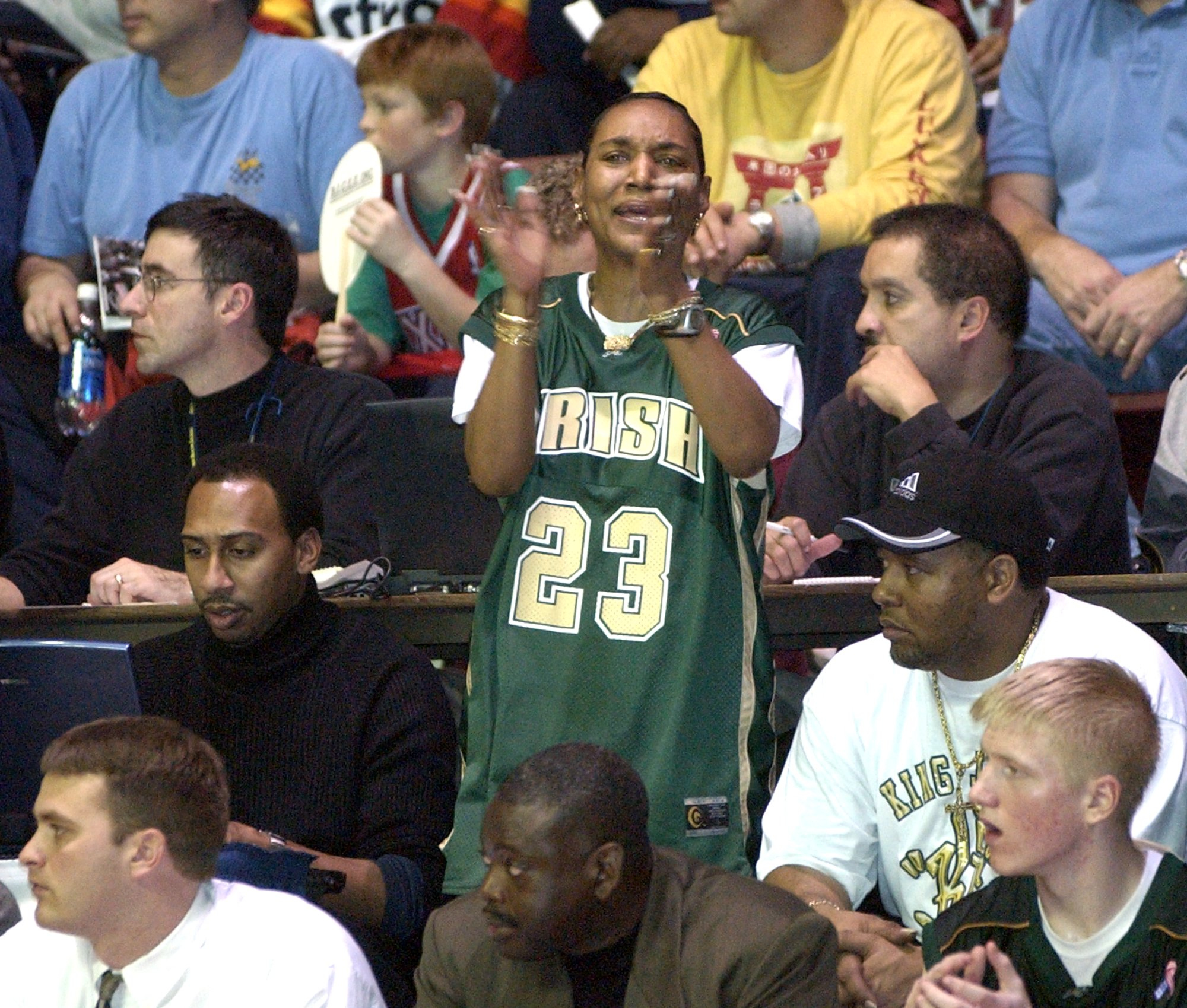
LeBron James’ mother, Gloria, watches the 2002 game between St. Vincent-St. Mary and Strawberry Mansion at the Palestra.Peter Tobia / Staff Photographer
The game was a 85-47 blowout, as Strawberry Mansion could not keep pace with James’ squad, which was the No. 1 team in the country with three Division I players.
“The most important thing I remember about that game was just how humble they were and their sportsmanship,” Starling said. “They were a national team. We were a local team. The score showed the difference, but their attitude was great. They had a lot of respect for Maureece. It’s like it was yesterday. It’s a blessing to see LeBron’s growth from there to now.”
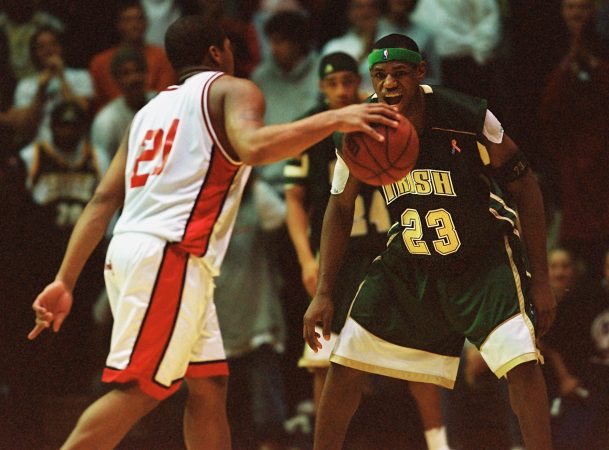
The many fans were restless as James’ squad pulled away. Treatman remembered James’ mother starting to push back against the Philly fans. Finally, the crowd got what it wanted. With seven minutes left, James pointed to Rice and told everyone else to get out of the way.
“They played one-on-one for about a four-minute stretch in a team basketball game,” Treatman said. “It was the most brilliant thing I’ve ever seen. LeBron was brilliant. He said, ‘This is what the fans came to see. The game’s out of hand. Let’s have some fun here.’ That was pretty remarkable. I remember saying, ‘LeBron is so smart. Like a marketing genius.’”
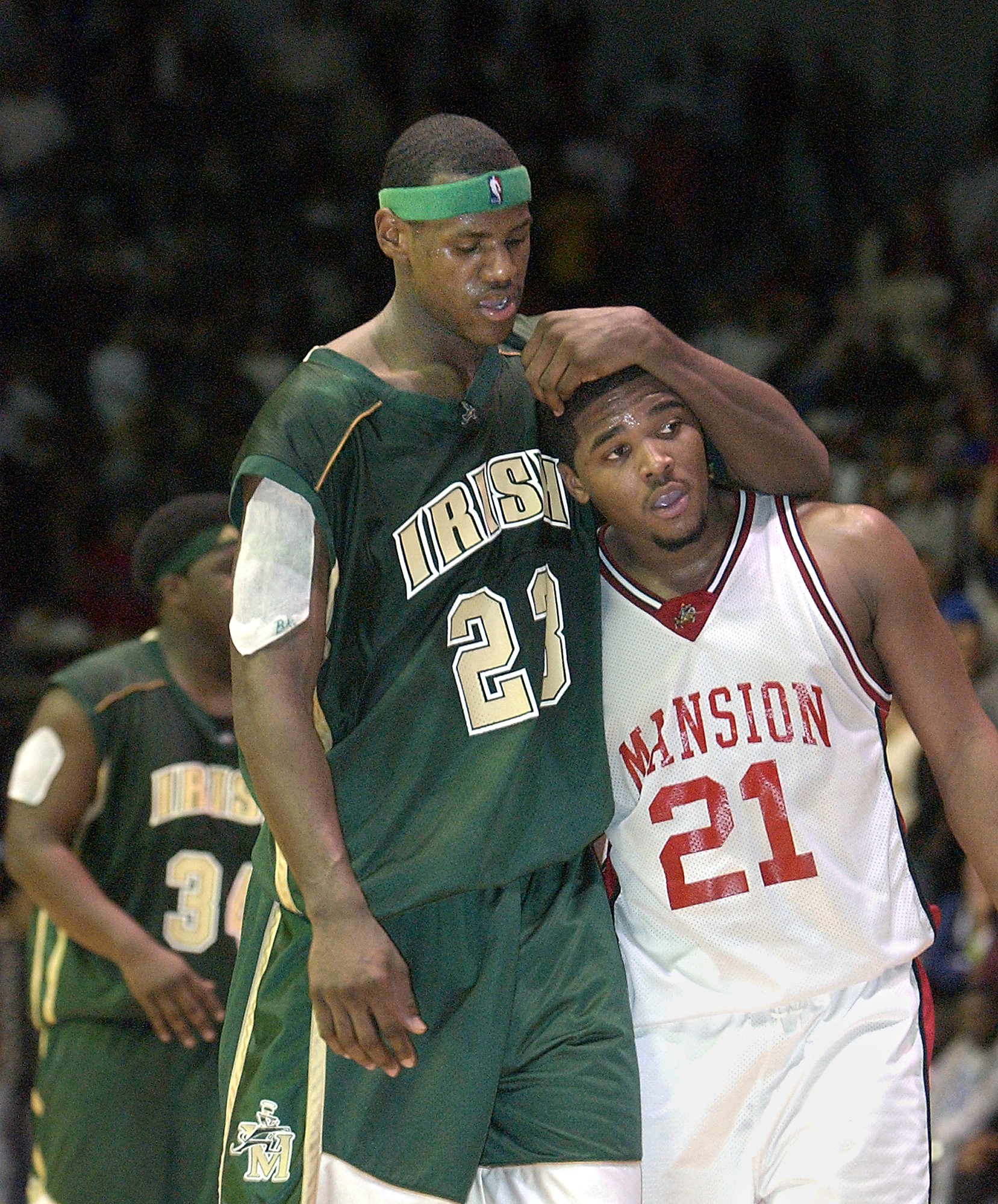
LeBron James hugs Maureece Rice in the final minutes of their game at the Palestra in 2002. Peter Tobia
James knocked down a three in front of Rice. And then Rice brought the ball down the court as the crowd stood. He hit a crossover dribble as James slipped on the court as if he was on skates. The crowd roared, and some fans came onto the court.
“I had him set up, crossed one way, and he went the other way,” Rice said in 2011 before James played at the Palestra during the NBA lockout. “Next thing you know, he fell, and the crowd just went bananas. LeBron was the No. 1 player, and the things he does now, it’s something no one will forget.”
Forget that Rice’s ensuing three-pointer didn’t even touch the rim and that James’ squad won by 38. The crossover — and the reaction of the crowd — became an iconic moment in Philly hoops.
“It’s sort of like when Allen Iverson crossed over [Michael] Jordan as a rookie,” Starling said. “It was showing the world that Maureece Rice was very good, too. He was an exceptional basketball player. It was like being a father and seeing your son do something so great and show the world what you already knew he could do. That’s how I felt when I saw him make his move. I had been coaching him since the seventh grade and that was one of the proudest moments. He didn’t hit the shot, but he showed the world what he was about.”
The game aired live on cable and James was interviewed afterward by Gregg Murphy, now a Phillies radio broadcaster.
“The atmosphere was really great,” James told him. “All of these people came to watch these two teams play. It was great for the community and for our school, for Akron, Ohio. I like stuff like this. It was pretty fun.”
NBA great LeBron James dunking at the Palestra as a high school standout from Akron, Ohio, in 2002.Jennifer Midberry / Staff Photographer
James asked his coach to tell Treatman they weren’t going to the Liberty Bell. But the coach said he had to go. He wanted the trip to be more than just basketball. They met with McNabb and Andy Reid at the Eagles’ practice facility, ate cheesesteaks at Pat’s, and then went to Independence Hall.
“The guide at Independence Hall started talking about the history of slaves and the history of Black people in Philadelphia,” Treatman said. “All of a sudden, LeBron and his teammates started asking question after question after question. They really enjoyed the education. That was my whole point. You’re coming to Philadelphia, and this is the birthplace of America. You have to learn what happened here.”
Treatman dropped the team off at the airport the day after the game and said farewell to the kid who would become a great.
“He came up and shook my hand and said, ‘Thanks for taking us to the Liberty Bell,’” Treatman said. “‘That was the most meaningful moment of the weekend for me.’ That was 24 years ago. It’s kind of incredible and surreal that it’s happening now. I hope it’s a great final chapter and he becomes the first guy to win a championship with four different teams.”
A few weeks ago, most people would’ve laughed at those words. But 3½ weeks after James, 41, informed the Lakers that he’d be playing his 24th NBA season elsewhere, it’s a reality. James announced Friday that he’s taking his talents to South Broad, and he’ll sign a two-year deal with the Sixers as he tries to bring an NBA title to Philly.
So how did this happen? How did the Sixers go from an afterthought to the home of one of the league’s all-time greats? Here’s a look at the twists and turns that led LeBron to Philly for the final chapter of his Hall of Fame career:
June 30: LeBron tells the Lakers he’s not coming back
James informed the Lakers he’s leaving Los Angeles and will play next season elsewhere.
BREAKING: LeBron James will continue his NBA career for the 2026-27 season and has informed the Los Angeles Lakers that the franchise can move on without him because he will play elsewhere, Klutch Sports CEO Rich Paul tells ESPN. pic.twitter.com/zzVk6xUVF1
July 1: The Jaylen Brown trade and the tweet heard ’round the world
A day later, Rich Paul, James’ agent and longtime friend, told Game Over podcast cohost Max Kellerman that between 12 and 14 teams have reached out about his client and says that James’ free agency won’t be about money.
Meanwhile, ESPN’s Shams Charania reported that James was willing to play for the veteran minimum, making him a viable option for the cash-strapped Sixers.
But the biggest news of the day came in the evening, when it broke that the Sixers were acquiring Jaylen Brown from the Celtics for Paul George and draft picks. The move turned the Sixers from an afterthought to a legit option to land James.
A couple hours later, Steve Gansey, the brother of Sixers president of basketball operations Mike Gansey, posted a photo that featured James and Mike as high schoolers.
Charania and fellow ESPN insider Brian Windhorst signaled that the Sixers were seriously in the mix for James for the first time and outlined the team’s potential pitch, led by Tyrese Maxey.
"I'm told the Sixers are also trying to make a pitch to LeBron James… Include the Sixers & maybe 1 or 2 other teams in due time in that mix. The Sixers get Anfernee Simons & they’re obviously trying to continue to add to this team.”
Paul outlined James’ possible landing spots on Game Over and included the Sixers among them, launching a million conspiracy theories and causing Sixers fans to ask, “Why was Maxey the only player with a star next to his name?” and “Why were the Sixers the first team added to the board?” The four other teams listed among the top contenders were the Cleveland Cavaliers, Miami Heat, Minnesota Timberwolves, and Denver Nuggets.
Notice how the Sixers are the FIRST team they wrote down in the top left corner connected to LeBron…..👀 https://t.co/jo6INCG6S0
James was spotted in Cleveland over Fourth of July weekend with some former high school teammates, including with Cavaliers assistant general manager (and longtime friend) Brandon Weems, whom Paul previously said was “basically LeBron’s brother.”
ESPN reported that the Sixers are one of the top-three teams in the running to land James, along with the Cavaliers and Heat.
July 8: Bob Myers pitches Sixers on Rich Paul’s podcast
Bob Myers, the president of sports for Harris Blitzer Sports & Entertainment and the man who led the search to replace Daryl Morey (and hire Mike Gansey), was a guest on the Game Over podcast and pitches the Sixers directly to Paul.
“If he was here, I’d say I honestly believe [Philly] is your best chance to win,” Myers said. “… What I would just say is, if it’s about winning, let’s talk about this team. Because you can win here in Philly.”
Windhorst reiterated how impactful Maxey could be in the Sixers’ recruitment of James but said on First Take that other teams “are skeptical” they can compete with Cleveland in the recruiting process.
Meanwhile, two Philly sports stars — including one of the newest Sixers in Jaylen Brown — made public pitches to James. First was Saquon Barkley, who said he’d tell James that he’ll be “remembered forever” if he brings a championship to Philly.
Eagles running back Saquon Barkley offered his pitch to LeBron James on Thursday at his youth football camp in Haddonfield: "You'd be remembered forever."
— Philadelphia Inquirer Sports (@phillysport) July 10, 2026
Later, Brown used an appearance with streamer iShowSpeed during the France-Morocco World Cup quarterfinal to have Speed, an Ohio native whose real name is Darren Watkins Jr., to recruit James to the Sixers.
July 10: Cleveland starts to fade; Rich Paul drops another podcast
In another episode of Game Over, Paul was asked about Maxey being the main draw in Philly. His response? “First of all, none of these lists [of teams] are accurate, what you’re seeing out there. No one knows what the list looks like.”
While that wasn’t the question — though it certainly was an interesting start to his answer — Paul then outlined some of why Maxey is at the top of the list of reasons his client would want to play for the Sixers. But he also talked about Joel Embiid, the Brown trade, and more.
Max Kellerman & Rich Paul dive into more of the fit & draw of LeBron James to this Philadelphia 76ers team…
Main points are the biggest draw being Tyrese Maxey, Joel Embiid being the best player alive when healthy & the Jaylen Brown addition…
Later, while attempting to temper Cavaliers fans’ expectations during a radio hit in Cleveland, Windhorst said he “had somebody on the phone with me today that I consider a good source who was swearing it’s a done deal in another city [outside of Cleveland] a couple hours ago.”
And nearly two weeks after James first let it be known that he was entering free agency one last time, Paul was in Las Vegas for the NBA Summer League and joined ESPN to discuss his client’s free agency. In addition to saying there’s no timeline for a decision — “I just tell him take your time, [and] whenever you’re ready, just let me know,” he said — Paul added that his client and longtime friend isn’t “chasing a ring” and is “not worried about nobody’s opinions.”
While their name had been linked to James for weeks, Gansey confirmed the Sixers’ interest. He told The Inquirer that “we’d love to have [James] in Philly. I think he’d really, really help us and add to our group. But he’s making a big decision here. It’s wild [that], at his age, he’s playing at such a high level.
“I have all the respect in the world for him, and he’s smart as heck. He’s going to figure it out and talk to his family, and we’ll be waiting. Whatever he decides, I know he’s going to make the right decision.”
July 15: Sixers players enter the chat
ESPN reported that the Sixers’ three biggest stars had been in touch with James, with Maxey leading the team’s pitch to the superstar.
“As LeBron James’ free agency decision extends into its second week, the Philadelphia 76ers have kept up their pursuit of the four-time NBA champion through three of their players, league sources told ESPN,” Dave McMenamin wrote. “Tyrese Maxey, Joel Embiid and Jaylen Brown have all been in communication with James. … Sources told ESPN’s Shams Charania on Tuesday the Sixers remain one of the top potential destinations for James, along with the Cavaliers and the Miami Heat.”
July 16: Appearances at Fanatics fest
James made two appearances at Fanatics Fest in New York and shared his first public comments since his free agency began. While James didn’t say much at either event — first on a live recording of Mind the Game podcast, and then on CNBC’s Boardroom — he did hint that a decision could be coming soon, saying that he “won’t hold you guys up too much longer.” He also hinted that his 24th NBA season may not be his last.
July 17: LeBron wants to ‘trust the process’
James continued appearing at Fanatics Fest, and during one of them — a live recording of The Shop talk show — the future Hall of Famer sent the crowd into a frenzy when he said he wants to play for a team that “trusts the process.”
While “The Process” was both a rebuilding period for the Sixers and Joel Embiid’s nickname, James said he has been using the phrase for his entire career and that it was not a reference to the Sixers or their former motto.
LeBron James said he wants to go to a franchise that “trusts the process.”👀
The crowd absolutely lit up and LeBron responded that he’s been saying “trust the process” since he was drafted in 2003. 😂
After James was spotted meeting Pennsylvania Gov. Josh Shapiro and Sixers managing partner Josh Harris while in New York for Fanatics Fest, it didn’t appear his top three teams had changed. According to Charania, the pitches were all in, and “the choice is LeBron James’ right now.” The Sixers, Cavaliers, and Heat remained the possible landing spots.
The next morning, Paul dropped another podcast and confirmed that the decision was in James’ hands and could come at any time — “It could be 48 seconds [from now]. It could be 48 minutes” — and there was nothing teams could do at that point to sway King James.
July 22: The Heat drop the ball
A member of the Miami Heat’s social media staff posted a link Tuesday night for a July 27 livestream titled “LeBron James Introductory Press Conference.” The post was later deleted and a Heat spokesperson told ESPN that the team was preparing for the possibility of James signing in Miami and accidentally posted the link to the team’s YouTube page. At this point, Miami was also the favorite to land James. Needless to say, the errant post sent the internet into a frenzy.
I thought I was done when the season ended. I wasn't ready to announce it, and I knew I needed some time to really decide, but I was pretty sure I played my last game. I was honest at that last press conference when I said I needed to look at myself and deicide if I still love
In a series of posts on X, James confirmed that he is headed to Philly. According to ESPN, he agreed to a two-year contract with the Sixers on Friday in one of the more improbable roster additions in Sixers history.
“I believe I can help make the Philadelphia 76ers a championship team and I am so excited to energize a new fan base and start this incredible journey one last time,” James wrote on X while confirming the news.
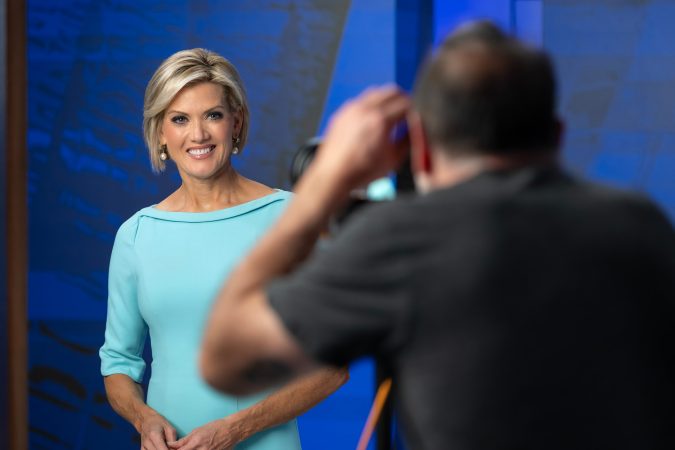
Tynan’s last day with the station will be Monday, Aug. 31.
At the end of the 6 p.m. Thursday newscast, Tynan publicly confirmed her plans.
“After more than 30 years at Action News, I will be retiring in a few weeks, and honestly, I’m thrilled about it,” Tynan, 57, said.
“This has been in the works for a while. I’ve been counting down here at the station. Both my children have graduated from high school. My daughter is going to college in less than a month, and she’ll be running cross country and track. And my husband and I, we plan to attend every single one of her meets. So it’s the right time for me. It’s the right time for my family, and I’m so very thankful,” Tynan said.
Responding to her announcement, anchor Brian Taff told Tynan: “You are a treasure, not just in this newsroom, of course, but among everybody out there watching who loves tuning in every night and feeling the comfort of having Cecily Tynan tell them what’s coming up.”
In a written statement, Tynan said she was “honored” to have been a key part of the Action News team, where she began as the station’s first-ever weekend meteorologist before becoming its first female chief meteorologist in 2009, replacing the retiring Dave Roberts.
“I’m proud of the work we’ve done and thankful to 6abc viewers for trusting me with their weather forecasts,” Tynan said, adding she plans to spend her winters “in Florida water skiing, traveling and having lots of quality time” with her family.
Tynan is a mainstay in Philly’s closely watched TV news ecosystem, spending much of her career alongside famed anchor Jim Gardner on the 11 p.m. edition of Action News before his retirement in 2022.
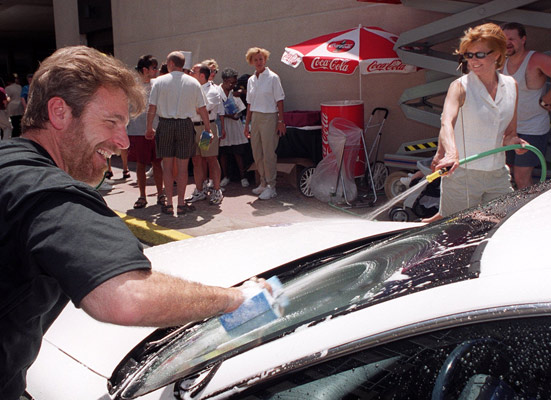
Cecily Tynan cleans a cab with former WIP host Howard Eskin during a fundraiser at the Wyndham Franklin Plaza Hotel in 1999.G.W. MILLER III / Philadelphia Daily News
She began at the station in 1995 as a weekend weather anchor and reporter, parlaying a two-year contract into a multidecade career that also included the 5 p.m. and 6 p.m. newscasts and a prime spot on the station’s Thanksgiving Day parade coverage.
“From the moment she first walked off the elevator and joined Action News, Cecily has been a trusted voice for viewers, a leader in our newsroom, and one of the most talented broadcasters in Philadelphia,” John W. Morris, 6abc’s general manager, said in a statement. “Whether guiding us through storms or being part of our holiday traditions, Cecily has been a part of our lives for a long time.”
On Oct. 9 last year, Tynan celebrated her 30th anniversary in a social media post, recalling that she had originally planned to stay with the ABC network’s Philadelphia station for three years.
“That’s what happens when you find your ‘home,’ where your co-workers evolve into some of your closest friends,” Tynan wrote.
“If you love what you do, you never work a day in your life. Thank you from the bottom of my heart!” she added.
Prior to landing in Philly, the Connecticut native made stops in Las Vegas and Roanoke, Va. She also previously hosted the public affairs show Primetime Weekend.
“As much as our viewers are going to miss her, we will miss her even more,” Morris said.
While Action News has been known for its stability, Philly’s most-watched news broadcast has said goodbye to a few notable people recently. Fellow meteorologist Chris Sowers left the station in 2024 to join the ABC affiliate in West Palm Beach, longtime general manager Bernie Prazenica retired in 2025, and Tom Davis, the station’s former vice president and news director, departed in March.
There have also been a few departures on the sports side, including reporters Gabriella Galati, Jeff Skversky, and Jamie Apody. Both Skversky and Apody later landed at Fox 29.
The station hasn’t yet announced Tynan’s replacement. Among the candidates are 6abc veterans Karen Rogers, Adam Joseph, and Brittany Boyer.