LeBron James chose the Sixers the only way he could.
By letting everyone think there was no way he would.
It all makes a little more sense now, doesn’t it? The weeks of deliberations, the radio silence, the professions of ignorance from those close to James, the cryptic dispatches from the Man Behind the (Recording Studio) Curtain. For nearly a month, the world watched and waited and speculated amid a maddening self-muzzling interrupted only by the occasional communication via proxy. What we knew came almost entirely from a handful of podcast episodes where Rich Paul sounded more like a bystander than James’ agent and confidant.
Eyes were rolled. Deep breaths were sighed. Every lapsed news cycle was another shell in the stockpile of the critics and skeptics and purists who prefer brands of basketball to basketball brands. James’ most hostile audience has always been those who would rather live in a world where the Greatest of All Time is not first and foremost a business, man. But let’s give them their due. Even someone who is unbothered by the primacy of the 1099 in sports could have found their patience tested by James’ monthlong melodrama.
In hindsight, James’ actions seem perfectly reasonable. This wasn’t attention-seeking behavior. It was the private torment of a man who was about to choose, via his own free will, to move from Los Angeles to Philadelphia.
But it is deeper than that. Everybody involved needed it to go down this way. The significance of James’ signing with the Sixers is that he had every reason not to. He had other options, all of which had won championships within the last decade-and-a-half. They had superstars, some of the greatest to ever play the game: Steph Curry, Nikola Jokić, Giannis Antetokounmpo, James Harden.
They had stronger personal ties, more spotlight appeal. They had the tech scene, the outdoors, the party scene. James said he was looking for basketball bliss. Which means there is a lot of political capital in the fact that he chose the Sixers. The basketball is all they had to offer.
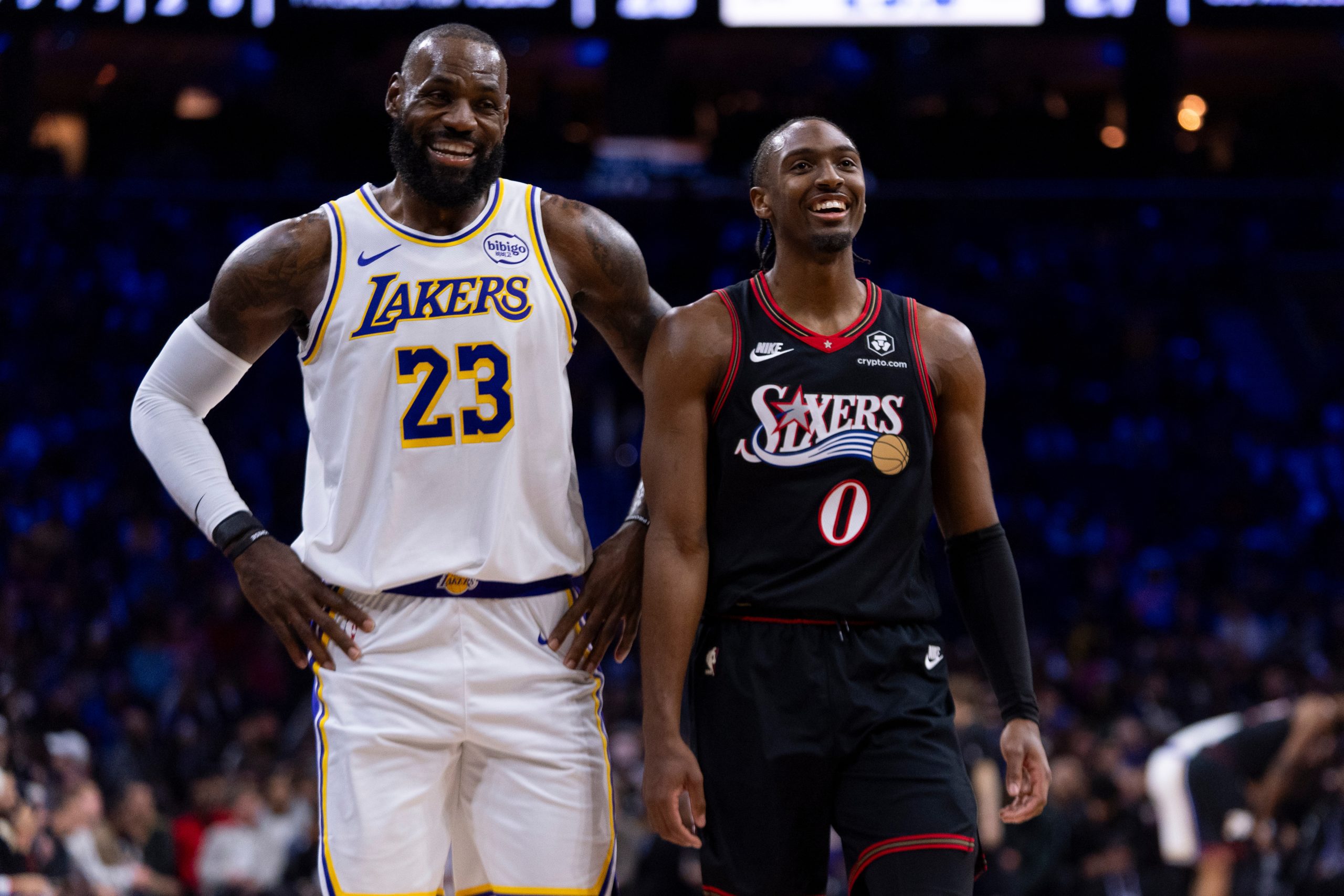
LeBron James has a well-documented friendship with Tyrese Maxey with both being part of Klutch Sports.Chris Szagola / AP
It’s perfectly valid to question whether James at 42 years old will create the on-court impact worthy of the hoopla surrounding his decision. There are plenty of scenarios where the sum of the parts exceeds the whole. That’s true even before you factor in age and injury. In James, Jaylen Brown, and Joel Embiid, the Sixers have three players who are accustomed to having the loudest voice in the room. In Tyrese Maxey and VJ Edgecombe, they have two young players who have been plagued by bouts of deference when sharing the court with more established veterans.
Yet, therein lies the significance of James’ deliberate evaluation of his options. The great general Charles de Gaulle once said that silence is the ultimate weapon of power. For weeks, everyone wondered what he would decide, and why. They thus imbued his ultimate decision and explanation with a tremendous amount of power. It meant something when James finally picked Maxey, and Edgecombe, and Brown, and, yes, Embiid. Everybody assumed James wouldn’t pick the Sixers because they were the Sixers. But he did pick them, which automatically makes them something nobody thought they were before.
Intentional or not, James’ decision-making process has empowered both his new organization and his new teammates before he has even arrived.
You probably saw the social media video Maxey released in the wake of James’ signing. It was just a few seconds of him yelling spastically. You have to think that there was a little bit of that going on inside Brown and Embiid as well. At various points over the last few years, both players have allowed their veils to slip from their insecurities. Brown, passed over for the Olympic team after winning NBA Finals MVP, second fiddle to Jayson Tatum, inefficient, overpaid, not a real superstar.
Embiid, injured, maybe finished, soft, selfish, supplanted by Maxey and Edgecombe as the heart and soul of a franchise. Who knows how those insecurities would have played in a power vacuum like that which could have existed without an unquestioned adult in the room. Insecurity is mostly thirst for validation. To be good enough for the best is a heck of a quench.
Part of me wonders whether LeBron’s real attraction to the Sixers is an opportunity to lead. Not that he hasn’t always led, in both spirit and example. But the Sixers offer him a unique opportunity.
More than any of the teams that pursued him this offseason, maybe even more than any team he has been on to this point, the Sixers were a team that genuinely needed exactly a player and a person like James is right now. It will be fascinating to see how the whole thing will look on the court, and what part James will play. Don’t be surprised if his biggest impact has already been made.
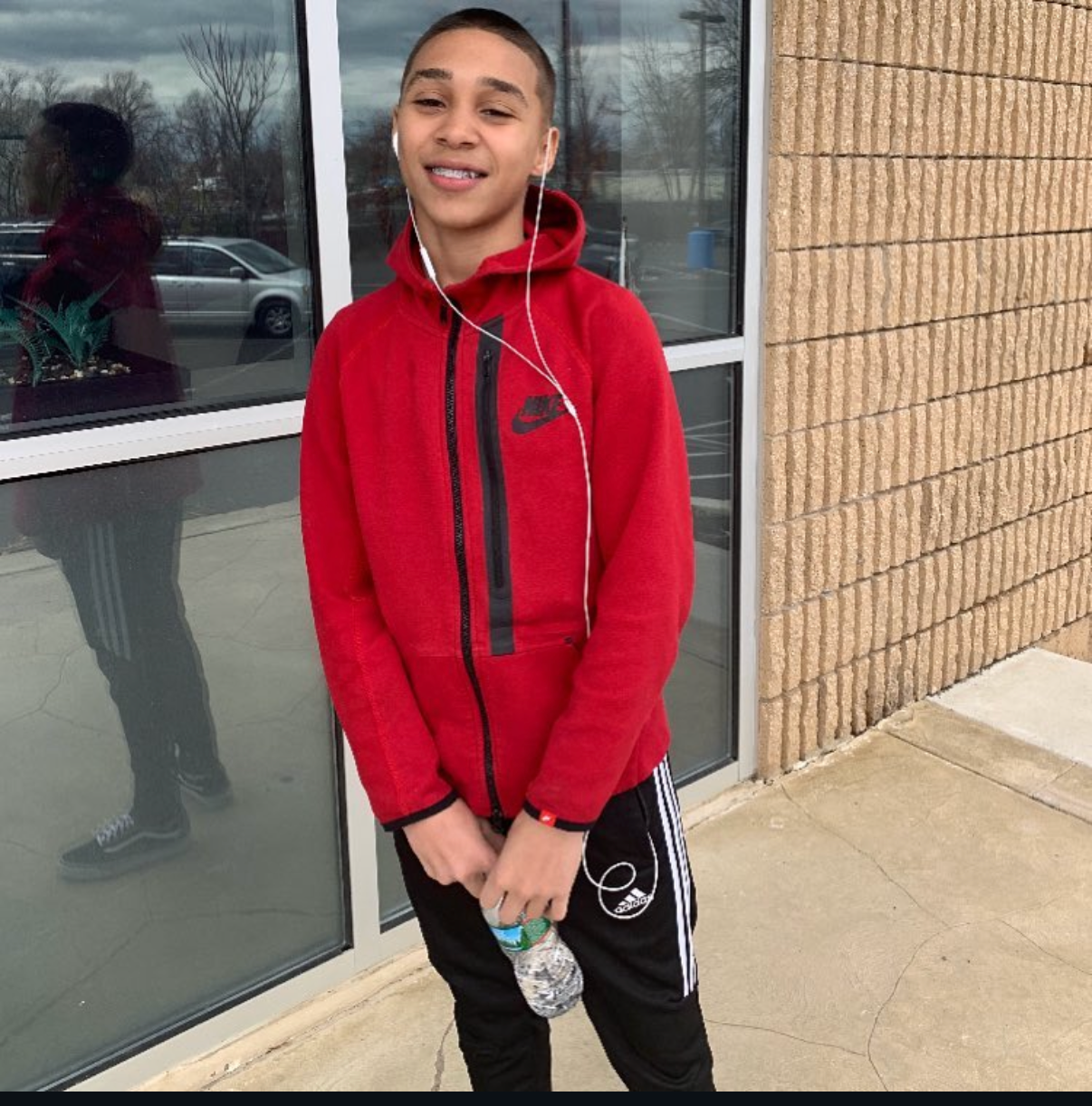
The first thing people noticed about Jadin Aviles was his smile. It was bright and big, and became part of his identity. Not just because of his youthful spirit, but the work that shaped each glistening tooth.
When Aviles was 9, his mother, Emelissa Gonzalez, saw that he was closing his mouth in photographs. Sometimes, he’d cover it with his arm. She asked why; Aviles explained that he was insecure.
Gonzalez turned to her son.
“Don’t worry,” she said. “Once we hit a certain age, we will get them done.”
A few years later, the mother surprised him with a trip to the orthodontist in Northeast Philadelphia. Not every child would react with enthusiasm, but this child did.
Aviles eagerly picked out the colors of his braces — red and blue — and was diligent in wearing his rubber bands. Tightening the wires was hardly a chore; the teenager saw this as a necessary (albeit painful) step to getting the grin he wanted.
By age 15, he finally had it. Aviles smiled constantly — so much so that his friends began to tease him. But he didn’t mind. Gonzalez had invested her hard-earned money. He had treated that investment with care. Wasn’t that something to be proud of?
Aviles brought the same industrious energy to basketball. He played in two youth leagues — La Liga Del Barrio and Timoteo Sports — as well as on his high school team, Maritime Academy Charter.
Athletic director Kevin Schultz would let the shooting guard and his teammates into school early, so they could shoot from 5:30 a.m. to 7:30 a.m.
“Class started at 8:02 [a.m.],” former Maritime teammate Andy Figueroa said. “So we was in the building before all the teachers.”
Aviles wasn’t competing in front of a packed Palestra, but he did become a “street legend” in North Philadelphia, according to those who knew him.
This was as much about his ferocity as it was his empathy. The teenager would rarely, if ever, jaw at referees. He’d often extend a helping hand to an opponent who’d fallen on the court.
“He would come to our church sometimes,” said Pastor Rob Whitmire, executive director of Timoteo, “and to see how he cared for people, it was something unique. Because, if I’m thatguy, if I’m that player, that’s really not how they carry themselves. It’s not a caring spirit. And he just had a caring spirit.”
His community is now trying to keep it alive. On May 12, Aviles was riding his moped in a bike lane on Aramingo Avenue. A pickup truck, turning left, ran him over. Aviles suffered extensive brain damage, and died that night.
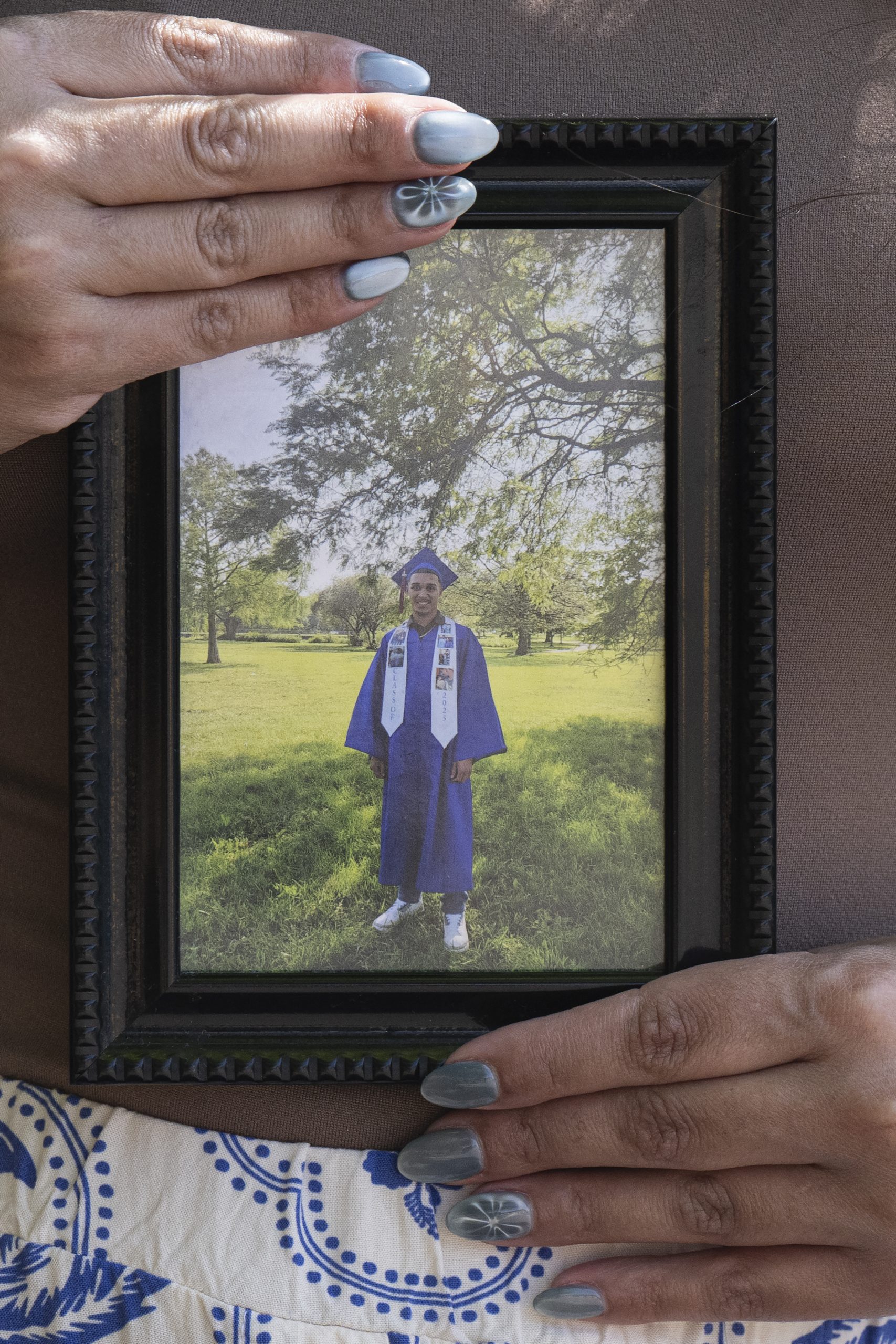
He had just turned 20.
It is a devastating loss, one that friends and family have struggled to reckon with. To many, Aviles, with his beaming smile, was brightness incarnate. He seemed to make all the right choices. How could things go so horribly wrong?
As North Philadelphia celebrates his past, and mourns his unfulfilled promise, they’ll continue to point to Aviles as an example. Proof that a life built on kindness and respect can be a life well-lived, no matter how it ends.
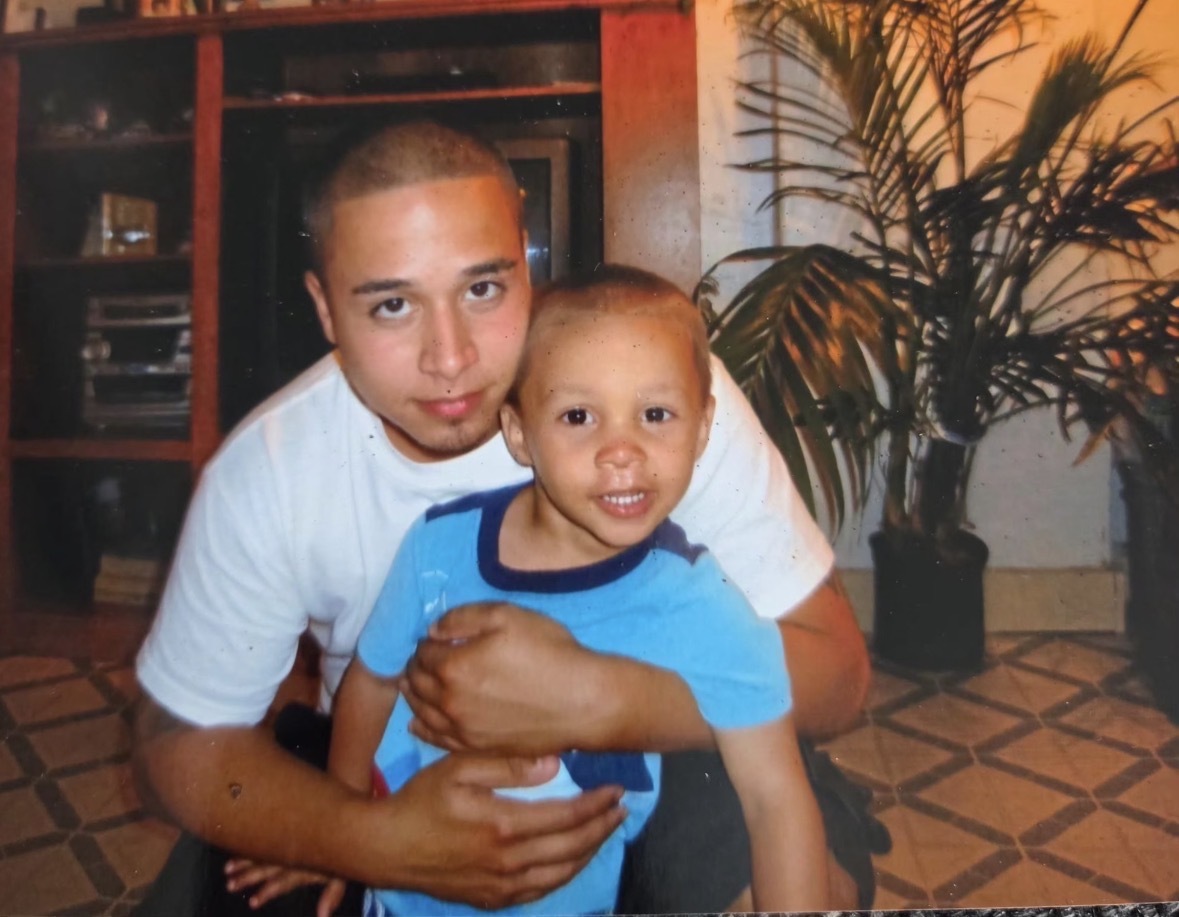
Sam Aviles with his son, Jadin.courtesy of Sam Aviles
Bonding through basketball
Aviles grew up with his mother. His parents broke up when he was 2 but maintained an amicable relationship. Even as a child, the future basketball star was self-sufficient.
He wasn’t the kind to throw a temper tantrum in a toy store. He rarely cried. If he did, his father, Sam, could quickly calm him down with a meal and some TV.
By the time he was 9, Jadin’s uncle and grandfather, who worked in electricity and construction, were teaching him odd jobs around the house.
The third grader knew how to navigate a switchbox and how to repair a lamp fixture. Once, when a pipe burst in the bathroom, Aviles called Gonzalez’s brother, Emanuel.
“‘Hey Tío, how do I fix this?’” she remembered him saying. “And over the phone, he’s literally fixing a pipe.”
Sam introduced the younger Aviles to basketball at age 5. He’d heard about La Liga through a cousin and signed Jadin up. One day, in the fall, they went to Towey Playground, around the block from Gonzalez’s home.
Jadin Aviles took early to multiple sports, but basketball quickly became his greatest love.courtesy of Emelissa Gonzalez
Sam was a new father, with no experience in youth sports. He did not realize that his son would be playing on a smaller court, with a hoop eight-feet high. So, they started practicing at the regulation-sized Towey, with Jadin chucking basketballs from above his head.
The boy didn’t complain, but once he and his father showed up to La Liga in December, it dawned on them that they had overestimated these dimensions. Even still, Jadin took to basketball, and began to participate in La Liga every winter.
Shortly after, Sam joined the organization as a coach. The father and son became inseparable; often watching games together, and taking extra shots at the Mariana Bracetti Academy gym (where La Liga is based).
The younger Aviles soon added another league, Timoteo, in the hopes of further refining his skills. At both stops, he established himself as a tough and bullish guard, who played far beyond his stature.
Whitmire became familiar with Aviles through his church, Grace and Peace Community Fellowship, where the teenager would volunteer. When the pastor first saw him play, in 2020, he didn’t recognize him.
The Jadin Aviles Whitmire knew was quiet and reserved. This kid was anything but. Eric Moore, assistant director at Timoteo, remembers that day vividly.
Aviles was in eighth grade, battling older students at the Esperanza High School gym. Moore and Whitmire stood in the back corner.
“And he was like, ‘Yo, is that Jadin?’” Moore recalled. “And I’m like, ‘Bro … yeah.’ And he’s like, ‘His defense is phenomenal.’
“And I was like, ‘Wait till he gets the rock. Wait till he handles the rock.’”
Added Whitmire: “I saw him come down and pull up on a guy and shoot, and I’m like, ‘Oh.’ There was something about his form that’s like, ‘No, that’s not normal. That’s not a rec player.’”
Jadin Aviles became a factor on the court and an approachable mentor to younger teammates.courtesy of Emelissa Gonzalez
At La Liga, Aviles always competed above his age group, and consistently held his own. His father called him a “giant slayer”; fully grown, Jadin stood at only 5-8, but was unafraid of opponents who were taller and larger than he was.
The numbers back this up. For five years in a row, Aviles averaged at least 11.1 points per game. He increased his scoring in 2025, with 24 and 46-point games. But despite his offensive output, he also devoted time and energy to his shortcomings.
One of the guard’s proudest moments came in 2023, when Timoteo named him defensive player of the year.
“[A coach] started working out with him, and he would ask what they wanted to do that day,” Sam said. “And Jadin was like, ‘Defensive drills, defensive drills, defensive drills.’”
Sam joined Timoteo as a coach in 2021, with the goal of spending more time with his son. But then an unexpected opportunity presented itself.
In 2022, Maritime’s head coach, Ercel Ballinger, contacted Sam to see if he would be interested in running the junior varsity team. He agreed, and took a job at the school a year later as a member of the support staff.
Jadin, who spent his freshman year at Roman Catholic, transferred to Maritime to play for his father. It turned out to be a life-changing decision. The younger Aviles thrived in the Philadelphia Public League.
He was reunited with childhood friends like Yozuet Pagan, an older kid on the block who taught him ballhandling and finishing at Towey. And as he matured, Aviles became comfortable taking on that role himself, with younger teammates.
Jadin Aviles flourished as a player after transferring from Roman Catholic to Maritime.Elizabeth Robertson / Staff Photographer
Andy Figueroa was the biggest example of this. Like Aviles, he’d tried Roman Catholic, only to find it wasn’t a fit. The veteran guard began to check in on his pupil, and one morning, he approached the 16-year-old in the hallway at school.
Jadin knew Figueroa had been struggling, and was at risk of becoming ineligible.
“He was like, ‘We need you on the court for our next game. So make sure you’re doing everything right,’” Figueroa recalled. “That made me realize that I got to make sure I do well, not just for me, but for my teammates, too.”
Aviles’ words were only bolstered by his play. By senior year, he was putting up career numbers, in points (15.3), rebounds (4.3), assists (2.5), and steals (3).
The teenager’s magical season came to an end on Jan. 23, 2025, Maritime’s senior night. A few hours earlier, Aviles told his father, who had since been promoted to varsity head coach, that he would “leave it all out on the court.”
And he did. Facing Hill Freedman World Academy, which sat atop the conference, Aviles dropped 25 points with four rebounds and five steals. The Juniata Boys & Girls Club was packed to capacity, and their crowd was going berserk, almost as if it were a cathedral all their own.
Sam Aviles (left), with Jadin Aviles’ sisters Madison and Mia Valerio, and stepmother Alexis Ferranti, witnessed Jadin’s development on the court. Elizabeth Robertson / Staff Photographer
A bright future, a brutal end
Aviles could have gone to college if he wished. Small institutions from Philadelphia and the surrounding areas sent him letters in the mail. Sam found a trade school in Media with a basketball team.
But none of this was enough to persuade him. Jadin wasn’t interested in sitting in a classroom, or accruing student debt. He was interested in working, though, and 30 days after he graduated, he was hired at Menasha, a packaging company on East Erie Avenue.
Two of his cousins worked there, as well as his uncle, James Arroyo Jr. It was an unnatural transition; Aviles was hired to work the night shift, from 11 p.m. to 7 a.m.
But as with most challenges in his life, the teenager embraced it. Before long, he was training for a promotion, going from stacking boxes, an entry-level role, to running the label machine.
“He got in there and [excelled],” said Arroyo Jr. “He hosed up pretty good.”
The job provided a good salary and strong benefits, giving Aviles a level of financial freedom he’d never experienced. He was proud of this, telling family and friends that he had “all of his bills on auto pay.”
In February, Aviles and his girlfriend, JaedaRodriguez, rented an apartment at Roosevelt Boulevard and C Street. It was a big step for them; Aviles had never lived apart from his mother or father.
Emelissa Gonzalez was proud of her son, Jadin Aviles, but had reservations about how quickly he had become self-sufficient. Jose F. Moreno / Staff Photographer
And Gonzalez was skeptical at first. She can still remember the day he told her; how nervous he was.
“I was like, ‘Is she pregnant?’” Gonzalez recalled. “‘Don’t tell me that I’m a grandma!’”
Aviles explained that he was moving out. His mother’s response was short and succinct: “Boy, no. You can’t be doing that.” But eventually, she warmed to the idea, and as Gonzalez packed her child’s belongings, in his new home, she began to cry.
“What’s wrong?” he asked.
“One day you will understand,” she replied.
The couple loved their newfound life. Within weeks, they’d adopted a pit bull from a local animal shelter — “Bubba” — and began to put him through dog training. Aviles suddenly had access to things like trips to the Shore and a newer car.
From a young age, he was drawn to bikes. Sam bought his son a black moped when he was 16, a miniature-motorcycle from Walmart that had a “lawnmower for an engine.”
Now, Aviles was able to purchase one of his own, and on May 11, he and a family friend, Kenny Enrique, drove to Allentown to retrieve it. They loaded the two mopeds into Enrique’s car, and brought them back to Philadelphia.
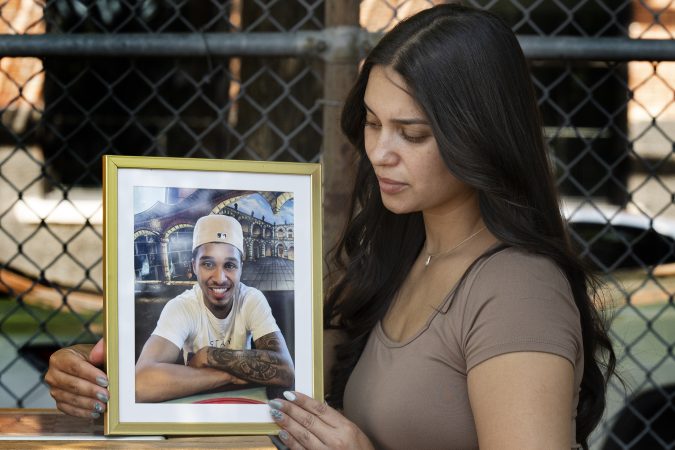
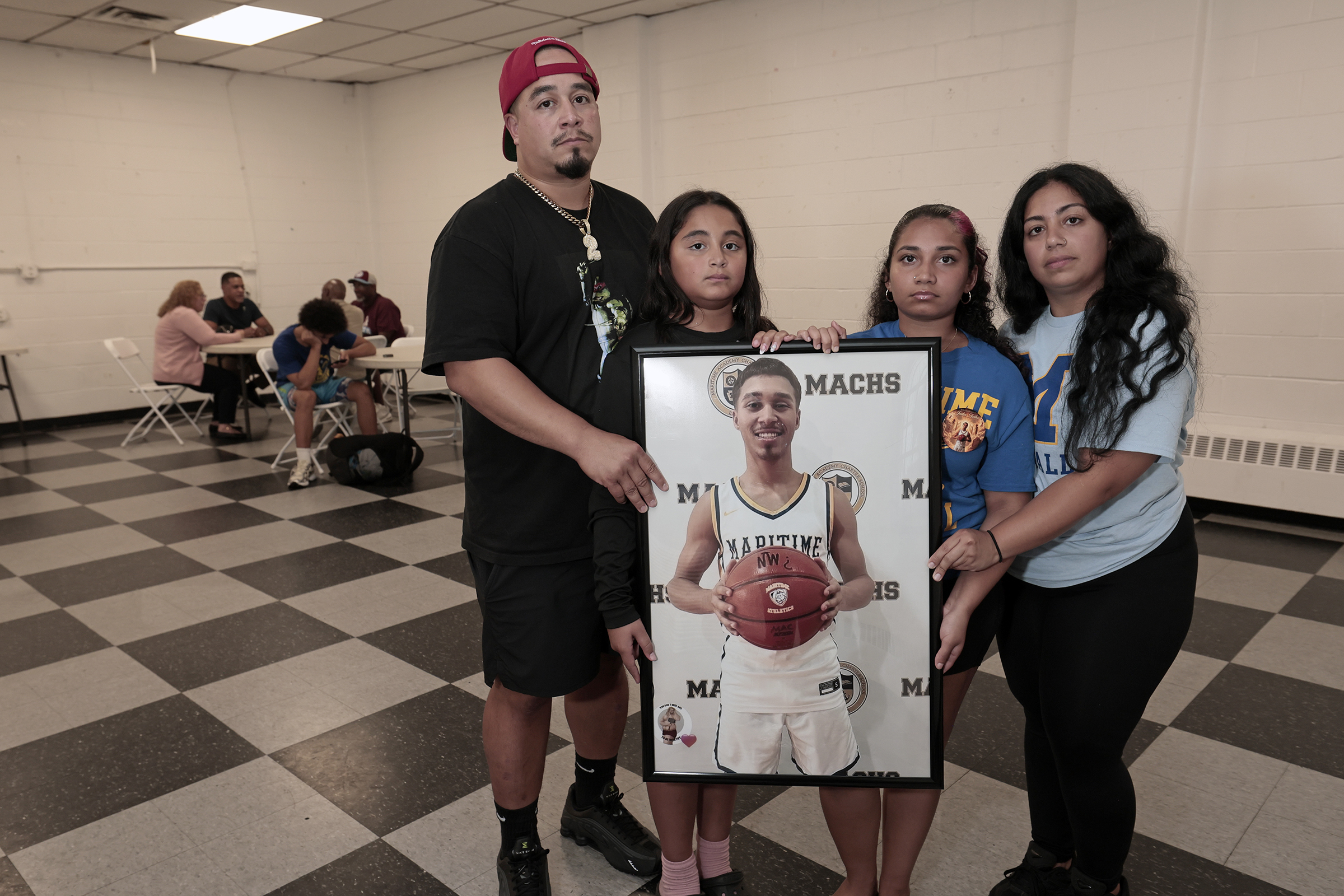
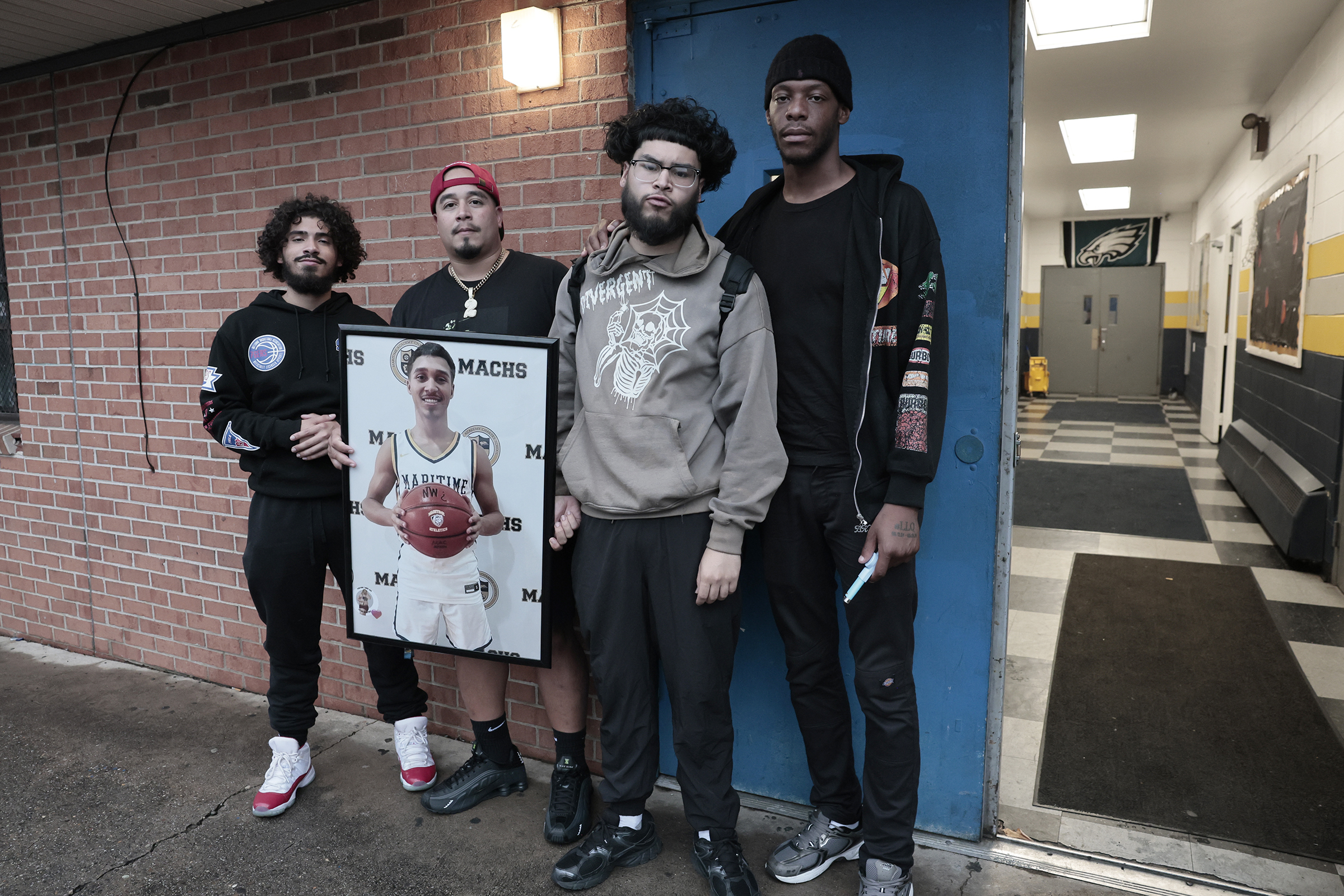
Hector Rosado (from left), Sam Aviles, Lucardo Marrero, and Sincere Jackson hold a photo of Jadin Aviles as they stand outside of the Juniata Park Boys & Girls Club earlier this month. Elizabeth Robertson / Staff Photographer
The next afternoon, the two men departed Aviles’ apartment in Olney, riding the mopeds to visit Sam at Maritime. They turned onto a bike lane on Aramingo Avenue; Jadin in front, Enrique behind him.
As they approached the four-way intersection, a pickup truck emerged in the left lane, heading northbound. A Philadelphia police report stated that the driver turned while the light was green, but failed to yield the right of way.
The right side of the truck hit Aviles. He fell to the ground and was run over. Enrique ran to find his friend face down, with his hood over his head, the moped laying a few feet away.
Enrique knelt and placed his hand on Aviles’ arm. Traffic began to slow; a few passersby stopped to call an ambulance. As Enrique went to retrieve his bike, he noticed something out of the corner of his eye.
“The [driver of the truck] was still moving,” he said. “I’m not going to say he left, but he probably would have left if I didn’t start yelling at people to make him stop.
“So, I started yelling, ‘Stop that truck, stop that truck!’”
The driver remained at the scene, where both men were questioned by the police. Throughout his interview, Enrique asked whether or not officers would give an alcohol or drug test to the driver.
“He said that our officers are trained to identify when somebody is under the influence,” Enrique recalled. “And I said, ‘Well, what’s an opinion versus an actual drug test or a blood test?’
“And he just ‘never minded’ what I said. I said the same thing to the next officer. They just ignored me.”
Officers later discovered that the driver of the truck had twice had his license suspended for driving under the influence, and did not have insurance at the time of the crash, according to a copy of the police report obtained by The Inquirer.
The police department’s Crash Investigation Division obtained footage of the fatal collision. One of the responding officers’ body cameras was “activated through the duration” of the interviews at the scene, the report shows.
A police spokesperson said that the crash remains under active investigation, and that the driver is cooperating with authorities.
The department did not respond to additional questions that The Inquirer submitted about the investigation, including why the driver of the truck was not required to undergo testing to determine if he was under the influence of drugs or alcohol.
Aviles was transported to Temple University Hospital, where his parents joined him. Sam’s girlfriend, Alexis Ferranti, met them there, as didRodriguez.It wasn’t until 7:03 p.m. that the family was able to see Jadin, who was unresponsive.
The 20-year-old’s face was wrapped in a bandage, covering the smile he’d worked so hard for. He couldn’t move or speak. Doctors told Gonzalez and Aviles that they had about an hour to say goodbye.
The parents prayed, and listened to Christian music, and told their child how much they loved him. That they were there for him, even if he couldn’t see them, and that they’d always be there for him.
“And we all watched,” Gonzalez said, “my son go with the Lord.”
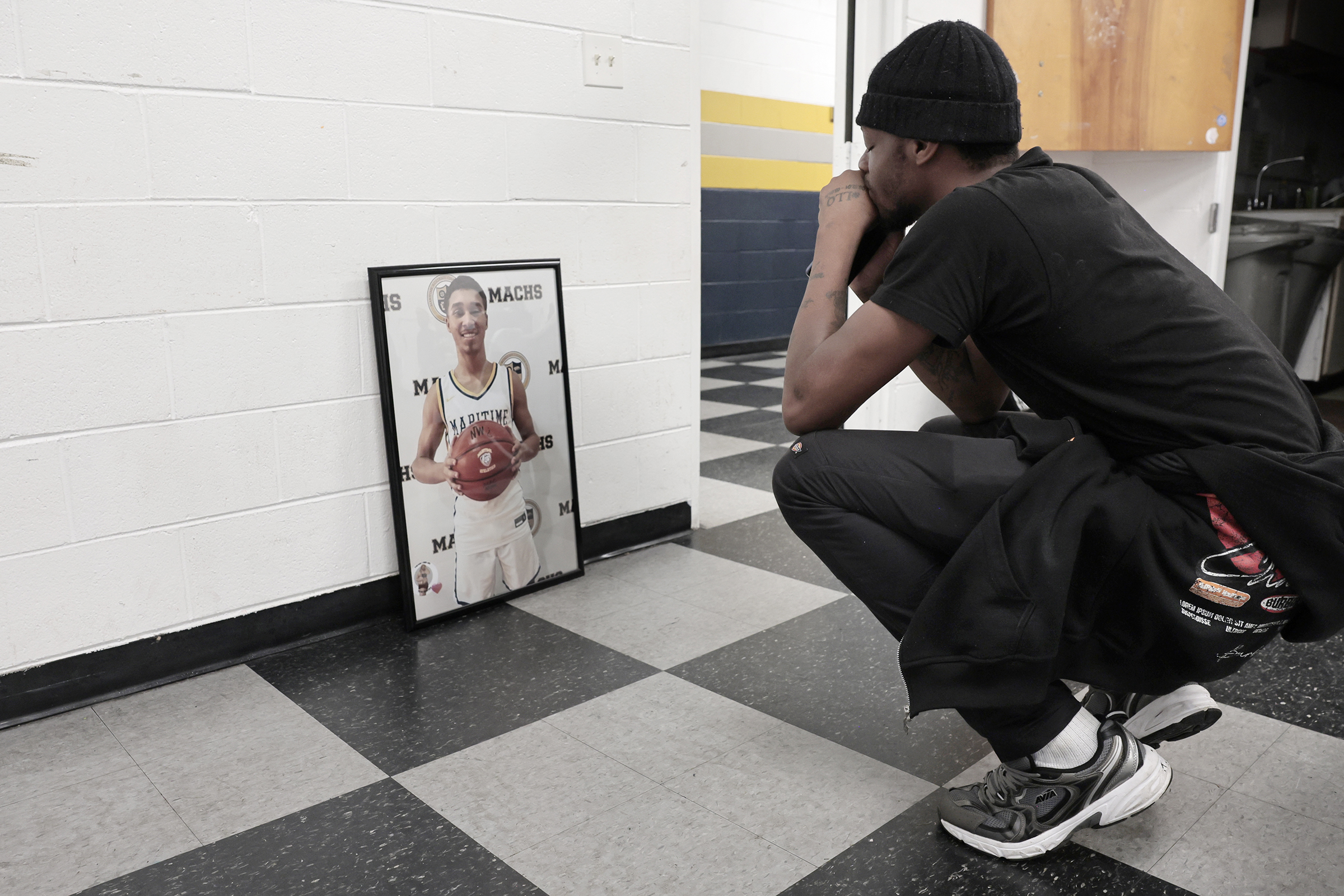
Jadin Aviles’ friends and former teammates, including Sincere Jackson (pictured), remember a good person who developed himself into a basketball standout. Elizabeth Robertson / Staff Photographer
A funeral on hardwood
The funeral was held on the morning of May 22. Initially, Gonzalez and Aviles planned to use her church, but realized it couldn’t contain the large crowd they were expecting.
So, they moved the service to the Juniata Boys & Girls Club, a place where their son had some of his greatest moments. Building employees took out the scorer’s table, and angled team benches toward the court.
Rows of chairs were stacked in the middle, all facing a casket underneath the hoop. Just like on Jadin’s senior night, the gym was filled with people; so many that a line wrapped around the block onto Castor Avenue.
They came from all corners of the neighborhood — Hunting Park, Olney, Kensington — shuffling in and out to pay respects. At one point, the funeral director had to turn mourners away, because the family was able to rent the gym for only two hours.
It was a surreal day, especially for those who had played with Jadin on that same floor. Dominic Lopez, a Maritime teammate, thought about Aviles’ 25-point game.
Andy Figueroa did, too. After it was over, he walked up to Eric Moore, who’d watched Jadin grow up at Timoteo, to ask how he was doing.
“And I told him, ‘You are Jadin,’” Moore recalled. “‘Own it. Because you are him. You are that person.’”
Jadin Aviles’ family and friends are attempting to move on from his loss while honoring his memory. Jose F. Moreno / Staff Photographer
There has been an emptiness in North Philadelphia since Aviles passed. Spaces he used to frequent are quiet. Ray and Esther Alvarez, who run La Liga, returned to their home gym in June.
Esther found herself thinking back to that kind boy, who would always greet her with, “Bendiciones, Titi.”
“I knew I wasn’t going to physically see him,” she said, “but I was waiting for my bendición.”
Aviles’ spirit will continue to permeate. La Liga is planning a memorial fund in his name. Sam is thinking about hanging one of his jerseys in the Maritime rafters.
But perhaps the best way to honor him is to emulate him. To tell young people about a giant on the court and a leader off it, who was so remarkable, and so loved, that he drew hundreds, maybe a thousand, to his funeral.
And that he did it all on his own, with hard work and a big smile, and that someday, they could, too.
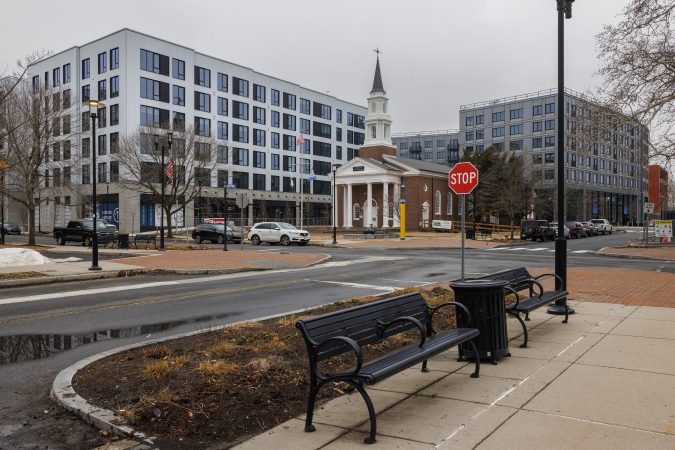
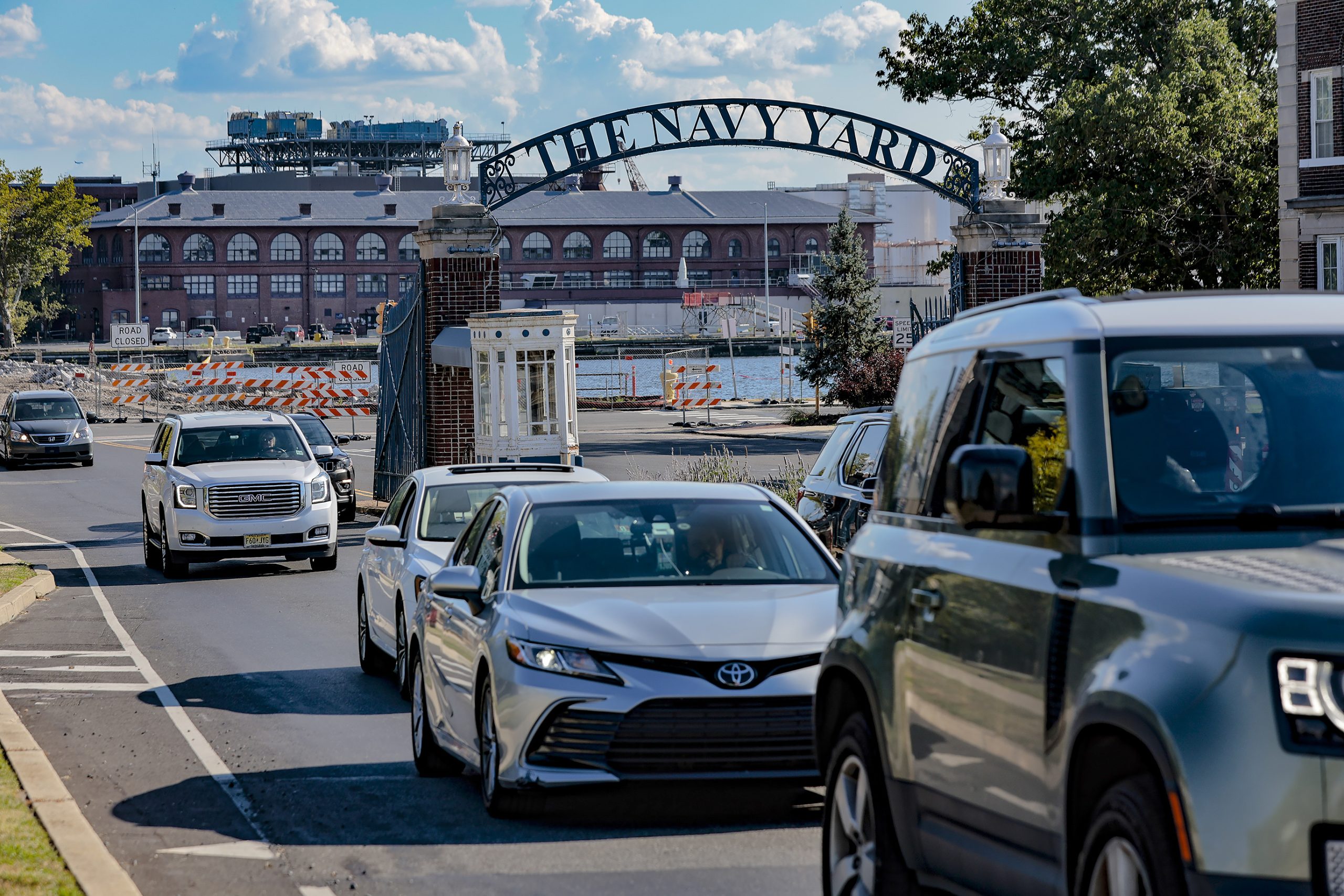
A year ago, Priya Brown spent many weekday afternoons sitting in traffic, inching home to Northern Liberties from her job in the Navy Yard.
Since moving into the new apartments at South Philly’s converted military base in January, the 27-year-old said her daily routine has gotten much more relaxing — with far fewer brake lights. An assistant buyer at Anthropologie, Brown walks 10 minutes to her office at Urban Outfitters’ Navy Yard headquarters.
“My life is so much easier,” Brown said last week as she walked her tiny basset hound, Momo, around her building, AVE Constitution. The air was quiet, save for an occasional bird chirping and the steady hum of planes making their descent into Philadelphia International Airport.
“I’m not a city person,” added Brown, an Annapolis native who moved to Philly for work. In Northern Liberties, “I missed grass a lot.”
The Navy Yard has open space and paths for walking and running, as seen in this 2022 file photo.Yong Kim / Staff Photographer
Brown pays about $2,400 a month for her one-bedroom, she said, and takes advantage of the free and abundant street parking, a rarity elsewhere in the city.
It also includes more than 20 acres of parks and miles of walking paths, some along the Delaware River, as well as a restaurant and hotel.
Now, it is also home to a small but growing number of residents.
More than a third of the 347 units in Constitution are leased, according to Sam Korman, AVE’s director of operations. Next door at Normandy, which opened this spring, more than 20% of the 267 units are leased, according to Korman. Normandy includes unfurnished apartments for tenants, as well as furnished ones that are marketed to business travelers. Lease-ups for buildings of this size typically take about 18 months, a spokesperson for the company said.
“We are extremely pleased with the reception to AVE Navy Yard through our first few months of operations,” Korman said last month in a statement. “This past month has been our most successful for both furnished and unfurnished leasing, a positive trend that we expect to continue throughout the summer,” a busy season for rentals.
Navy Yard stakeholders eventually want the property to have 4,000 apartments, along with more retail space and a second hotel, according to its 2022 redevelopment plan.
A one-bedroom apartment at AVE Normandy as seen in March.Alejandro A. Alvarez / Staff Photographer
Some Navy Yard residents love their ‘secluded spot’
As cars drove by from the Navy Yard office complexes, headed toward I-76 and I-95 on a recent afternoon, only a handful of people were out and about near the apartment buildings.
Several food couriers dropped off orders in the Normandy lobby. Nearby, in front of floor-to-ceiling windows, someone walked on the treadmill in an otherwise-empty gym. On an outdoor deck above, people could be heard splashing in the pool.
Otherwise, passersby were few.
Brown said she enjoys the suburban-esque solitude, though she’s glad more tenants are moving in. This winter, it felt like only a handful of other people lived in the building, she said, but now her floor seems like it’s almost full, making it “less spooky.”
A communal space at AVE Normandy in March.Alejandro A. Alvarez / Staff Photographer
Across the street at Normandy, resident Integra Feliciano has picked up a similar vibe.
“I have the sense that I’m definitely one of the earlier tenants,” said the 29-year-old, who moved in April and was drawn to the area’s tranquility after living near Passyunk.
Feliciano commutes to her job at a life sciences company in West Philly. She looked at apartments in Center City but couldn’t find anything as quiet and luxurious — without “ridiculously expensive” parking.
At her last apartment, she said, she paid more than $300 a month for parking, a rate that was set to hit $500 around the time she moved. Like Brown, she now parks on the street for free.
The Navy Yard is “a secluded spot, a little gem,” said Feliciano, who pays $2,510 for her one-bedroom. “I like being in proximity to the city, but I don’t like being right in it.”
The Navy Yard itself is “still up-and-coming in terms of having more restaurants and stuff,” Feliciano said, but there’s plenty to do.
People leave the Navy Yard at rush hour in August 2022.
In the spring, she said, she and her boyfriend bought last-minute tickets to a Sixers playoff game and walked over to Xfinity Mobile Arena. While out for a run one day, she discovered the Southeast Asian Market in FDR Park.
She swims in her building’s pool whenever she can, she said, and often invites family and friends over. And she said her guests love that they don’t have to “circle the block for an hour” to find a parking spot.
“I had a friend come over, and she just parked right in front,” Feliciano said. “She said, ‘Oh, that’s it?’”
Why the first resident was drawn to AVE Navy Yard
Gokul Krishnan is glad more people are discovering the Navy Yard apartments. The 51-year-old, who works as the chief sourcing and global trade compliance officer for URBN brands, was the first person to sign a lease and move into Constitution last November.
“It feels like home,” said Krishnan, who moved to Philly from the San Francisco area. “It’s so calm.”
AVE Navy Yard executives walk between the Constitution and Normandy apartment buildings in March.Alejandro A. Alvarez / Staff Photographer
He enjoys taking walks around the Navy Yard, using the gym, and spending time in the building’s lounge and outdoor courtyard. The AVE staff is kind and communicative, he said, and he, too, enjoys a 10-minute walking commute to his office at the Urban Outfitters headquarters.
Krishnan signed an 18-month lease, he said, and pays about $3,000 a month for his one-bedroom, plus parking in the complex’s covered garage. He may upgrade to a larger unit next year, he said. His wife plans to move from California once their son graduates high school, and she’s bringing the couple’s 6-year-old goldendoodle, Simba.
Editor’s note: This story has been updated with additional information about leasing plans.
Republican pollsters and political groups are raising the alarm that their party faces a listless and demotivated base ahead of November’s midterm elections.
A raft of discouraging data from polling, door knocking, and focus groups is unsettling Republicans as their party heads into a midterm election season that would be challenging no matter what, given President Donald Trump’s low standing in polls and the fact that the party in control in Washington almost always loses seats.
The lack of enthusiasm is reaching deep into Republicans’ loyal base, spreading to the party’s most consistent voters — who have shown up to vote in all of the past four primaries and general elections, according to an analysis done by Americans for Prosperity Action, a conservative super PAC that was founded by billionaire Charles Koch. This new issue with the base adds to the party’s more enduring problem of turning out less-frequent voters who support Trump but often skip midterm elections.
About 1 in 5 reliable Republican base voters are at risk this November, according to Nathan Nascimento, executive director at AFP Action. Those voters in Iowa, Ohio, North Carolina, Montana, New Hampshire, and Michigan are either saying they may stay home or are weighing voting for Democrats, according to their data, which is based on polling and extensive efforts to engage targeted Republican voters by knocking on their doors. The voters are primarily worried about inflation and the economy.
“This is a big chunk,” Nascimento said. “This is a scary number.”
The group has found that reaching these voters at the door usually moves them toward Republican candidates — or at least away from Democratic ones and toward undecided, he said.
The 20% of Republican base voters the group sees this issue with does not take into account low-propensity conservative voters who tend to turn out in general election years to support Trump but skip other elections. Motivating those Trump voters is a separate issue Republicans face in November.
“We have a high-propensity base problem,” Nascimento said.
Washington Post and Ipsos polling shows that Democrats have a 10-percentage-point advantage over Republicans among voters who say they are absolutely certain to vote in November. If that number doesn’t narrow, it could lead to a decisive advantage for Democrats, even though overall they lead by just three percentage points over Republicans on a generic ballot.
Mitchell Brown, a Republican pollster at the firm Cygnal, said Democrats are as enthusiastic about voting as they were at the same time ahead of the 2018 midterm elections, when they swept back into power in the House. But Republicans are far less excited to vote at this point than they were then, posing an issue for the party.
“It’s not that the Democrats are outperforming a topline number that we’d expect, it’s that Republicans are underperforming,” Brown said.
He pinpointed men under 40 as the group that is most at risk among Republican voters, saying they have concerns about the economy and prices. This group proved pivotal to Trump’s 2024 electoral victory, which included a sweep of some of the same battleground states holding critical elections this year.
The decline in support among those voters may change closer to the elections, once more people tune in, Republican strategists stressed. And Trump’s unprecedented redistricting efforts have also sought to give the party a structural advantage that could mitigate GOP losses.
“Republicans are united, on offense, and armed with our largest war chest in party history because voters are energized and understand what’s at stake in November’s election,” said Natalie Baldassarre, a spokesperson for the Republican National Committee, in a statement.
This dynamic is playing out in the red state of Iowa, where Republicans face open races for governor and a Senate seat that polling shows are surprisingly competitive. A recent door-knocking session in the Des Moines suburb of Urbandale with AFP Action turned up voters critical of the war in Iran and high inflation, with a handful saying they planned to support Democrats in the fall.
In western Iowa, three-time Trump voter Lance Sulentic, a resident of Iowa’s rural Harrison County, described the past three presidential elections as “the worst three mistakes I’ve ever made in my life,” saying that the president has failed to fulfill his campaign promises. Higher gas prices have been costing him an extra $300 to $500 every month to ride his motorcycle, he said.
“We voted for Trump, and he did the opposite of what he said he was going to do,” said Sulentic, a 56-year-old retired insurance agent. “Gas prices were going to be two dollars, food was going to be cheaper, energy prices was going to be in half, we were going to get two rebate checks to the American people, and we weren’t going to have any new wars, and we were going to build a wall and deport 30 million illegal aliens, and he did none of it.”
He said he would either sit out this year’s election or vote for Democrats.
Republican lawmakers are worried about such comments as their party remains mired in internal disagreements in Washington that have hampered them from passing signature agenda items that could motivate core supporters.
“We need to do something to re-energize our base,” said Sen. Ron Johnson (R., Wis.). Johnson, who does not face reelection until 2028, has triumphed in tough races in his closely divided state.
Johnson said GOP base voters may think the lawmakers “haven’t been … trying hard enough.” The party has been unable to pass a law to require ID to vote and proof of citizenship to register to vote called the Save America Act, which Trump has lambasted them for. They also have done little to tackle cost-of-living issues since the bill extending tax cuts in 2025.
A spokesperson for Trump, Abigail Jackson, called the voting legislation a top priority but added that the administration “continues to deliver on the President’s affordability agenda by lowering drug prices, reshoring American jobs, lowering gas prices, and more.”
Other senators have pressed Trump to use his large platform and $400 million MAGA Inc. war chest to activate lower-propensity voters. Trump has had far more success motivating supporters when he is on the ballot.
Sen. Kevin Cramer (R., N.D.) said he told the president in the Oval Office last week that Trump is the key to turning out his voters.
“Well, they will [turn out] if you pass the Save America Act,” Trump retorted, according to Cramer.
The White House is hopeful the Republican Party’s planned midterm convention in September in Texas will help juice enthusiasm among the base as well.
Sen. Thom Tillis (R., N.C.), who declined to run for reelection in his purple state, said he believes the traditional Republican base will ultimately turn out in November. But he fears the party’s brand has been damaged among moderates by the economy and inflation, and that the Iran war is becoming an additional political drag. Low-propensity Trump voters need to turn out to close that gap, he said.
“The question is whether the coalition he has that’s unique to the president, if he can mobilize them to come out and vote for others,” Tillis said.
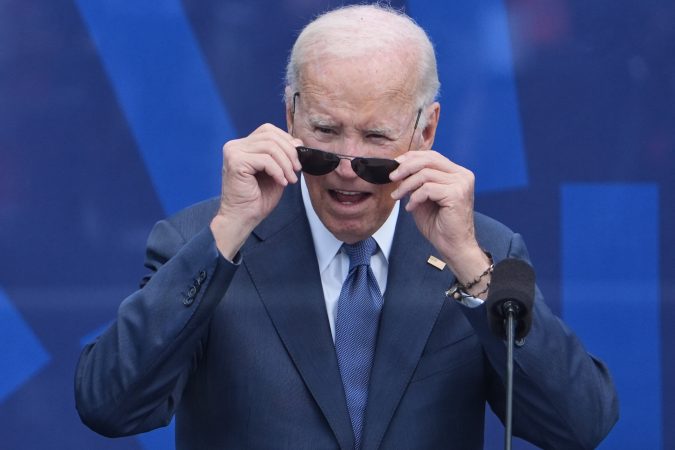
Eighteen months after leaving the White House, the 83-year-old former president moves within a narrowed circle of relatives, old friends, and longtime aides as he undergoes treatment for metastatic cancer.
The treatment appears to be working, according to five former aides and others close to Biden, many of whom spoke on the condition of anonymity to candidly discuss his health and private life. But the disease — and the toll of treating it — has left him visibly frail.
Those around Biden describe a post-presidency constrained by illness with his days increasingly organized around treatment, family, and efforts to shape his legacy.
Unlike some recent predecessors, Biden has maintained a limited public schedule, has yet to build a sprawling philanthropic or policy operation, and has struggled to raise money for a presidential library, leaving him with fewer avenues to influence how his presidency is remembered.
That frailty is likely to become harder to keep private this fall, when Biden begins promoting a memoir scheduled for publication on Nov. 17, two weeks after the midterm elections. The timing has unsettled some friends and former advisers, who worry not only about Biden’s well-being, but also about how much his visible health struggle could revive the bitter arguments of 2024 just as Democrats are trying to make the election a referendum on President Donald Trump.
Trump has repeatedly mocked Biden’s age and acuity and replaced his portrait along a White House colonnade with an image of an autopen, a visual taunt built on the unsupported allegation that aides used the device to exercise presidential authority for a debilitated commander in chief.
Those close to Biden bristle at the way his illness and physical decline have become part of his critics’ case against him and his party.
Hunter Biden gave voice to the family’s frustration last month after a critic attacked his father’s cancer diagnosis on social media.
“Listen man — I understand if you don’t like my Dad’s politics and you hate me because you believe everything Fox News has told you,” he wrote. “I’m fine with that, but my Dad has cancer. How is that an issue you want to attack. What sickness is in you that makes that fair game?”
The Biden health debate may soon be reignited. On Tuesday, a federal appeals court cleared the way for the Heritage Foundation, a conservative think tank, to obtain redacted transcripts and audio recordings that were among the evidence a special prosecutor used to portray Biden as an “elderly man with a poor memory.”
Questions about Biden’s age, stamina, and mental acuity shadowed much of his presidency and eventually overwhelmed his campaign for a second term.
The health concerns became an acute political crisis after Biden’s June 27, 2024, debate against Donald Trump. Speaking in a weak, hoarse voice, Biden repeatedly lost his train of thought, struggled to complete answers and at times appeared unable to press a forceful case against his opponent.
Biden’s performance intensified doubts among Democratic lawmakers, donors, and voters about both his ability to campaign and his capacity to serve through January 2029. Biden initially rejected calls to withdraw, attributing the performance to a cold, exhaustion, and a bad night. But after more than three weeks of mounting pressure, he ended his reelection bid on July 21.
Biden’s planned return to the spotlight presents an awkward political challenge for Democrats. Many remain personally fond of Biden, grateful for the accomplishments of his presidency, and sympathetic to a man battling a serious illness. But they are also trying to distance themselves from a 2024 campaign in which questions about his age, health, and decision to seek reelection damaged public trust and divided the party.
“President Biden has every right to tell his story. But Democratic candidates are already working their tails off to overcome the political damage he left behind,” said Sawyer Hackett, a Democratic strategist who worked on presidential campaigns for Barack Obama and Hillary Clinton. “The best thing Biden could do to help that effort is to get as far away from the spotlight as possible.”
In May 2025, four months after leaving the White House, Biden was diagnosed with an aggressive form of prostate cancer that had spread to his bones. He is undergoing treatment for the disease, which can be managed but is not considered curable.
In media interviews, former first lady Jill Biden has described her husband’s diagnosis as deeply unexpected, saying the family was shocked to learn that the cancer had already reached Stage 4 and metastasized to his bones. Since then she has offered a cautiously optimistic assessment of her husband’s health, saying his treatment is working and that he is maintaining a regimented schedule.
Since leaving office, Biden has addressed the issue intermittently, generally offering upbeat but limited public accounts of his condition. He has made a handful of appearances, at Democratic Party events in South Carolina and South Dakota, and at the dedication of Obama’s presidential library, where he beamed alongside several other former occupants of 1600 Pennsylvania Ave.
“Given all the health diagnoses, he was energetic, in good spirits,” former Democratic National Committee chair Jaime Harrison said of Biden at the South Carolina Democratic Party convention in May. Like many Democrats, Harrison knew the seriousness of Biden’s prognosis and wondered whether he would seem like his old self. Instead, the former president — also the convention’s keynote speaker — moved through a full slate of events, many of them organized to honor him.
“He was fired up,” Harrison said. “You sure as hell couldn’t tell he was an 83-year-old man battling cancer.”
Biden’s post-presidential office declined to answer questions about his day-to-day activities, medical treatment, or ongoing prognosis. Through a spokesperson, the former president declined an interview. His office disclosed in fall 2025 that he was receiving radiation and hormone therapy and that he had undergone Mohs surgery to remove cancerous skin cells. When he announced his forthcoming memoir earlier this month, Biden offered another brief update, saying that he was undergoing treatment and that it was going “really well.”
The fallout from Biden’s 2024 campaign also sharpened scrutiny of how his aides — and even his successor, Vice President Kamala Harris — had managed his public exposure. Subsequent reporting described a presidency increasingly structured around shorter meetings, tightly controlled appearances, and greater reliance on senior advisers to serve as intermediaries.
The public, jarring image of his shaky debate presentation made some voters feel that they had been misled — not only by the White House, but by a broader Democratic establishment that had defended his reelection bid and discouraged a competitive primary.
Republicans have seized on those lingering questions, portraying Biden’s decline as evidence not only of the former president’s failings but of a coordinated effort by Democratic leaders they accuse of concealing his condition.
In speeches, posts, anecdotes, and asides, Trump has repeatedly mentioned Biden’s health — often using the nickname “Sleepy Joe,” according to a Washington Post analysis.
Last month, he referenced it nearly every other day, compared with about 1 in 5 days during the previous June, according to the Post’s review of Trump’s speeches, interviews, social media posts, and other public remarks.
Biden’s aides and other Democrats reject the idea that a book tour by a former president who has not shaped policy in more than a year — and is now undergoing cancer treatment from his Delaware home — will meaningfully influence the midterm elections.
“No one is going to be thinking about Joe Biden in November,” said one former aide, who requested anonymity to speak candidly about a former boss. “They’re going to be thinking about filling up their tank and putting food on their table, and Joe Biden has nothing to do with that.”
Harrison, the former DNC chair, argued that voters have more immediate questions about the health of the man now occupying the Oval Office, who turned 80 in June.
“It was amplified, it was even caricaturized when Biden was president, but Trump falls asleep during meetings. He is literally sleeping,” Harrison said. “But yet it’s like a blip. The man has more blemishes and marks on his skin — that says something is going on.”
The White House has consistently pushed back on such criticism, insisting Trump remains in strong health and dismissing questions about his physical condition.
Trump has made three trips to Walter Reed National Military Medical Center since April 2025 as persistent bruising on his hands and swelling in his lower legs have drawn scrutiny. His most recent examination involved 22 medical specialists — an unusually large team — though his physician pronounced him in “excellent health,” attributing the swelling to chronic venous insufficiency and the bruising to frequent handshaking combined with aspirin use.
Health inevitably shapes what presidents can do after leaving office.
Before age and illness restricted his public life, Jimmy Carter devoted decades to election monitoring, diplomacy, public health, and Habitat for Humanity — work that transformed his reputation and earned him the Nobel Peace Prize.
Bill Clinton, who will turn 80 next month, remained highly visible, building a global foundation, writing books, delivering paid speeches, and campaigning for Democrats, including his wife. George W. Bush largely stepped away from partisan politics, focusing on veterans, the Bush Institute, and painting. Obama has been more selective, emerging for major political moments while devoting much of his time to books, media projects, his foundation, and, most recently, the Obama Presidential Center.
Biden’s allies are raising money for a presidential library in Delaware, imagined as a center for public service and civic life. But his library effort has so far attracted only a fraction of the money raised for the legacy projects of recent presidents: His foundation expected to collect about $11 million by the end of 2027, compared with the hundreds of millions raised by Bush and Obama in the first years after they left office.
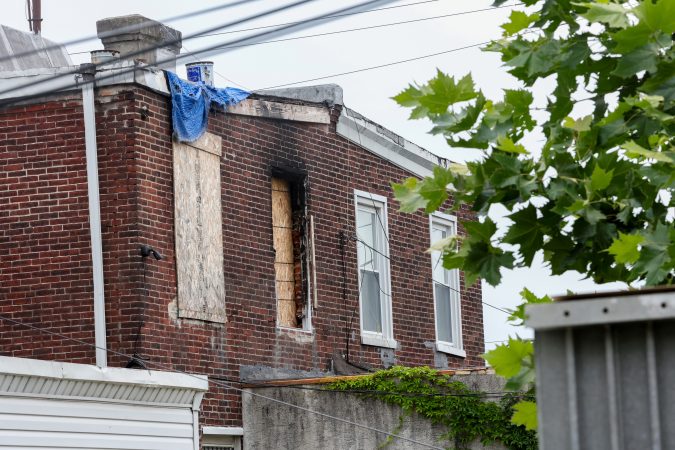
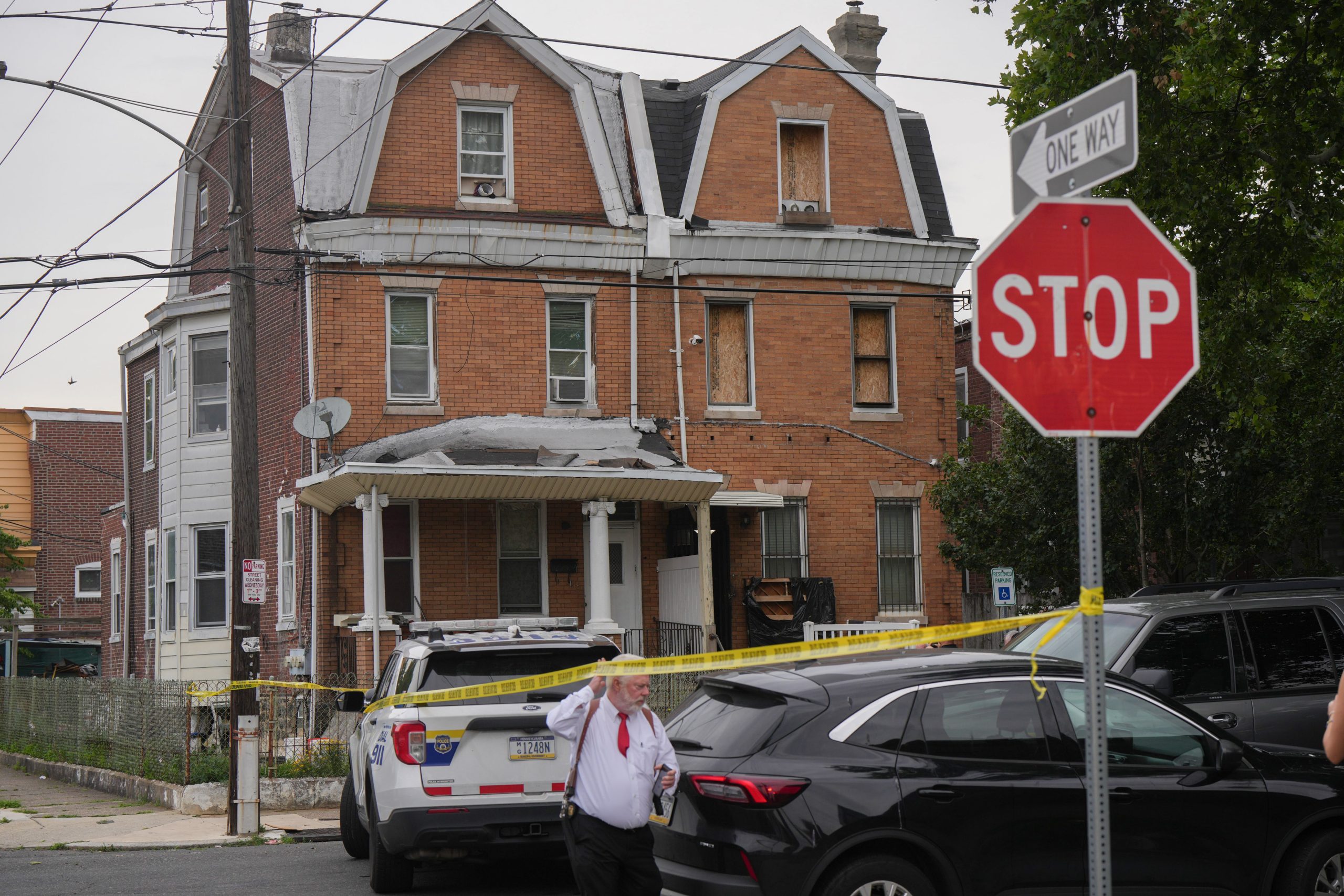
Philadelphia police found a “significant amount” of blood inside the decrepit Olney house linked to the investigation of at least two missing women, multiple law enforcement sources said.
The sources, who spoke on the condition of anonymity to discuss an ongoing investigation, said forensic testing has not yet determined whose blood it is or whether it’s even human — a process that could take several weeks to complete. But, the sources said, police are prepared to excavate the front and backyards of the West Chew Avenue home in the coming weeks in search of potential human remains.
Deputy Police Commissioner Frank Vanore declined to confirm or comment on the discovery Monday afternoon, citing the ongoing investigation. Vanore said Friday that police had not recovered any human remains from the home and were awaiting testing of the tubs of chemicals and other materials found in the basement.
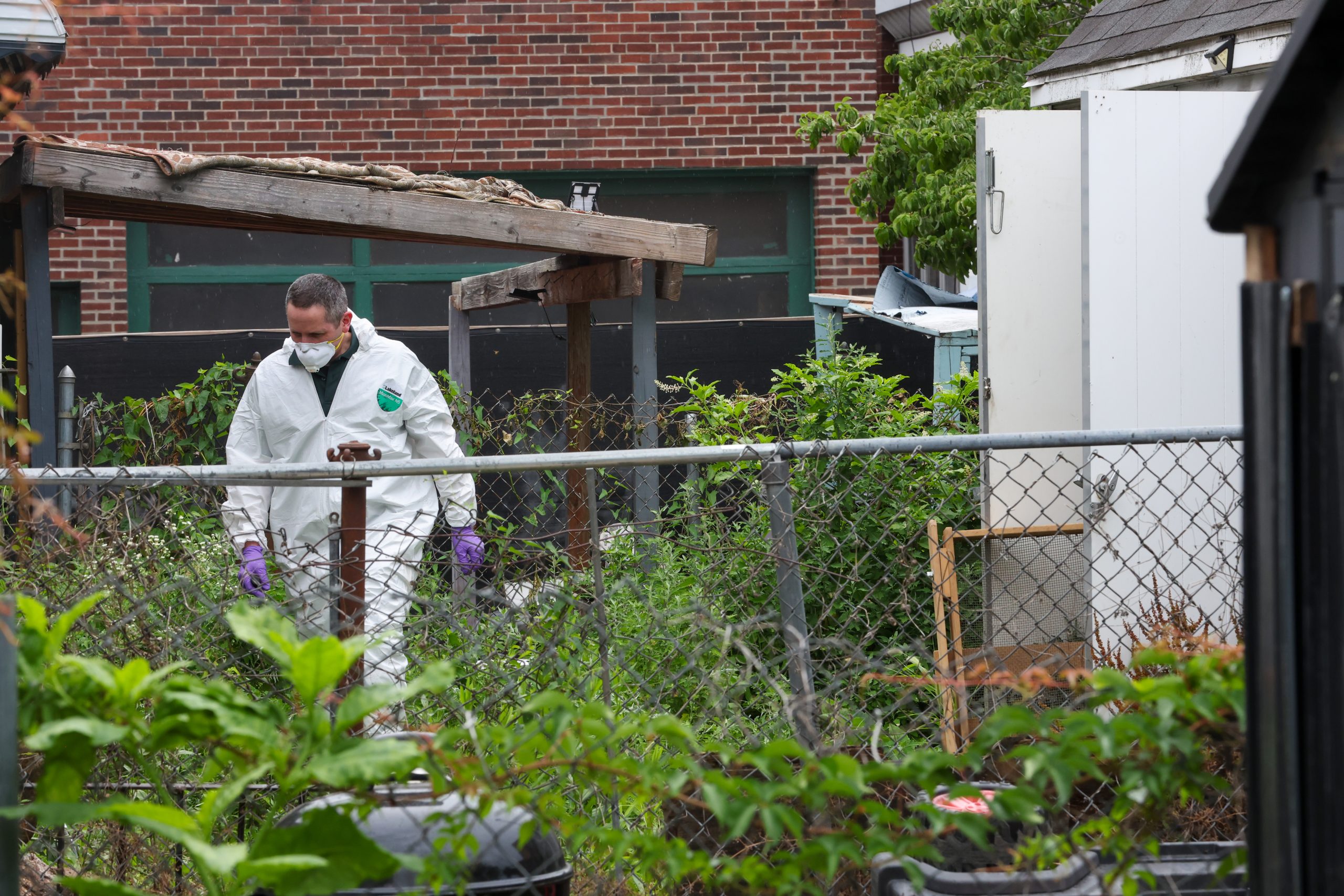
Forensic investigators search the backyard of 417 W. Chew Ave. on June 27.Aidan T. Gallo / Staff Photographer
The finding marks the latest development in an unusual saga that began after the arrest of Eugene Albert Horsch, 44, the owner of the Olney home now being searched by law enforcement for a second week in connection with the disappearance of at least two women who have been missing for years.
Horsch was arrested June 19 after U.S. Park Police saw him parked in his black BMW near Sixth and Market Streets, acting suspiciously. When a ranger approached the car, police said, he heard a woman in the back seat say, “You’re going to hurt me” and saw drug paraphernalia.
Police searched the car and reported recovering two guns with obliterated serial numbers, as well as cocaine, fentanyl, and marijuana, a cattle prod, switchblade knives, handcuffs, and a fake U.S. Drug Enforcement badge featuring Horsch’s photo.
The woman with Horsch falsely identified herself to the officers as Blair Tonzelli, a 38-year-old woman who had been reported missing in Kensington in 2023, police said.
The woman, 39, later told investigators that she gave Tonzelli’s name because she had open warrants for her arrest in ongoing drug cases and that Horsch had made her fake identification cards in that name and said she could use it if she was ever stopped and questioned by police, sources said.
Eugene Albert Horsch, 44, was arrested June 19 for illegal gun possession and drug crimes. Courtesy of Philadelphia police
The woman said she did not know Tonzelli or even that she was missing — but the way Horsch spoke about her and other women made her feel like something bad had happened to her, the sources said.
Philadelphia homicide detectives then began reviewing that missing woman’s case, and, alongside federal law enforcement, searched Horsch’s home at 417 W. Chew Ave. last week.
That search produced a trove of bizarre discoveries: a basement with drums filled with chemicals, bottles of unknown substances, Tonzelli’s bank card, the death certificate of another woman, and what appeared to be urns holding at least one of Horsch’s relatives’ cremated remains.
Investigators also found another handgun, materials used to grow marijuana, and a 55-gallon drum with connections to waterlines leading into a hole in the ground.
Federal investigators also discovered a multipage, unsigned, handwritten letter that appeared to describe hurting people and referenced the serial killer Ted Bundy, according to the affidavit of probable cause to search the home that was obtained by The Inquirer.
Eugene Horsch lived at 417 W. Chew Ave. with his father until he died last year. Jessica Griffin / Staff Photographer
Law enforcement sources said police were working to determine whether the writings were part of a novel or screenplay. Horsch’s late father, Raymond “R.C.” Horsch was a known drug manufacturer and erotic filmmaker who had published several works of fiction with violent, masochistic themes, including one described as an “autobiographical memoir of a caring, empathetic serial killer.”
The probe into the younger Horsch took another twist when investigators learned that Raymond Horsch’s ex-wife Amy McHale was last seen at the Olney property in 2016 and has not since be located. A lawyer for Eugene Horsch and his father said the two men had nothing to do with McHale’s disappearance and said she struggled with substance abuse and mental illness.
Horsch has been charged with illegal gun possession and drug crimes by Philadelphia authorities.
He is also facing a federal gun possession charge, court records show. The U.S. Attorney’s Office filed a complaint against Horsch on Friday, charging him with possession of a firearm by a felon and centering their allegations on the guns that park rangers found in his car during an encounter in Center City earlier this month.
Horsch has not yet been arraigned in that matter, and he remained in a city jail, held on $500,000 bail as of Monday afternoon. But the case could give federal prosecutors an opportunity to argue to a judge that he remain in federal custody until trial.
This is a developing story and will be updated.
Staff writers Jesse Bunch, Max Marin, Barbara Laker, and Chris Palmer contributed to this article.
Delaware County’s new emergency services director wants to build something sustainable.
Gary Vinnacombe is a Delco native who has spent the last two decades overseeing EMS teams across Delaware and Chester Counties. Last month, he took the helm of Delaware County’s emergency services department, a homecoming of sorts for the longtime first responder, who got his start at Haverford’s Manoa Fire Company.
Vinnacombe, 43, replaces interim director Ed Beebe, who oversaw Delaware County’s emergency services for 18 months after former director Timothy Boyce was charged with indecent assault, among other offenses, related to his alleged groping of a female coworker.
Vinnacombe is taking over Delco’s emergency services apparatus at a pivotal time. The county is continuing to navigate the fallout from Crozer-Chester Medical Center’s closure, and some of its municipalities are considering emergency service mergers and cooperative authorities to fill gaps in service. Now, Vinnacombe says he’s eager to work with emergency responders across the county to build a lasting system that can serve Delco’s residents.
A 911 dispatcher working at the Delaware County Emergency Services Center on Jan. 5, 2022. Delco native Gary Vinnacombe recently stepped up to lead the department. Thomas Hengge / Staff Photographer
Vinnacombe grew up in Delaware County and is a 2001 graduate of Haverford High School. He holds an associate’s degree in nursing science from Delaware County Community College, a bachelor’s degree in emergency and disaster management from American Military University, and a master’s of public administration from Anna Maria College.
Vinnacombe has worn many hats over his two-plus decades in emergency management. He joined the Manoa Fire Company as a teenager, where he rose up to become the company’s EMS captain. He spent over a decade as the deputy chief of EMS at Darby’s Mercy Fitzgerald Hospital and is a longtime adjunct faculty member at Delaware County Community College, where he teaches EMT classes, municipal police academy emergency responder training, and CPR. Most recently, Vinnacombe spent 14 years with the West Grove Fire Company in Chester County, where he was assistant chief and oversaw day-to-day operations and employee recruitment and retention. He currently lives in Chester County.
Vinnacombe said the Crozer fallout is an “ongoing evaluation” for his department. He’s optimistic about ChristianaCare’s soon-to-open Aston and Springfield micro hospitals (the Aston facility is set to open this summer, and the Springfield facility next summer). The region’s existing hospitals have “done a fantastic job of absorbing that volume,” Vinnacombe said, and local municipalities have made a strong effort in “coming together to ensure that service continues to get delivered.”
As the county rebuilds its emergency services, Vinnacombe said, sustainability is top of mind.
“We can build all these great things all day long,” he said. “If we don’t have a plan or a mechanism to sustain them, it doesn’t matter what we build.”
However, he added, it’s important to take a close look at the funding mechanisms for different regional service models, as “every one of them has pros and cons.”
“I would certainly say, obviously anything that we can do to help people collaborate, or bring the right people to the table, we certainly want to,” he said.
The difference is night and day for Vinnacombe’s first responders, he said. Now, police, fire, and EMS officials can get real-time notes from 911 calls, fortifying them with a detailed report before they even get on the scene.
“The residents of Delaware County are in such a better space because of it,” Vinnacombe said.
Vinnacombe’s department is preparing for a busy summer. The PGA Tour Championship, FIFA World Cup, MLB All-Star Game, and Semiquincentennial are all descending on the Philly area in the coming months, and Delaware County officials are expecting a wave of tourists — and with them, an increased need for emergency responders.
Delco’s emergency services department is planning to support the upcoming PGA Tour at Aronimink Golf Club in Newtown Square with extra first responders, and Vinnacombe’s team has been busy filling requests for backup from municipalities.
As he settles in, Vinnacombe is confident that Delco is “only going up.”
“The services are only going to get better. Technology’s only going to continue to evolve,” he said. “The investments that the county has made into technology and public safety have improved the services that get delivered.”
This suburban content is produced with support from the Leslie Miller and Richard Worley Foundation and The Lenfest Institute for Journalism. Editorial content is created independently of the project donors. Gifts to support The Inquirer’s high-impact journalism can be made at inquirer.com/donate. A list of Lenfest Institute donors can be found at lenfestinstitute.org/supporters.
The new owner of the shuttered Crozer-Chester Medical Center in Delaware County shared what he called an “aspirational” plan to restore healthcare services to the Upland facility at a town hall meeting Tuesday in Chester.
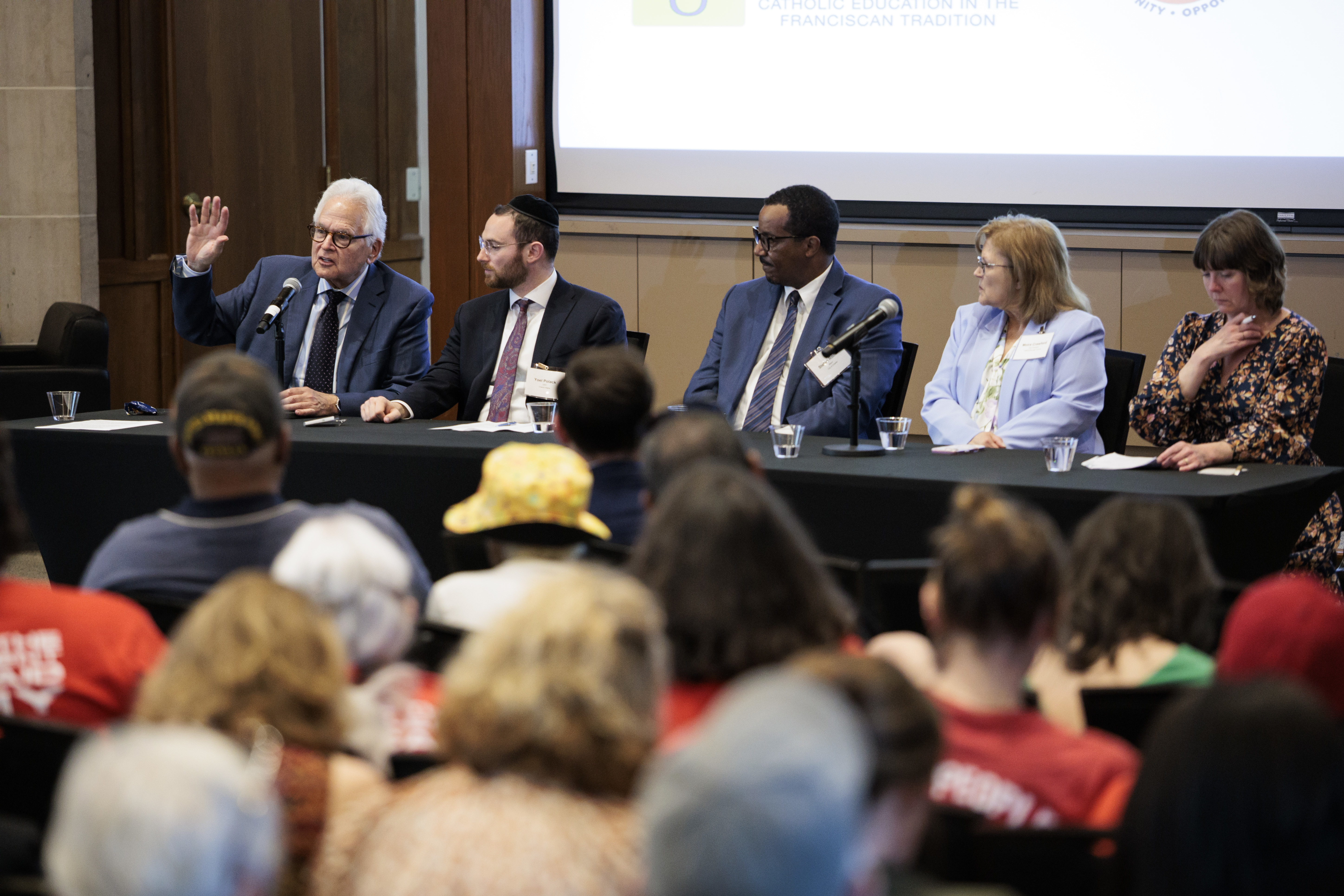
The vision includesreopening of the emergency department, creating a small hospital above the ED, and developing outpatient services — all operated by one or more local nonprofit health systems, Yoel Polack told a standing-room-only crowd of more than 200 at Widener University.
Polack isCEO of Chariot Allaire, the for-profitpartnership that paid $10 million for Crozer in January. His group has been talking to all the regional health systems for months and expects soon to begin “a study process with two and hopefully three of the major academic medical centers in the region,” he said.
That is expected to last up to 90 days, he said, “and hopefully at the end of that period, we’re going to be having some outline of partnership with the system.” Polack described his anticipated partner as an institution “you know and trust.”
The entire process could take two or three years after a partnership is formed, he said Polack, whose company is registered in Lakewood, N.J.
He provided no details on how much Chariot Allaire would be willing to invest to attract a health system to the site, where state-led efforts previously failed to savea major safety-net provider for Delaware County that closed last May amid the bankruptcy of its California-based owner, Prospect Medical Holdings Inc.
Chariot Allaire paid relatively little for the 64-acre campus, which gives the company a low cost basis for owning the site. But that doesn’t mean it will be easy to attract a partner at a time of thin to nonexistent profit margins for the region’s health systems.
“It does not seem like there’s an easy and obvious candidate,” said Dan Grauman, managing director at VMG Health, a national healthcare consulting firm.
“There’s no question there’s need for care and for services, said Grauman, who has decades of familiarity with the Philadelphia region’s healthcare market.
A welcome public meeting
During an hourlong question and answer session, residents expressed gratitude for the meeting with Polack and his senior medical adviser, Arthur Klein, a pediatric cardiologist who spent decades as an executive at nonprofit health systems in New York.
A town hall meeting Tuesday in Chester about plans for the former Crozer-Chester Medical Center drew a large crowd.Monica Herndon / Staff Photographer
“Many times things happen in our community, and we are the last to know, so you started off very, very well,” said Zulene Mayfield, chairperson of Chester Residents Concerned for Quality Living, a community group known for the fight to close alarge trash incinerator in the city.
Some residents pushed back againstPolack and Klein’s plans for a much smaller hospital than the more than 400 beds Crozer-Chester Medical Center had at its peak. During a March interview with The Inquirer, Klein suggested the new hospital could have 80 beds.
“You don’t want a hospital of the 1990s,” Klein said Tuesday.
The current hospital structure encompasses 750,000 square feet — now completely empty. Crozer’s shuttered ED took up 30,000 of the square feet. Chariot Allaire contemplates opening a hospital a tenth of the size of the old hospital.
Operating that hospitalcost way too much, Polack said. ”It also doesn’t meet the way medical care is done today, which is mainly on the outpatient side,” said Polack,who has worked in healthcare real estate development in New York.
Simone Development Cos., where Polack worked before striking out on his own, often collaborated on real estate deals with Montefiore, a health system in the Bronx that serves many patients with Medicaid insurance, Grauman said.
That experience is relevant to the effort here, he said, given that Crozer also served large numbers of people with Medicaid, which pays significantly lower rates than private insurers.
The role of local health systems
Before Prospect’s bankruptcy filing in January 2025, a few local health systems explored establishing a new nonprofit to take over Crozer-Chester Medical Center. Those talks continued during the bankruptcy, but failed to produce a solution.
The University of Pennsylvania Health System saidit remains at the table.
“We continue to work with committed partners to restore crucial healthcare services for Delaware County residents,” Penn said in a statement. “It’s important that any new models for the former Crozer-Chester site are built to be sustainable amid a rapidly changing healthcare landscape and persistent financial challenges.”
ChristianaCare, which plans to open a micro-hospital in Aston in June, is not in discussions with Chariot Allaire, it said, but supports “their efforts to expand access to quality heath care in Delaware County.”
Arthur Klein, senior medical adviser (left), and Yoel Polack, CEO of Chariot Allaire, greet attendees during a town hall in Chester on Tuesday.Monica Herndon / Staff Photographer
While Chariot Allaire is wooing health systems, the new owners of two other closed Crozer Health hospitals,Taylor and Springfield, are doing the same thing. Local investors paid $1 million each for those hospitals. Those low prices could allow the owners to offer below market rate leases to attract tenants.
Polack noted that if no local systems want to bring services to the Crozer site, he would look farther afield.
“We don’t control hospital systems and operators, but we are doing everything that we can to put the pieces together to illustrate the opportunity that we see here to those hospital systems,” he said.
John Linehan and Kobe Bryant used to talk. A lot. This would not have been unusual for other AAU teammates, but these two were fierce high school rivals.
Linehan was a scrappy point guard for Chester. Bryant was a relentless shooting guard for Lower Merion. Both were competitive, almost to a fault, and in the days leading up to big games, they’d get chippy.
The week before the 1996 PIAA Class AAAA District 1 title game, for example, the players talked every day on bulky landline phones, with Bryant often calling Linehan at his home in Chester.
“I just said, ‘You know, John, I haven’t won a championship yet, and you have,’” Bryant told The Inquirer in 1996.
Linehan knew what his friend was doing. The future NBA star did the same thing a few weeks later, on March 19, a day before the teams met again in the state semifinal.
“He was trying to get me to trash talk,” Linehan said. “I think he needed a little edge. I didn’t want to give him too much. I was like, ‘Man, you crazy.’”
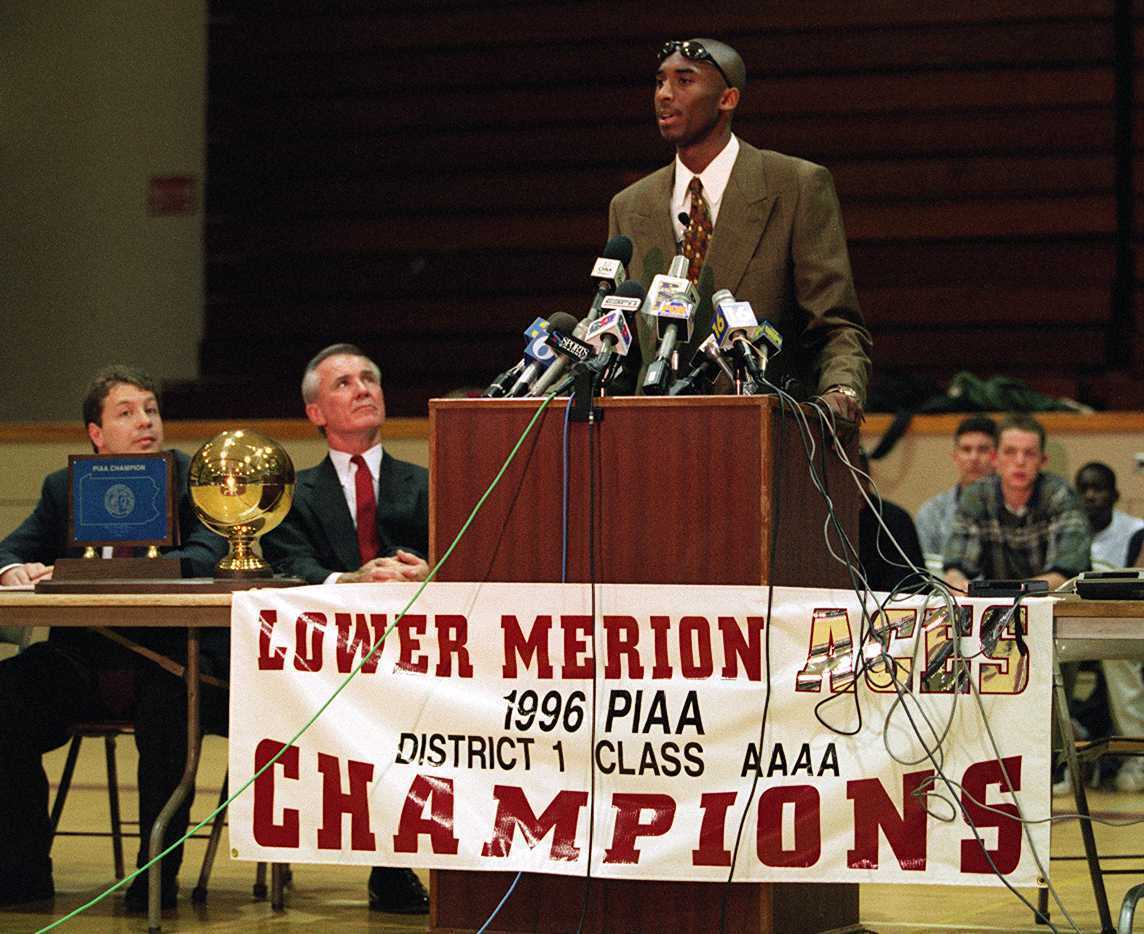
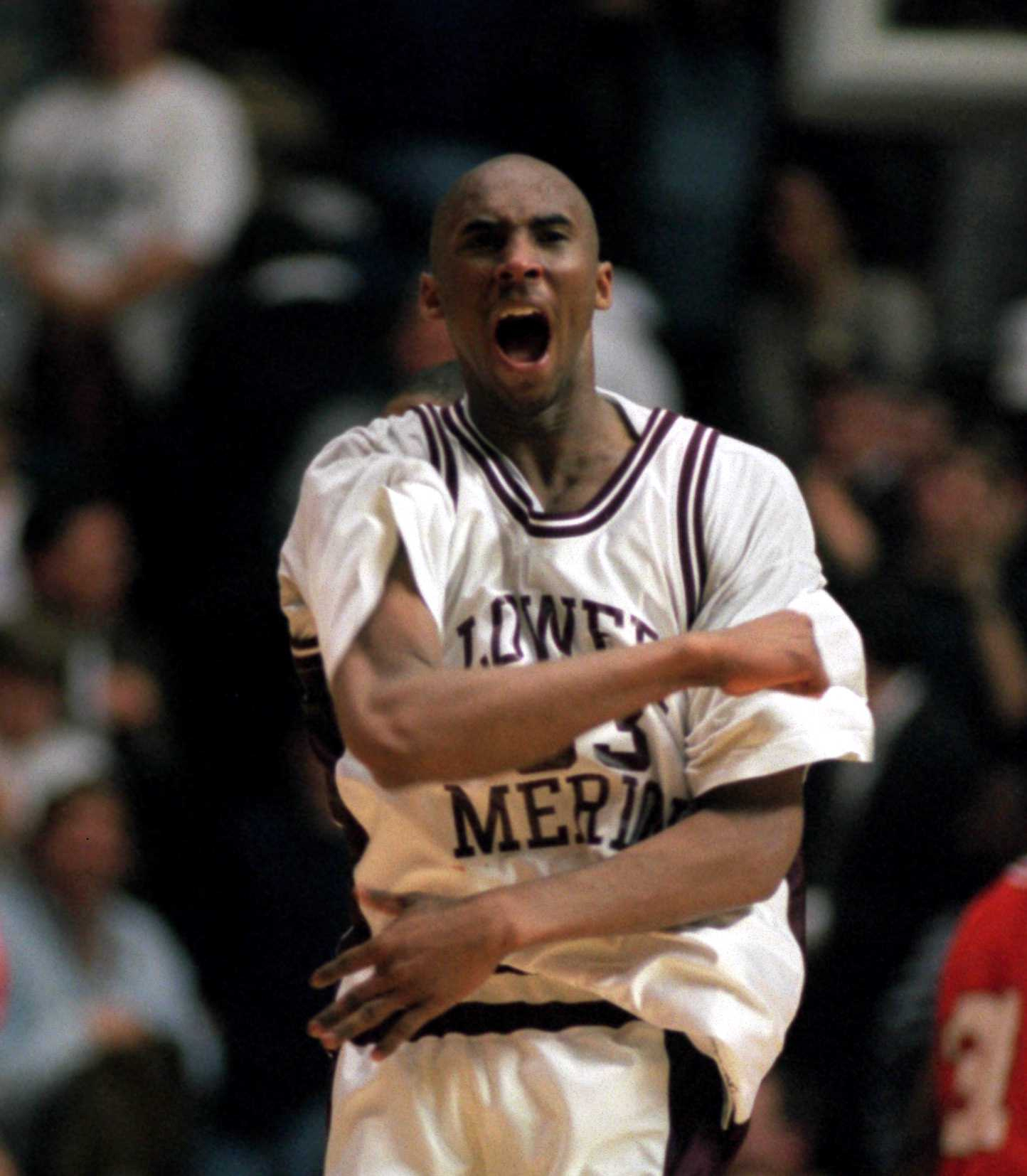
The late Kobe Bryant, a former Lower Merion basketball star, announcing he will go directly into the NBA draft out of high school.ALEJANDRO A. ALVAREZ / Staff Photographer
Lower Merion wasn’t a basketball school when Bryant arrived in the fallof 1992. It paled in comparison to the local powerhouses like Simon Gratz, Coatesville, and Chester.
But Bryant changed that. Even in his freshman year, a season in which the Aces went 4-20, he brought a new standard, working out before class and introducing a level of toughness that was foreign to his teammates.
Bythe mid-1990s, Lower Merion was among the best high school teams in the Philadelphia area. Its players were more confident, celebrating after big shots, and talking loud on the court.
The Aces didn’t play as many games against Coatesville, a rising power led by Rip Hamilton. They couldn’t consistently measure themselves against Gratz, which didn’t participate in the PIAA playoffs untilthe 2004-05 season.
But they could against Chester. And so, a decades-long rivalry was born.
From 1996 through the mid-2010s, Chester and Lower Merion put on some of the greatest high school basketball games in the area. They’d often sell out venues like the Palestra and Villanova’s Pavilion. Some fans would even scalp tickets.
Their communities were almost diametrically opposed. Chester was predominantly Black; Lower Merion was predominantly white. Chester was plaguedby poverty; Lower Merion was considered affluent.
Chester, with its Biddy League, had a legacy of basketball greatness, and a steady pipeline of talent. Lower Merion had nothing comparable. But these differences melted away on the court.
And while the rivalry is not what it once was, it lives on today.
“The pride and the intensity and the history will never fade,” said Lower Merion coach Gregg Downer. “I mean, if we played them tomorrow night, that would be an intense game.”
The Bryant-Linehan era
When Downer was named head coach in 1990, he already was well-aware of Chester’s tradition. He’d played youth basketball growing up in Media and had heard about the stars who’d come out of the Biddy League.
It was obvious that his team would have to go through the Clippers to win any sort of accolade. But it wasn’t until Bryant’s arrival that Downer’s aspirations became a real possibility.
The shooting guard, who was the son of former 76er Joe “Jelly Bean” Bryant, was mature for his age. He’d demand more, mentally and physically, of older teammates. Doug Young, a former Lower Merion forward, remembered seeing Bryant leaving the locker room at 7 o’clock one September morning in 1993.
He’d been at the high school gym since 5 a.m., working out by himself. To the Lower Merion basketball team, this was a “crazy” concept, so Young and his cohorts decided to join him.
In the District 1 championship game against Chester, Kobe Bryant goes to the hoop over the Clippers’ John Linehan.Jay Gorodetzer / Staff Photographer
They arrived the next day at 5:06 a.m. The players knocked on the door. Bryant didn’t answer.
“He wouldn’t open it,” said Young, who graduated in 1995. “You’re either there or you’re not. We were six minutes late.”
His teammates waited outside until 6:30 a.m., when the school opened. They made sure to show up before 5 a.m. from that day on.
Downer was wired the same way. The coach — and his NBA-bound pupil — would push the team in practice. Losses were particularly tough. The players would go through endless sprints and rebounding drills that sent them running to the trash can.
It wasn’t fun. But over time, the method created a newfound tenacity.
“No one walked into high school saying, ‘Oh, yeah, I want to win a state championship,’” Young said. “But [Kobe] knew what that was. He was like, ‘I don’t know any other way. If we’re not going to win a championship, what the heck are we playing for?’”
Chester was always going to be an obstacle, so Downer tried to play into the battle. He’d use analogies for the tough, hard-nosed team, comparing it to an animal stalking its prey.
The coach began to screen movies to underscore this point. Together, in a Lower Merion classroom, Downer’s players watched Jaws and other tales of survival, like The Edge, a 1997 thriller about a plane that crashes in the Alaskan wilderness.
“This bear is stalking them, and the couple is saying, ’What are we going to do about this bear?’” Downer said. “And one of them says, ‘The only thing we can do is kill the bear.’
“And I remember being like, ‘We can do this.’ But the only solution is to — not to be overly graphic — but to kill them.”
(The bear in this analogy was Chester.)
He added: “We tried everything humanly possible to get through to this team.”
The first few games were ugly. In 1995, Lower Merion met the Clippers in the District 1 championship, only to lose by 27 points. But they came back with a renewed focus the following year, in 1995-96, going 25-3 in the regular season to earn a district final rematch against Chester.
The Aces showed up at the arena with “27″ printed on their warmup shirts. Bryant, armed with fresh bulletin board material from Linehan, dropped 34 points against the Clippers en route to a 60-53 Aces win.
The shooting guard scored 39 points later that month — with a broken nose — in a 77-69 state semifinal win over Chester. Lower Merion went on to beat Erie Cathedral Prep, 48-43, to win its first state championship since 1943.
Kobe Bryant celebrates after defeating Chester at the Palestra in 1996 to advance to the state final.
To Linehan, the difference Bryant made was obvious. He joked that he’d “never heard of Lower Merion” before his friend arrived. But once he did, Chester realized it would have to go to great lengths to prepare for the phenom.
Ahead of a big game against Lower Merion in the mid-1990s, the coaching staff reached out to Clippers alumnus Zain Shaw. He played at West Virginia and in Europe and possessed some of the same characteristics as Bryant — a tall frame and an athletic build with strong ballhandling skills.
The Clippers invited Shaw to practice, where he played the role of Bryant (to the best of his ability).
“Kobe was so special, we had to bring in a pro to help us prepare,” said Linehan, who later starred at Providence.
But there was another impact the future Lakers star had, one that had nothing to do with his own prowess. Linehan noticed that Bryant’s Lower Merion teammates started to take on some of his qualities. Suddenly, they were playing brash, confident basketball.
“We didn’t have reason to believe, until Kobe got there, that we belonged on the court with Chester,” Young said. “The fear was real. Teams were afraid of Chester because they’d run you out of the building.
“The idea of Lower Merion being on the court in a meaningful game against [them] was such a crazy thought. But then, you started to believe.”
The buzzer-beater heard ’round Chester
Bryant never got over the rivalry, even after he embarked on his Hall of Fame NBA career in 1996. Sometimes, he’d call the coaching staff before big games against Chester, leaving expletive-laden voicemails to use as motivation.
The Lakers shooting guard also created an incentive structure for his former team.
“You couldn’t get a pair of Nike sneakers unless you qualified for the playoffs,” Young said. “If you don’t earn it, you don’t get it.”
He became especially involved in 2005-06. After a lull in the early 2000s, Chester and Lower Merion found themselves neck-and-neck again. The Aces were led by the duo of Ryan Brooks and Garrett Williamson, and the Clippers boasted a deep roster, headlined by Darrin Govens. All of them eventually played in the Big 5.
(Chester was so stacked that it brought a 1,000-point scorer off the bench in Noel Wilmore.)
Students from the class of 2005 show their support as Chester and Lower Merion play in the state final. Hinda Schuman / Staff Photographer
The rivals met in the state championship on March 19, 2005. Despite strong performances from Williamson and Brooks, the Clippers pulled away in the second half thanks to a dominant third quarter from Govens. Chester won, 74-61.
The teams reconvened the following season with their competitive spark fully reignited. They faced each other three times that year. Chester took Round 1, a one-point regular-season victory on Dec. 27.
Round 2 was in the district final on March 3. Before the game, in front of a packed crowd at the Pavilion, Chester sophomore Karon Burton walked up to the layup line.
Lower Merion’s student section caught his ear with a chant about coach Fred Pickett’s stout stature.
The dig didn’t intimidate Burton. If anything, it fueled him. He grew up playing street ball in Chester and always loved trash talk.
Instead of cowering, like the crowd hoped, the sophomore delivered an unforgettable outing. The game went into overtime, and was tied at 80 with only a few seconds remaining.During a timeout, assistant coach Keith Taylor pulled Burton aside.
“He was like, ‘Hey, listen,’” Burton said. “They’re going to double Darrin. If you get that ball, do your thing.’”
Taylor’s words proved prescient. As Lower Merion’s defenders swarmed Govens, the Clippers inbounded the ball to Burton.
He took a pull-up jumper from beyond the arc and drilled it for an 83-80 win. The Chester fans stormed the court. Burton, who later joined Wilmore in the 1,000-point club, said he felt like a celebrity in his hometown.
“It was like watching a buzzer-beater in the NBA,” he said. “I just ran to my teammates, they picked me up. It was a crazy feeling.
“I’m a big Kobe fan, too. Kobe’s my favorite player ever. So when I came and I hit the game-winner on that team …”
Round 3 took place a few weeks later, in a state semifinal rematch at the Palestra on March 22. Bryant called Lower Merion’s coaches before the game.
“I don’t remember specifically what he said, but I’m sure there were a lot of [expletives] dropped,” said Young. “Like, ‘Don’t call me back if you don’t beat those [expletives].’ That was a line we heard from him a couple times.”
This one didn’t go Chester’s way. After trailing the Clippers, 47-37, at the end of the third quarter, the Aces came roaring back in the fourth and put up 33 points to eke out a 70-65 win.
The celebration in the locker room was cathartic. Water sprayed into the air. Players sat atop each other’s shoulders and turned the showers into a slip ‘n slide. Bryant called in, again, as other members of the 1996 team filtered through.
Darrin Govens scored his 1,000th point for Chester against Lower Merion in the state championship in 2005.Hinda Schuman / Staff Photographer
This was not how Govens wanted to end his high school career. And a few months later, when he arrived at St. Joseph’s on a basketball scholarship, he saw a familiar foe.
It was Williamson, his new Hawks teammate.
“We were sitting on the opposite side of the bench,” Govens said. “I didn’t want to sit next to him; he didn’t want to sit next to me. We’d kind of avoid each other and just head nod.
“Even in running drills, it was a competition. He looked to the left. I looked to the right. We tried to beat each other in sprints. But then we realized, ‘All right bro, we’re teammates now.’”
‘Hero status’
Chester had always rallied around its high school basketball team. Linehan said it was akin to playing for the Sixers. The teenagers were treated like professional athletes — especially those who had been a part of big wins.
The Clippers’ public address announcer, James Howard, called this “hero status.”
“All of a sudden, your money’s no good,” he said. “Barbers take care of you, make sure your hair looks nice before games. Free food. Little kids look up to you and ask for your autograph. That’s how it is.”
In Chester, there were plenty of heroes to draw from. There was Linehan, but also Jameer Nelson, who met a young Burton in the late 1990s. Nelson, a friend of Burton’s cousin, gave the aspiring basketball player a gift before he left for St. Joe’s: his MVP medal from the Chester summer league.
“He was one of the biggest guys in our city,” Burton said, “so it’s definitely something that I’ll always remember.”
By the early 2010s, when the rivalry was reignited for a third time, Lower Merion had built more of a basketball tradition. Aces guard Justin McFadden said he’d get stopped in Wawa before big games against the Clippers.
Chester celebrates its win over Lower Merion for the state championship in 2012. Steven M. Falk / Staff Photographer
“It became a community thing,” he said. “People would be asking, ‘What do you guys think about Chester? Do you think we can get it done?’”
In 2012, the schools met in the state championship for the first time since 2005. Junior forward and future NBA starter Rondae Hollis-Jefferson put up a double-double to lead the Clippers to a resounding 59-33 win over the Aces. It was their second straight title and their 58th straight victory.
A year later, after going 17-0 in the Central League, the Aces met the Clippers in the state final again. Chester had won 78 straight games against in-state opponents. Snapping that streak would be daunting, but Downer had a plethora of motivational tactics at his disposal.
Just as they had in the 1990s, The Aces again spent pockets of the season watching Jaws, The Edge, as well as an addition: Al Pacino’s “Inch by Inch” speech in Any Given Sunday.
“He would have that fired up on YouTube, ready to go,” McFadden said. “Looking back, [your reaction] is a chuckle, but in the moment, it worked. We knew that this was the hill that needed to be climbed.
“And every time they played that speech, we got goose bumps. We were ready to fire.”
Chester got out to an early lead, but Lower Merion rallied behind a 22-point, 11-rebound performance from B.J. Johnson, who later starred at La Salle. The Aces snapped the streak and won their seventh state title with a 63-47 victory.
Lower Merion’s Jaquan Johnson goes to the net as Diamonte Reason guards him in the Chester-Lower Merion state championship game in 2013.Elizabeth Robertson / Staff Photographer
The Clippers then were coached by Larry Yarbray. Pickett, who was diagnosed with cancer in2010, was in declining health. Just before he died in 2014, Downer decided to say goodbye.
He and his former assistant coach Jeremy Treatman drove out to Pickett’s home in Chester. They went to his bedside.
“And we talked,” Downer said. “And we held hands. It was a really touching moment for me. This is a man that carried Chester on his back. That tried to carry Lower Merion on his back. And I knew it was the last time I was going to see Fred.
“We walked out the door, and we told each other that we loved each other. And I never thought he would say that to me, or vice versa. But it was just kind of like, ‘You know what? We’ve had some amazing battles, and there’s a lot of respect there.’”
Keeping the tradition alive
In recent years, the Chester-Lower Merion rivalry has diminished.
There was a brief period when the teams were in different classifications. Both programs have lost players to private schools that can recruit, and the addition of the Philadelphia Catholic League to the PIAA has made the state playoffs more competitive.
One place the Aces and Clippers could meet is in the district tournament, where they reunited in 2024. But they haven’t played each other since. And Howard says the contests don’t have the same feel.
“Both teams have lost D-I talent,” he said. “It’s not as high-flying, above the rim, as it was in the past. But still a great game. Sold out at Lower Merion, and at Chester, same thing.”
The history will always be there, though, and Burton is doing his best to keep it alive. His 8-year-old son, Karon Burton Jr., is playing in the Biddy League. His father is his coach.
Sometimes, they go on YouTube and watch old Clippers games. Junior’s favorite, of course, is the 2006 district final.
Burton believes that his son has a promising future, but isn’t sure of where he’ll go to high school yet. He doesn’t want Karon Jr. to feel obligated to follow his father’s path.
But if it worked out that way, what a story that would be.
“I’d love to be the first father and son to have 1,000 points,” Burton said. “With the same name? That would be crazy.”
Tonya Robertson was working one of her three jobs at a charter school in Chester when she broke down crying to a colleague: She was homeless, living in a domestic violence shelter with three children, and pregnant with twins.
Her co-workers suggested she talk to the school’s counselor, who gave her a stack of applications to apply for federally funded food support, at-home prenatal nurse visits, and maternal health resources, all coordinated through The Foundation for Delaware County.
The nonprofit has for almost a decade provided access to safety net programs such as Women, Infants, and Children, the nutrition program known as WIC; Healthy Start; and the Supplemental Nutrition Assistance Program (SNAP), the food program for low-income families. It also offers a menu of other support services for families, such as a program that provides at-home prenatal visits, housing assistance, legal aid, doulas, mental health resources for new mothers, and a fathers’ support group.
“They had so many resources — things I was scared to open up my mouth about, things I didn’t want to say I needed,” said Robertson, 39, of Marcus Hook.
She said she wishes she’d known about the organization sooner, during the years she struggled to raise her three older children as a single mother.
Now the foundation is rebranding its offerings as the Family Village, in an effort to raise awareness about the nonprofit’s full range of services. Foundation leaders said that in the past, people may have connected with the organization for a specific resource, such as WIC or SNAP, without learning about other programs they could benefit from. The idea of the Family Village is to make the foundation’s services more cohesive, wrapping around those in need.
The initiative has been years in the making, but is especially timely after the county’s largest health provider, Crozer Health, closed earlier this year when its for-profit owner filed for bankruptcy. The health system had long been an anchor for Chester and the surrounding communities, providing critical access to maternity, pediatric, and mental health services.
“Children don’t come with instructions. We all need a helping hand at some point,” said Joanne Craig, the foundation’s chief impact officer. “We have this great continuum of resources for families, but from the outside looking in, it wasn’t always easy to see and understand.”
An ambulance drove by the entrance to Crozer-Chester Medical Center, in Upland. This hospital closed earlier this year. Alejandro A. Alvarez / Staff Photographer
Filling gaps in Delaware County
The Foundation for Delaware County was formed in 2016, when the nonprofit Crozer-Keystone Health System was sold to Prospect Medical Holdings. When for-profit companies acquire nonprofit health systems, Pennsylvania law requires the nonprofit assets be set aside in an independent charity. Crozer’s nonprofit assets became the Foundation for Delaware County.
The foundation’s overarching mission is to support the health and welfare of Delaware County residents by coordinating government safety-net programs and creating its own offerings to help families in need. The foundation also provides millions of dollars in grants to nonprofits and charities to support public health, housing, and youth development.
With $53.9 million in net assets as of October, the foundation is the largest philanthropic organization in Delaware County, serving some 8,000 people a year.
Many of the foundation’s most used programs, such as Healthy Start, a federally funded prenatal and early childhood initiative, began before the foundation was spun out of Crozer, in response to the high infant mortality rate in Chester.
When Prospect said it would close the remaining Crozer hospitals, The Foundation for Delaware County was pressured by the case’s bankruptcy judge to take on part of the company’s debt to keep the hospital open until a new operator was found. The foundation shelled out $20 million to extend operations temporarily and later contributed $3 million to help former patients obtain their medical records.
The foundation’s new Family Village initiative can’t close all the gaps Crozer’s closure left — the area lost its largest emergency department and maternity ward, the only 24-7 mental health crisis center, and critical pediatric care.
ChristianaCare won an auction to take over five former Crozer outpatient locations in Broomall, Media, Glen Mills, and Havertown, and has plans to open two new micro hospitals in Aston and Springfield.
Delaware County in August selected Belmont Behavioral Health to establish a new crisis response center and expand mental health services.
But Craig said she hopes the foundation’s new approach will help families better access resources that remain available — and that they may not have known about.
Help without judgment
Before connecting with the foundation, Robertson was skeptical of organizations and programs that offered help.
Her grandfather, for instance, berated her for enrolling in SNAP and the at-home nurse program, warning her that she could end up losing her children, if coordinators decided her home and parenting weren’t good enough.
“I’m so scared to let someone in, let them come in my house and see that my house is not up to par, see that I’m struggling with this, or that I can’t feed them,” Robertson said.
“If I can’t feed them, they’re going to take my kids, and I’m going to go to jail,” she added.
Research has found that these fears are often justified, with social service workers deeming parents of color unfit at higher rates than white parents, and equating poverty with neglect.
Healthcare workers, social workers, and teachers are among so-called mandated reporters, who are required to report to Child Protective Services any suspicion of abuse. Only a fraction of reports are substantiated after being investigated, but they stoke fear and can dissuade families from seeking help.
But Robertson was working three jobs and still couldn’t feed her family, so she filled out the forms the school counselor had given her.
Her first prenatal visits through the Nurse-Family Partnership were at the domestic violence shelter where she was living.
Robertson was proud when she was able to afford to move her family into an apartment in Chester. But her nurse told her the gaping hole in the ceiling and mold growing in the corners were unsafe. She connected Robertson with the foundation’s Housing Opportunities Program for Equity, which helps people secure safe housing and navigate problems with landlords.
After her twins were born, the foundation’s Moving Beyond Depression program helped Robertson work through postpartum depression, which may have otherwise affected her ability to work and care for her children.
Two years later, Robertson said she still faces challenges. The recent government shutdown cut off the family’s food stamps, making for tough budgeting decisions earlier this month.
But now she knows where to turn for help, if the load ever becomes too heavy again.
Editor’s note: This story was updated with additional information on the foundation’s mission.