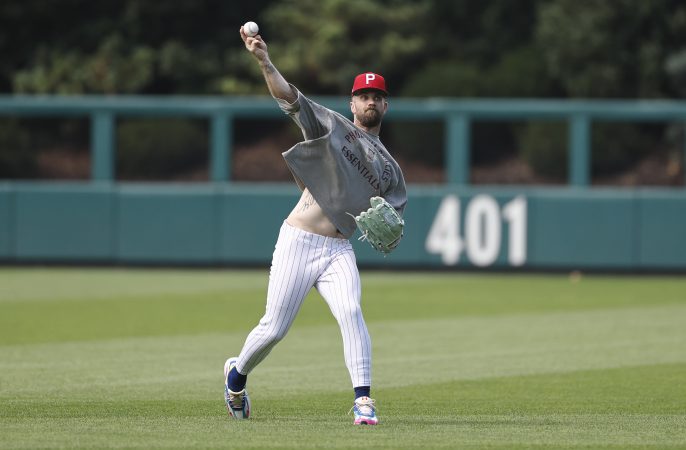
At 3:30 p.m. Monday, Bryce Harper stood on the grass in shallow center field and uncorked throws from as far as 120 feet to coach Paco Figueroa on the right-field foul line.
With that, the Grand Experiment began.
Make no mistake, that’s what this is. The Phillies made their big trade-deadline move for Luis Arraez, a three-time batting champion whom they deemed the most impactful hitter available even though his preferred position (second base) was occupied. They also added relievers Caleb Kilian and veteran lefty Brooks Raley.
But they couldn’t line up on a package for any of the 13 — count ‘em, 13! — starting pitchers of note who got traded, leaving one of the Phillies’ chief needs unfilled.
Were they unwilling to pay the prices for the one subset of an extreme seller’s market that featured abundant supply?
Or were they unable?
“Both,” Dave Dombrowski said after the 6 p.m. deadline passed. “In some cases, I’d say some clubs felt we were unable to match others, but not in many cases. The top of our farm system is very well-regarded. I think it’s a little deeper than what people think it is once you start talking to them. But others may not.”
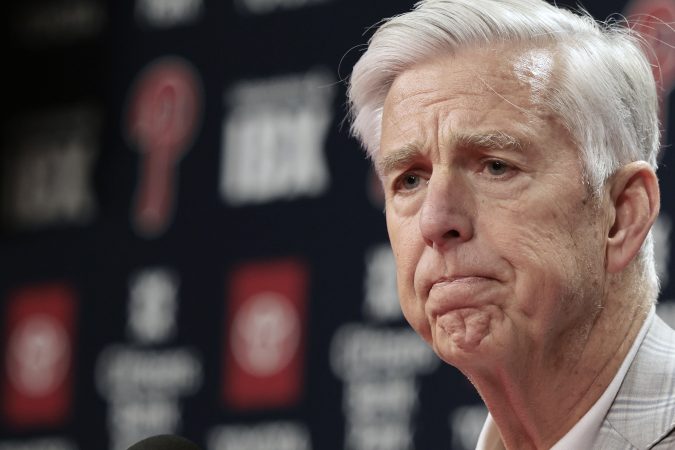
Phillies president of baseball operations Dave Dombrowski (center) made two notable trades before Monday’s deadline.Monica Herndon / Staff Photographer
As a rival team official said, “Dave was in a really tough situation,” trying to find bullpen help, a right-handed bat, and a starter with “only three legitimate pieces” in the farm system. Dombrowski cashed in one of them — 20-year-old righty Ramon Marquez — for Arraez, a pending free agent.
But the Phillies’ biggest asset turned out to be Harper’s unfulfilled desire to win a World Series.
If Harper wouldn’t go back to right field, where he hasn’t played since April 2022, the Phillies couldn’t have set off the chain reaction of positional changes — Alec Bohm to first base, Bryson Stott to third — that opened up second base for Arraez.
For years, Harper told everyone that he would make a temporary move to the outfield if it enabled the Phillies to add a hitter. They never came close to taking him up on it, even as Dombrowski went on a four-year search for outfield bats that turned up Austin Hays, Max Kepler, Harrison Bader, and Adolis García.
“I know everybody thinks it’s crap when I say it,” Harper said Monday. “But it’s not.”
Just in case, Harper stuffed an outfielder’s glove in his travel bag for the road trip last week. Then, at Dombrowski’s request, Don Mattingly struck up a conversation before a game. It went like this:
“Hey, are you serious?” Mattingly said.
“Yeah,” Harper said.
And that was it.
“I think him being willing to do that — and being serious about it — was the key to being able to open your mind to different things,“ Mattingly said. ”It could get away from an outfielder and open your mind to different guys.”
Luis Arraez, acquired Monday by the Phillies at the trade deadline, is a three-time batting champion.Gregory Bull
The clincher, though, came Sunday night. Dombrowski was “pretty far along” in talks with the Giants about Arraez when he got a text from Harper.
“He said, ‘If there’s any truth to the rumors that you’re getting Arraez, I’d be happy to move to the outfield to add him to the ballclub,’“ Dombrowski said. “His volunteering it opened up the door for us to go ahead.“
Never mind, then, that the Phillies began the week last in the majors in on-base percentage (.280) and OPS (.644) from the right side of the plate. In their estimation, lefty-swinging Arraez will improve the lineup more than righty-hitting outfielders Jo Adell and Taylor Ward.
They’re probably correct. Arraez is a modern Rod Carew. What he lacks in power (career-high 10 home runs in 2023), he makes up for in contact skills. To put his 21 strikeouts this season into context, 102 players struck out as many times … in July alone.
But Harper, Stott, Trea Turner, and Bohm — from first base to third — have comprised the infield for four years, including Monday night in the 113th game of the season. Now, the only one who will stay put is Turner, the worst defender of the group.
It’s a lot of chess pieces to move around on Aug. 4.
Mattingly, a nine-time Gold Glove first baseman, was asked if he’s ever seen anything like it.
“I can’t say that I have,” he said. “Not that I remember. No, not really.”
And Dombrowski, who has led front offices for nearly 40 years and been in the game even longer?
“Probably not positional player-wise,” he said.
Bryce Harper is expected to return to first base after this season.Yong Kim / Staff Photographer
The Phillies are among the worst defensive teams in the majors. Dombrowski thinks they could be better in the new alignment. Can they get worse?
Harper, in particular, but also Stott are expected to return to their regular positions after the season. Until then, it’s a gambit.
“I think sometimes you have to take a little bit of an adventurous look at your club when you look at moving positions around,” Dombrowski said. “We think it will work for us.”
But they’re asking Harper and Stott to condition their arms to make longer throws. And it’s not like they have spring training. They’re expected to be at their adopted positions Tuesday, when Arraez joins the team.
“Obviously I’m going to need to get my arm going a little bit more,” Harper said. “Long toss, arm care, all that stuff. … I would say that and maybe a little bit of the legs as well. But at 33 right now, it’s the best I’ve felt in a long time. I feel healthy. I feel strong.
“I’m at a spot in my career where I don’t have to do that, right? Like I don’t have to go and play a different position. I’m very comfortable at first base. I love first base. I love being on the infield, you know? It’s something I’m doing just for the team. That’s how I feel about that.
“But I want to win. You guys know that I want to win more than anybody. So, go out there hopefully it helps.”
It won’t fill the fifth-starter spot, get any outs in the eighth inning, or boost the production from the right side of the plate. But at the trade deadline, Harper’s championship thirst was the best thing the Phillies had going for them.
What does disaster look like? Well, let’s start with what it sounds like, because it sounds a lot like Dombrowski’s voice.
“Our first goal is to make the playoffs,” the Phillies president said Monday, prefacing an answer about the potential postseason impact of a day headlined by the acquisition of free-agent-to-be Luis Arraez for fast-rising pitching prospect Ramon Marquez, “so, I hope we’re dealing with clubs in the postseason.”
Luis Arraez has won three batting titles and is leading the National League with a .324 average going into Monday’s games.Jeff Chiu
The words that followed don’t really matter. What matters is the qualification. I have written this plenty of times before. Hope is not strategy. It is a lack of options, one that is usually a function of decisions made prior.
Dombrowski has been the man in charge of making the Phillies’ baseball decisions for five-and-a-half years. Five-and-a-half years into Andrew Friedman’s tenure with the Dodgers, he was en route to his first World Series win, after having already lost two, one in seven games. He’d salvaged Max Muncy from the scrap heap, signed Justin Turner and Chris Taylor, traded for Kiké Hernandez, and then Mookie Betts, drafted Will Smith, Andy Pages, and Walker Buehler. Just as important, he’d swung a series of minor league trades that helped lay the groundwork for the Dodgers’ recent acquisition of two-time defending AL Cy Young Award winner Tarik Skubal.
Long story short, Dombrowski has reached a point where the problems he must solve are all of his own making. He did not draft Alec Bohm or Bryson Stott, but he did not pivot off them, either. He signed Trea Turner to a $300 million contract. He oversaw the move of Harper from right field to first base. Four years ago, he could have leveraged top prospect Logan O’Hoppe in a trade for a young, cost-controlled right-handed hitter, or a young, cost-controlled pitcher instead of Brandon Marsh. He did not lose the trade. But, in the grand scheme of things, given the circumstances, did he win it?
The circumstances are this:
It isn’t necessarily a disaster to ask three-fourths of your infield to change positions midseason so that two players can continue to play a position where they aren’t the best defensive option.
As a result of the trade for Luis Arraez, Phillies first baseman Bryce Harper will move back to right field.Yong Kim / Staff Photographer
It isn’t necessarily a disaster to move one of those players from the infield to the outfield, where he hasn’t played more than eight games since 2021. Nor is it to move another of those players (Stott) from second base to third base, a position where he has started just 12 games since high school.
It isn’t even necessarily a disaster to do all of these things in order to add another lefty bat to a lineup that already suffered from a glut of them. Nor it is necessarily a disaster that the new left-handed bat is a top-of-the-order bat, and thus does little to remediate the lack of middle-of-the-order thump behind Harper and Kyle Schwarber.
Don’t get me wrong. Any one of these things could be a disaster. One might argue that, in sum, the odds are strong that they will be a disaster. But these are perfectly defensible moves in isolation, and maybe even in sum. The Phillies can, did, and will continue to argue that Arraez is exactly the kind of bat their lineup needed. They can, did, and will continue to argue that he can play good enough second base to warrant the downgrade there along with the question marks at third base and in the outfield.
The real disaster is that the Phillies found themselves in a predicament where they needed to make these moves. The real disaster is that these moves so preoccupied their energy and resources that they failed to address what were arguably their two greatest needs. The real disaster, above all else, is the desperation premium that the Phillies and Dombrowski were forced to pay just for the hope that it might somehow work.
Marquez may never amount to anything as a major leaguer. As devastating as his changeup is — the minor league strikeout rate is absurd — the fastball and the health are what matter first and foremost. He is 20 years old. He is befuddling class-A hitters. But the success or failure of the Arraez trade isn’t just a matter of who Marquez will be as a major leaguer. It is also matter of who else the Phillies might have traded him for.
This past offseason, Arraez signed a one-year contract with the Giants worth $12 million. That’s roughly $2 million more than the Phillies paid to Garcia, for whom nobody would be trading, even if healthy. They did the same thing last season, albeit at a far lower price, acquiring Harrison Bader to help replace free agent mediocrity Max Kepler. In fact, the Phillies have done the same thing every season of Dombrowski’s tenure, to one degree or another. They are the little boy at the leaking dam, their fingers outnumbered by the holes they must plug. It is losing math, even before you factor in the market.
Second baseman Bryson Stott will move over to third to make room for Luis Arraez in the Phillies’ infield.Yong Kim / Staff Photographer
Dombrowski and his minions will argue that they could not have simply signed Arraez for $12 million. They had Stott at second base, after all. And they had Bohm at third. They couldn’t move either because they had Turner at shortstop and Harper at first. And yet, here they are.
For nearly six years they’ve been here. Each of the last three have been as obvious as the last. Bohm, Stott, J.T. Realmuto, Justin Crawford, Marsh, Garcia — none of them has underperformed any realistic expectations. And yet, here they are.
“We added the top hitter in the league to the offense, a different type of hitter than we have,” Dombrowski said of Arraez. “Somebody that gets on base, sets the stage for some of our big guys, doesn’t strike out as often, who can do things with the bat.”
These are helpful things, no doubt.
More helpful is to build an organization that avails you with those things before the panic sets in.
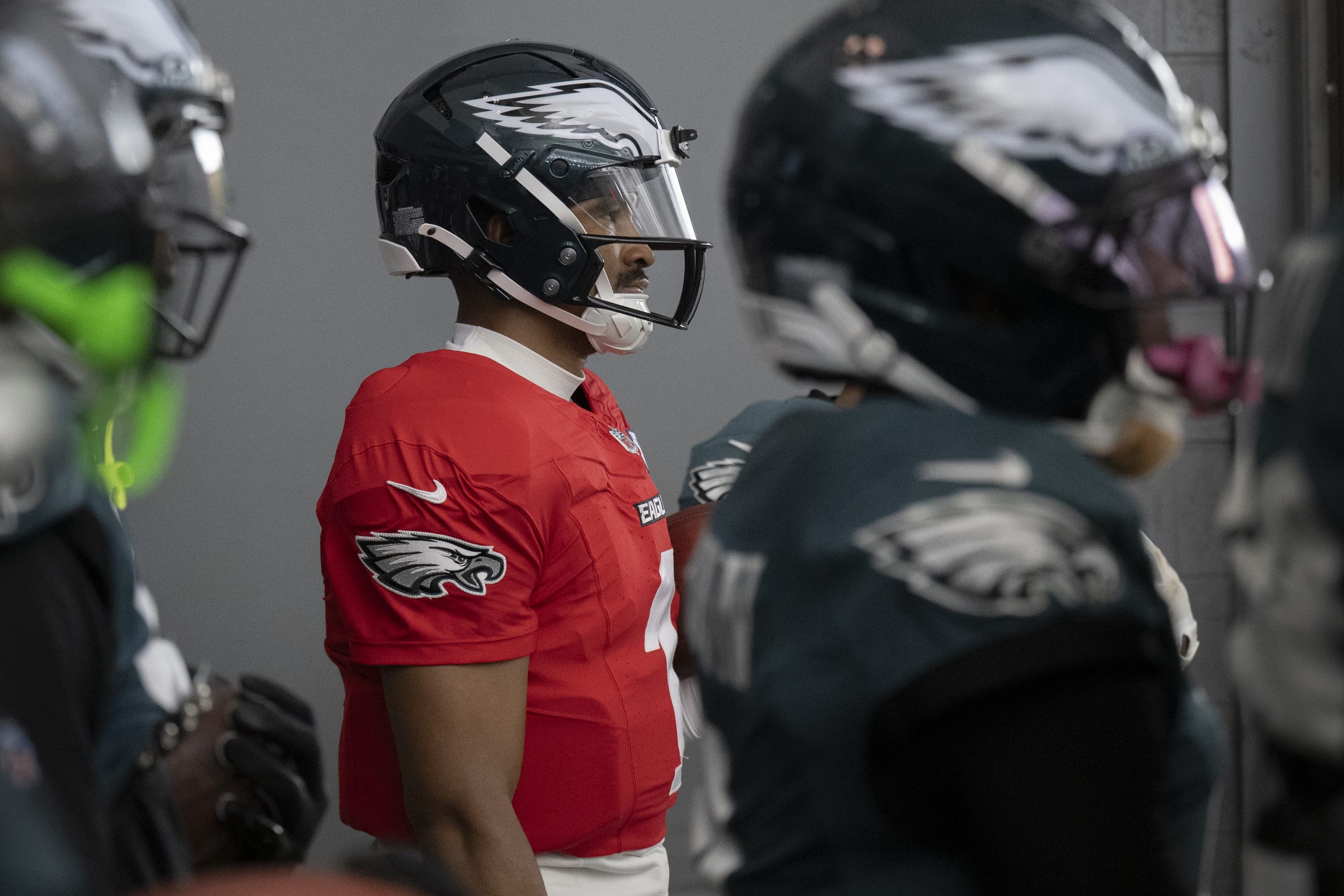
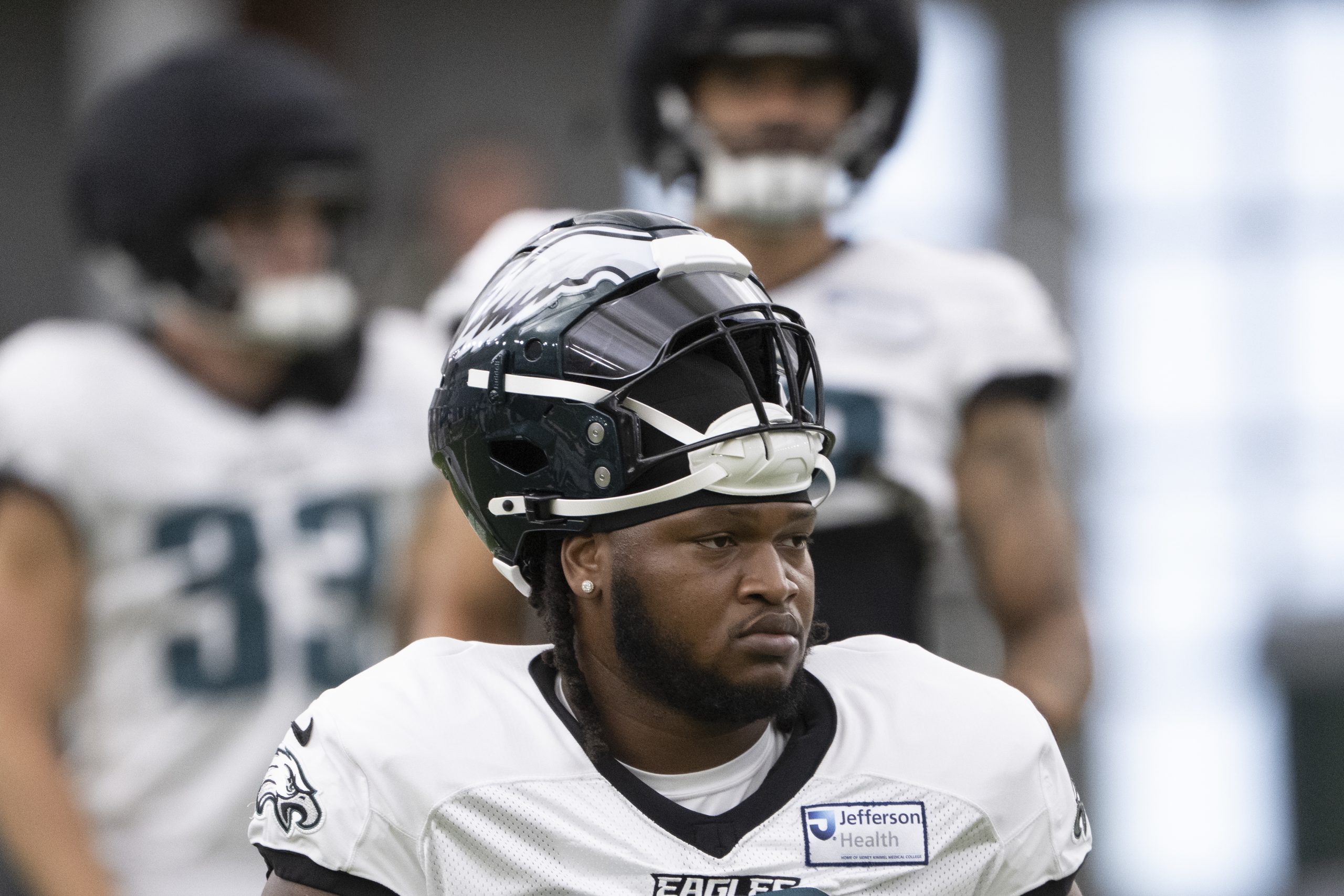
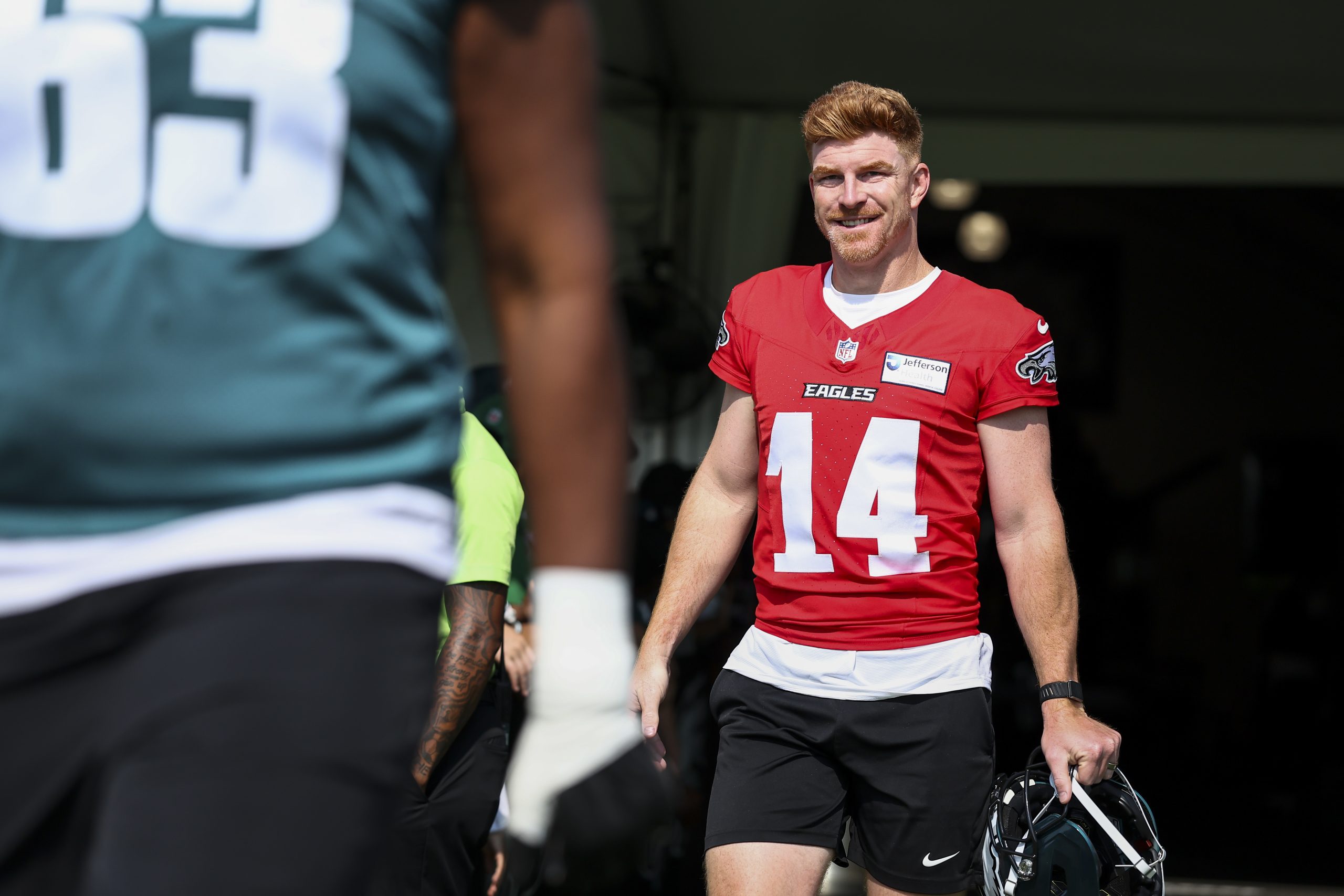
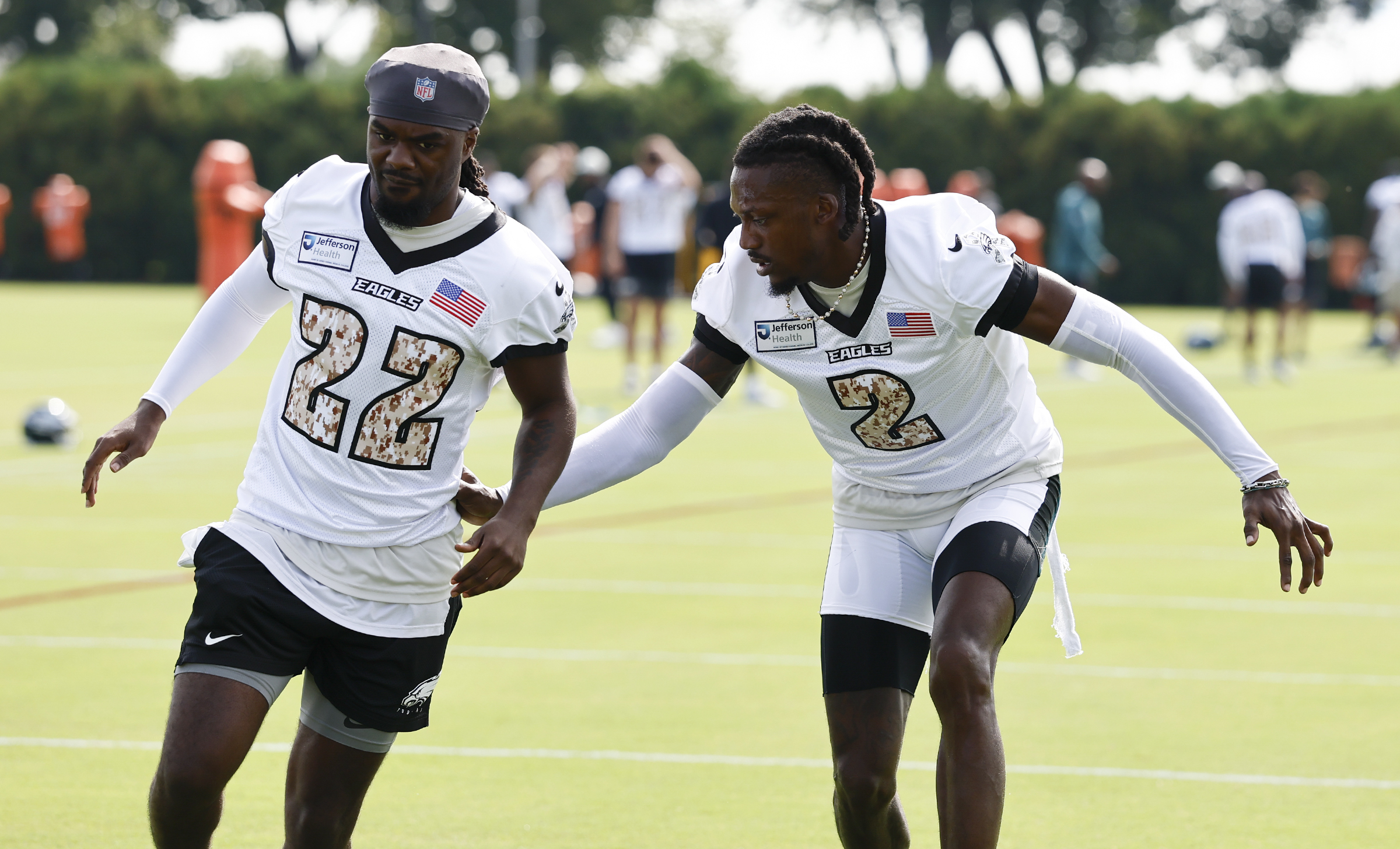
The Eagles held the fourth practice of their 2026 training camp on Monday at the Jefferson Health Training Complex. Here were my observations from Day 4 (and links to Days 1, 2 and 3):
Lane’s whereabouts
As expected, there were new names on the injury list. Outside linebacker Keyshawn James-Newby (ankle), guard Micah Morris (shoulder) and guard Jaeden Roberts (calf contusion) — all of whom suffered injuries on Saturday — didn’t practice. Each was in attendance. It was mildly shocking to see an upright Roberts, who had to be carted off the the field after his leg was bent back. I would have needed an amputation.
Safety Cole Wisniewski remained out with a hamstring strain. Tackle Cam Williams (left knee contusion) was a limited participant. Linebacker Jihaad Campbell and wide receiver Elijah Moore returned after being excused from Saturday’s workout.
Lane Johnson was excused for a second straight practice for a non-injury-related reason. The Eagles declined to offer more information.
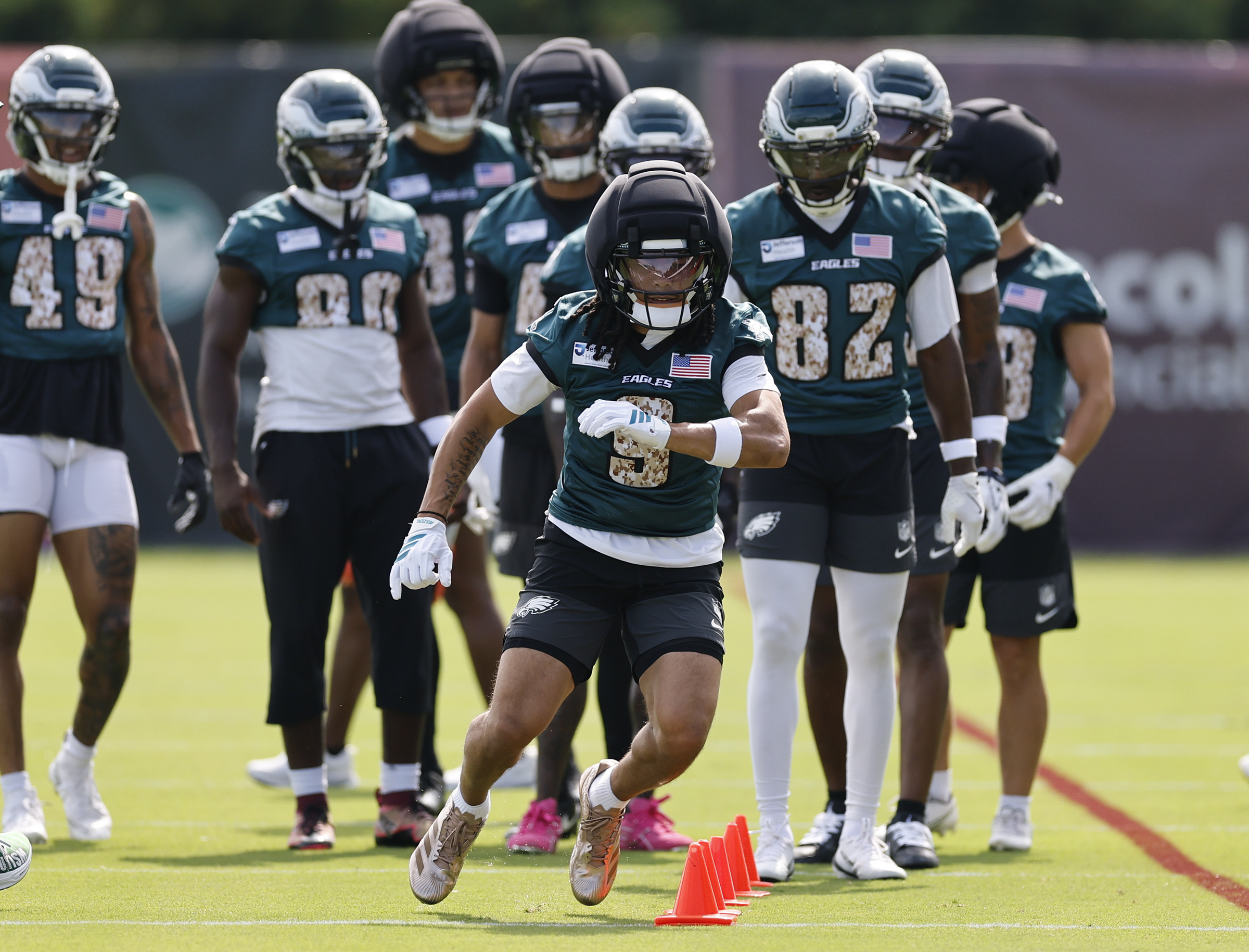
Makai Lemon’s (9) injury is not believed to be serious. Yong Kim / Staff Photographer
Lemon aid
Makai Lemon was suited up and spotted in the early portion of practice, but he was missing during team drills. The Eagles didn’t offer an update, but I was later told he didn’t suffer a significant injury. The rookie wide receiver got knocked down a few times on Saturday, but spoke with reporters afterward and seemed fine. Lemon had a relatively quiet first few days of camp. It’s nothing to be alarmed by, but further time missed — after a hamstring sidelined him for June’s minicamp — wouldn’t be ideal.
With Lemon out, Moore got extensive work in the slot with the first unit offense. Jalen Hurts targeted him several times in the first practice in full pads. A “hi-lo” route concept gave Moore second-level space and his quarterback hit him in stride. Hurts went back to the receiver on the first play of 7-on-7s, but an apparent miscommunication at least partly contributed to cornerback Quinyon Mitchell jumping the route for a would-be pick six.
The pair rebounded to hook up several plays later after Moore beat safety Marcus Epps on a post route. Hurts threaded his pass through the middle of the defense and Moore — despite a slight bobble — hung on ahead of deep safety help.
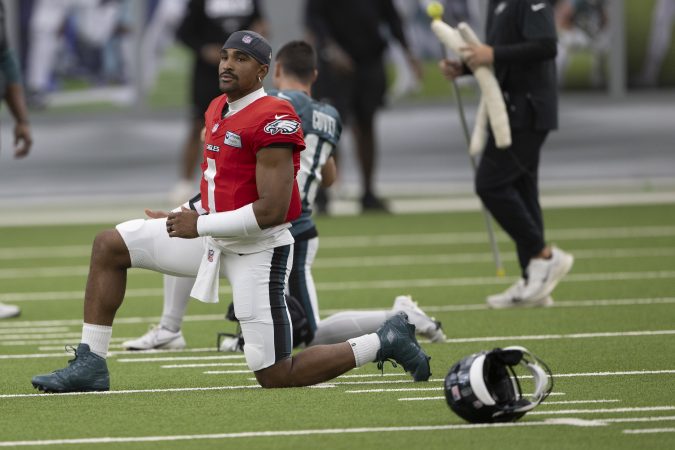
Jalen Hurts looked comfortable in the Sean Mannion offense on Monday. Jose F. Moreno / Staff Photographer
Hurts so good
Hurts had probably his best day as a passer thus far, with Sean Mannion’s scheme seemingly providing him with more middle-field opportunities. He found receiver Dontayvion Wicks on a deep crosser during team drills. In 7-on-7s, he hit tight end Johnny Mundt on a pop pass concept that has long been featured in the Shanahan offense. Hurts also connected with a diving Darius Cooper after the receiver broke under cornerback Riq Woolen.
The first unit offense had a strong showing in the red zone period. Hurts took advantage of Jonathan Jones spelling Woolen and went to receiver DeVonta Smith for a quick out touchdown just inside the pylon. On the next play, Hurts stepped away from pressure and threw across his body to a re-routed Smith for another score.
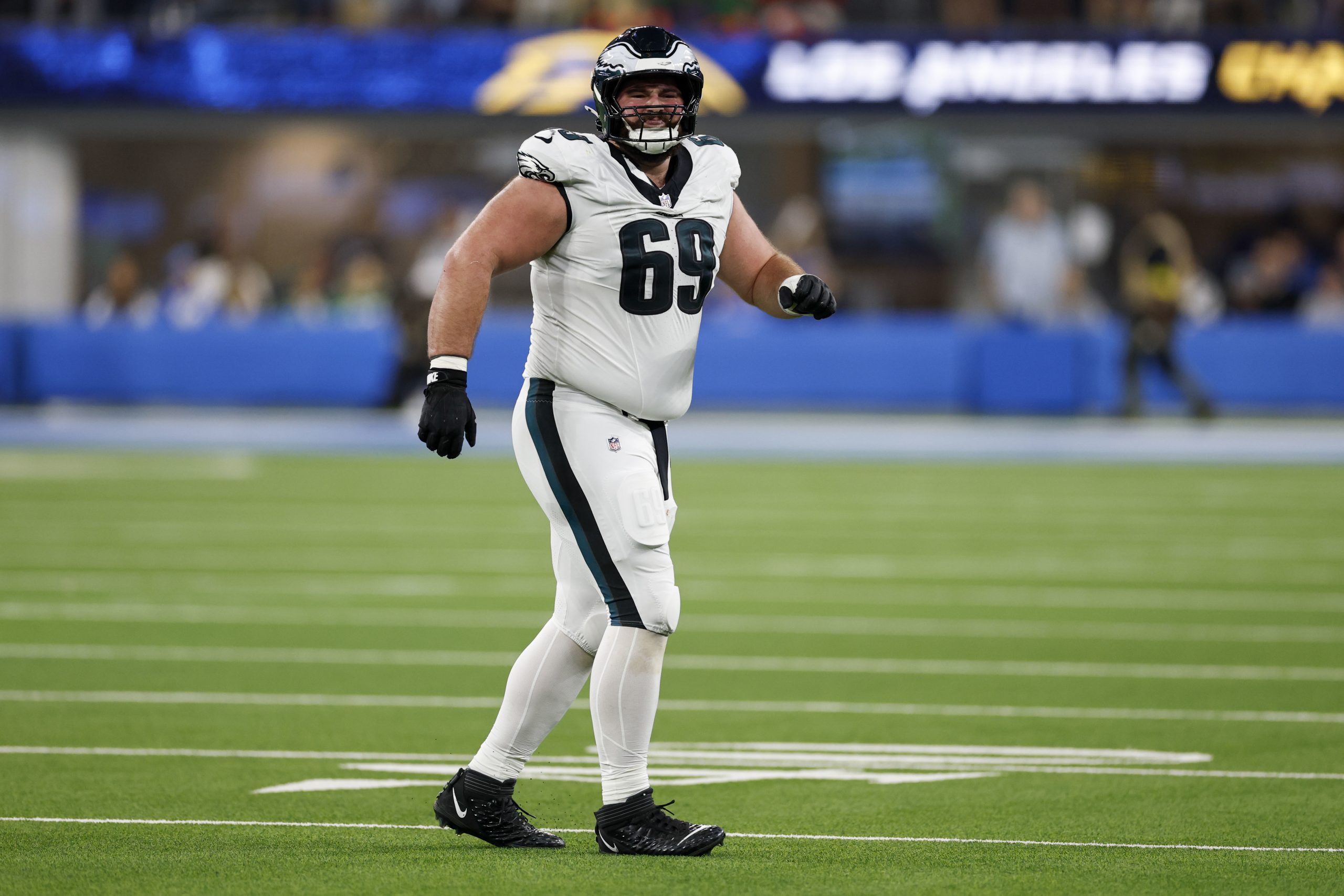
Later on in an empty set, Hurts ran a draw and waltzed into the end zone. Tackle Jordan Mailata and guard Landon Dickerson celebrated by forming a London Bridge for guard Tyler Steen to limbo under.
The second unit defense had its revenge a set later when Byron Young stopped running back Tank Bigsby in the backfield. Young and fellow defensive tackle Gabe Hall mimicked the O-line’s bridge celebration but were lacking a third reveler as the ferry boat.
While the offense overall may have been better through the air, it felt like Vic Fangio’s run defense had the edge on this day. Saquon Barkley and Bigsby converted in a few short yardage situations, but yards were hard to come by on early downs. Defensive tackle Moro Ojomo got to Barkley from behind after the tailback ran into a wall up the middle. Linebacker Zack Baun slashed to the sideline to cut off Bigsby on the outside zone run at one point.
Hurts did have a decent pickup on a designed run with tight end Dallas Goedert as his lead blocker.
Jalen Carter has had a strong training camp thus far. Jose F. Moreno / Staff Photographer
For the defense
Another day, another Jalen Carter highlight. The defensive tackle did his damage against the second offense this time around. It looked like he steamrolled guard Drew Kendall into tackle Myles Hinton, who ended up on his back. Carter nearly had an interception, but a Hurts pass sailed through his hands and still found its way to receiver Hollywood Brown.
Edge Nolan Smith had what appeared to be his first sack of the summer. He beat tackle Fred Johnson on the outside and Hurts had nowhere to run after the pocket collapsed. Arnold Ebiketie dropped into coverage and impressively broke up an Andy Dalton attempt to rookie tight end Eli Stowers.
Bell works
Johnson started in place of Lane Johnson, but rookie Markel Bell also took repetitions at right tackle. Campbell returned to his spot with the first defense, but Jeremiah Trotter Jr. took snaps alongside Baun, as well. I noted a couple run stops for Campbell with each unit.
Epps is still the primary safety opposite Andrew Mukuba in nickel personnel. Dalton was again first up under center with the second offense. Tanner McKee got work with the second group, but he hasn’t been as sharp as his competitor for the backup spot to Hurts. At least not yet.
Andy Dalton (14) is making his case for the primary backup job. Monica Herndon / Staff Photographer
Dandy Andy
The 38-year-old Dalton has been exposed to many systems, but it’s not as if he has a ton of experience in Shanahan-style offenses. He’s as new to Mannion as the other quarterbacks. But he’s still hanging around for good reason and one of them is that he can sling it. He threw a dart to receiver Johnny Wilson in rhythm and over the middle on a prototypical Shanahan play-action pass.
During 7-on-7s, Dalton was a perfect 4 for 4 on his dropbacks with two completions to receiver Britain Covey. He was about as successful in the red zone as Hurts. He located a wide open Will Shipley for a walk-in touchdown after a busted coverage. And Dalton went to the opposite side on a quick out to Brown after he beat corner Ambry Thomas.
It’s still too early in camp to call any positional competition. I’d imagine either backup quarterback could be available to trade considering the circumstances. McKee has previously shown that he can execute an under-center offense. But this is a whole new bag and he doesn’t have the luxury of taking all the second-unit snaps like he did last summer before breaking a finger.
The offense struggled during his red-zone set. He appeared to throw wide of receiver Quez Watkins in the post. A play later, McKee had nothing after his first reads were taken away and eventually threw the ball out of the back of the end zone. Rookie safety Maximus Pulley still managed to catch the ball but was out of bounds.
McKee did well to find Shipley on a swing pass and with plenty of green ahead of the tailback. But he short-hopped a heave to an open Wilson a few plays later.
Mac McWilliams (22, with Riq Woolen) has had an up-and-down first few days of camp. Yong Kim / Staff Photographer
Draft letter
While there’s a lot of intrigue about the incoming rookies, the 2025 draft class is far from a finished product. Campbell and Mukuba are slated to start again after promising first seasons, but injuries and expected inconsistencies mean that the jury is still very much out on their futures. The rest of the group is full of unknowns.
The next two picks from that class — fourth-round defensive tackle Ty Robinson and fifth-round corner Mac McWilliams — enter their second seasons with a lot of unanswered questions. Robinson flashed for a second straight practice when he shot into the backfield to touch up Barkley when the second defense faced the first offense.
McWilliams followed an up-and-down practice with another. He was the corner that trailed Wicks early on. But he played sticky man coverage when quarterback Cole Payton took a sack during the developmental period.
Extra points
Rookie defensive tackle Uar Bernard was credited with that sack. He might have benefited more from the back seven than his pass rush prowess, but any step forward for the newcomer to football can be deemed a positive. … Payton has no fear. He might have tossed a deep pass over the middle with four defenders in the area, but the ball still hit receiver Erik Ezukanma in the hands before Pulley swatted it to the ground. … Ezukanma later pulled in a deflected pass from Payton for a touchdown. … Taylor Swift brother-in-law Jason Kelce was at practice. … The Eagles are back to work Tuesday and Wednesday and will have a walkthrough on Thursday.
Former State Rep. Nick Miccarelli, who left Harrisburg in 2018 during the #MeToo reckoning and then landed a higher-paying job running a publicly funded transit agency, is facing felony charges of child endangerment after a DUI arrest on the Pennsylvania Turnpike.
Miccarelli, 44, executive director of DELGO Community Transit, which provides subsidized transportation to Delaware County seniors and people with disabilities, was pulled over last Thanksgiving after his ex-wife called 911 as she was headed to meet him for a custody exchange of their two children.
“As she was driving near the King of Prussia exit, she noticed a vehicle ahead almost strike the center barrier,” according to a police report filed in Lancaster County in January. “She came closer to the vehicle and recognized it as Nicholas’ vehicle and it was ‘all over the place.’”
State Trooper John Huffstutler stopped Miccarelli — who was driving his two children, ages 4 and 5 — after watching him tailgate another vehicle on the highway and repeatedly swerve left and right out of the driving lane. The arrest has not been previously reported.
Miccarelli said he had not been drinking or using drugs and explained an odor of mouthwash by saying, “I drink mouthwash from time to time,” according to the complaint.
A blood sample later put his blood alcohol content at 0.198% — more than twice the legal threshold for intoxication — and also showed the presence of Lorazepam, a prescription benzodiazepine that is not supposed to be mixed with alcohol.
Huffstutler also noted in his report that Miccarelli’s children were not in a booster seat, as required by law.
Miccarelli was charged in January with DUI at the highest level (above 0.16%), DUI in combination with a controlled substance, two felony counts of endangering the welfare of children, reckless endangerment, and related offenses.
The case was transferred to Lancaster County Common Pleas Court after Miccarelli waived his preliminary hearing in February. He is free on bail.
Miccarelli declined to comment last week. The arrest report did not indicate whether he was driving his personal vehicle or a vehicle that Community Transit provided to him and insured.
Roger Joseph, chairman of the transit agency’s board of directors, said on Friday that Miccarelli’s arrest was a “personal incident.”
“The board is fully aware of it,” he said.
Joseph said the agency’s “insurance carrier is aware of everything that happened” but declined to say whether Miccarelli was driving a Community Transit vehicle.
Delaware County Council, which allocates state money to Community Transit and appoints some of its board members, “has not been formally notified about this,” county spokesperson Michael Connolly said on Friday.
“It’s certainly something we’re going to dig into and monitor,” Connolly said.
#MeToo troubles
Miccarelli, an Iraq War veteran from Ridley Park, was once seen as a rising star within the Delaware County GOP. He won an election to represent the state’s 162nd House district in 2008.
Ten years later, then-State Rep. Tarah Toohil and an unnamed political consultant filed a confidential complaint with House lawyers accusing him of a range of abuse when they had dated him.
Toohil, a Republican from Luzerne County, said Miccarelli assaulted and abused her in 2012, including one instance in which he brandished a gun while driving more than 100 mph and threatened to kill them both.
The consultant, who had asked that her name not be disclosed, said that Miccarelli was mentally and physically abusive when they dated and that he forced her to have sex with him when she tried to end their relationship in late 2014.
Miccarelli has steadfastly denied the allegations. Lawyers for the state House found the women credible and said their statements were corroborated by sources who were “contemporaneously aware” of their claims of abuse.
Tarah Toohil, then a state representative from Luzerne County, obtained a protection-from abuse-order against Miccarelli, a fellow Republican in the state House. Toohil went on to become a Common Pleas Court judge in Luzerne County, while Miccarelli took over a paratransit agency in Delaware County.Fred Adams / For The Inquirer
Miccarelli rejected calls for his resignation from House Republican leaders and then-Gov. Tom Wolf, a Democrat, but declined to run for a sixth term and left office at the end of the legislative session in November 2018.
That allowed him to retire with free lifetime health benefits offered to lawmakers who serve for 10 or more years. He also received a state pension.
In December 2018, Dauphin County prosecutors said they would not pursue sexual assault charges against Miccarelli, at the request of the consultant. She stood by her allegations but said in a statement at the time that “the prospect of a long and drawn-out criminal proceeding promises even more trauma for me in the future. I simply must move on.”
A new job
Four months later, Miccarelli was appointed as executive director of Community Transit, a nonprofit organization incorporated in 1983 as the Delaware County Transportation Consortium. It employs more than 100 people and provides about 2,167 trips every weekday for county residents.
Democrats at the time questioned whether he got the job due to his political connections. Republicans still had a majority on the county council.
But Community Transit’s director of business development, Wendy Petkus-Mazeika, said in a news release at the time that Miccarelli was the best person for the job: “Nick brings not only a fresh perspective, but a wealth of knowledge of human services issues in the commonwealth.”
In 2024, the agency received $8.9 million in government funding, tax filings show. Some of that was allocated through Delaware County Council.
Over the last seven years, Miccarelli has kept a relatively low profile. He sits on the board of the Pennsylvania Veterans Museum and posts frequently on Facebook.
He mostly stayed out of the news until June, when a flurry of new content starting to appear online praising Miccarelli’s work in the paratransit field.
Miccarelli recently put out a news release calling for more accessible transportation for seniors and veterans, and has created two websites — nickmiccarellitransit.com and nick-miccarelli.com — where he writes about “strengthening community impact and building effective, mission-driven systems.”
As a result of the PR blitz, Googling his name and agency leads to positive headlines in publications as varied as the Aspen Daily News in Colorado, WBOC news in Maryland, and a magazine called Business Matters in Sutton (England, not Massachusetts).
“For Nick Miccarelli, the most important ideas have never been about headlines or attention. They have been about creating systems that work, helping communities function better, and finding practical solutions to real problems,” reads a glowing profile, sans byline, that appeared June 28 in Brainz Magazine.
The headline: “Nick Miccarelli and the Power of Turning Service Into Action.”
Brainz says in a FAQ that it offers “guaranteed, consistent, search-engine-optimized publicity … at a very low fee.” The magazine did not respond to a question about whether the profile was paid content.
Meanwhile, Miccarelli’s salary has increased significantly in recent years.
In 1866, the realist painter Thomas Eakins was in Paris studying at the École des Beaux-Arts. While there, he wrote to Emily Sartain, a family friend and artist who, from 1886 to 1920, would go on to become principal of what is now the Moore College of Art.
“I am proud to be a Philadelphian. … I feel 6 ft and 6 inches high whenever I only say I am an American,” he boasted.
It took some years before Philadelphia accepted and loved the artist back.
In 1870, Eakins returned to Philadelphia, where he began a career painting subjects of modern life in a straightforward manner without pretense or flourish. Establishing a studio at his family home on Mount Vernon Street, he hoped to find artistic success in Philadelphia.
But his first paintings received mixed reviews and found no buyers.
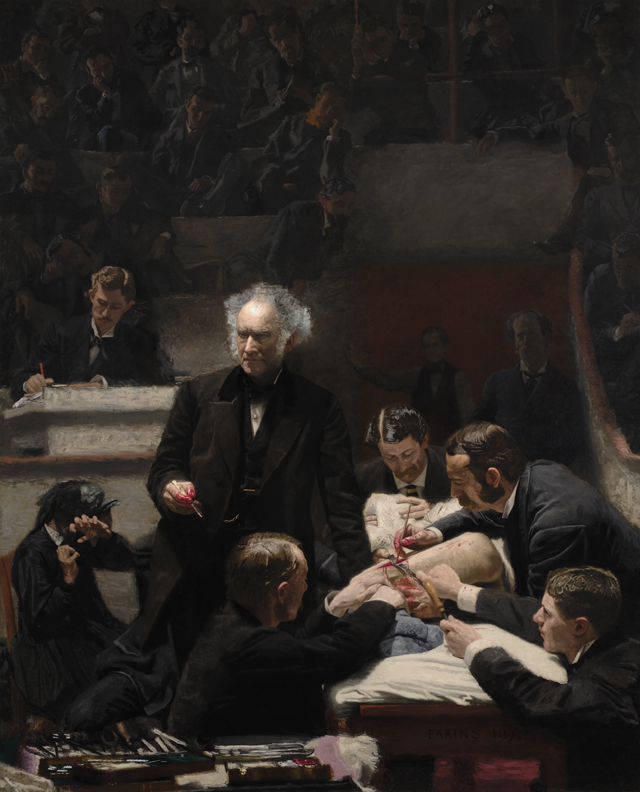
Thomas Eakins, “Portrait of Dr. Samuel D. Gross (The Gross Clinic),” 1875. Oil on canvas, 96 x 78 ½ in. Courtesy of the Pennsylvania Academy of the Fine Arts, Philadelphia. Gift of the Alumni Association to Jefferson Medical College in 1878 and purchased by the Pennsylvania Academy of the Fine Arts and the Philadelphia Museum of Art in 2007 with the generous support of more than 3,400 donors.Courtesy of the Pennsylvania Academy of the Fine Arts
‘The Gross Clinic’
In 1875, at age 30, Eakins began work on Portrait of Dr. Samuel D. Gross(The Gross Clinic), a noncommissioned oil painting of the eminent surgeon-teacher in clinical instruction at Jefferson Medical College, where Gross was chair of surgery from 1856 to 1882.
Drawing the nude model was a central aspect of academic art training, and students were required to attend lectures on anatomy and study animal and human cadavers in dissection labs. To better his scientific realism, Eakins attended surgical demonstrations and anatomy lectures at Jefferson, and often observed surgical demonstrations by Gross.
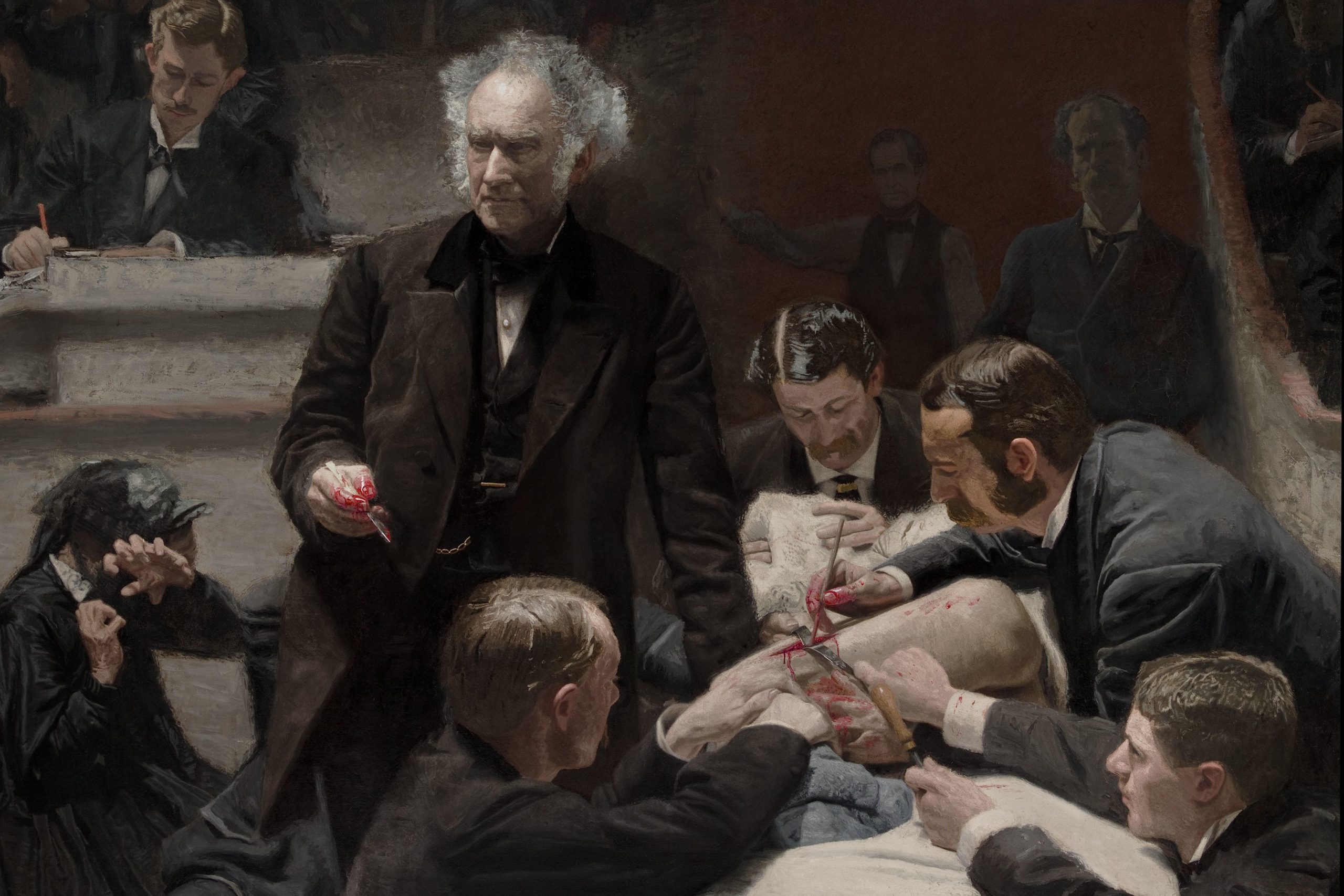
Detail from “The Gross Clinic” by Thomas Eakins. The painting was a gift of the alumni association to Jefferson Medical College in 1878 and purchased by the Pennsylvania Academy of the Fine Arts and the Philadelphia Museum of Art in 2007 with the support of more than 3,600 donors.Courtesy the Philadelphia Museum of Art and the Pennsylvania Academy of the Fine Arts
The Gross Clinic, the 8-by-6.5-foot large oil on canvas, shows Gross and his assistants operating in their street clothes worn with long coats. The surgical tools and bandages lie unprotected on a table in the lower foreground. (Germ theory of disease was yet to become an influential factor on medical practice in the United States.)
For this first clinic portrait, Eakins uses dramatic lighting that reflects off Gross’ forehead and his extended right hand. He holds a believably bloody scalpel, emphasizing how successful surgery requires intellect and manual dexterity.
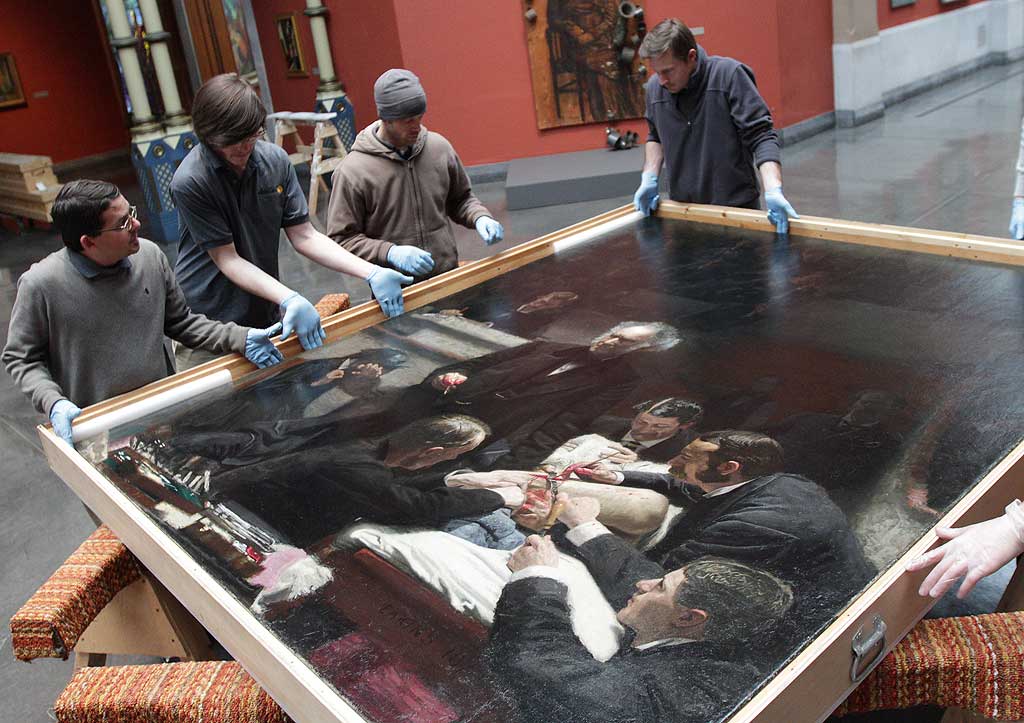
Art handlers from PAFA and Atelier Art Services Inc. place “The Gross Clinic” in a packing crate in 2014. The painting was being moved for display at the Philadelphia Museum of Art. ( David Maialetti / Staff Photographer )
The patient is a minor; the seated woman recoiling in horror is his mother. A chloroform-soaked cloth sedates the child .
In this stopped-action moment, Gross is the commanding figure of the surgical amphitheater. While his assistants hold a retractor to keep the patient’s left thigh incision open, Gross calmly explains to his audience of students the modern practice of removing a piece of diseased bone caused by osteomyelitis.
The moment celebrates stoic men performing surgery. Gross is a heroic savior giving renewed life to a patient who didn’t have to endure a brutal amputation and will retain use of both legs.
Much of the amphitheater is cast in darkness, but a self-portrait of Eakins sits by a railing to imply authenticity of direct observation. He holds a pen or brush like Gross’ scalpel, suggesting that art making is akin to surgery.
The artwork, Eakins believed, was “very far better than anything I have ever done,” as he wrote in an 1875 letter to Earl Shinn, a Philadelphia friend who had also studied at the Ecole in Paris.
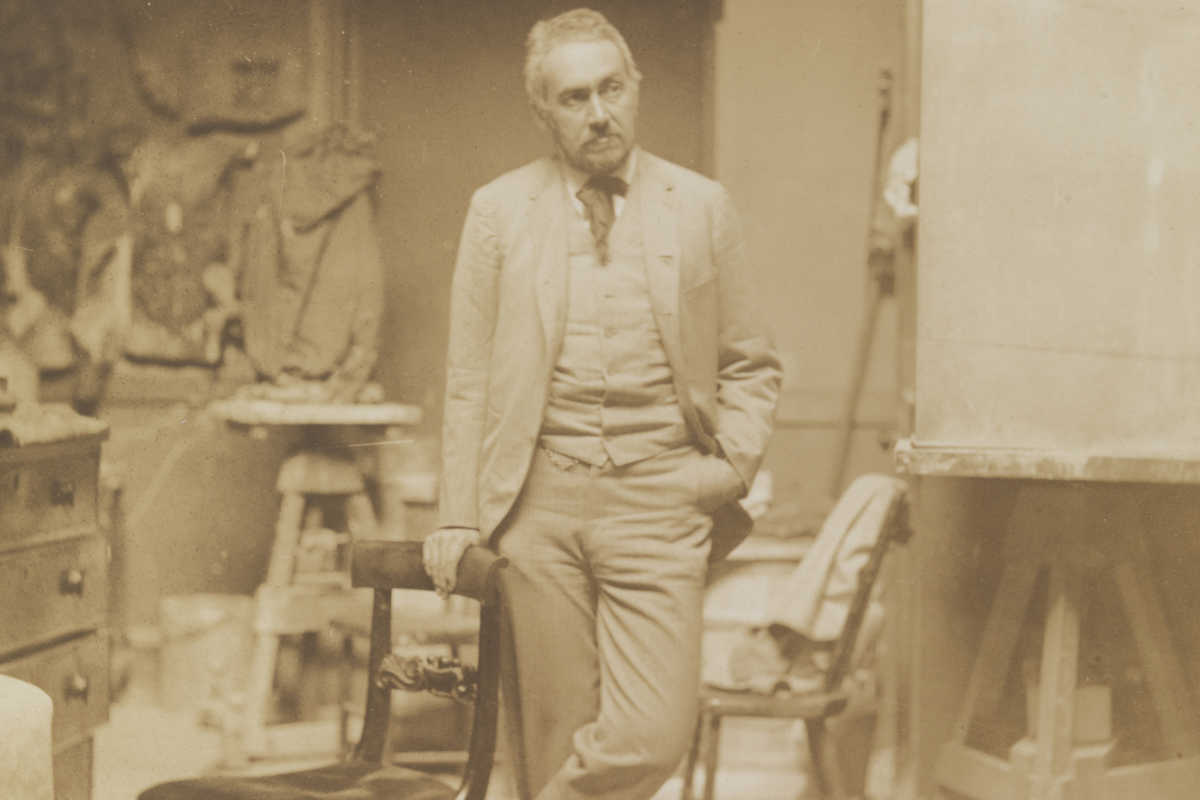
Thomas Eakins in a Chestnut Street studio, 1891-92.Photo taken by Samuel Murray.
Eakins had hoped the portrait of Gross would be seen at the large international art exhibition in Memorial Hall during the 1876 Centennial Exposition in Philadelphia, and help establish his reputation.
It was rejected by the art jury, but was displayed as part of a medical exhibit in the U.S. Army Post Hospital. When the painting was exhibited later at the second annual exhibition of the Society of American Artists in New York, a New York Daily Tribune critic wrote: “It is a picture that even strong men find it difficult to look at long, if they can look at it at all.”
Given the long-term relationship of Gross with Jefferson Medical College, the artist hoped the institution would acquire the painting for its art collection. It was only in 1878 that the Alumni Association of Jefferson Medical College purchased the portrait for $200 (approximately $6,660 in today’s dollars) and presented it to the school where it remained for 129 years.
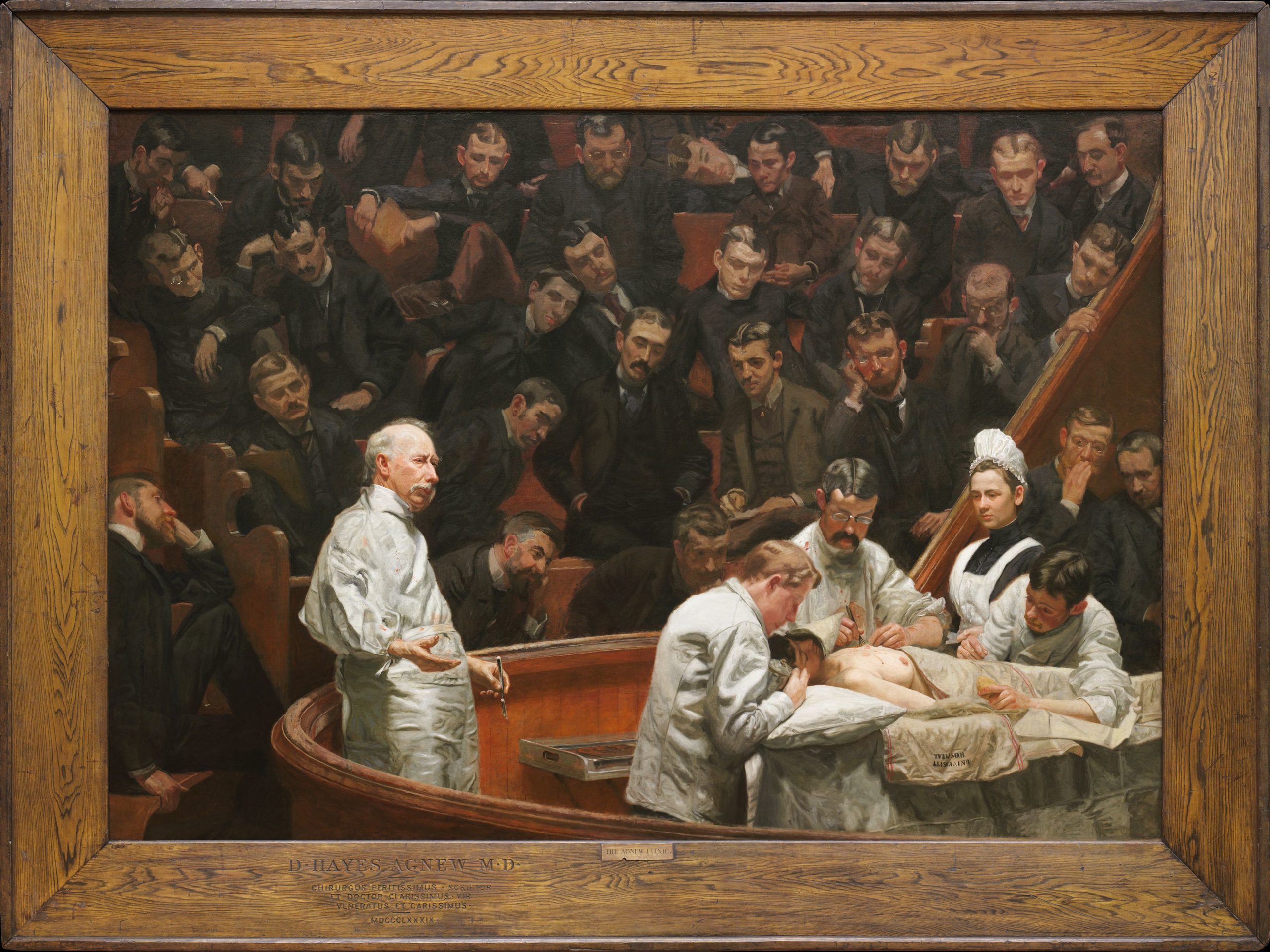
“The Agnew Clinic” (1889) by Thomas Eakins. On long-term loan to the Philadelphia Museum of Art.Courtesy of the University of Pennsylvania Art Collection
‘The Agnew Clinic’
Fourteen years later, in 1889, Eakins painted The Agnew Clinic.
By then, he had taught at PAFA, which admitted women; a rarity in its time. Eakins believed all serious art students, regardless of gender, must work from the life model and learn anatomy.
“I see no impropriety in looking at the most beautiful of nature’s work, the naked figure,” he said. His emphasis on nude life drawing and anatomical study was unsettling to Victorian propriety and his teaching methods eventually proved controversial.
The last straw came in early 1886 when Eakins was giving an anatomy lecture during which he removed a loincloth from a male model in the presence of female students. As requested by the administration, the artist, who was the academy’s director, submitted his resignation, stating: “Was ever so much smoke for so little fire?”
This was upsetting for him. In the summer of 1887, to overcome depression, Eakins made “a little trip to the West,” as he then wrote his friend and former student John Laurie Wallace, to experience “camp cure” at a ranch in the Dakota Territories.
Back in Philadelphia, Eakins received a major boost when in February 1889, he was commissioned by a group of aspiring doctors from the University of Pennsylvania School of Medicine, the nation’s oldest, to paint their retiring teacher, David Hayes Agnew, a colleague of Gross. They offered the artist $750 (approximately $27,148 in today’s dollars).
Eakins began work on The Agnew Clinic, his second clinic portrait.
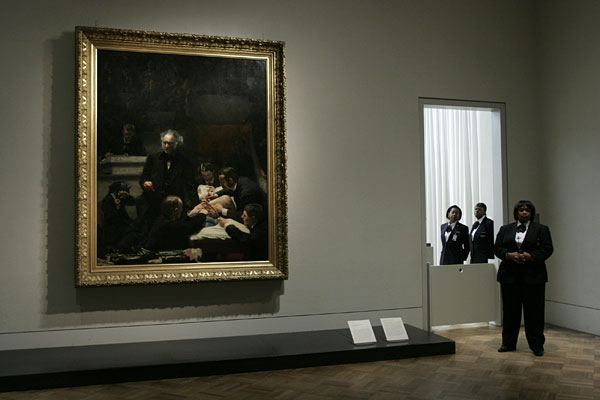
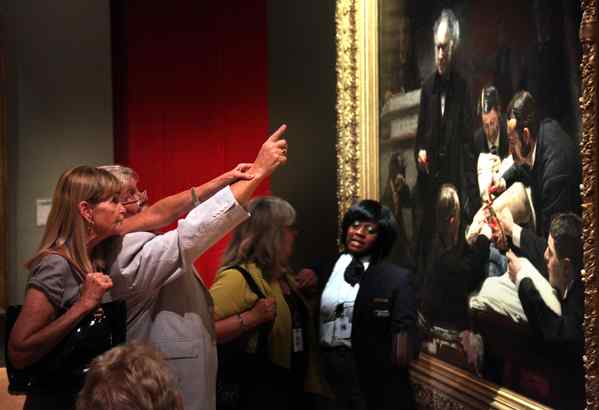
Visitors look at Thomas Eakins’ “The Gross Clinic” in the newly redone American gallery at the Philadelphia Museum of Art in 2014.
Even larger, at 6 feet by 11 feet, the painting reveals some newly instituted aseptic practices. Surgeon Agnew and his team wear white gowns; sterilized instruments are placed in a covered tray. The operation has a nurse at the patient’s side, but no gloves or masks are seen being used.
Because the canvas was too large for his easel, Eakins worked on the lower sections sitting on the floor, spending long days and nights (and occasionally falling asleep) on the studio floor. The work was completed in three months.
With less dramatic lighting and looser brushstrokes than The Gross Clinic, Eakins shows Agnew in his pedagogical role operating with assistant physicians, a nurse from the HUP Training School, and more easily visible class members who are observing the surgery.
Eakins places Agnew isolated at the left, lecturing. The patient, who has had a mastectomy, is having her incision sewn as a male assistant leans over her lower body. On the far right, the artist, who in this work was painted by his wife, Susan Macdowell Eakins, observes the nude woman sedated with an ether cone.
Deemed “not cheerful for ladies to look at,” the painting is a most provocative choice of surgery for Agnew, who wasn’t a breast cancer specialist but an authority on gunshot wounds.
The Agnew Clinic was given by the medical class of 1889 to their school.
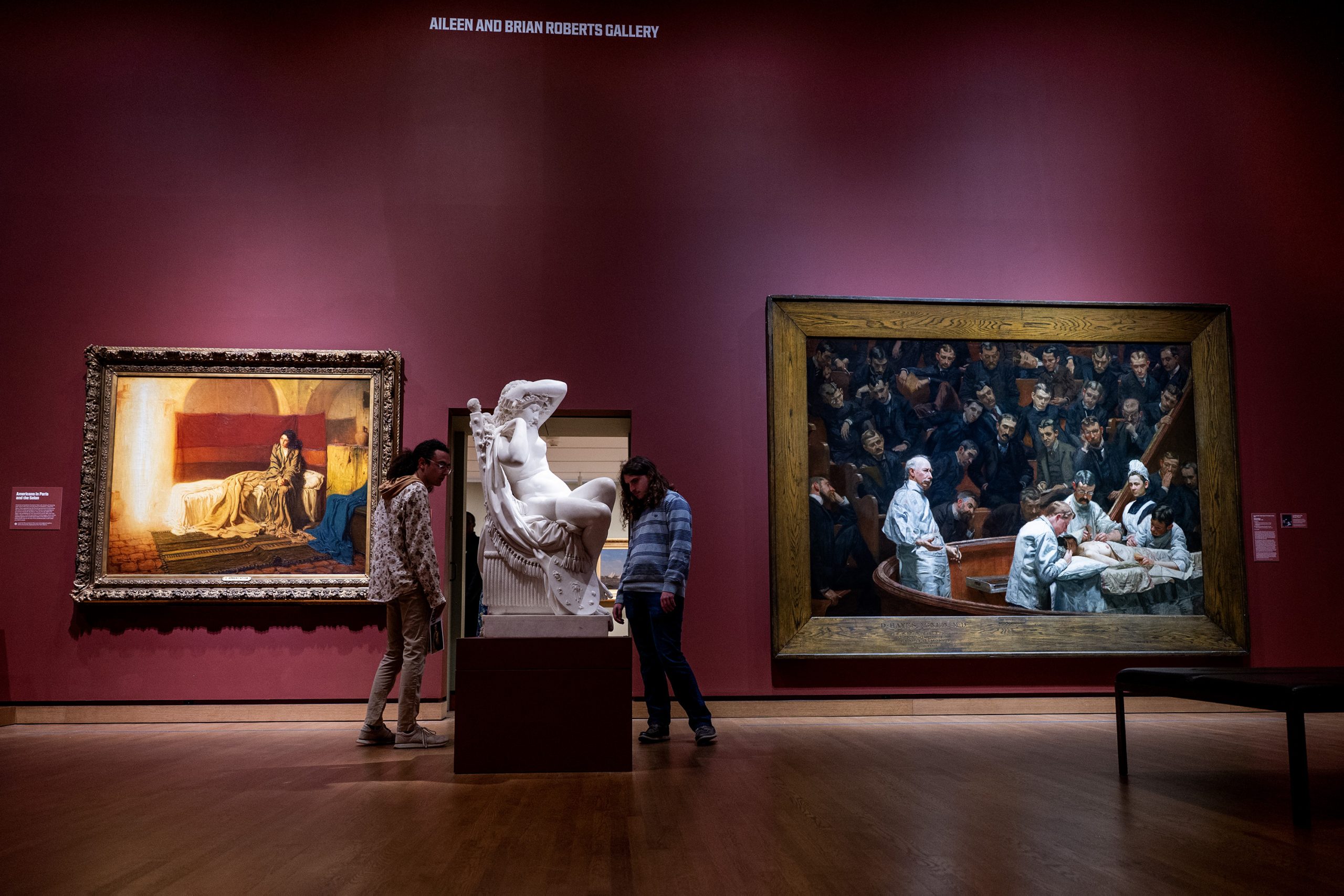
Marble sculpture “La Première Pose (center, 1873-1876) by Howard Roberts; and paintings “The Annunciation” (left, 1898) by Henry Ossawa Tanner and “Portrait of Dr. Hayes Agnew (The Agnew Clinic)” (right, 1889) by Thomas Eakins.in the “A Nation of Artists” show at the Philadelphia Museum Monday, May 4, 2026, in the newly renovated American galleries which were closed for several years.Tom Gralish / Staff Photographer
Side by side
Eakins is a distinguished presence in “A Nation of Artists,” the exhibition of 1,000-plus artworks organized by the Pennsylvania Academy of the Fine Arts and the Philadelphia Museum of Art to mark the 250th anniversary of the founding of the United States.
The Gross Clinic at PAFA and The Agnew Clinic at the PMA are part of this expansive dual-venue survey of American artworks; each is a tour de force.
The two medical portraits reveal the painter’s respect for the art of surgery, underscoring Philadelphia’s vital role in medicine and its preeminent medical schools. Anesthesia, which was newly introduced in the 19th century, is used in both operations.
Both paintings were not well received and regarded as disturbing and unsightly. But both of those large clinical portraits were exhibited together at the 1893 World’s Columbian Exposition in Chicago.
A Philadelphia Public Ledger writer complained that the “surroundings and accessories are scarcely in good taste for a public exhibition.” Another critic dismissed “the clinical horrors” as “ghastly symphonies in gore and bitumen” and mused: “To have hung the pictures at all was questionable judgment.”
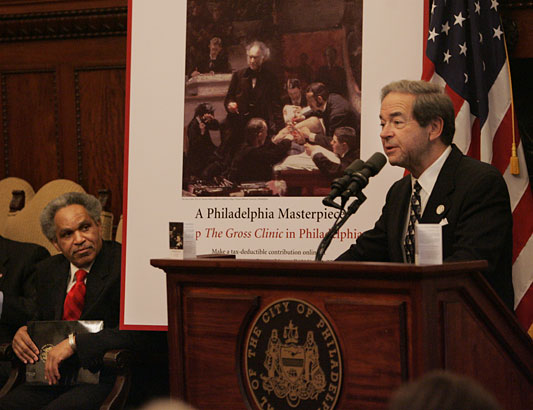
In this photo from 2007, Herbert Riband, vice chairman of the board at the Pennsylvania Academy of the Fine Arts, speaks at City Hall as Mayor John Street listens during the announcement that the Philadelphia Museum of Art and PAFA are to acquire “The Gross Clinic.” Michael Bryant / Inquirer Staff Photographer)
Afterlives
In November 2007, Jefferson Medical College agreed to sell The Gross Clinic for the stunning sum of $68 million offered by Alice L. Walton, Walmart heiress and founder of the Crystal Bridges Museum of American Art in Bentonville, Ark.
It set off a maelstrom resulting in a spirited fundraising campaign that successfully matched her price in a few weeks, keeping the masterpiece in Philadelphia. With a few thousand donations, PAFA and the Art Museum jointly acquired the canvas.
The two institutions collaboratively share the painting on a five-year cycle; it will be at PAFA until 2031.
On opening day of an exhibition at the Art Museum’s Perelman Building, visitors gather around Thomas Eakins’ “The Gross Clinic.” Photo from 2010.LAURENCE KESTERSON / Staff Photographer
Unlike The Gross Clinic, Eakins was asked to paint the portrait of Agnew, creating his second clinic image and the largest canvas of his career. It was completed for presentation at the graduation ceremony that took place at the Academy of Music on May 1, 1889. Its original wood frame has a Latin inscription believed to have been carved by Eakins honoring Agnew as “the most experienced surgeon, the clearest writer and teacher.”
Since 2000, the canvas has been on loan from the university to the PMA.
While recent research has shed light on his pattern of sexual harassment, including allegations that he sexually molested his niece, Eakins continues to be appreciated as an individualist and one of America’s greatest painters. He maintained: “My life is all in my work.”
“A Nation of Artists” runs through July 5, 2027, at the Philadelphia Museum of Art (2600 Benjamin Franklin Parkway, Philadelphia, 215-763-8100 or philamuseum.org) and through Sept. 5, 2027, at the Pennsylvania Academy of the Fine Arts (118-128 N. Broad St., Philadelphia, 215-972-7600 or pafa.org). Note: Exhibit admission is separate at each venue, though discounts are available to view both.
The day after Landon Dickerson underwent meniscus surgery during training camp last year, he walked out to the field in street clothes following a joint practice with the Cleveland Browns with a cooler in tow.
Dickerson proceeded to distribute cans of Miller Lite to his buddies on the offensive line from both teams. But forget the booze — the three-time Pro Bowl left guard was standing on his feet roughly 24 hours removed from having his right knee cut open.
He returned to practice approximately two weeks later. Less than a month after his surgery, Dickerson started in the Eagles’ season opener at home against the Dallas Cowboys.
One year later, though, Dickerson may not take pride in that superlative.
Dickerson, who turns 28 in September, said on Saturday that he believed his return to action last year following meniscus surgery was premature.
“Probably shouldn’t have gone out there and played, but you live and you learn,” Dickerson said after the third practice of Eagles training camp. “You do stupid stuff when you’re young. I learned that mistake.”
Landon Dickerson struggled with injury during 2025, as did multiple of his teammates along the offensive line. Yong Kim / Staff Photographer
That mistake, in addition to his lengthy injury history, will factor into how he will approach playing through future ailments, he said.
“I don’t think there’s any reason to be tough and work through it if it’s just going to wear you down, because they don’t pay you to be hurt,” Dickerson said.
Dickerson ought to know how it feels to be worn down by injuries. In the Super Bowl in 2025, he played through a left knee injury that required offseason surgery. In addition to the meniscus injury last season, he dealt with a back issue, plus an ankle injury that sidelined him in Week 6 against the New York Giants.
He had injury concerns coming out of Alabama, too. His pair of ACL tears and ankle injuries caused him to fall to the second round of the 2021 draft, when the Eagles selected him with the No. 37-overall pick.
Still, Dickerson said that he is “not really” worried about any potential cumulative effects of the injuries on his body. He said he never considered retirement this offseason and emphasized that he feels good after three days of training camp practice.
“Not having surgery is very nice,” Dickerson said.
With a full offseason to recover, Dickerson also traveled to Colombia to receive stem cell therapy to manage his pain. Jurgens went to the same clinic to address his back pain that lingered from his 2024 postseason surgery through 2025.
Dickerson said he spoke to other veterans across the league to learn what they do to stay healthy.
“This is my job, after all,” Dickerson said. “So exploring all avenues to try and feel good.”
So far, so good, and not just for Dickerson. Jurgens and Lane Johnson, who played 10 games last season before suffering a Lisfranc foot injury in Week 11 against the Detroit Lions, are also back in action in training camp.
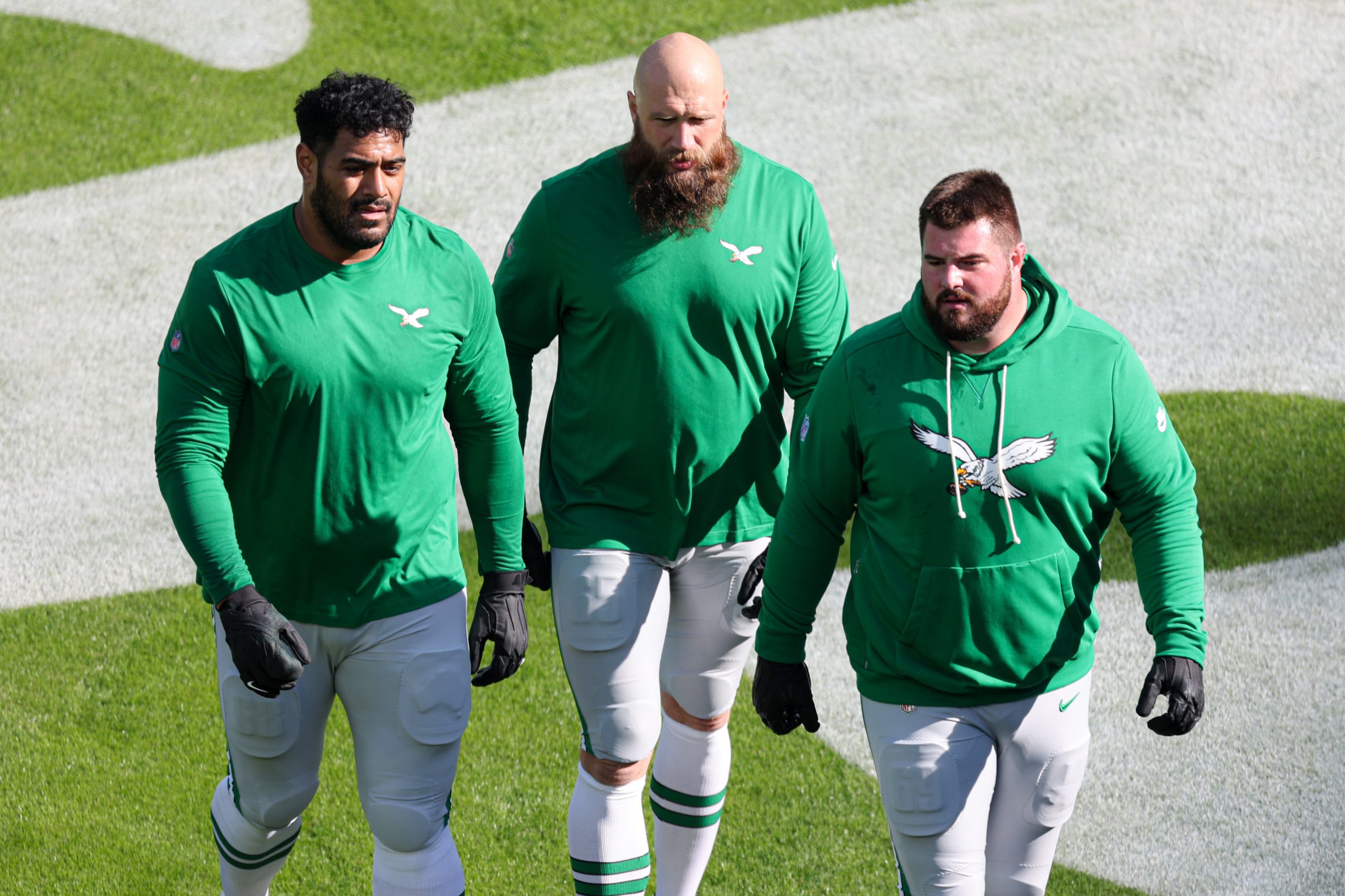
Jordan Mailata (left), Lane Johnson (center) and Landon Dickerson are among those adjusting to the new scheme. David Maialetti / Staff Photographer
Their presence is particularly meaningful as the offensive line acclimates to a new blocking scheme under offensive coordinator Sean Mannion.
“Any time we can maintain the main group of guys in there, get the reps, especially with this new offense, the better we’re going to be,” Johnson said Wednesday. “I think with us staying on the field and not missing practice and taking those reps, it builds confidence knowing that we can endure and we can last, man. Lot of people depending on us. So we need to be out there.”
Dickerson called the new offense and blocking scheme a “tremendous change” from what the Eagles ran previously. The wide-zone blocking scheme is new to Dickerson, aside from what he had watched on tape in years past. He is learning that scheme from new Eagles offensive line coach Chris Kuper, whom Dickerson lauded for his wealth of knowledge from his playing and coaching careers.
Dickerson said the new scheme is a “great fit” for the personnel. With Mannion implementing the foundation for the offense, the offensive line is placing an emphasis on “eliminating the slow play,” Dickerson said, getting to the line quickly, making a call, and executing their play.
“I’m sure you guys see that Vic [Fangio] and his defense, they like to move around and do all this other stuff,” Dickerson said. “So, if you can get up there quick and just run your plays and not rely on what they’re doing, then [it] makes everybody’s life a little easier.”
Has Dickerson’s role within the scheme changed? No, he said, and neither has his blunt sense of humor.
“I’m still playing left guard for the Philadelphia Eagles, so yeah,” Dickerson said. “As of right now, that’s still my job.”
His teammates are just as grateful to have him continue in his post for a sixth season.
“It’s actually amazing that they get to be out here right now, given what they’ve gone through in the past year,” Jordan Mailata said of Dickerson and Jurgens on Thursday. “What they’ve been fighting through and for them to be healthy to participate in training camp is obviously a great sign.
“Hopefully we can continue to keep those guys fresh and have them available for the season.”
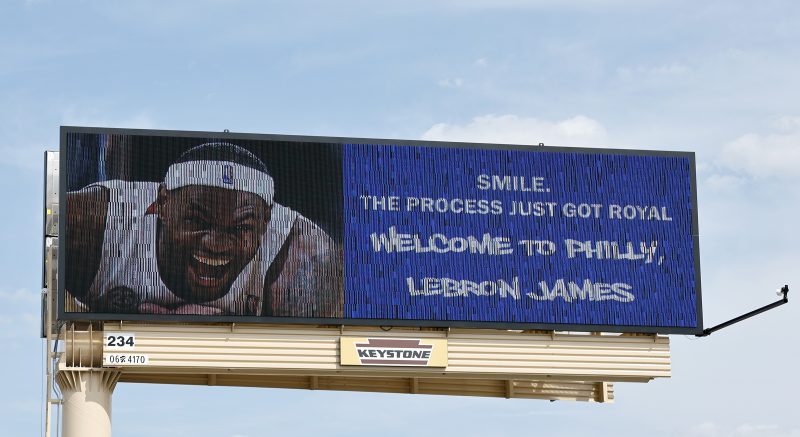
LeBron James is going to take his talent to South Philly, and a portion of his salary to City Hall.
The newly signed Sixer — that feels so good to write — is being rumored to live in New York City and commute to games and practices by helicopter, according to ESPN.
Commuters who live elsewhere but work in Philly are required to pay the city’s wage tax on a portion of their salary. And there is no exemption in the tax code for a King.
Main Liners, rejoice. Next time you look at the withholdings on your pay stub, you are allowed to proclaim: LeBron, he’s just like us, amirite?
In fact, James has likely paid the Philadelphia wage tax throughout his career for games he played here against the Sixers.
But how much of James’ $8 million salary over two years counts toward the wage tax will depend on how, and where, No. 23 spends his time from training camp to the final day of the season.
Let’s break it down.
What is Philly’s wage tax, and does it apply to athletes?
Philadelphia levies a 3.735% tax on the entire income of its residents, and 3.425% on the income nonresidents earned working in the city.
The wage tax is one of the city’s three major revenue sources, alongside property and business taxes, and has brought in more than $2 billion annually in recent years. A third of the taxes collected comes from commuters.
Philly’s tax on earnings is among the highest in the country, and the city led the charge in the 1990s to ensure professional athletes paid their share. It is now common practice for cities to impose a so-called jock tax on players — home and visiting — but athletes are taxed in the City of Brotherly Love under the same wage tax as everyone else.
What counts as a Philly workday for LeBron James?
Calculating the wage tax for commuters can get tricky, especially since remote work has become common.
Every day of work that requires a nonresident to be in Philadelphia counts toward the tax.
The question for James, and other athletes, is what counts as a working day — and how many of those days he spends in Philly vs. the Sixers’ training facility in Camden.
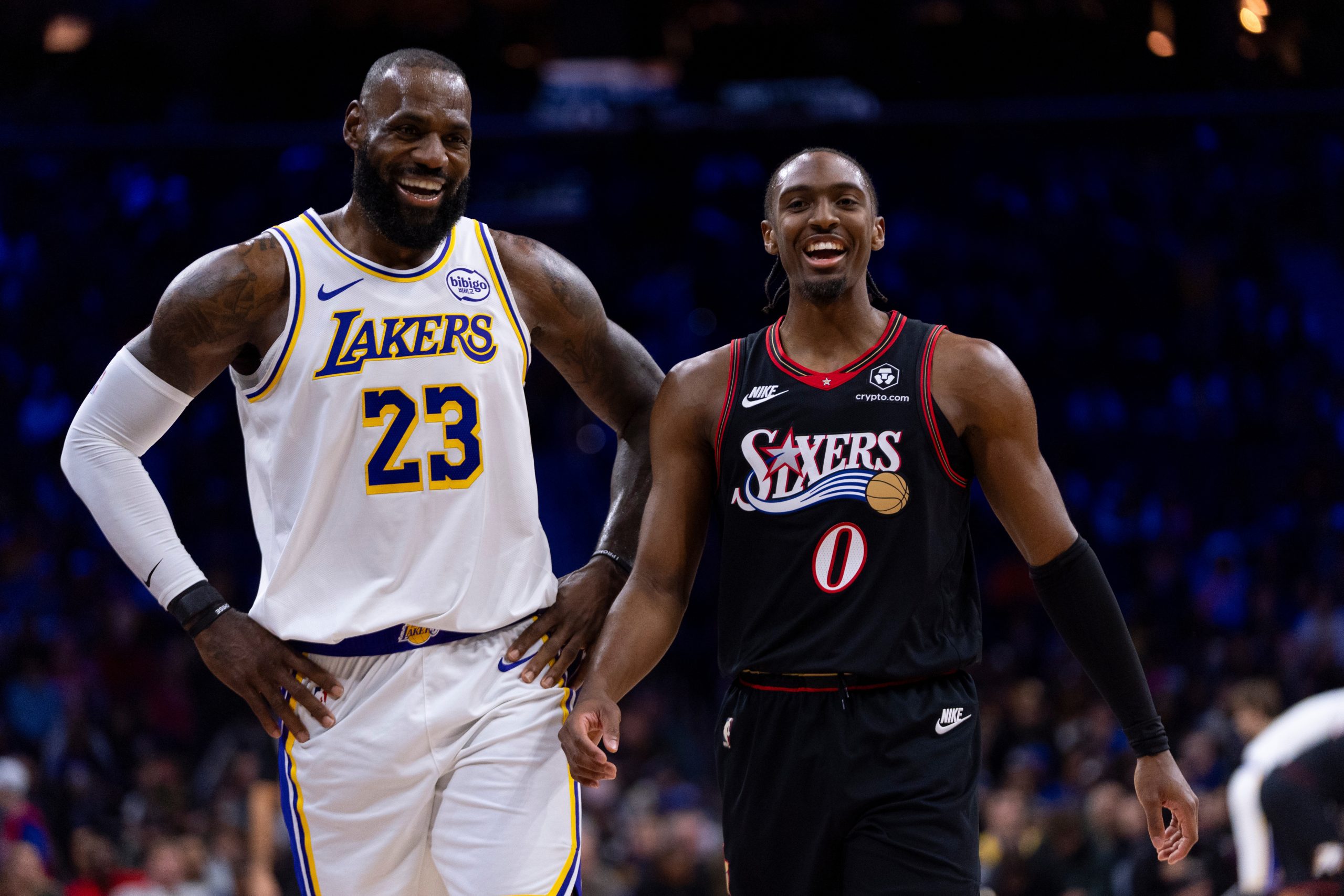
Los Angeles Lakers’ LeBron James, left, shares a laugh with Philadelphia 76ers’ Tyrese Maxey, right, during an NBA basketball game, Sunday, Dec. 7, 2025, in Philadelphia.Chris Szagola / AP
Practice, film review, rehab, and games could all count as workdays, said Stephen Kidder, a tax attorney who specializes in professional sports.
“Every single one of those days is a duty day for a professional athlete,” Kidder said.
A spokesperson for the city said, “Philadelphia welcomes LeBron James with open arms,” but did not respond to a request for comment about any special guidance for athletes.
How much will LeBron James pay in wage taxes?
If James ends up living in Philly, the calculation is simple. He would have to pay 3.735% of his annual salary of $4 million — roughly $150,000 — regardless of where he spends his time.
But if he lives outside the city, it comes down to counting days.
Without knowing James’ overall number of workdays in the year, and how much of that time is spent in Philadelphia, it is impossible to estimate his tax bill.
The number of duty days for an NBA player can vary widely, depending on practice schedule, depth of playoff run, and other activities, such as promotions.
An often-cited number to get a sense of the size of the tax bill for NBA players is 200 workdays.
If his only Philadelphia workdays were the Sixers’ 41 home games, and if, as seemingly the youngest 41-year-old in history, he played in all of them, roughly 20% of King James’ income would be earned in Philly.
In this scenario, the city would tax 20% of James’ annual income at the 3.425% rate for nonresidents, for a hypothetical tax bill of around $28,000. That number would decrease if he missed some home games, or increase if he attended other team activities in Philadelphia.
(This writer refuses to make any calculation related to the playoffs that could constitute a jinx but suffice to say: See you on Broad Street next summer.)
Do taxes affect players’ decisions?
Professional athletes and the associations representing them care a lot about state and local taxes, and are fighting against them.
The MLB, NHL, and NFL players associations, alongside three former professional athletes, sued Pittsburgh over its 3% jock tax for visiting players. And last year the Pennsylvania Supreme Court struck the tax down because it was higher for nonresidents than for residents.
City and state taxes are part of the package when athletes choose where to play, according to Kidder, who represented the associations in the state Supreme Court case. A professional athlete in Florida owes the state no tax, for example, while California has a jock tax of up to 13.3%.
“Some athletes may be in a point in their career where it doesn’t matter that much,” Kidder said. “But for other athletes it may be a big difference playing for a team based in Florida compared to a team based in New York.”
Ed Wasielewski, a Philadelphia-based NFL agent and founder of EMG Sports, says tax considerations come up often in free agency deals. The difference between no tax, Philly’s 3.735% tax on residents, and California’s 13.3% jock tax amounts to millions of dollars in take-home pay.
“A player is well advised to have a good accountant, a good attorney, and a good agent team to correctly analyze the tax consequences,” Wasielewski said. “It definitely comes into play in contract negotiations, especially in free agency.”
If James chooses to live in NYC and commute to practices in Camden and games in Philly by helicopter, taxes might not be high on his list of concerns.
When I heard that roughly 6,600 people who were not American citizens were registered to vote in New Jersey ahead of the 2024 election because of a software glitch, I felt a familiar sense of dread.
It wasn’t just because having ineligible voters on the rolls is concerning and never should have happened. It’s because despite what President Donald Trump would have you believe — with his unfounded claims of mass voter fraud — there is absolutely no evidence that these kinds of irregularities are the result of any organized effort to influence our election results.
For Trump, this was not a coding error. It was evidence that America’s elections have been corrupted and the only way forward is to pass the SAVE America Act, a measure that would make it more difficult for many people to vote and which would represent the biggest ever federal intrusion into state control over elections.
“These are just the ones that got caught,” the president wrote — again, without any evidence — in a social media post urging passage of the measure. “The real numbers will prove to be many times this amount.”
That kind of rhetoric is the exact opposite of what our electoral system needs. Election fraud, administrative mistakes, and other voting irregularities deserve careful investigation, not fearmongering. I know this firsthand.
Before joining The Inquirer, I worked at the Philadelphia City Commissioners where I investigated and identified real examples of voter fraud.
What I saw when I worked in the system — and what my reporting has shown in the years since I’ve left it — is that electoral fraud is exceedingly rare; that the public officials I worked with didn’t hide or ignore any problems; and that when mistakes are made, they are found, fixed, and handled transparently.
That last is exactly what New Jersey Gov. Mikie Sherrill did on July 21 when she explained that because of an error at the state’s Motor Vehicle Commission, a computer system erroneously registered people who were not eligible. Officials said that the 400 or so people from that pool who voted lived throughout the state, were registered in both political parties, and there was no evidence that any election results were swayed by their participation.
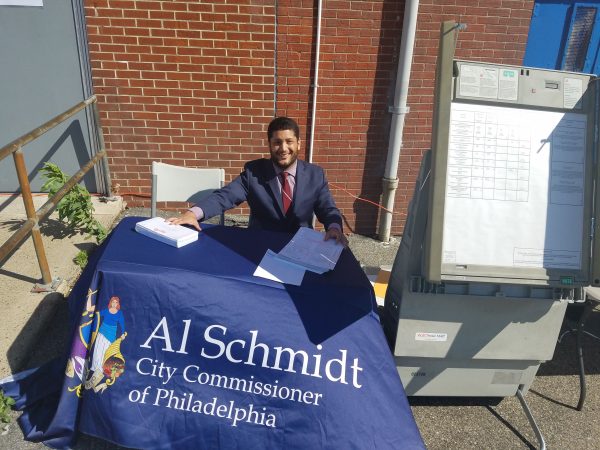
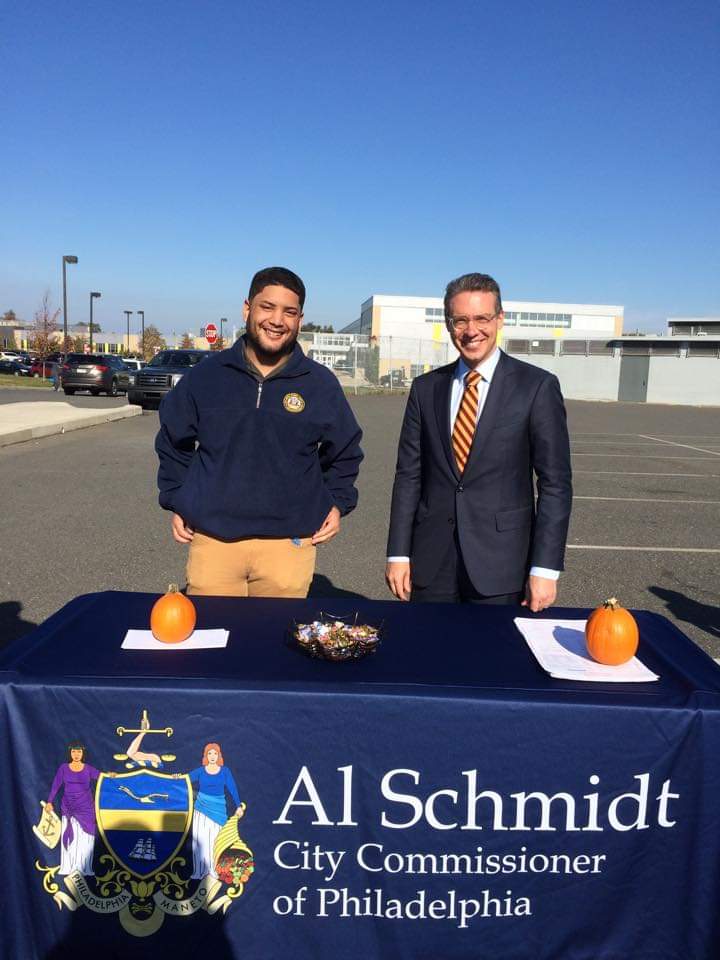
Daniel Pearson and then-City Commissioner Al Schmidt in 2015.Courtesy of Daniel Pearson
For those who diligently follow election administration news here in Philadelphia, this story might have felt like a distant echo. That’s because nine years ago, something similar occurred here.
In 2017, Al Schmidt, who now leads voting statewide, was a Republican city commissioner in charge of voting in Philadelphia when he announced that an investigation had uncovered 220 people who were not American citizens on the city’s voting rolls.
As with the situation recently in New Jersey, the source of the problems back then was also traced to a computer glitch connected to the driver’s license process. Even though they were ineligible, the system still asked the affected people whether they wanted to register to vote.
Schmidt publicly stated what had happened without inflaming the situation, and pledged to protect people whose immigration status was now threatened by mistakes made by others. (He went as far as attending immigration hearings on behalf of some of those affected.)
That style of leadership — clear, non-alarmist, focused on solutions — mirrors what Sherrill is doing in New Jersey now.
It’s also worth noting that the Garden State is hardly alone in owning up to its errors. Earlier this year, Republican Auditor General Tim DeFoor released an audit of Pennsylvania’s system. Out of the 210,000 records his office examined, just one included an ineligible voter — a lapse blamed on human error, rather than any broader issue.
In Pennsylvania, the system worked. A mistake was found, identified, and corrected. Sherrill seems on the path to doing the same.
Unfortunately, the president wants to try to use New Jersey’s stumble for his own political gain — a cynical approach that makes it harder to be taken seriously when actual irregularities and malfeasance are discovered.
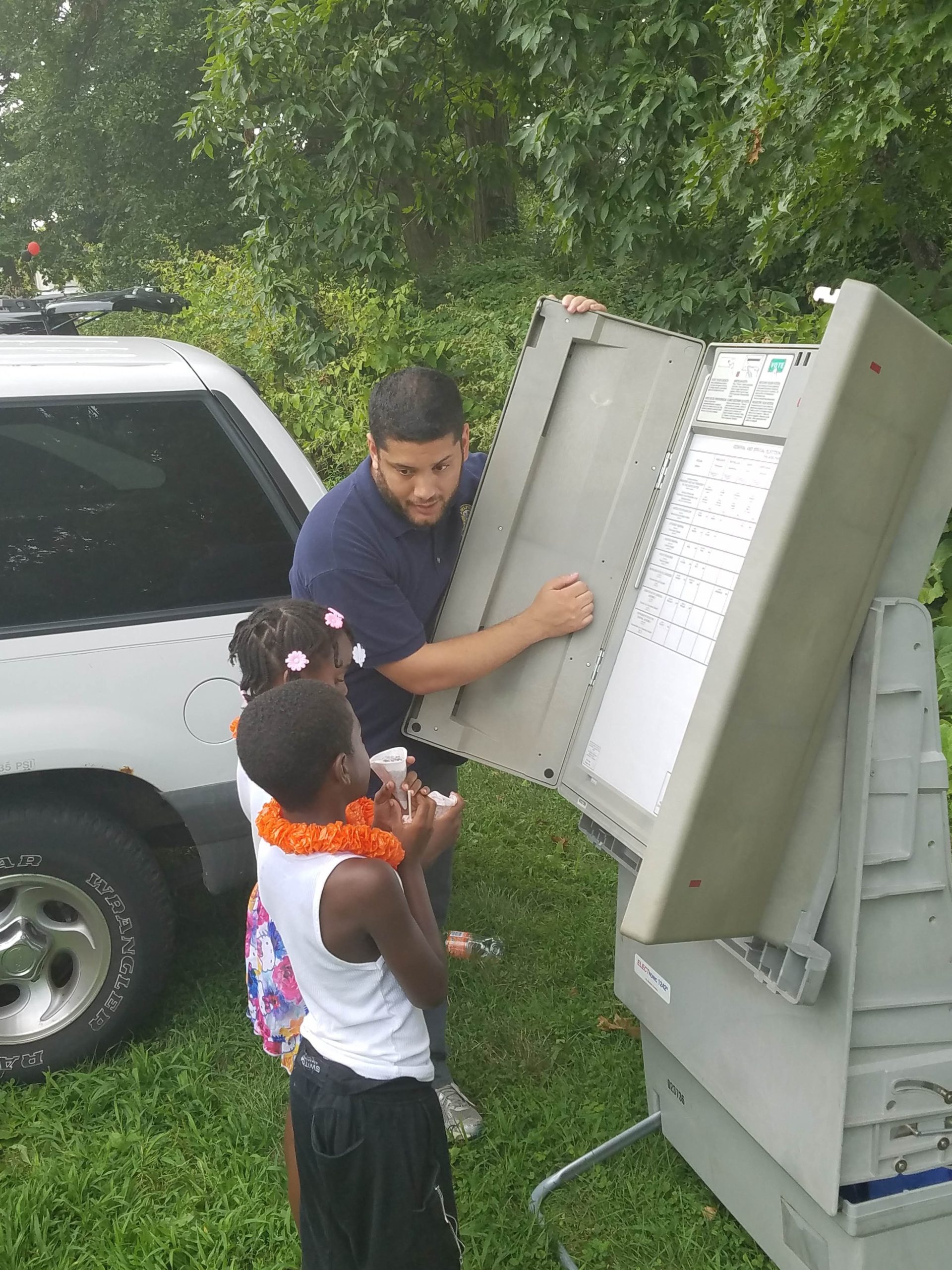
Daniel Pearson explains how a voting machine works as part of a voter information event at Fisher Park in 2016.Courtesy of Daniel Pearson
Disorganized crime
After he was released from federal prison in 1985, convicted over bribery charges stemming from the Abscam investigation, former U.S. Rep. Michael “Ozzie” Myers became a political consultant and adviser. Over the years, business began to flag, so Myers and his allies came up with a scheme in the mid-2010s.
Once the polls closed, poll workers would go into the booth and vote again, and again and again and again. Typically, these votes were for candidates running for positions at the very end of the ballot, like judges.
Schmidt became my boss in 2014 when I joined the City Commissioners Office. Initially, my job was preparing street lists (names and addresses of registered electors) and voter files for campaigns. I attended community events and meetings on behalf of the office, and compiled data and information for voter guides.
In retrospect, it would have been impossible to predict just how much interest people would soon have in elections. Back then, I could barely give away the guides.
In time, I began helping with investigations into voting irregularities. When my colleagues and I started investigating the source of the overvotes, it pointed to one man, Dom DeMuro, a South Philadelphia poll worker.
We compiled the evidence and referred the case to law enforcement. The FBI confronted DeMuro, who turned on Myers. Eventually, Myers, DeMuro, and another poll worker pleaded guilty to federal charges.
Found, identified, and corrected.
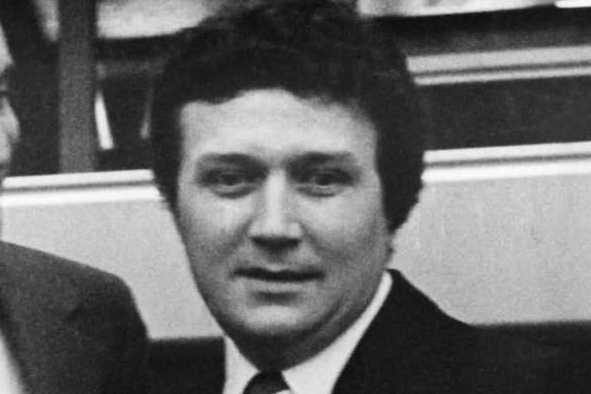
Michael “Ozzie” Myers in 1976.MICHAEL MERCANTI / Staff file photo
Small-time ruses like Myers’ are the face of “organized” voter fraud in this country, a few people trying to make an easy buck. There’s absolutely nothing in the SAVE America Act that could have stopped them.
Looking back, I shudder to think of what 2020 may have been like without the groundwork Schmidt laid over a decade. How Philadelphia could have melted under the spotlight as Trump hurled accusations of fraud and the eyes of the world turned to vote counters inside the Pennsylvania Convention Center.
For me, it was an unforgettable lesson in the grind that goes into making democracy work and also how difficult — and how rewarding — making positive change really is.
To ensure election security and that voting remains easy and accessible, our country needs more leaders like Schmidt and Sherrill — and fewer bomb throwers.
We don’t need any more false data points and baseless conspiracy theories. And we certainly don’t need the SAVE America Act, which would only increase the burden on ordinary voters — and wouldn’t fix a thing.
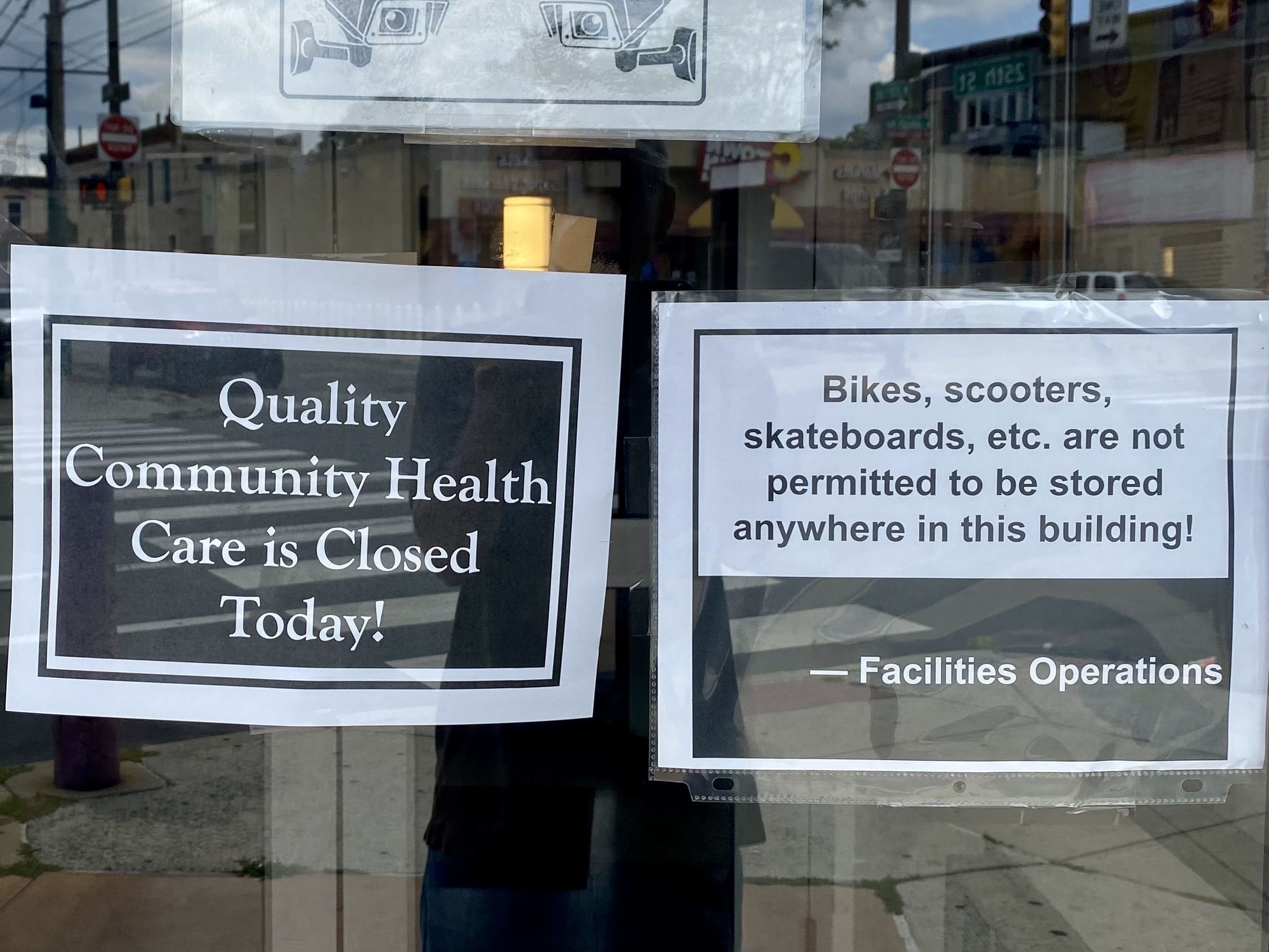
When Pele Lewis arrived at Quality Community Health Care’s clinic in North Philadelphia Wednesday for his 1:30 p.m. appointment, he found the doors locked and a sign saying the clinic was “closed today.”
Lewis was puzzled. “They called me this morning” with a reminder to come in, he said, as he stared at the door.
The clinic, known as QCHC, was closed Thursday and Friday, as well, according to its phone message.
“For many of our patients, QCHC is far more than a medical office,” its CEO, Helen Wilkinson, said in an email. “Members of our community are treated with dignity and respect regardless of their ability to pay.”
She did not answer specific questions.
The clinic at 2501 W. Lehigh Ave. began operating in 1981 under a federal program designed to provide medical and dental care in neighborhoods with few other options.
Its troubles became public in the spring.
After years of warnings from federal regulators that the clinic was delinquent on its audits, officials took the rare step in March of suspending it from the federally qualified health center program. At that time, audits for the years 2021 to 2024 were overdue. Now, the same is true for 2025. Typically such audits are due nine months after the fiscal year ends.
Quality Community Health Care Inc., at 2501 W. Lehigh Ave. in North Philadelphia, was closed Wednesday. Management did not respond to emailed questions about the clinic’s status.Harold Brubaker / Staff
A new audit
In a small sign of progress, Quality Community Health Care last week posted an audit for the fiscal year that ended July 31, 2021, on a federal audit clearinghouse. Federal regulators had given a May 2 deadline to complete that audit or risk termination.
The fiscal 2021 audit pointed to significant problems.
“None of the data in it can be verified by the auditor,” said Steven Balsam, a professor of accounting at Temple University’s Fox School of Business.
The auditor put it this way in the filing: “Because of inadequacies in QCHC’s accounting records, we were not able to obtain sufficient appropriate audit evidence for the amounts” stated in numerous categories of the financial statements.
“I don’t know if just filing reports, if they look like this, is going to get them their funding back,” said Balsam, who reviewed the audit at The Inquirer’s request.
The federal Health Resources and Services Administration, which regulates federally qualified health centers, has not responded to questions about QCHC since the suspension.
Missed paychecks
Some employees were not paid on July 10 and July 24, according to an email from the organization’s chief financial officer to staff Monday. This followed the organization not receiving the main federal funding for health centers, known as Section 330 grants, CFO Denise Ingram wrote.
“QCHC is experiencing significant cash flow constraints following the suspension of 330 grant funding associated with the unresolved FY2021 audit submissions requirements,” Ingram wrote in the email obtained by The Inquirer.
“QCHC remains committed to paying employees for all wages earned. Leadership continues to pursue funding, financing, and other lawful alternatives to address outstanding payroll obligations and restore normal operation,” the email said.
Ingram did not respond to an emailed request for comment.
President Donald Trump’s administration may be creating a difficult choice for low-income immigrants who could be denied green cards by seeking public assistance to feed and access healthcare for their U.S.-born children.
Under the “public charge” rule — which the administrationplans to put in place on Sept. 18— a person could be denied permanent residency in the United States if immigration officers believe the individual would become a drain on the country by accessing government benefits, which could include SNAP, Medicaid, and housing vouchers.
In Philadelphia and throughout the region, the rule, though not yet official, is nevertheless having a chilling effect, frightening parents who are legal immigrants into avoiding public benefits for their children, say advocates who work with immigrants and low-income communities.
“It could prevent families from going to food cupboards, or keep women from accessing domestic violence shelters. The effect will be broad,” said Maripat Pileggi, an attorney with Community Legal Services in Center City.
Advocates say the administration’s public charge rule could have a major impact on so-called mixed-status families made up of immigrant adults awaiting green cards and their children who are U.S. citizens.
Immigrant parents have customarily been permitted to apply for the Supplemental Nutrition Assistance Program as well as Medicaid and housing assistance on behalf of their children, as long as they were not seeking help for themselves.
A spokesperson for the U.S. Department of Homeland Security said people in the United States legally “have nothing to fear” and reiterated that U.S. policy has been that immigrants “should not depend on U.S. taxpayer resources to meet their needs.”
As the Trump administration pursues its highly public crackdown on undocumented immigrants, the rule highlights ways in which its policies have also targeted all immigrants, including ones on track for lawful permanent residency.
“They throw another hurdle people have to worry about into their path, making America seem less desirable,” said Jeff DeCristofaro, executive director of the Camden Center for Law and Justice.
“What happens next is people gathering around their kitchen table and deciding it’s too difficult to be in this country. So they give up and self-deport.”
DeCristofaro said his organization, which provides free and low-cost legal services to individuals with low incomes, is “already getting calls from people who have to make agonizing choices.”
What is the public charge rule?
The public charge rule dates back to the Immigration Act of 1891, when entry to the United States was denied to people who could not take care of themselves, primarily “paupers.”
In 1999, the Clinton administration clarified the public charge to deny entry to a person who would be primarily dependent on the government for cash subsistence, such as TANF (previously known as welfare), Supplemental Security Income (SSI), or long-term Medicaid. However, the guidance explicitly said that noncash benefits such as SNAP, non-long-term Medicaid, or housing help would not be considered public charge determinations.
But near the end of Trump’s first term, the public charge definition was expanded to penalize green card applicants for using legal public benefits such as Medicaid of any kind, SNAP, and housing assistance. President Joe Biden later rescinded Trump’s version of the public charge, reestablishingthe earlier iteration of the rule.
Currently, the Trump administration’s second version of the public charge rule does not explicitly state which benefits will be penalized. Advocates, however, expect a return to 2019 standards.
The Department of Homeland Security has calculated that more than 950,000 individuals will either disenroll from public benefits or forgo enrollment into them because of the policy, according to the Federal Register.
Ann Sanders, the director of public benefits policyat Just Harvest, an anti-hunger nonprofit in Allegheny County, worries the disenrollments will exacerbate the already growing demands on food pantries in the state.
“You’re going to have kids going hungry because parents will be trying to keep families together by not going for SNAP benefits,” she said. “It’s insidious. It’s awful.”
The fear among advocates is that by not delineating the public benefits that can trip up a legal immigrant, U.S. immigration officers will be free to use the public charge rule in any way they see fit, which could severely limit the number of people accepted into the country.
That is not the best way to assess thepolicy, according to Hans von Spakovsky, a senior legal fellow at Advancing American Freedom, a conservative think tank created by former Vice President Mike Pence.
“It allows immigration officers to take a holistic view of the alien being considered for a green card. The old rules about obtaining cash and noncash benefits were rigid,” said von Spakovsky, who was a contributor to Project 2025, a more than 900-page document intended to serve as a conservative blueprint for Trump’s second presidency.
He called the public charge rule an important tool for determiningwho should obtain a green card, a major step toward U.S. citizenship. “We want immigrants to be productive members helping the economy without relying on benefits,” von Spakovsky said. “It’s a matter of being more selective.”
The public charge rule is expected to be challenged in court before the end of the summer.
Jonathan Grode, an immigration attorney in Center City and adjunct law professor at Temple University, argued the policy stems from one of the goals of Project 2025, which is to reduce all immigration, not just illegal entry into the country.
“What’s in the rule is secondary to the rule’s primary purpose: changing people’s idea to come to this country in the first place,” Grode said.