Tag: Weekend Reads

  • ‘Time doesn’t heal all wounds’: A beloved Delco teacher’s killing, seven years later, haunts loved ones and confounds authorities

    ‘Time doesn’t heal all wounds’: A beloved Delco teacher’s killing, seven years later, haunts loved ones and confounds authorities

    It’s possible that nobody knows the stretch of Brandywine River that meanders through the heart of Wilmington better than Missy Morrissey.

    Since her sister Susan’s battered body was discovered there nearly seven years ago, the West Chester native regularly returns to its banks, mulling a question:

    How exactly did the 50-year-old Delaware County schoolteacher arrive in the shallows more than three miles downriver from where her car was found abandoned early on a July morning in 2019 in what authorities said was a homicide?

    And how, she wonders, has the crime gone unsolved for all these years?

    Susan Morrissey, who had been sipping wine and texting with friends into the early morning hours, left her Wilmington home just after 3 a.m. for reasons unknown, authorities said, and turned up dead in the river hours later.

    Surveillance cameras captured Morrissey’s black Honda Civic as it left her home and headed to the gates of a nearby office building, where it was parked haphazardly and left unlocked with her cell phone and purse inside.

    It was not until about four hours later that a construction worker discovered Morrissey’s body floating in the water miles away near the Northeast Boulevard bridge. She had died from blunt force trauma and drowning, the medical examiner found.
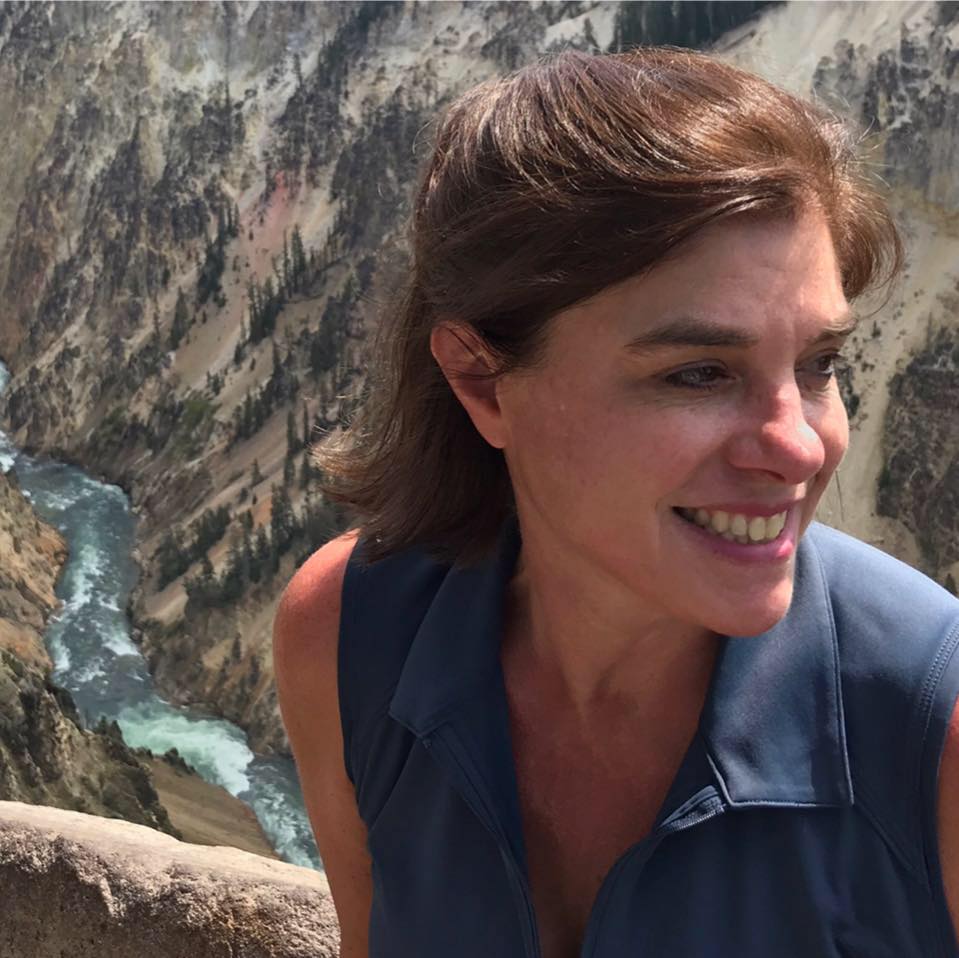
    A photo of Susan Morrissey.Missy Morrissey

    Investigators can’t say for sure how Morrissey’s body made it to the opposite side of town, though they believe she was alive when she entered the river and that she did not do so near where her car was parked.

    “A friend refers to it as ‘the magic carpet ride,’” Missy Morrissey said of the distance between her sister’s car and where her body was discovered. “We just can’t figure anything out.”

    It’s a puzzle that brings Missy Morrissey, the oldest of four siblings, back to the Brandywine each year, where she lays a bouquet of roses to honor her sister’s memory.

    But this year, as yet another anniversary of Morrissey’s July 23 death nears, her family has begun to wonder whether after years of efforts to uncover the truth, her killer may never be found.

    “On the first anniversary in 2020, I couldn’t have imagined that we would be sitting here in 2026 talking about this,” said Meg Morrissey Heinicke, the second-youngest of Susan’s siblings. “I would say time doesn’t heal all wounds. It is just as painful this year as the first year, the second year, the third year.”

    Homicide detectives with the Delaware State Police say the investigation continues, but they have no suspects or motive, and there are no new developments in a crime that has divided the Wilmington and Chester County communities and drawn attention from true-crime podcasts and amateur sleuths across the country.

    Missy Morrissey appreciates that people have taken an interest in her sister’s death long after it faded from the headlines.

    Still, she and her family just want the crime solved.

    A sister with flair

    Susan Morrissey did just about everything with flair, her siblings said.

    She grew up around West Chester and Wilmington and attended the city’s prestigious Tatnall School before heading to Georgetown University and later to San Francisco State, where she earned a master’s degree and began her career as an educator at a public school in a low-income Bay Area neighborhood.

    Morrissey volunteered often, her siblings said, working with young people at a juvenile detention facility and devoting hours to an animal rescue, where she combed frigid Northern California beaches for stranded sea lions.

    She was the first to read up on far-flung conflicts and the world’s injustices, and she loved sitting with a book on the beach in Stone Harbor.

    It was she who recommended Noam Chomsky tomes and George Carlin stand-up specials to her less-enlightened siblings, they said. Everything from her CD collection to her handwriting oozed taste and personality.
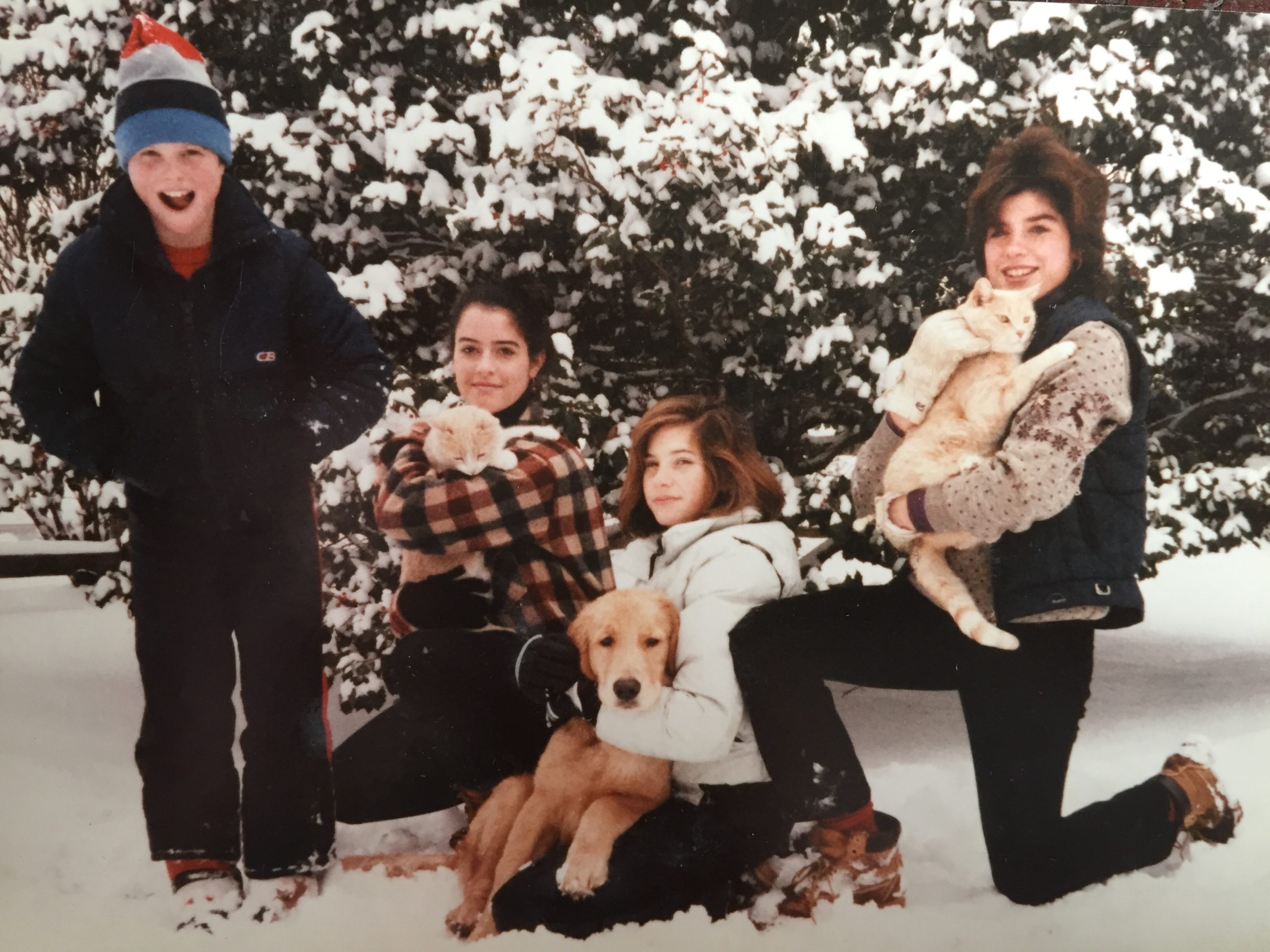
    The Morrissey siblings (from left: John, Meg, Missy, Susan).Missy Morrissey

    “I don’t know how many people feel this way, but I kind of felt like the coolest person in the world happened to be in my family,” said John Morrissey Jr., the youngest of the siblings.

    Morrissey eventually returned east and, after a disappointing stint of online dating in her 40s, reconnected with a former schoolmate, Ben Ledyard, an investment consultant and a regular on the Wilmington social scene.

    The two soon wed, and each weekday morning, Morrissey drove to Pennsylvania to teach English at Academy Park High School in Sharon Hill, Delaware County, where she worked for 13 years until her death on July 23, 2019.

    Her brother now lives in Virginia but regularly returns home to the Brandywine Valley, where visits have begun to trouble him.

    With each crossing of a bridge, each riverside drive, he said, a reminder of his sister’s killing lurks beneath the river’s surface.

    “Susan liked true crime,” he said, “especially local crime.”

    The mystery of her death, he said, is “exactly the kind of case that Susan would have been interested in.”

    A body in the water

    Even after all these years, Missy Morrissey still has the texts saved to her phone.

    It was 12:29 a.m., she said, and the sisters casually exchanged messages while Susan Morrissey relaxed with a glass of wine on the back porch of her Riverview Avenue home.

    She was a night owl, her sister said, and often stayed up late chatting with family or friends, especially during her summer break from school. Morrissey, she said, had been looking forward to attending a Rolling Stones concert with her husband at Lincoln Financial Field the next evening.

    Phone records showed that Morrissey texted with friends and updated her storefront on Poshmark, an e-commerce site for secondhand fashion, until 2:45 a.m.

    Then at 3:02 a.m., a nearby security camera captured Morrissey’s car leaving her driveway, according to Delaware State Police. It traveled around a mile through Wilmington to Walker’s Mill, a historic riverside property that had been converted into offices.

    In the dark of night, however, detectives who later reviewed the footage could not determine who drove the vehicle to Walker’s Mill or see who left the car after it was parked.
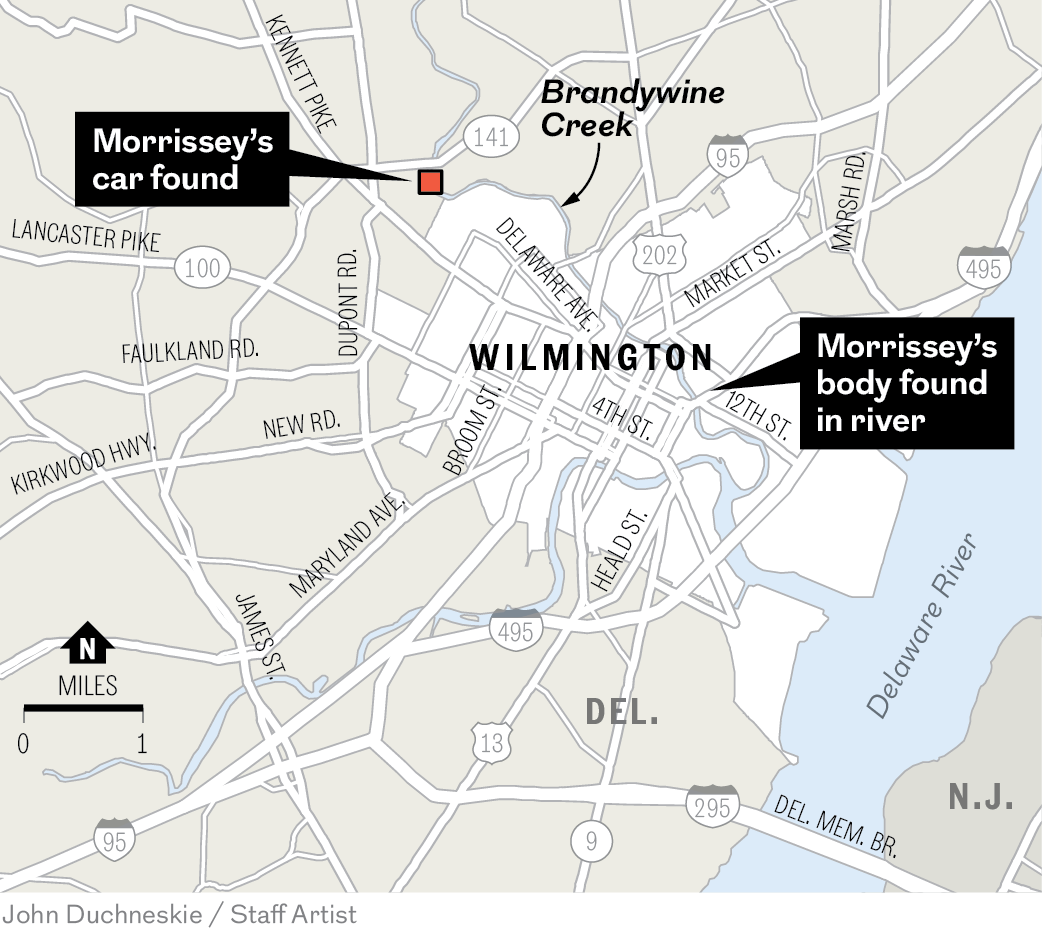
    Map of Wilmington, Del., showing locations in the death of Susan Morrissey, whose death seven years ago remains unsolved.John Duchneskie

    What happened in the nearly five hours between the car’s arrival at Walker’s Mill and the discovery of Morrissey’s body downriver remains a mystery. Investigators say they have not determined why Morrissey would have entered the water that morning.

    “She got her injuries close in time to when she died, and she died close in time to when her body was found” at 7:39 a.m., said Detective Daniel Grassi of the Delaware State Police.

    He believes she may have entered the river anywhere from the Brandywine Zoo to the 16th Street Bridge, more than two miles downriver from her vehicle.
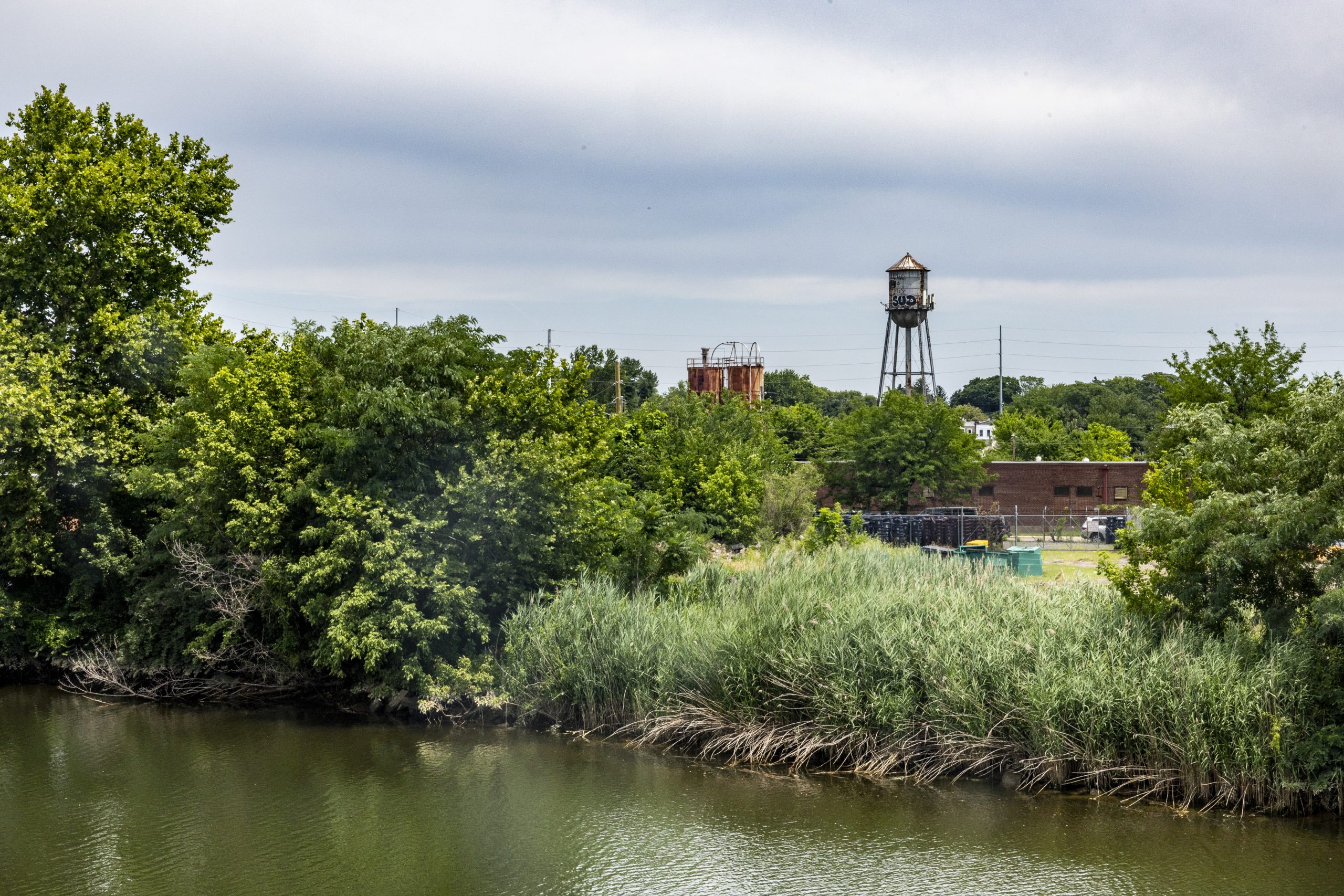
    A water tower is seen from the top of the Northeast Boulevard Bridge in Wilmington, Del., on Friday, June 26, 2026. Susan Morrissey, a schoolteacher in Delaware County, was killed in Wilmington, Del., seven years ago this summer. Her body was found in the Brandywine River near the Northeast Boulevard Bridge.Aidan T. Gallo / Staff Photographer

    Using data from Morrissey’s Fitbit device, investigators have pieced together the barest of timelines from that morning.

    The tracker did not record Morrissey’s GPS location, so investigators cannot trace her movements, but they know she walked about a mile within an hour of her vehicle arriving at Walker’s Mill.

    And at 7 a.m., the device stopped recording her heartbeat.

    “I don’t know why she left the house at 3 a.m., and I don’t know what she was doing between 3 and 7,” Grassi said. “That four-and-a-half hour gap is a major issue with the investigation.”

    What happened to Susan?

    At her West Chester home, Missy Morrissey, 58, keeps hundreds of pages of notes and documents related to her sister’s case, making her something of an in-house historian of the family’s tragedy.

    Since 2019, she has studied the river’s edge between Walker’s Mill and the Northeast Boulevard Bridge, poring over maps, interviewing store owners and strangers, and posting flyers seeking information about the killing near where Susan Morrissey may have been.

    It is not only the lack of a suspect that vexes her. Police have not detailed the cause or extent of Morrissey’s injuries, beyond saying that they were traumatic.

    Morrissey had been home alone that evening while her husband attended a screening of a documentary about the jam band Phish along with a friend. When he came home, Ledyard told investigators, he and Morrissey shared half a bottle of wine before he took a sleep aid and went to bed around 11 p.m.
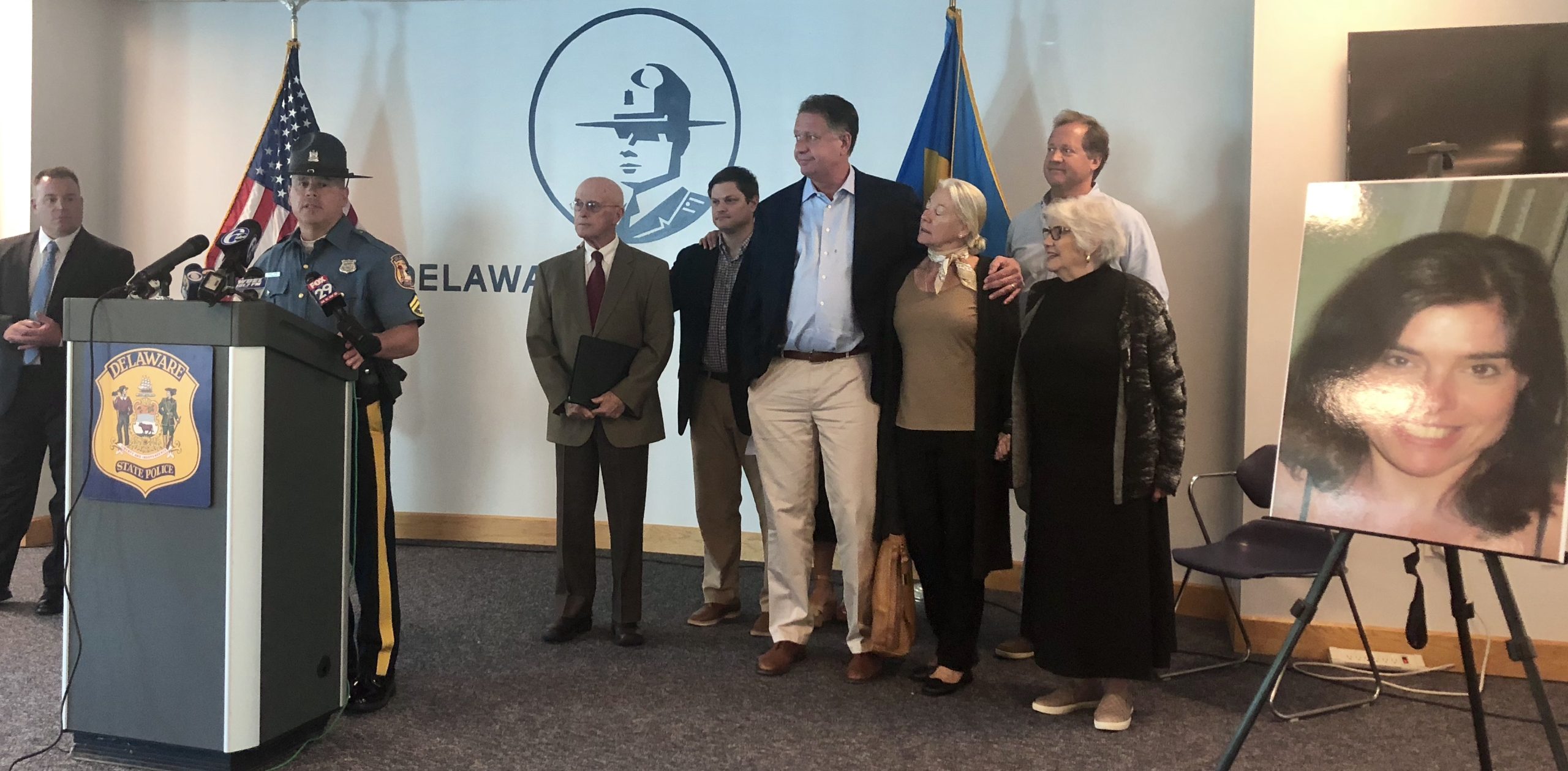
    Delaware State Police Master Cpl. Michael Austin speaks in 2019 to brief reporters about updates in the death of Susan Morrissey Ledyard. With him were her brother, John (second to left), and husband, Ben (third from left).Katie Park/Staff

    He said he had no idea what happened to his wife — a woman he told reporters was “the love of my life, my best friend” — until police came to the house around 9:30 the next morning to tell him she was dead.

    Ledyard could not be reached for comment.

    Two years after Morrissey’s death, Ledyard remarried, and in 2023 he was charged with assault for attacking his wife with a marble figurine and smashing her head into the floor after she asked him to turn down loud music on New Year’s Day.

    He pleaded guilty to second-degree assault and was sentenced to two years in prison.

    The charges brought fresh attention to the Morrissey case and fueled internet speculation that he could have harmed his former wife.

    But police say he is not a suspect in the homicide and has cooperated fully with law enforcement.

    ‘A hope you desperately cling to’

    Morrissey’s parents, Serena and John, died last year at 89 and 91 — without learning what happened to their daughter and without seeing anyone brought to justice for the crime.

    John Morrissey’s death from advanced dementia came just two days after the anniversary of his daughter’s death.

    “It’s been a tough year for our family,” said Meg Morrissey Heinicke, who lives in San Francisco. “This year’s anniversary feels particularly sad and painful.”

    Yet there remains “a hope that you desperately cling to” that the case will be solved, she said.
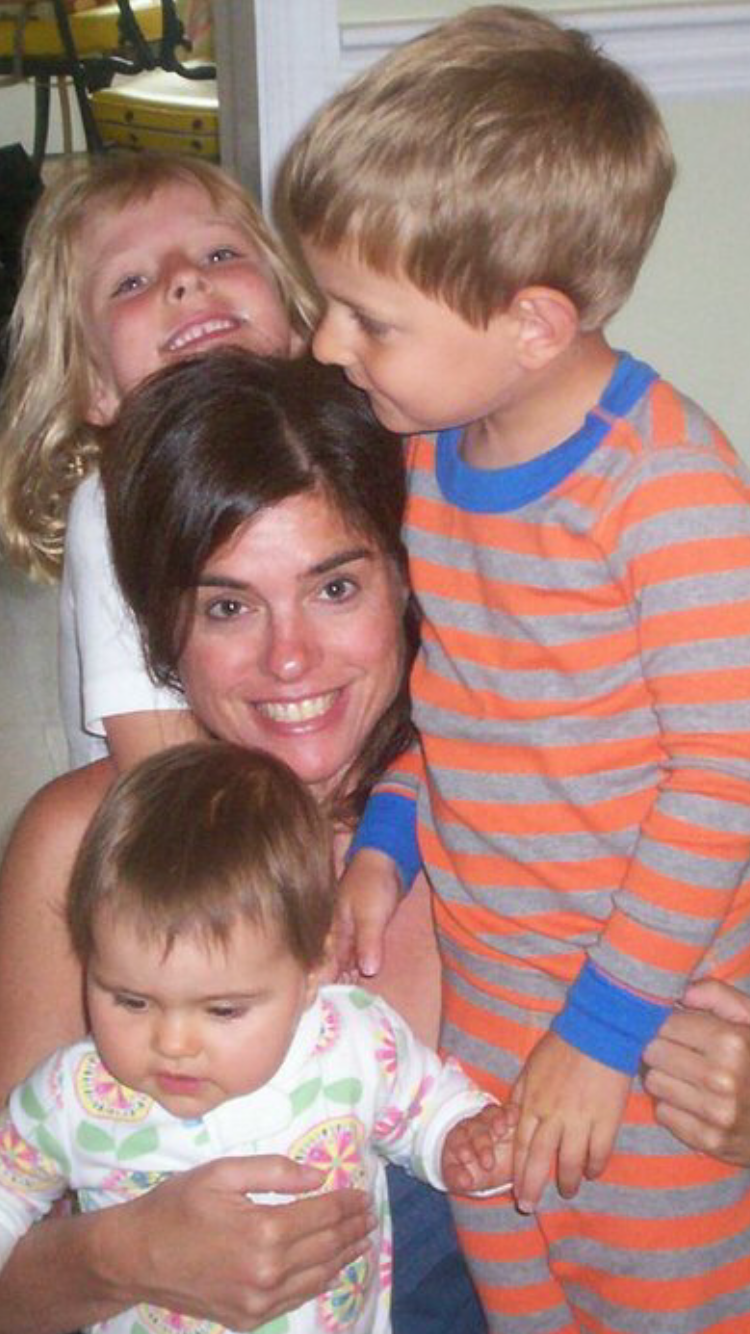
    Susan Morrissey with her nieces and nephew. Missy Morrissey

    In honor of their sister, the siblings started the Susan Morrissey Foundation, which awards an annual scholarship to an Academy Park student for excellence in English, a small way of keeping her memory and love of the written word alive.

    In their quest for answers, the family has promised a $50,000 reward for information leading to an arrest.

    “I just want us to have some answers,” Missy Morrissey said of the family’s ongoing grief. “I don’t think that any of us can really process, or go on, without knowing.”

    Anyone with information about the case is encouraged to call detectives with the Delaware State Police at 302-365-8441 or email daniel.grassi@delaware.gov.

  • Ricky Bottalico ‘tells it like it is’ and understands it might bother some Phillies

    Ricky Bottalico ‘tells it like it is’ and understands it might bother some Phillies

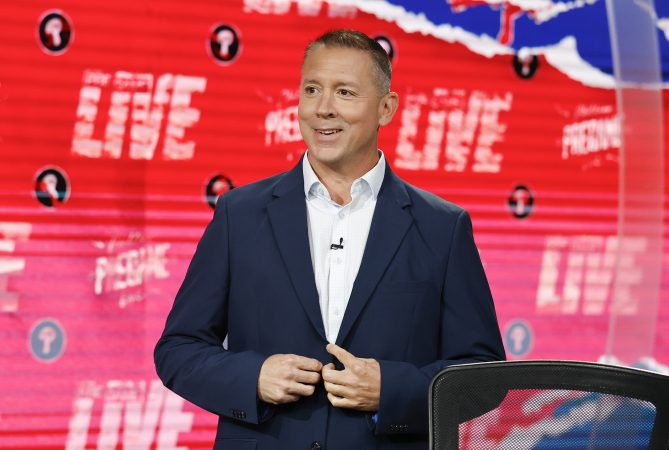
    Ricky Bottalico often walks NBC Sports Philadelphia with a hockey stick, pacing the newsroom like a third-line enforcer before it’s his turn to dissect that night’s Phillies game.

    Bottalico battled that same restlessness during his 12-year major league career, often bothering fellow relievers with his inability to simply relax in the bullpen while they waited for the phone to ring. It’s only fitting that he prepares for TV the same way.

    “He’ll take slap shots at people,” said Sean Kane, a senior producer who oversees the network’s Phillies coverage. “People are trying to get work done, and he’s shooting hockey pucks. He’s all amped up talking to people. It’s just how he is. How he’s wired. And it makes for good TV.”

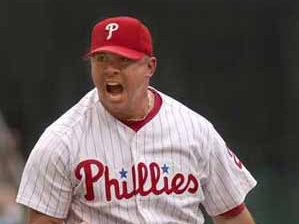
    Bottalico pitched with intensity — he once started a brawl by beaning Barry Bonds and cursed at his old manager after earning a save — once he left those jitters in the bullpen. His fastball was blazing, and his stare was glaring. Bottalico had an edge. So does the guy who carries the hockey stick around the newsroom.

    The 56-year-old Bottalico has made his name on TV as a no-nonsense analyst who isn’t afraid to criticize the Phillies, even though the team owns part of the station. Bottalico is irate after a loss, fumes when relievers don’t throw strikes, and blows his lid when fundamentals are lacking.

    He does praise the Phils when they deserve it and is just as heavy-handed with the opponent. But it is his barbs against the Phils — “This is pathetic,” he said after a rough loss one night — that players have bristled at over the years. Bottalico pitched seven seasons for the Phils, and it’s uncommon for a former player working as an analyst on the station that carries the games to have as strong opinions as him.

    The former player said he never takes a cheap shot as he speaks solely on what happens on the field. It’s never personal. He’s doing his job, just like he did when he was on the mound. Bottalico is throwing strikes.

    “I’m sure there are some guys who are pissed at me,” Bottalico said. “You don’t want to piss anyone off. That’s not why we do it. I’m sure there are some people who enjoy teeing off on players. I don’t enjoy teeing off on something that happens in a game, but you have to. It’s part of the job. The way I look at it is if you can look in the mirror and see that you had a bad game or you made some bad pitches, then everything is status quo.”

    Ricky Bottalico (left) prepares for “Phillies Pregame Live” with senior producer and digital contributor Sean Kane and host Michael Barkann on Thursday at the NBC Sports Philadelphia studio inside Xfinity Mobile Arena.Yong Kim / Staff Photographer

    Truthful to the fans

    Bottalico started with the network, then called Comcast SportsNet, late in the 2007 season. He retired two years earlier and was looking for the next chapter.

    “You get your first summer off in 15 or 20 years,” Bottalico said. “And I’m like, ‘This is going to be great.’ Then you realize that it’s not everything you thought it would be. You’re sitting around a lot. Everything is getting stale. I missed the game.”

    Bottalico’s TV gig gave him a chance to get back to baseball. He didn’t have much experience, but station fixture Michael Barkann said the former All-Star closer had what it took to be in front of a camera: knowledge, passion, and an opinion.

    “He’s just so good at conveying what’s going on on the field,” said Barkann, who hosts the pregame and postgame show. “Many people will say baseball is just as simple as ‘See ball, hit ball, field ball, and throw ball.’ But it’s so much more than that situationally. When you absolutely live it and it just runs right through you and it’s a language you can speak with other people who have been there, it enables you to explain the game in a much more clear way. That’s him.”

    Bottalico’s work that season led to more postgame shifts in 2008 along with work as a color commentator for the Lehigh Valley IronPigs. A Daily News review of broadcasters in 2009 said Bottalico would be a star once he lost “the alumni-bias that sometimes causes him to broad-brush obvious chinks in the Phillies’ armor.” That soon happened.

    “You have to be truthful to the fans,” said Bottalico, who also cohosts an afternoon radio show on 97.5 FM. “I don’t like to beat around the bush. I learned early on that you have to be truthful about what happens because fans see what happens. But the other side of that is when they’re good, you point out that they’re good. I will say it’s a lot easier to do the show when they’re good.

    “I’ve been doing this job for a long time. I now work with Cole Hamels. I see Ryan Howard around all the time. Jimmy Rollins, I played with and analyzed. They never had a problem with me. They might say, ‘Ah, you’re getting on me today.’ But that’s about it.”

    The network started broadcasting Phillies games in 1998 and gave the team a share of the station in 2014 as part of its current $2.5 billion TV deal. So Kane said it can be “a little tricky sometimes” when the studio analyst working for the rights-holder takes a dig at the team.

    Kane said he’s heard Bottalico might not be the most popular person if he walked into the Phillies clubhouse, but he’s never fielded a complaint from anyone. So Bottalico keeps bringing the heat.

    “He’s going to tell it like it is, and I think that’s why fans love him,” Kane said. “He’s not going to worry about ‘Well, if I say this it might upset the players or it might upset the front office.’ I don’t think he takes cheap shots, but I just think he tells it like it is. If someone needs to play better or if someone needs to be more accountable, then he’s going to say it on TV.

    “I’m sure over the years that has rubbed some guys in the clubhouse the wrong way. Like, ‘What’s this former player doing? He should be more protective. He should be more of a player-friendly analyst like, ‘They’re trying hard. That’s all you can ask.’ But I really don’t think he takes cheap shots. I just think he’s objectively watching this like a fan and ‘This guy needs to be better’ and ‘This guy needs to hustle’ and ‘This was a stupid decision’ and ‘They should’ve done this.’ When they’re not playing well, he’ll get angry. It’s not manufactured.”

    Ricky Bottalico (right) with host Michael Barkann during a show on Thursday at the NBC Sports Philadelphia studio inside Xfinity Mobile Arena.Yong Kim / Staff Photographer

    Treating it like football

    If you think Bottalico is intense, he said you should watch a Phillies game with his dad in Connecticut.

    “It’s unreal. It is unreal,” Bottalico said. “I’ll be there every once in a while and be outside with my brothers and we’ll hear ‘What the heck are they doing?’ You’re like, ‘Wow. OK. I guess I know where I got it.’”

    The intensity Bottalico inherited from his father, Jay, proved to be a perfect match with Barkann, the host who rides an emotional roller-coaster every night during a 162-game season.

    “He made a comment the other night and said, ‘You know what I love about Philadelphia is that we treat it like the Eagles, and they play once a week. That’s how we do every game,’” Bottalico said. “But it’s true. Because that’s our job. A lot of people don’t understand, ‘How are you getting so excited over this one game?’ Because that’s our job to bring what we feel that night. I think he’s a perfect example of what Philadelphia is and how intense the city has always been.”

    Treating the result of a baseball game the same as a football score is the antithesis of how baseball players manage the grind of a season that often is characterized as a marathon. But how many viewers would tune in after a loss if the hosts simply said, “That’s baseball?” This is TV they’re making, and even the pitcher who ran those marathons for years had to become a sprinter.

    “When you’re playing, you don’t do this,” Bottalico said. “But let’s face it: If I wasn’t true to what’s happening each and every game, I wouldn’t be doing this anymore. It’s one of those things where you have to have a love of the game, a passion for what you’re doing, and you have to be able to talk and explain it.”

    The analysts know their tone may not resonate in the clubhouse, but their audience is the fans who are reeling — or riding high — like they are. The team’s postgame show meets the die-hards where they are.

    “You want to be true to them,” Barkann said. “If you treat 162 games like Don Mattingly treats 162 games or Dave Dombrowski does, then come on. You want people to watch the program. You want people to get excited. You also understand as a fan that it’s not one of 162. It’s everything on that particular day or night. I pride our program on the fact that we do get excited, maybe a little over the top, about every win or every loss.”

    Ricky Bottalico had a 3.70 ERA and 78 saves over seven seasons with the Phillies, and was their lone All-Star in 1996 at Veterans Stadium.INQ LODRIGUSS

    A natural edge

    Bottalico signed his first professional contract with the Phillies in 1991 in the backseat of a scout’s car after being discovered in a men’s league in Hartford, Conn. He was a catcher who didn’t start pitching until his junior year of college before going undrafted. Bottalico reported to Clearwater, Fla., and another pitcher wondered how Bottalico fell through the cracks.

    “He looks at me and goes, ‘You throw harder than anyone else in here,’” Bottalico said.

    It would have been easy to be bitter about the route he needed to take, but Bottalico never felt slighted. The edge he pitched with was not because he was overlooked. It was just him.

    “I had it in Little League,” Bottalico said. “And I’m being honest. In Little League, I wanted to win every game. I wanted to get a hit every at-bat. At that point of your life, you don’t realize that the game is a game of failures. I always wanted to win. I always had that desire to make everyone on the team better, no matter where it was. I just think you’re born with that fire and desire.”

    Five years after being undrafted, he was the lone Phillies’ All-Star in 1996 at Veterans Stadium. He was a big league closer, which meant the reporters flocked to his locker after a blown save but practically ignored him after a 1-2-3 ninth. Like a kicker, the closer usually makes news only after a botch. Bottalico understood the game.

    Ricky Bottalico says “If you can look in the mirror and self-evaluate, then you don’t have a problem with getting ripped apart.”Yong Kim / Staff Photographer

    “John Marzano was doing pre- and postgame, and he would rip us apart,” Bottalico said. “But I thought it was funny. I never took it offensively. I’d be like, ‘OK, John. Get on me. What are you going to do? Rip me tonight.’ It was just one of those things. I was always the look-in-the-mirror-first guy. We used to have to stand in front of our lockers, and if I had a bad game, I would tear myself apart before they even asked a question. I was true to myself. If you can look in the mirror and self-evaluate, then you don’t have a problem with getting ripped apart.”

    The analyst who presses the Phillies every night once was the player who got pressed. He didn’t have issues taking it, so he has no issues dishing it out. Bottalico is doing his job just like Marzano was. The guy who carries a hockey stick around the office can still pump one by you.

    “Let’s face it: People criticize me,” Bottalico said. “You know what I do? I laugh at it. OK. You have your opinion, and I have mine. I’ve never thought about it as a critical thing. It’s just that I have a job to do. I’m doing my job, and they have a job to do, and they do their jobs.”

  • They call her the Delco Dog Detective. She’s spent over a decade finding the Philly area’s hardest to catch lost dogs

    They call her the Delco Dog Detective. She’s spent over a decade finding the Philly area’s hardest to catch lost dogs

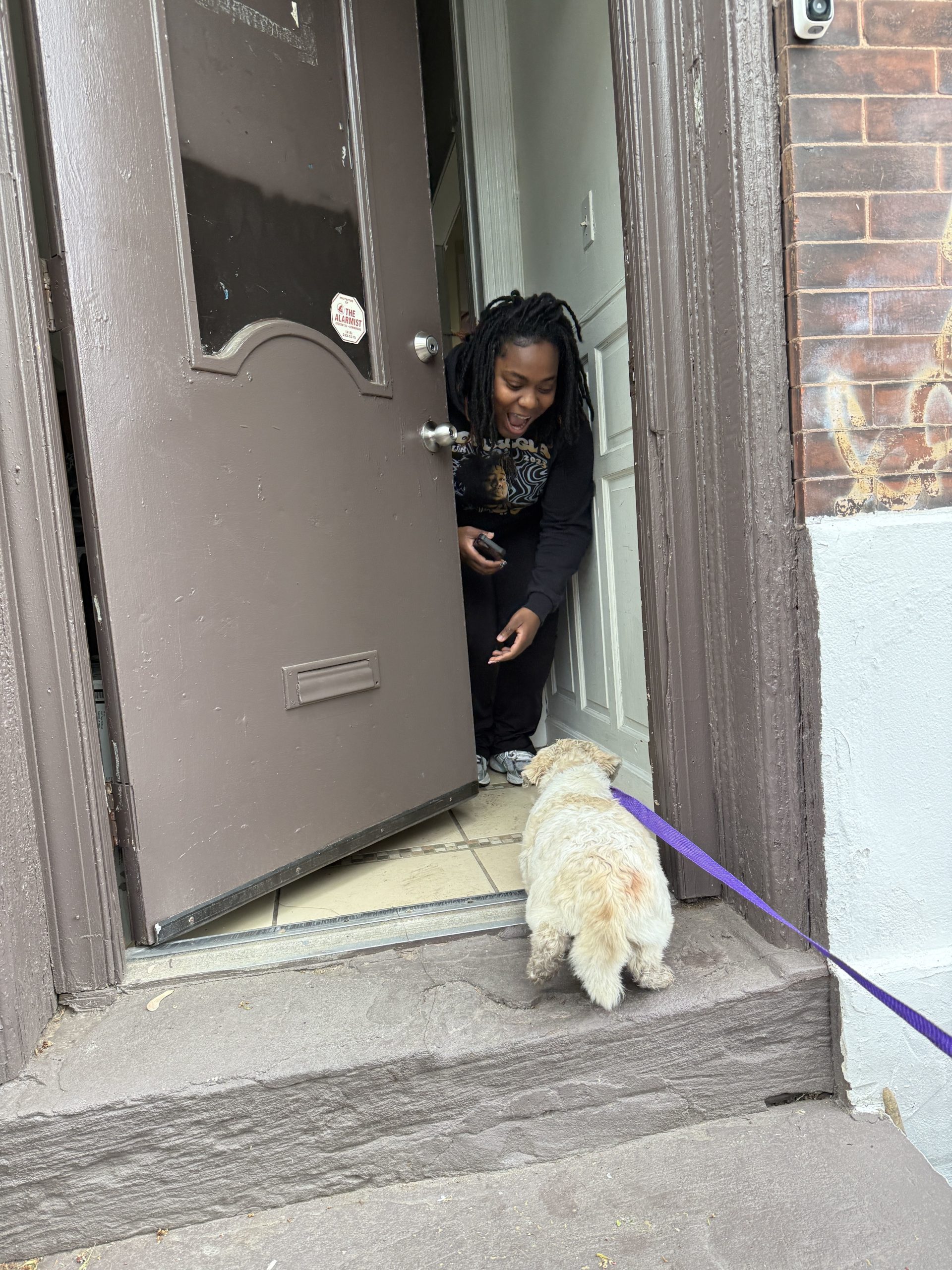
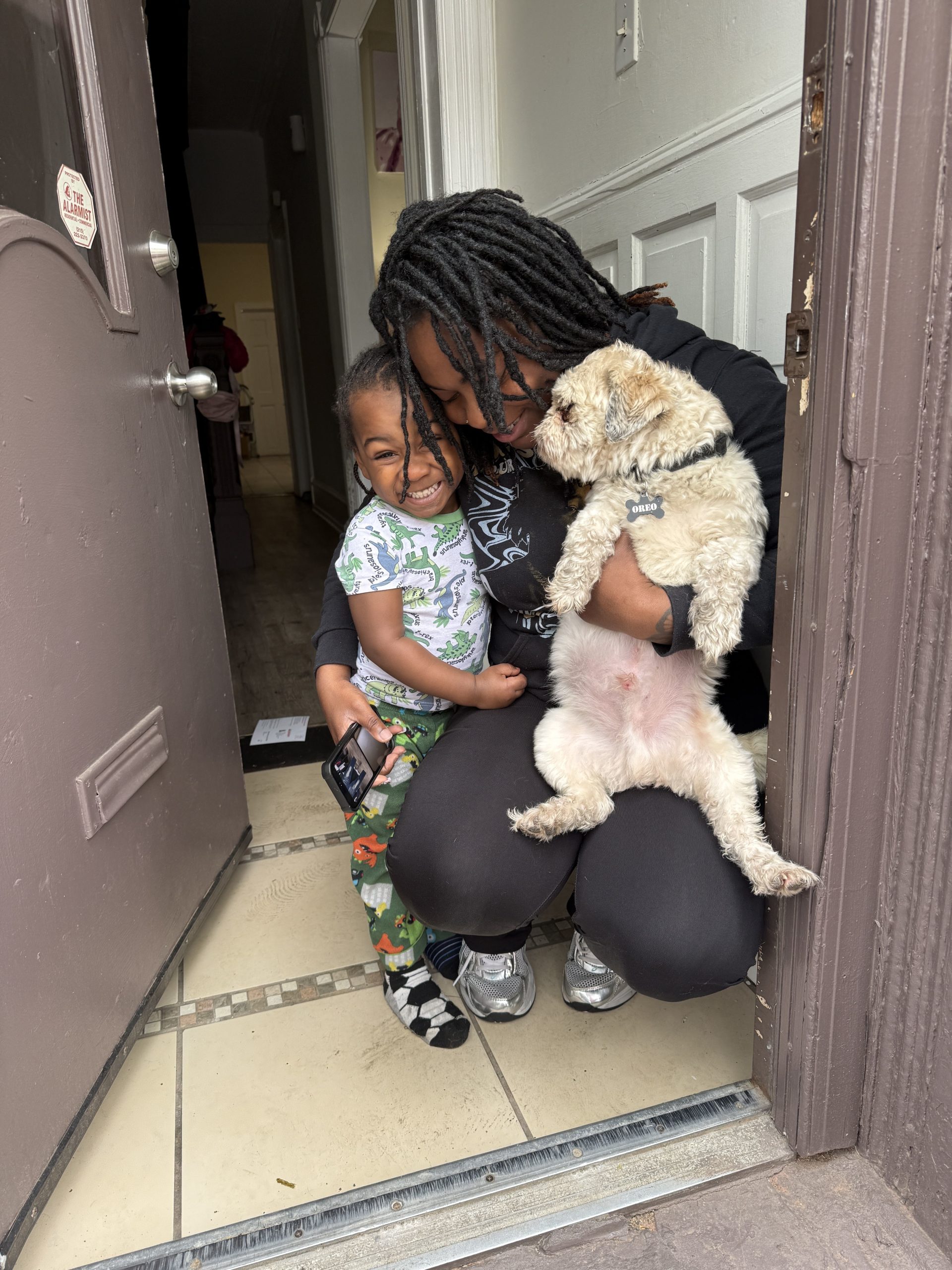
    His eyes were smeared with black goo, his legs were caked in dirt, his back was riddled with ticks, and a chunk of fur was missing from his upper lip. And yet, Oreo, a 4-year-old shih tzu, blissfully bounded up the front porch steps of his Mantua home on a Sunday morning in April.

    He wedged his tiny frame between the door and the molding, a crumpled purple leash trailing from his neck, waiting until the knob turned and 22-year-old Jayda Pizarro appeared in a black hoodie and yoga pants. Her braces sparkled as she beamed widely and greeted her pup, who’d been lost in the woods for the last 15 days.

    Jayda Pizarro reunites with her dog Oreo at her Mantua home.Dana Munro

    Tears dripped from Pizarro’s eyes onto the tile foyer floor as she nestled Oreo between her cheek and shoulder.

    “Thank you,” she sniffed out as she cradled his body and rocked him in her arms. “We’ve been crying every day.”

    It was all in a morning’s work for 53-year-old Colleen Bell, who estimates she’s recovered nearly 1,000 dogs, both strays and family pets, over the last roughly 14 years.

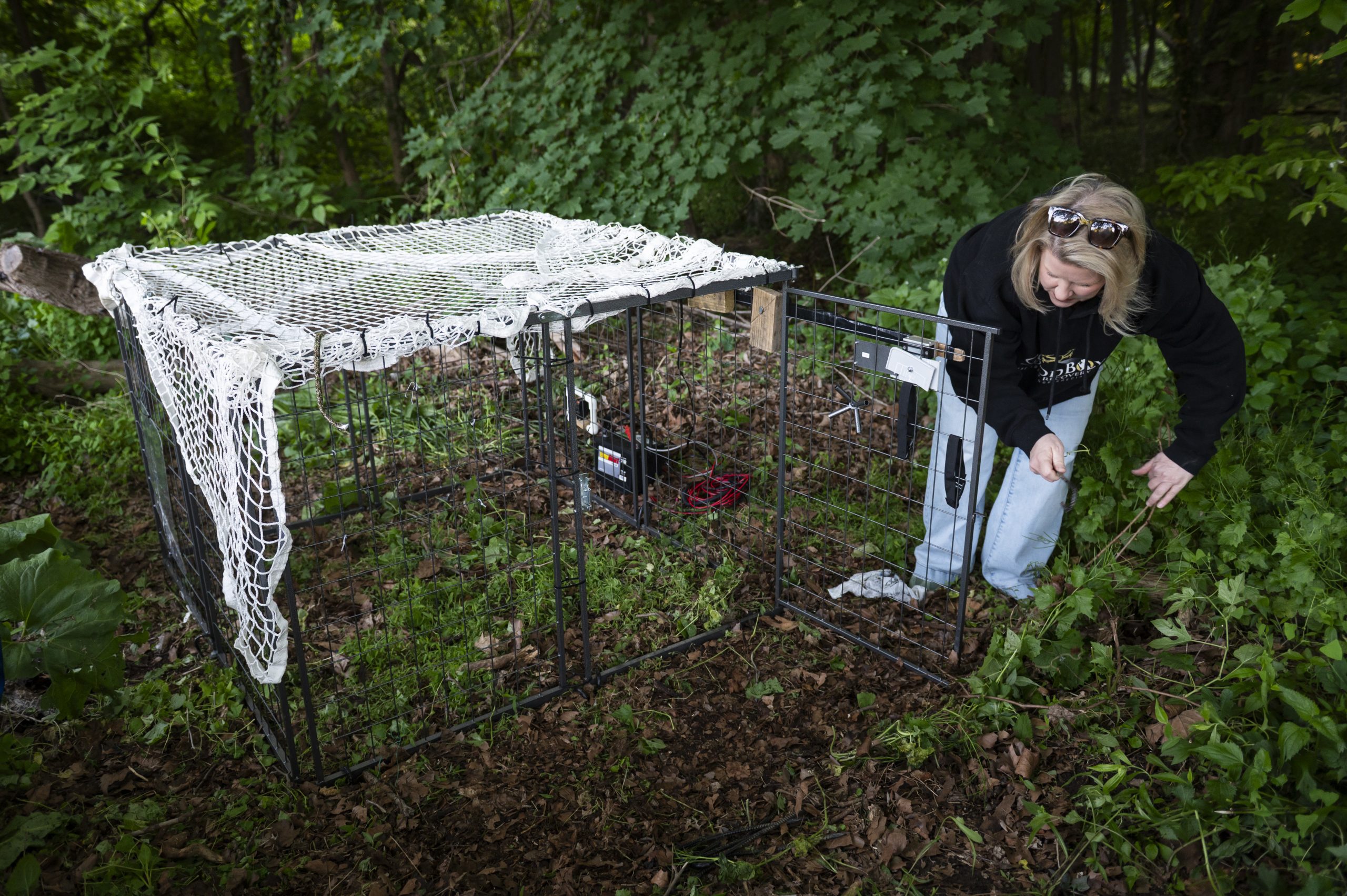
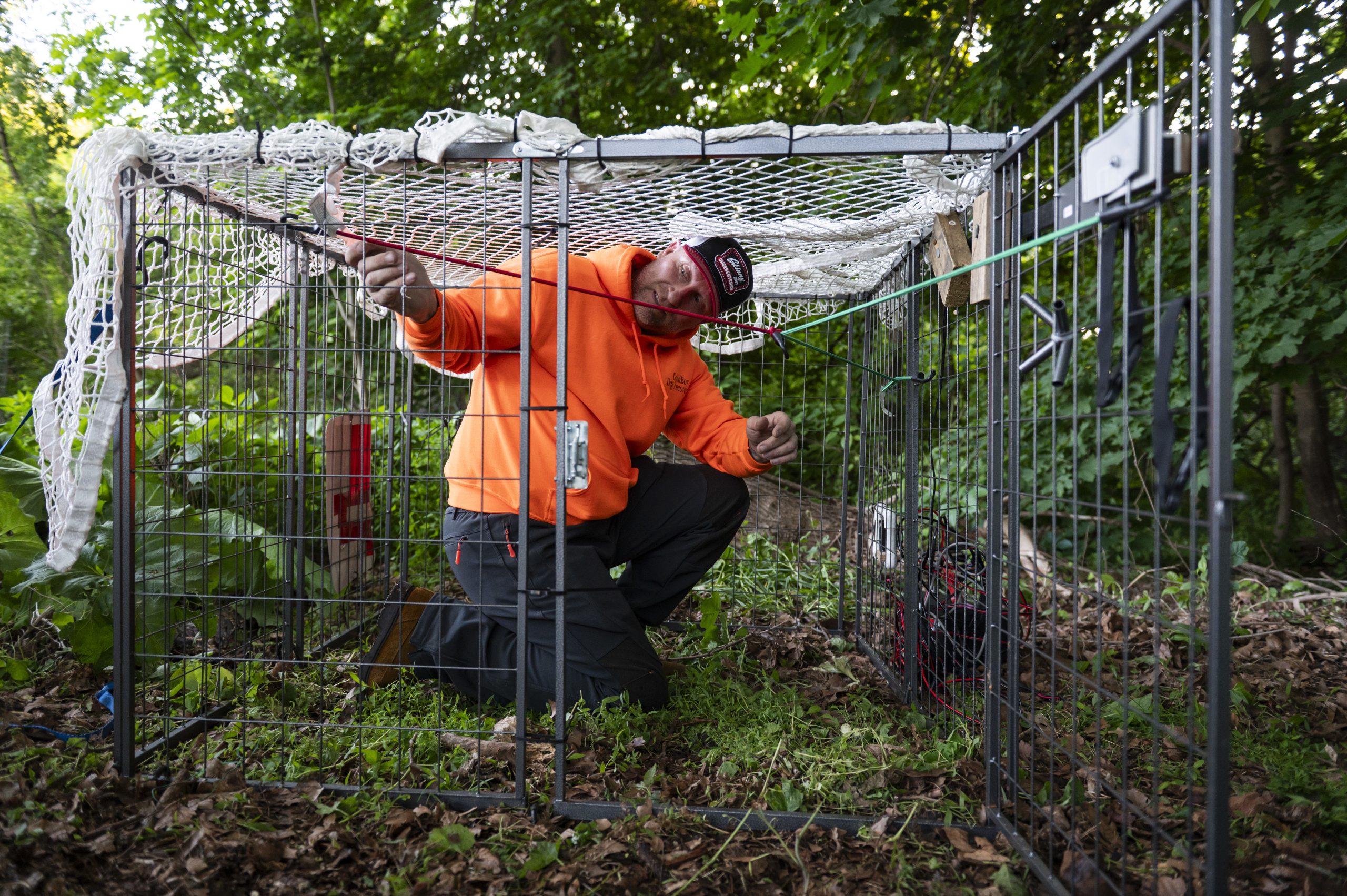
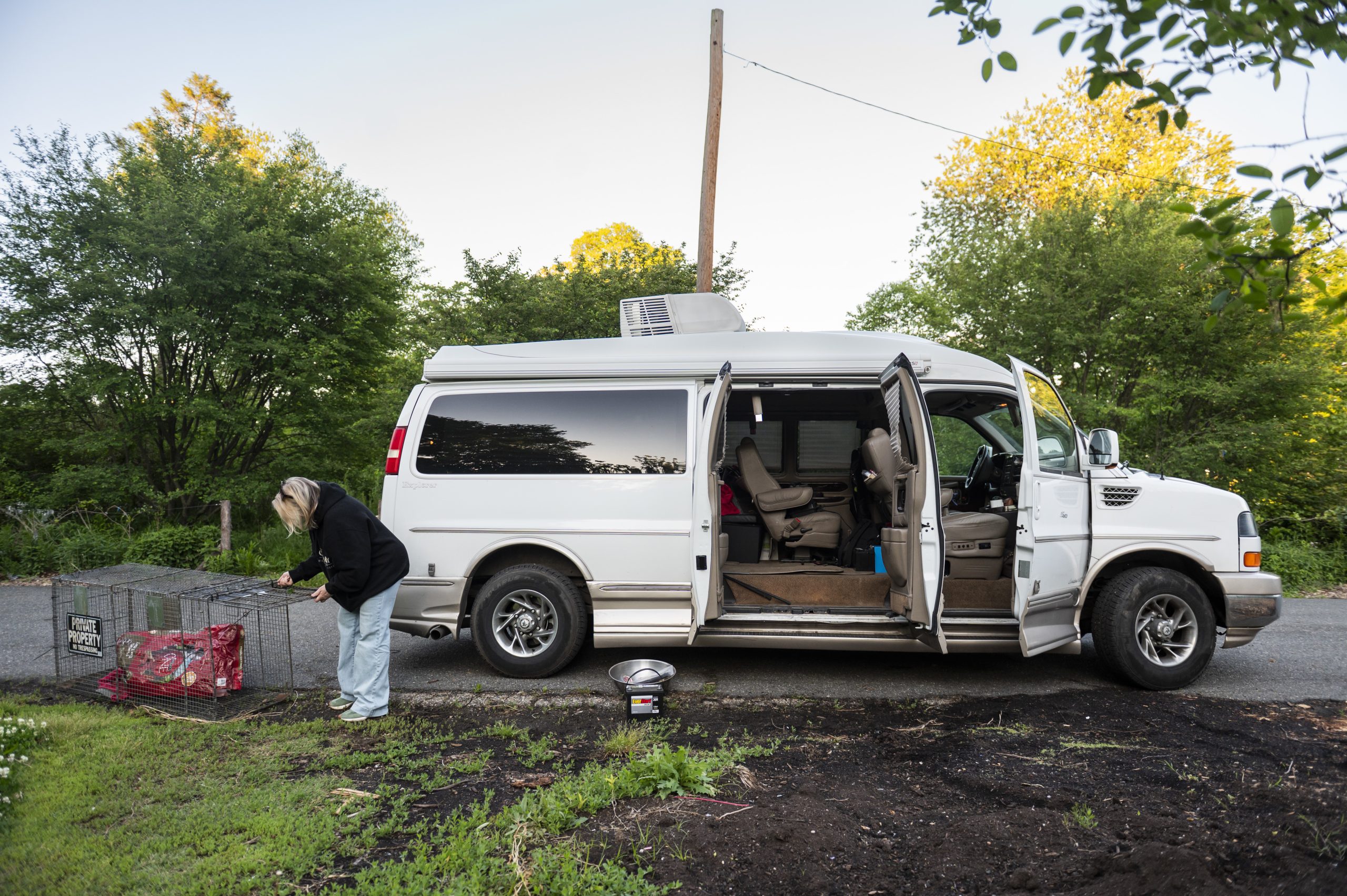
    Colleen Bell finishes setting up a dog trap by the Woodford Mansion in Fairmount Park on Monday, May 11, 2026. Bell runs the non-profit, GoodBoy Dog Recovery, where her and her brother and friend catch mainly stray and lost dogs in the Philadelphia region.Allie Ippolito / For The Inquirer

    Bell doesn’t do this work for money, acclaim, or internet fame. She does it purely for a love of the game, the thrill of the hunt, the satisfaction of capturing a petrified pup, and the fulfillment of reuniting it with a frenzied family.

    Over the last several years, she’s become a trusted and critical resource for the Animal Care & Control Team of Philadelphia and many others in the region and across the globe. She’s also become a fearless dog rescuer, who’s traversed mountains, driven through blizzards, sifted through building rubble, and charged through rainstorms with soccer nets to retrieve retrievers, shepherd shepherds, and master mastiffs.

    Puppy love for a new pursuit in life

    Bell spent much of her Lower Chichester upbringing tearing through Nancy Drew books as a steady procession of stray dogs came and went from her Delaware County home.

    However, this specific fusion of her love of dogs and solving mysteries didn’t set in until decades later. It started about 14 years ago with a black pug named Lilly.

    When her neighbor with dementia accidentally let Lilly out the front door, Bell, a single mother with two adult daughters and some time on her hands, volunteered to help. She and others weren’t able to find the dog, but the experience, Bell said, “kind of sparked something in me.”

    When another opportunity arose to reunite a lost dog with its family, she was determined to do so. So she contacted Justice Rescue, a Pennsylvania-based animal welfare group, which had special traps designed to catch animals. The dog was caught within five minutes.

    From then on, “I was kind of hooked,” she said.

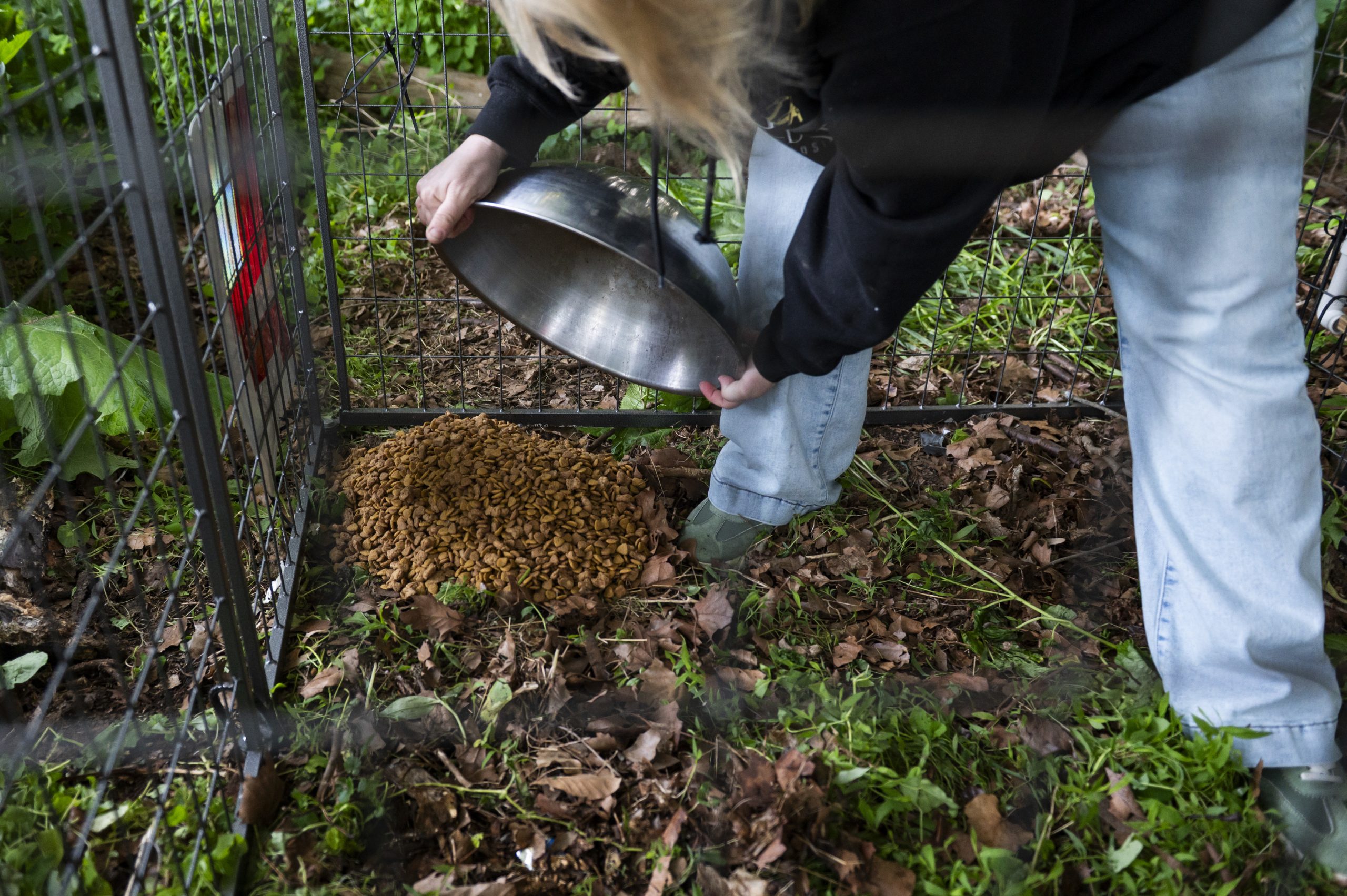
    Colleen Bell dumps food into a dog trap in hopes of luring a local stray dog by the Woodford Mansion in Fairmount Park.Allie Ippolito / For The Inquirer

    Slowly, she started collecting her own equipment — some traps, some cameras, and some dog food.

    With a little outside advice, a whole lot of dogged persistence, and through good old-fashioned trial and error, she refined her approach. She learned what entices fearful dogs and what scares them off. She studied their body language and behaviors and miraculously kept all her fingers and toes in the process.

    She filled her free evenings after her day job as a supervisor at a health insurance company with stakeouts.

    Most people in her life didn’t know she was doing any of this until one fateful midnight about two years ago.

    Tanwyn the golden retriever was missing in Chester County’s White Clay Creek Preserve. Bell tried every tactic in her arsenal. She even purchased a stuffed golden retriever toy that breathed and cried in hopes it would spark Tanwyn’s maternal instincts. She set up traps and slept in her car overnight in case the dog appeared. But nothing worked. Bell needed to get closer.

    She procured a duck blind and positioned it near the trap so she could hide behind it and grab the leash if the dog came close enough.

    Around 12:30 a.m., as she sat alone in the preserve, fear set in.

    “What the hell am I doing?” she thought to herself. “I’m scared to death. Nobody knows I’m here.”

    But she couldn’t leave. It wasn’t in her nature. It could be the night the dog came. So she called her brother, Brian. Of her three older brothers, Brian had always been the “dependable” one, she said.

    “What are you doing?” she asked him.

    “I’m sleeping,“ he replied. ”What’s going on?”

    Within the hour, he was there. And, for the most part, he hasn’t left her side since.

    “I’m an older brother,” said Brian Bell, 55. “It’s my job to look out for her.”

    Brian Bell sets up a dog trap by the Woodford Mansion in Fairmount Park.Allie Ippolito / For The Inquirer

    Previously, the two had gone years without speaking. They were raised in an abusive household, Colleen said, which led her to distance herself from her siblings.

    “I just couldn’t deal with talking to anybody” from that part of my life, she said.

    The dog recovery work reunited all four of them, Colleen said, but especially her and Brian.

    “He’s become one of my best friends,” she said.

    “We’re like inseparable,” Brian added.

    Soon their friend Alan Boates, 45, got involved as well. All three, who live minutes from one another in Chichester, adore dogs and the rush of capturing one on the run fending for its life.

    Quickly, Brian Bell and Alan Boates understood their assignment as the muscle of the operation. Colleen Bell was the brains, and neither hell (an unstable building or unscalable mountain) nor high water (frozen creeks and torrential downpours) were going to stand in her way.

    “There’s nothing that she won’t do to save a dog,” Boates said. “If she got to sacrifice us for a dog, it’s the dog.”

    Boates, who owns a construction company, leveled up their equipment. They built traps operated by remote control and others activated by laser beams.

    They upgraded items as they found more advanced versions online. They swapped DIY drop nets for net launchers that hang between trees and shoot nets at the ground.

    At one point, Colleen Bell came across literature about thermal drones and how they create digital maps that can help locate animals in dense woods so she bought one for $8,000 and roped a retired state trooper into teaching her to fly it. It shattered on the asphalt due to a faulty battery. Luckily, she’d already purchased a more sophisticated one for $18,000.

    While she worked alone, Colleen paid roughly $15,000 to $20,000 a year out of pocket. She even took a second job at a nursing home to cover the costs. But once her brother and Boates came on board, the operation became more advanced, and the equipment too expensive to afford on her own.

    So, about two years ago she created a 501(c)3, GoodBoy Dog Recovery. Donations rolled in for fuel, food, traps, cameras, and more. Last year she raised about $134,000, according to a 990 tax form. Much of the money came from her 75,000 Facebook followers.

    Never letting sleeping dogs lie … alone in the woods

    Now, dog recovery is effectively Colleen’s No. 2 full-time job and No. 1 passion.

    Her days typically start with work at AmeriHealth Caritas at 7:30 a.m. She clocks out at 4 p.m., then texts her brother an eyeballs emoji to see if he’s free and up for an adventure. She’ll often reach out to Boates as well.

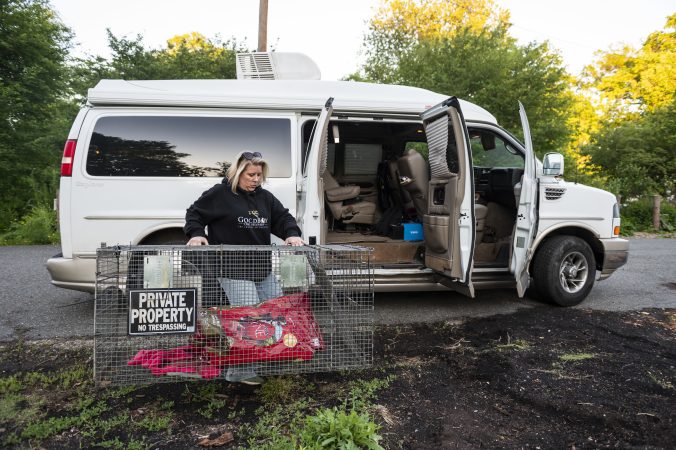
    On a recent Tuesday in June, she picked up Brian in a donated conversion van and drove to the Woodford Mansion near the Strawberry Mansion neighborhood.

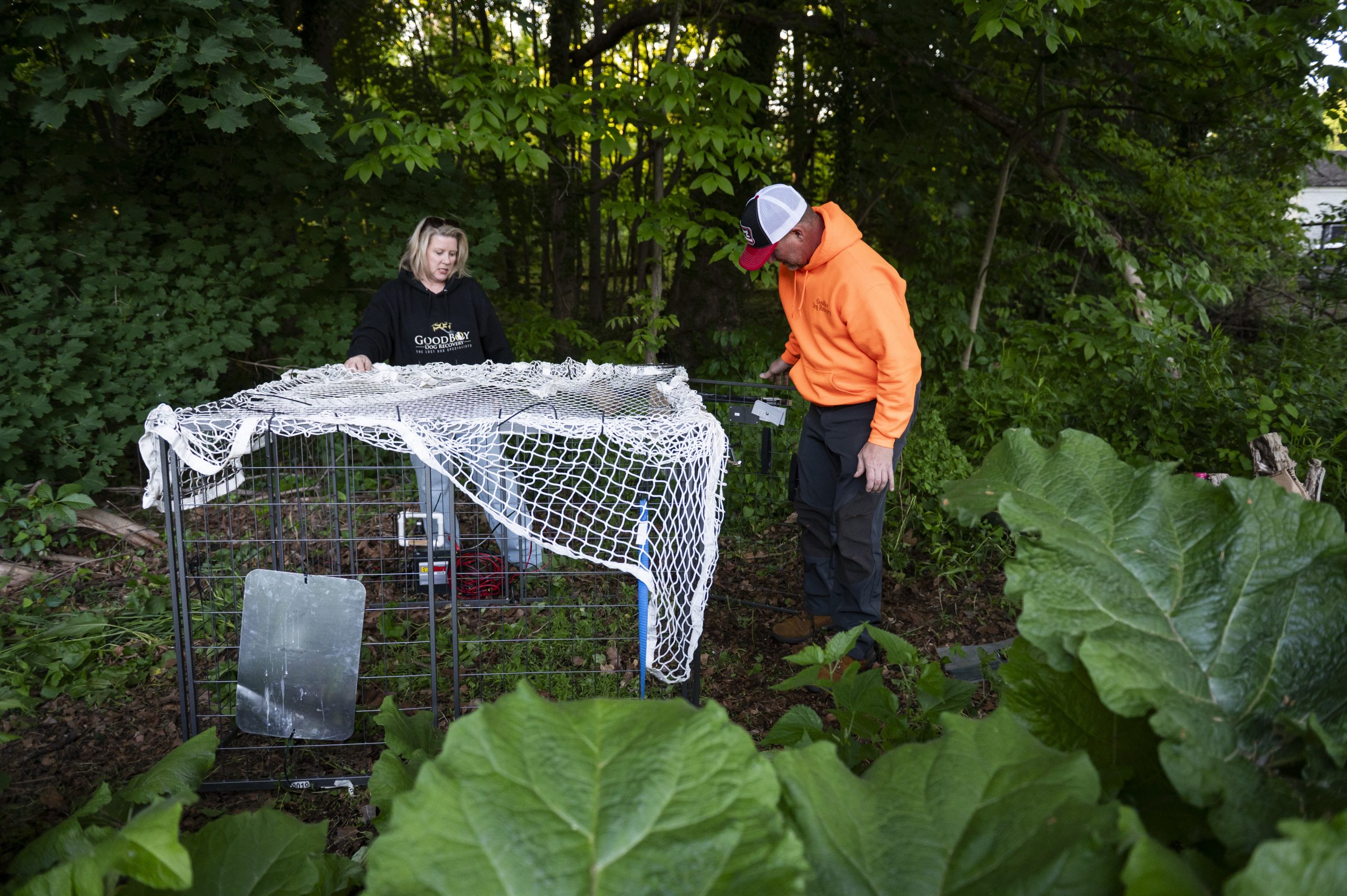
    Colleen Bell (left) her brother Brian Bell (right) set up a dog trap by the Woodford Mansion in Fairmount Park on Monday, May 11, 2026. They run the non-profit, GoodBoy Dog Recovery, where they catch mainly stray and lost dogs in the Philadelphia region.Allie Ippolito / For The Inquirer

    They often sleep in the van parked near a trap in the woods. That’s because sometimes the dogs enter the traps in the wee morning hours and if the traps were unattended, the dogs might get confused and scared.

    On this night they pulled into a driveway at around 7:15 p.m. and replenished the kibble in the trap they’d set weeks ago for Parker, a stray pit bull they were pursuing. Colleen Bell sprayed the area with a barbecue-scented liquid smoke, which she buys by the gallon. Some of these dogs, especially if they’ve been in the wild a long time, survive primarily on wild game. So the crew keeps deer meat and chicken feet on hand. They even have a moose dealer.

    After they prepared the trap area, the siblings sat in the van and waited.

    They scrolled their phones, sipped juice, and nearly popped out of their seats when a jingle emanated from Colleen’s phone, which told them motion was detected in the trap.

    “Be a dog. Please be a dog,” she muttered to herself. “Oh it’s a raccoon. Oh it’s two raccoons.”

    About half an hour later the phone tinkled again. She rushed to press the alert.

    “Damn,” she said. “It’s a fox.”

    An hour later, another alert sounded. This time, it was Brian Bell who shot out of his seat.

    “I got a feeling,” he said with a cockeyed smile.

    “Fox,” she responded, deflated, before pressing a button on her phone that allowed her to transmit an audio message into the trap. “Get out of there,” she warned the fox before its white frame scurried out of view.

    Many nights, she only sleeps a few hours.

    “We never stop until we catch the dog,” she said.

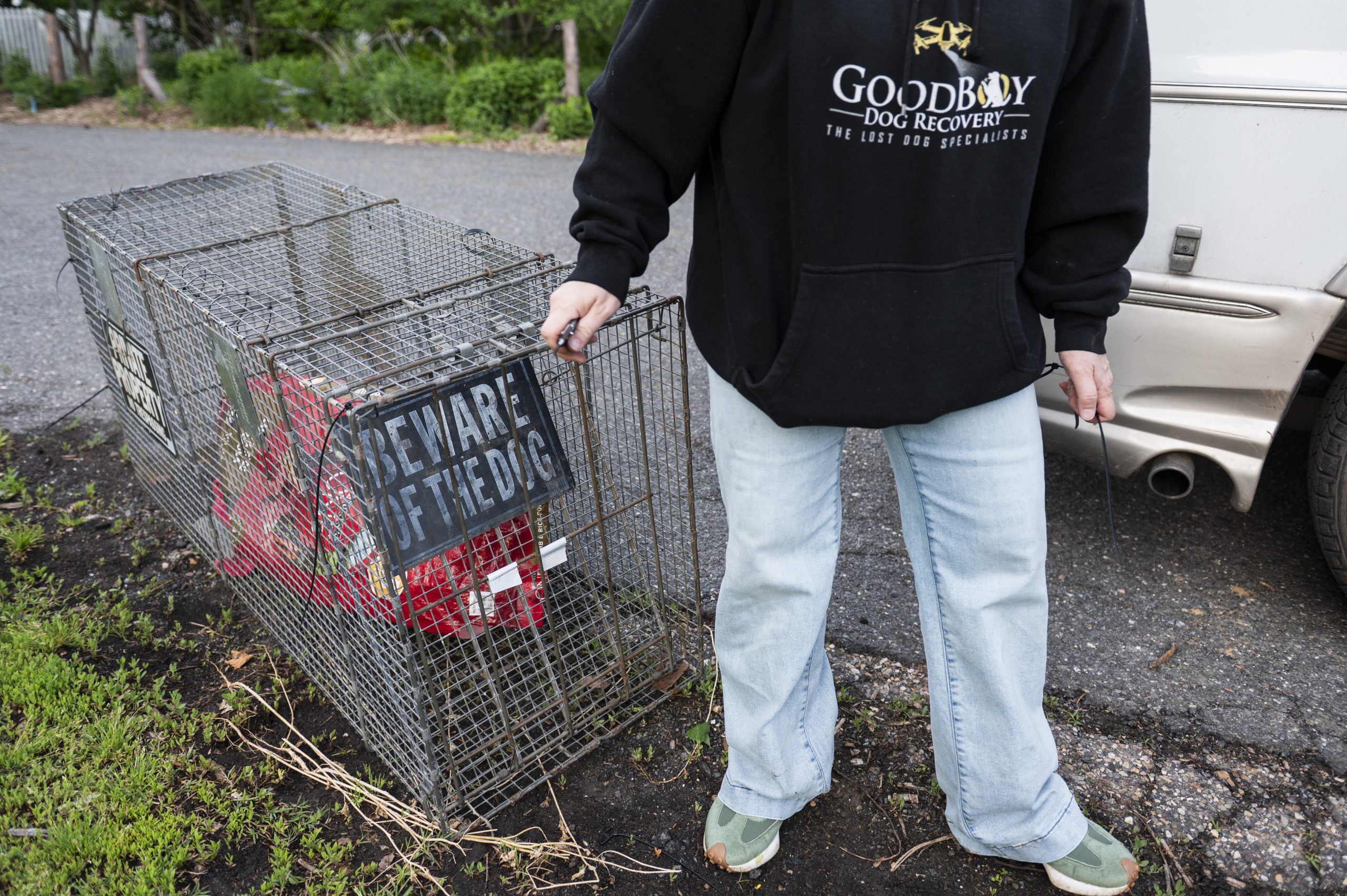
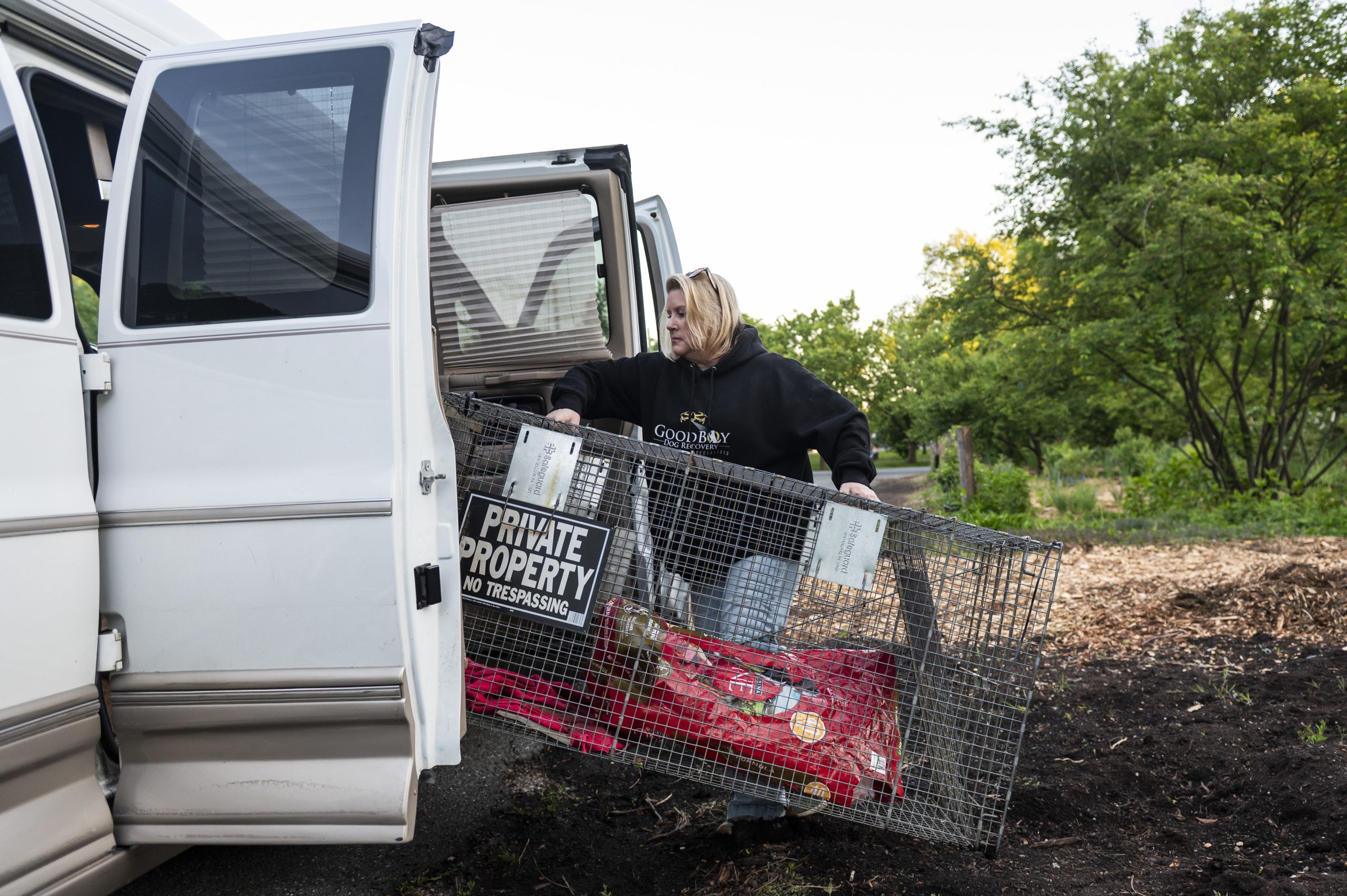
    Colleen Bell drags a dog trap no longer in use to pack up in her van after setting up a different dog trap by the Woodford Mansion in Fairmount Park on Monday, May 11, 2026. Bell, her brother, and friend run the non-profit, GoodBoy Dog Recovery, where they catch mainly stray and lost dogs in the Philadelphia region.Allie Ippolito / For The Inquirer

    When normal methods cease to work, Colleen Bell will throw in a number of toys of her own invention. Her tactical lamb chop, as she calls it, a stuffed Lamb Chop toy into which she sews a GPS tracker, can be especially effective in locating dogs.

    For Brian Bell, the most satisfying part is watching his sister’s face when they close in on a canine.

    “Once she sees it, she’s locked in,” he said. “To her, it’s like each dog that we catch is like the lottery.”

    When they do finally catch them, sometimes the dogs are in disturbingly poor condition, Boates said. One they caught recently “looked like it has 10 legs because it was so matted,” he said. Another had cigarette burns all over its head. Some dogs are dead when they find them. The trio will retrieve the body for the family to deal with as it sees fit.

    For the dogs who are alive, once they’re securely in the trap or net, Colleen Bell puts them in the back of her van. They’re usually asleep within minutes.

    “They’re just so tired of running,” Boates said. “I don’t know what it is, with Colleen, it’s like they know she’s there to help them.”

    Colleen Bell gets ready to pack up her van after setting up a dog trap by the Woodford Mansion in Fairmount Park on Monday, May 11, 2026. Bell, her brother, and friend run the non-profit, GoodBoy Dog Recovery, where they catch mainly stray and lost dogs in the Philadelphia region.Allie Ippolito / For The Inquirer

    A dog eat dog state

    For the professionals, such as those in charge of the Animal Care & Control Team of Philadelphia, Colleen Bell is a critical resource, said Sarah Barnett, executive director of ACCT Philly.

    Barnett’s team gets thousands of calls a month, many about lost dogs. Locating them all would be impossible for ACCT to do alone.

    Not only does Colleen Bell search for dogs in Philly and the suburbs, relieving some of the load from ACCT, she also lends her equipment to individuals with missing pets.

    Philadelphia is relatively privileged in terms of animal resources when compared with surrounding areas, Barnett said. Many Pennsylvania counties, such as Chester and Delaware, have spottier animal care and control coverage.

    In those counties, sometimes, “the dogs just stay wandering,” Barnett said.

    Call off the dogs

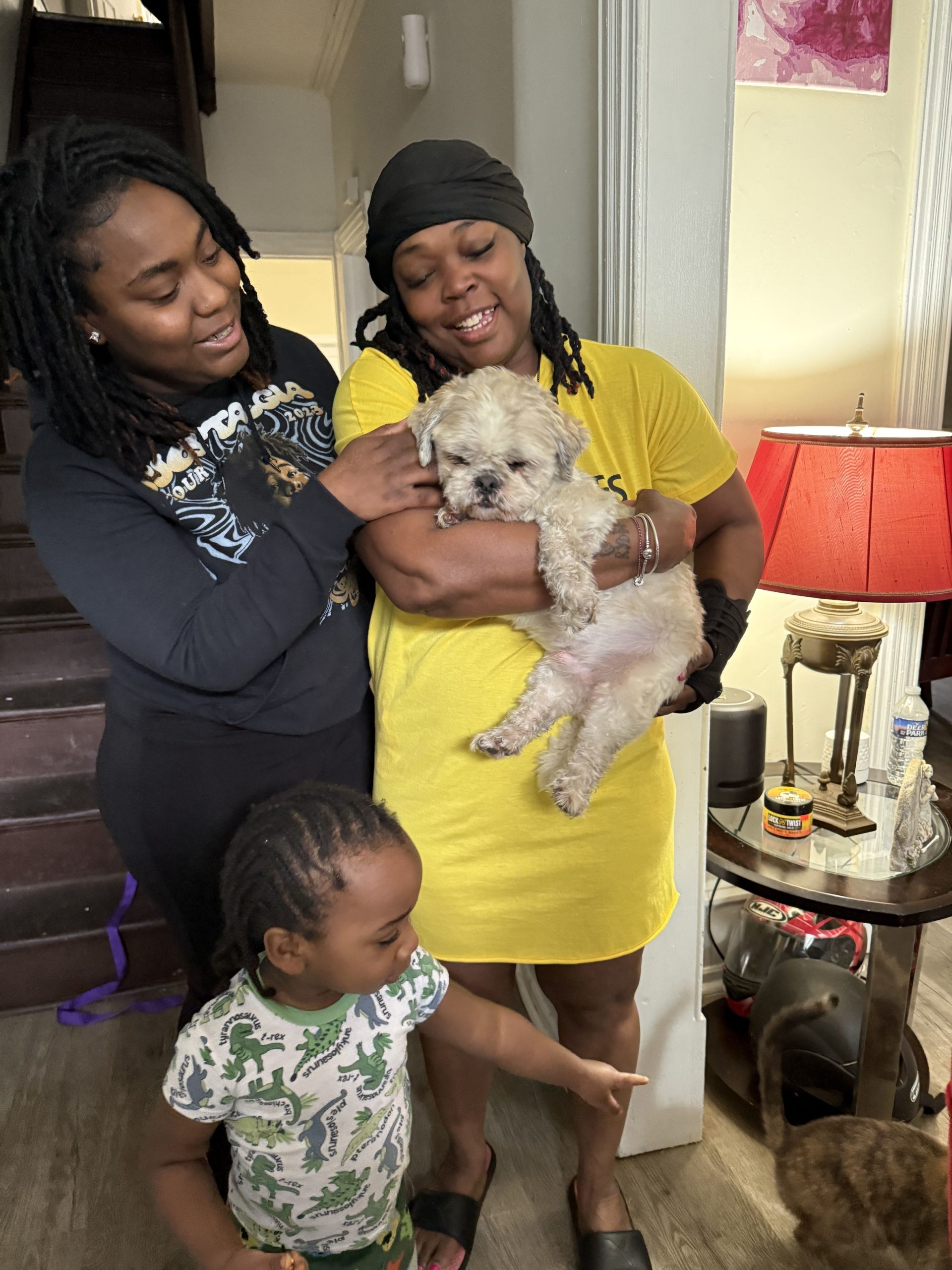
    On the sunny April morning Oreo returned to his Mantua home, he quickly settled back into the loving and chaotic environment he’d wandered off from weeks before.

    “Come see Oreo, Meatball,” Jayda Pizarro shouted up the stairs to her 3-year-old cousin who all in the home refer to by the name of the spaghetti topper.

    Jayda Pizarro reunites with her dog Oreo at her Mantua home.Dana Munro

    A toddler in dinosaur pajamas and one soccer-printed sock and one striped sock came ambling down the staircase.

    As Meatball delightedly watched Oreo wriggle on the floor, a cat emerged from the living room to judgmentally gaze upon the scene. All seemed as it was meant to be.

    Jayda Pizarro and her family reunite with their dog Oreo at their Mantua home.Dana Munro

    “I appreciate you,” Pizarro said with a smile for Colleen Bell before the dog detective climbed back into her van to continue her perennial search for dogs in distress.

    Colleen Bell packs her van with a dog trap no longer in use after setting up a different dog trap by the Woodford Mansion in Fairmount Park on Monday, May 11, 2026. Bell, her brother, and friend run the non-profit, GoodBoy Dog Recovery, where they catch mainly stray and lost dogs in the Philadelphia region.Allie Ippolito / For The Inquirer
  • Zack Wheeler and Philly fans are bothered by his All-Star snub: ‘People will regret not picking him’

    Zack Wheeler and Philly fans are bothered by his All-Star snub: ‘People will regret not picking him’

    All-Star Weekend has arrived in Philadelphia and there has been nothing but love shown to the city — from neighborhood representation at MLB’s All-Star Village to new murals serving as a “love letter to Philadelphia.” The vibes have been high as the city celebrates its first All-Star Weekend in 30 years.

    “It’s a once in a lifetime opportunity to have the All-Star game here,” said 21-year-old Eddie Mazurkiewicz. “There’s been a lot of excitement for a while now and I feel like people are ready for it.”

    Numerous events will take place over the next four days in honor of the league’s All-Stars. And through all the festivities, there’s just one thing missing — or we should say, one person missing — Phillies pitcher Zack Wheeler.

    The right-hander has been left off the National League roster, which features six Phillies players: Brandon Marsh, Kyle Schwarber, Bryce Harper, Christopher Sánchez, and Jesús Luzardo. The snub left many voicing their frustration, including World Series champion Jimmy Rollins.

    “I 100 percent believe he was snubbed from being an All-Star,” Rollins said. “We’ve seen the guys they want to make stars come up and have five starts and become an All-Star because they have a name for themselves. Zack Wheeler has been doing it for a while and part of being an All-Star is having a reputation of being a great starter, that he is. He’s been Cy Young second place for a number of years. The guy over in Pittsburgh [Paul Skenes] is pretty good so we understand that.

    “But for him to not be in the All-Stars, especially in this city, coming back with nine wins in the first half, that’s a pretty tough pill to swallow. And if I’m him I would be [ticked]. But I would want to make sure if I’m him, I’m taking it out on everyone who had a chance to vote me in. And we open against the Dodgers when we start the second half. So, that’s all I’m saying. I’m going to leave it at that.”

    In Wheeler’s first 14 starts of the season since returning from thoracic outlet syndrome, he posted a 2.28 ERA.

    Wheeler is currently scheduled to start on Sunday against the Detroit Tigers, making him ineligible to pitch for the midsummer classic two days later.

    Various MLB players are displayed at the All-Star Village at the Pennsylvania Convention Center on Saturday, and Zack Wheeler’s face is not among them.Tyger Williams / Staff Photographer

    “Most over-hated player in baseball,” said 17-year-old Caleb Garbcht. “He should’ve been in over Luzardo. Should have a Cy Young to his name. Should be in the All-Star Game. I think this motivates him. I think we’re going to see him come back in the playoffs, throwing 97, 98. Honestly, he’s going to be more motivated than ever.”

    Haley Garbcht, 22, Caleb’s sibling, added: “Yeah, Philly loves an underdog. So, Wheeler will just keep getting better and finally get the recognition he deserves.”

    Following the Phillies’ 4-1 win over the Cincinnati Reds on Tuesday, which saw Wheeler tie a career-high with 14 strikeouts across seven innings, the 36 year old revealed he was bothered by the snub.

    “I feel like that’s kind of a reminder for whoever needs to be reminded,” Wheeler said after his stellar performance.

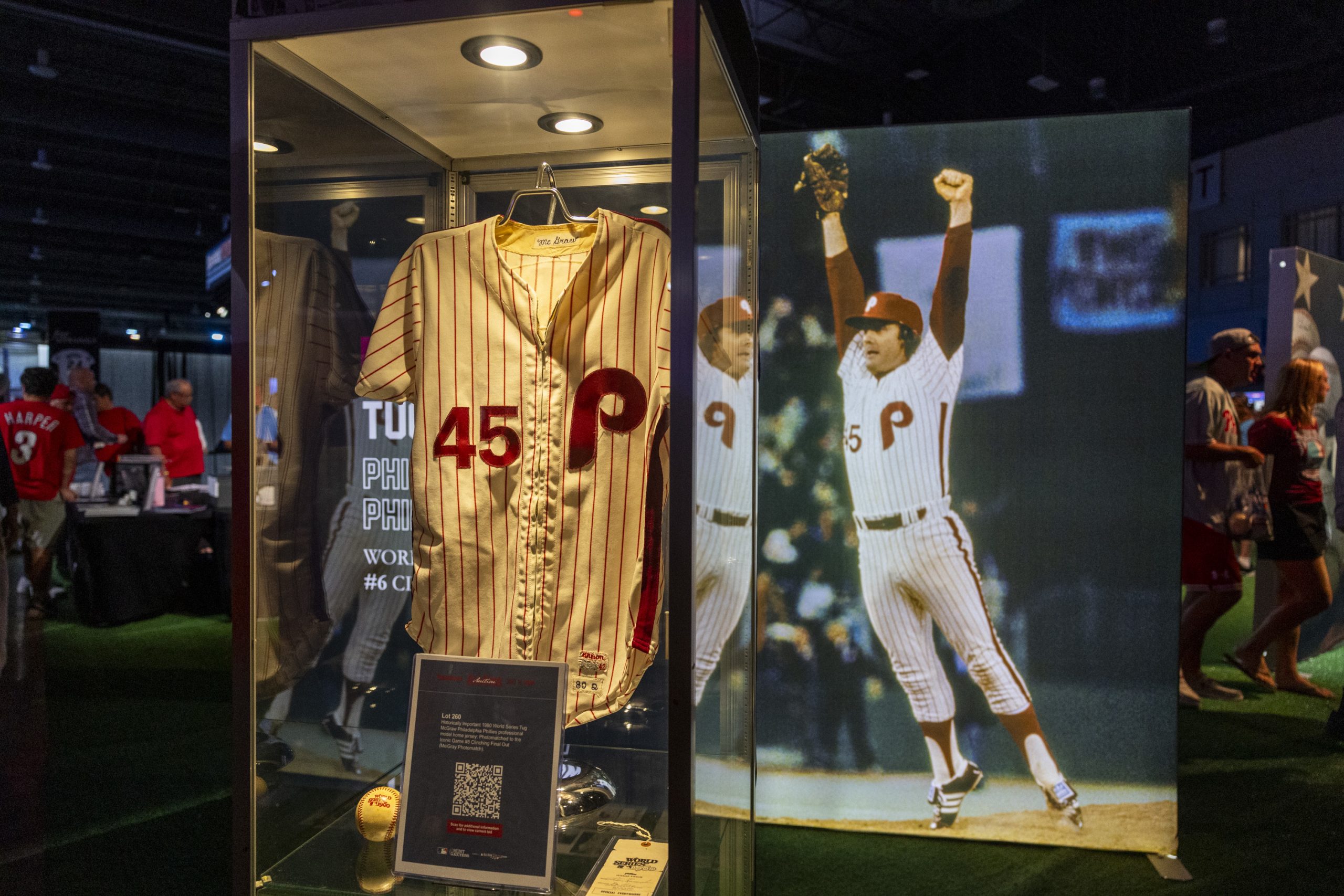
    The quote has now led to a new Garrett Stubbs T-shirt, featuring the outline of a rooster with Wheeler’s No. 45 inscribed on it, which pays homage to Wheeler’s walkout song “Rooster” by Alice in Chains.

    “Stubbs always brings the energy and does everything he can to get the guys ramped up,” said 18-year-old Brian Donahue. “[Wheeler] will just prove that he deserved it during the season and in the playoffs, and people will regret not picking him.”

  • At baseball’s All-Star Village, families hit, pitched, and fielded their way to greatness

    At baseball’s All-Star Village, families hit, pitched, and fielded their way to greatness

    Ten-year-old Owen Villamayor approached the batting box with his bat held high and a determined look on his face.

    As the pitching machine spat bright yellow balls across home plate, Villamayor, who plays Little League baseball in Chalfont, took a few strikes and hit a few fouls before he managed to drive a homer into the netting above left field.

    “It’s a little harder than you think,” Villamayor said afterward. “The balls come in higher and you have to learn how to hit them.”

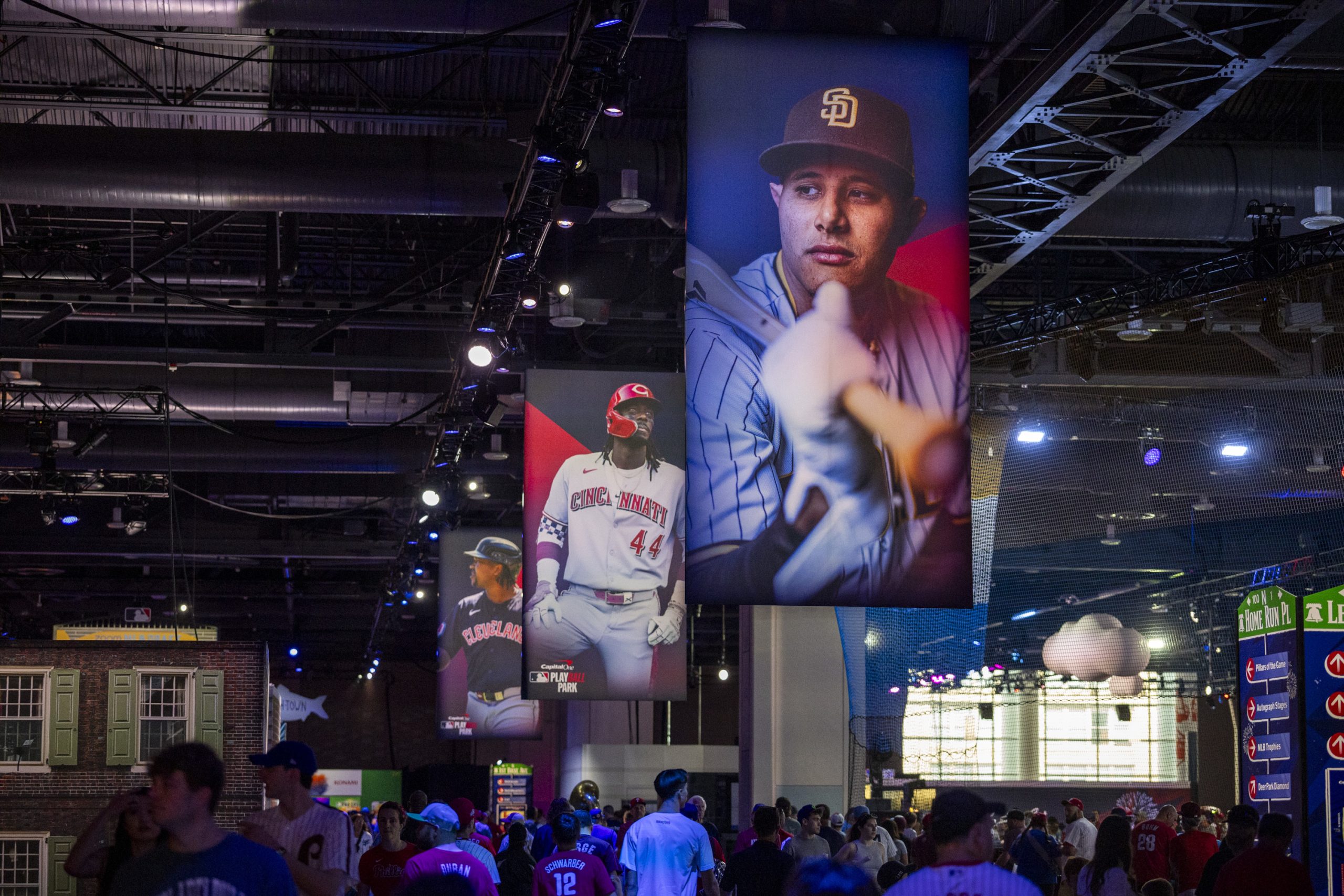
    Villamayor was one of the dozens of early attendees Saturday morning inside the Convention Center at the Capital One All-Star Village, where the line for the home run derby quickly got as long as a theme park ride on a busy day. Old, young, boys, girls — everybody wanted to hit a dinger.

    “This is so nice for all the families,” said his dad, Chris Villamayor, a 44-year-old nurse anesthetist. He said his family, decked out in Phillies gear, was excited for an All-Star Game where six Phillies were chosen to play.

    A vintage Tug McGraw World Series jersey is seen on display in the Hunt Auction section at the All-Star Village at the Pennsylvania Convention Center in Philadelphia, Pa., on Saturday, July 11, 2026.Tyger Williams / Staff Photographer

    Chris Villamayor said he was in middle school in 1996 when the All-Star Game last came to Philadelphia. So his excitement has been building since the league announced Philly would host the annual midsummer classic game that brings together some of its best players.

    “Bryce Harper is definitely our favorite,” Villamayor said.

    John Hoesle of Northeast Philly brought his two teenage sons to the All-Star Village, and they got in line to try their hand at a home run. When it was Hoesle’s turn, he was all business, hitting ball after ball, no big deal.

    “It was fun,” Hoesle said. He said he played baseball with the Police Athletic League when he was a teen, and never lost his love of the game. Now, he coaches his sons’ team in Bensalem. That has given him countless opportunities to talk to his sons about the lessons that come with the game.

    “You’re by yourself when the baseball is hit to you, you feel like you got to make the play, and your teammates are counting on you. It’s just a great feeling for kids to have,” Hoesle said.

    Michael London, of Fort Washington, Pa., is at the “Home Run Robber” with his dad Stephen London, of Ambler, Pa., at the All-Star Village at the Pennsylvania Convention Center in Philadelphia, Pa., on Saturday, July 11, 2026.Tyger Williams / Staff Photographer

    At a nearby scaled-down baseball diamond, an array of children tried their best on the turf, while their parents cheered them on.

    Amber Green, 40, took the train from Deptford with her family so that her 4-year-old son and 2-year-old daughter could join in the fun.

    “It’s really exciting,” Green said. She and her sister were at Game 5 of the 2008 World Series, when the Phillies beat the Tampa Bay Rays at Citizens Bank Park, winning their first World Series since 1980.

    Her 4-year-old son has little connection to that generation, Green said, but he recently got to meet Phillies All-Star pitcher Cristopher Sánchez, and now he’s a fan.

    “The season is so long, and they can start at such a young age,” Green said. “And to live so close to a major league team, we feel lucky.”

    Green said her son had turned to YouTube to prepare for the “Home Run Robber,” a fan event that puts participants in a Velcro suit and lets them jump into a Velcro wall that looks like an outfield wall, simulating what it would be like to rob a batter of a home run.

    “You just jump right up there,” said Walt Diamond, a 14-year-old high school baseball player who came to the All-Star Village with his parents.

    The All-Star Village, which is broken into five sections named for areas of Philadelphia, includes tons of other activities. One of the more moving displays charts the history of the Negro Leagues from baseball’s segregated past through the mid-20th century, when Jackie Robinson became the first Black player in MLB.

    The MLB All Star Brass Band provided by BD Entertainment is seen performing at the All Star Village near the South Philly section at the Pennsylvania Convention Center in Philadelphia, Pa., on Saturday, July 11, 2026.Tyger Williams / Staff Photographer

    One big draw is the autograph area and clubhouse, where retired Phillies greats Cole Hamels, Bobby Abreu, and John Kruk are set to make appearances, along with other pro players and even some mascots. With events and autograph signings scheduled through Tuesday, when the All-Star Game starts at 8 p.m., baseball fans still have plenty of time to take in the experience.

  • Access to therapy is about to get easier for Pennsylvania residents who travel out of state

    Access to therapy is about to get easier for Pennsylvania residents who travel out of state

    After giving birth to her first child, Jennifer O’Mara sought therapy for postpartum depression.

    But when O’Mara left her Delaware County home to visit her in-laws in North Carolina, her counselor had to cancel a virtual session because she wasn’t licensed to practice outside of Pennsylvania.

    “My therapist had always asked me if I was in Pennsylvania before a session started, and there was actually a time where I was not, and we couldn’t meet, and I didn’t understand why,” O’Mara said. “I was confused.”

    Unbeknownst to the new mother, Pennsylvania counselors need a separate license for each state they practice in.

    O’Mara, a Democrat elected as a state representative in 2018 and a co-chair of the legislature’s Mental Health Caucus, said she’s been working to change that regulation since that canceled therapy session.

    Four years later, O’Mara’s efforts are about to pay off under a bill expected to soon go to Gov. Josh Shapiro for his signature.
    The legislation would make Pennsylvania the 40th state to join the Interstate Counseling Compact. It enables counselors who are licensed in Pennsylvania to practice in any state that is part of compact.

    Pennsylvania will join already participating states, including Delaware, New Jersey, Maryland, Ohio, and yes, North Carolina.

    The bill only applies to licensed professional counselors, or LPCs. Pennsylvania separately participates in multistate healthcare compacts for psychologists, doctors, nurses, and physical therapists to provide inpatient care or telemedicine across state lines.

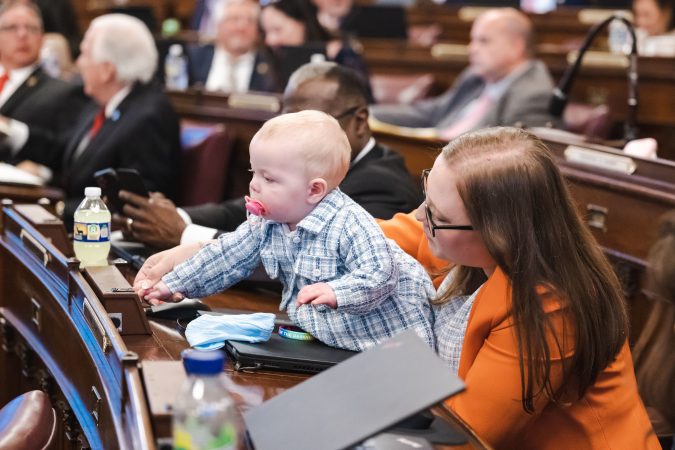
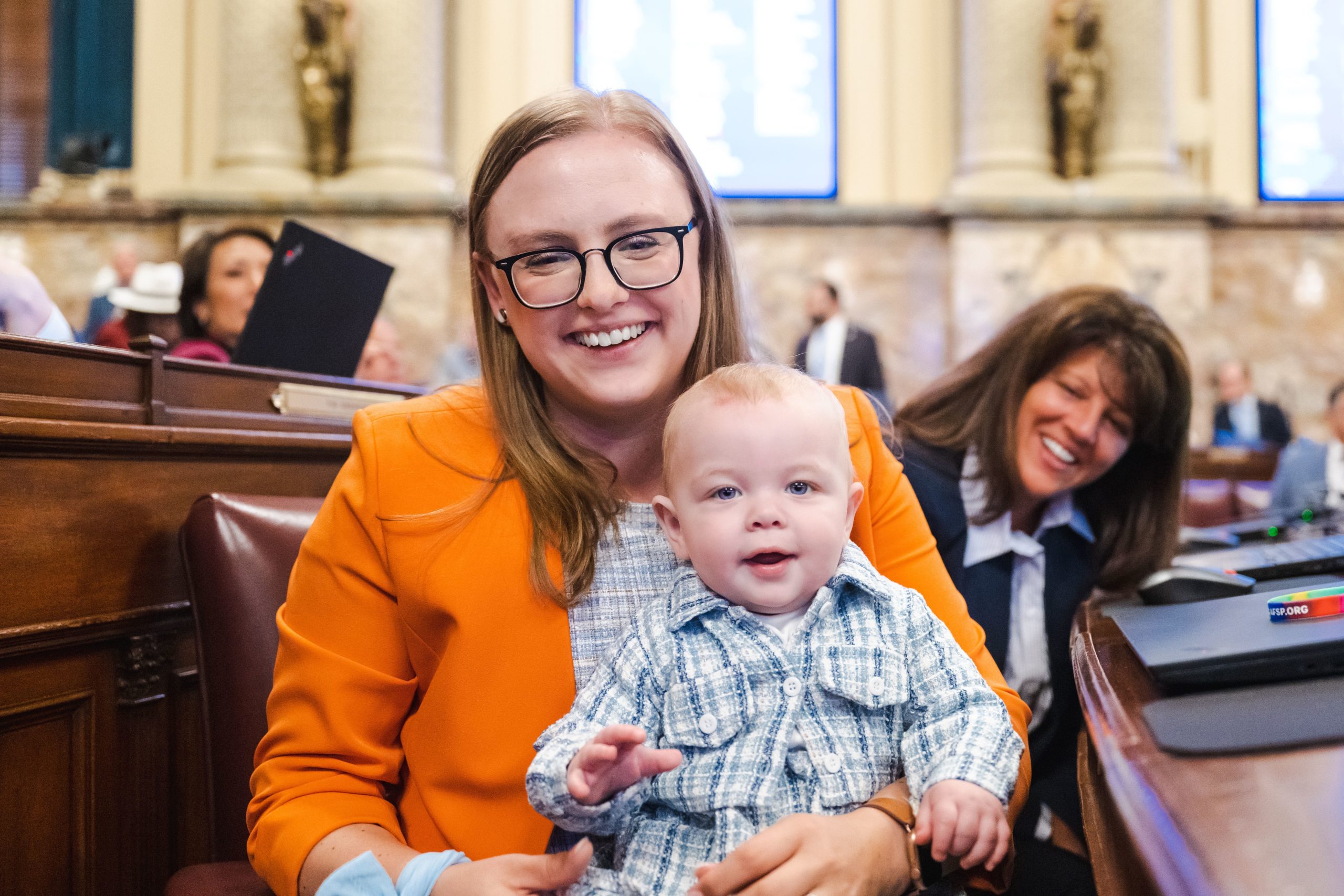
    State Rep. Jennifer O’Mara (D., Delaware County) with her daughter, Katherine, now 4, in 2023. O’Mara helped usher the Interstate Counseling Compact bill through the Pennsylvania House in late June. The bill would allow licensed professional counselors (LPCs) to practice across state lines. Courtesy of Jennifer O'Mara

    Shapiro plans to sign it

    O’Mara helped advance the bill in the House. The Senate had passed it in July 2025 by a 45-5 vote. The House approved it last week by an 188-to-14 vote.

    It now goes back to the Senate for a perfunctory, final signature by that chamber’s president before heading to Shapiro’s desk, according to a spokesperson for Sen. Lisa Boscola (D., Lehigh and Northampton), the bill’s prime Senate sponsor.

    O’Mara and leaders of the Pennsylvania Counseling Association (PCA), which has about 700 members statewide, said they expect Shapiro to sign the bill into law once it gets to his desk. A spokesperson for Shapiro confirmed on Tuesday that he plans to sign it.

    The bill aims to benefit recent high school graduates who want to keep the same therapist but plan to attend college out of state; active duty military members who are deployed outside Pennsylvania; and residents who physically work in New Jersey or Delaware and opt to do sessions during their lunch break, according to O’Mara.

    “This feels like a small bill that will make a big difference,” O’Mara said.

    Addressing a shortage of counselors

    Post-pandemic, the demand for mental health services has increased, and providers have struggled to keep up. The nation is expected to have a shortage of more than 40,000 counselors by 2030, and roughly 62% of Pennsylvania communities lack adequate mental health services, according to the PCA.

    The legislation is designed to ease that burden, said Nicole Palman, a counselor at the Main Line Counseling and Wellness Center in Haverford.

    “We’ll be able to continue to see clients when they move to New Jersey or when they move to Delaware without having to end care that may have been going on for years,” said Palman, a PCA member who advocated for the bill.

    It’s not always easy to find a new counselor, she noted.

    “A lot of people get discouraged,” Palman said. “The process is worse than dating to find a therapist you align with.”

    Editor’s note: This story has been updated to clarify that psychologists are included in Pennsylvania’s multistate compacts for health professionals.

    Inquirer staff writer Gillian McGoldrick contributed to this article.

  • Chester County has radically reduced chronic homelessness. This Coatesville resident, and her family, have been on the front lines for decades.

    Chester County has radically reduced chronic homelessness. This Coatesville resident, and her family, have been on the front lines for decades.

    Minnie McNeil and her family still think about a challenge issued by her pastor more than 40 years ago: What could their city benefit from, and how could they address it?

    The answer then, and now, was homelessness.

    In the decades since, McNeil, 85, and three generations of her family have devotedly worked to support unhoused men in Coatesville. Their work, alongside countywide cross-sector collaboration, culminated in Chester County in June announcing it had reached “functional zero” for chronic homelessness.

    Though it’s a milestone for the county, it doesn’t mean their work has stopped. They’ve evolved.

    Using federal grant dollars, the W.C. Atkinson Memorial Community Service Center, founded by McNeil and her late husband more than 30 years ago, recently acquired its eighth transitional home in Coatesville, which it will remodel to offer affordable and supportive housing to shelter residents. And the shelter plans to expand its scope — helping catch young adults aging out of foster care before they become unhoused, a story they’ve heard over decades of helping thousands of men.

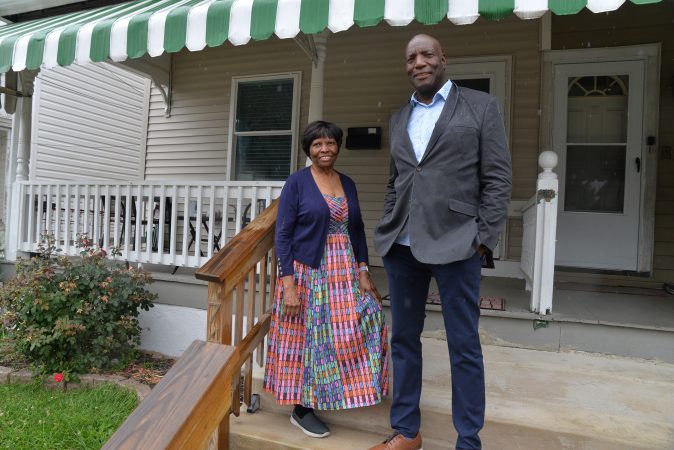
    And separately, Minnie’s son Andrew McNeil, 58, and grandson, Derrick McNeil, 27, have begun an effort to remodel homes in the city, selling them below market to help revitalize Coatesville and support first-time home buyers at a time when housing prices in the county are soaring.

    “The dollars of the ’70s and ’80s, the jobs that were available, [and] the housing stock available during that time is not, in our view, as easily accessible, and so the needs, in our view, are greater as a result,” McNeil said.

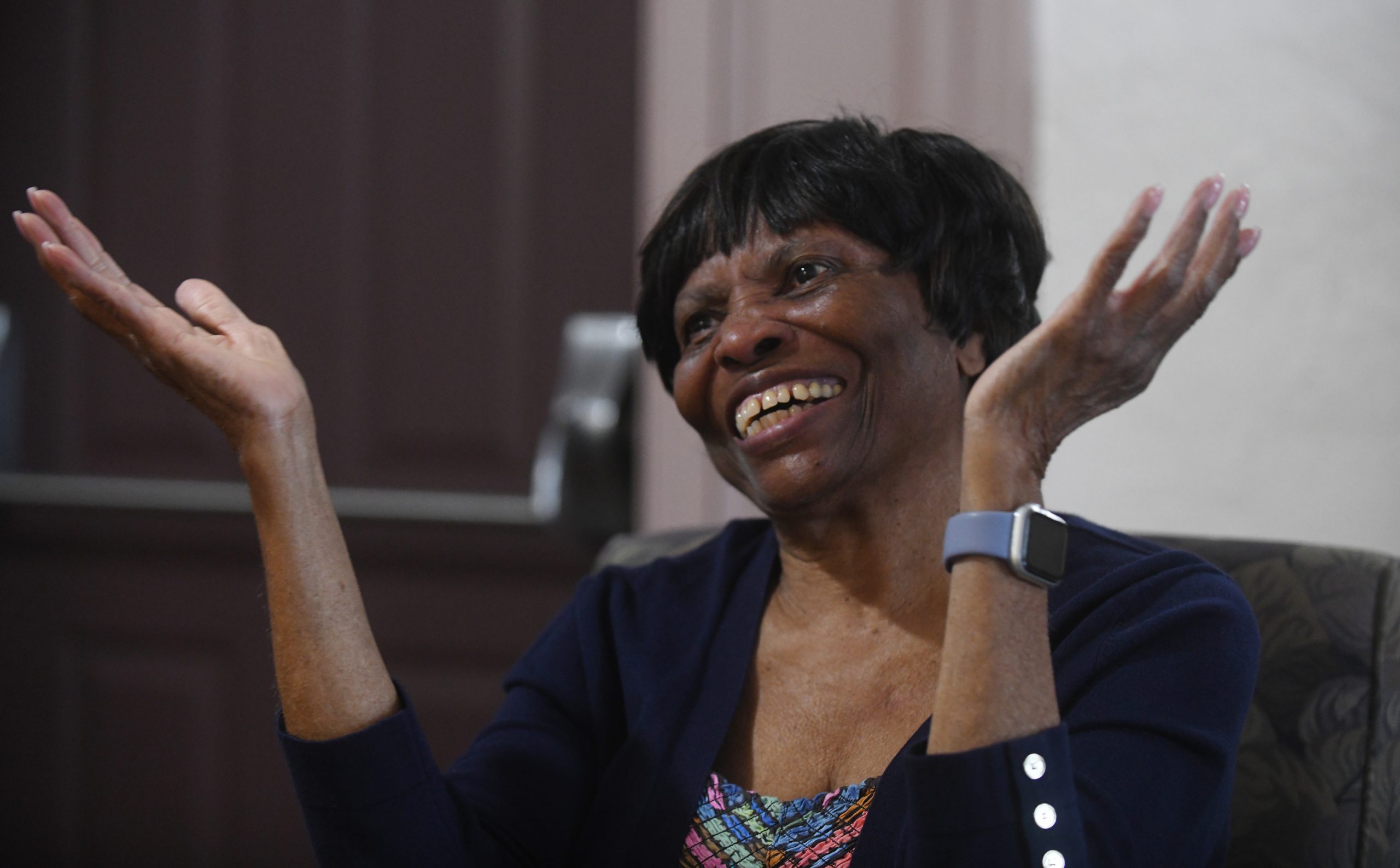
    Minnie McNeil and the McNeil family have helped the homeless in Coatesville since the early 1980s.Bob Williams / For The Inquirer

    It started with the shelter

    In Minnie’s estimate, the need for support services still exists. The county in June announced it had reached “functional zero” for chronic homelessness, meaning that long-lasting or recurring homelessness had been reduced to “a rare, manageable level,” the county said in a news release last month.

    It was an example of cross-sector collaboration, officials said.

    Minnie and her late husband, Andrew McNeil Sr., have been a part of that diverse ecosystem since they founded and opened the W.C. Atkinson Memorial Community Service Center at the former Atkinson hospital in 1992. It has always been intrinsically linked to their eldest son, Andrew; it opened on his birthday that year — Jan. 7.

    There are few people willing to do what McNeil and her family have done, and fewer who do it so exceptionally, County Commissioner Chairman Josh Maxwell said. He has watched her shelter take on just about every possible man — those whom others would have turned away, he said.

    Maxwell knows her magnetism personally: On the biggest day of his political career, his election as chairman, McNeil asked him to stop by a house they were renovating to help. Maxwell was in the attic alongside contractors, ripping out insulation and tearing down walls.

    “I don’t think anyone else can do what she does,” he said. “I think those people wouldn’t be helped. I think we’d have dozens, if not hundreds, of more homeless people in the county if she wasn’t the one taking them in.”

    For Minnie, her children were a guiding light: Could they sleep here? Eat the food? It has kept humanity at the heart, she said.

    “Housing is not just a roof over your head, but we’d like to create homes where people live healthy and happy and their very best lives, they reach their full potential,” she said. “A place that, yes, has some outside influence and support, but builds within that home a nucleus where [there’s] love and compassion.”

    Michael Weber, 55, called the McNeils a “blessing.” He came to the Atkinson after living in a hotel room, unable to find permanent housing. He happily took up odd jobs at the shelter to support it. He thinks that’s why the McNeils asked if he would want to move into one of the support housing sites, where he could pay below-market rent.

    “I didn’t even know it could be this good,” he said.

    Andrew and his two brothers were helping hands as children, working shifts at the shelter overnight and preparing meals. Though he never anticipated he’d return to it, Andrew began to learn the ropes from his father when he came back to the county after 12 years in Maryland. (“I never saw that coming,” his mother noted.)

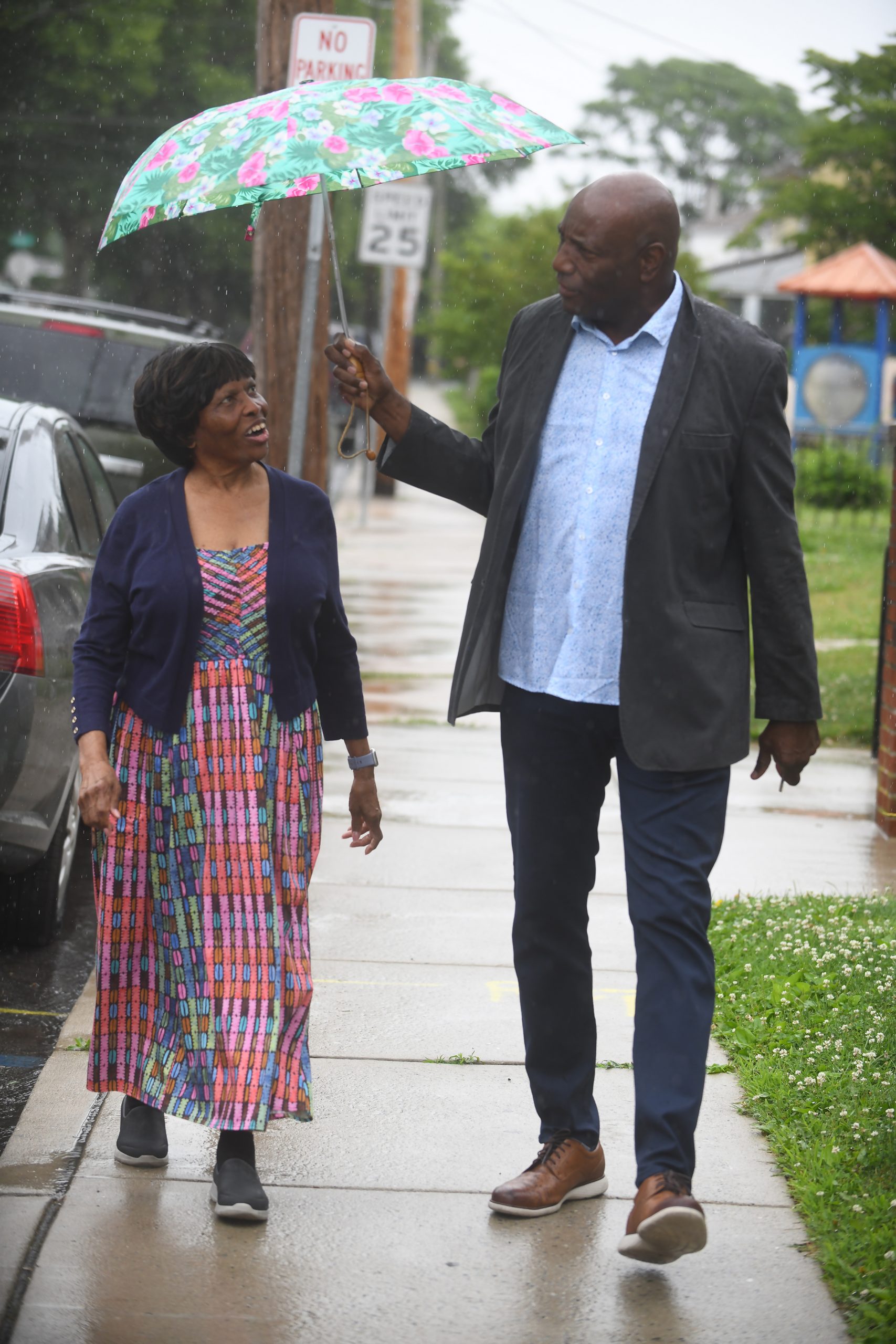
    Minnie McNeil and her son Andrew McNeil walk down East Chestnut Street in Coatesville.Bob Williams / For The Inquirer

    And those lessons didn’t stop at the shelter doors. Derrick, his son, has volunteered at the shelter and found it inspiring. Then Derrick caught the real estate bug, something Andrew knew plenty about.

    Their shared interest is a new chapter that felt like an extension of what Atkinson had been doing, Andrew said.

    “When they move out of the shelter, into the housing, what happens is they have a sense of pride because we’re not putting them into just anything,” he said. “I think that that matters [for] what we’re doing for families as well what we’re also doing with the men.”

    He had watched men move from the shelter into the supportive housing, and saw the sense of pride at the homes they were living in. They wanted to bring that feeling more broadly.

    Affordability in Chester County

    Andrew and Derrick purchased their first project house together in May 2025 for $190,000 as Chester County has seen a diminishing housing stock and rising costs. The county saw some of the highest population growth in Pennsylvania between 2020 and 2024, but the housing market wasn’t keeping pace. Fewer single-family detached homes were built in 2024 than in the last several years, according to the county’s planning commission, and fewer new units were being constructed this decade compared with last.

    In 2024, the median sales price hit $525,000 — the highest in the county’s history. That year, only 331 homes sold for under $250,000, a decrease of 5.9% from 462 units in 2023.

    In Coatesville, like the Atkinson shelter had done with seven transitional houses, Andrew and Derrick took their first project house down to the studs. For 10 months, they remodeled it to a high standard, Andrew said. It went from a three-bedroom, one-bath to a four-bedroom, three-full-bath home. The house sold to a family about a year after they first purchased it, for $290,000 — under an appraiser’s valuation of $330,000, Andrew said.

    “It was a nice experience, just knowing that the end goal was to provide housing and provide opportunities for someone that was maybe purchasing their first property, just trying to provide the best product and the best opportunity for someone at a pretty decent price for what they’re getting,” Derrick said.

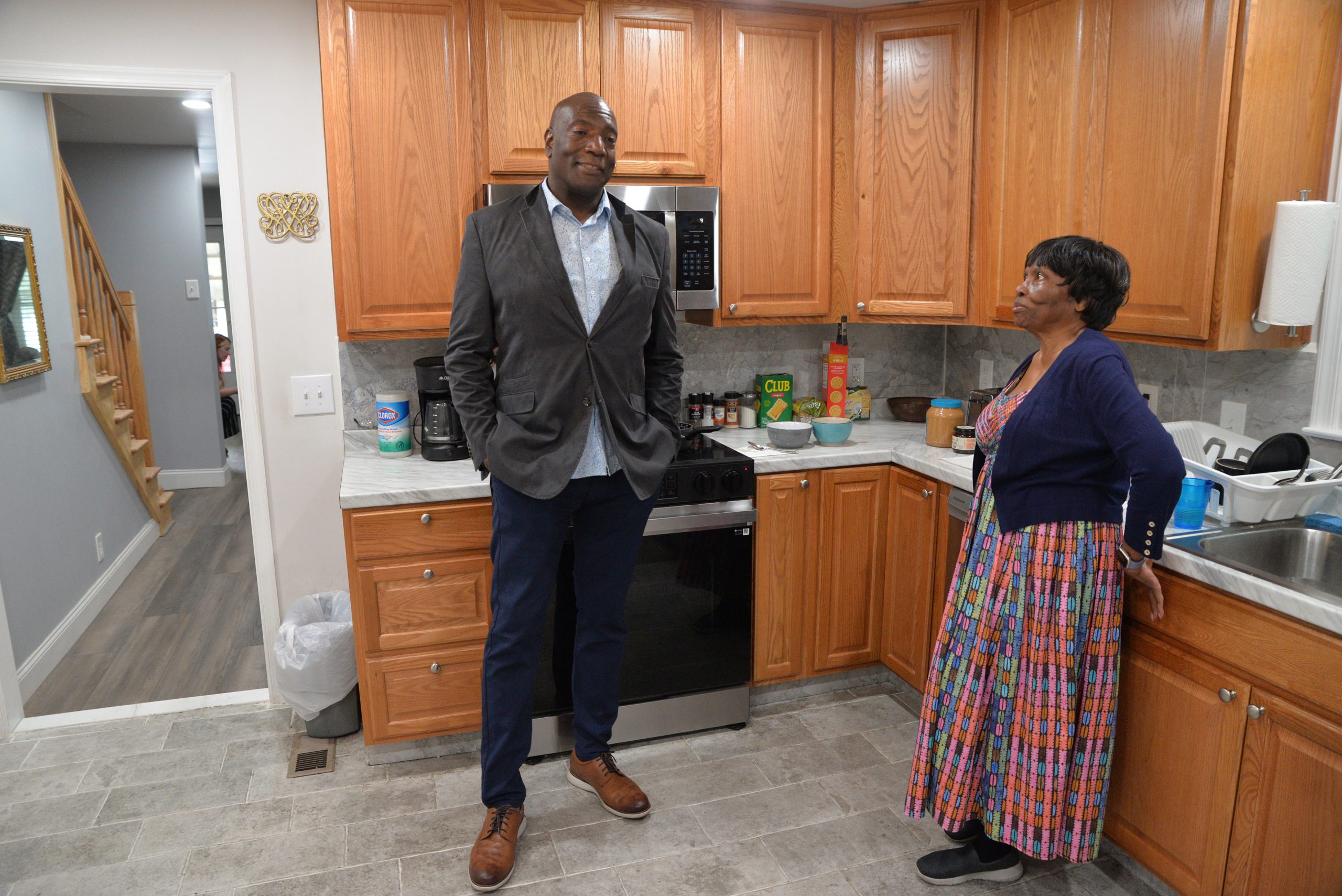
    Andrew McNeil and his mom, Minnie McNeil, in the kitchen area of the house they rehabilitated on Merchant Street in Coatesville. Bob Williams / For The Inquirer

    That care and thoroughness was a lesson both Andrew and Derrick learned from Andrew Sr., as the shelter had taken homes with “no lipstick” and modernized them.

    “One of my father’s sayings was always ‘We get brick and mortar money once,’ so we have to put the quality into the house, because it’s up to us to maintain it after that,” Andrew said. “So we don’t cut any corners when it comes to rehabbing these houses, and so my son and I adopt that same principle when we remodel houses for the community.”

    After the success of their inaugural endeavor, Derrick said they’re looking toward future opportunities like this one, or other options — like lease-to-purchase.

    When Andrew reflects on the legacy of the shelter — opened in a historic property that was owned by Whittier C. Atkinson, the first Black physician to open a practice in Coatesville — he thinks of them continuing Atkinson’s holistic approach to medicine in the 1920s, how he would take gifts from the garden as payment for his work. It’s that essence they’re trying to continue, he said.

    “I’m still taking lessons from my parents,” he said. “It’s always mission first; I observed that at a young age, and their mission, we’re continuing that … by trying to stay ahead of the curve. What’s the latest need in our community, and how can we address it in our focus?”

    This suburban content is produced with support from the Leslie Miller and Richard Worley Foundation and The Lenfest Institute for Journalism. Editorial content is created independently of the project donors. Gifts to support The Inquirer’s high-impact journalism can be made at inquirer.com/donate. A list of Lenfest Institute donors can be found at lenfestinstitute.org/supporters.

  • Take me out to the gift shop: How the All-Star Game has become a major-league merchandising machine

    Take me out to the gift shop: How the All-Star Game has become a major-league merchandising machine

    The All-Star Game returns to Philadelphia in coming days with more than baseball.

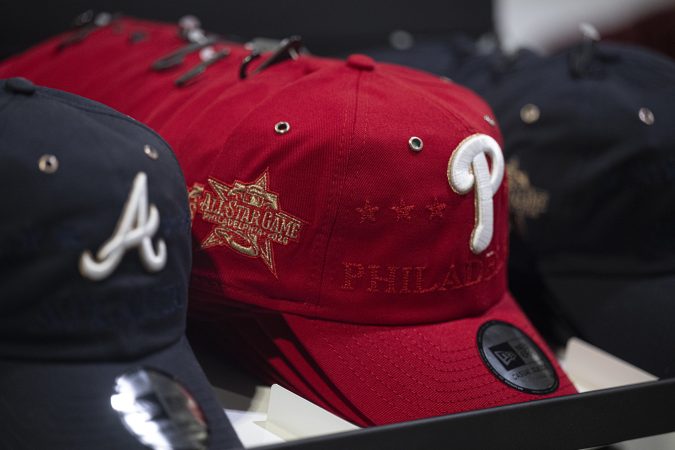
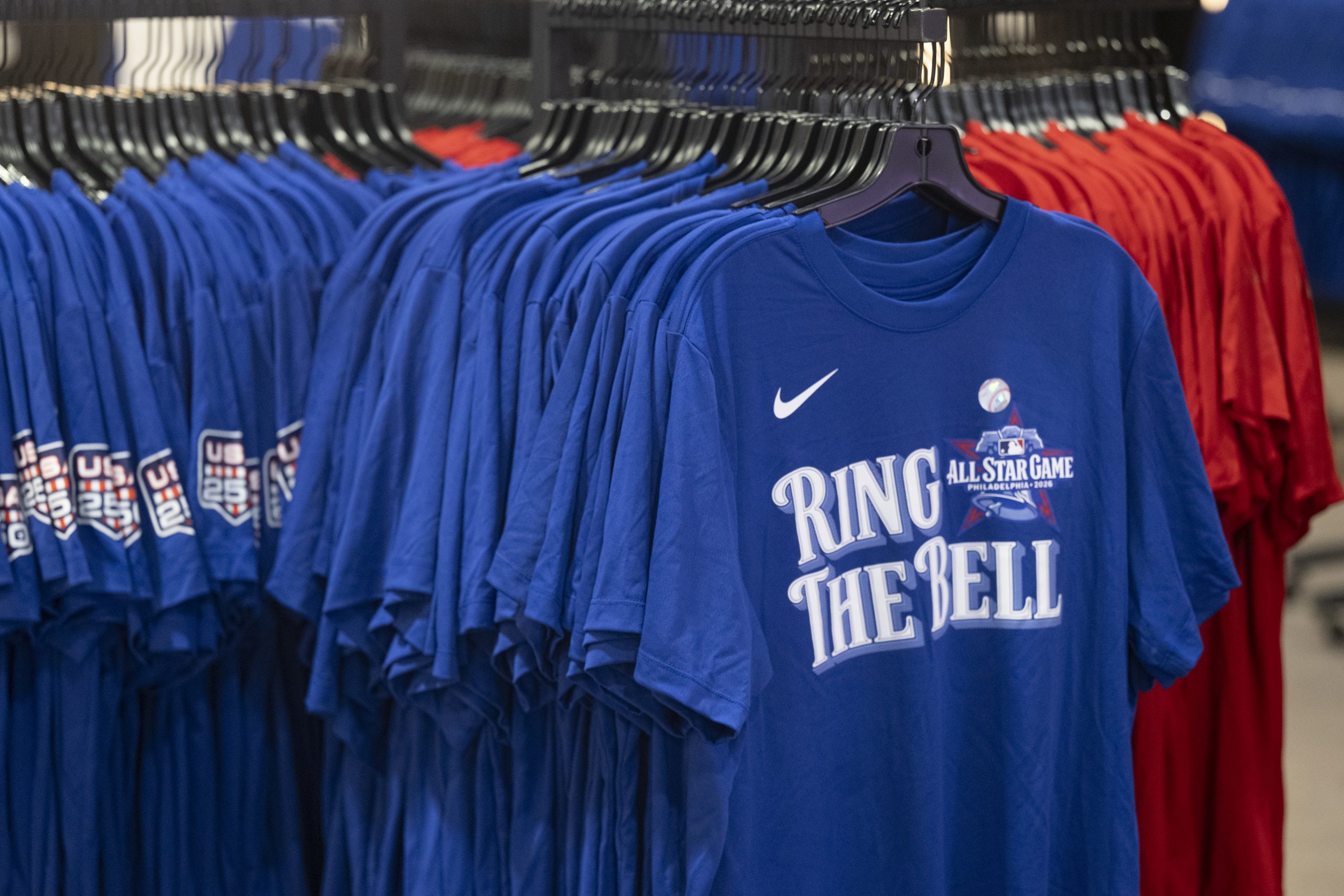
    It arrives with two sprawling shopping destinations, hundreds of exclusive products, and a merchandising operation at both the Convention Center and Citizens Bank Park. Fanatics, the sports-commerce giant, will anchor All-Star Village with a flagship store, while Aramark has transformed the two-level Phillies New Era Team Store at the ballpark into a showcase of All-Star-exclusive merchandise.

    Like the FIFA World Cup, Super Bowl, Formula One races, and the recent PGA Classic at Aronimink Golf Club in Newtown Square, Major League Baseball treats its marquee events as multiday fan festivals. The result: The Midsummer Classic has become as much a retail event as a baseball event.

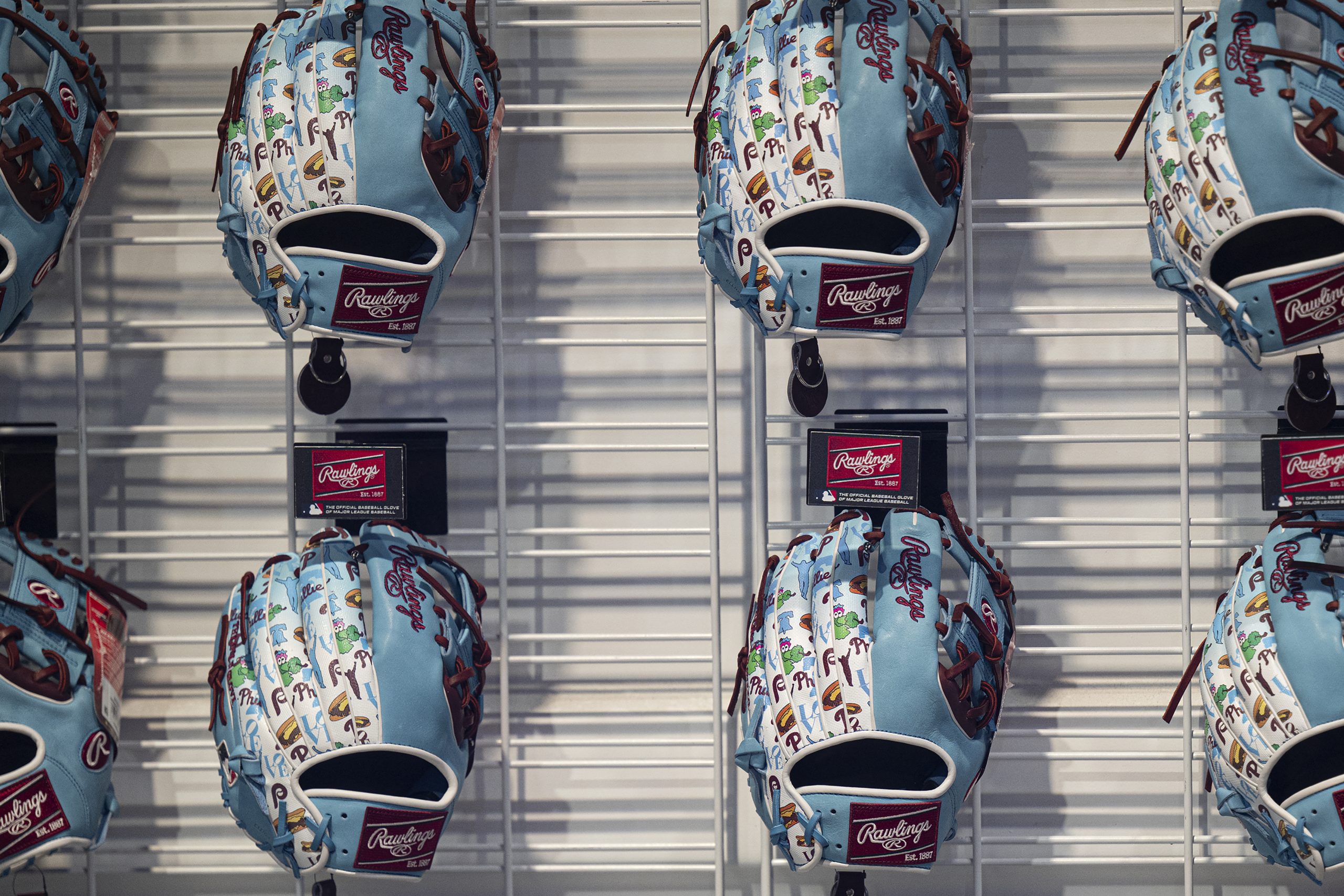
    All-Star-theme baseball gloves on display at All-Star Village inside the Convention Center.Jose F. Moreno / Staff Photographer

    “Commercially, it ranks in our top three events,” said Jamie Leece, a senior vice president with MLB. “From a business perspective, I’d say it’s our most important because we’re bringing every team together in one place.”

    Unlike the postseason, where only a handful of teams remain, the All-Star Game draws fans from all 30 teams. MLB expects more than 80,000 people to visit All-Star Village over the four days.

    “We have passionate fans who travel to multiple All-Star Games, and we also have people attending for the first time,” Leece said. “We want to make sure they have an incredible experience and can find merchandise that reflects their fandom.”

    A temporary retail city

    The biggest attraction inside All-Star Village may also be its biggest business.

    The merchandise at All-Star Village inside the Convention Center includes posters and original art.Jose F. Moreno / Staff Photographer

    Fanatics, led by Philadelphia-area entrepreneur Michael Rubin, will operate a 16,000-square-foot flagship store at the Convention Center — its largest All-Star retail footprint since Los Angeles hosted the game in 2022. The company says the store, open to ticket holders, will carry more than 400 product styles from Nike, New Era, Mitchell & Ness, Homage, WinCraft, ’47 Brand, and Fanatics.

    The assignment is fitting for a company with deep local roots. Fanatics traces its modern growth to Rubin’s King of Prussia-based GSI Commerce, which acquired the business in 2011. After eBay purchased GSI, Rubin bought Fanatics back and transformed it into one of the world’s largest sports-commerce companies.

    Today, analysts say the privately held company expects about $13 billion in revenue this year and employs more than 22,000 people worldwide. In addition to operating licensed merchandise for the major professional leagues, it owns Topps, the baseball-card maker, and has expanded into collectibles, sports betting, live events, and media.

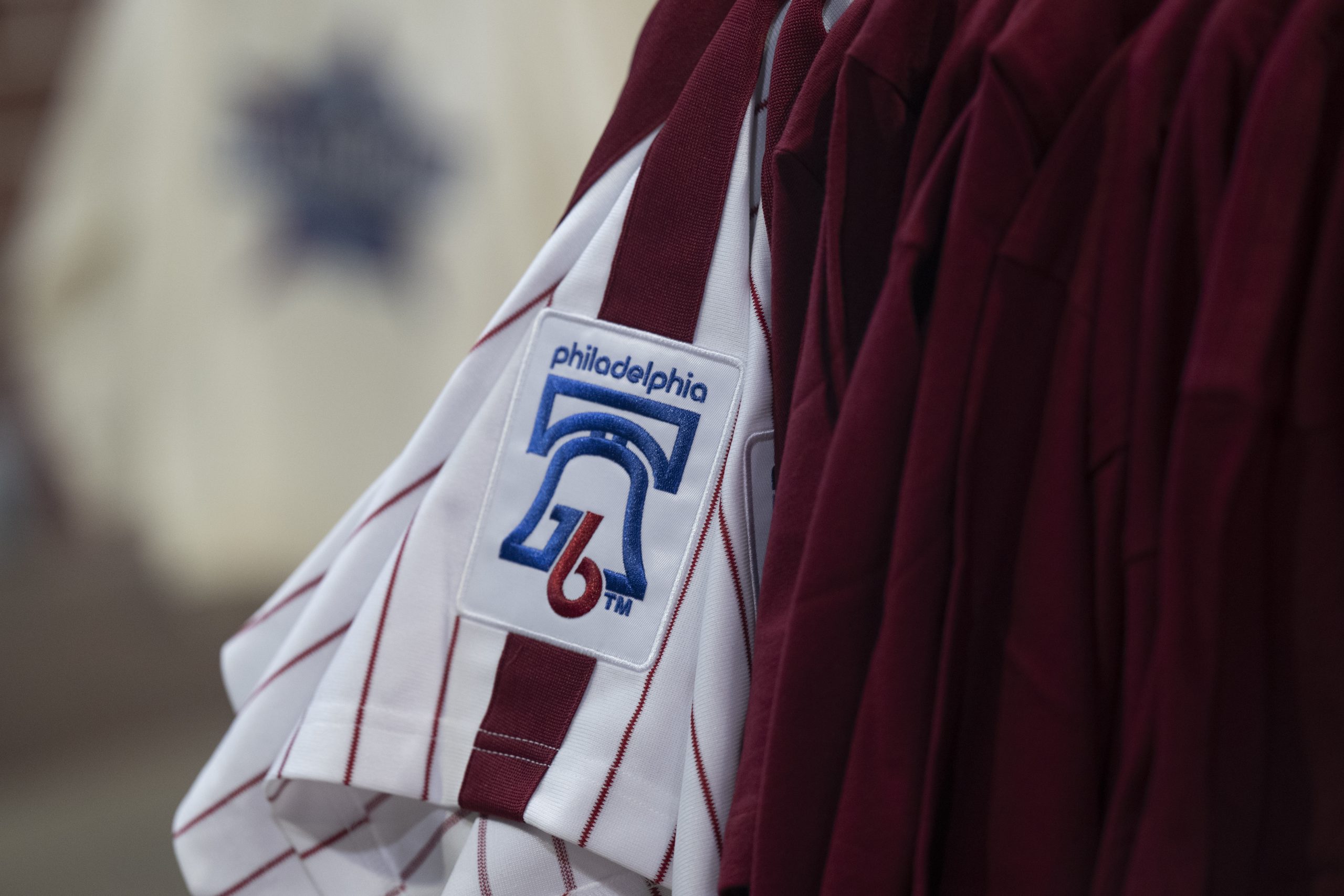
    A Phillies throwback jersey on sale at All-Star Village inside the Convention Center.Jose F. Moreno / Staff Photographer

    Under a long-term partnership with MLB and Nike, Fanatics manufactures and distributes much of Major League Baseball’s licensed fan apparel, making the All-Star Village store the public face of a merchandising operation that extends far beyond All-Star Week in Philadelphia. Most of the merchandise in the store was conceived, approved, manufactured, and shipped months before fans ever walked through the Convention Center doors.

    This year’s assortment leans heavily into Philadelphia.

    Shirts available at the All-Star Village at the Convention Center.Michael Klein / Staff

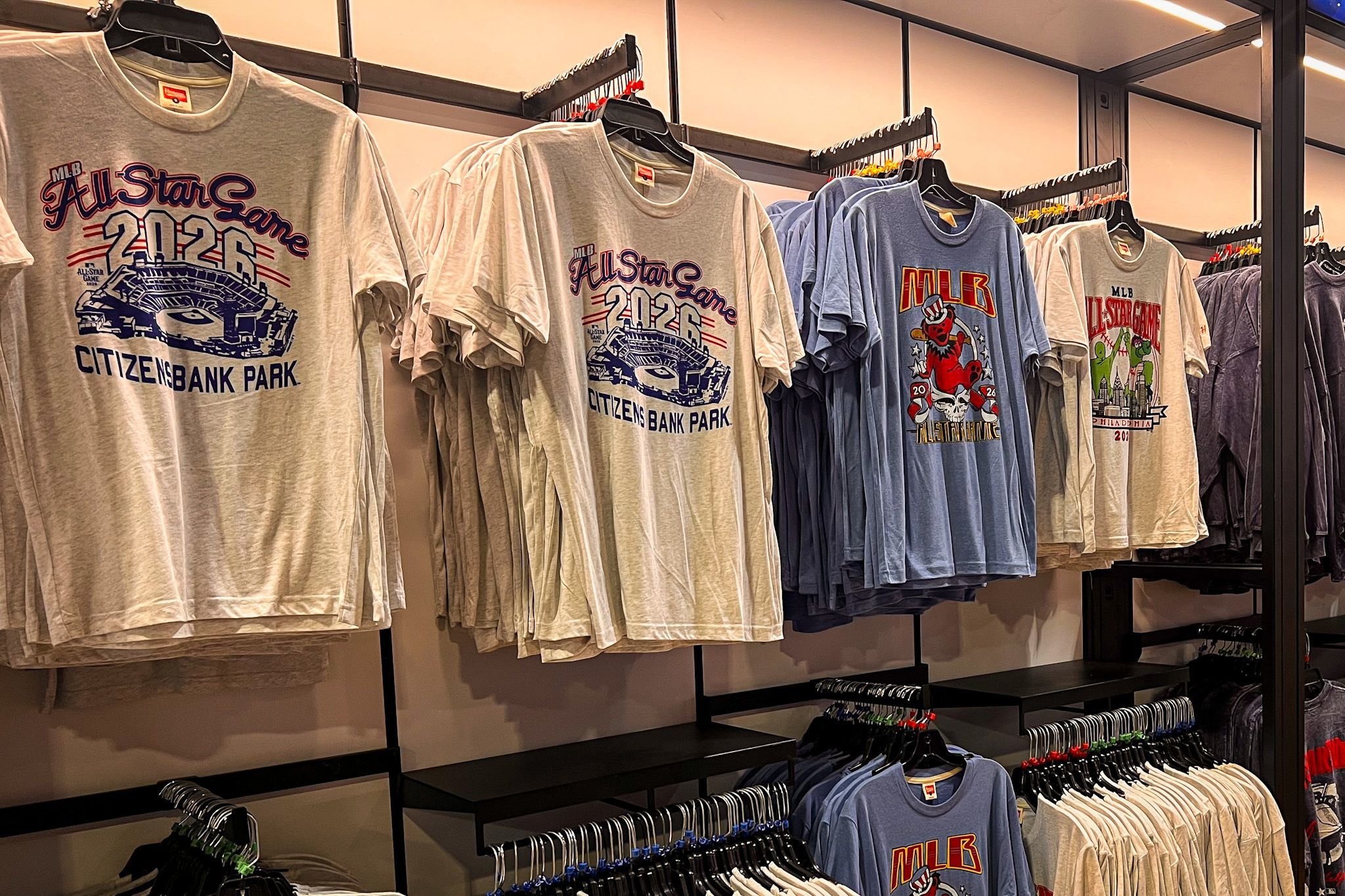
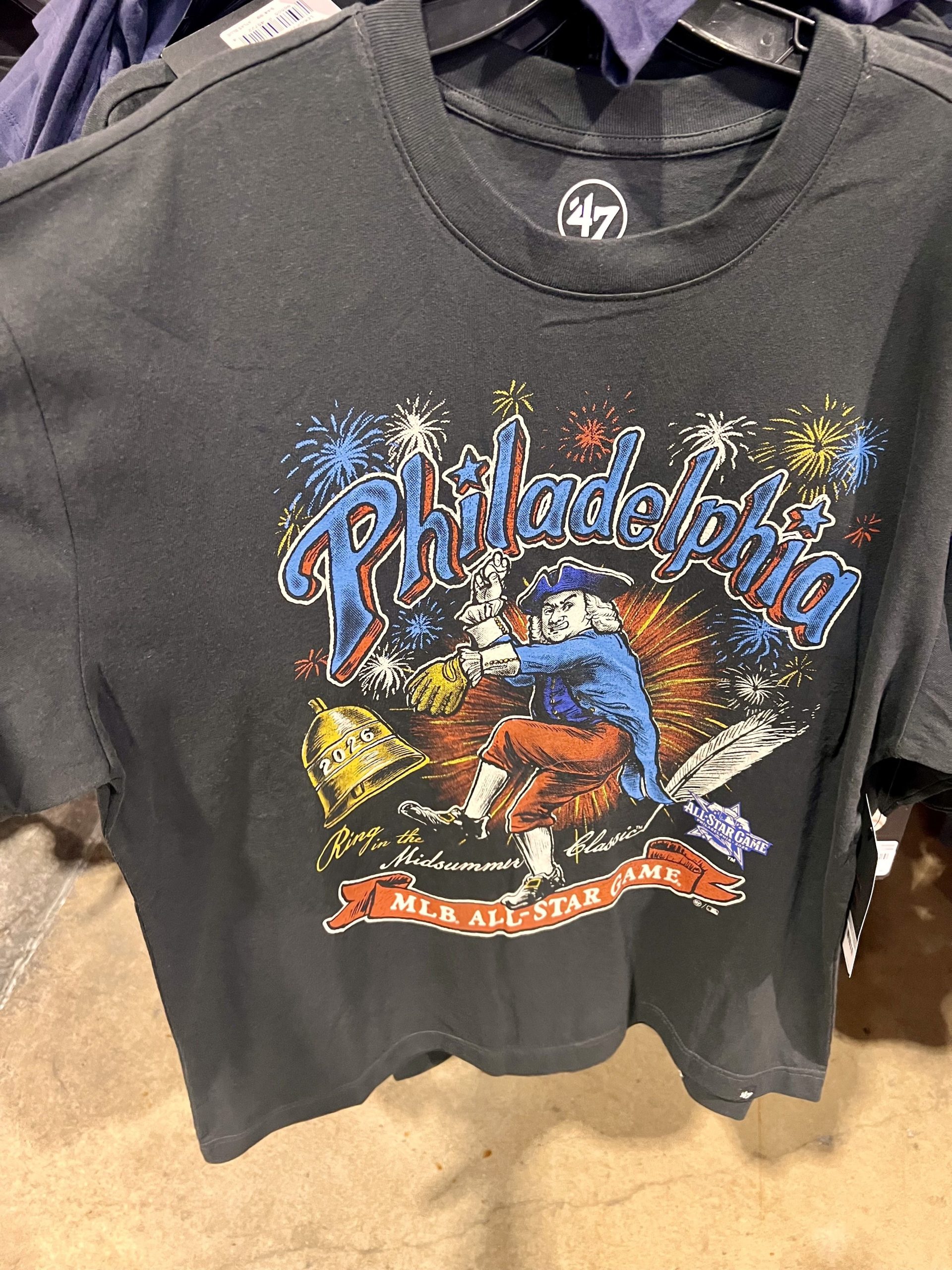
    The company said host-city merchandise, particularly jerseys and hats, has become an increasingly important part of every All-Star collection. Philadelphia-themed offerings include Homage’s Grateful Dead-inspired Patriot T-shirt and “Always Sunny in Philly” shirt, ’47 Brand’s “Hit That Jawn” and cheesesteak-themed designs, and Sportiqe’s Elton John-inspired “Philadelphia Freedom” T-shirt.

    Home-field advantage

    If Fanatics anchors the Convention Center, Aramark — the Phillies’ concessionaire — is treating Citizens Bank Park as a shopping destination in its own right. Its two-story shop is open daily to the public except for Sunday.

    After the July 2 home game against the Pirates, Aramark workers cleared the store of all regular Phillies merchandise and began loading in All-Star items. The store was expanded in the offseason to about 7,500 square feet.

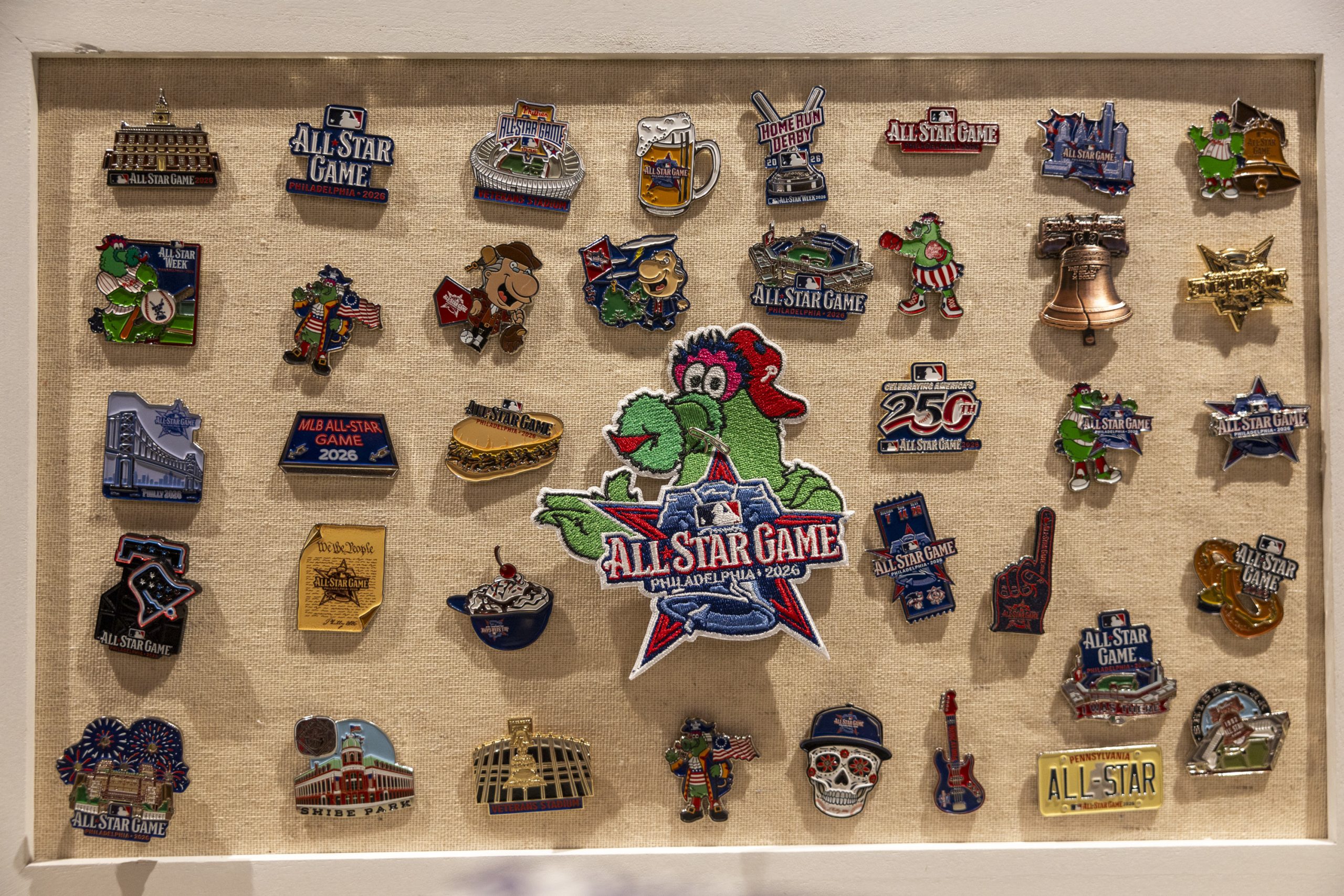
    Some of the 84 All-Star pins designed by Aramark that are for sale at Citizens Bank Park. Tyger Williams / Staff Photographer

    Francis Winkey, Aramark’s senior merchandise manager at the ballpark, said the store has about 400 All-Star items, about 75% of them exclusive. Winkey, a pin collector himself, commissioned 84 pins, including one representing each major-league team.

    Behind the displays is a manufacturing process that begins more than a year before the first pitch. MLB develops the event’s logos and branding, then works with dozens of licensed manufacturers specializing in a wide range of products — caps, jerseys, drinkware, collectibles, and other souvenirs. Companies submit designs for league approval before production begins, often months in advance, at factories overseas.

    The biggest complication is that no one knows who will make the All-Star teams until shortly before the game. Most merchandise, therefore, celebrates the event or the host city rather than individual players. When player-specific products are planned, manufacturers often build in flexibility so they can be finished after the rosters are announced.

    At Citizens Bank Park, Aramark’s Francis Winkey holds souvenir baseballs that were stamped with Bryce Harper’s name after he was named to the All-Star Game roster.Tyger Williams / Staff Photographer

    Take the commemorative baseballs that Winkey dreamed up. Last fall, he ordered Rawlings baseballs featuring bold All-Star graphics that intentionally had one blank panel.

    Once the rosters were announced, Winkey had a domestic factory finish the baseballs. “When I knew Shohei Ohtani made the team, I could put Ohtani’s name on it,” Winkey said. “It’s a combination of long-term planning and a short-term reaction.”

    The store carries six player editions, including Ohtani and Phillies sluggers Bryce Harper and Kyle Schwarber, for $17 a throw.

    Bigger every year

    MLB executives say the retail operation has grown alongside the event itself.

    “Whenever we’ve expanded the retail space, we’ve seen the business grow,” said Leece, of MLB. “It’s always a balancing act because All-Star Village is a celebration of baseball, not just a shopping destination. We want activations, interactive experiences, and things for fans to do beyond buying merchandise.”

    The assortment has expanded, too. “We have more licensees creating more unique items,” Leece said. “International fandom has grown significantly, so we now have fans traveling from all over the world. As the audience has expanded, so has the variety of merchandise. One category that’s really emerged over the last several years is oversized chains and necklaces. They’re a good example of a product category that really came out of nowhere.”

    A commemorative shirt from Fanatics affiliate ’47 available at the All-Star Village at the Convention Center.Michael Klein / Staff

    Philadelphia’s role as host city during the nation’s 250th anniversary celebration also shaped the collection. “It always starts with the identity of the host city,” Leece said. “Philadelphia’s history aligns naturally with the Phillies’ identity.”

    Across the ballpark, All-Star Village, and MLB’s online stores, about 600 products will be available during the week.

    One operational change won’t be visible on the sales floor.

    “We’ll have the largest on-site retail staff we’ve ever had, both at All-Star Village and the ballpark,” Leece said. “We want fans to spend less time waiting in line and more time enjoying everything else the event has to offer.”

    In addition to those stores, Fanatics brand Mitchell & Ness is selling All-Star merchandise at its new store at 1513 Walnut St.

    Retail analysts say the All-Star Game occupies a unique niche in the licensed sports business.

    Commemorative T-shirts on display at All-Star Village.Jose F. Moreno / Staff Photographer

    “The All-Star Game is really about on-site souvenirs,” said Matt Powell, founder of the sports retail consultancy Spurwink River. “People are there and want something to commemorate the experience because it’s essentially a one-off event.”

    Neil Saunders, managing director of GlobalData, said demand tends to split between wearable keepsakes and collectibles.

    “One is simple products like T-shirts or caps linked to the Phillies or the All-Star Game,” Saunders said. “The other is collectible items that can be more expensive. The real fans or those who love collecting are enthusiastic about these.”

    The All-Star retail boom reflects the growth of licensed sports merchandise into a multibillion-dollar global business. One industry estimate valued the market at $38 billion in 2025, with North America accounting for more than half of sales. Apparel remains the largest category, helping explain why jerseys, caps, and other wearable souvenirs dominate event retail.

    Unlike merchandise driven by blockbuster trades or new uniforms, Powell said, All-Star merchandise derives much of its value from the event itself.

    Fans aren’t simply buying apparel. They’re buying proof they were there.

    Yet for all the focus on merchandise, Leece said the larger goal is creating memories.

    “I hope they slow down,” he said. “I hope they walk in, look around, and appreciate that they’re somewhere special. This is baseball’s World’s Fair. It only happens once a year, and for Philadelphia it only comes around every couple of decades.”

  • This Philly-based political firm is at the center of the Graham Platner fallout

    This Philly-based political firm is at the center of the Graham Platner fallout

    As Democrats grapple with the fallout from Graham Platner’s scandal-plagued and ultimately canceled bid for U.S. Senate in Maine, a political consulting firm that worked on his race and that’s been heavily involved in Pennsylvania politics is at the center of many of the party’s frustrations.

    FIGHT — a firm whose operatives were credited with helping elect U.S. Sen. John Fetterman in 2022 and that has worked on a pair of high-profile U.S. House races in Pennsylvania this year — has received a barrage of criticism as revelations about Platner’s past came to light in recent months.

    Members of the firm weren’t the only ones advising Platner’s campaign. National operatives such as Daniel Moraff, who has also worked in Pennsylvania, have also fielded criticism for recruiting and not thoroughly vetting Platner, an unknown political outsider.

    But both before and after the allegations of sexual assault that led to Platner’s exit from the race this week, other Democratic consultants and political observers blamed FIGHT for continuing to support him through multiple public setbacks.

    Platner’s issues have also reignited anger about and drawn parallels to Fetterman, another candidate who ran as a working-class progressive. The Pennsylvania Democrat has lost much of the support from the base that elected him as he’s more frequently sided with Republicans in ways that some have described as a betrayal. He has not been accused of the same types of issues that plagued Platner’s run.

    “I supported Graham at the beginning, despite the nagging voice in my head that kept saying ‘this feels familiar,’” Adam Jentleson, Fetterman’s first chief of staff who has become a staunch critic of the Pennsylvania Democrat, wrote on social media.

    Jentleson was among those who questioned the FIGHT agency and the rest of the Platner team’s work and its handling of the collapse.

    When Morris Katz, the FIGHT strategist on Platner’s campaign, said on social media that his team advised to end the campaign immediately after hearing the allegations Platner had raped a former girlfriend, Jentleson replied that the argument “strains credulity.” Platner and his team had continued to deny the allegations, Jentleson and others noted.

    “Shading a narrative toward the positive is standard, lying is not,” Jentleson wrote, comparing the experience to working with Fetterman.

    Fetterman, for his part, has heavily criticized Platner in recent months and celebrated his downfall this week.

    “You will only be remembered as the accused rapist that got pushed out of your election. … Go back under the rock that you came from,” Fetterman said Wednesday on Fox News.

    The Democratic Socialists of America, in a letter that mentioned the FIGHT staff’s work for Fetterman, called on candidates to refuse to work with Katz, The Intercept reported Friday.

    FIGHT declined to comment for this story.

    As Democrats look to regain their footing in this year’s midterm elections, the Platner saga and FIGHT’s role has also touched on the party’s broader goals of cultivating candidates who can win over the kinds of working-class voters President Donald Trump captured in recent years.

    Platner, an oyster farmer and former bartender who suffered PTSD after serving in the U.S. Marines, pitched himself as deeply in-tune with working class voters in Maine. It was the type of profile, many Democrats hoped, would lead to a victory over longtime Republican incumbent U.S. Sen. Susan Collins and help the party win control of the U.S. Senate.

    Democrats in Pennsylvania have taken a similar approach.

    In a Lehigh Valley-based congressional district considered one of the likeliest seats in the country to flip from Republican to Democrat, the party has rallied behind Bob Brooks, a union leader and retired firefighter who coaches high school baseball and drives a snowplow.

    “When you look at Brooks, one of the reasons he was recruited into this race and why Democrats have rallied around him is that there’s a belief that he might capture some of the [working-class Democratic] energy,” said Chris Borick, an adjunct professor of politics at Lehigh University.

    The FIGHT agency, which primarily makes candidates’ television ads, has worked on Brooks’ campaign as well as the campaign of Paige Cognetti, the Scranton mayor and Democratic nominee in the Scranton-based 8th Congressional District.

    There are no signs that Brooks or Cognetti are being advised by Katz, who has primarily worked on Platner’s campaign. In response to requests for comment Friday, Brooks’ campaign only confirmed that FIGHT makes its ads, and Cognetti’s campaign said, “Paige is glad Platner dropped out of the race.”

    The Pennsylvania candidates have not faced the same type of intense criticism for parts of their personal histories as Platner did throughout his 10-month campaign.

    Brooks’ opponents in the 7th Congressional District primary criticized him for old social media posts that, for instance, downplayed the role of guns in a mass shooting. Brooks said the posts were “silly, maybe stupid.” He, like Platner, also faced accusations that he could be “another John Fetterman,” given his background and similar appearance.

    Mike Mikus, a Pittsburgh-based Democratic strategist who has long opposed Fetterman, said Brooks was “the real deal” at a time when Democrats are “desperate” to correct their problem with white, working-class voters. Platner, on the other hand, appeared to be an “overcorrection” that involved consultants dismissing “obvious red flags,” Mikus said.

    He said FIGHT may lose some future clients because of the misstep, which he largely blamed on Moraff, a consultant who does not work for FIGHT and has also been widely criticized for recruiting Platner.

    “Everybody’s looking for authenticity,” Mikus said. “And you can’t workshop somebody into something they’re not.”

    Created after Trump and the Republican Party’s sweeping victories in 2024, the FIGHT agency’s pitch since its launch has focused on authenticity. Its candidates have reflected not just voters’ desires for candidates outside the traditional political establishment, but campaigns intent on fighting Trump and advancing economic populism. Zohran Mamdani, the Democratic socialist who won New York’s mayoral race in 2025, has marked their largest success to date.

    “Among progressives there’s a sense that the party has not been effective in trying to counter Trump … and we have to fight this battle internally in order to resist Trump,” said Stephen Medvic, an associate professor of government at Franklin and Marshall College. “So you’re getting groups in the last couple of years, like FIGHT Agency, being put together to try to tip the balance in their direction.”

    But their approach — finding someone who meets the profile and aligns with their ideology — may not necessarily always produce a winning formula. Limitations may depend on the type of assessment and vetting that goes into recruitment, he said.

    “You might get an AOC, but … you might get a Platner,” Medvic said. “A lot of Democrats are now regretting that they were so excited about Fetterman because he turned out to be something so different.”

  • Freedom Fuel stations across the Philly region offer cheap gas, feature local owners, and raise ethical concerns

    Freedom Fuel stations across the Philly region offer cheap gas, feature local owners, and raise ethical concerns

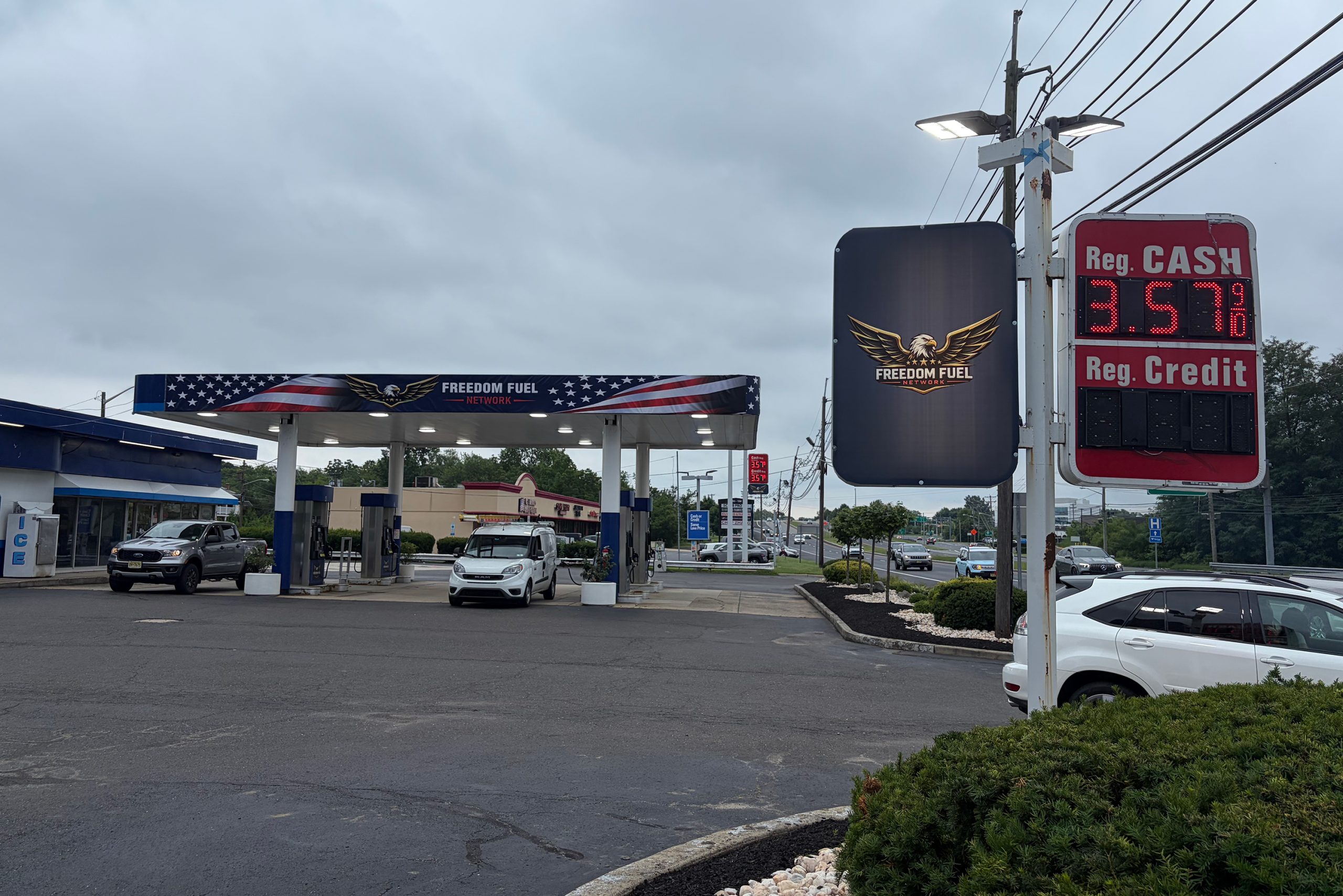
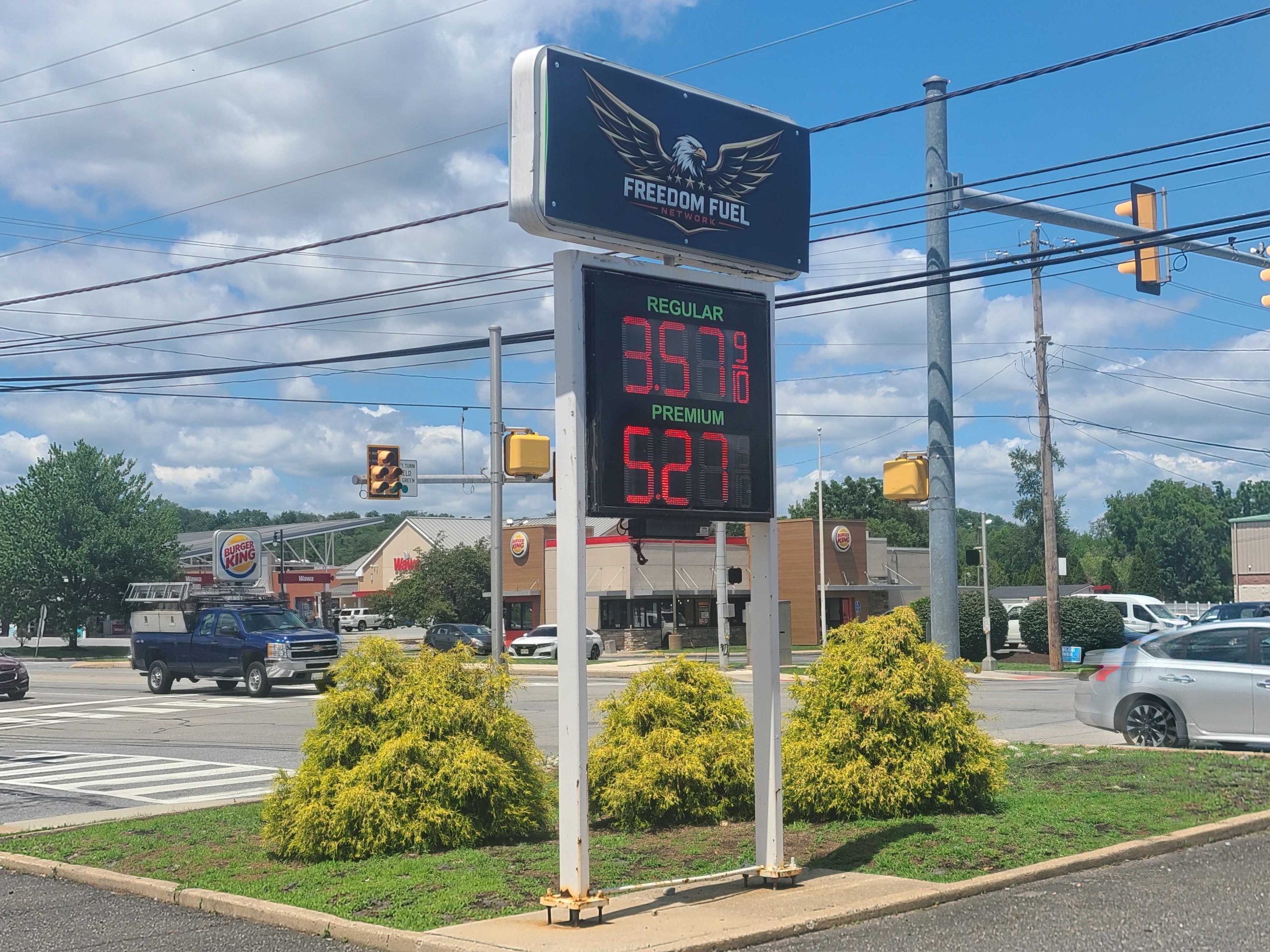
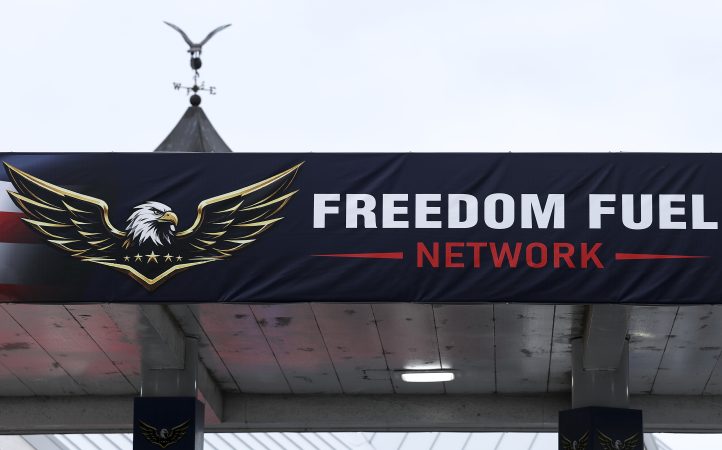
    Across the Philadelphia region, former Sunoco, Karco, and Gas N Go stations with makeshift Freedom Fuel Network signs have been selling less-expensive gas to drivers for about a week.

    Who is behind the 25 gas stations selling Freedom Fuel in the Philadelphia region, and how they are able to offer gas 40 to 50 cents cheaper than nearby stations, remains unclear.

    The effort has been promoted by both the White House and President Donald Trump, raising ethics concerns from the public and government watchdogs.

    Richard Painter, who served for two years as chief White House ethics lawyer in the George W. Bush administration, said it is within a business owner’s First Amendment right to sell cheap gas, possibly at a loss, to “improve the image of the president and help the country through a national crisis.”

    “The ethical issue is the involvement of the Trump administration,” he said, pointing to federal regulations that set standards of conduct for executive branch employees. “They simply can’t endorse it or have anything to do with it.”

    An entity called “Freedom Fuel Network LLC,” based in Delaware, applied for a trademark on July 1. That same day, Trump promoted the network, saying on his Truth Social account that it was being run by a “very smart retailer.”

    There are no businesses registered in either Pennsylvania or New Jersey under the name Freedom Fuel Network.

    The White House did not respond to multiple requests to identify or provide contact information for the owners. A White House spokesperson would say only that it is a private company that is not purchasing gas at a discount or receiving government money.

    Anna Vishev, the attorney who filed the Freedom Fuel Network trademark application, said she would pass inquiries along to her client, but The Inquirer never heard back.

    A Freedom Fuel-branded station on Rt. 73 in Marlton, N.J.Lacey Latch / staff

    Due to tight profit margins, stations that sell cheaper gas usually focus on making up the difference in other ways, such as convenience stores and car washes, according to Jeff Lenard, spokesperson for the National Association of Convenience Stores, a trade organization representing retail fuel outlets.

    That does not appear to be the case at many of the Freedom Fuel Network stores Inquirer reporters visited in recent days. One location in Brookhaven, Delaware County, had an inoperable convenience store. Several were very small, appeared somewhat rundown, and offered a very limited selection of products.

    “It’s difficult to see how these stations are making money,” Lenard said. “Those types of stations tend to be more dependent on gas margins.”

    Lenard said it is possible the Freedom Fuel Network branding is a temporary promotion, which is not unheard of in the fuel industry. T-Mobile partnered with Shell last month to offer $1.99-a-gallon gas at stations in Los Angeles, Houston, and Chicago as part of an anniversary promotion.

    Some Freedom Fuel stations were already raising gas prices by the end of the week, including in Bensalem, where gas was $3.57 a gallon Friday.

    While questions remain about the owners and structure of the Freedom Fuel Network, Lenard said gasoline is a highly regulated industry and drivers should not worry about purchasing fuel from lesser-known brands.

    “There shouldn’t be an issue with gas quality,” Lenard said. “When fuel comes out of the refinery, there’s nothing that says it’s BP gas, it’s Wawa gas. … It’s all blended together.”

    A small network of local owners and past issues with stations

    Freedom Fuel Network branding is draped over a Gas n’ Go sign at a station on Edgmont Avenue in Brookhaven.Rob Tornoe / staff

    Inquirer reporters reached out to the parcel owners, lessees, and LLCs connected to at least 19 of the gas stations. Most calls and messages went unanswered, and, on two occasions, reporters were directed to the Freedom Fuel website by LLC affiliates. In-person queries were also unsuccessful, with store attendants saying they were unaware of the origins of the branding change or unauthorized to talk about the matter.

    The opaqueness behind a private operation receiving White House promotion has drawn considerable scrutiny online and even an in-person protester at a Montgomery County location.

    “Who is paying for this[?]” read a man’s sign last week.

    By the end of the week, Freedom Fuel offered limited remarks through the venture’s website, saying it had “answered President Trump’s call to action to lower prices at the pump.” It went on to dismiss unspecified “misinformation and baseless speculation circulating.”

    “As a result of lowering prices, 25 gas stations have experienced explosive growth — an average volume increase of more than 50 percent, with several locations surging over 100 percent,” said the message.

    The company did not expand on how the operation came to be or how the discounts work, but at least two clusters of network participants have shared ownership ties, with one of the clusters promoting its participation on social media.

    A local Karco Gas Instagram account highlighted the Freedom Fuel transformation in its stories — at least two of its locations in Philadelphia and one in Bensalem are part of the network.

    The Freedom Fuel site in Bensalem has ties to Cherry Hill developer Shamikh Kazmi, who is listed as president of Diwan Petrol Inc. The business was ensnared in a lengthy trademark dispute with BP America Inc. and BP Products North America Inc. in 2021.

    After the business failed to fully comply with a judge’s order to remove BP signage, four deputies with the U.S. Marshals Service seized remaining brand signs in June 2022, according to court documents.

    Kazmi could not be reached for comment, but in February announced plans to expand his Yum Grills venture to 15 locations in the Philadelphia region, including a gas station in Eagleville, Montgomery County, that is also part of the Freedom Fuel Network.

    At least five other network locations are run by members of a family that operates gas stations in the region under various LLCs, including Syan I Inc., Syan Investment LLC, and Fernwood Realty Co.

    The only other time one of the five locations across Delaware County and Philadelphia drew media attention was in 2021, when the Gas N Go in Brookhaven experienced an unknown problem with fuel delivery. The subsequent oil spill resulted in dozens of dead frogs, turtles, fish, and a fox along a nearby waterway.

    Another Freedom Fuel station, this one in the Nicetown section of Philadelphia, had been embroiled in a trademark dispute that ended with a judge ordering the removal of all Phillips 66 branding and a $20,000 judgment against KRSM Inc. and site owner Riar HR LLC in May.

    An attorney for the defendants was not listed on the docket and calls to the owner of Riar HR LLC went unreturned.

    How promotions have changed during the Trump era

    Painter, who is now a law professor at the University of Minnesota, noted that stringent ethics rules have been in place since the Watergate scandal that limit using a public office to endorse any companies or organizations, whether they are private or nonprofits.

    That is why Painter was vocal about concerns regarding the creation of the Penn Biden Center for Diplomacy and Global Engagement in 2017. When Joe Biden became president-elect, he encouraged his transition team to have the University of Pennsylvania drop the name to avoid the appearance of impropriety when the university raised funds for the center. That never happened.

    Still, Trump and his administrations have taken very different approach to these ethics rules since his first term in office.

    “We’ve seen multiple instances in which this president has chosen to endorse, in his official capacity, private companies and private organizations,” Painter said. “This is something I would have absolutely insisted not happen under the Bush administration.”

    Earlier this term, Trump turned the White House lawn into a Tesla showroom, and just last week, Dell Technologies shares soared after he promoted the company in the Oval Office.

    For now, questions about Freedom Fuel’s structure and ties to the Trump administration continue to spark anger, skepticism, and curiosity.

    “Customers are asking. We tell them to visit the website,” said Mike R., a manager of a few Freedom Fuel stations in Delaware County who declined to be fully identified, citing concern over his privacy. ”Frankly, I have no information.”

    Meanwhile, Ankit Modi, the owner of a Sunoco franchise in Bensalem for the last 15 years, said the low prices of a Freedom Fuel station next door were hurting his business.

    “People see the lower price and just go there,” Modi said. “I don’t know how it works.”

    Modi said the Freedom Fuel signs looked temporary, and he had expected the station to revert to Karco following the Fourth of July. That has not happened. On Friday, Freedom Fuel was selling gas for 43 cents a gallon less than Modi’s Sunoco.

    “I’m making just eight to 10 cents in profit [per gallon], so how are they able to sell for less without government help?” Modi said. “It’s shady and unheard of.”

    Back in North Philadelphia, the lack of information was not stopping drivers from pulling in and filling up their tanks.

    “It doesn’t matter to me where it comes from if I see a good price,” said Jorge Mejia, who pumped gas into his car and had no clue what made the gas cheap. “I just hope it’s good.”