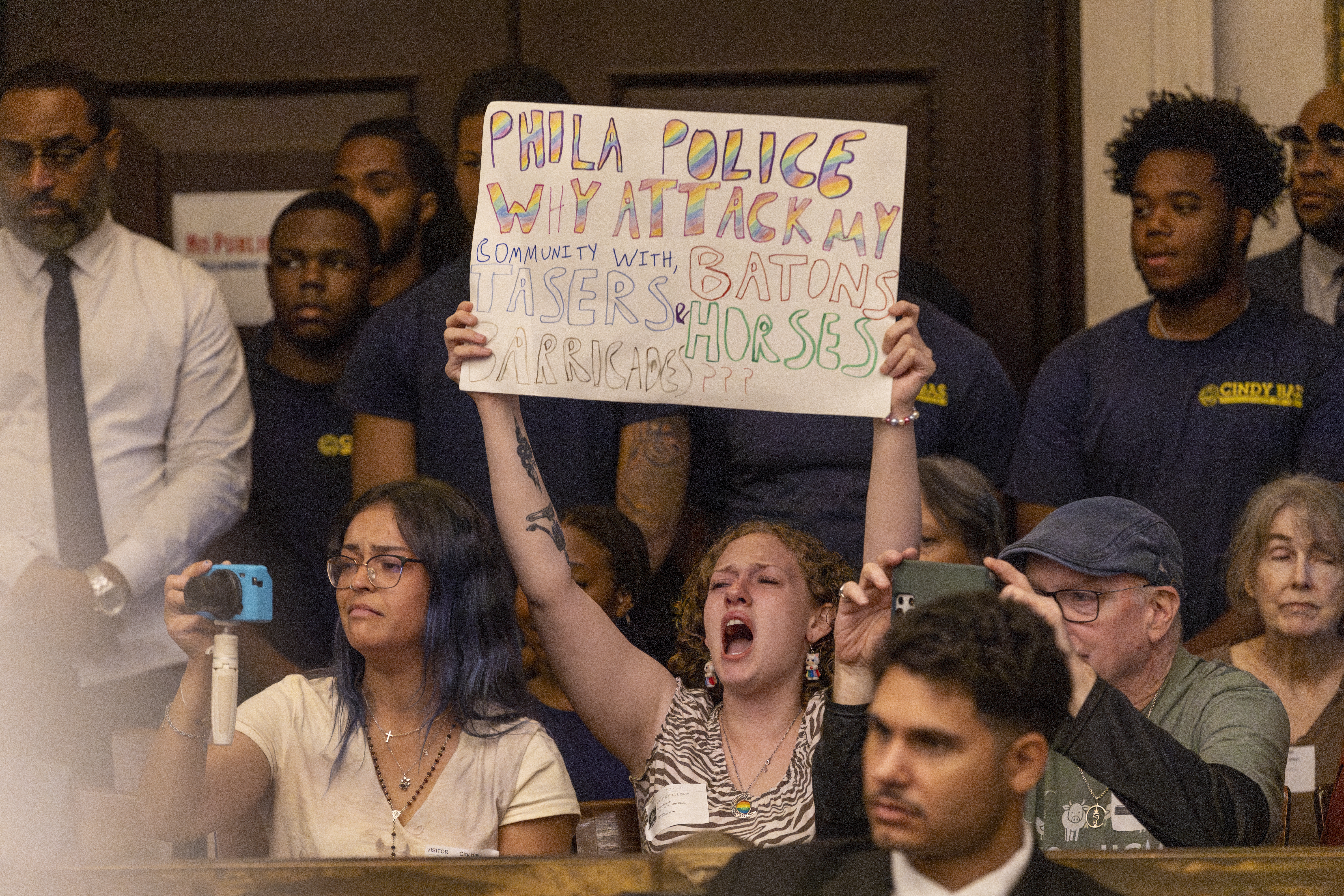
Philadelphia City Council will hold public hearings to examine the police department’s crowd-control tactics used during Sunday’s Pride festivities in the city’s Gayborhood, a response that drew criticism from LGBTQ+ community leaders who have called the display of force unacceptable.
Councilmember Rue Landau, a Democrat who represents the city at-large and is Council’s first openly LGBTQ+ member, introduced legislation Thursday to authorize Council to hold hearings on the response, citing video and eyewitness accounts of “aggressive police tactics,” such as physical confrontations between police and celebrators, as well as the use of mounted and motorcycle officers to disperse crowds.
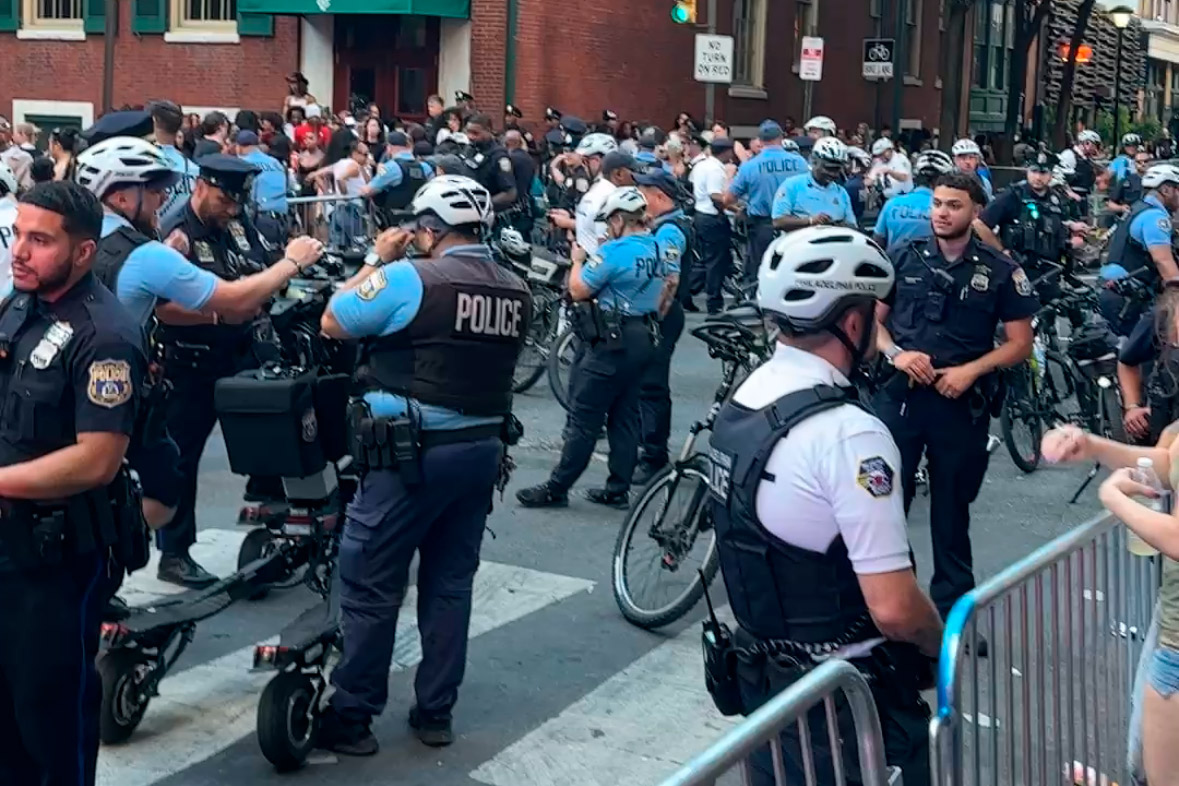
A large police presence at a Pride celebration in the Gayborhood on Sunday, June 8, 2026.Courtesy of Joshua Stokem
Images and videos that circulated widely on social media this week showed officers pushing attendees, as well as police on horseback dispersing crowds from the sidewalk. Multiple officers were seen on video with their faces covered, and others barricaded Gayborhood streets. Police said 15 people were arrested.
“It’s clear that this was a lack of communication, a lack of planning, and a lack of clear on-the-ground decision making of what to do in this situation,” Landau said Thursday.
Holding hearings in Council “is not going to heal the pain and trauma that happened on Sunday,” Landau said, but it will “answer strategic and tactical questions.”
”We need to work towards a time when the Gayborhood is safe and open and welcoming to every member of the queer community, but especially to Black and brown queer people and trans people,” she added.
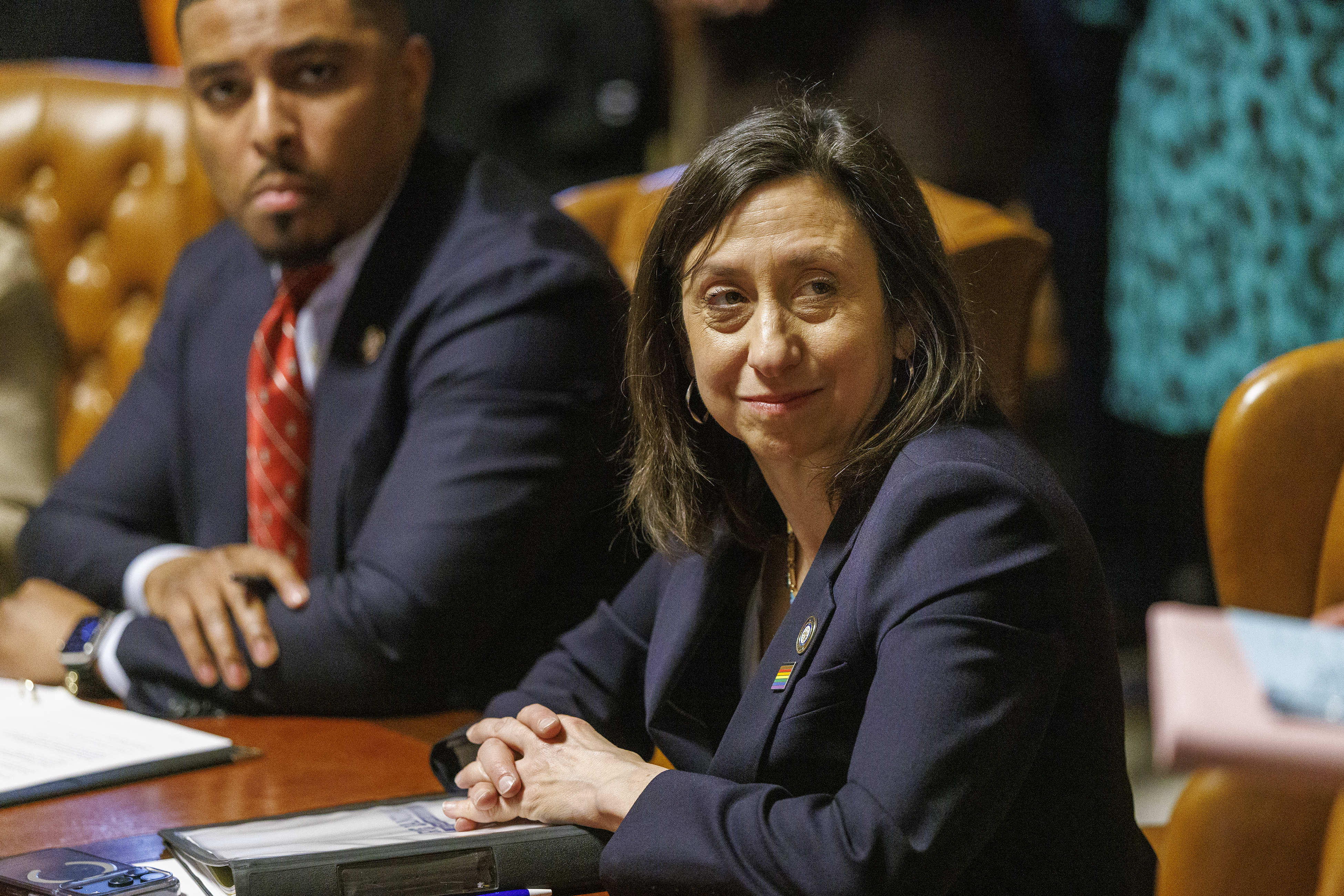
Councilmember Rue Landau on Thursday, March 12, 2026.Alejandro A. Alvarez / Staff Photographer
During an acknowledgment of Pride month in Council on Thursday, Mark Segal, the publisher of the Philadelphia Gay News and a fixture of the city’s LGBTQ+ community, said he was looking for accountability and wanted to know: “Who was in charge Sunday?”
“No police should be wearing a mask in Philadelphia,” Segal said to applause. “No motorcycle should be up on the sidewalk. Police on horseback should not be hurting citizens. The police should not be running around with Tasers. People should not be punched. People should not be fenced off like animals.”
Council unanimously approved a resolution to hold hearings. They are not likely to take place until fall, as Thursday was Council’s final meeting before adjourning for summer recess.
The move to hold hearings is a notable step for a Council that has largely steered clear of public criticism of the city’s police department in recent years. While individual members have taken issue with discrete tactics or policies, most have been satisfied with the leadership of the force under Commissioner Kevin J. Bethel, who took the helm in 2024 when Mayor Cherelle L. Parker appointed him to the role.
Bethel said the police department is investigating the agency’s response during the Pride festivities, and a police spokesperson said that five officers who wore facial coverings may face discipline for violating department policy.
Parker said in a statement that senior members of the administration were examining the response. During an unrelated news conference Thursday, she said that “accountability will be reached.”
“Rest assured we’re going to do the research. We’re going to find out what happened and where accountability is appropriate,” Parker said.
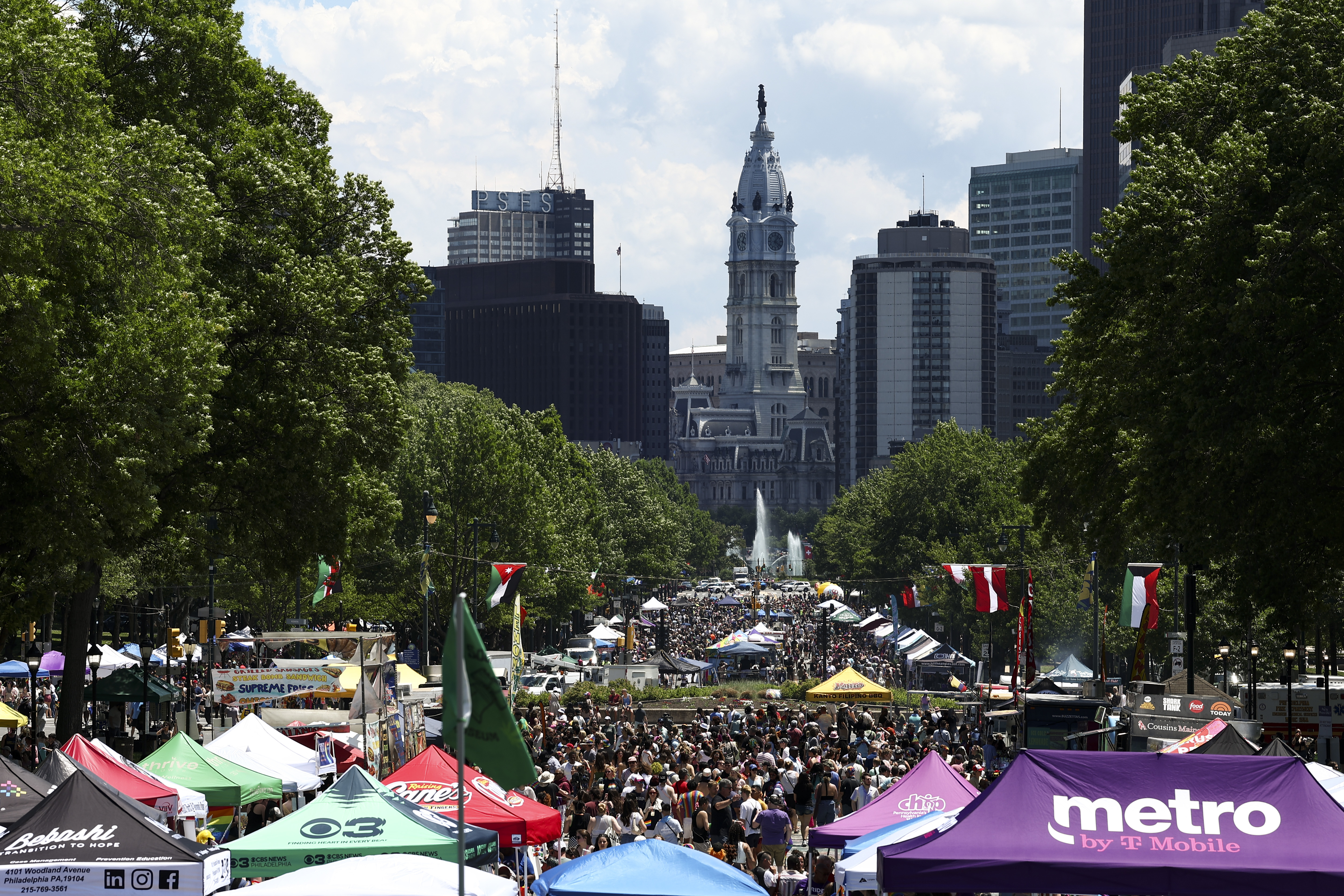
People fill the street during the Philly Pride Festival on the Ben Franklin Parkway on Sunday, June 7, 2026 in Philadelphia.Monica Herndon / Staff Photographer
More than a dozen LGBTQ+ residents and Pride attendees came to Council on Thursday to tell lawmakers about their experiences Sunday and call for an investigation.
Philadelphia resident Jazmyn Henderson, a longtime activist in the city, was in the Gayborhood on Sunday and said she witnessed police using aggressive crowd-control tactics.
She said she did not think Council’s resolution was enough to make her feel safe going forward.
“I think City Council is delusional,” Henderson said. “I think the city is delusional, and they think that that resolution meant anything to any of the Black and brown people who were brutalized, assaulted, hurt, or mistreated by the cops on Sunday.”
Sergio Cea, political director of the progressive political group Reclaim Philadelphia, testified during Council’s public comment section that he was tear-gassed by officers in West Philadelphia during a wave of civil unrest in 2020 and, following Sunday’s events in the Gayborhood, he does not feel safe in the city from what he described as “police violence.”
“I really welcome the resolution that Rue Landau is presenting, but we need to go beyond that,” Cea said. “We are not safe.”
Tuan Van Bui’s bad luck arguably started the day he was born in 1970 in the city then known as Saigon — the child of a Vietnamese woman and one of the thousands of U.S. soldiers who fought in Southeast Asia for nearly two decades.
Van Bui never knew his dad, but he quickly learned what it was like to grow up in a hostile homeland that called the estimated 25,000 to 50,000 Amerasian kids like him “children of the dust.” The communist government that won the war in 1975 denied him any education past grade school.
In 1990, Van Bui caught a break — of sorts. In the late 1980s, a U.S. Congress struggling to come to grips with the mess America had left behind passed the Amerasian Homecoming Act. That allowed Van Bui to legally immigrate to America and settle in Philadelphia’s Kensington neighborhood, but with no real safety net.
His first two decades on U.S. soil were rough, marked by occasional run-ins with the law. But in middle age, Van Bui had settled into a more comfortable American life. He married a fellow Amerasian immigrant in 2017, earned some money from construction and other odd jobs, and indulged his quirky hobbies like stamp collecting. He was paying back his fines from the bad years and — although threatened with a removal order — he religiously showed up for check-ins with U.S. immigration officials.
His family says Van Bui was doing everything the right way.
Still, it was with much trepidation that Van Bui showed up with his wife at the Philadelphia immigration office on Aug. 18, as the reelected Donald Trump and his team pushed for a massive increase in arrests and deportations. What happened next, as his wife related to family members, was even worse than they had feared.
Tuan Van Bui in an undated family photo. Van Bui, 55, died in immigration custody at the Miami Correctional Facility in Bunker Hill, Ind., on April 1.Handout art
Van Bui’s stepdaughter, Ly Wang, told me this week that U.S. Immigration and Customs Enforcement officers were waiting. “Before he could even really check in, they saw him, they spotted him,” she said. “The ICE agents ambushed him, and they shoved my mom out of the way. They tackled my stepdad … shoving him into a wall because he’s a big dude.” Wang said the ICE agents threw Van Bui’s paperwork in the trash and warned her mom, “You need to leave before we make it a problem for you, too.”
Van Bui’s arrest that August day was the start of a seven and a half month Kafkaesque journey through the rancid food and 4 a.m. wake-ups of ICE detention sites, first in upstate Pennsylvania, and then nearly 700 miles away in rural Indiana.
It ended on April 1. That morning, Van Bui had made his usual phone call to his wife and, despite the routine complaints, sounded fine. The next call came that night, but from the chaplain at Indiana’s Miami Correctional Facility. Van Bui had suddenly collapsed and died. He was just 55.
It took more than two months for Wang and her mom — who herself had suffered a debilitating stroke in the days right after watching Van Bui’s violent arrest — to deal with Indiana authorities, obtain some additional testing, bring his body back home, and secure a spot for him in the Fernwood Cemetery in suburban Lansdowne, where he was buried on June 5.
But his family’s many questions have not been laid to rest.
Why was Van Bui’s ICE detention dragged out for so many months when — given the wretchedness of life behind barbed wire — he and his family would have preferred deportation to Vietnam, even if he hadn’t been there for 36 years? Why wasn’t Van Bui given more medical attention, as doctors noted his swollen knees and other signs of worsening health?And why is ICE’s account of Van Bui’s death so different from what other detainees told the family — that staff did nothing at first while they, the detainees, attempted CPR until paramedics finally arrived a full hour after the collapse, too late to do anything but declare him dead?
A 55-yr-old Vietnamese immigrant, Tuan Van Bui, died at the Miami Correctional Center in Indiana in government custody last week, marking the 46th detainee death during the #Trump administration's #immigration crackdown. https://t.co/vHgj8qtncz
And a bigger question hangs over all of this: Why did a redemption-seeking United States government invite Van Bui to come here from the other side of the world, only to leave him to fend for himself before brutally arresting him, dumping him in a hellhole prison, and allegedly watching him die from chronic and then acute neglect?
“I think he fully considered America to be his home, and he was very comfortable here despite even all the challenges against [Amerasians],” Wang said. What happened to Tuan Van Bui is in many ways mystifying, but he is also not unique.
Even as the Trump regime’s deportation raids have sometimes dominated the headlines, much of the attention has focused on the targeting by masked ICE and Border Patrol agents of brown and Black neighborhoods, such as Latinos in Los Angeles and Chicago or the Somali community in Minneapolis. The government’s stepped-up arrests of Asian Americans have largely flown under the radar.
“There’s just a severe sense of fear in the community,” Nancy Nguyen, the executive director of Philadelphia-based VietLead, told me, adding that the message “for the Asian communities is that they are not wanted here under Trump.”
A painful irony is that the hardest hit have been refugees for whom the United States opened its doors in the latter years of the 20th century — a belated acknowledgment that their plight was often the result of America’s violent and unpopular war in Southeast Asia. This winter in Minnesota, masked immigration raiders frequently targeted the Hmong people from Laos who’d once been welcomed for their role in helping American troops and the CIA over there.
Nguyen said that nationally, more than 1,000 Vietnamese immigrants and more than 500 Laotians were deported in 2025 — compared with fewer than 100 a year before the second coming of Trump. A few have been sent to remote African nations like Eswatini, where they don’t know any people or the language. Many more have been languishing, as Van Bui did, in the cruel limbo of ICE detention — sometimes with lethal consequences. Nguyen said that of the 50 or so ICE detainees who’ve died under the Trump regime, nearly a third were of Asian descent.
No one deserves to die in ICE custody. Every person in detention centers deserves basic human needs like water and safe shelter. My visit to Miami Correctional Facility raised concerns that should not be ignored. pic.twitter.com/JznLZKhpff
Van Bui was actually the second Asian American to die at the Miami Correctional Facility — run by the state of Indiana, which contracts with ICE — since February. Lorth Sim, 59, who came to America in 1983 as a refugee from the brutal dictatorship of Cambodia’s Pol Pot, also collapsed at the facility, where officials also blamed heart disease.
What’s more, Van Bui is the third member of Pennsylvania’s Asian community to die in immigration custody in less than a year. In January, 46-year-old Cambodian American Parady La was arrested outside his Upper Darby home and died three days later at Philadelphia’s federal detention center, reportedly while undergoing narcotics withdrawal. Last August, 32-year-old Chinese immigrant Chaofeng Ge died at the upstate Moshannon Valley Processing Center five days after his arrest near Harrisburg; family members and advocates have challenged ICE’s assertion that his death was a suicide by hanging.
In Van Bui’s case, ICE issued a fairly detailed statement that insisted the Amerasian detainee — who’d suffered a serious stroke on Christmas Eve 2023 and used a cane for mobility, among other preexisting health problems — was properly monitored and treated amid clear signs his condition was deteriorating, with a decreased platelet count and then swollen knees indicating “obstructive pulmonary disease.” It also claimed — disputed in the accounts other detainees have offered Van Bui’s family — that staff at the Indiana facility responded quickly to his April 1 collapse with CPR and a defibrillator before he was pronounced dead at 6 p.m.
Whether ICE and Indiana corrections officers offered Van Bui adequate medical care is still up for debate, but what the government definitely did not offer was empathy. As with other ICE custody deaths, grieving relatives were slammed with an official press release that denied Van Bui’s humanity.
“Criminal illegal alien from Vietnam passes away at Miami Correctional Center” was the headline on ICE’s press release, which stressed Van Bui’s encounters with law enforcement when he was a younger man.
His stepdaughter Wang told me the litany of criminal charges in the release includes some arrests for which he was not charged or convicted, and that he was diligently repaying fines for other past violations. But what hurts more is the regime’s cruel characterization of a human being whom Wang described as a soft-spoken, gentle giant who never turned down a request for help from his Kensington neighbors and — “a nerd in a way” — loved to scour flea markets for cuckoo clocks or rare coins or stamps.
Chaofeng Ge, 32, died in August at the Moshannon Valley Processing Center while detained by ICE.Courtesy of David Rankin
She said he’d told her little about the first 20 years of his life in Saigon (renamed Ho Chi Minh City after the war), but did admit that the abandonment of his American GI father weighed on him.
“Something that he did tell me and just confided in me was that he never felt like he grew up feeling wanted, you know? Starting with his dad not being around, and his mother being very busy and being a single parent,” she said. “So he had kind of a rough start.”
Amerasian kids were treated cruelly in Vietnam — as reminders of the hated Americans who’d invaded their country — and typically denied any education beyond grade school, which apparently was the case for Van Bui. The United States seemed to acknowledge that harsh reality when Congress and the Reagan administration enacted the special AM-1 visa that allowed Van Bui to come here in 1990. But the new arrivals didn’t always adapt easily to a home where they were reminders of a war that most Americans wanted to forget as much as the Vietnamese.
“My impression that he got into kind of the wrong mix of crowds,” said Wang, who first met her future stepfather when she was a teenager. “I see him as someone who, because he didn’t have that much of an education … that you could manipulate, unfortunately.”
Like many others, Van Bui faced an immigration judge’s removal order from the 2000s because of his legal problems, yet was allowed to remain as long as he continued his regular check-ins — which he did until his violent arrest last August.
Van Bui was initially sent to the large Moshannon Valley site in Clearfield County, Pa., then transferred in December hundreds of miles west to the lockup in tiny Bunker Hill, Ind., where, since last year, ICE has promised the state of Indiana $291 a day — four times the normal rate — to house some of its rising numbers of detainees.
In just a short period of time, complaints from detainees, advocates, and Indiana Democratic Rep. André Carson — who visited the site just days after Van Bui died — that conditions at Miami Correctional Facility are cruel and inhumane have mounted. Carson said two detainees he met described “heartbreaking” conditions, and that a lack of functioning intercoms may have played a role in Van Bui’s death. The American Civil Liberties Union of Indiana settled multiple suits from state inmates — predating the 2025 deal with ICE — alleging pitch-black conditions from windows covered with steel plates, and frequent episodes of cells flooded with wastewater.
Two deaths this year at Miami Correctional Facility's ICE detention space is getting attention.https://t.co/1pzcfwUQo9
Wang said it took weeks to even learn Van Bui had been moved to Indiana, and when they did reconnect, he complained of freezing-cold winter conditions and horrible food, even as they were awakened by guards for breakfast at 4 a.m. Things were so bad that Van Bui actually wanted to be deported back to Vietnam, but despite finally seeing a judge in February, the government continued to hold him in these gulag-like conditions.
Until he died.
During the agonizing weeks Van Bui’s wife and stepdaughter worked to bring home his remains — an effort which included this still active GoFundMe page — they heard from other detainees, most of them also Asian Americans. One Vietnamese native from Philadelphia who successfully won his release in a habeas corpus case tracked down Van Bui’s wife for a surprise visit, to tell the family his version of what really happened on April 1.
“What we’ve heard from the cellmates is that he collapsed, and they immediately called for help, and no one came,” Wang recounted. “So the cellmates themselves, they did the CPR. None of the staff did CPR. The cellmates did the CPR. They … did CPR and chest compressions relentlessly, with somebody else pressed up against the gate of the jail cell just yelling, ‘Help! Help!’”
They allege there was no help, not right away.
“From their view, what they saw was the correction officer sitting there staring at the video and not moving at all,” Wang continued. “It’s reported that [the corrections officers] waited at least around 15 to 20 minutes before they got up, locked down all the cells, and then finally went over to see what happened. Once they came over, they bought a defibrillator, except they did not know how to use it, so they had to call the paramedics. By the time the paramedics showed up, they declared him dead, which was about an hour later than he actually collapsed.”
I asked a spokesperson for the Indiana Department of Correction about what really happened on April 1, but was referred to ICE. And ICE, as with past columns, has not responded to my request for more information. All we have is ICE’s official report, which insists that detention center staff were the ones who performed CPR, that the defibrillator was used — and which offers no timeline for how long it really took for the paramedics to arrive.
Those explanations aren’t satisfactory to Van Bui’s family, or to immigration advocates here in Philadelphia or the ACLU back in Indiana, who continue to press for answers while they explore possible legal action.
But there are questions that are bigger than any courtroom. Why are Asian communities that, in those post-Vietnam War years, drove the comeback of America’s cities and older suburbs now targeted by a terror campaign from the U.S. government? Why did the United States abuse innocent people from Southeast Asia — and especially the Amerasians — twice, first in a pointless war and now in a gulag archipelago on American soil?
What did Tuan Van Bui do to deserve neglect and death in a dark, dank cell hundreds of miles from the people who loved him?
When his family finally held his services at a Chinatown funeral home, it wasn’t known if his wife would be healthy enough to attend. She did show up briefly at his wake, just long enough to utter these anguished words that Ly Wang posted on their GoFundMe page.
“You said you would come home! Why didn’t you come home?”
For the past year, FIFA, the governing body of international soccer, has leased an office on the 17th floor of New York’s Trump Tower that has sat all but empty. The rent goes to President Trump’s family business, but soccer officials say the space sits largely idle.
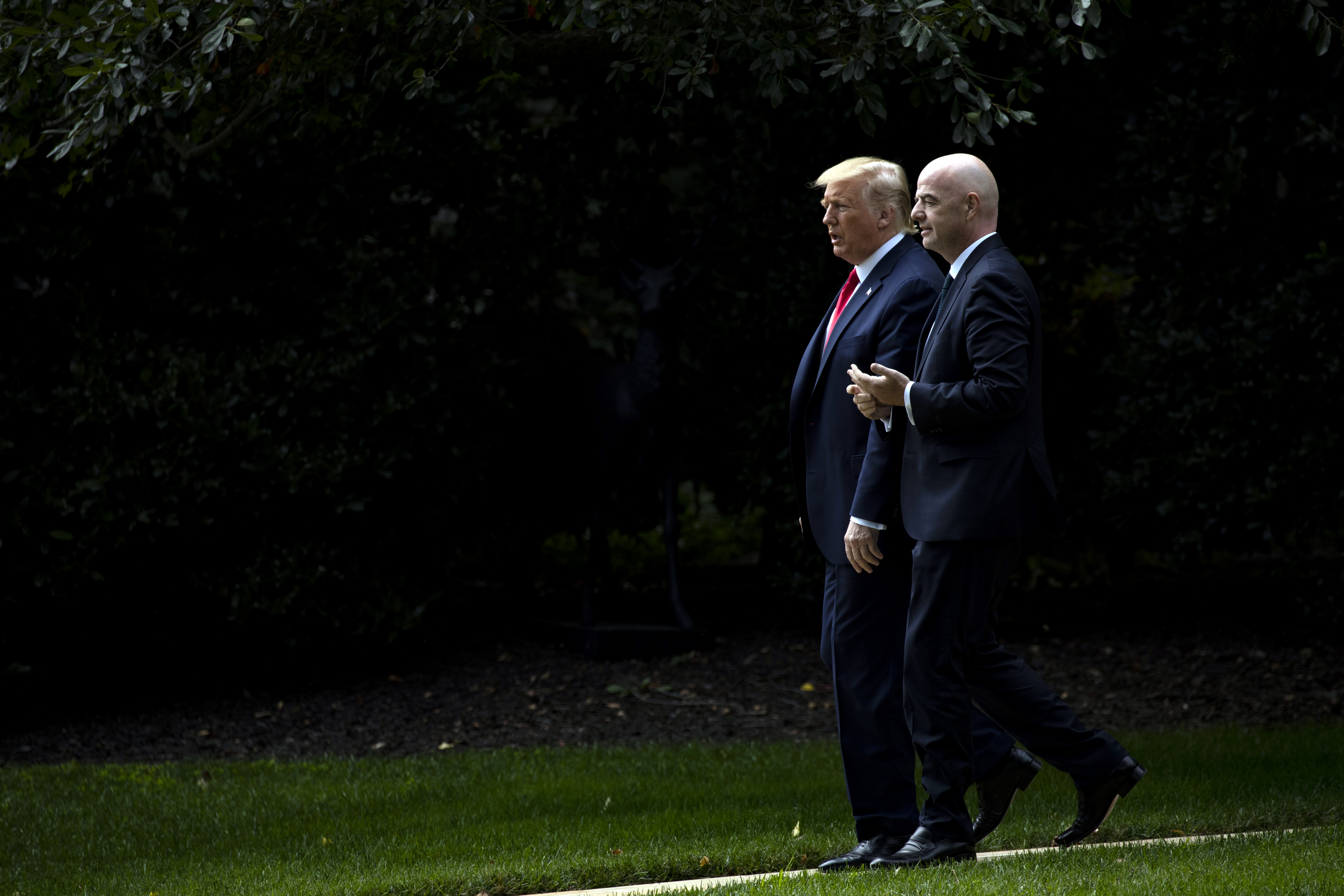
Paying rent to the Trumps was the choice of Gianni Infantino, FIFA’s president, who has made being close to Trump a top priority. He has lavished the president with praise, trophies and a medal. He has made pilgrimages to Mar-a-Lago, the Trump National Doral golf club and even the “Melania” documentary premiere.
Infantino has publicly boosted the president through impeachments and plummeting poll numbers.
It was all in service, Infantino’s supporters say, of ensuring that the World Cup, which begins this week, goes off without a hitch. Trump could disrupt the games in any number of ways. Infantino, allies say, is handling a volatile president who responds to praise and gifts.
“He’s straightforward in terms of what you need to do to manage the relationship,” said Majed Al Sahib, a soccer official from Saudi Arabia who said that Infantino was being pragmatic.
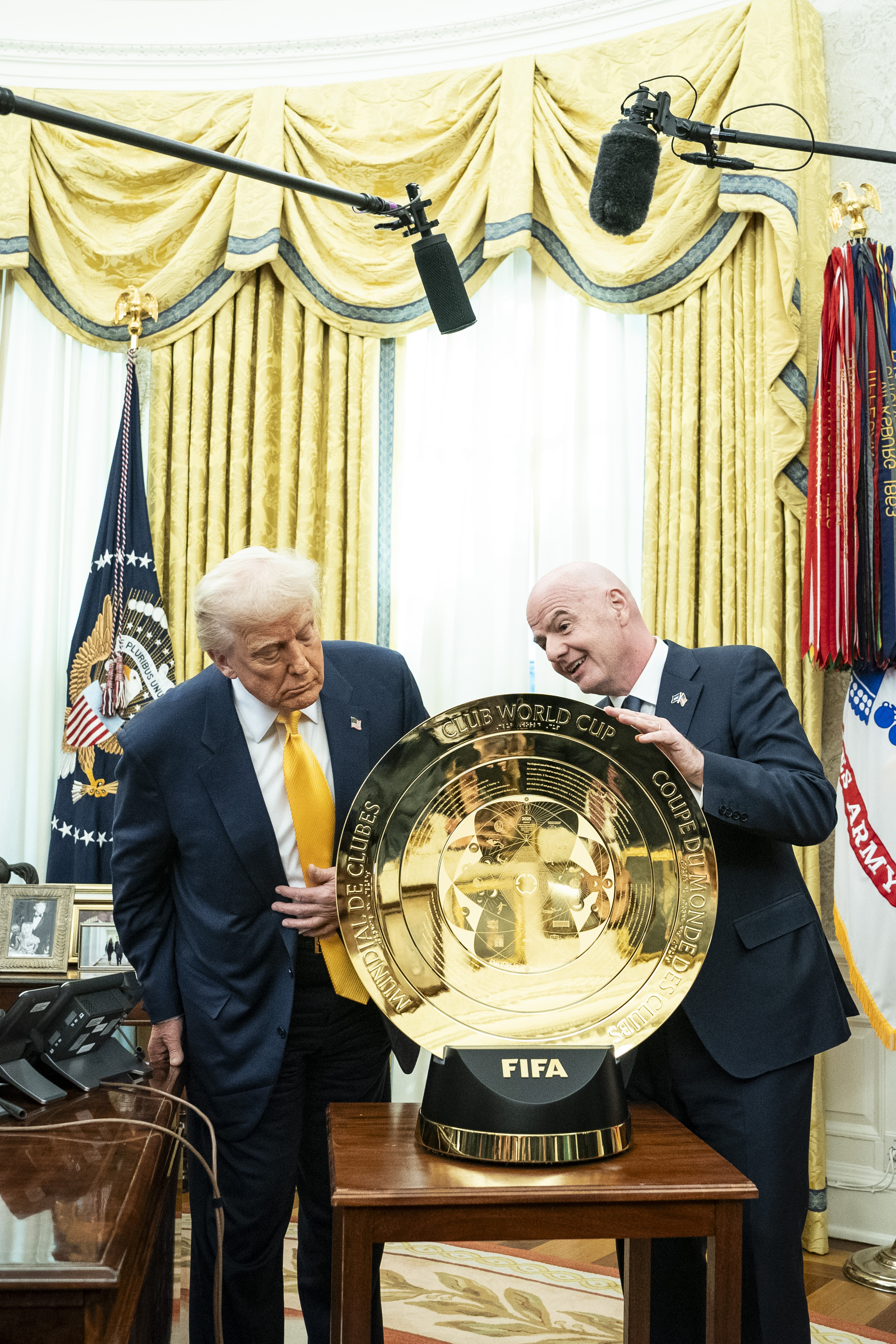
President Trump and Gianni Infantino at the White House in 2025 with a trophy intended for the winner of the Club World Cup competition. Trump kept it, and FIFA commissioned another.Haiyun Jiang / The New York Times
FIFA officials are clear about what they want from the World Cup. They want a higher profile in the United States and more growth in the world’s biggest consumer market. They also want to shed the reputation for corruption and cartoonish excess that led to Justice Department prosecutions.
Infantino failed to woo the Biden administration, former government officials said. But he found a receptive ear in Trump, who calls him “the king of soccer.” A decade ago, soccer executives were terrified to travel to the United States, fearing they’d be arrested. Now, Infantino is an Oval Office regular.
Infantino presided over the previous two World Cups, in Russia and Qatar, and drew criticism for cozying up to autocrats in both countries. His amity with Trump has him once again defending his way of operating in what is supposed to be a politically neutral position.
“I think it is absolutely crucial for the success of a World Cup to have a close relationship with the president, with the government,” Infantino said last year. “I have a lot of friends.”
This World Cup will be a test of whether that friendship pays off.
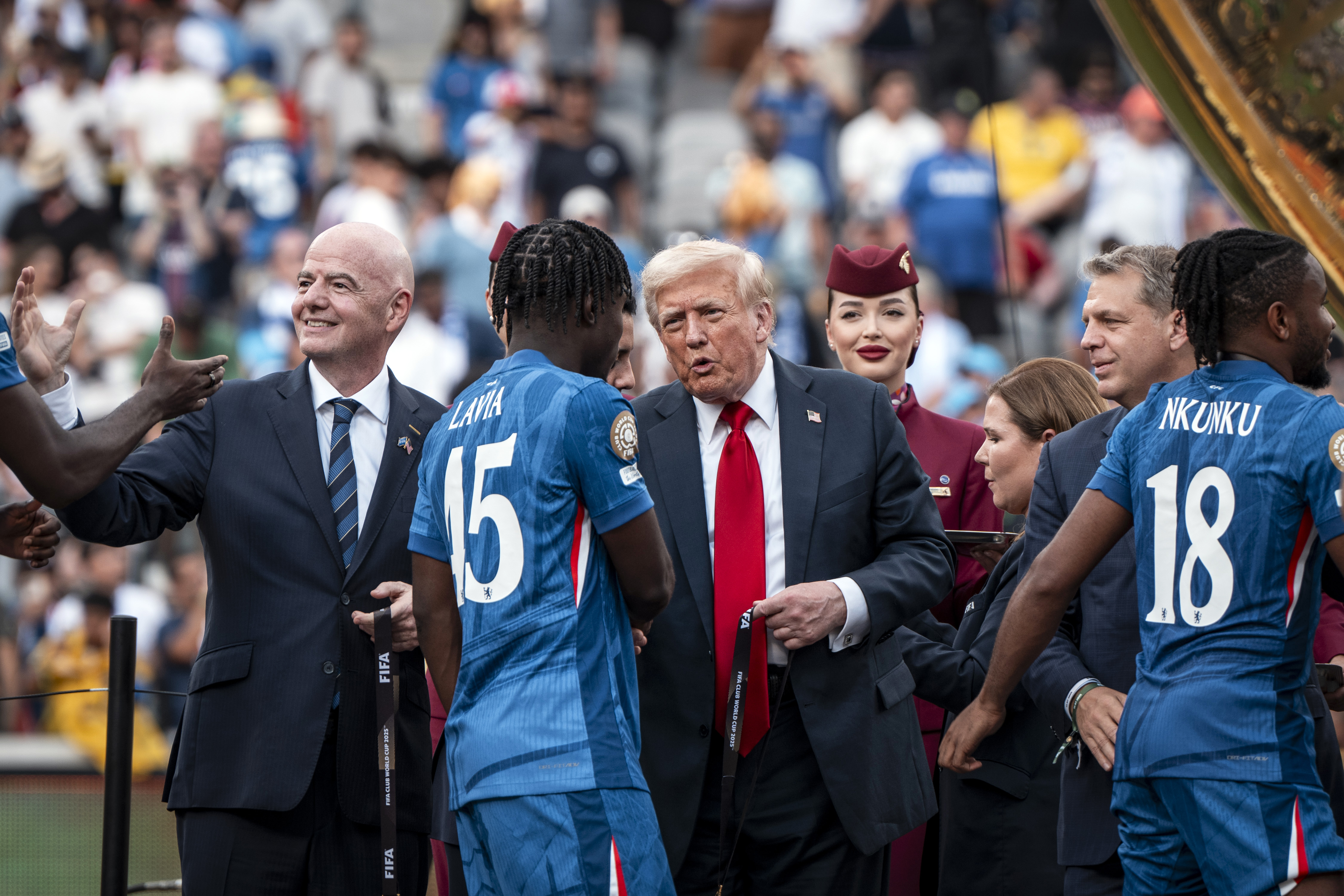
Infantino and President Trump onstage during the Club World Cup final in New Jersey last year.Haiyun Jiang / The New York Times
A top FIFA official says he believes there is an unofficial understanding that the authorities will not conduct immigration enforcement outside of stadiums. (A FIFA spokesman denied any deal and said enforcement was up to the government. The Department of Homeland Security did not address the question.)
The Justice Department also recently dismissed long-running criminal charges as part of its FIFA investigation. Prosecutors said the case “doesn’t fit within the administration’s priorities.”
And Trump seemed to defer to Infantino this spring on allowing Iranian players to come to the United States. “If Gianni said it,” the president said, “I’m OK.”
Still, Trump undercut Infantino recently by criticizing the high cost of tickets. And whatever reassurances may have been made on immigration, support staff for Iran’s national team was denied visas, along with a Somali referee.
Infantino’s coziness with the president also appears to be influencing FIFA in Trump-like ways that could outlast the tournament.
FIFA is exploring hotel deals that would license its name just as the Trump family has long done, according to three people familiar with the discussions. He has also expressed interest in launching a FIFA cryptocurrency, just as the Trumps have done.
A FIFA spokesman said the organization was paying “market rent” in Trump Tower and that the office would be used during the World Cup.
Inside FIFA, many officials privately question whether this has all been in service of Infantino himself. He has accompanied Trump on state visits, sat center stage at the inauguration and has attended diplomatic events.
What does any of that, his critics ask, have to do with soccer?
Infantino declined to be interviewed. His yearslong campaign to curry favor with Trump, and the hand-wringing it has prompted, was described in dozens of interviews with FIFA insiders and others close to the two men. Some spoke on condition of anonymity to describe private conversations.
“Infantino thinks he’s the leader in the relationship,” said Sepp Blatter, the former FIFA president whose ouster at the height of the corruption scandal paved the way for Infantino’s ascension. “But nobody can lead Trump.”
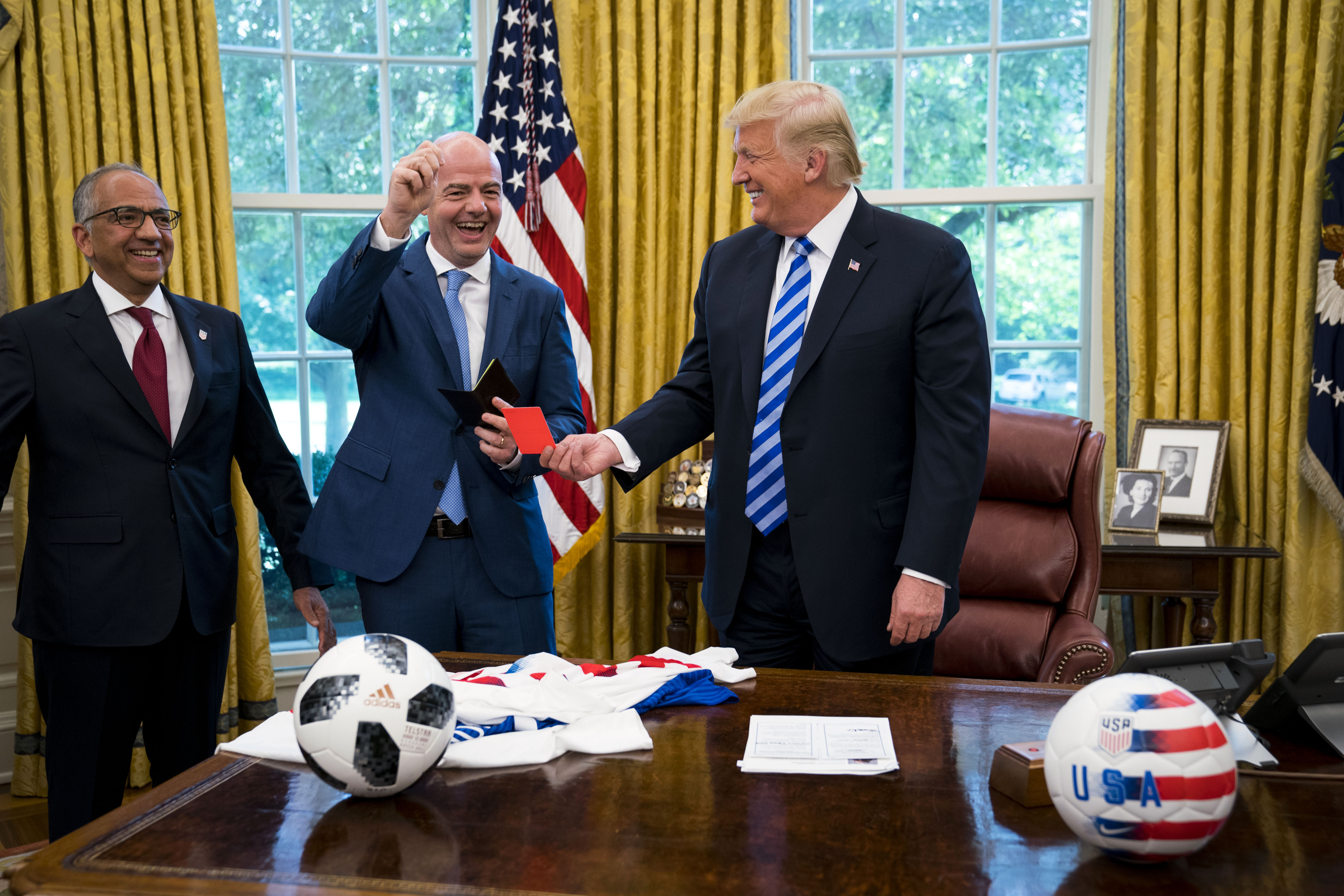
Infantino meets with Trump for the first time in the Oval Office and jokes about penalty cards.Doug Mills / The New York Times
The first meeting
The men first met in the Oval Office in the summer of 2018. The United States had just won the right, along with Canada and Mexico, to host the World Cup, and the mood was celebratory.
“You’re pretty famous, right?” Trump asked. “Pretty important and pretty famous.”
“Yeah,” Infantino replied. “It looks like it.”
Infantino, a lawyer and the son of an Italian immigrant who worked on Switzerland’s railways, had secured the FIFA presidency the same year that Trump was elected.
In that first White House meeting, he presented the president with a Trump jersey and a set of penalty cards that the men joked could be used on the news media.
“You are part of the FIFA team now,” Infantino said.
It was a remarkable turnabout. Three years earlier, the Justice Department had unveiled an indictment detailing corruption in world soccer. Major brands did not renew their sponsorship deals, and the organization suffered financial losses.
But if Infantino was eager to welcome the president onto FIFA’s team, he quickly found himself on the Trump Team — a pretty important, pretty famous endorser of a president in the middle of an impeachment inquiry.
“Gianni, we’re going to have to extend my second term,” Trump said on the South Lawn in September 2019, as Infantino smiled beside him.
Months later, as lawmakers debated charges of obstruction and abuse of power against Trump, Infantino praised him before business leaders in Davos, Switzerland.
“You might wonder why the president of FIFA is introducing the president of the United States of America,” Infantino said. He joked that it had been suggested that the two of them might be the most important people in attendance.
Soon, Infantino was back at the White House, this time as an unusual guest for the signing of the Abraham Accords, which established diplomatic ties between Israel and some Arab nations. He also arranged a “courtesy visit” with the attorney general, who was overseeing the FIFA cases.
“I am fully convinced,” Infantino said after that meeting, “that the credibility and reputation of FIFA is being restored at the highest level.”
Then came the 2020 election, and Infantino’s fortunes changed.
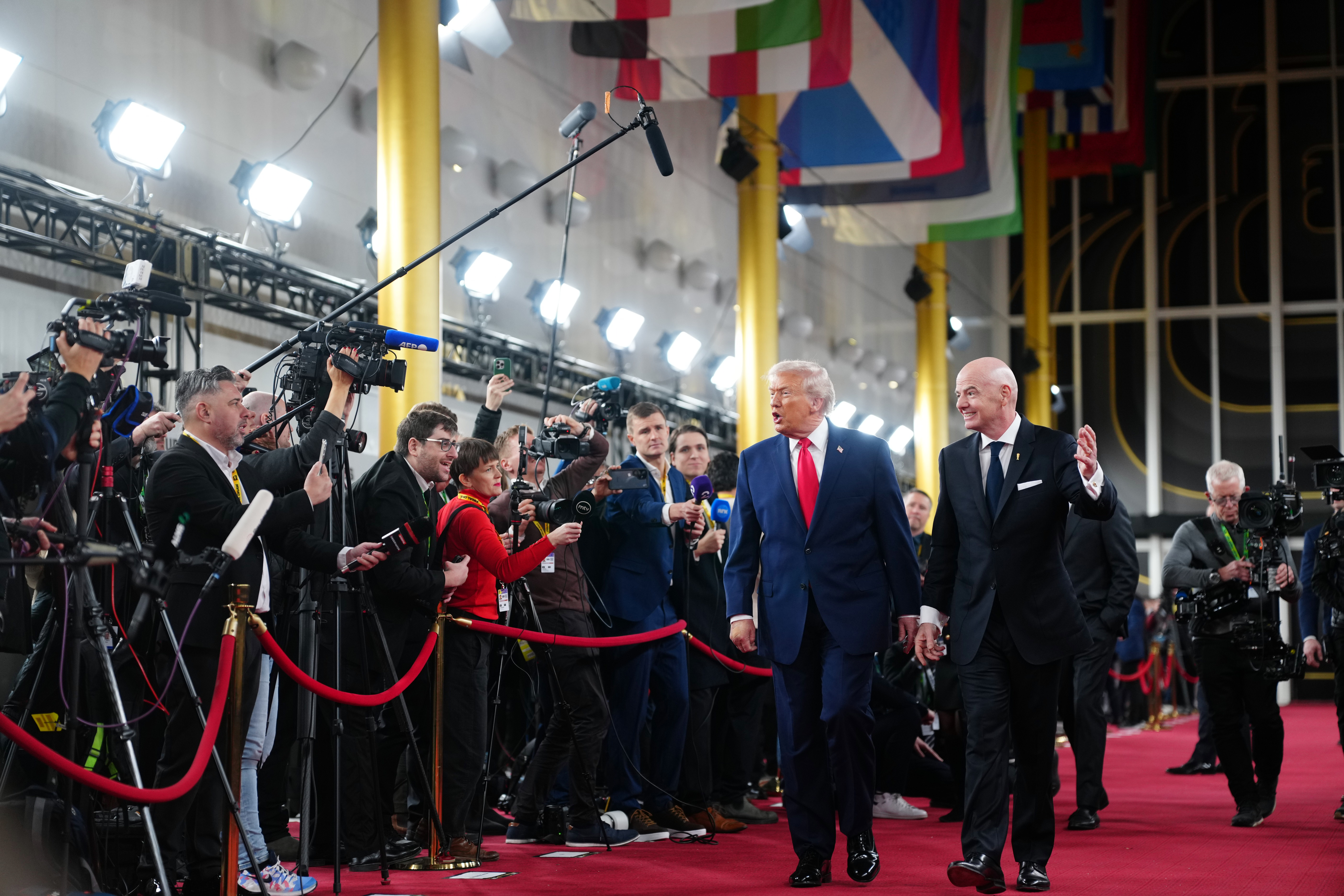
President Trump and Infantino attended the World Cup draw at the John F. Kennedy Center for the Performing Arts last December. FIFA had planned to have the event in Las Vegas but moved it to Washington.Tierney L. Cross / The New York Times
A chilly reception, and then a thaw
President Joseph R. Biden Jr. proved to be less welcoming to FIFA than his predecessor. There were no Oval Office greetings.
Administration officials said they had been wary of getting too close to a scandal-tainted organization. They saw no benefit in putting the president alongside Infantino.
“There was definitely a hands-off, keep-them-at-a-distance approach at the White House,” said Caitlin Durkovich, a former National Security Council official who helped oversee World Cup planning. She said FIFA repeatedly tried to arrange meetings with top officials.
In interviews, FIFA officials said that Infantino had been trying to raise FIFA’s profile. More practically, they said, he wanted people, when they Googled “FIFA,” to find anything but stories about bribery and kickbacks.
But even an attempt to meet formally with Secretary of State Antony J. Blinken at the 2022 World Cup in Qatar fell flat, according to three people familiar with FIFA’s efforts to arrange a meeting. Infantino’s few interactions with American officials were mostly perfunctory and private, like a half-hour meeting with the national security adviser to address security and visa wait times.
So when Trump won re-election in 2024, there was an opportunity to build on Infantino’s foundation. And Trump seemed eager to pick up where they had left off.
Days before Trump’s second inauguration, the men convened at Mar-a-Lago, the president’s private club in South Florida, and flashed thumbs-up signs for a photo that Infantino posted to Instagram.
Trump thanked him by name at a victory rally. And Infantino had an elevated seat behind Trump at the inauguration.
Infantino eagerly promoted all of it, sounding at times like Trump’s campaign partner. “Together we will make not only America great again, but also the entire world,” he said.
Infantino, it seemed, had achieved everything he wanted: accolades, endorsements and a World Cup task force, proposed by Infantino himself, that gave FIFA a formal place among Trump’s inner circle.
But soon it was clear that such closeness had drawbacks.
‘Private political interests’
When the world’s top soccer officials gathered in Paraguay for their annual meeting in May 2025, Infantino was on the other side of the globe, tagging along on Trump’s state visit to Persian Gulf countries.
The trip had little to do with soccer, and when he finally arrived at the FIFA meeting, he was several hours late. European soccer officials walked out, protesting his prioritization of “private political interests.”
“I felt that I needed to be there to represent football and all of you,” Infantino told them.
It was then that behind-the-scenes grumbles exploded into view. FIFA is an unusual amalgam of 211 countries and territories, each with its own politics. Infantino’s closeness to Trump had impressed some constituencies and alienated others.
“It’s a matter of priorities, and at that moment Trump was the priority for Infantino,” said David Goldblatt, author of “The Ball Is Round: A Global History of Football.”
But Infantino was undeterred.
One of his signature innovations was a 32-team tournament for the world’s best professional teams: the Club World Cup. But when he plugged the event from the Oval Office, he suddenly credited Trump as a co-creator. (After Trump kept the original Tiffany & Company trophy, FIFA presented the winners with another.)
Then, on the eve of the tournament, U.S. Customs and Border Protection announced that agents would be “suited and booted ready to provide security for the first round of games.”
Tournament officials panicked, terrified that immigration agents would arrest fans, according to three people who participated in planning discussions. Such a spectacle could deter attendance at the 2026 World Cup and potentially lead to a global backlash against FIFA.
By then, Infantino was living in Miami, in the president’s orbit. His advisers strategized about asking Trump for a moratorium on immigration actions, both during the club matches and the World Cup.
While no one close to either man has indicated what, exactly, they discussed privately, FIFA officials said that Infantino pressed the immigration matter. Whether for that reason or not, the government’s social media post was removed and ICE raids never materialized.
Soccer officials said they believed there was a similar understanding for the World Cup. But, as is often the case with Trump, nobody can say for sure.
The Department of Homeland Security, which oversees Immigration and Customs Enforcement, did not acknowledge any such agreement.
“U.S. Customs and Border Protection, in coordination with D.H.S. and other agencies, is dedicated to ensuring the safety and success of the FIFA World Cup,” a D.H.S. spokesperson said.
By some measures, the club tournament represented a win for Infantino’s strategy. He got an Oval Office platform, Ivanka Trump participated in the draw, immigration agents stayed away, and Trump attended the final match.
But it was also a reminder that when there is a limelight, Trump often seizes it for himself.
Appearing onstage after the final whistle, Trump lingered longer than planned, upending meticulous choreography, confusing the winning team and standing squarely before the cameras during the trophy presentation. FIFA and Secret Service officials were alarmed, and fireworks were delayed because of the president’s presence.
It went viral, with Trump basking in FIFA’s moment.
The FIFA Peace Prize awarded to President Trump. The trophy, co-produced by a FIFA employee’s father, was spontaneously sourced from miscellany in FIFA’s possession.Tierney L. Cross / The New York Times
The FIFA Peace Prize
Oval Office visits are now routine for Infantino.
“Always happy to be here, at home, if I can say that,” he said last year.
“You are home,” Trump replied.
When Trump assembled dignitaries and business titans for a state dinner for Crown Prince Mohammed bin Salman of Saudi Arabia, Infantino was there.
“I think we should all support what he’s doing,” Infantino said at a business conference in Miami. “Because I think it’s looking pretty good.”
Infantino has sought to capitalize on access to Trump allies. Under his watch, FIFA discussed with former Treasury Secretary Steven Mnuchin an investment in a streaming service, according to a senior FIFA official. Nothing materialized, only because the venture was put on hold, according to a person who was part of the talks.
More recently, FIFA has explored hotel licensing deals with a prominent South Florida developer who is poised to develop the waterfront opposite Mar-a-Lago.
Infantino also lobbied for Trump to be awarded the Nobel Peace Prize, which the president has craved. When the award went to the Venezuelan politician María Corina Machado, Infantino had an idea.
Three weeks after the Nobel announcement, senior FIFA officials were told that Infantino wanted to announce a peace prize of his own. How long, they asked, did they have to work out the details — the criteria, for example, or the makeup of the nomination committee? Those questions went unanswered.
Some of the most senior officials were told straightaway whom the first honoree would be, according to a person with direct knowledge of the plans, who learned about the prize and its recipient on the same day.
FIFA did not have time to consider what its prize would look like. But luckily, the father of an employee was a sculptor, and FIFA had in its collection of miscellany a miniature version of one of his pieces, according to two soccer officials. The trophy was in hand.
The FIFA Peace Prize was announced Nov. 5, with the award to be bestowed at the World Cup tournament draw a month later.
FIFA had planned to have that event in Las Vegas. But Paolo Zampolli, a longtime Trump ally serving as a presidential envoy, encouraged Infantino to reconsider.
“To move the president of the United States is a big process,” he recalled saying. Last-minute events might prevent a trip to Las Vegas, he said, but a local venue would better assure his attendance. “You know how important FIFA is for us,” Zampolli added. (FIFA said Zampolli had no influence over the choice.)
Infantino moved the event to the John F. Kennedy Center for the Performing Arts in Washington, teasing that the site might be called the Trump-Kennedy Center. Trump attended and, to nobody’s surprise, was the first recipient of the FIFA Peace Prize. He received a certificate, a medal and the repurposed trophy.
Trump called it “truly one of the great honors of my life.”
The award angered many soccer officials, who said that it had embarrassed FIFA and cast the organization as partisan.
Lise Klaveness, the president of Norway’s soccer federation and a human rights lawyer, said the prize breached FIFA’s rules on political neutrality. She announced that Norway would back an ethics complaint against Infantino.
Ms. Klaveness said in an interview that she recognized that FIFA needed “friendly relations” with the governments hosting World Cup games. But she said there needed to be “checks and balances,” to keep FIFA from being used for political purposes.
Infantino, though, has worn his friendship with the president on his sleeve. And his head. At one public meeting, world leaders and delegates were given red “USA” baseball caps. Infantino happily donned his, emblazoned with the numbers 45-47, signifying the Trump presidencies.
This winter, as Infantino marked a decade in the job, he celebrated with a party at a Four Seasons hotel in Miami. Ivanka Trump and her husband, Jared Kushner, attended.
The celebration carried into spring, when Infantino announced at a soccer meeting in Vancouver that he would run for a third term. He argued that the organization had repaired its reputation and played a slide show that included Trump.
“We have definitely come a long way these last 10 years,” he told soccer officials. FIFA, he said, was now “sitting at the top tables, in every aspect.”
If artificial intelligence disrupts the job market, which workers will be most vulnerable?
The obvious answer, and the one that has dominated public debate over AI job loss in recent months, is that the workers most at risk are programmers, software engineers and other tech industry employees. They have borne the brunt of the mass layoffs by Meta, Block and other Silicon Valley companies. Their skills are the ones that AI systems have mastered first.
But many economists are more concerned about a different, larger group of white-collar workers: customer service representatives, bookkeepers, payroll clerks and human resources specialists who fly under the radar but collectively account for tens of millions of jobs.
Some of these workers have college degrees. Many do not. They are spread across the country and throughout the economy, working in every industry, in big cities and small towns, at major corporations and mom-and-pop businesses. They are disproportionately — overwhelmingly, in some occupations — women.
These jobs typically offer a middle-class salary or a pathway to achieving one — much as manufacturing jobs did for men before decades of globalization and automation wiped many of them away.
“I worry that AI will be to high-school-educated women what deindustrialization was to high-school-educated men,” said Molly Kinder, a former researcher at the Brookings Institution who is starting an organization focused on AI’s impact on workers and the economy.
For now, such an outcome is a fear, not a forecast. Despite high-profile layoffs in tech and finance, there is little firm evidence that AI has hurt the labor market as a whole.
Economists have become increasingly convinced that disruptions are likely, but they say it is too early to know where or how widespread they will be. They remain broadly skeptical of claims that the technology will lead to mass unemployment in the near future. Some AI industry leaders have walked back such predictions in recent weeks.
But given the extraordinary pace at which companies are adopting AI — and at which the technology is improving — economists say policymakers need to consider the potential effects on the labor market. And they say they are concerned that the public debate has focused too much on software engineers and a relative handful of other high-status careers — lawyers, consultants, economists — rather than the workers who could be most vulnerable.
Back-office jobs deserve more attention in the AI discussion, said Mark Muro, an economist at Brookings who has studied the impact of the technology.
“These are the kind of anchor jobs for families and households,” he said. “We really need to keep our eye on what is occurring across the entire labor market and in all of these occupations.”
Good jobs at risk
Software engineers have dominated the public discussion of AI partly because they have been the first to adopt it in their work. Measures of AI exposure that are based on how people are using the technology, therefore, inevitably show programming jobs as among the most at risk.
But as the technology spreads through the economy, a broader set of roles could be affected. For companies, the promise of AI is that it will save them money, and back-office jobs are an obvious place to look to cut costs.
“If you think about the back office, that’s not the main function of the company, so they might think of it as a cost center,” said Jung Ho Choi, an accounting professor at Stanford University.
Economists at Northwestern University recently recalculated measures of AI exposure based on the makeup of the total workforce, not just the people using the technology. Administrative and front-line roles, such as customer service representatives, rose to the top of the list.
“The most affected jobs are secretaries, are routine clerks,” said Michelle Yin, one of the working paper’s authors. “They’re not computer scientists or data scientists at all.”
Widely cited measures of AI exposure, she added, “give the wrong impression” about who will be most affected — and, in particular, tend to understate the impact on people without college degrees, older workers and people of color.
Kinder gave the example of medical records specialists, a job that pays about $50,000 a year and typically doesn’t require a college degree. More than 90% of the jobs are held by women, many of whom work from home, making it an ideal role for many mothers with young children.
Other examples include billing and payroll clerks, and customer service representatives — jobs that pay at or near middle-class salaries without requiring a college degree. All of them are dominated by women. And all of them are, by various measures, vulnerable to substitution with AI.
“My worry is that the lesson from deindustrialization is that many of these women will be able to get another job, but it might be a much worse job,” Kinder said. “It might be more precarious.”
Vanishing options
Such workers are also more vulnerable in another way: They will have a harder time recovering if they do lose their jobs.
In a recent paper, researchers at GovAI, a nonprofit focused on AI policy, sorted occupations into categories based on not only how exposed they were to AI displacement but also their ability to adapt to a job loss, using factors like age, education and income.
The good news: Many of the workers most exposed to AI right now are relatively well positioned to adjust. They tend to be younger, giving them more time to shift directions in their career. They generally have more education and live in cities with more job opportunities. And they are more likely to have higher incomes, giving them the resources to sustain them through a job search.
The workers to be most concerned about, the authors argue, are the ones who are both at high risk of displacement and have little capacity to adapt: customer service agents, secretaries and other back-office workers.
“If AI does lead to displacement, then these are the folks that you might want to consider paying special attention to,” said Sam Manning, one of the authors. Policymakers, he said, should “think about what sort of additional support they might need to manage a job transition, compared to the managing partner at a consulting firm or a lawyer or software engineer who’s similarly exposed, but if they lose their job, they have lots of things that might make them better positioned to find a new one.”
Fewer rungs on the ladder
Back-office workers are hardly strangers to technological disruptions. Word processors displaced typists; spreadsheet programs and accounting software displaced bookkeepers; online booking sites displaced travel agents.
Those changes came gradually, however, giving workers a chance to adapt. Women, in particular, responded to the disappearance of many secretarial jobs in the 1980s and 1990s by attending college in record numbers, opening pathways to better-paying careers.
U.S. businesses employ far fewer secretaries than they did 50 years ago, but the jobs that remain are more complex and better paid than they used to be.
Women who didn’t attend college, however, have been pushed into retail, hospitality and healthcare — sectors in which jobs tend to be physically demanding and poorly paid, with few opportunities for advancement.
“College-educated women are the ones who came out on top from this,” said Eliza Forsythe, an economist at the University of Illinois who has studied earlier waves of white-collar automation. “They’re the ones who experienced the employment gains without the wage declines. Everyone else are the ones who didn’t do as well from this technology.”
The risk with AI is that it will move too quickly for workers to adapt — and that, this time, a college degree won’t protect against displacement. Indeed, many of the jobs that women transitioned to during the computer revolution of the 1980s and 1990s, like accounting and human resources, are now vulnerable to AI displacement.
Forsythe said AI was also likely to create new jobs, as did earlier technological revolutions. And it is too soon to know to what degree AI will displace workers rather than make them more productive, potentially allowing them to earn more.
“I would be cautious about just focusing on what are we losing as opposed to what are we going to gain on the other side,” Forsythe said.
Even if AI doesn’t destroy jobs, there could be lasting consequences for workers caught in the transition. Muro, the Brookings economist, has studied how AI threatens jobs that have traditionally served as “gateways” between low-paying, entry-level work and more sustainable careers.
Someone who starts as a receptionist, for example, might move into a customer service job that pays only modestly better but offers a chance to move into a much better job in human resources or even management. If AI eliminates that middle step, it could be harder for workers to move up the career ladder, said Justin Heck, a co-author on a recent article with Muro.
“What happens if we’re no longer building those skills on the job? Where is there available to move up?” Heck asked. “What are the ramifications three years from now, when workers remain stranded in low-wage work, and employers are struggling to fill high-wage roles because we’ve carved out the middle?”
It’s been 32 years since the men’s edition of the FIFA World Cup was played on U.S. soil. The long wait culminates this week with Thursday’s tournament kickoff in Mexico City.
On Sunday, Philadelphia will host its first of six scheduled matches between June 14 and a knockout round finale on July 4 at Lincoln Financial Field, which was renamed “Philadelphia Stadium” by FIFA for the duration of the matches here in Philly.
Here’s everything you need to know …
The big picture
According to Visit Philadelphia, the city’s tourism arm, expect an influx of 500,000 visitors flocking into city bars, restaurants, hotels, and businesses throughout the city and surrounding suburbs. However, we’re hearing there are plenty of good Airbnb options to choose from.
But not all of those people have tickets or can afford to attend, with this being the most expensive World Cup ever. FIFA enacted dynamic pricing for the first time, which sent initial ticket prices soaring. And yes, that’s even for games that don’t feature nations that are favorites to win.
Good news for those people: there are a ton of events happening over the course of Philly’s time in the tournament. From bars to beer gardens, watch parties to pickup games, here’s a cheat sheet of what to do around town, whether you’re a native or you just dropped in for a match.
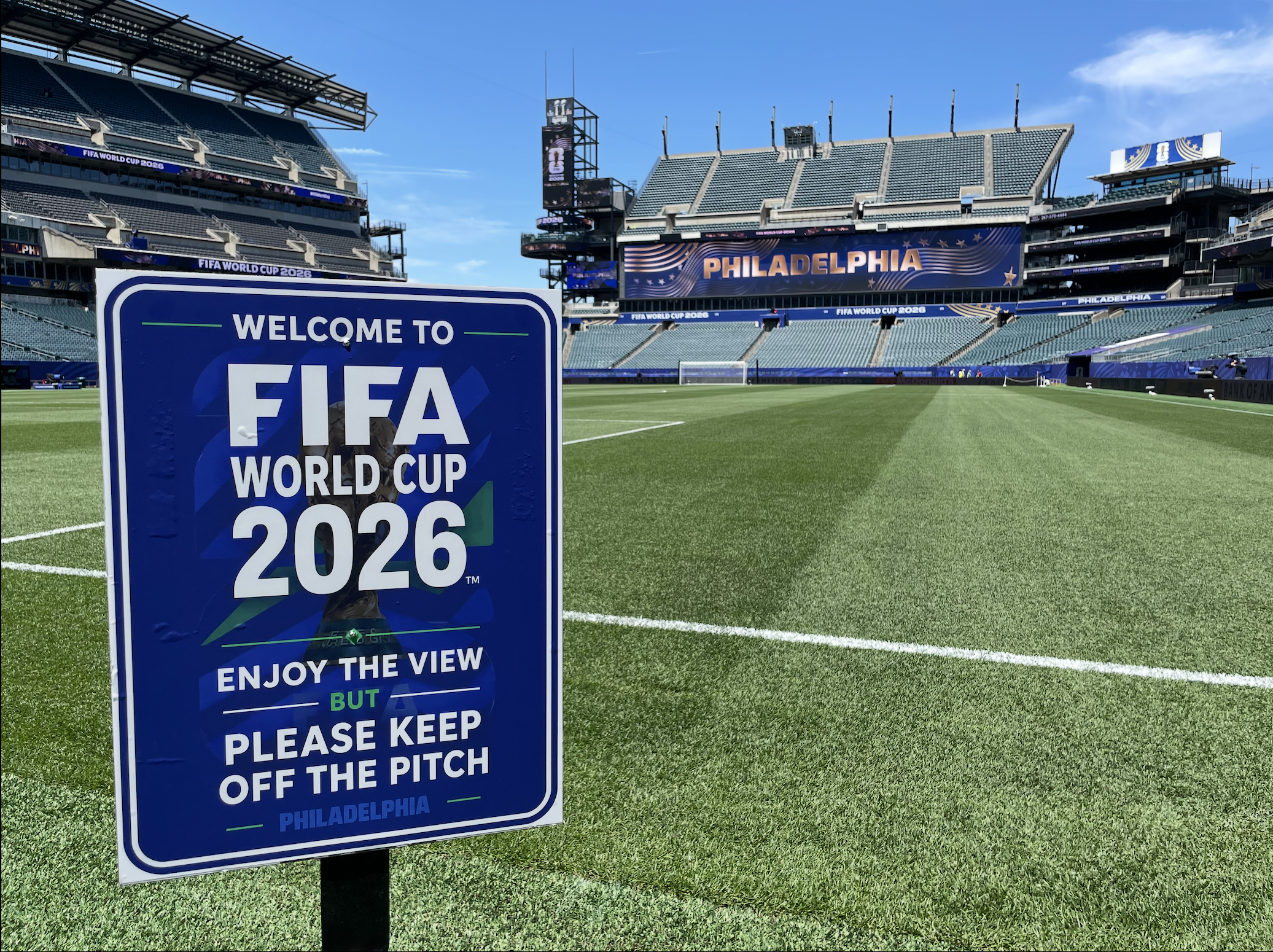
Lincoln Financial Field, known as “Philadelphia Stadium” is all set ahead of the start of Sunday’s World Cup opener in Philadelphia between the Ivory Coast and Ecuador.Kerith Gabriel
So you have a ticket. Congrats.
First thing you should know is that you’re going to find very few people calling Lincoln Financial Field (or the “Linc” as it’s known around here) by FIFA’s official name for the South Philly venue.
There are a host of different ways to get there, but the most efficient and direct path is jumping on SEPTA’s Broad Street Line (Orange Line) and taking it to the last stop, NRG Station. From there, FIFA has signs all over the South Philly sports complex and will have volunteers outside the turnstiles, directing you where to go. Subway trains should be running just fine — a miracle, considering SEPTA workers used World Cup traffic as leverage to potentially go on strike.
Once inside, you’ll see a colorful stadium retrofitted to support large crowds and a field designed with expert care.
Here’s hoping you got your tickets a bit cheaper than the initial asking price. Match prices in Philly and elsewhere have been astronomical.
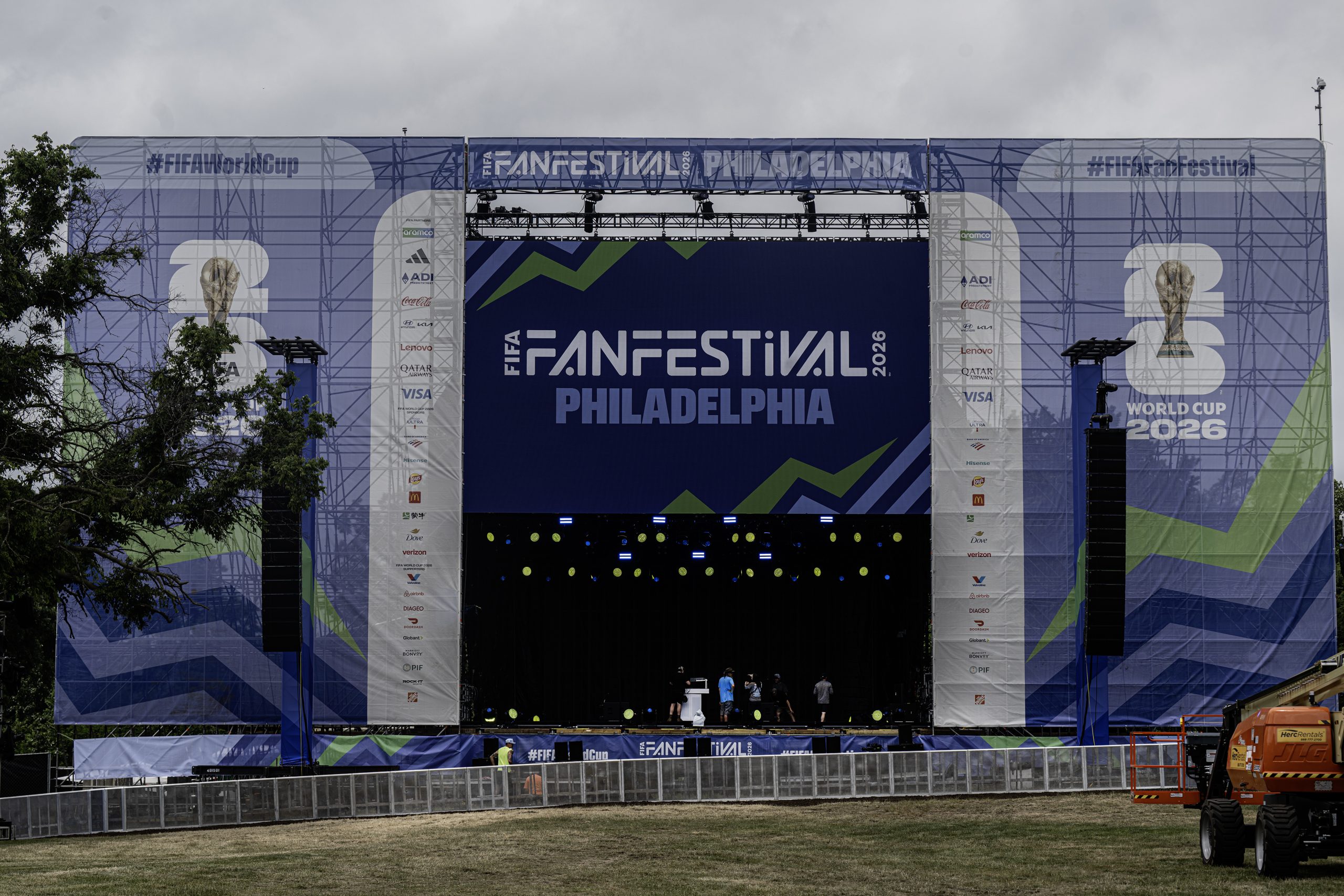
Crew members make final preparations, including work on a 60-foot-wide screen, for a FIFA Fan Fest at Lemon Hill in Philadelphia on Tuesday, June 10, 2026.Jose F. Moreno / Staff Photographer
Don’t have a ticket? All good.
This section is for those who love the sport but just can’t fathom paying those prices — and affording rent this month. Not to worry, the same passion will be on display in Philly’s Brewerytown neighborhood thanks to the FIFA Fan Festival, the sprawling party taking over Lemon Hill Park. The festival is free to enter and opens June 11, and will last all 39 days of the tournament.
How to register — entry is free but you need to sign up first
What you can bring and what you should leave at home.
When the event will be open each day.
How to get there, and get out.
And what locals are saying about the event.
The festival is a great way to get into the World Cup mood without spending hundreds on a ticket.
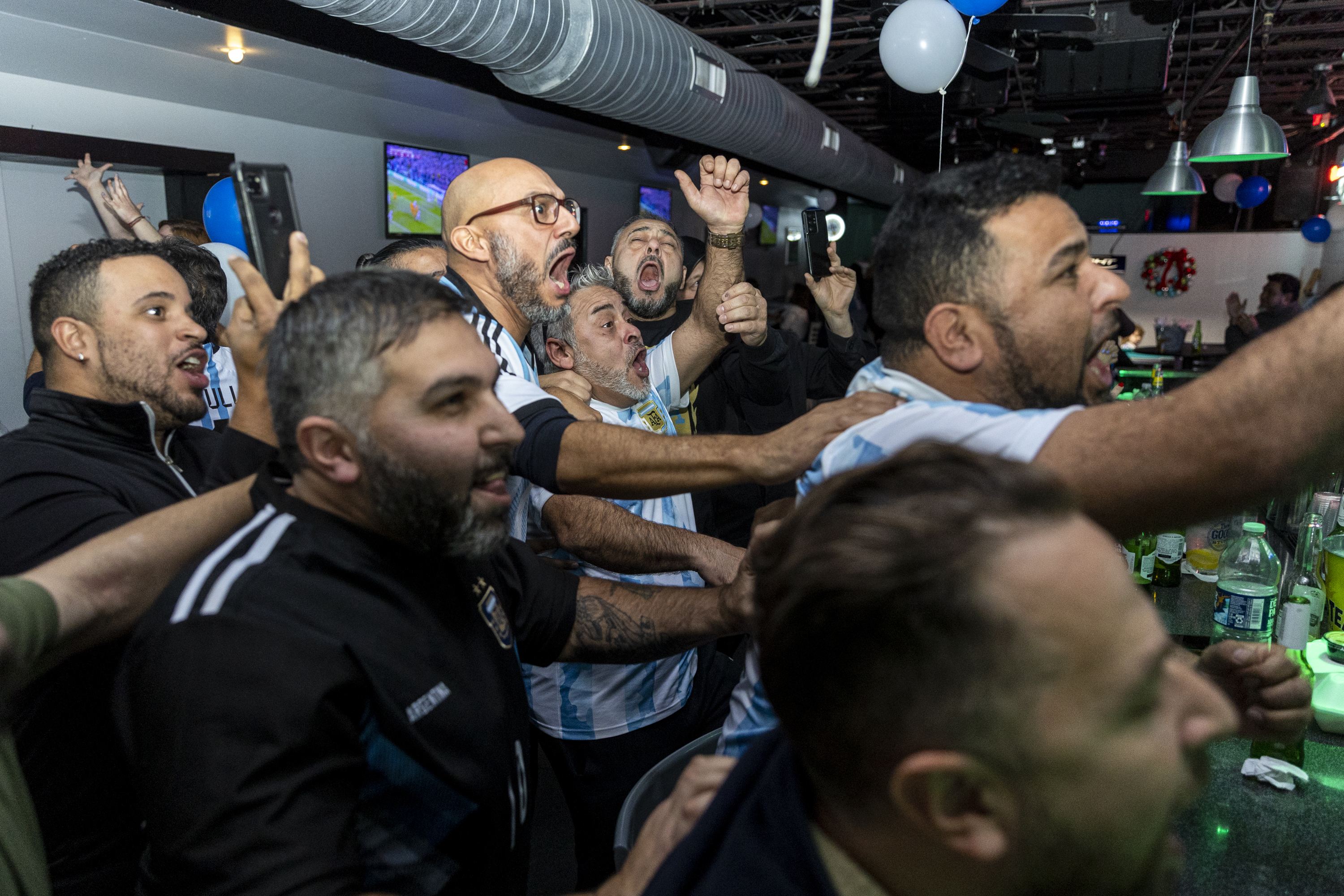
Fans are expected to pack the city’s bars and restaurants for the 39 days of the World Cup. Tyger Williams / Staff Photographer
But if you’re looking to get a feel for the city’s soccer pulse without all the crowds, then we have a selection of bars and restaurants that are hosting watch parties, with some electing to stay open as late as 4 a.m. to accommodate soccer fans — so long as the Pennsylvania Liquor Control Board permits.
And if you’re looking to get past the basics while celebrating America’s 250th birthday, foodies can consider trying Philly’s 76 most iconic dishes or most essential restaurants. We dare you to try to catch them all like Pokémon.
Going to be in Center City? Check out the mini-soccer pitch in front of City Hall’s Dilworth Park.Jose F. Moreno / Staff Photographer
Who is playing in Philly and when?
Nine teams are coming through Philly, and one, Ivory Coast, has set up its World Cup headquarters just outside the city in Wilmington. The Ivorians are training at the new WSFS Sportsplex, which opened late last year in Chester, and on Monday, their fans brought quite the party.
Here’s the full schedule of the group stage matches in Philly, with guides for all the nations playing here, including what to know about each, how they qualified, and for some, their unique footprint in the city:
On July 4 at 5 p.m., Philly will host one final match, a round of 16 knockout game that has a very slim chance of including the U.S. men’s national team.
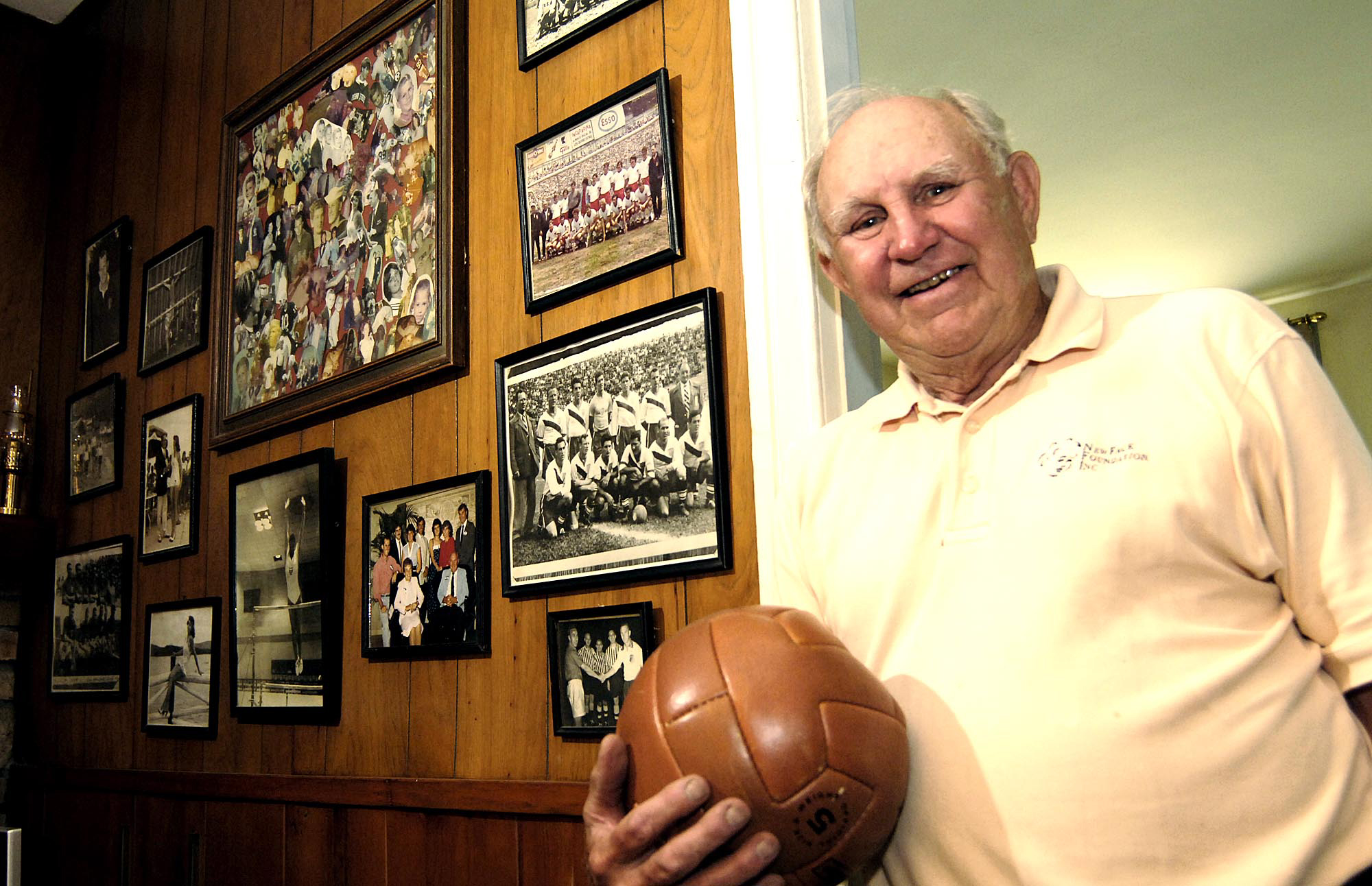
Walter Bahr, one of the most celebrated United States soccer players to emerge from Philly, competed on the cinder fields at Newt’s playground in Fishtown on his rise to Team USA fame.Pat Little / AP
Philly’s rich soccer scene and history
Chester is the city that hosts Philly’s professional soccer team, the Philadelphia Union. This club went from being one of the league’s best last season to the bottom of the standings heading into a seven-week break for the World Cup.
However, over the last several weeks, the team has cleaned house in preparation for the return of games on July 22, after:
In the meantime, the team is focused on the World Cup and plans to host a series of watch parties at Union Yards, its beer garden across from the stadium.
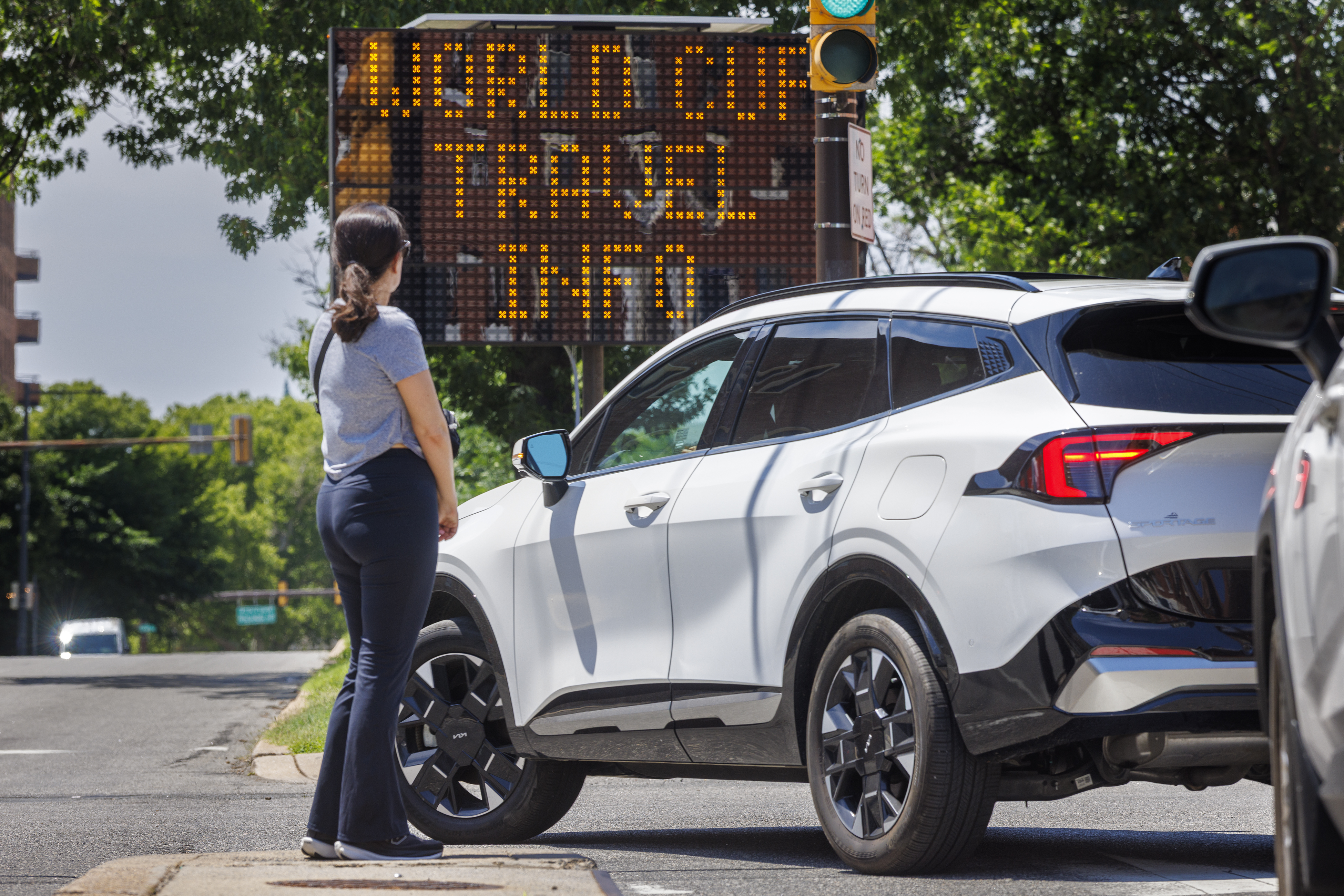
Electronic traffic information sign at Spring Garden and N. 21st Street informing people in town for World Cup on where to find information, Tuesday, June 9, 2026.Alejandro A. Alvarez / Staff Photographer
Players, referees, and fans have been subjected to massive checks, with either full or partial bans on over 70 nations, many with teams competing in the tournament.
Here’s what city officials are saying about the World Cup, and the lengths some city council members are going to educate visitors to know when it comes to concerns around Immigration & Customs Enforcement.
There has been no shortage of opinions about the massive levels of greed surrounding this larger edition of the tournament and the hypocrisy of FIFA by calling their approach to the game “Football for All.”
Experts this week warned World Cup fans traveling around North America to be aware of the these communicable diseases.
Also, know that you can follow the Inquirer’s coverage of all things “football,” “futbol,” “futebol,“ “voetbal,” or soccer right here.
Philadelphia is slated to have an abundance of block parties and street festivals this summer after the city encouraged neighborhoods to join celebrations of the nation’s 250th with their own events, even offering financial support for hosting through various grants.
But some organizers who responded to the calls are learning there is a limit on so-called festival street closure permits for events between June 11 and July 18: essentially, the duration of World Cup, July Fourth, and MLB All-Star Game events.
Katie Hanford, executive director of the East Passyunk Avenue Business Improvement District, learned of the change in May. The group submitted three festival street closure applications, two for World Cup watch parties and one for 250th festivities, and the Philadelphia Office of Special Events denied them “due to City resource constraints.”
“The city government, in this case the Commerce Department, is literally trying to give communities money to host events and yet the city is also, on the other hand, denying the ability to host events,” said Hanford, who applied for the 2026 Neighborhood Celebration Grants Fund, which had $1 million for such events.
Pride on Passyunk, an event put on by businesses last year, was also denied a “festival street closure” permit for June 14 because it fell during what the special events office called a several-week “blackout” period in an email regarding the application. June 14 is the first World Cup game in Philadelphia, among other high-profile events.
The city, however, did not publicly announce any limits on event permits, nor did the Philadelphia Office of Special Events address the blackout dates when The Inquirer asked.
Though these events plan to move forward as “sidewalk activations” that organizers say will be no less fun, frustration remains over an already complicated permitting process, made more difficult by what organizers argue has been confusing messaging from the city.
First, there is the city’s classification of neighborhood block parties, for which permit applications are submitted to the Philadelphia Streets Department and reviewed by the police department. These permits are filed by residents aiming to throw a birthday party or other small celebration.
But if the event is hosted by businesses or located in a commercial corridor, even if it spans only a block, organizers must file festival street closure applications, which the Philadelphia Office of Special Events reviews.
So even though the East Passyunk Avenue Business Improvement District planned to throw block parties, organizers say the city directed them to apply for a festival street closure, only to receive a denial.
Randi Kampen and Lex Fanelli, organizers of Pride on Passyunk, said their event permit was approved, but they never officially heard back about the separate street closure application. A Philadelphia Office of Special Events email obtained by The Inquirer told the business improvement district the Pride event would be denied because of issues with the date.
“Please understand, we have denied other events that fall within these blacked out dates too,” the email said, encouraging the group to apply for a date later in the summer or fall.
The message was of little comfort to Kampen and Fanelli.
“The blackout dates are because the city is not prepared for the FIFA stuff happening, and that’s not our fault,” Kampen said.
The 2026 summer festivities have only added another consideration to the process.
Even so, people like Hanford say if city resources were going to be strained for the several-week span, they wish they had been alerted sooner instead of encouraged to put on events.
Number of events affected remains unclear
The city special events office did not immediately say how many festival street closure applications were denied for June 11 through July 18.
Still, the city is slated to host plenty of block parties during that window.
The Philadelphia Police Department has received 241 applications for block parties between June 11 and July 20, and recommended approval for 219, according to Sgt. Eric Gripp. The denial recommendations were unrelated to major city events, he said.
But the police department flagged four dates to the special events office where World Cup games and 250th festivities would create staffing constraints for additional events requiring festival street closure permits — June 19, June 27, July 3, and July 4.
“As Philadelphia prepares to host several major events this summer, including FIFA World Cup-related activities and other large-scale celebrations, the police department will continue balancing those public safety responsibilities while supporting community events whenever operationally feasible,” Gripp said.
Separately, the special events office said June 14 was “a heavy commitment of resources” for public safety partners because of a slew of events, including the first World Cup match in Philly, the FIFA fan festival, Odunde Festival, Flag Day, events at Independence National Historical Park, and events at Franklin Square Park. The city said it also has to consider and prepare for any potential protests.
For now, Pride on Passyunk is moving forward, as are the three events planned by the East Passyunk Avenue Business Improvement District.
Hanford said the business improvement district has been working with Councilmember Mark Squilla to potentially appeal the permit decisions, but time is running out.
A June 19 event aimed to air the Brazil-Haiti match on the Juneteenth holidayand a June 27 block party was to show Croatia vs. Ghana. Those events call for screen setups and barricades that require coordination with third parties.
Squilla’s office brokered a meeting between the business improvement district and the special events office on Wednesday, and is optimistic a compromise would lead to at least some permits being approved, according to Squilla’s chief of staff, Anne Kelly King.
“Hopefully we’ll come to a resolution that’ll work for everybody. We don’t want to compromise safety, and that’s really center to it,” she said.
Hanford said regardless of the outcome, East Passyunk would still host World Cup block parties.
“The sidewalks will be lined with activations, food and drink specials, and places to watch the game,” she said. “We will be out here celebrating how South Philly always does — with joy in the streets, supporting small businesses, and going hard for sports.”
To Ed Grose, the FIFA World Cup is not looking like a bust for Philly-area hotels.
Yet the president of the Greater Philadelphia Hotel Association said the matches, which start Sunday and end July 4, have not brought booming business.
“It hasn’t delivered what we thought it would in terms of hotel rooms,” Grose said Monday.
Some of Center City’s 14,500 hotel rooms remain available on game days and game-day eves, he said, though he declined to provide an estimated occupancy rate.
Grose’s assessment — based on conversations with local hoteliers, he said — exemplifies the tourism uncertainty that remains just days before kickoff.
Philadelphia has raised about $140 million in public and private funding to host the World Cup, according to Front Office Sports, and officials are heavily marketing the six South Philly games and other fan events across the city.
A FIFA World Cup banner hangs from an entrance of Philadelphia City Hall, as seen on June 3.Jose F. Moreno / Staff Photographer
The Wall Street Journal reported Monday that every U.S. host city except San Francisco was seeing hotel occupancy of 40% or less, citing a recent CoStar report. Host cities in Mexico and Canada saw slightly better hotel occupancy, though still under 50%, according to the Journal.
In Philadelphia, Google Travel searches show abundant hotel vacancies at prices under $300 or even $200 a night on some match days.
The region’s short-term rental market has seen some last-minute demand, with about 60% of local Airbnbs and Vrbos set to be occupied on game days and game-day eves, according to AirDNA, which analyzes the platforms’ booking data. In early May, fewer than half available rentals were booked on those days.
The inside of a South Philadelphia Airbnb was shown in early May, as its owner waited for last-minute World Cup bookings.Joe Lamberti / For The Inquirer
As of Monday, World Cup demand has helped drive a 15% year-over-year increase in the number of Philly-area bookings and an 8% increase in occupancy on game days and game-day eves, said Bram Gallagher, AirDNA’s director of economics and forecasting.
Those figures place Philly “right in the middle” of the World Cup markets, he said.
“Some places are doing very, very well and some places are seeing marginal benefits,” Gallagher said, noting that Mexican markets are doubling demand. “In Philly, Boston, Atlanta, we’re seeing respectable gains.”
Airbnb, which has partnered with FIFA, is still predicting that the World Cup will be “the biggest hosting event in Airbnb’s history — surpassing the 2024 Olympic and Paralympic Games in Paris,” according to a company statement, which noted “meaningful excitement for the tournament,” including among first-time guests.
Some Philly Airbnb hosts still wait for World Cup guests
Jenica Jones outside her South Philly Airbnb in early May. As of Tuesday, she said she has only gotten two World Cup bookings for a total of three nights.Joe Lamberti / For The Inquirer
A guest from the Dominican Republican reserved Jones’ South Philly rowhouse for two nights in June, Jones said, and the host was hopeful that World Cup demand would finally pick up.
It hasn’t.
The 42-year-old said she got just one other booking for a single night.
Her Airbnb has a perfect 5-star rating, sleeps seven people, and is less than three miles from Lincoln Financial Field, the site of Philly’s six World Cup matches.
The app’s dynamic-pricing tool had initially suggested she list the property for about $900 a night during the World Cup. Since then, she has dropped prices and offered discounts on some nights to entice soccer fans, she said.
“I was predicting being full the entire month of June,” Jones said Tuesday. “They’re just not coming in as I expected.”
Can World Cup fans get last-minute deals in Philly?
The Live! Casino Hotel Philadelphia (at left) is located in the stadium complex. As of Tuesday, it still had rooms available at high prices for some World Cup matches.Elizabeth Robertson / Staff Photographer
Despite the sluggish demand, last-minute planners shouldn’t count on scoring World Cup deals in the Philly region, according to hotel and short-term-rental experts.
Gallagher, of AirDNA, said the most affordable Airbnb and Vrbo properties were the first ones to book up during the tournament. But individual hosts like Jones may choose to lower prices if their homes remain unbooked.
Grose, of the Greater Philadelphia Hotel Association, said guests will pay higher rates on average during the World Cup than they would on a normal summer day.
Yet on Sunday and three of the other five match days, many Center City hotels appeared to have rooms available for about $300 or less per night, as of Tuesday, according to Google Travel. Prices skewed higher and availability seemed more limited on the holiday nights of Friday, June 19, and Saturday, July 4, though rooms were still available across the city, including at the few hotels near the stadiums in South Philly.
Grose said he remains optimistic about the coming weeks, which includes not only the World Cup and America’s 250th birthday celebration, but also the MLB All-Star Game in July.
“Overall, the summer is still going to be a good summer for us,” he said.
The Justice Department has opened an investigation into whether the Philadelphia Police Department has been improperly revoking people’s gun permits, officials announced Tuesday — a remarkable development that puts one of the nation’s largest police forces under the scrutiny of federal law enforcement.
In a letter addressed to Mayor Cherelle L. Parker — which the Justice Department published online — Assistant Attorney General Harmeet K. Dhillon said the investigation “will evaluate the PPD’s policies and practices regarding issuance and revocation of licenses to carry firearms.”
If prosecutors determine those policies violate the Constitution, Dhillon said, the Justice Department could take the city to court.
Dhillon emphasized that federal officials “have not reached any conclusions” in their inquiry. And she said prosecutors would seek to speak with city and police officials throughout the course of their probe.
City spokespeople did not reply to requests for comment Tuesday.
The announcement came weeks after news reports detailed that police had revoked the gun permits of five members of a Philadelphia-based Black armed citizens group.
Members of the group, the Panthers, received letters from the city police department’s permitting unit in February, alerting them that their gun permits had been terminated and offering little explanation beyond saying the decision was based on “good cause” as well as “character and reputation.”
The notifications came shortly after some members got into a verbal altercation with police officers in North Philadelphia. Panthers members were patrolling the neighborhood carrying high-powered firearms at the time, and police said the confrontation “created an unreasonable danger to public safety.”
Panthers members, including the group’s leader, Paul Birdsong, have appealed the department’s decision and are awaiting hearings on the possibility of restoring their permits later this year.
Two members have had their permits restored since challenging the decision, according to Birdsong’s attorney, Lyandra Retacco.
Philadelphia has unique laws surrounding gun permits. In the city, unlike the rest of the state, gun owners are required to have a license to carry a firearm openly, and the police department has broad authority to revoke licenses.
The Justice Department said it planned to investigate whether the Philadelphia Police Department had become overly reliant on “a vague ‘good cause’ standard” in deciding whether to cancel permits.
“It is a violation of the Second Amendment for government officials to use vague, personal discretion when determining whether to issue or revoke permits to carry firearms,” the department said.
Jonathan Goldstein, a nationally recognized Second Amendment lawyer and University of Pennsylvania lecturer, said he considered the DOJ’s aims justified, given what he viewed as the Philadelphia Police Department’s “subjective” and “arbitrary” authority to revoke gun permits and infringe on firearms owners’ rights.
The government’s enforcement, Goldstein said, was “long since overdue.”
“It is refreshing to see that the DOJ has finally taken a focus on the Second Amendment seriously,” he said.
Goldstein, who also serves on the board of the National Rifle Association, said he was not aware of any specific instance in Philadelphia that may have resulted in the DOJ’s scrutiny of the police department. He said there had been numerous cases over the years in which he believed the city’s policies around permitting had violated gun owners’ rights.
Although the Justice Department’s inquiry is new, the city has faced other challenges in seeking to tighten regulations around firearms.
Mayors and City Council members for decades have sought to ban assault-style weapons, limit handgun purchases, or prohibit guns at recreation centers, but courts have consistently found such restrictions were unlawful.
The Pennsylvania Supreme Court in 2024 also ruled unanimously against the city’s attempt to overturn a state provision that prevents the city from enacting its own gun laws.
That has not stopped city officials from pursuing litigation. Earlier this spring, Parker’s administration sued the firearms manufacturer Glock Inc., accusing the company of using deceptive marketing practices to target young people.
Five years later, the board debated whether the course should be dropped as a requirement in light of budget problems in South Jersey’s largest school system.
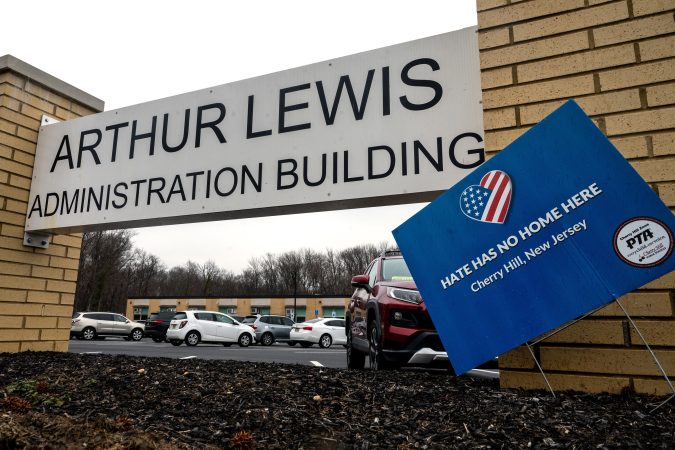
And while officials have assured the community that the course will remain part of the curriculum, the debate highlights the difficult choices that districts are facing during a tough budget year. In Cherry Hill, the board approved a budget that will cut 70 positions, increase class sizes, and raise property taxes to eliminate a $29 million deficit.
As that budget process played out this spring, board member Renee Cherfane suggested the district could reconsider African American history if future budget cuts are necessary. The idea drew pushback from students as well as community and civil rights leaders, who pledged to fight any attempt to roll back the requirement.
“Black history is an essential part of American history,” said Ma’isha Aziz, president of the Camden County East branch of the NAACP. “Teaching it helps ensure students gain a fuller understanding of the nation’s past and present.”
Cherry Hill High School East senior Skylar Adams, a member of the African American Cultural Club, said changing the course would send the wrong message. Black students make up about 10% of the district’s 11,000 students.
“In the world we live in today where the rights and voices of African Americans are constantly being challenged and minimized, now is not the time to make our history seem less important,” Adams told the board. “Making this course an elective instead of a requirement sends a message that learning about Black history is optional and not important enough for every student.”
Superintendent Kwame Morton, the district’s first Black schools chief, praised students who made passionate appeals to the board to keep the course. He reassured them that the course was not in jeopardy.
“The board is not at this point taking action on any recommendation to eliminate that course. That’s not what’s happening,” Morton said.
Cherry Hill Superintendent Kwame Morton.Alejandro A. Alvarez / Staff Photographer
Here is what to know about the debate around the course:
How the issue unfolded
Cherfane sparked a heated discussion during a board meeting last month when she suggested making African American studies an elective instead of a required course. She cited the district’s $29 million deficit, which prompted layoffs and cuts.
In the event the board has to cut additional teaching positions in the future, having that class as a mandate limits options, she said. About 800 students are required to take the course every year, she said.
“It’s not about offering the class. It’s about requiring it,” Cherfane said. ”We wouldn’t be getting rid of it entirely.”
Other board members asked Cherfane to explain why she targeted that class. The district offers other electives, such as multivariable calculus, a high-level math course that few students take, that are not required by the state as a graduation requirement, said board member Miriam Stern.
Board president Gina Winters said any review examining potential cost savings should not be specific to one class. The African American history class was pitched by students and supported by the community, she said.
“I understand that it’s a tight budget, but we also have a responsibility as a board to educate our children on the things that our community thinks are important,” Winters said.
Cherfane did not respond to messages seeking comment.
How did the class get started?
By an 8-0 vote, the board approved the course as a graduation requirement in February 2021. Students who organized Black Lives Matter protests sparked by the killing of George Floyd in 2020 in Minneapolis by a white police officer asked for the class. They said Black history was mostly taught only in February.
Cherry Hill became the first district in the state with the requirement, according to the New Jersey Department of Education. New Jersey and Pennsylvania require history to be taught, but districts decide the content of their courses. Philadelphia and Camden schools also mandate a course in African American history to graduate.
The district developed a curriculum for a semester course and began offering it for the 2021-22 school year for freshmen and sophomores at its two comprehensive high schools. The district hired two teachers.
Teacher Jennifer LaShure said the course tackles topics that previously received little attention in U.S. history classes. She has included units on early African culture, arts, systemic oppression of today, anti-racism, and activism.
“I worry about the message that it sends to the students that something as important as history can be taken away,” LaShure told the board. “We see it all over, but it’s scary to see it happening right here.”
Community pushback
Former board member Corrien Elmore-Stratton, who was the only Black member of the board that approved the course as a requirement, said the need for it remains.
“… We are already having spaces and places where our students are being erased, torn down, no longer heard, misunderstood, and DEI has become a dirty word,” she said,referencing President Donald Trump’s attacks on diversity, equity, and inclusion. “It really is disheartening to hear that anyone on this board of education to think of to do.”
Carole Roskoph, a retired educator and former Cherry Hill council member, said she was “perplexed” by the discussion.
“It doesn’t make sense to me,” she said.
Motion withdrawn
Following the discussion, Cherfane made a motion to refer the issue to the policy committee to review possibly adjusting the graduation requirement for African American history. She withdrew the motion midway through voting, after a board member expressed unreadiness, and the discussion abruptly ended.
Cherfane did not reintroduce the motion at the May 26 meeting and it was unclear if the matter would be addressed again.
Other cuts, however, are moving forward in Cherry Hill and will take effect next school year.
Moments after Purdue University soundly beat Grambling State in the first round of the 2024 NCAA Men’s Basketball Tournament, Carson Barrett turned to his phone.
The Purdue guard, playing with a torn right meniscus, had sunk a three-pointer in the game’s final minutes to put his team up, 78-50. But amid the happy afterglow of victory, Barrett’s phone filled with venom.
“I hope you f— die,” read one text message that he received.
“Kill yourself for taking that 3 you f— worthless loser,” added another.
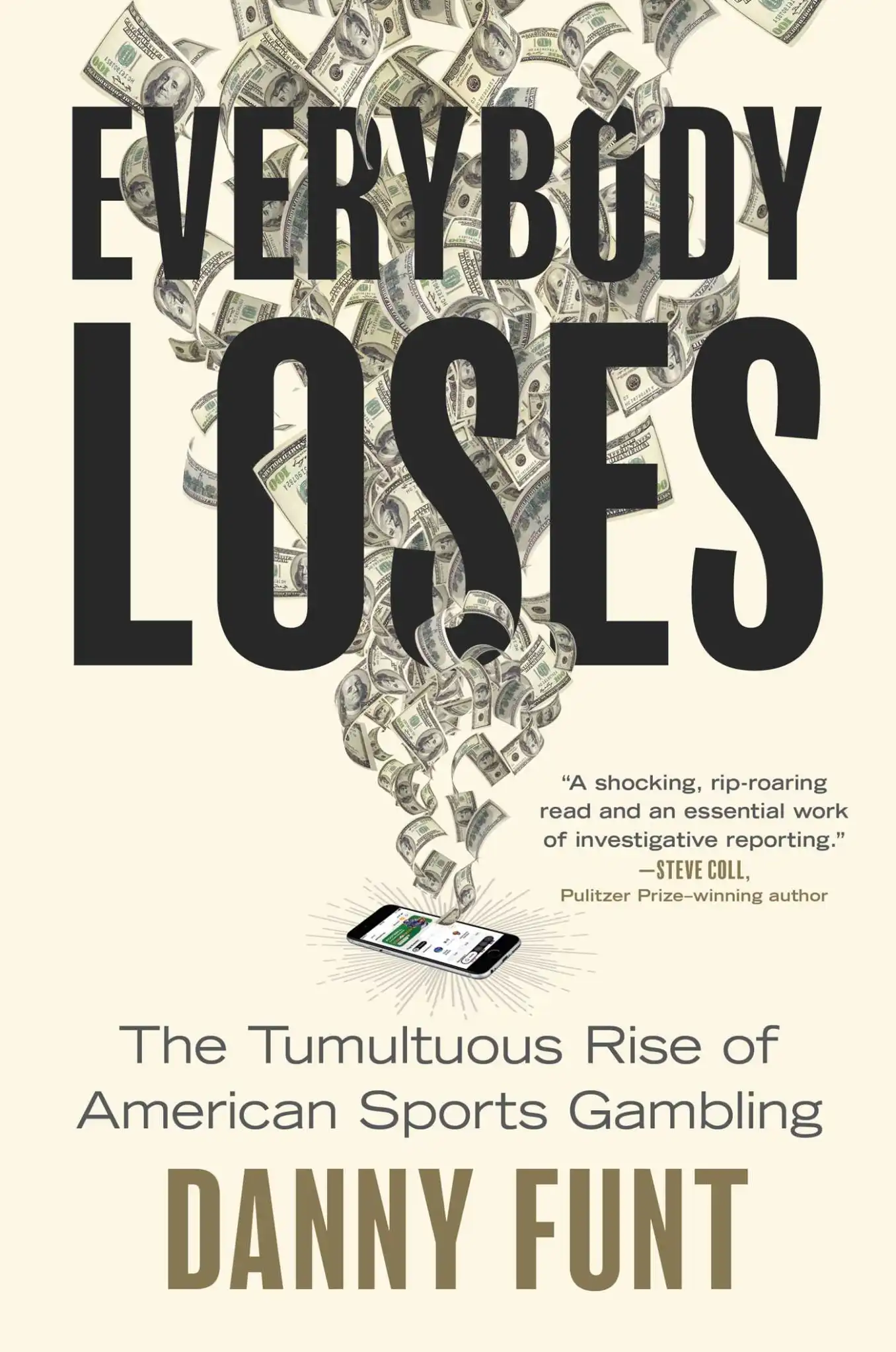
It’s the opening anecdote of the book Everybody Loses: The Tumultuous Rise of American Sports Gambling, an exploration of the fallout from a 2018 U.S. Supreme Court ruling that allowed states to enact individual sports betting laws. The decision has resulted in gambling becoming an omnipresent part of everyday American life.
Barrett became a harassment target because his three-pointer ensured that Purdue would cover a 27-point spread, explains author Danny Funt, a journalist who has written for the Washington Post, the Wall Street Journal, and the New Yorker.
While researching “Everybody Loses: The Tumultuous Rise of American Sports Gambling,” author Danny Funt interviewed officials at FanDuel and DraftKings as well as people who suffered from gambling addiction.Handout
Funt revisits critical moments in how gambling was embraced, like NBA commissioner Adam Silver writing an op-ed for the New York Times in 2014 that called for sports betting to be legalized and regulated. Silver claimed that nearly $400 billion was wagered annually on sports. But that eye-catching sum, Funt writes, was actually just a thinly sourced guesstimate.
Once states began legalizing sports betting, professional leagues abandoned their once- impassioned opposition to having any association with gambling, and entered into lucrative partnerships with sportsbook companies.
But some ex-league officials who spoke to Funt — including former NFL commissioner Paul Tagliabue and former MLB commissioner Fay Vincent — expressed lingering concerns.
“What’s going to happen is. it’s going to get out of hand. Gamblers will start fixing games,” Vincent correctly predicted. “And when that happens, Congress will intervene.”
Funt retraced the evolution of sportsbook companies FanDuel and DraftKings, and spoke with unnamed officials at each company about their business practices, including VIP managers who offer benefits — like free Super Bowl tickets — to bettors who consistently wager and lose large sums.
He also interviewed Nigel Eccles, a FanDuel cofounder.
“I love games that are beatable,” Eccles told Funt. “Unfortunately, what they’ve done with sports betting in the U.S. is turn it into a game that you can’t win, because if you win, they shut your account.”
Yet Everybody Loses isn’t told strictly through the eyes of executives and policymakers. Funt also interviewed ordinary people — a fifth-grade teacher in Connecticut and a college student from Washington Township, Gloucester County — whose lives were derailed by an all-consuming gambling addiction.
Inquirer reporters recently spoke to Funt, 34, about the research he conducted for his book, which was published in January by Simon & Schuster.
This interview has been edited and condensed for clarity.
You interviewed sportsbook industry officials. Was there anything they said that surprised you?
To hear an executive at a company say: ‘If you think about it, my job was to basically slowly bleed someone dry.’ We understand that’s the essence of gambling, but to hear an executive use those words was striking.
And there were definitely a lot of things that I didn’t expect. I didn’t realize the scope of the online VIP business at all. The things they’ll do to pamper those customers, the specifics of it blew me away: Throwing out the first pitch at a baseball game or playing pickup basketball on an NBA court.
The point of doing that is so these customers feel like [VIP managers] are their friend. So if they ever think of pulling back on their betting, they’ll lose all these perks — but also lose a friend that they’ve made.
Should regulators consider limits to prop bets or in-game microbets?
That’s something that these companies have invented, essentially, to give you a million ways of constructing same-game parlays, which are their most profitable product. So they want you to bet on limitless things, so you can construct an infinite number of same-game parlays.
The other thing with these in-game bets — which is the fastest-growing side of betting, and you can see companies like DraftKings really pushing them — is that it’s a road to compulsive behavior, if you’re betting on a minute-by-minute basis.
You could definitely restrict those bets, as far as the variety and abundance of them. But you could also mandate more of a responsibility on the operators to pick up on risky behavior from their customers, and intervene accordingly.
Funt has written for The Washington Post, The New Yorker, and The Wall Street Journal.Handout
What do you think about the gambling content that young people encounter on social media, television and at sporting events?
As far as kids go, there are a lot of data points that are really alarming. I live in Charlotte. Half of the calls to the problem gambling hotline in North Carolina are coming from parents who are so concerned about their kids betting.
There are a lot of things that made [betting] mainstream, but I have to think having A-list movie stars and our heroes in sports pitching [these products] constantly has to have an effect on kids.
A lot of people I talk to — whether it’s educators, health experts, or lawmakers — this potential epidemic of gambling among kids is what they’re most worried about.
You write about sportsbook customers who had winning streaks, and then were stunned to find that the companies limited their accounts.
That limiting comes as such a surprise to people. They think, based on the premise of legalization, that there is a relatively level playing field. Then they learn that no, the deck is stacked against you.
If you do anything that shows you’re a competent bettor, you’ll get cut down to being able to bet only pennies on an NFL game. It feels grossly unfair. There are some states looking into regulating that.
But the advertising so clearly says that this is a way to make money. I just walked by an ad for PrizePicks, which said, basically, make money because you know sports.
What’s your perspective on prediction markets, which allow people to wager on everything from Hollywood awards shows to military conflicts?
I mainly think of them as a workaround — they offer gambling by a different name, and avoid paying state taxes. But by and large, I think they’re sports-betting operators. So the question becomes: Is this the logical extension of Americans wanting to bet on more and more stuff?
Kalshi’s CEO has said their ambition is for people to bet on literally everything, eventually. But I’m curious if that’s a viable business. I don’t think the average person wants to put in the time to bet on legislation, or the weather tomorrow, or who’s going to win at the Oscars. I think that is sadly feeding people who have an addiction.
The Inquirer will continue to report on issues related to the growth of gambling addiction — among teens and adults — across Pennsylvania. If you, or someone you know, wants to speak with a reporter, please contact David Gambacorta or William Bender at dgambacorta@inquirer.com and wbender@inquirer.com