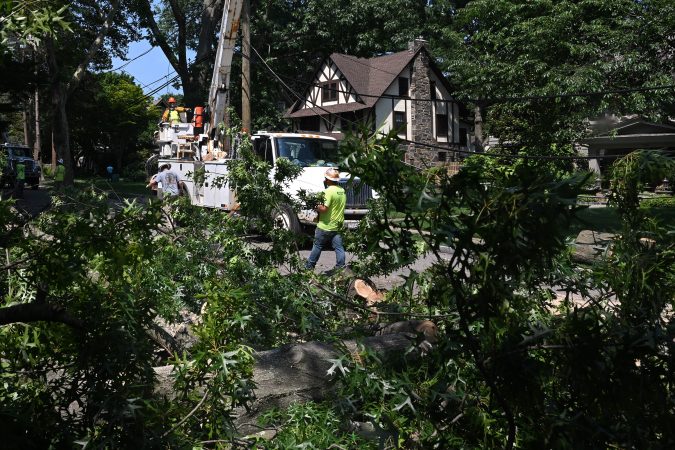
Hundreds of trees fell in Philadelphia within a matter of minutes during a weekend storm that left a narrow but destructive band of what one official called “unprecedented” damage in its wake in the region.
“We’ve never seen anything like this,” Parks and Recreation commissioner Susan Slawson said. “We’ve never seen a 15 and 20 minute storm come through an isolated area and take down that many trees.”
Those downed trees came following a series of four “microbursts,” which brought wind gusts traveling 60 to 70 mph. Those isolated instances of high winds primarily impacted parts of Philadelphia and Montgomery County.
Microbursts, the National Weather Service said, happen when a thunderstorm experiences a rapid increase in updraft. When that updraft stops, the mass of the storm system comes crashing back down, resulting in severe winds that sent trees tumbling into homes and vehicles, damaged public parks, and left neighborhoods grappling with cleanup efforts days later.
Slawson’s department, which handles downed trees in the city, had responded to at least 340 emergency requests as of Monday afternoon, and inspected about 220 trees. The hardest hit areas, she added, were in South Philadelphia, Wynnefield, and Southwest Philadelphia.
The harsh winter’s heavy caps of ice and snow that lasted for weeks likely left some trees weakened or damaged, Slawson said, making them more vulnerable to being toppled. Those that fell were being taken to the city’s Fairmount Park Organic Recycling Center in West Fairmount Park.
Evidence of the damage was apparent around the region Monday. In Malcolm X Park in West Philadelphia, piles of giant fallen trees, cut into large chunks, sat waiting for disposal. And nearby on Spruce Street, a downed tree blocked a busy two-way road between 53rd and 54th Streets, its corpse resting atop a crushed red pickup truck.
“They need to cut these trees down, they’re too tall,” said Schonder Pickney, 61, who lives across the street from the wreckage. She and her neighbors had asked the city to remove some of the old trees that appeared dangerous, but she said nothing came from it.
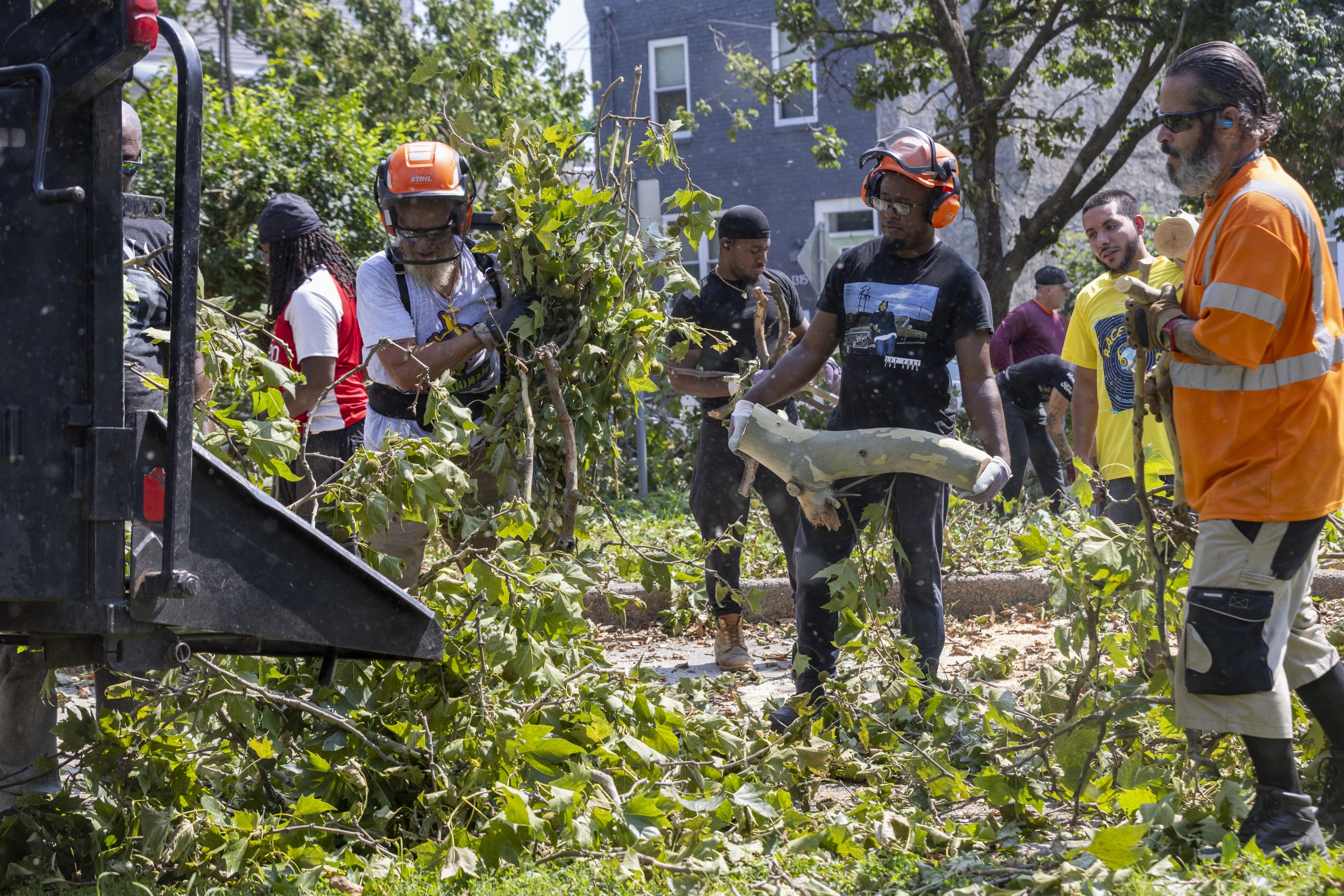
Philadelphia Parks and Recreation workers throw debris into an auxiliary chipper at Wharton Square Playground in Point Breeze, on
Monday.Aidan T. Gallo / Staff Photographer
Private tree management companies, like Rapid Tree Care in Grays Ferry, were inundated with service requests following the storm. Caleb Coome, the company’s founder, said that the storm’s intensity knocked down large trees across densely populated city blocks, and across multiple homes.
“It’s definitely unprecedented in terms of the amount of volume over a couple-day span,” said Coome, whose company has been in operations for three years.
Homeowners impacted by fallen trees, he said, were largely concentrated near FDR Park and the stadiums in South Philly, as well as the Cobbs Creek and Cedar Park neighborhoods in West Philly. Homeowners face logistical and financial hurdles for cleanup, as much of the damage occurred in areas with tight rowhouses.
In those tight quarters, a single fallen tree can span up to six properties, creating liability issues and disputes among neighbors over who is responsible for removal costs. A downed tree spanning multiple properties must be removed all at once, rather than limb-by-limb, for safety reasons, Coome said.
Some parts of the suburbs also saw shared tree damage. For example, in Narberth, Hugh Parker and his family hurried home from the Shore Saturday after they heard from neighbors that a 40-foot tree had been knocked down in their front yard.
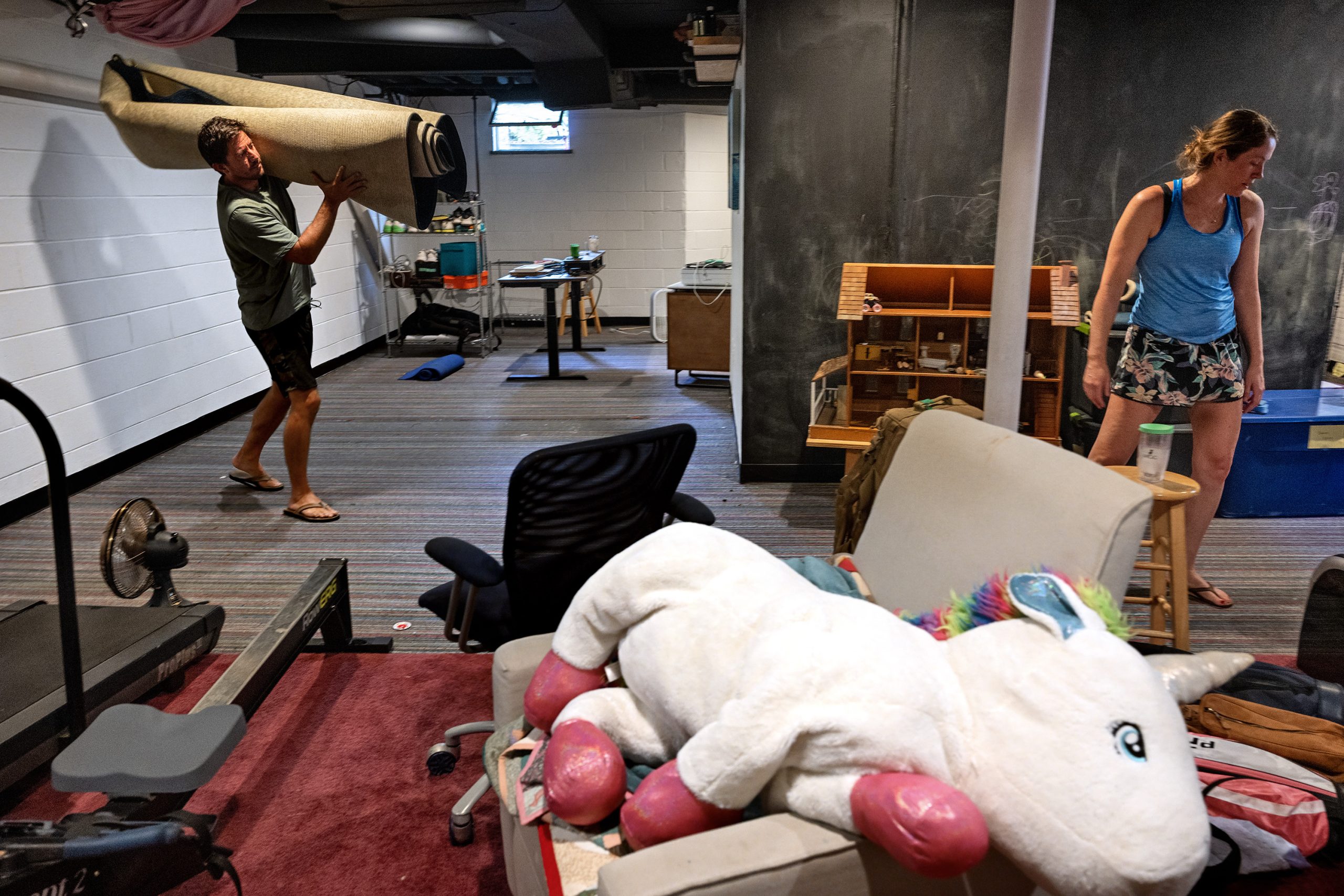
Hugh and Grace Parker continue the cleanup in the basement of their Narberth home Monday. It flooded during weekend’s storm.Tom Gralish / Staff Photographer
Located on their neighbor’s property, the tree landed to cover their driveway, as well as a car belonging to Parker’s wife, Grace. As it came down, the tree’s canopy also took down power lines and blocked the street, and the damage it did to the vehicle remained unclear Monday.
A day later, Peco reconnected their power, which Parker said had been out for a little more than 24 hours. Then, he smelled smoke, thanks to a power line that started a fire after power had been restored. After about 30 minutes, the fire went out, but no one from the utility had come to check the power lines as of Monday morning.
“It was like something from a movie scene — there were sparks flying 10 to 15 feet in the air,” said Parker.
In Lower Merion Township, the local fire department responded to 98 incidents over the weekend, including numerous water rescues. Montgomery County communities were some of the hardest hit.
“It became apparent that nearly every street in Narberth had a tree down, a substantial tree on a car,” said Narberth Council Vice President Cyndi Rickards said.
The episode also highlights what many local officials have said is a need to further discuss improving local infrastructure and resources for extreme weather events.
“I think this is the reality of storms now,” said Lower Merion Commissioner Ray Courtney. “They are hard, they are intense, and they dump a lot of precipitation in a short period of time, and all local governments, and our state and federal government, need to be thinking about improvements to our infrastructure, and the resiliency against this kind of weather event.”
In addition to downed trees in the area, roughly 1,500 Peco customers remained without power across 119 reported outages as of late Monday afternoon. That number is down significantly from the height of the storm, when some 60,000 customers experienced extended outages. Overall, 105,000 Peco customers experienced some loss of power during the course of the storm, the company said.
Power for all customers in the region, Peco added, was expected to be restored by 11 p.m. Monday.
Among those impacted were West Philadelphia resident Lisa Phillips, who lives on the 5100 block of Hazel Avenue. A tree on her block went down Saturday, taking power lines with it. Electrical workers arrived Monday to take care of the downed lines, but she was still waiting for the city to clear the tree from her street.
“Never in my life have I experienced anything like this,” she said.
Staff writers Isabel Maney, Olivia Prusky, and Fallon Roth contributed to this article.
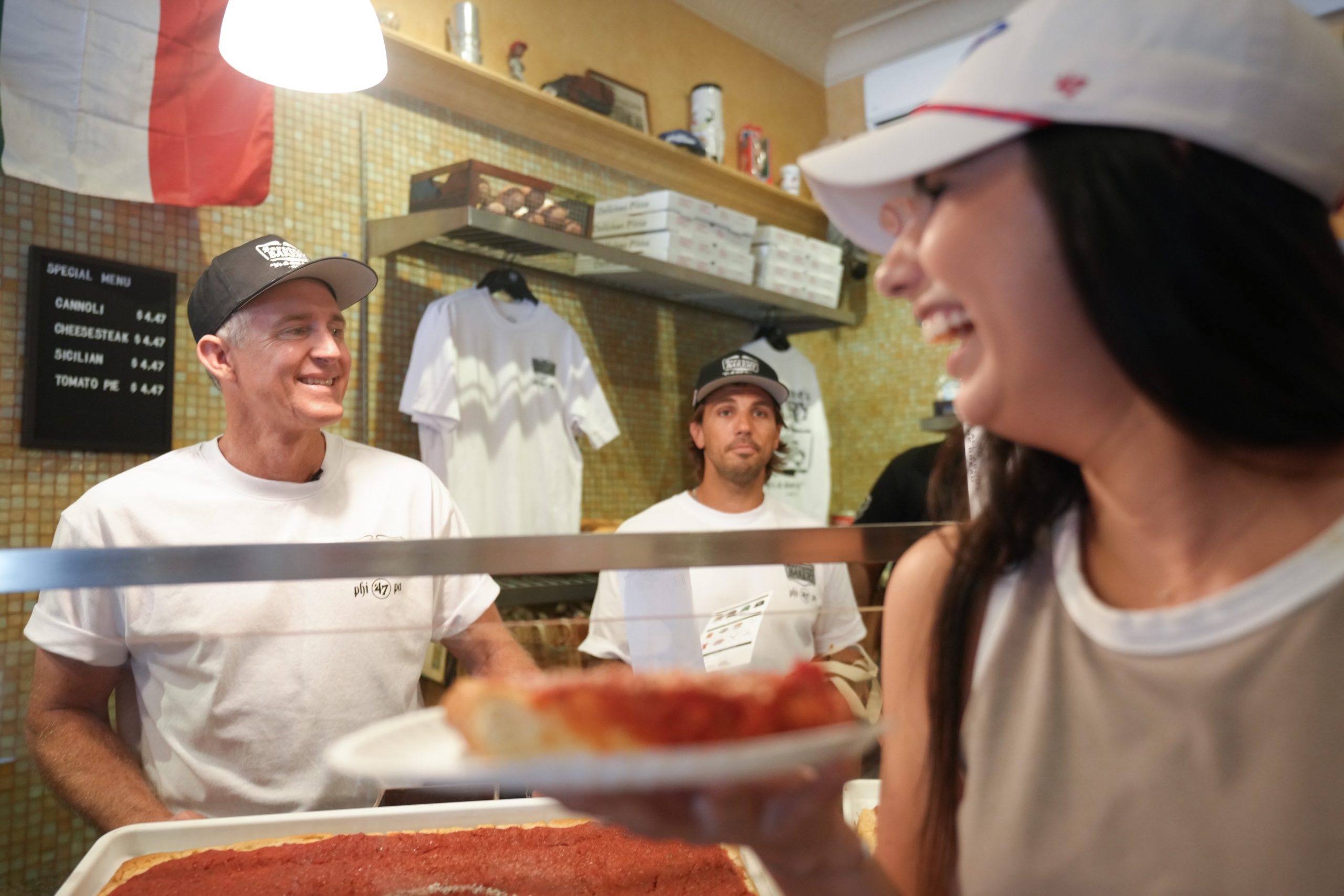
Patrons of Sarcone’s Bakery — the 108-year-old South Philadelphia staple — are accustomed to seeing familiar faces behind the counter. On Monday, guests were served by a new member of the Sarcone’s family: Chase Utley.
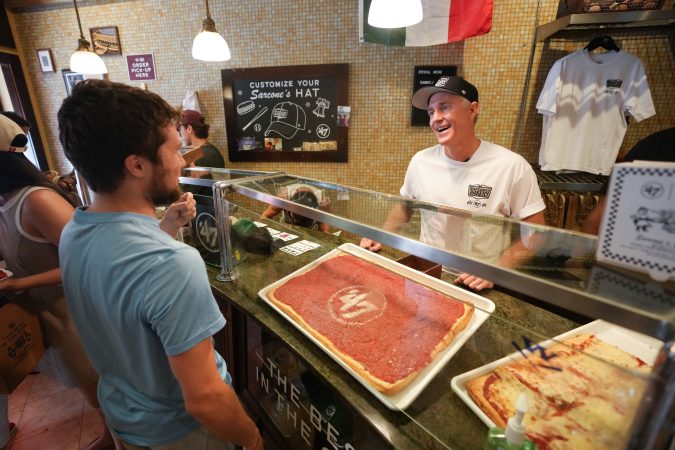
The Phillies legend helped serve tomato pie to fans lined up around the corner as part of the bakery’s partnership with sports apparel company ’47. The two companies teamed up to host an exclusive pop-up inside the bakery. Guests who purchased food received an exclusive Sarcone’s T-shirt and hat, produced by ’47.
They also got a chance to meet Utley, which was the main reason many fans flocked to South Philadelphia. Utley was scheduled to appear for one hour, from noon to 1 p.m. However, after seeing the length of the line, he opted to stick around for an additional half hour.
The event will continue on Tuesday from 11 a.m. to 5 p.m., but Utley will not attend the second time around. The MLB All-Star Game takes place shortly after at Citizens Bank Park (FOX, 8 p.m.).
After Utley finished up behind Sarcone’s counter, The Inquirer caught up with the former Phil:
Q: We’re at Sarcone’s today. You just got done serving some fans, meeting some fans. Could you tell me a little about that experience?
It’s good to be back in Philadelphia in a historic place like Sarcone’s. It just brings back so many different memories. Interacting with all the fans, talking about some old times, some stories we had over the years was fantastic. I’m happy that Sarcone’s had me out here.
Once or twice a month I’d roll through this area, stop at Sarcone’s [Deli], and grab a pie or a cheesesteak. There was a certain point we would order a bunch for the clubhouse. They’ve done such a good job. The store has been here over 100 years, which is so unbelievable. They run a good ship.
Chase Utley interacts with fan Jess DeStefano during his Monday shift at Sarcone’s Bakery.Jessica Griffin / Staff Photographer
Q: You starred alongside Mike Schmidt in a hype video released for the All-Star game by the Phillies. Could you tell me about that process?
I mean the city of Philadelphia has treated me so well over the years and being a part of that video with the Hall of Famer Mike Schmidt — best Phillie of all time — was just an honor. I’m humbled to do that. It turned out fantastic.
Q: You were a six-time All-Star yourself. Could you touch on what the honor meant to you, especially early in your career?
It’s a bit of a surreal experience to be honest with you. For that very first All-Star selection, all of a sudden now you’re in a locker room, in a clubhouse with guys that you idolize. And now you can sit next to them and pick their brain and just kind of learn what got them there. At the end of the day, it helps improve your game.
Q: Did you have any time to watch your former teammates — Ryan Howard, Jimmy Rollins, and Shane Victorino — play in yesterday’s MLBx event?
I’ve seen some highlights and some lowlights. But yeah, I talked to Ryan this morning. He said they had had a blast. So good for them. They represented the Phillies pretty well.
Q: Do you think you could still go out there and hit?
I don’t know. I don’t know. Maybe, but maybe not.
Q: You lived in London for four years. Did you become a soccer fan? Are you rooting for England in the World Cup?
We definitely picked up soccer. So I became a soccer fan by being over there. And I mean four amazing teams [are left]. Who knows what’s going to happen? I’m just a fan of the sport in general.
Fans lined up for blocks to see Chase Utley at Sarcone’s. Jessica Griffin / Staff Photographer
Q: You played under Don Mattingly with the Dodgers. What can you tell me about Mattingly, and what can you say about his success so far after stepping in for the Phillies?
The Phillies got, I mean, they got off to a rough start, and now some pieces are starting to come together, and they’re playing fantastic baseball. Baseball that we all know that they can play. I played for Don, great human being, obviously amazing player. I think players respect the fact that he had an amazing career.
Q: You recently were hired by the Dodgers as the team’s special assistant to the president of baseball operations. How that’s going so far?
I finished my career in Los Angeles. I live in Los Angeles, and I wanted to still be around baseball, but still be around my family and not travel too much. So it made sense just to get under their hood a little bit and understand what they’re doing. I get to sleep in my bed every single night; it’s a fantastic organization. I love Philadelphia and the Phillies organization. If I lived in Philadelphia, I would do the same thing.
Q: Between the World Cup and MLB All-Star Week, there has been a lot of excitement around Philadelphia. What’s that been like to witness?
This city is incredible. The fact that the World Cup was here and now the All-Star Game. It’s been a busy, busy, busy summer, and I hope it continues.
In March, Patty Martin and Liz Warren sat in an office at Monsignor Bonner and Archbishop Prendergast High School, poring over the Detroit Tigers’ 162-game schedule.
It wasn’t how the administrative assistant and math teacher typically spent their lunch breaks. But these were unusual circumstances. The women scanned each date, city, and time, looking for the right confluence of all three.
Former student Kevin McGonigle had just been named to the team’s opening-day roster. Martin and Warren were eager to see the 21-year-old shortstop play, ideally at Citizens Bank Park.
They realized, to their dismay, that this wasn’t going to happen. The Tigers were scheduled to face the Phillies only once in 2026, in Detroit. Undeterred, the Bonner & Prendie staffers continued their search.
Martin circled May 14, a 1:30 p.m. game against the New York Mets. This seemed like the perfect fit; teachers could drive to the stadium, and it was Ascension Day — a Holy Day of Obligation — which the Catholic school occasionally had off.
Only this year, it didn’t. The administrative assistant decided to throw a Hail Mary. That afternoon, Martin emailed a friend who worked for the Archdiocese of Philadelphia.
“And I said, ‘Do you think maybe somebody would allow us to close school that day?’” she recalled.
The answer was swift and unequivocal.
“‘Nah, don’t think it’s gonna work,’” Martin said. “‘Not gonna work.’ And we kind of knew, in our hearts, that we were shooting for the stars. But hey, it was worth a try.”
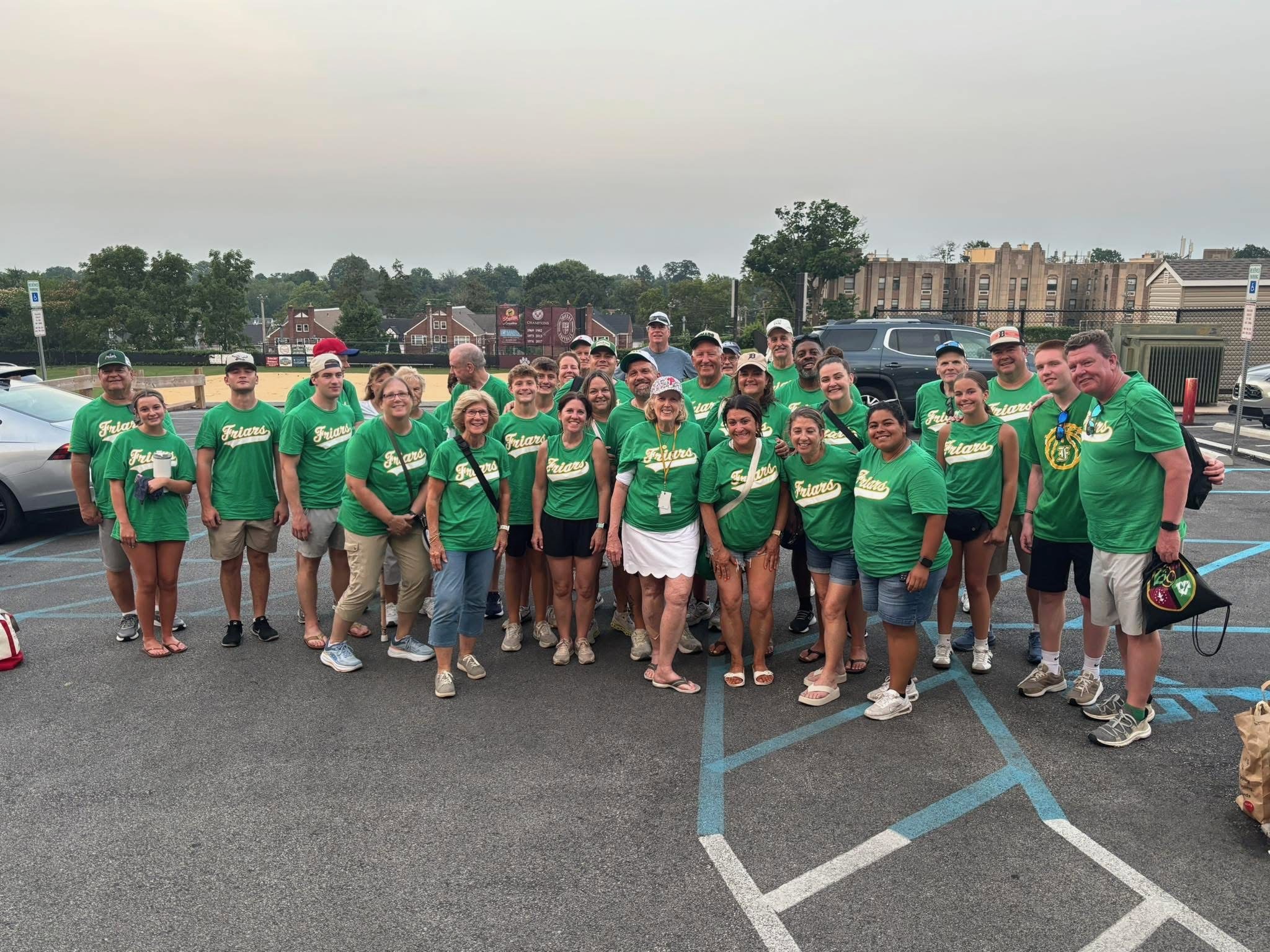
The co-workers found an alternative. On the morning of July 1, 55 members of the Bonner & Prendie community — coaches, students, maintenance workers, secretaries, teachers — piled onto a bus bound for the Bronx.
They arrived at Yankee Stadium at 12:45 p.m., donning Kelly green T-shirts with “Friars” on the front and “McGonigle” on the back. New York City was in the midst of a heat wave, but that didn’t seem to matter.
McGonigle greeted the group before the game and rewarded their efforts in the third with a 422-foot home run to right-center field. The Delco contingent went berserk.
“We’re all cheering, and everyone’s like looking at us like, ‘Who are these people?’” said Bonner’s baseball coach, Steve DeBarberie. “They’re wearing Kelly green to a Yankees-Tigers game?”
Added Martin: “We all went wild, of course, because we’re like, ‘He did that for us.’ I’m very certain, he did.”
Ever since McGonigle was drafted by the Tigers in 2023, Delaware County has shown up to support him. When he was in the minor leagues, residents traveled to places like Grand Rapids, Mich., Lakeland, Fla., and Erie, Pa.
The group from Archbishop Prendergast High School that took a bus trip to Yankee Stadium to watch Kevin McGonigle play.Jason Shepherd
They’ve attended spring training games and Arizona Fall League games and even an All-Star Futures Game. A few Bonner alums flew to San Diego in April for McGonigle’s big-league debut. Nearly 300 people made the trip to see him in Baltimore in May.
Some know the shortstop personally, but not all. Yet the Kevin McGonigle Fan Club keeps growing, and on Tuesday night, after years of cross-country travel and hourslong drives, their hometown hero will return to Philadelphia to compete in the 2026 All-Star Game.
It’ll be the first time McGonigle plays at Citizens Bank Park. To local supporters, this is almost too good to be true: an athlete who represents them wholeheartedly, on baseball’s biggest stage, mere minutes away.
“Everyone is so excited, especially for the Philly aspect,” said Warren. “Not only is it amazing that it’s his rookie year, but [also] that he gets to come home.”
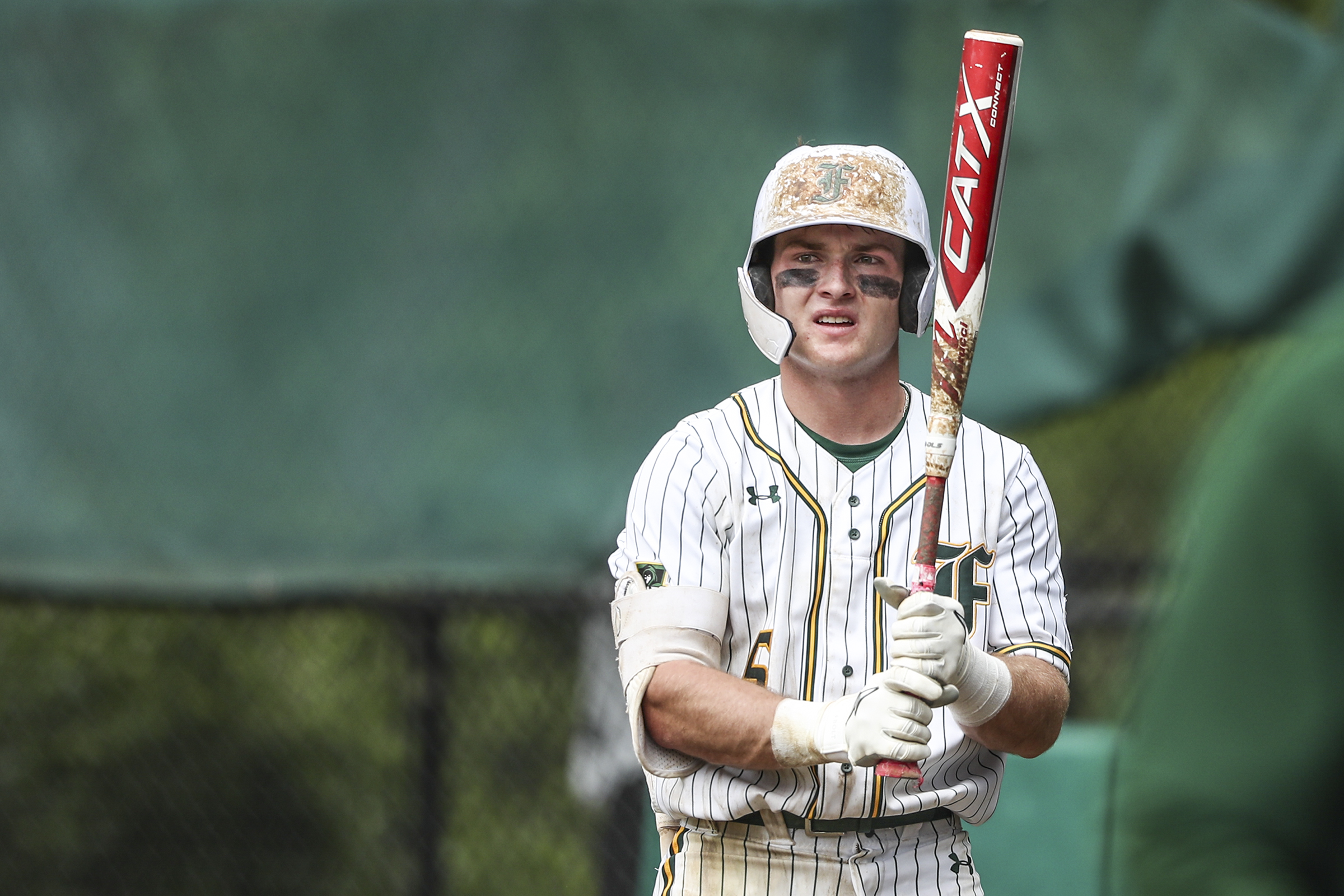
Kevin McGonigle starred at Bonner-Prendergast before being selected by the Tigers in the first round of the 2023 MLD draft. Heather Khalifa / Staff Photographer
A kid worth traveling for
Delco has gone to such lengths for a reason. The future All-Star was not the type of ballplayer built in a lab, under the careful guise of top hitting instructors. He did not have endless resources for equipment or travel.
Rather than a baseball hotbed like Florida or Georgia, McGonigle was raised in a working-class home in Aldan. His parents, Kevin George and Tracy, worked opposite shifts at a local water utilities company.
When Tracy was growing up, in Lansdowne, the sport was relatively inexpensive. Kids would share bats and gloves. She’d never heard of anyone driving far to tournaments.
But the mother quickly learned that to capitalize on her son’s talent, she’d have to invest. Kevin George learned this, too. The parents, who divorced when Kevin was young, began saving money where they could.
Sometimes this meant working more. Sometimes it meant cutting back on expenses. Tracy remembers her son and his teammates standing outside a supermarket, or wandering through The Yard Pub in Havertown, selling raffle tickets to pay for travel.
“You scraped it together, you put it away, and you used the credit cards, and you worried about the payment later,” Tracy said. “And I think any parent would do that. You do what you have to do to make your kids happy.”
By middle school, McGonigle was playing for Drexel Hill Little League,St. Bernadette’s CYO,and a local travel ball team. He’d train every day with his father, who had recently purchased a bright blue Jugs pitching machine.
The McGonigles didn’t have much yard space, but one of Kevin George’s teammates, Jac Campbell, did. Kevin George asked Jac’s father, Jim, if they could use his lawn, where he’d set up a makeshift batting cage.
The elder Campbell agreed. Kevin George moved the pitching machine 60 feet away from home plate, and began toying around with it. Before long, the device was spitting out curveballs, change-ups, and sliders.
“It was an expensive machine that threw mid-90s,” said Campbell. “It wasn’t some candy-ass machine that you would set up down at the Little League.”
McGonigle did not like that his parents were financing his passion, and would often tell Tracy he needed to find a job. But with the time constraints of travel baseball, coupled with Bonner-Prendie baseball and his training schedule, it was difficult to get hired.
So, the mother and son came up with an agreement. The future All-Star would clean the bathroom, dust the family room, and do other tasks around the house to earn his keep.
Still, the guilt persisted, especially when it came to daily expenses like gas money. McGonigle hated asking for it. Tracy came up with another idea.
“In my kitchen, I have a little box,” she said. “It’s a wooden box, and on the top it says, ‘Blessed.’ And I said to him, ‘You know what? You don’t have to ask me anymore.’
“I said, ‘I’m just gonna put money in the blessed box. Whatever you need. And then you don’t have to ask me. You don’t even have to feel bad about it.’ And it worked.”
A young Kevin McGonigle swings off a tee is in his backyard in Delco.Tracy McGonigle
McGonigle was painfully aware of his parents’ sacrifice, and determined to make the most of it. By his senior year, MLB scouts were flocking to Bonner-Prendergast for games.
This became somewhat of a spectacle, so the shortstop started leaving class early to take batting practice on his own. His hope was that it would create less of a distraction for his teammates.
“Just so that it didn’t interrupt the routine,” said his former CYO, Little League, and Babe Ruth League coach, Jason Shepherd. “His teammates respected the fact that he thought of them before himself.”
It wasn’t the first time Shepherd had seen the selfless trait from McGonigle. When he was 14, juggling travel ball and Babe Ruth, the high schooler had two tournaments fall on the same weekend.
One was in Tampa, the other in Williamsport, Pa. McGonigle decided he’d play in both. After the game in Florida, he drove through the night to Delaware County with a teammate.
The next morning, McGonigle met Shepherd in his driveway for the three-hour ride to Williamsport.
“Obviously, he was the best player on the team,” Shepherd said. “One of the best players in the state at the time. When we knew we were getting Kevin for the rest of the playoffs, it brought a lot of energy.”
McGonigle has continued to give back to his community since being drafted by the Tigers in the first round in 2023. He’s donated signed bats to Drexel Hill Little League, and has occasionally stopped in during the winter to serve as a volunteer coach.
In 2024, fresh off his first season in the minors, the shortstop donated $40,000 to Bonner & Prendie. To Campbell, it’s gestures like these that compel people to travel so far.
“If he wasn’t a good kid, you wouldn’t have half of that [stuff] going on,” he said. “You know what I mean? The fact that he’s a good kid makes it easier for everyone to want to go see him.”
Justin Shepherd (left), Kevin McGonigle, and Jason Shepherd after McGonigle’s big league debut in San Diego.Jason Shepherd
‘I still miss home’
At times it can seem like the Kevin McGonigle Fan Club has the entire season mapped out. In April, Shepherd and his son, Justin, flew to San Diego for the rookie’s debut, but their flight was delayed a few hours and they missed most of the game.
They ended up staying for the rest of the series, and the following week drove eight hours from Delco to Detroit for his home opener. DeBarberie and four other Bonner coaches met them there.
McGonigle’s best friends, Michael Anderson and Joey DeMucci, visited him in June. Martin will watch McGonigle play in Chicago later this month. Jim and Jac Campbell willbe in Detroit in August,and DeBarberie has plans to drive to Pittsburgh after that.
But the biggest showing to date was over Memorial Day weekend at Camden Yards in Baltimore. Tracy reserved 265 tickets through group sales, and Shepherd coordinated a tailgate at Pickles Pub across the street from the stadium.
“They’re like, ‘Well, do you want us to put McGonigle on a sign?’” Shepherd said. “And I’m like, ‘No, do not make any reference to McGonigle. Just put ‘Delco tailgate.’ People will know where to go.’”
Saturday’s game was rained out, which turned the tailgate into a whole-day affair. The entire top floor of the bar was full of Tigers and Bonner McGonigle jerseys.
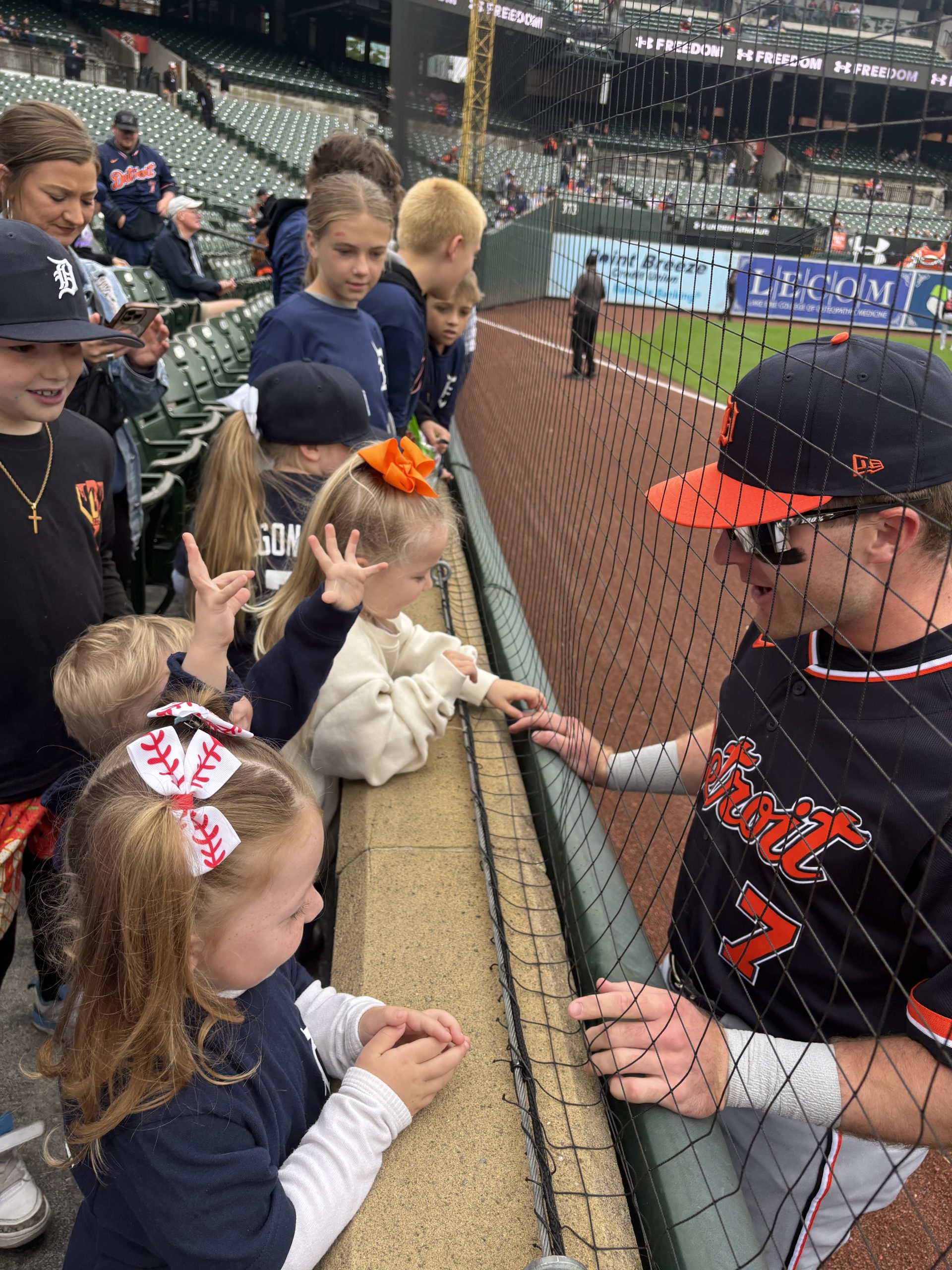
Tigers rookie Kevin McGonigle greets family and friends in Blatimore.Tracy McGonigle
It ended up being the highlight of the trip. McGonigle stopped by and stayed with friends and family for two hours, taking photos and catching up.
This wasn’t just a kind act on the shortstop’s part. Shepherd and his son visited him last November, while he was playing in the Arizona Fall League. One night, while the former coach was grilling steaks outside, he asked the future All-Star a question.
“I asked him, ‘What’s been the hardest thing so far?’” Shepherd recalled. “And he’s like, ‘Coach Shep, honestly, I still miss home.’ And it just struck me.
“I was expecting, ‘The workouts are hard,’ or, ‘This pitcher was really tough.’ He’s just like, ‘No, I just miss home.’ And I get it. No different than a kid going off to college, far away. Just homesick a little bit.”
Tigers rookie Kevin McGonigle is second in the AL with a .392 on-base percentage at the All-Star break.Lon Horwedel
Childhood bedrooms and mom’s laundry
As McGonigle wrapped up his first-half campaign, it became clear to his mother that the All-Star Game was within reach.
The rookie was near the top of a number of American League leader boards. He has more walks (60) than he did strikeouts (56), and is second among regulars in on-base percentage (.392).
But Tracy didn’t dare broach the subject. She knew her son wouldn’t want her to. So, she was surprised a couple of weeks ago when he brought up the Midsummer Classic on his own.
“He said, ‘Whether I’m in the game or not, I’m staying at home,’” Tracy recalled. “And that’s all he said.”
The shortstop reiterated this stance after the roster was announced.
“I’m coming home,” he told her. “I’m not staying in the hotel.”
Throughout All-Star Week, the eight-year, $150 million man is sharing a bedroom with his brother, Ryan, in Aldan. A signed watercolor of Cole Hamels still hangs on the wall there, alongside some framed USA Baseball jerseys and caps.
Just like any other parent with a 21-year-old sleeping under their roof, Tracy’s maternal instincts routinely kick in.
“He’ll say, ‘Mom, I can do my own laundry,’” she said with a laugh. “And I’m like, ‘But why? I’ll do it. It’s fine.’ When he’s home, in the offseason, he still has a job. He’s at the training facility every single day, all day.
“But yeah, it’s, ‘Who wants dinner? How about I do your laundry?’ He’s just a normal kid.”
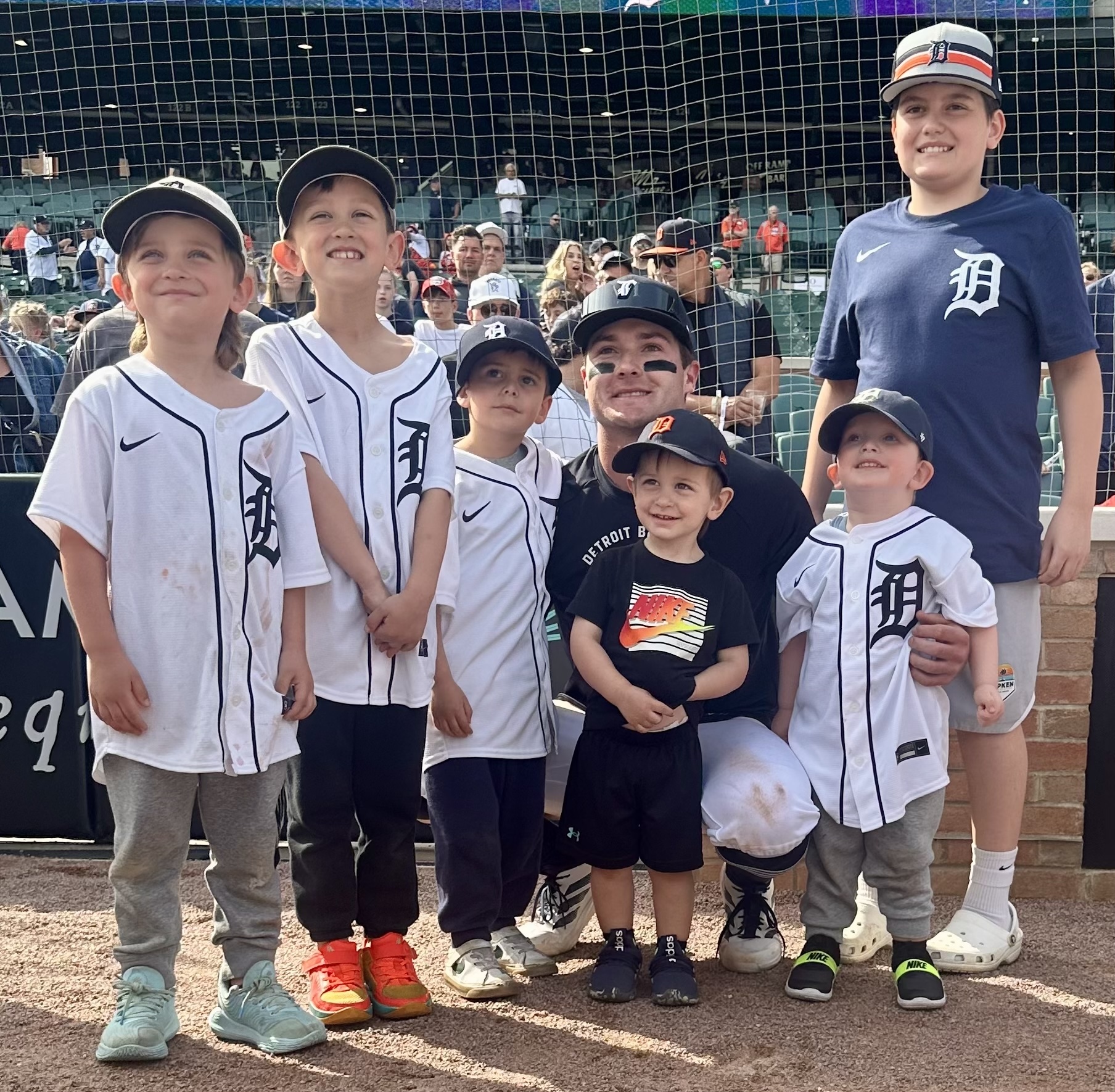
Kevin McGonigle with the kids of his former Bonner baseball coaches.Steve DeBarberie
Of course, there are plenty of things that aren’t normal. McGonigle doesn’t borrow cash from the blessings box anymore. He no longer takes swings in the privacy of Campbell’s backyard.
But amid all this change, the Bonner alumnus can always return to a place that is refreshingly static. Full of people who are proud of him, not just for his talent, but also for the unglamorous work behind it.
And if he ever needs a reminder, McGonigle can look for the Kelly green T-shirts, scattered among a sea of Tigers blue; a sign that Delaware County is never too far away.
Bill Curry, 85, the former Inquirer columnist who traded his byline for a barstool and transformed a modest South Street tavern into the landmark Copabanana, died Wednesday, July 1, after a long illness.
For generations of Philadelphians, Mr. Curry’s name was synonymous with the colorful restaurant and bar he opened in October 1978 at Fourth and South Streets. Mr. Curry expanded it into a collection of restaurants and nightlife ventures that helped define South Street’s modern identity, including Cafe Nola and Hurricane Alley. The original Copabanana closed last year.
Copabanana owner Bill Curry (center) joins Police Commissioner John Timoney on Marty Moss-Coane’s WHYY radio show for a discussion of Mardi Gras in 2001.April Saul / Staff Photographer
Drawing on his South Florida upbringing, Mr. Curry filled Copabanana with the sounds and aromas that became its trademark: an art deco setting of bartenders squeezing fresh limes for margaritas, burgers sizzling in the front window, and nachos and signature Spanish fries topped with jalapeños and onions crowding nearly every table. It was a time when South Street — a once-thriving commercial district that had languished for years under the threat of a never-built crosstown expressway — was still more counterculture enclave than tourist destination.
But Mr. Curry’s influence on South Street extended well beyond a single restaurant. First as a journalist and later as an entrepreneur, he became one of the corridor’s most visible champions.
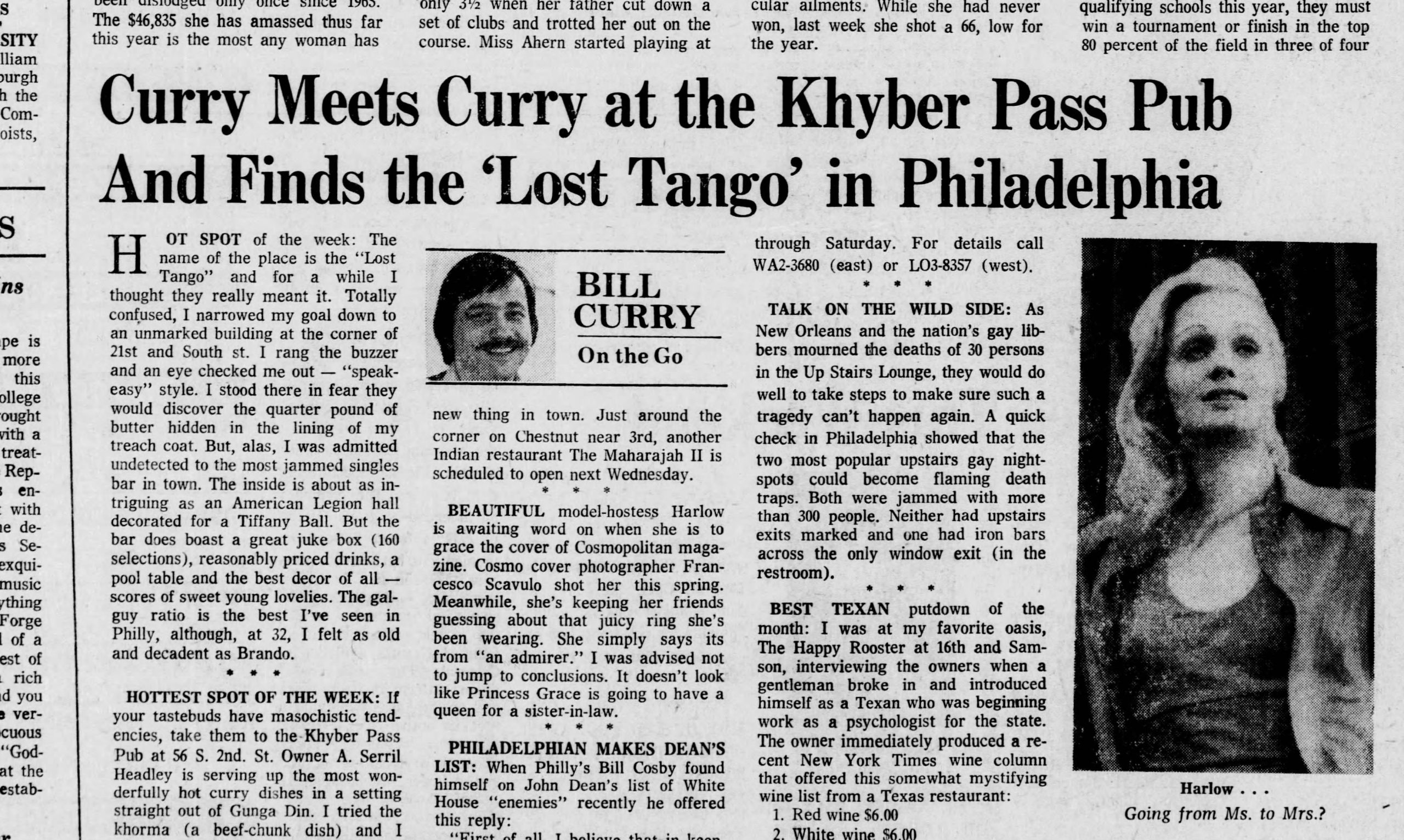
South Street’s renaissance was still in its early stages when Mr. Curry arrived in Philadelphia in 1971 from the Miami Herald — initially as an art director on The Inquirer’s Sunday magazine and soon after as a nightlife writer. The corridor had become a magnet for artists, musicians, entrepreneurs, and preservationists who were filling vacant storefronts with galleries, boutiques, restaurants, and bars. Few people did more to promote that hippie-into-punk transformation than Mr. Curry in his column, “On the Go.”
One of Bill Curry’s 1973 “On the Go” nightlife columns from The Inquirer.Philadelphia Inquirer
“I had fallen in love with the neighborhood and wanted to be a central part of its freewheeling, Bohemian culture,” he told an interviewer in 2015.
“Bill had a quality of world-weary amusement about ‘it all’: politics, serious young journalists, himself, his column, his New Orleans mojo,” said former Inquirer columnist Clark DeLeon.
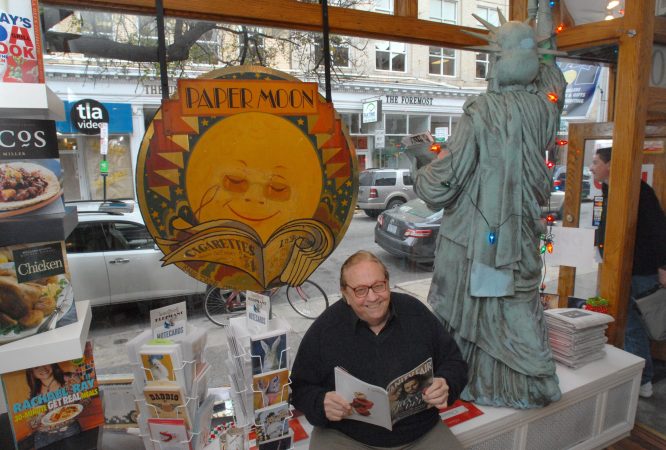
In 1975, Mr. Curry opened a card shop and newsstand called Paper Moon at 329 South St., stocking it with out-of-town papers, international magazines, and specialty cigarettes. A year later, he backed a second location at 15th and Locust Streets called Le Corner Store.
Mr. Curry’s newspaper career ended in September 1978 after he informed executive editor Gene Roberts that he planned to open Copabanana. Roberts concluded that Mr. Curry’s business interests amounted to a conflict of interest and took away the column. He offered Mr. Curry a non-writing role, but Mr. Curry said he chose to leave.
Copabanana opened a month later. When asked whether he had restaurant experience, he told an interviewer: “No, but I had been to plenty — I got paid to drink. I was around town all the time telling folks what was good and what was bad. So I was ready to do it.”
Copabanana — across from Jim’s Steaks and Lickety Split, and down the block from the Theatre of Living Arts — quickly became a destination. In 1981, Mr. Curry and business partner Judy DeVicaris opened the far more refined Cafe Nola a few doors away. With an adventurous, New Orleans-inspired menu and a lush decor, it enjoyed a 15-year run before closing in 1996.
Mr. Curry also developed or helped operate Copa Too!, a Center City offshoot where Jose Pistola’s is now, as well as a still-operating Copabanana at 40th and Spruce Streets in University City.
“He lived for the moment, all the time,” said his nephew David Christensen, who worked for his uncle for a spell. “On the culinary and restaurant side, he was always looking to expand, always wanting to do more. He stretched his assets to the limit, trying to bring in investors and make the next project happen. It was a wild ride.”
Mr. Curry became as much a symbol of South Street as any of his restaurants. “He was the unofficial mayor of South Street,” said Brian Phillips, who in 2003 bought the University City Copabanana from Mr. Curry. “He tirelessly promoted the South Street way of life to make it ‘the hippest street in town.’”
Julia Zagar, who with her artist husband, Isaiah, opened Eye’s Gallery on the next block in 1968, said Mr. Curry “embraced the South Street community with his intellect and tastes, books, magazines, and food. He understood the street life.”
The original Copabanana occupied a shot-and-a-beer bar owned by a former longshoreman named Frank “Turk” Jaworski. Neighborhood lore said Turk’s once housed a Prohibition-era speakeasy reached through a concealed staircase hidden behind a phone booth — a story Mr. Curry happily embraced.
Asked after decades in business why Copabanana endured while so many restaurants came and went, Mr. Curry offered a simple explanation: “Consistency. You can go somewhere once and love it, but if you go back and it’s not good, you might never return. Good consistent food, and consistent drinks.”
The restaurant struggled in its later years. In 2023, Copabanana sought bankruptcy protection as Mr. Curry battled a series of health problems. Later that year, Copabanana moved into Hurricane Alley’s former space two doors away. It closed in January 2025.
The original South Street property, long on the market, is now under agreement of sale, said Billy Creagh, owner of National Realty Commercial, a brokerage.
Mr. Curry’s life partner, Jim Bush, died several years ago. Besides his nephew, Mr. Curry is survived by a sister, Charlotte Christensen, and another nephew, Tom.
A memorial service is being planned, Phillips said.
Temple University will make student retention a focus in the year ahead with new programming for the first-year student experience and other efforts in the works as it seeks to reverse troubling trends in enrollment and matriculation.
Temple president John Fry and former interim provost David Boardman discussed the moves in an interview after the executive committee of the board of trustees approved a budget Wednesday that included a tuition increase and about 40 layoffs, the latest in a string of staff reduction efforts.
“We really want to mitigate any issues that we have around retention and really improve the success of our students through their journey through Temple,” said Boardman, who remains dean of Temple’s College of Media and Communication and the university’s chief strategy officer.
The move comes as the university copes with a slide in freshman retention. A decade ago, about 90% of freshmen returned for their sophomore year. By last fall, that percentage was 82%, and an internal Temple report that The Inquirer obtained in April showed there is concern the percentage will slip below 80% this fall.
Temple experienced a 27% decline in its U.S. enrollment over the last eight years, and falling retention is part of the problem. The school lost an average of $200 million annually during that period, the internal report said.
Employees from student affairs, enrollment management, and academic affairs have worked on the redesign of the first-year experience with support from the National Institute for Student Success, Fry said.
“This work has helped us identify barriers and create a more coordinated approach to orientation, advising, communication, and student support,” he said in a message to the campus Wednesday.
Boardman said the single biggest barrier is financial.
“There’s a very strong correlation here between the financial pressures on students and their ability to persist and graduate,” he said.
Academic success in the classroom early on is another, he said.
“There’s … a very strong correlation between first-year, even first-semester, GPA and their ability to persist,” he said. “That is tied directly to these other sorts of strategies that we’ve been talking about in terms of making sure that students have the proper preparation when they go into the classroom and the proper support around them.”
The new first-year experience is still under development, Boardman said.
“It’s just a more coordinated approach to how we bring students on board, making sure that they have the right and ample advising even before they get here,” he said.
Fry said the university is awaiting results from an audit by the institute, which began as a result of Temple’s involvement in the University Innovation Alliance, a national group aimed at graduating more students from low-income families. The results are expected in early to mid-fall, he said, which likely will kick off a university-wide discussion on retention.
“That’s going to help us think about first-year experience, but many other topics beyond that regarding retention,” he said. “It’s going to be a real moment for us.”
Several new leaders who will be integral to improving student retention are joining Temple this summer, he said. They include Evelyn Thimba as vice president for enrollment management; Elizabeth “Libby” Wentz as provost; and Heather Servaty-Seib as vice provost for undergraduate education. They will join Jodi Bailey Accavallo, vice president for student affairs, who has been working on the issue.
The university also has aimed at improving its recruitment, admission, and support of transfer students, and that also has shown results, Boardman said. The university is using a more streamlined process for the transfer of credits, primarily from community colleges, he said.
“In this enrollment cycle, our transfer enrollments are up almost 100% from the previous year,” he said.
Yet another ice cream shop has opened on the Fishtown-Kensington border — this time with brownie sandwiches, gluten-free cones, and dog treats, all the way from the Potato State.
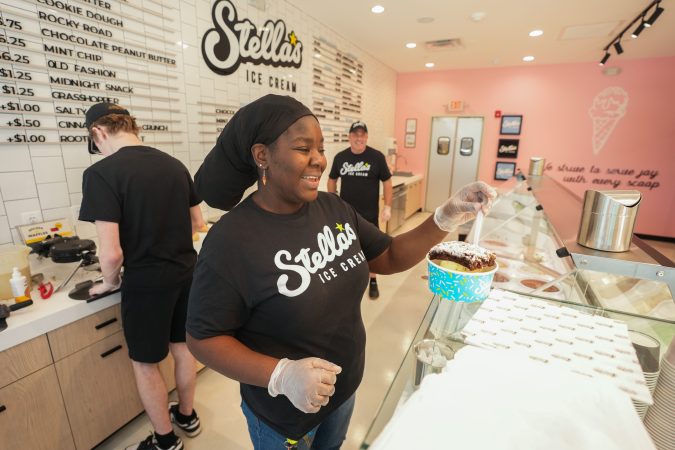
Fast-growing Idaho ice cream chain Stella’s opened its first East Coast location at 1832 N. Front St. at the end of June.
Named for husband-and-wife founder Brittney and Chad Hartley’s bulldog, Stella’s opened its first location in 2018 in Nampa, Idaho, a Boise suburb, where it gained a following for its ultra-creamy ice cream recipe, fresh baked goods, and ability to accommodate dietary restrictions. The chain grew to four locations in Idaho by 2020, and began franchising in 2023. Now, the company has 20 locations across Idaho, Arizona, Texas, Oregon, Tennessee, Indiana, Nebraska, and Utah, with more planned in the South and Midwest.
Philly franchisee Shay Marlin had no previous ties to Idaho or the food industry — save for some swing shifts at friends’ ice cream parlors or being a summer regular at Sundae Best in Avalon — when he started pursuing a Stella’s franchise in 2024. At the time, all the tech executivehad was a recommendation from a friend. Stella’s, the friend told him, was some of the best ice cream around, with a high butter fat content that makes each scoop rich and velvety.
Stella’s Ice Cream, in Philadelphia, June 29, 2026.Jessica Griffin / Staff Photographer
Two years later, Marlin looks at home behind the counter, shaping waffle cones fresh off the press and helping baker and manager Lisa Evans dust brownies with powdered sugar. All of the location’s ice cream flavors are churned on-site using Stella’s proprietary mixes, said Marlin. Its trays of fudgy brownies and slightly crisp chocolate cookies are also baked on site daily, he said, to eventually be heaped with ice cream for sundaes and sandwiches.
Business has been slow but steady, according to Marlin, with a few regulars whose dogs pull them inside daily for $2.50 “pupsicles,” the store’s pooch-friendly pops made of frozen yogurt and peanut butter on a Milk Bone.
Stella’s is located smack in the middle of the neighborhood’s ice cream corridor. The chain is surrounded by competitors: Scoop shop and listening lounge Sweet 45, a block north on Front Street; viral soft serve purveyor 1-900-ICE-CREAM seven blocks south; Weckerly’s on Girard Avenue; chains Van Leeuwen and Jeni’s Splendid Ice Cream around the corner on Frankford Avenue; not to mention one-offs like Fiore and Huda Burger that sell gourmet gelato and ice cream in tandem with sandwiches.
Grasshopper Ice Cream at Stella’s Ice Cream, in Philadelphia, June 29, 2026.Jessica Griffin / Staff Photographer
Why did Marlin choose to plop his shop in a saturated market?
“When we started working on the space, that one ice cream shop nearby wasn’t there,” said Marlin, referring to Sweet 45, which opened last September. “We were actually trying to get away from all the ice cream shops down the road.”
Marlin also pointed out that residents on the Fishtown-Kensington divide might want a shop closer to their apartments, or one that is decidedly unpretentious. While Stella’s offers 24 flavors, the range is more classic than that of stores like Jeni’s and Van Leeuwen, which are currently scooping ice cream blended with goat cheese and trendybanana pudding, respectively.
“A lot of people that live a little north of here have been excited for us because they don’t have to walk all the way down [Frankford Avenue],” just for some ice cream, Marlin said. “I think there’s room for all of us.”
Cones at Stella’s Ice Cream, in Philadelphia, June 29, 2026.Jessica Griffin / Staff Photographer
What makes Stella’s different?
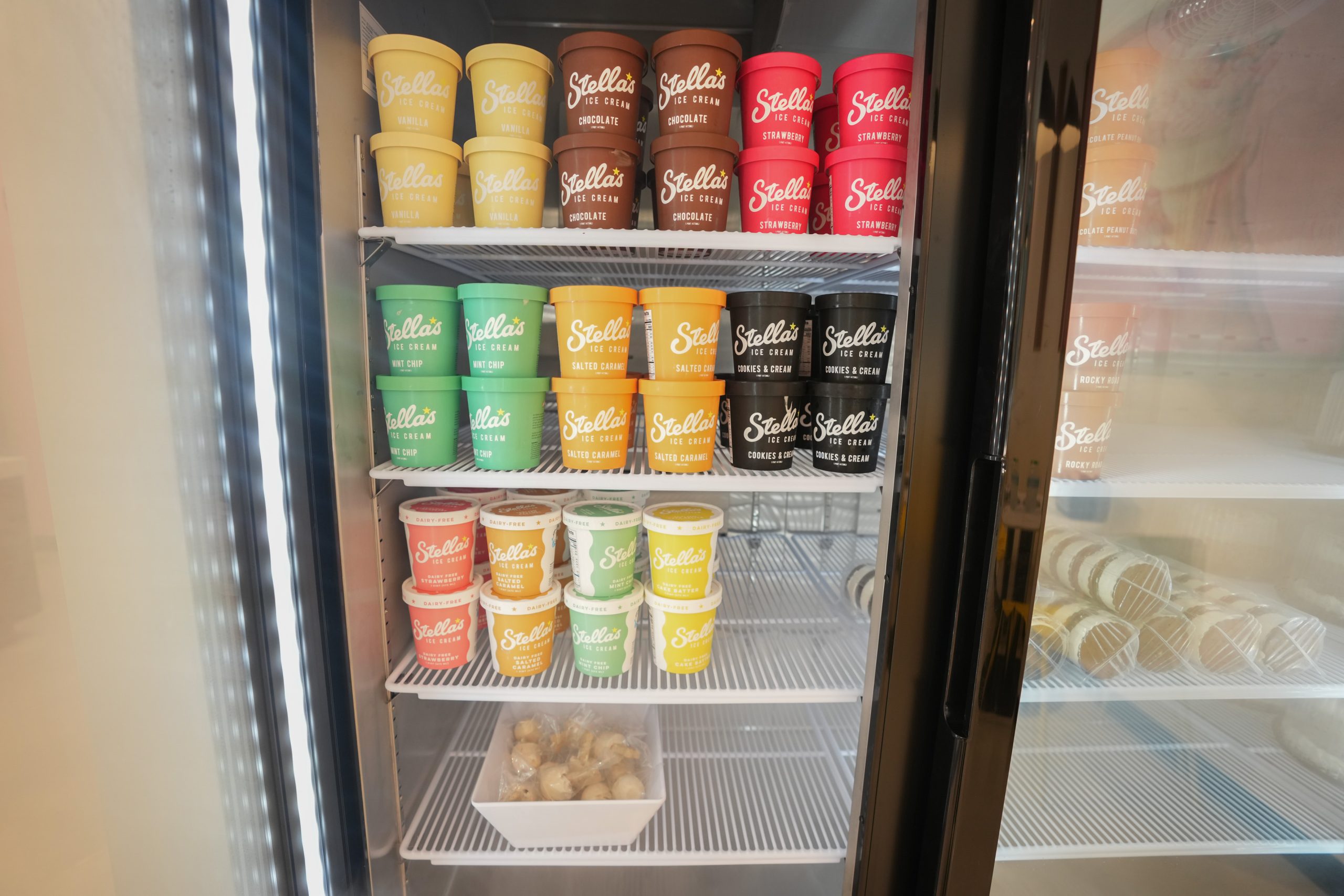
Stella’s specialty is variety. Of the shop’s 24 flavors, eight are dairy-free and made with a coconut milk base. Specials also cycle through weekly. When an Inquirer reporter visited just after its June grand opening, a root beer flavor that tasted like a cold glass of A&W (minus the carbonation) was on rotation.
Otherwise, the shop’s ice cream offerings are riffs on parlor classics, like Rocky Road, salted caramel thick with swirls of caramel sauce, and Grasshopper, a take on mint chip that swaps chocolate for chunks of Oreo cookies. Already, Marlin said, the flavor is the shop’s bestseller. A single scoop is $6.25, with a dollar upcharge for dairy-free flavors, putting it about on par with the neighborhood’s other shops.
Also on offer: gluten-free waffle and sugar cones — a rarity at ice cream shops — stored separately from their regular counterparts to avoid cross-contamination. There are also novelties galore, including 5-inch chocolate chip cookie bowls for sundaes and hybrid brownie-cookie ice cream sandwiches. To-go pints and ice cream cakes are available in a fridge.
Ice cream at Stella’s Ice Cream, in Philadelphia, June 29, 2026.Jessica Griffin / Staff Photographer
Running Stella’s has been a big adjustment for Marlin, whose training consisted of a weeklong ice cream intensive in Idaho at the chain’s first location. By day, Marlin was making “gallons and gallons of ice cream” and learning things like extrusion, the process by which ice cream is shaped for things like bars or premade sandwiches. By night, he worked the store’s register.
Marlin called himself an “average” ice cream-making student at best, but the 10-to-12-hour days gave him a newfound appreciation for the power of the scoop.
“I don’t think people come into an ice cream shop mad at the world,” he said. “Everyone’s there to have a good time.”
Stella’s Ice Cream, 1832 N. Front St., 215-550-1032, stellasicecream.com. Hours: Noon-10 p.m. Sunday through Thursday; noon-11 p.m. Friday and Saturday.
Brent Rose and his 9-year-old son, Alexander, were ready for the bus on the first day of the program Alexander is attending at De Burgos Elementary in North Philadelphia this summer for kids with special needs.
Alexander, who is on the autism spectrum, was told to be ready for the bus to pick him up at 8:08 a.m. But when it still had not come by 9:30, Rose’s wife drove their son from their home in Center City.
The episode was not an anomaly. Three weeks into the Philadelphia School District’s extended school year program, Rose said that on more than half of the days, his son’s bus simply has not shown up.
“It’s a huge inconvenience,” said Rose, who works for the IRS and has had to show up late or call out due to the problems. “You couldn’t just leave any 9-year-old out there and say good luck, but certainly not one on the spectrum, and say it’s going to be OK.”
Rose said the district has directed him to call dispatch for First Student, the company that operates his son’s bus route.
But often no one answers that line, Rose said, making it impossible to know whether a bus will eventually show up or not.
A spokesperson for the school district said the district is aware that “some families have experienced transportation delays and service disruptions for the Extended School Year (ESY) programming,” which schools nationally are required to offer to students with disabilities at risk of regressing over the summer.
“While the majority of routes are operating as scheduled, we recognize that some students have experienced significant delays, and we understand the impact this has had on families,” said the spokesperson, Naima DeBrest.
DeBrest attributed the delays to “staffing and operational issues affecting a portion of the transportation services provided by First Student.” She said the district had been working with First Student “to improve reliability,” including by reassigning 10 of the company’s routes.
Brenna Rudisill, a spokesperson for First Student, said the company recognized that “some families experienced transportation delays early in the program, and we apologize for the inconvenience and frustration that caused.” She said First Student had taken on additional routes after other vendors left the district.
“Our team has been working every day to stabilize and improve service,” Rudisill said.
For Rose, though, the issues have not resolved. On Thursday, after the bus was an hour and 20 minutes late, he called dispatch and was told a bus would arrive in half an hour. Rose did not see whether it eventually came; he had to pick up his wife from the hospital, taking his son with him.
On an earlier occasion when he was able to reach the bus dispatch, Rose used his phone to Google Translate for another parent who did not speak English and was also waiting at the stop: “The bus isn’t coming.”
Noting that First Student advertises an app with real-time updates on bus locations, Rose questioned why parents do not have access to that information.
That way, “you could contact work before you’re really behind,” said Rose, who also has gotten calls from De Burgos some days telling him he needs to pick up his son because no bus will be coming.
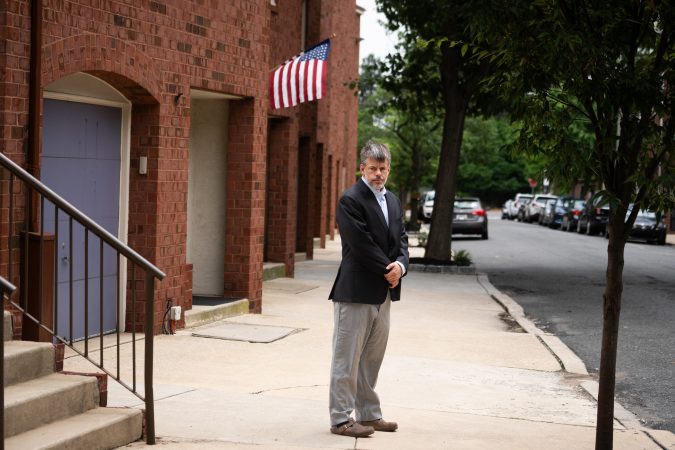
Brent Rose stands at the bus stop where his nine-year-old son, who has autism, waits for the bus to travel to Philadelphia’s Extended School Year program for kids with special needs, in Philadelphia, July 10, 2026. The problem is that his bus often never shows up to take him there.Jessica Griffin / Staff Photographer
DeBrest said the district is “in the early stages of implementing a new routing software system that will include a parent-facing application allowing families to track buses in real time.” In the meantime, she said, First Student has an automated text messaging service that can update parents.
Rose said that, despite many calls to First Student and messages to the district about the buses, he was unaware of that service.
He noted that the extended school year programming is not convenient for working parents: The day ends at 1:30, and it’s not easy to find aftercare for the rest of the afternoon.
But he and his wife have rearranged their schedules and enrolled their son for the last three summers because they think the program is important for his progress, “and we think the teachers do a good job,” Rose said.
When “the buses aren’t even doing what they’re supposed to do,” though, “it gets really frustrating,” Rose said.
In the back of a classroom where she had just read to 20 attentive preschool kids, U.S. Rep. Chrissy Houlahan was concerned about what the staff of the West Chester YMCA was telling her.
Nearly a third of the families who rely on the facility’s childcare programs — in the richest county in Pennsylvania, and one of the wealthiest in the country — receive financial assistance to cover the $1,900 monthly cost, the staffers said.
Houlahan, a Democrat who is soft-spoken when she is not grilling President Donald Trump’s cabinet secretaries or House Speaker Mike Johnson (R., La.) on Capitol Hill, asked about the income qualifications for financial aid. At a certain point, the YMCA staff told her, some parents have a disincentive to earn more, lest they become disqualified and then stuck with a higher bill.
“It’s terrible, no matter how you do the math,” Houlahan said a few hours later at a Malvern restaurant, relaying the story to her daughter, Molly Rosa Houlahan, and daughter-in-law, Kristen Rosa Houlahan.
The YMCA’s fee was about the same amount the couple were paying for their 18-month-old, Lucy. With another child due in September, it is also an amount they still are unsure how to afford twice over.
“We’re very fortunate in our jobs, and we’re both trying to get promotions in order to be able to afford a second daycare,” said Molly Rosa Houlahan, 33, a local theater director and producer. “But we are not in that position yet. I don’t totally know what will happen when this second child arrives.”
From childcare to healthcare, groceries to gas prices, affordability concerns have remained top of mind for Americans this year — dominating discussions on Capitol Hill ahead of the high-stakes midterm elections.
Republicans, who control Congress and the White House, say they have made real progress in raising wages and lowering costs. They marked the first anniversary of Trump’s One Big Beautiful Bill Act — since rebranded by Republicans as the Working Families Tax Cut Act — this month by celebrating the law’s more generous tax refunds and other benefits, like new investment savings accounts for children under 18.
Democrats have pointed to the bill’s simultaneous cuts to Medicaid spending and food assistance for low-income families. They say Trump signaled he has no interest in lowering costs when he refused to sign a bipartisan housing bill and said he doesn’t “think about Americans’ financial situation” when handling the war in Iran.
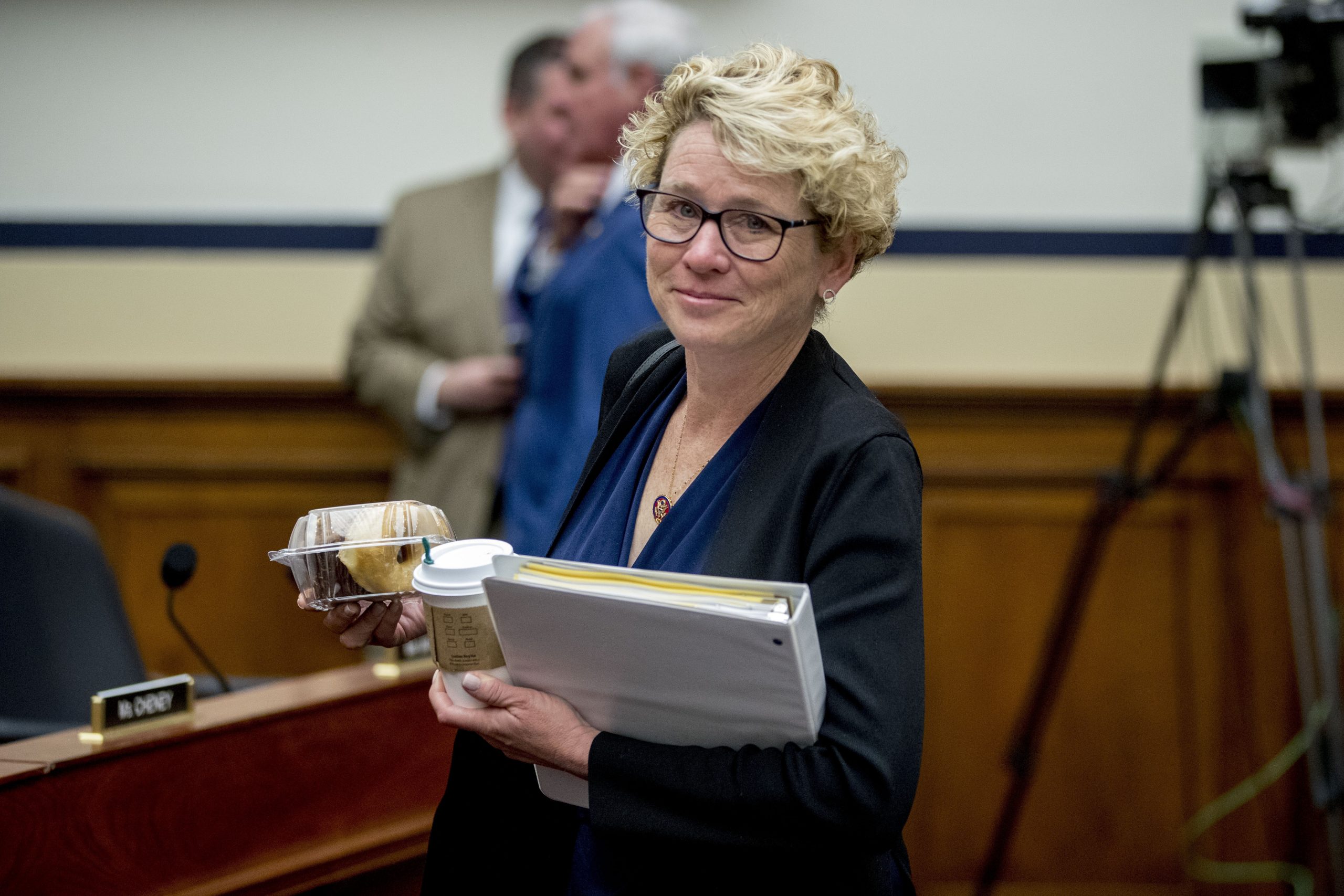
In this 2019 file photo, U.S. Rep. Chrissy Houlahan (D., Pa.) arrives for a House Armed Services Committee budget hearing for the Departments of the Army and Air Force on Capitol Hill in Washington.Andrew Harnik
Houlahan, who has represented most of Chester and Berks Counties since 2019, routinely highlights the broader scope of cost-of-living issues alongside her colleagues. She has taken a leading role among centrist House Democrats to help craft a detailed “affordability agenda.”
Whether her party can advance any of those policies in Washington, even if it wins control of one or both chambers of Congress in November, remains an open question as Trump remains in office and the International Monetary Fund warns of a worsening global economy.
But as the fight drags out, it has also become increasingly personal for Houlahan and her family.
In addition to occasionally helping fill the gaps in their granddaughter’s care, Houlahan and her husband’s own home in Devon, Chester County, has transformed into a version of a so-called sandwich generation household within the last year. The couple’s other adult daughter, her husband, and both of Houlahan’s parents, who are 80 and 84, have all moved in.
The underlying circumstances for the multigenerational home, as they would be for any family, are various and personal. And Houlahan emphasized across multiple interviews that she is fortunate to have the means to welcome her family under her roof. (Houlahan is an Air Force veteran and a former executive at the athletic apparel company AND1. Her husband, Bart, is a partner at an investment research firm.)
But the larger realities — like skyrocketing costs for childcare and senior living — have also now played a role in her own life.Her mother has a Parkinson’s diagnosis, and her parents were unable to find a one-floor living space that was affordable and fit their other needs as they looked to move closer to their family.
“We’re having these conversations, and you know people all over our community are having these conversations,” she said. “It’s an acute issue for families in our area: How do you balance all of this?”
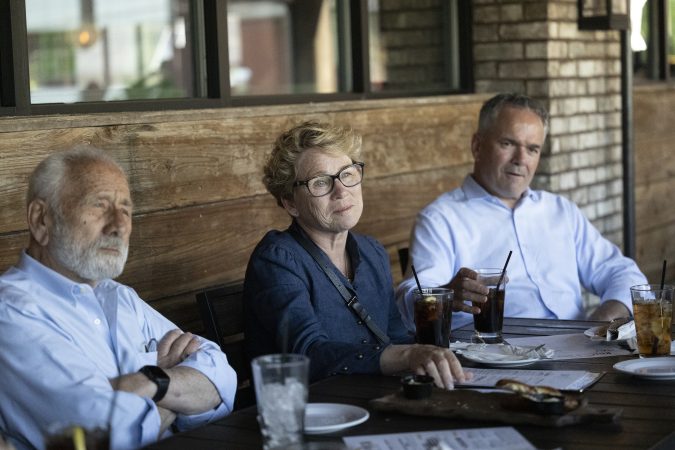
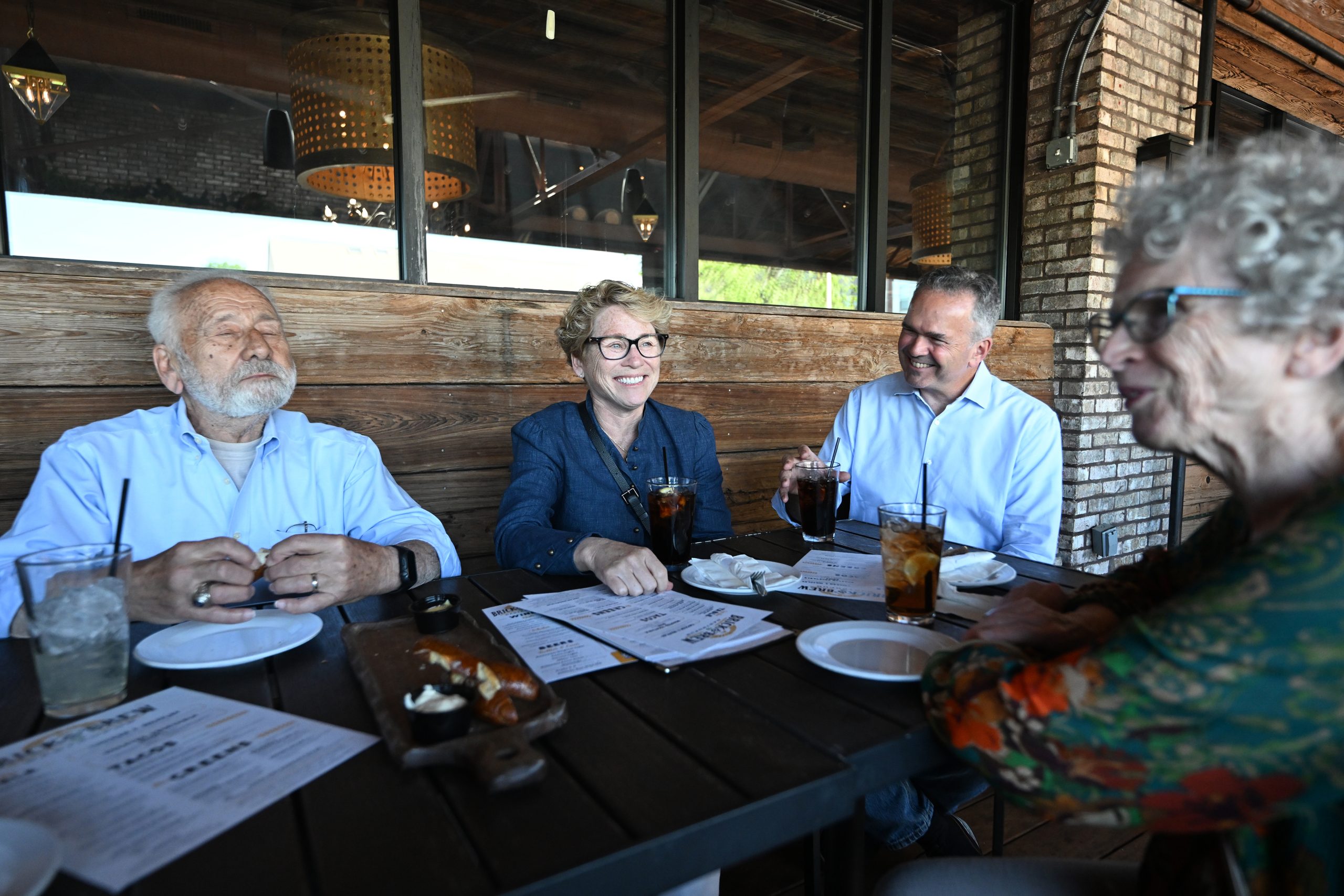
U.S. Rep. Chrissy Houlahan (center) has dinner with her family at Brick & Brew in Malvern, including her father, Andy Jampoler (left), her husband, Bart Houlahan, and her mother, Suzy Jampoler.Jose F. Moreno / Staff Photographer
‘A big balancing act’
Houlahan has shared parts of her family’s story as she has traveled her district this year — prioritizing events and meetings that aim for a deeper understanding of an affordability crisis that has not spared her home county, where the median household income is about $131,000, or 40% more than the statewide average.
On back-to-back days this spring, that meant a focus on the kinds of childcare and senior-care issues she has become familiar with.
“We call it ‘from zero to Edna,’” Laura Schoefield-Pierson, executive director of the YMCA of Greater Brandywine, said of the facility’s programs aimed at all ages, from infants to seniors.
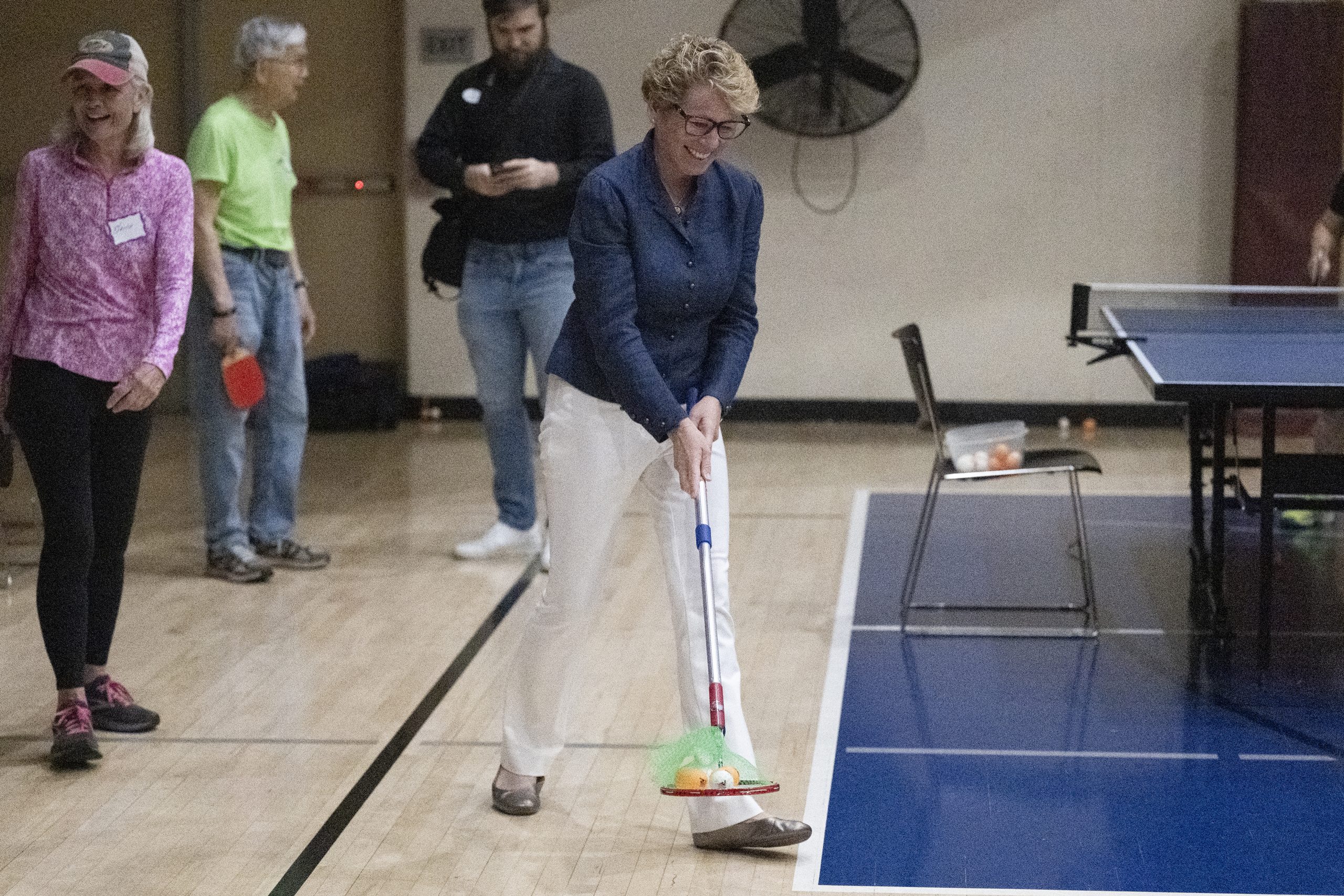
Walking Houlahan through the pre-K classes and a gym with a dozen seniors playing table tennis, Schoefield-Pierson spoke about the organization’s exercise programs aimed at offsetting symptoms of Alzheimer’s or Parkinson’s, and about the complexities of providing assistance for families with young children.
In addition to the “many children” whose care is subsidized through the state’s Child Care Works program — set for families earning 200% or less of the federal poverty level, or $66,000 for a family of four — others receive aid through the YMCA, Schoefield-Pierson said. The facility’s fundraising goal this year is $237,000, she said. On the day of Houlahan’s visit, Schoefield-Pierson said “the kiddos” were writing thank-you notes to donors.
U.S. Rep. Chrissy Houlahan (D., Pa.) interacts with teachers and children at a childcare center at the YMCA in West Chester.Jose F. Moreno / Staff Photographer
Though the U.S. Department of Health and Human Services recommends childcare should not exceed 7% of household income, Houlahan said she was surprised to learn a family would have to earn $327,000 to meet that benchmark at the YMCA for one child.
Nationally, the average annual cost of childcare in 2024 was $13,128, an increase of 29% over the previous five years and far exceeding the national recommendation for the average household’s budget.
“It’s crazy how much healthcare and childcare plays into your family planning,” said Helena Cordoba, a 35-year-old mother of two who said at a roundtable hosted by Houlahan that she had been hoping to grow her family.
A Colombian immigrant who owns Café Com Leite in Phoenixville, Cordoba said she thought she had been living the American dream. But a recent miscarriage and the rising costs of both childcare and healthcare, which she does not currently have, have made her rethink her family’s plans.
“I never thought I was going to say, ‘Maybe the miscarriage is a blessing.’ That thought on its own is very saddening,” Cordoba said. “I don’t know if we were going to be able to afford another baby. Our life would have been completely turned upside down.”
Others voiced similar struggles while Houlahan sympathized and shared her daughter’s own experience with a $2,000 monthly daycare bill.
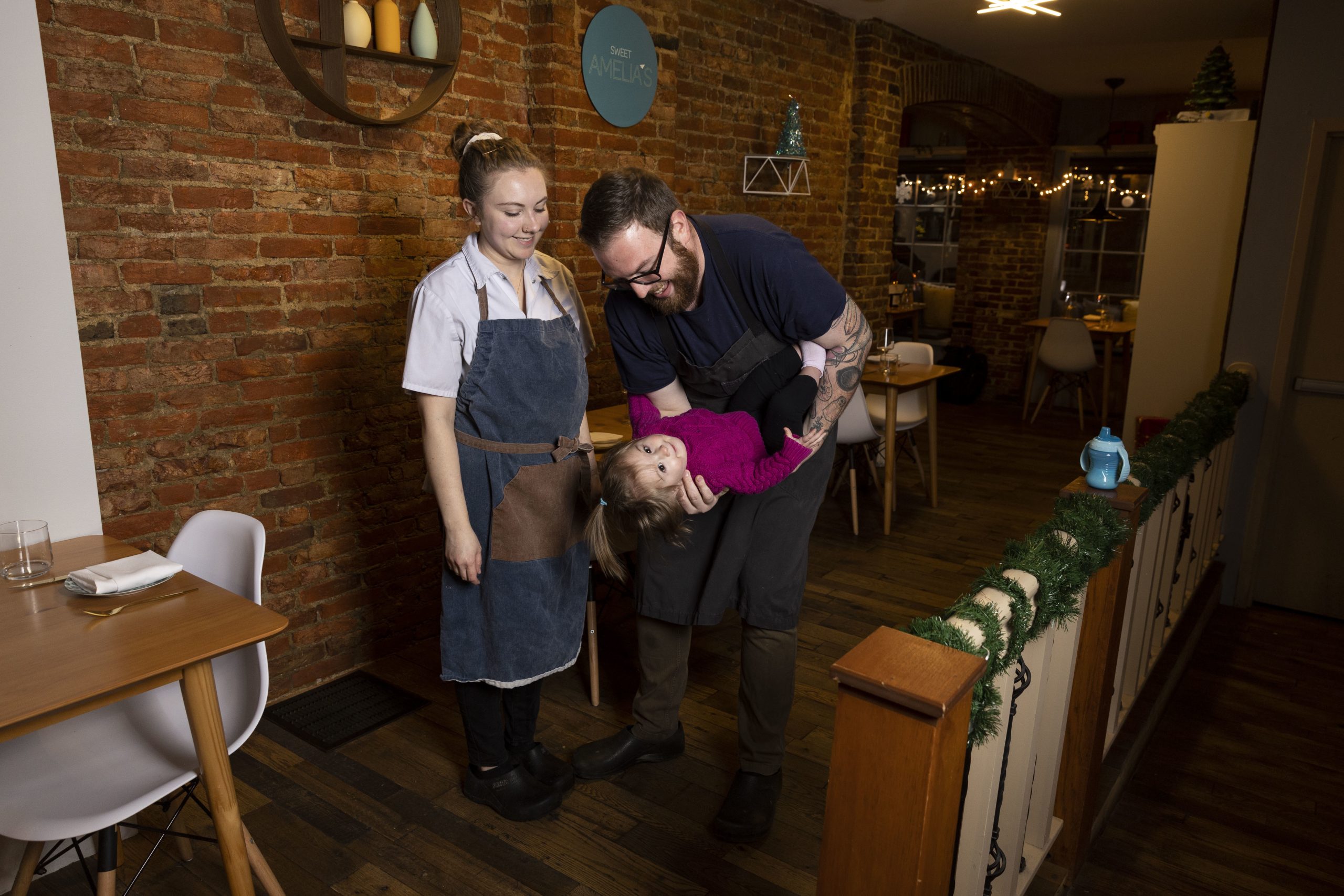
Karessa, Amelia, and Zack Hathaway, pictured here in 2023, at Sweet Amelia’s in Kennett Square.Monica Herndon / Staff Photographer
Zack Hathaway, who owns the restaurant Sweet Amelia’s in Kennett Square with his wife, Karessa, said their business “makes just enough” to cover the $700 to $800 weekly cost for their babysitter amid a demanding restaurant schedule. Thomas Smith, who works at the Cleveland-Cliffs steel plate production facility in Coatesville, said he makes too much to qualify for subsidies for his grandchildren but still struggles to cover the cost.
“It’s like a big balancing act to be able to put your kids in a place that you want to feel comfortable with them being and with being able to afford it,” said Amarte Grove, another Cleveland-Cliffs employee and a father of five daughters.
In another tour focused on the other end of the agespectrum, Houlahan peppered staffers at Brandywine Valley Active Aging in Downingtown about their work to offer free meals, housing services, and activities to about 120 seniors daily.
According to the organization, Chester County’s homeless population has decreased in recent years — from 916 in 2023 to 747 in 2025. But the percentage of that population that is over 60 has increased from 9% in 2023 to 14% in 2026. About 45 older adults in the county were homeless as of early May, according to the organization, which works alongside other independent and government groups to connect seniors with stable housing.
“It is really difficult to live in Chester County,” said Jen Manthey, BVAA’s director of information and assistance. “It takes a long time for them to get out of homelessness, partly because it takes a long time for us to build the trust with them and get that rapport — that they trust what we’re saying, and there aren’t $400 room rentals out there that we’re just hiding from you.”
U.S. Rep. Chrissy Houlahan (D. Pa.) visits with senior citizens at the YMCA in West Chester. She shares the burden of the “sandwich generation” caring for her elderly parents, opening her home to her adult daughter and son-in-law, and helping to care for her other daughter’s toddler.Jose F. Moreno / Staff Photographer
Nick Popov, BVAA’s chief operating officer, said demand remains high for the 5,000 free lunches the organization provides every month to individuals age 60 and older. The cost for those meals is reimbursed through the Pennsylvania Department of Aging, though the organization raises most of its funding in total, he said.
“The services are out there. We’re doing everything we can to provide them,” Popov said. “But it’s always a struggle to kind of balance the bottom line between our goals and what we can actually affordably accomplish.”
Houlahan’s parents said they had never expected to move in with their daughter. Even as they looked to move closer to their family and could not find a spot that fit their financial and physical needs, it took some convincing, mostly from their son-in-law, Bart Houlahan.
“It was an inspiration that permits us to enter old age — serious old age, not just the kid stuff right now — with greater confidence that our health will be sustained,” said Andy Jampoler,Houlahan’s father, a Holocaust survivor born in German-occupied Poland in 1942.
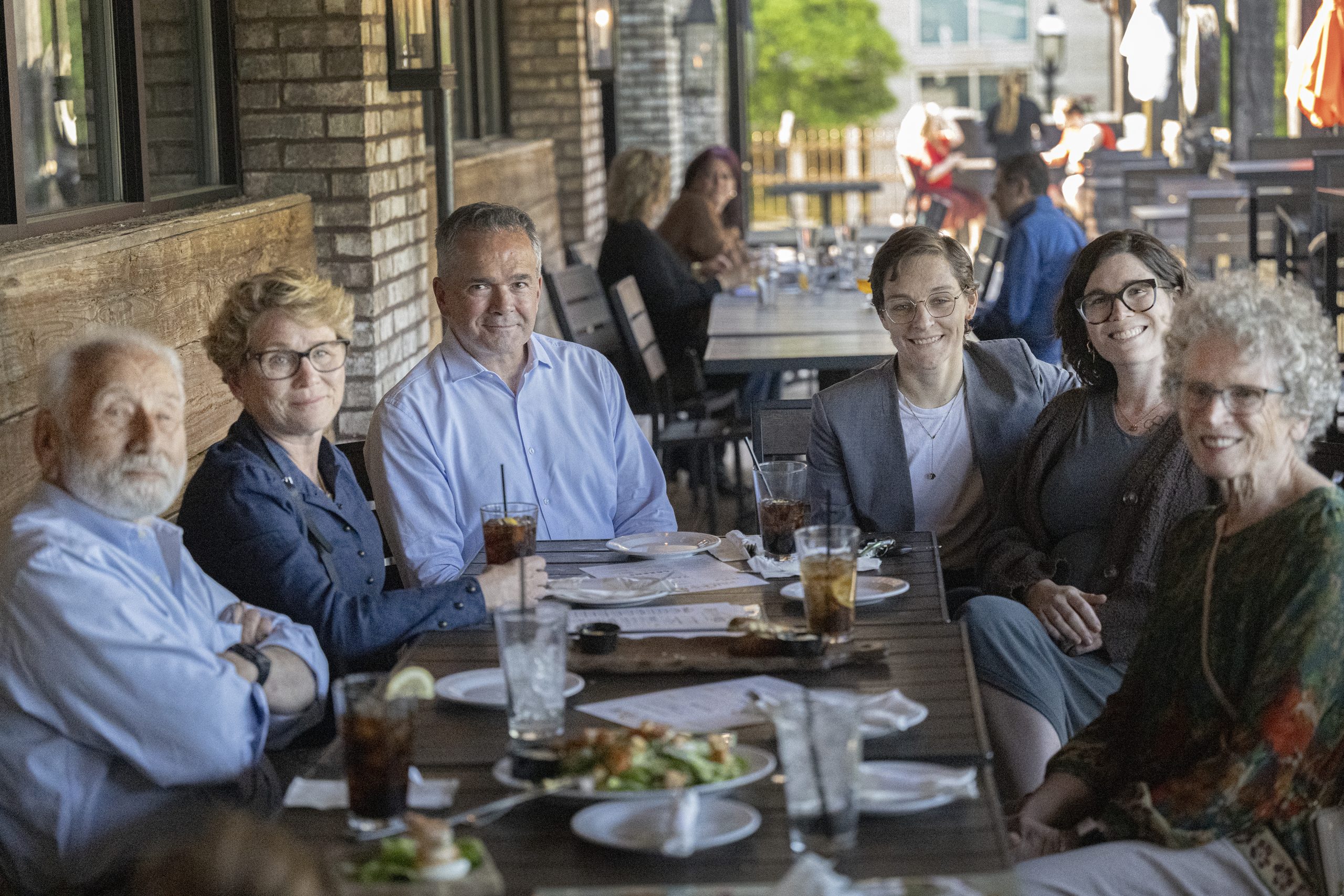
U.S. Rep. Chrissy Houlahan poses at a family during dinner at Brick & Brew in Malvern, including her father, Andy Jampoler (left), her husband, Bart Houlahan, daughter Molly Rosa Houlahan, daughter-in-law Kristen Rosa Houlahan, and Houlahan’s mother, Suzy Jampoler.Jose F. Moreno / Staff Photographer
Turning experience into policy
In May, Houlahan introduced legislation that would require the federal government to collect data on the sandwich generation, a step she said is critical to creating better policies for an “undervalued role in the nation’s economy.”
It would require at least one federal survey to ask whether individuals provide unpaid care to both children and older adults. U.S. Sen. Andy Kim (D., N.J.), who has two young sons and cares for his father with Alzheimer’s, sponsored a companion bill in the Senate.
Sen. Andy Kim (D., N.J.) poses with his family and Vice President Kamala Harris after taking the ceremonial oath of office in the old Senate chamber on Jan. 3, 2025, in Washington.Steven M. Falk / Staff Photographer
Houlahan is also the chair of an “economic growth and cost of living” working group within the New Democrat Coalition, a group of self-described centrist Democrats that includes about half of the entire caucus. The group rolled out an “affordability agenda” earlier this year that is considered a framework for how Democrats would tackle housing, healthcare, energy, paid family leave, and much more if they win control of the House.
U.S. Rep. Brad Schneider (D., Ill.), chair of the New Democrat Coalition, credited Houlahan for her leadership with the agenda, describing her as having a “quiet wisdom that focuses on the core of a problem” while bringing her own life experience to the work.
“Everyone’s experience is unique, but her experience shares many of the aspects of what people across the country are facing,” Schneider said. “The sandwich generation, taking care of kids and parents, for whatever circumstance, while at the same time seeing the cost of just everyday living … is putting a burden on families.”
The legislation aims to incentivize housing construction, restrict large investors from buying single-family homes, help families with home repairs, and more. The president reiterated Friday that he would not sign it, allowing the bill to become law without his signature.
In her Capitol Hill office about an hour after Trump canceled that bill signing late last month, Houlahan described the president as “so obtuse that he can’t see in front of him that this is something that the people want.” After spending much of the last year calling out Johnson, the House speaker, for not standing up to Trump, she said there should be “counterinsurgents” and an “uprising” in the Republican Party.
At the same time, she expressed some hope. The housing bill may have been a rare moment of bipartisanship, but it was also a sign that Congress can still act on affordability even before the end of the year, she said.
“We don’t have time, for all of this stuff, to wait until somebody else is in charge,” Houlahan said. “We can do this ourselves.”
U.S. Rep. Chrissy Houlahan (D., Pa.) sits between her father, Andy Jampoler, and her husband, Bart Houlahan, at Brick & Brew in Malvern. Houlahan’s parents recently moved in with her. Jose F. Moreno / Staff Photographer
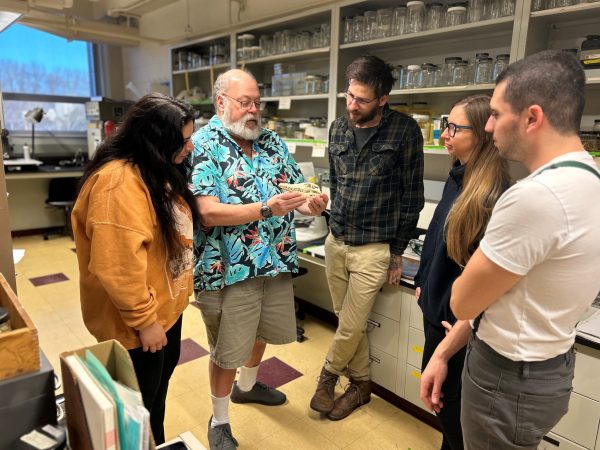
Scientist Aaron Bauer gawked at the cat-sized gecko.
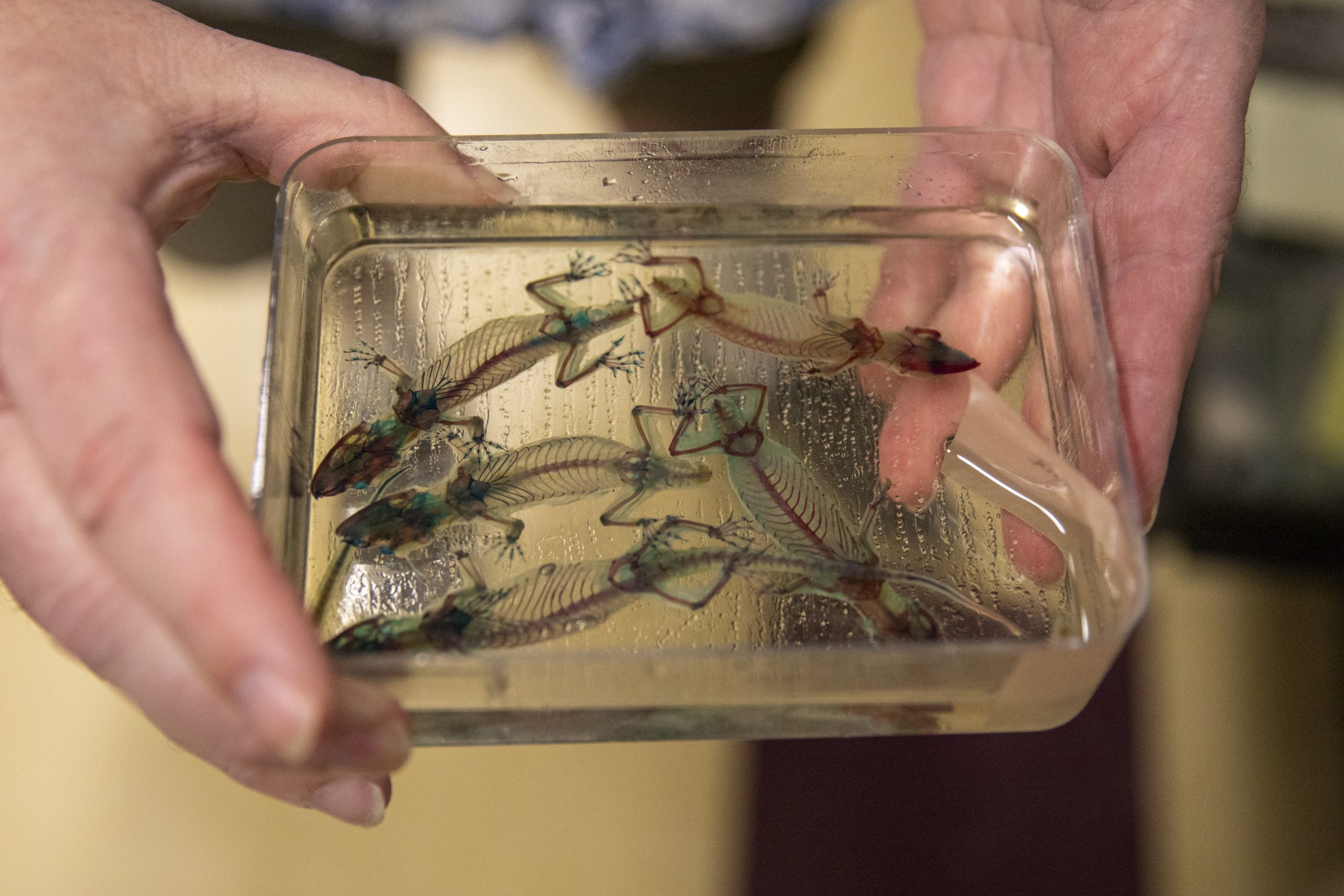
The two-foot-long, preserved creature had sat unidentified in a natural-history museum in France for nearly two centuries.
Staring at its huge head and climber’s build, “I sure as heck could recognize that this was a gigantic, unknown species,” he said.
The extinct creature was the largest gecko to ever live, and the first new species Bauer — at the time a PhD student in his 20s — ever discovered and described.
French museum worker Alain Delcourt is pictured holding the giant gecko, which was the first new species of gecko Aaron Bauer ever described.Courtesy of Aaron Bauer
Now a renowned herpetologist at Villanova University, Bauer, 65, has identified 320 new species of reptiles and counting — more than any other living scientist.
Scientists worldwide discover more than 16,000 new species every year, researchers estimate, spanning plants, animals, insects, and other forms of life.
Nicknamed “the Lizard King” by his students, Bauer retired in Mayfrom a 38-year-long teaching career at the university, where he mentored dozens of master’s students in herpetology, the study of reptiles and amphibians.
Aaron Bauer’s former students are hosting a Bauer-fest in honor of his retirement from teaching.Courtesy of Villanova
Some of his discoveries happened much like his first — seeing something in a museum that was “clearly something new,” he said. Others happened through regular travels to Africa, the South Pacific, and Asia.
His longest research project revolves around the original giant gecko he discovered 40 years ago during a 1980s trip to Marseille.
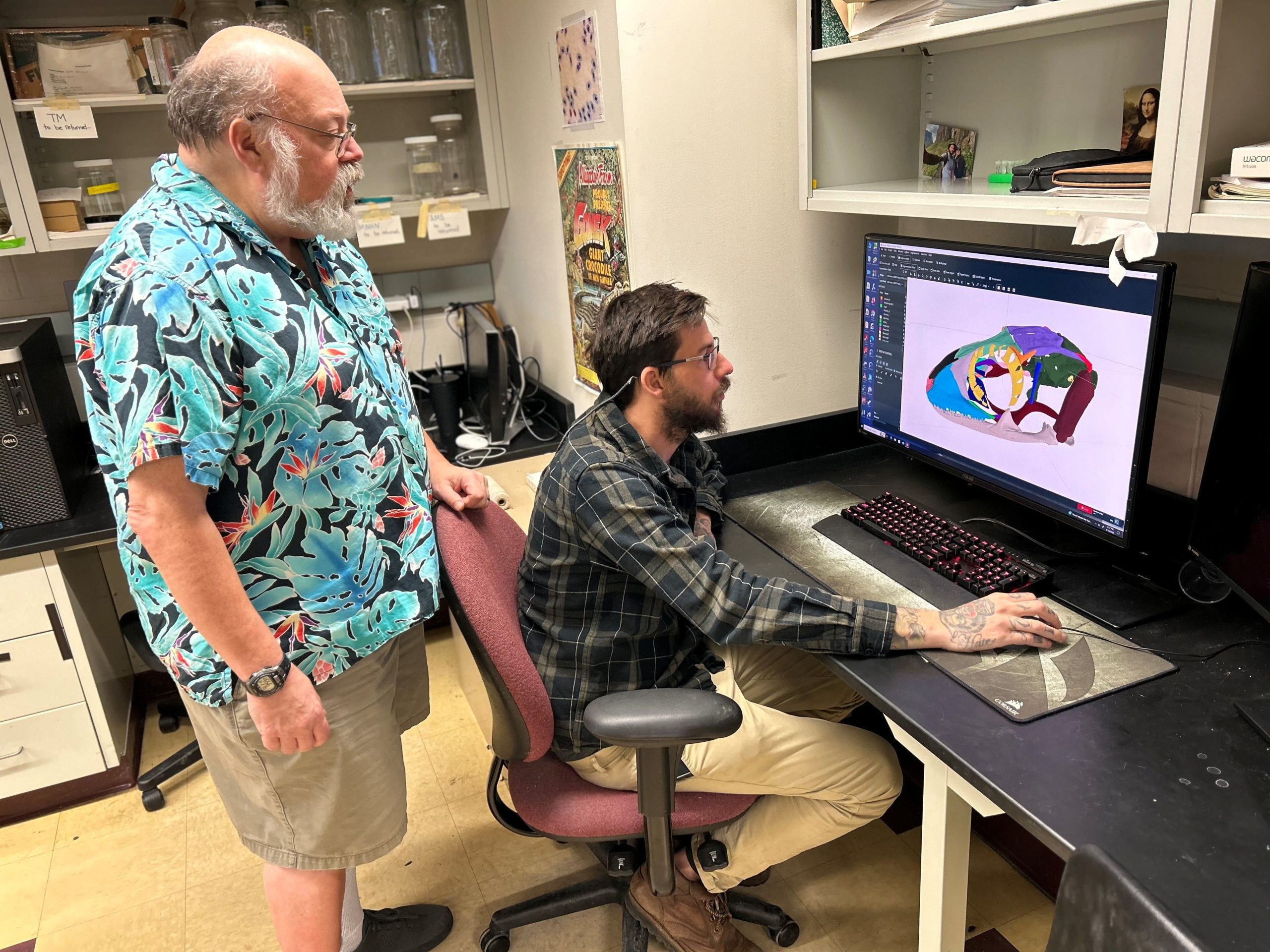
Bauer’s former graduate student, who later became a University of Michigan-Dearborn professor of biology, helped him analyze DNA from the gecko’s leg bone in 2023.
“If I have had a successful career, it’s because I’ve had great students who didn’t just come and go,” Bauer said.
The snazziest snake
Aaron Bauer keeps in touch with his former students. The majority have stayed in herpetology.Courtesy of Villanova
Bauer spent his childhood exploring ponds, fields, and wildlife on the 68-acre Long Island estate where his grandfather was a caretaker.
He decided to become a herpetologist at age 5, after catching “the snazziest snake we have in the northeastern U.S.”
As an 8-year-old captivated by the bright green creature, Bauer typed up lists of all the Latin names of amphibians and reptiles.
He knew he wanted to work with these critters, but not how to make a living from it.
“Nobody in my family had gone to college, so what do I know?” Bauer said.
His path began with studying zoology and history at Michigan State University, where he graduated in 1982.
As aPhD student at the University of California, Berkeley, he specialized in lizards. It was the one species he could not find at the Long Island estate, where frogs, salamanders, turtles, and snakes abounded.
“Everybody wants what they don’t have,” he said.
Geckos, in particular, captivated him with their “weird features,” he said, including toe pads, the ability to climb, and lack of eyelids.
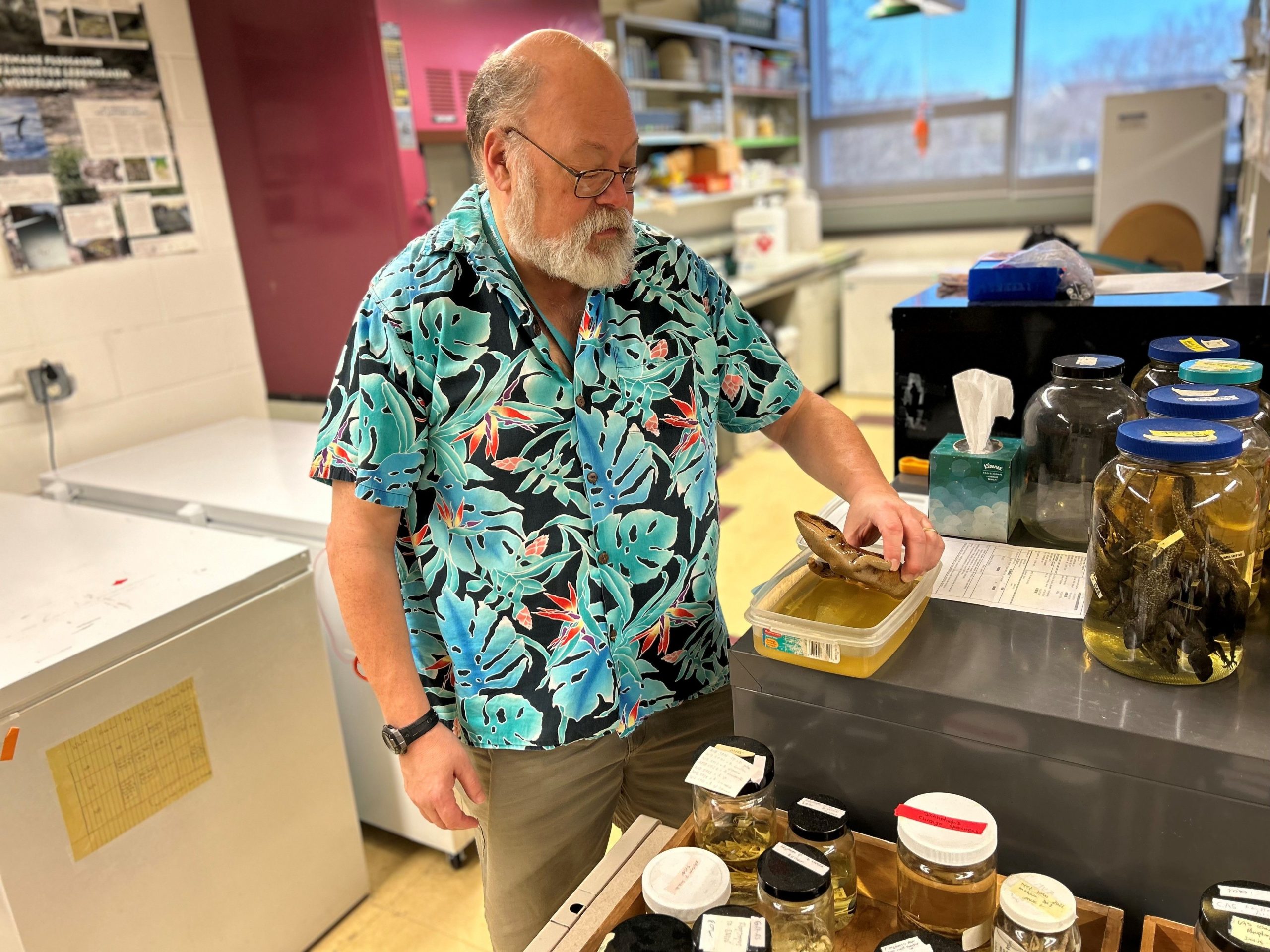
Aaron Bauer holds a container of African House Geckos in the labs at Mendel Hall at Villanova University.TYGER WILLIAMS / Staff Photographer
His research explores the diversity of life and its history:
How does this lizard’s anatomy allow it to be successful? How is it related to the area of the world where it lives, and how did it get there?
In the field
At work, people know Bauer as the guy in Hawaiian shirts and shorts.
He tries not to wear such bright shirts in the field, because “you want to be a little more inconspicuous in the vegetation,” he said.
In these areas, the nearest human could be 50 or 100 miles away.
His team tries to sample from as many places as possible to capture diversity. Some days, they cover hundreds of miles. Other days, they spend a week in one place.
Usually, they identify a new species.
“One of the facts of field work is you don’t know what you’re going to find,” Bauer said.
His team brings nets for frogs, snake sticks for pinning venomous snakes, and equipment to collect tissue samples for DNA analysis. Lizards can be caught by hand.
From these field trips, he has collected enough material to work on for the rest of his life. Still, he said he feels a “physiological urge” to go back, and will continue researching as an emeritus professor.
Aaron Bauer retired from his 38-year-long teaching career at Villanova in May.Courtesy of Villanova
Bauer always reminds his students how lucky they are to go to remote places like northern Namibia, where they may go a week without seeing another person.
“There’s something special about that,” Bauer said. “To go places that most people will never see and don’t know even exist.”
Raising an academic family tree
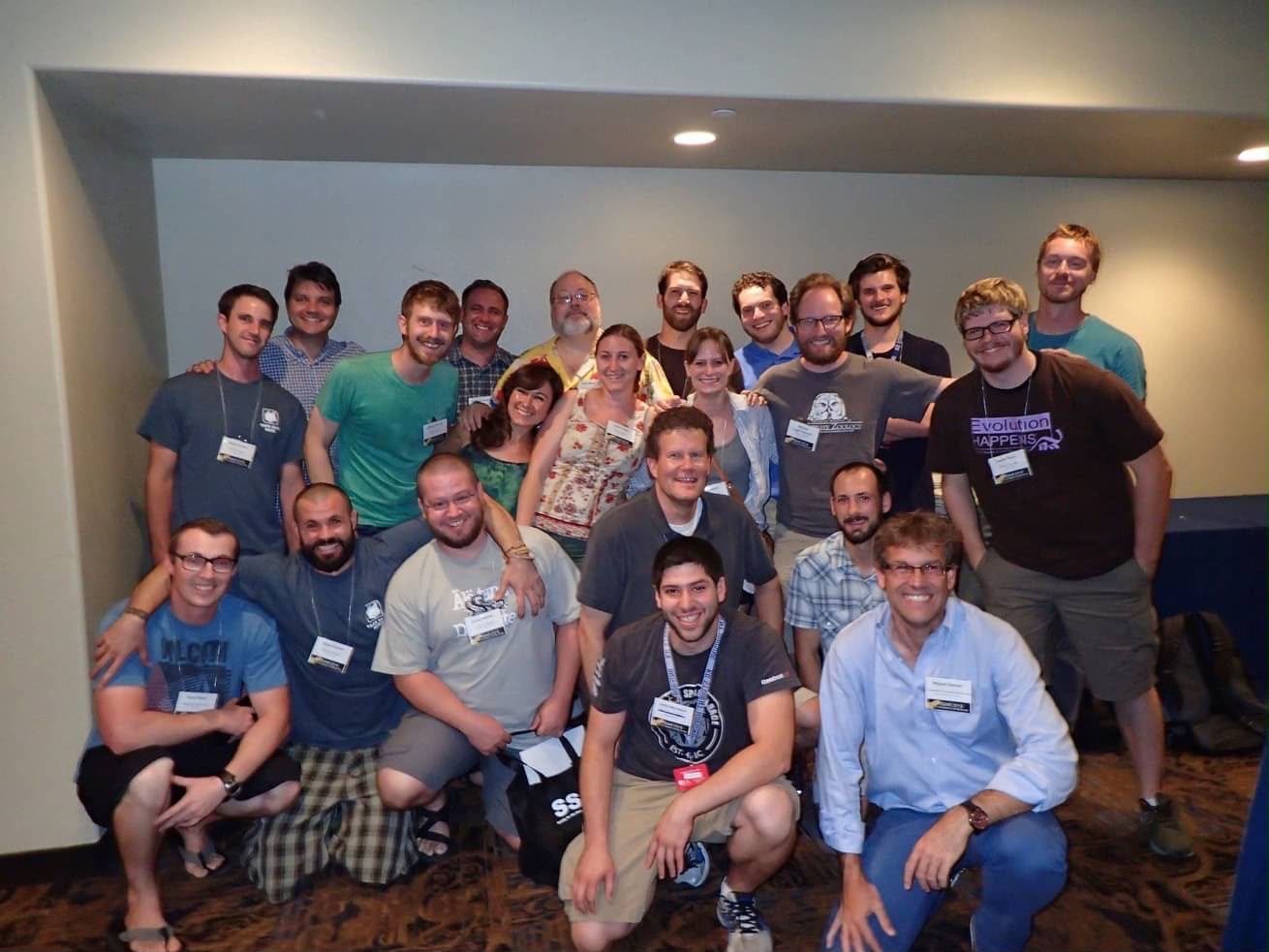
A group photo of Aaron Bauer, Todd Jackman, and many current and former students at a herpetology meeting at the University of Kansas in 2015.Courtesy of Daniel Paluh
At this week’s national herpetology conference in New Orleans, a special session called “Bauer-fest” will celebrate hiscareer.
“He’s always continued to be a really strong advocate for all of his students,” said Daniel Paluh, an assistant professor at the University of Dayton in Ohio, and one of the former students organizing the event.
Paluh was intimidated by Bauer when he first met him at a conference, before realizing he was “a very friendly, funny, personable person.”
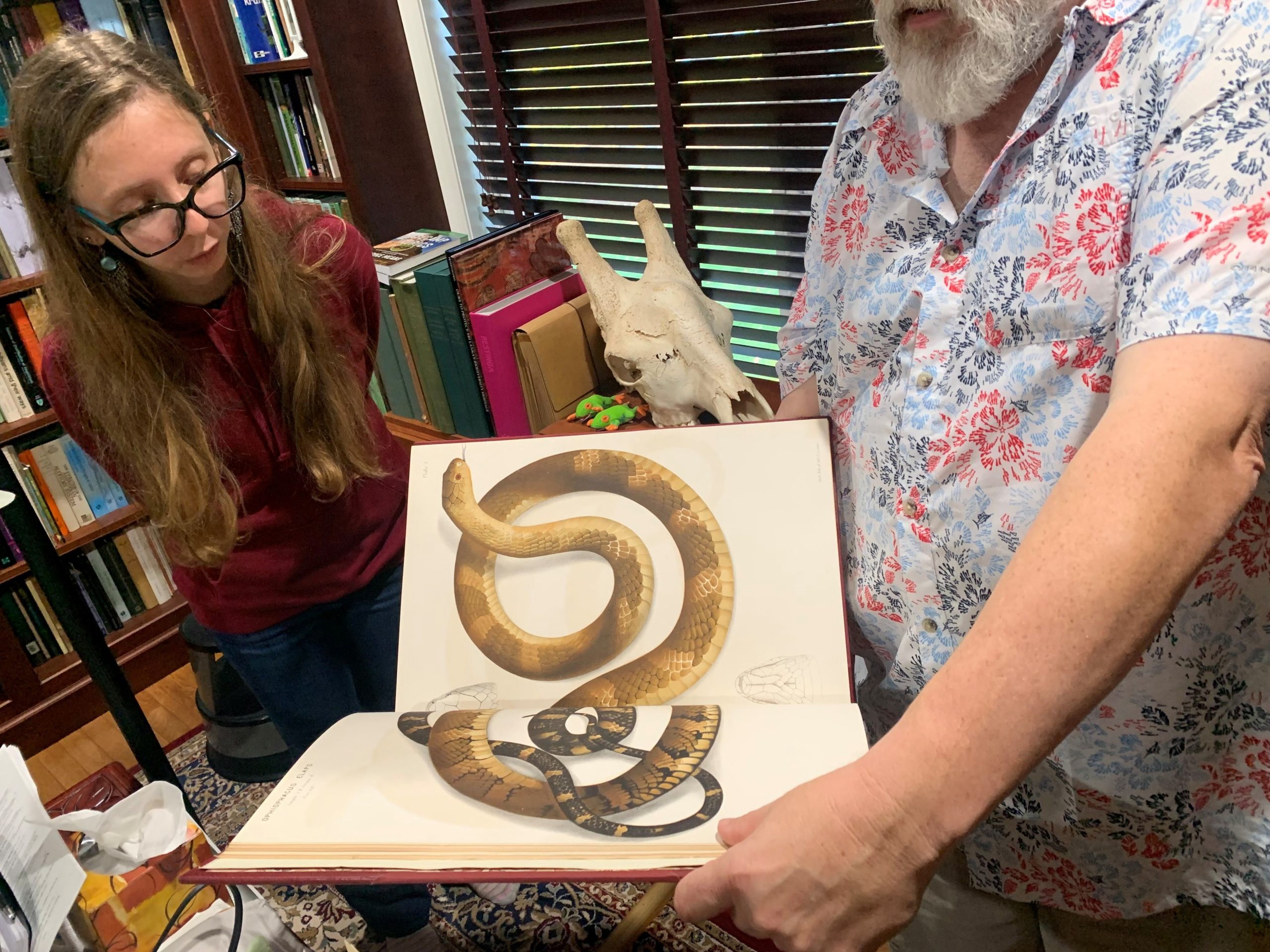
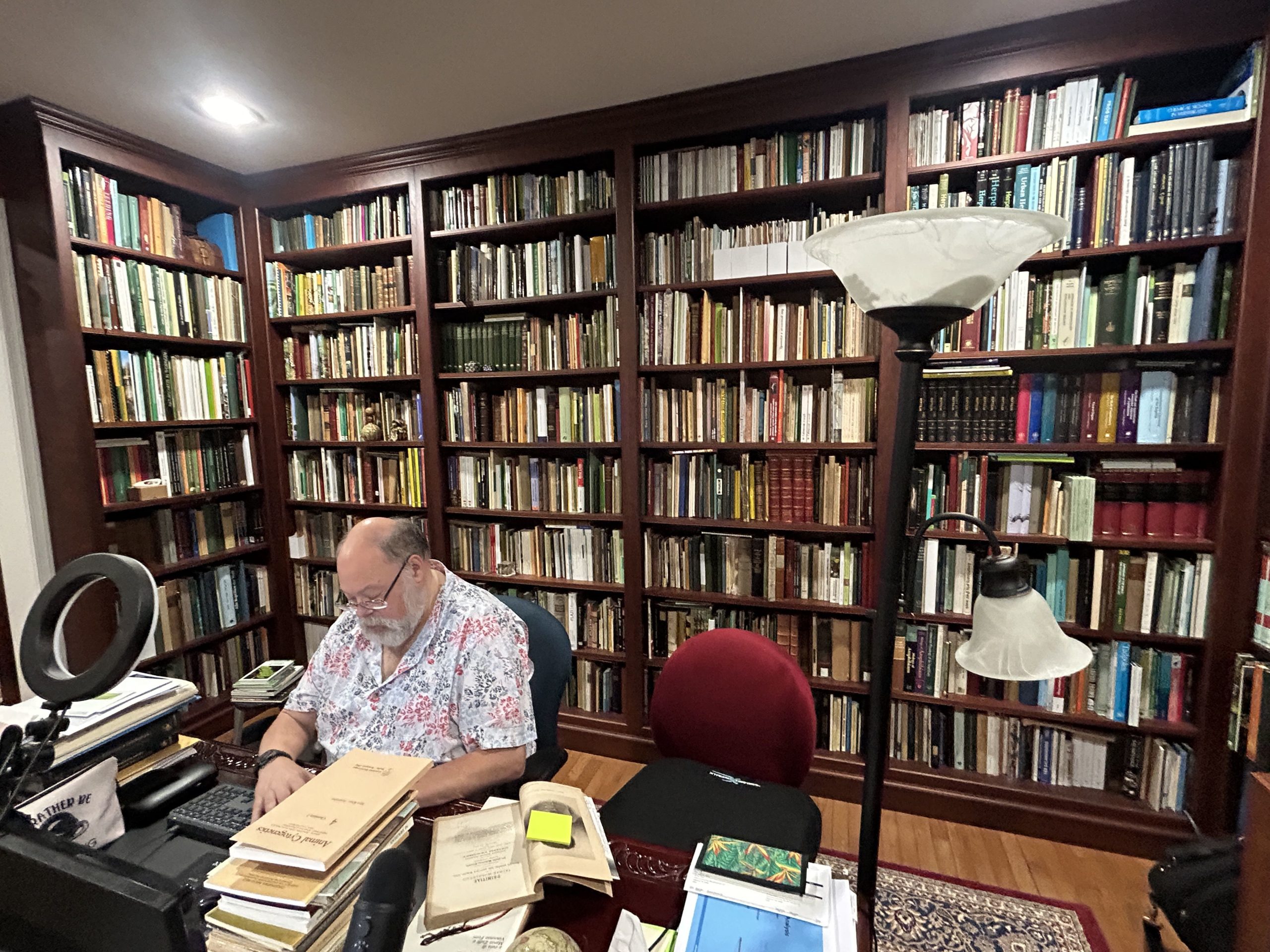
Bauer had an “open-door policy,” Paluh recalled, to help his students with research. That came with access to his personal library — one of the largest collections of books on herpetology in the world and the inspiration for a scene in the 2012 movie The Amazing Spider-Man.
Aaron Bauer’s personal library is one of the largest collections of books on herpetology in the world. It was used as inspiration for a scene in the 2012 movie “The Amazing Spider-Man.”Courtesy of Aaron Bauer
Bauer alsocares about his students’ lives beyond graduation, said his Villanova colleague Todd Jackman, who is organizing a “Bauer-palooza” near the university in September.
About 80% of his former master’s students have stayed in the field, becoming professors in Louisiana and Kentucky, a museum curator in Australia, the head of nature conservancy in southern Angola, and more.
“I’m not crazy about being the center of attention, but I think that’s outweighed by the fact that I’ll have all of these people in one place,” Bauer said.
When Home Appétit moved into a space just off City Avenue in West Philadelphia in 2020, founder and CEO Lee Wallach thought the company would stay five to 10 years.
But given the business’ quick growth, particularly during the pandemic, the company is already “bursting at the seams,” Wallach said. The meal delivery company is moving to East Falls in September, to a former catering facility Wallach bought and is renovating.
Home Appétit, founded in 2013 in Wallach’s Center City apartment, is on track to bring in $10 million in revenue this year, Wallach says. His company delivers roughly 16,000 to 20,000 meals a week within a 50-mile radius.
Wallach sees untapped customers and opportunities he can now pursue.
In addition to buying the new headquarters for a little over $2 million, he plans to spend between $3 million and $4 million on renovations and business upgrades, which he’s been able to do through bank financing. He’s building out a fleet of delivery vans, opening a pickup window, and setting up the business to make and sell more meals. That includes hiring dozens more employees.
With that, Wallach predicts, Home Appétit will “have almost unlimited potential for growth.”
Why Home Appétit grew as some competitors fizzled
In Home Appétit’s early days, Wallach planned to discontinue chicken cutlets. Breading the chicken by hand and cooking it was very labor intensive for his small team, he says.
“I tried to take them off the menu, and I had many customers messaging me that I couldn’t do that,” Wallach said. “They’ve been on the menu ever since.”
It was an early lesson in what keeps people coming back to Home Appétit. Wallach’s earliest customers were doctors. Today, customers include doctors, nurses, and professors, as well as young families, and new parents who receive meal delivery as a gift. Of his original first five customers, two still buy his meals.
In recent decades, plenty ofmeal kit companies such as Blue Apron and HelloFresh have tried to shake up home cooking, providing customers with premeasured ingredients and detailed instructions. But they have faced retention challenges.
Home Appétit, on the other hand, offers fully prepared heat-and-eat or ready-to-eat meals — so do several competitors.
Factor has Keto and vegan options; Thistle offers gluten-free and dairy-free meals; and CookUnity brings together distinct chefs to craft menus.
They’re all helped by a trend of people eating fewer meals out, said Michael Infranco, a RetailStat analyst who covers businesses such as Wegmans, HelloFresh, and Kroger.
But the industry is facing competition from grocery stores that offer prepared meals and delivery, he says. Some are partnering with Uber Eats or DoorDash.
There’s a lot of industry pressure around trends, says Wallach, who has steered clear of them.
“People are looking for protein, and people look for macros, and everybody wants to count calories, and everybody wants to know how many carbs are in [their food],” he said. “That’s not really us.”
His business doesn’t cater to a specific diet, he says. Instead, his team aims to make “restaurant quality” food.
“We’re not just dumping butter or dumping salt into a dish to make it taste good,” Wallach said. “We’re finding different ways and using different techniques to really elevate the flavor and the profile of the meals that we prepare.”
Home Appétit sets itself apart because of its focus on the long-term, Wallach said. He wants it to be an “essential service” to its customers.
That’s been true for Ricky Grenis of Northern Liberties. He and his wife, Bonnie, have been considering a move to the suburbs and often joke that they must stay in the Home Appétit delivery range, Grenis said.
“It’s hard to put a price on the convenience that it provides us as two working parents,” said Grenis, 37, who has two young children andworks in the wine industry. The couple tried out a few national meal-kit companies, but they were unimpressed by the ingredients and still had to cook.
Grenis is a vegetarian, but Bonnie isn’t, and Home Appétit allows them to order meals that both can enjoy, as well as kid-friendly options. “It literally feels like we have a private chef,” said Grenis.
The only downside, he said, is the amount of plastic packaging. “If we could figure out how to even be more sustainable, that would be a plus,” he said.
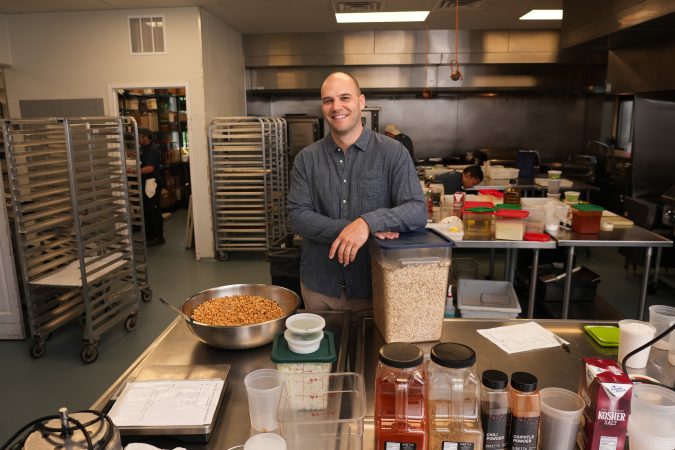
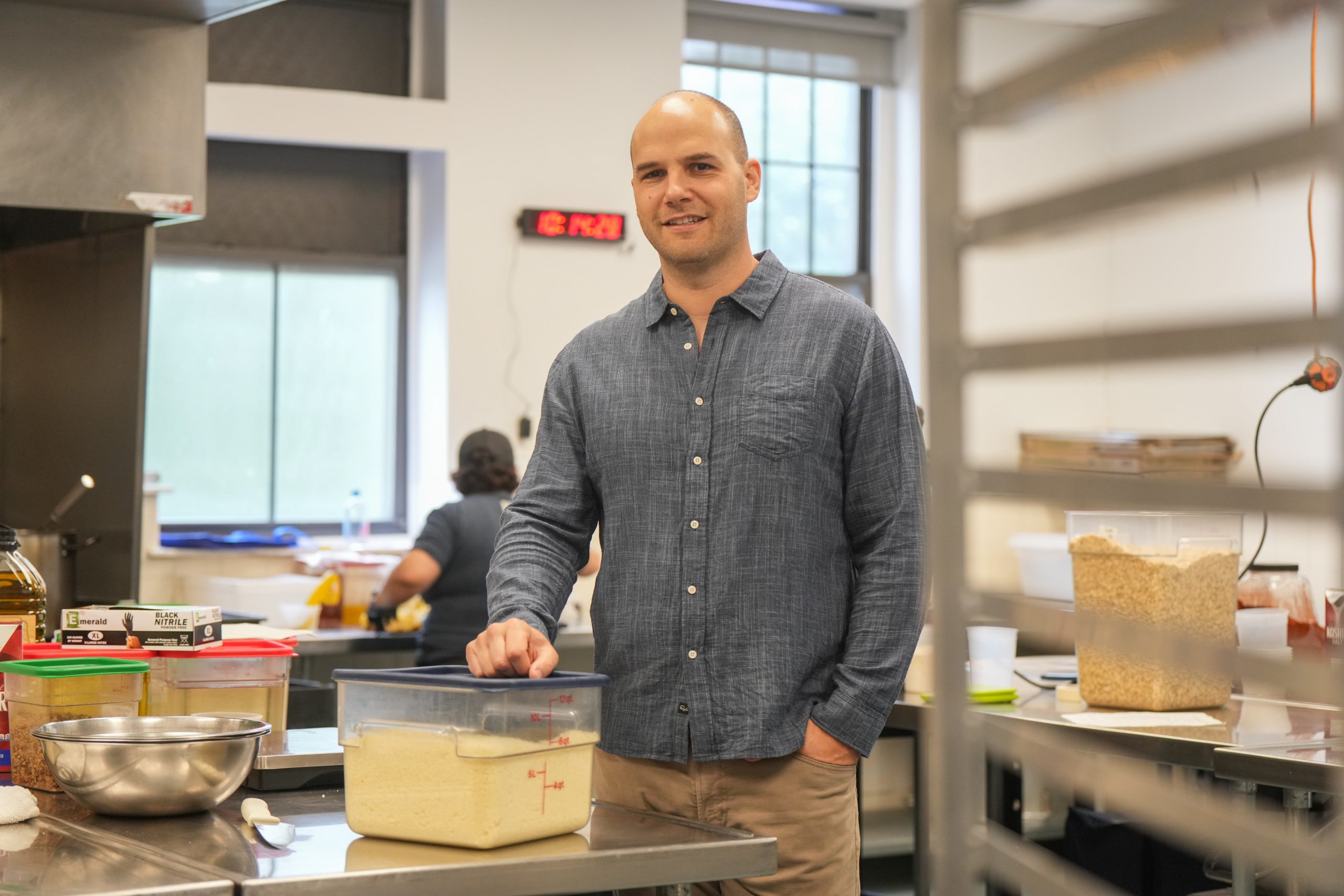
Lee Wallach at the company’s kitchen.Jessica Griffin / Staff Photographer
Staying competitive, and focused on the Philly area
On a recent day in July, Home Appétit’s entree menu included a miso-glazed salmon bowl with bok choy and brown rice, a pulled buffalo chicken sandwich, and a “Southwest Salad” with tortilla strips and buttermilk dressing. The company also offers small plates and add-ons such as roasted asparagus, steamed broccoli, and hard-boiled eggs.
Customers can order anytime between Tuesday and Friday night, to receive their meals the following Monday.
The minimum order costs $100 and covers four to six meals for a single person. Customers can also increase their order size for more people.
While some businesses have struggled with rising food costs, Wallach says Home Appétit has been partly insulated because it sources products from cooperatives and small farms.
“That’s kind of been a bit of a competitive advantage for us, and has allowed us to control our prices a little bit more,” he said.
Still, economic conditions have changed since 2013, particularly the costs of labor. He increased prices for the first time last year. While the basic order still costs $100, adding more people to an order now costs more.
The new headquarters is 23,000 square feet, up from the current 3,500-square-foot space, as well as a leased office in South Philly. With the move, the company will consolidate under one roof.
Wallach plans to have a staff of 200 to 250 by 2028. He currently employs roughly 50 full-time kitchen staff and 10 corporate employees. Meals are delivered by 40 to 50 drivers, who are mostly contractorsin their own vehicles.
Tech company founder Lilly Chen, 30, orders most of her food to her Chinatown apartment, where she lives with her cofounder. She has tried every food delivery service under the sun, she says, but Home Appétit stands out because of its delivery model. She says it’s because the company doesn’t outsource delivery.
“There’s a lot of other meal providers, that because they don’t own it, if something goes wrong — the food spoils or it’s late or you can’t find a delivery — they just kind of have to refund you and then you’re on your own,” Chen said.
Wallach plans to launch pickup at the new location, which customers have been asking for. Home Appétit also got its first refrigerated van.
Under the company’s current model, food gets delivered in insulated bags with ice packs in contractors cars, which puts a limit on how far meals can travel — but Wallach plans to expand the company’s delivery zone as he adds additional refrigerated vans.
He also plans to deliver on more days, not just Mondays, starting next year.
“If we can start delivering [closer to the weekend] and deliver to the Shore, I think it’s a home run for us for the summer months,” Wallach said.
He might pursue other markets in the future, perhaps Boston or Washington, D.C. But for now, Wallach is focused on the Philadelphia region, he says.
“There’s a ton of untapped opportunity here,” he said. “I’m excited to finally be able to take advantage.”