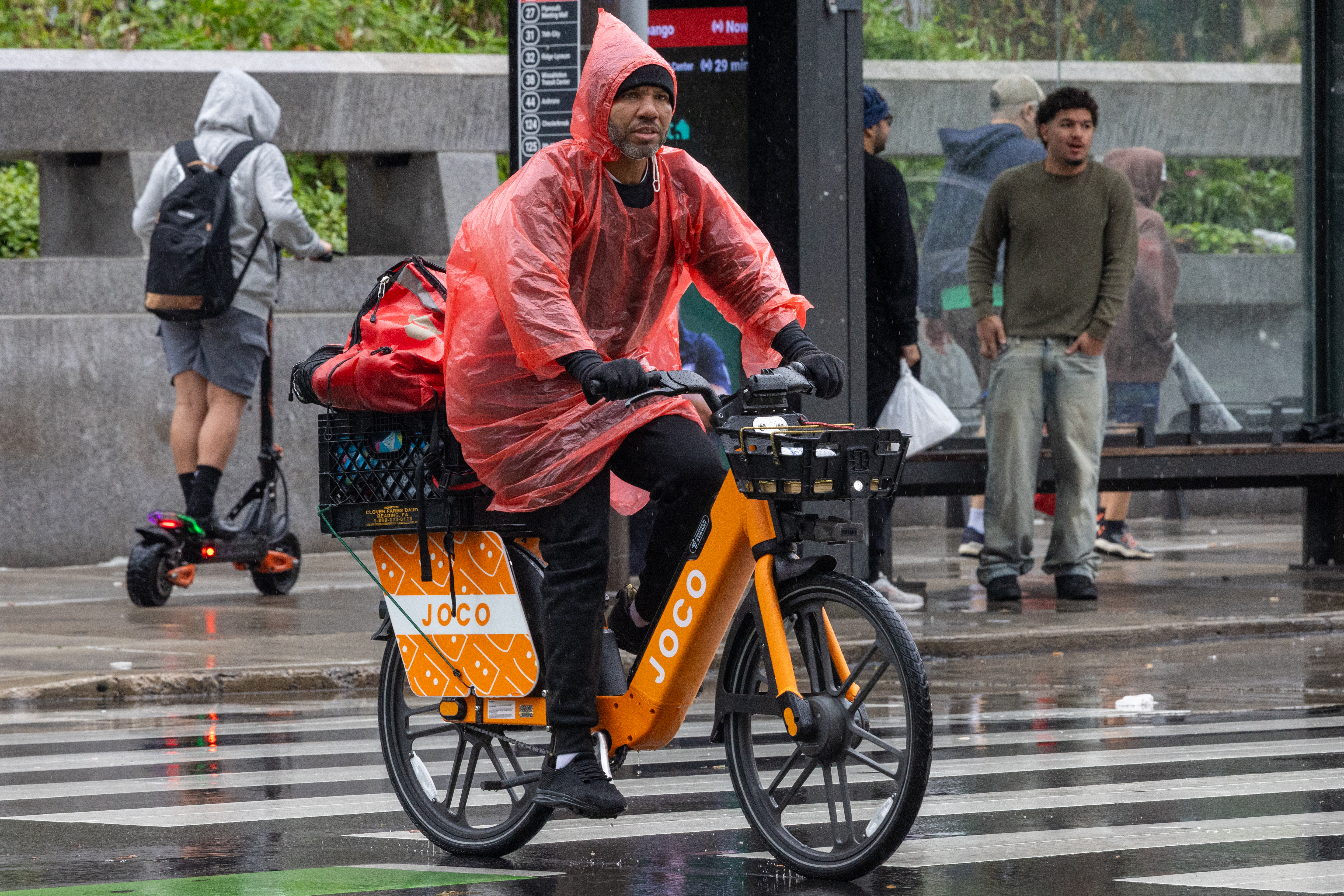
Beginning this month, states are required to shoulder a higher portion of the costs associated with administering the Supplemental Nutrition Assistance Program.
It’s the latest change to the federal food aid program resulting from the “One Big Beautiful Bill Act” signed by President Donald Trump last year. A local legal expert said that it’s another challenge for a program that has already seen tens of thousands of people in Philly lose their benefits.
Here’s the latest on what’s changed, and what people can do:
How do the October changes affect SNAP recipients?
Beginning Oct. 1, Pennsylvania and other states are required to take on 75% of the administrative costs of managing SNAP, said Mackenzie Libbey, a supervising attorney at Community Legal Services, which provides free legal assistance.
State agencies are already struggling to keep up with recent changes to SNAP, Libbey said. In addition, they’re preparing for another rule change that will go into effect next year — requiring states to keep a low “error rate” or take on more of the costs of the food assistance itself.
So on one hand, state case workers are overloaded, and on the other, SNAP recipients are struggling to navigate a lot more documentation requirements.
“So what we’re seeing, and I think we’ll continue to see, is people getting cut off due to paperwork,” she said.
Does this have to do with work requirements?
As of last September, people on SNAP in Philadelphia had to start proving that they were working, or that they were exempt because of medical or other reasons, to qualify.
That’s contributed to a steady decline in recipients, she said.
People who are on SNAP tend to be either working low-wage jobs and raising children, or dealing with issues related to health or age. That often doesn’t put them in a good position to handle the bureaucracy of the new system.
“It can be really difficult for people who are trying to feed their family or get back on their feet. It’s just too much, and people just give up,” Libbey said.
Who is losing their benefits?
With a few exceptions, noncitizens have lost their access to SNAP benefits, Libbey said. That includes refugees, asylum seekers, victims of human trafficking, and those awaiting a permanent status. Green-card holders and a few other groups remain eligible.
However, most people who have lost benefits are citizens who have failed to meet paperwork requirements. That’s led to a massive drop in enrollment.
How many people have lost SNAP benefits?
Almost two million people in Pennsylvania were on SNAP last summer, when the federal changes were signed into law, Libbey said. Since then, 234,000 people — 12% — have fallen off the rolls.
About 106,000 lost SNAP benefits because of work requirements, including 36,000 in Philadelphia.
Children make up 29% of those who lost benefits, with 69,000 people under age 18 losing benefits since last July, she said.
How much do SNAP recipients get?
The amount of benefits has not changed because of federal rules, and has increased slightly because of cost of living adjustments, federal data show.
SNAP benefits for a single person may be as high as $306. A family of four could receive as much as $1,023. A household of seven people would cap out at $1,616 per month. Most families get less than those amounts; average benefits are roughly a third less than the maximums.
What resources are available?
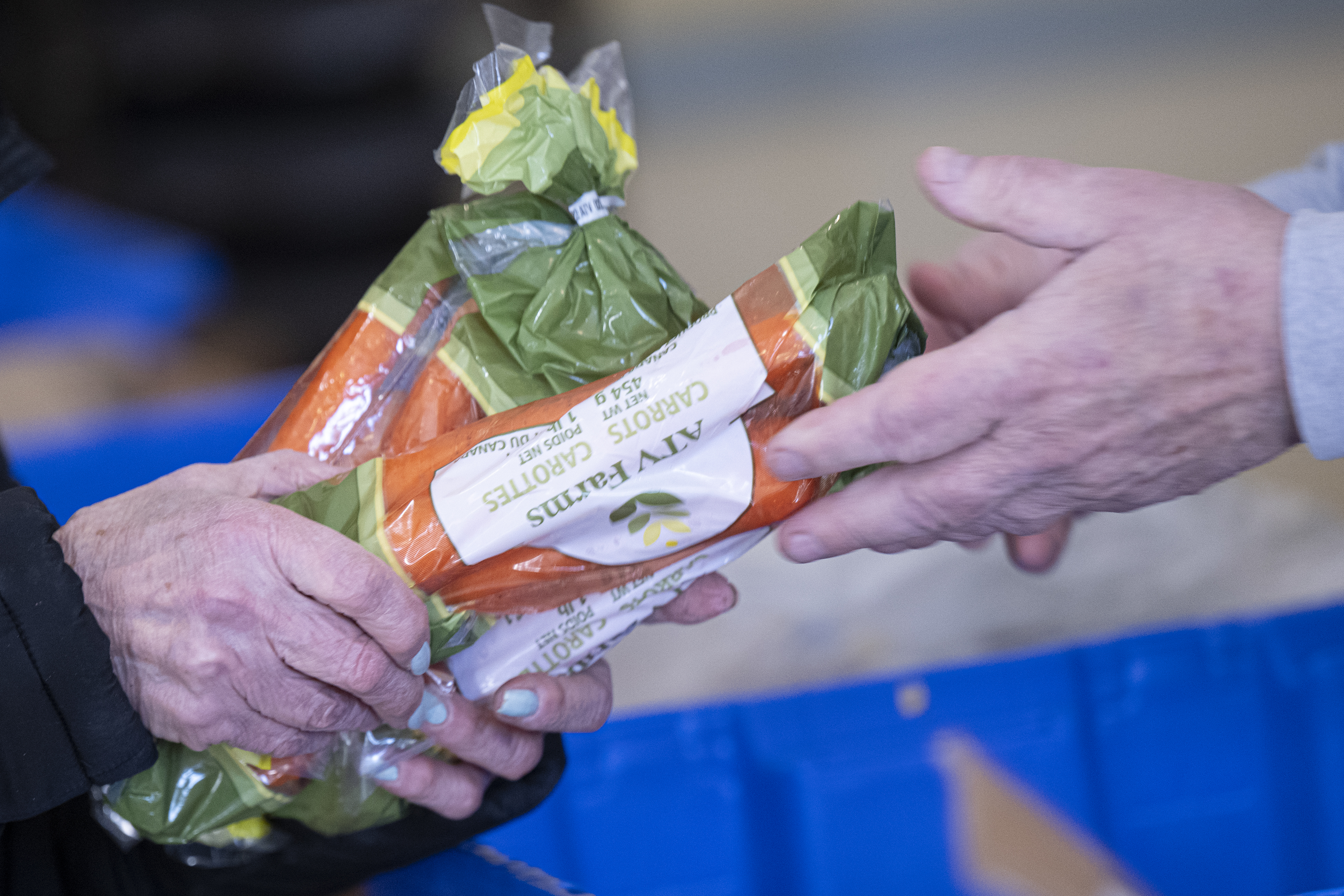
Food pantries such as Philabundance are one short-term resource for people in need.
For noncitizens in particular, charitable organizations targeting specific groups have popped up. Recently, the Asian Pacific Islander Political Alliance has organized food drives focused on Asian food staples.
Libbey encourages people who have lost SNAP benefits to contact Community Legal Services, which provides free legal help in Philly and has processed thousands of SNAP applications.
“We’ve seen a sad trend where people lose their benefits, they don’t know why, and they think, that’s it, there’s nothing I can do. And typically there are ways to get help, depending on your situation,” she said.
Officials from Drexel University and the Academy of Natural Sciences were scheduled to meet Friday to continue discussing a path forward — with a potential split of the two organizations hovering over talks as one possibility.
“That’s certainly a [potential] outcome,” said one source familiar with the situation who requested anonymity because they weren’t authorized to speak on the matter.
But there likely also will be “reconciliation attempts,” the source said. “We either abide by the terms that we have been talking about or don’t.” If both sides abide by the terms, they said, “then everything continues peacefully.”
The Academy and Drexel announced an affiliation in 2011, merging aspects of their operations but keeping separate boards. The Inquirer reported in April that Drexel told the Academy to either fully merge with the university or it would move to disaffiliate, and the two have been negotiating a new affiliation agreement.
Neither the Academy nor Drexel returned calls early Friday evening seeking comment on whether the meeting had ended and its outcome.
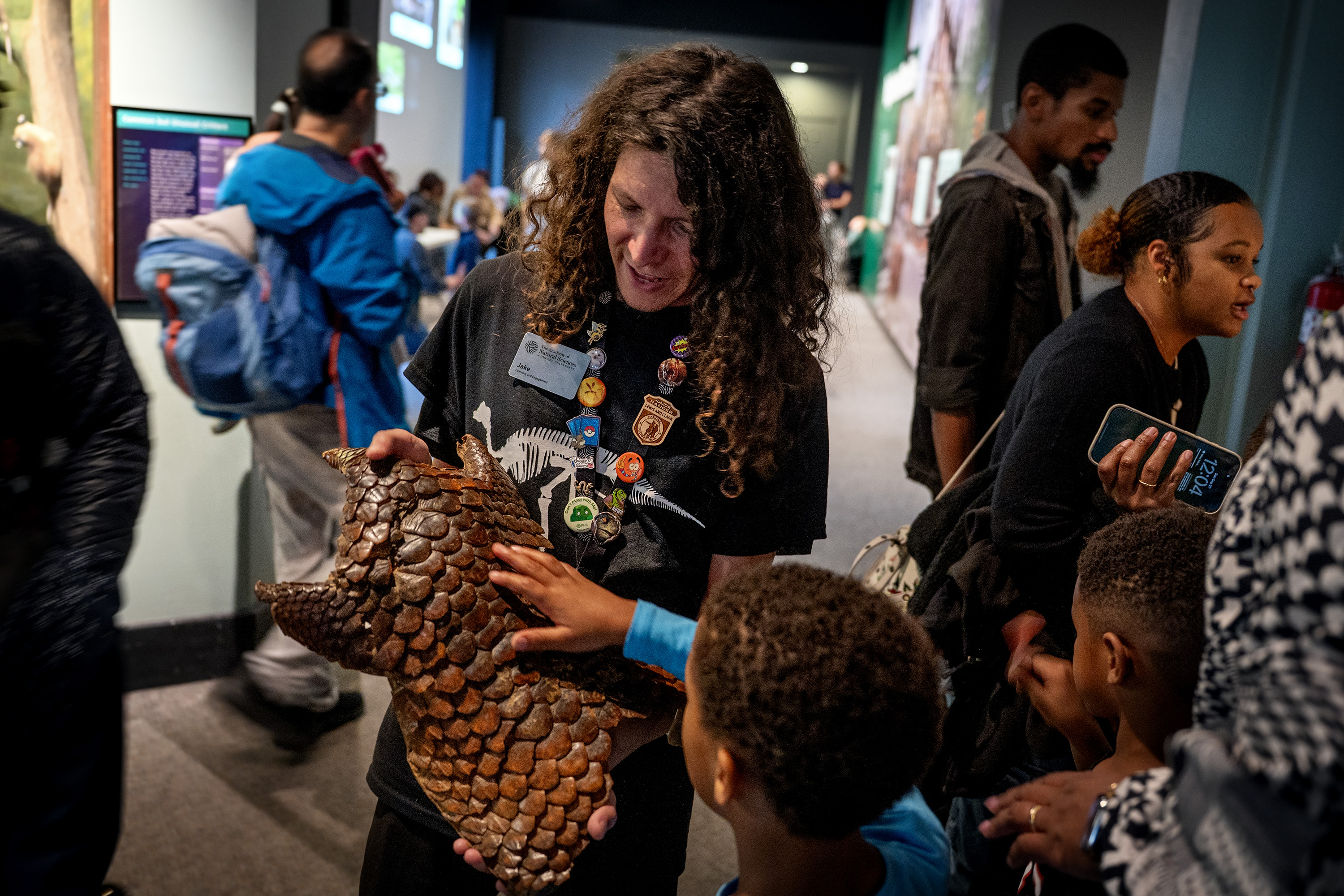
Science educator Jake Cook lets visitors feel the skin of a pangolin — a scaly anteater — at the Academy of Natural Sciences of Drexel University on Sunday.Tom Gralish / Staff Photographer
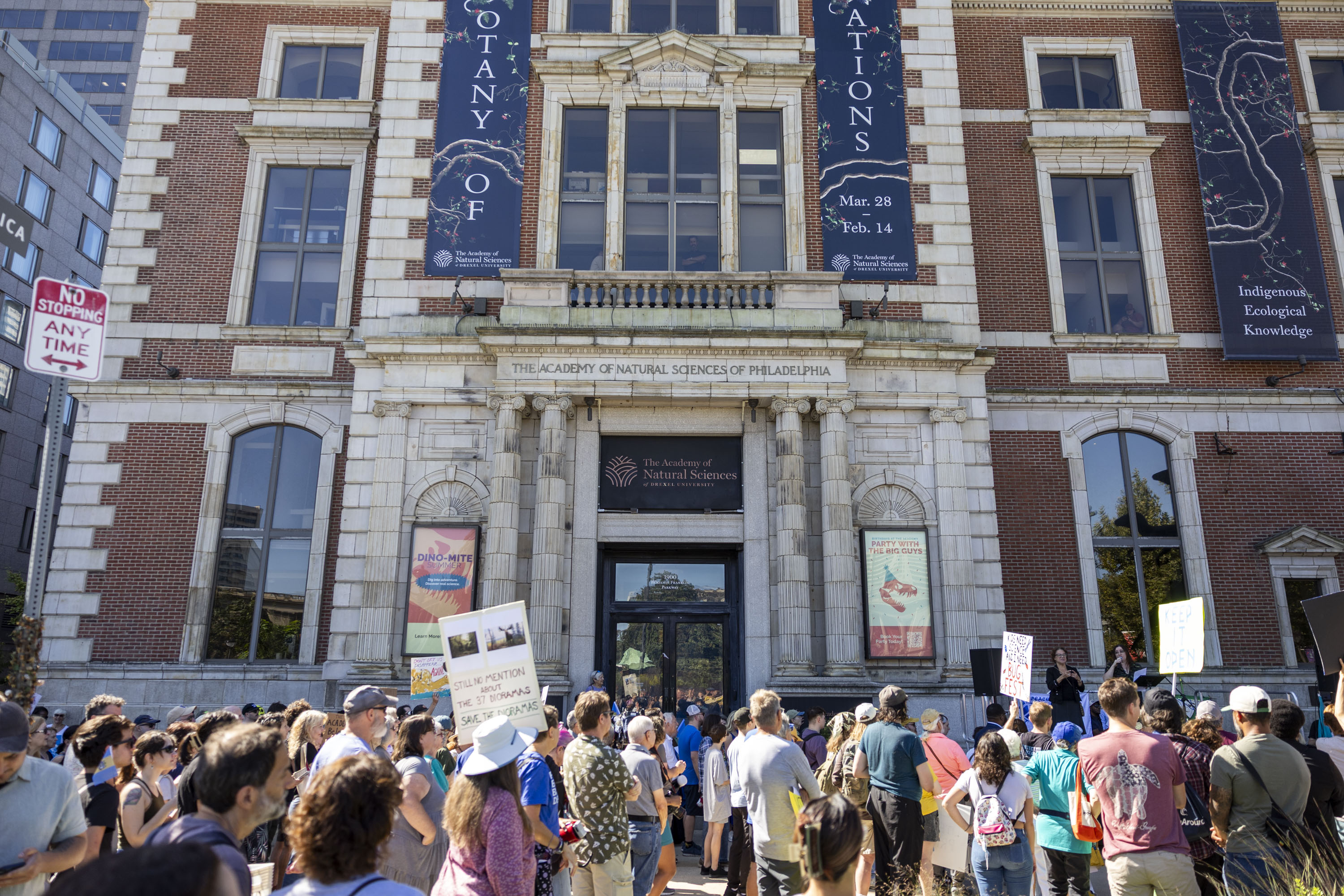
Drexel and the Academy disclosed plans in September to close the Academy museum, move the 19 million specimens in the collection, and eventually sell the building at 19th Street and the Benjamin Franklin Parkway.
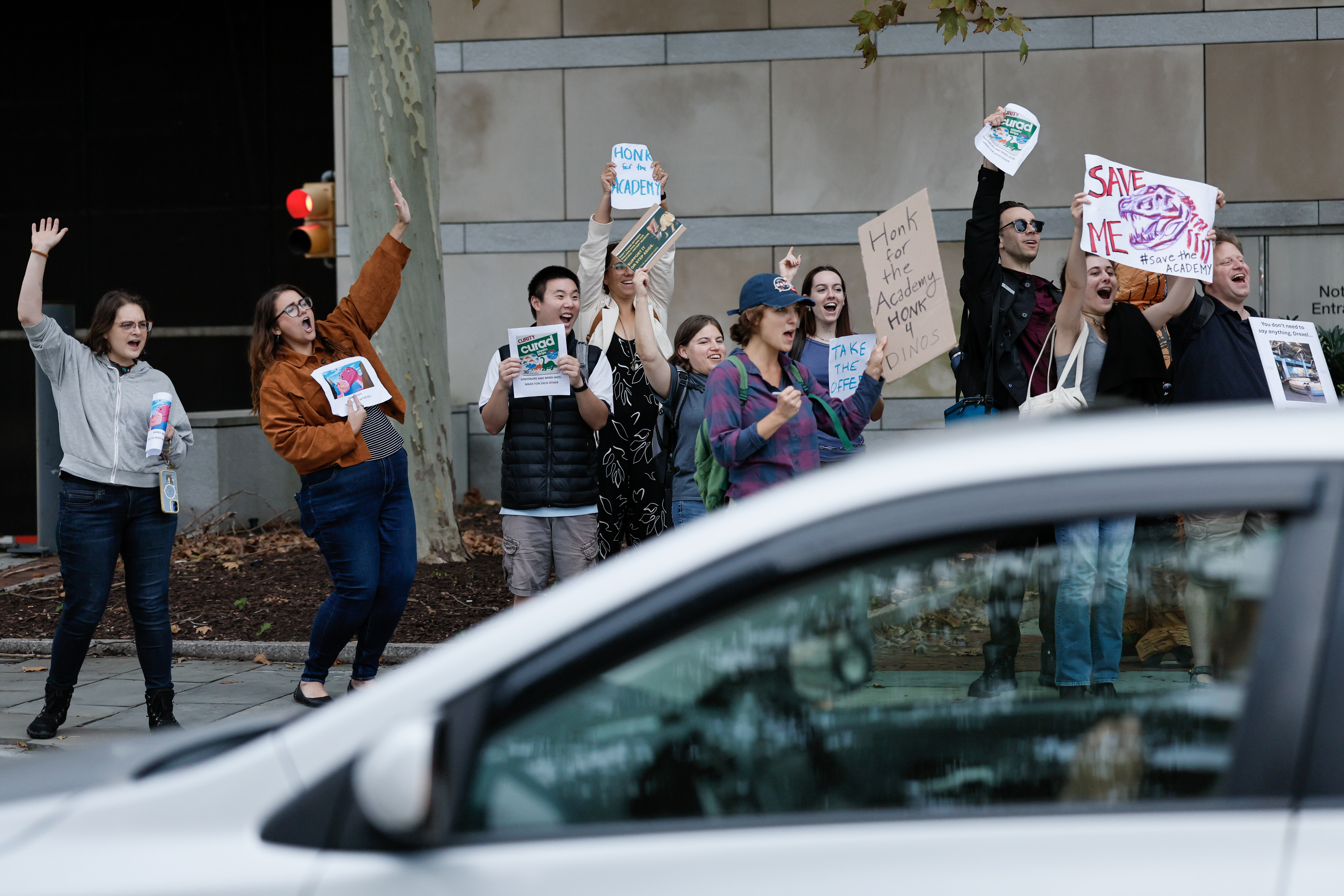
A group of protesters earlier this week gathered at the same time as a Drexel board meeting and called on the university to disaffiliate and give the Academy a chance to negotiate what’s best for it.
Drexel spokesperson Niki Gianakaris said earlier this week that the university had offered the Academy a path to disaffiliation.
“We have been, and remain, open to that possibility,” she said. “We continue to engage in good-faith discussions with the Academy about its future.”
Her comments came days after the William Penn Foundation made public its offer to underwrite operating costs for at least a year and keep the museum’s doors open while a permanent solution can be worked on.
William Penn said the goal was to “provide time to test the interest of other funders and supporters who have not been engaged so far,” and the Academy leadership said it was open to the reprieve.
The Academy, founded in 1812, has operated a museum since 1828, and its announced closure has generated street protests, more than 100,000 petition signatures, editorials, and the scheduling of City Council hearings for next week.
The museum was shuttered to the public at the end of the day last Sunday, following large numbers of visitors in recent weeks but prior years of declining attendance. In the 2025 fiscal year, it brought in 126,000 visitors — down from 2014 when it welcomed 208,000 science fans to its “dioramas, dinosaurs, butterflies, live animals, and the renovated Children’s Nature Discovery Center, Outside In,” according to the Academy’s tax return from that year.
The “Save the Academy” coalition gather outside of the National Constitution Center on Tuesday in an effort to keep the Academy of Natural Sciences museum open.Elizabeth Robertson / Staff Photographer
Since the beginning of the Drexel-Academy affiliation a decade and a half ago, “our goal has always been to improve the financial position of that museum and the Academy of Natural Sciences as a whole, the research and the collections,” said a Drexel source familiar with the matter who was not authorized to speak publicly about it. “That was written into the original affiliation, and as we moved forward in time we hit snags and different things we never quite achieved that financial resilience then. And then COVID hit and that became even more challenging for the museum.”
Drexel said that it had not received a formal proposal from William Penn but that it would be open to talking with the foundation about the matter.
Gianakaris did not comment Friday on whether talks had been held or scheduled.
“What William Penn has put forward is not enough,” said the first source, who had noted that a split was a possible outcome. “That wouldn’t do it.”
Gianakaris said Drexel’s focus is on “safeguarding the Academy’s collections and research enterprise” while developing a “long-term model” that allows the public to engage with its collections.
Drexel’s board of trustees earlier this week discussed the matter during a two-day meeting that was scheduled months ago. The meeting, the second held since Antonio Merlo became Drexel’s president July 1, 2025, was for the board to “focus on the university’s long-term future, strategic priorities and governance effectiveness,” Gianakaris said.
Philadelphia City Council voted Thursday to formally recognize Black Bottom, a predominantly Black neighborhood in West Philadelphia that was largely demolished in the 1960s to make room for a research park and other institutional development.
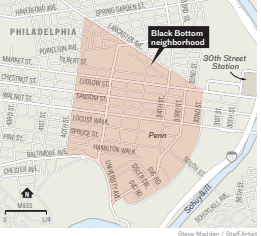
The resolution restores official recognition of a name that former residents have kept alive for decades, even as the area between 32nd and 40th Streets and University and Lancaster Avenues became known as University City. It also calls for future city communications and actions to acknowledge Black Bottom’s importance.
The Black Bottom neighborhood includes the area between 32nd and 40th Street and University Avenue and Lancaster Avenue.Steve Madden
The resolution acknowledges that displaced residents were excluded from the prosperity the new development created. But it does not provide compensation or establish a way for families to return. Councilmember Jamie Gauthier, whose district includes Black Bottom, introduced the legislation and described the resolution as a first step. “We still have much more work to do,” she said in an email, “but this is an important milestone in repairing the harm that the City and others inflicted here.”
Black Bottom emerged during the Great Migration, when Black Southerners moved to Philadelphia in search of work and opportunity. By the mid-20th century, it was a thriving community of homes, businesses, theaters, and clubs. But after the passage of the 1949 Federal Housing Act, the city deemed the neighborhood blighted and used federal urban renewal funds to demolish it, clearing homes and businesses for projects backed by the University of Pennsylvania and Drexel University. Thousands of Black residents were displaced as a result, forced to resettle in new parts of the city.
Those former residents and their descendants never forgot about Black Bottom, though. They have held annual reunions since 1974, while activists like Walter Palmer have spent decades documenting the neighborhood and organizing efforts to preserve its history.
A Black Bottom celebration and renaming ceremony will take place on Wednesday, Oct. 7, at the northwest corner of 36th and Market Streets.
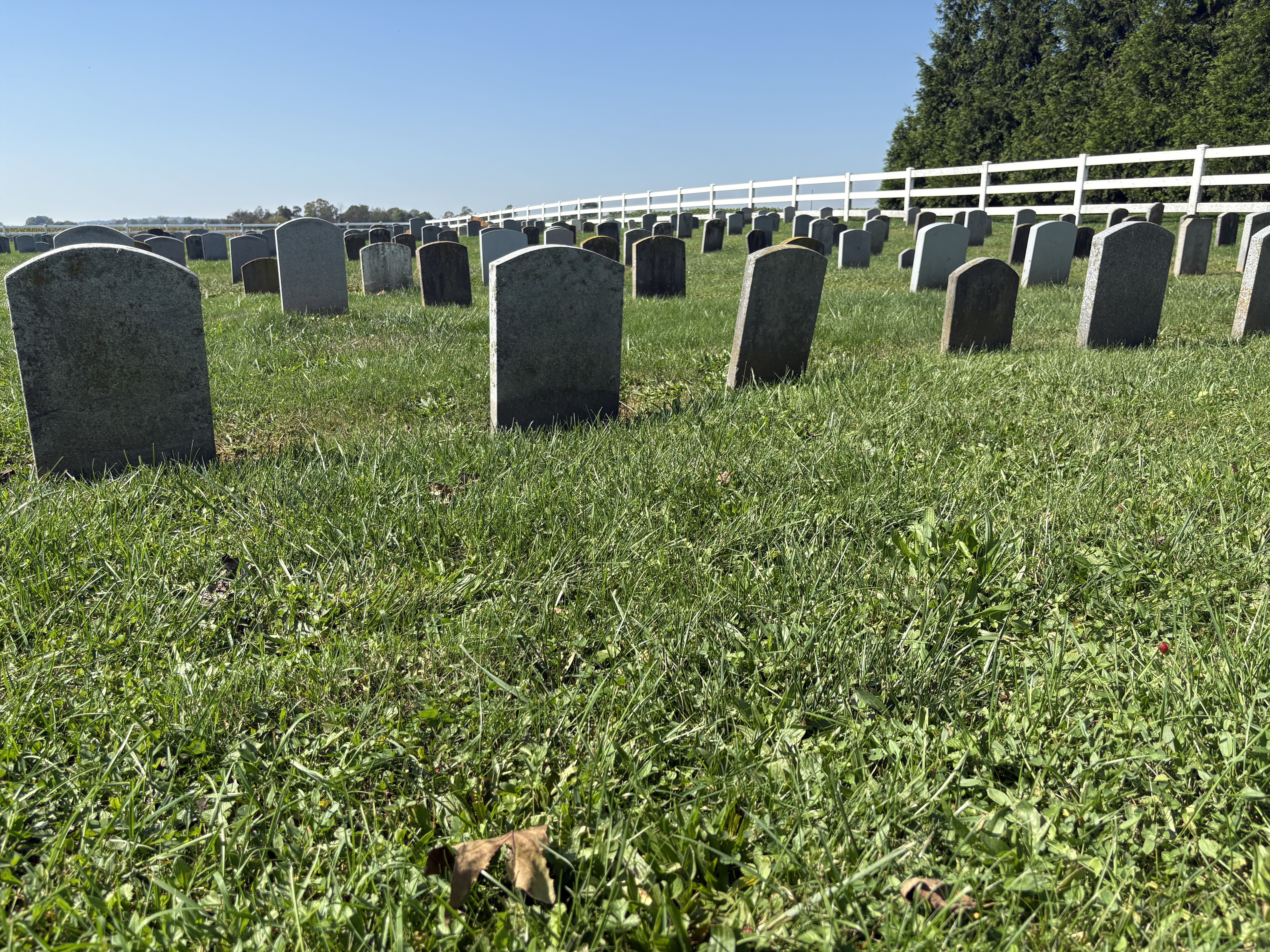
The headstone had not yet been placed Thursday on the freshly dug grave where a 20-year-old Amish woman was buried this weekamid the rolling clover fields and dairy farms at the edge of suburban Philadelphia.
Newly wed, and receiving treatment for blood cancer, she was the last of nine siblings sickened when measles swept through her unvaccinated family’s home on a one-lane road in Lancaster County.
At first, the home remedies that eased their symptoms seemed to help her, too: Soothing the fever with bath soaks. Calming the rash with coconut or olive oil. Cloistering in a dark room to ease light sensitivity.
Then her fever spiked. She struggled to breathe and had to sleep sitting up in a recliner in the living room, her maternal grandmother recalled.
Her family does not operatecars, in keeping with Amish beliefs, so they hired a driver to take her to the emergency department at Hershey Medical Center about an hour away. She died about two weeks later in the intensive care unit there, her grandmother said.
Speaking on the porch of her stone farmhouse, the grandmother described the family’s experience with Pennsylvania’s largest measles outbreak in three decades, now the nation’s largest. At her request, The Inquirer withheld her name and that of her deceased granddaughter to protect the family’s privacy.
She said her granddaughter ultimately developed double pneumonia and died after the family decided to discontinue use of a ventilator.
The cancer made her especially vulnerable to a virus as contagious as measles, which will infect 9 in 10 unvaccinated people who are exposed.
“Her immune system wasn’t built up,” the grandmother said. “She just couldn’t take it with the measles.”
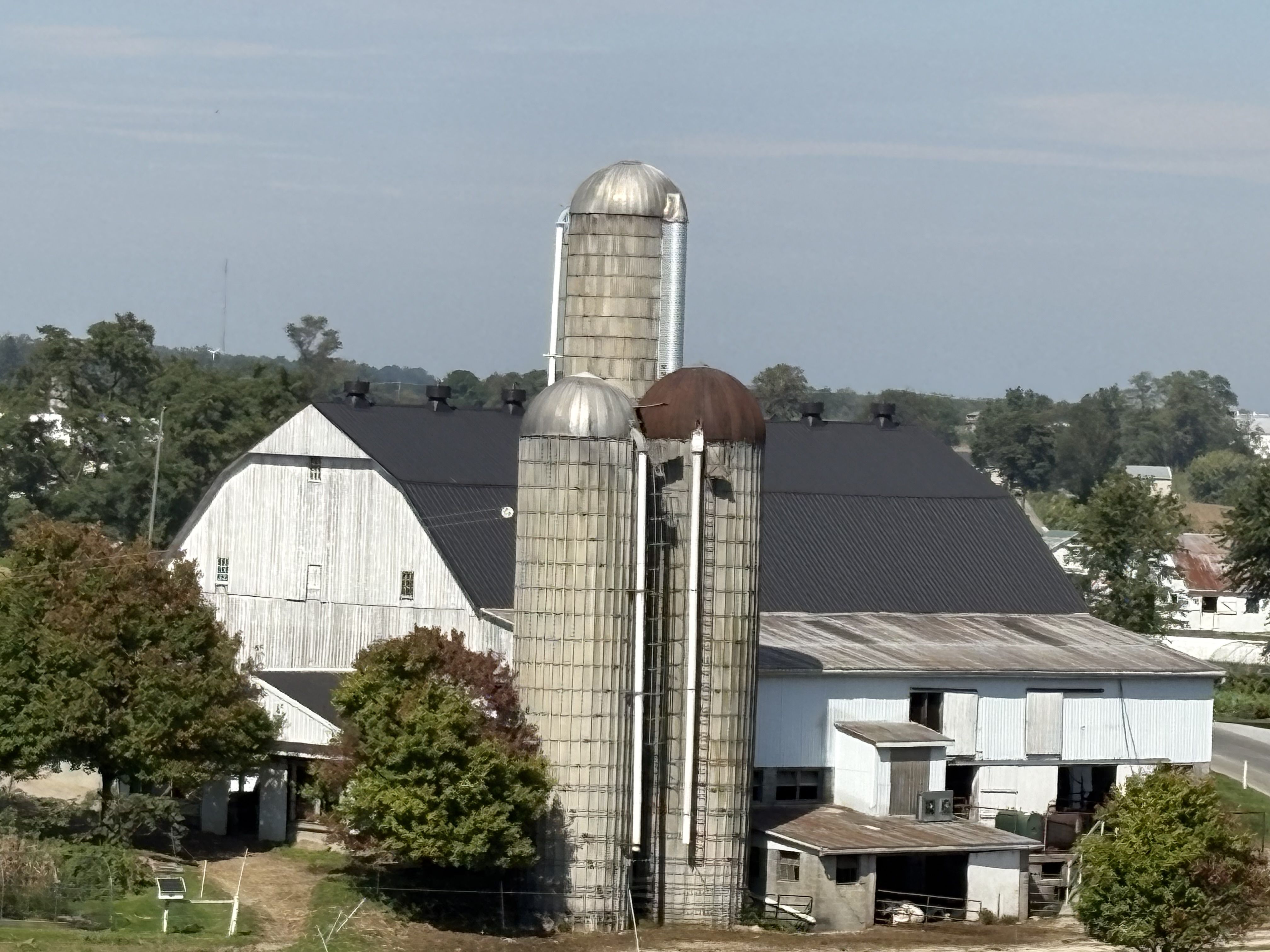
The Lancaster County borough where a 20-year-old Amish young woman died from pneumonia caused by measles is dotted with diary farms and grain silos.Wendy Ruderman
Pennsylvania reported on Wednesday its fifth measles-related death, revealing only that the latest fatality was an unvaccinated Lancaster County resident. Health officials did not provide further details, citing privacy laws.
But it appears from the grandmother’s account, along with other records and news reports, that three of the five deaths occurred in adults with measles. Other reported deaths included an 18-year-old Amish woman from Mifflin County and a 40-year-old from Jefferson County with severe respiratory conditions. Two Amish infants in Lancaster County who had confirmed measles cases also died. All five cases involved people who were unvaccinated, either by choice or because they were too young to receive vaccines.
The number of deaths in adults is striking, said Paul Offit, who heads the Vaccine Education Center at the Children’s Hospital of Philadelphia. Widespread childhood vaccinations had eradicated the disease in the United States, leaving mostly children too young to be vaccinated at high risk in recent decades. Now multiple generations of unvaccinated children are adults, exposing wider vulnerabilities across the state, Offit said.
“We’re aging out a population that was never vaccinated,” he said.
After learning the details of the 20-year-old’s death from The Inquirer, Offit explained that measles commonly leads to pneumonia.
“The measles virus reproduces itself in the lungs and can cause severe and occasionally fatal infection,” he said.
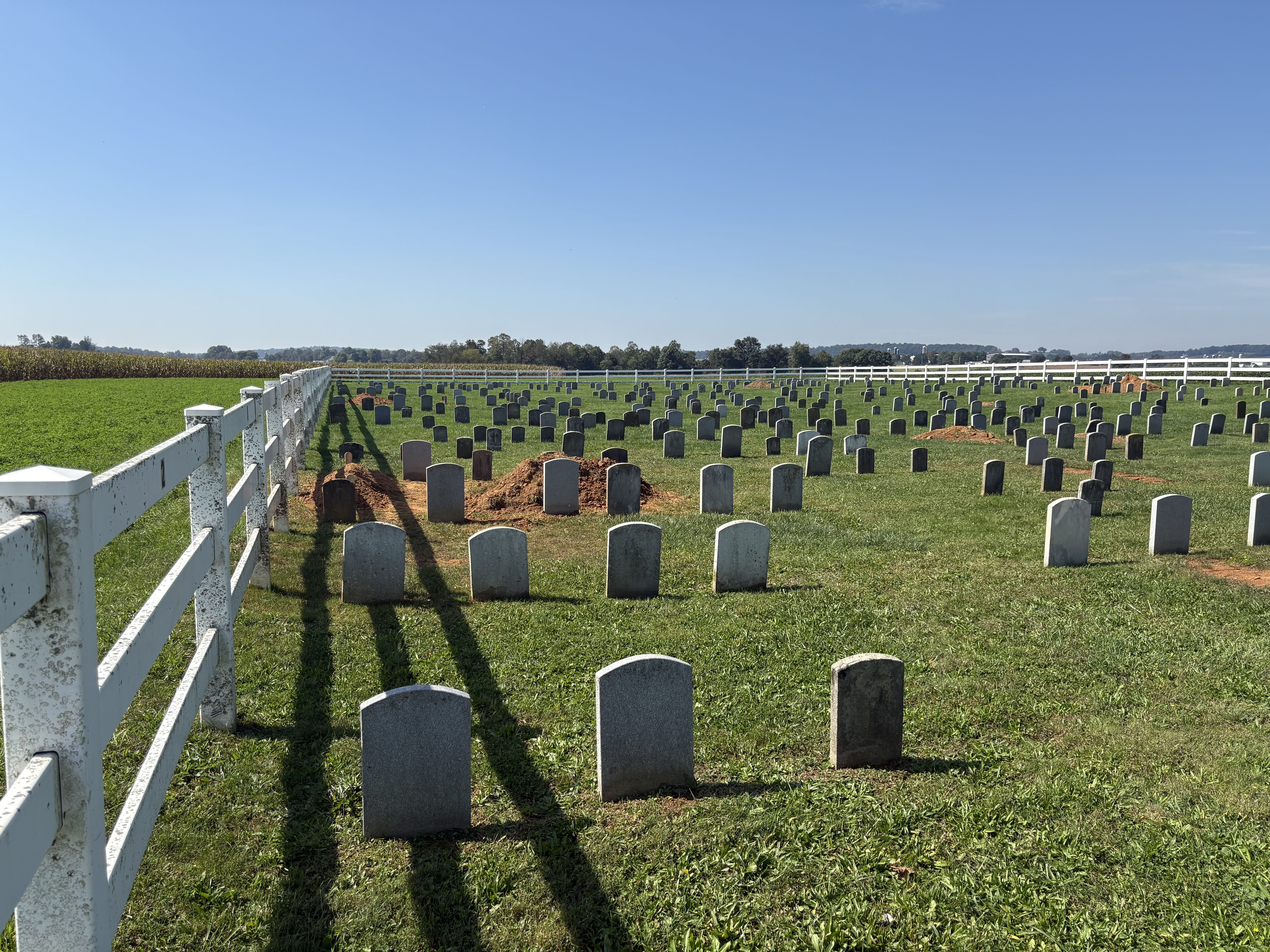
The Amish cemetery where the 20-year-old woman is buried.Wendy Ruderman
Too late to get vaccinated
The young woman, the second oldest in a line of nine siblings, ages 6 to 22, fearedgetting measles in the outbreak in Lancaster County, her grandmother said.
About two years ago, she was diagnosed with leukemia, a blood cancer, and began medical treatment with the help of an “English” neighbor — as Amish call outsiders — to drive her to her medical appointments.
The treatment regimen of chemo and steroids further weakened her immune system. She knew she was at risk of more severe sickness from a viral infection like measles, which started spreading throughout her family in the late summer.
Her eight siblings, her parents, and her new husband all got sick, the grandmother said.
Along with home remedies, family members drank extra fluids to stay hydrated, the grandmother said.
“They weren’t worried,” the grandmother said. “Measles just has to take its course.”
Although no one in the household was vaccinated, they are not opposed to the vaccine based on Amish beliefs. They believe it’s an individual choice, she said, and many Amish people opt not to get vaccinated because they “don’t know what’s in it.”
“We wouldn’t tell people not to get vaccinated,” the grandmother said. “It’s up to each person.”
As illness spread in her household, her granddaughter grewmore worried about getting the virus than about the vaccine that medical authorities have long considered safe and effective.
She asked her doctor if she could get a measles vaccination. Her doctor said no. “She wasn’t allowed to get the shot because she was on chemo,” the grandmother said.
The measles vaccine contains a live but weakened virus, and her granddaughter was already immunocompromised from the leukemia treatment.
After getting measles, her granddaughter began to feel better in early September. She picked vegetables from the family’s garden to make soup using tomato juice as the broth. She canned jars for the coming cold months, her grandmother said.
Then, in mid-September, she spiked a high fever, and her breathing became labored.
“She could hardly breath. Her lungs were just in bad shape,” she said.
The Amish typically only seek emergency hospital treatment until “sometimes we’re dying,” the grandmother said, recalling how her husband got chided by a doctor in 2018 for waiting too long to get the heart surgery he desperately needed.
“We do what we can at home,” she said. “We have so many natural things we can do.”
By Sept. 11, the family knew it was time to take her granddaughter for emergency care at Hershey Medical Center.
At Hershey’s ER, doctors gave her a chest X-Ray, but sent her home before reading it, the grandmother said.
“They wouldn’t do anything for her. They didn’t want her there,” shesaid. (A Hershey spokesperson did not reply to a request for comment on Friday.)
A Hershey provider later called and left a voicemail message asking the family to bring her back. Although the family has a phone in their house, the grandmother said they rarely use it. With the ringer off, all calls go to voicemail, she said.
A driver took them back to the hospital, where she was admitted on Sept. 14. An ultrasound showed fluid between the lining of her lungs and in her lungs. She was diagnosed with double pneumonia, her grandmother said.
Hospital staff hooked her up to supplemental oxygen.
“They had the oxygen up as far as they could and she still had to work to breathe,” the grandmother said.
About a week later, they moved her to the intensive care unit, where they sedated her so they could put her on a ventilator while intubated.
The hospital allowed two family members at a time to sit by her bed. Her granddaughter’s young husband and the girl’s mother sat vigil, the grandmother said.
As she continued to deteriorate, life support was the only remaining option, and it carried the risk of neurological complications, including brain death.
The family didn’t want that, the grandmother said. “They couldn’t do anything more,” she said.
They turned off the oxygen and shut off the ventilator, Family members, including her new husband’s parents, gathered around her bed.
She died with a breathing tube still in her mouth, the grandmother said.
A happy first year of marriage
More than 300 people came to the family’s home on Monday for the funeral service and viewing. She was buried in a cemetery near the family’s home, about a month before what would have been her first wedding anniversary.
Despite being ill with leukemia, her granddaughter’s trademark “rosy pink cheeks” and “beautiful smile” beamed on her wedding day, her grandmother recalled.
The November 2025 wedding, held at the family home, was a festive affair, with plates loaded up with chicken and vegetables, chicken and filling, pickled cabbage, and cooked celery.
She feels sorry for her granddaughter’s husband, who declined to be interviewed. “They had a good year together,” she said.
At the young woman’s home, two black dogs, with hay in their matted curly hair, greeted an Inquirer reporter on Thursday. Some of her family members were outside, unloading cornstalks from a horse-drawn wagon and feeding them into a John Deere harvesting machine.
They stopped working and spoke to one another in Pennsylvania Dutch, a centuries-old German dialect, before fetching the young woman’s father, who declined to be interviewed.
Staff writers Aubrey Whelan and Sarah Gantz contributed to this article.
The decree came Thursday after three months that have featured an assortment of downpours and general rainfalls, with a bonus early-season nor’easter, throughout the Garden State and the Philadelphia region that may have had a lot of folks wondering when too much would be enough.
The region has another shot at rain Sunday, but the atmosphere may be poised to flip into a radically different, season-changing, rain-repelling pattern.
In fact, said Richard Bann, a meteorologist with the federal Weather Prediction Center, “If this were January, people would worry about how cold it would be.”
Any rain Sunday would be the result of a stalled front and “a surge of tropical moisture from the Gulf,” distantly related to the remnants of Hurricane Polo, said Matt Benz, senior meteorologist with AccuWeather Inc.
Polo, of course, originated in the Pacific, which has been on fire with tropical activity — the mirror opposite of the Atlantic.
The Atlantic Basin, which includes the Gulf and the Caribbean, hasn’t spawned a single hurricane this season, and this has a shot at becoming the first season without a verified hurricane in 132 years.
One extraordinary feature of the Philly region’s remarkable turn in rain fortunes has been the absolute absence of tropical-storm related rainfall, which often has been an important source of late summer and early fall rainfall around here.
The weekend outlook for the Philadelphia region
On the subject of turnabouts, that was the sun that reappeared in the skies over Philly Thursday and Friday after a September in which it seemed as if the region was living under a dropped ceiling. For the month, Philly officially had three clear days.
The average is about eight during one of the sunnier and drier months of the year.
As though the sun was making up for lost time, on Friday temperatures in Philly shot into the mid-80s. While that’s not a record for the date — that would be 95 degrees, set in 2019 — the normal high for the date is 73.
And that’s about what is forecast for Saturday, which should be a fabulous day for hay-riders and corn-maze enthusiasts.
A storm was expected to form along as stalled front and move near the region and was likely generate showers on a Sunday afternoon that would be several degrees cooler than Saturday.
And October weather really arrives with the workweek, said Benz.
Next week is looking sunny and dry with daytime highs that might not get much past 60 degrees Tuesday and Wednesday, and fall into the 40s both mornings. If the foliage experts are right, those sunny days and cool nights should be ideal for the leaf-color.
A fond farewell to the drought
At least the trees won’t be moisture-starved.
It may be hard to remember that on July 1, Philadelphia officially had experienced 16 consecutive months of below-normal precipitation.
Antecedent dryness was one thing that moved New Jersey to declare a drought “warning,” asking residents to conserve water voluntarily, on Dec. 5.
On June 1, Philadelphia, its seven neighboring counties, and all of New Jersey were in states of at least “moderate drought,” according to the interagency U.S. Drought Monitor.
Through Wednesday, rain totals in all the counties of New Jersey and Eastern Pennsylvania were well above normal during the previous 90 days, according to the Middle Atlantic River Forecast Center.
Go ahead New Jersey, drink up and wash the cars: After 300 days, the governor’s office on Thursday officially lifted the statewide drought warning.
The decree comes after three months that have featured an assortment of downpours and general rainfalls, with a bonus early-season nor’easter, throughout the Garden State and the Philadelphia region that may have had a lot of folks wondering when too much would be enough.
The region has another shot at rain during the weekend, but the atmosphere may be poised to flip into a radically different, season-changing, rain-repelling pattern.
In fact, said Richard Bann, a meteorologist with the federal Weather Prediction Center, “If this were January, people would worry about how cold it would be.”
Any rain this weekend would be the result of a stalled front and “a surge of tropical moisture from the Gulf,” distantly related to the remnants of Hurricane Polo, said Matt Benz, senior meteorologist with AccuWeather Inc.
Polo, of course, originated in the Pacific, which has been on fire with tropical activity — the mirror opposite of the Atlantic.
The Atlantic Basin, which includes the Gulf and the Caribbean, hasn’t spawned a single hurricane this season, and this has a shot at becoming the first season without a verified hurricane in 132 years.
One extraordinary feature of the Philly region’s remarkable turn in rain fortunes has been the absolute absence of tropical-storm related rainfall, which often has been an important source of late summer and early fall rainfall around here.
The weekend outlook for the Philadelphia region
On the subject of turnabouts, that was the sun that reappeared in the skies over Philly after a September in which it seemed as if the region was living under a dropped ceiling. For the month, Philly officially had three clear days.
The average is about eight during one of the sunnier and drier months of the year.
The sun is due for an encore during a summery Friday, with highs expected in the mid-80s, but as an autumnal front approaches, showers are possible at night.
Saturday should be a fabulous day for hay-riders and corn-maze enthusiasts, with sun and highs expected to be more October-like, perhaps 15 degrees cooler than Friday’s.
A storm is expected to form along the front as it stalls and moves toward the region, perhaps transporting some of Polo’s leftovers, and showers again are possible Sunday and Sunday night.
But October weather really arrives with the workweek, said Benz.
Next week is looking sunny and dry with daytime highs that might not get much past 60 degrees Tuesday and Wednesday, and fall into the 40s both mornings. If the foliage experts are right, those sunny days and cool nights should be ideal for the leaf-color.
A fond farewell to the drought
At least the trees won’t be moisture-starved.
It may be hard to remember that on July 1, Philadelphia officially had experienced 16 consecutive months of below-normal precipitation.
Antecedent dryness was one thing that moved New Jersey to declare a drought “warning,” asking residents to conserve water voluntarily, on Dec. 5.
On June 1, Philadelphia, its seven neighboring counties, and all of New Jersey were in states of at least “moderate drought,” according to the interagency U.S. Drought Monitor.
Through Wednesday, rain totals in all the counties of New Jersey and Eastern Pennsylvania were well above normal during the previous 90 days, according to the Middle Atlantic River Forecast Center.
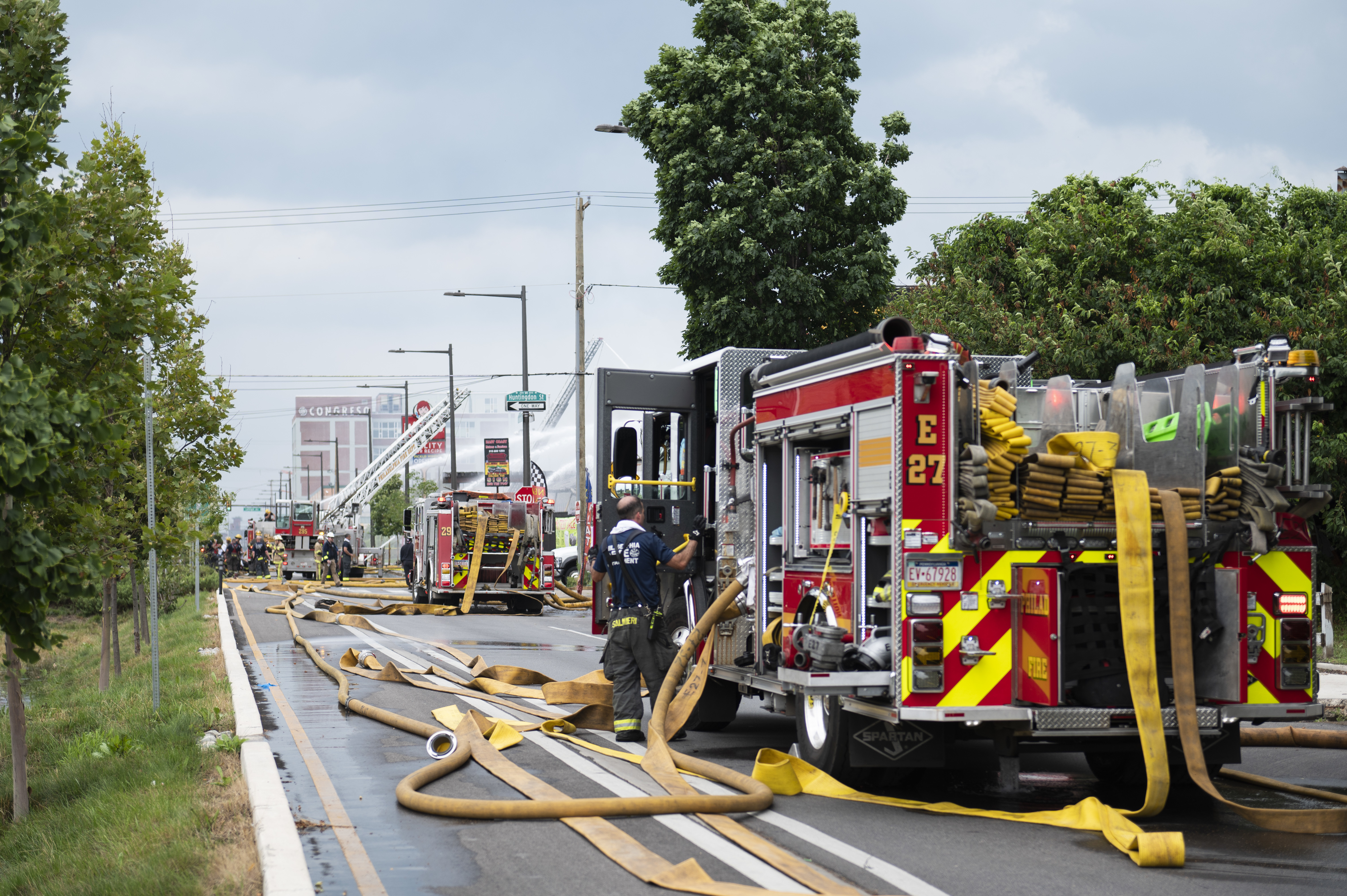
Federal prosecutors this week charged a former Philadelphia Fire Department supervisor with bribery in connection with what investigators described as a brazen overtime abuse scheme that involved her accepting cash from a colleague in exchange for approving fraudulent time sheets.
Marian Farris, 55, a former supervisor in the department’s payroll unit, faces one felony count of bribery and related theft charges. She was charged Tuesday by information, a process that is typically used when a defendant intends to plead guilty.
Attorneys for Farris, who resigned from the department in March 2025, did not immediately respond to a request for comment on the charges.
According to charging papers filed in the U.S. District Court of the Eastern District of Pennsylvania, Farris accepted multiple payments from a fire department employee that totaled more than $9,000 between 2023 and 2024. In exchange for those payments, prosecutors allege Farris made more than 300 fraudulent entries in the city’s payroll system amounting to more than $139,000 in payments to the employee.
Some of the overtime claims, according to prosecutors, were logistically impossible. Prosecutors wrote that Farris on 16 occasions credited the employee — identified only as “J.M.” in charging papers — with working 22 to 24 hours of overtime in a single 24-hour period. On other occasions, prosecutors wrote, the employee was credited with working overtime while she was vacationing in Bermuda, Cancun, and Las Vegas.
The Inquirer previously reported that Farris was under federal criminal investigation and that she was at the center of two tangled investigations into alleged misconduct at the fire department.
The city’s Office of the Inspector General led one investigation into the overtime abuse and found that Farris conspired with former paramedic Jacqulyn Murphy to defraud the city by abusing the system.
In a separate probe, the city retained a law firm to examine multiple sexual harassment allegations lodged by Murphy and other women against Anthony Hudgins, a former deputy commissioner and the department’s No. 2 in charge. According to court records, several women, including Murphy, told city investigators that Hudgins made sexual advances, including unwanted hugging and inappropriate comments.
Hudgins claimed that the harassment reports were orchestrated by Murphy only after he discovered the overtime fraud. In January, Hudgins sued the city and the women saying that he was defamed and subjected to a “bad faith” investigation that resulted in a demotion and a $75,000 pay cut.
Inspector General Alexander DeSantis had previously declined to publicly release the results of his investigation, citing an ongoing criminal investigation.
But Hudgins’ attorneys included the report in court filings related to his lawsuit, and the OIG investigation appears to confirm Hudgins’ timeline. The report stated that Hudgins had already conducted an overtime review before a November 2024 discrimination complaint was filed against him.
Those findings also align with a June 2025 report authored by attorneys at Campbell Durrant, the outside law firm that the city retained to investigate the sexual harassment claims. Hudgins’ attorneys included portions of that report in a recent court filing.
In the report, investigators reviewed some of the allegations brought by Murphy and her wife, who was also a paramedic in the Philadelphia Fire Department. The women told investigators that Hudgins had openly discussed his desire to engage in sexual activities with other women.
However, the conclusion of the report described the allegations brought by Murphy and her wife as “unsubstantiated” and lacking corroboration. It said that the “connection between the harassment complaints and the overtime investigation raises serious concerns about motive and credibility.”
The report said that the primary concerns regarding Hudgins were that he “has a habit of hugging employees and enforcing policies that are sometimes unpopular.” The investigators recommended that Hudgins receive a formal warning and be required to undergo harassment training.
A spokesperson for the city declined to release the full report on Friday, saying the city generally does not release reports of investigations into allegations of sexual harassment, and that the reports are only disseminated to the subjects of an investigation.
In the fall of 2025, shortly after Campbell Durrant completed its report, Hudgins was demoted from his role as a deputy commissioner to deputy fire chief, and he was reassigned to the Incident Safety Office.
Farris has not yet been scheduled to appear in court.
Staff writer Abraham Gutman contributed to this article.
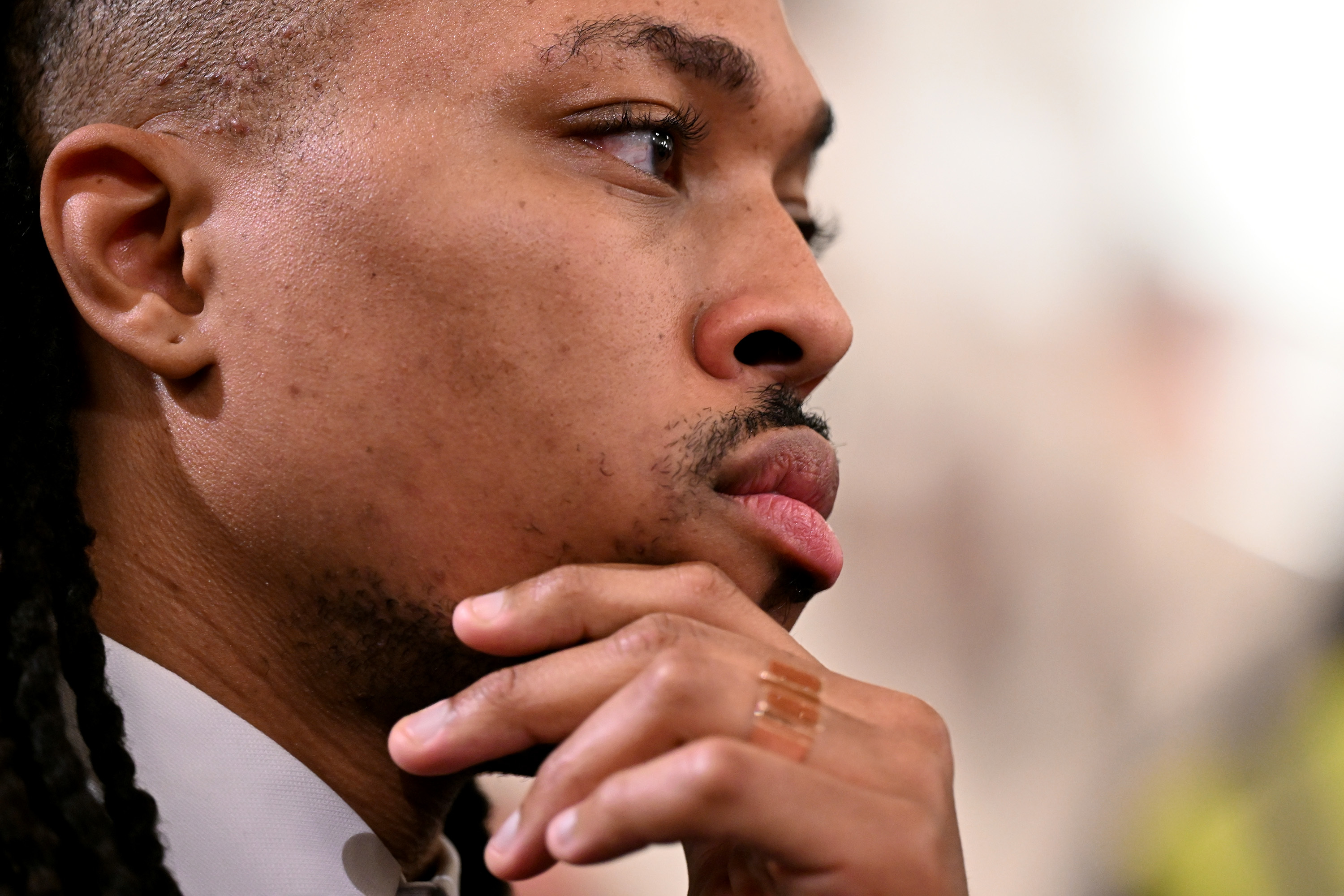
Democratic State Rep. Malcolm Kenyatta on Friday called for Republican Rep. Aaron Bernstine to resign from the Pennsylvania House after he reportedly useda homophobic slur against Kenyatta, who is gay, earlier this week.
“Pennsylvania is better and bigger than this,” Kenyatta, who represents Philadelphia, said in a video message posted to X Friday.
He added that he’s calling for Bernstine, who represents portions of Butler and Lawrence Counties in Western Pennsylvania, to step down “not because I’m angry at him or because he hurt my feelings. It’s because his behavior falls so far beneath what it must mean to be a member of the House of Representatives.”
“And when you use language that demonizes people, that belittles people, it’s never about one person. It’s indicative of what you will do to anybody, and what he’d say about any Pennsylvanian,” Kenyatta said.
Along with the alleged slur, Bernstine also allegedly said in a Harrisburg bar earlier in the week that Kenyatta had lost weight, which Bernstine reportedlyattributed to AIDS, according to PennLive.
Kenyatta was not present when the alleged remarks were made.
In his post, Kenyatta said he was “deeply grateful” to leaders of the Pennsylvania Building and Construction Trades Council “who stood up in real time.”
Michael Ford, the organization’s secretary/treasurer, overheard Bernstine’s alleged remarks and told PennLive, according to the news organization. Ford didn’t respond to requests for comment.
Addressing the incident in a statement Thursday, Bernstine said, “The allegations attributed to me are false. This is a political attack.”
After news broke, various legislative groups spoke out against Bernstine, including the Democratic National Committee, for which Kenyatta serves as vice chair.
“Hateful, homophobic, and racist attacks like this have absolutely no place in our politics, our communities, or our country,” DNC chair Ken Martin said in a statement.
Several Democratic lawmakers called for Berstine’s resignation. House Democratic leadership said it was “exploring potential next steps” and called on GOP leadership to hold Berstine accountable.
The Pennsylvania House Republican Caucus called the reported conduct by Bernstine, one of its members, “troubling,” and said it “does not comport with the values and professionalism Pennsylvanians expect of their state lawmakers.”
Bernstine has been the subject of controversy in the past.
In 2020, House Republican leaders called for Bernstine’s resignation after videos of him encouraging his young son to smoke and curse surfaced. Soon after, Bernstine was reelected, and the demands quieted.
Three years earlier, in the midst of Black Lives Matter demonstrations in which motorists were blocked, Bernstine posted on X, “If anyone EVER tries to stop my car on a highway with negative intentions… I will not stop under any conditions.”
On Friday, in concluding his remarks on X, Kenyatta suggested it’s time to move on.
“Let’s all in united voice demand better, demand more, and then let’s get back to work on the serious stuff,” he said.
The Phillies bristled last winter at the suggestion that they were running it back after another disappointing October. Rob Thomson — then still the manager — pointed in January to the team’s three new relievers, Adolis García in right field, Justin Crawford in center, Andrew Painter in the rotation, and Otto Kemp’s place on the roster.
But everyone knew enough to know they were indeed running it back. The main pieces were the same. So the final result — yet another disappointing October — wasn’t much of a surprise.
The three new relievers? Just one pitched in the postseason. García had a .599 OPS when his season ended with a shoulder injury. Crawford looked like a rookie, Painter was a mixed bag, and Kemp appeared in just 13 games before finding himself in the batter’s box for the final out of Thursday’s listless 6-2 loss to Atlanta in Game 3 of their wild-card series.
The Phils were flat in an elimination game, a fitting way to end a season that rarely gave you reason to believe that this October would be any different from last October. The front office didn’t act last winter with any urgency, doing little to upgrade a roster that needed improvement. And then the team started 9-19.
García? He had a .675 OPS over the last two seasons. An upswing would’ve been a bigger surprise than what the Phils got. The bullpen additions? They fizzled. Kemp? The Phils were so thin that they added him to their postseason roster even though he hadn’t been in the majors since May. The bullpen was a disaster, the lineup underperformed, and the trade deadline acquisitions fell short.
The Phils had a good run when Don Mattingly replaced Thomson in late April and they played well in August. But that soured in September when they nearly missed the postseason. The maddening season was extended by three games, just one of which was actually in October. Game 3 was lined up for them: Aaron Nola and Zack Wheeler vs. Ray Kerr and Grant Holmes. But this October was the same as last October. They indeed ran it back.
Aaron Nola started Game 3 and lasted 1 2/3 innings, giving up a three-run homer to Michael Harris II in the first. Yong Kim / Staff Photographer
I had no problem with …
… the plan to start Nola before going to Wheeler. The Phils needed Nola to go through the lineup at least once and then you’d be able to decide when to best deploy Wheeler. Nola couldn’t do it and that was the game. But the plan — which would have Nola to Wheeler to Duran — was sound. It didn’t work out.
Remember when …
… the Phillies beat the Diamondbacks by 10 runs in Game 2 of the 2023 NLCS and then flew to Arizona with visions of splashing in their pool? The Phils have since gone 4-12 in the postseason and have failed to win a playoff series. The Phils had a second-straight pennant in their grasp that night and felt like a budding dynasty. How was that just three years ago?
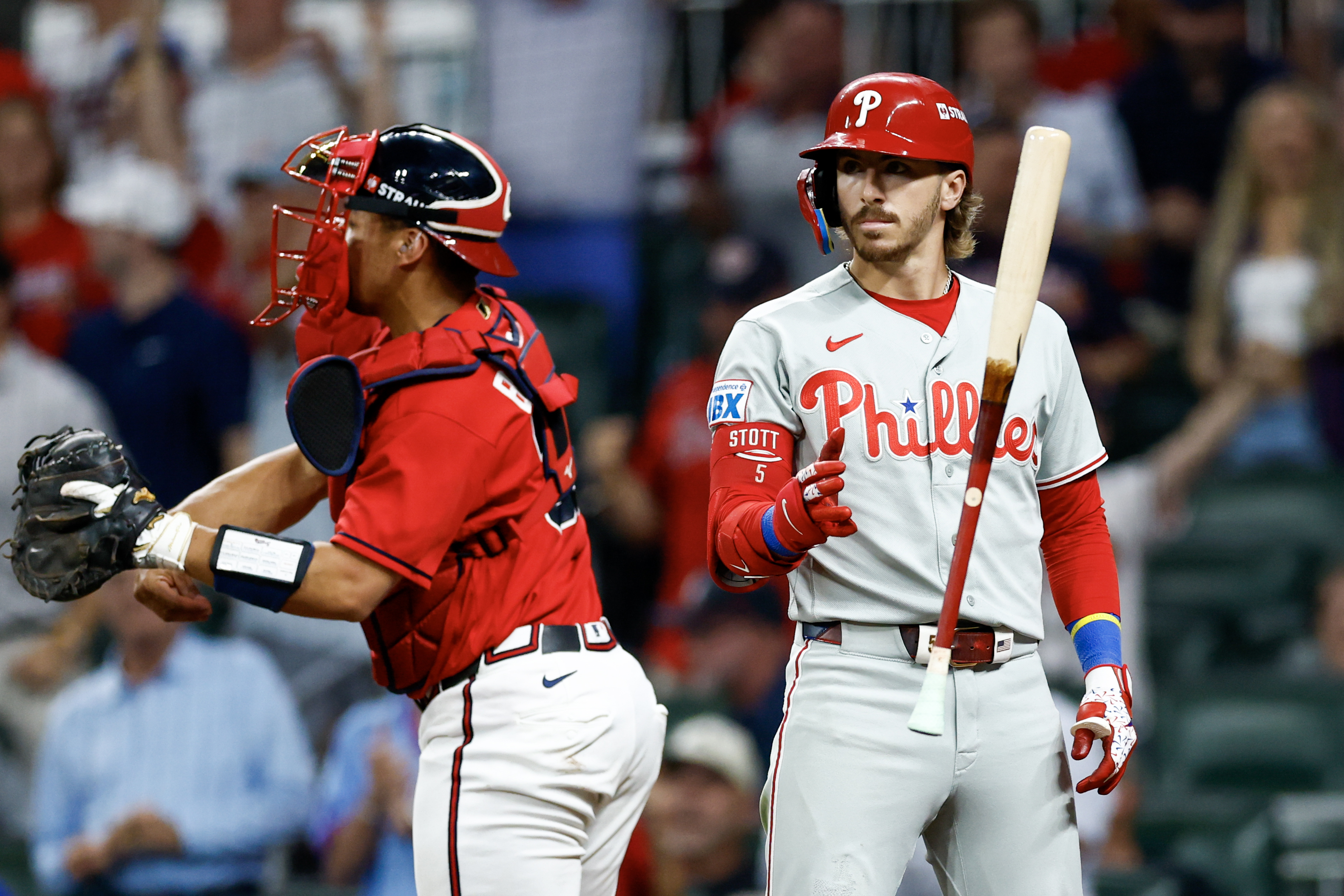
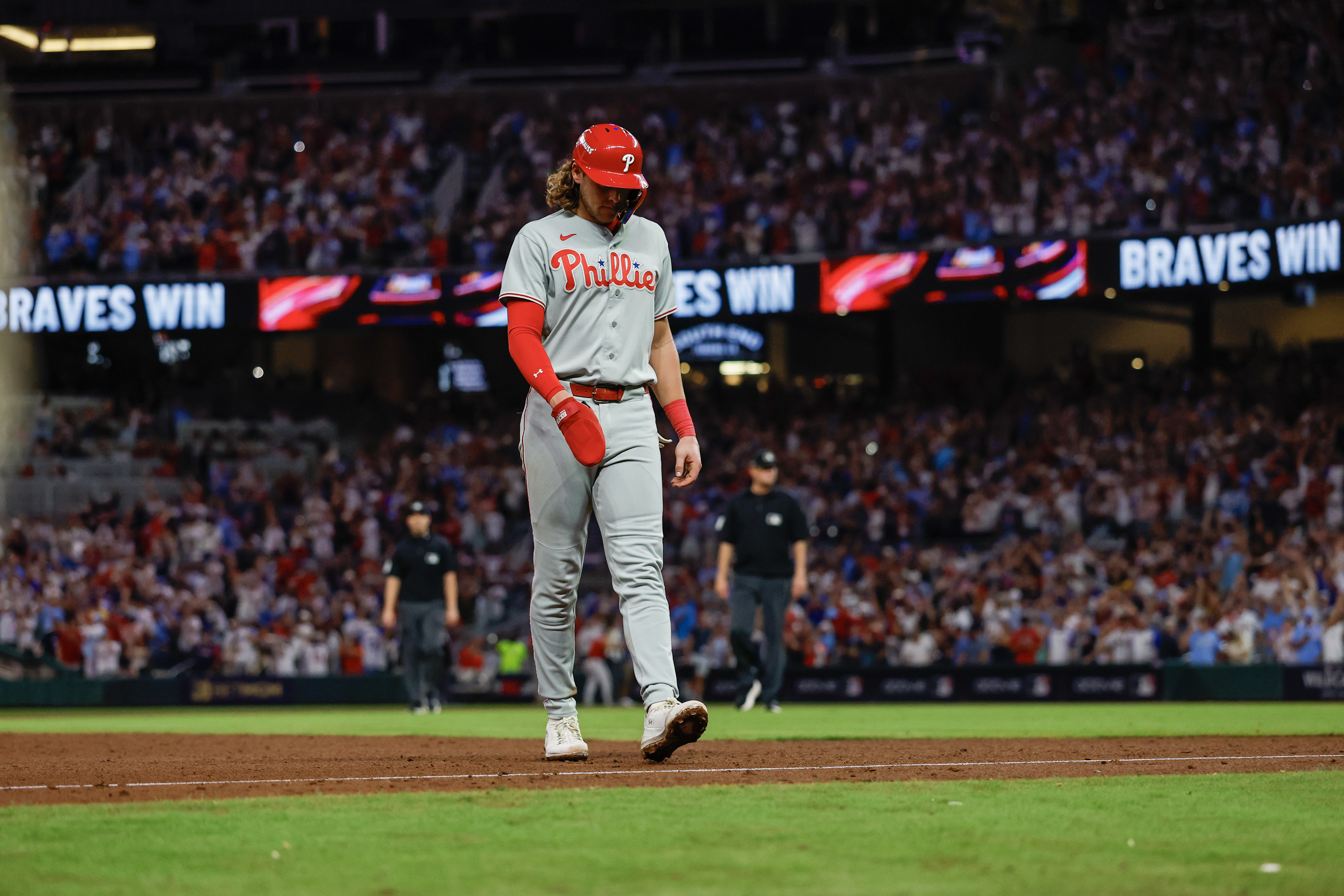
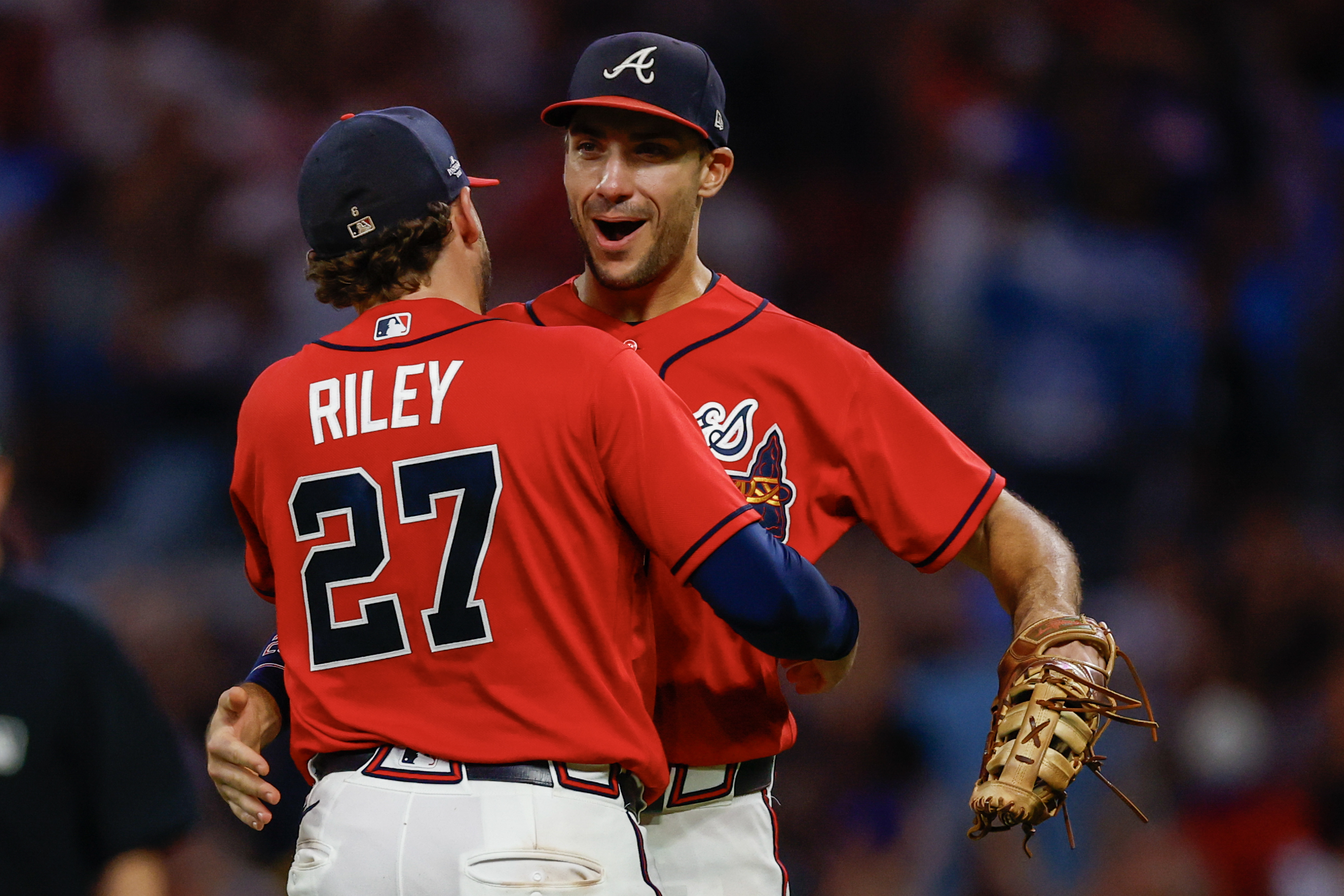
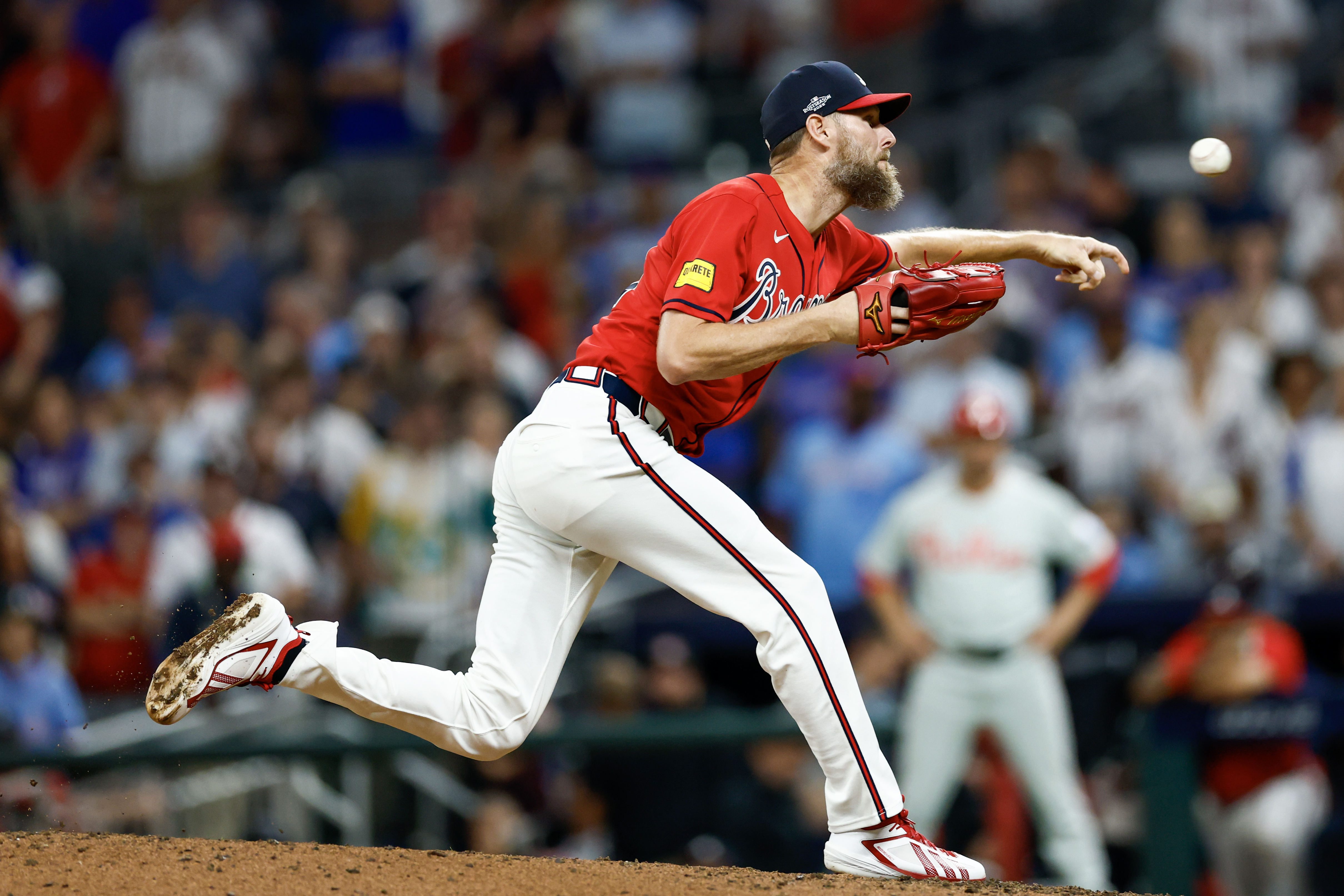
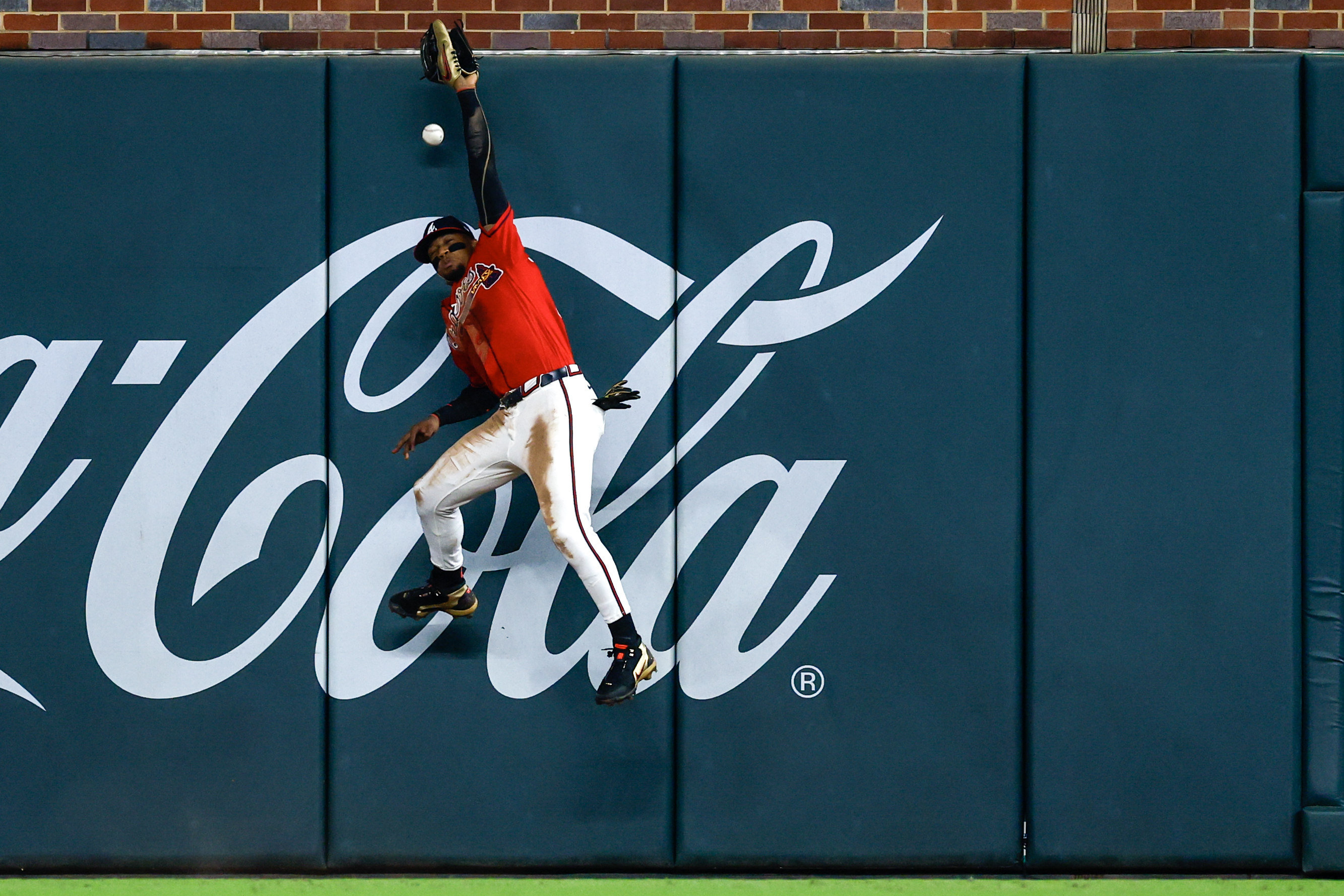
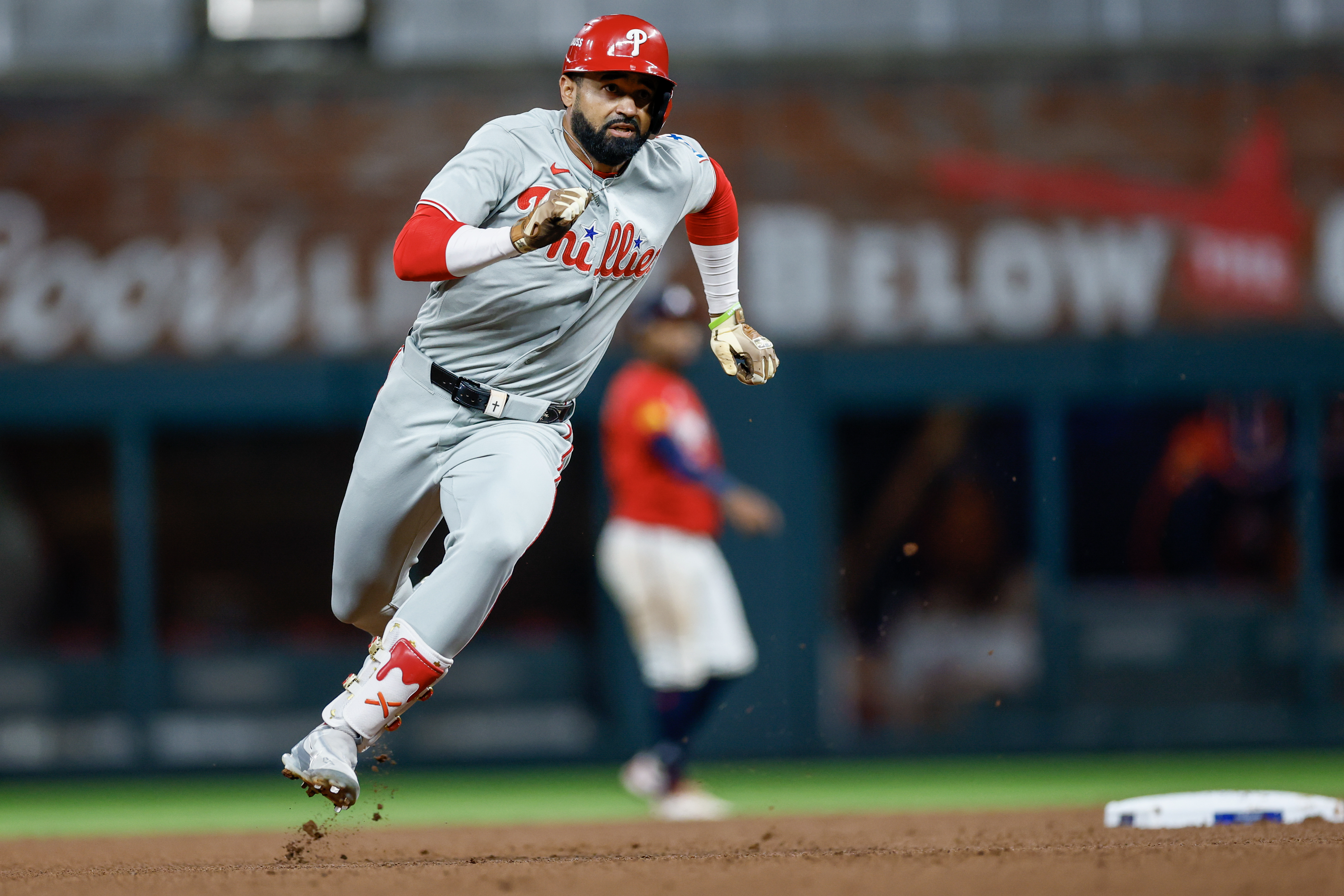
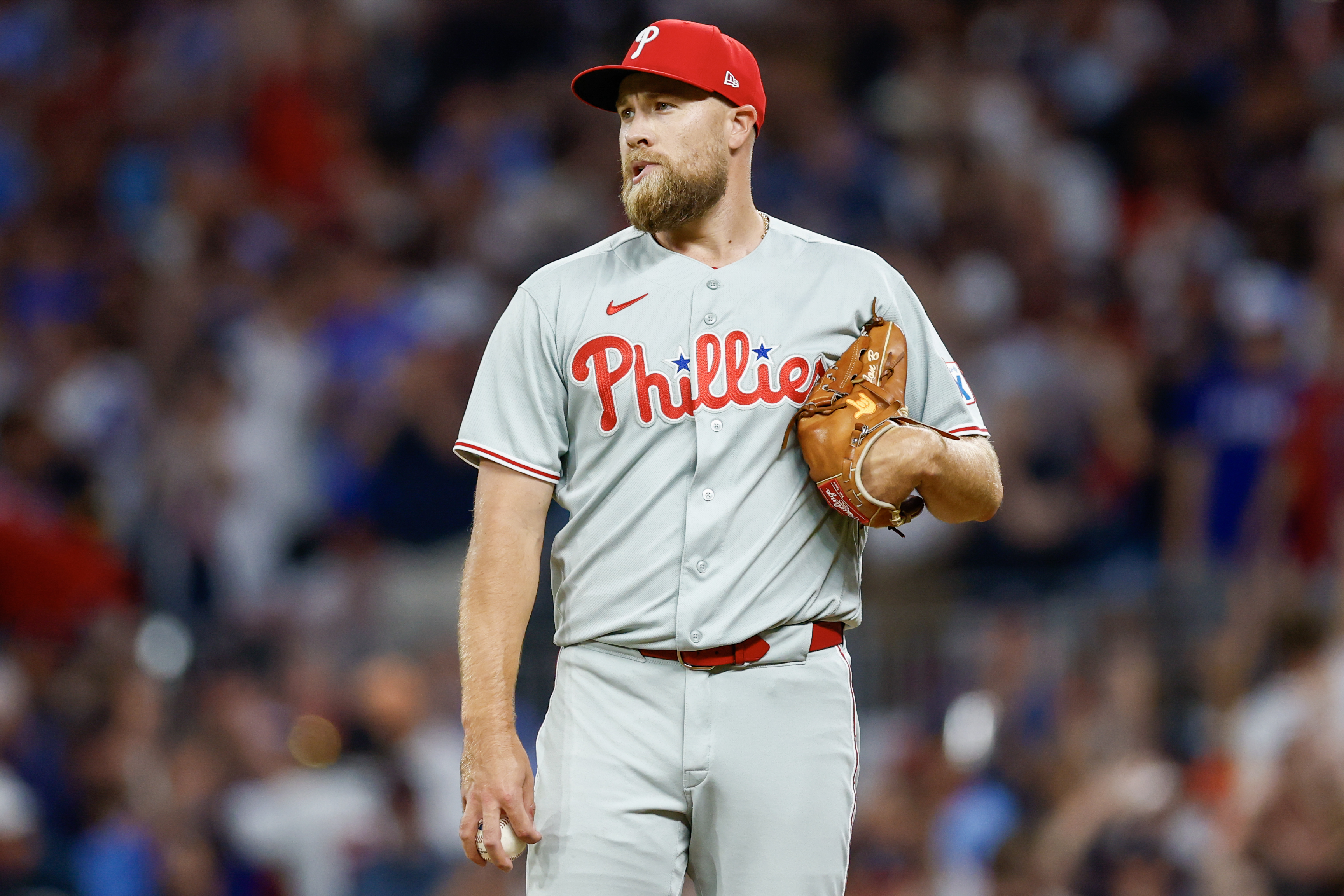
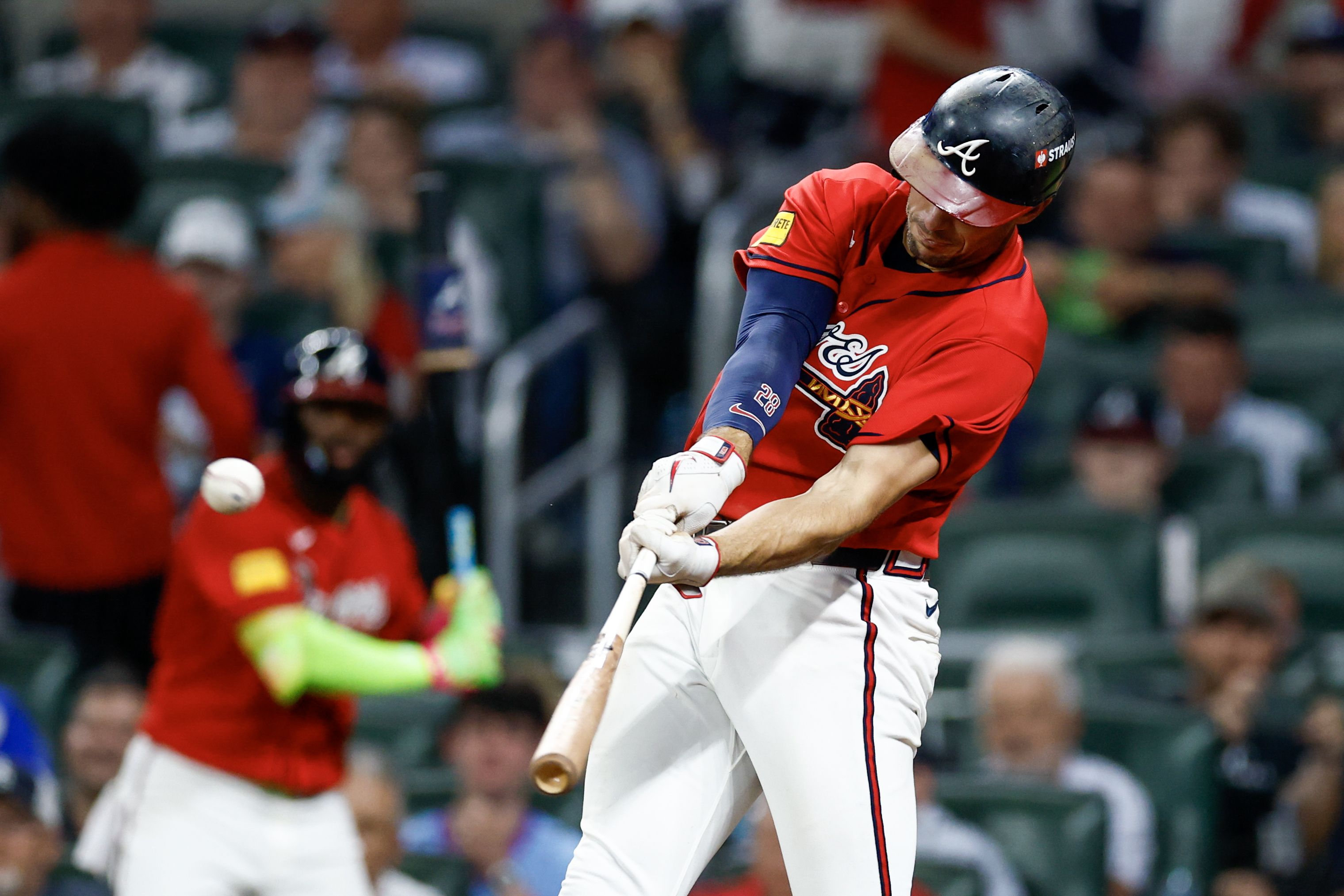
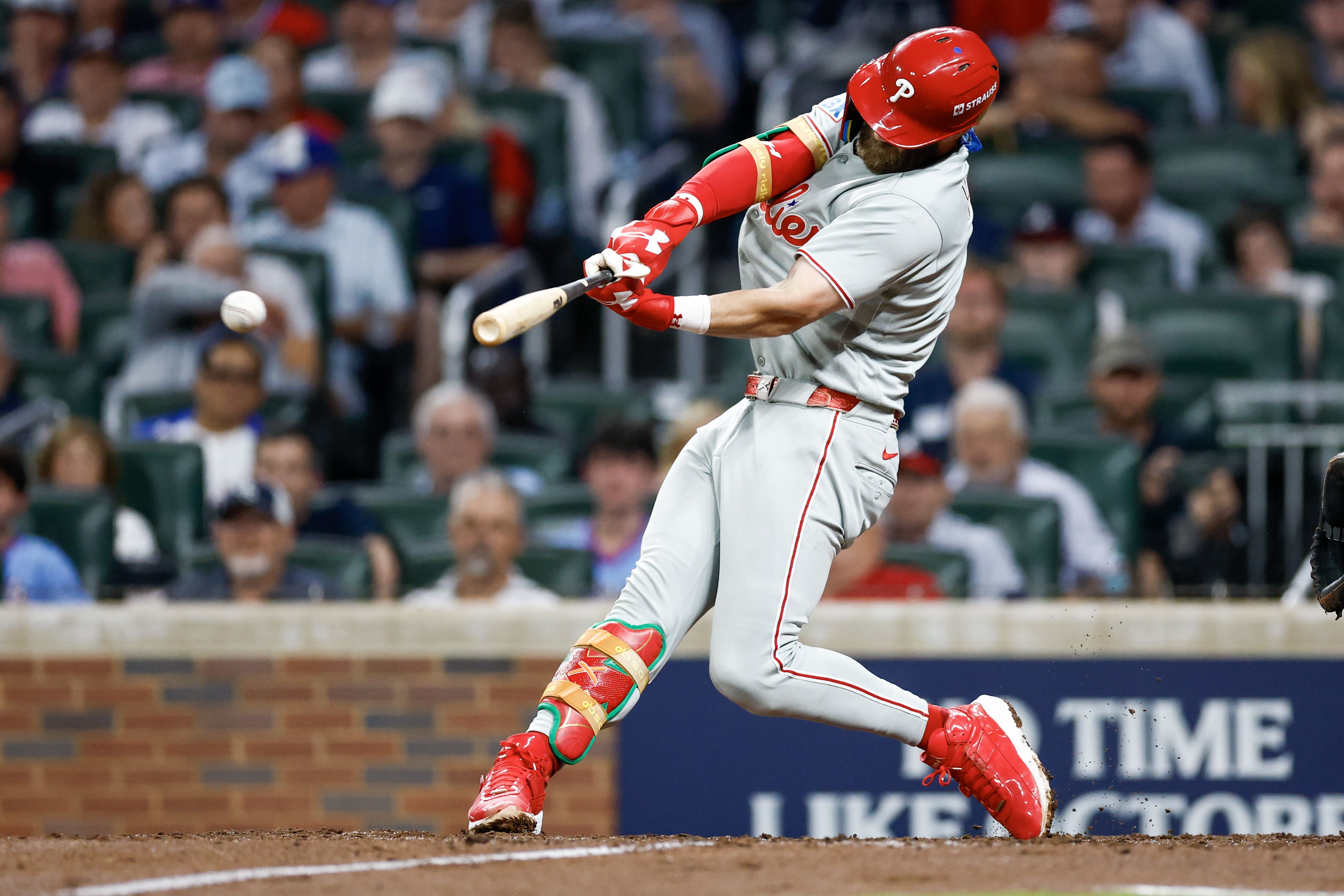
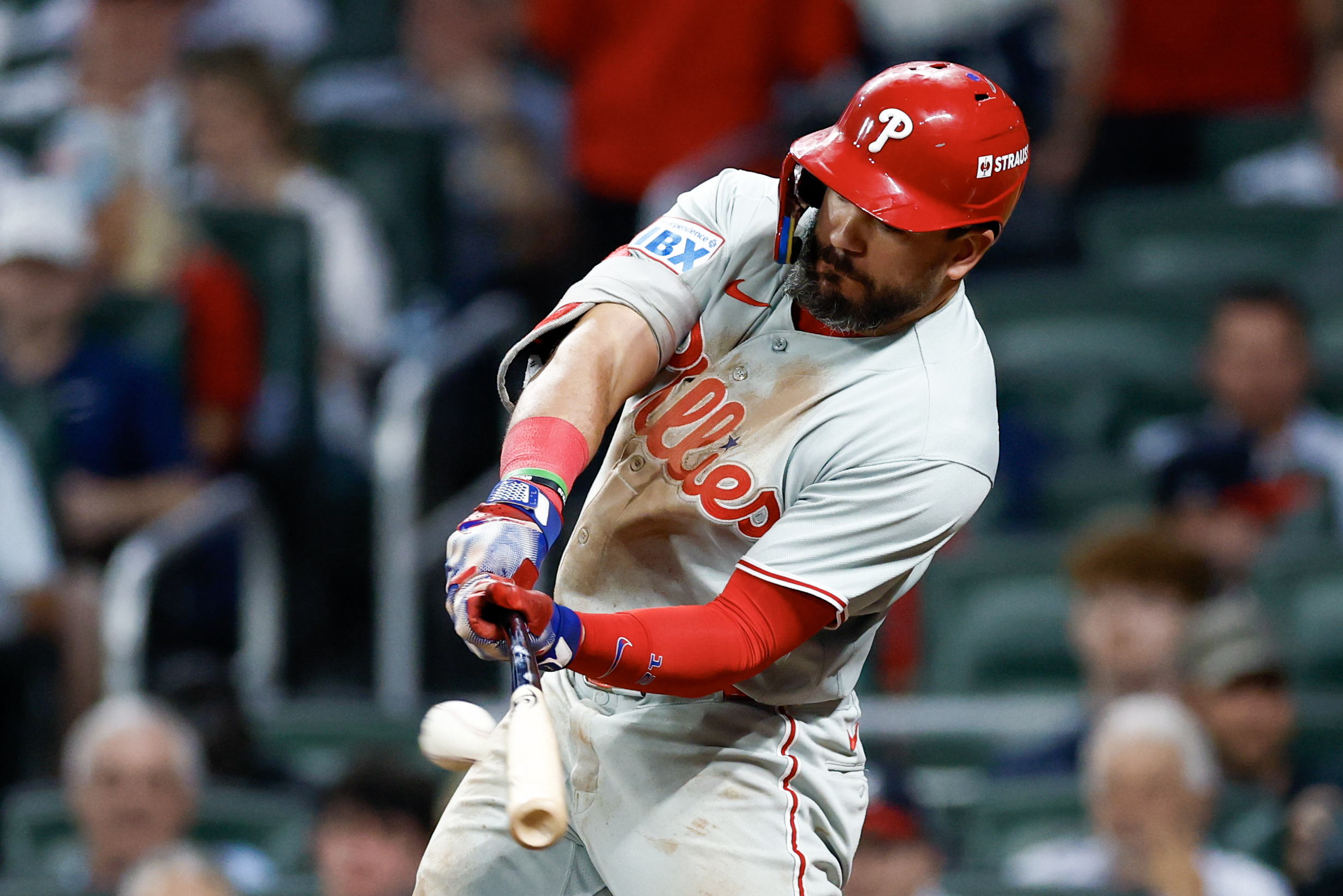
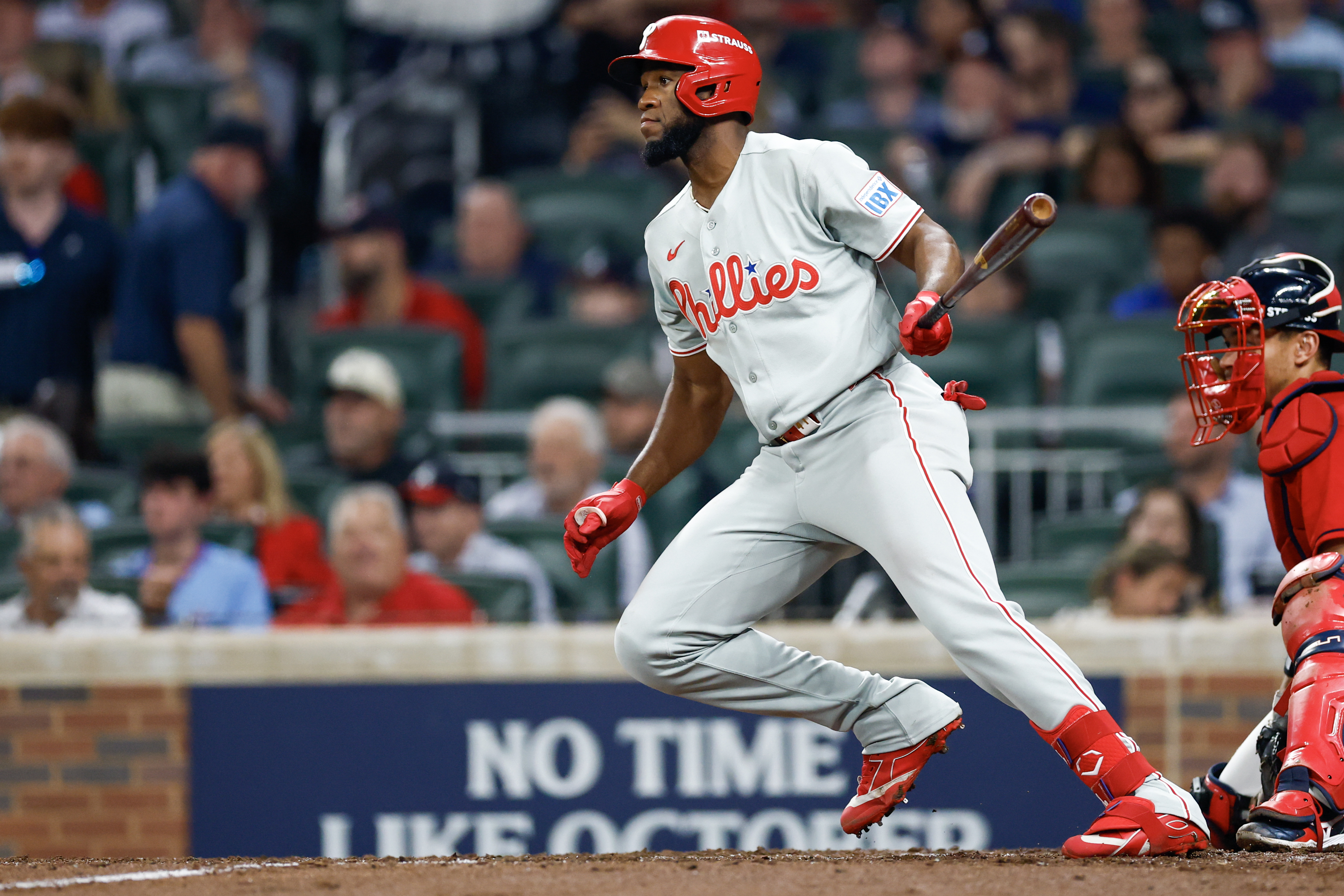
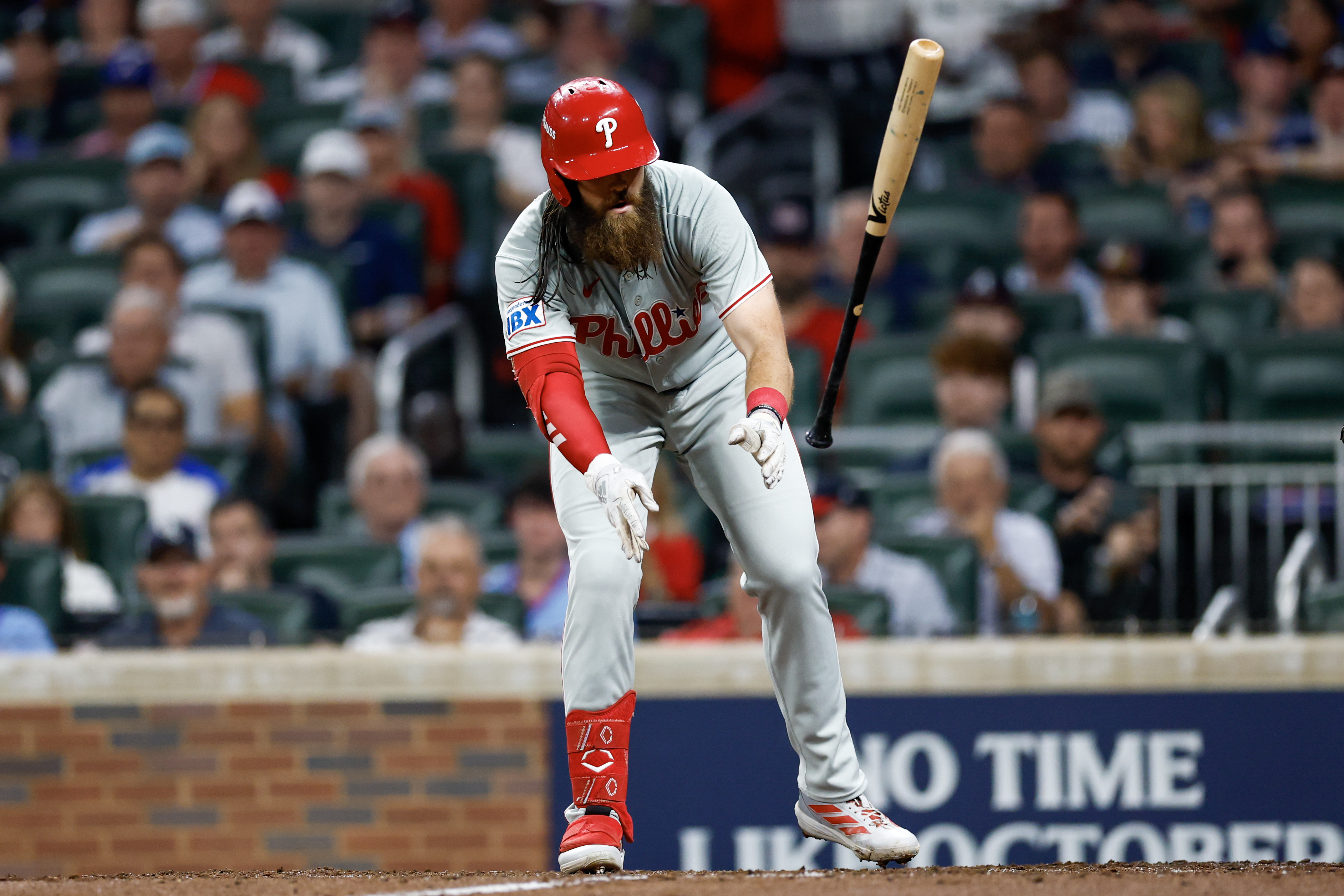
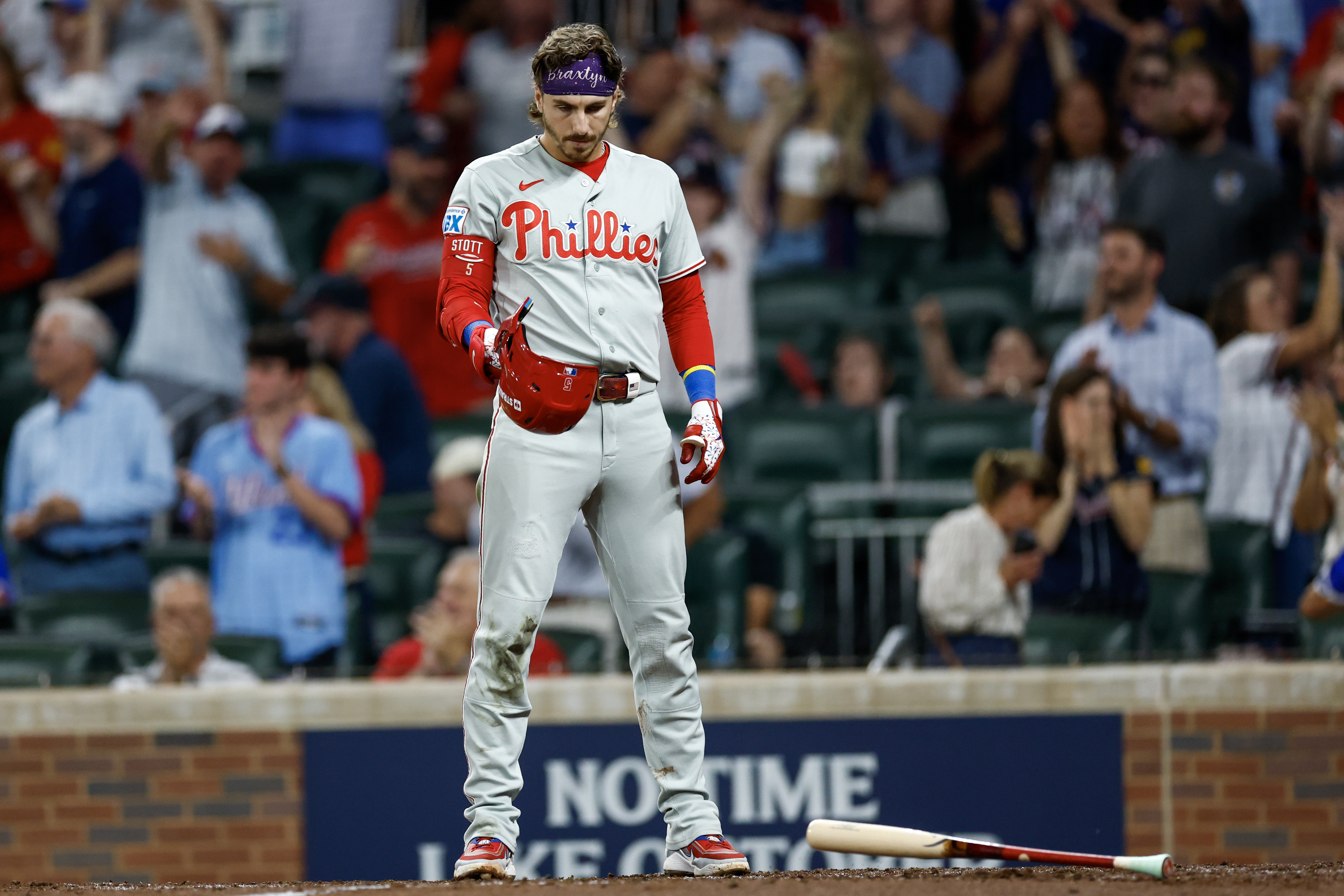
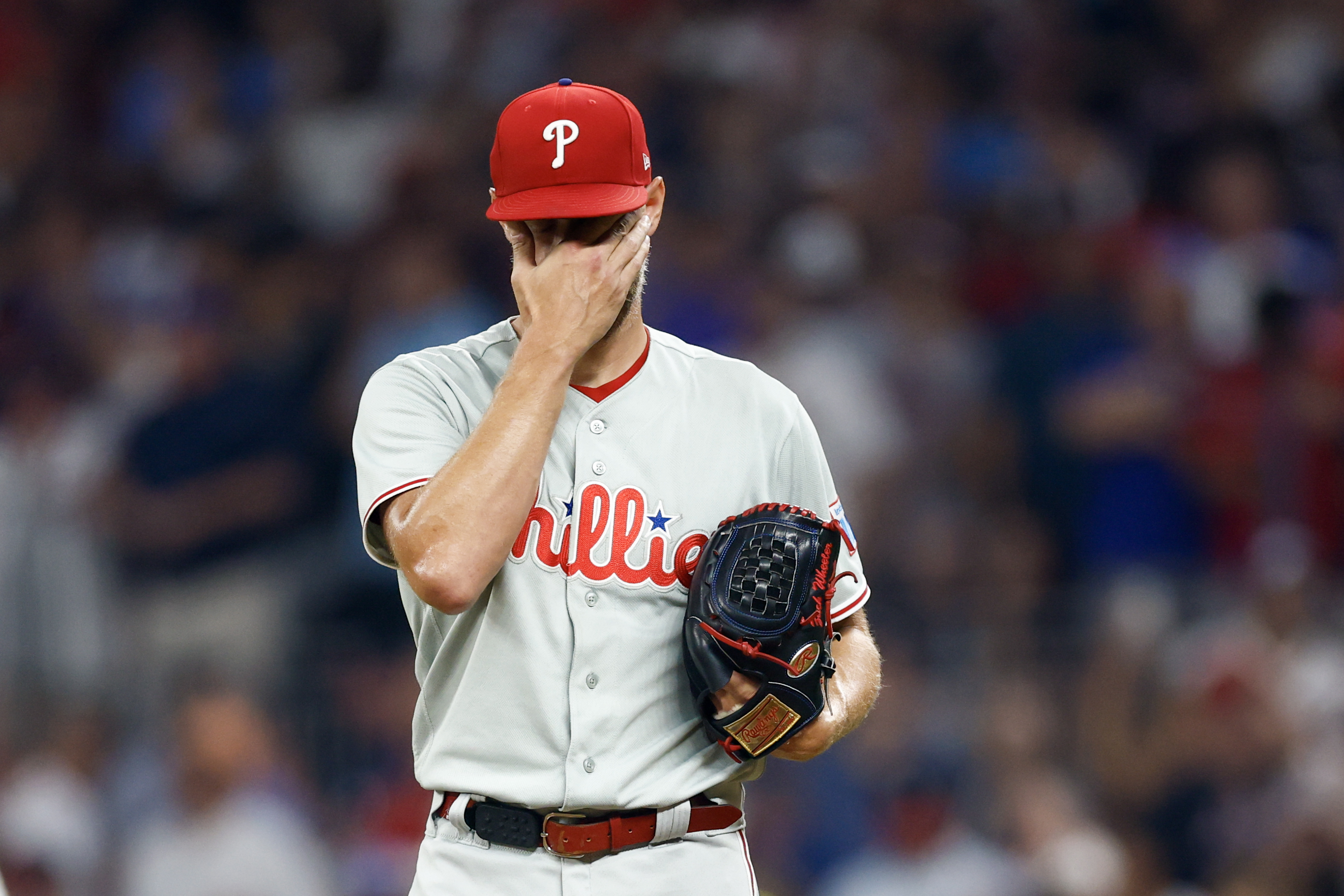
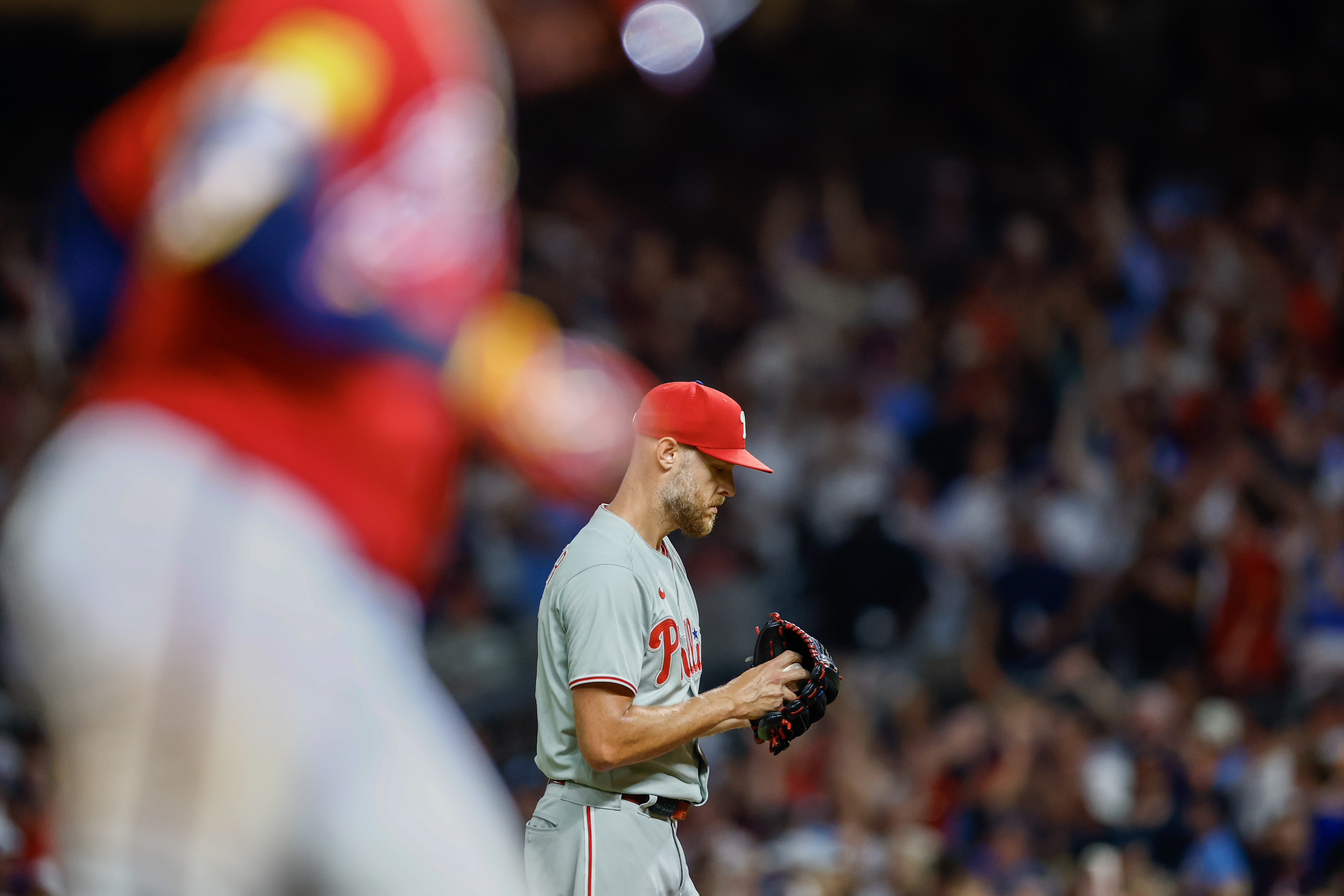
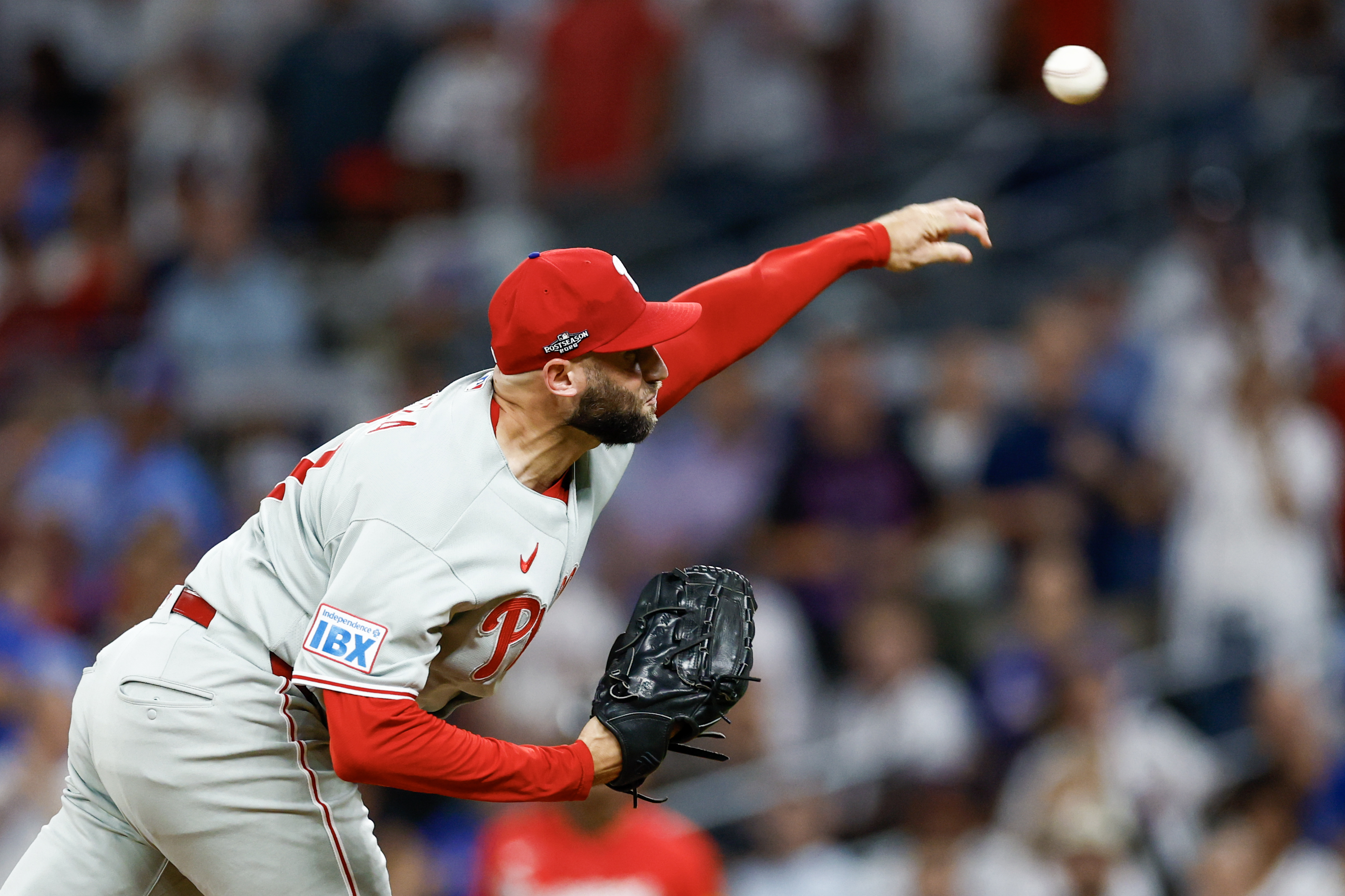
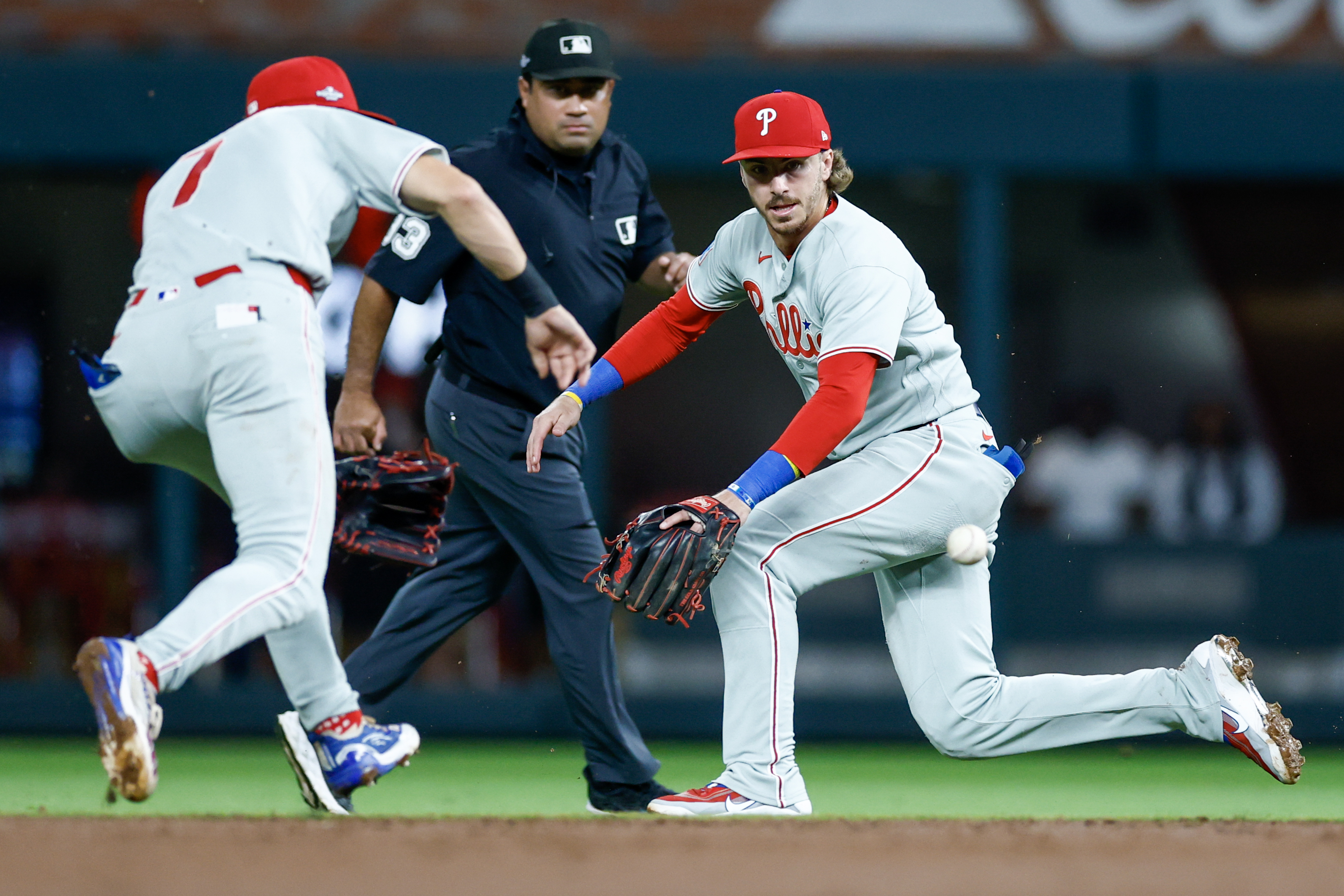
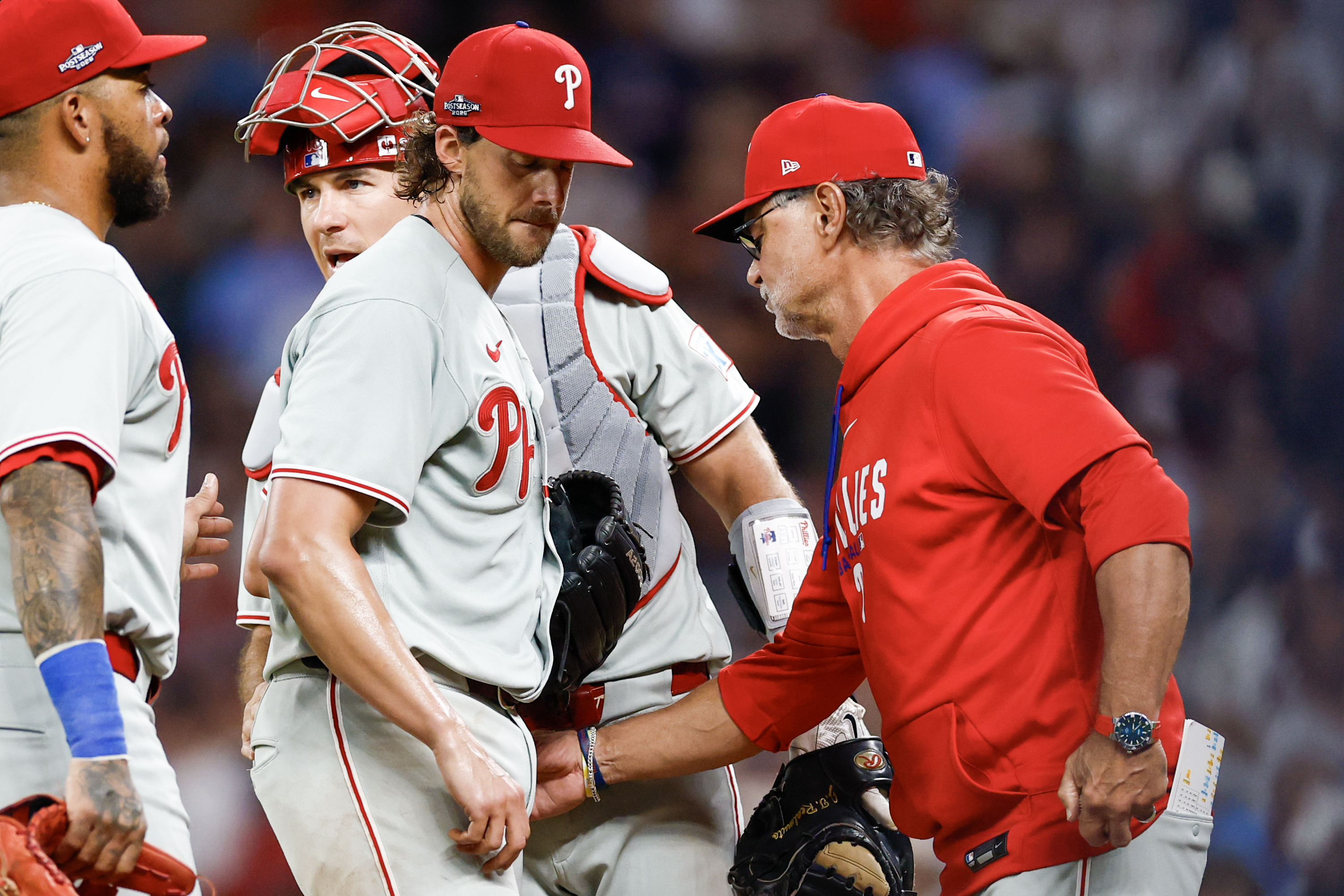
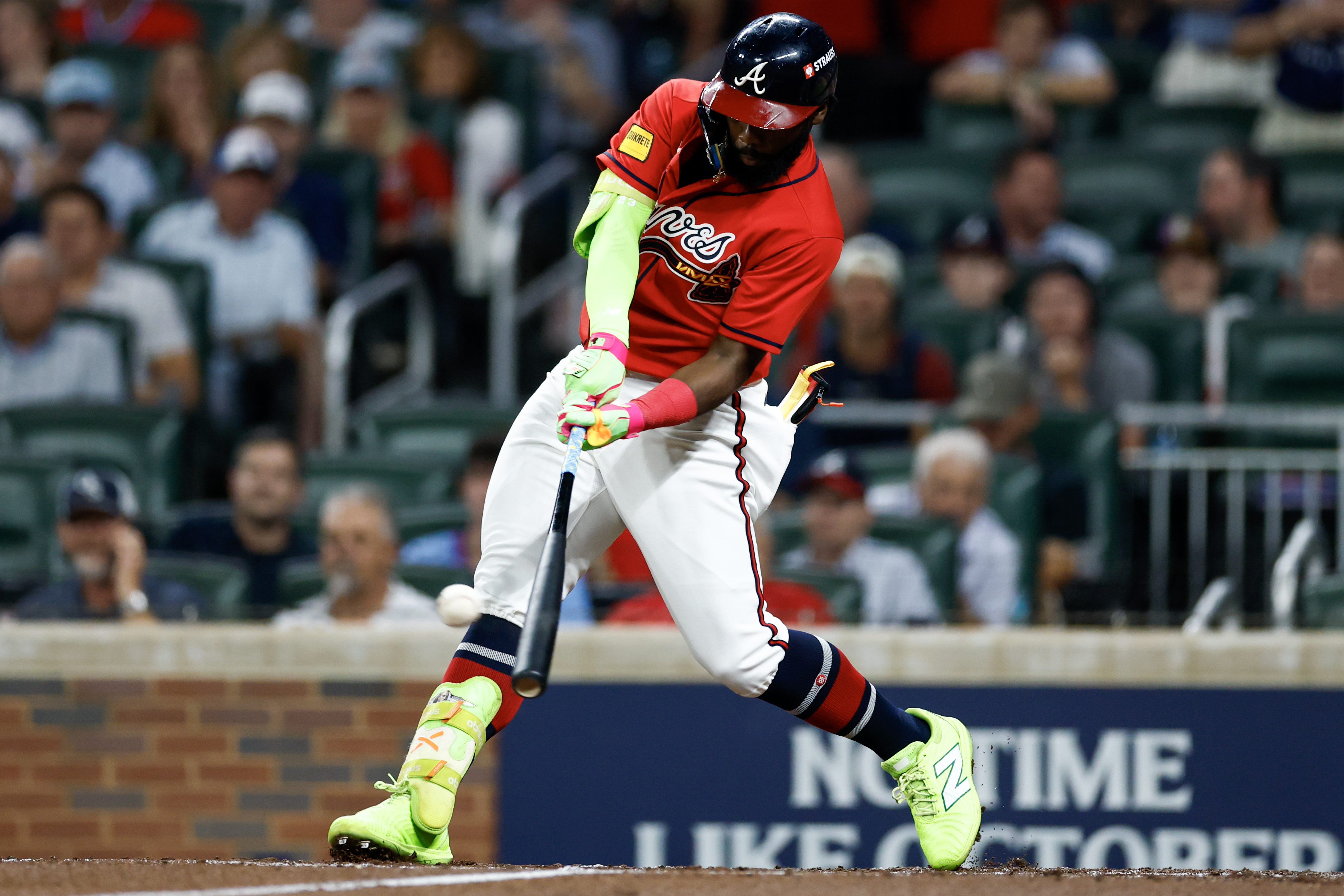
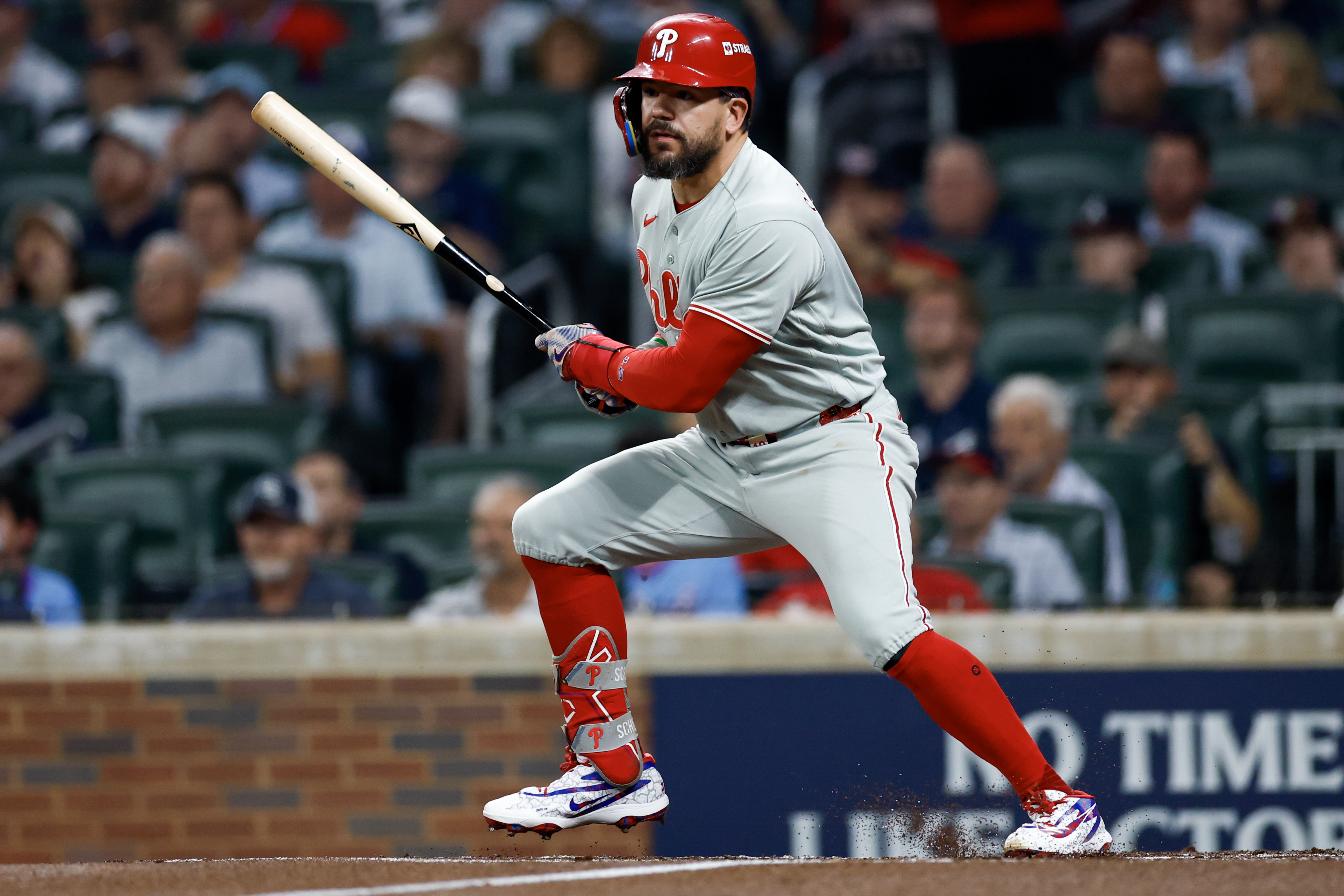
Phillies Alec Bohm walks off the field after the final out in Game 3 of the National League wild-card series against the Braves Thursday, Oct. 1, 2026, in Atlanta.Yong Kim / Staff PhotographerBraves Austin Riley (left) and Matt Olson celebrate their win in Game 3 of the National League wild-card series over the Phillies Thursday, Oct. 1, 2026, in Atlanta.Yong Kim / Staff PhotographerBraves starting pitcher Chris Sale closes the game during the ninth inning in Game 3 of the National League wild-card series against the Phillies Thursday, Oct. 1, 2026, in Atlanta.Yong Kim / Staff PhotographerBraves right fielder Ronald Acuña Jr. attempts to catch Phillies Derek Hill triple during the eighth inning in Game 3 of the National League wild-card series Thursday, Oct. 1, 2026, in Atlanta.Yong Kim / Staff PhotographerPhillies Derek Hill runs to third after hitting a triple during the eighth inning in Game 3 of the National League wild-card series against the Braves Thursday, Oct. 1, 2026, in Atlanta.Yong Kim / Staff PhotographerPhillies pitcher Jonathan Bowlan after Braves Matt Olson hits a solo home run during the seventh inning in Game 3 of the National League wild-card series Thursday, Oct. 1, 2026, in Atlanta.Yong Kim / Staff PhotographerBraves Matt Olson hits a solo home run during the seventh inning in Game 3 of the National League wild-card series Thursday, Oct. 1, 2026, in Atlanta.Yong Kim / Staff PhotographerPhillies first baseman Bryce Harper hits a double during the sixth inning in Game 3 of the National League wild-card series against the Braves Thursday, Oct. 1, 2026, in Atlanta.Yong Kim / Staff PhotographerPhillies designated hitter Kyle Schwarber hits a single during the sixth inning in Game 3 of the National League wild-card series against the Braves Thursday, Oct. 1, 2026, in Atlanta.Yong Kim / Staff PhotographerPhillies Bryan de la Cruz hits a single during the fifth inning in Game 3 of the National League wild-card series against the Braves Thursday, Oct. 1, 2026, in Atlanta.Yong Kim / Staff PhotographerPhillies Brandon Marsh tosses his bat after drawing a walk during the fifth inning in Game 3 of the National League wild-card series Thursday, Oct. 1, 2026, in Atlanta.Yong Kim / Staff PhotographerPhillies second baseman Bryson Stott after he strikes out looking to end the fourth inning in Game 3 of the National League wild-card series against the Braves Thursday, Oct. 1, 2026, in Atlanta.Yong Kim / Staff PhotographerPhillies pitcher Zack Wheeler after Braves Ozzie Albies hits a two-run homer during the fourth inning in Game 3 of the National League wild-card series Thursday, Oct. 1, 2026, in Atlanta.Yong Kim / Staff PhotographerPhillies pitcher Zack Wheeler after Braves Ozzie Albies hits a two-run homer during the fourth inning in Game 3 of the National League wild-card series Thursday, Oct. 1, 2026, in Atlanta.Yong Kim / Staff PhotographerPhillies pitcher Zack Wheeler throws a pitch during the third inning in Game 3 of the National League wild-card series against the Braves Thursday, Oct. 1, 2026, in Atlanta.Yong Kim / Staff PhotographerPhillies pitcher Tim Mayza throws a pitch during the second inning in Game 3 of the National League wild-card series against the Braves Thursday, Oct. 1, 2026, in Atlanta.Yong Kim / Staff PhotographerPhillies second baseman Bryson Stott (right) and shortstop Trea Turner (left) go after a single hit by Braves designated hitter Dominic Smith during the second inning in Game 3 of the National League wild-card series Thursday, Oct. 1, 2026, in Atlanta.Yong Kim / Staff PhotographerPhillies manager Don Mattingly takes out pitcher Aaron Nola during the second inning in Game 3 of the National League wild-card series against the Braves Thursday, Oct. 1, 2026, in Atlanta.Yong Kim / Staff PhotographerPhillies pitcher Aaron Nola after giving up a three-run home run to Braves Michael Harris II during the first inning in Game 3 of the National League wild-card series against the Braves Thursday, Oct. 1, 2026, in Atlanta.Yong Kim / Staff PhotographerBraves Michael Harris II hits a three-run home run during the first inning in Game 3 of the National League wild-card series against the Phillies Thursday, Oct. 1, 2026, in Atlanta.Yong Kim / Staff PhotographerPhillies designated hitter Kyle Schwarber hits a single during the first inning in Game 3 of the National League wild-card series against the Braves Thursday, Oct. 1, 2026, in Atlanta.Yong Kim / Staff PhotographerPhillies shortstop Trea Turner and back-up catcher Garrett Stubbs (right) throw the baseball during warm ups before the Phillies play on the Atlanta Braves in game 3 of the National League wild-card series on Thursday, Oct. 1, 2026 in Atlanta.Yong Kim / Staff Photographer
Please stop suggesting that …
… Garrett Stubbs should’ve started over J.T. Realmuto since Nola was pitching. Yes, Nola has better numbers this season with Stubbs behind the plate, but they’re practically equal (.703 OPS against with Realmuto compared to a .692 OPS against with Stubbs) across Nola’s career. Plus, Realmuto has caught more than 700 innings from Nola than Stubbs. Realmuto had a big triple in Game 1 and another hit in Game 2. Plus, his defense in Game 2 kept the Phils alive. There was no reason to swap Realmuto out in an elimination game and sacrifice an at-bat or two just so Stubbs could catch Nola.
… Aidan Miller to be an impact player. The Phils have produced just one homegrown impact bat — Rhys Hoskins — since the end of the last golden era. Bohm and Stott’s career production hovers around league average. Crawford looks like a fine player but not a star. Hoskins had a career OPS+ of 125 when he left the Phils. That kind of production would play. The lineup will be another year older in 2027 and it’s hard to imagine this run continuing without an infusion of young talent. There’s not much in the pipeline besides Miller.
… they already have their rotation set for 2027 and it’ll rival any team in baseball. You can put Zack Wheeler, Jesús Luzardo, and Cristopher Sánchez up against any other staff’s top three pitchers. Painter looked the part after returning from the minors and his performance in Game 2 makes you feel even better about next season. Nola threw a dud on Thursday, but he’s a luxury as your fifth starter.
Phillies shortstop Trea Turner, who will be 33 next season, has seven years left on his contract.Yong Kim / Staff Photographer
Worry about the Phils because …
… they’re getting older and there doesn’t seem to be much you can change about the lineup. Realmuto turns 36 in March and has two years left on his deal. Harper and Schwarber will both be 34 next season and Turner will be 33 with seven years left on his 11-year deal. The offense — besides Harper and Schwarber — underperformed in 2026 and it’s hard to believe they’re going to get better with a core that remains intact. They’ll acquire a right fielder (or a first baseman and have Harper stay in right) and maybe replace Brandon Marsh in left. They can swap out Bohm for Miller but there doesn’t seem to be room for the drastic upgrades they need as they already have $217 million committed for next season. Plus, they need to spend some money on the bullpen.
Every era eventually ends. Thursday night felt like an inflection point. The Phils won’t run it back again. Right?
ATLANTA — It turns out you can’t win a World Series — or even a wild-card series — with a roster that includes more catchers (three) than trustworthy relievers (two).
Oh, and the Phillies’ icy-cold bats turned the surname of a little-known lefty opener into a four-letter word ever more in the Delaware Valley: Kerr. Ray Kerr.
“It’s always frustrating,” Kyle Schwarber said after the Phillies lost their fourth consecutive postseason series dating to the 2023 NLCS. “From every postseason that I’ve been in, it’s always going to hurt when you’re not the last team holding it up, if you’re knocked out in the first round, DS, CS, World Series.”
We’ll spend the next few days picking apart these three games against the Braves because, well, it’s what we do. It usually starts with the manager. Go ahead, then, and second-guess Don Mattingly for bringing in Jhoan Duran too early in Game 1, or starting Nola over Wheeler in Game 3, or whatever other gripe you may have. Then, hang up and listen.
Or you can skip all that and cut to the real issue: Dave Dombrowski built a Jenga tower of a roster for $322 million (calculated for the luxury tax) and will have limited time to begin fixing it before a work stoppage shuts down the sport from the expiration of the collective bargaining agreement on Dec. 1 until who knows when.
Phillies president of baseball operations Dave Dombrowski has a decision to make about the future of interim manager Don Mattingly.Yong Kim / Staff Photographer
First, though, there’s the question of whether Mattingly returns as the manager.
“It’s not the time to talk about anything like that,” Mattingly said. “I’m not concerned about myself in this situation. I want the Phillies to do what they need to do to set themselves up for success. Yeah, it’s like, my stuff doesn’t really matter.”
Mattingly, 65, is a baseball icon, not to mention the father of Phillies GM Preston Mattingly, who works under Dombrowski. But he also knows this: He was elevated from bench coach to the manager’s office after Rob Thomson was fired on April 28 only because Alex Cora turned down the job.
Dombrowski hired Cora with the Red Sox. They won a World Series together in 2018 and became close friends. When the Sox fired Cora on April 25, Dombrowski offered him the Phillies’ job — even though Thomson hadn’t been let go yet.
Under Mattingly, the Phillies went 79-55, and despite a costly 9-14 stumble down the stretch, captured the last National League wild-card spot. But Dombrowski didn’t remove the interim tag from Mattingly, saying he would wait until after the season to make a decision and fueling speculation across the sport that he will try again to lure Cora.
Last Sunday, amid the Phillies’ wild-card-clinching celebration, owner John Middleton said Mattingly did a “pretty damn good” job but didn’t weigh in on whether he wants him to stay on.
“That’s Dave’s decision,” Middleton said.
Mattingly, who only joined Thomson’s staff this season and signed a two-year contract, had instant respect with the players, even though none are old enough to remember his Hall of Fame-worthy career. He’s also an honest and direct communicator.
Alec Bohm works with interim manager Don Mattingly before Game 3 of the Phillies’ wild-card series in Atlanta.Yong Kim / Staff Photographer
“I just felt like he was just calm, man,” Trea Turner said. “He was easy to talk to. I could talk to him about anything hitting. He just seemed like a cool guy that wanted to be here, and then if he needed to let you know something was wrong, he’d let you know. I appreciate the honesty.”
Said J.T. Realmuto: “I like Donnie. Donnie’s great. He was a great for us.”
Surely, the Phillies have heard the Cora whispers.
“That’s not for me to speculate,” Realmuto said. “I have the utmost respect for Donnie, and I would love to have him back.”
Like any manager, especially Thomson before him, Mattingly’s pitching moves will be scrutinized in the aftermath of another early Phillies exit. Since the Phillies went to the World Series in 2022, they lost in Game 7 of the NLCS in 2023, the divisional round in 2024 and 2025, and now, the wild-card round.
But given the bullpen Dombrowski gave him, he was bringing a knife to a gunfight.
Phillies interim manager Don Mattingly takes starting pitcher Aaron Nola out of Game 3 during the second inning.Yong Kim / Staff Photographer
Consider this: In the three games, the Braves brought 114 batters to the plate. All but 12 faced a Phillies starting pitcher (Jesús Luzardo in Game 1, Cristopher Sánchez and Andrew Painter in Game 2, Nola and Wheeler in Game 3), or Duran. Five of those 12 batters faced Jonathan Bowlan in the eighth inning of out-of-reach Game 3.
Mattingly also had a postseason bench that included two backup catchers. The season ended with infielder Otto Kemp, who hadn’t taken a major league at-bat since May 20, flailing at a hellacious slider from Chris Sale, a future Hall of Fame lefty.
The questions will persist about whether this Phillies core, which has been together since 2022, can ever get over the top, especially because Harper (34 in two weeks), Turner (33), Realmuto (35), Schwarber (33), Wheeler (36), and Nola (33) aren’t getting any younger.
“I don’t know,” Harper said. “I can’t really answer that question. … I’d imagine this team is going to look a lot different next year with the [free agents] that are kind of leaving this clubhouse, so we’ll see.
“Yeah, I don’t know. It’s going to be a long offseason, obviously. I have trust in the organization and the people that are in charge. We’ll see where we go.”