Tag: Weekend Reads

  • How MLB’s All-Star Game tribute to ‘The Sandlot’ came together — and what the kids said about their experiences with major leaguers

    How MLB’s All-Star Game tribute to ‘The Sandlot’ came together — and what the kids said about their experiences with major leaguers

    When 10-year-old Ryan MacLuckie found out he’d been picked to be part of the tribute to the 1993 film The Sandlot at Tuesday’s MLB All-Star Game, he had one thought.

    “‘I hope I get to be Benny,’” his father, also named Ryan MacLuckie, recalled. “When they gave him his wardrobe the first day we were filming, he got the Tug McGraw jersey, and it was open, and he had his hat on, and he said he felt just like Benny.”

    The 11 kids at the center of one of the All-Star Game’s most touching and striking moments were all local baseball and softball players that the league found through the Phillies’ RBI baseball and softball leagues.

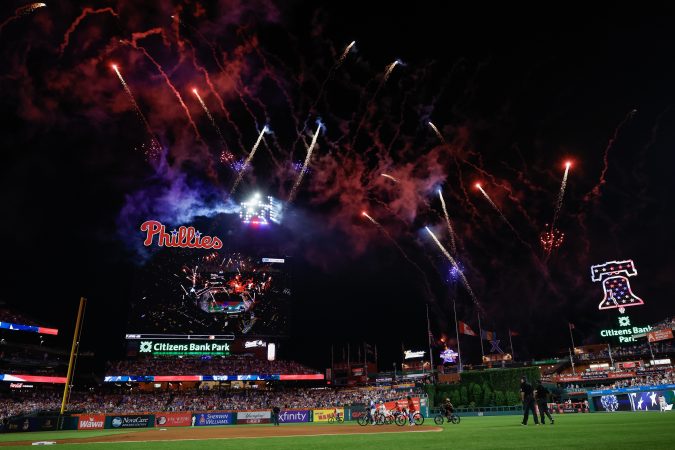
    They rode their bikes onto the field, and spent about three minutes each with a big leaguer, as fireworks fired off in the background, reminiscent of the famous 4th of July scene in The Sandlot.

    Driving down the Shore every summer, the younger MacLuckie would always point out Millville — “That’s where Mike Trout lives!” — so getting to talk to the local baseball hero was a dream come true. He brought his Little League bat for Trout to sign, but nearly forgot to take his marker onto the field. Leading up to the tribute, his father ran around the stadium in hopes of getting the marker in his hands.

    “[Trout] was super nice,” MacLuckie said. “I asked him for help with my batting stance. He told me to move my feet more out, so I could hit.”

    “He’s smiling so big right now, he can barely talk,” MacLuckie’s father said.

    He’s not the only one who received advice from a big leaguer. Eleven-year-old Damien Davis plays catcher, and he got to talk to Brewers ace Jacob Misiorowski about how he grips his pitches and generates his power.

    Thirteen-year-old Joseph Lund from Port Richmond was lucky enough to get paired with a Phillies player, Brandon Marsh, who said after Tuesday’s game that he “couldn’t stop crying” during the tribute.

    “We were talking about how that’s his favorite movie, and how Ray Charles always makes him emotional in that song, and then I was telling him about how my grandmother is a really big fan of his, and I got to take a video of me and him saying hi,” Lund said. “I asked him to sign my cap, and he said ‘Dude, you don’t need to ask. Anything you want, I got you.’”

    Charlie Fontanez was the rare kid on the field who had actually never seen The Sandlot until recently. When his baseball coach called to ask if the 14-year-old would have interest in appearing in an All-Star commercial tribute to the movie, he finally sat down to watch.

    Predictably, he loved it, especially the famous 4th of July scene recreated for the spot.
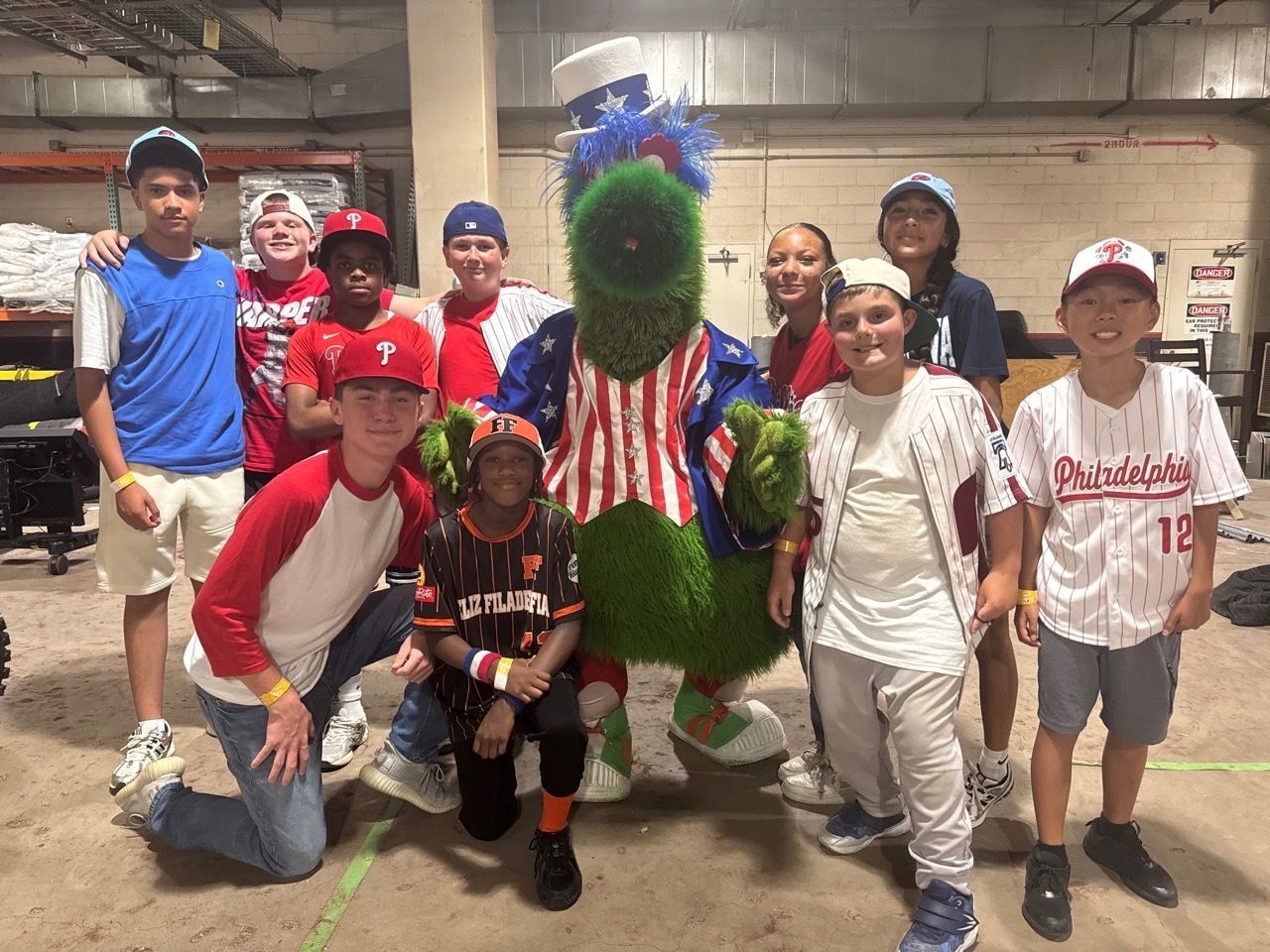
    The kids who took part in the All-Star Game’s tribute to The Sandlot with the Phillie Phanatic. All of the kids were selected from local baseball and softball teams affiliated with the Phillies organization.Courtesy of Sandra Fontanez

    Fontanez was at the pitcher’s mound with Dodgers star Yoshinobu Yamamoto. The two of them took a selfie, and then talked about pitching. Yamamoto admitted he’d been “a little nervous” in the World Series.

    “[Charlie] was super excited,” his aunt, Sandra Fontanez, said. “He was talking about it for hours after. Literally, we probably went to bed at two in the morning because he was just telling me how everything went.”

    Noah Postell, a 14-year-old from West Philly, paired up with Freddie Freeman, who asked if he wanted to have a catch. Postell, who is a middle infielder and hopes to play at Cardinal O’Hara next year, said his only regret was that he didn’t keep the ball they were throwing around as a souvenir.

    “That’s where the parent in me comes in, like I wish I was able to tell my son what to do, you know?” Postell’s father, Gregory, joked. “The ball that he was playing catch with, I wish he would have kept that ball and had Freddie sign that ball. … Maybe one day we can connect with Freddie Freeman and get a ball, but it was just an amazing opportunity.”

    Sophia Wright, a 13-year-old softball player from Roxborough, got paired with Bryce Harper. She was so immersed in the experience and starstruck by Harper that the marker she’d stashed in her pocket also went unused.

    “There’s tons of pictures out there, at least,” Wright said.

    Fontanez said that the commercial director told her the league initially thought to hire actors for the spot, to make it an easy shoot. But the director insisted on finding players from the area, which made the moment truly magical.

    “They’re baseball players,” Fontanez said. “Who better than them to be able to play a role like this?”

  • Philly is minting the new Trump gold coins

    Philly is minting the new Trump gold coins

    The U.S. Mint will soon begin producing $1 gold-hued coins, featuring the face of President Donald Trump, Treasury Secretary Scott Bessent announced this week.

    The coins will be created at the Mint’s Philadelphia production facility on Independence Mall, the nation’s first and oldest mint. A Treasury Department spokesperson said the coins will be available in the fall, and there’s “no gold in this coin but [it] has a gold-like finish.”

    The designs boast a direct-gaze portrait of President Trump, with the phrase “In God We Trust” written next to his face. This side of the coin also includes the dual date, “1776 ~ 2026,” which is the same motif featured on the dimes, nickels, quarters, and half-dollars in the U.S. Mint’s Semiquincentennial program released at the start of the year.

    On the reverse side, the $1 coin shows a variation of the Great Seal, an insignia of an eagle that is only used by the U.S. Department of State to impress upon official documents and treaties. The version on the coin includes the same eagle holding an olive branch and arrows in its talons. Its shield, however, includes the number “250,” commemorating the 250th anniversary of the signing of the Declaration of Independence.

    In his announcement on X, Bessent said the coin “celebrates the strength of American values, and the promise of a nation dedicated to preserving freedom for all.”

    The coin’s production has faced obstacles, as U.S. code states that “only the portrait of a deceased individual may appear on United States currency.” Critics say the move violates federal law.

    In response, Bessent has cited a 2020 law that allows the Treasury to mint $1 coins with “designs emblematic of the U.S. semiquincentennial.” However, the same law reaffirms that no head-and-shoulders portrait of any person, “living or dead,” may be included on the coins.

    Bessent pointed to historical precedent. “During the 150th, there was a Calvin Coolidge coin, so we can put living presidents’ images on a coin,” he told Fox News in an interview.

  • Mark Donovan Hagins, an actor, playwright, and educator who nurtured Philly’s theater community, has died at 56

    Mark Donovan Hagins, an actor, playwright, and educator who nurtured Philly’s theater community, has died at 56

    Mark Donovan Hagins, 56, an actor, teacher, and producer who knew everyone in Philadelphia’s theater community, from the upstarts to the grizzled veterans, died Wednesday, June 24, at his home. His family said his death was sudden but could not provide further details.

    As a resident producer with the Philadelphia Young Playwrights nonprofit, Mr. Hagins mentored, educated, and staunchly advocated for countless young members of the city’s theater community. Mr. Hagins was known as a laid-back person who could calmly solve problems under pressure, while remaining curious and dedicated to serving his students. Those who worked with him said he was an imaginative, collaborative artist who understood the history of Black theater in Philadelphia and was interested in cultivating its future. He had a talent for bringing entertaining stories to life, with even the barest of tools.

    His acting career included productions with Philadelphia’s Freedom Theatre, Azuka Theatre, Walnut Street Theatre, and the Rutgers-Camden Center for the Arts, appearances in the second season of the HBO show The Wire, and roles in other theater workshops, television shows, and independent films.

    One of his first roles came in 1999, when he connected with Philadelphia Young Playwrights as a student at Temple University and performed in the organization’s annual New Voices festival. After graduating in 2000, Mr. Hagins joined the nonprofit as a teaching artist and classroom actor to guide young playwrights and actors, even while his own theater career was just beginning. He produced numerous works by the city’s youth, including through the New Voices festival, where middle, high school, and even elementary school playwrights have their works performed by adult actors.

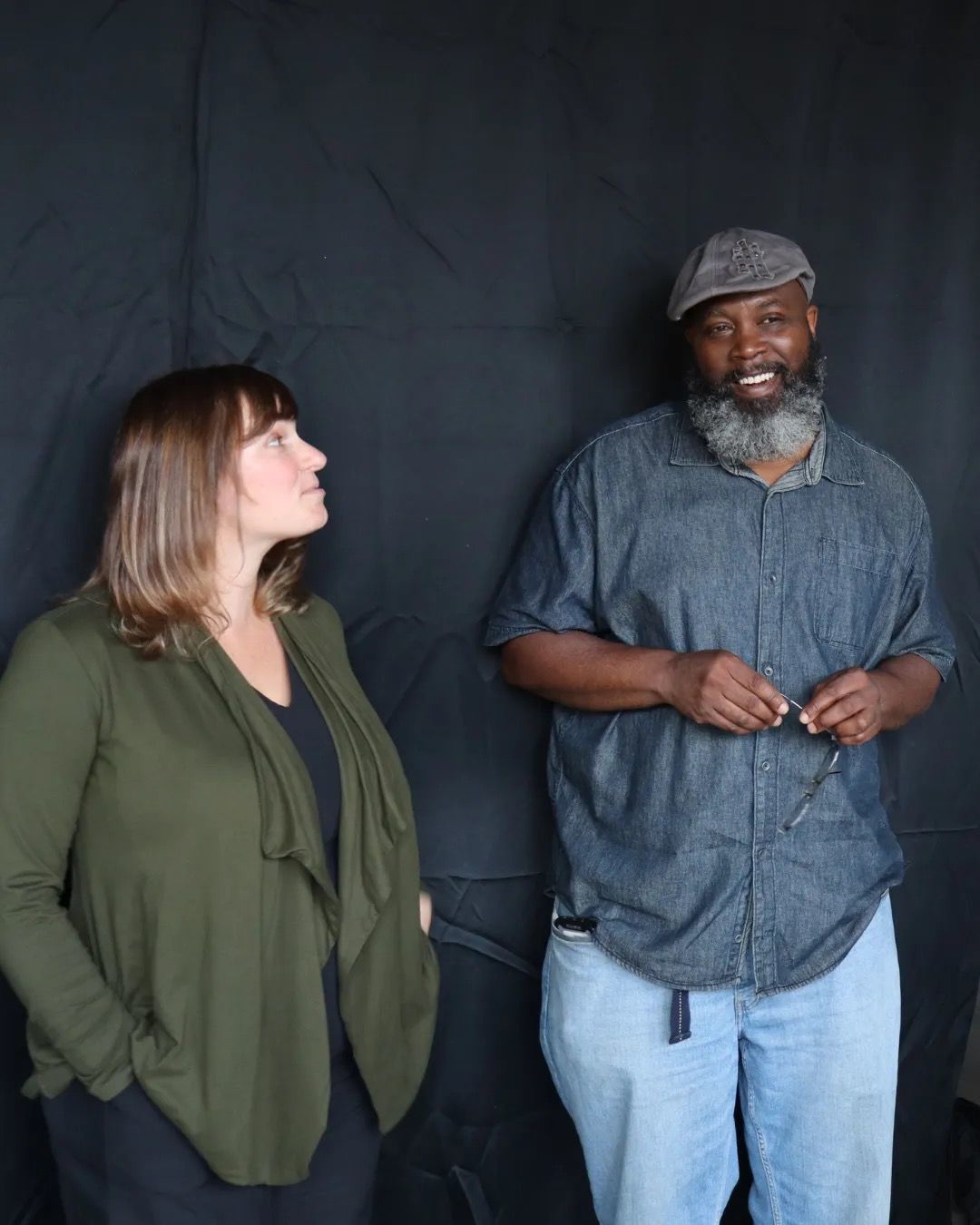
    Mark Donovan Harris teaching Philadelphia Young Playwrights students. He first connected with the organization when he was a student at Temple University in 1999.Philadelphia Young Playwrights

    “He believed that coming back to North Philadelphia … could make a difference in young people’s lives. And he said, if you could get through them through acting … you could change their momentum. You could change their environment. You could change their way of thinking. When they became adults, you know they would be better people in the world. So he invested into them,” said his aunt Millicent Platt.

    Mr. Hagins was born July 2, 1969. He grew up in the Hartranft section of North Philadelphia with his parents, the Rev. Paul Hagins and Vermell Hagins, and sister, Ramona Johnson, and spent his summers visiting family in North Carolina. Mr. Hagins, who went by his middle name, Donovan, in the theater world, always was interested in theater, but found it to be his passion once he enrolled at Temple, his family said.

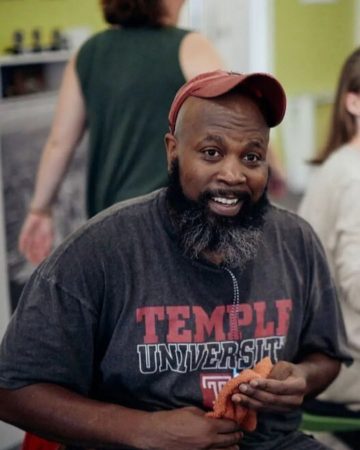
    “A fixture of our Temple Theaters community, Donovan was a proud Temple alum invariably seen repping his school with a hat or shirt,” Temple Theaters posted in an online tribute. “He lived in Cherry and White. Donovan embodied the values of generosity and collaboration, showing an unwavering belief in the power of young voices.”

    Professional actors who worked with him spoke highly of how he curated and directed student productions, said LaNeshe Miller-White, executive director of Philadelphia Young Playwrights. While he had a calming, comforting presence around people, Mr. Hagins was always willing to have fun, too, whether it be playing a silly character written by a student or taking hold of the microphone for his weekly karaoke outing, she said. He took his relationships with students seriously, and stayed in touch with some of his mentees long after their time with the program ended.

    “Donovan’s dedication to young artists and to PYP was unwavering, and his generosity, wisdom, and kindness touched countless students and colleagues across Philadelphia and beyond,” her organization wrote after his passing.

    Mark Donovan Hagins stands with Philadelphia Young Playwrights operations manager Ali Nebistinsky.Philadelphia Young Playwrights

    And while playwriting and theater drove him, Platt said, Mr. Hagins’ niece, Ragan Johnson, 25, and his nephew, Gregory Johnson III, 22, were his heart.

    His niece remembered visiting her uncle in Philadelphia, where they would eat cheesesteaks or visit Reading Terminal Market, and bond over Michael Jackson’s music. She said he was a great listener, and recalled how fun it was to watch him perform onstage in Washington during a period when he lived with her family. She will miss their phone calls, she said, when they used to go over her schoolwork together.

    Mr. Hagins’ parents and sister died earlier. He is survived by his niece and nephew; Platt and another aunt, Ella Mae Frederick; an uncle, Phillip Platt; a brother-in-law, Gregory Johnson II; and other family members.

    His family will hold a memorial service, open to the public, on Saturday, July 18, at 11 a.m. at Nix & Nix Event Venue, 1525 W. Dauphin St., Philadelphia.

  • House Judiciary Committee issues subpoena to Philly DA Larry Krasner, demands immigration records

    House Judiciary Committee issues subpoena to Philly DA Larry Krasner, demands immigration records

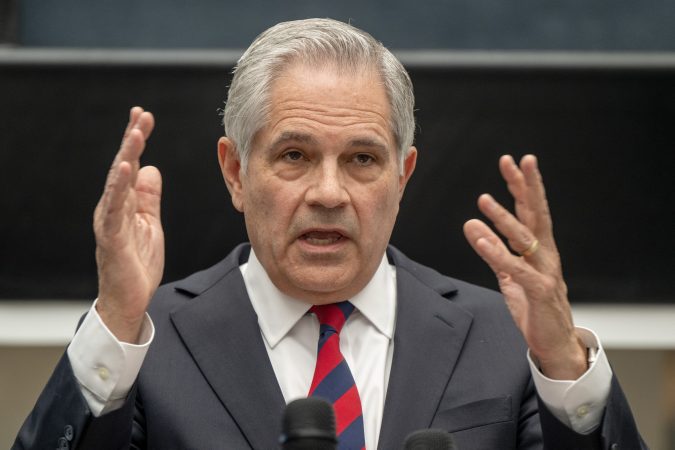
    The House Judiciary Committee subpoenaed Philadelphia District Attorney Larry Krasner on Wednesday, ordering him to turn over documents related to his office’s handling of immigration matters and criticizing what it called the prosecutor’s “pro-illegal-alien policies.”

    The Republican-led Congressional committee said in a letter that it sent the subpoena after Krasner, a Democrat, promised but failed to provide materials that were requested in May.

    The committee, in a letter signed by Rep. Jim Jordan (R., Ohio), its chair, accused Krasner of declining to prosecute or under-prosecuting foreign nationals so that they could avoid consequences connected to their immigration status. The committee said it was asserting its authority to try to end sanctuary-city policies in cities including Philadelphia.

    In response, Krasner called the subpoena “yet another step in authoritarian efforts to do dirt in the dark” and to put pressure on state prosecutors.

    “We have always complied with the law and will continue to do that,” Krasner said Wednesday. “That makes us different from [President Donald] Trump, who spends all day, every day, violating the law of the U.S. Constitution ― and morality.“

    Krasner and the House committee have sparred since May, when the panel accused top city law enforcement officials of shielding criminal immigrants through sanctuary policies and demanded that they quickly turn over a trove of related records and correspondence.

    That represented an escalation by Trump-allied Republicans in their criticism of Philadelphia government on rules concerning undocumented residents, particularly around limiting city cooperation with U.S. Immigration and Customs Enforcement.

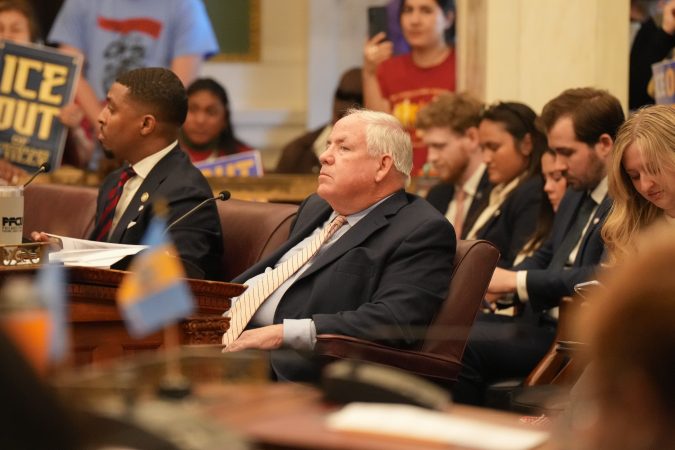
    In April, City Council approved high-profile “ICE Out” legislation aimed at restricting immigration enforcement in Philadelphia, putting the city at the forefront of local resistance to Trump’s deportation campaign. The Trump administration challenged part of that package of bills, and this month a federal judge ruled that the city could not prevent ICE agents from concealing their identities.

    In May, in letters to Krasner, Police Commissioner Kevin Bethel, and Sheriff Rochelle Bilal, the Judiciary Committee accused each of hindering federal immigration enforcement. Each letter sought up to six years of immigration communications between their agencies and immigration officials and, in the sheriff’s case, with activist groups including No ICE Philly, Juntos, Asian Americans United, and others.

    The Trump administration has clashed with cities and states that embrace sanctuary policies, contending they are hurting Americans and threatening to cut their federal funding. Philadelphia has long been among the targets.

    Krasner had responded by telling the committee, which said it was conducting oversight of state and local jurisdictions that it believes endanger Americans by not assisting immigration agents, that such policing powers belong to the city.

    “The legal errors are unsurprising,” Krasner wrote to Jordan and to Rep. Tom McClintock (R., Calif.), chair of the subcommittee on immigration, noting that neither had passed the bar. “The factual errors are also unsurprising, given your histories of adhering to wholly repudiated, counterfactual and unscientific election denialism, climate change denialism, and the like.”

    Krasner wrote that he needed time to address each of the committee’s allegations and requests, and was working to hire a lawyer who would be in touch soon.

    In July, Krasner wrote the committee and encouraged it to “question me in public so all Americans are able to see who is telling the truth.”

    The committee’s “fear of such a public airing only makes clearer your lack of real purpose and your complicity in peddling lies,” such as, he said, that local and state prosecutors “rather than President Trump’s ill-conceived deportation actions are responsible for criminals going free.”

    Immigrants are far less likely to commit and be arrested for crimes than U.S. citizens, Krasner noted. But the small number of immigrants who commit serious crimes are being deported by ICE before they can stand trial and be sentenced, given “a ‘get out of jail free’ card and a plane ride to another country, a country where they will never face American justice.”

    The committee told Krasner on Wednesday that time to provide the requested records had run out. Its subpoena directs him to turn over the materials by July 29.

    “Although you may disagree about the need to reform federal law to end sanctuary policies … you cannot seriously contend that the committee lacks the authority to do so,” the committee wrote, adding that Congress may amend statutes “to ensure that prosecutors cannot circumvent immigration law and allow aliens to escape accountability for their crimes.”

  • President’s House advocates vow to keep fighting despite the new exhibit — and a vandalism citation

    President’s House advocates vow to keep fighting despite the new exhibit — and a vandalism citation

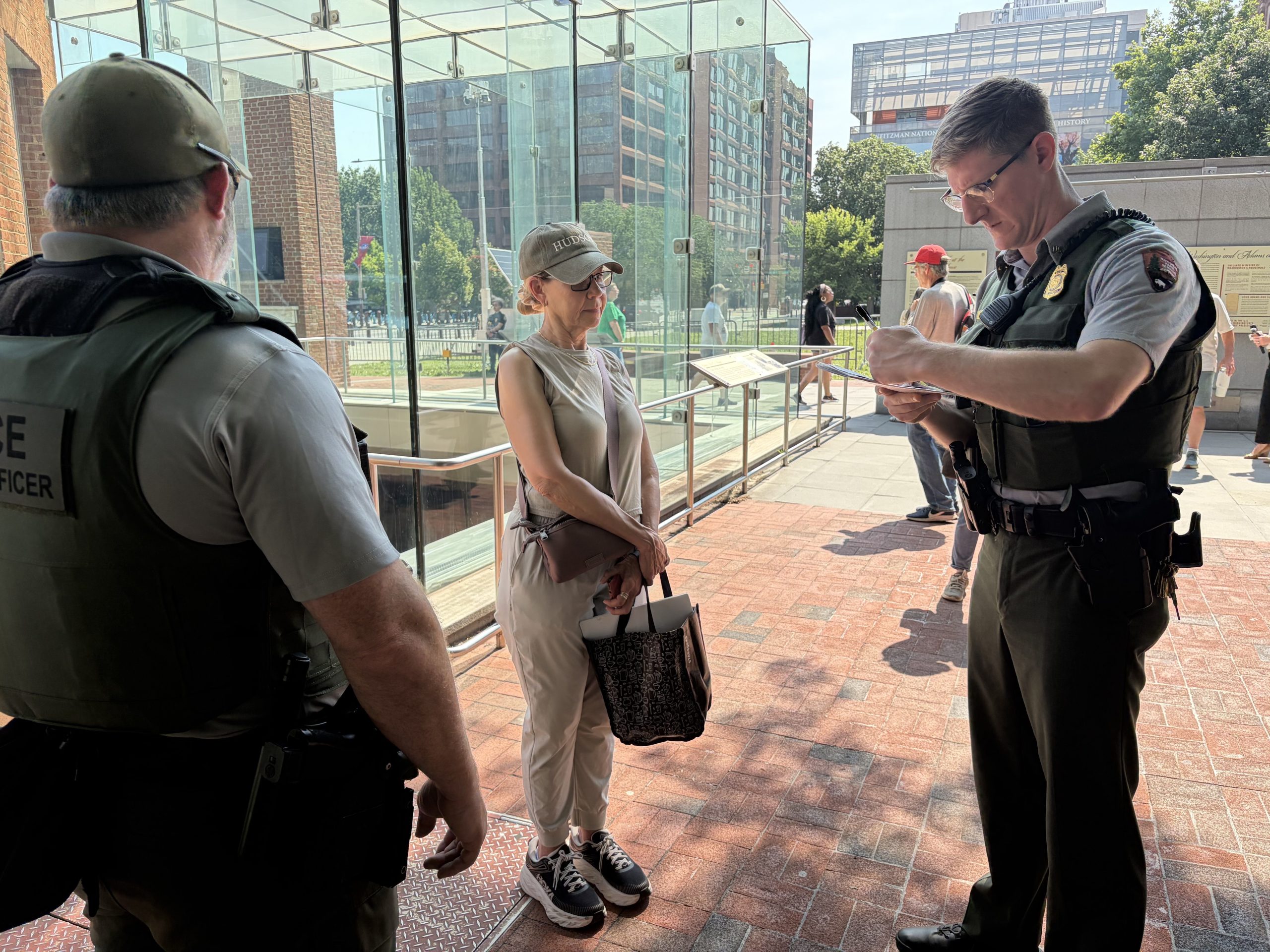
    Sandra Shachar has been posting news articles on the walls of the President’s House Site almost every day since January.

    She was outraged that President Donald Trump’s administration had dismantled the exhibit telling the story of the nine people George Washington enslaved in his executive mansion at Sixth and Market Streets, and sharing information with visitors was her way to push back.

    When she arrived at Independence Mall on Wednesday morning, new panels were on the historic site’s walls. The National Park Service had installed a new exhibit before dawn.

    But Shachar, 72, continued with her routine. This time, two park rangers stopped her.

    “When I went to tape my sign up, they came and said, ‘You can’t do that. Please stop,’” the psychologist from Center City said.

    Sandra Shachar, 72, cited for vandalism at the President’s House site on July 15, 2026 for attempting to post news articles on the walls.Abraham Gutman

    The rangers issued Shachar a citation for vandalism, which carried a $305 fine, and warned her that next time she could be arrested.

    The news came as a gut punch.

    “It was something I could do,” Shachar said. “And now for doing something, I’m issued a citation that says I have created vandalism on federal property.”

    The vandalism citation marks an escalation in the National Park Service’s response to protest at the President’s House, and comes as activists promise to keep the fight over the site’s history alive.

    The National Park Service installed the new exhibit early Wednesday, hours after the city hosted MLB All-Star Game events near the site.

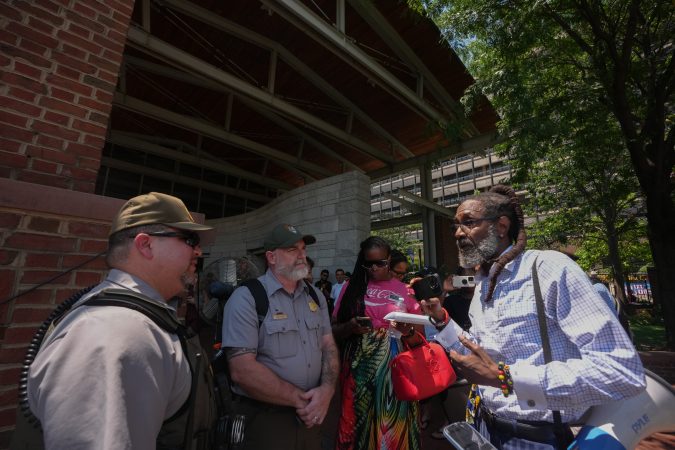
    Michael Coard, leader of Avenging the Ancestors Coalition, a group that has fought to develop and protect the President’s House exhibit, spoke at the site shortly after noon and vowed resistance.

    “I don’t care whether you’re a Republican or Democrat, liberal or conservative … this is some scary [expletive],” Coard said. “Despite being very afraid, we got to keep fighting.”

    Fascist leaders throughout history have attempted to rewrite the past as part of their campaign to control the future, the attorney said. And that is the level of threat the Trump administration’s changes to the President’s House represent, Coard said.

    The new panels have been criticized for minimizing the brutality of slavery, whitewashing George Washington’s culpability, and shifting the focus away from the nine people who were kept in bondage at the nation’s first executive mansion.

    It is outrageous that visitors will see panels that, for example, discuss Washington’s “discomfort” with slavery and suggest the lives of those enslaved in Philadelphia were not too bad, Coard said.

    “The fact that the federal government would ignore the hell of slavery for the victim but highlight the president’s ‘discomfort,’” Coard said. “What kind of nonsense is that?”

    Avenging the Ancestors Coalition’s goal continues to be the full restoration of the site with the original panels that had been developed through partnership with the city and input from the community. The group is exploring new legal strategies, Coard said.

    The city is also not done fighting, Mayor Cherelle L. Parker said in a statement.

    Her administration plans to ask the U.S. Court of Appeals for the Third Circuit for a new hearing, giving city attorneys a chance to argue their case again.

    A three-judge panel held that the city has no rights over the site and dismissed all but one count in Philadelphia’s underlying lawsuit.

    Security cameras that have been placed at the President’s House site, where new panels have been installed, in Philadelphia, July 15, 2026. Historians and advocates have criticized the new panels for minimizing Washington’s role as an enslaver.Jessica Griffin / Staff Photographer

    The case raises “serious legal issues” that go beyond the President’s House, Parker said.

    “I will continue fighting on behalf of everyone who supports the core belief: All of our history must be told,” the mayor’s statement said.

    It will be up to the Third Circuit to decide whether to grant a second hearing to an issue that three judges had agreed on unanimously.

    The efforts to educate visitors about the President’s House continue as well.

    Old City Remembers, a grassroots effort, will continue to register volunteers to read aloud the text of the removed signs. And the Black Journey: African-American Walking Tour of Philadelphia will continue to offer tours that tell the story of those enslaved at the site.

    Brian Wells, 65, has been putting up protest posters on the President’s House walls since the day after the January removal. On Tuesday, Wells said, national park police stopped him from taping papers and threatened him with arrest.

    He thought the heightened security was because of an MLB All-Star event held Tuesday on Independence Mall, but now that the panels have been replaced, he isn’t so sure.

    “I will continue with Old City Remembers folks to volunteer to read aloud the text from the former panels,” Wells said Wednesday. “Other actions? I don’t know at this point.”

  • Jefferson, Nemours, Temple, and St. Chris are exploring alliance to support the North Philadelphia children’s hospital

    Jefferson, Nemours, Temple, and St. Chris are exploring alliance to support the North Philadelphia children’s hospital

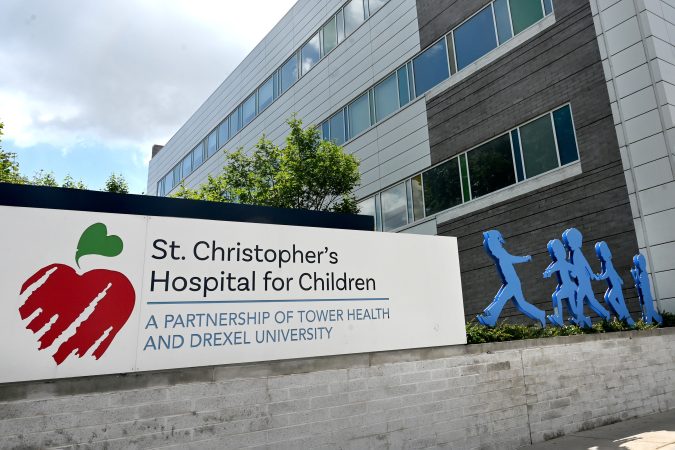
    Three major Philadelphia-area health systems are exploring an alliance to support financially struggling St. Christopher’s Hospital for Children in North Philadelphia, its leaders announced Wednesday.

    The proposed alliance would involve Nemours Children’s Health, Jefferson Health, and Temple Health, a St. Chris statement said.

    St. Chris’ ownership would not change from the current 50-50 partnership between Drexel University and Tower Health.

    Under the alliance, Wilmington-based Nemours would provide highly advanced, or tertiary, care. Nemours is Jefferson’s primary pediatric partner in the Philadelphia area.

    The preliminary agreement announcement provided no timeline to form the alliance. It also did not mention specific financial support for the North Philadelphia institution, which has received millions from local health players following a 2019 bankruptcy and steep losses during the pandemic.

    St. Chris’ board chair, P. Sue Perrotty, said the 150-year-old hospital will remain a “gateway” to care for families.

    “Our goal is to preserve what makes St. Christopher’s so special while strengthening our operations, so our community-focused mission will endure,” she said.

    “Whether care is delivered at St. Christopher’s or through our partners when clinically appropriate, our team will continue to coordinate every step of a patient’s journey, providing families with a seamless experience and a trusted guide throughout their child’s care.”

    Beyond the critical health services St. Chris provides, the institution also plays a vital part in medical education for area medical schools, including those at Drexel, Thomas Jefferson University, Philadelphia College of Osteopathic Medicine, and Temple University.

    It serves as a safety net for healthcare in some of Philadelphia’s lowest-income communities. About 85% of its patients in recent years have been insured by Medicaid, the highest percentage of any children’s hospital in the nation, according to St. Chris.

    Twice in the past four years, a coalition of Philadelphia nonprofits provided financial lifelines for St. Chris.

    Children’s Hospital of Philadelphia, Jefferson, Temple, Philadelphia College of Osteopathic Medicine, Independence Health Group, and private donors provided $50 million over two years starting in 2022. Two years later, the same group, minus Independence, contributed another $30 million.

    Jefferson and Temple were also part of a consortium that considered bidding for St. Chris in 2019 during its parent company’s bankruptcy. They backed out before the auction, which Drexel and Tower won with a $50 million bid.

    Nemours spokesperson Shelley Meadowcroft said there was no financial support included in the agreement.

    Nemours in recent years has lost affiliations with Main Line Health and ChristianaCare to CHOP. The alliance will strengthen “access to high-quality pediatric care in our region,” she wrote in an email.

    “This collaboration also strengthens Delaware’s role in pediatric care by positioning Nemours Children’s Delaware-based clinical operations as a central hub for advanced specialty care, education, and innovation,” she added, “while supporting the long-term strength and mission of St. Christopher’s Children’s Hospital and the communities it serves.

    In a statement, Temple University officials characterized the agreement as “non-binding letter of intent” to form an alliance “in support of St. Chris and its future.”

    “The proposed alliance reflects a shared commitment to securing a future for St. Christopher’s while preserving the mission, clinical excellence and community role that have made the hospital a resource for children and families in Philadelphia and across the region,” officials said.

  • Philly City Council members probe Parker administration on rising property assessments: ‘Owners deserve answers now’

    Philly City Council members probe Parker administration on rising property assessments: ‘Owners deserve answers now’

    Members of Philadelphia City Council say they are concerned that the city’s recently released property reassessments will mean tax hikes for thousands of residents, and they are demanding to know more about the methodology used to determine property values.

    Councilmember Mike Driscoll, a Democrat who represents the Lower Northeast, authored a letter sent Monday to Chief Assessment Officer James Aros Jr. and other top officials in Mayor Cherelle L. Parker’s administration, expressing concerns on behalf of a half dozen Council members.

    He wrote that his office has received “numerous” calls from constituents whose homes will see sharp increases in valuation, the measure that is used to calculate property tax bills.

    “Many residents are struggling to grasp how their assessments were calculated. Others are worried about what these increases will mean for their property tax bills,” Driscoll wrote. “At a time when families are already facing higher costs for housing, utilities, groceries, and other daily expenses, these concerns need clear answers.”

    He outlined six questions for the Philadelphia Office of Property Assessment related to its process and methodology, and set an Aug. 15 deadline for the administration to reply, saying “property owners deserve answers now as they review their assessments and consider whether to file an appeal.”

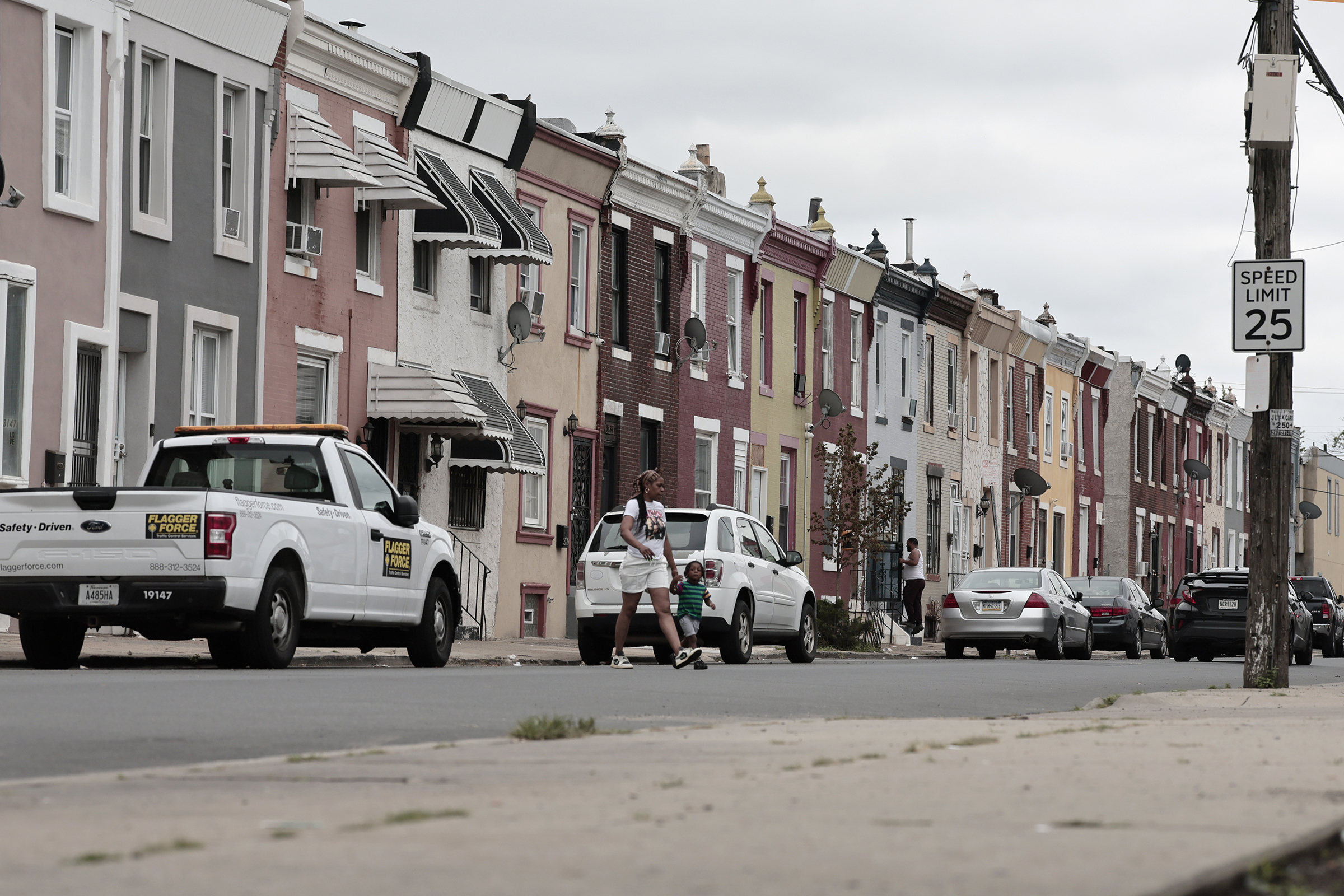
    The 3100 block of C Street in Philadelphia on Tuesday, July 7, 2026. Property values sharply increased on this Kensington block.Elizabeth Robertson / Staff Photographer

    The letter — which was signed by six Council members who are cosponsors of previously introduced legislation to probe the city’s property assessment process — is one of the first formal steps that lawmakers have taken to challenge the citywide revaluation since last month, when property owners received notices of their new assessments.

    Citywide, there was a 3% median change in valuations from the 2025 tax year, the last time there was a mass reassessment, according to an Inquirer analysis of assessments of single-family homes.

    But some neighborhoods saw much steeper increases. The biggest jump was in Kensington, where median values increased 15.3%. Driscoll represents part of the neighborhood, which has been long beleaguered by the open-air drug market there and where the city has made a concerted effort to improve the quality of life.

    There was also a 15% median increase in property assessments in Mantua and a 12% rise in Kingsessing, both of which are in West Philadelphia and border University City.

    Parker administration officials have said that the city offers a variety of property tax relief programs, including the popular homestead exemption, which erases the first $100,000 in valuation from being taxed for owners who live in their home as their primary residence. Property owners must sign up for the free program.

    But for years, dating back long before Parker took office in 2024, Council members have criticized the city’s property reassessment process, saying its methodology is opaque and its results have a disproportionate impact on low-income homeowners.

    Multiple reviews are already underway.

    In addition to a yet-to-be-scheduled Council hearing, the city controller is conducting a performance audit of the property assessment office and the city’s appeal process, according to Driscoll’s letter. Controller Christy Brady’s office has sought feedback from residents and left flyers in neighborhoods where property values are rising.

    The Parker administration convened a task force in 2024 to develop recommendations for how the city can improve its appraisal practices.

    And the city is in the process of hiring an outside consultant to examine the fairness of its reassessments. According to city records, that analyst will be expected to draft a report by the end of this year.

    Data reporters Yaelle Tang and Lizzie Mulvey contributed to this article.

  • Baseball celebrated itself with All-Star Week. Next up: Avoiding self-destruction with a looming labor fight

    Baseball celebrated itself with All-Star Week. Next up: Avoiding self-destruction with a looming labor fight

    In 1976, when the All-Star Game came to Veterans Stadium, the Yankees’ Catfish Hunter and Thurman Munson did a midgame interview about a historic collective bargaining agreement that was ratified the night before.

    Now that was a celebration of baseball.

    Fifty years on, this wasn’t so bad either. MLB pulled out all the stops — and tugged on a few heartstrings, too — Tuesday night, from Miles Teller’s pregame ode about the sport’s impact on a 250-year-old country to the fifth-inning recreation of The Sandlot, including Ray Charles’ rendition of “America The Beautiful,” with All-Stars and children watching fireworks together on the field like it was some magical backyard.

    Go ahead and admit it: It got you.

    “Oh, yeah, that was honestly one of my favorite parts of the game just because that was my favorite baseball movie growing up,” said Brandon Marsh, the Phillies’ first-time All-Star. “When I hear that song, it almost just brings tears to my eyes because it takes me back to being 5 years old.”

    That was the point. And on that count, bravo, baseball.

    All of which makes what will happen in less than five months so much more galling.

    Because the owners and players agree on one thing — and one thing only: Baseball is thriving. Commissioner Rob Manfred and interim players’ union chief Bruce Meyer have the attendance figures and television ratings to prove it.

    Baseball’s owners are “more united than any group in my entire time in baseball” in the pursuit of a salary cap, according to commissioner Rob Manfred.Yong Kim / Staff Photographer

    Yet when the collective bargaining agreement expires Dec. 1 without a new deal — the sides can’t even agree on an economic framework within which to work — the owners almost surely will lock out the players, inciting a work stoppage that threatens to shutter the sport not only during a long, cold winter but also for part or even all of the 2027 season.

    Talk about hitting the self-destruct button. Or pulling the pin out of the grenade. Pick your metaphor. They all apply.

    And if you didn’t already think baseball was headed to such a dark place, well, you should’ve been in the hotel ballroom where Meyer and Manfred met separately with members of the Baseball Writers’ Association of America hours before the American League scored three first-inning runs against the Phillies’ Cristopher Sánchez in a 4-0 victory over the National League.

    Start here: Meyer rejected MLB’s proposal to institute a salary cap, forever a third-rail issue for the players, on the union’s contention that baseball isn’t suffering from competitive imbalance as much as a subset of owners that aren’t trying to actually win. The players, then, are proposing changes to how revenue is shared between the teams.

    “Teams in every market across the league can afford to compete; many of them are choosing not to,” Meyer said. “From our standpoint, that’s the biggest problem in the game right now.”

    But the owners are “more united than any group in my entire time in baseball” in the pursuit of a salary cap, according to Manfred, who said they were influenced by internal polling of fans. (Here’s a secret: It’s really more about the owners wanting to control costs and raise their franchise values.)

    And the players? Although it remains to be seen whether the union can hold — rank-and-file players with lower salaries might have different interests than superstars — the biggest names in the sport are steadfast in their refusal to accept a cap.

    It goes back generations, in fact, to Philly’s 1976 All-Star Game, where the players won the right to become free agents after accruing six years of major league service. They played without a CBA for the first half, the sides trusting they would work something out.

    “None of us talked about that stuff,” Larry Bowa said. “I hear it now [from players]. You hear a lot of talk about if there’s going to be a lockout. I do know that when we had these talks, [owners] always wanted a cap, and that was one thing that was embedded in our brains: ‘Don’t go for a cap. It’s not going to work.’”

    And now?

    “I think the opportunity for players to get paid is what this is all about,” Bryce Harper said. “That’s why we have no cap and what we’ve done for so long, starting with Curt Flood. He started everything. So, we owe it to the guys that have come before us to do the same thing and all the young guys that are going to go through it, as well.”

    Said Mike Trout: “I think [a cap] is bad for the game. The game’s in a great spot right now, you know? I just don’t support that.”

    With five months before the CBA expires, this is a time for rhetoric more than serious negotiation. But Meyer blasted MLB for its advertising campaign on MLB.TV — “Level the Playing Field” — to drum up public support.

    “The supposed stewards of the game have spent an inordinate amount of time trying to convince fans that they shouldn’t have hope, or that the product they’re paying to consume in record numbers is somehow broken,” Meyer said. “I think it’s perverse.”

    Manfred pointed out that a small-market team hasn’t won the World Series since the Royals in 2015. Meyer noted that the Brewers and Rays are leading their divisions at the All-Star break, with Milwaukee bound for its eighth playoff appearance in nine years, including four in a row.

    “It gives Bruce talking points,” Manfred said. “But from our perspective, the more important issue is, what’s the aggregate data over time? Our view of the world is that over a very long period of time, there’s a very strong relationship between [payroll] and who gets into playoffs.”

    The Phillies’ Bryce Harper is adamantly against a salary cap.Elizabeth Robertson / Staff Photographer

    It’s ugly. And it will only get uglier.

    Five years ago, baseball went through a 99-day lockout before reaching a deal in mid-March and shoehorning a 162-game season into a compressed schedule. Back then, though, the owners and players settled their differences within the existing non-cap system.

    Now, they can’t even agree on an economic structure. It’s as if the owners are speaking French and the players German.

    “A salary cap is the ultimate excuse for an owner to say, ‘Gee, I would like to make the team better, but you know, I can’t,’” Meyer said. “Salary caps are bad for fans.”

    Said Manfred: “I think the number from top to bottom in our sport, in terms of payroll, the gap is $441 million. It defies human experience to ask a fan to think that the bottom end of that gap has the same opportunity to win as the top end.”

    And ‘round and ‘round they went.

    Hours later, after that reenactment of The Sandlot, Marsh detailed the conversation with the boy who watched the fireworks with him in right field.

    “We were talking about how his grandma is a huge fan of the Phillies,” Marsh said, “and how she was a huge fan of me personally.”

    Then, Marsh asked the boy to take out his phone.

    “Yeah, we sent her a video,” he said, “and hopefully made her night.”

    Imagine shutting all of that down.

    Now that’s perverse.

  • $617 million in tax-free bonds for sale of South Jersey’s Advantage Behavioral Health blur private equity, nonprofit lines

    $617 million in tax-free bonds for sale of South Jersey’s Advantage Behavioral Health blur private equity, nonprofit lines

    A newly created nonprofit wants to borrow $617 million through tax-free bonds to buy Advantage Behavioral Health, a fast-growing South Jersey behavioral health company.

    The current owner, a Connecticut private equity firm called Clearview Capital, isn’t walking away from Advantage, which it bought 15 months ago.

    Clearview Capital and current executives will continue to own the for-profit entity that manages Marlton-based Advantage, according to a preliminary bond offering statement filed late last month.

    Advantage’s proposed sale to a nonprofit called QCF Advantage LLC is noteworthy for mixing for-profit and nonprofit business interests. It would make a private-equity company a key partner in a nonprofit organization with financing from the tax-exempt municipal bond market.

    Advantage’s sale price is about $520 million. That price includes $80 million being held back to see if Advantage hits profit targets after the sale. The company had $141.6 million in revenue in the 12 months that ended May 31. Most of the remaining money from the bond sale will go into reserve funds.

    Like many other mental health service providers, Advantage does not accept Medicare or Medicaid. Taking only private insurance and out-of-pocket payments helps Advantage register strong profit margins amid growing demand for mental health and addiction services.

    The transition to nonprofit ownership creates “a structure that’s designed for long term stability, reinvestment, and patient care,” James D. Golden, CEO of QCF’s parent company, told prospective investors in a recorded presentation.

    “We can provide an efficient exit to private capital,” he said in the recording, published June 30 on a website that tracks documents related to the municipal bond market. “Tax-exempt financing is really the mechanism that makes all that possible.”

    That financing will leave Advantage with an extraordinarily large debt load, said Robert Q. Kreider, a former nonprofit CEO who has no ties to Advantage. He noted that debt of that size requires continued strong growth to make the debt payments and have enough money to continue growing.

    “The bondholders are getting such a juicy rate, they’re willing to accept the risk,” said Kreider, a consultant and former CEO of Devereux Advanced Behavioral Health.

    Officials at Clearview Capital, Advantage, and QCF Advantage did not respond to requests for interviews.

    Advantage’s founding and growth

    Advantage has expanded to Pennsylvania and six additional states beyond New Jersey since its founding in 2017.

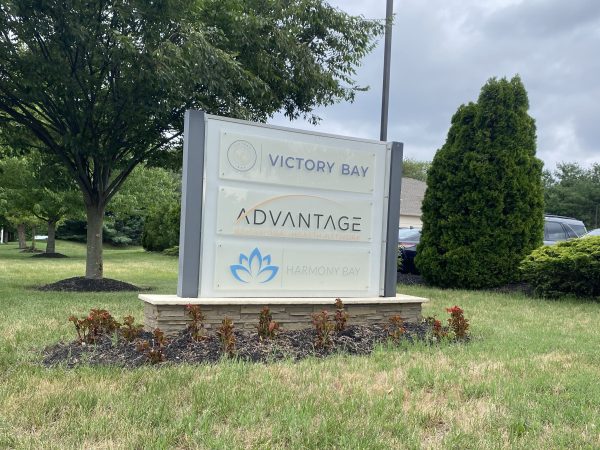
    It initially provided intensive outpatient therapy through a business called Victory Bay in Laurel Springs.

    It launched a telehealth version of its services, called Harmony Bay, in 2020. Outside of New Jersey, Advantage uses Harmony Bay as a way to build a presence in a new state, before introducing in-person services through Victory Bay.

    (function(){function e(){window.addEventListener(`message`,function(e){if(e.data[`datawrapper-height`]!==void 0){var t=document.querySelectorAll(`iframe`);for(var n in e.data[`datawrapper-height`])for(var r=0,i;i=t[r];r++)if(i.contentWindow===e.source){var a=e.data[`datawrapper-height`][n]+`px`;i.style.height=a}}})}e()})();

    Advantage also operates 17 sober-living houses under its Dignity Hall brand in Blackwood, Laurel Springs, Sicklerville, and several other South Jersey towns.

    The average daily census of patients at Victory Bay has soared over the last five years to 805 in the three months that ended June 30, from 81 in the first quarter of 2021, according to data in the bond disclosures. The company employs more than 700.

    Despite the expansion to Massachusetts, Florida, Indiana, Maryland, Ohio, and California, the services provided in a string of buildings along Chews Landing Road in Laurel Springs accounted for 55% of revenue, most of the company’s cash flow last year.

    The parking lots at several of those buildings were packed last Thursday. As part of the bond financing, 20 New Jersey properties valued at $14.4 million are being mortgaged.

    New projects are under development in Absecon and Pine Brook, N.J.; Scranton, Pa.; and Lancaster, Ohio, the bond prospectus said.

    A nonprofit buyer as a vehicle for private equity sales

    QCF Advantage was created in April to acquire Advantage.

    Owner QCF/I Inc., a tax-exempt organization based in Houston, acquires healthcare facilities that can be paid for with tax-exempt financing, according to its 990 tax form. Founded in 1997, QCF stands for Quality Care Foundation.

    “We’re a nonprofit focused on improving the quality of care in the behavioral health industry. We believe mental health is one of the most persistent, complex, and costly challenges in our country today,” Golden told prospective bond investors.

    QCF/I’s niche is buying for-profit businesses, often from private equity firms, while giving the sellers the option to keep managing the business, he said.

    In the Advantage arrangement, QCF/I will collect 2.25% of revenue for administrative services — to be paid before bondholders.

    Clearview Capital, the current private equity owner, will stay involved through an existing management entity that will collect 5% of monthly revenue under an initial 15-year contract.

    Golden and Richard T. Needham together form QCF’s board. They have a background in private equity at a Houston private equity firm called Domain Capital Partners that is not related to Clearview. The phone number on the 990 led to a voicemail box that was full. A voicemail at Domain Capital got no reply.

    QCF’s other businesses include a psychiatric hospital in Las Vegas and an addiction treatment center in North Jersey.

    Surging debt load

    Advantage had about $6 million in long-term debt at the end of 2024, three months before its sale to Clearview for an undisclosed price.

    A year later, the debt totaled $52.5 million, not including a $10 million line of credit.

    If the bond sale happens as expected, the company’s long-term debt would skyrocket to $604 million at the end of this year, according to the bond document.

    That large debt means the success of QCF Advantage depends on continued dramatic growth in revenue and profits, according to a deal summary from Stacy DiStefano, CEO of Consulting for Human Services, a Philadelphia-based advisory firm.

    Advantage’s projected annual interest expense is $42.7 million. For context, that’s about the same as the combined $42.2 million in interest paid last year by three large unrelated health systems in the same South Jersey market, Cooper University Health Care, Inspira Health Network, and Virtua Health.

    Colin Studwell, Advantage’s CEO, said during the investor presentation available on Munios.com that the company is well-positioned for strong growth. He credited the management entity, known as a management services organization, or MSO, that Clearview and executives, including Studwell, already own.

    Studwell will continue to run the MSO, which handles operations support, billing, collections, human resources, information technology, and everything else it takes to run the business.

    “Our MSO capabilities are the engine which allow us to continue to scale our services and treat more patients without any decay in clinical or operational efficiency,” Studwell said.

  • Philly’s massive, wacky, and beloved Fringe Festival kicks off Sept. 8

    Philly’s massive, wacky, and beloved Fringe Festival kicks off Sept. 8

    The Fringe Festival celebrates its 30th anniversary this fall with a month of experimental, genre-blending, and provocative theater hosted all over Philadelphia.

    Running Sept. 8 to 27, the festival will feature more than 338 productions spotlighting groundbreaking local and international talent, including a play about infectious disease scientist Anthony Fauci and AIDS activist Larry Kramer, an absurdist clown show, and a multimedia music experience inside the Franklin Institute’s planetarium.

    “Fringe performance — often characterized by free expression, communal experience, collective wonder, challenging perspectives, and a DIY ethos — plays an essential role in our community,” said FringeArts CEO and producing director Nell Bang-Jensen in a statement. “This year, you can find us at nearly 100 venues, from traditional theaters and large cultural institutions to neighborhood bars and city sidewalks.”

    With a lineup featuring world and regional premieres, the Philadelphia Fringe Festival is one of the biggest Fringe events in the country.

    Organizers say they are on track to surpass the number of productions they presented last year, which was the largest festival in Philly Fringe history: A record high of more than 35,000 tickets were sold, with unique ticket buyers up 17% from the previous year — and for the first time, millennials and Gen Z made up more than half of the audiences.

    A scene from “Friday Night Rat Catchers” by Lisa Fagan and Lena Engelstein, playing at FringeArts from Sept. 17-19, 2026. Photo credit: Maria BaranovaMaria Baranova

    Festival “hubs” returning this year include Cannonball (at Asian Arts Initiative and Icebox Project Space), Circus Campus Presents in West Mount Airy, Dumb Hub at Pig Iron Theatre in Olde Kensington, and West Philly’s Studio 34. Newcomers this year are the Lemonade Stand, focusing specifically on new artists at Skinner Studio at Plays and Players, and a dance-focused hub at Performance Garage in Spring Garden. Each hub hosts more than a dozen experiences.

    Among the hundreds of shows participating, there are 10 curated productions from FringeArts with artists both familiar and new to Philly Fringe audiences.

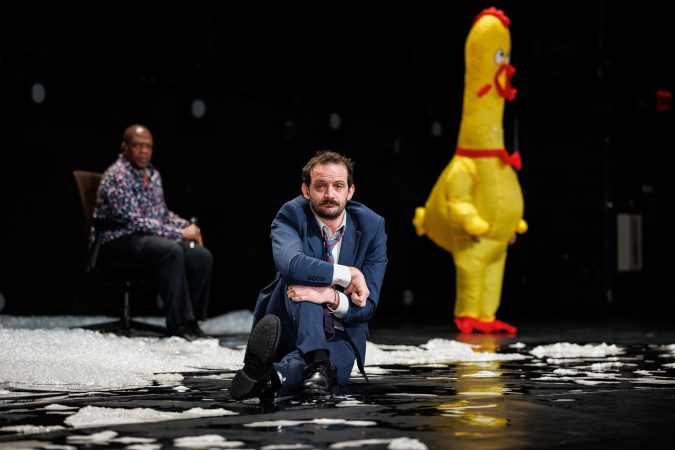
    The lineup includes Friday Night Rat Catchers (Sept. 17-19 at FringeArts), a disco era-set dance production from choreographers Lisa Fagan and Lena Engelstein; Handle With Care (Sept. 17-19 at the Athenaeum of Philadelphia) from the boundary-testing Belgian theater collective Ontroerend Goed; and How Does It Feel to Look at Nothing (Sept. 25-27 at FringeArts), an avant-garde musical performance from clarinetist/vocalist Holland Andrews and violinist/composer yuniya edi kwon.

    A scene from “Handle with Care” by Ontroerend Goed, which will perform Sept. 17-19 at the Athenaeum of Philadelphia.Ontroerend Goed

    Another musical experience will take place inside the Fels Planetarium at the Franklin Institute with the Philadelphia premiere of Utopian Hotline: A Telephone Hotline, A Vinyl Record, A Performance (Sept. 24-27). The Brooklyn-based group Theater Mitu combines science and theater for fascinating explorations of humanity; in this case, they created a public hotline to encourage people to share messages to the future, taking inspiration from the Voyager space missions. The voicemails join the sounds of vinyl records and the visuals of the planetarium to immerse audiences into the otherworldly.

    Kramer/Fauci (Sept. 8-11 at FringeArts), which premiered at New York University’s Skirball Center for the Performing Arts earlier this year, examines the contentious and complicated relationship between a public health official and a playwright/organizer. It’s a dramatic retelling of a C-SPAN segment from 1993 when Fauci, who led the National Institute of Allergy and Infectious Diseases, and Kramer, the founder of the AIDS activist organization ACT UP, clashed over a new AIDS task force. The two adversaries (Kramer publicly called Fauci “a murderer”) later developed a close friendship. Broadway director Daniel Fish, who won a Tony Award for his Oklahoma! revival, crafted the show verbatim from the heated but riveting news segment.

    The beloved and eccentric drag queens of the Bearded Ladies Cabaret — frequent Fringe headliners — are taking a look back through 16 years of performances with an installation and show called Priority Hoarding: A Retro-spectacle (Sept. 10-27 at the Hairport, 444 N. Third St.). It’s designed to feel like viewers are digging through a chaotic closet full of baggage both literal and metaphorical. The cabaret will stage three performances weekly on Saturdays during the run.

    A scene from Nichole Canuso and Branching Path’s “Lunar Retreat,” which begins performances starting Sept. 10 at the Pearlstein Gallery. Photo credit: Theo CoteTheo Cote

    Fringe regular Nichole Canuso will return with her eponymous dance company for the world premiere of Lunar Retreat (Sept. 10-20 at the Pearlstein Gallery), an interactive choose-your-own-path performance inspired by the moon’s orbit. Canuso developed choreography in collaboration with ocean explorer and visual artist Rebecca Rutstein.

    For audiences looking for something immersive and outdoors, Blank Placard Dance, Replay (Sept. 13) is a silent protest march in Center City. The first march of its kind debuted in San Francisco in 1967 from artist Anna Halprin as a response to the Vietnam War. The procession consists of protesters holding blank signs and posters, backed by a marching band; Philadelphia’s performance will be led by choreographer Sherwood Chen. It’s billed as an invitation for public engagement: “When intrigued passersby ask what they are protesting, the marchers turn the question back to them: What do you want to protest? A discussion ensues. Ideas circulate. Protest takes root.”

    A scene from “Blank Placard Dance, Replay,” a silent protest march with blank signs. It will performed in Philadelphia on Sept. 13, 2026. Photo credit: Herve VeroneseHerve Veronese

    The local experimental dance theater group the Ninth Planet is back at Fringe with a world premiere of The Holy Fool (Sept. 10-19 at Impact Services, 124 E. Indiana Ave.), a dreamy ghost story about an American family struggling with aging, grief, and heartache accompanied by original music featuring trumpet, percussion, and synthesizers.

    One of the most curious offerings this year comes from an Estonian clown. In Ha Ha Ha Ha Ha Ha Ha (Sept. 10-13 at the Proscenium at the Drake), Julia Masli wants to solve people’s problems. With a persona that the New York Times described as “halfway between curious child and ingenuous alien just landed on Earth,” Masli asks audience members to tell her their problems and she invents unexpected solutions ranging from funny to serious.


    Tickets for Philadelphia Fringe Fest go on sale July 15 for FringeArts members and July 18 for the public.