Tag: Weekend Reads

  • Pa. Democrats have mostly positive view of socialism as progressive candidates secure wins

    Pa. Democrats have mostly positive view of socialism as progressive candidates secure wins

    With recent victories by democratic socialists nationwide prompting a fierce debate about the future of the Democratic Party, most Democrats in Pennsylvania have a positive view of socialism — and nearly 40% consider themselves to be a democratic socialist, a new poll found.

    Still, socialism remains broadly unpopular among all voters in the key swing state, according to the poll, conducted by Siena University on behalf of The Inquirer and the New York Times.

    About one-third of likely voters in the midterm elections this fall have a favorable view of socialism and 56% have an unfavorable view. That result closely mirrors a recent national poll from the New York Times and Siena University, raising questions about the appeal of socialism to a wider swath of voters.

    But as Philadelphians prepare to send a democratic socialist to Congress for the first time — and also as talk builds of a larger wave of progressivism across the state — 57% of Democratic likely voters in Pennsylvania have a favorable view of socialism and 24% have an unfavorable view, the poll found.

    “We’re more popular than ever,” said Dan Parker, cochair of Philadelphia’s chapter of the Democratic Socialists of America (DSA). “But we still have a long way to go.”

    (function(){function e(){window.addEventListener(`message`,function(e){if(e.data[`datawrapper-height`]!==void 0){var t=document.querySelectorAll(`iframe`);for(var n in e.data[`datawrapper-height`])for(var r=0,i;i=t[r];r++)if(i.contentWindow===e.source){var a=e.data[`datawrapper-height`][n]+`px`;i.style.height=a}}})}e()})();

    The survey of 615 likely Pennsylvania voters conducted from Sept. 15 through 21 comes amid a surge of leftist victories both locally and across the country.

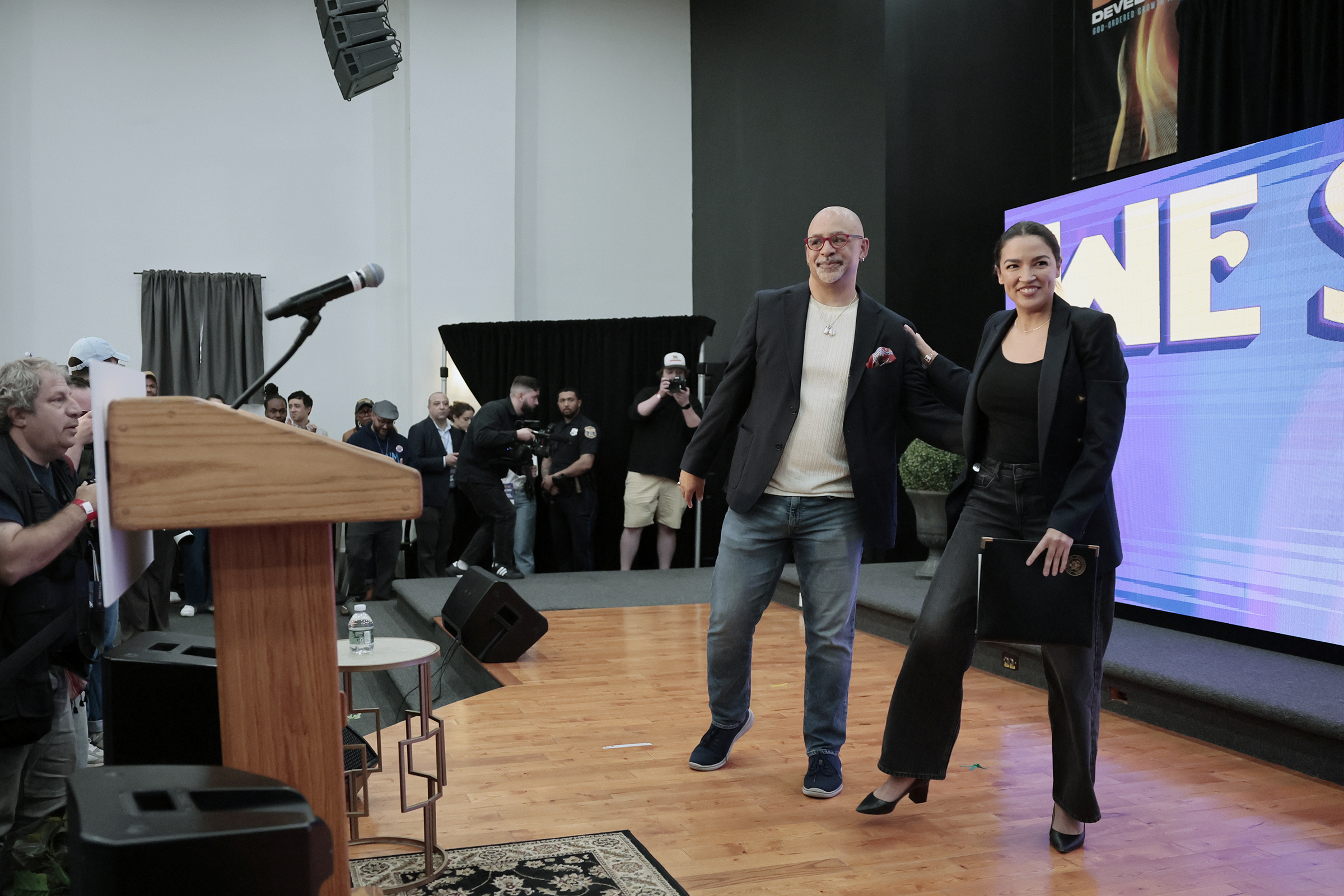
    State Rep. Chris Rabb defeated a pair of more moderate candidates in Philadelphia’s highly competitive congressional primary in May. A democratic socialist, Rabb is highly favored to win in the general election and has spent the months since his primary campaigning for other like-minded candidates.

    Nearly all of those candidates — from Abdul El-Sayed in the high-stakes Michigan U.S. Senate race to a pair of New York candidates boosted by Mayor Zohran Mamdani — have also won their primaries as Rabb and his allies look to grow the ranks of progressives starting on Capitol Hill in January.

    Beyond the next Congress, the leftist wing of the party is hoping for momentum heading into the 2028 races for president and Pennsylvania’s U.S. Senate seat held by Democratic Sen. John Fetterman, who has antagonized socialists and made appeals to Republicans.

    “The mainstream Democratic establishment candidates are telling us time and time again to settle for less, to expect nothing other than the status quo,” Parker said. “People are looking for a different set of politics that speaks to their material needs and to the values of freedom that many are striving for.”

    Parker said Philadelphia DSA has been “exploding” since Rabb’s victory. The group mobilized hundreds of volunteers to knock between 75,000 and 100,000 doors during his campaign, and more than 750 new members have joined since May to put the chapter’s total ranks at about 3,000, he said.
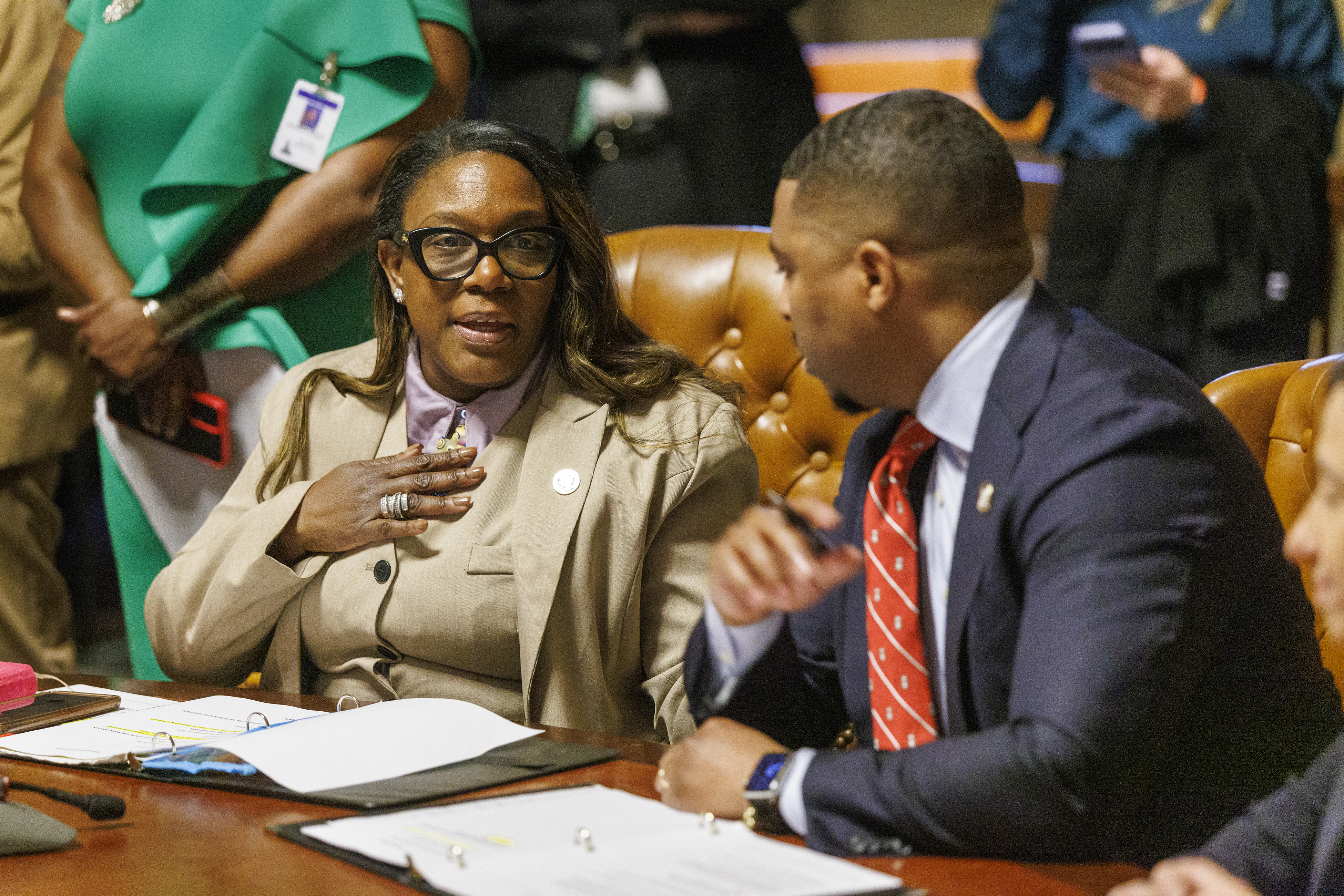
    Councilmember Kendra Brooks speaks with colleague Nicolas O’Rourke during a March 12 caucus session. Alejandro A. Alvarez / Staff Photographer

    Rabb’s success follow that of Pittsburgh’s U.S. Rep. Summer Lee, who was first elected to Congress with DSA support in 2022. Other DSA-backed elected officials include Philadelphia City Councilmembers Kendra Brooks and Nicolas O’Rourke, as well as State Sen. Nikil Saval, while new primary victories this year include Mark Pinsley and Ce-Ce Gerlach in Lehigh Valley-based legislative races.

    Further growth, Parker said, will come with DSA-backed candidates working in office to “prove that government can exist to serve ordinary people.”

    On that agenda: Advocating for universal healthcare, affordable housing, progressive tax policies, defunding and ultimately abolishing ICE, and ending the wars in Iran and Gaza.

    “What makes DSA distinct — and democratic socialism as a political movement distinct — is that it’s not really just about who has the right ideas,” Parker said. “It’s about a theory of change that puts the vast majority of society in the driver’s seat.”

    (function(){function e(){window.addEventListener(`message`,function(e){if(e.data[`datawrapper-height`]!==void 0){var t=document.querySelectorAll(`iframe`);for(var n in e.data[`datawrapper-height`])for(var r=0,i;i=t[r];r++)if(i.contentWindow===e.source){var a=e.data[`datawrapper-height`][n]+`px`;i.style.height=a}}})}e()})();

    As Democrats look to retake control of Congress and the White House, how much influence that movement will yield remains an open question.

    Moderates like Gov. Josh Shapiro, a potential 2028 Democratic presidential candidate, have acknowledged the energy on the left while advocating for a more centrist approach. Shapiro said this summer that the progressive candidates were practicing “performative politics” and would need to deliver if elected. He has also said he expects the party to have the most significant “battle over what we believe in” in more than three decades as the next presidential race gets underway.

    The latest poll shows the party’s base remains divided in Pennsylvania.

    While Democrats in the state remain split in their views of socialism, 38% consider themselves to be a democratic socialist while 57% do not, the poll found. Just over half of Democrats see their party as divided and 45% believe it’s united.

    ‘A tiny, tiny fraction’

    Some observers also cautioned that the number of self-identifying democratic socialists across all of Pennsylvania — a swing state that has largely elected moderates to statewide office — may appear larger than reality. The poll did not define democratic socialism, for one. And progressives have been overrepresented in other polling this year, including in Wisconsin and Michigan, said Lew Irwin, a political science professor at Duquesne University in Pittsburgh.

    “A lot of people will claim an affiliation when they actually have an affinity,” Irwin said, adding that it’s still become “increasingly mainstream and acceptable inside the Democratic Party” to identify as socialist.

    J.J. Balaban, a Philadelphia-based ad maker for more moderate Democrats like U.S. Rep. Brendan Boyle, pointed to the fact that even with the additional energy on the left, the vast majority of Democrats in Washington next year will not be socialist.

    “We’re talking about a tiny, tiny fraction of the Democratic caucus,” he said.

    Balaban said that is one of the reasons why Republicans’ campaign messaging may also not be effective as they try to defend their majorities in the November midterm elections. Republicans have branded all kinds of Democrats as socialists — repeatedly denouncing the entire party as far left and “communist” in its agenda.

    One of the main characters featured in those attacks has been Hasan Piker, the controversial leftist streamer who campaigned with Rabb and other candidates this year. His visit to Philadelphia in April drew hundreds of young progressives but was condemned by Rabb’s opponents and Jewish groups who consider his views antisemitic.
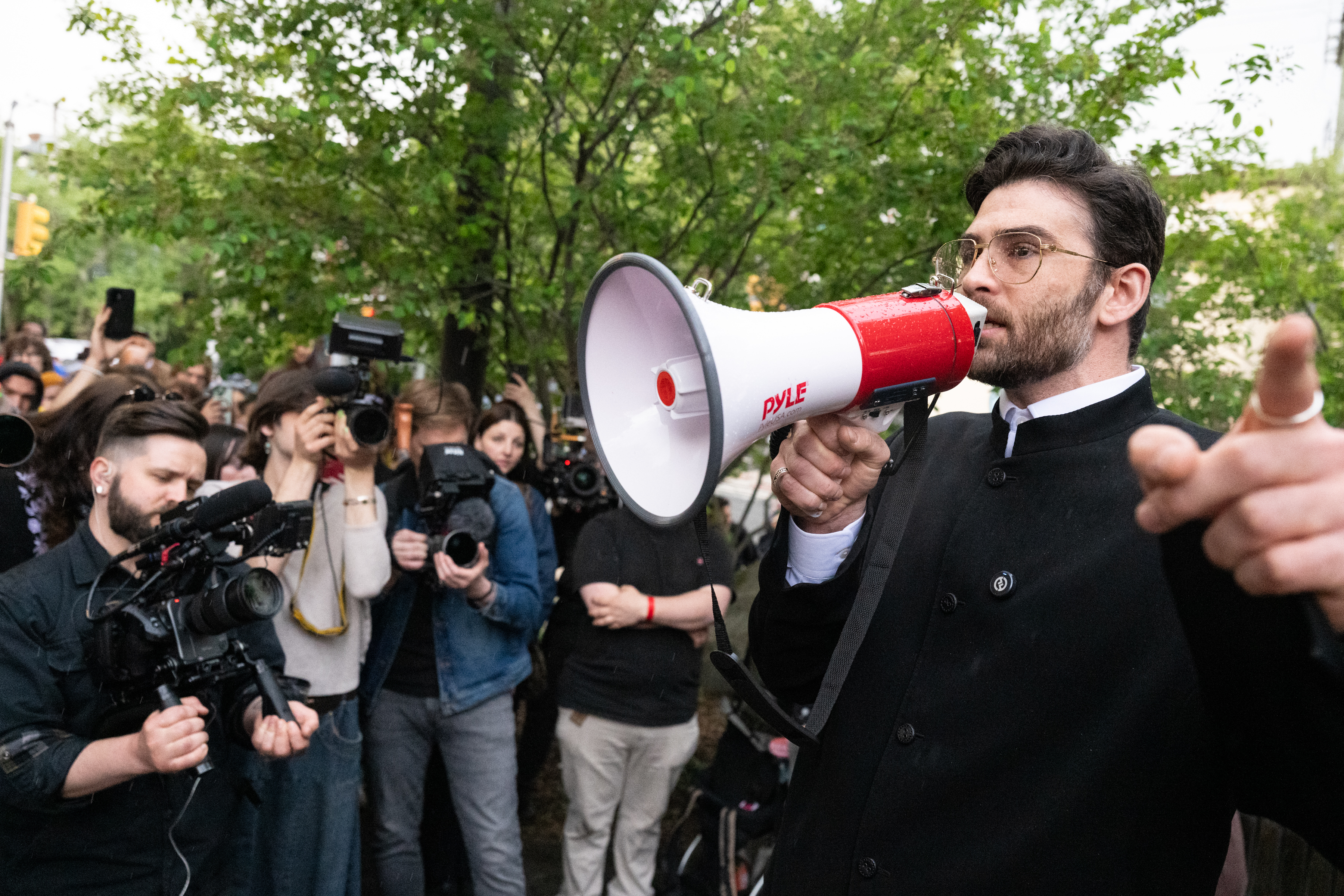
    Online influencer Hasan Piker speaks to attendees at an April 30 fundraiser for State Rep. Chris Rabb’s 2026 congressional campaign at Renata’s Kitchen in West Philadelphia.Erin Blewett / For The Inquirer

    Piker’s support of El-Sayed has become a dominant issue in the Michigan race, but the poll of Pennsylvania voters shows he is mostly unknown in the Keystone State.

    Among Pennsylvania likely voters, 23% had an unfavorable view of Piker and 6% had a favorable view. Two-thirds said they had not heard of him — and a higher share of Republicans knew him compared to Democrats.

    “He is a much greater part of the discourse in the Fox cinematic universe than he is in actual Democratic discourse,” Balaban said.

    With polls increasingly showing Democratic momentum this fall, even some conservatives appear to be pushing for Republicans to shift their messaging away from socialism.

    Former U.S. Rep. George Santos, a Republican who has reportedly lived at least partially in the Poconos since President Donald Trump commuted his sentence last year, posted a video Thursday in which he criticized a mailer for U.S. Rep. Rob Bresnahan, a freshman Republican in a tight reelection campaign. The mailer claims Bresnahan will “stop the socialists” and lists his Democratic challenger, Paige Cognetti, alongside the “socialist dream team” of progressives Mamdani, U.S. Sen. Bernie Sanders (Ind., Vt.), and U.S. Rep. Alexandria Ocasio-Cortez (D., N.Y.).

    “Please stop sending me this. It’s silly,” Santos said in the video, adding colorful language to say Pennsylvania Republicans should be focusing on the cost of living.

    “No more rhetoric!” he added.

    Staff writer Joe Yerardi contributed to this article.
  • Neighbors question what they really knew about their Olney block amid ‘House of Horrors’ probe

    Neighbors question what they really knew about their Olney block amid ‘House of Horrors’ probe

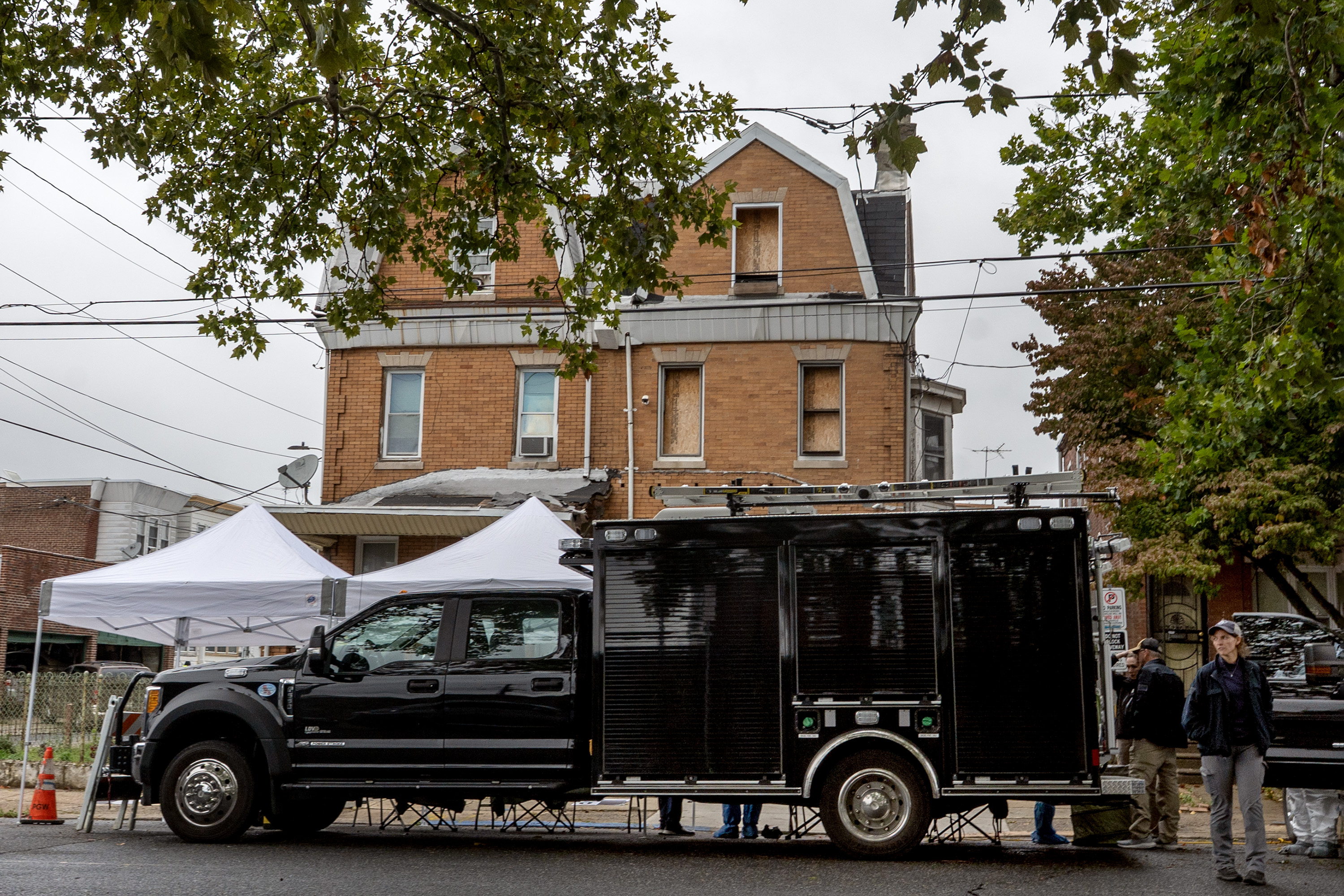
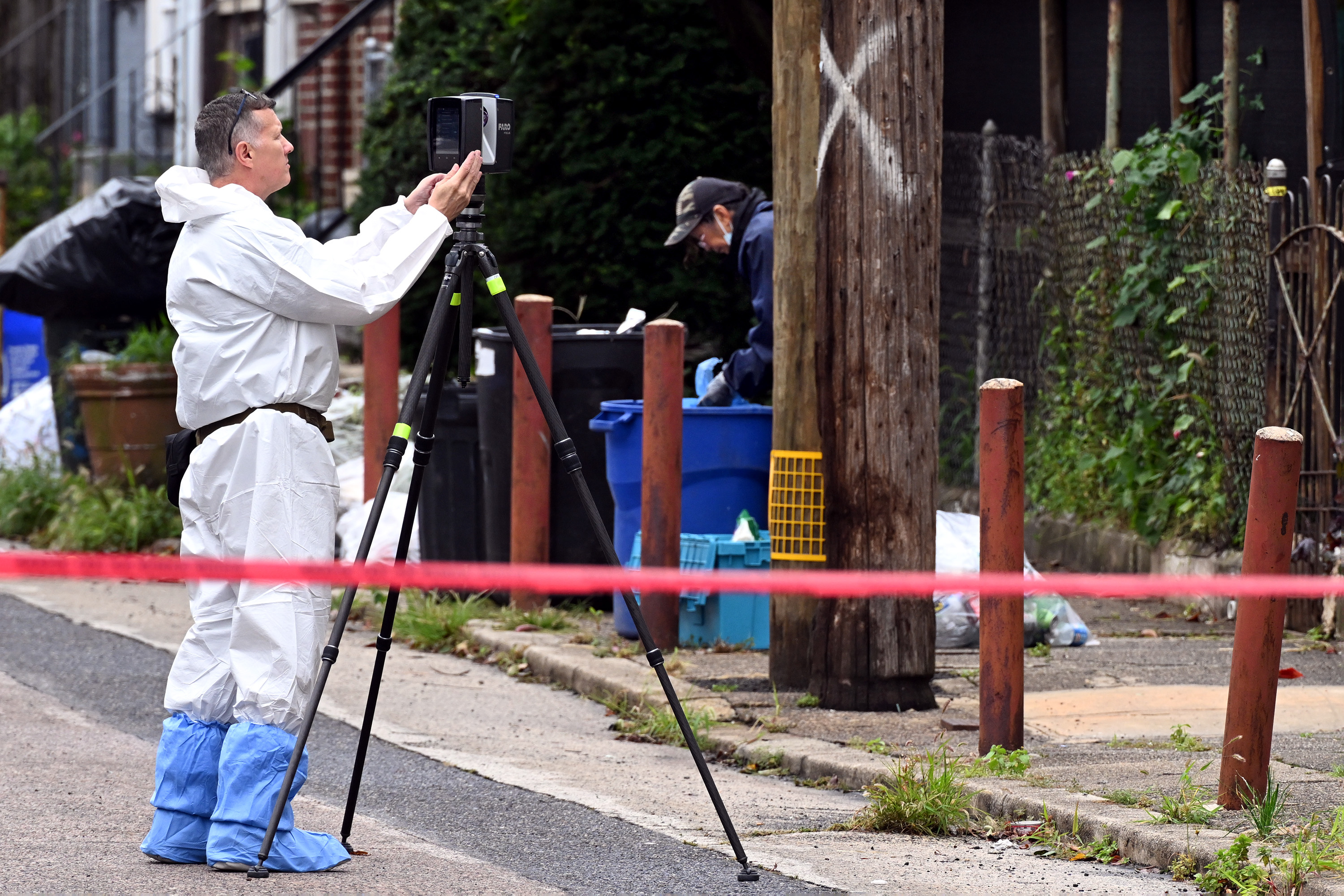
    On Monday morning, a gray speckled cat stretched two long paws up the steps of the sepia-toned three-story home at 417 West Chew Ave. Moments later, a man dressed in a white suit gently kicked a blue-bootied foot in its direction.

    No unauthorized personnel would be entering the Olney “House of Horrors” anytime soon — feline or otherwise — not on the watch of the FBI and Philadelphia police.

    Monday marked the beginning of a fresh week of investigative work inside the home that became known for the drug, sex, and porn enterprise Raymond “R.C.” Horsch ran inside the brick walls. Horsch, who died last year at 82, is now linked to at least seven missing women, and left behind a trove of photos and videos investigators believe show real and staged violence and, possibly, murders.

    Police declined to discuss what investigators are looking for, only revealing that law enforcement would be in the area until around mid-October.

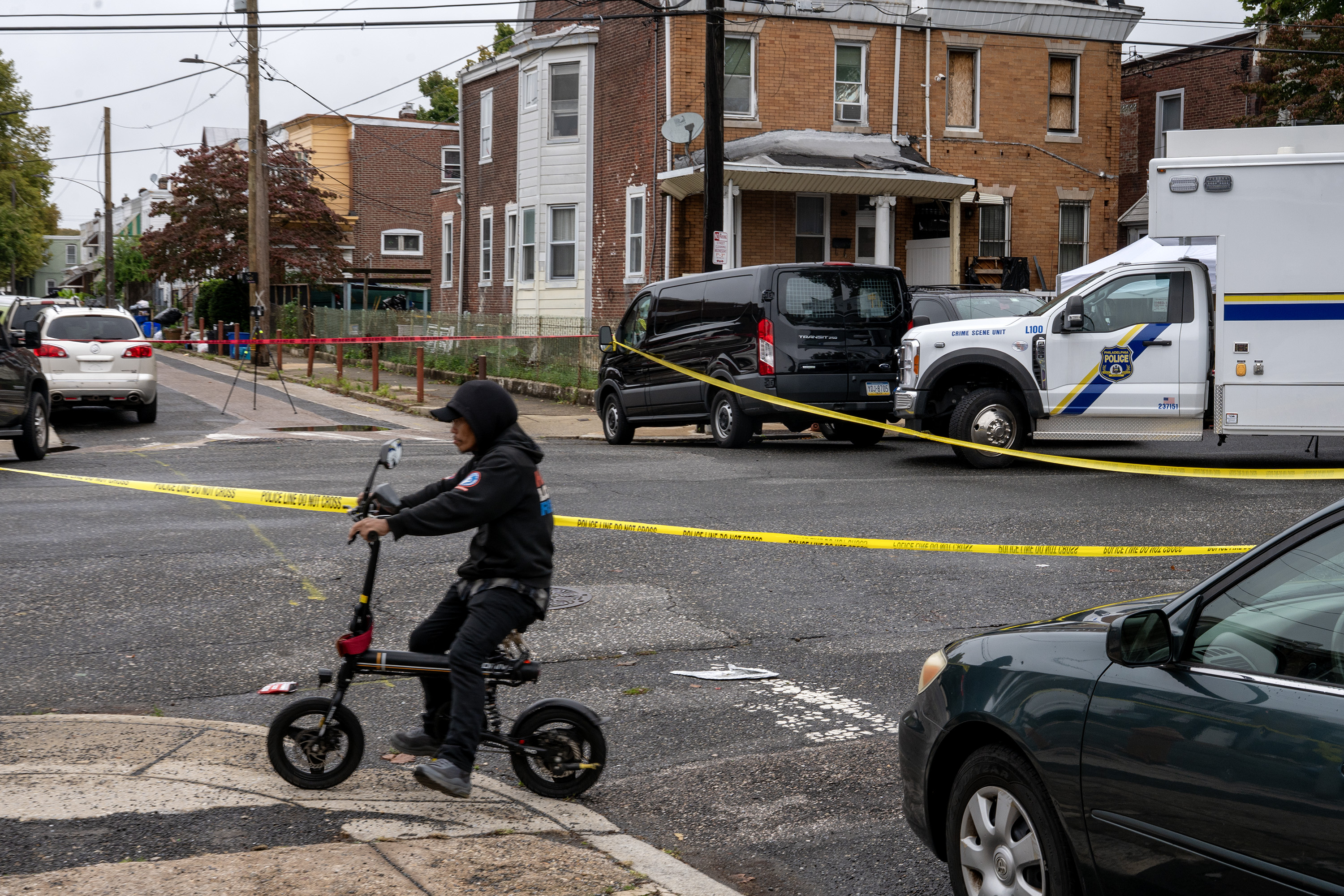
    However, yellow and red crime tape and police cars around the perimeter wouldn’t curb the curiosity of pedestrians, workmen, food delivery drivers, students, children, and former neighborhood residents who passed by the scene Monday.

    The scene outside the former home of Raymond “R.C.” Horsch on Chew Avenue. Tom Gralish / Staff Photographer

    Throughout the morning, residents ducked under crime tape only to be chastised by police. Cars slowed to a stop as they drove perpendicular to West Chew and caught a glimpse of the law enforcement vehicles clustered around the home. When a toddler wearing a backward baseball cap and plaid shirt pointed at the home, his guardian turned their walk around.

    Around noon, 31-year-old Fernanda Gabriela Armijos Nugra parked her car around the block and got out wearing white sweatpants, a scrunchie in her hair, and turquoise bands in her braces. She lives seven houses away from Horsch’s, she said.

    Knowing what went on so close to her and her girls, ages 5, 8, and 15, has transformed her attitude about the neighborhood, she said.

    “I walk around here with my daughters, and we really are afraid about what happened in that house,” she said in Spanish.

    Though she never suspected the home could be linked to violence or murders, she said she had a bad feeling about the men who lived there, Horsch and his son, Eugene. Eugene Horsch is now in prison on federal charges from a June car stop near Independence Hall in which authorities recovered the fake ID of a missing woman.

    “I used to see the son sitting on the steps of that house all the time and I’d tell my husband, ‘There goes a man with a really mean look on his face,’” she said. “When I saw the news, I was in shock.”

    She’s only lived in the area two years and is now contemplating moving. The same is the case for Imani Hardy, 30.

    “I don’t want to be here,” Hardy said from her parked car as she watched investigators come and go. “I just want to provide a different life for my kids.”

    She and her sons didn’t encounter Horsch, as far as she knows, but the knowledge that his operation was so close is haunting, she said.

    It’s chilled the atmosphere in the neighborhood. And something about that change feels permanent, she said.

    “We still have to live our normal lives, but being as though we were in a neighborhood where someone was doing horrific things to people … It makes people be more alert,” Hardy said.

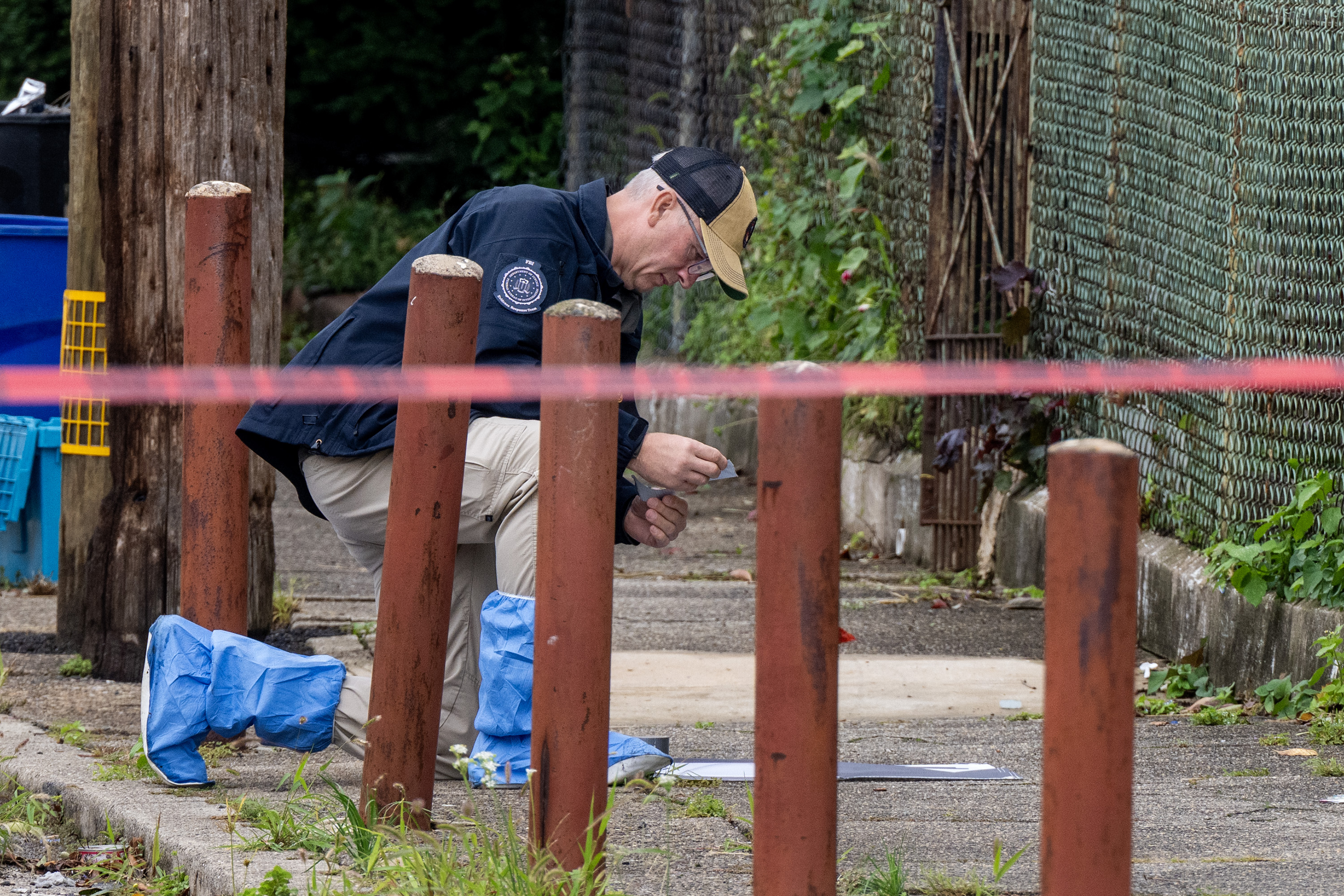
    A member of the FBI Evidence Response Team outside on Monday during the beginning of a fresh week of investigative work inside the homeTom Gralish / Staff Photographer

    Officers and reporters lifted police tape to help people on the cordoned-off block get out in their cars. Police kept watchful eyes over everyone who came and left, whether it be a neighbor on a bike or two workmen rolling boxes on a dolly up to the front door of a home beside Horsch’s. A squirrel darted toward the Horsch home on a telephone wire and turned back once the whirring of a drone grew louder.

    Alexis Velez, a befreckled 18-year-old with Shirley Temple-esque corkscrew curls, lives about five minutes from the Horsch house. It’s smack between her and her grandmother’s home. She used to walk by the Horsch house daily to catch the bus to get to high school. She thinks about what could have been if she’d been in the wrong place at the wrong time.

    “It’s terrifying, just thinking about it. I could have been one of those victims. I’m in the vicinity,” she said.

    She’s now a freshman at La Salle University studying psychology, she said. Maybe one day she’ll come to learn what possesses the human mind to pursue violence. But, for now, it’s hard to wrap her head around it.

    “I just think it’s insane,” she said.

    The neighborhood had felt like a safe place where people looked out for one another, Velez said.

    As she headed home, she struck up a conversation with two women. Sisters Theresa Yantz, 64, and Diane Matynka, 68, grew up in the Olney neighborhood but both now live in Lebanon, near Hershey. The two wanted to show Yantz’s daughter, Cara, 35, where they grew up and just how near it was to the Horsch house.

    “We wanted to drive by and show her, how close that we hung out,” Yantz said after she and her sister whipped out their phones and started taking photos. “That’s why we’re here being so nosy.”

    Yantz, Matynka, and Velez chatted about how the neighborhood changed since the sisters were children. Both sisters lived in Olney in the mid-1960s to late 1970s, and Yantz did another stint there in the early 1980s.

    When Yantz and Matynka were young girls, they’d play on their bikes outside until the street lights came on. Decades later in the same neighborhood, Velez has had to persuade her protective father that he doesn’t need to chaperone her to class each day anymore.

    Lately, though, she’s had a change of heart.

    “After this, I might have him walk me a couple times,” she said.

    The scene outside the former home of Raymond “R.C.” Horsch on Chew Ave. on Monday.Tom Gralish / Staff Photographer
  • LeBron James’ goal in Philly is clear: ‘I didn’t leave my family to lose in the second round’

    LeBron James’ goal in Philly is clear: ‘I didn’t leave my family to lose in the second round’

    LeBron James grabbed and glanced at the name tag perched on a table, then quipped, “You guys know who I am, right?”

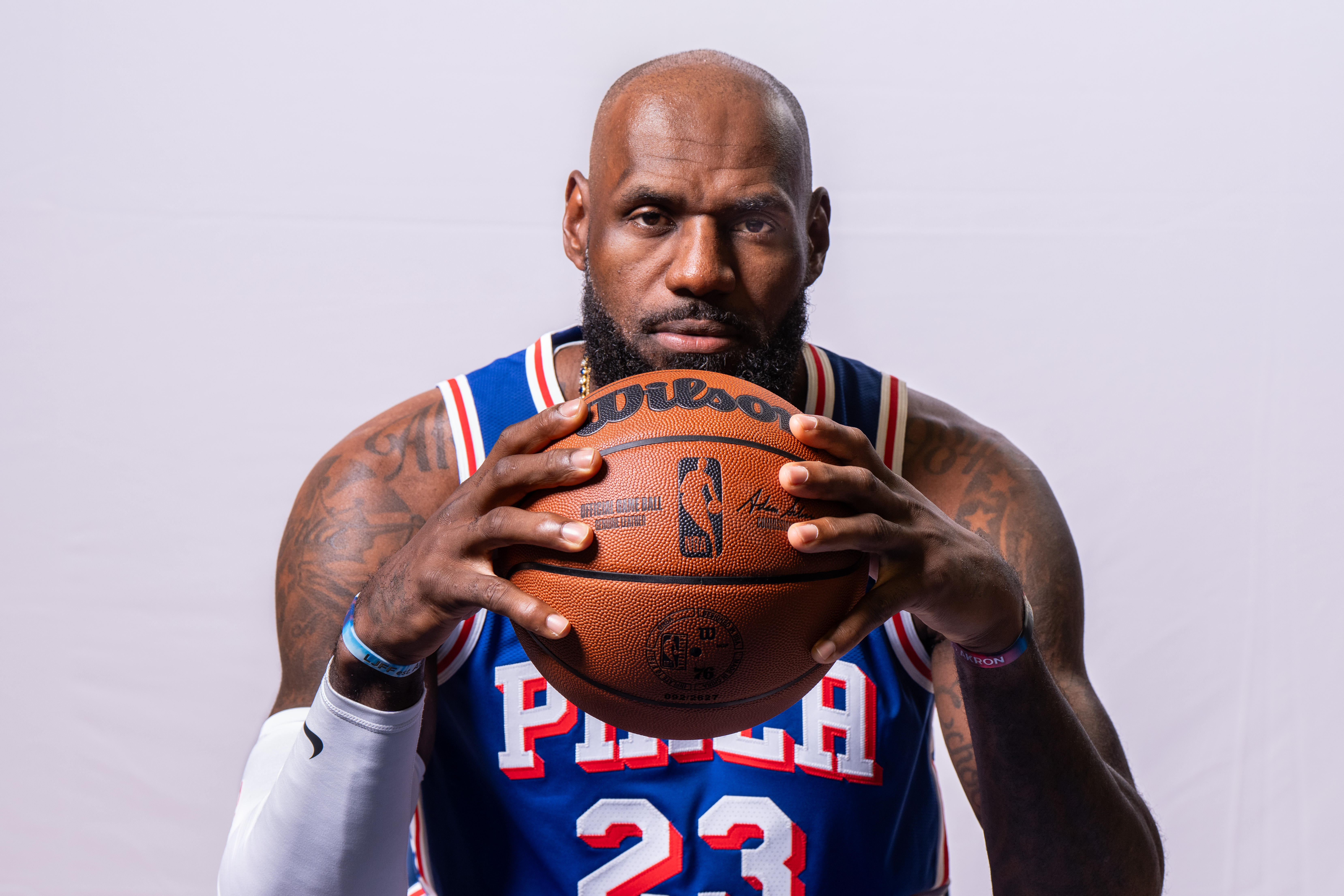
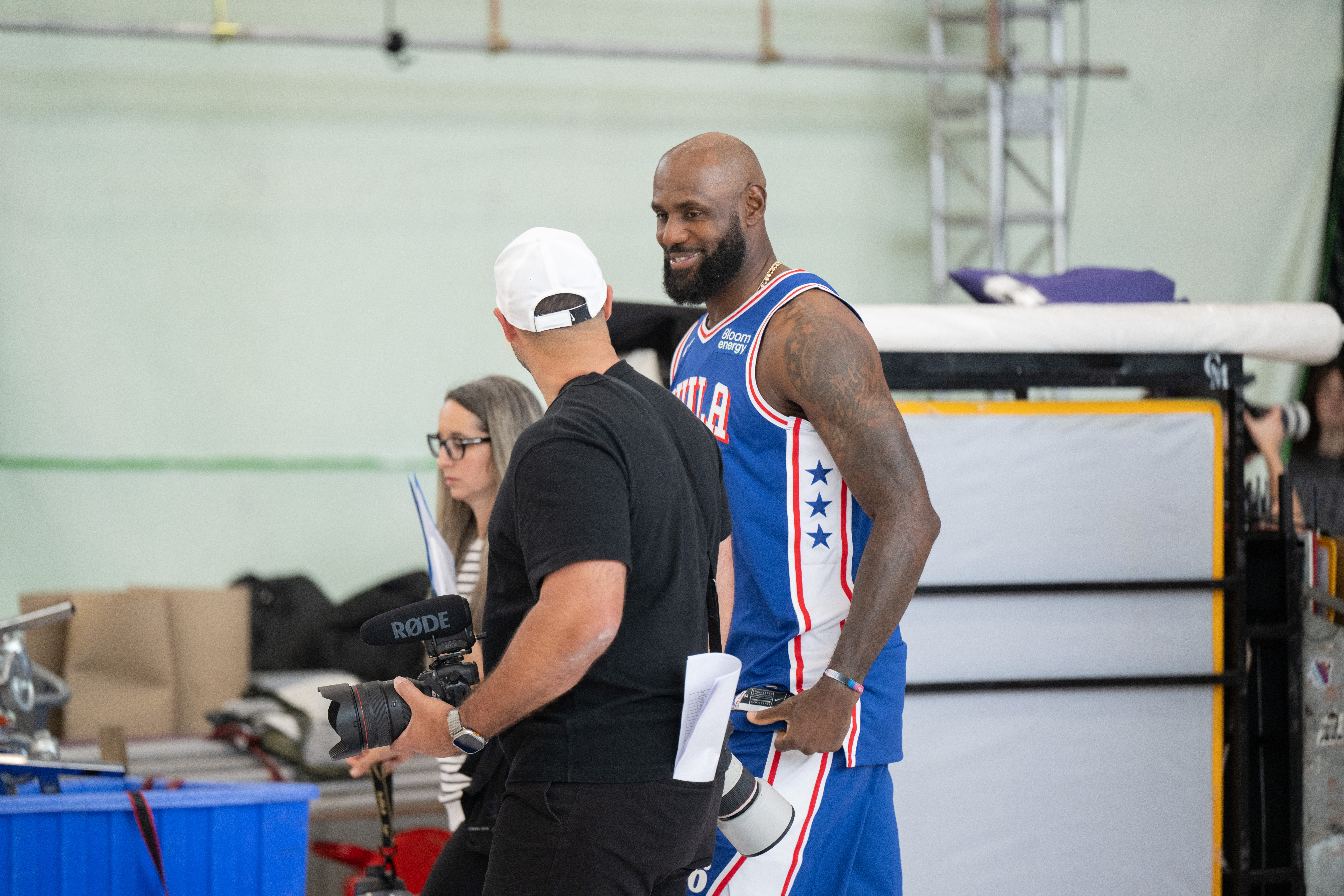
    Those assembled inside the 76ers’ practice facility did, of course. James, one of the NBA’s all-time greats and a mainstream international celebrity, generally commands such hubbub. But the blue No. 23 jersey that James wore Monday amped that attention up even more. New teammate Tyrese Maxey even called seeing his friend and summer workout buddy’s new professional attire “really just weird.”

    In James’ long-anticipated first day inside these walls — and first time speaking publicly since he chose the Sixers in a stunning free-agency move in July — the future Hall of Famer touched on needing to learn new streets and new people. The Northeast Ohio native mentioned reacclimating to weather in this part of the country, on the tail end of the weekend’s Nor’easter storm. James acknowledged the outside noise surrounding the Sixers will be “doubled and tripped and quadrupled now that I’m here.”

    Yet James reemphasized that his goal, in perhaps his last destination in a storied NBA career, is to seize the Sixers’ newfound super team status. The four-time champion hopes to provide the “blueprint” for the “collective sacrifice” and consistent work habits required to reach the NBA mountaintop, a feat the Sixers have not accomplished in more than four decades.

    “Everyone wants, like, instant oatmeal,” James said at the Sixers’ media day ahead of the start of training camp. “You just put the oatmeal in the bowl, you put water in it, throw it in the microwave, and in a minute-and-a-half, you’ve got something to eat. You’re ready to go.

    LeBron James on Philly sports fans: 'They know ball'
    Video: LeBron James on Philly sports fans: ‘They know ball’

    “If you want to do something special, it takes time. And it takes, every single day, doing things that you may not want to do. Because it’s the same thing, over and over and over and over and over, repetition after repetition after repetition. …

    “That is the best way to expedite being great: You have to fall in love with doing things [that are] uncomfortable. And if we can do that, we can be a great team. If we don’t do that, then we’ll be like, ‘Oh, man, that was a great team on paper and we had a lot of great talent, and we lost in the second round.’”

    LeBron James wore a Sixers jersey for the first time on Monday. Jessica Griffin / Staff Photographer

    When asked directly Monday if the 41-year-old James, who signed a two-year, $8 million contract with a player option, views Philly as his “final stop,” James did not fully commit. He said “that would be doing a disservice to myself on just living in the moment” entering season No. 24.

    James did give a brief recap of why he chose Philly in July, including agent Rich Paul’s infamous white board breaking down his contenders in a podcast episode. James reinforced that multiple conversations with Maxey, an All-NBA guard and fellow Klutch client, was “one of the main deciding factors” in him selecting the Sixers over previous teams the Cleveland Cavaliers and Miami Heat, among other suitors.

    LeBron James on how much Tyrese Maxey played a factor in his decision to choose Philly
    Video: LeBron James on how much Tyrese Maxey played a factor in his decision to choose Philly

    James hopes his vast experience — he is the NBA’s all-time leading scorer and a four-time league Most Valuable Player — can aid new teammates such as Joel Embiid, also a former MVP, and an organization with rich history seeking its first NBA title since 1983. James also still provides top-notch on-court production, basketball IQ, and versatility. He averaged 20.9 points, 6.1 rebounds, and 7.2 assists with the Los Angeles Lakers last season — and said he is willing to do “whatever the team needs for me to do.”

    “I think the luxury of my game is I can do everything,” James said, candidly. “Literally, I can do everything.”

    Added Maxey: “He’s worked for everything he’s gotten. He was put on a pedestal [as a prospect] where a lot of guys don’t succeed, and he’s probably surpassed expectations.”

    James’ illustrious career has included numerous trips to Philly, even dating back to a high school game played at The Palestra. He commended that the city’s passionate sports fans “know ball,” and that, as an opponent, he felt “a mutual respect … but we hate you.”

    “I actually really love that,” James said. “I really thrive under that circumstance. … I’m happy to be on this side, though.”

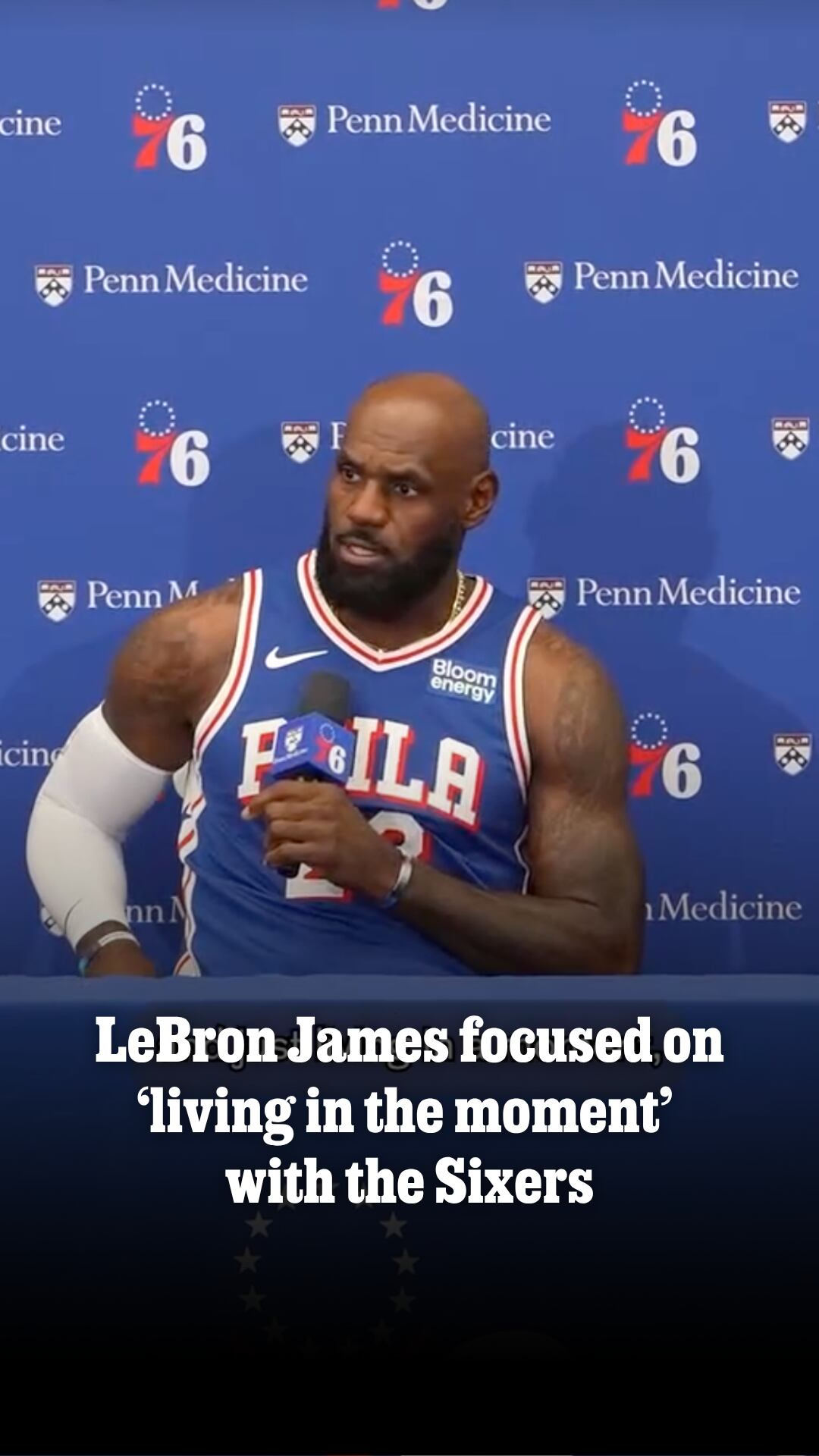
    LeBron James is focused on 'living in the moment' with the Sixers
    Video: LeBron James is focused on ‘living in the moment’ with the Sixers

    During conversations and workouts in the weeks since choosing the Sixers, James said he has felt that the organization’s key figures are “on the same page.” Training camp opens Tuesday, ahead of an Oct. 20 opener at the defending champion New York Knicks.

    James cautioned against expecting “instant oatmeal.” But his ultimate goal — for this newly assembled super team, and in perhaps his legendary career’s final chapter — was clear.

    “I didn’t leave my family to lose in the second round,” James said. “I know that, for sure. Work needs to be done, and I’m ready to put the work in.”

  • A political scientist studied the rise of grassroots activism in local government. Philly was his case study.

    A political scientist studied the rise of grassroots activism in local government. Philly was his case study.

    In the five years he spent researching his book Mobilization Politics, Haverford College political scientist Stephen J. McGovern interviewed former Mayor Jim Kenney and other Philadelphia elected officials, political activists, campaign consultants, labor leaders, and protesters.

    The book, which covers events from the 2010s through Mayor Cherelle L. Parker’s victory in the 2023 election, uses Philly as a case study to examine the national rise of grassroots progressive politics over the last two decades. McGovern details how local activists employed bottom-up tactics to win major policy victories in areas like criminal justice reform, helping to decrease the jail population, and immigration, leading to Philly becoming a so-called sanctuary city.

    The activists often used an inside/outside strategy, McGovern wrote, of leaning on officials they helped elect, like District Attorney Larry Krasner, and publicly pressuring more moderate ones, like Kenney.

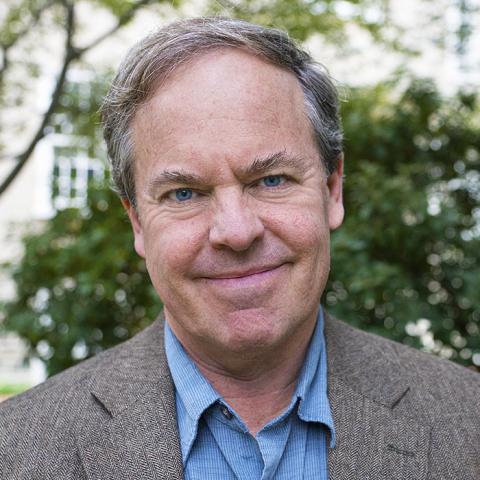
    Haverford College political scientist Stephen J. McGovern authored the 2025 book “Mobilization Politics,” on grassroots activism in Philadelphia.Sean Walsh

    McGovern also explores areas where progressives have fallen short of their goals, and the problems associated with a brand of politics driven by groups that tend to be more affluent and white than the city as a whole. Much of the new type of political organization has been driven by millennials born outside the city, McGovern found, leading to tensions over gentrification.

    McGovern recently spoke with The Inquirer about his 2025 book, the rise of the local progressive movement, and what it all means during Parker’s administration. The interview has been lightly edited and condensed for clarity.

    Your book describes how grassroots activists are really driving the agenda in Philadelphia City Hall, and, as you say, across the nation in local government. Is that an accurate summation of your thesis statement?

    I think that’s fair, and what I want to call attention to is how significant that change is. There may be a lot of people today who assume, “Well, hasn’t that always been the case in city politics?” But no, for much of the mid- to late 20th century, city politics operated in a very different way. It was much more of a top-down phenomenon, and the shift towards more bottom-up politics has been a relatively recent one. And increasingly it’s pretty widespread throughout the United States. So as a scholar of urban politics, I was interested in trying to explain how and why that happened.

    In the book, you describe various political science theories that have sought to explain urban politics in the past. Can you explain how your thesis is different from those previous schools of thought, such as “regime theory”?

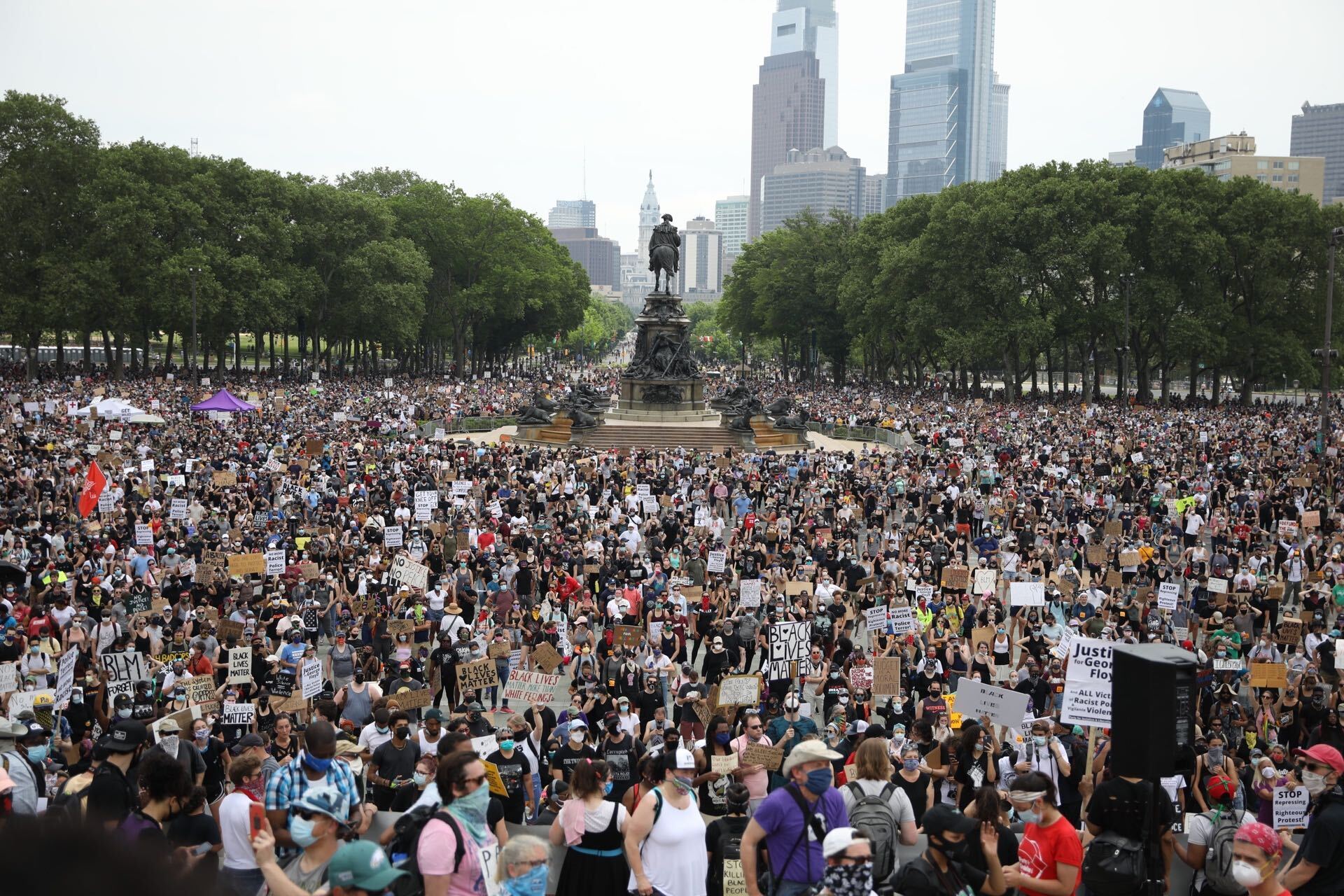
    Many scholars have argued that downtown-led regimes wielded a great deal of power over urban policymaking. Regimes were led by business leaders and their allies — law firms, accounting firms, mass media relations firms, and interest groups that had an interest in promoting growth, especially pro-growth labor unions, and, of course, public officials. Basically from 1970 on, every Philadelphia mayor headed a downtown-led regime in a relatively top-down fashion, in terms of governing style. So that’s the backdrop. My book is all about how that pattern began to change around the turn of the century, and then picked up in the 2010s with a burst of social movement activity. Occupy Wall Street really started things off, but then it picked up, especially with Black Lives Matter, the immigrant rights movement, and all of that social movement protest had a catalytic effect on grassroots organizing in cities with respect to a whole host of public policy issues.

    As your book points out, much of the activism has been driven by millennial transplants who have moved into the city. Is it fair to say that trend is the main driver of this change, or one of several factors?

    That is one of the main factors in explaining why there is this big shift. But there are also some underlying changes in the local political environment, what social movement scholars sometimes call the “political opportunity structure.” One of those changes is a decline in the organizing capacity of the downtown business community, which had been so dominant. It started to create a vacuum. Into that vacuum steps young people. Populations had been steadily declining in virtually all big American cities. They started to stabilize around 2000, and you see an influx of young people who are relatively well educated, more likely to be professional, more likely to be progressive, more likely to get involved in local politics. Some people call it the “back to the cities” movement.

    What’s different about these newcomers compared with other left-leaning groups that have sought to impact city politics in the past?

    In the past, a lot of young people tended to get involved in protest politics. People on the left were very wary about engaging in electoral politics. The folks who are moving into Philadelphia after 2000 increasingly are participating in more conventional politics, including electoral politics, and that’s a big change. That escalates when Bernie Sanders runs for president in 2016. One of the lessons learned for lots of people who volunteered for him is: This is something we can do at the local level.

    As you note, the groups driving this style of politics tend to be more affluent, more educated, and more white than Philadelphia as a whole. That’s created a lot of friction. There’s a debate over whether this is a phenomenon that will be limited to gentrified areas, or whether it will grow into a cross-racial or cross-class coalition. Is it fair to say that’s the central question going forward?

    Absolutely. So much of this is turf-oriented. The millennials and Gen Zers moving into Philadelphia tended to congregate in neighborhoods that attract a lot of white, middle-class people who were relatively well educated, and so those became significant bases of progressive politics. The challenge then becomes organizing in other neighborhoods. Some of the grassroots groups made impressive inroads. I’m thinking about campaigns for Larry Krasner, in particular, in lower-income, predominantly Black and brown neighborhoods, where a group like Reclaim Philadelphia or the 215 People’s Alliance were pretty effective. But in many cases, it was fairly difficult for a group like Reclaim Philadelphia to venture into neighborhoods beyond their comfort zones, if you will. They were mindful of some of the skepticism that residents of those neighborhoods felt towards the millennials and Gen Zers flocking into the city and contributing to gentrification. Somebody from Reclaim Philadelphia might be knocking on the door talking about the affordable housing crisis, and people answering the door might look at them and say, “You’re actually a big part of the problem here.” This tension between so-called new Philadelphians and old Philadelphians became more pronounced, and navigating those tensions becomes a real challenge.

    Your book finishes with the 2023 mayor’s race, when Cherelle L. Parker defeated more progressive candidates and won the election with a “law and order” platform. So perhaps that was a surprising twist on your thesis at the end of your research.

    She’s obviously fascinating. She’s a shrewd operator. In the primary election, two progressives split the vote. And being the only prominent Black candidate worked to her advantage. But since she’s been elected, she’s been very skillful about maneuvering in ways that have brought back a return of the traditional kind of urban politics — a top-down governing coalition led by a somewhat resurgent business community and pro-growth unions, the building trades unions, and a somewhat resurgent establishment-oriented Democratic Party, all of which is led by Parker. This is very reminiscent of standard politics of the mid- to late 20th century. So in some ways, Philadelphia is a bit of an aberration in that it’s moved backwards, if you will, recently. But I still see lots of evidence that bottom-up grassroots activism remains a force, and will become much more impactful in the next four years.

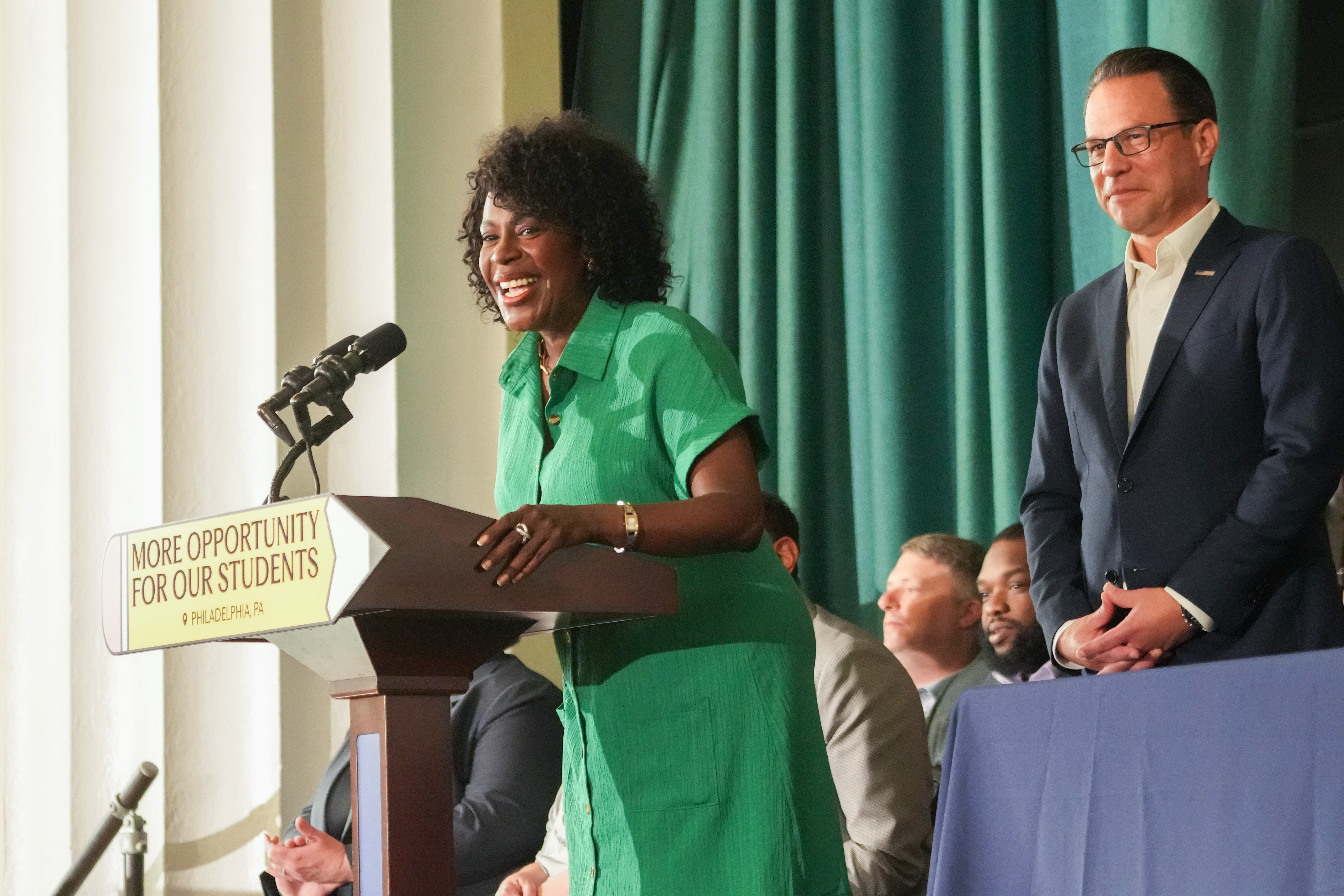
    Mayor Cherelle L. Parker speaks at Vare-Washington Elementary School to highlight the historic education investments included in the 2026-27 state budget, in Philadelphia, July 14, 2026.Jessica Griffin / Staff Photographer
    For what it’s worth, Parker herself seems to be mindful that grassroots politics are still relevant. We reported last year that she ordered a bunch of copies of a book called Performative Outrage: How Manufactured Fury Undermines Local Government and Public Service, and was handing it out to people. So I think it’s safe to say she isn’t a fan of the trends you described. You alluded to Parker returning to a “regime theory” style of politics. What’s an example of that?

    The 76ers’ arena, for example. She was siding with the Sixers and other downtown-oriented interests that wanted to see the arena in Center City on East Market Street, and discounting the views of community groups, most prominently Chinatown. There’s a general mode of governance style associated with Parker that’s very uncomfortable with dealing with grassroots-oriented groups. That’s just not her style. She’s much more comfortable dealing with downtown business elites and people in the building trades unions. Her whole mindset is much more comfortable with the old ways of governing cities.

    Parker won in 2023, when Joe Biden was president. Progressives in Philly and elsewhere seem to do better when Trump is in office. This spring Democrats just elected Chris Rabb, a progressive firebrand, in a high-profile primary for a Philly congressional seat.

    Politics is cyclical. Donald Trump has had that effect of reinvigorating lots of activists. So there was a lull in progressive activism in the city for a while, but it’s on the rise again. But it takes time to regroup, especially on the activist side. Some groups last for a long time, but the norm is for groups to be quite ephemeral. New groups have to pop up, often involving activists who had been involved in the old groups. The transition costs are pretty steep. Somebody like Chris Rabb winning doesn’t surprise me at all. There will probably be more successes in the next two or three years. That said, progressive activists have lots of challenges. They’re in a holding pattern right now.

    Thanks for your time. That’s all I’ve got. Is there anything I didn’t touch on that you want to include?

    I’m an urban politics specialist. I wrote this book. I devoted five years of my life to it. But in the last year or two, I’ve been so fixated on what’s going on in national politics and Donald Trump and the threat that he and his administration pose to democracy. With that in mind, I just want to say that urban politics in general offers some hope for people who are increasingly demoralized. At the local government level, partisan polarization isn’t nearly as intense. We’ve got divisions between progressives and moderates, but that’s nothing like what we’re seeing in national politics. There’s real hope for city governments to address big problems and offer real solutions. There’s a path forward. One can make a case that right now, democracy in American cities is actually thriving.

  • Lobsters on the lam? No, Cape May crustaceans didn’t pull off a great nor’easter escape

    Lobsters on the lam? No, Cape May crustaceans didn’t pull off a great nor’easter escape

    As the tidewaters spread across the Shore during this weekend’s nor’easter, so did the viral videos and photos online.

    One widely shared video showed a waterlogged dining room at the famous Lobster House in Cape May. Then Internet jokesters enhanced the video, adding three lobsters serenely swimming out to sea.

    @onebadshark Be Careful If You’re In The Area Of Schellengers Landing Rd, In Cape May, NJ! The Lobsters Have Escaped From The Lobster House! #capemay #newjersey #lobster #house #flood ♬ Hymn to the Sea (Rose's Theme) – Amy Wallace & Reyjuliand

    On Sunday, people drove up to the iconic seafood restaurant and market — closed due to flooding — to witness any evidence of the lobster jailbreak.

    “We’ve had people in Florida and Virginia ask us about it,” Cape May resident Gary Bartlett said of the videos.

    His wife Tracy Bartlett said people are interested in the Lobster House because it is such a popular destination.

    “It’s been around forever,” she said. “My parents came here in the ’40s.”

    @jerseyshoremode Every table set and waiting at The Lobster House in Cape May, which tells you how the night is about to go. via @61580720955840 #jerseyshoremode #jerseyshore #njbeaches #downtheshore #visitnj ♬ original sound – Jersey Shore Mode

    Keith Laudeman, the third-generation owner of the Lobster House, explained that for three days, the water level outside the restaurant inched up — the result of relentless northeast winds holding seawater in the inlet.

    Saturday morning’s high tide was the “icing on the cake” that sent floodwaters pouring through the front door.

    Laudeman dealt with flooding after Superstorm Sandy in 2012 and Storm Jonas in 2016. He said his team will have to wash everything with freshwater, scrub it down with antimicrobial soap, and replace carpeting.

    He hopes to have the restaurant open within three days, and plans for the fish market and coffee shop to be open Monday.

    As for the lobsters escaping to sea, Laudeman said anything is possible.

    “That’s a little far-fetched,” he said. “But if it adds to the story, then go ahead.”

  • Oxford police officers, uncertain of their futures, resign as borough plans to close department and join regional force

    Oxford police officers, uncertain of their futures, resign as borough plans to close department and join regional force

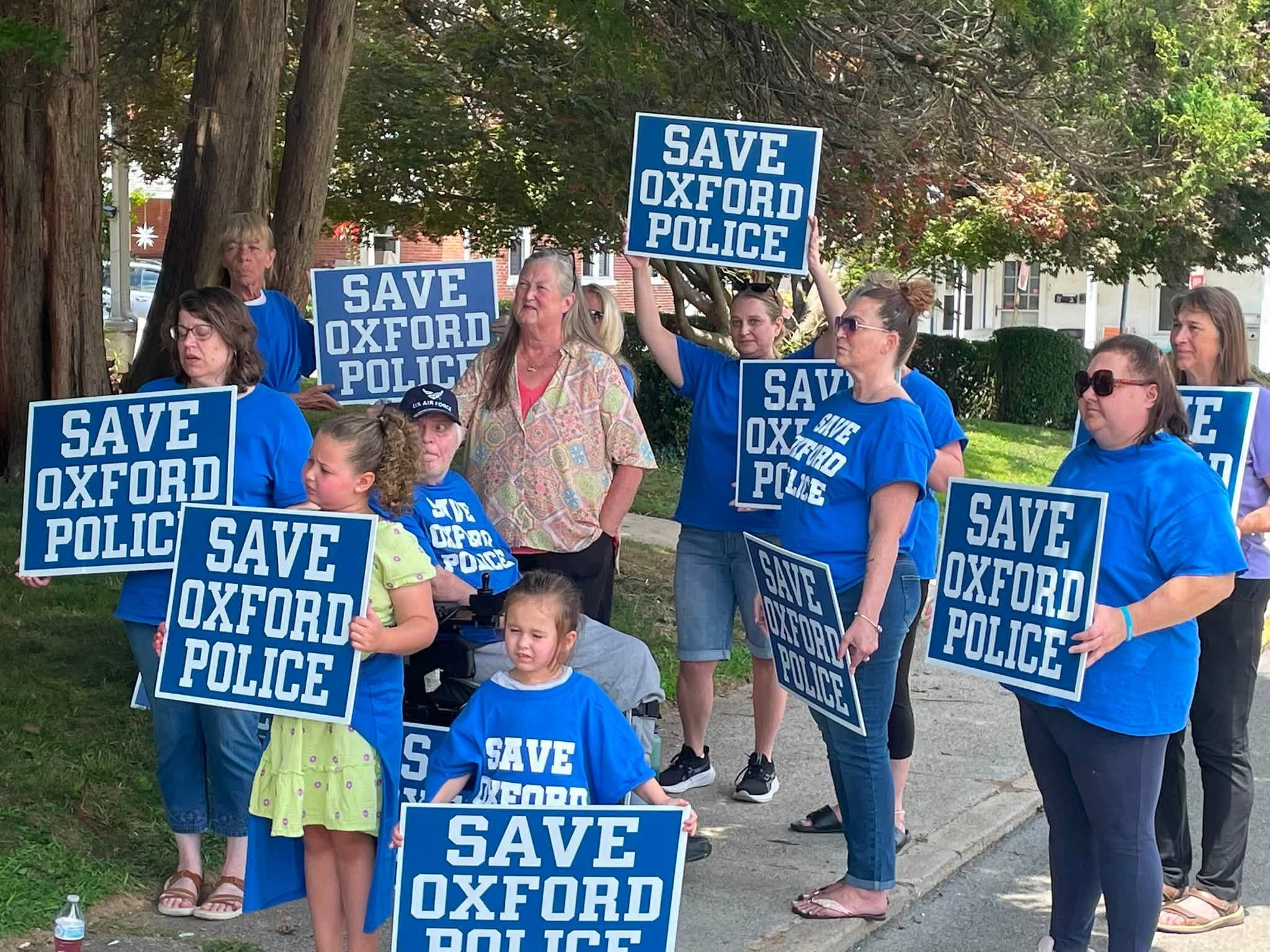
    Three officers will resign from the Oxford Police Department ahead of the borough joining a regional department, with many officers saying the path to employment has felt uncertain and not guaranteed.

    The resignations — which the borough council approved Monday — come after Oxford’s officials approved, in a 5-2 split, to close the doors of their police department, citing ballooning expenses that outpaced the municipality’s revenue.

    Under the vote, the borough will become part of the Southern Chester County Regional Police Department, which serves New Garden, West Grove, and Avondale, on Jan. 1, 2027.

    To accommodate the growing geography, the regional department has pledged to hire 12 additional officers, with Oxford officials saying previously that their goal was for every officer to move over to the new force, if they wanted to. Oxford currently employs 11 full-time officers, including the chief, and several part-time officers.

    Applications for the regional department were sent out to Oxford officers earlier this month, with a deadline to submit by Friday. The applications were also posted publicly.

    But officers said that the road hasn’t been easy or transparent. In a meeting with The Inquirer at their station, the officers said that while it has been publicly stated that they are essentially guaranteed a job at the regional department, everything they have seen is “an opportunity to apply for a job.” Most officers spoke on the condition of anonymity out of fear of retaliation.

    Officers who are leaving said the uncertainty and the borough’s decision to close their department ultimately led them to seek new employment.

    Mayor Philip Harris said the borough was in active contract negotiations and declined to comment broadly on the situation.

    For the officers resigning, he acknowledged the community may “consider that to be in discord with the merger/joinder.” He argued that it “highlights and amplifies what we’ve been saying all along.”

    “It’s an incredibly difficult thing to recruit and retain officers,” he said. “They were recruited by other departments. They were offered better deals. That highlights some of the problems that brought us to this forefront.”

    Officers who have not resigned have begun meeting with the regional department leadership, they said. But with the clock ticking and no formal contract in front of them, the officers are worried about what employment could look like after Jan. 1.

    They are not sure what jobs they will get. With a cumulative experience of more than 280 years, they each have more than one year of service and have acquired rankings from corporal to sergeant. Those positions do not exist at Southern Regional, they say, making it unclear if they will lose rank in the transition.

    Because they have not seen a contract, they don’t know whether they should take a severance package. There are differences in pensions between the two departments that officers think will complicate the transition, too.

    “We have three that have secured jobs at other surrounding departments, and I haven’t seen one damn contract from Southern Regional,” one officer said. “What is my position going over there? How much am I making? What time am I carrying with me? My sick time, my vacation time, my seniority?”

    A yearslong process

    The move to regionalization has, essentially, been three years in the making, with borough officials long saying the police force costs more than it can afford. The borough has had several financial studies done in recent years examining the viability of the police department, and considering alternatives.

    Under the agreement with Southern Chester County Regional, Oxford borough would have two officers on patrol 24-7, like the current structure. Their shifts would begin and end at a local substation, ensuring no gap in coverage, as Oxford is roughly 16 miles away from the other municipalities under the regional department’s coverage. The 12 additional officers, hired as part of this expansion, would join a force of 21 full-time officers.

    There has been a growing trend of municipalities moving toward regionalization for high-price items in their annual budgets, like police, fire, and EMS. Public safety is at least 50% of the pie in most communities, experts have said.

    Regionalization, however, has not been perfect. Across the state, municipalities have joined and then withdrawn from regional services due to increasing costs under the agreement, according to a Keystone Municipal Solutions analysis, which studied police structuring in Oxford.

    Oxford officers said that there had been talks to merge with Southern Chester County Regional several years ago, but those discussions seemingly fell apart. Instead, officers recall, the department tried to make itself a possible regional hub — a force that could serve the municipalities that neighbor Oxford and currently use free coverage from the Pennsylvania State Police. Those talks also struggled to catch on.

    Officers still heard rumblings about joining the Southern Chester County Regional, but formally found out about the renewed effort when the Oxford Police Association received a letter from the borough council saying the start of union contract negotiations would be put on hold as the council explored a merger.

    Meanwhile, officers said, they are frustrated that the borough has not sought to slash costs in other areas, or will not wait for eligible members of the force to retire, where the pendulum on costs could swing back.

    “They have a champagne police department on a beer budget,” an officer said.

    Paul Frie, one of the officers who has accepted a position elsewhere, said that the borough’s decision to close its department caused him to look for other employment.

    “I can’t trust them to have my back,” he said. “I couldn’t work for them when they so haphazardly threw my job to someone else, because it’s not a guarantee.”

    Another officer, who has also resigned, said the uncertainty — and not knowing whether regionalization would stick — ultimately made the decision for him. It was hard: The officer grew up knowing many on the Oxford force, and said it was always a dream to work for the department.

    “I’m glad I got to fill it, partially,” said the officer, who spoke on the condition of anonymity. “It definitely sucks knowing this place isn’t going to be around.”

    This suburban content is produced with support from the Leslie Miller and Richard Worley Foundation and The Lenfest Institute for Journalism. Editorial content is created independently of the project donors. Gifts to support The Inquirer’s high-impact journalism can be made at inquirer.com/donate. A list of Lenfest Institute donors can be found at lenfestinstitute.org/supporters.

  • New doula directory will help Delaware County families find support

    New doula directory will help Delaware County families find support

    Family and friends cooked, cleaned, and took care of Alejandra McBride after she gave birth to her first child in Ecuador, so that the young mother could focus all her energy on her newborn.

    She felt much more alone when she gave birth to her second child 14 years later, in Delaware County.

    “I have friends who would come for a few minutes to see the baby – and then go,” said McBride, who lives in Springfield. “It was hard to recover.”

    Now she is training to be a doula through a new initiative in Delaware County to provide other women with support during and after pregnancy.

    McBride is among 30 doulas trained through the Delco Doula Collaborative, designed to build the maternity care workforce and expand patient resources in Philadelphia suburbs where prenatal care options have dwindled since last year’s closure of Crozer Health, which operated the county’s largest birth center.

    Earlier this month, an online directory launched where families can access doula services — which are covered by Medicaid and some private health insurance plans. Delaware County spearheaded the initiative with Family Village, an initiative of the Foundation for Delaware County that brings together support services for families and parents-to-be.

    “Every family deserves to feel supported, informed, and empowered throughout pregnancy, childbirth, and the postpartum period,” Lora Werner, director of the Delaware County Health Department, said in a statement. “By expanding access to this trusted support, we are advancing health equity and helping to build a healthier future for parents, babies and families across Delaware County.”

    Doulas are not medical professionals, but rather provide emotional support around pregnancy, and can serve as an advocate for patients.

    Research has found that parents who work with a doula experience lower rates of cesarean section births, reduced anxiety, and higher rates of breastfeeding, in part because they are more empowered to advocate for their wishes and feel heard by their medical providers.

    Doula training in Delaware County

    With part of a $600,000 grant from the U.S. Department of Labor’s Employment and Training Administration, the Delco Doula Collaborative provided free training and licensing assistance to 30 county residents.

    Participants work alongside certified doulas to learn about patient advocacy, childbirth education, and how to interact with patients.

    Family Village also helped participants apply for certification through CAPPA, a leading international doula certification organization, and a Pennsylvania license.

    Participants worked with a Medicaid billing consultant to help them establish their own Medicaid contract or join the organization’s contract. In Pennsylvania, doula services are covered by Medicaid. The government-funded health program covers about one-third of births statewide. Some private health plans also pay for doulas.

    The organization hopes to provide scholarships to support more certification training in the future.

    In the meantime, doulas who are already certified can join the collaborative for networking and additional training opportunities, and to be part of the online directory.

    Individuals interested in self-funding their initial doula training should visit the national CAPPA Website, or other doula organizations in Philadelphia or surrounding areas.

    For expectant parents, a doula can be a valuable resource, said Erica Loizos, the doula program coordinator for Family Village. They can talk to first-time parents about the stages of labor, postpartum care, and breastfeeding.

    Doulas play the critical role of advocating for the person who is giving birth at a time when medical attention often shifts to the baby.

    During labor and maternal medical appointments, some patients may struggle to speak up for what they want, or may not know what questions to ask. Doulas can coach them on how to advocate for themselves, or be the advocate, voicing their client’s wishes when they are unable to. Doulas often attend the birth to help advocate for the birthing person.

    “The most important thing is getting to know their family,” Loizos said of the service doulas provide.

    Zainab Waites, who works as a daycare teacher in Chester, embraced that mission. She has worked with eight families since beginning her training last year, many of whom were “really alone,” she said.

    “I always see myself as coming in to be a family member,” Waites said. “Whatever it is, even if you just want to complain about something, I’m here.”

    Learning from personal experience

    McBride said she was surprised how different pregnancy is treated in the United States, compared to where she grew up in Ecuador. Parents are faced with many more decisions and choices, which can be especially hard to navigate if they come from a different culture or do not speak English as their first language.

    “With my third birth, I was pretty much saying yes to whatever the doctor said,” McBride recalled. She didn’t know doulas existed, or that it was possible to push back against a doctor’s initial recommendation.

    McBride had a C-section because she didn’t know she could ask to wait a little longer to see if she would go into labor naturally.

    “Every woman is different,” she said. “My job is to advocate for these families and make sure they are delivering in a safe and warm place.”

  • Even with $9.2 million in recent funds, a Germantown housing and community center needs more help

    Even with $9.2 million in recent funds, a Germantown housing and community center needs more help

    You might roll your eyes if a real estate agent tells you about a fixer-upper with a lot of potential. But that truthful line of persuasion has been working for supporters of the Germantown Life Enrichment Center.

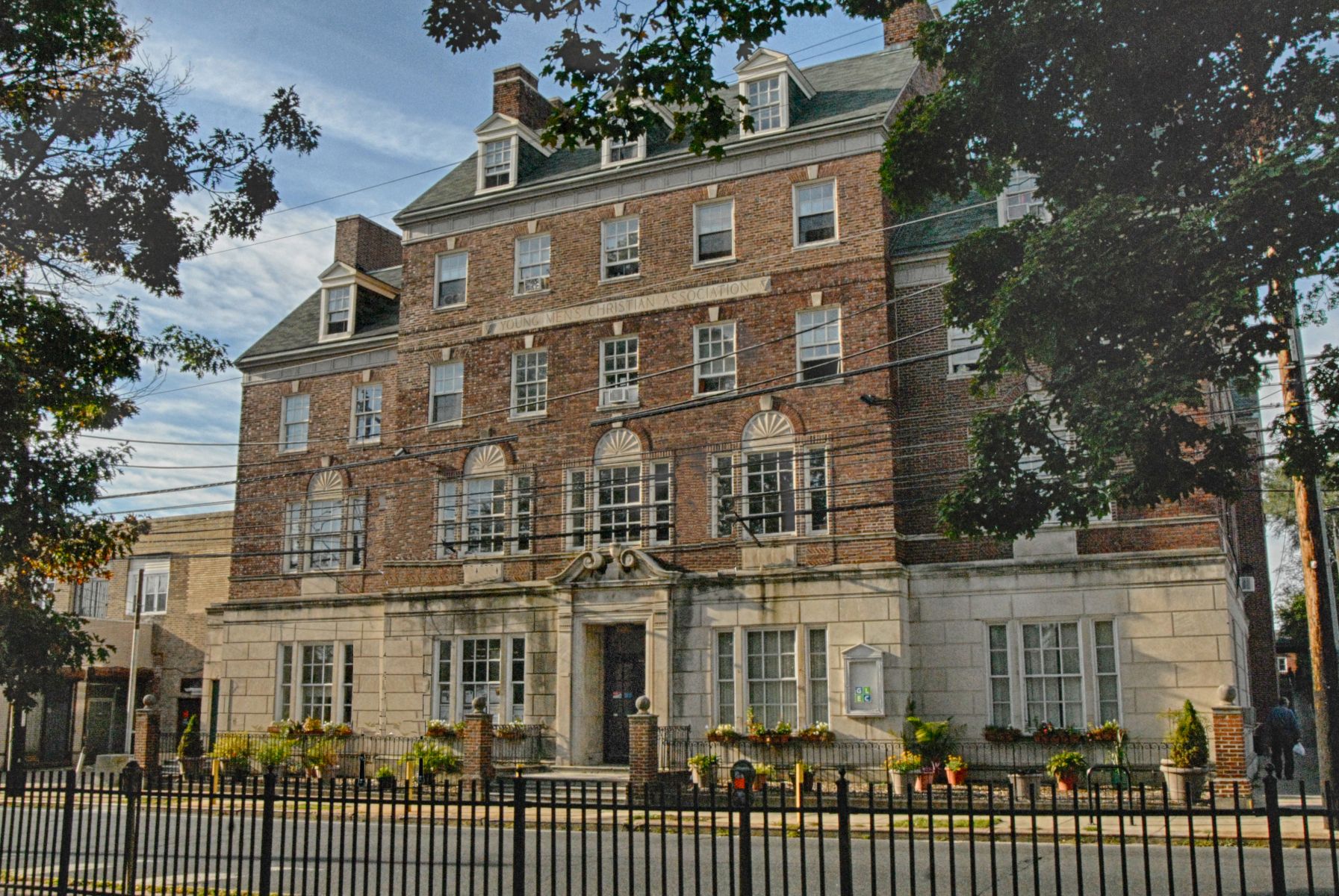
    The center, known as GLEC, is an unusual two-in-one facility at 5722 Greene St. It offers an array of community programming, including pool, fitness, and youth activities, and transitional housing for formerly homeless men.

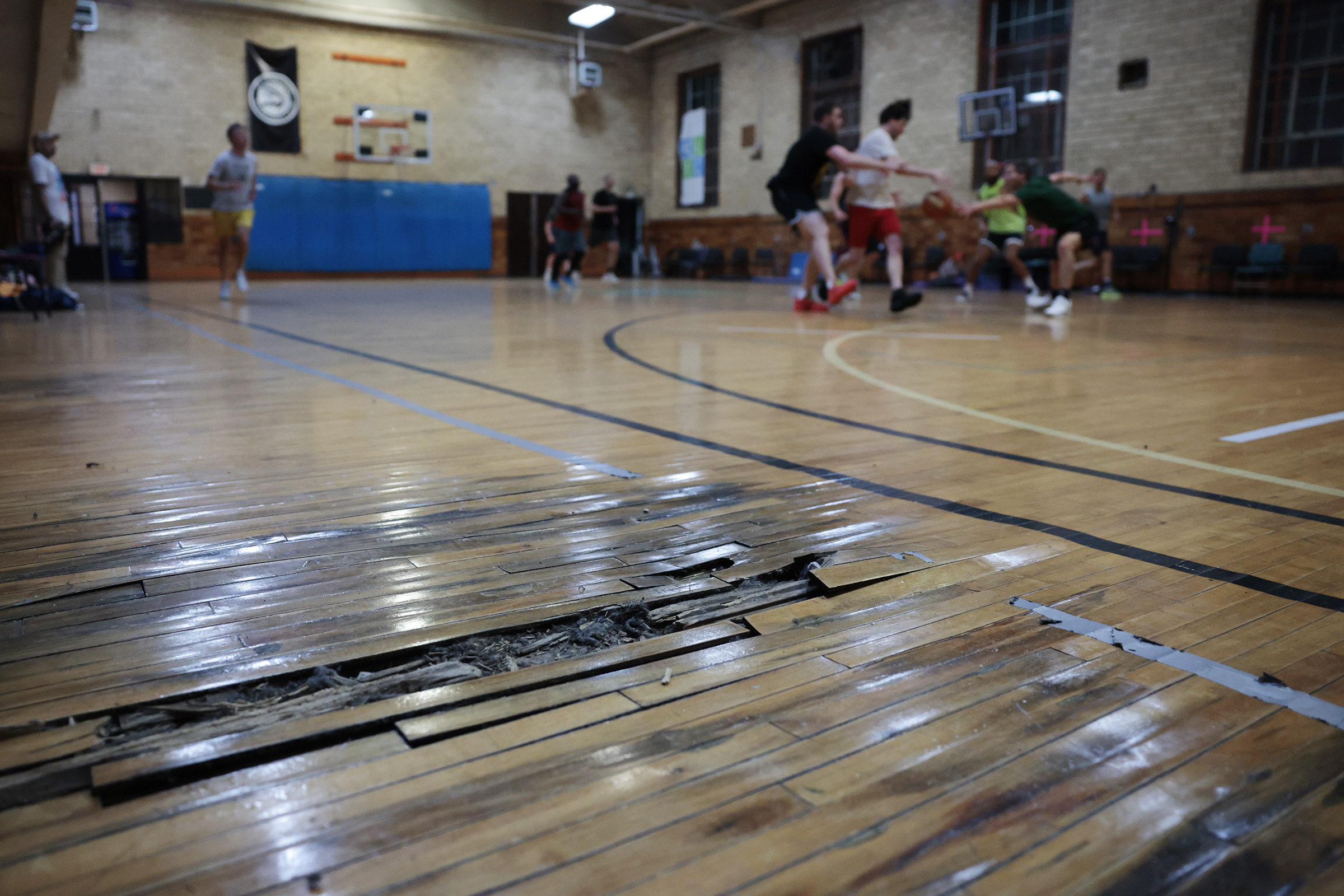
    The former YMCA building opened in 1922, and has not received major renovations since the 1990s. It has gradually decayed while waiting for essential repairs, including to its HVAC system and roof.

    The building was in dire financial condition in late 2024 into 2025, after the pandemic hurt memberships and childcare participation. Utility bills and shutoff notices piled up, and it appeared the center could close at any time. Germantown would lose a vital community resource, and one of the city’s few housing options for homeless men would disappear.

    But over the last several months, GLEC has begun receiving support it has long needed, by way of a combined $9.2 million from various sources. In the spring, the center learned it had been awarded $5 million from the city’s funding for homeless housing, courtesy of the American Rescue Plan, to use on its residential section. Then the center received an additional $2.5 million for the creation and repair of residential housing units in July from state funding. The money will go toward new central air-conditioning, new showers, updated bathrooms, and more.

    Last week, GLEC learned it will receive about $950,000 from state Local Share Account funding, raised from gaming revenues, which will go toward repairs to the building’s community center offerings, like replacing the basketball floor and renovating locker rooms and bathrooms.

    Macy Brown, 4, center with swimcap, uses her life vest to stay above the water as she kicks up a storm to navigate the pool at the Germantown Life Enrichment Center in 2018.MICHAEL BRYANT

    And on Sept. 17, Democratic State Sen. Art Haywood presented GLEC with a $750,000 grant from a state program that goes toward housing affordability and rehabilitation measures, also meant for improvements to the community center sections of the building.

    The inflow of funding represents a remarkable and hopeful turn of events for those who have fought to keep the building open.

    “It feels like a miracle. … I’m so profoundly grateful to the entire community that rallied around to to work together to make this happen,” said Doron Taussig, chair of the GLEC board.
    Yet even with those funds, Taussig said, the building’s daily financial challenges remain.

    The center still operates with a monthly deficit of about $25,000, executive director and CEO Lyn Kuebler said. She said even while the major investments from the city and state suggest they are committed to the center’s being used for this kind of housing work for the next 30 to 40 years, there is still a long way to go before all of its needs are met.

    “Even though we’ve gotten awards … it’s not money in the bank that can pay your electric bills,” Kuebler said.

    Not finished

    When the center hit its low point at the end of 2024, Kuebler said, she began warning people that without an intervention soon, “we’re not gonna be here.” She invited Haywood, who represents parts of Philadelphia and Montgomery County, to tour the building that December to see both its potential and how much was needed to reach it.

    “There’s not many places for men who have been hard on their luck,” Haywood said, noting that it is one of the few single-occupancy housing options for homeless men in the city. He said he admired the resiliency of the center’s leadership, and agreed to help secure funding.

    “The organization just needed a lot of love,” he said.

    A Dadball basketball game (in background) at the Germantown Life Enrichment Center in Philadelphia, where there are some badly needed repairs, in 2025.Elizabeth Robertson / Staff Photographer

    While Haywood and other officials went to work to preserve the building’s long-term future, Taussig sought out smaller donors to help with the daily expenses. For over a decade, the center has been the home of Taussig’s pickup basketball group, which nicknamed itself “Dadball.” The group of once-new dads in their 30s and 40s kept playing as their kids grew up, and formed a community.

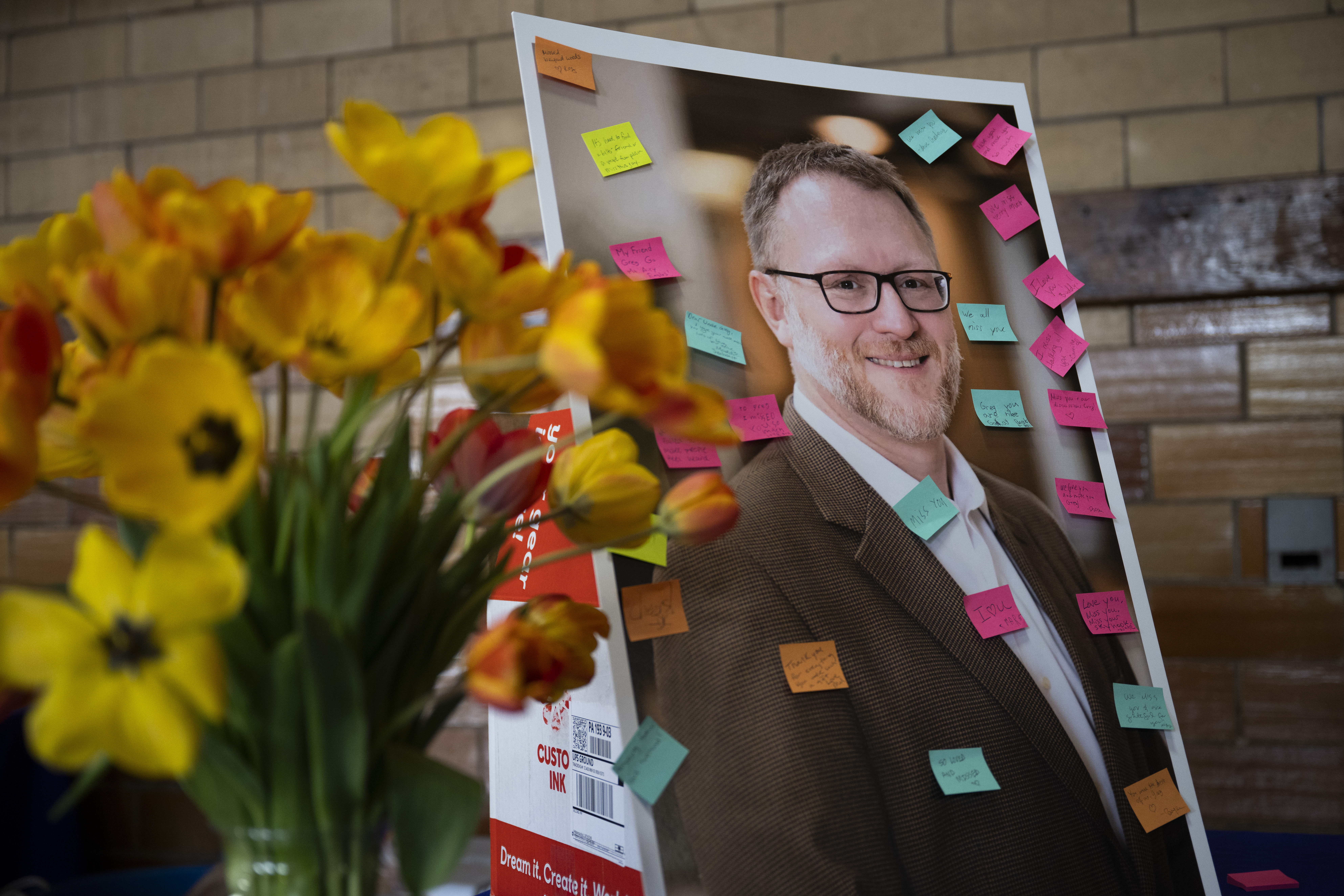
    In April 2025, one of the group’s most beloved members, Greg Anderson, died after suffering cardiac arrest during a game. In their grief, Taussig and the other Dadballers rallied and raised about $100,000 to keep the center open. They have since renamed the basketball gym in Anderson’s honor.

    Personalized notes are stuck to a portrait of Greg Anderson during a gym dedication ceremony for the late Mount Airy Dadball basketball player on Saturday, May 2, 2026 in Philadelphia.Joe Lamberti / For The Inquirer

    Kuebler said the organization determined it needs about $4 million more to address all of the community center renovations, so several items are on hold, like installing an elevator. She is asking community members to help in any way they can.

    “We are further than we’ve ever been. It helps you not be weary,” said Kuebler, who has been with the center for 16 years.

    People are riding the fundraising momentum, Taussig said. Another Dadballer will soon begin a culinary education program focused on teaching people to make affordable, high-nutrition meals. Anderson’s widow, Melanie Anderson, is organizing a women-only dance party in the basketball gym, he said.

    And a Jefferson University master’s in architecture class is conducting a community design project on GLEC. The students will study the building and surrounding community for what the best uses of the space may be, and offer suggestions on how to accommodate them, Taussig said.

    “It’s bringing all of this energy into the building. … It’s what this building needed and really ought to be used for,” Taussig said.

    Correction: Lyn Kuebler’s name was spelled incorrectly.
  • What’s in a pepper pot? Black chefs gather to celebrate, revive, and update Philadelphia’s signature soup.

    What’s in a pepper pot? Black chefs gather to celebrate, revive, and update Philadelphia’s signature soup.

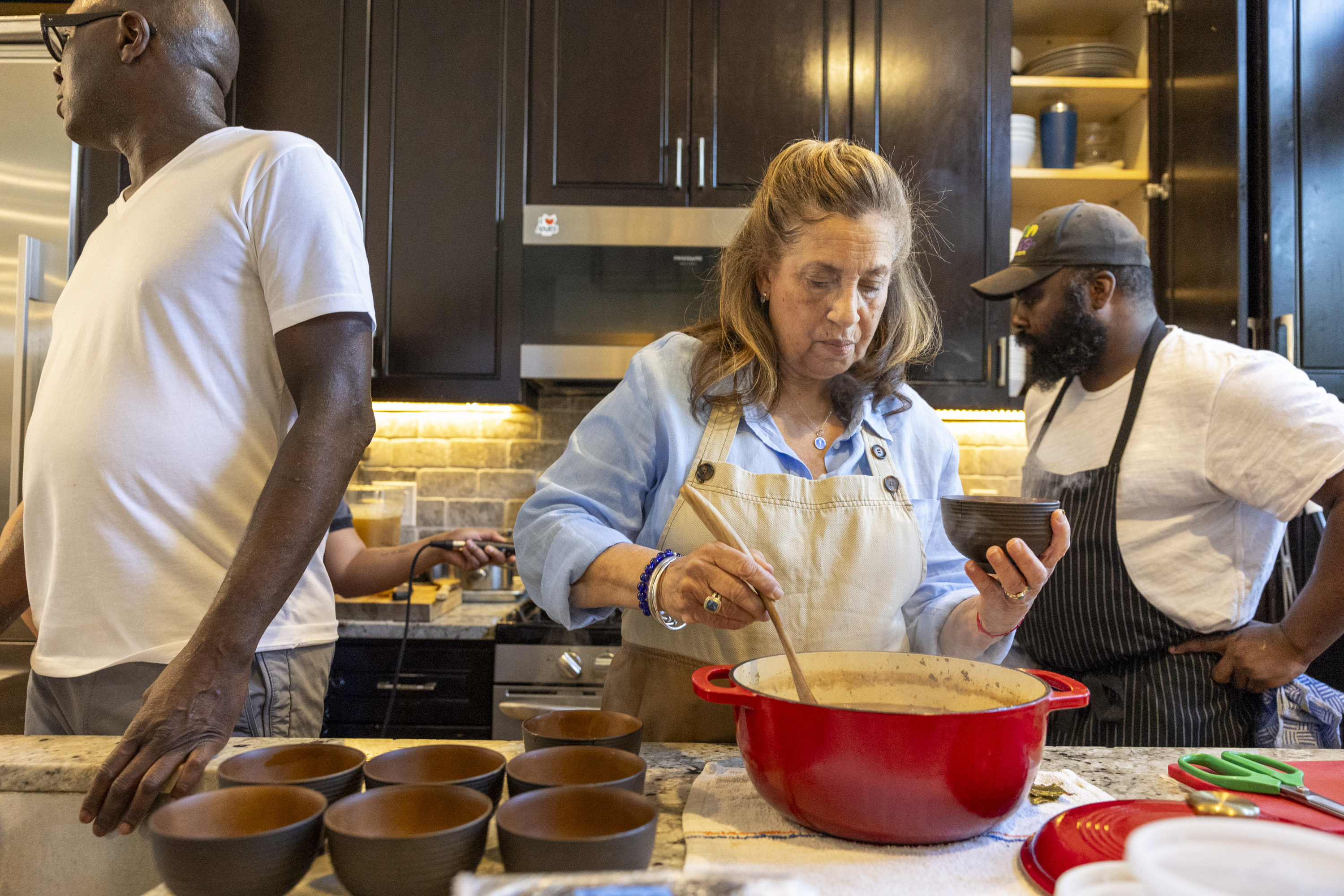
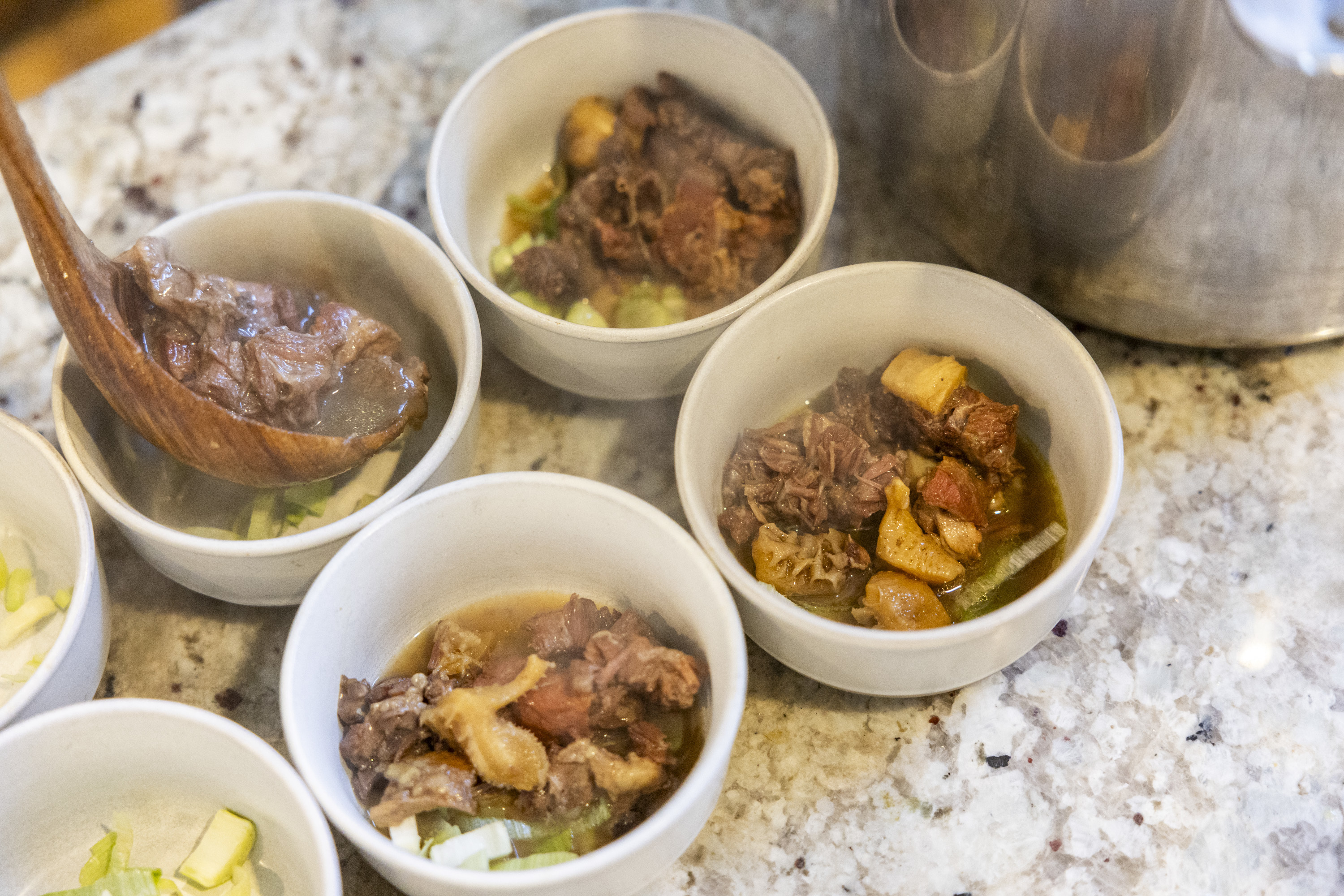
    The parade of soup bowls that perfumed the air of chef Shola Olunloyo’s South Philadelphia home kitchen with spice and heady broth could not have been more different. A buttery brown stew enriched with veal and bacon. An ethereal orange purée of squash that harbored habanero heat and delicate shellfish. A modernist collage of deconstructed elements — oxtail, pork belly, and frilly tripe dabbed with a gingery green mince of Caribbean herbs — artfully posed over a shallow splash of dark broth. But each one answered to the same name: pepper pot.

    “Pepper pot! Smoking hot!”

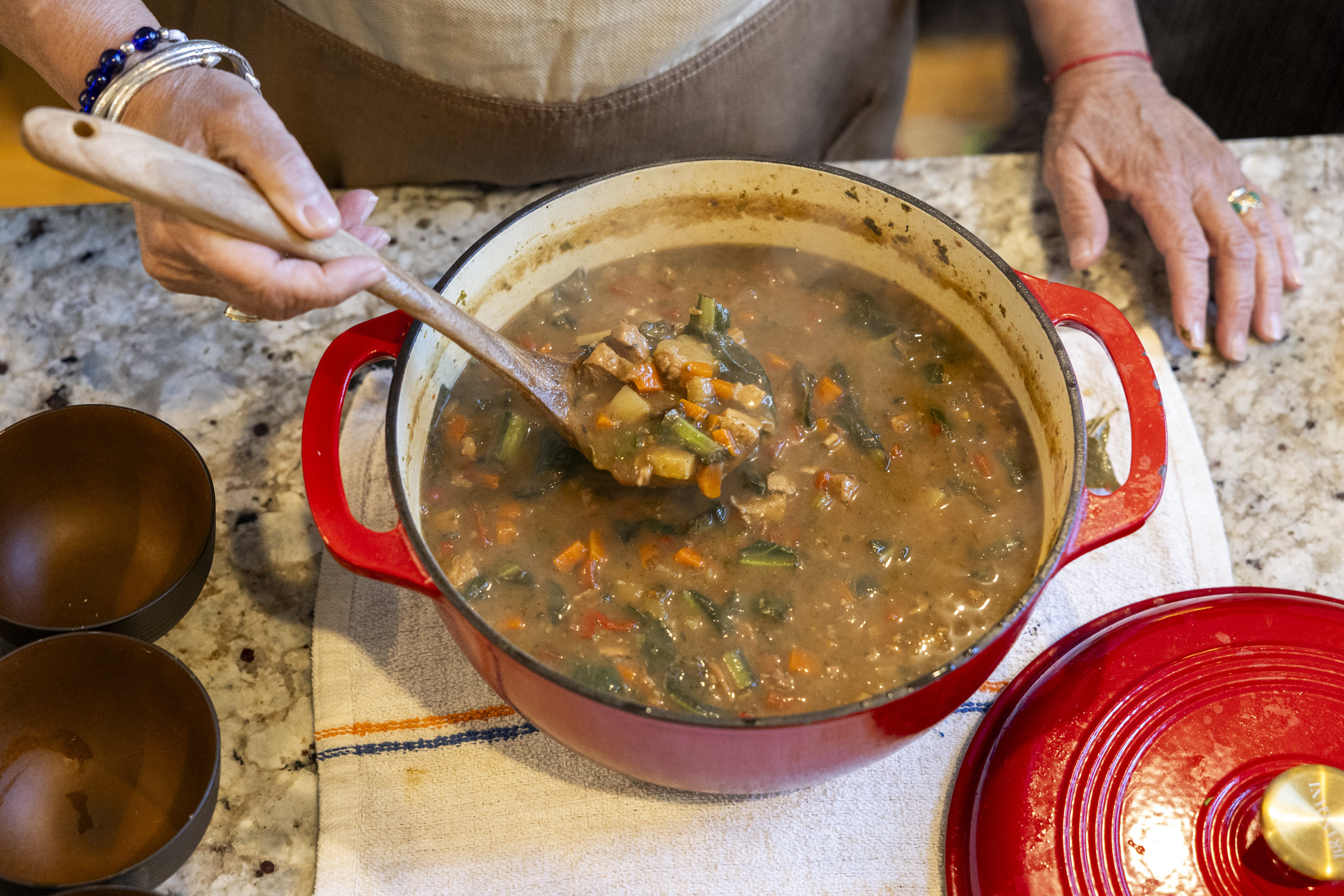
    Chef Angie Brown prepares to serve her version of pepper pot for fellow chefs to try.Tyger Williams / Staff Photographer

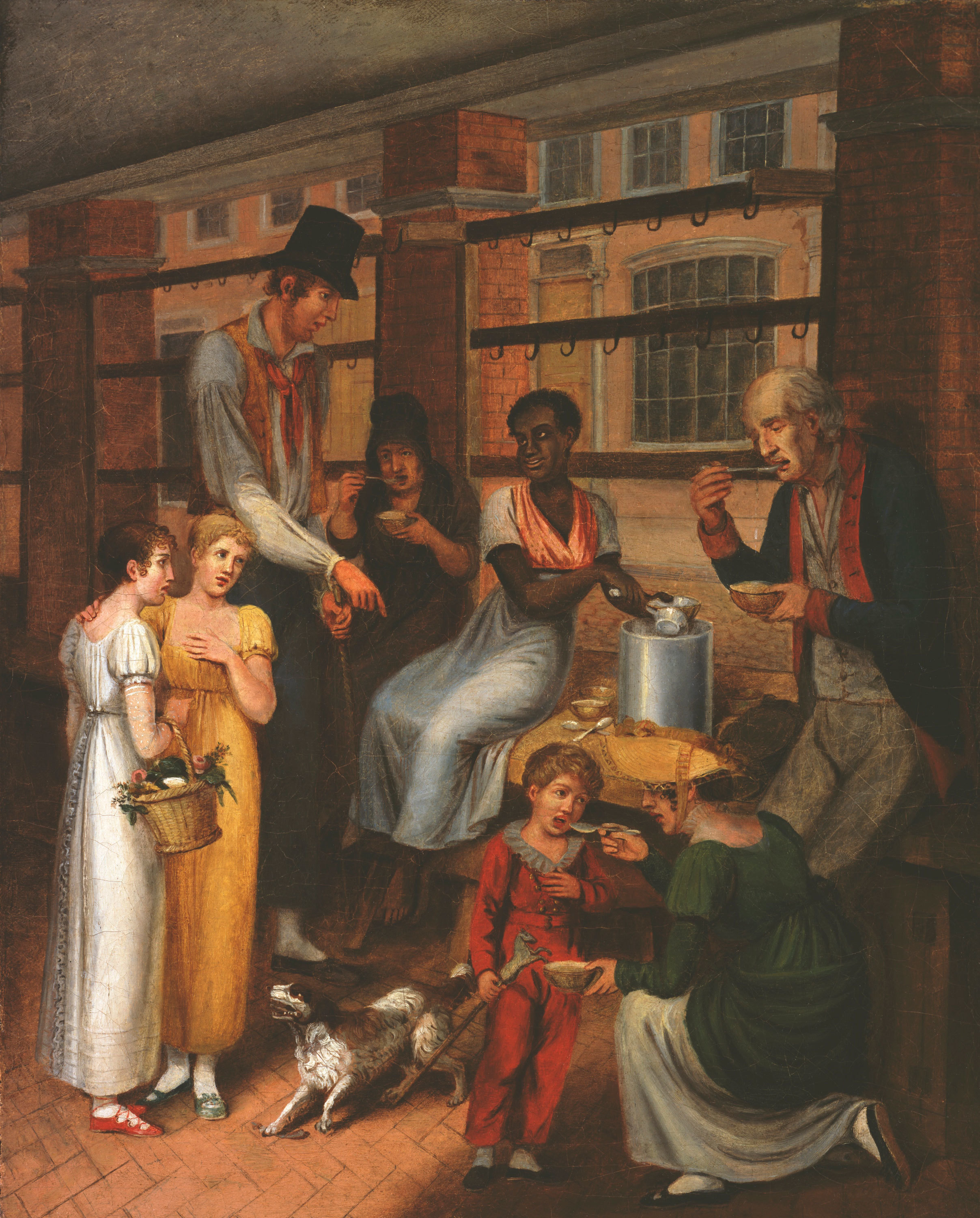
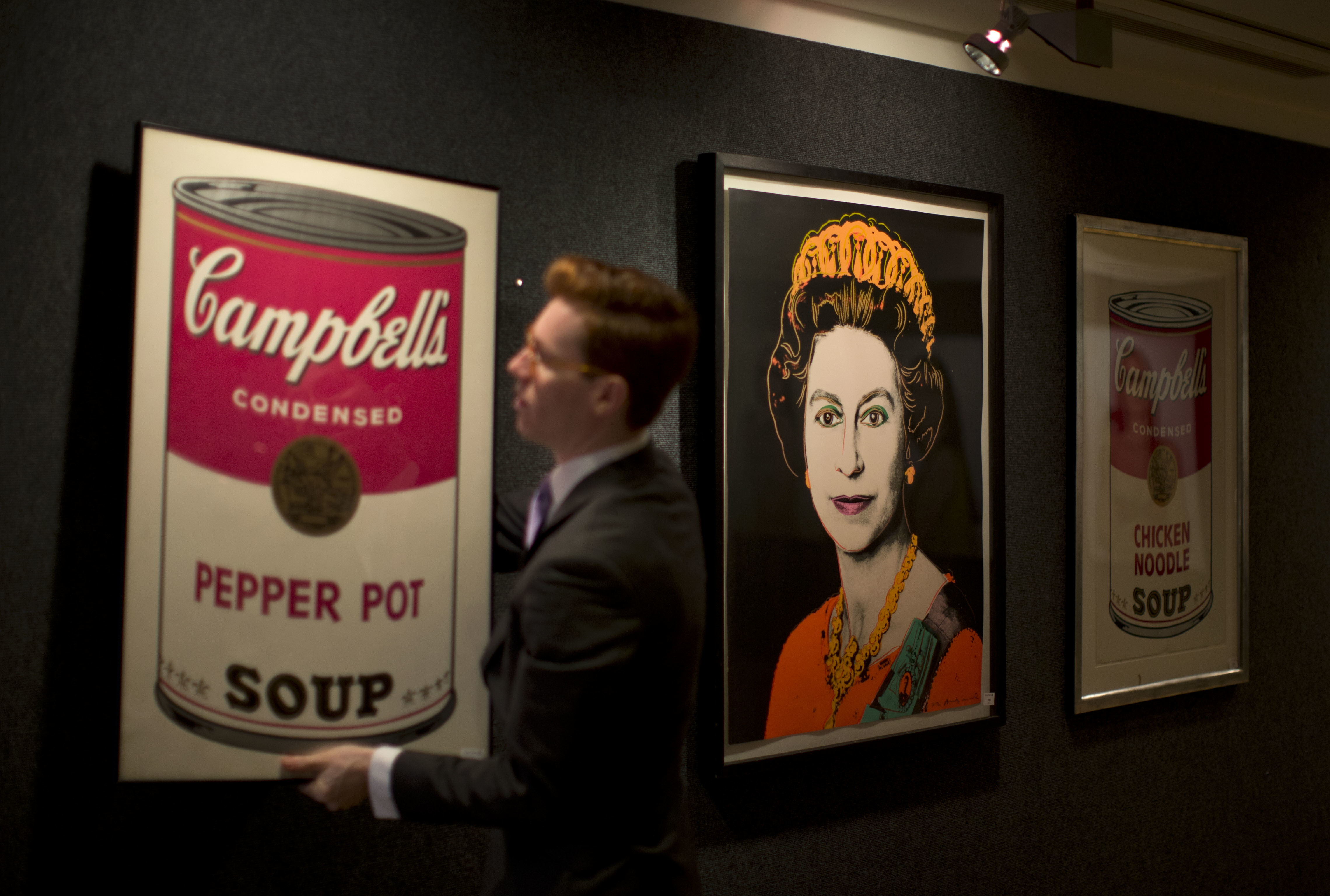
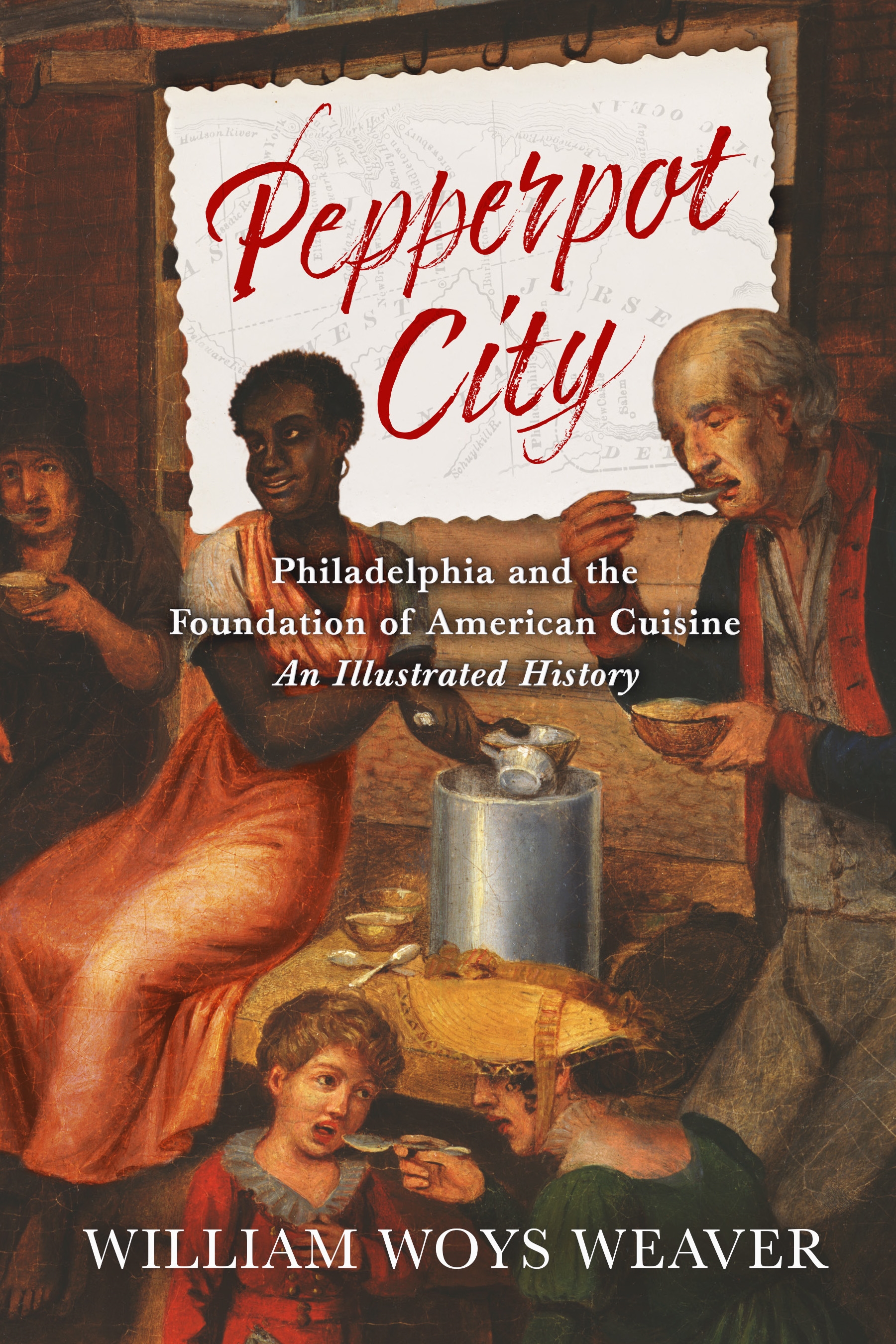
    So went the chant of the colonial-era vendors whose pepper pot cauldrons simmered on street corners across Philadelphia, America’s first capital city, with a “pleasant feast” made from an improvised variety of inexpensive cuts of meats, often including ox foot, tripe, and “a great portion of spice.” This iconic soup, largely produced by Black women from the West Indies, was immortalized as a city staple in an early 19th-century booklet chronicling the street cries of Philadelphia, a painting of an 1811 market scene painting by John Lewis Krimmel that hangs in the Philadelphia Museum of Art, and, more than 150 years later, Andy Warhol’s Pop Art series of Campbell’s soup can prints.

    “Pepper-Pot: A Scene in the Philadelphia Market” by John Lewis Krimmel depicts Philadelphians of varying classes enjoying the soup. Philadelphia Museum of Art: 125th Anniversary Acquisition. Gift of Mr. and Mrs. Edward B. Leisenring, Jr., 2001-196-1

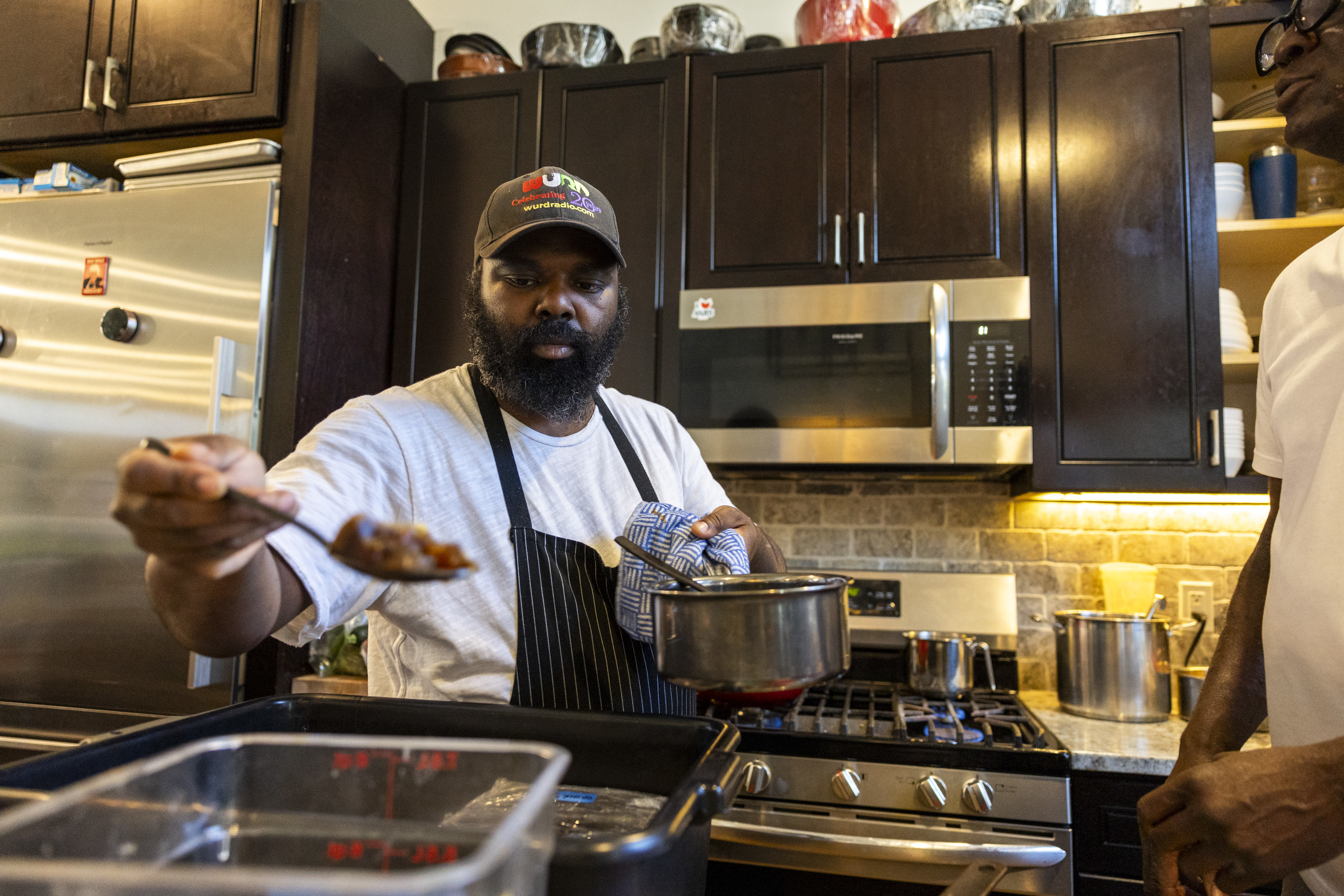
    Over time, pepper pot evolved into a broad diversity of styles, hinted at by the starkly different interpretations on the table at Olunloyo’s home. Olunloyo, a culinary consultant and the chef of Studio Kitchen, had gathered a small group of Black chefs there for a pepper pot summit — to taste and compare recipes, reflect on its legacy, and, perhaps, spark a local resurgence.

    “I was excited to learn that Philadelphia had a distinct dish that was not just cheesesteaks or pretzels, and to be a part of understanding what cemented Philadelphia’s culinary reputation,” says chef Omar Tate, who served us a test run of a pepper pot he plans to add to the menu at Honeysuckle this fall.

    Chef Chad Williams, who was unable to attend the June gathering, is planning to serve a version of pepper pot on the tasting menu soon at his Michelin-starred Friday Saturday Sunday. He’s starting his process with the flavor memories of a pepper pot his grandpa Chester once made in West Philadelphia, along with other variations Williams cooked earlier in his career, then “working our way backwards.”

    “We’ve got to put it on restaurant menus again because if we don’t cook it, it dies,” says Angela Brown, a private chef and former culinary director for Rex at the Royal, who led off the lunchtime event with a hearty rendition of the dish she learned from her great-grandmother. “This new generation of cooks doesn’t know anything about pepper pot, so it’s nice to bring it back.” (The meal was also documented for radio by NPR reporter Justin Kramon for WHYY’s The Pulse.)

    Andy Warhol’s 1968 color screenprint “Pepper Pot.”Matt Dunham

    The rise and fall of pepper pot

    The effort can’t come soon enough. In 2026, pepper pot as we once knew it has become nearly extinct. Campbell’s stopped producing it in 2010, coinciding with a dwindling appetite for tripe. History-minded chef Adam Diltz still produces it occasionally at Elwood. There have been efforts by local food historians and home cooks to keep its memory alive. The last local restaurant to regularly serve pepper pot was City Tavern (although chef Walter Staib’s West Indies version was without tripe), before the replica of the historic tavern closed in 2020.

    The timing of this pepper pot party is not a coincidence. Reflections on history have been at the forefront of this year’s celebration of America’s 250th anniversary. Food historian William Woys Weaver, among the tasters at Olunloyo’s house, argues in his forthcoming Pepperpot City that no proto-Philadephia dish may be as meaningful — or elusive — to grasp.

    Weaver unearths a stunning array of pepper pots in the book, due out in October, from the humblest market-stall versions to those ladled from the gilded tureens of society’s hautest tables: There are myriad variations of meats, seafood, seasonal produce, dumplings, and numerous cultural influences. The breadth of iterations makes it impossible to define Philadelphia’s pepper pot as one specific thing, aside from the inclusion of tripe (usually, but not always) and the presence of spice. It was a way of life and cooking more than a particular bowl of soup.

    “What’s pepper pot? It’s whatever you had there right in front of you,” says Weaver. “These chefs did not live by written recipes, but oral traditions they learned from a mentor. That’s why there were so many different kinds. Each person cooked from their soul.”

    The ever-morphing nature of the soup became emblematic of colonial Philadelphia as a focal point for the New World melting pot, he says, where the confluence of Black, white, and Creole foodways began to define this newly founded country’s culinary personality.

    “The City of Brotherly Love helped create a singular identity that helped shape what we know today as American cuisine,” writes Weaver. “Especially when winnowed through the hands of Black cooks.”

    Chef Omar Tate served a test run of a pepper pot he plans to add to the menu at Honeysuckle this fall.Tyger Williams / Staff Photographer

    Diverse foodways, all in one dish

    Philadelphia’s pepper pot shares Afro-Caribbean roots with a number of soups that go by the same name in the Caribbean and South America, although they’re distinctly different, since many are flavored with the caramelized cassava juice known as cassareep. It is also cousins with the callaloos and pepper soups of West Africa, as well as New Orleans gumbo and Haitian soup joumou. Pepper pot reflects Philadelphia’s unique status as a haven for free Black communities who had access to the tropical foodstuffs — allspice, habaneros, sea turtles, and pumpkins — arriving at its vibrant port on ships that also supplied the West Indies slave trade.

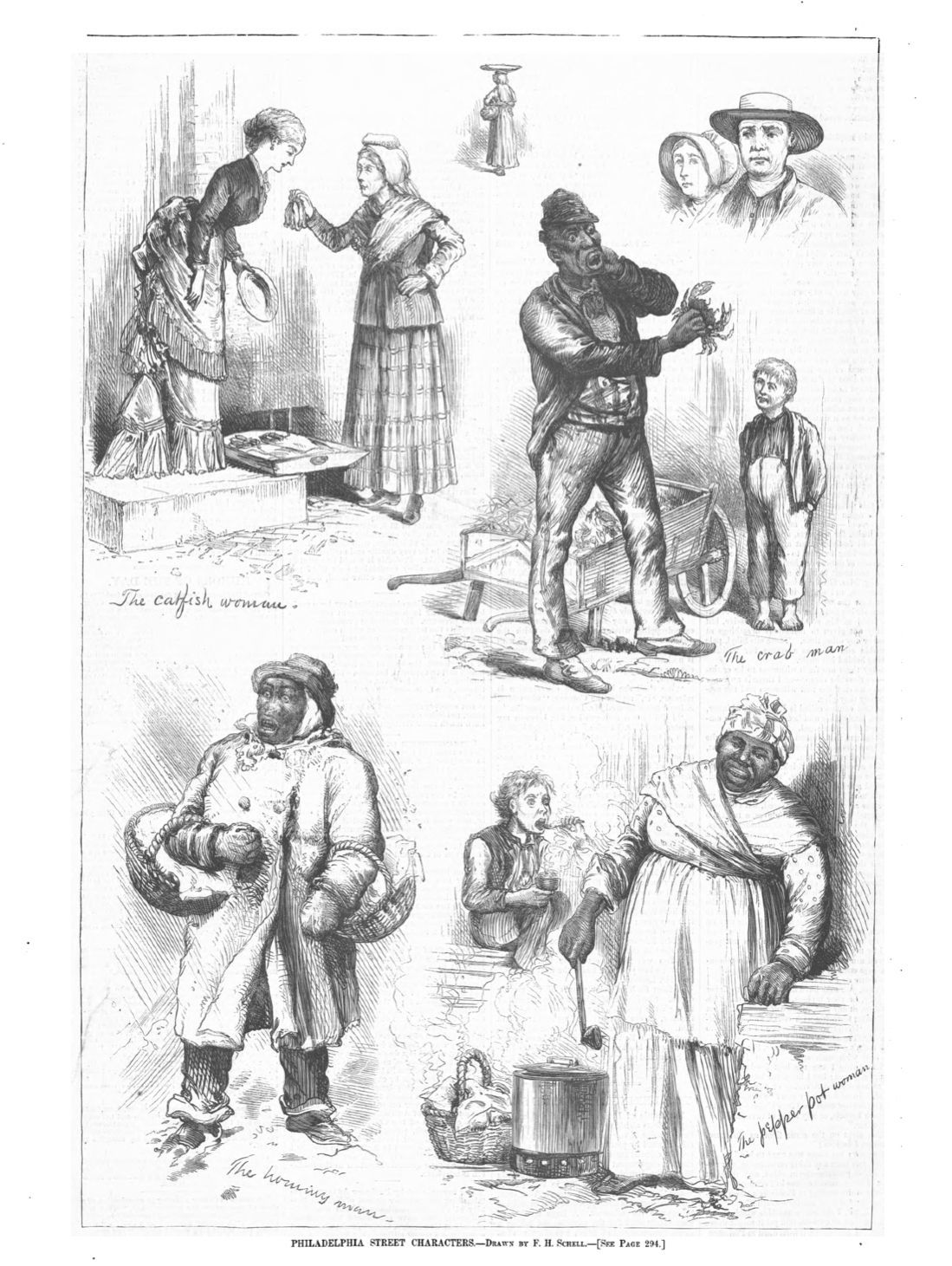
    This illustration of “Philadelphia street characters” was published in Harper’s Weekly in 1876. “The pepper pot woman” stands at the bottom right.Harper's Weekly/Google

    For this reason, many, including Weaver and food historian Jessica B. Harris, have come to regard early Philadelphia as the northernmost Creole city.

    “Nowhere is this connection more apparent than in Philadelphia’s pepperpot soup,” Harris writes in her book Beyond Gumbo. In a recent interview, she elaborated: “You’ve got a port bringing foods from other places and people also who are coming in from all over, enslaved and free. This kind of urban polyglot mix — that is the matrix of Philadelphia. And then you start getting their food. You know women of West Indian origin are going to make use of their skills and call on their memories to make something palatable to the people in this new place. All those things come together in pepper pot.”

    That lineage was especially resonant for Angela Brown, whose deeply flavored and nuanced stew of veal, bacon, and tripe took on a buttery texture from a dark roux and delivered just a gentle glow of peppercorn spice.

    “As a Black woman, when I think about all those women in the 1700s out there on the wharfs cooking soup to sell for the day and praying they get enough money, I feel sort of sad that my ancestors had to work that hard,” she says.

    Chef Angie Brown prepares her version of pepper pot for fellow chefs.Tyger Williams / Staff Photographer

    Yet cooking pepper pot also brought her joy, because it conjured warm memories of Brown’s childhood in Mount Airy. She’d walk to the neighborhood butcher for a pound of tripe, then closely watch her great-grandmother, Carrie Smithers, make it, beginning by sizzling the holy trinity of celery, bell peppers, and onions in rendered bacon fat and veal drippings.

    “That’s the reason I knew how to layer it,” says Brown. “I was very close to my great-grandmother, and she would be so proud that I made it delicious. I might have even made it better than hers.”

    Brown’s soup was the closest we’d taste that day to the thick, meaty tripe stew from Campbell’s that stamped pepper pot as a Philadelphia specialty, along with a version popularized nationwide on the dining cars of the Pennsylvania Railroad.

    “But there never really was a single ‘Philadelphia-style’ pepper pot. It was a marketing device, because this was a diverse city and pepper pot changed with every neighborhood,” says Weaver, who documents several 19th-century soup halls known as “pepperpot hotels” across the city, along with recipes that range from Esther Levy’s Jewish beef-and-mutton pepper pot from 1871 to pepper pot with crab, asparagus tips, and dumplings from a culinary instructor named Aunt Matilda in 1879. “Every Philadelphia recipe I’ve seen is different.”

    A recipe published for the Philadelphia World’s Fair in an 1876 cookbook from the Women’s Centennial Exhibition Committee featured two kinds of tripe in a veal knuckle broth studded with veal dumplings. Another completely different pepper pot called gingambo au potiron — with sea turtle broth, seafood, and a Brazilian pumpkin — emerged from the émigré Creole neighborhood called Hamiltonville, on the Woodlands estate southwest of the University of Pennsylvania campus.

    Chef Shola Olunloyo, a culinary consultant and the chef of Studio Kitchen, made a variation of a seafood-pumpkin pepper pot he once cooked at the restaurant Deux Cheminees.Tyger Williams / Staff Photographer

    A soup that unlocks memories

    Coincidentally, Olunloyo served us a variation of that same seafood-pumpkin pepper pot, a dish he grew fond of making regularly when he launched his career at Deux Cheminées. The late chef-owner there, Fritz Blank, had amassed a legendary cookbook collection and befriended both Weaver and Harris, who published Blank’s recipe in Beyond Gumbo.

    Olunloyo’s soup skipped the turtle broth for rich fish stock and swapped out pumpkin for butternut squash. The froth of its silky orange puree — enriched with vermouth, cream, and leeks — sparks with Scotch bonnet, ginger, and a scant pinch of aromatic mace. Sweet little bay scallops, added to the bowl raw, cook in its warmth alongside mussels and other shellfish. It was an elegant reminder of the refinements that European-trained French chefs gave to the high-society kitchens of early Philadelphia, one of “two separate strands” — the vernacular creativity of its street foods being the other — that shaped the city’s culinary evolution, says Weaver. Ever-evolving pepper pot existed in both spheres.

    For Olunloyo, whose career as a consultant and supper club chef has been most influential in its advocacy of modern methods and cutting-edge technology, diving back into pepper pot has been a reminder of his formative years as a cook and the enduring value of classic techniques.

    Chef Shola Olunloyo ladles out a meaty version of Nigerian pepper stew, a not-so-distant cousin of pepper pot.Tyger Williams / Staff Photographer

    The dish transports him even farther back to his childhood in West Africa and the pepper soups he grew up eating in Nigeria. In addition to his seafood-squash pepper pot, he served the group a boldly spiced version of that pepper soup — a rustic, bone-in stew of goat, beef neck, and tripe flavored with a blend of Nigerian seeds and dried chilies, with an extra hit of habanero and fresh green shiso he snips over each bowl to replicate hard-to-find African scent leaves. The connection to the West African roots of pepper pot’s creators could not have been more obvious.

    “Taste is not linear,” observed Omar Tate. “It is kind of like a spiral, the memory is trying to circle back home at every point when you pick up an ingredient.”

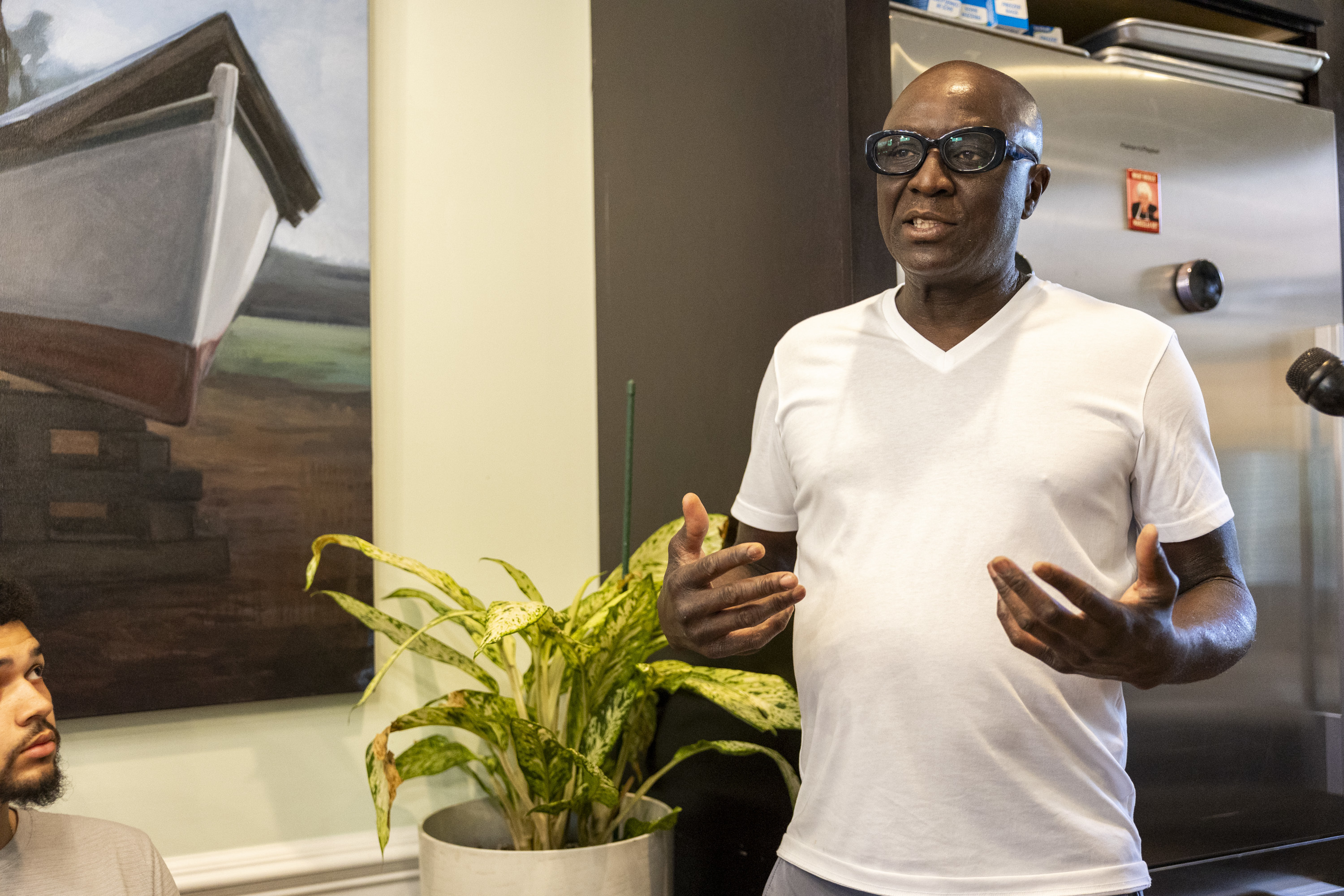
    Chef Shola Olunloyo explains his pepper pot recipe in his home kitchen in South Philadelphia.Tyger Williams / Staff Photographer

    The importance of historical Black dishes in 2026

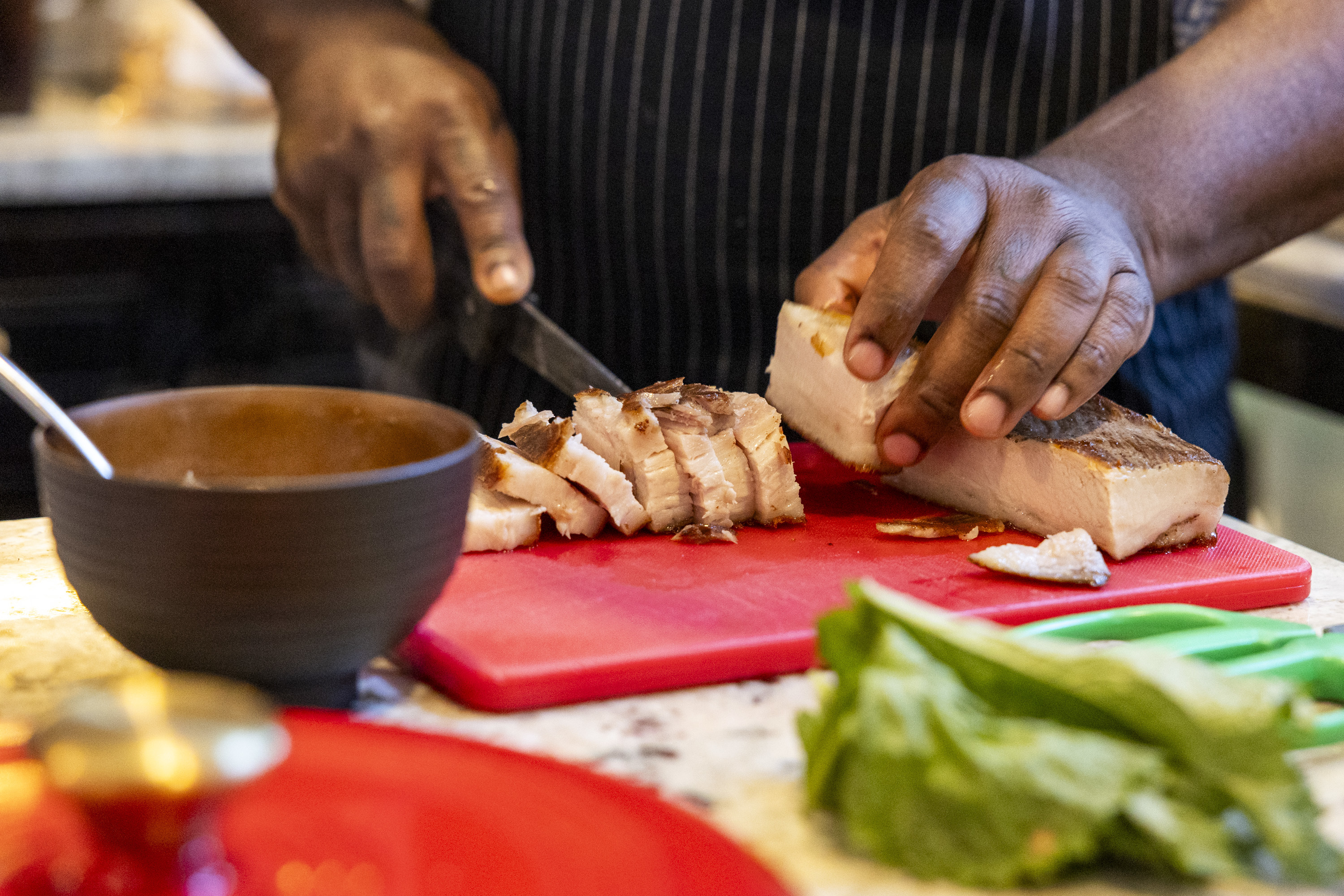
    For Tate, whose pepper pot efforts sit squarely within the provocative explorations of the Black American foodways Honeysuckle is known for, the point of the exercise for him was not to recreate history — “I’m not interested in copy-and-paste tradition” — but to modernize it for today’s tastes. His rendition with oxtail, pork belly, and honeycomb tripe was partly inspired by the Krimmel painting of a woman serving a market crowd of early 18th-century Philadelphians. But Tate’s deconstructed presentation, with each element suspended above locally raised vegetables and a puddle of intensely flavored broth spiced with fish peppers from Honeysuckle partner Plowshare Farms, looks like the melting pot in reverse. (Seeds for the fish pepper, an heirloom chile used by Black caterers in Baltimore in the 1800s, were publicly reintroduced by Weaver in 1995.)

    “I’ve never been able to fully sit in the idea of what tradition is because of my relationship to Black history in America, and realizing that the strongest, most consistent Black tradition is being uprooted constantly all the time,” he says. “Yes, we are preserving culture and honoring the past, but I’m constantly trying to disrupt what I know about that, because it helps understand how people navigated change.”

    Chef Omar Tate of Honeysuckle plates his version of pepper pot.Tyger Williams / Staff Photographer

    In this respect, the timing could not be more keen for a pepper pot tribute and the conversations it starts about the important role Black chefs played in shaping the nation’s cuisine. Keeping history front and center through food remains a powerful act, especially after the administration of President Donald Trump abruptly altered displays at the President’s House on Independence Mall to sanitize George Washington’s role there as an enslaver of nine people, including the seminal chef Hercules Posey.

    “We tried to honor their history and make sure tradition was preserved, but now that’s been disrupted and they have to be reimagined,” said Tate of the enslaved individuals previously commemorated at the President’s House, where the changes, he said, have deeply affected him. “That can only come through the possibility of taste and oral history.”

    Chad Williams agrees.

    “You have to cook it to keep it alive. Much of what makes dishes truly great is difficult to put into a recipe — the flavor, the experience of the dish, and making sure that gets pushed forward into the future by cooking it hand-to-hand. It can’t always come from a book.”

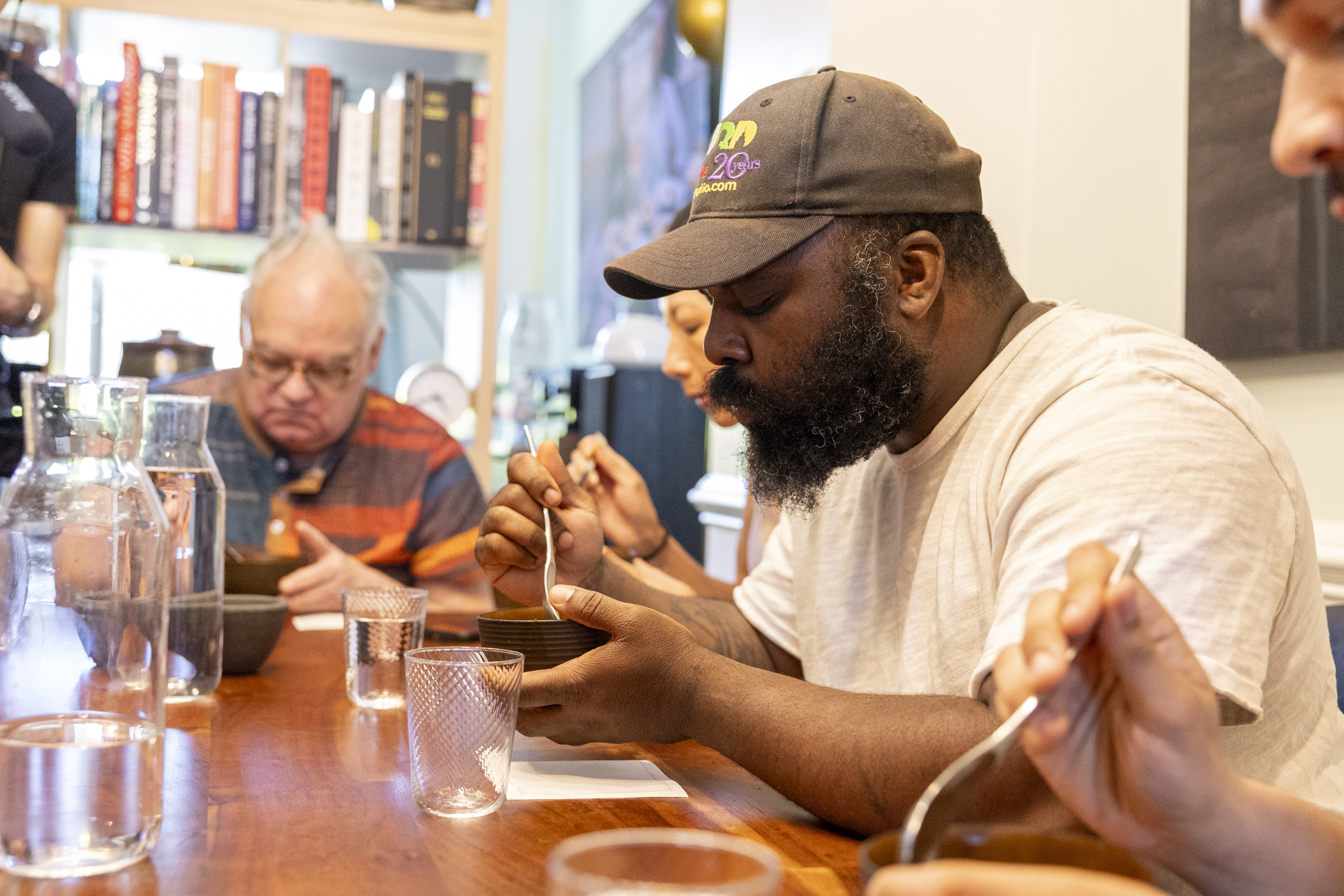
    Honeysuckle chef Omar Tate tastes the pepper pot recipe of Angie Brown.Tyger Williams / Staff Photographer

    Pepper pot keeps evolving

    The beauty of Philadelphia’s pepper pot is that it has proven to be less of a specific recipe than a culinary approach tied to this city, a resourceful way to coax tender sustenance and comfort in a stew flared with spice and the memories of a faraway land using whatever was locally available. As Tate and others at the tasting noted, such dishes have, in fact, continued to thrive with the arrival of new waves of immigrant communities, even if their fiery tripe-laced soups go by other names.

    Vietnamese bún bò Huế. Mexican menudo. Mauritanian tripe and cow skin gravy over Jollof rice. Spicy Korean beef gopchang-jeongol. Polish flaki. Italian trippa alla Romana. Excellent versions of all these and more can be found here, which, in the context of Pepperpot City, means they, too, could be considered as part of a grand centuries-old Philadelphia tradition that’s not quite ready to fade away.

    “They’re all pepper pots,” insists William Woys Weaver. “That’s our local word for it, you know! Let’s stop pretending that pepper pot is one thing. Pepper pot is Philadelphia’s soul soup.”

    The cover of “Pepperpot City,” a book about Philadelphia food history by local historian William Woys Weaver. The cover features a portion of an 1811 painting by John Lewis Krimmel depicting a pepper pot vendor selling the soup in a market.Courtesy University of Pennsylvania Press
  • These 32 Philadelphia middle school students just got their white coats, on a path to becoming doctors someday

    These 32 Philadelphia middle school students just got their white coats, on a path to becoming doctors someday

    When Martha Glasco was growing up in North Philadelphia, she said, her opportunities were limited.

    So when a teacher told Glasco — now an adult with a bright child of her own — about a new program that aimed to give promising Philadelphia kids six years of medical-school education with an eye toward careers in healthcare, Glasco was thrilled.

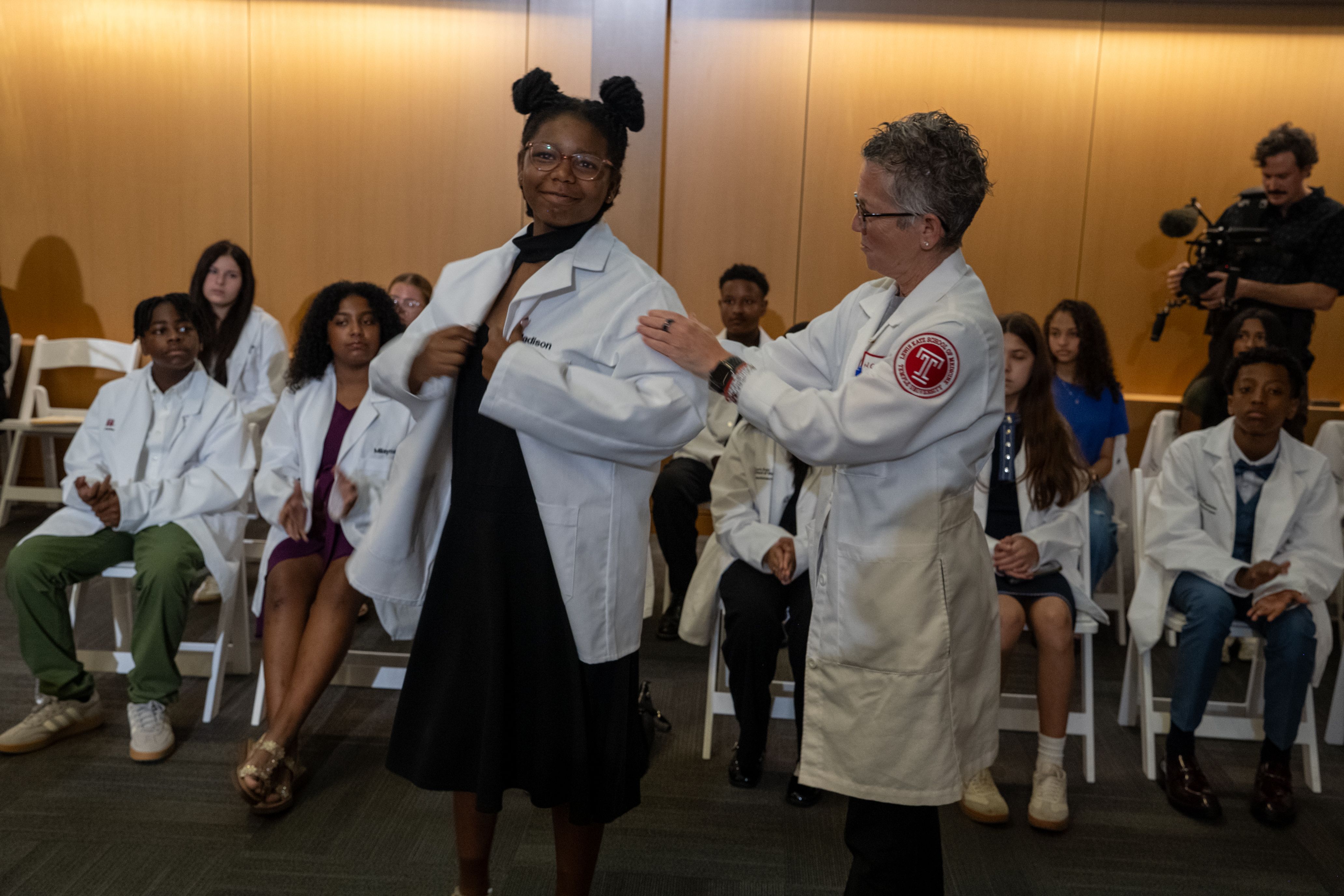
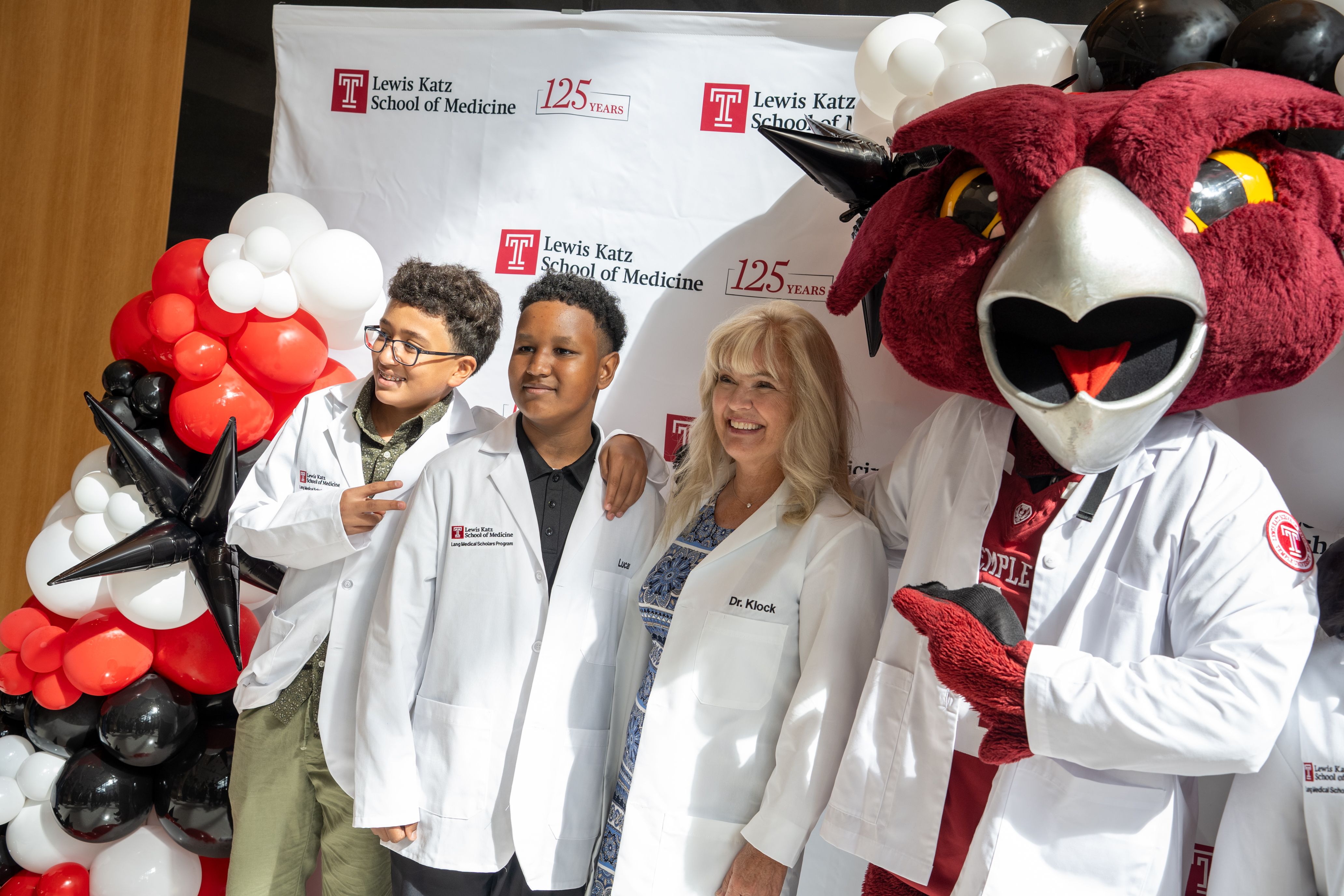
    This month, Glasco’s daughter Madison Miller slipped a white coat over her shoulders, one of 32 Philadelphia seventh graders chosen for the initial class of Temple University’s Lang Medical Scholars Program. The 12-year-old, a student at E.W. Rhodes Elementary at 22nd and Clearfield Streets, will spend weekends and summers learning about systems of the body, completing internships, and engaging in rigorous college prep.

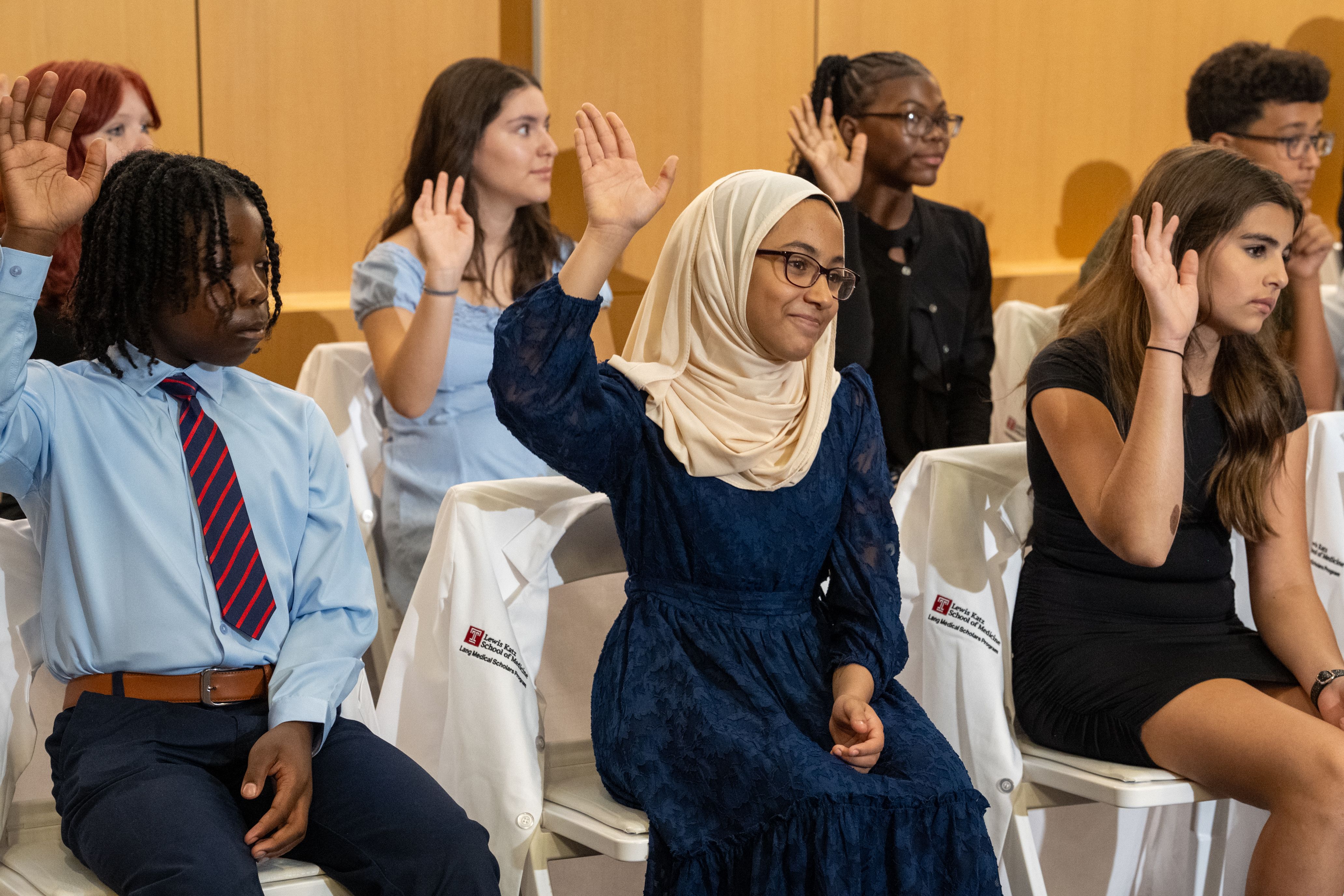
    Seventh graders in Temple University Medical School’s Lang Scholars program prepare to get their white coats. The new program identifies promising students and gives them six years of pre-medical school education.Courtesy of Temple University

    “This is a big deal,” said Glasco, who dreams of buying Madison scrubs and a stethoscope, tangible evidence of her place in Lang Scholars and the doors it could open.

    “The passion around this, the mission is just — talent abounds and opportunity does not, right?” said Barbara Klock, the program director and its architect. Lang, she said, aims to change that for its students.

    A long-held vision

    Klock carried the idea of the Lang Scholars around for years, through a career as a Children’s Hospital of Philadelphia pediatrician and the Philadelphia School District’s chief medical officer.

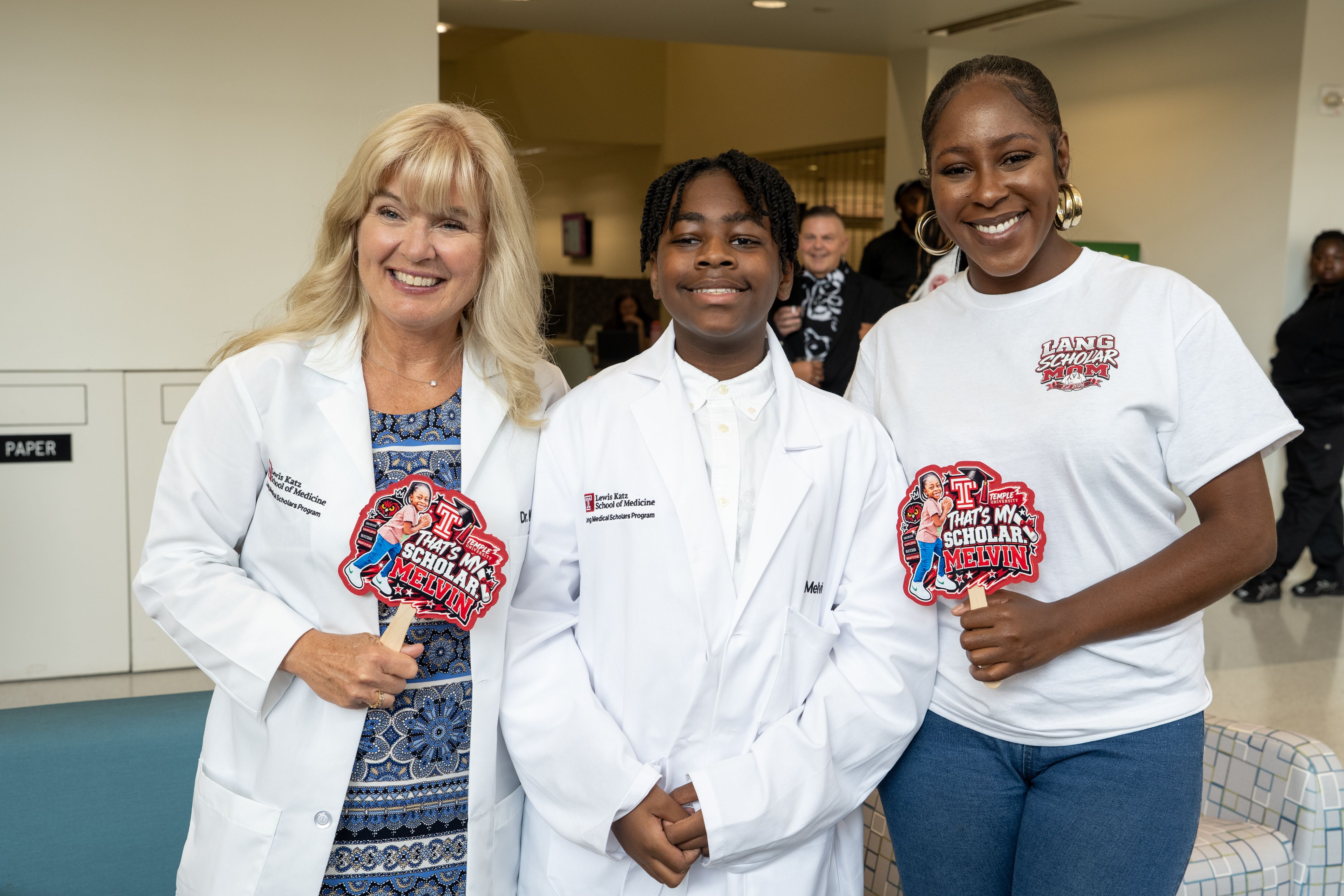
    Melvin Poulson IV, a student at Hope Partnership School, and his mother, Allison Agee, pose with Barbara Klock, director of the Lang Scholars program.Courtesy of Temple University

    Klock, who grew up in Philadelphia’s working-class Juniata Park section, was mentored by Eugene Lang at Swarthmore College. Lang, a businessperson and philanthropist, famously promised a class of Harlem sixth graders that he would pay for their college educations if they graduated from high school.

    Lang and Klock kept in touch after her Swarthmore graduation, and on one chance encounter at 30th Street Station in the 1990s, Lang mentioned to Klock that he was launching something he was really excited about.

    “He said, ‘I have this idea for a program, but the kids start really young.’ He was always, ‘If you’re going to do something, it’s got to be the best,’ and for him, the best would be going to medical school,” Klock said.

    That program, the Lang Youth Medical Program, has been thriving in New York for decades. Klock admired it from afar, and, sometimes, up close.

    “I would go on Saturdays and see the program with the dream of bringing it to Philadelphia,” she said.

    Klock decided it was time to go for her own version of that program in 2024. She reached out to Mitchell Morgan, chair of Temple’s board of trustees, via e-mail.

    “I said, ‘I have this program. I would love to bring it to Temple,’” Klock said. “I wanted to do this with Temple because of where Temple is located, Temple’s mission and vision, and they really do what they say they do.”

    Temple University Lang Scholars white coat ceremony.Courtesy of Temple University

    She expected she might hear from Morgan within three weeks. Instead, she had a response, and a connection to Lewis Katz School of Medicine dean Amy Goldberg, by the end of that day.

    In short order, the program was off and running, with Temple’s backing and philanthropic support, including some funding from Lang’s private foundation.

    Klock pounded the pavement in the 2025-26 school year, reaching out to every Philadelphia school she could connect with — district, charter, private — to ask: Can I come talk to your sixth graders about an idea? Thirty-five schools opened the door for Klock to make presentations.

    She didn’t ask counselors to recommend kids; she feared she would get only straight-A students and student council presidents. Those were fine, but she also wanted the bright-but-bored kids, the ones who were curious about science and life but maybe had hit a few bumps along the way.

    Klock hoped to bring in 20 Lang scholars for the inaugural class. Nearly 14 times that number applied, and those who made it to the interview round flat-out wowed her, Klock said. She ended up getting permission to build a class of 32 — 22 girls and 10 boys — and will grow a grade every year.

    The program’s aim is not to produce a class full of doctors. It is to produce a class full of curious and confident learners grounded in an academic medical setting. If some enter the medical field, Klock would be delighted, but that is not the main objective.

    “These are kids who are so eager to learn,” Klock said. “They want to be with other students who are eager to learn. They are incredibly curious. They ask, ‘why?’ and ‘what if?’ What I want to do is give them the chance to continue to ask, ‘why?’ and ‘what if?,’ no matter what.”

    ‘This is serious’

    Glasco was tipped off about the program by a teacher friend.

    Madison first expressed her desire to become a doctor at age 3. Her preschool teacher has a photo of Madison holding a sign stating her career goal.

    “She wants to be in the medical field, and I used to be in the medical field, so it’s actually perfect,” said Glasco, who used to work as an EMT and a medical assistant and is now a paraprofessional in a suburban school district.

    It’s not far from her North Philadelphia house to Temple’s medical school, Madison said, but walking into the Medical Education and Research Building on North Broad Street felt like a different world in some ways.

    Going to the interview was “very exciting,” Madison said, “but I was also very nervous. There were a lot of windows, and I could see everyone.”

    When she got the word that she was a Lang Scholar, Madison was thrilled.

    “My teacher was really excited, too, because he knew I was going to be in the medical field soon — kind of in medical school, like college,” Madison said. “My friends were really excited because they knew they were going to have a medical friend.”

    Madison and the other Lang Scholars received their professional white coats to kick off the program on Sept. 19. They will begin their studies Oct. 3. Klock will teach the biweekly courses on the human body, health equity, public health, and more.

    Over the years, the students will take trips, work at paid internships, sit in SAT prep courses, and receive help with college applications — all for free. They will dive into the health issues facing their communities, and have access to the same labs and facilities as Temple medical students.

    Glasco cannot wait to drop Madison off for her first day of class as a Lang Scholar.

    “I’m going to be on her really hard about this, because this is serious,” Glasco said. “I want her to get all the knowledge she can, and maintain it, so she can go further in whatever medical field she decides to do in the future.”