Michael “Sandy” Sims was supposed to be back in Philadelphia by now, after a business trip to the West Coast. Instead, he is locked up in an ICE detention center in California.
Sims, 42, a veteran of the entertainment-lighting industry, told his wife that immigration agents were waiting for him when his Lyft driver pulled up at the San Jose airport early on Sept. 2.
Sims was born in Ireland and raised in London, and had been expecting approval of a green card that he and his wife, an American citizen, sought after they married in 2017.
Now he is in custody as U.S. airports become risky places for foreigners, amid an ICE push for ever-greater numbers of arrests.
“It’s horrible,” said Sims’ wife, Jennifer, 46. “We thought we were waiting for a green card.”
For so long, she said, the United States has been a beacon for people around the world who want to come, work, and contribute, to create better lives for their families. Now, she said, “the American dream is gone.”
The advocacy organization Asian Americans United, which works to track airport arrests, said it estimates more than 20 people have been arrested at Philadelphia International Airport or while seeking to fly there since July 12. That includes at least 13 taken into custody at the Philadelphia airport itself.
The Department of Homeland Security said Sims had entered the country legally but overstayed his visa.
“Criminal illegal aliens are not welcome in the U.S.,” DHS said in a statement. “Under President Trump and [Homeland Security] Secretary [Markwayne] Mullin, if you break the law, you will face the consequences.”
The department said Sims faces a criminal charge of domestic battery in Nevada, where he lived at one time. DHS provided no further details and, along with ICE, did not respond to requests for information on what allegedly happened and when.
In a search of Nevada court documents, The Inquirer could find no record of any criminal case against Sims. And Sims’ Philadelphia immigration lawyer, Hunter Yost, said he had no knowledge of and could locate no record of such a case.
Jennifer Sims said her husband has never been charged with a crime.
When she subsequently asked her husband about the government’s assertion that he had a pending criminal case, she said, he told her that when he was arrested and handcuffed by Immigration and Customs Enforcement, one of the agents kept saying, “You’re a wife-beater,” and the other repeatedly said, “No, he’s not.”
Jennifer Sims pictured with her husband, Michael “Sandy” Sims.Courtesy of the family
Sandy Sims sent a note from detention that was posted there:
“Hello to everyone from Dorm B Mesa Verde Detention Center,” he wrote. “Thank you one and all for your support. … I’m so grateful. Thank you all and I hope this situation will be over soon.”
Sims’ wife said he legally entered the U.S. on a work visa in 2016. When that expired, he was subsequently approved for entry under ESTA, the Electronic System for Travel Authorization. That is an online initiative the federal government uses to prescreen travelers before they visit the United States under the Visa Waiver Program.
Jennifer Sims said after they wed, she filed Form I-130, the document required to prove a valid family relationship with a foreigner who wants to immigrate to the United States. That application, she said, was approved in March 2020 ― a key step toward a green card. Her husband had completed his biometrics appointment, where the government collects the applicant’s fingerprints, photograph, and digital signature, three months earlier, she said.
He was given a U.S. Social Security number, she said.
The couple worries their green-card paperwork might have been lost when they relocated to Las Vegas and back to Philadelphia between 2018 and 2021.
Meanwhile, the Trump administration’s nationwide effort to increase arrests at U.S. airports has spurred warnings from immigration attorneys that even those with valid work permits and government-issued identification can be in danger.
An ICE summer push saw a record 49,571 people arrested across the nation in July, many of them taken into custody at airports, courthouses, and scheduled immigration check-ins. That is an average of 1,599 arrests a day, a 15% increase over the previous month, according to figures from the Deportation Data Project.
The July arrests included 1,174 in Pennsylvania and 2,112 in New Jersey.
Homeland Security said airport arrests are occurring because the Trump administration “reversed the horrendous Biden-era policy that allowed aliens in our country illegally to jet around our country.”
“Under President Trump, DHS will no longer tolerate this,” the agency said last month, as news spread of Philadelphia airport arrests. “This administration is working diligently to ensure that aliens in our country illegally can no longer fly unless it is out of our country to self-deport.”
The Trump administration says that its immigration-enforcement effort targets criminals, that it has been arresting and deporting killers, rapists, and child-abusers to make the country safer. However, the latest data showed that half of those arrested in July had no criminal convictions or charges, and less than 25% had been convicted of a crime.
Sandy Sims has worked in entertainment lighting since 2002, including on shows for Metallica, Usher, and Florence + the Machine, the popular English rock band, his wife said.
She said she feels as if the immigration system has been turned into a moneymaker, where people trying to follow the law are charged high fees, and private companies reap profits by keeping people in custody.
Private equity investor Gregory L. Segall, a Philadelphia Republican who was a key backer of Mayor Cherelle L. Parker’s 2023 campaign, has resigned from three city boards as he weighs other “civic engagement” opportunities, according to a copy of one of his resignation letters obtained by The Inquirer.
Parker, a Democrat, appointed Segall to the Philadelphia Gas Works board, the Philadelphia Tax Reform Commission, and the Mayor’s Business Roundtables. Segall resigned from all three effective Aug. 31. He also served as a vice chair of Parker’s transition committee when she was taking office.
“While I am stepping away from this role, I remain committed to civic engagement and intend to explore other ways to continue the journey I have been privileged to pursue over the last several years,” Segall, the chairman and CEO of Versa Capital, wrote in his letter resigning from the Mayor’s Business Roundtables, an advisory group convened by Parker.
Segall’s moves come as candidates are gearing up to run in next year’s municipal elections, when Parker and all 17 City Council members are up for reelection.
Candidates in the primary election have until early spring to decide whether they are running.
Claudia Vargas, a journalist who formerly worked for NBC10 and The Inquirer, reported this week that Segall was considering running for Council.
When contacted by The Inquirer, Segall, who lives in Chestnut Hill, said Wednesday he is “not running” for Council.
“People have suggested multiple forms of public service, including Council, and I have no plans or commitments at this time,” Segall, 63, said in an interview.
Segall said he continues to “strongly support Mayor Parker, and my highest and best hope is that my public service will be in aid of her continued success.”
Parker on Wednesday declined to comment on the report of Segall exploring a run for office.
From 2022 through 2025, Segall and his wife donated $37,300 to Parker’s campaign, according to campaign finance records. He also gave $150,000 to a super PAC backing her 2023 run, and $6,200 to her transition committee, the records show.
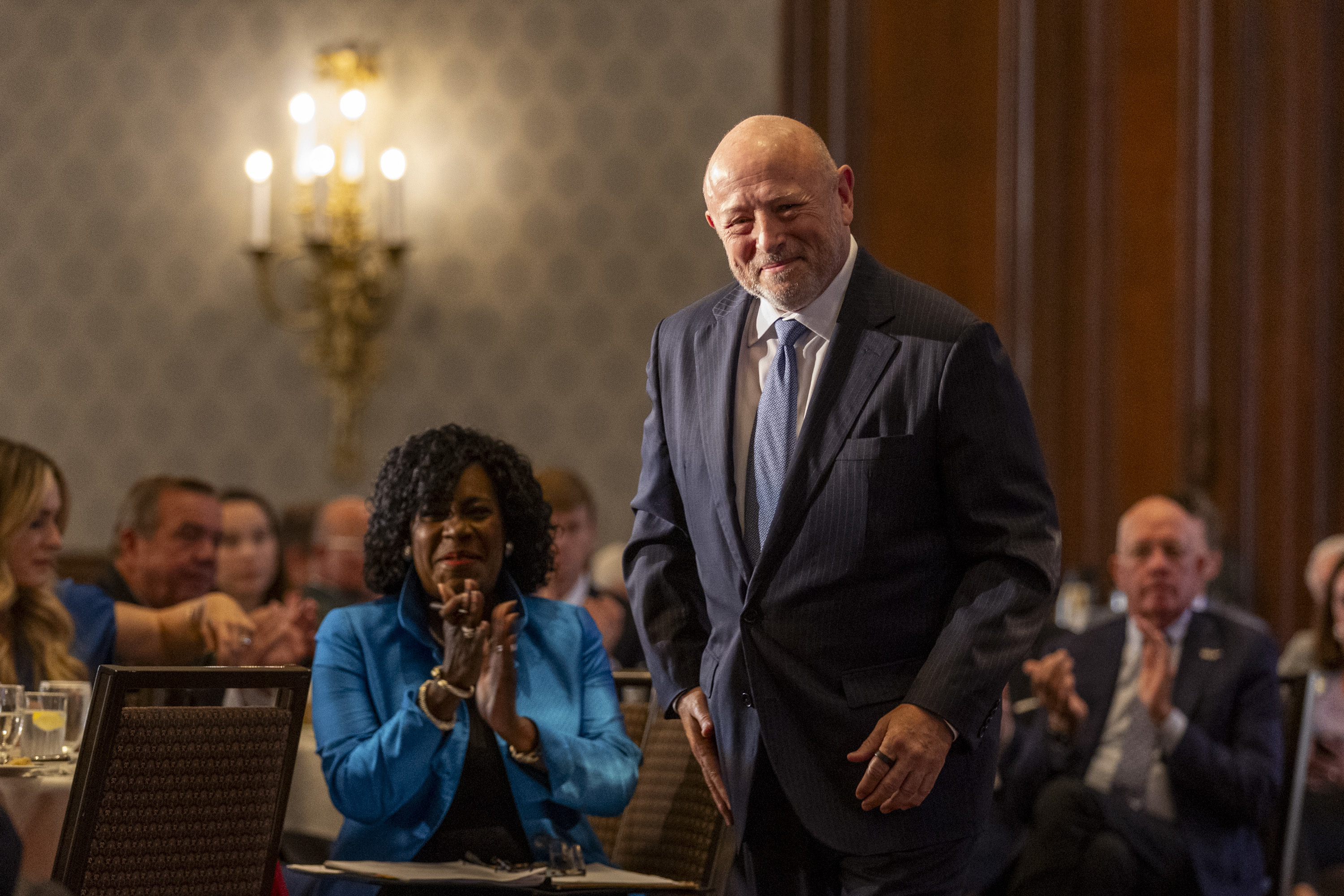
“The 2023 election took place at a time of crisis in the city, and getting the right leader was never more critical,” Segall said. “So the reason for my commitment to her was quite simple: Before I’m a Republican, I’m a Philadelphian.”
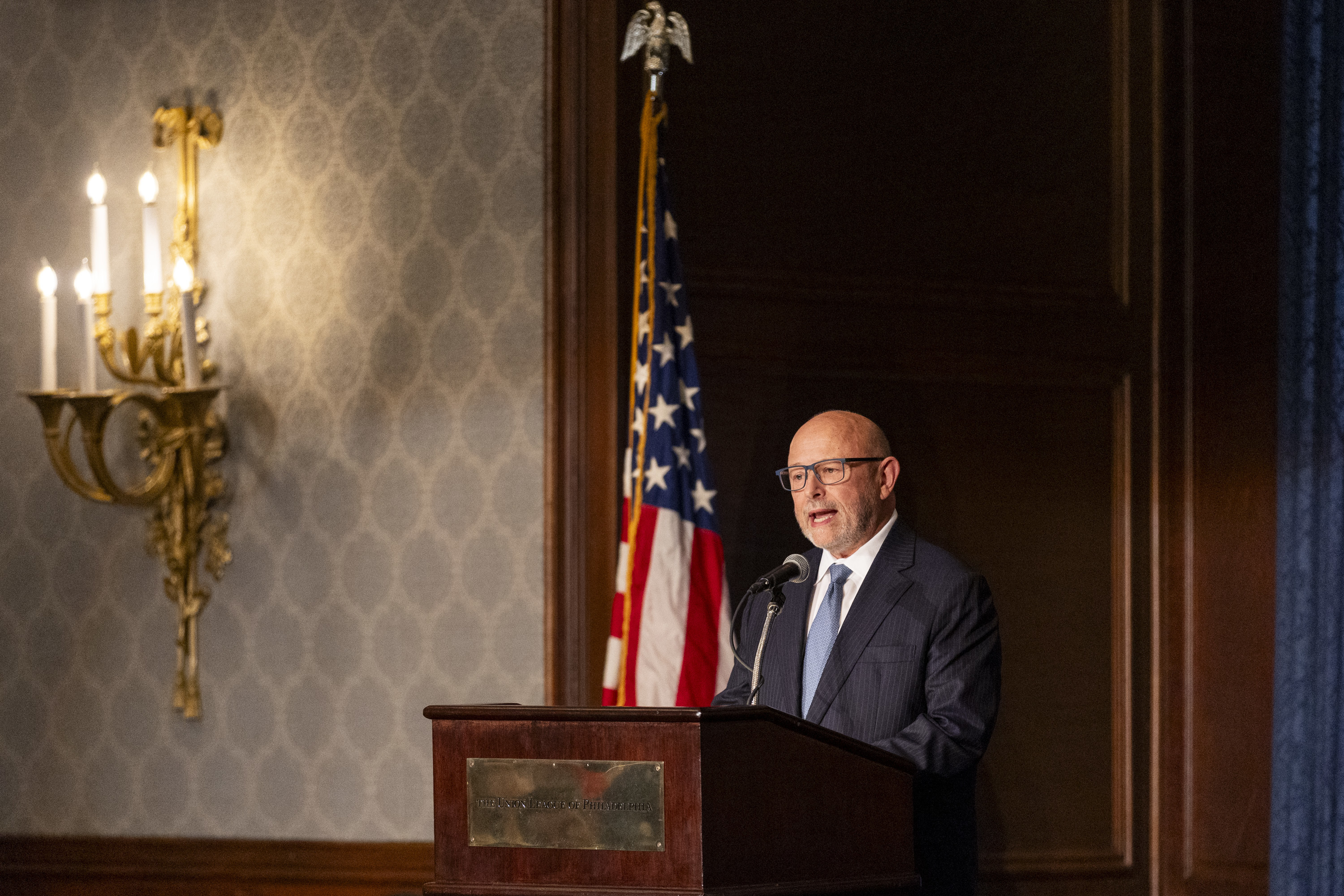
Gregory Segall, Chairman and CEO of Versa and Supporter of Mayor Parker, speaks at the Union League of Philadelphia Presidential Luncheon in Philadelphia, Pa., on Thursday, September 18, 2025.Tyger Williams / Staff Photographer
Citing Republican Party sources, Vargas reported that Segall was considering running for one of the two at-large seats on Council that are elected citywide and are set aside by the Home Rule Charter for minority-party or independent candidates.
Republicans held those seats for about seven decades until Councilmembers Kendra Brooks and Nicolas O’Rourke won them over the last two election cycles as members of the progressive Working Families Party.
Brooks is considering challenging Parker in next year’s mayoral election, sources previously told The Inquirer, which would require her to resign from her Council seat.
The Philly GOP has been strategizing ways to recapture the seats, and a run by Segall, a wealthy businessman who could potentially help fund his own campaign, could be a major opportunity for the party.
Segall donated $2,500 to the Republican City Committee last October.
GOP chair Vince Fenerty said he has met Segall and thinks he is a “nice and honorable man.”
“We’re a party that welcomes any potential candidate, and the decision to endorse would be up to our ward leaders,” Fenerty said in an interview Thursday.
Brian O’Neill, who represents the 10th District in Northeast Philadelphia, is currently the only Republican on Council. Democrats hold the remaining 14 seats.
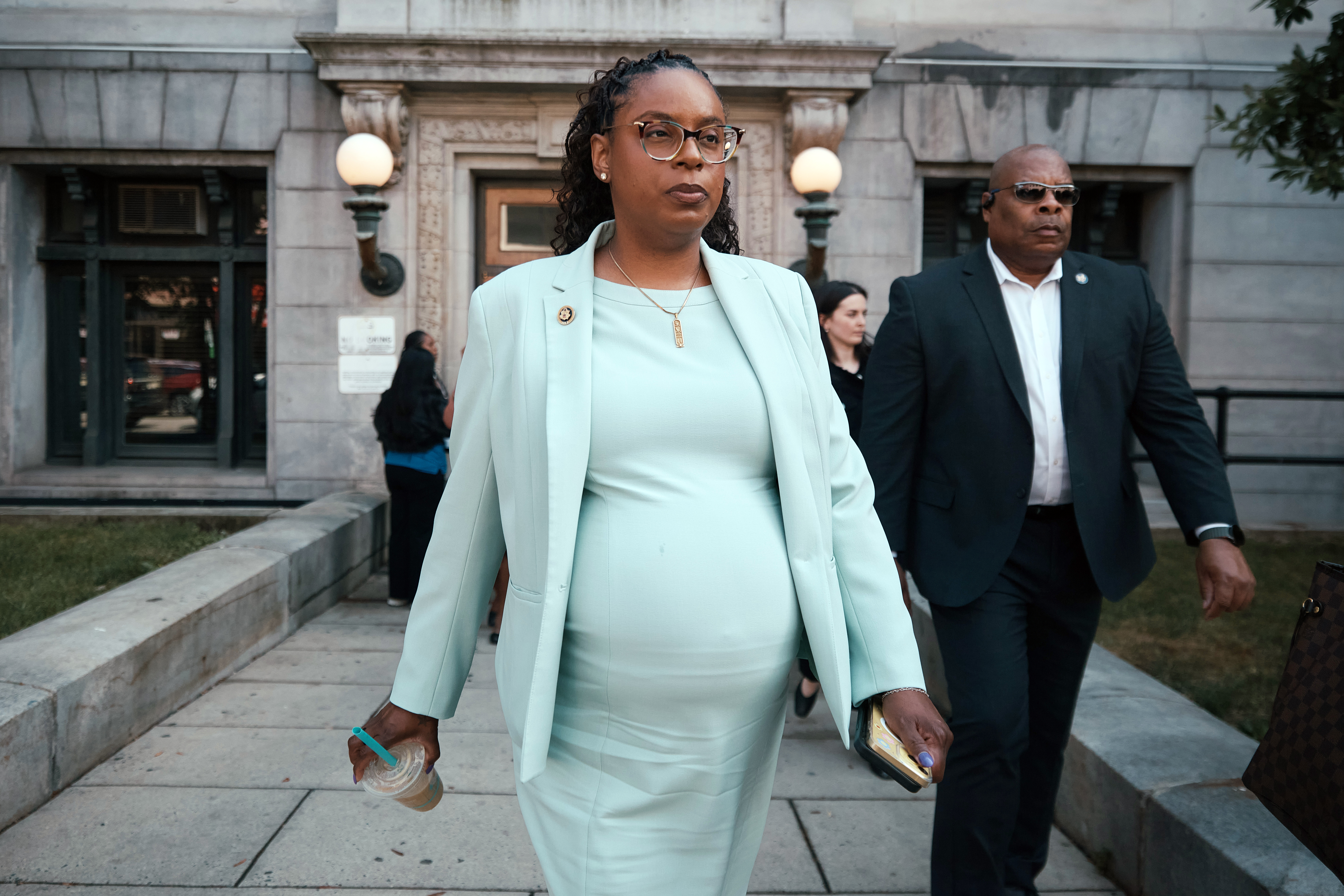
U.S. Rep. LaMonica McIver hasn’t put her life on hold to fight what she sees as totally unfounded charges by the Trump administration that she supposedly assaulted a U.S. Immigration and Customs Enforcement (ICE) officer during a protest last year.
Instead, the first-term Democratic congresswoman is expecting her second child next month, she’s up for reelection in November, and because of Congress’ backward policies on parental leave (as in, there are none), she continues to put in long hours representing New Jersey’s 10th Congressional District, which includes her hometown of Newark.
Lurking in the background, however, is the knowledge that if convicted on two charges of assaulting an ICE officer, she could be sentenced to as much as 17 years in prison.
It’s way more than most people in her situation could handle.
McIver’s inner strength is next level.
She is running for reelection on Nov. 3 while fighting efforts by the Trump administration to make an example out of her. McIver is also repping her constituents in Newark in Washington, D.C., all while caring for — and expanding — her family.
Her journey to motherhood hasn’t been easy. McIver, 40, has spoken openly about her yearslong struggles with fibroids, her use of in vitro fertilization (IVF), and her opposition to President Donald Trump’s merciless immigration enforcement campaign. She hopes her candor resonates with women who also are trying to balance career, pregnancy, and motherhood.
Meanwhile, she is scheduled to give birth to her second child on Oct. 16. After she delivers, McIver will become one of fewer than 20 members of Congress ever to have done so.
My jaw dropped during the interview in which McIver informed me that as a member of Congress, she isn’t entitled to maternity leave. Postpartum, McIver also won’t be able to cast votes for legislation remotely or by proxy.
“They give you nothing,” McIver said. “It makes no sense that you have to give birth and instead of focusing on healing and nursing, you have to literally put that to the side and share that with getting back to work. It’s honestly disgusting. It’s unbelievable in 2026 that this is where we are still at.”
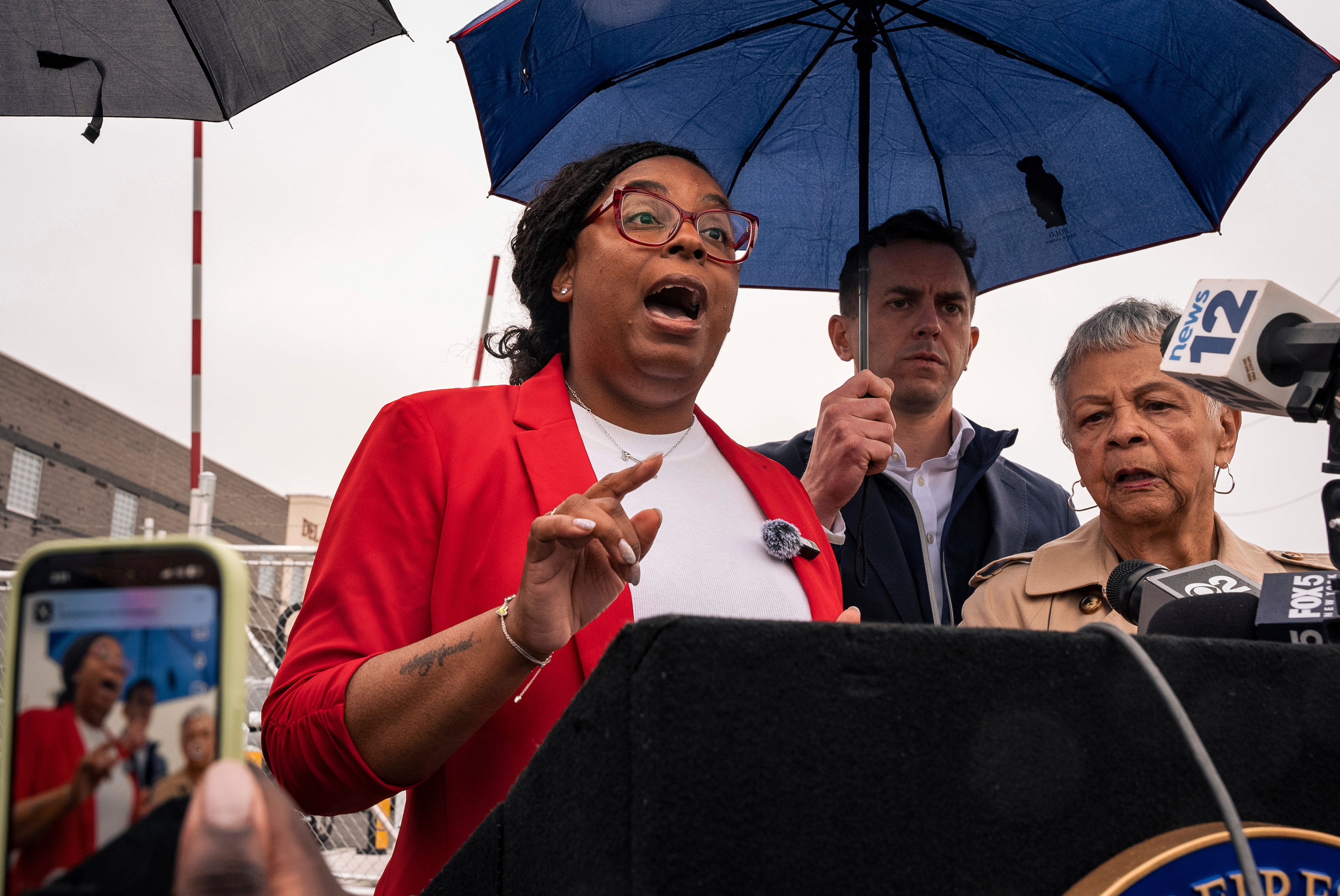
U.S. Rep. LaMonica McIver (D., N.J.) speaks to reporters after Newark Mayor Ras Baraka was arrested while protesting at the Delaney Hall ICE detention center in May 2025.Angelina Katsanis
Legislation that would have greatly helped her and other members of Congress in her position failed to garner adequate Republican support to pass last year. McIver blamed House Speaker Mike Johnson, among others, whom she said “don’t give a damn — and don’t want to make this a place that works for moms because they don’t want moms here.”
After the election on Nov. 3, McIver intends to immediately return to Washington and get back to work. Luckily, she will have help from her “great village” that includes her mother. “I’m a stickler about not missing votes,” McIver pointed out, adding, “There are so many things that Republicans are going to be trying to do.”
McIver, along with several other elected officials, had been attempting to inspect conditions at Delaney Hall, a 1,000-bed facility along an industrial stretch of land near Newark Liberty International Airport in May 2025 when a scuffle broke out.
McIver placed herself next to Newark Mayor Ras Baraka to shield him during the melee. I’ve watched the video numerous times. It doesn’t show her throwing a punch or striking anyone. No one was injured, either. But that didn’t stop Alina Habba, a former defenselawyer for Trump who briefly served as a U.S. attorney inNew Jersey, from filing assault charges against McIver.
McIverattempted to get the charges dismissed. In August, an appeals court ruled that McIver’s actions were nonlegislative and not protected by constitutional immunity, which clears the way for legal proceedings against her to proceed.
Glynda C. Carr, the founder of Higher Heights for America PAC, described what happened as a “flash point” of the anti-immigration detention center movement that future generations will read about in history books.
“This is bigger than LaMonica McIver,” Carr said, adding that the case could establish a baseline for whether elected officials will be permitted to conduct oversight of ICE detention centers without fear of prosecution.
As for McIver, I’m sure her case will be tied up in the courts until after Trump leaves office, and then thrown out once new people come into office. Meanwhile, becausemembers of Congress are prohibited from accepting pro bono legal work, McIver has to raise money to pay her legal bills, which are expected to exceed $1 million.
It’s a lot to juggle, along with being pregnant, serving as a member of Congress, and being under attack by a government hell-bent on making life more difficult for working women, especially African American women.
A collection of Philadelphia grassroots nonprofits are suing the umbrella organization that lost them hundreds of thousands of dollars from years of mismanagement and poor accounting.
The 18 small groups have sued the Federation of Neighborhood Centers, a nonprofit that helped them and other small organizations manage grants. FNC, which operated as a fiscal sponsor for more than 100 Philadelphia grassroots nonprofits, collapsed last year after it was unable to distribute money owed to the groups.
After years of poor recordkeeping and spending itself into a deficit, and in some cases using money designated for one group to pay another, the organization froze outgoing payments by the end of summer 2025and ceased operations by the end of the year.
Each of the 18 organizations says it held a positive cash balance with FNC at the time of its collapse. The fiscal sponsor lost more than $426,000 belonging to 24 groups, a third-party audit found. The suit claims the groups had to shut down or cut back operations as a result of the nonprofit’s financial mismanagement.
The fiscal sponsor’s then-CEO, Michael Harbison, resigned in August 2025. He did not have relevant experience in an executive, management, or financial accounting role, and “does not know why he was hired” as CEO, according to the complaint filed last week in Common Pleas Court.
The complaint alleges the Federation of Neighborhood Centers should have known about its financial challenges by early 2024, and did not have an adequate workforce to meet the demands of administering fiscal sponsorship services for over 100 small organizations.
The current CEO, Demir Moore, acknowledged the nonprofit had grown too quickly and took on more clients than it could handle without proper financial guardrails, the complaint said. The collapse of the fiscal sponsorship program was due to a “lapse of management,” Moore previously told The Inquirer, a comment that was quoted in the lawsuit. Moore also said the downfall was “absolutely not attributable to malfeasance or embezzlement.”
Participants listen to speakers during a February town hall for projects affected by FNC’s collapse.Yong Kim / Staff Photographer
Moore did not immediately respond to a request for comment, nor did the plaintiffs’ attorneys with Ballard Spahr.
As the Federation of Neighborhood Centers collapsed and froze operations, Social Impact Commons, an organization that supports fiscal sponsors, came in to conduct the financial audit. It also assisted the fiscal sponsorship program’s shutdown, including helping some grassroots organizations transition to new fiscal sponsors.
By the time it finished working with FNC in February, Social Impact Commons found 34 projects had gone to new fiscal sponsors or independent nonprofits, 39 were closed or defunct, and 31 had yet to transition. It’s unclear what has happened to those remaining projects since then, or if they have found any financial relief.
The 18 organizations suing FNC represent a wide range of missions, like improving food access, empowering underrepresented young filmmakers, supporting mothers who have lost children to violence, animal rescue, and more.
One in four likely Pennsylvania GOP voters has not heard of the state’s Republican candidate for governor, as Gov. Josh Shapiro continues to pull ahead with less than six weeks remaining until Election Day, according to a new poll.
According to the poll, Shapiro’s lead has now expanded beyond the advantage he held the month before the 2022 election against State Sen. Doug Mastriano (R., Franklin). Shapiro went on to beat Mastriano in that election by nearly 15 percentage points, or 800,000 votes — a drubbing that the GOP vowed not to repeat.
(function(){function e(){window.addEventListener(`message`,function(e){if(e.data[`datawrapper-height`]!==void 0){var t=document.querySelectorAll(`iframe`);for(var n in e.data[`datawrapper-height`])for(var r=0,i;i=t[r];r++)if(i.contentWindow===e.source){var a=e.data[`datawrapper-height`][n]+`px`;i.style.height=a}}})}e()})();
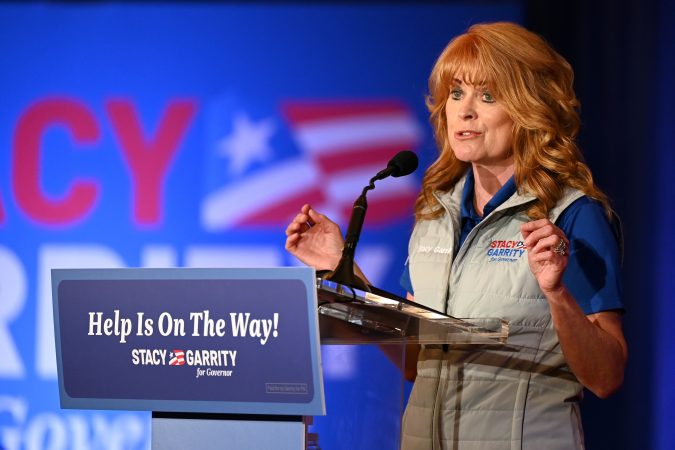
Pennsylvania Republicans endorsed Garrity in September 2025 — an unprecedented early nod to unify behind her in an effort to put up a stronger fight against Shapiro after the party largely withheld its support for far-right Mastriano. Garrity has won statewide twice and received the most votes in Pennsylvania history for a statewide office, a record previously held by Shapiro. In January, President Donald Trump endorsed Garrity, calling her “an America First Patriot.”
But building on that early enthusiasm has proven to be a challenge for Garrity, who for months has struggled to raise money, compete with Shapiro’s $60 million war chest, and gain name recognition in the critical battleground state where registered Democratic voters narrowly outnumber Republicans.
Garrity, 63, who entered politics in 2020 after a long career in the U.S. Army Reserve, raised only $1.8 million this summer and spent $1.5 million, according to her latest campaign finance filing, posted Tuesday. Shapiro raised $13.3 million during that time and spent $31 million.
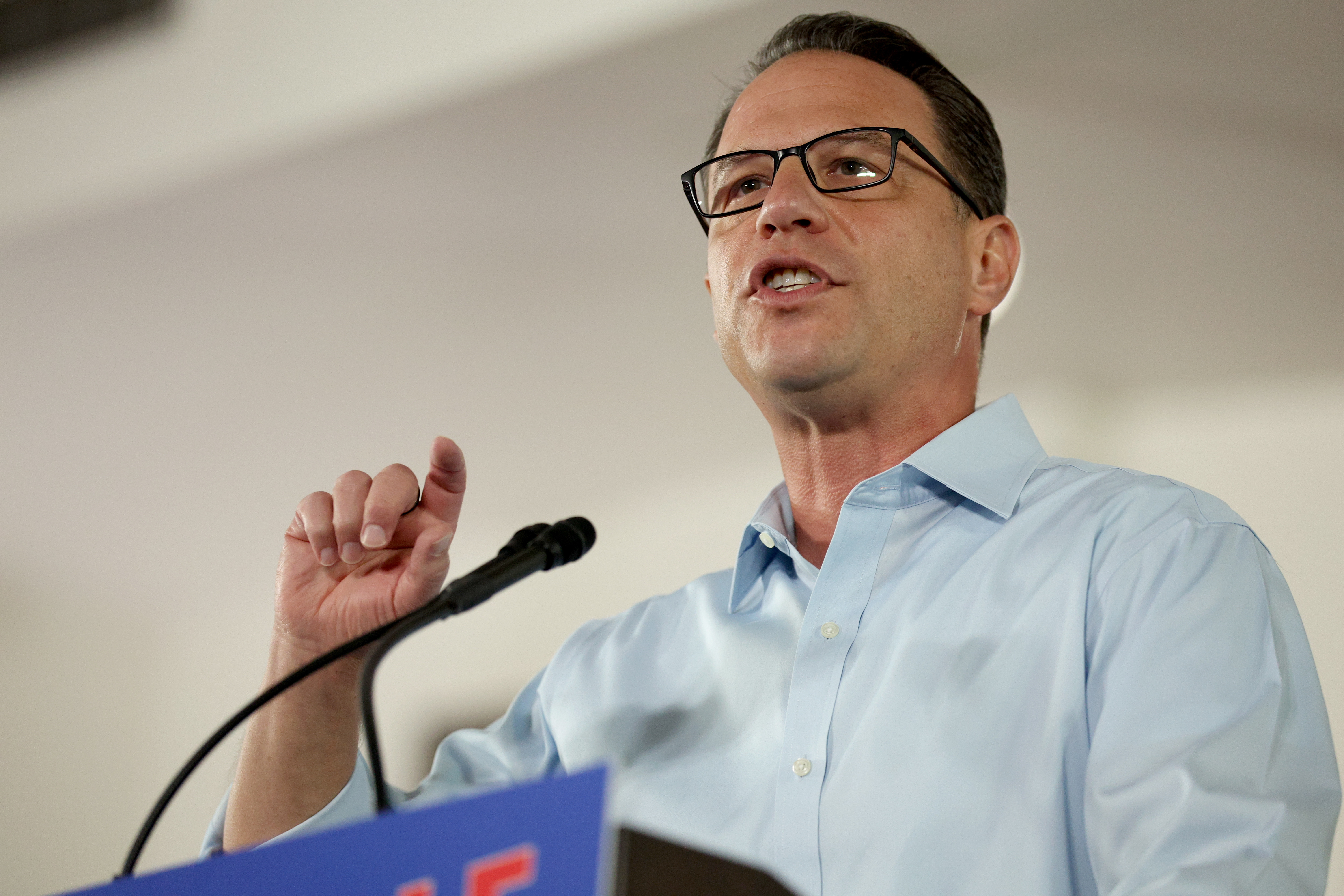
Gov. Josh Shapiro addresses the audience during a rally for congressional candidate Bob Brooks at the United Steelworkers Union Hall in Bethlehem, Pa. on Sunday, July 26, 2026.David Maialetti / Staff Photographer
And while Shapiro has dramatically increased his advertising spending on TV and streaming services to top $27 million this year, Garrity has spent a total of $744,000 on ads so far, according to media tracking firm AdImpact.
Both Shapiro and Garrity have released ads attacking each other for their past support for data center development, an increasingly unpopular issue among both Republicans and Democrats. Garrity’s ad criticizing Shapiro has been viewed about 802,000 times in the Philadelphia media market, according to AdImpact. Shapiro’s commercial labeling Garrity as “Pennsylvania’s number one fan of data centers” has been viewed 416 million times.
(function(){function e(){window.addEventListener(`message`,function(e){if(e.data[`datawrapper-height`]!==void 0){var t=document.querySelectorAll(`iframe`);for(var n in e.data[`datawrapper-height`])for(var r=0,i;i=t[r];r++)if(i.contentWindow===e.source){var a=e.data[`datawrapper-height`][n]+`px`;i.style.height=a}}})}e()})();
“Within the data right now, Josh Shapiro is a favorite son in the state of Pennsylvania, and they see him as doing a fantastic job,” said Don Levy, the director of the Siena Research Institute, which conducted the poll of 615 likely Pennsylvania voters from Sept. 15 to 21. “Barring double lightning bolts or a triple rainbow, he’s going to win.”
Garrity’s lack of campaign spending has allowed Shapiro to define her in the race, experts have said.
George Stanton, 77, a registered Republican from Lebanon County who participated in the poll, said he will support Garrity in November. He said Shapiro’s attack ad about Garrity’s past support for data centers, which he said he agrees with, helped him learn more about her positions.
Voters trust Shapiro more than Garrity on all of the top issues facing them, the poll found, including the state’s economy, the cost of living, data centers and artificial intelligence companies, and vaccine policy. In recent weeks, Shapiro has been embroiled in a battle with U.S. Health and Human Services Secretary Robert F. Kennedy Jr., whom he has blamed for spreading misinformation as Pennsylvania experienced a deadly measles outbreak. And at a summit in Pittsburgh last week, Shapiro called for more regulation of AI companies but said innovation of the technology should still be harnessed.
(function(){function e(){window.addEventListener(`message`,function(e){if(e.data[`datawrapper-height`]!==void 0){var t=document.querySelectorAll(`iframe`);for(var n in e.data[`datawrapper-height`])for(var r=0,i;i=t[r];r++)if(i.contentWindow===e.source){var a=e.data[`datawrapper-height`][n]+`px`;i.style.height=a}}})}e()})();
Scott Byers, 79, a Republican from Westmoreland County who supported Trump in 2024, is planning to vote for Shapiro this fall because “he just seems to be more in line with the public, with the feelings of his constituents.”
That includes Shapiro’s position on AI and data centers, which Byers believes should be more difficult to build. All he knows about Garrity’s views is what he catches on commercials — but it does not feel comprehensive, said Byers, who participated in the poll.
“I think technology in itself is going a bit beyond what is necessary. I feel that it’s hard to pinpoint, but I just feel that there’s too much emphasis on technology,” Byers said.
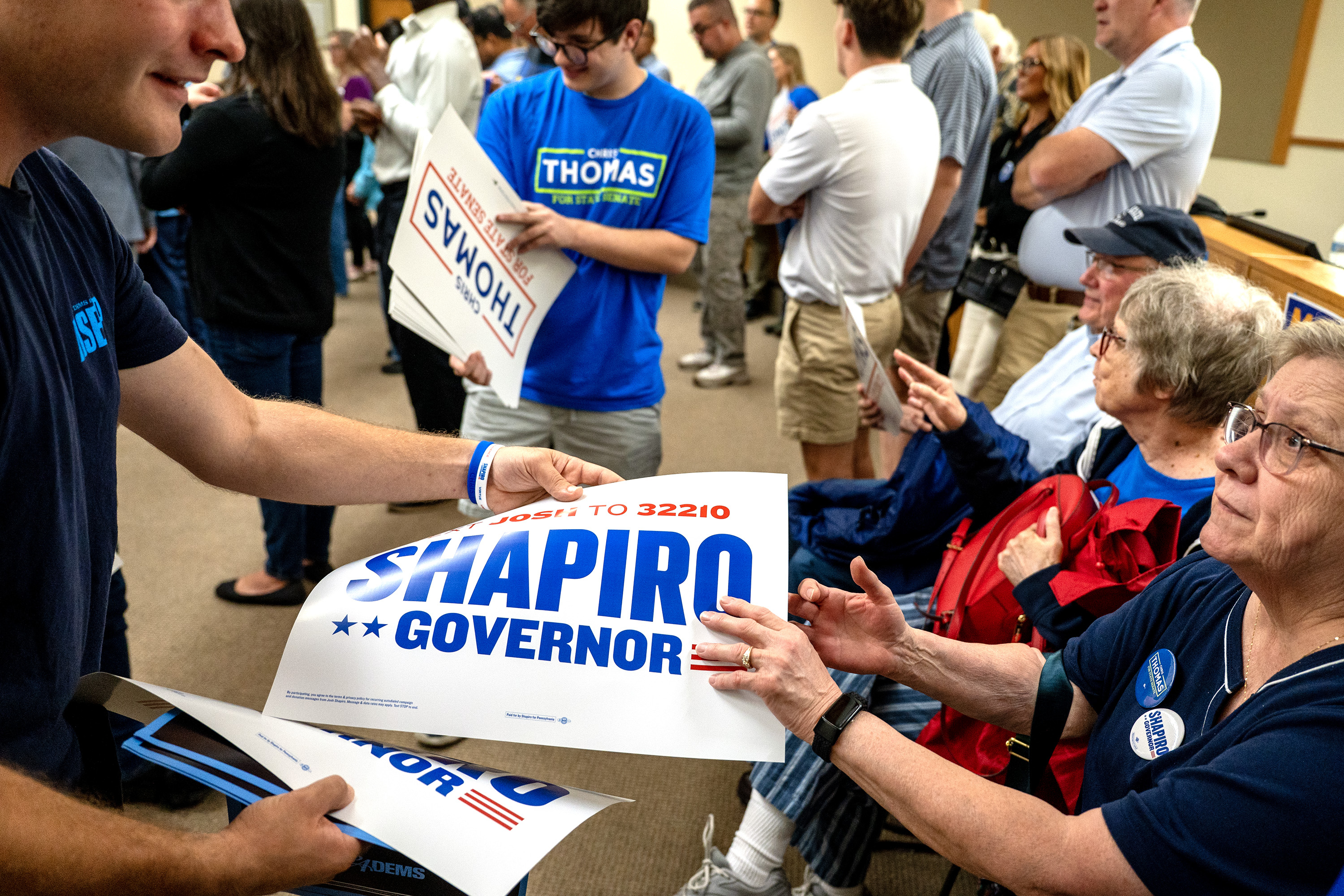
Campaign volunteers hand out signs to supporters of Gov. Josh Shapiro and Democratic Pa. Senate candidate Chris Thomas at a rally in Towamencin, Montgomery County before heading out to canvass on Sunday, Sept. 29, 2026.Tom Gralish / Staff Photographer
Approximately 60% of likely voters strongly approve or somewhat approve of the job Shapiro is doing as governor, according to the poll. That includes 30% of Republican voters, 89% of Democratic voters, and 59% of independents in the critical swing state where Shapiro maintains high popularity.
As a moderate politician, Shapiro has been able to capture most independent voters and even win over some Republicans, according to the poll.
Lesa Yeager, 63, considers herself an independent voter with centrist views who voted for a third-party candidate in the 2024 presidential election. She is an ardent union supporter and also thinks the nation should have a strong border. She said she trusts Garrity, as the state’s treasurer, to do a better job handling Pennsylvania’s economy.
But she is supporting Shapiro this November, in large part, because of his work on schools.
“I like that he’s very pro-education,” she said. “I am a fan of charter schools because I sent my kids to charter schools.”
Two of her children, now 35 and 37, benefited from smaller classroom sizes and adjustable curriculums, she said.
Yeager said she has also reached her limits with Trump’s behavior during his second term and believes Shapiro would continue to represent the state positively.
“I just think Trump is such a bully and so mean and just does whatever he wants, and I just want someone who isn’t that,” Yeager said.
She appreciates the Republicans who distance themselves from Trump. “But it’s tough to tell who is and who isn’t, a lot of times, and I would rather vote for someone I know isn’t going to support Trump on a lot of the things that he does,” she added.
Still, Garrity has found some backing among Pennsylvania’s electorate, though even some of those supporters say they don’t know much about her.
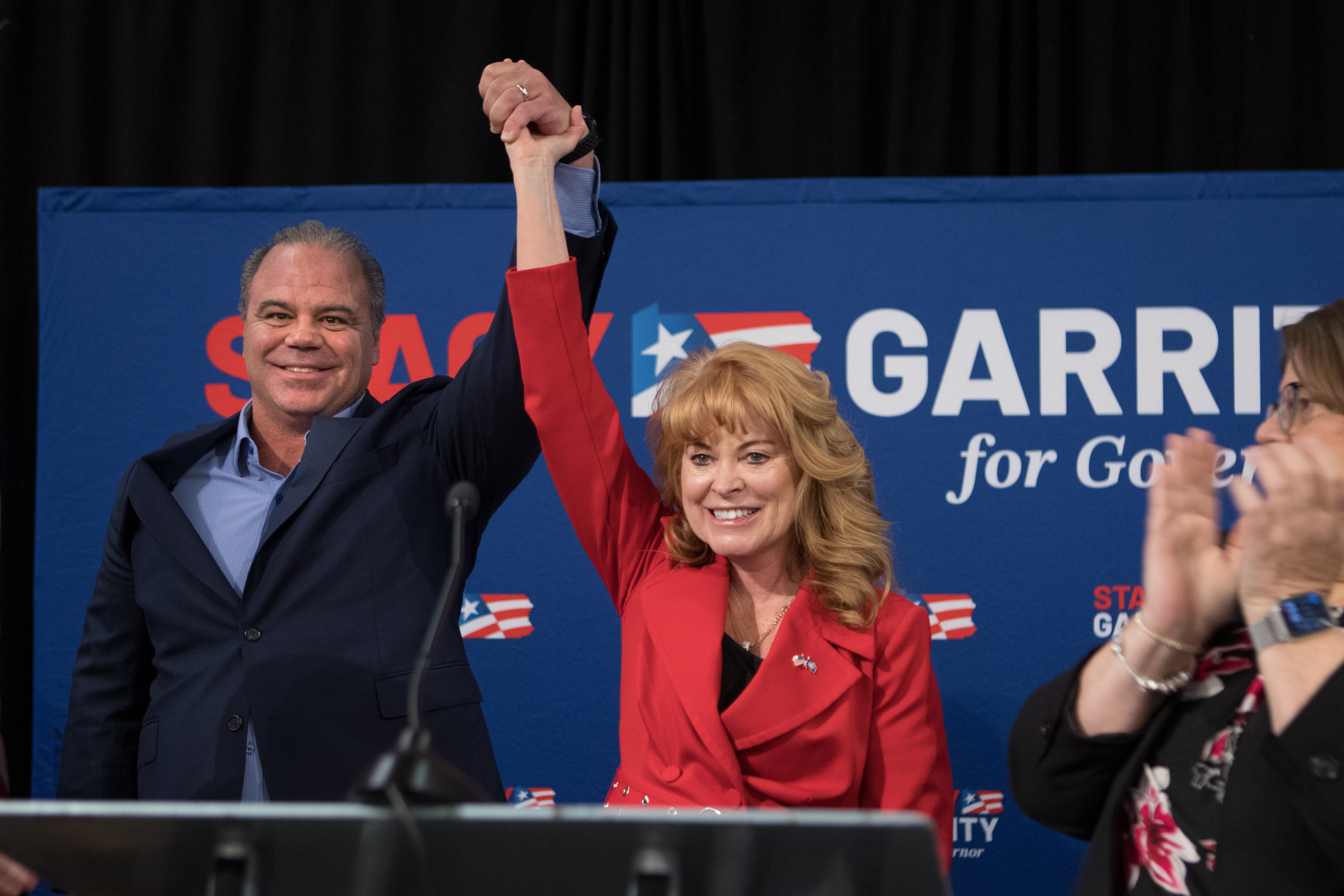
GOP gubernatorial nominee Stacy Garrity and her running mate Jason Richey hold up their arms in Harrisburg, Pa., Saturday, February 7, 2026. Kalim A. Bhatti / For The Inquirer
Susan Roller of Lancaster said she plans to vote for Garrity this fall because “she’s more responsible and will protect our freedoms.” Roller, who is retired, said she is particularly distressed about Shapiro’s positions supporting access to abortion and encouraging vaccines.
But as far as getting to know more about Garrity, Roller, 72, said she has not “seen a lot” of messaging on television about her.
In 2022, Shapiro did not participate in any debates while he maintained a double-digit lead over Mastriano, declining the Republican’s requests as an “unserious stunt.” Shapiro held a 13-percentage-point lead over Mastriano in a New York Times/Siena poll conducted that October — a closer margin than Shapiro’s lead over Garrity this year.
(function(){function e(){window.addEventListener(`message`,function(e){if(e.data[`datawrapper-height`]!==void 0){var t=document.querySelectorAll(`iframe`);for(var n in e.data[`datawrapper-height`])for(var r=0,i;i=t[r];r++)if(i.contentWindow===e.source){var a=e.data[`datawrapper-height`][n]+`px`;i.style.height=a}}})}e()})();
The 2022 midterm election was a much different political moment for Democrats, said Levy of the Siena Research Institute.
“That was a point in time when the Democratic star was on the decline,” he added. “Everything was a bit of a referendum on Democrats, on the job that [former President Joe] Biden was doing, how we were coming out of the pandemic.
“The overall political climate in which the ’26 election is taking place vs. ’22 is really kind of night and day,” Levy said.
Staff writers Joe Yerardi and Fallon Roth contributed to this article.
Pennsylvania voters are giving President Donald Trump worse grades on key economic issues than they did a month ago — a sign of a potentially dimming outlook for Republicans as the president asks voters to act as if he is on the ballot this fall.
Trump’s overall job-approval rating among likely voters in the state has dropped 5percentage points since Augustand now sits at 34%, with 63% disapproval, according to a new Inquirer/New York Times/Siena University poll published Thursday.
His handling of the economy and the cost of living, which consistently rank as voters’ top concerns this year, is viewed negatively by a larger share of his own Republican supporters and of voters in general than it was last month, according to the poll of 615 likely voters conducted from Sept. 15 to 21.
Gas prices are Trump’s worst-performing issue amongall Pennsylvania voters and among those who voted for the president in 2024, when he won the swing state by nearly 2 percentage points.
That includes Robert Jenkins, 47, of East Stroudsburg, who said Trump is now running the country like a “cowboy” and has not lived up to the promises he made to bring down prices.
(function(){function e(){window.addEventListener(`message`,function(e){if(e.data[`datawrapper-height`]!==void 0){var t=document.querySelectorAll(`iframe`);for(var n in e.data[`datawrapper-height`])for(var r=0,i;i=t[r];r++)if(i.contentWindow===e.source){var a=e.data[`datawrapper-height`][n]+`px`;i.style.height=a}}})}e()})();
And with rising gas prices, the Republican is just thankful that his truck does not run on diesel.
“Now we’re at like $4.35, $4.40, and I just don’t understand it. I know we’re having the thing with Iran, but I didn’t ever feel in my life that we were that dependent on Iranian oil,” said Jenkins, who works in the registrar’s office at East Stroudsburg University.
As both parties go all-out to motivate their bases — especially in Pennsylvania, where four key races could determine control of the U.S. House — Democrats clearly have an enthusiasm advantage fueled by a backlash to Trump’s agenda.
Just under six weeks out from Election Day, about two-thirds of likely Democratic voters are “very enthusiastic” to cast their ballots, while just half of Republican voters say they feel the same way.
Alex Hansen, 35, a pharmacist and Democrat from Bucks County, said the midterms have become a “referendum” on the Trump administration.
“The things he’s said and done are just so beyond the pale and unacceptable. … I don’t think it should have to be a public referendum on the federal administration, but that’s what it’s become,” said Hansen, who participated in the survey.
(function(){function e(){window.addEventListener(`message`,function(e){if(e.data[`datawrapper-height`]!==void 0){var t=document.querySelectorAll(`iframe`);for(var n in e.data[`datawrapper-height`])for(var r=0,i;i=t[r];r++)if(i.contentWindow===e.source){var a=e.data[`datawrapper-height`][n]+`px`;i.style.height=a}}})}e()})();
Will voters punish Republicans for Trump’s agenda?
As Democrats look to win control of the U.S. House, they are targeting Trump’s handling of affordability issues specifically — mostly highlighting rising inflation and spiking gas prices due to the war in Iran.
Just 24% of voters approve and 73% disapprove of his handling of prices at the pump, the poll found. Half of Pennsylvania voters who cast their ballots for Trump in 2024 also disapprove.
Don Levy, the director of the Siena Research Institute, said as Trump’s approval rating continues to decline, he expects more GOP politicians running in competitive swing districts to distance themselves from the president.
“There’s tremendous frustration with the president,” Levy added.
Republican candidates have largely avoided talking about gas prices, highlighting instead the tax cuts and other economic policies the GOP-controlled Congress and White House haveenacted in the last two years.
A bipartisan Ratepayer Protection Act ushered through the House by Republican leaders last week, for instance, aims to prevent data centers from passing on energy costs to consumers. The National Republican Campaign Committee called it a “huge step” in statements praising Pennsylvania Republican lawmakers’ votes for the bill,which has yet to pass the Senate and might not do so before the election.
On the economy overall, Trump gets positive ratings from just 34% of all voters and 75% of self-identified Republicans — which is less than the 39% and 81% he got, respectively, in August.
Onthecost of living,25% of all voters and 62% of Republicans give him positive marks, an 8-percentage-point drop for all voters and an 11-point drop for Republicans from a month ago. At the same time, his positive approvals around immigration and the war in Iran, at 42% and 31%, respectively, have remained about the same.
(function(){function e(){window.addEventListener(`message`,function(e){if(e.data[`datawrapper-height`]!==void 0){var t=document.querySelectorAll(`iframe`);for(var n in e.data[`datawrapper-height`])for(var r=0,i;i=t[r];r++)if(i.contentWindow===e.source){var a=e.data[`datawrapper-height`][n]+`px`;i.style.height=a}}})}e()})();
Pennsylvania Republicans may now have to grapple with that reality at the ballot box.
They are defending four competitive districts out of Pennsylvania’s 17 U.S. House seats. And three are running for reelection in what independent election experts consider some of the few “toss-up” races nationwide — U.S. Rep. Ryan Mackenzie, in the Lehigh Valley and Poconos; U.S. Rep. Rob Bresnahan, in a Scranton-based Northeast Pennsylvania region; and U.S. Rep. Scott Perry, in a Harrisburg-based district.
U.S. Rep. Brian Fitzpatrick, a Republican facing a challenge from Democratic Bucks County Commissioner Bob Harvie, is also in a competitive race drawing national attention.
The vulnerable Republicans have taken different approaches. Mackenzie and Bresnahan spoke at the first-ever GOP convention in Dallas earlier this month, when Trump pleaded with his supporters to turn out as if he was also on the ballot. Perry, a staunch Trump ally, also attended.
U.S. Rep Brian Fitzpatrick (R., Bucks) and his Democratic challenger Bob Harvie (third from right) attend the Garden of Reflection remembrance ceremonies Friday, September 11, 2026 at Garden of Reflection in Yardley, Pennsylvania.William Thomas Cain / For The Inquirer
But how Trump’s approval ratings — and the fact that 56% of likely voters want to see Democrats control the House — factor into those races remains to be seen.
Jenkins, the East Stroudsburg Republican, said Trump’s handling of the economy will not affect his vote for Bresnahan because the lawmaker has regularly shown up to the events he leads at a veterans’ association in Monroe County.
Hansen, the Democratic voter from Bucks County, said he is leaning toward voting for Fitzpatrick in the 1st Congressional District race, but he said he could be open to picking Harvie once he learns more about the candidate’s priorities and “what he plans to do to oppose his Republican colleagues and Trump’s agenda.”
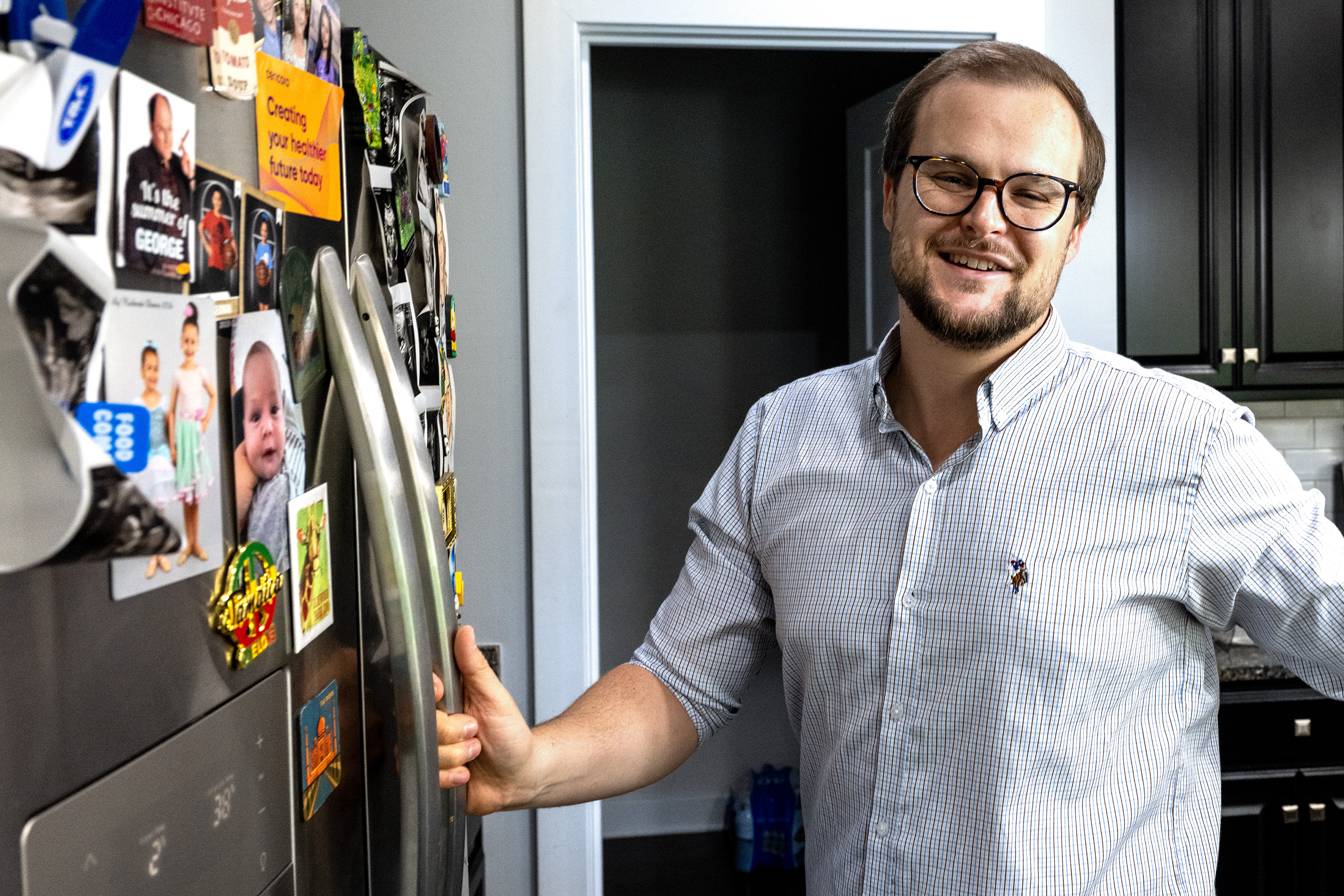
The pharmacist said he and his wife, who was laid off three months ago, are tightening their purse strings to deal with rising costs as they care for their young child and another on the way.
But he said he does not view Fitzpatrick as being totally roped into Trump’s negative perception.
The Bucks County lawmaker is the least loyal House Republican to the president and the GOP, but he has still voted with Trump and his party nearly 70% and 77% of the time, respectively, this term, a recent Inquirer analysis found.
“Fitzpatrick has put up at least a little bit of resistance, which is better than, you know, a lot of the sock puppets that Republicans have right now in Congress,” Hansen said.
Alex Hansen at his Bucks County home Tuesday, Sept. 22, 2026. He is one of the voters who participated in an Inquirer/New York Times/Siena University poll that showed dissatisfaction with President Donald Trump. Tom Gralish / Staff Photographer
How affordability became No. 1 for Democrats this fall
In the final weeks before the midterm elections, Harvie’s campaign plans to keep tying Fitzpatrick to the affordability crisis. That includes highlighting the Republican lawmaker’s vote to advance the One Big Beautiful Bill Act in the House(before voting against its final passage weeks later) — but also not necessarily aligning him with Trump.
“It is really about pointing out what Brian Fitzpatrick has done, the votes he’s taken, and how those votes have affected people in this district,” Harvie said in an interview with The Inquirer Editorial Board on Tuesday.
“Now, are they Trump priorities, too? They are, sure, but it’s not necessarily just hanging Trump around his neck. He’s kind of done that to himself.”
Harvie and his counterparts in the other swing districts are zeroing in on cost-of-living issues amid voters’ plummeting dissatisfaction with Trump’s handling of the economy.
Janelle Stelson, a former local TV reporter running against Perry, highlighted the cost of a cheeseburger in a recent ad that referred to Perry’s support of Trump’s tariffs and a separate proposal that would eliminate income and other taxes in favor of a national sales tax. The average cost of a pound of ground beef, which she pegged at $7.29, is more than the $7.25 federal minimum wage.
Stelson’s campaign said in a statement that Perry “has made life more expensive for Central Pennsylvanians, voting to raise the price of utilities, gas, and housing while gutting benefits for working people.”
In a statement, Perry said his platform on affordability includes eliminating taxes on tips, overtime, and Social Security. Perry also said he supports reducing electricity costs and raising child tax credits.
“We draw a strong contrast with our opponent on the kitchen table economic issues that are front and center with Voters,” Perry wrote in the statement,which also disputed Stelson’s ties in the district.
Spokespersons for Fitzpatrick and Bresnahan did not respond to a request for comment.
Paige Cognetti, the Democratic mayor of Scranton, who is running against Bresnahan, has contrasted Northeastern Pennsylvania voters’ struggles with rising costs against Bresnahan’s personal wealth and stock-trading while in office.
“While Rob’s cashing in, NEPA families are paying the price. His corruption is costing us and that’s why he will lose in November,” a Cognetti spokesperson said while noting “record diesel prices, cost-raising tariffs, and sky-high healthcare premiums.”
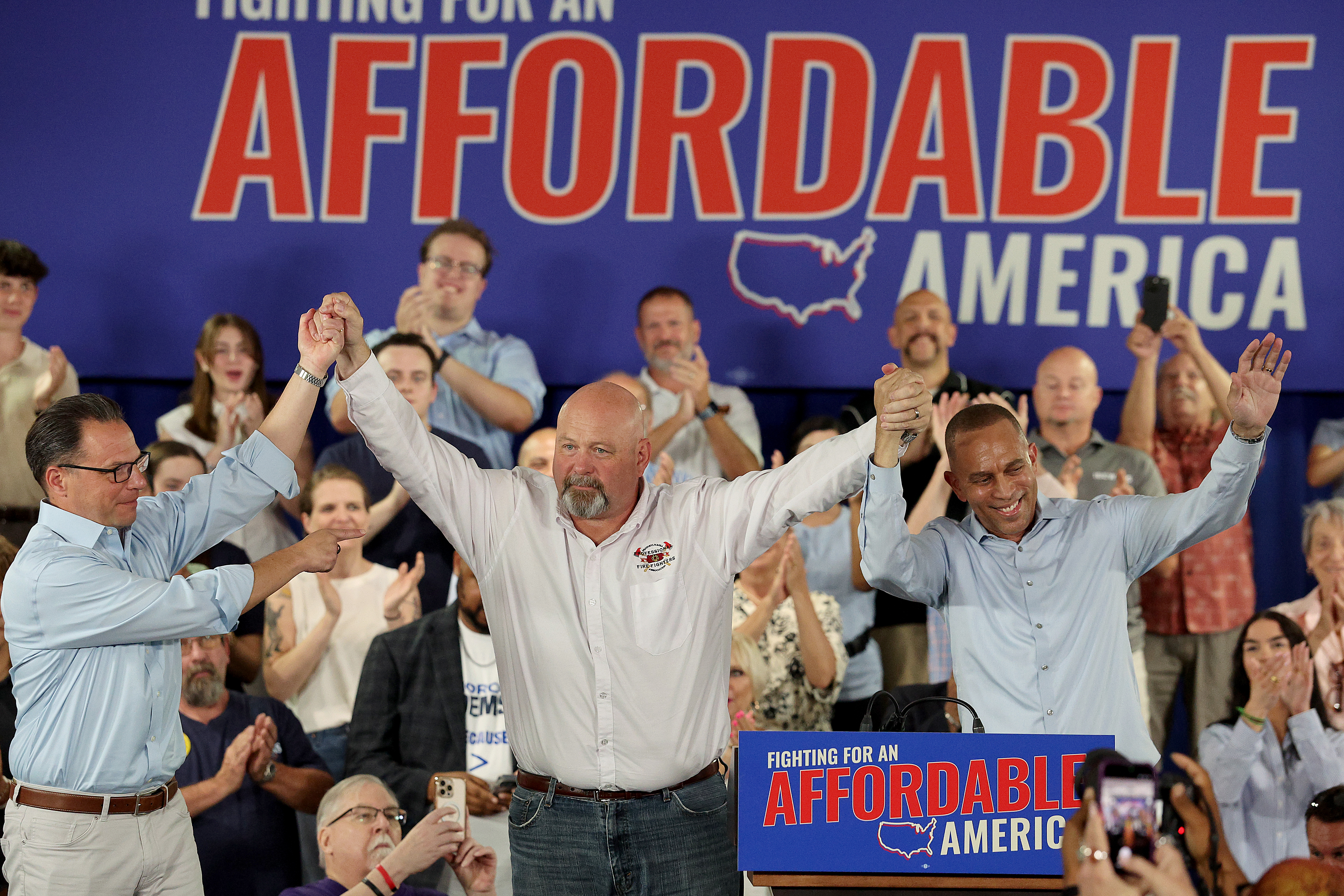
Governor Josh Shapiro (left) and Minority Leader Hakeem Jeffries (right) pose after rally for Congressional candidate Bob Brooks (center) at the United Steelworkers Union Hall in Bethlehem, Pa. on Sunday, July 26, 2026.David Maialetti / Staff Photographer
In Mackenzie’s district — where the freshman Republican squeaked through one of the narrowest races in the country two years ago — Ronalyn Birnbaum of Carbon County said she has been working since she was 13 years old. Now, at 69, she said, she has come to terms with not having the money to retire and afford groceries, Medicare, and her inhaler.
“I’m going to give [Brooks] a shot only because I know that Ryan Mackenzie sticks up for a lot of the Trump policies and procedures,” said Birnbaum, a Democrat.
Andres Weller, Mackenzie’s campaign manager, criticized Brooks’ platform in a statement and said Mackenzie favors “commonsense reforms” and is “running on his bipartisan record of delivering for our community.”
Benny Stanislawski, a Brooks campaign spokesperson, said in a statement that the Democrat is “running to bring costs down for working families Mackenzie has left behind,” including through the Republicans’ vote for the One Big Beautiful Bill.
As Democrats’ messaging appears to gain traction, 53%of respondents in The Inquirer/New York Times/Siena poll said they would be more likely to vote for the Democratic candidate in their congressional district, while 44% said they would choose the Republican. The poll did not ask about specific races.
Both parties still have work to do on their brands. A majority of likely voters see each party as focused on the wrong things — 51% for Democrats and 59% for Republicans.
Birnbaum said the problems she hopes voters can address at the ballot box — like the cost of living — have been a long time coming.
“This country should have been fixed a long time ago, but nobody seemed to care, and we’re finding that with the infrastructure here in this country, too,” Birnbaum said. “Nobody thought about these things. They thought about themselves, I guess.”
Staff writers Gillian McGoldrick and Joe Yerardi contributed to this article.
Clarification: This story has been updated to clarify the reference to a proposed national sales tax in Janelle Stelson’s ad attacking U.S. Rep. Scott Perry.
A majority of Pennsylvania voters view U.S. Sen. John Fetterman (D., Pa.) more as a Republican than a Democrat as he continues to heavily criticize his party and side with President Donald Trump in some major policy areas, according to an Inquirer/New York Times/Siena University poll published Thursday.
For the first time in polling conducted by Siena University on behalf of The Inquirer and the New York Times, a plurality of likely voters in the state have a negative view of Fetterman.
The senator is viewed “somewhat” or “very” unfavorably by 47% of voters and favorably by 42%, according to the poll of 615 likely voters from Sept. 15 to 21. That’s an 11-percentage-point swing since the organizations’ poll in August found Fetterman maintained an overall positive favorability rating.
Four years after he flipped a Republican-held seat with a promise to be Democrats’ 51st vote in the Senate, just 26% of likely voters consider Fetterman as more of a Democrat than a Republican, the poll found.
A majority — 57% — view him as more of a Republican.
(function(){function e(){window.addEventListener(`message`,function(e){if(e.data[`datawrapper-height`]!==void 0){var t=document.querySelectorAll(`iframe`);for(var n in e.data[`datawrapper-height`])for(var r=0,i;i=t[r];r++)if(i.contentWindow===e.source){var a=e.data[`datawrapper-height`][n]+`px`;i.style.height=a}}})}e()})();
“He insists that he’s not going to be changing parties. However, a lot of people are afraid of that because of the way he has voted,” said Sandra Boyles, a retired teacher and Democrat in Fayette City who believes “a lot of people feel betrayed” by the senator.
Nearly three-quarters of Democrats see Fetterman as a Republican. And roughly half of Republicans feel the same way, as do a similar proportion of independents.
Fetterman’s party loyalty has become a pressing question — not just for his own political future, but also for which party controls the U.S. Senate during the final two years of Trump’s presidency.
Democrats need to win at least four competitive Senate races in Trump-friendly states to win the majority, an uphill battle that has seemed like more of a possibility in recent weeks as the president’s popularity lags.
Independent election experts consider Democrats to have a real chance of winning states like Texas, Iowa, and Alaska. Ohio, North Carolina and Maine are also official Democratic targets. Even Kansas, which Trump won by 16 percentage points in 2024, appeared to raise some level of concern for Republicans when Vice President JD Vance tried to boost the GOP incumbent this month.
Neither of Pennsylvania’s U.S. Senate seats is on the ballot this fall. But if Democrats retake the majority by one or two votes, Fetterman’s role as a wild card — even one who votes with Democrats the vast majority of the time — could have an impact as his party tries to rein in or reverse the president’s agenda.
“That would definitely be a concern of mine,” said Boyles, 74.
(function(){function e(){window.addEventListener(`message`,function(e){if(e.data[`datawrapper-height`]!==void 0){var t=document.querySelectorAll(`iframe`);for(var n in e.data[`datawrapper-height`])for(var r=0,i;i=t[r];r++)if(i.contentWindow===e.source){var a=e.data[`datawrapper-height`][n]+`px`;i.style.height=a}}})}e()})();
Fetterman has not said whether he will seek a second term in 2028, and he has repeatedly rejected the idea that he would switch parties.
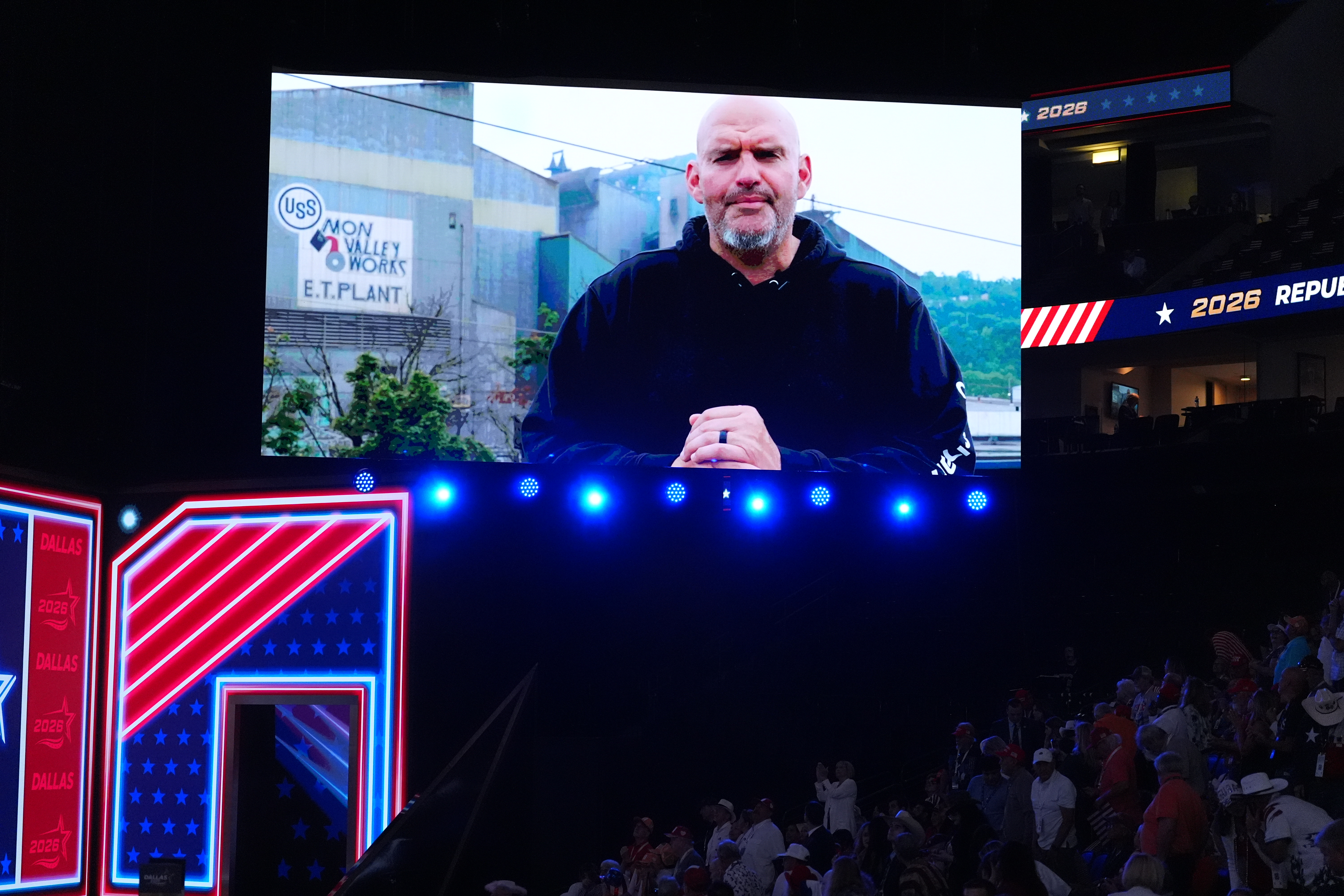
“I’m a lifelong Democrat who votes overwhelmingly with my party — and should the Senate flip in November, I will still be the 51st vote that I ran on,” he said in a statement while facing a new round of criticism for appearing by video at the GOP convention in Dallas this month.
Pennsylvania’s U.S. Senators John Fetterman (left) and Dave McCormick appear together on June 29 to promote the savings accounts for kids that were a signature piece of President Trump’s One Big Beautiful Bill Act.Tom Gralish / Staff Photographer
Fetterman’s Democratic colleagues have tried to keep him in the fold.
U.S. Sen. Kirsten Gillibrand, a New York Democrat and chair of the Democratic Senatorial Campaign Committee, said this week that Fetterman is a “very reliable Democratic vote.” As she leads her party’s effort to win the Senate races,Gillibrand said, she does not have, nor has heard others having, concerns about Fetterman’s role in a slim Democratic majority.
“I’m very grateful that Sen. Fetterman is serving in the U.S. Senate as a Democrat, and I think he will continue to do so,” Gillibrand said.
Still, Fetterman has supported parts of Trump’s immigration enforcement agenda, the war in Iran, and some of the president’s nominees. Senate Democratic leaders would likely try to act as a check on Trump in each of those areas if they win the majority for the next two years.
Fetterman has also left the door open to leaving the Democratic Party if it makes opposition to Israel an official party stance. The senator has not explained exactly what that situation would look like, though he has been highly critical of Democrats when they push back against the Israeli government’s war against Hamas.
With the three-year anniversary of the conflict approaching on Oct. 7, more than 70,000 Palestinians have been killed and nearly all Gazans have been displaced, according to the Council on Foreign Relations. Critics say Israel’s military response has been excessive, while Fetterman has said he supports the war in order to root out Hamas fighters who initiated the war by killing more than 1,200 people in Israel in a terrorist attack.
The latest poll of Pennsylvania voters shows Fetterman’s position is out of step with a majority of voters.
Among Pennsylvania likely voters, 60% are against the U.S. providing additional economic and military support to Israel, compared with 34% who support it.
Four in five Democrats, and about a third of Republicans, oppose the aid to Israel. In a sign that Fetterman would face a challenging reelection campaign, 63% of Democrats said they would support a candidate who opposed aid to Israel.
(function(){function e(){window.addEventListener(`message`,function(e){if(e.data[`datawrapper-height`]!==void 0){var t=document.querySelectorAll(`iframe`);for(var n in e.data[`datawrapper-height`])for(var r=0,i;i=t[r];r++)if(i.contentWindow===e.source){var a=e.data[`datawrapper-height`][n]+`px`;i.style.height=a}}})}e()})();
Victor Oyola, 47, of Philadelphia, said he considers himself a conservative Democrat and has no issues with politicians supporting Israel’s right to exist. But Fetterman has been more of a voice for the foreign nation than for his home state, he said, while also showing limited interest in other aspects of his position.
“You don’t want to do the job, but you’re strongly supporting Israel over Pennsylvania?” said Oyola, who works in retirement management. “Everything is Israel, Israel, Israel. But what about Pennsylvania, Pennsylvania, Pennsylvania?”
Reports of Fetterman’s lack of interest in doing routine aspects of his job as a senator also appear to have played a role in how Pennsylvanians view him.
In a widely circulated story earlier this month, the Wall Street Journal reported that Fetterman tried to evade meetings with leaders at Children’s Hospital of Philadelphia and with wounded veterans, as well as a funeral for three York County police officers who were killed while on duty.
Donald Harer, a Democrat from Northumberland who voted for Fetterman in 2022, said that he saw the story and that it seemed like the senator has “really not held his end of the bargain and done his job the way he’s supposed to.”
As an Army veteran who served in Iraq, Harer said, he was particularly disappointed in Fetterman’s reported refusal to meet with wounded veterans.
“When he campaigned, when he first started to run, he seemed like a go-getter,” said Harer, an operations manager for a grocerystore. “But he let a lot of people down. I kind of call him a traitor.”
Don Levy, the director of the Siena Research Institute, which conducted the poll, said he did not know if changes in Fetterman’s favorability ratings since last month could be attributed to the recent national attention on him.
But with recent polls continuing to show Fetterman’s widespread cross-party support, his position as a Democratic darling for the GOP and antagonist for Democrats “looks pretty baked in,” Levy said.
“The Republicans have now grown in their favorability for him, which may be a reflection of them starting to feel like ‘he’s one of us,’” Levy added. “And Democrats are even more upset with him for moving away from what they believe they elected him to do.”
Staff writers Joe Yerardi and Gillian McGoldrick contributed to this article.
Geisinger Health expects to lose more than $180 million in revenue next year when deep cuts to Medicaid start impacting the nonprofit health system with 10 hospitals in a largely rural stretch of central and northeastern Pennsylvania.
The Rural Health Transformation Program — meant to soften the blows from the cuts imposed by Congress under Republican’sso-called “One Big, Beautiful Bill Act” or H.R. 1 — offers limited relief.Geisinger expects to collect $6.7 million of the $193 million allotted to Pennsylvania.
“It’s given us some money for some critical infrastructure that we need,” such as a CT scanner or an MRI machine for hospitals that serve rural counties, CEO Terry Gilliland said in an interview last month.
But much of the money being distributed through the Rural Health Transformation Program, or RHTP, isn’t going to help rural hospitals because it wasn’t designed to do that. No more than 15% of the funding can be used to reimburse providers for healthcare services.
That has left Geisinger, which is owned by California-based Kaiser Health, in a tough spot: “H.R. 1 is taking a big old chunk out of our hide, and there’s just no way for RHTP to fill the hole,” he said.
Nationally, $911 billion in Medicaid cuts are anticipated over a decade, with $137 billion is expected to come from rural areas, according to KFF, a nonprofit that researches health policy. KFF’s analysis did not provide state estimates for rural losses.
The Rural Health Transformation Fund totals $50 billion over five years. Pennsylvania would receive $965 million if it were to get the same amount each year as it did this year. Philadelphia-area health systems haven’t received money from the fund yet, but could participate in the future through projects that benefit rural Pennsylvania.
Where the money is going
The rural health fund is an incomplete response to the revenue hole created by H.R. 1, said Katherine Hempstead, a senior policy officer at the Robert Wood Johnson Foundation, a Princeton-based philanthropy focused on healthcare advocacy and research.
“It is mostly targeted to upstream projects designed to make rural healthcare more efficient in the long run. They may or may not be successful,” she said.
All but $2 million went to technology and infrastructure projects, including critical needs like new roofs, HVAC systems, elevator repairs, and the repair of a collapsed sewer line.
On the technology side, new imaging equipment was popular in the first funding round.
With $3.7 million from that round, Geisinger got a new X-ray machine for its Bloomsburg hospital, new CT units for Jersey Shore and Lewisburg hospitals, and an upgraded compounding pharmacy for its flagship hospital in Danville.
Geisinger applied for $3 million from a forthcoming second round and plans to use the money for a special EMS vehicle, transport vans for senior care, telehealth equipment, and other capital equipment, if it is approved.
In addition to technology and infrastructure, Pennsylvania is focusing the rural funding on workforce development, maternal health services, behavioral health services, aging and access, and emergency medical services and transportation.
Geisinger’s approach to filling its financial hole
Geisinger’s estimated $180 million revenue loss next year has three main drivers. They are limits on how much federal money the state can generate through provider taxes, changes to the supplemental payments for hospitals with large numbers of Medicaid patients, and an increase in the uninsured population caused by new Medicaid enrollment rules.
In 2025, Geisinger had about $10 billion in revenue. That’s up from $7.7 billion in 2023, that last full year before it became part of Risant Health, a new nonprofit created by Kaiser in 2023 to acquire community health systems.
Already this year, Geisinger has seen a $10 million a month increase in charity care and bad debt write-offs, Gilliland said, which he attributed to people not being able to afford individual Affordable Care Act plans after the enhanced tax subsidies expired.
“How many more of these hits can I take? The answer is not very many,” Gilliland said.
The health system is focused on becoming more efficient.
“There’s some optimism that says we could find some way to have artificial intelligence do some of the tasks that we typically throw humans at,” Gilliland said.
He hopes to avoid want layoffs, given that Geisinger is often the largest employer in its communities.
“I’d really like to figure out ways to fill the hole without having people lose their jobs because that has a much more devastating impact on the local economy,” he said.
A whistleblower lawsuit accuses Gov. Josh Shapiro’s administration of bypassing procurement requirements meant to safeguard the use of taxpayer dollars, including during renovations to the governor’s mansion, and firing a staffer who had raised concerns.
The administration waived competitive bid requirements after purchases were made, split transactions to bypass the threshold requiring a bidding process, and kept paying a security contractor who no longer provided service, the suit says — claims that a spokesperson for Shapiro rejected.
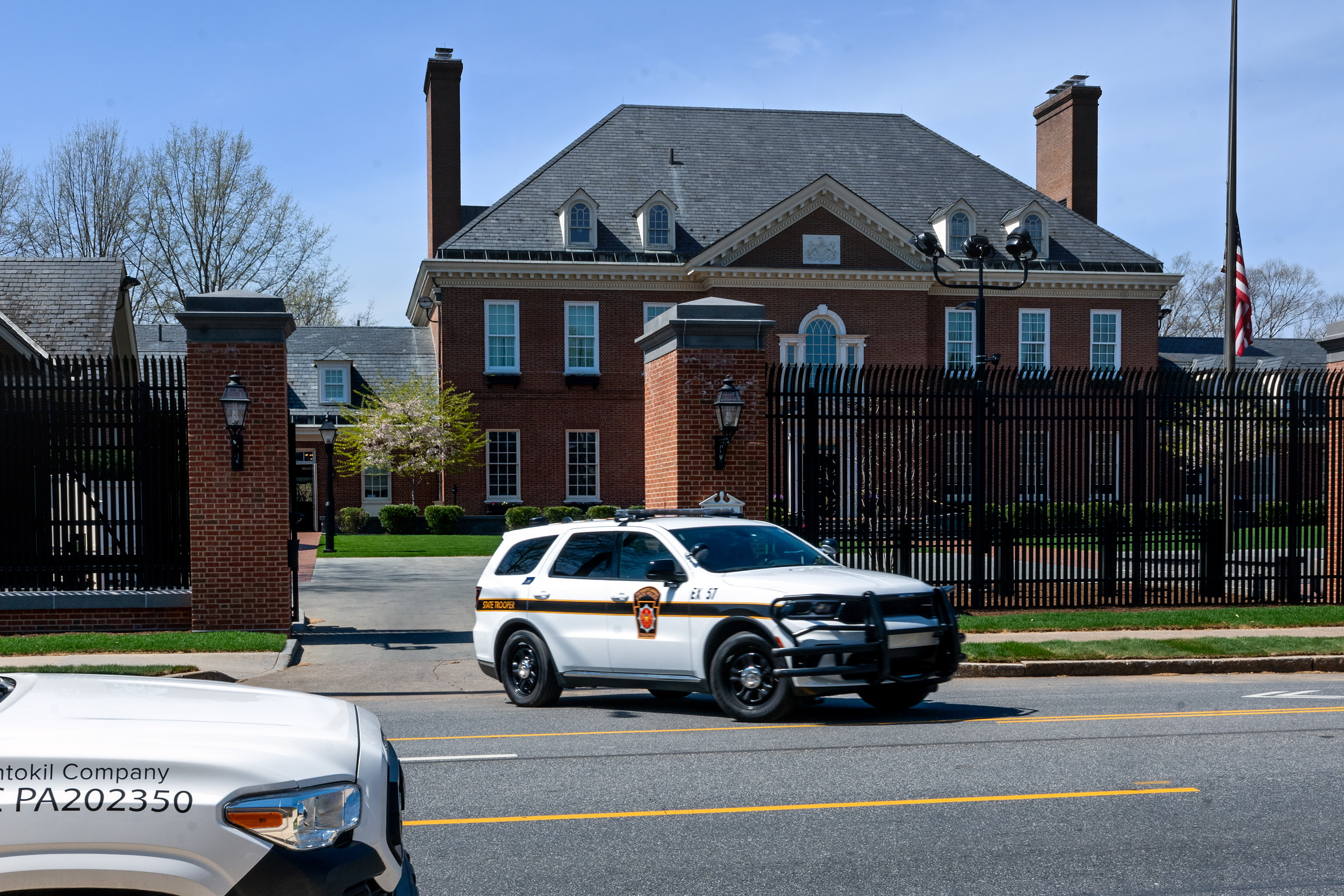
The federal lawsuit is the latest in the controversy surrounding the security upgrades and renovations to the state-owned governor’s residence in Harrisburg and Shapiro’s personal home in Abington Township, after a man firebombed the mansion on the first night of Passover in 2025 while the governor and his extended family were asleep inside.
This work was largely done through the state’s emergency procurement process that allows agencies to the skip lengthy bid protocols, as officials took quick action to strengthen security.
But the overall cost and questions over whether the correct processes were followed led to scrutiny by Republican lawmakers. The project at Shapiro’s Abington residence also led to a property dispute with his neighbors, who filed a federal suit against him that led the Shapiros to sue in return. Those lawsuits are ongoing.
Nicole Moyer, a procurement specialist with the Pennsylvania Department of General Services, claims in the federal lawsuit filed last week that after she repeatedly raised concerns about the “waste and wrongdoing” by the agency, she was fired.
Moyer, 49, has been working in procurement since 1995, first in the Army and later at the Pennsylvania State Police and various state agencies, according to the complaint. She joined the Pennsylvania Department of General Services in 2023.
Rosie Lapowsky, Shapiro’s press secretary, said in a statement that the allegations “by a disgruntled former employee who was dismissed from her position” are “totally and completely false.”
The suit, filed in the Middle District of Pennsylvania against the state, also names the Pennsylvania Department of General Services and former General Services Secretary Reggie McNeil, along with other officials from the agency that oversees the state’s purchasing, construction, and facilities. Shapiro is not a named defendant.
Mark Schwartz, a Delaware County attorney representing Moyer, said he hoped Shapiro will be deposed as part of the litigation.
“The question is how involved, if at all, was the governor in terms of the residence procurement process,” Schwarz said.
In her role as a procurement specialist, Moyer would not have beenaware of details about the emergency procurements for the governor’s residence project, Lapowsky added. Shapiro’s administration complied with “all relevant procurement policies,” she said.
“PSP identified necessary security improvements based on its assessment and issued an emergency declaration consistent with the procurement code in the fastest, most efficient, and most cost-effective way to complete the work and ensure the safety of the governor and his family,” Lapowsky said.
The whistleblower lawsuit claims the administration flouted bidding requirements and made purchases outside of existing contracts, often to meet specifications provided by Shapiro’s interior designer, de la Torre Design Studio.
The firm had been quietly hired to renovate the official residence by Team Pennsylvania, a Harrisburg-basednonprofit that operates the public-private partnership between the state and private businesses. Shapiro has come under scrutiny previously for utilizing the group to watch the Philadelphia Eagles lose to the Kansas City Chiefs in the 2023 Super Bowl and for other trips, Spotlight PA reported.
Josh Shapiro, governor of Pennsylvania, waves before meeting with Mike Parson, governor of Missouri, at the NFL Experience to make a friendly wager on the Super Bowl outcome. The governors met at the Lombardi Trophy on Saturday, Feb. 11, 2023, in Phoenix, Ariz. .David Maialetti / Staff Photographer
De la Torre had been working on the governor’s mansion before the fire, and asked for a specific brand of lighting fixture for the design.
The Pennsylvania Department of General Services deemed the $456,000 purchase too expensive, the suit says, and did not budge when the supplier revised the cost to $380,000.
But after the fire, the costly lighting fixtures were installed without any competitive bid or paper trail that would allow the purchase to be audited, according to the complaint.
Similarly, a $17,000 carpet was purchased and partially installed before procurement’s approval and outside existing contracts for carpets and floorings, the suit says.
Time and again, through other examples detailed in the lawsuit between the April 2025 fire and her March termination, the general services department had to issue waivers after the fact to “clean things up,” the suit says.
Moyer also questioned overlapping payments for the security monitoring companies for Shapiro’s residences, the home of Lt. Gov. Austin Davis, and regional offices, with one company not providing services for months, the suit says.
“Nonetheless, the proposed emergency job order contract that included provision for private residences was processed under the same umbrella as state facilities without bidding,” the complaint says.
The residences are not the only place Moyer says the administration fell short of the procurement requirement.
Earlier this year, the suit says, general services approved a $20,000 lactation pod for the Capitol even though a $4,950 option was available under an existing contract. The only difference between the pods was “outer fake ‘woodgrain’ decal,” according to the complaint.
“Plaintiff questioned the rationale for paying substantially more for a minimal aesthetic modification,” the suit says. “Plaintiff was overruled.”
Moyer was terminated in March after repeatedly reporting concerns, including on whether the department couldlegally make purchases for private residencies, the suit says.
Moyer, a registered Republican from York County, filed her suit just weeks ahead of the forthcoming midterm elections, in which Shapiro, a Democrat, is seeking a second term.
Lapowsky said the suit was “clearly timed” to hurt Shapiro politically.
McNeil left his post as secretary of the general services department in August. Shapiro appointed executive deputy secretary Sandra Aguilera to serve as acting secretary.
Mayor Cherelle L. Parker’s administration on Wednesday announced the first 10 residential blocks that will each receive $100,000 in beautification upgrades as part of the city’s Curbside Appeal program.
“Every Philadelphian deserves to live on a block they can be proud of,” Parker said in a statement, adding that the program “gives neighbors the resources to come together, improve their surroundings, and strengthen the sense of community that makes our city special.”
The first 10 blocks set to receive services under the program, including debris removal, tree trimming, lawn restoration, and sidewalk repairs, are:
1300 block of South Ruby Street
1700 block of St. Paul Street
1800 block of Hart Lane
2200 block of South Sixth Street
2500 block of North Marston Street
3000 block of Titan Street
3200 block of North Howard Street
5000 block of Newhall Street
First block of Hobart Street
First block of Wiota Street
In May and June, residents were encouraged to nominate blocks for the program through their Neighborhood Advisory Committees or Neighborhood Community Action Centers, the so-called mini-City Halls Parker has established throughout the city to make services more accessible.
The next round of nominations for the program will take place in the spring.
“By partnering directly with neighbors, we’re helping transform blocks in ways that reflect the priorities of the people who live there while building stronger, more connected communities,” Jessie Lawrence, the city’s director of planning and development, said in a statement.
Council approved the H.O.M.E. initiative, which is funded primarily through $800 million in city bonds, in June 2025. Lawmakers then clashed with the administration last fall over income thresholds for some of the housing programs it funds, with Council successfully pushing through changes that prioritize poorer residents.
The city issued the first $400 million in H.O.M.E. bonds earlier this year, and is scheduled to issue the next tranche in 2027.