ATLANTA — If you weren’t careful you’d have gotten blood on your shoes when Trea Turner fell on his sword.
Turner knows exactly why the Phillies don’t score as much as they should. He looks that reason in the eye every morning.
“Me,” he said. “I mean, it’s pretty simple.”
Turner spoke in front of his locker in the visiting clubhouse at Truist Park after a Game 3 wild-card loss to the Braves crushed the Phillies’ playoff hopes, the fourth consecutive year in which a billion-dollar lineup produced dime-store offense and, as a result, for the third consecutive season, it exited the postseason in the first series in which it played.
Turner’s dead wood isn’t the only issue on this club. It lost crucial deadline addition Luis Arraez, a .300 hitter, to injury last week. Its bullpen, flawed even when whole, was ravaged by injury as well. It is a poor defensive team with subpar speed that often is amplified by bafflingly bad base-running.
Turner isn’t the only hole in the lineup, either. Bryson Stott has been just as bad at times, as has catcher J.T. Realmuto, who went hitless in the 2024 postseason and was 2-for-10 against the Braves.
But both Stott and Realmuto are defensive stars. Turner can be a defensive liability, even though he plays shortstop. But then, that’s a different conversation, and besides, it only reinforces this reality: No money is more poorly spent by the Phillies than the money they’ve spent on Turner. There is no simple solution. Turner is 33, he has an untradeable contract, and he’s locked in for seven more seasons. Hopefully, by the time he’s 40, he will have figured it out.
Trea Turner can be a defensive liability at shortstop.Yong Kim / Staff Photographer
Dave Dombrowski, the team’s president, gave Turner a $300 million contract in 2023 with a simple, specific job: Get on base in front of Kyle Schwarber and Bryce Harper so they could drive him in.
Sure, he might hit the odd home run, but Turner has two batting titles, and he’s got speed to burn.
All he’s been burning in the Phillies’ postseasons is John Middleton’s cash.
“You know, when you hit first or second, you get a lot of at-bats, and I kind of get things going,” he said.
He spoke of the design, not the execution.
Because he hasn’t gotten things going. Not in a long time. Not in the playoffs, especially.
After their 6-2 loss Thursday, the Phillies now have three runs or fewer in the first nine innings in 11 of their last 13 playoff games. That encompasses the last two games of the NLCS against the Diamondbacks in 2023, the four NLDS games against the Mets in 2024, the four NLDS games against the Dodgers in 2025, and the three against the Braves this year.
Not coincidentally, they now have lost 10 of those 13 games.
In those 13 games, Turner is 8-for-52. That’s a .154 average.
And that, folks, is the biggest reason why the Phillies can’t score.
Further, lack of scoring is the biggest reason why the Phillies can’t win. Not the bullpen. Not the defense.
Turner’s postseason struggles from last year bled into his regular-season efforts this year. His batting average fell from .304 in 2025, best in the National League, to .242, the worst of his 13 full seasons — the worst by 24 points. The Phillies’ team average dipped from No. 2 in the NL in 2025 to No. 12 in 2026. They also scored 65 fewer runs in 2026 than in 2025.
Some of those runs, had they been scored in late September, would have helped the Phillies earn home-field advantage in the wild-card round. The Phillies held the top wild-card spot, but, with five games to play, they hit a four-game slide. They scored one run in three of those games. They were shut out in the fourth.
As such, they needed to win Game 162 in order to ensure the third wild-card slot, and they burned ace Zack Wheeler in that game. That meant Wheeler was not available for Game 1 of the wild-card series against the Braves on Tuesday.
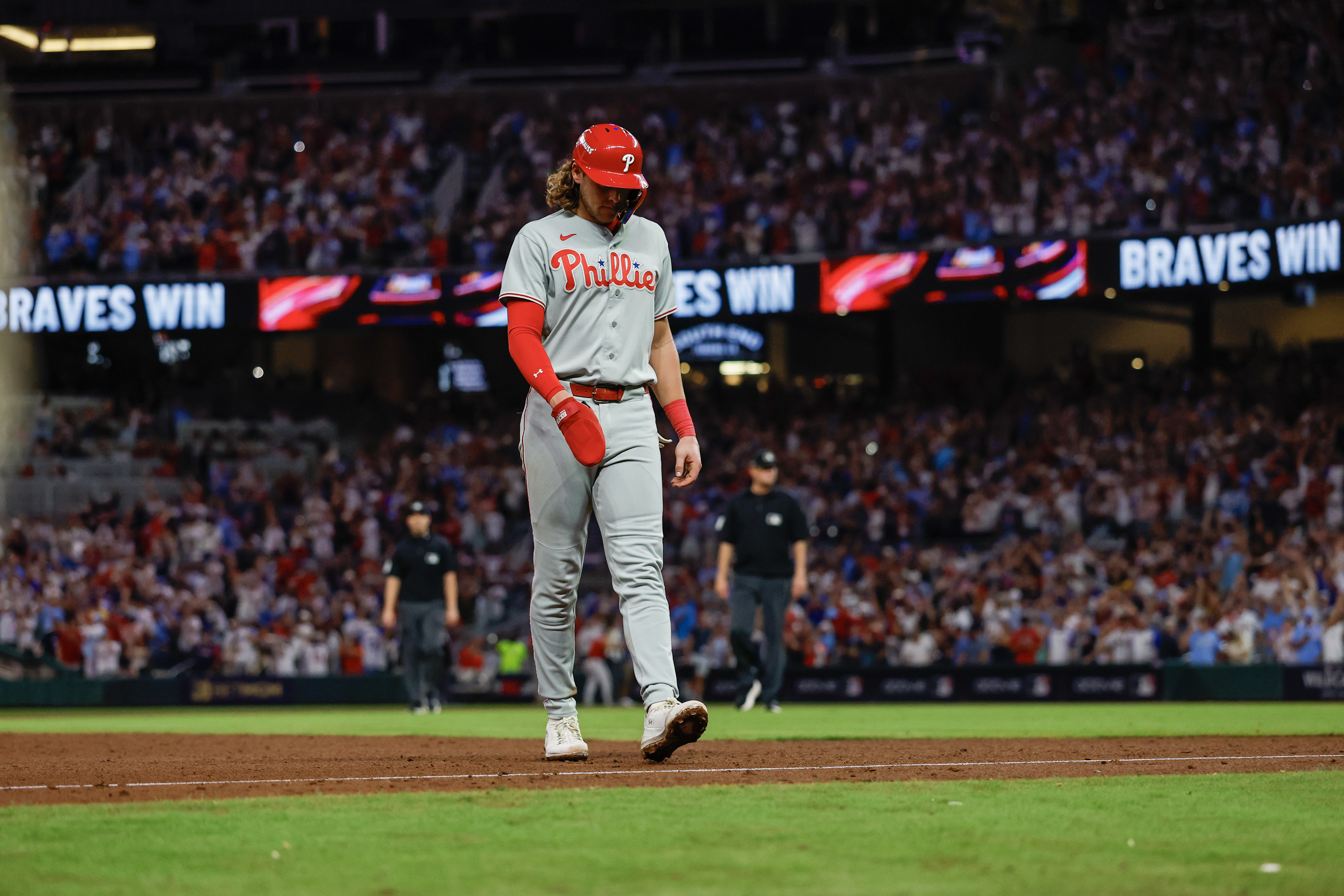
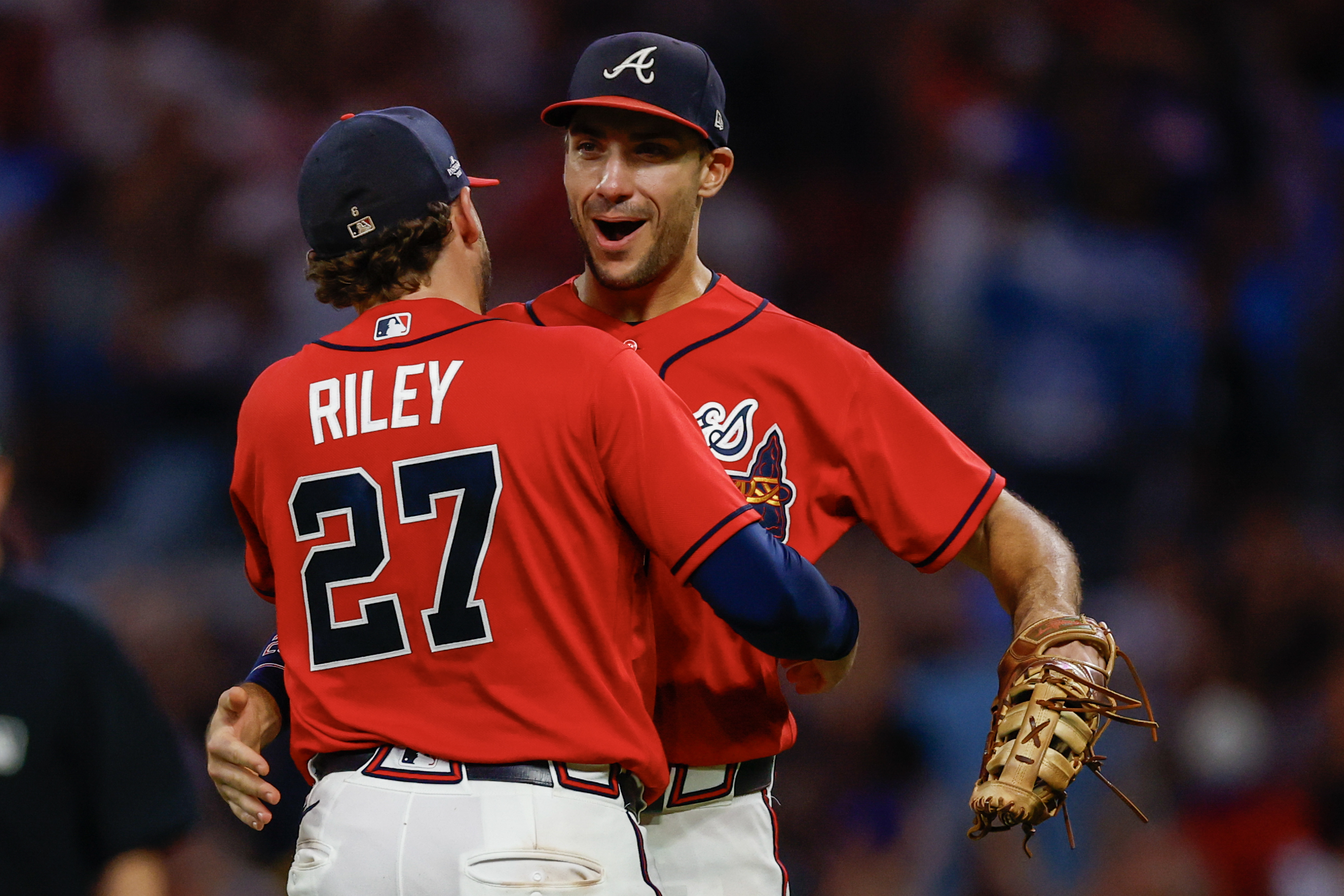
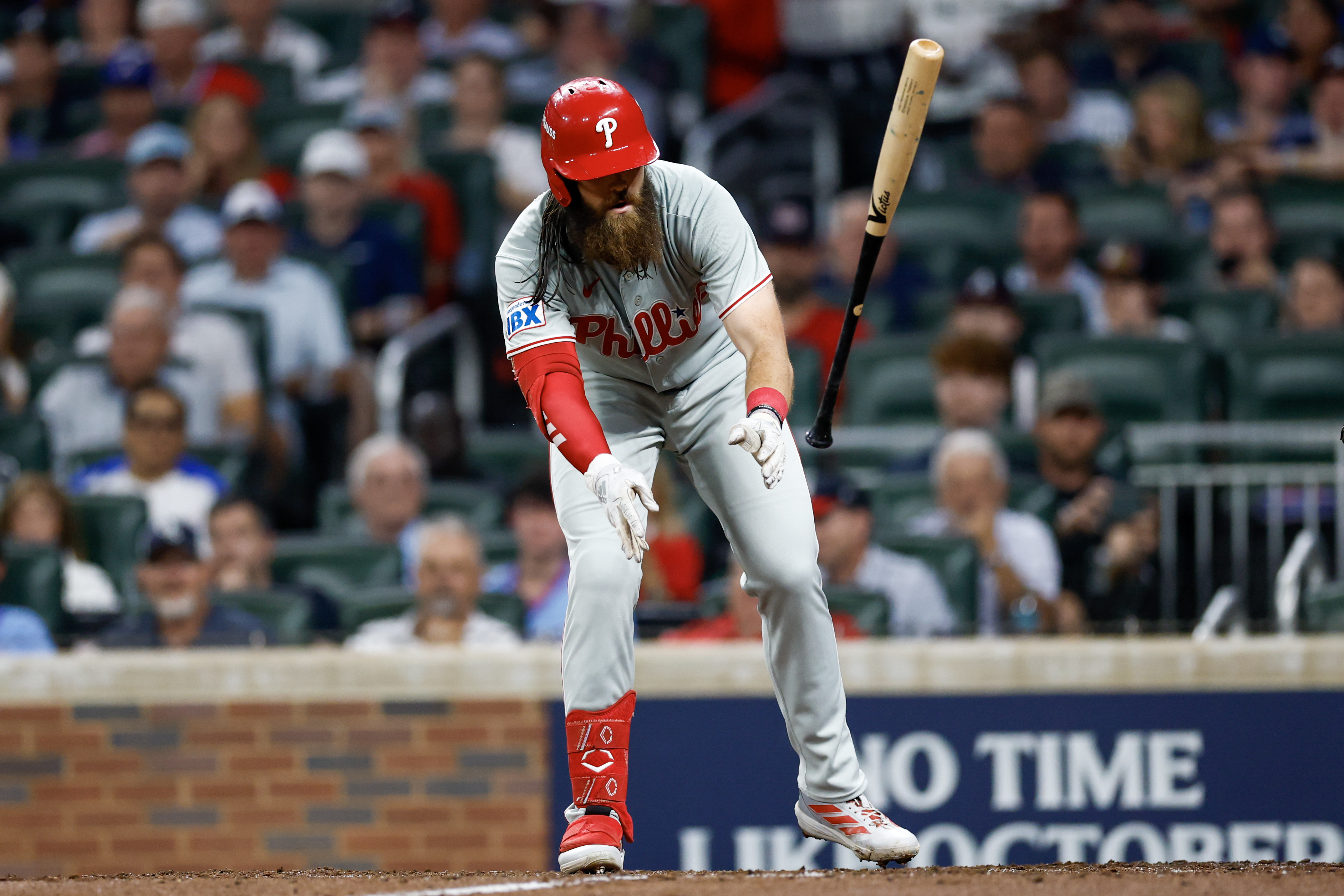
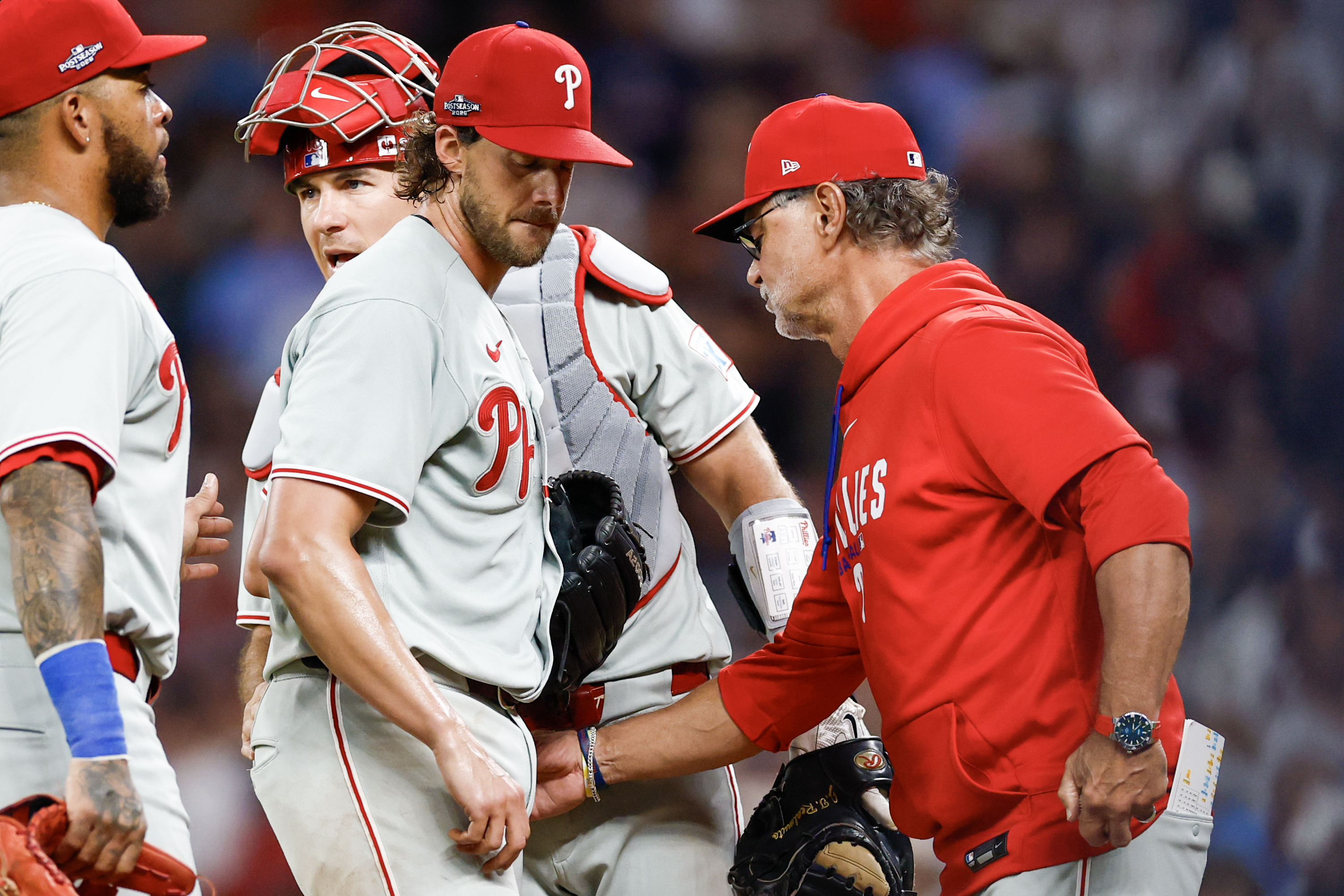
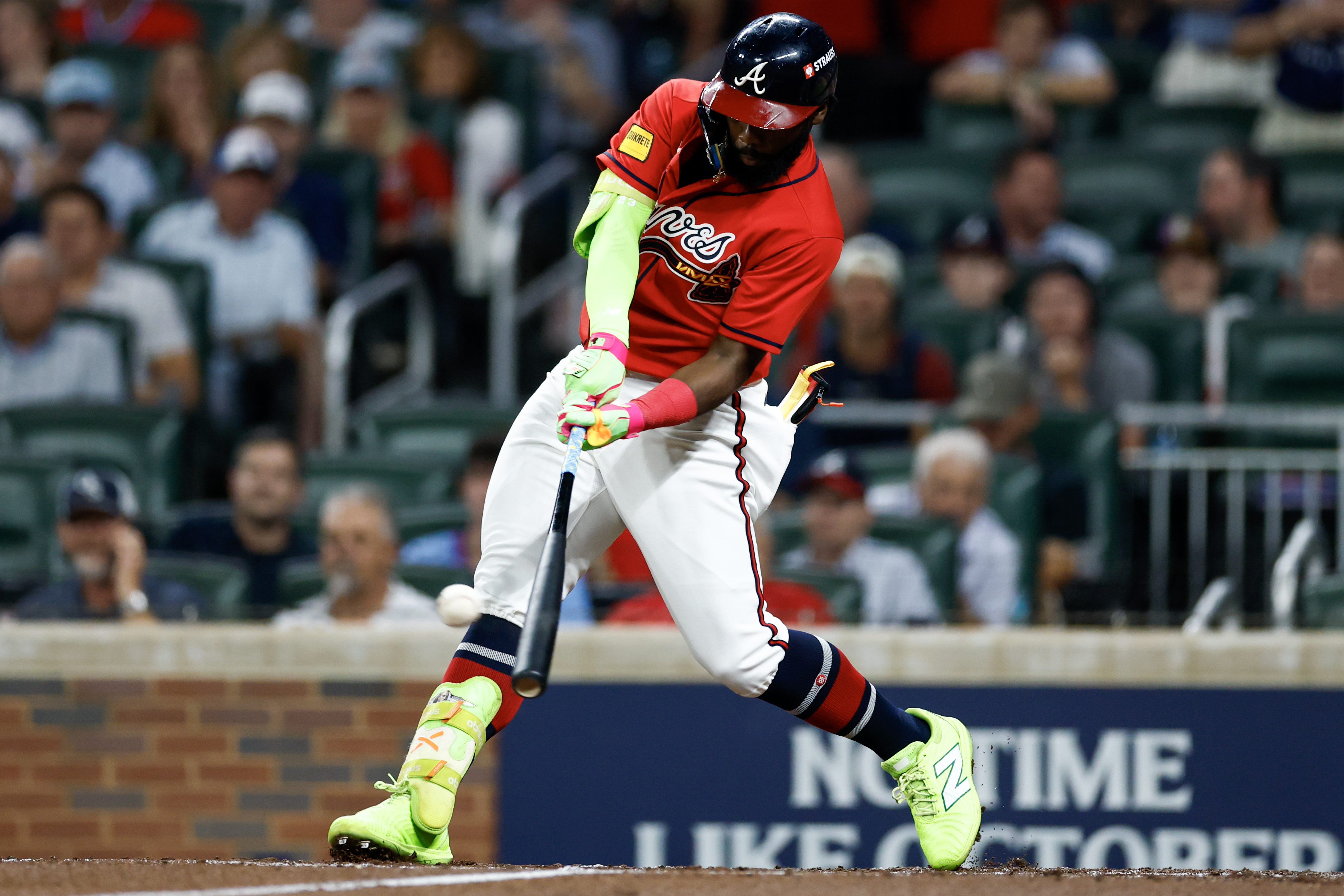
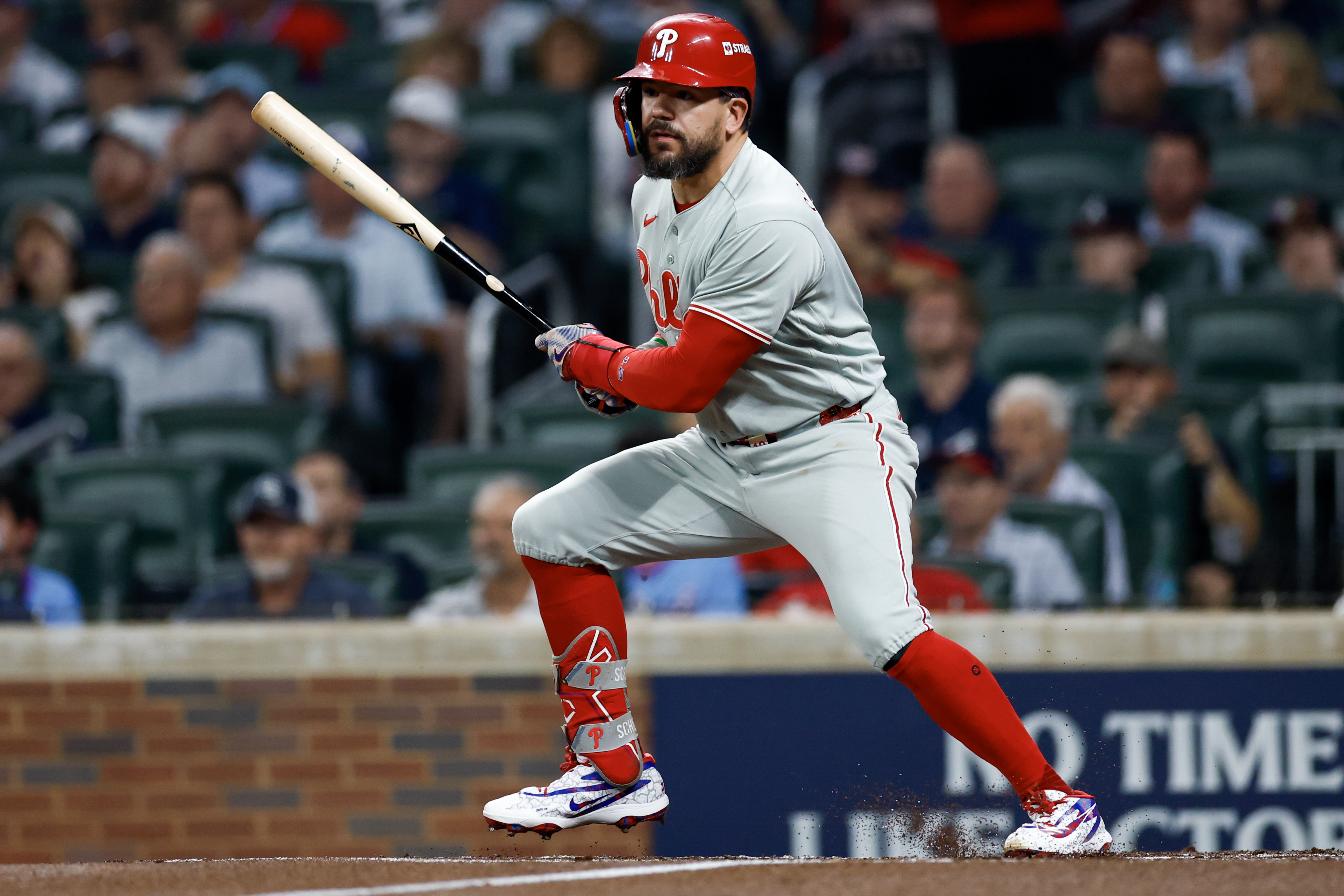
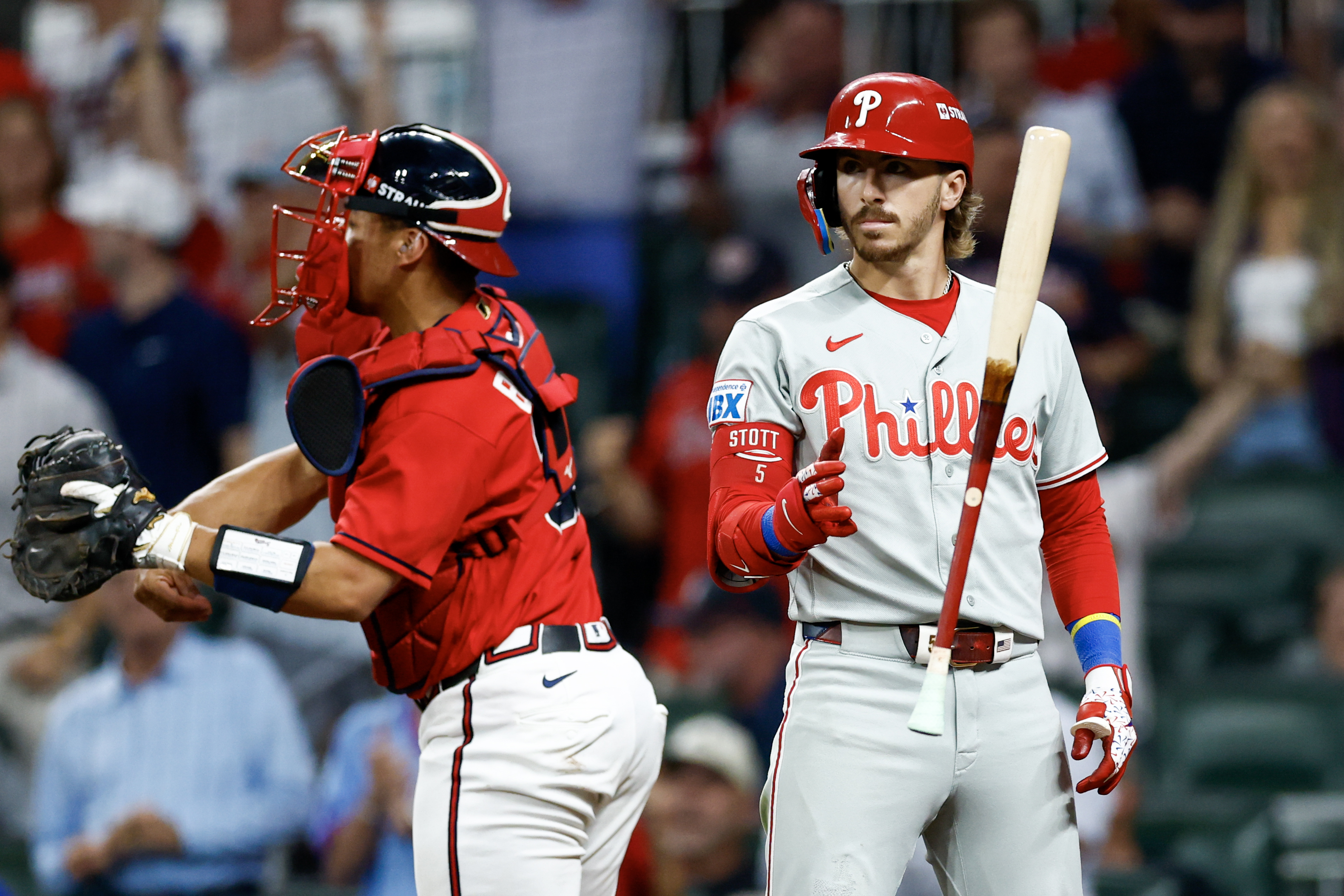
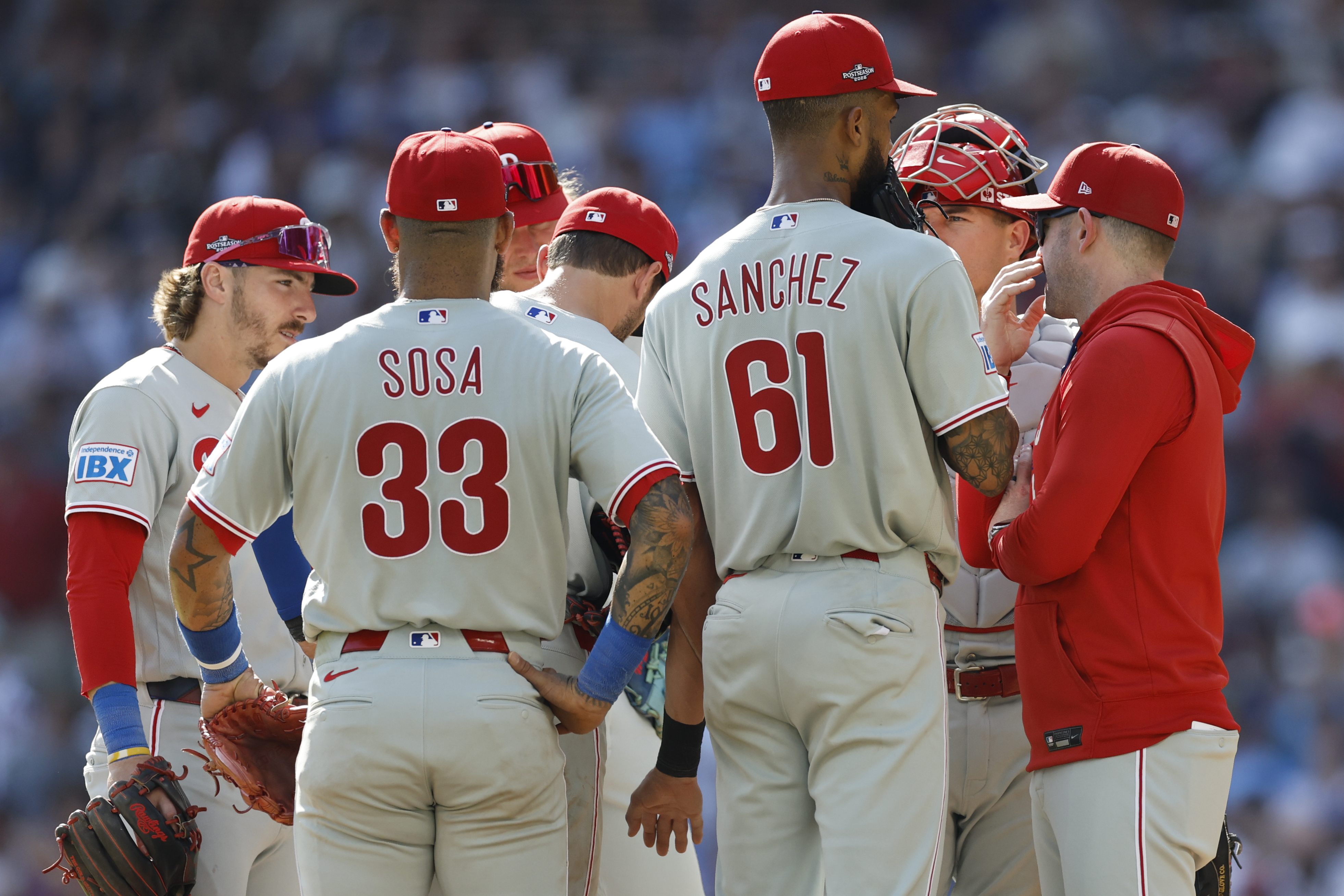
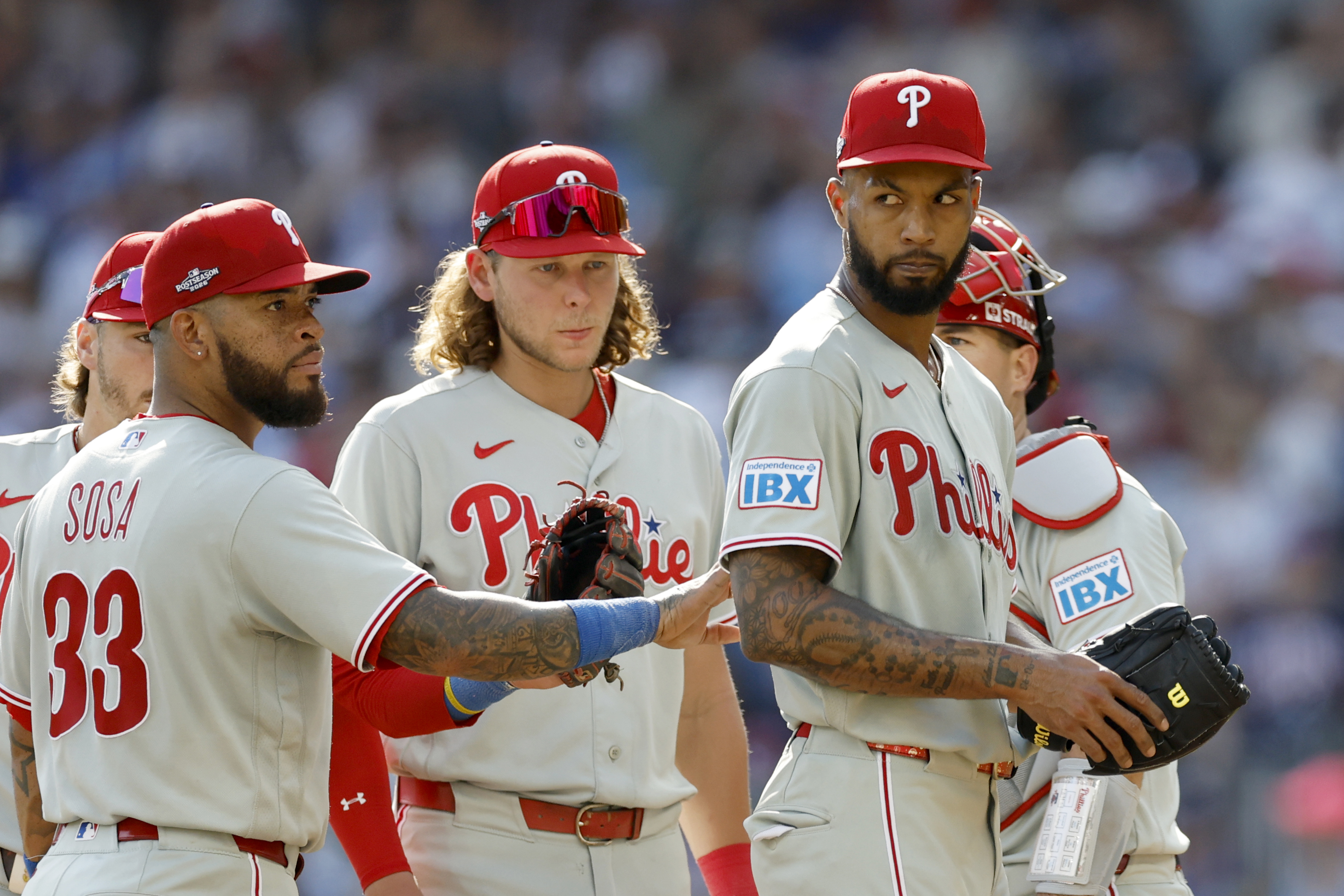
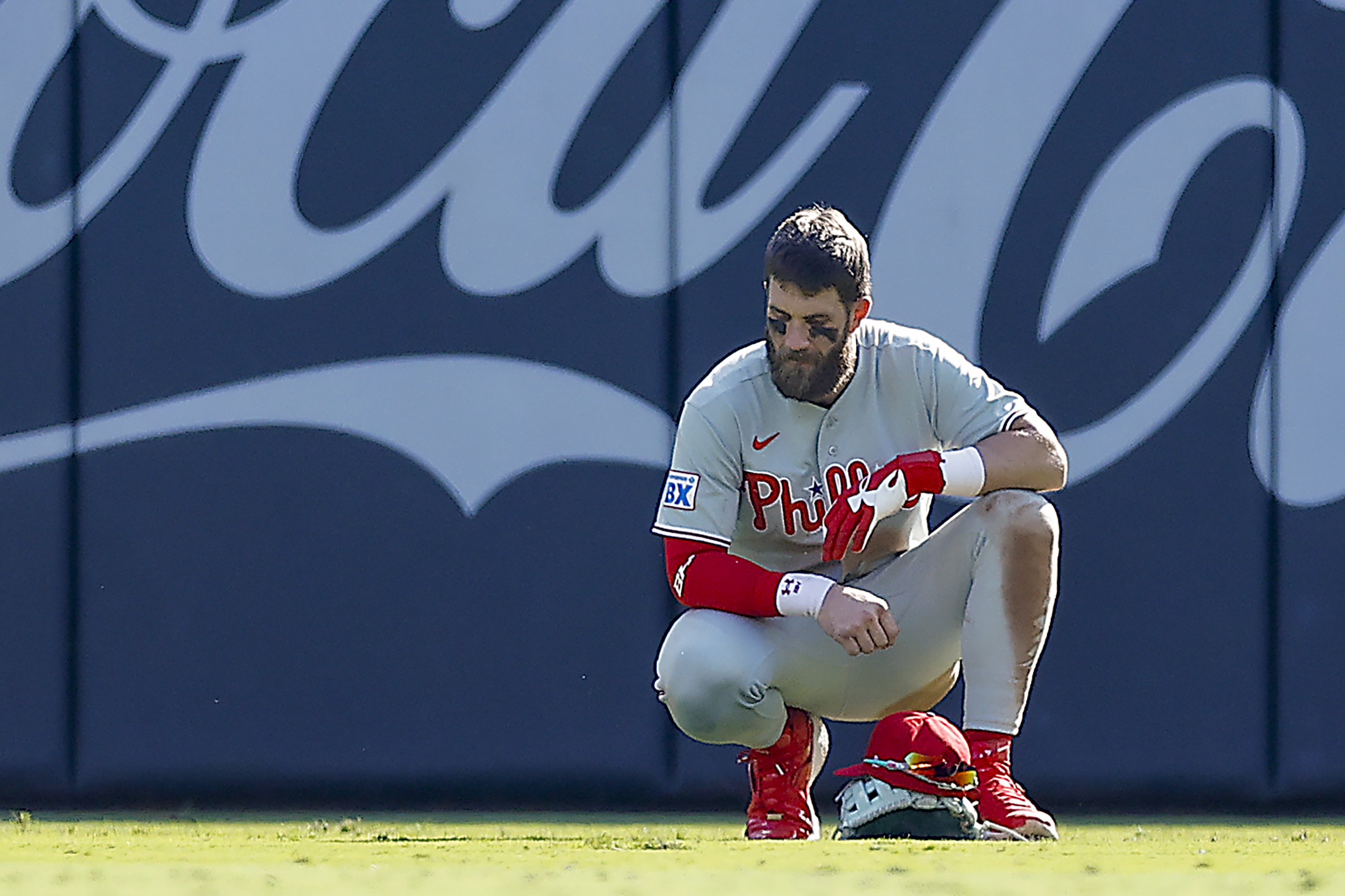
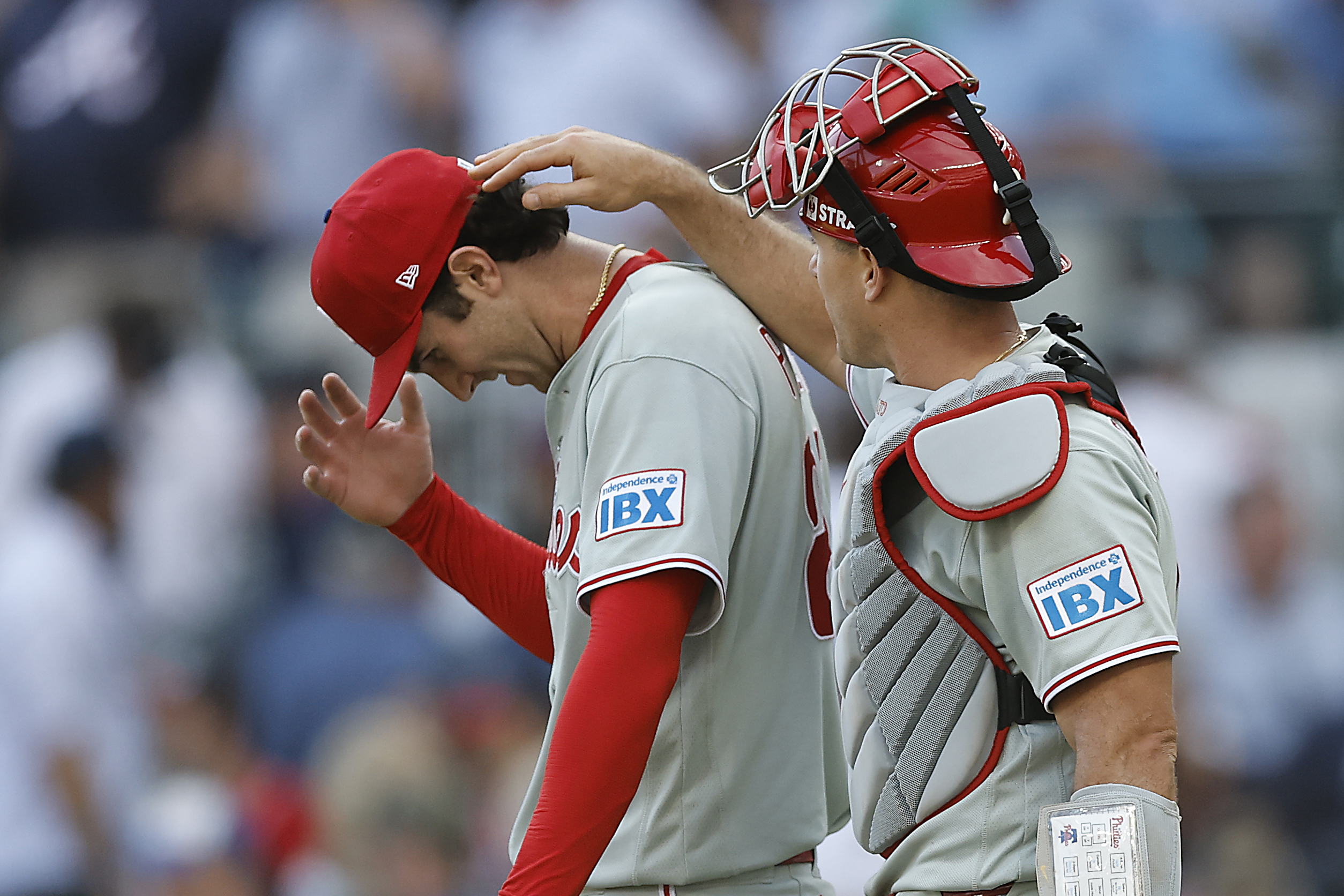
Phillies Alec Bohm walks off the field after the final out in Game 3 of the National League wild-card series against the Braves Thursday, Oct. 1, 2026, in Atlanta.Yong Kim / Staff PhotographerBraves Austin Riley (left) and Matt Olson celebrate their win in Game 3 of the National League wild-card series over the Phillies Thursday, Oct. 1, 2026, in Atlanta.Yong Kim / Staff PhotographerBraves starting pitcher Chris Sale closes the game during the ninth inning in Game 3 of the National League wild-card series against the Phillies Thursday, Oct. 1, 2026, in Atlanta.Yong Kim / Staff PhotographerBraves right fielder Ronald Acuña Jr. attempts to catch Phillies Derek Hill triple during the eighth inning in Game 3 of the National League wild-card series Thursday, Oct. 1, 2026, in Atlanta.Yong Kim / Staff PhotographerPhillies Derek Hill runs to third after hitting a triple during the eighth inning in Game 3 of the National League wild-card series against the Braves Thursday, Oct. 1, 2026, in Atlanta.Yong Kim / Staff PhotographerPhillies pitcher Jonathan Bowlan after Braves Matt Olson hits a solo home run during the seventh inning in Game 3 of the National League wild-card series Thursday, Oct. 1, 2026, in Atlanta.Yong Kim / Staff PhotographerBraves Matt Olson hits a solo home run during the seventh inning in Game 3 of the National League wild-card series Thursday, Oct. 1, 2026, in Atlanta.Yong Kim / Staff PhotographerPhillies first baseman Bryce Harper hits a double during the sixth inning in Game 3 of the National League wild-card series against the Braves Thursday, Oct. 1, 2026, in Atlanta.Yong Kim / Staff PhotographerPhillies designated hitter Kyle Schwarber hits a single during the sixth inning in Game 3 of the National League wild-card series against the Braves Thursday, Oct. 1, 2026, in Atlanta.Yong Kim / Staff PhotographerPhillies Bryan de la Cruz hits a single during the fifth inning in Game 3 of the National League wild-card series against the Braves Thursday, Oct. 1, 2026, in Atlanta.Yong Kim / Staff PhotographerPhillies Brandon Marsh tosses his bat after drawing a walk during the fifth inning in Game 3 of the National League wild-card series Thursday, Oct. 1, 2026, in Atlanta.Yong Kim / Staff PhotographerPhillies second baseman Bryson Stott after he strikes out looking to end the fourth inning in Game 3 of the National League wild-card series against the Braves Thursday, Oct. 1, 2026, in Atlanta.Yong Kim / Staff PhotographerPhillies pitcher Zack Wheeler after Braves Ozzie Albies hits a two-run homer during the fourth inning in Game 3 of the National League wild-card series Thursday, Oct. 1, 2026, in Atlanta.Yong Kim / Staff PhotographerPhillies pitcher Zack Wheeler after Braves Ozzie Albies hits a two-run homer during the fourth inning in Game 3 of the National League wild-card series Thursday, Oct. 1, 2026, in Atlanta.Yong Kim / Staff PhotographerPhillies pitcher Zack Wheeler throws a pitch during the third inning in Game 3 of the National League wild-card series against the Braves Thursday, Oct. 1, 2026, in Atlanta.Yong Kim / Staff PhotographerPhillies pitcher Tim Mayza throws a pitch during the second inning in Game 3 of the National League wild-card series against the Braves Thursday, Oct. 1, 2026, in Atlanta.Yong Kim / Staff PhotographerPhillies second baseman Bryson Stott (right) and shortstop Trea Turner (left) go after a single hit by Braves designated hitter Dominic Smith during the second inning in Game 3 of the National League wild-card series Thursday, Oct. 1, 2026, in Atlanta.Yong Kim / Staff PhotographerPhillies manager Don Mattingly takes out pitcher Aaron Nola during the second inning in Game 3 of the National League wild-card series against the Braves Thursday, Oct. 1, 2026, in Atlanta.Yong Kim / Staff PhotographerPhillies pitcher Aaron Nola after giving up a three-run home run to Braves Michael Harris II during the first inning in Game 3 of the National League wild-card series against the Braves Thursday, Oct. 1, 2026, in Atlanta.Yong Kim / Staff PhotographerBraves Michael Harris II hits a three-run home run during the first inning in Game 3 of the National League wild-card series against the Phillies Thursday, Oct. 1, 2026, in Atlanta.Yong Kim / Staff PhotographerPhillies designated hitter Kyle Schwarber hits a single during the first inning in Game 3 of the National League wild-card series against the Braves Thursday, Oct. 1, 2026, in Atlanta.Yong Kim / Staff PhotographerPhillies shortstop Trea Turner and back-up catcher Garrett Stubbs (right) throw the baseball during warm ups before the Phillies play on the Atlanta Braves in game 3 of the National League wild-card series on Thursday, Oct. 1, 2026 in Atlanta.Yong Kim / Staff Photographer
“Having your pitching set up is really important this time of year,” Turner said. “And we didn’t do a good job playing down the stretch to have that happen.”
The Phillies lost that game. They had to use closer Jhoan Duran early, and for too long, and he tired, and they lost.
Turner went 0-for-3 in Game 1. He got picked off, too.
It was a rough visit to Georgia.
Turner finished the wild-card round 1-for-11 despite having the two magnificent sluggers hitting behind him, as they did all season.
“A lot of that’s on me,” Turner said. “I think you know, Kyle and Bryce did a good job.”
Harper was 3-for-13 with a double, a homer, and two RBIs. Schwarber was 4-for-11 with a homer. Their overall postseason production, however, is Ruthian.
To be fair, in his 67 career playoff games, Turner has not been a total bust. He hit .270 in his first 54 playoff games, which included a World Series title run with the Nationals in 2019. In his first 11 playoff games with the Phillies, in 2023, he hit .415 with three homers, five doubles, and 1.224.
He has been a black hole since. Again, he is not alone.
Stott, since Game 6 of the 2023 NLCS against the Diamondbacks, is 8-for-45 (.178) with one extra-base hit and 14 strikeouts.
Bryson Stott strikes out looking to end the fourth inning in Game 3.Yong Kim / Staff Photographer
But then, Stott has made about $10 million since 2023.
Turner has made almost $110 million since 2023.
He makes more than $27.2 million per season. How will he better earn his money in 2027?
Turner has no idea.
“It’s a question. Got a lot of work to do. Go over everything and just figure out, as much as I can. Find answers. See what I did bad,” Turner said. “This year was the biggest question mark for me offensively in a long time. I’ve got to figure that out. So I’m definitely gonna have a lot of work to do there. And I’ll do it.”
Delaware County nurse Monica Ryadi and her husband couldn’t wait to take their 3-year-old son to Disneyland, so he could meet his adored Cars movie characters — Lightning McQueen, Tow Mater, and the rest.
They didn’t get there.
The family had barely stepped off the plane at Los Angeles International Airport on Sept. 15 when they were surrounded by four or five men in street clothes who said they were ICE agents, flashed a badge, and snapped Ryadi into handcuffs.
When her husband protested, the officers threatened to arrest him and send their toddler, Luca, to child-protective services, the couple said in court filings. One officer told Ryadi she was here illegally and, “I don’t care if you are the president of the United States or a congresswoman like Ilhan Omar,” court records say.
Ryadi, 30, said she kept insisting that she was a legal immigrant.
And that’s true.
She has lived in the U.S. since she was 9, brought to this country by her parents when they fled religious persecution in Indonesia.
They entered on legal visas in 2005, and five years later were officially granted what’s called “Withholding of Removal.” That’s where an Immigration Court judge agrees that deporting someone to their homeland could get them hurt or killed.
It’s similar to asylum, the key difference being the federal government retains the right to deport someone if it can find a third country willing to take them. Withholding does not include a path to citizenship.
Traditionally, people who gained that relief were left alone.
Now that’s changed, as the Trump administration takes a new, hard view — seeing those who have Withholding, even those who have lived here for decades, as candidates for deportation. Some immigrants are held in ICE detention for months while the administration tries to find a foreign government to accept them.
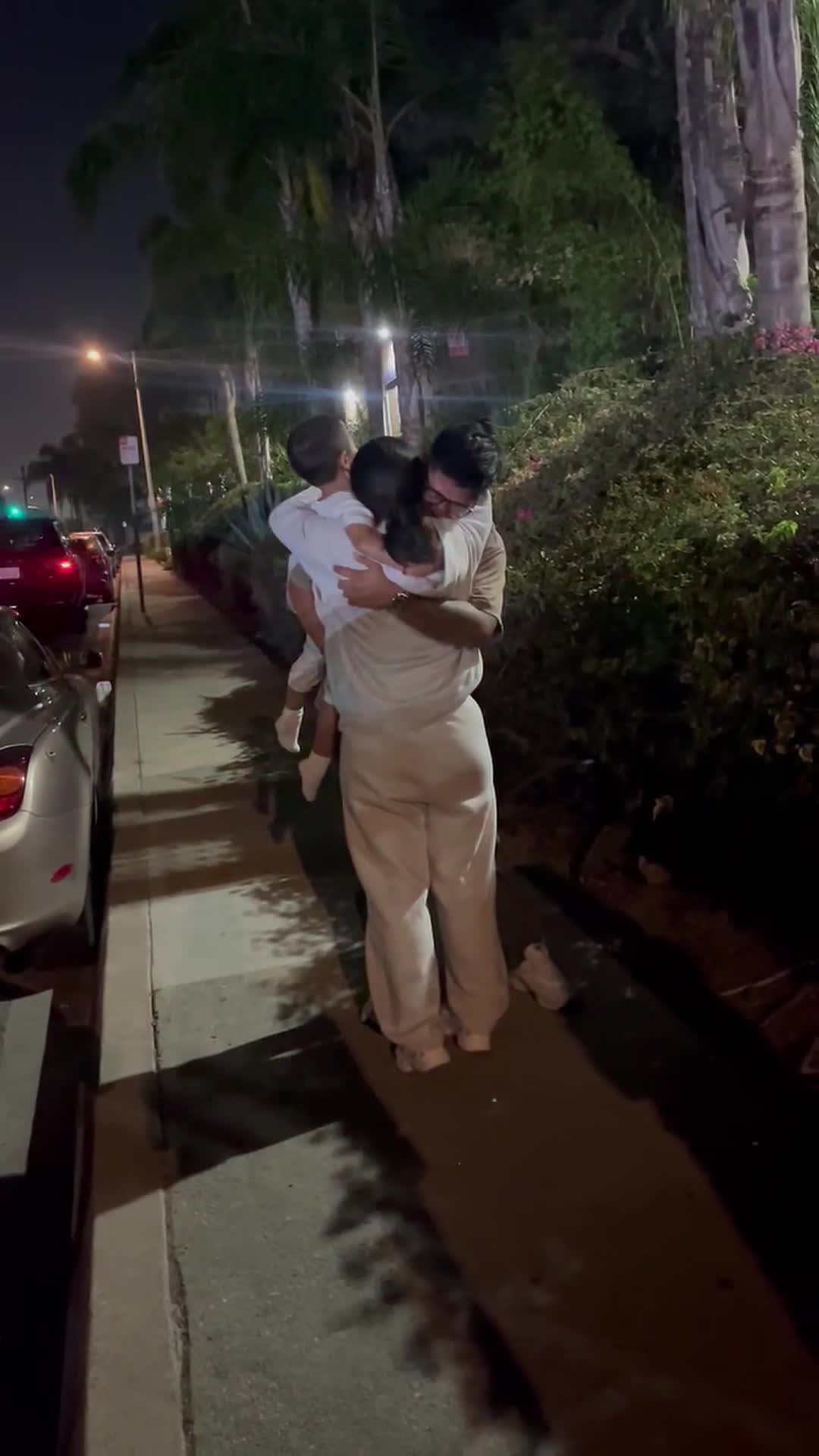
On Tuesday, after 15 days in custody at the Adelanto ICE Processing Center in California, Ryadi was ordered freed by a U.S. magistrate judge. Her husband and son flew to her immediately, and the family reunited that night, at the same Los Angeles hotel they booked when they planned to visit Disneyland.
“It’s a lot of emotions,” Ryadi said in an interview after her release. “I am still terrified, I’m still living under fear.”
At the same time, she said, “I can’t stop thinking about the other women that are in there.”
Video: A Delco nurse arrested by ICE reunites with her family
The Department of Homeland Security said in a statement that Ryadi was “an illegal alien” taken into custody “during a targeted enforcement operation at Los Angeles International Airport.”
DHS said she entered the U.S. legally in 2005 but “overstayed her welcome” in violation of immigration laws. An immigration judge issued a deportation order in 2010, DHS said, but did not note that such an order is a standard part of receiving permission to stay, work, and live in the U.S. under a grant of Withholding of Removal.
Ryadi’s husband, Steven Sary, 35, said he was overjoyed to be reunited with his wife. “But there’s still work to do,” he said. ”What’s the next step for us? We’re still living in fear.”
He tried to stay positive and supportive while Ryadi was detained, even at moments when they were both crying on the phone. He told her, “You don’t have to worry about Luca, I’m doing the best I can.”
The couple has arranged their lives around their son, setting schedules so one parent is always home with him. Ryadi works weekends at Riddle Hospital in Media, while her husband works Monday to Friday as a UPS truck driver.
The two met when they were children growing up in Philadelphia, and married in 2021.
Ryadi graduated high school from the Academy at Palumbo in the Bella Vista neighborhood, then earned an associate degree at Philadelphia Community College before obtaining her bachelor’s degree at Ohio University.
She became a nurse, she said, because she wanted to help people.
The court order that freed Ryadi came the same day that the Supreme Court ruled the Trump administration could resume the fast deportation of immigrants to countries other than their own.
The court granted the government’s emergency request to block an appeals court ruling that said the process was unlawful, because immigrants were not given sufficient opportunity to raise safety concerns.
The Supreme Court said it would hear oral arguments in the case in December, with a final ruling likely next year.
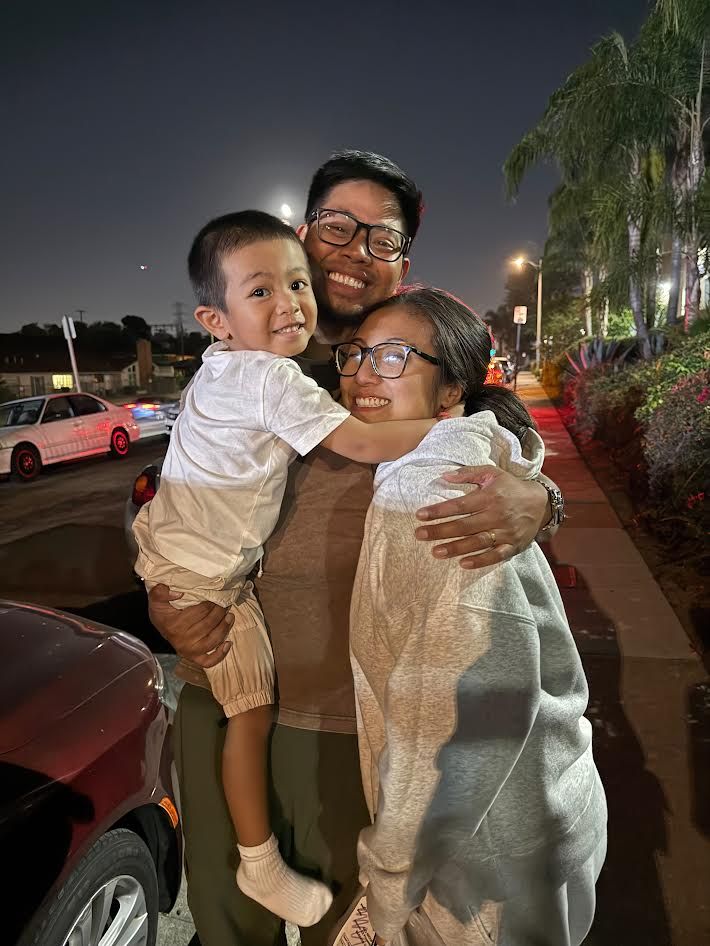
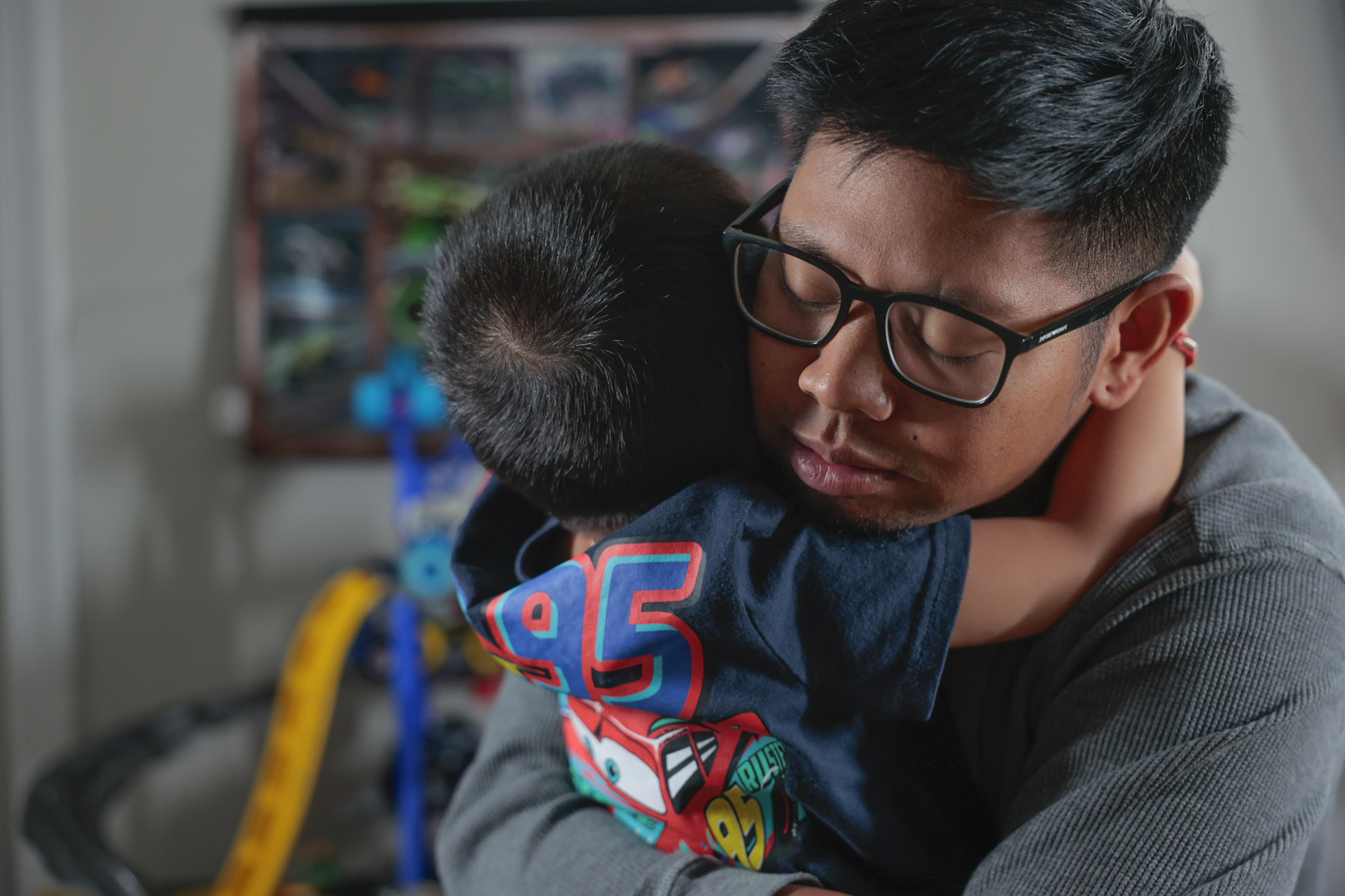
Steven Sary hugs his 3-year-old son, Luca, at their Delco home, waiting for word on his wife, who at the time was detained in California by ICE. She was detained by ICE agents after getting off a plane in Los Angeles as the family traveled to Disneyland. Steven M. Falk / For The Inquirer
“What happened to Monica should be treated as an extrajudicial kidnapping,” said Ryadi’s Philadelphia immigration attorney, Eric Rosenfeld, who is handling the case pro bono.
He noted that Ryadi is a registered nurse, the wife of an American citizen, and the parent of a son who is an American citizen — yet ICE casually told her she would be sent to an undisclosed third country.
She was never given any type of document or warrant to explain her arrest, he said. Upon release she was fitted with a GPS ankle monitor, and she knows ICE will likely try again to deport her, the attorney said.
“This is a respite. Not security,” Rosenfeld said.
As the Trump administration pursues its mass-deportation agenda, the protection offered by Withholding and similar relief “is proving to be very little protection at all,” the American Immigration Council wrote. “The Trump administration is trying to ship them out wherever it can — and keep them locked up in the meantime.”
A Philadelphia man who was arrested in July remains in detention, despite having lived legally for almost 20 years.
Mamadou Fadel Cherif of West Oak Lane was granted protection from potential political violence in his native Guinea. Now the administration wants to deport him to Ghana.
To receive Withholding of Removal, applicants must prove they were persecuted in the past or that their lives would be threatened in the future, that their home government harmed or will harm them — or failed to control others who might do so.
When that relief is granted, the immigration judge also enters a deportation order, then tells the government it cannot deport the person to their homeland. In that way the removal is “withheld.”
“We were planning to have an amazing trip with the family,” Sary said, “to see Cars Land with our son. But that changed.”
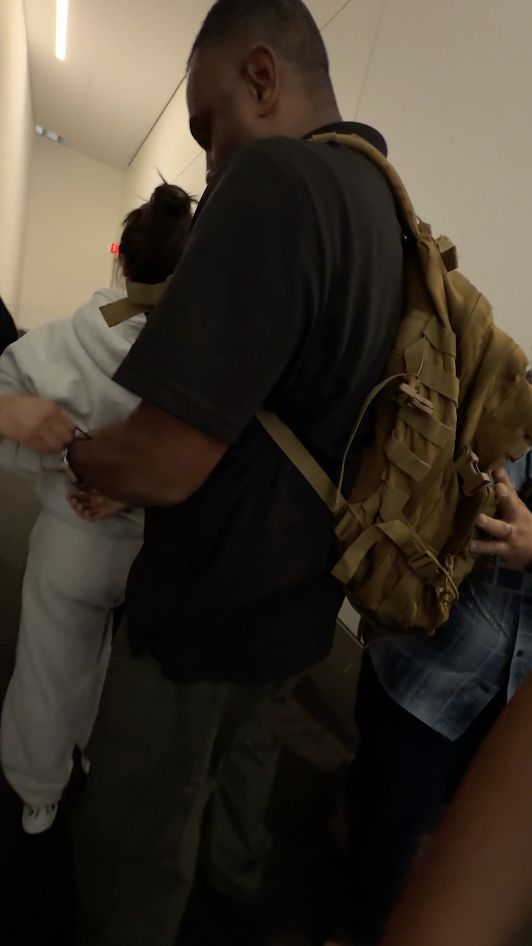
This image shows Delaware County nurse Monica Ryadi, left, in white, being arrested by ICE agents at Los Angeles International Airport on Sept. 15. She and her husband were taking their 3-year-old son to visit Disneyland.Courtesy of the family
“It felt like I was kidnapped,” Ryadi said. “I kept saying, ‘I’m legal, I’m a legal immigrant.’”
She grew up in the United States with government permission, has work authorization, a Real ID, and a Social Security number. She pays taxes. Yet she was chained wrist, ankle and waist like a criminal, she said.
Ryadi wonders if the ICE operation against her began in Philadelphia. As her family waited to board the plane, she said, a woman in a black jacket approached and made small talk.
The woman didn’t have luggage, Ryadi said, and she didn’t get on the flight. Instead, she walked away to talk to a man who also did not appear to be a passenger.
When Ryadi was released from the Adelanto detention center, 90 miles northeast of Los Angeles, immigrant-aid volunteers gave her a ride all the way to the city.
There she flew into the arms of her husband and son.
“I’m so happy to see you!” she cried.
At the hotel, the family saw people decked out in Disney attire, coming back from the theme park. Young Luca asked if they could go.
This week’s column covers the ongoing Washington West Historical District saga, a 1,000 mayoral days, a City Council member who should retire, and an NFL coach who is a secret urban planning enthusiast.
Members of the Philadelphians for Rational Preservation gather at Seger Park in the Washington Square West neighborhood in July 2025. The group opposes the Washington Square West Historic District designation.Yong Kim / Staff Photographer
People vs. preservation
In a City Hall courtroom, lawyers for the city and the preservation alliance sought to defend the designation of the Washington West Historic District against a coalition of homeowners who have claimed the decision has cost them time and money. The outcome could have significant ramifications for such districts across Philadelphia.
Dan Auerbach, a lawyer for the homeowners, says the district was created without sufficient evidence, and that a historic commissioner’s participation in drafting the document represents a conflict of interest. Attorneys Leonard Reuter and Paul Toner, who represented the defendants, took a different approach.
When Common Pleas Court Judge Christopher Hall repeatedly asked for evidence, beyond the nomination itself, for the district’s historic significance, Toner replied, “I don’t need to.” The commission’s decision to approve is apparently all that’s required. They also argued that historic designation does not impose significant costs on homeowners.
Hall seemed to take a skeptical view of these claims. As Auerbach pointed out, most pages of that document simply inventory the existing properties. Often, newly designated homes have no specific justification at all, or just a few words.
Personally, I also find the dismissal of the real costs imposed on homeowners to be unconvincing. According to evidence supplied by Philadelphians for Rational Preservation, the group that formed in opposition to the district, homeowners who have been added to the district are already seeing adverse impacts. Door and window replacements now require permits, for example, and homeowners must spend considerably more to acquire historically accurate versions. This costs real time and real money.
It may be that this district is simply too large and too broad. The period of significance covers nearly the entire history of Philadelphia, and many of the newly designated buildings are frankly unremarkable. While the city and the preservation alliance may feel the urge to appeal the matter to the Commonwealth Court, my suggestion is that they don’t.
While I am skeptical of this particular nomination, I do think historic districts have a role to play in our city. Many of them are popular with residents, or have existed for so long that most homeowners were aware of the restrictions before purchasing.
In the case of Washington West, however, the commission may simply have been too ambitious. The geographic range is just too large, the period of significance too extensive, and the residents themselves too strongly opposed.
Mayor Cherelle L. Parker at a news conference in September.Jessica Griffin / Staff Photographer
Mayoral milestone
Mayor Cherelle L. Parker celebrated her 1,000th day in office earlier this week at McPherson Square Library in Kensington, which is set to receive a $21.7 million renovation. Parker has made investing in Kensington a priority in her administration, although some of her priorities have been contested.
She’s added police patrols to the neighborhood, sought to dismantle the drug market, and increased cleaning and greening efforts. She’s also come under fire from harm reduction advocates for eliminating funding for the nonprofit Prevention Point and city efforts to rein in a network of services built to alleviate the struggles of addiction, which some residents have blamed for the drug market’s continuing presence in their community.
In many ways, Kensington is a microcosm of Parker’s tenure.
Her administration has made genuine progress. Violent crime is at historic lows, with decreases in the city’s most dangerous neighborhoods driving the decline. Surveys suggest residents believe the city has gotten cleaner under her leadership. Yet discontent, some legitimate and some not, continues. Parker’s approval rating sits at 44%, a number that is likely high enough for reelection next year, but isn’t strong enough to give her the political capital she needs to take on and win fights with City Council.
The biggest factors in whether residents approve or disapprove of the mayor seem to be their age and race. Among Philadelphians of color and those older than 45, Parker is popular. For those under 45 and white voters, she’s not.
It is easy to say this divide is based on style. As Parker herself has said, she’s unapologetic about who she is and where she came from. To residents who may be fans of New York’s Zohran Mamdani, Parker may seem old-fashioned and unexciting. Of course, Mamdani also has a municipal budget of $126 billion at his disposal, while Parker makes do with just $7 billion.
But a lot of it has to do with substance. Small-business owners have lost a crucial tax exemption; her vaunted ability to work across the aisle has not resulted in sustainable transit funding or enabled the school district to avoid closing 17 schools; and Parker has shied away from the ambitious civic reformer causes embraced by predecessors like Michael Nutter.
If the mayor intends to reach 2,000 days in office without becoming yet another tired and unpopular chief executive, she’ll have to step up her game.
Councilmember Curtis Jones Jr. in chambers as City Council meets in December.Tom Gralish / Staff Photographer
Jonesing to stay
Fourth District Councilmember Curtis Jones Jr. has had a long and often laudatory career in public service. But it is now time for it to end.
Jones cited his ongoing health issues as justification to The Inquirer, saying he needed the money to pay for treatment. I certainly sympathize with anyone struggling to maintain their health. However, Jones represents a city where the median household income is just over $60,000. At 69 years old, he is also eligible for Medicare.
Retirement would also give Jones a chance to relax and focus on staying healthy. For his sake and ours, he should listen to his friends.
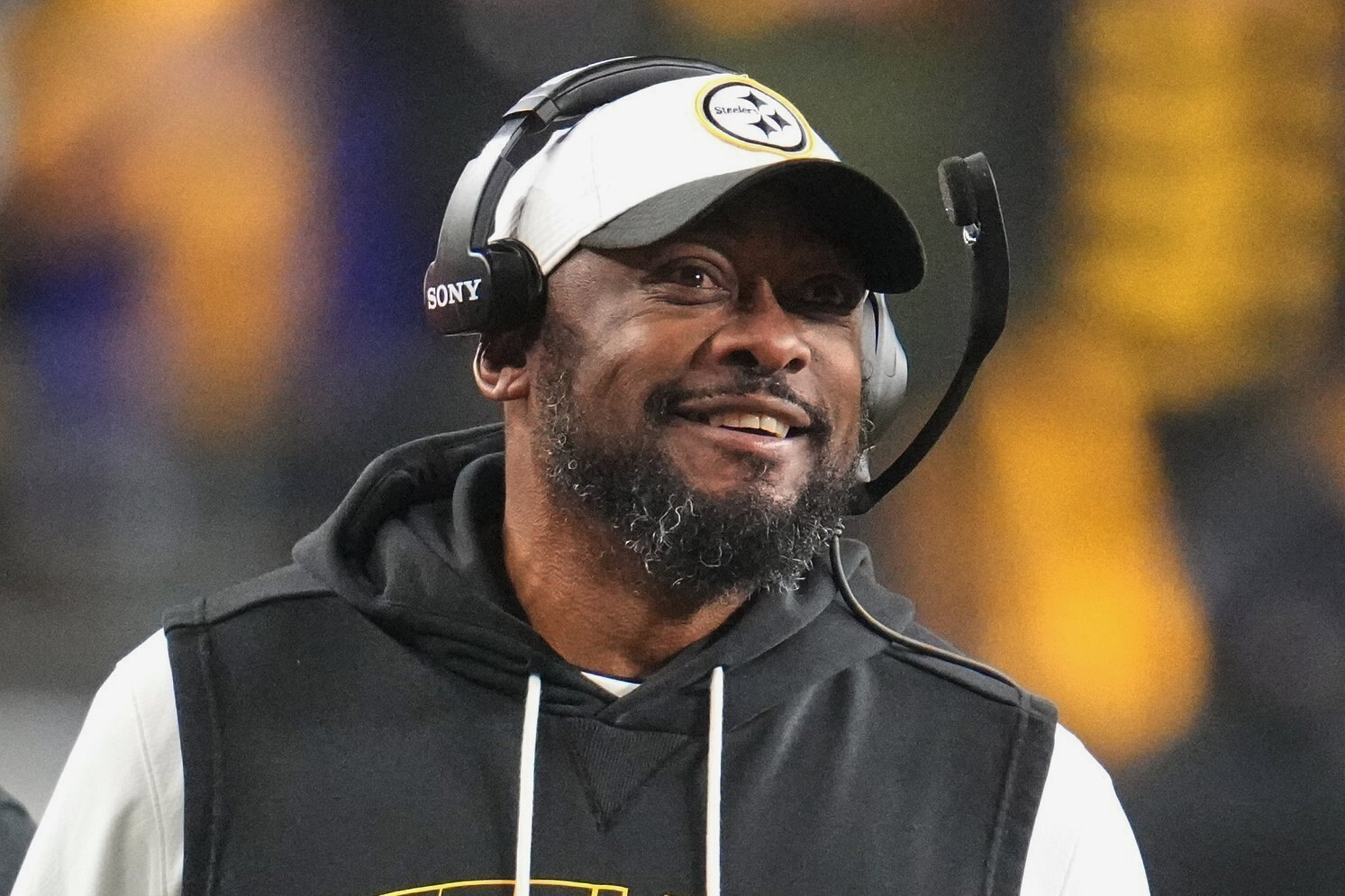
Pittsburgh Steelers head coach Mike Tomlin stands on the sidelines during the second half of an NFL football game against the Baltimore Ravens in Pittsburgh in January.Gene J. Puskar
Tomlintown
When you write frequently about transit and housing, you tend to hear from the small cadre of people who are extraordinarily enthusiastic about these issues. This week, I found out about a surprising member of their ranks: former Pittsburgh Steelers head coach Mike Tomlin.
Famous for his uncanny resemblance to actor Omar Epps and being the second Black NFL coach to win a Super Bowl, Tomlin used the game Minecraft to build his own fantasy city — a project that took place over a dozen years. He’s now giving the public a tour of his work.
Tomlin said he wanted densely populated buildings because of his interest in architecture, and went as far as creating interiors for each of his creations. His work is remarkably cognizant of genuine urban questions like lighting and viewsheds.
Like many gamers, he said his habit helped him “detach from the realities and the pressures of life.” We all need a way to unplug sometimes, but Tomlin’s impressive urban planning side project may have turned him into an unlikely urbanist hero.
SCRANTON — Four of Mike Parry’s tenants can no longer afford to pay their rent. Suddenly, their financial pain is his.
“It’s the affordability of everything that’s the problem,” said Parry, 60, of Clarks Summit, Lackawanna County. “We’re all feeling it now.”
With the war in Iran rocketing gas to almost $5 a gallon, inflation surging to 3.4% from 2.6% in 2025, and food prices up nearly 3% over last year, the high cost of living is weighing on the minds of many voters — and candidates — as the midterm elections draw near.
Nowhere is that more critical than in four tightly contested Pennsylvania congressional districts that could decide the control of the U.S. House — in Bucks County, the Lehigh Valley, the Harrisburg area, and Northeast Pennsylvania.
Mike Parry of Clark Summit, Lackawanna County.Courtesy of Mike Parry
Parry, a Republican and supporter of President Donald Trump, said he is aware that many Americans hold the president and his party accountable for the affordability crisis, including in the 8th Congressional District, where Parry plans to back GOP U.S. Rep. Rob Bresnahan over Scranton Mayor Paige Cognetti, the Democratic nominee.
But other voters might not be so kind to Trump-aligned incumbents this fall.
Among likely voters in Pennsylvania, 75% disapprove of how Trump is handling the cost of living, compared with just 25% who approve, according to a recent poll fromThe Inquirer, the New York Times, and Siena University. And 73% disapprove of how he has handled gas prices, vs. 24% who approve. About 65% disapprove of his handling of the economy, vs. 34% who approve.
“It doesn’t matter what party you’re in,” Parry said. “We’re all getting hammered the same.”
‘Spend less’
At his local Wawa gas station in Allentown, P.J. Santos, 32, removed his finger from the pump trigger before his tank filled.
“So I buy less than I need,” he added, tightening his gas cap. “Same goes for date nights with my wife: Spend less.”
That is harder when you’re buying food, said Tammy McCoy, 52, of Easton,in the same district.“Walk into any grocery store,” said McCoy, a Democrat and professional cook. “It’s like you have to hand them $50 at the door.”
(function(){function e(){window.addEventListener(`message`,function(e){if(e.data[`datawrapper-height`]!==void 0){var t=document.querySelectorAll(`iframe`);for(var n in e.data[`datawrapper-height`])for(var r=0,i;i=t[r];r++)if(i.contentWindow===e.source){var a=e.data[`datawrapper-height`][n]+`px`;i.style.height=a}}})}e()})();
Trump, she remembered, promised to lower priceson Day 1 of his presidency. Not only did that not happen, she added, he raised tariffs, making imported staples like coffee, nuts, and olive oil more expensive. “Because of that,” McCoy added, “I’m against him and Republicans.”
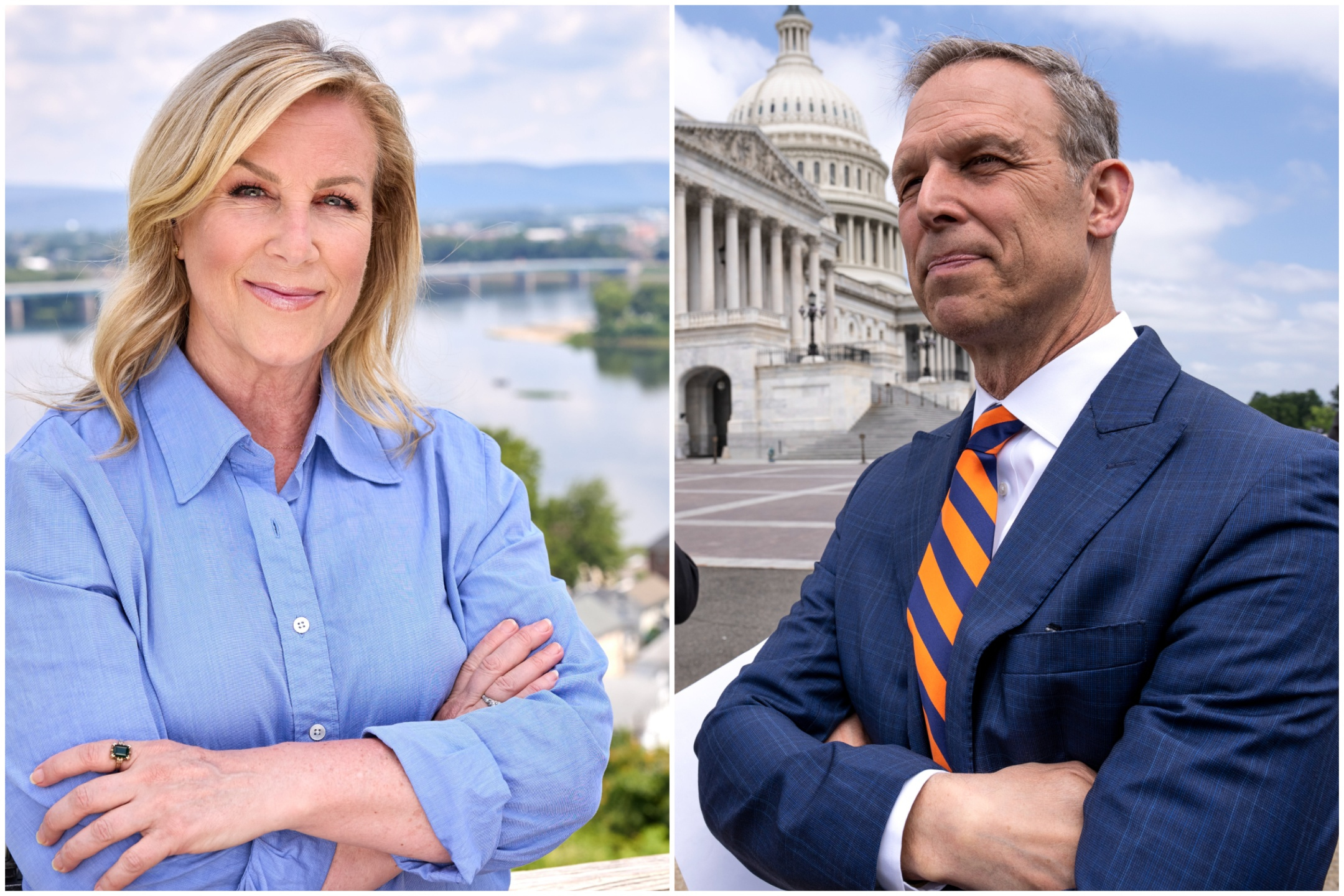
Tapping into the frustration over food prices, Democrat Janelle Stelson’s campaign is pointing to the cost of hamburgers as she seeks to oust Republican U.S. Rep. Scott Perry in the 10th Congressional District.
Janelle Stelson (left) and Rep. Scott Perry, R-Pa.(right) from a Stelson campaign photo in 2024, the last time the two squared off against each other in a bid to represent the 10th Congressional District. Stelson Campaign, AP
Stelson eats a burger in a TV ad that says Americans now pay $7.29 for a pound of ground beef —a result of tariffs Trump imposed and Perry supported.
But criticism of Trump’s tariffs will not sway Tammy Green, 60, a Republican voter in the 8th Congressional District who supports Bresnahan over Democrat Cognetti.
“Because he’s a businessman, President Trump understands the economy. … He’s negotiating fair prices with tariffs,” said Green, a former travel agent who lives in West Wyoming, Luzerne County.
More households need help
On a hot September day in Levittown, people gathered to celebrate the grand opening of the new headquarters of the United Way of Bucks County. Focused on helping anyone experiencing financial hardship, the building features an expanded HELP Center, where diapers, fresh produce, and clothing are available at no charge.
As need skyrockets, the nonprofit expects a 40% to 50% increase in demand this year, Marissa Christie, president and CEO, said in an interview.
“Folks are telling us that in the grocery store, their budget is not going as far as it used to,” Christie said. “When they go to fill up their gas tank, their money is not going as far as they expected.”
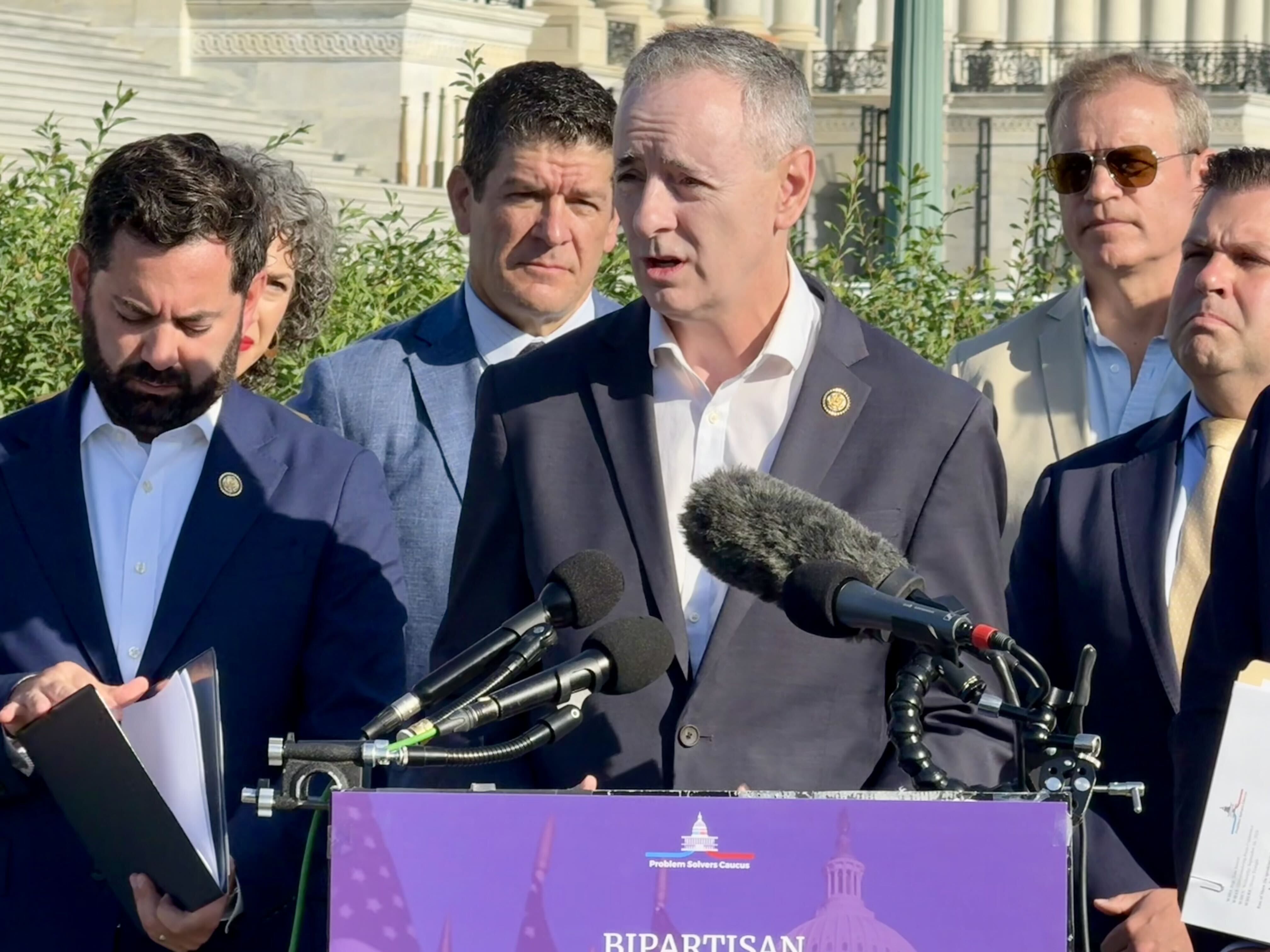
Attending the event alongside other local lawmakers was U.S. Rep. Brian Fitzpatrick (R., Bucks), who secured $4.15 million in federal funds for the building and said the agency will “always be in that top-10 list” of key nonprofits helping those in need.
U.S. Rep. Brian Fitzpatrick (R., Bucks) speaks outside the U.S. Capitol about legislation to put national restrictions on gerrymandering on Sep. 16, 2026.Sam Janesch / Staff
The cost of living has become a focal point in the 1st Congressional District race as Fitzpatrick fends off a challenge from Democratic County Commissioner Bob Harvie in the Bucks County-based swing district.
Pennsylvania Democrats, including Harvie, have centered their campaign messaging on affordability in hopes of appealing to voters across the political spectrum.
“Costs are what affect people every single day … whether it’s at the pump, whether it’s in the grocery store,” Harvie said in an interview with The Inquirer’s Editorial Board. “Housing costs obviously are huge. It’s a major issue here in this district, especially in the county.”
(The Editorial Board, which runs The Inquirer’s opinion pages and decides endorsements, operates independently from the newsroom. Newsroom editors and reporters have no role in endorsements, and opinion staffers have no role in news coverage.)
Fitzpatrick, too, acknowledged in an interview at the U.S. Capitol last month that affordability is the top issue not just in this election, but in every election.
“The No. 1priority, the No. 1 focus, has to be on affordability — has to be,” he said. “That’s the issue that got Trump elected in ’24. It’s what got [New York Mayor Zohran] Mamdani elected in ’25. It’s what people care about.”
‘Affordability front and center’
Demonstrating their awareness of voter focus on the high cost of living, Trump administration officials and local Republicans repeatedly emphasized “affordability” as they touted their work to combat rising electricity prices at a PPL Electric Utilities facility in Allentown last week.
“This is a quick way to lower electricity prices and increase reliability,” U.S. Energy Secretary Chris Wright said as he announced up to $71.5 million in federal funding for PPL, which was among $2 billion in new spending aimed at improving the electric grid.
Upgrades to existing transmission lines will include new technology like sensors to detect weather conditions, improving efficiency and ultimately lowering electricity costs, according to the Energy Department.
Asked how quickly consumers might see those improvements, Wright did not specify a timeline but noted that new, large-scale energy users — like data centers — are negotiating with utilities about how much of the increased demand they will cover.
Mackenzie, a freshman lawmaker whose district includes the Lehigh Valley and Poconos, also emphasized a bill he supports that would set federal standards for data centers to pay for their electricity use, and another to promote transparency around retail electric costs.
President Donald Trump invites 7th District U.S. Rep. Ryan Mackenzie (right) to the stage to visit Mack Trucks in Macungie, outside Allentown in the Lehigh Valley, in June.Tom Gralish / Staff Photographer
Mackenzie said energy policy needs tokeep“affordability front and center.”
The war’s economic consequences
Some Trump voters say they are willing to pay more for gas and other essentials as the president pursues his policy goals at home and in Iran.
“We incur a cost that stinks now to avoid another Sept. 11 later,” said T.J. Fitzgerald, 60, a Republican bail bondsman from Nanticoke, Luzerne County, in the 8th Congressional District. “Fighting Iran, a terrorist organization, is worth inflation at the pump.”
Ryan Kavulich, a 37-year-old project manager from Dunmore in nearby Lackawanna County, disagreed with that logic.
“The war’s a nightmare with what it’s costing for diesel,” said Kavulich, a Democrat who plans to back Cognetti in November.
(function(){function e(){window.addEventListener(`message`,function(e){if(e.data[`datawrapper-height`]!==void 0){var t=document.querySelectorAll(`iframe`);for(var n in e.data[`datawrapper-height`])for(var r=0,i;i=t[r];r++)if(i.contentWindow===e.source){var a=e.data[`datawrapper-height`][n]+`px`;i.style.height=a}}})}e()})();
People in the 8th District know that Bresnahan voted against ending the war with Iran in September, Kavulich said.
“And that makes voting for Paige [Cognetti] in November the easiest choice ever,” he said. “So many people around Scranton have a blue-collar, kitchen-table, commonsense vibe. They know going into Iran isn’t what you do. They know it’s time to be over Bresnahan and Trump.”
As the cost of fuel continues to climb, even some longtime Republicans in the district are expressing their doubts about the economic consequences of Trump’s war.
“I voted for Trump three times,” said Greg Kerrick, 58, a Republican voter from Scranton.
“But I don’t like him pushing up gas prices,” added Kerrick, who is unemployed. “And I feel for anyone paying over $4 a gallon.”
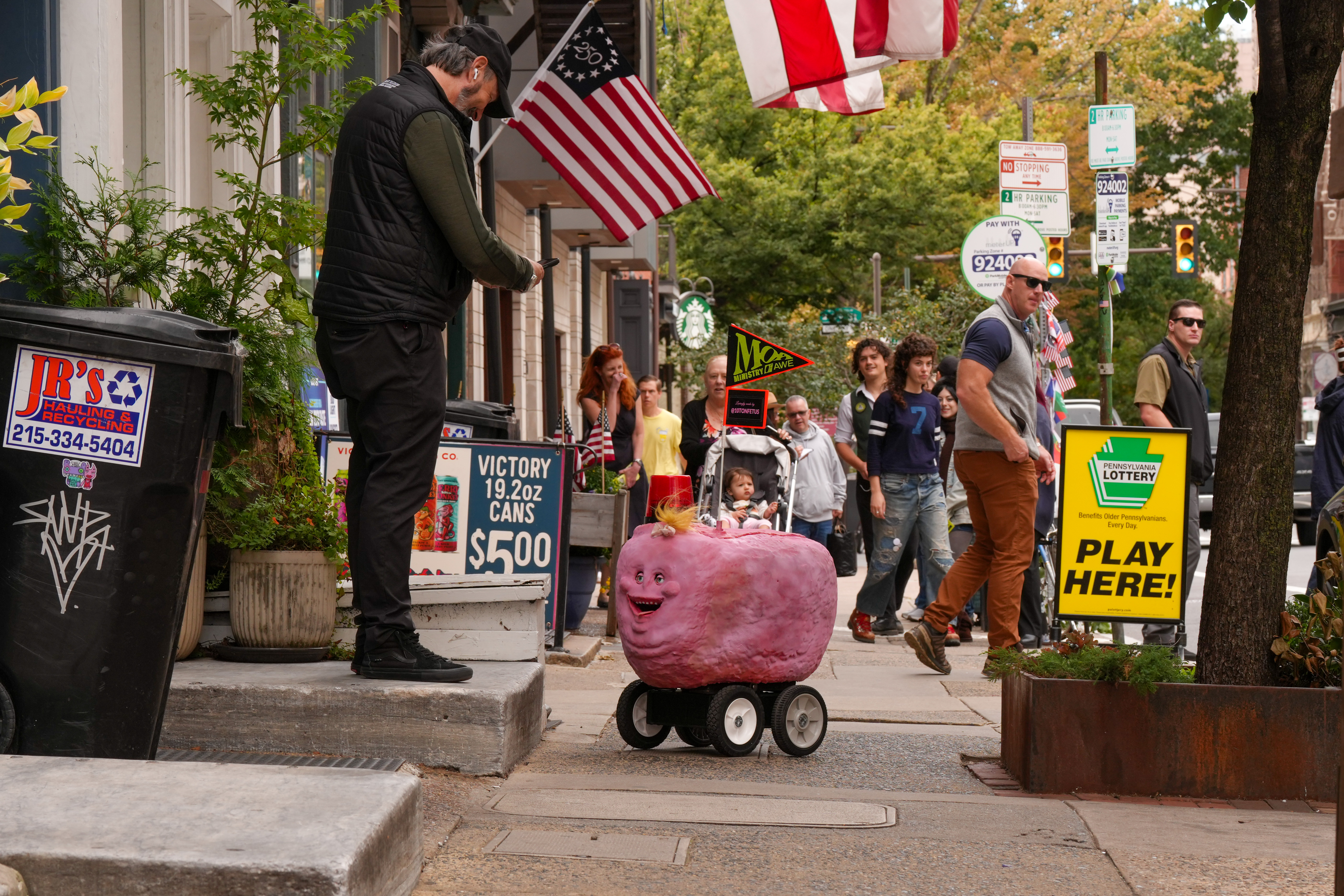
Orifice the Awebot rolled down the sidewalk across from the Betsy Ross House last Friday, striking joy, confusion, and mild terror in those who unexpectedly encountered her — and nobody expects to encounter a two-foot-tall, pink, potato-shaped robot with a dangling tongue, blue eyes, and a shock of blond hair.
As I trailed behind the little bot, I could hear people whisper and scream.
“Oh that’s adorable!”
“What did I just see?”
“It’s terrifying!”
Tourists on top of a double decker bus pointed at her. Philadelphians who didn’t have time for whatever this nonsense was steered clear. But after the initial shock of seeing Orifice wore off, most people smiled and laughed, like Justin Lutz of California.
Orifice the AwebotJessica Griffin / Staff Photographer
Lutz had already seen the Uber Eats robots on our sidewalks while visiting Philly and he immediately recognized that Orifice, despite being approximately the same size, was something quite different.
“I bet you Betsy Ross never thought a little robot would be scooting around in front of her house,” he said. “I love the personality and it’s super cool. We don’t even have these in California.”
I wanted to tell Lutz there’s a lot of great things we have in Philly they don’t have in California, like all four seasons and Gritty and the Phanatic, but I stopped short.
“Have a great time in our city,” I said, instead. “It’s just this weird here all the time!”
I was invited to follow Orifice around Old City with some folks from the Ministry of Awe (MoA), the interactive and immersive art installation created by Philly muralist Meg Saligman that’s housed in a 19th-century Old City bank.
The “Awebot” was born out of one of MoA’s community Co-Creation Nights as people were bouncing around ideas and discussing the Uber Eats robots that have become ubiquitous in Philly since they descended upon our city in March.
“We thought what if [robots] didn’t just bring things, what if they were used for purposes other than just delivery and business and commerce. Would that somehow let us reflect in a different way?” Saligman said.
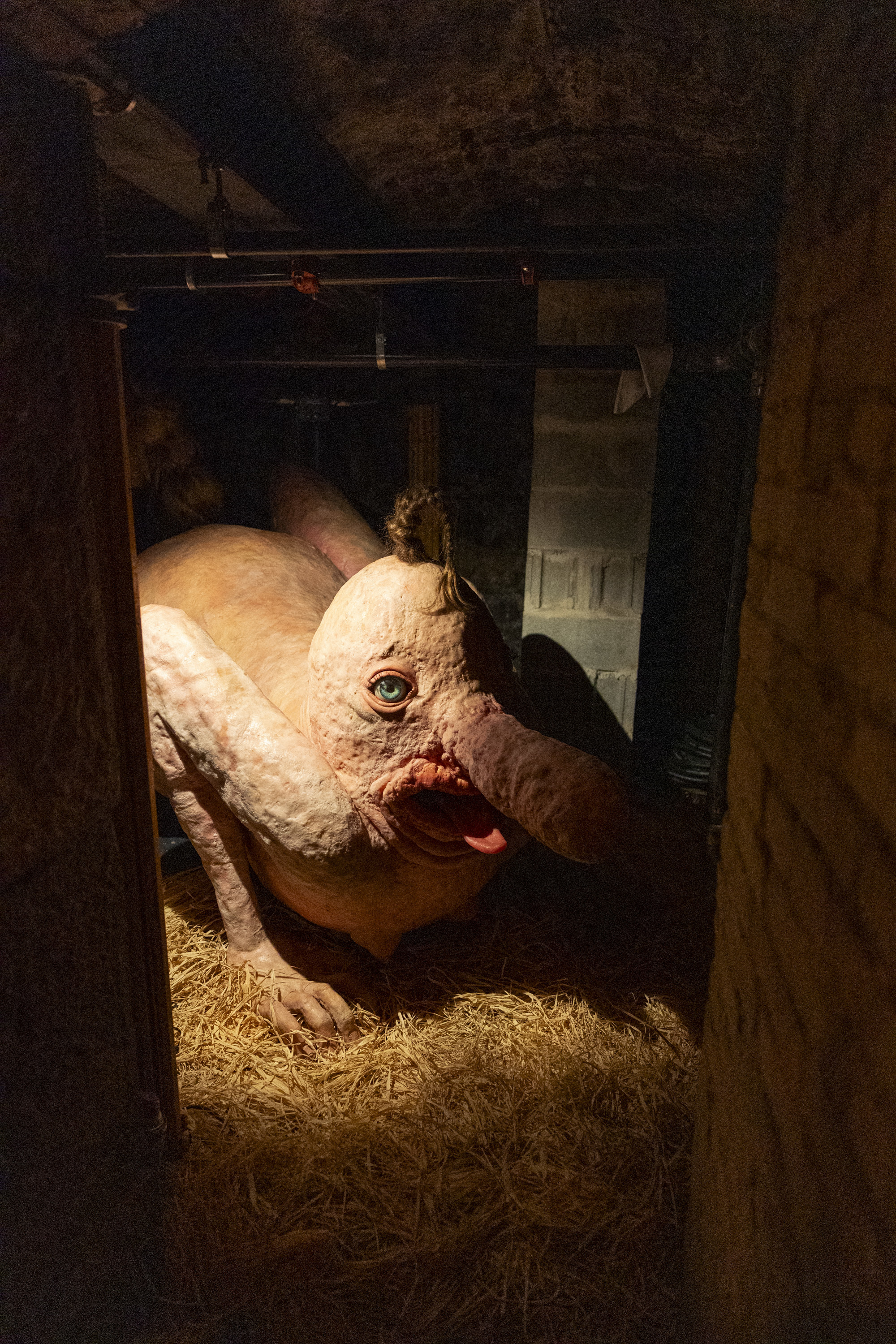
Artist Madison Polidoro (aka 10 Ton Fetus), a sculptor and metal fabricator whose human-animal-hybrid creatures like “Skin Horse” inhabit the bathrooms at MoA, brought Orifice to life. She’s affectionately known as the robot’s “mommy.”
“Skin Horse” is one of the sculptures from artist Madison Polidoro that inhabits the bathrooms at the Ministry of Awe. Tyger Williams / Staff Photographer
“What I find interesting about the Uber Eats robots is that they do create this kind of horror, this dystopian feeling in a lot of people,” Polidoro said. “So I was excited about the idea of making my own robot creature to sort of do an opposite thing where it could inspire something lighthearted and silly and fun and kind of magical.”
Polidoro fabricated Orifice’s base out of aluminum and left an empty vessel in the center, so it can carry things. She made the skin out of weatherproof urethane rubber and included an orifice on the robot’s rear end, which is where it gets its name.
Orifice is driven via a wireless remote but the range of the controller is quite far (at least half a city block), so the driver can remain pretty inconspicuous. The Awebot’s large blue eyes blink independently at intervals, but they can also be controlled by the operator. The dangling tongue, however, remains permanently out.
Artist Madison Polidoro with her creation, Orifice the Awebot.Jessica Griffin / Staff Photographer
“She’s a sweetie pie who’s curious and likes to explore and try new things. And she loves attention. She’s kind of like a dog,” Polidoro said of her creation.
‘They’re gonna fight!’
As a team of folks from MoA, including Saligman and Polidoro, set out with Orifice in Old City last Friday, they didn’t even get a few hundred feet down the block before people stopped to pet the Awebot and ask questions.
“Is this a good hair day or a bad day for it?” a man in an Eagles jersey asked.
“Does it poop?” another guy wondered.
He was assured it did not.
This yellow Labrador retriever was very dubious of Orifice the Awebot. Jessica Griffin / Staff Photographer
As Orifice rolled down the sidewalk, she scared a few dogs, people pulled over their cars to see her, and others ran across the street to take her picture.
An Xfinity van driver sitting in his vehicle looked stunned as we passed. Then we made eye contact, he shook his head, I shrugged my shoulders, and were shared an “only in Philly” laugh.
At one point, Saligman spotted an Uber Eats robot down the sidewalk and ran to stand in front of it and stop it so Orifice could meet it face-to-face.
“They’re gonna fight!” Polidoro said.
Alas, the meeting did not result in a new kind of BattleBots, but it was clear that at one point, a human must have taken control of the Uber Eats robot, because it skillfully maneuvered its way around Orifice and Saligman. I can only imagine what the person on the other end of that camera thought.
An Uber Eats robot rudely ignores Orifice the Awebot on the sidewalks of Old City. Jessica Griffin / Staff Photographer
All the while, MoA staffer Jordan Rampulla — who served as Orifice’s “conduit to humanity” — encouraged people to interact with the robot, handed them fliers for the MoA, and told them to click a QR code on an MoA flag attached to the robot, which leads to a landing page about the creation on the MoA website.
Orifice is not just MoA’s creative response to the dystopian Uber Eats robots, it’s also a inventive marketing tactic. While some people we met had heard of MoA, others had not, and they seemed interested in learning more about the experience after meeting its Awebot ambassador.
‘Bringing delight and surprise’
As the little pink robot passed by the little pink Tarte’s Pastry Shop on Arch Street near Second, owner Teresa Wall popped outside of her business, stunned by what she saw.
“It’s hysterical! We need more of that. I love it,” Wall said. “Any of this in today’s climate is great, any joy and laughter, we need it more.”
When Stephanie Gentle, who was out walking her French bulldog, Frank, first saw Orifice, she worried it might be a new kind of delivery bot. She was relieved to learn it was a creation of the MoA.
“I would much rather have this on the streets than an Uber Eats robot. It’s much less scary and much less evil,” Gentle said. “I’m so happy I ran into this. This made my day.”
A passerby takes a photo of Orifice the Awebot as she roams the streets of Old City. Jessica Griffin / Staff Photographer
I too would rather have Orifice wandering around Philly than those Uber Eats robots any day. She’s the rare kind of robot that connects humans with each other and illustrates the creativity of humanity in a unique way.
“When people see a lot of my creatures they intuitively connect with them through these anchoring points of the eyes and the skin and the hair and the orifices. Those are things that sort of force you to engage with another person when you look at them and meet them,” Polidoro said.
“They also force you to engage with my work in a very specific way, and I think that that’s something that I’ve really been leaning into and enjoying lately in a time of food-delivery-robot-dystopian-level technology that’s sort of separating us all from those very basic, but fundamental, important human connections.”
Polidoro and Saligman have big dreams for Orifice’s future. They’d like to take her to an Eagles tailgate and maybe out to lunch at Parc one day. If it doesn’t rain this Friday, they’re planning on bringing her to Elfreth’s Alley for the 11th anniversary celebration of the destruction of hitchBOT.
Orifice will make special appearances at MoA and her upcoming public appearances around the city will be announced on MoA’s social media channels, though she could pop up anywhere, unannounced, any day.
“She’s part of our bringing delight and surprise and letting it ripple through the city,” Saligman said.
Artist Madison Polidoro with her creation, Orifice the Awebot. Jessica Griffin / Staff Photographer
Over five days in August, Pennsylvania health officials called the Lancaster County Coroner’s Office at least three times and sent an email asking to discuss the death of an infant who had tested positive for measles.
They did not connect with coroner Stephen Diamantoni before Gov. Josh Shapiro came to the county to announce at an Aug. 25 news conference that two unvaccinated Lancaster residents had died in a growing measles outbreak, the state’s first measles-associated deaths in 35 years.
Soon after, the county coroner — an elected Republican who has presided over the office for nearly two decades — was telling reporters the state had not talked to him directly, raising questions about the state’s communications.
His comments, coupled with his position that he did not believe one of the two infants affected had died from measles, kicked off a viral exchange of misinformation cited by anti-vaccine activists — and spiraling up to federal health leaders — to discredit the dangers of Pennsylvania’s growing measles outbreak.
Now emails from the coroner’s office, obtained by The Inquirer through an open-records request, show that state officials made significant outreach to Diamantoni, far beyond his prior statements acknowledging only that his deputy spoke with state officials shortly before the news conference.
In fact, doctors from the state health department had tried to contact his office about the case for days, with increasing urgency. At one point, a doctor told one of Diamantoni’s staffers that they were ready “24/7” to speak with someone from the office.
Yet two weeks after the announcement, he continued to emphasize the state’s lacking communication in an in-person interview with The Inquirer. “I have not received any information directly from the state [health] department,” he said on Sept. 9.
By then, his statements had enabled President Donald Trump’s health secretary, Robert F. Kennedy Jr., to question whether the deaths reported in Pennsylvania were real.
The Centers for Disease Control and Prevention for weeks omitted the first two deaths and those subsequently reported by the state in its national reporting, marking an extraordinary departure from public health norms. As of Thursday, the agency had updated its tally to recognize two deaths nationally this year, while Pennsylvania has reported five measles-related deaths.
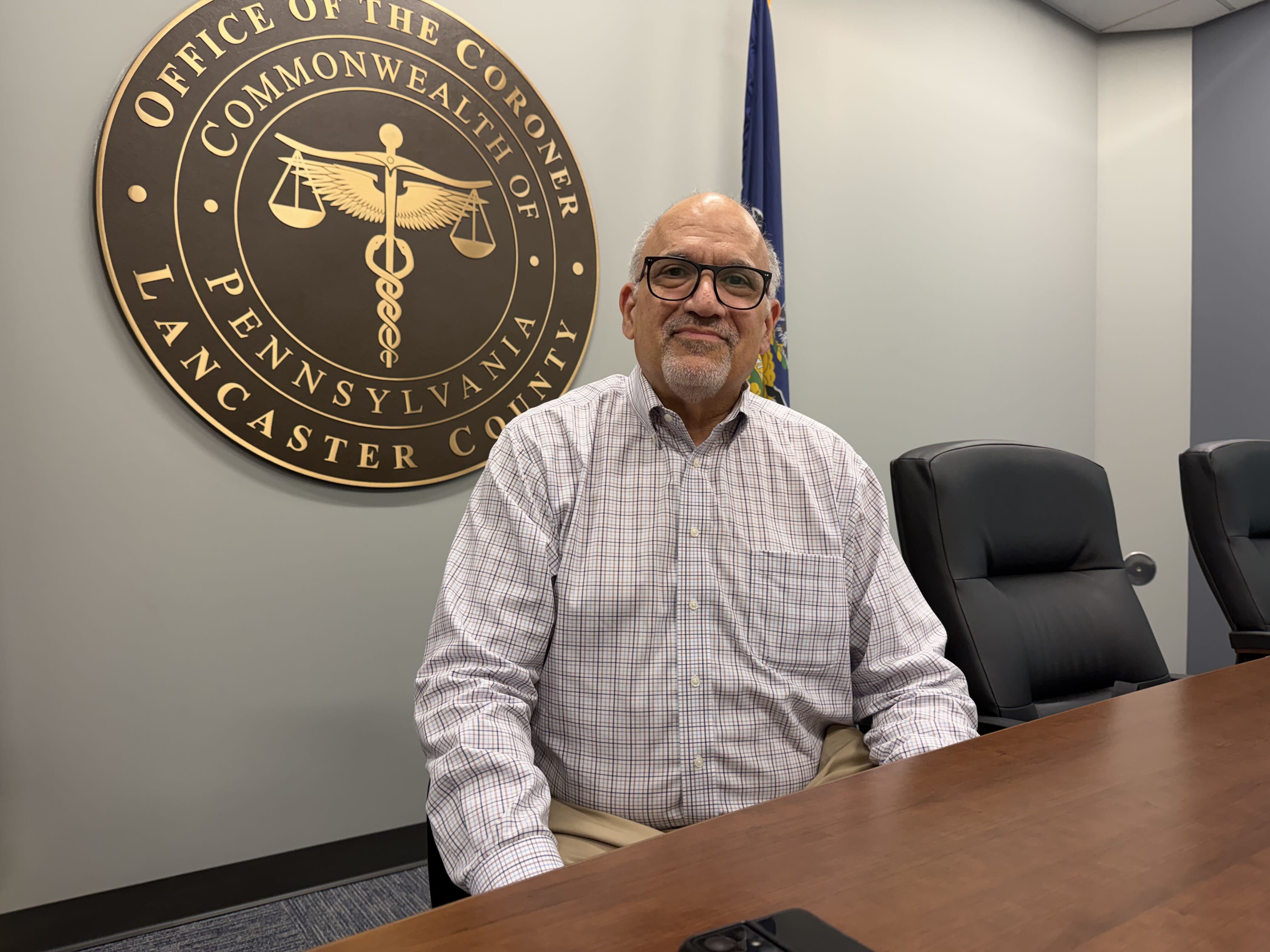
Lancaster County coroner Stephen Diamantoni poses for a photo in his office in September.Gillian McGoldrick
Asked to comment on the records, Diamantoni said he was not aware of the state’s outreach ahead of Shapiro’s announcement.
He said state officials should have been more explicit in the calls they made to his office staffers, who sent him and his deputy emails relaying messages. The communications did not make it clear that they needed to speak to him about a measles-associated death, Diamantoni said, adding that he is easy to reach.
“It didn’t sound like there was urgency. It didn’t sound like anyone indicated that there was a measles death that we want to talk to the coroner about,” he said.
Public officers like Diamantoni have an obligation to ensure staff can get timely messages to him, especially in a public health emergency like a measles outbreak, said Kathleen Hall Jamieson, director emerita of the Annenberg Public Policy Center at the University of Pennsylvania. Likewise, she noted, state officials must ensure communications with the public are transparent and easy to understand.
State officials did not immediately say how they define a “measles-associated death” and have provided few details on the deaths themselves, leaving county coroners to fill in the blanks.
Public health experts have noted that the politically charged back-and-forth and competing narratives around the deaths risks confusing the public at a time when clarity is crucial — amid the largest measles outbreak in the country, with state officials reporting nearly 1,000 cases and five measles-associated deaths.
(function(){function e(){window.addEventListener(`message`,function(e){if(e.data[`datawrapper-height`]!==void 0){var t=document.querySelectorAll(`iframe`);for(var n in e.data[`datawrapper-height`])for(var r=0,i;i=t[r];r++)if(i.contentWindow===e.source){var a=e.data[`datawrapper-height`][n]+`px`;i.style.height=a}}})}e()})();
The contradictory communications from the state and the local coroner’s office around the initial Lancaster deaths set the stage for Kennedy to attack Shapiro in an X post, claiming the Democratic governor may have “fabricated” two of the deaths in Pennsylvania.
Shapiro has sharply criticized Kennedy, a longtime anti-vaccination advocate, for spreading misinformation about vaccine safety and Pennsylvania’s outbreak, now the largest in the nation this year, with the most deaths reported by any state since 1992.
Asked for comment on communications with Diamantoni, state officials provided a statement by email saying Pennsylvania law bars them from providing further information on the initial measles-associated deaths.
The health department’s epidemiology team “thoroughly investigates and verifies” measles-associated deaths to ensure that they meet the state’s definition, and does not announce deaths until they have finished an investigation, health department press secretary Neil Ruhland said in an email.
He said state law does not require the department to report deaths to a coroner’s office; rather, coroners and “other certifiers” report deaths to the state health department.
“PA DOH has followed this explicit process for all measles-associated deaths in Pennsylvania,” Ruhland wrote.
‘No one looks good’
News outlets began calling Diamantoni as soon as the first measles-related deaths were reported in Lancaster, where he is a family medicine doctor and former Lancaster City Council president. First elected to the coroner’s office in 2007, he said he views his duties as apolitical and describes himself as a strong advocate for vaccination.
He told media outlets he had been surprised by the state’s announcement, as his office had not identified any deaths from measles.
The office had investigated the death of an infant who tested positive for the disease, but Diamantoni has maintained that the child had died from a lacerated spleen, not the highly contagious illness.
Diamantoni told The Inquirer repeatedly that state health officials had never spoken personally with him about the death of an infant later identified as Ivan Miller, who was hours old when he died on Aug. 14.
He said that state health officials had only reached out hours before their news conference, and that his deputy, Eric Bieber, had spoken to them.
(function(){function e(){window.addEventListener(`message`,function(e){if(e.data[`datawrapper-height`]!==void 0){var t=document.querySelectorAll(`iframe`);for(var n in e.data[`datawrapper-height`])for(var r=0,i;i=t[r];r++)if(i.contentWindow===e.source){var a=e.data[`datawrapper-height`][n]+`px`;i.style.height=a}}})}e()})();
Internal office records reveal that five days before the news conference, a staffer in the coroner’s office e-mailed Diamantoni, saying that an infectious-disease doctor with the state health department was looking to speak to “one of you” about “the positive measles case with the infant we just had.”
The state health department followed up on its initial Aug. 20 call with subsequent emails and calls on Aug. 21, a Friday, and Aug. 24, the following Monday, records show.
One doctor included his state-issued cell phone number in an email to a coroner’s office staffer and Bieber and emphasized that he was available “24/7” to discuss the case.
When Bieber spoke to representatives from the state health department on Aug. 25, the office did not realize that the state was about to announce two measles-associated deaths, according to Diamantoni.
Diamantoni added that since he did not believe Ivan Miller’s death was caused by measles, he had not been expecting any outreach from the state.
“I don’t think it would have brought a red flag to me. It just looked like a request we usually receive from different individuals, different agencies, requesting cause and manner information,” Diamantoni said.
Yet it is the responsibility of public officials to establish communication procedures at their offices, especially when a contagious disease is spreading and the public needs clear information, according to Penn’s Jamieson.
In public offices, she said, “you shouldn’t be seeing a situation in which the person doesn’t get the information, or is able to say, ‘I didn’t get it.’”
State officials could have communicated more clearly in announcing the deaths as well, she said, noting that they did not immediately define “measles-associated death” in an initial news release.
Jamieson said it is important for health officials to explain “what we know, what we don’t know, and how we’re finding out what we don’t know” in terms the public can understand.
“Anytime the public is listening to voices that are supposed to be speaking with authority, and the public, instead of hearing a clear message, is confused, you have a problem,” she said. “No one looks good.”
Measles-associated deaths in Pennsylvania
State officials have repeatedly cited state privacy laws in response to criticism of their communications, saying they cannot provide detail about how they investigated the measles-associated deaths.
The state defines a measles-associated death as one that occurs within 30 days of symptom onset in a person with clinical evidence of infection and a positive laboratory test for measles, and who did not die of another unrelated cause, like a car crash.
Officials have provided little information beyond the fact that none of the five people who have died were vaccinated, and their county of residence.
Local coroners like Diamantoni have offered more details.
For example, in early September, Jefferson County’s coroner, also an elected Republican, confirmed the death of a 40-year-old woman from measles. He disclosed that the woman also had severe respiratory conditions, including chronic obstructive pulmonary disease, that made her vulnerable to serious complications from a respiratory illness like measles.
Later in the same week, the Mifflin County coroner, another Republican, confirmed that an unvaccinated 18-year-old had died from a rare neurological complication of measles.
Diamantoni has shared that Ivan Miller, who died at a birthing center in Lancaster County, tested positive for a measles infection acquired before birth. His family, who is Amish, told the Atlantic that his mother had a severe case of measles and gave birth early.
Although Diamantoni did not consider measles to have caused the death, he said, measles was included on the boy’s death certificate in a section that lists “significant conditions contributing to death but not resulting in the underlying cause.”
Physicians have noted that measles can weaken the spleen, putting it at risk of rupture. Diamantoni cited a lacerated spleen as the primary cause of death.
The second death, another Amish infant, was not initially reported to Diamantoni; Lancaster’s Clinic for Special Children, which treats Amish children with genetic conditions, had treated the baby until her death.
Diamantoni’s office investigated the death about a week after the state’s news conference; he later told reporters that the baby was 6 weeks old and had Amish lethal microcephaly, a fatal genetic condition that makes respiratory illnesses particularly risky. Diamantoni said measles caused the baby’s death.
On Wednesday, state health officials announced a fifth death, a Lancaster County resident who tested positive for measles and died. Diamantoni told The Inquirer that he had not handled that death, but that state health officials had informed him about it. He said they provided no further information.
State officials did not say whether the person, who was unvaccinated, died in Lancaster County.
Diamantoni told an Inquirer reporter in early September that he was proud that his office was one of the first in the country to be certified by the International Association of Coroners and Medical Examiners.
“People may not always agree with our findings, but they’re well investigated and well thought out,” he said.
Staff writer Gillian McGoldrick contributed to this article.
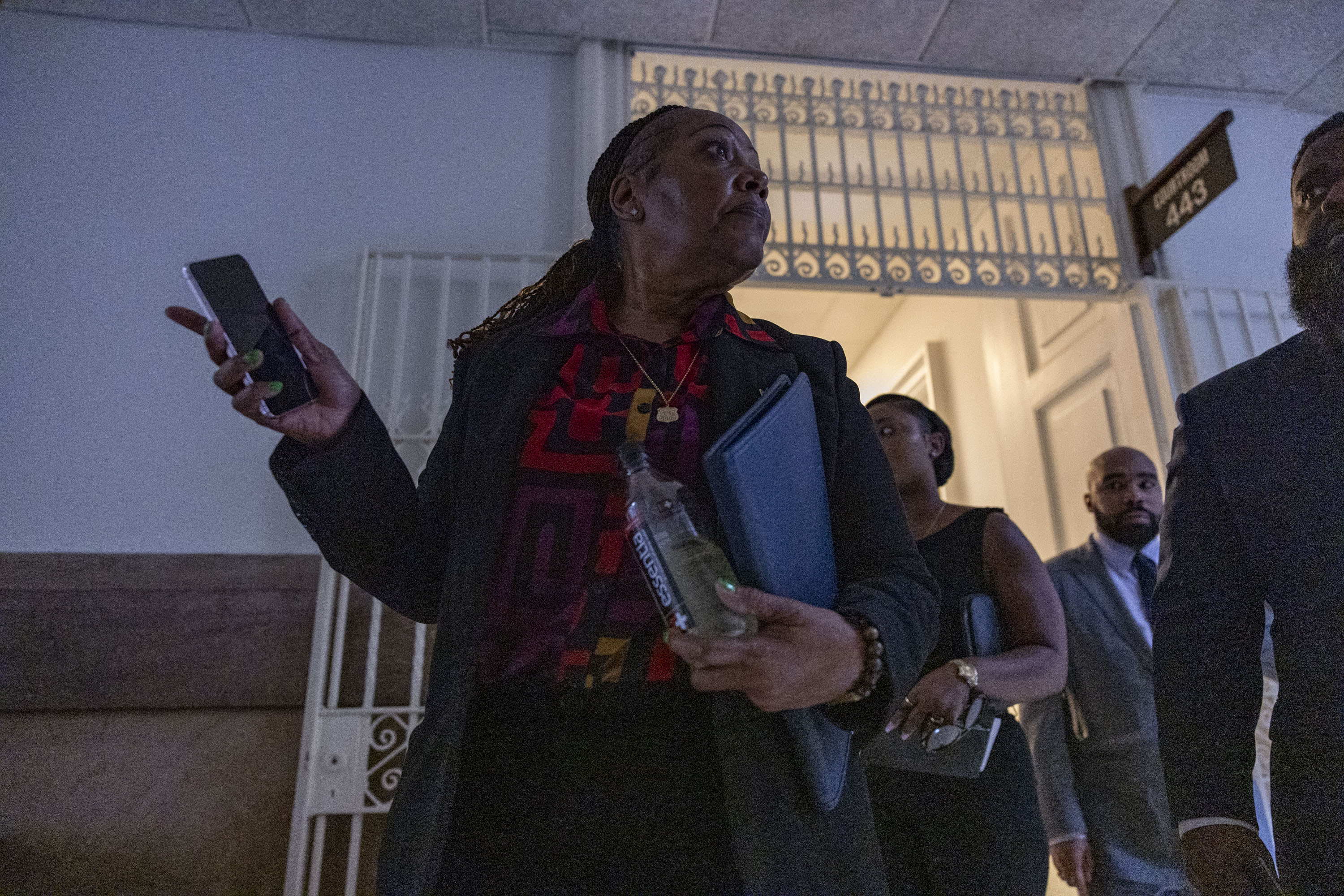
A top aide to Philadelphia Sheriff Rochelle Bilal revealed in court that an internal audit had recently uncovered $20 million in undisbursed money — including tax revenue and utility payments that should have gone into city coffers.
The stunning disclosure of misplaced sheriff-sale proceeds — which amount to more than half the office’s annual budget — came during a two-day hearing as Bilal and her staff sought to back out of a judge’s plan to appoint an independent supervisor to monitor the office’s troubled process.
That tentative deal, struck after an August hearing before Common Pleas Court Judge Paula Patrick, was meant to resolve years of delays in issuing deeds and distributing sale proceeds.
But Patrick, supervisor of the court’s commerce division, ordered Bilal and her deputies back into her courtroom on Wednesday after the sheriff’s office reneged on the agreement.
The judge insisted that Bilal be in the room before the hearing began.
“You need to have your client here,” the judge told Jonathan Rardin, a lawyer the city retained to represent Bilal. “She needs to be here to get started.”
Bilal then walked in and took a seat behind the defense table without speaking.
Steven Wakefield, a new deputy undersheriff hired in June to streamline the office’s property auctions, testified Wednesday morning that he had already fixed many of the operational issues that had caused the backlog.
Under questioning from the judge, Wakefield also detailed the discovery that “checks had not been written” for some $20 million in sales proceeds, including uncollected property taxes and water bills that are meant to be recouped through sheriff sales.
“A lot of that was money that was supposed to go to the city,” Wakefield said.
The money was found during an audit that so far has gone only as far back as August 2025. Wakefield did not provide an explanation for why the money had remained in the sheriff’s office, but said it was recently transferred to the city.
New procedures in the office allow executive staff to track when checks are written, he said.
“We have much more robust information,” Wakefield said.
Patrick appeared stunned by the revelation.
“Twenty million dollars is a lot of money,” the judge said. Wakefield agreed.
Patrick also questioned why Wakefield had not included that information in the records she had ordered the sheriff’s office to produce over the summer, including a list of every sheriff sale since Bilal took office in 2020 and how the money was distributed.
On Wednesday afternoon, Bilal took the stand for the first time, testifying that she had not known about the backlog of unprocessed deeds until “2024 or 2025,” when she started receiving emails from real estate agents and City Council members about deeds not being recorded.
“It was like Spidey senses. I’m getting more than one,” Bilal said of the emails. “Then every week.”
The Inquirer first reported on the problem in July 2024, based on an analysis of city property records. Bilal’s staff initially denied there was a deed backlog, then weeks later said they would take corrective action. Yet the delays continued, and in some cases got worse, with banks, real estate agents, and investors saying as recently as May 2026 they have waited more than a year after auctions to receive their deeds.
Bilal has repeatedly provided inaccurate information about sheriff sales and her office’s finances, including telling City Council in April that post-auction delays had been resolved.
But under oath in court, Bilal said she agreed with Rardin’s assessment that the sheriff’s office had not been fulfilling its obligations until recently.
“That’s what I’m starting to find out, yes,” Bilal said.
While Bilal campaigned as a reformer in 2019, she testified she had only a rudimentary understanding of what the job entailed when she took office. She said she spent an extended amount of time interviewing staff to “figure out what the sheriff’s office actually does.”
Now more than halfway into her second term, Bilal blamed the ongoing problems on chronic underfunding from City Hall, poor decisions by managers under her, antiquated technology, and staffers who struggled to handle the new office software that went live in 2024.
Bilal’s testimony continued Thursday morning. Asked whether she would permit an outside compliance examiner to come into the office, she refused to answer the question.
“We are in compliance,” Bilal said. “We got control of this.”
A deal collapses
This week’s hearing was not supposed to happen.
Judge Patrick, frustrated with an onslaught of litigation over sheriff sales, ordered the August hearing at which Bilal’s staff was required to demonstrate why a “special master” or someone with similar expertise in real estate should not be brought in to temporarily oversee the auctions.
That hearing was cut short after Bilal’s staff said it would allow the monitoring and report back to the court in six months. “It’s better that we come together, and make an agreement,” Bilal told reporters at the time.
But Daniel Bernheim, the lawyer representing plaintiff JSB Property Group, whose March lawsuit over deed delays triggered the legal showdown, said in an interview Tuesday that Bilal’s legal team went silent after Patrick submitted a draft of a stipulated order that called for appointing a team to evaluate the office’s practices.
Bernheim said Rardin then told him he could not reach “the key decision makers” in the office.
“The ‘key decision maker,’” Bernheim said, “is the sheriff.”
Then, Bernheim said, the sheriff’s office submitted what he described as “ludicrous” changes to Patrick’s proposal, including, according to Bernheim: requiring 48 hours’ notice for the independent supervisor to interview any sheriff’s office employee; removing the word comprehensive before review; and automatically terminating the supervision after six months regardless of the results.
What happened?
It is unclear why the sheriff’s office changed direction.
Bilal did not respond to questions Wednesday during a break in the court proceedings. Standing near the defense table, she pointed her phone at an Inquirer reporter’s face and appeared to take a photograph. Her staff then formed a barricade around her.
On Tuesday, Rardin submitted a memo arguing that Patrick had overstepped her authority. He wrote that the 2003 consent order at the center of the case — which requires the sheriff to issue deeds within 40 days from settlement — does not apply to Bilal because it had been brought against a previous sheriff, John Green, who was later imprisoned on federal bribery charges.
Even if the order did apply to Bilal, Rardin wrote, the court’s legal authority was limited to holding her in contempt, not “open-ended structural oversight.”
On the stand Wednesday, Wakefield told Patrick that sheriff-sale proceeds are now being distributed and deeds issued within weeks of settlement. He said the office has reorganized its workforce and is crafting new regulations for auctioning properties that will remain in place for future sheriffs.
“I have personally signed hundreds and hundreds of deeds,” Wakefield said.
Much of Wakefield’s and Bilal’s testimony over two days involved past practices in the sheriff’s office, as they guided attorneys through reams of financial and personnel records.
At one point, Bernheim questioned why a sworn deputy sergeant was needed to, in Wakefield’s term, “babysit” staffers in the real estate division to make sure they were doing their jobs.
“If we could trust everyone to do their job 100%,” Wakefield said, “we wouldn’t be here today.”
“Amen to that,” Patrick responded.
At the conclusion of the hearing Thursday, the judge said would take the new testimony under advisement and issue a ruling shortly.
Given the remarkable gloominess of the last 30 days, it would be reasonable to believe that the sun had lost its will to shine.
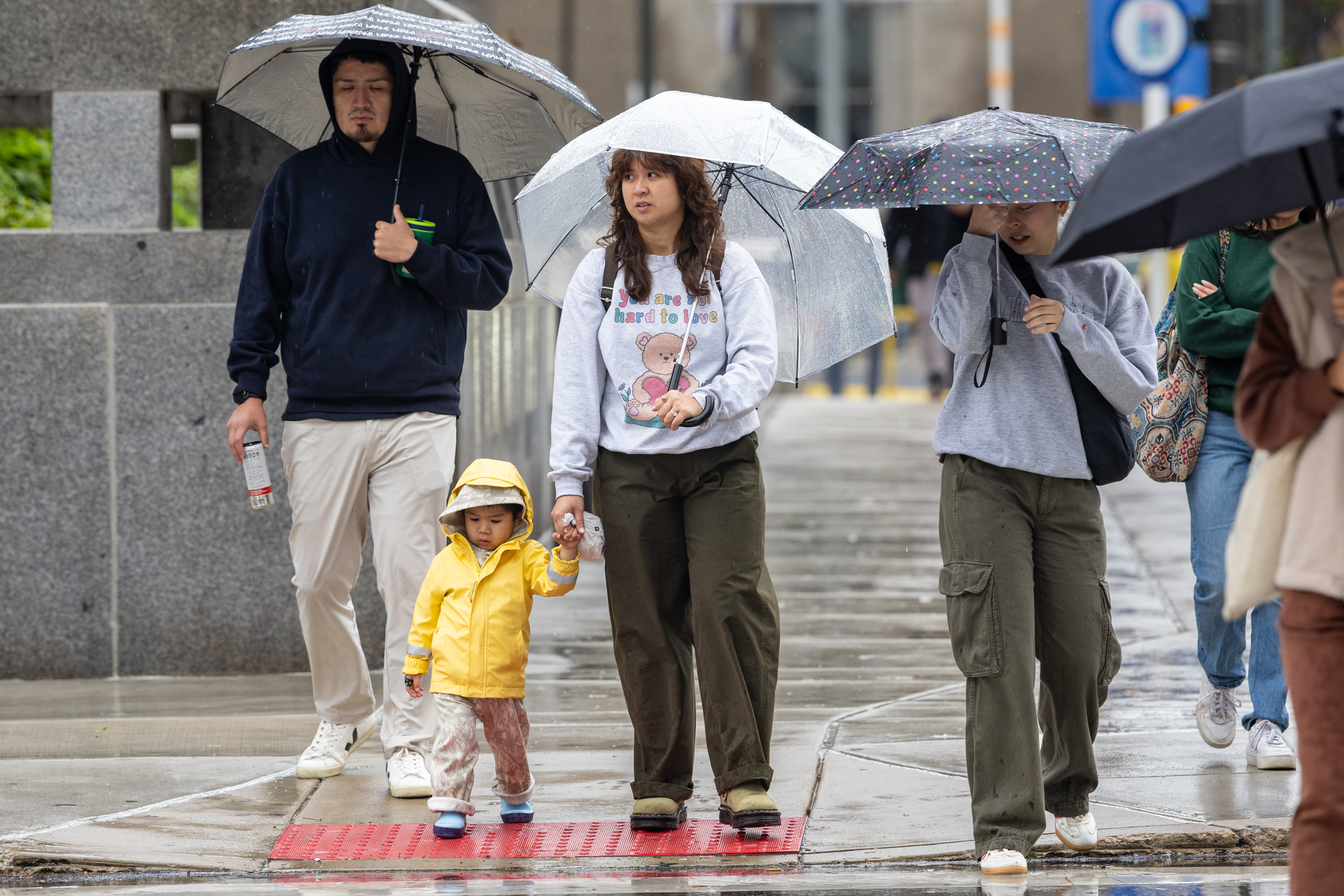
It is due to make a comeback by Thursday afternoon on the first day of a fresh month, but last month has entered the books as one of the wetter and cloudier Septembers in the period of available records.
Ordinarily, the September sun is some consolation for what is a month of rapidly shrinking daylight hours and lengthening nights. Not this time.
“Not your typical September,” said Ray Martin, lead meteorologist at the National Weather Service office in Mount Holly, who has his own hypothesis that includes an indirect connection with the burgeoning El Niño event in the equatorial Pacific.
For some folks, the gloominess is more than an aesthetic issue: It can have deleterious effects on mood and overall well-being, mental health experts advise.
“We’re losing daylight quite rapidly, and a stretch of cloudy weather like we’ve certainly had lately can make that change feel even more pronounced,” said Alan Jacobson, a psychologist practicing in Massachusetts and a specialist in seasonal affective disorder, known as SAD.
What’s going on up there in the skies over Philly?
Perhaps both the sun and moon, whose fullness last weekend also was obscured by the clouds, had spent so much time out of the public eye they developed a certain shyness.
For the month, 18 days came close to or exceeded the criteria for “cloudy,” according to the weather service.
Unfortunately, sky-cover records are wanting since the agency radically changed the observation protocols — replacing humans with a sky-scanning machine — in the mid-1990s.
However, this September by far was the gloomiest since September of 2018, when close to 10 inches of rain was measured at Philadelphia International Airport. The 6.61 inches of September 2026 was the highest total since then.
As to why it has been so cloudy: “We’ve definitely had a lot of systems move through, a lot of moisture,” Martin said.
And why might that be?
This has become the longest wait on record for the first hurricane of the season in the Atlantic basin, as the warming of waters in the equatorial Pacific has interacted with the atmosphere to generate powerful storm-shearing winds from the West. It is at least possible that what’s not happening in the Atlantic has been a factor in the clouds over Philly.
“You could almost argue that the energy that normally would be expended in the tropics by hurricanes … maybe kind of worked its way north,” Martin said, but added: “That’s pure speculation.”
Whatever the cause, the lack of sun has not been exactly an energizer.
The effects of the lack of sunlight
To feel enervated and melancholy at times as the days shorten is a sure sign of normality, Phyllis Zee, a circadian and sleep-medicine specialist with the Northwestern University Medical Center, has observed.
The sunrise-to-sunset periods are shrinking by more than 2½ minutes daily in the Philadelphia region.
Plus, the sun is losing radiative power daily, and clouds dilute whatever reaches the surface.
Less light affects people in a variety of ways.
“For some people, reduced light can affect sleep, energy, concentration, and mood,” Jacobson said.
An estimated 5% of people experience serious symptoms of seasonal affective disorder, which is a form of depression, and 10% to 20% are affected by mild versions.
For those who do not require clinical intervention, Jacobson and other specialists advise that an excellent remedy would be to spend time in the sun (assuming it returns), especially in the morning
“Get outside and move your body daily,” said Tonya Ladipo, a Philadelphia therapist and founder of the Ladipo Group counseling service. “Even if it’s dark and cloudy, you’ll get some natural vitamin D in addition to the mood and energy boost that comes with being outside in fresh air.”
The sun is due for a comeback
And the sun is due to rule the day Friday, and it is at least possible it will show up Saturday and every day of the next workweek.
But showers are possible Friday night and rain is looking likely Sunday, although conditions certainly should not approach anything like last weekend’s.
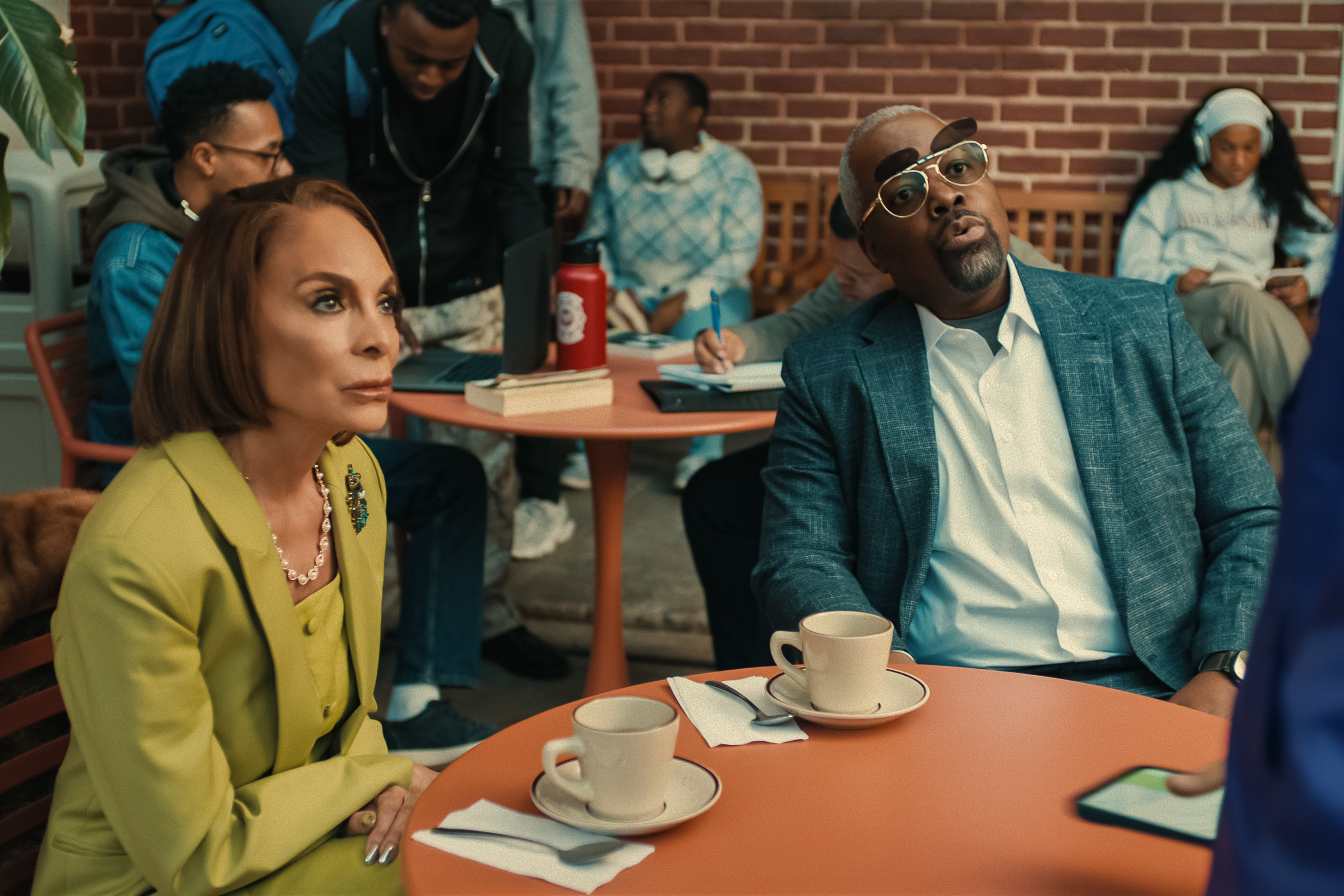
The reboot of A Different World on Netflix is a welcome distraction from ruminating about the upcoming midterm elections and worrying about whether AI will kill us all.
I’ve enjoyed getting reacquainted with the characters from The Cosby Show spinoff, which originally debuted in 1987 and is set on the campus of the fictitious HBCU Hillman College. The show’s leads, Whitley Gilbert, played by Jasmine Guy, and Dwayne Wayne, played by Kadeem Hardison, have gone from being undergraduates to serving as the president and first lady of Hillman. They both look considerably older, and therein lies the proverbial rub.
Hardison, who was a skinny kid with flip-up glasses during his days on the show, is heavier now and has gray hair. Guy, who in our modern vernacular would have been considered a WCW back in the day, has visibly matured, too. At age 64, she’s refined, elegant, graceful, and still attractive, but she doesn’t look 25 anymore and — despite the vitriol she’s getting on social media — that’s completely natural and not a bad thing.
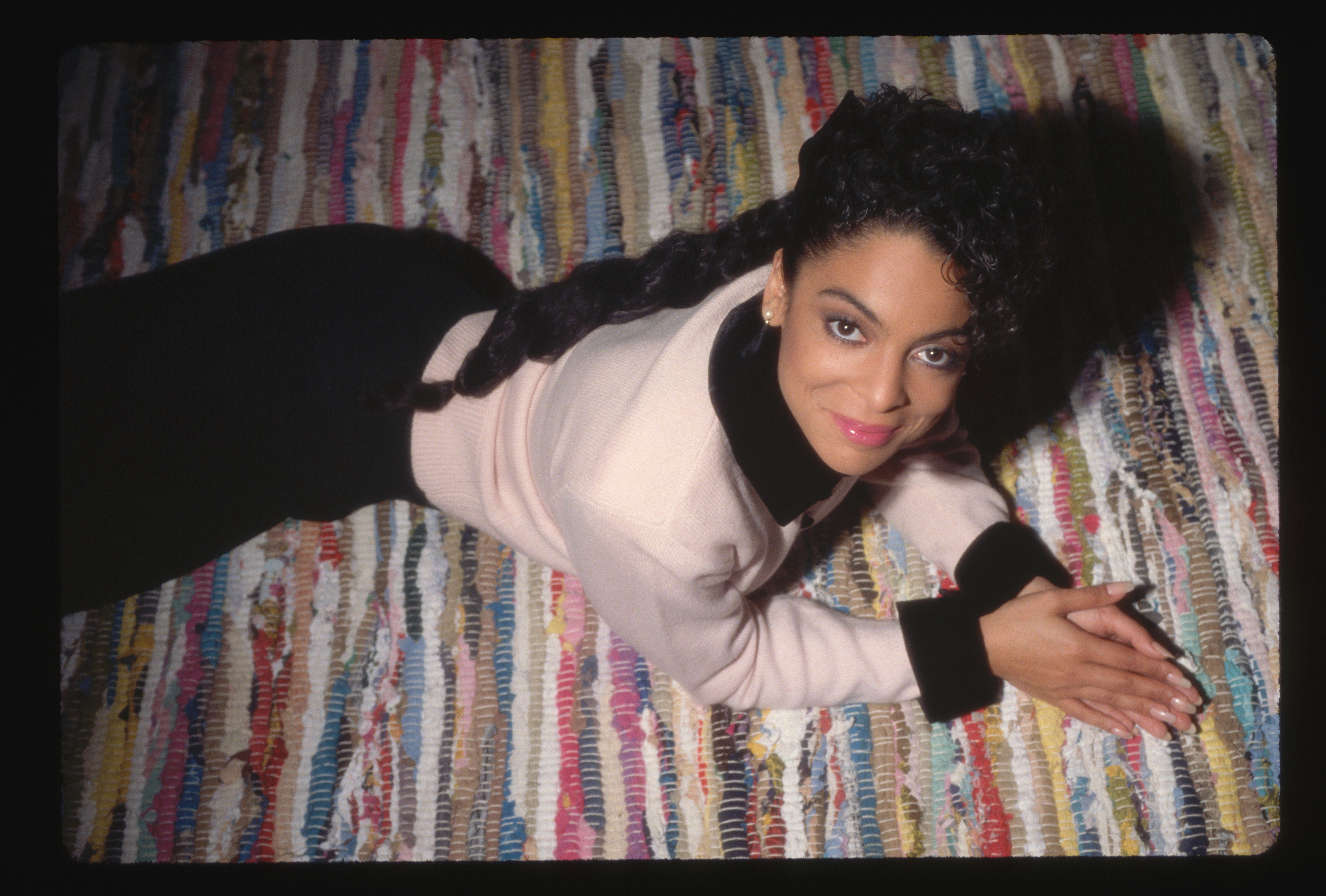
The actress Jasmine Guy in 1988 when she was 26 years old.Lynn Goldsmith / Getty Images
This shouldn’t be a big deal. Maturing — emotionally and physically —is part of life. But from the way some commenters have criticized Guy for looking older, you’d think she was the only one on the show who has been touched by the hands of Father Time.
I take umbrage at some of the online vitriol. I was a young woman myself when the show first aired and have gotten older right along with the cast members. An awful lot has happened since the show ended in 1993.
Guy, 64, during an appearance on “The Jennifer Hudson Show” last month.Chris Haston /WBTV via Getty Images
Guy must have read some of the terrible things people have been saying online about her appearance because on Monday, she addressed them by posting on social media: “The internet can be brutal to women as we grow older. It asks us to celebrate life while criticizing every sign that we’ve lived it.”
Some national cultures venerate older people, but that’s not so here in the United States. We are obsessed with beauty and youth, which is why TikTok filters and AI-generated “de-aging” photos proliferate. Older women in all walks of life don’t always get the respect they deserve. It irritates some people when older females refuse to fade quietly into the sunset. An estimated two out of three female workers over 50 regularly face ageism, according to a survey by AARP.
Former Secretary of State Hillary Clinton experienced this when she ran for president in 2016. Instead of being praised for launching a presidential bid when she was 68, she faced questions about her age. Donald Trump, who happens to be two years Clinton’s senior, publicly mocked her after she contractedpneumonia on the campaign trail and claimed she lacked the stamina to be president. Trump also accused her of not looking presidential enough for the job.
Democratic presidential nominee Hillary Clinton speaks as Republican presidential nominee Donald Trump listens during a presidential debate in St. Louis in October 2016.Rick T. Wilking
You’d think female Republicans would have automatically disqualified him for that. Instead, many nodded right along with his ageist, sexist rhetoric and most voted for him. This is one reason why America is in the situation it is today, with a narcissistic megalomaniac running the country.
Deep-seated bias against older women might also be what keeps America from electing a female president during our lifetime. I respect former CNN anchor Don Lemon and his work as an independent journalist. But Lemon uttered what a lot of voters thought when he said on air in 2023 that then-GOP presidential candidate Nikki Haley, who was 51, “isn’t in her prime.” He went on to say, “If you google when is a woman in her prime, it will say 20s and 30s and 40s.”
Meanwhile, white male politicians don’t have to waste inordinate amounts of time convincing skeptics that their advanced age doesn’t automatically disqualify them from holding elected office. Female candidates shouldn’t have to, either. The same should apply to women in other walks of life, as well.
It’s A Different World,all right. But when it comes to ageist bias against women, some things haven’t changed a bit.
ATLANTA — Alec Bohm sat behind a microphone for what could have been the last time as a Phillie on Wednesday morning, and he reflected on his 6½ seasons in the majors as a Phillie, supporting rosters dotted with future Hall of Famers. He will be a free agent this winter, and his inconsistent play combined with his occasional truculence have led to assumptions that he will be moving on.
Then, five hours later, Bohm, hitting in the No. 4 spot, rocked the winning home run in the 10th inning of Game 2 of the wild-card series against the Braves. The Phillies took a 4-3 lead, which held up in the bottom of the inning as rookie Andrew Painter dealt the third of his three scoreless innings, and the season was saved.
With it, Bohm might have saved his future in Philadelphia and erased some of the less jubilant moments of his past.
The Phillies have tried to platoon him, they’ve benched him in the playoffs, they’ve shoved him from the cleanup spot to the bottom of the order, and they’ve put him on the trading block so often he might as well have been a bale of beaver pelts in the Old West. He never much cared, it seemed, until now.
Once a Philly hater, he now desperately wants to be a Phillie for life.
“I would love nothing more than to stay,” he said afterward. “I mean, if you think about it, like, not that often does a guy get to play his whole career in one place.”
“Yeah. You got to show up when it matters,” he said. “I think that’s a big part of it.”
The hit was Bohm’s second of the game, his third of the playoffs, and, with an earlier walk, it marked the fourth time he’d reached base in his nine plate appearances. He also drove in a run in Game 1.
That’s what he does. He doesn’t hit many home runs, but, hitting behind Bryce Harper, Kyle Schwarber, and Trea Turner, he has averaged just over 82 RBIs the past five seasons.
Alec Bohm celebrates with teammate Bryson Stott after Bohm hit a go-ahead 10th-inning homer.Yong Kim / Staff Photographer
“Seems like with Alec, everybody is always looking for more, for more,” interim manager Don Mattingly said before the game. “And he always ends up driving in around 90 runs, gets key hits.”
He has played among veterans his whole career, and he’s played like a veteran lately, to be sure. He’s a rare right-handed bat who plays first and third base and produces runs.
The question: If Bohm moves on, can the Phillies adequately replace him?
And, if so, how much will it cost … and how much will he cost?
Bohm is a homegrown first-round pick, drafted third overall in 2018. He turned 30 in August. He’s a productive everyday player.
He started slowly this season, but there were mitigating circumstances. He was in a contract year. He was suing his parents for mismanaging his money (that has been settled).
Harper stressed that the situation with his family clearly affected Bohm more than anyone let on.
“Man, I’m proud of him,” Harper said. “He’s been through the wringer this year, you know, on and off the field. No person, or player, or anybody should have to go through those situations.”
Philadelphia Phillies Trea Turner doubles against the Atlanta Braves in the first inning.Yong Kim / Staff PhotographerPhiladelphia Phillies Trea Turner celebrates in the dugout after scoring in the first inning.Yong Kim / Staff PhotographerPhiladelphia Phillies Bryce Harper hits a RBI single in the first inning.Yong Kim / Staff PhotographerPhiladelphia Phillies starting pitcher Cristopher Sanchez throws in the first inning.Yong Kim / Staff PhotographerPhiladelphia Phillies starting pitcher Cristopher Sanchez throws in the first inning.Yong Kim / Staff PhotographerAtlanta Braves pitcher Tyler Mahle throws against the Philadelphia Phillies in game 2.Yong Kim / Staff PhotographerPhiladelphia Phillies center fielder Justin Crawford singles in the fourth inning.Yong Kim / Staff PhotographerPhiladelphia Phillies pitching coach Caleb Cotham (right) talks with Cristopher Sanchez with the bases loaded for the Atlanta Braves in the sixth inning.Yong Kim / Staff PhotographerPhiladelphia Phillies starting pitcher Cristopher Sanchez reacts after getting out of a bases loaded jam in the sixth inning.Yong Kim / Staff PhotographerPhiladelphia Phillies shortstop Trea Turner (right) looks on as Atlanta Braves Sean Murphy was safe at second in the seventh inning.Yong Kim / Staff PhotographerPhiladelphia Phillies Bryce Harper couldn’t catch a ball off the bat of Atlanta Braves catcher Drake Baldwin in the seventh inning of game 2 of the National League Wild Card series in Atlanta, Ga. on Wednesday, Sept. 30, 2026.Yong Kim / Staff PhotographerPhiladelphia Phillies starting pitcher Cristopher Sanchez (right) prepares to exit the game after the Atlanta Braves scored two runs in the seventh inning.Yong Kim / Staff PhotographerPhiladelphia Phillies Bryce Harper pauses in right field during a pitching change in the seventh inning.Yong Kim / Staff PhotographerPhiladelphia Phillies designated hitter Kyle Schwarber hits a solo homer in the eighth inning.Yong Kim / Staff PhotographerPhiladelphia Phillies Bryce Harper hits a solo homer in the eighth inning.Yong Kim / Staff PhotographerPhiladelphia Phillies Edmundo Sosa leaves the game in the ninth inning.Yong Kim / Staff PhotographerPhiladelphia Phillies shortstop Trea Turner drops his bat and helmet after popping up for the third out in the ninth inning.Yong Kim / Staff PhotographerPhiladelphia Phillies third baseman Alec Bohm celebrates his solo homer in the tenth inning.Yong Kim / Staff PhotographerPhiladelphia Phillies Andrew Painter pitches against the Atlanta Braves in the tenth inning.Yong Kim / Staff PhotographerPhiladelphia Phillies catcher J.T. Realmuto celebrates their win.Yong Kim / Staff PhotographerPhiladelphia Phillies third baseman Alec Bohm celebrates his solo homer in the tenth inning against the Atlanta Braves in game 2 of the National League Wild Card series in Atlanta, Ga. on Wednesday, Sept. 30, 2026. Phillies win 4-3.Yong Kim / Staff Photographer
It all has worn on Bohm, both over the years and over the past few months.
“It’s just been a long road, with a lot of ups and downs,” he said. “I’ve learned a lot. I’ve made a lot of really close friends along the way. I’ve had a lot of people to lean on.”
He was an All-Star two years ago, but, really, he’s never been a better player than he is today.
From Aug. 2 to the end of the regular season, Bohm hit .308 with an .818 OPS, destroying lefties in particular.
“I don’t think there was a specific adjustment that I made,” Bohm said before the game. “I kind of just started seeing the ball a little better and got more comfortable.”
Bohm sure is comfortable. He has been as big a part of the Phillies’ late-season surge as anyone. He is entering his prime. There is no reason to end this relationship, now that it’s just heating up.
In 2022, the Phillies planned to either replace Bohm at third base or platoon him with Bryson Stott, but injuries squelched those plans. Still, as Bohm struggled early that season, he was caught on camera on the home field saying, “I [bleeping] hate this place.”
Phillies fans gave Alec Bohm an ovation after making a routine play at third 😅
Bohm apologized for that moment. He’s a kid from Nebraska who played college ball in Kansas, so he had to learn how to survive in a big city. He got better at third base. He moved to first base this year at the trade deadline when the Phillies acquired second baseman Luis Arraez, and there he has shined: He made two fine plays Wednesday.
Certainly, it wasn’t all Bohm on Wednesday.
Cristopher Sánchez delivered 6⅔ innings, allowed three runs, and threw a career-high 116 pitches, helping Mattingly avoid a beleaguered bullpen.
Painter, the fifth starter, made his playoff debut with three scoreless innings of relief — the eighth, ninth, and 10th — the first time he’s ever pitched in relief in those innings.
And, of course, there was Lightning and Thunder.
Bryce Harper’s eighth-inning homer tied the game at 3.Yong Kim / Staff Photographer
With their season in peril, Schwarber and Harper hit back-to-back home runs in the eighth inning and tied the game at 3. That took Sánchez off the hook.
They also absolved Harper and Bohm of defensive miscues in the seventh that gave the Braves two runs and a 3-1 lead.
More than anything, they forced extra innings in a must-win game whose loss not only would have given the Braves a 2-0 series sweep but, considering how disappointing the Phillies have been the past three postseasons, might have ended this era. It almost certainly would have ended Mattingly’s tenure.
Instead, they play Game 3 on Thursday. Bohm will be in the four-hole.
It’s hard to overstate, fairly or not, the low regard the organization has shown Bohm.
The Phillies spent $100 million on Nick Castellanos to serve as their right-handed cleanup hitter from 2022-26, but they released him this offseason after he’d failed in the role. They spent $10 million on his replacement, Adolis García, but he hit just .195 before injury ended his season in June. They traded for Arraez at the deadline and let him hit fourth until he sprained his ankle last week. Stott batted cleanup in the season finale Sunday.
But it’s been Bohm’s spot the past two games, and he has shown up, to the delight of the fans who have ridden him harder than any Phillie in the past six years.
Alec Bohm battled cleanup on Wednesday and will do so again for Thursday’s decisive Game 3.Yong Kim / Staff Photographer
He’s a hero tonight, even in Harper’s eyes. Harp is a good and nurturing teammate, but, as a future Hall of Fame No. 3 hitter, in spring training he was disappointed that the Phillies failed to better fortify the No. 4 spot in the offseason.
“I think the numbers in the four-spot weren’t very good last year for our whole team,” Harper said. “Whoever is in that four-spot is going to have a big job to do.”
Bohm got the job done Wednesday, and Harper acknowledged it.
“Today, he’s one of the best players, and probably one of the favorites, in Philadelphia right now,” Harper said.