Tag: Weekend Reads

  • Mike Schmidt among 26 Hall of Famers to emerge from Field of Dreams cornfield: ‘Felt like I was in a movie’

    Mike Schmidt among 26 Hall of Famers to emerge from Field of Dreams cornfield: ‘Felt like I was in a movie’

    DYERSVILLE, Iowa — Mike Schmidt was among the first to appear.

    After the modern-day Phillies and Twins had emerged from the cornfields in right field, had crossed the grass, and lined up along the baselines, they turned back to look.

    A steady stream of Hall of Famers from across multiple generations had followed them out of the stalks. Ahead of Thursday’s Field of Dreams game, it was a nod to the scene in the 1989 film where ghostly versions of the 1919 White Sox materialize between rows of corn and walk on a ball field built by Kevin Costner’s Ray Kinsella. Only instead of ghosts, these were living legends.

    A group of 26 Hall of Famers took part in the ceremony, including Schmidt and fellow former Phillies Steve Carlton, Jim Thome, Billy Wagner, Scott Rolen, Jim Kaat, Tony Pérez, and Ferguson Jenkins.

    “I felt like I was in a movie,” Schmidt said. “I’m looking around at the guys, and I didn’t want to get too far ahead. I was behind them. You know, I really felt like I was Joe Jackson or something walking on the field.”

    While they waited for the ceremony to start, ballplayers past and present had milled about together in the clearing beyond the corn.

    Interim manager Don Mattingly saw many old friends. Brandon Marsh was starstruck by his childhood idol, former Brave Andruw Jones. Kyle Schwarber reunited with some former Cubs who visited spring training during his time in Chicago, and he made some new connections as well.

    “It was really cool to us, a lot of the guys that I haven’t gotten to meet before, just to shake their hands and introduce who I am and say how big of fans we are of them,” Schwarber said. “These guys all laid the groundwork for us before we even thought about playing baseball, or while we were growing up.”

    It was an equally special experience for the old-timers to witness the new generation, and see who might be following in their footsteps.

    “It’s kind of almost like a passing of the torch,” said former Twins catcher Joe Mauer. “Those guys on the first and third baselines, maybe a few of them join this group.

    “That’s why I think the game is so special. They honor the traditions, the people that have come before you and made an impact on this game, and we hope to leave an imprint on the game and make it better than when you found it.”

    Thome’s 18-year-old son Landon was just selected 34th overall by the White Sox in the MLB draft last month. Jim has been spending time with him celebrating that milestone, but couldn’t pass up an opportunity to be a part of a game like Thursday’s, especially considering that his Hall of Fame career included stints in Minnesota and Philadelphia.

    “The word for me is thankful,” Thome said. “Thankful for being able to be in this great fraternity with really special men.”

    Thome, a Midwest native from Peoria, Ill., attended the inaugural MLB at Field of Dreams game between the White Sox and Yankees in 2021. He played catch with Landon by the cornfields, and then they watched the game together.

    He never foresaw a moment like the one on Thursday when he passed through the stalks with fellow all-time greats walking next to him.

    “In your career, you have moments where it kind of feels like things slow down,” Thome said. “It felt like you just kind of strolled out with these great players, and it just kind of slowed down.”

    The gathering of 26 is believed to be the most Hall of Famers together at one game since the 2008 All-Star Game, which brought together 49 at Yankee Stadium. It accounted for just over one-third of all living members enshrined in Cooperstown.

    “The one constant through all the years, Ray,” James Earl Jones’ character, Terence Mann, says in the movie, “has been baseball.”

    Byron Buxton, addressing the crowd with a microphone alongside Schwarber during the pregame festivities, referenced that line to prompt the baseball legends to step through the corn.

    “I guess to sum it all up,” Schmidt said, “is if I could see my father walk through the cornfields, I tell you what, I’d love to play catch with him.”

  • King of Prussia data center complex is rejected by Upper Merion Township officials

    King of Prussia data center complex is rejected by Upper Merion Township officials

    The Upper Merion Township Board of Supervisors unanimously rejected a proposed 5-million-square-foot AI data-center campus that had sparked pushback from residents, a lawsuit from the developer, and accusations of mistreatment and intimidation.

    After the decision was made at a Thursday night meeting, some in the crowd applauded, danced, and high-fived one another. The rejection came after three hours of fiery exchanges between the developer, Brian O’Neill, and township officials.

    O’Neill and his team said they were prepared to go over each of the township’s comments about his five proposed sites in the King of Prussia area. But officials said it was too little, too late, and asked if O’Neill’s team was “filibustering.”

    “Are you asking us to not present those facts in defense of those plans when it’s clear all you want to do is deny our plan and go home tonight?” said O’Neill. He later said township officials were violating state and local planning codes, an allegation they denied.

    “Your attempt here to lecture us is considered an intimidation. And I don’t want to see our professional staff bullied or coerced,” said William Jenaway, vice chair of the Upper Merion Township Board of Supervisors. “Intimidation, coercion and bullying are not good qualities in a professional leader.”

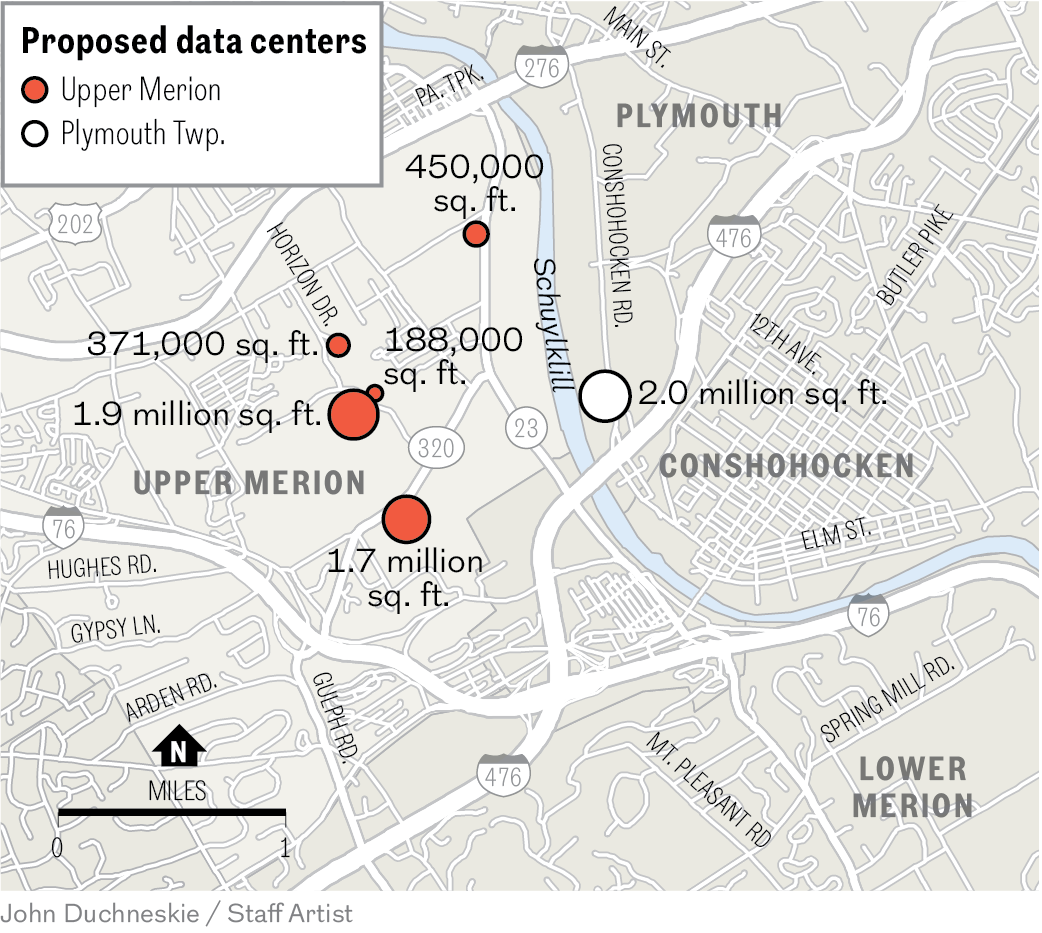
    O’Neill, a longtime real-estate developer, has recently turned his sights to data centers. He first proposed building one of the controversial cloud-storage facilities in nearby Plymouth Township. In Upper Merion, he wants to build a data center complex on five properties in the township’s Swedeland section, a small residential and industrial area between West Conshohocken and Bridgeport.

    A map of the proposed data centers in Upper Merion and Plymouth TownshipsJohn Duchneskie

    Those projects aren’t dead: O’Neill can appeal the board’s denial, as chair Tina Garzillo told him Thursday.

    “Don’t you worry about that,” said O’Neill, before walking out of the Upper Merion Area Middle School auditorium to a chorus of boos.

    The board’s decision came after months of contention and a whirlwind two days of legal back-and-forth.

    O’Neill on Wednesday sued the township, its planning commission, and its board of supervisors, saying they violated his legal right to an extension and treated him unfairly during the development review process. Soon after, Montgomery County Court Judge Garrett D. Page ordered the township to halt proceedings and decisions related to the data centers until a hearing next week.

    Citing the ruling, Edmund J. Campbell, an attorney for O’Neill, declined to make a presentation on two of the five proposed data-center sites at an Upper Merion Township Planning Commission meeting on Wednesday night.

    Late Thursday afternoon, however, Page vacated his previous order, allowing the township board of supervisors to proceed with its meeting as planned. On the agenda: A vote on O’Neill’s request for an extension until Sept. 30, and votes on the five proposed data centers.

    After an hour of public comment, all but one of which was from residents opposing the data centers, the township’s board of supervisors voted to deny O’Neill’s extension requests. The board then moved on to vote on the land development plans for each of the five sites.

    One by one, the plans were denied unanimously by the five-person board.

    Each vote was met with loud cheers from attendees.

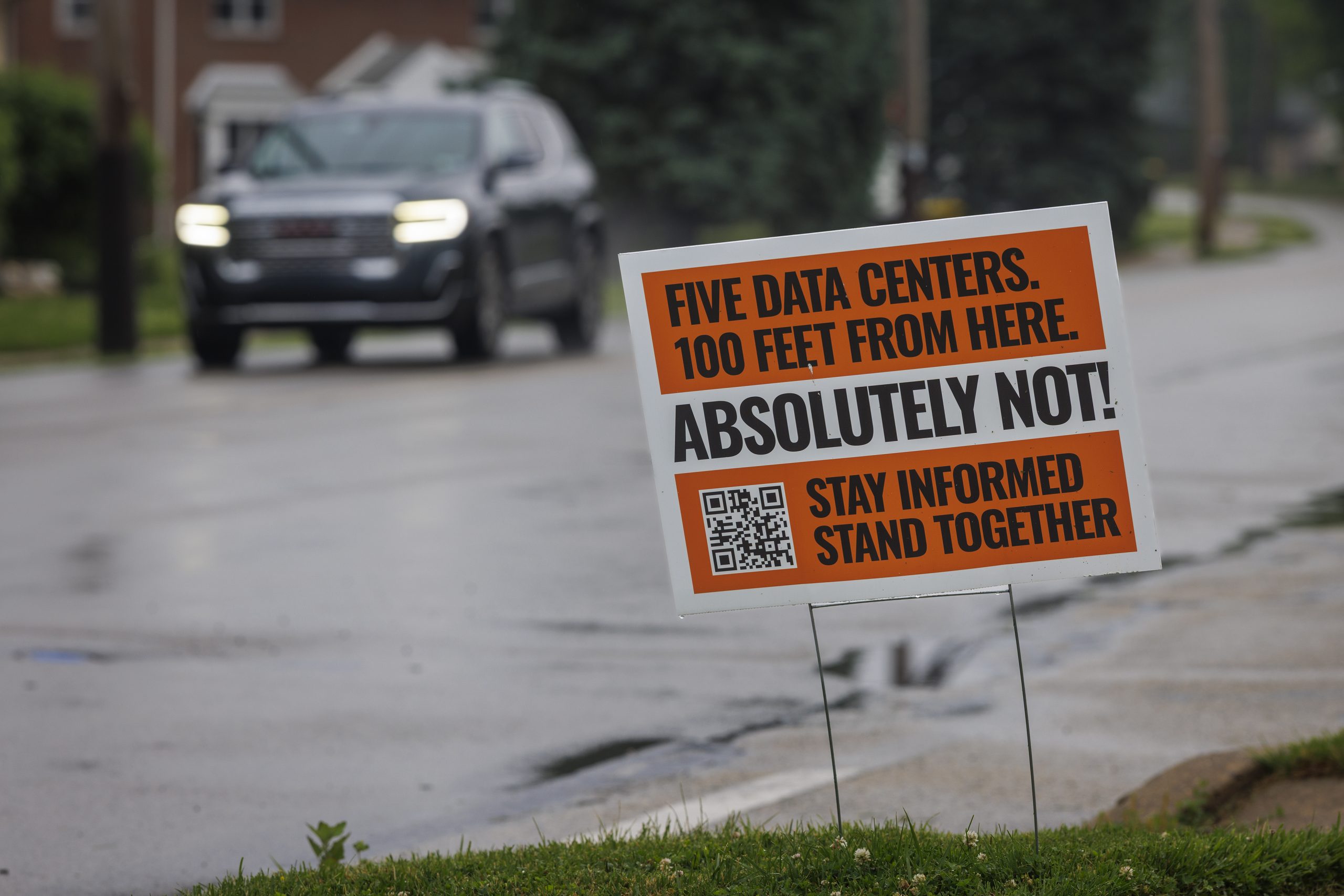
    For months, residents have rallied against O’Neill’s plans, packing township meetings and putting up bright orange lawn signs opposing the projects. About 18,000 people had signed a Change.org petition against the Upper Merion data centers as of Thursday. Some neighbors have expressed concerns about pollution, light, noise, electricity prices, property values, and quality of life.

    Upper Merion residents opposed to the data centers have put up these lawn signs.Alejandro A. Alvarez / Staff Photographer

    “I’m really proud to stand here tonight with each and every other concerned resident,” Courtney Smith said Thursday. “We all have something important here to fight for.”

    “The people here are here because they care deeply about the long-term interest of our communities,” Montgomery County Commissioner Neil K. Makhija said during his comments in opposition of the plan. The commissioner said the supervisors’ decision would have ramifications beyond the county, as communities across the region and the country weigh data-center development.

    O’Neil has said his data centers would benefit Upper Merion and “change the world for the better.” While the developer has declined to specify who exactly would operate the centers, he has indicated the facilities would use AI-powered biotech in conjunction with his existing life-sciences complex, Discovery Labs.

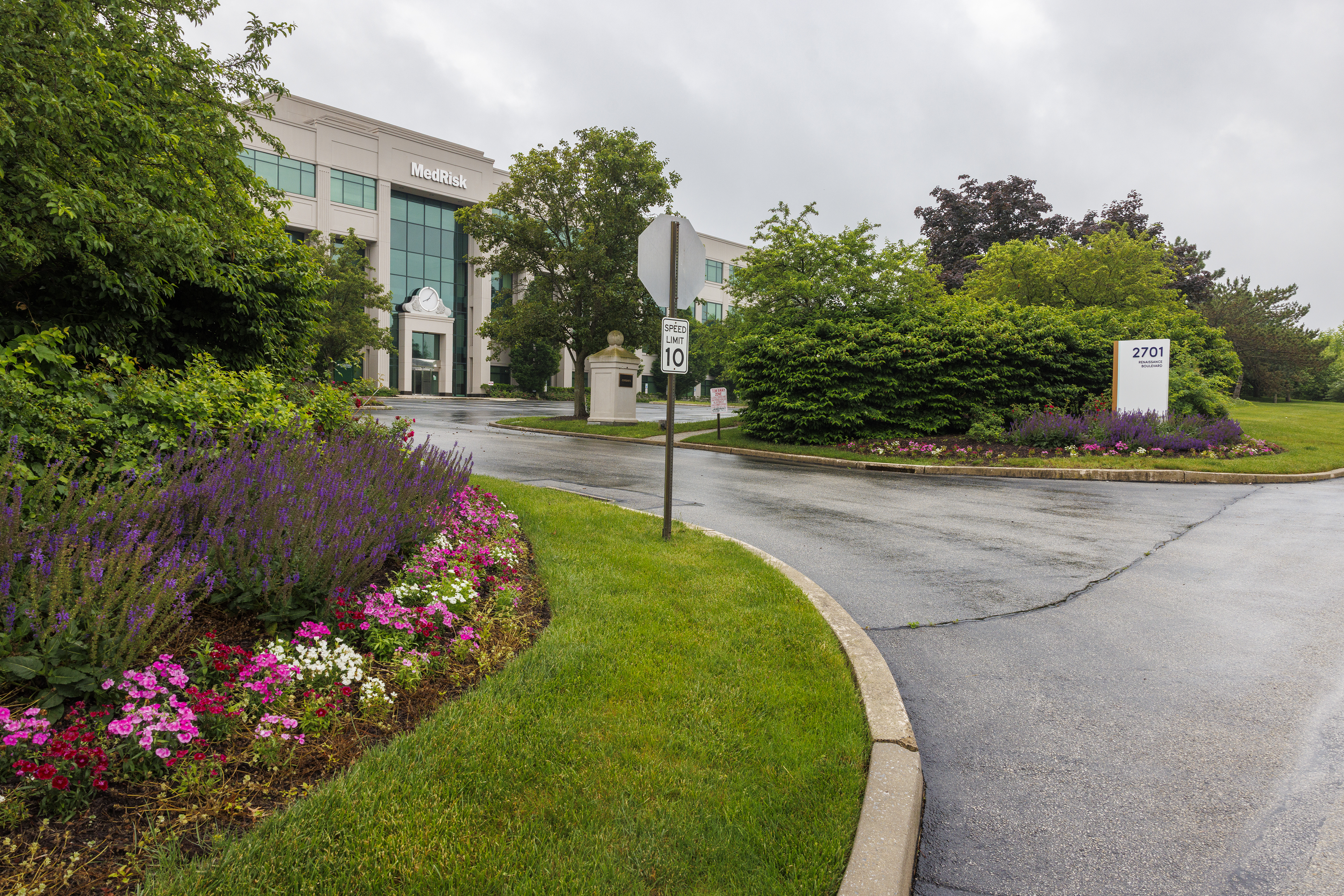
    One of the sites where Brian O’Neill wanted to build a data center in Upper Merion.Alejandro A. Alvarez / Staff Photographer

    O’Neill has said his data centers would comply with the highest environmental standards, emitting little light and noise. They would operate on a closed-loop system, requiring no outside water, he said, and provide their own power.

    The developer has also said they’d be an economic boon to the area. Last week, he released an economic impact study that said the Upper Merion centers would result in more than 10,000 jobs during its construction and then generate more than $55 million a year in local tax revenue.

    At Thursday’s board of supervisors meeting, however, Upper Merion Township Tax Collector Evelyn Ankers disputed those figures, and said O’Neill has failed to pay taxes on his properties in the past.

    Across the Schuylkill, a data-center fight rages on between O’Neill and some residents of Plymouth Township, where the developer wants to build a 2-million-square-foot facility on a shuttered steel mill outside Conshohocken.

    The developer recently filed a legal challenge to the Plymouth Township zoning ordinance, and has exchanged accusations of mistreatment with township leaders. News of O’Neill’s actions in Plymouth Township prompted a rebuke from Gov. Josh Shapiro, who had previously encouraged data center development in the commonwealth.

    A date has not been set for the next Plymouth Township meeting, though officials indicated it would be sometime in September.

  • The Phillies break out of their rut enjoying the sights of Field of Dreams — and deliver a needed win

    The Phillies break out of their rut enjoying the sights of Field of Dreams — and deliver a needed win

    DYERSVILLE, Iowa — They wandered in from the corn, paused for a beat at the right field warning track, gazed around, and kept walking. Soon, 26 — 26! — Hall of Famers joined them on the field.

    But that was the performative, made-for-Netflix part.

    If only everybody could have seen them hours earlier, before the cameras rolled here Thursday night. A few hundred feet from a refurbished 8,000-seat stadium, the Phillies stood on the original Field of Dreams, the one that sits alongside the white farmhouse and tilted red barn and was the set of the 1989 Oscar-nominated film that brings people to this little Iowa town in the first place.

    Andrew Painter and his parents walked the outfield made famous by Costner and Liotta. Bryce Harper and Bryson Stott took pictures in front of the house. Brandon Marsh maneuvered between the cornstalks. Don Mattingly had a catch with his 11-year-old son, Louie, near his older son, Preston, the Phillies’ general manager.

    And for a few minutes, nobody talked about back-to-back losses this week in St. Louis. Or five losses in eight games. Or a 10-15 record since the All-Star break. Or a playoff spot that is slipping through their fingers.

    For a few minutes, they all smiled. They … relaxed.

    “I don’t think our guys have a problem relaxing, honestly,” Mattingly said. “But I do think guys like coming to these kind of games. They do break up the monotony. You know, this is a game you don’t really forget.”

    But it was a game nonetheless. And before the end of a long day that started in St. Louis and ended on a plane to Minneapolis, Kyle Schwarber homered twice — including a leadoff shot into the corn, as if it had been ordered up by a Hollywood script — in an easy, breezy 7-1 victory over the Twins.

    Schwarber played a prominent role in the pregame script. He took the microphone and joined Twins star Byron Buxton in announcing the arrival of the Hall of Famers, who also entered through the corn.

    Then, Schwarber stood alongside Mattingly on the first-base line and kibitzed about the legends in their midst.

    “Molly’s out there and I’m like, ‘This guy could really hit,’” Mattingly said of Paul Molitor. “And he knew Hawk [Andre Dawson] from Chicago a little bit, and I knew him from Miami. A lot of the guys, I played with. So, it was interesting to be able to talk about that.”

    Schwarber went further, calling it “once in a lifetime.” And once the unscripted part of the event began, he hit Twins starter Taj Bradley’s third pitch out to right field.

    While Schwarber looked authentic in the Phillies’ gray, red, and navy 1939 throwback uniforms, Aaron Nola threw it back to a time when the Phillies relied on him atop their rotation. He’s more of a supporting actor now, but the Phillies still need him down the stretch.

    And in five solid innings, Nola gave up only a homer to Luke Keaschall. Don’t look now, but he has a 2.91 ERA in his last four starts and has allowed three runs or less in seven of his last eight.

    Schwarber made it 5-1 in the fourth inning with a two-run shot off a leaping Keaschall’s glove in right field. Marsh homered in the seventh.

    Kyle Schwarber celebrates his two-run homer — his second of the game — with Brandon Marsh in the fourth inning on Thursday.Yong Kim / Staff Photographer

    It all came at the end of a 14-game stretch without a day off. There were times when the bullpen was fried and the lineup didn’t produce runs. The Phillies woke up Thursday in a tie with the Diamondbacks for the last National League wild-card spot.

    There was a sense, then, that this Iowa excursion — a “pop-in and pop-out,” as Mattingly called it — couldn’t have come at a worse time.

    Actually, it was quite the opposite.

    “Maybe the boys needed a little shock like today,” Marsh said. “Really didn’t get to get our routines in. Not complaining, but it was just a quick day, a lot of stuff going on. Maybe the boys needed it.

    “We haven’t been playing, like J.T. [Realmuto] said, our brand of baseball that we talk about here. Hopefully today, that’s a little spark for us to turn it on for this push.”

    Indeed, sometimes the best way to break out of a rut is to change the routine of a six-month grind. So, the Phillies flew into nearby Dubuque a few hours before the game and took a bus to the Field of Dreams site. They took it all in. The entire front office met them here, too, with owner John Middleton sitting behind home plate.

    Even Nola walked around the field with Zack Wheeler and pitching coach Caleb Cotham before studying the scouting report on the Twins.

    “We were talking about just how the experience was from when we got here, having the opportunity to go over to the movie set, walk around, see it,” Schwarber said. “We all watched the movie as kids growing up, so it’s really cool to be able to see exactly where it was.

    “It’s a unique thing to do, and it’s something that you’re going to bring up to your kids. I’m going to watch that movie together with my kids one day, and to be able to say, ‘Hey, dad got to play there,’ or, ‘Dad got to, you see that house out there in this movie,’ it’ll be really cool.”

    Brandon Marsh watches his seventh-inning two-run home run on Thursday.Yong Kim / Staff Photographer

    Wait until Schwarber tells his kids about hitting two homers in front of more than two dozen Hall of Famers.

    And maybe even giving the skidding Phillies a jump-start.

    “It’s kind of a little pinch, right? A little reality pinch,” Schwarber said. “Overall, just an unbelievable experience. And obviously we’re happy we walked away with a win.”

  • Cheltenham is trying to move past its football scandal. Here’s what happens next.

    Cheltenham is trying to move past its football scandal. Here’s what happens next.

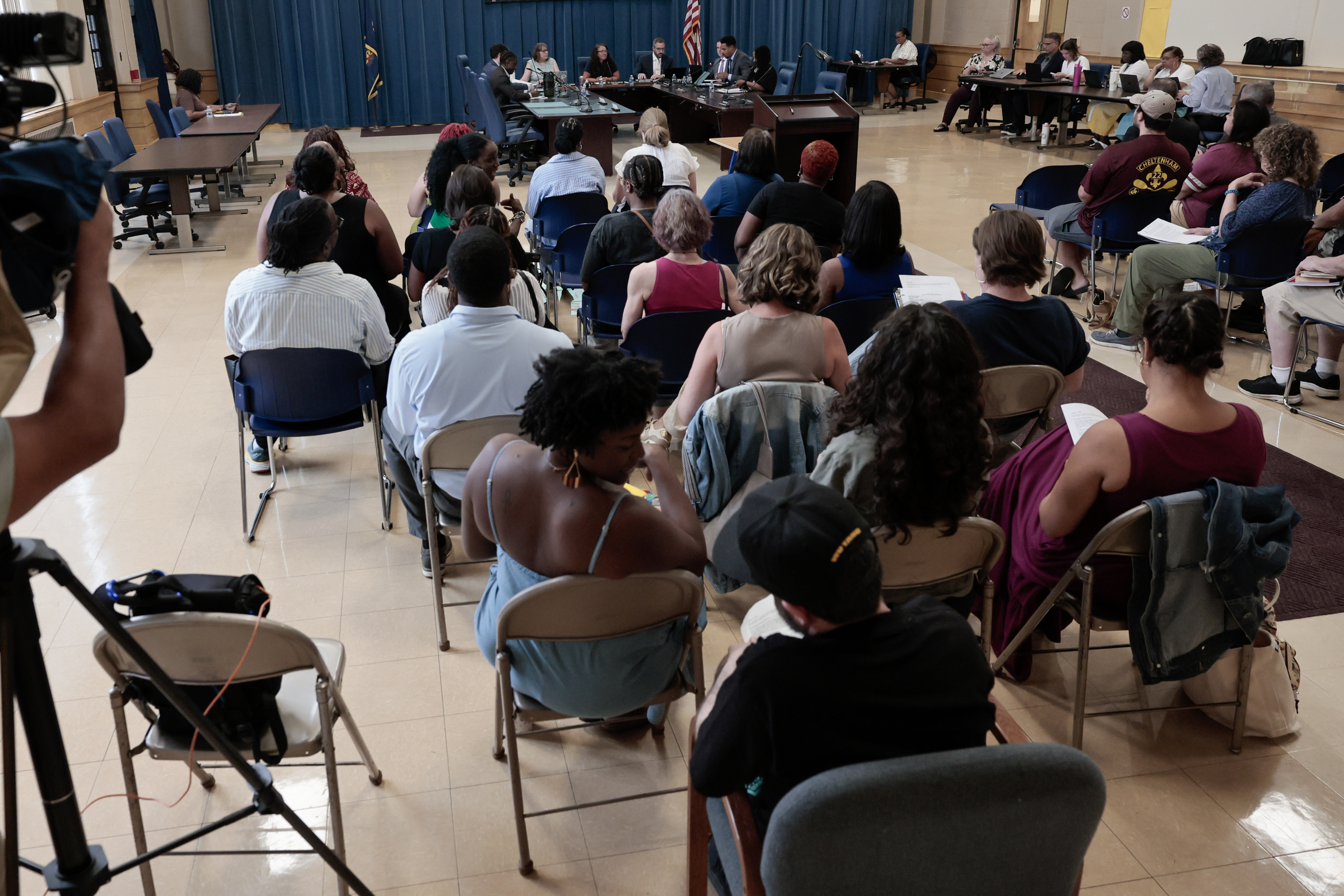
    As it faced parents and community members during an emotional meeting Tuesday, the Cheltenham school board laid out several steps to address concerns about the scandal over the 2025 locker-room assaults that led to criminal charges against four coaches and six players.

    The board announced new leadership — with plans to appoint veteran educator Chris McGinley as interim superintendent — and an independent review of district policies, with recommendations to follow in 60 days.

    But questions remain about how the board will respond to the district’s alleged mishandling of the situation, including by employees faulted in a grand jury report. Parents on Tuesday, including some who have alleged the district’s safety problems extend beyond the football program, voiced skepticism of the board’s promises.

    The district will pay former Superintendent Brian Scriven, who resigned last week, as part of a separation agreement, according to a spokesperson, but terms have not been disclosed.

    Here is what happens next as the board deals with the aftermath of the criminal charges announced two weeks ago, and the lack of confidence expressed by community members:

    A former superintendent returns

    The board said it plans to tap McGinley, a longtime educator who served as Cheltenham’s superintendent in the early 2000s, to lead the district following Scriven’s resignation.

    McGinley, who more recently worked as an education professor at Temple University, will be appointed by the board at a special meeting Tuesday at 6:30 p.m., district spokesperson Kevin Kaufman said Thursday.

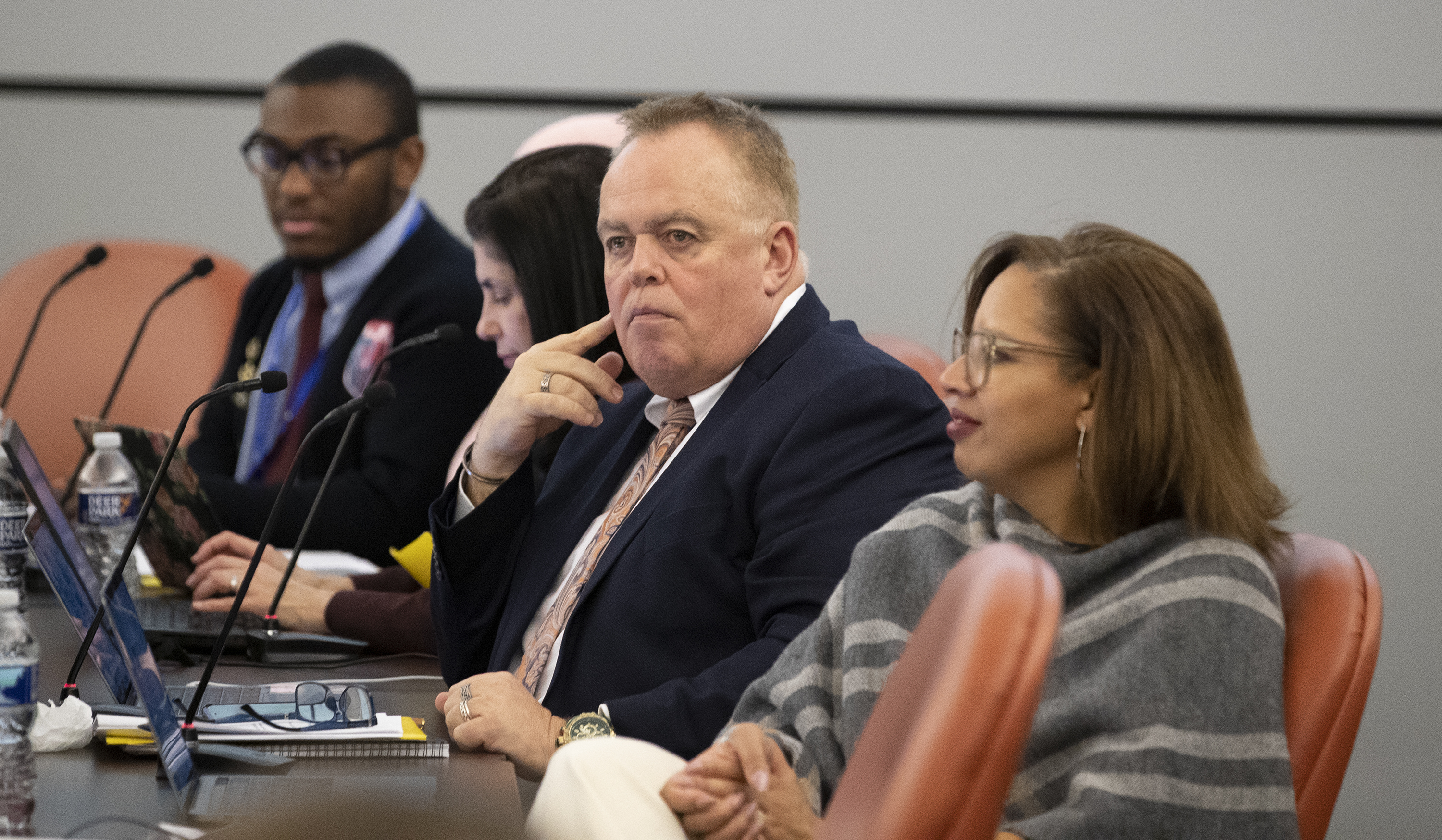
    Chris McGinley, center, and Angela McIver, right, at a meeting of the Philadelphia Board of Education on Jan. 30, 2020.Charles Fox / Staff Photographer

    McGinley, who began his education career as a teacher in Philadelphia, joined Cheltenham in 1999 as an assistant superintendent, where he oversaw efforts to address the district’s racial achievement gap. He then became Cheltenham superintendent, leaving the district in 2006 before becoming superintendent two years later in Lower Merion, which he led through 2014.

    McGinley then served on the Philadelphia School Reform Commission, which oversaw the city’s schools while they were under state control. He was later named to the Philadelphia school board by former Mayor Jim Kenney, leaving the board in 2020.

    McGinley could not be reached for comment Wednesday.

    Scriven had received a new five-year contract in December. Kaufman said in an email Thursday that “the terms and conditions of Dr. Scriven’s separation agreement will be negotiated (in accordance with Dr. Scriven’s contract and applicable law) and approved publicly at a future meeting.”

    An outside lawyer’s review

    The board has enlisted Leigh Dalton, an education attorney based in York, Pa., with the Saxton & Stump firm, to review its policies and procedures and produce recommendations to the board in 60 days.

    Board president Leah Mulhearn said Tuesday that the review would “include consideration of the grand jury’s findings and how to address them.”

    None of those findings were discussed by the board Tuesday. In a scathing report accompanying the recommendation of criminal charges, the grand jury accused the district of “incompetence” while describing the actions of three employees at the high school.

    Taryn Knox (left) speaks to School Board President Leah Mulhearn and Director of Business Joshua Sweigard during the Cheltenham School Board meeting in Elkins Park on Tuesday, August 11, 2026. The school board was meeting for the first time since criminal charges against four football coaches and six players were announced, and since Brian Scriven resigned as superintendent. .Elizabeth Robertson / Staff Photographer

    The trio — labeled in the report only as Employees #1, #2, and #3 — texted one another after the mother of the 15-year-old victim reported her son’s assault on Sept. 7. One said the student had a “chip on his shoulder” from not making varsity and said he had steered the mother away from coming to the high school in person.

    The employees also indicated they trusted the head coach, Terence Tolbert, and did not believe the mother that Tolbert — who, along with three other coaches, has since been charged with conspiracy and endangering the welfare of a child — had instructed the victim not to tell his parents what had happened. The report said the district then included Tolbert in its investigation.

    Asked about the status of the three employees, Kaufman said Thursday that the district “doesn’t comment on specific personnel matters.”

    On Thursday, Cheltenham High School principal Benjamin Hammond informed families that Mark Hoff, who was vice principal at the high school last year but had been reassigned to Wyncote Elementary in July, would be returning to the high school this fall.

    The player’s mother said she initially reported her son’s assault to Hoff on Sept. 7.

    “Due to the heightened environment about student safety and culture, and acknowledging community concerns, the district has decided to continue Mark Hoff’s assignment as vice principal at Cheltenham High School,” Hammond said in a message to families, adding that Hoff would “provide stability this upcoming school year.”

    Kaufman said that Dalton’s hourly rate was $265.

    Dalton was hired by Central Bucks last year to investigate special-education abuse allegations; the district did not publicly release her conclusions.

    “While communications between counsel are privileged, the board does intend to report out on the recommendations that she makes where appropriate,” Kaufman said.

    Football is still canceled

    The board will also be reviewing all athletic programs, “top to bottom,” Mulhearn said. And there is no timetable for when football, which the district already canceled in May, will resume.

    “Football will not return until we address this, no matter how long it takes,” Mulhearn said.

    Safety changes

    Mulhearn said some safety changes were already underway. The district is “ensuring that all staff members have current criminal history and child abuse clearances on file,” she said. The grand jury report had said that at least five of the district’s football coaches last year were not up to date on clearances related to child abuse reporting requirements.

    She also said the district was “communicating and reinforcing coach expectations and plans for improved locker-room supervision.” While there was an office in the football locker room, coaches did not use it last season, leaving players unsupervised, according to the grand jury report.

    Cheltenham has “begun implementing” recommendations from an audit by the Center for Safe Schools, Mulhearn said. She also said the board had retained the Bucks County Intermediate Unit “to audit our human resources function.”

    Some parents of football players recently told The Inquirer they had urged the district not to hire Tolbert, who they said was hired as coach without an interview because he was already a teacher in the district. The district has not responded to questions about Tolbert’s hiring.

    The Cheltenham school board meeting Tuesday, Aug. 11, 2026, in Elkins Park.Elizabeth Robertson / Staff Photographer

    The criminal cases

    Three coaches and the two players charged as adults by the Montgomery County District Attorney’s Office will face a district judge at a preliminary hearing scheduled for Aug. 27. (Ralph Burnley, the fourth coach charged, has not yet been arraigned in the case, and there is no indication he has hired an attorney. He did not respond to a request for comment.)

    The four players charged as juveniles will face separate proceedings in juvenile court that are not open to the public.

    At the preliminary hearing for the other defendants, prosecutors will present evidence to the judge to support the charges through witnesses. Defense attorneys will be given the opportunity to cross-examine those witnesses and make arguments to the judge for their clients’ innocence.

    After the hearing, the judge will determine whether the prosecution has proved the validity of the charges and, if so, will send the cases to county court.

    Staff writer Jess Rohan contributed to this article.

  • Self-policing loading zones have worked in Center City, the PPA says, so they’re adding more

    Self-policing loading zones have worked in Center City, the PPA says, so they’re adding more

    The Philadelphia Parking Authority is expanding tech-enforced smart loading zones in Center City beginning Monday, citing reduced curb congestion and faster travel on two corridors over the last 15 months.

    Average traffic speeds are up 32% compared to historical averages on Chestnut Street and 28% on Walnut Street since the PPA installed the loading zones in May last year, according to a study by INRIX, the transportation analytics firm.

    During the middle of the day, that means vehicles are moving at around 10 mph, on average, vs. 7 mph before.

    High-res cameras track how long a delivery truck or a car stays in the zone, and software calculates a 10-cent-per-minute fee. That is then charged to the driver’s wallet on the CurbPass app. If needed, license plate pictures are used as evidence to issue $51 tickets for staying longer than the one-hour limit.

    “Really, the goal is ensuring curb space is available for the folks who need it most … and improving traffic flow through some of the most congested parts of the city,” said Gabe Roberts, interim executive director of the PPA.

    Turnover of vehicles is the key. It is a kind of EZ-Pass for curbs.

    The Philadelphia Parking Authority is adding 30 new smart loading zones in Center City, for a total of 52. Officials say the first set improved traffic flow.Philadelphia Parking Authority

    The system was developed by Los Angeles-based Automotus, a pioneer in curb management used in cities across the country, including Pittsburgh. PPA and the company installed smart loading zones on 22 blocks in May 2025.

    On Monday, the loading zones will begin operating on 30 blocks across Center City, PPA says. No tickets will be issued in the new spaces during a monthlong warning period.

    Darting delivery vehicles from DoorDash, Amazon, FedEx, UPS, and the like — along with Uber, Lyft, and regular drivers — have proliferated beyond the supply of curb space in Philadelphia and other cities in recent years, slowing through traffic to a crawl.

    Philadelphia has had business and passenger loading zones for years, but they had been overflowing, forcing some delivery trucks to double park in the traffic lane.

    Existing smart loading zones have effectively added curb space for 730 additional vehicles a day because vehicles are moving in and out instead of sitting for a long time, PPA says.

    PPA says it has seen a 97% increase in commercial freight and delivery trucks using the loading zones, cutting down on double parking that blocks traffic.

    The technology also captures plenty of vehicles double-parking in the zones, which are marked by purple, red, and white signs. That results in a $76 e-ticket.

    “Enforcement is much more exact and consistent,” Roberts said. “It develops an expectation” that can change behavior, he said.

    Indeed, PPA says about 78% of violators have received only one citation.

    CurbPass accounts are not limited to commercial vehicles. Anybody can sign up, including rideshare drivers. The first three minutes are free, so a driver can pull in and create an account on the spot from a QR code before the toll starts.

    In addition to loading zones, PPA is enforcing parking violations that block transit lanes and stops with AI-powered cameras mounted on bus and trolley windshields in Center City and West Philly.

    Roberts stressed cameras only capture data necessary for enforcement and, in the case of loading zones, billing: license plate, time in, time out, and location.

    “Our goal is to monitor the vehicle, not the person,” he said.

  • ‘Shoeless’ Joe Jackson is known for ‘Field of Dreams’ and the Black Sox. But his career started in Philly.

    ‘Shoeless’ Joe Jackson is known for ‘Field of Dreams’ and the Black Sox. But his career started in Philly.

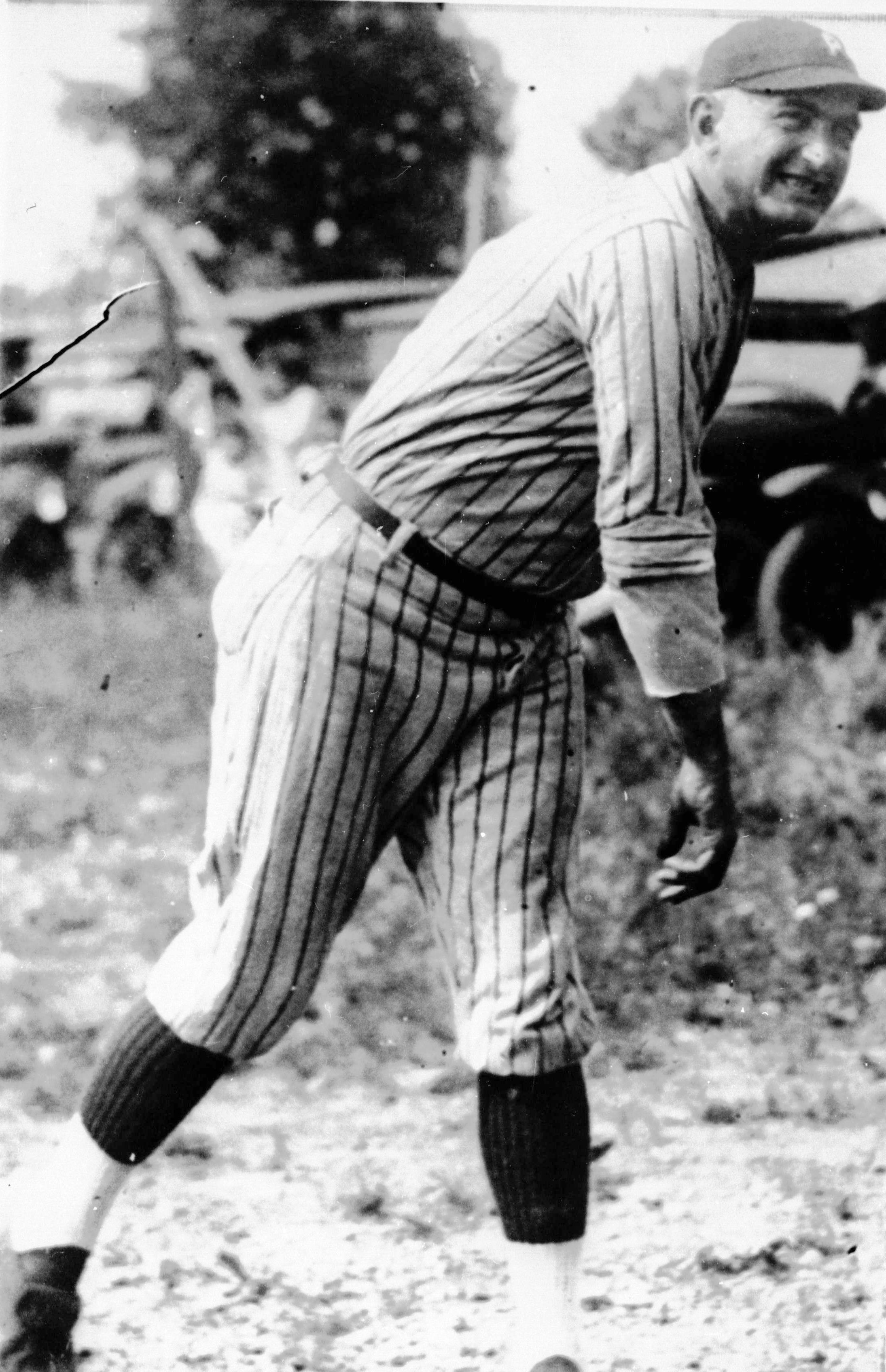
    It was just the previous season that Joe Jackson played a game without cleats, so he had only been “Shoeless Joe” for a few months. Yet it was already obvious that Shoeless Joe was destined to be a star. That’s why Jackson was on a sleeper train bound for Philadelphia in August of 1908.

    Philadelphia Athletics manager Connie Mack had dispatched three scouts — including his top lieutenant — earlier that summer to get eyes on Jackson in Greenville, S.C., before signing him for $900.

    But Jackson didn’t want to leave his tiny South Carolina hometown. He had just turned 21 years old and was married weeks earlier. A son of a sharecropper, Jackson never went to school and was thrilled to be earning $75 a week for the Greenville Spinners.

    Jackson, leery of life up North in the big city, delayed his trip while another teammate whom Mack signed left for Philly.

    Shoeless Joe finally relented and boarded the train with his minor-league manager Tom Stauch, who was instructed to deliver Mack the player an A’s scout described as “the sweetest hitter I’ve ever seen.”

    Stauch woke up when the train pulled into Philadelphia. Jackson wasn’t there. He hopped off overnight during a stop in North Carolina while everyone was sleeping. Jackson sent Mack a telegram, claiming that his mother was ill and he had to take care of her. Shoeless Joe would one day become baseball royalty before being blackballed in one of sports’ greatest scandals. But he had no interest in playing for the A’s.

    “Connie Mack understood,” said Dan Wallach, the former executive director of the Shoeless Joe Jackson Museum in Greenville, S.C.

    “Shoeless” Joe Jackson was a .356 career hitter over 13 seasons.Anonymous

    Field of Dreams

    Shoeless Joe will be remembered Thursday night when the Phillies play the Twins in an Iowa cornfield where the 1989 film Field of Dreams was shot. The portrayal of Jackson — “Is this heaven?” his character, played by Ray Liotta, famously asked after emerging from the stalks — is an iconic piece of Hollywood lore.

    His baseball career was made for movies, so much that films — the other being 1988’s Eight Men Out — were released in consecutive years about Jackson. He was a baseball superstar who became tied up in a gambling scandal that nearly took down the sport after Jackson and seven Chicago White Sox teammates were banned for life amid accusations of throwing the 1919 World Series.

    Jackson denied until his death at age 64 in 1951 that he lost on purpose and a legion of supporters have since worked to clear his name.

    Major League Baseball clarified in 2025 that Jackson — along with Pete Rose — was no longer banned as lifetime penalties expire once someone died. So Jackson’s Hall of Fame case will be voted on in December 2027 by a panel assembled by the museum.

    “I have never advocated for him to be inducted into the Hall of Fame because I think he’s more famous outside the Hall than in it,” said Wallach, who now hosts a baseball podcast called My Baseball History. “Obviously, I think his play and his career warrants that he be honored the way his contemporaries are. But the entire thing that makes his story unique and gives people a reason to fight for him is that he belongs in the Hall of Fame and he’s not in it. So the day he gets in it, there’s no story anymore. I have mixed emotions about him getting in.”

    Jackson, like he is portrayed in Field of Dreams, is best remembered for his time with the White Sox. He won the World Series in 1917 and then hit .375 in the 1919 Series against Cincinnati that the “Black Sox” were accused of throwing. He’ll always be known for the years in Chicago. But his big-league career started in Philadelphia.

    “He didn’t spend a ton of time in Philadelphia,” Wallach said. “But it was an interesting footnote to his career.”

    Ray Liotta portrayed “Shoeless” Joe Jackson in the classic 1989 film “Field of Dreams.”UNIVERSAL / MCT

    It started in Philly

    Mack sent Socks Seybold, a player who scouted Jackson earlier that summer, back to South Carolina in hopes of persuading Jackson to give Philly a chance. Seybold found Jackson working at a cotton mill. Shoeless Joe said he would come to Philadelphia but he had to bring his wife, Katie. The A’s agreed.

    Mack usually required his players to be high school educated and preferred that they went to college. But Jackson didn’t even know how to read or write. He never signed autographs and carried a copy of his signature signed by his wife in his wallet that he would trace if he had to complete a legal document.

    “He knew the lines he was making on the paper spelled ‘Joe Jackson,’ but I don’t think he knew he was writing a ‘J’ and writing an ‘O’ and writing an ‘E,’” Wallach said. “I don’t think he knew exactly what he was doing, but he could mimic the paper.”

    That’s how much Mack thought of Jackson’s ability that the owner overlooked his education. Mack offered to get Shoeless Joe a tutor and tried to find ways for him to get comfortable in Philadelphia. But there was little Mack could do.

    The A’s players teased Jackson when they went out to dinner and he held his menu upside down.

    “If the waitress came to him first, he would say, ‘Give me a second and let everyone else order,’” Wallach said. “He would listen to his teammates’ orders and whatever he thought sounded the best, that’s what he would order when it came back to him. His teammates weren’t stupid. Most of them were college educated. They saw exactly what was going on. He just didn’t feel comfortable being there.”

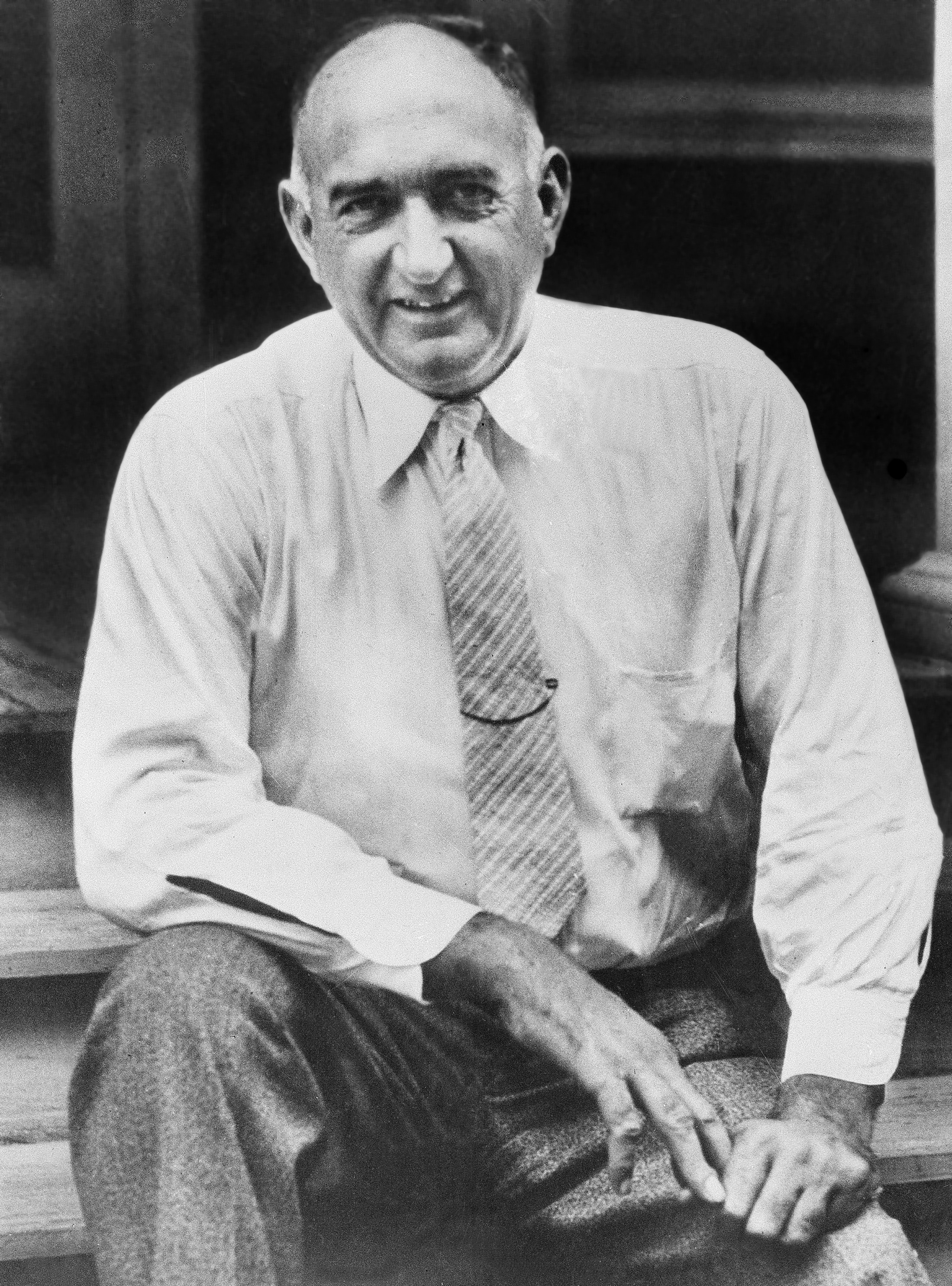
    “Shoeless” Joe Jackson is shown in 1935. He owned businesses in Savannah, Ga., and Greenville, S.C. He died in 1951.ASSOCIATED PRESS

    Jackson played five games for the A’s in 1908 at Columbia Park in Brewerytown before playing the next season in Savannah, Ga., where he led the South Atlantic League with a .358 batting average. Mack called Jackson back to Philadelphia for the final month of the 1909 season and he again played five games at the newly opened Shibe Park at 21st and Lehigh.

    “Connie Mack did what he could to make Joe’s time in Philadelphia positive,” Wallach said. “But it just wasn’t going to work. It became clear pretty quickly that Joe was talented and was going to be a star but that wasn’t going to happen with the Athletics.”

    Mack traded Jackson before the 1910 season to Cleveland, knowing the player he lured to Philadelphia would be better suited elsewhere.

    Jackson’s career is now cleared to reach Cooperstown, N.Y., via the Classic Baseball Era Committee. It might not happen in December 2027, but he will eventually be enshrined. The numbers — his career .356 average is fifth best all-time — are too strong to deny.

    His plaque will likely detail the betting scandal, his trusty bat Black Betsy, and his time in Chicago and Cleveland, where his career blossomed after Mack sent him there.

    But the first line under Jackson’s nickname will say “PHILADELPHIA” as Shoeless Joe’s iconic career started with 10 games in North Philly that have long been forgotten.

    “Connie Mack said he regretted selling Jackson to Cleveland,” Wallach said. “They really had a mutual respect for each other. Connie Mack wanted Joe to work out in Philadelphia. He knew he was going to be a star. He knew he had this ability. He won batting titles in every league before Philadelphia. He was great.

    “But it was like he traded him to Cleveland out of mercy because he wanted him to have success. It was clear to him that that wasn’t going to happen in Philadelphia.”

  • Big man Luigi Suigo has arrived at Villanova. His journey to the 2027 NBA draft is underway.

    Big man Luigi Suigo has arrived at Villanova. His journey to the 2027 NBA draft is underway.

    Luigi Suigo has only been on campus for a few weeks, but he’s already had his Villanova rite of passage.

    Assistant coach Ricky Harris took Suigo to Campus Corner, the longtime pizza shop on Lancaster Ave., and Suigo, a 7-foot-3, 19-year-old from Italy, was overwhelmed by all the menu options.

    Harris asked: “Have you ever had a cheesesteak?”

    Suigo didn’t know what it was, he said, but let Harris lead the way. The cheesesteak was “crazy good,” Suigo said, though he said Villanova general manager Baker Dunleavy playfully cautioned against having too many of them.

    “Maybe I’ll have them in secret,” said Suigo, who goes by “Gigi.”

    He better get them in while he can. Suigo’s stay on the Main Line is not expected to be long. The freshman big man, who played professionally last season with Serbia’s Mega Basket, is expected to join the short list of modern Villanova players who are on campus for one season before being selected in the NBA draft.

    Cam Whitmore did it in 2023, but before that was Tim Thomas all the way back in 1996. Suigo arriving at Villanova has rivaled the excitement of those players and even Jalen Brunson, who was a McDonald’s All-American before he played at Villanova for three seasons.

    Suigo went through the draft process this offseason and participated in the NBA draft combine before ultimately deciding to remove his name from the field and sign to play at Villanova. He likely is the highest-paid Villanova player in the nascent era of paying players. (Villanova, like all schools, does not publicly disclose the terms of player contracts, but it’s not hard to guesstimate that Suigo is making more than $3 million this season.)

    This makes Villanova seemingly a temporary stopping point for Suigo, but it is a rather critical one. Suigo was projected to be selected in the later stages of the first round of the 2026 NBA draft, though there was no guarantee. He is a talented big man with a versatile skill set whose shooting range stretches beyond the three-point line, but there are elements of his game that need to improve if he’s going to be worthy of the “Italian Wemby” nickname.

    That process already has started. Since arriving at Villanova at the end of July following a delay in his visa paperwork, Suigo has been working on conditioning. Suigo, who wants to be a lottery pick in next year’s draft, averaged 18.8 minutes in 26 games last season with Mega Basket. Working on his physique is a big part of what he’s doing right now on campus.

    It is a bit of a lonely time on an empty campus, Suigo said, but he’s in the gym most days running and dunking on the court, pedaling on the bike, jumping, and doing “everything to get me back in shape.”

    Besides his body, Suigo said he wants to expand the things he’s already good at, but also add an improved face-up element to his game from the perimeter. The NBA draft process also taught him about having a strong mindset, he said.

    “Even in workouts with NBA teams, they’re just trying to see if you’re weak and you give up, or if you’re strong even if you’re dead tired,” Suigo said. “You just keep going. I learned to be tougher, stronger with my mind before even my body.”

    Kevin Willard said in June that with some more development, the “sky is the limit” for Suigo, whose addition near the end of the offseason catapulted Villanova into discussion for a preseason top 25 ranking. With Suigo in tow, the Wildcats have a formidable front court and a versatile roster that can play big or small.

    “I think he maybe would have gotten drafted late in the first round, but he doesn’t want that,” Willard said. “He wants to make sure when he gets drafted he’s going to play. The big thing is I think he needs to get Americanized a little bit, to American basketball. I think that’s why college will be really good for him. Get in shape a little bit, just kind of get used to American basketball.”

    Willard flew overseas to see Suigo at least twice. Willard first went to see him with Dunleavy in Belgrade, Serbia, before he signed, and Suigo said Willard visited him again this summer in Italy.

    Suigo is from Tradate, in the province of Varese, in the Lombardy region of the country, and this is his first time living outside of Europe, but he said he’s not worried about the distance from home. He has lived away from Tradate before. Suigo described himself as a guy who can meet new people easily, who likes to play video games or go bowling, but also a guy who likes to sleep and recover from basketball and doesn’t mind being alone.

    Plus, he said, “I have my guys here.”

    Luigi Suigo says guard Tyler Perkins is “a machine.”Yong Kim / Staff Photographer

    He’s still getting to know his new teammates, but Suigo has been impressed by returning leading scorer Tyler Perkins.

    “Perk, he’s a machine, man,” Suigo said. “He’s that type of guy that works every day without saying nothing and he’s never tired. He just keeps working. I’m trying to be like him and be more tough.”

    Suigo, who will open his college basketball career in his home country when Villanova takes on Notre Dame in Rome on Nov. 1, said he expects to get along well with Willard, who he called “a good man and a good coach from what I’ve seen.”

    The visits from Willard are part of the reason why Suigo was sold that Villanova is the place to help him get to where he wants to go next. There’s money, sure, but it’s “the people, man,” Suigo said.

    “I like to be around these people,” he said. “I think they were more honest with me and it’s just a feeling. You have to feel it. When you make new friends or meet new people, you have to have a feeling for those types of people. I think they’re the right people to push me through everything and try to get me better, and also the type of people you can have dinner with and have fun.

    “I love it over here.”

  • Immigration courts in Pa., N.J., and Del. issued record number of deportation orders in June

    Immigration courts in Pa., N.J., and Del. issued record number of deportation orders in June

    Immigration courts in Pennsylvania, New Jersey, and Delaware are ordering people removed from the country in numbers not seen in at least a quarter century.

    At the Philadelphia immigration court — which hears cases for most Pennsylvania and Delaware residents — orders of removal or voluntary departure rose 71%, from 1,230 in May to 2,105 in June. At New Jersey’s courts, orders rose 47%, from 2,348 to 3,446.

    The figures are the highest since at least late 1997.

    “We’re definitely seeing an increase in removal orders where we may not have seen them in the past,” said Emma Tuohy, a partner at Philadelphia’s Simon, Choi & Tuohy and a past president of the American Immigration Lawyers Association’s Philadelphia chapter. “Cases are getting more difficult to win.”

    June’s cases bring to more than 46,000 the number of removal and voluntary deportation orders courts across the three states have issued since President Donald Trump’s return to office — slightly more than the total issued over the entirety of former President Joe Biden’s term.

    (function(){function e(){window.addEventListener(`message`,function(e){if(e.data[`datawrapper-height`]!==void 0){var t=document.querySelectorAll(`iframe`);for(var n in e.data[`datawrapper-height`])for(var r=0,i;i=t[r];r++)if(i.contentWindow===e.source){var a=e.data[`datawrapper-height`][n]+`px`;i.style.height=a}}})}e()})();

    (A voluntary departure order requires an individual to leave the country but, unlike a removal order, does not legally bar them from returning.)

    Local immigration attorneys say the surge in such orders reflects the Trump administration’s success in transforming immigration courts from independent arbiters of the law into components of a larger deportation machine. Immigration judges, they say, now often work in concert with government agents and attorneys to remove the maximum number of people from the country as quickly as possible, sometimes violating the due process rights of people who find themselves caught up in the system.

    Lilah Thompson, chief of immigration in the Community Defense Unit at the Defender Association of Philadelphia, has seen the trend in her own practice.

    “The immigration judges are on the same side as ICE and DHS, which is not supposed to be the case. They’re supposed to be neutral arbiters of the law,” Thompson said. “But that is not how it actually plays out.”

    Unlike typical federal judges, immigration court judges are not independent judicial branch officials but executive branch employees within the Executive Office for Immigration Review (EOIR), the agency responsible for overseeing the nation’s immigration courts system.

    EOIR officials declined an interview request for this article. In a statement, a Department of Justice spokesperson said: “The Justice Department is restoring integrity to our immigration system by hearing cases fairly, expeditiously, and uniformly, in accordance with the law.”

    The states’ record high figures and sharp month-over-month increases match the trend nationwide, as the country saw such orders rise by a third, to nearly 87,000. Nationally, more than 960,000 of these orders have been issued since Trump returned to office.

    June’s increases reflect a steady rise in such orders since then.

    Compared with January 2025, removal and voluntary departure orders were up nearly 300% in Pennsylvania and Delaware, and more than 280% in New Jersey. Nationally, removal orders were up almost 160%.

    The data were published by the Transactional Records Access Clearinghouse (TRAC), a data gathering and research organization that regularly acquires and analyzes such data from EOIR.

    Faster cases, more deportations

    As the number of deportation orders has reached all-time highs, such orders have also come to represent the vast majority of deportation case outcomes.

    In June, 90% of Pennsylvania and Delaware cases ended with an order of removal or voluntary departure. In New Jersey, 94% did. Nationally, about 89% of cases ended with such an order.

    Since the start of Trump’s second term, more than 85% of cases have ended with such orders. Under Biden, about 44% did. About two-thirds of cases ended in a removal or voluntary departure order during Trump’s first term.

    Rosina Stambaugh, a York-based immigration attorney, pointed to the faster pace of recent deportation cases as a major factor.

    “They’re scheduling a final hearing in like two weeks. Before, we’d have at least a month to prepare,” Stambaugh said. “To prepare for a final hearing in just two weeks is insane. We used to have at least 30, sometimes 45 to 60, days to prepare for a hearing.”

    (function(){function e(){window.addEventListener(`message`,function(e){if(e.data[`datawrapper-height`]!==void 0){var t=document.querySelectorAll(`iframe`);for(var n in e.data[`datawrapper-height`])for(var r=0,i;i=t[r];r++)if(i.contentWindow===e.source){var a=e.data[`datawrapper-height`][n]+`px`;i.style.height=a}}})}e()})();

    The faster pace is in part the result of judges refusing to offer continuances, lawyers say. Before, it was ordinary for a judge to delay a hearing so an attorney had more time to prepare. That is no longer the case.

    The change follows a series of rulings from the Board of Immigration Appeals (BIA) — the highest administrative body for interpreting immigration laws. One such ruling largely prohibited judges from extending cases based on future eligibility for relief.

    Stambaugh offered a client of hers as an example.

    After the man was arrested in an ICE sweep, his fiancée, an American citizen, raced to file marriage paperwork. The couple were scheduled to get married the day after his hearing. Stambaugh asked the judge to delay issuing a ruling, as the impending marriage would have granted new grounds for protection from deportation. The judge refused and the man accepted a voluntary departure.

    Tuohy pointed to another set of BIA decisions that has sped up cases — and made them harder to win.

    Those rulings instruct judges to order someone removed before providing them with an opportunity for a full hearing of their case in some circumstances.

    “So before anyone’s even had a chance to dive into the meat of the case — to really prepare evidence and prepare for the case — the judges are predetermining that the case is without merit and [removing] them,” Tuohy said.

    More people detained while facing deportation, the vast majority with no criminal record

    The increasing number of detained individuals is another factor fueling the surge in deportations, according to lawyers.

    In June, more than 11% of people receiving orders of removal or voluntary departure in Pennsylvania, New Jersey, and Delaware were in detention. That is up from 7% in January 2025. Since Trump returned to office, about one in four people in the three states was detained, compared with about 7% during the Biden administration and 29% during Trump’s first term.

    (function(){function e(){window.addEventListener(`message`,function(e){if(e.data[`datawrapper-height`]!==void 0){var t=document.querySelectorAll(`iframe`);for(var n in e.data[`datawrapper-height`])for(var r=0,i;i=t[r];r++)if(i.contentWindow===e.source){var a=e.data[`datawrapper-height`][n]+`px`;i.style.height=a}}})}e()})();

    Stambaugh said that in the past, when Immigration and Customs Enforcement agents encountered someone without legal status who did not have a criminal record, they would usually just issue a notice to appear before a judge or even let them go after advising them to seek legal status. That has changed.

    “It is 100% that ICE officers no longer have discretion in who they can detain,” Stambaugh said. “Now, if you come in contact with ICE and you’re not a lawful permanent resident or U.S. citizen, you’re detained.”

    As more people are detained during deportation proceedings, a smaller share of them have a criminal record.

    In June, just 1% of cases in Pennsylvania, New Jersey, and Delaware ending in an order of removal or voluntary departure were brought on grounds alleging a criminal violation, matching the share nationally. The last time more than 5% of cases ending in an order of removal or voluntary departure were brought under a criminal charge was December 2024, the month before Trump took office for his second term.

    “They’re trying to remove as many people as possible, and they’re going to go for low-hanging fruit, which is individuals out in the community who are doing nothing wrong,” Thompson said, referencing collateral arrests and those that have occurred during individuals’ ICE check-ins.

    A series of BIA rulings last year have also led to a growing detained population, lawyers say. In the most consequential of those, the board prohibited immigration judges from granting bond to people who entered the country without permission — regardless of the length of time they had lived in the United States or whether they had a criminal record.

    Previously, attorneys say they had adequate time to prepare cases. That is no longer true.

    “When you have to do these cases in two weeks, you don’t really have much to work with because the main person who has to get you evidence is stuck in detention,” Stambaugh said. “That’s what makes these cases a lot harder.”

    Share of people without legal representation increasing

    People with legal representation are far more likely to avoid an order of removal or voluntary departure. In June, 73% of such individuals in Pennsylvania, New Jersey, and Delaware courts had their cases end in removal vs. 98% of those who lacked legal representation, similar to national figures and long-standing trends.

    At the same time, the share of people without legal representation has steadily climbed in recent years.

    In June, a little under 24% of individuals in deportation cases in Pennsylvania, New Jersey, and Delaware had a lawyer. That is down from about 57% in January 2025. Since Trump returned to office, about one in three people in the three states had a lawyer, as compared with about 57% during the Biden administration and 52% during Trump’s first term.

    (function(){function e(){window.addEventListener(`message`,function(e){if(e.data[`datawrapper-height`]!==void 0){var t=document.querySelectorAll(`iframe`);for(var n in e.data[`datawrapper-height`])for(var r=0,i;i=t[r];r++)if(i.contentWindow===e.source){var a=e.data[`datawrapper-height`][n]+`px`;i.style.height=a}}})}e()})();

    Thompson, of the Defender Association of Philadelphia, said several factors were at play.

    First, the demand for attorneys has increased alongside the volume of cases, swamping supply.

    Second, cases both move more quickly and are more complex, limiting the number of cases attorneys can juggle at once.

    “Our ability to take on cases is so much less now because what a case requires now is so much more,” she said.

    And unlike Thompson and her colleagues, who offer their services at no charge, private lawyers are expensive and their fees reflect the increasing complexity of cases, meaning fewer people can afford them.

    Tuohy suggested the increase in detention is likely also making it more difficult for people to afford legal services.

    “You’re not working anymore if you’re in detention, right?” Tuohy said. “So then you’re asking your family to foot the bill, and that consideration [to hire an attorney] becomes even more difficult.”

    Stambaugh suggested an additional factor: The flurry of policy changes has led to immigration courts so stacked in the government’s favor that many immigrants may regard hiring an attorney as a waste of money since they will likely face deportation no matter the strength of their case.

    She has begun advising potential clients that their best option may be to keep their money and instead accept voluntary deportation.

    “In my opinion, you’re going to have to go back [to your home country], so you might as well keep your money and go find somewhere to live,” Stambaugh said.

  • Gen Zers like what Philly has to offer, but they want better pay and more work opportunities, survey says

    Gen Zers like what Philly has to offer, but they want better pay and more work opportunities, survey says

    Gen Z has established a foothold in the workplace, and as these workers become a bigger part of Philadelphia’s workforce, they’re increasingly shaping the economy.

    So what do Philadelphia’s Gen Zers think is a good job?

    The perhaps unsurprising answer: one that allows advancement opportunities, high pay, and employer-funded healthcare benefits, as well as work-life balance and boundaries. That’s the finding of a new report from the Pew Charitable Trusts.

    And for some Gen Zers Pew heard from, pursuing a job in their field means looking beyond Philadelphia. Outside of healthcare, and some opportunities in law and engineering, they say, other desirable industries don’t seem to be hiring much here.

    “Understanding their attitudes, their perspectives about work, about what a workplace should be, what their feelings are about work-life balance” is important, said Thomas Ginsberg, author of the report on Gen Z workplace attitudes.

    Released Wednesday, the report is based on focus group discussions that took place last year with 54 Philadelphians aged 18 to 29.

    They’re skeptical about what’s learned in college and want to build up more hard skills. And they see work as a key to living well, not as the reason to live.

    “They’re not at all reticent about working hard,” Ginsberg said. “What they’re doing is questioning what’s the ultimate goal of ‘work hard.’ It’s to have an affordable personal life, in their view.”

    But participants in the survey expressed that “jobs today often don’t deliver that,” he said.

    “You work hard and you still can’t buy a house,” Ginsberg said. “Those two things are coming together pretty starkly for this group.”

    Gen Zers looking outside Philly for good, flexible jobs

    Gen Z Philadelphians want flexible work hours and perhaps the freedom to go to the dentist without requesting time off from work.

    They want boundaries when they’re off the clock, so they can maintain hobbies and relationships. But they also want some in-office time to learn from colleagues.

    “I don’t live to work. I work to live. So there needs to be that distinction between the two,” one participant said.

    Much of Philadelphia’s Gen Z population works in healthcare, social assistance, and education services, reflecting the city’s eds and meds focused economy.

    Survey participants interested in healthcare jobs said there were plenty to go around. Others looking outside that field said there aren’t enough good job opportunities.

    In particular, they said, jobs in tech, finance, and the arts seem more scarce. They said New York and Washington, D.C., seem to have more opportunities in those fields.

    And while cost of living and housing seems lower in Philadelphia than in other East Coast cities, jobs here generally pay less, they say.

    Still, they like much of what the city offers for nonwork hours, from the social life to the sports, arts, and transportation. SEPTA, PATCO, and NJ Transit attracted some Gen Zers to the area in the first place, the report said.

    College builds contacts, not skills, Gen Z says

    A little over half of Philadelphia residents between the ages of 25 and 29 had a bachelor’s degree between 2020 and 2024 — a higher share than residents older than them. But Pew found this age group has reservations about whether college provides what they need for career advancement.

    “This age group is the highest-educated age group that we can measure … and even so, they’re only marginally positive about the value of college education,” Ginsberg said.

    Temple University students on graduation day on May 6.Alejandro A. Alvarez / Staff Photographer

    College-educated Philadelphians surveyed said their higher education was valuable for building a professional network, Ginsberg said, but not as much for hard skills. They said they want more training in skills like coding, data analytics, AI, and industry-specific software. Some said they know they will need a graduate degree to advance.

    Those without a degree felt they could get those hard skills without college, said Ginsberg, pointing to the availability of specialized programs and microcredentials.

    Still, those without an undergraduate degree said that they felt like employers favored potential hires who had gone to college and that they could have benefited from learning soft skills such as public speaking, networking, and interviewing in a college setting.

    Gen Z doubts the value of retirement benefits

    Ginsberg noted that the Gen Z respondents expressed skepticism about financial institutions and retirement, which he wasn’t expecting. Some said they had purposely forgone their employer’s 401(k) plan or couldn’t afford to set money aside to retire. Some said they felt more confident investing money on their own.

    “Gen Z has lived through two economic shocks in this country,” Ginsberg said. They’re also facing record levels of college debt, and high inflation.

    “They’re translating that, to some degree, into questioning whether the institutions of our economy actually are doing right by them.”

  • New LeBron James mural in Chinatown — featuring Billy Penn as Dwyane Wade — is about more than celebrating the Sixers star

    New LeBron James mural in Chinatown — featuring Billy Penn as Dwyane Wade — is about more than celebrating the Sixers star

    When it was announced that LeBron James was heading to Philly, artist Chenlin Cai immediately told social media he knew what his next project would be.

    On Wednesday, just two and a half weeks later, Cai was putting the finishing touches on his mural, which has already created a scene at 10th and Arch Streets in Chinatown, with residents and tourists alike stopping to take pictures and chat with the artist.

    The purpose of the mural, Cai says, isn’t just to celebrate the Sixers’ big signing, it’s also to bring people to his community.

    “I know this mural can bring positive interest to Chinatown,” Cai said. “There’s a lot of controversy about Chinatown, a lot, so I wanted to show some of the Asian elements in the art and bring business to this area, to this community — my community.”

    When sketching out his plan for the mural, which is painted on the side of a Vietnamese restaurant across from the Chinatown Friendship Gate, the famous photo of James and Dwyane Wade combining for an alley-oop in Miami immediately came to mind. From there, Cai (蔡陈林) — who asked that we print his Chinese name so his mom, who can’t read English, could see her son’s name in print — was inspired by Philadelphia and his heritage to make it his own.

    James Smith captures a photo with his phone of the LeBron James mural at 10th and Arch Streets.Jose F. Moreno / Staff Photographer

    He replaced Wade with a bronze William Penn, a nod to Penn’s statue atop City Hall, and included a wave reminiscent of The Great Wave off Kanagawa, a famous piece of Asian art, that crests into a dragon image. Cai explained that the dragon represents an ancient Chinese legend known as the “Dragon’s Gate,” which symbolizes hard work, bravery, and good fortune.

    “Just as in the legend, where a fish that leaps over the Dragon’s Gate transforms into a dragon, LeBron’s arrival in Philadelphia portends that his career will reach new peaks. As LeBron soared through the air, the waves rose up and transformed into a dragon,” Cai wrote in the description of his mural.

    No detail was too small. He even matched LeBron’s sneakers to his own favorite pair, which was a Christmas gift from his wife, Xingzi: the Nike LeBron Soldier 14 EP “Sisterhood.”

    “Philadelphia is The City of Brotherly Love, and I wanted to include it for everybody, and because these shoes are called the ‘Sisterhood,’ the whole city is welcoming him,” Cai said, beaming as he took pictures with fans.

    Pedestrians walk past a LeBron James mural at 10th and Arch Streets on Wednesday. Jose F. Moreno / Staff Photographer

    This is not Cai’s first Chinatown mural. He painted the crane mural that went up in 2022 and, more recently, a collection of 20 different World Cup murals celebrating some of the countries that played in the tournament. The U.S. installment is located right next to his LeBron mural.

    Among all his works, this one is extra special for Cai, who isn’t just a lifelong 76ers fan — he’s also been a LeBron fan since before he entered the league.

    “We are the same age. He is like my bro,” Cai said. “I watched him when he was in high school, even in 2002, when he was called ‘The Chosen One.’”

    As people passed by and fist bumped Cai on Wednesday, some stopped to chat about their shared love for the game and excitement over the upcoming season, while others hit the Wade pose for a meme of their own. Each time someone took a picture, Cai encouraged them to post on social media and continue to spread his message.

    “I am just so happy with the attention this has been getting,” Cai said. “It means so much for me and my family, and this is the true purpose of my art, to bring more traffic to Chinatown and help the small businesses here.”