Tag: Weekend Reads

  • Edwin López Cornejo prayed for another year to see his daughter grow up. He died in ICE custody.

    Edwin López Cornejo prayed for another year to see his daughter grow up. He died in ICE custody.

    Half a year into fatherhood, Edwin Jeovanny López Cornejo found the sight of his daughter, Ashley, revitalizing after a long day at work.

    It was 2014. López Cornejo, an immigrant from El Salvador, had been working at a packaging company in South Plainfield, N.J., for about seven years. He came to the United States in 2007, filed an asylum claim, and received employee authorization from the federal government after being deported the year prior, according to court documents.

    As he would often do in the years that followed, he took to Facebook to express his gratitude to God and his love for his daughter.

    This past Friday, Ashley Lopéz, now 12, wore all black. She stood between her paternal grandparents as they held each other and wept at her father’s wake at Crescent Avenue Presbyterian Church in Plainfield.

    López Cornejo had died in ICE custody just under a week earlier at the age of 39 after experiencing what the federal agency called a medical emergency at Delaney Hall, an ICE detention center in Newark run by the private company GEO Group.

    Ashley has barely been speaking. Or eating. And she does not want to be around people, María Cornejo, her paternal grandmother, told The Inquirer in an interview on Monday, speaking in Spanish.

    Letters of support submitted to the court after his June arrest, remarks from his family, and more than a decade of public Facebook posts written in Spanish paint the picture of a father who deeply loved his daughter.

    Twelve years ago, Lopéz Cornejo and his then-girlfriend were expecting twins, but the boy died in the fifth month of pregnancy, Cornejo said.

    “She is the only child he had. You should have seen him when she was born. That man was the most joyful man with his daughter in his arms,” Cornejo said. “It was his first time being a father, and he wouldn’t even sleep so he could watch her sleep and make sure she was OK.”

    López Cornejo was unable to see his daughter at Delaney Hall. He had been there for about six weeks.

    Delaney Hall has been the site of high-profile political clashes representing the national conflict between Trump’s supporters and immigrant rights advocates. The detention center serves a critical role for the president’s mass deportation agenda, and complaints of poor and unsanitary conditions have sparked continuous protests, uproar from Democratic lawmakers, and a reported hunger strike inside, which the Trump administration denied happened.

    In December, a 41-year-old Haitian national named Jean Wilson Brutus died one day after entering Delaney Hall, and U.S. Rep. Rob Menendez (D., N.J.) recently said another person died at the hospital after a potential seizure at the facility earlier this summer. Nationally, at least 23 fatalities in ICE custody have been reported this year as the rate has increased during Trump’s second term.

    López Cornejo’s asylum claim was still pending — 19 years after he filed it — when ICE agents arrested him, according to a habeas corpus petition challenging his detention.

    An undated photo of Edwin López Cornejo and his daughter, Ashley, in a pool.Courtesy family of Edwin López Cornejo

    Around 9 a.m. June 18, López Cornejo headed out to pick up his car from a towing company, where it had been taken for being parked for too long, his mother recounted Monday. She urged him to take a taxi and avoid walking, given a heightened fear of running into ICE in the community.

    She said goodbye, unaware it would be the last time she would hug her son.

    Lopéz Cornejo ended up walking because roads were closed.

    Masked agents stopped him and asked for his ID. When he produced his Salvadorian identification, they put him in an unmarked vehicle with two other people who had already been detained, his lawyer Ingrid Echeverria recounted in the habeas corpus petition.

    Cornejo said her son called her from inside Delaney Hall that evening. The first question he asked was about Ashley.

    According to his family and court documents, he took medicine for diabetes, epilepsy, and high blood pressure. Interruption of his strict medication schedule carries the risk of breakthrough seizures and associated harm, according to the petition. That July 24 court document did not accuse ICE of denying him his medication but expressed concern over potential medical risks if he was transferred to another facility, as the agency at one point planned.

    On. Aug. 1, Cornejo got a call from University Hospital in Newark. The person on the phone told her that her son’s heart was not beating by the time he arrived, after he collapsed at Delaney Hall. ICE has not released an official cause of death, but U.S. Sen. Andy Kim (D., N.J.) said it was a heart attack and cardiac arrest. Days after his death, Kim and fellow New Jersey Democratic U.S. Sen. Cory Booker put forward legislation that would require the shuttering of Delaney Hall.

    New Jersey Attorney General Jennifer Davenport said last week that her office was launching a civil rights investigation into Delaney Hall, citing reports of “alarming conditions” and recent deaths.

    Sen. Andy Kim (D., N.J.) stands between federal agents and demonstrators in an attempt to prevent a clash outside the Delaney Hall migrant detention center in Newark, N.J., on May 25.DAKOTA SANTIAGO

    In response to López Cornejo’s death, ICE put out a statement saying that everyone in ICE detention gets proper, around-the-clock medical care, and that López Cornejo “was seen by medical professionals.”

    His family doesn’t buy it. They blame ICE for detaining him and accuse the agency of failing to provide him proper medical care. Danilo López, his brother, said at a news conference that his brother told him over the phone that he had to fill out a form to just get Tylenol at Delaney Hall and it could be days before he received it, a claim ICE did not directly address when asked.

    “He lived a normal life and worked normally while taking his medicine and with a proper diet, working more than eight hours a day, and had no problem,” Cornejo said in the interview.

    Just days after her father died, Ashley López said at a news conference: “On the same day, we were both dead. The only difference was his heart stopped beating. I am going to grow up without a father.”

    Family members of Edwin López Cornejo including (from left) his mother Maria Cornejo, daughter, Ashley, and his former wife, attend a news conference on Tuesday, Aug. 4, 2026, in Highland Park, N.J. Yuki Iwamura

    ‘The true love of my life’

    On his daughter’s first birthday, López Cornejo wrote on Facebook that Ashley gave him “one more reason to live.”

    “I want to tell you that when I learned you were going to be born it felt like it would be forever before I had you in my arms,” he wrote. “I will never forget the first day that I changed you and gave you a feeding bottle. Wow my girl, those moments I will never forget and now you are turning one. Wow how the time passes.”

    An undated photo of Edwin López Cornejo with his daughter, Ashley.Courtesy family of Edwin López Cornejo

    On her third birthday, he called her “the true love of my life,” and said she motivated him to be strong and keep moving forward.

    “I would be willing to give my life for yours,” he wrote.

    On his own birthday, he often thanked God for another year of life. And as a birthday wish, he asked for another year to see his daughter grow.

    Ashley, a U.S. citizen, was born in New Jersey, according to the petition, which includes her birth certificate and public school records to support his lawyer’s argument that López Cornejo has community ties. The documents show she received a certificate of achievement for math at 9 years old “for demonstrating fluency of division” in less than six seconds. And shortly after she turned 10, she was crowned “Art Leader of the Week.”

    Ashley lived with her dad half the week, but he picked her up from school every day, and she would run into his arms to greet him, Cornejo said. He took pride in her success in school.

    “He would tell her, ‘I want you to be a doctor so you can cure me one day,’” she said.

    Family members of Edwin López Cornejo arrive at an Aug. 4 news conference in Highland Park, N.J.AP Photo/Yuki Iwamura

    A hard worker

    López Cornejo started working in construction just three weeks before his detention after the warehouse he worked at changed locations, his mother said.

    Court documents show he worked at UpperClass Warehouse in South Plainfield from March 2021 until this May, and he previously worked multiple restaurant jobs in New Jersey. He paid taxes to the state of New Jersey and the federal government.

    Jesse Fischbein, vice president of finance at Just Packaging, where López Cornejo worked from 2007 to 2015, said in a letter of support attached to the petition filed with the court last month that he “truly was a company-first employee, who didn’t believe that the workday was simply 7 AM to 3:30 PM.”

    “He was punctual, always pitching in to help other employees when his tasks were completed, and always asked management if there was more to be done,” Fischbein wrote.

    People detained inside Delaney Hall stand at windows in Newark, N.J., as demonstrators gather outside on May 28, 2026. The protests were fueled by reports of detainees staging a hunger strike over the conditions of their confinement.TODD HEISLER

    But Fischbein said there was one thing López Cornejo would always be better at than his job: being a father.

    “From what I know about him outside of work — he is a father, and that is the job he excels at more than any function he performs for my company,” Fischbein said.

    A coworker-turned-friend, Juan Zavala, said in another letter of support that López Cornejo had “earned the respect of everyone around him” through kindness, compassion, respect, and honesty.

    “He is a loving, responsible, and caring parent who is deeply involved with his daughter’s life and always puts her well-being first. It is very clear that his family means everything to him,” Zavala wrote.

    One of the ways López Cornejo expressed himself to his loved ones was by sharing links to music on Facebook. He dedicated love songs to his daughter and others, he shared reflections during the pandemic with a Christian worship song, and he said the music video for “Pose” by Daddy Yankee — the singer known for the hit song “Gasolina” — inspired him to learn to dance reggaeton.

    López Cornejo and Ashley dreamed about dancing together at her quinceañera, a celebration for her 15th birthday.

    “He just wanted to dance the waltz with his little girl, and they so looked forward to that party,” Cornejo said, crying. “Now my little girl won’t have her dad.”

    Family members walk to the church side entrance during the wake of Edwin López Cornejo, after his death in ICE custody in New Jersey on Aug. 7 in Plainfield N.J.Max Blease / For The Inquirer

    ‘Profoundly difficult consequences’

    In the July 24 petition, his lawyer called on ICE to explain why he was detained, and consider either his immediate release or a hearing in front of an immigration judge.

    His lawyer said that he was served with documents in English he could not read, and that he did not have a criminal record and always showed up for his court dates.

    His friends and family described him in similar terms in letters of support submitted to the court last month.

    Kelvin E. Urquilla Flores, who met López Corneja at Just Packaging nearly 20 years ago, described him as “a peace-loving, law-abiding individual” who is “an asset to this country and to his community.”

    Edgar Fabián Guaman, who said he had known López Cornejo for almost two decades, said that his family friend did not present a risk to the community — but instead improves the well-being of those around him.

    “I respectfully express that a possible separation of Mr. López Cornejo from his family unit would have profoundly difficult consequences for his daughter and his mother, who depend on his presence, support, and emotional stability,” Guaman wrote.

    An undated photo of Edwin López Cornejo and his daughter, Ashley.Courtesy family of Edwin López Cornejo

    Through his Facebook posts, López Cornejo shared a deep appreciation for his parents. In May 2016, he thanked God for giving him “an exemplary mother,” whom he also described as a “second mother” to his own daughter.

    “Maybe I’m not the perfect son, but I try to behave at your level, mother,” he wrote. “I know you gave me the greatest gift, life, and I will never be able to repay you, mother.”

    The last post that shows up on López Cornejo’s Facebook page was a message directed to God and his daughter on her 12th birthday last November.

    Staff writer Abraham Gutman contributed to this article.

  • Two new scholarships named for Dito van Reigersberg, aka Martha Graham Cracker, will support Philly artists in drag, cabaret, and theater

    Two new scholarships named for Dito van Reigersberg, aka Martha Graham Cracker, will support Philly artists in drag, cabaret, and theater

    Following the recent death of beloved artist Dito van Reigersberg — who performed as Philly’s legendary drag queen Martha Graham Cracker — his friends, family, and fans are working on two scholarship funds for the city’s artists and students in van Reigersberg’s honor.

    Victor Fiorillo, the cabaret pianist who performed with van Reigersberg for years, has launched the Martha Graham Cracker Scholarship Fund to support drag and cabaret artists through microgrants. FringeArts will administer the funding, and the first phase will award $500 in unrestricted funds to three individuals or ensembles performing in the 2026 Fringe Festival.

    Fiorillo developed the idea in early August after seeing photos on social media remembering a Martha Graham Cracker Cabaret band fundraiser last year that celebrated the 40th anniversary of Philadelphia’s legendary Live Aid concert. Fiorillo and van Reigersberg raised more than $25,000 for Blood Cancer United (then called the Leukemia & Lymphoma Society) to help others struggling with the kinds of cancer that affected van Reigersberg, who died June 1.

    In less than a week, Fiorillo has raised nearly $11,000 with donations from van Reigersberg’s mom, Stephanie van Reigersberg, and longtime Martha fans, like Jose Pistola’s owner Casey Parker and Johnny Brenda’s owner William Reed. He initially raised $5,000 from friends and fans before opening the fund to public donations through GoFundMe. “It was just a no-brainer for people” to say yes, Fiorillo said.

    “It’s not only about Martha, of course, it’s about furthering the cabaret and drag arts in Philadelphia … I think of it as paving the way for the next Martha — not that I think that Martha could ever be replaced, but that’s certainly the idea,” said Fiorillo, a reporter at Philadelphia Magazine who lives in West Philly.

    “Dito and I both sort of came from privileged backgrounds. We had the money to pay musicians. We never struggled to make Martha a thing. We never had to bet the bank on it or take out a second mortgage. But having worked with so many artists over the years, we know how much some of them struggle.”

    Applications for microgrants for 2026 are now open. Fiorillo added that he plans to work with a financial planner to ideally establish the fund long-term. The next 2027 phase of microgrants will be open to drag and cabaret artists outside of the Fringe Festival as well.

    Another scholarship fund memorializing van Reigersberg is in the works at Pig Iron Theatre Company, the experimental theater group and school that van Reigersberg cofounded.

    Though still in early planning stages, the Dito van Reigersberg Legacy Fund would support artists and students in two ways: by establishing scholarships for Pig Iron graduate students to partially cover tuition costs and through funding Pig Iron’s program The Island, which van Reigersberg codeveloped.

    The Island provides artist ensembles with studio space and production support to experiment and workshop performances without the pressure of delivering a final product. (Pig Iron artists have used The Island to eventually create full productions, like 2008’s OBIE Award-winning Chekov Lizardbrain.) The Legacy Fund would finance Pig Iron’s current Island program and invite collaborations with new artists. Additionally, the fund would establish an Island residency for artists, either individually or as a group, to receive two weeks of dedicated time and space for ideation.

    “I watched Dito open so many doors for so many emerging artists [especially] in the queer community, just [by] saying, ‘You belong and what you do is valuable.’ For us to be able to carry that on just feels like a gift,” said Pig Iron coartistic director Quinn Bauriedel.

    Their goal, Bauriedel said, is to create “a board-designated legacy fund that would operate like an endowment, meaning there would be a principal and the interest would be spent every year,” supporting graduate student scholarships and The Island programs.

    Bauriedel hopes to raise between $1 million to $2 million in the coming years and begin offering the graduate student scholarships in fall 2027. Pig Iron will seek contributions from institutional and individual donors. He added that members of van Reigersberg’s family have agreed to serve on the selection committee for recipients.

    “Running an experimental theater company and school is a precarious enterprise … I just have this strong feeling that now, Dito, in his next phase, is helping to save the whole enterprise,” said Bauriedel.

    “He was always doing special things, and this is yet another one where he might help young artists … who just need to have somebody wrap their arms around them and say, ‘What you’re doing is important and meaningful, even if nobody quite understands it yet.’ Dito continuing to open that door is just beautiful.”

  • Sixers open season Oct. 20 at Knicks, face Cavaliers in Philly home debut for LeBron James, Jaylen Brown

    Sixers open season Oct. 20 at Knicks, face Cavaliers in Philly home debut for LeBron James, Jaylen Brown

    The 76ers will be one of the NBA’s highest-profile teams this season after adding LeBron James and Jaylen Brown to a roster that already included Joel Embiid, Tyrese Maxey and VJ Edgecombe.

    And they’re being treated as such as the league announces its schedule. That started with the opening week slate and marquee meetings on Tuesday, including opening night and Christmas Day. The Sixers will travel to face the Knicks in the season-opener on Oct. 20, returning home two nights later to host the Cavaliers in the home Philly debut for James and Brown.

    The Sixers will reportedly play in 30 national TV games in the 2026-27 regular season, starting on opening night against the defending champion Knicks.

    The marquee matchups keep coming on Christmas Day as the Sixers are slated to face a Los Angeles Lakers team James decided to leave this offseason.

    The matchup against the Knicks speaks to the outsized expectations for this new iteration of the Sixers. While the Sixers and Knicks have shared recent history, including a 2026 second-round sweep as the Knicks marched to a title, New York has gotten the better of that rivalry. But the Sixers have since fired former president of basketball operations Daryl Morey and hired Mike Gansey, traded for Brown and signed James to a two-year, $8 million deal. They also added depth in the offseason, with Anfernee Simons, Dean Wade, Kentavious Caldwell-Pope and Labaron Philon Jr. all figured to feature heavily in the rotation.

    The prominent scheduling of the matchup against the Lakers was almost a foregone conclusion. Christmas Day, which some consider the unofficial open of the NBA season, is as good a day as any. James decided to leave Los Angeles as the franchise prioritized younger players in the offseason, with Luka Doncic and Austin Reaves both playing on max deals.

    More games against rivals come early as the Sixers will see the Boston Celtics twice in the NBA preseason. That means we will get an early preview of Brown against his former team and running mate Jayson Tatum in some form, with the real games coming later. The Sixers’ three preseason games will be played at the Brooklyn Nets on Oct. 8 and in a back-to-back against the Celtics on Oct. 10 and 16.

    James spent the previous eight seasons as a member of the Lakers, delivering a title in the pandemic-shortened 2020 season. He kept the Lakers in contention for the rest of his tenure, including last season when he averaged 20.1 points, 6.1 rebounds and 7.2 assists in his 23rd season. James also served as the offensive engine in the postseason at age 41, delivering a surprising first-round defeat of the Houston Rockets with Doncic and Reaves dealing with injuries. The 2025 champion Thunder ended the Lakers’ run in the second round.

    Brown played his entire 10-year career with the Celtics, winning Eastern Conference finals MVP and NBA Finals MVP as he helped lead the franchise to a title in 2024. An All-NBA performer in 2025-26, Brown is fresh off one of his best individual seasons. He averaged 28.7 points, 6.9 rebounds and 5.1 assists as the Celtics outperformed expectations and landed the second seed before falling in seven games to Embiid, Maxey and the Sixers.

    James and Brown will join a Sixers franchise big on talent. Maxey has blossomed into an All-NBA performer, Embiid is a former MVP and Edgecombe finished third in a competitive Rookie of the Year race last season.

    The Sixers’ opening night matchup against the Knicks is part of a tripleheader that starts with a matchup between the Boston Celtics and Detroit Pistons, followed by Sixers-Knicks and Spurs-Thunder. The week continues with Oct. 21 meetings between the Minnesota Timberwolves and Miami Heat, followed by a meeting between the Golden State Warriors and Los Angeles Lakers. The next night, which is headlined by Sixers-Cavs, will also feature the Thunder against the Denver Nuggets.

    Christmas Day, the league’s vaunted quintet of games will start at noon with an NBA Finals rematch between the Knicks and Spurs and run deep into the night, with the final showing, a West Coast game between the Nuggets and Warriors, kicking off at 10:30 p.m. ET. Heat-Celtics, Sixers-Lakers and Thunder-Timberwolves will fit in between those games.

    Inquirer Sixers beat reporter Gina Mizell contributed to this report.

  • Mayor Parker’s campaign is spending far more on lawyers than it did when she was running for office

    Mayor Parker’s campaign is spending far more on lawyers than it did when she was running for office

    Mayor Cherelle L. Parker’s campaign has spent about $108,000 on legal fees since the start of 2025, far more than it shelled out in any recent year, campaign finance records show.

    For instance, in 2023, when Parker’s legal bills would have been expected to spike amid her winning campaign for mayor, the campaign paid about $14,900 in fees to its law firm, Dilworth Paxson, according to campaign finance reports. In 2024, Parker’s first year in office, the campaign sent Dilworth about $19,300.

    But in 2025, payments to Dilworth more than quadrupled.

    Aren Platt, executive director of the Democratic mayor’s campaign, People for Parker, did not respond to a request for comment on what was driving the increased legal bills.

    “Our lawyers at Dilworth are an essential part of our team and it’s important that we are able to talk to them on a variety of strategic initiatives,” Platt said in a statement.

    The campaign paid Dilworth about $88,700 in 2025, and an additional $19,700 between Jan. 1 and May 4 of this year, according to the most recent report.

    “It’s an unusual number to see right now,” said Matthew Haverstick, a Philadelphia-based elections attorney who has primarily worked with Republican candidates. “There could be lots of prosaic or benign explanations for it, but it’s not normal.”

    Election law gives campaigns wide latitude over how they spend money from donors. In addition to election-related expenses like advertisements or legal work on campaign finance compliance, campaigns can spend money on everything from constituents’ funeral expenses to airfare for candidates to attend political events. They can also support the candidates’ work in government.

    Public records do not provide detailed information about campaign expenditures. After multiple requests from The Inquirer for the campaign’s legal expenses, Dilworth attorney Timothy J. Ford, who handles most of the campaign’s legal work, on Monday provided copies of invoices from 2023 through 2025.

    The campaign told the Philadelphia Office of City Commissioners, which oversees elections and processed the request, that the delay was due to a mix-up involving an email address that is “not checked regularly.”

    The invoices, which the commissioners said were “redacted for attorney-client privilege and client confidential information,” show Dilworth billed the campaign during that three-year period for four separate matters.

    For “Matter 01,″ which included all the invoices during the election year of 2023, the firm billed the campaign for about $12,400, and almost all of the work appears to have been done by Ford. (The campaign spending reports and Dilworth’s invoices do not exactly align, due to the timing of payments and potentially other factors such as reimbursements.)

    “Matter 02″ listed in the invoices lasted from February 2024 to March 2024, with Dilworth billing $2,300. Ford appeared to complete all the work.

    The billings escalated with “Matter 03,” which began in March 2024, three months into Parker’s tenure, and lasted at least through October 2025, the period covered by the most recent invoice provided to The Inquirer. The firm billed about $62,100 for its work on that matter, and the invoices show that at least four people from Dilworth billed hours.

    “Matter 04″ began in August 2025, and has resulted in $45,300 in billing with as of October 2025. Although most of the details are redacted, the invoices show extensive billing around an “interview” on Sept. 12, 2025. From Sept. 10 to 13, Dilworth billed nearly $7,800.

    Additionally, the Parker Mayoral Transition and Inaugural Committee, which aided her transition into office and has since closed, paid Dilworth about $9,700 between December 2023 and March 2024, when it was active.

    Parker’s campaign has been more active with fundraising during nonelection years than the campaigns of her recent predecessors. In 2025, she raised $1.7 million, more than any another second-year mayor since at least the early 2000s, according to her campaign.

    People for Parker had about $1.4 million in cash on hand as of May 4 after raising about $241,000 and spending about $390,000 in the first four months of this year. Parker is up for reelection next year, and rumors have swirled about the potential of her facing a challenger backed by the progressive movement.

    Earlier this year, Parker’s campaign donated $23,000 to the Pennsylvania Democratic Party and $25,000 to Pick Pennsylvania, a committee led in part by Parker to lure the Democratic National Convention back to Philadelphia.

    Allies of Parker also set up a 501(c)4 nonprofit called One Philly that raised and spent vast sums in 2024 before appearing to fade away in 2025.

    Political consultant Jeff Sheridan, who helped lead a super PAC that was critical to Parker’s 2023 victory, was a public point person for the One Philly nonprofit. In March 2024, he said the group was formed to advance Parker’s governing agenda, not to get involved in politics.

    One Philly, which is not required to disclose its donors, raised $658,500 in 2024, Parker’s first year in office, according to an annual return the nonprofit filed with the IRS. It spent $484,900 that year to “promote policies and actions championed by City leaders.”

    The group also reported paying nearly $19,000 in legal bills that year, and listed its representative as the Ballard Spahr law firm.

    In 2025, the group reported raising only $15,000 and spent all of its remaining money, according to its most recent disclosure, filed in May.

    Sheridan did not respond to a request for comment.

    Staff writer Anna Orso contributed to this article.

  • Ocean City community groups have filed a lawsuit challenging the Wonderland rehabilitation designation

    Ocean City community groups have filed a lawsuit challenging the Wonderland rehabilitation designation

    Four community groups in Ocean City filed a lawsuit Monday seeking to void City Council’s June 25 decision to designate the old Gillian’s Wonderland Pier as “in need of rehabilitation.”

    That vote started a negotiation with developer Eustace Mita, the owner of the property who has been seeking approval to build a seven-story, 242-room hotel on the site.

    Mita said earlier this month he is submitting a revised proposal for a hotel on the 2.42-acre property. His initial proposal called for a luxury hotel that preserved the Ferris wheel, carousel, and some kiddie rides.

    Hotels are not a permitted use under current zoning, requiring either variances or a negotiation under a rehabilitation designation. Mita sought the rehabilitation route.

    He said earlier this month that it was no longer viable to restore or replace the Ferris wheel.

    The lawsuit notes that Wonderland Pier served for generations as “a civic anchor for the northern end of the Boardwalk,” and that the pier “has been a focal point of the City’s identity as a low-rise family-friendly resort community.”

    The groups filing suit in Cape May County Superior Court were two neighborhood groups, Plaza Place Civic Association and Beach Watch Motel Condominium Association, the government watchdog group Fairness in Taxes, and Ocean City 2050, a group that has been advocating for an alternative to Mita’s luxury hotel proposal.

    Jack Gutenkunst (left), Marie Crawford, and her husband, Richard, with Shiloh, a 9-year-old soft-coated wheaten terrier, walk along Plaza Place, in Ocean City on Feb. 3, 2026. They live in the historic neighborhood right behind the site of the old Wonderland Pier and are fighting against the proposed development of a hotel on the boardwalk property.Tim Hawk / For The Inquirer

    Defendants are the City of Ocean City and the City Council.

    “This lawsuit was a difficult but necessary decision to make,” said Jack Gutenkunst of Plaza Place Civic Association, in a statement announcing the lawsuit. “Council’s Wonderland rehabilitation designation is deeply flawed and seeks to improperly strip away important planning protections that residents have long relied upon.”

    The lawsuit alleges that Mayor Jay Gillian’s failure to recuse himself from Council’s Wonderland discussions constituted “substantial financial and ethical conflicts of interest.”

    Gillian, whose family operated Wonderland for 65 years, sold the property to Mita in 2021 but continued to operate the amusement park under a lease arrangement. He made the decision to close Wonderland in 2024. The lawsuit notes financial entanglements that remain between the mayor and Mita.

    Reached by text message, Gillian declined to comment on the lawsuit.

    “The city cannot comment on pending litigation,” Doug Bergen, public information officer for Ocean City, said by email.

    The lawsuit also alleges that the designation failed to satisfy the state’s legal requirements under New Jersey’s Local Redevelopment and Housing law.

    “This lawsuit is not about stopping progress,” said Howie Atkinson of the Beach Watch group, in a statement announcing the lawsuit. “But no project is important enough to justify abandoning transparency, ignoring conflicts of interest, or shutting the public out of the progress.”

    The groups said the lawsuit should not stop the city from continuing to examine recommendations by its Boardwalk subcommittee. City Council tabled action related to the subcommittee at its last meeting due to the pending lawsuit.

  • A Lancaster County man pleaded guilty to fraud after the feds accused him of running a $400 million Ponzi scheme

    A Lancaster County man pleaded guilty to fraud after the feds accused him of running a $400 million Ponzi scheme

    A Lancaster County man pleaded guilty Monday to defrauding investors in his ATM businesses out of more than $400 million, a long-running scam that federal authorities have characterized as a Ponzi scheme.

    Daryl Heller, 56, of Lititz, was indicted last year after prosecutors said he deceived thousands of people who had invested in several businesses he owned that he used to buy and operate ATMs.

    As he sought to raise money for his firms, prosecutors said, Heller promised investors guaranteed monthly returns, which he said would be the result of operating the ATMs. And he also courted investors by using forged or fraudulent financial documents to inflate the purported health of his businesses, prosecutors said.

    Once Heller got cash infusions, prosecutors said, he used them to pay back old investors. He also spent some of the money on personal expenses or business debts.

    The scheme began to fall apart in 2023, when one of his companies, Paramount Management Group, began struggling to raise new money. Several months later, prosecutors said, Paramount stopped making payments to its older investors.

    Heller later filed for bankruptcy protection — which remains pending — and the U.S. Attorney’s Office in Philadelphia indicted him last August.

    In all, prosecutors said, Heller raised about $770 million from 2,700 people between 2017 and 2024, causing his investors to lose about $400 million. (Heller’s attorneys said Monday that they don’t agree with that number and plan to dispute it in court before he is sentenced.)

    Heller said little in court beyond responding to routine legal questions while pleading guilty to a securities fraud charge. He declined to comment after the hearing.

    U.S. District Judge Catherine Henry is scheduled to sentence Heller in December. He faces a maximum sentence of 20 years in prison.

  • Philly just shifted its rules for how kids with disabilities can get into special admissions schools. A lawsuit threat prompted the change.

    Philly just shifted its rules for how kids with disabilities can get into special admissions schools. A lawsuit threat prompted the change.

    The Philadelphia School District is changing a policy that effectively barred some qualified students with disabilities from gaining admission into certain magnet schools.

    But it did so only after a Philadelphia family — whose child with disabilities was not admitted to a school for which they met academic criteria — notified the district that it intended to sue over the old policy under the Americans with Disabilities Act.

    The school system’s policy has traditionally worked this way: Students are eligible to apply for admission to up to five of the 37 district schools for which they meet academic, behavioral, and attendance criteria.

    Because of a long-ago agreement resulting from another legal challenge, students with disabilities who meet two of the three criteria for a certain school could request an individualized review, known in the system as the LeGare process, to determine if they could succeed at that school if provided with reasonable accommodations.

    If a review panel judged the child eligible, the child entered the lottery for that school, but was required to waive their rights to enter lotteries for any schools where they met all three criteria.

    That is: If a student meets entry requirements for the Philadelphia High School for Girls but only two out of three requirements for Masterman, they could opt for an individualized review for their Masterman application — but only if they gave up the right to be considered for Girls’ High.

    If their Masterman application failed, Girls’ High was off the table.

    Dan Urevick-Ackesberg, an attorney with the Public Interest Law Center, which represented the family that threatened to sue the district this year, in a statement, called it the “double bind,” and said the district for years punished children with disabilities for asking for accommodations they were legally guaranteed.

    Exact numbers are not known, but it’s expected the change will affect hundreds of Philadelphia students annually. The application process for the 2027-28 school year is expected to open sometime this fall, though the district has not yet announced a date.

    Far-reaching impact

    The parent who threatened the lawsuit said when they heard about the policy, they thought they must be an oversight.

    “But the district doubled down” when they inquired about it, the parent said in a statement. The Inquirer is not naming the parent, child, or school to keep the child’s identity private. “It felt punitive.”

    With no other option, the child moved through the admissions process for the school to which they met two out of three academic criteria, but was denied admission in the review process.

    Because they had to forego applications to other criteria-based schools for which they did meet requirements, the student was out of luck.

    “The painful either-or of the policy effectively ruined my child’s eighth-grade year and has far-reaching impacts on their academic confidence, self-esteem, and social experience,” the parent said.

    When the Law Center notified the district of its intent to sue, the district asked to enter settlement negotiations, and agreed to change the policy.

    Going forward, students who are English learners or those with disabilities — either those with individualized education plans or 504 plans — will be able to apply for magnet schools for which they meet criteria and those for which they meet two out of three criteria.

    There will be no penalty for asking for an individualized review. Students will not need to waive their applications to schools for which they meet criteria.

    “I am beyond relieved that this awful policy has been ended,” said the parent whose lawsuit threat prompted the change. “The district should want to have engaged and talented students with disabilities in our top schools, not push them out.”

    Urevick-Acklesberg said the policy change means that “one small barrier is down” to students receiving the free, appropriate public education that’s their right under federal law.

    The district can still change its school selection process

    The new individualized review policy is an appeal process, not a first-line application, and does not guarantee students’ admission into any school.

    The agreement “does not prevent the district from modifying its school selection process, including individualized reviews, or eligibility criteria, nor does it require the district to maintain its current processes for any set period of time,” it reads. “However, to the extent the district’s school selection process continues to allow students to apply to more than one school, the district will provide a mechanism for the subject students to apply to a school where they meet the then applicable criteria, and to additionally seek review of their eligibility where they do not.”

    The district also announced other changes to the process earlier last week, including:

    • Changing the zip codes for preferential admission to Masterman, Central, Carver High School for Engineering and Science, and the Academy at Palumbo: 19132, 19133, 19135, 19138, 19140, or 19141. New to the list are 19138 — Germantown — and 19141 — sections of North Philadelphia including Logan and East Oak Lane. No longer on the preference list are 19121 — parts of North Philadelphia including Brewerytown and Sharswood — and 19136, Holmesburg and Torresdale. The zip codes chosen for preference are the most underserved at the four magnet schools.
    • Limiting the grades that count toward a student’s GPA for admission to magnets. Now, just English, math, and science grades are counted. Social studies grades also used to count.
    • Granting preference for kindergarten admission to students who attend prekindergarten at the school to which they’re applying.
    • Granting preference for career and technical education program admissions to students who participate in a district CTE summer program.
  • How more than 3,000 Pennsylvania state government employees are using AI at work

    How more than 3,000 Pennsylvania state government employees are using AI at work

    HARRISBURG — When Pennsylvania announced plans in 2024 for a first-of-its-kind generative artificial intelligence pilot program with the tech giant OpenAI, Steve Catanese believed he was seeing a familiar pattern: the introduction of a new technology that could jeopardize the jobs of his union members.

    As president of the labor union SEIU Local 668, which represents 10,000 state workers, Catanese approached Pennsylvania officials about entering into an agreement to provide its members with job protections as the state continued to introduce AI tools.

    The state agreed to talk. And, to the pleasant surprise of Catanese, a series of back-and-forth discussions throughout that winter led to a deal. Gov. Josh Shapiro published a public letter outlining commitments to state employees amid the rising popularity of AI use, and the union reached a separate agreement with the state, establishing protections for its members.

    Across Pennsylvania’s government, more than 3,000 state employees are now using AI tools, up from the 175 who first piloted the technology. And 6,000 more are currently enrolled in training programs as a prerequisite for accessing the software. In June, Code for America — a civic tech nonprofit — recognized Pennsylvania as one of the top states for AI readiness.

    The state, which has established a Generative AI Governing Board and a series of policies regulating its AI use, has stressed that using AI tools has improved government efficiency without eliminating jobs.

    Bry Pardoe, the state’s chief information officer, said in a statement that the Shapiro administration is “focused on the safe and responsible adoption of generative AI and other AI technologies.”

    Gov. Josh Shapiro speaks at the state Capitol in Harrisburg, Pa., Jan. 17, 2023. Pennsylvania state government would prepare to use artificial intelligence in its operations, Shapiro said Wednesday, Sept. 20, 2023, as states were increasingly trying to gauge the impact of AI and how to regulate it. Matt Rourke

    Today, Pennsylvania state employees use AI for a range of functions but focus on relatively basic tasks: deciphering handwritten clemency applications, scanning documents, and triaging customer service requests.

    Most employees access generative AI tools through no additional cost according to the Office of Administration. For the 721 employees who have access to ChatGPT Enterprise, the cost is $25 dollars per month for each user, bringing the annual cost — based on current usage — to $216,000 a year.

    Mark Fagan, a lecturer at Harvard University’s Kennedy School of Government and author of a book on how governments can use these tools, said that generative AI can serve as an important resource to deliver public services to constituents.

    “There are endless opportunities for using AI to improve the way we either provide higher quality, more efficiency, or more equity in our public services,” he said.

    But to do this best, he said, governments should first find friction points and inefficiencies in their operations and then determine if the technology can help.

    “AI is often a solution to pain, but that’s not enough,” Fagan said. “If you’re going to use AI, it should be the best solution to the problem.”

    A first-of-its-kind pilot

    In January 2024, the Shapiro administration launched a pilot program in partnership with OpenAI, the company behind the generative AI chatbot ChatGPT, to test the rollout of tools among a select group of executive agency employees.

    The program made Pennsylvania the first state in the nation to enter into an agreement with OpenAI, and also marked the first time employees within the state were permitted to use generative AI tools.

    “The pilot was designed to explore using AI tools from the perspective of Commonwealth employees; to understand when, where, and how tools could be of useful to them, where using these tools may introduce opportunities for risk, and areas where employees might need additional training or resources to be successful,” Dan Egan, a spokesperson for the Office of Administration, which has overseen the state’s AI rollout said.

    Sam Altman, OpenAI’s chief executive officer, said at the time of the rollout that the pilot “showcases Pennsylvania’s commitment to innovation” and would “provide valuable insights into how AI tools can responsibly enhance state services.”

    Open AI Chief Executive Officer Sam Altman, center, speaks at the Advancing Sustainable Development through Safe, Secure, and Trustworthy AI Event on Sept. 23, 2024, in New York. (Bryan R. Smith/Pool Photo via AP, File)Bryan R. Smith

    (OpenAI has since introduced a new model tailored specifically for government use and entered into partnerships with other states across the country. In February, Massachusetts officials announced they would make ChatGPT available to their entire 40,000 person executive branch.)

    In Pennsylvania, the pilot involved 175 employees from 14 state agencies.

    Participants, including Office of Administration employees, lawyers, and construction project managers, were equipped with access to ChatGPT Enterprise, OpenAI’s model for businesses which contains additional privacy features. Information submitted to the chatbot isn’t used to train additional models.

    Employees most commonly used ChatGPT during the pilot to assist with drafting emails or other writing.

    With access to ChatGPT, participants reported saving an average 95 minutes per day and 85% of employees said their experience was “somewhat” or “very positive.”

    During a news conference last March, Shapiro said state employees from lawyers to construction managers used the tools and found them beneficial. The pilot, the first-term Democratic governor added, allowed his administration to reduce the time needed to onboard a new employee by 30 days and to help to consolidate the number of state technology policies by 60%.

    “There are too many public officials who think they can stick their head in the sand and ignore this,” Shapiro said. “I believe we need to embrace them and we need to use it for the betterment of society and the betterment of the people we serve.”

    Protections for employees

    Shapiro, in his letter to state employees, wrote that his administration would implement AI tools with a goal of boosting productivity “not with the agenda of substituting Commonwealth employees with AI.”

    In its agreement with SEIU, the state made a commitment that AI tools will follow a “human in the loop” process in which “human workers oversee, review, and guide generative AI tool outputs to ensure accuracy, fairness, and compliance with workplace standards.”

    The agreement also affirmed the definition of a public employee as a person, something Catanese said was particularly important to his union.

    “I think right now, whether you work for the government or big business, or whatever type of entity, you want to work for an employer that actually sees in the long term there is a role for humans,” Catanese added.

    But, he is cognizant that the technology is advancing rapidly, and the union will need to remain vigilant in ensuring those human-in-the-loop protections remain in place to protect workers.

    Chinmayi Sharma, a professor of law at Fordham Law School whose research focuses on artificial intelligence, said a dissonance can exist between the draw of using AI tools and the diligence required to check their work.

    Organizations may turn to AI tools to make jobs more efficient or more accurate. But ensuring there is a human involved to check the work of those tools requires an additional level of vigilance and care, she said.

    “Are these humans in the loop being trained about AI to the point where they can identify subtle or nonobvious errors?” Sharma, whose research is generally cautionary about the use of AI, said.

    As far as he knows, Pennsylvania is the only state government at this point that has given a union collectively bargained protections around the use of AI, Catanese said.

    Within the union’s membership, perspectives on the rapidly changing technology are varied.

    “Most of our members do have some serious concerns about what it means for their future in the long term,” Catanese added.

    Other members, Catanese said, believe the tools could help lessen their workload. He said current use cases and restrictions on the types of data that can be entered into the tools means that some of those benefits aren’t yet clear.

    “Is it fully guaranteed forever? No,” Catanese said of the protections agreed to by the state. “Is it some level of protection that almost every public servant in the country doesn’t have other than our members at the state? Yes.”

    ‘A solution’

    The state’s use of AI is governed by a set of policies that are reviewed annually.

    Human involvement is required in work produced by generative AI and any use of AI tools must be disclosed if a customer is directly interfacing with them. Personally identifying, confidential and nonpublic information also can’t be submitted into AI interfaces.

    Throughout the AI rollout, the state has consulted researchers through ongoing partnerships with Carnegie Mellon University and the University of Pennsylvania. Subject matter experts from both institutions have answered questions for the state on an as-needed basis as the administration decides to implement new tools and policies.

    As the state considers future use cases, Pardoe said she wants “people to have confidence in the services they get from state government.”

    That means, she said, “being thoughtful and deliberate about where and how we choose to implement AI as a solution.”

    As AI becomes more complex, Sharma predicted that the same logic that makes AI tools attractive now will continue to apply as the technology becomes more advanced. If a government is under-resourced, temptations could exist to redirect resources away from paying human employees and toward something else.

    And, she noted that officials may be motivated to continue to adopt more tools.

    “I don’t know of a politician that’s going to enjoy coming out and saying, ‘We just put a lot of time and effort into this AI pilot, turns out we were wrong, it’s not a great thing for us to do and we are rolling it back,’” she added. “That’s a tough sell.”

    Fagan, the Harvard lecturer, believes that states with successful pilot programs, like Pennsylvania, will likely adopt the technology at a faster rate in the future.

    The important question, he said, won’t be whether more places are using these tools, or whether existing states expand the number of employees using them.

    “The question is whether it creates value or not,” he said of government AI usage. “The real value is in finding problems, finding where there is pain, and solving it.”

    Ethan Young is an intern with the Pennsylvania Legislative Correspondents’ Association. He can be reached at ethanmyoung@gmail.com.

  • Our Songs of Summer playlist feat. Charli XCX, Beyoncé, Taylor Swift, the Rolling Stones, and Kurt Vile

    Our Songs of Summer playlist feat. Charli XCX, Beyoncé, Taylor Swift, the Rolling Stones, and Kurt Vile

    This is the sun-baked time for irresistible hooks and big brash beats. This is the season when pop culture experts aim to pronounce that just one ubiquitous recording is this year’s unifying, definitive Song of the Summer.

    I’m not going to play that game — or not exactly, anyway. The 30 songs annotated here are all songs of the summer of 2026, many of them by big name artists and rising stars formidable enough to be widely considered on most Song of the Summer short lists.

    But the songs gathered here — by pop stars, singer-songwriters, hip-hop heroes, country singers, and indie rock bands — are not ranked. Instead, they’re arranged as a playlist of sometimes ebullient, sometimes bummed out tunes that aim to convey a wide range of what the summer of 2026 sounds like, with plenty of Philly artists worked into the mix.

    Put on your headphones.

    Charli XCX, “SS26”

    “Spring Summer ’26,” Charli XCX sings, sounding cheerful setting the mise-en-scène for her new album Music, Fashion, Film. “When the world is gonna end, no hope for any of it.” Rather than a BRAT summer — that was 2024 — this is a reinvention song for a season of disaffection. She opens her U.S. tour in Philly on Sept. 11.

    Ella Langley, “Choosin’ Texas”

    For such a pop juggernaut, the charms of “Choosin’ Texas” are surprisingly subtle considering how big the song has become. The traditional country-leaning Lone Star State singer’s single, about a spurned lover drinking Jack Daniels alone, has topped the Billboard Hot 100 pop chart for 17 weeks, the longest winning streak by a woman artist ever for a nonholiday song.

    Country singer Ella Langley’s record-breaking single is “Choosin’ Texas.”Columbia Records

    Madonna, “School”

    Summer school is in session on Confessions II with Madonna proclaiming she’s hungry to learn as well as teach. Her impressive sequel to her 2005 album Confessions On A Dance Floor returns to her comfort zone with producer Stuart Price.

    Beyoncé, “Morning Dew (Donk)”

    Beyoncé also wants to go back to school, “and have my locker full of pictures of you,” she sings on a track whose origin dates to 2013. But the song was not officially released until July 4. It’s also old-school and sultry in an R&B sense, with a remix that features a Jay-Z guest verse.

    Olivia Dean, “So Easy (To Fall In Love)”

    British pop-soul singer Olivia Dean’s The Art of Loving came out in 2025, but her ascendance in America is ongoing. This bossa nova is a cool, welcome summer breeze that brings to mind Astrud Gilberto.

    Low Cut Connie, “Can’t Be Wrong”

    Perhaps the catchiest earworm yet from Adam Weiner’s South Philly rock and soul party and protest band. “Gettin’ naked in the afternoon, or maybe later underneath the moon … Oh, baby, you know it can’t be wrong.” Can it?

    Meek Mill, “Nightmares To Dreams”

    “Dreams and Nightmares,” the 2012 rager that has become an unofficial Philly anthem, gets a sequel, with a cameo from Pennsylvania Gov. Josh Shapiro in the video. Not equal to the original, but not bad.

    Stella Lefty, “Boston”

    Stella Lefty’s country hit makes the cut despite its title. And who can be mad at Boston after they traded Jaylen Brown to the Sixers to pave the way for LeBron James? But seriously, this song by Lefty, the daughter of billionaire Eric Lefkofsky, interpolates Noah Kahan’s “Stick Season” and is seriously catchy.

    Olivia Dean wins the Pop Act award during the Brit Awards 2026 in Manchester, England, Saturday, Feb. 28, 2026. (Photo by Scott A Garfitt/Invision/AP)Scott A Garfitt

    Taylor Swift, “I Knew It, I Knew You”

    This Toy Story 5 song’s arrangement, by Swift and Jack Antonoff includes banjo and mandolin, and has been characterized as country. Which means that between Swift, Lefty, Langley, and Morgan Wallen, last week’s Top 5 songs on the Billboard charts were all country for the first time.

    Phoebe Bridgers, “Lost Boys”

    Antonoff is also involved with this single about Peter Pan syndrome from Bridgers’ forthcoming album Lost Weekend, due Aug. 14. Philly indie savant Alex G. coproduces and boygenius’ Lucy Dacus and Julien Baker sing backup.

    Flight of Mavis, “Tonight’s the Night”

    This nugget from the Philly jangle pop band’s Mavis Sing Mavis is not a Neil Young cover but a song for music lovers. “Tonight’s the night,” Frank Brown sings, “I’m going to see my favorite band.”

    Philly band Flight of Mavis’ new album is “Mavis Sings Mavis.”Courtesy of the Artist

    Olivia Rodrigo, “The Cure”

    The Cure is one of Olivia Rodrigo’s favorite bands. This single from You Seem Pretty Sad for a Girl So in Love is not about Robert Smith, however. It’s a gem about a guy who will never be “the cure.” Rodrigo plays Xfinity Mobile Arena on Nov. 7 and 8.

    Hurry, “Moving After You”

    It’s hard to choose among Hurry songs, because Philly songwriter and guitarist Matthew Scottoline’s tunes all tend to captivate with melodic grace and wistful vibes. This one includes a cameo from Teenage Fanclub’s Gerard Love.

    Paul McCartney, “Days We Left Behind”

    Speaking of wistful, Macca looks back fondly on his pre-Beatles Liverpool boyhood on this charming centerpiece on The Boys of Dungeon Lane.

    Eric Bazilian, “Better Times”

    This song from the coleader of Philadelphia rock institution the Hooters is part of the “Philly Anthems” project of WXPN-FM (88.5). The sturdy tune strikes a hopeful note, with a hint of desperation: “Better times better come soon.”

    Twisted Teens’ new album and single is “Florida Water Blues.”Courtesy of the Artist

    Twisted Teens, “Florida Water Blues”

    Gnarly, country-flavored New Orleans garage rock band Twisted Teens look for meaning beyond “a hundred beers of solitude” in this winning title track from their new album.

    Sam and Louise Sullivan, “Love & Devotion”

    On last year’s Sweet Enough, Philly folk-pop sibling band Sam and Louise Sullivan sang of “Jealousy & Envy.” They’re on the lookout for nicer things on the title track to their new album.

    Kacey Musgraves and Miranda Lambert, “Horses and Divorces”

    Texas country singers Musgraves and Lambert had a beef dating back to 2011, when Lambert beat Musgraves to recording her own “Mama’s Broken Heart.” Now, the two horsewomen have made up, bonding over shared life experiences.

    Billy Strings, “Mill Town Flood”

    An original song from the country jam band multi-instrumentalist that tells a fictional tale about his real hometown of Muir, Mich. From So Much For Goodbyes, due Aug. 28.

    Rapsody, “Apple Juice”

    “Got a jones for you, sweet tooth, like sugar in my apple juice.” North Carolina rapper Rapsody goes deliciously neo-soul on this single from God Gotta Afro & Gold Hoops, due Aug. 28.

    Tyla performs during the Global Citizen Festival in 2025, in New York. (Photo by Charles Sykes/Invision/AP)Charles Sykes

    Tyla ft. Zara Larsson, “She Did It Again”

    A peppy, percolating team up of South African singer Tyla and Swedish pop star Larsson, drawing inspiration from early 2000s Britney Spears.

    Theodora, “Miss Kitoko”

    French Congolese singer Theodora — also known as Boss Lady — mixes Afro-pop and electronic elements with a verve that transcends language barriers.

    Ca7riel & Paco Amoroso, with Anderson .Paak, “Ay Ay Ay”

    Argentine experimental pop duo Ca7riel & Paco Amoroso’s collaborators on the Free Spirits album include Jack Black and Sting. On this exuberant track they mix in R&B and funk with beat savvy songwriter .Paak.

    Slayyyter, “Crank”

    With Charli XCX getting self-reflective this summer, Slayyter is picking up the in-your-face electro-pop slack. TikTok aided this screamy song’s success with clips of graduates yelling “Crank It!” upon receiving their diplomas.

    Slayyyter performs during the first weekend of Coachella Valley Music and Arts Festival in April.Amy Harris

    Tame Impala, with Jennie, “Dracula”

    Yes, Kevin Parker of Tame Impala’s vampiric concoction is lightweight stuff. But isn’t that what summer is for? And K-pop sensation Jennie boosts its exuberant groove.

    Ariana Grande, “Hate That I Made You Love Me”

    With the Wicked star announcing that she’s pulling back from public life, many observers are convinced that this single is about her fans and the prison of fame. Perhaps. In any case, its chilly tone and refusal to serve up a happy ending make for compelling listening.

    Steve Lacy, “The Feeling”

    The internet guitarist struggled to find an audience for his genre-splicing music before “Bad Habit” from his 2022 album Gemini Rights. He’s back in top form with this woozy song from his return album Oh Yeah?

    Weird Nightmare, “Might See You There”

    Power pop fun from the side project of Alex Edkins of Canadian punk-pop band Metz that doesn’t waste a note, at just over 2 minutes.

    Ronnie Wood, left, Mick Jagger and Keith Richards attend The Rolling Stones “Foreign Tongues” album launch event on Tuesday, May 5, 2026, in New York. (Photo by Evan Agostini/Invision/AP)Evan Agostini

    Rolling Stones, “Rough and Twisted”

    Is Foreign Tongues, the new Rolling Stones album, their best since … 1986’s Dirty Work? 1981’s Tattoo You? Whatever Stones fans decide, there’s no denying the octogenarians’ sound has energized, particularly on this feisty opener.

    Kurt Vile, “Zoom 97”

    The grabby single on Vile’s new 215 proud Philadelphia’s Been Good To Me is the hyped up “Chance To Bleed.” This second single, however, is more quintessential KV. It’s a song for a lazy summer afternoon, riding a lovably, languorous groove, as zigzagging his way down Lincoln Drive makes Vile “feel I can fly — for a while.”

    Philly alt-rock star Kurt Vile outside the Silk City Diner on Sunday, May 24, 2026 in Philadelphia.Yong Kim / Staff Photographer
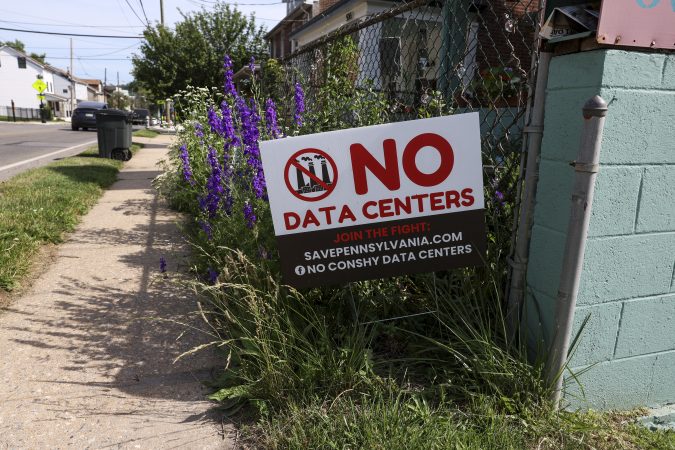
  • A new federal ‘Data Center Bill of Rights’ took lessons from Philly suburbs and Western Pa. fracking country

    A new federal ‘Data Center Bill of Rights’ took lessons from Philly suburbs and Western Pa. fracking country

    WASHINGTON — A new federal proposal to enact protections for communities opposed to the proliferation of data centers has drawn inspiration from both the Philadelphia suburbs and Western Pennsylvania fracking country.

    The Data Center Bill of Rights is one of several national efforts to address a growing dissatisfaction with data centers, which have so far faced few restrictions at either the federal or state level in Pennsylvania.

    U.S. Rep. Ro Khanna, a California Democrat and Bucks County native considering running for president in 2028, said his home state should be doing more.

    He introduced the federal legislation after a recent tour across Pennsylvania that he said was designed to hear from communities that have lost manufacturing jobs and other economic opportunities.

    Data center concerns came up more than any other issue, he said — leading him to incorporate new ideas into the bill he already had in the works, and to call for a pause on data center development in Pennsylvania until further protections and local controls are enacted.

    A statewide pause would be more than what Gov. Josh Shapiro — another potential 2028 Democratic contender — has proposed as he seeks to enact data center guidelines. It would also be less than other Democrats, both in Pennsylvania and nationally, who have called for more robust moratoriums. Shapiro’s Republican challenger this year, Treasurer Stacy Garrity, has also called for a pause but not for an extended moratorium.

    “I was surprised by the anger about it in Pennsylvania,” Khanna said in an interview after his 15-county tour. “In other states, people are sometimes opposed in local communities, local pockets. But not this widespread anger.”

    Khanna, a Council Rock High School graduate who has represented Silicon Valley in Congress since 2017, spoke about the Data Center Bill of Rights during his tour but said afterward that it was “partly inspired” by the concerns he heard in the communities similar to the ones where he grew up.

    He said he was alarmed by the complaints he heard outside Philadelphia, where five data centers have been proposed in close proximity to each other in King of Prussia and another 2-million-square-foot data center is proposed in Conshohocken.

    “As a kid, I used to go to Conshohocken and the King of Prussia Mall. I’m familiar with that area,” Khanna said. “You can’t ride roughshod over what Delaware County wants or when Montgomery County wants.”

    The legislation would declare that communities have the right to reject data centers through a “transparent community process” or allow them with specific protections. That includes demanding that data centers don’t lead to higher electricity rates, that they use renewable energy sources and disclose their water consumption, and “pay their fair share of state and local taxes.”

    State Rep. Chris Rabb (right) joins U.S. Rep. Ro Khanna (left) Tuesday, July 28, 2026, as he stops on his “Made in PA: New Economic Patriotism Tour” at the City Institute Library on Rittenhouse Square.Tom Gralish / Staff Photographer

    One specific provision, Khanna said, was informed by his visit in Washington County with individuals who are paid to host natural gas wells on their properties. It was there that he said he learned of community demands for oil and gas well sites to be at least 2,500 feet from residences. That buffer was a recommendation from a 2020 grand jury report released by Shapiro when he was serving as attorney general and that outlined health and safety issues caused by fracking in the Marcellus Shale region.

    The recommendation was not followed, and advocates are continuing to push for extending the buffer from the current distance of 500 feet, according to Inside Climate News.

    Khanna’s bill of rights would call for data centers to be built no closer than 2,500 feet from residences, schools, childcare facilities, hospitals or nursing homes. He said the environmental and health hazards for data centers aren’t the same as fracking but they should be kept at a distance from communities that don’t want to live directly next to them.

    “At least they were offering royalty checks in the cases of fracking,” Khanna said. “[Data center developers are] not even giving the communities checks. It’s just kind of like, ‘OK, we’re going to build.’ What does the community get out of it? I literally don’t understand it.”

    Data center advocates have argued their development is critical in winning an artificial intelligence war with China, and that they will bring construction and some skilled jobs to communities that need them.

    Even the staunchest advocates, though, have acknowledged the public blowback.

    “I do think that data centers in Pennsylvania have raised legitimate concerns,” U.S. Sen. Dave McCormick (R., Pa.) said during a recent telephone town hall as he continued to promote them in the competition with China and their creation of “thousands of jobs.”

    When developers are making their pitch, McCormick said they should come with commitments to protect energy costs and overuse of water, use local labor, invest in the community and pay taxes.

    “That should be part of the deal up front,” McCormick said during the telephone town hall in late July. “With all those facts, then the local community can decide whether they want the data center or not. And if they choose not to, that’s their choice.”

    Khanna said he’s hoping for bipartisan support as he introduces the bill of rights idea. He’ll also be competing with other proposals — like one from fellow progressives U.S. Rep. Alexandria Ocasio-Cortez (D., N.Y.) and U.S. Sen. Bernie Sanders (I., Vt.) called the AI Data Center Moratorium Act. The bill would enact an immediate federal moratorium on data center construction until other safeguards are passed into law, including some of the ideas Khanna and McCormick have proposed, like around utility costs.

    Several Pennsylvania state-level laws have been proposed, though the legislature did not address them during its busy budget season earlier this spring and summer. Lawmakers also left Harrisburg without ending tax breaks aimed at incentivizing data center construction even though the idea had garnered widespread support.

    “They shouldn’t be getting these tax breaks to build,” Khanna said. “That’s absurd when you’ve got hyperscalers that are making trillions of dollars.”

    The fact that many of those ultra-wealthy corporations are based in his district made the issue a politically dicey situation for him, but also one that the possible presidential hopeful said he was willing to take on.

    “We’ve got to pause it in states like Pennsylvania,” Khanna said. “Some of my own constituents aren’t going to like that.”