Tag: Weekend Reads

  • AND1’s trash-talking factory was based in the Philly suburbs. It began with a stolen roll of Wawa toilet paper and a dream

    AND1’s trash-talking factory was based in the Philly suburbs. It began with a stolen roll of Wawa toilet paper and a dream

    When Tom Austin lived in Philadelphia, he liked to go on long walks. Sometimes for three or four hours. The Wharton grad would roam to Center City, to Boathouse Row. It helped him clear his head, and sometimes generate new ideas.

    One morning in the summer of 1993, while strolling down Spruce Street, he had a good one. Or rather, five good ones. He, a fellow Penn alum, Seth Berger, and a friend, Jay Coen Gilbert, were in the process of creating a start-up.

    Their first concept, a coupon book for basketball gear and equipment, had failed. The $50,000 they’d raised was rapidly dwindling. So, the group decided to pivot.

    Instead of selling coupons, they’d sell T-shirts. The company would be named “AND1,” a nod to streetball slang. Now, they needed something to put on said T-shirts, an edgy slogan that would resonate with hoopers of all ages.

    As Austin continued to walk, and think, and walk, and think, it came to him. They’d use trash-talk; the kind you’d hear in a local pickup game. He started coming up with boastful taglines, carefully crafting each quip in his head.

    Call 911 — I’m on fire.

    Call the police — there’s a beating in progress.

    It’s just you and me. OK, it’s just me.

    Go to church — pray you don’t guard me.

    It is hot in here, or is it just me?

    More insults started to spill out, and in a moment of panic, Austin realized he needed to write them down. He was living frugally, and didn’t have a notepad at home. He didn’t have a car to drive to an office supply store, either.

    So the 21-year-old walked into Wawa and stole a roll of toilet paper.

    “I’m not proud of that, but that’s how it happened,” Austin said. “I didn’t have anything to write on.”

    He added: “I hope the statute of limitations on that is over.”
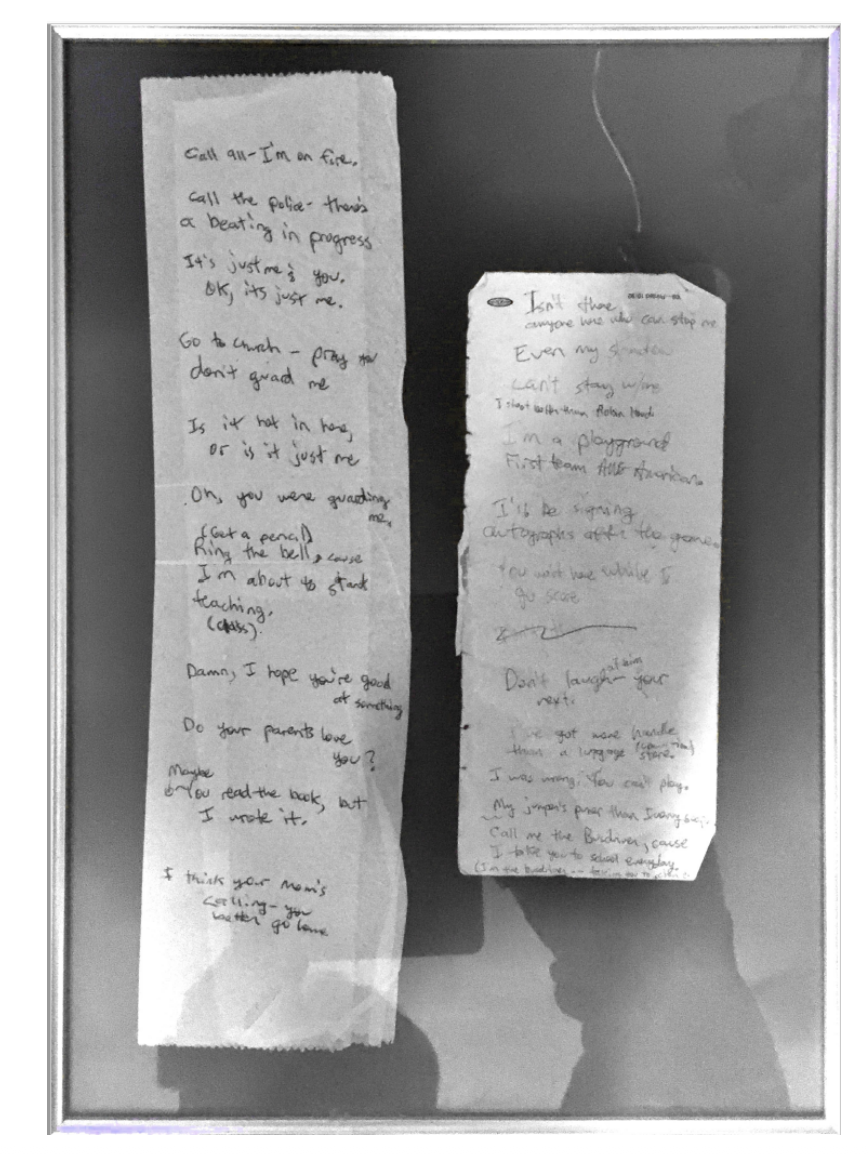
    Without access to writing paper, Tom Austin improvised.provided by Tom Austin

    Six months later, Austin’s phrases were printed on T-shirts sold at Foot Locker, coupled with a logo of a faceless basketball player. What started as a small order turned into a financial boon.

    AND1 sold $1.6 million worth of T-shirts in its first year. More retailers came calling, and before long, the company was expanding to shorts, sneakers, and more.

    It became a cultural phenomenon. NBA players would get AND1’s faceless man tattooed onto their arm. Latrell Sprewell, Vince Carter, and Kevin Garnett wore their shoes.

    AND1’s mixtapes — video compilations of street ball moves — and the subsequent AND1 mixtape tour, made celebrities out of everyday people. Most were known only by their nicknames: “The Professor,” “Hot Sauce,” “The Bone Collector.” One of them, “Skip To My Lou,” had a long NBA career.

    Because the first mixtape was shot at Rucker Park in Harlem, the company became synonymous with New York basketball. But at its core, AND1 was a Philadelphia brand.

    And while it is not the powerhouse it once was, that brand’s legacy still has plenty of cachet.

    “There was something about the Philly identity,” Austin said. “It was always the underdog. We were always that underdog story, taking on Nike and Adidas. They’re the Rocky villains, man.”
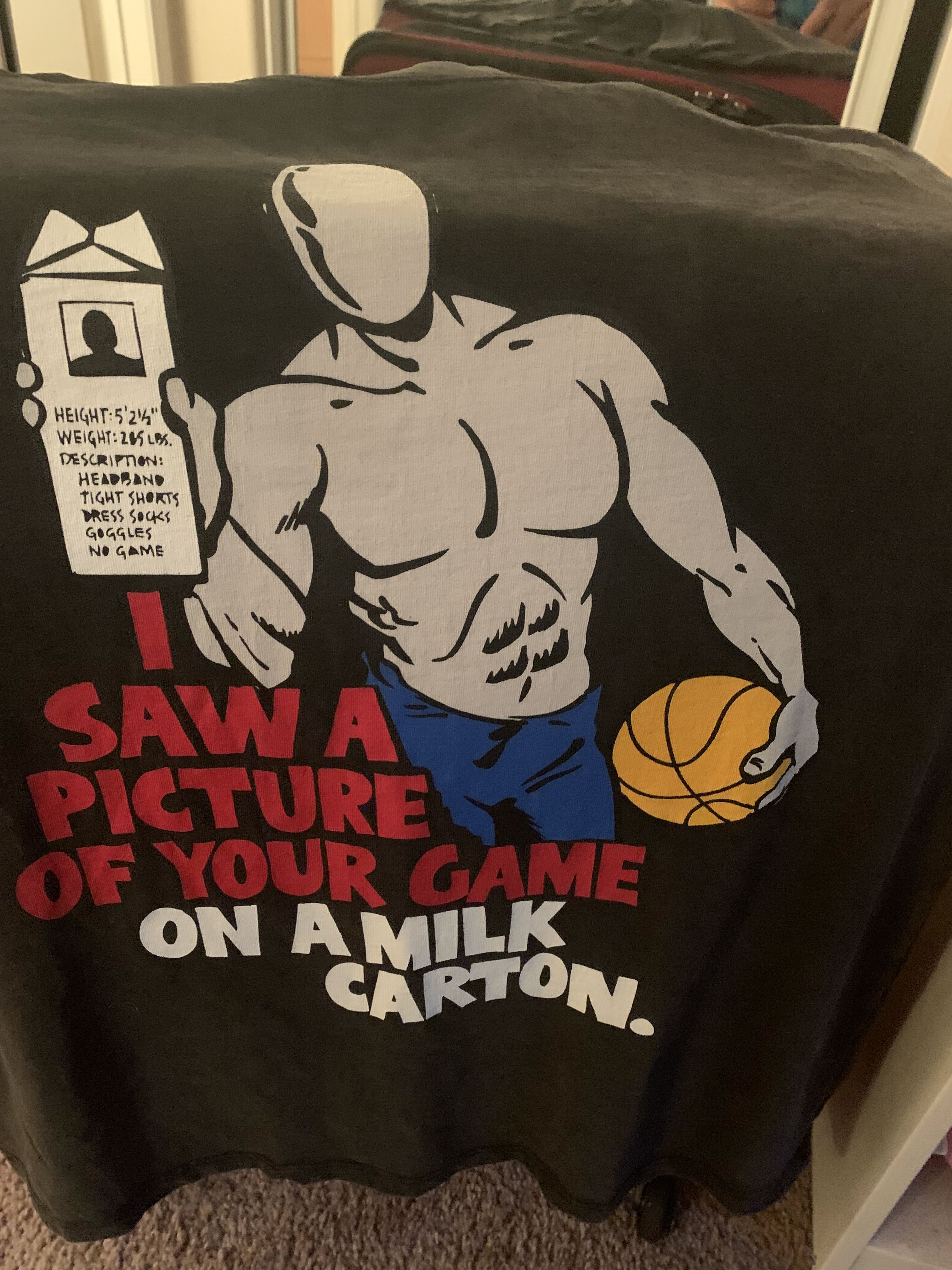
    The AND1 slogans were kind of mean.provided by Tom Austin

    Philadelphia roots

    Austin transferred from Holy Cross to Penn in 1990, a lanky sophomore from rural Massachusetts. He was far from home and had trouble meeting people at first.

    The teenager decided to branch out in the only way he knew how: by finding a pickup basketball game.

    He discovered a nearby spot on campus, Gimbel Gym, which was open to the public. Inside were courts full of players who likely wouldn’t have otherwise met. There were law school students, business school students, janitors, locals from the neighborhood.

    Gimbel’s mainstay was a man known only as “Moose,” who loomed at 250 pounds. Austin didn’t have that kind of size — an “eighth grade-level body with a 20-inch vertical,” he said — but he was skilled.

    Before long, the New England native was hooping in Gimbel seven nights a week. And he quickly established himself as a “Moose”-caliber gym rat.

    Austin could shoot. And this was not just the consensus among pickup players. Penn’s men’s basketball team would go to Gimbel every so often to practice.

    They noticed “Tommy Gun.”
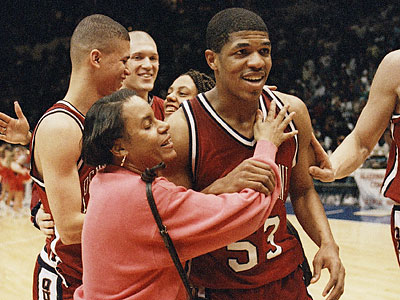
    Jerome Allen (53) started at Penn in the 90’s but has vivid memories of the future AND1 entrepreneurs balling on campus.

    “He could play,” said former Penn standout player and head coach Jerome Allen, now an assistant with the Detroit Pistons. “Just flat-out, in that setting. Whether it was him snatching the rebound and pushing it in transition, or him catching it on the wing and driving a closeout, or him in an iso.

    “If you took him for granted, you would get embarrassed. Easily.”

    This was how Austin met his friend and future business partner Seth Berger. After the Massachusetts native graduated in 1993, he began to interview with investment banks, but found it wasn’t a fit. Berger had heard through mutual friends at Gimbel that Austin had a 3.95 GPA.

    Berger shared a business plan he’d been formulating. The idea was for a coupon booklet that could be used to get discounts on basketball gear. Austin came on board along with Coen Gilbert, a Stanford graduate.

    He moved into a house at 40th and Sansom with six other guys, most of them Penn basketball players, renting a room for $100 a month.

    AND1’s adoption of grassroots and playground basketball iconography was an essential part of the brand’s appeal. ALEJANDRO A. ALVAREZ/Daily News

    The coupon idea didn’t attract the brands or customers necessary to succeed. But the trash-talking T-shirts became a lifeline; a product that was relatively inexpensive to make, quick to turn around, and easy to sell.

    And their Philadelphia community came together to make it happen. The entrepreneurs turned to Joe and Dom, two men who worked out of an old Italian neighborhood, to lay out their T-shirts.

    Joe and Dom introduced them to Stephen Sistilli, a local comic book designer who created the faceless man. The bulk of the trash talk ideas came from Austin. But to market-test his work, he’d give Moore and his teammates sheets of paper with 20-30 phrases.

    They were told to circle their favorite ones.

    “I remember this one that was like… ‘Your game’s on the back of a milk carton, it’s missing,’“ Moore said. ”I remember that one.”

    Added former Penn forward Scott Kegler: “There was something about your game and your girlfriend. ‘Your game’s uglier than your girlfriend,’ or something like that. Really in-your-face and offensive, but also very funny.”

    Weeks later, those phrases would be seen on T-shirts, which were stored at a warehouse in Camden. They were printed in Delaware County at a company called AMPRO, which extended a line of credit to the founders in their early days.

    “The only reason we could make those shirts is because AMPRO said, ‘Hey, if you bring us a high-quality order, we’ll make the shirts for you,’” Austin said. “When we made shorts, I was driving out to Lancaster, into Mennonite country, driving by these one-horse buggies, to go pick up our short orders.

    “We were getting our embroidered stuff done in this Italian shop in an Italian neighborhood. And all the women called me ‘hon’ and had these long fingernails. All these parts of the city came alive to help us. You know?”
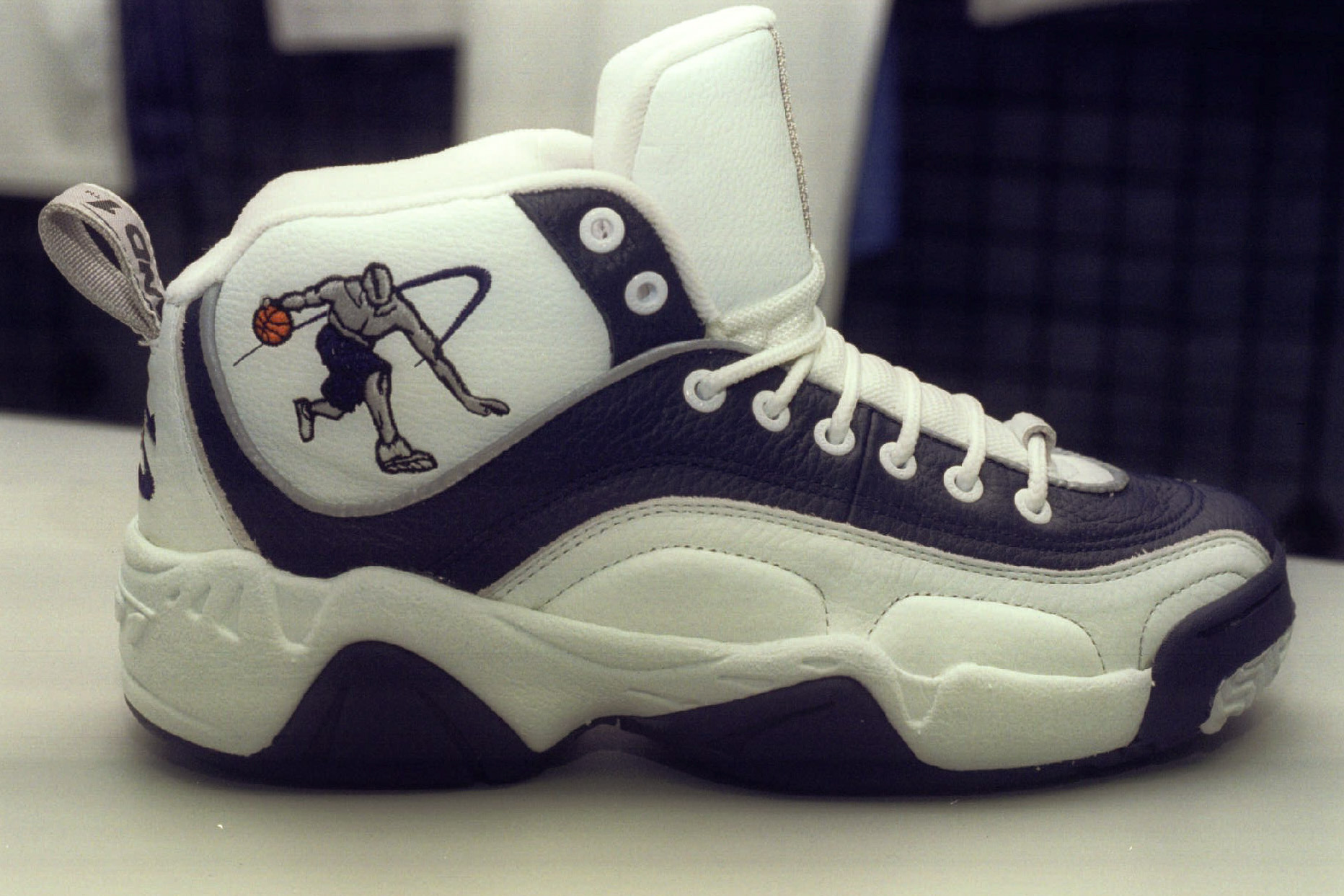
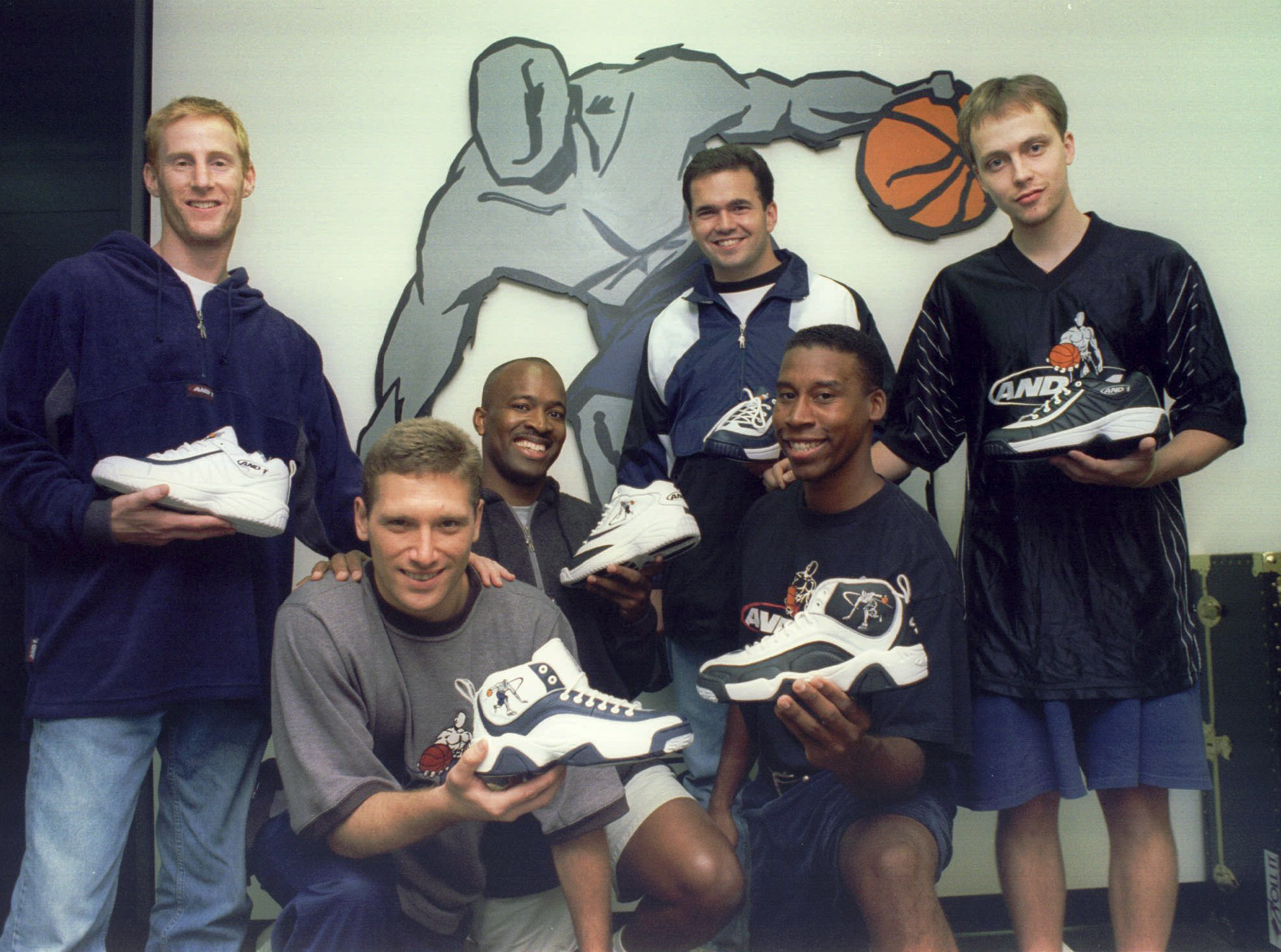
    One of the shoes manufactured by AND1. Their logo includes a “faceless, raceless” player.Joan Fairman-Kanes / Inquirer Archives

    Bringing streetball to the suburbs

    In its earliest days, AND1 was operating out of Berger’s apartment in Philadelphia. But as the company grew, it moved to the Main Line.

    Their first location was in Ardmore, back when the company only had six employees. Then, in the mid 1990s, AND1 relocated to Rosemont to fit about 20 more people, many of them local college graduates.

    Justin Cupps was one of those graduates. He was another product of Wharton who had connected with AND1 through one its athletes, NBA guard Darrell Armstrong.

    Cupps didn’t know anything about retail, but he did know business and basketball, and those were important qualifications.

    He says today it was the best job he ever had. AND1’s employees worked hard and played hard in the most literal sense. They’d hold afternoon pickup games at Haverford College three or four times a week. Trash talk wasn’t just permitted, but encouraged.

    On Monday mornings, employees would filter into Berger’s office and sit on his couches, armed with their most insulting one-liners.

    “There weren’t a lot of PowerPoints,” Cupps said. “There were no big board tables. It was sit around and talk hoops and try to come up with what we think were going to be the most entertaining or creative sayings to put on T-shirts.”

    Those that didn’t make the cut were discarded into a cabinet, a graveyard for barbs deemed too soft. As the staff swelled to 150-200 employees, the company moved to Paoli, but never lost its street ball culture.

    Graffiti lined the building’s walls. It housed a pro-sized basketball court inside, complete with a full-service locker room. Cubicles were separated by wire mesh, to simulate a playground court’s chain-link fence. Employees wore shorts and sneakers, with the exception of AND1’s corporate lawyer, who went shoeless.
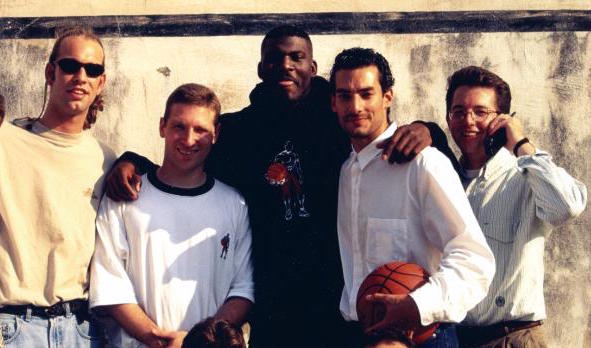
    NBA star Larry Johnson (center) was an early adopter of AND1’s wares while Seth Berger (second from left), Marc Brownstein (holding basketball) and the company’s creative team tried to grow the company.provided by Marc Brownstein

    After going nearly broke, the company was now competing with multi-billion dollar brands by selling high quality goods for a lower price, all targeted toward a specific demographic (basketball players aged 14-25).

    By 1999, AND1 was drawing over $70,000,000 in annual revenue. But the mixtapes elevated them into an entirely different category; from selling clothes to steering the cultural zeitgeist.

    AND1’s mixtapes would be sold in over 100 countries. Its stars would tour all over the United States; ESPN turned the phenomenon into a reality TV show, Streetball: The AND1 Mixtape Tour, which debuted in 2002.

    Still, the company had even greater aspirations; to own an NBA team, to create entertainment properties, to overthrow their multi-sport competitors. But that dream was never realized.

    In January of 2002, Austin left AND1. He estimates that he’d worked 360 days a year for six years, five months of which was spent living in Asia, where he learned the manufacturing and export pieces of the shoe trade. He was getting sick, couldn’t sleep, and was completely burned out.

    Once Austin departed, AND1’s footwear department had to be restructured. Larger competitors like Nike threw their ample resources behind street ball designs, and the newer company struggled to compete.

    Many of the retailers AND1 worked with — Foot Locker, Foot Action, Champs — consolidated, giving the company fewer sources of income.

    Annual revenues began to drop, from $175,000,000 in 2002 to $130,000,000 in 2003. They increased again, to $160,000,000 in 2004, and AND1 was sold to a California-based footwear company, American Sporting Goods, in 2005.

    Like Austin, Berger and Coen Gilbert were ready for a new chapter. Berger had young children at home, and wanted to spend more time with them; Coen Gilbert was looking to get into social entrepreneurship. Both left after the company was sold.

    Seth Berger moved on from AND1 to turn the Westtown School boys basketball team into a local powerhouse. David M Warren / Staff Photographer

    AND1 became more corporate under its new leadership, and saw its customer base erode. The former start-up was acquired by another entity in 2011, Brown Shoe Company, which sold it a few months later to Galaxy International.

    But AND1’s roots remain very much intact. “The Professor” and “The Bone Collector” from the Mixtape Tour continue to share basketball highlights on social media. Many of the Main Line employees are still in touch through a private Facebook group.

    You can still find the T-shirts, the sneakers, the mixtapes. And Austin, who now works for a talent assessment company, still has that stolen sheet of toilet paper, scribbled with hypermasculine insults.

    Coen Gilbert had it framed for him a few years back; a reminder that before AND1 became AND1, it was just an ambitious idea, spearheaded by three Philadelphia-based entrepreneurs, hustling their way to the top.

  • Will Donald Trump and national Republicans help Stacy Garrity’s campaign from falling flat against Josh Shapiro?

    Will Donald Trump and national Republicans help Stacy Garrity’s campaign from falling flat against Josh Shapiro?

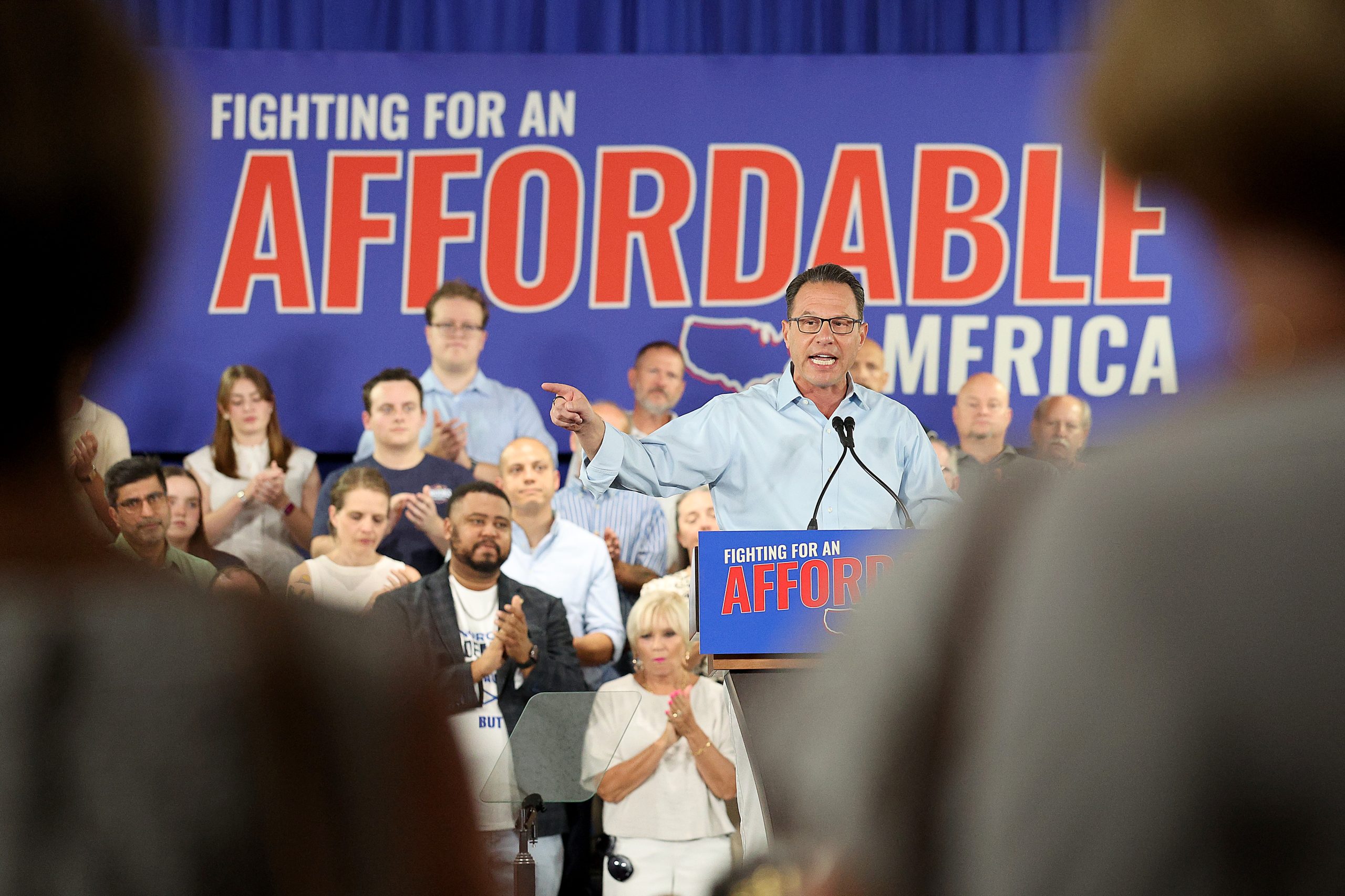
    Seated behind his desk in the Oval Office earlier this month, President Donald Trump spoke directly to the camera in front of him. He turned to his right and looked up at the Pennsylvania Republican who, as he had indicated just a few weeks earlier, might very well lose her race for governor this fall.

    “I think you can win,” he said this time, extending his hand to Stacy Garrity. It was a change in tune for Trump, who last month at an event in Pennsylvania said Garrity’s opponent, Democratic Gov. Josh Shapiro, was “expected to” and might win.

    The president’s confidence in Garrity — and whether his support will extend beyond a handshake and a 17-second video with her at the White House — has become a critical question in the final stretch of the Pennsylvania governor’s race.

    Down in the polls and lagging behind Shapiro’s unprecedented fundraising, Garrity has cultivated the president’s support and the potential boost, both financially and in Republican enthusiasm, that could come with it.

    It is a risky strategy for a swing-state candidate whose party holds the White House, and particularly as polls show Trump becoming increasingly unpopular. Shapiro and his allies have enthusiastically promoted instances when Garrity, the twice-elected state treasurer, has leaned into Trump’s agenda and brand of politics.

    But with less than three months before Election Day, it is not clear to what extent Trump or other key national Republicans will pitch in on her campaign.

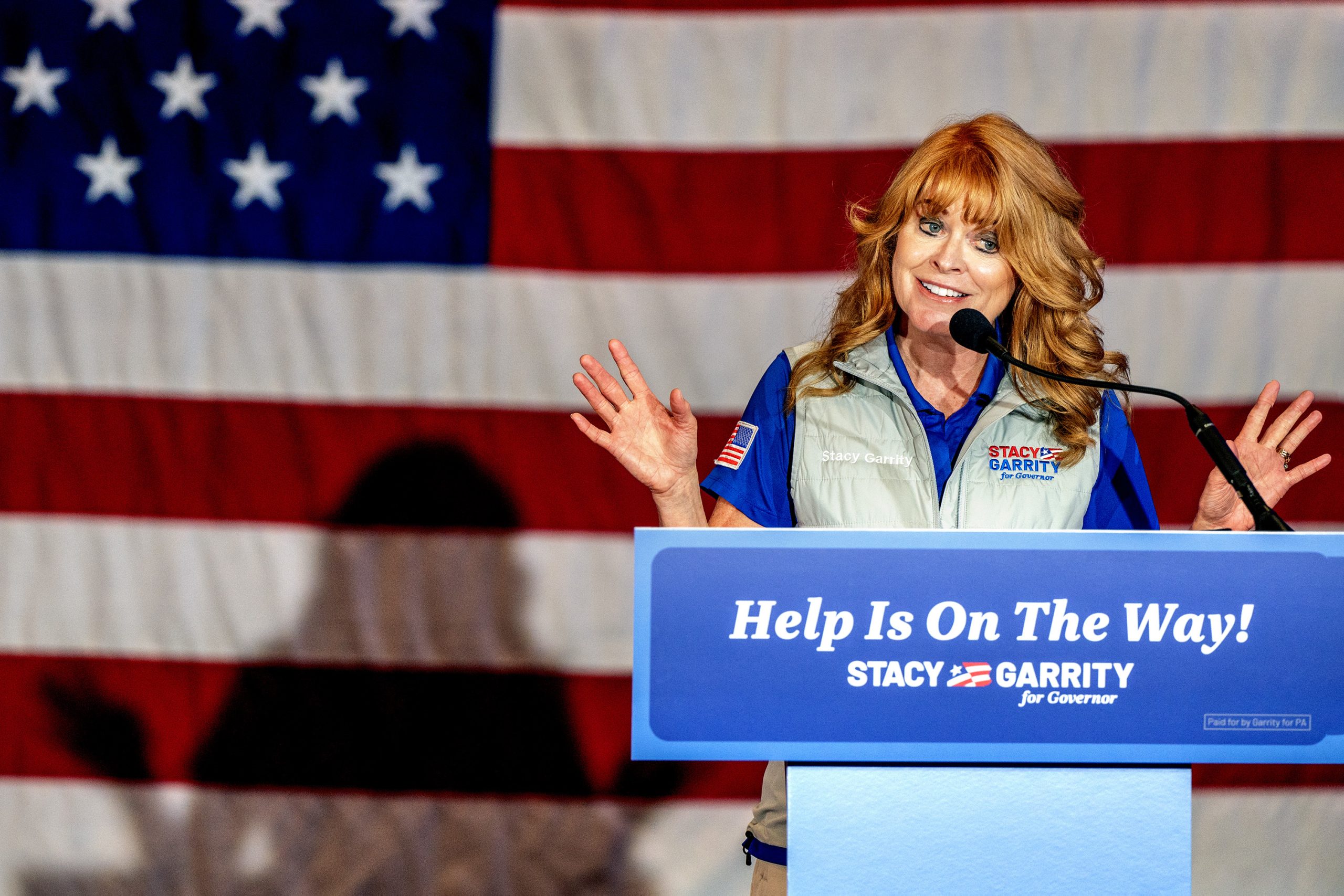
    State Treasurer and Republican candidate for governor Stacy Garrity holds a rally in Bucks County at the Newtown Sports & Events Center in this 2025 photo. Tom Gralish / Staff Photographer

    Trump has not yet stumped in any significant way for Garrity in Pennsylvania, a swing state where he was a near-constant presence during his winning 2024 campaign. And he has not lent his vast political resources — including a Trump-aligned super PAC flush with $400 million — to Garrity or other Republican candidates as his party faces tough campaigns across the country in the midterm elections that will determine control of Congress.

    Several gubernatorial races around the country are considered competitive, a reality that also pits Garrity against GOP nominees who polling suggests have better shots of success. The same circumstances have doomed the most recent other Trump-endorsed Pennsylvania Republican nominees for governor — former State Sen. Scott Wagner in 2018 and State Sen. Doug Mastriano in 2022 — who never ended up with national support and lost by double digits.

    Campaigns typically heat up after Labor Day, and there is still time for Garrity’s national allies to converge to boost her. But observers say the political reality is also evident.

    “The president kind of looks toward two things,” said Samuel Chen, an Allentown-based Republican strategist who is not affiliated with Garrity and who previously worked for Tom Corbett, Pennsylvania’s most recent GOP governor.

    “One is loyalty to him. Garrity has been loyal, but has not necessarily been as vocal as some others have. The other side of it is he likes winners. He wants to endorse people who win,” Chen said. “Everyone in Trump’s orbit knows that Garrity has a very uphill climb.”

    Not supporting ‘lost causes’?

    The level of involvement from groups like the Republican Governors Association has been a key indicator of whether the party believes its nominee has a chance at winning recent gubernatorial elections in Pennsylvania.

    The RGA is made up of GOP governors who collectively support one another’s agendas and campaigns. Democratic governors have a similar alliance.

    In 2010 — the last time a Republican won the governor’s mansion in Harrisburg — the group was the largest donor to then-Attorney General Corbett’s gubernatorial campaign, giving him $6 million starting in August of that year. Four years later and helmed by then-New Jersey Gov. Chris Christie, the RGA was once again Corbett’s biggest donor. It donated more than $5.8 million as Corbett became the first sitting Pennsylvania governor in decades to lose a reelection bid. Christie, preparing to run for president in 2016, stumped with Corbett multiple times.

    The picture was starkly different in 2018 and 2022, when Republican voters nominated two candidates closely associated with Trump. Neither Wagner’s campaign against Democratic Gov. Tom Wolf nor Mastriano’s campaign against Shapiro ever became highly competitive — and the RGA and other national groups decided to sit out.

    “We’re watching Pennsylvania very closely,” Arizona Gov. Doug Ducey, then the chair of the RGA, said in September 2022. He added that the group would not support “lost causes” or “landslides.”

    The RGA would spend nothing in the state that year, even with Mastriano and former Trump lawyer Jenna Ellis pleading for assistance. Shapiro went on to trounce Mastriano by nearly 15 percentage points.

    This year, RGA chair and Montana Gov. Greg Gianforte has not publicly weighed in on Garrity’s chances since issuing a brief, generic statement congratulating her after her unchallenged primary in May.

    And the competitive landscape Republicans are facing across the country may mean Pennsylvania’s GOP nominee once again gets the short end of the stick. The RGA did not respond to requests for comment.

    Even with Pennsylvania’s status as a preeminent swing state that went for Trump two years ago, there are nearly a dozen more competitive gubernatorial races across the country this fall, according to the Cook Political Report, a nonpartisan group that provides election analysis.

    Georgia, Iowa, Nevada, Ohio, and Wisconsin — some of which voted overwhelmingly for Trump just two years ago — are all considered toss-ups. Four other states with Democratic governors — Oregon, Arizona, Michigan, and Kansas — are also considered more competitive than Pennsylvania, which is ranked as “solid Democratic,” according to Cook, despite Republicans like Garrity and Trump having won statewide two years ago.

    The RGA, according to its most recent filing with the Federal Election Commission, had less than $1.7 million in its RGA Right Direction super PAC after spending about $16 million so far in the current election cycle.

    Its recent spending has focused on Iowa, where Democrats are attempting to capture the governor’s office for the first time in two decades, and Kansas, where the RGA launched an ad this month.

    “There’s always competition for limited resources,” Charlie Gerow, a longtime Harrisburg-based Republican strategist who also ran for governor in 2022, said of the intraparty competition for donors. “There’s only so much campaign funding to go around as everybody’s trying to get a piece of it.”

    Trump hosted a fundraiser for Garrity in March at his Mar-a-Lago estate in Florida. He has also visited Pennsylvania twice this summer, though not for events specifically with Garrity — and in one in case he did not mention her among a list of candidates he was supporting.

    In July, Shapiro’s campaign announced he had raised $50 million since January 2025. The next financial filing deadline for statewide candidates is in September, but as of the last reporting cycle, he had outraised Garrity 10-1.

    President Donald Trump brings U.S. Rep. Ryan Mackenzie (right) to the stage as he holds an event in Mackenzie’s Lehigh Valley district at Mack Trucks in Macungie Tuesday, June 23, 2026.Tom Gralish / Staff Photographer

    But Matthew Beynon, a spokesperson for Garrity’s campaign, said she “does not expect, nor does she need, to go dollar-for-dollar with Josh Shapiro.” Instead, he said, she “just needs the resources to prosecute her case against Josh Shapiro … and she is on pace to be able to do so.”

    Garrity looks forward to “continued support” from the RGA, he said.

    Other national attention on Pennsylvania

    After Mastriano’s disastrous performance in 2022, Republicans coalesced around Garrity — whose 3.5 million votes in 2024 were the most ever for a statewide candidate in Pennsylvania — as their best shot at defeating Shapiro.

    But in the year since she received the party’s endorsement, Garrity has barely moved the needle. A Quinnipiac University poll in July found Shapiro leading Garrity 53% to 40% among registered Pennsylvania voters. Trump saw even lower scores: Just 39% of those polled approved of the president’s job performance.

    A poll from a Republican-leaning firm promoted by Garrity showed her down, 50% to 43%.

    Across Pennsylvania, she has also competed for attention and resources as her party prioritizes other major election battles this fall.

    Four Republican-held congressional districts — based in Bucks County, the Lehigh Valley, Scranton, and Harrisburg — are seeing a rush of national attention and money as their outcomes could decide control of the narrowly divided U.S. House.

    Shapiro has also invested heavily in trying to flip the state Senate to Democratic control for the first time in three decades, putting Republicans further on their heels. The $3.3 million that Shapiro committed to the effort is more than Garrity has raised in her entire campaign.

    Pennsylvania Gov. Josh Shapiro addresses the audience during a rally for Democratic congressional candidate Bob Brooks at the United Steelworkers Union Hall in Bethlehem, Pa. on Sunday, July 26, 2026.David Maialetti / Staff Photographer

    On the other side of the aisle, Pennsylvania’s top elected Republican — U.S. Sen. Dave McCormick — has endorsed Garrity but has not appeared to join in her public campaign efforts so far. A Trump ally and former hedge fund leader, McCormick has raised millions since his election in 2024, and political action committees associated with him have donated to other PACs working to elect Pennsylvania Republicans in Congress.

    McCormick has hosted events and campaigned for Garrity, and he “will keep doing everything he can to help her win,” said Mike DeVanney, a spokesperson for the senator.

    “He believes she demonstrates the kind of leadership we need and the kind that President Trump and many others have recognized as one that can move our commonwealth forward,” DeVanney said.

    Gerow said McCormick undoubtedly could help Garrity down the stretch.

    “He’s a prolific fundraiser. He has the connections, and he has the personality to raise large amounts of money. And he can be very, very helpful with the Garrity campaign if he weighs in with full weight,” Gerow said.

    Garrity’s campaign said McCormick has been an “incredible supporter,” including with his early endorsement and connections to supporters.

    Shapiro has also cultivated across-the-aisle relationships with some Pennsylvania Republicans who would be expected to promote Garrity.

    In an April interview with Punchbowl News, U.S. Rep. Brian Fitzpatrick, a Bucks County Republican running for reelection in the nationally watched 1st Congressional District, said he thought Shapiro would win his reelection contest and should run for president, adding: “I think Josh is very, very smart.”

    And during his 2022 run, Shapiro collected endorsements from other prominent Republicans, including Jim Schultz, a former Trump White House lawyer, and former Republican U.S. Rep. Charlie Dent.

    The final stretch

    Though the November election is less than three months away, that is still plenty of time in politics. Most ad spending does not start until September, and ground game efforts — door knocking, phone banking, and get-out-the-vote campaigns — get underway in the fall.

    Winning Pennsylvania is a priority for Trump in the midterms, and Garrity’s campaign said she is “grateful” for his continued support.

    On the state level, James Markley, a spokesperson for the Pennsylvania GOP, said the party is “fully invested” in helping Garrity beat Shapiro. Those efforts include training “thousands” of volunteers and working on education programs around early voting and casting mail-in ballots.

    “The more Pennsylvania voters learn about Stacy Garrity, the more they love her,” he said in a statement. “The more Pennsylvania voters learn about Josh Shapiro, they realize he has no record to stand on.”

    Gerow said Garrity’s challenge, with limited funds compared with Shapiro, is whether she has enough money to get her message out.

    “The major concern for her immediately is to be able to tell her story,” Gerow said. “She doesn’t have the resources to tell that story effectively right now, and she has a great story.”

    Buttons for State Treasurer Stacy Garrity and President Trump are left on a table following a VIP reception before a Garrity rally in Bucks County Thursday, Sept. 25, 2025. Tom Gralish / Staff Photographer

    Throughout her campaign, Garrity has hammered Shapiro on several issues she said reveal his lack of transparency as a public official. She has held roundtable discussions blasting Shapiro for his early embrace of data centers, a position he has since distanced himself from after calling for new guidelines for their development. Her campaign released a video series online that questions his handling of criminal investigations. And she has repeatedly insisted that Shapiro, who is widely rumored to be running for president in 2028, is “more interested in Pennsylvania Avenue than helping Pennsylvania families.”

    Samantha Reposa, a spokesperson for Shapiro’s campaign, disputed Garrity’s framing and emphasized that she has stood in lockstep with Trump on most of his positions.

    “Garrity is now running to be nothing more than a rubber stamp for Trump and his agenda that’s hurting Pennsylvania families — and we will continue to hold her accountable,” Reposa said.

    A new ad from Shapiro’s campaign paints her as “100% MAGA,” highlighting her support for Trump’s tariffs.

    Given Garrity’s fundraising deficit, Chen said, he would advise her to focus on meeting individual people in the community, if he were running her campaign.

    “Forget the GOP dinners. Start going to fairs. Start going to places that Republicans don’t show up. Start retail politics, and start introducing yourself to the state outside of Donald Trump, outside of modern Republicanism,” he said. “Tell the state what you’ve done for them and what you would do differently [as governor].”

    Staff writer Joe Yerardi contributed to this article.

  • What you need to know about SEPTA’s bus route changes

    What you need to know about SEPTA’s bus route changes

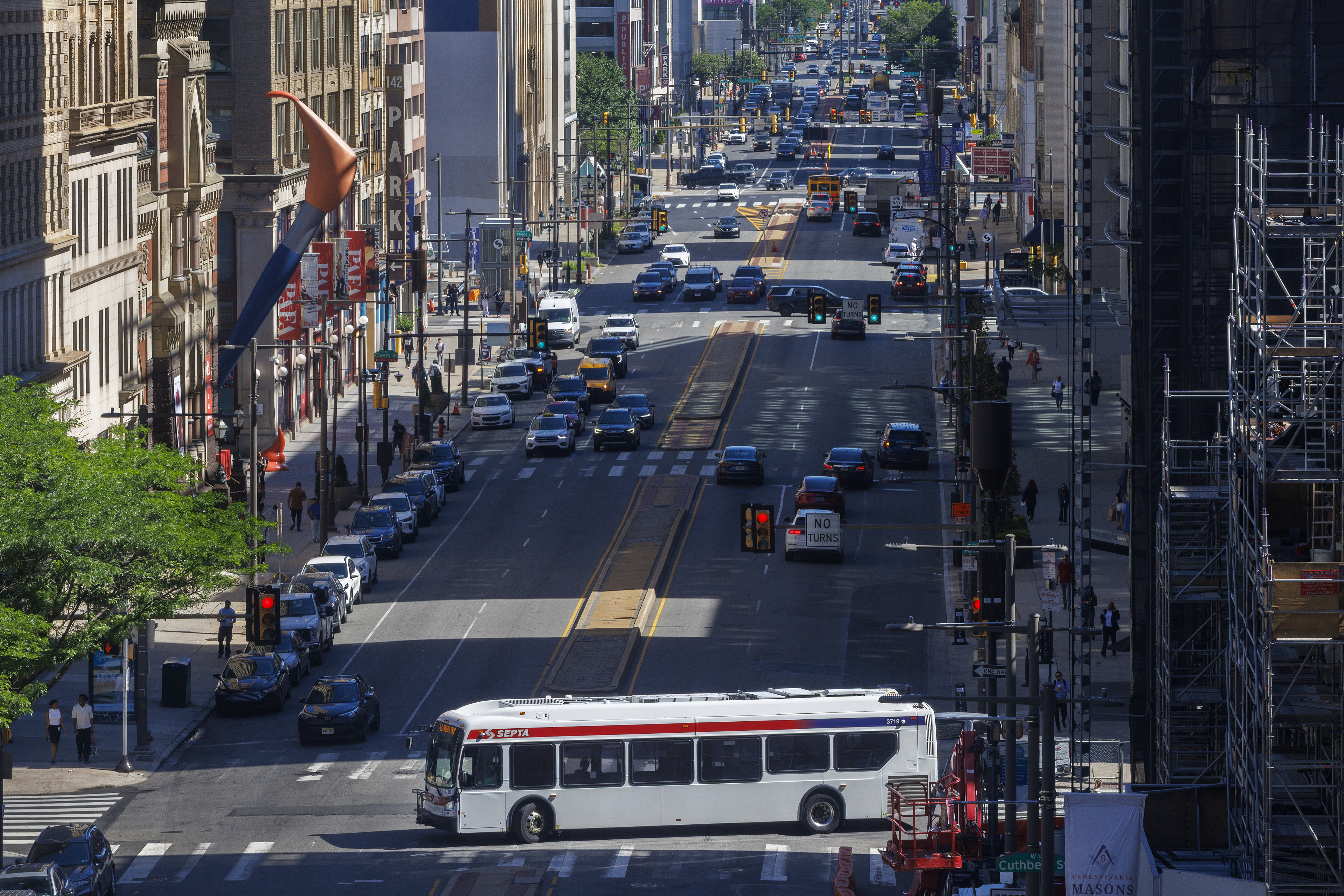
    The first phase of SEPTA’s bus network overhaul begins Aug. 23, and Brandon Miller is mobilizing hundreds of employees for a final push to meet face-to-face with riders in the days leading up to the changes and during the first week after they take effect.

    “It’s a blitz,” said Miller, manager of planning programs at SEPTA, describing discussions at “pop-ups” as an effective way to help people navigate the new network.

    “This is the evolution of the ‘Bus Revolution,’” Miller said.

    Unlike some transit agencies, SEPTA has not done a comprehensive redesign of its bus network in its 58-year history. The agency has publicly pushed to do so since 2021, but change was delayed by opposition, political wrangling, and, later, a two-year fiscal crisis.

    Originally the “Bus Revolution” was supposed to happen all at once, but SEPTA ultimately decided to phase in changes to routes.

    The process has been quieter this time around.

    Dan Nemiroff, SEPTA’s director of city service planning, , said people are more open to the need for changes, especially after SEPTA had to shut down bus routes last year because of a budget deficit. A court ordered those cuts reversed, and the agency later received an infusion of cash from PennDot.

    “I think there’s more willingness to accept the fact that … we need to make the bus network a little bit more efficient,” Nemiroff said. “We need to make the system more attractive for people.”

    In the first wave, 30 routes will be affected in some way.

    Some routes with low ridership or that duplicate nearby service will be eliminated. Others will be extended or run more frequently, and two new routes will be added.

    What routes will change?

    New and expanded routes: Route 72, a new crosstown bus running along Cheltenham Avenue, and the new Route 76 bus from Columbus Commons to Rising Sun and Olney. Route 45 will be extended to provide service to the Navy Yard, and Route 79 will be extended from South Philadelphia into University City.

    Eliminated routes: 35, 47M, 62, 78, 80, 89, and 106.

    I have specific questions. How can I ask SEPTA?

    There will be a Zoom session on Aug. 19 from 6 p.m. to 7 p.m. Register here to attend.

    Miller said the talk is informally called “back-to-school,” with more discussion of the changes’ effects on students than in previous meetings.

    SEPTA has a webpage dedicated to Phase One changes, as well as an overview of the New Bus Network.

    Riders can call SEPTA customer service at 215-580-7800 or email specific questions to planning@septa.org.

    I want to talk to someone in person.

    Beginning Monday, street teams will conduct “pop-up” visits at key transit hubs at various times between 6 a.m. and 8 p.m.

    Next week, visits will include South Broad Street and Snyder Avenue, Cedarbrook Plaza, Hunting Park Station for changes to Route 53, Spring Garden Station, and Willow Grove Mall.

    Staff are also attending community events.

    When will changes happen?

    The majority of changes will take effect Sunday, Aug. 23, followed by the Route 105 extension and elimination of Route 106 on Monday, Aug. 24.

    What areas are most impacted?

    How can I find alternative routes?

    SEPTA’s website provides alternative routes. Look up your route here.

    What other changes are planned?

    Phase 2 changes are planned to begin in February.

    Phase 3 changes are planned to begin in June 2027.

    Phase 4 changes are planned to begin in Fall 2027. Many details are still being worked out.

    Why redesign the bus network?

    SEPTA launched its bus redesign efforts in earnest after ridership declined 13% from 2013 to 2019, a drop attributed to slow speeds, reliability problems, and competition from ridesharing companies. And that was before the COVID-19 pandemic.

    Bus ridership rebounded faster than it did on other transit services, but SEPTA’s thinking is that simplifying the network will make it easier to use, with more frequent service on fewer or shorter routes.

    Will bus stops be changed?

    Stops will disappear during the first phase on routes that are eliminated, but there will be no wholesale changes yet.

    Philadelphia had the shortest median distance between bus stops of any large U.S. city as of 2021, at 564 feet. Pittsburgh’s median distance was 623 feet, while Chicago’s was 673 feet.

    Having more stops per mile provides access to more people, but closely spaced stops can also slow buses and make them less reliable.

    Early plans for Philadelphia’s bus network redesign aimed to “rebalance” stops by spacing them farther apart to improve speed. But the idea has been unpopular.

    SEPTA may revisit the issue later.

    More questions about the New Bus Network?

    Email transportation reporter Thomas Fitzgerald at tfitzgerald@inquirer.com.

  • After 22 years away, Gargoyles gallery and vintage shop returns to South Street with all its treasures

    After 22 years away, Gargoyles gallery and vintage shop returns to South Street with all its treasures

    Behold a marvelous menagerie of Americana — a curated cornucopia of century-old curios and Victorian age sensibility.

    Stroll the sepia-toned rows of travel-worn valises and towering top hats. Cast iron railway signs and old pub mirrors. Dime store novels and Gilded Age comic strips. Handcrafted, model pond yachts and leather-worn sporting relics. Glamorous art deco advertisements and dreamlike Jazz Age prints.

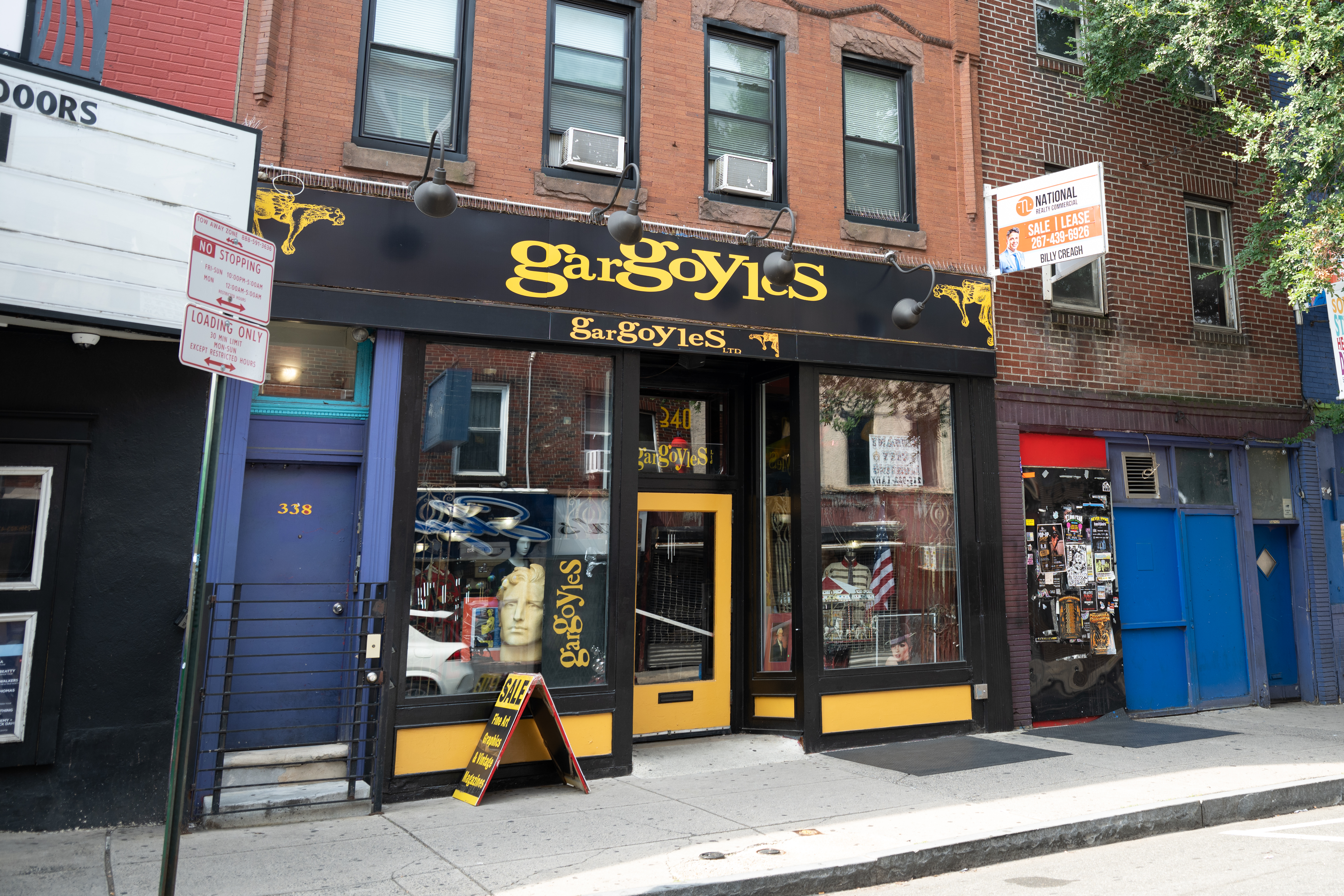
    The exterior of Gargoyles, a vintage shop at 338-340 South Street in Philadelphia, on Aug. 11, 2026.Erin Blewett / For The Inquirer

    Endless architectural embellishments, like terra cotta cupids and stone lion heads, ornamental arches, columns, mantels, and fine wooden sideboards culled from the English countryside or rescued from bygone wrecking balls.

    All of it carefully chosen and displayed for its taste and excellence by Hadassah Zuberi, 80, a lioness of architectural salvage, who for decades sold architectural vestiges, rare memorabilia, and period props to Philadelphia’s grand department stores — including Gimbels, Strawbridge & Clothier, and Wanamakers — as display furnishings.

    And all of it, once again on South Street.

    Confident of change

    In May, almost 22 years after shuttering her storied showroom — Gargoyles ltd., which she operated in a pair of South Third Street storefronts, steps off South, for nearly 35 years before closing in 2004 — Zuberi returned home to Philadelphia.

    Her store’s latest incarnation is located at 340 South St., former home of the Hurricane Alley bar, and across from the iconic Eye’s Gallery. It has quickly become a popular staple on the famed, if perpetually embattled, Philly thoroughfare that now sprouts signs of rebirth after quality-of-life issues and nuisance businesses.

    A decorative bust is displayed among vintage furnishings for sale at Gargoyles on South Street in Philadelphia on Aug. 11, 2026.Erin Blewett / For The Inquirer

    “We’re going to elevate the character of the street,” said Zuberi on a recent afternoon, perched in her oversize leather shop chair as classical music played. “It’s been run-down. I’m confident it’s going to change.”

    Zuberi had relocated her business to the arts enclave of Kingston, N.Y, amid rising property taxes and the shuttering of national department stores.

    The move comes after Rick Milan, former owner of the legendary South Street punk store Zipperhead and now a board member of the South Street District, who owns properties on the street, including the former Hurricane Alley space, lobbied Zuberi to come back to Philly.

    A former customer, who once bought vintage ski equipment from Gargoyles as home decor, Milan serendipitously wandered into the Kingston shop during a vacation in 2024.

    “I knew right away this was the Gargoyles from Third Street,” he said. “South Street is currently going through a big vintage surge. And I really wanted to recruit Hadassah back to South Street.”

    Preserved vestiges of old Philadelphia

    More than a half century had passed since Zuberi, born and raised in Jerusalem, opened her original Philly shop, a joint venture with her first husband, Richard Serbin.

    Studying graphic design at the Bezalel Academy of Arts and Design — Israel’s oldest and most prestigious school of art, design, and architecture — Zuberi moved to Philadelphia in 1967 at the age of 21.

    At the time, Philadelphia was busy remaking itself.

    Hadassah Zuberi displays a reproduction print of an 1893 World’s Fair issue of the Youth’s Companion magazine at her vintage shop, Gargoyles, on South Street in Philadelphia on Tuesday, Aug. 11, 2026.Erin Blewett / For The Inquirer

    “Nineteenth-century Philadelphia was falling away,” she said. “They were tearing down incredible mansions, which was criminal. They demolished some amazing landmarks.”

    Designing a home of their own, the newlyweds hired prominent Philadelphia architect Adolph DeRoy Mark and began to purchase the architectural salvage of stately Philly residences, public buildings, and churches destined for destruction. They filled the shop — massive twin storefronts at 512-514 S. Third St., which Zuberi’s father-in-law purchased for $18,000, and which is now a rowhouse — with preserved vestiges of old Philadelphia, including a specially made gargoyle.

    “We got a whole bunch of amazing ironwork and Tiffany stained glass windows,” she said. “Cherubs. Magnificent columns. We had a couple thousand door knobs that were brass and copper. Just fantastic stuff.”

    South Street to the pyramids

    Enjoying the earliest days of its renaissance by the late ‘60s and early ’70s, South Street was a near-deserted strip, an empty canvas fast filling with hippies, hipsters, and hucksters. Transforming into a stronghold of bohemia, the neighborhood was still touch and go, Zuberi remembered.

    “We had one of our employees who would go to the front door with a baseball bat because he didn’t know who was going to come in,” she said.

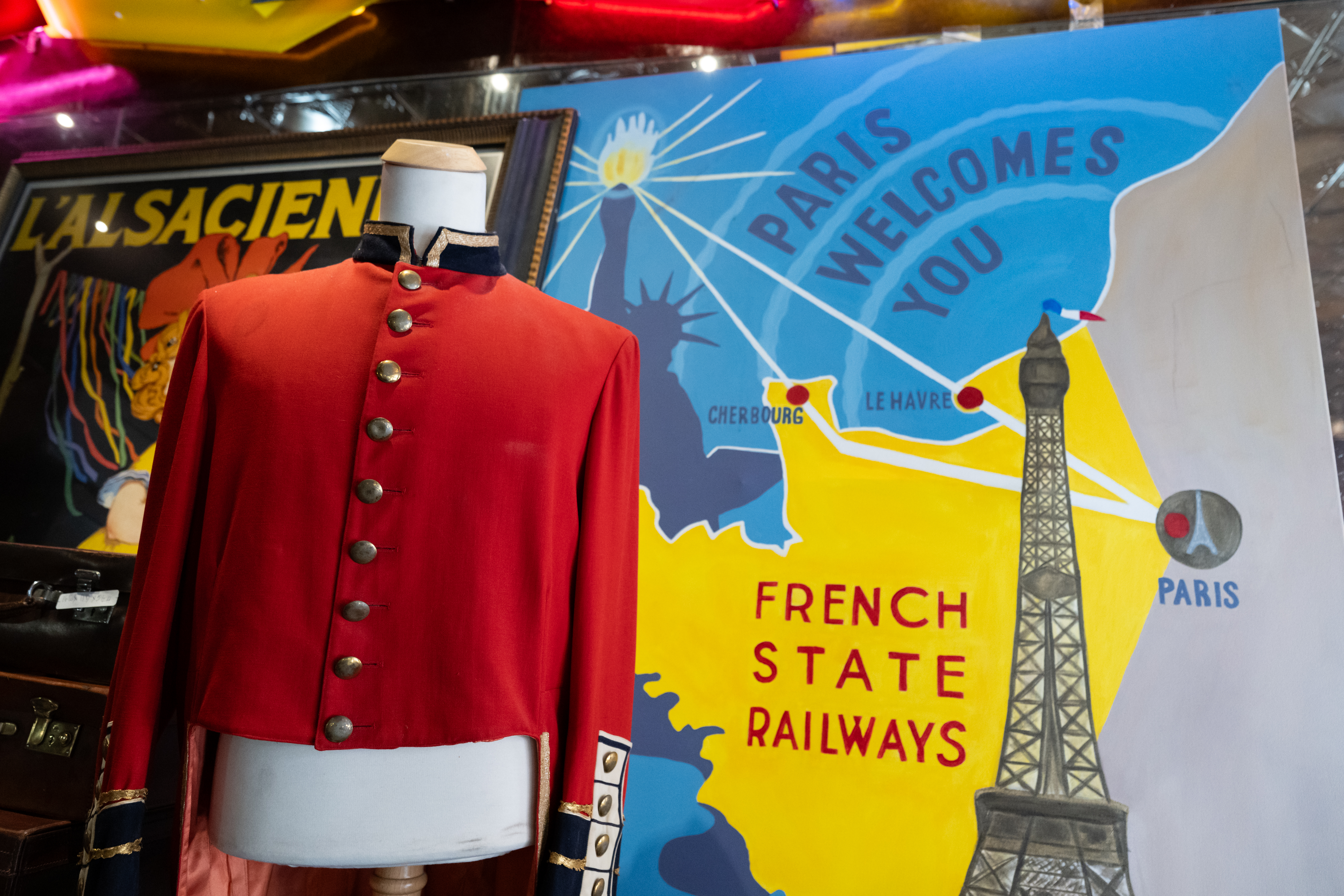
    A vintage uniform jacket and travel posters are displayed inside Gargoyles, Hadassah Zuberi’s vintage shop on South Street in Philadelphia, on Tuesday, Aug. 11, 2026.Erin Blewett / For The Inquirer

    Selling architectural remnants to restaurants and hotels — and local eateries, like Downey’s Irish Pub, Saloon Restaurant, and the Borgia Tea Room in Headhouse Square — the shop became one of the East Coast’s largest dealers in antique architectural embellishments. The couple traveled through England and Belgium, filling department store orders and printed catalogs for national chains.

    “My mother was at the pyramids in Egypt and she had a Gargoyles bag,” said a laughing Zuberi of the Philly heyday. “And someone was like, ‘Oh, I was at the store in Philadelphia.’”

    The shop outlasted her marriage. On her own in the shop, and raising children, Zuberi embraced a newfound sense of artistic freedom, buffeting her inventory with vintage memorabilia and curios she found inspiring, and more of her own artwork and paintings.

    “It was passion,” she said. “This idea that you can take anything that has some semblance of design and use it anywhere. No rules.”

    All the while, South Street rose and fell, embracing its bohemian roots and transforming into a vibrant punk and counterculture stronghold, and eventually battling corporate encroachment and abandonment.

    By 2004, developers were buying buildings for investments, losing sight of the character of the neighborhood, Zuberi said.

    “It lost its magic touch,” she said.

    Back on South Street

    “What the hell are you doing here?” she remembered Milan asking, when he happened into her Kingston store in 2024. “Listen, I want you back on South Street.”

    While Kingston brought more success from locals and New York City tourists, Philadelphia, where she still kept a home, never stopped calling.

    “I was homesick,” she said. “Philadelphia has all the culture in the world.”

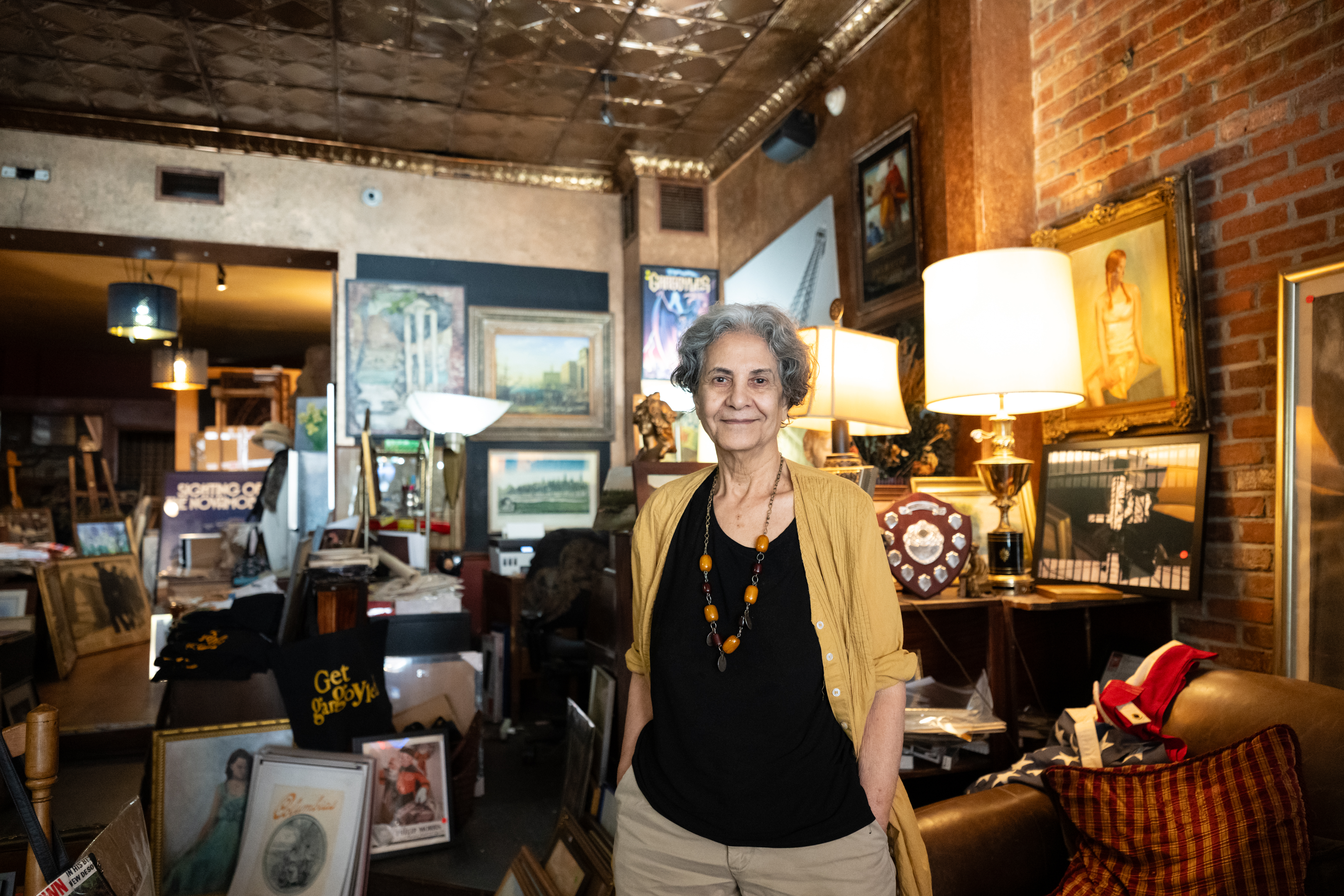
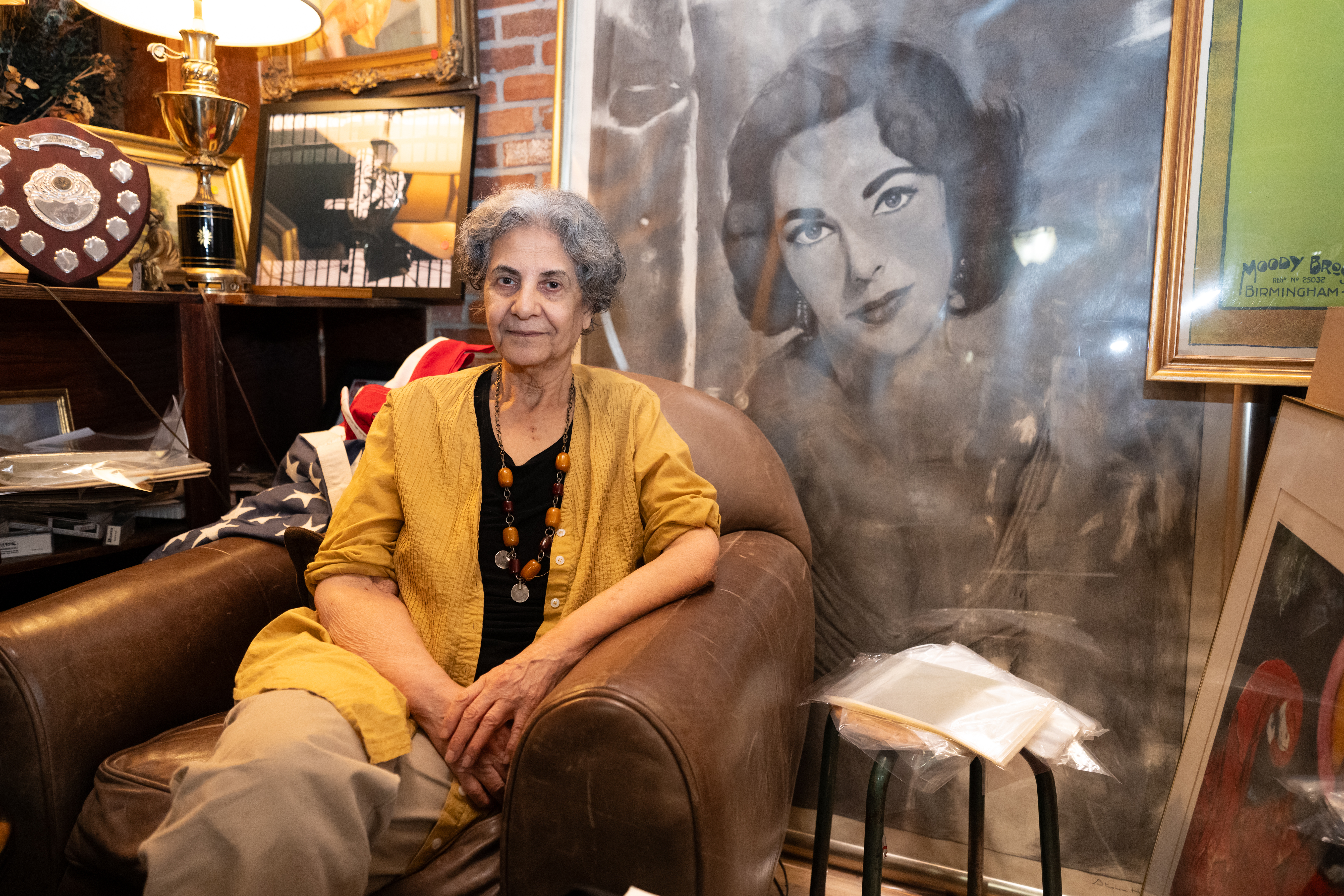
    Hadassah Zuberi, owner of Gargoyles, poses for a portrait in front of a charcoal portrait of Elizabeth Taylor at her vintage shop on South Street in Philadelphia on Aug. 11, 2026.Erin Blewett / For The Inquirer

    Earlier this year, after selling her New York building, she called Milan, who envisions Gargoyles as a one-of-a-kind legacy business that can help attract life to South Street. The Hurricane Alley space — which still includes the old wooden bar — made for a match.

    “It’s a lovely shop, and she’s a lovely woman,” he said.

    On a recent afternoon, Zuberi, elegantly reposed in her leather chair and framed by a favorite portrait of Elizabeth Taylor, warmly greeted a steady stream of customers.

    She is glad to be back in Philadelphia, surrounded by her treasures, and encouraged by the view of the changing street outside, she said.

    “This is my la la land,” she said, over the strains of a concerto playing on the speakers. “If I want to pretend the world is beautiful and everybody has taste, all I have to do is look around and avoid the rest.”

    Hadassah Zuberi, owner of Gargoyles, tries on a vintage “Doctor Dolittle” mask at her shop on South Street in Philadelphia on Aug. 11, 2026.Erin Blewett / For The Inquirer
  • Manayunk is embarking on another new era after decades of evolution

    Manayunk is embarking on another new era after decades of evolution

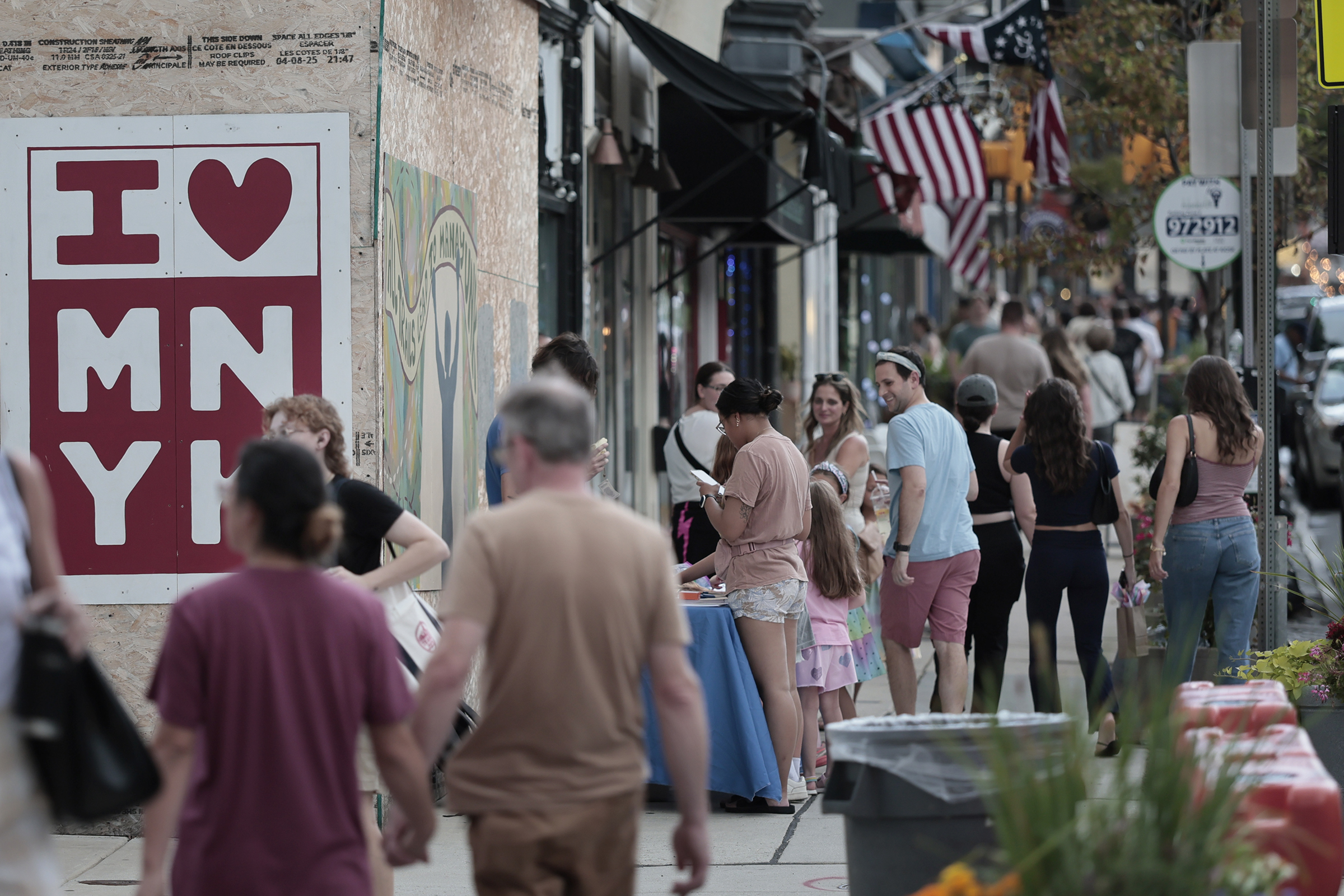
    On the last Thursday of July, during Manayunk’s summertime Stroll After Hours event, throngs of young families pushing strollers and couples walking dogs roamed the business corridor.

    Some stopped at art vendors with frames sprawled across the sidewalk, while others meandered down Grape Street to grab a bite from a food truck or claim a seat at the outdoor screening of Toy Story.

    On such an evening, Main Street Manayunk’s evolution is on full display.

    The riverside neighborhood in Northwest Philadelphia has seen many eras, from textile mills in the 19th century to chain retailers in the 1990s, to today’s collection of local upstarts.

    “It’s the best it’s ever been,” said Jen Wankoff, 51, of Roxborough, who turned out to Stroll After Hours with her friend, Jen Filip, 50.

    “It used to be a lot more commercial. There was a Banana Republic, a Pottery Barn, but then once one left, they all left,” said Filip, who has lived in Roxborough since the early 2000s. “Now it’s all small businesses.”

    More changes are coming to Manayunk. Even as apartment development has slowed in much of Philadelphia, over 1,800 new residential units are proposed along or adjacent to Main Street. All that additional population stokes neighborhood anxiety about traffic and parking, but retailers expect it will be good for business.

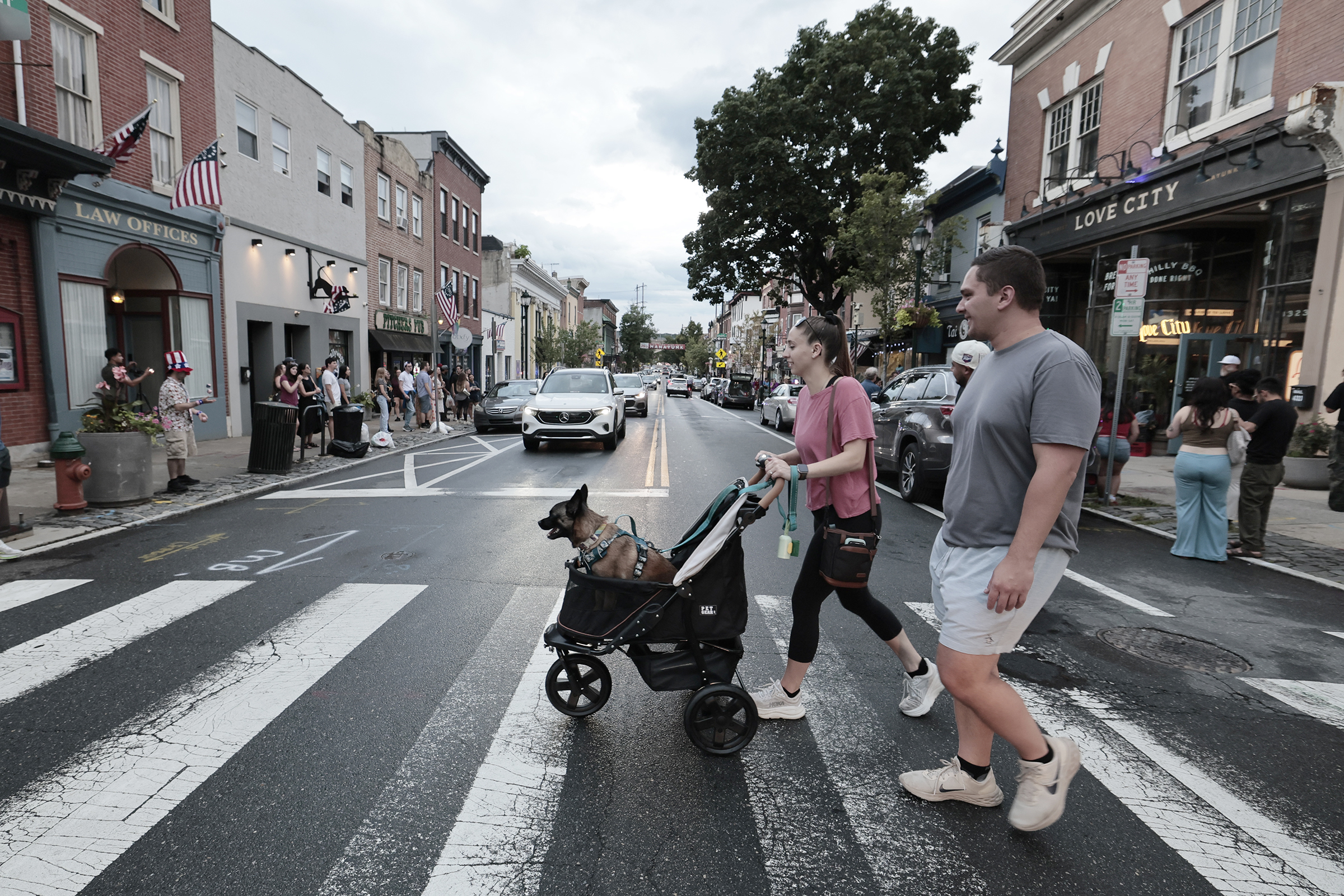
    Kim Albanowski of Philadelphia pushes her dog, Koda, across Main Street in “his chariot” as Jason Pepin looks on.Elizabeth Robertson / Staff Photographer

    “There’s probably going to be 1,600 new people living in those units, and they’re all going to come to Main Street to shop and eat,” said Dan Neducsin, 83, who has long been the largest property owner on Main Street and helped shape the identity of the corridor.

    “The restaurant scene has been strong [since the 1990s], and now I think it’s even going to get stronger,” said Neducsin, who has sold 12 of his properties in recent years to long-term tenants and small-business owners like Tim Spinner, owner of Taqueria Amor.

    “I just want to see the people who I have in there now do well, and my tenants have welcomed the opportunity,” said Neducsin, who emphasized that his company is not closing or selling all its holdings. But “it does make sense now for some new people to come in and take advantage of what’s here.”

    Manayunk’s Main Street appeal

    In the past two years, 12 new businesses opened along Main Street.

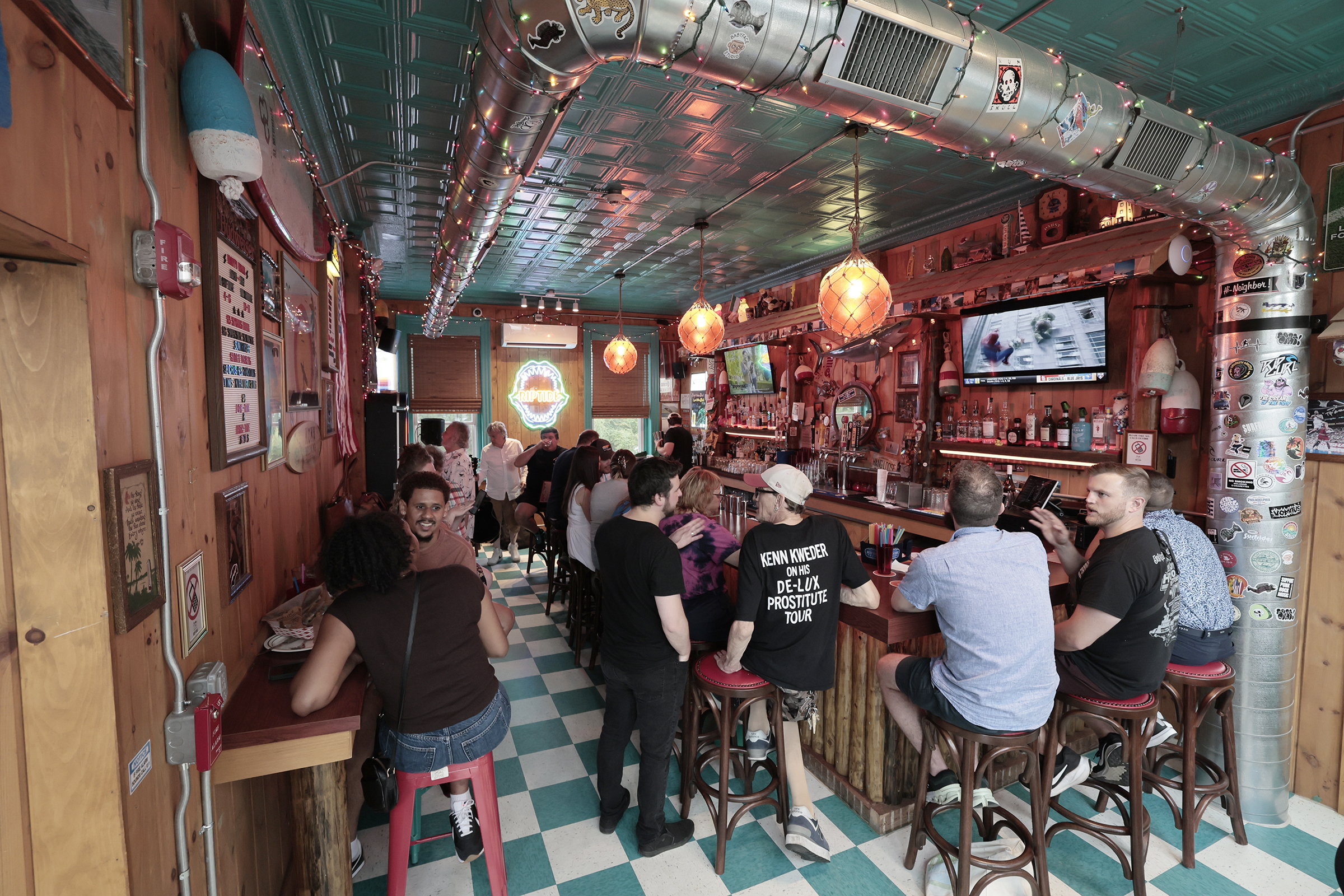
    One of them is Riptide Tavern, opened in June by Spinner, who also owns Taqueria Amor next door.

    Spinner said he wanted to open a neighborhood bar with creative cocktails and a cheap beer menu — much like a dream restaurant he conceived for a culinary school project years ago.

    “I wanted to be in the Caribbean or down the Shore, but along the Schuylkill River with the canal back there is close enough,” Spinner said.

    The Riptide Tavern in Manayunk is packed on a Thursday during Stroll After Hours.Elizabeth Robertson / Staff Photographer

    Eleanor’s Consignment is set to open on Main Street in October. Owner Emily Mannix, a former paralegal who has lived in Manayunk for two years, named the consignment store after her late mother, who died in 2023. They shared a love of secondhand-shopping.

    “This has been something that has been on my mind for the past four years,” Mannix said. “Life is short, and I might as well jump in and try.”

    It’s not a bad place to do that. Realtor Christine Ertz notes that while rent is not low, it’s more affordable than in areas like South Street and Queen Village.

    “Manayunk has the demographic businesses want,” said Ertz. “It has the younger folks, but also the more mature folks that have expendable income, and we’ve got the 27-to-35-year-olds that really enjoy the niche, smaller stores.”

    The apartment boom in Manayunk promises to add even more. Many of the new developments have smaller units, which are likely to attract single people or younger couples. The price points of the new rentals, while lower than Center City or Northern Liberties, also suggest that tenants will have disposable income.

    Those changes haven’t been without controversy. The Manayunk Neighborhood Council has pushed back against development it deems as out of scale with the community, and that’s often lacking new commercial space, affordable housing, and parking while being weighted to small apartments.

    John Hunter, an architect and zoning chair of the Manayunk Neighborhood Council, says few of the new buildings have commercial space to add to the neighborhood’s daytime vitality. He disagrees with the idea that the apartment boom will boost local businesses.

    “We have heard that misrepresentation for years now — that new apartments will generate pedestrian traffic along Main Street,” Hunter said. “Fifteen years of those promises has proved that is not the case.”

    But some neighborhood observers see the development interest along Main Street as a concrete example of the area’s ability to attract people and investors.

    “We’re seeing a diverse group of experienced, well-regarded developers all making independent decisions to put their capital and time into Manayunk,” said Veronica Blum, a retail broker with MPN Realty who has been working with Neduscin on leasing and sales.

    “When that many smart people come to the same conclusion about a neighborhood, it says a lot,” said Blum. “It’s a real vote of confidence in Manayunk’s future, and I think we’re just beginning to see what’s possible.”

    Nervous Nikki and the Chill Pills perform during the Stroll After Hours event on July 30.Elizabeth Robertson / Staff Photographer

    The cost of staying open

    Still, the commercial corridor has seen turnover and closures.

    Pizza Jawn closed and Kismet Bagels came in its place — Pizza Jawn’s owner bought the former Manayunk Tavern down the street, which became Bar Jawn. Smiley’s closed and Blu Zone Cafe moved in; and Iron Works Fitness opened up in the former Kismet Cowork.

    A large restaurant space sat empty for months after Winnie’s closed last November. But, two Roxborough natives recently leased the space for a new “punk French” restaurant, planned to open in late fall.

    Joan Boroff Denenberg, who does marketing and retail strategy for the Manayunk Development Corp. (MDC), said a few storefronts remain empty because the property owners aren’t local and are backed up with other projects throughout the country.

    Neduscin says he isn’t struck by an unusual number of vacancies along Main Street. But maybe that’s because when he began buying properties there in the late 1980s, much of the commercial strip was vacant to the southeast of Cotton Street.

    “Anytime I saw a property that was available in Manayunk I ended up buying it because I thought if I owned enough properties, I could kind of set the direction of the street,” Neduscin said. “I got to handpick who my potential tenants would be. I tried to bring tenants that I thought would bring additional people here.”

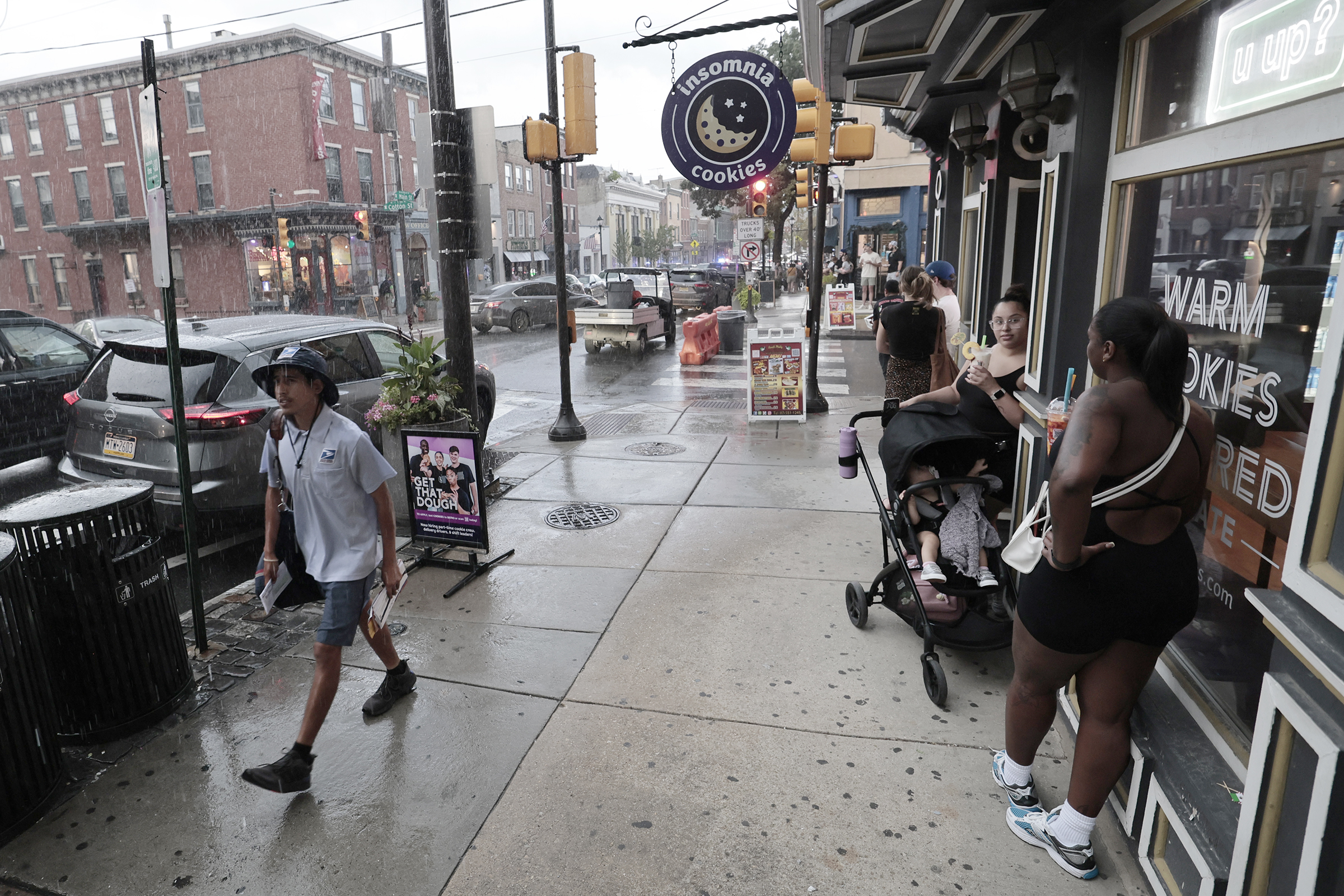
    Insomnia Cookies is one of the few remaining chains with a presence on Main Street in Manayunk.Elizabeth Robertson / Staff Photographer

    The bustle of Main Street now extends all the way down to Shurs Lane, roughly double its occupied length when he started.

    Neduscin also says he really tried to find independent entrepreneurs to lease to — “I didn’t want a McDonald’s on Main Street” — and those restaurateurs and small-business owners gave Main Street a unique identity.

    More than 30 years later, that’s why he wanted to sell some properties to one-time tenants like Spinner.

    Still, business owners say myriad challenges remain. The permitting process is notoriously slow, especially if a trip to the Zoning Board of Adjustment is necessitated. That can leave business owners paying rent without being able to open their doors as they wait for permission.

    “When it takes longer, you have to have deeper pockets, and I think that does scare some prospective businesses,” Neduscin said.

    Further, owners on Main Street face the macro challenges affecting small businesses throughout the region. Brandy Deieso, who opened the gift boutique the Little Apple in 2010, said the cost of goods has increased due to tariffs, shipping costs, and rising gas prices.

    “Being a street full of locally owned small businesses is great,” said Melissa Walter, co-owner of Love City Brewing, which just opened a second location in Manayunk. “But as we all know, running a small business is really hard.”

    Building a business community

    The bubblegum pink Cupid’s Bookshop storefront has built a following and even attracted customers from Baltimore and New York since opening last year. Now, it’s upgrading to a bigger location on Main Street.

    “The growth we’ve had, it’s been amazing,” said owner Tina Long.

    Cupid’s capitalized on the insatiable demand for bodice rippers and love stories, and Long says the bookshop benefited immensely from the MDC’s incubator program. Cupid’s was the first participant.

    The program allowed Long to lease a storefront at 106 Grape St., owned by the business association, for a below-market monthly rent of $1,000 for up to three years, and the MDC provided guidance and support. With her new storefront opening in August and a five-year lease, she’s graduating from the incubator space early.

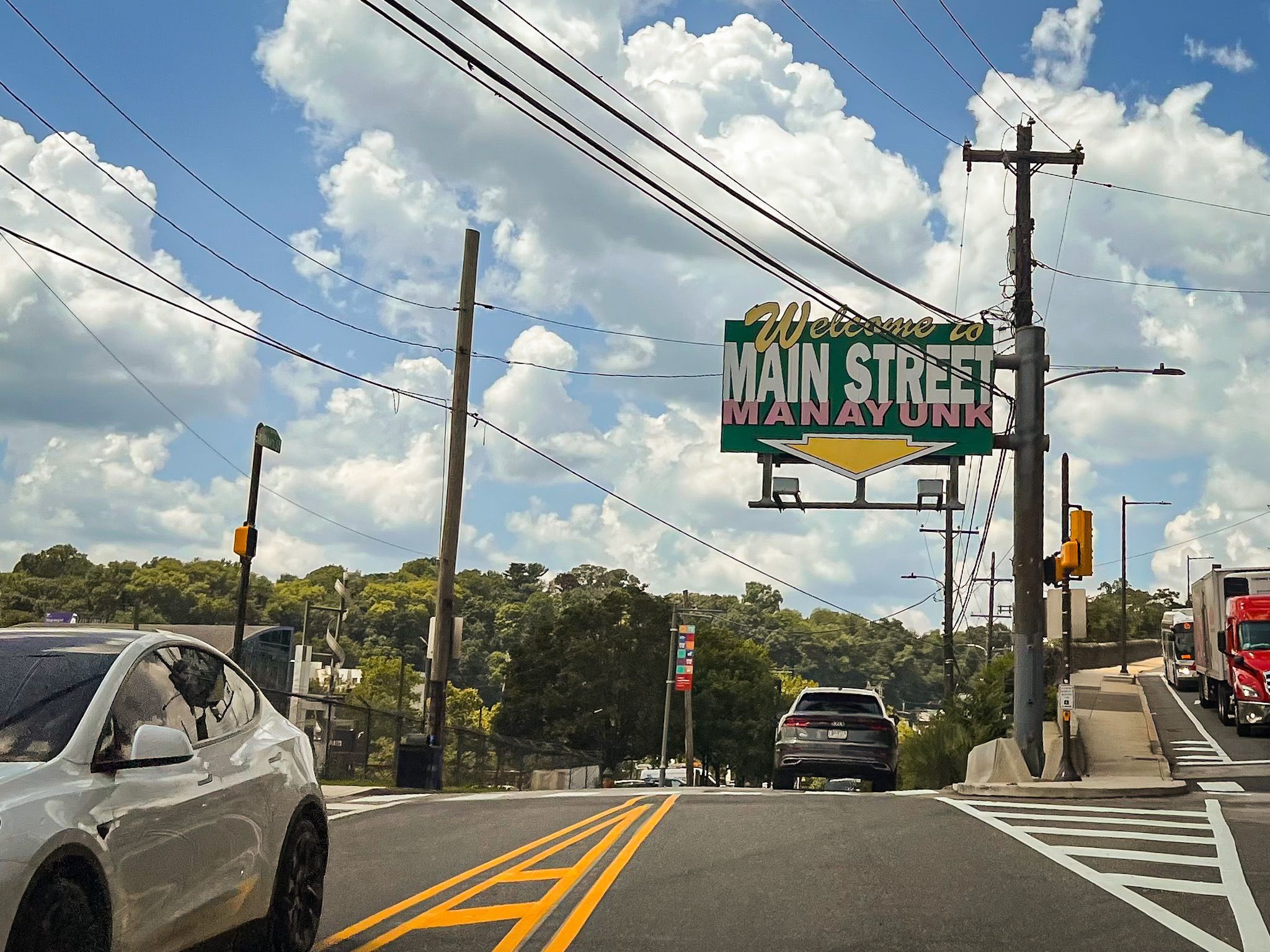
    The “Welcome to Main Street” sign hangs over Main Street at Ridge Avenue in Manayunk.Michael Klein / Staff

    “We loved the idea, but it turned out beyond our wildest dreams,” MDC executive director Gwen Mccauley said. “She’s now becoming part of the fabric of our district.”

    Baby Face Studio also ended up on Main Street in part because of the MDC.

    Artist and owner Kim Canefield in 2022 applied for the MDC’s emerging artist tent at the Manayunk Arts Festival, where she could set up shop for $100 instead of operating a $500 tent on Main Street. The festival draws over 300 artists and 150,000 visitors each June, McCauley said.

    She set up a full-time vendor tent at the next three Arts Festivals. Each time, she was stationed in front of an art gallery, not knowing that the same space would eventually become Baby Face Studio.

    “I just kept looking at it, and peeking through the window,” Canefield said. “The whole time I was staring at the future of what the studio was going to be.”

    Love City Brewing already has a foothold in Callowhill, but saw Manayunk as a place to grow. Its second spot opened in the former Fat Lady Brewing. When searching for a new location, co-owner Walter was attracted to Main Street’s critical mass of small, independent businesses.

    “Seeing them succeed, we thought: ‘Oh, we’re a small, local Philly business too,’” Walter said. “We can make it work there.”

  • Hiring a Philly cop once took nearly a year. A new system finishes the job in less than two months.

    Hiring a Philly cop once took nearly a year. A new system finishes the job in less than two months.

    When Capt. John Walker joined the Philadelphia police force decades ago, prospective officers rarely applied to more than one department, let alone four or five.

    Today, job candidates may apply to up to half a dozen departments before choosing where to begin their careers. And competition to hire them is fierce.

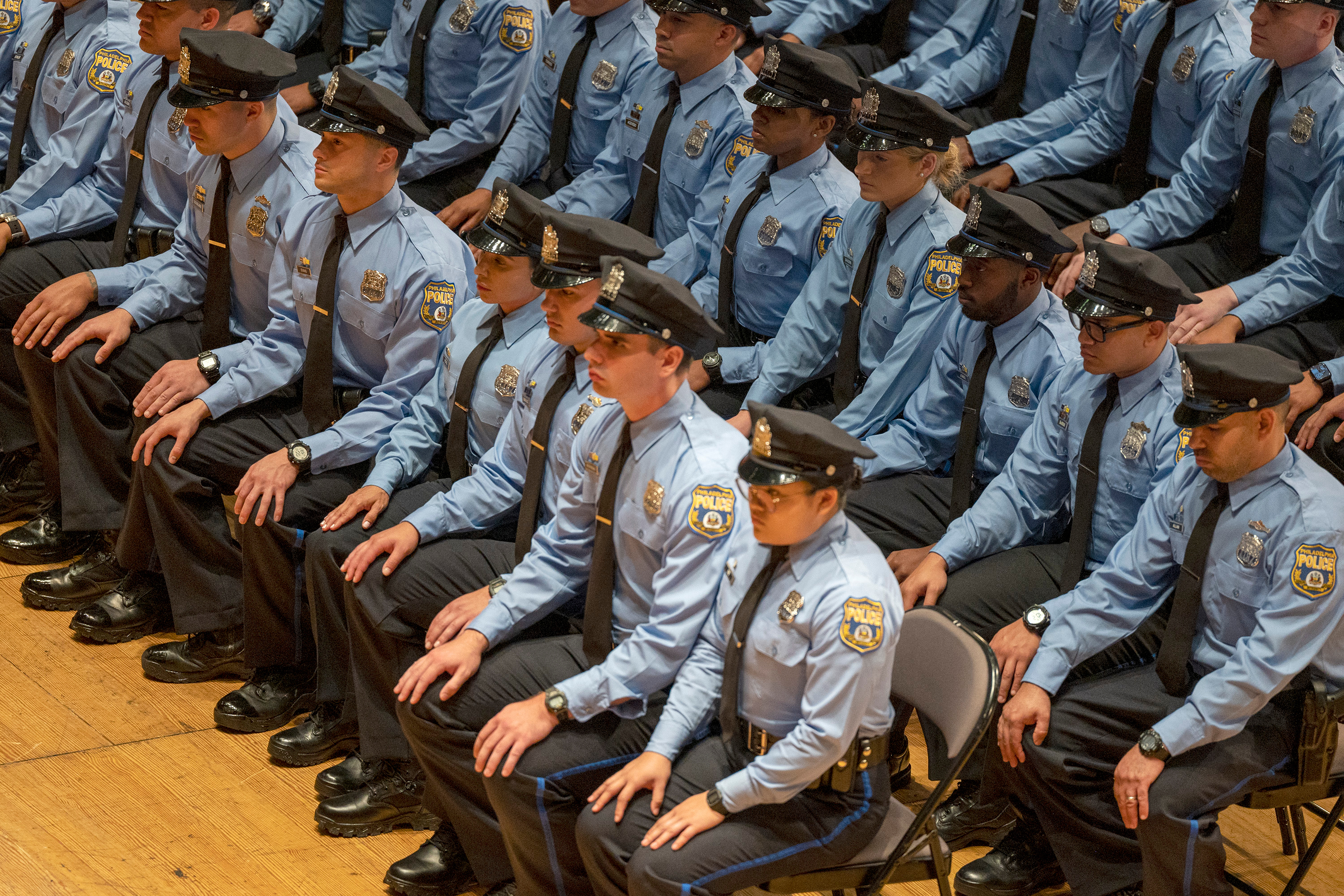
    After years of the department vying for recruits amid staffing shortages and waves of officer departures, its ranks are rebounding. And Walker, who oversees the police academy’s recruiting efforts, credits that in part to a faster and more efficient method of getting potential officers through the door.

    The department has scrapped its long-standing tradition of paper applications and is instead using software that speeds up what was once a monthslong hiring process.

    Before, getting an applicant from an introduction with hiring managers to the first day of police training could take up to seven or eight months — or sometimes a year, Walker said.

    “The process to get hired here was cumbersome,” he said. “It took almost 118 days after you applied for us to even make contact with you. That was a big problem.”

    After rolling out the software, called Guardian, the department says it is ushering recruits into the academy in as little as 54 business days — and it hopes to reduce that span even further.

    While Guardian is not solely responsible for the increase in applicants, Walker said, it has nudged the department closer to record recruitment numbers.

    In 2025, the department enrolled 468 officers in training at the police academy, the second-highest number in the 21st century.

    Captain John Walker of the Philadelphia Police Department’s recruitment and background investigations unit.John Walker

    Walker is adamant that there has been no drop in the quality of applicants. The California-based company whose software the department is relying on maintains high standards, he said, and is used by more than a thousand law enforcement agencies across the country.

    The new system has helped reverse a hiring dearth that began after the widespread protests over police brutality and racial justice in 2020 and continued through the COVID-19 pandemic and beyond.

    A year before the protests, the department was at 99% of full staffing, according to Walker. But the numbers soon began to dwindle as diminished interest in policing combined with an uptick in officers leaving the force.

    In 2021 alone, 581 of the department’s more than 5,000 officers hung up their uniforms. Officials attributed the drop to retirements, a COVID-era closure of the police academy, and strict local residency rules for prospective officers.

    While the department now stands at around 83% of full staffing, Walker said, officials are beginning to see something of a reversal.

    Recruitment drives have increased in frequency to more than several times a year, yielding between 1,000 and 2,000 applications each round.

    That is a notable step up from 2022, when the department received just 942 applications overall.

    Changing technology

    Gone are the paper applications of old.

    In their place is Guardian’s hiring portal, where prospective recruits can upload copies of their IDs, lists of references, and other documents via computer or on their phones. And the lengthy personal history questionnaires that are standard in the law enforcement industry are now available online, as opposed to requiring a trip to a local police station for paper copies to fill out by hand.

    Police recruiters, in turn, use the software to review documents, conduct video interviews, and keep track of a recruit’s medical, physical, psychological, and polygraph exams.

    The Guardian software debuted in the city in late 2023, and since then, the time it takes for prospective recruits to go from application to training at the police academy has fallen sharply, to fewer than 60 business days.

    Department officials hope to speed things up even more, to about 35 days, Walker said, but it is difficult to schedule the required medical tests and interviews quickly enough to accommodate that time frame. The department plans to hire more doctors to meet demand.

    Justin Biedinger, who founded Guardian Alliance Technologies in 2016, said that the company contracts with around 1,300 of the nation’s roughly 18,000 police departments, and that Philadelphia is one of its largest clients.

    Biedinger, a former Stockton, Calif., police officer, said the service not only has quickened hiring timelines, but also has increased scrutiny of officers who might not be cut out for a career in law enforcement.

    The software allows recruiters to see whether an applicant has been reported for misconduct by another department. And the company uses artificial intelligence to scan social media accounts for red flags such as inappropriate content, guns, or drug use.

    “With Guardian,” he said, “these applicants can’t lie.”

    To Walker, the biggest benefit of the new system has been the ability to move quickly and hire people who otherwise might have accepted jobs in other departments while they awaited word on applications to work on the Philadelphia force.

    “In today’s world, people are not going to wait a year and a half to join this profession, as I did,” he said.

    Another benefit of the automated process, he said, is making it easier for out-of-state applicants to apply, drawing candidates as far away as California, Colorado, and Missouri.

    And even if the department does not reach its goal of a 35-day timeline, Walker said, the current 55 days “is one of the best in the country. If not, close to it.”

  • Cheltenham’s new police chief is a longtime crisis negotiator and played a key role in the Bill Cosby case

    Cheltenham’s new police chief is a longtime crisis negotiator and played a key role in the Bill Cosby case

    Cheltenham’s new police chief is a longtime crisis negotiator who led one of the township’s most famous criminal investigations.

    Richard Schaffer will be sworn in as Cheltenham’s new police chief next week to replace John Slavin, who is retiring after 37 years with the department. The salary range for the new chief was listed as $180,000 to $195,000 in the township’s job posting.

    Schaffer has led a variety of community policing efforts in his 26 years at Cheltenham, spending more than two decades as a crisis negotiator and heading the township’s gun violence task force.

    In 2024, he embedded a county mental health worker into the police department to assist in cases with behavioral health concerns.

    Schaffer, who holds a master’s degree in criminal justice from St. Joseph’s University, made the case for community policing in a speech at a school board meeting this week.

    The new chief takes the reins at a tumultuous time for Cheltenham School District, which has faced a range of safety concerns in recent years — most notably two alleged assaults in a high school locker room last year that led to criminal charges for four football coaches and six players.

    “We have not lived up to our shared ideals. We must acknowledge the victims from recent cases, and we must promise to do things better not only for them but for future students,” Schaffer said.

    “I would urge parents and the board to commit to a greater partnership with the police department.”

    Some Cheltenham residents have advocated for removing a physical police presence from schools in recent years.

    Schaffer pledged at the meeting to “push back on some of those who sought to drive the police from the schools.”

    “Police interacting with students, faculty, and staff is a good thing,” Schaffer said. “We want to be proactive by leveraging information and our relationships to get ahead of problems.”

    District spokesperson Kevin Kaufman did not answer questions Friday about the current status of security programs at Cheltenham schools.

    Schaffer also led the 2005 investigation into allegations that Bill Cosby drugged and assaulted Andrea Constand at his Cheltenham home.

    Although the Montgomery County district attorney declined to press charges at the time, the case was reopened in 2015, and Schaffer was eventually called to testify.

    He testified in 2018 that he had believed Constand’s allegations at the time, and still did.

    Cosby’s conviction was overturned in 2021 on procedural grounds.

    This suburban content is produced with support from the Leslie Miller and Richard Worley Foundation and The Lenfest Institute for Journalism. Editorial content is created independently of the project donors. Gifts to support The Inquirer’s high-impact journalism can be made at inquirer.com/donate. A list of Lenfest Institute donors can be found at lenfestinstitute.org/supporters.

  • CHOP ER behavioral health screening identifies teens in need of support

    CHOP ER behavioral health screening identifies teens in need of support

    This story contains references to suicide. If you or someone you know is thinking of suicide, call or text 988.

    Whether they’re seeking treatment for a sprained ankle, stomach pain, or a panic attack, teenagers who come to the Children’s Hospital of Philadelphia emergency department are handed a 10-minute health survey with questions about depression and self harm.

    About one in three reports symptoms of depression or suicidal thoughts that may otherwise have gone unnoticed.

    Asking all patients aged 12 to 19 about mental health challenges has improved CHOP’s early detection of needs, especially among teens and adolescents being treated for physical ailments.

    “There’s this tension of we don’t want to ask a 12-year-old these questions, these are grown-up questions,” said Polina Krass, a pediatric emergency medicine attending physician at CHOP, who helped develop the survey. “But then we miss the mark and are getting kids the help they need only when they’re already in crisis.”

    CHOP’s screening initiative, launched in 2011, targets a problem hospitals across the region and country are facing: Mental health issues account for about one out of every eight emergency department visits, according to the Centers for Disease Control and Prevention. Yet hospitals are often ill-prepared to respond to these patients’ complex needs, which can put patient and staff safety at risk.

    Safety experts say that one of the most meaningful solutions is for hospitals to treat suicide risk and mental health issues as a core patient safety issue that all staff are trained to recognize, akin to postpartum hemorrhage, heart attack, or stroke.

    “This isn’t just a behavioral health issue — this is a system-wide patient safety priority,” said Shannon Kooker, vice president of clinical excellence and patient safety at ECRI, a patient safety organization in Fort Washington.

    Suicide risk in emergency departments

    Patients at risk of suicide often turn to emergency departments for care, according to a new ECRI report.

    ECRI analyzed patient safety incident reports from hospitals, outpatient clinics, and behavioral health programs between 2021 and 2025, looking specifically at suicide deaths and attempts, and instances in which patients expressed having thoughts of killing themselves.

    Nearly three-quarters of the 406 incidents ECRI analyzed occurred in emergency departments. That’s partly because hospitals have established protocols for reporting incidents, whereas urgent care and ambulatory centers may be less likely to self-report, Kooker said.

    People experiencing a mental health crisis may also be more likely to seek care at hospitals, which typically have specialized behavioral health workers on staff, she said.

    Deaths were rare, accounting for just 2.7% of cases analyzed by ECRI. Much more common were cases in which a patient tried to kill themselves or expressed a desire to — a sign that providers have an opportunity to intervene before harm occurs, if they can identify risks quickly, ECRI analysts found.

    A system-wide approach to mental health safety

    Improving safety for patients at risk of self harm should be a hospital-wide effort, Kooker said.

    That can mean changing the emergency room environment, such as installing breakaway doors that open upon impact to reduce the risk of patients harming themselves and using paper scrubs that can’t be knotted into ropes.

    More importantly, hospitals should make suicide prevention part of their safety culture, emphasized at the highest leadership levels, she said.

    She urged hospitals to standardize policies for responding to mental health emergencies.

    That starts with training all staff to recognize warning signs, such as being extremely agitated or anxious, acting erratically or withdrawn, or expressing feelings of being a nuisance or burden to others.

    Not every patient needs to be screened for suicide risk, but staff should quickly call for help when they recognize troubling behaviors, Kooker said.

    “It shouldn’t be a question mark to the staff — it should be standardized and tested,” she said.

    CHOP targets youth mental health

    At CHOP, about 10% of emergency department visits involve patients whose primary concern is a mental health issue.

    Krass worries about the many more teens and adolescents whose mental health needs may go unnoticed in emergency departments because no one thought to ask.

    The optional behavioral health screening survey — now taken by some 600 patients a month at CHOP’s Philadelphia and King of Prussia emergency departments — is designed to better identify those individuals, said Krass, a research scholar at CHOP’s Center for Violence Prevention.

    When a patient’s survey answers indicate anxiety, depression, or other mental health concerns, doctors connect them with a behavioral health specialist or social worker for follow-up care.

    Patients can complete the 37-question survey on their phone or on a tablet provided by the hospital. Krass and her colleagues have found that youth are more likely to share details about their mental health through this quasi-private format than if doctors ask questions directly.

    One of the survey’s final questions is whether it’s a good idea for CHOP to probe so deeply into their young patients’ mental health.

    Almost all answer yes.

    Editor’s note: This story has been updated to correct the year CHOP began its behavioral health screening initiative.

  • As Lemon Hill Park restoration begins after FIFA Fan Festival, park caretakers doubt long-term city support

    As Lemon Hill Park restoration begins after FIFA Fan Festival, park caretakers doubt long-term city support

    The marred fields of Lemon Hill Park are the remaining signs of the longest summer party the city has ever seen. Half a million people gathered in the park for 39 days straight, dancing to the All-American Rejects, cheering on World Cup matches, and sharing meals on blankets across more than a million square feet of the Fairmount park.

    The FIFA Fan Festival, by most accounts from the city, tourists, and residents, was a resounding success, offering a premium World Cup experience at a sliver of the cost of attending a game. Philly’s fan experience was considered one of the most affordable and popular in the country.

    Soccer fans gather to watch Mexico play South Africa on a giant screen during the opening day of the FIFA Fan Festival at Lemon Hill on June 11.Jose F. Moreno / Staff Photographer

    Now that the party is wrapped, the caretakers of Lemon Hill and nearby residents are hoping the city makes good on a promise to restore the park to its former glory, if not better.

    Philadelphia Soccer 2026, organizer of the FIFA Fan Festival, committed $4 million to park upgrades, from new picnic pavilions and a playground to safer sidewalks and traffic-calming measures at intersections. Additional funding will come from the city, but when asked, a city spokesperson declined to reveal the total budget and said more details will come during a groundbreaking celebration in September.

    The city gathered input from the community across nine public engagement sessions beginning in 2024 that netted 350 comments from 200 participants that helped shape which improvements would be prioritized.

    While residents and caretakers welcome park improvements, it is not lost on them that financial backing comes only after large companies use the space, though locals have been requesting help for years, said Shaun Cerborino, a co-organizer of Lemon Hill’s volunteer parks group. What’s more, without long-term maintenance funding, the upkeep of the park and its new upgrades will fall to caretakers once again.

    Large grass-less sections remain following FIFA Fan Festival at Lemon Hill on July 28. Fan Fest wrapped up on July 19.Monica Herndon / Staff Photographer

    Deferred maintenance billed as ‘legacy projects’

    A month after the World Cup ended, the largest Lemon Hill field that staged the festival is still mostly filled with dirt, patches of wilting grass, and the occasional leftover screw and other small construction waste. The city began aerating and preparing the soil for regrowth in July.

    The grass will grow back, said Cerborino and Nissa Eisenberg, Fairmount residents and co-organizers of the Lemon Hill Neighbors Association, which provides regular volunteer maintenance to the park. But what caretakers truly are concerned about is long-term support after the city finishes its upgrades months from now.

    Additionally, many of the improvements considered legacy projects are really “deferred maintenance” that had been requested for years, and came about only when corporations needed to use the park, Cerborino said.

    Large grass-less sections remain following FIFA Fan Festival at Lemon Hill on July 28. Fan Fest wrapped up on July 19.Monica Herndon / Staff Photographer

    “Instead of properly funding Parks and Recreation, the city looks toward private ventures to help keep the lights on and generate enough money to maintain — which we’re barely doing anyway,” Cerborino said.

    In Philadelphia, there is no dedicated budget for parks and open space; instead, the city and volunteers rely on the Philadelphia Parks and Recreation budget to maintain parks. They also look to grants, private nonprofits, and thousands of volunteers who weed, fix, and maintain trails and park space as part of “Friends” groups. Philadelphia relies on volunteers at more than twice the national average.

    Since taking office, Mayor Cherelle L. Parker has raised the parks and recreation department’s budget each year, doubling its spending from $53 per resident on parks in 2024 to $110 per resident in 2026. And while 97% of Philadelphians can walk 10 minutes and find a park, far exceeding the national average, Philadelphia still spends about half as much on its parks as the national average, according to the Trust for Public Land.

    Improvements like upgraded sidewalks, lighting, signage, and recreation areas are standards that should already be met by the city, which is home to some of the highest-ranked parks in the country, Cerborino said.

    Small holes line sections of the park, possibly following aeration, after FIFA Fan Festival at Lemon Hill on July 28. Fan Fest wrapped up on July 19.Monica Herndon / Staff Photographer

    Residents may have their park back, but restoration is far from over

    Fairmount residents are all but back to their usual park routines after the festival equipment was removed, but they say it is still a long way before Lemon Hill is back to normal.

    Last month, Samantha Tartaglino was walking her German shepherd, Marley, through the flattened fields. Marley sprinted through swaths of dead, brown grass, unfazed by the patches. Tartaglino said Marley was just happy to be back in wide-open spaces, as the dog had to make do with a smaller park nearby for weeks.

    Lemon Hill’s open fields are a key reason for why many move to this part of Fairmount, Tartaglino said, but even before the fan festival, residents felt the park was not being supported to its fullest potential.

    “I feel like FIFA and World Cup put the city under pressure and kicked them into gear,” Tartaglino said.

    The city has already put into place many of its legacy commitments, like new ADA-compliant sidewalks and ramps along Sedgley Drive, traffic-calming measures at the intersection of Sedgley and Poplar Drives, and additional lighting fixtures.

    But the community’s request for permanent bathrooms, water fountains, and portable water stations has gone unanswered, Eisenberg said. The city says those things can happen only if there is an on-site park staffer due to concerns about maintenance and vandalism.

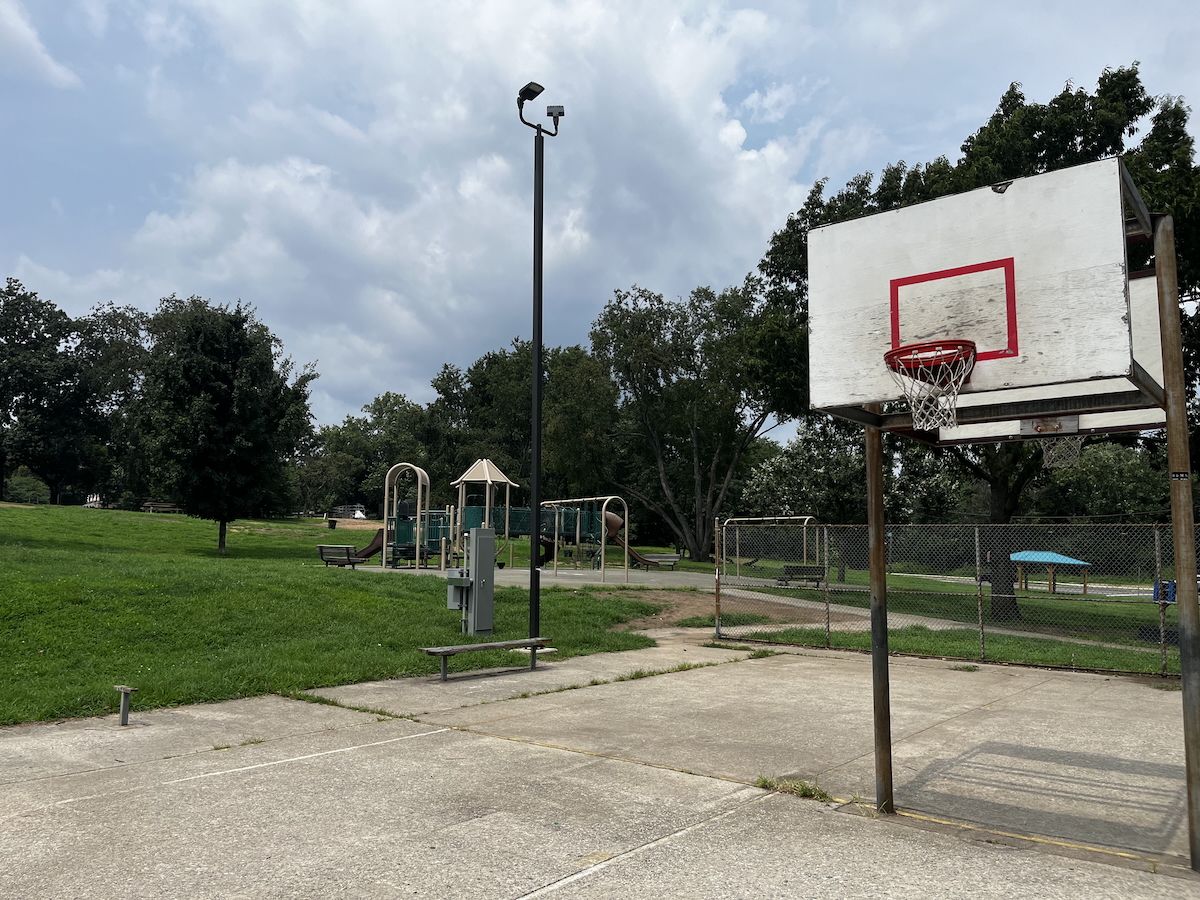
    A project with a longer timeline will be a new 43,500-square-foot playground, with construction expected to stretch into April 2027, according to Philadelphia Soccer 2026 and the city. And while construction is underway, the playground and basketball courts will be closed.

    Eisenberg lamented that. What was once presented as a plan for residents to give up park space for two months during the World Cup will now last much longer, she said, as grass fields will need to grow back and other amenities are closed for renovation.

    “The basketball court is one of the most heavily used assets of the park, but they’re planning to use the court as a staging area for the construction,” Eisenberg said. “Which I get because it’s conveniently located, but you just put on this multimillion-dollar event; I’m sure you can find another area to stage construction materials so that at least the basketball court isn’t offline all winter.”

    City officials say the plan is worth the wait.

    “We expect the legacy improvements to be completed next spring and are excited for neighbors and future visitors to enjoy a renewed Lemon Hill … that builds on the excitement of this summer while serving Philadelphians for years to come,” a city spokesperson said.

    The playground and basketball courts at Lemon Hill Park in the Fairmount neighborhood of Philadelphia. Since the 2026 World Cup has ended and the FIFA Fan Festival staged at the park has left, restoration efforts are underway with funding from various private and public stakeholders.Henry Savage / Staff

    Lack of long-term maintenance funding

    While projects such as renovating the playgrounds, basketball courts, and baseball fields are welcome, the Lemon Hill Neighbors Association fears that once city crews finish the work, the caretakers will be right back where they started — working off “love and duct tape” with little financial support.

    This means park improvements come only after long periods of push and pull between Philadelphia Parks and Recreation staffers and volunteer park caretakers, leaving long-term maintenance to fall to volunteer groups that dedicate their time and money to keeping parks usable.

    “We understand that a lot of times Parks and Recreation is understaffed or underfunded, but then that means we’re going to have to pick up that role,” Eisenberg said. “We need help, and the Parks and Recreation budget needs to reflect it.”

    Earlier this week, Temple graduate student Kyle McCurly was lounging in the undamaged grass surrounding the large field that just housed the festival. Having grown up in rural Georgia and recently back from a trip to Austin, Texas, McCurly said Philly’s parks could be so much more with long-term maintenance, and not just at Lemon Hill. He noted that Austin invests twice as much money as Philadelphia does in its parks per resident, according to the Trust for Public Land.

    “Everyone’s going to have different opinions on how the funding itself is created,” McCurly said. “But I think that it’s worth consistent investment to make green spaces more accessible and enjoyable in the city.”

  • Aramark forged a partnership with Penn Medicine for more affordable employee health benefits

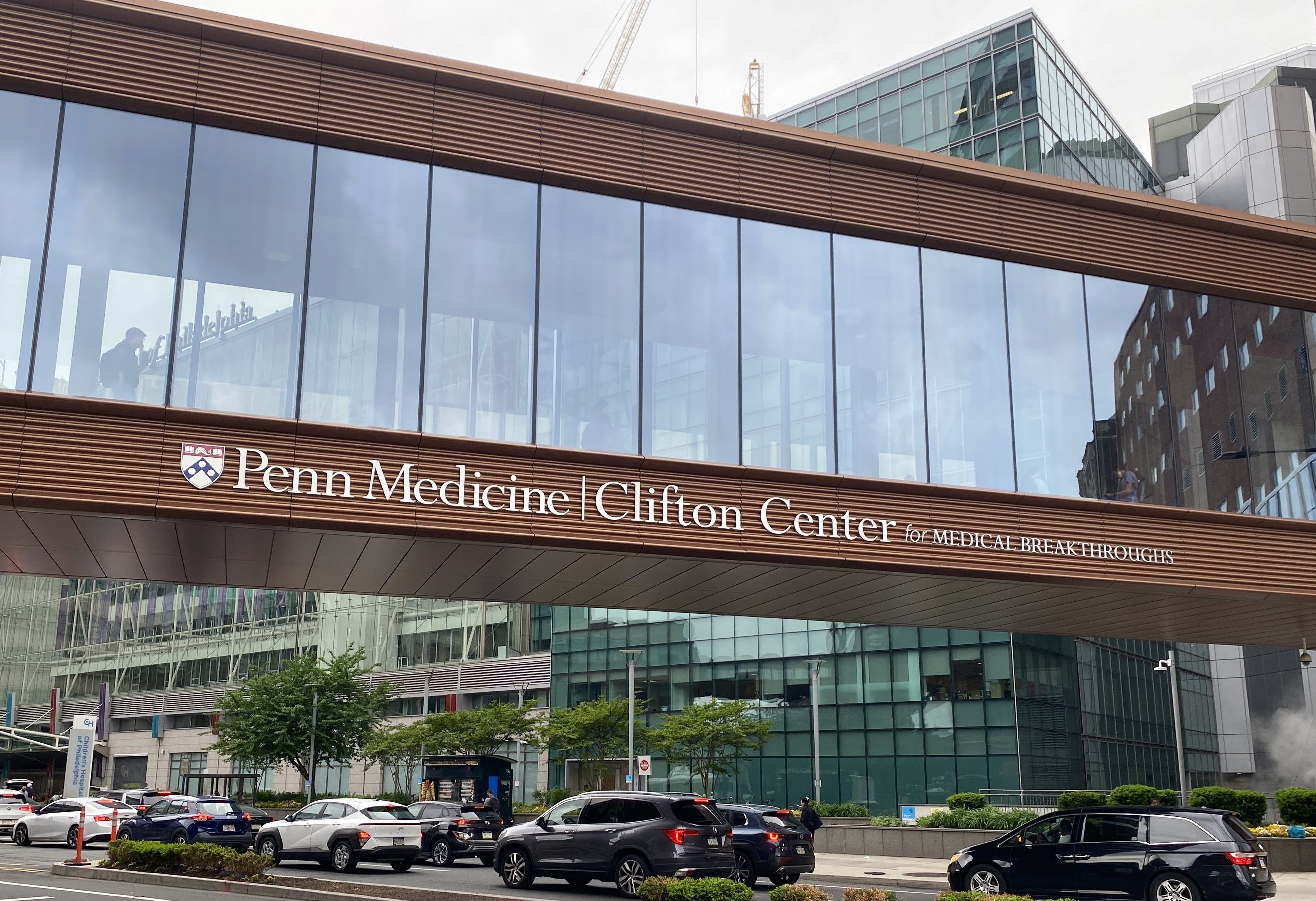
    Aramark and the University of Pennsylvania Health System launched a partnership this year to offer the food service giant’s Philadelphia-area employees healthcare in a test of a new model for reducing costs.

    Aramark employees who choose the benefit option, called the Penn Medicine Premier Plan, face no deductibles and lower copays when they and their dependents use Penn doctors and facilities.

    The move by Aramark into what is called direct contracting comes as employers are contending with years of surging healthcare costs. It’s an example of experimentation designed to slow spending growth in spending and perhaps improve quality, experts said.

    “We certainly would like to save money on the model, but its primary focus is to make benefits more affordable” by getting lower prices than it would get by going through an insurer, said James Startare, Aramark’s vice president for benefits.

    The model is called direct contracting because Aramark negotiated prices and other terms of the contract directly with Penn, instead of relying on an insurer to negotiate prices.

    It’s Penn’s first such contract and the first large-scale direct contract in the Philadelphia region. Aramark talked with other systems in the area, but Penn emerged as the partner willing to enter into the experimental contract. Penn described the deal as a multiyear contract ultimately expected to roll over from year to year.

    Aramark didn’t provide details on savings, but its goal was to negotiate prices that are lower than those it would pay though a benefits administrator, such as Aetna.

    By eliminating deductibles that function as a barrier to care, the plan is expected to encourage primary care visits. This could reduce long-term costs by catching patients’ health problems early.

    For health systems like Penn, such contracts offer a chance to increase market share, streamline payments, and hone their ability to manage the health of a population.

    The Penn Medicine Premier Plan features no deductibles and lower copays when Aramark employees and their dependents use Penn doctors and facilities. Harold Brubaker / Staff

    Aramark’s move into direct contracting

    Penn is Aramark’s third major direct contracting partner.

    Employers, even those like Aramark that are self-insured, typically rely on an insurer’s negotiated prices.

    With the new direct contract, an Aetna administrative unit still processes the claims for Aramark, and patients who go outside Penn for care use the Aetna network.

    Aramark launched its first such contract in 2024 in Dallas and expanded to Chicago last year, each time getting a strong employee enrollment, though it took two years in Chicago, Startare said.

    In the Philadelphia region, 35% of eligible employees (those who work 30-plus hours a week on average) have chosen the Penn plan, which took effect Jan. 1, Startare said. That amounts to 800 employees.

    Coincidentally, the health contract started at the same time as Aramark’s contract to manage food and other services at Penn Medicine facilities, but the two deals were not linked.

    Employees who were moving to Aramark with the food services contract were worried about losing their Penn benefits, said Megan Lieberman, a patient services manager at Chester County Hospital who was among those who became an Aramark employee.

    But the Penn Premier Plan was very similar to what they were used to. “It was definitely a huge relief to know that we got to hang on to those benefits,” Lieberman said.

    A separate contract covers pediatric services at Children’s Hospital of Philadelphia for Aramark employees and their families.

    Next year, Aramark plans to take direct contracting into central New Jersey, but did not name the system it’s using there.

    What’s in it for Penn

    The Aramark contract is an opportunity to focus on “chronic disease management, preventive care, cancer screenings, things like that” for a specific group of 1,400 patients who are motivated to stay within the Penn system, said Mark Angelo, Penn’s chief medical officer for population health.

    A key goal is to reduce the deductibles, copays, and prior authorizations that can slow access to preventive care. The model is designed to take care of people before they end up in high-cost places like the emergency department or hospital, Angelo said.

    Keeping more patients within Penn is expected to result in savings because of better care coordination and fewer repeated tests, Angelo said. Penn Premier plan members can seek care outside of Penn, but it will cost them more out-of-pocket.

    As it is, the typical Penn patient also uses other health systems for some services, said Roy Schwartz, Penn’s vice president for payer strategy.

    “Sometimes it’s the right choice, sometimes it can fragment their care,” Schwartz said. “There should be savings just simply coming from having integrated, coordinated care at a place like Penn.”

    Penn does not yet have much of its own data on Aramark employees, but indications from Aramark are that the plan’s members were using more Penn services in the first six months, Schwartz said. “It was not just patients who were using Penn anyway for pretty much everything.”

    Penn and Aramark officials plan to meet regularly to review results and consider modifications. “We’re hoping this works out well for everybody because we’d love to do some more of these,” Schwartz said.

    Momentum behind direct contracting

    Employers nationally have long contracted directly with doctors and health systems for specific procedures, like joint replacements, cancer care, and heart surgery. For years, they’ve also paid directly for primary care through on-site clinics.

    Aramark’s move to an all-encompassing healthcare plan with a single provider fits into a newer trend gaining momentum nationally. Investors have created platforms like Cost Plus Wellness, Mishe Health, Nomi, and Transcarent to help health systems implement direct contracts.

    Northwell Health, a major health system in New York and Connecticut, started a for-profit subsidiary called Northwell Direct and now has more than 70 contracts that cover more than 300,000 people.

    Northwell Direct’s biggest contract covers 100,000 building service workers in the New York area and their dependents. It took effect this year and is expected to save 20% in the first year.

    Big savings to start are not guaranteed.

    “They may not go into it with a lower cost, but they’re going to go into it with better access, better quality for their employees, and what they’re finding is eventually those lower costs will come,” said Jenny Goins, chief of staff at the National Alliance of Healthcare Purchaser Coalitions.

    The Washington nonprofit is putting together a direct contracting advisory council to help more employers to do what Aramark is doing, Goins said.

    The model is not expected to replace traditional coverage anytime soon in the Philadelphia region.

    “It is not for everyone, and it does take effort and coordination on the part of the employer,” said Tom Belmont, CEO of the Greater Philadelphia Business Coalition on Health. “Also, some health systems are ready for the discussion, while others are not.”