These are the Philly area’s best athletes under 25 years old.
By
Inquirer Sports Staff
Published
The Philadelphia area's sports scene is on the rise — and we're not talking about the addition of LeBron James to the city's professional ranks.
The region's professional sports franchises are only part of the picture. There also are athletes enrolled in the area's many colleges and universities, a wealth of talent at the high school and amateur levels, and others who dominate individual sports like boxing or figure skating. We decided it was about time to spotlight some of the best.
Welcome to The Inquirer's first 25 Under 25 list, highlighting the region's best athletes under the age of 25.
story continues after advertisement
The criteria is simple. To qualify for our list, an athlete must:
Be under 25 as of July 1, 2026, and
Currently reside in or train in the Philadelphia area (the city, collar counties, or South Jersey) and/or play for one of the area's colleges or professional teams (including their minor league affiliates).
That second rule means that high school students from the Class of 2026 are ineligible, since many have already arrived on their respective college campuses across the country. A few of them can be found on our list of the best players fromhere, which includes Philly athletes playing elsewhere. However, there is one exception this year, which we'll explain when we get there.
With those qualifications in mind, we went searching for the best of the best. And after much debate among our sports editors, we came away with 25 athletes who truly show the region's depth of talent at every level across a variety of sports. Here they are, presented in alphabetical order.
Jasmine Bascoe
Age: 20
Jasmine Bascoe was an all-conference selection for Villanova as a freshman in 2024-25 after leading the Wildcats with 16.2 points and 4.3 assists per game in 34 games.
Bascoe, who’s from the Toronto area, followed a stellar freshman season with an even better sophomore campaign, again leading the team in points (18.9) and assists (4.8) per game. She was the Big East’s leading scorer last season, beating UConn stars Sarah Strong and Azzi Fudd. Bascoe led Denise Dillon’s Wildcats back to the 2026 NCAA Tournament after a two-season drought, and the Wildcats retained Bascoe for a third season. If Bascoe takes another step forward, Villanova could be a team to watch in March.
“Denise, she trusts me, and I have all my trust in her, so I’ll do whatever she needs me to do,” Bascoe said ahead of her sophomore season. “I love it in Philly — nowhere else I’d rather be.”
Bascoe’s Villanova inspiration
Villanova’s Jasmine Bascoe is having an impressive freshman season. She draws inspiration from a Wildcats legend.
She watched Jalen Brunson from home in Canada and hopes to shape her game around his. So far, it's paying off for her and the Wildcats.
Justin Crawford
Age: 22
Justin Crawford, one of the Phillies’ top five prospects entering the year, made his big league debut on opening day and has appeared in all but 10 games so far this season. Heading into play Wednesday, Crawford is slashing .270/.316/.361 as a rookie, and, after an early adjustment period at the plate, has hit .305 since June 1. The center fielder's defense also has steadily improved.
As for his struggles against left-handed pitching, which relegated him to a platoon role earlier in the season, Crawford hopes to pick the brain of new teammate Luis Arraez, a three-time batting champ and two-time Silver Slugger. And like Crawford, Arraez is a lefty who hits for average. Since Arraez’s arrival earlier this month, Crawford has been even better, slashing .342/.381/.500.
Commentary from David Murphy
Justin Crawford delights his dad Carl and showed the Phillies the weapon they might have in the nine-hole
Crawford didn’t just perform as advertised on opening day. He showed the value of what was advertised.
story continues after advertisement
Reese D’Ariano
Age: 17
The youngest member of the current United States field hockey team, Reese D’Ariano has plenty of international experience at just 17 years old. Before the field hockey World Cup in Belgium, D’Ariano won two gold medals with USA field hockey, including at the 2024 Indoor Pan American Cup in Calgary, Canada, where she was named tournament MVP. D’Ariano, who is a rising senior at Pennsylvania Leadership Charter School and committed to the University of North Carolina, is one of the top prospects in her class.
Before she began training with WC Eagles, her field hockey club, D’Ariano would train at a multipurpose field with her mother while her brother had swim practice. “Obviously, the progression was slow if you saw it day to day,” D’Ariano said. “But as the weeks and months went on, it was a pretty drastic change in how I progressed.”
Climbing the ranks
Reese D’Ariano embraces role as youngest player on USA field hockey’s World Cup roster
The 17-year-old, West Chester native was 9 the last time the U.S. women’s national team qualified for the FIH Hockey World Cup. This will mark her biggest stage, and she's looking to contribute.
Riley Davis
Age: 16
Entering her senior year at Academy of Notre Dame de Namur, Riley Davis is the top-ranked lacrosse player in the Class of 2027, according to Inside Lacrosse. The five-star recruit and Penn State commit is a two-way midfielder for the Irish and also plays on the school’s varsity basketball team.
Riley’s father, Ben, played seven years in the MLB as a catcher. Her mother, Megan, was a two-sport athlete at Rutgers. Her brother, Tague, set Louisville’s freshman home run record (18) last year and led the nation in home runs (34) as a sophomore. Her older sister, Finley, is entering her freshman year at Furman, where she will play lacrosse after playing with Riley at Notre Dame.
Despite all that competition, Riley is considered the most athletic in a family of high-level athletes. “Riley is the best athlete in the family,” Ben told The Inquirer in April.
A family of stars
Former MLB catcher Ben Davis’ family is full of athletes. His daughter, Riley, might be the best.
Riley Davis is ranked as the No. 1 lacrosse player in the class of 2027. Her mother, Megan, and older sister, Finley, are “the anchor and the force” that guided her success.
Cooper DeJean
Age: 23
Securing your first career pick-six in the Super Bowl on your birthday is the kind of story dreams are made of. But that’s Cooper DeJean’s real life. DeJean, however, is much more than just that moment. He earned first-team All-Pro honors as the league’s best slot cornerback in 2025. He’s also one heck of a basketball player.
Now, he is taking on a new role as a safety in Vic Fangio’s base defense. He’ll still see the majority of his snaps in the slot, but his growing positional versatility is a testament to his skill as he becomes one of the Eagles’ most important players.
“Playing nickel in this defense is kind of like playing safety in a lot of ways,” DeJean said. “A lot of the techniques are pretty similar.”
DeJean’s making moves
How Cooper DeJean’s ‘first love’ of basketball helped set him on a path to the Eagles
Growing up in small-town Iowa, playing multiple sports was the norm. But DeJean stood out, especially on the basketball court, and he has the highlight reel to prove it.
Audrey Derivaux
Age: 17
A four-time world junior swimming champion, Haddonfield’s Audrey Derivaux was the No. 1 recruit in the Class of 2027. But Derivaux recently reclassified to the Class of 2026 to start her collegiate swimming journey at Texas a year earlier than expected. Derivaux shared the news on her social media with an Instagram post captioned, “See you in August, Austin! Can’t wait to rep the Longhorns next season!”
(Editor’s note: Derivaux reclassified to 2026 after our list was complete.)
Derivaux, who turned 17 earlier this month, in 2024 was the youngest swimmer to reach the finals of an Olympic trial since 2012 when she was 14 years old. She competed in the women's 400 individual medley, but fell short of earning a spot in Paris. In July, she competed in the USA Swimming national championship, finished with the second-best time in the 100-meter butterfly, and won a trio of under-18 events (the women’s 100- and 200-meter butterfly and the women’s 400-meter individual medley).
Derivaux on the rise
Meet Haddonfield’s Audrey Derivaux, the 14-year-old who’s swimming’s next rising star
The rising sophomore at Haddonfield Memorial High School became the youngest swimmer to reach the finals of an Olympic trial since 2012. Could the 2028 Olympics be next?
story continues after advertisement
Natalie Dove
Age: 24
Since her professional debut in 2023, Natalie Dove is undefeated in nine fights — with two knockouts and five unanimous decisions. Dove, a super flyweight, remained undefeated in her most recent bout, an eight-round slugfest against Maria Micheo Santizo in April that ended with a split decision.
“No Love” Dove initially was exposed to the sport as a self-defense method and started sparring in Philadelphia at 14. She fought in amateur tournaments and trained as a hopeful for the 2020 Olympics before turning pro. Since May 2025, Dove has fought for Jake Paul’s Most Valuable Promotions. She credits her toughness in the ring to her upbringing in Philly gyms and learning to hold her own “in a gym full of grown men that … talk [trash] the entire time.”
“I really don’t care what anyone says,” Dove said last year. “If anything, I’m probably the biggest bully in the gym. I think it just made me tougher and it made boxing fun for me.”
When Doves fly
How Philly’s Natalie Dove went from shadow boxing in her sleep to fighting with Jake Paul’s promotion
The 23-year-old Philly native had Olympic dreams. Now, she's preparing to face Randee Lynn Morales on Saturday for Jake Paul's MVP.
VJ Edgecombe
Age: 21
By the end of his first professional game, VJ Edgecombe already had flashed his star potential. The No. 3 overall pick in last year’s draft finished third in NBA Rookie of the Year voting and is set to start alongside Jaylen Brown, Tyrese Maxey, Joel Embiid, and LeBron James. But don’t let him slip under the radar behind those huge names.
Edgecombe averaged 16 points per game last season and performed even better in the critical stretch in which Maxey, Embiid, and Paul George were sidelined. Brown, whose Celtics were eliminated in seven games by the Sixers, praised Edgecombe as a difference-maker in that first-round series. His teammates agree.
“He’s the guy,” Embiid said after the Sixers’ season ended. “I’m telling you guys, that guy is something different, and this was only Year 1. Year 2 is going to be better.”
Sixers’ future is now
‘I want us to go down in history’: Tyrese Maxey and VJ Edgecombe’s bond will shape the Sixers’ future
Maxey and Edgecombe have served as the life source of this Sixers season. The franchise will likely will go as far as they can take them — now and in the years to come.
Tyson Foerster
Age: 24
Before an upper-body injury sidelined Tyson Foerster for 49 games, the winger was on pace for career-best numbers with 13 goals in 29 games thanks to a shot head coach Rick Tocchet called “really elite.” The Flyers signed Foerster to an eight-year extension this offseason, so, barring a trade, the winger will be in Philadelphia for years to come. He couldn’t be happier.
“For me, I love Philadelphia, and I love playing with these guys,” he said. “They asked me if I would look to extend this year, and it was a no-brainer for me. I mean, I don’t play hockey for the money, so it’s all fun, and just happy to be here, hopefully, for the next nine years.”
Foerster’s big payday
Tyson Foerster talks lucrative extension with the Flyers: ‘It was a no-brainer for me’
Foerster missed 49 games because of injury a season ago, but cited his love of the Flyers and his teammates for why he inked an extension perhaps ahead of schedule.
Colton Hiller
Age: 16
Colton Hiller, the No. 2 player in the Class of 2028, is a 6-foot-7 small forward for Coatesville. In his sophomore season, he averaged 25 points, six rebounds, three assists, and 1.8 steals. Ahead of his junior year, Hiller is uncommitted but holds offers from more than 15 schools, including Villanova and Penn State. Last summer, he was part of the gold-medal winning Team USA at the FIBA U16 AmeriCup, where he averaged 13 points in six games.
In his two seasons with the Red Raiders, the five-star recruit has already surpassed 1,000 career points. He plays travel basketball in the Nike Elite Youth Basketball League, representing the 17-and-under PSA Cardinals, based in New York.
Despite having ‘a lot of eyes on me,’ hoops star Colton Hiller plans to stay at Coatesville
The 15-year-old, who’s nationally ranked, just wrapped up a stellar sophomore season. With the spotlight only getting bigger, Hiller has remained committed to developing in his hometown.
Maxwell Hiller
Age: 17
Maxwell Hiller — yes, he’s Colton’s older brother — also is a five-star recruit, but not in basketball. The Coatesville offensive lineman is entering his senior year and is the top-ranked interior O-lineman in the nation and No. 2 player overall for the Class of 2027, according to 247Sports. With more than 40 college offers, Hiller received his first college offer in eighth grade from Penn State. In April, the 6-foot-5 lineman committed to Florida.
“I don’t even watch the play, I just watch [Max],” Colton said of his brother. “I definitely like when he gets people on the ground, just pancakes, and that’s probably my favorite part.”
Max also played basketball, using it as a way to stay in shape, and even received an offer to play college hoops at La Salle.
Two Hillers are better than one
Meet Coatesville High’s Maxwell and Colton Hiller, who are rising stars in different sports
Max is a rising junior and ranked as one of the best offensive tackles in the country. Colton, who recently turned 15, is a 6-foot-6 shooting guard ranked No. 4 in his class.
Salman Khalil
Age: 21
Cairo-born Salman Khalil has been a standout in squash for Penn since he joined the Quakers in 2023. He was the Ivy League’s Rookie of the Year in 2023-24 and was the conference’s Player of the Year as a sophomore. Khalil, a rising senior, has been a standout for Penn as it has claimed its first two Potter Cups as the collegiate squash national champion in his first two seasons.
As a sophomore, Khalil became the first Quaker to claim the individual national championship (Pool Trophy) and the Potter Cup in the same season — and he did it while fasting for Ramadan. In addition to his career at Penn, Khalil is No. 52 in the squash world rankings. He holds a 42-16 record in noncollegiate events.
Khalil’s big win for Penn
Penn captured another national squash title even as three players fasted for Ramadan
Salman Khalil clinched the Potter Cup national team championship by beating Yale's Tad Carney. Khalil, Marwan Abdelsalam, and Omar Hafez of the Quakers were fasting during the final.
Makai Lemon
Age: 22
Makai Lemon, the Eagles’ first-round pick in 2026, hasn’t played a snap in the NFL yet. But with A.J. Brown gone, the rookie has big shoes to fill and a big opportunity in front of him. At Southern Cal, he averaged 14.6 yards per catch and racked up 1,156 receiving yards in 12 games in his final season. Lemon is known for his elite ball skills, despite being just 5-foot-11, on the smaller side for a receiver. He suffered an injury that sidelined him during minicamp and has been dealing with a hamstring injury during training camp. But when it’s time for him to take the field, Eagles fans will be “getting a dawg,” Lemon told the crowd on draft night.
“You drafted the guy that’s going to match the city’s intensity when it comes to pro football,” said Ray Fenton, Lemon’s former coach at Los Alamitos High School, located outside Los Angeles.
What Lemon brings
What the film says about Eagles first-round draft pick Makai Lemon
What does the newest Eagles wideout do well, and how does it fit in the new-look scheme?
story continues after advertisement
Isabeau Levito
Age: 19
Isabeau Levito became a household name this winter as one of the “Blade Angels,” the women’s figure skaters representing the U.S. at the Milan Cortina Olympics. She missed out on the podium, but she still got to bask in the experience of being an Olympian.
“It was just so cool with all these athletes from different sports all in one place,” Levito said. “It was very magical, and it was a dream come true.”
The South Jersey native also skated to a fourth-place finish at the 2026 World Championships in March. Levito has eight podium finishes at major events in her career, including silver at the 2024 World Championships and gold at the 2023 U.S. Championship. And she’s already started teasing her next routine.
What’s next for Isabeau?
South Jersey figure skater Isabeau Levito reached the peak this year with the Olympics. She wants more.
The Olympics were "very magical and a dream come true," Levito said. But she also wished she pushed herself more and is eager to get back to training and up her content for next season.
Porter Martone
Age: 19
Porter Martone, who got his start blasting holes in the wall of his parents’ basement before starring at Michigan State, made an immediate impact following his NHL debut, with 10 points in his nine regular-season games. After the Flyers’ season ended in the second round against Carolina, Martone joined Team Canada at World Championships and got ice time on the top line with Macklin Celebrini and Sidney Crosby, scoring one goal and four assists in 10 games.
“He wants to be out there when the game’s on the line,” coach Rick Tocchet said. “He’s unflappable.”
Martone’s origin story
Flyers rookie Porter Martone blasted holes in his parents’ basement before becoming an NHL phenom
The teenager has taken the NHL by storm in the playoffs. He honed his scoring touch growing up in Ontario, firing slap shots in the basement and beating "Jeff" the goalie in his backyard.
Matvei Michkov
Age: 21
Matvei Michkov’s sophomore NHL season was a bit turbulent, but the 21-year-old’s potential is sky-high, if his post-Olympic break stretch leading the team in points is any indication. At his best, the winger is a game-breaker and an elite talent the Flyers desperately need.
“He knows he needs to improve off the ice in his training — and that’s not a secret — he’s admitted that himself. … So, the big thing for Matvei is adapting," general manager Danny Brière said.
Coming to America
Matvei Michkov is 5,100 miles away from his home in Russia. But in Philly, ‘life has become easier.’
The 21-year-old's adjustment to North American culture, the English language, and the NHL is ongoing. But the Flyers winger is starting to feel more comfortable on and off the ice.
Quinyon Mitchell
Age: 25
Quinyon Mitchell is the oldest player on our list and the only one who has already turned 25 — he beat our cutoff date by about two weeks — but the Eagles cornerback is more than deserving. He won the Super Bowl and was runner-up for Defensive Rookie of the Year in 2024 and has just kept improving.
Mitchell was named first-team All-Pro in his second season and was ranked 47th on the NFL’s top 100 Players of 2026 by his peers, and there’s still room for him to grow. Mitchell’s lockdown coverage makes him a ball repellent. He was targeted just 85 times last year and gave up 36 catches for 451 yards and one touchdown. But in two NFL seasons, Mitchell still hasn’t picked off a pass in the regular season. He’s hoping to change that in 2026.
“I’ve been working with the staff on catching and eye placement and stuff like that, so I just need to get better,” Mitchell said.
Commentary from Marcus Hayes
Quinyon Mitchell looked like an All-Pro vs. the Lions. His Florida family and friends were there to see it.
The Eagles cornerback allowed zero catches against Amon-Ra St. Brown, Jameson Williams, Jared Goff, and the highest-scoring offense in the NFC.
Andrew Painter
Age: 23
After years of anticipation, Andrew Painter got his first crack at the Phillies’ rotation this year, and it didn’t go as many hoped. The 23-year-old had a 7.06 ERA in 14 appearances, including 12 starts, before being demoted to triple A. His first game back in the majors showed promise. After giving up a double and a home run early, he settled in for six strong innings and only allowed one hit after that.
“When he’s done some things with his delivery, which is going more directly to the plate rather than spinning off, he’s had more life,” Phillies president of baseball operations Dave Dombrowskisaid.
His three starts since — including one that was cut short by hamstring tightness — have been trending in the wrong direction. But at his best, Painter still represents a ton of potential.
Commentary from David Murphy
Andrew Painter has reached his Roy Halladay moment. It is on him to seize it.
Failing is easy. The hard work is what comes next with his demotion to triple A. It's an endeavor upon which Painter must embark, much like Halladay did at his age.
Jordyn Palmer
Age: 17
Westtown School star Jordyn Palmer is a 6-foot-2 rising senior guard/forward who is No. 9 in her class, according to ESPN. Palmer, a three-time Gatorade Pennsylvania Girls’ Basketball Player of the Year, averaged 23.2 points, 13.2 rebounds, 6.4 assists, 3.3 steals, and 2.5 blocks as a junior, helping lead the Westtown School (28-2) to the Pennsylvania Independent Schools Athletic Association championship game. She has 1,746 career points and 894 career rebounds.
She has offers from more than 20 colleges, including South Carolina and LSU. In June, she was named Miss Pennsylvania Basketball, awarded to the best female high school basketball player in the state, voted on by fans, coaches, and media.
Best is yet to come
Westtown’s Jordyn Palmer — a basketball phenom and highly sought-after recruit — has untapped potential
The 6-foot-2 junior, who is ranked No. 6 in the nation, has had constant attention on her since she was 14. She has taken her game to a new level, but the best of her talents has yet to be displayed.
Labaron Philon Jr.
Age: 20
Labaron Philon Jr. is one of a few professional players on this list who have yet to make their debut, but there are high hopes and plenty of hype surrounding the former Alabama point guard who fell to the Sixers as the 22nd overall pick in this summer’s draft.
Of course, the expectations have eased in recent weeks as the Sixers added Jaylen Brown and LeBron James. But the 20-year-old brings shooting (48.2% for the Crimson Tide in two seasons) and a spark off the bench behind Tyrese Maxey and VJ Edgecombe. Philon’s Sixers career already got off to a good start at NBA Summer League, and he’s got a plan for his transition into the league.
“Having the same ‘dawg’ mentality that I had at Alabama and being the same person,” Philon said after his Sixers debut. “Being me, really.”
Philon’s ready for Philly
Labaron Philon Jr. is ready for his rookie season with ‘a lot at stake’ after Sixers added LeBron James, Jaylen Brown
"Being a rookie and being able to be around all those guys is a privilege for me," Philon said after the Sixers added James and Brown this offseason.
Lavar Scott
Age: 22
South Jersey’s Lavar Scott comes from a racing family, so it’s no surprise that he was able to climb the ranks of stock car racing to become one of three active Black drivers in NASCAR. In two full seasons in the ARCA Menards Series, Scott finished in the top five 22 times for Rev Racing, including four second place finishes.
He earned a full-time spot in the NASCAR O’Reilly Auto Parts Series in 2026, making 22 starts in Alpha Prime Racing’s No. 45 Chevrolet. Scott has earned five top-20 finishes in 22 starts this season. Still looking for his first NASCAR win, Scott is chasing a feeling that he first learned racing go-karts at five years old.
“It’s a feeling that when I go to bed, I think about, [when I] wake up, [I] think about, [when I] sleep, [I am] thinking about. It’s just the feeling of standing on top of your car after a win and [celebrating] with your friends and family and knowing you did your job really well that day,” Scott said in June.
From South Jersey to NASCAR
South Jersey’s Lavar Scott, one of NASCAR’s three Black drivers, is chasing greatness and not looking back: ‘There was no Plan B’
Go behind the scenes at Pocono Raceway with 22-year-old South Jersey native Lavar Scott and the family that helped him become one of three active Black drivers in NASCAR.
Luigi Suigo
Age: 19
Standing at 7-foot-3, Italian-born center Luigi Suigo was the marquee addition for Kevin Willard this summer as he tries to lead Villanova back to the NCAA Tournament. Suigo, born in northern Italy, has played professionally in Europe since 2023. He averaged 7.9 points and 5.1 rebounds in 26 games during 2025-26 for KK Mega Basket of Serbia. Suigo entered the 2026 NBA draft and was projected as a late first-round, early second-round selection before he withdrew and decided to play college basketball at Villanova.
“He wants to make sure when he gets drafted, he’s going to play,” Willard said of Suigo in June. “The big thing is I think he needs to get Americanized a little bit, to American basketball. I think that’s why college will be really good for him.”
Even better for the Italian big man, Suigo will begin his college career with a game in Rome, where the Wildcats will play Notre Dame on Nov. 1.
From Italy to the Main Line
Big man Luigi Suigo has arrived at Villanova. His journey to the 2027 NBA draft is underway.
Suigo is expected to join the short list of Villanova players who are on campus for one season before being selected in the NBA draft. But his temporary stop at Villanova is a critical one.
Cavan Sullivan
Age: 16
Cavan Sullivan, the youngest professional on this list, has a chance to be the most internationally recognized real athlete to come from Philadelphia — apologies to Rocky. The attacking midfielder has a deal in place that will send him to English giant Manchester City once he turns 18, but for now, he’s tearing up the pitch for the Union. He netted his first MLS goal in May, and his role for the team has continued to grow.
“It’s a big year for me,” Sullivan said in January. “It’s exciting, but I’m not going to get ahead of myself. I know there’s still work to do and stuff to prove.”
Look out for Sullivan in stars and stripes, too. He’s still waiting on his first senior team call-up, but he’s received numerous call-ups to U.S. youth national teams and scored twice at the 2025 FIFA under-17 World Cup in Qatar.
A Philly soccer story
Why Cavan Sullivan, hyped as the world’s best 14-year-old soccer player, chose to turn pro with the Union
In a few years, Sullivan will play for English superpower Manchester City. But for now he has chosen to start with his hometown team. Here's the inside story of why he picked the Union.
Quinn Sullivan
Age: 22
While his younger brother has Europe’s attention, Quinn Sullivan has developed into an integral piece for his hometown club. Before an ACL tear ended his 2025 season, Sullivan scored three goals and logged eight assists in 31 appearances across all competitions as the Union claimed the MLS Supporters’ Shield.
Sullivan also has experience with the U.S. men’s national team and made one start during the 2025 Gold Cup.
Sullivan returned from his ACL injury in July 2026, and now that he’s fully healthy, he’s back in the Union’s starting lineup. Quinn isn’t making a move to Europe yet, but the Bridesburg native is happy to represent his hometown club for now.
“I’d love to be the face of this team,” Sullivan said in January. “I mean, I grew up supporting this team. I love this team; I love this city. I feel like I embody what Philadelphia means.”
Holding down the homefront
Quinn Sullivan ‘would love to be the face’ of the Union. When he returns from a torn ACL, he just might be.
Though the 21-year-old from Bridesburg likely won't be back on the field until July, he's in good spirits. He appreciates all the support he's gotten from fans, the Union, and the national team.
Gage Wood
Age: 22
Gage Wood, the Phillies’ first-round pick in 2025, made his first start at Citizens Bank Park in July — as part of the MLB All-Star Futures Game.
But the right-hander, who was promoted to double-A Reading earlier this season, is progressing quickly through the system. Wood’s elite fastball helped get him to No. 33 on MLB Pipeline’s Top 100 prospects, but there are questions about whether Wood is a starter or a reliever long-term.
“Obviously, I want to go back to the Bank as fast as I can,” Wood said. “I just keep working every day and try to get there as fast as possible.”
Patience paying off
Phillies prospect Gage Wood may have to take a longer road to the majors — and he’s OK with that
After the Phillies drafted the 22-year-old pitcher out of Arkansas, they plan to develop Wood as a starter. Fans caught a glimpse of the first-round pick in the Spring Breakout game on Saturday.
story continues after advertisement
That completes the first installment of The Inquirer’s 25 Under 25 athlete list. Naturally we couldn’t include every great athlete from the area, so be sure to check out our list of those who just missed the cut. We also have a list of the best under-25 athletes that are from the region but no longer play here. And, of course, we want to know who you think should’ve made the cut but didn’t, so email us at sports.daily@inquirer.com with anyone we might have missed.
Staff Contributors
Design and Development: Julia Duarte
Reporting: Gabriela Carroll, Owen Hewitt, Mia Messina
Editing: Matt Mullin
Illustration: Vivi John
List Curation: Inquirer Sports Editors
Digital Editing: Matt Mullin
Copy Editing: Maria McIlwain
Subscribe to The Philadelphia Inquirer
Our reporting is directly supported by reader subscriptions. If you want more journalism like this story, please subscribe today
Steve Ontiveros was for once healthy, and had not yet joined the Phillies, when he and Tommy John became teammates, pitchers on the Oakland Athletics in 1985. Ontiveros was 24 years old, a right-hander having a terrific rookie season: a 1.93 earned run average, eight saves. John was already 42, still the same soft-throwing lefty he’d always been, more than a decade removed from undergoing the revolutionary surgical procedure that still bears his name. They did not know then the physiological connection they would come to share.
Over the 11 games that he pitched for the Phillies in 1989 and 1990, in an era full of forgettable baseball here, Ontiveros managed to complete a remarkable story — and to introduce Philadelphia to the future of sports medicine. He was the first Phillies pitcher to have Tommy John surgery and return to pitch for the team.
— Philly Sports By Number (@philly_number) March 12, 2026
After starting 2-0 and allowing just two earned runs in his first 20 innings in ‘89, after offering a glimpse of greatness to an awful Phillies team, Ontiveros needed some magical science and the steady hands of surgeon Frank Jobe just to take the mound in the majors again. When he caught the news reports that John had died at 83 late last Saturday night, Ontiveros couldn’t help but recall John’s daring and desperate decision back in 1974 — his willingness to have Jobe try replacing a torn ligament in John’s left elbow with a fresh tendon from somewhere on John’s body.
The procedure saved John’s career. It has saved hundreds of pitchers’ careers since. Steve Ontiveros’ star-crossed stretch in Major League Baseball was one of them.
“He was fantastic,” Ontiveros, 65, said by speakerphone as he and his wife, Cindy, drove near their Scottsdale, Ariz., home Tuesday morning. “Think about it: No one in the history of the game had had that done. It was so off the wall, out of outer space, to even think about that type of surgery. But when that’s your livelihood, you’ll do anything. You’ll take any chance because you want to play. You want to compete.”
He and John — who appeared in 760 games, won 288, threw 46 shutouts, and should have been inducted into the National Baseball Hall of Fame long ago — were different people, different pitchers, and at different stages of their lives when they met. The A’s picked Ontiveros in the second round of the 1982 draft. A standout at the University of Michigan, a fierce black goatee rimming his mouth, he had five pitches, each of which he could throw with exquisite control. “When I was healthy,” he said, “I got people out.”
John, with his granddad-bod physique and his slow-slower-slowest stuff, seemed a being from another time, another world. Ontiveros, for instance, would be baffled watching him slide himself into a scalding hot whirlpool before every start. The Centers for Disease Control recommends keeping the water in a Jacuzzi under 104 degrees Fahrenheit, but John would crank the temperature to 115 and spend 10 minutes practically poaching himself. When Ontiveros asked him about the strange ritual, John explained that the soak had been part of his pre-start preparation for years. It saps my energy, he told Ontiveros. When I come in, if I’m throwing 85, I get killed. But if I’m throwing 82, they can’t touch me.
John was in the midst of his 25th and next-to-last season in the majors, winning nine games and pitching 176⅔ innings for the Yankees in 1988, when Ontiveros first experienced the arm trouble that would dog him thereafter. The prospective third starter on an Oakland team that starred Jose Canseco, Mark McGwire, Dennis Eckersley, and Dave “Smoke” Stewart and would win the American League pennant, Ontiveros had pain flare up in his elbow during spring training. The A’s pushed him back in the rotation, to the No. 5 spot, to give him more rest, but it didn’t help.
Before Ontiveros’s June 6 start in Kansas City against the Royals, the A’s training staff tried to stabilize his elbow by wrapping it in tape as if it were an injured knee. Twenty pitches into his warmups, the tape fell off, and though Ontiveros allowed just one earned run in seven innings that night, he knew something was wrong.
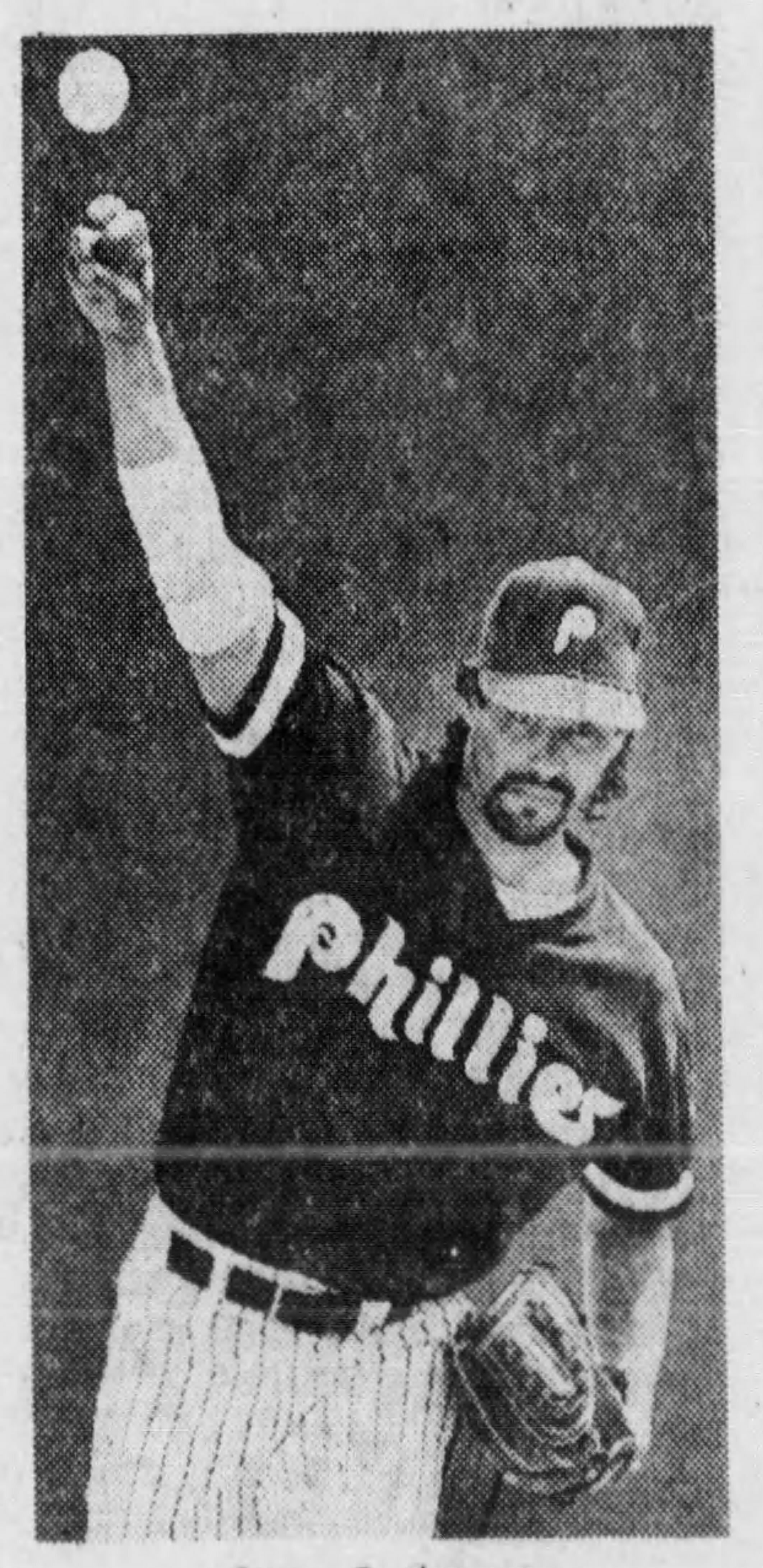
Tommy John crossed paths with Steve Ontiveros on the A’s in 1985.
“I’m in the seventh inning, and I throw a pitch, get the ball from the catcher, and I’d have to walk around the mound until the pain went away,” he said. “When I’d climb back on the mound, I’d make another pitch. I did that through the entire inning. I said, ‘I can’t do this anymore.’”
He didn’t appear in another game for the A’s that season after early August, and in the offseason he underwent elbow surgery that wasn’t as radical as John’s but was close. A ligament in Ontiveros’ elbow had stretched so far that, he said, “it wasn’t performing as a ligament anymore.” So orthopedist Lewis Yocum shortened it, folding it over onto itself and suturing it.
The A’s released Ontiveros in December ‘88, and the Phillies signed him as a free agent in February ‘89. Pitchers like him were the Phillies’ currency back then: injured or aging long shots who had once been promising prospects or accomplished big-leaguers. Danny Cox, Dave LaPoint, David Palmer, later Fernando Valenzuela and Sid Fernandez: Each of them tried to complete a semi-miraculous comeback.
Despite being a nonroster invitee to spring training, Ontiveros cracked the rotation, then dominated the Cubs — eight innings, one earned run — on April 6 before throwing seven shutout innings to beat the Montreal Expos at Veterans Stadium five days later. The Phillies were 5-2 and in first place in the National League East. “This qualifies as a pleasant surprise in my book,” manager Nick Leyva said after the game.
But after his brilliant start against the Expos, Ontiveros felt the same twinge of pain that he had the season before. He lasted five innings, giving up just one run, in a loss to the New York Mets on April 19 before the Phillies put him on the injured list, with a “strained ligament,” for nearly two months. “I went down, and we lost two other pitchers,” he said. “We instantly sucked after that.” He returned in June and was hammered: three starts, 10⅔ innings, 19 hits, 11 earned runs.
“I wasn’t able to separate the pain from the pitch,” Ontiveros said. “It starts accumulating in your head, the pain that’s going to be coming. It takes away your focus from getting a hitter out. You focus on, ‘What am I feeling right now? Is my arm going to fall off on the next pitch?’ I could not overcome that amount of pain mentally. There may be some people who could. I was not one of them. I was so distracted by the amount of pain I was feeling and the amount of pain that was to come if I kept throwing.”
There was no avoiding the knife now, but the Phillies had little experience with Tommy John surgery. Larry Christenson was their first pitcher to have it, in 1983, in a last-ditch effort to end his lengthy succession of elbow injuries. He never pitched for them or anyone else again. The good news for Ontiveros and the Phillies was that Jobe himself would handle the operation. The bad news was that, even 15 years after John’s pioneering procedure, only so many advancements and improvements to it and a pitcher’s rehabilitation process had been made.
Before Jobe and his team performed the surgery, on July 20, 1989, they asked Ontiveros if he wanted them to take the healthy ligament from his right arm or his left. The left, of course, Ontiveros told them. Why weaken and damage his right arm further? Except the doctors screwed up, instead removing a six-inch tendon from Ontiveros’s right wrist and grafting it onto his elbow.
The mistake prolonged Ontiveros’ rehab, which was hardly the kind of comprehensive, reliable course of action that would reassure an elite athlete whose livelihood was hanging in the balance. Working with the Phillies’ medical and training staff and with Steve Kush, a trainer based in Arizona, Ontiveros tried to improve his right arm’s range of motion before strengthening the muscles around his elbow joint. But no one was completely certain what exercises he ought to be doing or how often he ought to be doing them. When he visited Jobe for a postsurgery consultation, Ontiveros asked the doctor for some direction.
“He literally handed me a copy of what they did with Tommy John,” Ontiveros said. “It was 10 pages of nothing. There was no structure to any of it. I gave it to Steve, and we just kind of winged it.”
Having read that another pitcher, John Tudor, had recovered from Tommy John surgery in just eight months, Ontiveros pushed himself to match that ambitious timeline. “I went out in the offseason, and I threw outside,” he said, “and it was cold, and I felt a little tug. I went, ‘Uh, oh.’ I pushed it too fast, and it set me back months.” Still, the makeshift rehab went well enough that in August 1990, he made a start for the Phillies’ single-A affiliate in Clearwater. He lasted one inning. His arm, he said afterward, felt like he had stuck his finger into an electrical socket, and he was certain his career was finished. It did not have to be. There was some inflammation in his elbow, but rest would heal it. He talked with Cindy. They decided he would not give up.
When he pitched again in the majors, for the Phillies, at Wrigley Field against the Cubs on Sept. 13, 1990, throwing two shutout innings in relief, his senses seemed sharper: the smell of the grass on the infield and the ivy on the outfield walls, the tingle of Lake Michigan’s breeze.
“I went through so much [stuff] with the Phillies, and I loved playing for them,” said Ontiveros, who after retiring ran a baseball academy for 20 years that produced 13 major-league players. “I absolutely loved the fan base. Yeah, they’re brutal, but they’re also amazing. You do well, and they’ll let you know about it. Just being able to know a fan base has passion — I played four years in Oakland before that, and you’d see them come in by the third inning and leave by the seventh inning, and these were World Series-caliber players on a World Series-caliber team. You went to Philly, and it was intense, and I loved that.”
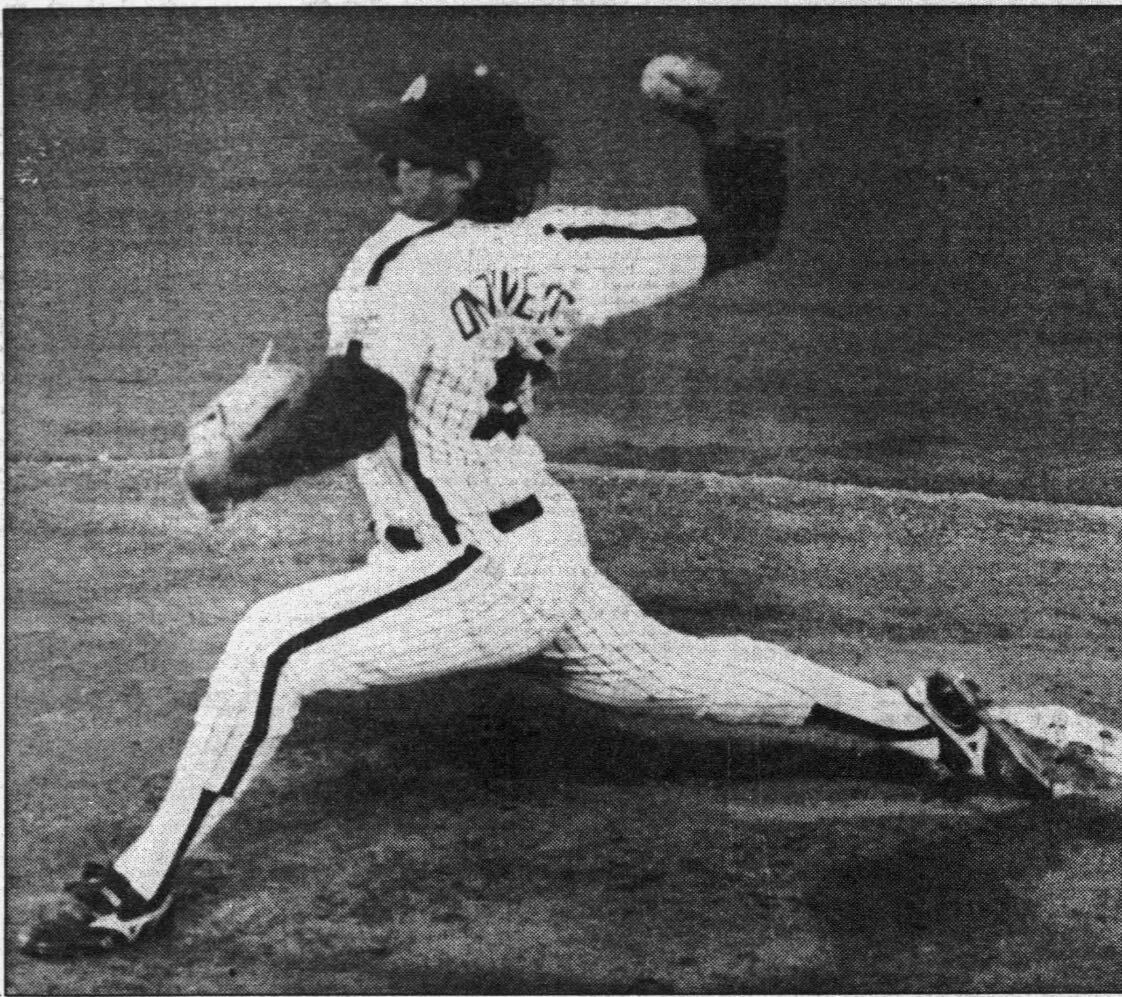
Steve Ontiveros pitched in 11 games for the Phillies over the 1989 and 1990 seasons.Daily News staff
Through a second Tommy John surgery, he somehow kept pitching, returning to the A’s, going 6-4 and leading the American League in ERA (2.65) in 1994, earning a spot on the AL All-Star Team in 1995, appearing in three games for the Boston Red Sox in 2000 when he was 39. When he was as close as he would get to being Tommy John himself, to having something else in common with the man whose name now lives forever.
“It gave me longevity,” he said. “That was good. That wouldn’t have happened otherwise. I’d have been done. It gave me an opportunity to continue my career. It’s just unfortunate that there weren’t that many people ahead of me.”
True, but there have been so many after him who could keep pitching, who could keep playing the game they loved. That legacy is Steve Ontiveros’, too, and as they continued on their morning drive, perhaps because she could hear the wistfulness and what-might-have-been in his voice, Cindy Ontiveros asked her husband a question.
You say you want a revolution? That’s not quite what SEPTA’s proposing. This weekend, the region’s transit agency will roll out the first phase of its New Bus Network, the bus system’s first significant update since the agency was formed in the 1960s.
Sound familiar? Once dubbed Bus Revolution, the project began in 2021 after transit agencies around the country saw massive declines in ridership. SEPTA’s Bus Revolution was set to launch in 2025 but faced significant community pushback and coincided with the state funding crisis that halted many planned transit initiatives. It was officially shelved in November 2024.
Later phases of the plan, which will roll out in 2027, will impact other neighborhoods. The number of bus routes in SEPTA’s system will drop from the current 124 to 106 when all four phases are complete.
SEPTA says the changes are needed to modernize the system and make it easier to use.
To help you navigate the changes that will impact how you navigate the city, we’re here to breakdown down all 30 impacted routes.
This route remains the same but with reduced service.
Days
Times
Previous
Now
Weekdays
6 a.m. to 9 p.m.
Every 16-25 minutes
Every 30 minutes
Saturdays
8 a.m. to 9 p.m.
Every 22-25 minutes
Every 30 minutes
6
Cheltenham-Ogontz to Olney Transportation Center
On weekdays, route 6 will have increased service during peak hours, but a reduced service otherwise.
Days
Times
Previous
Now
Weekdays
6 a.m. to 9 p.m.
Every 11-13 minutes
Every 10 minutes
Weekdays
9 p.m. to midnight
Every 20 minutes
Every 30 minutes
Weekdays
midnight to 4 a.m.
Every 30-40 minutes
Every 60 minutes
SEPTA also rolled out new signage that identifies certain routes as “frequent red”, indicating a bus is scheduled to arrive within 15 minutes or less on weekdays from 6 a.m. to 9 p.m.
17
Front-Market to 20th-Johnston
Route 17 will be shortened and no longer operate on its old route from 20th Street and Johnston Street down to the stadium complex or the Navy Yard. SEPTA recommends Navy Yard commuters take route 45 instead.
This route will also operate with reduced service overnight.
Days
Times
Previous
Now
Weekdays
midnight to 5 a.m.
Every 30 minutes
Every 60 minutes
SEPTA also rolled out new signage that identifies certain routes as “frequent red”, indicating a bus is scheduled to arrive within 15 minutes or less on weekdays from 6 a.m. to 9 p.m.
25
Frankford Transportation Center to Front-Spring Garden
Route 25 is essentially being cut in half. The old route ran down Delaware Avenue to Columbus Commons. The new route will terminate at the Spring Garden Market-Frankford Line station. The old route from Spring Garden to Columbus Commons will be serviced by the new route 76.
Route 25 will now operate for 24 hours a day, as part of SEPTA’s late-night OWL network.
This route will also have increased service.
Days
Times
Previous
Now
Weekdays
6 a.m. to 9 p.m.
Every 20-30 minutes
Every 15 minutes
Weekends
6 a.m. to 9 p.m.
Every 30 minutes
Every 20 minutes
SEPTA also rolled out new signage that identifies certain routes as “frequent red”, indicating a bus is scheduled to arrive within 15 minutes or less on weekdays from 6 a.m. to 9 p.m.
32
Broad-Carpenter to Ridge-Lyceum
Route 32 will have slightly reduced service with fewer buses overall. All route 32 buses will terminate at Manayunk, as opposed to the previous schedule where half would terminate at 33rd Street and Cecil B. Moore Avenue. There’s also a slight route extension into Roxborough for school service.
35
Manayunk Roxborough Loop
Route 35 will be discontinued on Aug. 23. SEPTA recommends riders take route 61.
According to SEPTA’s operation statistics, route 35 is the seventh most expensive bus based on the average cost per passenger.
39
Richmond-Cumberland to 33rd-Dauphin
Route 39 will remain the same but with reduced service on weekdays and slightly increased service on Saturday evenings..
Days
Times
Previous
Now
Weekdays
6 a.m. to 9 p.m.
Every 20-30 minutes
Every 30 minutes
Saturday
5 p.m. to 9 p.m.
Every 40-60 minutes
Every 30 minutes
44
Front-Market to Ardmore
Route 44 will no longer run along its old route that would sometimes terminate at Gladwyne. Beginning Aug. 23, all 44 buses will run to Ardmore, with select trips stopping at Narberth.
This route will also have reduced service.
Days
Times
Previous
Now
Weekdays
9 a.m. to 3 p.m.
Every 15-30 minutes
Every 60 minutes
Weekends
6 a.m. to midnight
Every 30 minutes
Every 60 minutes
45
Navy Yard/Broad-Oregon to 12th-Noble
Route 45 will be extended to the Navy Yard to cover for the changes to route 17.
After 9 p.m. the route will have reduced service on weekdays.
Days
Times
Previous
Now
Weekdays
9 p.m. to midnight
Every 20 minutes
Every 30 minutes
46
58th-Baltimore to 63rd-Malvern
Route 46 will have increased service on weekdays.
Days
Times
Previous
Now
Saturdays
9 a.m. to 6 p.m.
Every 20 minutes
Every 15 minutes
Sundays
9 a.m. to 7 p.m.
Every 30 minutes
Every 20 minutes
SEPTA also rolled out new signage that identifies certain routes as “frequent red”, indicating a bus is scheduled to arrive within 15 minutes or less on weekdays from 6 a.m. to 9 p.m.
47
Whitman Plaza to 5th-Godfrey
Route 47 will merge with route 47M and have increased service.
Days
Times
Previous
Now
Weekdays
6 a.m. to 9 p.m.
Every 8-9 minutes
Every 7-8 minutes
All days
Midnight. to 5 a.m.
Every 45 minutes
Every 30 minutes
SEPTA also rolled out new signage that identifies certain routes as “frequent red”, indicating a bus is scheduled to arrive within 15 minutes or less on weekdays from 6 a.m. to 9 p.m.
47M
Whitman Plaza to 7th-Spring Garden via 9th
Route 47M has been discontinued and will now be served by a more frequent route 47.
The merger of these two routes includes a realignment so that the northbound 47 runs on Seventh Street, as opposed to Ninth Street. Southbound buses will still run on Eighth Street.
49
33rd-Dauphin to 40th-Baltimore
Route 49 will look very different from its old route. It will no longer serve Gray’s Ferry. SEPTA recommends riders take route 79 instead.
Route 49 will also operate on many different roads. The most notable change is taking 33rd Street instead of 29th Street. in Strawberry Mansion and Brewerytown.
These changes are paired with generally reduced service.
Days
Times
Previous
Now
Weekdays
8 a.m. to 3 p.m.
Every 18-22 minutes
Every 30 minutes
Saturdays
8 a.m. to 9 p.m.
Every 22 minutes
Every 30 minutes
Sundays
9 a.m. to 7 p.m.
Every 22 minutes
Every 30 minutes
52
49th-Woodland to Wissahickon Transportation Center/50th-Parkside
Route 52 will no longer follow its old route to Gladwyne. SEPTA cites low ridership and doesn’t offer an alternative route.
SEPTA also rolled out new signage that identifies certain routes as “frequent red”, indicating a bus is scheduled to arrive within 15 minutes or less on weekdays from 6 a.m. to 9 p.m.
53
Carpenter Station to Richmond-Westmoreland
Buses on route 53 will no longer follow the old route that terminated at Sedgwick Street and Wayne Avenue. Instead, service will end at Carpenter Regional Rail station. There are additionally a bunch of small differences across the route. For example, route 53 will now serve Roosevelt Boulevard. on the western side of Hunting Park.
The 53 will also continue past G Street and extend into Port Richmond.
54
Richmond-Cambria to 33rd-Dauphin
Buses on route 54 will have reduced service during weekdays and increased service during evenings.
Days
Times
Previous
Now
Weekdays
9 a.m. to 3 p.m.
Every 15-18 minutes
Every 20 minutes
All days
9 p.m. to midnight
Every 45 minutes
Every 30 minutes
57
Whitman Plaza to Fern Rock Transportation Center
The old route 57 occasionally would terminate at Packer Marine Terminal, that service will be discontinued.
During weekends the route 57 will run at a reduced service.
Days
Times
Previous
Now
Weekends
All day
Every 10-12 minutes
Every 15 minutes
Service along Crescentville and Cheltenham Avenues will be reduced to every hour.
SEPTA also rolled out new signage that identifies certain routes as “frequent red”, indicating a bus is scheduled to arrive within 15 minutes or less on weekdays from 6 a.m. to 9 p.m.
60
Wissahickon Transportation Center/35th-Allegheny to Richmond-Westmoreland
Most of route 60 will continue to go down Allegheny Avenue, but it will not follow its old route where some buses stopped on Delaware Avenue and Lewis Street.
The 60 will occasionally take an extended route and continue to the Wissahickon Transportation Center. The schedule is roughly split 50:50 whether a bus will continue to this new terminus or stop early at 35th Street and Allegheny Avenue.
Route 60 will also see increased service.
Days
Times
Previous
Now
Weekdays
6 a.m. to 6 p.m.
Every 10-15 minutes
Every 10 minutes
SEPTA also rolled out new signage that identifies certain routes as “frequent red”, indicating a bus is scheduled to arrive within 15 minutes or less on weekdays from 6 a.m. to 9 p.m.
61
9th-Market to Ridge-Summit
Route 61 will be extended to Upper Roxborough. This is primarily to cover for the discontinued route 35.
62
9th-Market to Andorra
Route 62 will be discontinued. SEPTA recommends riders take routes 9, 27, or 61 as an alternative. According to SEPTA, route 62 was the fourth most expensive route to operate, costing an average of $45 per passenger.
64
50th-Parkside to Pier 70
Previously, route 64 would occasionally terminate at 49th Street and Woodland Avenue. Under the new network, all trips will terminate at Parkside Loop. The 64 will also no longer take the old route’s detour into Grays Ferry.
Route 64 will operate at a increased service.
Days
Times
Previous
Now
All days
6 a.m. to 9 a.m.
Every 12-18 minutes
Every 12 minutes
All days
9 a.m. to 9 p.m.
Every 20 minutes
Every 15 minutes
SEPTA also rolled out new signage that identifies certain routes as “frequent red”, indicating a bus is scheduled to arrive within 15 minutes or less on weekdays from 6 a.m. to 9 p.m.
72
Cedarbrook Plaza to Frankford Transportation Center
72 is a brand new route that mostly operates on Cheltenham Avenue and will run every 30 minutes.
73
Frankford Transportation Center to Richmond-Westmoreland
Route 73 will now run at a reduced service from every 20-25 minutes to every 30 minutes.
Additionally the route 73 will no longer be part of the OWL network, ending 24-hour service on the line. SEPTA recommends riders take route 25 for overnight buses.
76
Rising Sun-Olney to Columbus Commons
Route 76 is a brand new route that will mostly run along Delaware and Frankford Avenues every 30 minutes. This route replaces service removed from the newly aligned route 25.
78
Express from Cornwells Heights to Center City
Route 78 will be discontinued due to lower ridership. SEPTA does not recommend an alternative bus.
According to SEPTA figures, the 78 was the most expensive bus to operate in their network. It has an average of 2.4 passengers per hour, costing the agency $394 per rider.
79
Columbus Commons to 29th-Snyder/40th-Market
Route 79 will occasionally be extended into West Philadelphia. Roughly every other bus will continue to 40th and Market Streets, instead of the current terminus of 29th Street and Synder Avenue.
SEPTA also rolled out new signage that identifies certain routes as “frequent red”, indicating a bus is scheduled to arrive within 15 minutes or less on weekdays from 6 a.m. to 9 p.m.
80
Express from Horsham to Olney Transit Center
Route 80 will be discontinued. SEPTA stated that “ridership has declined significantly since 2019 and the same connection can be made with a transfer on local routes 22, 51, and 310.”
According to SEPTA data, route 80 was the third most expensive route to run, costing the agency $50 per passenger.
89
Front-Dauphin to Arrott Transit Center
Route 89 will be discontinued. SEPTA says route 89 is “duplicative of other routes,” and offers “routes 3, 5, 25, 39, 41, 43, 53, 56, 75, 76, and K as alternatives.”
105
Paoli/Rosemont to 69th Street Transit Center
Route 105 will extend to Paoli for roughly every other bus, essentially merging with the now discontinued route 106.
The old route that serviced Suburban Square will no longer operate. There are also minor alignment changes in Overbrook.
Route 105 will operate at a increased service.
Days
Times
Previous
Now
Weekdays
All day
Every 30-60 minutes
Every 30 minutes
Weekends
All day
Every 60 minutes
Every 30 minutes
These changes will take effect on Aug. 24.
106
Paoli to 69th Street Transit Center
Route 106 will be discontinued on Aug. 24.
Do you still have questions about the changes to SEPTA’s bus network? Read our Q&A guide for details on how to contact SEPTA, information about future alterations in 2027, and much more.
Methodology
The animating buses on the diagram are an approximation of the number of buses active at 9 a.m. on a weekday schedule.
Old routes are accurate to SEPTA’s bus network on Aug. 4.
For simplicity, if a route can have different terminuses, we show all possible paths the bus operates on.
story continues after advertisement
Staff Contributors
Design, Development, and Data: Sam Morris
Reporting: Sam Morris and Erica Palan
Editing: Cynthia Henry
Subscribe to The Philadelphia Inquirer
Our reporting is directly supported by reader subscriptions. If you want more journalism like this story, please subscribe today
Temple University for the first time in fall 2027 will require freshmen under the age of 21 to live on campus, with certain exceptions for students living locally with parents or guardians and others facing financial hardship.
It is a significant change for a university that for much of its history was largely a commuter school and only transitioned to a major research university with an on-campus living community in recent decades.
“The policy gives Temple an important opportunity to strengthen student success by creating a more intentional first-year experience and connecting students earlier to the people, resources and support that can help them persist and thrive,” Temple president John Fry said in a message to the campus community Wednesday.
Last fall, 63% of first-year students and 22% of all undergraduates lived on Temple’s campus, according to the university.
Many four-year colleges already require their freshmen to live on campus to better connect them to the college community, ensure they have access to support services, and improve their chances at academic success. It also brings in revenue and eases the burden of off-campus housing in surrounding communities.
The University of Pennsylvania and Drexel University require students to live on campus their first two years. Pennsylvania State University — like Temple, a state-related university — calls for freshmen to reside on its main University Park campus. Some colleges, including Dickinson in Carlisle, mandate that students live on campus all four years.
Not all schools have such a requirement, however: West Chester University, which has been tight on student housing over the years, does not, though the majority of first-year students live on campus.
“We want over time for people to think about Temple as a great residential campus that’s also very friendly to commuter students,” Fry said, “as opposed to a commuter campus that is doing some residential things.”
Temple will create “an intentional focus on belonging, connection, academic success, wellness, help-seeking and personal growth” during that first year, Fry said.
Peer mentorship, early intervention and academic support initiatives, mental health resources, and financial counseling for students and families are among the resources that the university will offer, the school said.
“This work will include stronger coordination across housing, advising, academic support, wellness and other student services so that students experience a more connected first year at Temple,” Fry said.
Creating closer connections is especially important for first-generation college students and those coming to Temple from outside the area, the school said.
The university’s recently released strategic plan calls for the construction of a new 1,000-bed residence hall on Broad Street, with work beginning next year. That would increase the current 5,000-bed capacity on the main campus by 20%. Temple welcomed a record-breaking 5,379 first-year students last fall.
“We think we’re at a minimum several thousand beds short of where we need to be,” Fry said in January when the plan was released. “A stronger residential experience really does make for a much more fulfilling undergraduate experience. The more kids living on campus, the more dense campus is, I think the better we’re going to do on safety.”
The university has ramped up its safety efforts in recent years following the shooting death of a student outside his off-campus residence in 2021 and the shooting death of a Temple police officer in 2023. But challenges continue in the school’s North Philadelphia neighborhood. In April, a Temple student was chased into the lobby of the school’s Morgan Hall dormitory and attacked by a group of juveniles.
When the new residence hall opens, Temple will upgrade Johnson and Hardwick Halls, which have an additional 1,000 beds, Fry said in January.
The Annenberg Hall/Tomlinson Theater building, whose programs will relocate to a new arts and communication building in 2027, could also be converted into more residential space if needed, Fry said.
Fry expects the new first-year residency policy will lead to increases in persistence and graduation rates in future years, he said in Wednesday’s announcement.
About a decade ago, 90% of freshmen returned to Temple for their sophomore year, but by last fall, that percentage had slid to 82%, and Temple said in an internal report in April that the figure could fall below 80% this fall.
Fry said that more than 60% of all four-year residential colleges have some kind of first-year residency requirement. That includes many colleges that belong to the national University Innovation Alliance, which Temple joined in March 2025.
“Decades of research have shown that students who live on campus ultimately benefit from a more productive and rewarding college experience,” Elizabeth Wentz, Temple’s new senior vice president and provost, said in a statement.
Temple will offer several exemptions to the requirement, including those living with a parent or guardian in Philadelphia or other approved nearby zip codes. Students facing financial hardship verified through the university; those who are part-time, nontraditional, married, or have custody of one or more dependent children; and those with extenuating medical or personal circumstances that cannot be accommodated in university housing also are exempt, the school said.
Pennsylvania Democrats, including Gov. Josh Shapiro, are pointing to a stunning upset in a special election for a deep-red state House district as proof that the party has momentum while campaigning this fall for a trifecta in Harrisburg.
Butler CountyDemocrat Brandon Dukes said his apparent victory over Republican Scott Timko, by fewer than 100 votes as of Wednesday afternoon, was thanks to his focus on local issues, such as a major corridor perennially under construction to the frustration of residents.
“We kept it local, we kept it practical, and we kept it common sense,” Dukes said in an interview.
The 12th Pennsylvania House District, just north of Pittsburgh, went for President Donald Trump by more than 18 percentage points just two years ago and had been held by Republicans since 1999.
Dukes’ apparent win attracted national attention Wednesday as both a sign of the backlash to the president’s party heading into November and as a north star for centrist Democrats as they seek a path forward.
“We won that district last night with a middle-of-the-road community leader, who I backed, who won this improbable race,” Shapiro told CBS Mornings, contrasting Dukes with the party’s more left-leaning candidates this cycle.
“What we’re seeing are commonsense folk from the community who, I think, reflect a lot more my values and my approach to governing who are winning and are upsetting Republicans in these deeply Republican districts,” said Shapiro, a moderate Democrat widely expected to run for president in 2028.
Shapiro recorded a robocall urging voters to cast ballots in the race, his campaign confirmed.
Recipe for November
Democrats are aiming to flip four congressional districts in Pennsylvania this fall and win control of the state Senate for the first time in 30 years with Shapiro, a popular governor, at the top of the ticket.
Dukes, who will compete to win the seat again in November in a rematch with Timko, shattered previous Democratic runs in the Butler County district.
“The fact we just flipped this seat tonight is a political earthquake,” U.S. Rep. Brendan Boyle, a Philadelphia Democrat, said on X.
The district had been represented for more than two decades by one of the Pennsylvania House’s most conservative members, former State Rep. Daryl Metcalfe, who retired in 2023 and was known for his anti-LGBTQ+ rhetoric and actions.
State Rep. Malcolm Kenyatta, a Philadelphia Democrat, said that the seat is one the party “should not have had a chance to come within sneezing distance of,” but that Dukes’ performance provides a blueprint that can be replicated throughout the state.
“Winning here means there is not a single safe seat for the GOP,” Kenyatta, a vice chair of the Democratic National Committee, said on X.
The Associated Press had not called the race as of Wednesday evening, but both parties made statements indicating that they expected Dukes’ lead to hold.
Chantell McCurdy, the director of Butler’s election bureau, said the initial count has been completed and there is a five-day period to challenge the results.
James Markley, a spokesperson the Pennsylvania Republican Party, said in a statement that the race needs to be a “wake up call for Republican voters,” and warned against policies from the Democratic Party’s more leftward flank.
While expressing confidence that the party would win the seat back in November, he also lamented the party’s inability to turn out voters this election.
“The General Election will come down to which party does a better job getting their voters to participate in the election using any legal means of casting a ballot. Democrats did a better job of this,”he said.
Pennsylvania Republican House Leader Jesse Topper of Bedford County downplayed the significance of the special election, calling the results “disappointing but unsurprising” because of demographic change in the district, the timing of the vote during the summer,and the unpredictable electorate for such contests.
“There is much more yet to unfold in the final months of the 2026 election cycle and we will continue carrying out vision for positive growth in Pennsylvania through November,” he said.
But Democrats noted that Dukes’ victory in the district would not have been possible if he did not work to win over Republican voters.
“You cannot win a deep-red district like this without getting at least a big chunk of independents and at least some Republicans” who are “rejecting the chaos and high prices of Donald Trump,” said Pennsylvania Democratic chair Eugene DePasquale.
“I think this is a recipe for a big November for the Democratic Party,” he said.
Dukes, a loan administrator, said he listed affordability, infrastructure, and education as the key issues for his campaign.
DePasquale said Dukes’ campaign worked because he “focused on issues that mattered in the district,” such as high prices and cuts to Medicaid andfood assistance under Trump.
But DePasquale dismissed the idea that Democrats should run only certain kinds of candidates to win.
“We need to be a big-tent party, and we need to have candidates that reflect their districts,” he said. “We are embracing candidates that spread the ideological spectrum of the Democratic coalition, and you’re going to see that lead to success this November.”
Statehouse campaigns often do not receive as much money or attention as congressional and statewide races, but Dukes received a boost from several major figures in the party.
He also boasted an endorsement from former Transportation Secretary Pete Buttigieg, another possible Democratic presidential contender, who said Wednesday that Dukes’ win “reflects voters’ readiness for change.”
Rematch ahead
After he is sworn in, Dukes will serve a roughly 2½-month term, following the resignation of former State Rep. Stephenie Scialabba, a Republican.
As an incumbent, he will then face a rematch with Timko in November for a full two-year term.
Dukes said he plans to “stick with what worked best” for his November campaign, which will include maintaining face-to-face contact with voters.
A graduate of the University of Pittsburgh, Dukes lives with his wife and daughter in Cranberry Township and describes himself as an “avid Star Wars fan” on his campaign website.
House Speaker Joanna McClinton, a Philadelphia Democrat, said Dukes’ win builds momentum for the party to make the case to voters about how electing Democrats achieves their goals on issues like codifying abortion protections and raising the minimum wage.
When state lawmakers return to Harrisburg in September, several issues await, including whether to tax and regulate skill games, finding a long-term funding solution to fund mass transit, and the use of cell phones in K-12 schools.
“When he gets started in Harrisburg in September, he’s going to be a part of the larger House Democratic agenda that’s been focused on affordability and on opportunities for all Pennsylvanians,” she said. “Voters were very motivated to make their values and their frustrations known at the ballot box.”
Dukes will provide votes that he can take back to constituents to further his reelection argument.
“It’s important to tell voters what you’re going to do to make their lives easier because that’s what we did, and we spoke about how we were going to do that,” he said. “It resonated pretty well last night.”
Philadelphia School District officials said this week that because of a delayin Harrisburg, they cannot use the latest state test scores to judge whether the school system’s academics are improving.
The apparent bureaucratic delay could have real-world consequences for Philadelphia students who rely on the state test scores for admittance into selective magnet schools. And because the 2025-26 PSSA and Keystone results now will not be part of the closely watched school selection process, district officials said, some kids may need to take an alternate assessment if they want a chance to attend a magnet school.
But the situation seems murky, with Philadelphia walling off its data in ways that other districts have not.
Districts across Pennsylvania — including Philadelphia — received preliminary school-level scores from the Pennsylvania Department of Education in the spring, as is typical, sources confirmed to The Inquirer. And though some Philadelphia principals and teachers did see limited data for some incoming students for rostering purposes in August, most of the student- and school-level data remain hidden.
Here is what we know, and what we don’t know, about the score release.
PSSA administration was online, and glitchy, this year
Many districts experienced technical glitches early in the PSSA assessment window, with some students unable to log in to complete their exams. Some canceled testing for a day, shifting assessment schedules because of the problems with the online system.
PDE just weighed in
The Pennsylvania Department of Education usually releases preliminary statewide results to districts in August or September, to give educational leaders time to crunch the numbers and prepare for a fall public release of the data.
But PDE officials, in a letter sent to districts on Tuesday, said there would be a delay because a “review of the preliminary data is still underway.”
No reasons for the shift were given, and no information was shared about whether the public release, which usually happens in the late fall, will be pushed back.
Philly took a different tack
While other districts and charters still have access to school- and student-level data from the 2025-26 PSSAs and Keystones, Philadelphia kept the vast majority of its data hidden from principals and teachers.
Though some other data, like the results of periodic benchmark tests, are still available, PSSA and Keystone figures are often used to help pinpoint student needs.
The Philadelphia School District Office of Evaluation, Research and Accountability told principals in June that “state test data are embargoed and not available until they are verified by the Pennsylvania Department of Education,” district spokesperson Monique Braxton said in a statement Wednesday.
That review was expected to be completed by Tuesday, Braxton said, but has been pushed back.
“Until this process is complete, assessment data will not be released,” Braxton said. “Additional information will be shared after PDE completes its review and the official statewide results are released.”
It remains unclear why most Philadelphia data are still inaccessible to school staff.
Questions around school selection and more
Philadelphia’s school selection window, when students can apply to the city’s 37 sought-after criteria-based schools, opens Sept. 8.
But the questions around the state data mean that the district “cannot use the 2025-26 assessment results to evaluate year-over-year student achievement or as the required criterion for school selection,” Braxton said. “In the interim, students will have the opportunity to take an alternative assessment in the fall and submit those results instead.”
The district did not address questions about what assessment will be given, when it will be offered, whether it will be mandatory for school selection, or what will happen if students want to apply for criteria-based schools but not take the alternative assessment. It also did not answer questions about whether there will be an additional cost for the new assessment.
Fastest-improving large urban district?
Superintendent Tony B. Watlington Sr. has staked his reputation on Philadelphia being the “fastest-improving large urban district in the country,” and the district has posted promising, if incremental, gains during his tenure. Philadelphia students’ learning post-pandemic was best in the nation, according to recent research out of Harvard and Stanford Universities, though district students still perform 2.46 grade levels below the pre-pandemic national average.
District-wide, 34% of students score at grade level in English and 23% in math, as judged by 2024-25 standardized tests.
Braxton said in the statement that after consulting with PDE, “the district cannot use the 2025-26 assessment results to evaluate year-over-year student achievement.”
More information will be shared, Braxton said, “as it is received from the PDE.”
The Abington Township Police Department is ending its contracts with the fast-growing surveillance start-up Flock Safety over data security concerns, officials said this week.
“We’re sensitive to the issues surrounding Flock,” Lt. Joe Blei said, but the cameras also “bring a lot of value to what we do.”
The suburban police department is seeking a supplier to replace Flock, a network of private and public surveillance cameras that log the license plates and other vehicle features, like bumper stickers, of every car that passes them.
Abington has one permanent Flock camera up in the township and a few cameras the department keeps at the station and deploys as needed, Deputy Chief Ed Quinn said.
One of the department’s two contracts expired this month, and Abington will let the second contract expire in February 2028.
The contract expiring this month cost the township $9,225 per year for two years, Blei said, and the three-year contract ending in 2028 costs $10,500 annually.
The department is currently negotiating with other vendors to replace Flock, Blei said Wednesday, and a future contract would need approval from the township commissioners.
Abington concerned about Flock camera data
Flock has raised privacy concerns with civil liberties groups because the network captures every vehicle that passes its cameras, and police can access data from cameras outside their jurisdiction.
The network also uses artificial intelligence to identify cars that frequently drive together, and allows officers to search for vehicles by behavior, rather than plate number.
Thousands of Abington’s searches have appeared in public data dumps on sites like HaveIBeenFlocked.com, which is sponsored by the nonprofit Alternative Newsweekly Foundation, and 404 Media, which reported on a large dataset that anonymous researchers gleaned from a records request to Danville, Ill., police.
Searches from other local departments, including Cheltenham, appear in some of the same datasets. Lt. Joseph O’Neill said Cheltenham has no contracts with Flock, but can access the national network through subscriptions held by businesses in the township with their permission for investigations.
Though Abington’s Flock search logs are legally available through Right-to-Know requests, details of criminal investigations would normally be redacted.
“We don’t want anybody’s personal data getting out into the public without their knowledge or permission,” Blei said. “The privacy concerns of American citizens are also of concern to us.”
Abington has guardrails and oversight in place to prevent officers from misusing the cameras, Blei said.
How Abington police use Flock cameras
The network-connected cameras have been credited with tracking cross-county crime in Pennsylvania.
Last year, a Berks County township’s camera flagged a stolen Bucks County license plate on a vehicle that was tied to a Montgomery County bank robbery.
“They still are a great investigative tool,” Quinn said. “We can link together crimes we wouldn’t otherwise have known were linked.”
That includes stalking and missing persons cases, Blei and Quinn said.
“We have multiple cases of violent crime — shootings, armed robberies,” Quinn said. “It’s helped us make arrests.”
All Abington officers who search Flock data have their own ID, Blei said. Flock keeps logs of officers’ searches that the department can audit as needed, though the department does not have a set schedule for auditing searches. Abington officers can search the cameras only for specific investigative purposes, Quinn and Blei said.
Other police departments nationwide with Flock contracts also had access to Abington’s Flock cameras, the officers said, but the department no longer approves those requests now that it has become aware of the data risks.
Abington does not have agreements in place with businesses to access private Flock cameras, Quinn said.
The department approves access only for criminal investigations, Blei said, and would not allow access for civil matters, such as an immigration-related request from the Department of Homeland Security.
This suburban content is produced with support from the Leslie Miller and Richard Worley Foundation and The Lenfest Institute for Journalism. Editorial content is created independently of the project donors. Gifts to support The Inquirer’s high-impact journalism can be made at inquirer.com/donate. A list of Lenfest Institute donors can be found at lenfestinstitute.org/supporters.
A series of human and oversight failings is being eyed by federal investigators as possible contributors to the fatal crash of a medical jet in Northeast Philadelphia last year, according to documents filed by the National Transportation Safety Board.
The federal agency does not identify a cause of the Jan. 31, 2025, crash of the Mexican-owned medical transport that crashed near the Roosevelt Mall just after takeoff, killing all six people onboard and twoon the ground.
But among the factors it has found during a 1½-year probe are possibly fatigued pilots who had never flown in or out of the airport, an improper setting on the Learjet tail’s elevators, and a lack of Federal Aviation Administration safety checks on a workhorse foreign-owned carrier.
Images released by the NTSB as part of their investigation show the scene along Cottman Ave. where a medical plane that crashed, in Northeast Philadelphia on Jan 31, 2025.Courtesy of NTSB
Upon impact, the 1982 Learjet 55 erupted into flames that spread to homes and cars in the heavily populated area. At least 24 people were reported injured. The jet took off just after 6 p.m. that Friday and within a minute had begun a swift nosedive into the sidewalk near Cottman Avenue and Roosevelt Boulevard.
On board were 11-year-old Valentina Guzmán Murillo, who had just received care at Shriners Children’s Philadelphia before returning home to Mexico; her mother; a pilot; a copilot; a flight physician; and a paramedic.
Investigators going through the debris on Cottman Avenue Saturday, Feb. 1, 2025, in Philadelphia. A medical jet with six people on board crashed Friday evening near the Roosevelt Mall in Northeast Philadelphia.Charles Fox / Staff Photographer
Potentially fatigued pilots and potential training weaknesses
As investigators try to piece together what might have gone wrong in the cockpit, they are focused on the two pilots.
One factor that could have played a role was their workload in the days leading to the fatal crash. They had flown multi-leg trips all four days before the accident.
NTSB investigators also looked into the effects of “spatial disorientation,” a phenomenon pilots experience when their perception of motion and relation to the Earth’s surface becomes mismatched.
During the ascent from Northeast Philadelphia Airport, the pilots rolled the plane to the right by 12 degrees. Air traffic controllers then communicated with the pilots, and the pilots responded just as the plane began to rotate back to zero degrees. According to the NTSB, within 10 seconds of their last communication with the air traffic tower, the plane continued rolling to the left at a rapid speed until the plane stopped climbing.
“Pilots who are properly trained and current in instrument flying can normally use instrument information to overcome misleading sensations, however, even well-trained pilots experience sensory illusions from time to time,” NTSB investigators wrote.
When there is a delay, it can take a few seconds or more for a pilot to regain spatial awareness. But during that delay, a pilot may make inappropriate control inputs that place an airplane in “an unrecoverable trajectory.”
In interviews with the pilots’ most recent training instructors at Flight Safety International in Tucson, Ariz., the pilot in command demonstrated a “tendency to react before thinking through a problem,” the report says. The instructor noted that the same pilot would select modes of operation when the autopilot system was off, something the pilot in command is supposed to delegate to the second-in-command pilot.
“That allows the pilot to concentrate on actually flying the aircraft. So what happens is, if the autopilot’s off and the pilot flying goes to select modes of operation, it’s distracting him from flying the aircraft, which typically results in deviations of altitudes, speeds, and headings,” said the flight instructor, who was not identified in the report.
Images released by the NTSB as part of their investigation show the wreckage of a medical plane that crashed in Northeast Philadelphia on Jan 31, 2025.Courtesy of NTSB
The second-in-command pilot’s training report also showed that his lack of recent experience in flying a similar-model Learjet “was evident.”
A spokesperson for Jet Rescue Air Ambulance, the Learjet 55’s operator, could not be immediately reached Wednesday for comment on the new release of documents.
Jeff Guzzetti, a former NTSB investigator, wondered if the low visibility that night, made more hazardous by overcast and lightly choppy weather conditions, could have exacerbated a phenomenon called somatogravic illusion.
That happens when rapid acceleration or deceleration, or other changes in gravity, can cause pilots to falsely believe a plane is pitching up or down when it is not.
“When you look at those four things — the low cloud ceiling, nighttime conditions, high velocity descent, less than a minute after takeoff — that could be consistent with spatial disorientation,” he said. Add in other distractions, like changing radio frequencies, and even experienced pilots have lost their bearings while relying solely on their instruments to navigate, Guzzetti said.
Images released by the NTSB as part of their investigation show the medical plane that crashed in Northeast Philadelphia on Jan 31, 2025.Courtesy of NTSB
Investigators search the jet
The extreme impact, and a debris field scattered across more than a dozen city blocks and a shopping center, has hampered the investigation. Nearly all parts of the plane, from its engines to the mechanical and electrical systems that controlled the jet, were found in damaged condition.
Even so, the NTSB has reported that the jet’s pitch trim, which would have aided the angle of flight and airspeed, was not in optimal position. That meant the pilots would have had to exert up to 50 pounds of force against the controls during takeoff and 12 pounds for level flight, investigators said.
Arthur Alan Wolk, a Philadelphia-based aviation attorney and pilot, was dubious. “They blame the pilot for the trim,” he said. “I don’t think you can rely on that record” because the impact makes interpreting the damaged parts difficult.
Wolk also said the pilot could have corrected for this by hitting an electrical trim switch. “Could it have happened? Yes. Is it a factor? In my opinion, I don’t think so.”
The investigation devoted extensive research into tanks filled with oxygen and other gases the medical jet had on board, which could have led to a fire or impaired the flight crew. Investigators said cameras that caught the airplane’s descent did not show trailing smoke or any visible internal fire.
In all, 11 gas cylinders were recovered with various states of damage. In previous incidents, investigators noted, flight crews had become incapacitated by carbon dioxide exposure. The Learjet’s carbon dioxide tank was found with its valve stem fractured, though the NTSB did not say if it believed there had been a leak prior to the crash.
Jet Rescue Air Ambulancetold the NTSB that the company had no record of the raft for this jet and believed it was installed by a crew member without authorization.
Despite the NTSB stating in March 2025 that the cockpit voice recorder had not worked in years, investigators were able to repair its analog tape and listen to the audio. But the recordings were of a prior landing.
The report did not say why the device failed to record the final takeoff. This jet was not required to carry or maintain a cockpit voice recorder, though it was listed on the preflight checklist.
The NTSB also examined the Learjet’s logbooks and maintenance reports and found they were largely in order, though they could not determine if any new maintenance was done prior to the final flight.
From left Philadelphia Mayor Cherelle Parker, Sean Patrick Duffy, United States Secretary of Transportation turning to acknowledge Pennsylvania Governor Josh Shapiro’s work at press conference. These three and others tour the scene of medical jet crash, Cottman Avenue on Monday, Feb. 3, 2025. The plane crashed Friday evening, Jan 31, 2025.Alejandro A. Alvarez / Staff Photographer
Lack of FAA oversight
A major piece of the investigation rests on the FAA’s Dallas International Field Office, which oversaw the U.S. operations of the medical jet operator.
Because the operator flew unscheduled, non-U.S. registered flights, FAA personnel said they were limited to performing “ramp checks,” or unannounced inspections of the aircraft and crew on the ground, as a safety measure. But when investigators searched the FAA’s safety assurance system for any record of ramp checks, they found none prior to the fatal crash.
Asked by NTSB investigators if there was a requirement to perform ramp checks or other surveillance on operators like Jet Rescue Air Ambulance, the primary inspector stated: “Oh, I’m not sure.”
The primary inspector continued that there was no surveillance plan in place before the time of the crash and that FAA staff in charge of Jet Rescue Air Ambulance’s operations had no knowledge of the operator’s previous crashes. The operator experienced a fatal accident in November 2012 in Fort Lauderdale, Fla., a nonfatal accident in February 2019 in Toluca, Mexico, and a fatal accident in November 2023 in Cuernavaca, Mexico.
Jet Rescue Air Ambulance was not on the FAA’s Heightened Surveillance List, which would have flagged the operator for additional inspections.
Unscheduled operators like Jet Rescue Air Ambulance are required to notify the Dallas FAA field office before operating in the United States, which the FAA would use todetermine when inspections are needed. But Jet Rescue Air Ambulance did not notify the office of its operations before the accident flight, according to the NTSB findings.
The NTSB release of evidence comes as federal probers complete their investigation phase and prepare their final report, followed by a review process that can take up to six months.
Michella Crosby first noticed it a couple of years ago: The children surrounding her block in West Philadelphia were hungry — and a little bored — during the summer break.
Once a kid in need of a meal, often getting one at her local armory, Crosby decided to do something to make sure no child went unfed.
The 74-year-old block captain signed up to run a Playstreet last summer. Through the city-run Playstreets program, and with the support of neighbors, she closed off her block to traffic on weekdays and distributed free, nutritious lunches to children, no questions asked.
“This is survival,” Crosby said in her second summer running a Playstreet. “We have to live. We have to be able to take care of our children.”
Crosby is just one part of the more than 500 churches, camps, schools, recreation centers, and Playstreets in Philadelphia that offer children under 18 opportunities to do everything from crafting to sports and unstructured play during the summer. These sites have the added benefit of feeding children for free.
The meals were paid for through the Summer Food Service Program, a federal program with funds administered by Pennsylvania.
Providing children with a free, federally approved breakfast and lunch is a benefit many families only speak about in whispers, according to program operators. At many sites, all children are handed meals, even if they don’t need them or come with their own snacks. Coordinators say this method of meal distribution makes it so no one feels less-than for lining up during breakfast or lunch.
This summer, the city was projected to distribute more than a million meals. A final count of meal sites will not be available until the end of the year, according to the city.
The Inquirer visited several of these meal sites to get a glimpse of the many purposes these hubs serve and the people who make it all possible.
Holy Innocents School summer camp
The gymnasium is abuzz on a Tuesday with approximately 70 children ages 4 to 14.
The pre-K children are the first to boldly rush the plastic folding table featuring a spread of small cardboard boxes topped with pints of milk.
“There’s a line behind you,” an instructor gently reminds a little boy skipping past his classmates.
The child spins around, offering a sheepish grin, and joins the friends he had zoomed past, giggling with glee.
Almost every child in the room attends Holy Innocents School during the school year, said Dee D’Aulerio, director of the free all-day summer camp in Juniata Park.
A calendar of the meals made by Nutrition Development Services for about 150 kids at Holy Innocents Catholic Church in Philadelphia, Pa., on Tuesday, July 28, 2026.Tyger Williams / Staff Photographer
“Historically, they did have to pay a fee, but now that we’re free, it really eases the burden on the families who pay tuition to take something off their plate,” she said.
In rapid succession, D’Aulerio personally hands every child a box that includes a ham and cheese sandwich, celery sticks, and potato salad.
Most look past the celery, donating their untouched containers to the “share table,” where a milk crate is already overflowing with applesauce containers.
One of the middle school boys walks up to the share box and grabs a handful of sandwiches. He tosses one to a friend and keeps the rest.
“The kids can help themselves if they’re still hungry after eating; they’re also able to take things home with them, too,” no questions asked, D’Aulerio said. “That’s a big help, especially if there are multiple children in the family.”
100 block of Dewey Street
Michella Crosby won’t admit it, but she is kind of the linchpin of her block, according to her neighbors.
She had been block captain for a decade and a member of the nonprofit ACHIEVEability, which aims to break the “generational cycle of poverty,” for 16 years. She is the person neighbors go to for help applying to city programs that can lower their tax bills.
Michella Crosby waits for children to stop by mid-August to pick up a free meal.Ximena Conde
Last year, she started to tackle hunger in the neighborhood.
Two children run up to Crosby’s house around 2 p.m. on a Friday, cracking open a blue cooler full of chocolate milk and apple juice. They are not from the 100 block of North Dewey Street, but they are near-daily visitors.
“Got something to eat?” the boy asks, knowing the answer is yes.
“I want two juices!” the girl says, pointing at a doll she is swinging around. “It’s for the baby.”
“I got your applesauce,” Crosby says to the boy as he inspects the ham sandwich lunch. The boy is in a picky eating stage, Crosby notes.
There were no Playstreets when she was coming up, so Crosby would head to the local armory. She only wishes she could do more for the modern-day latchkey kids who live in neighboring blocks. This summer, she has gotten faint knocks on the weekend of kids asking for food. Playstreets, however, only runs during the week.
“As much as I would love to, I can’t give away my refrigerator,” she said, as a neighbor greets her from across the street.
Still, she considers this summer a success, grateful that children feel safe enough to come to her for food and a chat. Their continued presence has persuaded her to continue the program.
“As long as there’s a need for children to be fed, I’m going to do it,” she said.
Kingdom Restoration Ministries
Eight children were already digging into crispy grilled cheese sandwiches, fried chicken, corn, and fruit cups when Peace McClain, 35, walked into Kingdom Restoration Ministries in Olney with two of his own.
A lunch of grilled cheese sandwiches and fried chicken is served at Kingdom Restoration Ministries in late July.Ximena Conde
McClain keeps his kids busy with beach trips and other activities during the summer breaks, but worries they are missing out on an experience he remembers fondly: hanging out with friends freely on his block.
“I remember summertime, going outside, and going to get free lunch from the block captain,” McClain said.
Still, safety concerns keep McClain from letting his children too far out of his sight.
The half-day camp he saw advertised on utility poles across the neighborhood felt like a good compromise.
“I wanted to give them the experience to come in and meet these people because they don’t get to walk around,” McClain said.
Velvet Howard gets ready to serve a lunch of grilled cheese sandwiches and fried chicken at Kingdom Restoration Ministries.Ximena Conde
Velvet Howard, 70, who is officially retired but is thecamp supervisor for the summer, tells McClain how the camp works.
In its first year, the camp offers half-day summer programming for children on Tuesdays and Wednesdays with breakfast and lunch included — all free. No preregistration is required, so the number of children in attendance fluctuates based on families’ summer plans. And while many of the children in attendance have some connection with the church, it is not required.
(Left to right) Peace McClain picks up his children, Peace and Payton, from Kingdom Restoration Ministries in late July. The family was drawn by the possibility of having the children mingle safely with neighborhood kids their age, and the nutritious lunch was a bonus.Ximena Conde
Lunchtime is almost over by the time Howard finishes answering McClain’s questions, but she encourages Peace, 10, and Payton, 8, to stick around, grab a bite, and mingle with the time left.
“The staff was super nice here and it was really fun,” Payton said when reporting back to her father, noting she would come back. “And they had really good food.”
The intersection of food insecurity and summer childcare
More than 100,000 Philadelphia youth experience food insecurity, according to Laura Crandall, Philadelphia’s director of food security initiatives. In addition, close to 87,000 children under 18 live below the poverty line, according to the most recent data from the U.S. Census Bureau.
An estimated 45,000 SNAP recipients in Philadelphia could see benefits cut this year, according to the Pennsylvania Department of Human Services.
As the social safety net tightens for families, summer camp enrollment has only grown more competitive.
“Prior to the pandemic, we were already seeing that the options for families during the summer was decreasing,” said Erinn Hill, director of child nutrition programs for Catholic Charities of Philadelphia’s Nutritional Development Services, which sponsored 192 meal sites in the city this summer.
“Camps and other programs were getting smaller, shorter, or closing. As of now, the number of sites is still not back to pre-pandemic levels.”
The nonprofit CBS Food Program, which provides meals to Kingdom Restoration Ministries, responded to the mounting interest by delivering food to 41 partner locations in Philadelphia, close to double the number of sites it worked with last summer.
Even so, some city partners worry food insecurity is only spreading amid the rising cost of groceries.
At least two site operators, who asked not to be named to avoid getting in trouble, said seniors in their communities are increasingly coming to summer meal sites for food, which they are supposed to save for kids. In areas where the kids do not want the meals, operators will sometimes look the other way and let seniors take the leftovers.
“We just can’t let our neighbors go hungry,” one site operator said.
You know how this is going to go. The Eagles will take part in two joint practices, on Wednesday and Thursday, against the New England Patriots — and against A.J. Brown. Those workouts, plus the teams’ preseason game Saturday, will provide all the narrative jet fuel necessary to power us through the rest of the preseason and at least five weeks into the regular season.
By then, Jalen Hurts will have played a few real games in Sean Mannion’s offense, and Brown will have caught who-knows-how-many passes from Drake Maye, and we’ll have a better if incomplete gauge of each team’s chances of qualifying for the playoffs, winning its division, and reaching Super Bowl LXI. Let’s be honest, though: A lot of people who follow the NFL and root for the Eagles will pay attention to how the Patriots fare, sure, but they’ll be more interested in another comparison, another unspoken competition: Jalen vs. A.J.
Jalen vs. A.J. is about more than football. It’s about a friendship that fell apart and that may or may not have been put back together. It’s about a partnership that contributed to a championship, to four seasons’ worth of excellent collective performance, and to a year-plus of questions and passive-aggressive behavior that culminated in the acknowledgment that it was time for one of these men to move on.
Best of all, Jalen vs. A.J. taps into one of the most visceral and familiar sensations within Philadelphia sports fandom (and, to a less intense degree, sports fandom generally). People here love to hate a villain, and Brown — whether he intended to or not, whether it’s fair that he is perceived this way or not — made himself one when he made it clear that he’d be happier playing for another team.
He’s the guy who left, who snubbed the Eagles and everyone who cheers for them. Hurts is the guy who stayed, who wanted to be here. For a lot of fans here, it won’t be enough if Hurts has a terrific season or the Eagles win more games than the Patriots. Brown must drop every pass Maye throws to him, complain incessantly about how miserable he is, and be photographed paging through a copy of The TB12 Method on the New England sideline. These two are going to be held up against each other all season.
A.J. Brown (1) wanted out, and now resides in New England where many Eagles fans wish him to fail. Charles Krupa
So how will we judge who has won this soap-operatic battle? Obviously, team success and individual achievement will be the primary determining factors. And while there’s really no way to know for certain how the season will play out for either Hurts or Brown, we can look at some conditions and circumstances as they are now to make an educated guess about who will get the better of whom.
Hurts’ head coach is Nick Sirianni, who has won a Super Bowl and sometimes has his children accompany him to his postgame news conferences. Mike Vrabel, who has lost a Super Bowl and isn’t quite as devoted a family man, will hold Brown’s hand throughout their time together with the Patriots. Advantage: Jalen.
Brown’s quarterback will be Maye, who, before his four rocky playoff games, led the NFL last season in completion percentage, yards per attempt, passer rating, and QBR. Hurts’ wide receivers will be DeVonta Smith and three guys named Sal. Advantage: A.J.
In fairness, Hurts can probably count on Sal 1, Sal 2, and Sal 3 to finish running all their routes. Advantage:Jalen.
Jalen Hurts with wide receivers Dontayvion Wicks (center) and Britain Covey during training camp earlier this month. Yong Kim / Staff Photographer
The Patriots’ play-caller will be Josh McDaniels, regarded as one of the league’s most astute orchestrators of offense. The Eagles’ will be Mannion, who has never called plays in the NFL but is also not Kevin Patullo. Advantage: A.J.
Hurts still plays in Philadelphia, where he can have dinner at any number of world-class restaurants and partake of a robust cultural scene and night life. Brown now plays in Foxboro, Mass., where he can pay full price for a refill at Dunkin’. Advantage: Jalen.
Over his career, Brown has spent a lot of time, perhaps too much time, on Instagram and X/Twitter and paid a lot of attention, perhaps too much attention, to what has been written and said about him there. But with the Patriots, he doesn’t have to worry about the franchise’s social media team undermining his standing in the locker room by posting a video of him doing something totally humiliating and vitally important like throwing an interception in training camp. Advantage: A.J.
Welp, looks like Jalen vs. A.J. is too close to call at the moment. Which is great. More intrigue! More drama! More content! Two man enter. One man leave. There can be only one Highlander. The winner gets a free copy of Pat McAfee’s new country-rock-rap-grievance album and the satisfaction of knowing the other guy was the true source of the problems with the Eagles’ passing game all along. The loser must live with the shame of knowing he let down a desperate fan base starved for its first Super Bowl victory in a year and a half. Let our long march to the ultimate hot take begin.