CUMBERLAND COUNTY, N.J. — Taxidermy and weathered photos line the walls at Higbee’s Bait and Tackle in Fortescue, artifacts from bygone days when the sleepy Delaware Bay town was truly the “weakfish capital of the world.”
The taxidermy is a dusty, 12-pound “tide runner,” the nickname fishermen bestow on the biggest, trophy weakfish, a member of the drum family with a tan, often iridescent body and a reputation for fighting hard on a fishing line. The black-and-white photo shows a single fisherman standing beside his catch, about 30 weakfish of various sizes.
Tide runners are unicorns today, a rarity on New Jersey coasts and across the bay, in Delaware. Catch limits enacted by state fisheries would prevent a single fisherman from catching dozens of fish today, though most would be happy with one legal keeper they could fry up in lemon and butter.
Fishermen have plenty of theories about where all the weakfish have gone. They blame dolphins and dogfish for gobbling up the young; nuclear power plants; the rise of other popular game fish, like striped bass; and offshore seafood trawlers.
Some are introspective.
“I’ll be real honest. It’s us. Back in the day, in the ’80s, we fished these things so hard,” said Mike Rothman, captain of the Bonanza II, a 65-foot charter boat out of Fortescue. “We did it to ourselves, and I’m the first one that — 100% — we did this to ourselves.”
A weakfish hangs on the wall of Higbee’s Bait and Tackle located at the Higbee Marina on Monday, Aug., 3, 2026. Once known as the “Weakfish capital of the world,” locals are curious where the fish has gone.Tim Hawk / For The Inquirer
Jessica Gorzo, a scientist with the New Jersey Department of Environmental Protection, who’s studied weakfish, said the population has been on the decline since the mid-2000s. She said the decline over those two decades is the result of natural mortality from predators, not fishing.
“The prevailing thought is the majority of predation is likely dolphins, offshore, in the winter. It’s estimated that 55% of the mortality can be attributed to dolphins,” Gorzo said. “Coming in second, a far second at 21%, is attributed to striped bass, but the dolphins are taking the lion’s share.”
Like all things under the sea, however, there’s a degree of mystery involved in spawning stock estimates. Gorzo said weakfish spawning stock estimates, in 2017, were 1,922 metric tons, which was a low number.
“To have a healthy weakfish population, the spawning stock threshold would be 6,170 metric tons,” she said.
The Marine Mammal Protection Act protects dolphins, and most fishermen and beachgoers agree their populations have grown along the Jersey coast in the summer for decades.
“More than ever,” said Joseph LoBianco, owner of Cape May Bait & Tackle. “When I go out on the Delaware Bay, I see them year-round. They are here all the time, and they’re eating a lot of the smaller fish.”
‘I would’ve released all those tide runners’
In 2010, New Jersey tightened weakfish regulations, allowing fishermen to keep just one fish, 13 inches or longer, per day, but many said it was too late to stop the population free fall.
“Back in the day, you were allowed to keep 15 fish per fisherman,” Rothman said.
Mike Rothman looks at a picture of weakfish, from 1920, that hangs on the wall of Higbee’s Bait and Tackle located at the Higbee Marina, Monday, Aug., 3, 2026. Once known as the “weakfish capital of the world,” locals are curious where the fish has gone.Tim Hawk / For The Inquirer
Gorzo said tight regulations on weakfish should result in a comeback. That’s what happened with striped bass, arguably the most popular sport fish along the Jersey Shore, a species that seems more abundant today than it was decades ago.
“Striped bass do seem to be doing really well,” she said.
Striped bass are also voracious and grow large enough to swallow bigger weakfish.
“They are the vacuum cleaners of the ocean,” Rothman said of striped bass.
In May, Gorzo appeared on the Finnsylvania podcast to discuss the decline of weakfish. The episode was titled “The Ghosts of Cape May,” another longtime weakfish destination for anglers. Host James Suleski reminisced about catching them during childhood summers there.
“They were just so abundant,” Suleski said.
Suleski, in his podcast, described the population collapse as one of the biggest mysteries in marine biology.
Around the same time the episode was released, avid fisherman Frank Ruczynski posted on Facebook, reminiscing about Fortescue’s claim to be the “weakfish capital of the world.” It received close to 700 likes and 200 comments, many of which discussed theories or dismissed the issue.
“They are probably cyclical like many species,” one man wrote.
Another said you could almost walk across the backs of weakfish in the bay at one time.
“If I would’ve known, I would’ve released all those tide runners,” another wrote.
Weakfish caught by New Jersey angler Frank Ruczynski.Frank Ruczynski
Ruczynski, who also works for NJDEP, said 2026 was especially bad for him.
“Overall, I think it’s a mix of 100 different things going on,” he said in May, in Fortescue. “They just disappeared. It’s a shell of what we had here, back in the day.”
Ruczynski said he’s followed weakfish north, up into Cape May County and even into New York, and he wondered whether water temperatures were prompting the species to move. He said he received a message from a man in Portugal — straight east from New Jersey — who claimed that he caught a weakfish there.
Weakfish caught by New Jersey angler Frank Ruczynski.Frank Ruczynski
Rothman, the mayor of Downe Township, which includes Fortescue, said he can take customers out and still catch weakfish, but he relies on other species, or whale and dolphin sightseeing, and even dinner cruises, for the bulk of his business.
“I’m in the entertainment business these days,” he said.
Fortescue has never been bustling as far as Shore towns go. There are no traffic lights, few businesses, and plenty of biting greenhead flies. Fishermen will always go there, but the loss of the weakfish gives it a bit of a ghost-town feel at times.
“We had a world-class fishery here, right in our backyard,” Ruczynski said.
Across the road from Rothman’s boat, at the tackle shop, owner Cliff Higbee Sr. said there were far larger weakfish in the Delaware Bay than the taxidermy on his wall.
“We had 16-, 17-pounders in here,” he said. “Used to at least.”
Higbee isn’t waiting for the tide runners to return, though. The family tackle shop is for sale for just under $400,000.
Cliff Higbee Sr. owner of Higbee’s Bait and Tackle located at the Higbee Marina, talks about the lack of weakfish, Monday, Aug., 3, 2026. Once known as the “Weakfish capital of the world,” locals are curious where the fish has gone.Tim Hawk / For The Inquirer
Anthony Bourdain spent much of his career telling audiences that the best way to understand a place was to resist the easy story about it.
Tony, the new movie about his formative summers in Provincetown, Mass., might have taken that advice.
Director Matt Johnson’s film is an affectionate, funny, atmospheric, and beautifully acted origin story about the future chef, writer, and television personality. Its smartest decision is to avoid trying to encompass Bourdain’s entire life, which ended with his suicide in 2018 at age 61.
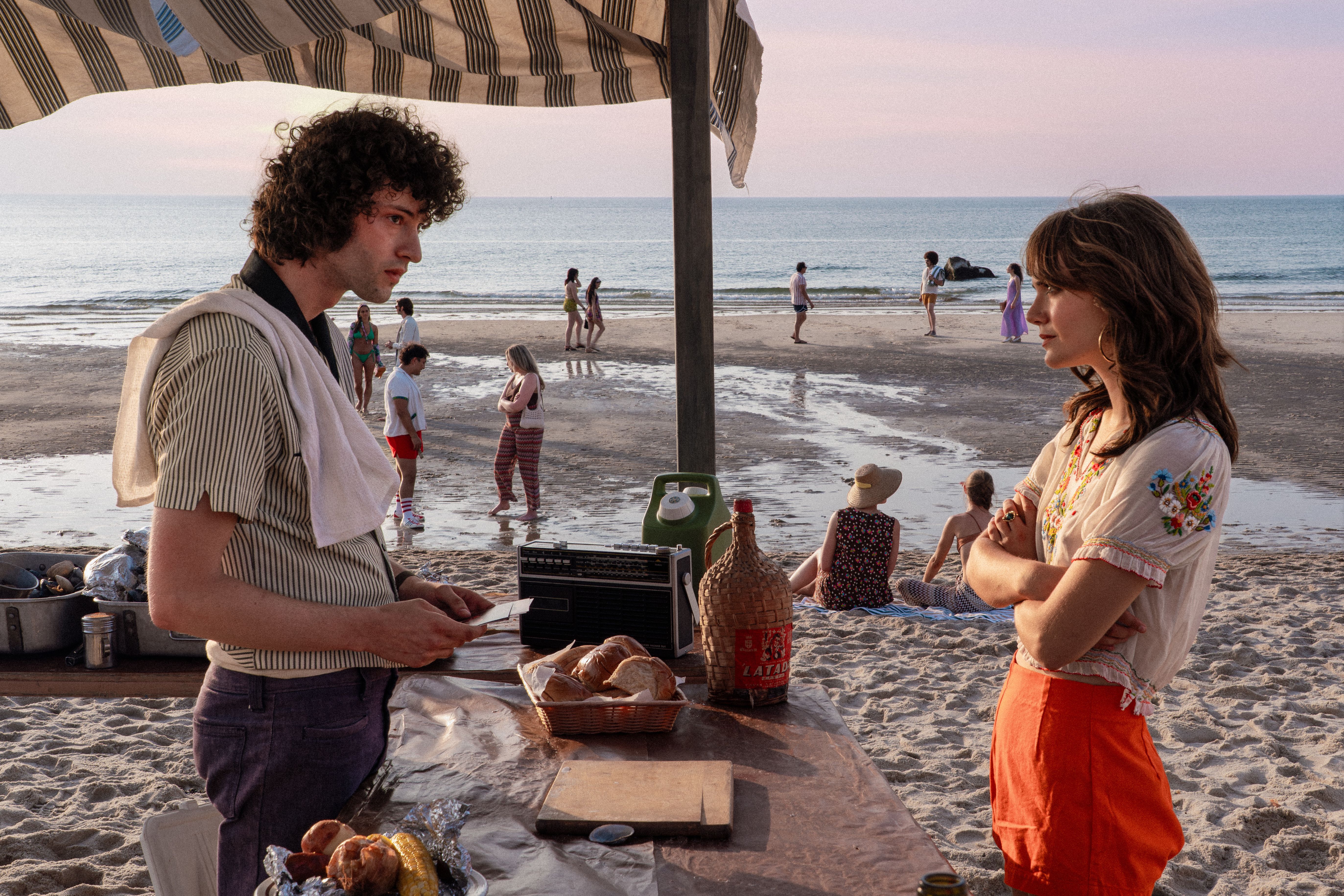
Antonio Banderas (left) as a chef-mentor with Cherry Hill native Dominic Sessa as Anthony Bourdain in “Tony.”A24
Instead, Tony concentrates on the period when a privileged, unhappy teenager from New Jersey stumbled into a restaurant kitchen and discovered a world more exciting than his own.
The historical outline is true. The story Tony builds around it is considerably less so.
Cherry Hill nativeDominic Sessa, who made an impression in The Holdovers, plays Bourdain at 19: a Vassar student, would-be writer, romantic, poseur, and world-class pain in the a—. He arrives in Provincetown chasing both an idea of himself and Nancy Putkoski (Emilia Jones), his girlfriend and eventual first wife.
Sessa wisely avoids a Bourdain impersonation. Rather than reproduce the familiar television cadence or Parts Unknown mannerisms, he gives us a young man who has not yet earned the persona he is trying on.
Bourdain later described his younger self as spoiled, narcissistic, miserable, and self-destructive. Tony takes him at his word. This Tony is clever but not nearly as clever as he thinks, hungry for experience but desperate for other people to notice him having it.
The movie becomes much more interesting once he lands a job washing dishes at the Flagship, a waterfront seafood restaurant in Provincetown that Bourdain renamed the Dreadnaught in Kitchen Confidential.
Here Johnson has something unusually valuable for a biopic: Bourdain’s own account of being seduced by the restaurant life.
He remembered the Flagship cooks as pirates and gods, former hippies, drifters, and hard-living professionals who drank, swore, stole, screwed, and seemed afraid of nothing. To a sheltered young man searching for an identity, they represented an intoxicating alternative to his comfortable world.
Cherry Hill native Dominic Sessa as Anthony Bourdain with Emilia Jones as Nancy, his girlfriend, in “Tony.”A24
Tony is at its best capturing that attraction.
The kitchen is hot, filthy, profane, sexually charged, and physically punishing. The cooks haze newcomer Tony, who starts in the dish pit and discovers he likes being useful, gradually working his way toward cooking.
Sessa is especially good at conveying Tony’s fascination with people who seem more authentic than he feels.
Leo Woodall plays Sal, a charismatic cook with the confidence, appetites, and recklessness Tony envies. Antonio Banderas supplies the opposite influence as Ciro, the restaurant’s chef-owner, a disciplined professional who sees something worth cultivating in the callow teenager.
Both are effective characters. But neither should be mistaken for straightforward biography.
That is the complication at the center of Tony.
The movie draws from the opening sections of Bourdain’s 2000 memoir, Kitchen Confidential, and his later recollections in a 2014 Parts Unknown episode. With thin source material, Johnson and his cowriters have filled the gaps aggressively.
Johnson has acknowledged that he compressed Bourdain’s several formative summers in Provincetown into one, set in 1975. Nancy was real and worked at Spiritus Pizza, a gathering place in Bourdain’s Provincetown years. The Flagship was real, and Bourdain began there as a dishwasher. His fascination with its swaggering cooks comes directly from his writing.
Much of the rest is interpretation. Relationships are reshaped and characters are combined. Experiences Bourdain described retrospectively become revelations occurring in real time.
That is hardly unusual for a biopic, and some of the inventions work.
Nancy is not merely the girlfriend waiting to recognize the greatness everyone in the audience knows is coming. She is often the person least impressed by Tony’s performance of himself, and Jones gives her enough intelligence and independence to puncture his pretensions.
Banderas brings a quiet dignity to a movie otherwise swimming in adolescent testosterone. But Ciro appears largely to be a composite created to give Bourdain something his own account of Provincetown did not provide so neatly: a moral mentor.
Sal serves the opposite function. He represents the seductive outlaw kitchen culture Bourdain embraced — drugs, sex, appetite, danger — and its costs.
The arrangement is dramatically efficient: two models of the man Tony might become.
It is also awfully tidy.
Bourdain’s relationship with restaurant culture was more complicated. The same world that gave him purpose also gave him permission to indulge some of his most destructive instincts. He understood that contradiction particularly well in middle age, when he returned to Provincetown for Parts Unknown and discussed his past with considerably less nostalgia.
Tony occasionally seems reluctant to live with that ambiguity.
Johnson, cinematographer Michael Bauman, and production designer Ryan Warren Smith compensate with a Provincetown rendered in a hazy mid-1970s glow. The movie moves languidly between the restaurant, Nancy, parties, beaches, and the community around him. At its best, it feels less like a conventional biopic than a memory of a summer whose significance became clear only later.
Some of Bourdain’s later literary observations are handed to his teenage self, a familiar biopic trick that makes young geniuses sound suspiciously like their accomplished older selves.
That is unfortunate because one of the interesting things about Bourdain’s story is how long it took him to become Anthony Bourdain.
He did not emerge from Provincetown as the finished article. He still had the Culinary Institute of America, decades of restaurant work, addiction, failure, writing, celebrity, television, travel, and reinvention ahead of him.
What Provincetown gave him was simpler: restaurants.
Bourdain found satisfaction in washing dishes and learning to cook. He discovered a tribe whose confidence and camaraderie fascinated him and people whose lives bore little resemblance to his cushy upbringing. Eventually he recognized that cooking might offer something writing had not yet provided — a place to belong.
Those facts are compelling enough without forcing them into a neat transformation.
That is why Tony succeeds when it stops trying to show us the instant Anthony Bourdain became Anthony Bourdain. The more it simply observes a confused young man falling in love with restaurant life, the closer it gets to the truth.
HARRISBURG — As part of his new, hard-line stance on regulating data centers in Pennsylvania, Democratic Gov. Josh Shapiro said during a news conference last week that his sweeping executive order has the “strictest guardrails in the nation” on data center development.
Fact check: That is technically true, if you exclude moratoriums, or the full-stop pauses on development that have been implemented in two other states.
States around the country have taken different approaches to data centers in the race for AI supremacy — and, subsequently, how to rein in the increasingly unpopular massive developments that some fear will disrupt their communities, drain resources, and increase energy costs.
Governors, including Shapiro, initially welcomed companies who had come knocking on their states’ doors offering billion-dollar investments to build there. And as the political tide has transformed data centers into widely unwelcome developments among most Americans, leaders have had to adapt — or even change their positions.
Lawn sign along Crooked Lane in King of Prussia, Wednesday, May 27, 2026. Some residents are standing in opposition to building a data center in their community.Alejandro A. Alvarez / Staff Photographer
To build a data center in Pennsylvania — where Shapiro just 14 months ago trumpeted a $20 billion commitment from Amazon to build at least two data center campuses in Bucks and Luzerne Counties — developers will now be required to sign a consent agreement detailing how it will follow new guidelines in four key areas: transparency, energy affordability, workforce development, and environmental protection.
Many top Pennsylvania Democratic leaders and environmental groups lauded Shapiro’s order, while some Republicans called it a disingenuous flip-flop in an election year. And some of the loudest data center opponents said it did not go far enough — and they still want a moratorium.
Thirty-eight states, including Pennsylvania, offer tax breaks for data centers. Many of these tax incentives were approved years ago, as the emerging artificial-intelligence industry began to come online. Pennsylvania’s legislature firstapproved its benefit in 2021.
Some states, like New York, have halted all data center development for periods of time, while others, like New Jersey, have singled out specific areas, such as consumer protections, in which lawmakers want to curb data centers’ impact.
Shapiro’s administration argues it is unfair to compare its multipronged requirements for developers to build in Pennsylvania to states with moratoriums. In other words, officials say, Pennsylvania has the toughest enforceable barriers for data center development, while moratoriums are a total stop.
Most state legislatures are weighing proposals to restrict data center development through moratoriums or energy generation requirements. Pennsylvania has near-unanimous support among lawmakers to end tax breaks for data center developers, but legislators in the politically split General Assembly failed to do so before leaving Harrisburg for the summer.
In absence of new state laws, a handful of governors, including Shapiro, have taken executive action to restrict data center development in their states. Here is a look at how several states, including Pennsylvania and its neighbors, are approaching data centers.
Pennsylvania
Moratorium: No
Tax credit available: Yes
Restrictions: After previously embracing data center development as a potential economic driver for Pennsylvania, Shapiro changed his position and signed a wide-ranging executive order last week requiring data centers to get local approval, bring their own power, hire and train local workers, and more. The order does not include a moratorium on data center development. However, its requirements for local approval may, in effect, block many from moving forward.
Gov. Josh Shapiro signs an executive order restricting data centers in Pennsylvania during a ceremony in the Capitol in Harrisburg, Pa., Tuesday August 18, 2026.Kalim A. Bhatti / For The Inquirer
Any developer looking to build a data center in Pennsylvania must sign a 33-page, legally binding consent agreement that follows Shapiro’s multifaceted and detailed requirements about the facility’s projected energy generation and water usage and a community benefits agreement in order to receive state-level permit approvals. If the developer does not agree to Shapiro’s rules, its project will be held up by the state indefinitely.
Current projects that have received state permits will be allowed to proceed, but developers will need to sign the agreements for any future approvals.
New Jersey
Moratorium: No
Tax credit available: Yes
Restrictions: In July, Gov. Mikie Sherrill signed several bills into law to protect consumers from increased costs associated with data center development, including the creation of a new tax and rate structure specific to data centers so that the projects pay for their own energy usage and grid updates.
Gov. Mikie Sherrill answers questions from press about the recent rainfall and flooding in Camden at the Fire Administration Building in Camden, N.J., on Tuesday, July 7, 2026.Tyger Williams / Staff Photographer
Sherrill has released a plan with a framework similar to the regulations outlined in Shapiro’s executive order — including requirements for energy generation, community input, workforce development, and environmental protection — but unlike an executive order or legislation, it does not appear to be enforceable.
Restrictions: Gov. Kathy Hochul in July signed the first statewide data center ban in the nation, blocking new construction for any project using 50 megawatts or more of electricity for up to one year. Fewer projects were proposed in New York, one of the nation’s most populous states that relies heavily on surrounding regions to generate its energy consumption, than in its neighbors. Hochul said she will lift the order once her administration develops guardrails for future projects.
Hochul, a Democrat, took specific aim at hyperscale data center proposals, the main projects intended to power emerging AI technologies.
Maryland
Moratorium: No
Tax credit available: Yes
Restrictions: There has been no statewide action on data centers yet, as Maryland is limited on how much energy it can produce due to its size and dense population. Unlike in Pennsylvania, county and local governments in Maryland are allowed to pass their own moratoriums on data center development, which Baltimore and other densely populated counties near Washington have done.
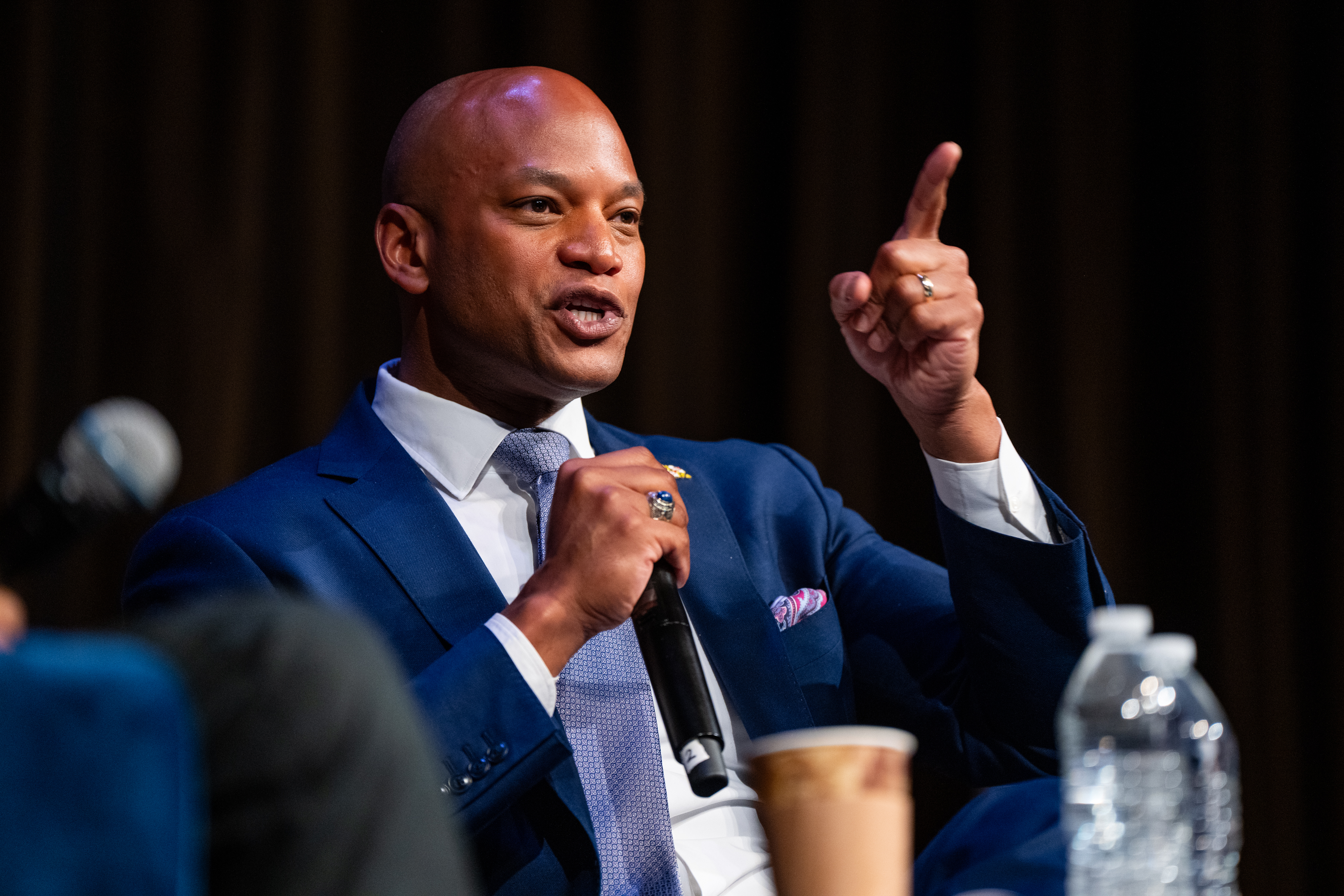
Wes Moore, Governor of Maryland, speaks during the National Action Network (NAN) Convention in New York, Thursday, April 9, 2026. (AP Photo/Angelina Katsanis)Angelina Katsanis
Gov. Wes Moore, a Democrat running for reelection, backs a number of legislative proposals in the Maryland statehouse that would require the centers to bring their own power and hire local union workers. But he has mostly demurred on a statewide moratorium, saying it is up to local governments to decide, online news outlet Maryland Matters reported.
Similar to Shapiro’s Republican opponent, Stacy Garrity, Moore’s GOP challenger, Dan Cox, has called for a statewide moratorium on the projects.
Virginia
Moratorium: No
Tax credit available: Yes
Restrictions: Virginia is among the hottest spots for data center development in the country, with more than 340 data centers in operation and hundreds more proposed. In July, the Virginia General Assembly imposed a new electricity-use tax set to run out in two years.
Virginia is also seeing massive tax revenues from its burgeoning data center industry. One wealthycounty just south of Washington is home to 250 data centers.The local government thereis expected to bring in $1.3 billion in additional tax revenue from data centers, allowing the county to reduce property taxes by 30%, the New York Post reported.
Restrictions: Ohio has the fifth-most data centers in the country, with more than 200 already operating, according to the state’s consumer protection office.
The GOP-controlled state broadly still welcomes data center development. But its utilities commission approved a tariff for large data centers,requiring them to pay for at least 85% of their electricity capacity.
It is also a top issue on the campaign trail in the state’s hotly contested U.S. Senate race that could decide control of the chamber: Top Republicans warned AI developers that they need to fix their public image or lose supportive candidates, Axios reported.
Texas
Moratorium: Yes, for future development
Tax credit available: Yes
Restrictions: In what was once the most welcoming state in the country for data center development, new developments in Texas are now indefinitely on hold.
Gov. Greg Abbott announces his re-election campaign for Texas governor in Houston, Sunday, Nov. 9, 2025. (Jason Fochtman/Houston Chronicle via AP)Jason Fochtman
This month, Gov. Greg Abbott, a Republican, announced a moratorium on future data center projects while the state’s utility commission and electricity council audit the current projects’ power and water use, and more.
Kentucky
Moratorium: No
Tax credits available: Yes
Restrictions: Gov. Andy Beshear, like Shapiro an ambitious Democrat and a potential 2028 presidential contender, also signed an executive order earlier this month that requires data center developers to submit an energy plan that outlines that the project will not raise prices for ratepayers. He also directed the state’s utility commission to deny any rate increases to cover increased costs from data centers.
Beshear’s order was met with criticism from some experts who claim his order was not enforceable, particularly for its inclusion of a directive to an independent agency not under the governor’s discretion, the Kentucky Lantern reported.
“Who’s running now?” Krasner said at a Thursday news conference where investigators announced they had identified the suspect as 22-year-old Zymire Hughes — and said it was possible he had already fled Pennsylvania.
It was the latest development in a nightmare-fueled story that has garnered national attention as images and videos of a man harassing pedestrians in the babylike mask went viral on social media this week.
Krasner said his office has issued a warrant for Hughes’ arrest for assault and related crimes.
The charges stem from the Aug. 12 morning that a man in a Chucky mask harassed and scared more than a dozen people near City Hall, including a 40-year-old woman who Krasner said was “severely injured” when she fell while running from Hughes in fear.
In all, investigators said, Hughes is accused of harassing around 16 people between 5 and 5:30 a.m. that morning.
Police documented the behavior through a host of camera angles due to the large number of security cameras monitoring Center City streets.
They saw a masked Hughes begin the harassment near 10th and Chestnut Streets that morning, where he approached a man who appeared to cower on his knees in fear, said Capt. Jason Smith of the Central Detective Division.
After Hughes harassed others in the Center City area, authorities said, his behavior culminated when he chased the woman as she jogged near City Hall.
Hughes asked the woman if she was “ready to die” during the confrontation, according to Smith.
After the woman fled, Hughes went into a Dunkin’ Donuts store near 13th and Chestnut Streets. He then entered Suburban Station, Smith said, where two SEPTA transit officers told Hughes to remove the mask.
He lifted the mask slightly but did not remove it. He calmly walked away from the officers, surveillance footage shows.
“He does successfully evade them,” the captain said.
Hughes later rode SEPTA’s 33 bus to his apartment near 23rd and Venango Streets, surveillance footage shows.
But Smith said investigators believe Hughes may have already fled the state.
Detectives learned he left his apartment with packed bags two nights ago. It is possible he may have gone to Los Angeles or Las Vegas, where he has connections through an employer, Smith said.
Meanwhile, they continue to consider whether Hughes was motivated to film the stunt and post content on social media.
Detectives have linked two TikTok and one Instagram accounts to Hughes. But the accounts do not include posts related to his alleged behavior from last week.
Investigators also do not believe Hughes intended to physically harm those he harassed, they said, given that he did not produce a weapon during any of the interactions.
Krasner said that Hughes could not run forever, and that additional charges could come as investigators urge anyone harassed by Hughes that morning to come forward.
The young man is currently on probation in Philadelphia for a criminal case out of Montgomery County, Krasner said, adding that he considered Hughes’ behavior last week to be a violation of those conditions.
“You think it’s funny to scare people?” the district attorney said in a message directed to Hughes. “Well, get ready to get scared by us.”
Armando Roberto Perez goes by many names. Armand. Bob. Opa. Mr. Soupy.
Perez, 70, is the longtime caretaker for Soupy Island, a public pool and park in West Deptford, best known for its century-old carousel, free soup, and the tall, enclosed slide guests glide down, crashing into sand.
Before Perez took the job 28 years ago, his father-in-law was caretaker, and before that, his grandfather-in-law. Managing the former 25-acre haven for sick and hungry kids has long been a family affair.
Soupy Island is open and free to the public three days a week from July to mid-August. For the rest of the year, it’s Perez’s job to keep the tuberculosis treatment center-turned-playground standing come summertime.
Lifeguard Alexandria Bright, 22, watches over swimmers in the main pool at Soupy Island. She is a niece of caretaker Bob Perez.Tom Gralish / Staff Photographer
He puts the picnic tables away, disconnects the piping and toilets, drains the pool, boards up the carousel, collects leaves, cuts the grass, weed-whacks, handles repairs, and takes on whatever else happens.
“If you’re not self-motivating, nothing’s going to get done,” Perez said.
On Wednesday, the second-to-last day of Soupy Island’s summer and what could be one of Perez’s last seasons as caretaker, 329 people had arrived by lunchtime.
At 11:45 a.m., the park’s amenities close like clockwork for lunch, until 1 p.m. Its 18 staff members ushered children and their families toward the middle of the park for Soupy Island’s controversial intermission: free hot soup, crackers, and milk, enjoyed (or not) in the August heat.
Syreeta Minor, 47, brought her daughter and her group of friends to Soupy Island for the first time after hearing about the destination on YouTube. Minor had no idea the park existed despite living in West Deptford, but she said she’ll likely be back.
A soupy history
Driving his golf cart across Soupy’s campus, Perez explained the park’s complicated history, in brief.
He pointed out the old European carousel, an early 20th-century relic that the National Carousel Association has been working to restore, and all the structures he’s fixed over the years. A chalk drawing made by his granddaughter, Izzy, on the wall of the soup house depicts Perez, “Opa,” at the top of a family tree with his wife, Denise.
Perez with a family tree drawn in chalk by his granddaughter Izzy when she was young.Tom Gralish / Staff Photographer
The park’s roots trace back to 1877, when the Sanitarium Association of Philadelphia purchased land to create a playground and treatment center for kids with tuberculosis.
The hospital no longer exists, but remnants of its history remain. A public pool has replaced the hospital’s former basement. A brick building from the late 19th century still serves hot soup and snacks from its three windows. The medical staff quarters is where Perez now lives with his wife, free-of-charge, different from the life Perez imagined growing up in North Philly. He graduated from Frankford High School, didn’t go to college, and moved to Jersey when he got married in 1976.
“I came from nothing,” Perez said. “We had government food. We had government housing.”
Perez’s home is an old five-bedroom white house at the front of the park, paid for through an endowment set up by Soupy Island doctors more than a century ago. It’s spacious enough for Perez’s grand and great-grandkids when they visit.
The endowment is what keeps the park alive and has kept it going through decades of turmoil.
During the Great Depression, the Sanitarium Playground fed thousands per day. It was often the only place city children could get a hot meal, by taking a river boat from Penn Treaty pier down the Delaware River. For fun, Perez said, children swam on the river in wool bathing suits and overalls.
In the 1940s, during World War II, the U.S. military took over Soupy Island to protect the nearby shipyard, before the playground returned to its park and soup kitchen roots.
‘Working with my hands’
Despite its history, Perez said the island (which isn’t an island at all) has kept under the radar. When staff have to call the police to report vandalism or an incident, they don’t always know where to go.
“A lot of people don’t know about it. They say, ‘I never knew you were here,’” Perez said. “I got people around the corner who don’t even know we’re here.”
In many ways, that has been to Soupy’s benefit. The summer playground doesn’t have the staffing or space to accommodate huge crowds, and Perez does much of his work solo. Over the years, he’s had to keep up certifications as an amusement ride operator, a pool manager, a lifeguard, and a diver, on top of the mechanical skills he developed over his 24 years at Cherry Hill Volvo.
It was his father-in-law who pestered him to apply for Soupy Island, a career he didn’t want.
“I like working with my hands,” Perez said.
His grandson, Lucas Ngo, plans to take over when Perez retires. A mural of Ngo, now 22, is on the wall over by the big kid pool, painted by Perez when Ngo was still a child.
Lucas Ngo, now 22, and an employee at the at Soupy Island in West Deptford, N.J. is depicted on a mural at the swimming pool Wednesday, Aug. 12, 2026. Tom Gralish / Staff Photographer
On Wednesday, Ngo, who originally planned to pursue car mechanic work, prepared the daily soup, chicken noodle, in a giant vat as visitors trickled toward the house. An unfamiliar clanging came from the soup area.
“Now that noise? Open the valve,” Perez instructed, then laughed. “There you go. You get to know the sounds of the things.”
‘A rite of passage’
Lifeguard Ali Bright, 22, placed spoons as Perez scooped soup during Soupy Island’s daily lunchtime ritual. Fellow lifeguard Madi Hogan, 17, carried the trays to a cooling rack, then to the windows to serve a line of people outside.
“It’s like a rite of passage in this family,” said Bright, Perez’ niece. She’s worked at Soupy every summer since she was 14. “This is my little oasis away from my real life.”
Perez in the kitchen of the original building where the camp still serves free soup lunches every day. The kettles are at right and the same shelves for cooling the soup are at left. Kids still line up for lunch at the windows in rear. Tom Gralish / Staff Photographer
The lifelong connection to the playground is typical for staff. Hogan’s great-grandmother used to come to Soupy Island as a child. Marielle Lewis, 17, used to come to the park for soup when she was little, since her aunt lives nearby. Now, she’s worked as a lifeguard for two years.
“It’s kind of weird now that I get to see everything that I wanted to see when I was a kid,” Lewis said.
For now, the group is using their remaining soup supply donated by The Campbell’s Company last year. In the 2000s, the company paid for a new jungle gym, volleyball court, basketball court, and more at Soupy Island and continued its contributions through food since, even though Campbell’s has no true affiliation with the playground despite its name.
But this season, Campbell Soup didn’t donate goods, Perez said, who added that one season’s worth of soup costs the park more than $8,000.
The Food Pantry of South Jersey in Pennsauken has stepped up, though, by providing Soupy Island with thousands of shelf-stable meals to distribute to visitors.
“Sometimes a lot of these people go through trials, and come in here just to chill a little bit,” Perez said. “You don’t know what the other person’s going through.”
Once Ngo takes over, Perez still plans to help out where he can, just with less physical labor. Plus, he’ll hopefully get to do more home remodeling on the side, and take more consistent naps, his favorite part of the day.
“I try to do it around three,” Perez said, a dream. “But it doesn’t happen.”
He had received an email from WHYY’s Terry Gross, herself, asking to be interviewed on NPR’s Fresh Air.
“It was so articulate and so like her,” the writer told the Hollywood Reporter. She laid out talking points and a run of show, according to Vilanch. “It felt real.”
But when Vilanch jumped on their scheduled video call, Gross was nowhere to be found. It finally dawned on Vilanch: He had been scammed. And he was not alone.
A recent string of scams and catfish-style attempts targeting stars and other media personalities are using Philly’s own Gross as the bait. Vilanch says he was the latest victim.
“If somebody claiming to be Terry Gross contacts you for an interview, it is a scam,” the comedian said in a Facebook post last week. He encouraged other potential victims to contact NPR and WHYY.
Online forums reveal a number of recent catfishing attempts involving someone purporting to be Gross.
“These impersonation scams are increasingly common,” said Siwei Lyu, digital media forensics expert and director of the Institute for Artificial Intelligence and Data Science. “Authors are a particularly attractive target because an unexpected invitation from a prominent host or podcast can seem both flattering and plausible.”
It is unclear if one person is behind all of the Fresh Air-centered fraud or if multiple impostors are responsible. Lyu says scam scripts and techniques are easily shared, adapted, and copied, “so the same premise can be used by many unrelated actors.”
On a Facebook group for authors, a writer posted in July about being approached by Fresh Air and asked to donate money. Months earlier, psychologist Steven Pinker, author of The Better Angels of Our Nature, said he was similarly approached by “Terry Gross” via a fake Gmail account as part of a scam targeting authors.
I am targeted by several publishing scams a week, promoting book clubs, reading groups, influencers, publicity campaigns, list placers… all using AI-generated bullet points flattering my books. Yesterday it was "Terry Gross" (with a gmail, not https://t.co/5mhqQcYHlC email… https://t.co/uBFuvSQ5Wi
In Vilanch’s case, he said “Gross” asked him for money to support NPR’s nonprofit public radio efforts amid government cuts. He told the Hollywood Reporter that he thought the request was odd, but that enough credibility within the email chain had been established. So he went for it.
From there, the scammers prepped him for Fresh Air, sending interview questions and scheduling their virtual interview. When the big day arrived, Vilanch was greeted by two video boxes: a screen that read “NPR,” and one with a man who identified himself as “Mike,” the new interviewer. When Vilanch eventually bailed, he sent a final message, according to the Hollywood Reporter: “Whoever you are, I hope you enjoy the paltry sum that I sent.”
Then he reached out to NPR and WHYY. WHYY confirmed it was aware of the scams and investigating.
“WHYY, NPR and Fresh Air with Terry Gross & Tonya Mosley are aware of fraudulent emails in which individuals have impersonated Terry and members of the Fresh Air team attempting to deceive potential guests,” the news organization said in a statement. “As the article in The Hollywood Reporter mentions, other programs and podcasts have also been the subject of these scams.”
The Fresh Air situation is one of several podcast/radio scams targeting Hollywood. According to the Hollywood Reporter, Broadway actor Seth Rudetsky was targeted by a scammer posing as Nikki Glaser who solicited a podcast interview in exchange for a fee. Later, Rudetsky also received an invitation from someone supposedly working on Amy Poehler’s podcast, Good Hang.
In addition to money, some of the scams also target the victim’s social media accounts or login credentials.
Sportswriter Jemele Hill said someone once lied and claimed to be booking her for a new Facebook show hosted by Rob Dyrdek of Ridiculousness. She handed over her Facebook credentials. It took weeks to get them back, she wrote in an X post. “It’s a very sophisticated operation.”
In April, figure skater and personality Adam Rippon told a story on his podcast about being similarly catfished by someone purporting to be on Katie Couric’s podcast via Facebook Live. The follow-through scammed him out of his own Facebook credentials.
“I know I made a grave error,” he said. His Facebook account was ultimately suspended.
A spokesperson for WHYY added that Fresh Air cohost Tonya Mosley has been the named catfish in similar scams, imploring would-be guests to send money in exchange for a radio slot. As a nonprofit organization, WHYY says, it never requests payment for interviews, nor does it pay guests to be interviewed on any of its programs.
“Any communication asking a prospective guest to pay a fee — or offering payment for an interview while claiming to represent WHYY or Fresh Air — should be treated as suspicious,” the statement said.
It is unclear if any of the scams are connected. What they all have in common, though, is their apparent leverage of a celebrity figure along with heavy use of AI to capture the alleged host’s voice and flatter victims with deep-cut knowledge about their work. Lyu said generative AI’s rise in popularity and usage makes hoaxes like this even easier, allowing scammers to quickly personalize messages and operate at a greater scale.
“The technology is new, but the underlying strategy is classic social engineering,” Lyu said. “Establish trust through a recognizable identity, then use that trust to obtain money or account credentials.”
WHYY said it is concerned about its own brand and credibility being used in this case.
“We take the misuse of our journalists’ and programs’ names seriously and are concerned that scammers are exploiting the trust audiences and guests place in Fresh Air,”WHYY said. “We are working with law enforcement to address the situation.”
Philadelphia is one of three finalist cities to host the 2028 Democratic National Convention, the party announced Thursday.
In addition to Philadelphia, the Democratic National Committee said it is also considering Denver and Boston on its narrowed short list of cities to hold the next presidential nominating convention. The announcement means that Atlanta and Chicago, which were on a previous list of five potential host cities, have been eliminated from contention.
Ken Martin, the chair of the Democratic National Committee, said in a statement that the three finalist cities put forward “incredibly strong bids.” He did not say why the party is no longer considering Atlanta or Chicago.
If Philadelphia is picked, the convention would take place from Aug. 7 to 10, 2028, at Xfinity Mobile Arena in the South Philadelphia stadium complex. The Republican Party’s 2028 convention will be held in Houston.
Democrats in 2028 will choose from an array of potential candidates to succeed President Donald Trump. No major candidate has formally launched a campaign, but Pennsylvania Gov. Josh Shapiro is widely considered to be a contender.
The announcement comes as Martin has faced criticism for his leadership of the party, especially as it relates to fundraising. Democrats trail Republicans ahead of this year’s midterm elections when it comes to money in the bank.
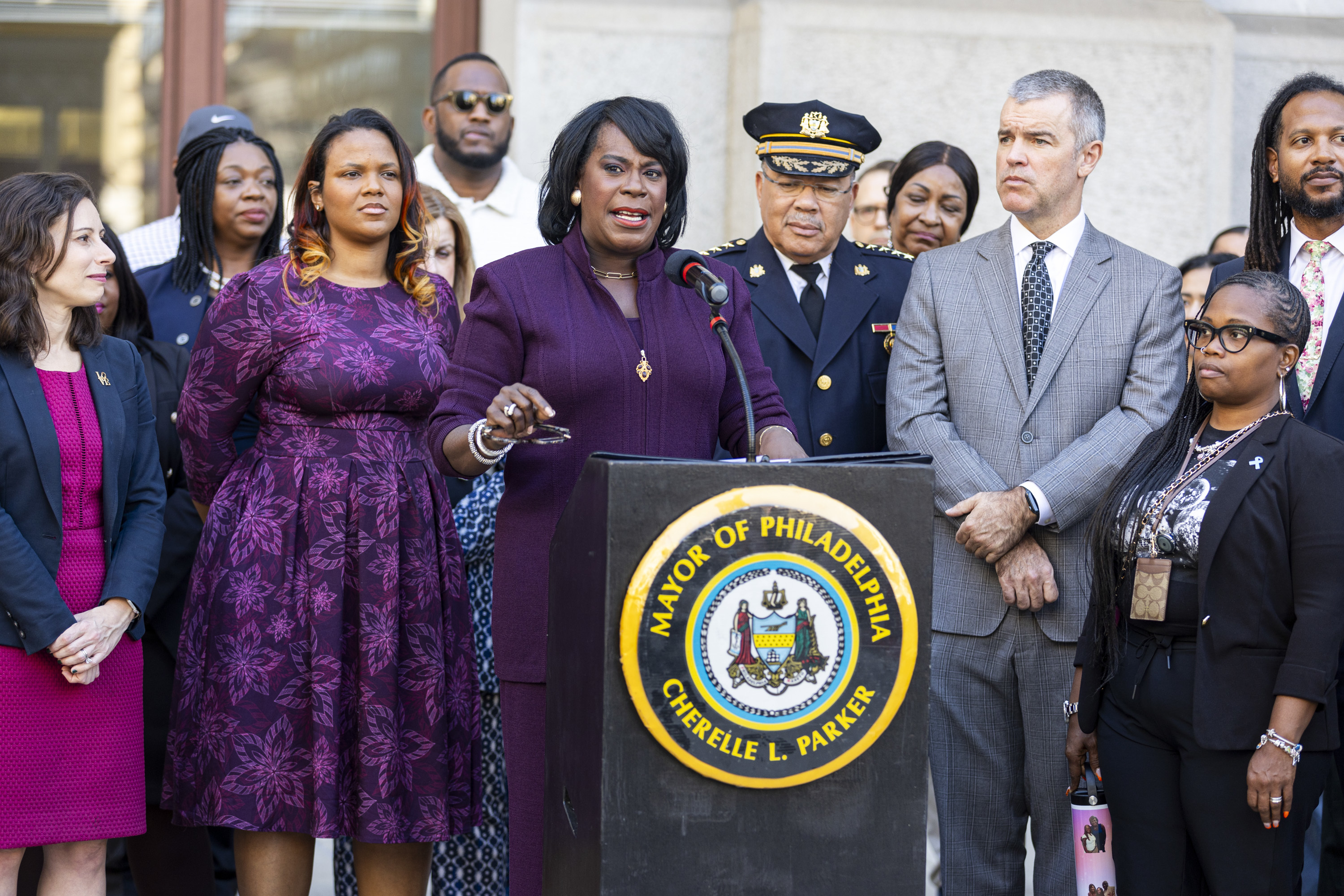
Mayor Cherelle L. Parker is joined by city leaders and Democratic National Committee Chair Ken Martin and his team for a “One City” salute group photo Thursday, April 30, 2026, after they toured the Xfinity Mobile Arena facilities as the city makes its bid to host the 2028 Democratic National Convention. Tom Gralish / Staff Photographer
The party’s decision to narrow its 2028 convention short list comes after Martin and other top officials traveled to the five finalist cities in the spring to assess logistical readiness, including arena capacity, technological capabilities, transportation and security infrastructure, and more.
In April, local Democratic officials and some of the city’s biggest boosters wooed Martin over the course of a three-day trip and presented the city as an improved tourist destination since 2016, the last time the party hosted its major convention in the city. That year, Democrats nominated former Secretary of State Hillary Clinton, who lost the general election to Trump.
The events draw thousands of party members and journalists from around the world, putting the host region in the spotlight for several days. Proponents of hosting the convention also argue that it will generate business as visitors eat, shop, and play; the true economic impact of conventions, however, is up for debate.
Mayor Cherelle L. Parker, who has led the city’s effort to bid for the 2028 convention, said in a news release that Philadelphia this year has “proven that we can do big things better than any other city in the country.”
She cited this summer’s litany of big events in the city, including FIFA World Cup games, the MLB All-Star Game and Home Run Derby, and events associated with America’s 250th birthday.
“We are ready to welcome the Democratic Party and the nation back to our city,” she said.
David L. Cohen, the longtime Democratic Party stalwart and president of Pick Pennsylvania, the city’s host committee, said in a statement that Philadelphia’s selection as a finalist “is a testament to the ongoing strength of our bid and our record of success.”
“We have presented an unmatched case,” he said, “built on experience, preparation, strong partnerships, and a proven ability to deliver major national and international events.”
Temple University will significantly raise the salaries of its police force under a new five-year contract aimed at addressing its longstanding problem of attracting and retaining enough officers.
The new contract — which comes a year before the previous contract was set to expire — was initiated by university president John Fry after a staffing study released in December found the school needed to increase its number of police officers.
The new pay scale more closely aligns with that of the Philadelphia Police Department, the university said, and is expected to help the school reach its goal of increasing its number of patrol officers by 29, or 58%, over five years. It now has 79 police officers on staff — about 50 of them patrol officers — with three more poised to start Sept. 8. Five more are ready to graduate from Temple’s police academy in October, with more lined up to start there, the university said.
“We understand, like in our bones, how vital this work is not only to the safety of our students and our employees but to our neighbors, which we prioritize as well,” Fry said in an interview Thursday. “If we’re going to make North Philadelphia in particular an investable area, it all starts with public environment and public safety. No one’s going to contemplate making major research or commercial or residential or retail investments in an area that they don’t have confidence in.”
Under the new pact — which was ratified in June and runs through June 30, 2031 — an officer with at least three years of experience will start at a salary of $92,000, up $8,572, or 10.25%, from the previous salary of $83,428.
Those with at least five years of experience will start at $100,000, up $12,878, or 14.75%, from $87,122.
And officers will get raises ranging from 3% to 6.5% at anniversary milestones or across-the-board increases of 3% — whichever is greater. The agreement was announced Thursday.
“From a competitive standpoint, this new contract will make a huge difference,” Andrew Lanetti, president of the Temple University Police Association, the union, said in a statement. “It is going to entice young officers at the beginning of their career to join Temple, and it will also entice officers from other agencies to join our department.”
And it is helping to keep officers, too, he said in an interview.
“Many people who were thinking about moving on to other departments have now changed their minds,” he said.
Officers will see significant salary bumps, ranging from $5,000 to $17,000, as they reach each level, he said.
The contract, said Denise Wilhelm, interim vice president of public safety, also has made officers feel more valued.
“This is a true partnership, and it shows,” Wilhelm said.
Temple enrolled 29,503 students last year excluding its campuses in Rome, Tokyo, and Kyoto, Japan. Its police officers patrol on and around the school’s main campus and health sciences campus in North Philadelphia and on its Ambler campus.
The university had faced criticism from the Temple police union in the past for not doing enough to recruit and retain officers. In a social media post in December 2024, the union said the department had lost more than 50 officers since 2022.
The new pact also includes paid parental leave, an additional week of vacation for a total of five after 15.5 years, field training officer pay, and hazard pay for working during declared states of emergency, the university said.
The staffing study released in December showed that Temple was below the middle tier of a framework that rates law enforcement agencies. The university at that time had 77 sworn officers — 50 of them patrol officers — and Fry pledged to add 29 patrol officers, one detective, six sergeants, and one lieutenant over the next five years. That would increase the overall number of sworn officers to 114.
“We must, and we will, deploy ever more compelling and creative incentives to make Temple’s Department of Public Safety a destination employer for law enforcement in our region,” Fry, who named public safety a top priority when he started as Temple’s president in November 2024, said at that time.
Retaining and hiring police officers have remained challenging, as has been true for police departments nationally. The university in the past had increased salaries and benefits, added signing and retention bonuses and higher contributions to retirement accounts, and hired an associate director to focus solely on hiring, recruitment, retention, and training.
But the overall number of officers had declined over the last few years anyway. Temple ended the last academic year with 76 officers, down one from December.
Fry said he is confident this time will be different because the strategy is long-term and intentional, with the university prepared to make the budgetary investment, even though it means sacrifices will have to be made elsewhere.
“We’re certainly going to do better than we have been doing,” he said.
The university is preparing to bring in new leadership for public safety. Jennifer Griffin, Temple’s former vice president of public safety, resigned in June after nearly four challenging years on the job. The university is conducting a national search for her replacement.
Griffin had started in August 2022 as the university continued to cope with the aftermath of the shooting death of student Samuel Collington outside his off-campus apartment in November 2021.
She led the department when Temple Officer Christopher Fitzgerald was shot and killed in 2023 while on duty and through other challenges facing the campus.
During her tenure, the university implemented or began implementation of all 68 recommendations from a safety audit by former Philadelphia Police Commissioner Charles Ramsey’s firm.
Mayor Cherelle L. Parker has seen more than twice as much turnover among top officials in her administration than her most recent predecessors had at the same point in their tenures, according to an Inquirer analysis of personnel moves.
Come September, when City Solicitor Renee Garcia’s resignation takes effect, more than half of Parker’s highest-level appointees will have departed in the two years and nine months since she took office in January 2024.
Following last month’s announcement that Managing Director Adam K. Thiel and Garcia would soon be leaving Parker’s administration, The Inquirer compared turnover at the top level of city government under Parker with former Mayors Jim Kenney and Michael A. Nutter. The analysis included chiefs of staff, deputy mayors, and the half-dozen other positions designated by the Philadelphia Home Rule Charter as part of the mayor’s cabinet.
The analysis found:
Of the 11 people Parker appointed to those jobs, six have already left the administration or are poised to leave by September. Kenney had lost three of his 11 top appointees by the same point in his tenure, and Nutter had lost two of the nine officials in comparable positions.
Most strikingly, Parker has lost three of the top four officials in her government: Chief Deputy Mayors Aren Platt and Sinceré Harris, the architects of her 2023 campaign, and Thiel, who oversaw most of the city’s operational departments. By this point, Kenney and Nutter both had lost two of the six people who held comparable roles in their tenures.
For the director of the Philadelphia Department of Labor, a cabinet position, Parker is on her third appointee, after her first two left city government after short stints leading the agency. (Parker has also had three directors of LGBTQ+ affairs, a non-cabinet position, after firing the first two people who served in that role.)
In another cabinet role, that of commerce director, Karen Fegely has been serving on an interim basis since May 2025, when Parker’s original appointee, Alba Martinez, resigned to produce a musical.
Tiffany W. Thurman, Parker’s chief of staff, said the turnover has not raised “any red flags or alarms internally.”
“It’s cyclical, and it’s part of the process,” Thurman said in an interview Thursday morning, after the initial publication of this story. “The work is continuing, and it’s strong and it’s good, and the vision hasn’t wavered despite the turnover, and so I’m very, very pleased with the team that we have right now.”
(function() { var l = function() { new pym.Parent( ‘parker-staff__graphic’, ‘https://media.inquirer.com/storage/inquirer/ai2html/parker-staff/index.html’); }; if(typeof(pym) === ‘undefined’) { var h = document.getElementsByTagName(‘head’)[0], s = document.createElement(‘script’); s.type = ‘text/javascript’; s.src = ‘https://pym.nprapps.org/pym.v1.min.js’; s.onload = l; h.appendChild(s); } else { l(); } })();
Although the top rung of Parker’s administration has seen high turnover, the analysis found that the next two tiers of city government leaders under Parker have seen less churn.
Of 18 key department heads not included in the charter-designated cabinet under Parker, three have resigned from or been forced out of city government. (A fourth, former Fire Commissioner Craig Murphy, stepped down as part of a scheduled retirement after Parker appointed him on an interim basis.)
Of the 76 additional political appointees, smaller department leaders, and deputies identified by The Inquirer — including all of the officials whose appointments Parker publicly announced as she filled out her administration — at least 12 have resigned, been fired, or moved to a new role in a discipline-related transfer. (Others have received promotions or switched roles to fill vacancies.)
Major officials who remain in the administration hold some of the most critical posts in city government, such as Police Commissioner Kevin J. Bethel, the first appointment Parker announced after her election, and Finance Director Rob Dubow, who has held his role since the start of Nutter’s administration in 2007.
While smaller in number, the departures among the second and third tiers of city government leadership under Parker have included losses in important positions, including Water Commissioner Randy Hayman, Licenses and Inspections Commissioner Basil Merenda, Chief Policy Officer Sophie Bryan, and Budget Director Robert McDermott.
(function() { var l = function() { new pym.Parent( ‘parker-staff2__graphic’, ‘https://media.inquirer.com/storage/inquirer/ai2html/parker-staff2/index.html’); }; if(typeof(pym) === ‘undefined’) { var h = document.getElementsByTagName(‘head’)[0], s = document.createElement(‘script’); s.type = ‘text/javascript’; s.src = ‘https://pym.nprapps.org/pym.v1.min.js’; s.onload = l; h.appendChild(s); } else { l(); } })();
There is always turnover in administrations, but it is often clustered around the end of mayors’ four-year terms. (There are exceptions: A majority of Philadelphia city solicitors since 1992, for instance, have served around two to three years, putting the length of Garcia’s tenure on par with her predecessors.)
Traditionally, deputy mayors and chiefs of staff work most closely with the mayor, and the posts have often been filled by people in the mayor’s inner circle or top campaign aides. They often do not have deep city government experience, which was the case for Harris and Platt, both of whom have since returned to politics.
Appointments for operational positions, such as managing director and police commissioner, usually go to people with experience in their fields. Thiel led the fire department and the office of emergency management under Kenney. Bethel was a former deputy police commissioner.
Parker, at the helm of City Hall, has said she has a demanding leadership style.
“With my team, am I always stretching and pushing and requiring that homework is done?” Parker said in a 2024 interview. “Yes, but I also believe I have the best and the brightest people with me. So naturally I have very high expectations for them because, quite frankly, they’re smart.”
Candi Jones, the administration’s chief human resources officer, said that Thiel and Garcia’s tenures are roughly in line with the average length of their predecessors’ over the last four administrations.
“Turnover is not turmoil,” Jones said Thursday during the interview with Thurman. “What is of most importance is that the city has an obligation for operational continuity. … Everyday, our operations are continuing to be managed daily, weekly, monthly. There has been no gaps in service.”
She also emphasized that key officials like Bethel, Dubow, and Thurman “since day one have been in place and really have been moving the government forward.”
The Inquirer attempted to reach all of the former administration officials mentioned in this article. Many declined to comment for this article or did not respond to interview requests. Attempts to reach several others were unsuccessful.
‘Big Three’ loses two
Even before Parker took the oath of office, intrigue over personnel matters became a defining aspect of her administration.
After winning the mayor’s race, Parker announced in late 2023 that she would appoint a “big three” of senior advisers to lead her administration, rather than a single “big mahoff,” an all-important aide who touches almost all major decisions, as had been the case in past administrations.
“No one like me has ever been elected mayor of our city, and no one has ever organized their senior staff this way,” Parker, the city’s first Black female mayor, said at the time.
Parker tapped City Hall veteran Vanessa Garrett Harley to fill Platt’s role, while Harris has not been directly replaced.
Despite Parker’s initial vision for a triumvirate of top aides, Thurman has by all accounts become Parker’s indispensable No. 2. Parker has referred to Thurman as her “chief air traffic controller.”
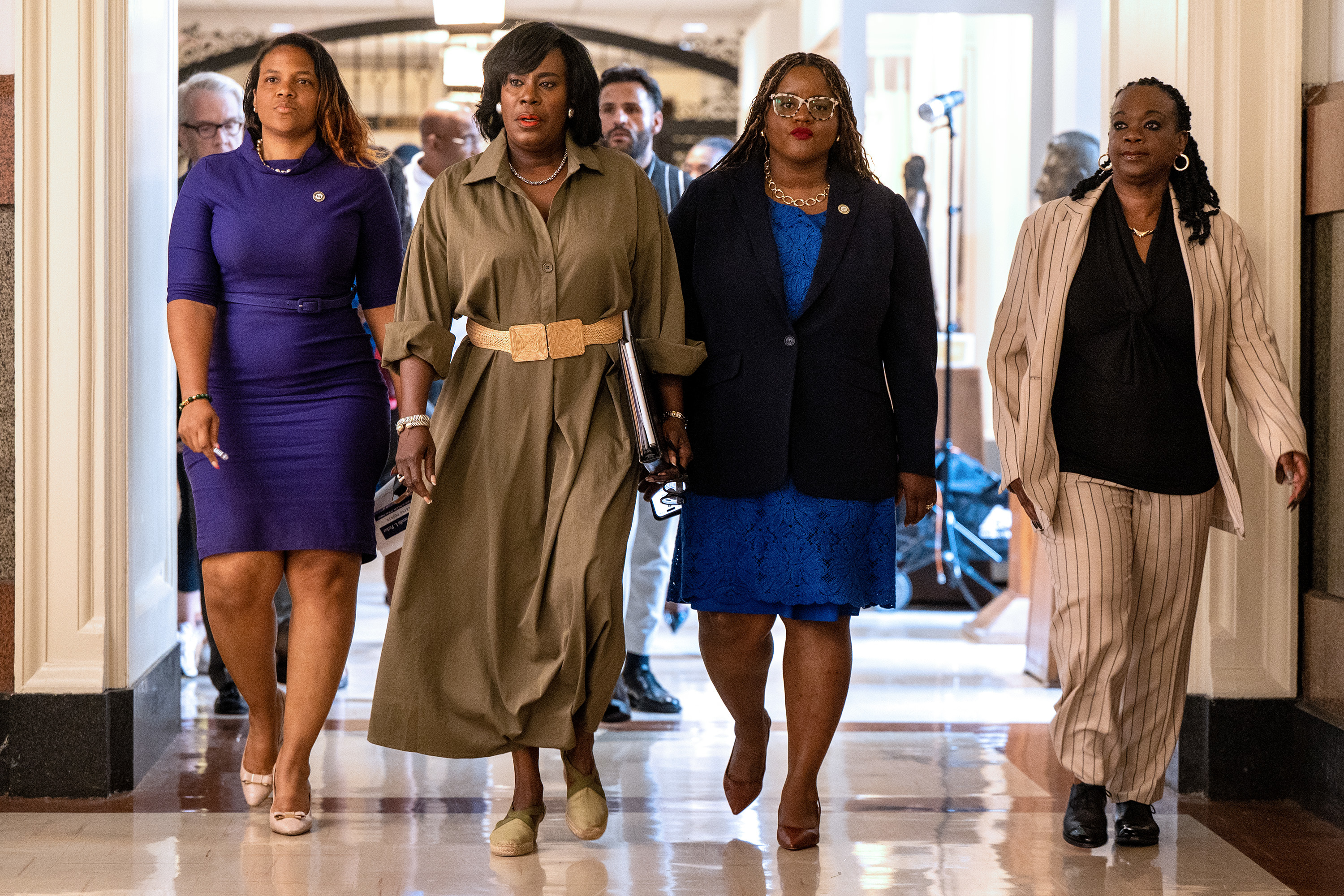
Mayor Cherelle L. Parker walks from her office at City Hall on Wednesday, Jul. 9, 2025, to speak hours after her administration struck a tentative contract agreement with District Council 33 leaders overnight, ending a workers strike. With her are: Chief Deputy Mayor Sinceré Harris (from left); Chief of staff Tiffany W. Thurman; and Chief Deputy Mayor Vanessa Garrett-Harley.Tom Gralish / Staff Photographer
Thiel’s tenure with the city, meanwhile, has been one of the most perplexing sagas of Parker’s first term. In the administration’s early days, he often appeared alongside the mayor at news conferences during emergencies and major announcements.
But his public role overseeing many of the city’s day-to-day operations faded over time, and his obligations outside City Hall grew. In addition to working as a high-paid consultant and adjunct professor — as he had since the start of the administration — Thiel joined the U.S. Army Reserve in 2024 and took multiple leaves from the city for military service, including during this winter’s prolonged snow and ice emergency.
In July, Parker announced Thiel’s resignation, noting that he is leaving to “reenter the private sector.”
Philadelphia Managing Director Adam Thiel updates the latest from garage collapse at 30th and Grays Ferry with Mayor Cherelle L. Parker on Thursday, April 9, 2026.Yong Kim / Staff Photographer
New positions, new faces
Parker, who has also greatly expanded the mayor’s office staff and increased salaries, created numerous new roles after taking office. Several people left those positions shortly after becoming thefirst people to hold them.
Kafi Lindsay resigned as director of the Philadelphia Office of Strategic Partnerships just nine months after being appointed, according to her LinkedIn profile. Rachel E. Branson resigned as the director of the Philadelphia Office of Minority Business Success after a year and three months, according to her LinkedIn profile. And Hassan Freeman last fall was let go as director of neighborhood and community engagement after an altercation with Councilmember Isaiah Thomas outside City Hall.
Some signs of strain within the administration emerged during Parker’s second year in office.
Parker last summer fired Brandee Anderson, who was the chief diversity, equity, and inclusion officer, and Tyrell Brown, the director of LGBTQ+ affairs, amid a thorny personnel issue that also led to the deputy chief of staff, Chris Dailey, moving to the managing director’s office in a disciplinary transfer.
Last month, Anderson sued the city, alleging her termination was part of an effort to “suppress” DEI work in the administration. Around the same time, Shania Bennett, Parker’s former director of youth engagement, a non-cabinet position created by Parker, posted on social media that her time with the mayor’s administration was “the worst experience of [her] life” and that she resigned due to “unprofessional harassment” from a fellow staffer.
‘What’s the bench?’
George R. Burrell, a lawyer and former City Council member who held senior roles under two mayors, said the personnel churn under Parker will test the leadership skills of the behind-the-scenes city officials who have been elevated to fill vacancies.
“The question you have, when you have this kind of turnover, is, ‘Well, what’s the bench?’” said Burrell, who served in the administrations of former Mayors William J. Green III and John F. Street. “The question of what happens next and the quality of what happens next is the quality of the bench.”
Veteran city staffers now occupy four of the six top roles originally held by Parker appointees who have since left City Hall. Harris’ position was not directly replaced.
The exception is former Assistant U.S. Attorney Monique Galloway, a newcomer to Philadelphia government, who will replace Garcia as the city’s top lawyer next month.
Burrell said he expects longtime city bureaucrat Carlton Williams, who has replaced Thiel as managing director after serving as Parker’s director of clean and green initiatives, to succeed in his new role.
“I watched him evolve into what is a productive public servant,” Burrell said. “So I think that’s a bench member who is going to perform at the level that’s needed.”
Philadelphia Mayor Cherelle L. Parker announces Carlton Williams as the new Philadelphia Managing Director, replacing Adam Thiel during a news conference at City Hall in Philadelphia on Tuesday, July 28, 2026.Jose F. Moreno / Staff Photographer
Once in office, Parker took nearly a full year to fill out her administration with appointments to key positions. She did not announce her selection of Kehinde “Kenny” Solanke to lead the Philadelphia Department of Behavioral Health and Intellectual disAbility Services, or DBHIDS, until July 2025, a year and a half into her tenure.
During that process, Parker said she was seeking the “best and brightest” and conducted national searches for some roles. A vast majority of her appointees, however, had strong ties to Philadelphia.
In 2024, when Parker was filling out her administration, she said she attended a training for new mayors at Harvard University. Some leaders from other cities, she said, were interested in recruiting Hayman, who had been appointed water commissioner by Kenney in 2019.
When Parker took office, it was unclear if she would keep Hayman in command of the water department. She announced she was retaining him in March 2024, and relayed the Harvard anecdote to demonstrate how Philly already had some of the country’s top public servants.
“He’s not going anywhere,” Parker said at the time. “We were able to hold on to some of the best talent in the nation.”
In July 2025, Hayman left Philadelphia to become the executive director of the New Orleans Sewerage and Water Board.
Staff writers Ryan W. Briggs and Anna Orso contributed to this article.
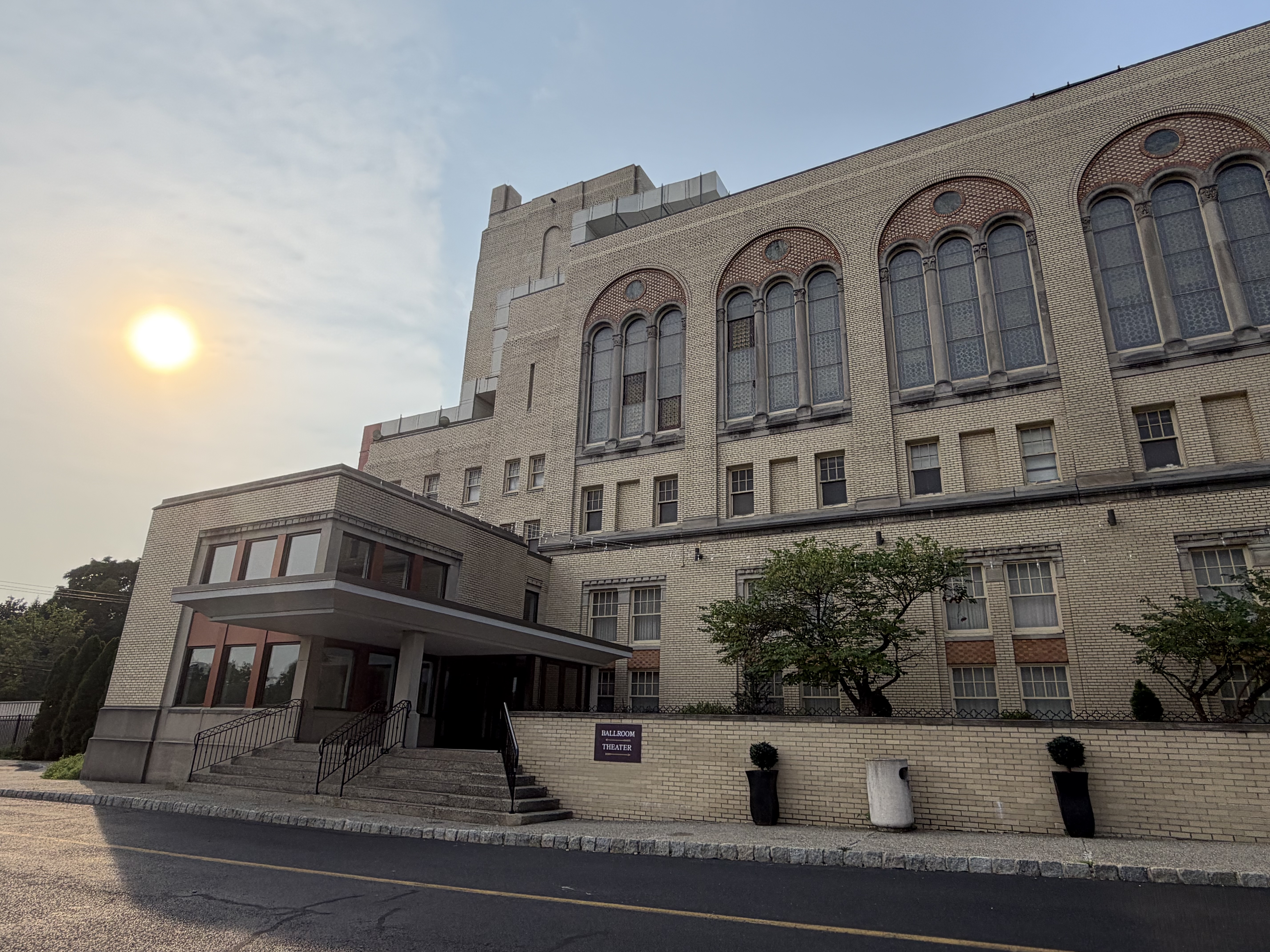
The financial struggles of a once-popular theater in Collingswood have spiraled into debate over who runs it in the first place and whether taxpayers should have paid millions of dollars to keep it afloat.
Collingswood Borough has rented the property housing the Scottish Rite Auditorium, which seats 1,050, for $1 annually from the Scottish Rite Freemasons for 23 years.
But Collingswood officials say they are looking to transfer management of the Scottish Rite — one of the largest theaters in South Jersey and once host to major touring acts like Kansas, David Crosby, and America — to Camden County after declining ticket sales left the onus on Collingswood to pay for expenses in recent years.
Commissioner Jim Maley, a former mayor and a Democratic member of borough government for the last 37 years, said post-pandemic theater losses have cost the borough $505,000 since 2020.
Maley helped found the nonprofit that manages the Scottish Rite property, Collingswood Foundation for the Arts, with the help of two former officials back in 1999. The foundation, which Maley said was created to secure arts grants for Collingswood, has long received the borough’s financial support without question.
That changed recently.
At a heated meeting of Collingswood’s three-person board of commissioners on Aug. 3, the public demanded to know who runs the Scottish Rite, whether it is really part of the borough, and, if not, why taxpayers are paying for it, especially when Collingwood schools are struggling.
Now, residents and at least one commissioner are scrambling to find answers, while Maley says the new round of questioning is just another effort by naysayers to undermine him.
What changed?
On July 31, a website by an anonymous user went live: “The Scottish Rite. Who actually runs it?”
The site, with a corresponding Google Drive of public documents, alleges that Maley and other officials created a conflict of interest by authorizing millions in payments and loans to Collingswood Foundation for the Arts, Maley’s brainchild, since 2003.
The conflict-of-interest accusation is not the first in Collingswood.
Maley said the theater issue is another example of meaningless attacks against him. The foundation managing the Scottish Rite is part of the borough, he said, and thus deserves its dollars.
Who runs the Scottish Rite?
Maley begins his account of the theater in 2003, when the Collingswood Foundation for the Arts gained control of the Scottish Rite. That is also when the borough secured a lease for the property and entered into a management agreement for the theater with the nonprofit.
The Collingswood Foundation for the Arts, which manages the Scottish Rite Auditorium and the Collingswood Grand Ballroom at 315 White Horse Pike, was the subject of recent confusion at a Collingswood commissioners meeting on Aug. 3, 2026.Sarah Nicell
Maley and his fellow commissioners passed an ordinance at that point to borrow $5 million in bonds to fund a loan to the foundation for renovations to the Scottish Rite. The loan was never paid back, Maley said, since there was no expectation the nonprofit would do so.
At first, Maley said, borough employees ran the theater.
But when the nonprofit made more money, its staff — one full-time employee and four regular part-timers, with 20 or more brought in specifically for events — switched to the foundation’s payroll, a change confirmed by Elizabeth Pigliacelli, Collingswood’s chief financial officer.
The borough allocated hundreds of thousands of dollars in its annual budgets for the theater’s operating expenses, insurance, and utilities, and the nonprofit repaid Collingswood at the end of each year.
That is, until the pandemic hit.
Deficits at the theater left the borough paying $250,000 and $55,000 in 2020 and 2021, respectively. The theater managed to power through for the next three years, but the borough had to pay the theater $200,000 in 2025 to keep it afloat, along with $100,000 to apply for a state grant for renovations to the property. That grant has not been awarded.
A 2007 management agreement on the borough website, the most recent available, says the foundation should pay for its own operations. Still, Maley said, the borough “has always been ultimately responsible.”
A duty to understand
Some residents say public records muddy Maley’s picture.
Unlike other borough entities, the foundation has not hosted regular board meetings for two years, according to Maley. Those meetings have never been public.
And while the borough rents the Scottish Rite property, the municipality’s public works department does not maintain it. On an Aug. 14 visit to the theater, Jimni Kricket, a South Jersey landscaping business, was doing outdoor work. The company is owned by Paula Lara, the executive director of Collingswood Foundation for the Arts.
“Public works does all municipal properties,” Commissioner Amy Henderson Riley said in a text, “except you’re correct that her company has the contract for that property. why? I don’t know.”
When the commissioners were asked on Aug. 3 who sits on the board, no one could answer.
Maley later told The Inquirer the board is made up of Collingwood’s current elected officials, but Mayor Solano-Ward and Henderson Riley, both Democrats elected last year, said they were not aware of that arrangement.
“If I don’t understand the relationship, how the heck is the public supposed to understand what this is?” Henderson Riley said.
Henderson Riley said she started questioning the nonprofit when she spotted a bill in the treasurer’s July report for the foundation’s “legal fees,” more than $2,300. The meeting minutes are not yet public, but Henderson Riley said she voted against the payment, and the bill was not paid.
The nonprofit was sued in January by Chammings Electric, a Vineland-based company, for thousands in unpaid bills for work at the Scottish Rite. The lawsuit, the second against the foundation since 2024, is ongoing.
Henderson Riley said she sought legal advice from the borough solicitor, Caitlin Harney Norcia, but Harney Norcia told her she could not answer because the nonprofit has paid her for attorney services.
“I just want to understand,” Henderson Riley said. “If it’s part of the Borough, I have a fiduciary duty to protect our assets, to understand what this is.”
In the meantime, Henderson Riley said, she has sought special counsel to help resolve the problem, which she said will likely take weeks.
The foundation’s nonprofit status also complicates the puzzle.
The foundation’s tax-exempt status was revoked by the IRS in 2024, since the nonprofit had failed to file its annual reports since 2020. Maley said that the missed deadlines were mistakes and that he has since filed them to hopefully re-up the foundation’s tax exemption.
New Jersey law confirming whether a municipality can create and run a nonprofit is hard to find.
But in a 2017 notice, the New Jersey Division of Local Government Services published its view, after some officials raised questions about whether a government can establish a charity. Municipalities are not allowed to create or operate nonprofits, and while local officials can facilitate the creation of a local nonprofit, the notice states they cannot “control its operations” by using taxpayer dollars.
The notice also said local officials cannot appoint government officials or staff as the majority of the nonprofit’s board.
Still, Maley said the nonprofit’s creation was facilitated by municipal lawyers. Several South Jersey attorneys specializing in municipal government declined to comment or said they could not due to their work with Collingswood Borough.
Lara did not return requests for comment.
‘Pass the buck’
Kate Delany, president of South Jersey Progressive Democrats and a Collingswood resident since 2007, was one of several people to demand answers at the Aug. 3 commissioners meeting.
“There are better ways to spend that money if we could get some of that back in our community,” Delany said.
Schools are one clear area in need of money, Delany said.
Maley said Collingswood has started conversations with Camden County to shift ownership “because they have a greater ability to handle the expense.”
Dan Keashen, a Camden County spokesperson, said nothing has been decided yet, since preliminary conversations have not begun. But some Collingswood residents do not want the theater to trade hands, since they worry about losing their chance at answers.
Delany, whose polling place is at the Scottish Rite, said Collingswood should not “pass the buck” to the county.
“That’s something we want to stop,” Delany said. “It’s a Collingswood issue, and we want it to stay in Collingswood.”