Tag: Weekend Reads

  • The Philly School District, with 70,000 empty seats, will spend $7M for a lease for a single school

    The Philly School District, with 70,000 empty seats, will spend $7M for a lease for a single school

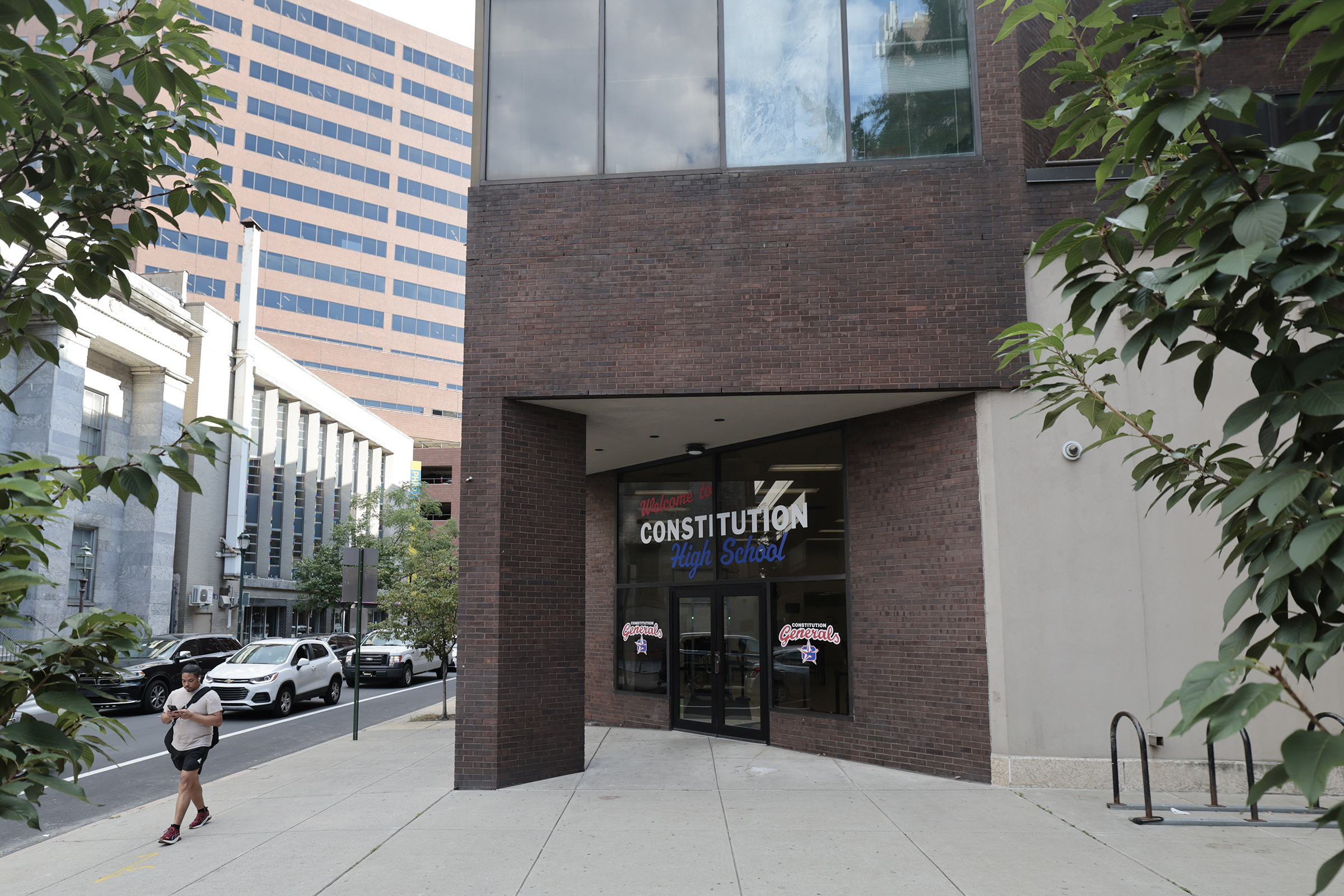
    The Philadelphia school board voted Thursday night to spend up to $7 million on rental space to house a district high school in Center City.

    The four-year agreement — the district will pay $1.7 million annually for two years, then $1.8 million and $1.9 million in the final two years — covers classrooms and related spaces at 18 S. Seventh St., the longtime home of Constitution High School.

    The move comes months after the district voted to close 17 schools, in part because it has 70,000 empty seats in schools across the city. The school system will also merge some schools — like Overbrook High and the Workshop School — as part of its $3 billion facilities master plan, to be enacted over the next decade, but it opted not to move Constitution High into any school with empty space.

    Board members voted unanimously to pass the resolution, which noted the district “continues to work through the completion of the Facilities Master Plan to properly identify appropriate space for our students.”

    Officials will “review the opportunities that may exist in the coming years that would cause us to re-evaluate the current necessary decision to remain at this location, which accommodates the needs of the students within this program. If the opportunity arises for the school district to consider relocation, the community and stakeholders will become aware and involved in this process.”

    The facilities plan calls for Constitution to move in 2035-36 into the current Bodine High building in Northern Liberties. Bodine will eventually expand and move into the current Penn Treaty building, in Fishtown, and Constitution will then occupy the Bodine space.

    Constitution, a citywide admissions school, has been located at its current building since the school opened in 2006 as part of Philadelphia’s small-schools boom. The school was designed with a civics focus, and deliberately located near the National Constitution Center.

    The district has moved other schools out of rental properties. It relocated Science Leadership Academy, which had been in rental space near the Franklin Institute, into Benjamin Franklin High. District officials have pointed to that colocation as a model.

    Charter renewals, but no mention of missing PSSAs or Kensington asbestos relocation

    The board also voted Thursday night to renew two charters: YouthBuild Philadelphia Charter, on North Broad Street in North Philadelphia, and Inquiry Charter, on Belmont Avenue in West Philadelphia.

    Both schools received five-year renewals.

    YouthBuild’s renewal came with conditions: agreeing to submit a student attendance plan, tracking students’ daily attendance, and divulging supports offered; and promising to ensure the school’s suspension rate is at or below the district’s suspension rate.

    No district official addressed two brewing matters: either the asbestos-related relocation of Kensington High students to the former Meehan Middle School building in the Northeast, more than seven miles away, or the district’s missing PSSA scores.

    Earlier on Thursday, a Lincoln High parent and a Mayfair resident were attempting to block Kensington’s move to Meehan, a closed district school currently used as swing space to house school populations that need a temporary home.

    Meehan shares a campus with Lincoln and Northeast Community Propel Academy, both of which are overcrowded. Parent Harold Brown and Peter McDermott, a former Philadelphia teacher who’s active in Mayfair civic life and city Democratic politics, say moving Kensington onto the campus will harm students.

    They also say placing 400 Kensington students and 90 staff at Meehan violates a Community Benefits Agreement signed in 2019, when neighbors OK’d building Propel to ease overcrowding at other Northeast schools.

    No mention was made, either, of the lack of data around Philadelphia students’ PSSA and Keystone exams.

    District officials said they won’t release the scores of students’ spring tests — which district officials have access to — because of a delay in Harrisburg.

    Though the district did receive preliminary student-level scores, and released limited data to some teachers and administrators in order to correctly roster a limited number of students, they have walled off the data from the vast majority of educators.

    A district spokesperson said this week that they won’t be using PSSA scores for the school selection process that admits students to 37 magnet schools. Instead, students can take an alternate assessment the district declined to name or detail.

    The scores are consequential in a district where officials frequently state their goal to become the fastest-improving large urban school system in the country. Philadelphia has posted academic gains during Superintendent Tony B. Watlington Sr.’s tenure and earned national attention for its post-pandemic improvement, but its students still generally struggle.

    Citywide, 34% of students score at grade level in English and 23% in math, as judged by 2024-25 standardized tests.

    Administration of this year’s PSSAs, given to students in third through eighth grades, was snarled by some technical glitches. It was the first year Pennsylvania required students to take the exams online.

    Research shows that scores usually dip when tests move online.

    Kristin Luebbert, a retired district teacher, urged the board and the district to release the scores.

    “Obviously, the administration must have strong feelings about what they show,” Luebbert said of the scores. “At this point, we all know they’re out there, so you might as well release them.”
  • Video shows altercation before off-duty Philadelphia officer was killed

    Video shows altercation before off-duty Philadelphia officer was killed

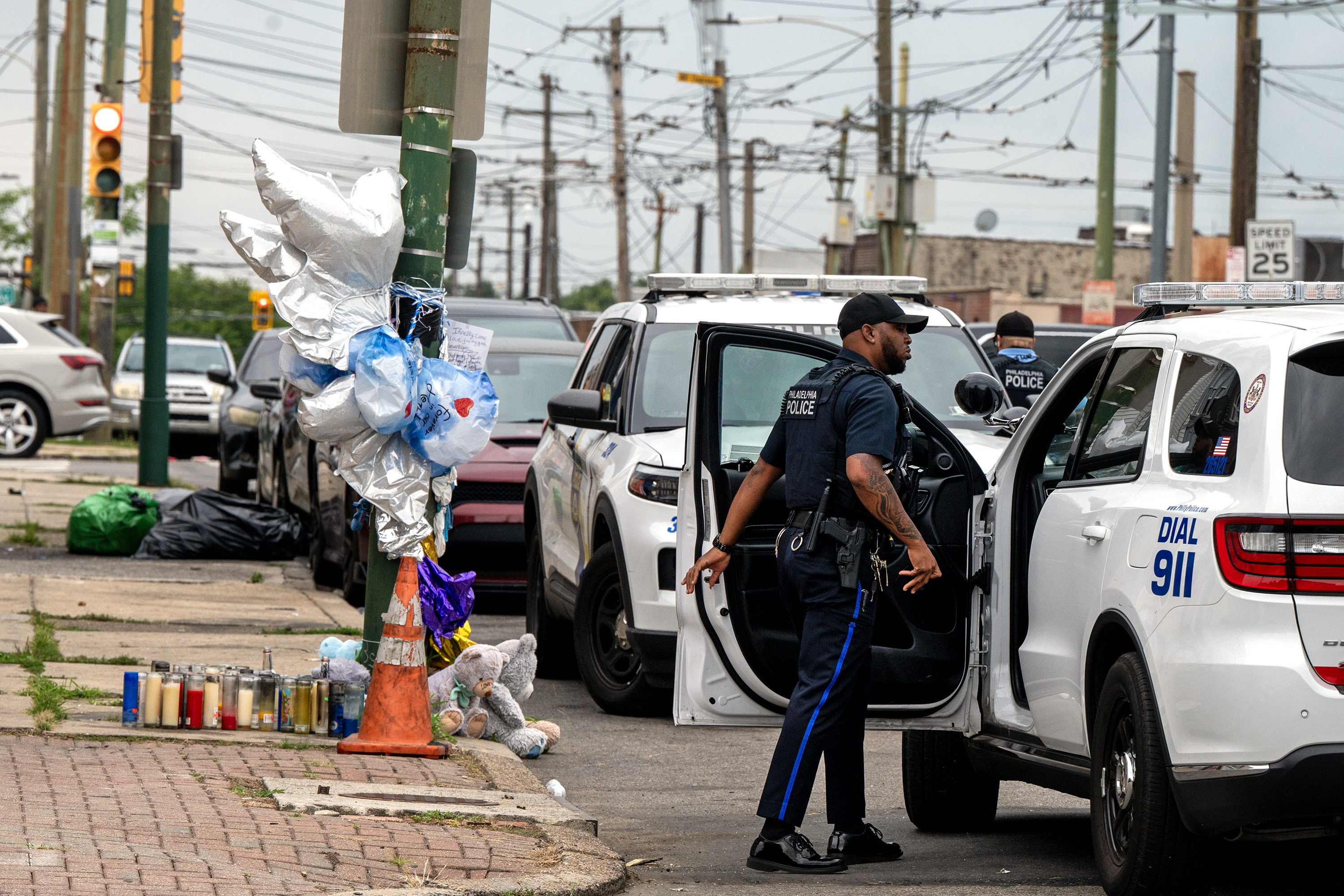
    Seconds before an off-duty Philadelphia police officer was shot and killed outside a Southwest Philadelphia nightclub, he was involved in a confrontation with the man who police believe fired the fatal shot, according to a surveillance video under review by department investigators.

    The video captures a previously unseen part of the encounter that preceded the Aug. 16 killing of Officer Alhassane Barry, 29. But it does not show the shooting itself, leaving critical questions unanswered.

    Police spokesperson Sgt. Eric Gripp confirmed Friday that the department is reviewing the video as part of its investigation. But he declined to comment further, citing an “active homicide investigation.”

    No charges had been filed against the alleged shooter as of Friday afternoon.

    The newly surfaced video footage, which was obtained and reviewed by The Inquirer, appears to show Barry leaving Nipsey’s Hookah Lounge with the man police have identified as a suspect in the killing and a third man who has not been publicly identified.

    Barry is seen in the video moving toward the alleged shooter, who is then struck twice in the head by the third man. The blows appear to knock him out of the camera’s view.

    Barry and the third man then run in the same direction, also disappearing off screen.

    A few seconds later, Barry comes back into view, falling onto the sidewalk outside the nightclub. He appears to be bleeding from a gunshot wound to his abdomen.

    Police had said they responded to a report of gunfire shortly before 4 a.m. Aug. 16 on the 7200 block of Elmwood Avenue. Officers found Barry and a 35-year-old man suffering from gunshot wounds.

    Both were taken to Penn Presbyterian Medical Center, where Barry was pronounced dead at about 8 a.m. The other man, who had been shot multiple times, was critically injured.

    It was unclear Friday whether the 35-year-old victim was one of the men in the surveillance camera footage.

    The footage comes as investigators try to determine what led to the shooting of the off-duty officer and whether the circumstances warrant criminal charges against the man police believe fired the fatal shot.

    Two law enforcement sources with knowledge of the investigation said Friday that self-defense had become part of the discussion about whether charges would be appropriate. The sources, who were not authorized to speak publicly about the case, said the investigation had also not yet been referred by police to the Philadelphia District Attorney’s Office for review.

    Police previously said that Barry, the other critically injured victim, and the suspected shooter had been inside the after-hours lounge before the shooting. The men exchanged words inside, Deputy Commissioner Frank Vanore said earlier this week, and the verbal confrontation continued after they went outside. Police said the altercation then became physical before the men were separated and the suspect opened fire.

    The newly surfaced video appears to capture at least part of that physical confrontation. The video does not show what happened before the men exited the club. And because the shooting occurs off camera, it does not show the moments in which the man fired his gun.

    Investigators recovered a firearm and eight spent 9mm shell casings at the scene.

    Barry had been a Philadelphia police officer for two years and was assigned to the 12th District in Southwest Philadelphia. Before joining the department, he served for a decade in the Pennsylvania National Guard, including a two-year deployment to Egypt’s Sinai Peninsula, and left the Army as a sergeant, according to an Army spokesperson.

    His killing prompted a funeral attended by more than 100 people at the Fouta Islamic Center of Philadelphia on Monday. Mourners and fellow officers remembered Barry as a young man devoted to public service.

  • Kensington High kids will go to Meehan after a Philly judge denies an injunction to stop the relocation

    Kensington High kids will go to Meehan after a Philly judge denies an injunction to stop the relocation

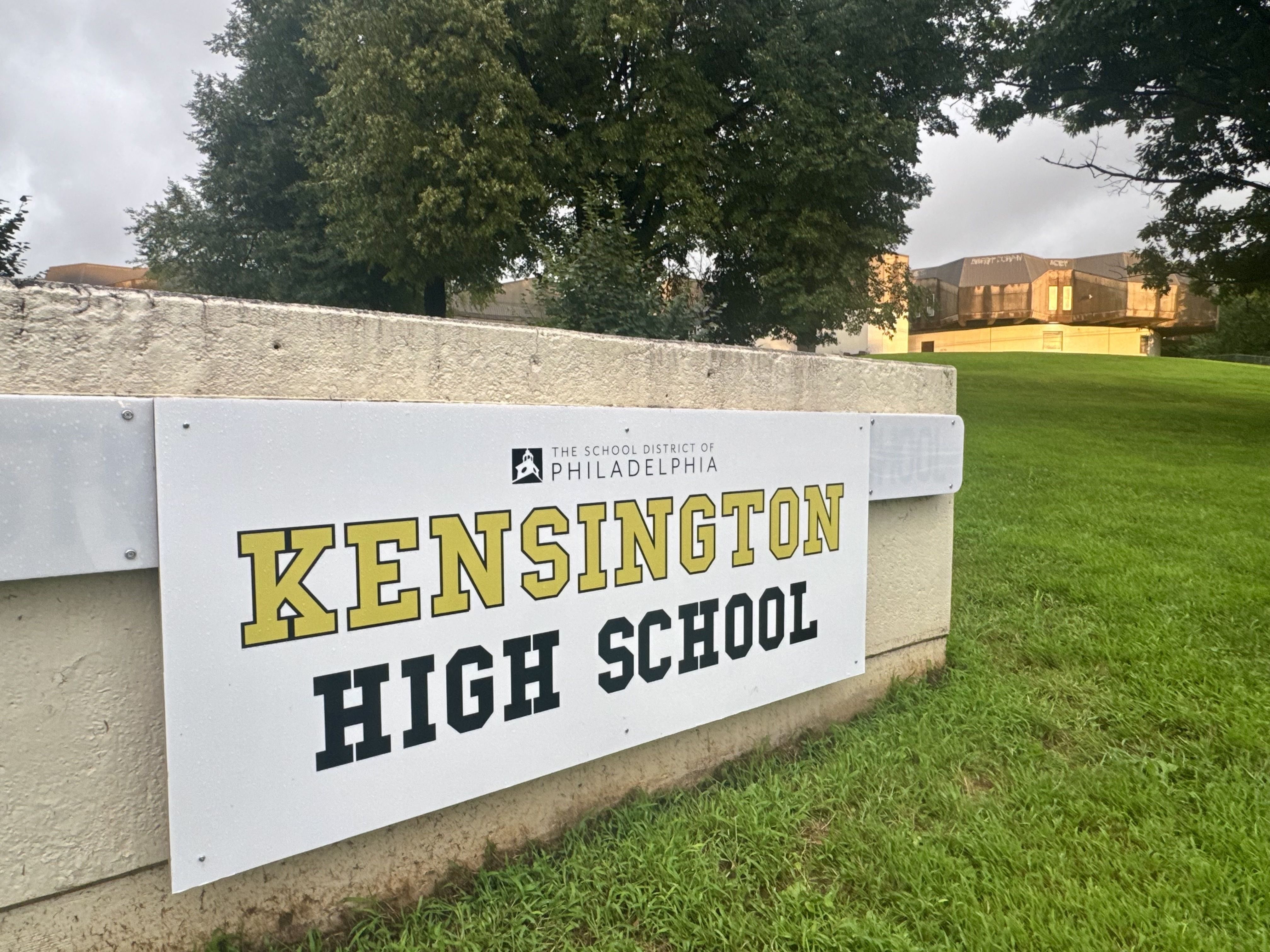
    Kensington High students can begin the 2026-27 school year at the former Austin Meehan Middle School in the Northeast, on Monday — despite a lawsuit that hoped to halt the relocation before classes begin.

    Philadelphia Common Pleas Court Judge Christopher R. Hall on Friday declined to issue an emergency injunction that would have prevented moving Kensington students to Meehan, a now-empty Northeast middle school.

    Asbestos issues rendered Kensington’s E. Clearfield Street building temporarily unusable. District officials decided to move Kensington’s 400-plus students and 90 staff to Meehan — on Ryan Avenue in Mayfair — until Kensington’s building is ready, likely in January.

    Meehan shares a campus with Lincoln High and Northeast Community Propel Academy, which are both already overcrowded.

    Harold Brown, parent of a rising sophomore at Lincoln, and Peter McDermott, a former district teacher and Mayfair civic leader, objected to the relocation, saying that moving Kensington into the Meehan space would create safety and other concerns.

    After a four-hour hearing, Hall said he did not “believe that there is evidence of an immediate and irreparable harm” if Kensington students start the year at Meehan on Monday.

    In fact, the judge said, “I think granting the injunction would throw off the Kensington families,” forcing the district to pivot to virtual instruction on short notice, which would harm students’ academics, food security and social and emotional needs.

    “The balance does not tip there,” Hall said in court.

    Hall’s ruling rests on the district meeting a 5 p.m. Friday deadline to submit a safety plan for the Kensington-at-Meehan campus. Hall and McDermott’s lawyers said they would file another injunction request.

    More police, and yellow bus service for most Kensington students

    Witnesses for both sides made their case over several hours.

    The school system rejected two alternative sites closer to Kensington — Roberto Clemente Middle School, in North Philadelphia, and Penn Treaty High School, in Fishtown — before settling on Meehan, Teresa Fleming, chief operating officer, told the judge.

    Clemente was considered the better alternative, but ultimately could not accommodate all Kensington programs. Penn Treaty didn’t meet accessibility needs for students with disabilities, Fleming said.

    And Craig Johnson, the school system’s chief safety officer, said the district is adding police officers to ensure student arrival and dismissal run smoothly.

    Kensington typically had four school safety officers; it will get a fifth full-time officer with the relocation to Meehan, and a sixth part-time officer to help with arrival and dismissal.

    Answering concerns about additional students complicating the transit situation at the Lincoln-Meehan-Propel campus, Fleming said there will be no more than 90 Kensington students traveling to Meehan by SEPTA buses.

    Just under 70 Kensington students already receive yellow bus services, and those will continue, Fleming said; an additional 250 students now live close enough to walk to Kensington, and will take yellow bus shuttles from Kensington to Meehan. The remaining 90 students, who are out of catchment for Kensington, already receive SEPTA fare cards and will continue to do so, but may also opt to use the yellow buses if they so choose.

    ‘The kids are just kids’

    Brown, on the witness stand, said he had no problem with Kensington students specifically.

    “I don’t even want to say the kids are bad, the kids are just kids, but if you have more kids, things arise,” said Brown.

    After Hall made his ruling, Michael van der Veen, a lawyer for the plaintiffs, said his clients remained concerned, despite the district’s plans.

    What if “a week from now, or a month from now, we get a shooting, a stabbing, a killing, or violence that breaks out there?” van der Veen said.

    Regardless of Hall’s rejection of the injunction, the lawsuit will continue, van der Veen said, and “we’re going to continue to look at what the legal options are.”

    William Brennan, another lawyer representing the plaintiffs, said the relocation of Kensington students to Meehan is “a neighborhood safety issue, and we’re going to do everything we can to keep the neighborhood safe.”

    Hall, during the hearing, asked Brown and McDermott’s lawyers why parents and the neighborhood groups – who also say the district is violating 2019 and 2020 community benefits agreements – did not object to other students using Meehan.

    In the past, elementary school students from Mayfair Elementary — which was overcrowded, and Thomas Holme Elementary, which needed a temporary building while its new school structure was being built — learned in the Meehan space.

    “There’s a significant difference in that they were K-8 students, and now we’re looking at 9-12 students,” said McDermott, who previously taught in the district, at Benjamin Franklin High, when it and Science Leadership Academy were relocated after construction on their shared building went awry.

    Brennan expressed skepticism that the district’s safety plan, finished a few days before students return to class, will be adequate.

    “It sounds like the plan is to drop the bomb on the neighborhood,” Brennan said, “and just hope for the best.”

  • A settlement could preserve more of Chester County’s sprawling Rock Hill Farm — but still allow for development

    A settlement could preserve more of Chester County’s sprawling Rock Hill Farm — but still allow for development

    A proposed settlement with the developer who is seeking to turn the rolling, open Rock Hill Farm into housing could significantly preserve more of the land than initially planned, if township officials decide to accept it.

    During a public meeting Thursday, Willistown Township officials laid out for residents a potential settlement between the township and Rock Hill Farm Acquisition LLC, the developer who purchased the sprawling 222-acre parcel, and an adjacent 24-acre property, in 2021. Supervisors did not vote on the plans Thursday night; a vote will be held at a future, undetermined meeting.

    A Chester County judge last month sided with the developer, overturning the township’s September 2024 denial of plans to build more than a dozen homes on the property. The township appealed the ruling earlier this month.

    But under a proposed settlement, the developer would radically scale down the plan that was before the court, preserving roughly 166 acres of the larger tract, or 75% of the land, under a conservation easement. The land would be subdivided into 18 lots, down from roughly 24, with all but one lot proposed for residential development. The one non-residential lot would be conserved as open space. The lots vary from about four acres to up to 26 acres.

    “This is a good ‘best-case scenario’ for us,” said Molly Perrin, chairperson of Willistown’s board of supervisors. “It could get a lot worse than this. Ongoing litigation would almost ensure that.”

    A view of part of Rock Hill Farm, in Paoli, Tuesday, August 2, 2022. JESSICA GRIFFIN / Staff Photographer

    A conservation easement for the preserved land would be held by the Willistown Conservation Trust. The trust would maintain the protected woodland as private property, not public land.

    Separately, the developer has offered Willistown Conservation Trust the exclusive option to buy the adjacent 24-acre property, if the settlement agreement is approved by the township and court. The township would plan to buy it from the trust using designated open space funds, and preserve the property as open land. The board voted to approve the purchase in February, officials said.

    “We understand there are members of the community who feel very strongly that the entirety of the 222-acre parcel should be coJ. Brian O’Neillmpletely conserved with no future development,” Perrin said. “Municipalities cannot simply ban a property from being developed. It would be nice if we could, except that when that’s turned against us, we would all hate it.”

    The property, purchased by developer for $25.4 million, boasts rolling hills, meadows, woodlands and historically significant properties across its hundreds of acres.

    For years, it had been owned by a conservation-minded local family. When it sold to O’Neill, who originally planned to build up to 24 residential lots on the grounds with only roughly 52 acres of land preserved, it sparked a community battle.

    Rock Hill Farm in August 2022. JESSICA GRIFFIN / Staff Photographer

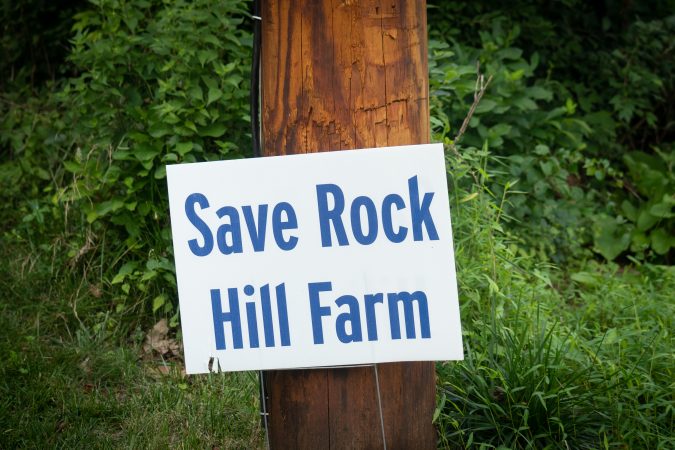
    Community members launched a “Save Rock Hill Farm” campaign in an effort to fend off the development, as other Chester County municipalities have successfully done when homebuilders have come knocking.

    At Thursday’s meeting, residents were relatively open to the proposed settlement.

    David Rawson, who lives in the township, thought it was a “far better plan than I thought anybody would be able to negotiate.”

    It’s the “best deal you’re going to get short of continuing to fight,” resident Joe Heenan told the board.

    “I’m not opposed to the fight,” he said, “but I think it’d be nice to have odds in the favor.”

    Others hoped more could still be done.

    Invoking President Franklin D. Roosevelt, Les Haggett, a leader of Save Rock Hill, noted, “Sometimes fear is the only thing we have to fear.”

    “I don’t think it’s the right time to settle,” he said. “My thought is, don’t be afraid. Don’t settle.”

    Supervisor Bill Shoemaker said the township was working to achieve the best possible plan. Though they feel their appeal is “based on good and solid reasons,” they thought that of their initial filing, too, he said.

    “The court is always a bit of a gamble,” he said. “So we have to consider very, very carefully what the best possible plan would be.”

    This suburban content is produced with support from the Leslie Miller and Richard Worley Foundation and The Lenfest Institute for Journalism. Editorial content is created independently of the project donors. Gifts to support The Inquirer’s high-impact journalism can be made at inquirer.com/donate. A list of Lenfest Institute donors can be found at lenfestinstitute.org/supporters.

  • West Chester limits where smoke shops can go, after seeing pushback when one opened in a neighborhood

    West Chester limits where smoke shops can go, after seeing pushback when one opened in a neighborhood

    West Chester will limit where future smoke and vape shops can open within the borough, after an innocuous corner store grandfathered into a residential neighborhood became a glowing, neon vape shop and brought pushback.

    Council voted unanimously Wednesday to amend its zoning ordinance to allow smoke and vape shops by conditional use only in the town center and commercial services district. The goal is to considerably limit where the shops can appear, after a resident came to council with concerns about the sale of a small corner store to a new owner who put in a vape shop. Its bright lights flooded the resident’s home, and it was right by school bus stops.

    The ordinance also defines smoke and tobacco shops as a retail store that primarily sells tobacco, CBD, THC, kratom, and vaping products. If at least 20% of the store’s display area is dedicated to the sale of smoking products, it’s considered a smoke shop.

    The measure also outlined parameters including limits on how close the shops can be to one another and requiring them to be more than 500 feet away from schools, public recreation facilities, day cares, school bus stops, libraries, and religious institutions. The shops can’t be permitted on a lot or within a building that is also residential. The shops can’t sell food.

    It also places restrictions on age, prohibiting those under the age of 18 from entering the shop without a parent or guardian, and requiring the business to verify ages. Anyone under 18 cannot be employed to work within the store.

    “It helps us kind of separate incompatible uses, preserve the quality of life, health, safety, and welfare of our residents, particularly the vulnerable populations,” said council member Lisa Kearns. “It also helps us make certain our business district remains diverse, and vape shops don’t take over our commercial areas or neighborhoods.”

    West Chester’s town center has at least five smoke and vape shops and the updated zoning won’t affect any of the existing businesses. Instead, the ordinance will keep others from coming into the roughly handful of other retail locations that are in residential areas, officials said.

    “We in the borough are not trying to stifle business as much as we’re trying to create a balance so that families and residents can have the quality of life that they’re looking for,” said Nicole Scimone, council president.

    A suggestion from the borough’s planning commission to carve cigar shops out as a separate entity was ultimately not included, as the amendment would require months before it came back to council for approval. At Wednesday’s meeting, Kearns urged the borough to adopt the amendment because she would “hate to see another vape shop open up where we don’t want it to be between now and then.”

    Meanwhile, an ordinance seeking to regulate the sale of kratom — an herbal substance that can have effects similar to opioids and stimulants, according to the National Institutes of Health — was sent back to committee for further refinement. Kratom often appears in vape and smoke shops.

    The ordinance would have prohibited the sale and public use of kratom and 7-OH, the synthetic of kratom, in the borough. It wouldn’t have prohibited the use or possession.

    Supporters of the “leaf” version of the substance — which often appears as a supplement or a tea — opposed West Chester’s proposed ordinance and pressed council to tweak the language.

    Some council members felt they were overstepping in passing a measure.

    “I think this is a big lane violation, quite frankly. We are not the FDA,” said council member Brian Travis. “I asked point blank the chief of police if this even was on the radar. It’s not. Nothing’s come up. It’s not a problem right now locally, but we’re making it a problem.”

    Council member Bernie Flynn said that, after talking with two soon-to-be West Chester University students, neither had heard of it. It made him wonder how popular it really was.

    “I don’t think we should be in the business of telling adults what they can or cannot do,” he said.

    Several bills in the state legislature have been introduced regarding the sale and use of kratom. In July, the U.S. Drug Enforcement Administration announced it planned to temporarily place the chemical found in the synthetic kratom, 7-OH, in Schedule I of the Controlled Substances Act, alongside drugs like heroin and LSD. That won’t apply to the plant itself.

    This suburban content is produced with support from the Leslie Miller and Richard Worley Foundation and The Lenfest Institute for Journalism. Editorial content is created independently of the project donors. Gifts to support The Inquirer’s high-impact journalism can be made at inquirer.com/donate. A list of Lenfest Institute donors can be found at lenfestinstitute.org/supporters.

  • Eight firefighters were killed battling a massive refinery blaze on this week in Philly history

    Eight firefighters were killed battling a massive refinery blaze on this week in Philly history

    The match was struck without a hiss.

    In the early hours of a summer Sunday morning, vapors snuck out of an overfilled oil storage tank and snaked through the hulking Gulf Oil Refinery smeared along the Schuylkill in Southwest Philly.

    What happened next was so destructive, and so deadly, it was assigned a chilling and haunting label: “Refinery Holocaust.”

    Nightmare fuel

    Around 6 a.m. on Aug. 17, 1975, the vapors found an ignition source in a nearby boiler house.

    The overfilled storage tank, which at the time was being filled from a Venezuelan tanker, contained more than 70,000 barrels when the fire started.

    The explosion at the sprawling refinery Gulf called Girard Point drew a massive response from local fire departments.

    Teams coated the oil-slicked flames with firefighting foam, and the six-alarm blaze was declared under control just before 9 a.m.

    Eight hours later, a second explosion rocked the refinery, spreading to more storage tanks and sending racing flames through waist-deep pools of water mixed with oil and chemicals and engulfing a group of firefighters standing in those pools.

    The second explosion elevated the inferno to 11 alarms.

    Ruin and ashes

    Under thick clouds of charcoal-gray smoke a day later, three Gulf employees steered a rowboat over the toxic pools to shut off a valve that was spewing liquid naphtha. The highly flammable chemical used in the refining process was fueling the last fire, and the last dangerous threat.

    On Aug. 26, nine days after the escaped vapor silently swept through the refinery and ignited a blaze that wreaked $10 million (or more than $60 million today) in damage, the last of the flames were finally and fully extinguished.

    The Daily News noted that the occasion was celebrated by those in attendance with cigars and watermelon.

    Investigators ultimately concluded that inattentive employees had let the tanks overfill, and the buildup of flammable vapors ultimately led to the explosions. The city cited and fined the corporation for code violations.

    Many large storage tanks, the refinery’s office building, and an assortment of pipelines and processing units were wiped out.

    Six firefighters died at the scene, two others succumbed later to severe burns, and more than 30 were injured — two critically — in what is considered one of the deadliest days in the department’s history.

    “The tanks, the line — maybe you can replace them,” Bill Zahner, then a Gulf fire safety man, told the Daily News in 1975, “but the bodies you just can’t replace.”

  • A troubling photo of a missing woman appeared on Raymond Horsch’s erotic website, years before police investigated

    A troubling photo of a missing woman appeared on Raymond Horsch’s erotic website, years before police investigated

    In September 2023, seven months after Blair Tonzelli was reported missing, a nude photograph of her appeared prominently on a local pornographer’s website.

    She is staring at the camera, with what appears to be a black eye and blood running down her lower lip.

    While it is unclear when it was taken, Raymond “R.C.” Horsch first uploaded the picture to his website’s homepage around 2020, sometime after he had met Tonzelli in Kensington, and he used it as one of several lead images on the site for years, according to archived website data reviewed by The Inquirer.

    Horsch’s website is now inactive. But it was up and running when Tonzelli’s friends reported her missing in February 2023, telling officers she was last seen at Horsch’s home the previous summer.

    Police have not said whether officers ever visited the home or interviewed Horsch about her disappearance — or if they were aware Tonzelli’s nude photo was featured on his public website. Officers raided the home as part of a drug investigation in May 2025, but investigators in that case did not appear to link the property to any missing women at that time.

    A Philadelphia Police Department spokesperson declined to comment, citing an ongoing investigation.

    Tonzelli’s disappearance did not appear to gain attention from law enforcement until June of this year, when police arrested Horsch’s son, Eugene, who was with a woman carrying a fake ID in Tonzelli’s name.

    The discovery ignited a two-month search of Horsch’s home, where police unearthed an array of disturbing evidence — including “graphic and dark” photos, videos, and writings on hard drives. Police on Aug. 12 said the footage reviewed so far suggests two other missing women had died inside the property: Maribel Fresses, reported missing in 2018, and Gabrielle Amarando, who went missing in 2012.

    Police have found no human remains, and have not said whether Tonzelli was featured in any of the materials on the hard drives. She remains missing.

    Tonzelli was 35 when she was reported missing. Her Facebook page states she went to Archbishop Ryan High School. Her family could not be reached for comment.

    She is among at least three dozen women, many still unidentified, featured in Horsch’s works. Website data showed his online pages once displayed at least 2,100 unique images spanning decades, though The Inquirer was able to recover only a fraction of them.

    Blair Tonzelli, in one of her Facebook posts. Tonzelli was last seen at the Horsch property on West Chew Avenue in 2016.Facebook account of Blair Tonzelli

    The elder Horsch died in May 2025 at the age of 82 from lung issues. He was well-known in pornographic and erotic art circles for publishing more than a dozen photo books, films, and novels. Some of Horsch’s writings describe a nearly autobiographical character who is an “empathetic” serial killer, murdering addicts to end their suffering. He built a small following, in part, by leaving viewers wondering what was real or fake.

    Vulnerable women, desperate to stay off the streets and out of withdrawal, were often used as props for his violent fantasies as he profited off footage or images of them appearing to be strangled, drowned, hanged, or crucified.

    Beneath the rotating photos of gaunt and dazed models, Horsch’s homepage also contained a chilling quote, attributed to him.

    “I fear what I love,” he wrote. “And destroy what I fear.”

    While Horsch claimed all his scenes were staged and consensual, he openly acknowledged that he recruited women in addiction with cash and drugs to enact his “psychosexual” fantasies.

    “Without exception, their singular interest is their drug,” Horsch said in a 2006 interview. “Provide that — or the means — and they will do anything.”

    Tonzelli had battled addiction for years, according to her friends. Horsch was in his late 70s when met her in Kensington, while she was living at a known drug house. He later claimed she worked as a “home health aide” before she went missing in August 2022.

    The recent search for Tonzelli also led police to reexamine the disappearance of Amy McHale, Horsch’s ex-wife and onetime film collaborator, who was last seen at the family home in 2016.

    McHale is also among the women Horsch featured on his website, in films and music videos.

    So is Krista Killen, Horsch’s longtime companion, who died of an overdose last year. Killen lived at the Olney house, where she acted in several of Horsch’s publicly released films, on and off for years.

    Several other women who cycled through the Olney house died of overdoses. Another woman who appeared in Horsch’s films and photographs overdosed in 2016 and a man was charged after leaving her dead body on the side of the road.

    While some photos he took were more conventional erotic portraits, Horsch also published galleries of work on his website that portrayed women as dead or covered in blood. One series — titled “Thanatopsis,” a Greek term for the contemplation of death — shows a woman hanging from a noose. Horsch noted that the series also contained photographs of the real corpses of fatal overdose victims.

    In a 2007 interview, Horsch said he focused on people addicted to opioids because he saw their need as a mirror of his own desires for increasingly “extreme” forms of sexual gratification.

    “My motivation goes beyond desire and well into the realm of obsession,” Horsch said. “I am very much addicted to sex. And the more I do and the more I experience, the more jaded I become and the greater the stimulation, and extreme, I require. This is an obvious parallel to heroin addiction.”

    But Horsch also sought to profit.

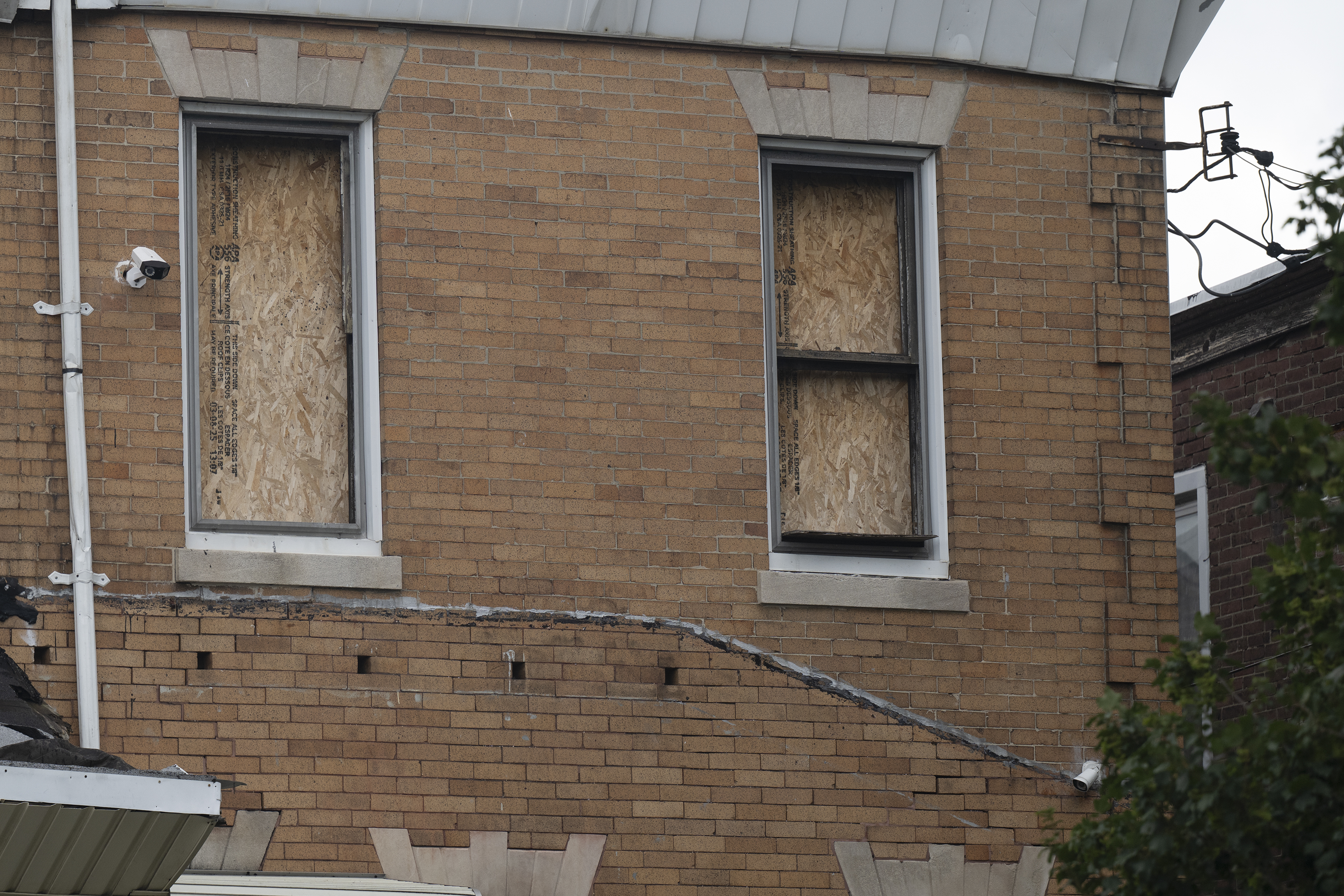
    A surveillance camera is mounted near a boarded-up second-floor window at the home of Eugene Albert Horsch on West Chew Avenue in the Olney section of Philadelphia as investigators dig for possible evidence on Tuesday, July 21, 2026.Jose F. Moreno / Staff Photographer

    Through at least 2019, Horsch ran a membership program on his website, with subscription tiers ranging from $3 a day to $20 a year that offered paying customers “unrestricted access” to his photographs and videos.

    Other archived images and video reviewed by The Inquirer show that Horsch used his personal website to solicit an escort service from 2017 through 2021, and reviews suggest that clients may have visited the Olney house.

    Philadelphia police are in the process of sorting through the trove of digital materials recovered inside the home, and have said they may return to the property to continue searching the premises for evidence connected to the women.

    Eugene Horsch, 44, remains in federal custody, charged with illegal gun possession. He has not been charged with any crimes connected to the women’s deaths or disappearances. His lawyer has declined to comment.

    Police have declined to say whether they believe the younger Horsch played a role in his father’s business. Still, Inspector Raymond Evers said earlier this month, he resided in the house now linked to at least four missing women and a cache of disturbing documents.

    “Eugene lived there,” he said. “He lived there for a long time.”

  • The Portal has to leave City Hall. Here’s where people think it should go next in Philly.

    The Portal has to leave City Hall. Here’s where people think it should go next in Philly.

    I’ve been a fan of the Portal ever since I spent five hours documenting how Philadelphians reacted to it and how the world reacted to us when this interactive installation arrived here in 2024.

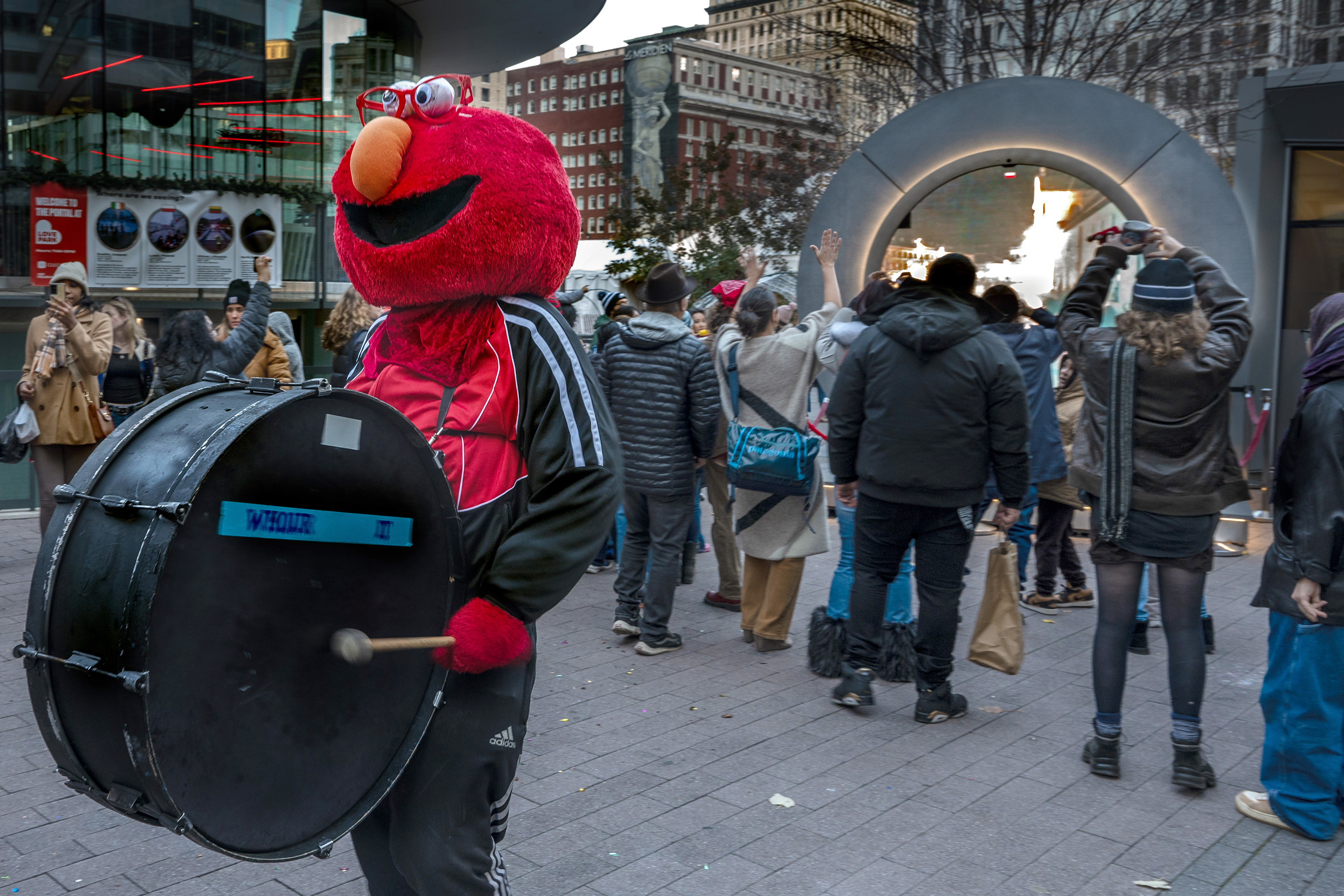
    The soundless, circular livestream screen with sci-fi vibes that connects strangers around the world was at its best at its first location in LOVE Park. But after it was vandalized twice, it was relocated to the courtyard of City Hall last year, where it has remained.

    Honestly, I’m impressed it made it this long. Most of us didn’t give it 24 hours.

    The Portal’s time here may soon be up though if organizers can’t find a new home for it. The city didn’t extend its permit, citing upcoming commitments to the holiday market in the courtyard, Nicolas Klaus, CEO of Portals.org, told The Inquirer last week.

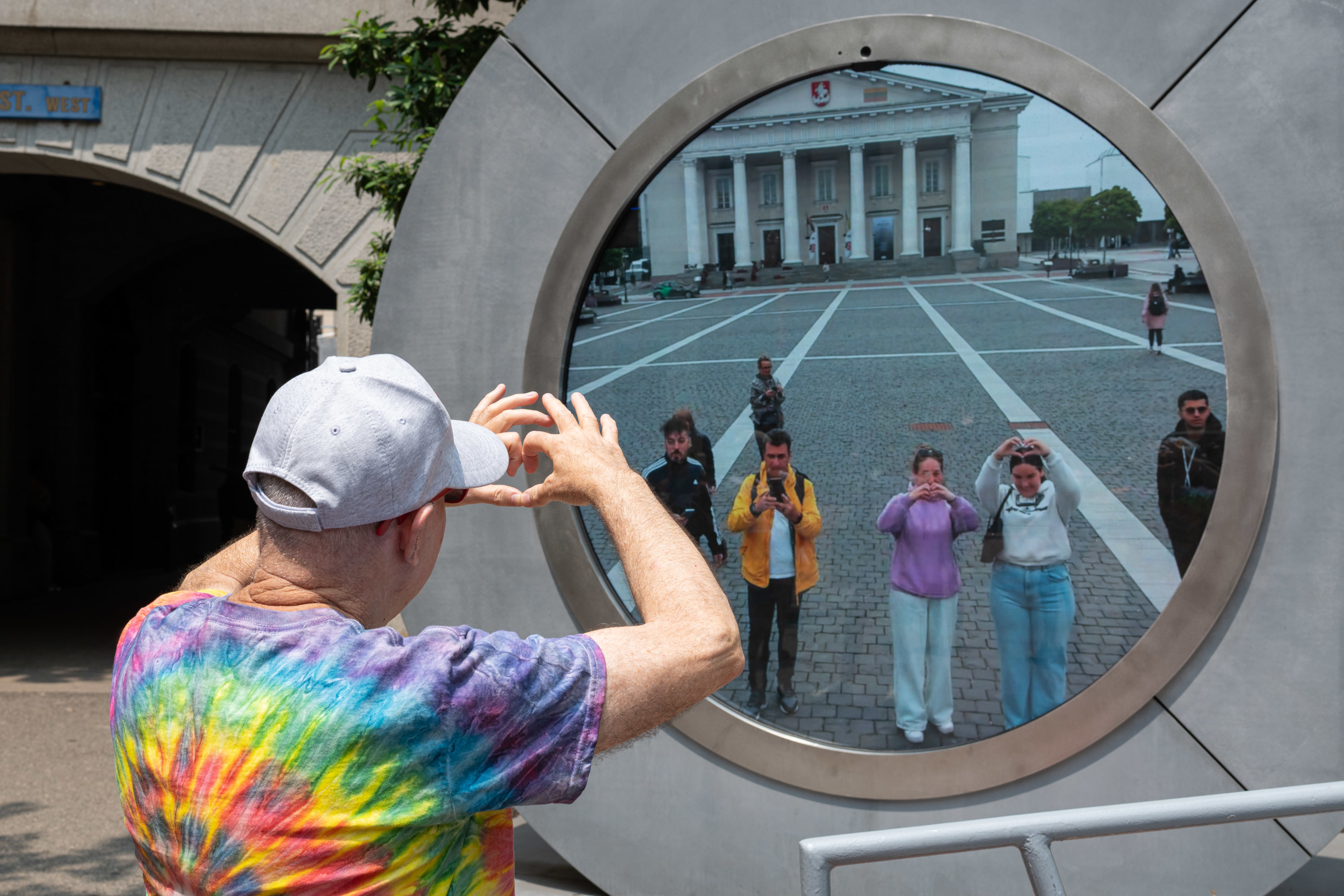
    Steve Farkas holds up a heart sign to people in Lithuania at the Philadelphia Portal installation in the courtyard of City Hall on June 11, 2025.Kaiden J. Yu / Staff Photographer

    With the permit due to expire at the end of October, Portals.org is now looking for a new home for the 3.5-ton video screen and a sponsor to cover the cost of relocation and annual maintenance, which averages about $30,000 a year, according to Klaus.

    Philly could lose the Portal to another city if a new site isn’t found, and Philly doesn’t like losing anything — even if it is our fault — so I asked readers on social media where it should head next.

    With money no object and logic an afterthought, here’s where people said they’d like to see the Portal go.

    The Art Museum steps

    If you want to frame this city beautifully for outsiders, there’s perhaps no better place to put the Portal than at the top of the Philadelphia Museum of Art steps looking down the Benjamin Franklin Parkway. This was the clear winner from people who answered my question seriously (I was surprised I got any serious answers).

    I’m sure the “Rocky” statue won’t mind if we put the Portal right here for the best view. Jose F. Moreno / Staff Photographer

    We could put it right in front of the Rocky statue so that when folks run up the stairs, people around the world can cheer them on or make fun of them for tripping. Nobody will be able to hear their laughter, so what does it matter anyway? Let’s give the viewers what they really want — athleticism and slapstick. Plus, the Art Museum is where all of our great city celebrations are held. Next time one of our teams wins a championship and ends its parade at the museum steps, folks could fly to Lithuania for a front-row seat to the celebration. Pirmyn paukščiai!

    The sports complex

    For a crash course in our culture, there’s nowhere to get the full-on Philly quicker than by putting the Portal at the sports complex, so long as organizers can also slap an R-rating and a force field around that thing.

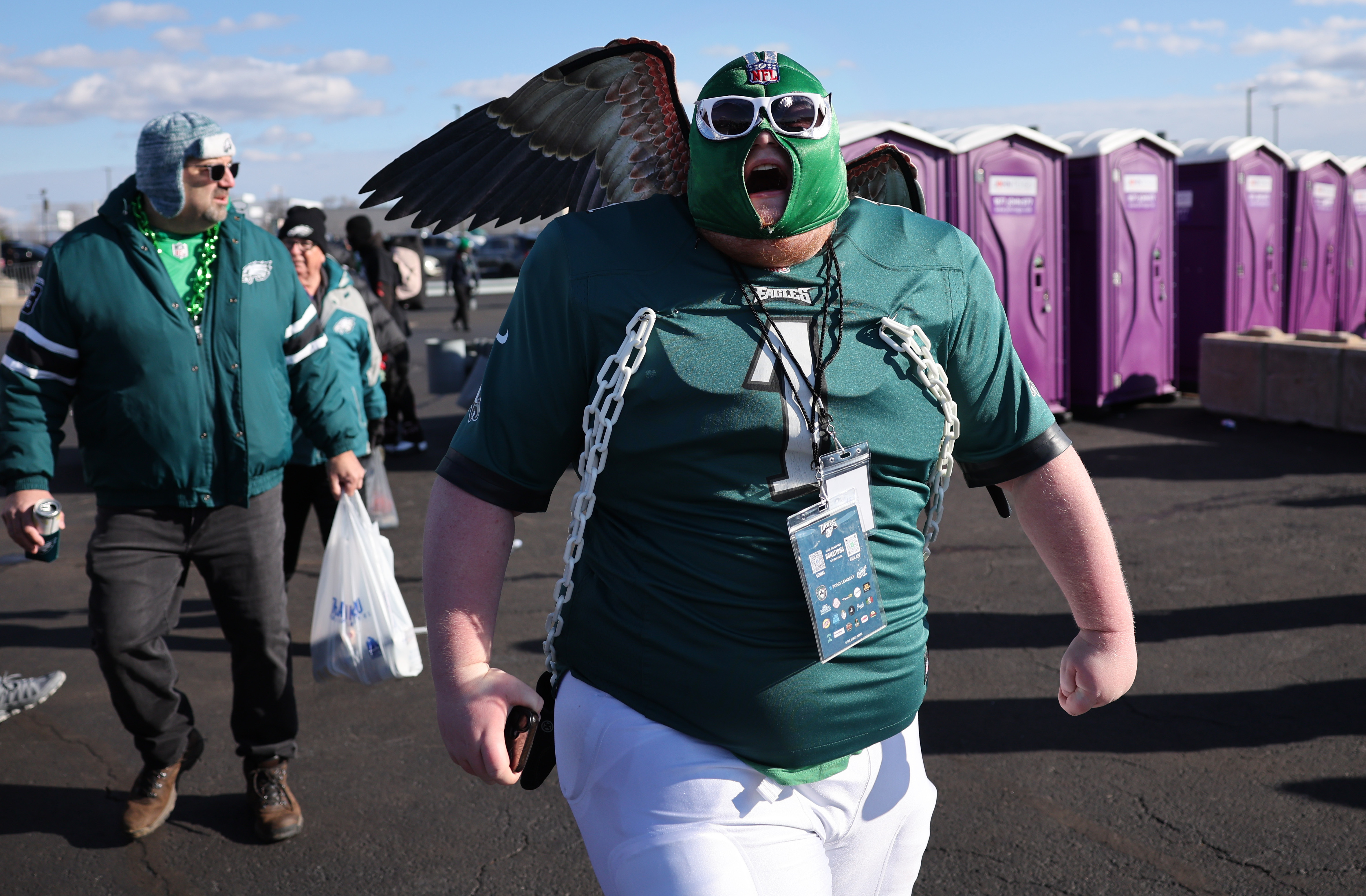
    Several people suggested putting the Portal in tailgating lots (particularly K and Jetro), which I think the Irish would really get a kick out of. I can picture “Whiskey in the Jar” sing-a-longs across the pond and peat moss fires in the parking lots.

    Welcome to our tailgating, world. David Maialetti / Staff Photographer

    Others suggested placing the Portal right on Lincoln Financial Field or at third base at Citizen’s Bank Park (please meet our king, the Phanatic, and his court of jesters, the Galápagos Gang) and one guy wants it put in the “Last stall, men’s restroom Section 323 at the Linc,” which is oddly specific and unsettling, sir.

    Personally, I think it should go inside Gritty’s secret hideout at Xfinity Mobile Arena. Gritty is a master at entertaining without talking and we’d finally get to see what he does at night. Plus, Gritty could invite LeBron James to hang out after Sixers games. Portal ratings would go through the roof!

    Boner 4ever building

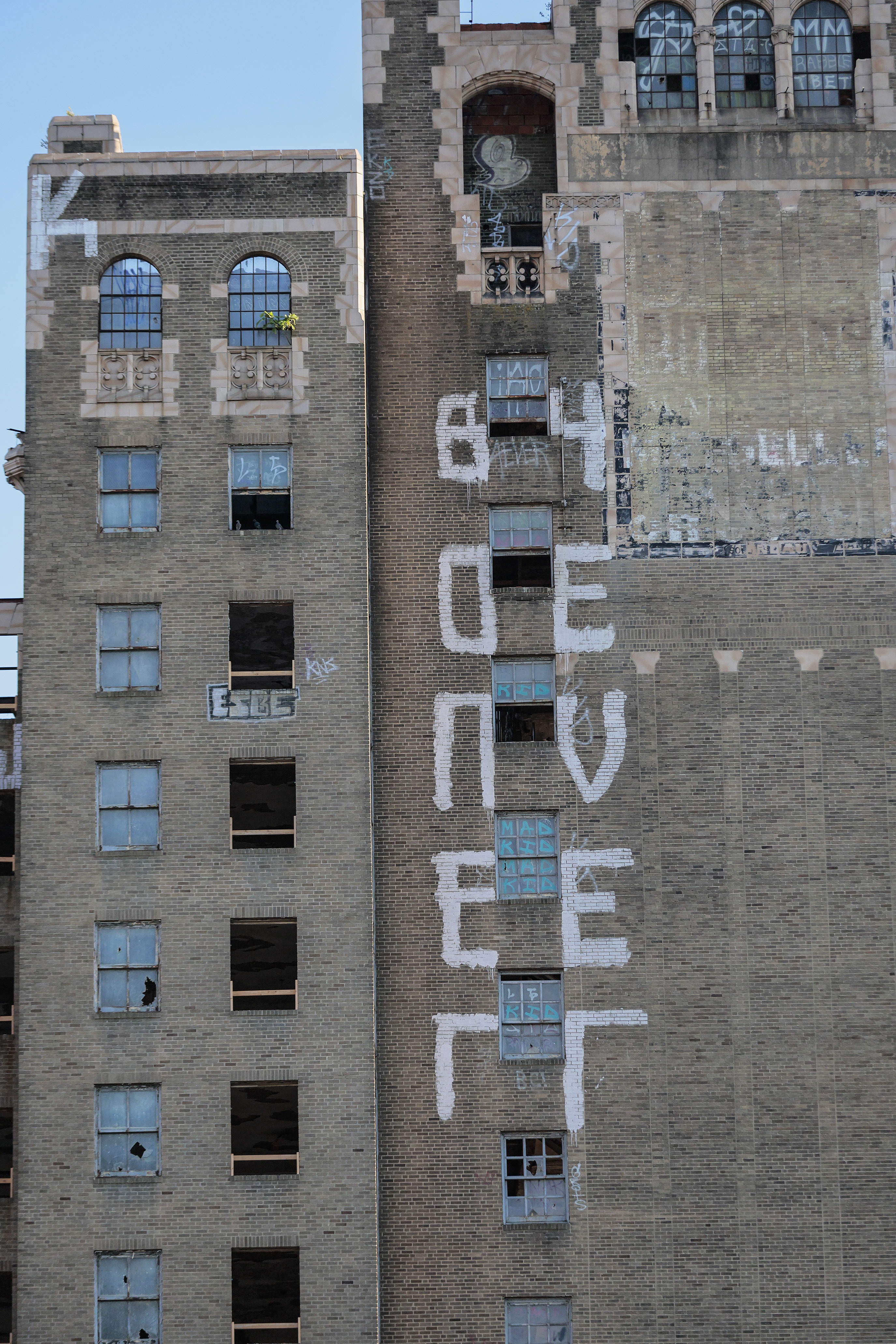
    When it comes to indelible Philly landmarks it’s hard to top the “Boner 4ever” building, the 14-story building on North Broad Street that’s been adorned with the graffiti tags “Boner 4ever” on one side and “Forever Boner” on the other for as long as anyone can remember.

    Thanks to Shana Fallon on Bluesky for this fantastic suggestion.

    “I mean, honestly, this is the only right answer,” Fallon wrote. “Bunches of tourists taking the BSL up to Broad and Erie for Max’s, the Portal, and Boner 4ever/Forever Boner. What a full, Philadelphia experience.”

    The Beury Building is more commonly known in Philadelphia by its nicknames, the “Boner 4Ever” and “Forever Boner” building. STEVEN M. FALK / Staff Photographer

    Putting the Portal here would also ensure that the building and graffiti remain forever, as is foretold, and spotlighting a building festooned with such an enduring nickname will make people even more confused about just what goes on here in Philly.

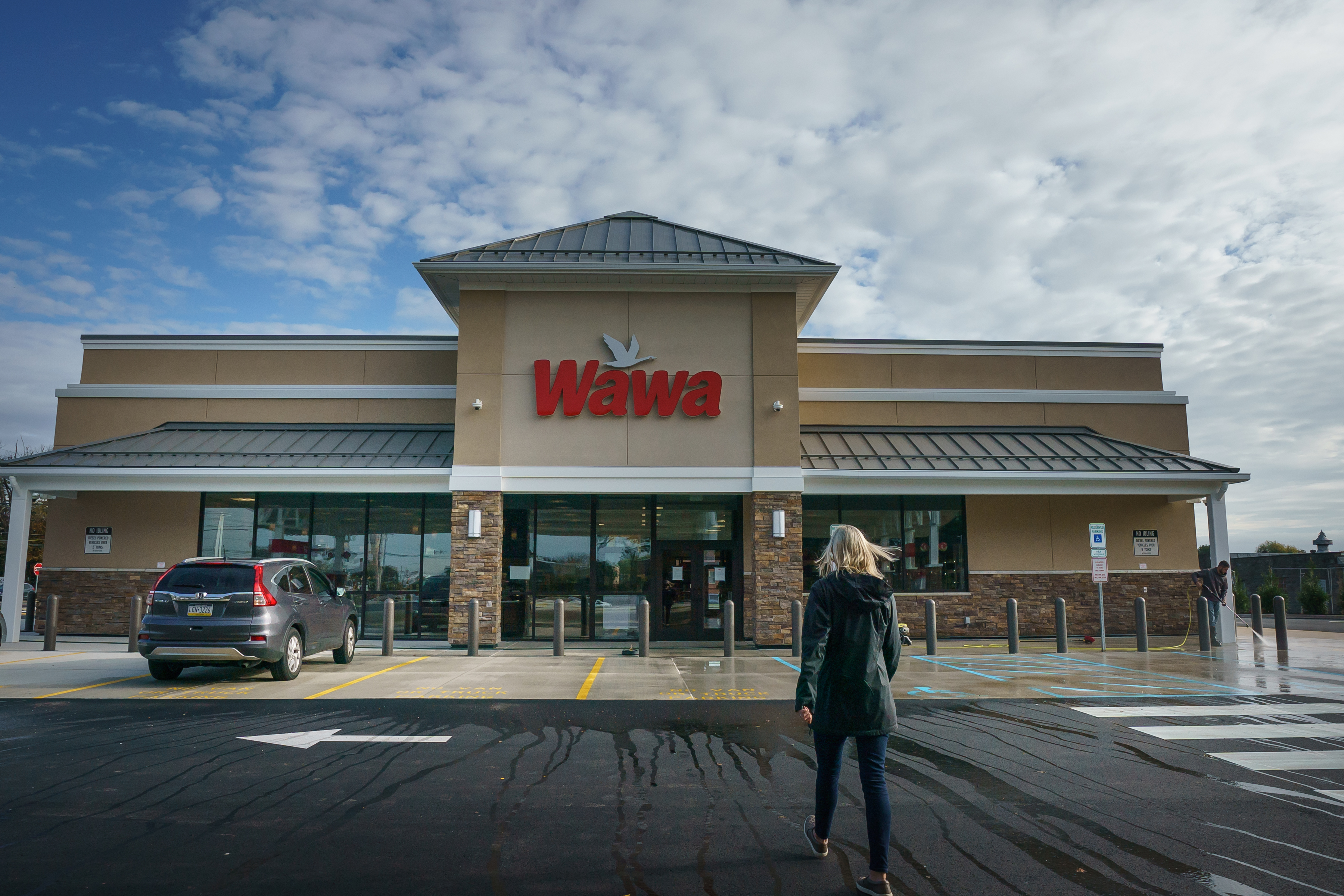
    At a Wawa

    For an easily-digestible microcosm of Philly, putting the Portal inside of a Wawa would be a Sizzli move, as Larry Durland suggested on Threads. You may not like that one of our region’s cultural touchstones is a convenience store with touch screens, but for many it’s a third space on the go, which makes it a classic fit for the Portal.

    Could the most convenient place for the Portal be in Philly’s hometown convenience store? JESSICA GRIFFIN / Staff Photographer

    With the Portal at Wawa, the world could see our sartorial splendor on full display — men in matching tracksuits and slides, women in pajama pants and flip-flops, and without fail, someone whose every item of clothing is Eagles-branded. Plus, the doors at Wawa are already like a portal all their own, making us all a little more polite toward our fellow man.

    Of course, everything changes after midnight at Wawa, so if viewers get bored watching folks patiently stand around waiting for their order numbers to be called, they need only wait for the clock to strike midnight Eastern for the real show to begin.

    Four Seasons Total Landscaping

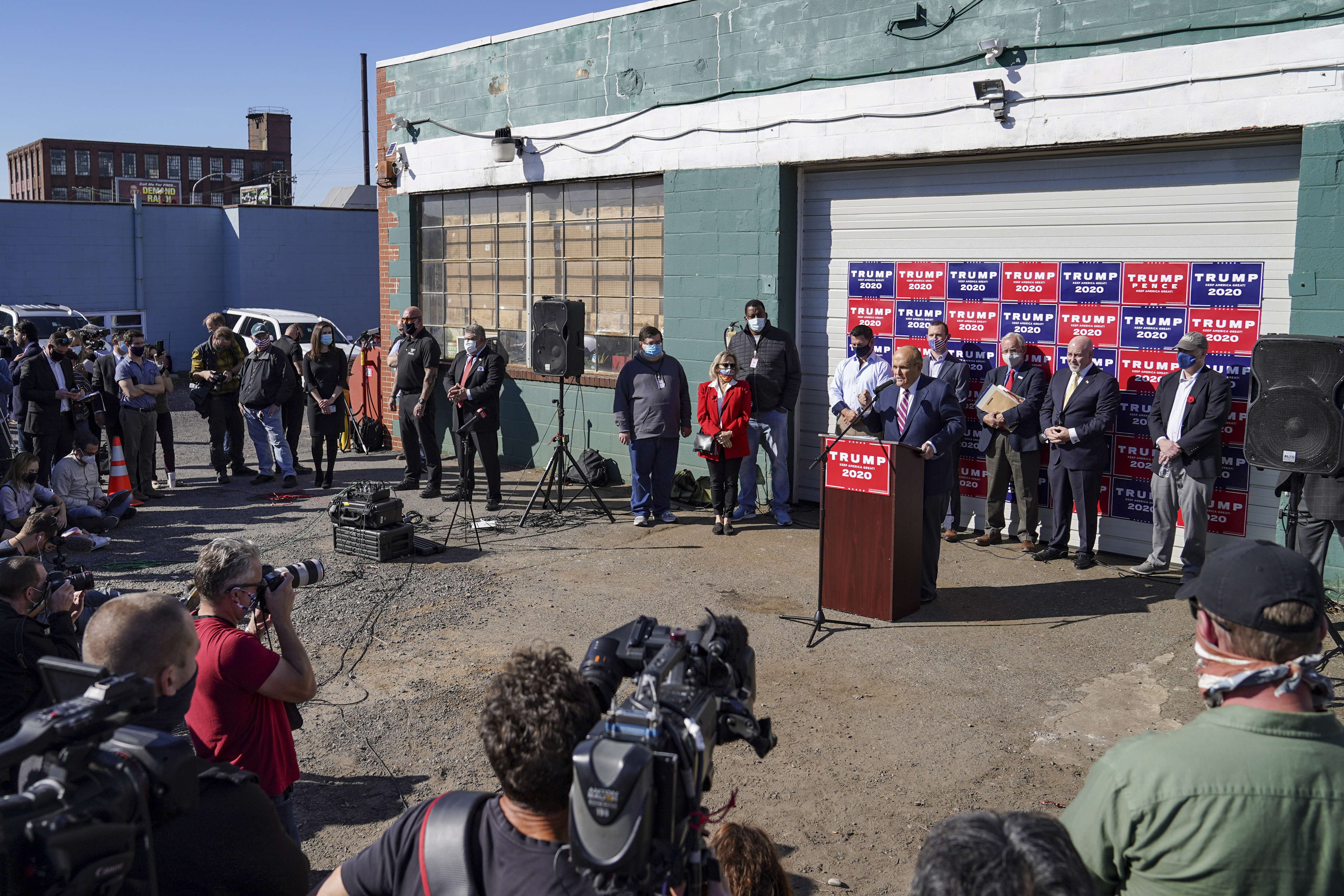
    Few places in Philly are as iconic as the garage doors of Four Seasons Total Landscaping, the site of one of the greatest and worst news conferences of all time. It’s inspired shirts, a beer, a run, a concert, and countless memes, and perhaps a whole new era of the Portal as well.

    Rudy Giuliani, a former lawyer for President Donald Trump, speaks during a news conference at Four Seasons Total Landscaping in Philadelphia in November 2020.John Minchillo

    Working together, Portal organizers and Four Seasons staffers could bill this as the hottest spot, in between a crematorium and a sex shop, to hold news conferences that have absolutely nothing to do with landscaping — and they’d be broadcast around the world, too! Sure, they wouldn’t have sound, but I’d cover every one to let you know what was said.

    Four Seasons has already proven it’s great with lawn-distance relationships and the Portal sows goodwill so let’s make this thing happen. Thanks to Bluesky user Tim Bak for the suggestion.

    Reading Terminal Market

    As a place frequented by both residents and tourists, putting the Portal “dead center” inside of Reading Terminal Market would definitely give folks a flavor of Philly, as Bluesky user Mike Zufel suggested. It’d provide phenomenal foot traffic and captivating aesthetics, but organizers would risk people in other cities demanding a scratch-and-sniff function be added to their devices.

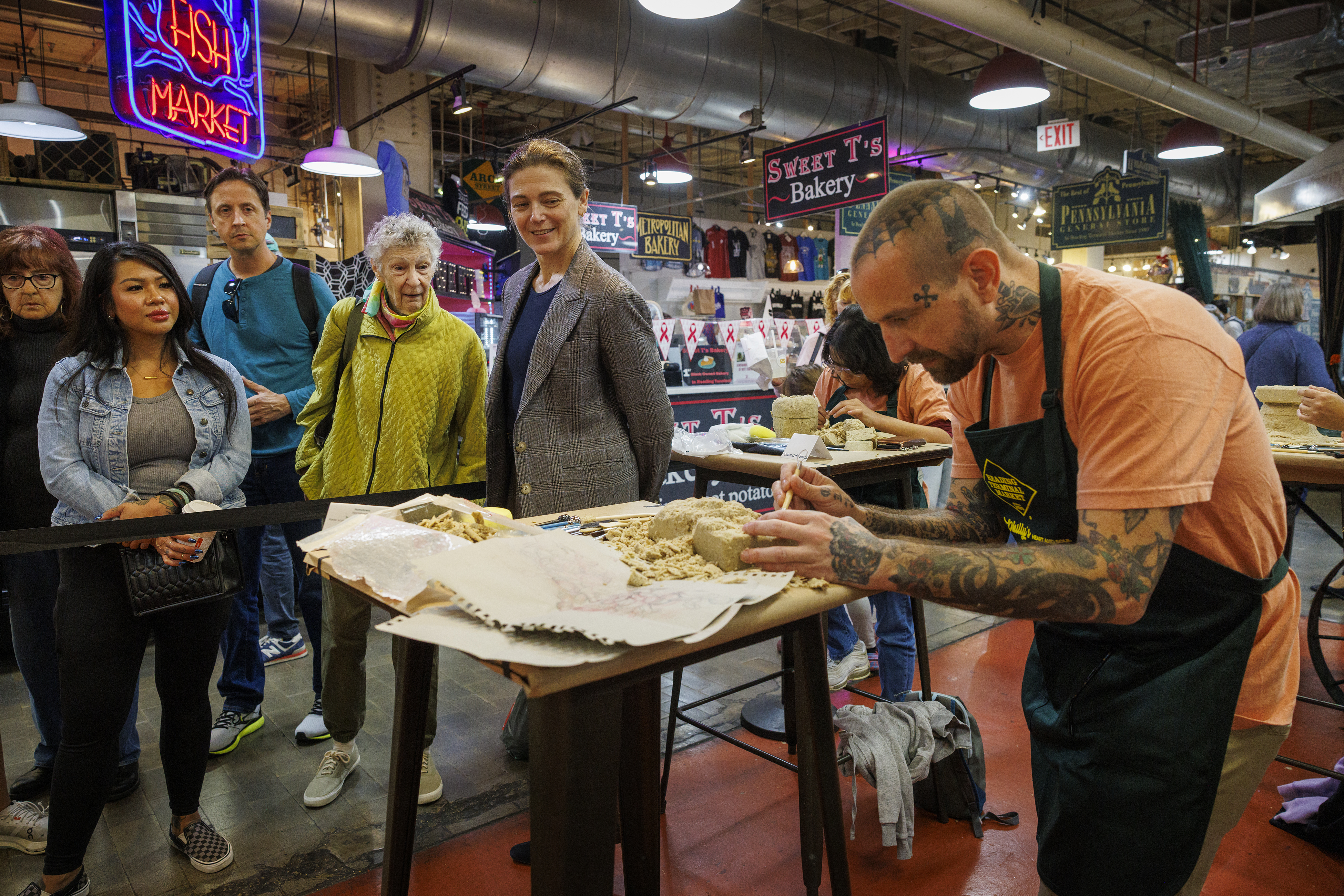
    Patrick Moser works on his Tush Push scrapple sculpture at Reading Terminal Market’s annual Scrapple Sculpting Contest on Oct. 10, 2025.Alejandro A. Alvarez / Staff Photographer

    If the Portal was inside Reading Terminal, viewers would also get to watch one of Philly’s more unusual traditions — the market’s annual Scrapple Sculpting Contest. Explaining scrapple is hard enough, explaining why people here chisel sculptures of the Eagles’ Tush Push out of blocks of it to win a pig trophy would be sow hard, especially since you can’t use words. We’re gonna need the Philadelphia Ballet to start working on an interpretive dance about this now to help us explain it to the world.

    President’s House Site

    This suggestion from a Threads user is about as serious as it gets, and it’s an excellent one, too. No place in Philadelphia has faced more scrutiny, controversy, or whitewashing of history this year than the President’s House Site, which until recently laid bare the Founding Fathers’ role in slavery and told the stories of the people George Washington enslaved here in Philadelphia.

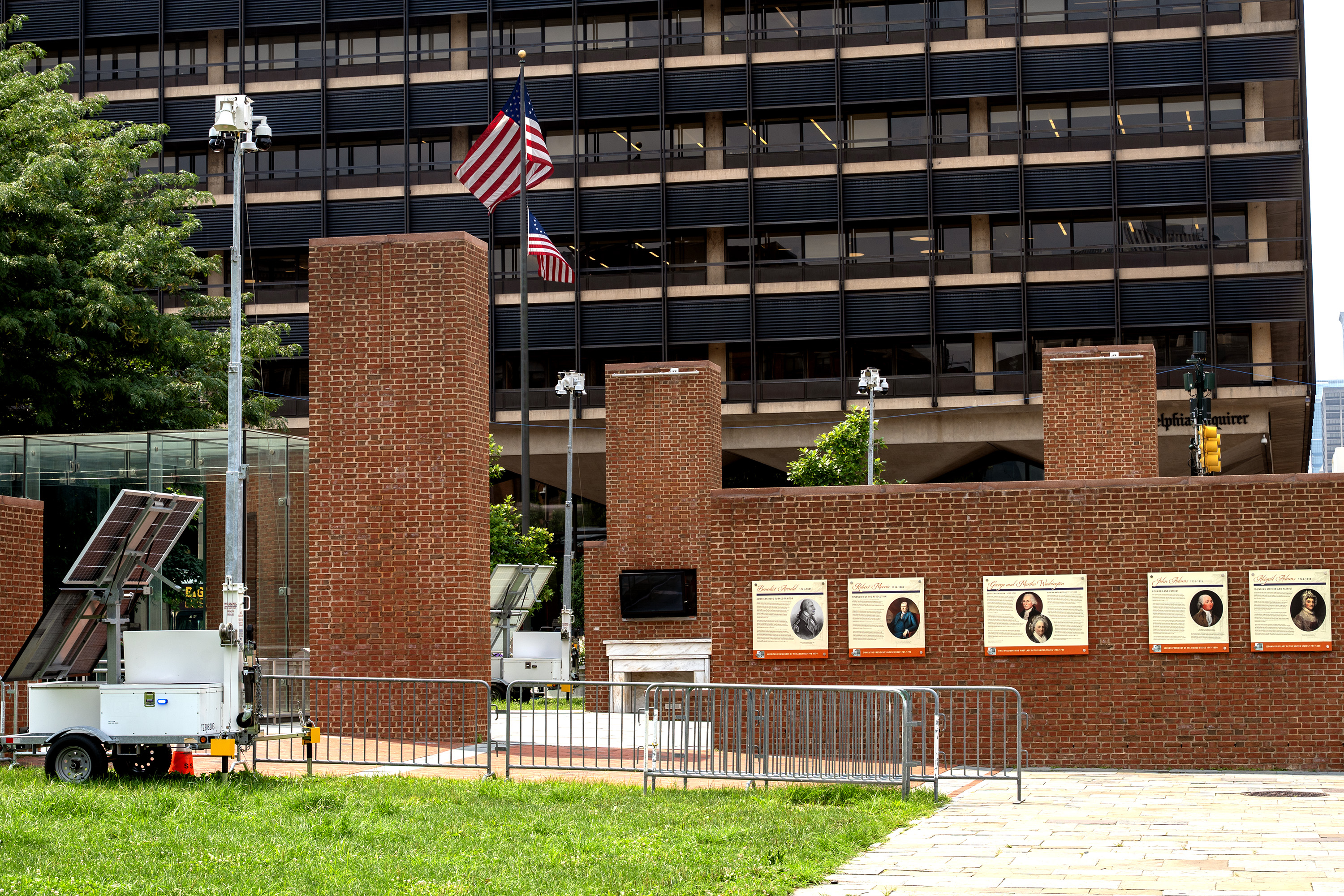
    After months of legal battles and under the cover of night in mid-July, President Donald Trump’s administration installed its own watered-down panels at the National Park site on Independence Mall, panels that experts say dilute Washington’s position as an enslaver of human beings. Large, solar-powered surveillance cameras now loom over the President’s House, giving it an eerie surveillance-state vibe.

    The President’s House on Independence Mall is flanked by three mobile surveillance trailers with cameras on Aug. 11.Tom Gralish / Staff Photographer

    So let’s give Big Brother a taste of its own medicine by putting the Portal at the site so we can keep an eye on what the federal government is doing there at all times. Plus the more people who see the President’s House, the more questions they may ask about it, questions that could lead them to research the full history. And even if Philadelphians can’t talk to people through the Portal about what’s happened at the site, I guarantee they will volunteer to hold up signs in front of it that speak the truth.

    Outside a cheesesteak shop

    Several people who didn’t skirt around the fact that Philadelphia is probably most internationally known for the steak sandwich that carries its name suggested putting the Portal right outside of a cheesesteak shop to help give folks a taste of Philly.

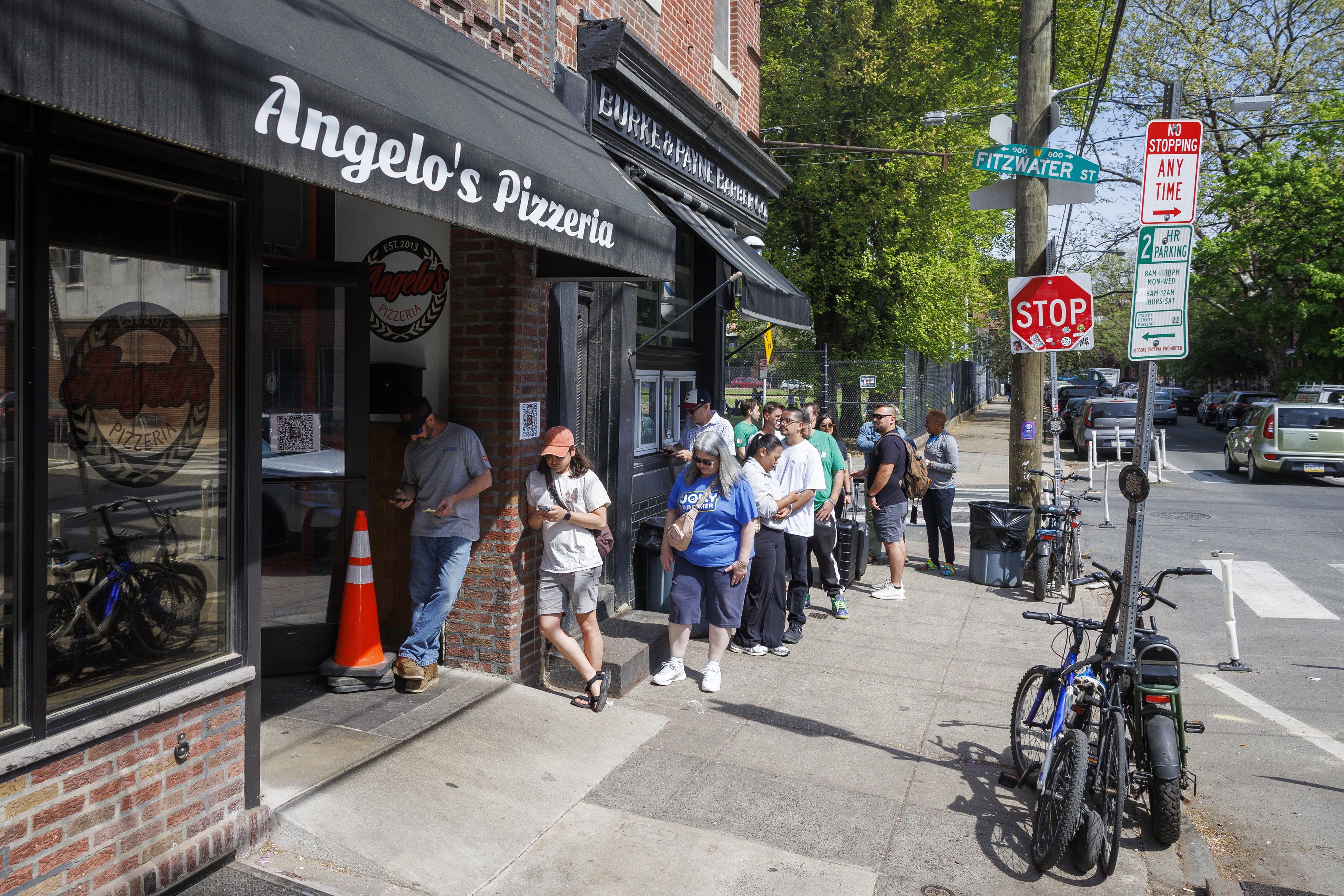
    These sharp readers were on a roll, but they differed on exactly which shop the Portal should go to. Some said it should be flanked by cheesy Pat’s and Geno’s, so people can gawk at tourists, while others suggested local favs, like Angelo’s or Dalessandro’s, so visitors know where to go.

    Patrons of Angelo’s Pizzeria in South Philly wait in line for the shop’s famous cheesesteaks last year. Alejandro A. Alvarez / Staff Photographer

    Though it’s cliche, I’m on board wit this idea for one reason: I’ve been hoping for a Portal love connection story since day one and if there’s anywhere a meat-cute is bound to happen in Philly, it’s at a cheesesteak shop.

    I can see the handwritten love sign on dirty butcher paper being held up to the Portal now:

    “Whiz you were here xoxo.”

  • Batting practice … in a hotel room? It’s part of the ‘routine’ for Luis Arraez, baseball’s most unique hitter

    Batting practice … in a hotel room? It’s part of the ‘routine’ for Luis Arraez, baseball’s most unique hitter

    Luis Arraez opened the door and revealed the secret to winning three batting titles.

    Not even Tony Gwynn Jr. could believe it.

    “Listen,” said the son of the late Hall of Famer, “my dad was as much of a worker as possible. Never once did he have a tee and a net in his hotel room. I walked into the room and watched this man go to work. It was mind-blowing.”

    Wait, what? Batting practice … in a hotel room?

    “Yeah,” Arraez said. “That’s one of my routines.”

    In fact, since 2021, the new Phillies second baseman has traveled with a portable tee, a fold-up net, a short bat, and a small weight that fit neatly into his backpack. He sets it all up in his room, takes full or partial swings (without a ball) to perfect his compact stroke, and often sends the video to his personal hitting coach in Miami.

    “Just a short move, point A to point B, and that’s all he was working on the whole time,” Gwynn said on The Inquirer’s Phillies Extra podcast. “And at that point I was like, ‘OK, this gentleman is a little bit different.’”

    In 2026, he’s actually one of a kind.

    Arraez, 29, ranks in the lowest percentile among major league batters in bat speed, hard-hit rate, and barrel percentage, which measures how frequently a hitter makes contact with the optimal combination of exit velocity and launch angle. And these days, baseball is obsessed with exit velocities and launch angles.

    Phillies second baseman Luis Arraez has won three batting titles.Yong Kim / Staff Photographer

    Here’s the thing, though: Arraez has more hits than any player since 2022. He has won batting titles in both leagues: 2022 with the Twins (.316), 2023 with the Marlins (.354), and 2024 with the Marlins and Padres (.314).

    Oh, and did we mention he hardly ever strikes out?

    Entering the weekend, Arraez made contact on 92.2% of his swings. The major league average was 76.4%. His career strikeout rate was 5.9%, including 4.5% this season. In the last 50 years, three players struck out less than 6% of the time while maintaining a .300 batting average: Arraez, Phillies interim manager Don Mattingly, and the late Tony Gwynn, a first-ballot Hall of Famer.

    “The skills that he has, they are so different that I think players in a lot of ways consider it a novelty,” said former Marlins general manager Kim Ng, who traded for Arraez before the 2023 season. “It doesn’t have to be just shooting for pull-side fly balls in hopes they’ll go over the fence.”

    Yet the industry no longer values a contact-hitting savant. Arraez has been traded three times in the last 3½ years. And he went unsigned as a free agent last winter until a few days before spring training when the Giants gave him a one-year, $12 million contract.

    On Aug. 3, the Phillies made a deadline trade for Arraez, a lefty-hitting second baseman, because their search for a righty-hitting outfielder lacked appealing options. And they were able to fit him in only because Bryce Harper consented to move back to right field for the balance of the season, part of a realignment in which they displaced three-fourths of the infield.

    But now that Arraez is here, his one-of-one skill set will be on display for a new audience. The Phillies will form their opinion about his value, especially to a lineup that tends to strike out frequently and struggles at times to score without hitting home runs.

    Maybe they will try to re-sign Arraez in the offseason. Maybe he will pack up his travel batting cage and shuffle to his sixth major-league team in a nomadic career. Whatever the case, the Phillies will have baseball’s most unique hitter for the playoff push.

    Luis Arraez had his best season with the Marlins in 2023.Marta Lavandier

    ‘Infectious’ style

    The Phillies aren’t the first team to move chess pieces around the field to accommodate a trade for Arraez.

    Jazz Chisholm Jr. was an All-Star second baseman for the Marlins in 2022. But after a 93-loss season, they swapped righty Pablo López and two minor leaguers to the Twins for Arraez and moved Chisholm to center field.

    “We were just lacking bats,” Ng said by phone last week. “Jazz was really good at second, but we also felt like he could be put in the outfield. We felt like he would really grow into the position, and then, you’d have two premium bats in the middle of the field.”

    Arraez held up his end. He mimicked Ted Williams for almost half the 2023 season, carrying a .401 average into the final week of June. He finished with 203 hits, a career-high, and won his second batting title.

    But Ng recalled Arraez’s impact beyond the knocks.

    “I think our players were in awe of him,” said Ng, the commissioner of the 2-year-old Athletes Unlimited Softball League. “He’d walk up to the plate and size up the field and take note of where players were positioned, and he’d just put it where they weren’t. And I think the players were just so awe-struck by him and this uncanny ability that he has, and we were hoping that that would rub off in some ways on others.

    “And I’m not saying it was a direct correlation, but if you look at our one-run record in 2022 vs. our one-run record in ’23, vastly different. Is it all because of Luis? No. We tried to change the way we thought about the game across the board. But Luis was a huge instrument to that change.”

    Indeed, the Marlins went from 69 wins to 84 and made the playoffs largely due to a 33-14 record in one-run games. Arraez finished eighth in the NL MVP voting.

    Ng said teammates became aware of Arraez’s work habits, including hitting for 15 to 20 minutes each morning in a batting cage at his house, similar to his exercises in road hotels. Seven-time All-Star outfielder Nelson Cruz introduced him to the daily ritual when they were teammates with the Twins.

    “I do my routine every day,” Arraez said. “I’ll bring my short bat and my regular bat and a little heavy weight to do my routine and then to prepare my body and especially my mind.

    “It’s helped a lot. You can tell. I feel really good when I do my routine every day.”

    And when Arraez got to the ballpark, the young Marlins would either pick his brain about his approach at the plate or absorb it like a sponge by watching.

    “His personality and the effect that he had on the team, it really was infectious,” Ng said. “And I do think that he was one of the core pillars of that team.”

    The Phillies are seeing similar benefits. Mattingly batted him cleanup to utilize his contact skills in front of Harper. And even as Arraez cooled after going 5-for-13 with four RBIs in his first three games, the Phillies’ collective strikeout rate plummeted from 23.6% before he arrived to 15.9% through his first 11 games.

    Coincidence? Maybe.

    Then again …

    “I mean, I’ve definitely learned a lot from watching him,” Alec Bohm said. “It’s the modern-day Tony Gwynn. Like, it’s one of the best bat-to-ball [hitters] that any of us have ever seen. So, yeah, I think obviously bringing a guy like that in not only makes the lineup better, but it’s also just hitters watching other good hitters. I think there’s something to be said for that.”

    Luis Arraez went 5-for-13 in his first three games with the Phillies.Monica Herndon / Staff Photographer

    ‘Know thyself’

    Ng left the Marlins amid a reorganization of the front office after the 2023 season. In May 2024, Arraez got traded to the Padres.

    Upon arriving in San Diego, he visited the 9½-foot tall statue of Tony Gwynn — titled “Mr. Padre” — outside Petco Park.

    And he asked Gwynn’s son to accompany him.

    “I was like, ‘Of course,’” said Gwynn Jr., an eight-year major-league outfielder and now a Padres radio broadcaster. “Because I had seen Luis play, and it was very apparent his style of hitting was different than everybody else in Major League Baseball and had some resemblance to my father.”

    Arraez seems to appreciate baseball history, maybe because it often feels like he’s from a bygone era. With the Twins, he became close with Rod Carew, the Hall of Famer who mentored him about using the field and being satisfied with line drives and ground balls instead of trying to pull everything in the air to right field.

    Even before the trade to San Diego, Arraez heard the comparisons to Gwynn. His nickname: “La Regadera” — “The Sprinkler,” in Spanish — because he sprays the ball around the field.

    If he played 35 years ago, he would’ve fit right in alongside Gwynn, Carew, and Wade Boggs. As Phillies hitting coach Kevin Long said, Arraez “would’ve been elite.”

    But the 21st century launch-angle craze has changed not only hitting styles but also how players are paid. In 1991, when hitting for average still mattered, 29 players batted at least .300. Last season, there were seven; Trea Turner was the only .300 hitter in the National League.

    “When there’s economics involved, players aren’t dumb,” Gwynn said. “They’re going to shoot for the moon in terms of paydays.”

    And it’s moonshot homers, not singles up the middle that pay the most. Arraez, signed by the Twins as a teenager out of Venezuela for $40,000, has never had a multiyear contract. His highest annual salary: $14 million in 2025, hardly a pittance but tied for only 63rd among position players last season.

    But his approach at the plate hasn’t changed to amplify his bank account.

    “I can’t change,” Arraez said. “If I change, I’ll be in my house watching the guys play baseball.”

    Said Gwynn: “There is certainly space in this game, if you’re going to be as skilled as him, to make money that can set you up for the rest of your life. Maybe not in the 30s and 35 million [per year], but you can get in that 10- to 20-[million] range and do pretty well for yourself.

    “And I think Luis is unique in that self-awareness. My dad used to say this all the time — and it was part joke but part serious — and that’s ‘know thyself.’ And Luis knows himself very well, and he has chosen to maximize the skill set that God has given him.”

    So, Arraez packs up his backpack and moves right along, from hotel room to hotel room, playing the hits like they used to do.

  • Philly kids in Head Start would have fewer teachers and English-only instruction under Trump administration plan

    Philly kids in Head Start would have fewer teachers and English-only instruction under Trump administration plan

    Like scattered billiard balls, 16 Early Head Start children scampered across a rubber-matted playground in Southwest Philadelphia last week.

    Vigilant for tumbles or conflicts, four teachers calmly monitored the 1- and 2-year-olds in their high-energy frolic at an early learning center run by KenCrest, a nonprofit that operates Head Start and other programs in seven neighborhoods throughout Philadelphia.

    Head Start’s low ratio of one teacher for every four toddlers is a hallmark of standards for the 61-year-old federal program that provides free education, health, nutrition, family support, and daycare services for low-income children from birth to age 5.

    But now, advocates say, Head Start risks being eviscerated by changes proposed by the Trump administration.

    The vaunted teacher-child ratio, along with other foundational principles that make Head Start unique, is being threatened by plans to “deregulate” the program — overhauling the way it operates by eliminating more than 1,400 regulatory mandates that dictate how the program is administered.

    “We could be going to two staff members for 25 toddlers and two for 30 older kids,” said Melanie Brennan, executive director of early learning programs at KenCrest.

    “What’ll bathroom time look like?”

    The Trump administration defends its proposed changes as the building blocks for a better Head Start, which serves 700,000 low-income children nationwide, including an estimated 7,500 in Philadelphia.

    “We are removing unnecessary bureaucracy, strengthening nutrition and physical health, trusting parents and local communities,” said Health and Human Services Secretary Robert F. Kennedy Jr., whose department administers Head Start at the federal level.

    That does not ring true to Head Start professionals in Philadelphia.

    “It’s laughable to say all they’re trying to do is take away some bureaucracy,” Brennan said. “By ending rules that guide Head Start’s high, uniform standards, the administration’s real goal is to leave the education business.”

    In Philadelphia, more than $70 million in federal funding for Head Start goes through the Philadelphia School District, the program’s largest provider in the city, said Diane Castelbuono, the district’s deputy chief for early learning.

    KenCrest Director Josie Jones with staff and Early Head Start students.Jessica Griffin / Staff Photographer

    The district uses that money to directly operate Head Start programming in more than 60 school buildings, mostly elementary schools, throughout the city, she said. It also works with approved contractors who run Head Start classrooms at approximately 75 childcare sites in Philadelphia, Castelbuono added.

    Asked for comment on the proposed changes, the school district said in a statement that the Head Start program has “positively impacted” students and that district officials “remain committed to preserving the robust standards that have proven essential to our program’s success.”

    ‘Stunned and sad’

    While only Congress can repeal the statutory authorization for Head Start, which has an annual budget of about $12 billion, opponents of the Trump administration’s proposal warn the new rules would weaken the program to the point it became unrecognizable — or stopped existing altogether.

    The plan, called “Reducing Federal Burden for Head Start Programs,” was released Aug. 7.

    Public comment will be accepted until October, when the administration hopes to finalize the rules.

    Kush Desai, a spokesperson for the White House, said the changes would enable the government to provide a stronger program that ensures services “are delivered effectively to children and families in need” by reducing “unnecessary administrative burden.”

    Advocates who have spent their late-summer vacations reading the complex, nearly 200-page document say they are in the process of marshaling opposition, which they hope will delay or alter the administration’s plans.

    “There’s so much to unpack,” said Kara McFalls, executive director of the Pennsylvania Head Start Association in Harrisburg. “We’re checking with experts to see if Head Start becomes gravely harmed.”

    Advocates say initial readings of the new rule justify their concerns.

    Beyond altering teacher-child ratios, the administration would lower the cap on Head Start administrative program costs from 15% to 5%, which means local programs could spend only up to 5% of their total budget on operational overhead like management, human resources, IT, and administrative salaries.

    That would be “devastating,” McFalls said, making it harder for programs to pay staff working in these departments.

    An Early Head Start student plays with a doll at KenCrest in Southwest Philadelphia.Jessica Griffin / Staff Photographer

    Additionally, the administration would require instruction to be conducted in English only — which could hit several Head Start programs across the city that offer bilingual education.

    “That policy would be ridiculous and biased,” said Rachel Sanders, executive director of Your Child’s World Learning Center, which includes Head Start programs in Southwest and Northeast Philadelphia, as well as in West Oak Lane. “Our children speak multiple languages.”

    While all primary instruction is in English, Sanders said, children who speak Spanish, Mandarin, Arabic, or another language are taught the lessons either by teachers fluent in those languages or by translators brought in to help. She added that 50% of the students in the Northeast location do not speak English on the first day of instruction, but that the additional support helps them eventually learn the language.

    “No way would we ever discontinue translating,” she said.

    Under the Trump administration plan, requirements for math and literacy curricula would be removed. Also gone would be stipulations that programs check on whether families have provided their children with immunizations, dental visits, wellness checks, and mental health consultations.

    And hygiene training — including the Head Start tradition that children brush their teeth in class — would end.

    The proposed changes “left me stunned and sad,” said Chandell Craig-Cromwell, 39, of West Philadelphia, a mother of two Head Start graduates who works in human resources in a city agency.

    “This isn’t just education, or babysitting. It’s developmental support,” she said. “I’m upset for all the moms who’ll get this new version of Head Start.”

    If the administration alters Head Start so profoundly, said Sharon Wolf, an early education expert at the University of Pennsylvania, she questioned whether the program should still keep its name.

    “I fear we could be moving to weakened, ordinary childcare,” she said. “Then, is it Head Start anymore?”

    Madison Marino Doan, a policy analyst in the Center for Education Policy at the conservative Heritage Foundation, disputed the notion that the administration’s proposal represented an effort to eliminate Head Start.

    “The current proposal under consideration is an effort to deregulate the program and give states greater flexibility to design programs that reflect the needs of their communities while maintaining current funding,” she said.

    Doan added that Congress should simply end the program — a recommendation made in the foundation’s Project 2025, a conservative blueprint for a second Trump administration.

    Some advocates warn the administration’s push to change the program has more to do with ideology than concerns about efficiency.

    Tyrone Scott, a director at First Up, a Philadelphia-based early education nonprofit, said he often runs into people who self-identify as conservatives at public forums who say that part of Head Start’s true mission is to “indoctrinate kids with a political ideology that includes ideas like racial justice.”

    But, he said, the mission of Head Start is a lot simpler than that.

    “It teaches kindness,” he said. “That isn’t a political philosophy.”