By sheer happenstance, a twosome of naked demonstrations took place Saturday across the city — a “free the nipple”-esque protest midday at Philadelphia City Hall followed by the annual Naked Bike Ride in the late afternoon.
Beyond the shock and awe of scantily clad or not-at-all clad people, both events were acts of resistance, defiance, and free expression, and went deeper than, well, skin deep, attendees said.
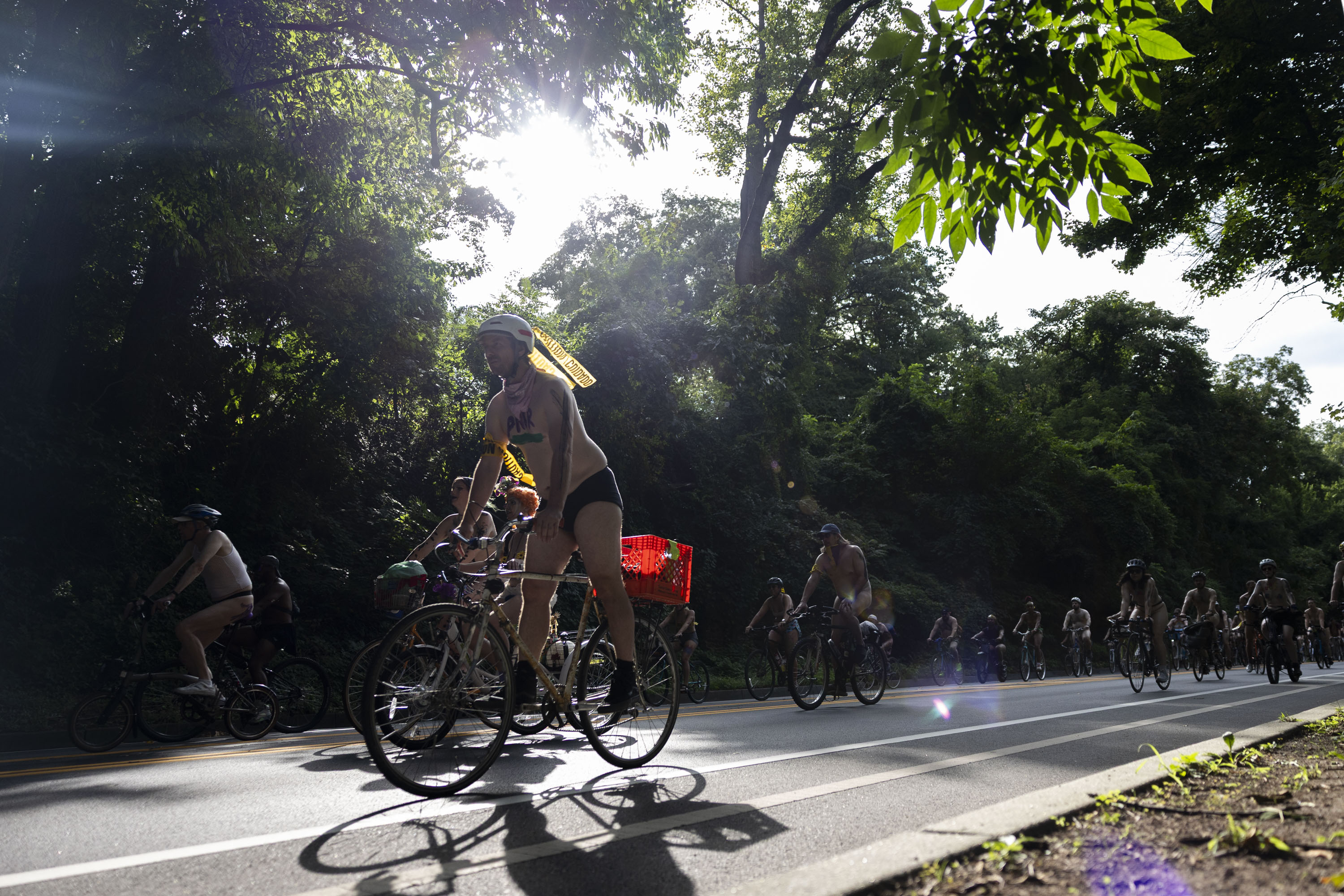
As hundreds lined up along Martin Luther King Drive for the 17th edition of the Naked Bike Ride, their bodies — with varying degrees exposure — were like flesh-toned picket signs. People painted themselves with phrases denouncing President Donald Trump and his administration’s targeting of immigrants, calling for a freed Palestine, and demanding enhanced bicycle safety measures. Mattie L., who was visiting from Savannah, Ga., wrote “Voting is Hot,” across his back.
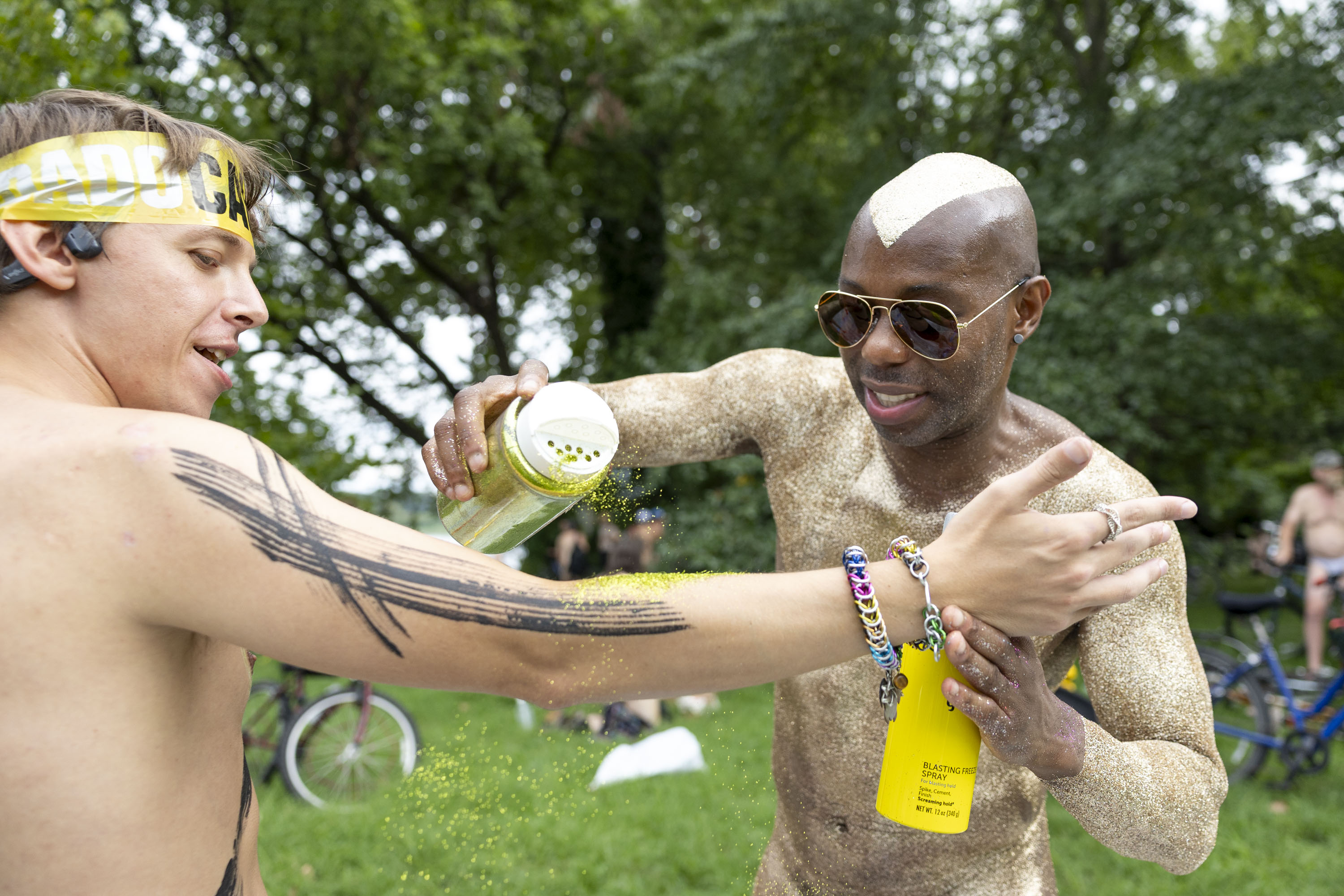
Rocket (right) puts glitter on Ari Tm of Fairmount for the Naked Bike Ride on Saturday, Aug. 22, 2026, in Philadelphia.Tyger Williams / Staff Photographer
“Besides the bodies, the messages themselves add another reason for people to lock in what [we’re] saying and to really take it to heart,” said 35-year-old Mattie, who declined to give his last name, citing concern for his privacy.
To riders, the bare-as-you-dare ride, which snakes 12 miles through the city, is an annual pro-environment, pro-bicycle safety and advocacy, and pro-self-love-intended counterpunch to fuel dependency, car-first American infrastructure, and body shaming.
Biking in a car-centric city is itself an act of rebellion, said Emma K., a 28-year-old Temple University alum who now lives in New York City. Emma also declined to give her last name because of privacy concerns.
Dane Jorento, 65, of Drexel Hill, was drawn to the Naked Bike Ride because of “naked,” “biking,” and “protest.” Being unabashedly naked, Jorento said, is an act of radical vulnerability and self-acceptance.
For Morningstar Hirst, who was part of the ride’s “street team,” the Naked Bike Ride was about showing off their new body post-top surgery, while “protesting and leaning into body positivity.”
“I am all about freedom within one’s body and then mobility with that body — I think that this ride sums that up really quickly and really easily,” Hirst, 34, of West Philadelphia, said.
“Every body is a wonderful body,” he added.
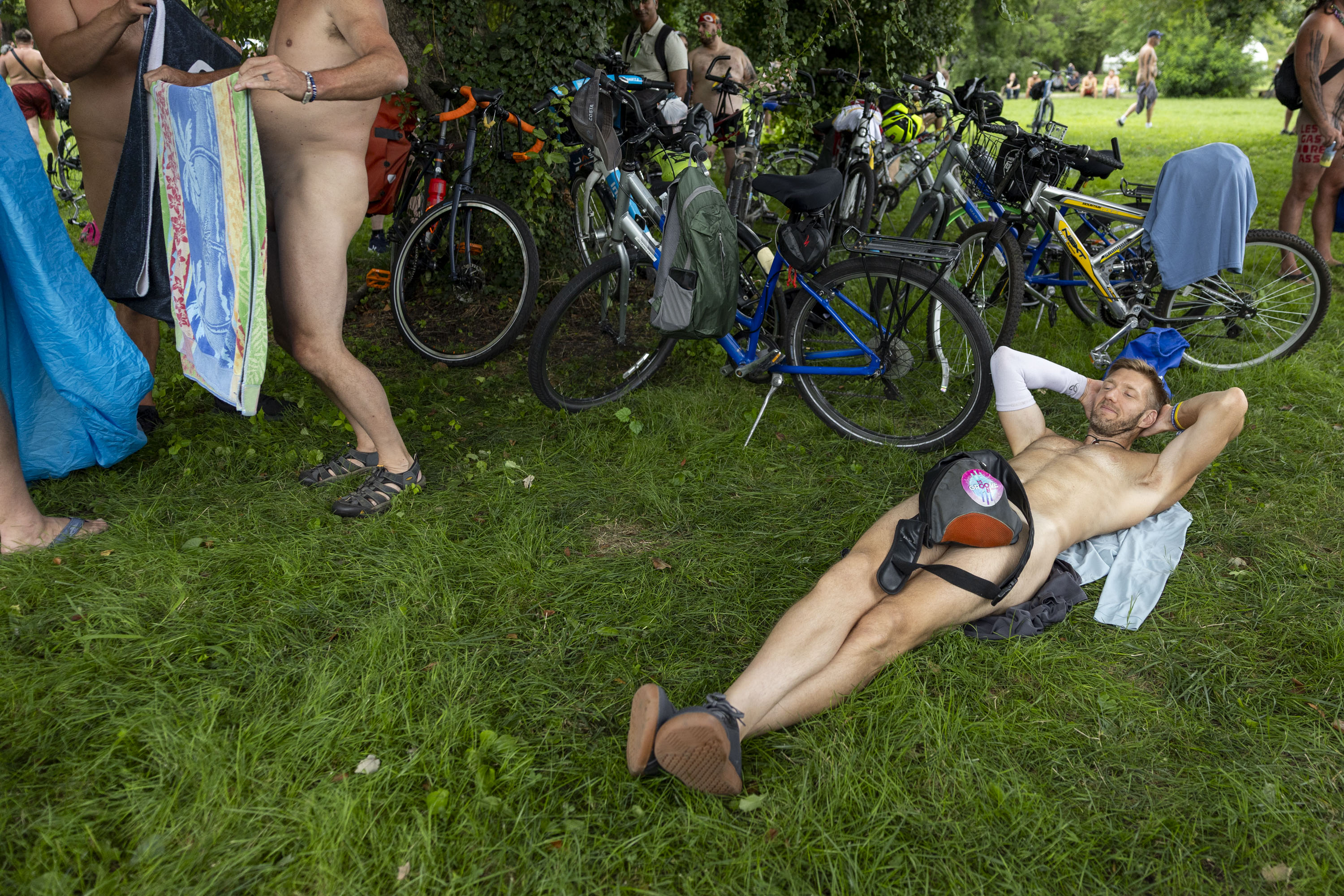
Ryan Genova of Glenside chills during his fifth time attending the Naked Bike Ride on Saturday, Aug. 22, 2026, in Philadelphia.Tyger Williams / Staff Photographer
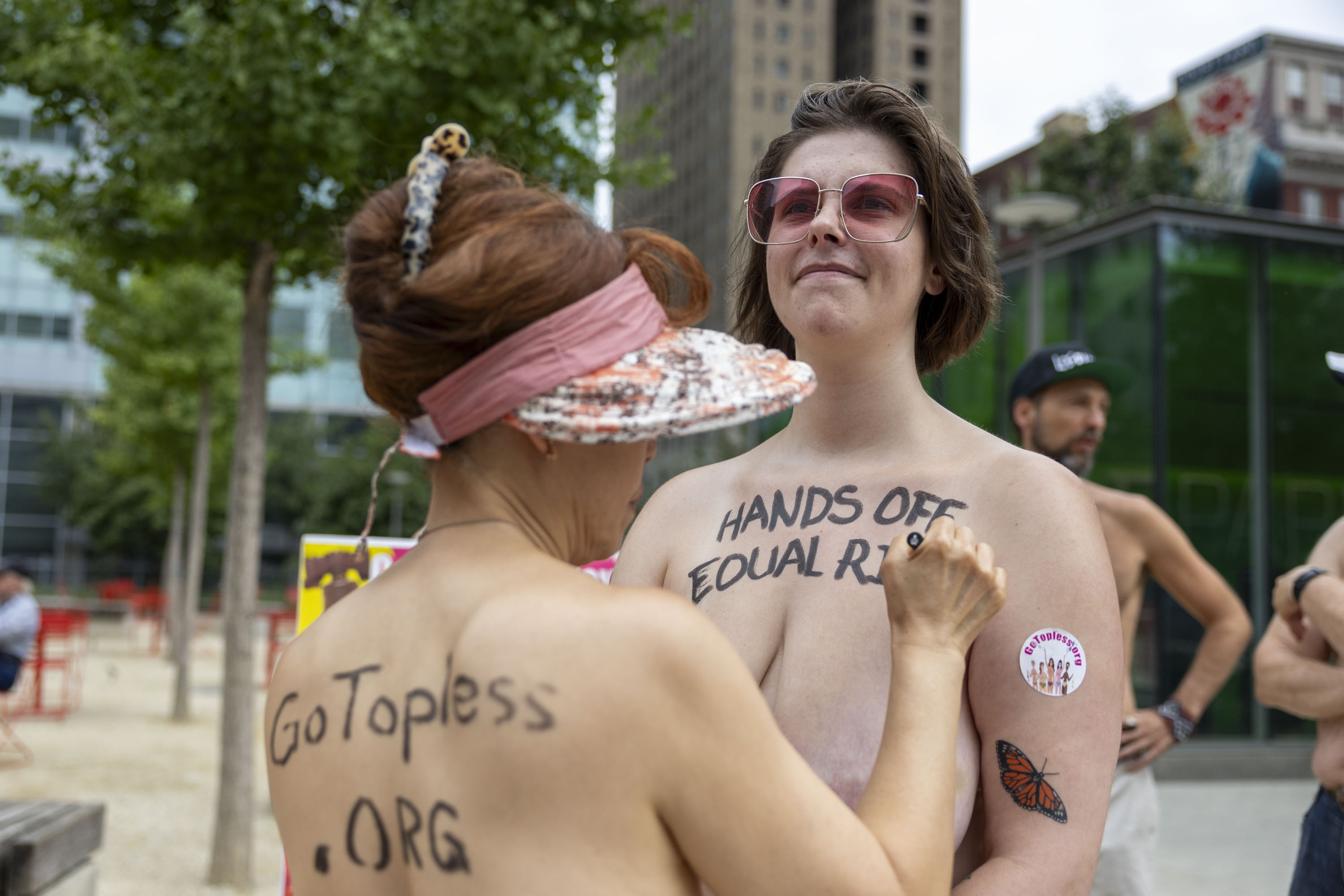
Go Topless Day had a clear agenda: Roughly a dozen bare-chested picketers gathered in LOVE Park at noon, before marching around City Hall with a police escort, chanting, “free your breasts, free your mind,” to stir action around what protesters described as the legal hypocrisy that allows men to be shirtless in public but not women.
“If men can go legally topless in a street, women should have the same right,” organizer Kasyo Perrier said. “Otherwise, we should force men to wear tops.”
Chloe Theodosiou of Germantown gets a message of “Hands Off Equal Rights” written on their chest for the GoTopless Day Civil Rights March at LOVE Park on Saturday, Aug. 22, 2026, in Philadelphia.Tyger Williams / Staff Photographer
Go Topless Day is a cause of the Raëlian Movement, a religious group that believes extraterrestrials created humanity. Core tenets of the Raëlian Movement are freedom and equality, explained Perrier, who is a Raëlian priest: “We’re created beautiful and and there’s no reason to be ashamed of our body.” (Go Topless Day, in its 19th year, is usually held around Aug. 26, Women’s Equality Day, marking women’s suffrage, according to Perrier.)
“It is a gateway to self-love; it is a gateway to neighborly love when we stop making certain things taboo,” participant Chloe Theodosiou, 30, of Germantown, said of the cause.
Not everyone felt so uninhibited. Tourists with cellphone cameras gawked, a woman with a stroller scoffed. A group of tweens giggled and shielded their eyes.
One man gruffly remarked, “no one wants to see that.”
“We’re all just shapes — just a bunch of circles and triangles,” Theodosiou remarked.
FOXBOROUGH, Mass. — Tanner McKee outplayed Andy Dalton despite having to work with the Eagles’ mostly third-string offensive line and skill position players.
Nick Sirianni may claim that there has been a fair competition for the No. 2 quarterback spot, and that Dalton has started both preseason games only because he has more experience. But McKee hasn’t had the benefit of performing with players who will actually make the Eagles’ 53-man roster.
And yet, he looked like a far more viable backup to Jalen Hurts than Dalton did in the Eagles’ 24-21 loss to the New England Patriots on Saturday night. McKee wasn’t without his faults. He missed throws from the pocket and struggled at times when pressured.
But it is worth questioning how Dalton could end up winning the job, let alone entice some quarterback-needy team into trading for him. There’s still another preseason game and a week until the roster deadline, but time is running out on the 38-year-old veteran.
“We’ve got to continue to give both of them opportunities within practice and potentially games,” Sirianni said. “See how next week goes. Obviously, I’m not there yet.”
While neither quarterback impressed in the preseason opener vs. the Ravens, McKee inched ahead of Dalton in practices over the last few weeks. Not necessarily because he’s been sharp.
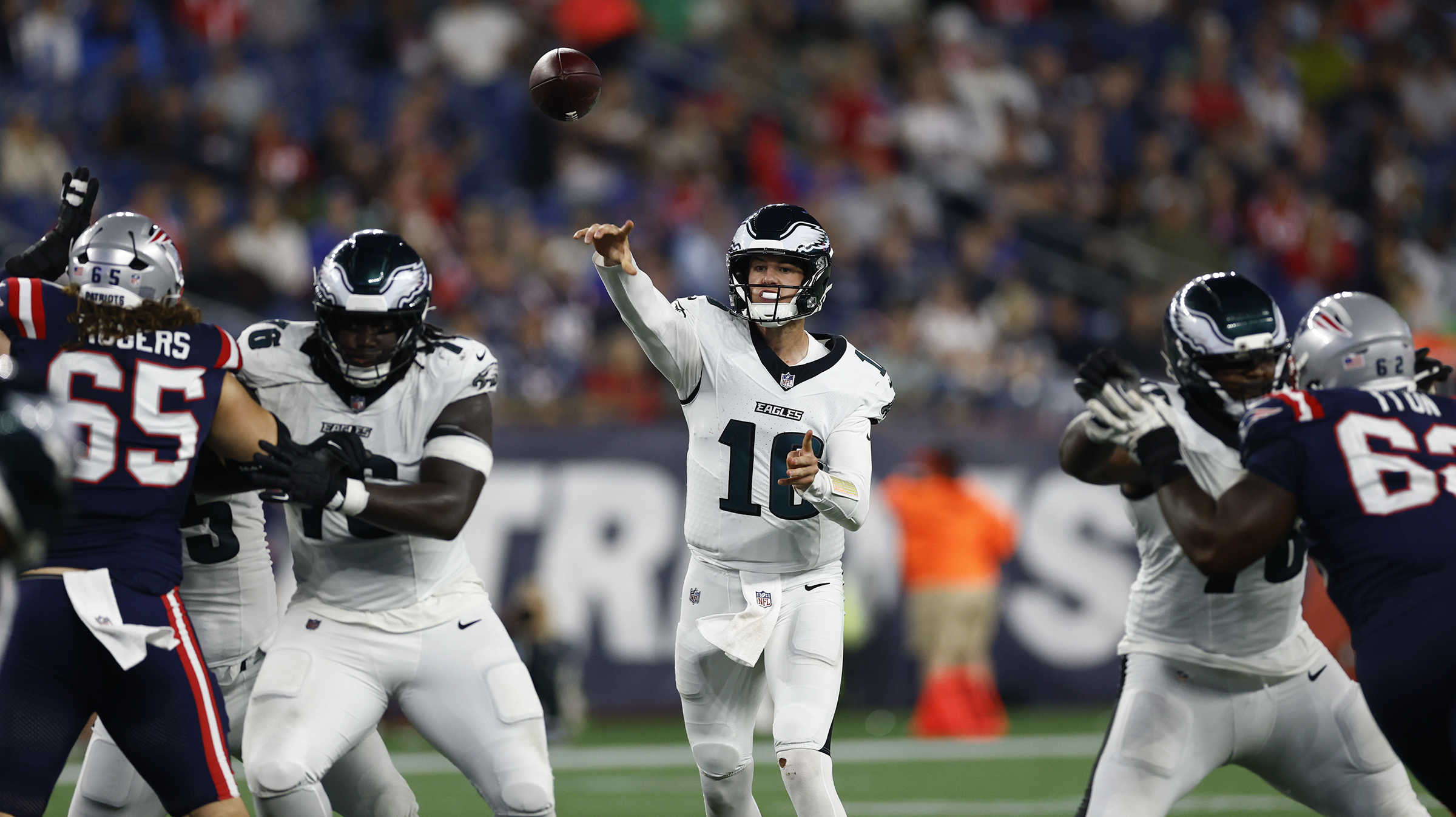
But he was more effective in joint practices with the Patriots last week, and even more so in the game two days later. McKee completed 16 of 22 passes for 173 yards and two touchdowns in a little over two quarters of action.
“I know stat-wise he came out having a pretty good game, but obviously for all of us there will be corrections within it,” Sirianni said. “But, yeah, thought he did some good things. Made some nice plays. Had a couple fourth downs that we would have liked to convert.
“Not saying those are his fault in that situation, but those fourth downs hurt us, not converting there.”
While it’s true that McKee’s pass numbers were inflated by yards after the catch, particularly from running back Carson Steele, he got the ball into the hands of his schemed-up outlets when “hot” vs. the blitz.
One such play came late in the game when a defender rushed off the edge and Steele ran a wheel route rather than staying in to block. McKee simply lofted the ball to his open receiver and the tailback did the rest: running 20 yards into the end zone, but not until he hurdled another Patriot.
“He found his shots on a couple when they brought one more than we could protect,” Sirianni said of McKee. “I thought Sean [Mannion] did a good job giving them answers there.”
Tanner McKee (16) put together the sharpest QB performance for an Eagle in two preseason games. Yong Kim / Staff Photographer
Mannion dipped a little deeper into his playbook than he did in Baltimore to combat New England’s more exotic pressures. The Eagles’ new coordinator got a better outing from his offense than he did a week ago, but his game plan was still mostly banal.
He didn’t have to dial up some of the more sophisticated concepts from the Kyle Shanahan-Sean McVay scheme because the Eagles had a decided advantage up front. The second-unit O-line, especially guards Willie Lampkin and Drew Kendall and rookie tackle Markel Bell, moved bodies and opened lanes for running back Will Shipley.
Shipley’s 11 carries for 56 yards did most of the lifting on the Eagles’ first touchdown drive. Dalton did convert a fourth down with a 13-yard strike to wide receiver Darius Cooper.
“That was one where [you] kind of get all the way back to No. 4 in the progression, and for me, felt like just the timing and rhythm of it was right there,” Dalton said. “Coop was in the right spot and just gave him a chance.”
Cooper also had a reception in which he turned a short crossing route into a 25-yard gain. But Dalton continued to overthrow open receivers and look out of sync in executing an offense that is similar to ones he’s quarterbacked in before.
He’s now completed just 6 of 16 passes for 64 yards in two games. It’s a small sample. And maybe 179 starts and 84 wins over 15 seasons buys the longtime Bengal some patience with Sirianni.
But the 26-year-old McKee showed more upside. He was drafted and developed by the Eagles for a reason. It would be uncharacteristic to give up on him, even if organizational assertions about his future as a possible starter were hyperbolic.
Eagles quarterback Andy Dalton throws the football against the New England Patriots during a preseason game at Gillette Stadium in Foxborough, Mass on Saturday, Aug. 22, 2026.Yong Kim / Staff Photographer
There’s nothing wrong with competition. But if the Dalton experiment was just to get more in return than the seventh-round draft pick the Eagles originally surrendered in acquiring him, they’ll only have themselves to blame if the eventual backup is called upon early in the season and fails.
“I play when the coaches put me in,” McKee said. “Obviously, put my best foot forward, try to do all the extra things, whether that’s in the film room or on the practice field, staying late, talking with the guys, bonding, whatever that is. I let them decide all that.”
Eagles general manager Howie Roseman may end up getting equal value or more for Dalton. The Patriots don’t exactly have an attractive backup in Tommy DeVito, although he looked better than either Eagles quarterback.
It’s difficult to bring in someone new so late in the process, especially if there’s a new system to learn. The Eagles may keep all their quarterbacks, with rookie Cole Payton as the developmental fourth option — at least until they’re forced to do otherwise.
But Dalton seems to be the only potential bait.
“I think we’re focusing on the here and now,” Dalton said when asked about a trade. “All that other stuff is not what we’re worried about.”
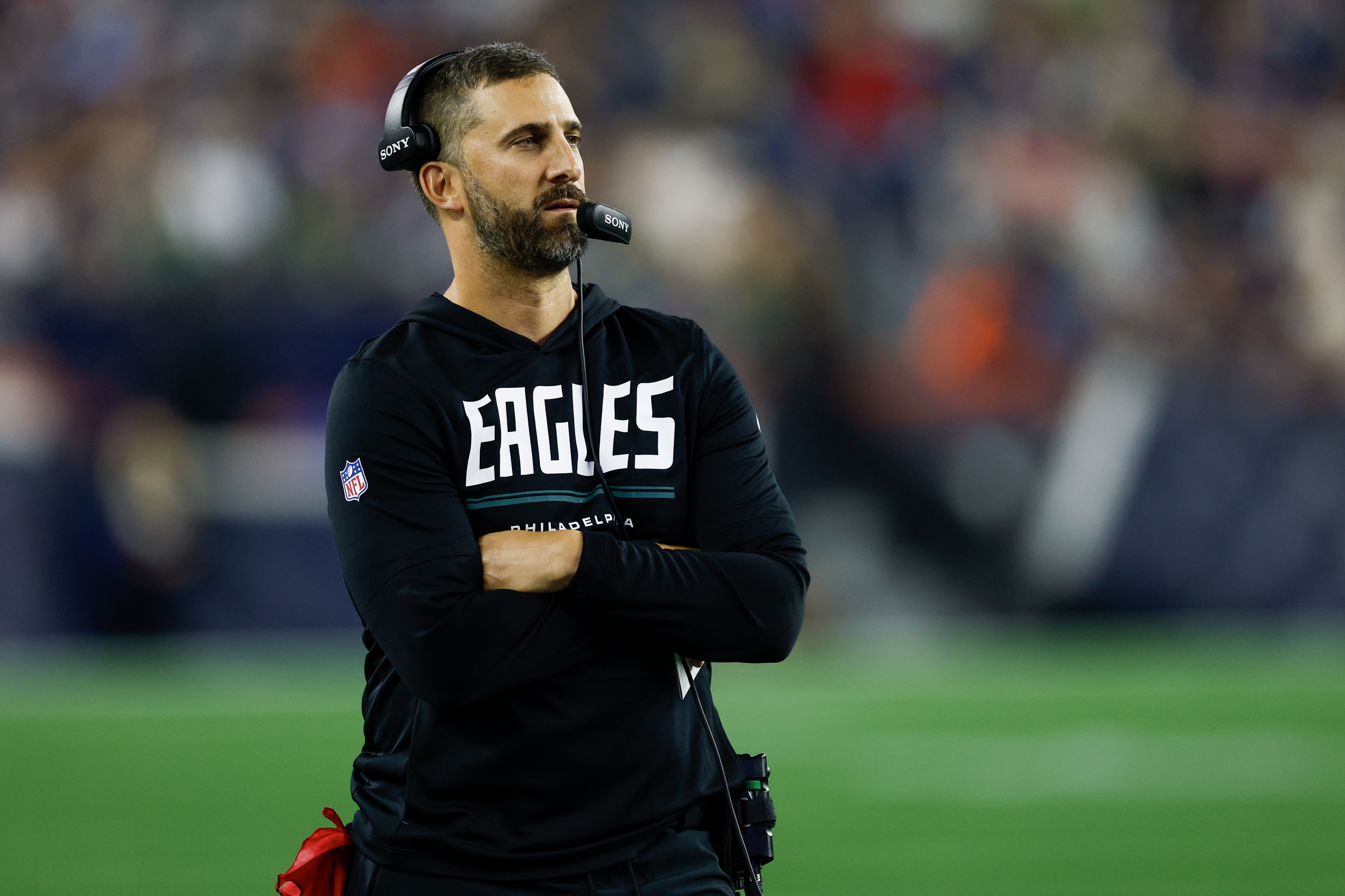
Nick Sirianni has not tipped his hand on a final decision for the backup QB role. Yong Kim / Staff Photographer
The Eagles are running out of chances to showcase him. They could have allowed McKee to come out for the final series and drive the offense to a comeback win. But Sirianni said his quarterbacks were on a rep count and he wanted to give Payton a shot.
The rookie was sacked and fumbled the ball to end the game, however, on his third drop.
“We knew Cole made some nice plays the last game he was in,” Sirianni said. “Has to protect the ball better in that situation.”
It’s been an interesting summer for the Eagles’ quarterback factory, with Hurts obviously at the front of the assembly line. He’s had good days. He’s had rough ones. He took his lumps in the joint practices and delivered a few, as well.
But there remains a lot of uncertainty about how he’ll adapt to Mannion’s overhaul. Answers will start to come on Sept. 13 against the Washington Commanders. Until then, the backup competition will have to suffice.
“I think that’s one thing that there is not much been said,” Dalton said when asked the final decision. “Every day is a new day, and so we’ll see how it all ends up.”
Maybe it will come down to the wire. It probably shouldn’t.
SEPTA is eliminating seven bus routes, debuting two new ones, and adjusting more Sunday as the first phase of a bus network redesign gets underway.
In all, riders will find changes to 30 routes, including more frequent service on those with high ridership, and buses coming less often on some lower-performing routes.
Highlights include:
Routes 35, 47M, 62, 78, 80, 89, and 106 will disappear. SEPTA says they are less used or have nearby alternatives for passengers.
The new Route 72 will connect Frankford Transportation Center and Cedarbrook Plaza, running mostly along Cheltenham Avenue.
Route 76, the second new route, will travel between South Philadelphia’s Columbus Commons shopping center, anchored by Ikea and Lowe’s, and the intersection of Rising Sun and Olney Avenues.
SEPTA is using this graphic to summarize bus-route changes at a glance for the first phase of the redesigned system.SEPTA
SEPTA launched its bus system redesign efforts in earnest after ridership declined 13% from 2013 to 2019, a drop attributed to slow speeds, reliability problems, and competition from rideshare companies. And that was before the COVID-19 pandemic.
Originally called Bus Revolution, SEPTA’s redesign was set to launch in 2025 but faced significant community pushback and coincided with the state funding crisis that halted many planned transit initiatives. It was officially shelved in November 2024.
Along with the additions and subtractions, there are a few route extensions:
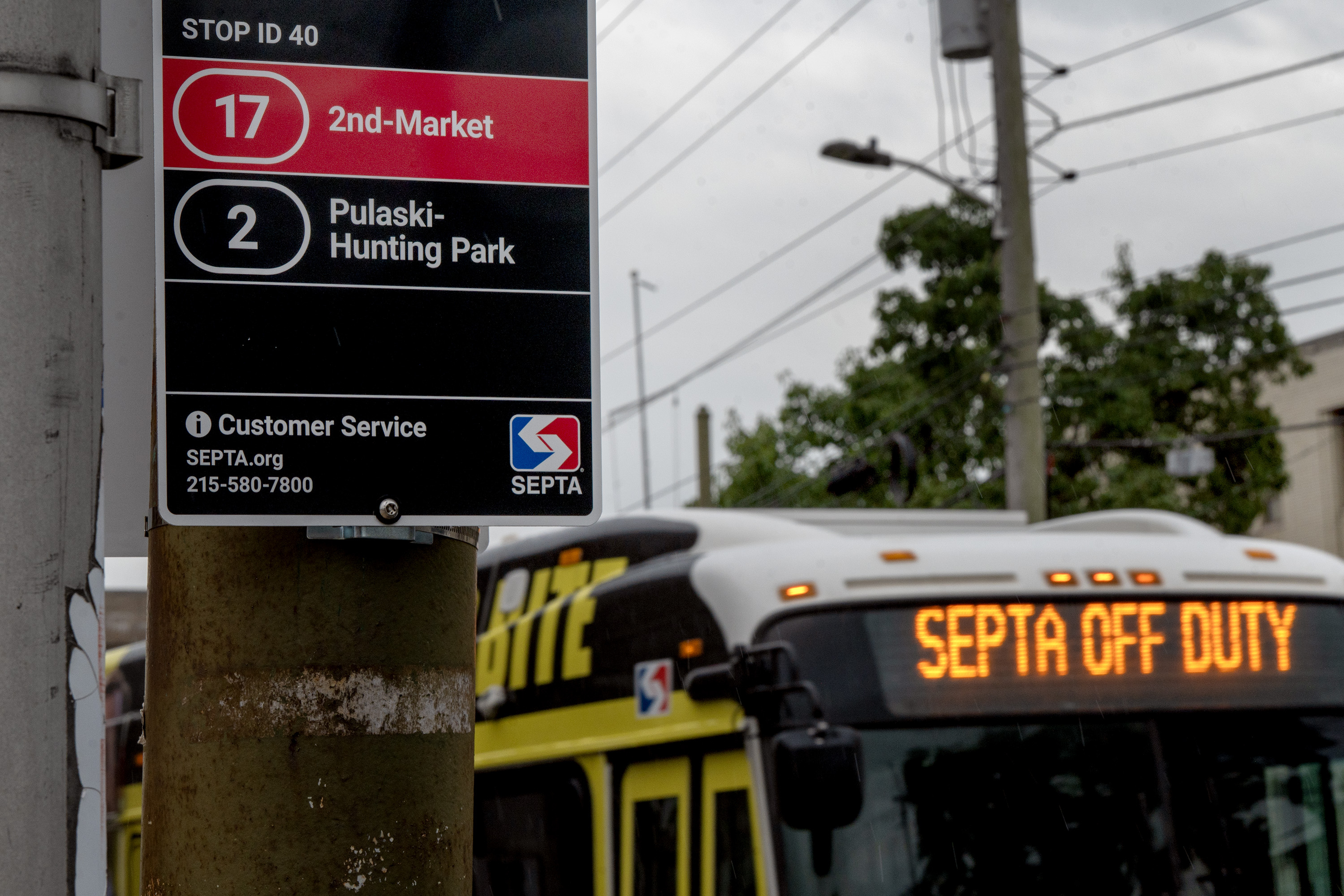
Route 45 will extend southward to serve the Navy Yard, the first time in a decade that a bus will serve the development seven days a week. There will be nine stops inside the Navy Yard for the 45. Currently, the route ends at Broad Street and Oregon Avenue. Route 17 will no longer stop at the Navy Yard on weekends.
Route 79, which ended at Snyder Avenue in South Philly, will cross the Schuylkill, go through Grays Ferry and University City, and end at 40th and Market Streets, where there is a stop on the L train, SEPTA’s new name for the Market-Frankford Line.
Route 53 is to be extended both east and west, to connect the Carpenter Regional Rail station on the Chestnut Hill West Line and the Richmond-Westmoreland Loop, via Aramingo Avenue. The 53 will no longer serve the Broad Street-Hunting Park Station on the B subway.
SEPTA says it is redesigning the bus network to modernize an outdated route structure and enable more efficient travel.
“We function as a network,” said Brandon Miller, manager of planning programs at the transit agency.
The changes will require riders to transfer to other bus routes, as well as metro trains, more often than they do now. And discontinuing low-ridership routes while beefing up popular ones is a needed trade-off to strengthen the overall system, Miller said.
Additional rounds of changes are scheduled for February and June 2027, with a fourth round in the fall.
A county review of a revised plan for the former Melrose Country Club shows more than two dozen more houses than in earlier versions.
The mixed-use development proposal, set on about 115 acres on the southern end of Cheltenham Township, includes townhouses, a medical office, traumatic brain injury care living units, and commercial space. The project would also feature walking trails and a controversial public pool complex.
The pools have drawn a lawsuit and criticism from some residents, who argue that the plan, which could cost up to $4.5 million and would also replace the existing Conklin Pool, moved too quickly, lacked transparency, and evaded public bidding rules.
The president of the township’s board of commissioners has acknowledged that the contract with the private developer gives Cheltenham less input on the pool design, and officials have said they cannot answer some questions about the deal due to the lawsuit.
But the agenda for the township planning committee’s forthcoming meeting includes extensive attachments about the Melrose project, including a February fiscal analysis estimating that the project would net about $1.8 million per year for the township and about $5.9 million annually for the Cheltenham School District.
The Montgomery County Planning Commission reviewed the latest version of the plan in a letter Thursday to the township that notes about 443 homes and recommends several changes to the developer’s proposal.
What’s in new Melrose redevelopment plan
The plan that county officials received Aug. 6 has more townhomes and eliminates apartments, according to the planning commission’s letter, adding about 33 homes.
There are 351 townhomes and 12 twins in the new plan. Some of the townhouses will be age-restricted. A 2024 version of the plan had included only 306 townhouses, 24 age-restricted apartments, and no twins, Thursday’s letter notes.
The Melrose plan also includes 80 assisted living apartments, 30 traumatic brain injury care living units, two retail spaces, and three public pools. It’s unclear whether the TBI units would be long-term residences.
The single-family homes along with the assisted living apartments total about 443 residences.
Montco recommends changes to Melrose plan
County planners recommended changes to the Melrose plan and criticized the removal of apartments and some commercial space.
The township and the developer did not immediately respond to requests for comment on the county’s recommendations or the plan changes.
“We are sorry to see the loss of the previously proposed small apartment building on this site. Housing variety benefits communities by providing more options for price points, size, and configuration of dwelling units,” the planners wrote, and the reduction in retail space “conflicts” with Cheltenham’s goal of boosting its commercial tax base.
“A stronger commercial area would make the proposal an even better fit with the future land use vision from Cheltenham’s new comprehensive plan,” planners wrote.
Carl Freedman, who sits on Cheltenham’s planning commission, has previously criticized the loss of commercial space in newer Melrose plans for similar reasons.
The county review also addresses pool parking in more detail than in its fall 2025 review, noting that a public pool might require more spaces for cars and recommending an analysis of parking at Conklin Pool to inform needs at Melrose.
The county also recommended adding more trees around the public pools to cool and shade the area, which will be mostly paved, and revising the stormwater plan behind a set of townhouses to prevent flooding.
Planners praised the developer’s inclusion of a path along Ashbourne Road and a circuit trail along Tookany Creek, which could connect to a longer trail network underway in the Philadelphia area.
The chair of Cheltenham’s transportation committee said Wednesday he believes the project’s walkability aligns with the town’s goal to build a more connected community.
This suburban content is produced with support from the Leslie Miller and Richard Worley Foundation and The Lenfest Institute for Journalism. Editorial content is created independently of the project donors. Gifts to support The Inquirer’s high-impact journalism can be made at inquirer.com/donate. A list of Lenfest Institute donors can be found at lenfestinstitute.org/supporters.
Rush didn’t waste any time before making things emotional.
Just one song into their nearly 2½-hour set on Friday night, bassist and frontman Geddy Lee stepped to the mic to take care of some business. “Before we move along, there’s something about this city that I need to pay tribute to,” he told the sold-out Xfinity Mobile Arena, proceeding to dedicate “The Spirit of Radio” to the late Pierre Robert, the beloved WMMR host who died last year.
The heartfelt encomium was in keeping with the tone of the evening, far more bittersweet than your usual triumphant comeback. The band last appeared on the same stage in 2015, when the venue was still known as the Wells Fargo Center, its lengthy absence owing to the loss of drummer Neil Peart from brain cancer in 2020.
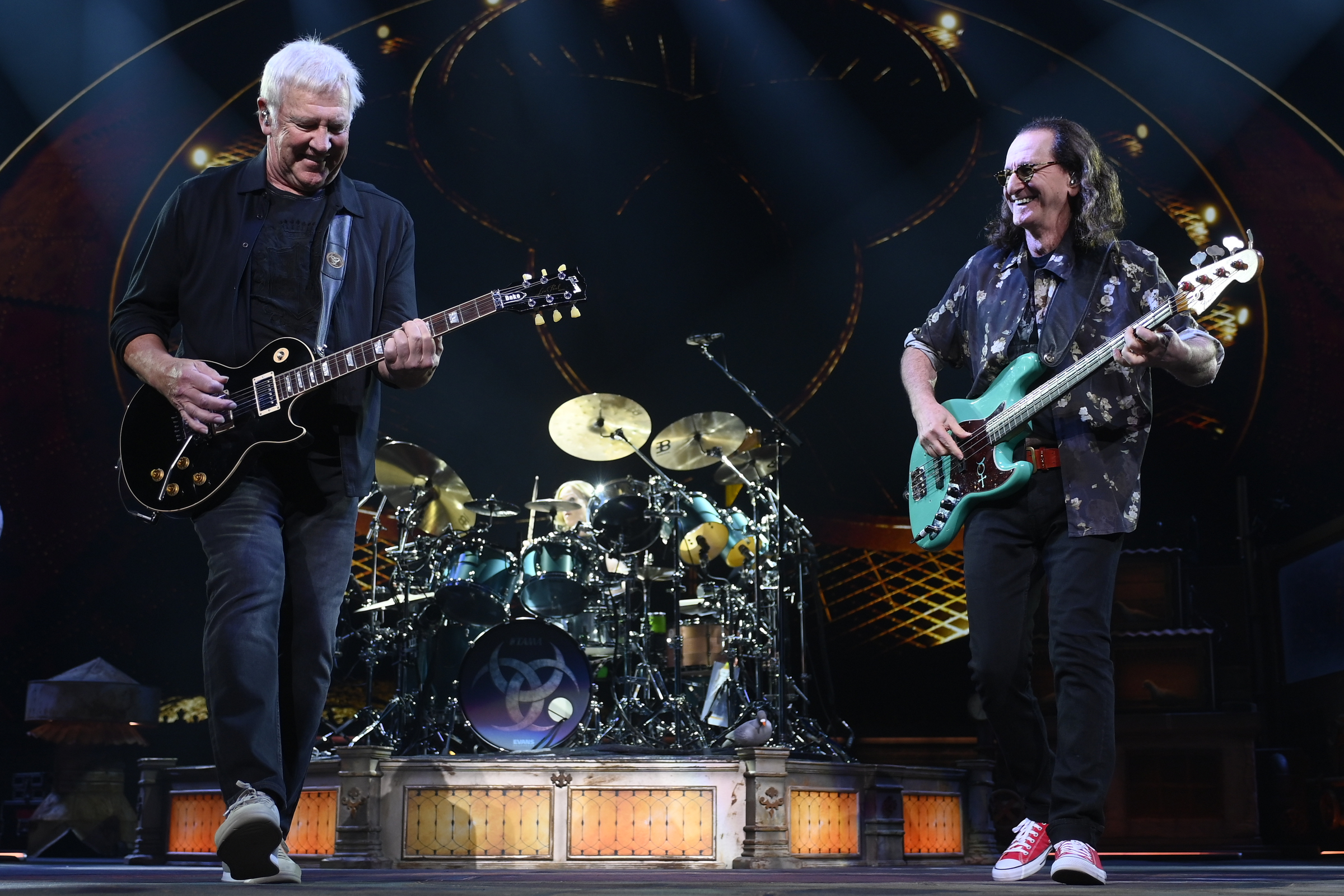
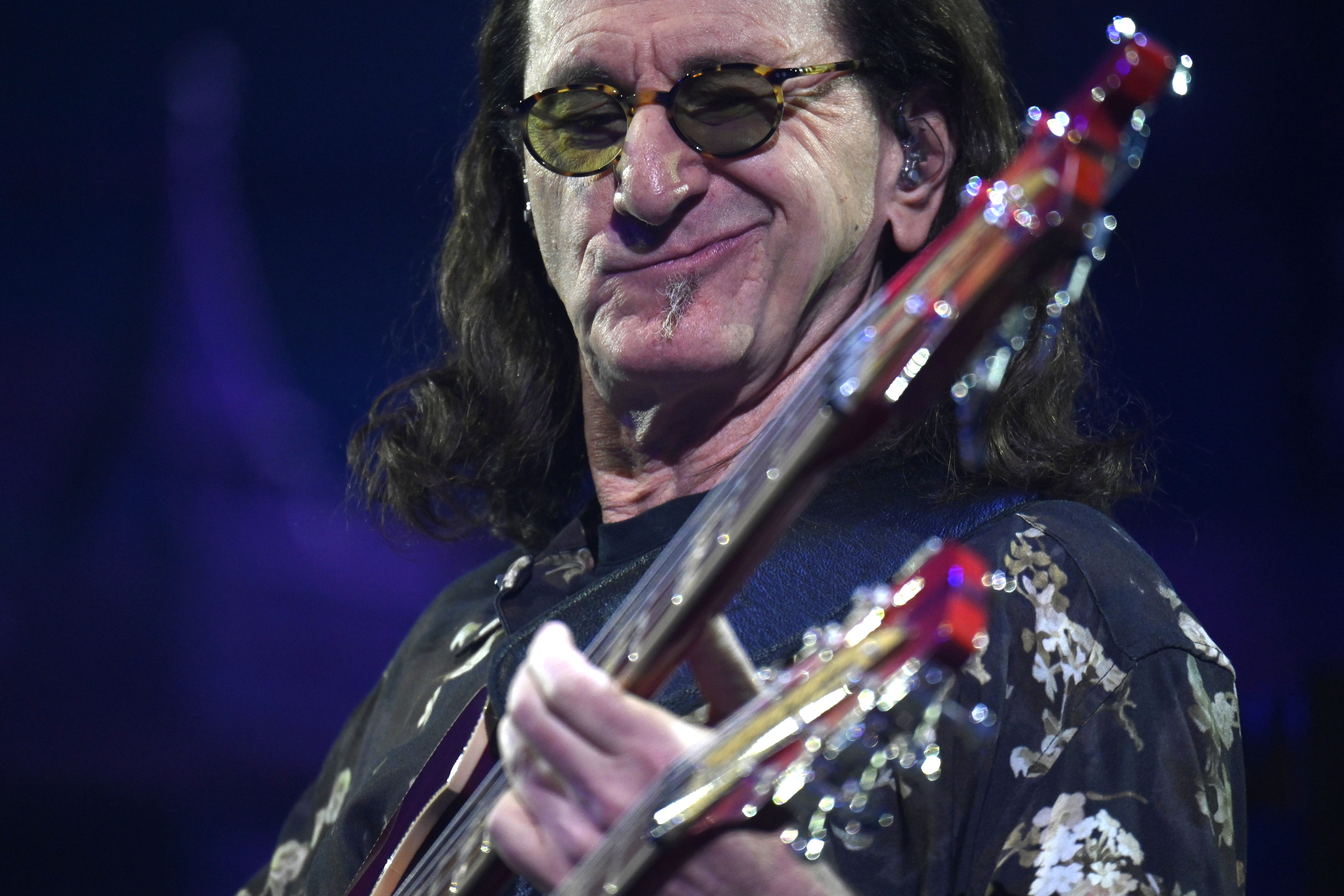
Bassist Geddy Lee of Canadian rock band Rush performs onstage during their ‘Fifty Something’ reunion tour at Xfinity Mobile Arena in Philadelphia on Aug. 21, 2026.Bastiaan Slabbers / For The Inquirer
The “Fifty Something” Tour, which makes its second stop at the arena on Sunday, was framed as a tribute to the revered drummer and lyricist as much as a celebration of the band’s history. Introducing “Freewill,” from 1980’s Permanent Waves, Lee spoke about the philosophical nature of many of Peart’s lyrics, choking up as he mentioned the topics of “loss, recovery from loss, and love.”
This Canadian wake was decidedly of the raucous Irish variety, though, as the poignant videos and heartfelt dedications proved to be brief interludes amid an overwhelming sense of joy.
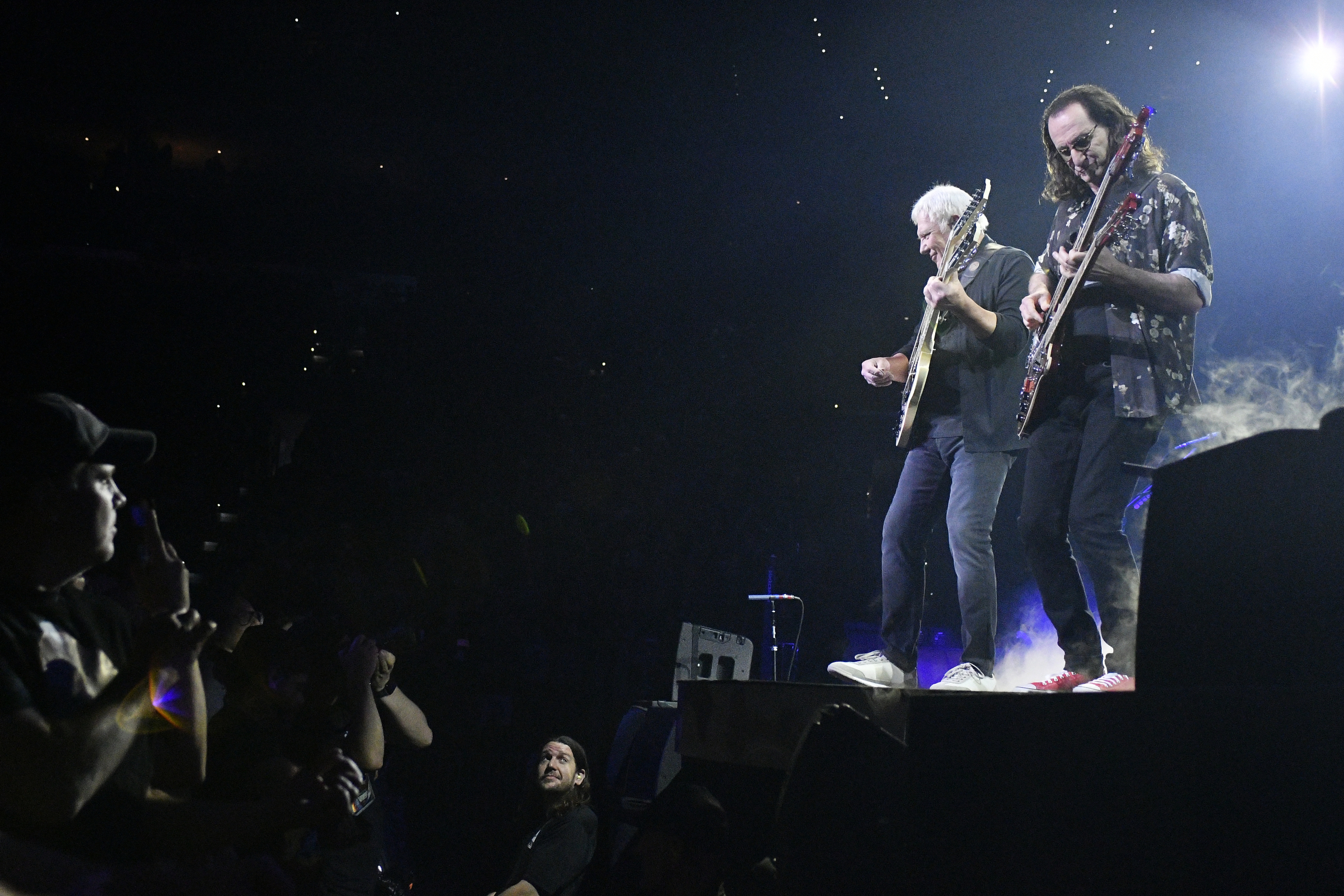
The 70-somethings Lee and guitarist Alex Lifeson are lifelong friends, and their playful interactions often feel like they are reverting to childhood, albeit at the same time pulling off the musical equivalent of higher mathematics. Lee skipped and leaped across the stage with giddy youthfulness, laughing and sneaking behind Lifeson for mid-song bouts of hide-and-seek.
The bassist was downright giddy following the band’s daunting 1978 instrumental “La Villa Strangiato.”
“Man, that’s a boatload of fun,” he gushed.
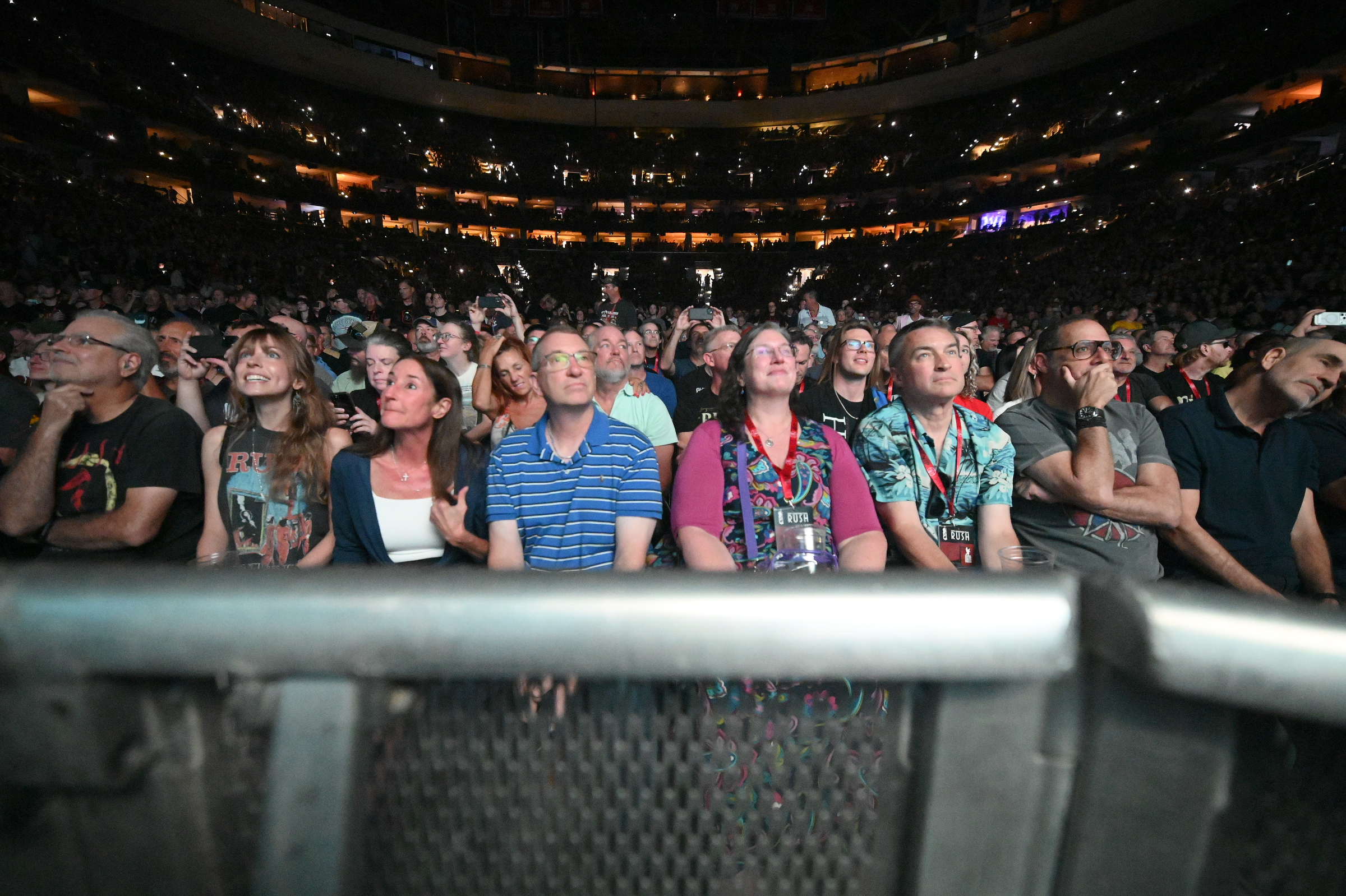
Fans of Canadian rock band Rush watch the opening film during the ‘Fifty Something’ reunion tour at Xfinity Mobile Arena in Philadelphia on Aug. 21, 2026.Bastiaan Slabbers / For The Inquirer
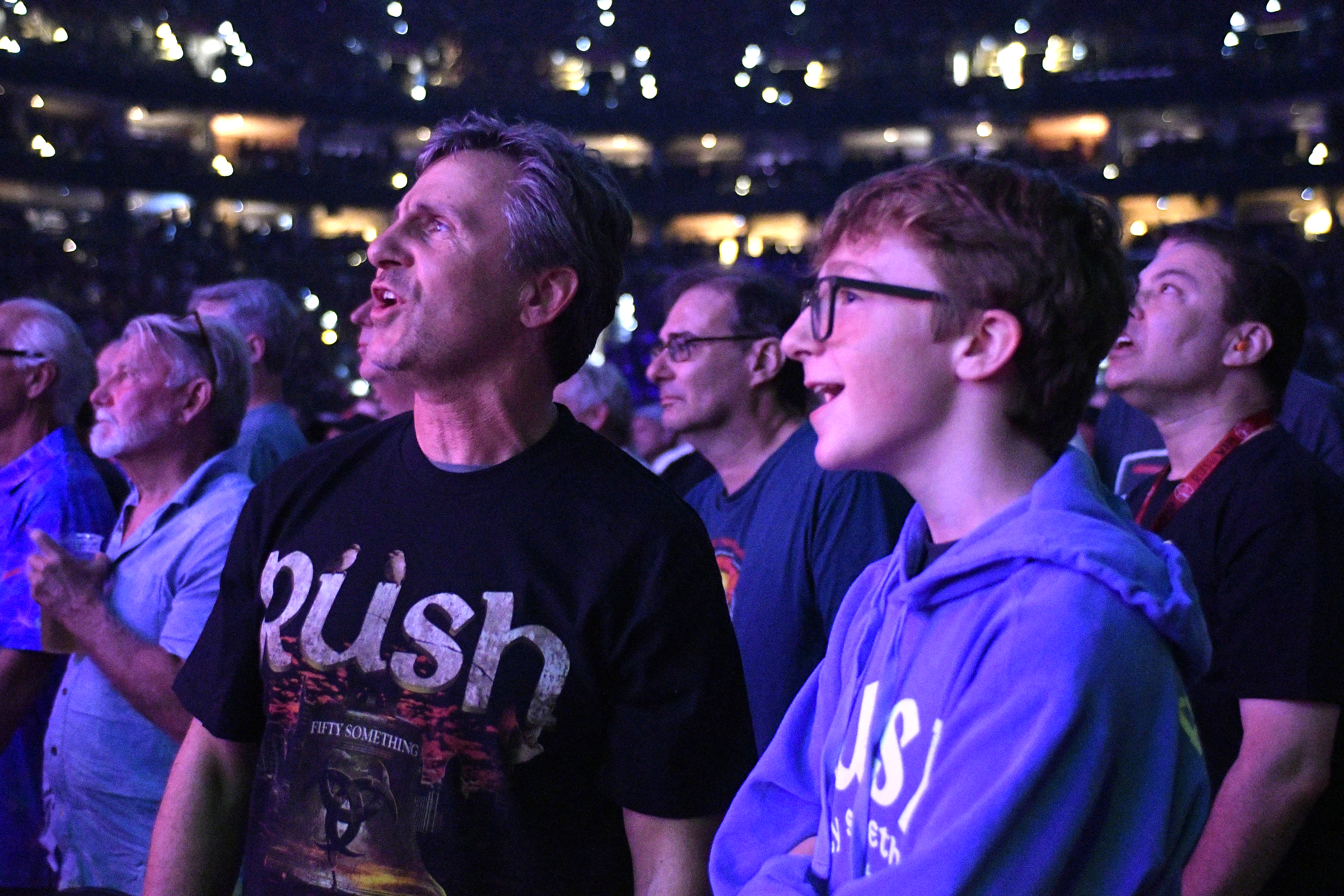
Rush’s return to performing after more than a decade was clearly a source of rabid anticipation for the Philly faithful, the vast majority of whom had shrugged off the usual taboo about wearing the T-shirt of the band they had come to see.
But the band, almost as well-known for its offbeat sense of humor as for its complex time signatures, decided that if one of the most dedicated fan bases in rock could wait 11 years, they could wait just a bit longer.
When the lights went down, the crowd’s ovation was answered by a six-minute video in which the septuagenarian rockers mocked their own longevity.
Fans of Canadian rock band Rush react during the ‘Fifty Something’ reunion tour at Xfinity Mobile Arena in Philadelphia on Aug. 21, 2026.Bastiaan Slabbers / For The Inquirer
Following a Citizen Kane-inspired crane into a foreboding retirement community (“The Villas of Strangiato,” naturally), the camera follows a Wonka-like trio of curiosity seekers on a quest to find Rush. Along the way they find Lee and Lifeson in outlandish costumes and silly accents as, respectively, a “slightly used sausage” vendor and a doughnut-hoarding ex-general, and transformed into a pair of animated blackbirds a la Dumbo; the South Park kids as “Lil’ Rush”; and Jason Segal and Paul Rudd reprising their roles from I Love You, Man.
Finally the seekers discover a pair of magical robes (don’t ask), opening a portal that travels through half a century of Rush history to unveil a steampunk rooftop set and the band itself, Lee and Lifeson both spryly wielding double-necked axes and kicking off not with one of their classic rock staples but with 1977’s 11-minute epic “Xanadu.”
Guitarist Alex Lifeson, lead vocalist and bassist Geddy Lee, and drummer Anika Nilles of Canadian rock band Rush perform onstage during their ‘Fifty Something’ reunion tour at Xfinity Mobile Arena in Philadelphia on Aug. 21, 2026.Bastiaan Slabbers / For The Inquirer
Did I call the fan base “dedicated”?
True enough, but it would be at least as accurate to use words like demanding and persnickety about an audience that likes its arena rock intricate and exacting.
Lee and Lifeson arrived with decades’ worth of nostalgia-tinged goodwill behind them, meaning that the skeptics’ eyes were trained almost exclusively on the drum chair, populated for the first time by the 43-year old German YouTube phenomenon Anika Nilles.
Stepping behind the drum kit of the late Neil Peart has to be one of the most thankless gigs in all of rock, but Nilles executed it thrillingly. Peart’s unique alchemy was his ability to pair his mind-boggling precision and intricacy with ebullient, almost vocal cadence.
Drummer Anika Nilles of Canadian rock band Rush performs onstage during their ‘Fifty Something’ reunion tour at Xfinity Mobile Arena in Philadelphia on Aug. 21, 2026.Bastiaan Slabbers / For The Inquirer
Nilles brought her own personality to that blend while knowing — and nailing — those iconic barrages that every fan in the place expected to hear. It was well appreciated, with the crowd roaring louder at certain drum fills in “Tom Sawyer” or “YYZ” than they did for some of their favorite singalong choruses.
For their part, the veteran members didn’t need the goodwill.
Lee was in strong voice all evening, soaring to vibrant highs on “Freewill” or “Closer to the Heart.” Instrumentally, he and Lifeson retain their exuberant virtuosity. They navigated the labyrinths of “YYZ” or the multipart, 20-minute epic “2112,” which opened the second set in its entirety, with the fervor of a teenage garage band paired with the exactitude of lab technicians.
Guitarist Alex Lifeson and lead vocalist and bassist Geddy Lee of Canadian rock band Rush perform onstage during their ‘Fifty Something’ reunion tour at Xfinity Mobile Arena in Philadelphia on Aug. 21, 2026.Bastiaan Slabbers / For The Inquirer
The musical acrobatics were obvious high points, but the concert was equally memorable for its emotional standouts — the band pouring its hearts into “The Garden,” a relatively obscure choice from its final album, 2012’s Clockwork Angels; or the highway-speed abandon and wistfulness emanating from an exhilarating “Red Barchetta.”
Rush went back to the beginning for its two-song encore, both dating back to its self-titled 1974 debut. “Finding My Way” was the show’s purest rock and roll song, while “Working Man” acknowledged original drummer John Rutsey, who died in 2008.
One last bit of mourning, one last moment of life-affirming euphoria.
Rush performs on its “Fifty Something” tour again Sunday, Aug. 23, 7:30 p.m., at Xfinity Mobile Arena.
Angelo Cataldi made a passing comment after Pat Taggart and his crew visited WIP’s morning show years ago, telling them they were the guys he would pick if there was ever a documentary to be made about Wing Bowl. Time went by, Cataldi retired, and Taggart saw no one ever made that film. It was time, he thought. So they reached out to Cataldi in 2023. The former radio host told them to meet him in Sea Isle City. He’ll be on the beach, reading a book under a blue tent.
“Sure as anything, we showed up to Sea Isle and there he was,” Taggart said.
Taggart, who grew up in Southwest Philly, caught Cataldi’s attention in 2016 when he directed a documentary called Billboard Boys about a promotional stunt by an Allentown radio station. Cataldi loved it. Taggart promised Cataldi on the beach — “I was wearing a bathing suit and flip-flops,” he said — that he would treat Wing Bowl the same.
“Angelo is an interesting guy,” Taggart said. “Him in real life is not like him on the radio. He’s very much an introvert and not overly talkative. He’s a family guy. We got there and we weren’t there very long. He had his book and he said, ‘Everybody says they’re going to do this and nobody follows through.’ I don’t even know how much eye contact we made. But we left there and he said, ‘You guys are the guys. I believe you’re going to do this right.’”
Wing Bowl — which ran for 26 years before the station 86’d it in 2018 — seemed ripe for a documentary.
A popular champion went to state prison, there were fights in the arena, the mayor attended, a major league umpire was the judge, and gentleman’s clubs were as much a part of the eating event as the restaurant that provided the chicken wings. The scene was often as ugly as the guy who vomited one year after eating a wing that still had a feather attached.
Co-founder Angelo Cataldi at Wing Bowl 20.Alejandro A. Alvarez / Staff Photographer
But Taggart steered his film — which is titled No One Died — away from the mess. The documentary touches on the ugly and describes the chaos in the arena but most of the 95 minutes are spent celebrating Wing Bowl as an event unique to Philadelphia that brought people together.
“You have to show the El Wingador stuff. You have to show the ugly of the fights and some of the misogyny,” Taggart said. “But I feel like you have to show enough to tell the story and not linger on it. At the end of the day, this was always a comedy. My fear was that if someone from out of town told this story, 75% of it would’ve been that.”
“He really wanted the story told, and he wanted the story told by people who understood Philadelphia and understood Wing Bowl and people he trusted. I’m so grateful that was us.”
‘Uniquely ours’
The crew asked Cataldi if he wanted to be a producer but he declined. The man who redefined sports talk radio in Philadelphia said he didn’t want to control the narrative. But he had one request: interview Arson Arnie, a longtime caller to Cataldi’s morning show.
“We showed up to his house and he’s sitting on his front stoop in a Randall Cunningham jersey chain smoking out of a Veterans Stadium ashtray,” Taggart said. “In his backyard under a tree are two Veterans Stadium seats rotting away and in the middle of the yard is a Deion Sanders Starting Lineup [figure] with its head ripped off. He didn’t place it for us. That’s just where it lived.”
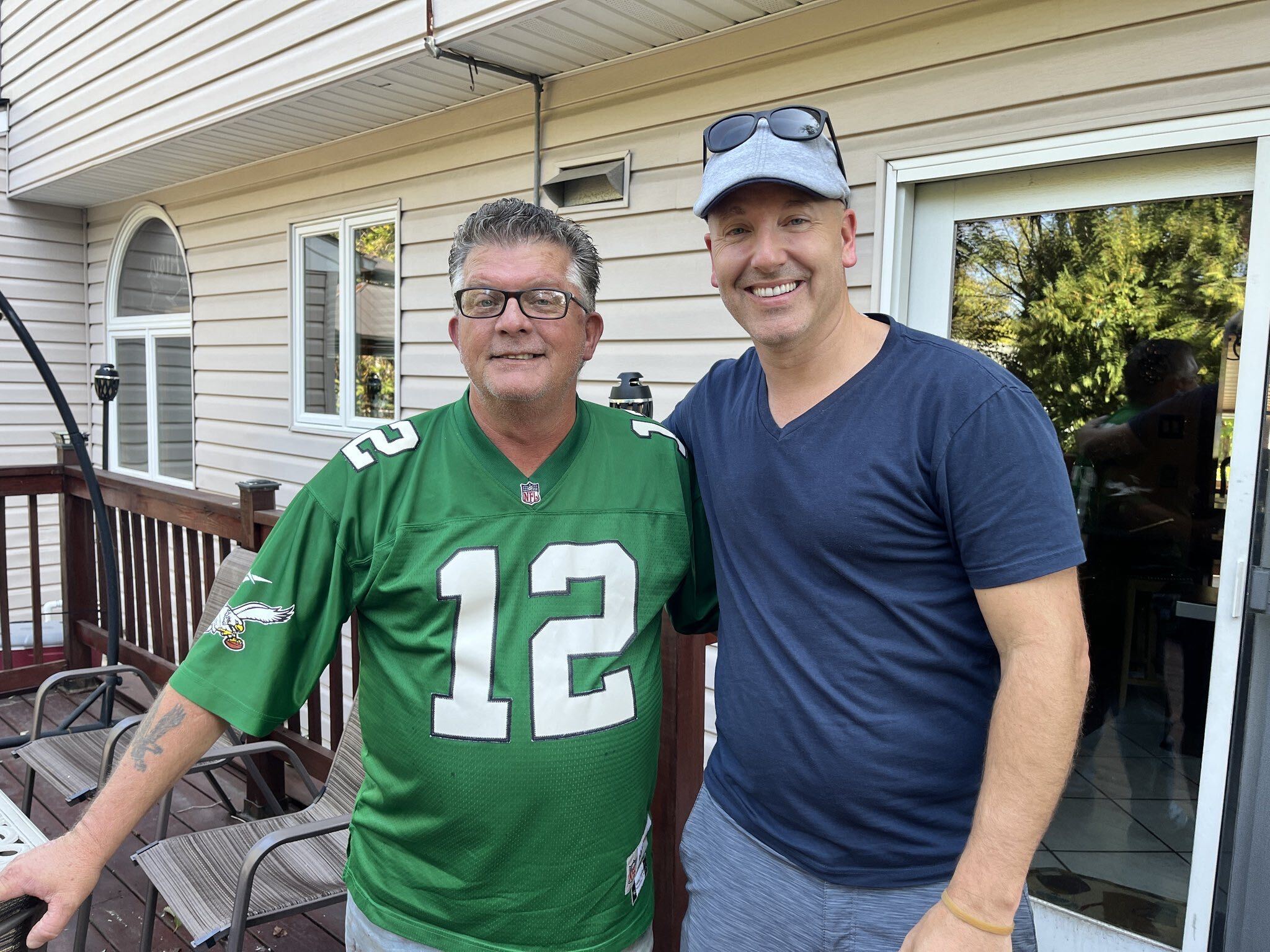
Arnie Adkins, aka “Arson Arnie,” with Pat Taggart, the director of “No One Died.”Pat Taggart
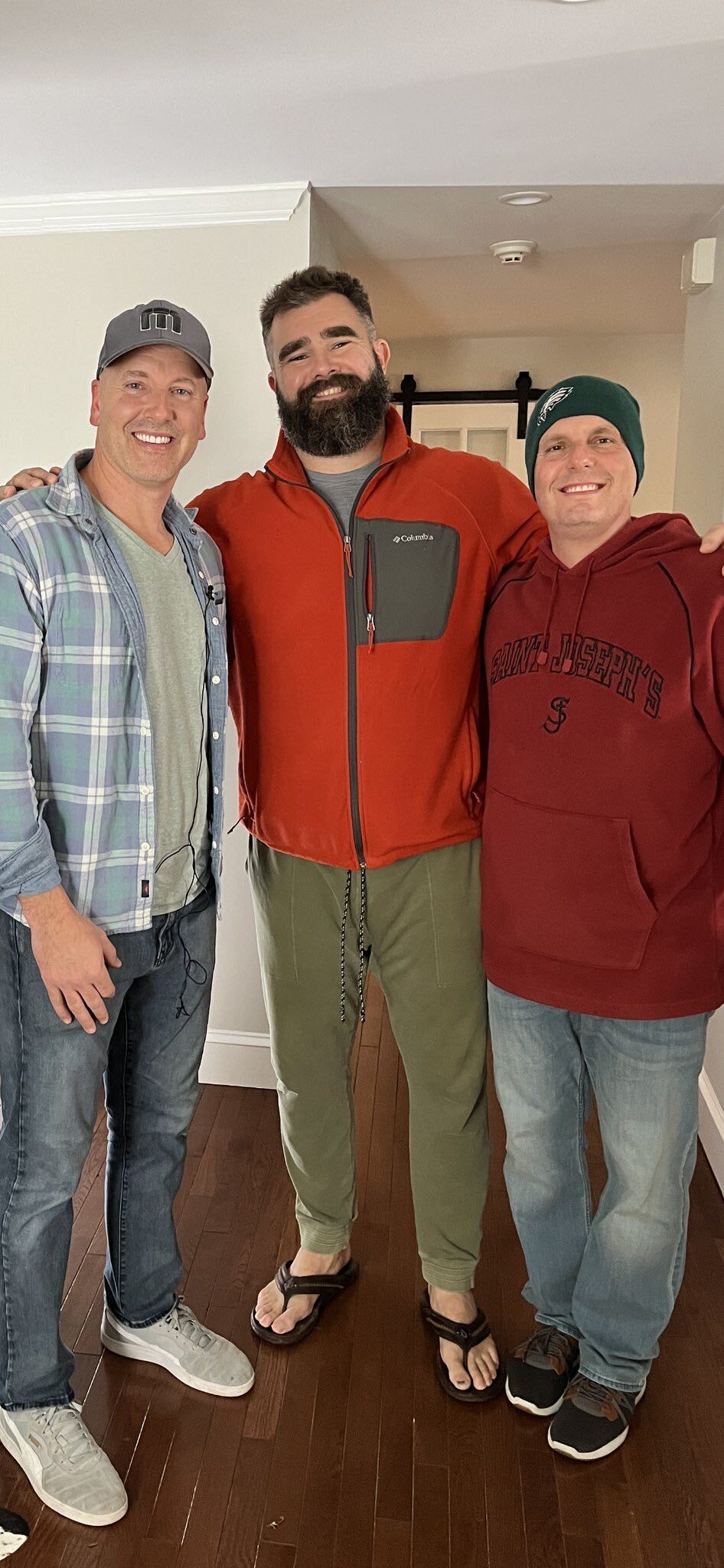
Arson Arnie, who is a cab driver named Arnie Adkins, fills the documentary with old Wing Bowl stories and what it means to be an Eagles fan. The filmmakers conducted more than 40 interviews and even sat with Jason Kelce — who competed in Wing Bowl 22 — at his house the day before he played a game during one of his final NFL seasons.
But Taggart said Arson Arnie is the character who seemed to resonate the most.
Arson Arnie seemed to encapsulate what fandom looked like in the 1990s when Wing Bowl was launched as a radio stunt to celebrate another Super Bowl without the Eagles. WIP — especially Cataldi’s show — didn’t just tell fans what to think about but often succeeded at telling Philadelphia how to feel. The AM station was the guiding light for people like Arson Arnie.
“It’s different now,” Taggart said. “Whether you think it’s better or worse, it’s absolutely different. If you were a fan of WIP, it was hard to not be a fan of Wing Bowl. They were so smart that they stretched a one-day event into two or three months of programming.”
Taggart interviewed El Wingador, whose real name is Bill Simmons, and asked him how he went from wing king to state prison on drug charges. They showed footage of the rowdy crowd that nearly rioted in 2005 after being turned away days before the Eagles played in the Super Bowl.
The film didn’t hide the fights in the crowd, the all-night partying that bled into the event, or the other things that led to a former WIP promotion director saying in the documentary that Wing Bowl had become “out of place” by the time it ended. But Taggart’s film looks fondly on a bygone era and the people like Arson Ernie who made it happen.
Pat Taggart with Jason Kelce and producer Frank Petka after interviewing Kelce for the “No One Died” documentary.Pat Taggart
“It was uniquely ours,” Taggart said. “Find someone in Philadelphia who likes a cheesesteak outside of Philadelphia and raves about it. You can’t find it. Why? Because the cheesesteak is ours. Wing Bowl was Philadelphia’s. It was a true original. Other people tried to copy it with absolutely no success. It only worked here. It needed the perfect fan base that understood what it was and got behind it. This was never an eating contest. This was a party.
“Someone said to me, ‘If you wanted to miss Wing Bowl, it was very easy. It happened once a year. It happened in an enclosed building for four hours. If you didn’t want to see it, don’t listen and don’t go.’ So it was absolutely a voluntary event for people.”
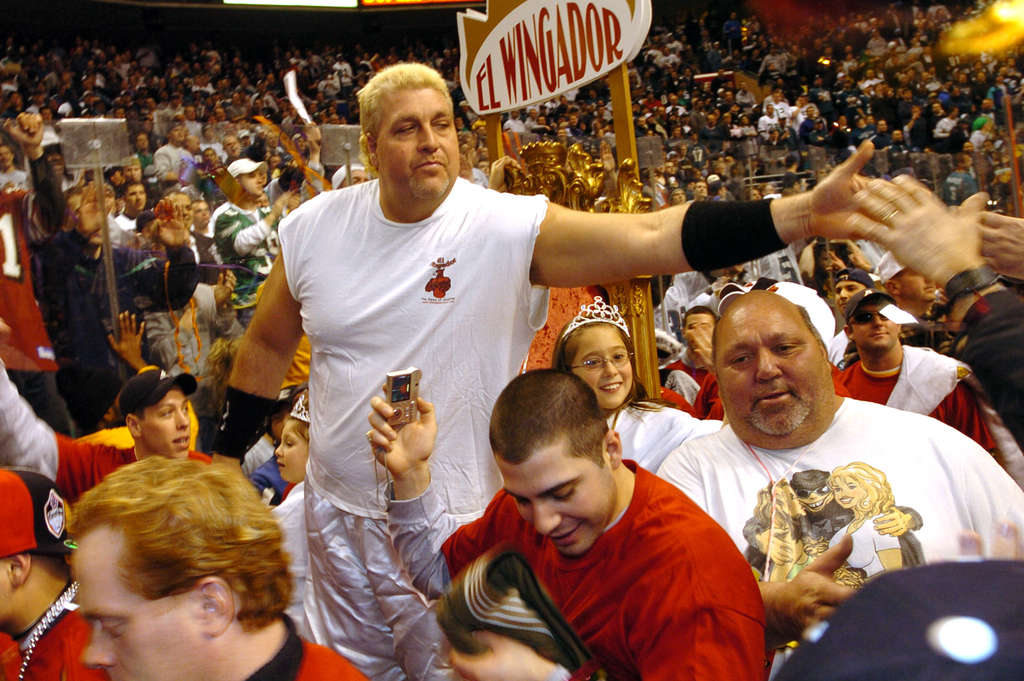
El Wingador gets a hero’s welcome at Wing Bowl 13.AP
A moment in time
Taggart said he was negotiating a deal with two production companies before he realized he would be trading away the ability to edit his film and the documentary’s final cut would be out of his hands. So Taggart said he backed out and decided to release the film himself earlier this month. The documentary can be purchased on Prime, Apple TV, and YouTube.
“We weren’t willing to take that risk,” Taggart said. “We wanted to make sure the film got out there the way it was intended. If this got out there and it was a smear piece on Philly and the lazy narrative of snowballs at Santa and look at the stuff they did on a snowy morning every year, I would’ve been distraught.”
He showed the film to El Wingador and then asked the five-time champ if the documentary treated him fairly. It was perfect, he said. They showed it to Ed Rendell, who as mayor helped WIP move the event in 1998 to the Spectrum. The documentary shows a clip of Rendell saying how Wing Bowl was to Philadelphia what Mardi Gras was to New Orleans. Taggart asked Rendell after he watched the film about his time at Wing Bowl.
“He said No. 1 I looked around and said this is the craziest thing I’ve ever seen,” Taggart said. “Then my second thought was I probably shouldn’t be here.”
Cataldi says in the documentary that he wasn’t ready to end Wing Bowl but the station decided it was time. It was the end of an event that was often used as a punchline by outsiders. But Taggart says for Philadelphians, Wing Bowl wasn’t a joke. It was something to treasure.
“It was a moment in time,” Taggart said. “It was the wackiest event in the history of the media and it can never happen again. But to ignore that it ever happened would be silly. I just watched a baseball game the other day in St. Louis, which is supposed to be a baseball city. There was nobody there. We had 50,000 people that day on a snowy February morning trying to get in to watch a chicken eating contest. This city is just different.”
Target Corp. has long struggled with its grocery identity: whether it wants to be a discounts-driven everyday chain or a cool, zeitgeisty retailer. Its latest big bet indicates it’s chosen the latter.
The company has been overhauling its grocery aisles since the spring, hoping the upscale Tarzhay success it once had with stylish apparel and home goods in the early 2000s can be revived in food. It’s expanding the size of the section by more than 20% in nearly 150 remodeled stores and more than 50% in 300 new locations, carving out additional space for fresh produce and trendy items while cutting back on some pantry staples that shoppers aren’t buying or can get elsewhere.
The strategy, intended to help reverse three years of weak sales, contrasts with what rivals in the $1 trillion U.S. grocery industry are doing. As competition intensifies, Walmart and Kroger are lowering prices across the board to appeal to inflation-weary, cost-conscious consumers. Target’s share is tiny in comparison, and the pressure is on to sell the right products at the right price or risk falling further behind.
At a Target store in West Hollywood, Calif., the coffee aisle is stocked with pink and green packages of collagen-infused strawberry matcha latte powder and mushroom-coffee brands Ryze and Everyday Dose. Nearby, healthier packaged food additions include gluten-free pumpkin spice cereal, sour melon candy made with less sugar, and Khloé Kardashian’s protein-dusted popcorn. Target is also broadening its Asian food selection, giving prime shelf space to sesame miso noodles, jars of chili crisp, and peach-flavored soju.
Several shoppers said they’d noticed new brands and layout improvements, but the changes hadn’t yet made a difference in how they shop at the chain.
“I’m just buying groceries out of the convenience of already being here,” said Emma Woods, 29, as she grabbed a few items, including Frosted Flakes and Yoplait, for an upcoming girls weekend. She said she still prefers to do the bulk of her food shopping at Whole Foods Market, Ralphs, and Trader Joe’s.
“The selection just isn’t as large as a larger grocery store that I could go to, and I think the prices aren’t as competitive,” the dancer from Los Angeles said. “For me, it might be a lost cause.”
Dwarfed by grocery rivals
The grocery makeover is a crucial piece of Target’s attempt to rejuvenate its operations and boost traffic. The retailer estimates the move will generate more than $2 billion in growth over the next few years.
Since 2023, revenue has been shrinking as shoppers spend at a slow pace because some of the merchandise hasn’t been resonating the way it did in the past. New chief executive officer Michael Fiddelke has pledged to improve Target’s product assortment, store experience, and technology, identifying food among the primary areas of focus along with baby, home, apparel, toys, gadgets, and sports.
Target for years has debated how much food to sell and how to pitch itself against competitors. It’s sold many packaged goods, which have a simpler supply chain, rather than a full-fledged offering. As a result, food has been an afterthought for many shoppers, tacked on to the end of their Target runs or a holdover in between their main grocery trips.
“I don’t think people wake up and say, ‘I need groceries, I’m going to go to Target,’” said Joe Feldman, an analyst at Telsey Advisory Group.
Target wants that to change and sees significant opportunity: More than half of its customers buy groceries when they shop at the chain. And food, which makes up less than 25% of its revenue, has been growing faster than most divisions.
So far this year, Target has added roughly 4,600 new food items — including probiotic coconut yogurt, mini rice cakes drizzled with chocolate, and frozen sour candy mixes — and more than 60 new brands during the second quarter. The retailer expanded the space allotted for Asian food products by about 75% and beefed up offerings of noodles and snacks in the category after sales rose more than 25% in the last year.
“Food and beverage is a powerful opportunity to make life easier for busy families and drive our business forward,” John Conlin, senior vice president of food and beverage merchandising at Target, said in a statement. Its grocery offerings, which have had strong sales momentum, are deepening customer loyalty and driving more frequent trips, he said.
But Target has substantial ground to make up. The retailer is dwarfed by Walmart, Costco, and Kroger, whose food businesses are roughly 12 times, six times, and five times bigger, respectively. Like Target, the three giants are increasingly selling trendier items — but they’re also using their scale to lower prices and emphasize value at a time when budget-conscious consumers are searching for bargains. U.S. food prices are expected to rise further in the back half of the year.
Shoppers buy groceries at a Walmart Superstore in Secaucus, N.J., in 2024. Walmart’s food business is roughly 12 times that of Target.Eduardo Munoz Alvarez
Walmart, known for offering affordable everyday goods, has said it will continue to lower prices. After announcing summertime deals in July, Walmart U.S. chief merchandising officer Julie Barber told staff that when the company leans on value, customers respond. “From beef and fresh produce to beverages, grilling essentials, toys and more, these investments reinforce what customers expect from Walmart: incredible value when it matters most,” she wrote in a memo viewed by Bloomberg News.
Kroger has pledged to make the biggest price cuts in years to compete more effectively. New CEO Greg Foran, a former Walmart executive, told Bloomberg that prices have to come down across thousands of items and that the company would save costs by importing merchandise and using technology more effectively. Costco, meanwhile, is lowering prices of eggs, beef, and other items.
Target lags many rivals when it comes to price. Identical national-brand food items cost about 5% more at the chain than they do at Walmart, according to data firm Attain, and one of the widest price gaps between the two is found in the snack section. It found that meat prices are relatively similar. Target said it’s priced competitively in food staples.
Curating a treasure hunt
Target is carving its own path. Instead of doing it all, the company is focusing on curation, a spokesperson said. It’s doubling down in areas where consumers are showing stronger interest, carrying an assortment of national, emerging, and store brands that reflects “evolving tastes, interests, and wellness needs.”
The hope is that refreshed food aisles filled with coveted, unique products will become the reason people visit. With some new items, Target said, shoppers are willing to spend more to try them.
Shoppers check out the food selection at a Target store at the Springfield Mall in Delaware County in 2009.CHARLES FOX / Staff Photographer
“It has never been able to crack it in food,” said Jackie Lewis, a market intelligence lead at consultancy Harvest Group. “They are finally embracing the mantra that works for them in the rest of the store: exclusivity, buzziness.”
The changes are helping attract more shoppers and creating a treasure hunt experience, with Target’s food sales growing in dollars and outpacing total company growth, according to Harvest Group’s analysis.
“I buy more here now than I did previously,” said Sean Wesslund, a 40-year-old human resources consultant, while shopping at a Target in Highland Park, Ill. The store recently began offering more sustainable, healthier options such as regenerative organic certified coffee, which he likes to purchase along with basics like cereal, granola bars, and cheese. He said he sees Target becoming a cross between Whole Foods and Albertsons.
At a Target in Falls Church, Va., Sam Fowler and his fiancée, Lindsay Nesmith, were perusing the display of noodles, including Buldak spicy ramen.
“Things we would go to H Mart for, they now have here,” said Fowler, a 26-year-old TV producer. The couple does most of their shopping for bulk goods at Costco, but will supplement at Target for meals they are cooking that evening.
Grocery is among a number of areas that Target is reworking. The company is adding new, exclusive items across its baby department and expanding concierge services where shoppers can get one-on-one guidance from experts. It’s launching beauty studios in hundreds of stores, and offering more trading cards and cell phone accessories across its entertainment, toys, and tech section.
In March, Fiddelke unveiled a $6 billion plan to reverse Target’s sales slump and to reclaim the retailer’s reputation as a place to go for affordable yet stylish apparel and home goods.
Target recruited fashion designer and TV personality Isaac Mizrahi this summer to fill the newly created role of creative director at large. Mizrahi has been brought in to mentor Target designers, advise on product design and innovation, and forge new partnerships.
Fiddelke is also remodeling Target stores and improving staffing. The company has more than 100 full-scale remodels underway, with a goal of reaching 130 this year, Fiddelke said Tuesday.
Second-quarter sales results released Wednesday suggest the changes are having an impact. The CEO said the latest quarter was “an important step forward in the plan we laid out earlier this year to open a new chapter of growth for Target.”
Target also reported an increase in the number of customers going to its stores and shopping on its website from May through July.
“We’re encouraged by the progress made so far, and we’re also clear-eyed about the important work still ahead,” Fiddelke said.
Executives at several upstart food brands said they’re encouraged by the revamp. Many have inked exclusive deals with Target, ensuring their products are sold only at the chain.
Snackish, a new clean-label potato chip brand, launched nationwide in June only at Target. The Snackish customer “wants to be the first one of her friend group to find the new thing that’s trendy” and is Instagramming her finds, founder Tara Bosch said. “We wanted to show up where she is and Target is where she shops.”
Scoot, a brand of frozen lemonade pouches, highlights on its packaging that it’s only available at Target, complete with the retailer’s bullseye logo. This summer, refrigerated dough brand Sweet Loren’s rolled out its first exclusive-to-Target item: a snickerdoodle cookie dough. The company was confident it would draw new customers into Target, founder and CEO Loren Castle said.
“These emerging brands, these better-for-you brands are actually what the Target guest is looking for,” she said. “It’s the reason they’re able to compete in grocery. It’s what they’re relying on to build the future.”
Shopper Joy Shaw isn’t so sure. She went to the West Hollywood Target for school supplies this month and figured she’d also grab “lunch box stuff” including string cheese, cheddar squares, Sun Chips, and Activia yogurt drinks. The 51-year-old nurse said she’d like to see a wider selection of produce and meat, noting she wasn’t able to find ground chicken.
“If they’re trying to be the go-to place for groceries, then they need to have the foundation of what we really need first,” she said. “Cool snacks, you can pretty much get anywhere else.”
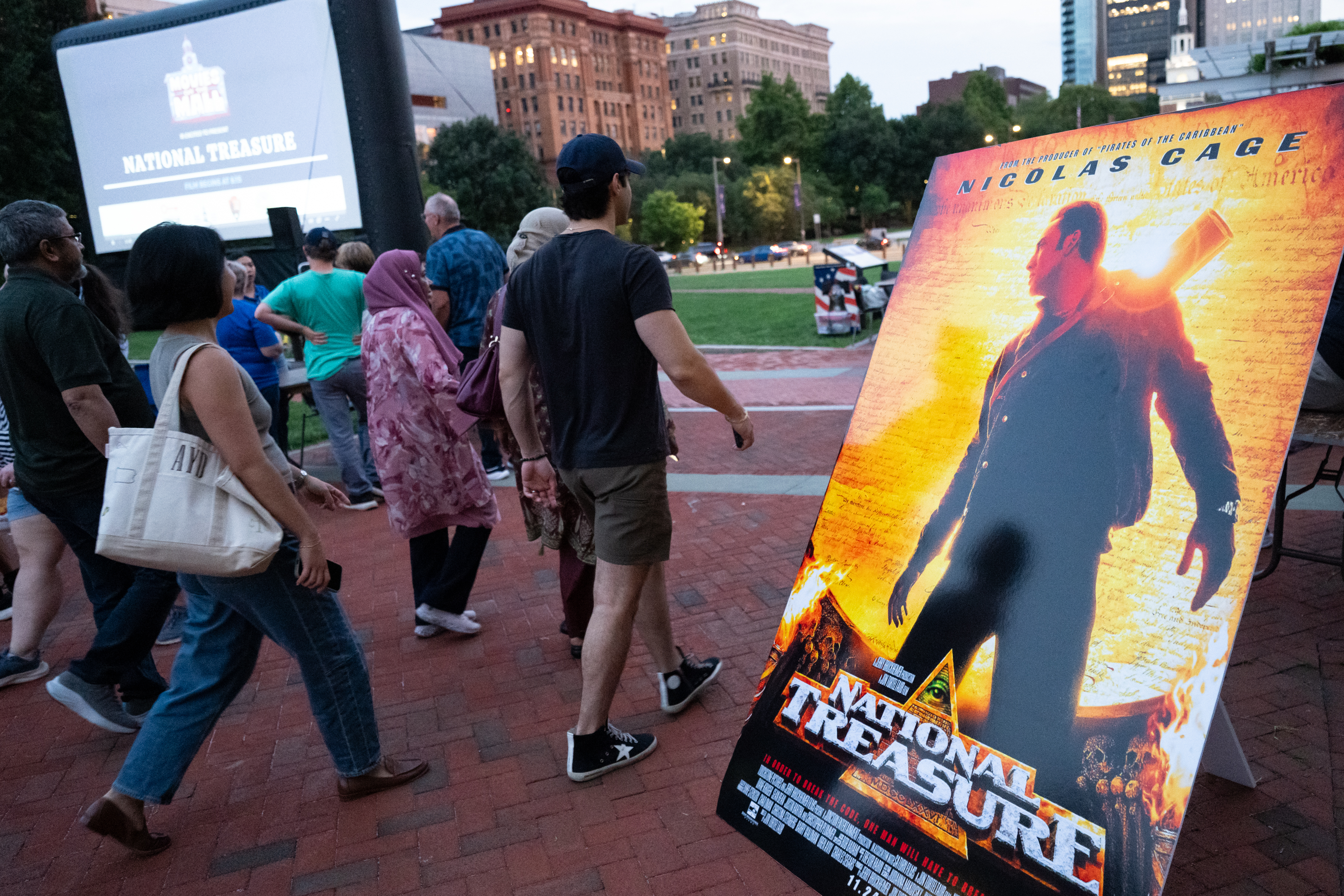
Director Jon Turteltaub came to Philadelphia’s first NationalTreasure weekend with a treasure of his own to pass on — a third movie in the historical treasure hunt franchise starring Nicolas Cage is a go.
Turteltaub confirmed “it’s happening” on Friday night to Aubrey Paris and Emily Black, hosts of the National Treasure Hunt podcast, during a taping of the podcast before a live audience at the Philadelphia Visitor Center.
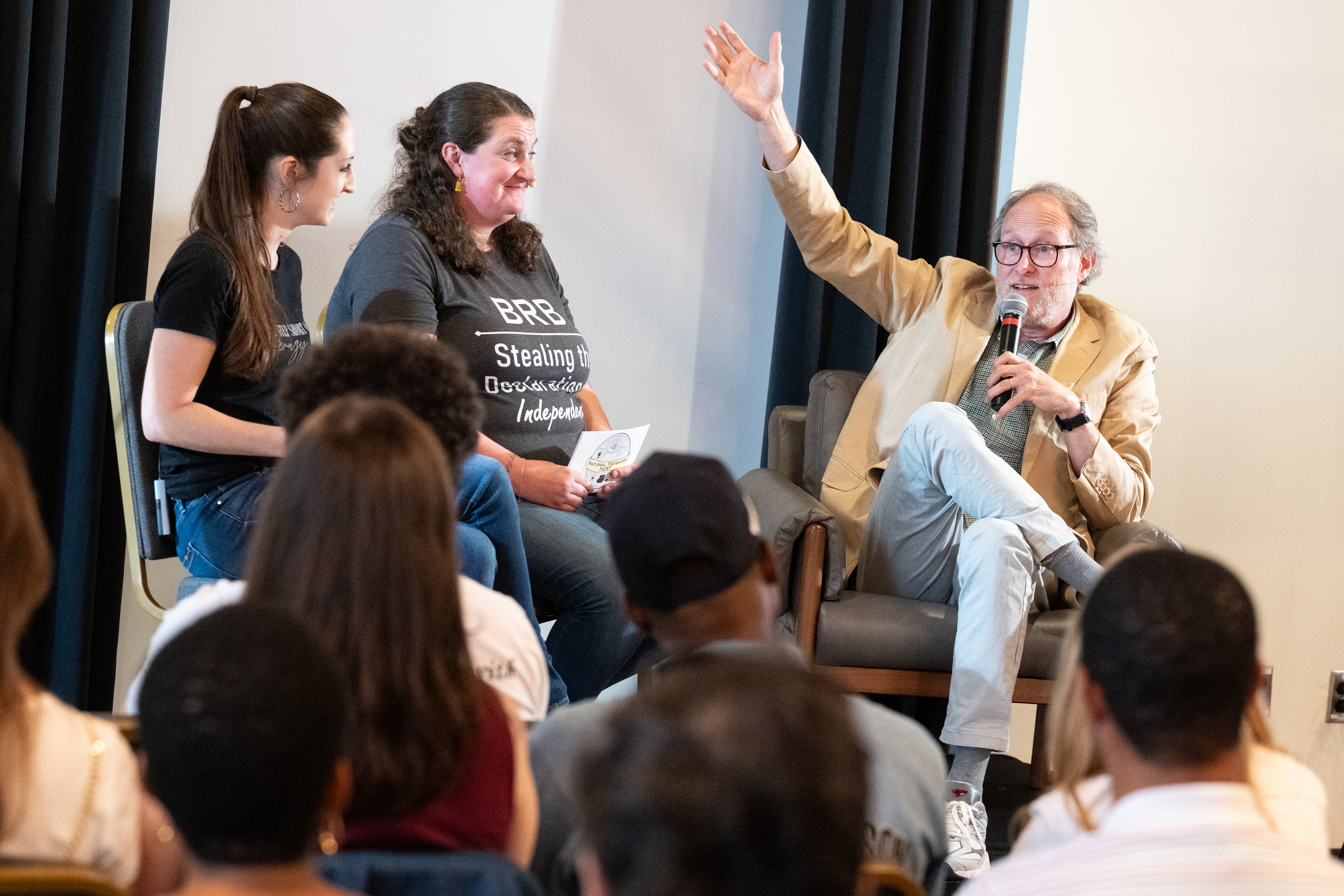
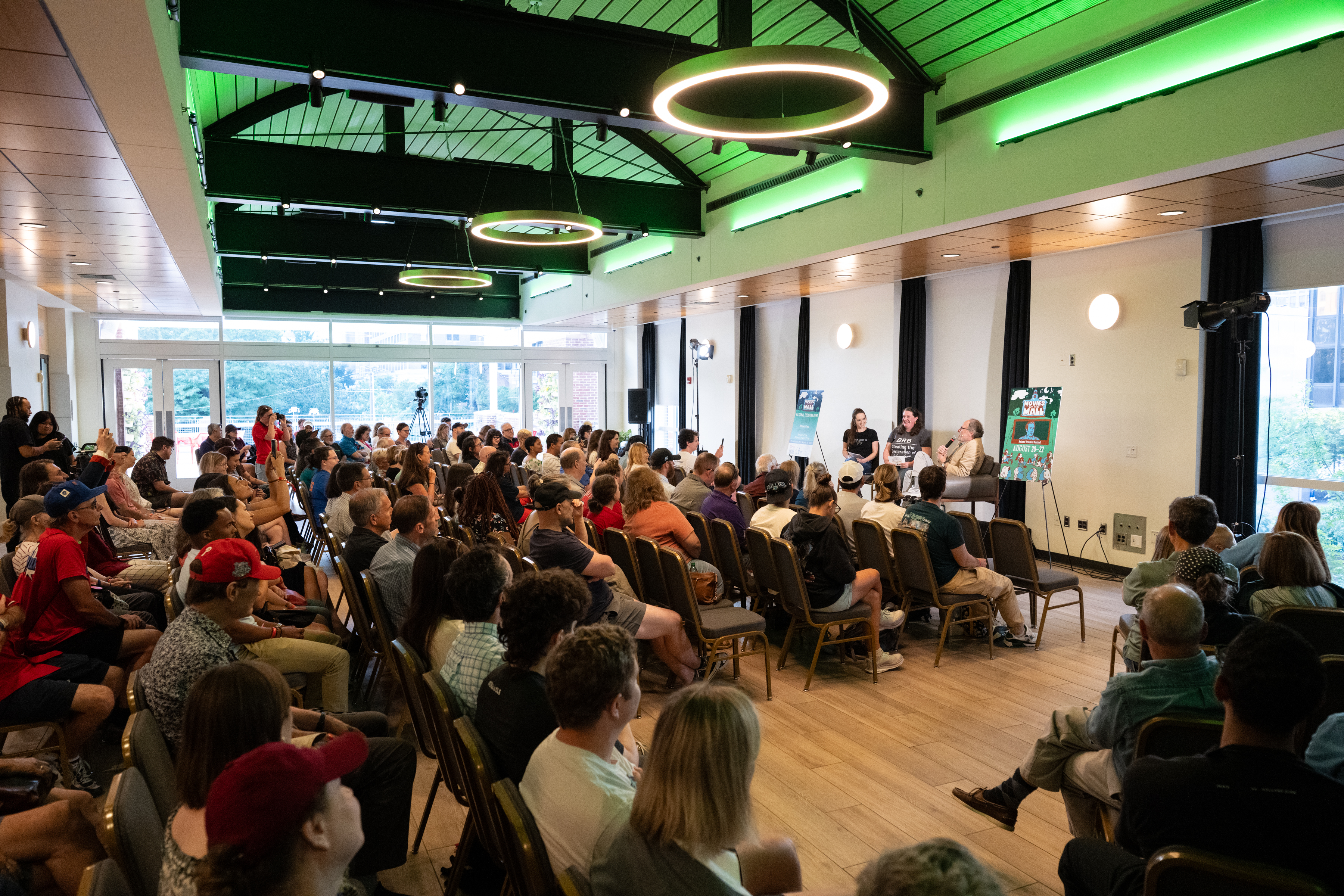
Audience members listen as “National Treasure” director Jon Turteltaub speaks with Aubrey Paris and Emily Black, creators and hosts of the “National Treasure Hunt” podcast, during a live recording at the Independence Visitor Center in Philadelphia on Friday.Erin Blewett / For The Inquirer
Initially, the crowd was stunned with disbelief, as if Turteltaub had just told them he was going to steal the Declaration of Independence, but after the director confirmed they were “the first people I have said this out loud to,” fans broke out in thunderous applause and cheers.
“I have not said anything before this, but you deserve to have the scoop,” Turtletaub told Paris and Black. “It’s finally real. Now, it’s Hollywood real, meaning things could happen. Nic gets hit by a bus, there’s no National Treasure 3. If I get hit by a bus, there’s probably a National Treasure 3. Welcome to Hollywood.”
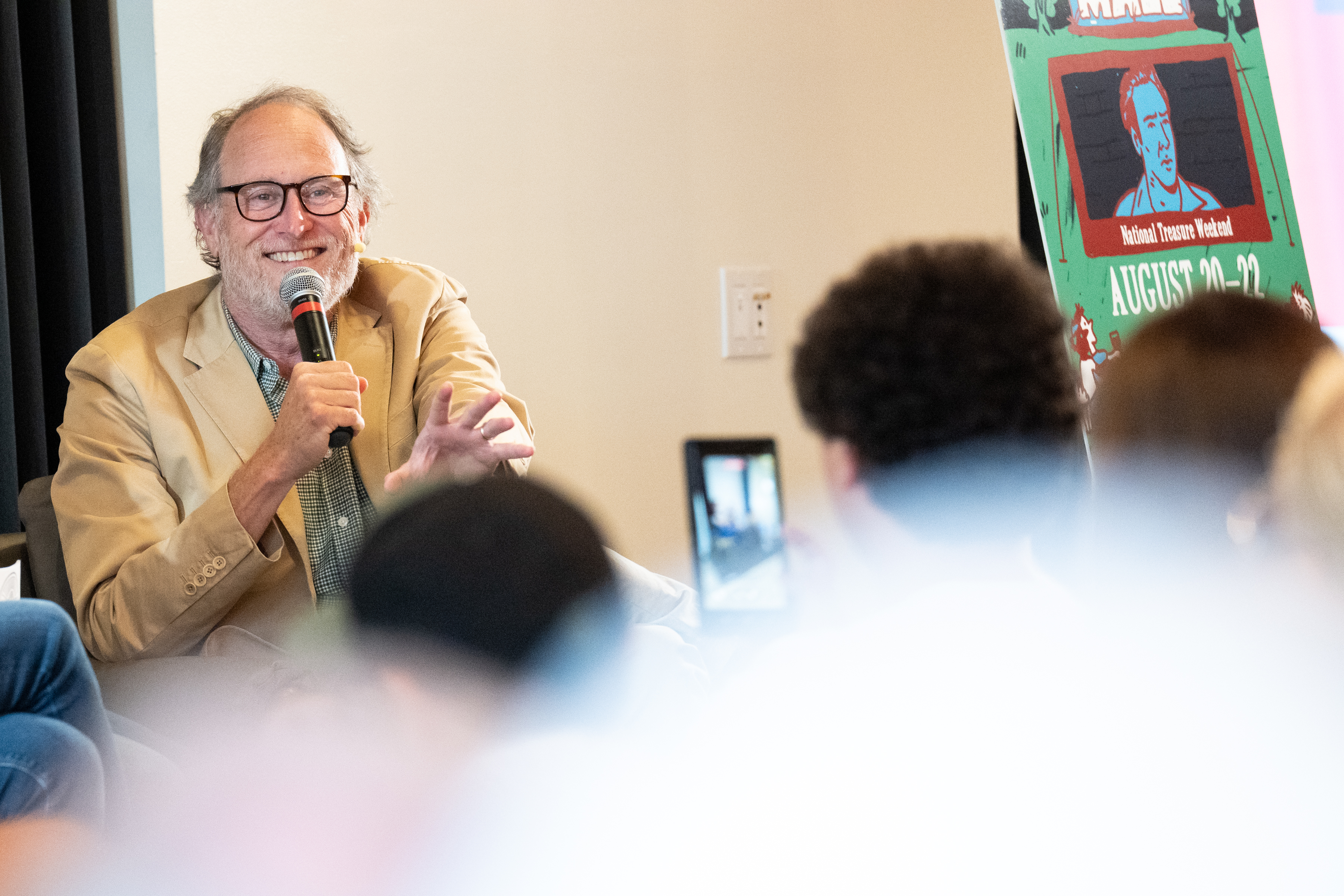
Jon Turteltaub, director of the 2004 film “National Treasure,” speaks during a live recording of the “National Treasure Hunt” podcast at the Independence Visitor Center in Philadelphia on Friday.Erin Blewett / For The Inquirer
Turteltaub — who also directed Cool Runnings, While You Were Sleeping, and The Meg — said there’s a script he and Disney like and “to whatever extent we can, everyone’s back” in the National Treasure cast, including Cage.
The first film in the franchise was released in 2004 and several iconic scenes were filmed in Philadelphia, a city whose tough-to-please residents have come to embrace the film.
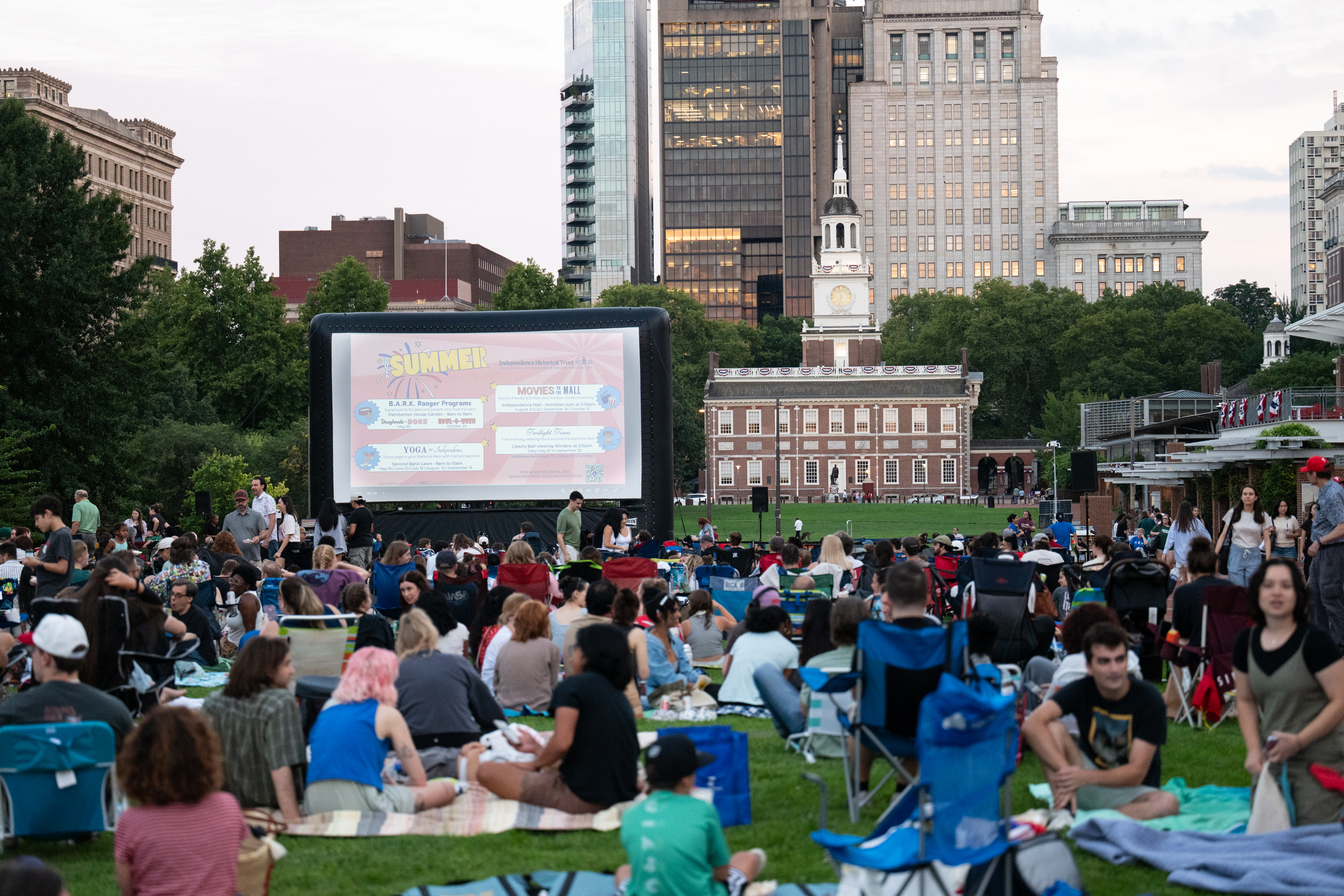
Hundreds of people gathered for a free screening of National Treasure on Independence Mall on Friday after the chat, one of several events over three days celebrating the movie. A sold-out tour by Paris and Black of filming locations around Philadelphia and a screening of the 2007 sequel, National Treasure: Book of Secrets, were among other events slated for the weekend.
People gather on Independence Mall for an outdoor screening of the 2004 film “National Treasure” in Philadelphia on Friday.Erin Blewett / For The Inquirer
Turteltaub said one of the reasons it’s taken nearly two decades to make another chapter in the saga is the political climate of the country. He told a story about former House Speaker Kevin McCarthy calling him out of the blue to ask for a private screening of National Treasure for Congress.
“He, like others, were surprised that Democrats made that movie because Democrats can’t be patriots. That’s the thought and it just got worse,” Turteltaub said. “And on the Democrats’ side: ‘Oh, Republicans, they just want to keep stuff to themselves, they hate everybody, they want to kill everyone, and blah blah blah.”
Turteltaub said because of the internet, people are quick to read politics into everything and take sides, and that will be addressed in the third film.
People gather on Independence Mall for an outdoor screening of the 2004 film “National Treasure” in Philadelphia on Friday.Erin Blewett / For The Inquirer
“We have to be very careful, but I don’t feel we are allowed to ignore it,” he said. “I think we have to include that idea in the story somehow without making someone feel put off.”
Turteltaub did not say whether the third film would include any scenes in Philadelphia, nor did he offer any further details about the plot.
In August 2023, Dametrius “Meechie” McClain-Jackson had a path out of Coatesville, his family said Friday. He was just days away from returning to Lycoming College for his sophomore year and playing for the school’s football team.
Instead, he got caught up in a cycle of violence that Chester County Chief Deputy District Attorney Andrea Cardamone said is all too common in the community.
McClain-Jackson, along with six of his friends, armed themselves with guns and sought revenge for being disrespected. But the only casualty was McClain-Jackson, killed accidentally by one of his coconspirators.
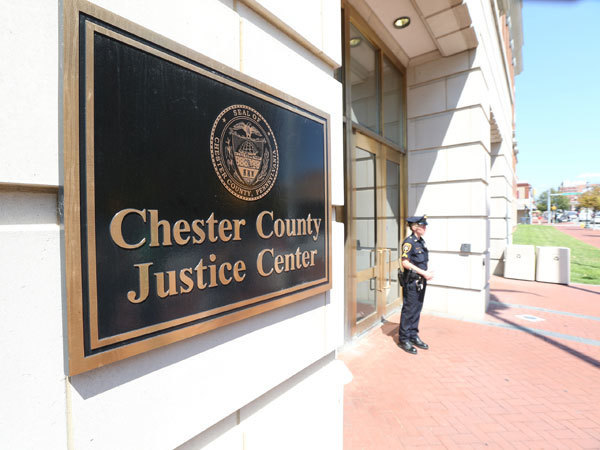
And on Friday, nearly three years to the day after the fatal shooting, all six surviving members of the conspiracy were sentenced to state prison by Chester County Court Judge Alita Rovito.
“There is this idea that what it means to be a man, what it means to be tough, to be worthy of respect, is to carry a gun,” Cardamone said. “It’s a tragic view that leads to too many young people killed, and it victimizes the entire city of Coatesville.”
At its core, Friday’s hours-long hearing was about the two men who prosecutors said were most culpable: Victor Lara-Ortiz, one of the gunmen involved in the shooting, and Zaire Harley, who supplied weapons to the group and then drove them through the city, searching for their intended target.
For their roles, both men were sentenced to life in prison.
Lara-Ortiz, 22, and Harley, 23, were convicted of first-degree murder earlier this year under the legal principle of transferred intent. Though they were looking to attack Elijah Green, a criminal rival, they accidentally killed McClain-Jackson.
Some of McClain-Jackson’s family took turns Friday addressing his friends, expressing shock and outrage that men who grew up with him would be involved with his death.
“That night, people I consider family were there, people I trusted my life with,” McClain-Jackson’s sister Lyamoni Jones said through her tears. “But I couldn’t trust them with my brother’s life.”
Samaria Turner said her brother’s murder has left a “Meechie-sized hole that can never be filled.”
“My brother wasn’t perfect; nobody is,” she said. “But I should not be speaking about him in the past tense. I should remember what his voice sounds like without having to watch a video of him.”
It was unclear who fired the fatal shot, and prosecutors were unable to recover any of the guns wielded by the group that night.
The group’s animosity toward Green began on Instagram, after he posted a video taking credit for a shooting weeks earlier that wounded Harley and another man, and taunted them for not retaliating. It reached its peak hours before the fatal shooting, authorities said, when Green confronted another member of the group, Quadir Lavender, and threatened to kill him.
The four others involved in the fatal shooting — Markel Jones, 23; Richard Rochester-Cottle, 24; Lavender, 19; and Gary White, 22 — pleaded guilty in the months leading up to the trial and testified for the prosecution.
Rochester-Cottle and White pleaded guilty to conspiracy and third-degree murder, while the others pleaded guilty to manslaughter, conspiracy, and related crimes.
The sentences for the four other defendants varied, from 5 to 10 years in prison to as much as 10 to 21 years. Rovito noted that they each played a specific, and different, role in the ill-fated shooting.
“You knew guns kill. You knew none of you should’ve had them and you know you can’t take this back,” she said. “I hope a day doesn’t go by where you don’t think of Meechie and tell him you’re sorry.”
The group rode together on Aug. 23,2023, in a Chevrolet Traverse that Rochester-Cottle had stolen from a Sheetz store in Berks County in search of Green, according to testimony. The car’s owner had also left his loaded .308 handgun inside the vehicle. That gun, witnesses told police, would later be used by Lara-Ortiz during the shooting.
When they found Green and his friends in the driveway of a home on Community Lane, Lara-Ortiz, McClain-Jackson, Rochester-Cottle, and White got out of the vehicle, prosecutors said. All but White opened fire — having second thoughts, he fled, running all the way home without firing a single shot, according to prosecutors.
One of the bullets struck McClain-Jackson in the back and hit his lungs. He was later pronounced dead at Paoli Hospital.
Rochester-Cottle and Lavender, horrified at what happened to their friend, stayed behind with him to call 911 and ensure medics would find him. That gesture earned them some leniency from Rovito, who also gave credit to Jones for calling McClain-Jackson’s family to notify them of what happened.
But Lara-Ortiz and Harley showed no remorse, prosecutors said, and made calculated moves to hide their involvement, including fleeing to Lincoln University in an attempt to create a false alibi.
They even lied to McClain-Jackson’s mother, telling her they had no idea what had happened to him. And later, when he learned that White was cooperating with police, Lara-Ortiz allegedly sent him death threats.
Rovito admonished them both for their callousness.
“This really is so, so senseless,” she said. “This was a waste of seven lives, and you both actively worked to hide the truth.”
He made that promise after being sentenced to five years of probation in the death of his younger brother, Roman Aguilar-Ortiz, who accidentally killed himself with a loaded Glock handgun that Lara-Ortiz had left unsecured in his bedroom.
Pennsylvania health officials confirmed 89 new measles cases in the state in the last seven days, an escalation of a rapidly growing measles outbreak now impacting more than two dozen counties.
As of Thursday, Pennsylvania had reported the third-highest number of measles cases in the country for 2026, behind Utah and South Carolina, according to data from the Centers for Disease Control and Prevention.
Delaware has reported 22 cases this year, the first time in a decade that the highly contagious disease has been diagnosed in state residents. New Jersey has confirmed just one case.
In Pennsylvania, children made up about one-third of the 379 patients diagnosed with measles in two separate outbreaks so far this year, state officials say. None of the patients diagnosed with measles this year has been fully vaccinated.
In all of 2025, the state reported just 16 measles cases.
Lancaster County, with some of the lowest measles vaccination rates in the state, has been at the center of both Pennsylvania outbreaks this year. As of Friday, the county has tallied 181 cases.
State officials warned earlier this week that the public may have been exposed to the disease on Aug. 4 and 5 at a soccer camp at Millersville University and on Aug. 12 at a Whole Foods in Lancaster.
Chester County has the second-highest number of cases in the state, at 41; it is the only Philadelphia-area county to report cases in the current outbreak, which began in April.
And cases are climbing in central Pennsylvania, with Centre County reporting 13 cases and neighboring Mifflin County reporting 25.
State health officials said that 70 people, including 22 children, have been hospitalized with measles this year. That’s about 18% of the total cases reported.
In August alone, state officials have confirmed nearly 200 new cases in Pennsylvania.
The true number of cases is likely much higher, physicians and health officials in Lancaster and Chester Counties say.
In Chester County, some residents have refused to cooperate with health workers looking to trace their contacts to understand how measles is spreading in the county, officials there have said.
Local officials also worry about the spreading outbreak as many children return to school next week. Overall, about 93% of kindergarteners in Pennsylvania were vaccinated against measles, mumps, and rubella (MMR) in the 2025-26 school year.
That’s just below the 95% “herd immunity” threshold, the level at which scientists say a given population must be immunized to prevent the spread of measles, which can infect nine in 10 unvaccinated people exposed to it.
Analyses earlier this year by The Inquirer and the Pittsburgh Post-Gazette show pockets of vulnerability across the state, with hundreds of kindergarten classes reporting vaccination rates below herd immunity, putting students and communities at risk for an outbreak.
Still, most Pennsylvania students are fully vaccinated and schools “benefit from robust community immunity that serves as a powerful barrier against the virus,” state health officials said in a statement.
The state hosted medical briefings for nearly 1,000 school nurses over the summer to provide guidance on preventing measles as they prepare for the upcoming school year, officials said.
Most measles cases resolve in weeks with mild-to-moderate flulike symptoms, but the disease is particularly risky for young children and can result in severe complications, including death.
This year, Pennsylvania hospitals have treated adults with brain swelling and pneumonia, and children with dehydration or damaged organs from measles.
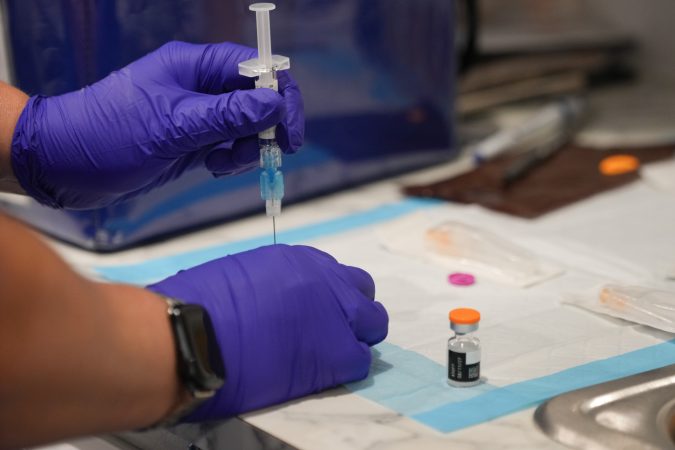
State officials have stepped up vaccination campaigns in response to the outbreak, with health department staff dispensing more than 4,000 vaccinations in the state this year — and more than 1,800 in August alone.
The department has held 85 pop-up clinics in affected counties since April and has scheduled “dozens” of additional clinics for the coming weeks and months.
The state has also hosted briefings for healthcare providers on how to recognize and treat measles, and is recommending that doctors offer early vaccinations for children as young as six months old in affected areas.