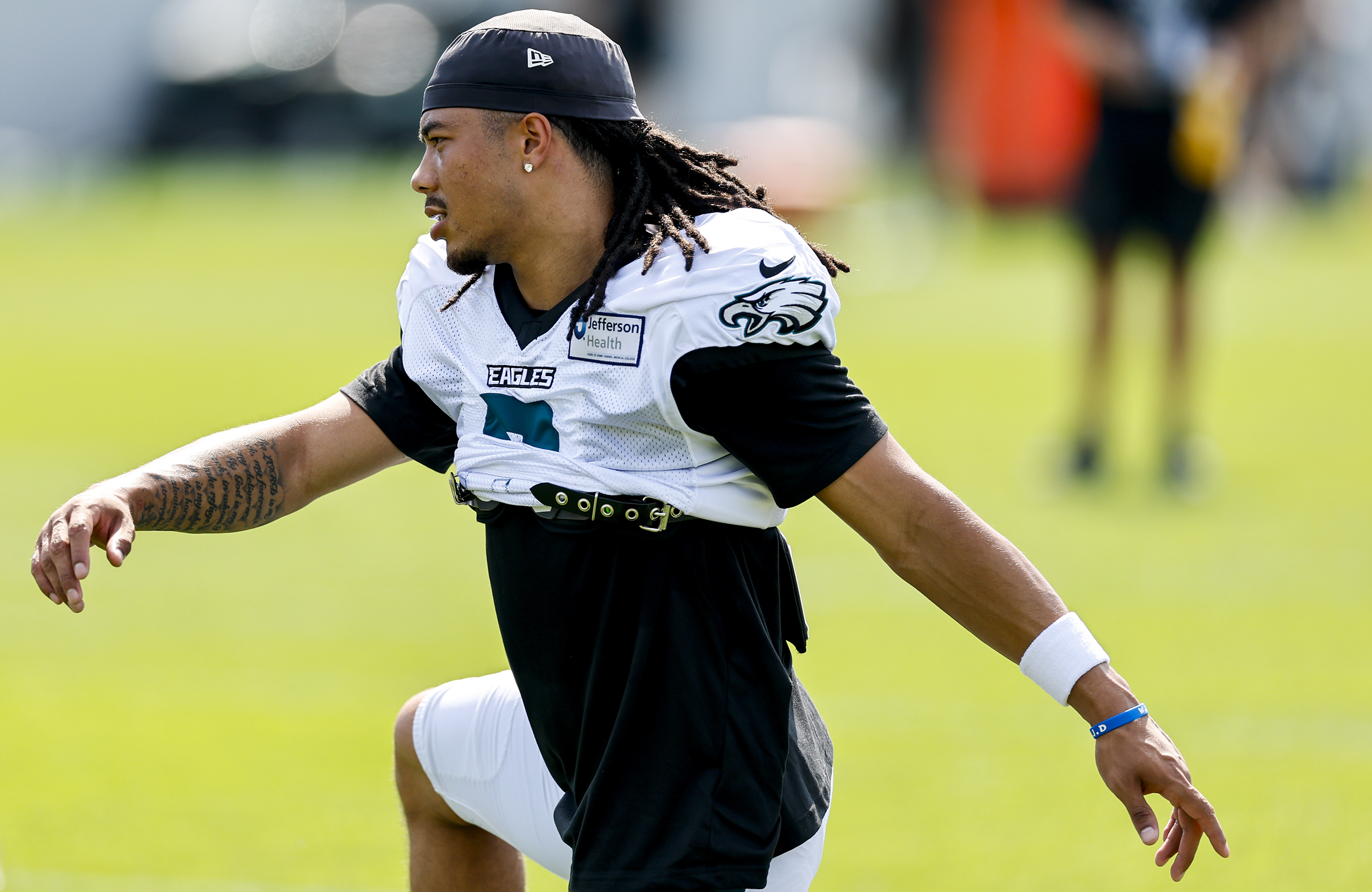
Lemon’s wish was granted late last week when he was a limited participant in Thursday’s joint practice against the New England Patriots. It was his first practice as a participant in any capacity since Aug. 3.
He made more progress on Monday. The first-rounder out of USC was upgraded to a full participant in practice, taking a significant step in his preparation with the season opener against the Washington Commanders 20 days away.
Lemon took part in team drills, both in seven-on-seven and 11-on-11.
“It felt great,” Lemon said. “Definitely a blessing every time I’m able to step on the field. I never take it for granted.”
His time spent off the field helped him gain that perspective. Lemon said he injured the same hamstring that sidelined him for a portion of the offseason program, forcing him to sit out once again.
He said he felt “a little tweak” in his hamstring while bursting upfield. Lemon suggested that he hadn’t warmed up sufficiently, adding that the experience taught him to make sure that he’s being “more professional off the field” with his regimen.
“I feel like it was definitely tough,” Lemon said. “I’m real competitive. I never want to be away from this game. So, me knowing that it’s a hamstring again, just making sure I take the right precautions. I’m learning from it, so it don’t happen again.”
He also learned the importance of taking mental reps. Even though his view from the sideline wasn’t ideal, Lemon said it allowed him to see the game from a different perspective.
Mental reps are just as important as actual reps, Lemon asserted. Sean Mannion said he was “super engaged” in practice and the meeting room so he could jump back into action upon his return.
Lemon also went through his rehab process with DeVonta Smith, who missed the same amount of time as the rookie receiver with a hamstring injury of his own. Like Lemon, Smith was a full participant in Monday’s practice for the first time since Aug. 3.
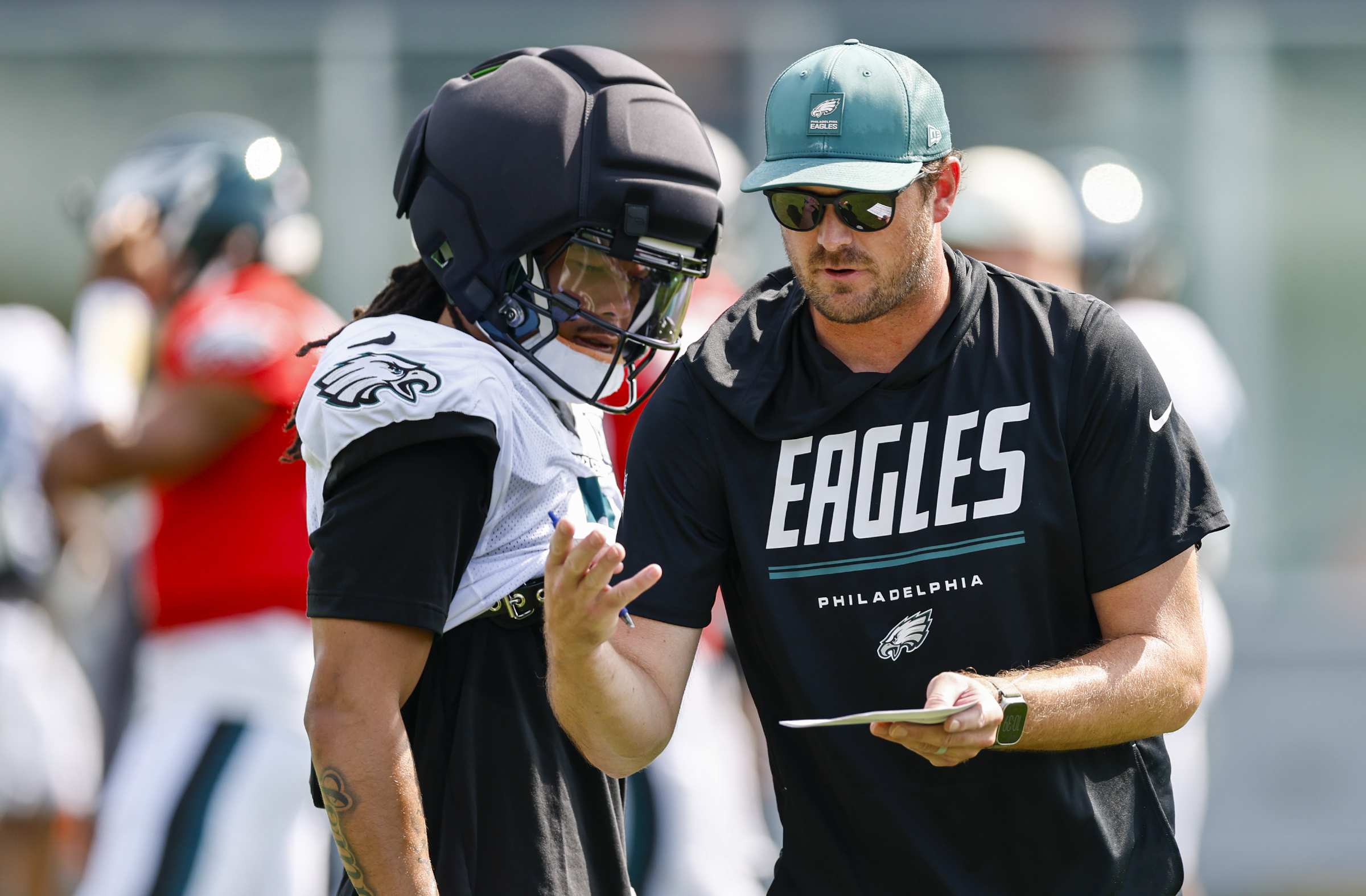
Eagles offensive coordinator Sean Mannion (right) talks with wide receiver Makai Lemon during team drills before a joint practice with the Patriots last week. Yong Kim / Staff Photographer
Lemon said the time he spent with Smith was valuable, as he was able to talk to the veteran about different aspects of the game.
“Any time I’m able to get some game from him, I’m doing that,” Lemon said.
On Monday, Lemon joined Smith and the starting offense in team drills. It was an unpadded practice that lasted approximately an hour. Lemon only caught a couple of short passes, but he took on a seemingly typical workload with the group.
Some of his snaps required him to run block, including one rep against Jalyx Hunt. The third-year outside linebacker said he learned a little bit about Lemon through his willingness to engage with him in the run game.
“He didn’t shy away from it,” Hunt said. “He didn’t try to just get around me. He put hands on me and tried to really block me, and I respect that and that’s cool to see, ‘cause his demeanor on the field is totally different than who he is. He’s a laid-back guy. But on the field, he’s just a different energy.”
After practice, Lemon spent extra time with Mannion running routes. The receiver called the new Eagles offensive coordinator “super helpful” as they worked on some of the finer details of the offense.
Lemon is no stranger to post-practice work, even when he was sidelined. He spent time with Jalen Hurts and some of the other receivers, too, as he took more mental reps.
“[Hurts] just wants the best for all the guys, and for him to work with me, work with all the guys, it’s only going to help the team,” Lemon said.
The team will be put to the test for the first time in the regular season in less than three weeks. Lemon said he can “for sure” get back to his normal self by the home opener.
But before the season begins, will Lemon suit up for the preseason finale against the Cincinnati Bengals on Friday? The Eagles have two more practices before the contest, including Tuesday night’s open practice at Lincoln Financial Field, and thus two more opportunities for Lemon to ramp up for game action.
He was hopeful, but noncommittal, regarding his status against the Bengals.
“Man, every time there’s a game, I definitely want to play,” Lemon said. “So I’m just taking it day by day out here just putting the work in, and then we’ll see how I feel Friday.”
Regardless, Monday was a step in the right direction for Lemon. He is eager to build on that progress.
“The team brought me here for a reason, so I’m just making sure I’m available,” Lemon said. “So it felt great to get out here with the guys, to run around. I just never take it for granted every time I step on the field.”
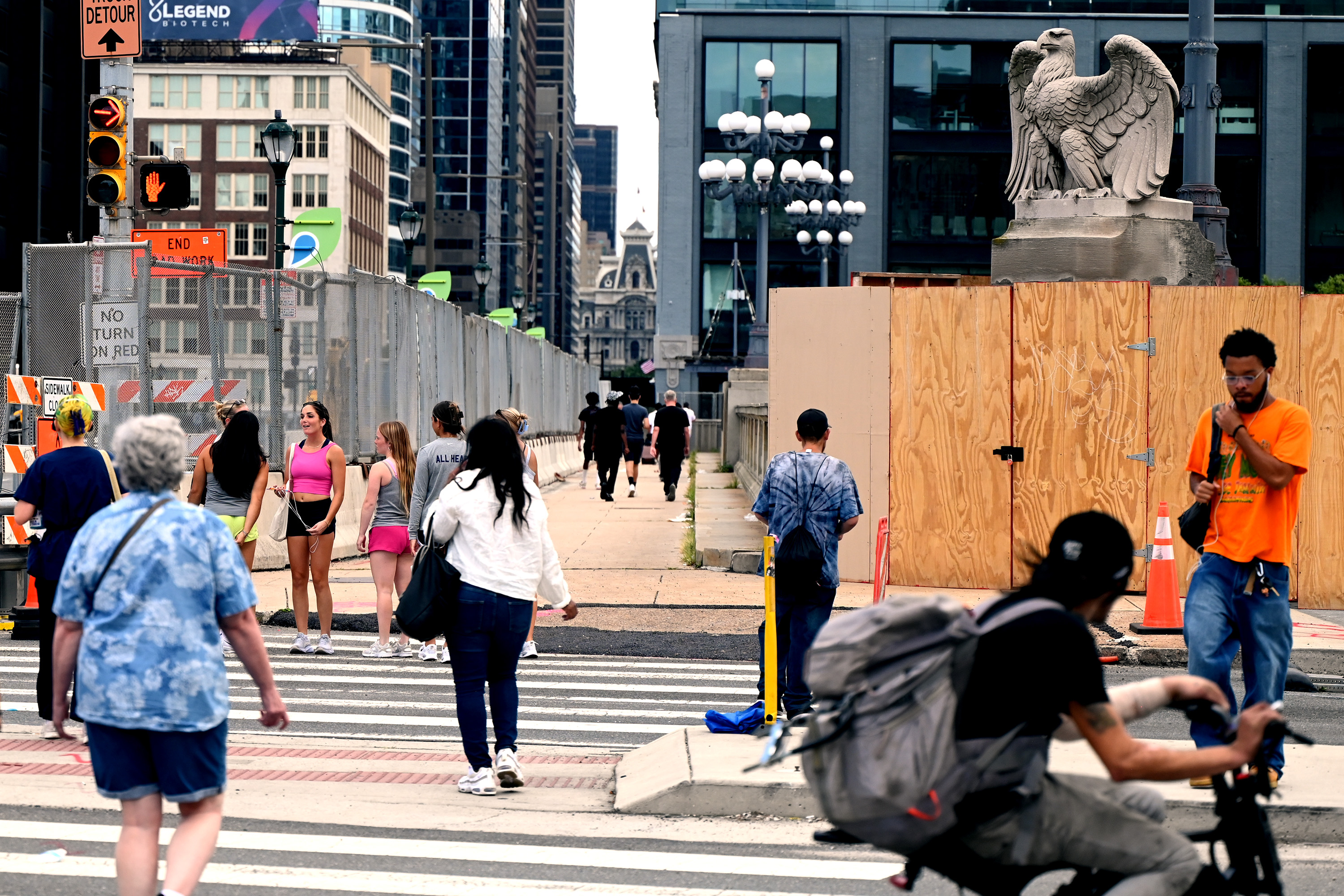
During the bridge closure, cars and bicycles will be detoured to Chestnut and Walnut Streets, according to PennDot’s plans. The agency has said one sidewalk would remain open to pedestrians to cross the bridge during construction.
Six SEPTA bus routes will be detoured in the area for roughly a year starting Monday: buses 31, 44, 49, 124, 125, and L1 Owl.
Parking restrictions are also in effect in the area through 2028 because of the project, PennDot spokesperson Helen Reinbrecht confirmed. Those restrictions affect Chestnut Street between 23rd and 22nd Streets, 23rd Street between Market and Walnut Streets, and Walnut Street between 23rd and 33rd Streets.
PennDot’s multimillion-dollar project is mostly funded with federal money, with 20% of the cost paid for by the state.
Pedestrians can cross, but the Market Street Bridge (at left) is closed to vehicle traffic Monday for a Pennsylvania Department of Transportation project that could span 14 months.Tom Gralish / Staff Photographer
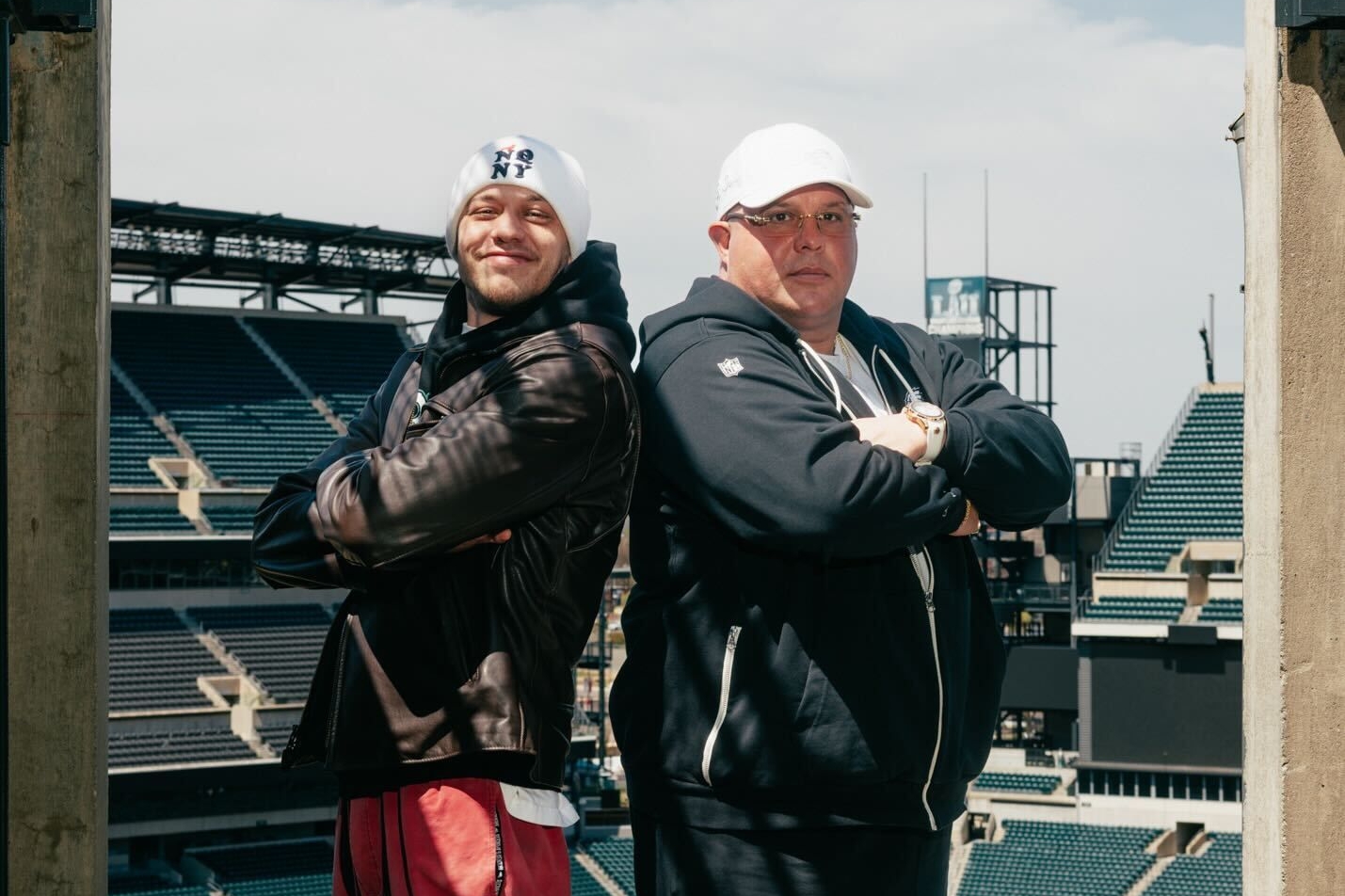
Dom DiSandro, the Eagles chief of security started off as the guest star on Friday’s episode of The Pete Davidson Show on Netflix.
In his standard uniform of a track suit and hat, DiSandro and Davidson spent the 23-minute episode discussing everything from players retiring to his relationship with other security guards in the league, and finished with a FaceTime call to Mike Tyson.
In his longest — and, as far as we can tell, only — extended on-camera interview, the normally reserved DiSandro spoke about his relationships with players throughout his years with the Eagles and how he tries to learn everything about the player when recruiting, something that continues after they’re signed. He shared how that translates into helping players once they’re part of the organization, whether it’s on the mental side of the game or helping them manage their contracts.
Despite being a behind the scenes guy, Big Dom gained notoriety around the city — and the country — following his suspension stemming from a sideline altercation with San Francisco 49ers linebacker Dre Greenlaw in Week 13 of the 2023 season. During the Eagles’ visit to the White House last year, President Donald Trump even shouted out DiSandro and offered him the chance to speak.
Although Big Dom’s cultlike following extends beyond the city limits, the South Philly native has no plans on leaving.
“I’ve been offered jobs in the past to go to other teams, but I don’t even think about it,” DiSandro said. “Philly’s just always gonna be home for me.”
While it was the first time DiSandro opened up on camera, it wasn’t the first time the pair has been connected. In December 2024, Davidson was spotted at a Sixers game wearing a Big Dom hoodie with a photo of the security guard on it in a spoof of The Godfather movie poster.
“Big Dom” DiSandro shows off his new Italian flag sock collection, a collaboration with comedian Pete Davidson.Courtesy of Tim O'Connell
A few months later, in February 2025, Davidson told NBC Sports Philadelphia about how he loves Big Dom, calling him the “real life Tony Soprano.” That summer, the pair teamed up for a limited edition sock collaboration through Davidson’s brand, DoubleSoul. The socks were a nod to DiSandro’s Italian heritage.
DiSandro’s heritage came up multiple times throughout the episode with Davidson, including when he shared one of his pregame superstitions: eating “at least four, five, six cannolis” from Termini Brothers Bakery before every game.
On Saturday, ahead of the Eagles preseason game against the New England Patriots at Gillette Stadium, DiSandro shared this tradition with another Italian figure in the NFL.
Sean Stellato, agent of noted Italian and current Patriots quarterback Tommy DeVito, shared cannolis from Mike’s Pastry, a famous bakery in Boston’s North End, with Big Dom on the field ahead of the game.
Stellato even added a “Go Birds” to the end of the video — but followed it up with a “Go Patriots.”
TRENDING: #Patriots quarterback Tommy DeVito’s agent Sean Stellato and #Eagles security chief Big Dom went viral after sharing cannolis together on the field before the game.
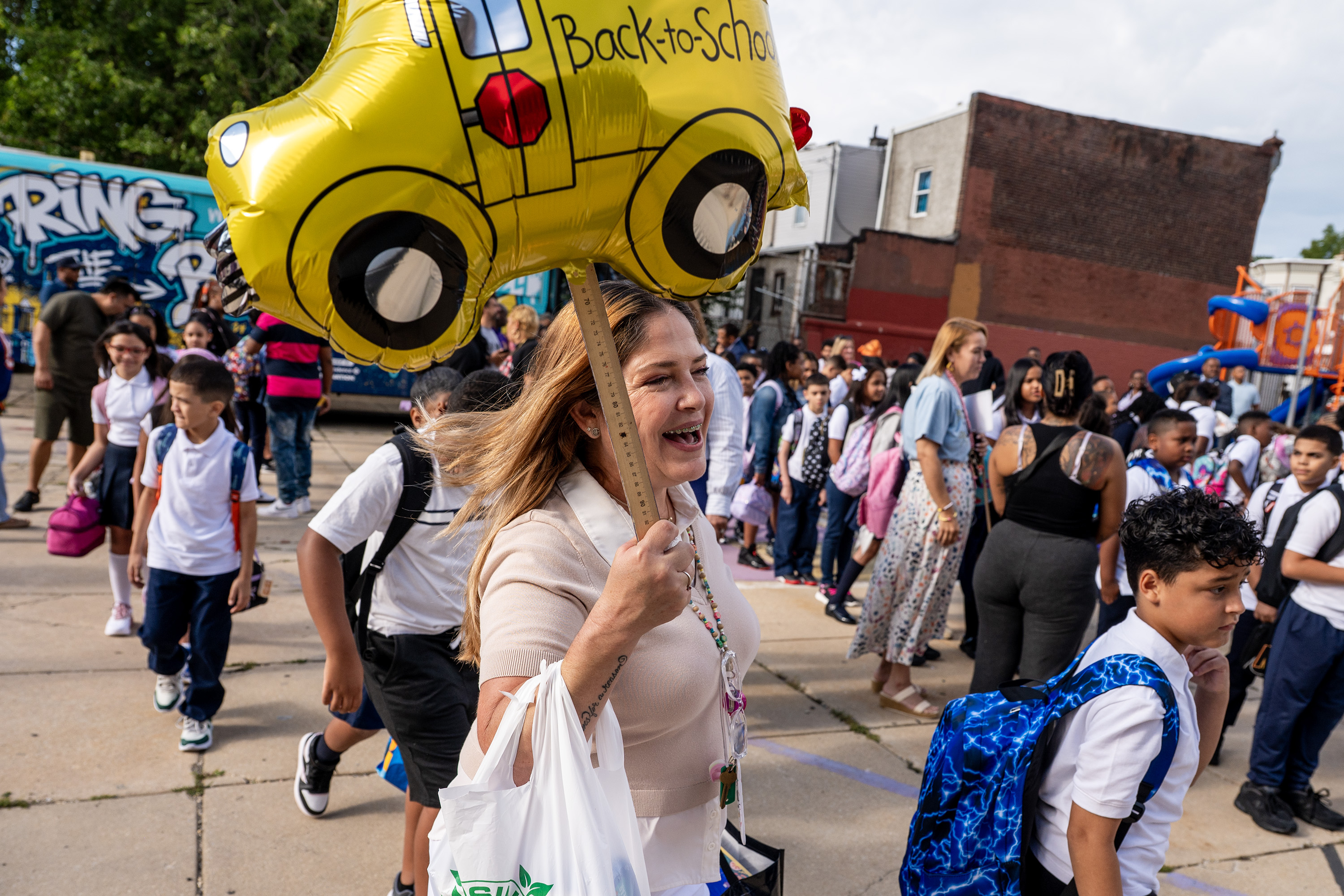
Eighth graders tossed a football across the concrete schoolyard. A fourth grader broke into a dead run, intent on catching up with friends she hadn’t seen all summer. A teacher hugged a first grader with a shy smile and a giant pink backpack crammed with school supplies.
The scene at Overbrook Elementary played out across the city Monday morning as most of the Philadelphia School District’s 113,000 students returned to class for the start of the 2026-27 school year. Kindergartners are due to begin classes Thursday.
At McClure Elementary in Hunting Park, Superintendent Tony B. Watlington Sr. repeated at a news conference his overarching goal: for Philadelphia to become the fastest-improving big-city school district in the U.S.
McClure Elementary principal Luis Garcia greets students Monday, Aug. 24, 2026 before they head into class on the first day of school in the Philadelphia School District.Tom Gralish / Staff Photographer
The district will “double down this year to continue to drive this fast improvement, and we won’t rest until all of our children are at grade level in reading and math,” Watlington said. According to 2024-25 state data, 34% of district students meet state standards in reading, and 23% in math. (More recent PSSAs, typically available to teachers and principals by now, have not been shared by Philadelphia leaders.)
Reginald Streater, the school board president, said improving educational outcomes is also about creating generational value.
“A student can walk through the doors, irrespective of their race, creed, class, gender, or shared ancestry, in our schools with a world of possibilities in front of them and leave those same doors with the knowledge, confidence, and opportunity to pursue the future they envision for themselves,” said Streater, father of two children in district schools, “armed with the tools to break the bonds of generational curses and barriers designed to keep them and their ancestors and their progeny in a perpetual state of servitude and second-class citizens.”
Mayor Cherelle L. Parker was not present at the district’s first-day festivities, a rarity, but Debora Carrera, her chief education officer, touted Parker’s $48 million agreement that restored some of the 340 positions that otherwise would have been axed because of budget cuts.
That was good newsfor Johnny Beauchamp, a single father and truck driver, who was dropping off his son for his first day at McClure.
While Beauchamp said he is confident the city has addressed its budgetary concerns regarding staffing and school openings, he hopes to see some initiatives on school safety.
“I’m actually more excited than he is. It’s his first day … and his bright future starts today,” Beauchamp said. “But my main concern nowadays is the safety, especially with guns and stuff like that. Also, making sure our schools are clean and sidewalks are clear of glass and other dangerous stuff where our kids are playing.”
Overbrook is a small, high-performing school in a very old building: The school is celebrating its 120th anniversary this year. Its tight-knit community wraps its arms around Overbrook and has mounted a fierce fight to keep it open.
“Leave Overbrook alone,” said Fahmee Shabazz, dad of an Overbrook fourth grader. “Please, somebody help us.”
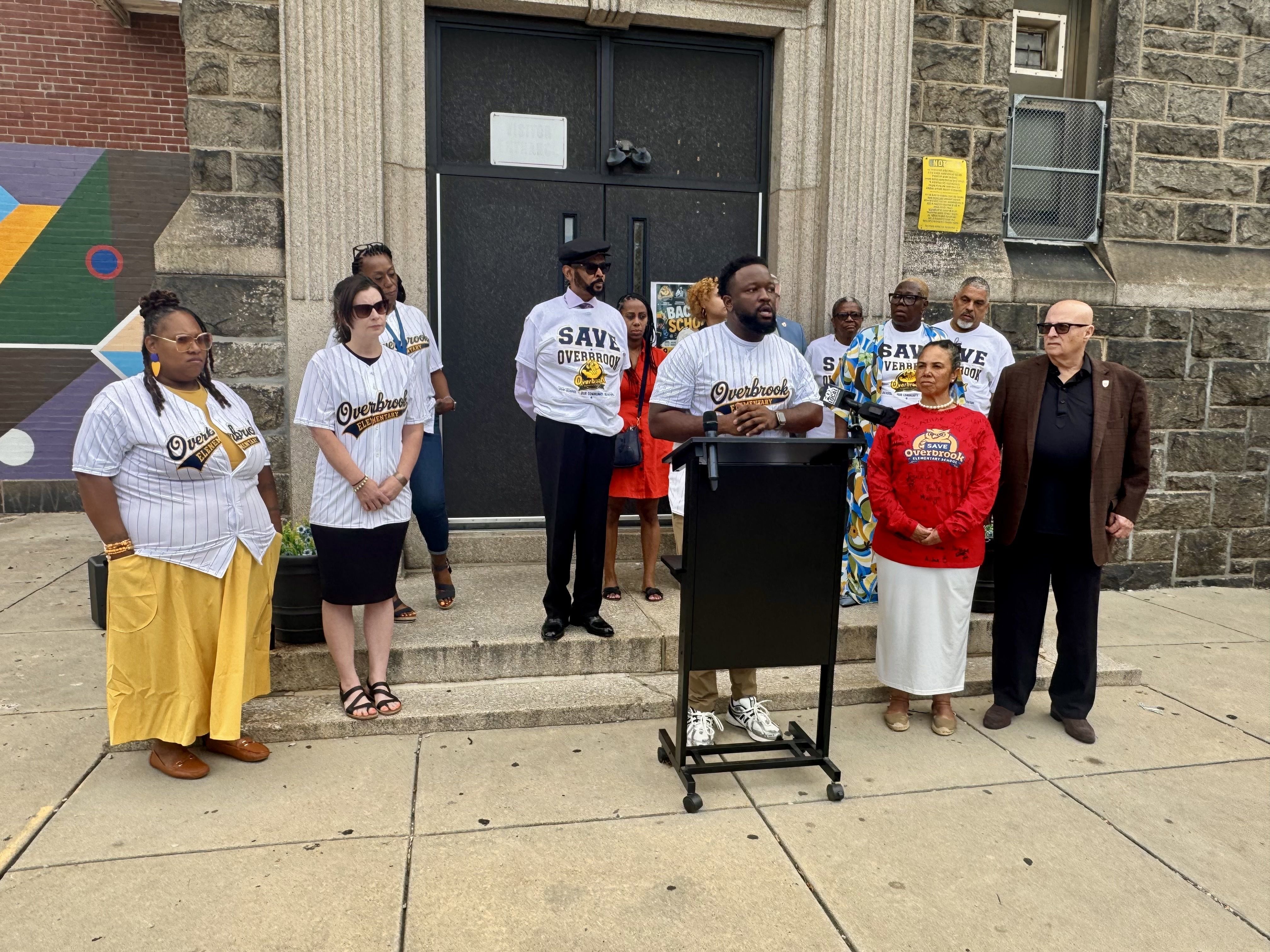
Teachers union and elected officials were on hand at Overbrook for a news conference to pledge continuing efforts to try. Multiple politicians have said they will keep the pressure up to remove Overbrook Elementary, Robeson High, and Lankenau High from the district’s closing list.
Teachers, politicians and Philadelphia Federation of Teachers officials listen to Kenneth Glover, principal of Overbrook Elementary School, speak on the first day of the 2026-27 school year. Glover said the school, which is one of 17 Philadelphia schools slated to close, will focus on academics this year and let adults fight a battle to stave off closure.Kristen A. Graham / Staff
“We cannot disrupt the good things that are happening here,” said State Sen. Vincent Hughes (D., Philadelphia), chair of the Senate Appropriations Committee.
Hughes said action needs to happen in Harrisburg to help better fund schools. But he added: “We’re still going to fight for Overbrook Elementary and the schools like it, [which] deserve to stay open.”
Last year, many Overbrook Elementary teachers used news of the school’s closing as an object lesson — in civics and the world around them — said Kenneth Glover, the school’s principal.
“I’m so happy that it’s day one,” he said. “Like I tell my students all the time, each day is a fresh start, and this year is a fresh start. Last year, a lot of the focus was on adult issues, right, fighting to keep the school open. This year, I really want students to focus on academics … for us to just have a beautiful school year.”
Overbrook Elementary School students get ready to enter the building for the first day of the 2026-27 school year. It could be the 120-year-old school’s last first day, as it’s one of 17 schools the Philadelphia School District has slated to close.Kristen A. Graham / Staff
While Glover said he still hoped the school could be kept open, he has begun to work with the district’s newly created transition office to plan for what comes next.
Still, said Kathryn McQuade, Overbrook Elementary’s art teacher, the closure and the fight to prevent it are overshadowing the year for many.
“Seven million could easily go towards … modernizing this building for the future,” McQuade said. “And that wouldn’t be a lease, that would be a one-time price tag.”
Arthur Steinberg, president of the Philadelphia Federation of Teachers, said he “was hoping that when I came here today I’d be able to say, ‘Well, we saved Overbrook from the chopping block.’ Unfortunately, that is not the case. However, we have not given up the fight to keep Overbrook and every other school in the city open.”
Steinberg said the PFT would release a plan this week that would give the district a path to keep all 17 schools open.
Robin P. Cooper (upper right) watches as school and city official gather for a group photo outside the district bus. Cooper is president of Commonwealth Association of School Administrators (CASA). At far left is Superintendent Tony B. Watlington Sr. The bus, part of Mayor Cherelle L. Parker’s Neighborhood Community Action Centers, was to visit and rally at schools in every city council district.Tom Gralish / Staff Photographer
For many Philadelphia sports fans, finding community is as easy as yelling, “Go, Birds!” into a crowd. But for those who participate in niche sports, it isn’t always that simple.
However, inside a South Jersey gym during one of the hottest weekends of the year, one group has found a way to flourish.
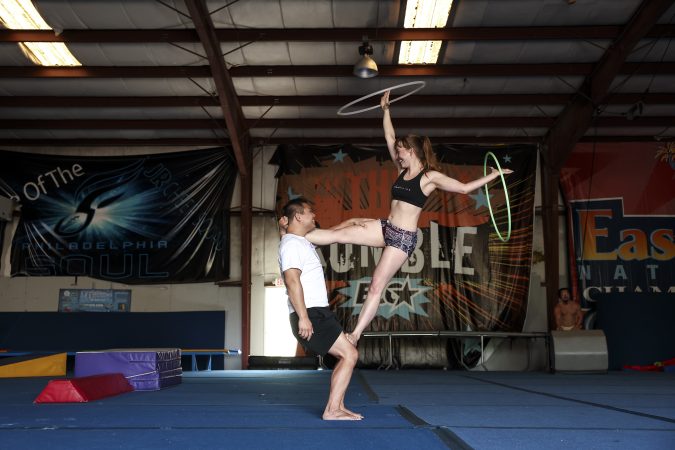
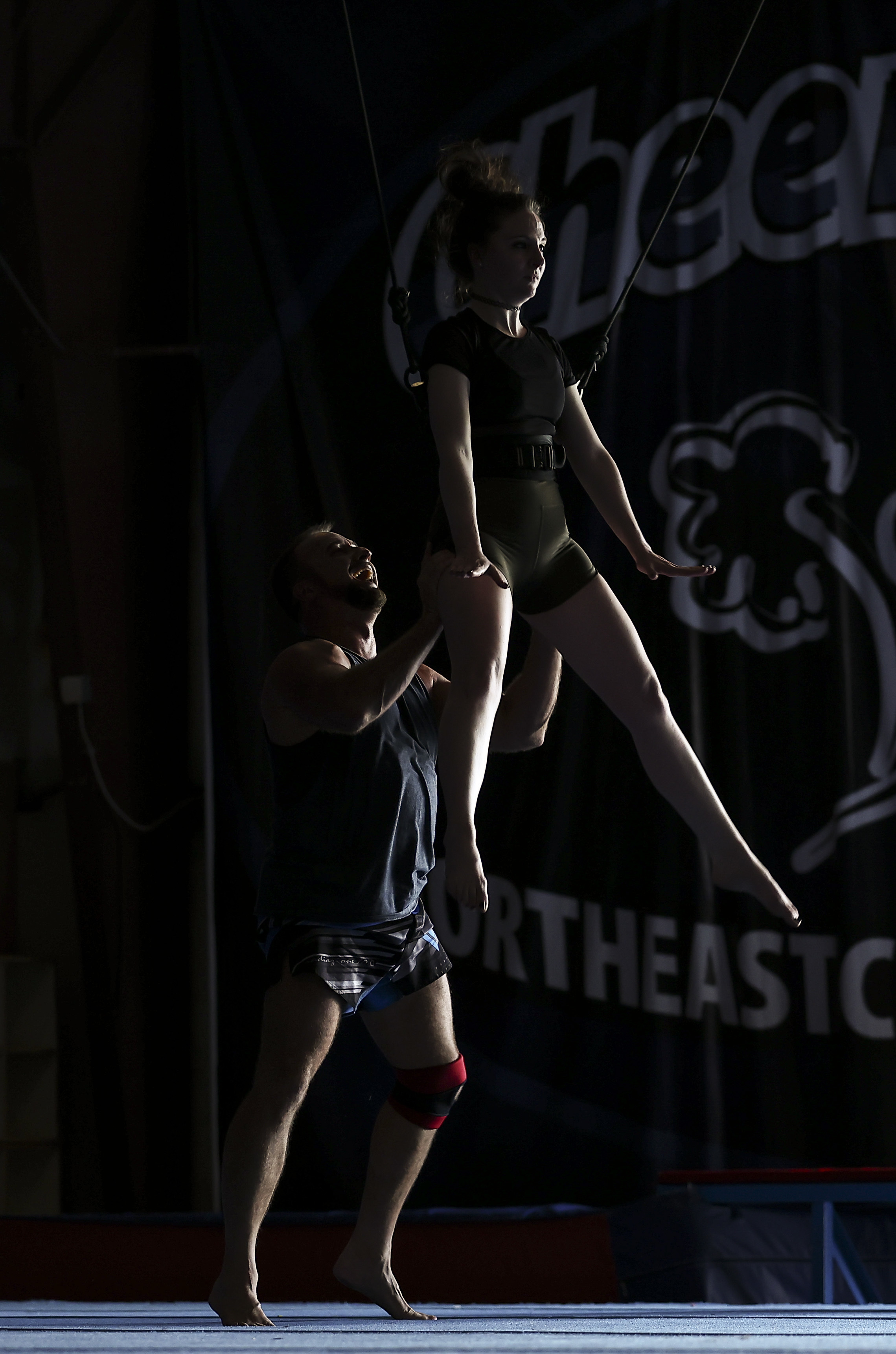
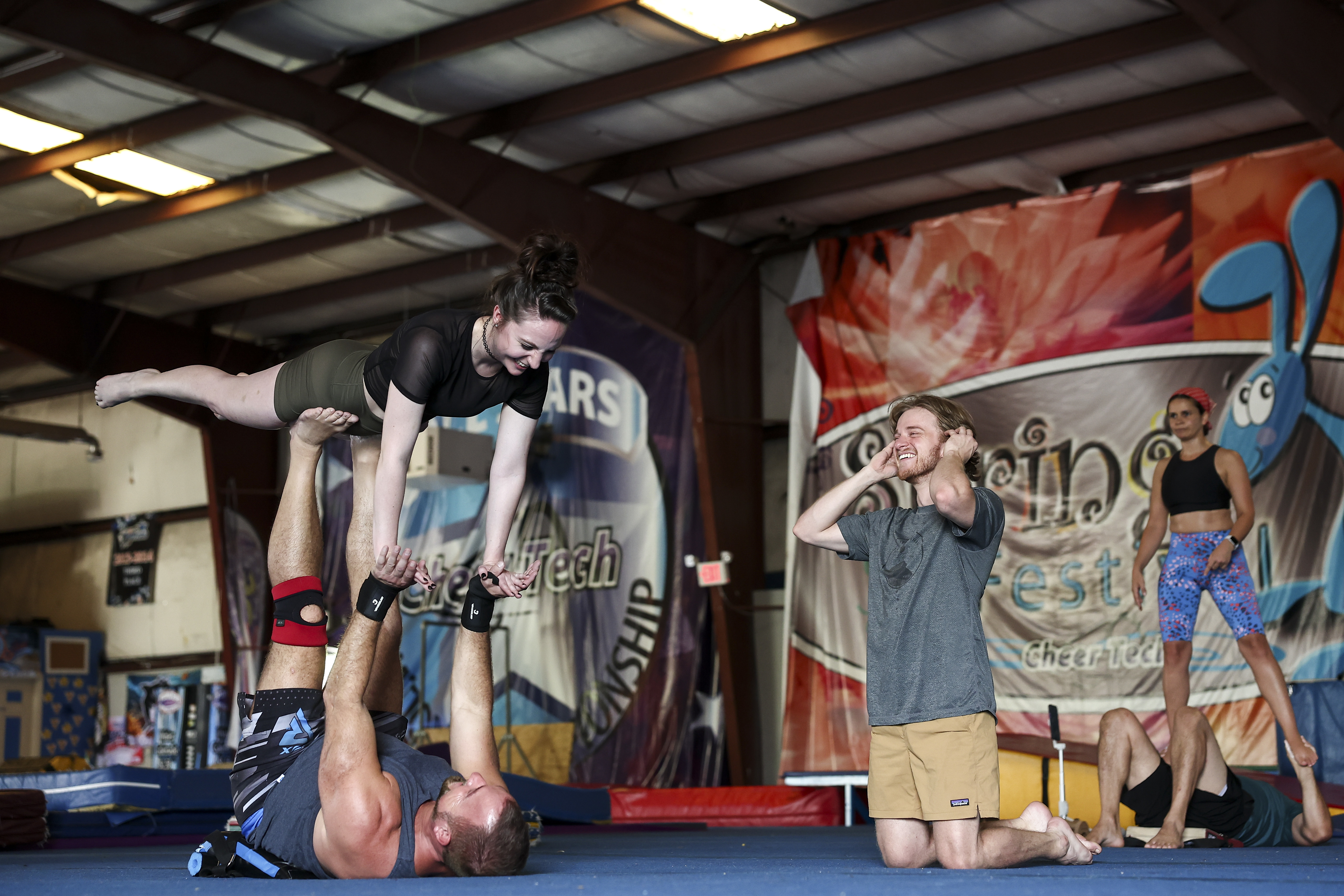
PhillyAcro SkillShare is a collection of locals and travelers connected to teach and learn what they know about acrobatics. The group of 12 that assembled at Power Athletics in Atco for a PASS event on July 5 spent the afternoon practicing skills ranging from headstands and hula-hooping to handstands 10 feet in the air while perched on someone else’s shoulders. Newcomers and regulars alike were there not just to train, but to find and build community.
“The best part is a combination of connecting with different people and working on different skills,” said Robert Li, the founder and organizer of PASS. “It’s so unique and special to see people come together and be supportive of each other’s goals.”
Eric Swanson, of Raleigh, N.C., and Bri Beil, of Bath, Pa., work together during a Philly Acro Skill Share.Monica Herndon / Staff Photographer
Different forms of skill shares have developed across communities in Philadelphia as a way to make sports more accessible in cost and experience. Li, who is based in Old City, turned to the skill-share model to grow deeper roots in Philadelphia’s acro scene.
The PhillyAcro SkillShare charges around $20, but the club also hosts acro jams, free sessions in which members gather to swap balances and tricks in public, often at Independence Park or in Rittenhouse Square. The jams are open to all and often are the first exposure many people have to the sport. Once they get bitten by what PhillyAcro members call “the acro bug,” many go on to attend the group’s more structured skill-share events.
“Everyone’s friendly and nice,” Li said. “Even at the jams, you just show up, and if you’re new you can say, ‘Hey, my name is so-and-so. I want to try acro.’ And then people will show you, whether you’ve never tried anything like it or you were a gymnast for years.”
Robert Li lifts Dawn Trucksess in a skill called the “High Hangle Dangle,” during a Philly Acro Skill Share.Monica Herndon / Staff Photographer
The trade-and-barter system isn’t new. It’s most common in the arts world; Philadelphia’s public libraries even offer crafting skill shares built on the same principle. But small local sports communities — including acro, arm wrestling, ultimate Frisbee, and even foosball — have begun following a similar method, offering an alternative to adult clubs that can be expensive or provide few opportunities to learn a new sport.
For many of those involved in PhillyAcro, the sport is new, but the skill set is not. The group attracts many former gymnasts, dancers, and cheerleaders, who repurpose foundational abilities in their adult lives.
“I was a college cheerleader and cheered all growing up,” said Juliana Martell, a real estate broker and longtime PhillyAcro member. “I coached for a while just to stay in the sport because it’s a lot of fun. Then I found acro and I was like, ‘Wow, this is safer, it’s easier on your body, and the people are amazing.’”
Cam Gutgsell, of Laurel, Md. (center) watches Bri Beil and Eric Swanson work on a skill called “L-basing.”Monica Herndon / Staff Photographer
Holding on to the sports played in youth is what has many people turning to skill shares to reconnect with their roots and teach others.
Erike De Veyra, the founder of Design Gym, a creative studio in Olde Kensington, was once a competitive swimmer. A friend’s request for help training for a triathlon’s swimming leg inspired her to reconnect with the sport by starting her own skill swap club.
“When we began, I realized swimming was a skill I could teach,” De Veyra said. “So we started first with a form that kind of said, ‘Hey, what skills do you have?’ and went from there.”
At one of the recent skill-swap events, De Veyra held swimming lessons at the local public pool. Since then, people have volunteered their knowledge in rug making, folk dancing, Pilates, weightlifting, and more.
Like other skill-sharing leaders, De Veyra says the goal was more than learning new things, but creating an accessible community.
“Skill swap is completely free,” she said. “The only thing that I ask is to bring a snack to share. Whether we’ve had three or eight people, somehow we still talk for the whole two hours.”
Though skill swap is open to all skills — one person teaching plumbing in exchange for lessons in powerlifting — sports come up frequently as a need in the community.
“Beyond kids, the outlet for adults in sports diminishes even further,” De Veyra said. “There are adult rec leagues, but not often for beginners or people wanting to learn a sport or learn a skill. How daunting is it to go into something and be like, ‘Hey, I want to play pickleball, but I have no idea how to play?’ You see people say, ‘Oh, these are for beginners,’ but is it?”
For those beginners not ready to join a rec league, some sports offer skill-share-type platforms in the form of pickup games. One of the most popular sports doing so is ultimate Frisbee. There are 18 pickup groups in the area, and one of the most popular is Penn Park Pickup, which has gathered more than 1,600 members since forming more than 20 years ago.
“Pickup is less commitment and less money, and this pickup plays four times a week,” said Vishu Doshi, an HVAC technician who’s been playing pickup at Penn Park for 13 years. “I didn’t know anything about it before I started playing, but it’s a great, welcoming, and supportive community. I’ve met a lot of friends there that I’ve remained friends with over the last almost 15 years.”
The exposure to the sport often leads to further investment in the sport, but also in the athlete’s community.
That draws people to Val’s, a lesbian bar where a table is set up in the back once a month. The table is a designated arm wrestling platform, and patrons who approach shake out their wrists and prop up their elbows to find out who has the strength to pin their opponent after receiving a quick lesson from Jett Biggert.
Biggert is the founder of Queer Arm Wrestling. After launching QAW as a live show in 2024, Biggert and other participants found themselves drawn to the informal skill-sharing and community-building that grew around it.
QAW now hosts skill shares once a month, and the event quickly became the group’s most popular. Anyone is welcome to come learn how to properly arm wrestle and then compete after self-dividing into two groups: Noodle Arm and Popeye.
The groups hold low-stakes competitions throughout the night to swap and learn techniques and find the best wrestler of the night. But Biggert says it’s really about meeting new people while trying new things.
“Skill shares in particular I like a lot more because there’s no stakes in this,” Biggert said. “We’re doing this to have fun. We’re doing this to meet people.”
As adult recreational sports leagues continue to rise in popularity, skill shares provide an easy way to learn new sports and reconnect with old ones, while supporting the community appeal of being part of a team.
“I think there’s a new wave of Philadelphians coming in,” De Veyra said. “People looking for a place to start to get connected to physical activity and others, and when you don’t know where to begin, skill swaps are a great option.”
John Rais was out for one of his weekly rides with a group of Philadelphia cyclists when he struck up a conversation with Carlos Rogers.
Rogers, a hair salon owner and former competitive cyclist, was trying to revive the Philadelphia International Cycling Classic, which began in the mid-1980s and contested its final race in 2016.
Rais and Rogers were discussing the costs of staging the new Philadelphia Cycling Classic when Rais realized he could take something off Rogers’ plate.
“I was like, ‘Carlos, I’ll make the trophies for free for you,’” Rais said. “‘I’ll just do that.’”
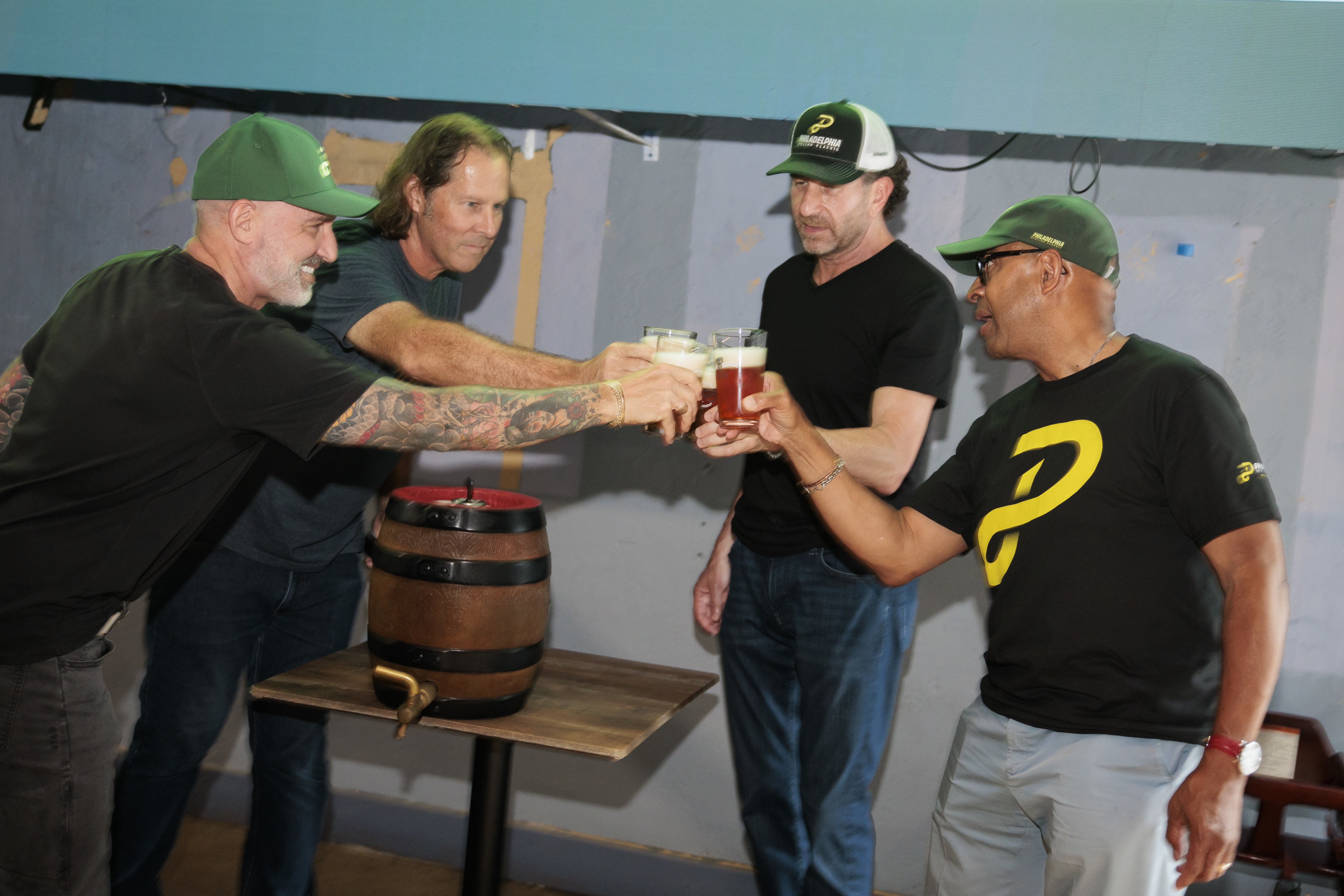
Carlos Rogers (from left), Brian O’Reilly, Eric Robbins, and former mayor Michael Nutter toast after tapping the ceremonial first keg of Mainstay Brewing’s Philadelphia Classic Lager.Monica Herndon / Staff Photographer
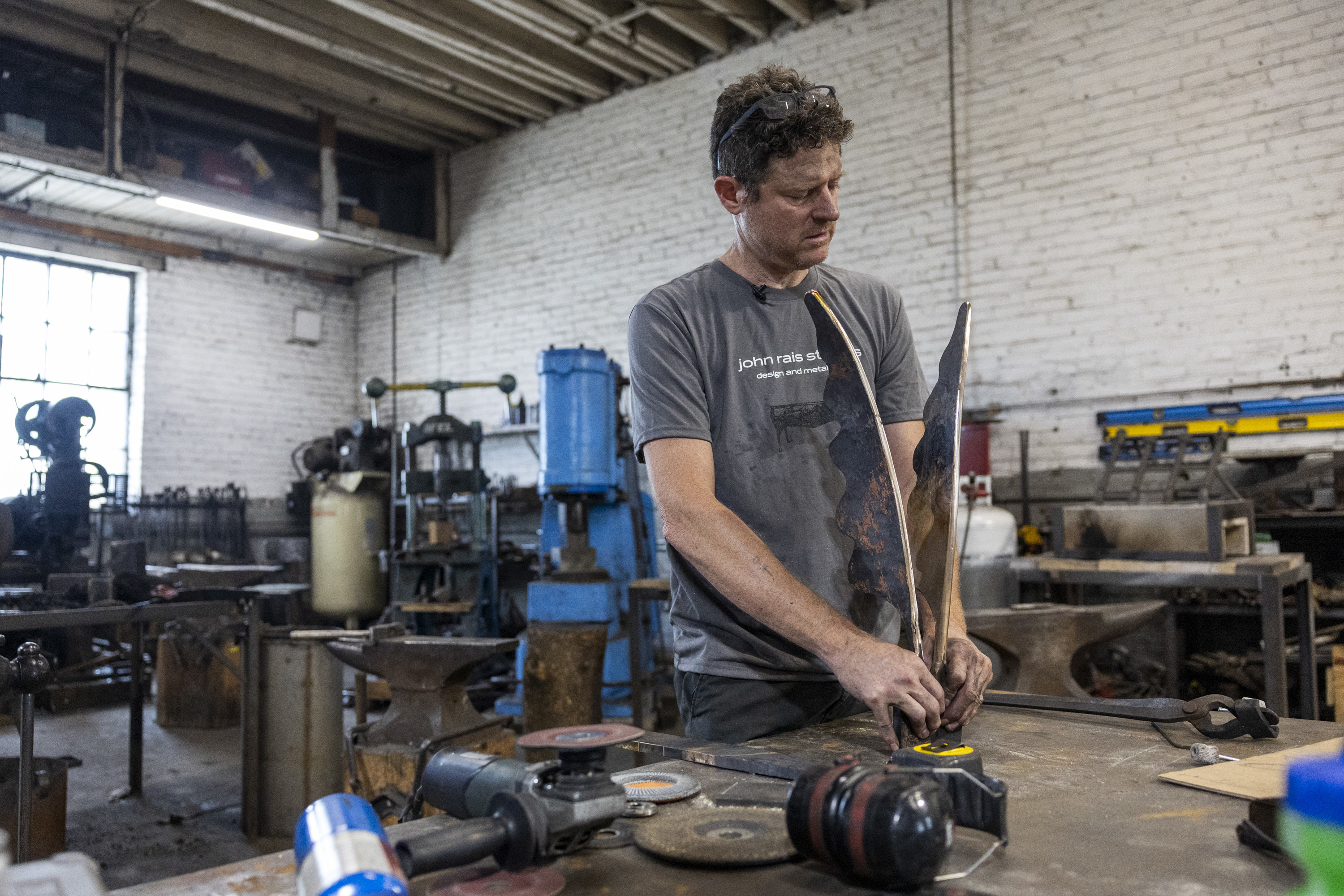
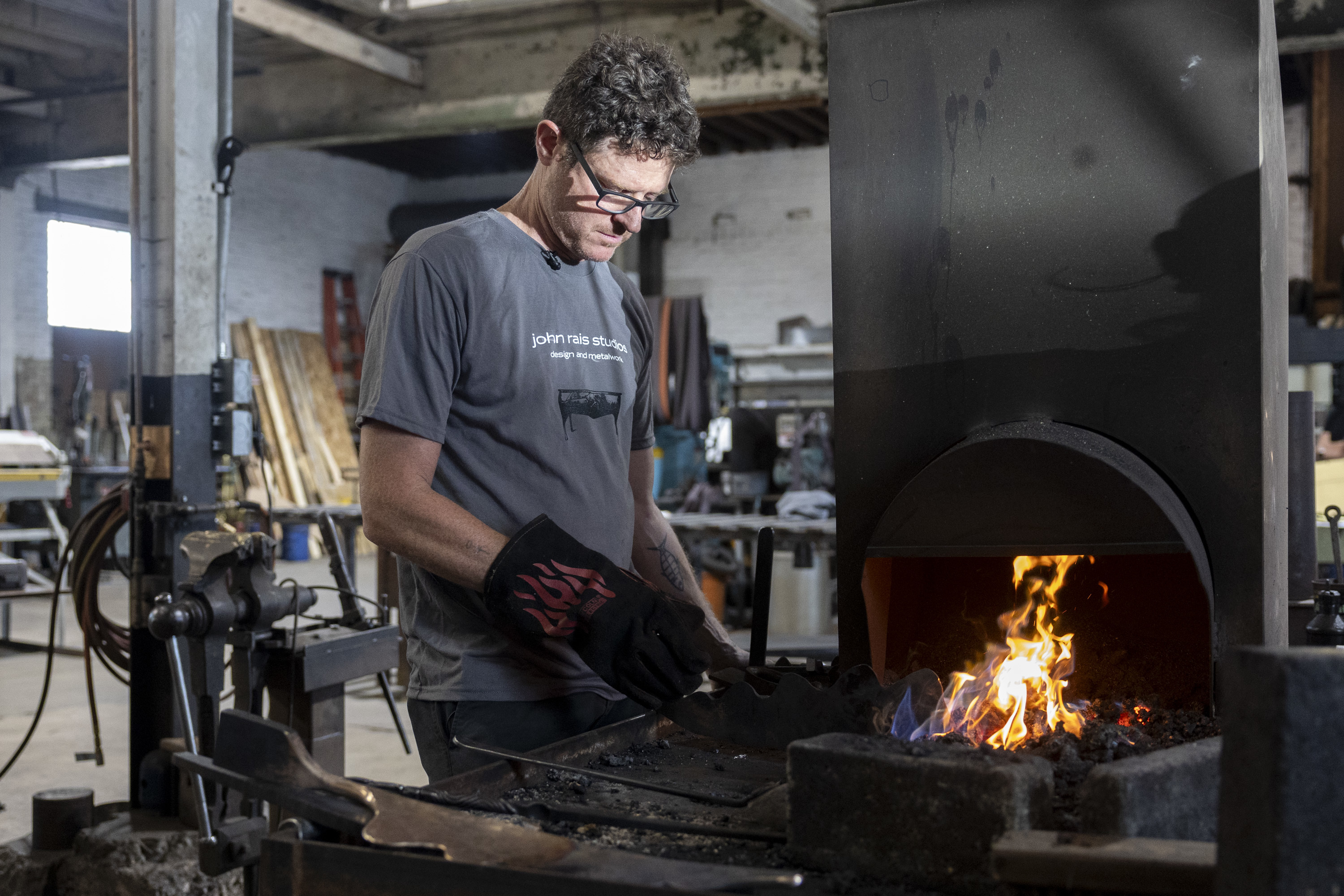
Rais, a Massachusetts native, has worked as an artist and metalsmith in a studio in North Philadelphia since moving to the area in 2013.
Rogers took Rais up on his offer. So when the Classic’s winning riders take the stage near the finish line on the Benjamin Franklin Parkway on Sunday, they will hoist trophies hand-hammered and forged inside Rais’ studio.
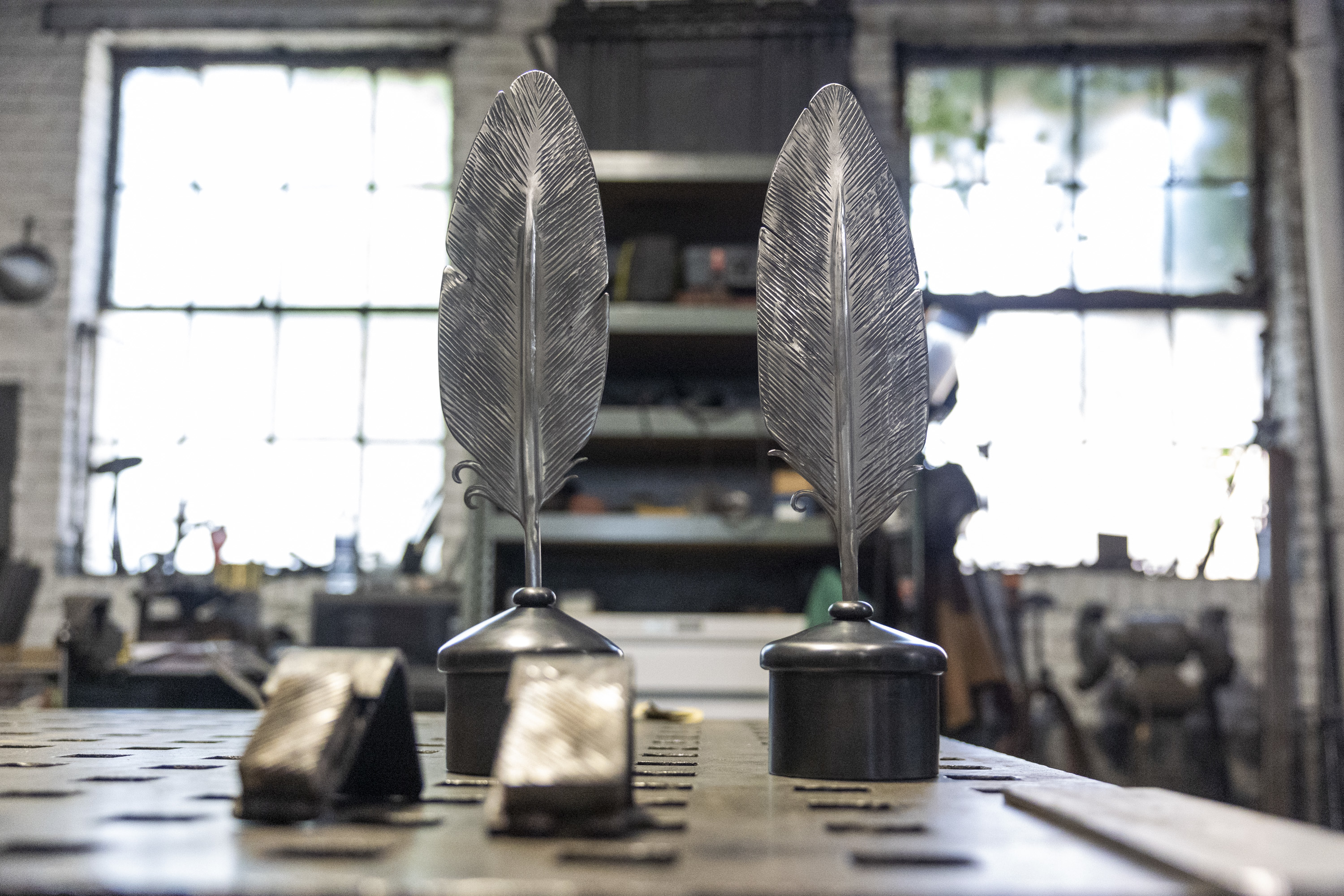
Rais designed and produced six trophies for the tournament. The men’s and women’s winners will lift bronze trophies designed to invoke a pair of wings.
John Rais’ trophies for the men’s and women’s winners of the Philadelphia Cycling Classic are designed to invoke wings.Tyger Williams / Staff Photographer
There are two stainless-steel trophies for the sprint winners that resemble a quill in an inkwell, while the trophies for the king and queen of the mountain winners represent the steep inclines of the course’s infamous Manayunk Wall.
Rais said he doesn’t usually make trophies, but he was excited by the opportunity to design and forge the awards for the Classic. His usual work includes metal sculptures and wrought-iron railings and doors.
Rais’ experience as a metal artist, which began as a student at the Massachusetts College of Art and Design in the mid-1990s, informed the choices he made in forging the trophies.
“[Trophies are] this great kind of intersection between decorative art and fine art,” Rais said. “They usually have some decorative elements on them, and historically they’ve been a little bit kitschy. That’s fine. You win whatever event you’re doing, you hold the trophy up, it symbolizes your victory. Usually it goes in someone’s trophy room, or in a closet, or in a box.
“I felt like if I could do something that had a little more intersection with fine art and design, that it might be something that someone would at least have the option of displaying in a different place in their house. That’s the goal.”
John Rais set out to create trophies that “had a little more intersection with fine art and design.”Tyger Williams / Staff Photographer
The sprinter trophies are made from stainless steel and weigh between 5 and 6 pounds, including the base that each feather, loosely based on the feather of a peregrine falcon, slides in and out of.
The overall winners’ trophies each weigh about 10 pounds, and Rais estimated the king and queen of the mountain trophies weigh somewhere between 3 and 4 pounds.
While each trophy has a matching pair for the men’s and women’s winners, no set is exactly alike. That’s because each piece is hand-forged, hammered, filed, and polished by Rais and the employees of his studio.
No two trophies designed by John Rais are alike.Tyger Williams / Staff Photographer
Rais wanted some small differences and imperfections to come through as a sign that each trophy was handmade. From design to the final touches, Rais estimates that 25 to 30 hours of work went into making the trophies for the overall winners.
Rais designed the awards with a trophy lift in mind. The artist said he is excited to see how the winners interact with the hardware after the race.
“I want to see how people hold them up,” Rais said. “Whatever happens, it’ll be interesting. Whether they get confused by how they do it, or whether they get it right away, whether they don’t want to lift them up because they’re heavy. … They’ll just be so excited to win, they’re not going to be thinking about the trophies at the time. … My hope is that they just think about them later, once they’re in their home.”
Playing a small part in the tournament’s return to Philadelphia is meaningful for Rais. He had some interest in cycling while living and working in western Massachusetts, but the community of cyclists he found in Philadelphia helped him develop a passion for the sport.
“Through all my 20s and early 30s, I was just a workaholic,” Rais said. “I just worked all the time. I didn’t think I had time for hobbies. But you get to a certain point in life where you realize you need something else. You need an outlet.”
John Rais developed a passion for cycling after moving to Philly.Tyger Williams / Staff Photographer
Rais participated in some casual cycling races after moving to Philadelphia. He also has fond memories of watching the International Cycling Classic in its final years.
In 2016, Rais took in the race from a spot along the Manayunk Wall, close enough to the road to overhear Philadelphia-born cyclist Robin Carpenter during the climb.
“Someone was in front of him, and he told the person in front of him, ‘Hey, go faster,’” Rais said. “It was hilarious. That’s the kind of thing, you get to overhear that. It was just amazing.”
One of the things Rais enjoyed most about the race was that it was open to anyone who wanted to watch.
Viewing areas along the race course are open to the public, and the Classic’s fan fest also is free to attend.
“There’s [cycling] or a marathon,” Rais said. “Those are the only two I can think of where you can walk up to the sidewalk and see what’s happening for free and be a part of it.”
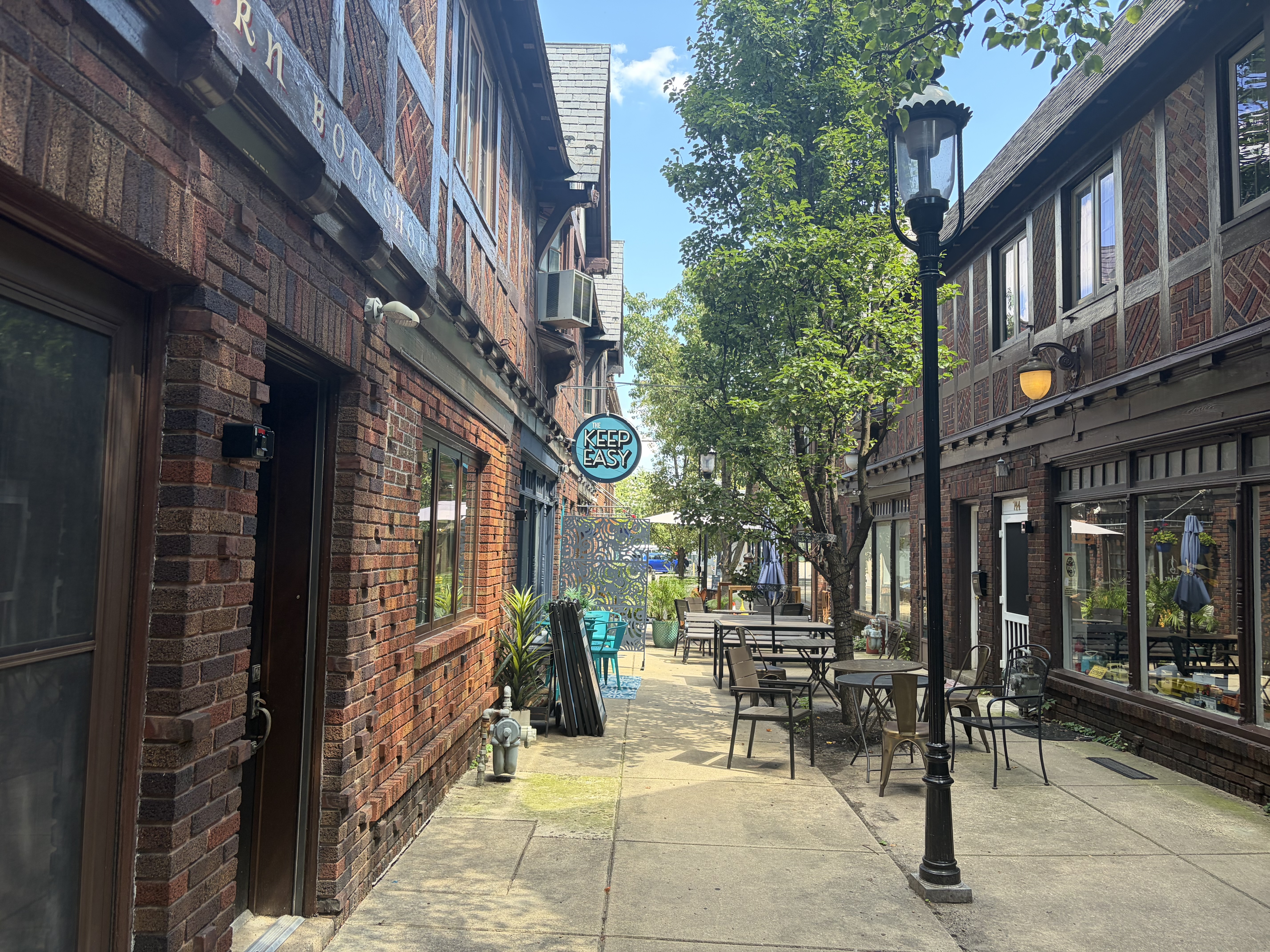
It looks like a street that belongs in its namesake English city, but the secluded, bricked Yorkway Place instead sits near the heart of Jenkintown, Pa.
For years, locals say, the pedestrian walkway drew few pedestrians: Offices and empty storefronts offered little reason to stroll along the 1930s Tudor-lined path, which runs into Route 611.
“I still meet people today who don’t even realize it’s there,” said Ross Abel, a Jenkintown resident who bought a Yorkway Place building this year that now hosts a cafe.
Unusual bar concept sparks alley renaissance
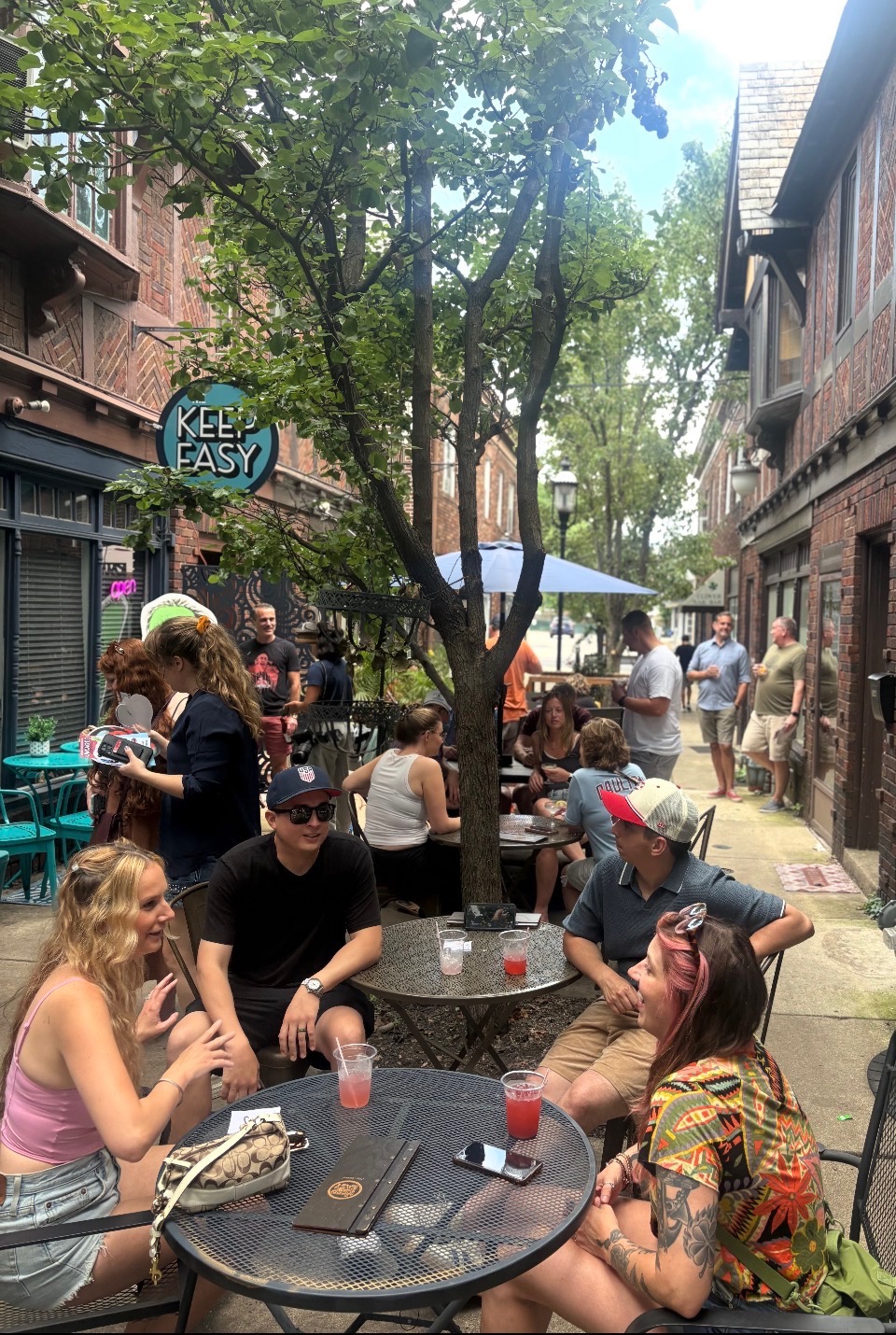
The tide began turning in 2023 when Melissa Hager turned her herb and tea store into a meadery, the Keep Easy, with her partner, Mike O’Donnell. While the Herb Shop had struggled, the bar took off.
Yorkway Place in Jenkintown, June 2026.Mel Hager
“That might’ve been the catalyst,” said Borough Manager George Locke. “The secret was getting that foot traffic in there.”
After the Keep Easy came Carminati Creamery, a gelato shop from Glenside, bringing a kid-friendly option to the alley.
The ice cream store “is the first thing that drew us in,” said Jenkintown Mayor Gabe Lerman, who has school-aged children. “Whatever we do for dinner, we can just walk up to Carminati’s.”
The Lore Café, an upscale, all-day coffee shop, added morning visitors to the scene. That’s what gave Jackie Botto the confidence to move Capricorn Books into Yorkway Place.
“We took a gamble,” Botto said. “I did not plan for it to be so busy.”
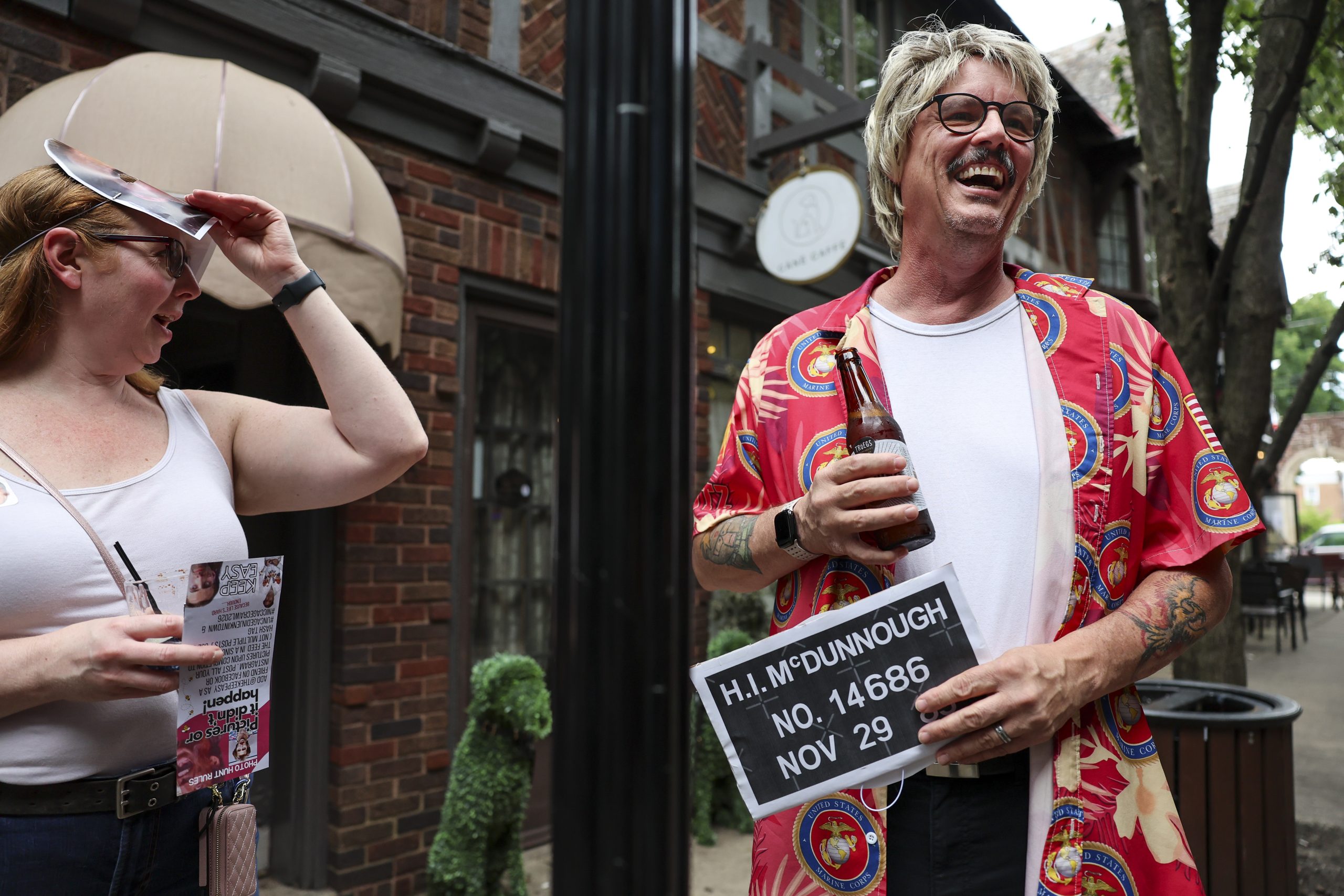
Themed events have attracted more newcomers, from a Nic Cage bar crawl to Jenkintown Festivus. Capricorn participated in the annual Philadelphia Bookstore Crawl, typically the store’s biggest day of the year, at their new Yorkway Place location for the first time this past weekend.
Vicky Hutz and Mike Hutz, of Huntington Valley, speak with a reporter at the Keep Easy during the Nic Cage cocktail crawl on Sunday, June 28, 2026, in Jenkintown, Pa. Participants gathered to celebrate actor Nicolas Cage with Cage-themed cocktails, movie screenings, and “Cage matches.”Monica Herndon / Staff Photographer
Personalized support helped local businesses
Personalized, direct support has helped bring more small businesses to Jenkintown, locals say.
The borough started helping owners secure sewer permits from the state several years ago, Locke said. Each permit is “20 to 40 hours of my time.”
“It’s a tough process,” he said.
As for filling Yorkway Place, “It’s been Mel,” Botto said, who’s been reaching out to potential owners about vacancies.
“I was texting everyone I know,” Hager, the meaderist, said.
Lerman said Jenkintown also recently added free 20-minute parking spots, which helped stores throughout the town.
And many of Yorkway Place’s business owners live in the borough, the mayor said: “They’re all invested in being good stewards and in having a place you can feel good about sending your kids with a few bucks to get a gelato, or a book.”
Jenkintown alley to see new stores in 2026
Several more businesses are set to arrive in Yorkway Place in the coming months.
In September, insect taxidermist Kat Smith is opening an art supply, stationery, and craft cafe.
A game room and bottle bar is slated to open above Keep Easy in October.
And a record store, Smelly’s Vinyl Vibes, is also coming this fall.
“This is such a cool little street,” Abel said. “All these new shops are helping people to discover it.”
This suburban content is produced with support from the Leslie Miller and Richard Worley Foundation and The Lenfest Institute for Journalism. Editorial content is created independently of the project donors. Gifts to support The Inquirer’s high-impact journalism can be made at inquirer.com/donate. A list of Lenfest Institute donors can be found at lenfestinstitute.org/supporters.
Bus operators say they worry passengers frustrated over changed routes that take them by surprise and unexpected delays will yell at, curse, or assault them. It has been a persistent problem in recent years.
In some cases, riders accustomed to staying on one bus route will need to transfer to other buses or the subway and elevated trains. That increases the chances of missed connections and delays. And angry people.
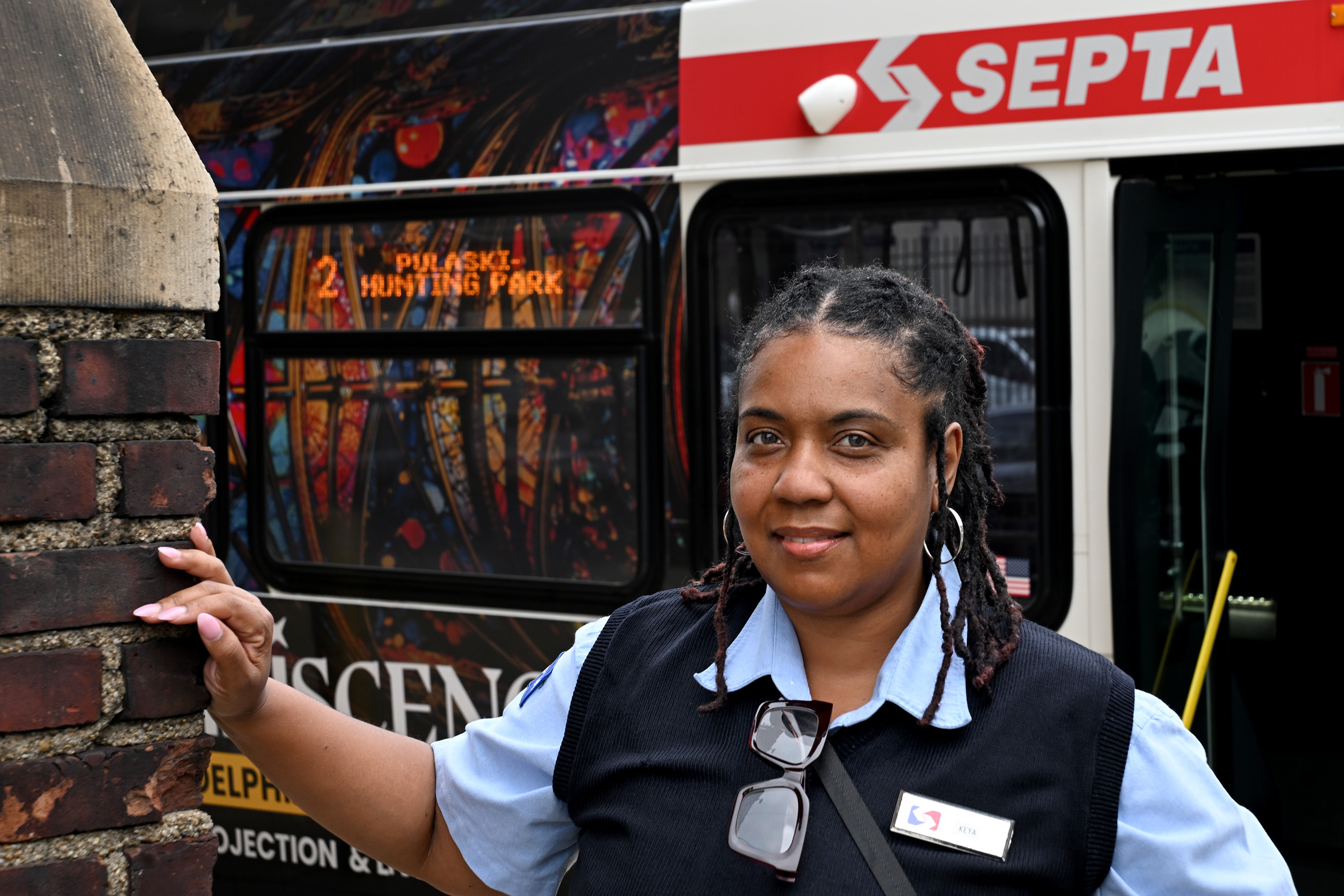
“You’re upset because you had counted on the bus,” said Keya Sampson, 52, a bus driver for 12 years. “You have to be at this appointment or you’ve got to punch in on time.”
She is sympathetic, even though delays are outside her control.
“We’re going to end up in a tricky situation because we’re the face of SEPTA,” Sampson said. “They don’t have anybody else to scream at, unfortunately.”
Vulnerable riders
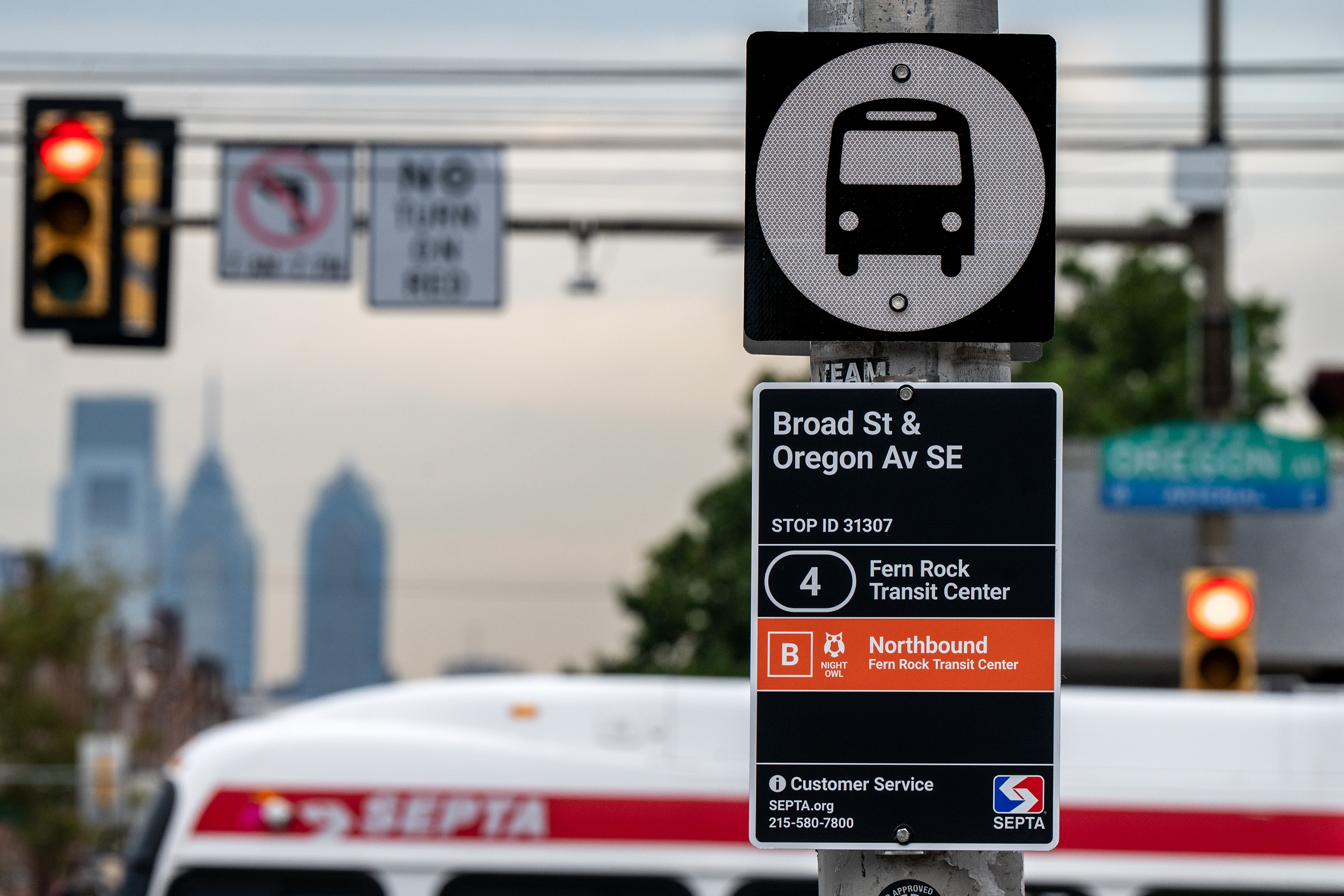
Carlos Guillen, who has worked for SEPTA for 19 years as an operator on buses and the Broad Street Line, noted that SEPTA advises Route 4 riders to take the B, SEPTA’s new name for the subway line,to avoid longer wait times.
“I can see how it can impact elderly and those with disabilities, especially moving down the sidewalk — they’re not the smoothest thoroughfares,” said Guillen, a safety officer for Transport Workers Union Local 234.
He noted a lack of ADA-accessible stations on the B north of City Hall.
Longer term, some bus operators are concerned about the possibility they could be replaced in the future by autonomous driving technology.
“Autonomously driven vehicles have no place in mass transit,” said Joe Coccio, secretary-treasurer of Local 234, which represents more than 5,000 SEPTA employees, including operators on buses, subways, and trolleys. “They’re flawed. They’re unpredictable.” He said they also can be hacked.
SEPTA says it has no plans to use robot bus operators and is hiring human ones as fast as it can. But a spokesperson also said the authority wants to keep its options open.
Most operators are anticipating some confused passengers at first, even though SEPTA has sent out teams to educate people about Phase 1 of the New Bus Network. Maps and cards illustrate the changes, translated into multiple languages.
New color-coded signage is part of SEPTA’s plan to communicate changes to bus routes that begin on Sunday. Tom Gralish / Staff Photographer
Some people won’t get the message.
“People right now don’t even read our destination signs to see if it’s the right bus,” said Ryan Stewart, who operates a Route 35 bus from the Midvale depot in Nicetown.
In the first wave of changes, 30 bus routes will be affected.
Some routes with low ridership or that duplicate nearby service have beeneliminated. Othershave been extended. Some will run more frequently, others less frequently, based on analysis of demand. Two new routeshave been added.
The people who pilot the buses on Philadelphia’s narrow streets know that some small and overlooked issues could undercut the New Bus Network program’s goal of quicker, more efficient service.
Sampson, for instance, has been driving the 63 for the summer. She will be back behind the wheel on Route 4, her regular run for the last four years, this week — as the changes begin.
Route 4 will have fewer buses running. So SEPTA is deploying 60-foot articulated buses, which carry more passengers.
SEPTA had been using 40-foot buses on the route, which has narrow streets and hairpin turns, especially in its northern reaches, where there is a longstanding detour that will not end until summer 2027. Operators think the longer buses will have trouble navigating the route.
Operators have asked SEPTA to look at the issue. “If there’s nothing they can do, it’s going to be a nightmare,” Sampson said. “We’re going to get stuck.”
She knows well the hard turn from Erie onto Rising Sun, an angled intersection with a pub that often has a beer truck parked on the curb. Only one articulated bus at a time can fit down that little stretch of Old York Road. And the church at 10th and Rockland Streets that has packed funerals, with cars parked to the corners.
“How do you ask someone who’s grieving, ‘Hey, move your car’? … At the same time, we do need to make the turn, and it does need to be safe.”
Time will tell
Paul Pollard, a veteran bus operator on Route 61, said he spends precious minutes stuck in traffic on Main Street in Manayunk on his way north to Roxborough during morning peak hours, as parents drop students off at school.
But the schedule assumes his bus can sail through.
“I’ve had people get off my bus, walk two or three blocks down, and go into their job,” Pollard, 49, said. “I’m still sitting in traffic.”
It is “virtually impossible” to meet the schedule safely, he said. The result: late buses and steamed customers.
Time will tell if worries become reality, but operators know that they will bear the brunt of any outrage.
“There’s nobody at SEPTA headquarters getting somebody throwing coffee on them, or spitting on them,” Pollard said.
James A. Williams Jr. walked his first picket line when he was 8, growing up in the 1980s in Northeast Philadelphia as the son of a labor leader.
He followed in his father’s footsteps, joining Glaziers Local 252 — the same union of which his great-grandfather was a charter member when it was founded 100 years ago. Also like his father, Williams rose to the top of the 140,000-member International Union of Painters and Allied Trades, becoming general president in 2021.
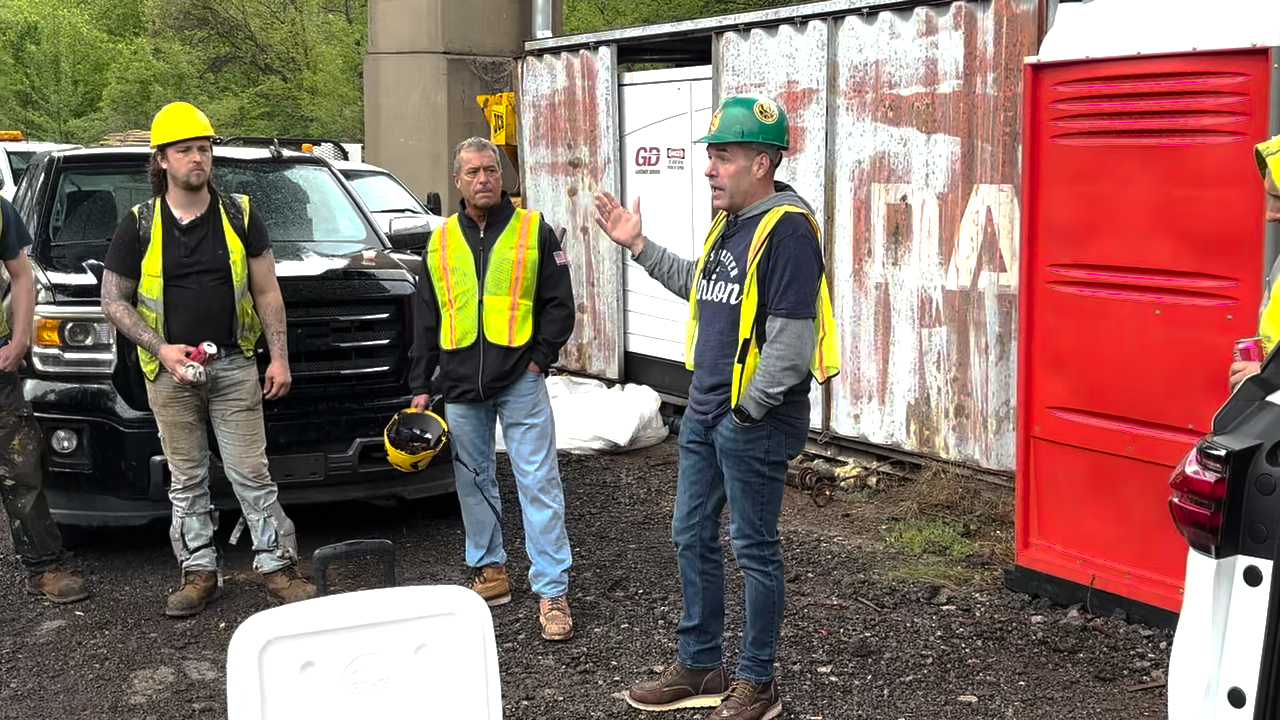
Yet, even as Williams, 48, known as Jimmy, has broadened his focus to national issues — including Trump administration policies he sees as anti-labor — his attention diverted back to the city this summer when he ordered a review of his union’s regional governing body in Philadelphia, District Council 21.
Seeking to evaluate DC 21’s recent merger with its counterpart in North Jersey, Williams says he found declining membership, excessive compensation for certain staff, and a lack of transparency.
“It was obvious that we weren’t building power,” he said in an interview. “If anything, we were operating outside of our own laws and our own rules.”
So Williams appointed a trustee to take control of the district council, removing the union’s elected business manager, Bernie Snyder, from his position and suspending other officers. Williams’ trustee on July 24 hand-delivered a letter — a copy of which was obtained by The Inquirer — with this newsto DC 21’s union hall on Southampton Road in the Far Northeast, citing “widespread financial malpractice” and other governance issues.
Williams said his review did not find evidence of theft or fraud: “The case you have here is mismanagement.” Snyder could not be reached for comment.
Such trusteeships are not unheard of. They have been imposed on more than 20 Philadelphia-based unions since 2000, according to U.S. Labor Department records.
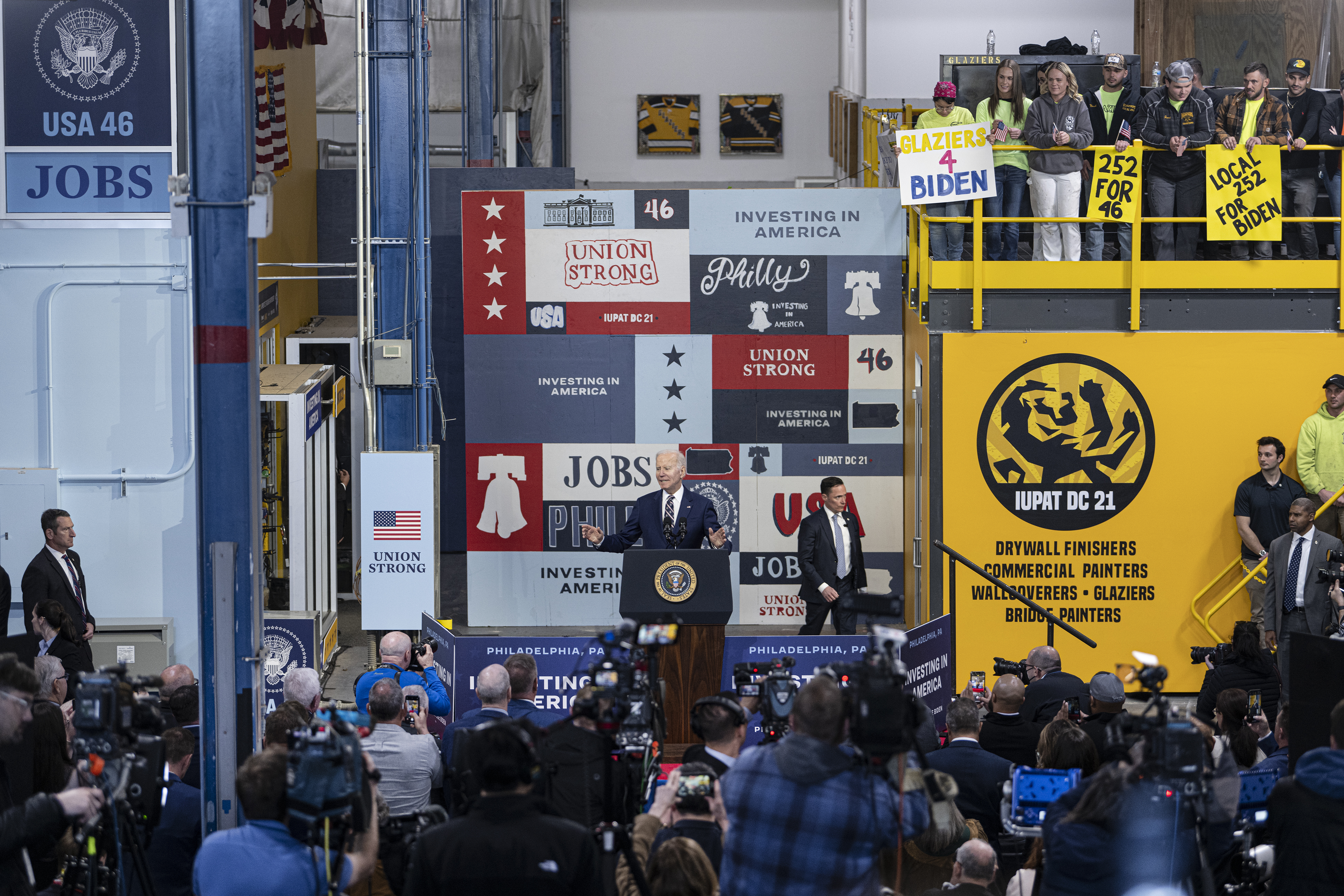
But DC 21 — which is affiliated with 11 unions in Pennsylvania, New Jersey, and Delaware representing 5,600 painters, glaziers, drywall finishers, wall coverers, and glass workers — is not just any union. It is one of the largest members of the politically influential Philadelphia Building and Construction Trades Council, which is a close ally of elected officials ranging from Mayor Cherelle L. Parker to Gov. Josh Shapiro. In 2023, President Joe Biden and Vice President Kamala Harris each visited a training site affiliated with DC 21.
President Joe Biden spoke at the Finishing Trades Institute in Northeast Philadelphia in March 2023.Jose F. Moreno / Staff Photographer
Adding to the intrigue is the international president’s close ties to the district council and the broader Philly labor movement. His father, James Williams, once led Glaziers Local 252, and his uncle Ralph Williams was business manager of the Philadelphia building trades council in the 1980s. Beyond his family ties, Williams has described former DC 21 business manager Joseph Ashdale, a fellow glazier, as his mentor.
“It had to be serious for him to have done it [taken control of DC 21],” said a local building trades source who spoke on condition of anonymity to speak candidly about a sensitive labor issue. “It’s drawing attention to his home local. It’s personal when it’s your own local.”
Some in the world of organized labor did not see it coming. “That’s shocking to me,” State Sen. John Kane (D., Delaware), a former business manager of Plumbers Union Local 690, said of Snyder’s ouster.
Susan Schurman, a professor at Rutgers University’s School of Management and Labor Relations, said oftentimes one faction of a union will level accusations of wrongdoing against a rival group in an effort to gain power.
But Schurman, who reviewed Williams’ letter at The Inquirer’s request, said she was “inclined to think” that is not the case here. “Assuming what is said in the letter is accurate, when you have a declining membership and you’re raising the compensation and other things for officers and staff, you got a problem,” Schurman said.
Williams said he was not motivated by politics. “It was difficult because of relationships and, you know, long-standing roots,” he said, adding that he had worked with Snyder, a painter by trade, for 25 years. “But it was also more necessary in order to change the culture for our membership here.”
‘I’d be angry’
That change — to center the organization around members, not staff — is needed not just in Philadelphia but across the union, Williams says. He wants members to become “active participants” in the organization.
“As a whole, people need to be held accountable and kicked in the a— to push forward, represent the labor movement, and display their potential power,” Gregg Smith, the Hanover, Md.-based union’s general secretary-treasurer, wrote in an internal newsletter this summer.
Williams has described Joseph Ashdale, former DC 21 business manager, as his mentor.Clem Murray / Staff Photographer
But as Williams seeks to empower members, some in DC 21 say they are not getting enough information from leadership. “Everybody’s pissed off,” one member told The Inquirer, speaking on condition of anonymity out of fear of retribution.
Williams has held several meetings with members in recent weeks, including one at the Northeast Philly union hall on Aug. 5. “They basically avoided any questions,” the member said. “Where did all the money go? Nobody will tell ya nothing.”
When DC 21 posted about the trusteeship on Facebook, one member responded, “How many times does our membership have to be victimized[?]”
That frustration is understandable, Williams said. “There’s some angry members,” he said. “And think about it, I’d be angry. I’m working my a— off every day, and I expect that those that I elect are capable and are following the rules, right? And it’s just not what happened here.”
19% decline in membership
The takeover comes after DC 21 lost 19% of its membership in just two years, falling from 6,977 in 2023 to 5,621 last year, according to U.S. Labor Department data.
“That’s huge,” the building trades source said. “You don’t see drops like that, that quickly.”
Painters unions in other big cities did not see a similar drop-off over that two-year period. In New York, membership in District Council 9 held steady around 7,600 people. In Chicago, DC 14’s membership fell by 4% to about 3,900. DC 51 — which represents workers in Washington, D.C., Virginia, and Maryland — saw a 37% increase to 1,600 members.
(function(){function e(){window.addEventListener(`message`,function(e){if(e.data[`datawrapper-height`]!==void 0){var t=document.querySelectorAll(`iframe`);for(var n in e.data[`datawrapper-height`])for(var r=0,i;i=t[r];r++)if(i.contentWindow===e.source){var a=e.data[`datawrapper-height`][n]+`px`;i.style.height=a}}})}e()})();
In his July letter to members announcing the takeover, Williams said DC 21’s organizing department “has no discernible targets, strategic plans, or campaigns while membership declines and trade jurisdictions are undefended.”
In the interview, he also pointed to a slowdown in regional construction. But the problem runs deeper, he said. Going back to 2010, Williams said, the union’s membership in Pennsylvania and New Jersey has declined by 2,000 people.
Even in a region known as friendly to organized labor, more work is being performed by “open-shop” contractors that hire both union and nonunion labor, he said, adding that workers are increasingly being “misclassified” as independent contractors.
“Philadelphia, New Jersey are right in the crosshairs for where organized labor needs to organize power and grow,” Williams said.
Allegations of excessive pay
Even as DC 21 lost members, it provided compensation packages to officers and certain staff that were inconsistent with the union’s bylaws, the letter said. That included $300,000 for elected staff over a two-year period in excess of what was allowed under the bylaws, according to Williams.
Labor Department records reviewed by The Inquirer shed additional light on the union’s spending.
The DC 21 staff’s average gross salary was $116,000 last year, a 14% increase from 2023. DC 21 employees’ average salary for 2025 was the highest of any of the 10 district councils in IUPAT’s Eastern Region, including New York, which paid an average of $109,356.
DC 21 had been facing challenges even before the recent shake-up.
Membership had been sliding for years when the union merged in 2022 with District Council 711 in North Jersey. (DC 21 already had a presence in South Jersey.) At the time, DC 21 was led by Ashdale, a former longtime chair of the Philadelphia Parking Authority.
Ashdale retired in 2023 and was succeeded by Fran McLaughlin. Snyder was elected business manager the following year and served in that role until his ouster by the international union in July.
The newly appointed trustee is Brian Courtien, a former business manager of District Council 51 in Maryland.
He has to do two things, said Rutgers’ Schurman: dig into the union’s books and fix anything that was done “inappropriately,” and then try to ease rank-and-file members’ concerns about how their dues are being spent.
“The trustee has to kind of manage a process of bringing calm and order back to the organization,” she said.
Once that work is complete, the union will elect new leaders.
For Williams, effecting change starts with ensuring members understand they have agency in the organization. “Their bylaws are theirs; they’re not their leaders’. Their contracts are theirs. They’re not their employers’ or their leaders’.” he said.
“Having our rank-and-file at the center of everything we do,” he said, “from political endorsements to contract negotiations to union governance, that’s the culture we’re trying to build within our organization.”
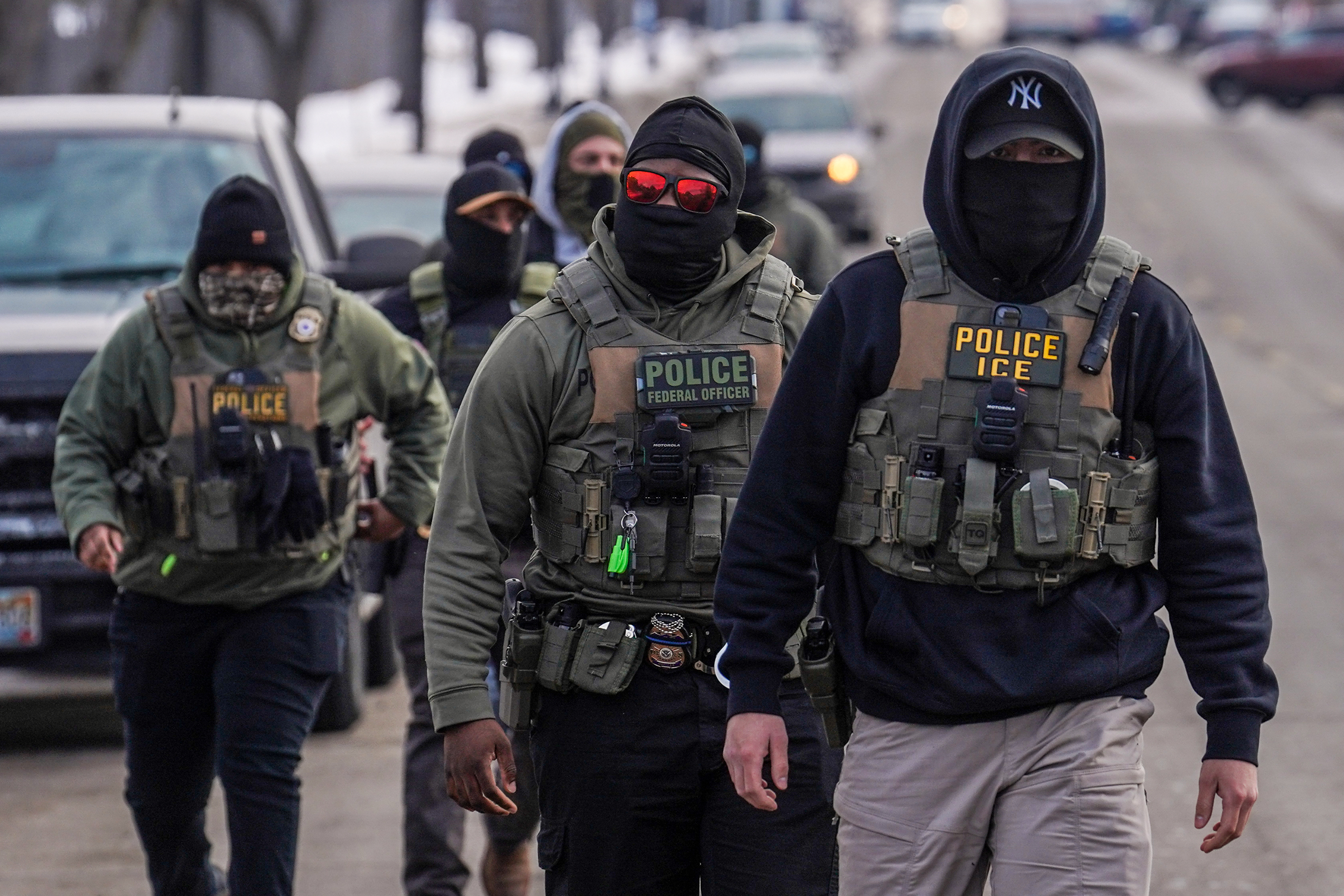
U.S. Immigration and Customs Enforcement has awarded more than $17 million in contracts, mostlyto businesses, in the Philadelphia area since the start of President Donald Trump’s second term, with more than half of that money going to a firearms manufacturer in Montgomery County.
The local data, compiled by The Appeal, highlights the Trump administration’s spending related to raids and enforcement operations as the agency carries out the president’s mass deportation agenda, including its purchases of weaponry.
Geissele Automatics, a firearms manufacturer based in North Wales, has the largest and perhaps most consequential contract with ICE in the Philadelphia area.
The company — which specializes in selling high-grade, AR-15-style semiautomatic weapons and parts to consumers, law enforcement agencies, and the military — entered a contract with ICE for nearly $9.1 million in September 2025, according to federal data.
The payment was for the delivery of “precision long guns and accessories” to support ICE agents as well as the agency’s tactical programs, the data show. It’s unclear where the equipment is being used.
Neither the company’s founder, Bill Geissele, nor a representative from the company’s sales team returned a request for comment.
Nationwide,ICE and U.S. Customs and Border Protection has dramatically increased spending on firearms in Trump’s second term, according to a report earlier this year from U.S. Sen. Adam Schiff (D., Calif.), leading to outcry from Democratic officials and voters who say the agency has become a militarized force with little oversight or accountability.
That outrage continued this month when Democrats voiced their opposition to ICE’s plan to provide ICE officers with electric shock gloves. Schiff’s oversight report, released earlier this year, called ICE and CBP’s contracts for weaponry a “misuse of taxpayer dollars to maximally arm federal immigration agents.”
A spokesperson for Department of Homeland Security said in a statement that $17 million in contracts in the Philadelphia region is “simply not accurate” and “conflates nationwide ICE contracts” with spending in the area.
“ICE contracts with vendors across the country to support its law enforcement mission. The existence of a federal contract, a vendor located in a particular region, or a nationwide contract vehicle does not mean that the full value of that contract was spent in Philadelphia,” the spokesperson said
“Reporting should accurately distinguish between nationwide contract values, vendor locations, places of performance, and actual federal expenditures before presenting a misleading figure as fact,” they added.
The details on the contracts come as residents and advocates in the Philadelphia region and nationwide are continuing to remain vigilant of ICE’s presence in their communities. Earlier this year, ICE struck deals to retrofit warehouses in Pennsylvania and New Jersey into mass detention centers before later backtracking after residents and leaders in both states voiced opposition.
Bill Geissele — who hosts the manufacturer’s podcast Shots Fired in Anger —has donated to Republican elected officials in Pennsylvania, including U.S. Sen. Dave McCormick and U.S. Rep. Dan Meuser. Geissele’s contract, while not the company’s first with the federal government, is by far the most significant contract between the gun manufacturer and the federal agency on record.
(function() {
var l2 = function() {
new pym.Parent(‘ice_contracts2’,
‘https://media.inquirer.com/storage/inquirer/projects/innovation/arcgis_iframe/ice_contracts2.html’);
};
if (typeof(pym) === ‘undefined’) {
var h = document.getElementsByTagName(‘head’)[0],
s = document.createElement(‘script’);
s.type = ‘text/javascript’;
s.src = ‘https://pym.nprapps.org/pym.v1.min.js’;
s.onload = l2;
h.appendChild(s);
} else {
l2();
}
})();
In August 2024 for example, under former President Joe Biden’s administration, Geissele Automatics entered a $12,224 contract with ICE for equipment to support a “sniper sustainment” course, according to data compiled by The Appeal.
By 2025, when Trump returned to the White House and significantly ramped up ICE operations nationwide, those contracts ballooned.
On top of the $9.1 million contract that year, Geissele was paid $27,936 to provide training rifles and magazines for the agency’s Office of Firearms and Tactical Programs, as well as $16,544 for rifles and accessories required for testing and evaluation.
ICE also took its spending across the river to Burlington County in New Jersey, where it awarded George J. Petronis Enterprises Inc., a gun shop, slightly more than $505,000 since the start of Trump’s second term for training ammunition and ink cartridges for 9mm training ammo to support ICE’s Office of Firearms and Tactical Programs in Fort Benning, Ga.
George J. Petronis Enterprises Inc. did not return an email requesting comment.
The Appeal’s dashboard also shows a contract for rental of a firing range between ICE and the county’s fire academy, located in Conshohocken, that has existed since at least 2021. But Montgomery County officials said Friday that the contract is with the broader Department of Homeland Security — which ICE is a part of — and not with the federal immigration enforcement agency directly.
County Commissioner Jamila Winder, a Democrat, said that the academy is used by local, state, and federal agencies for law enforcement training but “this facility is not available for training for those engaged in immigration enforcement activities.”
Other contracts highlighted by The Appeal dashboard may also be directly tied to DHS, instead of ICE.
Earlier this year, Montgomery County’s Board of Commissioners passed a resolution restricting federal immigration enforcement from using county property or resources for noncriminal investigations.
Other local contracts with ICE include a roughly $50,000 contract with the Philadelphia Parking Authority for rental spaces for 16 vehicles and more than $78,000 to Ricoh USA Inc., an office technology company headquartered in Chester County that was also used under the Biden administration. Coast2Coast Shredding LLC, which is headquartered in Montgomery County but shreds documents in California, received more than $94,000 from ICE.