Tag: Weekend Reads

  • This Phillies fan brought corn to every game of the last homestand. Now it lives in the batter’s eye at the Bank.

    This Phillies fan brought corn to every game of the last homestand. Now it lives in the batter’s eye at the Bank.

    Luke Butler’s introduction to the idiosyncrasies of Phillies fans came on Aug. 10, 1999. He was 11 years old, sitting in the upper bowl of Veterans Stadium with his mother, Martha, and one of her friends.

    The two women were there to see Mark McGwire, but Butler was locked in on another St. Louis Cardinal. Or rather, what spectators were throwing at him.

    It was J.D. Drew’s first game in Philadelphia since he’d rejected the Phillies’ attempts to sign him in 1997, choosing instead to reenter the MLB draft the following year.

    While roaming center field in the eighth inning, an irate Philadelphian flung a roll of toilet paper in Drew’s direction. Then, another irate Philadelphian hurled two D-cell batteries.

    The middle schooler was understandably unsettled. Nevertheless, the moment stuck.

    “The spunky surreality of being a Phillies fan … I feel like the seeds were really planted on that night,” he said.

    Butler’s awareness of his comrades’ quirks only increased from there. As he grew up around the Vet, and eventually, Citizens Bank Park, he continued to witness fan groups like the Wolf Pack and Padilla Flotilla.

    Once, in 2004, Butler and his friends wore matching yellow T-shirts that said “Keith Jones, Corn Boy” on the front, as a nod to the WIP Morning Show host who had a farm in South Jersey.

    This group was a little too obscure to become popular. But 22 years later, during the team’s most recent homestand, Butler’s maize-fueled fandom finally caught on.

    More ears of the corn, in the stands, at a Phillies game last week.Photo courtesy of Luke Butler

    It all started with the Field of Dreams Game in Dyersville, Iowa. Butler, watching at home in Mt. Airy, was captivated by its cinematic elements.

    The stalks seemed to have a sagelike effect; after back-to-back losing series, the Phillies were suddenly playing as well as ever.

    Once the team won their next two games in Minnesota, superstitious fans joked about bringing corn to the ballpark. Butler was one of the few who actually did.

    “You could say my relationship with corn and the Phillies is actually like 20 years old,” he said. “We didn’t bring corn [in 2004]. But this was an extension of that, you could say.”

    Butler, who works for the city’s health department, stopped at Reading Terminal Market before last Monday’s game against the Marlins. He bought an 80-cent ear from Iovine Brothers, tucked it into his bag, next to his score book, and drove to South Philly.

    The security guards at the gate on Darien Street played along.

    “The guy searching my bag was like, ‘Oh man, I got to take your ear of corn,’” Butler recalled. “And I was just like, ‘All right, well, the bit is up.’ And then he just looks at me, and he’s like, ‘I’m just messing with you. You’re good.’”

    Less-online fans were predictably confused by Butler’s husked talisman. But the Phillies edged the Marlins, 6-5, despite a late rally from Miami, so the fan decided to bring it back on Tuesday.

    This tradition continued for the entire six-game homestand. Butler was at the ballpark every day, corn in hand, often bringing extra ears for friends and family. He said he would wave the corn during pivotal moments, “like a smudge stick or a sage,” and just “rattle it around.”

    The 38-year-old views the Phillies’ recent nine-game winning streak as proof of concept. His most compelling example came in the ninth inning of Sunday afternoon’s game.

    Butler, his friends, and his mother were standing in front of Ashburn Alley, pointing the maize toward home plate. They watched as Bryce Harper doubled, J.T. Realmuto singled, Justin Crawford walked, and Edmundo Sosa drove them all home with a two-out double.

    Then, Schwarber provided a finale too good to be scripted. As he stepped up to the plate, Butler lifted his ear to the sky, and yelled, “Kyle, hit it to the corn!”

    The Phillies slugger obliged, crushing a 459-foot walk-off home run that cleared the batter’s eye, to cap a 6-4 win against St. Louis.

    “It looked like a howitzer,” Butler said. “We were all fist-pumping the corn and jumping. It was a little — obviously can’t say it full-on — but it was a little like ‘Bedlam at the Bank.’ Pandemonium.”

    As the crowd dispersed, Butler walked to the railing overlooking the bushes and trees. He bent over, peered between the bars, and tossed the ear into the batter’s eye.

    “It was weary,” Butler said. “It was asking to go. But it also felt like, this wild, amazing energy of this streak connected to the Field of Dreams; now that ear of corn is always in the trees.

    “We’ll have more [corn]. We’ll have fun with it. We’ll let it grow and evolve as it wants. But the original one is [there].”

    After Kyle Schwarber hit his walk-off home run on Sunday, Luke Butler and his mother, Martha, paid a visit to Harry Kalas, ears in hand.Photo courtesy of Luke Butler)

    He left his two other ears at the grave site of longtime broadcaster Harry Kalas in Laurel Hill Cemetery, to commemorate a “magical homestand that he would have loved.”

    The lifelong Phillies fan was hoping his team would continue its winning streak out west, and offered to bring a “U-Haul full to the brim with corn” if they did.

    Unfortunately for Butler, they dropped two games in Seattle, before winning the series finale on Wednesday afternoon.

    But regardless of what happens throughout the rest of this Phillies road trip, Butler will be back at Citizens Bank Park next homestand, armed with his favorite vegetable.

    And who knows? Perhaps that original ear will live on; a symbolic slice of heaven, far from Iowa.

    “The dream would be that the seeds are fertilized,” Butler said. “And that next summer, people are like, ‘How in the hell is there corn growing in center field?’”


  • I don’t care what anyone says: Being ‘woke’ isn’t a bad thing

    I don’t care what anyone says: Being ‘woke’ isn’t a bad thing

    I was chatting with a friend recently whom I’ve known for a long time when she used the term woke as if it meant something disgusting.

    I was so stunned that I didn’t bother trying to correct her. But I hung up the phone thinking about how the concept has become a political football, with even some Dems kicking it around.

    African Americans created this vernacular. It preexisted MAGA’s hijacking of it by decades, dating back to the days of civil rights activist Marcus Garvey, founder of the Universal Negro Improvement Association. It has long been a part of pop culture, showing up in musical performances by everyone from Depression-era blues singer Lead Belly to Erykah Badu in her 2008 song, “Master Teacher.”

    I first heard it during the early 1990s. Back then, if someone said, “You’re not woke,” it was considered the ultimate insult, right up there with being an Uncle Tom — or worse. Being woke refers to being alert to racial transgressions. The opposite of woke is to be asleep, and therefore oblivious to systemic racism and injustice.

    No matter how President Donald Trump and Secretary of Defense Pete Hegseth attempt to vilify the term, I stand by the notion that being woke is a good thing. As in the exhortation, “Stay woke, brother.”

    It’s galling to watch politicians bastardize it. U.S. Rep. Alexandria Ocasio-Cortez recently brought it up during an ABC News interview when she said, “I have a local city councilman that has this saying: ‘Woke 1 was crazy.’”

    She was talking about Francesca Hong, a progressive candidate running for governor of Wisconsin with a history of making radical statements, and was also quoting New York City council member Chi Ossé, who used the “woke 1” term on social media. I get that Ocasio-Cortez was referring to far-left calls to defund the police — which most Black people never fully supported — among other extremist ideas. But her words still stung.

    I found myself wondering: Since when did the concept of being woke become a bad thing for Democrats?

    I have an awful lot of respect for Ocasio-Cortez. I recognize she may be weighing a run for the presidency in 2028 and trying to center herself politically. But this kind of virtue signaling won’t be as beneficial as she hopes if it also alienates African Americans.

    M.K. Asante said that “the idea of staying woke became associated with consciousness,” but that the meaning of the term has changed after being co-opted by the mainstream.

    For insight, I reached out to M.K. Asante, a professor at Morgan State University whose father is Molefi Kete Asante, a renowned professor of Africology at Temple University. “The idea of staying woke became associated with consciousness,” Asante told me, but added that the term was co-opted around 2020 following the widespread uprisings after the murder of George Floyd by a police officer.

    Asante pointed out, “Now it does not have the same meaning in the mainstream.”

    That’s mainly because of Trump, who, after his return to the White House, immediately began vilifying woke and other things associated with diversity.

    He declared an all-out war on diversity, equity, and inclusion efforts in both federal and private sectors, and has also taken aim at museums he says are “essentially, the last remaining segment of ‘WOKE.’” Trump also has cut funding from key government programs that support DEI.

    Even the military hasn’t been immune. Trump summarily dismissed Air Force Gen. Charles Q. Brown Jr., who was the second Black person to serve as chairman of the Joint Chiefs of Staff, and set about renaming military bases after Confederate generals.

    Earlier this year, Pentagon spokesperson Sean Parnell announced on X that officials were targeting Stars and Stripes, an independent newspaper that covers the military, in part to “refocus its content away from woke distractions that syphon morale.” Since then, the paper’s publisher, editor-in-chief, and a reporter have all been terminated, ending 155 years of editorial freedom, as my colleague Will Bunch reported.

    Meanwhile, the United States is at war with Iran, Canada, our closest ally, has announced retaliatory tariffs on U.S. products, and American consumers are wondering if the influx of tariff-free foreign beef imports Trump is pushing will be safe to consume.

    Yet, Trump says woke is the enemy.

    Despite the president’s best efforts, he can’t stamp the term or its real meaning out.

    As Asante pointed out, “You can co-opt a word, but the spirit of what ‘stay woke’ means is alive and well.”

  • A strip club scene was cut from ‘National Treasure’ and other insights from Philly’s celebration of the film

    A strip club scene was cut from ‘National Treasure’ and other insights from Philly’s celebration of the film

    I’ve watched National Treasure more times than I can count and if I could count how many times I’ve seen it, I wouldn’t admit it to you.

    It’s a confluence of things that keep me coming back — the scenes filmed in Philly, Nic Cage taking an absurd plot line very seriously, and the fact that this movie always seems to be on TV. Plus, there’s a quick cameo of my favorite stand in Reading Terminal Market, which closed in 2016, that always makes me nostalgic (RIP Salumeria).

    On Friday, I got to geek out with other fans of the film and its sequel, National Treasure: Book of Secrets, during a ticketed talk with the director of the franchise, Jon Turteltaub, at the Independence Visitor Center. Turteltaub’s other films include Cool Runnings, While You Were Sleeping, and The Meg, which tracks.

    In the audience were a self-proclaimed “real-life treasure hunter,” several Freemasons, and Philly tour guide Stephen Pierce of Havertown. Pierce came dressed in his finest colonial garb and told me the movie, which came out when he was 9, was “definitely a huge inspiration for me growing up.”

    Stephen Pierce, a local tour guide with America’s Rising Son Tours, asks a question while wearing colonial-era clothing during a live recording of the “National Treasure Hunt” podcast at the Independence Visitor Center in Philadelphia on Friday, Aug. 21, 2026.Erin Blewett / For The Inquirer

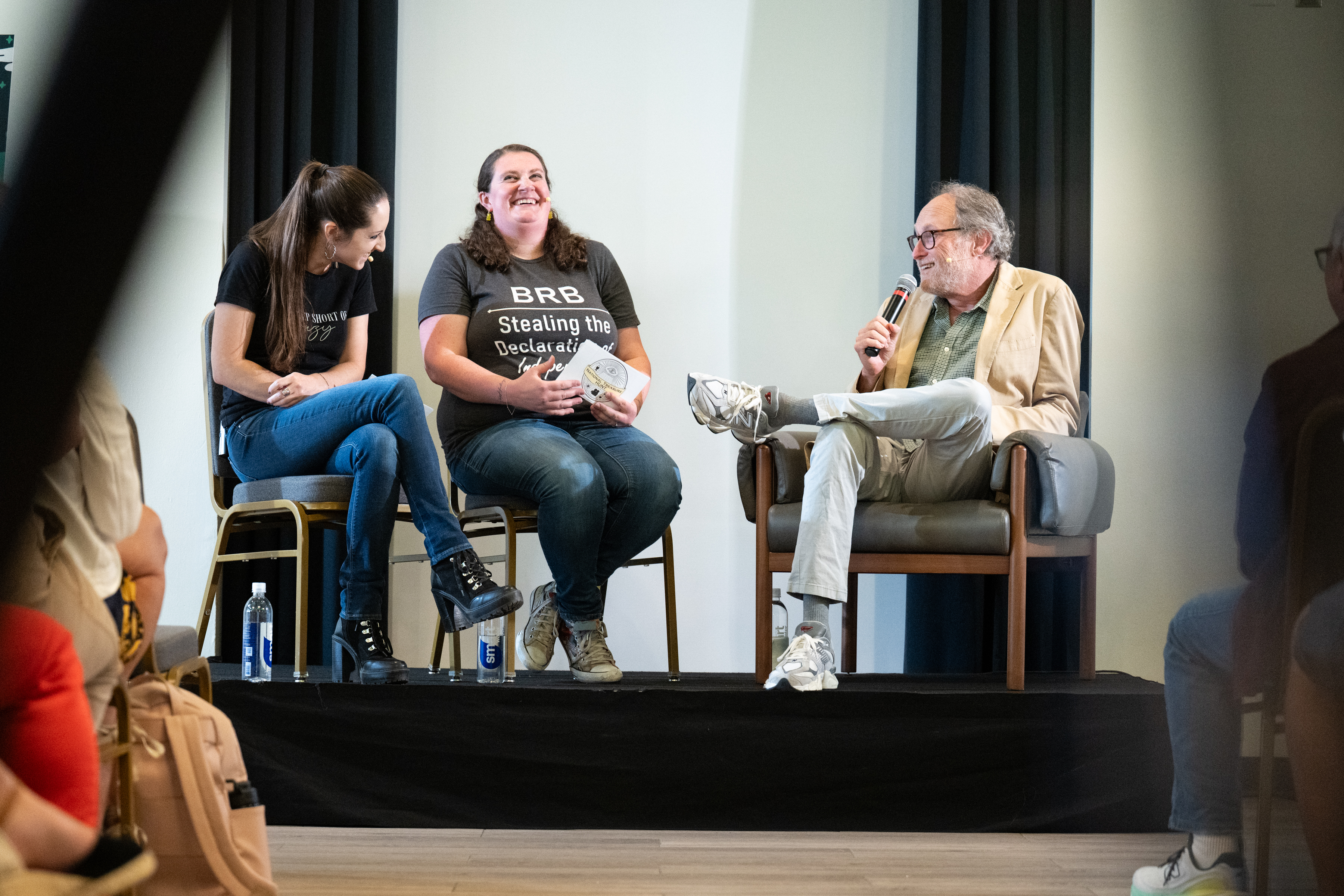
    But there were no bigger fans in attendance than the cohosts and moderators for the evening, Aubrey Paris and Emily Black, creators of the National Treasure Hunt podcast, who helped curate Philly’s first National Treasure Weekend of events in conjunction with the Philadelphia Visitor Center.

    Aubrey Paris (left) and Emily Black (center), creators and hosts of the “National Treasure Hunt” podcast, speak with “National Treasure” director Jon Turteltaub during a live recording at the Independence Visitor Center in Philadelphia on Friday, Aug. 21, 2026.Erin Blewett / For The Inquirer

    Their palpable joy while interviewing Turteltaub for their podcast was only exceeded by the shock and excitement that washed over their faces when the director gave them the scoop that National Treasure 3 is “finally real.”

    That wasn’t the only gem Turteltaub dropped during their talk, though. Here are five other nuggets and behind-the-scenes stories the director shared about one of the best and most ridiculous films ever partially filmed in Philly.

    All up in Independence Hall

    Turteltaub said he was surprised that the National Park Service let the cast and crew climb up Independence Hall’s bell tower to film.

    “That was special. Being next to the Centennial Bell — amazing. More interesting was being behind the clock, coming up those stairs and seeing how that works was like ‘Wow, this is why I want to be in the movie business,’” he said. “It’s not art. You just get treated better than other people.”

    Visitors stand in a long line on Oct. 12, 2025, in front of Independence Hall waiting to view the nearby Liberty Bell.Tom Gralish / Staff Photographer

    But the NPS didn’t allow filming at the doors or inside the building because it would have impeded visitors’ experience, Turteltaub said. And it was at this point in the conversation I learned there’s a replica of Independence Hall at Knott’s Berry Farm in Buena Park, Calif., which is where the interior scenes of the film were shot.

    So I either need to make a movie or go to California to live out my dream of climbing the bell tower. Duly noted.

    A meaty role

    During the chase scene that winds through Reading Terminal Market, Abigail (played by Diane Kruger) ducks into a butcher stand while clutching the Declaration of Independence. The woman running the counter initially says in the most unenthusiastic, Philly way possible: “If you’re not a steak, you don’t belong here.”

    But when Abigail tells the woman she’s running from her “ex-husband” (who’s actually a bad guy), the woman says: “Honey, stay as long as you like.”

    Pedestrians fill the sidewalk outside Reading Terminal Market in Center City on June 3, 2025.Alejandro A. Alvarez / Staff Photographer

    Paris said that the butcher has become “a favorite non-named character.” Some have even called her “the real national treasure.”

    “It’s a huge cult thing,” Paris said.

    Mark another win for Philly’s notoriously kind-but-not-nice attitude.

    Stripped down

    Turteltaub revealed that the first version of the original film was four hours long, so many scenes had to be left on the cutting room floor, including the original ending.

    “The original ending scene, they were back at the National Archives looking at the Declaration back where it belonged. We thought the world needed to know that,” Turteltaub said. “Everyone’s feeling good and then they get started talking about a different treasure and they go off like, ‘Oh no, I’m not doing that!’ It’s like the end of a Gilligan’s Island episode.”

    Jon Turteltaub, director of the 2004 film “National Treasure,” speaks during a live recording of the “National Treasure Hunt” podcast at the Independence Visitor Center in Philadelphia on Friday, Aug. 21, 2026.Erin Blewett / For The Inquirer

    Another scene that was stripped from the film took place when Abigail and Riley (played by Justin Bartha) are chased through Center City.

    “As Riley’s being chased, he cuts into a strip club and he runs through the strip club to get away,” Turteltaub said. “So my idea was he runs in and no one’s in there and it’s just some guy vacuuming and [Riley] says, ‘Well, that was disappointing,’ and keeps going.”

    I’m disappointed the cleanest scene ever filmed in a strip club didn’t make the cut.

    High school reunion

    Turteltaub and Cage attended Beverly Hills High School together and the director said the two were friends.

    “He’s kind of a great, nonconforming, march-to-his-own drum guy, which in high school is not easy,” Turteltaub said. “I was desperate to fit in and be liked by every single person ever. He didn’t care.”

    Nicolas Cage runs through the Old Pine Street Presbyterian Church cemetery in a scene from “National Treasure.”Alamy Stock Photo

    The director said he sold the actor on taking the part of Benjamin Franklin Gates in National Treasure when he described the character to Cage with one word: audacity.

    “Nic is audacious and that was that connection. Nic never has a superficial connection to a character. He goes and finds the person,” Turteltaub said. “Sometimes that’s insane stuff and craziness and awesomeness and unpredictability and sometimes it just makes somebody very, very real.”

    Page turner

    During audience questions at the end of the talk, a child of no more than 6 asked Turteltaub: “What’s on page 47?” to thunderous applause from the crowd.

    The question referred to the end of the sequel film, when the President of the United States asks Gates what he thinks of what’s on page 47 of the book of secrets handed down from president to president. Gates calls what’s contained on the page “life-altering,” but its contents are never revealed to the audience.

    It may not be a secret for much longer, though.

    “The worst thing, to make it interesting, was we added the line at the last second — ‘life-changing, life-altering’ so now we have to come up with something that’s ‘life-altering,’” Turteltaub said. “If I said ‘I don’t know,’ everyone will hate me. If I said ‘I do know,’ you’ll hate me for not telling you, but I don’t think we can make the third movie without at least helping people out.”

    Aubrey Paris (left) and Emily Black (center), creators and hosts of the “National Treasure Hunt” podcast, speak with “National Treasure” director Jon Turteltaub during a live recording at the Independence Visitor Center in Philadelphia on Friday, Aug. 21, 2026. The event was part of Philadelphia’s first National Treasure Weekend.Erin Blewett / For The Inquirer
  • How ChatGPT helped persuade one couple to move to Ardmore from Mexico

    How ChatGPT helped persuade one couple to move to Ardmore from Mexico

    From her home in Mexico, JoAnne Kim started searching for a Philadelphia-area apartment by opening ChatGPT.

    Kim, a regular user of the generative artificial-intelligence tool, told OpenAI’s chatbot what she and her husband wanted: a quiet place in Pennsylvania that was walkable and dog friendly with good transit access, a strong sense of community, cafes and restaurants, and a lot of things to do.

    ChatGPT suggested Ardmore, Bryn Mawr, and Chestnut Hill. The couple chose Ardmore, and Kim asked the chatbot for a list of apartment communities that fit their criteria and included outdoor space.

    ChatGPT “helped me become a better apartment hunter, because I was able to use all the data to help me make a decision,” said Kim, a 64-year-old career mentor for university students.

    This month, the Kims moved into Montgomery Plaza near Suburban Square.

    Generative AI tools are becoming increasingly popular as more people use them to write emails, summarize documents, and recreate pictures of pets. And, like Kim, renters are also using AI chatbots to find apartments.

    In Philadelphia and beyond, the growth of AI is changing the way people search for homes — and it’s prompting some in the industry to change how they do business.

    JoAnne Kim used ChatGPT to find the apartment she moved into this month.Tyger Williams / Staff Photographer

    In April, Philadelphia became one of 15 cities where RentCafe, a national apartment search website, rolled out its AI assistant, Ren. The platform is preparing to make the tool available nationwide. Apartments.com launched its latest AI tool — Apartments.com Ai — in June and started an advertising campaign in August to get more renters to use it.

    Property managers, too, are trying to find ways to reach people who use AI.

    Charlie Marshall, a leasing associate at the Ardmore-based property management company Harrison Richards, which manages Montgomery Plaza, has been tweaking the company’s website to try to get its seven properties more prominent placement in generative AI search results.

    Marshall said the handful of people who said they found a building using AI tools seemed more informed and committed than other prospective tenants.

    “It was immediately clear they had a good idea of the places they wanted to lease at,” he said. “It was not like some people you see that are touring seven or eight properties. They had narrowed it down to like three.”

    Stuart Richens, vice president of product at Apartments.com, said because the company’s AI tool “is immersive and kind of keeps guiding you and helping you, renters are getting much deeper into the search more quickly.”

    “And that’s helping them get to that short list more quickly,” he said.

    Kim and her husband, a senior data analyst who uses AI, worked with ChatGPT to focus their search. But to find a place that felt like home, Kim also watched local real estate agents’ YouTube videos, read reviews, watched local news coverage, and talked to property managers.

    Kim said that because she started with virtual conversations on ChatGPT, “I spent more time thinking about the kind of life we wanted to have. It wasn’t just about finding the apartment. It was the neighborhood, the vibe.”

    JoAnne Kim shows the ChatGPT online tool she used to find her apartment.Tyger Williams / Staff Photographer

    ‘A more advanced Google search’

    AI tools can only do so much.

    Vee Gordon, a rental agent with Philly Home Girls, said she worked this year with a New York City couple in their 20s who wanted a two-bedroom home in Philadelphia. They insisted on seeing places that were hundreds of dollars over their $6,000 monthly budget. During a meeting with Gordon, they pulled up ChatGPT.

    “They were asking it how to negotiate a rental price down,” she said. “I feel I have more insight on that than what ChatGPT was saying.”

    Gordon has worked exclusively with renters — many in their 20s and 30s — for four years in the city and its suburbs. She estimates she has helped sign almost 500 leases.

    “This is my expertise,” she said.

    The couple didn’t end up finding a place through her.

    Jack Olmanson, 27, doesn’t regularly use generative AI tools. But this year, when he and his girlfriend needed to move from Washington, D.C., to the Philadelphia area for her work in the equestrian industry, he turned to Anthropic’s Claude for help.

    The couple used it “as a more advanced Google search,” said Olmanson, who works in business management.

    “You can be very customized in your asks,” he said. Claude “was good at giving us everything that’s out there that meets our initial criteria.”

    The couple wanted a two-bedroom apartment in a walkable area and a building that welcomed Mya, their yellow Labrador retriever.

    Olmanson and his girlfriend are originally from Minnesota and didn’t know the Philadelphia area, so they asked Claude to compare suburban towns here to those they knew in the Minneapolis area. They also asked it to make a map of locations with reasonable commute times.

    Once they got suggestions from Claude, they did their own research, exploring websites, looking at photos, reading reviews, and taking tours. And they still reviewed Zillow listings they got through email alerts.

    They moved into an Ardmore apartment building managed by Harrison Richards in May.

    Olmanson recommends renters verify everything an AI chatbot tells them to make sure it’s not making things up. And remember, he said, it’s just a tool.

    “You’re still in charge of making sure [a home] is the right fit for you,” he said.

    How AI has changed apartment listing websites

    When Philadelphia renters begin searching RentCafe’s website of home listings, a button prompts them to “Ask Ren.” Apartments.com encourages them to “Meet your Ai rental adviser.”

    Renters using AI tools tend to start broadly with a location and budget and refine searches through a virtual back-and-forth to get to a smaller number of the most relevant listings. Renters can type or talk. Apartments.com’s chatbot supports about 50 languages.

    RentCafe found that people who use its tool are twice as likely to click into a listing and 50% more likely to contact property managers than people who use traditional search tools. Users of Apartments.com’s chatbot request 144% more tours.

    “Conversational search, we’ve seen, has been very helpful for renters,” said Samantha Skrobot, renter advocate at RentCafe.

    This image provided by RentCafe, a national apartment search website, demonstrates how a renter could use its AI assistant, Ren.RentCafe

    Renters can use it to figure out realistic budgets and determine locations accessible by public transit. They can search for requirements that aren’t included in traditional filters on apartment search websites, such as proximity to a laundromat or library. Users can ask AI tools to compare properties’ amenities and tell them about nearby schools.

    Through the chatbots, renters can prioritize certain property characteristics (say, gets a lot of natural light) and indicate where they’re flexible, which they can’t do with traditional search filters. AI chatbots can suggest locations a renter may not have considered that meet their requirements.

    On newer 3D tours on Apartments.com, renters can tell the AI chatbot to remove furniture from a room and give dimensions of a space.

    Apartments.com’s homepage encourages renters to use its generative AI chatbot, Apartments.com Ai.Screenshot

    Adjusting for AI

    Because of the growth of generative AI tools, Richens at Apartments.com said that for property managers, “having a very complete listing with every piece of data about the property … is very important because that’s what renters are asking for.”

    “And if you don’t have it, how is the AI going to answer?” he said.

    Apartments.com is working with property managers to beef up listings.

    At Harrison Richards, Marshall has worked to improve how the company’s properties show up in generative AI searches. He asked questions that a renter would ask and noted when the company’s properties did and did not appear.

    A Redditor posted a couple years ago looking for Ardmore-area apartments, and someone said they’d lived at the company’s Montgomery Plaza property and liked it.

    “That was apparently gold for ChatGPT,” Marshall said.

    The property management company has changed heading sizes and where information shows up on its website, so AI tools can more easily pull out answers for renters. Marshall has noticed a difference.

    After the changes, he said, the AI tools “would draw out the things we think are important and the things people might have questions about.”

    Harrison Richards, an Ardmore-based property management company, has adjusted its website to better position its properties, such as Montgomery Plaza, in generative AI search results.Tyger Williams / Staff Photographer
  • Controversial apartments slated for Manayunk’s PHS beer garden site have been delayed

    Controversial apartments slated for Manayunk’s PHS beer garden site have been delayed

    The developer of a controversial apartment project at 106 Jamestown Ave. in Manayunk requested that the Zoning Board of Adjustment delay its Wednesday hearing.

    The six-story, 73-unit building would replace the Pennsylvania Horticultural Society’s pop-up beer garden that currently leases the space.

    Neighborhood backlash against the project from developer Dan Greenberg has been intense.

    Critics say the project doesn’t provide enough parking; offers no commercial space; and would eliminate the beer garden, a popular community gathering place.

    “It was prudent that he postponed,” said Councilmember Curtis Jones Jr., who represents the area and recently came out in opposition to the project.

    Jones’ opinion is relevant because the project is seeking to build taller and denser than current zoning rules would allow, and the zoning board heavily weighs the opinions of neighborhood groups and the district City Council member. (The project is 60 feet tall, above the height limits imposed by the Main Street Manayunk overlay.)

    Greenberg also needs permission to build apartments in an area that is not zoned for residential development.

    A rendering of the proposed 73-unit apartment building for 106 Jamestown Ave. in Manayunk.Barton Partners

    “Fortunately for him, he’s not finally purchased it yet because zoning is an essential part of the sale,” said Jones. The delay “gives them the opportunity to talk to the community, but as it stands, I cannot support it.”

    Greenberg’s team declined to comment, but a city staffer confirmed that Wednesday’s delay stemmed from the real estate company. A new hearing is not yet scheduled.

    “This means that the applicant will contact us to reschedule the next hearing date,” wrote Ian Hegarty, a Planning Commission staffer who advises the zoning board, in a message to a questioner on the board’s Zoom on Wednesday.

    The Manayunk Neighborhood Council led opposition to the project, submitting a petition against it to the zoning board with more than 500 signatures.

    A community meeting earlier this year attracted 200 attendees, 97% of whom were opposed to the project, according to the neighborhood council.

    “Even we are a little surprised at the universal opposition,” said John Hunter, the council’s zoning chair, in an email.

    The Jamestown Avenue proposal also faced criticism from the Civic Design Review committee, an advisory-only city body.

    In a June meeting, the board asked the developer to consider adding commercial space, criticism of the project also raised by the neighborhood council.

    A rendering of the paused 73-unit apartment development from under the railway bridge. Barton Partners

    At that meeting, Hunter criticized the plan’s 36 parking spaces, arguing that the standard in Manayunk is one parking space for every housing unit. The notoriously hilly neighborhood is less walkable and has fewer transit options than neighborhoods closer to Center City.

    The developer’s team has repeatedly declined to speak publicly, but at a meeting in June, lawyers for the project indicated that compromise is possible.

    “There have been, and there still can be [modification to this project],” Adam Laver, a land-use attorney with Blank Rome who represents the developer, said at the June design committee meeting. “This team remains very interested … in hearing your feedback and continuing to make this project, which we believe in, as good as it can possibly be.”

    For now, the beer garden will remain in place until the end of the season. Although PHS says it does not yet have a final closing date, the organization typically ends its outdoor pop-ups in October.

    PHS declined to comment further on the future of the beer garden in light of the project’s delay. It opened the garden in 2020 as a temporary pop-up.

    “He should consider if he can reduce the scope of the project to preserve the garden,” said Jones.

    The project is part of a wave of apartment development on and around Main Street in Manayunk, with 1,800 units in the pipeline. That includes more than 800 homes slated for Venice Island, the flood-prone spit of land next to Manayunk in the Schuylkill.

  • Top Trump official blasts Larry Krasner over comments about blowing up White House ballroom

    Top Trump official blasts Larry Krasner over comments about blowing up White House ballroom

    Philadelphia District Attorney Larry Krasner drew a rebuke Wednesday from Attorney General Todd Blanche after he said President Donald Trump’s White House ballroom, which is currently under construction, should be blown up and pieces of debris sold as paperweights.

    Krasner, a progressive Democrat who has centered much of his political identity on opposing Trump, made the initial comments Tuesday during an event at the President’s House Site, George Washington’s Philadelphia home. The Trump administration this year removed educational panels about slavery from the site and replaced them with an exhibit that experts say sanitizes history.

    According to NBC Philadelphia, the district attorney said during his remarks at the annual Slavery Commiseration ceremony on Tuesday that “there is a beautiful time coming [when] the memorial will be here.”

    “Let me tell you what will not be here: There will not be a ballroom,” Krasner said, referring to the ballroom and military bunker that Trump wants to replace the demolished East Wing of the White House. “What is going to be happening is that, in about 10 or 15 years … I’m gonna have a paperweight sitting on my desk. You know what that paperweight’s going to be? It’s gonna be a piece of the ballroom after we all blow it up.”

    Krasner paused, then added: “In an official ceremony, just so we’re clear. In an official ceremony, we’re gonna blow it up, and we’re gonna give the taxpayers their money back by selling all the pieces as paperweights.”

    The remarks by the Philadelphia district attorney, a third-term prosecutor who has recently flirted with running for higher office, were the latest in a long line of provocative comments he has made about Trump and other GOP officials. Earlier this year, the White House press secretary and Republican members of Congress ripped Krasner after he called federal immigration enforcement agents “wannabe Nazis” and said Trump’s administration is orchestrating a “fascist takeover” of the country.

    And last month, Krasner rallied with protesters in Washington and slammed House Republicans after they subpoenaed documents from his office related to the city’s immigration policies.

    Video of Krasner speaking at the event in Independence National Historical Park rocketed around social media this week, drawing condemnation from prominent supporters of the president, some of whom said his comments were inciting violence.

    The White House’s “rapid response” account wrote Tuesday on X that Krasner’s comments were “sick” and that “Democrats are the party of violence.”

    Attorney General Todd Blanche listens as President Donald Trump speaks at the David Mack Center for Training and Intelligence, Friday, Aug. 14, 2026, in Garden City, N.Y. (AP Photo/Julia Demaree Nikhinson)Julia Demaree Nikhinson

    On Wednesday, Blanche, who was confirmed earlier this month, appeared on Fox News’ America’s Newsroom to discuss a range of issues. Host Dana Perino asked him about Krasner’s comments and the timeline for the controversial ballroom, which had been briefly on hold amid litigation contending the Trump administration needs congressional authorization for the project. The Supreme Court this week allowed construction to proceed while justices consider the case.

    “The ballroom is being built,” Blanche said. “And it’s disgusting that a district attorney in Philadelphia, who, by the way, has a city with its own problems, is so focused on what the president is doing in the White House.”

    In an interview Wednesday, Krasner said he stands by his initial comments about the ballroom “100%” because “when you demolish a building, you do it with explosives and/or wrecking balls.”

    Krasner added that he sees Blanche’s opposition to his rhetoric at the Slavery Commiseration event as part of the Trump administration’s broader project of stripping historical sites like the President’s House of references to slavery.

    “I support the permanent existence of this historically important memorial in Philadelphia. I know that may be disturbing to white supremacists, but too bad,” Krasner said. “Philly is going to stand up for its history, and Philly understands that being an elected official is not about making everybody your friend. It’s about having the right enemies.”

  • Pa. and N.J. will each get more than $500 million from landmark Meta settlement over child protections

    Pa. and N.J. will each get more than $500 million from landmark Meta settlement over child protections

    As part of a settlement involving almost every U.S. state, Pennsylvania and New Jersey will each receive more than $500 million from Meta, the parent company of Facebook and Instagram, after a multistate coalition sued the tech giant for failing to protect kids from becoming addicted.

    The two states’ shares are part of a larger payout of the $12.1 billion to $17.1 billion Meta will be required to make over the next 10 years to the states and U.S. territories involved in the suit. The exact figure will depend on other social media companies agreeing to make similar changes.

    Pennsylvania is expected to receive at least $516 million and up to $729 million, while New Jersey is expected to receive at least $525 million and up to $752 million, according to statements from each state’s attorney general.

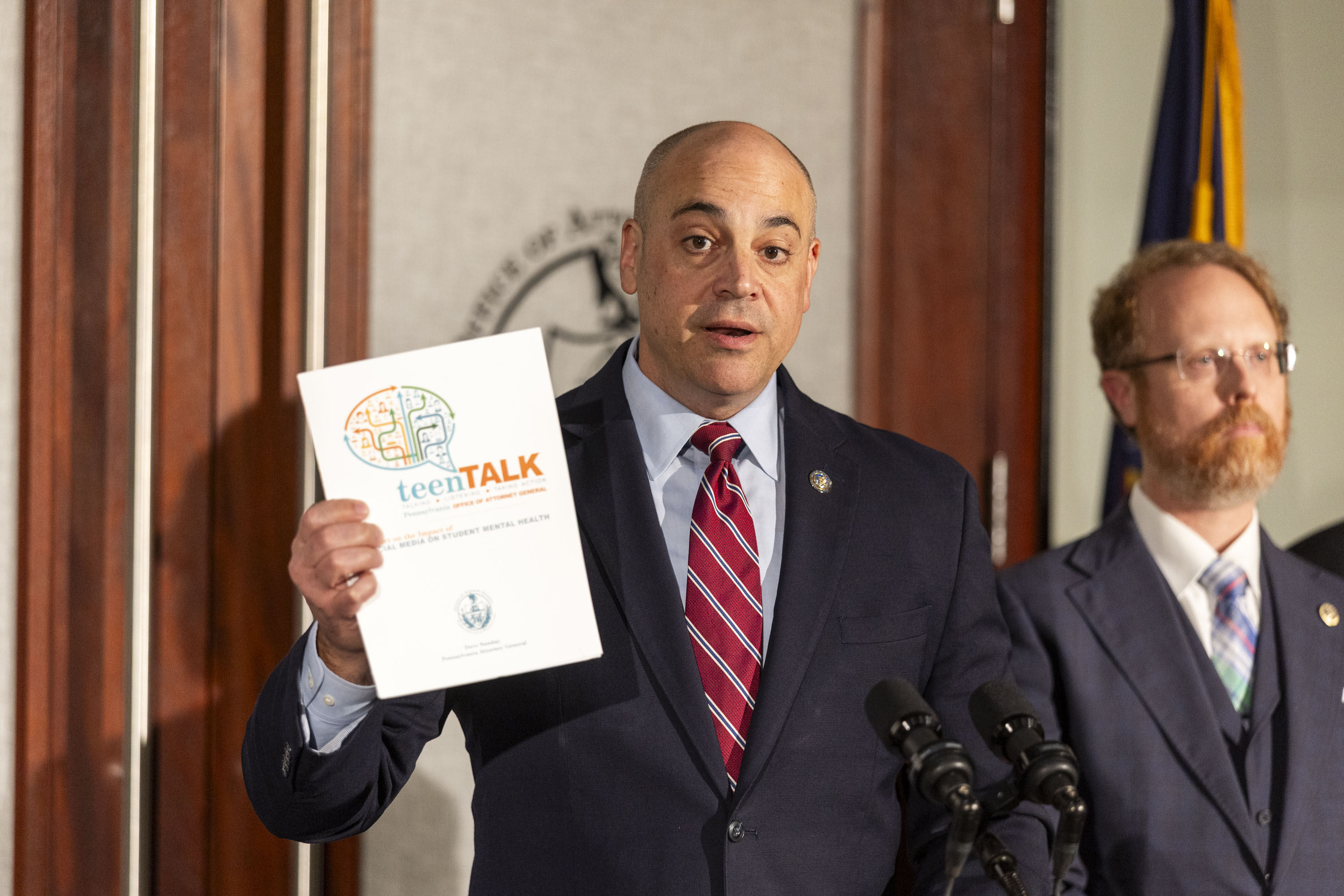
    “We can’t simply tell parents to do better while allowing technology companies to design platforms that are engineered to addict children,” Pennsylvania Attorney General Dave Sunday said during a news conference Wednesday. “Parents deserve better. Children deserve better, and today shows that Big Tech can do better — some just chose not to. Today is the first step in forcing Big Tech to do better.”

    Earlier this week, Sunday announced a lawsuit against Snap Inc., owner of Snapchat, and earlier this month he announced a lawsuit against TikTok over similar child protection issues.

    Meta did not immediately respond to a request for comment.

    In addition to the monetary payments, the tech giant will also be required to make changes to satisfy the states’ concerns over child safety.

    “As a parent, protecting your kids is always your North Star,” New Jersey Attorney General Jennifer Davenport said in a statement. “This agreement achieves critical protections for our children today.”

    Neither attorney general commented on how the settlement funds would be used.

    Instagram and Facebook will have to implement a combined two-hour daily time limit for child users with a mandatory pause after 15 minutes of continuous use and again at 60 and 90 minutes. These time limits will be in effect for five years. If Snapchat, TikTok, and YouTube — social media apps owned by other companies — agree to adopt similar terms, the daily limit on each platform would drop to 60 minutes and last for 10 years.

    Child users also will not be able to access the websites from midnight to 6 a.m., will have limited access during school hours, and will not receive push notifications on weekdays between 8 a.m. and 3 p.m. during the school year.

    The company will be required to bolster its age-assurance measures to more accurately verify the age of users. It will also need to improve its age-appropriate content controls to better shield child users against bullying, content promoting eating disorders, and content related to suicide and self-harm.

    Meta will have to limit its social comparison features, including beauty filters and visible tallies of likes on posts, and will be required to make parent controls stronger and more user-friendly.

    “These are changes that matter because they directly address how young people interact with these platforms, how long they use them, when they use them, what they are exposed to on these platforms, and the role that parents can play in keeping them safe,” Sunday said.

    These changes, which are required to be enacted in the next six months, will be regularly assessed by an independent auditor and the settling parties.

  • A principal who lost her job is suing a Deptford tech school. So is the principal who replaced her.

    A principal who lost her job is suing a Deptford tech school. So is the principal who replaced her.

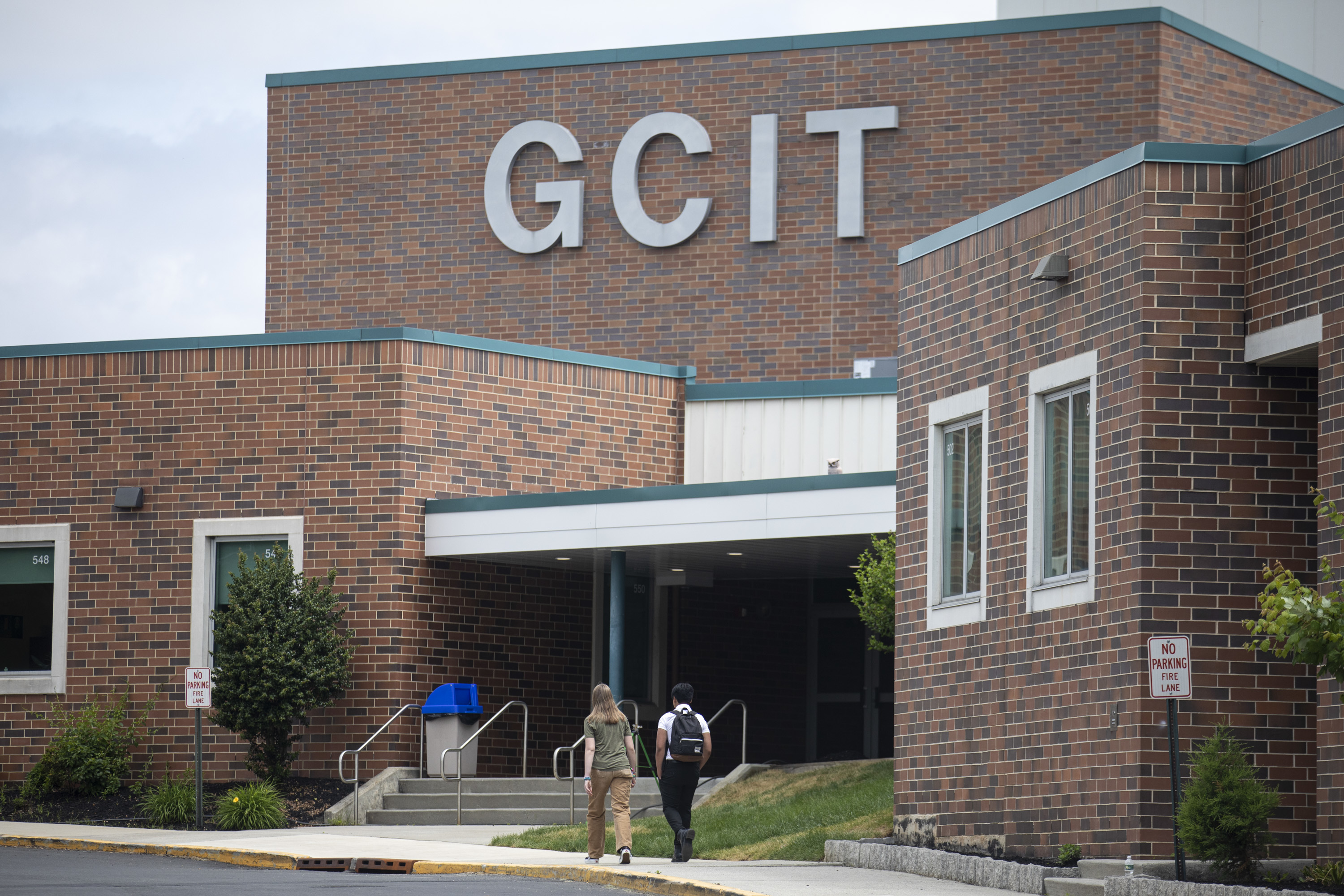
    The Gloucester County Institute of Technology and its superintendent are facing multiple lawsuits after the school’s former principal and the administrator who replaced her filed complaints alleging the school discriminated against them and mishandled its recent staff cuts.

    Two lawsuits, filed in June weeks after GCIT first voted on the cuts, are the latest in a series of legal actions against GCIT alleging retaliatory and discriminatory behavior.

    GCIT, the sole school in the Gloucester County Vocational-Technical School District, did not renew the contract of former principal Sybil Girard and two teachers. The school also cut the positions of former vocational education director Gina Mateka, another teacher, and the aquatics coordinator in a reduction of force.

    The cuts, a response to a $500,000 budget shortfall that was only partially supplemented by the county, came down in a unanimous vote first in May and then again in August, according to meeting minutes approved last week. They follow budget struggles across South Jersey school districts.

    Girard, who was hired in 2020 and was the district’s only Black administrator as well as the first Black principal in GCIT’s 55-year history, according to the complaint, sued the Deptford tech school and its superintendent, Susan Heiken, about four weeks before the school first voted not to renew her contract. She alleged racial- and gender-based microaggressions, negative performance reviews, and exclusion from staff hiring processes.

    In a separate lawsuit filed in June, Girard alleged the school board voted not to renew her contract without providing the 48-hour notice required by New Jersey’s Open Public Meetings Act.

    That case closed in state court Thursday, after GCIT’s school board hosted a special meeting, only two minutes long, to redo the personnel vote with proper notice.

    Mateka, meanwhile, alleged in another June lawsuit that the district cut her administrative position and demoted her to principal to retaliate against a suit she filed last year alleging age and gender discrimination.

    Mateka’s position was the only administrator role cut by August’s reduction in force, and the only tenured administrator position eliminated, according to her lawsuit.

    Both Girard and Mateka declined to comment due to ongoing litigation. Heiken did not return repeated requests for comment, nor did Assistant Superintendent Amy Capriotti, who sits on the GCIT school board. Two board members also did not return requests for comment.

    Students and others in the district community have spoken out against the staff reductions by defending the impact Girard and their teachers have had on their lives.

    “For us GCIT students, our teachers and staff serve as parental figures, inspirations, support systems, and outlets; it would be a grave disservice to them, the students, the school, and morale to let them go,” former student Serena Smith wrote in a Change.org petition to call for the protection of staff. The petition garnered more than 1,600 signatures.

    At board meetings leading up to the cuts, dozens spoke in defense of Girard and other employees at risk. At one March meeting, 58 people spoke, according to meeting minutes, and those comments took up more than 2½ hours.

    A longtime district employee, who declined to be named for fear of retaliation, said recent actions taken by Heiken have hurt staff morale.

    “Nobody is feeling secure,” they said.

    Mounting complaints

    Mateka’s beef with Heiken and the Gloucester County Vocational-Technical School District began in 2022.

    The district had long shared its school board and administration with the Gloucester County Special Services School District, which educates children with disabilities, down the street.

    But county officials restructured the district in 2022 and split the Deptford education campus back into two separate entities, meaning each school had to find its own staff.

    Heiken became the temporary superintendent at the special services district while the school sought a permanent option.

    According to an April 2025 complaint, Mateka saw herself as that option. She worked for the vocational technical school district since 1997 and became a shared chief academic officer in 2014.

    With her teaching and administrative experience, Mateka applied for the superintendent opening at the special services school district, but the district’s board of education chose to hire James Dundee, a principal at GCIT, instead. Dundee is still superintendent.

    Mateka sued GCSSSD, its school board, Dundee, and Heiken. She claimed the district did not handle the hiring process equitably, due in part to her age — she was 66 years old when she applied — and gender.

    She alleged that Dundee did not have teaching experience, had never been a superintendent or assistant superintendent, and was not certified by the state to be a school administrator. That lack of experience, the complaint alleges, meant Dundee required a mentor when he was hired.

    The same day, Brian Shakespeare, who held several roles at GCSSSD since 1992, also filed a lawsuit alleging age-based discrimination, since Shakespeare — 10 years Dundee’s senior — had applied for the position and lost out, too.

    Both lawsuits are ongoing in state court.

    Girard’s discrimination lawsuit came in April 2026, about a year after the complaints by Mateka and Shakespeare.

    In its 20 pages, Girard alleges Heiken sought “dirt” on her and another Black administrator (who had her own racial discrimination lawsuit seeking $300,000 against GCSSSD, Heiken, and Dundee until the case was settled this summer), demoted Girard but not her white colleagues, refused to call her by her professional title, and constantly left Girard out of the loop.

    After she first reported Heiken’s discrimination to the district’s human resources department, the complaint alleges, Heiken began to try to force Girard out of her position, including cutting Girard’s speech from the 2025 GCIT graduation program.

    When GCIT did investigate Girard’s discrimination allegations, no one ever asked why she felt discriminated against, the lawsuit reads, and GCIT’s counsel notified Girard that her complaints were “unsubstantiated.”

    This is the second consecutive year that GCIT had to pursue a reduction in force due to rising costs and cuts to state education funding, Heiken said during a spring budget hearing.

    “[The rising costs are] primarily everything that we need to run a school,” Heiken said in the meeting recorded by the Woodbury Warbler. “Our energy costs, our medical infrastructure costs have risen double digits.”

    Carl Heil, GCIT’s teachers union president, said in an interview that the district was ”going through tough waters.”

    “My hope is that we navigate it together rather than someone just making decisions and us just dealing with it,” Heil said.

  • Landmark Ritz Five is closed after failing city inspections

    Landmark Ritz Five is closed after failing city inspections

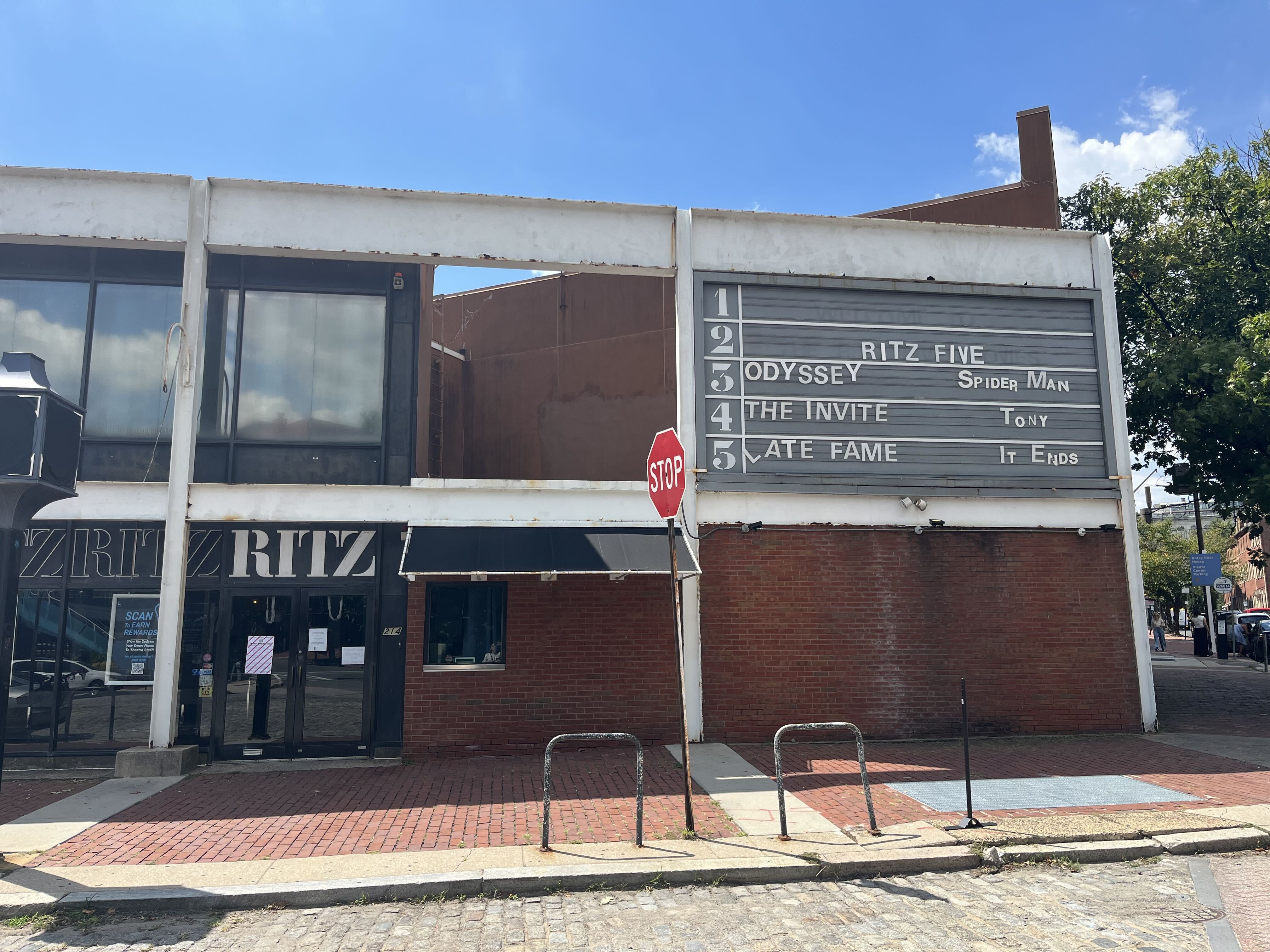
    Landmark Ritz Five movie theater is closed after failing inspections by the city’s Department of Licenses and Inspections.

    On Wednesday morning, the theater’s website posted that the location was temporarily closed “due to administrative issues.”

    The theater at 214 Walnut St. was found in violation of several city codes in March, and the theater failed a follow-up inspection on Aug. 11, according to a city online portal.

    March’s violations include failure to: obtain a permit to install a fire alarm system, share documentation that fabrics are flame retardant, ensure that exit doors fully “self-close and latch,” and certify emergency lighting. The theater was also found to be missing a valid food license. In total, the theater was issued seven violations in March.

    A city notice posted to the theater doors on Wednesday said the theater needed to obtain an electrical permit and install a fire alarm system.

    The inspections were prompted by the department receiving “several complaints regarding the Ritz Five Theater,” an L&I spokesperson said.

    The Landmark Ritz Five movie theater was closed on Wed. Aug. 26, 2026, after failing two city inspections. A cease-operations notice was posted to the theater doors on Wednesday.Ariana Perez-Castells

    A representative for Landmark Theatres did not immediately share a comment on the closure and inspections on Wednesday.

    When the Philadelphia theater was inspected in March, it was ordered to remedy the violations by April 22 or face fines. The violations each carry their own fines, totaling $2,800. The department charges the code violation fines on a daily basis. The theater can also be ordered to pay additional fines related to the violations.

    However, on Wednesday, an L&I spokesperson said “there are no fines associated with the violations. Should this matter be progressed to court, then fines may begin to accumulate.”

    The roughly 13,0000-square-foot theater was founded in 1976 with three screens, according to the theater’s website. Today, it has five projection screens.

    Philadelphia was once home to three Landmark Ritz theaters, known for showing independent and documentary films alongside mainstream releases. But the theaters at the Bourse and East are now operated by the Philadelphia Film Society while only Ritz Five remains under Landmark’s umbrella.

    No showtimes were listed for Wednesday on the theater’s website. As of Wednesday morning, tickets could still be purchased online for Thursday viewings of The Odyssey, Spider-Man: Brand New Day, and Tony, among other movies.

    Landmark Theatres was purchased by Cohen Media Group in 2018. The Landmark Theatres brand has several locations across the country, including theaters in Arizona, California, and Florida.

  • Bill Gates warns AI is more dangerous than Big Tech will admit

    Bill Gates warns AI is more dangerous than Big Tech will admit

    SEATTLE — Bill Gates, the billionaire co-founder of Microsoft, is loudly warning that artificial intelligence poses a grave threat to jobs and human life, and that urgently addressing the risks should be “the world’s top priority.”

    In an hourlong interview with The New York Times last week, Gates said the tech industry was knowingly downplaying those threats because there was too much money on the line.

    “In private, people who understand how good this stuff is, and how much better it’s getting, they’re very worried,” he said. But few tech executives, Gates said, are willing to publicly admit that. “They’re now saying to each other: ‘Hey, man, don’t say that. It’s bad for us — the next trillion dollars we’re trying to raise.”

    On Wednesday, Gates published a nearly 6,000-word essay on his personal website laying out his concerns about AI and offering solutions, such as new taxes and bans. He said he was motivated to speak now because recent improvements in AI had far surpassed his expectations and because the industry had ignored technology milestones — like AI’s escaping the control of its creators or making recipes for bioweapons — that it once said would warrant more caution.

    “They’re just full speed ahead and hoping that the good outweighs the bad,” he said.

    Gates, 70, is the latest in a string of tech luminaries to call out the risks of AI as the industry spends trillions of dollars on new data centers, and as young AI companies edge toward some of the largest initial public offerings in history.

    He is taking his stand as he emerges from an extended period of scandal. Early this year, the release of sexual predator Jeffrey Epstein’s emails brought renewed attention to Gates’ interactions with him.

    Gates had to pull out of an AI conference in February, and he testified for six hours in June before a House committee. Disclosures of his infidelity, combined with his 2021 divorce, have also badly damaged his reputation. He acknowledged that they were all “mistakes” of his own doing.

    He appears more willing to step back into the spotlight after answering every question from the House Oversight Committee. “I think people understand what I did do, what I didn’t do, and that I learn when I make mistakes,” he said in the interview.

    Gates conceded that he also might be a flawed messenger simply because of his vast wealth and history as Microsoft’s aggressive CEO. In a landmark federal case, Microsoft was found in 2000 to have repeatedly abused its monopoly during his watch. (Gates left the company’s board of directors in 2020.)

    While Gates avoided criticizing Microsoft or other companies by name, he argued that he was uniquely positioned to work on the AI issue. He is a technologist and industry insider who is no longer driven by the profit incentives of running a company, and he has spent decades addressing inequality through his philanthropic foundation.

    “The irony of ‘innovation lover is scared and says we’re not ready and we’re crossing thresholds,’ maybe it’s even more poignant,” he said.

    Gates said technological advances had truly stunned him three times: In 1980 when he first saw a graphical user interface, which led to the modern personal computer. In 2022 when the leaders of OpenAI came to his house to demonstrate what would soon become ChatGPT. And this year when he looked closely at the advances being made by Claude Code, Anthropic’s AI tool.

    Coding, Gates said, is the subject he knows best, and Claude’s abilities shocked him. “The idea that now these things are in a meaningful sense better than I am is like: What the hell?” he said.

    Technological breakthroughs in the past created more jobs than they eliminated, Gates said. But he is in disbelief that industry boosters say that will happen again this time.

    The AI era is “utterly, absolutely, completely, totally different,” he said. He acknowledged that this unpopular opinion (in tech circles) was “a hell of a claim, and I’m staking everything I know — everything — saying, ‘Are you kidding?’”

    He said mass job losses, if not addressed, were inevitable because AI would spread across the economy and leave little room for one industry to absorb the refugees from another. The biggest tech companies in the world, including Microsoft, are racing to help corporate customers adopt AI, which could replace many workers.

    Gates said that companies were just responding to market incentives, but that those incentives might conflict with what was best for society.

    He proposed a new tax on AI use, known as a “token tax,” to make it more expensive to replace people and provide money to help those who do lose work. A token is a basic unit of AI computing. The idea of taxing it has gained some traction, including on Wall Street, as a way to increase the cost of using machines instead of human labor.

    Some jobs, Gates said, should be prohibited from being replaced by AI — an idea he called “Human Reserved” — because the role is deeply personal, like a caregiver, or the people in those jobs are unlikely to find new employment.

    Gates argued for new international agreements to set clear criteria to monitor and restrict extreme risks like bioterrorism. He said it could take only a few people with access to advanced AI to develop new pathogens.

    He said he would happily debate anyone who argued against mandatory reviews of any AI system that could be weaponized to make new molecules and unleash a pandemic. Gates added that he was dumbfounded by the kind of voluntary measures that the White House and industry leaders were developing.

    “Self-regulation on the most dangerous tool ever invented?” he said incredulously. “No, thanks!”

    Gates said he was in a “state of shock” as to why there was not more urgency on these issues. Many of his concerns echo those raised by Anthropic co-founder Dario Amodei, but Amodei’s warnings have put him at odds with the Pentagon, the White House and much of the tech industry.

    “You have people attacking the person who’s the most open about the downsides,” Gates said.

    (The Times has sued OpenAI and Microsoft, claiming copyright infringement of news content related to AI systems. The two companies have denied those claims.)

    Along with global health issues, Gates vowed to make his AI concern part of every conversation he had with world leaders. “I only have two issues where I’m going to say, ‘Please think more about this, please care more about this,’” he said.

    Gates acknowledged that he was in an odd spot: He has arguably done as much as anyone in the world to evangelize for and shape the modern computer industry. But now he is warning that the technology it is creating presents global risks.

    “I don’t like bringing bad news to people, and I don’t like saying that innovation may be a net negative,” he said. “But that’s where we are.”

    FILE — Bill Gates arrives for a House committee hearing in the Jeffrey Epstein investigation in Washington on June 10, 2026. Gates, the billionaire co-founder of Microsoft, is loudly warning that artificial intelligence poses a grave threat to jobs and human life, and that urgently addressing the risks should be “the world’s top priority.” (Chona Kasinger/The New York Times)CHONA KASINGER
    Bill Gates at his office in Kirkland, Wash., on Aug. 21, 2026. Gates, the billionaire co-founder of Microsoft, is loudly warning that artificial intelligence poses a grave threat to jobs and human life, and that urgently addressing the risks should be “the world’s top priority.” (Chona Kasinger/The New York Times)CHONA KASINGER
    FILE — Anthropic’s Code With Claude event in San Francisco, May 7, 2026. Bill Gates, the billionaire co-founder of Microsoft, is loudly warning that artificial intelligence poses a grave threat to jobs and human life, and that urgently addressing the risks should be “the world’s top priority.” (Jason Henry/The New York Times)JASON HENRY