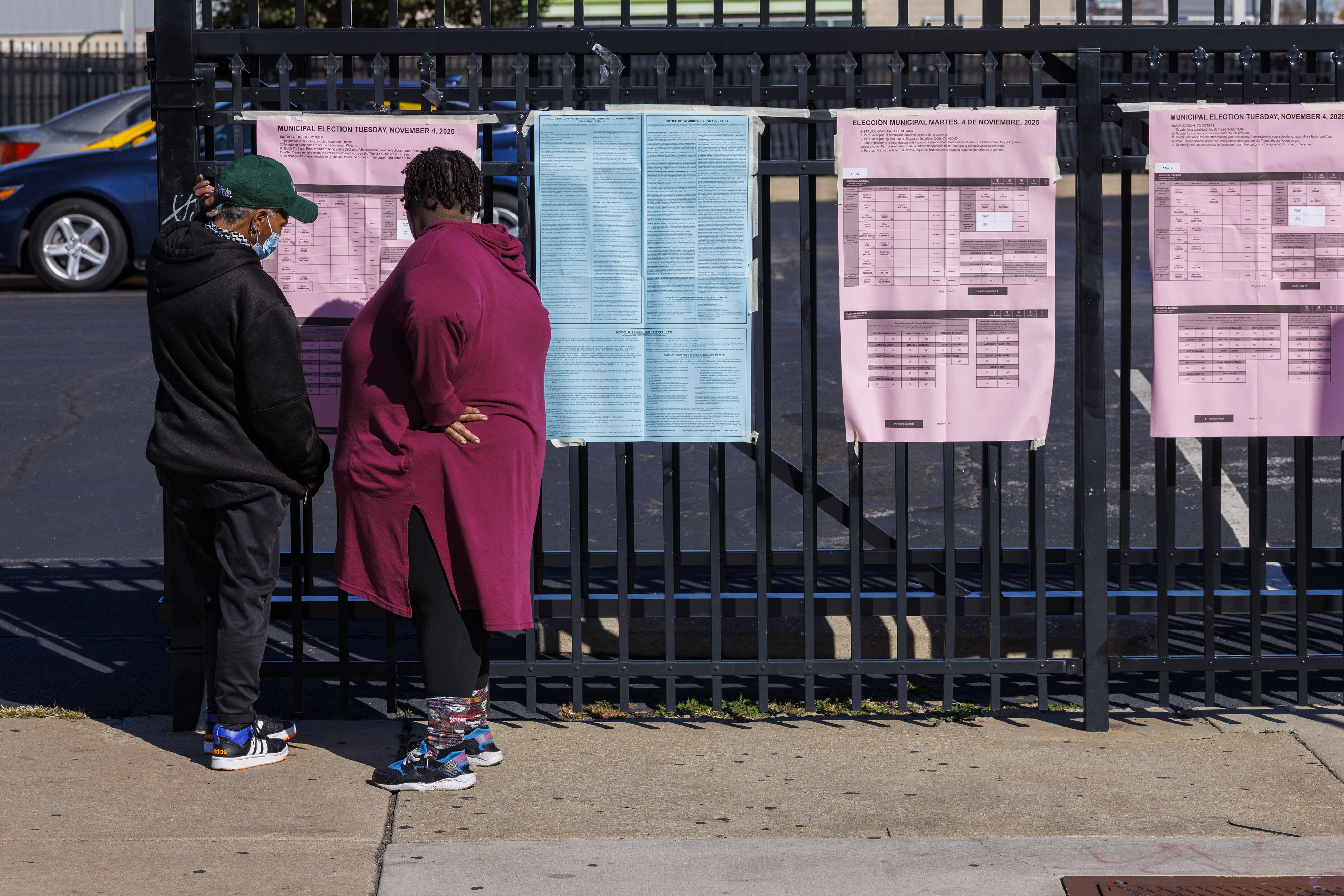
The U.S. Justice Department plans to send monitors to polling stations in Philadelphia and three other Pennsylvania counties for Election Day, according to a letter obtained by The Inquirer.
The Oct. 22 letter addressed to Pennsylvania Secretary of State Al Schmidt says the Justice Department intends to send monitors to Philadelphia, Allegheny, Luzerne, and Lehigh Counties for the Nov. 3 general election. It does not say what led to the decision to deploy monitors, or how the counties were selected.
The monitors will follow all state and local rules, wrote James Catania, the Justice Department attorney assigned to supervise the monitors in the region. They will ensure compliance with federal voting laws, including the Voting Rights Act, National Voter Registration Act, and Americans with Disabilities Act.
“Our monitors only observe and take notes,” the letter said. “They do not intrude or interfere in any way in the voting process.”
The monitors will not be allowed to wear uniforms or pins that identify them as Justice Department staff, the letter said.
Federal monitors are not entitled to greater access to polling places than members of the general public, a Pennsylvania Department of State spokesperson said in a statement.
“The Pennsylvania Department of State expects everyone working in, voting in, and observing polling places to follow all applicable state and federal laws,” the statement said.
Joe Grace, Mayor Cherelle L. Parker’s spokesperson, said in a statement that Philadelphia has a strong reputation for conducting free and fair elections, and this cycle would be no different.
“Every registered voter will have every opportunity to fully exercise their constitutional right to vote,” Grace said.
Vic Walczak, ACLU-Pennsylvania’s legal director, said he didn’t see cause for alarm by the plan to send monitors to Philadelphia and the three other Pennsylvania counties. The Biden administration sent monitors to the same counties in previous elections, he said. And if any monitor breaks the rules, Walczak said, he expected the county would take steps to eject them.
“We are not expecting that to happen,” Walczak said. “Historically it hasn’t happened.”
Federal monitors will be in all 50 states on Election Day, but the Justice Department would not share the full list of localities ahead of time, a department spokesperson said in a statement. It was not clear where in New Jersey they would be.
“All monitors must meet the same legal and ethical requirements, including that they not interfere with the voting process,” the statement said.
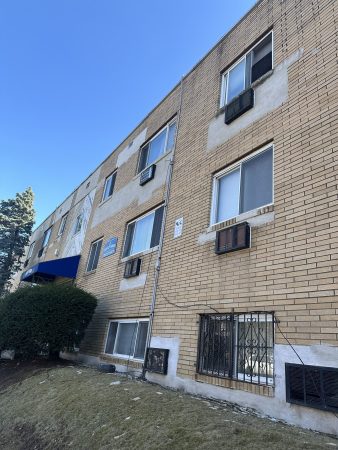
Renters in West Oak Lane who filed a class-action lawsuit against one of Philadelphia’s largest landlords over unsafe conditions will get rent forgiveness and refunds under an agreement approved by a Philadelphia judge Monday.
In November 2024, L&I had declared the 71-unit apartment building unsafe, citing loose and missing bricks on exterior walls and a leaning parapet. The department said property conditions presented an “immediate danger or hazard to health, safety, and welfare.”
Soon after tenants sued, Odin Properties made necessary safety repairs at the building. But Philadelphia law prohibits landlords from collecting rent if they have a serious violation from L&I that has been outstanding for at least 30 days from when they received notice.
Under an agreement reached with tenants earlier this year, Odin Properties and affiliated companies agreed to forgive a total of about $67,000 in unpaid rent and associated late fees, and to refund a total of $75,000 for 68 renters. Tenants are entitled to rent relief and refunds for the time period of Dec. 14, 2024, through April 28, 2025.
Common Pleas Court Judge James C. Crumlish III gave final approval for the agreement at a hearing Monday, clearing the way for renters to receive payments.
The agreement provides for the largest known per-tenant award in a class-action lawsuit under Philadelphia’s rental license and certificate law, according to the Philadelphia-based nonprofit Public Interest Law Center and the Philadelphia-based Hausfeld law firm, which sued on behalf of tenants.
Madison Gray, the staff attorney at the Public Interest Law Center who represented renters at Monday’s hearing, said she anticipates an increase in similar cases once legislation by City Councilmember Nicolas O’Rourke takes effect Nov. 1.
“It’s great timing for us to get this historic settlement right before [the] Safe Healthy Homes [Act] goes into effect, which will make it easier for tenants to get rent refunds under the law,” Gray said.
She encouraged any renter with concerns about their home to contact L&I and request an inspection.
“That was the start of tenants getting this settlement here,” she said.
Odin Properties, which owns and manages roughly 2,000 housing units in Philadelphia through its affiliates, is no longer connected to the Bentley Manor apartment building. Fernrock Apartments 2 LP, an affiliate that owned Bentley Manor during the time period covered by the settlement, sold the building for more than $6.2 million in December, according to city records.
In a statement, Philip Balderston, president of Odin Properties, said the company is proud that it doesn’t have any open violations, “especially given the age of many of our buildings.”
“Our residents are incredibly important to us, and we will continue our work of delivering and preserving high-quality affordable homes,” Balderston said.
Daniel Lewis is the Dibner senior curator for the history of science and technology at the Huntington Library and a teaching professor at the California Institute of Technology. He chairs the history committee of the American Ornithological Society.
Shuttering the oldest natural history museum in the Americas after nearly two centuries was a grave error. But it is not too late to correct it. Mayor Cherelle L. Parker and City Council must use every tool available to reverse the closure of the Academy of Natural Sciences museum and see its doors reopened to the public.
I write as a historian of science and a working curator. I have spent my career inside collections like the ones at the Academy. I know what they’re worth, and I know what it costs when an institution stops treating them as a public trust.
Let me be plain about what is lost when a natural history museum closes, because Drexel’s announcement treated the museum as separable from the Academy’s scientific mission. It is not.
The Academy’s more than 19 million specimens are the physical record of life on this continent and far beyond it. They include the Hadrosaurus foulkii described by Joseph Leidy, the first dinosaur skeleton ever mounted for public view, the plants gathered on the Lewis and Clark expedition, John Gould’s Australian birds, and the work of John Cassin and generations of curators who built American natural history in those rooms. They include specimens of species that no longer exist anywhere else.
Such collections cannot be replaced, purchased, or regenerated. They can only be kept, or squandered.
The museum is how that record reaches the public, and the public is why the record survives. A collection with no public face becomes invisible, and what is invisible becomes expendable. Its budget lines are the first cut, its staff the first let go, its holdings the first “consolidated” elsewhere. I have watched this pattern at institution after institution. Closure rarely ends at the exhibition hall; it is usually the first step toward dispersal.
Museums are where scientists are made, perhaps more than at any other place.
A child standing beneath a dinosaur or in front of one of the Academy’s extraordinary habitat dioramas, themselves irreplaceable historical artifacts, is often encountering the natural world seriously for the first time. Countless naturalists, curators, and field biologists trace their careers to exactly that moment.
Philadelphia’s schools, families, and teachers lost that opportunity on Sep. 27. So did the 27 staff members whose positions the closure eliminated, and with them, decades of expertise in education and public interpretation that will not easily be rebuilt.
The reasons offered for the closure do not withstand scrutiny.
Visitors leave the Academy of Natural Sciences of Drexel University on Sept. 27 at closing time at 5 p.m. on the last day the museum is open to the public.Tom Gralish / Staff Photographer
Drexel and Academy leadership cite declining attendance since the pandemic. Yet, in October 2025, the museum’s hours were cut from five days a week to three. An institution cannot lock its doors for most of the week and then point to falling attendance as proof that the public has lost interest. That is a self-fulfilling prophecy.
The public’s actual verdict came in September: Roughly 41,000 visitors over the final three weekends, including some 14,000 in a single weekend. Those are not the numbers of an institution nobody is interested in.
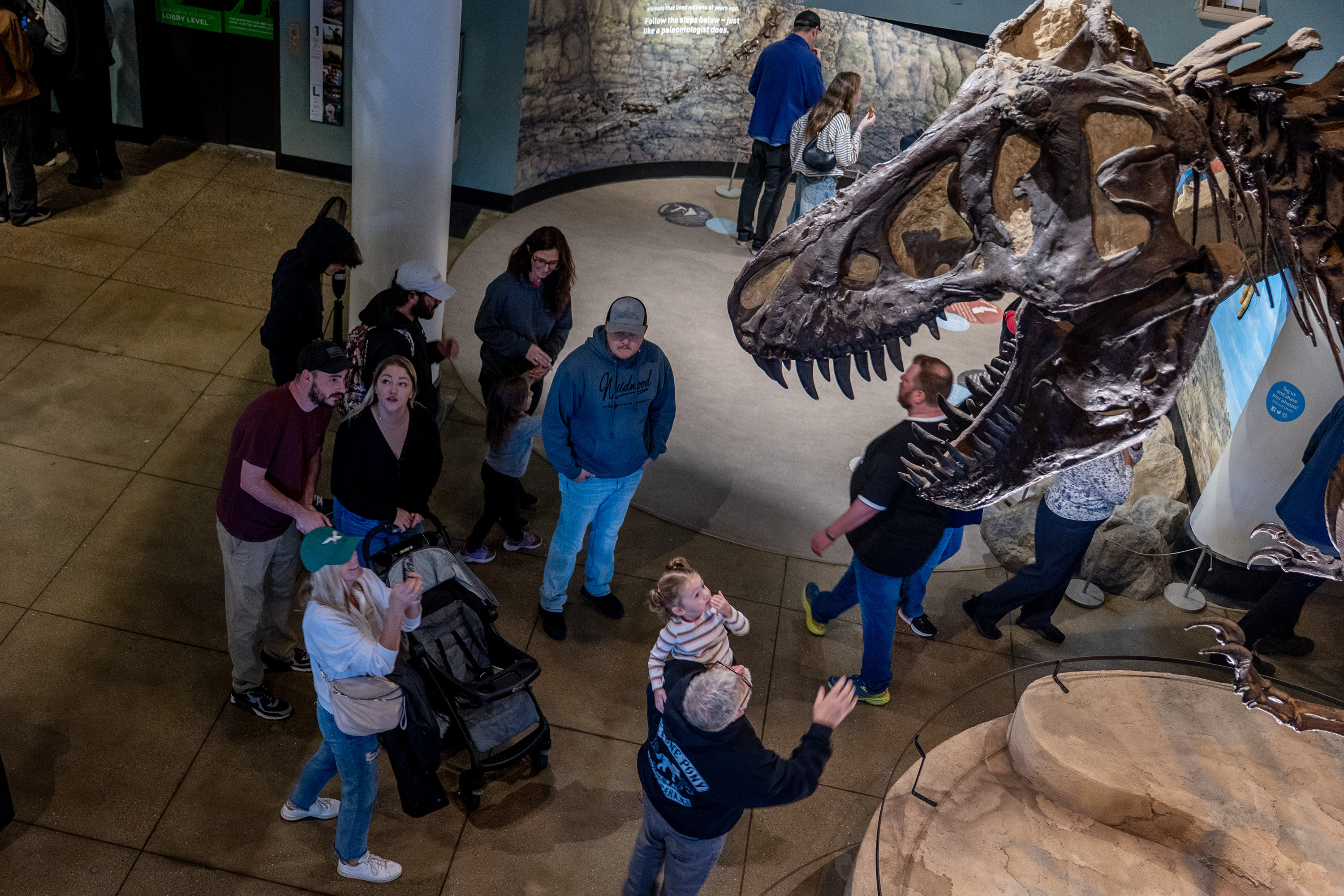
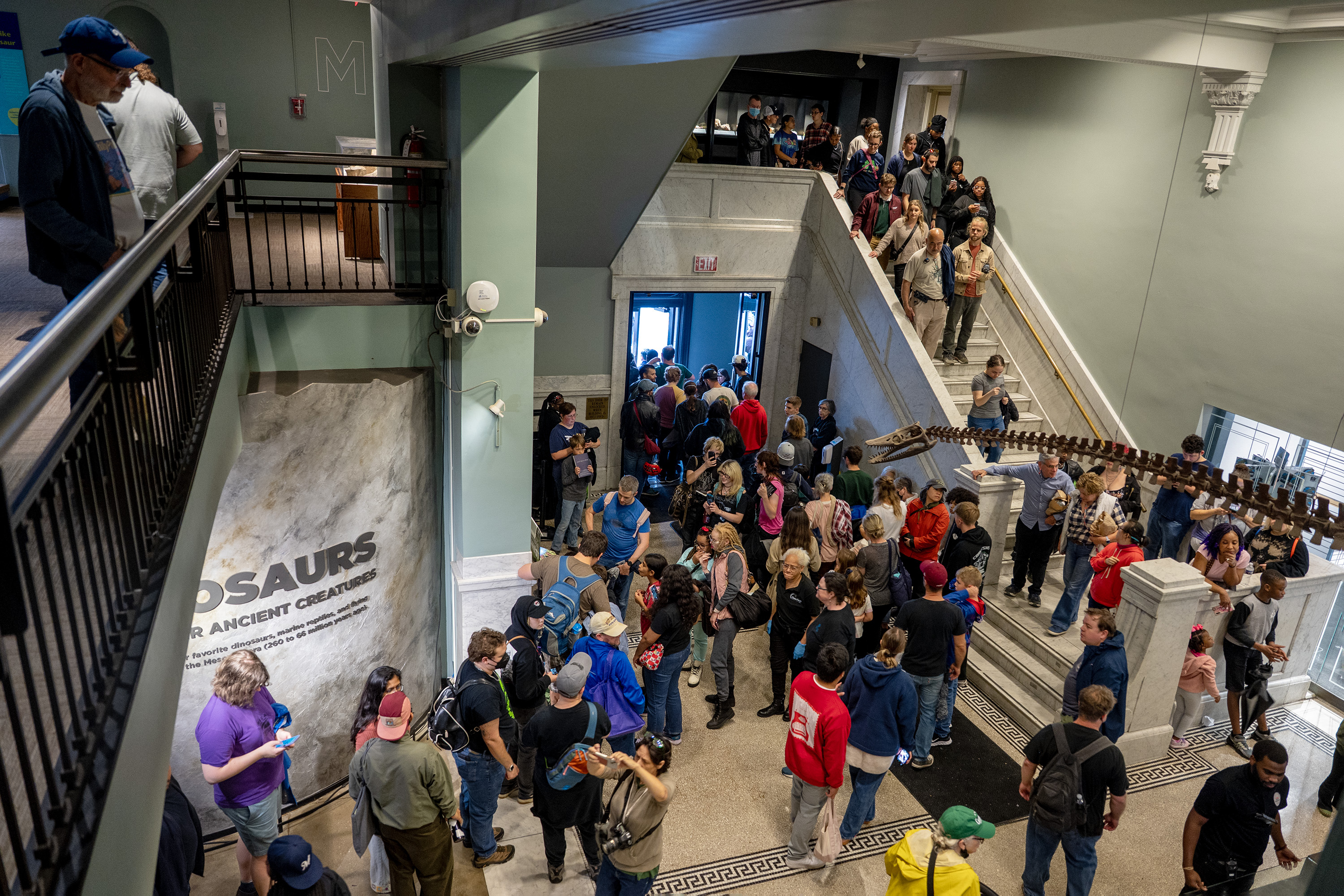
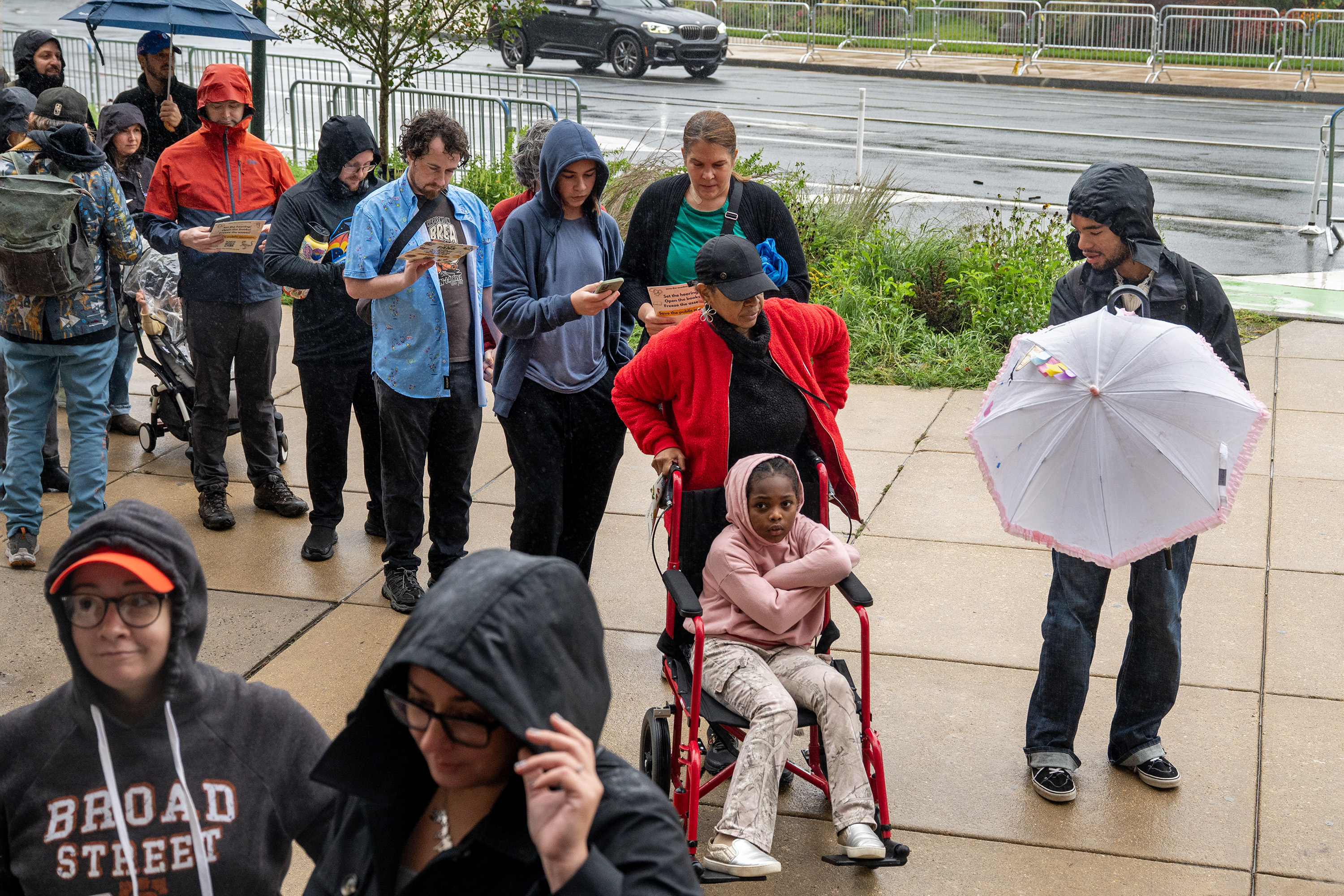
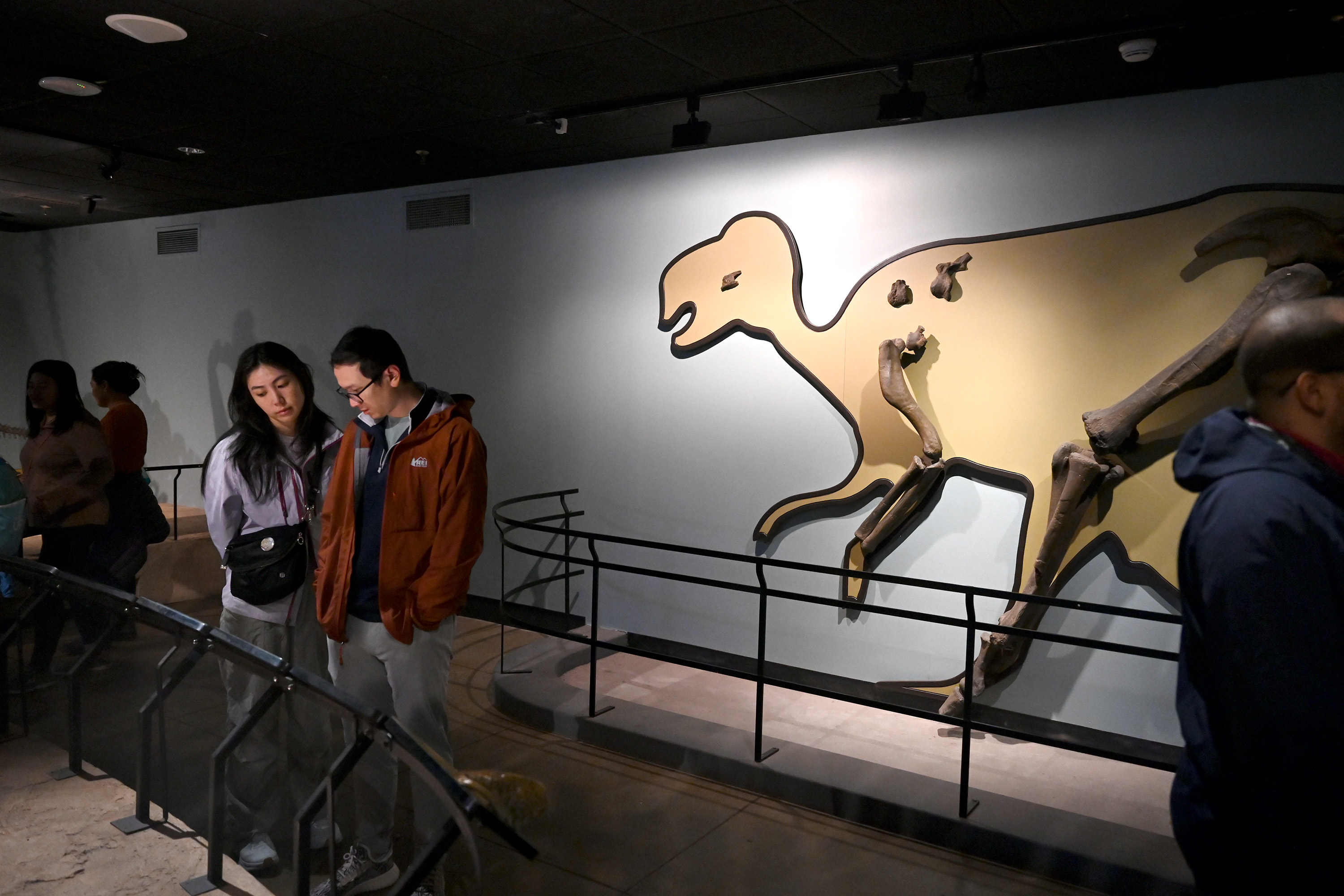
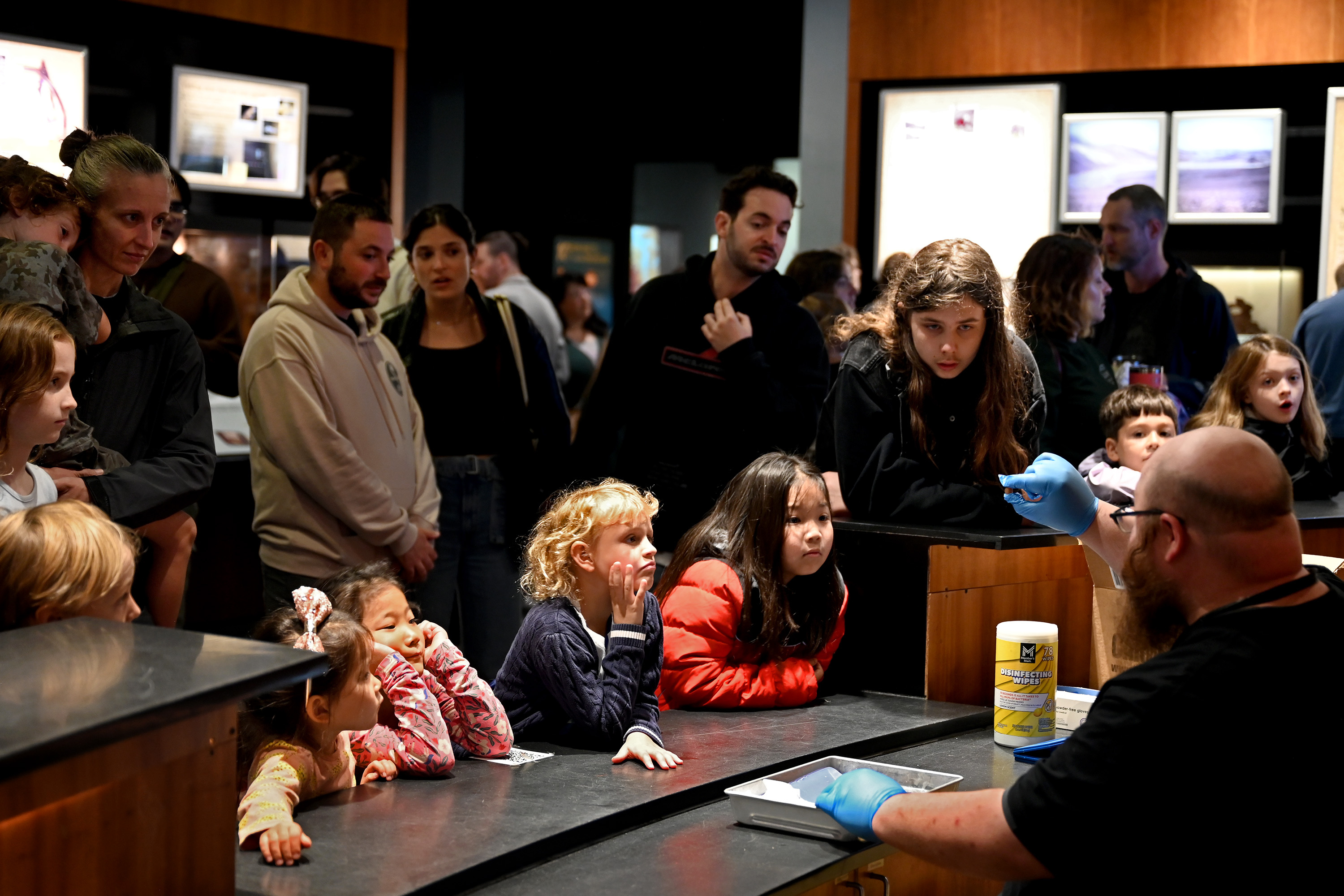
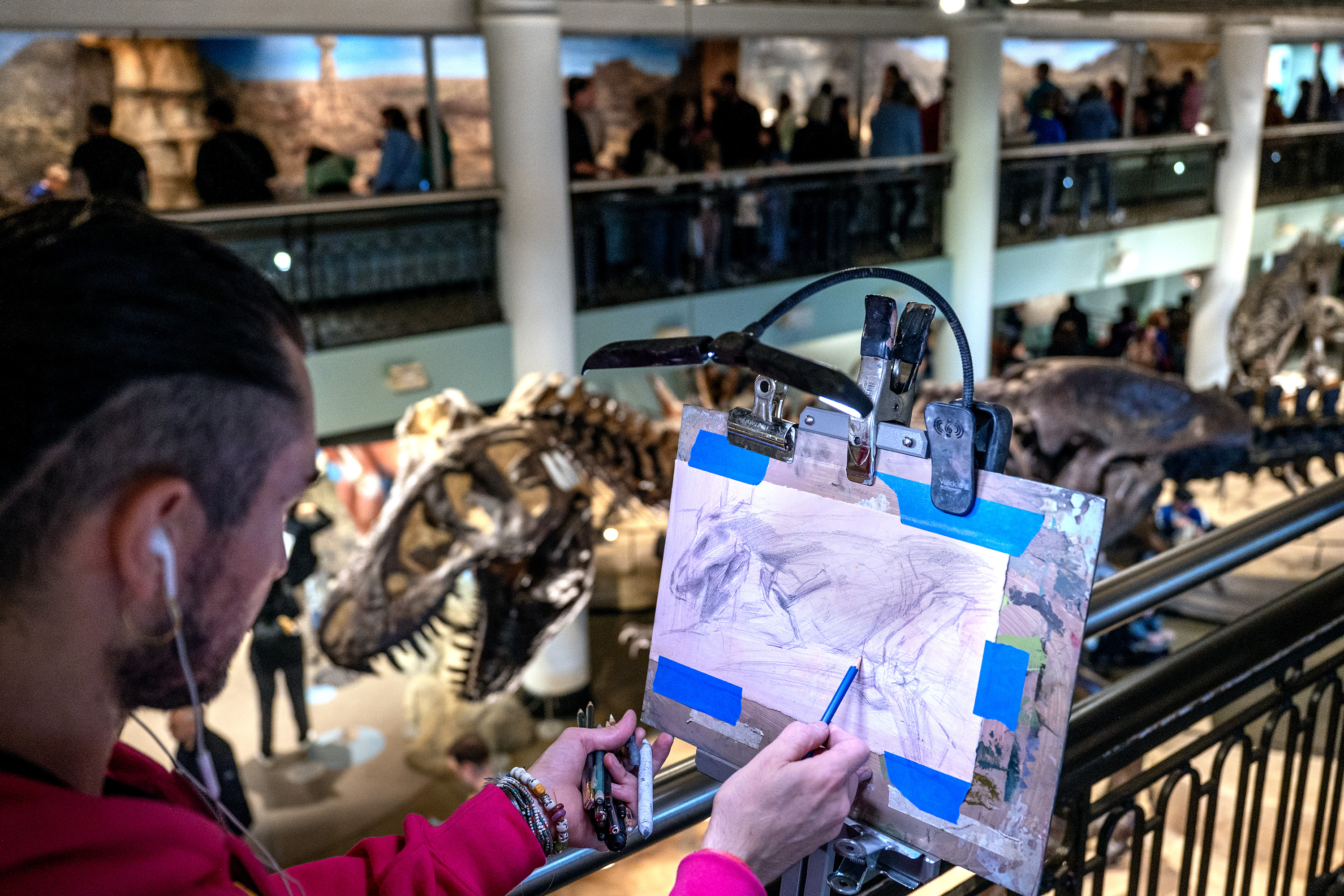
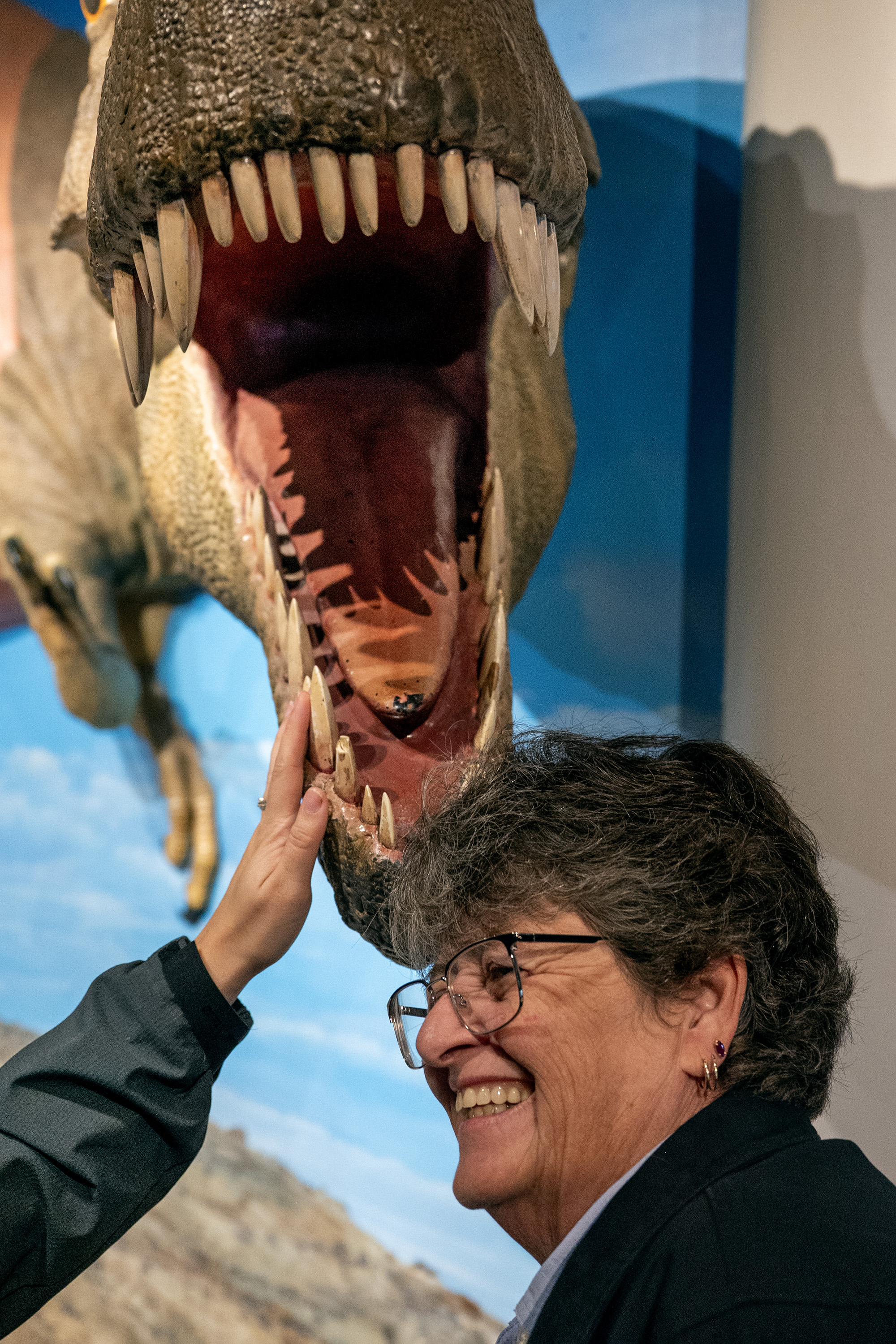
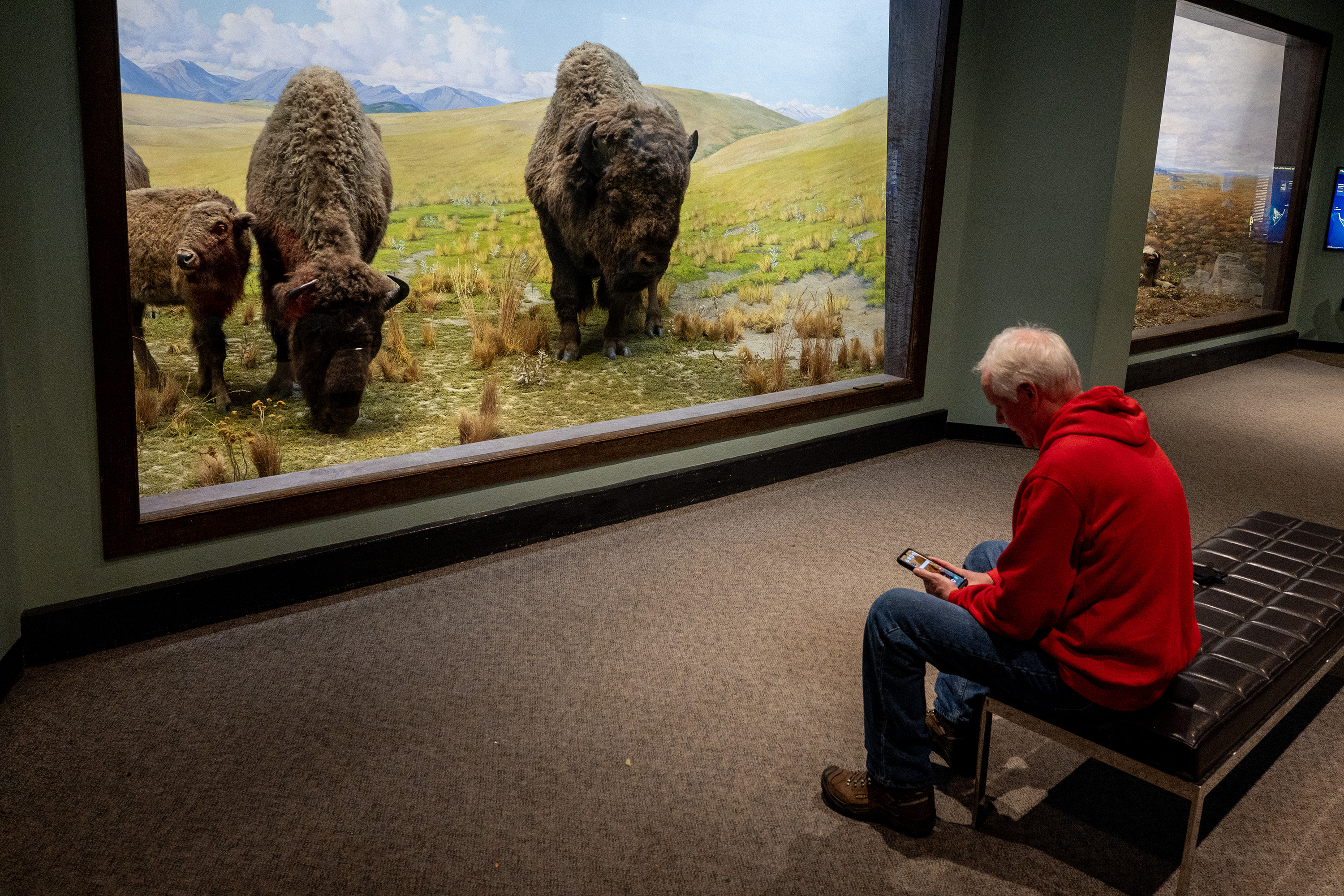
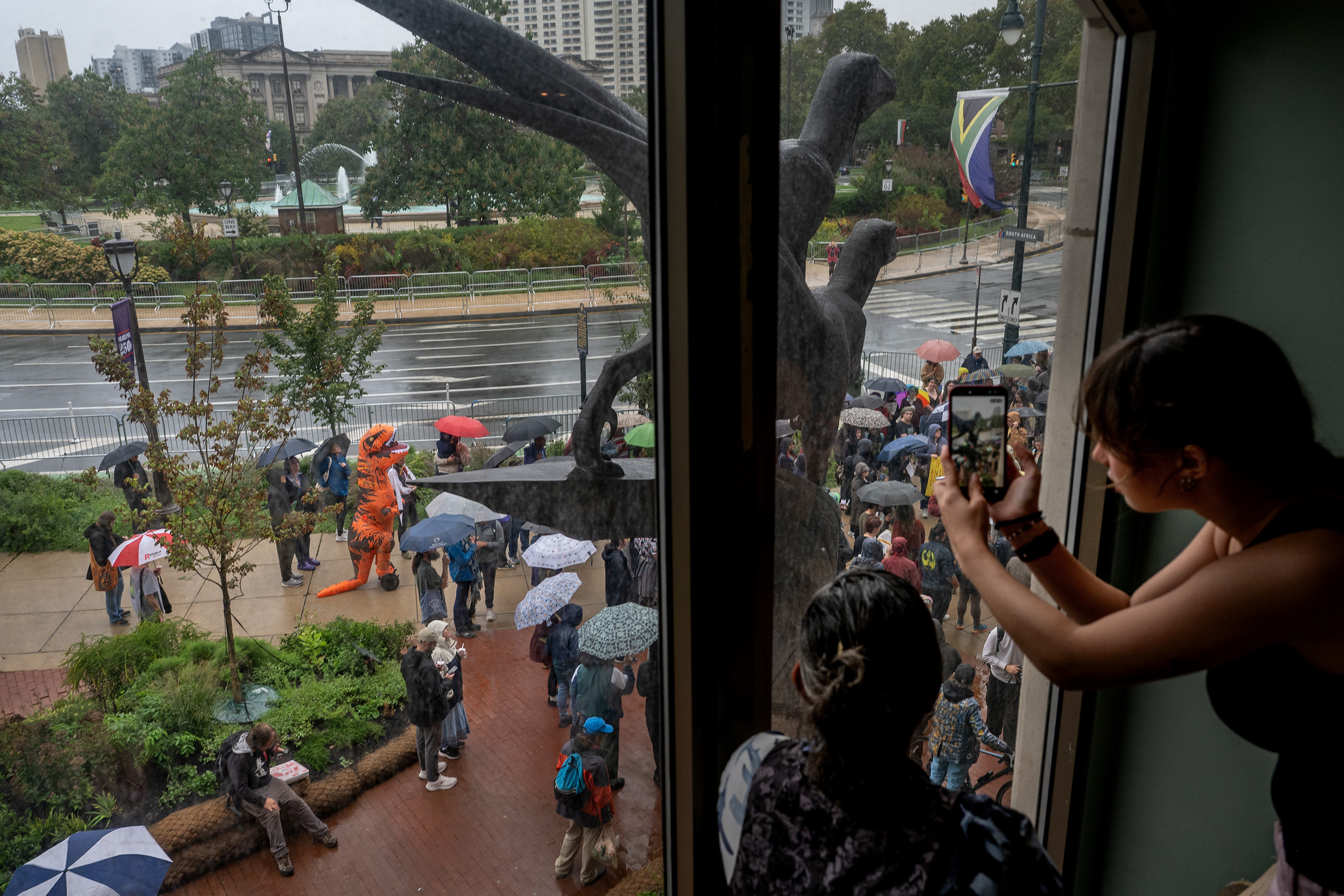
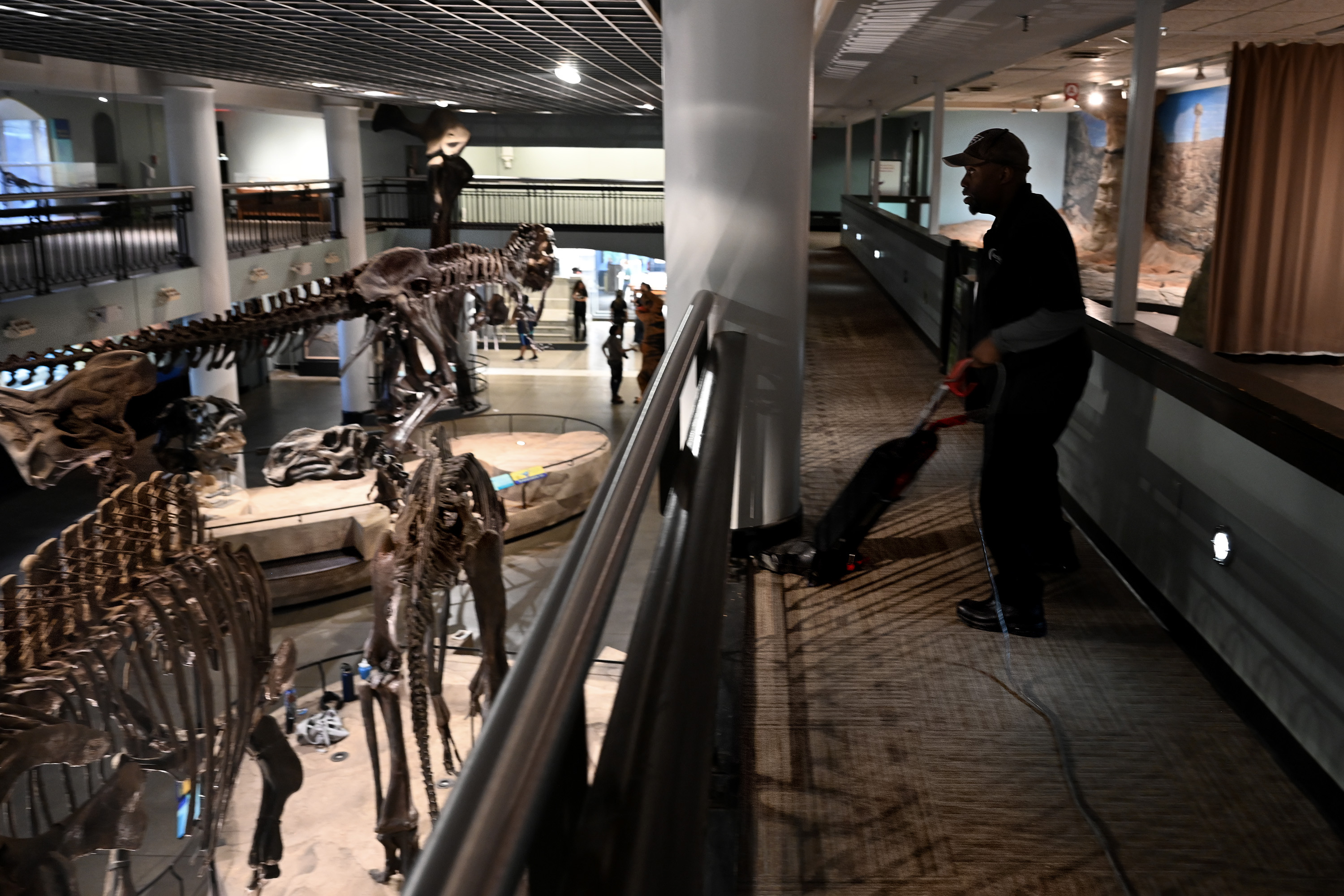
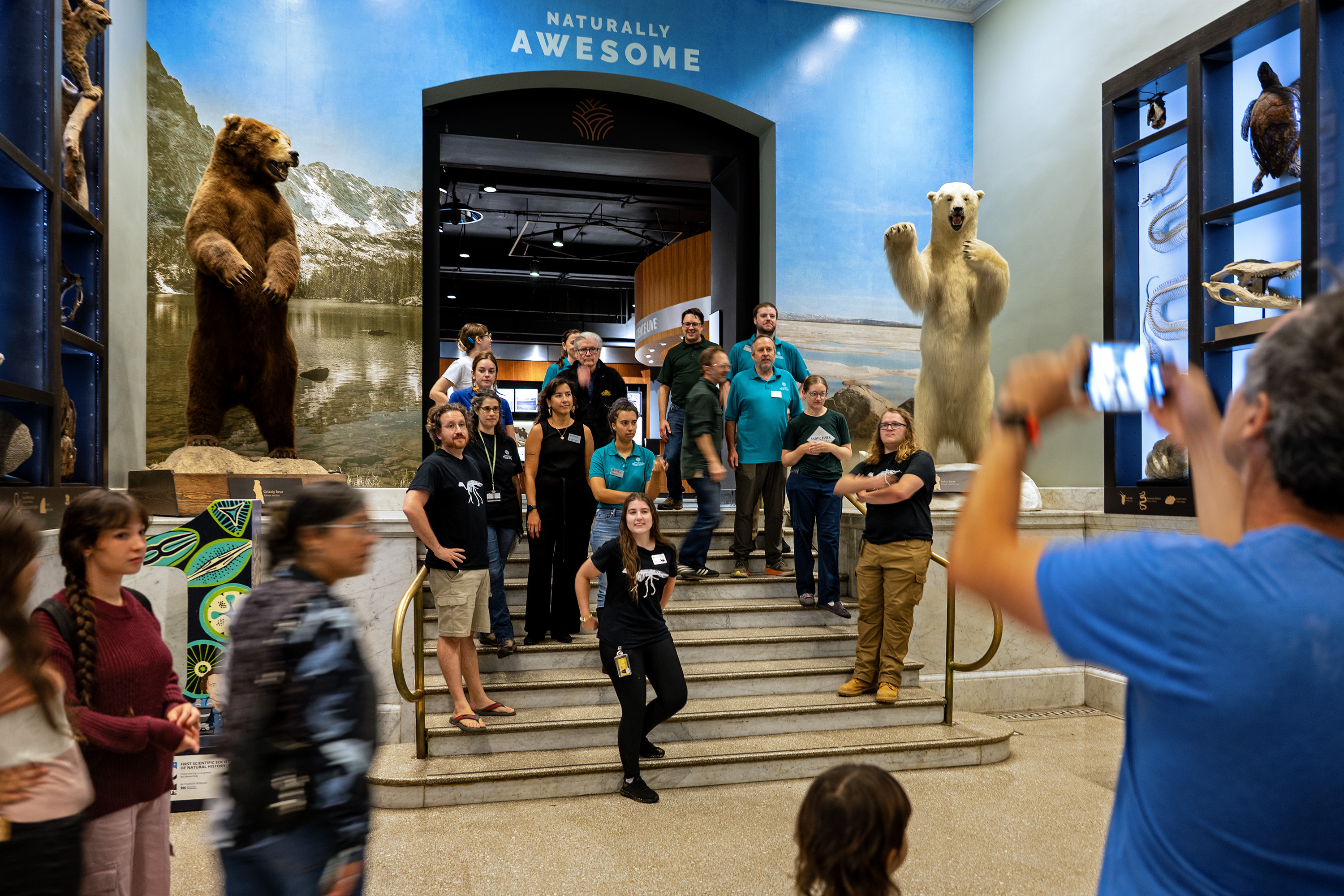
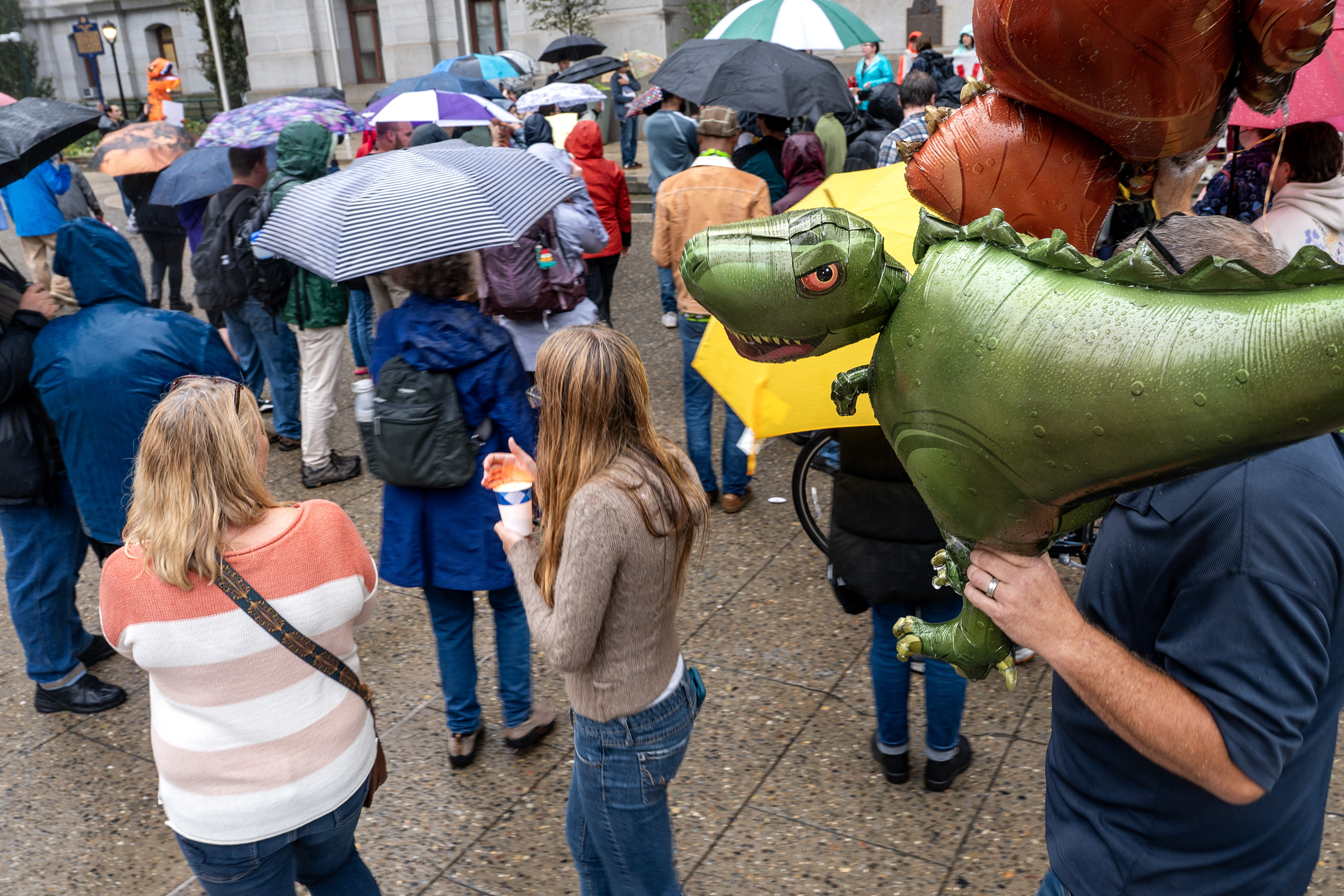
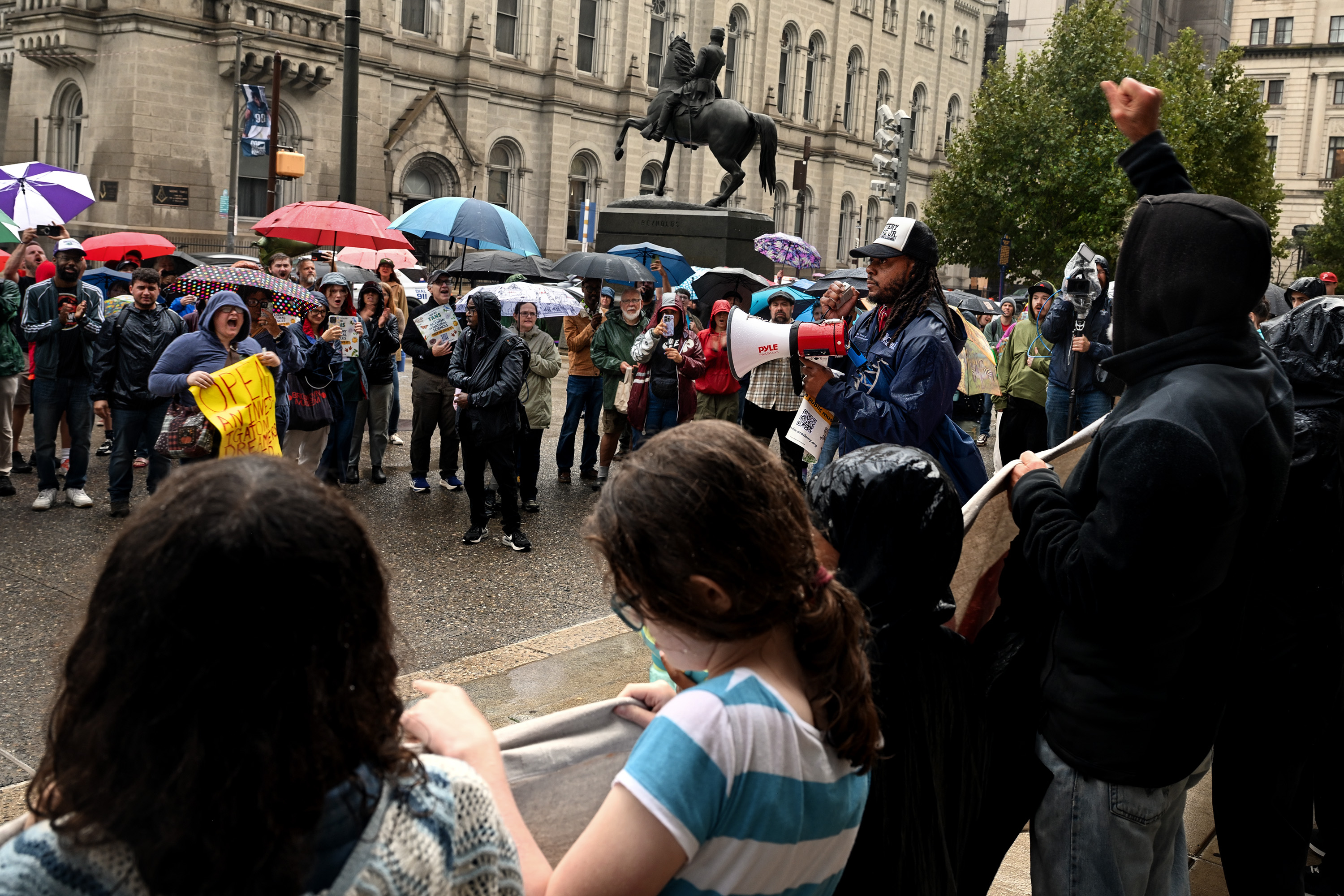
Rene Garner (in red) is among the first in line before the doors opened Sunday, Sept. 27, 2026, outside the Academy of Natural Sciences of Drexel University on the last day that the museum was scheduled to be open. She came with her son, Addison Garner (right), and her granddaughter, Sage Young, 7.Tom Gralish / Staff PhotographerA display of the Hadrosaurus foulkii fossils – the world’s first relatively complete set of dinosaur bones ever discovered. The bones, found in 1838 in New Jersey, were also the first mounted dinosaur skeleton ever to go on public display, at the Academy in 1868.Tom Gralish / Staff PhotographerScience educator Buddy Muhler shows visitors the eyeball of a cow, during his talk at the Academy.Tom Gralish / Staff PhotographerDinosaur Hall with more than 30 species, headlined by a 42-foot, 7.5-ton T. rex, plus fossils, dinosaur eggs, and footprints. Tom Gralish / Staff PhotographerArtist Thomas LaPine sketches the T-rex.Tom Gralish / Staff PhotographerSean White holds Camon, 2, while his wife Michelle White records them on the video screen “interacting” with a T-Rex inside the Academy of Natural Sciences of Drexel University Sunday, Sept. 27 on the last day that the museum is scheduled to be open. They were in another room room with a “green screen” that the computer combined into a single scene. Daughter Whenonah, 3, was also with the family from Abington. They had never been to the museum before and Michelle said “we heard it was closing, so we just had to come before it’s too late.”Tom Gralish / Staff PhotographerScience educator Jake Cook lets visitors feel the skin of a pangolin — a scaly anteater.Tom Gralish / Staff PhotographerThere are 37 dioramas at the Academy, the majority of which were created between the 1930s and 1960s. Tom Gralish / Staff PhotographerSusan Parker poses by the teeth of a T-rex as she and husband John Parker visit with their two grown children, their spouses and grandchildren. They are long-time visitors and supporters, Susan noting, “the kids were even here for sleepovers.”Tom Gralish / Staff PhotographerOne of the North American dioramas at the Academy of Natural Sciences of Drexel University just before the museum closed to the public at 5 p.m. on Sunday, Sept. 27, 2026.Tom Gralish / Staff PhotographerVisitors crowd past the exhibits inside the Academy of Natural Sciences of Drexel University Sunday, Sept. 27, 2026 on the last day that the museum is scheduled to be open.Tom Gralish / Staff PhotographerA dinosaur-costumed visitor passes behind the T-rex in Dinosaur Hall at the Academy of Natural Sciences of Drexel University Sunday, Sept. 27, 2026 on the last day the museum is open to the public.Tom Gralish / Staff PhotographerVisitors leave notes inside the Academy.Tom Gralish / Staff PhotographerPete Innes pauses near one of the North American dioramas just before the museum closed to the public, He came to see his son, Tim Innes, who works as a science educator, interacting with visitors.Tom Gralish / Staff PhotographerVisitors leave the the museum at closing time at 5.p.m. Tom Gralish / Staff PhotographerVisitors inside the Academy watch protesters from Save The Academy hold a vigil outside the museum just before its closing.Tom Gralish / Staff PhotographerMuseum staff pause in Dinosaur Hall after it closed the doors to the public.Tom Gralish / Staff PhotographerJerry Atwood vacuums after the last visitors have left.Tom Gralish / Staff PhotographerMembers of the museum staff pose for a photo in the lobby after the closing.Tom Gralish / Staff PhotographerGlenn McElroy carries dinosaur balloons as he marches behind his wife Beth and daughter Parker, 15, to protest at City Hall after attending a vigil following the closing.Tom Gralish / Staff PhotographerCity Councilmember Jeffery Young Jr. speaks to protesters outside City Hall Sunday, Sept. 27, 2026 after the group marched there following a vigil at the Academy of Natural Sciences of Drexel University after it closed to the public at 5 p.m.Tom Gralish / Staff Photographer
The record of the past year supports that reading. Drexel reportedly presented the Academy with a choice this spring: merge fully into the university, surrendering its collections, its building, and its endowment, or disaffiliate. Press reports indicate the plan is to relocate the specimens and sell the Parkway building, and that Academy officials had explored sharing the collections with museums in Cleveland or Abu Dhabi, United Arab Emirates.
The closure was announced Sept. 1 and executed within four weeks, leaving staff blindsided and the public no meaningful opportunity to respond. This is not careful stewardship. It is a 200-year-old public institution being treated as a liability on a university balance sheet.
Most troubling of all, the William Penn Foundation has offered to underwrite the museum’s operating costs for at least a year while its long-term viability is studied. The Academy’s own board chair has said she supports staying open. Drexel has neither accepted nor declined. When a major foundation offers to remove the very financial objection Drexel cited, silence isn’t prudent, because it tells the public that the museum’s closure was actually the goal, not the consequence.
As the mayor and Council consider acting, I urge them to:
Press Drexel and the Academy to accept the William Penn Foundation’s offer and reopen the museum to the public without delay.
Secure binding commitments that no specimens will leave Philadelphia, and the building will not be sold, until an independent and transparent review is complete, including any historic or zoning protections the city can extend to the building.
Ensure the Academy’s endowment is protected for the Academy’s own mission.
Use Council’s oversight and subpoena powers to bring the full financial record of this decision into public view.
If Drexel cannot or will not be a responsible steward, support a clean disaffiliation that leaves the Academy’s collections, building, and endowment intact.
The Academy’s founders in 1812 dedicated it to the encouragement and cultivation of the sciences. For two centuries, Philadelphia kept that promise. The city should not stand by while that promise is broken, especially when the means to keep it are already on the table.
A pro-business policy group that helps turn out Republican voters is dropping its endorsements of State Rep. Martina White of Northeast Philadelphia and three other GOP state House members over their recent support for a labor-friendly bill.
White, Philadelphia’s only Republican state House member, and her colleagues voted for Senate Bill 908, which amends the Pennsylvania Prevailing Wage Act of 1961. A prevailing wage is an established minimum wage paid to workers for certain publicly funded construction jobs.
The bill, sponsored by Republican State Sen. Frank Farry of Bucks County, sailed through the House 128-75 — with 25 Republicans voting yes. On Thursday, Democratic Gov. Josh Shapiro signed it into law.
According to Americans for Prosperity, the Republicans’ support crossed a “red line” that required the group to drop its endorsements.
“We exist beyond Election Day,” said Emily Brey, AFP’s Pennsylvania director. “We are fighting back the threats from the progressive movement in Harrisburg, but at the end of the day we are also an accountability shop. We’ll hold members on both sides of the aisle accountable.”
Brey said Americans for Prosperity is also dropping its endorsements for Republican State Reps. Valerie Gaydos and Jeremy Shaffer, each representing parts of Allegheny County outside of Pittsburgh, and Rep. Joe Emrick of Northampton County, due to their yes votes on the same bill.
The withdrawal of support from the influential lobbying group, founded in 2004 by conservative billionaire brothers Charles and David Koch, comes at a time when Republicans may need all the help they can get. Pollsters expect strong midterm election turnout among Democratic voters, and all four Republicans that AFP abandoned face viable challengers.
State Rep. Jeremy Shaffer speaks after receiving the support of the Fraternal Order of Police Fort Pitt Lodge #1 in Pittsburgh on Oct. 19, 2022. (AP Photo/Gene J. Puskar)Gene J. Puskar / AP
As part of this change, Americans for Prosperity’s network of “activist-volunteers” who are door-knocking and making phone calls will no longer ask people to support these candidates, Brey said.
“Any new costs on the taxpayer driven by government regulation, that’s something that we’re going to fight back. Prevailing-wage law is a red line for our organization,” Brey said.
What is the new prevailing-wage law?
The new law expands the Pennsylvania Prevailing Wage Act to include heating, ventilation, and air conditioning duct cleaners and workers at publicly funded off-site custom fabrication projects. It also excludes residential rehabilitation jobs and some school improvements from the prevailing wage.
Brey said these requirements edge out smaller businesses that can’t afford to pay higher wages. The wage requirement can drive up project costs as much as 20%, she said, and the increases get passed on to taxpayers.
State Sen. Christine Tartaglione speaks at a news conference in August 2025. Tartaglione cosponsored the prevailing-wage bill that was signed into law last week.Jessica Griffin / Staff Photographer
“We know voters are turning out because of that cost of living. Prices are too high,” Brey said. In that environment, she said, it doesn’t make sense to do anything that could increase costs.
Democratic State Sen. Christine Tartaglione of Philadelphia’s 2nd District, who cosponsored the bill, said the law will help resolve an issue that has frustrated skilled trades workers — they get paid less for work done away from the construction site, even if it is the same work.
“A lot of labor and craftsmanship goes into a public construction project before materials ever arrive on-site,” Tartaglione said. “Whether it’s fabricated in a workshop or installed in the field, it is still essential construction work, and the workers doing it deserve fair wages.”
Loyalists and purists
Within political parties, there are two types of people, said Republican strategist Samuel Chen: loyalists who support their party at all cost, and ideological purists, who care about issues above all else. Americans for Prosperity, he said, falls into the purist camp, and isn’t solely focused on winning races.
“They’re all about economics and fiscal conservatism,” said Chen, who also teaches political science at Northampton Community College. “They’re not necessarily thinking about the winning side of it, the electoral side.”
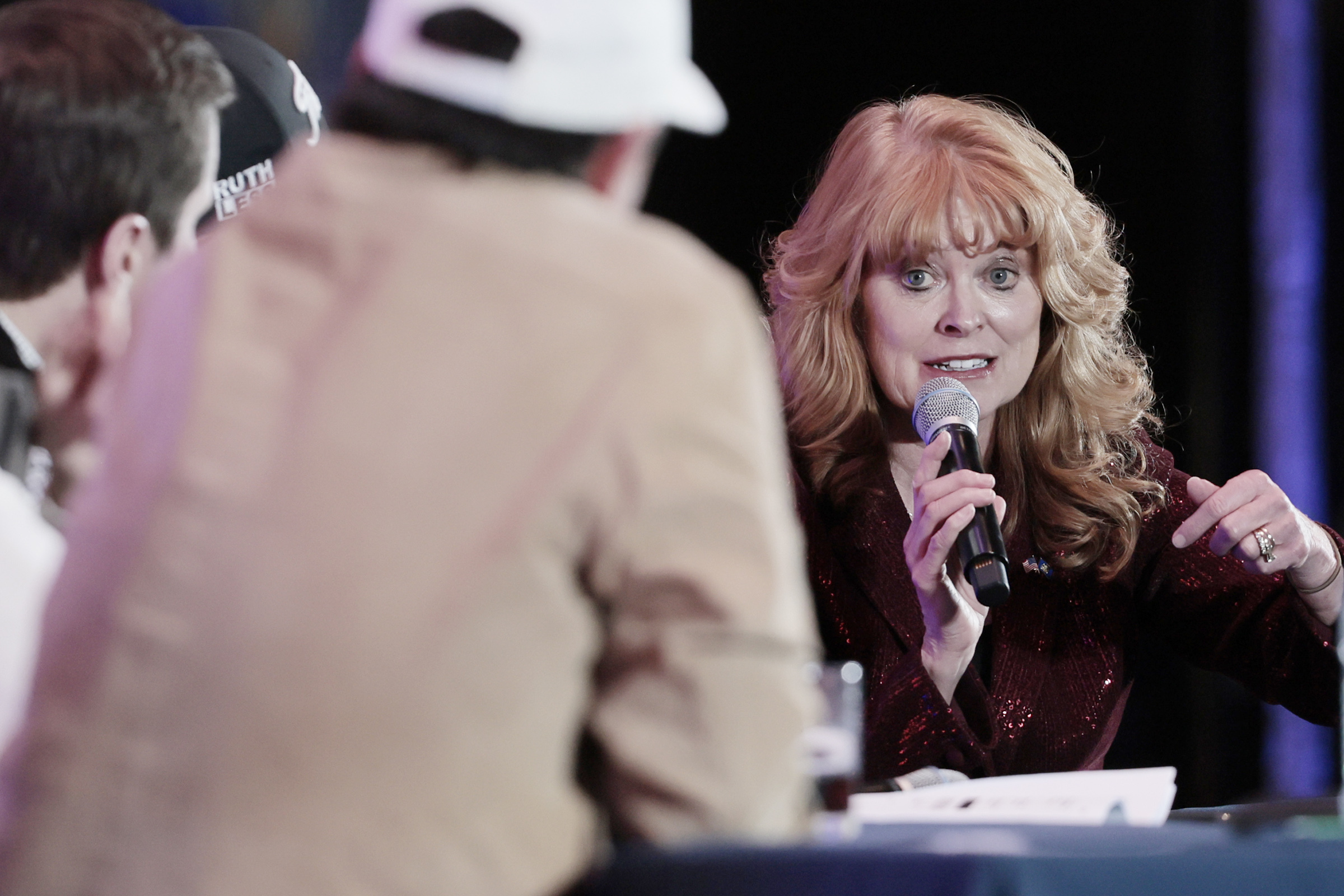
Pennsylvania Treasurer Stacy Garrity participates in the podcast “Ruthless” during an event hosted by Americans for Prosperity, Concerned Veterans for America, and the Libre Initiative at the National Constitution Center in Philadelphia on Thursday, Jan. 29, 2026. Elizabeth Robertson / Staff Photographer
Both Emrick’s and Gaydos’ House districts are among those that Pennsylvania Democrats hope to flip this year, according to a Spotlight PA report. In particular, Emrick faces a significant challenge due to the most recent round of legislative redistricting, Chen said.
White, in Northeast Philly’s 170th District, has always managed to win reelection, despite Democrats having a registration advantage.
“If she loses her seat, it is a long night for Republicans,” Chen said.
Chen said he isn’t predicting that outcome, but he also doesn’t underestimate the impact of outside help from groups like Americans for Prosperity — especially in state-level races where one or two key players can make a big difference.
So far, White has managed to keep winning because her votes line up with her constituents’ interests, Chen said. The same goes for Gaydos in the traditionally union-friendly Pittsburgh region, he said.
“I listen to my constituents first — not special interest groups,” Gaydos said. “My only obligation is to the people who elected me, and no endorsement, donor or outside organization will ever come before them.”
In these areas, where union support has been crucial for Republican elected officials to stay in office, these lawmakers probably made the right choice, Chen said. But if AFP volunteers out door-knocking omit the state House candidates, conservative voters will notice.
“It helps chip away at the base. And in a tight race, you can’t afford to lose your base.”
As the housing shortage in the United States has become more acute, a political movement called Yes in My Backyard (YIMBY) has sought to promote policy solutions and advocate for more construction.
That idea cuts against the sense that many city residents have of how gentrification works. New buildings are often understood as driving nearby housing costs up.
Author Ned Resnikoff argues that new housing is, in fact, responding to gentrification that is already taking place, and without construction, neighborhood rents will get even more expensive.
Resnikoff, who was policy director for California YIMBY, has been on the front lines of housing policy fights in Sacramento. He uses that perch to explore why American cities have struggled with growth in the 21st century in his new book, Build or Die, which comes out Dec. 8.
Resnikoff also argues for renewed and more competitive local democracy in America’s cities and for a transportation system that doesn’t center on private automobiles.
This conversation has been edited for length and clarity.
Many people don’t believe that an abundance of new homes will lower prices the same way it does for other goods. What would you say to those skeptics?
Homes occupy a different space politically and emotionally than the vast majority of consumer goods. We’re in this weird situation where housing is very often primarily an investment vehicle for homeowners, but at the same time, it’s their actual home.
It’s not like a car or a phone that you expect to depreciate over time, and then you’ll drop it and get a new one. That personal connection can complicate our understanding of the underlying economics of housing and how it’s similar to other consumption goods.
Then there is the time scale that changes in the housing market operate on and the sequencing of when new housing starts to go up and what effect it is having on prices and what prices are having on housing construction. It makes the causality harder to see.
Ned Resnikoff is a writer, researcher, and policy consultant in California.Ned Resnikoff
You argue that healthy cities need more housing development and that this would boost many progressive goals such as fighting homelessness. That’s a counterintuitive idea to many people.
If you live in a neighborhood that is getting more expensive, then you’re probably going to see new construction going up well before rents start to go down. A lot of that new construction is probably going to be nicer and shinier than the existing housing.
And depending on how much new construction actually happens, it might not cause rents to drop. It might just slightly slowthe rate at which rents would otherwise increase.
As a result, it’s very easy and understandable to say, “Oh, all these new buildings are going up, and my rent is going up.” So the causal connection must be that these shiny new luxury buildings are causing my rent to go up.
When, in fact, the causal relationship is more the reverse: The fact that an area is seeing more demand pressure creates a market opportunity for developers.
What about the sheer scale of construction that would be required to bring affordability to a city like New York? 700,000 new homes over the next decade sounds like an unimaginable number.
Sometimes people think, oh well, New York or San Francisco is always going to be expensive. But that wasn’t always the case with those cities.
Really high-cost cities for the foreseeable future are going to be more expensive than midsize cities in the United States, but the vast gulf in housing costs between, say, New York City and a Raleigh, N.C., is not a permanent fact.
It’s hard to conceptualize the scale, and so as a result, when people, for example in New York, see new pencil towers going up on Billionaires’ Row, they think, Oh wow, that’s so much housing, and it’s clearly not having an impact on my rent.
But in the context of a metropolitan area the size of New York, a handful of mega projects in Manhattan is actually not all that much housing.
The cover of Resnikoff’s new book, which comes out in December.Island Press
How does the YIMBY theory apply in a city like Philadelphia, which is still 500,000 people under its 1950 peak? Some neighborhoods are seeing strong growth, but others are still losing population.
A couple other cities that come to mind in that in-between zone would be Pittsburgh and Chicago. These are dense, fairly vibrant cities with growing populations, but for better and for worse, they don’t have the “superstar” status.
The way to think about housing policy in those cities is with a combination of different interventions, some of which are more relevant to declining Rust Belt towns and some of which are more relevant to “superstar” cities.
With a growing population, the things that really help a city grow in a deliberate, net positive way are things like building more housing, continuously improving transit, making sure that there’s room for new amenities and small businesses to accommodate residents.
Then for the areas where you have declining populations, it’s a combination of focusing on housing preservation, so that the existing housing stock is not deteriorating.
And then, really thinking about economic development, and how can those areas benefit from the overall city growth?
What else could help?
To the extent that these areas are cut off by freeways, I’m a big proponent of tearing down all interurban freeways and making sure that there’s good transit connectivity to the central city for those areas and that there’s economic development happening there.
That could involve new housing construction, but it could also involve investment in local businesses and local amenities and trying to make sure that as the central city grows and becomes wealthier and denser and more affluent, that that has positive spillover effects for everyone else.
When Anne Ryan arrived in Gettysburg for a ghost tour last month, she was a skeptic.
The Civil War battle of Gettysburg, where Union troops defeated Confederate forces in 1863, was the bloodiest battle in American history. More than 7,000 soldiers died on both sides and thousands more were injured.
If ever a place should be haunted, it’s Gettysburg. Ryan, Pennsylvania’s deputy secretary of tourism, was hosting a group of writers there and figured she’d play along.
“I don’t believe in ghosts,” Ryan told The Inquirer this week.
Still, Ryan left that night with a ghostly picture she can’t explain and found her double-knotted sneakers untied, a specialty of Gettysburg ghosts.
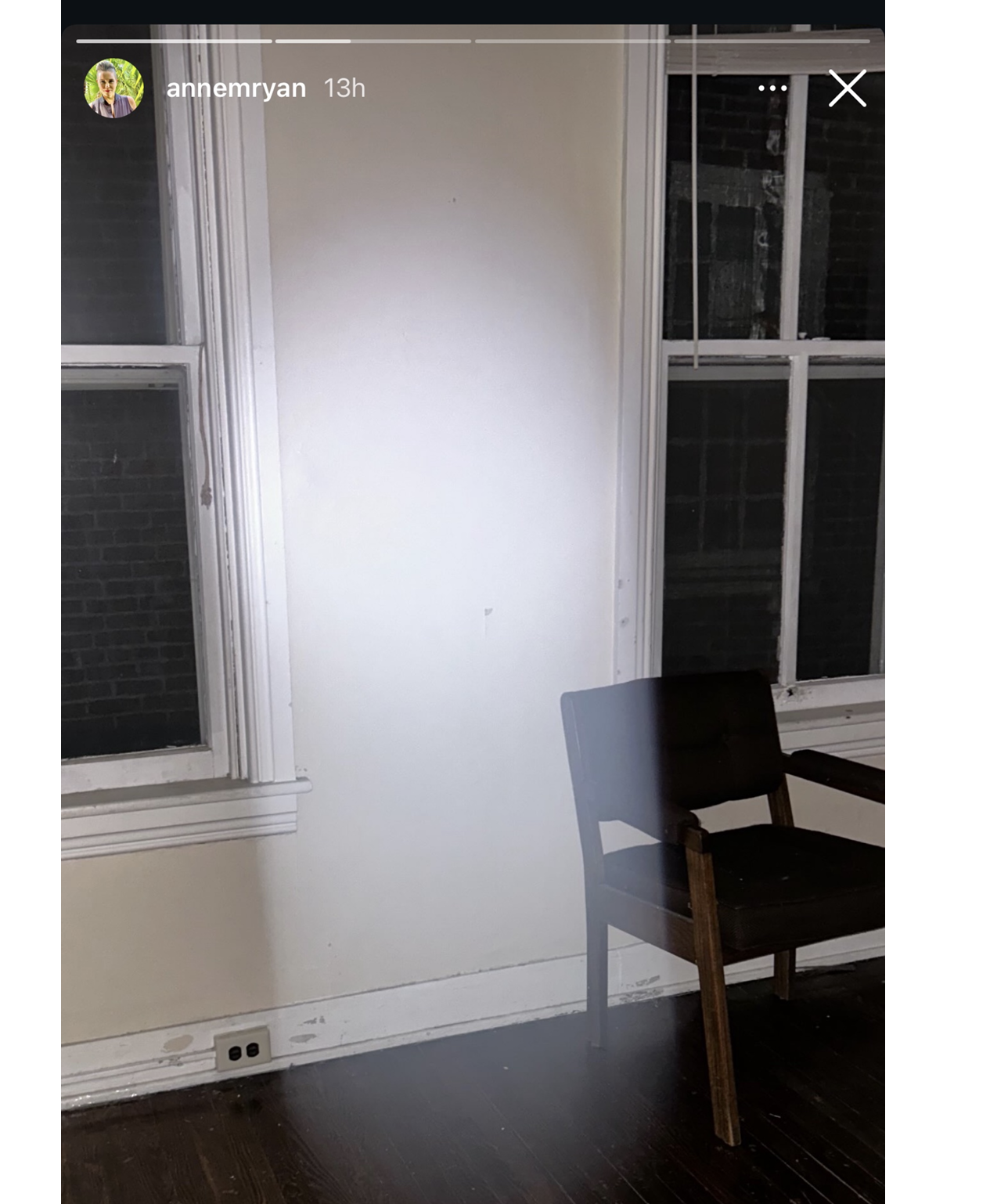
Ryan said she snapped a photo on her phone at a house, looking for what ghost hunters describe as orbs in a room where a murder had allegedly taken place. Online, that location has been dubbed the “Baltimore Street Murder House.”
Is this a ghost? Who knows. Anne Ryan took this photo last month in Gettysburg.Anne Ryan
Ryan snapped a photo with her phone and can’t explain the glowing white shape that appeared. Ryan said she isn’t sure she’s a believer, but she sounds like one. Or a savvy deputy tourism secretary.
“You could really feel the energy, and I’m not really an ‘energy’ person,” she said.
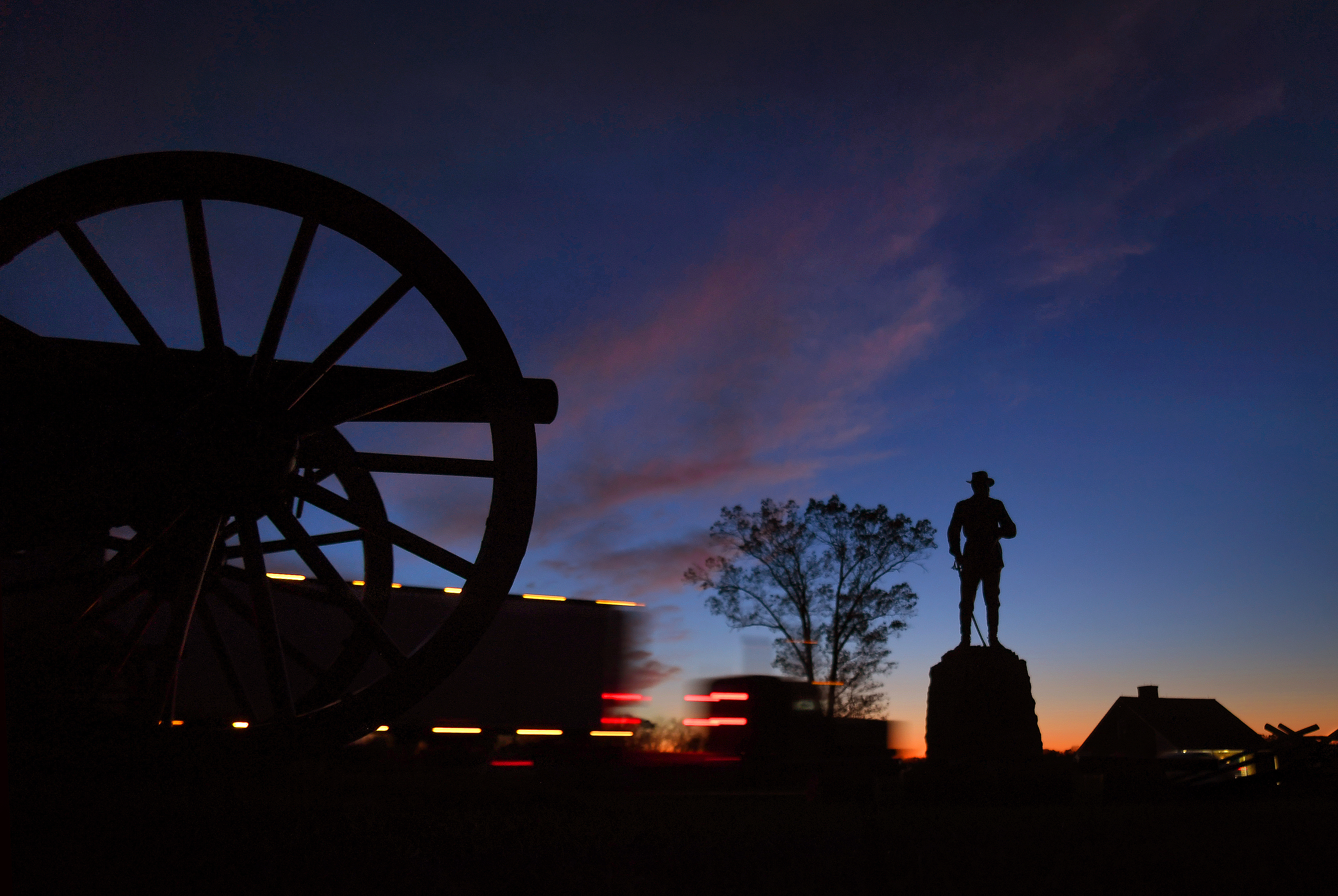
The Union lost 3,155 soldiers and the Confederacy lost 3,903 during the bloody, three-day battle that raged from July 1 to July 3. Across the 6,000 acres of Gettysburg National Military Park, more than 1,300 monuments have been placed since the war ended.
“According to the tour guide, a lot of the ghosts there are soldiers who still believe they’re in battle,” she said. “Essentially, there are so many spirits that are still stuck in those three days and the days that followed.”
Ryan’s tour guide had also warned visitors that ghosts of “mischievous child ghosts” like to untie shoelaces.
“So I double-knotted my sneakers,” she said.
Before she left, though, Ryan visited a home that had been struck by countless bullets. It was nighttime. She began walking to her car. Then she looked down, and her Adidas were untied.
“I couldn’t get out of there fast enough,” she said. “I don’t want any ghost, even a child ghost, in my orbit.”
That being said, Ryan thinks Gettysburg is a great place to visit during Halloween. Just make sure you tie your shoes.
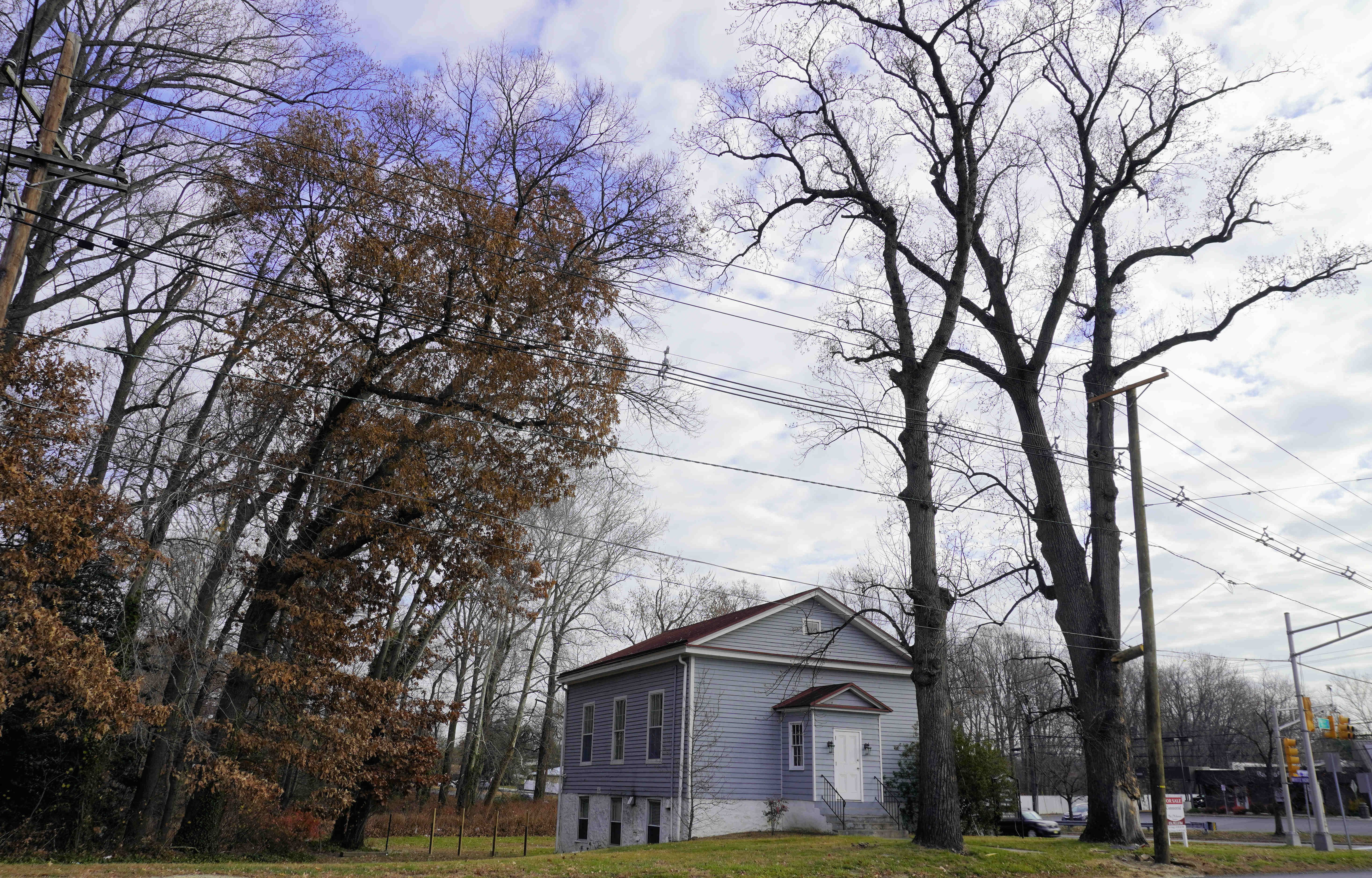
A historic South Jersey church is the only surviving building from Glendale, a mid-19th-century settlement that now sits within Voorhees Township’s borders.
Now, that church,listed on both the state and national registers of historic places, is for sale.
Glendale Methodist Episcopal Church’s schoolroom, which makes the church one of the oldest standing public school buildings in Camden County, hosted meetings for abolitionists before the Civil War. Famed poet Walt Whitman spent months there recovering from a paralytic stroke, writing poetry, and bathing in a creek behind the church, historic preservationists said in documents explaining the property’s significance.
“Anytime you put a property for sale, it’s in danger,” said Margaret Westfield, a Woodbury-based preservation architect who worries that the church’s future owner might not keep its historic qualities intact. Westfield nominated the church for the national register in 1995, oversaw grants for the building, and created a preservation plan for the property.
The Camden County church, at Haddonfield-Berlin and White Horse Roads, was built in 1855.
Chocolate Obasoanya, Seventh Day’s founder, said the church building is in good condition, but the congregation wants to relocate.
“We’ve been using it well,” Obasoanya said. “We just want to downgrade.”
Long before Seventh Day purchased the property, Quaker Alexander Cooper donated the land to three church trustees in 1855. Glendale’s residents helped build the church so long as the building’s lower level, which had a separate entrance, could serve as a school and meeting place, according to a sign installed at the church and shared by Westfield.
“Honestly, this building is one of the most significant buildings in South Jersey. People don’t recognize that,” Westfield said.
County and state grants have helped restore the church in recent decades, Westfield said, including a nearly $124,000 historic preservation grant in 2004 that helped stabilize the structure and restore the exterior to recreate its look from the 1930s.
The historic church property’s front entrance was once flanked by two tulip poplar trees dating back to 1855, but energy company PSEG chopped them down four years ago. The aging trees had been protected by the New Jersey Historic Sites Council, which found in 1997 that chopping down the trees would have an “adverse effect” on historic preservation of the property, Westfield said.
Camden County has since widened the intersection and added a turning lane in “what was once a high-crash zone,” said Dan Keashen, the county’s public affairs director.
Westfield said the removal of the trees, which she had pushed against, and the widening of the road make the church’s main entrance leading to the sanctuary unsafe to use. An elder at Seventh Day emailed Westfield for help in 2023 as workers dug out the stumps. The trees, the elder wrote, had offered worshippers a shield from the road to get to the church’s front door.
Zed Fox, president of the Camden County Historical Society, said the society has no position on what should happen to the property.
Stephen Steglik, Voorhees Township’s administrator, said the township has no current plans to acquire the building, which is just a two-minute walk from the police department.
“We hope any future use of the property will benefit the township and enhance the quality of life for our residents,” Steglik said.
The church’s presence on the national and state historic registers offers the property some protections, including from federally funded projects, but not from private buyers. The person or entity that buys the property could alter or demolish the 19th-century church if desired.
But Westfield said a buyer would have no rational reason to demolish the church, because the slope of the property makes the land pretty much unusable without the church there. Unless a new congregation moves in, Westfield said, the best use for the property would be a private residence, with the first floor and former school serving as a living room and kitchen and the upstairs sanctuary transforming into bedrooms.
Westfield said she hopes the new owner will preserve the church’s historic exterior and keep Glendale’s story alive. If she hadn’t moved into a new home so recently, Westfield said, she would have tried to make it her own.
“It needs a new steward,” she said. “It needs somebody to come in and save it.”
With the planned expansion of Philadelphia’s port on the Delaware River, it could grow to accommodate twice as much container cargo and over 100,000 more automobiles.
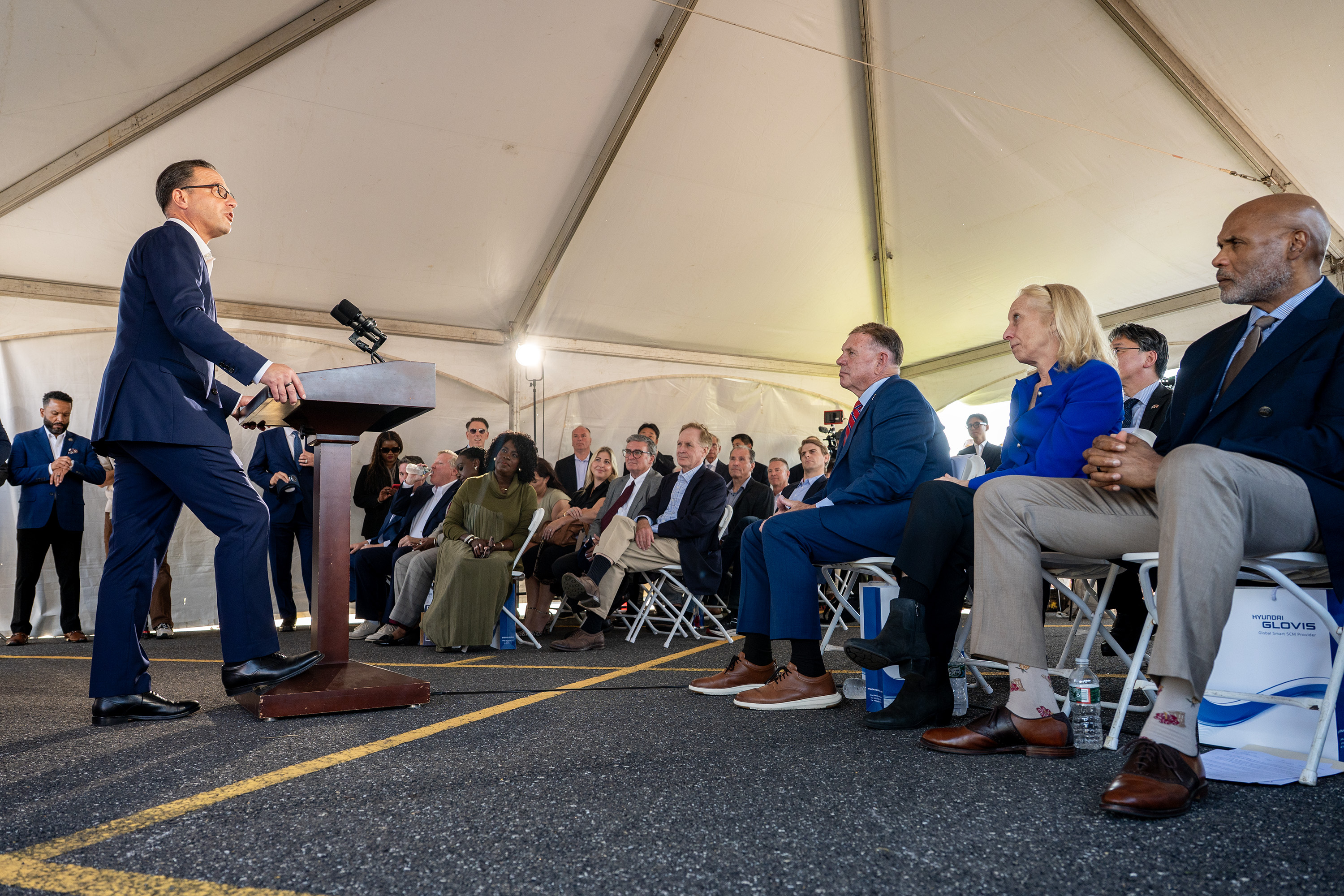
Pennsylvania Gov. Josh Shapiro earlier this month pledged $371 million in state funding to help attract more goods to the Port of Philadelphia. He said the state investment, combined with hundreds of millions of dollars more in federal funds and corporate investments, would create thousands of jobs.
The Democratic governor framed the investments as a vote of confidence in Philly as a hub of global trade even as President Donald Trump’s tariffs have inflated the costs of foreign goods. Trump has cast the import taxes as part of an effort to bring manufacturing jobs back to the U.S.
Shapiro says investing in the port will boost the local economy.
Here’s what to know about what the governor called “the largest expansion” in the port’s history.
Gov. Josh Shapiro spoke at the Southport Auto Terminal on Oct. 13.Tom Gralish / Staff Photographer
Where is the money coming from?
$371 million from the state, financed through borrowing. That includes $90 million Shapiro’s administration authorized last year for the purchase of a 152-acre rail yard from Norfolk Southern Corp.
$266 million from the federal government, via two grants that were announced during former President Joe Biden’s administration. Shapiro’s office says that money couldn’t be tapped until the state came up with matching funds.
At least $200 million from the private sector: $100 million apiece from Holt Logistics Corp. and Glovis America, both of which lease property from the Philadelphia Regional Port Authority (PhilaPort), a state agency that owns seaport facilities along the Delaware.
How many jobs will be created?
PhilaPort says it currently supports 8,000 direct jobs, such as dockworkers, as well as about 4,000 jobs in port-related industries. Shapiro says the new investments will help create 6,000 more direct jobs — and generate $45 million in annual state and local tax revenues.
Those projections were based in part on a study performed by consulting firm Hatch that PhilaPort declined to share, calling it “commercially sensitive” because it is being used to support ongoing lease discussions with tenants.
Shapiro’s office referred questions about the matter to PhilaPort.
The Teamsters and longshoremen’s unions spoke in favor of the plan. Teamsters work the auto yard at the port’s Southport facility, while longshoremen unload cargo from ships.
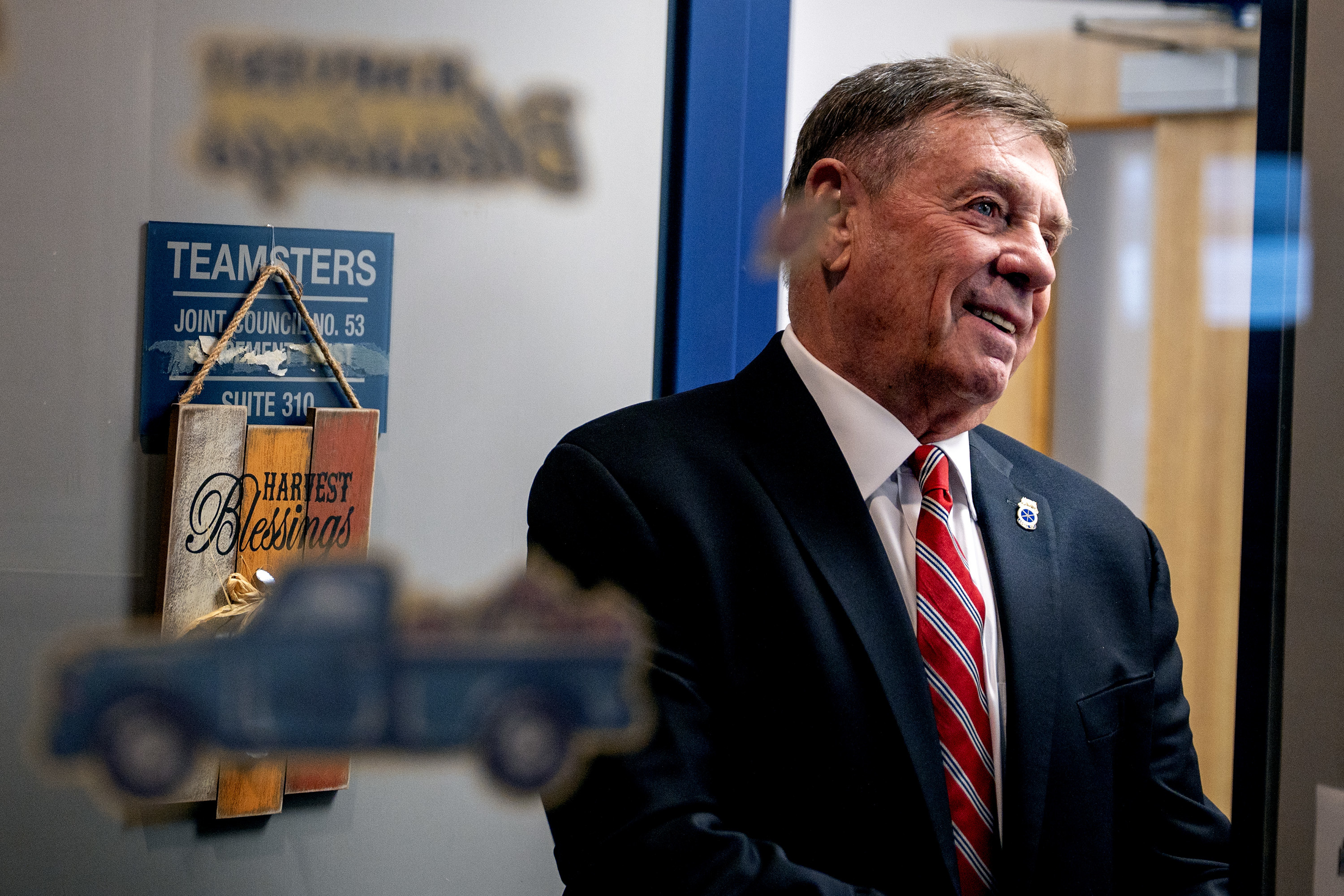
“This is going to create hundreds of new Teamster jobs, thousands of jobs across the area,” said Bill Hamilton, eastern region vice president of the International Brotherhood of Teamsters.
Bill Hamilton, eastern region vice president of the International Brotherhood of Teamsters, pictured in 2024.Tom Gralish / Staff Photographer
In addition to Philadelphia-based jobs, “you’ll have, besides the Teamster jobs that are here, you’re going to have trucking jobs coming and going,” he said at the announcement Oct. 13. “… It’s a dream come true for some people without a college degree.”
The port will be able to handle more shipping containers and automobiles, creating greater economic impact, according to the port authority.
What cargo is the state trying to attract?
The port handles cargo such as automobiles, paper, petroleum products, steel, and cocoa beans, as well as containers that carry goods such as produce and pharmaceuticals.
The new investments are aimed at bringing in more containers and vehicles, officials said. The port handled a record 889,000 container units last year, as well as about 250,000 automobiles.
A key driver of the port’s container growth has been an increase in perishable imports such as fruit and meat, according to PhilaPort.
The volume of container cargo moving through the port was up 39% last year compared to 2020, Shapiro said. “The demand is quite real.”
Stacks of shipping containers at a PhilaPort terminal in June.Jose F. Moreno / Staff Photographer
Based on its current land allocation plan, PhilaPort projects the new capital will more than double the port’s container capacity to 2 million units and increase capacity for autos by 18%, from 588,000 to 694,000.
“We have the assets, we have the workforce, we have the land, and we’re ready to take this port to a whole new level,” PhilaPort CEO Rich Lazer said.
Why is this happening now?
Shapiro’s announcement comes two years after PhilaPort unveiled a strategic plan, Destination 2040, intended to guide its growth over the next decade and a half.
The plan cited increased investment by rival ports such as New York and New Jersey, Baltimore, and Wilmington, Del.
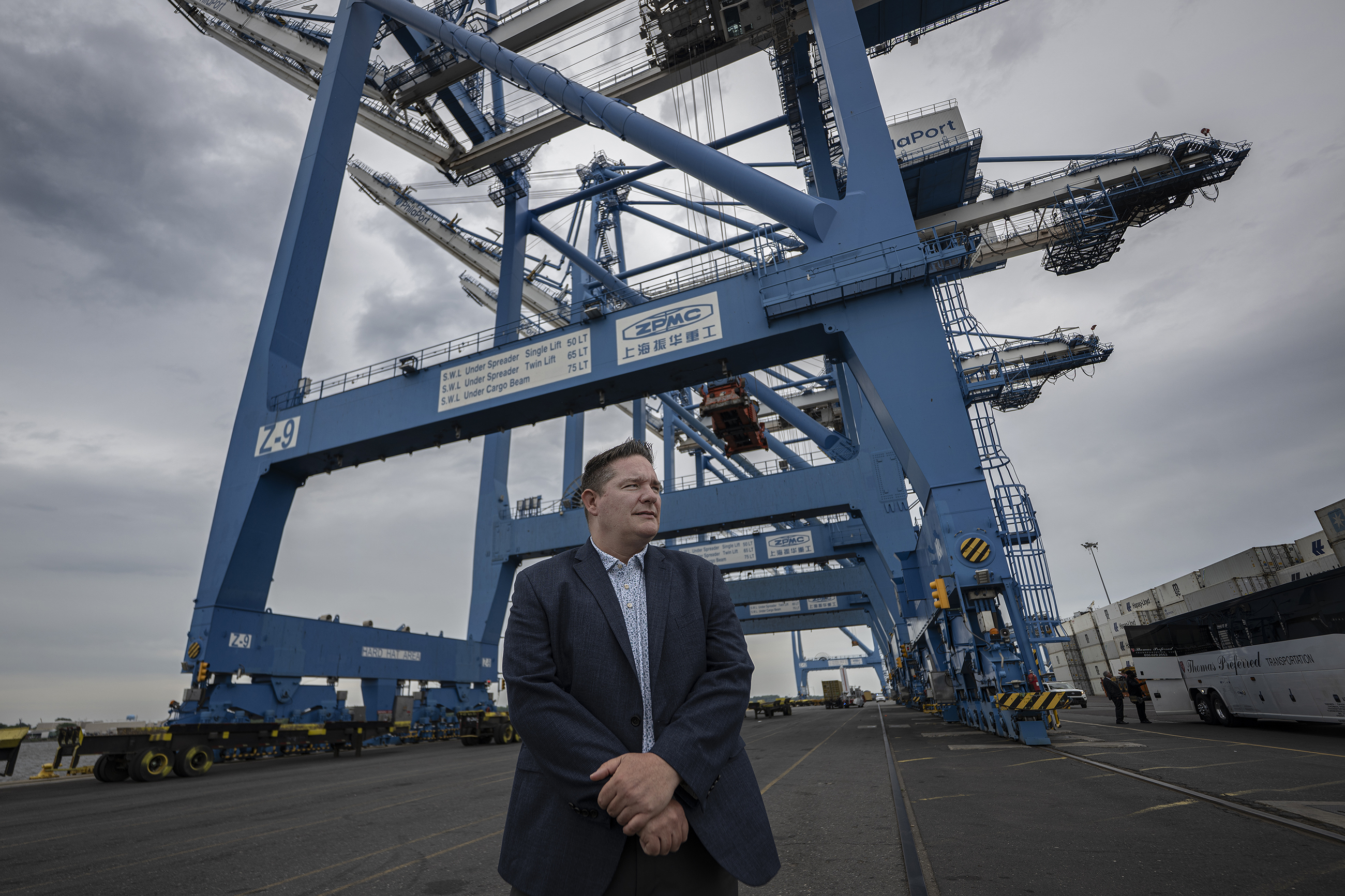
PhilaPort CEO Rich Lazer near cargo cranes in June.Jose F. Moreno / Staff Photographer
PhilaPort’s board “worked together to develop an ambitious vision for growth that not only plays to the strengths where this port is leading but also doubles down on the areas where we have the greatest potential to be able to grow,” Shapiro said.
What projects are being funded?
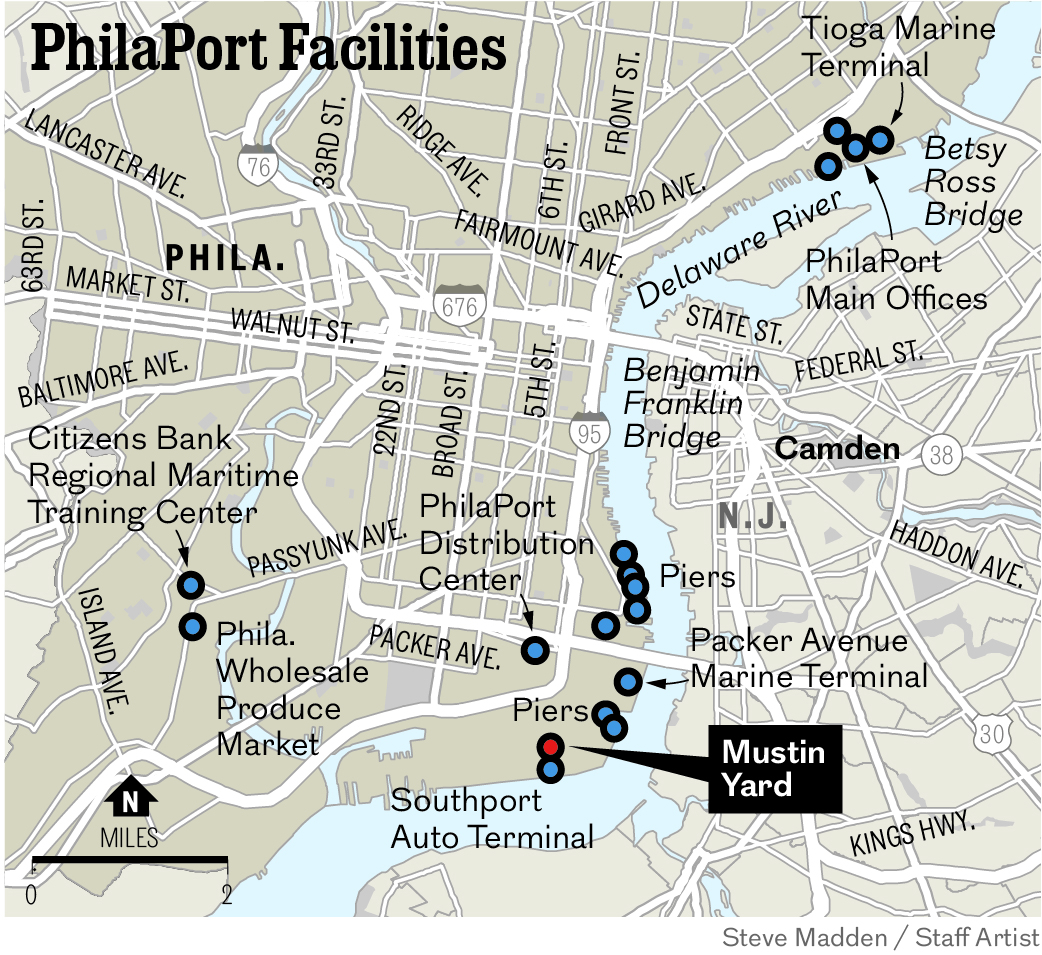
Much of the expansion is planned for Philadelphia’s southern port district, including at the Southport Auto Terminal on the eastern end of the Navy Yard.
Southport was created in 2010 when Gov. Ed Rendell set aside more than 200 acres of vacant land and water at the old Philadelphia Naval Base for port development. With $93 million in state funds invested under Gov. Tom Wolf, Southport opened in 2019 as a 155-acre auto terminal, where Hyundai and Kia vehicles are stored and processed before they go to dealer showrooms.
That expanded the port’s vehicle-import business, which started in 2010 at Pier 98 annex, a parking lot at Columbus Boulevard and Oregon Avenue.
A worker with Glovis America positions a car carrier at the Southport Auto Terminal.Tom Gralish / Staff Photographer
Now Southport is poised to bring in more cargo. The port authority wants to build two berths that would allow ships to dock directly at Southport, relieving congestion for ships at the nearby Packer Avenue Marine Terminal.
The funding will also allow PhilaPort to fill in part of the river to expand the Southport terminal by 10 acres, creating more space for cargo, officials said.
Biden’s administration previously authorized two grants — one in 2021 and another in 2024 — totaling $266 million to support the Southport berth project. Shapiro’s office said those funds couldn’t be used until the state came up with matching funds, which the governor announced this month.
Once the berths are built, PhilaPort anticipates both containers and autos being handled at Southport, said spokesperson Marty O’Rourke.
Imported vehicles at the Southport Auto Terminal in October.Tom Gralish / Staff Photographer
The port authority’s acquisition last year of the nearby Mustin rail yard from Norfolk Southern is expected to create more space for that cargo.
Beyond South Philly, Shapiro’s plan also invests in the Tioga Marine Terminal in Port Richmond. The state is providing $58.1 million for two electric ship-to-shore container cranes and berth improvements.
The Environmental Protection Agency in 2024, under Biden, awarded PhilaPort tens of millions of dollars for the two cranes. But the type of crane needed isn’t made in the U.S., according to the port authority and industry groups. So to use them, PhilaPort has asked the Trump administration for a waiver from a U.S. law that requires federally funded infrastructure projects to use American-made products.
What’s the timeline for these projects?
“We have this project on an aggressive timeline with cranes being bid this year and the berth project being bid in 2027,” PhilaPort said.
Which companies will be involved in the port’s expansion?
The big players are family-owned Holt Logistics, operator of the Packer Avenue Marine Terminal south of the Walt Whitman Bridge, and Glovis America, an affiliate of South Korea-based Hyundai Glovis Co. Ltd. Glovis operates the Southport Auto Terminal.
PhilaPort appears unlikely to open the projects to other competitors.
Leo Holt (at lectern), president of Holt Logistics Corp., joined Gov. Josh Shapiro at the Southport Auto Terminal in October.Tom Gralish / Staff Photographer
In January, PhilaPort authorized up to $33,705 for consulting firm Hatch to “evaluate strategic development options” for Southport and Mustin, according to documents obtained by The Inquirer through a public records request.
In its project proposal, Hatch wrote that it would determine whether the port authority should negotiate development plans directly with existing tenants — such as Holt, Glovis, and DVR Philly — or initiate a competitive process by issuing requests for proposals, the records show.
The Inquirer obtained a copy of the study through a records request, but it was almost entirely redacted. PhilaPort cited exemptions in the state’s Right to Know law for documents that reflect “internal, predecisional deliberations.”
Asked whether PhilaPort considered issuing a public RFP, spokesperson O’Rourke said the authority’s board “reviewed alternatives to move forward to identify the best path forward to effectuate port growth and expansion.”
“Based upon lease agreements and current partnerships with our existing tenants (Holt and DVR/Glovis), it is our intention to move forward in expanding these agreements and relationships currently in place,” O’Rourke said in an email.
“Our partners clearly add value to our efforts to maximize port growth,” he said. “PhilaPort is working with DVR/Glovis and Holt on a parallel path to identify a land allocation and phasing plan to accommodate the increased capacity.”
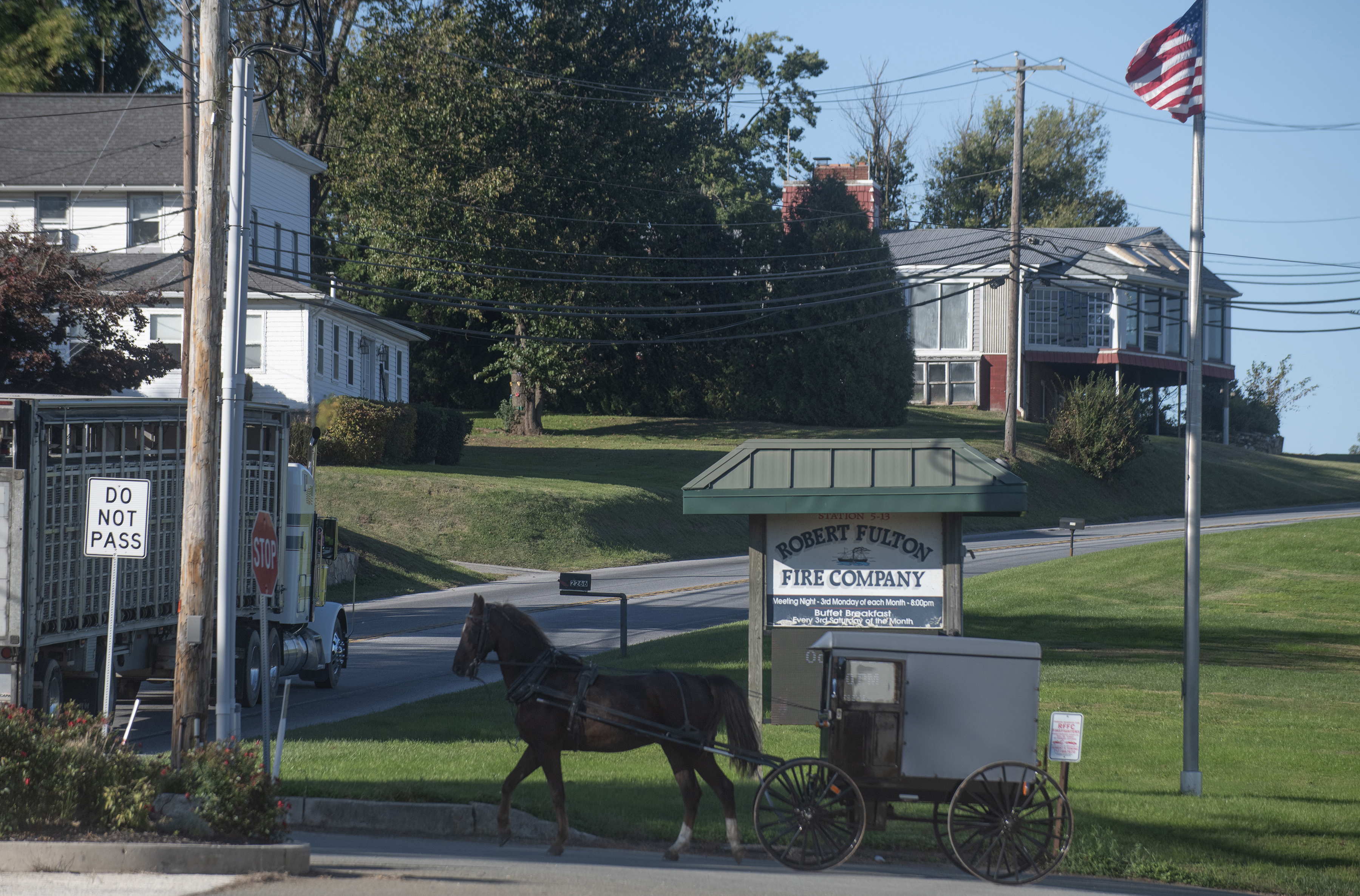
Outside a Lancaster County fire station, an electronic billboard flashed an invitation toa forthcoming Halloween “trunk or treat,” a “thank you” to communitydonors, and the localtime and weather: a balmy 68 degrees on a Tuesday afternoon.
No signage advertisedthe pop-up measles vaccination clinic held inside the Robert Fulton Fire Company last week in the village of Peach Bottom, at the epicenter of the nation’s largest outbreak in decades. So far, Pennsylvaniahas reported more than 1,300 cases.
Yet moments after the clinic opened at 4 p.m., Amish families — parents with as many as 10 children — converged in the gravel parking lot behind the fire hall, out of view from the rural highway.
They slipped through a back door: mothers with babies hoisted on hips; fathers clutching the hands of toddlers. Some hired drivers because most Amish people, in keeping with tradition, don’t operate motor vehicles.
When the highly contagious virus began to spread this spring, notably in places with sizable Amish communities, state health officials faced the challenge of convincing an intensely private and insular community to get vaccinated. Many Amish residentshave skipped vaccines for generations, partly due to a cultural preference fornatural remedies and mistrust of what is in the shots.
Public health campaigns through social media, email blasts, texts, and highway billboards seemed unlikely to penetrate Amish communities who often avoid modern technology. Nor would news conferences and public service announcements of the kind that promptedmass COVID-19 vaccinations at health centers and crashed government websites as people tried to schedule appointments online.
This time, the state decided to bring measles vaccines to the doorsteps of Amish families.
Health department officials brainstormed ways to draw Amish community members to free measles vaccination clinics near their homes, or even allow them into their kitchens or barns to administer shots, according to pediatrician Jennifer Wallace, medical director of the state’s health centers.
They sought input from Amish elders and religious leaders, who recommended their own back channels. This “Amish Internet,” as some call it, is a word-of-mouth connectivity as invisible as radio waves.
“We thought, ‘Is this going to work or not?’ It totally flipped what public health normally is,” said Wallace, who runs the pop-up clinics. “We were very nervous about whether or not we could get the word out that way.”
Additionally, Amish leaders advised, the response would be better if their communitycould receive shots discreetly.
Health officials said Amish people are not necessarily opposed to vaccines. However, many had not felt any need or urgency to get vaccinated against a disease few could remember. Measles was declared eliminated in the U.S. in 2000, thanks to widespread vaccination, which also protected the relatively few Americans who were not vaccinated.
In the months since the outbreak started in April,Lancaster County has led the state with the highest number of measles cases, now reporting nearly 470 cases, or nearly 40% of all Pennsylvania cases. Two local infants and a 20-year-old woman from Lancaster County were among the six measles-associated deaths identified by the state and local coroner’s offices.
State nurses go out and do wellness checks on families. “When the mother answers the door, the nurses can hear the children moaning in the background,” Wallace said, describing measles’ high fever, rash, and dry cough as “miserable.” Some symptoms can last more than two weeks.
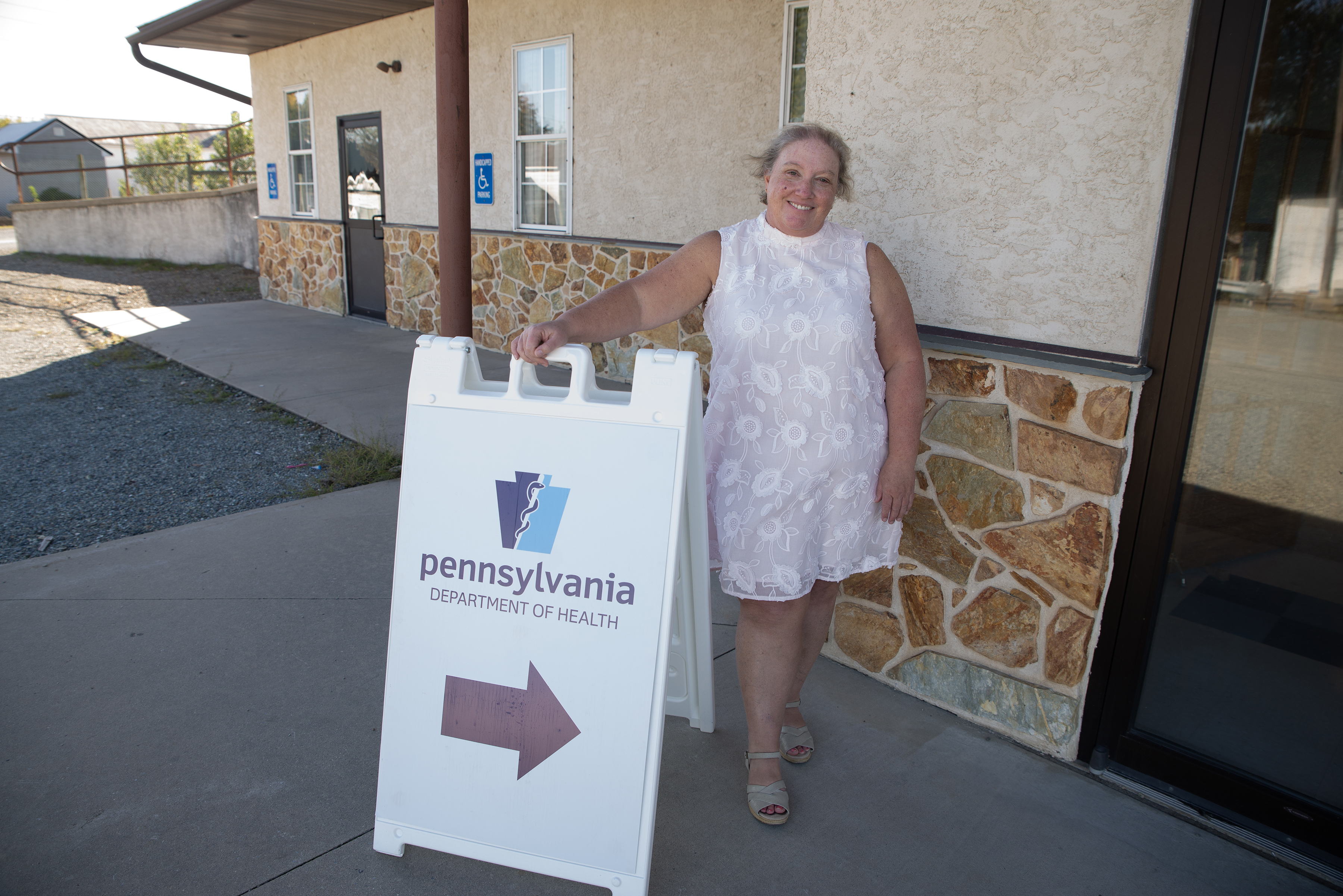
Pediatrician Jennifer Wallace runs the state’s pop-up measles vaccination clinics. The clinics are promoted mostly by word of mouth. The only indication that a clinic was happening at this Lancaster County fire station was this sign at the back entrance, out of view from the rural highway.
Bob Williams / For The Inquirer
‘It’s gone gangbusters’
When the state launched the pop-up clinics in early May, health officials worried about the low turnout.
At the first one, held in Lebanon County at the request of a community member, only 30 attended and 26 got shots, according to the health department.
Then, in mid-June, the clinics took off as word got out, Wallace said.
“We were willing to try it out, and it’s gone gangbusters,” she said.
The turnout picked up even more after health officials opened clinics in the evenings to accommodate farmers who work the fields until late afternoon.
The state has organized 223 clinics statewide, including 51 in Lancaster County, and vaccinated more than 6,000 people through them.
Sometimes, clinicians are invited to a private home to vaccinate a family of 12, only to also meet throngs of friends and relatives.
At one Lancaster County home, 110 people formed “a line out the kitchen door,” Wallace said.
“We were like, ‘Whoa.’ We had to run back to the health center twice to get more vaccine,” Wallace said. “It starts out as a very private family thing, and it ends up being a neighborhood community thing.”
At Tuesday’s clinic, 79 out of 94 people who showed up chose to get vaccinated, according to the state. It was the third clinic at that fire station, where the volunteer company includes Amish firefighters.
An Amish family leaves Tuesday’s pop-up measles vaccination clinic on at the Robert Fulton Fire Company in southeastern Lancaster County, four miles from the Maryland state border and about 15 miles outside Chester County, Pa.Bob Williams / For The Inquirer
Questions, then relief and tears
Wallace said most Amish people who come to the clinics ultimately opt to get vaccinated, but prefer to keep it private.
“There is an element of, they don’t want people to know both in their own community as well as outside their community,” Wallace said. “They tend to be very private people.”
Many ask about what’s in the shots.
Is there a microchip in the vaccine? No. Is it made of aborted babies? No.
What offers more immunity? Getting measles or the vaccine?
Wallace has a ready answer. “They both give you immunity. However, I would rather have the measles vaccine, which maybe gives you a little bit of a fever, maybe a little bit of a sore arm for a couple of days, vs. the measles disease, which can have very serious consequences up to death.”
She will tell them the vaccine is free, whether they are insured or not. Some will counter, “Well, I’ll just get measles. That’s free, too,” and she will reply that measles complications can result in expensive hospital bills. Most Amish do not have health insurance, and sometimes must pay cash or turn to a community medical fund.
Increasingly, mothers coming to the clinics are more worried about their kids getting measles than about the vaccine. Wallace will administer doses into tiny arms and watch the mother’s face wash over with relief. Some cry afterward, she said.
“It all started with, ‘What are the communities we are trying to target, and how can we be respectful and work with them? Let’s not push what we think public health should be,’” Wallace said. “And it worked. It’s just snowballed.”
Pediatrician Jennifer Wallace, who serves as medical director of the state’s 58 health centers, is also in charge of the pop-up measles vaccination clinics. “I can tell you quite honestly that since May, this has been the most rewarding work of my life,” she said.Bob Williams / For The Inquirer
‘Never been vaccinated in my life’
The pop-up clinics are not aimed at persuading those who oppose vaccinations, Wallace said.
“The anti-vaxxers are never going to walk through these doors. They’ve made up their mind,” she said. “Many of them have already closed their mind to it.”
Art Winter, 48, runs an auto-repair business behind the fire station where Tuesday’s clinic was held. The clinic drew Amish families from Quarryville, about 10 miles away, where Winter lives, but he had not heard about any of the state’s clinics.
“I don’t fall for that crap,” he said about vaccinations. “Never been vaccinated in my life.”
He went to a public elementary school in Upper Darby. Although state law required the measles, mumps, and rubella vaccine to enroll, his mother opted out under Pennsylvania’s widely permitted exemptions for people with religious, philosophical, or medical concerns.
He is not worried about getting measles, even though cases are all around him. “I don’t live my life in fear,” he said.
Angela Conrad, who lives about 30 feet from the fire station in a white trailer, said she had “no clue” that a vaccination clinic was occurring. “Was that on social media?” she asked. Regardless, the 57-year-old resident said she had been vaccinated as a child, like more than 90% of Pennsylvanians.
People who are unsure whether they were vaccinated as infants, or cannot remember whether they had measles, can get a blood test to show whether they need vaccine protection. But people who get tested do not need extra outreach to get vaccinated.
As the conversation around measles vaccinations has become increasingly politically charged, some providers consider not publicizing the pop-up clinics to be a security precaution.
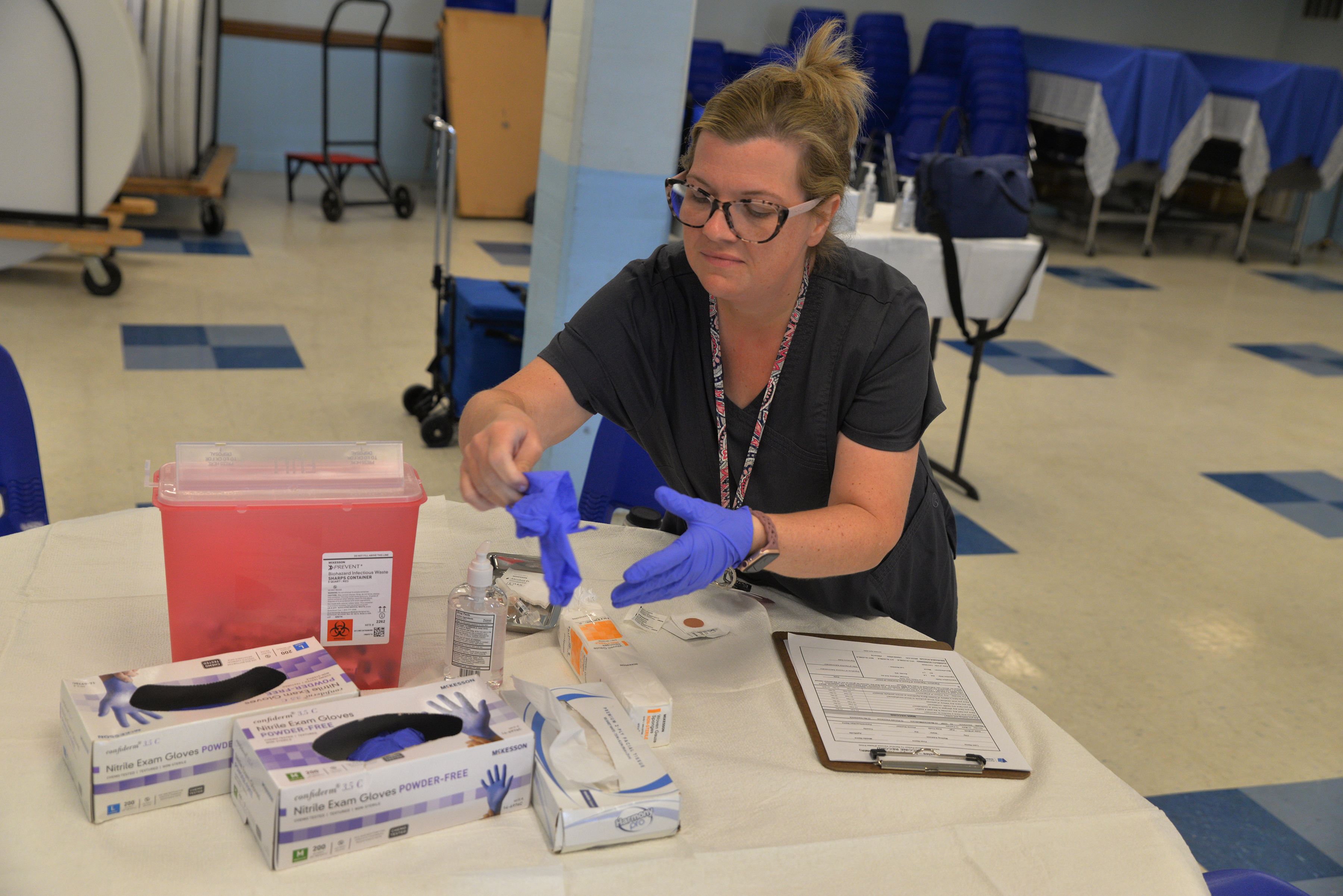
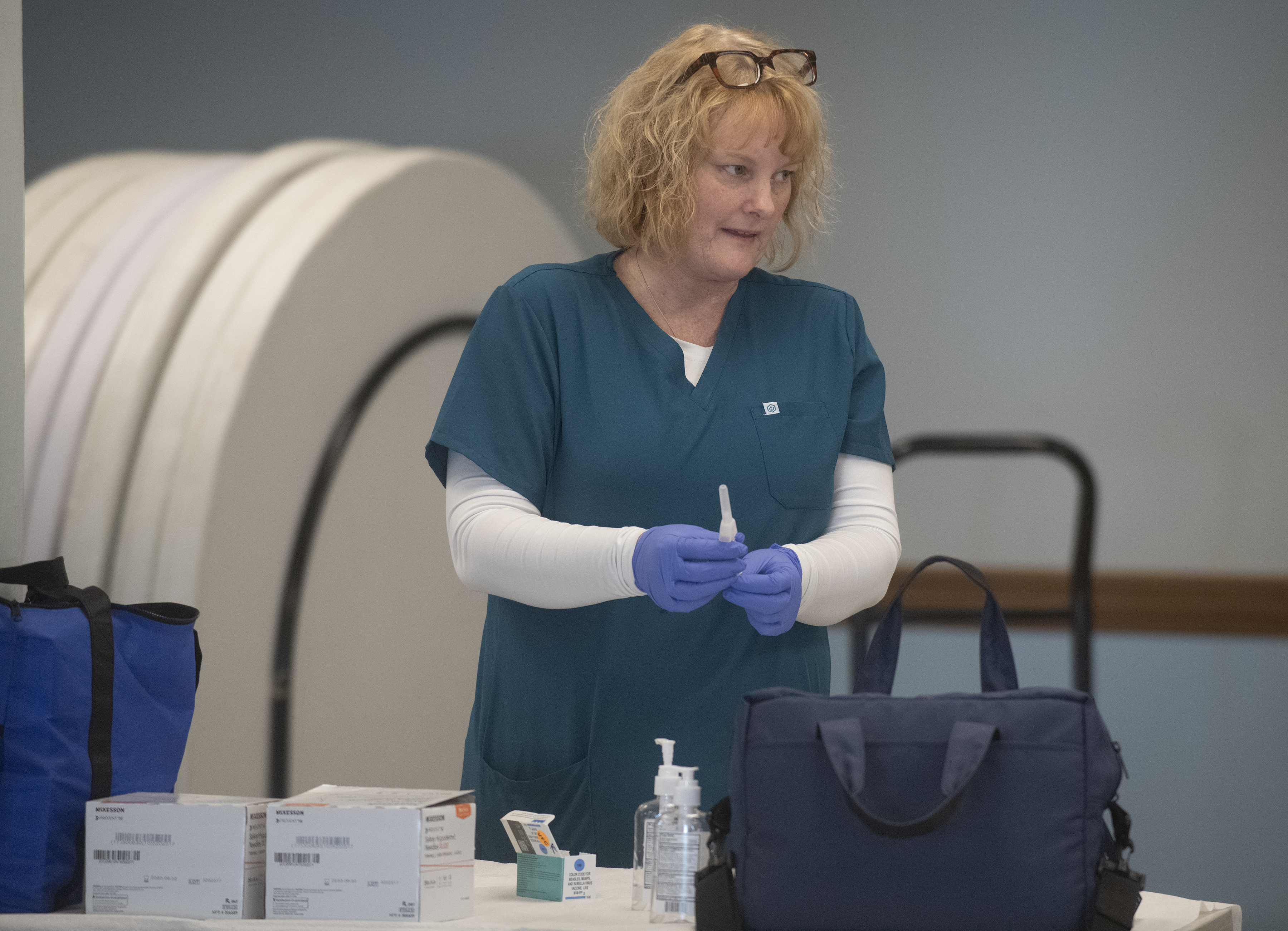
“There are so many people who maybe don’t approve of vaccines that we don’t want to bring any negative attention to the clinics, so it’s just a word-of-mouth type of clinic,” said Beth Smith, a nurse whose worked for the state health department for 27 years and was at Tuesday’s clinic administering shots.
Beth Smith was one of four nurses who administered measles vaccinations on Tuesday to Amish community members inside a fire station in rural Lancaster County. Bob Williams / For The Inquirer
The Eagles host the Dallas Cowboys at 8:15 p.m. on Monday at Lincoln Financial Field. Here’s what you need to know about the matchup:
When the Eagles have the ball: It’s bad vs. bad when the Eagles offense faces the Cowboys defense. We’re talking two of the worst units in the NFL on their respective sides of the ball. The statistics paint a horrid picture. The Eagles are last in yards per play (4.4), second to last in expected points added (EPA) per play, and third to last in success rate. The Cowboys are second to last in yards allowed (382.5) and EPA per play, and have the fewest takeaways with three. This isn’t just a cherry-picking of numbers. Both groups rank near the bottom of the league in most categories.
Neither passes the eye test either. Dallas went from a historically poor defense last season to not much improvement, if at all. Christian Parker, formerly of the Eagles, was hired to install Vic Fangio’s tested scheme, but the first-time coordinator has struggled. Turns out it’s much harder to run someone else’s system than one you’ve innovated, as the Eagles have learned with neophyte offensive coordinator Sean Mannion. In all fairness, both coaches deserved a grace period, not only to learn on the job, but to gather pieces that are best suited to employ their schemes. But Mannion, especially, has been dealt one blow after the other, most recently with the loss of quarterback Jalen Hurts after blood clots formed in his lungs.
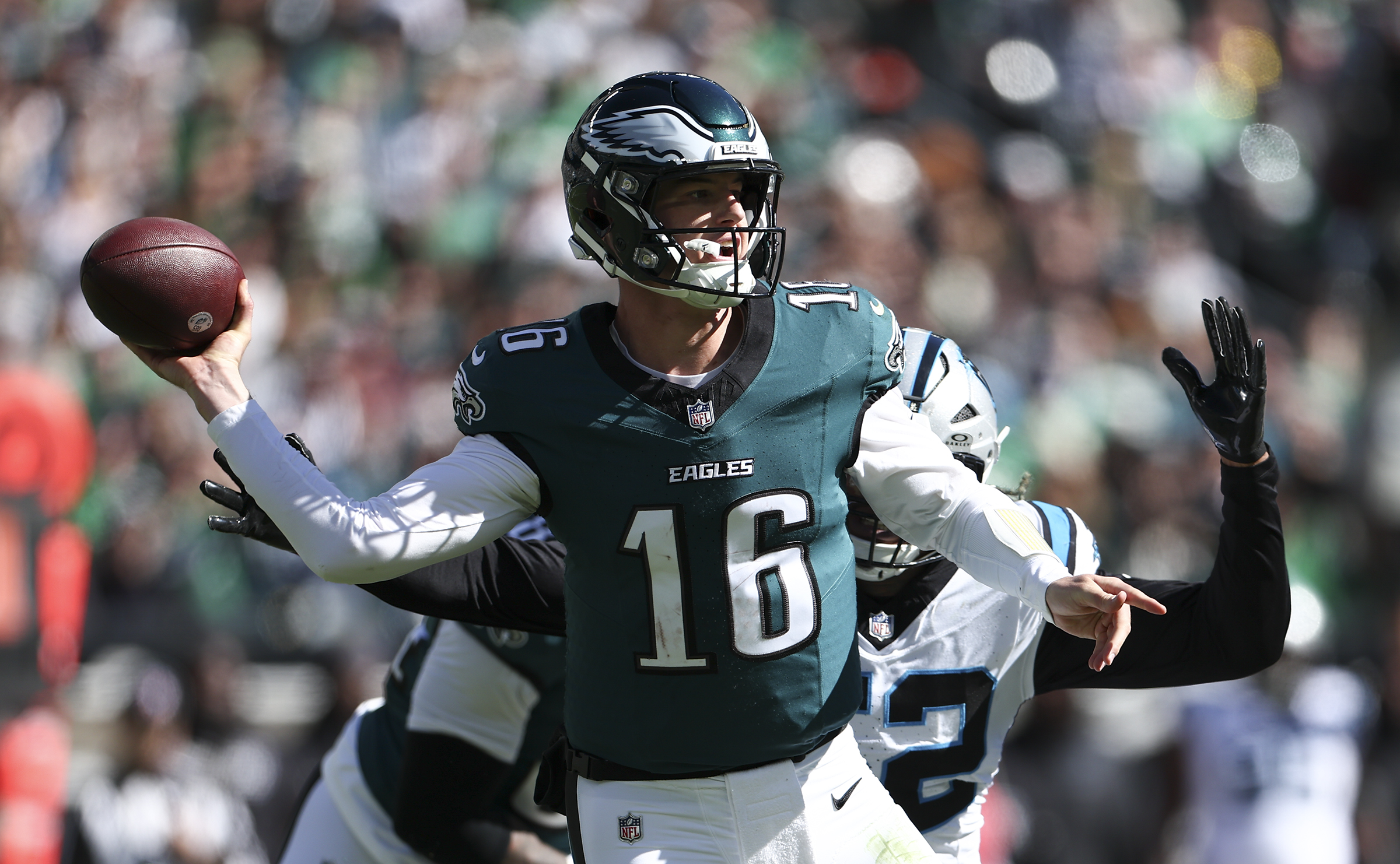
Tanner McKee will start consecutive games for the first time in his NFL career. Monica Herndon / Staff Photographer
Tanner McKee wasn’t great in his first start under center last week, but he looked better than he did during the preseason and should benefit from a full week of preparation. He won’t have top receivers DeVonta Smith (hamstring) and Dontayvion Wicks (ankle), however, and that could be crippling even with running back Saquon Barkley (hamstring) slated to return after a two-game absence. Mannion has been unable to call a cohesive game plan or make necessary in-game adjustments, and the mishmash of his new concepts with the Eagles’ existing ones has led to a disjointed mess. He said the offense is “totally fixable,” but with coach Nick Sirianni retaining him as play caller, and Mannion saying that any changes made this past week weren’t “earth-shattering,” the prospects look dim.
That may just be gamesmanship, but it actually makes sense to lean into the outside zone game against a Cowboys run defense that is susceptible on the edges. It also makes sense to run away from interior linemen Quinnen Williams and Kenny Clark. Dallas has allowed an NFL-worst 149.8 yards on the ground, but advanced analytics (21st in EPA per rush) suggest that stopping the run hasn’t been as much of an issue as defending the pass. The Cowboys are last in the league in EPA per pass.
Rookie Makai Lemon could be in line for a breakout game against a shaky Cowboys secondary. Yong Kim / Staff Photographer
Parker has brought Fangio’s match zones to Texas, but there have been clear communication breakdowns that have led to busted coverages. We’ve even seen the Eagles have trouble executing it this season with new faces in the secondary. Mannion should try to exploit the Cowboys’ miscommunications in pass-offs with motions and bunch sets. He should also go after cornerback DaRon Bland, who hasn’t adapted well to the changes. The arrival of counterpart Joey Porter Jr. after a trade with the Steelers only reinforces that McKee should throw at Bland. Parker may ride with more man coverage against a depleted receiver group. Mannion should counter with rub routes to get Makai Lemon open. This could be the breakout game for the rookie.
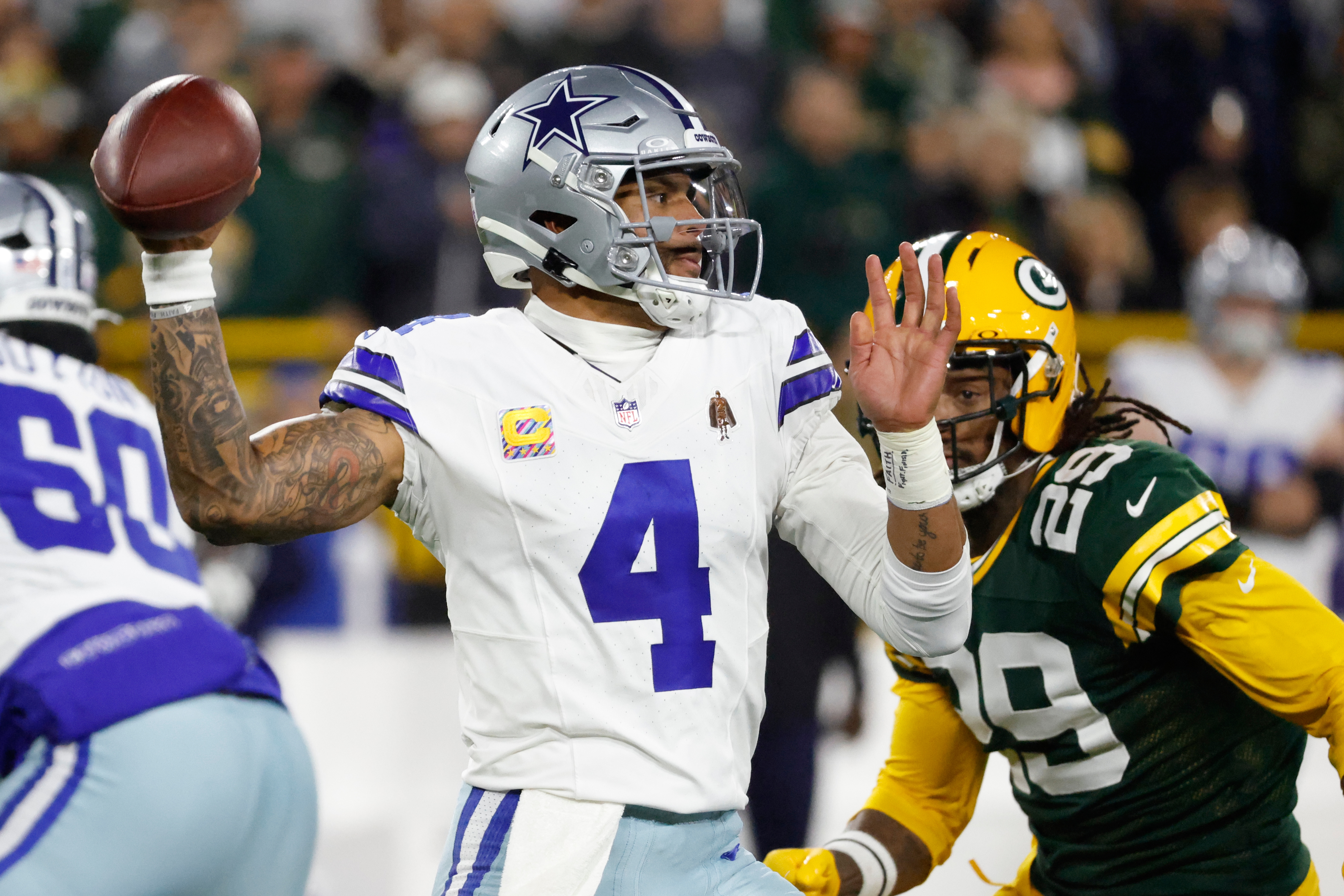
When the Cowboys have the ball: Dallas’ offense hasn’t been as potent as in recent seasons. But that doesn’t mean Dak Prescott and Co. should be underestimated. The quarterback is still one of the quicker throwers in the NFL, and he still has superior receiving talent in CeeDee Lamb and George Pickens. But having Prescott drop to throw more than 40 times a game has made the offense unbalanced and at times predictable. That’s made it easier for opposing defenses to pressure Prescott and he has hurried passes, particularly in back-to-back subpar outings.
Dak Prescott played poorly in the Cowboys’ most recent loss to the Packers. Mike Roemer
I could see Cowboys coach Brian Schottenheimer trying to commit to the run early against the Eagles. Fangio’s run defense has allowed 119.3 yards a game, and has worn down late in contests partly because of lopsided time of possession. But it still ranks seventh best in the league in EPA per rush. Defensive tackles Jordan Davis and Jalen Carter continue to do the dirty work inside despite the Eagles having the lightest box rate in the league (64.1%). Dallas running back Javonte Williams is averaging more than a full yard per carry (3.7) less than he did a season ago (4.8), but he’s a physical runner, especially if he rushes north to south behind guards Tyler Smith and Tyler Booker.
And yet, it makes sense for Schottenheimer to attack an Eagles’ pass defense that has one of the least productive rushes in the league. It ranks 29th in pressure rate and a more damning 32d in quick pressure rate, which indicts the D-linemen more than anyone. Carter has essentially been the only one up front to win at the point of attack and that was just against the Jaguars. The Cowboys’ O-line strength is up the middle. Their tackles — Tyler Guyton on the left and Terence Steele on the right — have allowed more combined pressures (32) than any combo. But the Eagles are down Nolan Smith Jr. (concussion) and possibly Jonathan Greenard (questionable with an ankle). Jalyx Hunt (ankle/knee) should be back, but the Eagles are thin on the edge.
Fangio has increasingly gone against his tendency not to blitz. He sent extra rushers 35.7% of the time last week vs. the Panthers. Some of the pressures worked, others did not and exposed linebacker Zack Baun on a crucial third down in the second half. Prescott has long been one of the best against the blitz, but that wasn’t the case against the Buccaneers and Packers in the last two games. If Fangio can disguise his coverages and change the picture post-snap, it could give the rush the time it needs to get home.
The Cowboys might decide to pick on safety Andrew Mukuba (left). Yong Kim / Staff Photographer
The Eagles have been snake-bitten vs. under-center play-action passes. Offenses have preyed on safety Andrew Mukuba’s aggressiveness in particular. Inside linebacker Jihaad Campbell sometimes hasn’t gotten enough depth when he’s had to drop into the hole. Dallas employs a heavy 11-personnel shotgun operation, which should limit slot cornerback Cooper DeJean’s snaps at safety. He hasn’t been at his best in the dual role. Lamb doesn’t line up inside as much as he used to, but DeJean will see him on occasion. Lamb is third in the league in catches (48) and receiving yards (577) and has four touchdowns. Pickens (33 catches for 428 yards) hasn’t been as dynamic as he was a year ago, but outside corners Quinyon Mitchell and Riq Woolen will have their hands full.
Extra point: Dallas still has strong special teams, but its cover units have been leaky at times. Returner Kavontae Turpin (27.3 yards on kicks and 11.1 yards on punts) is always a threat to hit the jackpot. The Eagles have been decent in the return game. Punt returner Britain Covey ranks fourth in the league at 12.6 yards. But Michael Clay’s special teams, after four weeks as the soundest unit on the team, have made two untimely mistakes in allowing a devastating kick return and then a blocked punt.
Kicker Jake Elliott has had a bounce-back season, though, and has yet to miss a kick. Cowboys kicker Brandon Aubrey has three missed field goal attempts, but two were blocked from 58 and 62 yards, and a 65-yarder steered wide left. He always has enough leg, even away from AT&T Stadium.
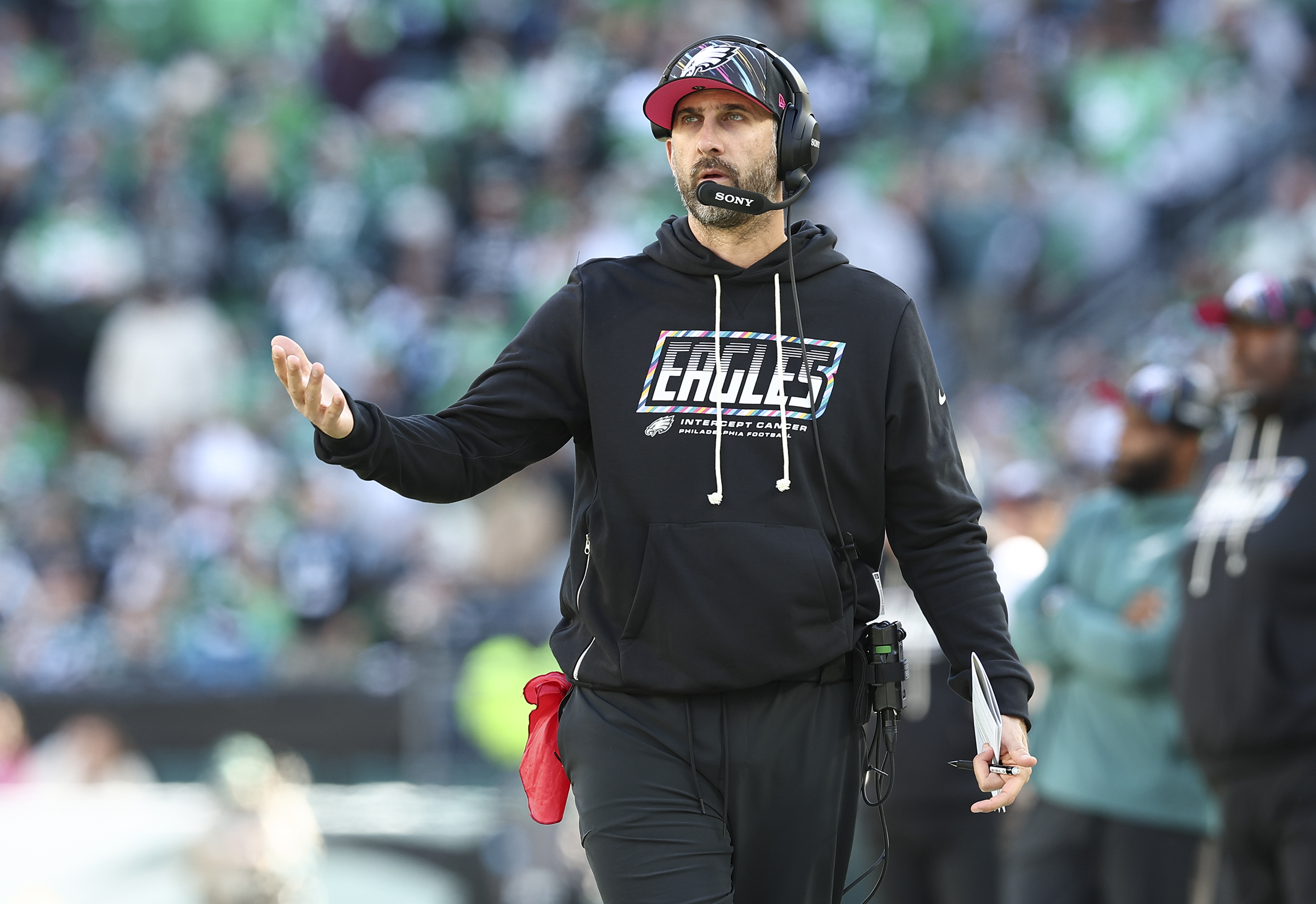
The Eagles have continued to play hard for Nick Sirianni. Monica Herndon / Staff Photographer
The Cowboys defense showed some positive signs last week in Green Bay. Parker is likely looking at the Eagles offense as a chance to build some momentum. Mannion should feel the same from the other side. But his offense is shorthanded again and McKee will need all the help he can get. I have an odd feeling the Eagles will keep this one close. We’ve seen it in each of the previous three games despite all the injuries. How much longer can Sirianni keep his players focused on the task at hand? He’s running out of time. I think they still have fight.