Tag: Weekend Reads

  • Why no one had a better summer than this Betsy Ross reenactor

    Why no one had a better summer than this Betsy Ross reenactor

    Her loose silver locks, twinkling blue eyes, and jovial smile have surely met your gaze at least one time this summer. You may have seen her likeness plastered to the side of a bus, on a billboard outside the Fashion District in Center City, or, if you’ve been lucky, you’ve seen all 4-foot-9 of her in person.

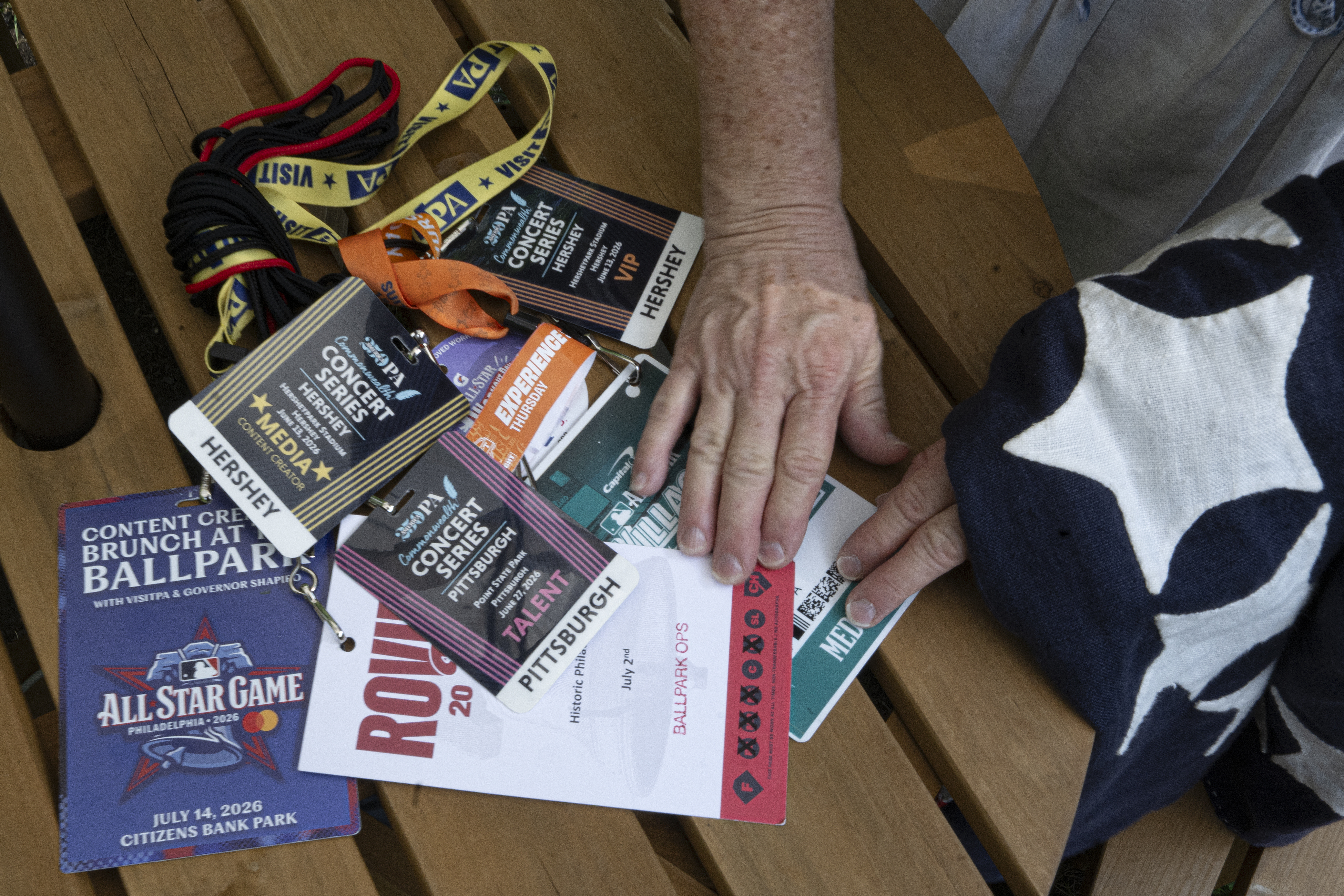
    Carol Spacht, 70, has played Betsy Ross in the Philadelphia area for more than 30 years, but she’s never had a summer like this — one hosting rock concerts, strutting down red carpets with star athletes, and firing T-shirts into the sky from cannons.

    A Visit PA advertisement in Center City featuring Carol Spacht as Betsy Ross.Visit PA

    Betsy’s packed summer started with a kooky idea by tourism executives and representatives from some of the marquee events. To make the 250th summer really pop, Visit PA, the state’s tourism bureau, needed to stamp each summer event with something uniquely Pennsylvania. So it called upon Spacht as Betsy and Bill Robling, as Ben Franklin, as well as other recognizable Pennsylvania characters to become the state’s summer “playmakers” — essentially, hype men (and women) to appear at each big event.
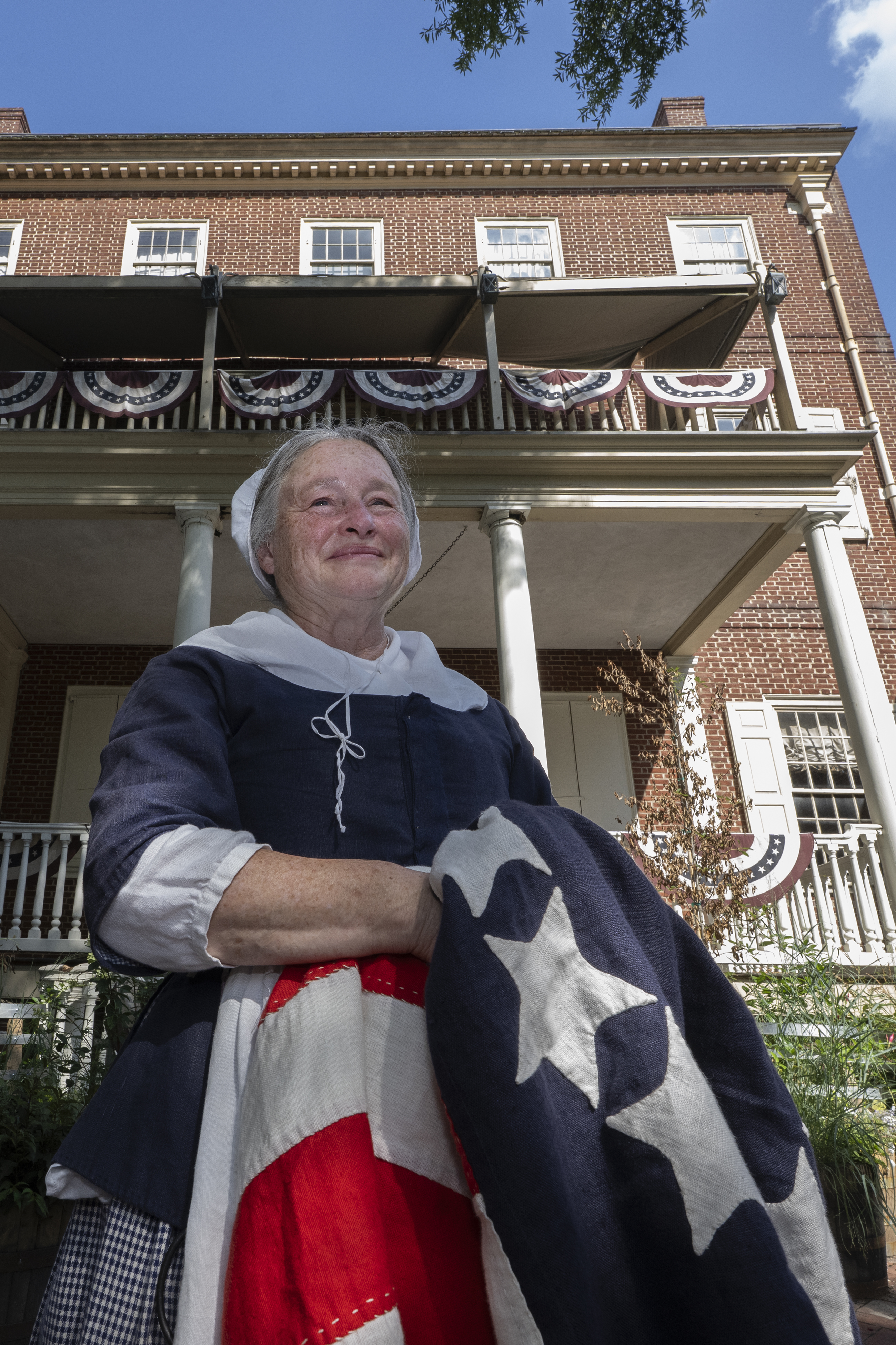
    Carol Spacht, who has portrayed Betsy Ross in Philadelphia for more than 30 years, poses for a portrait at City Tavern on Aug. 6, 2026. During Philadelphia’s Semiquincentennial summer, Spacht participated in celebrations surrounding events including the NFL Draft, MLB All-Star Game and a statewide free concert series, checking several longtime bucket-list experiences off along the way.Jose F. Moreno / Staff Photographer

    Along the way, Betsy/Carol explored new cities, tried new sports, conquered some fears, and even kindled a brief but unforgettable summer romance.

    Turns out that, even after more than 250 years, there are still plenty of new experiences to pursue.
    Carol Spacht, who has portrayed Betsy Ross in Philadelphia for more than 30 years, poses for a portrait at City Tavern on Thursday, Aug. 6, 2026. During Philadelphia’s Semiquincentennial summer, Spacht participated in celebrations surrounding events including the NFL Draft, MLB All-Star Game and a statewide free concert series, checking several longtime bucket-list experiences off along the way.Jose F. Moreno / Staff Photographer

    Since Betsy/Carol had a summer like no other, The Inquirer asked the Philadelphia celebrity to tell us about her top moments as the face of the United States’ 250th birthday celebration in Pennsylvania.

    Where does Betsy end and Carol begin? After 30-plus years, even she couldn’t quite tell you anymore.

    Betsy/Carol’s nine most memorable experiences this summer:

    Tried a new food

    It began with a lighthearted scuffle at an event they called the NFL Draft at Acrisure Stadium in Pittsburgh. On the concrete banks surrounding the field, on which the men in elaborate frocks romp and tumble, I found myself engaged in heated discourse with a man who calls himself Pittsburgh Dad.

    He seemed to think that only experiences in Pittsburgh were civilized.

    “You put Cheez Whiz on hoagies!” Pittsburgh Dad mocked. “I’d be happy to introduce you to a Primanti’s sandwich.”

    This was my first jaunt to Pittsburgh, but Dr. Franklin and I entirely disagreed with him. We explained that Philadelphia had much higher civilization. The cheese and steak combination is a wondrous one!

    But, resolved to maintain an open mind, Dr. Franklin and I ventured out that eve to Primanti Brothers to indulge.

    The establishment bore an aroma not dissimilar to the scent of the rations the British offered my second and third husbands in prison. Perhaps some of these provisions were past their prime.

    Nevertheless, I unwrapped my meal, beef twixt bread, without prejudice. I was dismayed to find the contents pouring out all over. I was certain these victuals wouldn’t fit evenly in my mouth. Nevertheless, I attempted a bite.

    Immediately, I noticed the meat was covered in small sticks of potato that appeared to have been fried. The meal tasted of nothing, save wet potato and grease — simply vile.

    I must speak plainly, I am decidedly no yinzer, as the Pittsburgh folk call themselves. I believe I’ll abide by cheesesteaks as my provision of choice forevermore.

    Made a new friend

    Weeks later, I ventured to Hershey, Pa. That eve, Joan Jett and the Avett Brothers would perform splendidly at Hersheypark for the America 250 PA Commonwealth Concert Series. ‘Twas a most delightful occasion and the venue smelled of chocolate! Delectable!

    But my day’s peak came about hours prior, around midday, when I met a young woman named Cat Janisko. Together we were meant to capture moving portraits of ourselves enjoying the park for, as she explained to me, content for the Instagram. I had never traversed this village known as the Instagram, but being a woman of faith and deferential to my younger counterparts on these matters, I followed Ms. Janisko’s lead.

    She wished to journey toward an enormous steel contrivance she called a roller coaster. I instantly bristled in apprehension.

    When I looked to the top of it I glanced the fastest carriage I’d ever seen. It had no top, no horses and twirled along iron rungs. It seemed to defy all gravity. That bewigged fellow from England, Sir Isaac Newton, would have surely been confounded at the sight of it.

    “No. no. no,” I stated plainly.

    I felt deeply elderly in that moment.

    But then I spotted a procession of rather immobile horses encircling a festooned pole. ‘Twas known as a carousel, I learned. That seemed fitting, and so we embarked.

    It had been centuries since I’d last mounted a steed, so my approach was less than dignified, but Ms. Janisko kindly offered a hand and together we rode, laughed, held a hearty discourse, and took pleasure in our budding fellowship.

    Hosted a merry gathering, or, as the colony’s youths call it, a rager

    Upon my return to Pittsburgh, I was advised to make for a promontory of sorts at a fork in the Ohio River — the yinzers called it Point State Park. That eve the rain was coming down with much force.

    A company of musicians known as Third Eye Blind and a gentleman of song by the title of Nelly were meant to entertain the patriots that eve, the final performance in the America 250 PA Commonwealth Concert Series. I was tasked with introducing the fine performers.

    I knew not of these songsters save that Mr. Nelly often remarked on being duly overheated in his jolly ditty “Hot in Herre.”

    I stepped upon the stage and was rightly engulfed in lights of red and blue. I had no notion candles could shine in such hues.

    Upon scaling the stage and taking my position in the center, I unfurled my small blue writing book and addressed the crowd.

    Carol Spacht as Betsy Ross giving opening remarks at a Nelly concert in Pittsburgh.Beth Anne Spacht

    “Tonight, I have been given the honor to help to celebrate the legacy of the country right here in Pittsburgh,” I bellowed, concluding with a rowdy “Huzzah!”

    Being this was the last performance of the series, I beseeched the audience to “give me another huzzah!”

    They obliged most graciously.

    Fired a weapon of war

    Back in my homestead of Philadelphia, I was presented with a most pleasing opportunity to fire a weapon from the grounds of Citizens Bank Park after the Philadelphia Phillies rightfully bested the Pittsburgh Pirates.

    Mere moments before Dr. Franklin and I were meant to take the field, we were handed each a weapon and asked to engage in a few practice shots.
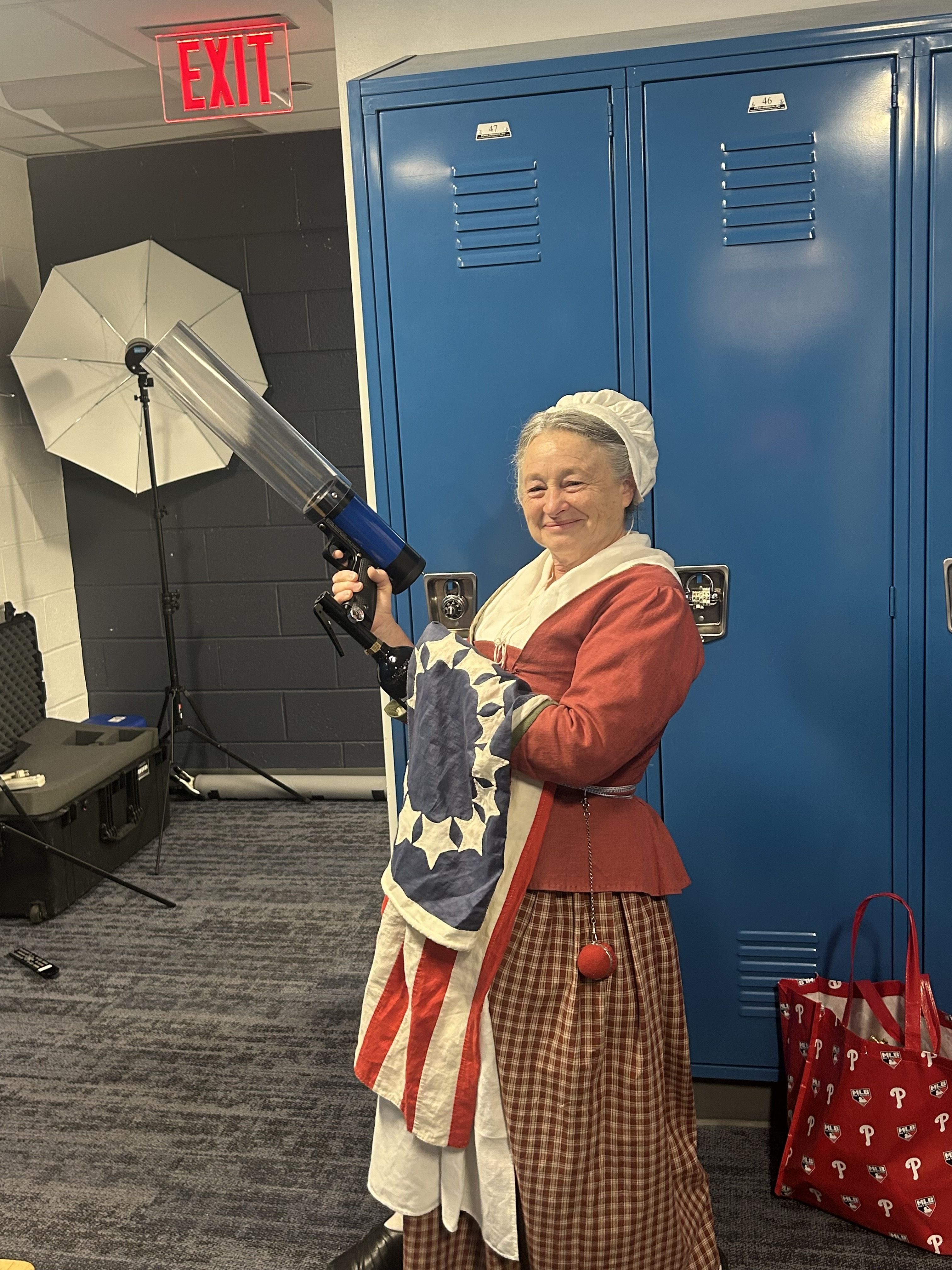
    Carol Spacht as Betsy Ross poses with the Phillies T-shirt cannon.Mandy Tuttle

    In my prime, I fashioned many a musket cartridge for our fine patriot men on the battlefields of the Revolutionary War. But this munition was decidedly softer and likely to inflict far fewer casualties.

    The infantrymen with the Philadelphia Phillies presented me the cannon, but feared the “kickback” would be too much for my slight frame, they said. Pish posh, I decreed. After more than 250 years, I am rather sturdy.

    I grasped the barrel of the weapon, drew a lever to pressurize the chamber, and pulled the trigger. The ammunition shot to the wall.

    “Wow!” I exclaimed.

    Not even a needle and thread could be so tantalizing.

    I took to one corner of the field, Dr. Franklin to another, and Phil and Phillis, the Philadelphia Phillies’ homegrown militia members, took to the other corners.

    Carol Spacht as Betsy Ross shoots a Phillies T-shirt cannon.Mandy Tuttle

    I aimed my weapon high, but my munitions only reached the stadium’s second tier. Dr. Franklin reached the third but kindly refrained from boasting.

    Carol Spacht as Betsy Ross on a Jumbotron at Citizens Bank Park shooting a Phillies T-shirt cannon.Mandy Tuttle

    Soon after this, I again encountered Phil and Phillis, the Phillies’ twin mascots. I confided in the pair that my munitions only traveled to the second tier. They kindly shared a coveted privity. The longer a marksman pressurizes the chamber, the higher the munitions travel. To return the kindness, I gave the pair a few pointers on their curtseys.
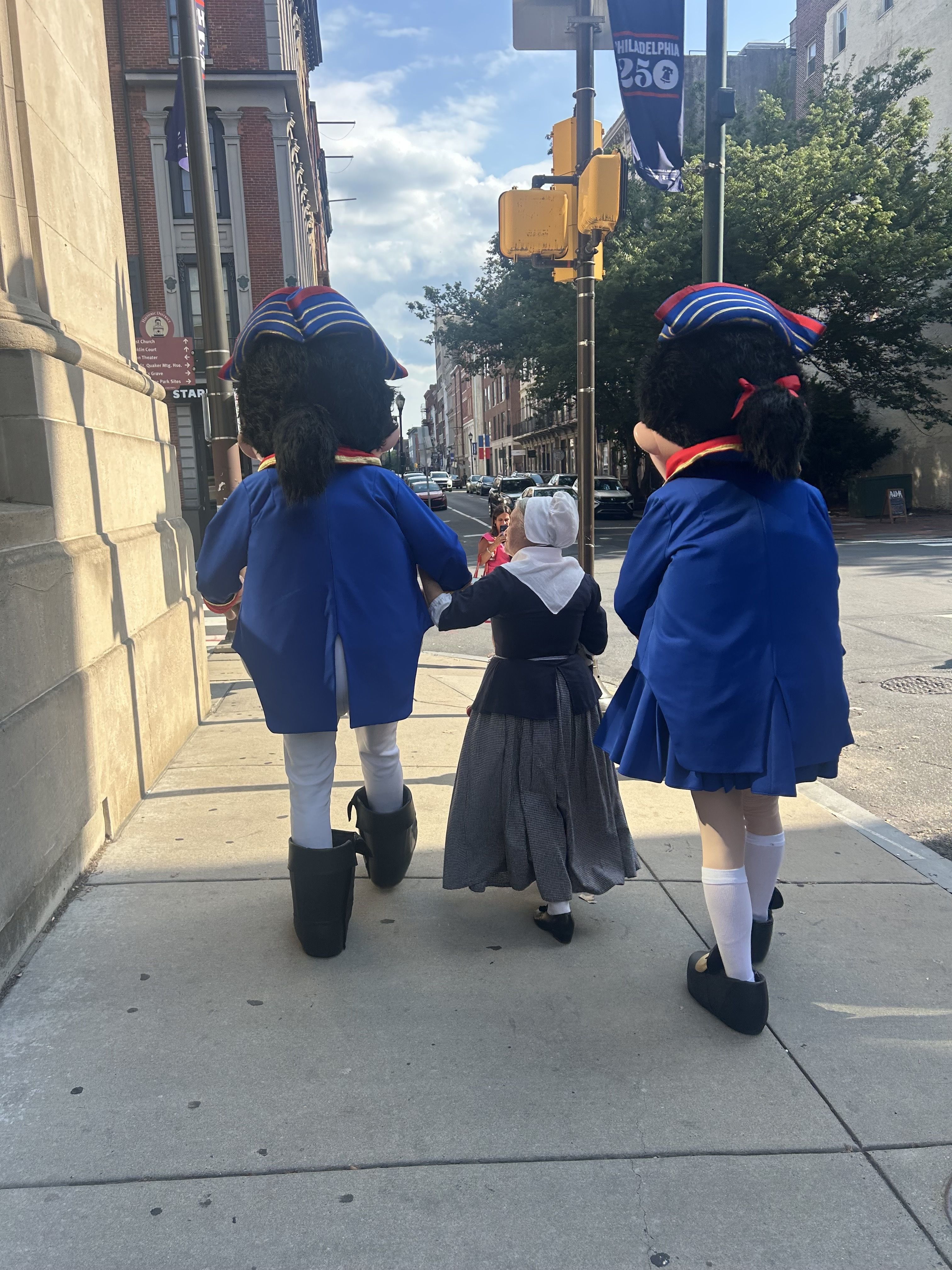
    Carol Spacht as Betsy Ross with Phil and Phillis in Philadelphia.Mandy Tuttle

    Danced on the dugout with the Philly Phanatic

    That same eve, I delighted in another new venture that I’d long awaited. Dr. Franklin and I were asked to dance beside the Phillie Phanatic on a section of the battlefield they call the dugout.

    The Phillies infantrymen escorted Dr. Franklin and me through a tunnel and onto the field. We took our stations on either side of the Phanatic as a ditty known as “R.O.C.K. in the U.S.A.” by the fellow John Mellencamp graced our ears.

    Suddenly, the Phanatic was holding some sort of large blue fiddle and strumming its strings. He handed it to Dr. Franklin who tried to play it with his teeth. It seemed to me most insensitive of him to boast a full set of teeth when our esteemed George Washington had so few, but I digress.

    Soon, the Phanatic handed me the fiddle. I tried to play it rightly but found the instrument rather cumbersome, so I stood it upright and spun it round. It was nearly as tall as I am!

    “Go Betsy,” a kind fellow in the audience hollered.

    I pray no one informed the meeting of my transgression — Quakers aren’t meant to dance — but, oh, ‘twas such a delight!

    Learned a new sport

    During a series of events in Philadelphia that I’m told was called MLB All-Star Week — something regarding a stick and a ball — ‘tis of no consequence to me — I chanced upon a few young ladies, each one clutching the ends of two ropes.

    I approached the fine young women from Philly Girls Jump, a group whose effort is to spark kinship among girls through sport.

    “May I please try,” I inquired.

    Upon my first attempt at this game they called “double Dutch” I stepped into the turning ropes and immediately became entangled. Pity. ’Twas quite unbecoming.

    But one of the young patriots came to my aid.

    “Dear Betsy,” the woman whispered. “Just jump in a steady rhythm. Don’t do anything else. We will do the rest.”

    So I gathered up my petticoats, draped my flag over my arm, and attempted anew.

    I leaped and leaped and the ropes flew under me, around me, and on top of me. ‘Twas most joyous an excursion.

    Feeling venturesome, I endeavored to hop in a circle as the ropes turned. Most emboldened, I hopped clockwise, and then counterclockwise.

    A marvelous little pastime it was!

    Conquered a fear

    The infantrymen of the Philadelphia Phillies invoked a new task for me amid MLB All-Star Week. They inquired about my interest in singing.

    I am no songstress and have deftly avoided the activity. But I was told this style of singing, known as karaoke, would involve another voice and so I felt quite less vexed by the task.

    Imagine my dismay when, during a practice, the man they called a disc jockey played me my song, “Philadelphia Freedom” by the lovely bespectacled gentleman Elton John, and all I heard was rhythmic cacophony, no second voice at all.

    I feared this would prove the most disastrous of calamities.

    To my horror, I soon learned this would not just be a singing performance but a singing competition among some performers, athletes, and myself.

    As the penultimate competitor, I steeled myself, graced the stage outside Citizens Bank Park with feigned dignity and self-assurance and addressed the spectators of the MLB All-Star Fan Zone.

    “Friends, my skill shall be with sewing. My skill is not with singing,” and so I beseeched: “Everyone must sing along.”

    To my sheer delight, I soon discovered they were just as unlearned of singers as I! But we muddled through joyfully.

    Next, a rather large gentleman named Jordan Mailata took the stage. I’m told he tumbles and romps in strange frocks in that game of football for the Philadelphia Eagles. He sang a ditty called “Eye of the Tiger” by a musical group known as Survivor.

    He performed most wondrously. (Only a few years ago, Mr. Mailata competed on a visual program known as The Masked Singer, broadcast through all 13 colonies and beyond! How marvelous!)

    Certainly, ‘twas no shock that he bested the competition, including myself, and was bestowed with the winning award.

    But, as soon as he grasped the crystal trophy, he gazed upon my likeness.

    “I’m actually going to give this to Ms. Betsy Ross because she did something incredibly brave,” he told the crowd.

    My heart warmed! Even in the depths of war, kindness does persist.

    Kindled a summer romance

    Following that triumphant turnaround on the karaoke stage, Mr. Mailata and I ventured elsewhere in the fan zone to greet some young colonists who fancy the ball and stick game.

    Before the young patriots could flank Mr. Mailata, I approached him.
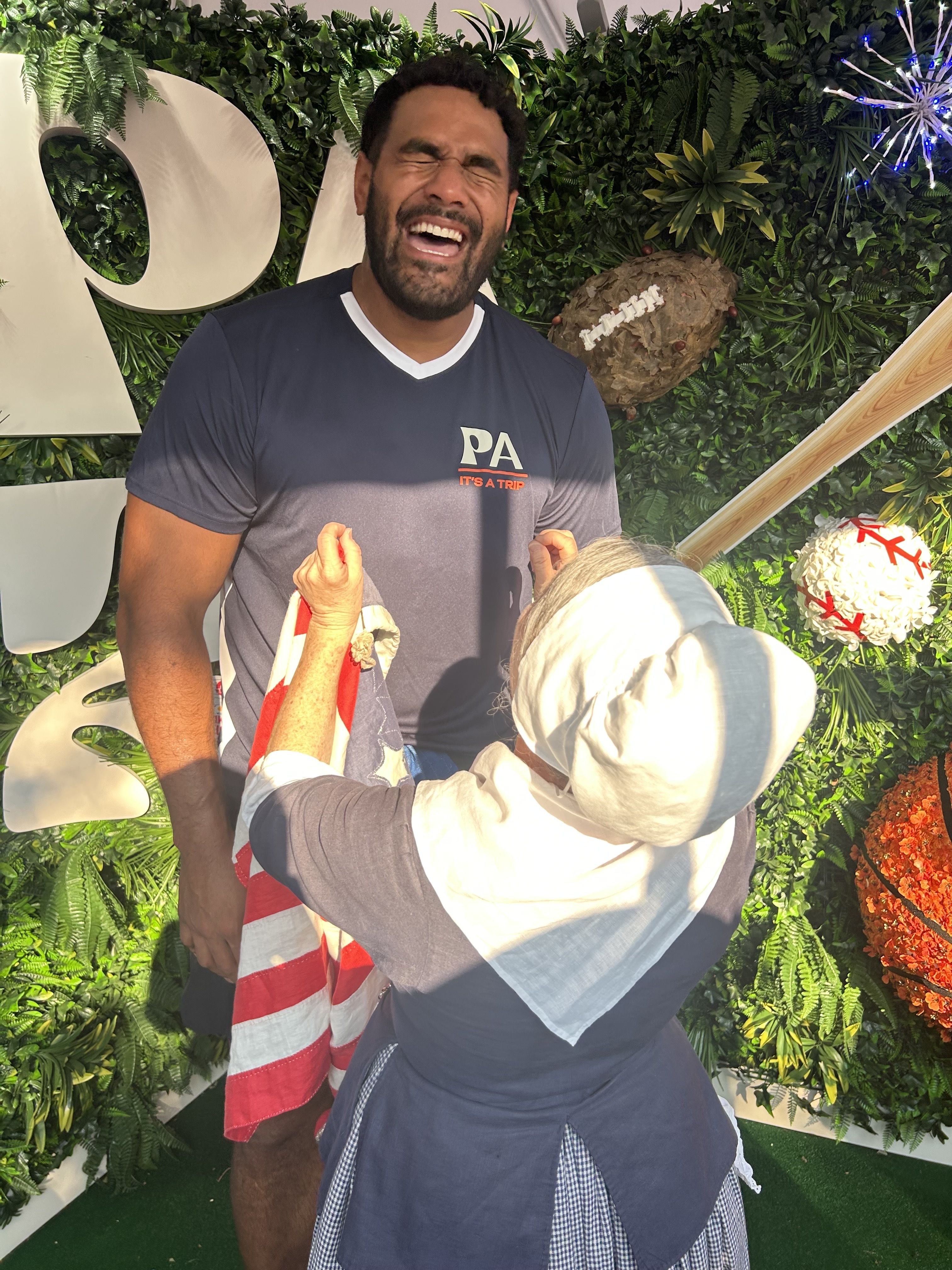
    Carol Spacht as Betsy Ross with Philadelphia Eagles offensive tackle Jordan Mailata.Mandy Tuttle

    I was eager to refresh him of the fact we’d encountered each other once before.

    When Mr. Mailata was a fresh Eagle years ago, I made a right blunder when I met him and called him a giant due to his stature. He firmly corrected me that he is no giant, he is an Eagle.

    His eyes lit up as I recounted the tale. We smiled and laughed and shared a warm embrace.

    ‘Twas a fleeting dalliance but one I shant soon forget!

    Had a celebrity moment

    On the verdant, dewy ground of Independence Mall, I was requested to participate in a celebration of this stick and ball game.

    A red carpet would stretch much yardage across the grounds and all the most skilled sportsmen would walk down. Before they went, I’d be permitted to journey down the carpet myself alongside a wild collection of enormous creatures known as mascots.

    I strolled the carpet bearing a flag alongside a lovely young woman named Mo’ne Davis, who also plays the ball and stick game — how marvelous that women may partake!

    We carried our flags side by side and were followed by the most outlandish collection of drummers, musicians, and acrobats bending their limbs every which way! Would it be awfully vain to say I felt like a right monarch?

    I had a chance to meet all the unusual creatures, many of whom were eager to show me their stars and stripes frocks. Mr. and Mrs. Met, clad in many a spangle, requested a portrait with me, as did Raymond of the Tampa Bay Ray and Rosie Red of Cincinnati, another woman in this sporting field. Women really can do anything these days! How remarkable!

    It was quite spectacular to have all eyes on me for a brief moment. I may have eluded many a history book, never having documented my greatest achievement, leaving historians to quibble for centuries, but I was pleased to find that it truly is never too late for a second act.

  • Philly workers celebrate ‘beauty of union solidarity,’ bemoan rising costs at Labor Day parade

    Philly workers celebrate ‘beauty of union solidarity,’ bemoan rising costs at Labor Day parade

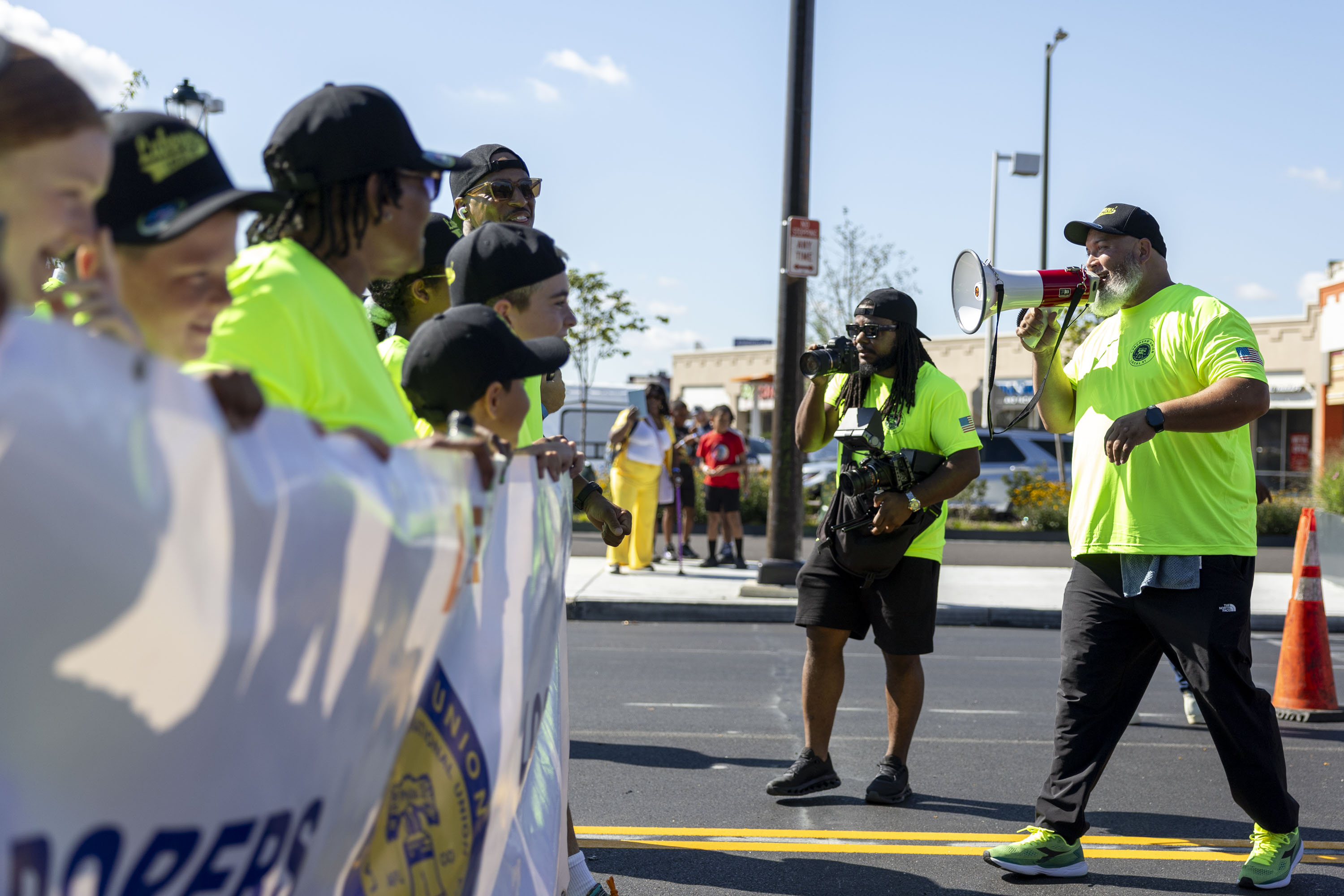
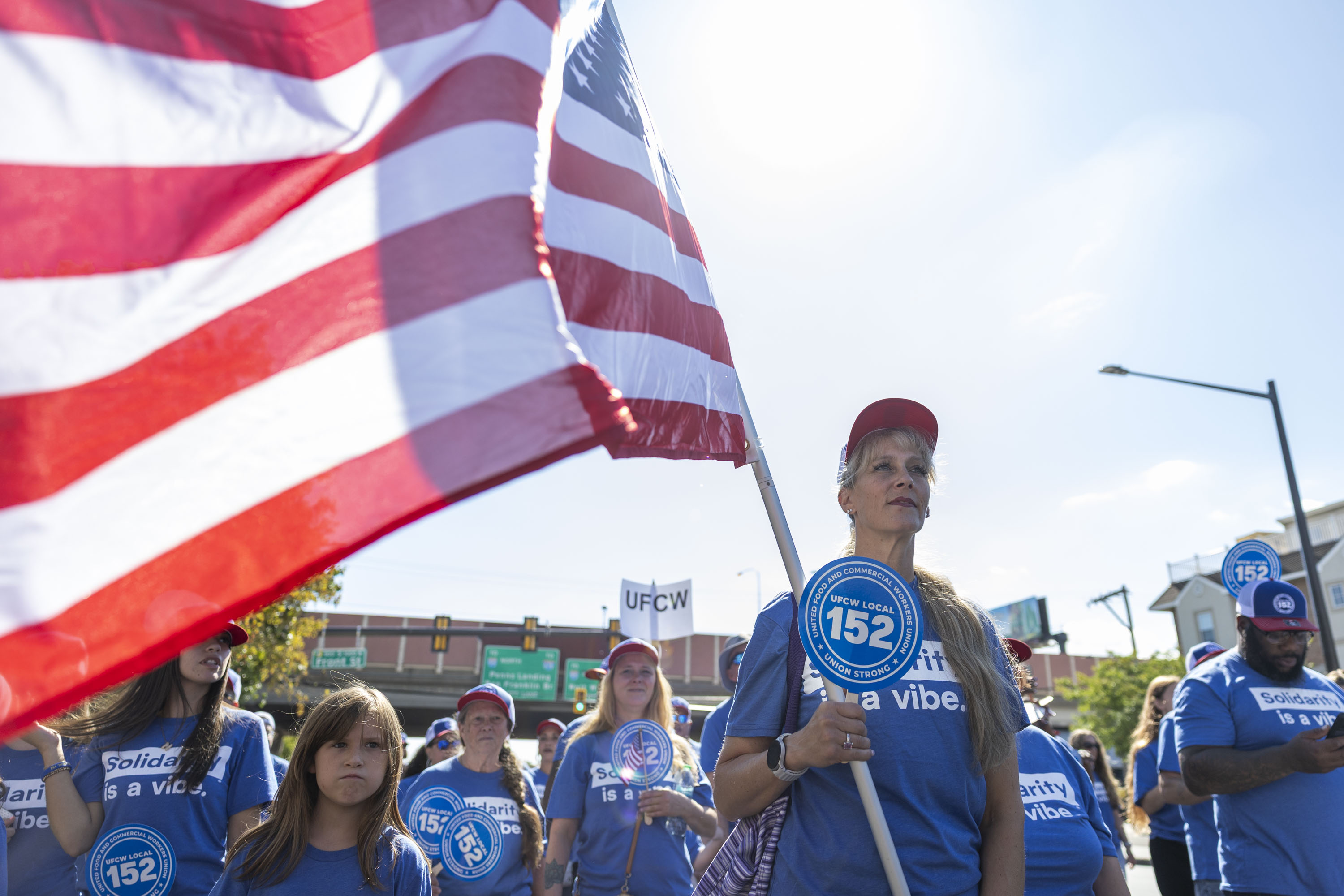
    For more than an hour, waves of union members and their families marched and chanted along a half-mile stretch of Washington Avenue late Monday morning, their steps amplified by the percussive thunder of drum line groups.

    Some could have easily opted to spend their Labor Day — balmy as it was, with blue skies and occasional tufts of cotton candy clouds — on a beach or at a barbecue, mused Wendell Young IV, president of United Food and Commercial Workers Local 1776, as he trekked past houses and storefronts in a blue T-shirt that bore the words “Solidarity is a vibe.”

    But Young said he thought anger over some of President Donald Trump’s policies — such as a controversial attempt to end collective bargaining rights for more than a million federal workers — had compelled many union members to instead take to the streets for the 39th Annual Tri-State Labor Day Parade.

    “He’s more interested in putting his name on buildings and arcs,” Young said, “than protecting the rights of workers.”

    Economic anxiety was a recurring theme throughout the parade, as it is across much of the U.S. Federal Reserve data in January showed that wealth inequality in the country had reached its highest level since 1989.

    Lois Crudele, of Brooklawn, with Local 152 of the United Food and Commercial Workers International Union, is holding up the American flag while walking with fellow union members during Monday’s parade.Tyger Williams / Staff Photographer

    “Workers in general are very concerned about cost increases across the board,” said Danny Bauder, president of the Philadelphia Council AFL-CIO. “Inflation keeps increasing [prices], and the job market is tight.”

    Nina Coffey, secretary and treasurer for SEIU Local 668, which represents 20,000 social service union employees in Pennsylvania, said members most often express concern about the “rising costs of healthcare, being able to put food on the table, as well as unregulated artificial intelligence that we’re facing.”

    Yet uncertainty did not overshadow what was an otherwise joyous day.

    Behind Coffey, on Washington Avenue near Fifth Street, SEIU members on a purple and gold float tossed candy to giddy children on a sidewalk, where handfuls of smiling onlookers waved and recorded with their phones.

    Bauder praised what he called “the beauty of union solidarity” — the communal lift that members experience when another union achieves a victory. He cited, as an example, the 1,500 unionized Peco workers who won raises and full retirement medical coverage after briefly going on strike in July, and hotel union workers who also secured wage increases after going on strike in June.

    During a rally before the parade, outside the Sheet Metal Workers’ Local 19 Training Center on Columbus Boulevard, city and state officials preached from a platform about organized labor’s enduring presence.

    “Philadelphia is a union town forever,” said city managing director Carlton Williams, who added that union workers have cleaned more than 150,000 city blocks under Mayor Cherelle L. Parker’s administration.

    Charlene Little (left) and Tanita Williams (right), of West Philadelphia, with SEIU Local 668, with their parade float.Tyger Williams / Staff Photographer

    Parker appeared briefly during the pre-parade gathering, then left abruptly.

    “The mayor was here and wasn’t feeling well. She will be fine,” Parker’s spokesperson, Joe Grace, wrote in a text message. “She is sorry to miss an important event for organized labor that she never, ever misses.”

    Parker later returned, and then attended two additional Labor Day events.

    Pennsylvania Lt. Gov. Austin Davis, who also addressed the assembled union members, noted that his father is a union bus driver in Pittsburgh.

    “I know what a good union job can do for a family. I’ve seen it,” Davis said. “And I think we’re going to continue to fight to protect that way of life here in Pennsylvania.”

    A recent Gallup poll found that unions have a 71% approval rating, a figure that was surpassed only in the 1950s and in 1936.

    The same poll showed that 47% of Americans want unions to have more influence than they currently do.

    But only 10% of U.S. workers are union members, according to the most recent data from the U.S. Bureau of Labor Statistics. That percentage is slightly higher in Pennsylvania, at 10.9%, and New Jersey, at 14.7%.

    Billy Williams, of Northeast Philadelphia, with Local 57 of the Laborers’ International Union of North America, is leading chants for his fellow union members.Tyger Williams / Staff Photographer

    Perception of unions improved during the COVID-19 pandemic — when nurses, bus drivers, and grocery workers were deemed essential — and has remained high ever since, Paul Clark, a professor of labor and employment relations at Pennsylvania State University, wrote in an email.

    As many Americans’ standard of living has fallen, and income inequality has grown more extreme, labor unions have appeared to many as the “only institution that could help working people win a bigger share of the wealth they were creating and that they deserved,” Clark said.

  • A stray bullet paralyzed a Philly woman from the waist down. Now she surfs, teaches, and advocates for accessibility.

    A stray bullet paralyzed a Philly woman from the waist down. Now she surfs, teaches, and advocates for accessibility.

    Amanda Parezo, a self-professed “beach bum,” can no longer get onto the sand or lay out a beach blanket on her own.

    The loose grains are “just impossible to navigate through” in a wheelchair, she said.

    Still, she seizes every opportunity to return to the Shore — an activity that has brought her healing since her childhood in New Jersey.

    Parezo loved spending time at the beach while growing up in New Jersey.Courtesy of Amanda Parezo

    Five years after a random shooting in Olde Kensington left her paralyzed from the waist down, she participated in “They Will Surf Again,” an adaptive surfing event in August in Wildwood, N.J. Designed for people with physical disabilities, the event was hosted by California-based nonprofit Life Rolls On and sponsored by Jefferson Health.

    Volunteers and friends helped her onto an adaptive surfboard that was wider and thicker for greater stability.

    The first time she participated in 2022, she was afraid of how her legs might shift while riding. But whenever she fell off the board, volunteers scooped her back up immediately.

    Parezo loved the feeling and energy of going fast in the wave. That sensory experience brought her relief as someone living with constant nerve pain.

    “You can’t even describe it. It just felt so good,” she said of the summer surf event.

    In the years since her life-altering injury, Parezo has had to take similar leaps of faith as she’s worked to rebuild her life.

    She now had to worry about how she would shower, use the bathroom, drive, and simply enter public spaces while in a wheelchair. An assistant professor of occupational therapy at Jefferson, Parezo was used to helping patients, not being one herself.

    “It was a lot of just mourning who I was before,” she said.

    In the process, she has become an accessibility advocate, competed in a pageant for women who use wheelchairs, and taken on adaptive sports from surfing to chair yoga.

    She says her former patients are her biggest motivators.

    “I think about them every day,” said Parezo, now 40. “I haven’t forgotten a single one of them that I’ve treated in outpatient.”

    Amanda Parezo was paralyzed after a stray bullet hit her spine. She is now in a wheelchair.Alejandro A. Alvarez / Staff Photographer

    The injury

    On the evening of the shooting in 2021, Parezo, then 36, had just finished playing a game of kickball at Hancock Playground in Olde Kensington with her friends. They were sitting near the benches, chatting and packing up, when gunshots from a nearby shooting suddenly rang out.

    As her teammates ducked for cover, she felt a stinging sensation enter the right side of her body, just below her ribs. Parezo immediately fell backward as a wave of numbness swept from her hips down into her toes.

    In that split second, a series of images flashed through her mind.

    She saw patients she had treated as an occupational therapist. She saw herself sitting in a classroom, studying a PowerPoint slide about spinal cord injuries. And she imagined herself in a wheelchair.

    “There was no doubt in my mind that I had a spinal cord injury, and I knew it was bad,” she said.

    She screamed in pain as everything the stray bullet touched started to dysfunction. Authorities have not identified the shooter.

    At Temple University Hospital, she would be diagnosed with a complete spinal cord injury, leaving her paralyzed from the waist down.

    “You don’t think you’re going to have to spend the rest of your life in a wheelchair the next day,” Parezo said.

    Although she knew a yoga studio near her Old City home offered chair yoga, she was intimidated by the idea of going. She worried she would feel upset seeing women whose bodies looked like hers before her injury, wearing the outfits she once wore and attending 6 a.m. yoga classes, as she once had.

    Then she attended an open house for the studio.

    “They were just phenomenal women,” she said.

    Now, she goes every Monday and is good friends with the instructor.

    Parezo said she is grateful for the people in her life who encouraged her to get out of bed and do things.

    She thought about a patient who had been shot in the head but continued coming to her clinic every other day for occupational therapy. If the patient could remain motivated after such a traumatic experience, Parezo thought, she needed to be motivated, too.

    “I am just so grateful for my background, and just the irony of being on the other side of things,” Parezo said.

    Advocating for accessibility

    Parezo frequently encounters accessibility challenges in her daily life.

    But she has turned those stressful moments into opportunities for advocacy, through posting to social media and reporting issues around the city to 311, the non-emergency contact center.

    When Parezo arrived at a SEPTA subway station in 2024, she discovered the elevator down to the street level was broken.

    The station had three flights of stairs, but no signage indicating that the elevator was out of service. SEPTA’s app also hadn’t marked the elevator as inoperable.

    She posted a video to Instagram of her stuck in the station, in tears, frustrated by the lack of accessibility. That post went semi-viral on Instagram and caught the attention of SEPTA, who reached out for a conversation about her concerns.

    “As we continue work to improve accessibility across the system, SEPTA is committed to working closely with riders to help them navigate outages and other challenges,” a spokesperson said in a Friday statement.

    SEPTA recently began its latest accessibility improvement project at 11th Street Station on the L, and will invest more than $700 million to make Metro and Regional Rail stations accessible.

    Her friend Katie Adams recalls seeing Parezo bump off curbs and nearly fall into traffic because of obstacles on the sidewalk.

    “Never in my wildest dreams [did I think] anyone in this situation would turn this around and make this not a life-defining moment, but a lifelong work and advocacy,” Adams said about Parezo.

    In July, Parezo represented the state of Pennsylvania in the Ms. Wheelchair USA pageant.

    In July, Parezo represented the state of Pennsylvania in the Ms. Wheelchair USA pageant.Courtesy of Amanda Parezo

    She was named first runner-up and received awards for education and inspiration. She also serves on the Pennsylvania Governor’s Advisory Commission for Women and draws on her experience as a wheelchair user to teach her occupational therapy students at Jefferson.

    “Having to live the life of a patient that they might treat [gives] me a perspective I can share with my students that a lot of people probably couldn’t,” Parezo said.

    Amanda Parezo serves on the Pennsylvania Governor’s Advisory Commission for Women.Courtesy of Katie Adams

    Finding relief in surfing

    Life Rolls On founder Jesse Billauer started the “They Will Surf Again” event 25 years ago after a surfing injury left him quadriplegic.

    The first time his friends took him surfing after the accident, he experienced “that freedom, that independence, and just joy being on the water.”

    The event became his way of sharing that sense of freedom with other people with spinal cord injuries and physical disabilities.

    “It just gets people out of their wheelchair, doing things that they never thought was possible,” he said.

    Amanda Parezo participated in the They Will Surf Again event in Wildwood in August.Courtesy of Jefferson Health

    A little boy born with a spinal cord injury was among the 150 participants at this year’s event in Wildwood.

    Parezo, who knows the boy’s mother, hopes seeing older participants with disabilities surfing will inspire him as he grows up.

    “There are no limits to what we’re able to do,” she said.

  • In a deeply divided nation, remembering a time of unity | Editorial

    In a deeply divided nation, remembering a time of unity | Editorial

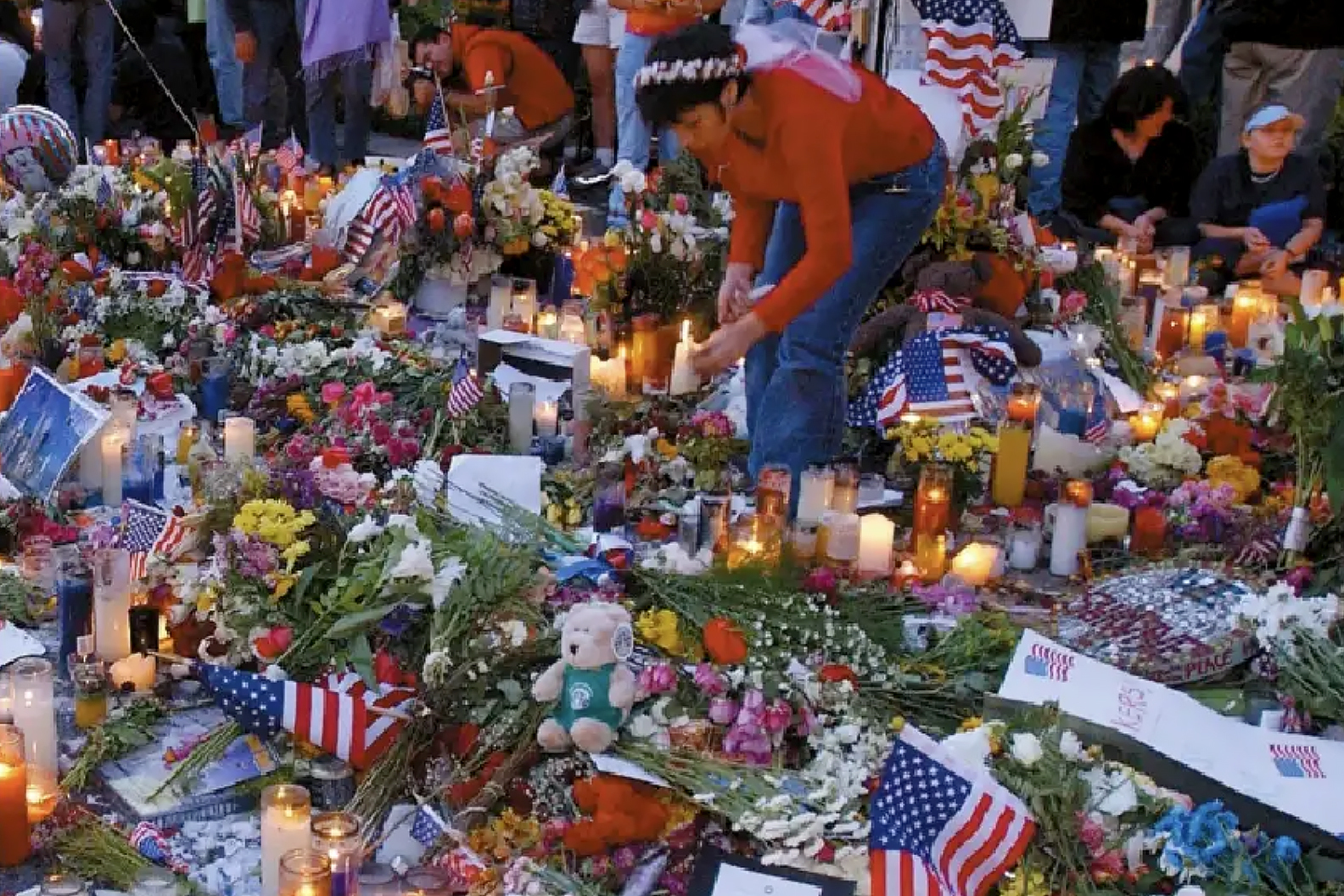
    It is as important to remember what happened after the Sept. 11, 2001, terrorist attacks as it is to recall the nearly 3,000 lives lost, dozens of buildings mangled or destroyed, and the millions of prayers said in response to what many believed could never happen to the most powerful nation in the world.

    In the immediate aftermath 25 years ago, this country became unified across income, religious, and racial lines in a manner it had not shown since imperial Japan’s despicable aerial attack on Pearl Harbor in 1941. But in both instances, there was shameful xenophobic backlash. The Japanese suffered internment. The anti-Muslim rhetoric and actions continue to this day.

    Just as undeniable was that unity after the attacks — including President George W. Bush’s words that “Islam is peace” — helped blunt prejudice.

    Black people, white people, Christians, Jews, Muslims, Republicans, Democrats, the rich, the poor, citizens and new arrivals — they all saw themselves as Americans on 9/11. We found common ground in using the nightmare that had just occurred as the impetus toward a greater sense of community.

    That spirit of togetherness was a reminder of just how important the word united is in calling our country the United States of America. The 9/11 attacks made it easier to see why we as a nation must not let our differences be exploited by calculating entities looking for ways to weaken our resolve.

    A quarter century later, the U.S. is much different in that respect.

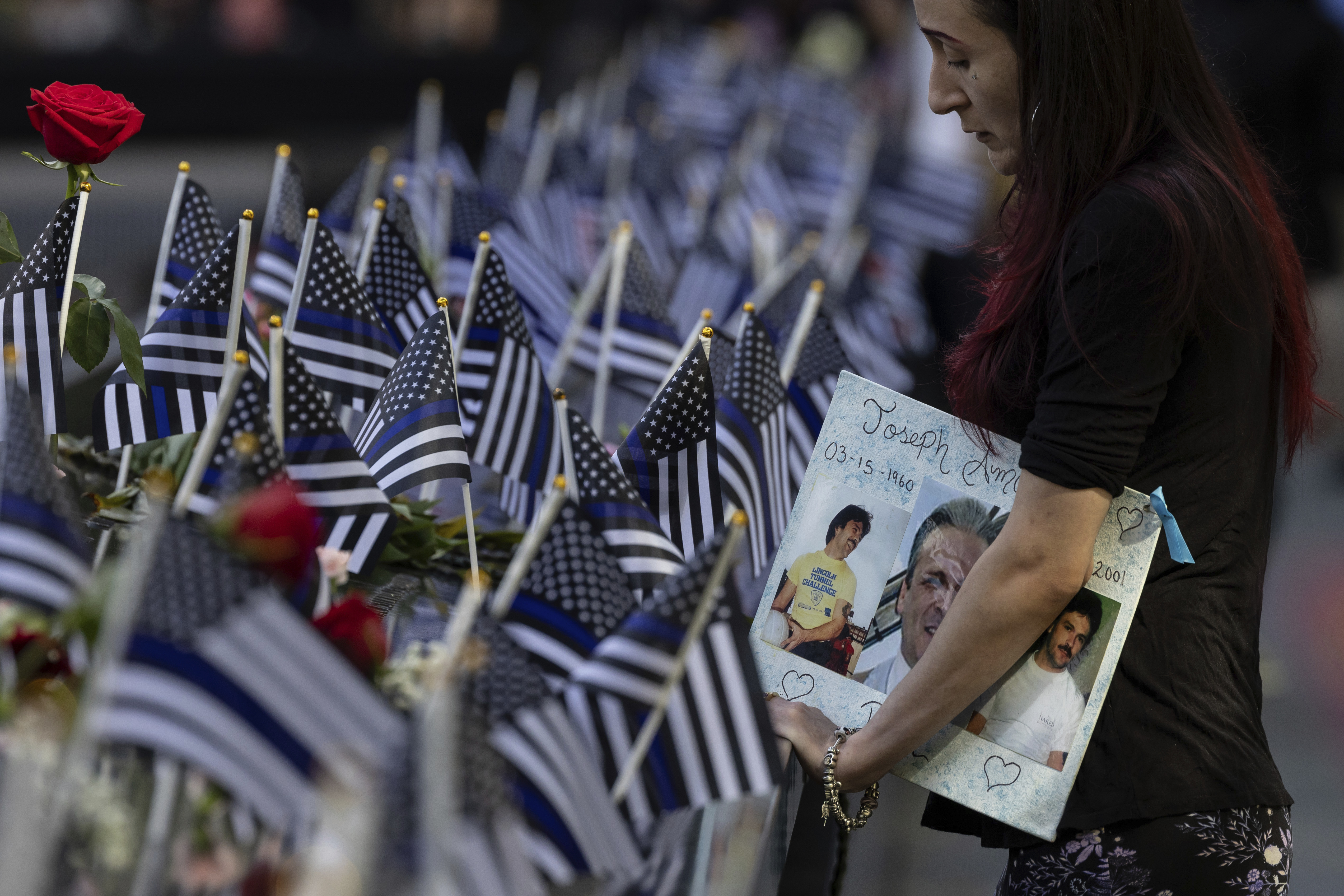
    Mercedes Arias stands by the name of her father, Joseph Amatuccio, on the south pool during the 9/11 memorial ceremony on Sept. 11, 2024.Yuki Iwamura

    Our current leadership prefers sowing seeds of division instead of reaching past political, economic, religious, social, and ethnic distinctions to help Americans of every station and persuasion work together for our common good.

    Instead of trying to unify, this nation’s current leaders decided it was more important to wage war with Iran and argue with our allies. Iran may one day develop a nuclear weapon, they said. Dismissing that Russia and China already have that capability and, unlike militarily feeble Iran, have delivery systems to reach our shores.

    Washington also decided to overthrow Venezuela’s despotic president to seemingly gain control of its oil reserves, and has made threats against Cuba and Greenland. It’s hard to believe the same Donald Trump who is now so eager to use military force once promised that if reelected, “we will have no more wars, no more disruptions, and we will have prosperity and peace for all.”

    Are we supposed to forget the president said that? Is he playing games with the American public? Is he distracting our attention by waging wars that lack clear goals, abruptly destroying historic settings like the White House Rose Garden, and putting unqualified people in charge of public health, public safety, and national security?

    So much is going on that too little attention has been paid to all the money changing hands amid the clamor.

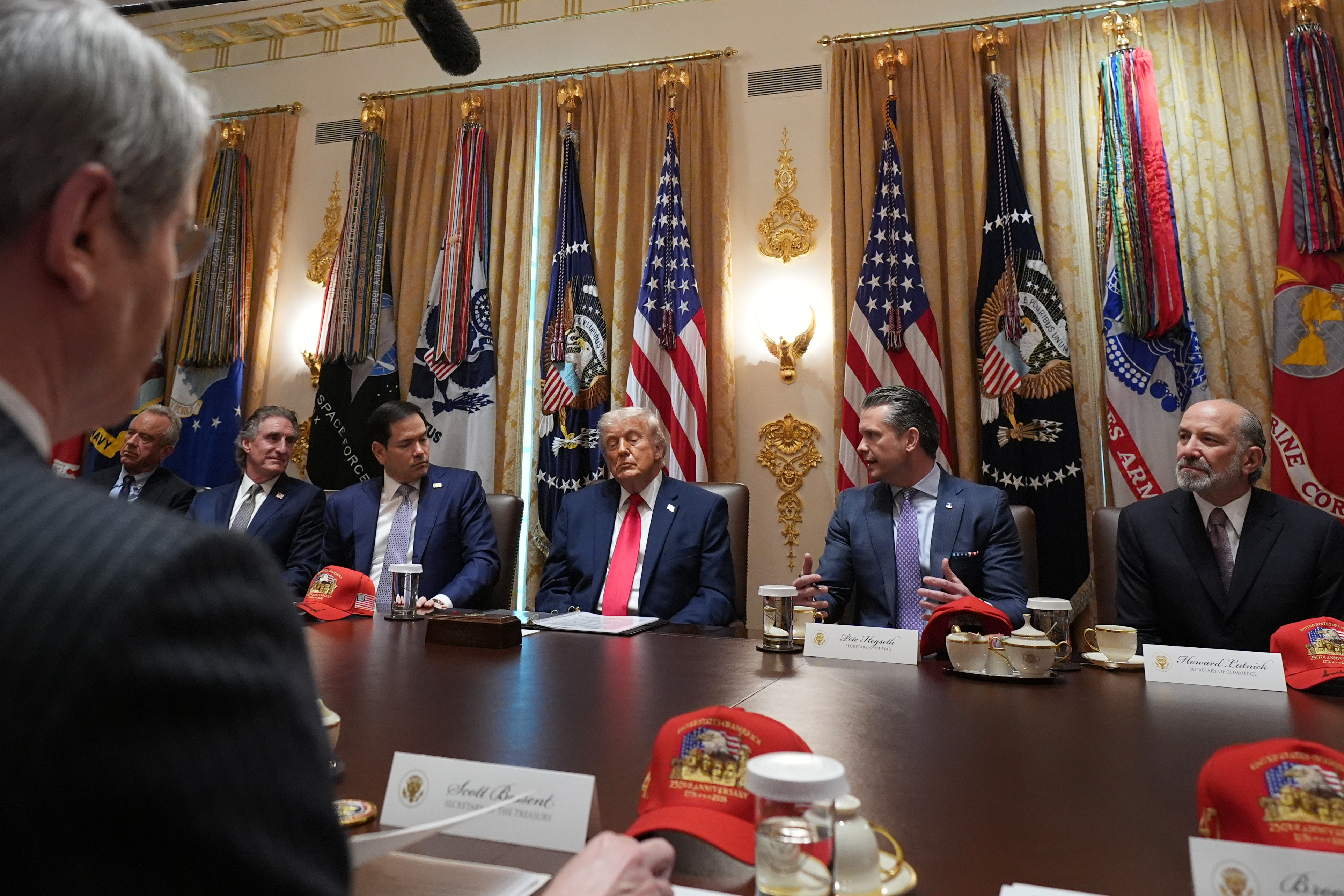
    President Donald Trump attends a cabinet meeting at the White House in May.Jacquelyn Martin

    Trump’s personal wealth has increased by a staggering $2 billion since he took office, much of it in cryptocurrency holdings. Investors in these schemes have lost about $3 billion as the currencies’ value continues to decrease, but many see their losses as the price to get the president’s ear.

    As Trump continues to be Trump — more engaged with building monuments to himself and posting aggrandizing AI slop on social media — everyday Americans struggle to make ends meet because of his policies. Although the cost of his mindless tariffs and needless war goes beyond the high prices people are paying at the pump and the checkout line, it is emblematic of the president’s complete abandonment of the American people.

    While Trump counts bitcoins, our healthcare system continues to undergo dramatic changes that have allowed insurance companies to acquire hospitals, doctors’ offices, pharmacies, and otherwise take control of this nation’s medical institutions.

    The president’s draconian immigration policies haven’t really solved the problem. There will always be people seeking a better life who will do anything, legal or illegal, to cross the border or stay past their visas’ expiration. That’s because despite its faults — and Trump’s best efforts — the United States remains the land of opportunity, even if dwindling.

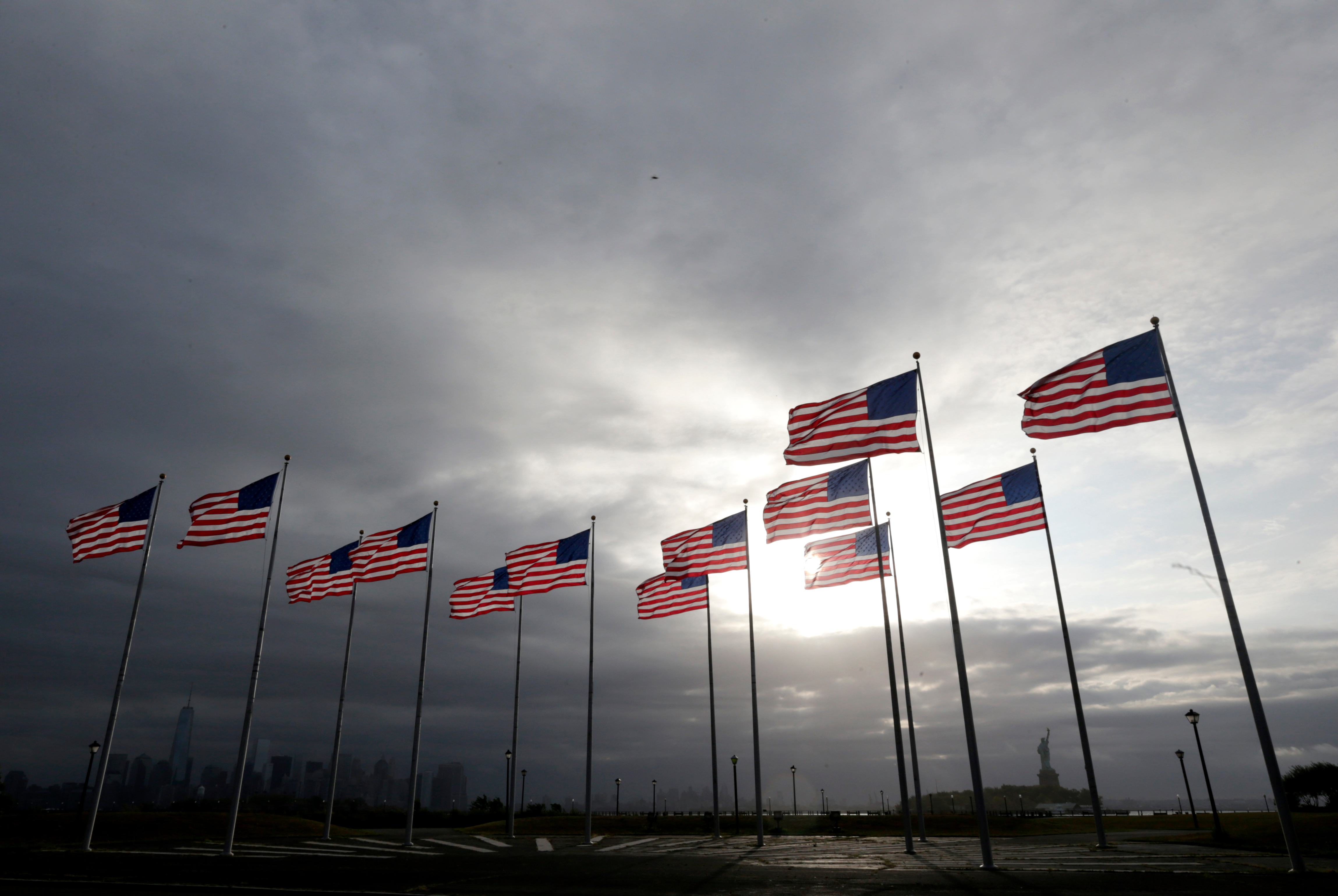
    Thirteen United States flags representing the 13 original colonies are seen at Liberty State Park with 1 World Trade Center (bottom left) and the Statue of Liberty (bottom right) in the background, in Jersey City, N.J.Julio Cortez

    America’s problem isn’t immigrants, most of whom have no criminal intent; it’s the lack of an effective system to better manage border crossings and adjudicate the cases of people who may have lived here illegally for years but otherwise committed no crimes.

    Effective immigration reform almost occurred 20 years ago, when the so-called Gang of Eight senators, including now-Secretary of State Marco Rubio, supported a bipartisan bill written primarily by Republican John McCain and Democrat Edward Kennedy that would create a 10-year registered provisional immigrant status for eligible illegal residents who paid fines and back taxes to eventually obtain permanent legal residency.

    This country also needs innovative equal opportunity ideas to replace the diversity, equity, and inclusion programs now considered reverse discrimination by federal judges. But instead of addressing that issue, the president and his enablers choose to demonize trans people, crack down on speech they disagree with, and abandon civil rights enforcement — all while embracing economic and tax policies that favor the rich.

    None of these issues will be resolved with leaders who seem to thrive with our nation as divided as it is now.

    It shouldn’t take another 9/11 to bring us closer as Americans. But as we seek a greater sense of community, let’s remember that day and what Todd Beamer was heard saying after he and fellow passengers aboard the hijacked United Airlines Flight 93 realized they had no alternative but to forget their differences and act: “Are you ready? OK, let’s roll.”

    It’s time for us to fight together for each other, too.

  • Johnny Doc is a free man after President Donald Trump cut his six-year prison term short

    Johnny Doc is a free man after President Donald Trump cut his six-year prison term short

    Johnny Doc is free.

    Convicted former Philadelphia labor leader John Dougherty was released Friday afternoon from a federal penitentiary in Lewisburg, his lawyer said, capping a surprise outcome that was the result of President Donald Trump’s decision to commute the remainder of Dougherty’s six-year prison term.

    Dougherty’s lawyer, George Bochetto, said he was released around 3 p.m. Attempts to reach Dougherty for comment Friday were unsuccessful.

    Dougherty — widely known as Johnny Doc — had served less than two years of that sentence, which came after he was convicted in two high-profile trials: The first in which he was found guilty of bribing former Philadelphia City Councilmember Bobby Henon, the second over his participation in an embezzlement scheme that cost his union nearly $600,000.

    For much of the past year, Dougherty had been petitioning U.S. District Judge Jeffrey L. Schmehl to release him on house arrest so he could provide care for his gravely ill wife. But Schmehl had repeatedly denied those efforts.

    Trump’s decision to commute Dougherty’s sentence instead will result in a more sweeping form of relief: His conviction will remain intact, but he will not be subject to any monitoring or house arrest, and he will no longer have to pay about $1.6 million in restitution to the union he was convicted of defrauding.

    Bochetto called Trump’s decision “a magnificent gesture of compassion.” And he said it came after he’d been in regular communication with White House staff members about the dire and longstanding health challenges faced by Dougherty’s wife, Cecilia.

    A White House official said Friday that those circumstances figured into Trump’s decision — particularly because Dougherty’s father-in-law, who had been serving as the primary caretaker, died last year.

    Bochetto said there was “absolutely no reason” to keep Dougherty behind bars while his wife’s health was continuing to decline.

    Dougherty, while testifying before Schmehl earlier this year, said he had done everything he could from prison to lift his wife’s spirits — mailing her letters, routinely calling her, and even singing to her over the phone.

    But he said he was desperate to get home and help her manage a set of challenges that have left her paralyzed and largely nonverbal. He said his adult daughters and private aides were struggling to provide the type of intensive, round-the-clock care she requires.

    “I just want to take care of Celia,” he said.

    The U.S. Attorney’s Office had opposed Dougherty’s efforts to be released. A spokesperson said the office had no comment on Trump’s decision to set Dougherty free.

    Beyond caring for his wife, it was not immediately clear Friday what Dougherty’s future might hold — or whether he’d use his newfound freedom to try to return to the political stage.

    Before he was prosecuted, Dougherty was a bona fide power broker while running Local 98 of the International Brotherhood of Electrical Workers, which he turned into the biggest independent source of campaign money in Pennsylvania. That funding helped elect mayors, City Council members, and members of Congress. It also helped bolster the judicial candidacy of Dougherty’s brother, Kevin Dougherty, who won a seat on the Pennsylvania Supreme Court in 2015.

    Even if John Dougherty did want to seek a return to the spotlight, it would have to come from a different perch.

    Not only is Local 98 under new leadership, Dougherty’s convictions on counts of bribery and embezzlement make him ineligible to hold an elected union office for 13 years under U.S. Department of Labor laws.

    Labor leader Ryan Boyer, who replaced Dougherty as chair of the Philadelphia Building and Construction Trades Council, said he nonetheless expected Dougherty to end up back in the mix in some fashion.

    “If I know John the way I know John,” he said, “he’s not going to sit on his hands.”

    Staff writers Sean Collins Walsh and Maggie Prosser contributed to this article.

  • The CDC’s latest measles update still doesn’t include Pennsylvania-reported deaths

    The CDC’s latest measles update still doesn’t include Pennsylvania-reported deaths

    The Centers for Disease Control and Prevention’s latest update Friday on the toll of measles outbreaks nationally continued to omit two measles-related deaths reported last week in Pennsylvania, extending an unusual standoff between federal and state health authorities.

    The agency instead placed an asterisk in a column where, if reported, the Pennsylvania deaths would be recorded as the first in the nation this year. A note below stated that ”available information does not establish whether measles caused or contributed to the deaths or whether the individuals died from other causes while infected with measles.”

    The omission marked a clear departure from the agency’s normal operating procedure, as President Donald Trump’s administration and Democratic Gov. Josh Shapiro continue to clash over how the deaths were characterized.

    States report to the CDC cases and deaths for dozens of infectious diseases, such as hepatitis, influenza, and measles. The CDC has long compiled the data into reports that help epidemiologists monitor outbreaks and risk, and can inform lawmakers’ efforts to improve public health policy.

    In a rare break from that norm, Health and Human Services Secretary Robert F. Kennedy Jr. asked the CDC’s newly appointed director, Erica Schwartz, to omit the Pennsylvania deaths, according to Reuters.

    The move escalated a spat between Kennedy, a longtime anti-vaccine activist, and Shapiro, which began when the governor announced the deaths last Tuesday at a news conference in Lancaster County.

    Shapiro accused Kennedy of spreading vaccine misinformation that has contributed to declining measles vaccination rates, and Kennedy suggested that Shapiro’s office had fabricated the deaths to win political points.

    Public health experts warned that the ongoing political controversy sows doubt in what was designed as an unimpeachable health resource — national disease surveillance — and detracts from the ultimate public health goal of limiting the spread of illness.

    “Every data point is a broken family, a mother crying, a future that’s lost. Instead of grieving that and making sure it never happens again, you’re debating the mechanism of death,” said Brian C. Castrucci, an epidemiologist and president and CEO of de Beaumont Foundation, a community health philanthropy outside Washington, D.C.

    Pennsylvania measles-related deaths

    The Pennsylvania Department of Health reported the two deaths to the CDC the morning of Aug. 25, and professional staff at the CDC “did not express any concern regarding the information,” Neil Ruhland, a department spokesperson, said in an email.

    He described the communication that followed as an extension of the department’s ongoing communications around the state’s outbreak:

    The next day, the state health department discussed the details of each case with CDC professional staff. The CDC requested records containing identifiable information, which the health department did not share, consistent with its past practices.

    Shapiro has cited state privacy laws, and the need to protect the privacy of the families involved to ensure community trust, with limiting his ability to release more information.

    Instead, the health department asked the CDC for a case report form to provide de-identified information. The health department says it has not yet received that form.

    Pennsylvania health officials have a measles outbreak response meeting with the CDC every other week, and most recently met on Tuesday.

    “CDC professional staff have repeatedly made it clear that it has been supportive of DOH’s measles outbreak response,” Ruhland said.

    The CDC’s website says the agency plans to update its measles death count once it has completed its review of Pennsylvania’s cases. But officials have not said what additional information they need from Pennsylvania or when they expect to complete their review.

    The agency did not respond to a request for comment in time for publication.

    Joshua Sharfstein, a physician who served as Maryland’s Health Secretary from 2011 to 2014, said he has never heard of the CDC omitting disease surveillance data reported by states.

    “I wouldn’t say it’s off the table for the CDC to want more information,” but the way the agency went about it in Pennsylvania’s case is unusual, said Sharfstein, who also served as Baltimore’s health commissioner and currently works as a health policy professor at Johns Hopkins University.

    He said he would expect the agency to report Pennsylvania’s data, while alerting officials they are looking for more information. “It’s supposed to be a collaborative relationship,” Sharfstein said.

    Pennsylvania officials initially provided no additional information to the public about the two people who had died, other than they were unvaccinated Lancaster County residents.

    The state’s decision to call the deaths measles-associated came after the state health department’s “epidemiology team thoroughly investigated and verified both individuals tested positive for measles,” Pennsylvania Health Secretary Debra Bogen said in a statement.

    Pennsylvania defines a measles-associated death as deaths of people where evidence of measles is present, even when the disease may not be assessed by the coroner as the immediate cause of death.

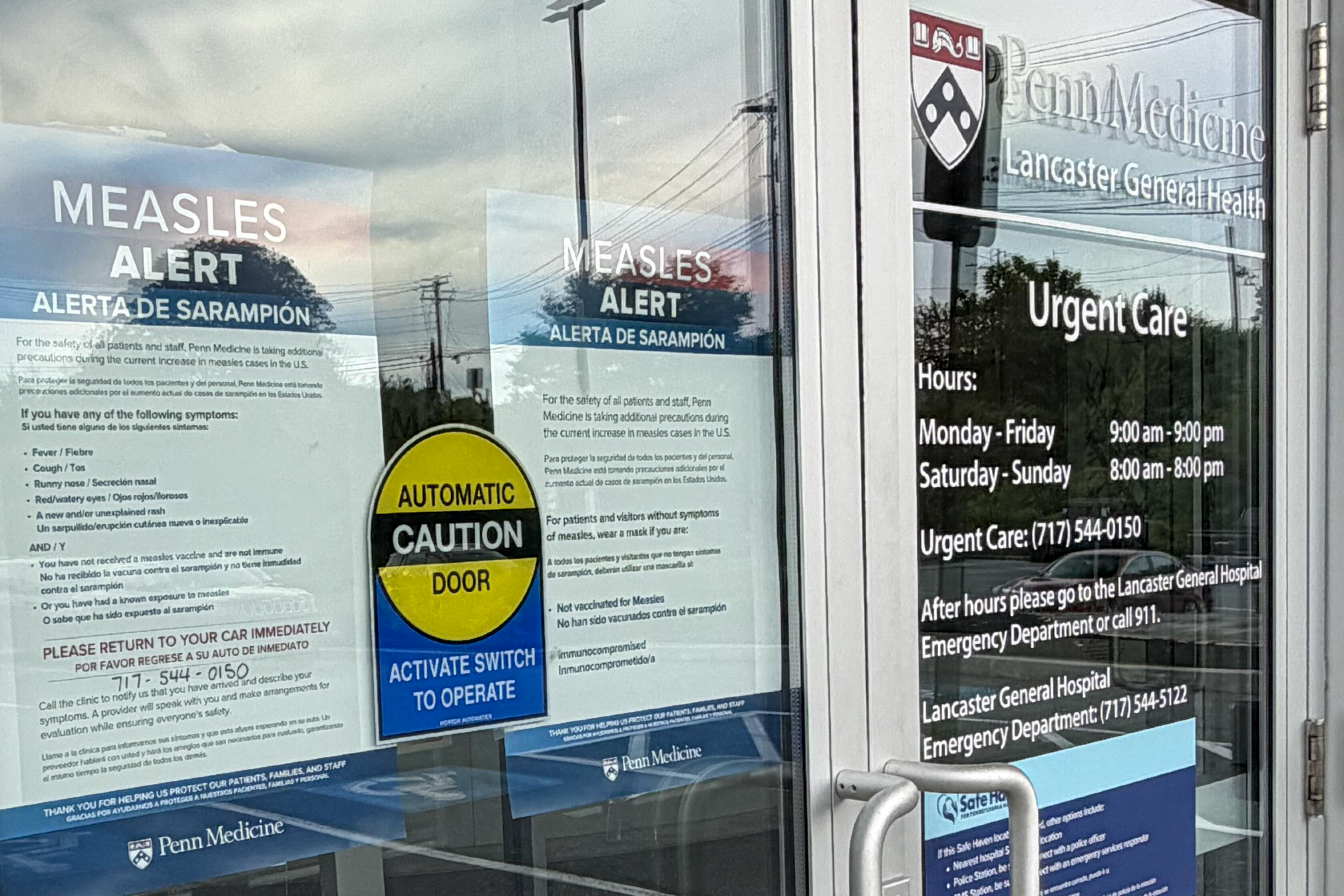
    An alert about measles is posted in the window of a medical clinic in Lancaster.Gillian McGoldrick / Staff

    Lancaster County’s coroner, Stephen Diamantoni, added confusion last week when he contradicted the state’s account.

    Diamantoni, a physician and elected Republican, said his office was investigating one death involving a newborn and said postmortem testing showed the infant had a measles infection acquired before birth. But he said he did not believe measles contributed to the child’s death.

    The child died shortly after birth of a lacerated spleen with trauma to the torso, Diamantoni said. He did not know what caused the lacerated spleen or trauma.

    He later said measles was noted on the infant’s death certificate as a significant condition “contributing to death but not resulting in the underlying cause,” because the baby tested positive for measles.

    On Friday, he said a 6-week-old Amish infant who was being treated for a deadly genetic disorder had died of measles in mid-August. He said he did not know if the case was the second measles-related death Pennsylvania reported, saying that he reported the death to the CDC on Friday.

    Pennsylvania’s health department said it was aware of the information the coroner reported Friday and had “no new measles-associated deaths to report at this time.”

    Shapiro reshared a news article about the death on X. In his post, he blamed Kennedy for creating “a firestorm of conspiracy theories that denied these families’ pain, invaded their privacy, and undermined public health.”

    “It’s long past time for RFK to stop playing games with people’s lives, report these deaths accurately on the CDC dashboard, and heed the guidance of actual medical experts so people get accurate information to discuss with their trusted healthcare providers and can best protect themselves and their children against this deadly disease,” he wrote.

    Kennedy fired back, highlighting the Lancaster coroner’s disclosures, in another X post later on Friday: “The facts emerging now demonstrate why CDC waited for the evidence rather than allowing political grandstanding to dictate its reporting.”

    Politicizing public health

    Fixating on whether a patient died “because of” or “with” measles inevitably politicizes the issue and does not benefit people’s health, Jake Scott, a clinical associate professor of infectious diseases at Stanford University, wrote in an opinion piece published online by the Center for Infectious Disease Research and Policy at the University of Minnesota.

    Measles usually kills through the complications it causes, such as pneumonia, encephalitis, secondary bacterial infections, and pregnancy complications, he wrote.

    “A death tally that can be altered by officials whom it embarrasses will not be trusted by anyone, including the officials who edited it,” Scott wrote.

    Diamantoni, Lancaster’s coroner, told The Inquirer earlier this week he did not want “to be dragged into a political fray.”

    “Our role in our office is not political in any way. We’re focused on determining the cause and manner of death, and using objective and scientific methods to do that,” he said. “We’ve worked hard to be sure that the information we’re providing is based on objective things.”

    More than a week into the controversy, lawmakers continue to take political jabs.

    “I am disgusted the Trump administration is putting Pennsylvania families at risk by spreading dangerous misinformation and politicizing these tragic deaths,” U.S. Rep. Brendan Boyle (D., Phila.) said in a statement.

    Pennsylvania’s highest-ranking federal lawmakers — U.S. Sens. John Fetterman, a Democrat, and Dave McCormick, a Republican — did not respond to a request for comment Thursday about the state’s standoff with the CDC. McCormick voted to approve Schwartz as the new CDC director; Fetterman voted against.

    U.S. Rep. Brian Fitzpatrick (R., Bucks), the only federal GOP lawmaker in the Philadelphia region, also did not respond to a request for comment. Neither did U.S. Rep. Lloyd Smucker, the Republican who represents Lancaster County and who blasted Shapiro last week for not providing more information about the measles-associated deaths.

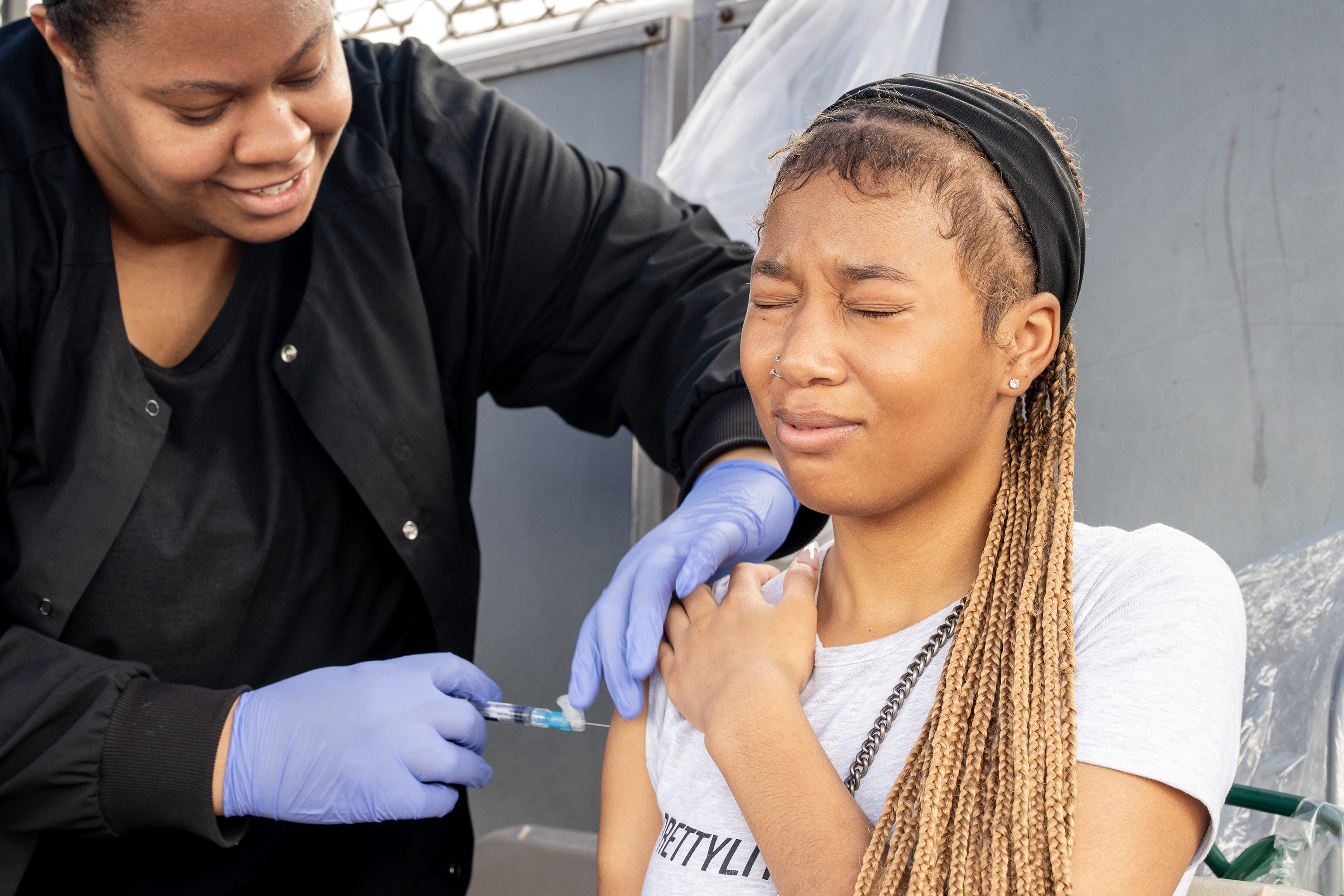
    Cianey Brown, 16, receives an immunization last month during the School District of Philadelphia’s sixth annual Back-To-School Bus Tour stop at Marcus Foster Memorial Stadium. Tom Gralish / Staff Photographer

    Measles outbreak continues

    Public health leaders, doctors, and epidemiologists say that finding a path forward has become an increasingly partisan issue at a time of rising vaccine hesitancy.

    Medical experts will be tasked with trying to rebuild trust in health authorities in order to contain a rapidly spreading outbreak.

    “How can any American citizen begin to make decisions about their health right now, in the milieu of misinformation and falsehoods we’ve created?” said Castrucci, de Beaumont’s CEO. “We have to get back to a point where at least the data can be trustworthy.

    As of Friday, there have been 577 measles cases in Pennsylvania, including 115 reported within the last week, according to the state health department’s online measles dashboard.

    Only South Carolina has reported more measles cases than Pennsylvania so far this year, according to the CDC’s measles webpage. There have been 3,134 cases nationally this year, the agency reported in its latest update Friday.

    Pennsylvania’s measles-associated deaths remain an asterisk.

    Inquirer staff writers Sam Janesch and Aubrey Whelan contributed to this article.

  • Daughter of prominent Philadelphia family sues billionaire ex-boyfriend for $400 million

    Daughter of prominent Philadelphia family sues billionaire ex-boyfriend for $400 million

    Some romantic rendezvous end in heartbreak, others in a $400 million lawsuit.

    But that’s the fall out from the breakup between Oona Sperr, the daughter of the Please Touch Museum founder and a prominent Philadelphia architect, and an oil-tycoon from Texas.

    In a tell-all lawsuit, Sperr, 64, accused billionaire Sid Bass of breaking financial promises he made to her throughout their relationship.

    The New York City-based interior designer and Bass “lived together in a loving, committed relationship” since 2014 and “were very happy as a couple,” the suit says. The oil scion, has a net worth of $4.4 billion, promised Sperr that she would always be cared for financially and would receive ownership interest in his properties, according to the complaint.

    The 84-year-old began declining physically and cognitively in 2023, the suit says. He previously suffered three mini-strokes, signs of Parkinson’s disease appeared in a brain scan, and his excessive drinking worsened his tremors, the complaint says.

    Around that time, Althea Viafora Kress entered the picture.

    Viafora Kress pursued Bass since late 2022 under the pretext that she needed advice on how to invest money she inherited, the suit says.

    “Unbeknownst to Oona, Viafora Kress began grooming Sid and, at some point, achieved her goal of a coercive relationship with him, with devastating consequences for Oona and Sid’s partnership,” the complaint says.

    After breakfast in September 2024, the suit says, Bass broke up with Sperr with two sentences: “I want a separation. You are to pack and leave.”

    Sperr suspected that there was another woman, and in the following weeks she came to learn about Bass’ relationship with Viafora Kress.

    Immediately after the breakup, the suit says, Bass promised his former paramour a lump-sum payment of $50 million, the smallest of their New York homes, another property of her choosing, continued staff support, and care for her mother, the 96-year-old founder of the Please Touch Museum, Portia Sperr.

    These terms were less than Bass originally promised her, the complaint says. But in the following months, the commitment narrowed further.

    Sperr received a “maintenance agreement” via email from Bass’ lawyer in January 2025 that included a commitment for annual payments of $5 million for 10 years, denied her ownership of any home, and declined to pay for her mother’s care, among other things, the suit says. The agreement was also accompanied with a nondisclosure agreement.

    “In other words, what Sid was now proposing was that Oona … should be forced to depend entirely on Sid’s increasingly unpredictable whims, or, even more troubling, on the preferences of Viafora Kress,” the lawsuit says.

    The Inquirer was unable to reach Bass and Viafora Kress, who are both named defendants in the lawsuit, which was filed in the Southern District of New York.

    While a $400 million breakup is more than most could wrap their head around, it’s par for the course for Bass, the suit says.

    The billionaire previously had two extremely expensive divorces.

    Bass divorced his first wife, Anne Hendricks Bass, in 1988, leading to settlement that cost him $200 million to $500 million, the suit says. And in 2011 he divorced Mercedes Bass in an agreement that would allow her to sustain an “ultraluxury lifestyle,” according to the complaint.

    “This is a case about broken promises,” Roberta Kaplan, Sperr’s attorney, said in a statement. “Oona is the woman who spent a decade making Sid’s life convenient — abandoning her career, managing their shared homes and affairs, caring for him through his serious illnesses — all because Sid agreed that he would take care of her and her 96-year-old mother no matter what.”

    While Sperr comes from a more modest upbringing relative to the son of an oil dynasty, her family has a legacy of its own in Philadelphia.

    Her father, Otto Sperr, was a prominent Rittenhouse Square architect. He died in 1998.

    Portia Sperr was a Montessori educator who still lives in Philadelphia, the suit says.

    Oona Sperr moved to Philadelphia when she was 2, and went on to graduate from the Baldwin School in Bryn Mawr. She then moved to New York to study architecture and embarked on a career as an interior designer.

    But she abandoned that career after meeting Bass, opting to take care of him, their homes, and daily obligations because of a promise that she would never need to support herself or her mother independently.

    “Sid has breached his promises by refusing to provide Oona with the property interests and financial support he agreed she would receive,” the suit says, “in exchange for her years of devotion to their partnership and her enormous contributions to the life they built together.”

  • Echoes of the Lindsay Clancy case in a 1989 Northeast Philly infant murder

    Echoes of the Lindsay Clancy case in a 1989 Northeast Philly infant murder

    Samuel C. Stretton, the high-profile Chester County lawyer, said he’s been hearing from women about Lindsay Clancy, the Massachusetts mother facing murder charges for killing her three young children.

    “You know, Sam, she’s innocent,” he recalled one woman telling him at a supermarket.

    Stretton knows the Clancy case has struck a nerve. He knows because he defended a woman in a similar case 37 years ago.

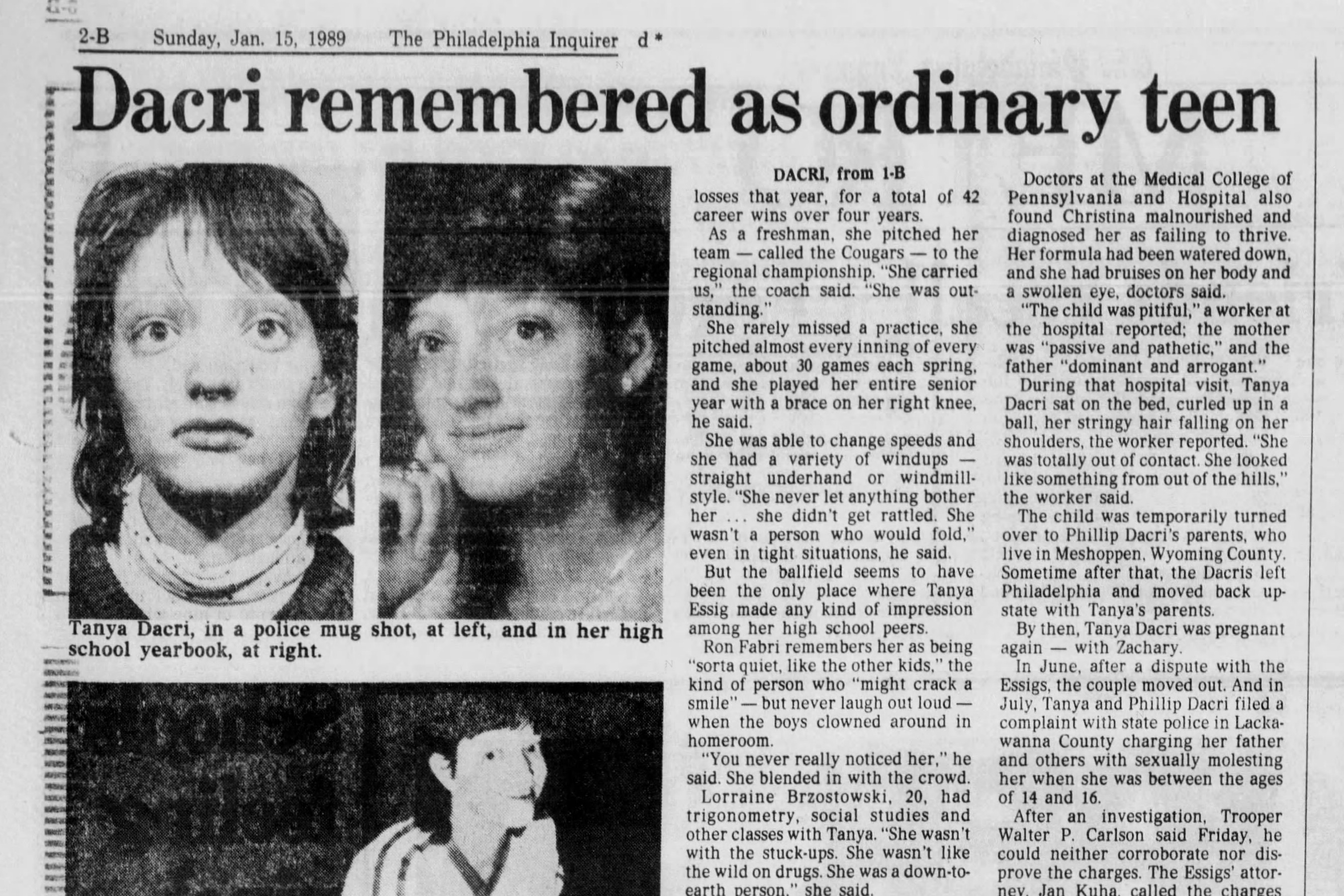
    He represented Tanya Dacri, a Northeast Philadelphia woman who pleaded guilty in 1989 to drowning her infant son Zacharry and dismembering his body.

    She was sentenced to life in prison.

    “I don’t think there’s any question now, in hindsight, that she suffered from [the] postpartum diagnosis. Problem was, it wasn’t understood back then, like it is now,” Stretton said in a phone interview Tuesday night.

    Lindsay Clancy sits at the defense table as Kevin Reddington asks the jury to find her not guilty during her murder trial at Plymouth Superior Court in Plymouth, Mass., on Aug. 27. Greg Derr

    The jury in the Clancy case began deliberating last week. Unable to reach a verdict, Judge William Sullivan declared a mistrial Friday afternoon. A status hearing to decide where the case goes from here was scheduled for Sept. 29.

    Clancy, a former labor and delivery nurse, admits she strangled her children, but her legal defense is that postpartum psychosis led to her actions. Clancy, 36, has pleaded not guilty by reason of lack of criminal responsibility. Prosecutors say she knew what she was doing.

    In Pennsylvania, Dacri, now 58, is serving her sentence at the State Correctional Institution at Muncy, the state prison for women.

    Stretton believes “it’s the right time” for Dacri to seek a pardon or commutation. That would require a unanimous decision from the state Board of Pardons, and then the approval of the governor.

    “She and I have been talking about it for about 10 years, but I told her to wait a little longer. I thought that would enhance her chances, and now I think it’s the right time,” Stretton said.

    The last time Stretton communicated with Dacri was by letter several years ago. Stretton said he would move forward with a clemency application “if she still wants to do it.”

    Dacri has been behind bars since she was arrested in 1989.

    In 1989, Tanya Dacri pleaded guilty to drowning her 2-month-old son Zacharry in a Northeast Philadelphia apartment and dismembering his body.Philadelphia Inquirer

    “She’s done well in prison. She’s adjusted. She’s attended all the programs. She’s sorry. She’s regretful,” Stretton said.

    Dacri “has been adequately punished, and therefore we’re asking them to allow a sentence to be commuted or a pardon be granted, so she can get out and have some of her life left,” Stretton said.

    “Postpartum psychosis” as a legal defense was unusual but not unknown before Dacri’s case, according to a paper published in the spring 1991 Dickinson Law Review.

    Wide-ranging sentences

    While Dacri was sentenced to life in prison, mothers with similar Pennsylvania cases were given wildly different sentences.

    For example, the paper’s author, Amy L. Nelson, cited the case of Sharon Weisensale, who was found guilty but mentally ill in Bucks County of third-degree murder for the 1984 drowning death of her 2-month-old daughter.

    “She was given a five-year suspended prison sentence and was required to undergo psychiatric treatment,” Nelson wrote.

    In another case, Sharon Comitz, of Osceola Mills, Pa., pleaded guilty but mentally ill to third-degree drowning in the 1985 death of her month-old son, Nelson wrote.

    According to testimony, Comitz was treated for severe postpartum depression at the time of the murder, Nelson said. Comitz received a prison sentence of eight to 20 years.

    In another Pennsylvania case, Chanda Smith was convicted of third-degree murder in the drowning death of her three-week-old daughter, Nelson said. Smith was sentence to five to 10 years in prison.

    “Experts testified that Smith, like Weisensale and Comitz, murdered her child while suffering from severe postpartum psychosis,” Nelson wrote.

    A false story falls apart

    On the morning of Jan. 12, 1989, the Dacri story hit the front page of The Inquirer under the headline, “Police: Mother drowned baby.”

    Tanya Dacri, who was 20 years old at the time, initially told police that Zacharry had been taken by purse-snatching Black men — a detail that drew accusations of racism from some media commentators.

    However, investigators were immediately suspicious. Dacri’s fake story quickly fell apart that same day and she told police she killed her son because he was always crying, The Inquirer reported.

    She told police she dismembered his body and put the pieces in weighted plastic bags. She and her husband, Phillip Dacri, then disposed of the bags in the Neshaminy Creek in Bucks County and a creek in Carbon County.

    Phillip Dacri pleaded guilty to helping his wife dispose of the remains and served 10 months in prison.

    In court, During court proceedings, a psychologist for the defense and a psychiatrist for the prosecution agreed Dacri had a mental disorder that might have deteriorated to psychosis on the day she killed her infant son, The Inquirer reported.

    But they disagreed on whether Dacri specifically intended to kill her Zacharry.

    “I am convinced beyond a reasonable doubt that, when you placed your son in that bathtub and when you turned on the water and put the plug in the tub, that it was your intention to kill him,” Common Pleas Court Judge Michael Stiles told Dacri during her sentencing.

  • Key Pennsylvania races to watch in the midterm elections this November

    Key Pennsylvania races to watch in the midterm elections this November

    In the country’s premier battleground state, Pennsylvania Democrats believe they’re in striking distance of a tidal-wave victories that would dramatically shift the balance of power in both Washington and Harrisburg.

    For the first time in decades, the party could take full control of the legislature. That would give Democratic Gov. Josh Shapiro — seeking reelection with a wide polling gap on his Republican challenger Stacy Garrity — significantly more power to shape the direction of the state as he potentially pursues a White House bid in 2028.

    Democrats also see a chance to flip four congressional seats and take control of the U.S. House. Republicans, meanwhile, are prioritizing defending the Pennsylvania seats with their House majority on the line as President Donald Trump, who won the state just two years ago, sinks in popularity.

    The path for power in Washington in the high-stakes midterms runs through Pennsylvania and its results will be closely watched as both parties prepare for a presidential race in two years when the state promises to play a pivotal role.

    Voters across Pennsylvania will head to the polls in November to cast their ballots for races that will decide the balance of power in the state and nation.

    Here are the races to watch and how to vote.

    Shapiro’s November could dictate his 2028

    Shapiro, widely viewed as a likely contender for the 2028 presidency, has big ambitions this fall when he’ll stand for reelection against Garrity, the state’s treasurer.

    More than just securing his own reelection, Shapiro hopes to run up the margin and carry downballot Democrats across the finish line.

    Another double-digits win and a string of coattail victories would be a show of strength about his ability to perform in a key swing state that his party lost in the last presidential election. In a presidential primary, Shapiro could use that result to make an argument that he’s a strong general election candidate who can boost the Democratic brand.

    Two months out from the election, all signs point to a Shapiro win. He holds a historically large campaign war chest and a commanding 55-39% lead in the race against Garrity, according to a recent Philadelphia Inquirer/New York Times/Siena University poll.

    Garrity, who has been endorsed by Trump, broke the record in 2024 for the most number of votes received by a candidate running for state-level office in Pennsylvania. But support from the national GOP establishment has been limited, and as she faces off against a formidable incumbent, the question is: Can she overcome her stark cash disadvantage and low name recognition to become the state’s first female governor?

    Will Republicans hold on in competitive congressional seats?

    There are four U.S. House districts in the eastern portion of Pennsylvania, targeted by both parties as must wins. In each, the Republican incumbents are seeking to fend off highly financed challengers amid deep frustration among voters with the leader of their party that could translate into a wave of Democratic victories down ballot.

    1st Congressional District: Five-term Republican U.S. Rep. Brian Fitzpatrick faces a challenge from Bucks County Commissioner Bob Harvie in the district, which covers all of Bucks County and a portion of Montgomery. Fitzpatrick, a moderate who has survived previous blue waves, has maintained a fundraising advantage on Harvie unlike the other swing-district incumbents.

    7th Congressional District: Freshman Republican U.S. Rep. Ryan Mackenzie narrowly flipped the Lehigh Valley district two years ago and is widely seen as one of most vulnerable incumbents in Congress. He’s facing a challenge Democrat Bob Brooks, a retired firefighter and union leader whose blue-collar campaign has attracted support across the party’s ideological spectrum with endorsements from Shapiro and U.S. Sen. Bernie Sanders.

    8th Congressional District: Freshman Republican U.S. Rep. Rob Bresnahan ousted a six-term incumbent in this district centered in former President Joe Biden’s hometown of Scranton two years ago. But as he faces a tough challenge from Scranton Mayor Paige Cognetti, Bresnahan has faced scrutiny over his stock trades and his vote to cut Medicaid — to pay for Trump’s tax cuts — despite a promise to protect the program.

    10th Congressional District: Republican U.S. Rep. Scott Perry, a close ally of Trump, faces a November rematch against Democrat Janelle Stelson, a former TV anchor, in the Harrisburg area district. Stelson has consistently outraised Perry after narrowly losing in 2024.

    In addition to these four races both national parties have targeted, Shapiro has argued that the 9th Congressional District, where Democrat Rachel Wallace is taking on incumbent GOP U.S. Rep. Dan Meuser, is flippable — despite the strong GOP lean in the district, which stretches from Berks County to the New York state border. The district is home to two warehouses that ICE was planning to convert into detention centers before abandoning the plan after a backlash from residents.

    Will Democrats flip the Pennsylvania Senate?

    In Harrisburg, Democrats hold an extremely narrow majority in the state House, but the Pennsylvania state Senate has been under Republican control for more than 30 years.

    This year, Shapiro wants to flip the chamber and win a trifecta to push forward his key priorities, such as codifying abortion access, raising the state’s minimum wage, and increasing funding for transit.

    Republicans currently hold 27 of the chamber’s 50 seats. Democrats, who currently hold 23 seats, need to win at least two additional seats and the governor’s office to win control of the chamber with the lieutenant governor as a tiebreaking vote.

    The seats, drawn advantageously for Republicans, have been stubbornly resistant to political change for decades.

    But this year a blue wave could usher in Democratic pickups in Philadelphia suburbs and the Lehigh Valley.

    Races to watch include:

    • Bucks County’s 6th District, where Republican incumbent State Sen. Frank Farry faces a challenge from Democrat Eileen Hartnett Albillar.
    • Montgomery County’s 24th District, where incumbent Republican State Sen. Tracy Pennycuick is up for reelection against Democrat Chris Thomas.
    • Bucks and Lehigh County’s 16th District, which will see a rematch race between incumbent Republican State Sen. Jarrett Coleman and Democrat Mark Pinsley, the Lehigh County controller.

    What are the important dates to know?

    Election Day is Nov. 3.

    The deadline to register to vote is Oct. 19. You must be at least 18 years old, a resident of Pennsylvania and a citizen of the United States to vote. You can register online, by mail, at your county elections office, or at one of several other government buildings.

    You can check your voter registration on the Department of State’s website.

    Pennsylvanians can vote by mail with no excuse required. To apply, fill out an application by mail, online, or in-person and send it into your county election office. Applications must be received by Oct. 27 at 5 p.m. and the completed mail ballot must be received — not just postmarked — by 8 p.m. on Election Day.

    An application and mail ballot can be completed in one visit at an election office, essentially functioning as early voting.

    Staff writer Fallon Roth contributed to this article.

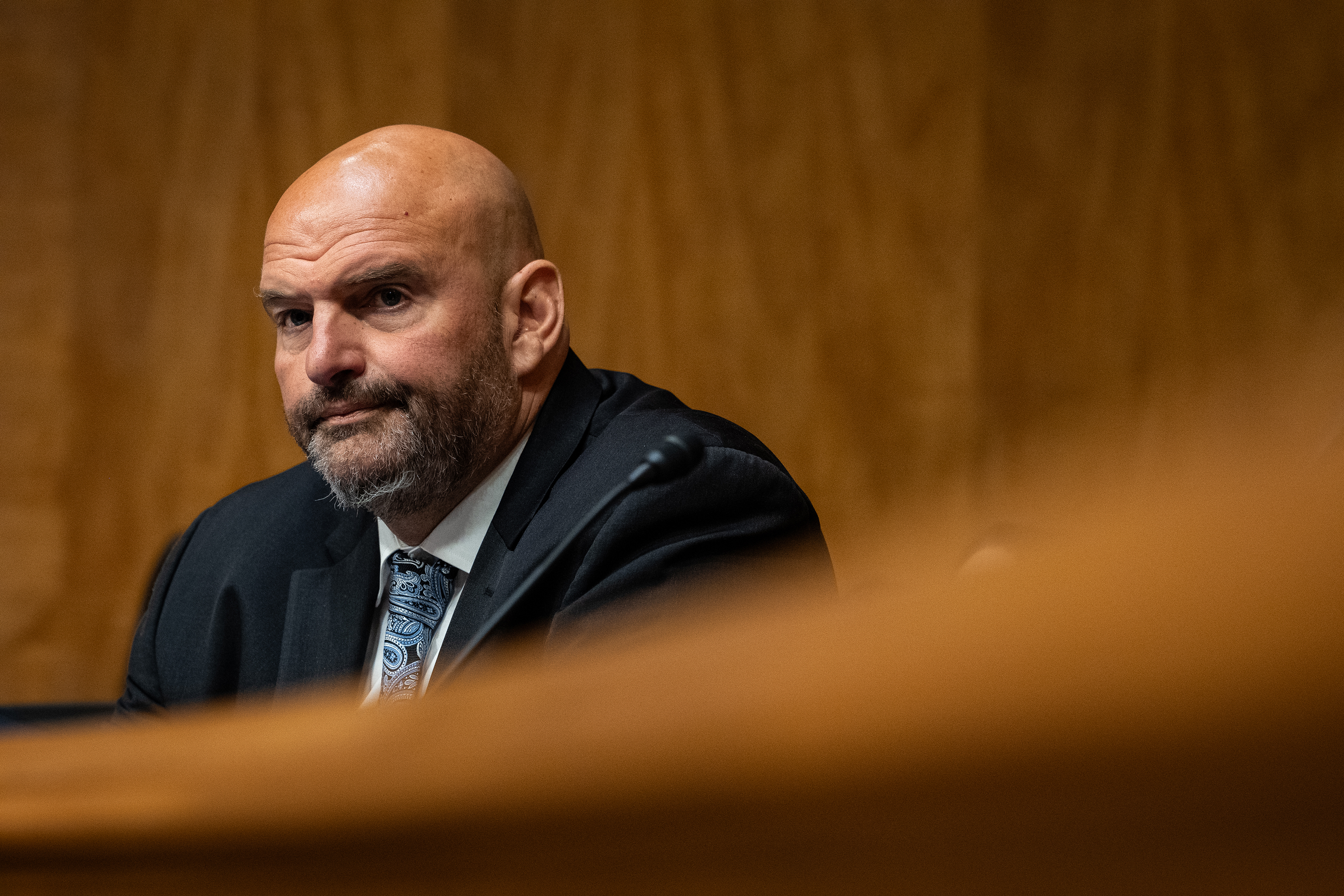
  • John Fetterman reportedly dismissed CHOP leaders, rejected other meetings as he avoids Senate duties

    John Fetterman reportedly dismissed CHOP leaders, rejected other meetings as he avoids Senate duties

    U.S. Sen. John Fetterman privately rejected the concerns of leaders at the Children’s Hospital of Philadelphia who requested a meeting to talk about vaccine policy and Medicaid cuts, speculating to an aide that they “just want free trips to DC,” according to a new report that sparked another wave of criticism aimed at the first-term senator.

    The report from The Wall Street Journal details several meetings or events that while routine for many senators in Washington Fetterman frequently tried to get out of, including the meeting with CHOP and a funeral for three York County police officers who were killed while on duty.

    Claims that Fetterman is not fully performing the role of a U.S. senator have plagued much of his nearly four years in office. His former staffers have publicly and privately said he often cancels meetings at the last minute, including with constituent groups and Pennsylvania officials who would normally be considered allies.

    As he increasingly attacks his own party, the Pennsylvania Democrat has instead appeared regularly on conservative media. He’s prioritized meetings and events about Israel, whose war in Gaza had been a flashpoint in his break with former Democratic allies and supporters, and he does not make regular public appearances across the state he represents.

    Among the new revelations in The Wall Street Journal story is an interaction the senator had with Yechiel Leiter, the Israel ambassador to the U.S. last year.

    After Fetterman said he wanted to craft a Senate resolution that would require his colleagues to vote on whether the war in Gaza was a genocide, Leiter suggested Fetterman instead write an op-ed about why he supported Israel, The Wall Street Journal reported. Leiter’s embassy later “sent over drafted points for Fetterman to consider,” but Fetterman’s staff withheld them from him out of concerns that writing the op-ed based on the talking points “risked violating the Foreign Agents Registration Act,” according to the report.

    Trump administration official comes to Fetterman’s defense as critics react

    Fetterman’s office did not immediately respond to The Inquirer about the claims in the report or about the reactions to it.

    “John Fetterman is a disgrace,” U.S. Rep. Brendan Boyle (D., Phila.) wrote on social media in response to the story. “Our state deserves better than a lazy trust fund baby who is too lazy to do the job.”

    U.S. Rep. Chris Deluzio (D., Allegheny) called Fetterman’s behavior “pathetic.”

    “[B]etween the laziness, disrespect, and willingness to carry water for a foreign government, it shows us something we already know: this man has no sense of duty,” Deluzio wrote on social media. “He is not up for the high office he was elected to — and we in Pennsylvania will do something about it in 2028.”

    Former U.S. Rep. Conor Lamb and State Rep. Malcolm Kenyatta, Fetterman’s opponents in the 2022 Democratic primary, also condemned him.

    “This report is horrifying, but not new to many of us in PA. John barely showed up as [lieutenant governor] and is constantly MIA as our Senator,” Kenyatta, vice chair of the Democratic National Committee, wrote on social media.

    Boyle, Deluzio, Lamb and Kenyatta are among the Pennsylvania Democrats who are considered potential candidates when Fetterman’s seat is on the ballot again in 2028. Fetterman has not said whether he will seek a second term, and he’s rejected speculation that he will switch parties to become a Republican.

    A robust Democratic primary is likely either way. Just one out of every five likely Democratic voters have a favorable view of him, an Inquirer/New York Times/Siena University poll found last month. At the same time, his favorability among Republicans had grown to a higher level than Pennsylvania’s Republican senator, Dave McCormick.

    The Working Families Party, a left-leaning organization that backed Fetterman in the general election in 2022, has said since late last year that it will recruit a Democratic challenger to replace him. And State Rep. Chris Rabb’s sweeping win in Philadelphia’s race to succeed retiring U.S. Rep. Dwight Evans last spring has given some members of the party hope about the chances for a progressive, anti-establishment candidate for the position.

    Fetterman, meanwhile, has also isolated himself from other Democrats in Washington, according to The Wall Street Journal and other reports this year. The party is looking to capture the Senate majority in the midterm elections this fall — a tall task considering the map of competitive races, but one that could make Fetterman a key swing vote depending on how narrow the majority is for either party. Senate Minority Leader Chuck Schumer, who has called Fetterman “an important member of our caucus,” had dinner with Fetterman last month, according to The Wall Street Journal.

    But Fetterman’s detractors in the party — and his former staffers — have indicated they will continue to put pressure on the senator.

    On Friday as the latest story was circulating, an X account claiming to be a group of the senator’s former staffers launched with the message that it would share their experiences.

    “It’s even worse than you thought,” the first post stated, calling the latest news “the tip of the iceberg.”

    One former staffer with insight into the project, and who spoke with The Inquirer on the condition of anonymity, said it was a legitimate group of former staffers who plan to share real accounts of working for the senator.

    The account quickly gained tens of thousands of followers on Friday afternoon, even drawing the attention of a Trump administration official.

    “I’m disgusted by anonymous leakers, actually,” Harmeet Dhillon, an assistant attorney general for the Civil Rights Division of the U.S. Department of Justice, wrote in a response on X.

    Tré Easton, a former legislative director for Fetterman who has frequently criticized him since leaving his staff in early 2025, said it was “sort of extraordinary” to see other former staffers create such an account. He said he is not involved in the effort.

    Easton said the claims in the story aligned with his experience working for Fetterman.

    “A lot of ink has been spilled about John and his time in office,” Easton said. “What this Journal story captured that these other stories really haven’t is how completely disconnected he is from the work and how he just doesn’t care about it — how he doesn’t care about his constituents and doesn’t care about Pennsylvania in a worthwhile way.”

    ‘Why do I have to keep having to meet with chop’

    The newspaper’s report includes text messages between Fetterman and his staff as they discuss meetings and events that senators would normally attend.

    “3 hours??” Fetterman wrote in response to an aide who told him about the length of a funeral last year for three police officers who were killed while serving a warrant in York County, where Fetterman grew up.

    Fetterman wrote that the time “may be a nonstarter” and did not attend, the Journal reported.

    Discussing the meeting with CHOP officials last September, Fetterman wrote, “Why do I have to keep having to meet with chop,” and an aide responded it was to talk about vaccines and Medicaid cuts, according to the report.

    Along with children’s hospitals and health systems nationally, CHOP faces financial pressure from Medicaid cuts starting next year. While the internationally prominent research institution remains financially strong, around half its patients rely on Medicaid for coverage.

    During the debate over President Donald Trump’s signature budget legislation, CHOP circulated form letters to federal lawmakers that warned about the potential for the cuts to harm families, asking staff and patient families to sign them in opposition.

    Vaccines have also become increasingly political as Trump’s health secretary, Robert F. Kennedy Jr., a longtime anti-vaccine activist, has sought to upend longstanding federal recommendations about the timing and number of immunizations that children receive.

    Fetterman has not weighed in publicly about vaccine changes. But he has loudly rejected the Medicaid changes — saying in a statement last year that he was voting “HELL NO” on the Republican bill, which he called “a disaster.”

    About two months later, he wrote to an aide while discussing the CHOP meeting that he was not concerned about, the Journal reported.

    “I’m convinced they just want free trips to DC,” he wrote.

    Asked for comment on Friday, CHOP, in a statement to The Inquirer, did not comment on that text or its relationship with Fetterman in general.

    “We value the productive conversations we have with legislators and government officials at a local, state and federal level,” the statement read. “Their decisions have a direct impact on children’s ability to thrive in Pennsylvania and beyond, and we take our role as a voice for children very seriously.”

    Staff writer Wendy Ruderman contributed to this article.