Tag: Weekend Reads

  • Jalen Hurts’ play is again under the microscope. His latest effort to evolve could determine his future.

    Jalen Hurts’ play is again under the microscope. His latest effort to evolve could determine his future.

    Jalen Hurts wanted more context. He wanted to know why a certain question was asked, or more pointedly, the narrative of the story that was clearly behind the asking.

    Hurts, on rare occasions, will pull a reporter aside post-news conference and ask for clarification and even offer more information. This was partially that. But he also seemed to genuinely entertain the premise, and in doing so, slightly lifted his carefully maintained veil.

    The Eagles quarterback tried earlier to answer the big-picture question about the concept of pressure and his excellence when the stakes were highest following an August practice during a dog day of training camp.

    “It’s hard to think about any other thing than just improving every day,” Hurts said last month. “That pressure that you’re talking about, those opportunities that I relish in, they start now in these moments.”

    The timing and the setting didn’t allow for depth, especially from someone who prefers to shun introspection. But Hurts must have sensed there was more to the premise. And he was correct. It wasn’t just in big games that he thrived. He’s had his best seasons when facing external doubts about his future.

    And this season, so the theory goes, is another make-it-or-break-it moment for the quarterback.

    Hurts nodded. He understood the construct. He may claim that he doesn’t read or listen to outside opinion, but he did cop to being aware of current storylines about him. It’s part of the job. And he’s heard this one before.

    “No narratives are new,” Hurts said, “just recycled.”

    In 2024, the Eagles were coming off a season with offensive regression that led to an early playoff exit and the coordinator getting fired. Hurts and Co. responded, of course, by winning a Super Bowl.

    Jalen Hurts, having won the Super Bowl MVP award in the Eagles’ victory over the Kansas City Chiefs, holds up the Lombardi Trophy on the stage at the Art Museum during the team’s victory parade.Yong Kim / Staff Photographer

    The circumstances are similar two Septembers later. Hurts will have another new play caller in Sean Mannion as coach Nick Sirianni searches for a constant that prevents the fluctuation that has led to annual turnover at the position.

    But for the first time in the Sirianni-Hurts tenure, the scheme will be dramatically different. At least that’s the plan. And the quarterback won’t have A.J. Brown, his former No. 1 wide receiver and close friend, to throw to for the first time in five seasons.

    The notion that Hurts is on the hot seat, though, comes more from various reports that his uncompromising ways and resistance to change has contributed to the team’s overall struggles, and that an unresolved contract situation doesn’t guarantee his return in 2027.

    General manager Howie Roseman has decried the reports and denied the suggestion that the Eagles have put the 28-year-old on the clock by not restructuring his deal.

    Hurts addressed the characterizations and the uncertainty over his future in June. But given all the variables and what they could amount to, he didn’t discredit the perception. He just said it wasn’t his reality.

    “Pressure is an illusion,” Hurts said to The Inquirer. “Fear is an illusion.”

    More was said, but he preferred his cryptic response to stand alone. The conversation lasted less than 10 minutes. Its depiction here isn’t meant to suggest exclusivity or great insight into Hurts. But one-on-one opportunities have been fleeting over his six-plus years in Philadelphia.

    In this case, it was as much the answers he gave as it was the questions he asked. Hurts is making an effort. He’s trying to let his guard down. It’s been evident in his pressers this summer, in the recent profile he did with GQ, and most importantly, inside the Jefferson Health Training Complex.

    The Eagles seemingly never have to worry about Hurts’ work ethic or his behavior off the field. But as the franchise quarterback, there are interpersonal parts of the job that are almost requirements. Hurts isn’t naturally outgoing.

    “Overall, he’s been better,” a team source said, “when it comes to communication and being around.”
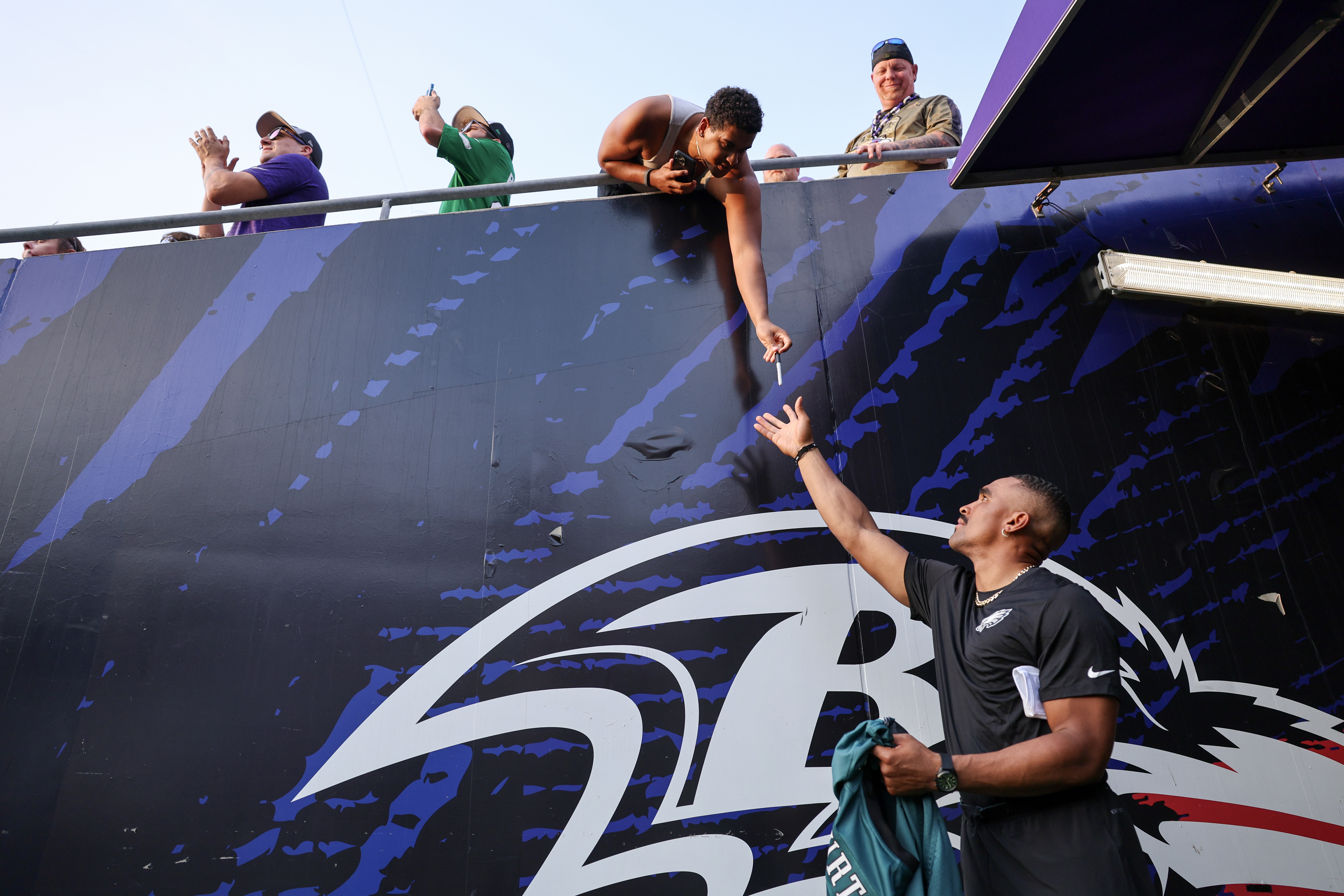
    Jalen Hurts signs a jersey for an Eagles fan as he comes out of the tunnel ahead of a preseason game against the Ravens in August.David Maialetti / Staff Photographer

    It may be just a simple hello in the hallway, or hanging in the locker room longer, or talking about himself more openly. Hurts has organized summer workouts with skill position players before, but he had almost full attendance in the session he ran in Orlando this July.

    No one desires for him to be inauthentically extroverted. Like his goatee that was shaved into a mustache for most of this offseason, Hurts has made outward tweaks. But he remains a figure mostly shrouded in mystery, and seems to relish it.

    Asked to reveal more about a recent anecdote he’d relayed about his wife, Hurts said, “Maybe … if you’re nice to me.”

    Adjustments and growth

    The personality stuff is secondary to performance. Hurts, like many on offense, didn’t play up to expectations in 2025. He finished with his lowest expected points added per dropback since he became the full-time starter in 2021, and ranked a career-worst 18th in EPA among qualified quarterbacks.

    The Eagles haven’t had a pass-heavy offense when at their best, though. And the inability to run with running back Saquon Barkley after a historic 2024 compounded the struggles through the air. But what confounded the most, perhaps, was Hurts being less of a factor on the ground.
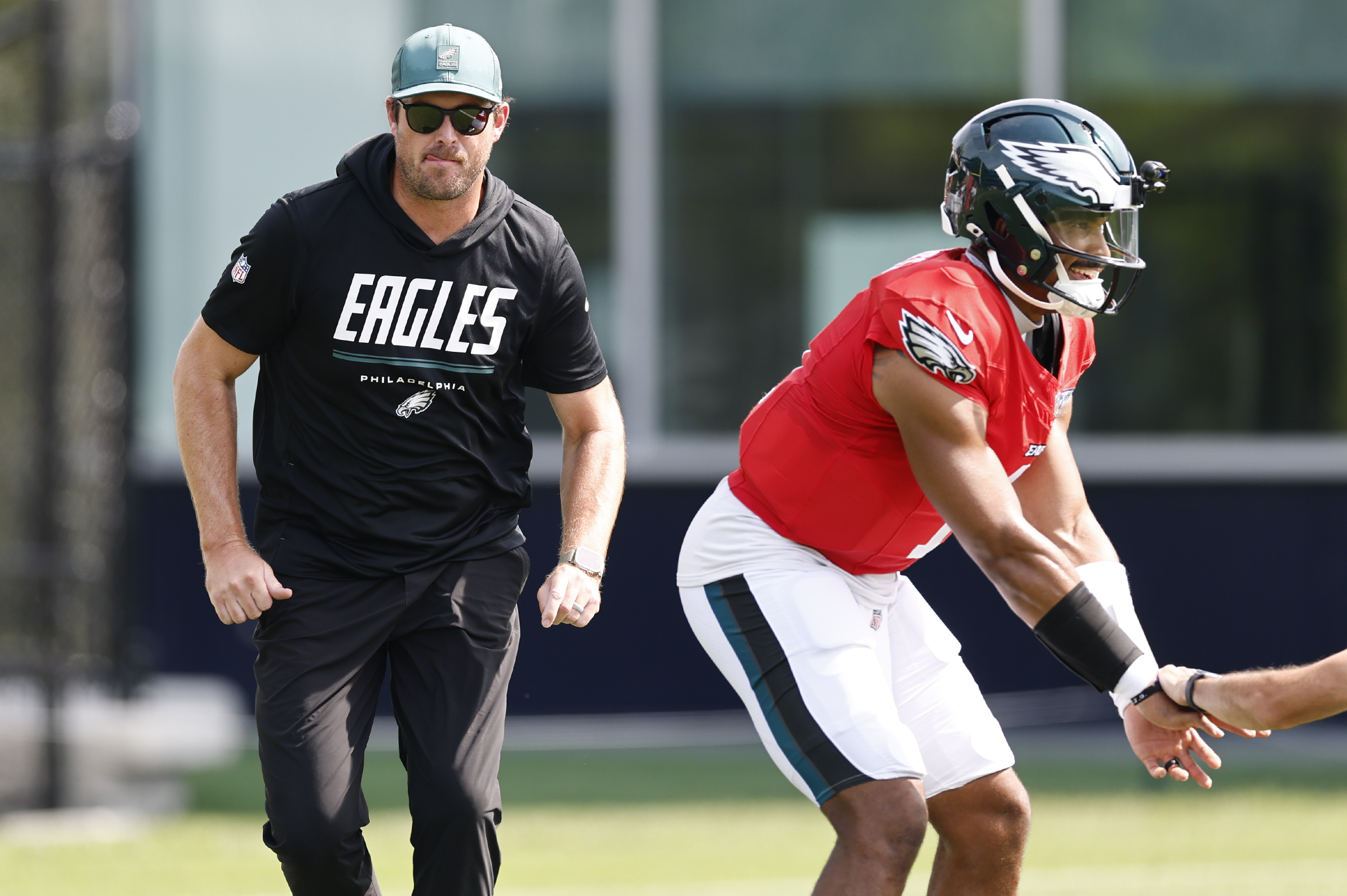
    Another year, another new offensive coordinator for Jalen Hurts: This year it’s Sean Mannion (left).Yong Kim / Staff Photographer

    Numbers hardly tell the full story. The offense was predictable, conservative, and failed to evolve and incorporate modern trends like having more motion. The end result: Kevin Patullo was fired after one season as offensive coordinator, Brown wanted out, and Sirianni hired a first-time play-caller in Mannion, who brings with him the trendy Kyle Shanahan-Sean McVay system.

    Mannion is just the latest in a long line of coordinator changes Hurts has had to endure stretching back to college at Alabama and Oklahoma.

    “I think you can appreciate the 11 different coordinators I’ve had,” he said last month in explaining the ups and downs of his career.

    But as receiver DeVonta Smith said after the playoff loss to the 49ers in January, and as Eagles defensive coordinator Vic Fangio noted last month, the offense hadn’t changed all that much since Sirianni became coach and Hurts his quarterback.

    “A lot’s been made about him, all these coordinators he’s been with, but it’s basically been the same offense every year,” Fangio said. “This is different.”

    Hurts has previously worked from under center. He’s thrown down the middle of the field. He’s had pure progression reads. But he’ll have to do those things at a much higher rate if marrying the run with the pass off play-action is the central principle of the new offense.

    (function() { var l = function() { new pym.Parent( ‘hurts-zones2__graphic’, ‘https://media.inquirer.com/storage/inquirer/ai2html/hurts-zones2/index.html’); }; if(typeof(pym) === ‘undefined’) { var h = document.getElementsByTagName(‘head’)[0], s = document.createElement(‘script’); s.type = ‘text/javascript’; s.src = ‘https://pym.nprapps.org/pym.v1.min.js’; s.onload = l; h.appendChild(s); } else { l(); } })();

    It may seem counterproductive to ask him to major in something he’s only minored in before. But Hurts has shown that he can execute all of the above. The question is how far is he willing to go, or for that matter, how far is the turnover-adverse Sirianni willing to let him go?

    Hurts, by all accounts, has embraced the changes.

    “He’s all-in on this system,” Eagles tackle Jordan Mailata said in July at the start of camp. “The way he’s commanding the huddle. The way he’s getting that ball out. The way he’s throwing it. … He’s all-in. It’s refreshing to see.”

    The scheme could unlock a new version of Hurts as a passer. And having an offense where running is the focal point while not being as dependent on his involvement could limit the hits as he enters the next stage of his career.

    But what happens if there are the expected speed bumps? Or even worse, potholes?

    Hurts has previously resisted new elements, as he did early in former offensive coordinator Kellen Moore’s tenure two years ago. Moore had wanted to include more motion in his scheme, but the Eagles were still near bottom in the league in motion usage through the first four games of the 2024 season.

    A 2-2 start that year in which Hurts turned the ball over seven times prompted offensive changes, the most significant of which was leaning into Barkley and the run game. But motion utilization — pre-snap and at the snap — increased as the season progressed. In April, ESPN published a story that detailed Hurts’ “strong preferences” — a reluctance to motion being one — that sources said had stunted the offense in 2025.

    “I’m always open to growth. I’m always open to improving,” Hurts said when he was finally asked in June about the assertions. “I think a lot of it is, what do we put our time on task? What are we exhausting? What are we repping?”

    While he ultimately didn’t refute the report — “Just let it live,” Hurts said — he did say he wasn’t responsible for the fateful “four verticals” call that ended the season against the 49ers, and a play that in its story ESPN implied Hurts directed.
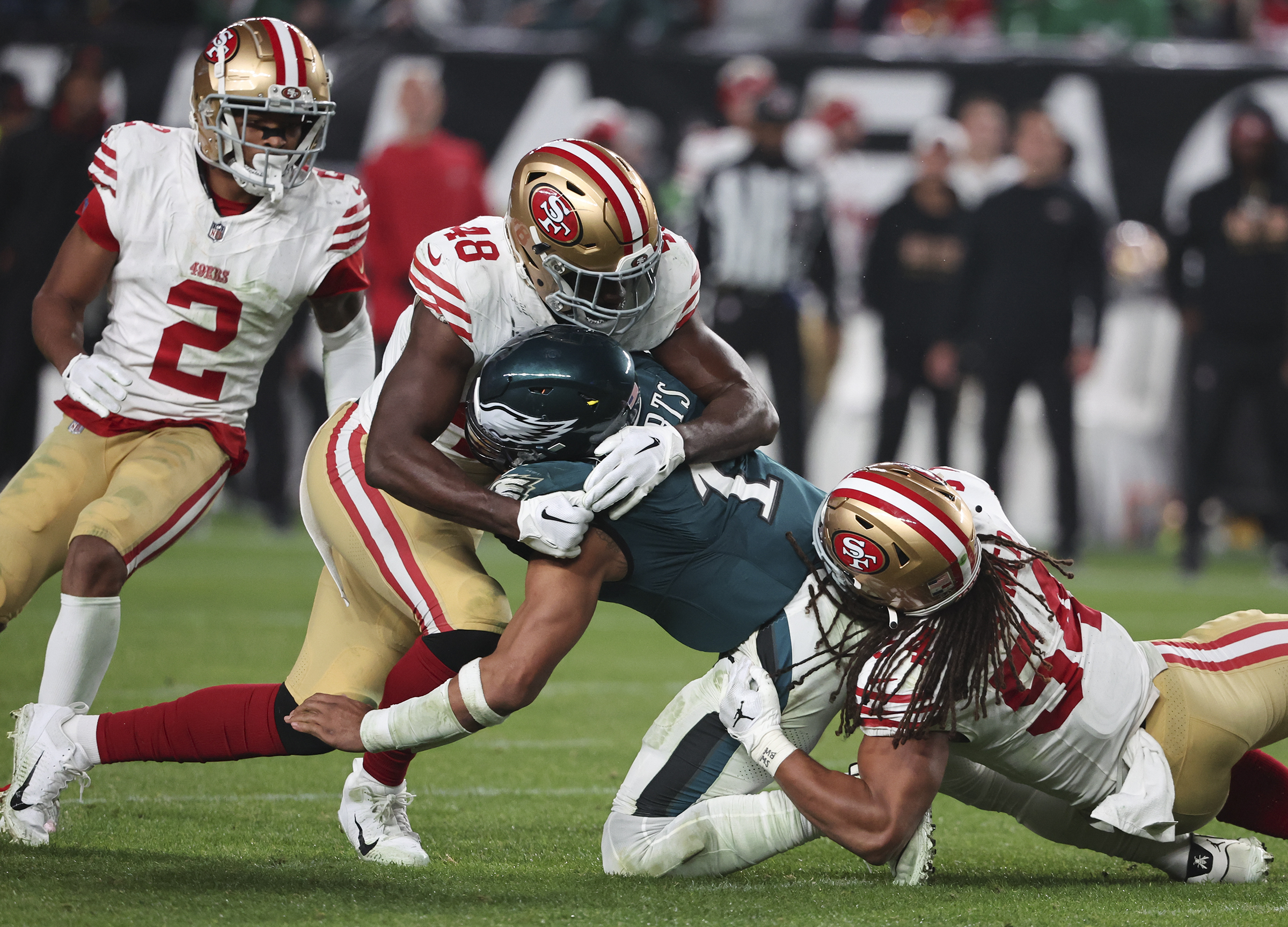
    Last season ended for the Eagles and Jalen Hurts with a home loss to the 49ers. Here, Niners linebacker Fred Warner (right) and linebacker Oren Burks converge to tackle Hurts.David Maialetti / Staff Photographer

    While a source close to the situation confirmed that it was Hurts who suggested the play, two sources familiar with the events said it was only because Patullo had “froze” when going over the play sheet. Ultimately, Sirianni had final say.

    If the outcome was successful, a statue would not have been erected like with the “Philly Special.” But there wouldn’t have been as much consternation about who was responsible: the player who came up with the idea, or the coach who decided it made sense.

    Either way, the play-calling process had become more cumbersome under Patullo than it was under Moore. Some team sources have described Moore as a savant, capable of getting a call in early enough to give Hurts additional information until the cutoff time.

    But Patullo was a first-time play caller, and thus a by-committee approach was used with Sirianni’s supervision. Mannion, also a first-timer, is expected to adopt a similar system with pass game coordinator Josh Grizzard, who has play-calling experience, and others feeding him necessary data.

    Every NFL offensive coordinator has play-calling help. But the Eagles were 1.3 seconds slower out of the huddle last season and had the most snaps in the league (150) with one second or less left on the clock.

    There weren’t any noticeable game management issues in the preseason, but Hurts has yet to play a game with Mannion at the controls. Mannion’s gameday whereabouts — he practiced calling plays from the field and in the booth in the preseason — have yet to be decided.

    “I think the operation’s been good regardless of where he’s been,” Sirianni said.
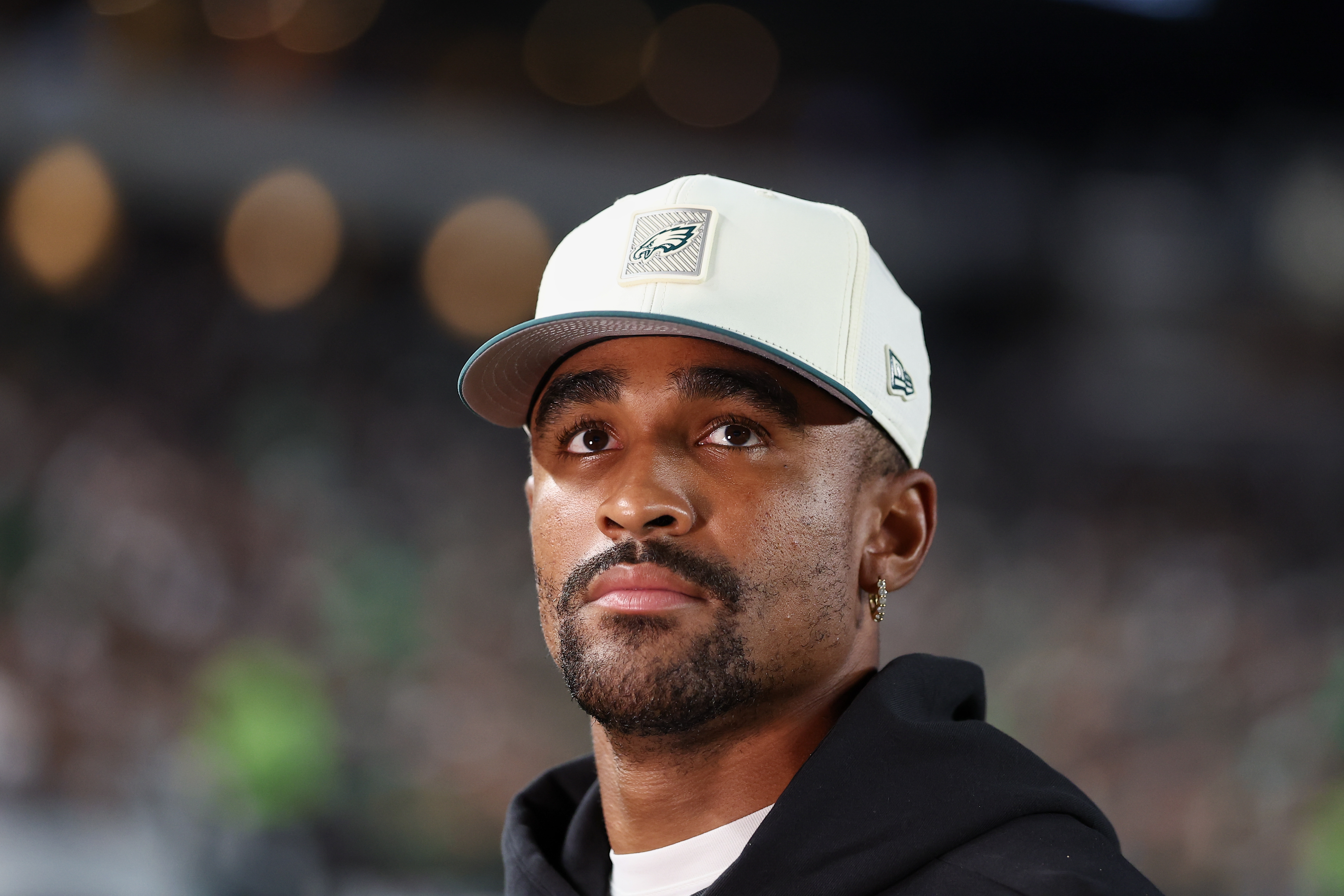
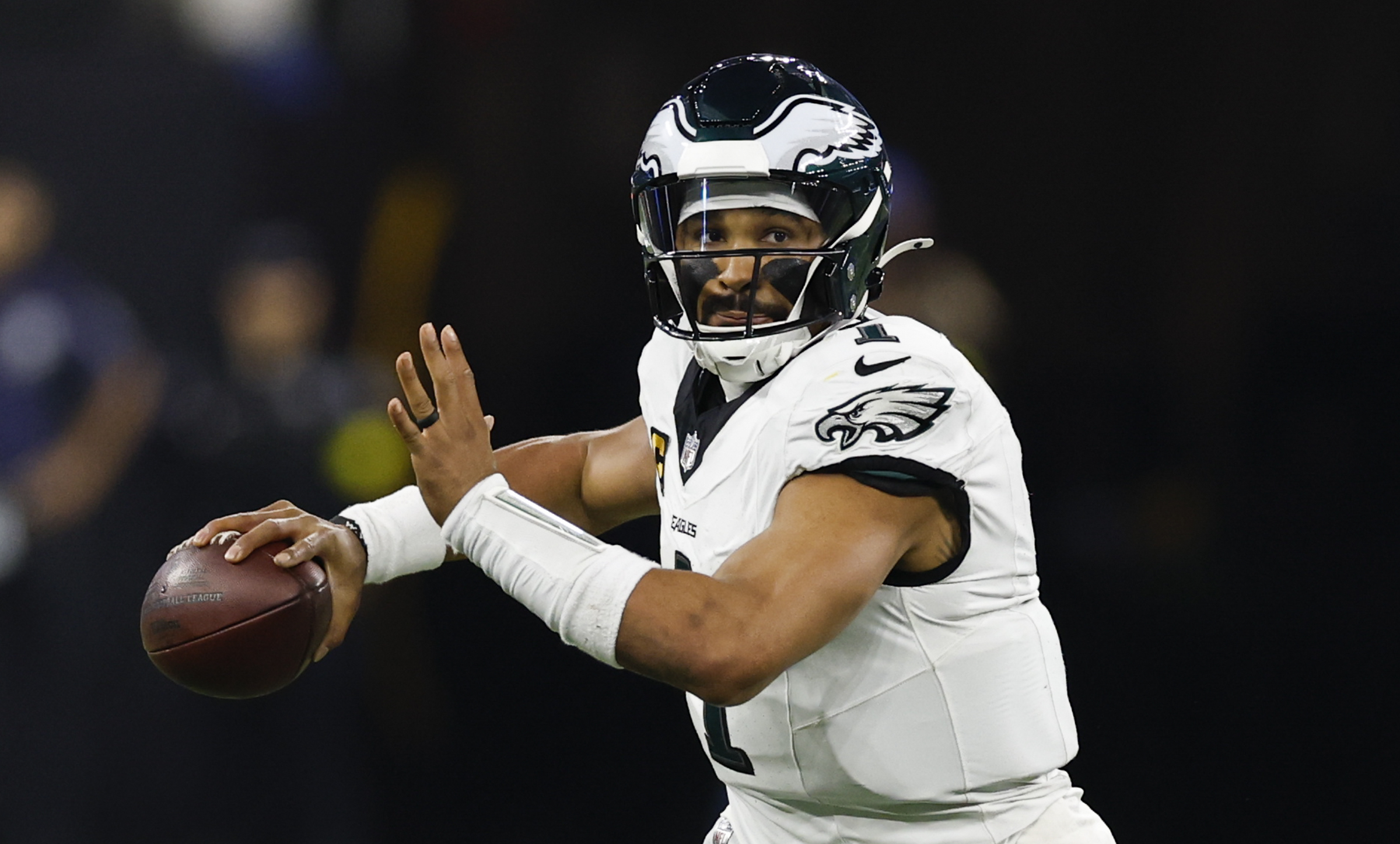
    Jalen Hurts did not play during the Eagles’ three preseason games.Monica Herndon / Staff Photographer

    Handling pressure on and off the field

    While the getting-out-of-the-huddle issue can be mostly attributed to the play-calling process, the late snaps are probably more of a quarterback problem. Mannion has added more plays in which the offense breaks the huddle and hurries to the line for a quick snap.

    But that tactic can be deployed only so often. Hurts still has to make checks at the line and change protection calls based upon his pre-snap reads of a defense. In terms of setting the protections, particularly vs. pressure looks, former Eagles center Jason Kelce took charge until he retired in 2023.

    Hurts has made strides against the blitz over the past two seasons, in particular in finding his hot reads. But he struggled more last season with simulated pressures — in which defenses feign sending extra rushers — with the Eagles often errant in their protection assignments.

    Mannion said the pre-snap calls will be made by either Hurts or the offensive line “dependent on the protection scheme,” Eagles center Cam Jurgens said. “It’s similar, but not the same,” in terms of how responsibilities are doled out.

    Hurts faced a lot of unblocked pass rushers in two joint practices with the Patriots last month. It was a good test for Mannion’s unit because New England loves to disguise its looks and send simulated pressure at quarterbacks.

    The Eagles offense was effective on the ground in the early portion of Day 1. But Hurts was hurried or sacked on multiple drops in the latter team drills. And on Day 2, he threw multiple interceptions, although there were positive moments through the air as well.

    As important as the scrimmages were for the teams, Brown’s performance against his former team garnered as much attention. “He was the best player on both offenses,” an Eagles source said of the new Patriots receiver.

    Brown said after the first workout on Aug. 19 that he hadn’t spoken to Hurts since he was traded on June 1. Both players were guests at Eagles receiver DeVonta Smith’s wedding just 12 days later.
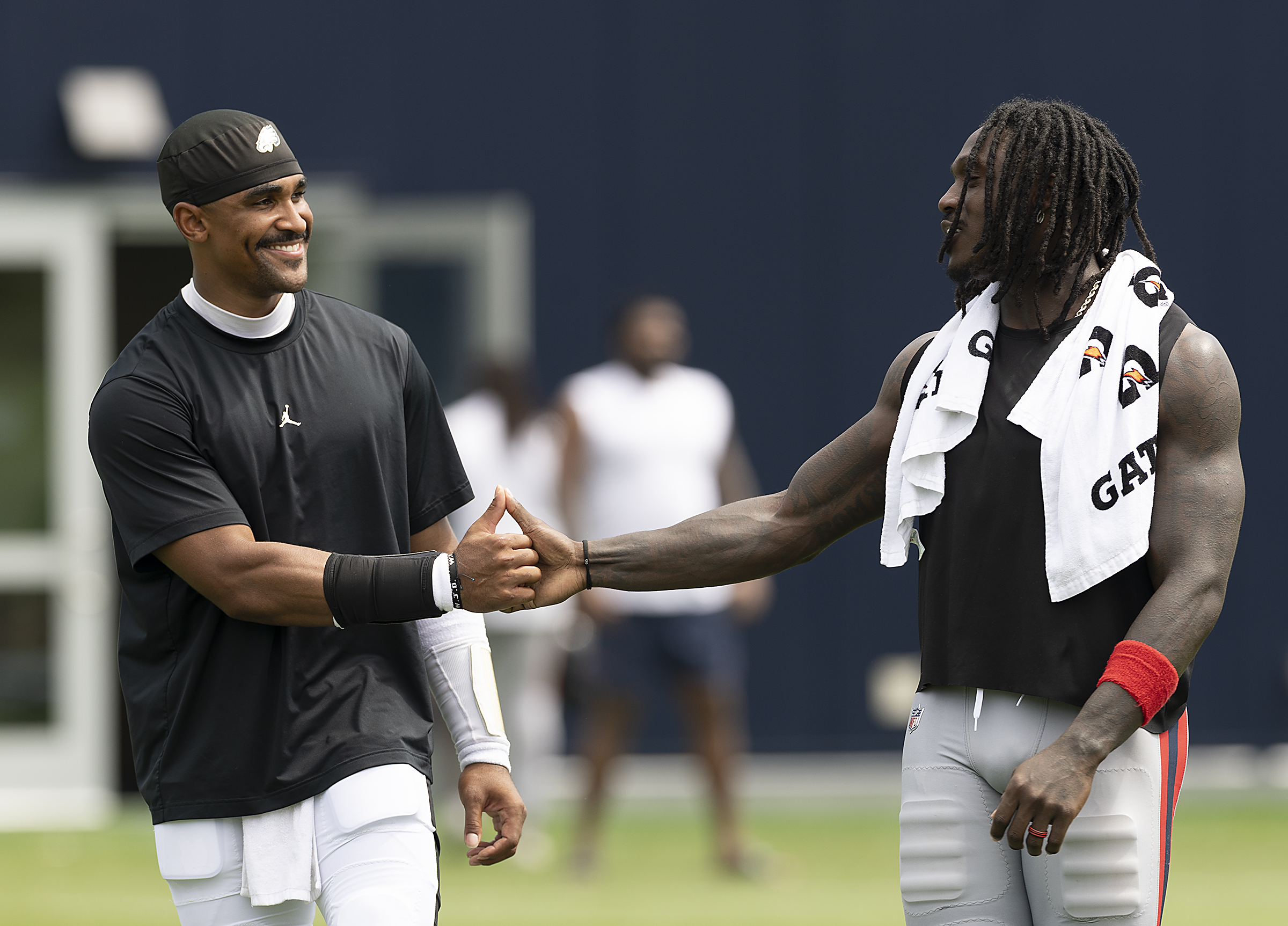
    Jalen Hurts and A.J. Brown exchanged greetings after the Eagles and Patriots had a joint practice in August.Yong Kim / Staff Photographer

    But on his way to the locker room after the second practice, Brown jogged down to Hurts as he was throwing passes, and the two embraced. They asked about each other’s families, wished the other good luck in the coming season, and exchanged a few jokes, according to a source briefed on the interaction.

    Both teams had wanted a made-for-the-cameras reconciliation and Brown, who had told NBC Sports at the time of the trade that he was no longer close to Hurts, agreed when an intermediary intervened.

    In June, Hurts gave an ambiguous answer about being “focused on the collective” when asked about Brown’s description of their relationship. But when GQ pressed him on the subject of whether they were no longer as tight, Hurts said, “Clearly.”

    Brown declined to address why he wanted to be traded. Several Eagles sources opined that there wasn’t more behind his exit than what was on the surface: He wanted to further cement his legacy as a Hall of Fame-caliber receiver and didn’t believe that was possible in Philly.

    And while that implied that Hurts was at the core of his leaving, there were off-field reasons for why they drifted apart. Brown, for instance, had organized team bonding trips to an escape room and Top Golf, or get-togethers at the movies or his house. Hurts was among those who didn’t always attend such excursions.

    Hurts, as quarterback, had other responsibilities. But there was a general feeling from some team leaders that he needed to be more engaged.

    In July, Hurts hosted many Eagles skill position players in Orlando for workouts at Central Florida’s Bounce House. But the players also golfed, had dinners, and socialized. When asked about the excursion at the start of camp, Hurts talked about “unity” and protecting the “intimacy of this team.”

    Brown, who was often outwardly emotional, had expressed public frustrations via social media, something he later said he regretted.

    The sphinxlike Hurts has preferred to let his actions on the field do most of the talking. And his accomplishments in just five seasons as the starter speak for themselves: 56 victories and a 71.8 winning percentage, five playoff appearances, two Super Bowl trips, and an MVP performance in beating the Chiefs in the title game just two seasons ago.

    Hurts’ resumé should make it almost inconceivable that the Eagles would contemplate — no matter how this season unfolds — parting with him next offseason. And yet, his contract doesn’t make it a foregone conclusion.

    Forecasting the future

    Hurts is guaranteed $51.5 million for 2026, but less than half of his $51 million average annual salary ($22 million) is guaranteed in 2027. He has no guarantee in 2028, the final year of the five-year, $255 million extension he signed in April 2023.

    Eagles owner Jeffrey Lurie, when asked about the deal in April at the league meetings, said Hurts was in the “middle of the new contract now.” But teams have given extensions to franchise quarterbacks with similarly structured contracts to create salary cap space.
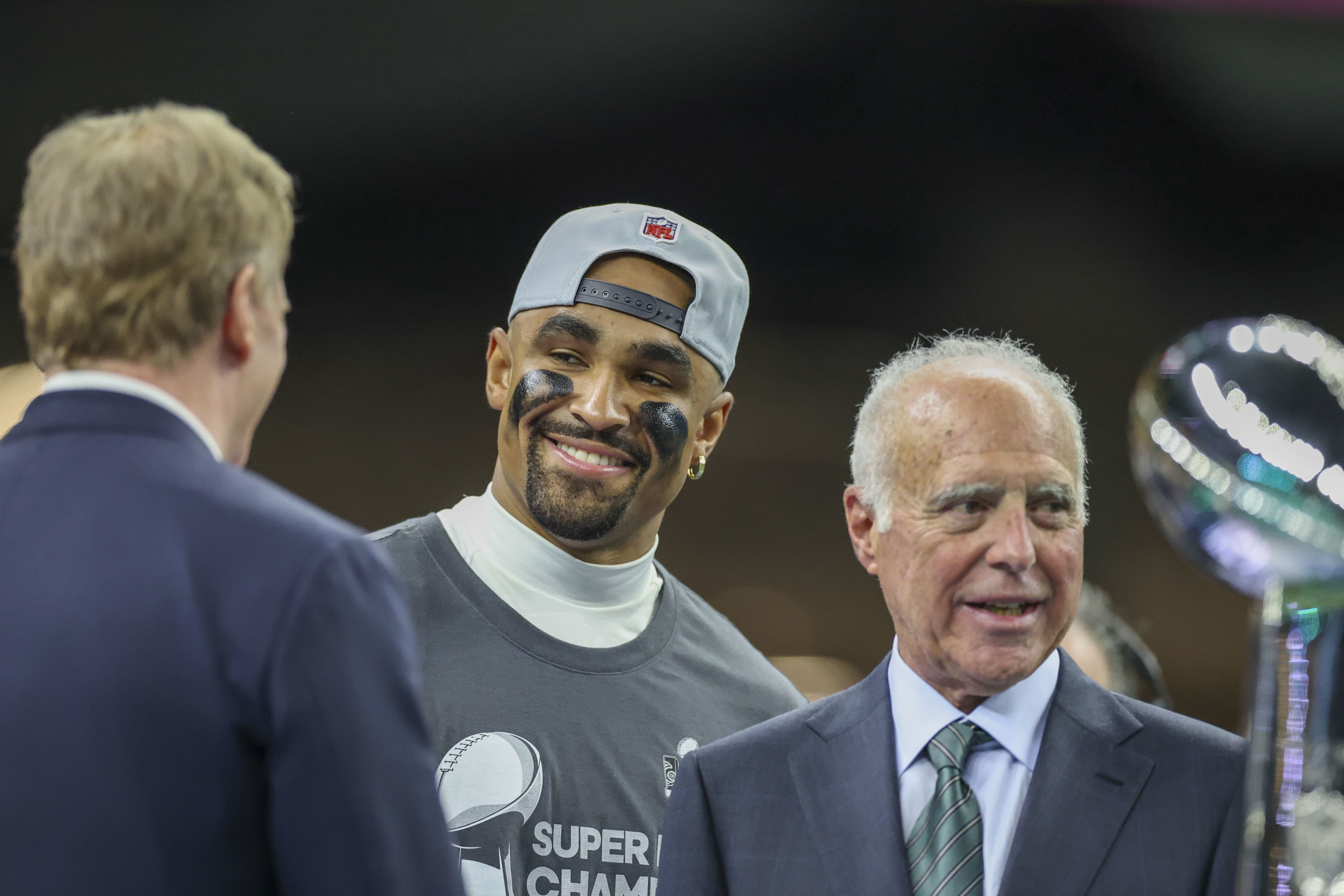
    Jalen Hurts and Eagles owner Jeffrey Lurie have enjoyed the ultimate success together. David Maialetti / Staff Photographer

    Lurie was otherwise effusive praising Hurts. The owner pushed for Roseman to select the Oklahoma product in the second round of the 2020 draft. Hurts may not have a bigger fan in the building, and that’s notable when looking at his future.

    The Eagles front office views his deal as winding down and expects optimum production — like any player under similar circumstances — but it’s hard to predict anything with the next offseason eons away in NFL terms.

    “For me, I’m truly focused on being the best I can be right now,” Hurts said when asked about his contract in June. “That’s where my energy is.”

    When camp opened a month later, Hurts appeared trimmer than previous years. Fangio and a few defensive players said he looked faster. Hurts said he felt the same and hadn’t altered his training regimen.

    Last season, he finished with his lowest number of rushing attempts (105) and rushing yards (421) since becoming the starter in 2021. The Eagles wanted to curtail Hurts’ exposure to harm early on, but despite Patullo’s pledge that more carries were coming, Hurts was rarely a plus-one factor down the stretch. Hurts insisted that he was willing to run as much as he had previously, and has said as much about this season. But there will likely be fewer opportunities for designed runs with more plays starting from under center.

    “I don’t think that’s something I can manage,” Hurts said last month. “That’s ultimately up to what we’re doing as an offense and how we put everything together. When you look back about 2020 and 2021 and those times we were a heavy [shotgun] team, ran a lot of inside zone, run a lot of [run-pass option], got to the edge a good bit, and defense was different, too. And the game has changed.

    “That doesn’t mean you remove those elements, but again the base of the offense was run inside zone and that’s not typical for this West Coast-type of style.”
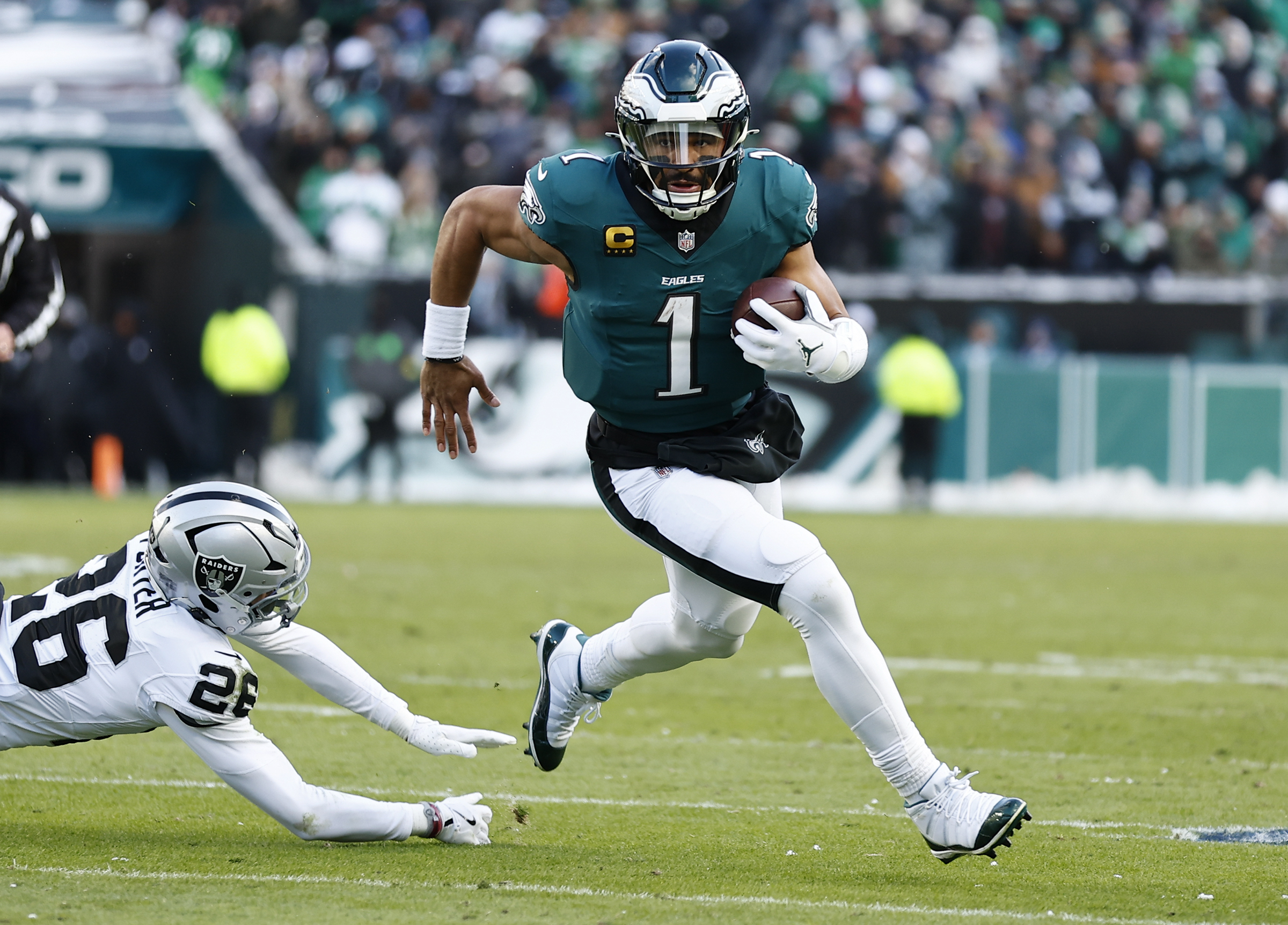
    Jalen Hurts’ effectiveness as a runner will be scrutinized within Sean Mannion’s scheme. Monica Herndon / Staff Photographer

    The outside zone is the base run play of the Shanahan-McVay offense, and its effectiveness sets up throws off naked bootlegs that are designed in part to be layups for the passing game. There is a horizontal stretching of defenses, but the play-action is also designed to create space for receivers downfield.

    Backup quarterbacks Andy Dalton and Tanner McKee were under center on 38% of the snaps they took in the preseason. But it was a small sample and neither player has Hurts’ mobility and athleticism.

    “The piece of him as an athlete in the running game is something unique,” Mannion said. “Those are elements we can lean into a little bit, as well.”

    But with so much of the scheme predicated on marrying the run with the pass and keeping defenses on their toes by not giving away plays based on formation and technique, it will be difficult to shift the play-calling.

    Sirianni hired the 34-year-old Mannion for his acumen, but also for his knowledge of this scheme.

    Overall, Hurts was accurate and efficient in camp. But he also had rough moments and tossed eight interceptions. That’s seven more than he threw last summer, so practice doesn’t always correlate to regular-season performance.
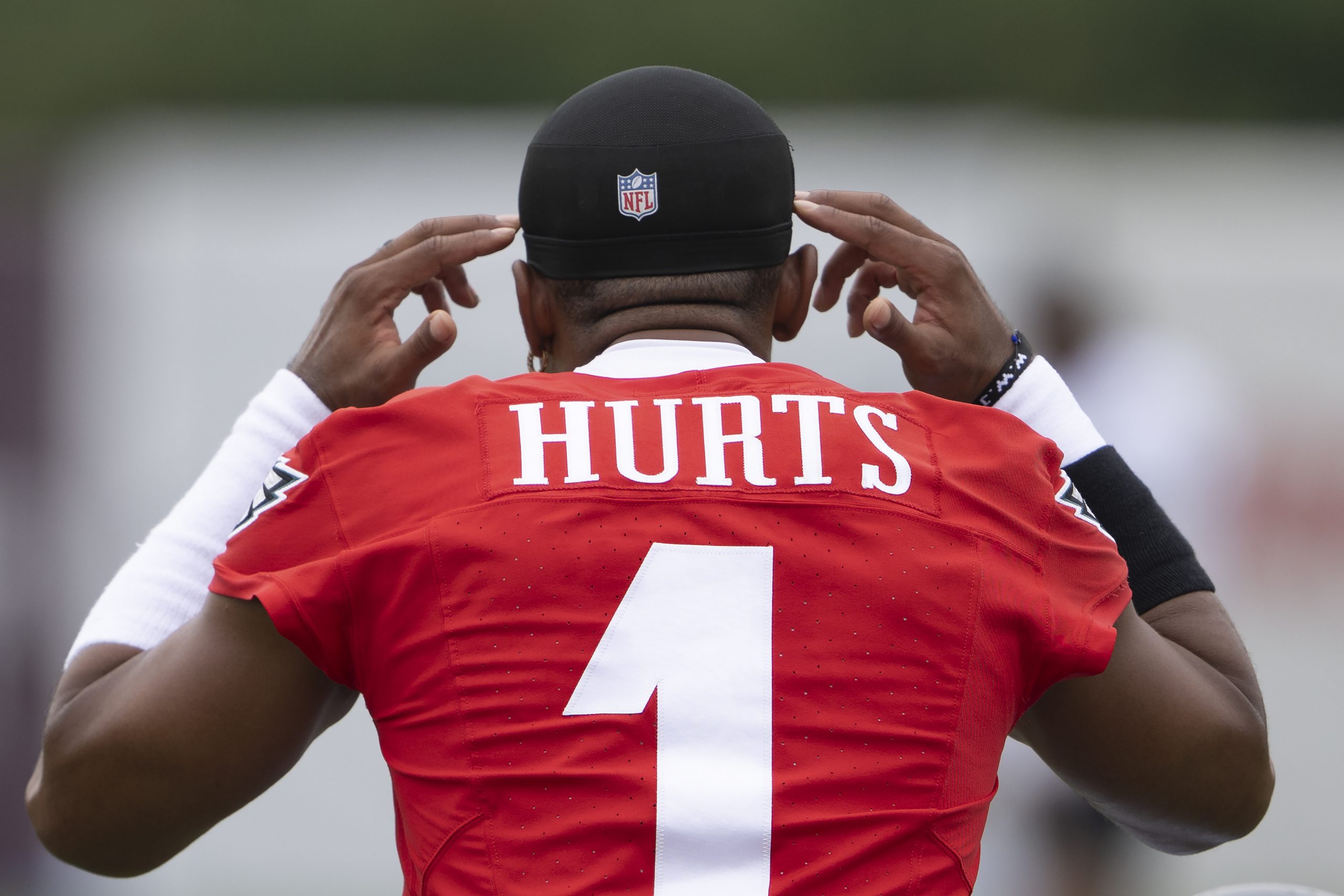
    Jalen Hurts had an up-and-down camp as he learned the new offense. Jose F. Moreno / Staff Photographer

    But with more full-field progression reads than the coverage reads that were a larger part of the previous system, timing with his receivers will be pivotal. Hurts may have less to do pre-snap, but with many new faces, there will likely be a learning curve.

    Mannion didn’t gloss over the interceptions from the joint practices. He pointed them out and didn’t excuse them as experimental throws. But there is some question as to whether Hurts will overpower a young coordinator when expressing his preferences.

    There is a balance to strike in doing what’s best for the quarterback and what’s best for the entire group. The same could be said about a possible blending of the old with the new. For all the hand wringing about the offense last year — that was also affected by O-line injuries — the scheme had produced remarkable highs in the past.

    “I think that’s a great question,” Hurts said when asked about carryover. “And it’s something that you keep in mind when you’ve had so much success. How will it look? You don’t really know. Do you want to win? Absolutely.

    “So we’ve got to figure out who we are as a team. Obviously, coaches come in with a great mindset, great philosophy and putting everything together. It brings us a bit more structure. In the end, it’s about what’s going to go out there and be the best for our team.

    “I know Sean will come up with the answer over time.”
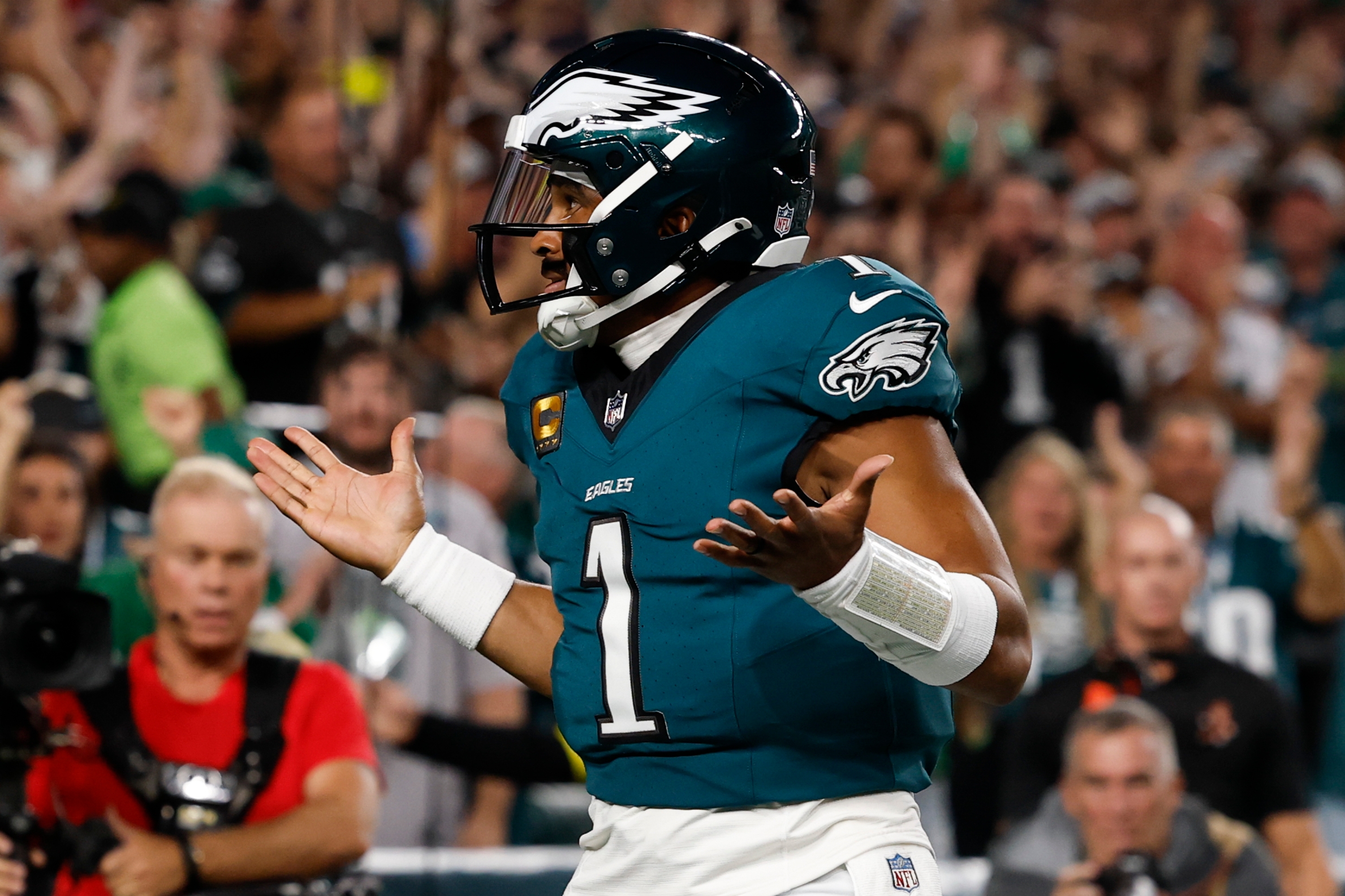
    Jalen Hurts has seemed open to both schematic and personal changes that will help turn the page on a disappointing 2025. Yong Kim / Staff Photographer

    ‘I am who I am’

    Time will show if the relative openness Hurts has shown to others will extend to the offensive changes. But if stoicism or hardheadedness were his worst crimes, he wouldn’t be unlike many high achievers.

    Four years ago, Hurts agreed to participate in what has remained his lone sit-down interview with The Inquirer. The topic of the Eagles’ legacy of Black quarterbacks was one that appealed to him because he admired his predecessors and knew the bleak history of how African American men were treated in relation to the position.

    “I think there’s levels to that, and I’ll just leave it at that,” Hurts said when asked if he felt Black quarterbacks still faced additional scrutiny.

    A follow-up posed the question of whether he didn’t show more of his personality because of the history.

    “As I grow and mature, that will evolve,” Hurts said then. “But I am who I am in terms of my character, how I was raised and where it comes from. But like I said, there’s levels to everything.”

    Hurts isn’t any less an enigma than he was then or ever. He’s seemingly let outsiders in just a little. But it’s also his coolness that defines him and helps him maintain a fierce number of loyalists.

    When Hurts told the story at the start of camp of how he offered the recently extended Jalen Carter the $5 bill his wife, Bryonna, puts in his backpack — “A little inside joke between her and I,” he said — it was one of the rare times he ever spoke anecdotally.

    It also gave a glimpse, perhaps, of his private life. The Inquirer later asked for more detail. Hurts repeated what he said several times before when the reporter asked for additional access: “Maybe … if you’re nice to me.”

    When the question was posed again, following the brief post-news conference interaction a few weeks later, Hurts laughed, then walked away.
  • The Beatles sneaked into Convention Hall in a fish truck on this week in Philly history

    The Beatles sneaked into Convention Hall in a fish truck on this week in Philly history

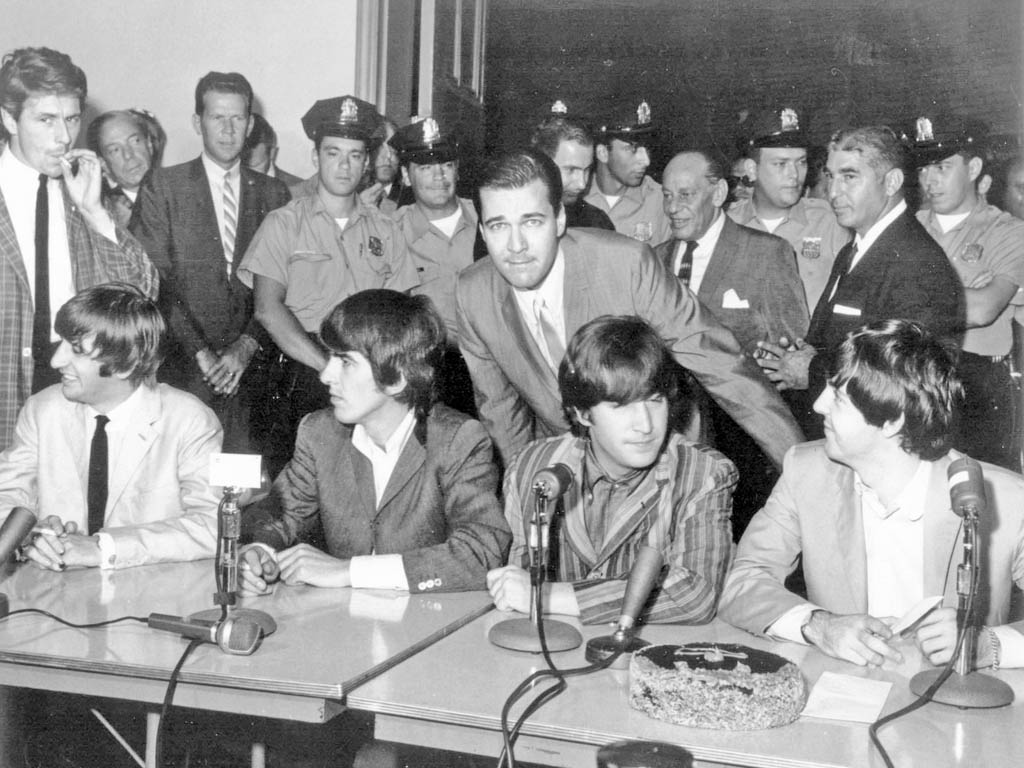
    Four of the most influential musicians the world has ever seen had a concert to play in West Philadelphia on Sept. 2, 1964. But they needed an inconspicuous way to get in.

    DJ Hy Lit recalled to the Daily News’ Phil Jasner in 1980 that kids were everywhere.

    Philly’s finest knew exactly what to do to get the Beatles into Convention Hall.

    “They came in a Hackney’s fish truck,” Lit said.

    Here comes the sun

    The Beatles were playing in Philly nearly eight months after their February appearance on The Ed Sullivan Show, which introduced the Fab Four to the U.S. audience.

    By September 1964, the band’s first U.S. tour and Beatlemania were in full swing.

    Lit was promoting the band’s Philly appearance at Convention Hall, at 34th Street and Civic Center Boulevard, on behalf of popular radio station WIBG-AM.

    He paid the band’s agent $25,000 to get the band to play Philly, which was still reeling from the Columbia Avenue riots at the end of August 1964.

    More than 12,000 fans paid $2.50 to $5.50 to take part in the festivities, which also featured opening performances from Clarence “Frogman” Henry and Jackie DeShannon.

    Which songs the Beatles played that night are almost irrelevant, as the songs were accompanied by a chorus of teenagers shrieking.

    A hard day’s night

    Frank Rizzo hadn’t yet risen to the rank of police commissioner.

    In 1964, he was second-in-command to Commissioner Howard Leary. But he ranked high enough to meet the band that had galvanized his city, and to help smuggle them into Philly and Convention Hall.

    Lit told Jasner that it was Rizzo who came up with a plan to fake out the crazed fans.

    Rizzo arranged for a couple of buses and a police escort to divert attention, while sneaking the band into what we now call University City in a very non-posh accommodation.

    “I was in their dressing room,” Rizzo told the Courier-Post in 1989. “There was marijuana smoke everywhere. I shoulda run ‘em all in.”

  • America made some really strange things for its 250th birthday

    America made some really strange things for its 250th birthday

    Unsurprisingly, the United States of America found a lot of ways to celebrate its own birthday this year. Modesty never was one of our strong suits.

    Events held to mark the 250th anniversary of the signing of the Declaration of Independence included concerts, reenactments, and Ultimate Fighting Championship matches on the White House lawn that future historians will have to grapple with someday.

    Then there was the stuff: the products, promotions, and items people and companies created to commemorate, or to capitalize off of, the Semiquincentennial. Since receiving the first news release for 250th merchandise on Jan. 5, I’ve been collecting the more unusual items I’ve come across that were created in the name of this nation’s birthday.

    As summer comes to a close, I’d like share my anthropological findings with you.

    Bobbleheads of state

    The National Bobblehead Hall of Fame and Museum in Milwaukee, Wis., has made a bobblehead for almost every pop culture figure and event over the last couple years. There’s a few of Pope Leo, two of Mike “The Situation” Sorrentino (“Old Sitch” and “New Sitch”), and one of Jimothy, the raccoon from Seattle who’s believed to have short spine syndrome and went viral earlier this year.

    But the most improbable bobble — one seemingly even more difficult to create than a raccoon who appears to have no neck — is one without a head at all.

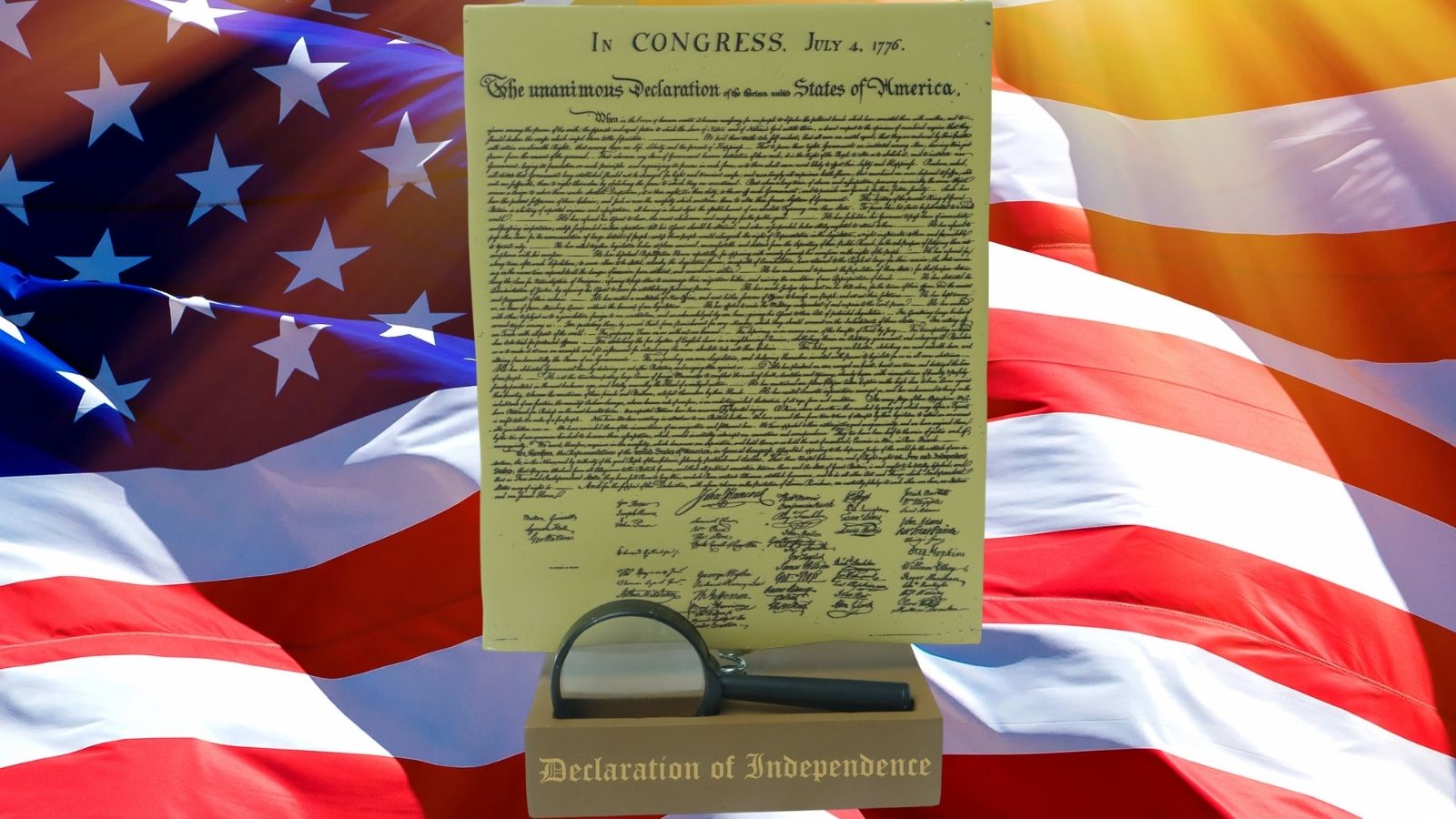
    An image from the National Bobblehead Hall of Fame and Museum of its Declaration of Independence bobble created for the nation’s 250th anniversary.Courtesy of the National Bobblehead Hall of Fame and Museum

    The Declaration of Independence bobble is among a series of 16 bobbleheads made for the nation’s 250th. It consists of a facsimile of the document that bounces back and forth on a small, brown pedestal with a magnifying glass on it.

    The company confidently states that this is “the first bobble of Declaration of Independence,” and I’m pretty sure I don’t need to fact check that. Because when others ask: “Why in the world?” the National Bobblehead Hall of Fame and Museum asks: Why not? And make it bounce!

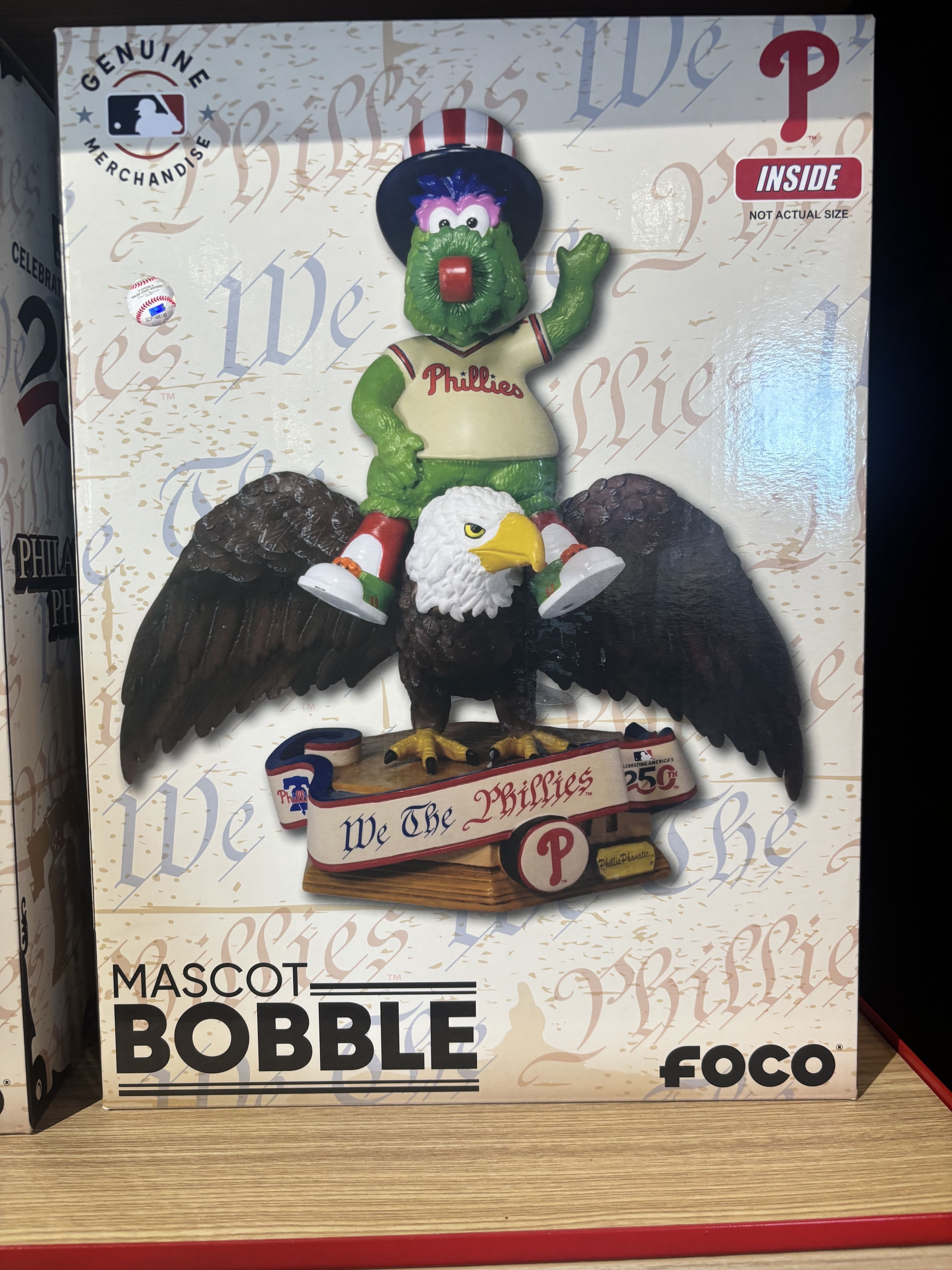
    Nothing says “Happy 250th birthday, America” like a bobblehead Phanatic riding a bald eagle.Stephanie Farr / Staff

    The Phillies and FOCO also got into the commemorative bobblehead game by creating one of the Phanatic in an Uncle Sam hat confidently riding a bald eagle like it was his hot dog cannon ATV. The eagle (who alas, is not Swoop) stands upon a podium wrapped with a banner that reads: “We the Phillies 250.” Sadly, it’s only available at the New Era Phillies Team Store at Citizens Bank Park and sadly, that store is no longer carrying the Liberty Bell Phillies cap I went in for when I spotted this.

    Ghee whiz!

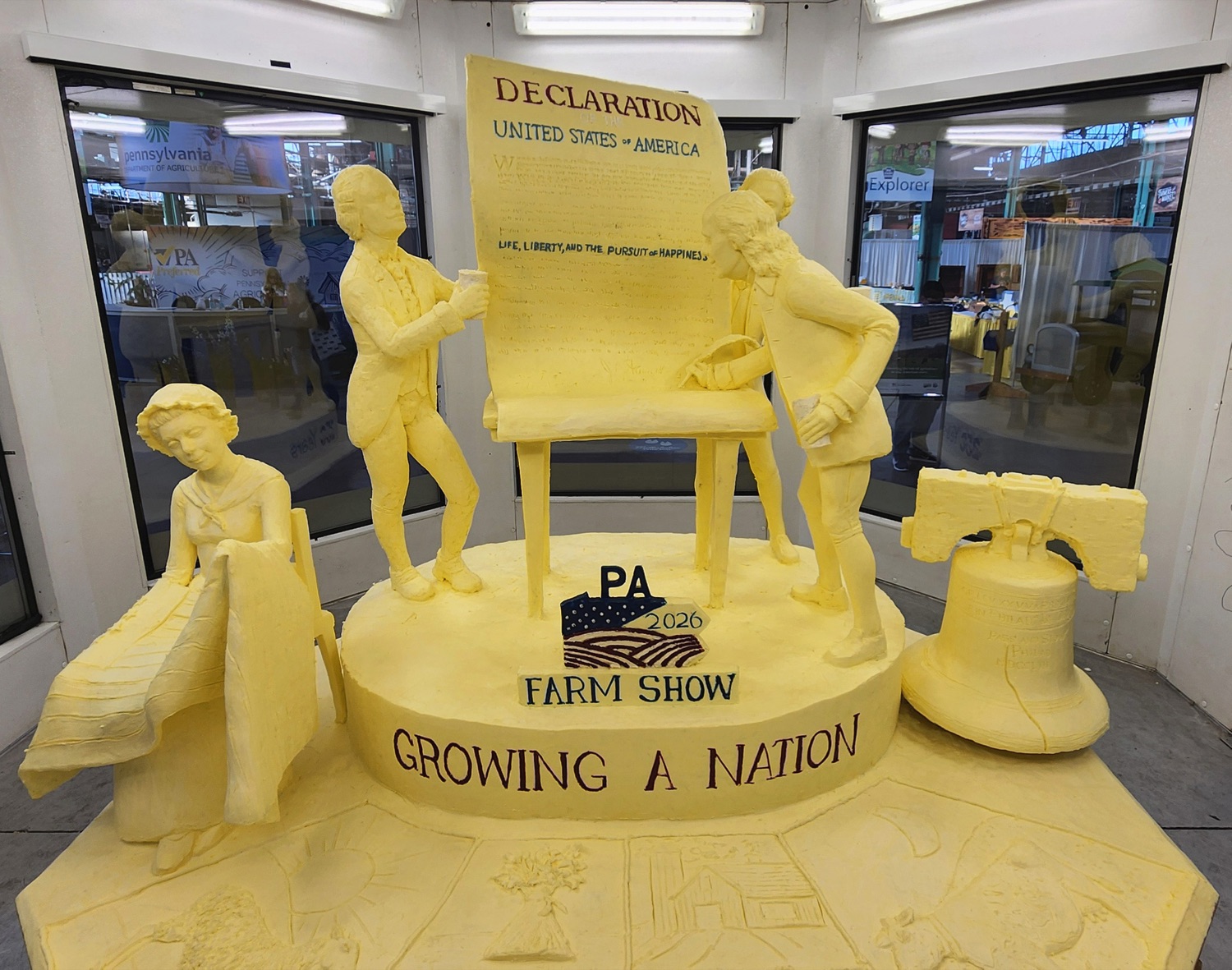
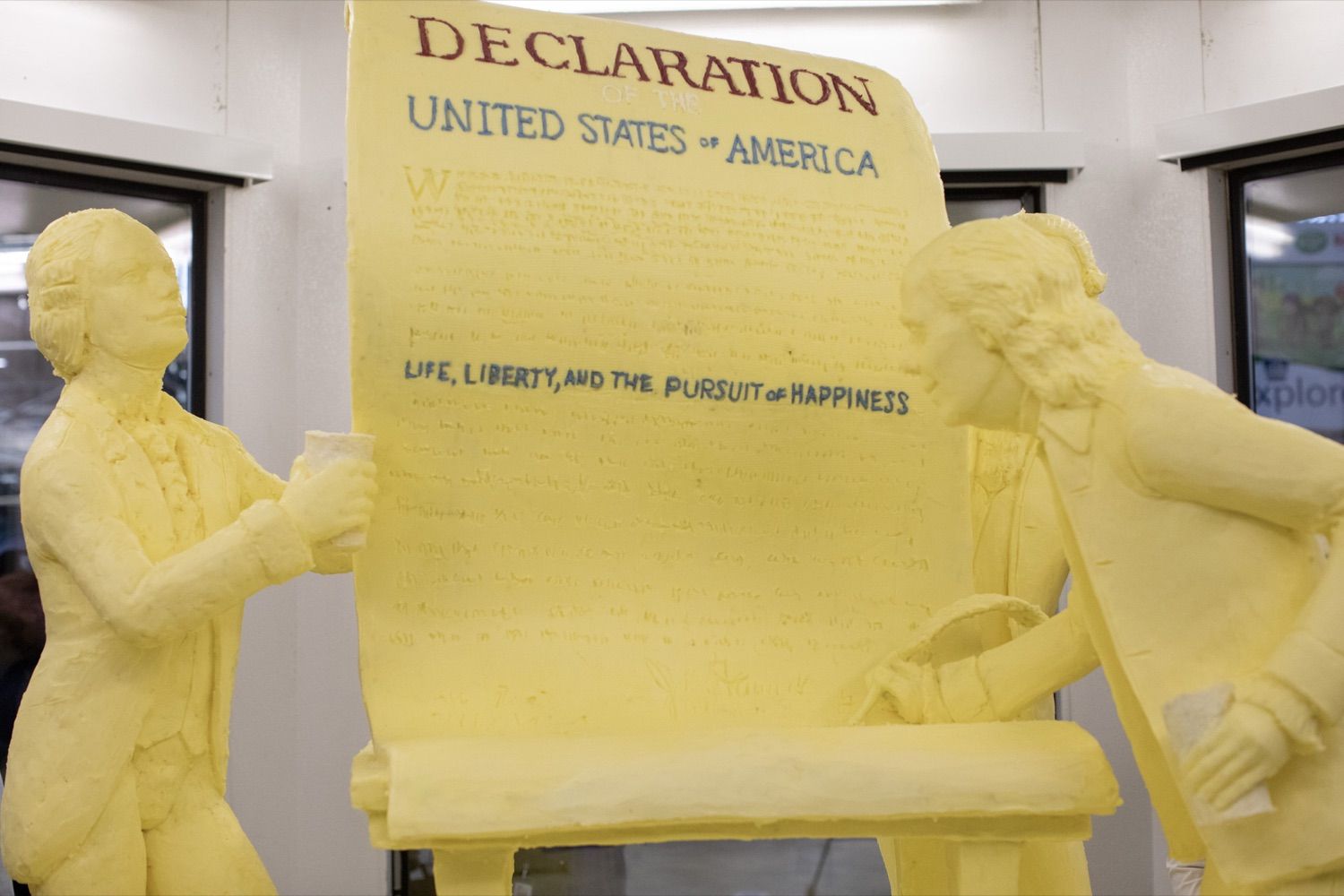
    You butter believe the Pennsylvania Farm Show churned out one of the most epic nods to our nation’s 250th back in January when it unveiled a sculpture of three Founding Fathers signing the Declaration of Independence — made out of 1,000 pounds of Land O’ Lakes butter.

    The sculptors, Jim Victor and Marie Pelton of Conshohocken, also added glasses of milk into the Founding Fathers’ hands in order to buttermilk the dairy theme. Also depicted in the sculpture are the Liberty Bell and Betsy Ross.

    The 2026 Pennsylvania Farm Show Butter Sculpture depicts three of the Founding Fathers signing the Declaration of Independence. Also included in the sculpture are Betsy Ross, at left, and the Liberty Bell, at right. Provided

    Just to clarify, when the Farm Show was over, the butter was spread out to Reinford Farms in Juniata County, where it was turned into renewable energy in a methane digester, according to a news release.

    One margarinely interesting fact: This isn’t the first time Benjamin Franklin has appeared in a Farm Show butter sculpture. In 1991, he was the subject of the event’s first butter sculpture, and in 2007, he was sculpted again with the Liberty Bell, according to PennLive.

    Beavers and beers

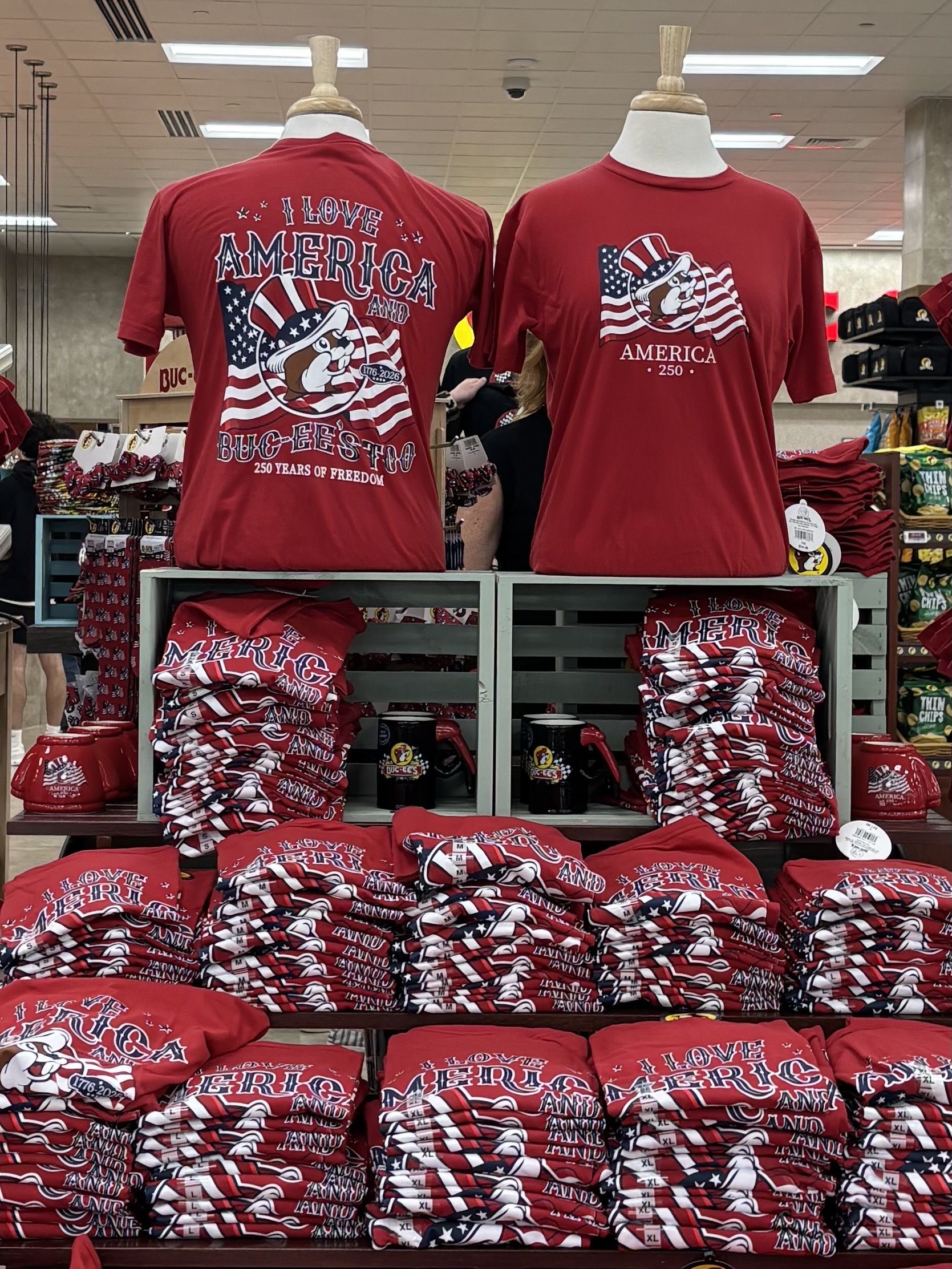
    Shirts for sale at the Buc-ee’s in Mount Crawford, Va., read “I love America and Bucee’s too.”Stephanie Farr / Staff

    Among the more head scratching T-shirts about the nation’s 250th I saw was one I spotted during my first trip to a Buc-ee’s, in Mount Crawford, Va., this May. The convenience store is a temple to merchandising and consumerism so it was no surprise its 250th T-shirt, which featured its beaver mascot in an Uncle Sam hat, read: “I love America and Buc-ee’s too.” Because nothing says I love my country like equating your affection for it with a convenience store.

    One of the 250th shirts for sale at the Independence Visitor Center this summer.Stephanie Farr / Staff

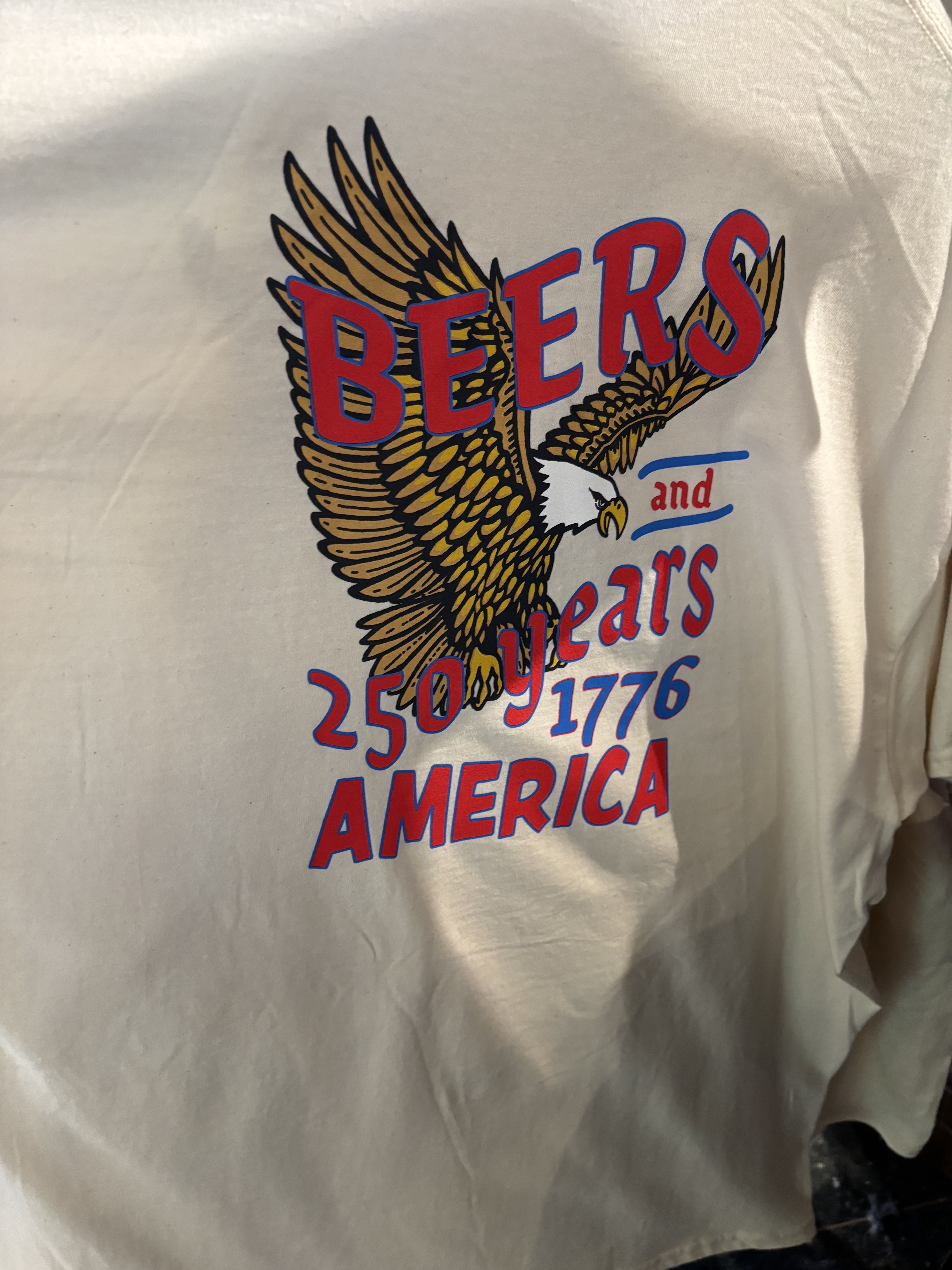
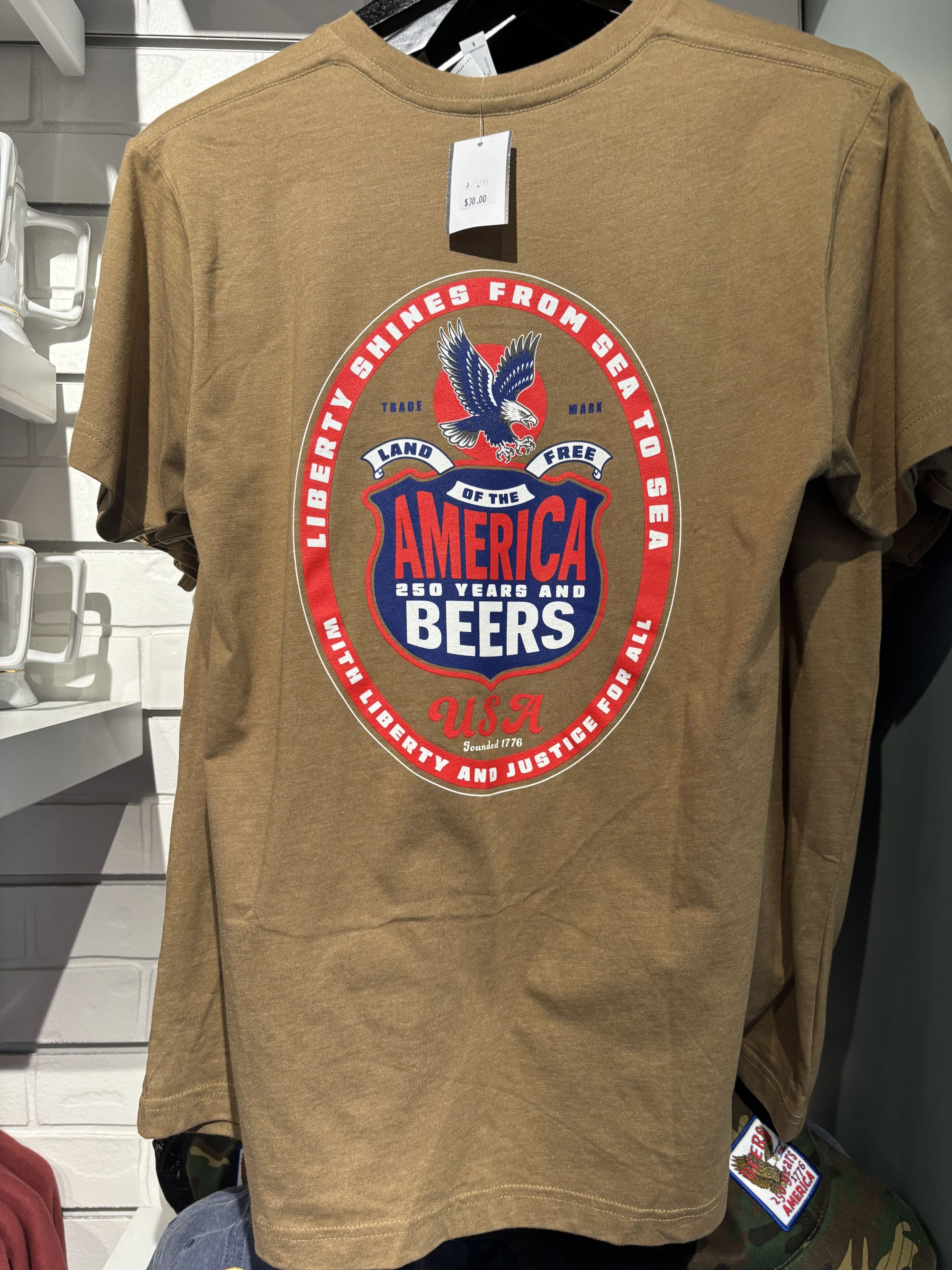
    The other baffling T-shirts I saw were closer to home. This summer the Independence Visitor Center gift store had shirts that read: “Beers and 250 Years 1776 America” and “Land of the free America 250 years and beers.”

    A shirt for sale this summer at the Independence Visitor Center seemed to equate the number of years this country has existed with how many beers it’s birthed. Or drank. It’s pretty hazy on details.Stephanie Farr / Staff

    I’m not sure who their target audience was, ale I know is they finally managed to create a shirt that makes those “Ben Drankin’” ones seem classy. If the Visitor Center wanted to wordplay on beer, they missed a huge opportunity by not making “Pursuit of hoppiness” shirts.

    Booze cues

    Speaking of alcohol, that industry really stirred things up by creating a host of intoxicating beverages to cheers 250 years with.

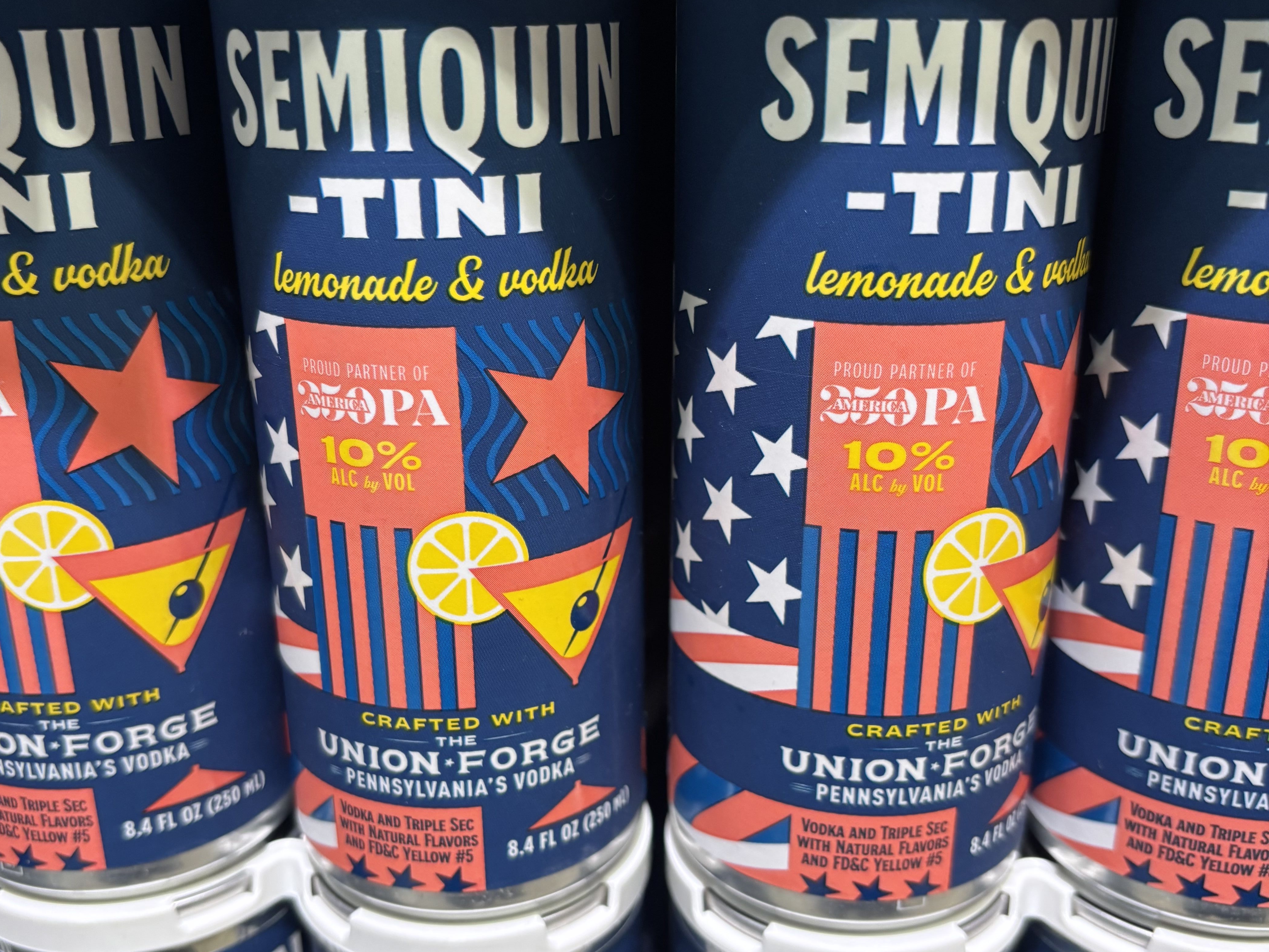
    When it comes to names, it’s hard to top the Semiquin-tini, a canned lemonade-and-vodka cocktail by Union Forge that comes in at 10% ABV.

    The Semiqin-tini by Union Forge is one of numerous boozy beverages created to commemorate the birth of our country.Stephanie Farr / Staff

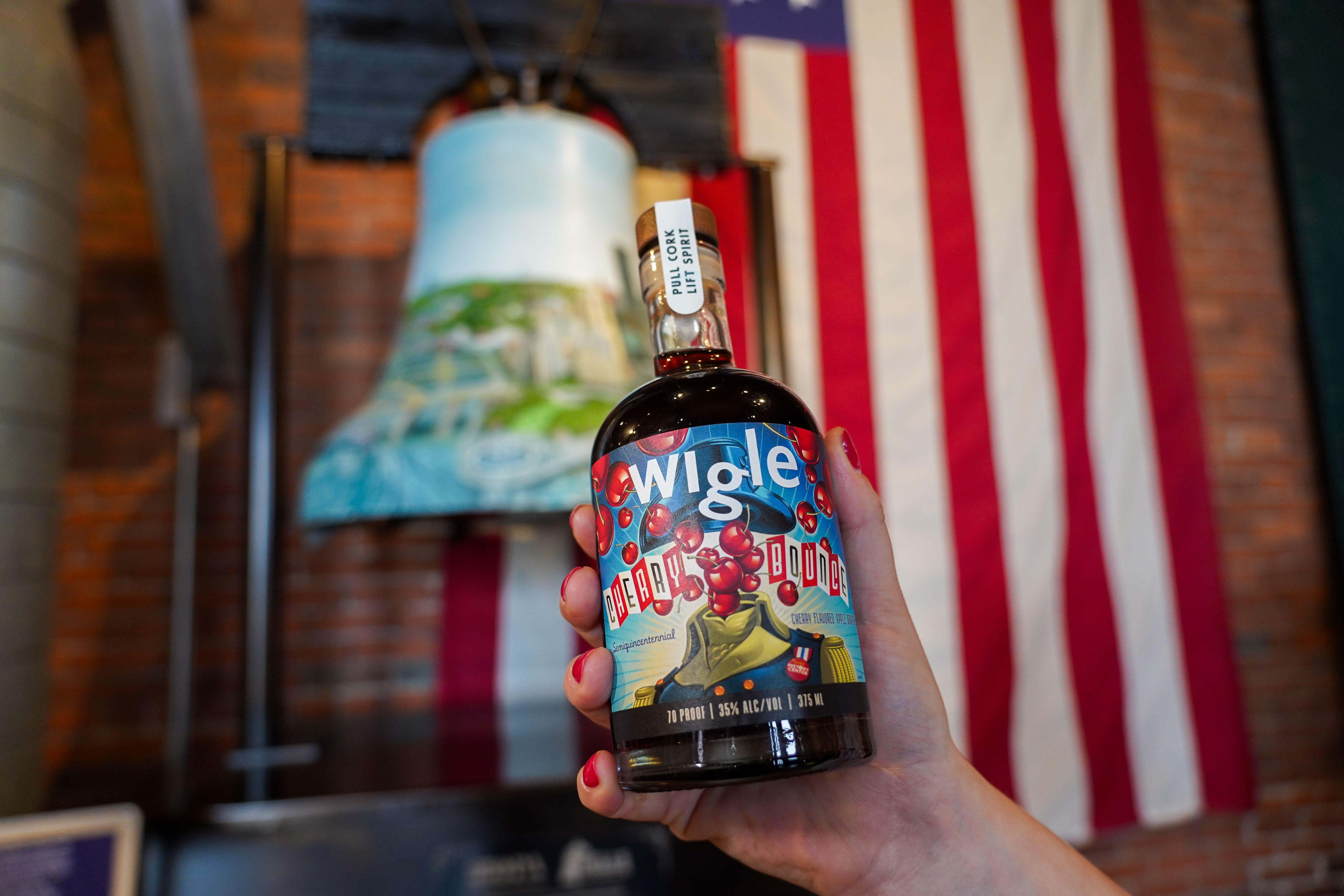
    Out in Pittsburgh, Wigle Whiskey teamed up with the Senator John Heinz History Center to resurrect one of George Washington’s favorite spirits, Cherry Bounce. The cordial, which Washington packed canteens of on long journeys, is made of tart cherries, spice, and brandy. It clocks in at 35% ABV, so don’t go trying to cross the Delaware after consuming it.

    Wigle Whiskey’s Cherry Bounce pictured at the Senator John Heinz History Center.Courtesy of Wigle Whiskey

    At Giant, I spotted “We the People” carbonated wine by Mano’s Wine of Kansas City, Mo. It was hard not to see it because it came in garish metallic rockets-red-glare bottles that I’m sure somebody shot fireworks out of once they finished it.

    We the People carbonated wine by Mano’s Wine of Kansas City, Mo.Stephanie Farr / Staff

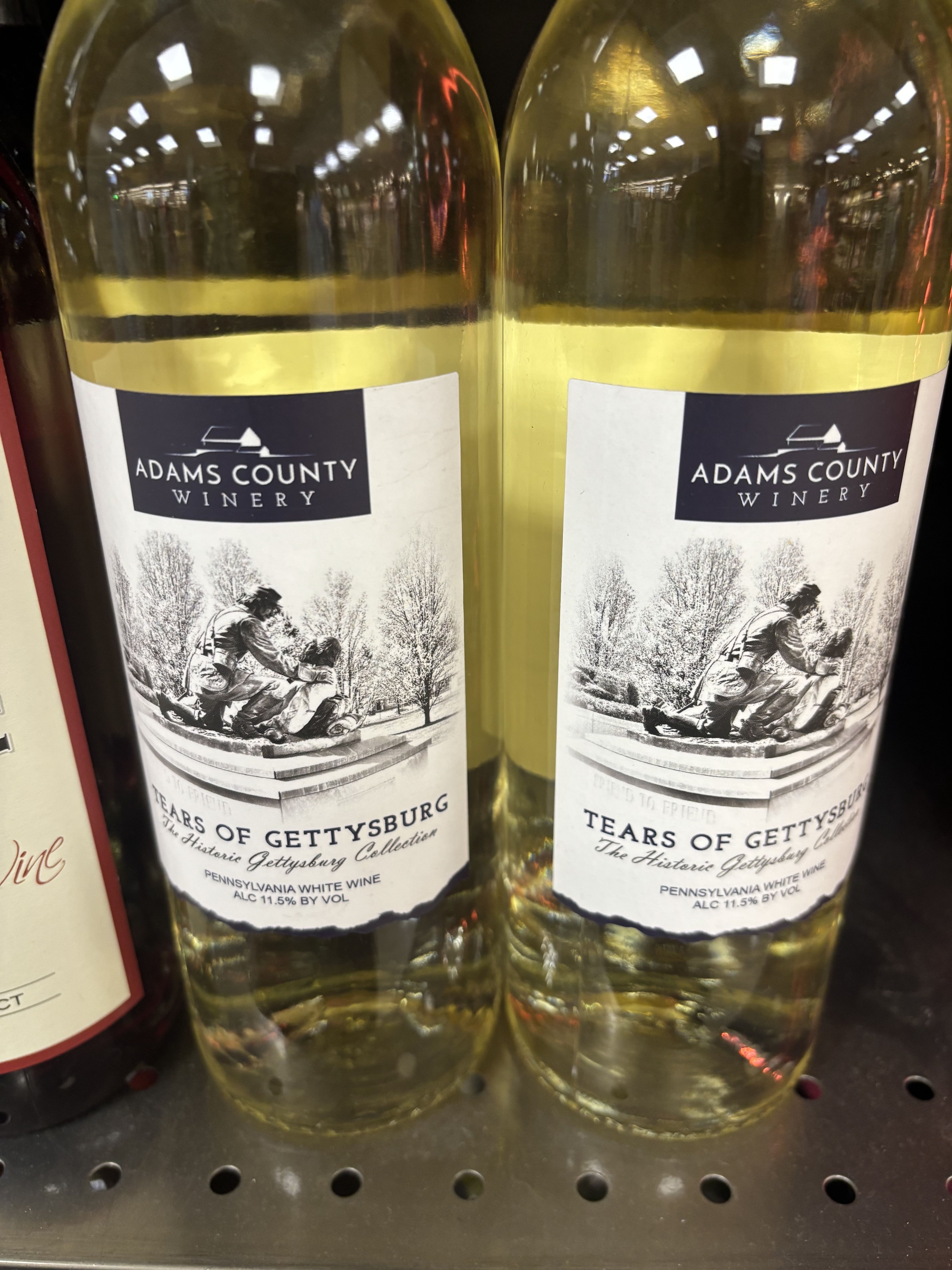
    Next to those bottles on the supermarket shelf was something that actually made me gasp out loud: “Tears of Gettysburg” white wine. How did someone bottle the tears of Civil War soldiers? Why did they turn it into wine? And why market it for the anniversary of the Revolutionary War?

    I had so many questions.

    Tears of Gettysburg wine from Adams County Winery.Stephanie Farr / Staff

    As it turns out, this sweet white wine (why are the tears sweet!?!) from Adams County Winery wasn’t made for the 250th, it was made for the 125th anniversary of the Battle of Gettysburg in 1988 and has been around ever since.

    Hallmark moment

    I know you may not believe me, but I totally called that signing of the Declaration of Independence butter sculpture at the Farm Show. As someone who waits every year for the butter sculpture reveal, it seemed like the most obvious and absurd choice.

    What I did not expect, what none of us could have ever expected to be created to commemorate the nation’s 250th anniversary, was a Hallmark movie set in Philadelphia.

    A promotional image for “To Philly With Love,” a new Hallmark Channel movie set in Philadelphia starring Stephen Huszar and Rebecca Dalton.Courtesy of Hallmark Media

    To Philly With Love, a two-hour history-mystery-romance movie, was clearly trying to be National Treasure meets The Notebook. But that goal was doomed from the start because a hallmark of Hallmark movies is the complete lack of suspense or interesting plot. Captivating dialogue is also out.

    This movie, which was partially filmed in Philly, also included a cliché cheesesteak scene, a character with no Philly accent telling someone it’s pronounced “wooder,” and a completely tone-deaf scene filmed at the President’s House Site.

    We hold these tooths

    The Founding Fathers left “the pursuit of happiness” open to interpretation and woodn’t you know, someone found a way to pursue it with toothpicks.

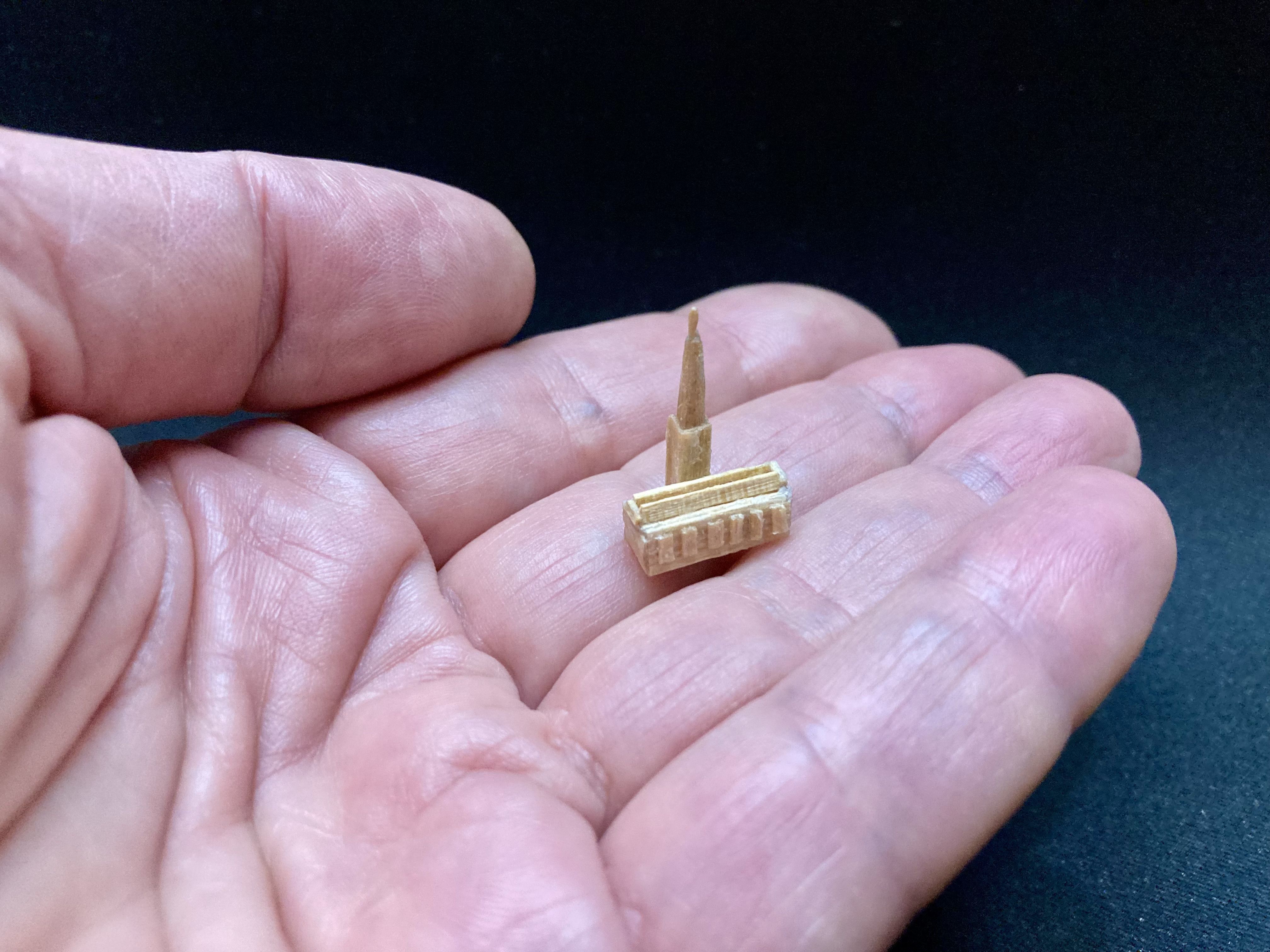
    Steven J. Backman of San Francisco has made toothpick art for five decades. This year, he created a sculpture of Independence Hall out of a single toothpick to mark the Semiquincentennial.

    San Francisco artist Steven J. Backman has crafted a model of Independence Hall from a single toothpick in celebration of America’s 250th birthday this summer.Courtesy of Steven J. Backman

    A few minor points: Backman used a Diamond toothpick and cut strands off it with a straight-edged razor. He then glued pieces into place without a magnifying glass, using only his naked eyes.

    “I’m living in an American dream. … I’m doing something I love,” Backman told The Inquirer.

    Let freedom ring

    If you’ve got Semiquincentennial fever, the only prescription is more America 250-branded cowbells!

    You know what this Semiquincentennial needs…more cowbells!Courtesy of America250

    The Liberty Bell may get all the fame and glory, but these little guys — that come in red, white, or blue — are a fantastically annoying way to let people know you’ve arrived and you’re patriotic. Sure, you could play Stars and Stripes Forever on a kazoo, but it wouldn’t have the same ring to it.

    Calling these souvenirs dumbbells would be udderly incorrect. They are keepsakes intended to be herd by future generations.

  • Josh Shapiro’s measles response — and its backlash — reignites COVID-19 fury

    Josh Shapiro’s measles response — and its backlash — reignites COVID-19 fury

    A contagious airborne disease spreads. The tally of cases climbs higher as a vaccine debate rages among the public and their elected officials. Politicians point fingers at each other, arguing over the release of information and the steps that some consider “draconian.”

    The measles outbreak this year represents a far different public health crisis than the COVID-19 pandemic that wreaked havoc across the nation and the rest of the world six years ago.

    But with Pennsylvania at the center of a national conversation around a disease once considered eradicated in the U.S. because of widespread vaccination, the ensuing political rhetoric on measles has a familiar ring.

    Republican critics of Gov. Josh Shapiro’s announcement last week of two measles-associated deaths in Lancaster County — the first reported in the country this year — have repeatedly evoked the COVID pandemic in their critiques.

    Shapiro, as the Democratic nominee for governor four years ago, said during his last campaign that his party got parts of its COVID response wrong, such as vaccine mandates. But he defended the party line in court because of his role as the state’s attorney general.

    Now two months before voters decide on whether to reelect him, the governor’s detractors have condemned both his handling of the measles deaths and his administration’s simultaneous push for a string of new regulations aimed at fighting infectious diseases.

    “IT’S COVID ALL OVER AGAIN — BUT WORSE!!!” State Rep. Russ Diamond, a conservative Republican from Lebanon County, wrote Sunday in a lengthy social media post that led with three fire alarm emoji. The post followed other online comments in which Diamond speculated that Shapiro was broadcasting the measles deaths to “justify the draconian” regulatory proposal.

    Treasurer Stacy Garrity, the governor’s Republican challenger this fall, has echoed those recent comments from others in her party as she seeks to close a gap in the polls. She’s leaning into a message that appears strikingly similar to the one used by State Sen. Doug Mastriano, Shapiro’s 2022 Republican opponent who lost by double digits.

    In a video on social media, Garrity said Shapiro proposed “mandates that would make draconian COVID-era restrictions blush.” His “highly staged, partisan news conference” about measles, she added, “demonstrated just how dangerous his proposed mandates could be.”

    Shapiro’s Department of Health proposed the regulations earlier this year, before the state reported its first measles-associated deaths in three decades. The 502-page proposal, according to the state, would bolster officials’ ability to manage the outbreak of diseases, including isolation protocols and the reporting of identified cases. It’s been in the works for years and does not specifically refer to the 2026 measles outbreak, though it could play a role in managing such crises.

    “People want to raise some level of panic and anxiety here,” said Ericka Hayes, the senior medical director of infection prevention at the Children’s Hospital of Philadelphia, who has reviewed the proposal and is concerned about the “alarmist rhetoric” emerging around it. “But the spirit of this, and what is written in the document, as far as I’ve read, really is focused on appropriate measures for response to public health, infectious disease crises.”

    The governor’s office said the regulations were not yet final, and the governor will weigh in after public comment concludes later this month.

    “Disease outbreaks are serious, and Pennsylvania is confronting that reality right now,” Rosie Lapowsky, Shapiro’s spokesperson, said in a statement, which pointed to the reported 540 measles cases in the state.

    “The Governor’s philosophy that will guide the final regulations is that public health depends on trust, and building that trust means respecting individual rights, involving parents in decisions that affect their children, and ensuring government works closely with the people it serves,” she said.

    Shapiro also emphasized trust last week when he publicly clashed with U.S. Health and Human Services Secretary Robert F. Kennedy Jr., whom he blamed for spreading vaccine misinformation, saying Pennsylvania was seeing the negative consequences in the growing outbreak of a vaccine-preventable disease.

    Democrats like State Rep. Tarik Khan, a Philadelphia Democrat and nurse practitioner, have come to Shapiro’s defense. In a livestreamed conversation with other legislators who are also healthcare professionals, Khan said the governor “rightly spoke truth to power” by targeting Kennedy.

    Still, the way Shapiro took a leading role in announcing the measles-related deaths made what could have been two disconnected issues — the outbreak and the separate regulations proposal — “into a conflagration” that is giving “lots of people flashbacks to” COVID, particularly conservatives who believed there was government overreach, said Chris Nicholas, a Harrisburg-based GOP consultant.

    “We’re getting back into a situation where all the usual subjects are going to be relitigating the COVID pandemic restrictions or rules because this has given everyone an excuse to dredge it back up again,” Nicholas said. “I don’t know if the general public is ready for that. But the politicos are certainly ready for that.”

    COVID, measles, and mitigation

    The pandemic was unlike the measles outbreak in Pennsylvania in many ways.

    When the COVID-19 virus started widely spreading in early 2020, the effects and severity for different parts of the population were unknown. Public health officials scrambled to track and contain the virus. For a year, vaccines were not widely available.

    On the other hand, doctors have been writing about measles since at least the ninth century, according to the CDC. And healthcare providers have been required to report the disease to federal authorities since 1912.

    Vaccines, available since the 1960s, are required for children to start school, although Pennsylvania has some of the nation’s most lenient exemption rules. The measles, mumps, and rubella combination shot currently in use is one of the “most-studied vaccines” in part because of misinformation that has circulated about its safety over the last several decades. For example, studies have shown, over and over, that childhood vaccination is not linked to autism.

    Kennedy, a longtime anti-vaccine activist, has sought to upend federal vaccine policy at the helm of the country’s top health agency at a time when rising vaccine hesitancy increasingly divides Republicans and Democrats, and measles outbreaks are resurging.

    Across the country this year, 47 states have reported 2,887 confirmed cases of measles, according to the Centers for Disease Control and Prevention’s weekly update last Thursday.

    Pennsylvania’s Department of Health reported 540 cases as of Wednesday. The two “measles-associated deaths” — which state health officials consider as deaths where evidence of measles is present — that were identified by the state last week remained the only such deaths.

    Shapiro’s decision to withhold any identifying information about the cases his administration reported — such as the victims’ ages, or if they had other health conditions — quickly led to an information vacuum that allowed skeptics — including Kennedy — to question the deaths, independent public health experts said. Shapiro’s administration, however, maintains that state law bars the governor from sharing more information about the individual victims.

    Lancaster County Coroner Stephen Diamantoni, an elected Republican and a physician, drew wide attention for saying he did not believe measles contributed to a newborn’s death. Diamantoni said measles was noted as a significant condition “contributing to death but not resulting in the underlying cause” on the death certificate because the baby tested positive for measles.

    National Institutes of Health Director Jay Bhattacharaya, in a Fox News appearance on Saturday, said Shapiro was “politicizing the issue.”

    “What the governor is doing is he’s playing this out over the airwaves for political purposes just like what happened during COVID,” said Bhattacharaya, an appointee of President Donald Trump.

    The pandemic comparisons erupted as Pennsylvania Republicans began to connect the measles outbreak to the regulatory proposal, which is currently being reviewed by the state’s Independent Regulatory Review Commission. The proposal became public on Aug. 8 and is open for public comment until Sept. 21.

    The lengthy document details what the department described as “much needed amendments” to align the state with recommendations from experts like the CDC and the American Academy of Pediatrics.

    The proposed changes are numerous — including expanding the list of diseases that must be reported to the state and the protocols for pulling children out of school if they contract certain illnesses.

    Instead of the current 24-hour requirement for healthcare practitioners to disclose measles cases, the cases would need to be reported “immediately by telephone” to the state.

    State House Minority Leader Jesse Topper, a Bedford County Republican, compared the regulations to “oppressive COVID-era policies” and called on Shapiro to rescind them. In a statement, he said they would allow the state to interview students in school without notifying their legal guardian.

    Garrity said in her statement Saturday that the regulations would allow the administration to “conduct warrantless searches of private property, access patients’ confidential medical records and require schools to give those officials one-on-one, private access to students.”

    She did not elaborate on which specific regulations raised those concerns when responding to a request for comment from The Inquirer. The Department of Health pushed back on Garrity’s claims as inaccurate.

    Hayes, the CHOP expert, said the regulations are a step toward “further fleshing out” long-used practices like contact tracing, which involves identifying individuals exposed to an infectious case to keep them from infecting more people. Those methods are “really important” in the context of the ongoing measles outbreak, she said, given that measles is so contagious that nine in 10 unvaccinated people will be infected if exposed, and children are especially vulnerable.

    Critics who misrepresent the state’s proposal as a way to invade people’s privacy or take their property is deeply worrying, she said.

    “They’re trying to vilify a work process for controlling infectious outbreaks that has been in place for centuries, and it’s dangerous,” Hayes said.

    COVID flashback

    Under Shapiro’s predecessor, Pennsylvania took an aggressive approach to public safety surrounding the COVID-19 pandemic.

    Former Democratic Gov. Tom Wolf’s moves included a requirement that children wear masks in school — a rule later struck down by the Pennsylvania Supreme Court — and the temporary closure of “nonessential” businesses.

    As attorney general at the time, Shapiro defended the state’s actions in court as his legal duty. In a video that has reemerged and been widely shared since his measles news conference, Shapiro appears with his son to warn the public that “yes, you can” get in trouble for having a gathering at home or in public.

    By March of 2021, just 40% of Pennsylvanians approved of Wolf’s handling of the crisis, according to a Muhlenberg College poll. Shapiro’s eventual opponent, Mastriano, in some ways became the face of the public opposition.

    But as Shapiro campaigned for governor in 2022, he began to distance himself from Wolf’s actions, saying “too many Pennsylvanians could not get the help they needed during COVID,” and government needed to be more responsive — though Republicans continued to tie them together.

    By the summer of that year, Shapiro had fully broken with fellow Democrats on mask and vaccine mandates, saying he opposed them.

    “This is an area where I think folks got it wrong,” Shapiro said of school and business shutdowns, in an August 2022 interview with the Associated Press. “And to me, that’s the approach we need to take more broadly as a public, which is to educate, empower, and respect people’s personal decisions and respect their personal freedom to make those choices.”

    Campaign messaging

    Shapiro’s campaign did not respond to questions about Garrity and others tying his measles response and regulatory proposal to the pandemic — a new messaging strategy in a race where the Republican nominee has at times struggled to find her footing.

    “It feels like this is probably just what’s going to happen for the next 60 days,” said J.J. Abbott, a Democratic consultant and former spokesperson for Wolf.

    Abbott said he believed the criticisms are likely aimed at energizing a base of Republican voters who have not shown the same enthusiasm for Garrity and other GOP candidates as they did in 2024, when Trump won Pennsylvania and Republicans swept the other statewide races.

    Garrity’s statement alludes to some of that potential energy while also contending she showed restraint by waiting for “four days for additional information before issuing a statement about Josh Shapiro’s latest political stunt, despite calls from members of my own base to attack Josh Shapiro.”

    Whether or not voters will be swayed by attacks on Shapiro’s handling of the issue is an open question.

    Shapiro already beat a candidate who ran on nearly the same message on government overreach during a health crisis. That fact, combined with the vast differences between the novel coronavirus and measles, could mean those criticisms largely fall flat with voters, Abbott said.

    “Something that comes off as anti-vaccine for measles isn’t going to be very persuasive or appealing to the vast majority of voters, because most of them are vaccinated and almost all of them get their kids vaccinated,” Abbott said.

    Nicholas, the Republican consultant, said the latest developments had resonated with many conservatives who were still concerned about government overreach during COVID.

    He also pointed to the fact that both Shapiro, during his reelection as attorney general, and Garrity, in her first campaign for treasurer, won campaigns during the pandemic in 2020 and that he wasn’t surprised both sides were bringing up familiar themes six years later.

    “Politicians love things that are familiar,” Nicholas said.

    Staff writer Aubrey Whelan contributed to this article.

    This story was updated to reflect that the governor plans to weigh in on the Department of Health’s proposed regulations once public comment concludes on Sept. 21.

  • SEPTA had ‘better-than-expected financial performance’ this year

    SEPTA had ‘better-than-expected financial performance’ this year

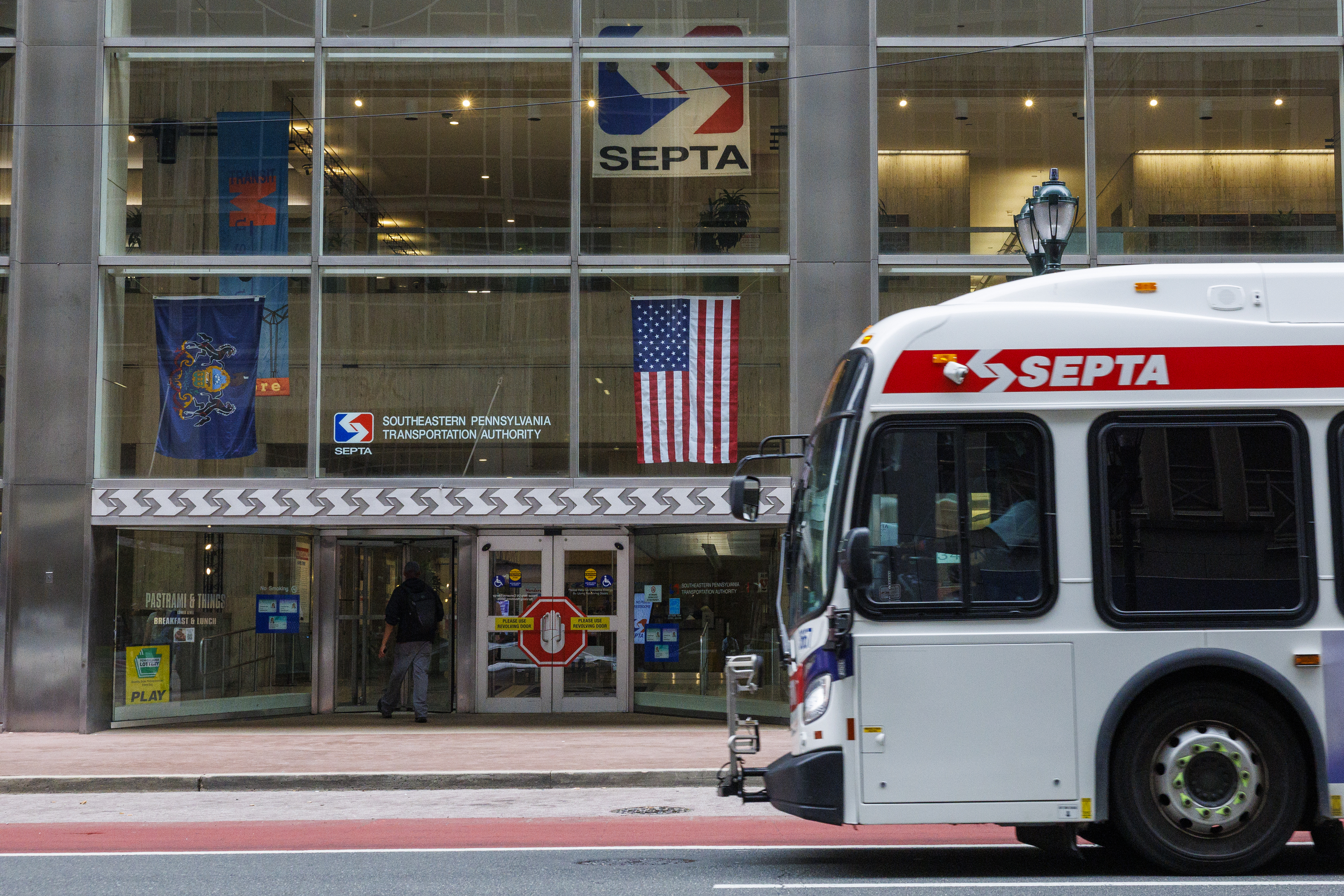
    Moody’s Ratings has upgraded SEPTA’s outlook to stable from negative, one year after the transit authority was cutting service to help close a budget deficit and paying for emergency safety inspections and repairs for 223 decades-old Regional Rail cars.

    The revised outlook “reflects SEPTA’s better-than-expected financial performance” in fiscal 2026 that leaves it with enough liquidity to pay the bills while continuing to try to solve a structural budget gap, Moody’s said in an Aug. 28 statement.

    “Our hope is that this external validation supports the message we want to send to our stakeholders in Harrisburg that SEPTA is a sound investment and that we are good stewards of taxpayer dollars,” assistant treasurer Michael Kendall said in an interview.

    At this time last year, Harrisburg lawmakers and the Shapiro administration had failed for the third straight year to agree on a steady source of new state funding for SEPTA and other transit agencies. Moody’s also downgraded the authority’s fiscal outlook to negative.

    In early September 2025, PennDot redirected $394 million in state capital assistance funds to help cover two years of operating expenses. Later, Gov. Josh Shapiro sent an additional $219.9 million for safety and urgent repairs on both the Regional Rail cars and the trolley tunnel in Center City.

    SEPTA managers pivoted to an increased focus on controlling costs, finding new revenue from advertising, parking, and real estate, and service improvements, Kendall said.

    The transit agency says it has found about $30 million in annual savings, as well as increased income from advertising, parking, and real estate. Ridership remained steady and spiked during the summer’s World Cup games, celebrations of America’s 250th birthday, and the Major League Baseball All-Star Game.

    Overall, SEPTA says its structural budget deficit dropped from $213 million a year to $192 million.

    The credit rating for authority bonds remains good, as they are backed by reliable federal and state income streams, not passenger revenue, which can fluctuate.

    SEPTA has a $501 million bond for asset improvement and a $42 million bond in the Public Transportation Assistance Fund. Moody’s gave both one of its highest ratings, Aa3. Moody’s also affirmed the A3 ratings on the authority’s $138 million in bonds issued against federal capital grants it has been awarded.

    Still, Moody’s warned, “over the long-term, SEPTA’s sizable structural budget gap will be difficult to resolve without further financial support from the commonwealth or significant adjustments to operations.”

  • ‘Do one outrageous thing in the cause of simple justice’: Gloria Steinem’s campaign for equality at the King of Prussia Mall

    ‘Do one outrageous thing in the cause of simple justice’: Gloria Steinem’s campaign for equality at the King of Prussia Mall

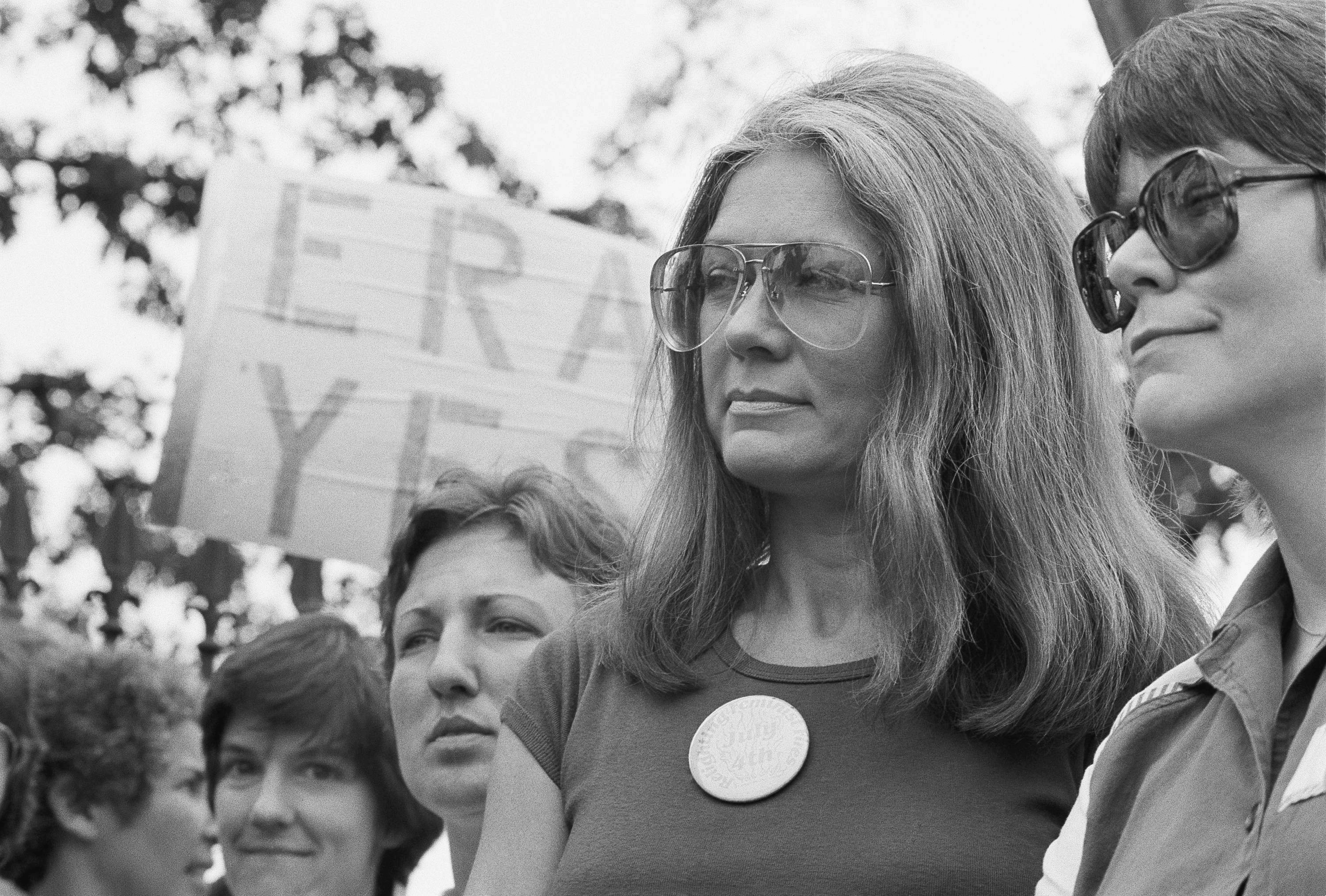
    Gloria Steinem — the author, activist, and feminist icon — died on Wednesday, Sept. 2, 2026, at the age of 92.

    In 1982, Steinem traveled to Philadelphia to receive an award. During her trip, she met with The Inquirer’s Kathy Hacker, who wrote this profile. Hacker died in January of 2021.

    The Equal Rights Amendment was ratified by 38 states well after the original deadline mentioned in this article, and the legal and congressional debate continues. It is not recognized as part of the Constitution.

    For a woman who has so often disavowed the label of “celebrity,” the scene probably was a bit discomfiting. First came the makeup man, intent on penciling her eyebrows and sponging suntan-colored goo over an already classically beautiful face.

    Then came the television cameras, attached by a tangle of electrical wiring to a perspiring crew from NBC’s “Today” show.

    And, finally, there were the fans, a zealous flock of devotees angling for a closer look, perchance a word and — the ultimate coup — an autograph.

    If it didn’t quite qualify as a Hollywood-style welcome, the hoopla yesterday was sufficient nonetheless to jolt the modest sensibilities of that most private of public persons, Gloria Steinem.

    “Sure, you feel a little foolish — you begin wondering what to do with your teeth,” sighed the premier philosopher-scribe of the women’s movement during a rare respite in a daylong visit to Philadelphia.

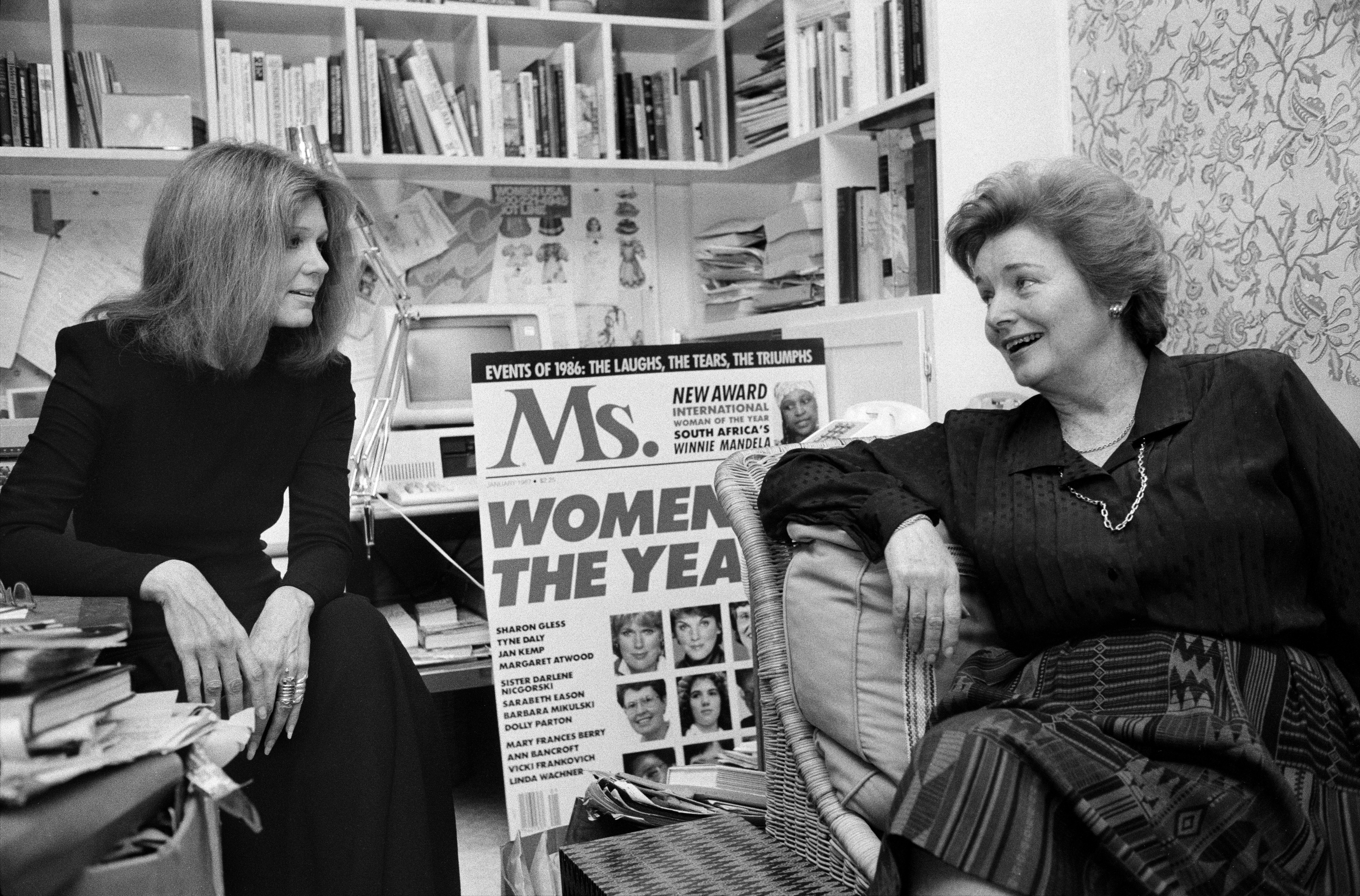
    From left, Gloria Steinem with Patricia Carbine, a fellow founder of Ms. magazine, in New York on May 7, 1987. ANGEL FRANCO

    As she spoke, an entourage pored over her frenetic schedule, which had her popping up in places as disparate as the Women Organized Against Rape offices in Center City and the furniture department in Bloomingdale’s King of Prussia emporium.

    Just as pressing, they debated whether to rush out and buy Steinem a dressier blouse.

    In the midst of the hubbub, with a microphone dangling nearby, she shrugged:

    “It’s difficult. But if there’s one thing I don’t want to do, it’s let anyone down at a time like this.”

    Gloria Steinem in New York on Sept. 23, 2015. CAITLIN OCHS

    The attention did not necessarily take her by surprise. It was, for starters, Lucretia Mott Day, a major feminist observance called by Womens Way in honor of the l9th-century Quaker who devoted her life to the advocacy of women’s rights and the abolition of slavery.

    And so, as the sun was peeking over Manhattan yesterday morning, Steinem climbed out of bed, pulled on a pair of boots, chocolate-brown wool slacks and a matching silk shirt, hopped aboard an Amtrak train and chugged to Philadelphia for the celebration, which culminated last night in the fifth annual Lucretia Mott Award gala at the Bellevue Stratford hotel.

    This year, Womens Way chose none other than Steinem as the recipient of its medal. Like Mott herself, she is a fighter — and for a cause that, while certainly not lost, seems painfully far from being won.

    As summer begins, the 48-year-old Steinem finds herself in a situation that is, at best, bittersweet. Come June, she and her fellow feminists on the staff of Ms. magazine will be marking the 10th anniversary of the publication, which she helped found and has since served dutifully as editor and writer.

    For the occasion, she’ll be throwing a bash at the Armory in New York and then will be jetting off to all corners of the country to appear as a guest on the Merv Griffin, Phil Donahue and “Today” shows (hence, the omnipresent cameras). Another bit of sweetness in Steinem’s life: “She’s Nobody’s Baby,” a documentary on 20th-century women that she and her Ms. colleagues produced for Home Box Office, just received a prestigious Peabody Award.

    Chances are, however, that Steinem will not be raising her glass in a toast on June 30. On that day, the deadline for ratification of the Equal Rights Amendment will come . . . and, by the looks of things, go, with approval by three state legislatures still lacking. She is, understandably enough, angry.

    But beaten? Never.

    “It’s important to say that there’s still a possibility of ratification,” she pointed out. “The odds are slender, I know. But remember, there are only about a dozen aging white men who have to change their minds. It’s still possible.”

    Having said that, Steinem voiced what is virtually inevitable: “OK, let’s say it doesn’t get ratified this time around.” The people who worked before, she guaranteed, will continue working. And furthermore, she vowed, they will fight to reintroduce the amendment in Congress before this fall’s elections.

    “It isn’t as if the country doesn’t support it, since opinion polls have shown just the opposite to be true,” she said, then added vigorously: “We are going to stay. We are not going away.”

    Steinem’s battle cry echoed yesterday afternoon through Bloomingdale’s third-floor furniture department, converted into an auditorium for her lecture and a twin showing of “She’s Nobody’s Baby.” If Bloomie’s seemed at first an odd choice of forums, Steinem assured that suburban department stores are a logical arena.

    “Shopping malls,” she smiled, “are what churches once were to Black women in the South. It’s where everybody goes.”

    To be sure, a record-breaking crowd of 200 suburban women, children and a smattering of men had gathered there to hear her — and to pick up free samples of shampoo and copies of Ms. magazine’s May issue.

    To the assembled throng, Steinem preached organization and demonstrated her caustic “lip.”

    “Some of us are having flashes of revelation,” she noted wryly. “It’s dawned on us that we’re becoming the men we wanted to marry.”

    Before dashing back to Center City, where Mayor [William] Green was waiting with an official proclamation in hand, Steinem exacted a promise from the crowd.

    “You’ve gotta do one thing,” she urged. “Promise me that, within the next 24 hours, you’ll do one outrageous thing in the cause of simple justice. I don’t care what it is. It could be saying, ‘Pick it up yourself.’ If you’re employed outside the home, it could be comparing salaries.”

    Her parting words, delivered with a mischievous grin: “Just one outrageous thing.”

    Lucretia Mott, no doubt, would have approved.

  • Peco upgrades in West Philly are paused after residents say trees will face ‘butchery’

    Peco upgrades in West Philly are paused after residents say trees will face ‘butchery’

    A Peco power project in West Philly that Councilmember Jamie Gauthier described as “critical” for the neighborhood has been delayed, after residents expressed outrage at the electric utility’s plans to trim their beloved tree canopy.

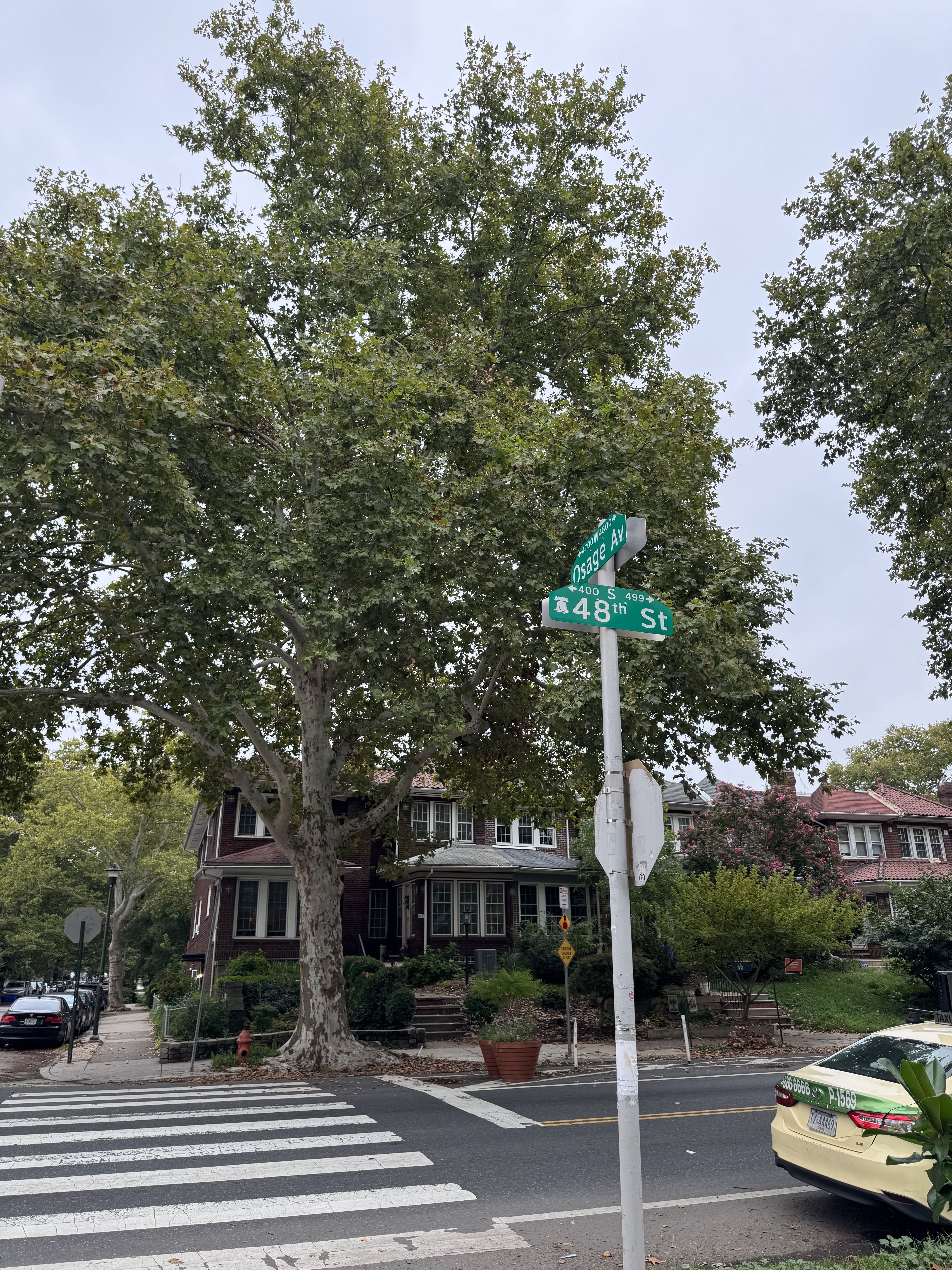
    Residents near the 400 block of South 48th Street received flyers from Peco in early August, explaining that the utility would soon begin a power infrastructure project involving the installation of electrical poles and wire, and trimming large trees draping over the street. It was the first they’d heard of the project, according to block captain Jonas Maciunas.

    “Right now the place that is our home, the creation that we’re taking care of, is being unilaterally changed against our will,” Maciunas, 42, said. The Garden Court street’s tree canopy is one of the draws for living in the neighborhood, and Maciunas said he believes that feature would be ruined by the project and ongoing maintenance.

    “That’s butchery … over time, this is a death sentence,” he said of the tree trimming.

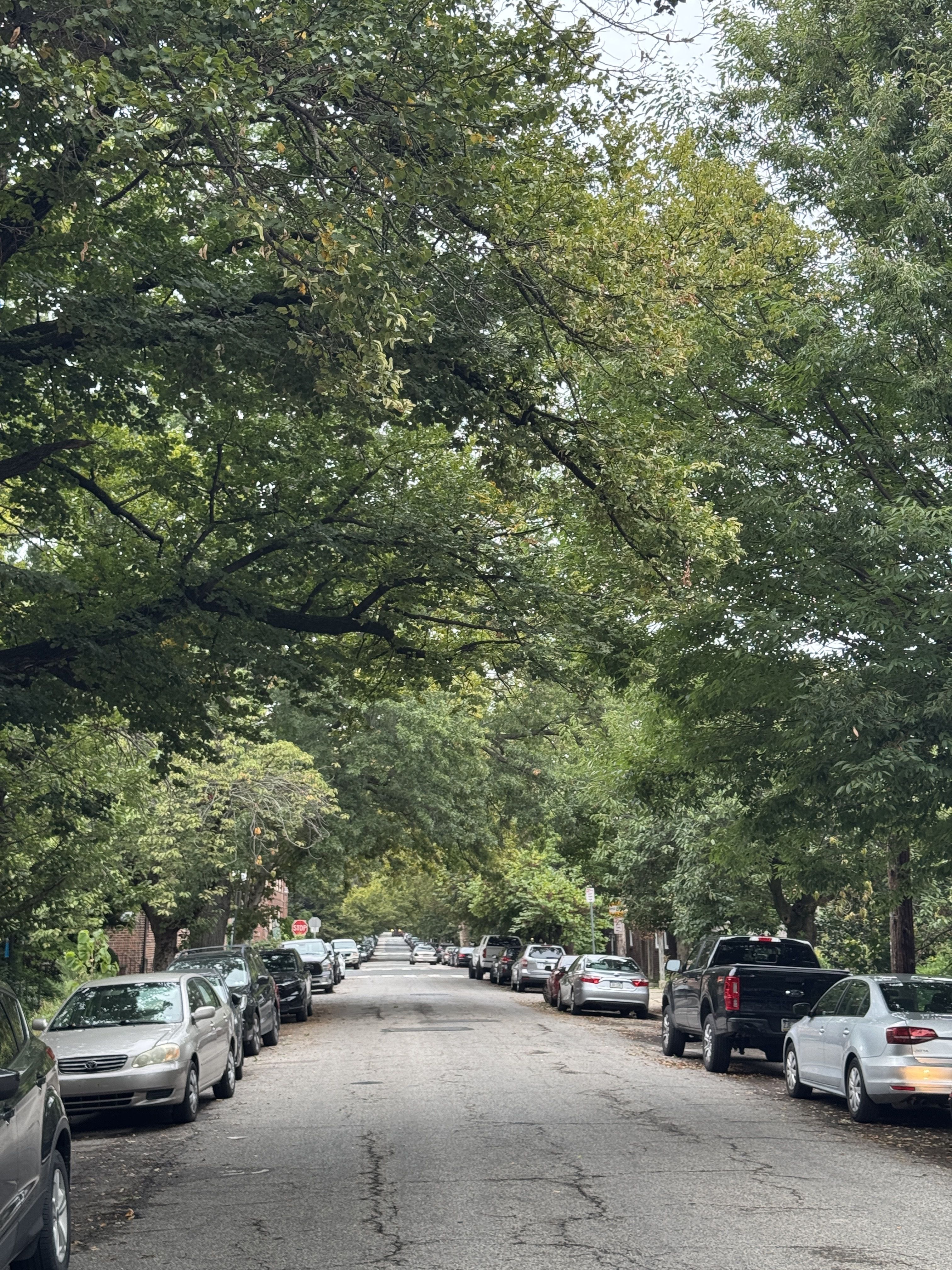
    The tree canopy over Osage Avenue near South 48th Street.Nate File

    But residents are in dire need of the new infrastructure. Over the hottest days of this summer, Gauthier’s office began hearing from people living in apartments at 48th Street and Osage Avenue about extended power outages. For the better part of a year, they’d experienced several days-long outages in the summer and the coldest parts of the winter.

    Gauthier said it surprised her to learn Peco had not adequately communicated with these residents about the problems and why temporary fixes had continued to fail.

    Looking for answers

    The area near 48th Street and Osage Avenue is served by an aging, four-kilovolt infrastructure, according to Peco spokesperson Candice Womer. Peco’s modernization plan would transition residents to a modern 13-kilovolt distribution system, which is designed to be more resilient, more reliable, and reduce the frequency and impact of power outages.

    Gauthier said she contacted Peco after hearing about the outages, and learned the utility already had plans for a $15 million modernization plan that would improve power access for a large portion of West Philly. Those plans have been under development since at least 2023, but have yet to break ground. Gauthier implored Peco to accelerate the plan for a smaller portion that would cover these 48th and Osage residents, and it agreed.

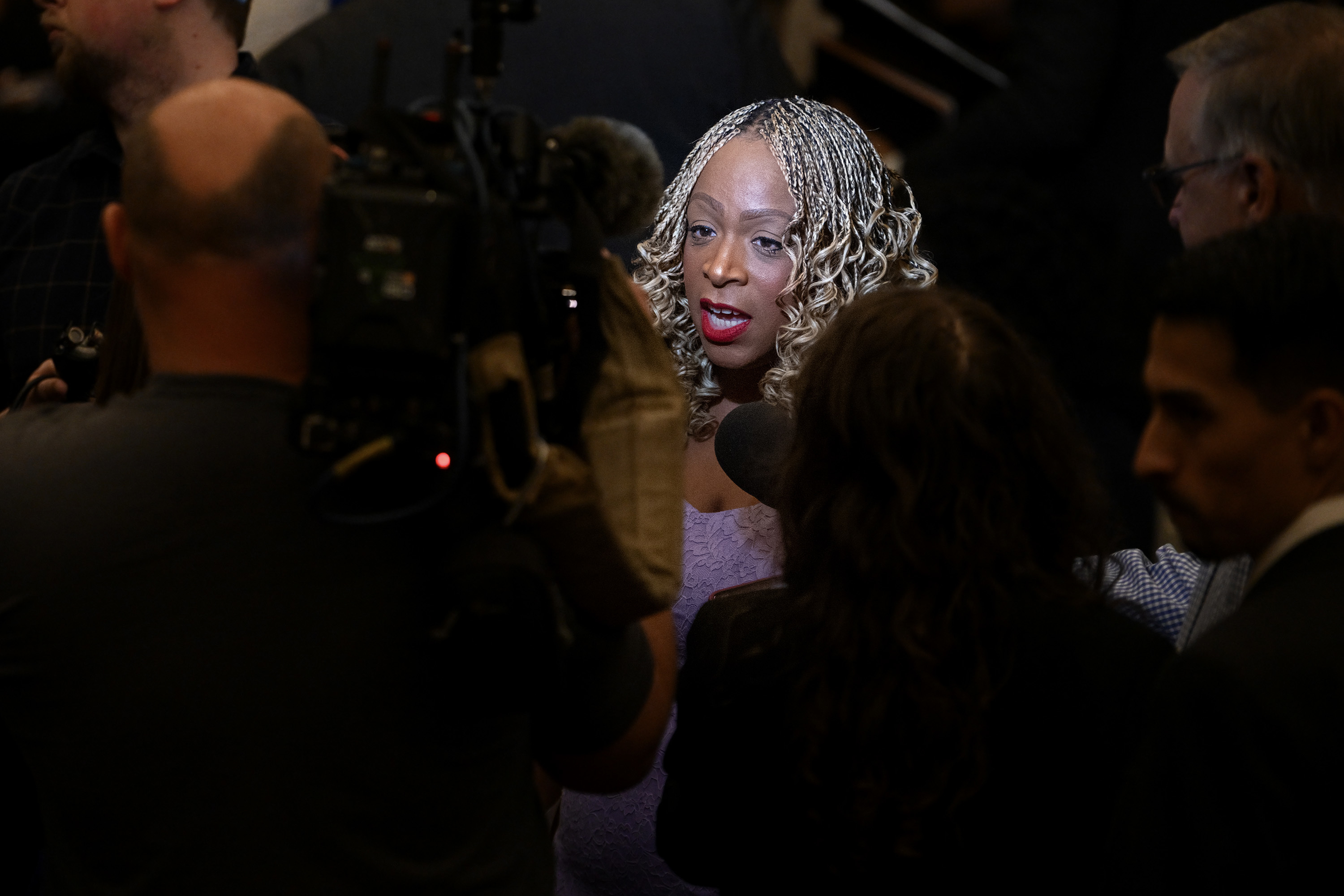
    Councilmember Jamie Gauthier talks with news media following a special session of City Council March 24, 2025.Tom Gralish / Staff Photographer

    The expedited plan, which will cover roughly 1,000 residents, involves installing or replacing 10 power poles, and installing 450 feet of new wire and related equipment along 48th Street. It’s unclear how many trees would be need to be trimmed to accommodate the new infrastructure, and how much wider the scope of the full plan is. Womer said the upgrades would better support future anticipated energy needs for electric vehicles, solar energy, and other electricity demands.

    After residents received the flyers from Peco stating installation would begin the following week, some contacted Gauthier’s office in confusion and anger. She asked Peco to pause its plans, and organized a community meeting last week with the utility so residents could learn and ask questions about the project. It did not go well, both Mathias and Gauthier said. Peco representatives provided little information, they said, and could not answer questions in a satisfactory manner.

    “I don’t understand Peco’s communication. I don’t understand their response, and I don’t understand the lack of ownership for allowing this to become such a big, urgent problem,” Gauthier said.

    Womer said Peco appreciated the feedback it has received from residents and community stakeholders, but noted that it does not include a public engagement process for every one of its projects.

    “While we welcome community feedback and consider it when evaluating project implementation, our responsibility is to ensure we continue providing safe and reliable electric service to our customers,” Womer said by email.

    In particular, Gauthier said she and residents did not receive an adequate explanation from Peco as to why the new power lines need to be built aboveground, when areas like Center City use underground power lines. Womer said Peco evaluated alternatives, but determined the underground system in the area had no capacity for the new lines and infrastructure without major construction.

    A pigeon resting on electric pole in October.Tyger Williams / Staff Photographer

    “The aerial solution provides the most timely and cost-effective path to improving reliability while minimizing overall construction duration and disruption,” Womer said.

    Top priority

    Gauthier is attempting to thread the needle of satisfying all of her constituents. She said the concerns of the aesthetically concerned homeowners are valid. So too are those without power, some of whom asked Peco at the community meeting to reimburse them for food that has been spoiled as a result of the failing electricity.

    There is no precise timeline for the accelerated plan to resume. Gauthier is arranging for Peco to speak at another community meeting in the near future, where she expects them to have more answers for residents upset by the new infrastructure plan. But ultimately, she said the need for reliable power has to come first.

    “I understand the concerns around the trees,” she said, but ”we have to get this project done.”

  • Broad Street enforcement cameras have caught nearly 800,000 speeders, new report says

    Broad Street enforcement cameras have caught nearly 800,000 speeders, new report says

    Speed enforcement cameras along Broad Street seem to have nudged drivers to slow down. Violations have dropped 67% from October 2025 through March 2026, according to the first available data from the Philadelphia Parking Authority.

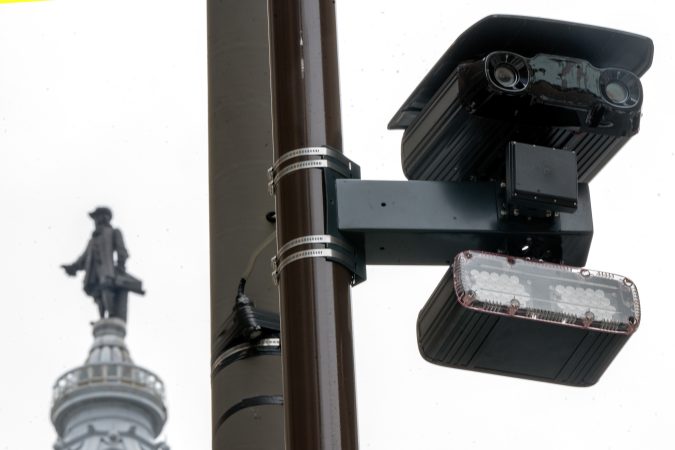
    Broad Street, also designated State Route 611, has 31 speed cameras spread over 13 miles between Philadelphia’s northern and southern city limits. They began operating last September.

    Since then, PPA has issued warnings or violations to nearly 800,000 speeders.

    In October 2025, the Broad Street cameras issued 213,057 formal warnings to people who drove 11 or more miles per hour above the 25 mph limit.

    Fines began the next month. In March, 70,498 fines were handed out based on speed-camera readings.

    (function(){function e(){window.addEventListener(`message`,function(e){if(e.data[`datawrapper-height`]!==void 0){var t=document.querySelectorAll(`iframe`);for(var n in e.data[`datawrapper-height`])for(var r=0,i;i=t[r];r++)if(i.contentWindow===e.source){var a=e.data[`datawrapper-height`][n]+`px`;i.style.height=a}}})}e()})();

    “Fewer people are speeding, and that means fewer people seriously injured or killed on Philadelphia roadways,” Gabe Roberts, interim executive director of the PPA, said in an interview.

    “That’s the goal and it’s how we measure the program’s success. We feel very good about where it stands today,“ Roberts said.

    Drivers who travel more than 11 mph over the posted speed limit will eventually be ticketed, with fines starting at $100 and rising to $150 for those driving more than 30 mph over.

    (function() {
    var l2 = function() {
    new pym.Parent(‘speed-camera-map2’,
    ‘https://media.inquirer.com/storage/inquirer/projects/innovation/arcgis_iframe/speed-camera-map2.html’);
    };
    if (typeof(pym) === ‘undefined’) {
    var h = document.getElementsByTagName(‘head’)[0],
    s = document.createElement(‘script’);
    s.type = ‘text/javascript’;
    s.src = ‘https://pym.nprapps.org/pym.v1.min.js’;
    s.onload = l2;
    h.appendChild(s);
    } else {
    l2();
    }
    })();

    When speed cameras were placed on Broad Street, some suburban commuters had concerns they were being targeted. PPA’s numbers found 59% of speeders lived in Philadelphia zip codes.

    Speed cameras were first installed on Roosevelt Boulevard in 2020 on a trial basis and more were added in the next two years.

    Speeding has dropped 95% on the roadway, based on the declining number of violations issued since the first month cameras were operating there, PPA said.

    A state law enacted in 2023 made the Roosevelt Boulevard speed cameras permanent and authorized Philadelphia to designate five more dangerous corridors on which to use the technology.

    The use of speed cameras continues to grow in Philadelphia.

    On Monday, people found speeding by newly installed cameras on portions of Route 13 began to receive formal warnings.

    The Route 13 corridor — identified by the city as a particularly dangerous stretch of road — spans Baltimore Avenue in West Philadelphia, Hunting Park Avenue in North Philadelphia, and Roosevelt Boulevard in the Northeast before leaving the city by way of Frankford Avenue.

    The first set of cameras along Route 13, in the Northeast, began issuing warnings in June, and there are not enough data to report from the corridor, officials said.

    PPA also operates cameras to enforce school-zone speed limits at five elementary schools in the city. Those were installed in the spring and by law had to be shut down in the summer when school was not in session. Roberts said that the school zones will be assessed more fully in next year’s annual report.

  • You can now buy Philly-minted Trump coins with a golden hue

    You can now buy Philly-minted Trump coins with a golden hue

    Gold-hued $1 coins featuring the face of President Donald Trump are now available for purchase online and at the U.S. Mint gift shop on Independence Mall in Old City.

    But it’ll cost you more than a buck.

    Neither Philly’s Mint nor the website has single coins for sale, so early buyers can get no fewer than 25 coins in a roll for $61. A bag of 100 coins for $154.50 is also available. Households are limited to two orders until Thursday at 2 p.m. when the cap will lift.

    The commemorative coins, printed in Philadelphia to mark the 250th anniversary of the signing of the Declaration of Independence, may be used as legal tender.

    Early buyers may also find unique coins with their purchases: 250,000 Trump coins with a special-issue “July 4” mark, minted on Independence Day, have been randomly hidden in some rolls and bags, Willy Wonka-style.

    First announced in July by U.S. Treasury Secretary Scott Bessent, the coins bear Trump’s face on one side with the words Liberty, In God We Trust, and 1776 ~ 2026. The other side features the presidential seal, with “250″ inscribed on the eagle’s shield.

    The coins faced hurdles in production with critics arguing that they violate U.S. code that says “only the portrait of a deceased individual may appear on United States currency.” In response, Bessent cited historical precedent: In 1926, the U.S. minted a commemorative half-dollar featuring living President Calvin Coolidge.

    Although the coins are gold-colored, they are composed mostly of nonprecious metals, including copper, zinc, manganese, and nickel. No actual gold is used in the coins.

    In November, the mint stopped producing pennies due to rising costs. According to the mint, it cost up to 3.69 cents to create one penny.

    Philadelphia is home to the nation’s oldest mint, built in 1792. Visitors can tour the facility on weekdays. It is the world’s largest coin-making factory, according to the Guinness Book of World Records.

  • Note to cops: Don’t drive away from a person lying in the road

    Note to cops: Don’t drive away from a person lying in the road

    There’s a special place in hell for a cop who leaves a human being lying in the street, and they get run over by a car.

    It doesn’t matter who the person is, or if they are under the influence of a substance. It doesn’t matter if they resist. They need to be escorted to safety. If needed, rescue workers or a behavioral health expert should be summoned. No one — and I mean no one — should be left lying in the street.

    If the police officer who encountered the 48-year-old pedestrian who wound up lying in the bike lane in the 5500 block of Rising Sun Avenue in the wee hours of Aug. 27 had a shred of humanity left in his soul, that man would still be alive today.

    Instead of being a hero and saving that man’s life, the officer talked to the victim as he lay on his back in the roadway, then got into his police cruiser and drove away. Minutes later, the man was fatally injured by a hit-and-run driver. Two unidentified people pulled the man out of the street and contacted authorities.

    The same officer who had encountered the man earlier was the first to respond. Did he even try to make up for what happened? Not according to First Deputy Commissioner John Stanford, who said at a news conference on Friday that the officer didn’t administer first aid or file a police report. “That goes against everything that we stand for,” Stanford told reporters. “We talk about empathy. We talk about compassion as an organization, and none of those things were on display.”

    The officer, whose name hasn’t been released, has since been placed on administrative leave and is still on the Philadelphia police force.

    He shouldn’t be.

    His job is to serve and protect. But he lacks the human decency and compassion it takes to do that.

    What happened last week reminds me of a similar incident that took place four years ago, which I also wrote about. In that case, Elizabeth Negron had wandered into the middle of Germantown Avenue near Coulter Street around midnight one hot summer night in 2022.

    It’s unclear what exactly was going on with her, but clearly something was off. She stood in the roadway and blocked the path of a SEPTA bus as vehicles veered around her in different directions. Soon, a police car arrived. Officers got out of their vehicle and interacted with her briefly before driving off, leaving Negron still in the roadway.

    They left her in the street like an old discarded shoe. At one point, Negron can be seen lying on her back. A video, recorded by a nearby business, ends shortly thereafter, leaving viewers to imagine what happened next as a passing car ran her over and then fled the scene.

    I’ve had the privilege of meeting and interviewing many incredible police officers over the years. Most are good people both on and off the job. But there are some who forget that the people they encounter out on the streets acting oddly are as human as anyone else. They matter, too.

    Negron was loved by her two young daughters, a devoted sister, and others who still mourn and miss her. Her sister, Jackie Martinez, told me she had been scrolling on her phone when she learned someone else had suffered a similar fate. “I’m hanging in there and trying my best to not let it bother me,” she said.

    Martinez said she would never just walk by someone in harm’s way. “You put them somewhere safe,” Martinez said. “If you walk away and they end up back in the middle of the street, at least you know that was on them.”

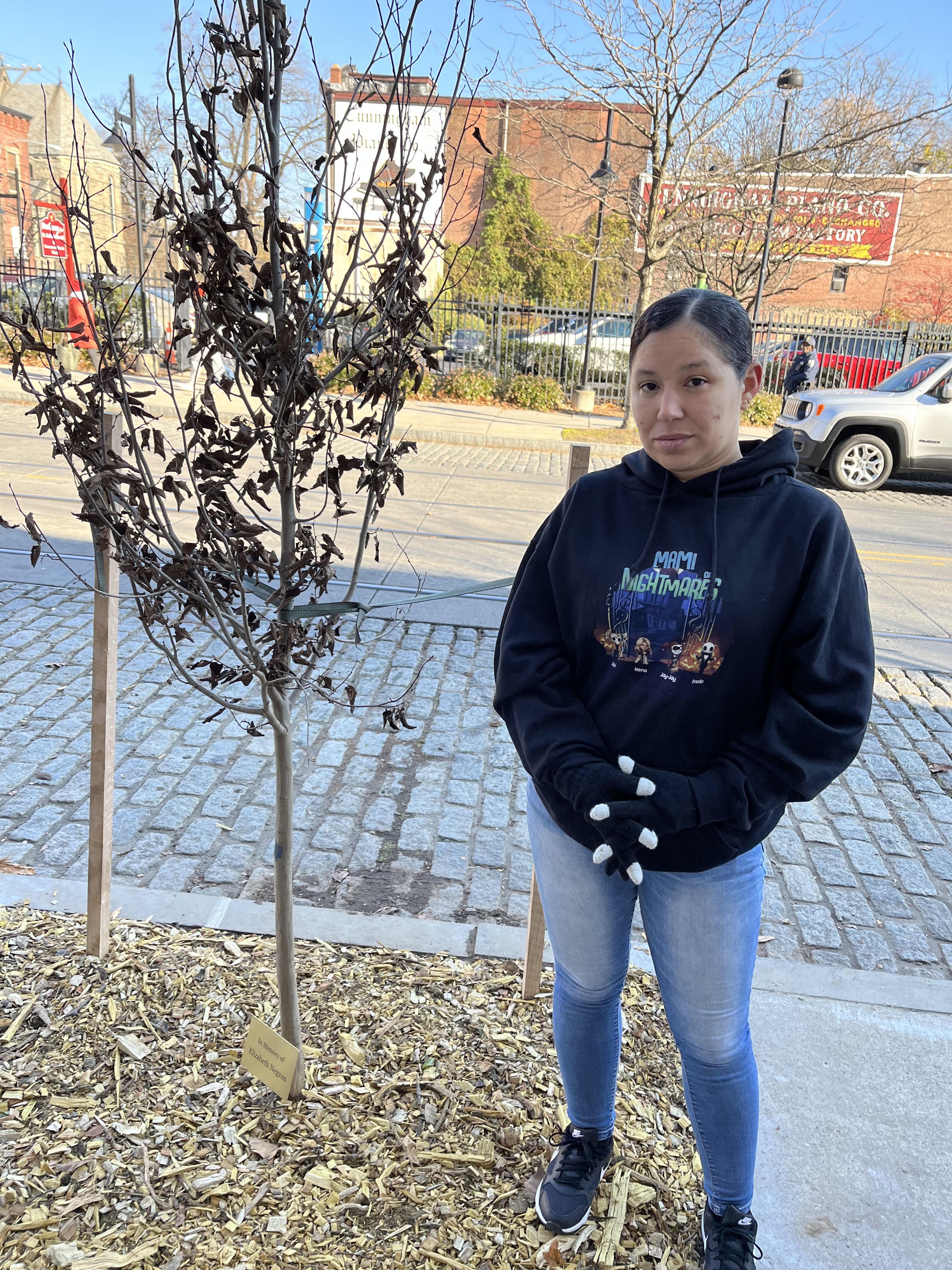
    Jackie Martinez poses next to a tree planted in honor of her sister, Elizabeth Negron, who was killed on Germantown Avenue near Coulter Street by a hit-and-run driver in July 2022.Jenice Armstrong

    David Fisher, a 29-year veteran of the Philadelphia Police Department and president of the National Black Police Association, agreed, saying, “You don’t leave somebody on the street needing care.”

    It’s really that simple. It should be obvious. But apparently it isn’t.