Tag: Donald Trump

  • Philly still hasn’t announced its Hispanic Heritage Month events. Where’s the list, Mayor Parker?

    Philly still hasn’t announced its Hispanic Heritage Month events. Where’s the list, Mayor Parker?

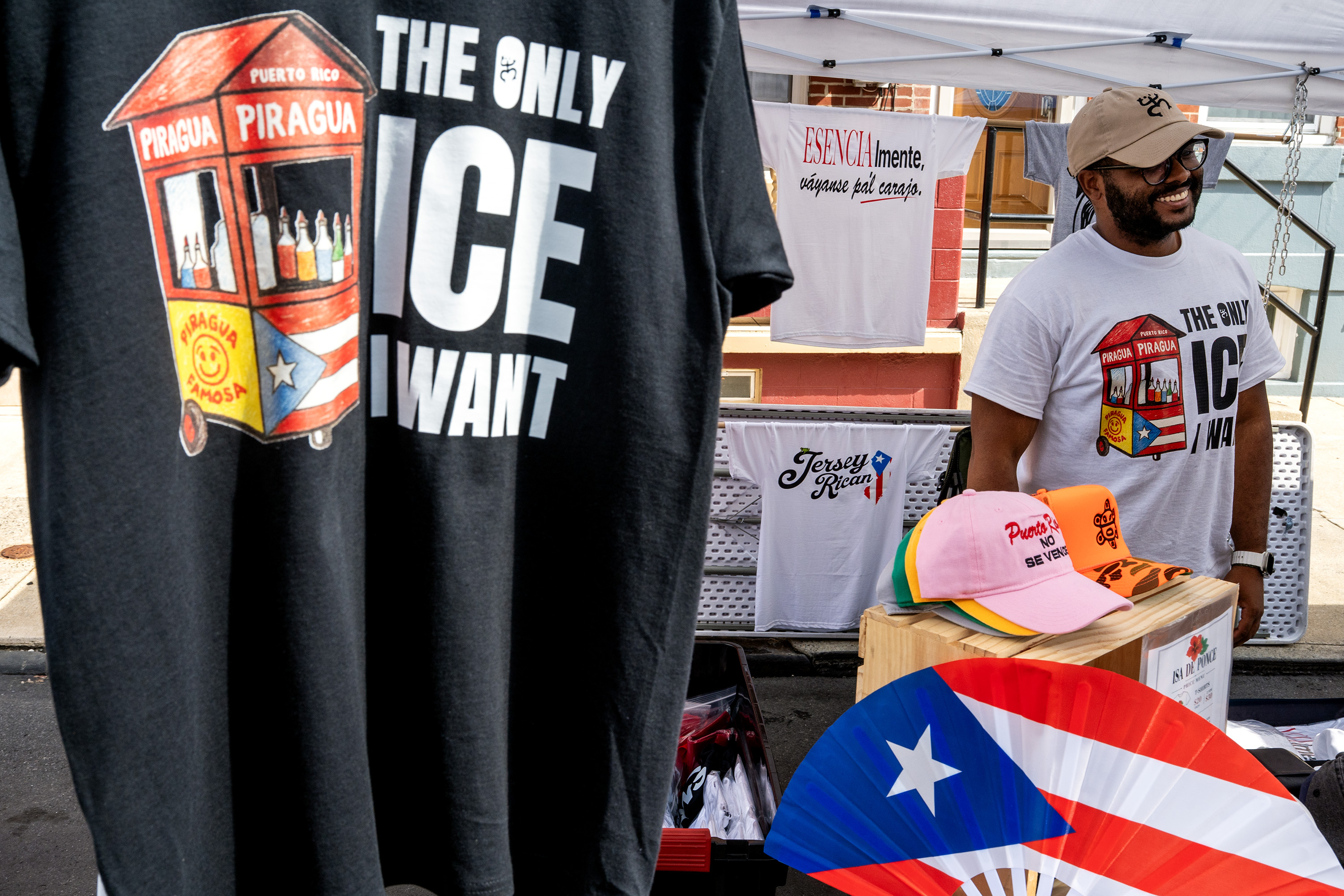
    Tuesday is the first day of Hispanic Heritage Month, which runs from Sept. 15 to Oct. 15. I’ve always had a bit of a love/hate relationship with this month, which purports to recognize and celebrate that Latinos have been a formative part of the nation since its early days. While the attention to the extraordinary individuals and myriad cultural heritages that comprise “Latinidad” in the United States is gratifying, it is, by its very nature and time limitation, a glancing and shallow attention.

    Even so, I always note the arrival of a mass email from the mayor’s office about the events the city has programmed to mark the month.

    This year, I’m still waiting.

    As yet, there’s been no email from the city of Philadelphia announcing any special programming during Hispanic Heritage Month, and nothing when I search for that on phila.gov.
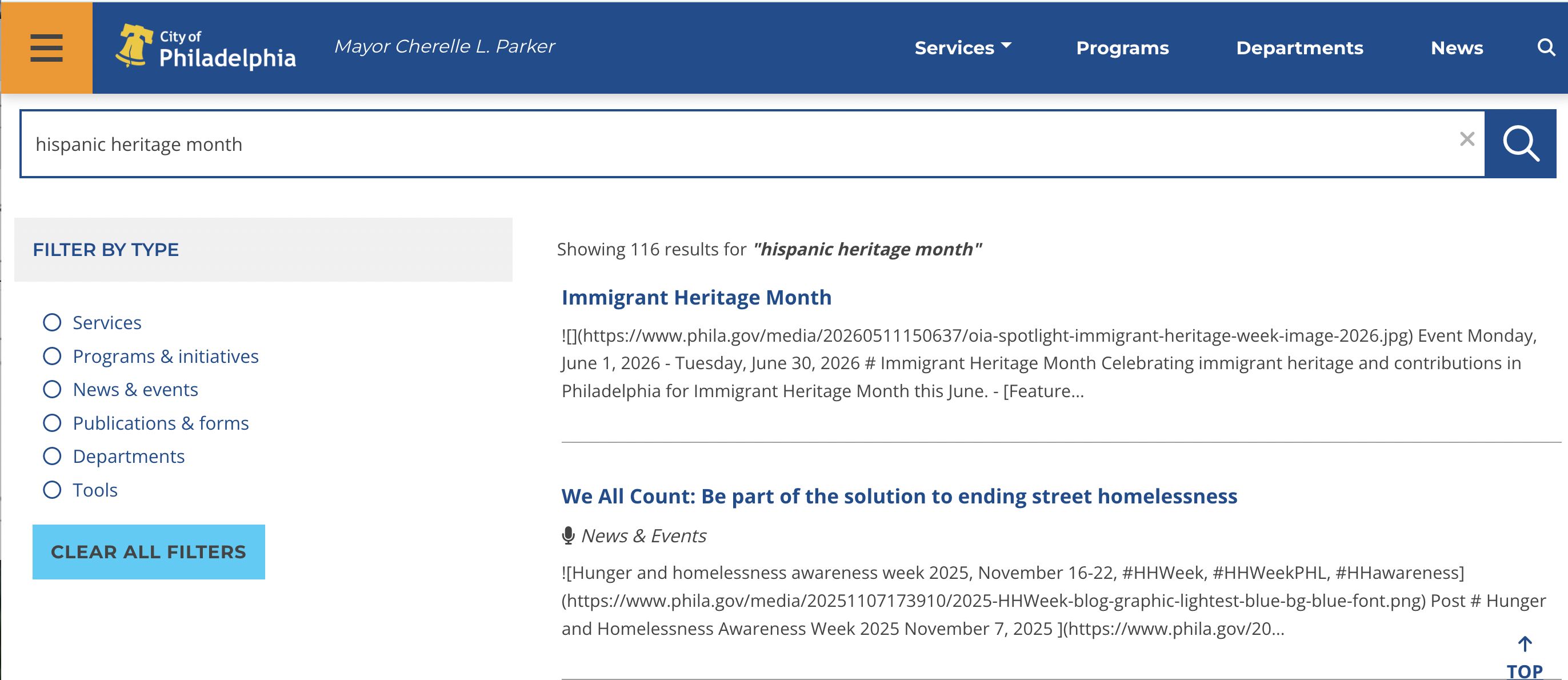
    Screen capture of a search for “Hispanic Heritage” month on the phila.gov website on Monday.Screen capture of phila.gov

    There aren’t even links to information about two signature events that took place this past Sunday: La Feria del Barrio (organized by Taller Puertorriqueño) and the Mexican Independence Day Festival (organized by the Mexican Cultural Center), nor even the unofficial culminating event in Philadelphia — the Puerto Rican Day Parade, which Concilio has been hosting for more than 60 years — on Sept. 27.

    While I’d like to say I’m completely surprised by the elision of Hispanic Heritage Month that the city is doing, I’m not.
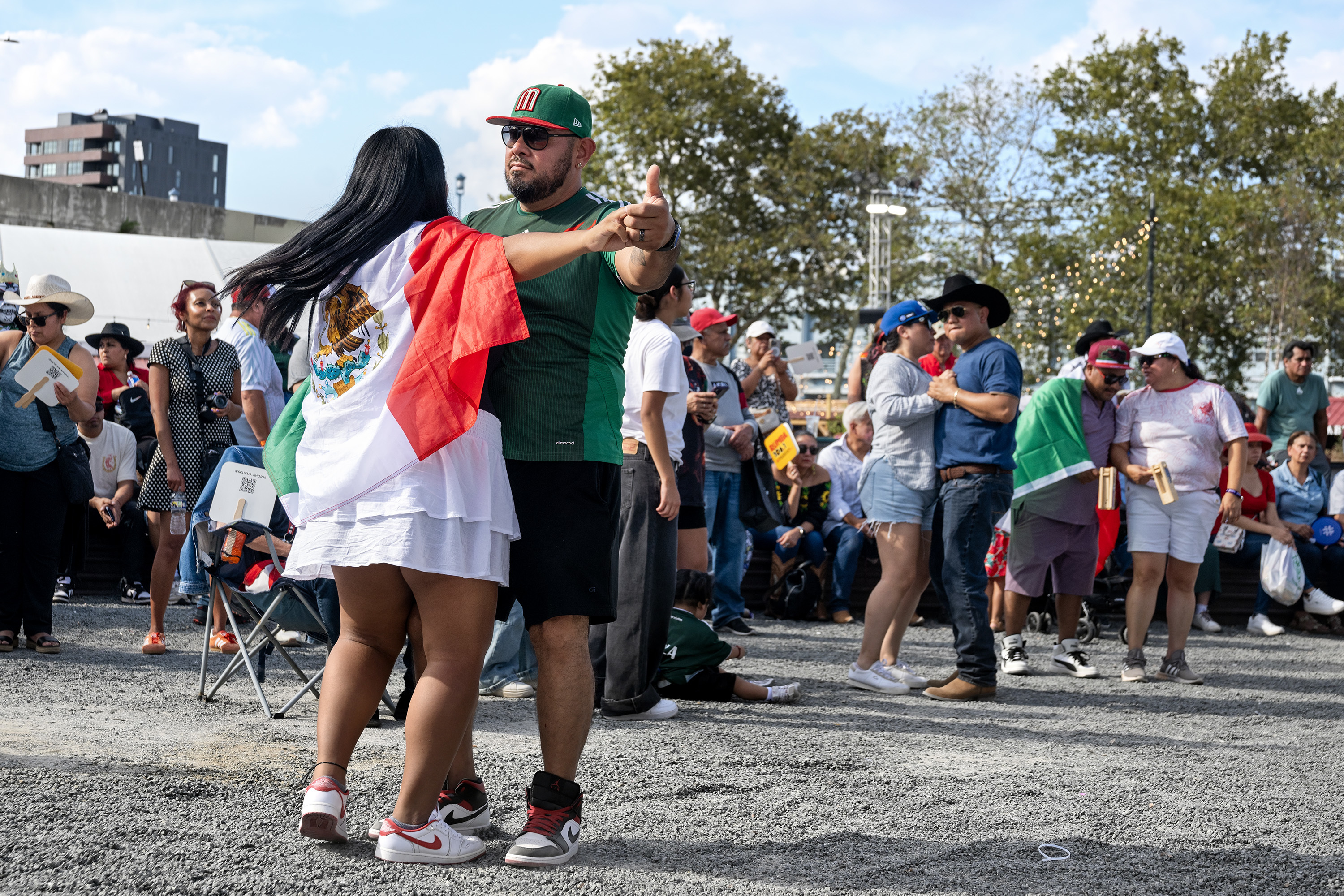
    Francisco Gonzales, of Lawrenceville, N.J., dances with his daughter Bianca, 17, near the stage as musicians perform at last year’s Mexican Independence Day Festival at the Independence Blue Cross RiverRink at Penn’s Landing.Tom Gralish / Staff Photographer

    Philadelphia’s Latino communities get surprisingly little respect — outside of the high regard for our undeniably wonderful food and dance moves — from our electeds, and have long been slighted by city government in far more significant ways.

    For me, nothing epitomizes that more than an example from 2015, when there was a Latino managing director and even so, then-Mayor Michael Nutter convened — at the behest of Attorney General Eric Holder and the U.S. Department of Justice — a Philadelphia roundtable about the imperative of improving police-community relations at which there wasn’t a single person from a Latino-serving organization at the table. In a city where our community was subjected to relatively high stop-and-frisk rates, experienced excessive force incidents (and still does), was historically targeted for extortion by police, and was (and still is) racially profiled by police and U.S. Immigration and Customs Enforcement.

    No. Latinos. At. The. Table.

    Is it simply that our political capital has been stagnant since the 1980s — or is there something else?

    We’ve had three Latino primary contenders for mayor (two in 2015 and one in 2023), but no substantive progress when it comes to the political power necessary to be taken seriously in Philadelphia.

    To wit, in 1983 Philadelphia elected its first Latino City Council member, and a year later it elected a Latino state legislator (the second in the city’s history). The census conducted in 1980 put Philadelphia’s Latino population at 3.9% of the city’s total. Fast-forward some four decades, and Latinos are now about 17% of Philadelphia’s total population, but we still have only one Latina City Council member, and just two Latino Philadelphia state legislators.

    The city has mostly relied on department-level appointments — back in the ’80s, it was the Office of Hispanic Community Affairs; now it’s the Office of Immigrant Affairs and the Office of Latino Engagement — to see to the concerns of its Latino residents, and to tout the communities’ contributions to Philadelphia.

    But departments and offices reflect the administrations they are part of, and Mayor Cherelle L.Parker has sent mixed signals to her Latino constituents.

    On the one hand, she has addressed issues in Kensington in concert with District 7 Councilmember Quetcy Lozada — who is a well-liked and respected Boricua leader. On the other hand, she had to be dragged, kicking and screaming, by City Council’s veto-proof “ICE Out” proposals into offering any public comment about ICE actions under President Donald Trump.

    Or maybe the offices that are meant to be in conversation with, and about, Philadelphia’s Latino communities aren’t up to the job?

    I’m willing to offer the benefit of the doubt: Maybe they are focusing on important work behind the scenes. But in my opinion, they have minimized Latino visibility — to our detriment, and to all of Philadelphia’s detriment.

    I was struck recently by the events the Office of Immigrant Affairs is publicizing as part of its Welcoming Week 2026 (from Sept. 10 to 25), for example. The focus this year is on the Caribbean, but in the publicity I’ve received (or dug up) about it, there seems to be nothing scheduled about or from the Spanish-speaking Caribbean. The thing is, this isn’t a zero-sum game — we can (and must) celebrate our significant Haitian and Jamaican communities, for example, and their incredible cultural contributions to Philadelphia, without ghosting our Dominican and Boricua ones.

    So, come on, send that Hispanic Heritage Month email, Mayor Parker. List those events and programs on the website. Latinos are here and doing amazing things in service of our city. We should celebrate that together.
  • Philadelphia faces calls for a data center moratorium amid spreading AI fear and talk of a slowdown

    Philadelphia faces calls for a data center moratorium amid spreading AI fear and talk of a slowdown

    The battle over data centers and the artificial intelligence they power has officially reached Philadelphia City Hall.

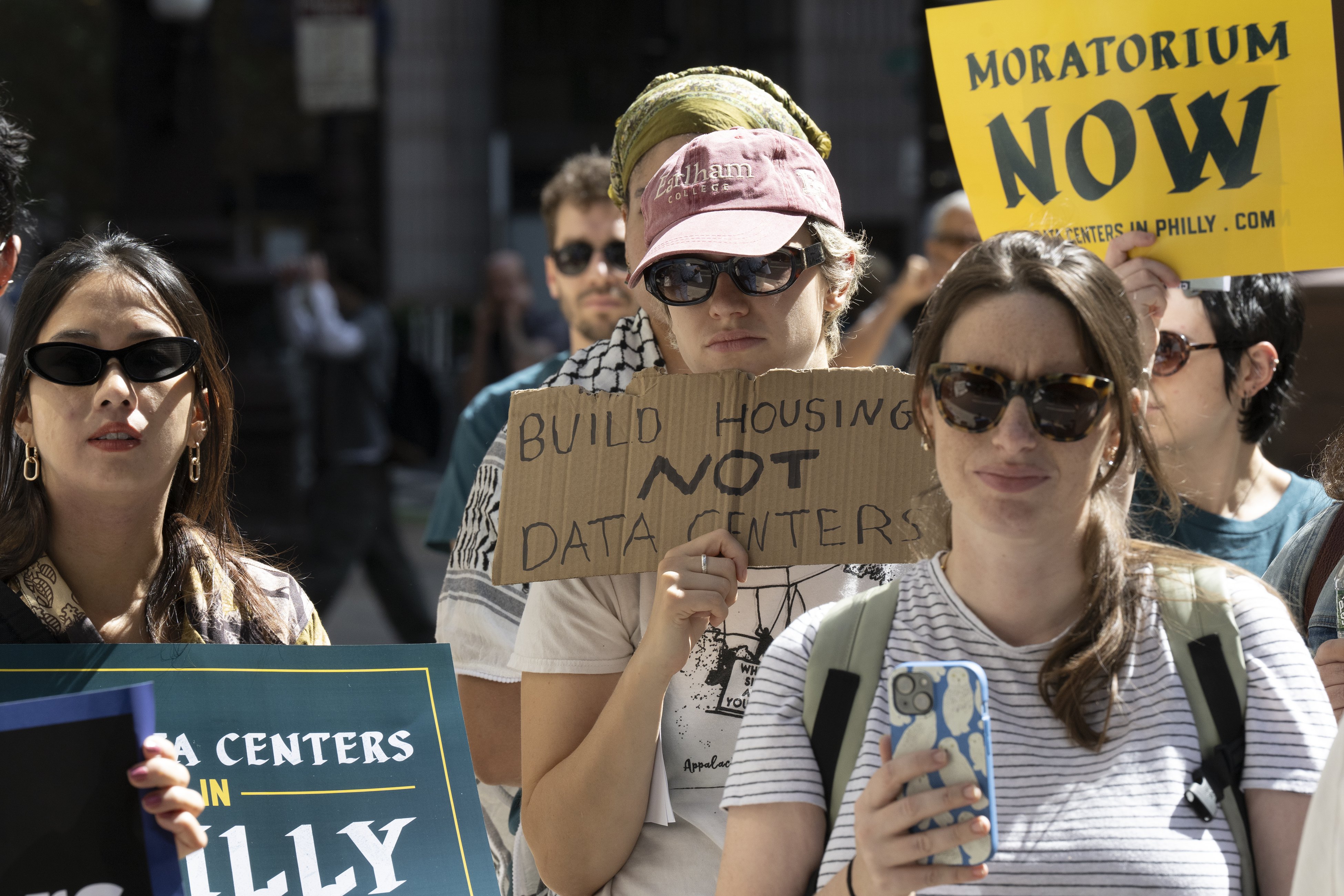
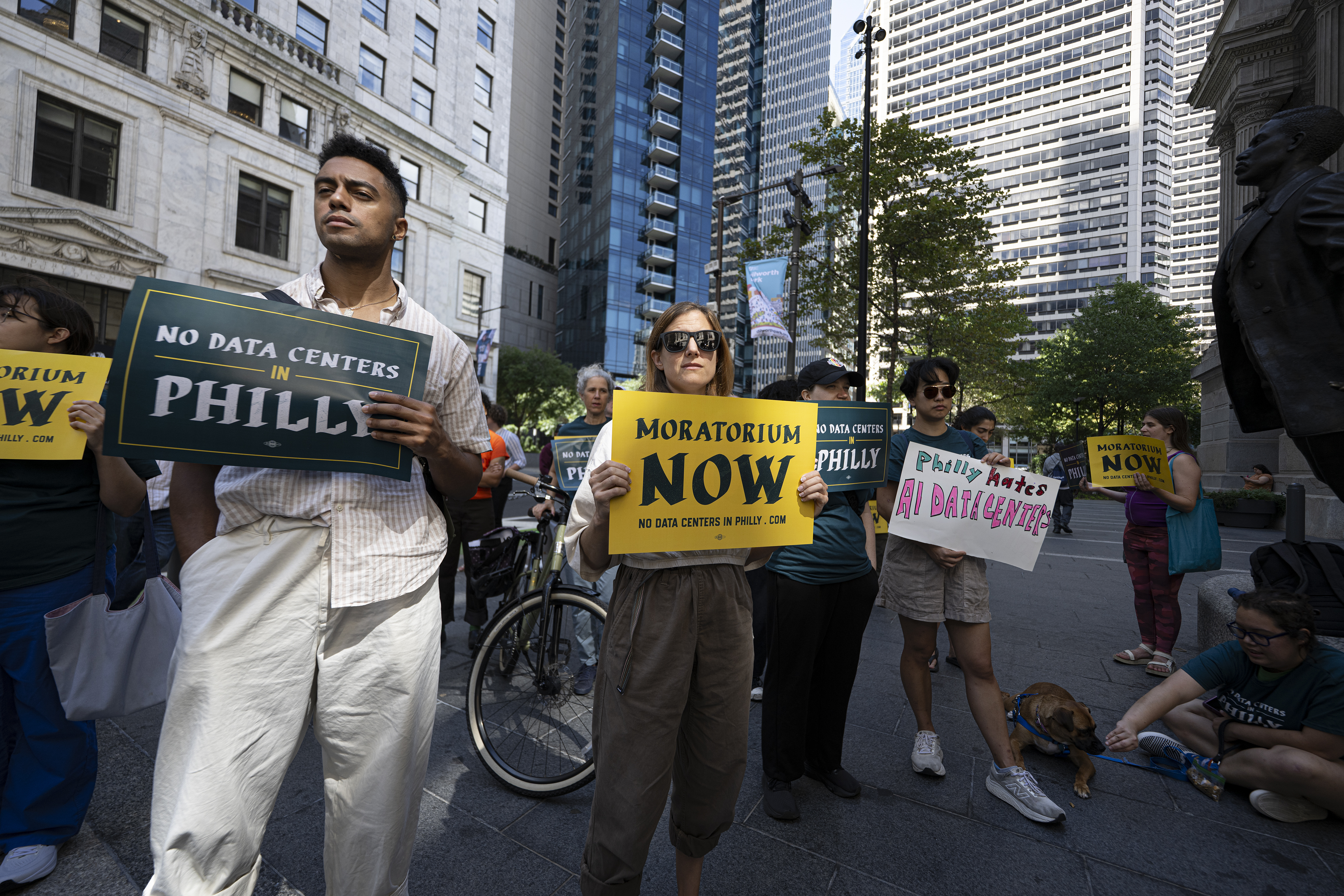
    A coalition of activist groups and environmental advocates gathered at City Hall Monday to call on local lawmakers to pass a moratorium on data center construction in the city, the opening salvo for the group’s public pressure campaign to oppose the projects that it says could hike energy rates and drive pollution.

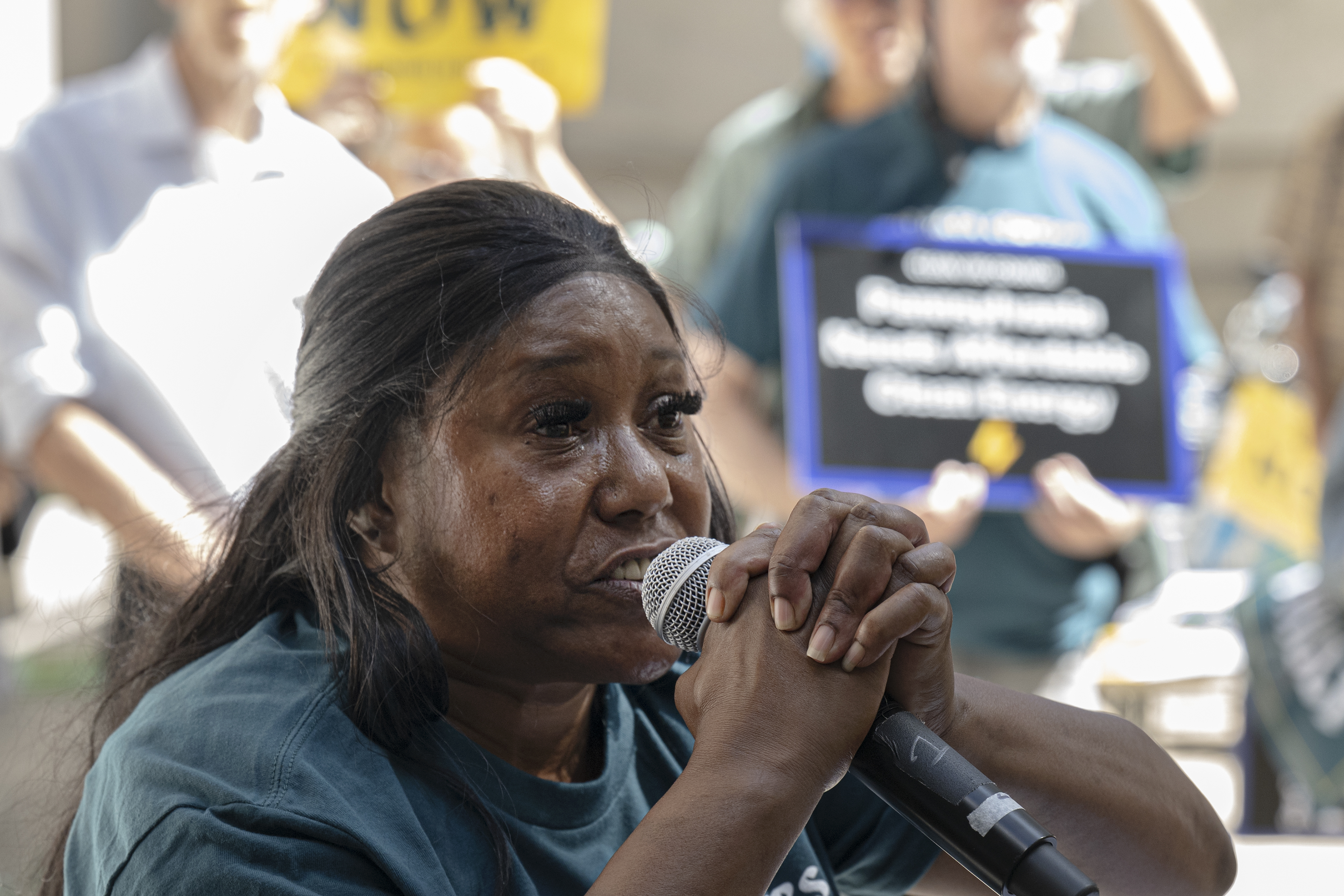
    “There’s way too much at stake to let data centers expand without guardrails,” said Sonya Sanders, board president of Philly Thrive, an advocacy group for racial, economic, and environmental justice.

    The coordinated push could put Mayor Cherelle L. Parker and members of City Council in a politically tricky spot as they gear up to run for reelection in the spring. Data centers have proven deeply controversial and have drawn bipartisan backlash, but some unions that see job-creating potential support their construction.

    There is no specific data center proposal currently under consideration by City Council, and no member has said that they will introduce a moratorium bill. A spokesperson for Council President Kenyatta Johnson said that Council members and Parker’s administration are in “discussions on the future of data centers in the city.”.

    Any data center legislation would have to run through Parker, a centrist Democrat who has not staked a position on the issue. She is allied with the unions that represent construction workers and has generally been pro-development. However, she positioned herself as an opponent of Big Tech earlier this year when she advocated for new taxes on companies like Uber and Airbnb.

    Parker said in a statement Monday that she would sign an executive order this week to “formalize” a task force she convened over the summer to explore potential standards for data center development, and she vowed that the city would put “rigorous guardrails in place.” She did not specify a timeline.

    Grays Ferry resident Sonya Sanders speaks during a rally at Philadelphia City Hall on Monday, calling on City Council to pass a citywide data center moratorium and kicking off the No Data Centers in Philly campaign.Jose F. Moreno / Staff Photographer

    The data center activists’ event in Philadelphia came as fear of AI’s rapid development and increasingly humanlike capabilities has spread substantially and as leaders of the nation’s largest AI developers over the weekend signaled support for a global slowdown.

    On Saturday, Anthropic chief executive Dario Amodei wrote that the technology is advancing more rapidly than leading companies can implement safeguards. Several of his top rivals, including Sam Altman of OpenAI and Elon Musk of SpaceX, endorsed his call for a slower pace of growth.

    Meanwhile, talks of regulation have gripped Washington, with lawmakers from both major parties drafting plans to rein in tech companies and add layers of oversight to AI development. Any proposal faces an uncertain future, as President Donald Trump has said the country should remove barriers to AI development and accelerate advancement in order to outpace China.

    On Monday morning, Trump posted on his Truth Social platform: “The only control or ‘guardrails’ that AI needs is a STRONG AND SMART (High IQ!) PRESIDENT, and the U.S.A. has that, in spades!”

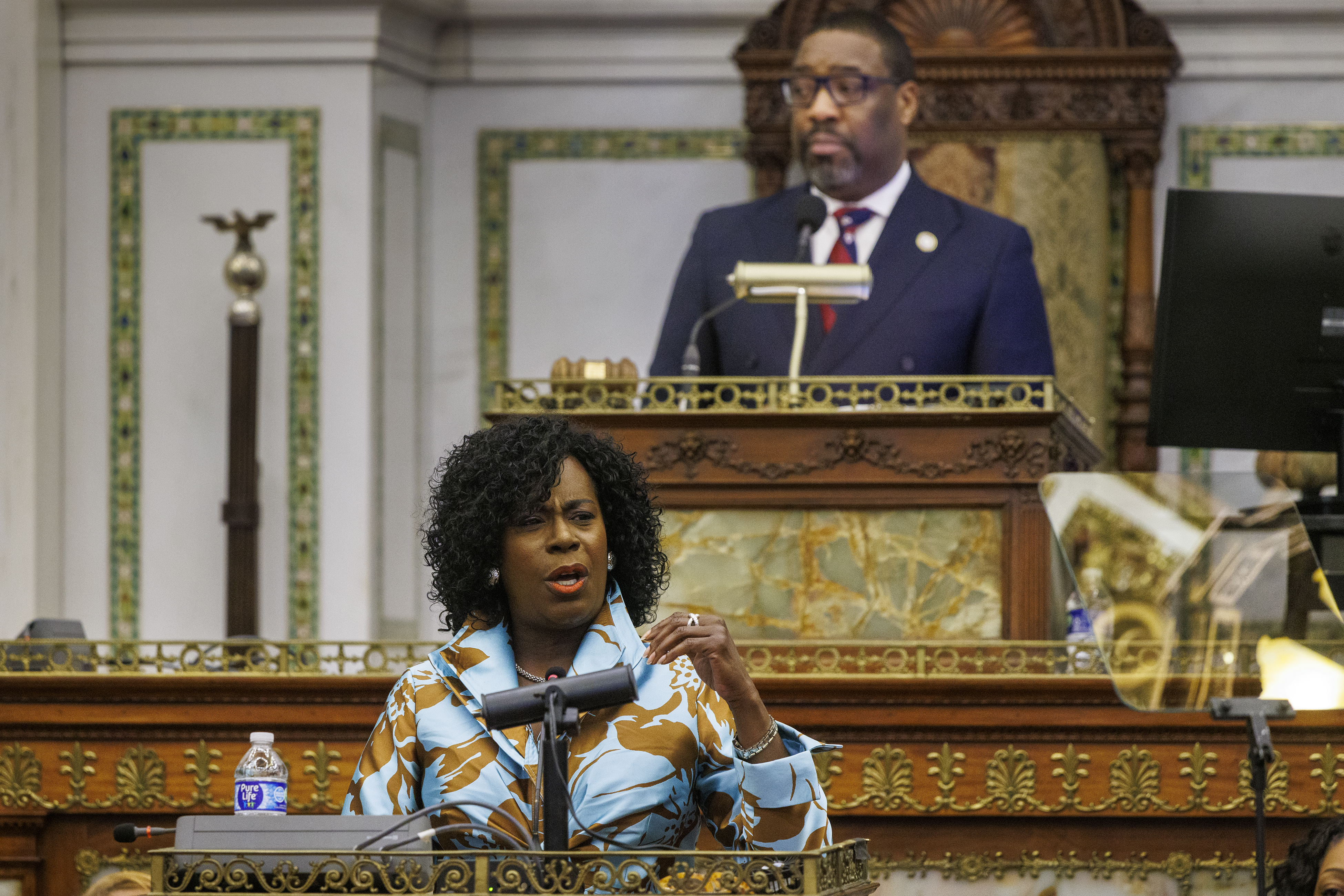
    Philadelphia Mayor Cherelle L. Parker start to make her budget presentation to City Council in Council Chambers on March 12. In the background is Council President Kenyatta Johnson.Alejandro A. Alvarez / Staff Photographer

    Inaction in Washington has left an opening for states and cities to regulate the construction of data centers, which produce the massive amount of computing power needed for artificial intelligence. They have become increasingly unpopular — a July poll found that 3 in 4 Pennsylvanians don’t want a data center in their backyard.

    Municipalities in Pennsylvania, including Philadelphia, now have more power than ever to slow or halt the development of data centers. Gov. Josh Shapiro, a Democrat who is considered a potential presidential contender and who had previously courted data center projects, last month signed an executive order requiring local approval for any project to receive a state permit.

    Philadelphia is already home to eight data centers that were constructed before the issue was widely controversial. The existing data centers are far smaller than the newer “hyperscale” projects that are meant to power AI and have faced opposition in communities across the country.

    In July, the city’s planning commission said there are only two locations in the city that could support an industrial-size data center: the former South Philly refinery site known as the Bellwether District and 2600 Grant Ave., a city-owned plot adjacent to the Northeast Philadelphia airport.

    Planning commission officials emphasized that they were not asked to consider a specific proposal to build a data center at either of those sites.

    People hold signs opposing data centers during a rally at Philadelphia City Hall on Monday, calling on City Council to pass a citywide data center moratorium and kicking off the No Data Centers in Philly campaign.Jose F. Moreno / Staff Photographer

    City Council has thus far not taken action on data centers, aside from passing a resolution authored by Councilmember Rue Landau earlier this year to hold hearings on the issue. A hearing has not yet been scheduled.

    Council, which is led by a supermajority of Democrats, will convene Thursday for the first meeting of the fall session. Members are unlikely to green-light a controversial data center project ahead of the primary election in May, when every Council seat will be on the ballot.

    But activists said Monday that city lawmakers must take proactive steps to ban data centers temporarily while they draft a regulatory framework and a system for considering public input on proposed projects.

    Shawmar Pitts, the managing co-director of Philly Thrive — which is rooted in the communities that surround the former South Philly oil refinery — said Council members are “on notice.”

    “Don’t put a moratorium in place, and your seat will be taken,” he warned.

    Senia Lopez, a Northeast Philly resident and an organizer with the advocacy group 215 People’s Alliance, said people in neighborhoods surrounding any future hyperscale data center would be saddled with higher utility costs and “increased threats to our health.”

    “City Council must chose whose interests it represents,” Lopez said. “It can side with Big Tech companies seeking to extract from our communities, or it can stand with the working people who have built and sustained them.”

  • Jefferson County coroner says a ‘probable’ case of measles led to a woman’s death

    Jefferson County coroner says a ‘probable’ case of measles led to a woman’s death

    Jefferson County’s coroner is updating a death certificate to note that a “probable” case of measles led to the death of a 40-year-old woman over the weekend.

    The woman’s death certificate initially had stated that she died of respiratory failure due to a “suspected” case of measles and other underlying conditions. She also had clinical signs of measles, including a rash and fever, coroner Greg Furlong said Monday.

    Furlong said he had paperwork confirming that the woman had been exposed to a person who had a positive lab test for measles and subsequently decided to change the death certificate.

    The woman’s death marks the third reported amid an ongoing measles outbreak in Pennsylvania that has sickened nearly 700 people. State officials announced last month two other measles-related deaths and say they’re investigating the death reported in Jefferson County.

    Here’s what to know about the case and the ongoing outbreak.

    (function(){function e(){window.addEventListener(`message`,function(e){if(e.data[`datawrapper-height`]!==void 0){var t=document.querySelectorAll(`iframe`);for(var n in e.data[`datawrapper-height`])for(var r=0,i;i=t[r];r++)if(i.contentWindow===e.source){var a=e.data[`datawrapper-height`][n]+`px`;i.style.height=a}}})}e()})();

    What are the details of the death in Jefferson County?

    Jefferson County’s coroner reported Sunday the death of a 40-year-old woman in the county.

    The woman, who died Saturday, was unvaccinated and had serious respiratory issues, requiring her to use supplemental oxygen 24 hours a day, Furlong said.

    Her death certificate initially listed her cause of death as “acute on chronic hypoxemic and hypercapnic respiratory failure” due to “suspected measles,” chronic obstructive pulmonary disease, and asthma, Furlong told The Inquirer, though he is updating the death certificate to read “probable measles.”

    The certificate also lists “supplemental oxygen dependence” as a “significant condition contributing to death but not resulting in the underlying cause.”

    The woman also had hypertension and high cholesterol, Furlong said.

    Furlong said the woman had declined a measles test while she was alive, but his office tested her for measles after her death and was waiting on results on Monday.

    Can respiratory issues put you at higher risk for death from measles?

    Yes, measles is especially risky for people with respiratory conditions, says Paul Offit, a physician and vaccine expert who heads the Children’s Hospital of Philadelphia’s Vaccine Education Center.

    “This person was particularly compromised, with chronic obstructive pulmonary disease and asthma,” he said on Sunday. “That’s a person who could well die from this virus.”

    Children under 5, people older than 20, pregnant women, and people with weakened immune systems are more likely to have complications from measles, according to the Centers for Disease Control and Prevention.

    In young children, complications from pneumonia, or infection of the lungs, are the most common cause of death from measles, the CDC says.

    How are state officials responding to the case?

    Officials at the state health department are aware of the coroner’s report and conducting a “thorough review” of the case, they said in a statement Monday.

    According to the health department’s measles outbreak website, Pennsylvania defines a “measles-associated death” as one that occurs within 30 days of symptom onset in a person with clinical evidence of infection and a positive laboratory test.

    The state also considers additional information on a case, including a person’s medical records and whether they were exposed to measles before their death.

    Deaths without lab evidence of infection, deaths of people who have fully recovered from measles before death, and deaths from unrelated causes, like a car crash, are not counted as measles-associated.

    How are federal officials responding to the case?

    Since last month, state and federal officials have clashed over whether two other deaths reported in Pennsylvania were tied to the state’s measles outbreak.

    In its latest update Friday, the CDC still had not listed two deaths reported by the state on its website highlighting data on ongoing measles outbreaks around the country.

    In announcing the two deaths, Democratic Gov. Josh Shapiro criticized President Donald Trump’s Health and Human Services secretary, Robert F. Kennedy Jr., for spreading misinformation about vaccine safety through his longtime anti-vaccine activism. Kennedy then accused the state of “fabricating” the deaths, although he later acknowledged one had been caused by measles.

    Lancaster County’s coroner has said he investigated one death caused by measles, in an infant with a severe genetic disorder, and another in an infant who contracted measles before birth and died shortly after.

    The coroner, an elected Republican, has said he does not believe measles caused that child’s death, but rather a lacerated spleen. Yet prominent physicians have noted measles can weaken a person’s spleen, putting it at risk of rupture.

    CDC director Erica Schwartz said in a statement Monday that state officials had not notified the agency about the death in Jefferson County.

    “Despite repeated offers of assistance, Pennsylvania has not requested a CDC Epi-Aid, which would deploy epidemiologists and provide on-the-ground measles outbreak support,” she said.

    Several other states, including Texas and South Carolina, requested such assistance when dealing with large outbreaks over the last year and a half, she said, adding that the CDC will respond with Epi-Aid support if the state officially requests it.

    State officials said in a statement Monday that the health department “maintains a strong working relationship” with CDC professional staff and meets regularly with them.

    “We will continue to evaluate any additional CDC support as this outbreak contributes,” the statement read.

    Earlier this month, they said the department meets regularly with CDC staff and has discussed the details of the two previously reported measles-associated deaths with them.

    They added that the CDC requested records about the cases that contained identifiable information, which the state did not share, a decision in line with past practices.

    State officials have maintained that privacy laws keep the department from releasing more information on the cases. Earlier this month, they said the CDC had not provided them with a case report form that would allow them to share de-identified information about the deaths with the agency.

    Can you get measles if you’ve been vaccinated?

    Nearly all of the 693 measles cases reported so far this year in Pennsylvania have been among people who were not fully vaccinated against the disease.

    But last week the state identified four people — three adults and a child — who were “appropriately vaccinated for their age” and still contracted measles. These “breakthrough cases” are rare, accounting for less than 1% of the cases reported in Pennsylvania, and typically result in milder symptoms and less risk of spreading the disease.

    People born before 1957, before the first measles vaccines became available, are generally considered protected against measles through natural immunity — because the disease was once prevalent in children.

    Between 1968 and 1989, most children in the United States received one dose of the MMR vaccine, which is about 93% effective against the virus.

    In 1989, measles cases among vaccinated schoolchildren prompted health officials to recommend children receive two doses of the vaccine, which together are 97% effective against the virus, a change that also prompted some older children to get a second shot.

    How do you get a measles vaccine and who is eligible?

    The measles, mumps, and rubella vaccine is available at many doctors’ offices, urgent care centers, pharmacies, federally funded health centers, local health departments, and health centers run by the state health department. The state has also hosted pop-up clinics in affected areas during the outbreak.

    People interested in getting a vaccine for themselves or their children should call ahead to providers to check availability, the state says.

    Typically, the MMR vaccine is given in two doses, one at around a year old, and one between 4 and 6 years old. Amid the measles outbreak, state health officials are now recommending that parents in affected areas vaccinate children early to protect them against the highly contagious disease, which can infect up to 90% of unvaccinated people exposed to it.

    Babies between six and 11 months who live in, or will travel to, affected areas, can get an early dose of the MMR vaccine, then a second dose at 12 to 15 months and a third at 4 to 6 years old, the state says.

    Children over a year old who haven’t received any MMR shots should get one dose now, and a second at least 28 days later. Children with one dose of the MMR vaccine should get a second dose now, provided it’s been 28 days since their first shot.

    Adults and teenagers who have never had measles or a measles vaccine should get two doses at least 28 days apart.

    Infants younger than six months cannot receive the vaccine. People with severely weakened immune systems, those with a history of severe allergic reactions to the MMR vaccine or a vaccine component, and pregnant women should talk to their doctors about their options, the state says.

  • Another 250th anniversary? This one, honoring the Constitution, comes in 11 years and Brendan Boyle wants to get ready.

    Another 250th anniversary? This one, honoring the Constitution, comes in 11 years and Brendan Boyle wants to get ready.

    Philly just finished celebrating America’s 250th anniversary with crackling fireworks, an early morning concert and a string of patriotic events throughout the summer.

    But now that the confetti has been swept away and the World Cup traffic has finally subsided, you may be thinking it’s a good time to get your head out of the 18th century.

    If only it were that easy.

    In a mere 11 years, Philadelphia will be the center of yet another semiquincentennial celebration: the 250th anniversary of the U.S. Constitution.

    And because you live in the city where they invented America, you’re in store for another round of historic commemorations.

    To drive home the point, Democratic U.S. Rep. Brendan Boyle of Philadelphia announced Monday at the National Constitution Center that he’ll be introducing legislation to create a federal commission to plan the celebration of the original 4,543-word document (7,591 words if you count all 27 amendments) in the year 2037.

    Vince Stango (left) interim president and CEO of the NCC and and U.S. Congressman Brendan F. Boyle.Tom Gralish / Staff Photographer

    The Constitution was drafted during the Constitutional Convention in Philadelphia in 1787, and signed at Independence Hall on Sept. 17, 1787. It was ratified on June 21, 1788.

    “It’s a special moment,” Boyle said. “We can’t waste any time to be fully prepared to meet that moment.”

    As though sensing that people here might have a historical hangover, Boyle added gleefully, “I never met a Philadelphian who’s partied out!”

    Vince Stango, interim president and CEO of the National Constitution Center, said it’s never too early to start planning the party.

    “This gives us the opportunity to carry forward the momentum of 2026,” he said. What comes between now and 2037, Stango said, is a “civic decade” of speaking about and getting more knowledgeable of the document that set up America’s national government, and that protects citizens’ rights.

    “Here in Philadelphia,” he said, reminding us of our local duties, “we have a special responsibility” to honor the Constitution, a made-in-Philly product that the world has long envied and admired.

    Boyle added that “so many of the freedoms protected by the Constitution are very much a live issue today.” He added that the start of planning for 2037 “very much coincides with the national conversation we are having over a whole host of constitutional rights.”

    Though Boyle wasn’t specific, the nation has been arguing over many of the 281 executive orders President Donald Trump has issued since returning to office last year, demonstrating a reliance on Article II of the Constitution.

    As an example, in June, the U.S. Supreme Court struck down Trump’s executive order to end birthright citizenship, guaranteed under the 14th Amendment to the Constitution.

    Boyle reminded listeners that he’s been very much involved with 250th-style celebrations.

    Two days before the July Fourth celebration this year, more than 30 members of the 119th Congress attended an event at Independence Hall marking the passage of the declaration. Boyle, whose district includes the site, had long endeavored to gather his colleagues for the occasion.

    “Anniversaries are not just about honoring the dead, but educating the living.” Boyle said.

    And keep in mind Stango’s parting words Monday: We will all be celebrating the 250th anniversary of the Bill of Rights here in Philadelphia in 2041.

    Don’t forget to reserve your spot to see the fireworks then.

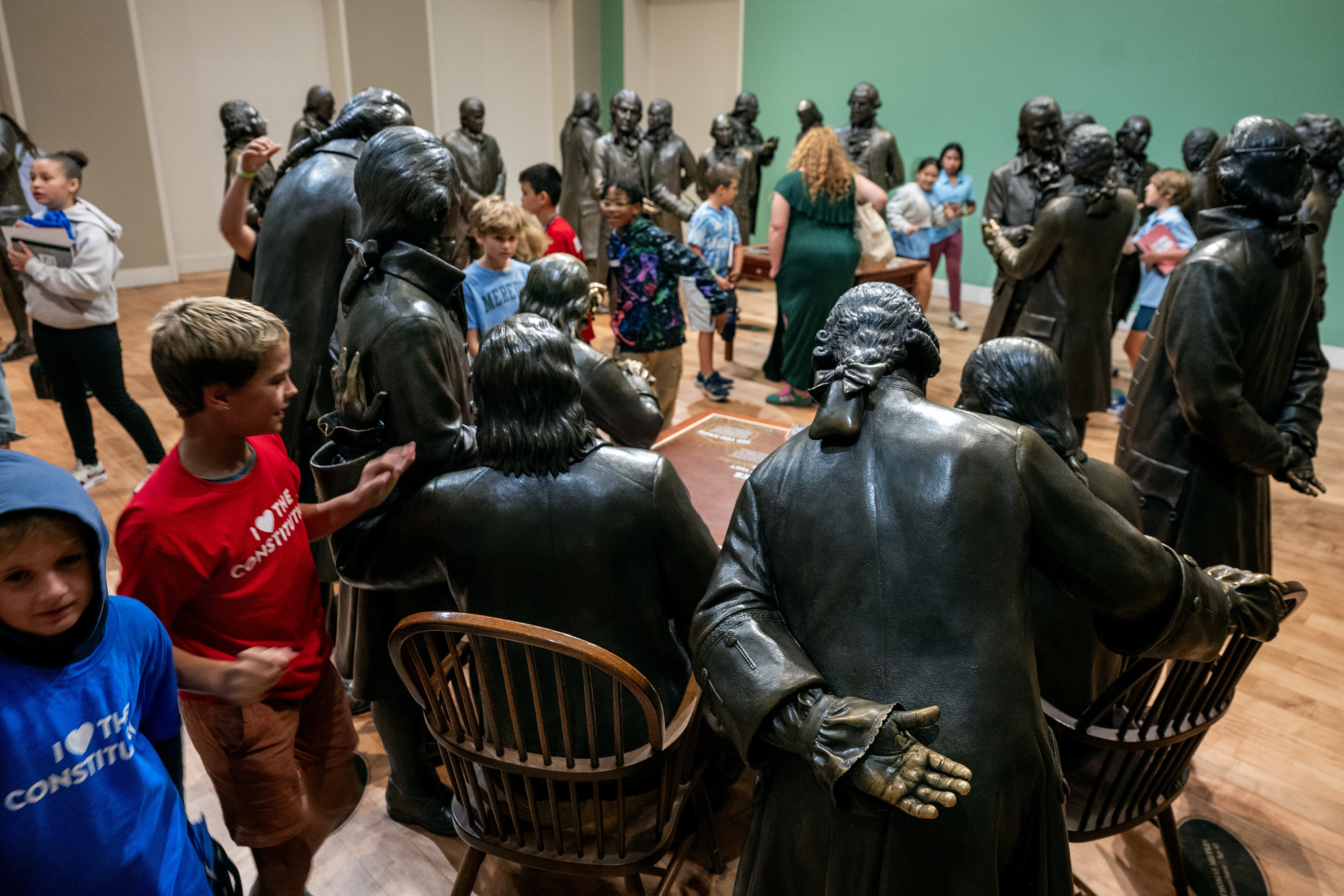
    Students from the William M. Meredith School in Queen Village mingle with 42 life-size, bronze statues of the framers of the U.S. Constitution at the National Constitution Center during a Sept. 17, 2025 visit, on the 238th anniversary of the document’s signing.Tom Gralish / Staff Photographer
  • Free speech, hypocrisy, and the real ‘Marxist’ problem at our universities

    Free speech, hypocrisy, and the real ‘Marxist’ problem at our universities

    Here’s what you need to know about free speech on America’s college campuses: We’re all Marxists now.

    No, we’re not those “crazy communists” whom President Donald Trump denounced at the Republican midterm convention in Dallas last week. I teach at the University of Pennsylvania, where nearly two-thirds of undergraduates enter finance, technology, or consulting. If I’m trying to convert them to Karl Marx, I’m doing a very poor job of it.

    I’m talking about the comedian Groucho Marx, who authored the world’s funniest testament to hypocrisy. “These are my principles,” Groucho quipped, “and if you don’t like them … well, I have others.”

    That’s the big takeaway from the annual report on campus free speech by the Philadelphia-based Foundation for Individual Rights and Expression (FIRE), which came out on the same day as Trump’s convention diatribe. We’re not communists or anarchists or any of the other slurs he lobbed at us. We’re hypocrites. All of us. On campus, and off of it.

    Witness the response to the murder of conservative activist Charlie Kirk last fall. After complaining for years about “cancel culture” in American higher education, GOP politicians led the drive to fire or suspend professors and students who said the wrong thing about Kirk.

    Meanwhile, left-leaning academics who had supported speech codes prohibiting “violent” speech insisted that comments praising the violence against Kirk must be protected. They were correct about that: Nobody should have been penalized for what they said about him. But there was no acknowledgment — none — that we had erred in trying to censor others.

    Instead, as the FIRE report demonstrates, the censorship continued. Dozens of schools blocked conservative students from establishing chapters of Turning Point USA, the organization Kirk founded. And where chapters already existed, we tried to shut them down.

    At Rutgers, for example, more than 7,000 people signed a petition asking the university to disband its TPUSA chapter because it made people feel unsafe. “It is imperative that we take decisive action to restore security and the feeling on inclusivity to the campus,” the petition declared.

    Meanwhile, the Rutgers TPUSA chapter issued its own petition calling on the university to fire a history professor because of his alleged ties to antifa. Why? You guessed it: People felt unsafe. “Having a prominent leader of the Antifa movement on campus is a threat to conservative students,” the petition claimed.

    Remember when right-wingers denounced liberal “snowflakes” on campus? Now everyone is a snowflake, just like we’re all (Groucho) Marxists. If you don’t like someone’s opinion, just say it threatens your safety. It will work.

    And it will make everyone afraid to speak, no matter their politics. At Penn, the FIRE report notes, over half of surveyed students said they have self-censored on campus at least once or twice a month. “In classrooms, it is difficult at times to express full opinions without causing someone to become upset,” one Penn student told FIRE.

    What’s wrong with that? If I write a column and nobody becomes upset, it was a lousy column. To be clear, I never go out of my way to offend anyone. But I take it for granted that if I have something meaningful to say, some readers will be angered or annoyed by it.

    On our campuses, by contrast, causing upset has become a dangerous thing. Best to keep your big mouth shut, lest you get on the wrong side of anyone.

    So both pro-Israel and pro-Palestinian students bite their tongues. And so do conservatives and — especially — Trump voters, who often stay in the closet instead of revealing their true selves.

    I taught for 20 years at New York University, which was dead last in FIRE’s free speech ranking in this year’s report. I have taught for 10 years at Penn, which moved up slightly — from 261st to 227th — but still received an “F” grade from FIRE.

    And I haven’t heard anyone at either institution acknowledge the report or pledge to do better. You would think the firing of professors for their comments about Kirk — or about gender fluidity, a frequent right-wing target — would make our heavily liberal professoriate rally around the principle of free speech.

    But no. I’ve heard colleagues say Trump voters should keep quiet because they are racist and sexist and nobody wants to hear that. Other professors say scaredy-cat conservatives should just show some backbone instead of hiding in the shadows.

    Please. Here’s the question we should pose to ourselves: If FIRE reported that any other sizable group of students — aside from political conservatives — felt too afraid to voice their views, how would we react? Would we see righteous protests across our campuses? Or would we tell those who were scared they should just suck it up?

    “The secret of life is honesty and fair dealing,” Groucho Marx said. “If you can fake that, you’ve got it made.” We’ve got a lot of fake free speech warriors on our campuses right now. You either believe in it for everyone, or you don’t believe in it at all.

    Jonathan Zimmerman teaches history and education at the University of Pennsylvania. He is the author of “Schooling Citizens: How Education Can Save Our Democracy,” which will be published in the spring by the American Philosophical Society Press.

  • Trump ally Laura Loomer publicly insulted prominent Black women. Where are the GOP calls for civility?

    Trump ally Laura Loomer publicly insulted prominent Black women. Where are the GOP calls for civility?

    Pennsylvania House Speaker Joanna McClinton was listening to a sketch by comedienne Zainab Johnson when Florida State Rep. Angie Nixon’s name came up. Johnson mentioned how Nixon, who is vying to become the Sunshine State’s first African American U.S. senator, had been attacked by a right-wing influencer named Laura Loomer.

    McClinton is closely following Nixon’s race and immediately wondered: “Who’s Laura Loomer? Who is she?”

    McClinton found out soon enough.

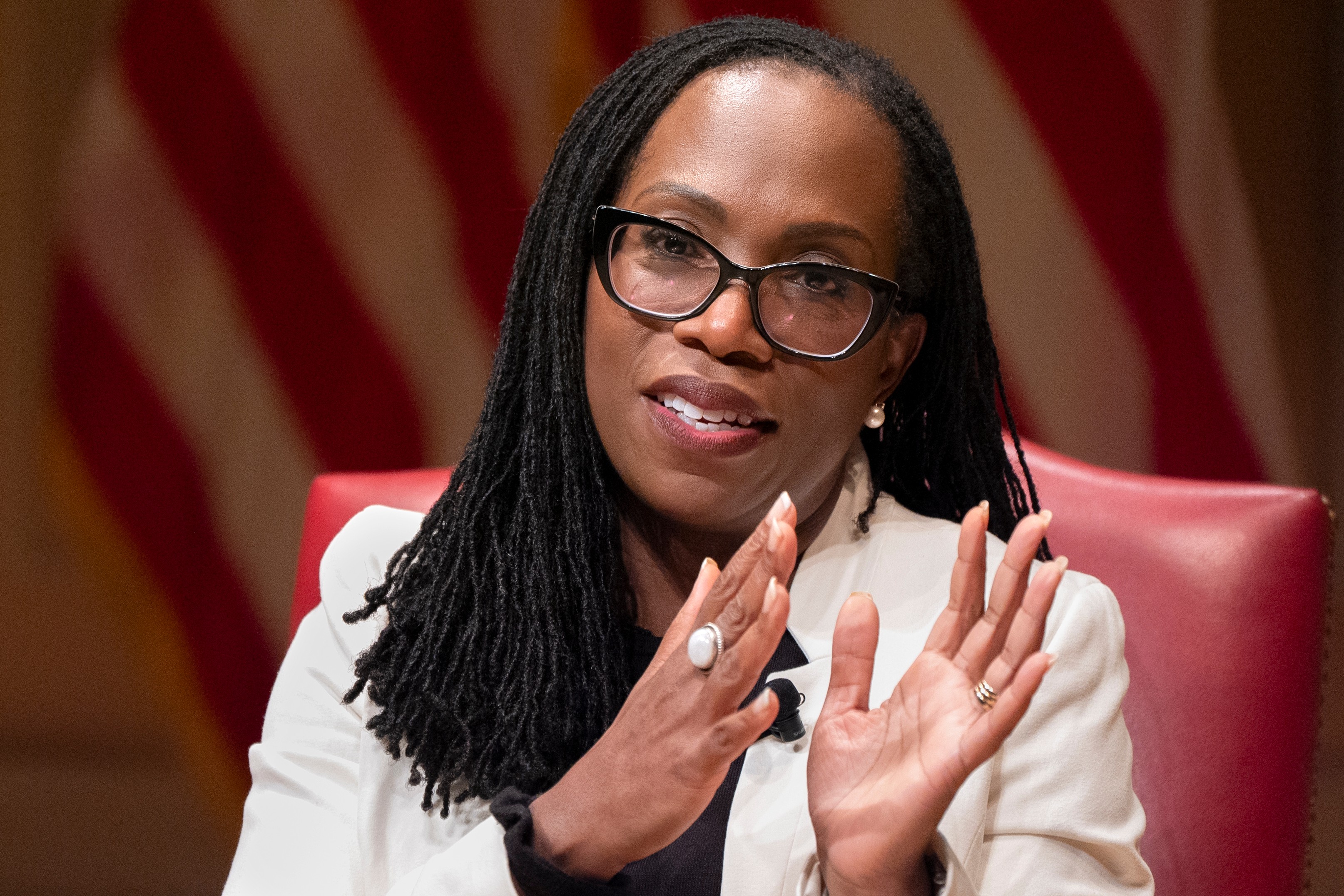
    Loomer, reportedly a close ally of President Donald Trump, has been publicly going after Black female legislators and other prominent women — including U.S. Supreme Court Justice Ketanji Brown Jackson — calling them “ghetto” and the B-word.

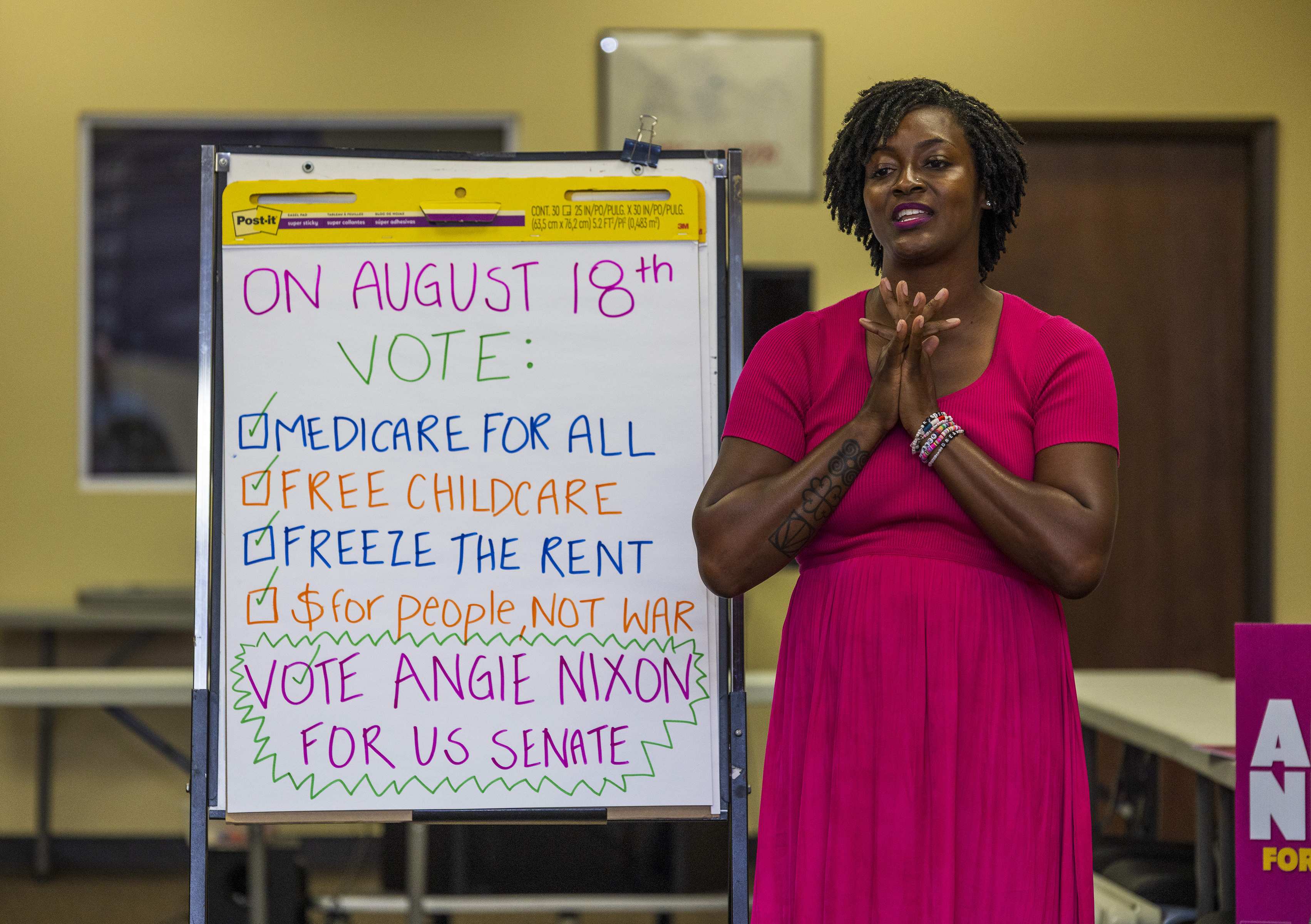
    State Rep. Angie Nixon, a Democratic candidate for U.S. Senate, during a canvassing event in Fort Lauderdale, Fla., in August.SAUL MARTINEZ

    The MAGA influencer zeroed in on Nixon last month after she won Florida’s Democratic Senate primary and accused her of using Ebonics. She also likened the former grassroots organizer to a dog, saying, “Maybe I need to bark at you and tug your leash and then you’ll finally understand.”

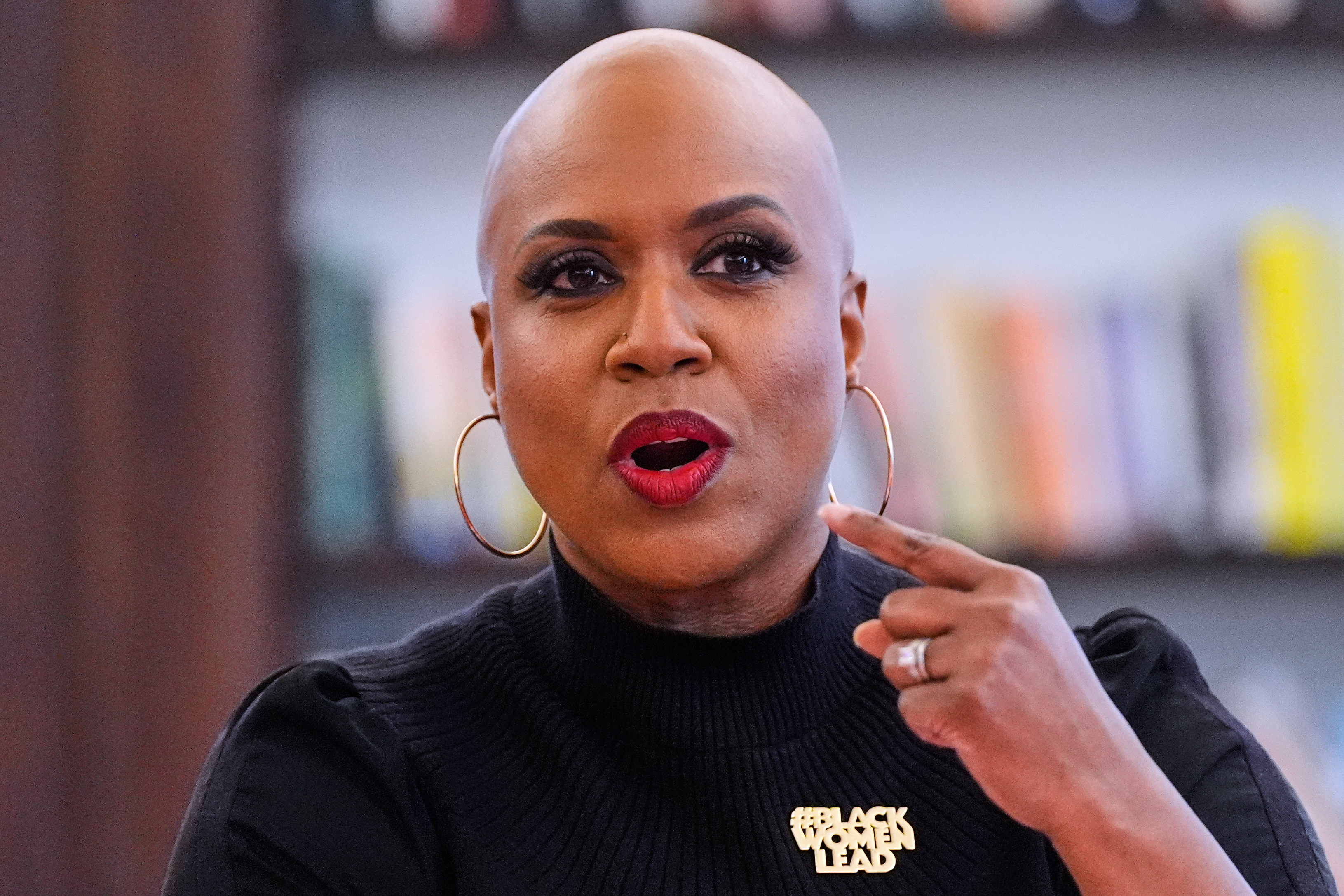
    Loomer has also posted about Reps. Ilhan Omar, Ayanna Pressley, and LaMonica McIver, and former Rep. Cori Bush, saying they’re “entitled,” “destructive,” and “race-obsessed.”

    I don’t know, Laura — you might want to look in the mirror to see who’s really “entitled,” “destructive,” and “race-obsessed.”

    She made me mad.

    A lot of people may have brushed it all off, but as you can tell, I haven’t.

    Former Rep. Marjorie Taylor Greene has condemned Loomer. Where are the other Republicans who pride themselves on being civil and having family values? Every member of the GOP should speak out against what’s been happening.

    House Speaker Joanna McClinton during a news conference at the Capitol in Harrisburg in February.Tom Gralish / Staff Photographer

    “We need the president to condemn these comments,” McClinton told me, adding that U.S. Senate leadership should also act. “Unfortunately, attacking Black women is nothing new.”

    She added, “We have been fighting with racism and misogyny for as long as we have been a democratic republic.”

    I won’t repeat all of the racist things Loomer has uttered on her podcast or posted online lately about Black female politicos. If you’re curious, you can go on social media and see for yourself.

    U.S. Supreme Court Justice Ketanji Brown Jackson speaks to the 2025 Supreme Court Fellows Program, Feb. 13, 2025, at the Library of Congress in Washington.Jacquelyn Martin

    While you’re there, you can check out her Islamophobic posts.

    I thought long and hard about ignoring what’s been happening and writing off Loomer as just another right-wing extremist.

    But she has traveled with the president numerous times, visited Mar-a-Lago, and reportedly has Trump’s ear. Her platform is huge — nearly two million followers on X, the social media site formerly known as Twitter. And she doesn’t hesitate to use it.

    That’s political currency — not just in Washington. In this era of the attention economy, the most strident voices get traction.

    Maryland Gov. Wes Moore was spot on when he posted a statement directed at Loomer saying, “You attack and insult Black women because you believe peddling racism is good for your clicks and your business model.”

    It felt good to see Moore, who is a possible presidential contender, defend Black lawmakers against Loomer’s looney tunes. Same with House Minority Leader Hakeem Jeffries, who called her a “stone-cold racist.”

    Being a Black woman in traditionally white spaces can be challenging. Nixon appeared near tears during a recent appearance on Don Lemon’s YouTube show and said she was tired. “It’s become so normalized for people to continue to attack us,” she said.

    Timothy N. Welbeck, director of Temple University’s Center for Anti-Racism, said he wasn’t surprised there hasn’t been a more fervent pushback against Loomer.

    “Things like woke and DEI were politically expedient slurs to convey anti-Black sentiments,” he told me. “And now people like Laura Loomer are forgoing the veiled statements.”

    It has felt like open season on Black women ever since Trump’s return to office.

    We have been disproportionately impacted by widespread cuts to the federal workforce. Trump weaponized the U.S. Department of Justice to try to prosecute Federal Reserve Governor Lisa Cook and New York Attorney General Leticia James.

    Black women are survivors, though. Ever since we were dragged through the Middle Passage and forced into bondage, we have managed to make a way out of no way, as my mother used to say.

    This is our heritage.

    This is our legacy.

    U.S. Rep. Ayanna Pressley (D., Mass.) gestures while addressing a gathering at a roundtable meeting in November in Boston.Charles Krupa

    In the spirit of the late Shirley Chisholm, the first Black female member of Congress, and all of the other ancestors, we will get through the Trump era, too.

    And we’ll be inspired by the passion of Nixon, the style and commitment of Pressley, and the sheer brilliance of Justice Jackson.

    That’s what we do.

    As Moore pointed out, “We will never let anyone steal our joy or let those that don’t matter too much, matter too much.”

    We’ve come too far.

  • How these four history-making House speakers are trying to protect the future of American democracy in their states

    How these four history-making House speakers are trying to protect the future of American democracy in their states

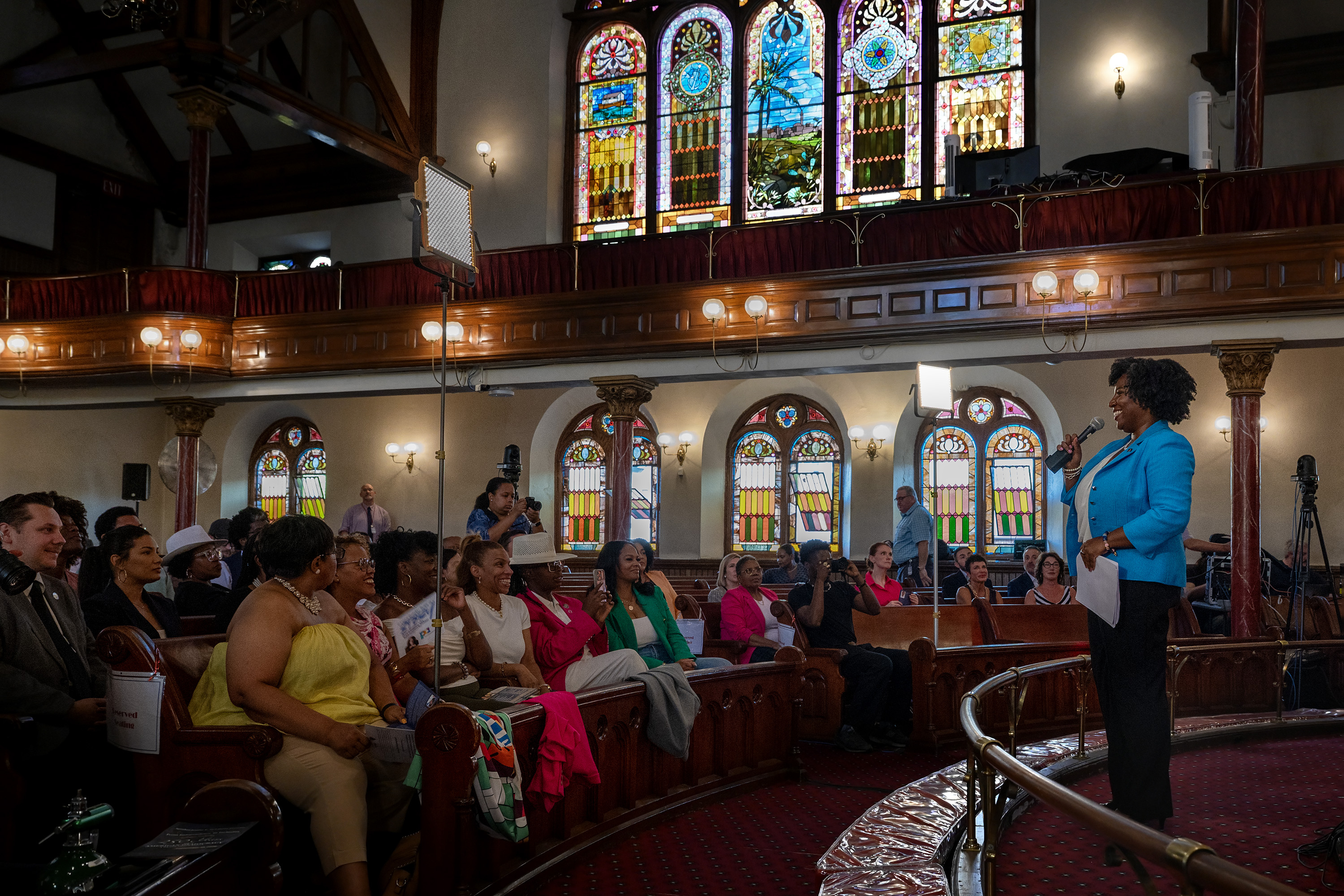
    Addressing the crowd packed into Mother Bethel African Methodist Episcopal Church in Philadelphia on Thursday, Pennsylvania House Speaker Joanna McClinton and three other Black House speakers from around the country outlined the steps they’re taking in their state legislatures to safeguard the future of American democracy under President Donald Trump’s administration.

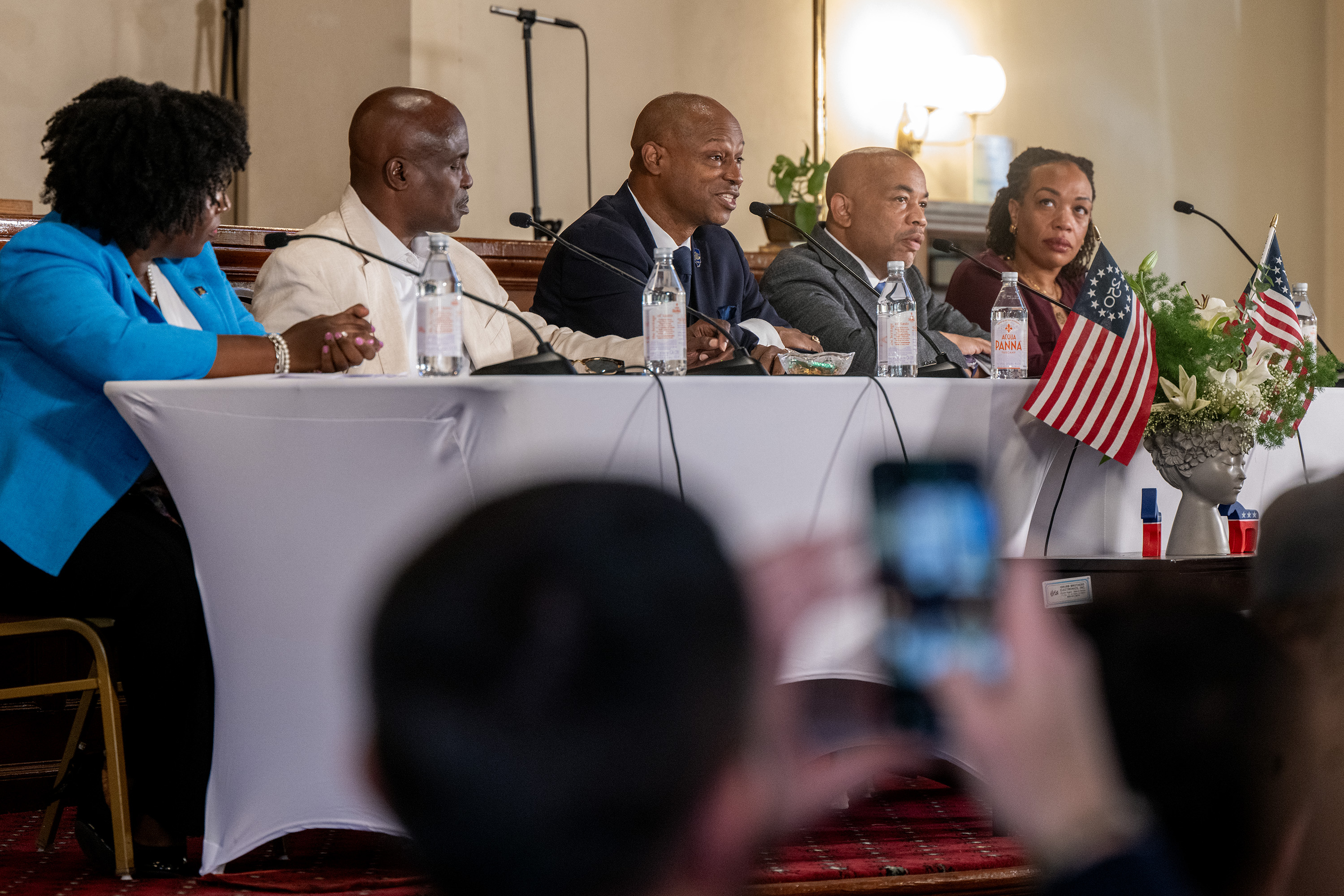
    McClinton hosted the three House speakers — Delaware House Speaker Melissa Minor-Brown, New York House Speaker Carl Heastie, and Illinois House Speaker Emanuel “Chris” Welch — for the discussion on America’s progress toward its founding ideals 250 years ago. Each of the speakers, including McClinton, are the first Black person or Black woman to lead their chambers.

    The event was moderated by WURD radio host Solomon Jones. Attendees from around the city, including at least two high school classes, packed Mother Bethel A.M.E. Church in Society Hill, which is on the oldest property continuously owned by African American people in the United States since 1791.

    House Speaker Joanna McClinton (left) hosts an America 250 Conversation at Mother Bethel A.M.E. Church on Thursday. Others reflecting on America’s history and path to inclusion for Black Americans are, from left, moderator Solomon Jones, Illinois House Speaker Emanuel “Chris” Welch, New York House Speaker Carl Heastie, and Delaware House Speaker Melissa Minor-Brown.Tom Gralish / Staff Photographer

    The three blue-state leaders from Illinois, New York, and Delaware have enshrined voting protections into state law under the John Lewis Voting Rights Act, following a U.S. Supreme Court ruling earlier this year that dismantled some federal protections.

    “When we talk about voting, it’s very personal,” said Welch. “When I first got elected to the state House in 2012, I won my election by 36 votes … Eight years after winning the election by 36 votes, I became the state’s first Black speaker. You can’t tell me every vote doesn’t count.”

    Similar legislation has yet to become law in Pennsylvania, where the General Assembly is split, with Democrats controlling the House and Republicans controlling the Senate.

    McClinton, the first woman and first Black woman to lead the Pennsylvania state House, said she was jealous of her blue-state neighbors, as Pennsylvania Democrats are vying for control of the state Senate in November. The state House passed a bill to expand voting access to include same-day voter registration in a bill titled the Leroy Irvis Voting Rights Protection Act to memorialize the late Pennsylvania House speaker, who in 1977 became the first Black person to lead any state legislature since Reconstruction. That bill has yet to be called up for a vote by the GOP-controlled Senate.

    “I know I’m not supposed to be envious of my neighbors,” McClinton joked from the table set up in front of the church pulpit.

    House Speaker Joanna McClinton hosts an America 250 Conversation at Mother Bethel A.M.E. Church on Thursda. She hosted three other state House speakers from around the country at the event, reflecting on America’s history and path to inclusion for Black Americans.Tom Gralish / Staff Photographer

    Each of the leaders acknowledged the ways Black Americans were purposely excluded from many of America’s liberties by the nation’s founders, progress in broadening civil rights since then — and how their state governments are trying to safeguard those protections under Trump’s administration. They each expressed concern about voting access, immigration, healthcare, and their state-level efforts to protect them through legislation.

    “State legislatures have power,” McClinton said, noting Pennsylvania’s increased investments in public education and a focus on Black maternal health. “We are not in charge of ICE, we are not in charge of the president, but we do have power, and we do good work.”

    In New York, Heastie said state lawmakers included protections in this year’s state budget to discourage U.S. Immigration and Customs Enforcement from appearing near polling places as Trump ramps up his efforts against noncitizen voting that advocates fear will discourage American citizens from going to the polls.

    Each of the legislative leaders encouraged the young people in attendance to get involved in their local government, expressing hope for the future.

    “I look at pictures of my late aunt and uncle back in the ’60s and ’70s and I see them at protests,” Minor-Brown said. “When I see those pictures, I look at our young people today and know that’s the direction that we’re going in. That’s where we’re at right now, and that’s what brings me hope that we’re going to get to a better place. I know we will, because our young people are so energized and ready to move and ready to close these gaps.”

    McClinton also noted the ways the Trump administration has tried to rewrite history just a few blocks away from Mother Bethel A.M.E. Church at the President’s House Site, where officials swapped panels detailing the brutality of slavery for ones that sanitize George Washington’s history as an enslaver.

    “We see the fact that this federal administration continuously out an eraser and says, ‘Oh that didn’t happen, that’s not how it occurred,’” McClinton said. “We, in this moment, have to recommit to the promise of this nation.”

    During Thursday’s panel, the speakers fielded questions on a number of current events, including about the 25th anniversary of the Sept. 11, 2001, terrorist attacks. McClinton recalled her experience in college at the time, and said that America is at risk of another terrorist attack due to Trump eroding the nation’s image in the rest of the world.

    “Thank God we’ve not had another attack … But we have to also recognize that our policies are impacting our perception around the world,” she said.

    Several Pennsylvania Republicans were quick to seize on her comments on the eve of the anniversary as insensitive and trying to blame America for the terrorists’ actions.

    Earlier in the week, McClinton presided over a ceremonial session of the state House in Independence Hall, the same place where the Declaration of Independence was signed 250 years ago, and the building that also served as Pennsylvania’s first statehouse.

    Joanna McClinton, speaker of the Pennsylvania House of Representatives, along with members of the Pennsylvania House of Representatives convened a special session at Congress Hall on Wednesday in Philadelphia. The gathering commemorates the 250th anniversary of America and Pennsylvania’s Constitution.Monica Herndon / Staff Photographer

    She stood at the rostrum, leading the same room where in 1787 the nation’s founders decided that enslaved Black people would only be counted as three-fifths of the number of white residents when tallying America’s population to calculate congressional representation.

    “We are in a day where ‘We, the people’ should mean what it says, finally,” McClinton said Thursday. “But starting with the inception of this country, it did not mean all of us. ‘We, the people’ meant white men who owned a certain amount of property.”

  • For more than 20 years, Josh Shapiro has worn the same pin to remember the lives lost on 9/11

    For more than 20 years, Josh Shapiro has worn the same pin to remember the lives lost on 9/11

    HARRISBURG — For more than two decades, Gov. Josh Shapiro has worn it almost every day.

    The small, thin accessory affixed to his lapel — a compressed version of the 50 stars and 13 stripes — may require one to squint to see. But it carries significant meaning to the Democratic governor, with an origin story that began on Sept. 11, 2001, when Shapiro was a young staffer on Capitol Hill.

    Shapiro was working in Washington when he experienced the pain and confusion of the deadliest terrorist attack in the nation’s history, he said in a June interview.

    He was just steps away from the U.S. Capitol building in then-U.S. Rep. Joe Hoeffel’s office, where he served as chief of staff, when he watched as the Today show anchors announced a plane had hit the World Trade Center. And then another.

    He realized, like thousands of Americans, that the nation was under attack — with Washington as a potential target. Less than an hour later, Shapiro said, he saw the smoke coming from the Pentagon. Staff were given mixed signals on whether to evacuate before ultimately being told to hunker down in legislative buildings until the situation was clear, he said.

    When Shapiro arrived on Capitol Hill the next day, a woman who worked in the Capitol gift shop was giving out American flag pins to anyone who passed by — the “typical gift shop” pin depicting a waving flag that President George W. Bush and other politicians began to wear in the aftermath of the 9/11 attacks, he said.

    The pin became a part of Shapiro’s daily business uniform. He wore it every day, even after he left D.C. and began working at a law firm in Montgomery County while preparing to run for state representative — his first foray into elected office and the start of a decades-long career.

    When Shapiro was knocking on doors for his 2004 run for the state House, a veteran in Glenside told him his gift shop pin wasn’t cutting it. The veteran gave Shapiro a nicer one: an image of the American flag in a thin, metal bar.

    “And I’ve worn it basically every day since,” Shapiro said in June ahead of his appearance at a special session of the U.S. House at Independence Hall to commemorate America’s founding 250 years ago. Widely rumored to be a future presidential contender, Shapiro often talks about his pride in America and its ideals, and his fears that the country is becoming too divided and straying from the founders’ aspirations.

    “I am a proud, patriotic American,” he said, referencing his pin. “I don’t think patriotism belongs to one party. I don’t think it should ever be partisan.”

    Over the years, Shapiro has made slight changes to the flag accessory; he shaved down the pin stem and made it into a magnet.

    “It was destroying my suits,” he added.

    He said he once lost the pin when it fell off a jacket that he had hung up on a plane.

    “I freaked out. I literally freaked out,” he said.

    He said he and the flight attendant were on their hands and knees trying to find it in the plane’s closet. They found the pin, but never found the backing, which was replaced much more easily.

    “I found the most important thing, and I just got another magnet,” he said.

    Shapiro will appear at the Flight 93 Memorial near Shanksville, Pa., alongside members of President Donald Trump’s administration, including U.S. Interior Secretary Doug Burgum, for a service on Friday to commemorate the 25th anniversary of the attacks, in which more than 2,900 people were killed.

    United Airlines Flight 93, a San Francisco-bound passenger plane flying out of Newark, was hijacked on Sept. 11, 2001. It was believed to be headed to the White House or U.S. Capitol, near where Shapiro was working at the time — before its 40 passengers attempted to retake control and crashed the aircraft in a field near Shanksville.

  • Republican Ryan Mackenzie had the narrowest win in Pa. two years ago. He’s betting Trump will help him again.

    Republican Ryan Mackenzie had the narrowest win in Pa. two years ago. He’s betting Trump will help him again.

    DALLAS, Texas — As Republicans look to keep their narrow control of Congress by defending the seats they flipped in 2024, there aren’t many places where they can afford to lose fewer votes than in U.S. Rep. Ryan Mackenzie’s district covering the Lehigh Valley and Poconos.

    Mackenzie’s takedown of a three-term Democrat by a mere 4,000 votes two years ago was the narrowest congressional race in Pennsylvania — his 1% margin of victory was the seventh smallest out of 435 House districts across the country.

    Standing Thursday on the Republican Party’s biggest stage of the year — and likely staring down another razor-thin result this fall — Mackenzie didn’t hold back when laying out the potential stakes.

    “I’m running in one of the top races again, and it will determine the future direction for our nation,” Mackenzie said on the second day of the first-ever Republican midterm convention. “Now we must get to work, we must go out and win in November, and we must save America.”

    Like one of Pennsylvania’s other vulnerable Republican incumbents who spoke a day earlier, Mackenzie embraced the convention known as “Trump-a-palooza” even as the president’s low poll numbers threaten to hurt their party in the elections.

    In an interview after a brief speech that focused on the president’s signature tax cuts, Mackenzie said Democrats’ threats to repeal those cuts and other Trump policies meant the president is, in a sense, on the ballot — so it makes sense to campaign in that way.

    “We know the history of American politics is the party who has the White House, their voters end up being less energized in midterm elections, and so I think it was a smart idea to try something like this, a midterm convention, to energize our voters,” Mackenzie said.

    Generating enthusiasm for the Republican ticket could be a tough task for Mackenzie and other incumbents, with polling in Pennsylvania showing widespread frustration with Trump’s handling of key issues, including the cost of living.

    “Everybody is getting gouged,” said Ron Jones, 79, an Allentown Democratic voter and Navy veteran who said he feels stretched relying on his Social Security and pension checks. “You just can’t afford to live. Period.”

    Jones said he hasn’t been following the congressional race closely, but said he plans to help “get rid of all incumbents.”

    President Donald Trump onstage during the Republican Party’s unusual midterm convention in Dallas on Wednesday, Sept. 9, 2026. (Haiyun Jiang/The New York Times)HAIYUN JIANG

    Going after Brooks on a national stage

    Mackenzie told The Inquirer his phone started blowing up with text messages immediately after his speech. The lawmaker said he welcomed the opportunity to have a national audience to talk about his work, and his opponent.

    Mackenzie didn’t just applaud Trump’s policies during his speech, he also imitated the president’s ferocious style of politics by blasting his Democratic challenger Bob Brooks as a scandal-ridden, “far-left nutjob.”

    Brooks, he contended, was “handpicked by the Democratic establishment,” and has spoken critically about nonunion firefighters. He also accused Brooks of stealing money from his own family, a claim based on a lawsuit brought by Brooks’ former mother-in-law and involving a decades-old debt she says that he owes.

    “That’s what crazy looks like,” Mackenzie said.

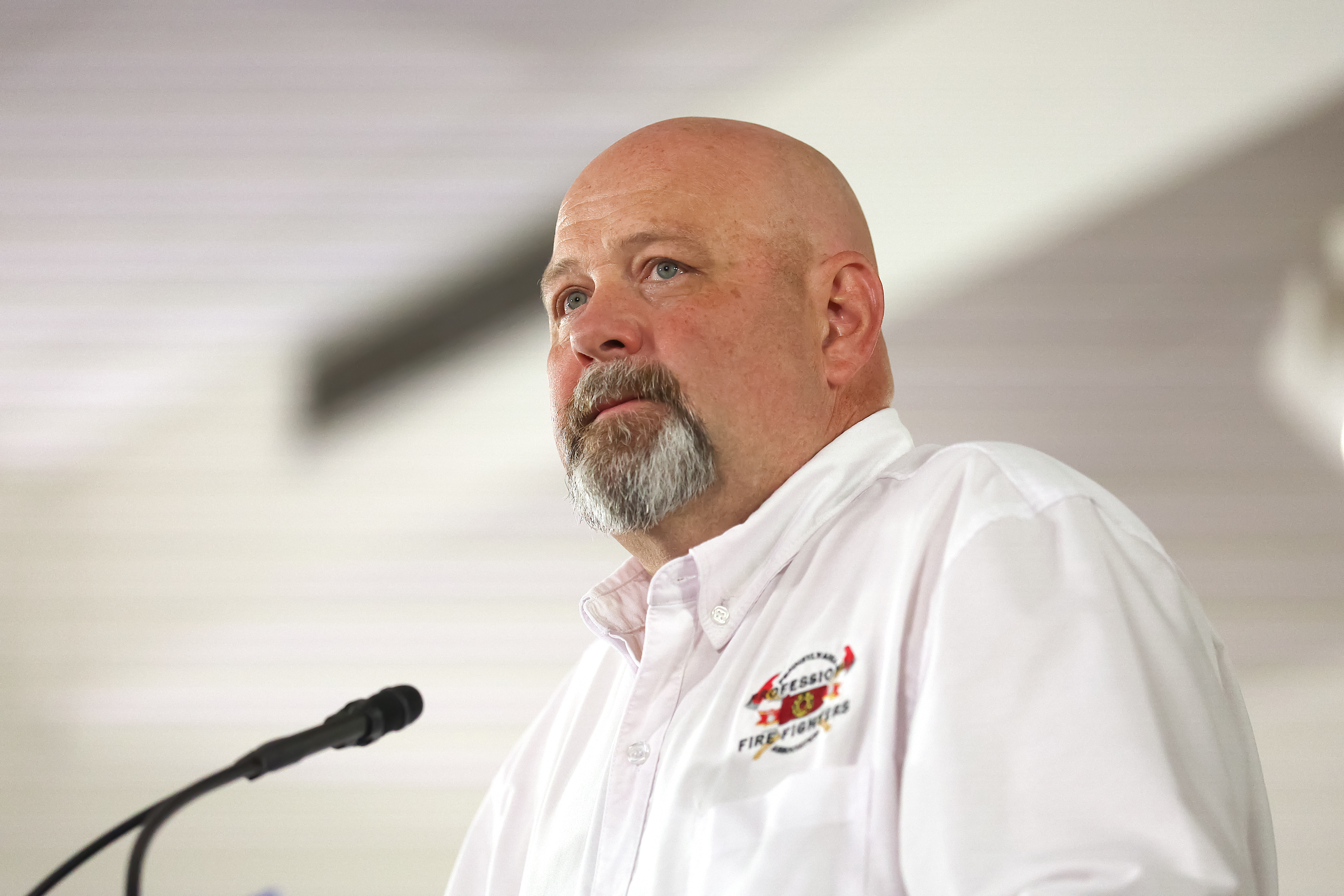
    Brooks, a retired firefighter in Bethlehem and the Pennsylvania Professional Fire Fighters Association president, was recruited last year by prominent Democrats, including Gov. Josh Shapiro and U.S. Rep. Chris Deluzio. He quickly got a groundswell of support from moderates and progressives alike, including U.S. Sen. Bernie Sanders and former Transportation Secretary Pete Buttigieg.

    Those high-profile supporters, and Brooks himself, leaned into his working-class image — highlighting his history of working multiple jobs and his insistence, even as he ran for Congress, on continuing to drive a snowplow and coach high school baseball.

    Mackenzie and national Republicans who’ve invested resources into his campaign have repeatedly targeted Brooks for the lawsuit involving his family and for old social media comments.

    In one post, Brooks lambasted volunteer firefighters working in areas where other union firefighters operate as “scabs” and other pejoratives.

    Brooks has dismissed those and other attacks on his old posts, saying he never thought he would be a candidate for office when he made them.

    The Democrat did not directly address those issues in a comment after Mackenzie broadcast them to a national audience.

    “Ryan Mackenzie got his wish today: a big boy speaking slot on stage at Trump’s party in Dallas,” Brooks said in a statement that blamed Mackenzie for rising costs and voting against restricting Trump’s attacks in Iran, the two areas that polls show Trump performing the worst among both Republicans and Democrats.

    “Mackenzie’s trip to Dallas is a reminder of who he is: a lap dog for Donald Trump, for his party bosses, and for anyone with power and money,” Brooks said.

    Bob Brooks, who is running for Pennsylvania’s 7th Congressional District, addresses the audience during a rally at the United Steelworkers Union Hall in Bethlehem, Pa., on Sunday, July 26, 2026.David Maialetti / Staff Photographer

    Just steps from the convention location earlier in the day, a small group of House Democrats that included U.S. Rep. Madeleine Dean (D., Montgomery) protested by, mainly, hitting Republicans on affordability.

    “If you listen to what’s being said across the street, you might feel like you’re living in some separate reality. Here’s the reality check,” Dean said as she rattled off the higher cost of groceries, electricity and gasoline since Trump took office.

    Dean targeted Mackenzie as well as U.S. Rep. Rob Bresnahan (R., Luzerne) and U.S. Sen. Dave McCormick (R., Pa.) — who each spoke at the convention on Wednesday — specifically, saying they were among the Republicans “happy to coddle a president who is unfit and unwell.”

    “Here at the heel of Donald Trump, I don’t know what they think they’re doing,” Dean said behind a podium with a sign reading, “Fighting for an affordable America.”

    Both Bresnahan, who is running in a competitive race against Democratic Scranton Mayor Paige Cognetti, and Mackenzie focused on an economic message during their speeches.

    They did not directly address concerns about inflation, or the Iran war’s effects on the rising cost of gas.

    U.S. Rep. Jason Smith, a Missouri Republican who joined Mackenzie onstage, contended the GOP majority had focused its agenda on the working class. He pointed to the tax exemptions for tips and overtime pay.

    “If you don’t believe me, just ask yourself, how many billionaires do you know that are tipped employees?” said Smith, the House Ways and Means Commitee chair.

    But neither he nor Mackenzie addressed the cuts to Medicaid and food assistance that were included in the same legislation to help pay for the tax cuts they repeatedly touted.

    “We delivered tax relief for every American by locking in lower rates and expanding the standard deduction,” Mackenzie said.

    Staff writer Alfred Lubrano contributed reporting.

  • Oil prices leap to their highest since May and drag Wall Street lower

    Oil prices leap to their highest since May and drag Wall Street lower

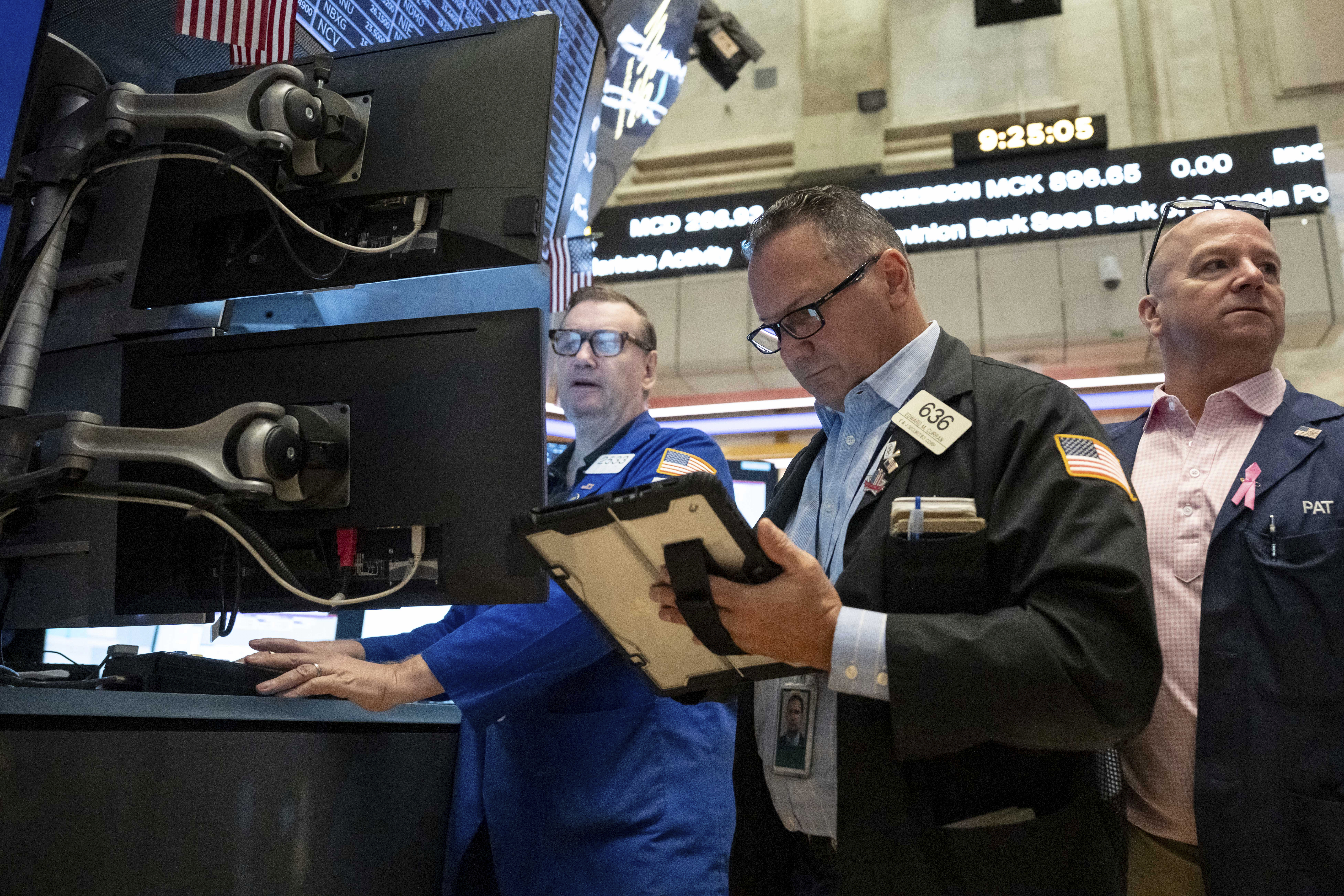
    NEW YORK — Oil prices keep climbing as the war with Iran keeps clogging the global flow of crude, and they leaped Thursday to their highest levels since before the summer. That worsened worries about inflation and cranked up pressure within the bond market, helping to send stocks lower again on Wall Street.

    The S&P 500 fell 0.6% for a fourth straight loss, its longest such streak since June, though it’s not far from its all-time high set last month. The Dow Jones Industrial Average dropped 316 points, or 0.6%, and the Nasdaq composite sank 0.7%.

    Stocks sank under the weight of rising oil prices. Brent crude, the international standard, climbed another 6.3% and briefly topped $108 per barrel for the first time since May before settling at $107.63.

    It’s jumped from less than $72 in early July as hopes fade that the war with Iran will allow oil to flow freely again from the Middle East anytime soon. President Donald Trump said on Wednesday that oil prices likely won’t come down until after the U.S. midterm elections in November.

    The jump has vaulted the price for a gallon of regular gasoline to an average of nearly $4.28 across the United States, according to AAA. That’s up nearly 34% from a year earlier and is not only costing people more at the pump but also through higher prices for all kinds of products that move by truck to store shelves.

    A report on Thursday said inflation at the U.S. wholesale level accelerated to 5.4% last month from 4.8% in July, and retailers could eventually pass such increases in prices onto shoppers. A report is coming on Friday that will show how much inflation U.S. consumers are feeling.

    The typical move to rein in high inflation is for the Federal Reserve to raise its main interest rate, the federal funds rate. Such a move then filters out through the rest of the bond market, makes it more expensive for U.S. households and businesses to borrow money, slows the overall economy, and undercuts prices for investments. That hopefully would remove some of inflation’s fuel.

    A report on Thursday suggested the U.S. job market may remain solid, with fewer workers applying for unemployment benefits last week. That could give the Fed more confidence that the economy could withstand higher interest rates.

    Following Thursday’s reports, traders see a roughly 73% chance the Fed will raise the federal funds rate at its meeting next week. That’s up from the 61% probability seen the day before, according to data from CME Group. That’s also despite Trump’s consistent lobbying for interest rates to go lower rather than higher.

    The Fed’s counterpart in Europe, the European Central Bank, raised its own interest rates on Thursday in hopes of getting inflation in check. It cited “the conflict in the Middle East” and how it “continues to generate inflation pressures.”

    It all pushed the yield on the 10-year Treasury up to 4.95% from 4.83% late Wednesday, which is a significant move for the bond market.

    It’s up from just 3.97% before the war with Iran began and is back to where it was in the autumn of 2023. That was after the Fed cranked the federal funds rate higher to get super-high inflation coming out of the COVID pandemic under better control.

    Higher yields mean investors can make more money putting their money into bonds, which can in turn make investors less willing to pay high prices for stocks and other investments that are riskier than bonds.

    Some investors see a 5% yield on the 10-year Treasury as the next potential flashpoint. But strategists at Bank of America’s Research Investment Committee suggest 7% may be the more important threshold, pointing to peaks for expensive stocks around that point in the past.

    In the meantime, the rising 10-year Treasury yield is making mortgages more expensive and hurting the housing industry. One report on Thursday said the average long-term U.S. mortgage rate hit its highest level in over 14 months, while a second one said sales of previously occupied U.S. homes fell in August to their slowest pace in more than a year.

    The benchmark 30-year fixed rate mortgage rose to 6.76% from 6.71% last week, mortgage buyer Freddie Mac said Thursday. One year ago, the average rate was 6.35%.

    That helped sent stocks of homebuilders lower, including drops of 3.5% for Lennar and 2.4% for D.R. Horton.

    Elsewhere on Wall Street, Macy’s fell 4.7% even though the retailer reported stronger profit and revenue for the latest quarter than analysts expected. While raising its forecast for earnings this fiscal year, it warned that “there are macroeconomic and geopolitical factors that could influence” how much its customers feel comfortable spending.

    Macy’s said it received $116 million in tariff refunds from the government — $98 million during the quarter and another $18 million after the quarter ended. Macy’s CEO Tony Spring told the Associated Press Thursday that it’s using some of the proceeds to lower prices on certain items like furniture and other big-ticket purchases.

    All told, the S&P 500 fell 44.66 points to 7,591.70. The Dow Jones Industrial Average dropped 316.56 to 52,064.10, and the Nasdaq composite sank 171.62 to 26,081.72.

    In stock markets abroad, indexes slipped across much of Europe and Asia. Hong Kong’s Hang Seng dropped 1.3% for one of the world’s biggest moves.