Tag: Donald Trump

  • Bob Harvie is the best choice for Pennsylvania’s 1st Congressional District | Endorsement

    Bob Harvie is the best choice for Pennsylvania’s 1st Congressional District | Endorsement

    U.S. Rep. Brian Fitzpatrick (R., Pa.) has been a member of Congress for nearly a decade, and it is difficult to determine what exactly he has accomplished.

    Fitzpatrick, 52, claims to be a problem solver, but he is really part of the problem. Fitzpatrick entered Congress with the MAGA wave that first swept into Washington with Donald Trump in November 2016.

    He is a member of a Republican House majority that has been one of the least effective and most dysfunctional in modern times. The GOP controls the House, Senate, and the White House — and still can’t do much to help the American people.

    Because Fitzpatrick represents a swing district that covers Bucks County and portions of Montgomery County, he doesn’t always vote lockstep with his Republican colleagues. But when Fitzpatrick’s vote is needed, he backs Trump’s incoherent agenda, which has made life more expensive for everyone.

    That agenda speaks for itself: costly tariffs, cruel deportations, unprovoked war, tax breaks for the superrich, massive debt, healthcare cuts, brazen corruption, abuses of power, self-enrichment schemes, and constant chaos.

    For Fitzpatrick’s constituents, Republican control in Washington has resulted in higher interest rates, sluggish job growth, and increased prices on everything from gasoline to food, cars, housing, and utility bills. Not to mention a host of constitutional, ethical, and legal abuses with no oversight or pushback.
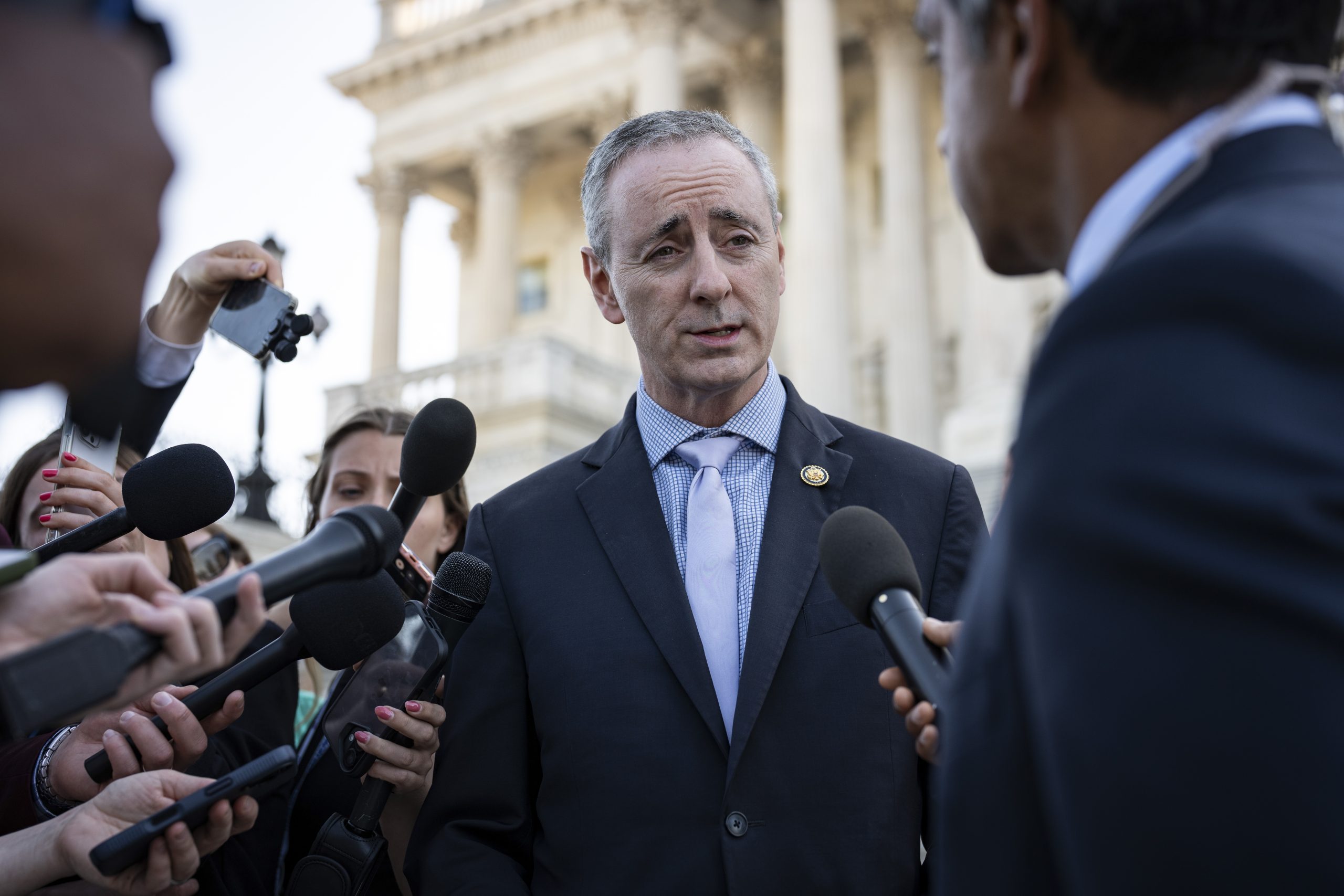
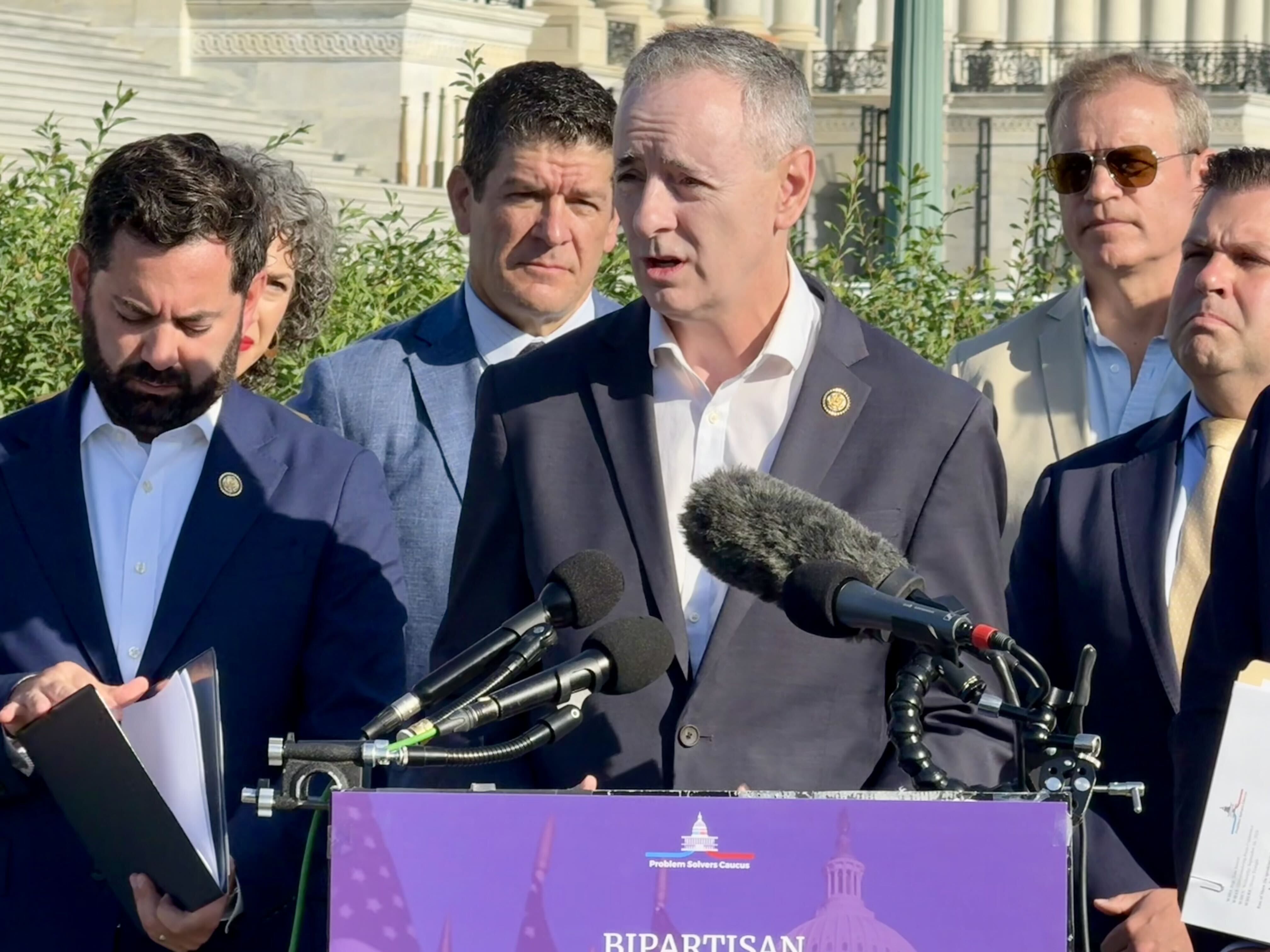
    U.S. Rep. Brian Fitzpatrick (R., Pa.) doesn’t always vote with his Republican colleagues. But when his vote is needed, he backs Donald Trump’s incoherent agenda, the Editorial Board writes.Haiyun Jiang

    He did vote against Trump’s signature legislative accomplishment: the so-called Big Beautiful Bill, which added trillions to the ballooning deficit, extended tax cuts for the wealthy, slashed Medicaid and other support for the most vulnerable citizens, and added billions to support Trump’s deportation roundups.

    But Fitzpatrick’s no vote came only after final passage of the measure was assured. Weeks before the measure’s final passage, he was the deciding vote to advance the bill that ultimately became law.

    He often performs this type of calculated two-step to appear not so extreme to his more moderate constituents. But the results spell pure MAGA.

    Fitzpatrick, who recently married a Fox News correspondent, pulled a similar switcheroo on Trump’s costly war in Iran. Initially, he voted against limiting Trump’s power to wage war in Iran before voting to block further military action. He even issued a muddled statement about the war that said nothing.

    So he was for the war before he was against it. The result of Trump’s strategic blunder that GOP congressional members enabled has been higher gas prices, billions wasted on bombs, and needless death and destruction with no way out.

    Fitzpatrick has harmed his constituents in other ways. He repeatedly supported Trump’s tariffs, which have upended trade relations with allies, roiled financial markets, and increased prices for small businesses and consumers.

    He is increasingly out of step with his own constituents. He supports data center development, which most voters oppose. He also opposes codifying abortion rights, which a majority of the public supports.

    Fitzpatrick has also been largely missing in action in his own district. He has not held a town-hall meeting with voters since 2017, calling them a waste of time.

    He has refused to debate his opponent, Bob Harvie, a Bucks County commissioner. Fitzpatrick declined to meet with this Editorial Board to make his case for reelection — even though The Inquirer endorsed him in the past.

    If 80% of success is just showing up, Fitzpatrick has failed his constituents.

    The problem may rest with who Fitzpatrick really represents. His campaign is largely funded by billionaires and out-of-state corporate PACs backed by Wall Street banks, Big Pharma, and Koch Industries.

    More broadly, the GOP-controlled Congress has failed to uphold its sworn oath to support the Constitution and serve as a check on the executive branch of government.

    Fitzpatrick’s true character is shining through in the onslaught of attack ads aimed at his opponent. An ally with a checkered past was recently exposed for planting negative articles about Harvie. That’s a Tammany Hall move.

    Fortunately, voters in Pennsylvania’s 1st Congressional District have a more upstanding alternative in Commissioner Harvie.

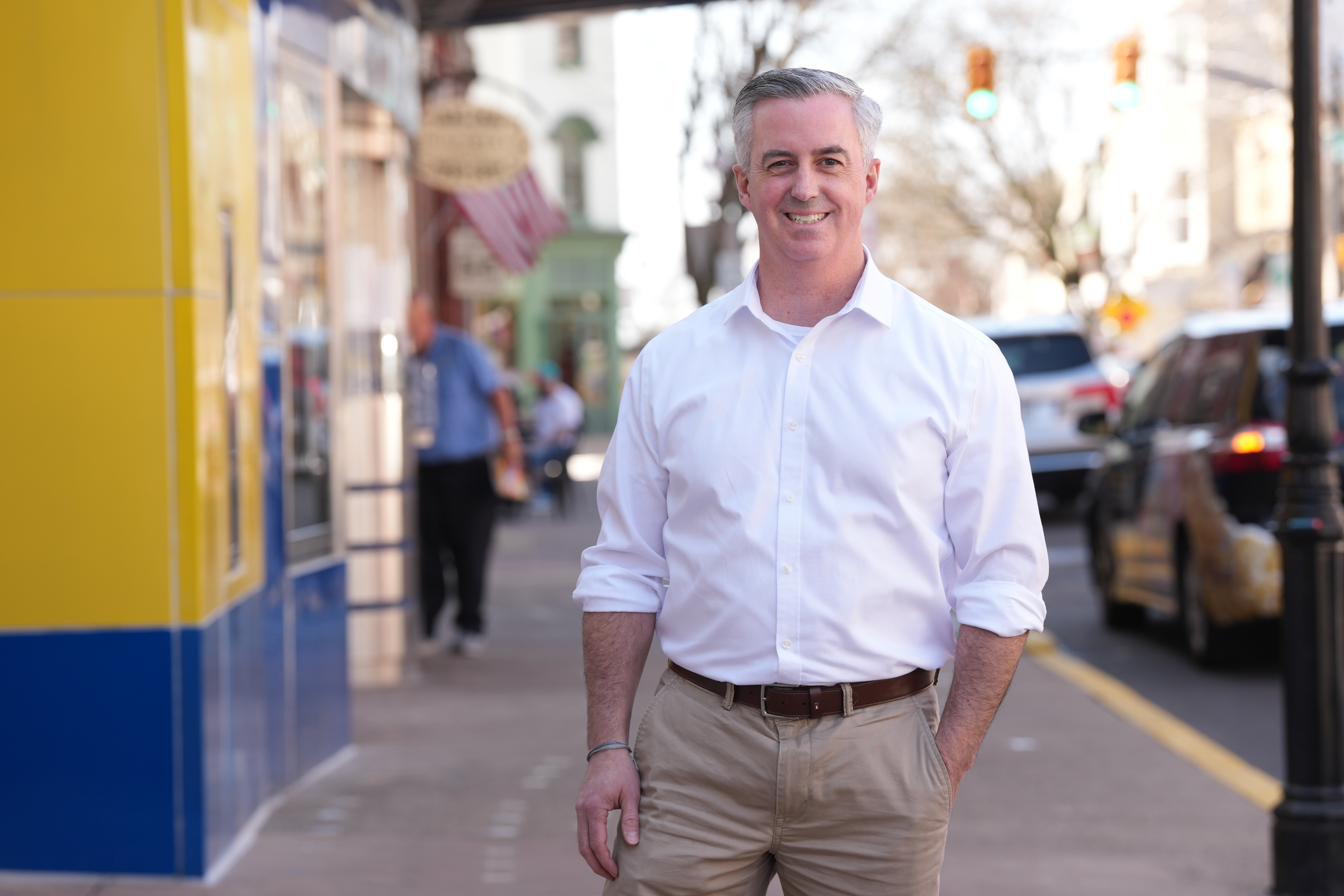
    Harvie, 54, is a Bucks County native who grew up in a blue-collar family (Bristol Borough) and was the first member in his family to go to college. He taught social studies in the public schools there for many years. He is humble, hardworking, and understands the affordability challenges facing Pennsylvanians.

    Democratic Bucks County Commissioner Bob Harvie understands the affordability challenges facing Pennsylvanians, the Editorial Board writes.Monica Herndon / Staff Photographer

    He would bring some much-needed compassion and decency to a Congress that is turning into TikTok performance artists more interested in viral posts than making government work for the people they represent. Even better, Harvie will answer to the people, not Trump.

    Unlike Fitzpatrick, who has not held an in-person town hall in nearly a decade, Harvie has held five town halls since April and has four more scheduled this month.

    Harvie was elected commissioner twice. He knows how to work with Republicans and Democrats. The three-member commission includes one Republican, yet more than 90% of the votes have been unanimous.

    The commissioners have opened mental health care facilities, launched sustainability programs, and passed a bipartisan resolution opposing the use of warehouses as U.S. Immigration and Customs Enforcement detention facilities.

    If elected, Harvie said his top priority would be to address affordability issues facing residents. He also wants to restore trust in government, starting with a ban on stock trading by members of Congress and a clampdown on corporate control of politics by passing a constitutional amendment to overturn Citizens United.

    “I was raised to love this country,” Harvie told the Editorial Board. “I cannot stand what’s happening to it.”

    Many Americans agree. That’s why The Inquirer endorses Bob Harvie for Congress in Pennsylvania’s 1st District.
  • Josh Shapiro campaigned in Bucks County for Democrats in key races: ‘You’ve got a lot of power’

    Josh Shapiro campaigned in Bucks County for Democrats in key races: ‘You’ve got a lot of power’

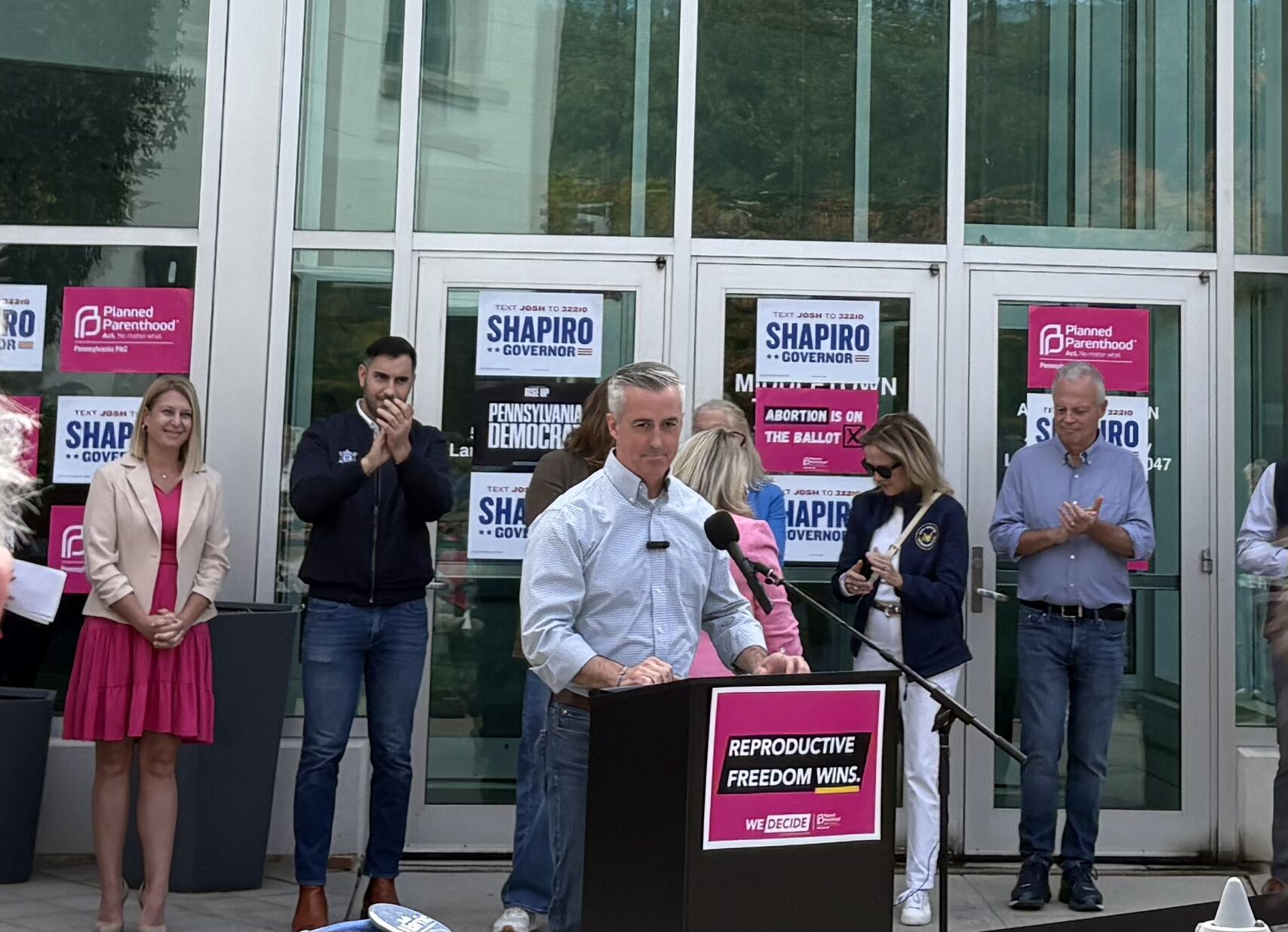
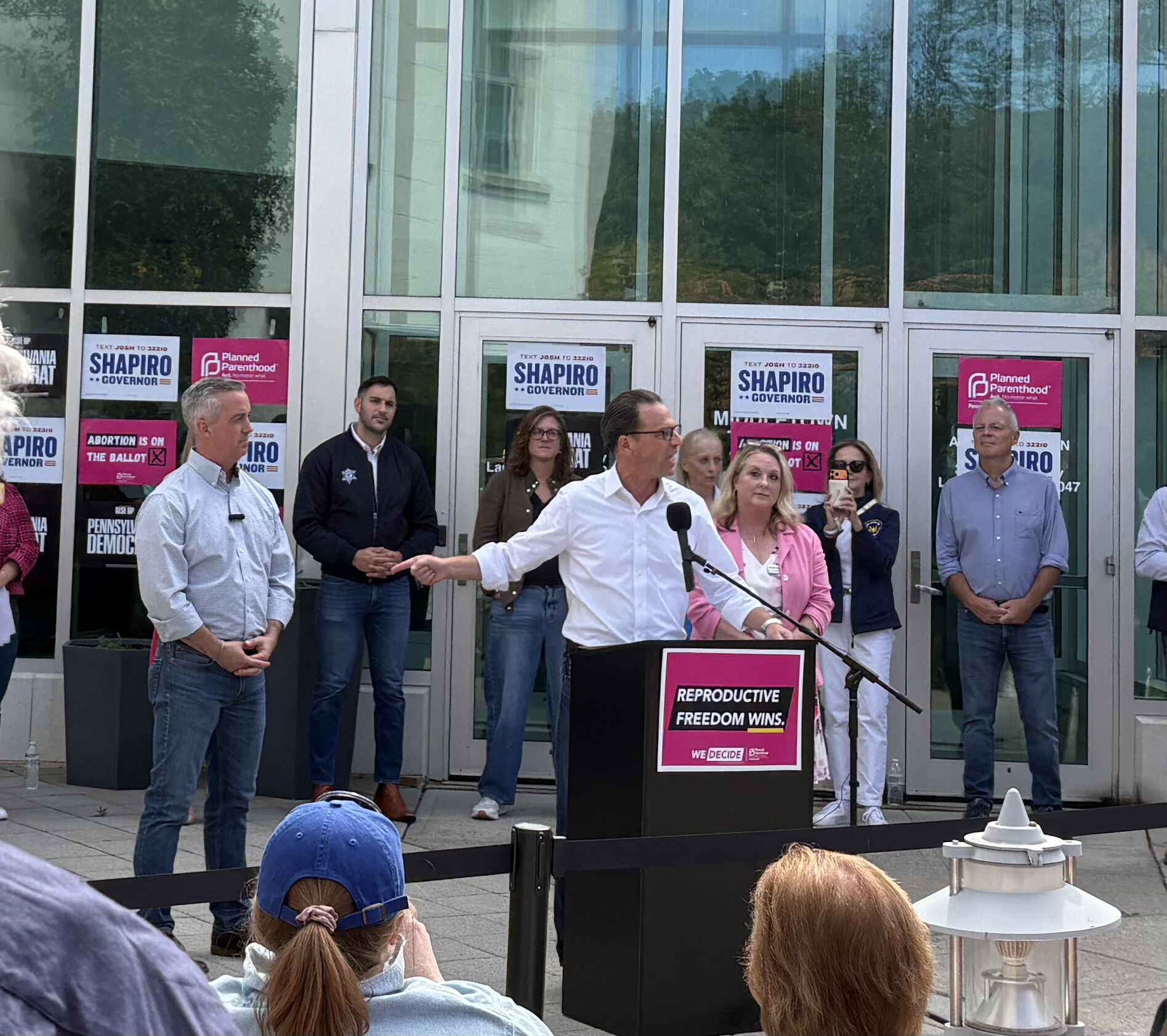
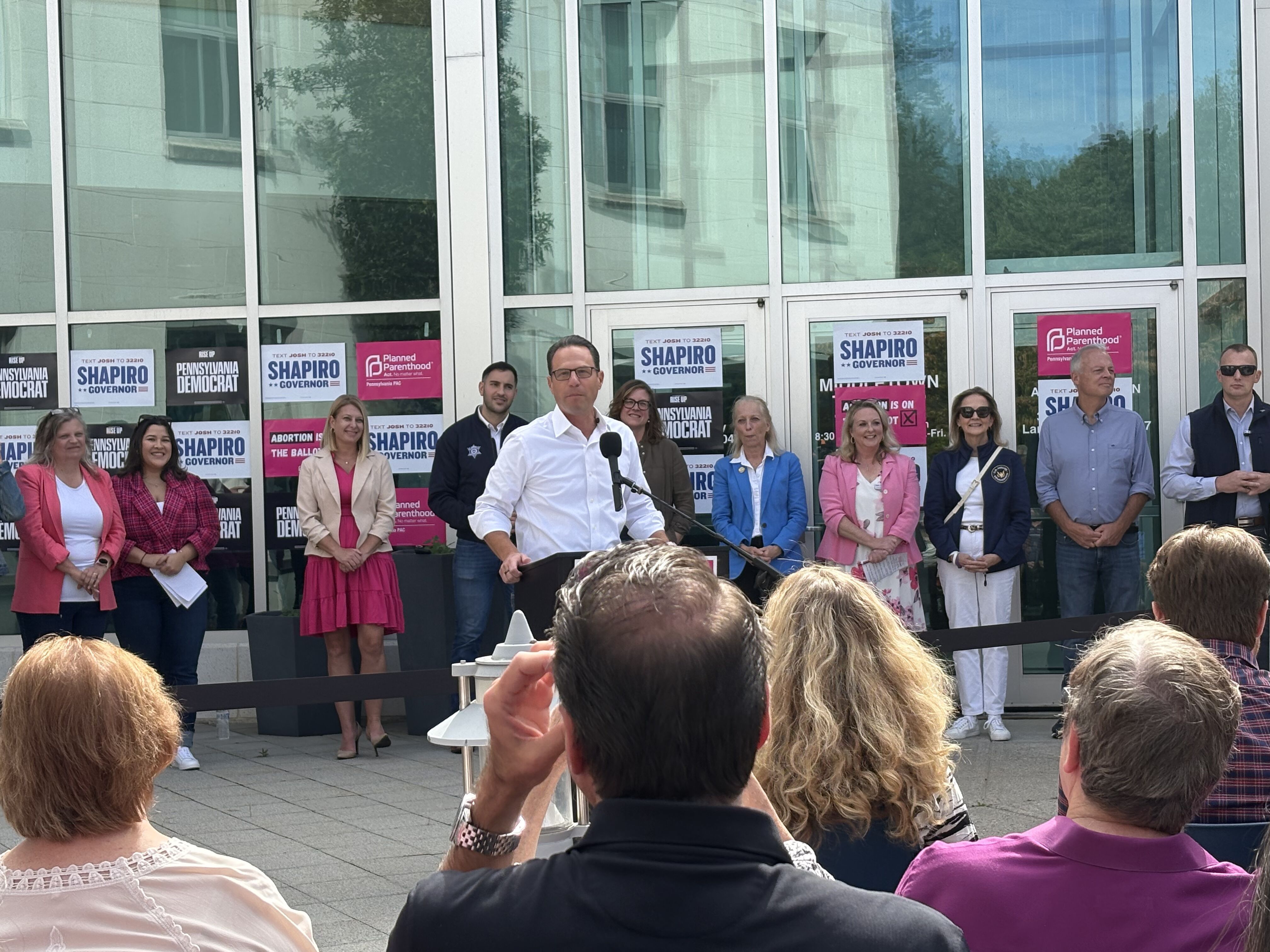
    Exactly one month to the day ahead of the highly consequential midterm elections, Gov. Josh Shapiro stood in front of the Middletown Township Municipal Center and said something pretty much everyone in Bucks County is well aware of:

    “Bucks County, you’ve got a lot of power,” he told the large crowd that gathered on the lawn and under trees with fall-tinged leaves.

    Shapiro kicked off a day of action for Democrats organized by Planned Parenthood’s state-level political action committee Saturday afternoon in Bucks County. The purple county will be the center of crucial races for state Senate and U.S. Congress, and could determine the balance of power.

    Gov. Josh Shapiro speaks to the crowd gathered at the Middletown Township Municipal Center in Bucks County on Saturday.Fallon Roth

    Shapiro, who is also running for reelection, promoted the Democrats at the forefront of those races Saturday, including 1st U.S. Congressional District candidate Bob Harvie and Eileen Hartnett Albillar, who is running in the 6th state Senate district. He framed their election as a chance to put a check on President Donald Trump in Washington, D.C., and an opportunity to flip the state Senate and obtain the first Democratic trifecta in Harrisburg in decades.

    Bryan Allen, Kristin Egan, and Monica Weninger are also running in Bucks County to expand Democrats’ majority in the state House.

    Shapiro called the 1st Congressional District race — between Harvie and U.S. Rep. Brian Fitzpatrick (R., Bucks) — “the most competitive in the entire commonwealth.”

    Three other U.S. House seats in Pennsylvania are also being targeted by both parties: the 7th, 8th, and 10th Districts. Shapiro has also described the 9th as competitive.

    Harvie, in his speech, highlighted the affordability crisis and an “economy that is broken.” He also argued that the U.S. has “lost our stature around the world.”

    Democrat Bob Harvie (center), challenging GOP U.S. Rep. Brian Fitzpatrick in the 1st Congressional District, speaks to the crowd at the Middletown Township Municipal Center in Bucks County on Saturday.Fallon Roth

    “We’re going to put this country back in the path it was meant to be on. A country we can be proud of. A country we can be proud to hand our children and grandchildren, and a country that is strong around the world, strong at home, and we’re going to do that here in this county,” Harvie said.

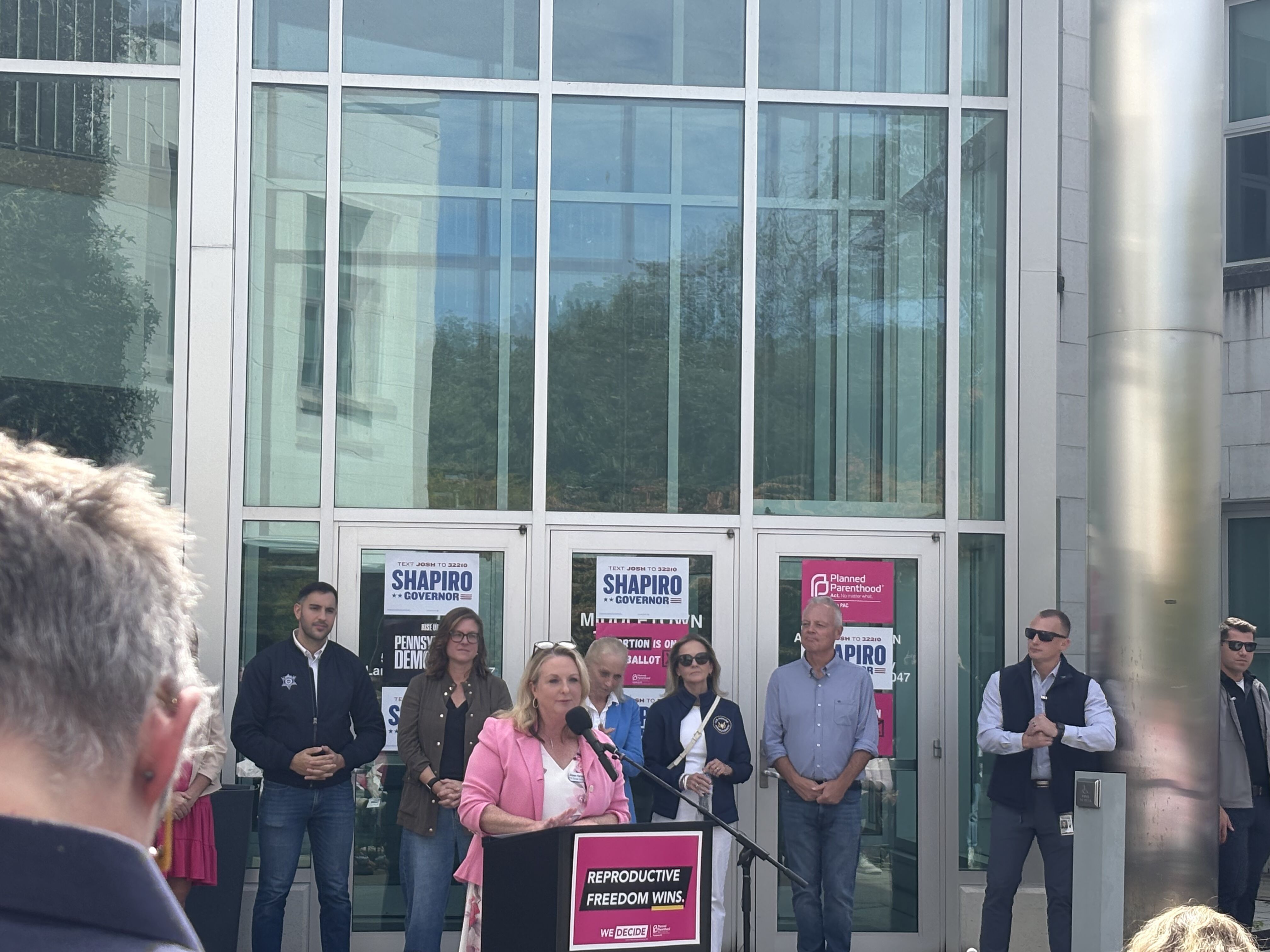
    With Planned Parenthood PA PAC organizing Saturday’s day of campaigning, the slew of Democratic officials and candidates in attendance also highlighted reproductive rights in their rallying calls.

    Hartnett Albillar said in her speech that such rights go in tandem with cost-of-living issues, like making a livable wage and accessing childcare and paid family leave.

    Democrats in Bucks County, including Harvie and Hartnett Albillar, have been branding their messaging on abortion and reproductive rights as affordability issues.

    “People are scared about the unsustainable economic path that we are on, and reproductive healthcare is part of that affordability conversation,” she said. “Reproductive healthcare is something we need to ensure we have in order for economic futures for families.”

    She pledged that with a Democratic state Senate, abortion rights would be codified.

    “The folks that live here are going to determine whether or not we are going to be able to get that trifecta,” she said.

    Democrat Eileen Hartnett Albillar (center) speaks to a crowd gathered at the Middletown Township Municipal Center on Saturday.Fallon Roth

    Shapiro’s appearance in Bucks County on Saturday afternoon came after his morning campaign stop in Philadelphia’s Ninth Ward and reflects how the popular governor has spent most of his reelection campaign trying to boost other Democrats across the state.

    For instance, in July, he launched “Rise Up Pennsylvania” — an effort that is aimed at pooling donations to fund campaign resources for key state Senate and U.S. congressional races.

    Before the door knocking and canvassing around town ensued, Shapiro framed November as an inflection point for Bucks County residents and pondered future conversations between crowd members and their kids or grandkids.

    “You’re going to be able to look at them and tell them, ‘in the swingiest town, in the swingiest state, in the entire country, you dedicated yourself to meeting your neighbors … telling them what’s at stake.’”

  • As states shoulder more costs, more SNAP recipients continue to lose benefits. Here’s the latest.

    As states shoulder more costs, more SNAP recipients continue to lose benefits. Here’s the latest.

    Beginning this month, states are required to shoulder a higher portion of the costs associated with administering the Supplemental Nutrition Assistance Program.

    It’s the latest change to the federal food aid program resulting from the “One Big Beautiful Bill Act” signed by President Donald Trump last year. A local legal expert said that it’s another challenge for a program that has already seen tens of thousands of people in Philly lose their benefits.

    Here’s the latest on what’s changed, and what people can do:

    How do the October changes affect SNAP recipients?

    Beginning Oct. 1, Pennsylvania and other states are required to take on 75% of the administrative costs of managing SNAP, said Mackenzie Libbey, a supervising attorney at Community Legal Services, which provides free legal assistance.

    State agencies are already struggling to keep up with recent changes to SNAP, Libbey said. In addition, they’re preparing for another rule change that will go into effect next year — requiring states to keep a low “error rate” or take on more of the costs of the food assistance itself.

    So on one hand, state case workers are overloaded, and on the other, SNAP recipients are struggling to navigate a lot more documentation requirements.

    “So what we’re seeing, and I think we’ll continue to see, is people getting cut off due to paperwork,” she said.

    Does this have to do with work requirements?

    As of last September, people on SNAP in Philadelphia had to start proving that they were working, or that they were exempt because of medical or other reasons, to qualify.

    That’s contributed to a steady decline in recipients, she said.

    People who are on SNAP tend to be either working low-wage jobs and raising children, or dealing with issues related to health or age. That often doesn’t put them in a good position to handle the bureaucracy of the new system.

    “It can be really difficult for people who are trying to feed their family or get back on their feet. It’s just too much, and people just give up,” Libbey said.

    Who is losing their benefits?

    With a few exceptions, noncitizens have lost their access to SNAP benefits, Libbey said. That includes refugees, asylum seekers, victims of human trafficking, and those awaiting a permanent status. Green-card holders and a few other groups remain eligible.

    However, most people who have lost benefits are citizens who have failed to meet paperwork requirements. That’s led to a massive drop in enrollment.

    How many people have lost SNAP benefits?

    Almost two million people in Pennsylvania were on SNAP last summer, when the federal changes were signed into law, Libbey said. Since then, 234,000 people — 12% — have fallen off the rolls.

    About 106,000 lost SNAP benefits because of work requirements, including 36,000 in Philadelphia.

    Children make up 29% of those who lost benefits, with 69,000 people under age 18 losing benefits since last July, she said.

    How much do SNAP recipients get?

    The amount of benefits has not changed because of federal rules, and has increased slightly because of cost of living adjustments, federal data show.

    SNAP benefits for a single person may be as high as $306. A family of four could receive as much as $1,023. A household of seven people would cap out at $1,616 per month. Most families get less than those amounts; average benefits are roughly a third less than the maximums.

    What resources are available?

    Food pantries such as Philabundance are one short-term resource for people in need.

    For noncitizens in particular, charitable organizations targeting specific groups have popped up. Recently, the Asian Pacific Islander Political Alliance has organized food drives focused on Asian food staples.

    Libbey encourages people who have lost SNAP benefits to contact Community Legal Services, which provides free legal help in Philly and has processed thousands of SNAP applications.

    “We’ve seen a sad trend where people lose their benefits, they don’t know why, and they think, that’s it, there’s nothing I can do. And typically there are ways to get help, depending on your situation,” she said.

  • Epstein abuse survivor tours Bucks County and other Pa. swing districts as Democrats highlight Trump’s ties

    Epstein abuse survivor tours Bucks County and other Pa. swing districts as Democrats highlight Trump’s ties

    Democrat Bob Harvie thumbed through hundreds of pages bound together in a book labeled “The Partially Redacted Epstein Files” and said he was disgusted with what he read — or at least what he was able to read.

    Entire blocks of text regarding the investigation into Jeffrey Epstein, the financier and convicted sex offender who died in prison in 2019, were marked black.

    But survivors of Epstein’s predatory behavior, including Sharlene Rochard, who appeared with Harvie Friday in Bristol, are heroes for illuminating what has been blocked from the public, the congressional candidate said.

    Harvie pledged to push “very, very hard” to release the full, unredacted files related to Epstein’s crimes if elected.

    The Bucks County commissioner is running against Republican U.S. Rep. Brian Fitzpatrick to represent the 1st Congressional District, one of two swing districts in the state that Rochard visited Friday to campaign for Democrats. She’ll be hitting another the following day.

    “These are files, but I’m in these files, and that is my life in these files,” Rochard told Harvie. “And I need justice. We need accountability, and we need some transparency, and we need people like you.”

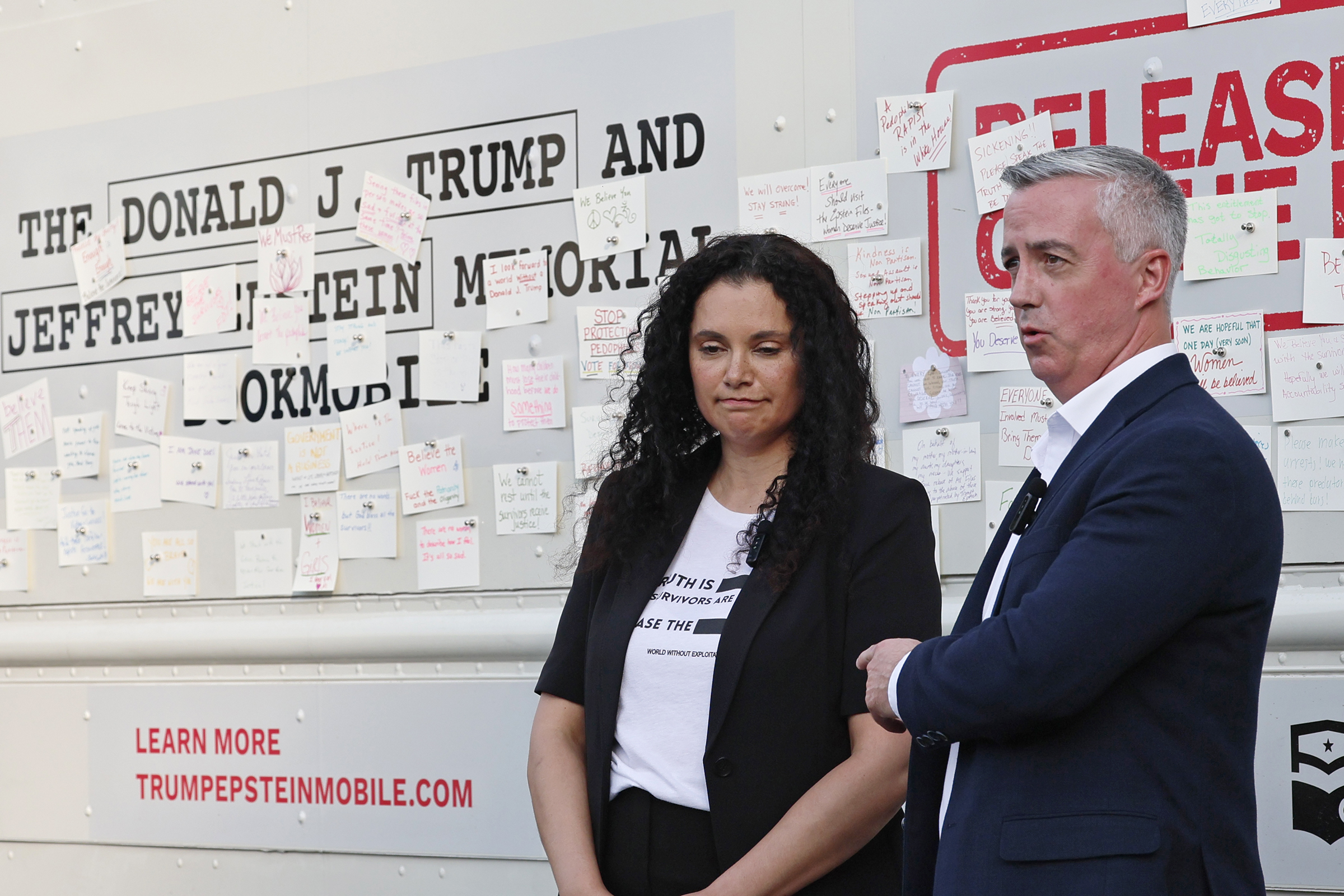
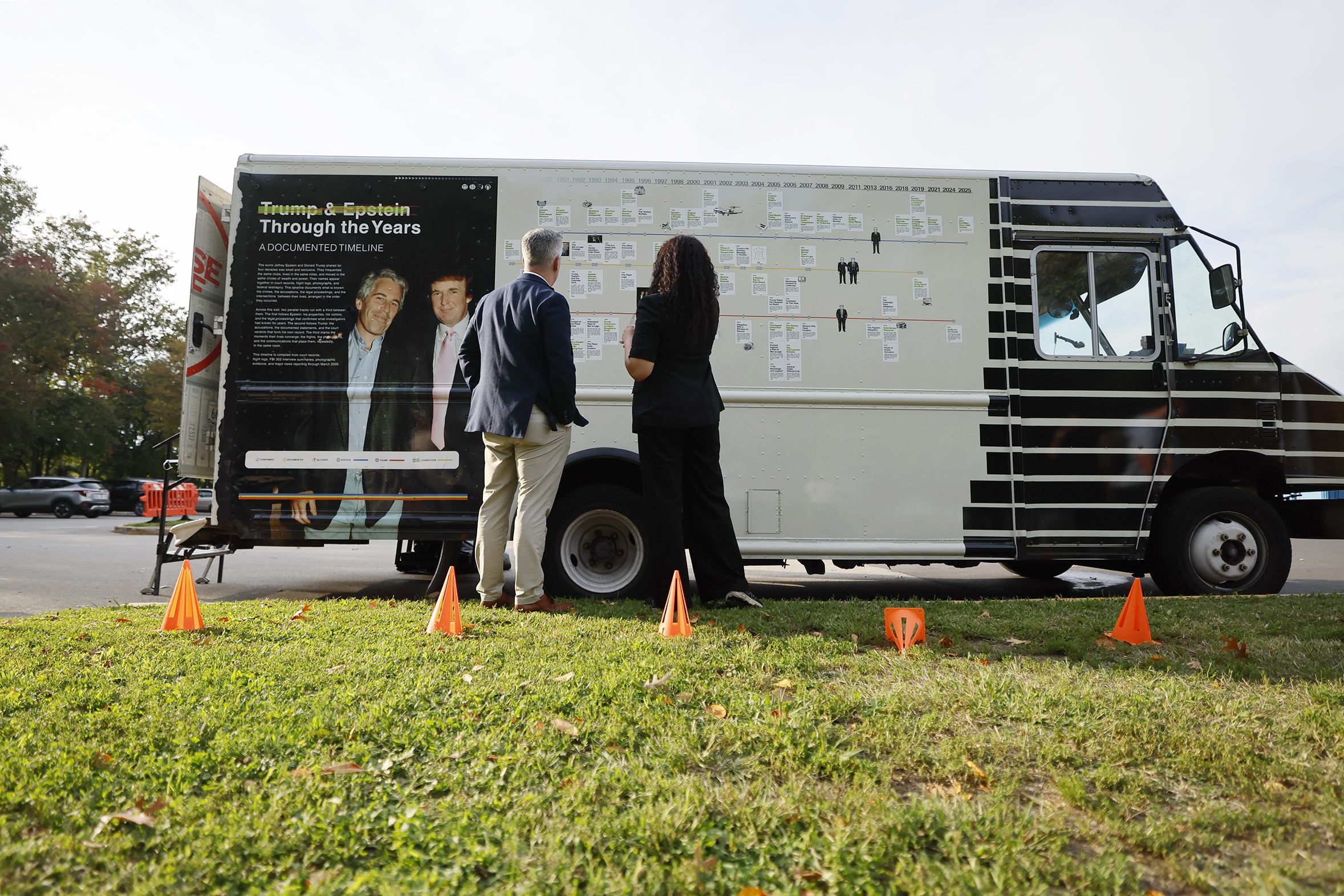
    Rows of files were contained inside a traveling bookmobile parked in front of the Bristol waterfront. Plastered on the outside of the truck was a decades-old image of President Donald Trump with his arm around Epstein.

    Reminding voters of Trump’s history with Epstein has been a campaign tactic used by Democrats in competitive contests across the country, but Harvie said the issue of justice for survivors should go beyond partisan politics.

    “I don’t care what party they’re from,” Harvie said. “I don’t care what office they hold or held. I don’t care how much money they have. I don’t care. We need to do everything we can to protect the victims and honor them and shine a light on this part of our society.”

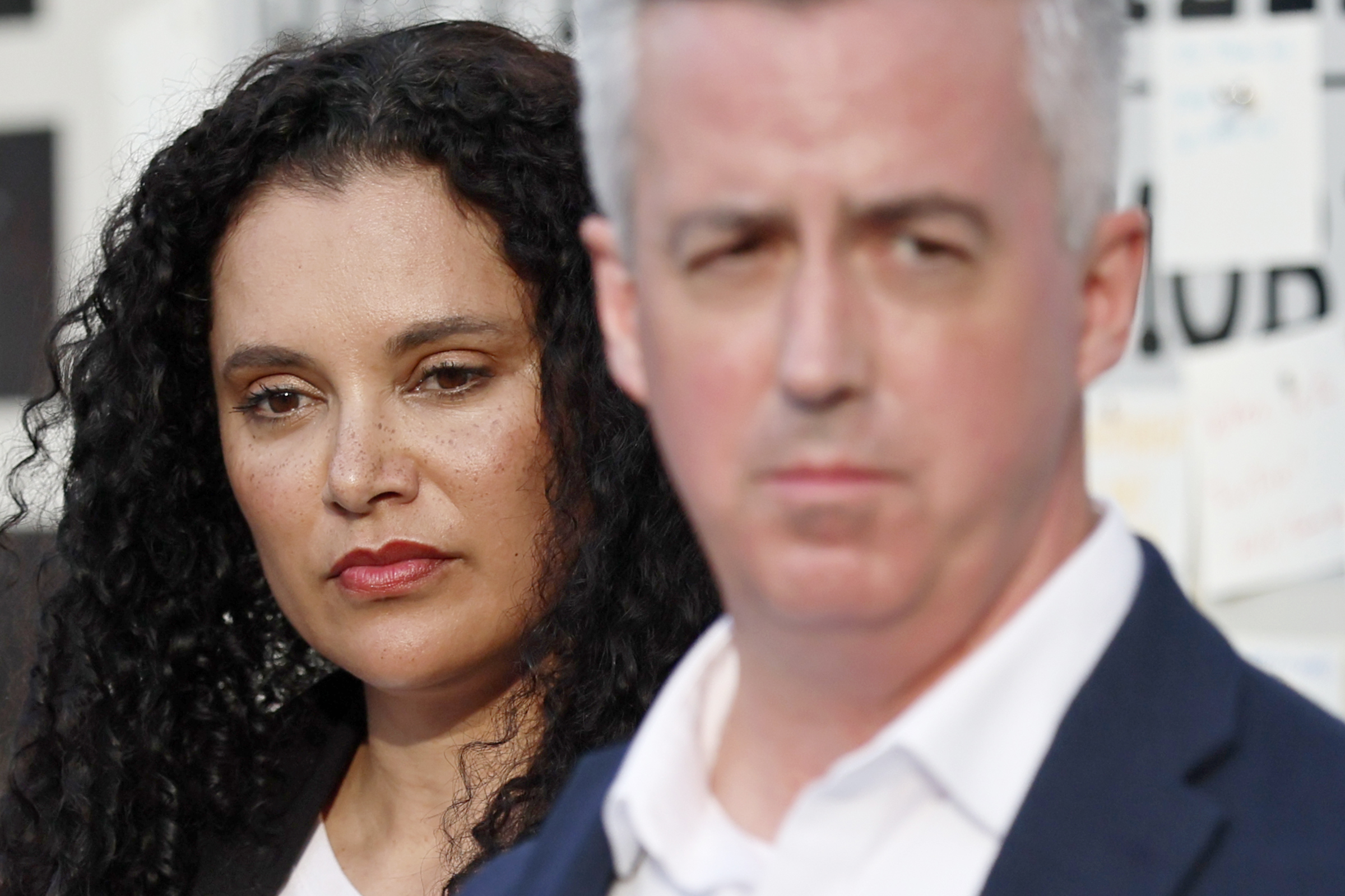
    Sharlene Rochard, a survivor of Jeffrey Epstein’s sexual trafficking and abuse, and Bob Harvie during a news conference at the Donald J. Trump and Jeffrey Epstein Memorial Bookmobile in Bristol.Elizabeth Robertson / Staff Photographer

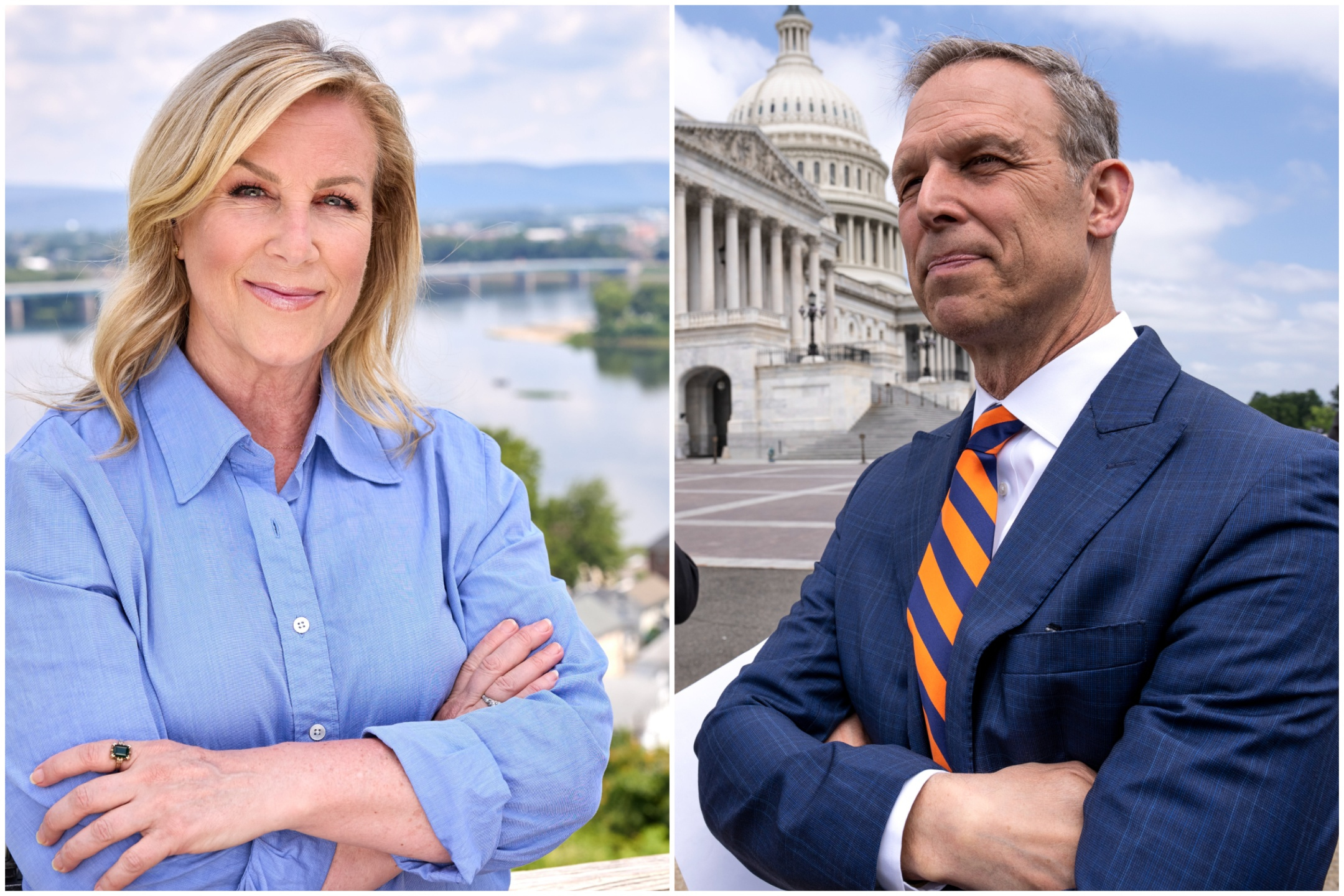
    Earlier in the day, Rochard visited Harrisburg, where she was welcomed by Democrat Janelle Stelson, a former news anchor who promised to “take on the culture of corruption across the government” if elected over incumbent Republican U.S. Rep. Scott Perry in the 10th District.
    Rochard was slated to appear Saturday in Bethlehem with Democrat Bob Brooks, who is running against U.S. Rep. Ryan Mackenzie in the 7th District, one of the most competitive contests in the nation.

    The truck arrived in Pennsylvania one month before Election Day as Trump continues to plummet in popularity among likely voters in the state. It’s an officially nonpartisan project of Institute for Primary Facts, a nonprofit that builds public art installations, and DEFIANCE.org, a group dedicated to ending sexual exploitation of children and adults.

    Rochard, who was born in Canada, began traveling to the U.S. as a teen to model when she met Epstein and was with him in New York, Florida, and on his private island in the U.S. Virgin Islands, she said. Though she’s unable to go into details about her trafficking experience because she is involved in ongoing legal action, she now works alongside fellow survivors to advocate for the files to be exposed.

    Every Pennsylvania lawmaker voted to release the Epstein files last year, including Fitzpatrick and the other vulnerable Republican incumbents whose districts Rochard was touring this week.

    In a statement last year, Fitzpatrick said he is “unequivocally behind the victims and their family members who suffered immensely” from Epstein’s crimes.

    “He 100% stands with the victims, and will support disclosure and transparency every single time,” Heather Roberts, a spokesperson for Fitzpatrick’s campaign, said Friday.

    A couple dozen people trickled through the bookmobile during its Bristol stop, though multiple people interviewed entered with familiarity about the files and were already convinced of a strong connection between Trump and Epstein.

    “I’m dumbfounded that there are people who don’t believe the victims,” said Deb Crasnick, 69, of Langhorne.

    Sharlene Rochard, a survivor of Jeffrey Epstein’s sexual trafficking and abuse, and Bob Harvie at the Donald J. Trump and Jeffrey Epstein Memorial Bookmobile in Bristol on Friday. Elizabeth Robertson / Staff Photographer

    Crasnick found out about the event from her friend Diane Grant, 71, of Bensalem, who has been following the tour on social media. But Grant, who called the revelations disturbing, worried the tour’s effectiveness may have limits.

    “People have their mindset. Nothing said or shown in there will change it,” she said.

    And most guests — all of whom said they plan to vote for Harvie, who is polling just behind Fitzpatrick — said cost-of-living concerns rather than Epstein are their top priorities to address in this year’s election.

    “The economy keeps me up at night,” said Tracey Marshall, 57, who lives in Falls Township. “We need a change.”

    Rochard said the purpose of the tour goes beyond Election Day.

    Trump has called the Epstein case “a hoax” and said that the files that have been publicly shared are “enough,” a notion the survivor is hoping to dispel with the tour.

    “This is something that has happened to me,” Rochard said. “I’m not a Democratic hoax. I am a real person, and we need some justice.”

  • Democrats add Zack Mullock’s challenge of Jeff Van Drew in South Jersey to their ‘districts in play’ list

    Democrats add Zack Mullock’s challenge of Jeff Van Drew in South Jersey to their ‘districts in play’ list

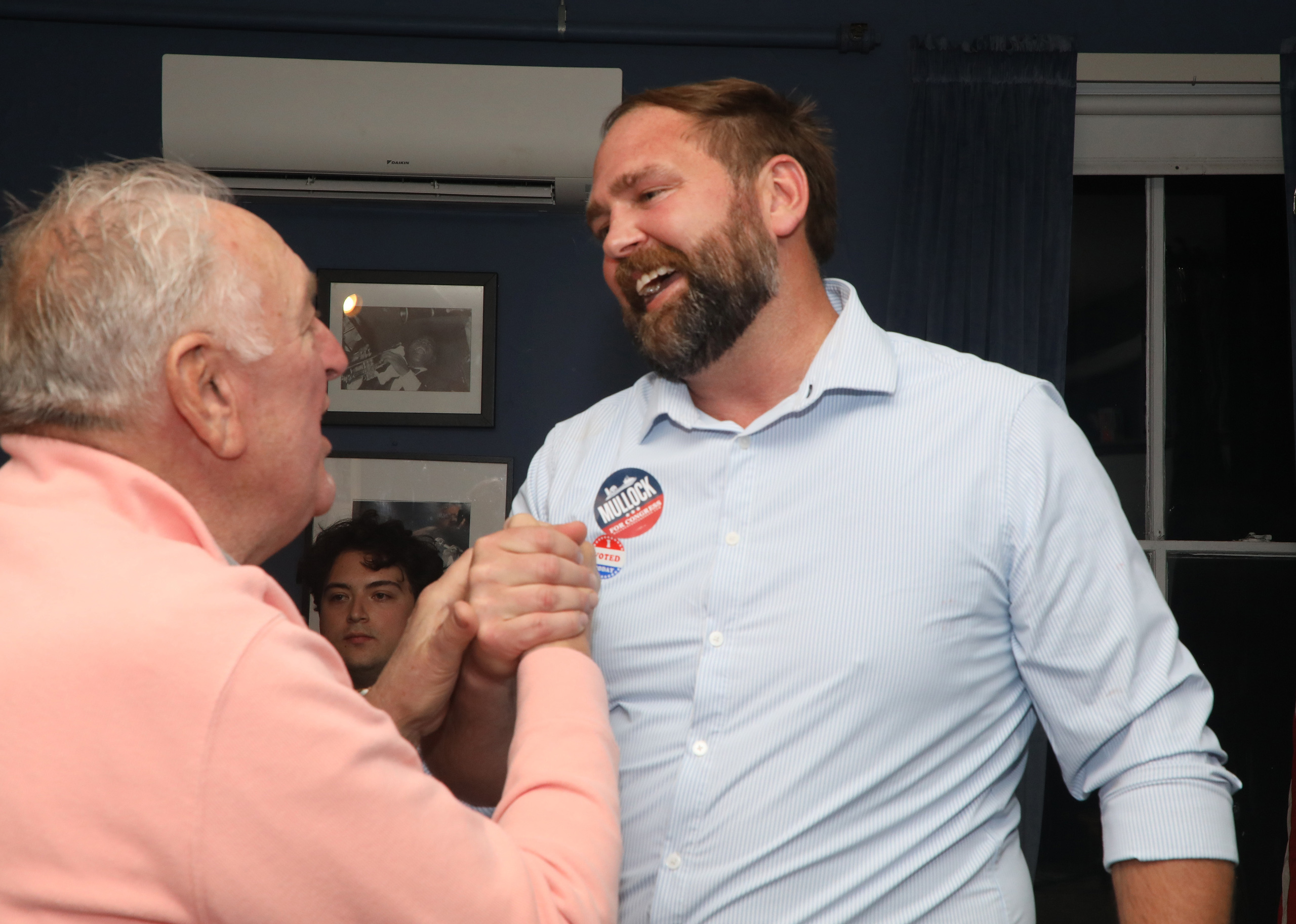
    National Democrats added U.S. Rep. Jeff Van Drew’s South Jersey district on Friday to a list of their target races to flip, signaling they’re taking Cape May Mayor Zack Mullock’s candidacy more seriously than before.

    Mullock decisively won a crowded primary in June to face Van Drew, a Cape May County Republican.

    Van Drew has comfortably warded off challengers in recent years. He was first elected as a Democrat in 2018, but then declared his loyalty to President Donald Trump and switched parties a year later.

    The designation was a long time coming for Mullock, as mail ballots have already begun to come in 32 days before the Nov. 3 election.

    Still, it came as a surprise to him. He learned on Friday he made the cut at the same time everyone else did, through social media, he said.

    “We may be purplish-red, but you know, we are not a just ‘go with whatever the president says’ kind of district,” Mullock said in a phone call. “We voted for Obama twice. We voted for Jeff Van Drew as a Democrat.”

    Local Democrats have been optimistic that Mullock is their best shot yet at ousting Van Drew, but the race had flown under the national radar. The Democratic Congressional Campaign Committee (DCCC), the party’s main campaign arm in House races, had excluded the district from its “2026 Districts in Play” map until Friday morning.

    The announcement likely indicates that the national committee will send resources to Mullock’s campaign, such as staff support, but it does not come with the funding that the most competitive “Red to Blue” seats get.

    Still, it serves as a nudge to donors to take the race seriously.

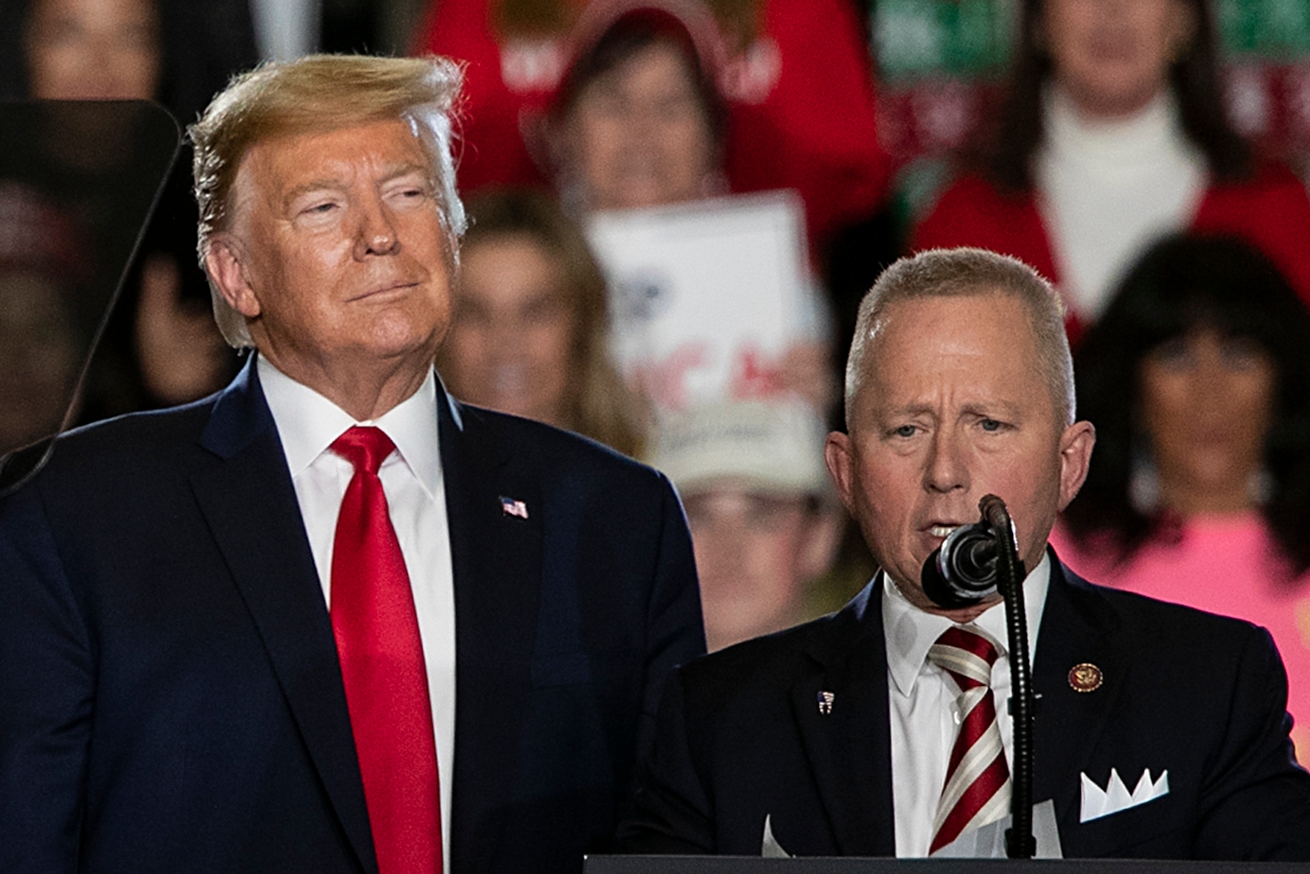
    U.S. Rep. Jeff Van Drew speaks next to President Donald Trump at a Keep America Great campaign rally in Wildwood, NJ on Tuesday, Jan. 28, 2020.HEATHER KHALIFA / Staff Photographer

    Van Drew’s district was one of eight districts across the country added to the battleground list, showing that Democrats see a blue wave as increasingly likely as Trump’s popularity suffers amid the Iran war and inflation.

    National Democrats are now targeting a total of 66 House races, which they say is nearly double as many as in 2024 when Republicans maintained control of the chamber.

    Van Drew’s campaign spokesperson Ron Filan, in a statement, said Democrats make the race seem competitive every cycle as a “fundraising ploy,” and that Van Drew “proves them wrong” each time.

    “We predicted back in June they would follow this same playbook and appreciate them proving us right,” Filan said. “The DCCC has about a third of House Republicans on one of their silly wish lists or another.”

    Van Drew has been thrusting out attack ads as Mullock campaigns across the district, showing that he sees the local mayor as a threat. Filan noted that Van Drew “doesn’t take anything for granted and will continue to campaign as hard as he always has.”

    Previously, the only seat in the Garden State on the DCCC’s battleground list was U.S. Rep. Tom Kean’s 7th District in Central Jersey, which is still the only one on the “Red to Blue” list. Kean, who was absent from Congress for months without explanation until he revealed it was for depression, is viewed as highly vulnerable as Democrat Rebecca Bennett tries to oust him.

    The nonpartisan Cook Political Report has rated the 7th District as leaning toward Democrats, but Van Drew’s “solidly Republican” seat will be a more difficult challenge to flip.

    The Cape May lawmaker’s closest challenge was in 2020 from Amy Kennedy, who still fell nearly 6 points behind him. He was reelected in 2022 by 19 points and in 2024 by 17 points.

    National Republicans cite a double-digit win for Trump in the district in 2024, but Democrats note Gov. Mikie Sherrill came within single digits of her Republican opponent Jack Ciattarelli in the district last year as she reversed red shifts in the state while consistently attacking Trump.

    Mullock said he thinks constituents are becoming disillusioned about Van Drew’s support of Trump.

    “I think people are realizing what I realized … I thought Jeff was a moderate Democrat that became a moderate Republican, and that is just not what he has become,” the Democrat said.

    The 2nd Congressional District spans several South Jersey counties, extending from the Jersey Shore to rural farmland and the Philadelphia suburbs.

    DCCC chair Suzan DelBene said in a statement that voters will send Van Drew “packing” because he “prioritizes tax breaks for the wealthiest few while gutting healthcare and raising costs for his constituents.”

    The National Republican Campaign Committee (NRCC), meanwhile, is focused on defending Kean’s district, the only Jersey seat on its “Patriots” list.

    NRCC spokesperson Maureen O’Toole said in a statement that “Democrats are living in a fantasy.”

    “New Jersey families know Jeff Van Drew delivers results, they trust him, and they’ll proudly reelect him in November,” she said.

  • The screening of a Bucks County-set documentary series was canceled last month. It’s now available to stream on PBS.

    The screening of a Bucks County-set documentary series was canceled last month. It’s now available to stream on PBS.

    In Bucks, the suburban collar county, a series of high-profile culture wars in the post-COVID-19 years has included efforts to remove queer-themed books from school curriculum, a push to ban the display of the Pride flag in classrooms, contentious school board elections, and an even more tense run-up to the 2024 presidential race.

    Starting in 2022, for more than three years, a group of filmmakers chronicled much of it, mostly in Doylestown and the Central Bucks School District, and some in the Pennridge School District. At the heart of the story are two teenage girls who maintain their close friendship, even as their parents took opposite political sides.

    The result is a five-part documentary called Bucks County, USA. Its first two parts debuted at the Sundance Film Festival in January 2025, when the series was far from complete; even those first two episodes have been revised.

    A still from the docuseries “Bucks County, USA” that premiered at the Sundance Film Festival in 2025 and is now streaming on PBS. Using Bucks County as a focal point, the series examines political polarization and culture wars in America.Courtesy of SenArt Films & Baltimore Pictures

    The series includes footage from contentious public meetings and talking-head interviews with a range of participants — from school board members to families with queer children, who all feel they have been adversely affected by the district’s policy decisions. It also includes scenes in which residents on opposite political sides discuss their differences.

    Bucks County, USA, features plenty of Bucks County color, from a visit to an annual re-enactment of Washington’s crossing of the Delaware to Doylestown’s Oscar Hammerstein Museum, which, during the period of filming, was the subject of a fundraising campaign. We hear “You’ve Got to Be Carefully Taught,” a Hammerstein composition from the musical South Pacific, about the scourge of racial prejudice.

    Filmmaker Robert May, who codirected the first episode and directed the other four, is a Pennsylvania native who now lives in the Poconos. The other codirector of the first episode is filmmaker Barry Levinson, whose work includes best picture Oscar winner Rain Man.

    Both May and Levinson have previously made films about Pennsylvania scandals: May directed Kids for Cash, the 2014 documentary about a Pennsylvania judicial corruption scandal of the same name. Levinson directed Paterno, the 2018 HBO drama about the Penn State abuse scandal.

    Jason Sosnoff, who has long worked with Levinson, is Bucks County, USA’s producer.

    A still from the docuseries “Bucks County, USA” that premiered at the 2025 Sundance Film Festival and is now streaming on PBS. Using Bucks County as a focal point, the series examines political polarization and culture wars in America.Courtesy of SenArt Films & Baltimore Pictures

    Sosnoff said the seeds of the docuseries were planted when he was invited to a focus group with Trump supporters on Jan. 7, 2021, the day after the Capitol riot. The focus group was led by pollster and Penn alum Frank Luntz.

    The producer came to the focus group with skepticism, but, he said, “I would say, about an hour into it, I started really hearing the people … I began to actually just hear and listen to them and see them as humans who have a point of view, rather than names and labels we give to them.”

    He went to Levinson, his business partner, proposing that they start a project that would “humanize the right to the left and the left to the right.”

    The next step was to find a community that could serve as a microcosm of that story and to ask, “Why is there such opposition now between the left and the right, Democrat or Republican, whatever you want to call it? Why is there such animosity in the air?” Levinson said.

    The answer lay in “The School Board Wars,” a 2021 two-part episode of the New York Times podcast The Daily.The podcast examined the bitter political fights that had come to school boards nationwide, with the Central Bucks School District featured as an example.

    “In that podcast, you hear people from the town screaming at each other, yelling at each other, death threats,” said Sosnoff, who thought, “Wow, this is a community that’s in trauma. And I think there’s a story there.”

    A still from the docu-series “Bucks County, USA” that premiered at the 2025 Sundance Film Festival and is now streaming on PBS. Using Bucks County as a focal point, the series examines political polarization and culture wars in America.Courtesy of SenArt Films & Baltimore Pictures

    He met May around that time, and they went to Bucks County, a crucial swing country in Pennsylvania where in 2024 President Donald Trump won by just 291 votes.

    “What we saw in Bucks County was the possibility of using the school board wars and the school board campaign … as a narrative drive for the series,” May said. “These parents are all going to school board meetings, and they’re firing shots at both sides for the sake of their children.”

    They started filming in April 2022 and continued through the end of 2025. Over that time, the filmmakers documented many school board meetings in which community members yelled at each other, wrote hundreds of angry social media posts, and battled over a 2023 school board election in which control of the Central Bucks School Board hung in the balance.

    “They’re all protecting their kids, but they’re all fighting in front of their kids, too,” said May.

    Two of those kids are Evi and Vanessa, who were 14 when the series started filming and remained best friends, even as their parents battled over political considerations. Vanessa’s father, Paul Martino, is a businessman who funded the conservative Back to School political action committee. His wife, Aarati, ran for the school board. Evi’s mother, Lela Casey, is a contributing writer to the local, progressive-leaning publication, the Bucks County Beacon.

    The film team shifted its focus, in part, to Evi and Vanessa. The two teenagers were initially reluctant to speak on camera for fear of jeopardizing their friendship, but they ultimately did and remained friends.

    It’s part of a repeating theme, May said. “The kids were a lot more civil with each other, and had a great deal of respect for each other, much more than a lot of the adults did.”

    The filmmakers wanted to apply fairness to all sides and give everyone a say on camera. Winning the trust of some participants was hard.

    A still from the docuseries “Bucks County, USA,” now streaming on PBS. Using Bucks County as a focal point, the series examines political polarization and culture wars in America.Courtesy of SenArt Films & Baltimore Pictures

    “The conservative folks that we talked with viewed us as the media. ‘You’re making a movie, so you’re gonna bash us. We don’t want to be part of that.’ So it took a while to really convince them,” said May, who believes the team has been able to create a “nonbiased portrayal.”

    The rancor has continued, nonetheless.

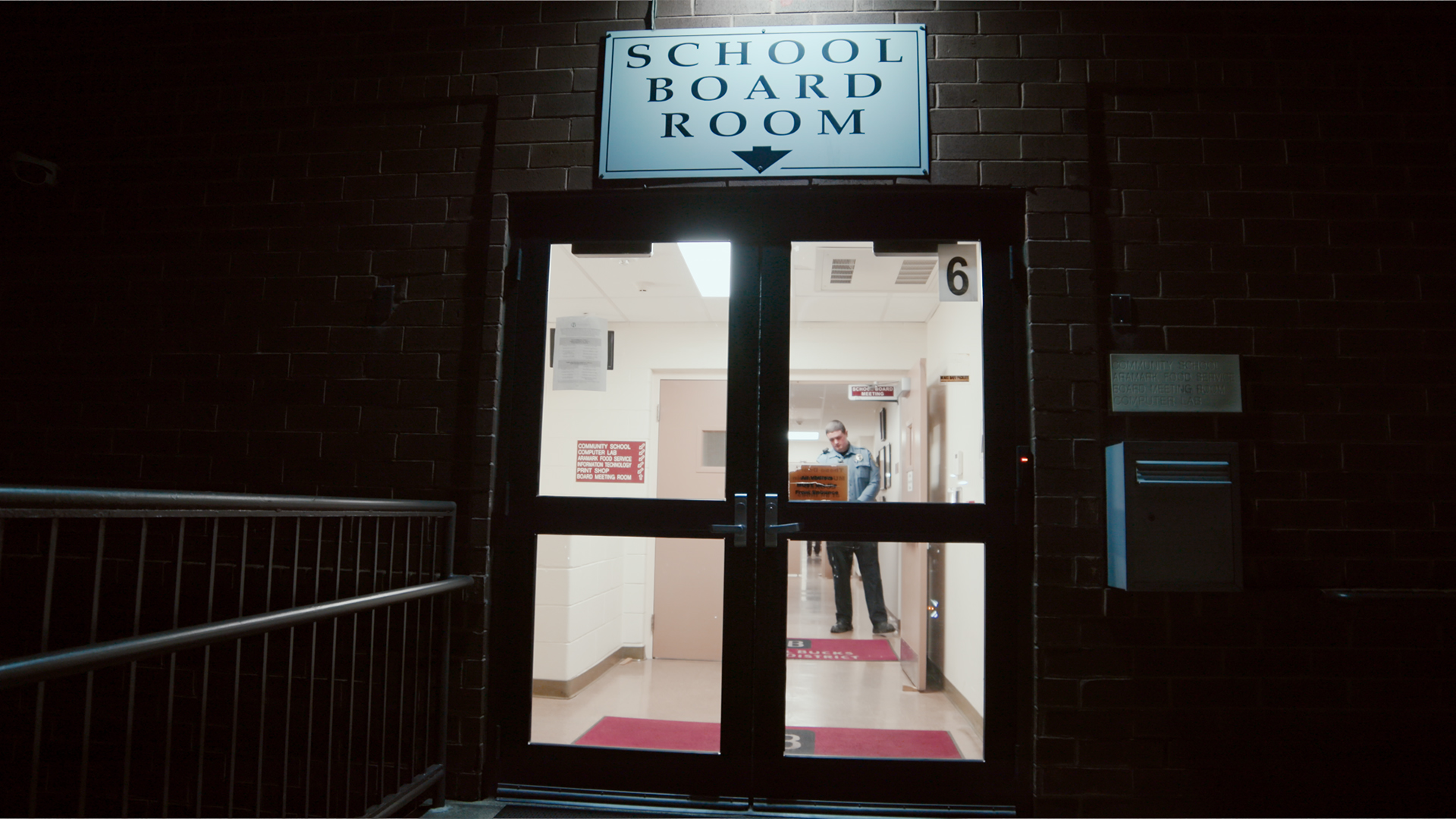
    Bucks County Community College was set to host a local premiere screening of the documentary Sept. 15 but canceled it two days earlier. The screening instead took place that same night at a different venue: the Hiway Theater in Montgomery County’s Jenkintown, a Democratic stronghold.

    In a statement provided to the media, the BCCC said the screening was canceled after “after we received information that raised concerns about our ability to provide a safe environment for campus visitors.”

    “With the docuseries premiering locally on WHYY in less than one week,” the statement read, “and erring on the side of caution, the decision was made to cancel the event.”

    “It is obviously unfortunate,” May and Sosnoff said in an email. “We had taken months to plan a great event at this location.” The entire point of the special screening was, they said, “to thank the community for their hospitality over the past four years, and in particular, thank all those who participated in our project.”

    ”Unfortunately, we live in fearful times, and while the school was not acting with ill intentions, they took something away from the community they are supposed to serve. Our series is all about community — how it can be built and how it can be destroyed,” they said. “Our goal is to foster more trust going forward.”

    “Bucks County, USA” is available to stream via the PBS app, as well as The World Channel.

  • 🗳️ It’s Bucks season | PA 2026 Newsletter

    🗳️ It’s Bucks season | PA 2026 Newsletter

    📅 There are 32 days until Election Day.

    It wouldn’t be a Pennsylvania election without Bucks County becoming the star of the show.

    And that’s exactly what’s happening this weekend, when Gov. Josh Shapiro travels to the swingiest of the swing counties to stump for Democrats up and down the ballot in key races.

    🎤 I’m Fallon Roth, the suburban politics reporter at The Inquirer, coming to you live from Bucks (my home county) as we dig into how the suburb will be the make-or-break place for Democrats’ wishlist next month, including a win for Bob Harvie in the 1st Congressional District and shift in party control in the state Senate, which could only happen with help from the Philly suburbs.

    We’ll also explore whether Pennsylvania voters would support Shapiro turning his attention to a bid for the White House in 2028.

    In this edition:

    🗳️All hands on deck: Shapiro will be in Bucks County Saturday to launch a day-of-action for Democrats, organized by Planned Parenthood’s state-level PAC.

    🗳️ The Bucks stops here: Two Bucks County swing districts and another in Montco could determine which party controls the state Senate.

    🗳️Homefield (dis)advantage?: Pennsylvania voters are split on whether Shapiro should run for president in 2028.

    -Fallon Roth, Michelle Baruchman, Sam Janesch, Gillian McGoldrick (pa2026@inquirer.com)

    The latest

    • The price of gas, groceries and, well, living is on the rise and Pennsylvania’s swing district voters will have affordability on their minds as they head to the ballot box next month.
    • As democratic socialist candidates become more mainstream — including in Philly — most Pennsylvania Democrats said in a recent Inquirer/New York Times/Siena University poll that they have a positive view of socialism.
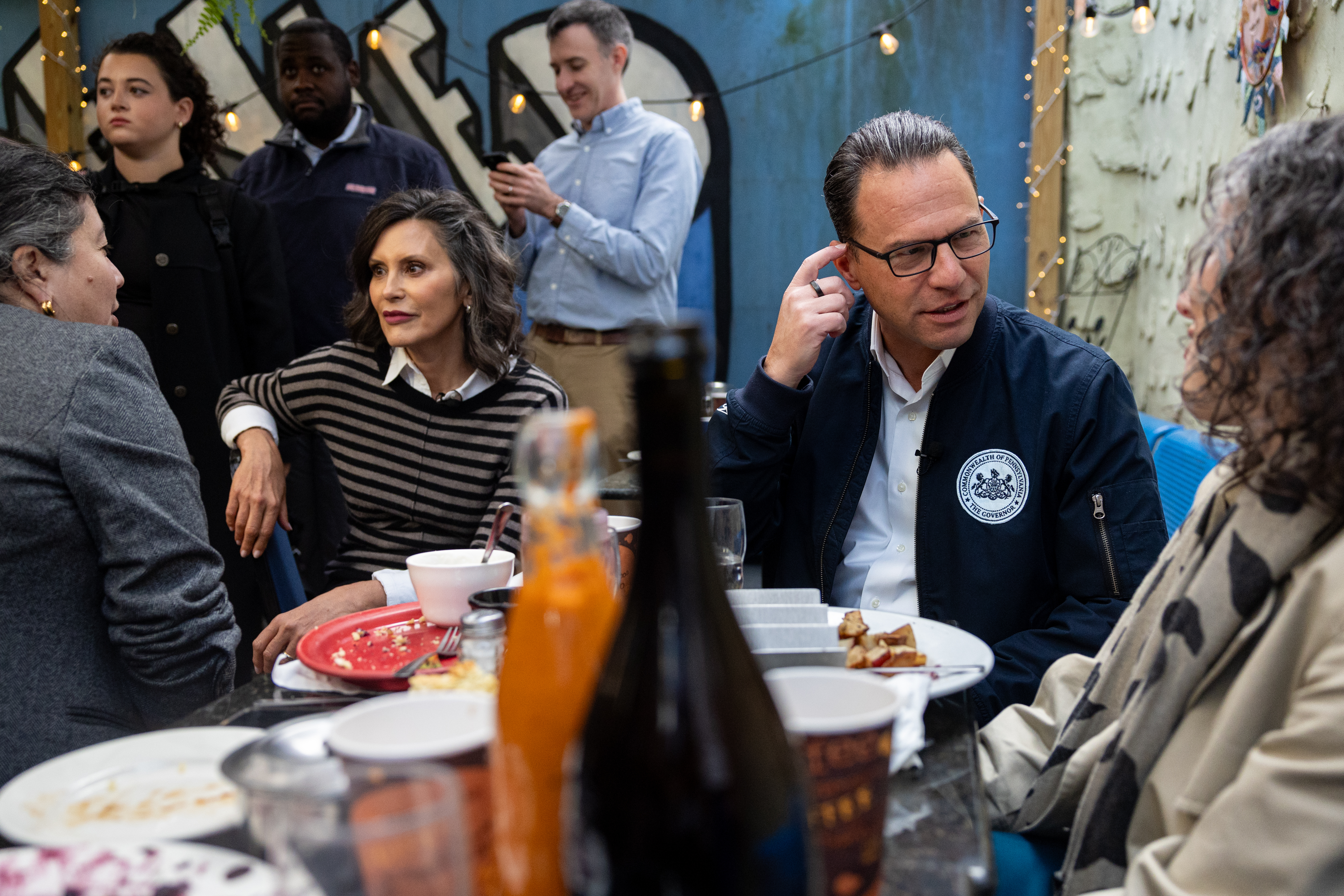
    • Shapiro and Michigan Democratic Gov. Gretchen Whitmer (possible 2028 rivals) went to Sam’s Morning Glory Diner in Philly to energize voters ahead of the midterms.
    • Robert F. Kennedy Jr., President Donald Trump’s health and human services secretary, is even less popular than the president with Pennsylvania voters.

    Data dive

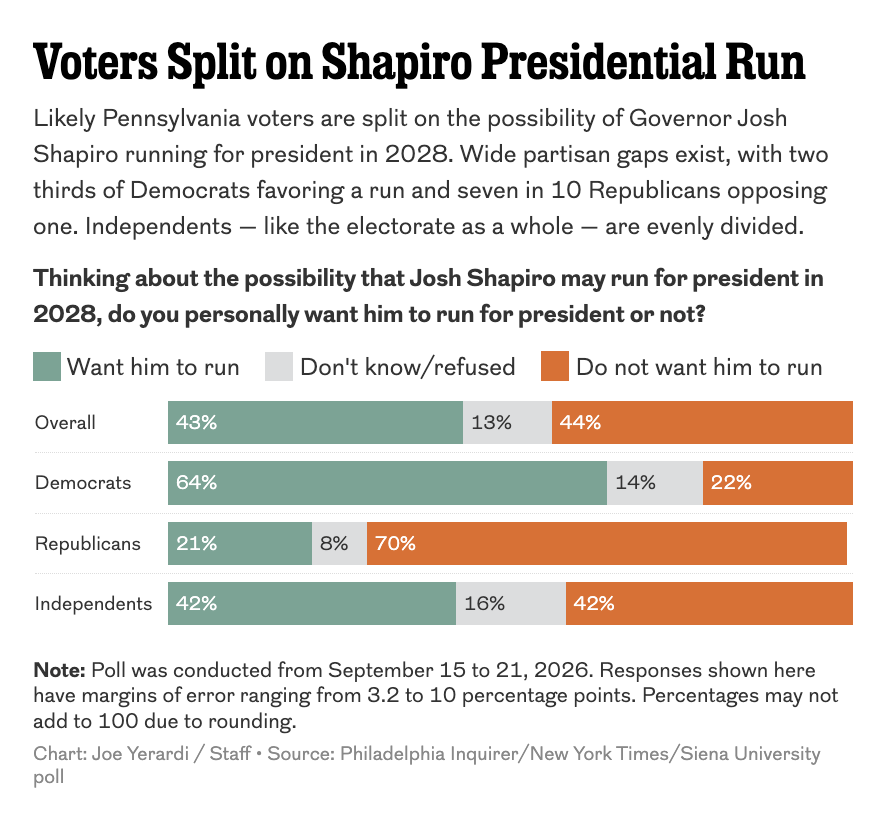
    📊 Without a doubt, Shapiro is a popular governor. He’s viewed favorably by Democrats, independents and even some Republicans — no small feat in a swing state that voted for President Donald Trump in 2024. But whether these likely Pennsylvania voters want Shapiro to run for president in 2028 is an entirely different question.

    Voters, in a poll conducted by Siena University on behalf of The Inquirer and the New York Times, were split on whether Shapiro, who is expected to pursue a White House bid, should run: 43% of respondents want him to run, and 44% don’t.

    Of those supporting a potential presidential campaign, 41% ranked his character and competence as their reasons, and nearly one in five said they were satisfied with Shapiro’s performance as governor. But for those who oppose a run, it’s not necessarily because they don’t like him (although that is the case for 21% of respondents).

    About one in 10 said they would prefer Shapiro, who is up for reelection this November with a commanding lead against his competitor, to remain in Pennsylvania. Campaigning and presidential debates would likely begin soon into his second term.

    Others, however, said they are worried that the U.S. is not ready for a Jewish president. Shapiro has spoken openly about his faith and experiences with antisemitism.

    “I like his views. I like his policies. I like everything. I just think his religious affiliation will stop him from winning because I think the rest of the country, especially the middle of the country, will rally against him,” said Michael Biello, a 68-year-old Democrat in Philadelphia.

    Campaign scrapple

    🏥 Is the U.S. ready for Medicare for All?

    Democrat Bob Harvie thinks there needs to be more trust in the federal government first before it starts running the healthcare system, he told The Inquirer on Tuesday evening.

    Harvie, a Bucks County commissioner challenging GOP U.S. Rep. Brian Fitzpatrick in the swingy 1st Congressional District, has focused his campaign on addressing rising costs and increasing access to healthcare, such as advocating for 55-year-olds to be able to buy into Medicare.

    Congressional candidate Bob Harvie (D, Pa.) speaks on Friday, September 11, 2026 at the Garden of Reflection in Yardley, Pennsylvania.William Thomas Cain / For The Inquirer

    “My worry is you start talking to people about well, ‘We’re going to take away the healthcare system you have, and we’re going to give you another one, and the government’s going to run it,’” Harvie said of Medicare for All. “We’ve got a lot of work to do to rebuild trust in the government, just like we have a lot of work to do to rebuild how this healthcare system works.”

    Harvie was joined Tuesday by Democrats Eileen Hartnett Albillar, running in the key 6th state Senate district, and U.S. Rep. Lauren Underwood, of Illinois.

    📸 Behind the scenes snapshot

    Michigan Gov. Gretchen Whitmer (second from the left) and Pennsylvania Gov. Josh Shapiro chat with diners at the Morning Glory. The two Democrats have grown close in recent years, but they could become rivals in 2028 if they both pursue the presidency. Aidan T. Gallo / Staff Photographer

    👀 What we’re watching

    Shapiro and Garrity will face off in a live, televised debate this coming Wednesday, Oct. 7. The Harrisburg-based TV station ABC27 is hosting the debate, which will air on several stations owned by Nexstar across Pennsylvania, including WPHL-TV in Philadelphia. Politics reporters Gillian McGoldrick and Michelle Baruchman will break the major moments down at inquirer.com/politics.

    Quote of the week

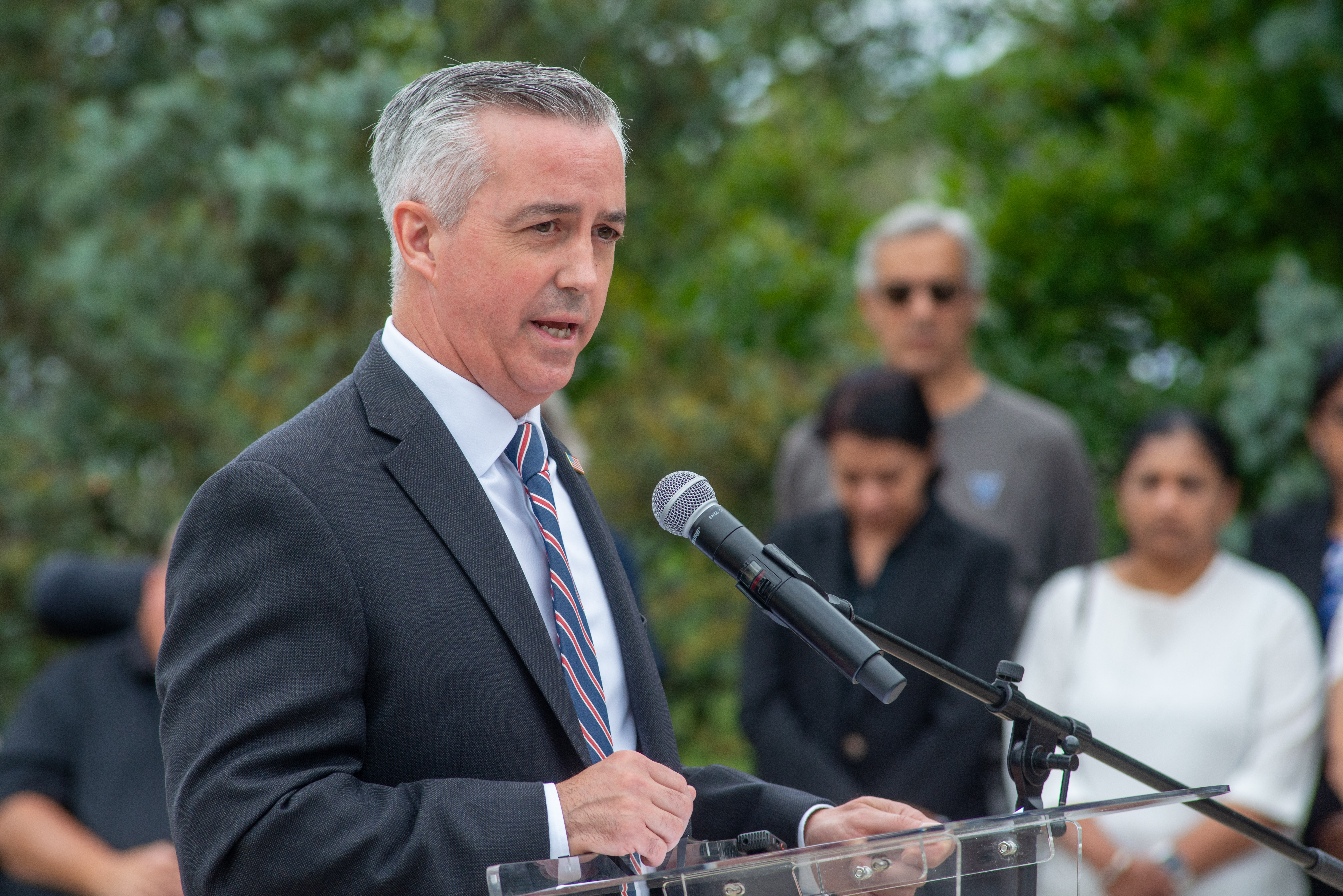
    U.S. Rep. Brian Fitzpatrick weighs in on the No. 1 issue this election. William Thomas Cain / For The Inquirer

    Fitzpatrick agrees with his opponent, Harvie, on one thing: this election will hinge on which party voters think will do a better job lowering the cost of living.

    Voters in the four key congressional swing districts have repeatedly expressed frustration that their dollar doesn’t go as far as it used to and that could be trouble for incumbents this fall.

    👋 Thanks for reading, and don’t forget to check back as we enter a final campaign month packed with debates, candidate events and maybe even a few October surprises. You can follow The Inquirer politics team’s coverage here, and we’ll see you in your inbox next Friday.

  • Affordability is on voters’ minds in Pa. swing districts as the cost of gas and groceries skyrockets

    Affordability is on voters’ minds in Pa. swing districts as the cost of gas and groceries skyrockets

    SCRANTON — Four of Mike Parry’s tenants can no longer afford to pay their rent. Suddenly, their financial pain is his.

    “It’s the affordability of everything that’s the problem,” said Parry, 60, of Clarks Summit, Lackawanna County. “We’re all feeling it now.”

    With the war in Iran rocketing gas to almost $5 a gallon, inflation surging to 3.4% from 2.6% in 2025, and food prices up nearly 3% over last year, the high cost of living is weighing on the minds of many voters — and candidates — as the midterm elections draw near.

    Nowhere is that more critical than in four tightly contested Pennsylvania congressional districts that could decide the control of the U.S. House — in Bucks County, the Lehigh Valley, the Harrisburg area, and Northeast Pennsylvania.

    Mike Parry of Clark Summit, Lackawanna County.Courtesy of Mike Parry

    Parry, a Republican and supporter of President Donald Trump, said he is aware that many Americans hold the president and his party accountable for the affordability crisis, including in the 8th Congressional District, where Parry plans to back GOP U.S. Rep. Rob Bresnahan over Scranton Mayor Paige Cognetti, the Democratic nominee.

    But other voters might not be so kind to Trump-aligned incumbents this fall.

    Among likely voters in Pennsylvania, 75% disapprove of how Trump is handling the cost of living, compared with just 25% who approve, according to a recent poll from The Inquirer, the New York Times, and Siena University. And 73% disapprove of how he has handled gas prices, vs. 24% who approve. About 65% disapprove of his handling of the economy, vs. 34% who approve.

    “It doesn’t matter what party you’re in,” Parry said. “We’re all getting hammered the same.”

    ‘Spend less’

    At his local Wawa gas station in Allentown, P.J. Santos, 32, removed his finger from the pump trigger before his tank filled.

    “Now I tell myself to spend less,” said Santos, a Democrat who is supporting former firefighter Bob Brooks over Republican U.S. Rep. Ryan Mackenzie in the Lehigh Valley’s 7th Congressional District.

    P.J. Santos of Allentown.Courtesy of P.J. Santos

    “So I buy less than I need,” he added, tightening his gas cap. “Same goes for date nights with my wife: Spend less.”

    That is harder when you’re buying food, said Tammy McCoy, 52, of Easton, in the same district. “Walk into any grocery store,” said McCoy, a Democrat and professional cook. “It’s like you have to hand them $50 at the door.”

    (function(){function e(){window.addEventListener(`message`,function(e){if(e.data[`datawrapper-height`]!==void 0){var t=document.querySelectorAll(`iframe`);for(var n in e.data[`datawrapper-height`])for(var r=0,i;i=t[r];r++)if(i.contentWindow===e.source){var a=e.data[`datawrapper-height`][n]+`px`;i.style.height=a}}})}e()})();

    Trump, she remembered, promised to lower prices on Day 1 of his presidency. Not only did that not happen, she added, he raised tariffs, making imported staples like coffee, nuts, and olive oil more expensive. “Because of that,” McCoy added, “I’m against him and Republicans.”

    Tapping into the frustration over food prices, Democrat Janelle Stelson’s campaign is pointing to the cost of hamburgers as she seeks to oust Republican U.S. Rep. Scott Perry in the 10th Congressional District.

    Janelle Stelson (left) and Rep. Scott Perry, R-Pa.(right) from a Stelson campaign photo in 2024, the last time the two squared off against each other in a bid to represent the 10th Congressional District. Stelson Campaign, AP

    Stelson eats a burger in a TV ad that says Americans now pay $7.29 for a pound of ground beef — a result of tariffs Trump imposed and Perry supported.

    But criticism of Trump’s tariffs will not sway Tammy Green, 60, a Republican voter in the 8th Congressional District who supports Bresnahan over Democrat Cognetti.

    “Because he’s a businessman, President Trump understands the economy. … He’s negotiating fair prices with tariffs,” said Green, a former travel agent who lives in West Wyoming, Luzerne County.

    More households need help

    On a hot September day in Levittown, people gathered to celebrate the grand opening of the new headquarters of the United Way of Bucks County. Focused on helping anyone experiencing financial hardship, the building features an expanded HELP Center, where diapers, fresh produce, and clothing are available at no charge.

    As need skyrockets, the nonprofit expects a 40% to 50% increase in demand this year, Marissa Christie, president and CEO, said in an interview.

    “Folks are telling us that in the grocery store, their budget is not going as far as it used to,” Christie said. “When they go to fill up their gas tank, their money is not going as far as they expected.”

    Attending the event alongside other local lawmakers was U.S. Rep. Brian Fitzpatrick (R., Bucks), who secured $4.15 million in federal funds for the building and said the agency will “always be in that top-10 list” of key nonprofits helping those in need.

    U.S. Rep. Brian Fitzpatrick (R., Bucks) speaks outside the U.S. Capitol about legislation to put national restrictions on gerrymandering on Sep. 16, 2026.Sam Janesch / Staff

    The cost of living has become a focal point in the 1st Congressional District race as Fitzpatrick fends off a challenge from Democratic County Commissioner Bob Harvie in the Bucks County-based swing district.

    Pennsylvania Democrats, including Harvie, have centered their campaign messaging on affordability in hopes of appealing to voters across the political spectrum.

    “Costs are what affect people every single day … whether it’s at the pump, whether it’s in the grocery store,” Harvie said in an interview with The Inquirer’s Editorial Board. “Housing costs obviously are huge. It’s a major issue here in this district, especially in the county.”

    (The Editorial Board, which runs The Inquirer’s opinion pages and decides endorsements, operates independently from the newsroom. Newsroom editors and reporters have no role in endorsements, and opinion staffers have no role in news coverage.)

    Fitzpatrick, too, acknowledged in an interview at the U.S. Capitol last month that affordability is the top issue not just in this election, but in every election.

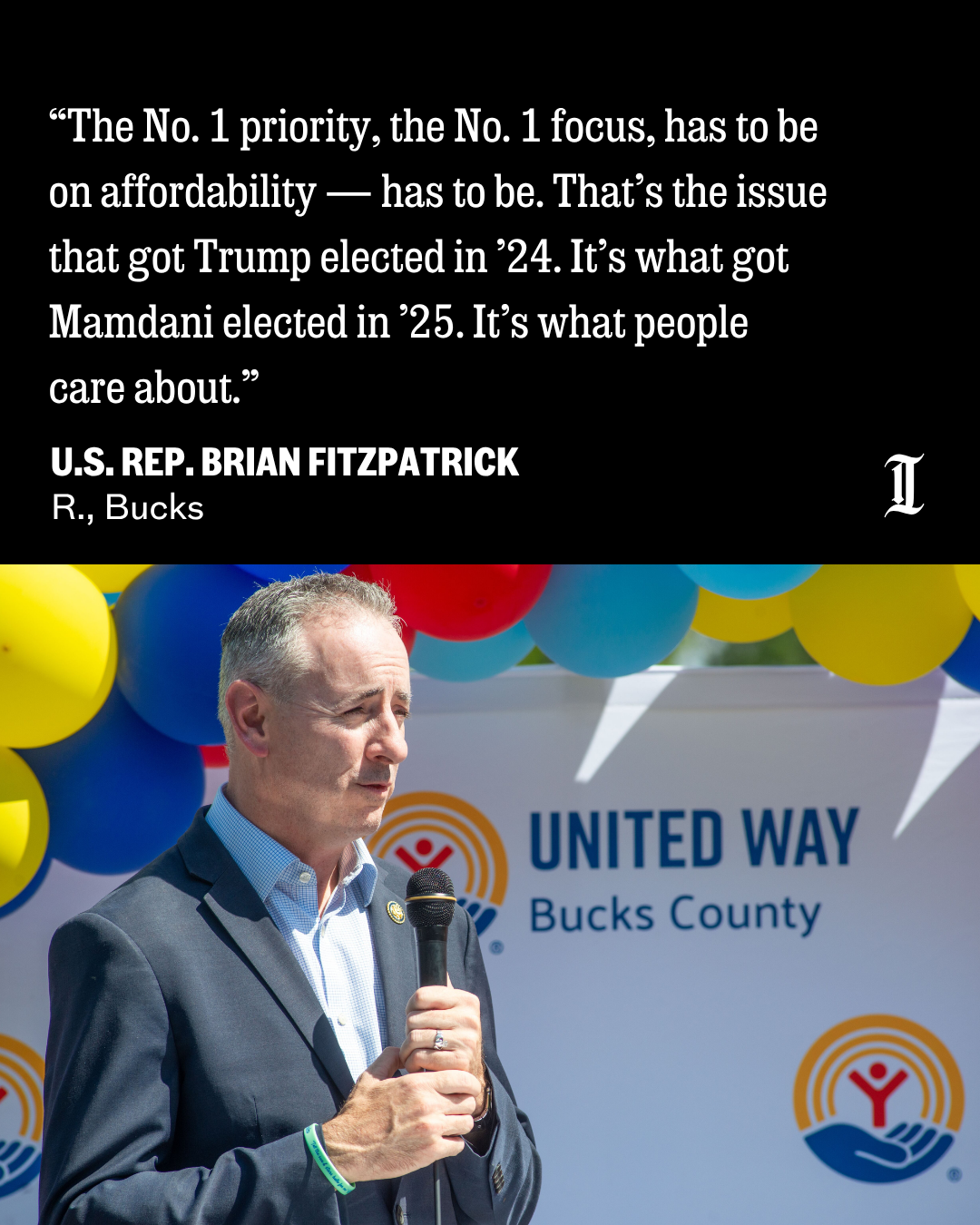
    “The No. 1 priority, the No. 1 focus, has to be on affordability — has to be,” he said. “That’s the issue that got Trump elected in ’24. It’s what got [New York Mayor Zohran] Mamdani elected in ’25. It’s what people care about.”

    ‘Affordability front and center’

    Demonstrating their awareness of voter focus on the high cost of living, Trump administration officials and local Republicans repeatedly emphasized “affordability” as they touted their work to combat rising electricity prices at a PPL Electric Utilities facility in Allentown last week.

    “This is a quick way to lower electricity prices and increase reliability,” U.S. Energy Secretary Chris Wright said as he announced up to $71.5 million in federal funding for PPL, which was among $2 billion in new spending aimed at improving the electric grid.

    Upgrades to existing transmission lines will include new technology like sensors to detect weather conditions, improving efficiency and ultimately lowering electricity costs, according to the Energy Department.

    Asked how quickly consumers might see those improvements, Wright did not specify a timeline but noted that new, large-scale energy users — like data centers — are negotiating with utilities about how much of the increased demand they will cover.

    Mackenzie, a freshman lawmaker whose district includes the Lehigh Valley and Poconos, also emphasized a bill he supports that would set federal standards for data centers to pay for their electricity use, and another to promote transparency around retail electric costs.

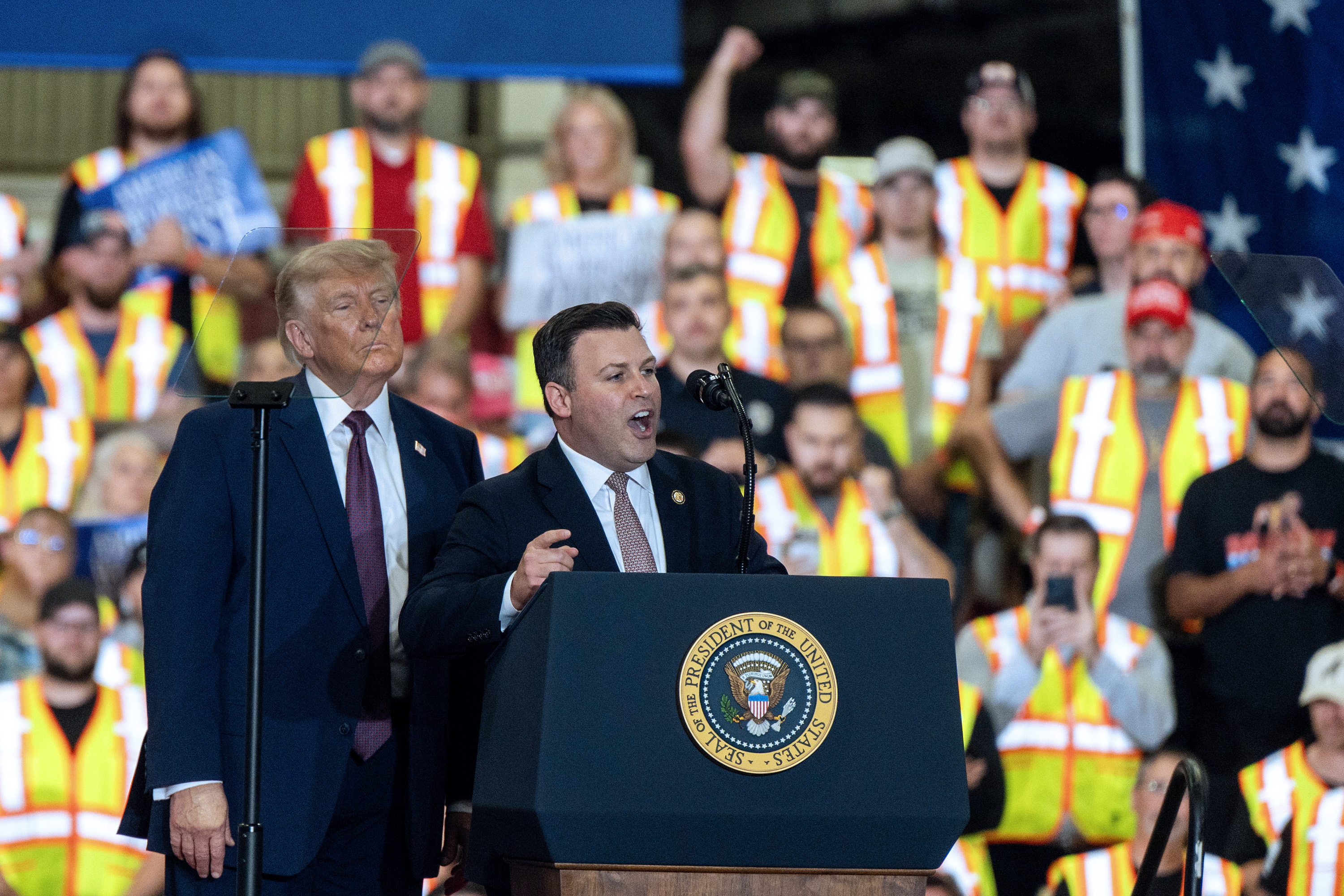
    President Donald Trump invites 7th District U.S. Rep. Ryan Mackenzie (right) to the stage to visit Mack Trucks in Macungie, outside Allentown in the Lehigh Valley, in June.Tom Gralish / Staff Photographer

    Mackenzie said energy policy needs to keep “affordability front and center.”

    The war’s economic consequences

    Some Trump voters say they are willing to pay more for gas and other essentials as the president pursues his policy goals at home and in Iran.

    “We incur a cost that stinks now to avoid another Sept. 11 later,” said T.J. Fitzgerald, 60, a Republican bail bondsman from Nanticoke, Luzerne County, in the 8th Congressional District. “Fighting Iran, a terrorist organization, is worth inflation at the pump.”

    Ryan Kavulich, a 37-year-old project manager from Dunmore in nearby Lackawanna County, disagreed with that logic.

    “The war’s a nightmare with what it’s costing for diesel,” said Kavulich, a Democrat who plans to back Cognetti in November.

    (function(){function e(){window.addEventListener(`message`,function(e){if(e.data[`datawrapper-height`]!==void 0){var t=document.querySelectorAll(`iframe`);for(var n in e.data[`datawrapper-height`])for(var r=0,i;i=t[r];r++)if(i.contentWindow===e.source){var a=e.data[`datawrapper-height`][n]+`px`;i.style.height=a}}})}e()})();

    People in the 8th District know that Bresnahan voted against ending the war with Iran in September, Kavulich said.

    “And that makes voting for Paige [Cognetti] in November the easiest choice ever,” he said. “So many people around Scranton have a blue-collar, kitchen-table, commonsense vibe. They know going into Iran isn’t what you do. They know it’s time to be over Bresnahan and Trump.”

    As the cost of fuel continues to climb, even some longtime Republicans in the district are expressing their doubts about the economic consequences of Trump’s war.

    “I voted for Trump three times,” said Greg Kerrick, 58, a Republican voter from Scranton.

    “But I don’t like him pushing up gas prices,” added Kerrick, who is unemployed. “And I feel for anyone paying over $4 a gallon.”

  • John Baer, award-winning longtime Inquirer and Daily News political reporter and columnist, has died at 79

    John Baer, award-winning longtime Inquirer and Daily News political reporter and columnist, has died at 79

    John Baer was the son of a Harrisburg newspaperman. He literally grew up in the Pennsylvania state Capitol. And he never left.

    His father, John H. Baer, was a political reporter for what is now the Patriot-News in Harrisburg, and Mr. Baer spent many Sunday afternoons hanging around the old Capitol press room while his father worked on stories. Decades later, in 1972, Mr. Baer joined the Evening News in Harrisburg as a reporter and went on to work for nearly 50 years in that same press room.

    “I’m probably unique in Pennsylvania politics and journalism,” Mr. Baer said in a 2020 oral history interview for Pennsylvania State University. “I dare say there probably aren’t any who can say they worked in the same state capitol newsroom that their father did.”

    In 1987, the Daily News hired Mr. Baer to cover state politics in Harrisburg. He became a political columnist for the newspaper in 2000, and his plainspoken, no-holds-barred stories later appeared in The Inquirer as well. Before he left the papers in 2019, he covered hundreds of political campaigns, conventions, and elections, and wrote about thousands of local, state, and national politicians.

    Mr. Baer’s column on politics appeared in The Inquirer and Daily News from 2000 to 2019. Newspapers.com

    “He was the most feared reporter in my eight years in Harrisburg,” former Gov. Ed Rendell said. “He did his work. He did his digging. He really cared about the issues.”

    On Thursday, Sept. 24, Mr. Baer died of cancer at his home in New Cumberland, Pa. He was 79.

    For 32 years, Mr. Baer was a hard-hitting, award-winning political reporter and columnist for The Inquirer and Daily News. He was also a columnist for PennLive and the Patriot-News, onetime public TV producer and show host, former press secretary, author, teacher, and mentor.

    Many of those Mr. Baer covered in Harrisburg, Philadelphia, and Washington praised his “deep integrity” and “fierce independence,” and called him a “keen observer of Pennsylvania politics” and “a heavyweight in Pennsylvania political reporting” in online tributes. State Rep. Ben Waxman called Mr. Baer a “legendary Capitol journalist.” U.S. Rep. Dwight Evans said he was “authentic and a one-of-a-kind journalist.”

    Mr. Baer told Penn State he wanted to “let people see the inside of the game in Harrisburg.” His Inquirer.com online profile reads: “John Baer has written about politics and government since 1987. Neither subject ever fails to provide him with stories of policies and politicians walking on or skirting by paths to perdition.”

    In addition to covering nine Pennsylvania governors, the impeachment trial of President Bill Clinton, and the ascensions of Presidents Barack Obama and Donald Trump, Mr. Baer wrote about the execution of serial killer Gary Heidnik, the pleas for more research funding by a cancer victim, and the battle of a state policeman’s widow to receive her husband’s pension benefits.

    He said some of his favorite columns were the mea culpa pieces he wrote at the end of each year that highlighted things he got wrong. “I truly just had a ball at the Daily News,” he told Penn State. “I just loved it. … I’ve always said I had no adult supervision, and it was wonderful.”

    Mr. Baer joined PennLive in 2019, and his last column was published in July. “The depth and breadth of his knowledge was beyond compare,” said Amy Worden, his editor at PennLive.

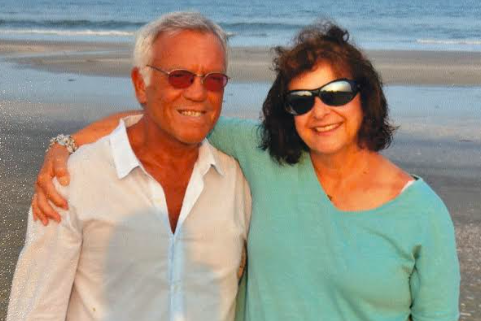
    Mr. Baer and his wife, Rosemary, married in 1969.Courtesy of the family

    Before the Daily News, Mr. Baer spent 14 years in total as a reporter for the Patriot-News, an award-winning public TV producer and show host for WITF in Harrisburg, and a press secretary during Lt. Gov. Bill Scranton’s unsuccessful run for governor in 1986.

    He wrote freelance stories for Philadelphia Magazine and national publications. He was a frequent guest on political TV and radio shows and moderated several statewide candidate debates.

    A lifelong foodie, he also reviewed Harrisburg-area restaurants for a magazine under the pseudonym “the Phantom Diner.” His book, On the Front Lines of Pennsylvania Politics, was published in 2012.

    “He was so good at writing strong opinions with depth,” Paul Vigna, a retired Daily News editor, said.

    Mr. Baer earned awards for his journalism and was inducted into the Pennsylvania News Media Hall of Fame in 2024. He was cofounder of the Pennsylvania Press Club and onetime president of the Pennsylvania Legislative Correspondents Association.

    In tributes, colleagues praised his “sharp wit” and called him a “journalism giant,” “terrific writer,” and “mentor to many of us.” The internship program at the Pennsylvania Legislative Correspondents Association is named in his honor.

    “He was an All-Star, a Hall of Famer,” Vigna said. Rendell said: “He didn’t take any BS.”

    John Baer was born June 25, 1947, in Harrisburg. He graduated from Bishop McDevitt High School in 1965 and earned a bachelor’s degree in English at Mount St. Mary’s University in Maryland and a master’s degree in education later from Temple University.

    He coached basketball and football teams while teaching English for three years at Trinity High School in Harrisburg after college. He married Rosemary Ruggieri in 1969, and they had sons Johnny and James.

    Mr. Baer and his wife hosted many memorable Christmas parties and enjoyed road trips to Georgetown University basketball games, New York Mets baseball games, and their sons’ many sporting events. He played racquetball and tennis, and ran a marathon at 50.

    He was a longtime member of St. Theresa Catholic Church in New Cumberland. “He liked interesting people and had lifelong friendships,” his family said in a tribute. “He loved his friends.”

    On Facebook, colleague Diana Robinson said: “Here’s to you, John Baer. You’ll always be The Most Interesting Man in Harrisburg.”

    In addition to his wife and sons, Mr. Baer is survived by three grandchildren and other relatives.

    Services were held earlier.

    Donations in his name may be made to Vickie’s Angel Foundation, 511 Bridge St., Box 174, New Cumberland, Pa. 17070.

  • Trump says Secret Service wants him to ‘take down’ Oval Office

    Trump says Secret Service wants him to ‘take down’ Oval Office

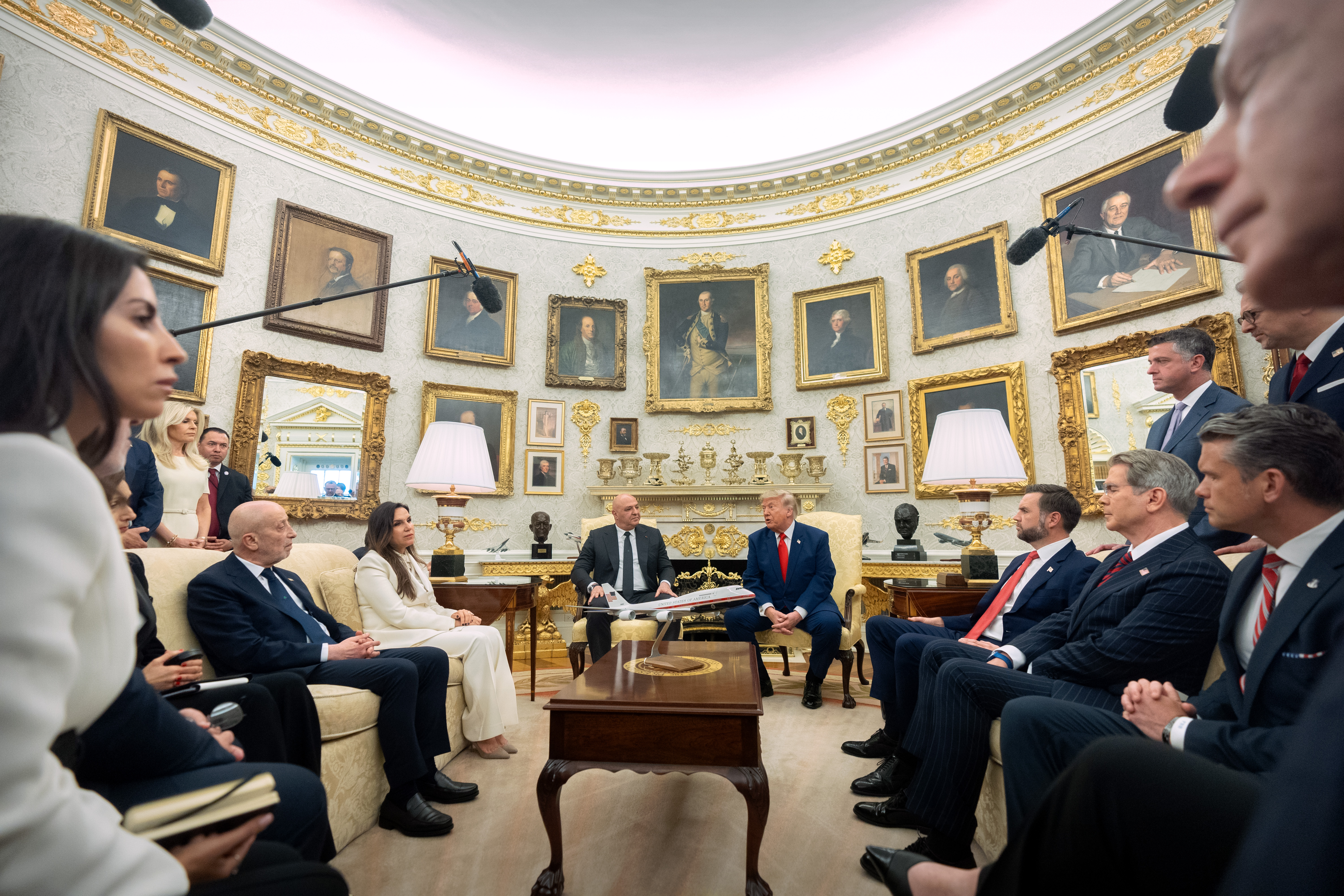
    President Donald Trump said that Secret Service officials have encouraged him to replace the current Oval Office, according to a new interview with Time magazine.

    “‘Sir, we think the Oval Office should be taken down, and we’ll build a new one, sir,’” said Trump, quoting a Secret Service official. “I said, ‘My ass, you can’t build a new one. This is a special place.’”

    The Secret Service has encouraged prior administrations to take steps to fortify the Oval Office, said four former officials, who spoke on the condition of anonymity to detail sensitive security matters. Past presidents have declined to do so because it would require them to relocate.

    A White House spokesman declined to offer further comment. A spokesman for the Secret Service did not immediately respond to questions about Trump’s remarks.

    The current Oval Office was constructed by President Franklin D. Roosevelt and become synonymous with high-profile events and speeches. Trump, who has redecorated it with gold as part of his sweeping changes to the White House, has called it the most intimidating office in the nation.

    Trump has listened to the Secret Service on other projects to fortify the presidential grounds, such as plans to build a permanent fence around Lafayette Square, the public park across the street from the mansion. The president also has invoked national security reasons to defend his most controversial construction projects, including a new White House ballroom and his planned triumphal arch.

    In the Time interview, the president said he was exploring the possibility of a new federal designation for the Oval Office, which he suggested could protect the office from being torn down and preserve his changes to it.

    “I’ve been asking Susie for six months to give me a statement. Will we save this room? Will we make it a federal landmark?” Trump said, invoking his chief of staff, Susie Wiles.

    The White House is already designated a National Historic Landmark, a federally conferred status that is intended to offer protections against sudden changes. But Congress exempted the White House from the National Historic Preservation Act, which has allowed presidents – including Trump – to swiftly remake parts of the building when they assume office.

    “The discussion of making it a landmark is legally meaningless,” said Greg Werkheiser, founding partner of Cultural Heritage Partners, a law firm focused on historical preservation. He also questioned why Trump was invoking historical preservation after disregarding it to tear down the White House’s East Wing, pave over the Rose Garden and make other changes.

    “There’s some irony of the president suggesting that he might use historic designation to protect the property after ignoring it so far,” Werkheiser said.