Tag: Donald Trump

  • Dave McCormick, Pa. Republicans aren’t pushing back against Trump’s new election fraud claims as they lobby for the SAVE America Act

    Dave McCormick, Pa. Republicans aren’t pushing back against Trump’s new election fraud claims as they lobby for the SAVE America Act

    In the opening pages of the book he published between losing and then winning a Pennsylvania seat in the U.S. Senate, Dave McCormick painted the picture of an uncomfortable scene at Mar-a-Lago.

    It was early 2022. McCormick, a former hedge fund CEO running in a tough Republican primary against celebrity doctor Mehmet Oz, had made the pilgrimage to meet with then-former President Donald Trump and ask him not to endorse Oz. Trump had maintained a firm grip on the party after leaving office and avoiding conviction for “incitement of insurrection” at his second impeachment trial.

    According to McCormick’s retelling, Trump pulled up a television interview McCormick gave after the Jan. 6, 2021, attack on the U.S. Capitol in which he said the president was partially responsible for political divisiveness.

    “Then the former president looked me in the eyes and warned, ‘You know you can’t win unless you say the election was stolen,’” McCormick wrote. “I made it clear to him that I couldn’t do that. Three days later, Trump endorsed Mehmet Oz.”

    McCormick lost the race but ran again and won with Trump’s support two years later — when they shared a ballot. Now, three years after McCormick penned the book, he has become a prominent cheerleader in the Senate for an election reform proposal — the SAVE America Act — that Trump has advocated for while continuing to falsely say the 2020 election was rigged against him.

    The Pennsylvania Republican has still not echoed the president’s debunked claims of widespread fraud in 2020. He also has not disputed them as he lobbies for the bill, which he and other Trump allies argue will build confidence in elections and which critics say will do the opposite while potentially disenfranchising millions of voters.

    Other Pennsylvania Republicans in Congress — some of whom tried to block the state’s electoral votes hours after the Capitol attack — have similarly stayed quiet as Trump has both resurfaced old allegations and introduced new ones.

    In a prime-time speech earlier this month, Trump claimed that China had secretly obtained U.S. voter information and that a “large-scale voter registration operation” led to fraud in Michigan six years ago. His administration also released a document alleging Pennsylvania was among four states where the Department of Homeland Security had identified more than 250,000 noncitizens registered to vote.

    Pennsylvania Secretary of State Al Schmidt, a Republican appointed by Democratic Gov. Josh Shapiro, has forcefully rejected those claims.

    But adding more fuel to the rhetoric about election integrity, New Jersey officials said last week that about 6,600 people who were not citizens were registered to vote before the 2024 election, and fewer than 400 cast a ballot.

    Still, many of the claims Trump made in his speech have been refuted by election experts and, in many cases, were not new. Meanwhile, none of the 11 Republicans representing Pennsylvania in Congress have commented directly on them, including some who responded to certain questions for this story but did not answer others specifically about the new claims.
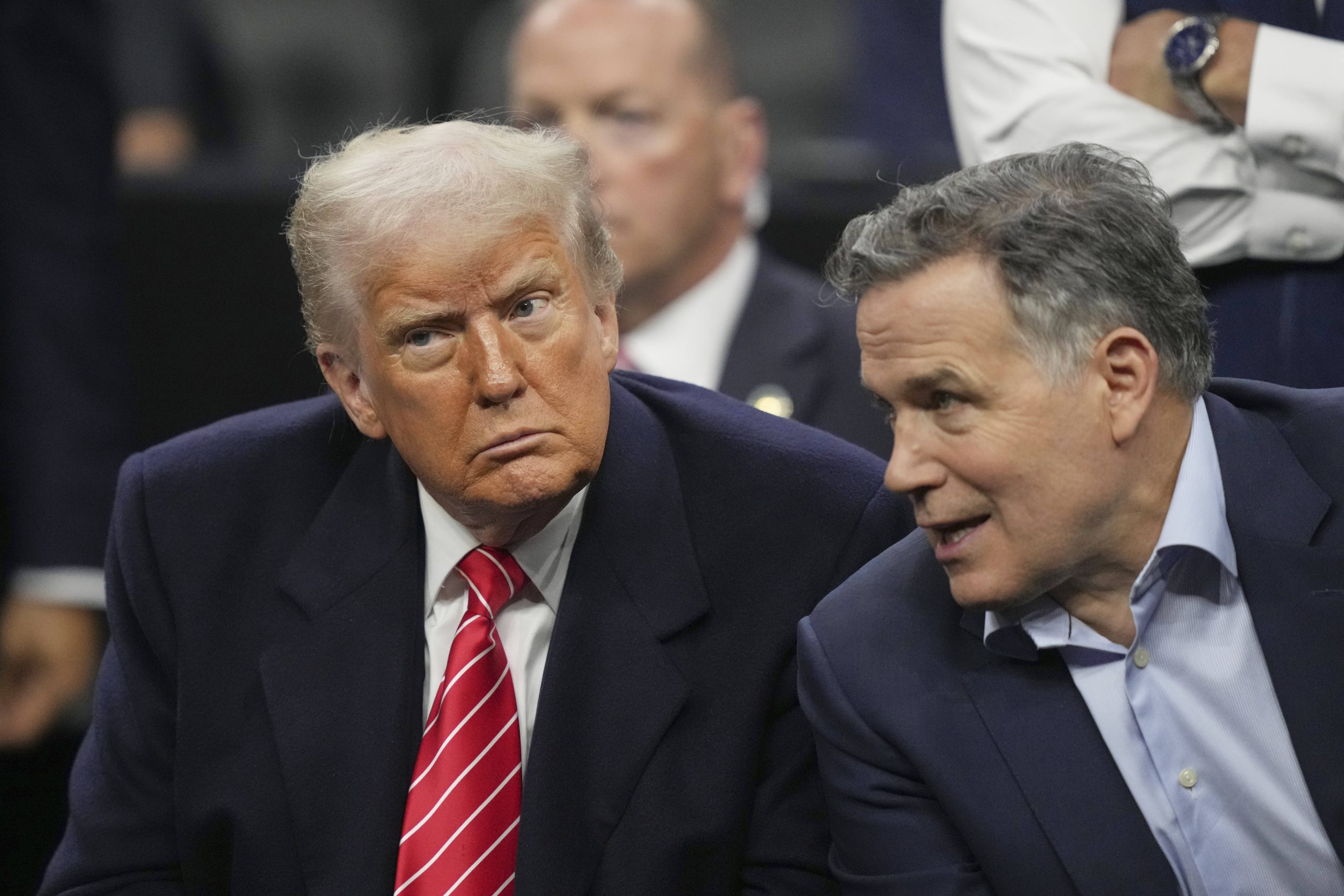
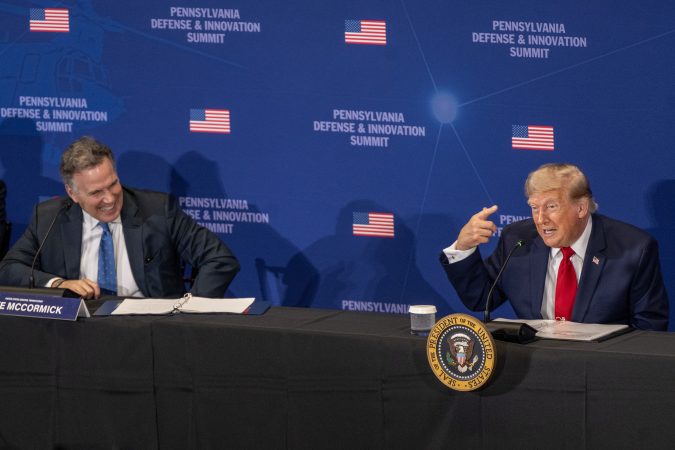
    President Donald Trump, left, and Sen. Dave McCormick, R-Pa., attend the finals at the NCAA wrestling championship, Saturday, March 22, 2025, in Philadelphia. (AP Photo/Matt Rourke)Matt Rourke

    McCormick’s spokesperson said only that the senator’s position on 2020 “remains unchanged.”

    A spokesperson for U.S. Rep. Brian Fitzpatrick, a moderate Bucks County Republican who voted to certify President Joe Biden’s 2020 win, said the lawmaker “completely disagrees with the president’s allegations of interference in the 2020 election.” She did not answer a question about the new and specific claims, such as the 250,000 noncitizens registered, but said Fitzpatrick “has full faith and confidence [in] our election officials.”
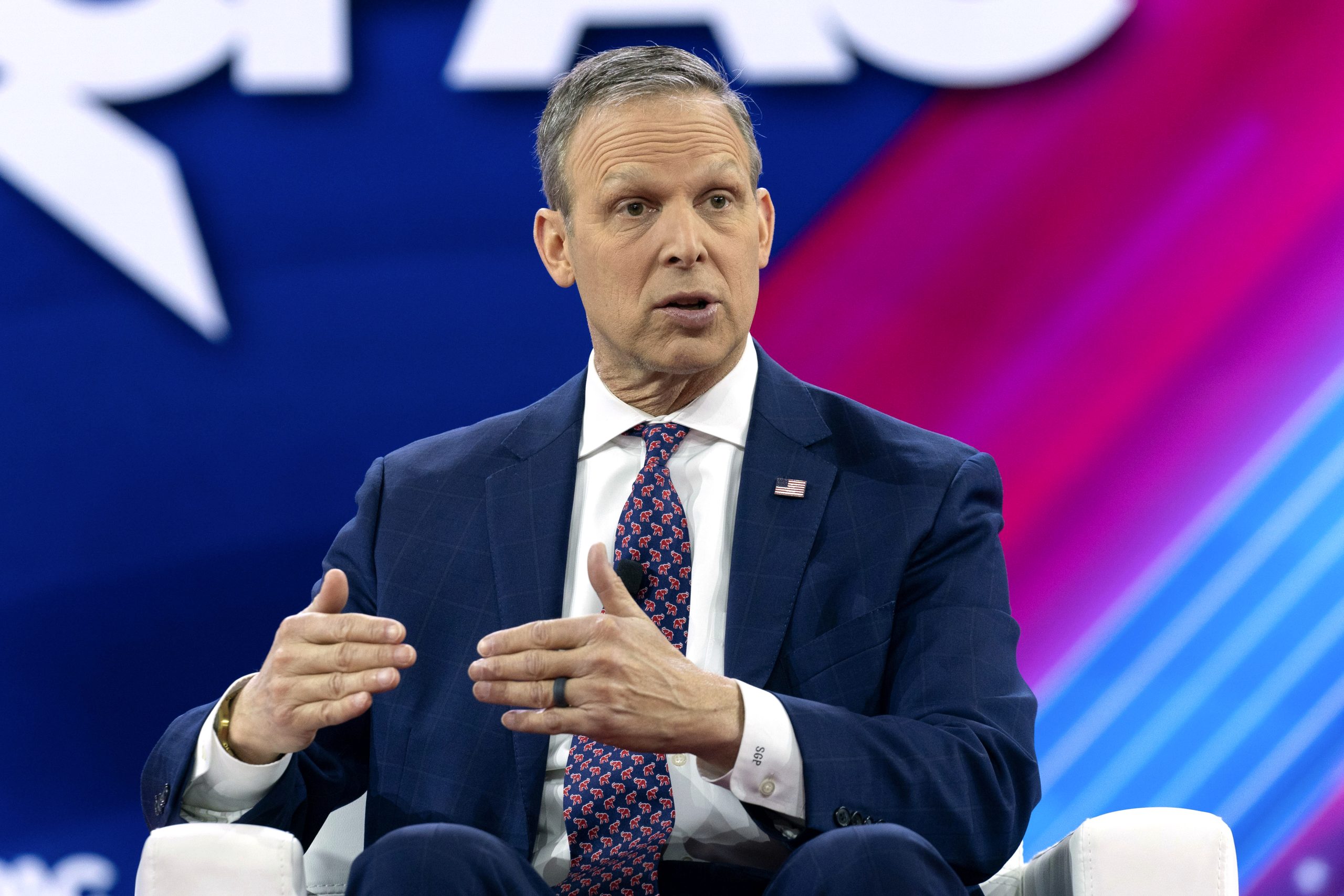
    Rep. Scott Perry, R-Pa., speaks during the Conservative Political Action Conference, CPAC 2024, in Oxon Hill, Md., Feb. 22, 2024. (AP Photo/Jose Luis Magana, File)Jose Luis Magana

    U.S. Rep. Scott Perry, a York County Republican who tried to overturn election results and became a subject of investigations into Jan. 6, reposted comments online that raised alarm about the White House’s claims of noncitizen voters.

    Perry’s office did not respond to a request for comment. He is one of four Republicans in the state facing a competitive reelection this fall — putting Pennsylvania in the national spotlight as Democrats push to gain control of the narrowly divided U.S. House, and potentially at the center of concerns about Trump’s attempts to control the election process.

    Republicans point to N.J. as they call for new voting law

    Every Pennsylvania Republican in Congress, meanwhile, has supported the SAVE America Act. The bill would require voters to provide proof of citizenship when registering to vote and to show photo ID at the polls. It would also scale back mail voting, which has become increasingly popular since the COVID-19 pandemic but has remained a focus of Trump’s false claims of fraud.

    Supporters of the legislation say that voter ID is widely popular and that eliminating even a few noncitizens from the voter rolls is worth ensuring elections are legal and secure. Opponents say that the issues the bill is trying to solve are either nonexistent or statistically irrelevant, and that it would effectively make registering more difficult for about 21 million people who do not have easy access to the paperwork that would be required, like a passport or birth certificate.

    “It would upend voter registration and our democracy and, on its own terms, is an extraordinarily harmful policy that would hurt millions of American citizens,” said Eliza Sweren-Becker, a voting rights expert at the Brennan Center for Justice. “It is being advanced on the backs of lies about our election system that are themselves harmful to our democracy and trust in election administration.”

    Though he has not addressed Trump’s latest claims, McCormick renewed his public push for the SAVE America Act after Trump’s prime-time address — writing, “Let’s act now,” on social media following the speech.

    Last week, he and others also grasped on to both a nearly decade-old voter registration issue in Pennsylvania and the fresh problem in New Jersey to underscore the need for the law.

    “This isn’t a harmless ‘software error,’” McCormick wrote on social media after Gov. Mikie Sherrill said a technical mistake led to noncitizens registering to vote. “This is why we must confirm citizenship before anyone registers. Only U.S. citizens should vote in our elections.”

    McCormick also elevated a statement from the Department of Homeland Security that referred to an issue that Schmidt, then a Philadelphia city commissioner, discovered in 2017. Schmidt found 168 noncitizens were registered in Philadelphia, and likely hundreds more were registered statewide, due to an error by the Pennsylvania Department of Transportation. State Auditor General Tim DeFoor, a Republican, has said fixes to the system were largely successful.

    U.S. Rep. Ryan Mackenzie, a Lehigh County Republican who is running in one of the most competitive districts in the country, also pointed to the Pennsylvania example and the New Jersey developments while justifying his support for the SAVE America Act during a telephone town hall with constituents Wednesday.

    But while trying to remember the details on the call, Mackenzie potentially overstated the problem.

    “I believe it was about 8,000 people here in Pennsylvania made their way onto the voter rolls, who were not supposed to be there and weren’t asked those proper questions. So these things do happen,” Mackenzie said before stressing the need for the SAVE America Act.

    Asked about that number, a spokesperson for Mackenzie pointed to the Pennsylvania Department of State’s additional review in 2018 that found 8,698 voters whose eligibility needed to be determined. Those voters, however, were not necessarily noncitizens or otherwise ineligible to vote, and the state never released a more detailed analysis.

    The spokesperson did not answer questions about whether Mackenzie agrees with Trump’s old or new claims about election fraud in 2020, or whether Pennsylvanians should have confidence in the state’s current system.

    “This case from Pa., and from N.J. more recently, highlight the lack of appropriate checks taking place when people initially register to vote. We should have appropriate checks to verify the citizenship status when someone initially registers, which is what the SAVE Act provides. The absence of these safeguards, as well as the egregious errors that have been seen in states like New Jersey, are key reasons for the bipartisan frustration with our elections.”

    Sweren-Becker said overstated claims of noncitizen voters have contributed to spreading distrust. The Pennsylvania situation, she said, was also not an example of a scheme to defraud the system, and “not the basis for a policy that would block millions of Americans from being able to cast their ballots.” Both that case and the one in New Jersey are instead examples of administrative errors that occasionally happen in a complex election system and represent “an extraordinarily small fraction” of voters, she said.

    The Cato Institute, a libertarian Washington-based think tank, has also thrown cold water on the idea that the SAVE America Act would have prevented the New Jersey error. Legal fellow and former Arizona Republican official Stephen Richer, in a post that referred to McCormick’s advocacy, wrote that the current structure of the bill “likely wouldn’t have prevented” the software error.

    “Be wary of politicians who say, ‘All of these problems will be fixed with my simple legislation,’” Richer wrote. “That’s often not the case.”

    ‘Deeply unhelpful’

    McCormick, in response to questions for this story, did not directly say if the law would have prevented the issue in New Jersey. But he stressed that the paperwork requirement “helps stop noncitizens from getting registered.” It would also require states to set up a program to “continuously check voter rolls to find noncitizens” using different datasets — which he noted some states already have.

    In a telephone town hall with constituents on Wednesday, the senator also acknowledged concerns about the bill when asked about it by voters on both sides of the issue.

    Pennsylvania’s U.S. Senators John Fetterman (left) and Dave McCormick appear together Monday, June 29, 2026 to promote the savings accounts for kids that were a signature piece of President Trump’s Big Beautiful Bill.Tom Gralish / Staff Photographer

    He said he believed the law would “make it as easy as possible” for people to obtain valid forms of ID if they do not have them. And as someone who lost his first race against Oz by 950 votes and won his second race against Democratic U.S. Sen. Bob Casey by about 15,000 votes, he said even rare cases of noncitizen voting could make a difference in close elections. Eligibility for mail ballots also needs “to tighten up dramatically,” he said, though he did not fully explain his thoughts on the issue or if he believes there has been fraud associated with them.

    As Democrats block the bill in the Senate, he called on them to “defend the indefensible” and said “there should be a political cost in objecting to something that most Americans agree with.”

    One of the Democrats opposing the bill is McCormick’s close friend and ally — U.S. Sen. John Fetterman.

    Though he has frequently broken with his party — and now supports voter ID after previously calling it “insidious and unnecessary” — Fetterman has said the bill’s changes to mail voting are “a nonstarter” for him.” In a CNN interview last week, he also said that the 2020 election in Pennsylvania was fair, that there is “no evidence” of 250,000 noncitizens registered, and that Trump was unnecessarily fixated on the 2020 election.

    “In Pennsylvania, out of 67 counties, the vast, vast, vast majority of them are deep red counties, and they’ve never encountered any kinds of fraud,” Fetterman said. “I don’t know why the president is dragging up all of this stuff. You’re the president. Do something positive. And you are talking about 2020. That’s been settled over six years ago. It’s deeply unhelpful.”

    Other Pennsylvania Democrats have lambasted Trump for dredging up the old claims, and they have blamed GOP “enablers” for supporting him and pushing the bill.

    “The only thing it would ‘save’ is Trump and his Republican enablers from voters holding them accountable,” U.S. Rep. Dwight Evans (D., Philadelphia) said.

    U.S. Rep. Chris Deluzio, an Allegheny County Democrat who worked on election security issues before running for Congress in 2022, said the bill “will do nothing to improve election security” and would instead harm married women — whose birth certificates might not have their current name — and people without passports. He said those who lie about the 2020 election are “cowards” who should not have a place in elected office.

    “The fact that some Republican politicians are so scared of Donald Trump that they lie for him just to keep their jobs is spineless and pathetic,” Deluzio said.

    McCormick, for his part, said during the telephone town hall that the bill is unlikely to pass as Democrats continue to block it from getting the required 60 votes in the Senate, and as Republicans decline to eliminate the filibuster rule to let it move forward with just 50 votes.

    “Where does that leave us? That leaves us in a position where I think we should be constantly talking about this, and I try to do this every single week, multiple times, [saying] why the SAVE America Act is important,” said McCormick, whose staff said he was unavailable for an interview.

  • Trump’s Iran quagmire distracts from Chinese threat to Taiwan

    Trump’s Iran quagmire distracts from Chinese threat to Taiwan

    KINMEN, Taiwan — From this tiny outer island of Taiwan, which lies less than two miles from the Chinese mainland, one can view the high-rise towers of the Chinese port city of Xiamen.

    Looking out over an extensive beach and through the mist at China, I realize Xiamen could probably be reached from where I stand by a good swimmer. From this vantage point, it’s easy to imagine Chinese leader Xi Jinping pursuing his obsession to “reunify” with the self-governing island democracy of Taiwan — whether by so-called peaceful means, by blockade of the Taiwan Strait, or using more direct force.

    I traveled to Taiwan because President Donald Trump was supposed to meet Xi in Beijing this week. POTUS had previously signaled he might weaken long-standing U.S. support for Taiwan out of his desire to cozy up to the Chinese leader and sign an advantageous trade deal. Moreover, the White House has frozen a deal Trump had already endorsed for Taiwan to purchase around $11 billion to $13 billion worth of U.S. defensive weapons, so as not to upset Xi before the visit.

    But Trump’s poorly planned war on Iran (he apparently never considered how Tehran would retaliate) has caused a postponement of the long-awaited trip until mid-May. As the erratic POTUS sinks into a potential Iran quagmire, lacking any cohesive strategy to thwart Tehran’s partial closure of the Strait of Hormuz, he is even less likely to focus strategically on the Taiwan issue.

    Yet, any potential Chinese blockade of the Taiwan Strait in the next few years could present an equal or even greater security threat to the United States than Iran’s blockage of the Strait of Hormuz, through which about 20% of the world’s oil trade flows.

    To understand why, it helps to know a bit about Kinmen’s history.

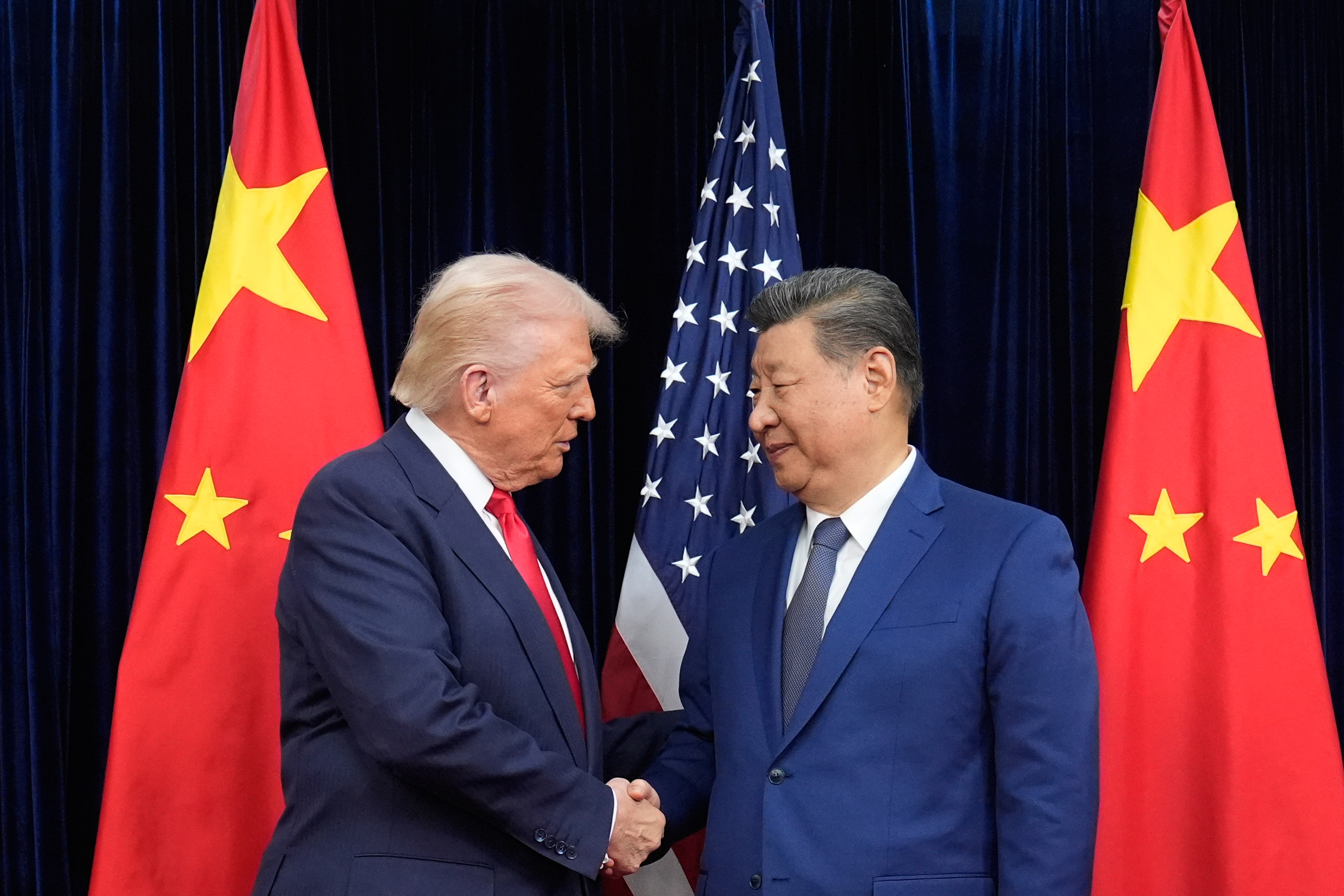
    President Donald Trump and Chinese President Xi Jinping shake hands before their meeting at Gimhae International Airport in Busan, South Korea, in October.Mark Schiefelbein

    Until 1993, Kinmen was off-limits to visitors because it was a closed military zone, and locals lived under martial law from 1956 to 1992. Most of the 120,000 Taiwanese troops have been withdrawn, although a small garrison remains.

    Yet, an endless row of rusty anti-landing spikes along the beach line stand as a reminder of the 1949 civil war Battle of Guningtou between the Communist People’s Liberation Army (PLA) and Chiang Kai-shek’s Nationalists, who were defeated on the mainland and had retreated to Taiwan. With U.S. backing, the Nationalists set up the Republic of China (ROC) government on Taiwan’s main island, roughly 110 miles from Kinmen, and held off the PLA.

    Those Americans who are old enough may recall the 1958 battle of Quemoy, as Kinmen was formerly known. During that battle, massive PLA shelling along with a Chinese blockade of the Taiwan Strait tested U.S. support for the ROC government. But President Dwight D. Eisenhower sent ships to break the blockade and repel the missiles. A local war museum displays huge photos of U.S. troops arriving on Kinmen.

    Since the U.S. formally recognized the Beijing government in 1979, and cut diplomatic ties with Taipei, Taiwan has existed in a diplomatic grey zone. China treats it as a renegade province and only a handful of countries recognize it as an independent country.

    But the U.S. insists that differences between Beijing and Taipei be settled peacefully, and is committed to providing Taiwan with defensive weapons. Moreover, U.S.-Taiwan relations are close: few Americans realize that Taiwan is America’s fourth largest trading partner, due to its technological prowess.

    As for Kinmen, these days China tempts its youth with the glitzy shopping malls of Xiamen, reachable by a 30-minute ferry ride, while a massive new international airport, built on a man-made island, cuts the sea distance between China and Kinmen to roughly one mile.

    Kinmen has become a tourist destination, with its beaches, war museums, and preservation of historic Qing dynasty homes. Mainland Chinese visitors pour into Kinmen, and the Beijing government heavily promotes the purported advantages of “reunification” to the Kinmen public — including jobs and entertainment sites — as part of its effort to win Taiwan citizens to its side.

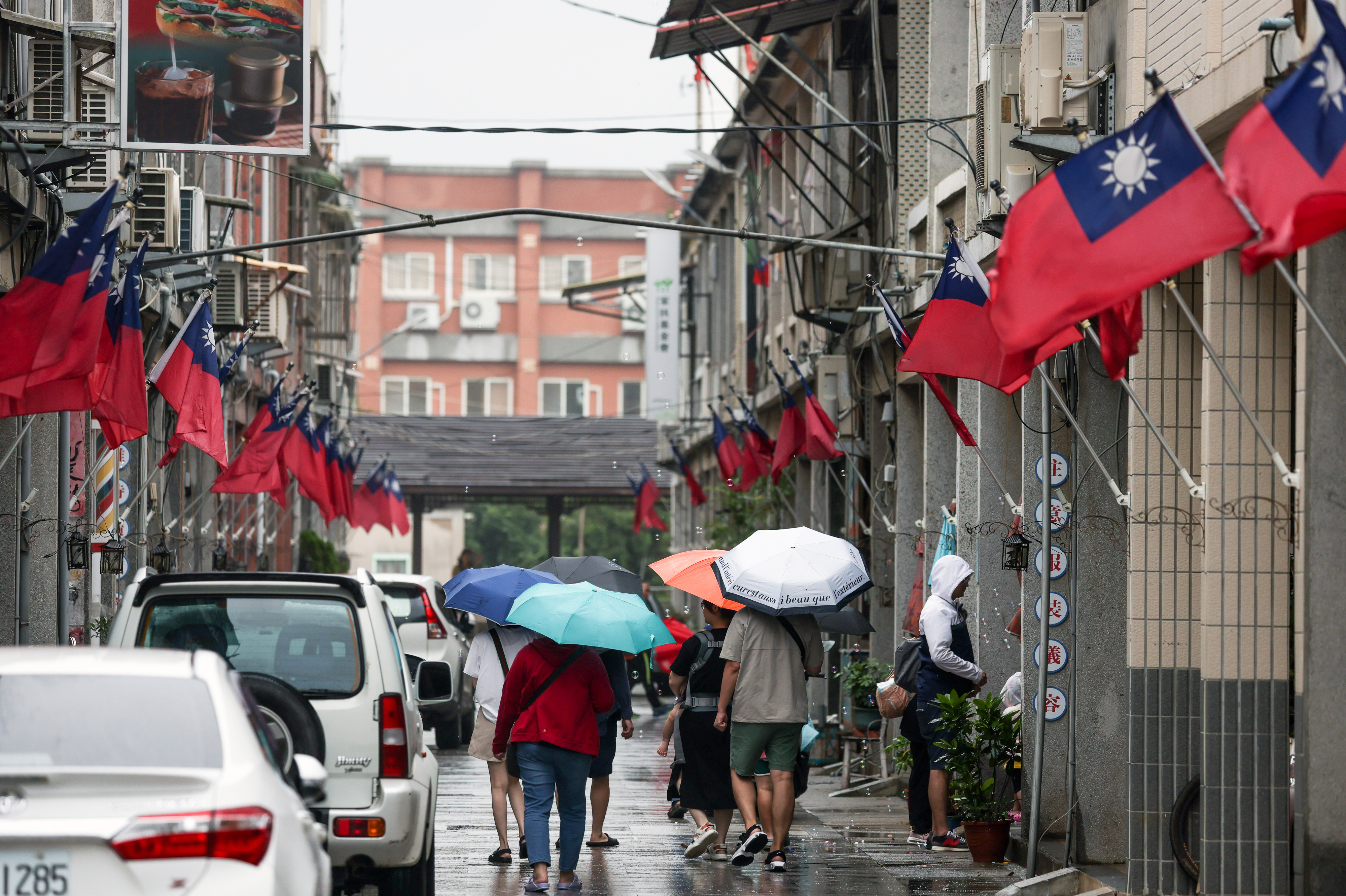
    Taiwanese flags in Kinmen, Taiwan, in 2024.I-Hwa Cheng

    So it’s not surprising that the Taiwanese government has blocked construction of a bridge that would connect the airport directly to Kinmen, presumably to prevent both the escalation of propaganda and the security threat of a direct link.

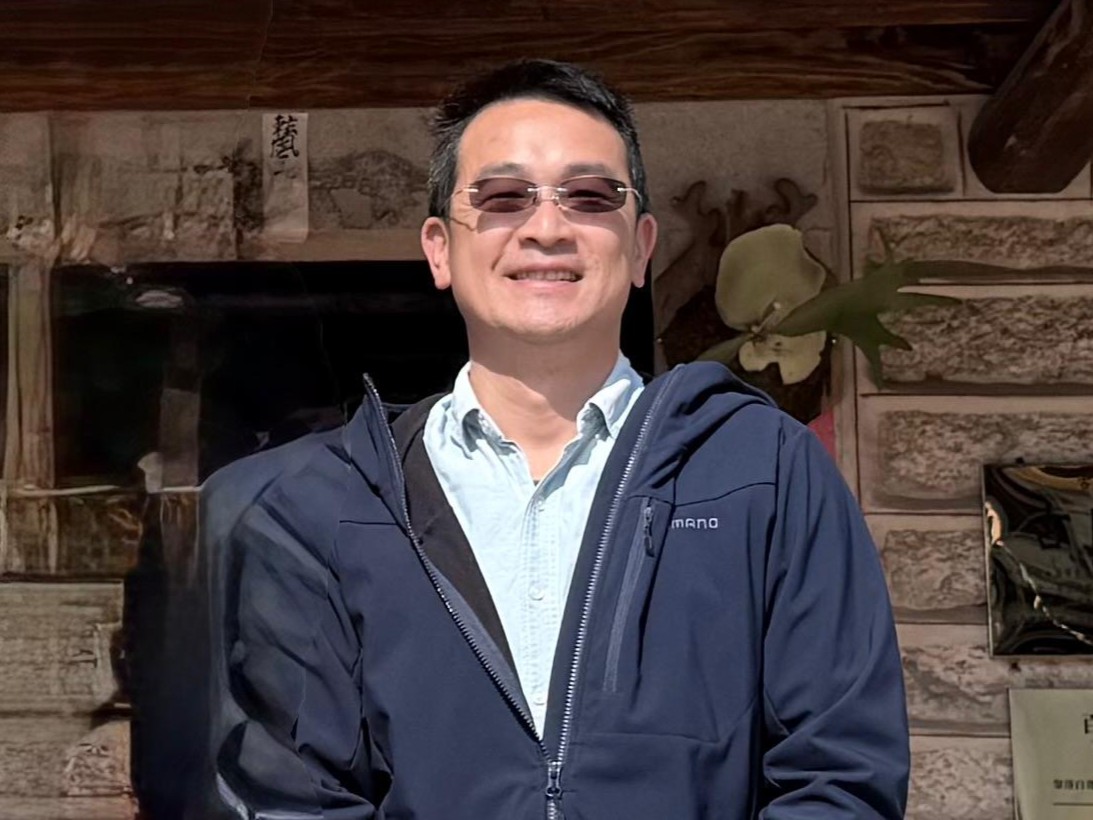
    “Kinmen is at the front line of geopolitical conflict,” said youthful local Councilor Tung Sen-pao, as he greeted visitors in a curio shop. “We are a small lens through which you can view a much larger conflict between the U.S. and China and Taiwan and China.” As he spoke, the sound of military target practice reverberated outside.

    Indeed, in recent months, China has been conducting the largest-ever live military fire drills all around Taiwan, and simulating a total blockade of its largest and smaller islands. An aggressive Xi refuses to rule out using force for “reunification.” Locals speculate what he might do by 2027, when he has ordered the PLA to be ready to invade (without making a commitment to do so).

    This month, the U.S. intelligence community’s 2026 Annual Threat Assessment report determined that China does not plan to invade Taiwan in 2027 (although the report is published by the Office of the Director of National Intelligence, Tulsi Gabbard, whose gutting of the intel community raises the question of whether its reports can be trusted).

    That trust factor becomes critical, as does American preparedness to respond if Xi does try to limit traffic or impose a full blockade of the Taiwan Strait, given its centrality to international trade.

    Taiwanese Councilor Tung Sen-pao.Courtesy of Mark F. Nelson

    An estimated 20% of global maritime trade passes through the Taiwan Strait, and it is the main maritime route for technology and consumer goods from South Korea, Japan, and Taiwan to U.S. consumers.

    The United States has no treaty commitment to defend Taiwan, only a strategic necessity to prevent its forcible seizure by China. Little Taiwan, with 23 million people, produces 90% of the world’s most sophisticated semiconductor chips. If cut off, it could be disastrous for U.S. civilian and military needs.

    Moreover, if Taiwan falls, the security of U.S. allies in Seoul, Tokyo, and Manila, with whom America does have military commitments, would be at deep risk.

    Equally troubling, Trump’s Mideast war has drained missile interceptor stockpiles, including Patriot missile batteries and other weapons that are vital to dissuade Xi from taking rash steps. It is hard to believe a president who has acted so fecklessly on Iran strategy has any adequate plan for handling a meeting with China’s leader, except possibly to cave on supporting Taiwan.

    Meantime, Councilor Tung admits that Kinmen will have little say over its future. “We are a tiny island,” he said with a wry smile. “There is now no way for us to counter an attack if China tries to invade Kinmen.”

    However, he also believes “a direct attack on Taiwan in a conflict is more likely than targeting offshore islands such as Kinmen.”

    The 50,000 or so permanent residents of Kinmen just hope the status quo can endure for a few more years.

  • ‘We’ve moved on’: Chester mayor and environmentalists object to LNG terminal proposal

    ‘We’ve moved on’: Chester mayor and environmentalists object to LNG terminal proposal

    Chester Mayor Stefan Roots came up with an idea as he waited to testify Wednesday during a Pennsylvania legislative committee hearing on a proposed gas export terminal.

    “I’m introducing a new initiative,” he said, “WMO — we’ve moved on .… This dangerous facility does not belong in a densely populated urban area like Chester. I’m calling on this committee to do the right thing: Protect some of the most vulnerable people in this commonwealth and say no to an LNG terminal in this region.”

    Roots spoke in response to a yearslong plan by Penn LNG to build a liquefied natural gas (LNG) export terminal in Chester or nearby in southeastern Pennsylvania along the Delaware River. The terminal would tap in to an existing pipeline to carry gas from the Marcellus and Utica formations to a site on the river. There, it would be compressed into liquid gas for export and capitalize on soaring global demand for LNG after Russian’s invasion of Ukraine.

    The hearing, held by the Pennsylvania House Environmental & Natural Resource Protection Committee, was stacked with opponents of the plan, saying it would create pollution and be highly dangerous to surrounding communities. Democratic State Rep. Greg Vitale, the committee chair from Delaware County, said proponents, including Franc James, CEO of Penn LNG, and union leaders were invited but declined.

    Penn LNG has not specified a location but has said it plans to develop a new plant to export 1 billion cubic feet per day of gas from the Marcellus Shale to Europe.

    At previous hearings held by Republican State Rep. Martina White, chair of the Philadelphia LNG Export Task Force, proponents spoke of the economic change the facility would bring, including jobs.

    Vitale said he convened Wednesday’s hearing because he feared the project would “proceed under the radar without sufficient public scrutiny.”

    Indeed, the mood Wednesday was strikingly different from past hearings as opponents told legislators an LNG facility would pose serious health, safety, and environmental justice issues.

    What are the plans for the LNG facility?

    In 2024, former President Joe Biden put a pause on LNG export approvals in 2024 to further study the issue. This year President Donald Trump has made reviving fossil fuel energy projects a priority.

    Reuters reported in June that James, the Penn LNG CEO, had met with officials at the White House over the project.

    Penn LNG wants to export 7.2 million tons a year of LNG from a site near Philadelphia to markets in Europe and Asia and is considering several locations other than Chester, such as in Trainer, Marcus Hook, and Eddystone, the news service reported.

    What are the issues regarding an LNG facility?

    Opponents believe such a facility would pose a major threat if there is an explosion or fire in an area already densely populated with people and polluting industrial sites. They noted that Delaware County’s Crozer-Chester Medical Center and Springfield Hospital were closed this year amid a bankruptcy auction.

    If there is a catastrophic explosion, they said, the nearest hospital would be 30 minutes away.

    Tracy Carluccio, an advocate with the nonprofit Delaware Riverkeeper Network, said the area is too densely populated for the facility, emphasizing that a major concern is the lack of a sufficient safety buffer, which the federal government advises for LNG terminals.

    She noted that similar facilities in the South are situated in areas with thousands of acres of buffer. She said a new site in the area would likely be around 100 acres.

    “There is no location within the Delaware River watershed, including the bay all the way down to the ocean, for any LNG facility to be located,” Carluccio said.

    Lauren Minsky, a visiting professor of health studies at Haverford College, said an LNG facility would exacerbate existing public health issues in the region.

    She said southeastern Delaware County has already been given a grade of “F” for particle pollution and a grade of “D” for ozone levels by the American Lung Association.

    She cited 2025 research by Johns Hopkins University showing that high levels of volatile organic compounds have been measured in communities near the fence lines of LNG facilities. She also said there are elevated cancer rates in adults living in the area’s riverfront communities, citing the People’s Cancer Incidence Screening Tool, which calculates average annual cancer incidence rates in Pennsylvania.

    “If we value the health of our families, our friends and neighbors, and throughout the commonwealth, we need to build a different future, one in which we can all thrive,” she said.

    Already industrialized

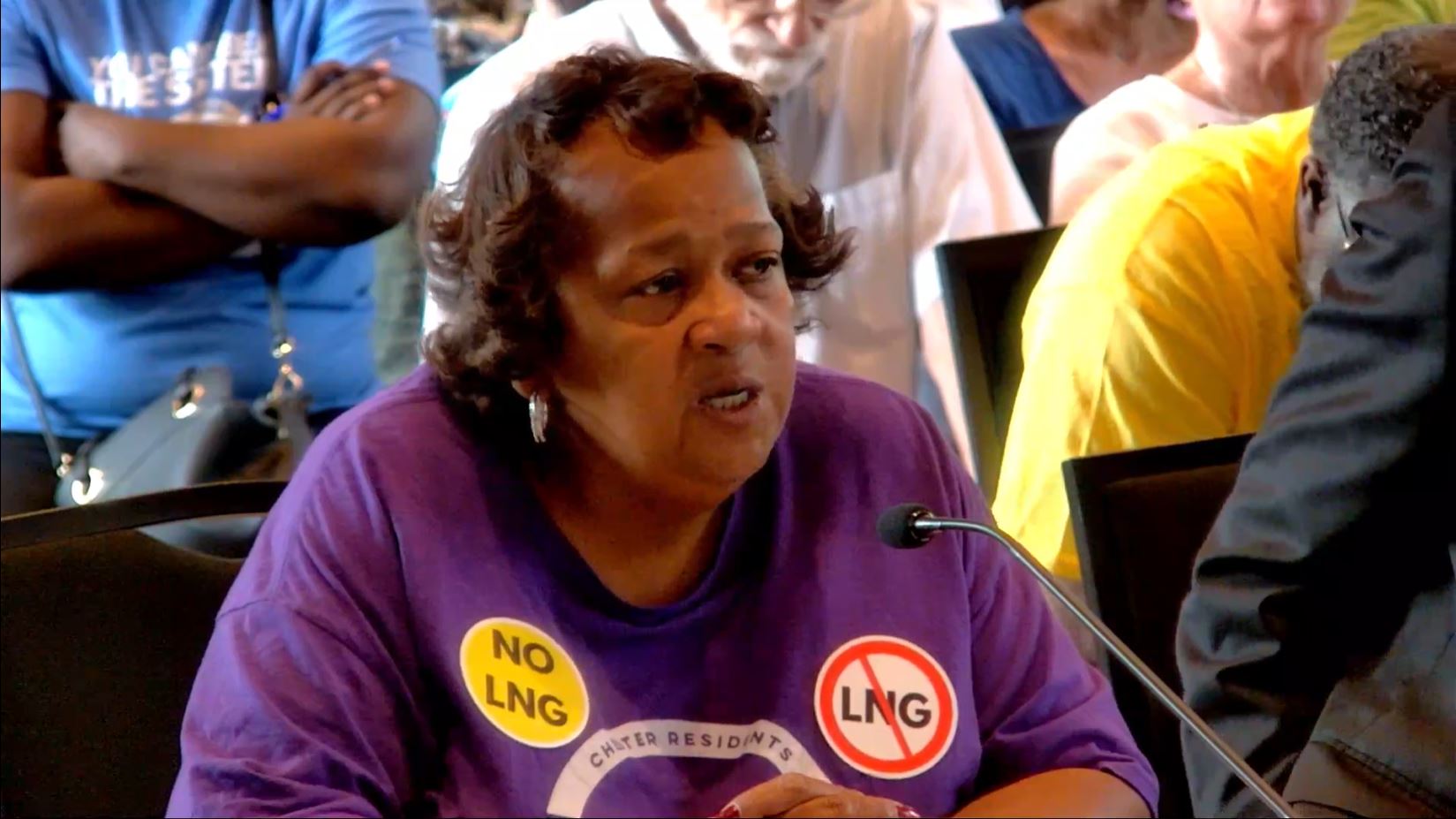
    Zulene Mayfield, an activist with Chester Residents Concerned for Quality Living, said older residents she knows have suffered heart conditions and cancers that she links to living in an already heavily industrialized area.

    Mayfield is a longtime opponent of the Delaware Valley Resource Recovery Facility owned by Reworld, formerly Covanta. The facility burns trash and converts it to energy.

    She said Chester, rimmed by heavy industry, lacks many things other communities take for granted, such as primary-care physicians or entertainment for children.

    “We are being told that we have to accept other industries” that no other communities want, Mayfield said.

    “I’m sitting here right now trying to contain my rage,” she said. “The jobs are temporary, but death is forever.”