Former City Councilmember Jannie Blackwell, who has been a fixture of Philadelphia politics for decades, is no longer a Democratic wardleader. State Sen. Sharif Street — weeks after losing the city’s heated congressional race — just became one.
And the Rev. Lewis Nash Sr., who in 2024 was removed as leader of the 47th Ward after The Inquirer reported he was recorded making anti-LGBTQ+ remarks, has returned to the post after being reelected in his North Philadelphia ward Monday night.
Meanwhile, the upstart group Wards That Work, which was backed by progressive activists and sought to recruit hundreds of people to run for committee openings in the May 19 Democratic primary, claimed victories in six wards that were previously seen as aligned with the party establishment or more centrist Democrats.
Despite those notable gains,fewer than one-third of Philadelphia’s 69 Democratic ward leaders are seen as closely aligned with the party’s left wing.
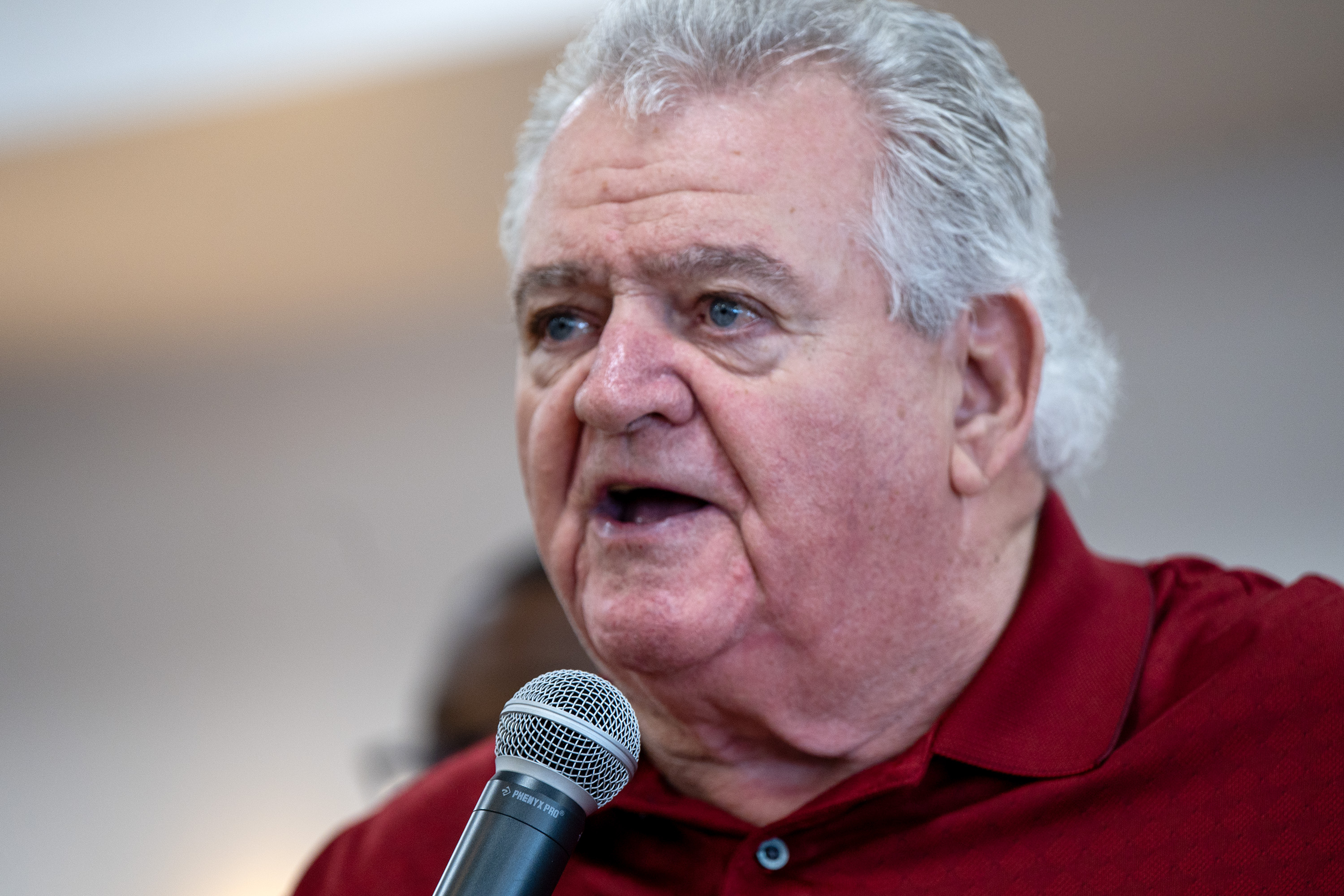
That means Bob Brady, who has led the local Democratic Party since 1986 and is seen by many as the embodiment of the political old guard, will likely coast to victory in party leadership elections — decided by the ward leaders — next week, securing an 11th term as chair of the Democratic City Committee.
The party’s internal politics have become a key battleground in the fight between progressive upstarts and the Democratic establishment. There has also been a renewed push to grow the number of “open wards” — those that allow committeepeople to vote on political endorsements rather than allowing ward leaders to decide unilaterally.
Brady, a former U.S. representative, has over the last few weeks struck a conciliatory tone regarding the party’s left wing after clashing with activists in a series of elections, most notably when the party sought to punish committeepeople who endorsed the elections of Councilmembers Kendra Brooks and Nicolas O’Rourke from the progressive Working Families Party.
“These labels — Working Families, Reclaim, socialist — the best labels they have that I love is they’re Democrats,” he said in an interview, referring in part to Reclaim Philadelphia, a group inspired by U.S. Sen. Bernie Sanders’ presidential runs that organized the local progressive movement’s first successful ward takeovers in 2018.
Now, he said, he is focused on unity as Democrats hope to make gains in this year’s midterm elections and defeat candidates aligned with President Donald Trump in future elections.
“We can come together and beat that nut in the White House,” Brady said.
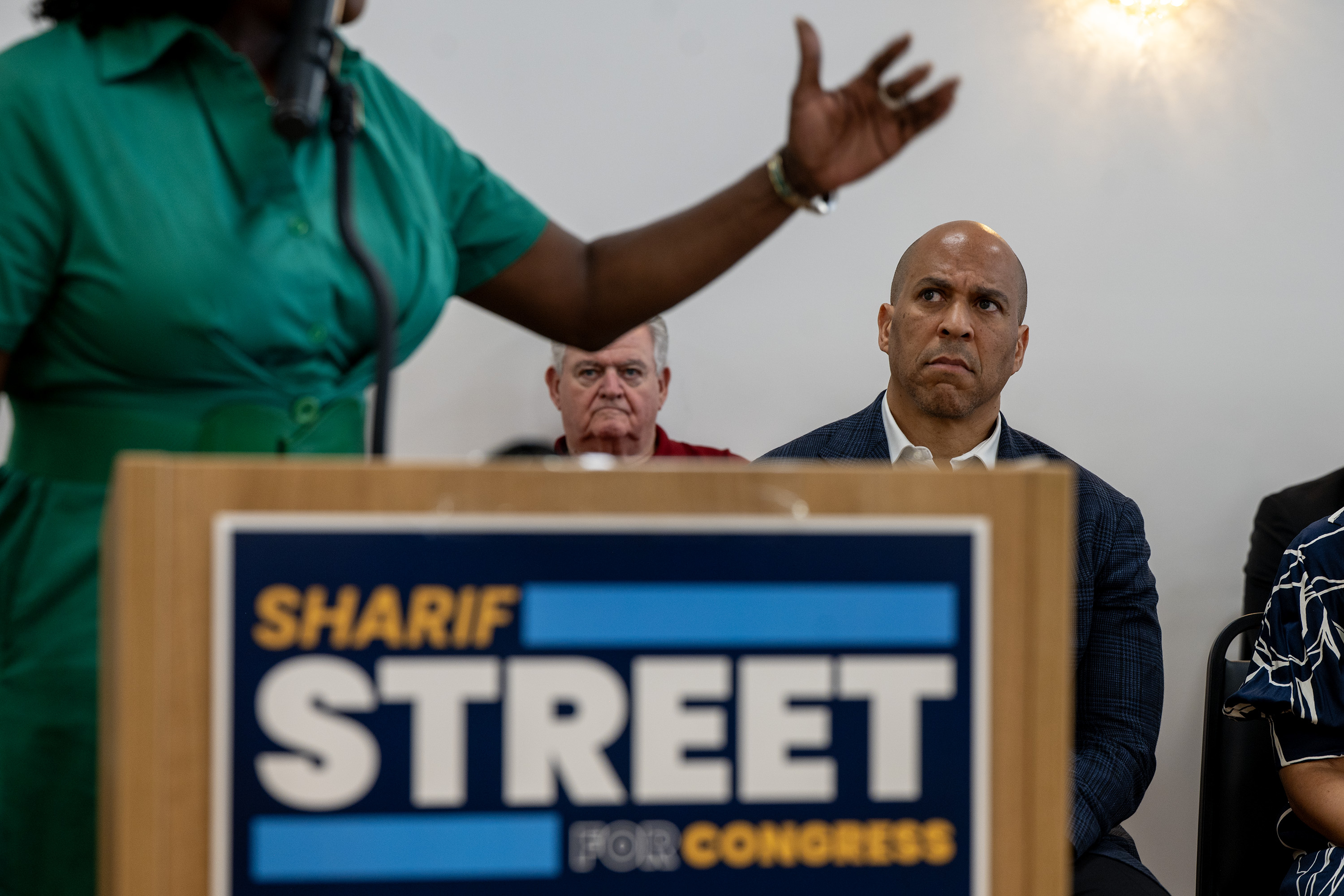
Philadelphia Democratic Party Chairman Bob Brady (left) and U.S. Sen. Cory Booker (right) listen as Mayor Cherelle L. Parker speaks in support of State Sen. Sharif Street at a get-out-the-vote rally at the Church of Christian Compassion in West Philadelphia Monday, May 18, 2026 the day before Tuesday’s Democratic primary election for the 3rd Congressional District.Tom Gralish / Staff Photographer
Earlier this year, however, Brady acknowledged that the Democratic City Committee funded mailers opposing some of the committeepeople backed by Wards That Work, and many on the left are still hoping for major changes in the local party.
District Attorney Larry Krasner, for instance, recently called on Brady to resign, and State Rep. Chris Rabb, a democratic socialist who last month won the Democratic primary for an open Philadelphia congressional seat, has emerged as a leading critic.
Rabb beat Street, the party’s endorsed candidate, in the 3rd Congressional District race, and has accused the city committee of neglecting the work of turning out the vote, instead concerning itself with backroom dealings among party insiders.
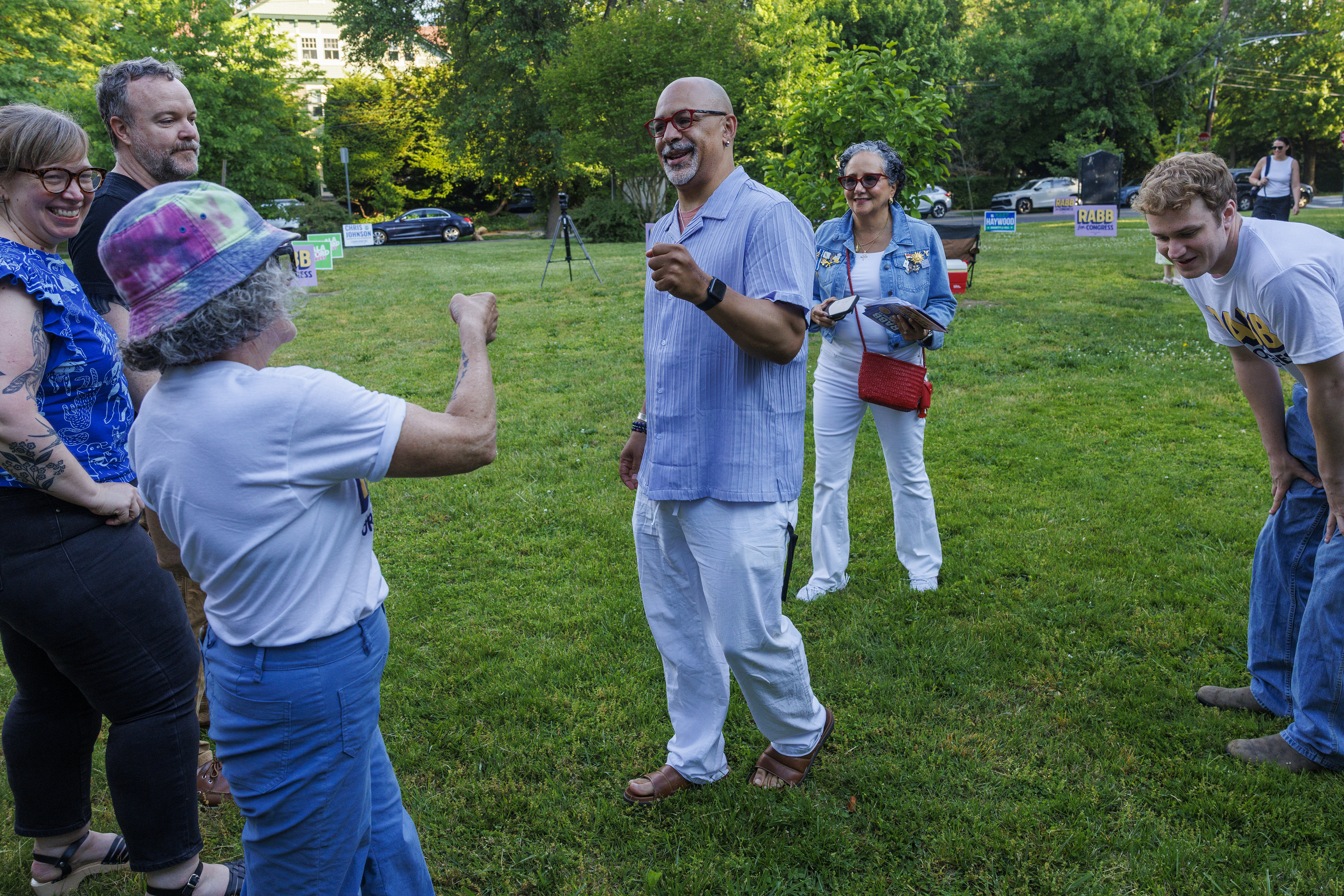
State Rep. Chris Rabb greets supporters on election day. He is arriving to his polling place to vote, Grace Epiphany Episcopal Church, Philadelphia, Tuesday, May 19, 2026.Alejandro A. Alvarez / Staff Photographer
Rabb has not explicitly called for Brady to resign. But he is now calling for a dramatic overhaul of the party, from its leaders to its bylaws to the city’s antiquated ward boundaries.
“What I’m asking for is for the ward leaders — whatever candidate is running for chair, whether it’s Bob Brady or anyone else — that they demand that their first order of business is to overhaul the bylaws by Labor Day [to focus] on building a local party built on transparency integrity and inclusion,” Rabb said in an interview last week.
Progressives make gains
On paper, Philadelphia’s Democratic Party structure is bottom-up. Every four years, during the primaries of presidential midterm cycles, registered Democrats elect two committeepeople from their precincts, as they did this year on May 19. The committeepeople then elect neighborhood-level ward leaders, and the ward leaders in turn elect the top officials in the city party, including Brady.
But in practice, many critics of the city’s old guard see a top-down reality, with Brady and other high-ranking city officials controlling the party’s agenda.
Progressives are hoping to wrest control of the party from the establishment or to force reforms that make it more hospitable to left-leaning candidates. But it remains an uphill battle given the diffuse nature of the party system.
Among the notable progressive wins in Monday night’s ward elections:
5th Ward (Center City): Ryan Alsayegh, a political consultant currently working for State Reps. Tarik Khan and Joe Hohenstein, unseated Mike Boyle.
25th Ward (Port Richmond, Kensington): Alexandria Mercedes Murphy, a neurophysiologist and volunteer with Reclaim Philadelphia, succeeded Tommy Johnson.
31st Ward (Fishtown, East Kensington): Molly Hartman, a staffer for Councilmember Rue Landau, faced no opponents in her bid to succeed Margaret Rzepski.
27th Ward (University City): Benjamin Moss-Horwitz, a staffer for State Rep. Rick Krajewski, won a contested race to succeed retiring ward leader Carol Jenkins, a party stalwart.
46th Ward (Squirrel Hill, Cedar Park): James Bridgeforth, a University of Delaware professor, ran an uncontested race to succeed Blackwell, who retired this year after defeating a progressive challenger for her ward in a contentious election four years ago.
In West Philadelphia’s 60th Ward, State Rep. Amen Brown, a centrist Democrat, was unseated by Lorraine White-Johnson.
White-Johnson, who had the backing of Wards That Work, said in an interview that she is not aligned with one faction and welcomes all Democrats. She added that she plans to explore opening up the ward but has not made formal plans to do so yet.
Philadelphia City Councilmember Cindy Bass on Thursday, September 11, 2025.Alejandro A. Alvarez / Staff Photographer
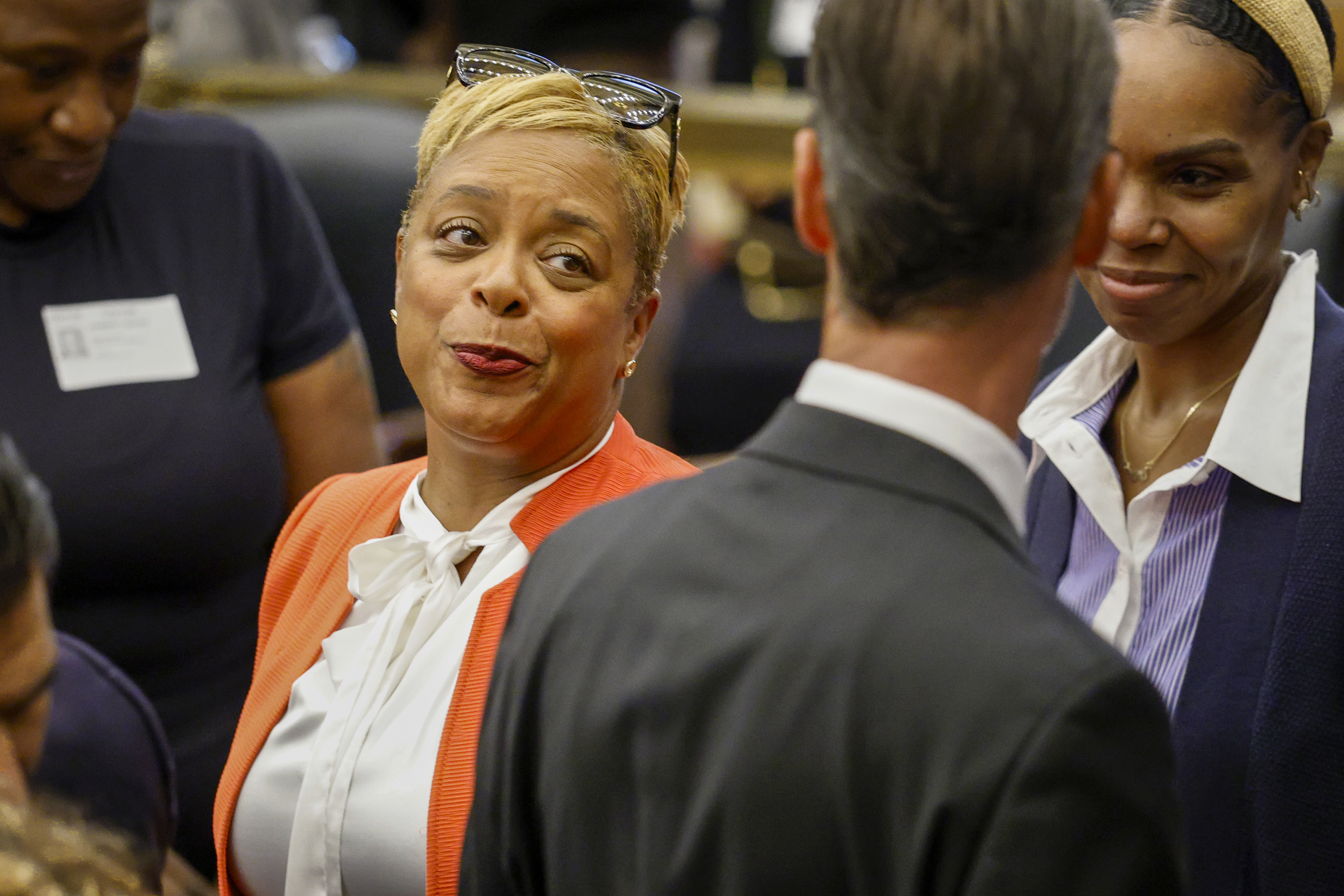
In Mount Airy’s 22nd Ward, Councilmember Cindy Bass declared herself reelected to a new term in a controversial move by saying she won a contested voice vote of committeepeople and denying motions for a roll-call vote that could have clarified the results. Her opponent, Octavius Price, was backed by progressive organizers and said he plans to challenge the election.
Some notable ward election results did not involve major ideological shifts.
Nash, who on Tuesday denied having made the anti-LGBTQ+ comments that previously cost him his seat, won a three-way race to reclaim the 47th Ward.
“I forgive everybody that was involved with those unforeseen circumstances,” Nash said in an interview Tuesday. “To anyone that was offended by the alleged comments, forgive me and the person who made those comments, allegedly and falsely, and let’s move forward.”
In a statement, Street said he would “take a back-to-basics approach, listening to my neighbors about their concerns and filling vacant committee member seats.”
“Last month’s election results galvanized my belief that we need to build the party from the ground up,” Street said in a statement. “We need to increase voter turnout in Black communities, like North Philadelphia, by demonstrating every day that Democrats are fighting for them.”
Staff writer Anna Orso contributed to this article.
This should be a moment for sports fans to be insanely happy. The finals are underway in both the NHL and NBA, and the matchups and the games so far have never been more compelling. Soccer’s World Cup — always the greatest show on earth — starts Thursday (see below). Yet, something seems off. If you wanted to attend Monday night’s Knicks-Spurs Game 3 at Madison Square Garden, it would have cost about $4,500 — not courtside, but in the last row. Equally insane and opaque ticket pricing has ruined the World Cup for many fans. Sports are supposed to be an escape from life’s problems, not a PowerPoint demonstration of them.
Orange-clad Ivorians bring soccer joy to a World Cup tune-up in Chester
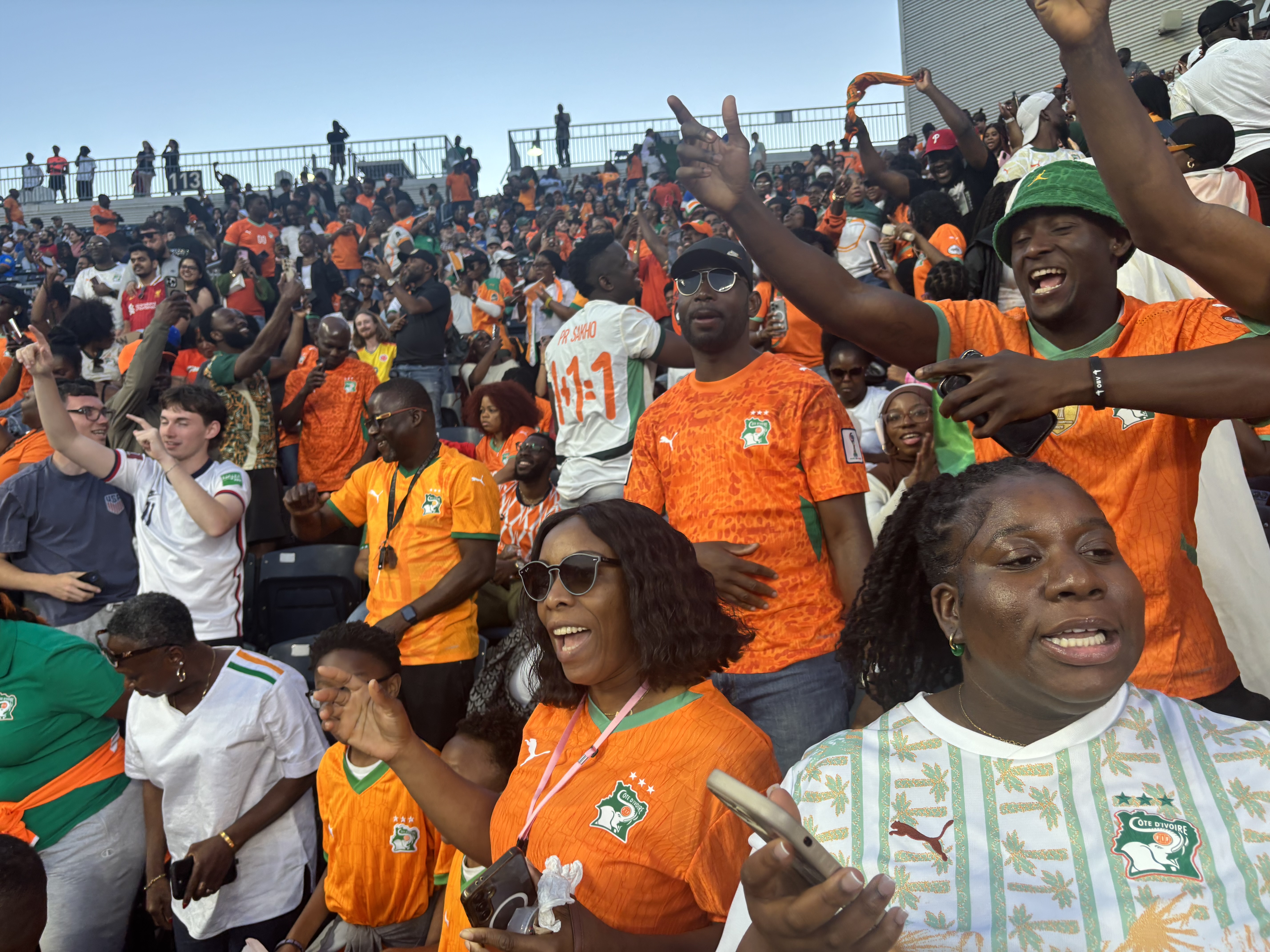
Fans of the Côte d’Ivoire national soccer team erupt in cheers during their team’s 2-0 friendly match win over the Philadelphia Union II squad at Subaru Park in Chester on June 8, ahead of the 2026 World Cup.Will Bunch
The cosmic vibes were not great Monday night. On the car radio, the news brought a new cycle of bombs dropping across the Middle East, and yet another onscreen meltdown from an American president who is stumbling toward his 80th birthday in confused anger. Reports from the eve of the much-anticipated return of soccer’s World Cup to North America were less about the game and more about U.S. immigration outrages, including a Somali referee turned away at the airport.
Then at about 6:59 p.m., I walked through a long tunnel in suburban Chester and into an undulating orange sea of pure joy.
On the green soccer pitch of Subaru Park, the national team from Côte d’Ivoire lined up in rapt attention as “L’Abidjanaise,” the national anthem of the West African nation, blared from a loudspeaker. But in the stands, fans wearing their native country’s iconic orange jerseys could not sit still, laughing and waving their cell phones, confirming with videos that their heroes were actually here, on U.S. soil.
For a you-can’t-beat-it ticket price of zero dollars, in a year of maximum sports greed, members of an African diaspora scattered along the Eastern Seaboard had driven up or down I-95 for hours to watch Côte d’Ivoire — also known by the anglicized Ivory Coast — easily win its World Cup tune-up match against the young American prospects of the Philadelphia Union II, 2-0.
Fatim Toure, 27, in her Côte d’Ivoire jersey, and her 26-year-old sister, Ferima, wearing her headwrap like many female fans at the stadium, had driven down from North Jersey to see the match, and were now beaming as they watched the kickoff from the tunnel as the sun set on a crisp, perfect June evening.
Fatim said the sisters “were filled with nationalism and pride, so we’re excited to see how it goes.”
The cheerfulness of the Côte d’Ivoire faithful who turned the 18,500-seat stadium bright orange — drowning out scattered dots of Philadelphians in the Union blue of the regular home squad — was infectious. It was truly what the world needs now.
Soccer fans like me have been waiting since 1994 with patience, then anticipation, and finally something bordering on dread for the World Cup — Planet Earth’s ultimate sporting event — to finally return to U.S. grass. With the opener in Mexico City (75% of the matches are in the United States, with the rest in Canada and Mexico) slated for Thursday, news about the World Cup and soccer’s corrupt, authoritarian-loving governing body, FIFA, has been dominated by grim headlines.
Indeed, the political rise of Trump — the stuff of cartoon satire not long after the first World Cup matches were played here 32 years ago — and his hostile border regime have sparked the greatest angst, and on the eve of the kickoff, these fears are coming true.
Top soccer referee Omar Artan from the African nation of Somalia was turned away at Miami International Airport on Saturday, denied the pinnacle of his profession by U.S. Customs and Border Protection agents for reasons still unknown. The star striker for the Swiss national squad was also initially denied entry (since reversed), while a star player from Iraq was interrogated for hours.
Players from Iran — the nation Trump decided to bomb back in late February and is still engaged in a murky war — are going ahead with matches in Los Angeles and Seattle, but U.S. officials are forcing them to immediately return to their base camp over the Mexican border in Tijuana and not stay here overnight.
Côte d’Ivoire, an ethnic melting pot of 32 million people on Africa’s Atlantic coast where French is the official language, hasn’t been immune to the xenophobic U.S. turn on immigration. The nation is one of several under a restrictive travel ban by the Trump regime, and efforts to allow visas for some soccer fans have been plagued by confusion, including a $15,000 bond that was announced, then canceled.
While Monday’s free friendly match was a gleeful coming-out party for a diaspora that’s rooted in East Coast urban neighborhoods such as Southwest Philadelphia, most acknowledged that fans back in their native Côte d’Ivoire, where soccer is the national obsession, could never afford the cost of coming here — or the risk.
“The ICE situation has killed the entire momentum of the World Cup,” a Liberian-born woman from Southwest Philly, who said she came out to support her African neighbors, told me. “America could have used this to boost the economy and generate income, but because of the whole ICE situation, a lot of people are afraid to come.”
No World Cup squad will be more deeply tied to Philadelphia than Côte d’Ivoire, which plays two of its three matches at the temporarily unbranded Lincoln Financial Field, starting against Ecuador on Sunday night. The team is training in Chester at the Union’s facilities and staying in Delaware. But with the cheapest tickets on StubHub for that Ecuador showdown starting at $836, few whom I spoke with will be attending the matches that actually count for Côte d’Ivoire’s long-shot dream of becoming the first African nation to win the World Cup.
“I wish, but I couldn’t get any tickets, unfortunately — it was too expensive,” Audrey Yao, a 32-year-old Ivorian American researcher from the University of North Carolina who was visiting Philly from Chapel Hill, told me. “So the opportunity to see the team today — that’s why I’m here.“
For many Ivorians, Monday’s free friendly was essentially their World Cup, and they partied accordingly — swaying and gyrating to piped-in African Zouglou music between breaks, and celebrating wildly as keeper Alban Lafont stopped a penalty kick for Les Éléphants against rising young Union star Cavan Sullivan.
As a die-hard — emphasis on the word die — Union supporter for their 16-year tortured history, I’ve seen some great matches in Chester, but I’ve never had so much fun.
Monday night wasn’t just how the World Cup should have, could have been. It was very much the way America is supposed to be — with people who were proud and happy to be here, with one foot still planted in their bright-orange African heritage as they lived and breathed that Philadelphia freedom, with no masked goon squads there to hassle them.
By the setting-sunlit banks of the Delaware River, there was no U.S. Immigration and Customs Enforcement, no need to raid the ATM, no bad news from outside the stadium walls. Just 90 minutes of the Beautiful Game.
Yo, do this!
Don’t expect a lot of high-class book or film reviews this month, as my waking nonwork hours are devoted to watching the World Cup. Three games to circle this week are Thursday afternoon’s opening match in Mexico City between Mexico and South Africa (3 p.m., Fox); the first U.S. match against Paraguay in Los Angeles Friday night (9 p.m., Fox); and Philadelphia’s first contest between Côte d’Ivoire and Ecuador Sunday night at 7 p.m. on FS1, or in person at “Philadelphia Stadium” if you can spare the cash.
What if the biggest story of our time isn’t Trump’s outbursts, or even the World Cup — but the growing inability of our young people to sit down and read a book from cover to cover? The latest installment in this genre comes from university professor Tyler Jagt in a searing essay for the Chronicle of Higher Education: “My Students Can’t Read.” Is the culprit the smartphone and now AI, or the lost COVID-19 years, or the teach-to-the-test dictates of the Common Core curriculum? There’s a strong case for “All of the Above.”
Ask me anything
Question: You recently wrote about data centers. Have there been any groups who have successfully gotten data center plans aborted? What do you think are the most effective ways for communities to fight back? — @silvermoonfafo.bsky.social via Bluesky
Answer: There are already signs that the backlash against these massive, noisy, energy-and-water-sucking data centers powering the artificial intelligence revolution is becoming one of the most successful grassroots movements in American history. I wrote this spring about how everyday folks in rural Montour County, Pa., successfully blocked an Amazon-backed site that started with a lot of support from elected officials. How’d they do it? I wish there was some big secret, but basically it was: showing up. They organized petitions and got big crowds to speak at county commission and zoning board meetings, and the politicians had little choice but to listen. They have money, but we have people. Never forget that.
What you’re saying about …
Well, you won’t know it from today’s soccer-heavy newsletter, but not all readers share my deep passion for the Beautiful Game. Most questions that aren’t some variation on how much do you hate Donald Trump, or John Fetterman, or the media get low responses, but my World Cup question about a favorite team besides the U.S. set a record for reader nonparticipation. Andrew Ross is rooting for Portugal because he moved there from Philly three years ago (and we are all jealous). Weekly correspondent Mary Ann Petro isn’t rooting for anyone and hopes the Yanks “go down in flames.” I’m rooting for the U.S. and Côte d’Ivoire, but you knew this.
📮 This week’s question: Few things are more outrageous these days than Donald Trump’s expensive desecration of Washington, starting with that $1 billion-or-whatever proposed ballroom at the White House. So what happens to the ballroom when the good guys retake power? Tear the whole thing down, or blow it up on national television? Or repurpose it as a community health center or midnight basketball court, or something else? Please email me your answer, and please put “Ballroom future” in the subject line.
Backstory on how an LA mayor’s race could blow up America
Everything about the doomed bid of a B-list reality-TV star, Spencer Pratt, to become a Republican mayor in the ultra-liberal enclave of Los Angeles has been utterly predictable. That includes his campaign that was big on the kind of social media stunts that an entertainment-oriented LA media loved, and short on substantive ideas for a city with big problems that are both chronic (its incurable homelessness) and acute (violent immigration raids, the 2025 wildfires). It also includes the fact that Pratt wasn’t likely to get more than the roughly 27% his highest-profile fan, Donald Trump, received in 2024 from America’s second-largest city.
And now the least surprising thing of all: The right-wing conspiracy theories that Pratt’s apparent defeat by two Democratic women of color — incumbent Mayor Karen Bass and progressive upstart Nithya Raman — is their long-sought proof of massive voter fraud, after Pratt had started the lengthy vote counting in second place.
It’s not just the usual loudmouths on X. Trump is taking the lead role, again, in spreading election lies, telling Kristen Welker of NBC’s Meet the Press in their now-notorious Wisconsin interview that the California voting was rife with fraud, and, when asked for any proof, blurted angrily: “No, they’re crooked … Just like you’re crooked.” When House Speaker Mike Johnson was asked about these lies on Capitol Hill, he only amplified them, stating that “everybody knows instinctively that something is wrong.” No proof, just “instincts.” Trump’s handpicked and apparently incompetent top prosecutor for Southern California is now threatening an investigation.
Here’s the thing. California’s elections are among the most democratic and inclusive in America. There is extensive opportunity for the convenience of mail-in voting, and voters are allowed to send these ballots right up until Election Day. Local officials then have up to 30 days to meticulously count all the votes. That means a) it takes longer to declare a winner in California than anywhere else, and b) it unexpectedly turns out there are significant differences between who votes by mail instead of in-person, and the shape of the race can change dramatically from election night to the end of the lengthy counting. To today’s GOP, any fair and measured vote-counting must be a conspiracy.
Why does it matter? Pratt loses and — according to some reports — moves out of LA. End of story, right? Not exactly. We don’t know yet what ridiculous claims California’s train wreck federal prosecutor will make about supposed election fraud, but it’s almost guaranteed that the Trump regime is looking to make California the bogus argument for extreme measures to influence the general election in November.
Sending in troops? Seizing election machines? Invalidating results? It will all be on the table for Team MAGA in November, and the fact that the former bad boy from MTV’s The Hills couldn’t get elected mayor of one of the nation’s most diverse and liberal cities will be cited as a reason. Spencer Pratt has landed a starring role in the worst reality show ever.
What I wrote on this date in 2023
Even though it was only three short years ago, memories of this week in early June back in 2023 are a little foggy — because the skies here in Philadelphia and around the Eastern Seaboard were filled with suffocating, thick smoky haze from wildfires up in Canada. Before digging up my column, I’d forgotten that a Phillies game at Citizens Bank Park was canceled because of the horrendous air quality. I wrote: “In a perfect world, [President Joe] Biden would have donned an N-95 mask Wednesday and spoken in front of the orange blur of the Statue of Liberty to declare unconditional war on fossil fuels.”
I’ve never had so many column ideas swirling around in my head as this chaotic start to the summer of 2026. Last week’s Sunday column looked at the openly fascist coming-out party for the former U.S. chief immigration raider Greg Bovino, who attended a European white supremacist conference. I said it matters a lot that he is now screaming the not-that-quiet part about U.S. xenophobia out loud. I shifted gears over the weekend and wrote about the growing panic of U.S. elites over grassroots opposition to data centers, which has sparked bizarre accusations of Chinese influence, as well as spying on activists by some police agencies. The 1 Percent can’t admit it’s really the noise pollution and higher electric bills.
Wrapping up this week’s theme in a bow, I have to say I’ve been blown away both by the quality and the quantity of The Inquirer’s coverage of the World Cup, which has truly matched, if not surpassed, some of the national outlets. Lead writer Jonathan Tannenwald, with a well-deserved reputation as one of the nation’s top soccer journalists, has been following the U.S. team in its Georgia training and at its warmup matches, profiling key American players like its star Christian Pulisic, and filing other human interest stories like a Penn soccer standout who’ll be taking the pitch for Haiti. Other Inquirer writers have contributed with in-depth features about everything from the role the late Tug McGraw’s widow played in bringing soccer to Philadelphia, to the storied history of the cinder (ouch!) pitch in Fishtown that brought Philly “attytood” to the sport’s slow rise here. That’s not to mention the comprehensive guide we published earlier this year. You won’t be able to read all this without a subscription, so now is the time to finally sign up. And let the games begin.
By submitting your written, visual, and/or audio contributions, you agree to The Inquirer’s Terms of Use, including the grant of rights in Section 10.
WASHINGTON — The Trump administration has warned more than 500 hospitals that they are failing to provide the public with basic pricing information — arguing that the lack of disclosure is keeping healthcare costs higher than they should be.
The Associated Press obtained exclusively the list of hospitals that since April have either received letters of warning or requests to submit plans to provide transparent pricing. Failing to comply with the warnings comes with penalties as high as $2 million annually for each recipient that doesn’t create a plan to post clear pricing data.
The letters are meant to fix a fundamental problem that patients, employers and insurers might not know ahead of time the cost of blood work, an imaging test or another form of treatment, and as a result pay more than they should have. AP has posted the list of hospitals that have received letters.
The list includesthree hospitals in Philadelphia: Fox Chase Cancer Center, Friends Hospital, and St. Christopher’s Hospital for Children. Other hospitals in the region that received letters were Phoenixville Hospital, Pottstown Hospital, and Reading Hospital, all owned by Tower Health, which also is a joint owner of St. Christopher’s children’s hospital.
Christiana Hospital in former President Joe Biden’s home state of Delaware received a warning letter. Rockford Center in Newark, Del., was also on the list.
A senior administration official who requested anonymity to provide the list said that President Donald Trump plans to tighten enforcement of price transparency standards made possible by a 2019 executive order signed by Trump. More hospitals are likely to receive letters regarding the absence of pricing data, the official said.
The warnings are the latest example of Trump leaning into the message that his administration is fixing the problem of healthcare expenses that can drain a family budget. It’s a calculated pitch ahead of the November midterms at a time when affordability is a top concern for voters. But Trump is also vulnerable on this particular issue, as his administration allowed subsidies to lapse for people buying insurance through the 2010 Affordable Care Act, widely known as Obamacare.
The push for price transparency could have a particular impact on Republican strongholds like Texas, Florida, Indiana, Alabama and Louisiana, which are among the states with the highest count of hospitals that have not provided adequate information on the costs of medical services.
Texas had 42 hospitals that received warnings, more than any other state. Baptist Medical Center in San Antonio, Texas, among the state’s largest hospitals with 1,585 beds, received a letter, as did the University of Texas MD Anderson Cancer Center in Houston.
Missouri-based Ascension, one of the country’s largest hospital systems, had 13 hospitals in multiple states that received letters. The Republican state of Indiana had 34 hospitals that received letters, nearly as many as the 38 in Democratic-led California, even though California has five times more people than Indiana.
The letters reflect two competing philosophies between Republicans and Democrats over how to handle the ballooning expense of healthcare, which is also a growing risk for the federal government’s own balance sheet.
Biden’s team put more emphasis on record enrollment in Obamacare programs that increased the percentage of people with health insurance. Biden also signed a bill that allowed the government to begin negotiating prices for some Medicare drugs directly with pharmaceutical companies. That program, which has continued into Trump’s second administration, has helped knock down the list prices of some of Medicare’s costliest drugs.
The Trump administration, by contrast, has focused more on trying to find ways to provide details on pricing — such as promoting the TrumpRx site for prescription drugs — betting that doing so will lead to better and more efficient spending on healthcare as the data gets crunched.
Critics have said Trump’s negotiated prices on prescription drugs might not produce genuine savings for many Americans with insurance, while the administration has estimated savings in excess of $500 billion over 10 years.
With the various lists of hospital prices, the administration wants providers to make it easier to access the files and to ensure the information in them is legitimate, instead of being based on estimates or omitting numbers for key procedures.
The House Committee on Energy and Commerce has a hearing planned for Wednesday on price transparency.
“Transparency is the foundation of a healthcare system that rewards competition based on cost and quality,” Shawn Gremminger, CEO of the National Alliance of Healthcare Purchaser Coalitions, plans to say in his prepared remarks.
It wasn’t always like this. I’m old enough to remember the Bicentennial celebration back in 1976. After being struck by the trifecta of the Civil Rights Movement, the Vietnam War, and Watergate, it felt as if the country was moving forward.
I lived in the nation’s capital, the epicenter of America’s Bicentennial celebration. Practically everything had a Bicentennial theme. Even the fire hydrants were painted red, white, and blue. I spent much of that hot, humid summer attending free Bicentennial-themed events such as the Smithsonian Institution’s Folklife Festival and the July Fourth fireworks display.
At our house in Brookland in northeast Washington, D.C., my parents hosted their annual backyard BBQ with the usual Southern favorites. My dad, a Korean War veteran, proudly hung the American flag from our front porch. Patriotism wasn’t code for MAGA back then. Political affiliation didn’t matter as much. Americans celebrated the nation’s 200th birthday together.
Those were happy times.
I shudder to think about what this year’s celebration of America’s 250th anniversary in Washington will be like with President Donald Trump living in the White House.
But that’s how it is with him. Trump is going to Trump. That’s why he’s furious about having his name ordered removed from the Kennedy Center for the Performing Arts.
It’s also why his scowling face appears on commemorative U.S. passports, National Park Service passes, and gold coins made specially for the 250th anniversary.
It’s not enough for him to have large banners featuring his image hanging from various government office buildings — he’d love it if he could get his mean mug on $250 bills, as well.
Take what happened after musical artists started dropping out of a series of concerts after learning it wouldn’t be the nonpartisan event they expected. The president went on Truth Social and trashed the performers, and also floated the idea of hosting a giant MAGA rally instead — featuring none other than himself.
“We should have a giant MAKE AMERICA GREAT AGAIN RALLY, for 250, instead of having overpriced singers, who nobody wants to hear, whose music is boring, and yet who do nothing but complain,” Trump posted, adding, “Cancel it.”
Cue the fireworks! Finally, the president and I agree on something. He’s right about canceling the musical performances. But in my opinion, he didn’t go far enough. Trump should cancel all of the Freedom 250 events, which have been billed as nonpartisan but were actually organized by a group formed by Trump.
At this great age, America deserves better than a president who has installed a massive red, white, and blue cage on the South Lawn of the White House for a UFC fight on Sunday, June 14, the day of his 80th birthday.
It’s problematic enough that America’s Founding Fathers were too sexist and racist to include equal rights for women, African Americans, and Native Americans in the Constitution, but fast-forward to today, and we have the griftiest of grifters in the Oval Office.
Trump has finagled it so that the IRS is “forever barred and precluded” from auditingTrump, his family, and the Trump Organization’s taxes prior to May as part of a deal to settle his $10 billion suit against the Internal Revenue Service.
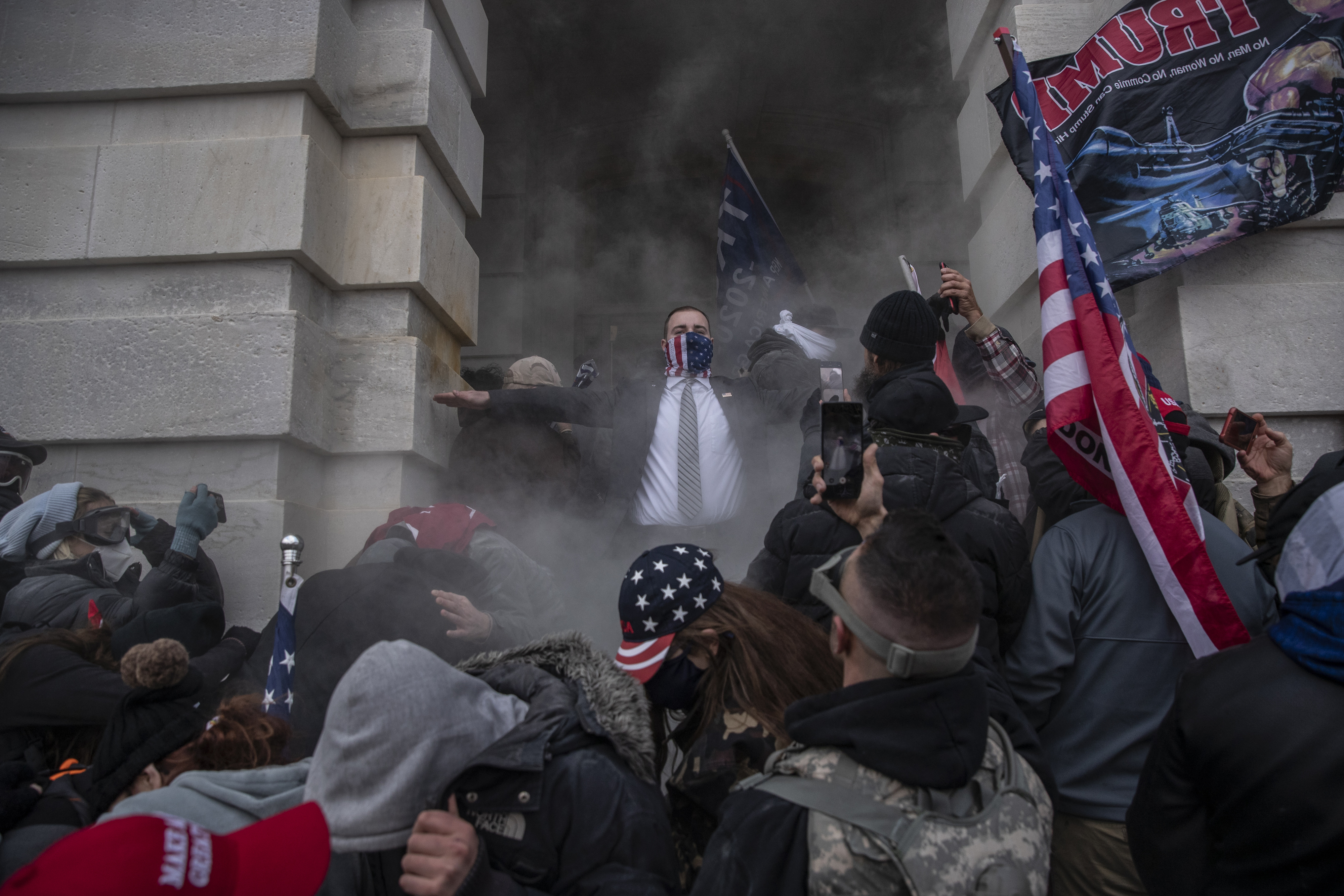
And if the courts don’t permanently block it, Trump intends to create a $1.776 billon slush fund using taxpayer money that could be used to compensate rioters who stormed the U.S. Capitol on Jan. 6, 2021, among other things.
Demonstrators storm and breach the US Capitol building in Washington on Jan. 6, 2021. Victor J. Blue
Meanwhile, migrants are being systematically rounded up, denied basic human rights, and packed into squalid detention centers such as Delaney Hall in Newark, N.J., and America is engaged in an intractable and unprovoked war with Iran that has sent gas prices and the cost of living skyrocketing for all of us.
Trump is focused on the wrong things: his daily stock trades, building a $400 million ballroom at the White House, rehabbing the Reflecting Pool, erecting a giant arch in D.C., and adding a promenade onto the Lincoln Memorial.
Instead of helping heal the country’s divisions and bring Americans together, the president does whatever is best for him.
His leadership has put America in a sunken place, and that’s nothing to celebrate.
The least-loved New Yorker since Boss Tweed, the Donald on Monday took it upon himself to ruin pregame plans and pleasures of thousands by becoming the first sitting president to attend an NBA Finals game.
It tracks: Trump always seeks to steal the shine from winners, and the Knicks, fueled by NCAA champs Jalen Brunson, Josh Hart, and Mikal Bridges, were winning like nobody’s business. They had won 13 consecutive playoff games and held a two-games-to-none lead over San Antonio when they took the court at Madison Square Garden.
Trump’s presence created traffic snarls and ingress nightmares, and he was buried by boos during the singing of the national anthem, but nobody in the joint paid him much mind after that. He’d wanted to sit with Spike Lee and Larry David courtside, but the Secret Service (and perhaps his more sane advisers) persuaded him to retreat to a suite. There, in the shadows, he rested as the streak ended, a 115-111 downer in Game 3.
Later, Trump blamed Karl-Anthony Towns. He wasn’t wrong.
Look, it wasn’t all Trump’s fault, or KAT’s fault. It wasn’t anybody’s fault, really.
Well, maybe it was the refs’ fault. That’s what Knicks coach Mike Brown claimed.
“They outshot us 14-3 [from the line] in the third quarter. Maybe we did foul. But they fouled, too,” Brown said. “If they do this, 24-8 [in the second half], in Game 4, it’s going to be tough to win.”
It will be interesting to see the league’s reaction to Brown’s comments, since he was fined twice in 2024 for interactions with officials before he was fired by the Kings.
“That didn’t cost us the game,” said Towns, who finished with just 11 points. “We turned the ball over. We didn’t execute. We didn’t do the things that got us 13 straight wins in a row.”
It was a very non-’Nova-Knicks night, the sort they cannot afford against an assemblage like San Antonio’s.
The Spurs won nine more regular-season games than the Knicks. Third-year center Victor Wembanyama finished third in MVP voting this year and was Defensive Player of the Year, De’Aaron Fox was an All-Star this season, Keldon Johnson was this season’s Sixth Man of the Year, and guard Stephon Castle won Rookie of the Year last season.
Wemby had 32 points, eight rebounds, six assists, and three blocks. Castle has 23 points. Fox had the dagger and eight assists.
They are a very, very good team.
The Knicks trailed by five with 9 minutes, 18 seconds to play when Brunson, who leads the Knicks like he led the Wildcats, returned to the game. That set the scene for another comeback, like Game 1 in the Eastern Conference finals against the Cavaliers or Game 2 on Friday in San Antonio, Texas. Those comeback wins branded these Knicks the same way the gritty, deep Villanova teams were branded when the won NCAA titles in 2016 and 2018 under Jay Wright.
Alas.
The Knicks got 32 points from Brunson. They got 16 points and nine rebounds from Josh Hart. But they got just two points from Bridges, the hero of Game 2 just three nights before.
Alack.
Whether it was the 13-game run, the 53-year drought, or the presence of the president, Brunson & Co. were making no excuses.
“There are going to be a lot of distractions, positive and negative,” Brunson said. “Most important is how we compose ourselves as a team, and we have to make sure we have accountability as a team.”
Brunson hit a putback-and-one, a jumper as the shot clock expired, and a three-pointer with 33.7 seconds to play that cut the lead to three points, but Fox’s jumper with 12.2 seconds and two late free throws from Castle were just enough.
You felt early that not even the steely pedigree forged on the Main Line almost a decade ago would be enough Monday.
Wembanyama had nine points and a blocked shot in the first five minutes. Bridges committed two fouls and a turnover and had his shot blocked in the first four minutes.
That’s how the Spurs built a double-digit lead. A constellation of stars of stage and screen looked on, hoping for a sweep, the sweetest possible end of a 53-year title drought. From Lee to David to Ben Stiller, they all felt it. The Knicks seemed … affected. Tight. Flat.
Mostly, anyway.
The Knicks took their first lead when Brunson — who else — canned a 25-foot three-pointer with just over four minutes left before halftime. He hit it over Wembanyama, reluctant to extend his defense too far, lest Brunson burn him to the basket again.
About a minute later, with the Knicks down by four, Castle bulldozed Brunson while pursuing an offensive rebound. Hart scored on the ensuing possession and tied it at 54. Hart’s trey gave the Knicks the lead again, and Brunson dropped another 25-footer on Wemby. Brunson’s feed with 9.6 seconds soon sent Towns to the line, where he made both free throws, the end of a 14-3 run, and the Knicks’ halftime lead was 64-57 after they dominated the second quarter, 42-24.
But the Spurs won the third quarter by eight, scored the first six points of the fourth, and held off the valiant ’Nova Knicks.
They resume the series Wednesday, but don’t expect Trump to be back.
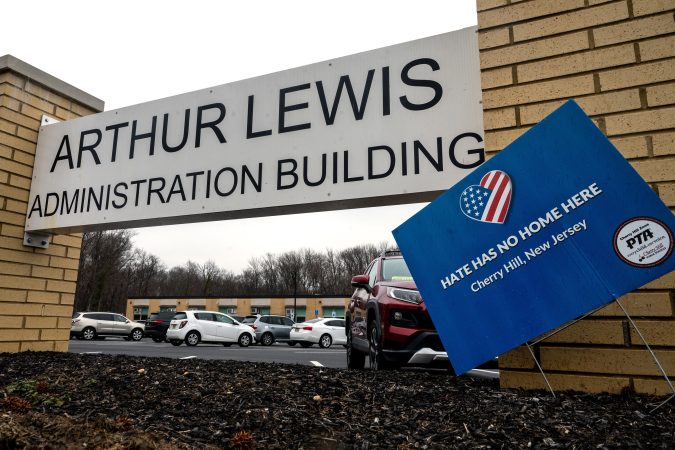
Five years later, the board debated whether the course should be dropped as a requirement in light of budget problems in South Jersey’s largest school system.
And while officials have assured the community that the course will remain part of the curriculum, the debate highlights the difficult choices that districts are facing during a tough budget year. In Cherry Hill, the board approved a budget that will cut 70 positions, increase class sizes, and raise property taxes to eliminate a $29 million deficit.
As that budget process played out this spring, board member Renee Cherfane suggested the district could reconsider African American history if future budget cuts are necessary. The idea drew pushback from students as well as community and civil rights leaders, who pledged to fight any attempt to roll back the requirement.
“Black history is an essential part of American history,” said Ma’isha Aziz, president of the Camden County East branch of the NAACP. “Teaching it helps ensure students gain a fuller understanding of the nation’s past and present.”
Cherry Hill High School East senior Skylar Adams, a member of the African American Cultural Club, said changing the course would send the wrong message. Black students make up about 10% of the district’s 11,000 students.
“In the world we live in today where the rights and voices of African Americans are constantly being challenged and minimized, now is not the time to make our history seem less important,” Adams told the board. “Making this course an elective instead of a requirement sends a message that learning about Black history is optional and not important enough for every student.”
Superintendent Kwame Morton, the district’s first Black schools chief, praised students who made passionate appeals to the board to keep the course. He reassured them that the course was not in jeopardy.
“The board is not at this point taking action on any recommendation to eliminate that course. That’s not what’s happening,” Morton said.
Cherry Hill Superintendent Kwame Morton.Alejandro A. Alvarez / Staff Photographer
Here is what to know about the debate around the course:
How the issue unfolded
Cherfane sparked a heated discussion during a board meeting last month when she suggested making African American studies an elective instead of a required course. She cited the district’s $29 million deficit, which prompted layoffs and cuts.
In the event the board has to cut additional teaching positions in the future, having that class as a mandate limits options, she said. About 800 students are required to take the course every year, she said.
“It’s not about offering the class. It’s about requiring it,” Cherfane said. ”We wouldn’t be getting rid of it entirely.”
Other board members asked Cherfane to explain why she targeted that class. The district offers other electives, such as multivariable calculus, a high-level math course that few students take, that are not required by the state as a graduation requirement, said board member Miriam Stern.
Board president Gina Winters said any review examining potential cost savings should not be specific to one class. The African American history class was pitched by students and supported by the community, she said.
“I understand that it’s a tight budget, but we also have a responsibility as a board to educate our children on the things that our community thinks are important,” Winters said.
Cherfane did not respond to messages seeking comment.
How did the class get started?
By an 8-0 vote, the board approved the course as a graduation requirement in February 2021. Students who organized Black Lives Matter protests sparked by the killing of George Floyd in 2020 in Minneapolis by a white police officer asked for the class. They said Black history was mostly taught only in February.
Cherry Hill became the first district in the state with the requirement, according to the New Jersey Department of Education. New Jersey and Pennsylvania require history to be taught, but districts decide the content of their courses. Philadelphia and Camden schools also mandate a course in African American history to graduate.
The district developed a curriculum for a semester course and began offering it for the 2021-22 school year for freshmen and sophomores at its two comprehensive high schools. The district hired two teachers.
Teacher Jennifer LaShure said the course tackles topics that previously received little attention in U.S. history classes. She has included units on early African culture, arts, systemic oppression of today, anti-racism, and activism.
“I worry about the message that it sends to the students that something as important as history can be taken away,” LaShure told the board. “We see it all over, but it’s scary to see it happening right here.”
Community pushback
Former board member Corrien Elmore-Stratton, who was the only Black member of the board that approved the course as a requirement, said the need for it remains.
“… We are already having spaces and places where our students are being erased, torn down, no longer heard, misunderstood, and DEI has become a dirty word,” she said,referencing President Donald Trump’s attacks on diversity, equity, and inclusion. “It really is disheartening to hear that anyone on this board of education to think of to do.”
Carole Roskoph, a retired educator and former Cherry Hill council member, said she was “perplexed” by the discussion.
“It doesn’t make sense to me,” she said.
Motion withdrawn
Following the discussion, Cherfane made a motion to refer the issue to the policy committee to review possibly adjusting the graduation requirement for African American history. She withdrew the motion midway through voting, after a board member expressed unreadiness, and the discussion abruptly ended.
Cherfane did not reintroduce the motion at the May 26 meeting and it was unclear if the matter would be addressed again.
Other cuts, however, are moving forward in Cherry Hill and will take effect next school year.
District Attorney Larry Krasner said Monday that, in the more than two years since Mayor Cherelle L. Parker was sworn in, he has only met with her three times.
And despite his visit to her City Hall office on Monday in what Krasner described as “the spirit of hopeful collaboration,” that number did not grow to four.
The district attorney, along with a phalanx of staff and television cameras, walked across the street from his downtown office to the mayor’s suite on the second floor of City Hall, armed with a letter lamenting his budget as inadequate. In it, Krasner wrote that he needs an additional $5.6 million from the city to bolster shootings investigations, domestic violence prosecutions, and victim services.
Asked why he was delivering a letter to Parker in person, Krasner said: “There is nothing new and nothing inappropriate about civil rights leaders, activists, and politicians getting the word out.”
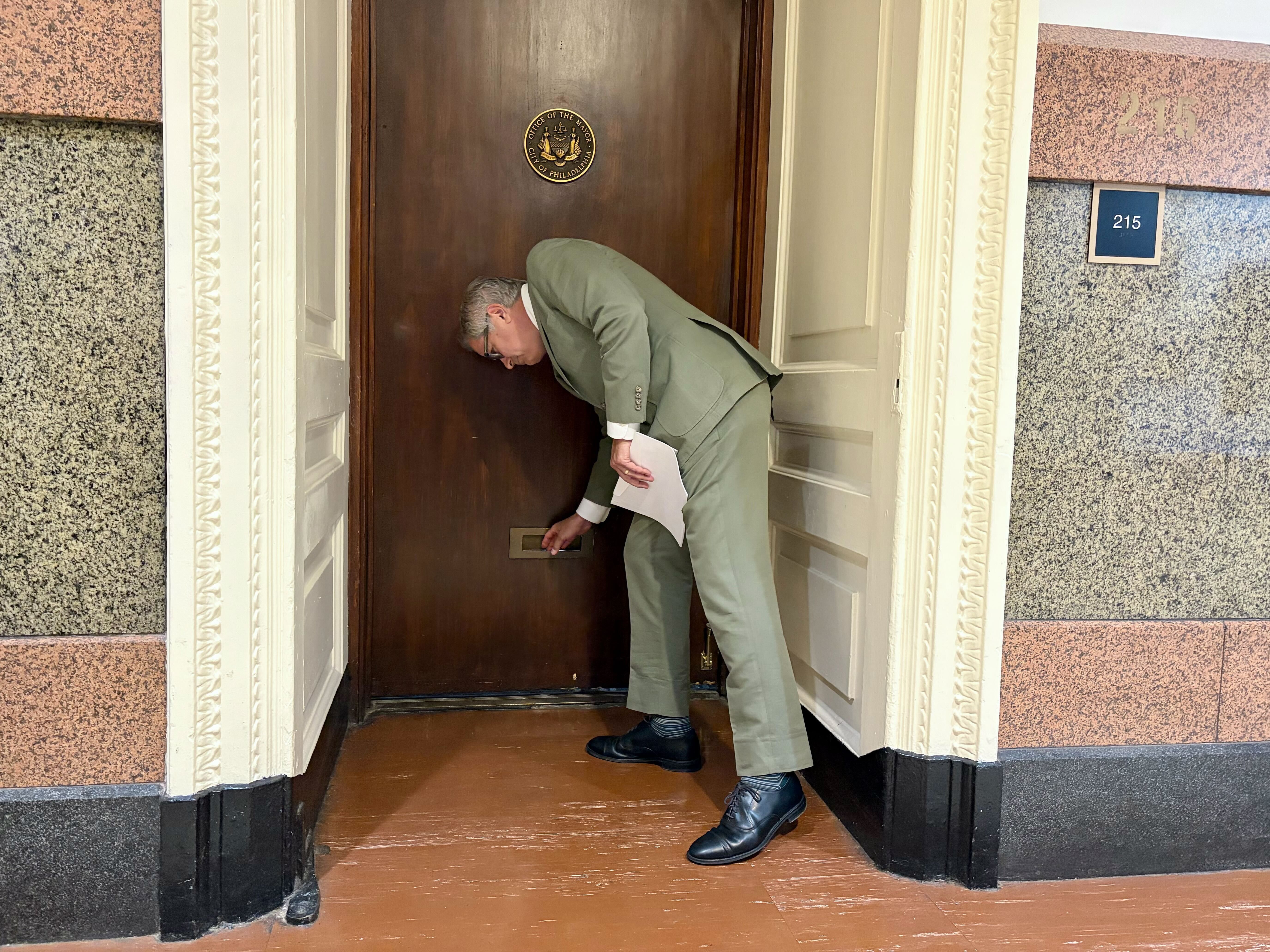
The mayor did not open her door. Krasner pushed his letter through a mail slot.
District Attorney Larry Krasner delivers a letter to Mayor Cherelle L. Parker’s office after hosting a news conference to ask the mayor to consider allocating millions more dollars to his office this year.Anna Orso
The public plea came just days after City Council gave the green light to a city budget for the fiscal year that begins on July 1, including a record-high $62.4 million allocation to the District Attorney’s Office, which is about $3 million more than it received last year.
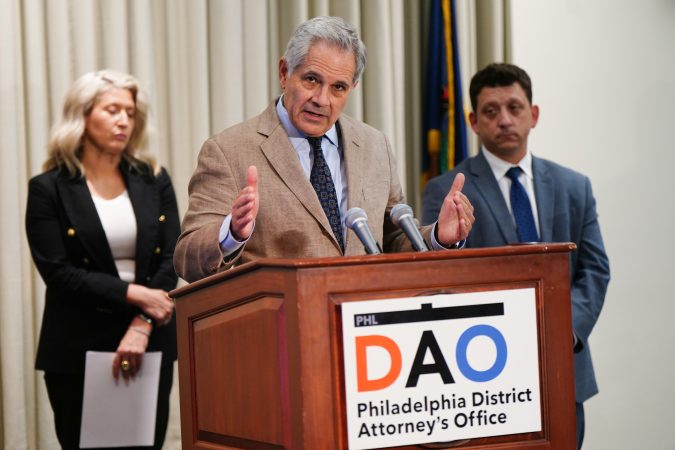
Krasner, who called a news conference at the district attorney’s office before his trip to City Hall, said his office needs additional funding to “prevent potential layoffs,” but he did not specify the number of jobs on the line. The city budget will be up for a final vote in Council on Thursday, and it is unlikely to substantially change before then.
In response to a request for comment, a spokesperson for the mayor shared data showing that the District Attorney’s Office budget has increased by 55% over the last five years.
“Am I running for these offices today? No. Do I have a plan to run for these offices today? No,” Krasner said. “But if you’re asking me to say that I would never, under any circumstance, no matter what was going on locally or nationally, consider some other office, it would be foolish for me to completely rule out those possibilities.”
He is one of several people who progressive leaders in the city may look to next year to challenge Parker, who is backed by much of the city’s Democratic establishment and organized labor. She has been criticized by some on the left for her law enforcement-driven initiatives to address the Kensington drug market and her cautious approach to President Donald Trump.
The mayor’s race became even more attractive to Philadelphia’s left-wing faction of the Democratic Party last month after State Rep. Chris Rabb, a democratic socialist, won the party’s nomination for an open seat in Congress.
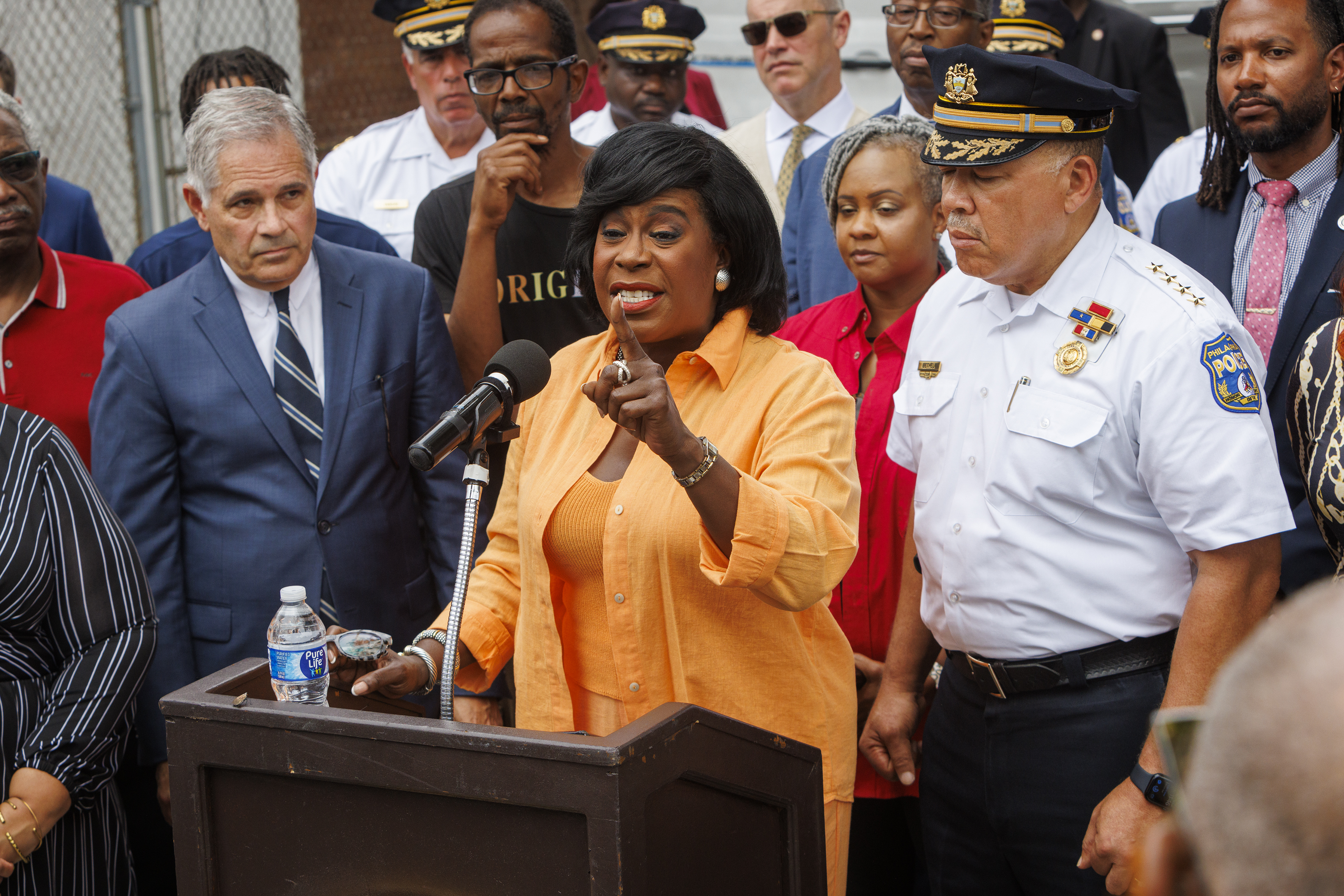
Mayor Cherelle L. Parker is flanked by Police Commissioner Kevin Bethel and District Attorney Larry Krasner (left) on July 22, 2024.Alejandro A. Alvarez / Staff Photographer
Krasner’s public criticism of Parker this week is also notable because he and the mayor have, despite not meeting regularly, attempted to maintain a veneer of civility.
While Parker ran for office on a tough-on-crime message that could be seen as in tension with the district attorney’s progressive platform, she has not directly criticized Krasner. She also campaigned on a promise of close collaboration with other governmental entities after conflict between Krasner and former Mayor Jim Kenney spilled into public view on several occasions.
Krasner on Monday insisted that his trip across the street to Parker’s office was not intended to inflame hostilities. He cited his letter, which began with thanking the mayor for her “leadership, vision, and goals.”
The letter ended with Krasner saying that the city’s leaders should “truly model the peace and unity we hope to see within our communities.”
He added: “We can achieve more together!”
Staff writer Ellie Rushing contributed to this article.
KINMEN, Taiwan — From this tiny outer island of Taiwan, which lies less than two miles from the Chinese mainland, one can view the high-rise towers of the Chinese port city of Xiamen.
Looking out over an extensive beach and through the mist at China, I realize Xiamen could probably be reached from where I stand by a good swimmer. From this vantage point, it’s easy to imagine Chinese leader Xi Jinping pursuing his obsession to “reunify” with the self-governing island democracy of Taiwan — whether by so-called peaceful means, by blockade of the Taiwan Strait, or using more direct force.
I traveled to Taiwan because President Donald Trump was supposed to meet Xi in Beijing this week. POTUS had previouslysignaled he might weaken long-standing U.S. support for Taiwan out of his desire to cozy up to the Chinese leader and sign an advantageous trade deal. Moreover, the White House has frozen a deal Trump had already endorsed for Taiwan to purchase around $11 billion to $13billion worth of U.S. defensive weapons, so as not to upset Xi before the visit.
But Trump’s poorly planned war on Iran (he apparently never considered how Tehran would retaliate) has caused a postponement of the long-awaited trip until mid-May. As the erratic POTUS sinks into a potential Iran quagmire, lacking any cohesive strategy to thwart Tehran’s partial closure of the Strait of Hormuz, he is even less likely to focus strategically on the Taiwan issue.
Yet, any potential Chinese blockade of the Taiwan Strait in the next few years could present an equal or even greater security threat to the United States than Iran’s blockage of the Strait of Hormuz, through which about 20% of the world’s oil trade flows.
To understand why, it helps to know a bit about Kinmen’s history.
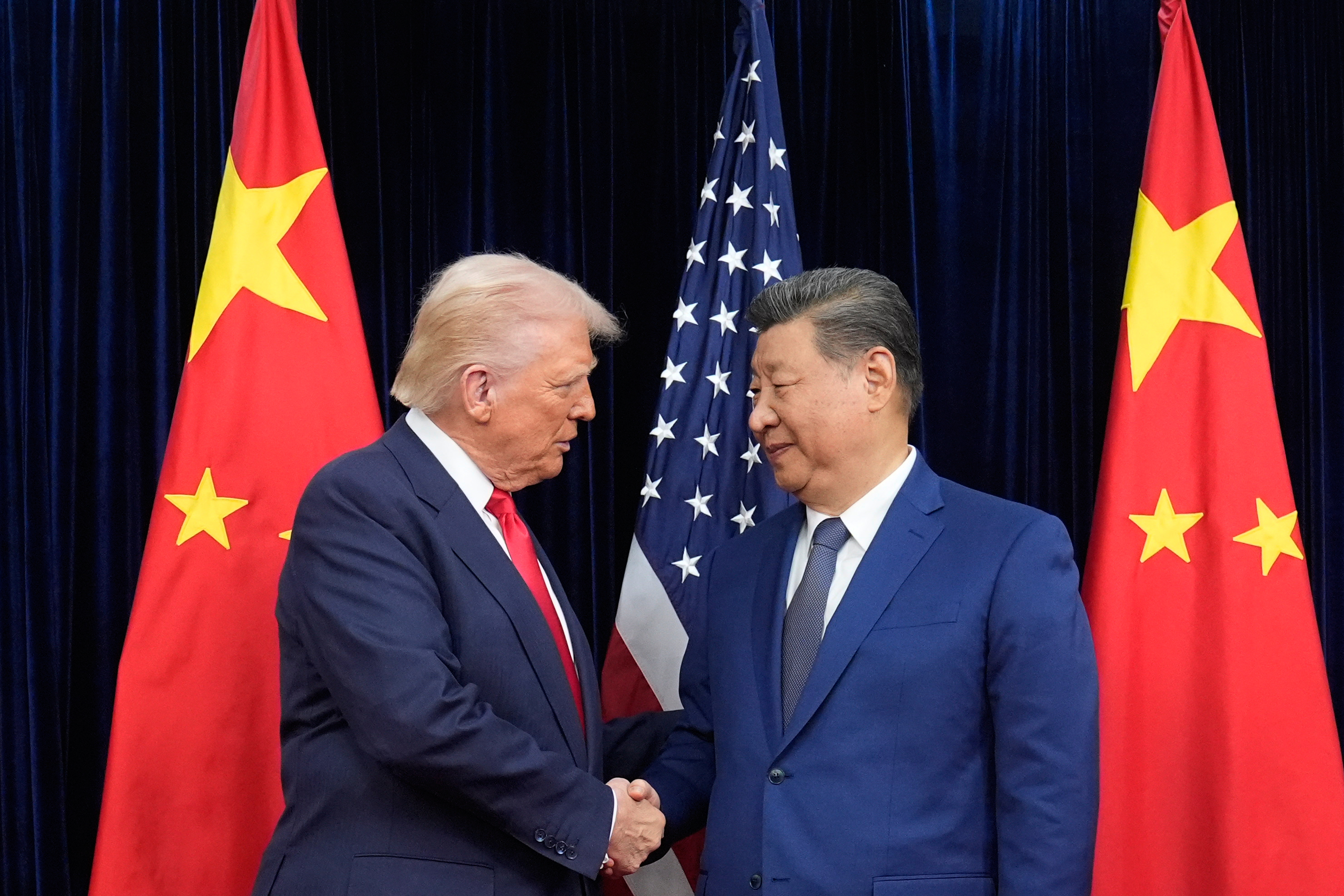
President Donald Trump and Chinese President Xi Jinping shake hands before their meeting at Gimhae International Airport in Busan, South Korea, in October.Mark Schiefelbein
Until 1993, Kinmen was off-limits to visitors because it was a closed military zone, and locals lived under martial law from 1956 to 1992. Most of the 120,000 Taiwanese troops have been withdrawn, although a small garrison remains.
Yet, an endless row of rusty anti-landing spikes along the beach line stand as a reminder of the 1949 civil war Battle of Guningtou between the Communist People’s Liberation Army (PLA) and Chiang Kai-shek’s Nationalists, who were defeated on the mainland and had retreated to Taiwan. With U.S. backing, the Nationalists set up the Republic of China (ROC) government on Taiwan’s main island, roughly 110 miles from Kinmen, and held off the PLA.
Those Americans who are old enough may recall the 1958 battle of Quemoy, as Kinmen was formerly known. During that battle, massive PLA shelling along with a Chinese blockade of the Taiwan Strait tested U.S. support for the ROC government. But President Dwight D. Eisenhower sent ships to break the blockade and repel the missiles. A local war museum displays huge photos of U.S. troops arriving on Kinmen.
Since the U.S. formally recognized the Beijing government in 1979, and cut diplomatic ties with Taipei, Taiwan has existed in a diplomatic grey zone. China treats it as a renegade province and only a handful of countries recognize it as an independent country.
But the U.S. insists that differences between Beijing and Taipei be settled peacefully, and is committed to providing Taiwan with defensive weapons. Moreover, U.S.-Taiwan relations are close: few Americans realize that Taiwan is America’s fourth largest trading partner, due to its technological prowess.
As for Kinmen, these days China tempts its youth with the glitzy shopping malls of Xiamen, reachable by a 30-minute ferry ride, while a massive new international airport, built on a man-made island, cuts the sea distance between China and Kinmen to roughly one mile.
Kinmen has become a tourist destination, with its beaches, war museums, and preservation of historic Qing dynasty homes. Mainland Chinese visitors pour into Kinmen, and the Beijing government heavily promotes the purported advantages of “reunification” to the Kinmen public — including jobs and entertainment sites — as part of its effort to win Taiwan citizens to its side.
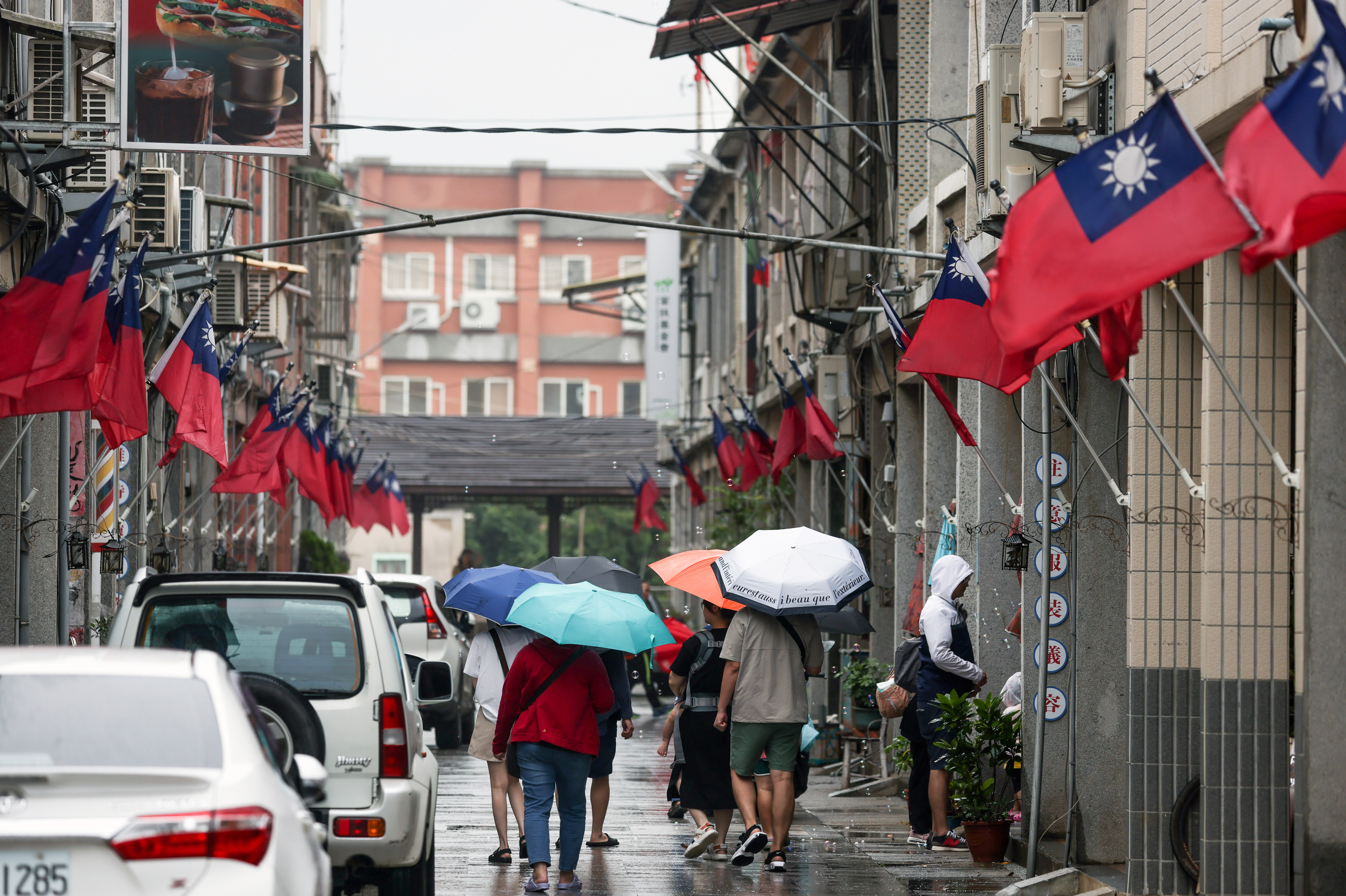
Taiwanese flags in Kinmen, Taiwan, in 2024.I-Hwa Cheng
So it’s not surprising that the Taiwanese government has blocked construction of a bridge that would connect the airport directly to Kinmen, presumably to prevent both the escalation of propaganda and the security threat of a direct link.
“Kinmen is at the front line of geopolitical conflict,” said youthful local Councilor Tung Sen-pao, as he greeted visitors in a curio shop. “We are a small lens through which you can view a much larger conflict between the U.S. and China and Taiwan and China.” As he spoke, the sound of military target practice reverberated outside.
Indeed, in recent months, China has been conducting the largest-ever live military fire drills all around Taiwan, and simulating a total blockade of its largest and smaller islands. An aggressive Xi refuses to rule out using force for “reunification.” Locals speculate what he might do by 2027, when he has ordered the PLA to be ready to invade (without making a commitment to do so).
This month, the U.S. intelligence community’s 2026 Annual Threat Assessment report determined that China does not plan to invade Taiwan in 2027 (although the report is published by the Office of the Director of National Intelligence, Tulsi Gabbard, whose gutting of the intel community raises the question of whether its reports can be trusted).
That trust factor becomes critical, as does American preparedness to respond if Xi does try to limit traffic or impose a full blockade of the Taiwan Strait, given its centrality to international trade.
Taiwanese Councilor Tung Sen-pao.Courtesy of Mark F. Nelson
An estimated 20% of global maritime trade passes through the Taiwan Strait, and it is the main maritime route for technology and consumer goods from South Korea, Japan, and Taiwan to U.S. consumers.
The United States has no treaty commitment to defend Taiwan, only a strategic necessity to prevent its forcible seizure by China. Little Taiwan, with 23 million people, produces 90% of the world’s most sophisticated semiconductor chips. If cut off, it could be disastrous for U.S. civilian and military needs.
Moreover, if Taiwan falls, the security of U.S. allies in Seoul, Tokyo, and Manila, with whom America does have military commitments, would be at deep risk.
Equally troubling, Trump’s Mideast war has drained missile interceptor stockpiles, including Patriot missile batteries and other weapons that are vital to dissuade Xi from taking rash steps. It is hard to believe a president who has acted so fecklessly on Iran strategy has any adequate plan for handling a meeting with China’s leader, except possibly to cave on supporting Taiwan.
Meantime, Councilor Tung admits that Kinmen will have little say over its future. “We are a tiny island,” he said with a wry smile. “There is now no way for us to counter an attack if China tries to invade Kinmen.”
However, he also believes “a direct attack on Taiwan in a conflict is more likely than targeting offshore islands such as Kinmen.”
The 50,000 or so permanent residents of Kinmen just hope the status quo can endure for a few more years.
Chester Mayor Stefan Roots came up withan idea as he waited to testify Wednesday during a Pennsylvania legislative committee hearing on a proposed gas export terminal.
“I’m introducing a new initiative,” he said, “WMO — we’ve moved on .… This dangerous facility does not belong in a densely populated urban area like Chester. I’m calling on this committee to do the right thing: Protect some of the most vulnerable people in this commonwealth and say no to an LNG terminal in this region.”
Roots spoke in response to a yearslong plan by Penn LNG to build a liquefied natural gas (LNG) export terminal in Chester or nearby in southeastern Pennsylvania along the Delaware River. The terminal would tap in to an existing pipeline to carry gas from the Marcellus and Utica formations to a site on the river. There, it would be compressed into liquid gas for export and capitalize on soaring global demand for LNG after Russian’s invasion of Ukraine.
The hearing, held by the Pennsylvania House Environmental & Natural Resource Protection Committee, was stacked with opponents of the plan, saying it would create pollution and be highly dangerous to surrounding communities. Democratic State Rep. Greg Vitale, the committee chair from Delaware County, said proponents, including Franc James, CEO of Penn LNG, and union leaders were invited but declined.
Penn LNG has not specified a location but has said it plans to develop a new plant to export 1 billion cubic feet per day of gas from the Marcellus Shale to Europe.
At previous hearings held by Republican State Rep. Martina White, chair of the Philadelphia LNG Export Task Force, proponents spoke of the economic change the facility would bring, including jobs.
Vitale said he convened Wednesday’s hearing because he feared the project would “proceed under the radar without sufficient public scrutiny.”
Indeed, the mood Wednesday was strikingly different from past hearings as opponents told legislators an LNG facility would pose serious health, safety, and environmental justice issues.
In 2024, former President Joe Biden put a pause on LNG export approvals in 2024 to further study the issue. This year President Donald Trump has made reviving fossil fuel energy projects a priority.
Reuters reported in June that James, the Penn LNG CEO, had met with officials at the White House over the project.
Penn LNG wants to export 7.2 million tons a year of LNG from a site near Philadelphia to markets in Europe and Asia and is considering several locations other than Chester, such as in Trainer, Marcus Hook, and Eddystone, the news service reported.
What are the issues regarding an LNG facility?
Opponents believe such a facility would pose a major threat if there is an explosion or fire in an area already densely populated with people and polluting industrial sites. They noted that Delaware County’s Crozer-Chester Medical Center and Springfield Hospital were closed this year amid a bankruptcy auction.
If there is a catastrophic explosion, they said, the nearest hospital would be 30 minutes away.
Tracy Carluccio, an advocate with the nonprofit Delaware Riverkeeper Network, said the area is too densely populated for the facility, emphasizing that a major concern is the lack of a sufficient safety buffer, which the federal government advises for LNG terminals.
She noted that similar facilities in the South are situated in areas with thousands of acres of buffer. She said a new site in the area would likely be around 100 acres.
“There is no location within the Delaware River watershed, including the bay all the way down to the ocean, for any LNG facility to be located,” Carluccio said.
Lauren Minsky, a visiting professor of health studies at Haverford College, said an LNG facility would exacerbate existing public health issues in the region.
She said southeastern Delaware County has already been given a grade of “F” for particle pollution and a grade of “D” for ozone levels by the American Lung Association.
She cited 2025 research by Johns Hopkins Universityshowing that high levels of volatile organic compounds have been measured in communities near the fence lines of LNG facilities. She also said there are elevated cancer rates in adults living in the area’s riverfront communities, citing the People’s Cancer Incidence Screening Tool, which calculates average annual cancer incidence rates in Pennsylvania.
“If we value the health of our families, our friends and neighbors, and throughout the commonwealth, we need to build a different future, one in which we can all thrive,” she said.
Already industrialized
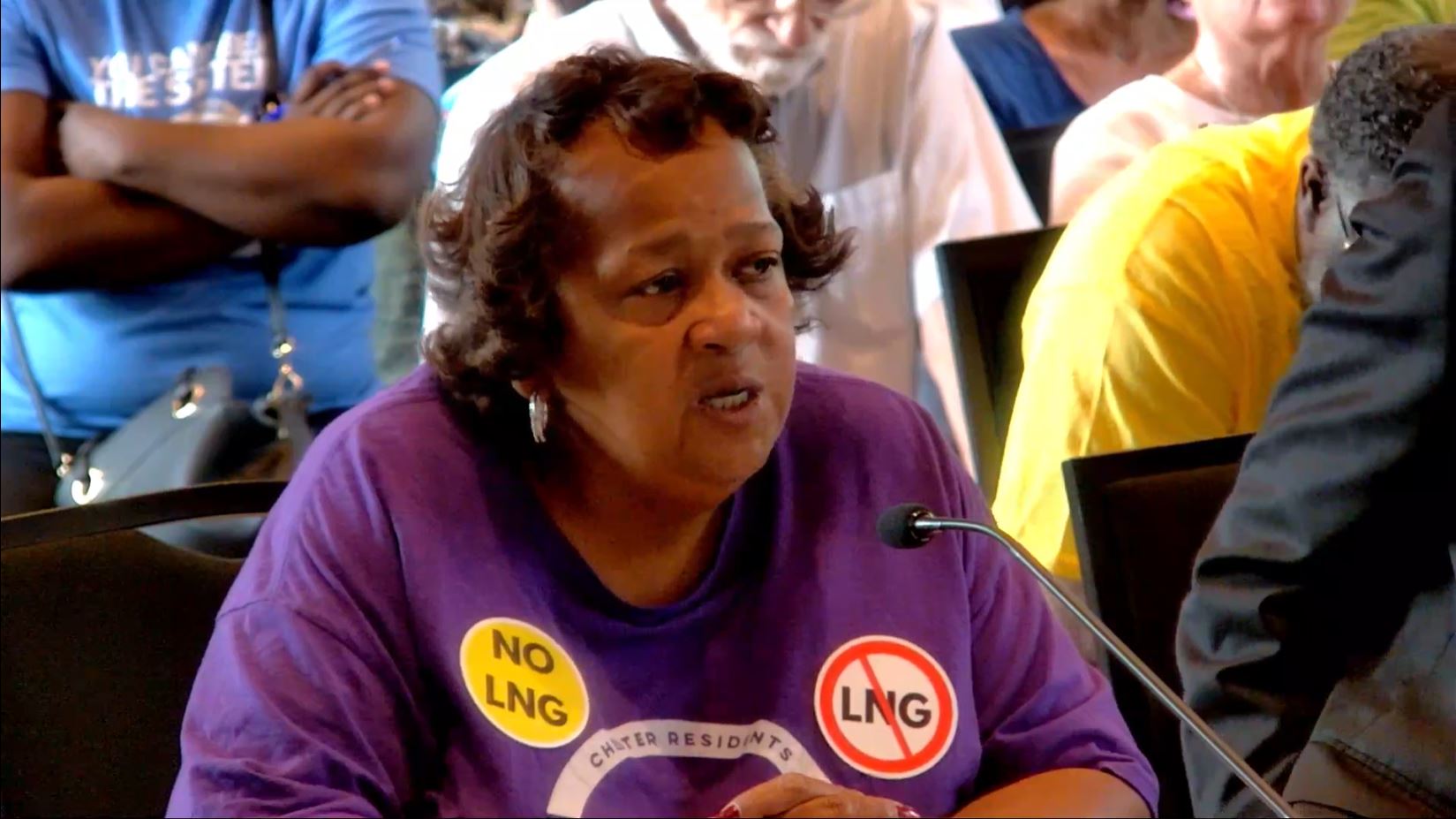
Zulene Mayfield, an activist with Chester Residents Concerned for Quality Living, said older residents she knows have suffered heart conditions and cancers that she links to living in an already heavily industrialized area.
Mayfield is a longtime opponent of the Delaware Valley Resource Recovery Facility owned by Reworld, formerly Covanta. The facility burns trash and converts it to energy.
She said Chester, rimmed by heavy industry, lacks many things other communities take for granted, such as primary-care physicians or entertainment for children.
“We are being told that we have to accept other industries” that no other communities want, Mayfield said.
“I’m sitting here right now trying to contain my rage,” she said. “The jobs are temporary, but death is forever.”