Tag: Donald Trump

  • EPA proposal could leave the public in the dark on data center plans

    EPA proposal could leave the public in the dark on data center plans

    WASHINGTON — A plan by the Environmental Protection Agency could make it harder for the public to learn about and comment on proposed AI data centers that have sparked backlash in communities across the United States and transformed the midterm election landscape.

    The EPA proposal would eliminate a federal requirement that states notify the public and seek comment before issuing air pollution permits for data centers and other industrial facilities. States could still offer opportunities for public comment, but the EPA would no longer mandate them as a condition for states to grant permits.

    Critics say the move could thwart local residents from learning about proposed data centers or making their voices heard before projects are approved and construction begins. The move comes during a widespread backlash as tech giants build hundreds of massive server warehouses to fuel artificial intelligence and cloud computing.

    “By eliminating the long-standing federal requirement for public notice, this proposal continues efforts by the Trump administration to turn its back on the fundamental EPA principle of transparency,” said Mike Koerber, a former deputy director of EPA’s air quality office.

    If made final, the plan could create “an unlevel playing field where citizens in one state are kept completely in the dark about new data centers and heavy industrial emissions in their backyards, while neighboring states maintain oversight,” he said.

    Under the EPA plan, states with weak or no requirements for public comment could speed permits for data centers, power plants and other pollution sources without consulting the public or even informing communities where the facilities are located, Koerber and other critics said.

    Communities deserve a chance to weigh in, advocates say

    “Data centers and other industrial sources should not be able to get their air pollution permits in secret,” said Keri Powell, senior attorney for the Southern Environmental Law Center, an advocacy organization that leads a coalition of nearly 200 environmental, health and community groups that filed comments with the EPA opposing the plan. “Communities deserve a chance to weigh in” before potentially harmful projects are approved.

    An EPA spokesperson called that a false narrative.

    “In our proposal we are saying that states get to pick how they want their permitting process to go for minor sources” of air pollution, spokesperson Carolyn Holran said.

    The EPA proposal does not specifically identify data centers, she said, noting that the plan also would apply to laundromats, car repair shops and even landfills and steel mills that are considered “minor” pollution sources under the federal Clean Air Act.

    The proposal does not demand that states make particular changes to their programs, nor does it alter federal emission standards or weaken environmental protections, Holran said. “Rather, the proposal simply aligns the national program with the Clean Air Act language to ensure that states are in the lead regarding their programs.”

    EPA Administrator Lee Zeldin, who has made U.S. leadership in AI a top agency priority, said in a statement that the plan is aimed at “cutting unnecessary and burdensome red tape, unleashing American energy and advancing cooperative federalism” with states. The EPA is expected to make the rule final next year.

    President Donald Trump continues to stick up for data centers, even as politicians from both parties criticize them and many communities try to block them. Trump said on social media this week that U.S. communities that don’t have data centers will “end up being backwards and poor.”

    Trump says data centers are crucial in the AI race against China

    Trump has acknowledged that data centers need “a little public relations help” and has pushed tech companies to generate their own electricity to shield consumers from higher utility bills. The Republican president calls data centers critical to winning the AI race against China.

    Environmental groups and other critics say the EPA proposal ignores the reality that many states, particularly in the South and Midwest, don’t require public notice or hearings beyond those set by federal agencies. The federal plan would leave many communities in the dark before data centers show up in their backyards, they said.

    “It’s beyond cruel for Trump’s EPA to silence front-line communities who bear the brunt of unhealthy air,” said Brandon Jones-Cobb, a senior attorney at the Center for Biological Diversity, another environmental group.

    The EPA “has already turned its back on science, cut enforcement against industrial polluters and eliminated life-saving air pollution measures,” he said. “Now it wants to shut the public out of decisions to build or expand facilities that expose communities to dangerous air pollution, including data centers.”

    Powell, whose organization focuses on six Southern states from Virginia to Alabama, said many states “only do what is required by federal law” when it comes to public notice of land-use projects and other environmental concerns.

    “We rely on a minimum federal requirement to ensure we have environmental protections and a voice,’’ she said in an interview, calling regulation of data centers a crucial issue in a region where the energy-hungry behemoths are proliferating. Virginia and Georgia are both among states with the highest concentration of current and proposed data centers.

    Americans worry data centers could cause pollution, job losses

    Besides powering AI and cloud computing, data centers are often sources of nitrogen oxide, which helps form ozone, as well as carbon monoxide and other air pollutants. Local communities also have expressed concerns about excessive water use and noise from data centers. Many Americans worry that AI could increase economic disparities and cause widespread job losses.

    Data center advocates stress that local taxes paid by the centers can help fund public schools, reducing the financial burden on homeowners.

    Jane Williams, executive director of California Communities Against Toxics, said even if data centers ultimately are approved, “every community should be able to participate robustly in governmental decisions that can pollute our air.’’

    Rolling back the EPA rule “pulls a dark cloud, filled with soot and toxic chemicals, over communities’ right to know what polluting facilities are planned in their community,” she said.
  • A federal judge has blocked Trump’s second try to restrict birthright citizenship

    A federal judge has blocked Trump’s second try to restrict birthright citizenship

    A federal judge in Maryland temporarily blocked much of President Donald Trump’s latest effort to withhold citizenship from babies born in the United States to noncitizen parents, ruling that the Supreme Court had already settled questions reopened by an executive order Trump signed in August.

    While the decision was limited to children born after Feb. 19, 2025, including those born in the future, Judge Deborah L. Boardman wrote that the order would likely affect babies the Supreme Court had already defined as citizens. The ruling delivered a sharp rejection of the president’s renewed efforts to restrict birthright citizenship, after the Supreme Court ruled 6-3 in July that a previous, more sweeping, executive order from 2025 was unconstitutional.

    “No presidential executive order can undo what the Supreme Court has done,” she wrote.

    Boardman’s order took a dim view of the Trump administration’s reasoning, which she characterized as a thinly veiled attempt to get around the Supreme Court’s decision. She wrote that the president and others named in the lawsuit “completely misread” the majority’s opinion and embraced a “distorted interpretation” of its conclusions.

    In a 35-page opinion, she described the latest order as only the most recent attempt to curtail birthright citizenship by any means that could survive legal scrutiny.

    “Since his second term in office began on January 20, 2025, the president has tried, through executive order, to upend our country’s longstanding tradition of birthright citizenship and eliminate, for large swaths of Americans, the right to citizenship by birth, a right enshrined in the Citizenship Clause of the Fourteenth Amendment,” she wrote.

    Boardman described a number of ways that children covered by the lawsuit could have their citizenship rescinded, including if the Trump administration moved to label their parents members of terrorist groups or “alien enemies” under arbitrary legal determinations. She cited a pattern in which the administration has accused Venezuelan nationals of being affiliated with the criminal organization Tren de Aragua, often without evidence, in deportation proceedings.

    While she stressed that it was too soon to find that the order itself was unconstitutional, she wrote that it already appeared clear that it was unconstitutional as applied to the class of babies defined when immigration groups initially sued last year to block Trump’s first order.

    The order this year had included other measures to create novel categories of babies that could be disqualified from citizenship, including those born to parents engaged in so-called “birth tourism,” through which mothers deliberately traveled to the United States to give birth.

    It was unclear how the Trump administration planned to tag those it suspected of traveling to the United States to have their children. But Boardman noted that the executive order was broad, describing anyone who engaged in a “commercial transaction” — such as purchasing a plane ticket — as traveling to access birthright citizenship.

    The Supreme Court’s decision upholding birthright citizenship “is the law of the land,” Boardman wrote. “The President must follow it.”

    This article originally appeared in The New York Times.

  • Pennsylvania measles deaths are the cost of poor public health leadership | Editorial

    Pennsylvania measles deaths are the cost of poor public health leadership | Editorial

    The two recent measles-related deaths in Lancaster County, including that of a newborn, were the first in Pennsylvania in 35 years. Sadly, as vaccination rates decline across the commonwealth and the country, they will likely not be the last.

    The deaths occurred amid a major measles outbreak in Lancaster that has sickened nearly 400 people. Nationwide, the number of cases grew to a 35-year high.

    In normal times (a.k.a. before Donald Trump), federal and state government officials would work together to contain the outbreak, protect the public, and use the incident to urge residents to get vaccinated.

    But under Trump, all issues are political. Someone must lose so he can win. Rather than lead and unite, the president and his minions divide and misinform.

    Gov. Josh Shapiro did what any responsible public official would do. He traveled to Lancaster General Health’s Women and Babies Hospital to express empathy, support the local community, and urge the public to get vaccinated.

    “We hope, and we pray, that those deaths will be the last,” Shapiro said. He underscored, “This illness and death from measles is completely preventable.”

    Initially, state officials did not provide details about the two people who died in order to protect their privacy.

    Lancaster County Coroner Stephen Diamantoni, a Republican elected official who is also a physician, said the newborn tested positive for measles, but died from a ruptured spleen. State health officials clarified that they define a “measles-associated death” as one in which measles was present, even if it is not the immediate cause of death.

    That provided an opening for others to stir the misinformation sphere.

    Robert F. Kennedy Jr., the dangerously unqualified head of the U.S. Department of Health and Human Services, rushed right in, claiming on social media that Shapiro’s administration may have “fabricated” the deaths, and wrongly commenting in an interview on C-SPAN that “they cannot find any measles deaths in Lancaster County.”

    To be sure, Pennsylvania health officials should have been more forthcoming in sharing information about the patients’ ages, causes of deaths, and reasons for being unvaccinated.

    The lack of details “created fertile ground for conspiracy theories to thrive,” said Paul Offit, a physician at Children’s Hospital of Philadelphia who heads the hospital’s Vaccine Education Center.

    Offit explained that measles can cause an enlarged spleen to become fragile, which can lead to rupture. He added that he learned from state health officials that the patients who died in Pennsylvania would have lived if they were not infected with measles.

    Bottom line: Measles played a role in the deaths.

    It is frustrating and sad that so much energy is needed to convince the public that vaccines work. Vaccines are tested, proven, and settled science. The most effective way to stop the spread of measles is to get vaccinated.

    Indeed, measles was declared eradicated from the United States in 2000. Thanks to vaccines, other viruses such as mumps, rubella, and chickenpox were either eliminated or reduced by as much as 99%.

    But measles has made a comeback in recent years as vaccination rates have declined. Pennsylvania is among the states with the most cases, and public health officials fear more outbreaks.

    The drop in vaccination rates is due in large part to the spread of misinformation across social media in recent years. That misinformation has been amplified by Trump, the king of conspiracy theories, witch hunts, and any other form of quackery that gets attention and plays to a crowd’s worst fears.

    In a cynical political deal to win over so-called Make America Healthy Again voters, Trump appointed Kennedy, who is not a doctor, to oversee HHS.

    Beyond his famous family name, Kennedy is best known for spreading misinformation about vaccines and promoting debunked claims about autism. He was a leading vaccine skeptic — and attention seeker — during the pandemic.

    From his powerful perch, Kennedy has upended vaccine policy. As a result of his anti-science agenda, the country is getting sicker.

    The sooner America’s leaders return to promoting evidence-based science and public health, the safer and healthier we will be.

  • Josh Shapiro and Stacy Garrity will debate for Pennsylvania governor next month

    Democratic Gov. Josh Shapiro and Republican Treasurer Stacy Garrity, both candidates running to be Pennsylvania’s next governor, have agreed to face off next month in the first and only scheduled televised debate between them.

    The debate — scheduled for 8 p.m. on Oct. 7 and hosted by ABC 27 — will be held in Harrisburg and will air live on several stations owned by Nexstar across Pennsylvania, including WPHL-TV in Philadelphia.

    Both campaigns said they look forward to meeting face to face to discuss issues important to voters.

    “Game on,” said Matthew Beynon, a spokesperson for Garrity.

    Manuel Bonder, communications director for Shapiro’s campaign, said “we look forward to continuing to make the choice in this election clear.”

    Shapiro, who was elected governor in 2022 after serving as the state’s attorney general, holds a sizable lead against Garrity, according to a Philadelphia Inquirer/New York Times/Siena University poll conducted last month.

    As the November election approaches, Shapiro — who is a rumored contender for president in 2028 — has focused on translating his popularity to downballot Democratic candidates in four, nationally watched congressional districts and those running for seats in the Pennsylvania state Senate, which has been under Republican control for more than 30 years.

    Garrity, meanwhile, has struggled to gain traction among voters and to compete with Shapiro’s massive campaign funds. A quarter of likely Republican voters did not know who she was or know enough about her to form an opinion of her, The Inquirer/New York Times/Siena poll found.

    Next month’s debate could present Garrity with a fresh chance to introduce herself to voters statewide and make her case on why Shapiro should not be reelected.

    October’s debate is the only one scheduled between the candidates, though Garrity’s campaign have proposed several more. In 2022, Shapiro and his Republican challenger, State Sen. Doug Mastriano, did not debate after the two could not agree to terms.

    Topics likely to surface during the debate include data centers, the measles outbreak, and President Donald Trump.

    Both candidates have released television ads criticizing the other’s past support for data center development, which has grown increasingly unpopular in Pennsylvania and beyond. Garrity has denounced Shapiro for his shifting positions on data centers, though she has a mixed record herself. Last month he signed an executive order dramatically restricting their development, touting them as the strictest guardrails in the nation. Garrity has called for a pause in data center development.

    Garrity has also blasted Shapiro for his handling of the rollout of public health information in announcing two measles-associated deaths in Pennsylvania, saying he has stepped in front of verified facts. Shapiro has been critical of the Trump administration, saying the nation’s health secretary was responsible for the influx of measles cases by stoking misinformation.

    Trump has endorsed Garrity in the governor’s race, and Shapiro has repeatedly sought to tie her to some of his unpopular policies, highlighting her support for his tariffs on imported goods and unpopular war in Iran.

    ABC 27 anchor and reporter Dennis Owens will moderate the debate, which will also be available to view on streaming platforms.

  • You can now buy Philly-minted Trump coins with a golden hue

    Gold-hued $1 coins featuring the face of President Donald Trump are now available for purchase online and at the U.S. Mint gift shop on Independence Mall in Old City.

    But it’ll cost you more than a buck.

    Neither Philly’s Mint nor the website has single coins for sale, so early buyers can get no fewer than 25 coins in a roll for $61. A bag of 100 coins for $154.50 is also available. Households are limited to two orders until Thursday at 2 p.m. when the cap will lift.

    The commemorative coins, printed in Philadelphia to mark the 250th anniversary of the signing of the Declaration of Independence, may be used as legal tender.

    Early buyers may also find unique coins with their purchases: 250,000 Trump coins with a special-issue “July 4” mark, minted on Independence Day, have been randomly hidden in some rolls and bags, Willy Wonka-style.

    First announced in July by U.S. Treasury Secretary Scott Bessent, the coins bear Trump’s face on one side with the words Liberty, In God We Trust, and 1776 ~ 2026. The other side features the presidential seal, with “250″ inscribed on the eagle’s shield.

    The coins faced hurdles in production with critics arguing that they violate U.S. code that says “only the portrait of a deceased individual may appear on United States currency.” In response, Bessent cited historical precedent: In 1926, the U.S. minted a commemorative half-dollar featuring living President Calvin Coolidge.

    Although the coins are gold-colored, they are composed mostly of nonprecious metals, including copper, zinc, manganese, and nickel. No actual gold is used in the coins.

    In November, the mint stopped producing pennies due to rising costs. According to the mint, it cost up to 3.69 cents to create one penny.

    Philadelphia is home to the nation’s oldest mint, built in 1792. Visitors can tour the facility on weekdays. It is the world’s largest coin-making factory, according to the Guinness Book of World Records.

  • 6abc lands a Philly native to lead ‘Action News’ after predecessor’s abrupt exit

    6abc lands a Philly native to lead ‘Action News’ after predecessor’s abrupt exit

    After more than five months, 6abc finally has a news director.

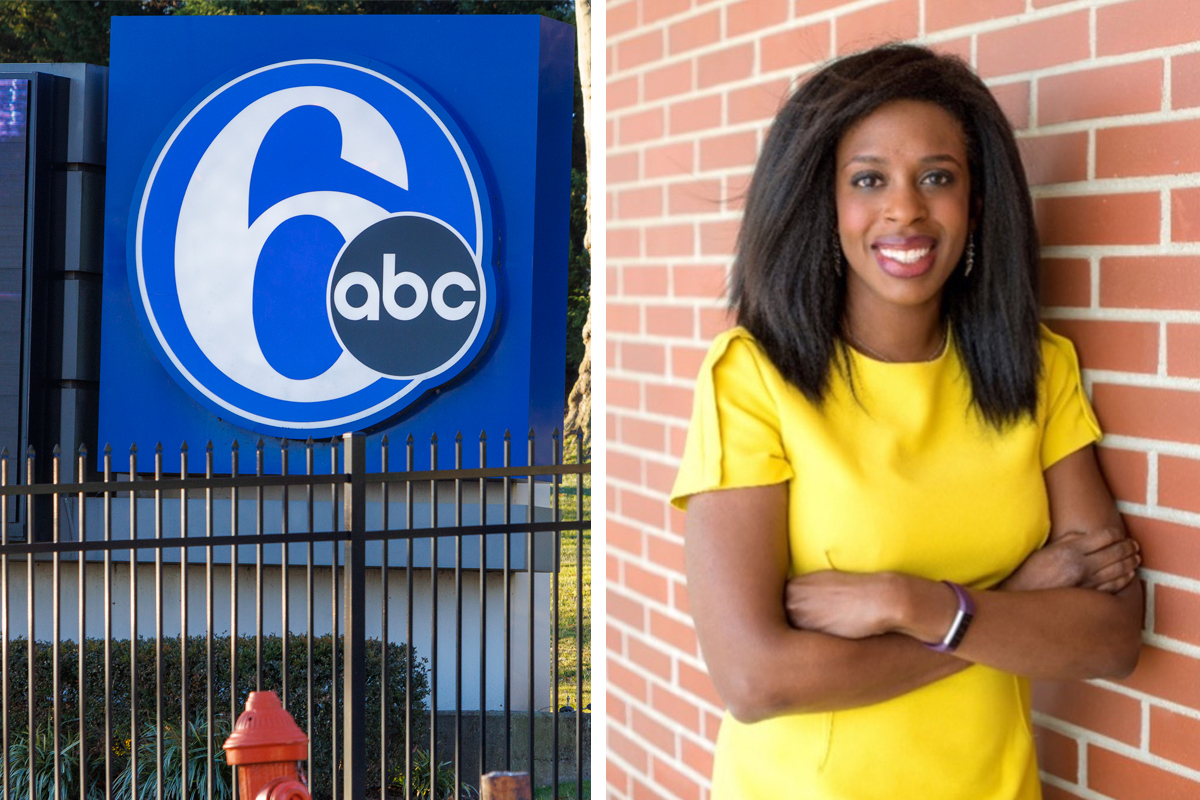
    The station announced Nneka Nwosu, a Philadelphia native serving as the vice president of marketing and local programming at sister-station WLS in Chicago, would take over running the Action News newsroom.

    6abc president John Morris announced the move to staff in an email Tuesday, noting that Nwosu is such a big Eagles fan “their 2018 Super Bowl win may have actually sent her into labor with one of her sons.”

    “Running the news department at the station I grew up watching is surreal!” Nwosu wrote on LinkedIn, adding she was “thrilled to be coming home.”

    Nwosu spent the past four years in Chicago, previously serving as one of the station’s assistant news directors. Prior to that, she spent eight years at Boston ABC affiliate WCVB.

    At 6abc, Nwosu is inheriting the city’s most-watched newscast dating back more than 40 years. Her first day in the newsroom will be Oct. 5, and among her first tasks will be overseeing a new chief meteorologist following the retirement of Cecily Tynan, who delivered her final forecast Monday after more than three decades at the station.

    Nwosu is filling the spot vacated by the sudden departure of Tom Davis, who abruptly left in March after more than two decades.

    In a note to staff, Chad Matthews, the president of ABC’s eight owned and operated TV stations, wrote Davis “made the decision to leave 6abc” and thanked him “for his years of service to the station.”

    Davis could not be reached for comment. He spent 15 years as news director, maintaining the station’s place as the region’s most-watched newscast. He also served as an assistant news director for seven years before that.

    In a separate move, Morris also announced Mike Amato had been promoted to the vice president of technology. The Drexel grad has been with the station since 2015, and prior to that he spent nine years at NBC Sports Philadelphia.

    6abc still threatened by Trump administration

    Nwosu and 6abc also face the threat of being taken off the air by President Donald Trump’s administration.

    ABC’s parent company, Disney, is locked in a legal fight as the Federal Communications Commission considers whether to take away the broadcast licenses for the company’s eight owned-and-operated stations in the wake of a Jimmy Kimmel joke involving first lady Melania Trump.

    The FCC contends the unusual early review of the licenses stems from an earlier investigation into diversity, equity, and inclusion initiatives at Disney, citing “the agency’s prohibition on unlawful discrimination.”

    It’s unclear if and when the government will take action. The FCC’s final deadline for public comments was Aug. 5, and respondents were overwhelmingly supportive of 6abc and the network’s other local stations.

    Trump also recently called on the FCC to punish NBC and Philly native Kristen Welker, the moderator of Meet the Press, over a TV segment in which she said the president had “mixed results” backing candidates this election cycle.

    The FCC is also investigating NBC and its parent company, Comcast, over the company’s DEI policies and how it handles its owned and operated affiliates, including NBC10.

    Anna Gomez, the only remaining FCC commissioner appointed by a Democrat, wrote “the FCC has no authority to punish journalists this administration doesn’t like.”

  • Trump’s oil deal with Venezuela is an imperialistic pipe dream | Editorial

    Trump’s oil deal with Venezuela is an imperialistic pipe dream | Editorial

    As a businessman, Donald Trump often cut corners, broke promises, and made bad deals. Now that he has the power of the U.S. government at his disposal, the submission of Republicans in Congress, and a pliant U.S. Supreme Court, the only difference is the scale of the abuse, corruption, and foolishness he brings to his ventures.

    Late Friday, the president announced on Truth Social that he had reached an agreement with Venezuela to secure more than 65 billion barrels of oil. “This Historic Transaction MORE THAN DOUBLES American Oil Reserves, greatly increases our Oil Supply, and will substantially lower Gas Prices for all Americans, long into the future,” he wrote.

    The deal, such as it is, is, in fact, very significant, as total proven U.S. reserves are about 81 billion barrels. But the rest of Trump’s claims, and the agreement itself, should be buried under caveats.

    Trump noted that this comes “at no expense to the American taxpayer.” This is true unless you count the roughly $5 billion the U.S. has spent on military operations around Venezuela since August of 2025, including extrajudicial killings at sea and the illegal invasion that ended with the kidnapping of President Nicolás Maduro and his wife on Jan. 3.

    There is also the incalculable reputational cost as the United States’ revived imperialistic push into Latin America mirrors the president’s transactional nature and authoritarian bent.

    The deal was reached with the unelected Venezuelan President Delcy Rodríguez, who took office after Maduro was taken. Never mind that she was part of the same repressive socialist regime that is accused of rampant corruption and human rights abuses; she has proved a lot more willing to work with the Trump administration than her predecessor.

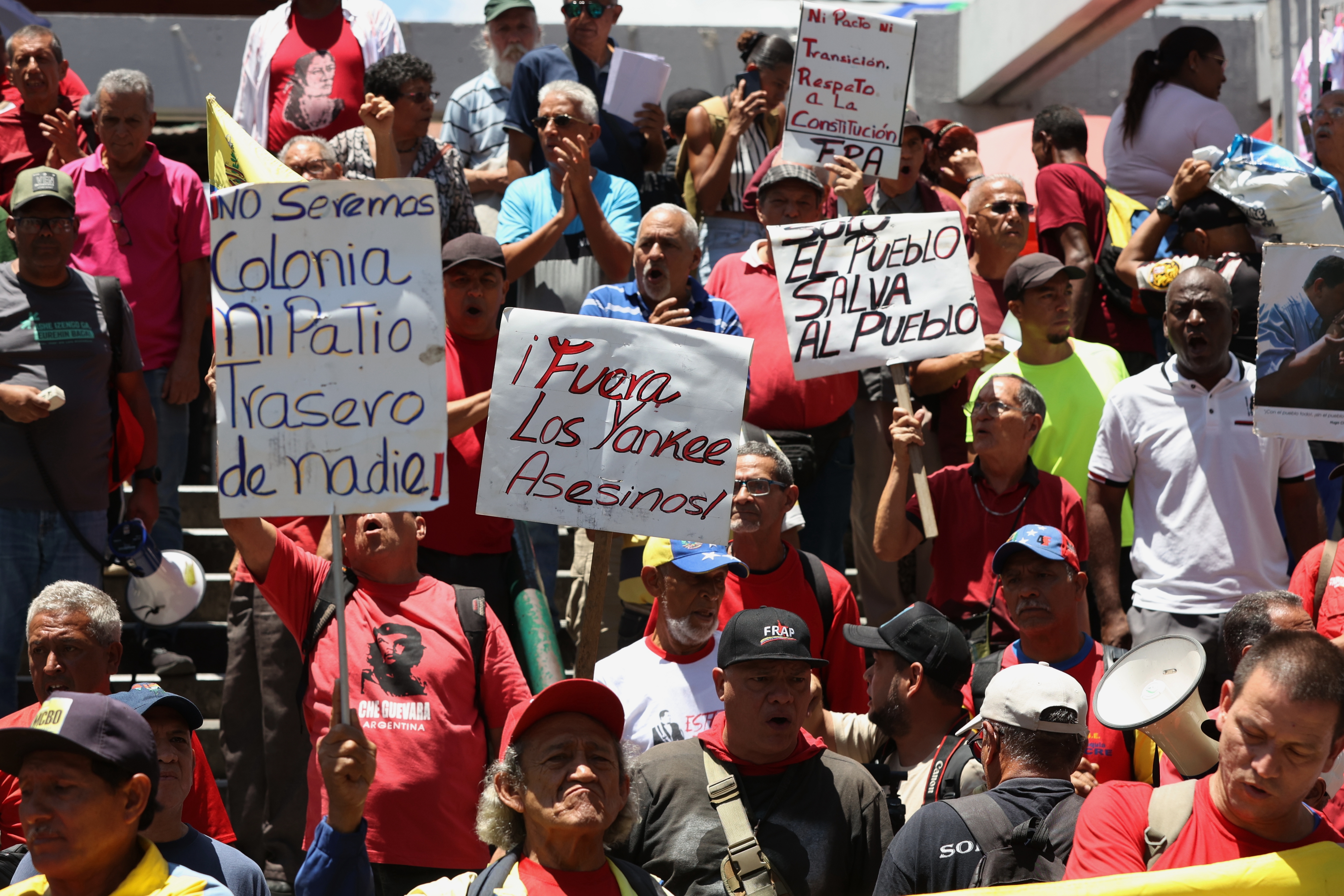
    Venezuelans protest against President Donald Trump’s deal giving the United States a stake in Venezuela’s oil reserves in Caracas, Saturday.Pedro Mattey

    Reports out of Venezuela find some people are hopeful U.S. investment will benefit the nation, yet under a government rife with cronyism, only a select few will likely reap any reward. Although details are still scarce, the agreement already sees the U.S. partner with a private company run by Alejandro Betancourt, an ally of Rodríguez, who has been under investigation by prosecutors in Zurich.

    Trump’s assertion that gas prices will drop thanks to this deal is delusional, at least any time soon, as it would take years for this Venezuelan oil to have any impact on costs at the pump.

    And that’s if the deal comes to fruition at all. The risks, at home and abroad, are significant.

    The agreement would reportedly give Betancourt’s company access to 17 oil fields that are said to contain 65 billion barrels of oil. Development would cost billions of dollars and could take more than a decade. The Pentagon would finance the plan, but the legality of its participation is in question — as well as how the deal was crafted in the first place — meaning court challenges may be inevitable.

    There are also political realities to contend with.

    With Maduro gone and Trump threatening use of force, the Venezuelan government changed its position on working with the U.S. overnight. That could change just as quickly once Trump leaves office and if the new occupant of the White House has different priorities or if the current government of Venezuela is replaced and decides to honor the country’s 1999 constitution, which states that oil reserves belong to the nation and cannot be sold.

    The high investment cost and political volatility are why U.S. oil companies have been reticent to enter Venezuela, even under pressure from Trump. According to the Wall Street Journal, Exxon and other energy interests are in talks to expand operations there, which is the prerogative of any private company that is willing to roll the dice on long-term investment, but should be far from the purview of the U.S. government and its taxpayers.

    Trump’s half-baked oil agreement in Venezuela tramples that country’s sovereignty, benefits corrupt interests, and will likely fail to deliver for the American people. The art of the deal strikes again.

  • Former N.J. Gov. Chris Christie discusses his legacy as the godfather of legal sports betting, prediction markets, and the Trumps

    Former N.J. Gov. Chris Christie discusses his legacy as the godfather of legal sports betting, prediction markets, and the Trumps

    Chris Christie has been a two-time Republican presidential candidate, the governor of New Jersey, and a U.S. attorney. But history might show that he generated the most enduring national impact in a different role, as the godfather of legalized sports betting.

    In 2012, when he was still New Jersey’s governor, Christie signed a bill that would allow customers to wager on professional and collegiate sports at 12 casinos and four racetracks.

    He correctly predicted that the bill — which directly challenged a longstanding federal law that restricted legal sports betting to just a handful of states — would lead to him being sued by powerful opponents, and that over the long haul, his efforts would succeed.

    But in a recent interview with The Inquirer, Christie said that even he did not imagine that sports gambling would evolve from a location-based attraction to phone apps that are readily accessible and open for business around the clock. Americans spent a record $165 billion on sports wagers in 2025, amid growing concern from health experts and lawmakers that mobile gambling is driving a health epidemic.

    Nor did Christie — who now works as a strategic adviser to the American Gaming Association — envision the rise of prediction markets, some of which have been accused in lawsuits across the U.S. of running illegal sports betting operations. Christie, however, said he is unsurprised that two prediction market companies count Donald Trump Jr. among their advisers.

    Christie’s sports gambling crusade began just two months after New Jersey voters approved a referendum in November 2011 to legalize sports betting in the state.

    Casino industry lobbyists had long championed the type of bill that he signed, predicting that sports betting would be a double win for the state, attracting new customers to struggling casinos and generating revenue to benefit elderly and disabled residents.

    But a federal law, the Professional and Amateur Sports Protection Act, had since 1992 restricted legal sports betting to Delaware, Montana, Nevada, and Oregon. Christie wasn’t deterred.

    “Am I expecting there may be legal action taken against us to try to prevent it? Yes,” he told reporters in 2012. “But I have every confidence we’re going to be successful.”

    Then the National Collegiate Athletic Association — along with Major League Baseball, the NFL, the NBA, and the NHL — sued Christie for violating the federal law, igniting a legal saga that would wind for years through district and circuit courts before reaching the U.S. Supreme Court in 2017.

    Christie argued that PASPA had been a constitutional overreach that violated the Tenth Amendment’s “anti-commandeering” doctrine.

    “We lost the first six times [in lower courts],” Christie said. “I had the sense that maybe I was wrong.”

    In 2018, the Supreme Court voted to overturn PASPA, giving states the freedom to enact their own sports betting laws.

    This interview with Christie, 63, has been edited and condensed for clarity.

    Why was legalizing sports betting in 2012 a priority for you?

    I was trying to differentiate Atlantic City, and give the casinos something new and different to offer, and to help preserve the horse racing business. I saw it at the time as an offensive and defensive measure. That was the motivation.

    The leaders of professional sports leagues were critical of your efforts, and deeply opposed to legalizing sports gambling. What did you think of their position?

    I thought that their opposition was both wrongheaded and hypocritical, and I told them so. [Then-NBA commissioner] David Stern was probably the most vehement against it, but [NFL Commissioner] Roger Goodell was a driving force, too. I told them, ‘[Sports betting] is happening anyway. You’d rather have people bet with illegal bookies — either mob-related, or offshore — than companies who are in the business and regulated by the state?’ It made no sense.

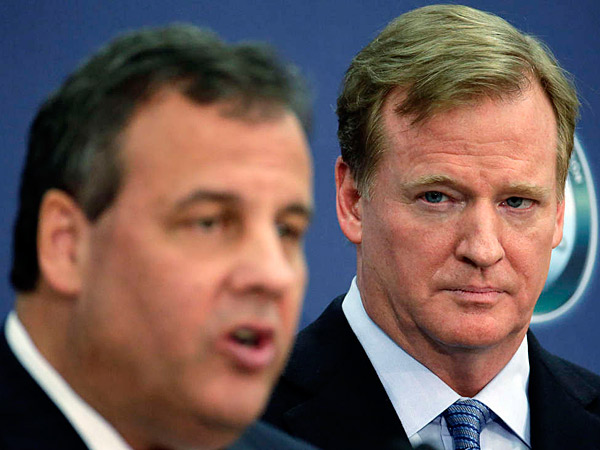
    Along with his peers in other professional sports, NFL Commissioner Roger Goodell (right) was opposed in 2012 to an expansion of legalized sports betting.
    Were you surprised to see those leagues later enter into lucrative partnerships with sportsbook companies?

    I wasn’t surprised at all. The leagues have shown an extraordinary ability to chase a dollar. I’m still waiting for the statue that they’re going to build of me, or the thank-you note. [Legalizing sports betting] has helped their TV contracts as well. People who weren’t even necessarily interested in sports before are now extraordinarily interested because they have a little bit of a wager on it. It’s kind of amazing.

    In the years since the Supreme Court overturned PASPA, NBA and MLB players have been arrested for conspiring with gamblers. An NFL executive was recently suspended for sharing inside information about the team’s draft plans.

    It’s inevitable that was going to happen. But I think because there is such a great deal of transparency, the leagues can act quickly. That makes it much more different from when gambling was illegal, and you still had some athletes or people associated with sports interacting with [bettors]. The regulation brings about transparency, and transparency makes it easier to police.

    Sports betting has evolved into a 24/7 mobile enterprise. Do you consider it to be a different product than what it was in 2012?

    Completely. I don’t think I could ever have anticipated that it would be in everybody’s pocket. That’s a little bit disturbing to me, to tell you the truth, the proliferation of it. And obviously prediction markets have been very disturbing to me, particularly because they market to teenagers, which is strictly prohibited for the legal gaming companies.

    Prediction markets have also faced backlash for allowing people to wager on U.S. military operations and the deaths of foreign leaders.

    I think the whole thing is absurd, and not good for the public.

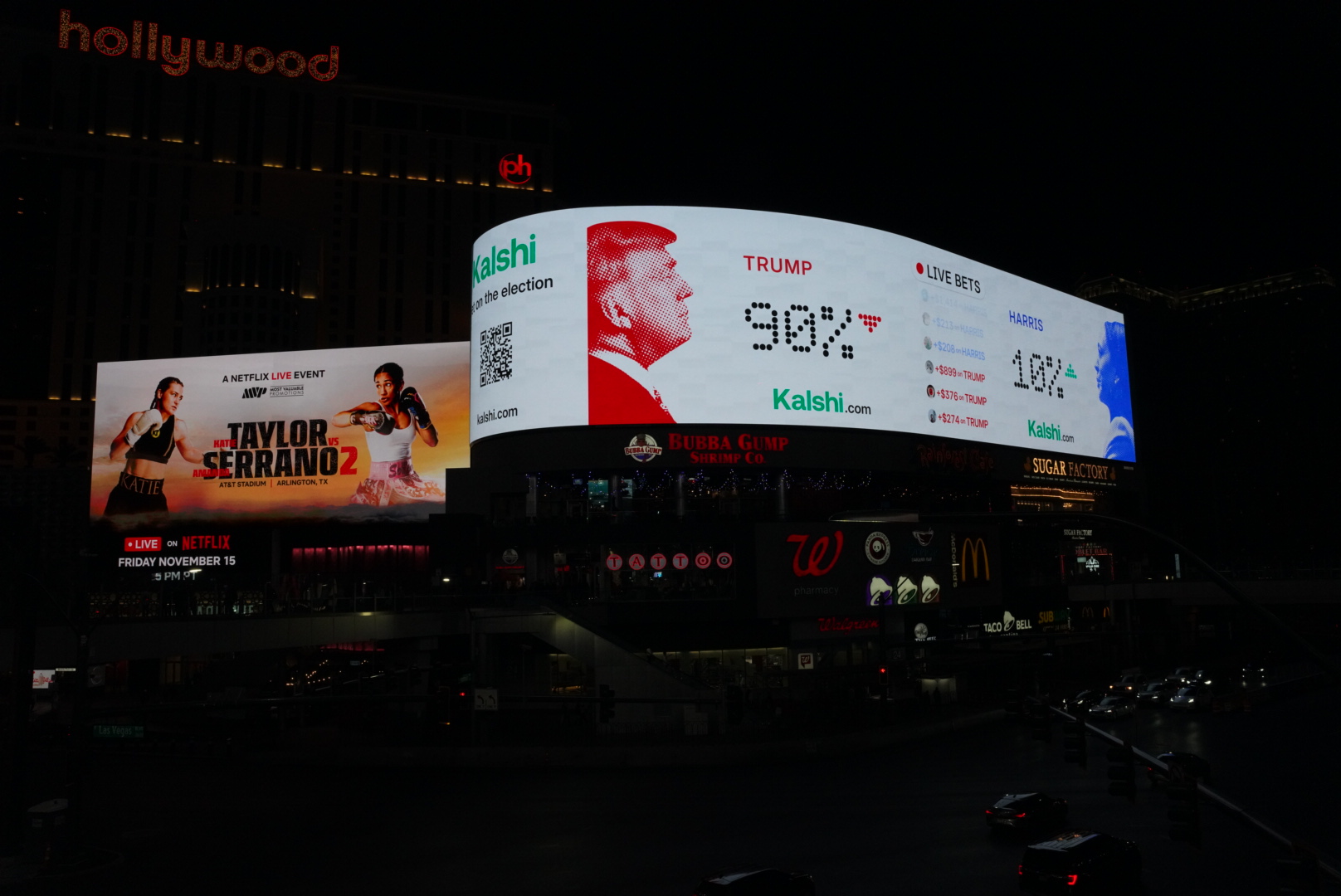
    President Trump’s son, Donald Trump Jr., was reportedly given $300,000 worth of Kalshi shares in 2025, after becoming an adviser to the company. MARSHALL SCHEUTTLE
    President Trump’s son, President Donald Trump Jr., is an adviser to Kalshi and has shares of the company, and his venture capital firm has invested in Polymarket. Those companies are regulated by the federal Commodity Futures Trading Commission. Does that seem like a conflict to you?

    I think common sense gives you the answer to that. If it’s a money-making enterprise for the Trump family, then the odds are it’s going to face light regulatory action.

    Some state attorneys general have sued Kalshi. They allege that the company is running an unlicensed, illegal sports betting operation. Kalshi insists it is a commodity exchange. Will this end up being decided by the Supreme Court?

    It’s betting. It’s not an investment. It’s not a commodity. The Supreme Court has ruled that states have the right to regulate sports betting. I think that it’s going to go to the Supreme Court, and I’m confident [the prediction markets] will lose.

    We’ve interviewed addiction experts who say that sports gambling addiction is now a health epidemic, similar to tobacco and opioid abuse.

    I always thought that a big portion of this [revenue] has to go toward addiction treatment, and I think that’s got to continue.

    Elected officials in Pennsylvania, New Jersey and other states are exploring new regulations for sportsbook operators, like curtailing or eliminating in-game microbets or VIP programs. Are those kinds of reforms needed?

    As long as [sports betting] is a venture that creates tax revenue, then the states are always going to be examining this issue. They’re partners. They can’t claim no responsibility. I don’t know how it’ll manifest, or where it’ll land. … I think all regulation should be rooted in evidence-based research. So if there are changes that we see that could help make [gambling] safer, they should be considered.

    The Inquirer will continue to report on issues related to the growth of gambling addiction — among teens and adults — across Pennsylvania. If you or someone you know wants to speak with a reporter, please contact David Gambacorta or William Bender at dgambacorta@inquirer.com and wbender@inquirer.com

  • The CDC left two measles-associated Pa. deaths out of its latest count after RFK Jr. sparred with Gov. Shapiro

    The CDC left two measles-associated Pa. deaths out of its latest count after RFK Jr. sparred with Gov. Shapiro

    Two measles-associated deaths in Pennsylvania last week were omitted from the Centers for Disease Control and Prevention’s latest measles outbreak update, continuing an increasingly political clash over the nature of the deaths announced by the state last week.

    The two deaths reported by Pennsylvania — the first in the country this year — were not included because ”available information does not establish whether measles caused or contributed to the deaths or whether the individuals died from other causes while infected with measles,” the agency says in an update posted to the CDC’s website Sunday.

    President Donald Trump’s head of the Department of Health and Human Services, Robert F. Kennedy Jr., has disputed what Democratic Gov. Josh Shapiro and state health officials have disclosed about the deaths.

    Kennedy, a longtime anti-vaccine activist, wrote on X that the deaths may have been “fabricated” by the Shapiro administration, which has confirmed the deaths announced last Tuesday were “measles-associated.”

    Pennsylvania “thoroughly reviews” all reported measles cases to ensure they meet CDC definitions and has provided “all required epidemiological data” on the measles-associated deaths to the CDC, state health department spokesperson Neil Ruhland said in a statement.

    The state health department said it has death and medical records associated with the cases and the department’s investigation of them. The state does not disclose death certificates but does provide “de-identified” information to the CDC.

    “DOH values its long-standing collaborative relationship with professional staff at the CDC and will continue to work with federal partners moving forward to address the ongoing measles outbreak,” Ruhland said.

    The department declined to comment on “information the CDC may have obtained from third parties.” Kennedy said last week on social media the state was not providing requested information to the CDC.

    “CDC has a responsibility to ensure its reporting accurately and transparently reflects what is known and what remains unconfirmed,” HHS press secretary Grace Davis Jamison said in a statement Monday, adding that Pennsylvania’s two announced measles-associated deaths “have not been confirmed based on the information currently available to CDC.”

    Shapiro’s administration did not respond to a request for comment. He told reporters on Friday that “getting into a back-and-forth with people online who are spewing irresponsible conspiracy theories” does not “serve the public interest.”

    Measles cases in Pennsylvania

    The CDC publishes weekly updates tallying measles cases and deaths by state, tracking the spread of a highly contagious disease that was once considered eradicated in the United States due to widespread vaccination.

    (function(){function e(){window.addEventListener(`message`,function(e){if(e.data[`datawrapper-height`]!==void 0){var t=document.querySelectorAll(`iframe`);for(var n in e.data[`datawrapper-height`])for(var r=0,i;i=t[r];r++)if(i.contentWindow===e.source){var a=e.data[`datawrapper-height`][n]+`px`;i.style.height=a}}})}e()})();

    As of Thursday, 2,887 confirmed measles cases were reported by 47 states, with another 16 cases reported among international visitors, according to the CDC’s latest update.

    As of Monday, Pennsylvania had reported 497 measles cases in 2026, with 87 hospitalizations, amid the state’s largest outbreak in three decades. Officials said they had recorded 100 new cases in just a week, and half of Pennsylvania’s counties have now reported at least one measles case this year.

    About a third of the cases were diagnosed in children under 18. All were in unvaccinated residents. The disease is so contagious that it can infect nine in 10 unvaccinated people.

    (function(){function e(){window.addEventListener(`message`,function(e){if(e.data[`datawrapper-height`]!==void 0){var t=document.querySelectorAll(`iframe`);for(var n in e.data[`datawrapper-height`])for(var r=0,i;i=t[r];r++)if(i.contentWindow===e.source){var a=e.data[`datawrapper-height`][n]+`px`;i.style.height=a}}})}e()})();

    Pennsylvania health officials have said they define “measles-associated deaths” as deaths of people where evidence of measles is present, even when the highly contagious disease may not be assessed by the coroner as the immediate cause of death.

    The state has not provided any additional information on the deaths beyond confirming both people were unvaccinated residents of Lancaster County, and one patient was a newborn.

    Measles deaths are rare. Although most patients recover after mild illness, the virus can cause pneumonia and brain swelling and kills about one to three patients in 1,000.

    Controversy around communications

    Public health experts have said that, by not disclosing information like the victims’ ages, reasons for being unvaccinated, and causes of death, state officials created an information vacuum in which conspiracy theories could spread.

    Officials said that state law prevents them from revealing more details about the deaths.

    “There’s been a complete politicization of this event,” said Paul Offit, a Children’s Hospital of Philadelphia physician who heads the hospital’s Vaccine Education Center.

    A longtime Kennedy critic, Offit said the state should have released more information on the deaths to prevent a “void” for conspiracy theorists to fill.

    He’s also concerned that debate over the deaths will obscure efforts to address the growing outbreak centered in Lancaster County, which has some of the lowest kindergarten vaccination rates in the state.

    “It’s August. This is only going to get worse. What can we do to prevent more children suffering and being hospitalized?” he said. “That’s really the question, and that’s not the question we’re asking.”

    Democratic state lawmakers who are also medical professionals came to Shapiro’s defense on Monday, saying that the governor was right to announce the deaths and that it wasn’t surprising to see the ensuing public debate.

    “Our governor had a responsibility to speak out. We’re glad that he did,” said State Sen. Maria Collett, a Montgomery County Democrat and registered nurse.

    State Rep. Arvind Venkat, an Allegheny County Democrat and an emergency physician, said an immediate determination of death can be imprecise and require further evaluation. He urged the public to not “get distracted by this debate about the immediate versus underlying cause of death” when there is no doubt that the infant contracted measles in utero.

    “I’ve had to fill out death certificates,” Venkat said. “It’s not a simple thing, and I’m not surprised that there is this controversy. But I think we’re losing the forest for the trees.”

    State Rep. Bridget Kosierowski, a Lackawanna County Democrat and nurse, said advocating for vaccination to stop the spread of measles was personal.

    On Monday morning, she was receiving treatment for breast cancer and considering the outsized impact measles would have on her and other patients if they weren’t vaccinated.

    “It is really dangerous, and the outcomes can be catastrophic for people that are fighting cancer right now,” Kosierowski said.

    What’s known about the measles death

    Lancaster County’s coroner has said he handled one of the deaths, a newborn who died shortly after birth.

    The coroner, Stephen Diamantoni, has said the child had a measles infection acquired before birth and died from a ruptured spleen, citing trauma to the torso. Diamantoni, a Republican elected official, said he was still investigating and that he does not believe measles was the cause of death. Measles can cause the spleen to become fragile, heightening the risk of rupture, Offit has noted, saying the coroner’s statements were also adding to the public confusion.

    Diamantoni told The Inquirer last week that he had spoken with the CDC about his conclusions on the child’s death. He did not respond to an additional request for comment on the child’s death certificate on Monday.

    Measles was listed on the baby’s death certificate, he told the Pittsburgh Tribune-Review, in a section of the certificate that reports other “conditions contributing to death but not resulting in the underlying cause.” Measles was included on the death certificate “to offer a broader view of the general health of the child,” he told the Pittsburgh paper.

    The CDC’s latest measles update features an asterisk in lieu of a number for measles deaths in 2026, explaining that the agency is reviewing “additional information regarding the circumstances and causes of death.”

    The agency updated the dashboard multiple times this weekend, and at one point had included the two deaths, the Washington Post reported.

    “The information currently posted reflects the best available information and our commitment to transparency and telling the American people the truth — a foundational principle of the Trump Administration,” said Jamison, the HHS press secretary.

    Lancaster Online reported late on Monday that Diamantoni said his office is investigating another death of a person infected with measles.

    He would not provide details on the circumstances of the person’s death and said he was investigating “if measles has played any role.”

    State health officials would not confirm whether the case Diamantoni is investigating is the second-measles associated death announced last week, Lancaster Online reported, adding that Diamantoni said his office “did not get information about the death from the state.”

    A Lancaster family grieves

    An Amish family in Lancaster County detailed in an article published Sunday in The Atlantic how their son had died shortly after birth earlier this month, after his mother was infected with measles.

    The child had died on the same day as the newborn whose death was investigated by Diamantoni, who would not confirm the baby’s identity to The Atlantic.

    The family has 13 surviving children, all of whom recently contracted measles. Only the father, identified by a pseudonym in The Atlantic, had been vaccinated against measles. Both parents said they did not have “strong feelings against vaccination.”

    They had not known that their child’s death was potentially at the center of a national controversy and did not know who Shapiro or Kennedy were, they said.

    They also hadn’t spoken to the coroner about the cause of their child’s death, but assumed that his mother’s illness had contributed. A midwife had told them measles was likely a factor in the boy’s death, they said in the report.

    Still grieving the loss of their child, they said his death was “part of God’s plan,” the magazine reported.

    The father confirmed to an Inquirer reporter that he had spoken to the Atlantic but declined to comment further.

    Inquirer staff writers Sam Janesch and Michelle Baruchman contributed to this article. Editor’s note: This story has been updated with additional comment and developments.

  • John Fetterman backs Donald Trump on data centers, blames China for ‘misinformation’ on AI

    U.S. Sen. John Fetterman said Monday he agreed with President Donald Trump’s call to “Let Data Reign” after the president made a lengthy post criticizing the widespread backlash to data centers.

    “There’s nothing more damaging to a Democrat than agreeing with Trump AND data centers — but what’s right is right,” said Fetterman, who has repeatedly angered members of his own party by backing Trump’s agenda.

    “We must win the war for AI supremacy over China. They foment the ‘anti’ argument through misinformation,” Fetterman said on X.

    The issue has increasingly taken center stage ahead of the midterm election, including in Pennsylvania. Fetterman, who does not face reelection until 2028, blamed China for fueling the public outcry against data center development in the U.S. as the two nations compete in the AI industry.

    Fetterman has remained supportive of development even as voter sentiment has turned sharply against the industry. Six in 10 likely Pennsylvania voters said they opposed the construction of data centers to support artificial intelligence in a poll released last week by The Inquirer, New York Times, and Siena University.

    Trump made similar arguments on his Truth Social platform earlier in the day, saying that China “could not be happier” with the political movement against data centers.

    “The only reason that communities throughout the U.S.A. should not want Data Centers is if they want to end up being backwards and poor. If they want to be successful and rich, with far lower taxes and jobs all over the place, let Data Reign,” Trump said.

    That Fetterman backed the president on data centers may not have come as a surprise to voters who’ve been following the senator’s moves.

    Two-thirds of Pennsylvania Democrats who are likely to vote this year believe Fetterman supports Trump too frequently, according to last week’s poll.

    Overall, 69% of Democratic voters have an unfavorable opinion of him, which could be trouble if he seeks reelection as a Democrat in 2028.

    And Democrats were also the voters most likely to oppose data centers — with 77% opposing their construction in the Pennsylvania poll.

    Fetterman’s post in support of data centers comes as the state’s other top Democrat, Gov. Josh Shapiro, has been backing away from his previous support.

    Shapiro issued an executive order two weeks ago enacting a host of restrictions for new projects. And the governor has traded attack ads with his Republican opponent Stacy Garrity over who has been more supportive of the industry.

    Fetterman, on the other hand, said in a post last week that China would benefit from an overreaction by U.S. politicians.

    “I reject the political pandering and hyperbole over data centers or AI doomsdaying,” he said.