Tag: Donald Trump

  • No Philly mayor has lost reelection in modern history. So does Mayor Parker have anything to worry about?

    No Philly mayor has lost reelection in modern history. So does Mayor Parker have anything to worry about?

    Through much of Mayor Cherelle L. Parker’s first two years in office, most political insiders in Philadelphia assumed she would cruise to reelection.

    After all, no mayor in the last eight decades in the deep-blue city has lost a bid for a second term. And Parker is backed by the city’s long-powerful Democratic establishment, contributing to the foregone conclusion that their allied mayor would win again.

    Even some of Parker’s staunchest critics on the left admitted privately that they were resigned to her serving eight years in office.

    Then last month, conventional wisdom started to crack.

    State Rep. Chris Rabb — a democratic socialist and an anti-establishment firebrand — won a tightly contested battle for an open seat in Congress, prevailing over Parker’s endorsed candidate and even carrying the 50th Ward in Northwest Philadelphia, where Parker is ward leader.

    Now some of the activists who lead the city’s largest left-leaning organizations think that race showed that Philadelphians are ready to pick a progressive over the Democratic establishment. And they are looking at next year’s mayor’s race again, asking the question: Is Parker vulnerable?

    “We would love to have a progressive challenger in this race,” said Sergio Cea, political director of the progressive group Reclaim Philadelphia. “The establishment was really defeated on all fronts this election cycle.”

    In a little more than 10 months, Parker, a centrist Democrat and the city’s first female mayor, will be up for reelection. She has not officially announced a campaign — doing so would trigger strict fundraising rules and limits — but all signs indicate she intends to run again, including an already huge campaign war chest.

    Any challenger to Parker would be considered a significant underdog. The mayor has the power of incumbency, and can point to progress on her 2023 campaign promises to make the city safer and cleaner, not the least of which is a historically low homicide rate. Thousands of residents are getting their trash picked up twice a week, and polls consistently show that more Philadelphians say they think that the city is heading in the right direction now than when Parker took office.

    She even seemed to recover politically after one of her lowest moments: the eight-day municipal worker strike last year that left so much garbage piling up that it became colloquially known as “the trash strike.” Parker, through her signature unyielding negotiating style, muscled her way to an agreement with the union.

    Today, she is supported by most of the city’s elected officials and powerful organized labor groups. Ryan N. Boyer, the head of a coalition of deep-pocketed building trades unions, said recently that any challenger to Parker would face “annihilation.”

    “This is Philadelphia, there are always people who want to run for mayor. But mayoral elections are decided on whether people think their city is moving in the right direction,” said Aren Platt, executive director of People for Parker, the mayor’s political campaign arm. “Mayor Parker has been underestimated her entire career, and she has a habit of proving people wrong.”
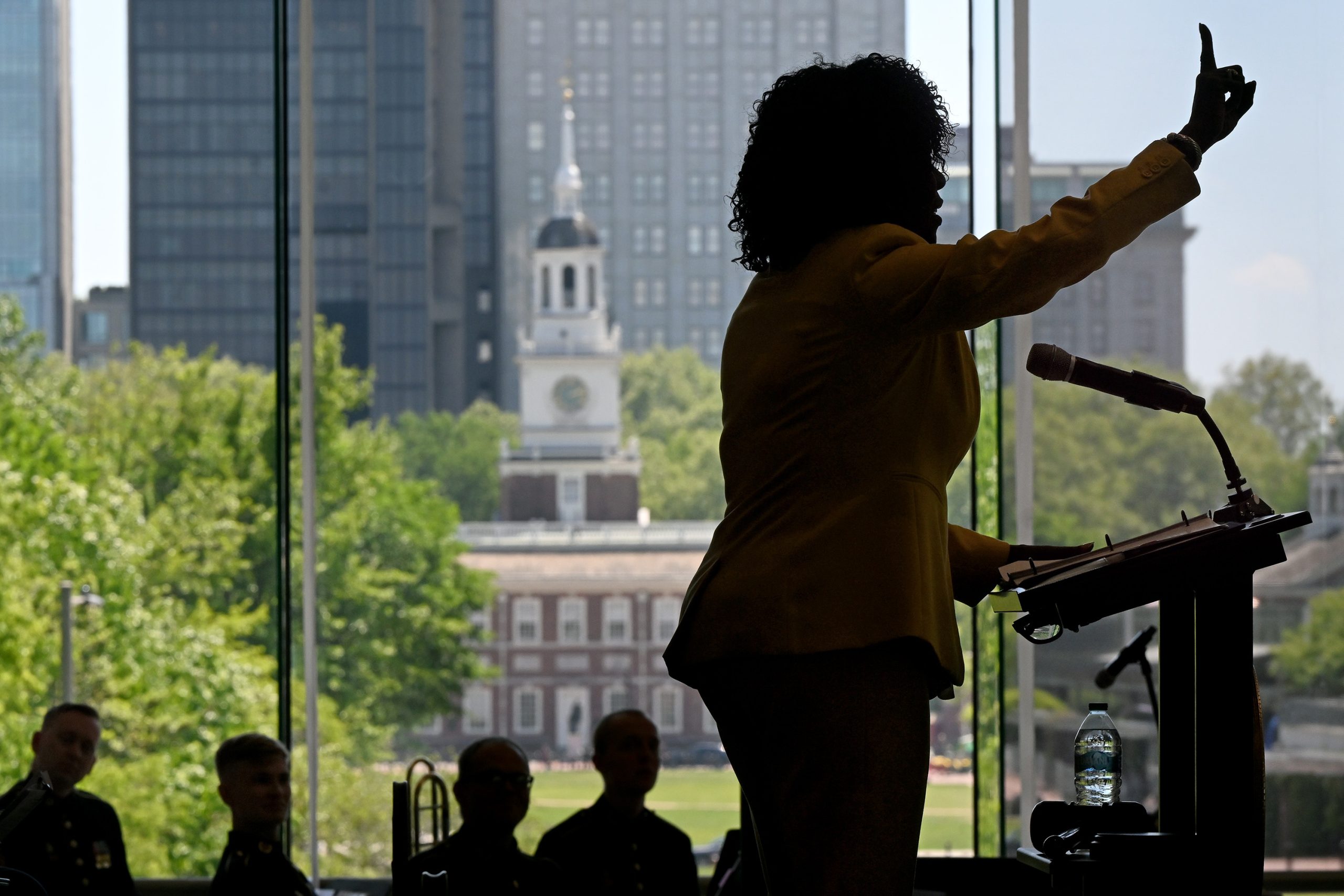
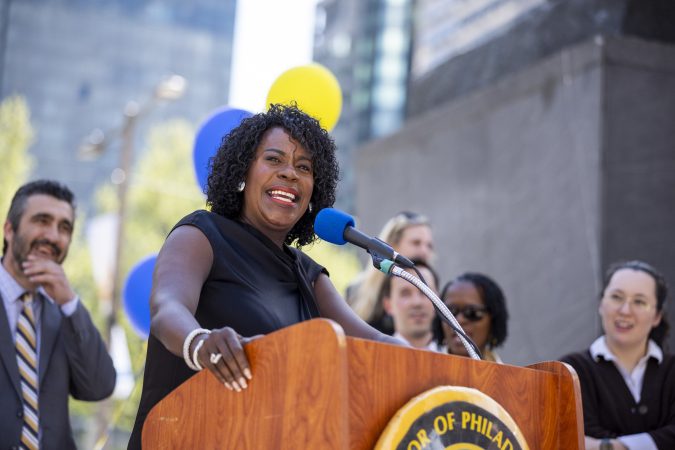
    Mayor Cherelle L. Parker raises a finger with her call-and-response “One Philly, A United City” mantra ending her speech during a ceremonial meeting of the Pennsylvania Senate at the National Constitution Center across the mall from Independence Hall on May 5.Tom Gralish / Staff Photographer

    However, some on the left see a coalescence of forces that could bolster their chances: national frustration with the Democratic establishment that has manifested in leftist wins, a widespread anti-incumbent sentiment, and liberal rage toward President Donald Trump, whom Parker has largely avoided maligning publicly.

    They also see potential signs of Parker’s power waning, including her recent budget battle during which she could not get Democrats in Harrisburg and City Hall on board with her tax plans.

    “If you just have the right candidates that are able to speak to the dissatisfaction of Democratic voters in Philadelphia,” Cea said, “I do think [Parker] is in trouble.”

    But the biggest question for Philadelphia progressives in the approaching mayoral race remains: Who could be their candidate?

    The potential challengers

    Jack Inacker, a Democratic strategist based in Philadelphia, said there are few, if any, challengers to Parker who could pull off a win in 2027.

    “The progressive infrastructure now has built up in a way where, if you squint really hard, you can see a path to a progressive challenger,” Inacker said. “The problem is that [Parker] is one big mistake away from being beatable, but she’s not beatable yet. And people know that.”

    Candidates have plenty of time to decide. Paperwork to get on the ballot likely would not be due until March.

    Perhaps the most talked-about potential challenger so far is District Attorney Larry Krasner, the city’s most prominent progressive. He has not ruled out a run for mayor, and he has recently publicly criticized Parker and some of her closest allies.

    Last week, he invited media to walk along with him while he hand-delivered a letter to the mayor’s suite in City Hall to express dissatisfaction with his office’s budget. Parker called the move “stunting.”

    Platt, in a thinly veiled shot at Krasner, said in a statement that “what we’ve seen recently is too many politicians focused on generating headlines rather than solving problems: manufacturing controversy, looking for someone else to blame, and confusing political theater with leadership.”
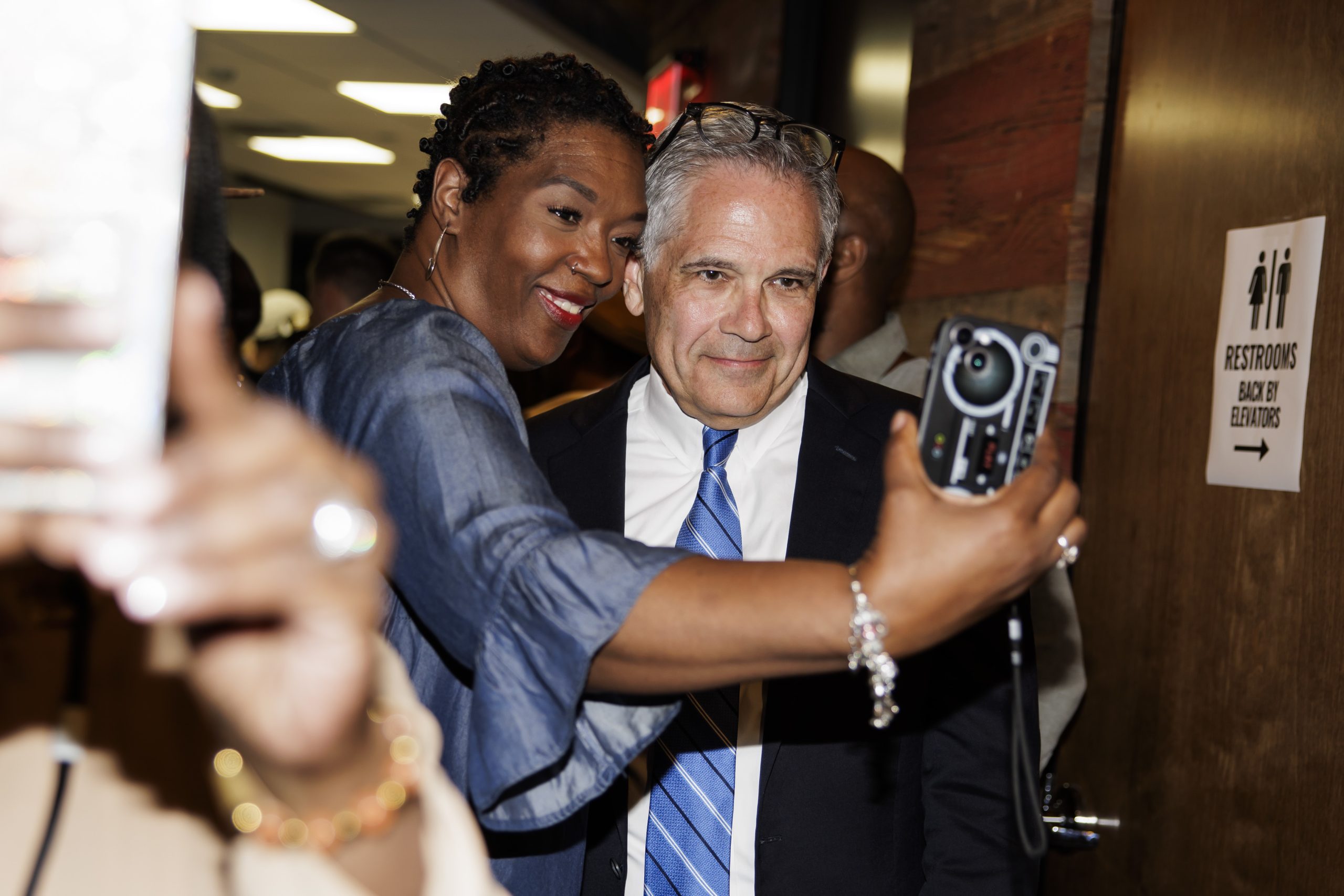
    District Attorney Larry Krasner greets supporters during his election night party at the Pipeline Philly coworking space on May 20, 2025, in Philadelphia. Krasner defeated challenger Patrick Dugan both in the Democratic primary and in the general election.Monica Herndon / Staff Photographer

    Krasner has won citywide election three times, twice winning reelection in landslide fashion. He is one of the nation’s most well-known progressive prosecutors and one of the city’s most polarizing figures. His base of support includes the city’s left, as well as a large swath of Black voters and elected officials.

    But it was Parker’s political family — the vaunted Northwest Coalition of the some of the city’s most storied Black politicians — that was key to Krasner’s political ascent. Challenging Parker could be seen as a betrayal by some in the voter-rich northwest corner of the city, and his base there could fracture.

    Krasner has also in the past struggled to keep up with his opponents in fundraising. Any challenger to Parker would likely need to bring in well over a million dollars, a sum of money that Krasner has never raised before.

    Several other elected officials are seen as potential challengers to Parker, including several sitting members of City Council.

    Councilmember Isaiah Thomas, who represents the city at-large, has long been rumored to have ambitions for higher office. He has been elected citywide twice, and recently was among the most vocal opponents of the Philadelphia School District’s controversial plan to close 17 schools.

    And he has allies both on the left and in the city’s business community, the latter of which has been frustrated with a Parker administration policy shift that increased the tax burden on small businesses.
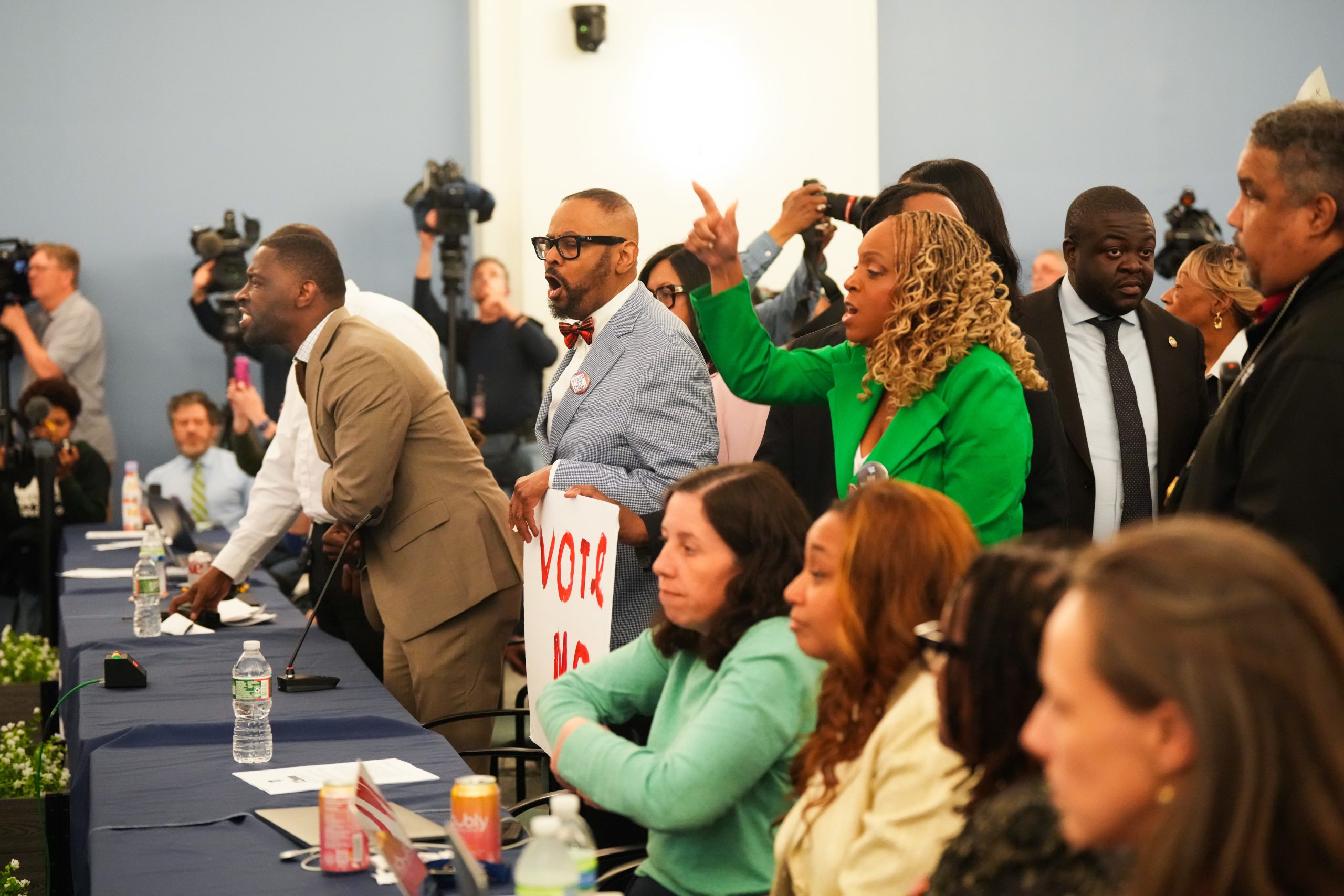
    Councilmembers Isaiah Thomas (from left), Curtis Jones Jr., and Jamie Gauthier protest at an April school board meeting as the board prepared to vote on the facilities plan.Jessica Griffin / Staff Photographer

    Thomas said last week that he is focused on his job in City Council.

    “That job right now is hard enough, looking at the affordability crisis, the crisis around public education, and other issues that we’re facing,” he said.

    There’s also two-term Councilmember Jamie Gauthier, who represents parts of West Philadelphia and has positioned herself as one of Council’s chief critics of the Parker administration. She said earlier this year that running for mayor “could be interesting one day,” but that she would not run if she did not see a clear path to victory.

    She said in a statement that her focus is “finishing what we started on City Council, especially building affordable housing.”

    Gauthier added: “But it’s clear Philadelphians are hungry for leaders who will put working families above big business.”

    And there is Councilmember Kendra Brooks, the de facto leader of the city’s left-leaning coalition and a member of the progressive Working Families Party. Brooks, who represents the city at-large, has twice campaigned and won citywide.

    A political adviser to Brooks said she is focused on her work in City Hall and running for reelection to Council, as well as “building Black progressive political power through the WFP.”

    What do progressive gains mean for the 2027 mayor’s race?

    Parker’s camp sees strength in her numbers.

    In March, the mayor’s political arm commissioned a poll that found that 60% of respondents approve of the job Parker is doing as mayor, while 33% disapprove. Her approval rating was even higher among Black voters, older voters, and residents of Northwest Philadelphia — one of the highest-turnout areas of the city.

    Mayor Cherelle L. Parker (right) hugs Rachel O’Neal, executive of the Friends Childcare Center, at the unveiling of a new playful learning hub at Sisters Cities Park on Thursday.Jessica Griffin / Staff Photographer

    Cornell Belcher, one of the top Democratic pollsters in the nation, has conducted polling for Parker dating back to her mayoral campaign. He said that a key indicator of voter attitude toward an incumbent mayor is the number of residents who think the city is heading in the right direction.

    The results this spring, he noted, were “dramatically different” from when Parker was first campaigning for the office. In April 2023, Belcher measured that 66% of Democratic primary voters in the city were dissatisfied with the direction of Philadelphia.

    Today, he said, 62% are satisfied.

    Still, other polls have shown potential warning signs for Parker.

    In three polls that were conducted this spring in the 3rd Congressional District and obtained by The Inquirer, an average of 48% of Democratic primary voters said they had a favorable view of Parker and 41% had an unfavorable view. The polls, which measured voter attitudes in roughly half the city, were conducted by three different firms, and they were commissioned by different campaigns and organizations.

    Approval and favorability ratings are not apples-to-apples. An approval rating is often considered a more reliable data point for an incumbent executive, because it measures attitudes about job performance, not reputation.

    Belcher, who founded his polling firm 25 years ago and polled for former President Barack Obama, said he would not draw conclusions from polls of a congressional district that includes only half the city and was taken in a different election year. And he questioned other pollsters’ methodology in Philadelphia, a city that is tricky to survey.

    “A city like Philadelphia, with all its different racial and ethnic groups, getting that right is hard,” Belcher said. “The more diverse an area is, the more work you have to put into getting it right.”
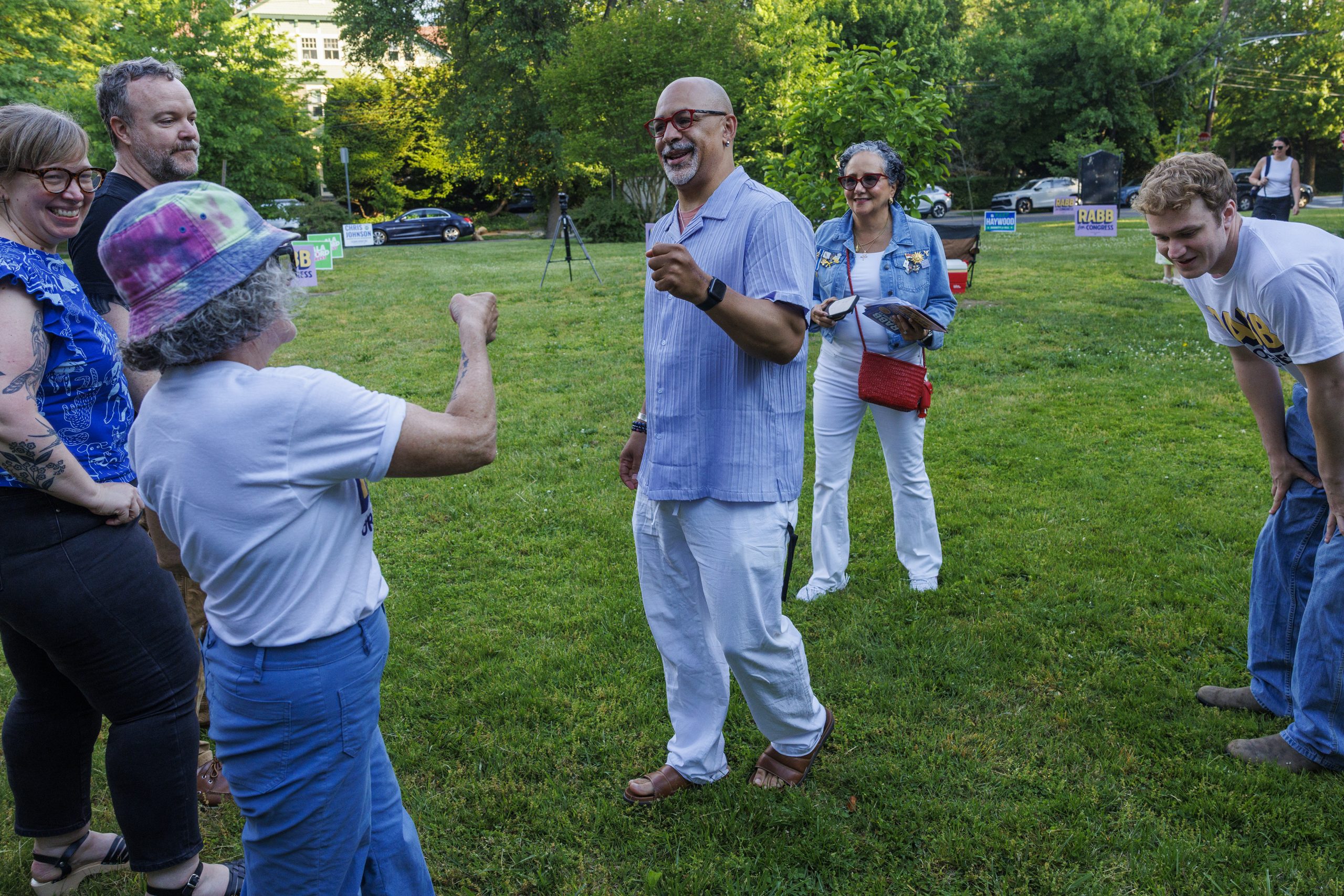
    Chris Rabb greets supporters on election day. He is arriving to his polling place to vote, Grace Epiphany Episcopal Church, on May 19.Alejandro A. Alvarez / Staff Photographer

    The results of last month’s congressional race energized progressives, in part because Rabb performed well in parts of the city that Parker carried when she won the crowded open Democratic mayoral primary in 2023. An Inquirer analysis found that more than a quarter of Rabb’s votes came from divisions that voted for Parker in 2023.

    Rabb won his Democratic primary in a race that included three front-runners. But mayoral reelection battles in Philadelphia have historically been head-to-head, meaning the winner will look to reach 50% of the vote, a more challenging proposition for an ideological candidate.

    Platt said he would caution against concluding that Parker is politically vulnerable based on the outcome of the congressional race.

    And he said Rabb’s win in Parker’s 50th Ward is not a sign of cracks in the mayor’s base. He noted that the ward’s Democratic committeepeople last week unanimously reelected Parker as ward leader.

    “The mayor is organized, and her coalition across Philadelphia is strong,” Platt said. “They may not be active on Reddit, but they’re there, and they believe in what she’s doing because they can see the results in their neighborhoods.”
  • As a Black voter, Graham Platner’s ethics don’t bother me — my people can’t afford to wait for a perfect candidate

    As a Black voter, Graham Platner’s ethics don’t bother me — my people can’t afford to wait for a perfect candidate

    As a lifelong Democrat, I’m often exhausted by my party’s hand-wringing when it comes to the question of ethics.

    I certainly believe moral clarity is important. We should all seek to embrace a firm set of values. However, when it comes to politics, morality is often a mirage, and Democrats spend far too much time pretending it’s not.

    Perhaps that’s why I was encouraged by Graham Platner’s win in the Maine Democratic Senate primary. Platner presented himself as a rugged everyman who happened to be a progressive. However, a series of disclosures exposed Platner’s dark side.

    He wore a tattoo that resembled a Nazi death’s head symbol, but claimed he didn’t know what it represented.

    He sent sexually charged text messages to women, a fact his campaign confirmed.

    Several ex-girlfriends accused him of disturbing behavior, including one who said he forcefully grabbed her more than once. In response, Platner described himself as a “bad boyfriend,” but denied physically abusing women.

    These allegations, along with old Reddit posts that some described as racist and sexist, were not enough to cost him the election, and in my view, that’s a good thing.

    As a Black man in Trump’s America, I can’t afford to wait for the perfect candidate. Nor can I expect politicians to live on a higher moral plane. My people are being targeted by an administration that seems hell-bent on returning us to the age of Jim Crow, and at a time like this, we cannot waste a second playing holier than thou.

    We are literally watching a president with 34 criminal convictions treat the U.S. Constitution as a suggestion, so we don’t need choirboys. We need U.S. senators and representatives who will stand up to Donald Trump.

    For that reason, Platner’s background is less important to me than his ability to fight against racist policies. Could he turn out to be a John Fetterman — pretending to support Democrats while voting with Trump on important issues? Yes, he could, but while Platner might target Black people, Republicans are already doing so.

    With Trump in the White House and GOP majorities in the House, the Senate, and the U.S. Supreme Court, anti-diversity efforts are raging. Black congressional districts are being eliminated, and the Trump administration is using antidiscrimination laws against the very people they were meant to protect.

    In my view, MAGA was never solely about stopping undocumented immigrants from entering the country, because, contrary to right-wing conspiracy theories, undocumented people cannot vote.

    African Americans, however, are among the Democratic Party’s most loyal demographics. We have the power to sway national elections, and we tend to use that power against Trump.

    In 2016, 94% of Black voters cast ballots against Trump, according to the Pew Research Center. In 2020, 92% voted against him. In 2024, 83% voted against him.

    Some pundits say the shift means Trump is making inroads with Black voters. I believe the opposite is true. Democrats are losing us.

    When Black people come face-to-face with bread-and-butter issues like food insecurity and unaffordable healthcare, we don’t want to hear about studies by Ivy League scholars. We don’t want a doctoral thesis on poverty. We want solutions, and Democrats spend far too much time explaining problems rather than solving them.

    Even worse, my party is frequently consumed with constructing ethical obstacle courses that few candidates can navigate. Maybe that was cute back in the day, when you could lose the election and still count on guardrails to restrain the other side. Those guardrails are gone now, and while my party’s white elites can afford to theorize about the link between government and racism, I can’t.

    Racism is not a theory for Black people. It is a daily reality, and it plays out through systems that flourish when conservatives take power.

    Therefore, we must not bind ourselves by seeking perfect candidates. Instead, we must seek to free ourselves by uniting and fighting to win.

  • Trump is losing in courts, Congress, and the polls. Be more worried, not less. | Editorial

    Donald Trump continues to inflict historic damage on the United States through his corruption, incompetence, and cruelty. But amid the daily chaos and nightly fury, Trump has suffered significant losses that should give citizens who support the Constitution and democracy a glimmer of hope.

    He’s lost in Congress, the court of public opinion, and courtrooms across the country. Even the Iran war has turned into a no-win situation. Adding to the indignity, Trump was roundly booed in his hometown by Knicks fans when he made an appearance at an NBA Finals game at New York’s Madison Square Garden on Monday.

    But here’s the thing about Trump: He’s never more dangerous than when he’s losing.

    He continues to dismantle democracy even as the country prepares to celebrate 250 years since the adoption of the Declaration of Independence. And he still wields immense power over his MAGA base.

    But fissures abound.

    Just look at Congress. After largely serving as lapdogs, (some) Republicans who control the House and Senate have begun to push back.

    The Senate shelved Trump’s brazen scheme to create a $1.8 billion fund to reward loyal lackeys prosecuted and convicted of crimes, including the Jan. 6, 2021, insurrection — but passed on reining in his tax audit chicanery.

    Senate Republicans also dropped $1 billion in security funding for Trump’s ballroom — an obscene waste of tax dollars that keeps growing in price and size as many Americans struggle to make ends meet.

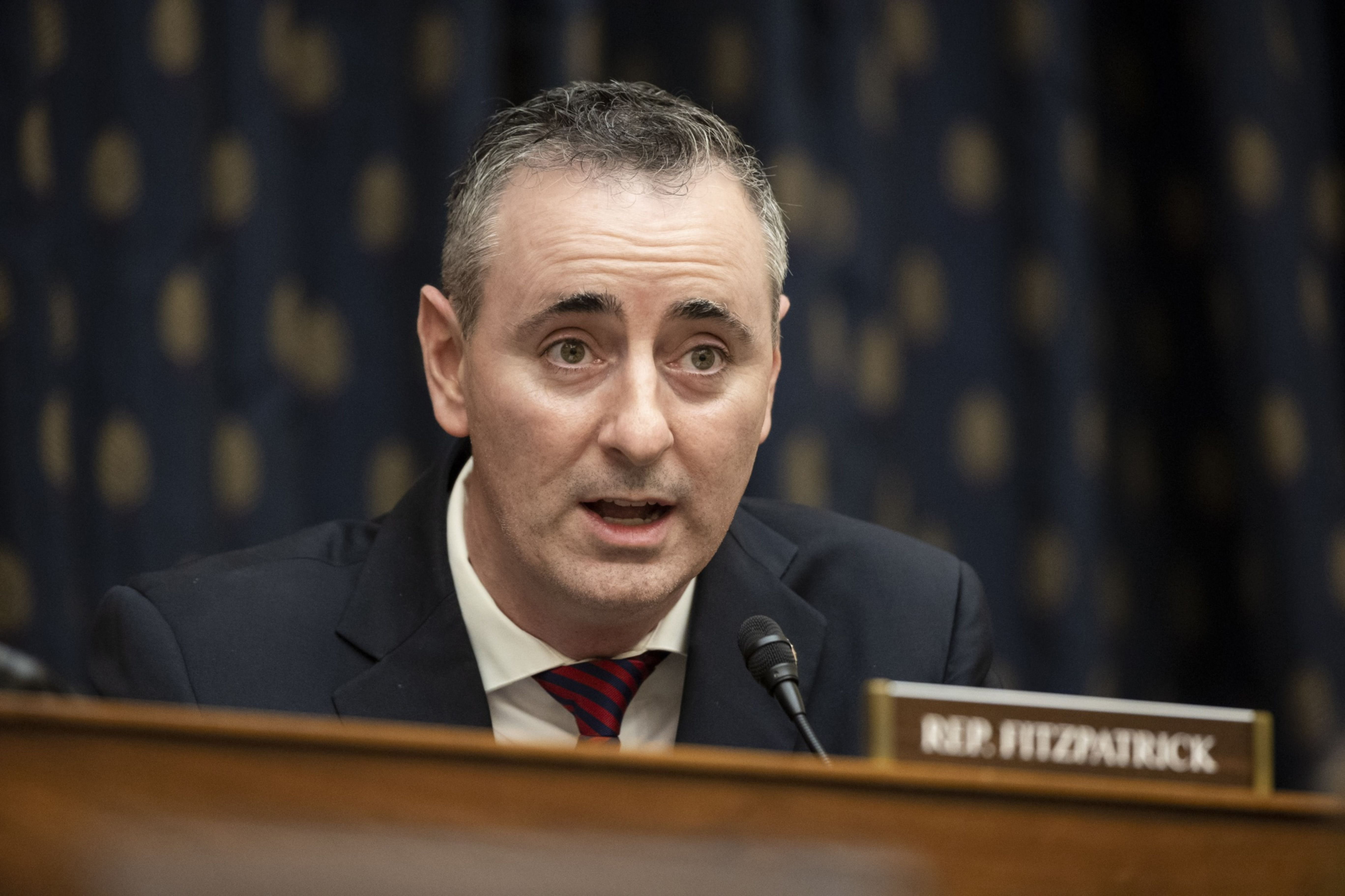
    In a rare rebuke, four GOP House members — including U.S. Rep. Brian Fitzpatrick (R., Pa.) — joined with Democratic lawmakers to pass a war powers resolution that called for ending the conflict in Iran that is costing taxpayers $2 billion a day and sent oil prices soaring.

    U.S. Rep. Brian Fitzpatrick (R., Pa.) was one of four GOP House members who joined with Democratic lawmakers to pass a war powers resolution.Eric Lee

    In defiance of Trump’s refusal to help Ukraine, 18 House Republicans joined Democrats to pass a measure to provide more than $1 billion in aid and impose new sanctions on Russia. (Recall how Trump repeatedly said he would end that war within 24 hours after returning to office.)

    U.S. Rep. Don Bacon (R., Neb.) called Trump’s continued deference to Russian leader Vladimir Putin a “moral blindness” that “communicates weakness.”

    The sudden turn against Trump by some GOP lawmakers is likely driven more by the looming midterm elections than any allegiance to their constitutional oath.

    Trump’s poll numbers are sinking. There are even cracks among white working-class voters without a college degree who now disapprove of the president’s handling of the economy. They could tolerate Trump’s lies, corruption, and incompetence, but not $5-a-gallon gasoline.

    At the same time, Trump — who has spent a lifetime litigating thousands of grievances — is losing in many courtrooms on issues big and small.

    On Monday, a judge voided “in its entirety” Trump’s scheme to impose $100,000 fees on employers seeking visas for skilled foreign workers — one in a series of misguided moves by the administration to target immigrants, which hurts all Americans.

    Earlier this year, the U.S. Supreme Court struck down Trump’s cockamamie plan to impose tariffs on countries in a way best described as willy-nilly. Beyond being fiscally stupid, the court found Trump’s signature economic policy was unconstitutional.

    The Supreme Court will soon rule on Trump’s signature immigration policy to end birthright citizenship for babies born in the U.S. to undocumented immigrants or those on temporary visas.

    Most legal experts believe Trump will lose this case because birthright citizenship is guaranteed under the 14th Amendment. Even Trump predicted the court would “probably rule against me.” As it should, since the law is not on his side.

    A federal judge ruled that Trump’s name must come off the John F. Kennedy Center for the Performing Arts. The judge said the law is “crystal clear,” and that only Congress can change the name.

    After beating four criminal indictments, Trump is still subject to the law.

    In fact, the Trump administration has lost 70% of the more than 600 lawsuits it has faced over the past year or so. The record of futility underscores Trump’s overreach, since the federal government traditionally prevails in court.

    Judges and grand juries have rejected many of the slapdash legal arguments from the Trump administration. The U.S. Department of Justice has parted ways with thousands of career prosecutors and is forfeiting its credibility with the bench.

    The losses are real. And they matter. But democracy doesn’t survive on court rulings and poll numbers alone — it survives because people keep showing up.

    Trump’s losing streak obscures the harder truth that he continues to trample the rule of law, attack countries, install lackeys, line his pockets, and upend the economy — moves that systematically weaken the U.S. at home and abroad.

    It is, after all, a reminder that the arc of the moral universe can bend toward justice — even in these “dark, disturbing, and dangerous times.” The bending, though, is up to us: follow the Constitution, hold wrongdoers accountable, and vote.

  • Pennsylvania is working to fill a spot in Trump’s ‘Great American State Fair’ as other Democratic-led states boycott

    Pennsylvania is set to have a presence at an upcoming two-week “Great American State Fair” on the National Mall, one of the signature 250th anniversary events hosted by President Donald Trump celebrating America’s founding.

    What that presence will look like for Pennsylvania — the state where the nation’s independence was declared — is still up in the air.

    All 50 states and six U.S. territories are expected to be represented with booths showcasing aspects of their culture and history. Some blue states, however, are opting out of sending their own staff to participate, citing a partisan tilt to the event and the cost to participate.

    Pennsylvania, a quintessential swing state led by Democratic Gov. Josh Shapiro, is still preparing to participate in an exhibit, according to a person familiar with the planning. But state officials have struggled to find a Pennsylvania business that wants to associate with the Trump-affiliated event.

    The Great American State Fair has hit numerous roadblocks in its planning in recent weeks. More than half of the acts announced to perform at a Semiquincentennial concert series withdrew shortly after its announcement over concerns the nation’s birthday planners were politically motivated. Trump then replaced the concert series with a political rally, which he will headline on June 24 and he billed as “A Rally to end all Rallies!” in a Truth Social post.

    Freedom 250, the nonprofit organization behind the 16-day event kicking off June 24, has deemed it a “first-of-its-kind world’s fair” while some Democratic officials have railed against it as a waste of taxpayer money.

    Unlike other states, Pennsylvania’s state government did not commit to sponsoring a booth. But Shapiro’s office has been trying to connect Freedom 250 with organizations and companies that could represent the state, according to federal and state sources familiar with the planning.

    It was not clear what type of Keystone State company or group would fill the gap.

    Freedom 250 was still finalizing plans with several states’ tourism boards, cultural and heritage groups, and other organizations as of Friday — less than two weeks before Trump was scheduled to headline the fair’s “kick-off celebration.”

    The event is set to include remarks by Trump and members of his cabinet, fighter jet flyovers, and a performance of “God Bless the USA” by Lee Greenwood, a staple of Trump’s major campaign events over the years. Each day of the fair from June 25 through July 10 will have a theme — including “land & prosperity,” “military & veterans appreciation day,” “faith, values and inspiration” and “MAHA Monday.”

    At least a half-dozen states have opted not to participate, according to NOTUS and other news outlets.

    “He invited all the states to participate and wants to charge us. Charge us to go down and put something on his exhibit, whatever he’s creating for Freedom 250. It’s just ridiculous,” Democratic Gov. Maura Healey, of Massachusetts, said in a Boston Public Radio interview earlier this month.

    Shapiro — a Democrat who’s also frequently challenged Trump and is widely considered a potential contender in the 2028 race to succeed him — has not similarly criticized the fair. The governor has been involved in other 250-focused events in Pennsylvania, such as the Commonwealth Concert Series that includes concerts in five cities across the state.

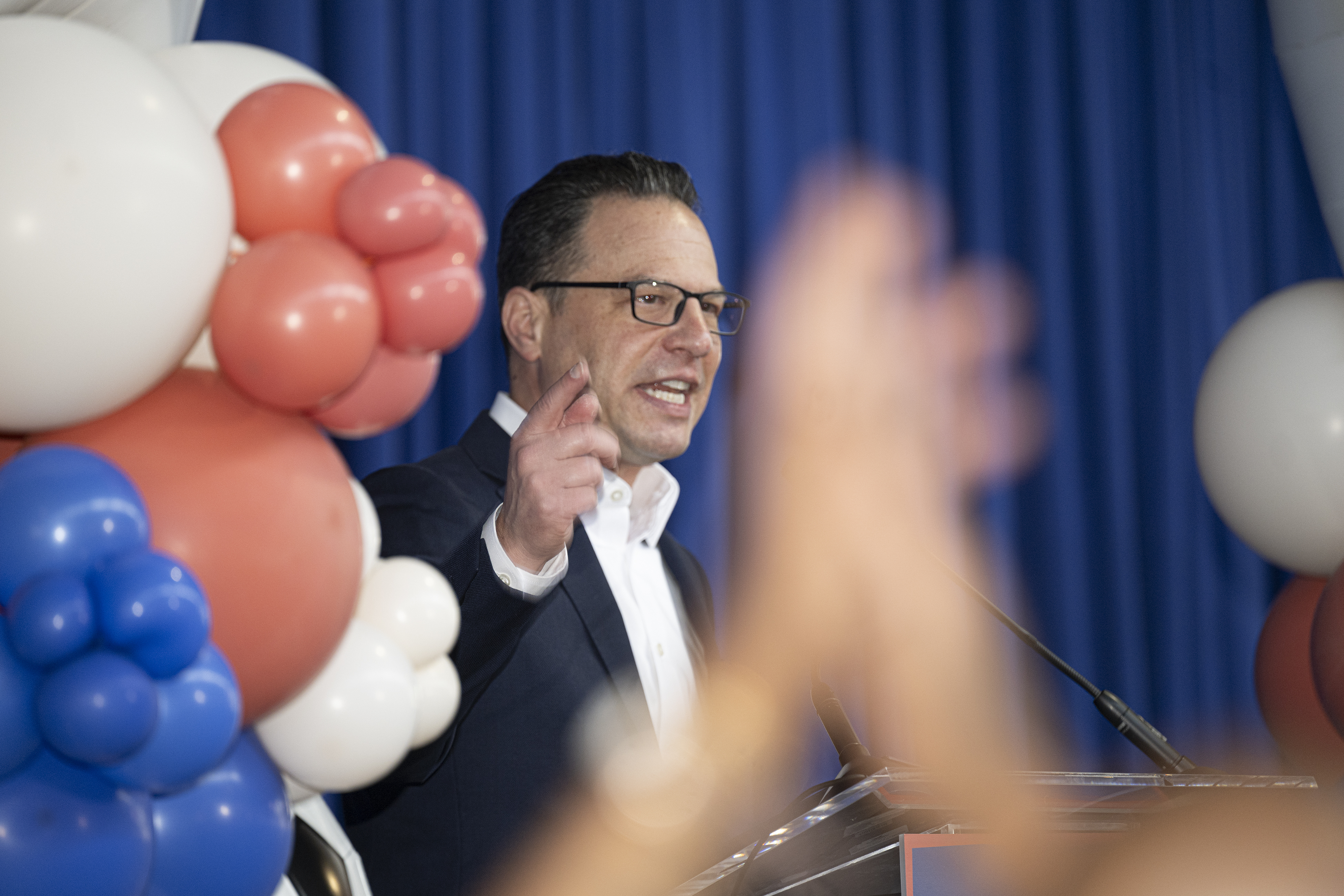
    Pennsylvania Gov. Josh Shapiro speaks during a Visit PA pep rally Tuesday, March 31, 2026, ahead of the nation’s 250th anniversary and other major events in the state. Jose F. Moreno / Staff Photographer

    Freedom 250 has pushed back against the idea that the fair and other anniversary celebrations are partisan.

    “The idea that a president’s presence at America’s 250th birthday is somehow a political act is not a serious argument — and frankly, it is not serious journalism to treat it as one,” Freedom 250 spokesperson Rachel Reisner said. “No one suggested the Biden-Harris administration would have kept the president away from this moment, nor should they have. We proudly welcome President Trump, who has shown genuine enthusiasm for celebrating America and its patriotic traditions, just as we would have welcomed any sitting president. Freedom 250 looks forward to celebrating America together and hosting once-in-a-generation events.”

    The organization has announced several pieces of the program, including “classic state fair” elements like livestock competitions and interactive experiences with companies such as John Deere and Northrop Grumman, the aerospace and defense company.

    It has not detailed the focus of each state’s designated section on the mall.

    An instructional pamphlet directed to state officials explains that every state and territory can “tell its own story” by “presenting a pavilion that reflects their history, culture, and contributions to the nation.” It does not include pricing, though a source familiar with the planning said states or organizations are only responsible for covering the cost to fill the space.

    Some states are sponsoring their exhibits directly through their state agriculture or tourism departments. For example, Arizona and Colorado are planning interactive experiences that highlight their states’ scenic outdoors, and New York’s “I Love NY” tourism campaign will showcase the state’s vacation areas, according to USA Today.

    The Freedom 250 pamphlet suggests other ways states can celebrate the Semiquincentennial — through flags and signage, or “projection experiences” to light up buildings like a state Capitol. It recommends governors issue official proclamations to recognize the moment, as well as foster civic and educational opportunities like student art contests and field trips.

    “The true power of this anniversary will not come from Washington alone,” Freedom 250 CEO Keith Krach wrote to state and local officials in the document. “It will come from you.”

  • Penn president announces he will leave his job next summer

    Penn president announces he will leave his job next summer

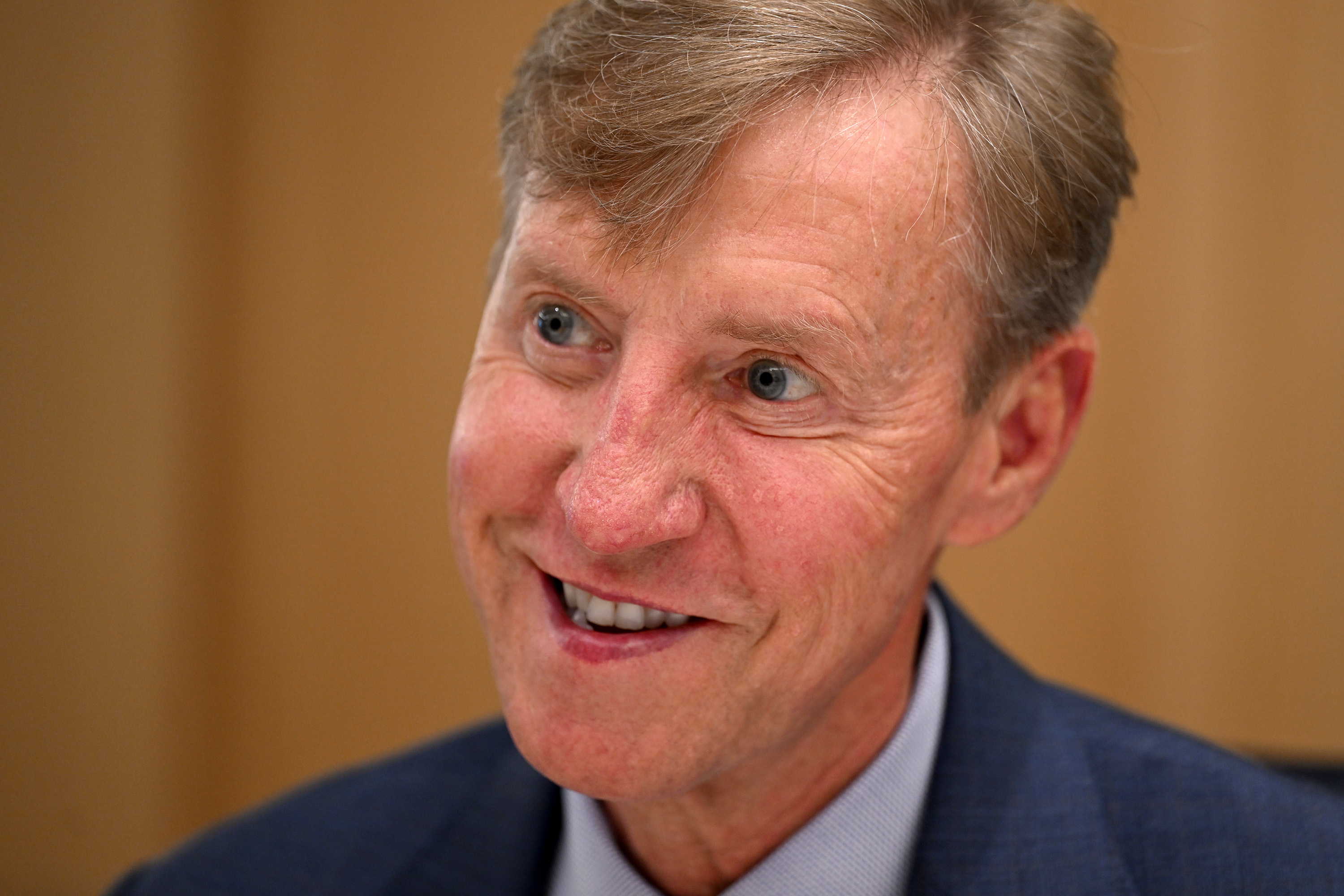
    University of Pennsylvania President J. Larry Jameson will conclude his presidency next June, he announced in an email to the Penn community Friday.

    “Although I greatly enjoyed serving as president, now is the right time for Penn to begin its next chapter under new leadership,” Jameson said in the email. “My goal was to help restore stability during unanticipated leadership transitions, refocus our community on Penn’s mission, and strengthen Penn for the future during a challenging time for higher education.”

    Those goals have been accomplished, he said.

    There was much speculation about whether Jameson — an endocrinologist who previously led Penn’s health system and medical school for more than 12 years — wanted or would be asked to remain in the seat beyond next year’s expiration of his current contract. Many have credited Jameson with steadying the school during a turbulent time, including as the school faced funding threats and increased scrutiny by President Donald Trump’s administration.

    His departure will leave the Ivy League school searching for a new leader during a time of uncertainty under Trump, who has targeted elite universities.

    Board chair Ramanan Raghavendran said he respected Jameson’s decision and the board will begin searching for the school’s next president in the fall.

    Jameson, 71, will have served in the top job at Penn just three-and-a-half years, one of its shorter presidential tenures. But he came into the job by circumstance rather than desire.

    Jameson took over in December 2023 during perhaps one of Penn’s greatest leadership upheavals. Former President Liz Magill had just resigned amid a bipartisan backlash over her testimony involving the school’s response to antisemitism complaints. He first was named interim president and then was elevated to the permanent post in March 2025.

    Jameson earned total compensation of more than $8 million in 2024, the most recent tax year available. That included $5.4 million in “reportable compensation” and more than $2.5 million in other compensation.

    “Dr. Jameson stepped in at a pivotal moment, and what he has accomplished in two-and-a-half years has been simply extraordinary,” Raghavendran said in a statement.

    Neither Raghavedran nor Jameson were available for interviews Friday, the university said.

    In his message, Jameson said “the momentum we have built will continue,” noting his intention to work over the next year on implementing the Penn Forward plan. The plan calls for everything from more transparent and predictable tuition and cost policies and improved student experience to more efficient operations, a focus on keeping Penn at the forefront of best uses of artificial intelligence, and a growing presence in the San Francisco Bay Area — where Wharton already has a campus.

    Penn also has some tough decisions ahead in his final year. During the spring semester, the school proposed new open expression guidelines that some on campus say are too restrictive and would chill free speech. The university is considering the feedback and plans to issue final guidelines next academic year.

    The university also is undergoing belt-tightening in anticipation of potential federal cuts and increased legal and insurance costs. Penn in January asked schools and centers to pare 4% from their budgets for the next fiscal year, on top of a 5% cut last year.

    Penn’s Graduate School of Education laid off several staff members last week as part of those cuts, according to The Daily Pennsylvanian, the student newspaper.

    Many at Penn speak highly of Jameson’s leadership, though some wish he had made a stronger defense against some Trump demands.

    “Even if this were a good time to search for a new president — and it decidedly is not — I cannot imagine Penn finding a more effective leader,“ Eric Feldman, faculty senate tri-chair and a law school professor, said last month. ”His deep knowledge of the medical school is a significant asset amid continuing pressures on federally funded research, and his extensive leadership experience, spanning decades, makes him uniquely well suited to guide the university through what are likely to be several more complex years.”

    During an interview with The Inquirer last month, Jameson explained his decision to resist the Trump administration on some things and negotiate on others.

    “My approach has been not just to complain,” Jameson said during his first interview as Penn’s president with a major media outlet, “but to say, ‘Well, here’s where we’re working together very effectively. Here’s where we’re not necessarily aligned, but let’s discuss how to move forward.’”

    Jameson was at the helm when Penn last summer struck an agreement with the White House over the prior participation of transgender swimmer Lia Thomas on the school’s swim team. The school agreed to adhere to the Trump administration’s definitions of sex, female, male, women, and men in regard to athletics, and send letters of apology to female athletes who felt aggrieved by Thomas’ participation on their team during the 2021-22 season.

    But he also was at the helm when Penn rejected a compact that would have given it preferential treatment for federal funding if it agreed to the Trump administration’s operational demands. The school also is actively fighting a demand by the Equal Employment Opportunity Commission to turn over lists of Jewish people on its campus for its investigation into alleged antisemitism at Penn. The agency sued Penn for not complying with its subpoena and a federal judge sided with the EEOC, but Penn is appealing the decision.

    Jameson said he gained new perspective in the presidential role, which “allowed me to learn each day from the people, ideas and achievements that define this university and its extraordinary breadth. …While my career has been in academic medicine, it has been illuminating to reacquaint myself with other fields, from poetry to political science, from finance to fine arts.”

    He said the university is on a positive trajectory.

    “Penn has tremendous momentum and is exceptionally well positioned for the future,” Jameson wrote.

  • With or without World Cup tickets, these Philly fans are ready for Sunday — and beyond

    With or without World Cup tickets, these Philly fans are ready for Sunday — and beyond

    The World Cup is finally here, and for the next 39 days, billions of soccer fans worldwide will hang on the fate of the 48 national teams vying to be named the global best for the next four years.

    There is nothing else quite like it.

    If you haven’t followed it closely, try to imagine it as a kind of March Madness wherein the bracket’s unexpected turns and Cinderella runs can upend every expectation: add into it the international scope and quadrennial timing of the Summer Olympics; then top it off with the fervor of beloved religious observance — and you’ll be getting close.

    My familial WhatsApp group started really buzzing two days ago, after New York City Mayor Zohran Mamdani posited the possibility of Morocco winning it all, and won’t stop buzzing until the confetti rains down on the overjoyed winners. In between will be everything from play-by-play game commentary, to status reports on Panini collections or taste tests of World Cup branded snacks, to shared photos of candles lit for the success of a favored team.

    Because, when you are all in you are all in, am I right?

    Thursday the opening match took place between Mexico (which, along with the United States and Canada, is co-hosting this World Cup) and South Africa.

    On Sunday, our own Linc-turned-Philadelphia-Stadium will host Cote d’Ivoire vs. Ecuador. Philadelphia Inquirer columnist Will Bunch has written about the Cote d’Ivoire team — which he will see in person — and whose fans came to watch them in Chester even before the World Cup started.

    The Vourvouliad (the collective we’ve coined for my extended family) long toyed with the idea of attending one of the Philadelphia matches as a group — but FIFA’s dynamic pricing put the kibosh on that by making every seat cost a small fortune.

    But we’ll make do — as we have every mundial before this one — watching from afar.

    Truth is, many of us are also approaching this World Cup with more than a little bit of trepidation. We will watch the World Cup matches taking place on U.S. soil with bated breath, given President Donald Trump’s xenophobia and his administration’s targeted deployment of Immigration and Customs Enforcement and other Department of Homeland Security agents to Black and brown cities, communities and gathering spaces.

    But we longtime fans have too many great memories born of our experiences of soccer to boycott the World Cup altogether — even though some have called for that.

    In fact, most of the fans that I’ve spoken with lately are consumed by the exact opposite: trying to find a way to get into a World Cup stadium.

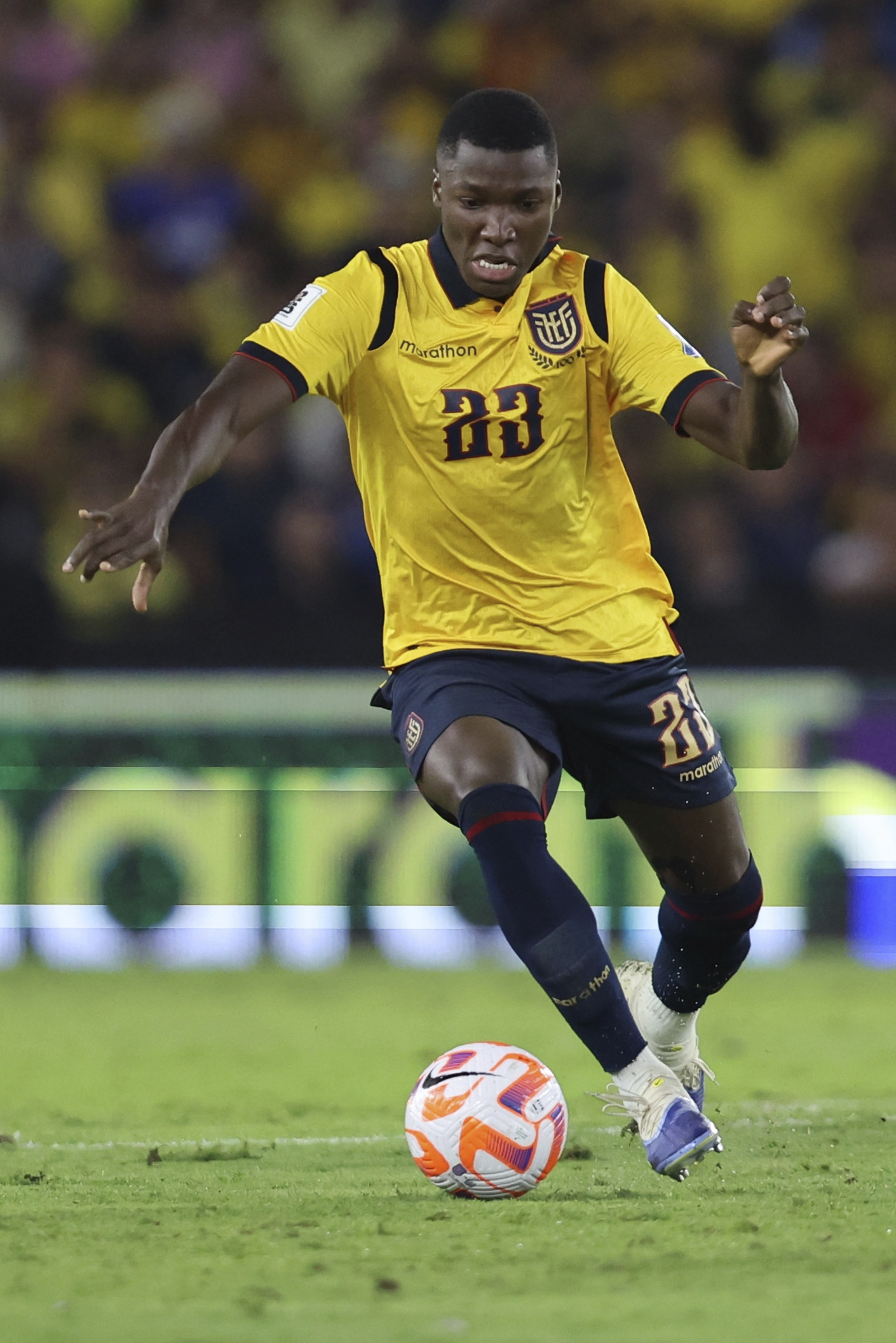
    Ecuador’s Moisés Caicedo carries the ball during a World Cup 2026 qualifying soccer match against Argentina at Banco Pichincha Stadium in Guayaquil, Ecuador in September.A

    Felipe, who — perhaps channeling Pelé, Neymar and countless other soccer icons — only wanted to go by one name, will be at the Philadelphia opener Sunday, rooting for his home country of Ecuador.

    “I will be going to the stadium with my family. We will also be tailgating with some other friends from Ecuador before the game outside the stadium,” he told me. “I think it will be a great opportunity to meet other soccer fans there.”

    “I am really excited for the World Cup, not only because Ecuador’s national team is in great shape but also because it is a once in a lifetime [opportunity] to have your home country’s national team playing a World Cup in the city you are living in,” Felipe added. “I wish the organization would take into account the fans’ enjoyment before the profit, but I guess this is the business model we sadly see in many other sports as well.”

    France’s Kylian Mbappé, left, scores his side’s third goal during a World Cup 2026 group D qualifying soccer match between France and Ukraine in Paris in November.Christophe Ena

    Ben Rush-Goebel, who moved to Philadelphia from France more than a decade ago, probably won’t be at France’s match on June 22.

    “The tickets are really too expensive,” he told me, “so unless I find a magical way to get to the Philly game, I will be watching it with my friends. I can’t wait to go to the FanFest to watch this game and others. Might also go to a bar. Fado has always been our spot. In 2018, when France went to the finals to beat Croatia, we were in the rain on South Street watching from the screen set up by Brauhaus Schmitz. This was the most amazing time as we rushed after the victory to buy cheap champagne to celebrate.”

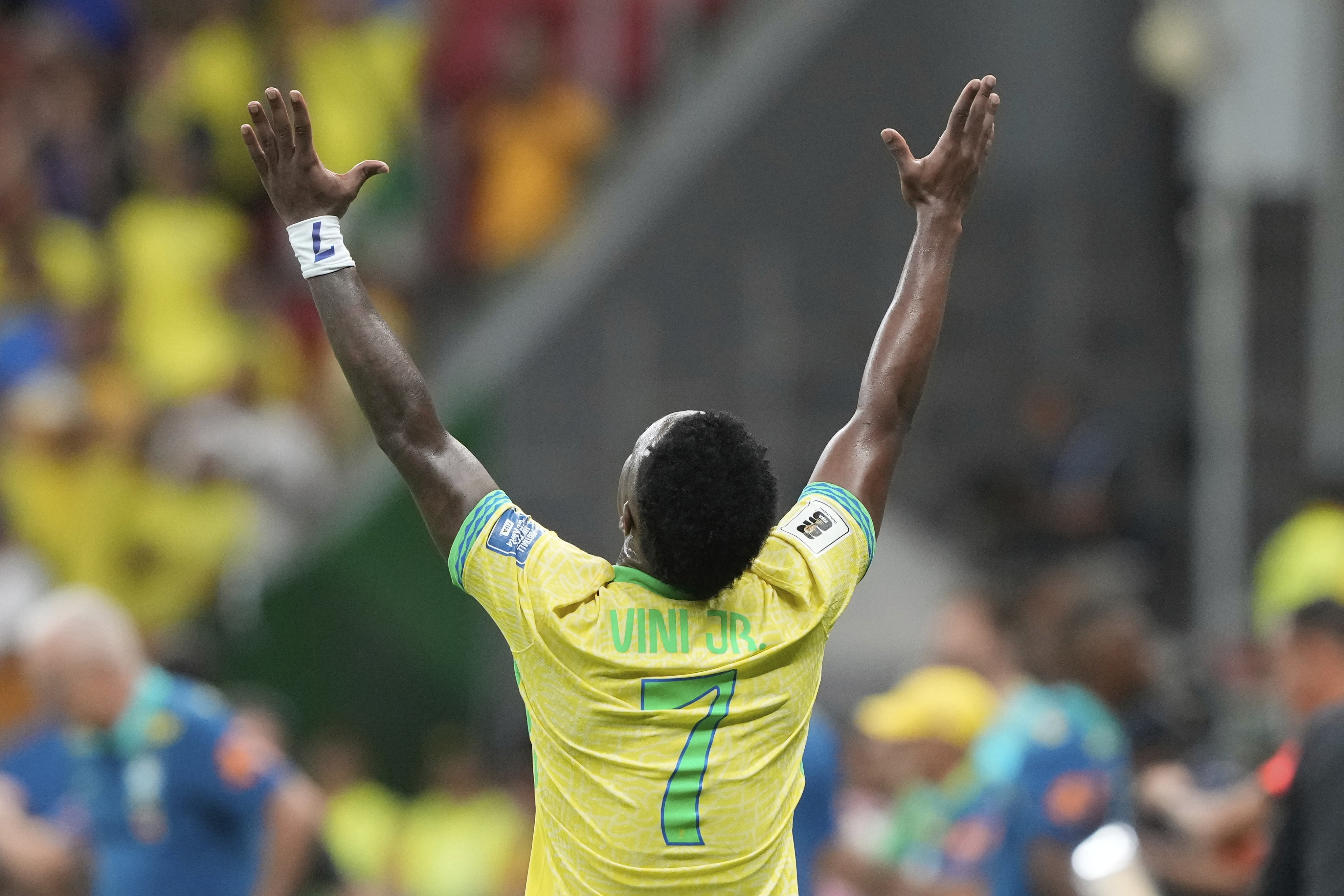
    Brazil’s Vinícius Júnior celebrates after scoring his side’s second goal against Colombia during a FIFA World Cup 2026 qualifying soccer match at Mané Garrincha stadium in Brasilia, Brazil, in March 2025.Eraldo Peres

    Rob Levin, raised in Brazil and rooting both for their Seleção and Argentina’s Albicelestes, will be watching Brazil play in Philadelphia June 19 from home, or with others at a watch party.

    “Chevere to have the World Cup here,” he said. “It’s a shame that the ticket costs are so high and travel to and fro is so fraught — I hope all the fans behave and all players are treated well and with respect — no place for politics in these games. May everything go as smoothly as possible, as it should.”

    The Union’s Danley Jean Jacques, right, is the first active player from the Philadelpha club to play in a World Cup, on the Haitian national team.Jessica Tobias

    Numa St. Louis, whose team, Haiti, is participating in the World Cup for the first time in more than 50 years, hasn’t given up on seeing the team play against Brazil on June 19.

    “I’m still hoping to score a ticket for the Haiti-Brazil game,” he told me, “but if not, I’ll be enjoying the tournament the Haitian way — at community watch parties, breaking bread with friends and family, dancing, and vibing to Haitian music and rhythms while cheering on our team.”

    “The entire Haitian community is energized by the opportunity to support our national team and celebrate this historic moment together …Win, lose, or draw, this team has already made us proud,” he added.

    Like Levin, St. Louis worries about the welcome players and international fans might feel in the U.S. venues. “I have some concerns about how the United States is being perceived by many international fans,” he said. “Reports regarding the treatment of an African referee, Senegalese players, and issues involving Iranian supporters have raised questions about whether the spirit of the tournament is being fully embraced. The World Cup should be a celebration of cultures, people, and the beautiful game. It should feel welcoming, joyful, and inclusive for everyone.”

    And it should resonate, even years later.

    “My best soccer memory goes back to 1996, the first time Ecuador beat Argentina in Quito,” Felipe told me. “I was 12 years old and went to watch the game at the stadium with my grandfather who was a huge fan of soccer.”

    Rush-Goebel points to that 2018 moment on South Street after France’s win as his favorite soccer memory: “A whole lot of French people, many of whom were my friends, my wife, [all of us] stressing together, in the rain, to an amazing victory!”

    For myself, I have fond memories of seeing Mexican immigrants in Philly dressing their Jesus figures in El Tri’s national jerseys before Mexico played in the 2014 mundial — but you have to go all the way back to the 1970 World Cup in Mexico for my best memory.

    Sure, I recall snippets of the televised semi-final “game of the century” between Italy and West Germany, and maybe even Pelé’s magnificent header that opened the final between Brazil and Italy…

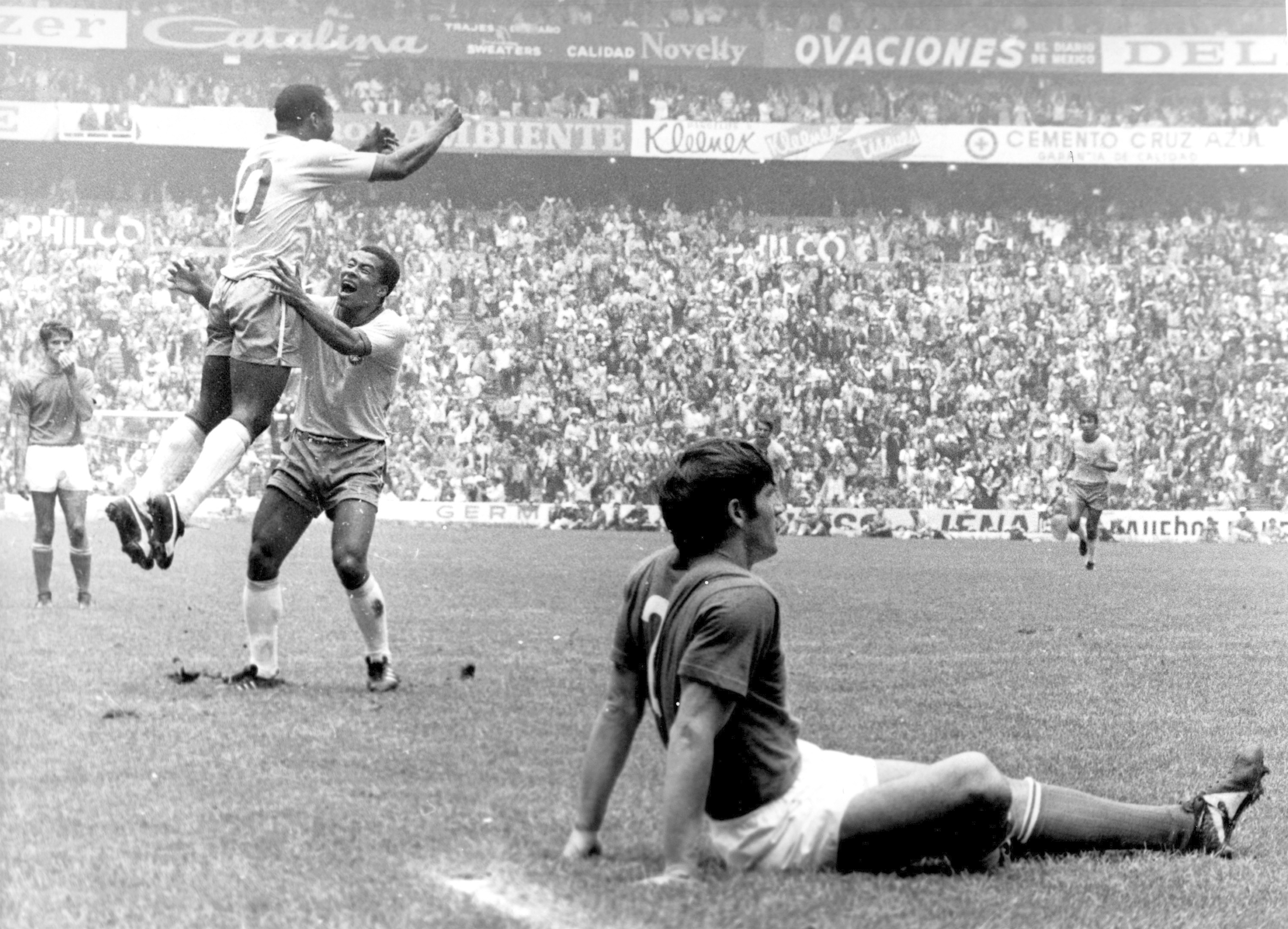
    In this June 21, 1970 file photo, Brazil’s Pelé jumps for joy after scoring his team’s first goal against Italy in the first half of a World Cup final at Azteca Stadium in Mexico City, before winning 4 – 1. Kurt Strumpf

    But what lives most vividly in my memory played out during the long lent leading up to those games.

    I’m a kid, standing under the eucalyptus tree in my grandmother’s house in Guatemala with my brothers, trading Panini we purchased for centavos at the corner store in Zone 7 so that we could fill every team roster with stamps in our albums. We talked fútbol nonstop — me, who can’t stand sports, and my brothers, who love soccer and baseball with equal passion — and cheerfully bickered about who would go the distance.

    For me soccer will always be about those two people I love, who I want to keep talking fútbol with until the day I die. The beautiful game is beautiful precisely because of the profound connections it invites and honors — be it with family members, friends or strangers across continents and time zones.

    Or with a city, hosting its first ever World Cup matches with characteristic style and grit. May you hold our deep and indelible memories forever, Philadelphia.

  • Brian Fitzpatrick steps up criticism of House Republican leaders while he starts to lean on their campaign cash

    Brian Fitzpatrick steps up criticism of House Republican leaders while he starts to lean on their campaign cash

    WASHINGTON — As U.S. Rep. Brian Fitzpatrick’s fiercest reelection battle in years got underway in the last two months, the moderate Bucks County Republican has called to restrict President Donald Trump’s war in Iran and prohibit a so-called “anti-weaponization fund” that could reward the president’s allies.

    He’s talked up Democratic Gov. Josh Shapiro’s potential run for president, and he’s said he would “100%” become an independent if Pennsylvania didn’t have closed primaries.

    He went even further this week — deriding House Republican leadership for opposing a process that allows lawmakers like him to force a vote on issues like the weaponization fund.

    “Leadership of both parties have been guilty of this for years… just further evidence of the brokenness of the two-party system — and the rise of Independent voters is a direct manifestation of this,” Fitzpatrick wrote on social media.

    Behind the scenes, though, Fitzpatrick has started to lean on his party’s vast resources to help win his reelection and, Republicans hope, keep the narrowly divided 435-member House in GOP control.

    In a newly scheduled television ad campaign that will begin later this month, Fitzpatrick is teaming up with the National Republican Congressional Committee — the official campaign arm of House Republican leaders — to launch ads aimed at boosting his campaign in the 1st Congressional District against Democratic nominee Bob Harvie, a Bucks County commissioner who won last month’s primary with support from Shapiro and national Democrats.

    The $120,000 worth of cable TV ads represent the first foray by the NRCC in any Pennsylvania district so far this year, according to the tracking firm AdImpact.

    Both parties are competing heavily over four Republican-held seats in Pennsylvania, making the state one of the centerpieces in the fight to win the House majority during this year’s high-stakes midterms.

    The NRCC and other Republican groups have promised to help reelect all four incumbents. And with the new ads benefiting Fitzpatrick, the NRCC is spending first on the candidate who’s been the most publicly critical of their leadership and even gotten some blowback from Trump as a result.

    “Trump can say whatever Trump wants,” Robin Kolodny, a Temple University political science professor, said of the president’s accusations that Fitzpatrick is insufficiently loyal. “But you get to 218 by adding one race at a time. And if you have an incumbent who’s been successful, the party has every incentive to support them until they find that the polling says it’s the lost cause.”

    Fitzpatrick has won five terms in a nearly evenly divided Bucks County-based district with what observers have called a specific brand of politics. He votes with his party and supports Trump’s priorities the vast majority of the time, though he’s broken with them in instances like the final passage of the One Big Beautiful Bill and the expiration of COVID-era Affordable Care Act tax credits that kept costs lower for individuals using the public marketplace.

    His recent opposition to the anti-weaponization fund has echoes of that healthcare debate in December, when Fitzpatrick joined with Democrats in trying to use a process called a discharge petition to force a vote that Republican House Speaker Mike Johnson declined to set up.

    Fitzpatrick’s office and campaign did not respond to requests for comment for this story.

    But earlier this week, the Pennsylvania lawmaker and U.S. Rep. Tom Suozzi (D., N.Y.) said they would launch a discharge petition to prevent Trump from creating a fund to compensate people who claim to be victims of a weaponized federal government, Punchbowl News reported. The idea for the $1.8 billion fund emerged from a settlement between Trump and the Department of Justice in a case about the leak of Trump’s tax returns.

    Republican lawmakers who have often acquiesced to the president’s demands voiced deep concerns. Acting Attorney General Todd Blanche responded by saying the administration was walking away from the idea. Still, Trump officials have quietly worked to keep it alive and have not ruled out payments going to individuals previously charged with attacking the Capitol on Jan. 6, The Atlantic reported Thursday.

    “The statement’s not satisfactory,” Fitzpatrick said on CNN earlier this month while discussing Blanche’s comments. “We need both a legal avenue here and a statutory legislative avenue. That’s what Tom and I have introduced, and that’s what we’re going to force to the floor.”

    He called the fund an “abuse” of the law. In a post on X this week, he also disparaged Republicans leaders’ “poorly managed House Floor” for preventing a discharge petition to squash it.

    Johnson, the Louisiana Republican who leads the chamber, headlined a fundraiser earlier this year for Fitzpatrick, who generally does vote for GOP priorities — including this week’s successful effort to provide additional funding for immigration enforcement within the Department of Homeland Security.

    Fitzpatrick and Suozzi had not yet launched the discharge petition as of Thursday evening, after Punchbowl reported that Republican leadership was frustrated with the idea. Some even proposed pulling back campaign contributions from NRCC “patriots” who signed on to a discharge petition, according to Punchbowl.

    Fitzpatrick is one of 15 Republicans in the NRCC’s “patriots” program that prioritizes sending resources to competitive districts.

    Also on the list are U.S. Reps. Scott Perry, in a Harrisburg-based district; Ryan Mackenzie, in the Lehigh Valley; and Rob Bresnahan, in a Scranton-based district. Each of those races are considered more of a “tossup” than Fitzpatrick’s, and Kolodny said it’s likely the NRCC will invest in advertising and campaign operations to help them as well, possibly a little later in the summer.

    She said the earlier spending on behalf of Fitzpatrick is likely a sign they found him to be “newly vulnerable” after the May 19 primary, when Harvie was nominated.

    Widely considered the most formidable challenger to Fitzpatrick so far, Harvie has already been elected by voters twice in a majority of the district and both national and state Democrats have coalesced around him.

    Kolodny called the size of the NRCC’s ad-buy “modest” but said that “they’ve done anything at all means that their polling has shown them they’ve got a problem.”

    “They have a new level of concern that they didn’t have before,” Kolodny said.

    Harvie, who is expected to benefit from outside spending by the NRCC’s counterpart, the Democratic Congressional Campaign Committee, said in a statement that the ads are proof Republican leaders “can count on [Fitzpatrick’s] vote when they need it most.”

    “We are tired of politicians like Fitzpatrick talking out of both sides of their mouth,” Harvie said. “He claims to be ‘independent,’ but he’s seeking a bailout from Trump’s Republican Party because he is one of their own.”

    Charlie Gerow, a Republican strategist with a Harrisburg-based public affairs firm, said he didn’t view Fitzpatrick’s latest moves as much different from any other instance in which he’s successfully walked a “political tightrope” in his district, which is one of only nine GOP-held districts in the country that went for Kamala Harris in 2024.

    He said the assist from the NRCC also makes sense because of how large Fitzpatrick’s district looms in a House that’s currently split 218 Republicans to 212 Democrats, with one independent and four vacancies.

    “Leadership has an absolute interest in making sure that Brian Fitzpatrick gets reelected, despite their displeasure from time to time with what he says and does,” Gerow said.

  • The U.S. welcomed this child of the Vietnam War. Why did he die in ICE custody?

    The U.S. welcomed this child of the Vietnam War. Why did he die in ICE custody?

    Tuan Van Bui’s bad luck arguably started the day he was born in 1970 in the city then known as Saigon — the child of a Vietnamese woman and one of the thousands of U.S. soldiers who fought in Southeast Asia for nearly two decades.

    Van Bui never knew his dad, but he quickly learned what it was like to grow up in a hostile homeland that called the estimated 25,000 to 50,000 Amerasian kids like him “children of the dust.” The communist government that won the war in 1975 denied him any education past grade school.

    In 1990, Van Bui caught a break — of sorts. In the late 1980s, a U.S. Congress struggling to come to grips with the mess America had left behind passed the Amerasian Homecoming Act. That allowed Van Bui to legally immigrate to America and settle in Philadelphia’s Kensington neighborhood, but with no real safety net.

    His first two decades on U.S. soil were rough, marked by occasional run-ins with the law. But in middle age, Van Bui had settled into a more comfortable American life. He married a fellow Amerasian immigrant in 2017, earned some money from construction and other odd jobs, and indulged his quirky hobbies like stamp collecting. He was paying back his fines from the bad years and — although threatened with a removal order — he religiously showed up for check-ins with U.S. immigration officials.

    His family says Van Bui was doing everything the right way.

    Still, it was with much trepidation that Van Bui showed up with his wife at the Philadelphia immigration office on Aug. 18, as the reelected Donald Trump and his team pushed for a massive increase in arrests and deportations. What happened next, as his wife related to family members, was even worse than they had feared.

    Tuan Van Bui in an undated family photo. Van Bui, 55, died in immigration custody at the Miami Correctional Facility in Bunker Hill, Ind., on April 1.Handout art

    Van Bui’s stepdaughter, Ly Wang, told me this week that U.S. Immigration and Customs Enforcement officers were waiting. “Before he could even really check in, they saw him, they spotted him,” she said. “The ICE agents ambushed him, and they shoved my mom out of the way. They tackled my stepdad … shoving him into a wall because he’s a big dude.” Wang said the ICE agents threw Van Bui’s paperwork in the trash and warned her mom, “You need to leave before we make it a problem for you, too.”

    Van Bui’s arrest that August day was the start of a seven and a half month Kafkaesque journey through the rancid food and 4 a.m. wake-ups of ICE detention sites, first in upstate Pennsylvania, and then nearly 700 miles away in rural Indiana.

    It ended on April 1. That morning, Van Bui had made his usual phone call to his wife and, despite the routine complaints, sounded fine. The next call came that night, but from the chaplain at Indiana’s Miami Correctional Facility. Van Bui had suddenly collapsed and died. He was just 55.

    It took more than two months for Wang and her mom — who herself had suffered a debilitating stroke in the days right after watching Van Bui’s violent arrest — to deal with Indiana authorities, obtain some additional testing, bring his body back home, and secure a spot for him in the Fernwood Cemetery in suburban Lansdowne, where he was buried on June 5.

    But his family’s many questions have not been laid to rest.

    Why was Van Bui’s ICE detention dragged out for so many months when — given the wretchedness of life behind barbed wire — he and his family would have preferred deportation to Vietnam, even if he hadn’t been there for 36 years? Why wasn’t Van Bui given more medical attention, as doctors noted his swollen knees and other signs of worsening health? And why is ICE’s account of Van Bui’s death so different from what other detainees told the family — that staff did nothing at first while they, the detainees, attempted CPR until paramedics finally arrived a full hour after the collapse, too late to do anything but declare him dead?

    And a bigger question hangs over all of this: Why did a redemption-seeking United States government invite Van Bui to come here from the other side of the world, only to leave him to fend for himself before brutally arresting him, dumping him in a hellhole prison, and allegedly watching him die from chronic and then acute neglect?

    “I think he fully considered America to be his home, and he was very comfortable here despite even all the challenges against [Amerasians],” Wang said. What happened to Tuan Van Bui is in many ways mystifying, but he is also not unique.

    Even as the Trump regime’s deportation raids have sometimes dominated the headlines, much of the attention has focused on the targeting by masked ICE and Border Patrol agents of brown and Black neighborhoods, such as Latinos in Los Angeles and Chicago or the Somali community in Minneapolis. The government’s stepped-up arrests of Asian Americans have largely flown under the radar.

    “There’s just a severe sense of fear in the community,” Nancy Nguyen, the executive director of Philadelphia-based VietLead, told me, adding that the message “for the Asian communities is that they are not wanted here under Trump.”

    A painful irony is that the hardest hit have been refugees for whom the United States opened its doors in the latter years of the 20th century — a belated acknowledgment that their plight was often the result of America’s violent and unpopular war in Southeast Asia. This winter in Minnesota, masked immigration raiders frequently targeted the Hmong people from Laos who’d once been welcomed for their role in helping American troops and the CIA over there.

    Nguyen said that nationally, more than 1,000 Vietnamese immigrants and more than 500 Laotians were deported in 2025 — compared with fewer than 100 a year before the second coming of Trump. A few have been sent to remote African nations like Eswatini, where they don’t know any people or the language. Many more have been languishing, as Van Bui did, in the cruel limbo of ICE detention — sometimes with lethal consequences. Nguyen said that of the 50 or so ICE detainees who’ve died under the Trump regime, nearly a third were of Asian descent.

    Van Bui was actually the second Asian American to die at the Miami Correctional Facility — run by the state of Indiana, which contracts with ICE — since February. Lorth Sim, 59, who came to America in 1983 as a refugee from the brutal dictatorship of Cambodia’s Pol Pot, also collapsed at the facility, where officials also blamed heart disease.

    What’s more, Van Bui is the third member of Pennsylvania’s Asian community to die in immigration custody in less than a year. In January, 46-year-old Cambodian American Parady La was arrested outside his Upper Darby home and died three days later at Philadelphia’s federal detention center, reportedly while undergoing narcotics withdrawal. Last August, 32-year-old Chinese immigrant Chaofeng Ge died at the upstate Moshannon Valley Processing Center five days after his arrest near Harrisburg; family members and advocates have challenged ICE’s assertion that his death was a suicide by hanging.

    In Van Bui’s case, ICE issued a fairly detailed statement that insisted the Amerasian detainee — who’d suffered a serious stroke on Christmas Eve 2023 and used a cane for mobility, among other preexisting health problems — was properly monitored and treated amid clear signs his condition was deteriorating, with a decreased platelet count and then swollen knees indicating “obstructive pulmonary disease.” It also claimed — disputed in the accounts other detainees have offered Van Bui’s family — that staff at the Indiana facility responded quickly to his April 1 collapse with CPR and a defibrillator before he was pronounced dead at 6 p.m.

    Whether ICE and Indiana corrections officers offered Van Bui adequate medical care is still up for debate, but what the government definitely did not offer was empathy. As with other ICE custody deaths, grieving relatives were slammed with an official press release that denied Van Bui’s humanity.

    “Criminal illegal alien from Vietnam passes away at Miami Correctional Center” was the headline on ICE’s press release, which stressed Van Bui’s encounters with law enforcement when he was a younger man.

    His stepdaughter Wang told me the litany of criminal charges in the release includes some arrests for which he was not charged or convicted, and that he was diligently repaying fines for other past violations. But what hurts more is the regime’s cruel characterization of a human being whom Wang described as a soft-spoken, gentle giant who never turned down a request for help from his Kensington neighbors and — “a nerd in a way” — loved to scour flea markets for cuckoo clocks or rare coins or stamps.

    Chaofeng Ge, 32, died in August at the Moshannon Valley Processing Center while detained by ICE.Courtesy of David Rankin

    She said he’d told her little about the first 20 years of his life in Saigon (renamed Ho Chi Minh City after the war), but did admit that the abandonment of his American GI father weighed on him.

    “Something that he did tell me and just confided in me was that he never felt like he grew up feeling wanted, you know? Starting with his dad not being around, and his mother being very busy and being a single parent,” she said. “So he had kind of a rough start.”

    Amerasian kids were treated cruelly in Vietnam — as reminders of the hated Americans who’d invaded their country — and typically denied any education beyond grade school, which apparently was the case for Van Bui. The United States seemed to acknowledge that harsh reality when Congress and the Reagan administration enacted the special AM-1 visa that allowed Van Bui to come here in 1990. But the new arrivals didn’t always adapt easily to a home where they were reminders of a war that most Americans wanted to forget as much as the Vietnamese.

    “My impression that he got into kind of the wrong mix of crowds,” said Wang, who first met her future stepfather when she was a teenager. “I see him as someone who, because he didn’t have that much of an education … that you could manipulate, unfortunately.”

    Like many others, Van Bui faced an immigration judge’s removal order from the 2000s because of his legal problems, yet was allowed to remain as long as he continued his regular check-ins — which he did until his violent arrest last August.

    Van Bui was initially sent to the large Moshannon Valley site in Clearfield County, Pa., then transferred in December hundreds of miles west to the lockup in tiny Bunker Hill, Ind., where, since last year, ICE has promised the state of Indiana $291 a day — four times the normal rate — to house some of its rising numbers of detainees.

    In just a short period of time, complaints from detainees, advocates, and Indiana Democratic Rep. André Carson — who visited the site just days after Van Bui died — that conditions at Miami Correctional Facility are cruel and inhumane have mounted. Carson said two detainees he met described “heartbreaking” conditions, and that a lack of functioning intercoms may have played a role in Van Bui’s death. The American Civil Liberties Union of Indiana settled multiple suits from state inmates — predating the 2025 deal with ICE — alleging pitch-black conditions from windows covered with steel plates, and frequent episodes of cells flooded with wastewater.

    Wang said it took weeks to even learn Van Bui had been moved to Indiana, and when they did reconnect, he complained of freezing-cold winter conditions and horrible food, even as they were awakened by guards for breakfast at 4 a.m. Things were so bad that Van Bui actually wanted to be deported back to Vietnam, but despite finally seeing a judge in February, the government continued to hold him in these gulag-like conditions.

    Until he died.

    During the agonizing weeks Van Bui’s wife and stepdaughter worked to bring home his remains — an effort which included this still active GoFundMe page — they heard from other detainees, most of them also Asian Americans. One Vietnamese native from Philadelphia who successfully won his release in a habeas corpus case tracked down Van Bui’s wife for a surprise visit, to tell the family his version of what really happened on April 1.

    “What we’ve heard from the cellmates is that he collapsed, and they immediately called for help, and no one came,” Wang recounted. “So the cellmates themselves, they did the CPR. None of the staff did CPR. The cellmates did the CPR. They … did CPR and chest compressions relentlessly, with somebody else pressed up against the gate of the jail cell just yelling, ‘Help! Help!’”

    They allege there was no help, not right away.

    “From their view, what they saw was the correction officer sitting there staring at the video and not moving at all,” Wang continued. “It’s reported that [the corrections officers] waited at least around 15 to 20 minutes before they got up, locked down all the cells, and then finally went over to see what happened. Once they came over, they bought a defibrillator, except they did not know how to use it, so they had to call the paramedics. By the time the paramedics showed up, they declared him dead, which was about an hour later than he actually collapsed.”

    I asked a spokesperson for the Indiana Department of Correction about what really happened on April 1, but was referred to ICE. And ICE, as with past columns, has not responded to my request for more information. All we have is ICE’s official report, which insists that detention center staff were the ones who performed CPR, that the defibrillator was used — and which offers no timeline for how long it really took for the paramedics to arrive.

    Those explanations aren’t satisfactory to Van Bui’s family, or to immigration advocates here in Philadelphia or the ACLU back in Indiana, who continue to press for answers while they explore possible legal action.

    But there are questions that are bigger than any courtroom. Why are Asian communities that, in those post-Vietnam War years, drove the comeback of America’s cities and older suburbs now targeted by a terror campaign from the U.S. government? Why did the United States abuse innocent people from Southeast Asia — and especially the Amerasians — twice, first in a pointless war and now in a gulag archipelago on American soil?

    What did Tuan Van Bui do to deserve neglect and death in a dark, dank cell hundreds of miles from the people who loved him?

    When his family finally held his services at a Chinatown funeral home, it wasn’t known if his wife would be healthy enough to attend. She did show up briefly at his wake, just long enough to utter these anguished words that Ly Wang posted on their GoFundMe page.

    “You said you would come home! Why didn’t you come home?”

  • FIFA’s yearslong effort to woo Trump culminates with the World Cup

    FIFA’s yearslong effort to woo Trump culminates with the World Cup

    For the past year, FIFA, the governing body of international soccer, has leased an office on the 17th floor of New York’s Trump Tower that has sat all but empty. The rent goes to President Trump’s family business, but soccer officials say the space sits largely idle.

    Paying rent to the Trumps was the choice of Gianni Infantino, FIFA’s president, who has made being close to Trump a top priority. He has lavished the president with praise, trophies and a medal. He has made pilgrimages to Mar-a-Lago, the Trump National Doral golf club and even the “Melania” documentary premiere.

    Infantino has publicly boosted the president through impeachments and plummeting poll numbers.

    It was all in service, Infantino’s supporters say, of ensuring that the World Cup, which begins this week, goes off without a hitch. Trump could disrupt the games in any number of ways. Infantino, allies say, is handling a volatile president who responds to praise and gifts.

    “He’s straightforward in terms of what you need to do to manage the relationship,” said Majed Al Sahib, a soccer official from Saudi Arabia who said that Infantino was being pragmatic.

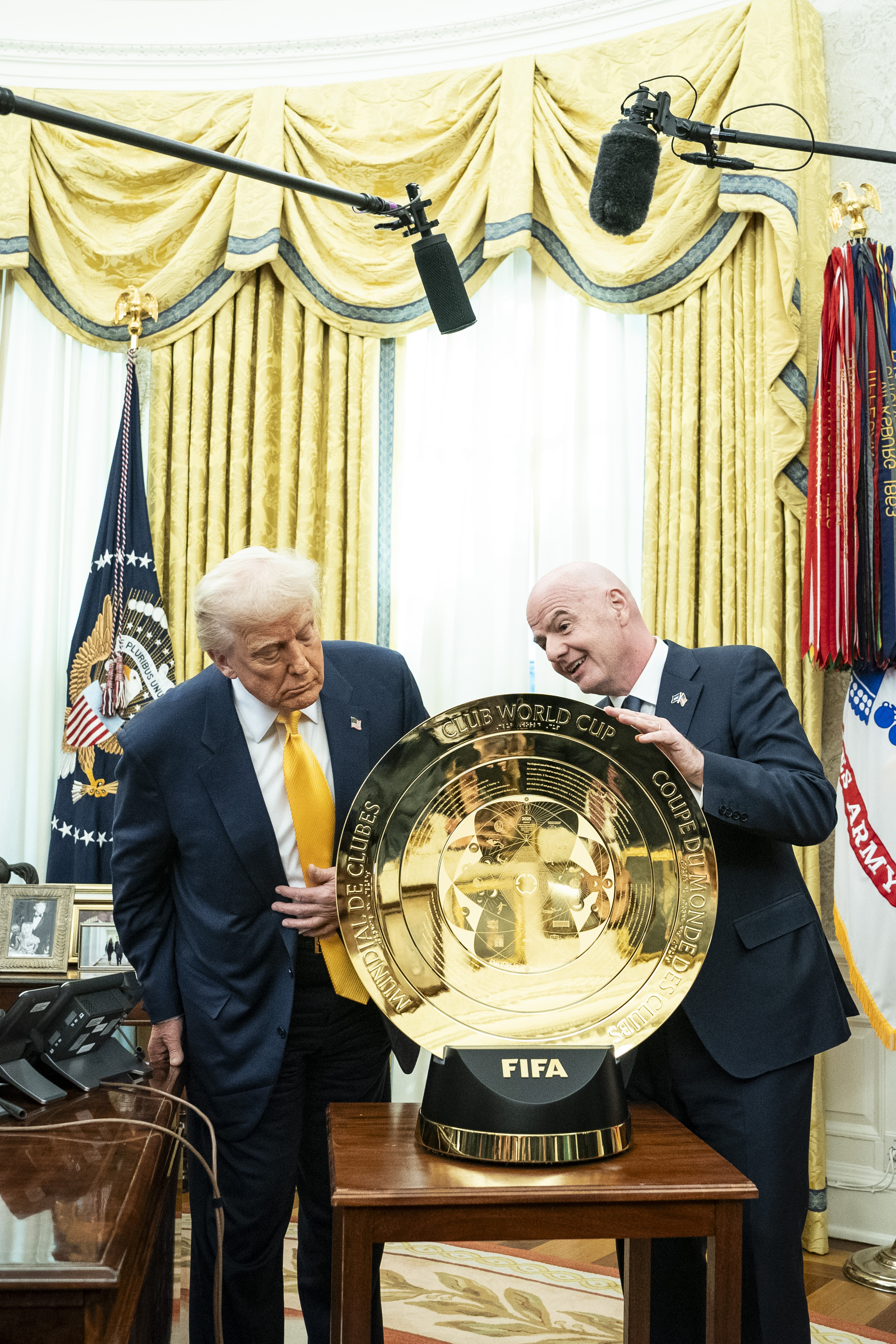
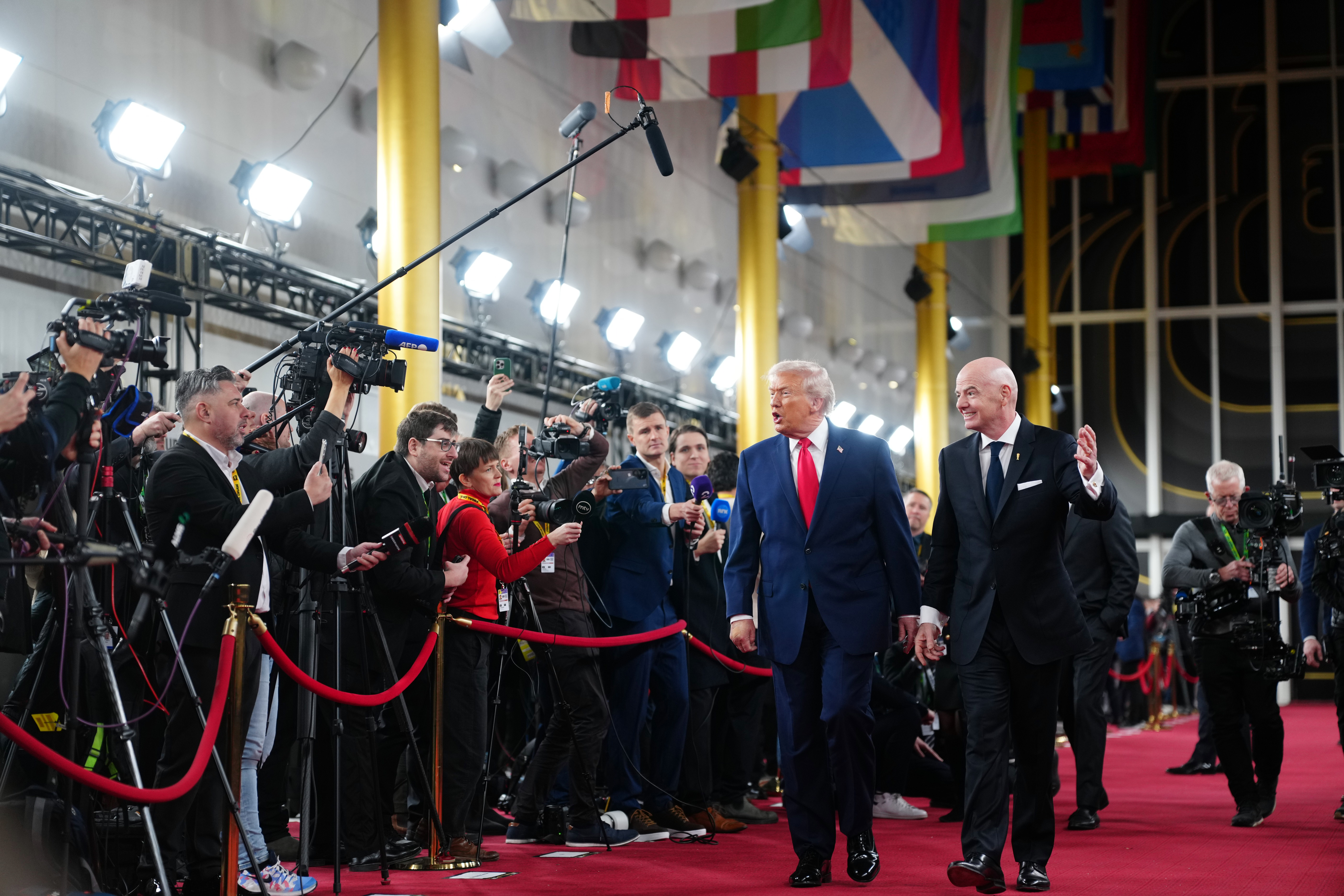
    President Trump and Gianni Infantino at the White House in 2025 with a trophy intended for the winner of the Club World Cup competition. Trump kept it, and FIFA commissioned another.Haiyun Jiang / The New York Times

    FIFA officials are clear about what they want from the World Cup. They want a higher profile in the United States and more growth in the world’s biggest consumer market. They also want to shed the reputation for corruption and cartoonish excess that led to Justice Department prosecutions.

    Infantino failed to woo the Biden administration, former government officials said. But he found a receptive ear in Trump, who calls him “the king of soccer.” A decade ago, soccer executives were terrified to travel to the United States, fearing they’d be arrested. Now, Infantino is an Oval Office regular.

    Infantino presided over the previous two World Cups, in Russia and Qatar, and drew criticism for cozying up to autocrats in both countries. His amity with Trump has him once again defending his way of operating in what is supposed to be a politically neutral position.

    “I think it is absolutely crucial for the success of a World Cup to have a close relationship with the president, with the government,” Infantino said last year. “I have a lot of friends.”

    This World Cup will be a test of whether that friendship pays off.

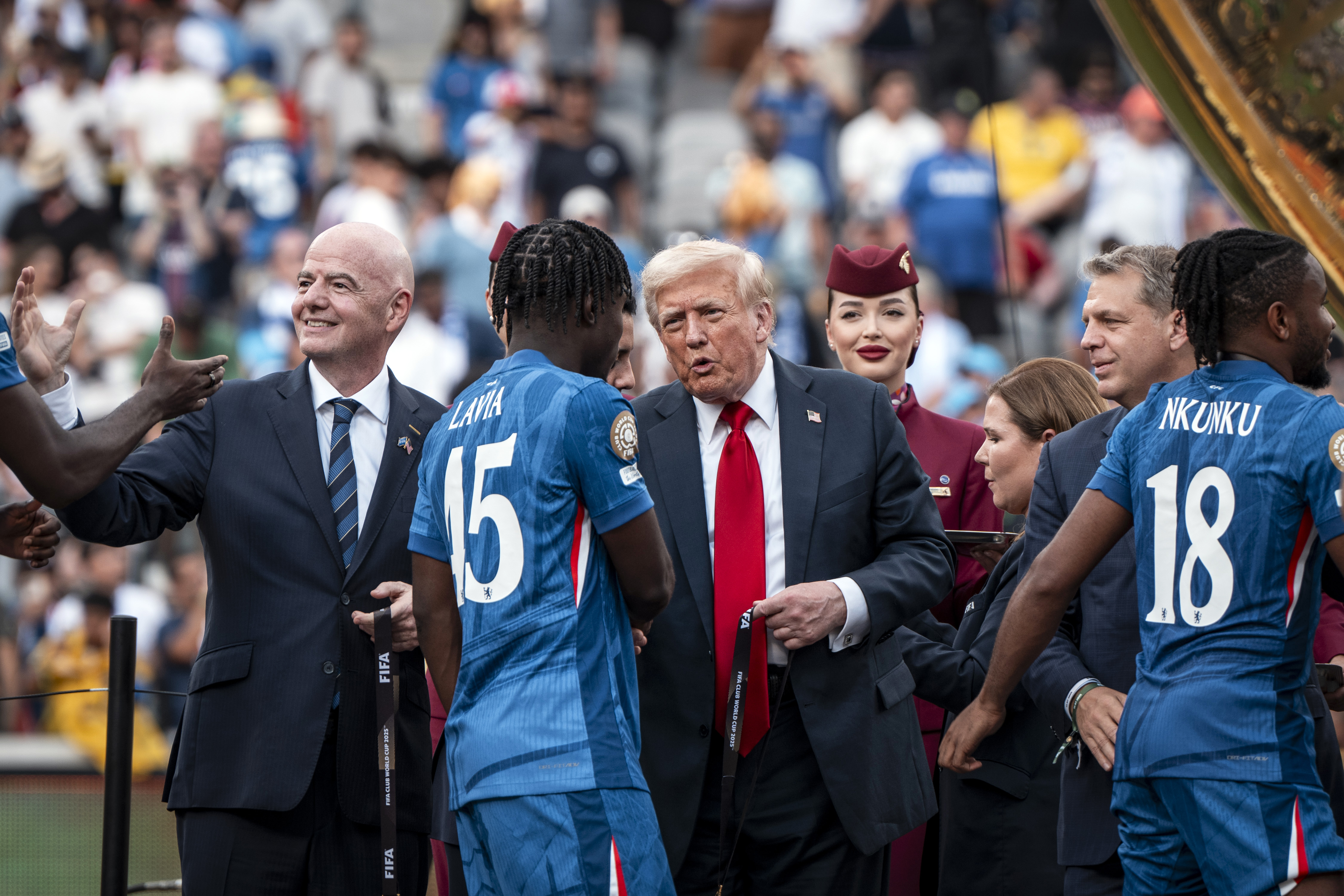
    Infantino and President Trump onstage during the Club World Cup final in New Jersey last year.Haiyun Jiang / The New York Times

    A top FIFA official says he believes there is an unofficial understanding that the authorities will not conduct immigration enforcement outside of stadiums. (A FIFA spokesman denied any deal and said enforcement was up to the government. The Department of Homeland Security did not address the question.)

    The Justice Department also recently dismissed long-running criminal charges as part of its FIFA investigation. Prosecutors said the case “doesn’t fit within the administration’s priorities.”

    And Trump seemed to defer to Infantino this spring on allowing Iranian players to come to the United States. “If Gianni said it,” the president said, “I’m OK.”

    Still, Trump undercut Infantino recently by criticizing the high cost of tickets. And whatever reassurances may have been made on immigration, support staff for Iran’s national team was denied visas, along with a Somali referee.

    Infantino’s coziness with the president also appears to be influencing FIFA in Trump-like ways that could outlast the tournament.

    FIFA is exploring hotel deals that would license its name just as the Trump family has long done, according to three people familiar with the discussions. He has also expressed interest in launching a FIFA cryptocurrency, just as the Trumps have done.

    A FIFA spokesman said the organization was paying “market rent” in Trump Tower and that the office would be used during the World Cup.

    Inside FIFA, many officials privately question whether this has all been in service of Infantino himself. He has accompanied Trump on state visits, sat center stage at the inauguration and has attended diplomatic events.

    What does any of that, his critics ask, have to do with soccer?

    Infantino declined to be interviewed. His yearslong campaign to curry favor with Trump, and the hand-wringing it has prompted, was described in dozens of interviews with FIFA insiders and others close to the two men. Some spoke on condition of anonymity to describe private conversations.

    “Infantino thinks he’s the leader in the relationship,” said Sepp Blatter, the former FIFA president whose ouster at the height of the corruption scandal paved the way for Infantino’s ascension. “But nobody can lead Trump.”

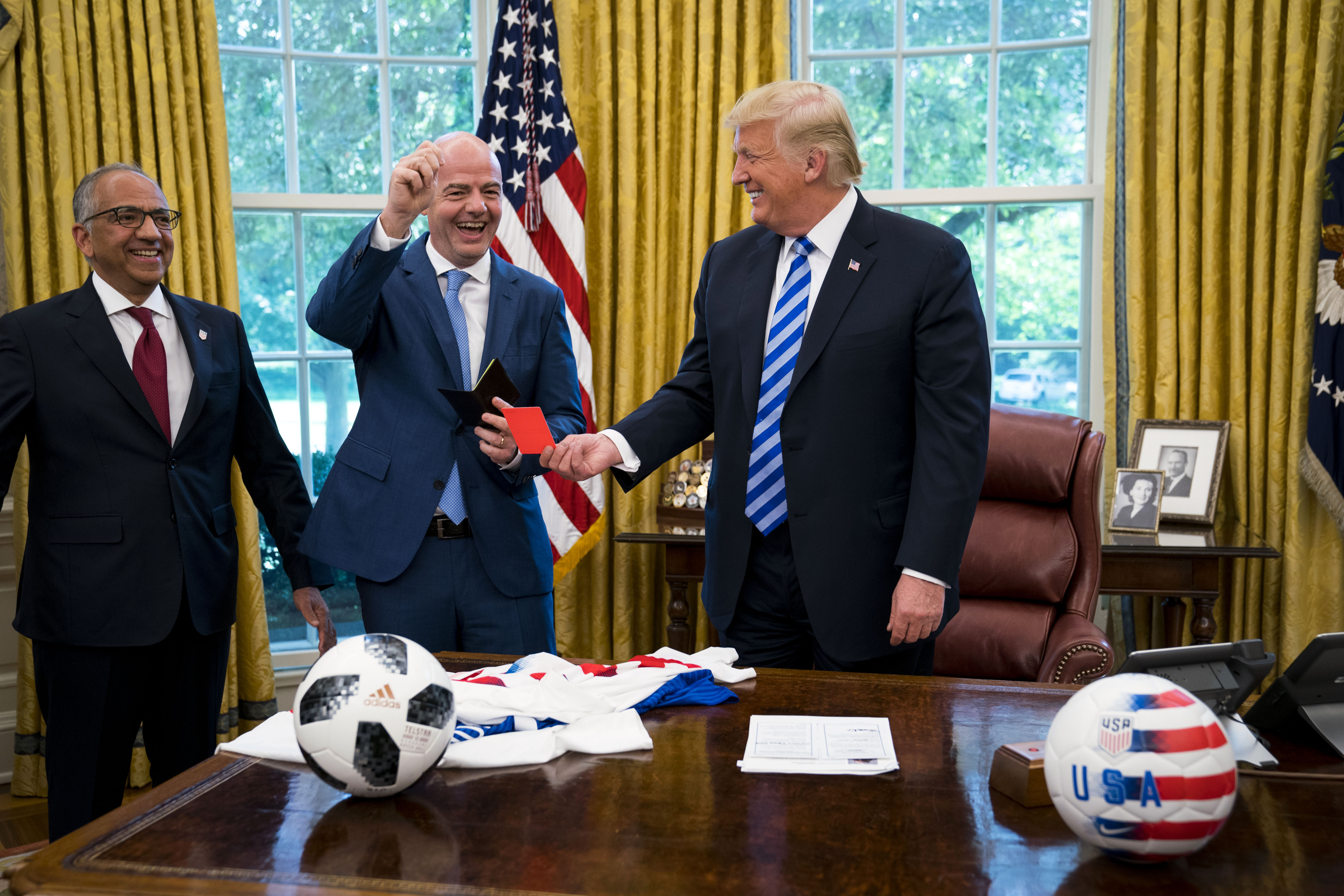
    Infantino meets with Trump for the first time in the Oval Office and jokes about penalty cards.Doug Mills / The New York Times

    The first meeting

    The men first met in the Oval Office in the summer of 2018. The United States had just won the right, along with Canada and Mexico, to host the World Cup, and the mood was celebratory.

    “You’re pretty famous, right?” Trump asked. “Pretty important and pretty famous.”

    “Yeah,” Infantino replied. “It looks like it.”

    Infantino, a lawyer and the son of an Italian immigrant who worked on Switzerland’s railways, had secured the FIFA presidency the same year that Trump was elected.

    In that first White House meeting, he presented the president with a Trump jersey and a set of penalty cards that the men joked could be used on the news media.

    “You are part of the FIFA team now,” Infantino said.

    It was a remarkable turnabout. Three years earlier, the Justice Department had unveiled an indictment detailing corruption in world soccer. Major brands did not renew their sponsorship deals, and the organization suffered financial losses.

    But if Infantino was eager to welcome the president onto FIFA’s team, he quickly found himself on the Trump Team — a pretty important, pretty famous endorser of a president in the middle of an impeachment inquiry.

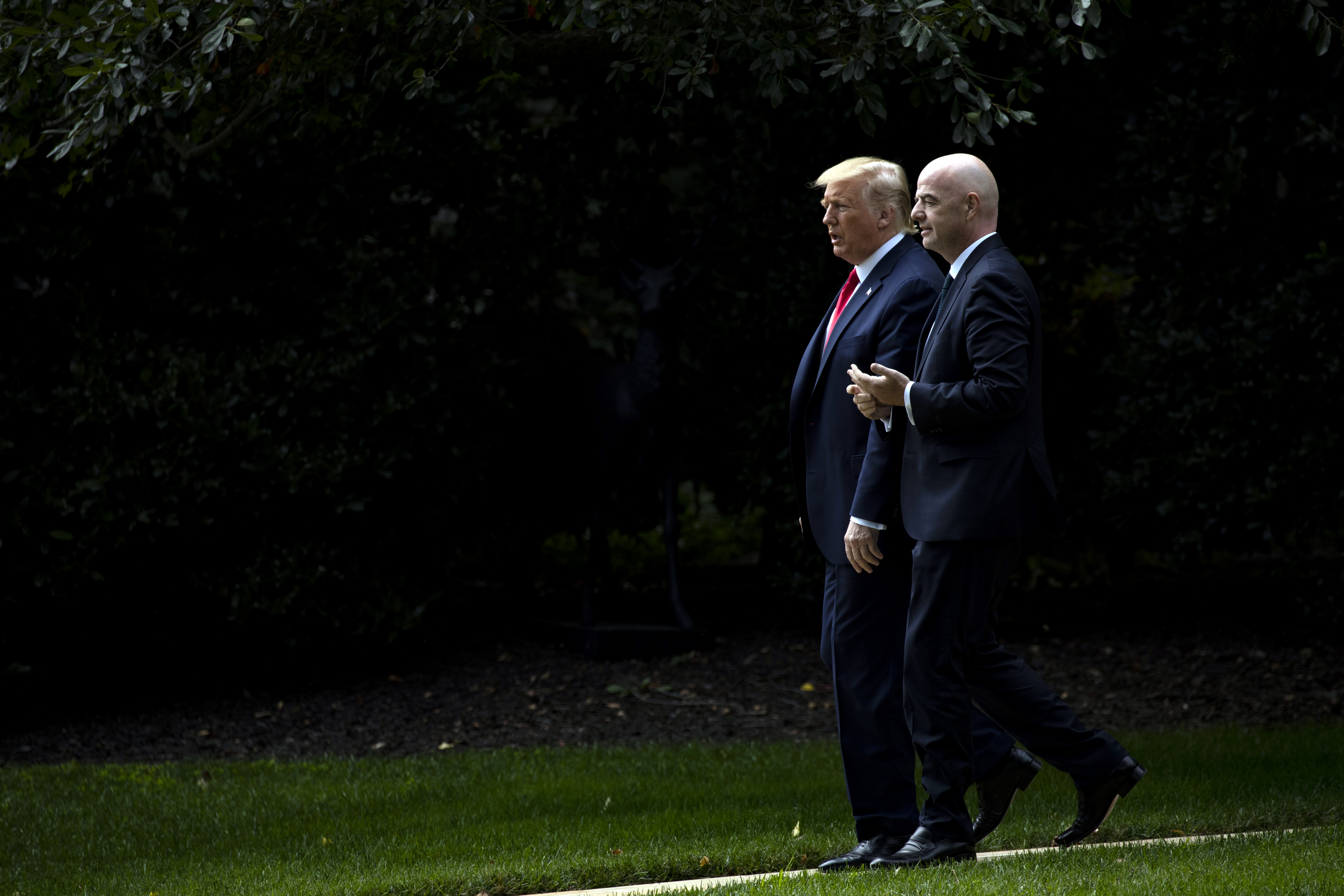
    “Gianni, we’re going to have to extend my second term,” Trump said on the South Lawn in September 2019, as Infantino smiled beside him.

    Months later, as lawmakers debated charges of obstruction and abuse of power against Trump, Infantino praised him before business leaders in Davos, Switzerland.

    “You might wonder why the president of FIFA is introducing the president of the United States of America,” Infantino said. He joked that it had been suggested that the two of them might be the most important people in attendance.

    Soon, Infantino was back at the White House, this time as an unusual guest for the signing of the Abraham Accords, which established diplomatic ties between Israel and some Arab nations. He also arranged a “courtesy visit” with the attorney general, who was overseeing the FIFA cases.

    “I am fully convinced,” Infantino said after that meeting, “that the credibility and reputation of FIFA is being restored at the highest level.”

    Then came the 2020 election, and Infantino’s fortunes changed.

    President Trump and Infantino attended the World Cup draw at the John F. Kennedy Center for the Performing Arts last December. FIFA had planned to have the event in Las Vegas but moved it to Washington.Tierney L. Cross / The New York Times

    A chilly reception, and then a thaw

    President Joseph R. Biden Jr. proved to be less welcoming to FIFA than his predecessor. There were no Oval Office greetings.

    Administration officials said they had been wary of getting too close to a scandal-tainted organization. They saw no benefit in putting the president alongside Infantino.

    “There was definitely a hands-off, keep-them-at-a-distance approach at the White House,” said Caitlin Durkovich, a former National Security Council official who helped oversee World Cup planning. She said FIFA repeatedly tried to arrange meetings with top officials.

    In interviews, FIFA officials said that Infantino had been trying to raise FIFA’s profile. More practically, they said, he wanted people, when they Googled “FIFA,” to find anything but stories about bribery and kickbacks.

    But even an attempt to meet formally with Secretary of State Antony J. Blinken at the 2022 World Cup in Qatar fell flat, according to three people familiar with FIFA’s efforts to arrange a meeting. Infantino’s few interactions with American officials were mostly perfunctory and private, like a half-hour meeting with the national security adviser to address security and visa wait times.

    So when Trump won re-election in 2024, there was an opportunity to build on Infantino’s foundation. And Trump seemed eager to pick up where they had left off.

    Days before Trump’s second inauguration, the men convened at Mar-a-Lago, the president’s private club in South Florida, and flashed thumbs-up signs for a photo that Infantino posted to Instagram.

    Trump thanked him by name at a victory rally. And Infantino had an elevated seat behind Trump at the inauguration.

    Infantino eagerly promoted all of it, sounding at times like Trump’s campaign partner. “Together we will make not only America great again, but also the entire world,” he said.

    Infantino, it seemed, had achieved everything he wanted: accolades, endorsements and a World Cup task force, proposed by Infantino himself, that gave FIFA a formal place among Trump’s inner circle.

    But soon it was clear that such closeness had drawbacks.

    ‘Private political interests’

    When the world’s top soccer officials gathered in Paraguay for their annual meeting in May 2025, Infantino was on the other side of the globe, tagging along on Trump’s state visit to Persian Gulf countries.

    The trip had little to do with soccer, and when he finally arrived at the FIFA meeting, he was several hours late. European soccer officials walked out, protesting his prioritization of “private political interests.”

    “I felt that I needed to be there to represent football and all of you,” Infantino told them.

    It was then that behind-the-scenes grumbles exploded into view. FIFA is an unusual amalgam of 211 countries and territories, each with its own politics. Infantino’s closeness to Trump had impressed some constituencies and alienated others.

    “It’s a matter of priorities, and at that moment Trump was the priority for Infantino,” said David Goldblatt, author of “The Ball Is Round: A Global History of Football.”

    But Infantino was undeterred.

    One of his signature innovations was a 32-team tournament for the world’s best professional teams: the Club World Cup. But when he plugged the event from the Oval Office, he suddenly credited Trump as a co-creator. (After Trump kept the original Tiffany & Company trophy, FIFA presented the winners with another.)

    Then, on the eve of the tournament, U.S. Customs and Border Protection announced that agents would be “suited and booted ready to provide security for the first round of games.”

    Tournament officials panicked, terrified that immigration agents would arrest fans, according to three people who participated in planning discussions. Such a spectacle could deter attendance at the 2026 World Cup and potentially lead to a global backlash against FIFA.

    By then, Infantino was living in Miami, in the president’s orbit. His advisers strategized about asking Trump for a moratorium on immigration actions, both during the club matches and the World Cup.

    While no one close to either man has indicated what, exactly, they discussed privately, FIFA officials said that Infantino pressed the immigration matter. Whether for that reason or not, the government’s social media post was removed and ICE raids never materialized.

    Soccer officials said they believed there was a similar understanding for the World Cup. But, as is often the case with Trump, nobody can say for sure.

    The Department of Homeland Security, which oversees Immigration and Customs Enforcement, did not acknowledge any such agreement.

    “U.S. Customs and Border Protection, in coordination with D.H.S. and other agencies, is dedicated to ensuring the safety and success of the FIFA World Cup,” a D.H.S. spokesperson said.

    By some measures, the club tournament represented a win for Infantino’s strategy. He got an Oval Office platform, Ivanka Trump participated in the draw, immigration agents stayed away, and Trump attended the final match.

    But it was also a reminder that when there is a limelight, Trump often seizes it for himself.

    Appearing onstage after the final whistle, Trump lingered longer than planned, upending meticulous choreography, confusing the winning team and standing squarely before the cameras during the trophy presentation. FIFA and Secret Service officials were alarmed, and fireworks were delayed because of the president’s presence.

    It went viral, with Trump basking in FIFA’s moment.

    The FIFA Peace Prize awarded to President Trump. The trophy, co-produced by a FIFA employee’s father, was spontaneously sourced from miscellany in FIFA’s possession.Tierney L. Cross / The New York Times

    The FIFA Peace Prize

    Oval Office visits are now routine for Infantino.

    “Always happy to be here, at home, if I can say that,” he said last year.

    “You are home,” Trump replied.

    When Trump assembled dignitaries and business titans for a state dinner for Crown Prince Mohammed bin Salman of Saudi Arabia, Infantino was there.

    “I think we should all support what he’s doing,” Infantino said at a business conference in Miami. “Because I think it’s looking pretty good.”

    Infantino has sought to capitalize on access to Trump allies. Under his watch, FIFA discussed with former Treasury Secretary Steven Mnuchin an investment in a streaming service, according to a senior FIFA official. Nothing materialized, only because the venture was put on hold, according to a person who was part of the talks.

    More recently, FIFA has explored hotel licensing deals with a prominent South Florida developer who is poised to develop the waterfront opposite Mar-a-Lago.

    Infantino also lobbied for Trump to be awarded the Nobel Peace Prize, which the president has craved. When the award went to the Venezuelan politician María Corina Machado, Infantino had an idea.

    Three weeks after the Nobel announcement, senior FIFA officials were told that Infantino wanted to announce a peace prize of his own. How long, they asked, did they have to work out the details — the criteria, for example, or the makeup of the nomination committee? Those questions went unanswered.

    Some of the most senior officials were told straightaway whom the first honoree would be, according to a person with direct knowledge of the plans, who learned about the prize and its recipient on the same day.

    FIFA did not have time to consider what its prize would look like. But luckily, the father of an employee was a sculptor, and FIFA had in its collection of miscellany a miniature version of one of his pieces, according to two soccer officials. The trophy was in hand.

    The FIFA Peace Prize was announced Nov. 5, with the award to be bestowed at the World Cup tournament draw a month later.

    FIFA had planned to have that event in Las Vegas. But Paolo Zampolli, a longtime Trump ally serving as a presidential envoy, encouraged Infantino to reconsider.

    “To move the president of the United States is a big process,” he recalled saying. Last-minute events might prevent a trip to Las Vegas, he said, but a local venue would better assure his attendance. “You know how important FIFA is for us,” Zampolli added. (FIFA said Zampolli had no influence over the choice.)

    Infantino moved the event to the John F. Kennedy Center for the Performing Arts in Washington, teasing that the site might be called the Trump-Kennedy Center. Trump attended and, to nobody’s surprise, was the first recipient of the FIFA Peace Prize. He received a certificate, a medal and the repurposed trophy.

    Trump called it “truly one of the great honors of my life.”

    The award angered many soccer officials, who said that it had embarrassed FIFA and cast the organization as partisan.

    Lise Klaveness, the president of Norway’s soccer federation and a human rights lawyer, said the prize breached FIFA’s rules on political neutrality. She announced that Norway would back an ethics complaint against Infantino.

    Ms. Klaveness said in an interview that she recognized that FIFA needed “friendly relations” with the governments hosting World Cup games. But she said there needed to be “checks and balances,” to keep FIFA from being used for political purposes.

    Infantino, though, has worn his friendship with the president on his sleeve. And his head. At one public meeting, world leaders and delegates were given red “USA” baseball caps. Infantino happily donned his, emblazoned with the numbers 45-47, signifying the Trump presidencies.

    This winter, as Infantino marked a decade in the job, he celebrated with a party at a Four Seasons hotel in Miami. Ivanka Trump and her husband, Jared Kushner, attended.

    The celebration carried into spring, when Infantino announced at a soccer meeting in Vancouver that he would run for a third term. He argued that the organization had repaired its reputation and played a slide show that included Trump.

    “We have definitely come a long way these last 10 years,” he told soccer officials. FIFA, he said, was now “sitting at the top tables, in every aspect.”

    This article originally appeared in The New York Times.

  • Kyle Daukaus will show President Trump his ‘dad strength’ as he reps Philly at UFC’s White House ‘spectacle’

    Kyle Daukaus will show President Trump his ‘dad strength’ as he reps Philly at UFC’s White House ‘spectacle’

    In two months, UFC will be making its highly anticipated return to Philadelphia.

    UFC 330, which is set for Aug. 15 at Xfinity Mobile Arena, will be the company’s first major championship event held in the city in 15 years. With its return, plenty of Philly fighters are already eyeing the card for the opportunity to fight in front of their hometown crowd, including 33-year-old Kyle Daukaus.

    “It would be amazing to be on that card,” Daukaus, a Father Judge graduate, said. “Growing up 25 minutes from the stadiums, going to all of them when I was a kid — it was really amazing to kind of grow up here and be a fan of these sports. But to go out there and perform in front of fans at that stadium would be amazing.”

    Before he can cross that off his bucket list, Daukaus has one obstacle in his way: former Penn State wrestler — and three-time NCAA champion — Bo Nickal. Daukaus will face Nickal Sunday in a middleweight bout at UFC Freedom 250, on the South Lawn of the White House on President Donald Trump’s 80th birthday.

    Being included on the much smaller card — this weekend’s event will feature seven bouts, compared with about a dozen on a normal card — was an honor for Daukaus.

    “Obviously fighters want to be on the card because of the spectacle that it is, and how amazing it is and how crazy it is,” Daukaus said. “I knew that they were only going to have like six to eight fights on the card, and I really didn’t think I would have been one of them. Finding out that I was one of them shows that they have belief in me to go out there and have the performance that can get more eyes on the sport.”

    Daukaus (17-4) was originally scheduled to fight Vicente Luque at UFC 327 in April. But a day after signing the contract, he got the call to fight against Nickal (8-1) at the White House event. The card also includes a pair of title bouts and names like Ilia Topuria, Justin Gaethje, Alex Pereira, Sean O’Malley, Michael Chandler, and Derrick Lewis.

    Daukaus, who co-owns The Forge MMA gym on Academy Road in the Northeast with his brother and former UFC fighter Chris, is currently riding a two-fight win streak. Daukaus was released by UFC in 2022. Since his return, he’s picked up a pair of first-round wins, knocking out Michel Pereira and beating Gerald Meerschaert by submission.

    The Philly native was 4-4 in his first UFC stint. Following his release, he fought in Atlantic City-based Cage Fury Fighting Championships, where he won four consecutive matches before re-signing with UFC in April 2025.

    So, what’s different this time around? “Dad strength” — and a new perspective.

    “I have two kids now, so dad strength is something that has been brought to me,” Daukaus said. “But just my maturity levels. I feel like ever since I had my first son, I’ve been more mature with myself.

    “I’ve realized there’s a lot more to this game than me. I’m doing this for them as opposed to just me. So I feel like that is a little bit extra motivation. These last two fights have been something. I’ve had good performances and it showed that I can kind of take on any challenge they put against me.”

    His next challenge comes with an elite pedigree on the mats and is fresh off a head-kick knockout win over Rodolfo Vieira. Heading into the matchup, Daukaus is cautious of Nickal’s wrestling ability, but believes his own jujitsu skills can hold up on the ground.

    “I’m not afraid,” Daukaus said. “Obviously, if it was a straight wrestling match, I would be screwed. He’s a good wrestler, but with jujitsu and everything like that, there’s a lot of things that I can [use to] counter. But I’m not solely focused on being defensive against him. I have to be offensive to make sure he worries about me.”

    Kyle Daukaus will face Bo Nickal at UFC Freedom 250 on the South Lawn of the White House.Yuki Iwamura / AP

    What can fans can expect from his White House performance? Daukaus thinks it’ll be his best yet.

    “I feel like I need these opponents that kind of push me to get me up early to make sure that I’m training where I can train,” he said. “I’m going to go out there and put on the best performance that I possibly can to make sure the fans are excited.

    “And obviously, being at the White House, we can’t have any of these lazy performances. We got to go out there and make sure we can showcase some skills and get the fans’ eyes on the event.”

    If he does that — and doesn’t suffer any major cuts or bruises along the way — Daukaus will begin to turn his attention toward a possible UFC 330 fight.

    “I would be a liar to say that it wasn’t in the back of my mind,” Daukaus said. “I know it’s about nine weeks after [Sunday’s fight]. So I can take that week off as long as there’s no injuries or anything like that and then get back right back into camp.

    “Would it be a lot on myself? Yes, it would be a lot going back to camp like that. But it would be something super special.”