Tag: Donald Trump

  • A man seeking asylum was detained during a routine ICE appointment in Philly. He fears being tortured or killed if deported.

    A man seeking asylum was detained during a routine ICE appointment in Philly. He fears being tortured or killed if deported.

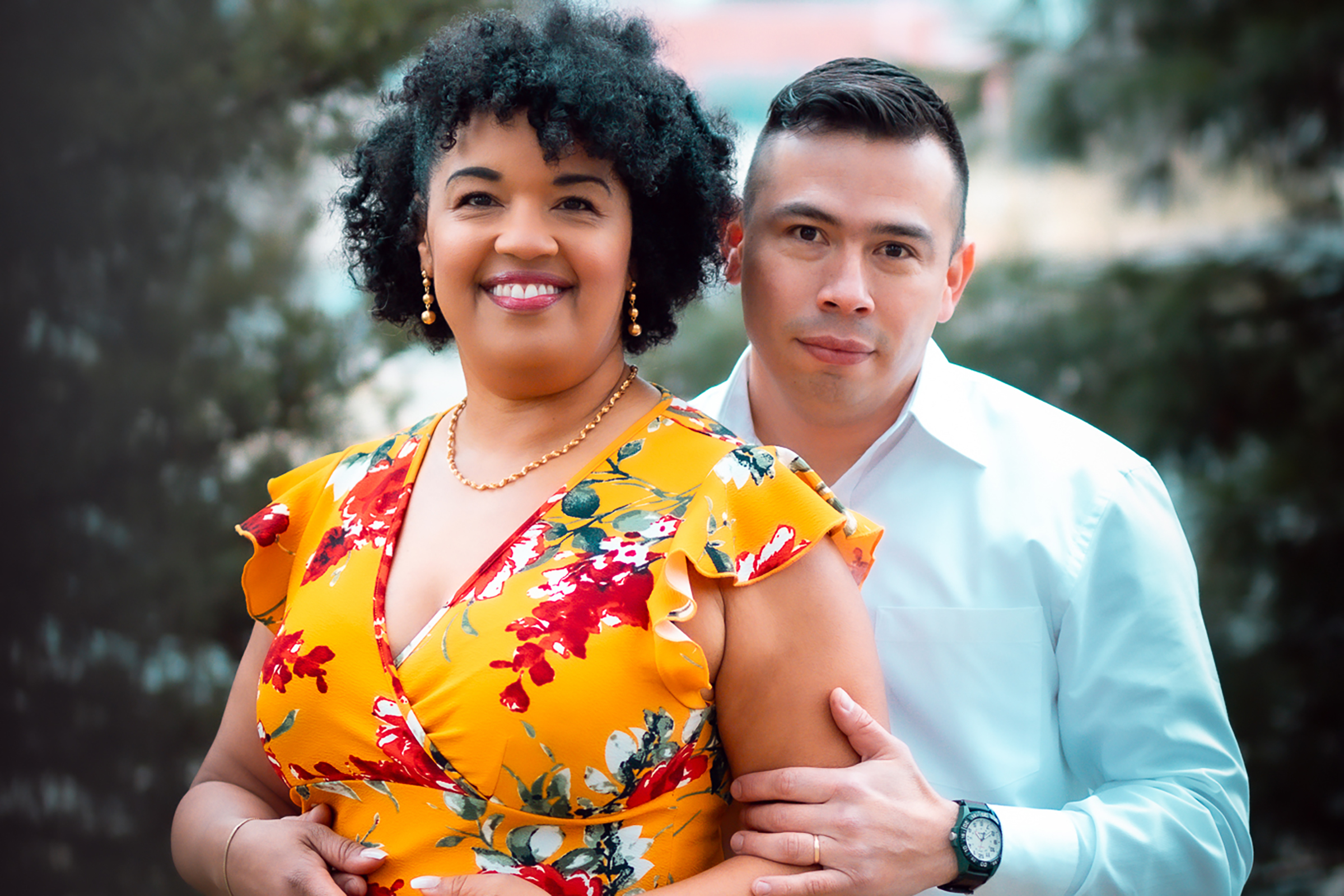
    Jhon Perez Romero carries a driver’s license, Social Security card, and an employment permit, working as a Spark Driver for Walmart in York, Pa.

    He also carries the fear of being tortured or killed if he should be deported to his Venezuelan homeland, where he’s been accused as a “traitor” by the government he once served as an intelligence officer.

    Perez Romero, who was interviewed and released by U.S. immigration officials when he crossed the border in 2023, was arrested by ICE in Philadelphia on June 30, when he appeared for what he thought would be a routine check-in. He joined a growing number of immigrants taken into custody even while they pursue asylum, a long-established legal process that can grant permission to live in the United States to people who could be harmed at home.

    Perez Romero, 39, is being held at the Moshannon Valley Processing Center, the 1,876-bed ICE facility in Philipsburg, Pa., his future uncertain, his wife and step daughter in anguish.

    “I thought the U.S. represented a place where people who are escaping political or religious persecution can come here and find safety,” said his wife, Sandra Quinones, an American citizen and high school teacher. “Especially if you’re law-abiding and contribute to society. That’s where my heart is broken.”

    The Trump administration’s aggressive approach departs from previous administrations, where asylum seekers with no criminal record were mostly allowed to remain free while they pursued their claims. Now applicants have been detained in communities across the United States, including Pennsylvania and South Jersey.

    Last week news broke that the administration intends to revoke the business and tourism visas of up to 200,000 people who are seeking asylum, putting them at risk of arrest and detention. That comes on top of procedural changes that have made it harder for people to prove they should be allowed to stay.

    A spokesperson for the Department of Homeland Security said Perez Romero was released at the border by the Biden administration, not by officials under President Donald Trump.

    “He will remain in ICE custody pending removal proceedings and will receive due process,” the spokesperson said in a statement. “A pending application does NOT confer legal status in the United States.”

    The agency said that on Jan. 20 Perez Romero was charged with “harassing communication,” an offense that usually involves phone calls or text messages sent to upset someone.

    DHS provided no other information. Dauphin County court records show that Perez Romero pleaded guilty in magisterial district court in March, but do not include details of what occurred. A court worker said Friday she could provide no additional information.

    “Criminal illegal aliens are not welcome in the U.S.,” Homeland Security said. “We will find you, we will arrest you, and we will deport you.”
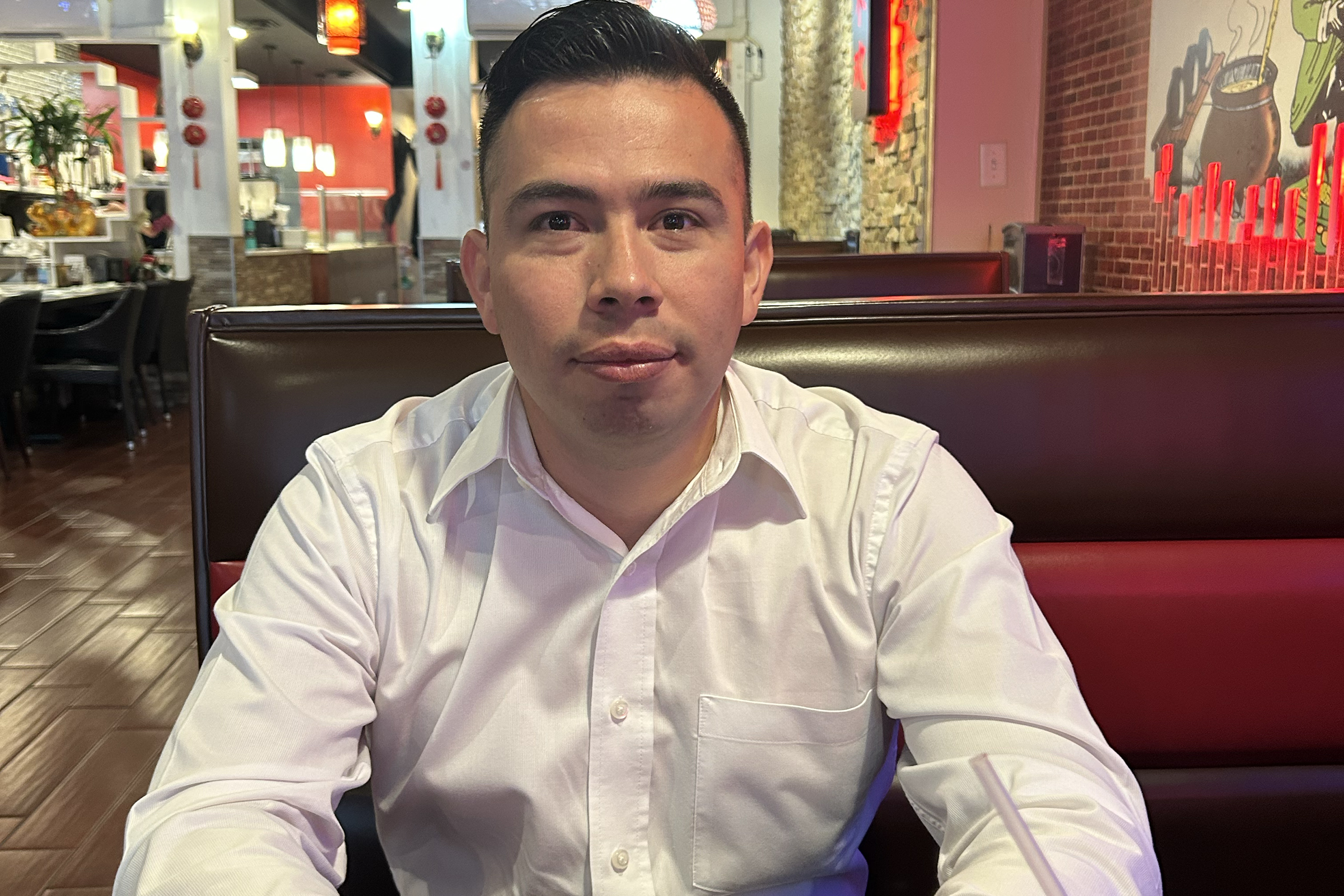
    Jhon Perez Romero, originally of Venezuela, came to the United States seeking asylum in late 2023, afraid he could be harmed or killed by government agents in his homeland. Now Perez Romero, 39, is being held at the Moshannon Valley Processing Center, the ICE detention facility in Philipsburg, Pa., as the Trump administration detains more people who are seeking safety in the United States.Courtesy of family

    Generally, the government cannot deport someone while their asylum claim is being decided — claimants must be given what’s called a merits hearing, where they can present evidence, before any final removal action.

    The government does have the power to hold asylum seekers in detention for certain reasons, including if it believes the person might flee or is a danger to the public.

    Immigration lawyers argue that there’s no gain for the government in detaining asylum seekers, since their names, addresses, and identifying information are already known to authorities, who require regular, in-person check-ins.

    “The Trump administration is targeting people to subject them to detention, knowing they won’t be able to fight their way out of the system, so they’ll give up and leave,” said lawyer Lilah Thompson, who leads the immigration unit at the Defender Association of Philadelphia. “They’re wearing people down.”

    For immigrants, freedom while pursuing asylum means everything, enabling them to work and earn money to hire an attorney, and to more easily gather evidence and documents for their cases.

    Asylum cases can take years to decide — more than 2.3 million people now await asylum hearings or decisions — and appeals can go on for additional months or longer.

    Prolonged detention leads some to drop their legal cases and accept voluntary departure. Leaving voluntarily avoids the automatic 10-year ban on returning that can accompany a formal deportation.

    “It’s very tough, for people who are facing these choices,” said immigration lawyer Robert Barchiesi II, who represents Perez Romero.

    Thompson is helping defend a Chester County newlywed who has so far spent two months in detention after being arrested at a late-June check-in.

    Nelson Contreras-Gelves, 35, originally from Venezuela, has followed government directions and broken no rules, Thompson said, noting that he recently married a U.S. citizen.

    People seeking asylum must show not only that they could be harmed in their homeland, but also that the danger springs from at least one of five specific causes — their religion, race, nationality, political beliefs, or membership in a particular social group.

    Moshannon Valley Processing Center, in Clearfield County, Pa., is the largest immigrant detention facility in the Northeastern United States.Max Marin / The Philadelphia Inquirer

    People granted asylum can apply for lawful permanent residency and eventually for U.S. citizenship.

    Perez Romero’s life has taken him from a position in Venezuela’s notorious national intelligence agency, to a flight across countries in fear of his life, to love and marriage to a U.S. citizen and a caring role as stepfather to her 17-year-old daughter.

    From roughly 2011 to 2019, according to his asylum application, Perez Romero was an agent at the Servicio Bolivariano de Inteligencia Nacional, known as SEBIN. It was created in 2010 by then-President Hugo Chávez, officially aimed at protecting the nation but accused by human-rights groups of arresting and torturing political opponents, journalists, and activists.

    Perez Romero said he quit the agency after receiving instructions — the specifics were not described in his asylum application — that he refused to obey. His resignation came less than three months after a failed military uprising against authoritarian President Nicolás Maduro triggered a purge of the intelligence services, targeting those suspected of disloyalty.

    Perez Romero was told to report to government officials — and that he was accused of treason.

    “Which is erroneous,” he wrote in his asylum application, “since I have not committed any crime.”

    In March 2020, facing an arrest warrant, Perez Romero fled to Colombia, keenly aware of “what happens to political prisoners in Venezuela, things like imprisonment for life or murder.”

    Two years later, after Gustavo Petro was elected as that nation’s president, he said, he began receiving threats from Venezuelan agents that he would be seized and forced home.

    Perez Romero headed north. On New Year’s Eve 2023, he reached the U.S. border at Eagle Pass, Texas, where he was interviewed and released by immigration agents.

    The next year he met Quinones at La Iglesia de Dios Voz de Alerta Church in York, and they wed in 2025.

    She described him in an interview as an outstanding husband and father, working long hours to provide for their family. He’s deeply invested in their church, she said, and before his detention was developing a resource package to help missionaries serving in remote and dangerous areas.

    Last month, he tried and failed in federal court to win his freedom from Moshannon.

    U.S. District Court Judge Joseph Leeson ordered the government to hold a bond hearing, but Immigration Judge Tamar Wilson ruled that Perez Romero did not show he was not a flight risk or a danger to the community.

    He may say he’s innocent of treason, the judge wrote, but “the court cannot simply take his word for it.”

    Quinones says the family hasn’t lost hope. Their GoFundMe has raised $8,000 of its $9,000 goal, all of it going for legal fees and related expenses. They await the hearing to present evidence to support Perez Romero’s case for asylum.

    Quinones said her husband relies on his Christian faith to stay strong. She’s trying to stay optimistic as well, she said, but so much is uncertain and in flux. Her husband could end up having to accept voluntary departure to a third country, like Colombia.

    She’s prepared to retire early and join him, if necessary, and has begun exploring job possibilities there.

    “I can’t be apart from my husband,” she said. “I can’t picture my life without him.”

    Staff writer Dylan Purcell contributed to this article.

  • The neurologist who led Penn Medicine’s diversity efforts and saw his title changed after Trump came to office has a new role

    The neurologist who led Penn Medicine’s diversity efforts and saw his title changed after Trump came to office has a new role

    Roy Hamilton’s varied racial, social, and religious identities helped him in his former role as a chief diversity leader at the University of Pennsylvania — and now they will help him in his new role as chair of Penn’s faculty senate.

    The behavioral neurologist at the Perelman School of Medicine is the son of a Japanese immigrant and an African American. He is married to a white woman who is Jewish, while he was raised as one of Jehovah’s Witnesses and now is a secular humanist. And one of the couple’s children is LGBTQ+; he is an ally. Add to that growing up in a lower middle-class family and learning to navigate an Ivy League education system, first as an undergraduate and then as a medical school student.

    That background has made it easier for him to understand a range of factors in his own life and how they affect his thinking, Hamilton said, and more readily understand where others are coming from and look for common ground.

    Those same skills, he said, will be just as valuable as he steps into a position leading Penn’s faculty senate, the representative body for the school’s approximate 3,000-member standing faculty in a system of shared governance.

    Hamilton said one of his primary goals will be to make the faculty senate representative of the collective views of a vastly diverse staff and foster conversation across those views.

    “It does call for a person who is interested in hearing and honoring a multiplicity of opinions and perspectives and then coming to some kind of collective consensus as to how to act in the face of that,” Hamilton, 53, said during an interview in his office this month.

    “Penn has acted judiciously in a difficult time,” when responding to Trump, said Roy Hamilton, faculty senate chair and a behavioral neurologist at Penn. “It’s trying to thread a needle. Time will tell whether that strategy ultimately pays off.” Monica Herndon / Staff Photographer

    The senate plays a key role on campus discussing issues of faculty concern, making policy recommendations, responding to regular reports of university administrators, and providing oversight on issues that include academic freedom and research policy. And Hamilton, who has spent 24 years at Penn, comes in as chair at a pivotal time. The school is searching for a new president to replace J. Larry Jameson, who will step down next summer, and continuing to operate under the scrutiny of the federal government, which has targeted elite universities. There are ongoing concerns about access to federal research funding, and the school this year plans to adopt new guidelines for open expression on campus that have drawn strong objections from faculty.

    “As Penn confronts the major questions of our time, the Faculty Senate’s contribution is not to provide a single set of answers, but to pursue a constructive process of thoughtful deliberation and principled engagement conducted in good faith,” he said in a message to faculty last week.

    Roy Hamilton collects masks and his office is filled with pieces he has received from his students and mentees over the years. Monica Herndon / Staff Photographer

    ‘Trying to thread a needle’

    Hamilton has been in the hot seat before. He was the medical school’s vice dean for inclusion, diversity, and equity when President Donald Trump’s administration last year cracked down on diversity initiatives in higher education and Penn scrubbed its websites of those programs. Hamilton’s own title was changed to special adviser to the dean.

    “It would be disingenuous to say that it was easy,” Hamilton said. “It was a huge change. It was a difficult change. It was a change that I wish the institution didn’t feel like it had to make.”

    But Hamilton — who for more than a decade held administrative roles centered on diversity and inclusion at Penn — said he understood that Penn felt it had to make changes, given its reliance on federal research funding. Hamilton pointed out that he gets National Institutes of Health funding for his work.

    “If you jeopardize some of the fundamentals of how the institution works and runs, you jeopardize lots of positions and roles, including the roles of persons like myself and the very diverse lab that I run,” he said. “So I understand the Sophie’s choice that the medical school was faced with. That doesn’t mean I have to be happy about it.”

    Roy Hamilton talks about his work as a behavioral neurologist.Monica Herndon / Staff Photographer

    Still, he said, some of the work continues.

    “We are the same people, and I believe that Penn’s values will endure,” he said.

    Penn at times has stood up to the Trump administration and at times negotiated. It ardently opposed the Equal Employment Opportunity Commission’s quest to get lists of Jewish people on campus for its investigation into antisemitism. The EEOC dropped its subpoena last month and said it would not take further measures to seek the information through other means.

    Last summer, the school entered into an agreement with the administration over the past participation of transgender athlete Lia Thomas on the women’s swim team. Penn met a number of the White House’s demands, including adhering to the Trump administration’s definitions of sex, female, male, women, and men only as they apply to athletics, and sending letters of apology to female athletes who felt aggrieved by Thomas’ position on their team during the 2021-22 season.

    “Penn has acted judiciously in a difficult time” when responding to Trump, Hamilton said. “It’s trying to thread a needle. Time will tell whether that strategy ultimately pays off.”

    “I was one of those guys, even as a small child, sort of door to door trying to talk to people about the Bible and what God had planned,” Roy Hamilton said, discussing his upbringing as one of Jehovah’s Witnesses. Monica Herndon / Staff Photographer

    Hamilton’s upbringing was instrumental to his interest in diversity.

    “Every step of the way has felt like I was … some kind of explorer finding some new territory,” he said. “I’ve historically been very interested in seeing to it that other people don’t have that level of alienness in the process.”

    Raised as one of Jehovah’s Witnesses, then on to Harvard

    Born in Long Beach, Calif., Hamilton grew up as one of Jehovah’s Witnesses. His late father worked in a brewery and his mother, who got her undergraduate degree in Japan, earned money as a seamstress, working from the family home. (She later returned to college, earned a master’s degree, and became a teacher.)

    Neither of his parents was raised in the Jehovah’s Witnesses faith, but his father had several family members who belonged. When his mother emigrated from Japan, she told his father she would like to go to church, and he took her to a Kingdom Hall, the worship place of Jehovah’s Witnesses.

    “By the time I was a small child, she was one of Jehovah’s Witnesses, and so that was the background in which I was raised,” Hamilton said. “I was one of those guys, even as a small child, sort of door-to-door trying to talk to people about the Bible and what God had planned.”

    But he and his family parted ways with the religion when it came time for Hamilton to go to college. Hamilton was in the gifted and talented program as a child, did well in school, and wanted to continue. At that time, the faith generally discouraged higher education, he said.

    He recalled congregation elders pulling him aside and questioning his intent to apply to college.

    “It had the same kind of vibe as if I had been caught smoking in the boys’ bathroom,” he said.

    Hamilton did not just go to college — he went to Harvard University. His father feared flying, so Hamilton took the train from California and arrived three days later in Massachusetts.

    The Ivy League experience was “a huge adjustment,” he said. One of his roommates hung out with a son of media mogul Rupert Murdoch, he recalled. A student down the hall was dating then-Vice President Al Gore’s daughter.

    He got his bachelor’s degree in psychology and graduated from Harvard’s medical school, where he said he felt a bit of “impostor syndrome.” He also got a master’s degree in health sciences technology from Massachusetts Institute of Technology.

    At Harvard, his interest in the brain grew and was amplified when he worked in the lab of cognitive neuroscientist Nancy Kanwisher, whose work led to the discovery of the region of the brain that processes facial recognition.

    “It’s the reason why we recognize incredibly subtle differences between faces,” he said.

    Roy Hamilton discusses how transcranial magnetic stimulation (TMS) units are used in helping to study the brain and develop new treatments for patients with conditions like aphasia. When a TMS device is triggered, the box-shaped main unit discharges a large current through the attached coil. This creates a magnetic field that, when placed against the scalp, activates electrical signals in the brain.
    “You can basically force the brain to fire,” he said.

    Monica Herndon / Staff Photographer

    Another key moment came when neurologist Alvaro Pascual-Leone visited his medical school seminar and showed how magnets aimed at the head could temporarily affect behavior in the brain.

    “I was like, ‘That is the most amazing thing I’ve ever seen in my life,’” he said. “‘I’m going to do that for the rest of my life.’”

    Magnets and the brain

    After an internship at UCLA, in 2002 he came to Penn, where he now runs the Laboratory for Cognition and Neural Stimulation, as well as the Brain Stimulation, Translation, Innovation and Modulation Center. Putting it simply, he said: “I take magnets. I put them on people’s brains and I make them think different things.”

    He sees patients struggling with memory and cognition disorders, such as dementia and aphasia.

    “The central but not sole clinical focus of my research is in persons with language loss,” he said.

    He is married to Dawn Mechanic-Hamilton, a clinical neuropsychologist and associate professor in Penn’s department of neurology.

    Last year, Hamilton became chair elect of the senate, which functions under tri-chairs — chair-elect, current chair, and past chair — all one-year terms for a three-year commitment.

    The senate earlier this year was charged with naming faculty to serve on a committee outlining priorities for Penn’s next president. Among its priorities this year, the senate will focus on implications of artificial intelligence on teaching and learning, he said.

    “While Penn’s future remains full of promise, the road ahead may not always be easy,” he wrote to faculty. “Difficult moments, however, provide an opportunity to think carefully about the principles that give purpose to our work and ought to guide our decisions.”

  • Trump’s putting his thumb on the mail-in ballot scale. The Supreme Court is letting him.

    Trump’s putting his thumb on the mail-in ballot scale. The Supreme Court is letting him.

    There are those who would argue that Donald Trump poses the greatest threat to American democracy we’ve ever seen from a sitting president. However, with its decision to allow Trump’s executive order on limiting the use of mail-in ballots to move forward, the U.S. Supreme Court has surpassed him.

    The Constitution clearly gives states, and not the president, the primary authority to administer elections. Congress has secondary authority, but only under emergency conditions. That means the president’s executive order, which directs various federal departments to impose rules on mail-in balloting if it is “feasible” and “lawful,” is more than a cynical attempt to save Republicans from losing congressional seats. His executive order is blatantly unconstitutional.

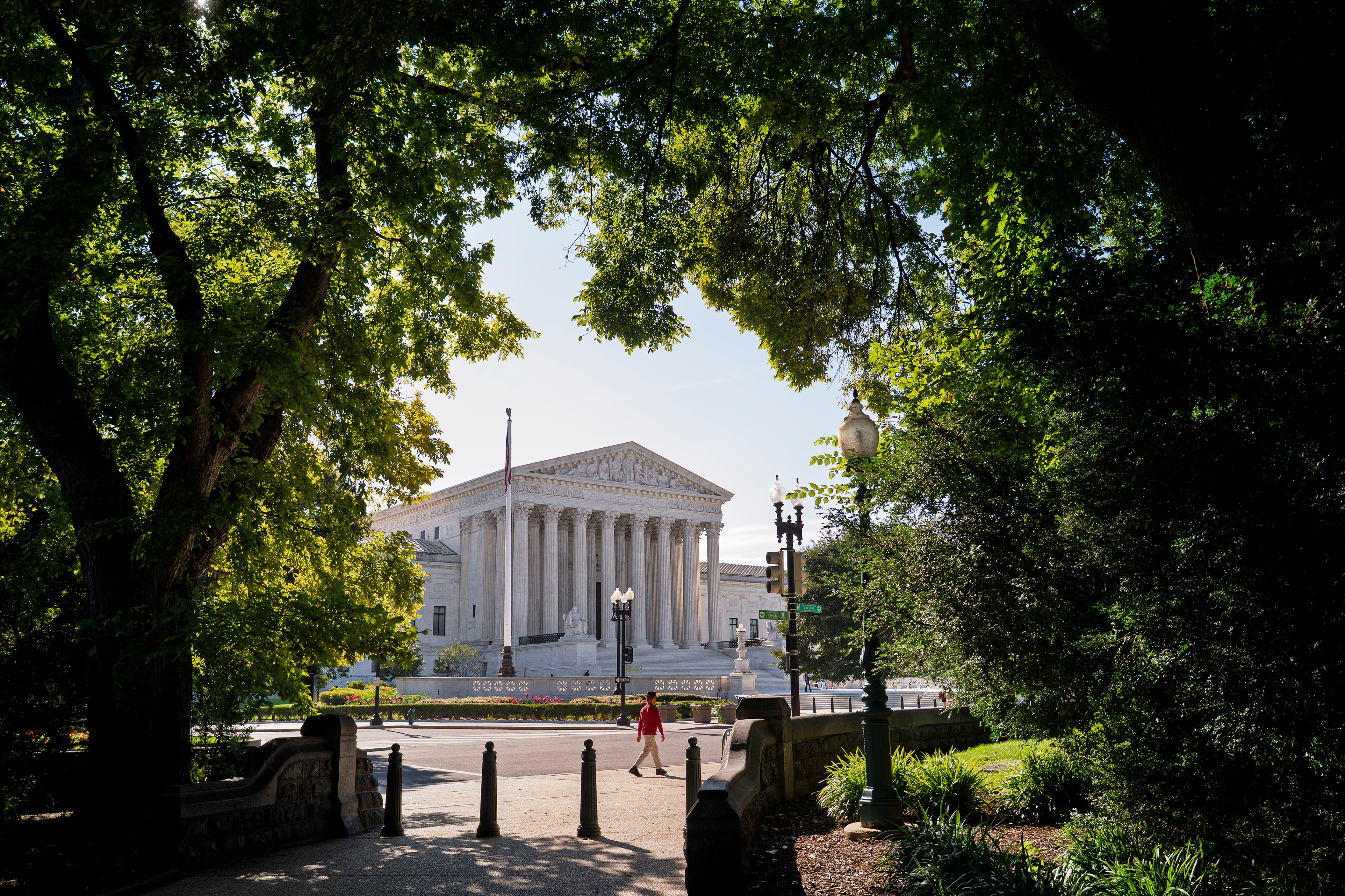
    Yet, in a ruling that seems bizarre on its face, the Supreme Court has decided, with a crucial midterm election just weeks away, that Trump’s executive order does not interfere with the states’ authority “‘to create and enforce a legal code’ for elections.”

    That’s nonsense. In my view, and in the opinion of 56 former judges who submitted an amicus brief to the Supreme Court, Trump’s order is all about interference. Changing rules just weeks before mail-in ballots are set to be sent to voters is an exercise in chaos. It is designed to hamper voting in blue states whose cities are filled with African American voters and others who tend to cast ballots for Democrats.

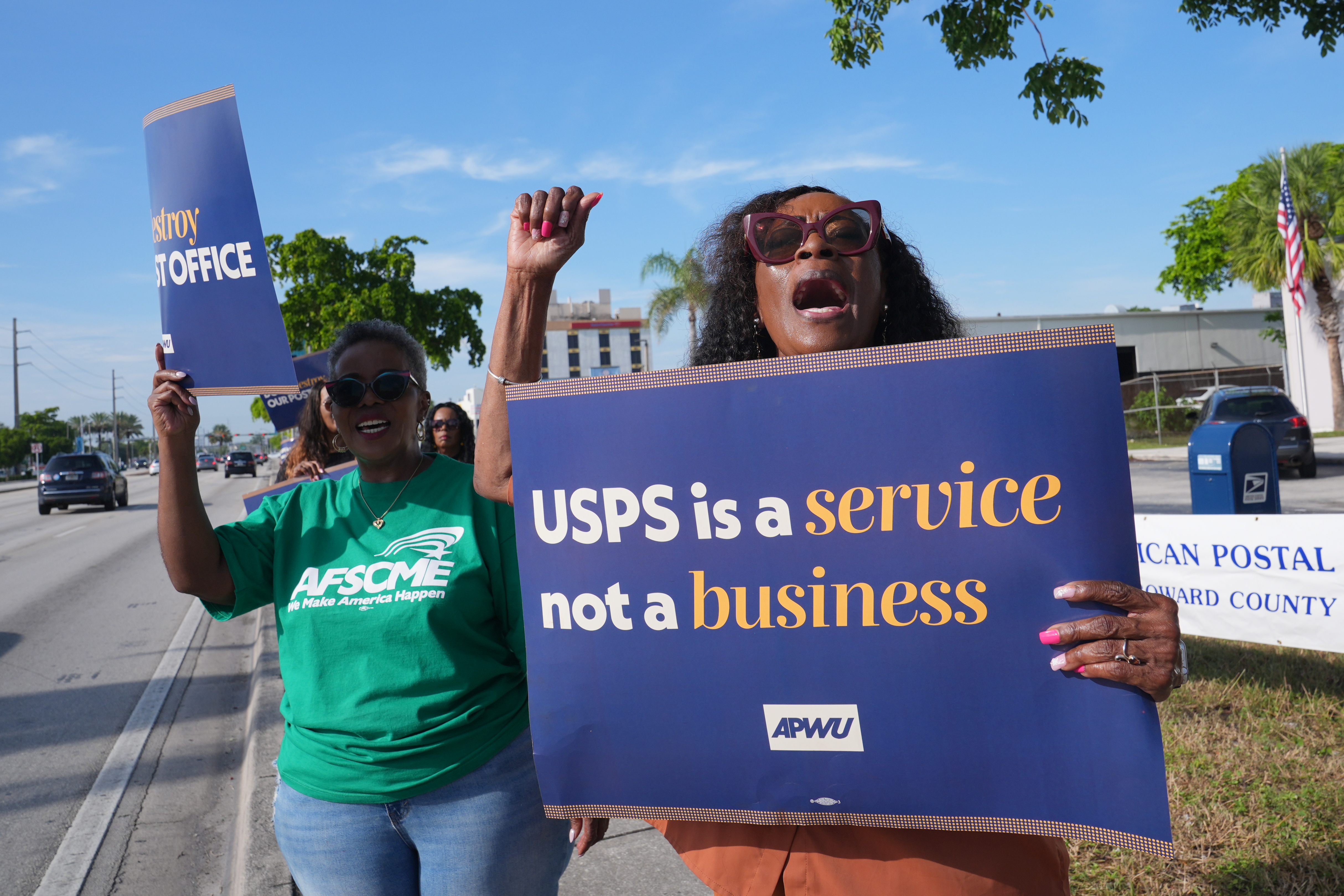
    Joy L. Jackson (right) and Ketha Otis demonstrate against proposed changes to the U.S. Postal Service and President Donald Trump’s executive order regarding mail-in ballots in Miami Gardens, Fla., last month.Marta Lavandier

    Voter suppression is the apparent goal, and the Supreme Court has played an outsized role in helping the Trump administration to get there. Even now, as the U.S. Department of Justice petitions U.S. District Judge Indira Talwani to reverse her nationwide injunction on Trump’s executive order, the Supreme Court looms in the background, ready to further erode democracy.

    Of course, the threat posed by the court is about more than just one ruling. It is about the justices’ pattern of acceding to the whims of a president who seems to view the Constitution as a suggestion, rather than the law.

    In 2024, the court shocked legal observers by ruling in Trump v. the United States that presidents have broad immunity from criminal prosecution for official actions they take while in office. And just a week ago, the court allowed construction of the president’s legally dubious $400 million ballroom to continue while lower court appeals play out, knowing the ballroom will likely be near completion by the time the courts catch up.

    Still, the Supreme Court, whose 6-3 conservative majority includes three justices Trump nominated to the bench, does not have the last word on his policies. In America, the people have the final say. That’s why this latest gambit to cripple mail-in voting is so dangerous, and it is why the Supreme Court must be held accountable.

    The people must sit in judgment of a president who starts a war that results in skyrocketing gas prices and American loss of life. The people must sit in judgment of a president who demolishes half of the White House without congressional approval. The people must sit in judgment of a president who wrecks the economy with illegal tariffs, and the people must sit in judgment of a president whose immigration crackdown costs American citizens their lives.

    Polling has already indicated that Trump, whose 33% approval rating represents his all-time low, could drag his party down in the upcoming midterm elections. But as a seasoned politician once told me, the only poll that matters is the one that takes place on Election Day. Trump understands this truth, and he is trying to put his thumb on the scales. That’s to be expected, but he should not have the Supreme Court’s help.

    At its best, America’s highest court should be apolitical, driven both by the letter and the spirit of the law. It should serve as a check on the worst instincts of politicians, and as a guardrail against tyranny. This court has failed on all those fronts, and has instead allowed itself to be driven and shaped by conservative ideology. It has fallen so far that it has seemingly been co-opted by those who would stop Americans from exercising their most basic freedom — the vote.

  • How two deaths in a Pennsylvania measles outbreak led to a clash between Gov. Josh Shapiro and RFK Jr.

    How two deaths in a Pennsylvania measles outbreak led to a clash between Gov. Josh Shapiro and RFK Jr.

    Gov. Josh Shapiro came to the Philadelphia suburbs on Friday morning to announce a new investment in a local police department. But the first question he fielded at a news conference concerned the growing confusion and political intrigue surrounding his administration’s response to two deaths associated with the state’s spiraling measles outbreak.

    For the last three days, Shapiro, a Democrat, and Robert F. Kennedy Jr., the Republican heading the federal Department of Health and Human Services, have clashed over what the state has disclosed about the deaths and the consequences of Kennedy’s longtime anti-vaccination activism.

    By Friday, Shapiro wanted to bring the focus back to an outbreak that has grown to more than 400 cases so far this year, saying “getting into a back-and-forth with people online who are spewing irresponsible conspiracy theories” does not “serve the public interest.”

    But public health and communications experts say that the state’s initial refusal to share more information on the deaths created an environment in which anti-vaccination skeptics could spread their own narrative.

    State officials announced the deaths of two unvaccinated Lancaster County residents at a news conference Tuesday, calling the deaths “measles-associated.” Their ages, causes of death, or their medical histories were not disclosed by the governor or his health secretary.

    Within hours, other voices started filling the information vacuum. Lancaster County’s coroner told reporters that he had handled just one of the deaths. Coroner Stephen Diamantoni, a Republican elected official who is also a physician, said his office had examined a newborn who had tested positive for measles, but said the baby had not died from measles.

    Soon misinformation and innuendo were spreading online out of the seemingly contradictory and limited details being disclosed by state officials, the local coroner’s office, and federal health leaders — all with their own political affiliations at a time when the safety of the measles vaccine increasingly divides Democrats and Republicans.

    In response to the coroner’s statements, state health officials said they define a “measles-associated death” as one in which measles was present, even if measles is not identified as the immediate cause of death. Shapiro’s administration confirmed the newborn’s case was one of the two announced deaths, but offered no information on the second death.

    President Donald Trump’s health secretary, Kennedy, pounced on the missing details the next day to spread misinformation. He wrote on X that the deaths may have been “fabricated” by the Shapiro administration and said in a television interview that “they cannot find any measles deaths in Lancaster County.”

    Shapiro’s administration has called this inaccurate. Still, his administration has not revealed details of its medical review, beyond saying the state Department of Health’s epidemiology team had “thoroughly investigated.”

    By late week, the Centers for Disease Control and Prevention, which operates under HHS, posted on X that state health officials were not sharing “information relevant to the outbreak” as it worked “to clarify conflicting information from Pennsylvania officials about whether the two reported deaths were caused by measles.”

    State officials, including Shapiro, have repeatedly said the state is cooperating with the CDC.

    But Pennsylvania health officials could have shared information on the patients’ ages, causes of deaths, and reasons for being unvaccinated, said Paul Offit, a physician at the Children’s Hospital of Philadelphia who heads the hospital’s Vaccine Education Center and is a vocal critic of Kennedy.

    “It created fertile ground for conspiracy theories to thrive,” he said.

    In a statement, a Shapiro spokesperson said the governor understands the “desire for as much information as possible to be made public.”

    “However, when an individual dies, it is our legal responsibility to protect their right to privacy by maintaining patient confidentiality,” the statement said, noting this is critical to maintaining trust among communities statewide.

    In a highly politicized environment in which measles cases are rising — and vaccination rates dropping — public health experts say it’s imperative for health officials to communicate accurately and transparently.

    “You have to be transparent, be very clear about what you know, what you don’t know, what you’re trying to find out, and what questions are outstanding,” said Amesh Adalja, an infectious disease physician at the University of Pittsburgh Medical Center and a senior scholar at the Johns Hopkins Center for Health Security.

    A lack of information from the state, he said, “created an information vacuum with people very adept at using information vacuums to spread their message.”

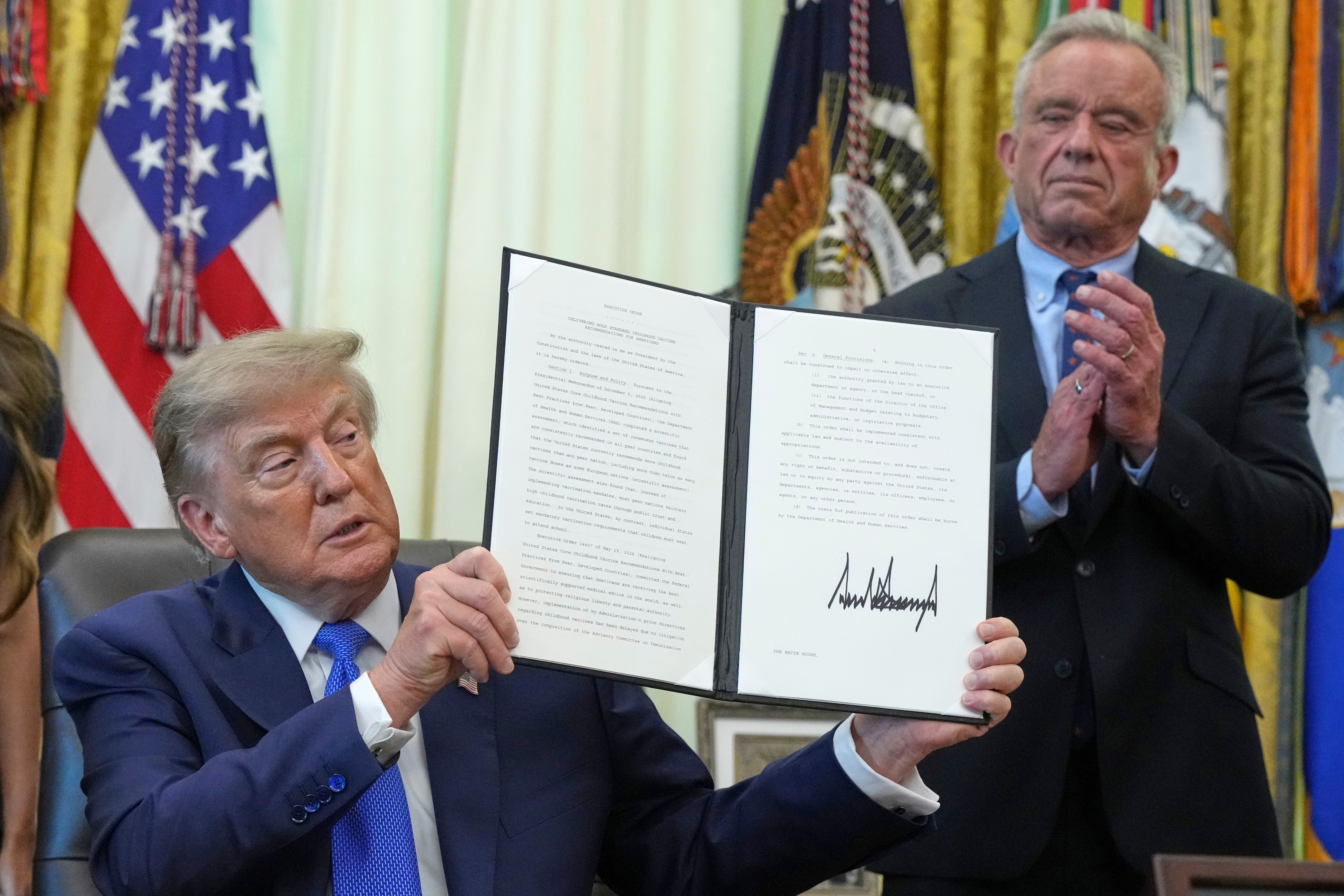
    President Donald Trump holds a signed executive order about vaccines as Health and Human Services Secretary Robert F. Kennedy Jr. looks on Aug. 10 in the Oval Office of the White House. Jacquelyn Martin

    What’s known about the Lancaster County deaths

    Diamantoni said Friday that the baby died shortly after birth at a Lancaster County birthing center on Aug. 14.

    Postmortem testing of the baby’s lung tissue showed that the baby had an active measles infection acquired before birth, he said.

    He has not talked to the baby’s mother or the midwife who delivered the baby, and has not fully reviewed records from the birthing center where she gave birth, he said in interviews.

    He told the Pittsburgh Tribune-Review that measles was listed on the baby’s death certificate, in a section of the certificate that reports other ”conditions contributing to death but not resulting in the underlying cause.”

    He told the outlet that measles was included on the death certificate “to offer a broader view of the general health of the child.”

    Babies can become infected with measles in utero if the mother is infected with measles and develops a rash within 10 days of giving birth, Offit said.

    Diamantoni said a forensic pathologist in his office concluded the baby died of a ruptured spleen and cited trauma to the baby’s torso. He said he was unsure what had caused the trauma, and added that the baby’s spleen did not appear enlarged or infected.

    Offit said that measles can cause an enlarged spleen that is then more likely to rupture — including during birth — and that it’s often difficult to tell whether a spleen has become enlarged once it ruptures.

    A spleen also doesn’t have to become “massively” enlarged to rupture, he said: Measles can cause the spleen to become fragile, which also heightens the risk of rupture.

    In conversations with state health officials, Offit said he learned that the patients who died in Pennsylvania would not have died were they not infected with measles.

    He said the coroner should explain why the spleen ruptured, if it was not damaged from measles. Diamantoni said the office is still investigating the cause.

    The state has released no additional information on the second death, and Diamantoni said his office was not handling it. He said his chief deputy spoke to the department prior to Shapiro’s news conference Tuesday.

    “At no point was the Pennsylvania Department of Health told that this was not a measles-associated death,” a state spokesperson said on Friday. “The Shapiro Administration stands firmly by their comments on Tuesday.”

    Public health communications

    Pennsylvania’s health department has cited a state law prohibiting public access to death records, saying they cannot release more information on the deaths. Another state law requires the state to keep records of diseases confidential, except when it’s necessary to inform the public of the risk of communicable disease, a department spokesperson said in a statement.

    The department “works hard to build and maintain trust in communities all over the Commonwealth — which includes doing everything possible to keep people’s identities confidential,” the statement read.

    The department didn’t share information that could be used to “personally identify individuals or their grieving families” because “the circumstances of these individuals’ deaths do not change the Commonwealth’s response: Measles is a serious, highly contagious and preventable disease, and our focus remains on protecting Pennsylvanians, getting people vaccinated, and stopping the spread of this outbreak,” the spokesperson said.

    But the state could have been more transparent about how they characterize deaths in a measles outbreak, said Kathleen Hall Jamieson, director emerita of the Annenberg Public Policy Center at the University of Pennsylvania.

    People who are not trained in medicine may not understand the term “measles-associated,” for example, or how it differs from a cause of death, and state officials should have taken time at the news conference to explain what they meant by that term.

    “You have an obligation to make sure that people don’t mishear on something as fraught as this topic,” she said.

    Jamieson added that the political clashes around the deaths could overshadow a crucial point: A highly contagious disease is spreading in an under-vaccinated community, exposing children — including newborns unable to be vaccinated — to a serious illness.

    “If we miss that moment, then the public health community has failed,” she said.

  • ICE’s policy to detain nearly all undocumented immigrants is unlawful, a Philly-based federal appeals court ruled

    ICE’s policy to detain nearly all undocumented immigrants is unlawful, a Philly-based federal appeals court ruled

    U.S. Immigration and Customs Enforcement’s controversial policy mandating detention for nearly all undocumented immigrants is unlawful, a split Philadelphia-based federal appeals court ruled Friday.

    In a 2-1 ruling, the U.S. Court of Appeals for the Third Circuit held that ICE violated the federal immigration law and the Fifth Amendment of the U.S. Constitution by holding undocumented immigrants who have been in the country for years in detention without a hearing. The policy, enacted last summer, has been a key part of efforts by President Donald Trump’s administration efforts to ramp up deportations across the country.

    The ruling will take immediate effect in Delaware, New Jersey, Pennsylvania, and the U.S. Virgin Islands.

    Undocumented immigrants who have lived in the United States for decades “are entitled to due process rights beyond those provided to noncitizens at the border,” Circuit Judge Patty Shwartz wrote in the majority opinion.

    The government has a legitimate interest in keeping dangerous noncitizens in custody, the judge said, but a “neutral decisionmaker” should make that assessment on a case-by-case basis — rather than a practice of detaining all undocumented immigrants indefinitely.

    Circuit Judge Theodore A. McKee, who was appointed by Bill Clinton, joined the opinion written by Schwartz, who was appointed by Barack Obama.

    In a dissent, Circuit Judge Jennifer L. Mascott said the ruling was inconsistent with federal immigration law.

    “A bond hearing focused on flight risk and dangerousness would generate irrelevant facts, not material to individual determinations,” wrote Mascott, who was appointed by Trump.

    The Justice Department disagrees with the ruling and believes its position will “ultimately be vindicated,” a spokesperson said in a statement.

    “This is a huge win for due process,” said Rachel Rutter, a lawyer and executive director of Project Libertad, a Phoenixville-based nonprofit that provides free legal and social services for migrant youths facing deportation. “The Third Circuit has joined a chorus of other circuit courts striking down the Trump administration’s inhumane practice of mandatory detention of people who have spent years building lives in the U.S.”

    The decision “reaffirms decades of case law stating that these people have the right to challenge their detention through a bond hearing,” Rutter said.

    Nine other circuit courts have issued rulings on mandatory detention, and seven found the policy unlawful. The Justice Department petitioned the Supreme Court in June, asking the high court to resolve a split it said was “disrupting the orderly administration of immigration law.”

    The mandatory detention policy was rolled out by the Trump administration last year, and has led to an avalanche of lawsuits by immigrants who challenged their incarceration and demanded a bond hearing.

    These requests, known as habeas corpus petitions, were rare not long ago, but since the policy change, they’ve dominated the docket in Philadelphia’s federal courthouse. More than 1,100 such petitions have been filed since September. Between 2020 and 2024, by contrast, only 11 such suits were filed.

    Philadelphia’s federal judges have granted these requests at near-universal rates, often chastising ICE for continuing the practice despite the overwhelming judicial pushback.

    The Third Circuit case involved two undocumented immigrants who have been in the United States for over a decade and were picked up by ICE after the mandatory detention policy took effect. Neither has a criminal history. Federal judges in Philadelphia ordered their release, finding their detention was unlawful.

    Christopher Casazza, a Philadelphia-based immigration lawyer who represented one of the immigrants at the center of the case, called the court’s decision a “great ruling that will help thousands of people.”

    The benefit for immigrants, he said, would come primarily in two forms: Anyone still being detained in the region after being arrested under the Trump administration policy can now apply for a bond hearing. And going forward, anyone who is arrested will be able to ask an immigration judge for bond.

    That doesn’t guarantee release, Casazza said, but it provides people the opportunity to make a case to an immigration judge, as had been the practice before the new policy took effect after Trump began his second term.

    “We’re going back to the rule of law that’s been the case for 30 years,” he said.

  • ICE cannot survive past the Trump administration

    ICE cannot survive past the Trump administration

    Another day, another video on social media featuring U.S. Immigration and Customs Enforcement agents behaving badly.

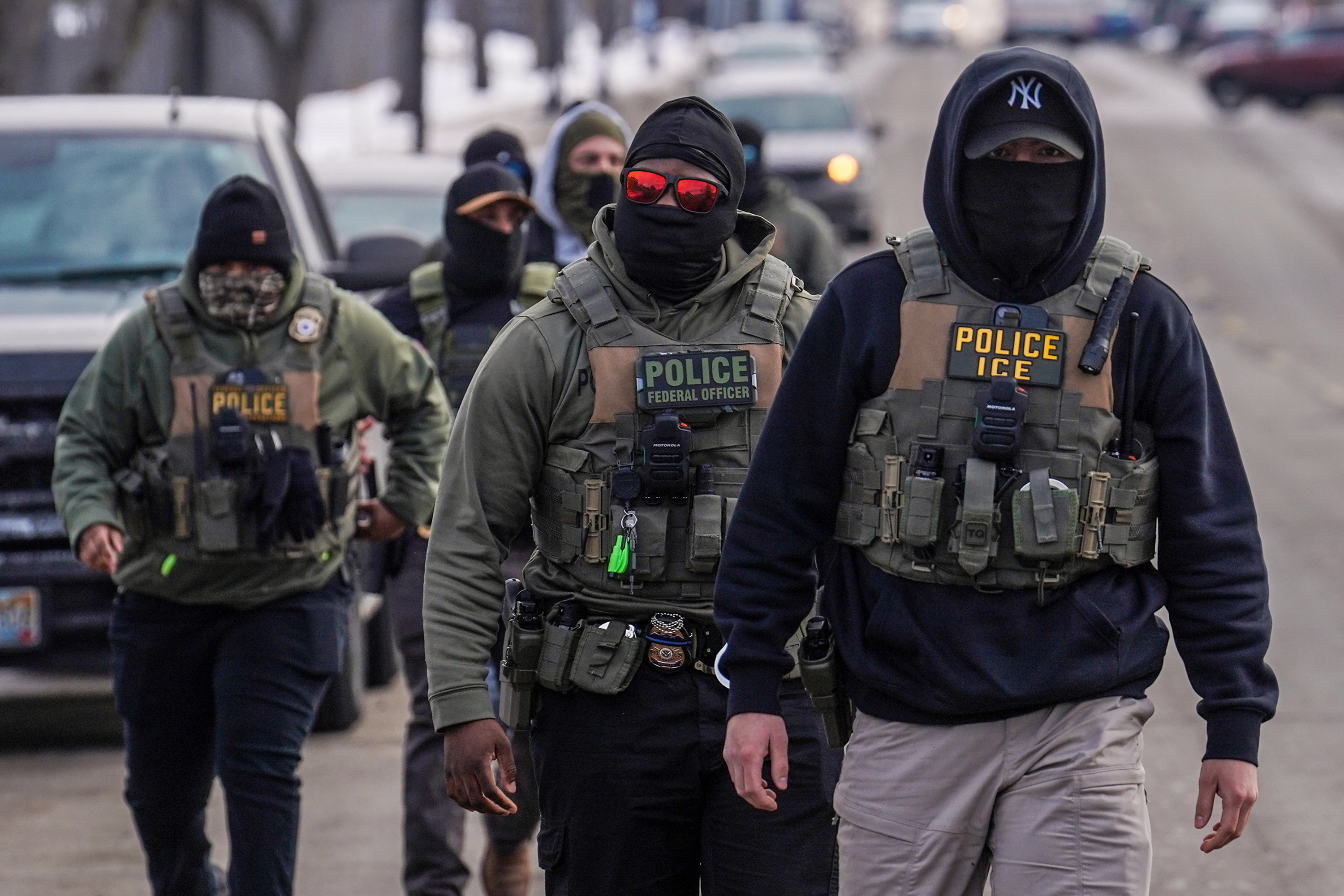
    Sometimes they act like bullies, intimidating goons trampling the Constitution. Other times they show they’ve learned nothing from their deadly encounters in Minnesota and Texas, using excessive force and putting people in harm’s way.

    And every time, my blood boils at the rampant thuggery on display.

    I abhor facile slogans, but as more and more incidents pile up, this one’s an easy call: Abolish ICE.

    Smash it up. Close it down. Dismantle it. It shouldn’t be too hard, since it’s already been broken by President Donald Trump and his GOP allies in Congress, who have flooded the agency with billions of dollars and a mission directive that rewards lawlessness and recklessness.

    Under Stephen Miller, the architect of the administration’s anti-immigrant policies, the goal is mass arrests and deportations, no matter the cost. A June 2025 post by the president on Truth Social made it explicit: “ICE Officers are herewith ordered, by notice of this TRUTH, to do all in their power to achieve the very important goal of delivering the single largest Mass Deportation Program in History.”

    This has led to the foreseeable consequences that are playing out on America’s streets and inside immigration detention centers. The stories of abuse are so common, their number so overwhelming, that I don’t see how the agency survives.

    This should not be interpreted as a call for nonexistent borders or unfettered immigration. Having spent much of my life in and around southwest Texas, I count myself among those who have a particular appreciation for the importance of humane, rational, and consistent immigration policies — but, by almost any measure, we’re getting none of the above from ICE as it’s currently formulated.

    And it’s not just me or the usual left-leaning advocates who are questioning the national framework on immigration. Nearly three-quarters of Americans believe immigration is a good thing for our country, and most people prefer widening paths to citizenship rather than increasing enforcement efforts.

    The prospect of doing away with ICE does not garner nearly as much support from undecided midterm voters, with just 21% of them saying in a recent poll that they favored eliminating the agency.

    As I’ve written about how the administration is demonizing immigrants, I’ve heard from conservative readers who say the media is doing the same to ICE, casting it as the worst of the worst and inevitably forcing a critical look at its future.

    To answer the question of what the agency might look like in the years to come — or if it should even continue to exist at all — I reached out to a few people who may know ICE better than nearly anyone else: those who’ve worked inside it.

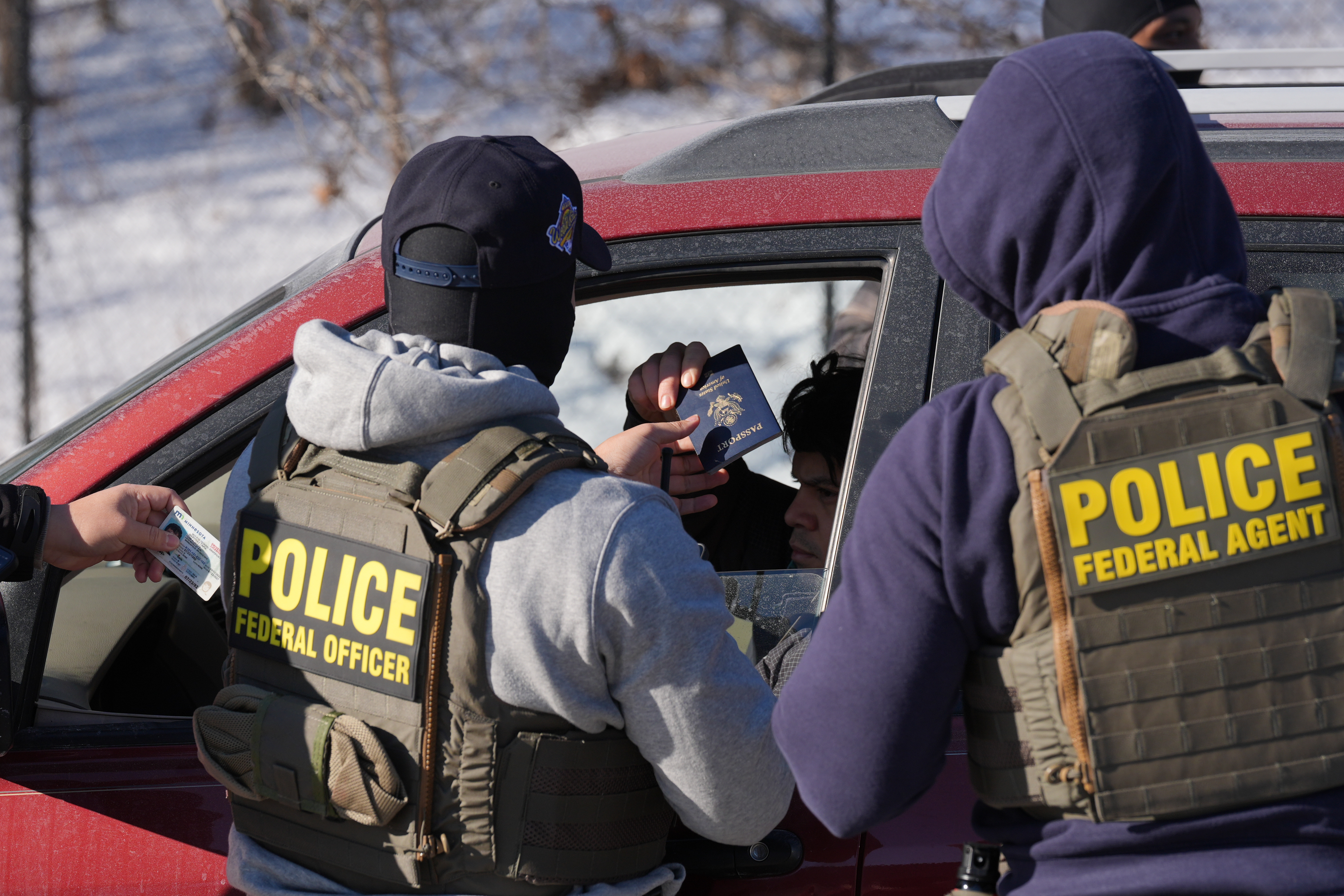
    Federal agents make a traffic stop on a U.S. citizen in Minneapolis in January.Adam Gray

    Changing tactics

    I put the question of ICE’s future and how its agents are regarded to Jason Houser, who spent his government career at the U.S. Department of Homeland Security and is a former ICE chief of staff. The Afghanistan combat veteran told me it starts and ends with leadership.

    “The tactical and operational guidance and directives from the administration are putting ICE officers in a place to be demonized,” he said. “There’s a lot of authority and power in law enforcement, and the way that power is being used by this administration for the first 18 months has been disjointed, punitive, shortsighted, and targeted at the most vulnerable communities.”

    While the behavior of some agents is inexcusable, and they should be held accountable, the agency is ultimately an instrument wielded by those in power.

    For example, some of the same agents who are being maligned today were redeployed to Del Rio, Texas, in 2021 to help humanely and safely process almost 16,000 mostly Haitian immigrants who were living in substandard conditions in a makeshift border camp, Houser noted.

    How ICE is operating today cannot be separated from the administration’s demands.

    Some of the worst examples of abuse by ICE agents have come during vehicle stops, including the July killing of Lorenzo Salgado Araujo in Houston. Agents have been captured on video in high-speed pursuits, cutting off cars, and smashing windows.

    Before Trump returned to office, the agency rarely engaged in these kinds of tactics, let alone used them to target noncriminal immigrants, said Joe Sifuentez, who worked for ICE until he retired in 2020.

    “If it’s a bad guy in that vehicle, we have a judicial warrant, we stop them. Then we can break that window and drag that person out of the vehicle,” he said. “But that’s not what’s happening now.”

    While the president campaigned on mass deportations, many voters believed the government would focus on immigrants with serious criminal records. Increasingly, that is not the case, with most people being detained only charged with violating civil immigration laws.

    And in trying to fill a reported White House quota of 2,000 arrests a day, federal agents are engaged in random sweeps and racial profiling that put people at risk.

    “I’m concerned that one of my loved ones could get pulled over tomorrow,” Sifuentez said. “God only knows what can happen.”

    Detainees stand at windows at the Delaney Hall immigration detention center in Newark, N.J., in May, as demonstrators gather outside.TODD HEISLER

    Bad math

    The Republican-controlled Congress has given the administration more than $150 billion for immigration enforcement. The question is what taxpayers are getting in return. It isn’t increasing public safety, the former officials I spoke with said.

    Houser pointed to a recent report by the DHS Office of Inspector General that found that as ICE shifted priorities toward immigration enforcement, its efforts to combat fentanyl trafficking declined. From fiscal years 2024 to 2025, the report said, fentanyl investigations decreased by 24%, investigative hours spent countering fentanyl decreased by approximately 30%, and fentanyl seizures decreased by almost 40%.

    It’s not just drug trafficking investigations that are falling by the wayside over Trump’s misplaced priorities. ICE agents descending on a Home Depot or a Walmart to fulfill their arrest quotas fail to target the kinds of criminals the agency should be focused on.

    “Real sex predators, convicted rapists, murderers, aren’t just hanging out at a Starbucks on a Tuesday, right? They’re not at the corner, walking their kids to school,” Houser said.

    Mass arrests also put people in detention who do not have a final order of removal. These are immigrants who are going through the system and would generally be allowed to walk free until they had exhausted their legal options. Instead, the administration is deciding to hold them without bond for what can be an indeterminate amount of time.

    Sifuentez, who oversaw ICE’s national fugitive operations program and detention facilities, told me that even under regular circumstances, detention is extremely challenging. As the government works to not only increase the number of such facilities in the country, but also how many people these places hold, the situation is bound to get worse.

    “When I was in Atlanta, I oversaw a facility with 2,000 detainees. That in itself was very difficult to oversee and keep your staffing levels intact,” he said. “What do you think it’s going to be like when you ramp it up to 10,000?”

    Already, there have been more than 50 deaths in detention since the start of Trump’s second term, with the detention fatality rate hitting a two-decade high.

    “You’re going to see more suicides. You’re going to see more people die of health conditions. You’re going to see more both mental and physical stress that leads to horrific outcomes,” Houser added. “It’s just math.”

    Lorenzo Salgado Araujo, a 52-year-old Mexican immigrant, was fatally shot by ICE agents in Houston in July. A makeshift memorial took shape at the site where he was killed.ANTRANIK TAVITIAN

    Abolish ICE

    If ICE is being used to indiscriminately terrorize communities, and ignore constitutional protections while disregarding its public safety charge, what is the point of its continued existence? Even if you see it as a tool, if it can be abused so readily and so thoroughly by an out-of-control executive, wouldn’t the cause of sensible and coherent immigration policy be better served by replacing it?

    Neither of the former officials I spoke with would endorse the call to abolish ICE, and perhaps their experiential knowledge of the agency’s complexity would keep them from ever embracing what can feel more like a facile bit of political sloganeering than anything else. After all, activists have long called to eliminate the agency, rightly underscoring the need for accountability over the lives that have been destroyed by detention and deportation — but they hardly ever offer realistic or politically viable alternatives.

    Indeed, as long as we are a nation of laws, there will be the need for enforcement. In humanitarian terms, whatever agency takes ICE’s place will be judged harshly under those same standards, but exist it must.

    Still, Sifuentez, until recently a lifelong registered Republican, said that at the very least ICE should be renamed and its functions divided among other agencies.

    “Everybody in America should be very concerned about what’s going on,” he said. “This isn’t about politics. This is about what’s right and what’s wrong, and what’s going on is wrong.”

    For his part, Houser stressed that we need migrants in this country, and we need public safety. Immigration enforcement is difficult, nuanced work and should be entrusted to those who have the highest level of training and expertise.

    “No matter what the structure and organization of the bureaucracy is, there’s going to be immigration enforcement, and it needs to be handled with professionalism,” he said. “Remembering that 95% of individuals who are coming to this country want the American way of life, and that’s something to be embraced.”

  • Trump’s Supreme Court is still helping him try to steal elections | Editorial

    Trump’s Supreme Court is still helping him try to steal elections | Editorial

    The U.S. Supreme Court, as one of its members recently noted, has held that judges “are not required to exhibit a naiveté from which ordinary citizens are free.” And yet, that is precisely what its conservative justices just did.

    Considering one of Donald Trump’s latest attempts to illegally suppress votes, the court’s Republican-appointed majority was — or pretended to be — so naive as to fail to notice the president’s plain intent.

    At issue was Trump’s March order directing the U.S. Postal Service to restrict mailed ballots by delivering only those sent by “confirmed” citizens listed by the U.S. Department of Homeland Security.

    The court allowed the government to proceed with this plot on the grounds that it wasn’t fully hatched. Because postal and other officials hadn’t yet developed a full-fledged plan to meddle with the election, the justices reasoned, it was too soon for Gov. Josh Shapiro and 22 other state officials to sue to stop them.

    The ruling came, by the way, with just over two months left until the midterm elections, and some mail-in ballots expected to be sent to voters in less than a week.

    It doesn’t take half a dozen elite jurists poring over this set of facts to understand what’s going on.

    It isn’t genuine presidential concern about a means of voting that Americans have practiced since the Civil War and even beforehand — Pennsylvania pioneered military absentee ballots in the War of 1812 — and which Trump used as recently as this month, when he cast his ballot by mail in Florida.

    Rather, the president is trying to head off a well-earned midterm shellacking of his fellow Republicans in Congress any way he can other than by actually persuading Americans to vote for them. He has already pushed unprecedented partisan gerrymandering, lobbied for legislation to make voting harder, and after his 2020 defeat, attempted to overturn results with fraud and violence. The Supreme Court helped him get away with that, too.

    But it’s not impossible for a federal judge to dispense with a state-sponsored attack on democracy swiftly, decisively, and appropriately. We know that because it’s what happened when U.S. District Judge Indira Talwani ruled on Trump’s mail heist in June.

    The Boston-based judge blocked the president’s executive order until after the midterms in light of the elections’ imminence and because, as she succinctly put it, “The Constitution does not grant the President any specific powers over elections.” As Talwani pointed out, the founding document delegates authority over elections to Congress and the states, neither of which ever asked a post office to take over for them.

    The judge is not an outlier here: The First U.S. Circuit Court of Appeals upheld her decision in July, noting that the administration hadn’t even argued that Trump’s order was legal, only that it was too soon to consider it. The appellate court added that the states, given the approach of elections they play a substantial role in running, had “no practical choice but to respond” to the executive order when they did.

    It’s not impossible for a member of the Supreme Court to recognize reality when she sees it, either. In dissenting from the majority, Justice Ketanji Brown Jackson wrote that “what makes today’s ruling so off-base is the Court’s lack of situational awareness.” She added that her colleagues overlooked the administration’s “actual objective: to secure our imprimatur for its effort to foment chaos ahead of the November elections.”

    As unstinting as Jackson’s dissent is, her attribution of the majority’s decision to obliviousness is charitable. The problem is less likely that the Republican appointees don’t know what Trump is up to than that they don’t care.

    While the court’s ruling isn’t close to the end of the legal challenges to Trump’s scheme — another lawsuit was filed Wednesday in response to the Postal Service’s newly finished plan to lose our votes in the mail — it does perpetuate unnecessary confusion over a popular means of participating in a crucial election. Even if the president is never permitted to block ballots outright, bewildering the people who cast them will serve his purposes just fine.

    In an age of official disinformation and artificial intelligence, the country could use some clarity. Fortunately, we have a Constitution that provides a crystalline degree thereof on the subject of authority over elections. Unfortunately, we have a Supreme Court that refuses to acknowledge the obvious.

  • Pennsylvania is caught in the ‘crossfire’ of U.S. trade dispute with Canada

    Pennsylvania is caught in the ‘crossfire’ of U.S. trade dispute with Canada

    President Donald Trump says he’s holding Canada accountable for “ripping off” the United States through unfair trade practices.

    But by imposing new tariffs on Canadian goods and prompting retaliation from one of America’s largest trading partners, U.S. businesses and consumers could face higher costs, analysts said — including in key electoral battlegrounds like Pennsylvania.

    Pennsylvania sold $13.4 billion in goods last year to Canada — its largest export market.

    About $2 billion worth of those goods, or 16%, will be subject to higher tariffs — some as high as 50% — starting Sept. 8 after Canada this week announced new levies, according to an Inquirer analysis of trade data. Some of the state’s top exports facing new tariffs include raw aluminum, lumber, and passenger vehicles.

    (function(){function e(){window.addEventListener(`message`,function(e){if(e.data[`datawrapper-height`]!==void 0){var t=document.querySelectorAll(`iframe`);for(var n in e.data[`datawrapper-height`])for(var r=0,i;i=t[r];r++)if(i.contentWindow===e.source){var a=e.data[`datawrapper-height`][n]+`px`;i.style.height=a}}})}e()})();

    Canadian officials said the tariffs on hundreds of U.S. goods worth a total of $20 billion are meant to protect its workers in response to increased U.S. levies on the same amount of Canadian imports. That affects a relatively small share of trade between the two countries, but analysts said the situation is still evolving.

    “There’s so many things that go back and forth, some of it multiple times. The effect and the amplification of these tariffs, we’ll definitely feel,” said Lauren Swartz, CEO of the nonprofit World Affairs Council of Philadelphia. “When we think about what that means for Pennsylvania, it’s going to be loud.”

    “My sense is the rhetoric that we’re hearing, and the fact that it’s already being labeled a trade war, is that both countries are reserving the right to escalate the level, the percentage of tariffs, as well as the scope of goods that will fall under the new trade war,” she said. “So it will expand.”

    Steel, dairy, electronics impacted

    The new tariffs came after talks between the U.S. and Canada over a trade deal fell apart last weekend. Trump imposed 50% tariffs on goods such as hockey sticks, national flags, and building materials.

    “Canada has been ripping off the United States for decades — and President Donald J. Trump is done letting them get away with it,” the White House said on Tuesday. It said the U.S. had offered Canada “the most preferential market access of any country on Earth” but that the country chose “unreasonable demands, walk-backs, and flat-out rejection.”

    Canada said the proposed terms would undermine Canadian interests.

    Canadian officials said the country’s counter tariffs would protect the country’s workers and businesses. They said the levies on U.S. goods targeted sectors such as appliances, steel, dairy, and electronics.

    (function(){function e(){window.addEventListener(`message`,function(e){if(e.data[`datawrapper-height`]!==void 0){var t=document.querySelectorAll(`iframe`);for(var n in e.data[`datawrapper-height`])for(var r=0,i;i=t[r];r++)if(i.contentWindow===e.source){var a=e.data[`datawrapper-height`][n]+`px`;i.style.height=a}}})}e()})();

    Influence on midterms?

    The trade dispute could inject new uncertainty into the economy less than three months before the U.S. midterm elections decide control of Congress and statehouses around the country. Republicans are seeking to retain control of the U.S. House and Senate. Pennsylvania has several competitive House races in which Republican incumbents are seen as vulnerable.

    Pennsylvania Gov. Josh Shapiro, a Democrat who is running for reelection against Republican state Treasurer Stacy Garrity, has repeatedly criticized Trump’s tariffs.

    “Donald Trump’s reckless tariffs are a tax on Pennsylvanians — and Gov. Shapiro has been fighting back against them from day one,” said campaign spokesperson Manuel Bonder.

    “This President has raised costs for families, screwed over our farmers, and shut down markets for businesses — all with Stacy Garrity’s 100% support,” Bonder said in a statement.

    Garrity’s campaign didn’t respond to requests for comment. She has in the past said Trump’s tariffs could result in some “short-term pain” but would ultimately bring jobs to America. “It’s going to be fantastic,” she said in a clip that Shapiro’s campaign has highlighted. More recently, Garrity told reporters in July she would “do the tariffs a little bit differently.”

    Canadian officials appeared to target some goods that are important in electoral battlegrounds, such as seafood in Maine, the Wall Street Journal reported.

    Analysts said Pennsylvania didn’t appear to be a principal target. “But unfortunately, it’s one of the states that does a lot of goods transfer with Canada, and unfortunately, they’re hit in the crossfire,” said Kyle Peacock, a trade expert and founder of Peacock Tariff Consulting.

    Peacock said that after previous rounds of tariffs, many businesses were able to absorb the costs.

    But now that some products face 50% levies, that will likely change, he said. “Not a lot of industries or products have 50% margin that you can just eat,” he said. “So I think you’re going to see that this time, unfortunately, that’s going to be passed on to the consumer.”

  • Young Pa. voters are frustrated with Trump as they grapple with ‘the cost of continuing to exist’

    Young Pa. voters are frustrated with Trump as they grapple with ‘the cost of continuing to exist’

    Kelly Harrington is frustrated.

    The 29-year-old Conshohocken resident recently got laid off from a local, financially struggling real estate company and is now trying to find work in a grueling job market for young workers where many of her applications are getting intercepted by AI bots, instead of a person.

    On top of that, she is watching the cost of gas and groceries climb, concerned about reproductive rights after the U.S. Supreme Court in 2022 overturned Roe v. Wade, and is deeply worried about the environmental impacts from a proposed data center in nearby Plymouth Township.

    Harrington joins 75% of likely voters ages 18 to 29 in disapproving of President Donald Trump’s job performance, according to an Inquirer/New York Times/Siena University poll published Tuesday.

    That is a higher percentage than any in other age group in the poll, which found 58% of all Pennsylvania likely voters disapprove of the president.

    Though 80% of young voters said they are satisfied with their own life, they overwhelmingly gave Trump low marks on his handling of the economy and other major issues in the United States.

    Young people are overwhelmed by rising costs in what they see as an unstable economic and volatile international landscape with ramifications that they will one day have to shoulder.

    “It feels like things are going downhill in a way that we don’t know how to recover, and our generation is going to be responsible for picking up the pieces environmentally,” said Harrington, a Democrat. “Also, politically, there are many things that have been done that are going to be hard to take back or that we have to figure out how to undo in the future.”

    The poll, which surveyed likely voters in Pennsylvania between Aug. 17 and 21, underscores how deeply unpopular Trump is among the generation that came of age during his foray into politics and could foreshadow where the state’s politics are headed beyond November’s high-stakes midterm races.

    “Young people are feeling as though they simply don’t have the same level of opportunity as do older people,” said Don Levy, director of the Siena Research Institute. “They are dissatisfied,” he added, and contending with housing expenses, the prices of goods and services, and how much it costs to get married.

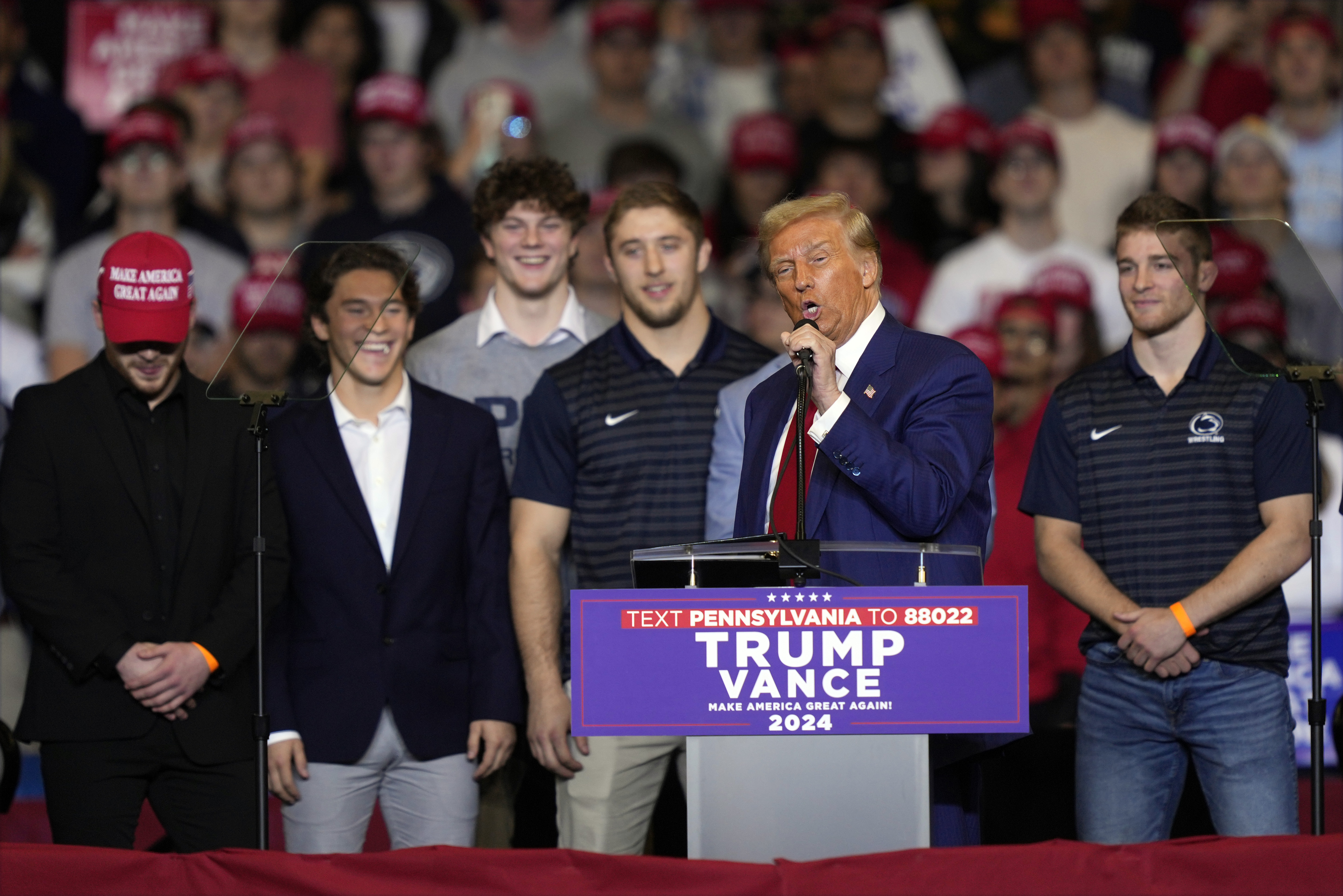
    President Donald Trump speaks as members of the Penn State wrestling team listen at a campaign rally at the Bryce Jordan Center in State College in October of 2024. Trump went onto win the state. Matt Rourke

    ‘The cost of continuing to exist’

    Sophie Showers, 19, wants kids, a stable job as a psychologist, and to one day be married.

    But now that vision is getting hazier as costs rise, including at the grocery store and at the gas pump, which she needs for her 45-minute commute to school — what the Mechanicsburg resident and first-time voter refers to as “the cost of continuing to exist.”

    Trump, according to the poll, is most underwater with young voters on the cost of living: Only 9% approve and 90% disapprove of his handling of the issue.

    That disapproval includes a quarter of voters under 30 who cast ballots for Trump in 2024, including a young voter from the Philadelphia area who asked not to be identified due to his role in his local Republican Party.

    He supported Trump in 2024, but he has become disappointed with what he says is Trump’s ignorance of the country’s biggest problems, namely inflation.

    “He wants to lower taxes. He wants to cut regulation. I agree with all those things,” he said. “But actually making major changes to people’s pricing, I don’t think he’s taking it that seriously.”

    On the economy, 19% of young people approve of Trump’s handling and 81% disapprove, according to the poll.

    “The current state of our country is that young people feel as though they have less opportunity economically than their parents or grandparents,” Levy said. “That’s a clear statement on dissatisfaction with the economy.”

    As they try to jump-start their early adulthood, young people are dealing with rising expenses, including unusually high gas prices and years of steadily increasing grocery store costs. Trump’s tariffs also raised prices for both businesses and consumers.

    (function(){function e(){window.addEventListener(`message`,function(e){if(e.data[`datawrapper-height`]!==void 0){var t=document.querySelectorAll(`iframe`);for(var n in e.data[`datawrapper-height`])for(var r=0,i;i=t[r];r++)if(i.contentWindow===e.source){var a=e.data[`datawrapper-height`][n]+`px`;i.style.height=a}}})}e()})();

    “If the cost of living keeps increasing, whether it be due to gas prices … or tariffs increasing the costs of groceries, I don’t want to be in a world where I have to worry about those kinds of things for the family that I want to have or will have, and I personally don’t really see things getting better,” said Showers, an independent voter.

    Miles Balfour, a graduate student pursuing a degree in human interaction at Carnegie Mellon University, is feeling similarly pessimistic.

    “When it comes to the financial and economic goals that I have for myself — wanting to own a home, wanting to be able to help provide financially for my family — I don’t know, honestly. I wish there was a better sense of confidence or assurance that these things are much more likely to actually happen,” Balfour, 25, said.

    According to a survey earlier this year from CIRCLE, a Tufts University program that studies youth civic engagement, many young people ages 18 to 29 are barely making ends meet, and nearly 60% said they struggle to meet their basic financial needs.

    “Young people’s personal situations are also really coloring their view of politics and of what’s happening in the country,” said Alberto Medina, CIRCLE’s communications manager.

    Ben Hummer, 28, of Pittsburgh, said though he is new to his career in recruiting, raises have slowed down while expenses like rent have gone up. His auto insurance for his Hyundai skyrocketed to roughly $3,000 a year, and his favorite sneakers — for a race he will be running later this year — have jumped from $120 to about $170.

    “My ability to afford my lifestyle comfortably has become more challenged,” Hummer, a Democrat, said.

    Young voters grapple with international conflicts

    Beyond struggles at home, young voters are also wrestling with questions about the U.S. role in overseas conflicts.

    After the deadly Oct. 7, 2023, terror attack against Israel by Hamas, the country launched a military campaign against the insurgent group in Gaza. And with the death toll of Palestinians climbing to more than 70,000 over the last three years, the debate over U.S. support for Israel has become a defining issue for many young people in Pennsylvania and elsewhere.

    As encampments and protests in support of Palestinians roiled university campuses ahead of the 2024 election, the issue hung over former President Joe Biden’s reelection campaign before his withdrawal and may have contributed to Vice President Kamala Harris’ loss.

    Trump repeatedly vowed during his 2024 campaign to end the war. But fighting has continued, and now only 16% of likely young voters in Pennsylvania approve of Trump’s handling of the conflict, the poll found.

    Hummer, the 28-year-old from Pittsburgh, disapproves of the president’s approach and said the U.S. “needs to balance its approach” in the Middle East.

    (function(){function e(){window.addEventListener(`message`,function(e){if(e.data[`datawrapper-height`]!==void 0){var t=document.querySelectorAll(`iframe`);for(var n in e.data[`datawrapper-height`])for(var r=0,i;i=t[r];r++)if(i.contentWindow===e.source){var a=e.data[`datawrapper-height`][n]+`px`;i.style.height=a}}})}e()})();

    “It doesn’t necessarily have to be pro-Palestinian by any means, but the United States has allies in the region outside of Israel that are being negatively impacted by the conflict, and we often just throw them under the bus,” Hummer said.

    Many young people have coupled their anger about the economy with Trump’s decision to join Israel in striking Iranian nuclear facilities and military sites. The Iranian regime retaliated by blocking a key water channel where oil tankers flow, spiking the price of gas throughout the spring.

    Among 18- to 29-year-old Pennsylvania voters, only 17% approve of Trump’s handling of the war in Iran, while 82% disapprove (it is also his least popular issue among all likely voters in the state). The war — which the president originally promised would go on for only a few weeks — has now lasted for six months.

    “I’m concerned about the United States’ ability to extract itself from the war in Iran without taking some kind of loss — whether it’s loss of influence, loss of life, or loss of financial resources,” and the prospect gets worse the longer the U.S. remains involved, Hummer said.

    Young voters are also more critical of Pennsylvania leaders’ positions on Israel than are respondents overall.

    Nearly half, 47%, of respondents said Pennsylvania’s third Jewish governor, Josh Shapiro, has been just “about right on support of Israel,” with 14% saying he has been too supportive, despite his vocal opposition to the country’s leader, Prime Minister Benjamin Netanyahu. But among young voters, 40% said he was too supportive.

    And more than half, 51%, of young voters said Pennsylvania U.S. Sen. John Fetterman, a frequent defender of Israel who has said he would leave the Democratic Party if anti-Israel sentiment grew too strong, is too supportive of Israel — compared with 30% overall.

    ‘Willing and ready to vote in 2026’

    Young voters are now figuring out what to do next.

    Darlene Jimenez, 19, of Philadelphia, said she is grappling with what she can feasibly do as a young person who cares deeply about many issues, including immigration (on which Trump has a 25% approval rating among young voters) and climate change.

    “There’s so many times where I find myself thinking like, ‘What am I to do?’” said Jimenez, a Democrat and college student. “Like, I’m 19 and I have so many opinions, and it’s like, what am I supposed to do to actually make a change?”

    Medina, communications manager for CIRCLE, said that while there is a sense of hopelessness among young people, “many of them are paying attention, and they say that they’re willing and ready to vote in 2026.”

    “Often, precisely because they don’t like the way things are going, and they would like things to change, and they see themselves as having a role in bringing about that change,” Medina said the organization has found in its research.

    In Pennsylvania, the youth vote has the potential to make a “decisive impact” on the four key competitive congressional district races this fall — in Bucks County, the Lehigh Valley, the Scranton area, and the Harrisburg region — according to CIRCLE’s 2026 Youth Electoral Significance Index.

    (function(){function e(){window.addEventListener(`message`,function(e){if(e.data[`datawrapper-height`]!==void 0){var t=document.querySelectorAll(`iframe`);for(var n in e.data[`datawrapper-height`])for(var r=0,i;i=t[r];r++)if(i.contentWindow===e.source){var a=e.data[`datawrapper-height`][n]+`px`;i.style.height=a}}})}e()})();

    But at the same time, young people are still trying to find their political home and historically have been less likely to vote than other age groups, including in 2024, when there was a 54% turnout rate among Pennsylvanians ages 18 to 24 compared with 70% for the overall electorate, according to census data.

    Others are a little more sure of where they stand. For instance, young women are the demographic most disapproving of Trump among likely voters in the Inquirer/New York Times/Siena poll. Fourteen percent of young women approve of his job performance, and 83% disapprove.

    (function(){function e(){window.addEventListener(`message`,function(e){if(e.data[`datawrapper-height`]!==void 0){var t=document.querySelectorAll(`iframe`);for(var n in e.data[`datawrapper-height`])for(var r=0,i;i=t[r];r++)if(i.contentWindow===e.source){var a=e.data[`datawrapper-height`][n]+`px`;i.style.height=a}}})}e()})();

    While a gender gap still exists among young voters, young men — who helped catapult Trump to the White House in 2024 — now disapprove of the president by a nearly 2-1 ratio: 33% approve of his job performance, compared with 64% who disapprove.

    Will, a Democrat from Bucks County who works in academia, crossed the aisle to vote for Trump in 2024 because he — “a loyal Joe Biden guy” — vehemently disagreed with how Harris was nominated without a primary after Biden’s withdrawal and also believes Democrats have focused too much on identity politics.

    The 27-year-old, who asked to be identified only by his first name because of concerns about workplace retaliation, has mixed feelings about Trump’s handling of the issues and called the Iran war “ridiculous.” But he does not fully regret his vote, citing Trump’s handling of Israel as one reason.

    “My impression is that the Democrats have been moving further left to kind of compensate for the fact that MAGA and the tea party moved the Republicans further right, so it kind of leaves people in the middle stranded. … I would prefer the Democrats kind of bring things back to the center,” said Will, who supports Shapiro for governor and would back him for president in 2028.

    And Luke Averill, 19, a registered Republican from Delaware County who voted for Harris in 2024, said he thinks he can make the most impact on the direction of the country by voting for moderate candidates in Pennsylvania’s GOP primaries, but he does not see himself as a “diehard for one party in particular.”

    But for many young voters, the elected officials they are gravitating toward are indicative of what is most important to them.

    Several young respondents to the poll said they find New York City Mayor Zohran Mamdani’s style of politics and focus on affordability to be refreshing.

    “He’s the inspiration for myself and many people in my generation and all around the country,” Balfour, the 25-year-old at Carnegie Mellon, said. Mamdani brings “a sense of hope and optimism” and the ability to see government “make our lives much more meaningful.”

    Kelly Harrington, 29, poses for a portrait near her home in Conshohocken, Pa., on Monday, Aug. 24, 2026.Erin Blewett / For The Inquirer

    And as for Harrington, the 29-year-old from Conshohocken, she said though she feels “frustrated and sad about the state of the world,” she believes it is important to take those emotions to the ballot box.

    “Politics is in every aspect of life,” Harrington said. “It affects you directly in almost every way, and if you get involved, you can make real change.”

  • South Jersey Freedom Fuel stations racked up big fines before being promoted by White House

    South Jersey Freedom Fuel stations racked up big fines before being promoted by White House

    Six South Jersey gas stations that the White House promoted in July, touting below-market fuel prices, have racked up environmental violations with the state dating back to 2023.

    The New Jersey Department of Environmental Protection issued close to $430,000 in fines in May to operators who run 17 gas stations, including the six Freedom Fuel locations, for the violations accrued over the years, according to an administrative order first reported by Politico and obtained by The Inquirer. The fines were issued before these stations rebranded to Freedom Fuel.

    The Freedom Fuel stations, which made their debut this summer, accrued more than $202,000 in fines, according to department records. All 17 stations are owned by asset manager Blue Owl Capital and operated by Cherry Hill developer Shamikh Kazmi and his brother Syed Kazmi.

    Blue Owl and the Kazmi brothers could not be reached for comment.

    The owner-operators have requested a hearing, according to DEP spokesperson Larry Hajna, but no date had been set as of Wednesday.

    The violations include failing to properly register underground storage tanks, failing to provide overfill prevention for some tanks, failing to cut and cap lines that lead to out-of-service tank systems, and violating delivery bans.

    A Freedom Fuel location at 6801 Tilton Rd. in Egg Harbor was issued a fine of $50,000, the maximum penalty for the violation. The location received four deliveries in November 2023, despite having been banned from doing so because it did not properly register its storage tank.

    In its justification for the fine, the department described the operator’s actions as a “deliberate and knowing act,” noting it was a major violation.

    The Kazmi brothers have been embroiled in at least two lawsuits related to previous gas station ventures, including a 2021 trademark dispute with BP American Inc. and BP Products North America Inc. Additionally, Petroleum Marketing Group Inc., a fuel distribution company, accused the brothers of stealing thousands of gallons of gas from the company.

    City won’t shut down Philly Freedom Fuel station

    The Freedom Fuel station on Bustleton Ave. in Philadelphia.Dana Munro / staff

    The Freedom Fuel Network expanded to 29 locations earlier this month, but one Philly station was nearly shut down by the city.

    The network’s Bustleton Avenue station — also linked to the Kazmi brothers — failed a license renewal inspection at the end of July that could have forced its closure. But the owners remedied the issue and can continue to operate the station, according to a city spokesperson.

    More than two months after having been loudly promoted by the White House and President Donald Trump, Freedom Fuel’s owners have remained silent about their discount gas operation.

    Baltimore Ravens assistant coach Randy Brown and former commodities trader Yoni Gontownik signed the company’s certificate of formation in Delaware and have not spoken publicly about the highly touted enterprise.

    Freedom Fuel launched with prices 40 to 50 cents a gallon cheaper than nearby stations, frustrating competitors and confusing experts who follow the notoriously low-margin business.

    “With every new site, we’re driving down gas prices at the pump for more communities,” reads a message on the network’s website.

    In recent weeks, prices across Freedom Fuel locations have risen closer to other discount locations.

    Take the location on Dreshertown Road in Upper Dublin Township, which was promoted in a video shared by the White House. When it launched at the beginning of July, the station sold gas for $3.47 a gallon — a nod to Trump being the 47th president. But as of Tuesday, the station was selling gas for $3.89 a gallon, about a dime cheaper than a nearby Citgo station and slightly more than Sam’s Club, according to gas-tracking website GasBuddy.

    The average cost of a gallon of gas in Philadelphia on Tuesday was $4.15, according to AAA. That was up more than 28% from this time last year, when the cost averaged $3.23.