Tag: Cherelle L. Parker

  • The Academy of Natural Sciences is closing its museum after nearly two centuries

    The Academy of Natural Sciences is closing its museum after nearly two centuries

    Philadelphia’s Academy of Natural Sciences of Drexel University is closing its museum after nearly two centuries in existence, citing financial pressures and dwindling attendance.

    The museum, which opened to the public in 1828, will cease operations at the end of the business day Sept. 30. Its last day open to the public with regular hours will be Sunday, Sept. 27, staff were notified on Tuesday.

    Visitorship at the museum had slipped in recent years, according to a statement signed by Drexel president Antonio Merlo and Academy board chair Suzanne Biemiller. Though the Academy had worked to rebuild attendance after the pandemic, “patterns of visitation and audience behavior changed in lasting ways, while the costs of operating the museum continued to rise,” the statement said.

    “Over time, it became clear that these were not temporary pressures, but fundamental changes in the economics of the Academy’s operational model, costs that have imperiled the Academy’s ability to discharge its overall mission and preserve its legacy.”

    Closing the current Parkway museum, was, therefore, “a difficult decision taken to concentrate resources on the Academy’s enduring scientific assets and research,” said the statement.

    The aim is ultimately to relocate the Academy’s collections and sell the building, which, is owned by the Academy, and has a lot of deferred maintenance needs, said a source close to the talks between Drexel and the Academy, who asked not to be identified.

    The Academy building on the Benjamin Franklin Parkway at 19th Street, “will continue to house collections and laboratories while we consider possible pathways forward that place the utmost priority on preservation and support of the collections, library, archives, and research initiatives,” a Drexel spokesperson said.

    Biemiller declined to comment on the potential relocation of the collections.

    The museum cut back its hours of operation from five days a week to three — Friday through Sunday — as of last Oct. 1 (though it added back Thursdays in July and August for its Dino-Mite Summer program).

    One of two shell sculptures placed on either side of the 19th Street entrance to the Academy of Natural Sciences of Drexel University on Aug. 17.Tom Gralish / Staff Photographer

    Drexel said 27 of the Academy’s 80 employees — about a third — will be “impacted” by the closure. The university did not say whether that meant they would be laid off or transferred, and did not respond to a question on how much money the move will save.

    Simultaneously Tuesday, the university and science institute announced that Scott Cooper, Academy of Natural Sciences president and CEO for nearly nine years, is stepping down immediately.

    The Drexel and the Academy boards will “continue working together to identify an appropriate governance structure and interim and permanent leadership for the Academy,” the statement said.

    Former Comcast executive and U.S. Ambassador to Canada David L. Cohen, who has been helping to broker an agreement between Drexel and the Academy, said the two institutions are close to striking a deal on a “term sheet” on governance and finances. He has been tapped by Gov. Josh Shapiro to serve as a third-party facilitator in the process, the university said in its message.

    “We want to preserve the Academy,” he said, “but we also don’t want to jeopardize Drexel.”

    Collections and research will remain unaffected

    The Academy, which became affiliated with Drexel in 2011, is known to the general public for its museum that features a Dinosaur Hall with dinosaur bones and full-scale replicas. Its exhibitions have explored environmental issues and centered on the Academy’s collection of approximately 19 million specimens, as well as historically significant items associated with Thomas Jefferson and Lewis and Clark.

    It offers hands-on science experiences, like a “big-dig” fossil exhibit, and old-school dioramas of bison, bears, tigers, and other animals in their ecosystems. The museum’s current “Botany of Nations” show “reshape[s] the historic tale of Lewis & Clark through Indigenous perspectives,” says an exhibition description.

    Closure of the museum does not affect the rest of the institution, which builds and maintains the collections and conducts research through departments such as the Patrick Center for Environmental Research, all housed in the Parkway structure. All of that will remain there, the university said.

    Biemiller said that “the trustees of the Academy know that this news about the closure of the museum is going to be a blow to Philadelphians, and I would love for them to know we share their feelings of loss about this beloved space and place. And we also know that work remains to develop and fund a new strategic and operating model that will ensure that the Academy’s important centuries-long mission to understand the world and inspire us to care for it continues.”

    Asked whether the intent was to reopen a museum, Biemiller said: “I would hope so. That’s the goal. I think we have not given up on that part of our mission. The Academy is research, it is [specimens and library] collections, and it is public engagement.”

    While she said it was “incumbent upon us to find places and ways” for the museum to continue, what form it would take has not been determined.

    “It could be at the current location in a different configuration, it could be a new location, it could be imagined in different ways.”

    What’s important, she said, was the “fundamental goal to ensure that people have access to the natural world, can see these birds from North American or dinosaur bones and fossils the Academy scientists have collected and understand how they connect to the world.”

    “It’s a sad day to see it close,” said Franklin Institute president and CEO Larry Dubinski of the Academy museum, which is about a block from the institute. “It’s a profound loss for the community and for the city and the region. And it’s one of those days that I hope the community takes stock in. This is a city driven by arts and culture. We have a phenomenal city of arts and culture, unlike almost any other in the United States.”

    However, Dubinski said, the arts here are “underresourced and underfunded, and that does continue to challenge the ability to have a sustainable arts and culture community. I think today’s another wake-up call to that issue.”

    Dinosaur Hall at the Academy of Natural Sciences Aug. 5, 2026.Allie Ippolito / For The Inquirer

    Ongoing financial challenges at Drexel

    The museum closure comes amid financial challenges at Drexel University, which has been seeking to overcome a budget deficit, overhaul academic programs, change from a quarter-based calendar to semesters by fall 2027, and cope with another national dip in high school students beginning this year.

    Over about the last decade, the West Philadelphia university has lost about 20% of its enrollment. Last fall, Drexel saw a 19% drop in freshmen; numbers for this fall aren’t yet available, though the school is projecting a 16% jump in first-year students. And the school, which enrolled 20,868 undergraduate and graduate students in 2025-26, is projected to continue to run deficits through fiscal year 2028, according to a report from Moody’s, a global financial services company that releases credit ratings.

    Merlo, Drexel’s president, told The Inquirer in April that the school projected ending the year with a $20 million deficit, down from almost $40 million last year and $63 million in 2024. In May, the school said it had implemented $93 million of “permanent strategies” to deal with the “structural imbalance” and had identified $11 million more.

    The Academy has become a drain on the university, a source familiar with the situation, who was not authorized to speak about the matter and asked not to be identified, told The Inquirer in April.

    The university has provided the Academy with substantial support — $8,288,000 and $8,914,000 for operations in fiscal years 2025 and 2024, respectively, according to financial statements posted on the Academy website. These numbers include in-kind support that Drexel is providing to the Academy.

    Friction between the Academy and Drexel became public in April, The Inquirer reported, revealing Drexel’s wish to totally take over the Academy, or end the partnership.

    Uncertain long-term future for the Academy

    Talks are continuing between the two institutions, with the offices of Gov. Shapiro and Mayor Cherelle L. Parker involved, underscoring the importance of the Academy to both the city and the state.

    “I don’t want to lose the Academy on my watch, and neither does the mayor,” Shapiro told Cohen, according to Cohen, who has led dozens of meetings over the last eight months and created a draft proposal for an agreement between Drexel and the Academy.

    “Drexel and the Academy are working with my office, with Governor Shapiro’s office, and with Ambassador David L. Cohen, as the governor’s representative, to preserve the essential mission of the Academy,” Parker said in a statement.

    “We are working collaboratively toward the outcome we all seek for the City of Philadelphia.”

    The governor’s press office did not respond to The Inquirer’s request for comment.

    Cohen has long been a negotiator in many major city issues, formerly serving as chief of staff to former Philadelphia Mayor Ed Rendell and leading the board of trustees at the University of Pennsylvania.

    “Together, we are advancing discussions focused on the Academy’s long-term future and identifying new opportunities to strengthen its scientific mission, ensure access to its world-renowned collections, expand public engagement in the natural sciences, and maintain the Academy’s enduring presence in Philadelphia,” the statement said.
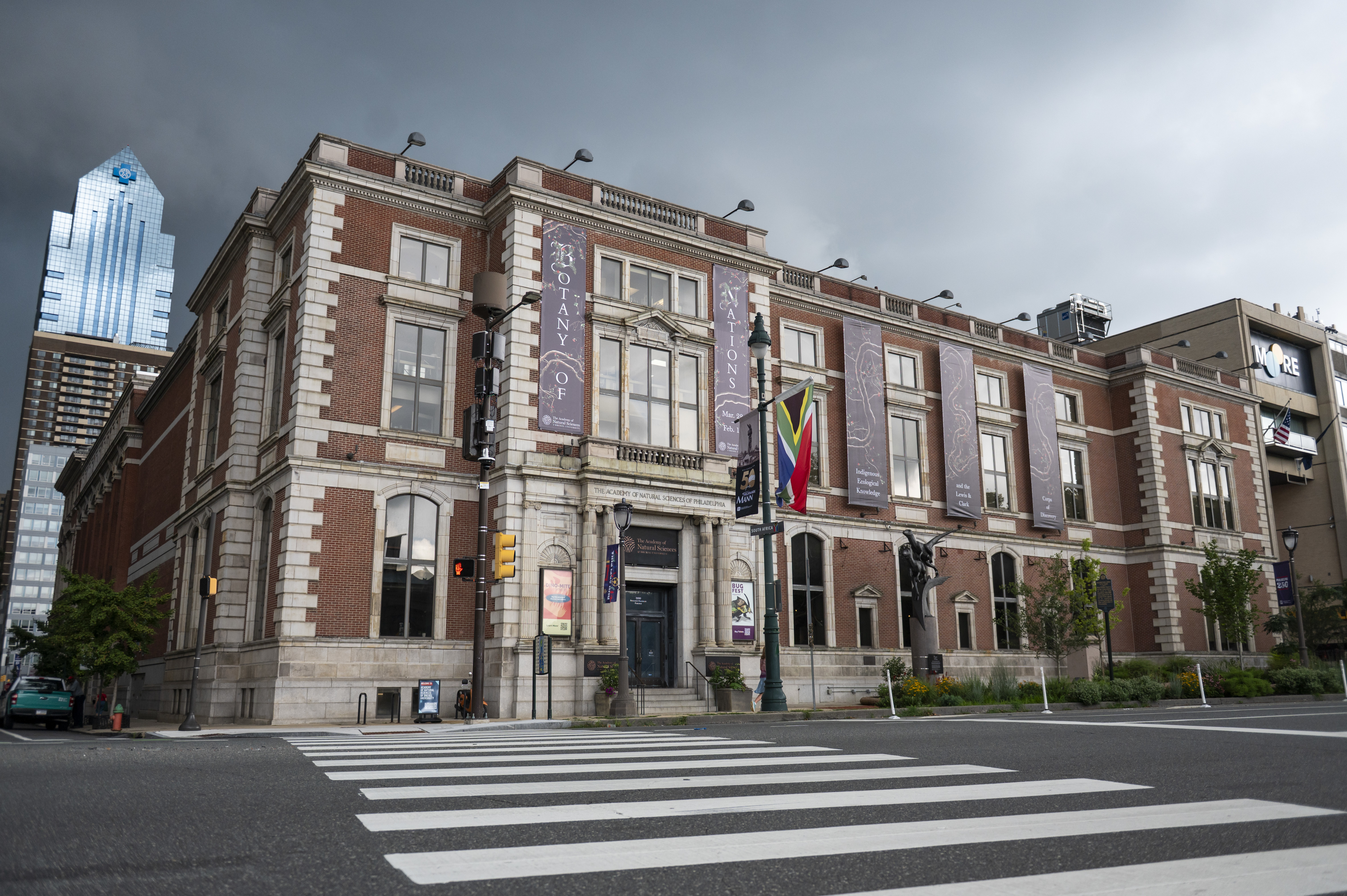
    The Academy of Natural Sciences on the Parkway, Aug. 5, 2026.Allie Ippolito / For The Inquirer

    The Academy’s affiliation with Drexel is 15 years old. It announced a partnership agreement with Drexel in 2011 that blended the two organizations somewhat, but stopped short of being a full merger. The two groups maintain separate boards.

    According to a 2013 Drexel audit, the 2011 affiliation agreement between the two institutions stated that the Academy would retain its status as separate nonprofit organization, but that as of September 2012 it would become a Drexel subsidiary owned 100% by the university.

    A Drexel spokesperson said in April that the school had “invested a substantial amount annually in the Academy to maintain access to the Academy’s collections while we worked with the Academy and the community to identify a sustainable path to keep this resource in Philadelphia.”

    Cooper was named the Academy’s leader in 2017 after serving as vice president of collections, knowledge and engagement at the Royal British Columbia Museum in Victoria, Canada. Before that, he was director of museums at the Qatar Foundation in Doha, Qatar.

    Under his leadership, the Academy “renewed its public and scientific mission,” Tuesday’s joint statement from Drexel and the Academy said. “It revitalized galleries, developed original exhibitions showcasing its collections and research, and advanced co-curatorial approaches that brought new voices into programs and interpretation.”

    Cooper, who will remain for a time as a consultant to the Academy, was not available for comment, a spokesperson said.

    “We’re sorry he’s leaving, but understand his decision,” said Biemiller.

    “It’s a competitive world that museums inhabit, and people make choices every single day,” Cooper told the Inquirer after his 2017 announcement. “We need to ensure that when they come to the Academy they are getting a reward for their investment of time.”
  • Philadelphia’s police union endorses Gov. Josh Shapiro for his reelection bid

    Philadelphia’s police union endorses Gov. Josh Shapiro for his reelection bid

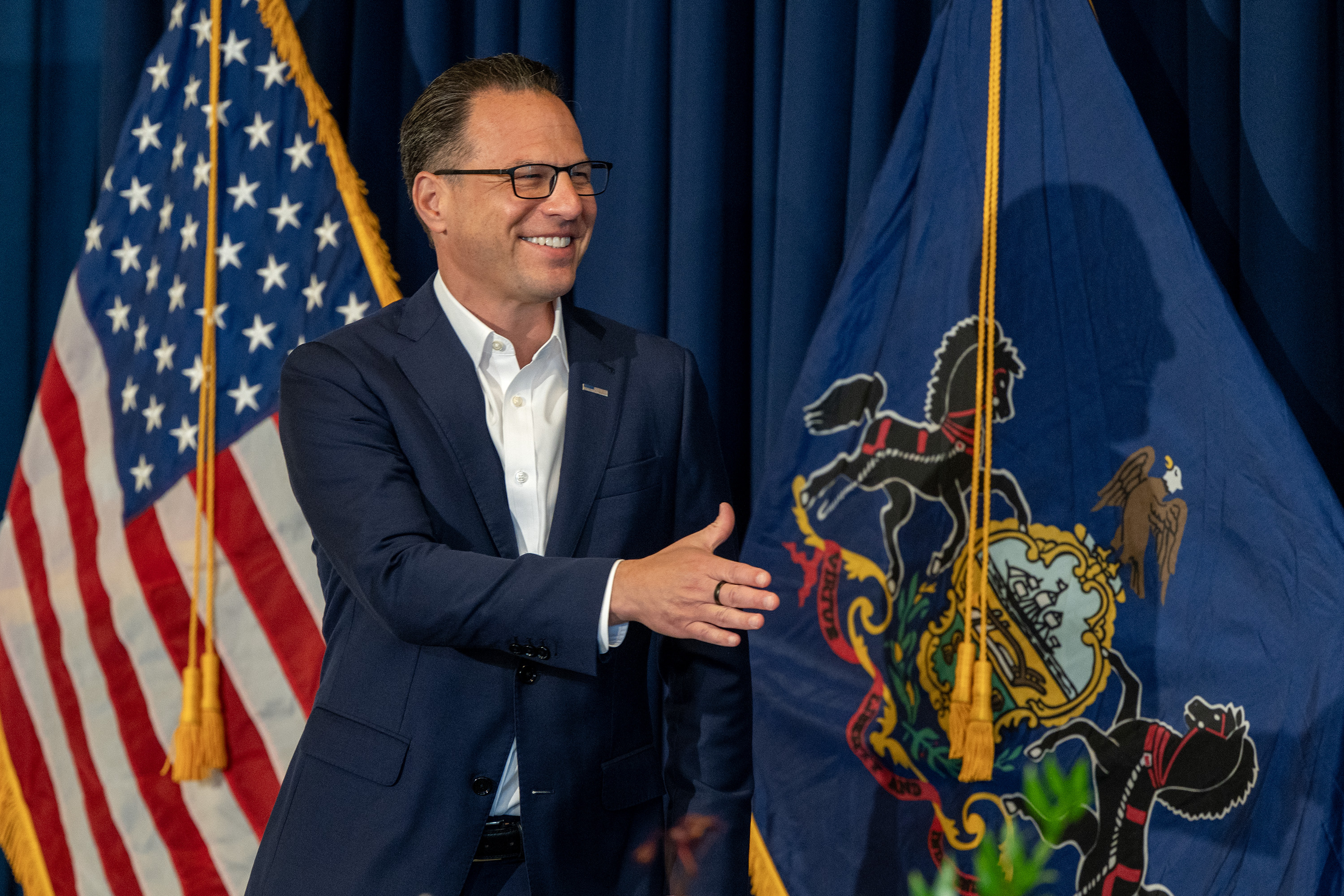
    Philadelphia’s police union on Tuesday endorsed Gov. Josh Shapiro’s reelection bid, announcing its continued support for the first-term Democratic governor while touting his commitment to law enforcement.

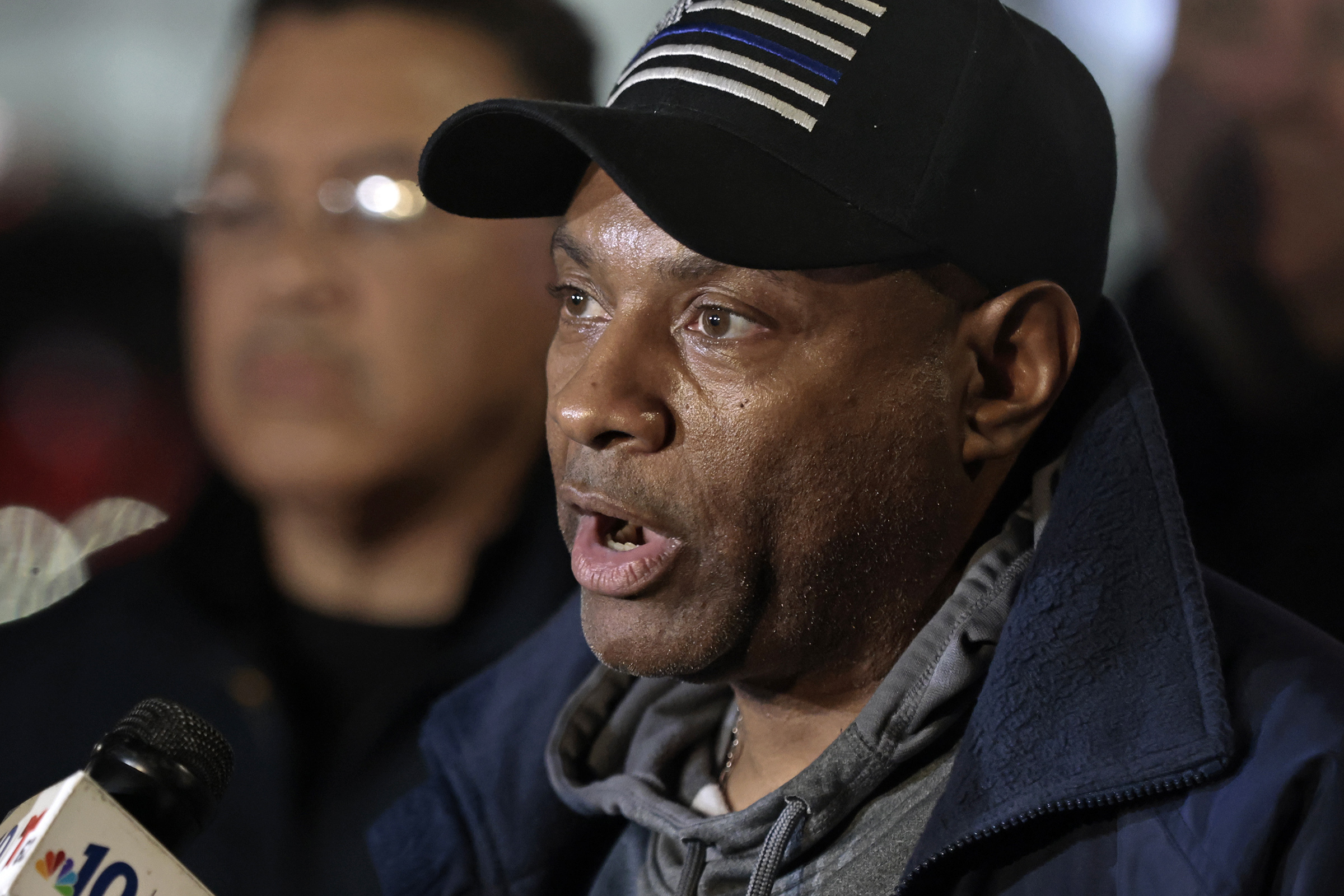
    “Every day, he has shown a commendable ability to work with local law enforcement and deliver the resources and support we need to protect and serve our friends, families, and neighbors,” said Roosevelt L. Poplar, president of the Fraternal Order of the Police Lodge 5, which represents over 14,000 active and retired Philadelphia police officers and sheriff’s deputies.

    In a statement, Shapiro said he was “honored” by the endorsement.

    “I’m going to keep fighting for the brave law enforcement officers who work to keep Philadelphia safe every single day,” he said. “I believe all Pennsylvanians deserve to be safe and feel safe in their communities — and we have focused every day on funding law enforcement and supporting the men and women that protect and serve our Commonwealth.”

    It marks the second time the police union has embraced Shapiro for governor after endorsing him in 2022 over Republican candidate Doug Mastriano, who the then-president of the union said couldn’t be trusted to protect their collective bargaining rights. Shapiro, a former state attorney general, was a reliable government official who the union said was “there to help us with whatever we need to do.”

    This election cycle, Shapiro holds a commanding lead over his Republican opponent, Treasurer Stacy Garrity, according to a recent poll from The Philadelphia Inquirer, the New York Times, and Siena University. The union has previously supported President Donald Trump, but Shapiro attracted its backing over Garrity, who Trump has endorsed in the Pennsylvania governor’s race.

    Shapiro has also received support from other organized labor unions, including the Pennsylvania AFL-CIO and the Pennsylvania Professional Fire Fighters Association. On Monday, he received the backing of the Pennsylvania State Troopers Association.

    Shapiro has maintained a comfortable relationship with law enforcement, and his campaign noted that he has signed multiple state budgets funding 2,000 additional officers across Pennsylvania and allocated more than $1 billion in community-based violence prevention grants.

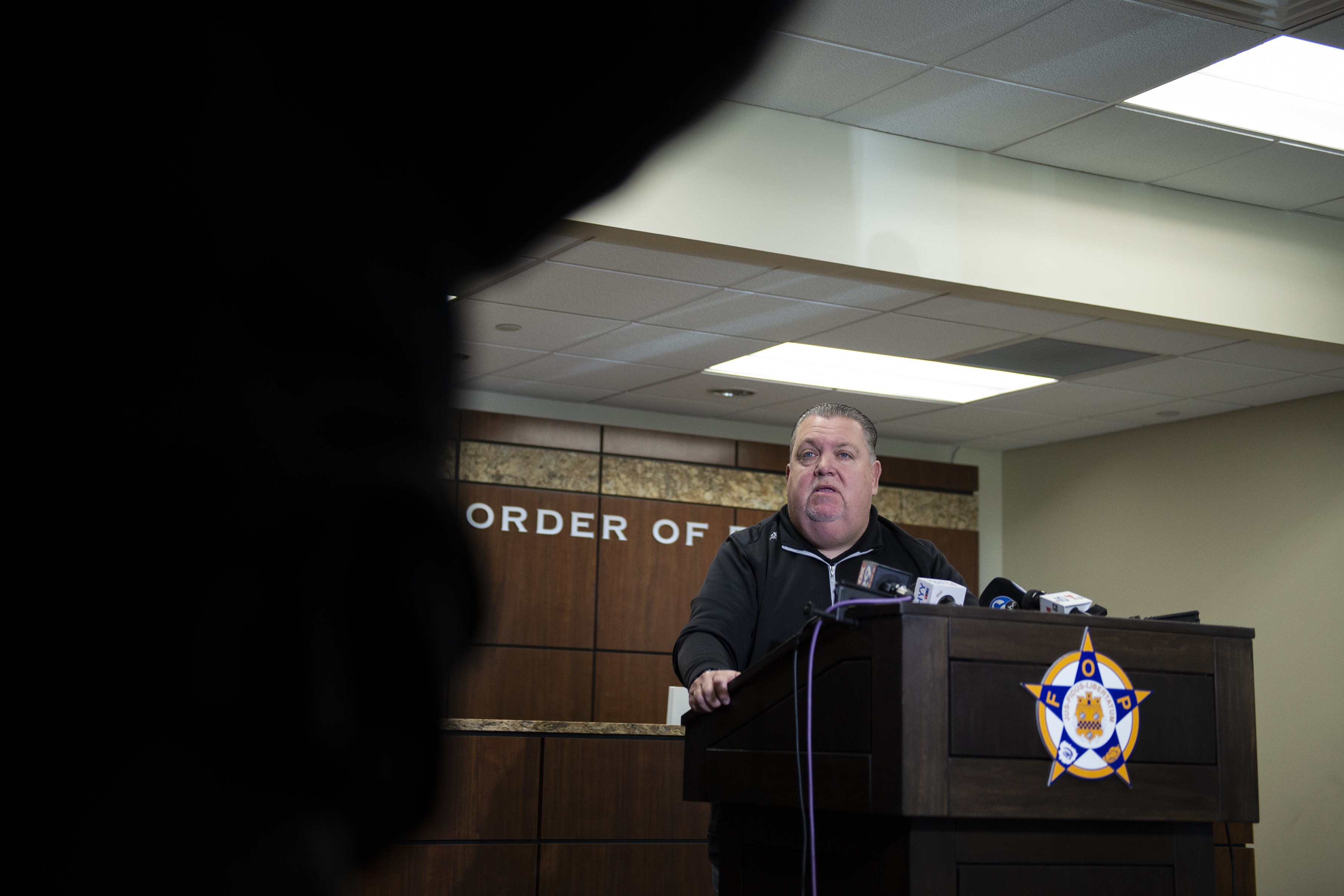
    Roosevelt Poplar, president of Fraternal Order of Police Lodge 5, on Jan. 26, 2024.Elizabeth Robertson / Staff Photographer

    In his statement, Poplar also commended Shapiro for providing funding for police department needs.

    “The Governor has delivered on his promise to invest in public safety, he has shown up with us in times of tragedy, and he has proven his commitment to keeping our officers and the communities we serve safe,” he said.

    The police union’s endorsement of Shapiro is notable for an organization that just a few years ago was seen by some Philadelphia Democrats as politically toxic.

    In the aftermath of the 2020 Minneapolis police killing of George Floyd, protests by racial justice activists swelled in Philadelphia and across the country with many of the movement’s participants calling to “defund” or abolish the police. They pressed local lawmakers to redirect police funding to social services, and Philadelphia City Council in June 2020 canceled a planned increase to the Philadelphia police budget.

    Amid the calls for reform, the FOP was a major point of contention, as was its bombastic former leader, John McNesby. Activists — and many of their allies in elected office — said the union was too resistant to change and protected bad cops.

    Former FOP president John McNesby holds a news conference on Oct. 19, 2022.Joe Lamberti

    At the time, Shapiro was running for reelection as the state attorney general, and his campaign presented him as a “progressive reformer” who had established a unit in his office to review criminal convictions that may have been unfairly applied and a council to support people leaving prison with housing and employment opportunities. The FOP endorsed Shapiro’s 2016 and backed his 2020 campaign for attorney general.

    Unlike some Philadelphia Democrats, Shapiro — who has rumored ambitions for a presidential run in 2028 — did not embrace the “defund” movement. He argued during a 2020 trip to Philadelphia that addressing structural inequities in the department and having strong law enforcement, especially in communities with high levels of poverty, were not mutually exclusive endeavors.

    “We reject that poverty or institutionalized indifference and marginalization should mean that some people don’t get to have a safe community to live in,” he said. “We won’t give up on the belief [of] law enforcement showing up in a community to make people feel safer.”

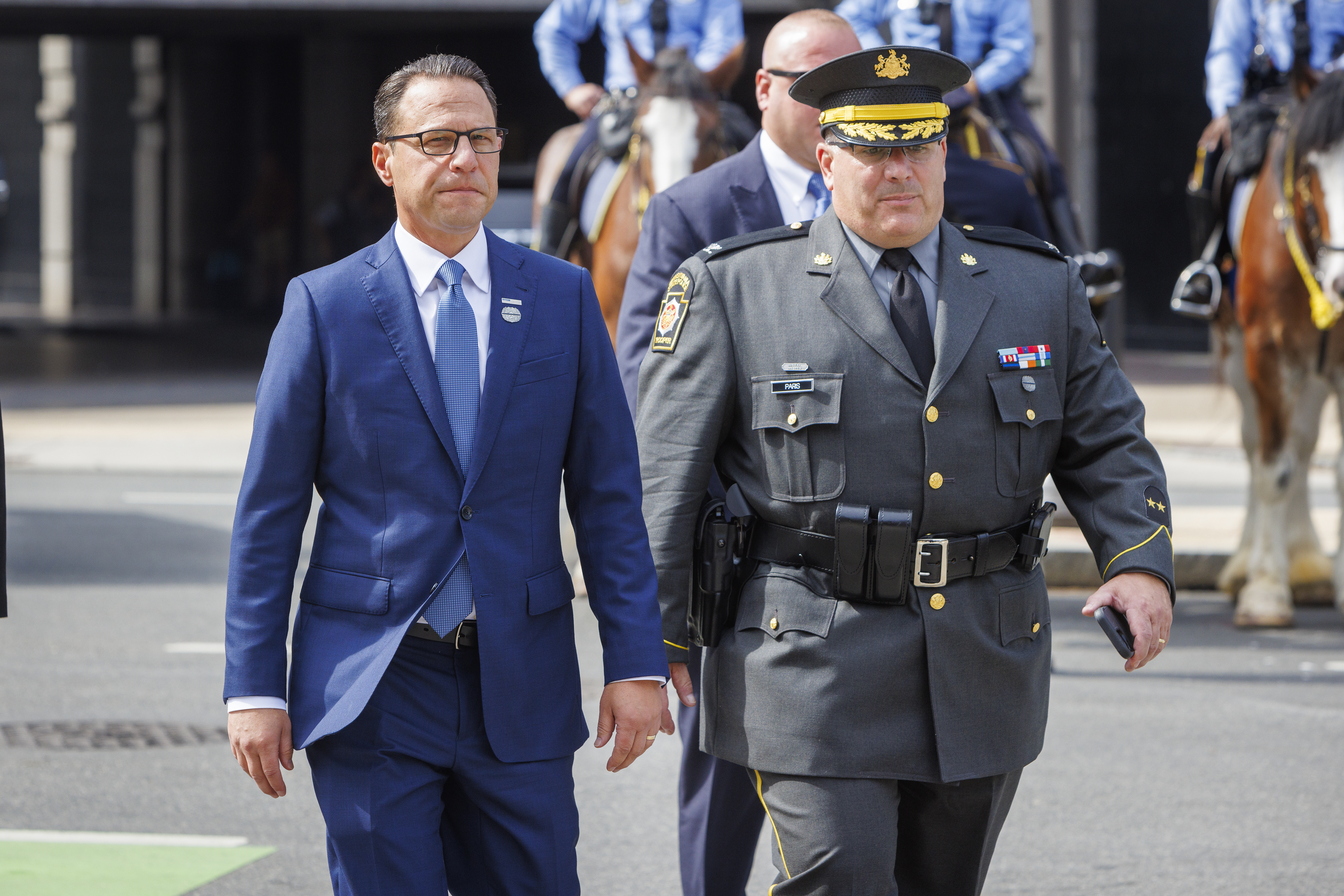
    Gov. Josh Shapiro with Pennsylvania State Police Col. Christopher L. Paris. They were attending the funeral for Philadelphia police officer Jaime Roman at the Cathedral Basilica of SS. Peter and Paul on Sept. 19, 2024.Alejandro A. Alvarez / Staff Photographer

    In the years following 2020, public support for police in Philadelphia appeared to grow. The city saw a historic spike in gun violence, and Republicans nationally portrayed Democrats as soft-on-crime. When a half-dozen Democrats were fighting for the mayoral nomination in 2023, polling showed that most voters saw public safety as the No. 1 issue driving the race. None of the candidates embraced “defund,” and most of them supported proposals to provide additional resources to the police department as it sought to solve shootings.

    In the end, the tough-on-crime mayoral candidate — then-City Councilmember Cherelle L. Parker — won decisively.

  • How Carlton Williams rose from a scandal-plagued department to one of Philadelphia’s most powerful government positions

    How Carlton Williams rose from a scandal-plagued department to one of Philadelphia’s most powerful government positions

    Eleven years ago, Carlton Williams was, to some, a symbol of government dysfunction.

    He was leading the troubled Philadelphia Department of Licenses and Inspections, an agency engulfed in controversy over safety lapses and staffing issues following the deadly 2013 Market Street building collapse. The city controller called on Williams to resign, and Jim Kenney, then a candidate for mayor, promised that he’d get rid of him.

    And yet Williams remained.

    In July, he was named Philadelphia’s managing director, one of the most powerful positions in city government, second only to the mayor. He is assuming responsibility for L&I again, plus dozens of other agencies and thousands of employees who carry out the day-to-day operations that make the city run.

    It is perhaps an improbable outcome for a longtime city employee who absorbed a level of scrutiny that could have easily ended his career.

    But Williams proved durable, cycling through leadership positions across several departments while establishing himself as a City Hall insider. He has politically powerful allies and a reputation among City Council members as someone who will quickly act on their needs. That goes a long way with 17 politicians who value responsiveness and omnipresence, traits that they did not see in Williams’ predecessor, Adam K. Thiel.

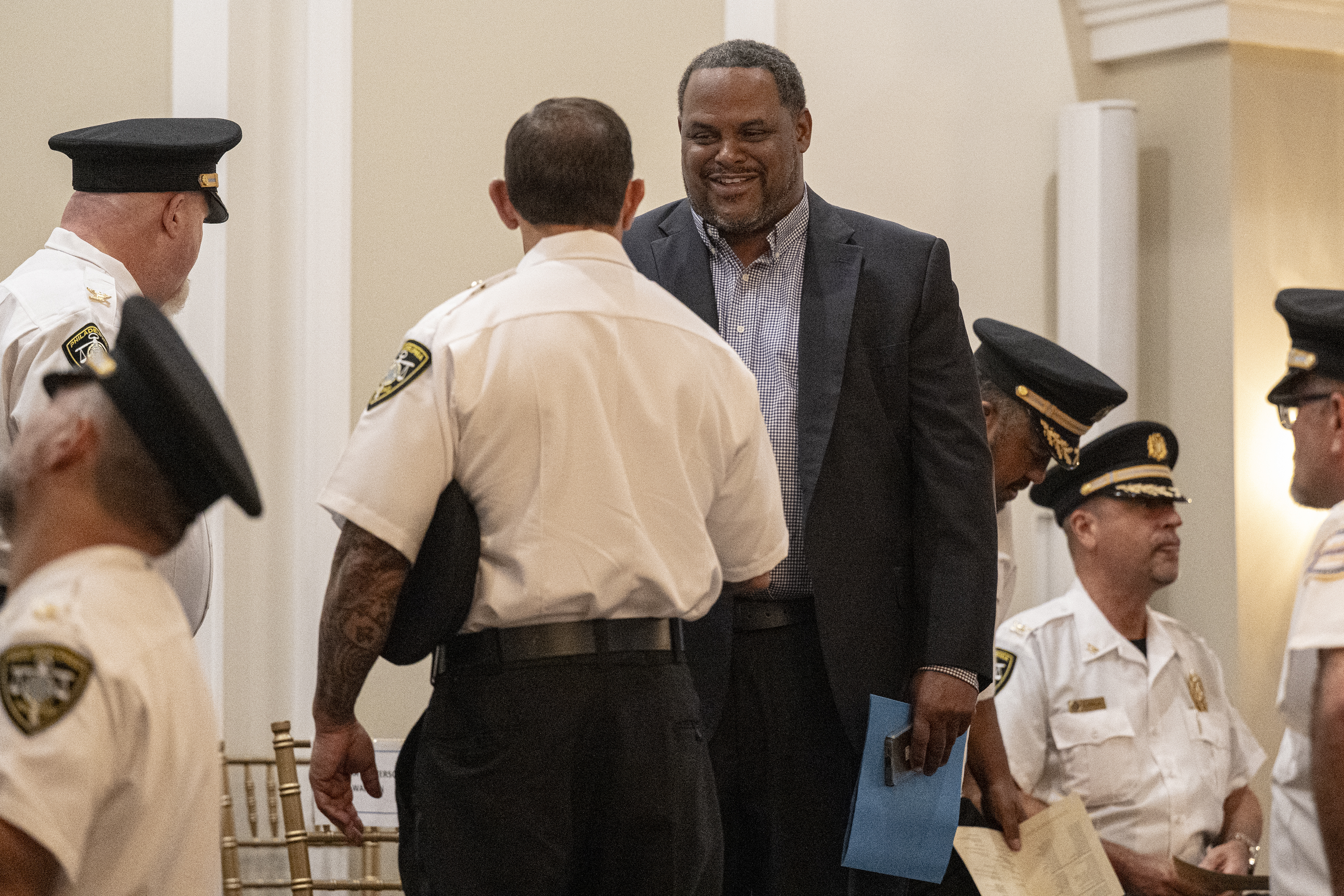
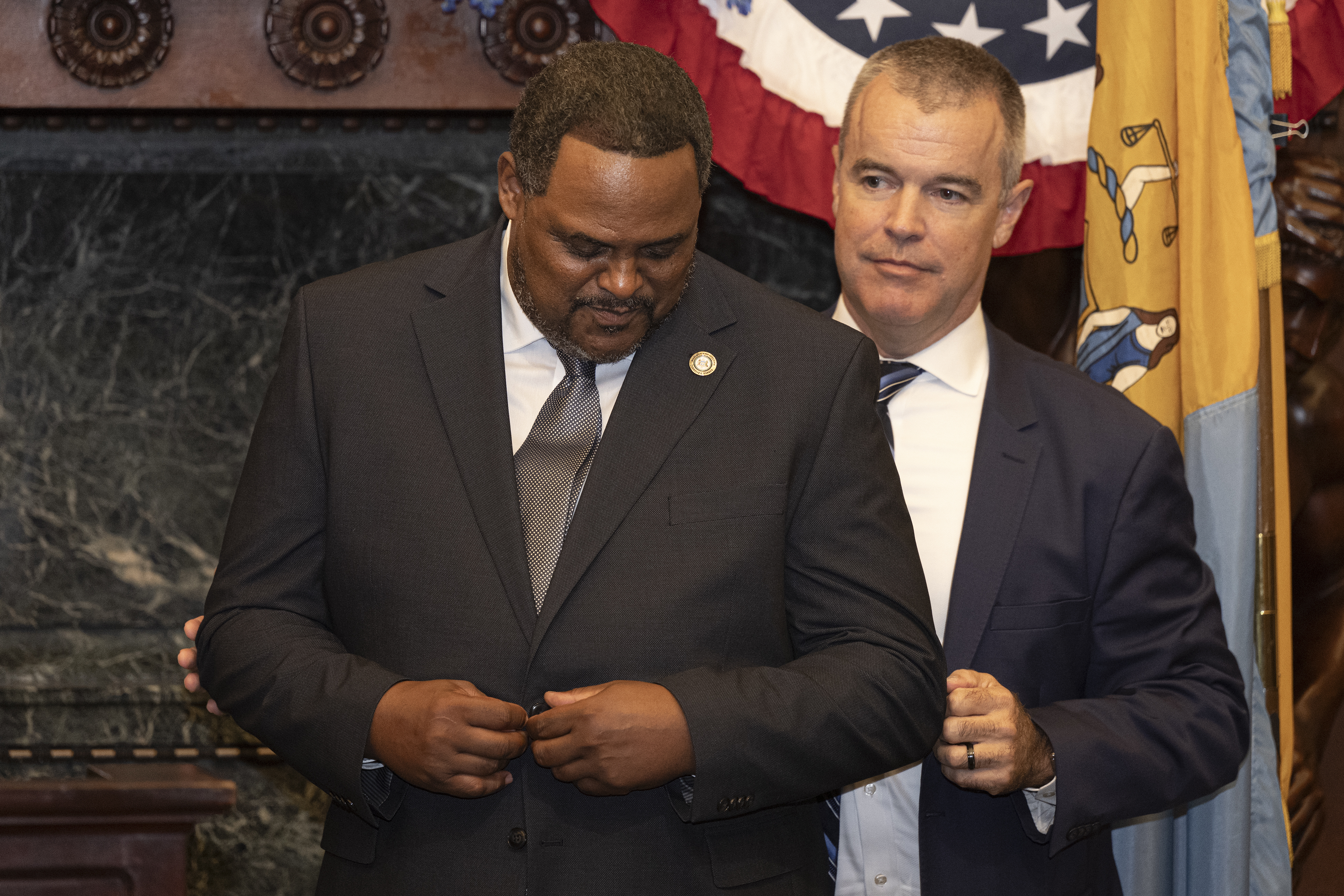
    Newly appointed Managing Director Carlton Williams interacts with city officials during a correctional officer graduation ceremony at FOP Lodge 5 in Philadelphia on Friday.Jose F. Moreno / Staff Photographer

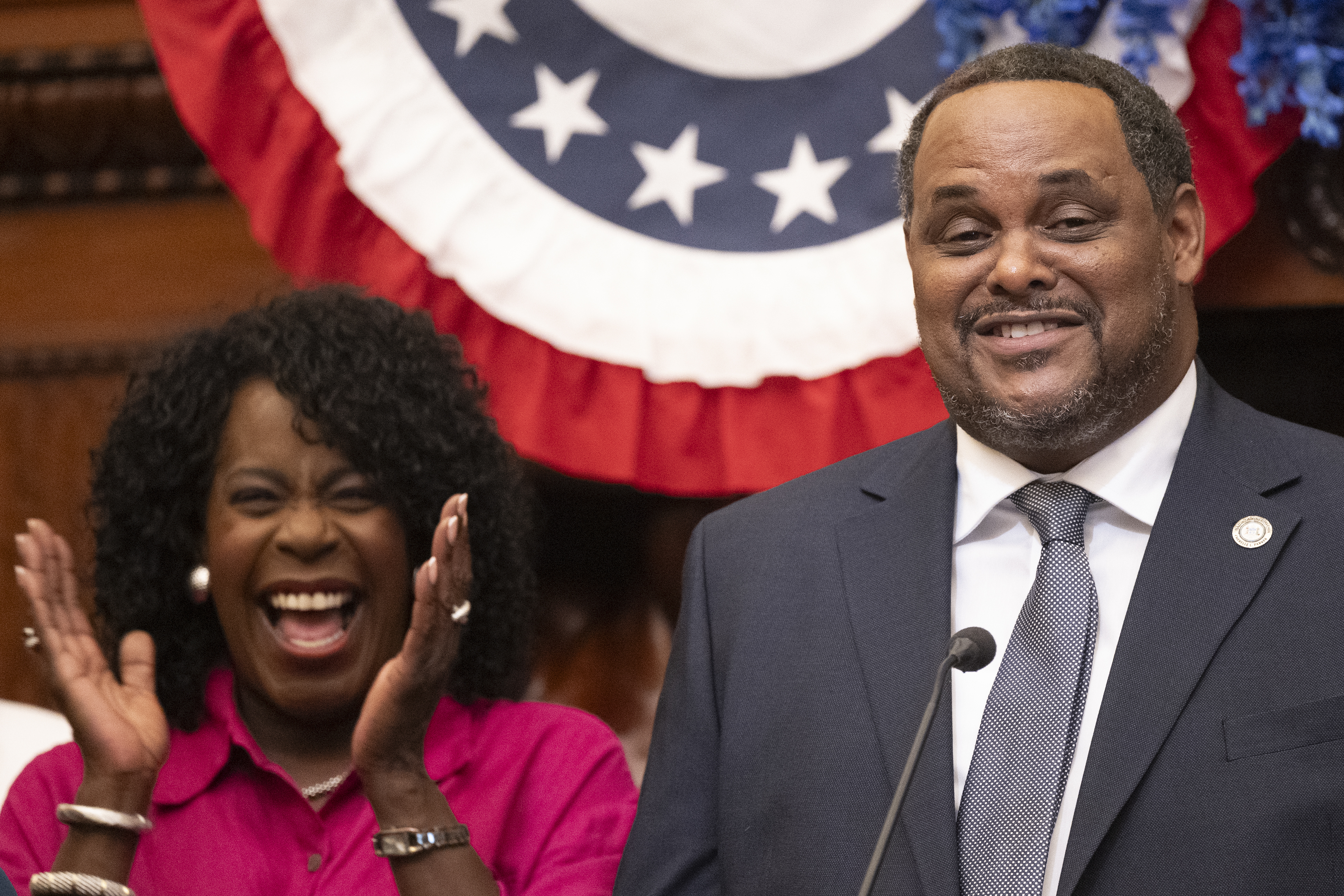
    Perhaps most importantly for Williams’ ascent: he is all-in on Mayor Cherelle L. Parker.

    The ties between Parker, 53, and Williams, 57, stretch back to their childhoods in Northwest Philly — he played football for the Oak Lane Wildcats, and she was a cheerleader. The team remains a part of both of their identities: Williams has led the Oak Lane Youth Association for 20 years, and the mayor often says proudly that she is a “Wildcat for life.”

    Later in life, both found allies in the storied Northwest Coalition, a powerful political family. Williams said that he has known for 20 years that Parker would one day sit atop City Hall. And he most recently led Parker’s Office of Clean and Green Initiatives, overseeing the implementation of some of her key campaign promises.

    “I’m bringing the ‘One Philly’ brand to the managing director’s office,” Williams said in an interview, echoing the mayor’s oft-used slogan. “Not to say it wasn’t being done under my predecessor. But I want to make sure it’s completely aligned with the mayor’s goals, because I believe in that vision.”

    New Philadelphia Managing Director Carlton Williams speaks at the podium after being announced by Philadelphia Mayor Cherelle L. Parker during a July 28 news conference at City Hall.Jose F. Moreno / Staff Photographer

    His appointment as managing director marks a new stage for the Parker administration that has seen significant turnover at its highest levels. And it is indicative of what Parker values in her inner circle: vast institutional knowledge and loyalty.

    For the mayor, trust in Williams’ ability to operate within the bureaucracy and advance her priorities may outweigh his mixed record of management.

    “Whenever we had a crisis of any kind in this city, he has been on my speed dial,” Parker said when she announced Williams’ appointment last month. “No matter who’s been leading, I’ve always called him for his counsel.”

    Overseeing ‘a very broken’ L&I

    Parker’s bet on Williams would have seemed almost unimaginable a decade ago.

    A year after Williams was appointed to lead L&I, an excavator demolishing a wall on Market Street in Center City toppled the building onto an adjacent Salvation Army store, killing six people and injuring a dozen more. The inspector responsible for the demolition project died by suicide a week later.

    Calls for reform abounded and questions swirled about whether the city’s agencies were responsible. There were multiple investigations launched and commissions convened to probe the disaster, and within days, Council members were pressing Williams to institute reforms that would bolster safety on private construction sites.

    In response, Williams sought to hire more inspectors, increase their training, raise demolition standards, and create new specialized units within L&I.

    Today, he says the collapse on Market Street was “one of the saddest moments” of his time in government.

    “You have to lead through some tough challenges when you’re a leader,” he said. “You don’t get to pick and choose when you lead.”

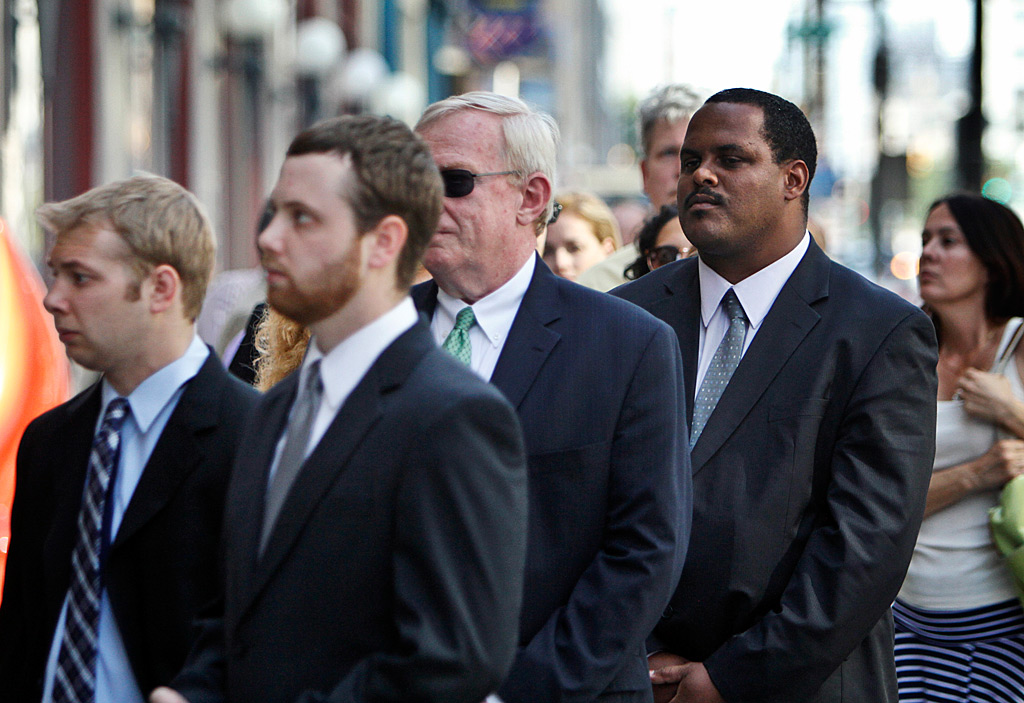
    In this June 2013 file photo, then-Philadelphia Commissioner of the Department of Licenses and Inspections Carlton Williams (second from right) waits in line to attend a memorial service for Anne Bryan, who was among the victims of the Market Street building collapse.JOSEPH KACZMAREK / Associated Press

    But it was not the only controversy he faced.

    The Inquirer reported that, in 2014, Williams personally intervened in the demolition of a Point Breeze building and allowed it to proceed without the requisite permits.

    And in 2015, L&I was forced to reorder hundreds of inspections after sending unlicensed and unqualified inspectors to examine unsafe buildings across the city.

    By fall 2015, then-City Controller Alan Butkovitz was calling on Williams to be fired. He said at the time that L&I had long been troubled, but that his office’s audit of the agency found that Williams had not made enough improvements.

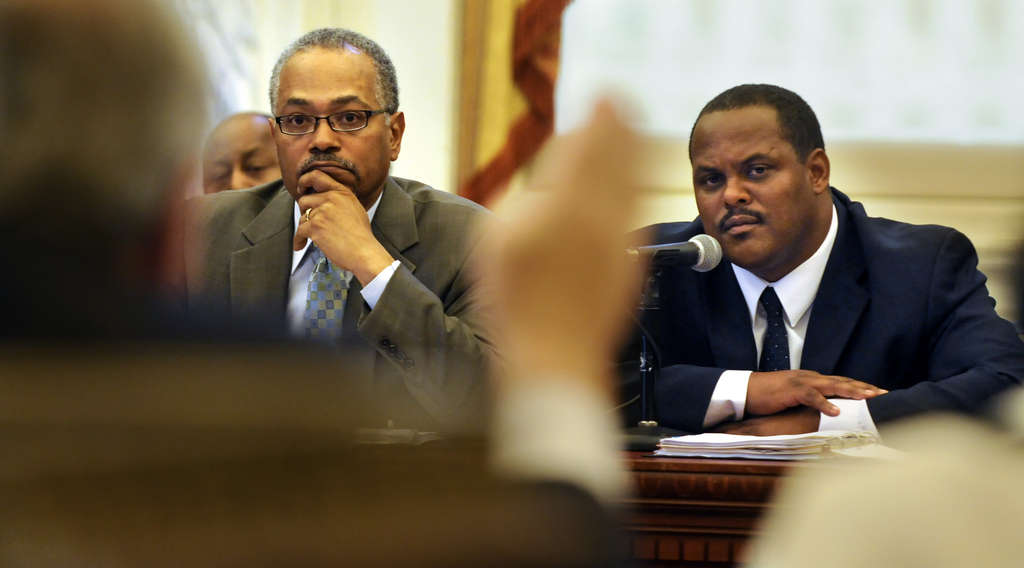
    In this 2013 photo, then-Deputy Mayor Everett Gillison (left) and then-Commissioner of Licenses and Inspections Carlton Williams listen to members of City Council during a hearing.TOM GRALISH / Staff Photographer

    Butkovitz now says that he blames former Mayor Michael Nutter instead, and that Williams was “caught between the mayor and me.” He said Williams had promised to provide the controller’s office with documents to assist in an audit, and then did not.

    “I took it out on Carlton Williams at the time,” Butkovitz said. “His inclination was to cooperate with me, but at the time, it looked to me like duplicity. And I don’t think it was. I think he was overridden by higher authority.”

    Nutter did not respond to a request for comment.

    Estelle Richman, a former Philadelphia managing director who has held a variety of roles in local, state and federal government, said L&I is “one of the most difficult city departments.” She noted that past agency leaders have been pushed out, fired, indicted, and jailed.

    “We can go back and say ‘maybe [Williams] should have done this or that,’ but the reality is it was a very broken department,” she said. “I think he did more to try to get it restabilized and back on track than any other commissioner at that time could have done.”

    ‘You have to be accessible’

    Before taking the helm at L&I, Williams was a career bureaucrat.

    Born in North Philly and raised in West Oak Lane, Williams started with the city at age 19, working in Fairmount Park as one of the first-ever members of the Philadelphia Ranger Corps. The program paid for part of his tuition to attend Temple University and marked his foray into public service.

    Jeffrey Montague, who led the Philadelphia Ranger Corp. and has been a mentor to Williams for decades, said that at a young age, Williams showed potential.

    “He didn’t try to fit in. He always stood out on his own independence,” Montague said. “He wasn’t trying to fit into a crowd.”

    After working as a ranger, Williams spent three years running a Harrisburg youth program for AmeriCorps — the first and last time Williams lived outside the city.

    He returned to Philadelphia to work for the Parks and Recreation Department, rising to become a deputy commissioner in both the recreation and streets departments.

    Then came the four-year stint leading L&I, and when Kenney took office in 2016, he moved Williams back to his old job as a deputy in the streets and sanitation department.

    But it didn’t last. Five months after Kenney took office, the streets commissioner was arrested for assault. Williams ascended to the role, and suddenly, the person who Kenney said he wouldn’t retain to lead L&I was in charge of one of Philadelphia’s most visible departments, overseeing transportation and sanitation operations citywide.

    Carlton Williams, then the director of the Office of Clean and Green Initiatives, speaks during a news conference at Bigler and South 15th Streets on July 7, 2025.Monica Herndon / Staff Photographer

    It was there where Williams solidified himself as a City Hall fixture. He said that as an administration staffer, he has “one primary that I listen to” — the mayor — but he has always tried to be attentive to Council.

    That may be a key difference between Williams and Thiel, his predecessor. Thiel was the former fire commissioner and a nationally recognized expert in emergency management who was seen as a skilled behind-the-scenes operator.

    But Council members said that Thiel did not foster close relationships with members of the city’s legislative body who are often conduits between residents and the mayor’s administration.

    In addition, Thiel was often absent during major events in the city and he was frequently on leave — he joined the Army Reserve eight months into his tenure, and held several jobs outside city government, including as a consultant and professor.

    That was a departure from prior administrations, when the managing director was often the public face of city operations.

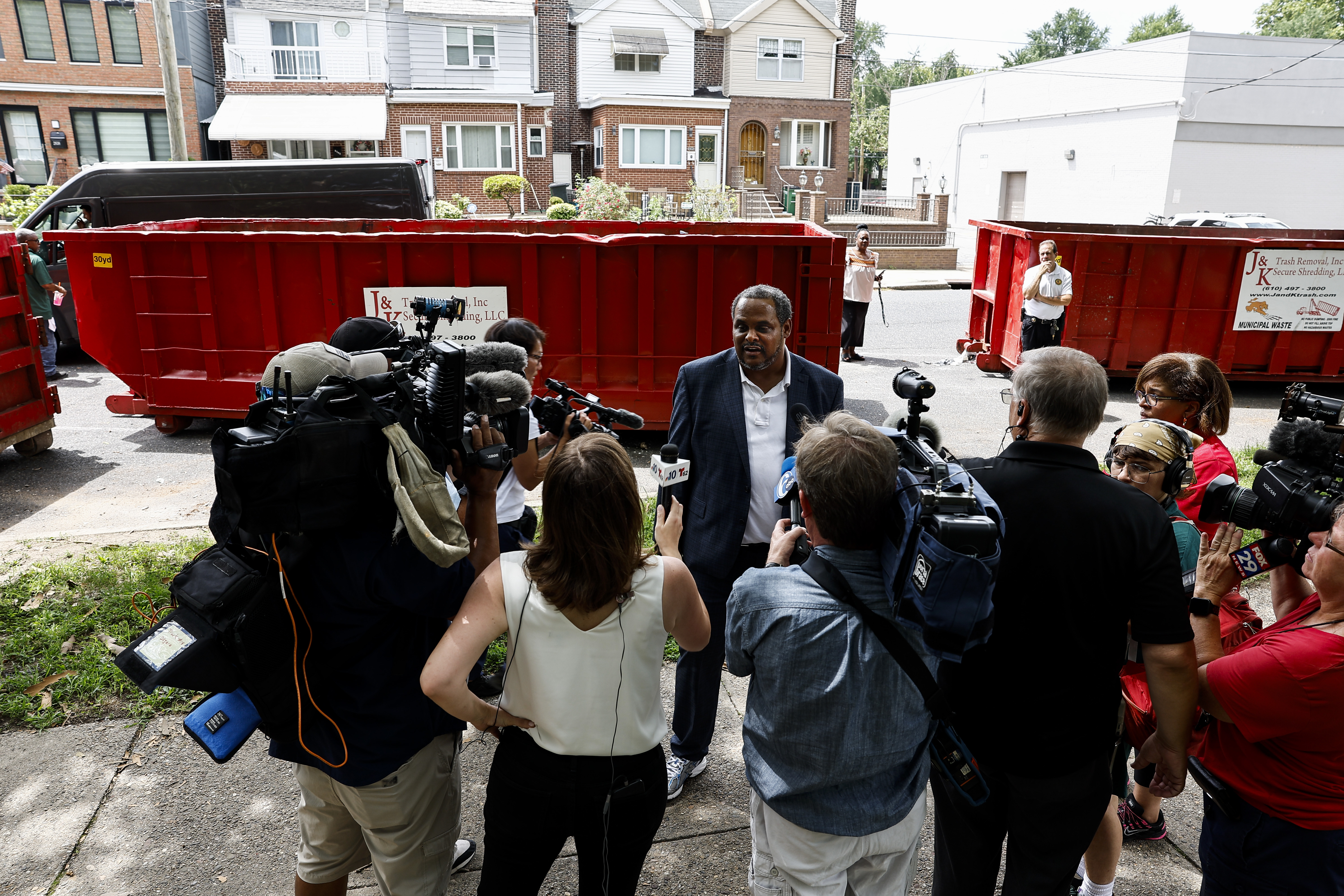
    On several occasions during the Parker administration, it was Williams who was in the spotlight. As director of the Office of Clean and Green Initiatives, he played a key coordinating role during the eight-day municipal worker strike that halted city services — most visibly, trash pickup.

    And he oversaw the city’s response to a severe winter storm earlier this year that left much of the city encased in ice, despite weather emergencies typically falling under the managing director’s purview.

    New Philadelphia Managing Director Carlton Williams (left) stands near the former director, Adam Thiel, before an introduction by Philadelphia Mayor Cherelle L. Parker during a July 28 news conference at City Hall.Jose F. Moreno / Staff Photographer

    City Councilmember Anthony Phillips, whose district includes Northwest Philadelphia, said that prior to Thiel’s resignation, members of Council were “gravely concerned” about his frequent leave. Some members said that, in Thiel’s absence, Williams was their primary contact among Parker’s top staff.

    “You can’t get certain things done and you can’t expect an efficient and effective city when you’re not present,” Phillips said. “Carlton is going to be the complete opposite of that.”

    Williams said that his role as managing director is his only job aside from volunteering.

    “It’s a full-time, 24-hour, seven-day-a-week job,” he said. “You have to be accessible.”

    Williams’ coziness with elected officials has also drawn criticism.

    A former city employee who previously worked for Williams said his relationships with Council amount to a “favor machine.” The staffer spoke on the condition of anonymity in order to preserve relationships.

    “There is this cycle of Council getting calls from constituents, like ‘there’s a pothole,’ and then they get it fixed, and that’s the main work,” the former staffer said. “It’s not actually setting up systems that are solving the problems. It’s reacting to them.”

    But Williams said some of his proudest achievements have resulted in systemic change: he led the installation of some of the first spraygrounds in the city, overhauled the recycling program, had BigBelly trash cans placed throughout Philadelphia, and started the annual Philly Spring Cleanup.

    “He is probably one of the most well-prepared managing directors that the city has had,” Richman said. “He knows not only how operations work within the city departments, he knows the political structure of the city. And I believe a managing director has to know both.”

    Testifying in the Johnny Doc trial

    Williams’ close relationship with a Council member also came under a microscope in a federal courtroom in 2021.

    John Dougherty, the former leader of the politically powerful Local 98 of the International Brotherhood of Electrical Workers, and his ally, ex-Councilmember Bobby Henon, were on trial for bribery and other corruption charges. Prosecutors accused Henon of taking official actions as a Council member at Dougherty’s behest in exchange for a salaried, no-show job with the union.

    One of the schemes prosecutors presented during the trial focused on efforts by union officials in 2015 to halt the installation of an MRI machine at the Children’s Hospital of Philadelphia, a project that was being completed with nonunion labor. Williams, at the time, was at the helm of L&I.

    Department of Streets Commissioner Carlton Williams exits federal court on Oct. 12, 2021, after testifying in the John Dougherty and Bobby Henon bribery trial.Thomas Hengge / Staff Photographer

    During the 2021 trial, Williams was called to testify. He told the jury that Henon called him in August 2015 to report that an unlicensed contractor was working at CHOP, and that he dispatched an inspector to investigate.

    The inspector, Williams testified, issued a stop-work order on the construction of the MRI machine. But he insisted that he did not direct the inspector to do so, and told the jury that responding to complaints from Council members was a routine part of his job.

    Ultimately, L&I reversed the stop-work order, and the MRI machine was built.

    Prosecutors said Dougherty paid Henon to be his “man on the inside” in City Hall and used the episode at CHOP to establish evidence of a corrupt agreement between the two.

    “You heard what happened,” Assistant U.S. Attorney Frank Costello told the jury during closing arguments. “Henon contacted Carlton Williams, Carlton Williams sent inspectors out and they issued orders — they issued orders to shut the job down.”

    But defense attorneys said one public official asking another to take action doesn’t constitute a crime.

    “Carlton Williams was the recipient of information just passed on to him about the MRI and the unlicensed contractor,” said defense attorney Brian McMonagle. “That ain’t a crime.”

    Dougherty and Henon were both convicted. Henon was released from prison last year, and Dougherty remains incarcerated.

    Carrying out Parker’s vision

    During the 2023 mayoral campaign, when a half-dozen Democrats could have plausibly won the party’s nomination, Williams nearly left the city.

    He said he got a job as the public works director in San Francisco, but before he accepted, Parker won the primary election. Williams decided to stay.

    “I wanted to work for Cherelle Parker,” he said. “I believed in her vision.”

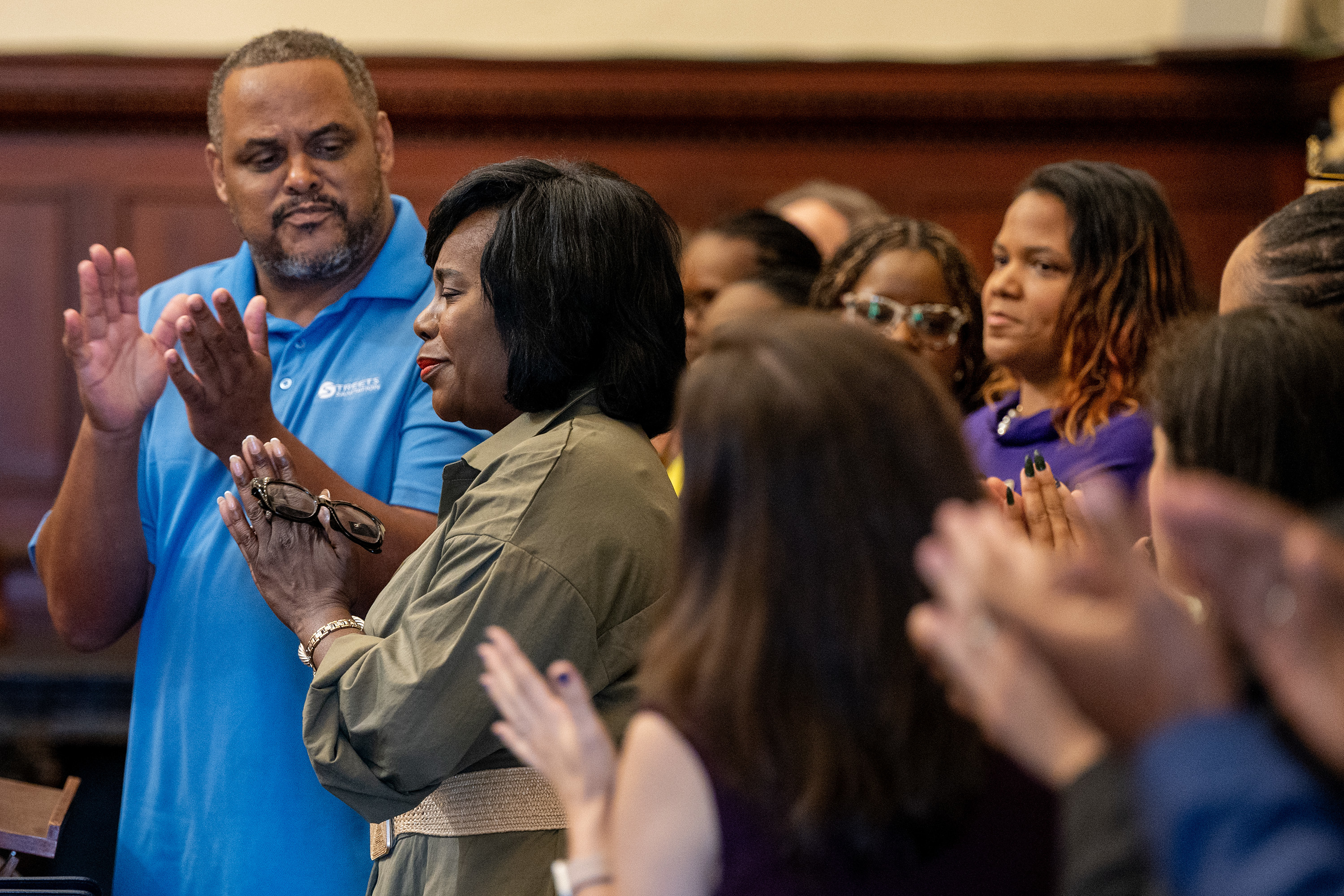
    Mayor Cherelle L. Parker is applauded by members of her administration at City Hall on July 9, 2025, hours after reaching a tentative contract agreement with District Council 33 leaders overnight, ending the workers’ strike. At left is Carlton Williams, director of the Office of Clean and Green Initiatives. Chief Deputy Mayor Sinceré Harris is behind the mayor at right.Tom Gralish / Staff Photographer

    Parker took office in 2024 and created a new role: director of the Office of Clean and Green Initiatives. Williams would carry out her campaign promise to rid the city of its “Filthadelphia” moniker by implementing twice-weekly trash collection, an expansion of illegal dumping enforcement, and a biannual citywide program to clean every block.

    As managing director, Williams’ portfolio will grow substantially. He will be responsible for the city’s response to public health and homelessness, as well as overseeing large agencies like the fire department and the prisons.

    He will also coordinate the city’s strategies in Kensington, the beleaguered neighborhood and the site of an open-air drug market that the Parker administration has spent more than two years working to shut down. Williams said there is inherent pressure that comes with being responsible for addressing such long-entrenched issues.

    “But I work best under pressure, and so I take that as a badge of honor,” he said.

    Williams said he intends to prioritize communication with residents because they “understand that everything can’t get fixed at one time.”

    “But at least we can say what needs to be done, when it’s going to [be] fixed, what’s the timeline,” he said. “I manage through the eyes of everyday citizens. I want what they want.”

  • William Dunbar, a key adviser for Mayor Cherelle Parker’s 2023 campaign, pleaded guilty to federal tax evasion charges

    William Dunbar, a key adviser for Mayor Cherelle Parker’s 2023 campaign, pleaded guilty to federal tax evasion charges

    William F. Dunbar Sr., a Philadelphia lobbyist who was an important unpaid adviser to Mayor Cherelle L. Parker’s 2023 campaign, on Monday pleaded guilty to federal criminal charges related to a tax fraud scheme that lasted six years.

    Dunbar’s lawyer, Brian McMonagle, said Dunbar “accepts full responsibility for his conduct.” The charges were filed in July but were under seal until Monday morning. Dunbar entered his plea on Monday afternoon before District Court Judge Kelley B. Hodge.

    Dunbar, 42, was charged with four counts including tax evasion and filing a false tax return. He was charged by information, a process used when a defendant intends to plead guilty.

    “Today’s plea reflects his commitment to resolving this matter with honesty, accountability, and respect for the judicial process,” McMonagle said. “He has taken decisive steps to satisfy his outstanding tax obligations and has implemented appropriate financial controls and professional oversight to help ensure this does not recur.”

    McMonagle added that Dunbar “has dedicated his professional and personal life to serving his community through public service, civic leadership, and charitable engagement.”

    A spokesperson for the U.S. Attorney’s Office declined to comment on the case Monday.

    The charges carry a maximum sentence of 16 years in prison, plus supervised release and fines. A sentencing hearing was scheduled for Jan. 11, and Dunbar was released on bail pending sentencing.

    Dunbar pleaded guilty to filing fraudulent income tax returns for himself and his wife from 2020 through 2025. Prosecutors say Dunbar inflated his charitable giving and business expenses while dramatically undervaluing his taxable income, a scheme that likely would have lowered the couple’s tax bill.

    For example, they said, in the 2024 tax year, Dunbar claimed $1.45 million in total business expenses while indicating he had no taxable income. Dunbar also reported that he owed $46,000 in total taxes for that year, a sum that can include other taxes outside the income tax, but prosecutors said the amount he actually owed was “materially greater” than what he reported on his tax form.

    Prosecutors did not specify how much money Dunbar owed the government in taxes, but said in court papers that it was between $350,000 and $750,000.

    Assistant U.S. Attorney Louis D. Lappen told Hodge that, due to the fraudulent returns, Dunbar for tax year 2023 received a refund of about $30,000 while his spouse received a refund of about $36,000. Lappen said the couple claimed similar refund sums each year from 2020 through 2025, and that they should have paid additional taxes when they filed their returns instead of receiving refunds.

    “Had the taxes been filed accurately and appropriately and without fraud, [Dunbar and his spouse] would have owed,” Lappen said.

    Although prosecutors accused Dunbar of inflating expenses associated with his political consulting firm, Dunbar Public Affairs & Associates, there are no accusations in his charging documents that connect his conduct with Parker or others affiliated with her campaign.

    Dunbar was a key member of Parker’s “kitchen cabinet” of informal advisers during her 2023 run, in which she bested a crowded field to win the Democratic primary and become the city’s first female mayor. Dunbar also has had ties to other high-profile Democratic politicians, including Gov. Josh Shapiro, U.S. Sen. Cory Booker of New Jersey, and members of Philadelphia City Council.

    The Inquirer reported earlier this month that federal investigators last summer issued subpoenas for documents and financial records related to Dunbar, according to three sources with direct knowledge of the probe.

    One of the sources said the investigation appeared to be a “fairly broad” review of Dunbar.

    Parker’s campaign has dramatically increased its spending on legal services since early 2025, around the time the sources said subpoenas were issued, according to campaign finance reports.

    The campaign paid its law firm, Dilworth Paxson, about $108,000 since the start of 2025, The Inquirer reported. By comparison, it paid the firm less than $15,000 during the 2023 election year and about $19,000 in 2024.

    Parker last week declined to comment on the subpoenas related to Dunbar or on her campaign’s increased legal spending.

    Spokespeople for the mayor’s office and for Parker’s campaign declined to comment on the charges against Dunbar on Monday.

    Dunbar was never paid for his role in the campaign during the 2023 mayoral election.

    In 2024, Parker’s first year in office, Dunbar took over management of the campaign. The campaign paid Dunbar’s firm a series of rent payments totaling $22,850 between March 2024 and November 2024.

    Parker let Dunbar go from her campaign in the summer of 2024 in a move that Dunbar said at the time was the mayor’s decision. The campaign is now managed by Aren Platt, who was one of the architects of Parker’s 2023 run and served as chief deputy mayor in her administration before resigning in October 2024.

    Dunbar appears to still be active in politics despite no longer being on Parker’s team. Two weeks ago, he posted on social media a series of behind-the-scenes photos from a filming session at a West Philadelphia barbershop for a Shapiro campaign advertisement, writing: “Where politics meets the people.”

    Manuel Bonder, a spokesperson for Shapiro’s reelection campaign, said in a statement that Dunbar has “no formal or informal role with the Shapiro for Pennsylvania campaign.”

    Dunbar’s lobbying clients include Comcast, the Chamber of Commerce for Greater Philadelphia, and Jackmont Hospitality, an airport concessions company, according to his lobbying registration with the city.

    Dunbar previously lobbied for the Philadelphia School District, but a district spokesperson said earlier this month that he stopped working for the district in June.

    Staff writers Abraham Gutman and Ryan W. Briggs contributed to this article.

  • Ex-Philly fire department officials accused of overtime fraud are likely at center of federal probe, records show

    Ex-Philly fire department officials accused of overtime fraud are likely at center of federal probe, records show

    Federal prosecutors have convened a grand jury to investigate at least one former Philadelphia Fire Department official who city investigators say facilitated a brazen overtime abuse scheme, according to court records.

    Evidence of the probe became public in recent weeks as part of a lawsuit filed against the city by Anthony Hudgins, a former high-ranking fire official who was demoted after two women at the center of the overtime probe accused him of sexual harassment. He maintains that they did so only in retaliation after he exposed their wrongdoing.

    Court documents made public this month include a report drafted by the Philadelphia Office of the Inspector General (OIG), which conducted a yearslong investigation into Hudgins’ claims that lower-level employees were abusing overtime. Attorneys for a woman at the center of that probe revealed that she is now the target of a U.S. Department of Justice grand jury, while the woman she is accused of conspiring with suspects she, too, is under federal criminal investigation, according to court records.

    Inspector General Alexander DeSantis previously declined to release the findings of the office’s overtime probe into the fire department, saying the investigation was ongoing.

    The report, dated September 2025, details claims of rampant overtime abuse by former paramedic Jacqulyn Murphy that amounted to more than $180,000 in “unjust” compensation through 2023 and 2024, well over her $94,549 annual base salary.

    Murphy made some of that pay during “impossible shifts,” investigators wrote. In May 2024, for instance, Murphy clocked 22 hours of overtime while she was vacationing in Cancún. And four months later, she was paid to work 12-hour shifts every day while traveling to Las Vegas to get married, including on her wedding day and the day of her return trip home.

    Investigators said that she did not act alone. Supervisor Marian Farris, they wrote, rubber-stamped the overtime approvals and manipulated tax withholding statuses for Murphy and herself. The report cited emails from Murphy’s city account showing she made biweekly $500 payments to someone named “Marian F.” for six months in 2024.

    “Murphy and Farris worked together to defraud the City of Philadelphia of thousands of dollars in unearned compensation and other benefits,” the OIG report said. It calls for “heavy administrative and criminal consequences.”

    Farris and Murphy did not respond to requests for comment.

    In a June 4 letter included in the court filing, federal prosecutors based in Philadelphia informed Farris that she is the target of a grand jury investigation concerning bribery and wire fraud. The letter did not elaborate on the nature of the investigation.

    Attorneys for Farris filed the target letter in the Hudgins case as part of a request to the court to delay discovery proceedings, citing conflicts with the federal investigation.

    Murphy has not yet received a target letter, but she expects she will “given the findings of the OIG that Ms. Farris and Ms. Murphy worked together to commit fraud,” her attorneys wrote in a filing on Friday.

    Farris resigned in March 2025. Her attorney did not respond to a request for comment. In an interview earlier this year after Hudgins initially filed his lawsuit and detailed some of the inspector general’s findings, Farris denied receiving cash payments from Murphy in exchange for manipulating time sheets and said any payments were innocent transactions between friends.

    The U.S. Attorney’s Office for the Eastern District of Pennsylvania declined to comment.

    A spokesperson for the fire department did not comment.

    City Solicitor Renee Garcia said in a statement that the city “takes any allegations of fraud, including overtime fraud, very seriously, including allegations of misconduct that predated this administration.” Some of the allegations involving Murphy date back to 2023. Mayor Cherelle L. Parker took office in January 2024.

    Garcia declined to comment on “personnel matters,” saying only that “if misconduct is found, we take appropriate action to implement any warranted discipline.”

    The publication of the inspector general’s long-guarded report is the latest twist in a saga that has long roiled the fire department. It began with what appeared to be dueling probes, as multiple women contended that Hudgins — who was formerly the fire department’s No. 2 in charge — engaged in sexually inappropriate behavior in the workplace that included unwanted touching and intimidation tactics, The Inquirer reported in 2025.

    But Hudgins has maintained those complaints were lodged by Murphy, Farris, and other associates only after he uncovered and reported their overtime inconsistencies.

    His timeline was confirmed in the OIG report. Investigators wrote that Hudgins conducted an overtime review that predated a discrimination complaint filed in November 2024 by the union that represents firefighters and paramedics. That complaint listed Murphy as an alleged victim and Hudgins as a respondent.

    The OIG report does not offer a conclusion related to the sexual harassment complaints.

    Hudgins declined to comment through an attorney on Friday.

    The city hired the law firm Campbell Durrant to conduct an investigation into the sexual harassment allegations, but that report has not been made public. Hudgins claims in his lawsuit against the city that the firm cleared him of “verbal misconduct” and found that he had “hugged co-workers.”

    Hudgins was reassigned to work remotely, and then was forced to take a leave of absence.

    The inspector general recommended that the city implement several reforms to prevent future overtime abuses, including retraining and rehiring the fire department’s payroll and human resources staff. The office also said the fire department should implement new overtime controls.

    Garcia did not respond to specific questions about whether those changes had been instituted in the fire department, saying only that “the administration has implemented significant actions across all city agencies to strengthen its overtime procedures and protocols.”

  • The sheriff’s office doesn’t need a babysitter; it needs to be abolished | Shackamaxon

    The sheriff’s office doesn’t need a babysitter; it needs to be abolished | Shackamaxon

    This week’s edition of Shackamaxon covers data centers, property assessments, and more woes at the Philadelphia Sheriff’s Office.

    Jason Kelce with Liquid Death mascot Murder Man in an ad for the canned water and Garage Beer.Garage Beer

    Sports data center

    Former Eagles offensive lineman Jason Kelce seems to be more omnipresent in retirement than he was during his career. Most recently, he filmed a commercial for Garage Beer and Liquid Death that asked Americans to send him their urine to supply data centers.

    While conjuring a negative image of yellow liquid in a cup is probably an unwise strategy for someone who co-owns a light beer company, Kelce’s commercial had another major problem — data centers don’t actually use as much water as public perception suggests.

    In fact, the biggest threat to U.S. water supplies is something far more mundane: alfalfa farming.

    Across the arid Western states, farmers are using vast amounts of water to irrigate their fields, which are then used to feed cows for the beef industry. A single acre of alfalfa uses 1.6 million to 2.5 million gallons of water. In Utah, feed farming uses over half the state’s water supply. Meanwhile, the data centers themselves increasingly rely on closed-loop systems. The water used as coolant gets purified and reused, reducing their own need.

    The confusion over water use is emblematic of the general debate over the centers, which is rife with hard-to-vet claims. And shifting public opinion has left politicians in both parties flat-footed and scrambling to react.

    Gov. Josh Shapiro, the ever-Ambitious Abingtonian, issued his own response to the situation. Much of what Shapiro said is reasonable. He wants tech companies to pay for their own power and contribute to community benefits agreements, and to respect the Pennsylvania Constitution’s guarantee of clean air and pure water. Some of it is less sensible, specifically his commitment to local control.

    Local control sounds great in theory: Why shouldn’t communities have the final say over how they are developed? In practice, however, it is shortsighted. There are two reasons for this.

    One, the impact of data centers is regional, not local. If opponents are correct about the impact on water and electricity bills, this impact will exist no matter where the centers operate. Given the PJM grid Pennsylvanians rely on spans multiple states, there is no plausible pathway for local communities to insulate themselves from rising energy demand by blocking data center proposals.

    Two, not every community can afford to say no. Take the bankrupt city of Chester, for example. From its efforts to sell the Chester Water Authority to its role as host for the Reworld Trash Incinerator, financial considerations already play a big role in that city’s policymaking. By handing control to local authorities, the governor is ensuring cities like Chester will disproportionately play host to data centers.

    For those who believe they will have a strong negative impact on quality of life, how is that possibly fair?

    Instead, what is needed is federal, regional, or at least statewide coordination.

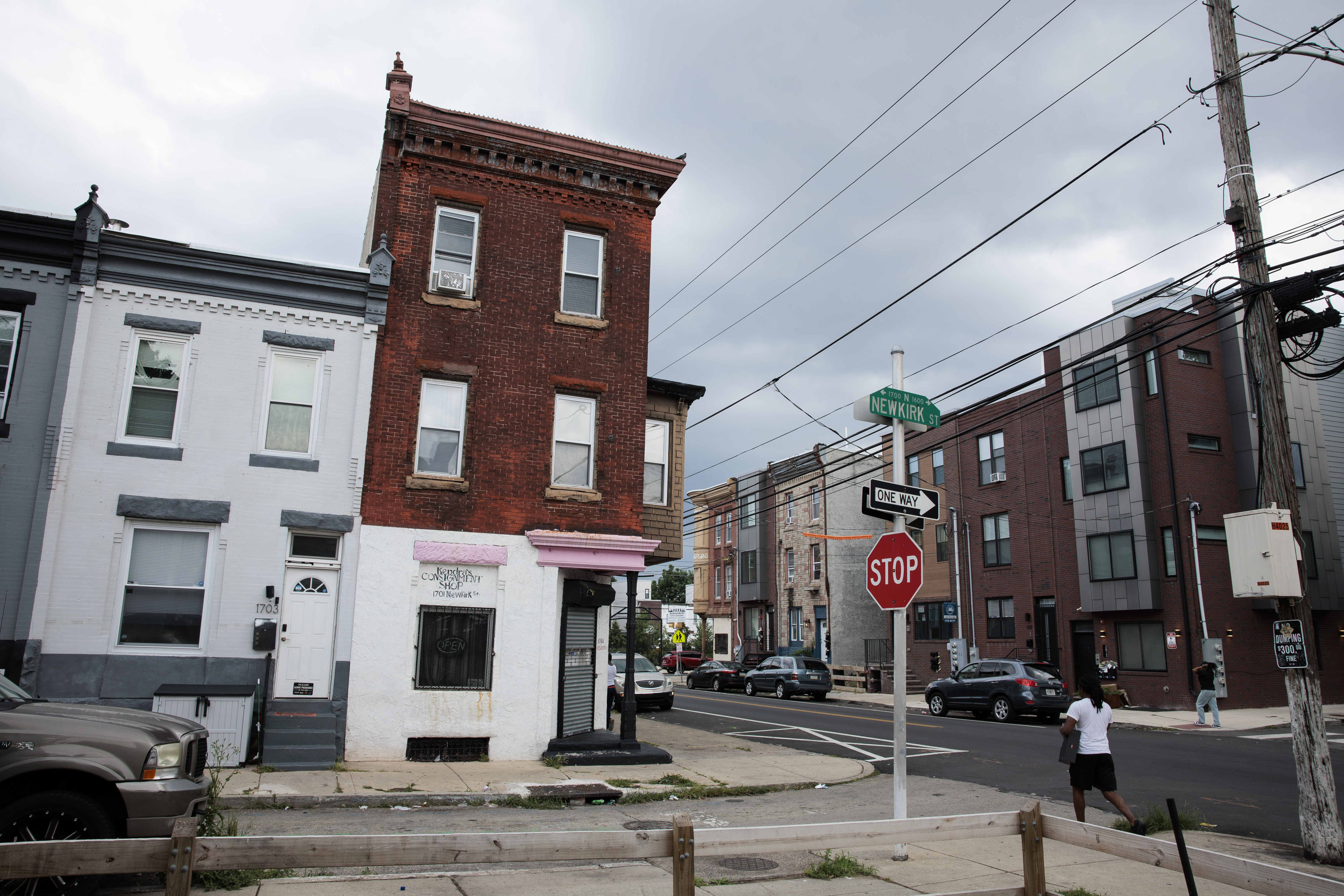
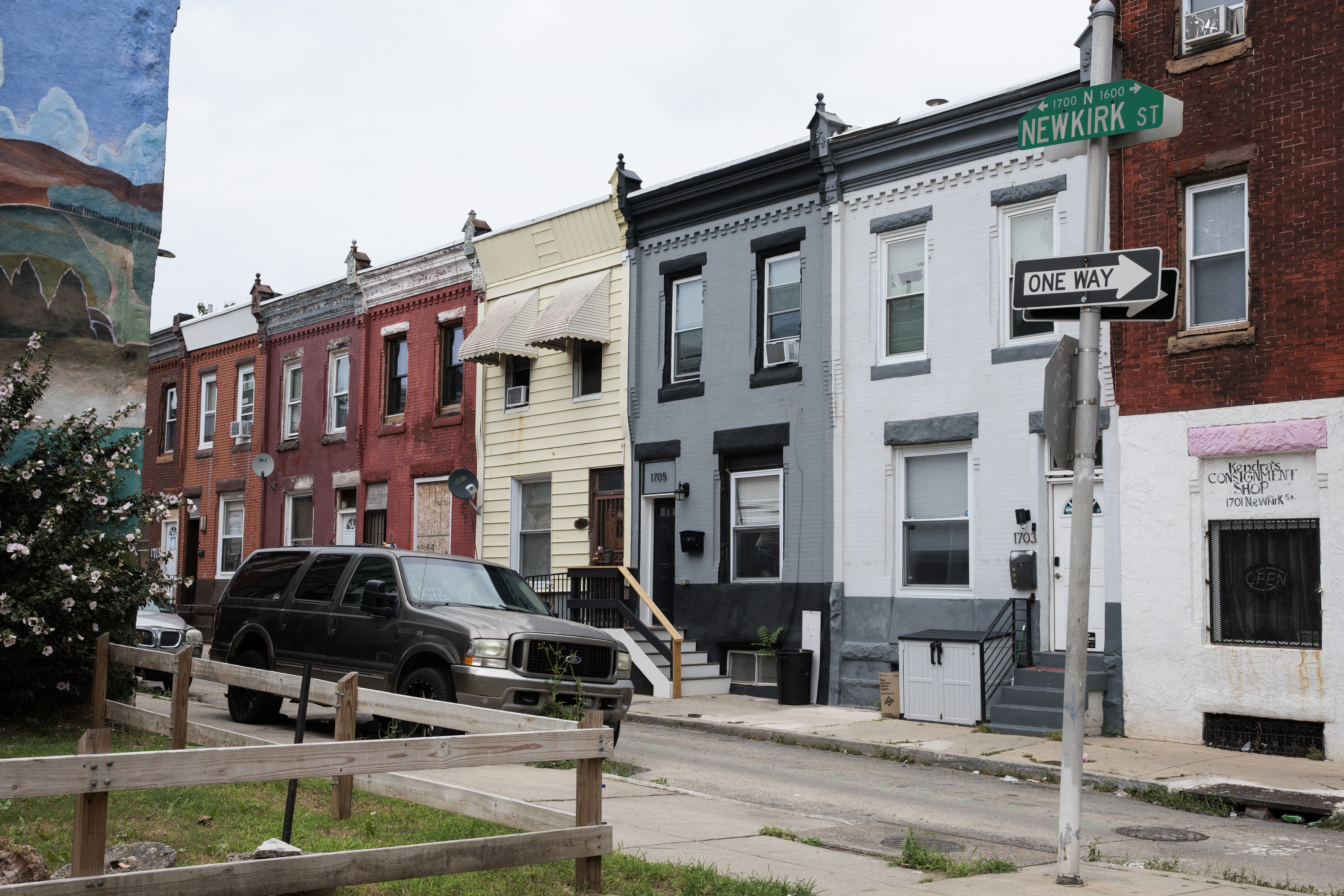
    The 1700 block of North Newkirk Street on Aug. 20. On this block in Strawberry Mansion, some homeowners saw their property assessments double.Monica Herndon / Staff Photographer

    Fair value

    Over in Allegheny County, home to Pittsburgh and many of its suburbs, the courts have ordered local officials to begin a full property reassessment, which must be completed by 2032. Pennsylvania is unique in not requiring regular reassessment.

    Pittsburgh’s values were last set in 2012, but more than a third of the state’s counties haven’t been reassessed since the 20th century. This leads to wildly out-of-whack and unfair tax bills for some residents.

    Of course, Philadelphians can tell you that regular reassessment is not a panacea for discontent. The city’s most recent valuations have set off a firestorm of consternation, especially given how many lower-income areas saw big increases. It doesn’t help matters that the neighborhoods Cherelle L. Parker used to represent on City Council, and powered her election as mayor, saw some of the smallest boosts in valuation.

    As tempting a story as the mayor favoring her core supporters while squeezing the city’s poorest neighborhoods may be, that is not an accurate assessment.

    Given the massive decrease in shootings and consistent efforts to clean and green the city, it is not surprising to see increased demand for neighborhoods like Kensington, Grays Ferry, and Fairhill. While there is still a long way to go on public safety, higher valuations are a sign of progress.

    It also should remind Council members that their theory that development drives property appreciation is faulty. Many of the neighborhoods with higher appreciation have seen little to no new development. In Northern Liberties/Fishtown, one of the city’s hot spots for new construction, values increased by just 1.7%.

    Additionally, the city has a powerful tool for protecting low-income homeowners: the homestead exemption. While the city’s stated property tax rate is 0.013998, owner-occupants pay a much lower rate. For a home valued at the city’s median of $260,000, the total tax bill is $2,239.68, or 0.008614. In Fairhill, where the median home value is $80,000, the homestead exemption eliminates the total tax liability for many residents. Boosting the exemption from $100,000 to $110,000 or $120,000 would ensure more low-income homeowners are protected from rising tax bills.

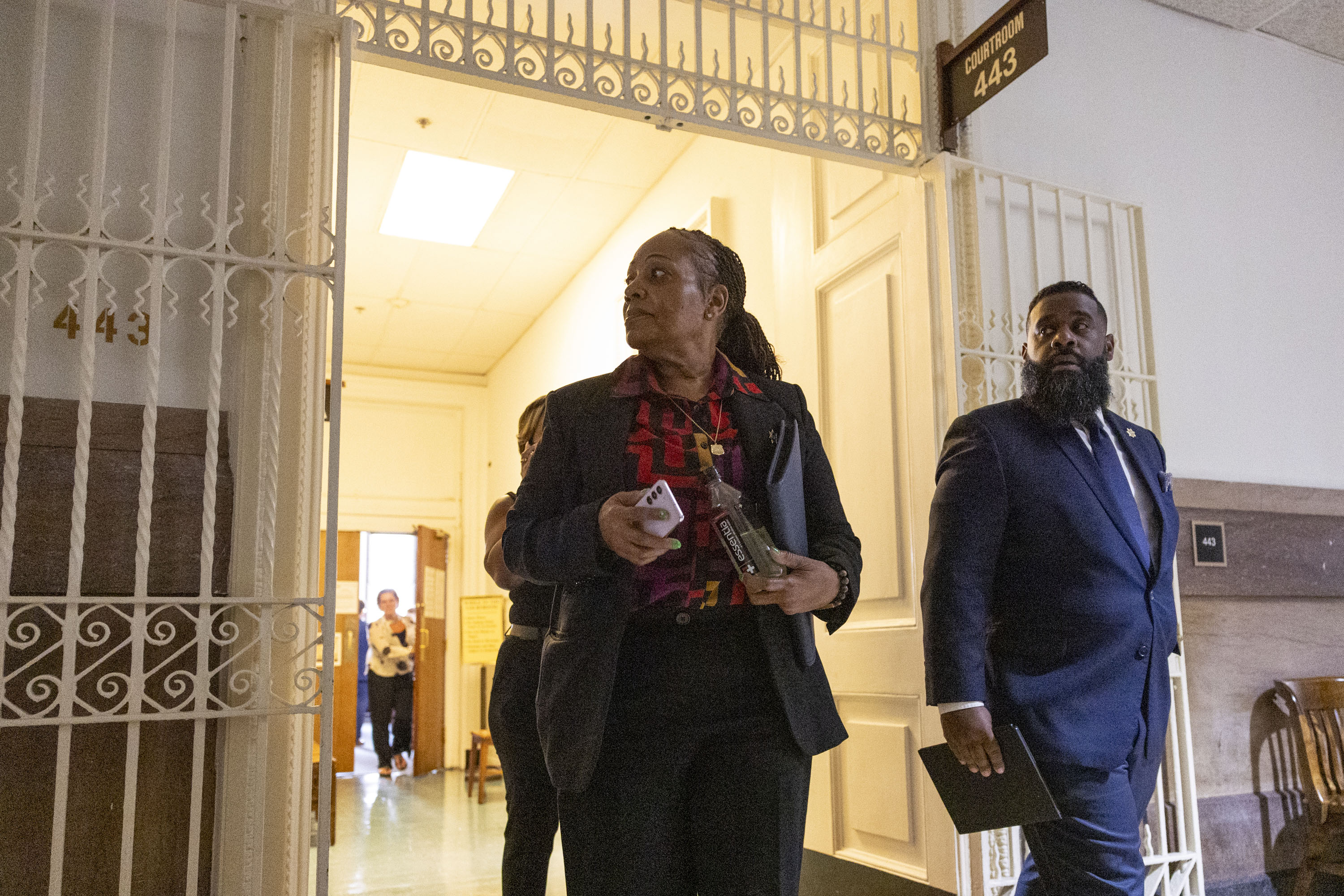
    Sheriff Rochelle Bilal is seen exiting a courtroom at City Hall on Wednesday.Tyger Williams / Staff Photographer

    Bilal’s babysitter

    Mayor Parker wouldn’t do it. City Council wouldn’t, either. Accountability for the Philadelphia Sheriff’s Office instead came from Common Pleas Court Judge Paula A. Patrick.

    After listening to a list of excuses and promises, it was clear Patrick had her fill of incompetence. The beleaguered department, which had been ordered to produce a specific set of documents months ago, suddenly released thousands of pages the night before the hearing.

    Instead of putting officials before the court with direct knowledge of why a backlog in processing property deeds began, Sheriff Rochelle Bilal instead sent Steven Wakefield, a deputy undersheriff who was hired just two months ago. Wakefield was tasked with testifying about past events he was not privy to, despite repeated warnings from the judge.

    As for Bilal herself, she claims to have “limited personal knowledge of the underlying facts.”

    Issuing deeds is one of the core functions of her job, but apparently the sheriff had no idea what was going on. Instead, Wakefield tried to scapegoat a former employee named Melissa Simpson, who had apparently been handling the entire process on her own without oversight from anyone.

    This testimony led to an agreement in which Bilal will have to identify someone to oversee deed sales for six months. A babysitter, essentially.

    While it is good to see someone holding the sheriff accountable for once, a temporary babysitter is only a partial solution. The office should be abolished.

    Sadly, that seems unlikely. Bilal may struggle to perform her day job, but she has thrived at building up political allies. She has been invited to news conferences by District Attorney Larry Krasner, remains a political player after her years running the Guardian Civic League, and faces next to no criticism from City Council. She was even honored by the Phillies as a “hometown hero.”

    Troublingly, Bilal does not even seem to have an opponent in next year’s elections, despite the continued public mismanagement of her office. That, at least, should change.

    Perhaps the Ambitious Abingtonian can find a Perspicacious Philadelphian willing to take on the challenge of replacing Bilal.

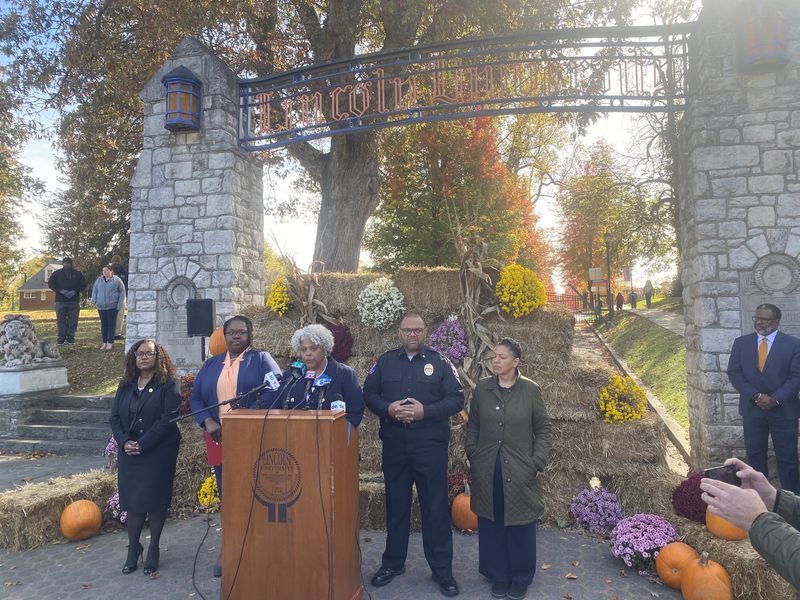
  • Lincoln University just sued Lower Oxford Township in federal court over event rules it says are unconstitutional and racially discriminatory

    Lincoln University just sued Lower Oxford Township in federal court over event rules it says are unconstitutional and racially discriminatory

    An event ordinance passed earlier this month by Lower Oxford Township unfairly targets Lincoln University and is unconstitutional and racially discriminatory, the historically Black school said in a federal lawsuit filed Tuesday.

    “The ordinance’s disparate negative impact on the Lincoln University community is the result of deliberate racial gerrymandering — or other illicit gerrymandering — by the Defendants,” the school’s lawyers argued in the complaint, filed in the U.S. District Court for the Eastern District.

    The suit notes that the township’s three supervisors are white and that the population of the township nestled in farm fields with about 5,000 residents is “overwhelmingly white” except for Lincoln’s community.

    The ordinance seeks to regulate events with more than 500 people, requires a permitting process, allows the township to revoke permits without a hearing for a violation, and threatens to prohibit an entity from applying for another permit for two years if a violation occurs. In the permit request, applicants will be asked to address security, parking and traffic impact, number of attendees, planned activities, and other elements. Violations will result in fines of up to $1,000, the ordinance states.

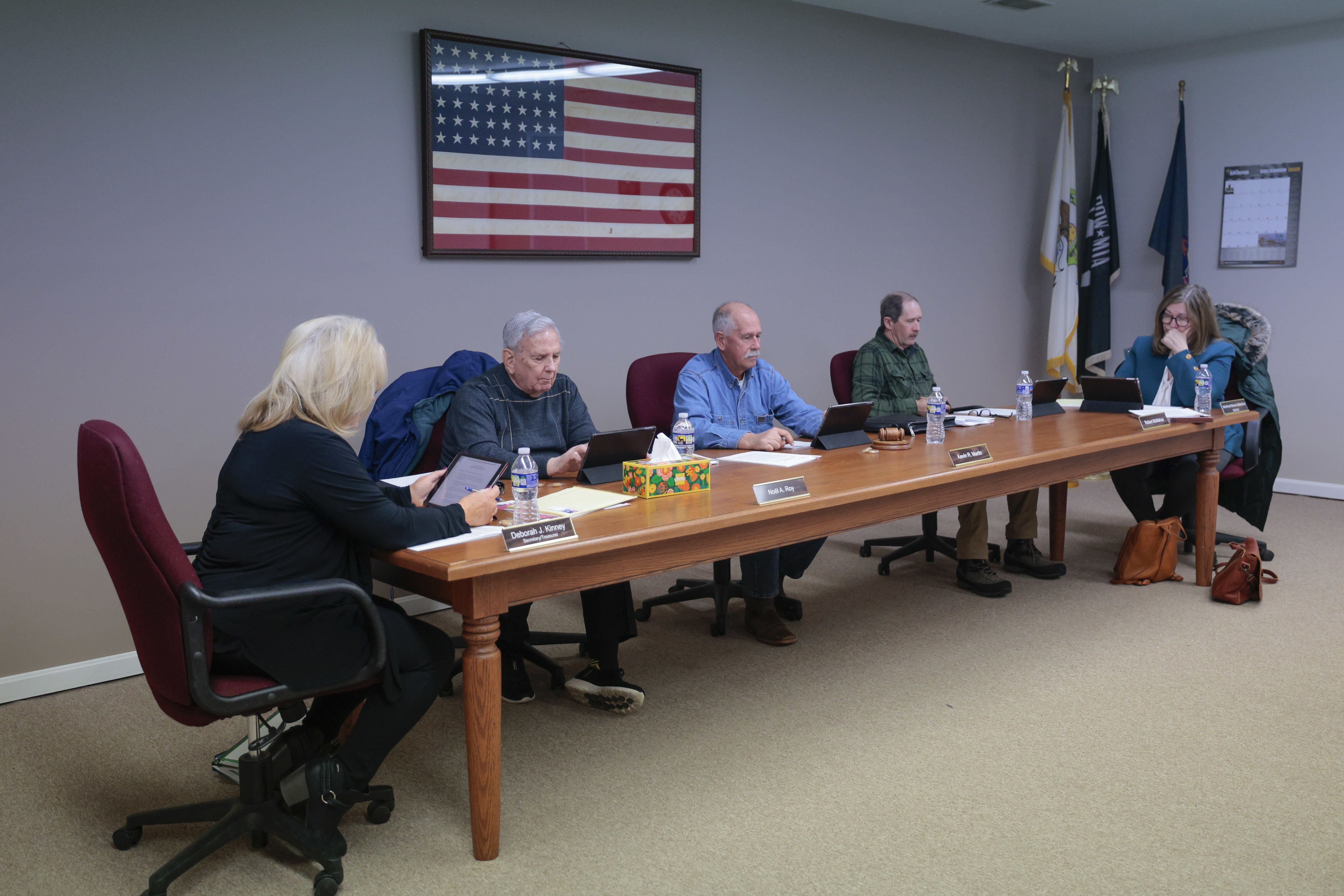
    Lower Oxford Township supervisors meet and discuss a potential event ordinance to address problems with large events held on Lincoln University’s campus, Monday, Dec. 8, 2025.Steven M. Falk / For The Inquirer

    The rural Chester County township began looking at enacting the ordinance following the shooting last October of seven people, one of whom died, on Lincoln’s campus during homecoming festivities. Township officials also had cited ongoing concerns about traffic, trash on neighbors’ lawns, and other disturbances, including crimes, during large events on the 422-acre campus, where 1,650 students are enrolled. The township previously had passed a parking ordinance in response to access issues created during large events at Lincoln.

    Deborah Kinney, township secretary/treasurer and codes enforcement officer, said Tuesday she had not been aware of the lawsuit until The Inquirer called. She declined immediate comment.

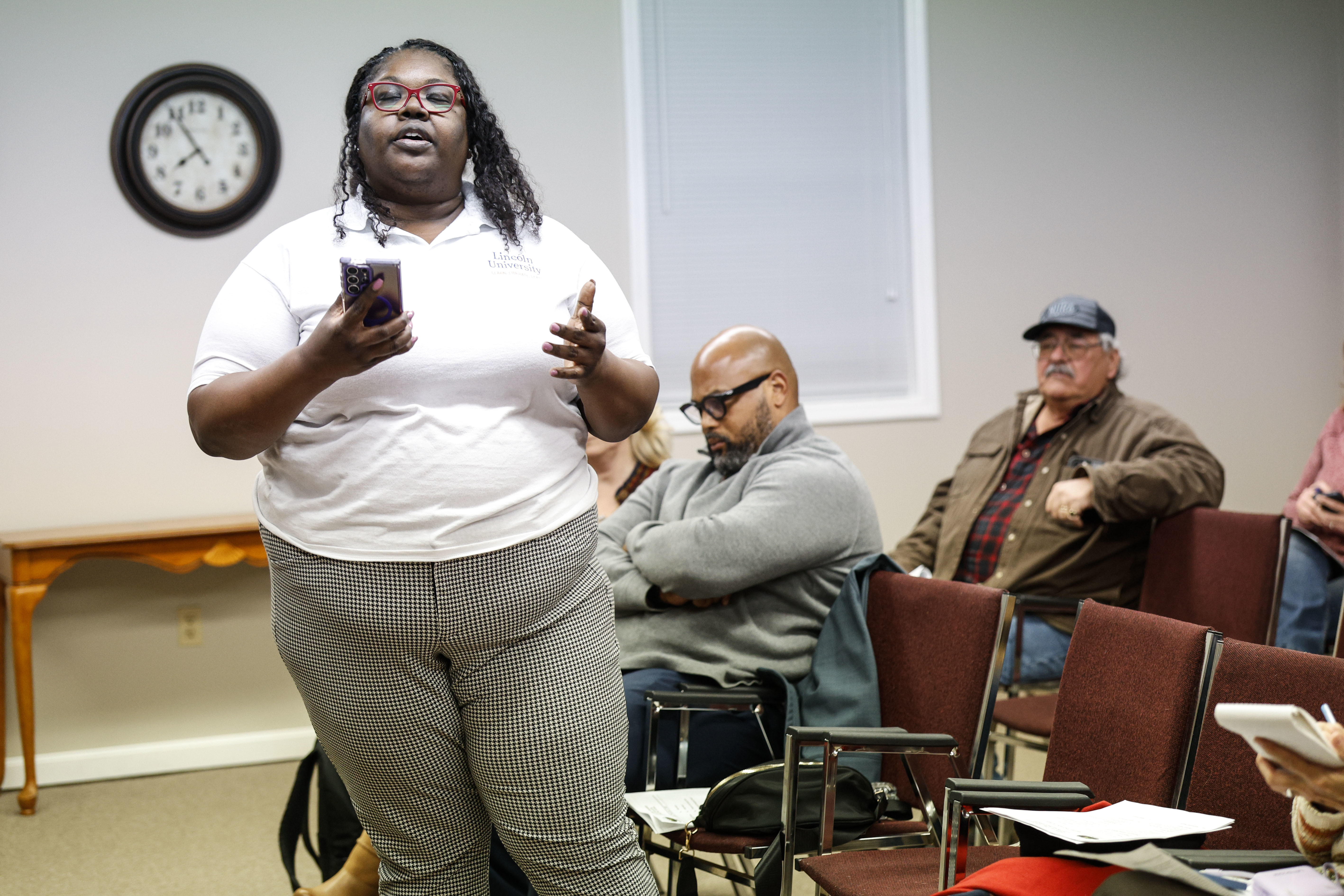
    Lincoln president Brenda A. Allen said the university is seeking to stop the township from depriving members of its community of their First Amendment rights to free speech, freedom of assembly, and freedom of religion. The ordinance, she said, is attempting to restrict the university from events that are essential to its academic mission.

    “Lower Oxford Township’s ordinance is a targeted, unconstitutional overreach that threatens the hallowed traditions ingrained in the university’s foundation,” Allen said in a statement Tuesday. “Lincoln University will remain on the front lines of protecting, defending, and advancing our community as we take this matter seriously.”

    In its ordinance, the township states that “activities associated with special events can constitute a hazard to the public’s health, safety and welfare and that these activities can also create a public nuisance when unregulated.”

    Venus Boston, Lincoln general counsel, speaks to the Lower Oxford Township supervisors in December 2025 as they discuss a potential event ordinance to address issues with large events held on Lincoln University’s campus, Monday, Dec. 8, 2025.Steven M. Falk / For The Inquirer

    The township’s supervisors, the ordinance states, have “determined that the impact of special events that involve large numbers of attendees on roads and other infrastructure within the Township represents both a traffic hazard and an impediment to the delivery of emergency services to residents of the Township and therefore constitutes a nuisance.”

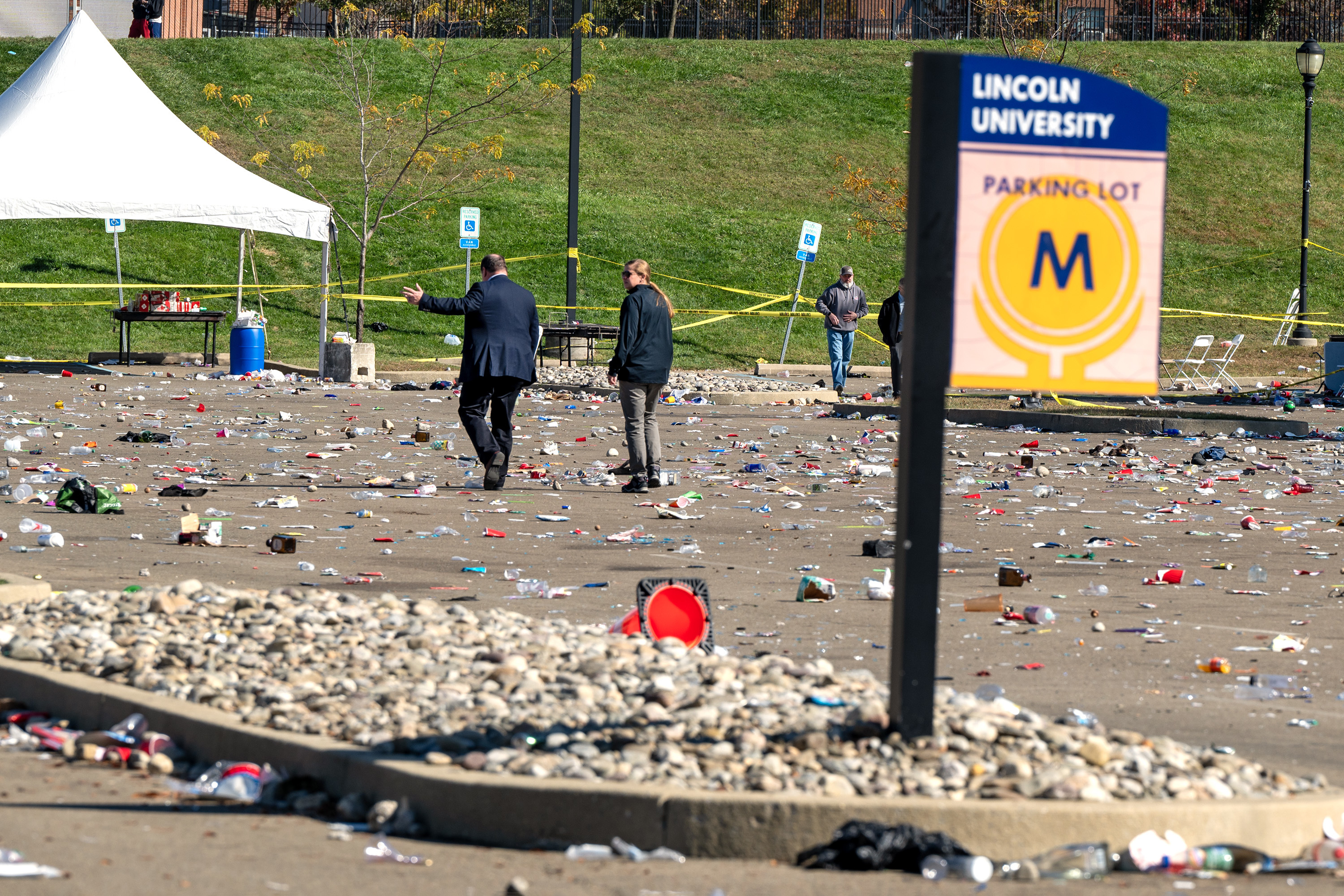
    The shootings that spurred the township to begin considering an ordinance occurred Oct. 25, when thousands gathered on campus for Lincoln’s homecoming. Emergency personnel had to use all-terrain vehicles to transport patients on stretchers because ambulances could not access the campus, given how many cars were parked around the venue, township officials said at the time.

    Investigators are on the scene outside Lincoln University’s International Cultural Center Sunday, Oct. 26, 2025, where one person was killed and several others were shot the night before during homecoming weekend celebrations.Tom Gralish / Staff Photographer

    While the ordinance applies to other township events, the school’s lawyers argue that it targets Lincoln and specifically names examples of special events subject to regulation as “College homecoming or other similar events, college, university or school commencement, graduation or baccalaureate.”

    “It was enacted by the township with the deliberate purpose and with the calculated effect of targeting Lincoln,” the school’s lawyers argued. “Specifically, the ordinance was enacted to interfere with Lincoln’s academic mission and with the speech and other academic activities of the Individual Plaintiffs and their academic colleagues.”

    The ordinance targets events with over 500 people “with the knowledge that the Lincoln University community is at all times several times in excess of that threshold” and “with the knowledge that very few — if any — of the events outside of Lincoln would exceed that threshold,” the lawyers said.

    The ordinance, the school’s lawyers argued, violates Lincoln’s constitutional rights by imposing restrictions on its speech and “its ability to serve as a marketplace of ideas.” The ordinance also violates the First Amendment right to assembly because it treats events of more than 500 people as a nuisance, the lawyers said. And the lawyers said it infringes on religious freedom by naming baccalaureates, which they said “in general — and baccalaureates at Lincoln in particular — are religious services.”

    They objected, too, that the township has sole discretion over whether an event is subject to the ordinance and over whether it should be permitted, and that no objective standards exist. And they disputed the township’s intention to require event holders to have liability insurance subject to approval by the township solicitor.

    “The ordinance also makes the sponsor of a special event liable for actions of people over whom it has no control,” the school’s lawyers argued.

    The ordinance states that the sponsor “shall be responsible to the township for damages sustained to township property caused by participants in the special event.”

    Founded in 1854, Lincoln is known as the first degree-granting historically Black university in the nation. The first presidents of both Nigeria and Ghana are Lincoln graduates, as are Philadelphia Mayor Cherelle L. Parker, former U.S. Supreme Court Justice Thurgood Marshall, and poet Langston Hughes.

    The school has received $45 million in gifts from philanthropist MacKenzie Scott, the ex-wife of Jeff Bezos. Allen, Lincoln’s president, who in 2020 had survived an internal battle to oust her and had her contract extended to 2030, was named a top leader of a historically Black college by a national nonprofit in 2021.

    Township officials had been expressing concerns about events at Lincoln for a while before the homecoming shootings brought renewed attention.

    In spring 2023, two women were shot and injured on Lincoln’s campus during its annual Spring Fling event. In 2022, a student was fatally stabbed by the sister of a student during a fight inside a dorm. During an on-campus dance in 2018, 15 students were taken to the hospital following a brawl in which a security officer was assaulted. In 2016, there was a robbery and shooting on Lincoln’s campus following homecoming. And in 2015, Lincoln tightened security after shots were fired in a dorm.

    At the homecoming last October, Ju’Juan Jeffers, 20, of Wilmington, was killed, and six others, ages 20 to 25, including a student, were also shot. Jeffers’ mother subsequently filed a lawsuit against the school, and three Wilmington men — William Sells, 20; Makaveli Valera, 19; and Karon Rollins, 17 — were charged with second-degree murder, conspiracy, and related crimes in connection with the shootings.

    “We have had meetings with people at Lincoln,” Township Supervisor Noel Roy said last December. “They’ve been somewhat reluctant to do what needs to be done to try and control the situation.”

    Allen at that time acknowledged that changes were needed around large events as well as better collaboration with the township.

    “We want to come together because we are a part of this community as well,” Venus Boston, Lincoln’s general counsel, said during a supervisors meeting last December.

    Before its Spring Fling in April, the university announced new safety plans for large events, including no outdoor events after dusk, screening guests, and allowing only one registered guest per student.

  • Philly students head back to school

    Philly students head back to school

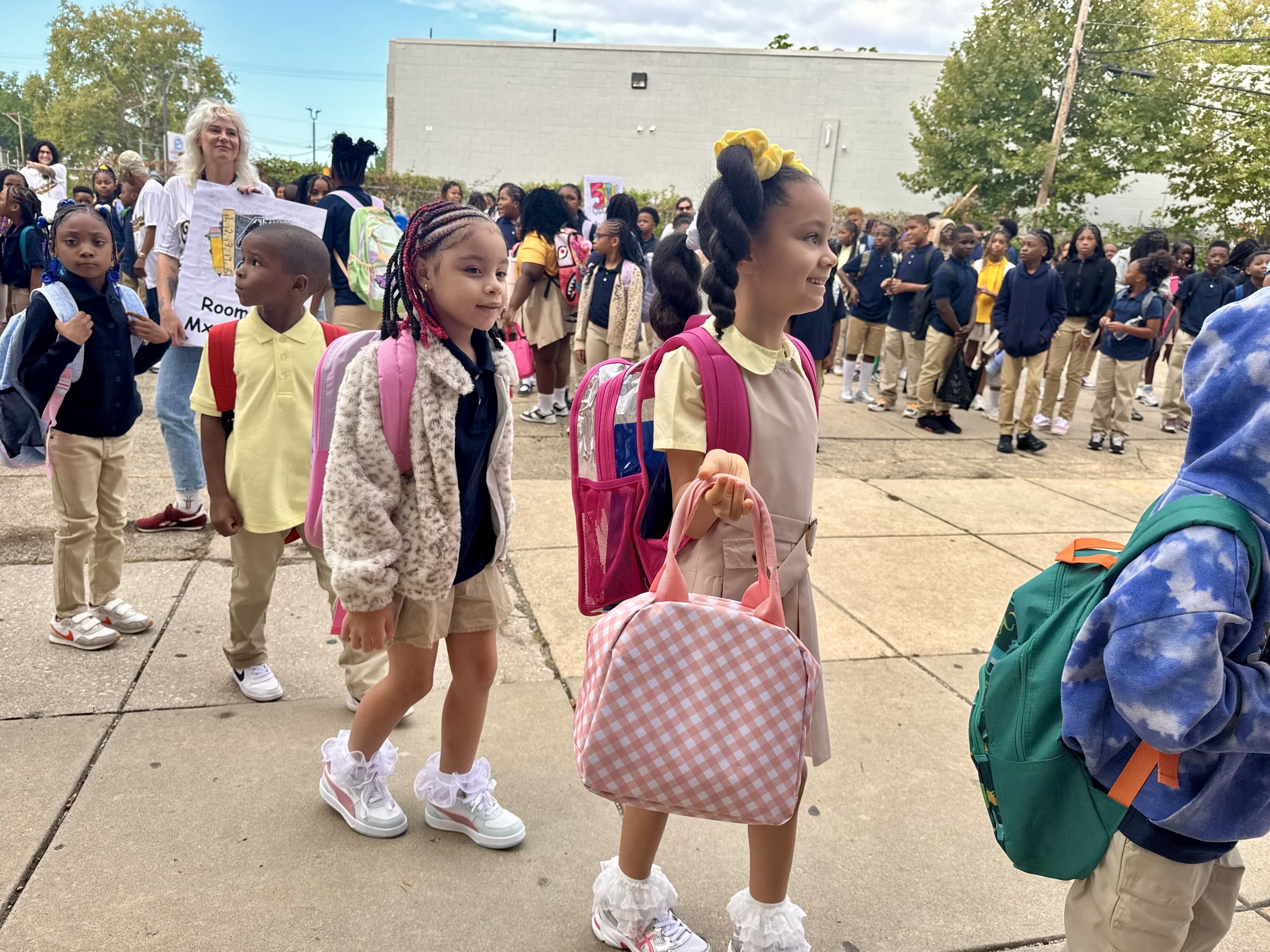
    Eighth graders tossed a football across the concrete schoolyard. A fourth grader broke into a dead run, intent on catching up with friends she hadn’t seen all summer. A teacher hugged a first grader with a shy smile and a giant pink backpack crammed with school supplies.

    The scene at Overbrook Elementary played out across the city Monday morning as most of the Philadelphia School District’s 113,000 students returned to class for the start of the 2026-27 school year. Kindergartners are due to begin classes Thursday.

    At McClure Elementary in Hunting Park, Superintendent Tony B. Watlington Sr. repeated at a news conference his overarching goal: for Philadelphia to become the fastest-improving big-city school district in the U.S.

    McClure Elementary principal Luis Garcia greets students Monday, Aug. 24, 2026 before they head into class on the first day of school in the Philadelphia School District.Tom Gralish / Staff Photographer

    The district will “double down this year to continue to drive this fast improvement, and we won’t rest until all of our children are at grade level in reading and math,” Watlington said. According to 2024-25 state data, 34% of district students meet state standards in reading, and 23% in math. (More recent PSSAs, typically available to teachers and principals by now, have not been shared by Philadelphia leaders.)

    Reginald Streater, the school board president, said improving educational outcomes is also about creating generational value.

    “A student can walk through the doors, irrespective of their race, creed, class, gender, or shared ancestry, in our schools with a world of possibilities in front of them and leave those same doors with the knowledge, confidence, and opportunity to pursue the future they envision for themselves,” said Streater, father of two children in district schools, “armed with the tools to break the bonds of generational curses and barriers designed to keep them and their ancestors and their progeny in a perpetual state of servitude and second-class citizens.”

    Mayor Cherelle L. Parker was not present at the district’s first-day festivities, a rarity, but Debora Carrera, her chief education officer, touted Parker’s $48 million agreement that restored some of the 340 positions that otherwise would have been axed because of budget cuts.

    That was good news for Johnny Beauchamp, a single father and truck driver, who was dropping off his son for his first day at McClure.

    While Beauchamp said he is confident the city has addressed its budgetary concerns regarding staffing and school openings, he hopes to see some initiatives on school safety.

    “I’m actually more excited than he is. It’s his first day … and his bright future starts today,” Beauchamp said. “But my main concern nowadays is the safety, especially with guns and stuff like that. Also, making sure our schools are clean and sidewalks are clear of glass and other dangerous stuff where our kids are playing.”

    ‘Leave Overbrook alone’

    The first-day tone was upbeat, but a bit different, at Overbrook, one of the 17 buildings the school board voted in April to close as part of its $3 billion, 10-year facilities plan. Overbrook is set to shut its doors permanently in June.

    Overbrook is a small, high-performing school in a very old building: The school is celebrating its 120th anniversary this year. Its tight-knit community wraps its arms around Overbrook and has mounted a fierce fight to keep it open.

    “Leave Overbrook alone,” said Fahmee Shabazz, dad of an Overbrook fourth grader. “Please, somebody help us.”

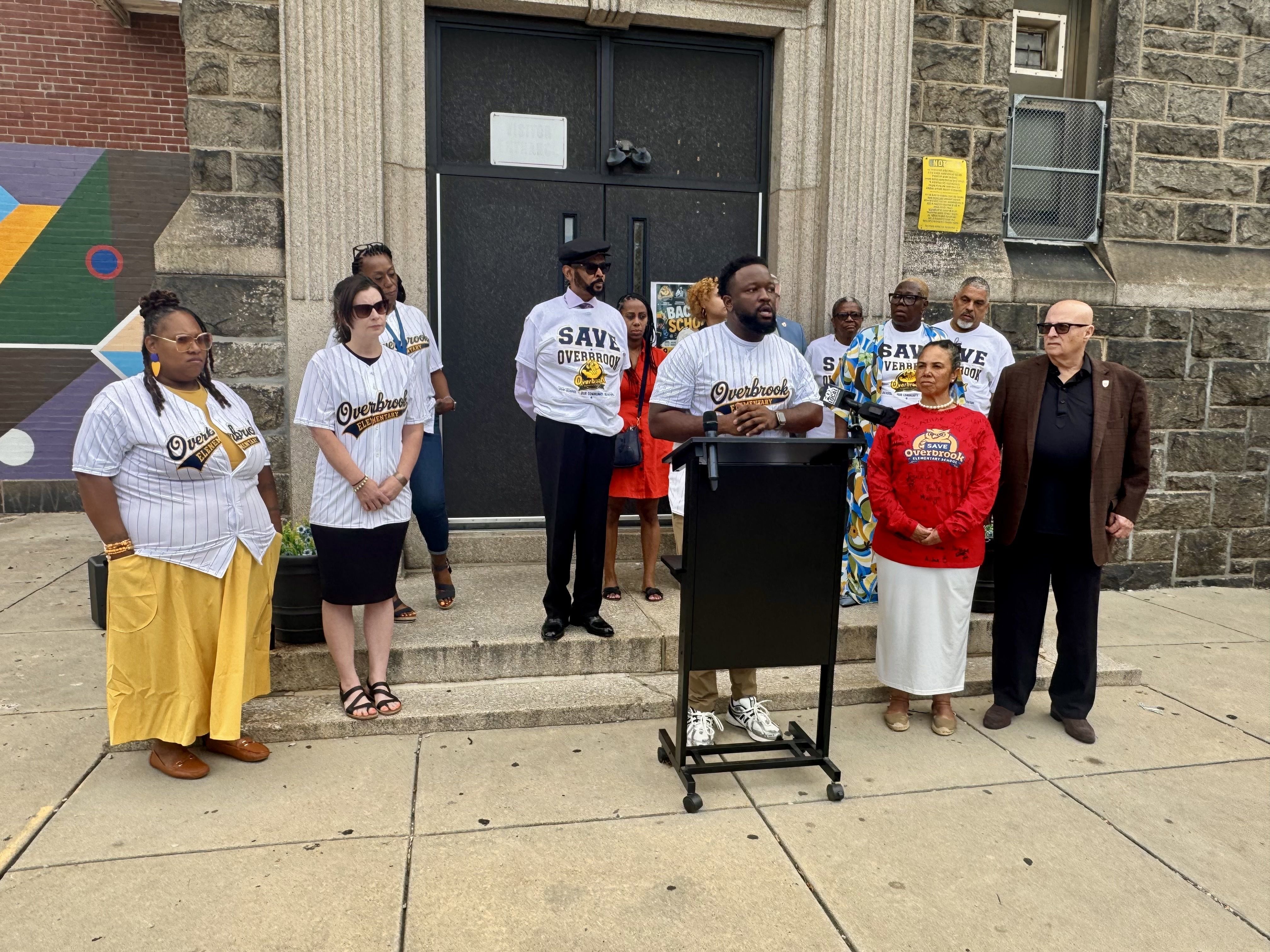
    Teachers union and elected officials were on hand at Overbrook for a news conference to pledge continuing efforts to try. Multiple politicians have said they will keep the pressure up to remove Overbrook Elementary, Robeson High, and Lankenau High from the district’s closing list.

    Teachers, politicians and Philadelphia Federation of Teachers officials listen to Kenneth Glover, principal of Overbrook Elementary School, speak on the first day of the 2026-27 school year. Glover said the school, which is one of 17 Philadelphia schools slated to close, will focus on academics this year and let adults fight a battle to stave off closure.Kristen A. Graham / Staff

    “We cannot disrupt the good things that are happening here,” said State Sen. Vincent Hughes (D., Philadelphia), chair of the Senate Appropriations Committee.

    Hughes said action needs to happen in Harrisburg to help better fund schools. But he added: “We’re still going to fight for Overbrook Elementary and the schools like it, [which] deserve to stay open.”

    Last year, many Overbrook Elementary teachers used news of the school’s closing as an object lesson — in civics and the world around them — said Kenneth Glover, the school’s principal.

    “I’m so happy that it’s day one,” he said. “Like I tell my students all the time, each day is a fresh start, and this year is a fresh start. Last year, a lot of the focus was on adult issues, right, fighting to keep the school open. This year, I really want students to focus on academics … for us to just have a beautiful school year.”

    Overbrook Elementary School students get ready to enter the building for the first day of the 2026-27 school year. It could be the 120-year-old school’s last first day, as it’s one of 17 schools the Philadelphia School District has slated to close.Kristen A. Graham / Staff

    While Glover said he still hoped the school could be kept open, he has begun to work with the district’s newly created transition office to plan for what comes next.

    Still, said Kathryn McQuade, Overbrook Elementary’s art teacher, the closure and the fight to prevent it are overshadowing the year for many.

    McQuade expressed frustration that the school board just spent $7 million on a four-year Center City lease for Constitution High when Overbrook and other schools have been tagged for closure.

    “Seven million could easily go towards … modernizing this building for the future,” McQuade said. “And that wouldn’t be a lease, that would be a one-time price tag.”

    Arthur Steinberg, president of the Philadelphia Federation of Teachers, said he “was hoping that when I came here today I’d be able to say, ‘Well, we saved Overbrook from the chopping block.’ Unfortunately, that is not the case. However, we have not given up the fight to keep Overbrook and every other school in the city open.”

    Steinberg said the PFT would release a plan this week that would give the district a path to keep all 17 schools open.

    Robin P. Cooper (upper right) watches as school and city official gather for a group photo outside the district bus. Cooper is president of Commonwealth Association of School Administrators (CASA). At far left is Superintendent Tony B. Watlington Sr. The bus, part of Mayor Cherelle L. Parker’s Neighborhood Community Action Centers, was to visit and rally at schools in every city council district.Tom Gralish / Staff Photographer
  • Thousands of Philly homeowners are facing property tax increases of 50% or more after this year’s reassessment

    Thousands of Philly homeowners are facing property tax increases of 50% or more after this year’s reassessment

    Most Philadelphia homeowners will see slightly higher property tax bills next year after the city conducted a mass reassessment process that resulted in a modest uptick in home values.

    But for thousands of residents, many of whom live in North Philadelphia, next year’s tax bills are expected to soar.

    Nearly 6,000 homeowners in Philadelphia saw their property assessments this year climb by more than 50% compared with two years ago, the last time the city conducted a mass revaluation, according to an Inquirer analysis of city property assessment data released in June.

    Of those homeowners, more than 2,200 saw their assessments more than double.

    That is likely to result in sticker shock come tax time next year, because property tax bills in the city are calculated based on home values. The revenue is split between the city and the Philadelphia School District.

    Homeowners across the city saw a median 3% increase in their property assessments this year compared with the 2025 tax year. Jumps were higher in neighborhoods that border gentrifying areas, such as in parts of Kensington and West Philadelphia.

    But this year, two other areas of the city had the densest concentrations of homes where property assessments increased by 50% or more, according to The Inquirer’s analysis.

    The steep rises are clustered in the southern end of Strawberry Mansion, the historically Black neighborhood along the Schuylkill, and in the tiny Hartranft neighborhood north of Temple University and east of Broad Street, where residents are predominately Latino.

    (function() {
    var l2 = function() {
    new pym.Parent(‘html_sandwich_2026_property4’,
    ‘https://media.inquirer.com/storage/inquirer/projects/innovation/arcgis_iframe/html_sandwich_2026_property4.html’);
    };
    if (typeof(pym) === ‘undefined’) {
    var h = document.getElementsByTagName(‘head’)[0],
    s = document.createElement(‘script’);
    s.type = ‘text/javascript’;
    s.src = ‘https://pym.nprapps.org/pym.v1.min.js’;
    s.onload = l2;
    h.appendChild(s);
    } else {
    l2();
    }
    })();

    Housing experts and advocates for low-income homeowners have long criticized the city’s assessment system as systemically biased, leaving Black and brown homeowners to pay disproportionately high property taxes. Mayor Cherelle L. Parker convened a task force in 2024 to study the city’s revaluation system, and that group’s recommendations are expected to be released later this year.

    Monty Wilson, a senior attorney at Community Legal Services who sits on the task force, said the Philadelphia Office of Property Assessment is the best in the state and has “worked really hard to become more and more accurate.”

    But he said bias persists in part because of the unique challenges that assessors face in low-income neighborhoods that can cause volatility in home values, such as higher rates of vacant lots, foreclosures, and other factors.

    A 2024 CLS report found that errors were clustered in lower-value neighborhoods where a majority of residents are people of color.

    “That means when a property is overassessed,” Wilson said, ”it tends to occur in a Black and brown neighborhood.”

    (function(){function e(){window.addEventListener(`message`,function(e){if(e.data[`datawrapper-height`]!==void 0){var t=document.querySelectorAll(`iframe`);for(var n in e.data[`datawrapper-height`])for(var r=0,i;i=t[r];r++)if(i.contentWindow===e.source){var a=e.data[`datawrapper-height`][n]+`px`;i.style.height=a}}})}e()})();

    The Parker administration did not respond to requests for comment.

    In response to a previous article about this year’s property reassessments, city officials emphasized that some lower-income homeowners pay relatively low tax bills because of the popular homestead exemption tax break. The program, which any homeowners can apply for and obtain if they live in their house as their primary residence, exempts the first $100,000 from a home’s taxable value.

    That means that some homeowners in working-class neighborhoods previously paid little to no property taxes. A sudden increase in valuation, like the ones seen this year in pockets of North Philadelphia, could require they pay bills next year that are several hundred dollars more than in the past.

    Take the 2500 block of North Marshall Street. The residential North Philly street sits between West Kensington and Broad Street, and nearly every home saw its assessment increase by 60% or more, according to The Inquirer’s analysis.

    Most of the homes there had previously been valued at less than $100,000, meaning owners with the homestead exemption owed no property taxes. Now, many of the homes on the block are valued at about $140,000, an amount that would next year yield more than $500 in yearly tax bills for owners with the homestead exemption.

    More than 40% of the Hartranft neighborhood’s residents are below the federal poverty level, which is $33,000 a year for a family of four, according to U.S. Census data.

    At Left a property on 2500 N. Marshall St., Philadelphia, PA 19133 is shown Wednesday, Aug. 19, 2026, in Philadelphia.Jose F. Moreno / Staff Photographer

    City Councilmember Quetcy Lozada, whose district includes parts of Kensington and North Philadelphia, said the Hartranft area is not like sections of Kensington that have seen an influx of development in recent years and where increases in property assessments may be expected.

    It is possible, she said, that lower-income residents who have been displaced from parts of Kensington looked to move west of the neighborhood, increasing demand in the Fairhill and Hartranft areas.

    Lozada — who has held workshops in the neighborhood to connect residents with property tax relief programs — said she fears her constituents are being asked to pay disproportionately high taxes and not seeing better city services and stronger public schools.

    “How is it possible that someone in Fairhill is paying a higher tax for a property that has not had any investment, in a neighborhood that is not as safe, whose school system is not as great, as somebody that lives in Chestnut Hill, for instance?” she said, referring to the upscale Northwest Philadelphia neighborhood with a $109,000 median household income. “There has to be a better way of doing a more accurate evaluation in every neighborhood.”

    City Council is expected to hold a hearing this fall to probe the assessment process.

    In Strawberry Mansion, community leaders said that increased assessments are likely a result of market pressure from Brewerytown to its south, a comparatively whiter and higher-income neighborhood.

    “The city has to be super transparent about this assessment system so people can better understand it and not feel that sticker stock,” said Tonnetta Graham, president of the Strawberry Mansion Community Development Corp. “If we know how they came to their number, it’s easier to chew.”

    The 1700 block of North Newkirk Street on Thursday, Aug. 20, 2026 in Philadelphia.Monica Herndon / Staff Photographer

    Councilmember Jeffery Young Jr., whose district includes both Strawberry Mansion and parts of Hartranft, did not respond to requests for comment.

    Jalon Alexander, a Strawberry Mansion native who this month launched a campaign to challenge Young for his Council seat next year, said he was recently at a block party in the neighborhood where he heard repeatedly from older homeowners who were concerned about their increased assessments.

    “They feel taken advantage of, and they feel like it’s coming out of nowhere,” Alexander said. “This is an area where there’s high levels of poverty, and there is not a lot of political or government attention in this area. I’ve spoken with many people whose rates have almost doubled. It’s the biggest issue in the neighborhood.”

    Staff writer Michaelle Bond contributed to this article.

  • Philly is one of three finalists to host the 2028 Democratic National Convention

    Philly is one of three finalists to host the 2028 Democratic National Convention

    Philadelphia is one of three finalist cities to host the 2028 Democratic National Convention, the party announced Thursday.

    In addition to Philadelphia, the Democratic National Committee said it is also considering Denver and Boston on its narrowed short list of cities to hold the next presidential nominating convention. The announcement means that Atlanta and Chicago, which were on a previous list of five potential host cities, have been eliminated from contention.

    Ken Martin, the chair of the Democratic National Committee, said in a statement that the three finalist cities put forward “incredibly strong bids.” He did not say why the party is no longer considering Atlanta or Chicago.

    If Philadelphia is picked, the convention would take place from Aug. 7 to 10, 2028, at Xfinity Mobile Arena in the South Philadelphia stadium complex. The Republican Party’s 2028 convention will be held in Houston.

    Democrats in 2028 will choose from an array of potential candidates to succeed President Donald Trump. No major candidate has formally launched a campaign, but Pennsylvania Gov. Josh Shapiro is widely considered to be a contender.

    The announcement comes as Martin has faced criticism for his leadership of the party, especially as it relates to fundraising. Democrats trail Republicans ahead of this year’s midterm elections when it comes to money in the bank.

    Mayor Cherelle L. Parker is joined by city leaders and Democratic National Committee Chair Ken Martin and his team for a “One City” salute group photo Thursday, April 30, 2026, after they toured the Xfinity Mobile Arena facilities as the city makes its bid to host the 2028 Democratic National Convention.
    Tom Gralish / Staff Photographer

    The party’s decision to narrow its 2028 convention short list comes after Martin and other top officials traveled to the five finalist cities in the spring to assess logistical readiness, including arena capacity, technological capabilities, transportation and security infrastructure, and more.

    In April, local Democratic officials and some of the city’s biggest boosters wooed Martin over the course of a three-day trip and presented the city as an improved tourist destination since 2016, the last time the party hosted its major convention in the city. That year, Democrats nominated former Secretary of State Hillary Clinton, who lost the general election to Trump.

    The 2016 DNC was one of 10 major-party nominating conventions that Philadelphia has hosted since the 1800s. The city hosted the Republican National Convention in 2000.

    The events draw thousands of party members and journalists from around the world, putting the host region in the spotlight for several days. Proponents of hosting the convention also argue that it will generate business as visitors eat, shop, and play; the true economic impact of conventions, however, is up for debate.

    Mayor Cherelle L. Parker, who has led the city’s effort to bid for the 2028 convention, said in a news release that Philadelphia this year has “proven that we can do big things better than any other city in the country.”

    She cited this summer’s litany of big events in the city, including FIFA World Cup games, the MLB All-Star Game and Home Run Derby, and events associated with America’s 250th birthday.

    “We are ready to welcome the Democratic Party and the nation back to our city,” she said.

    David L. Cohen, the longtime Democratic Party stalwart and president of Pick Pennsylvania, the city’s host committee, said in a statement that Philadelphia’s selection as a finalist “is a testament to the ongoing strength of our bid and our record of success.”

    “We have presented an unmatched case,” he said, “built on experience, preparation, strong partnerships, and a proven ability to deliver major national and international events.”