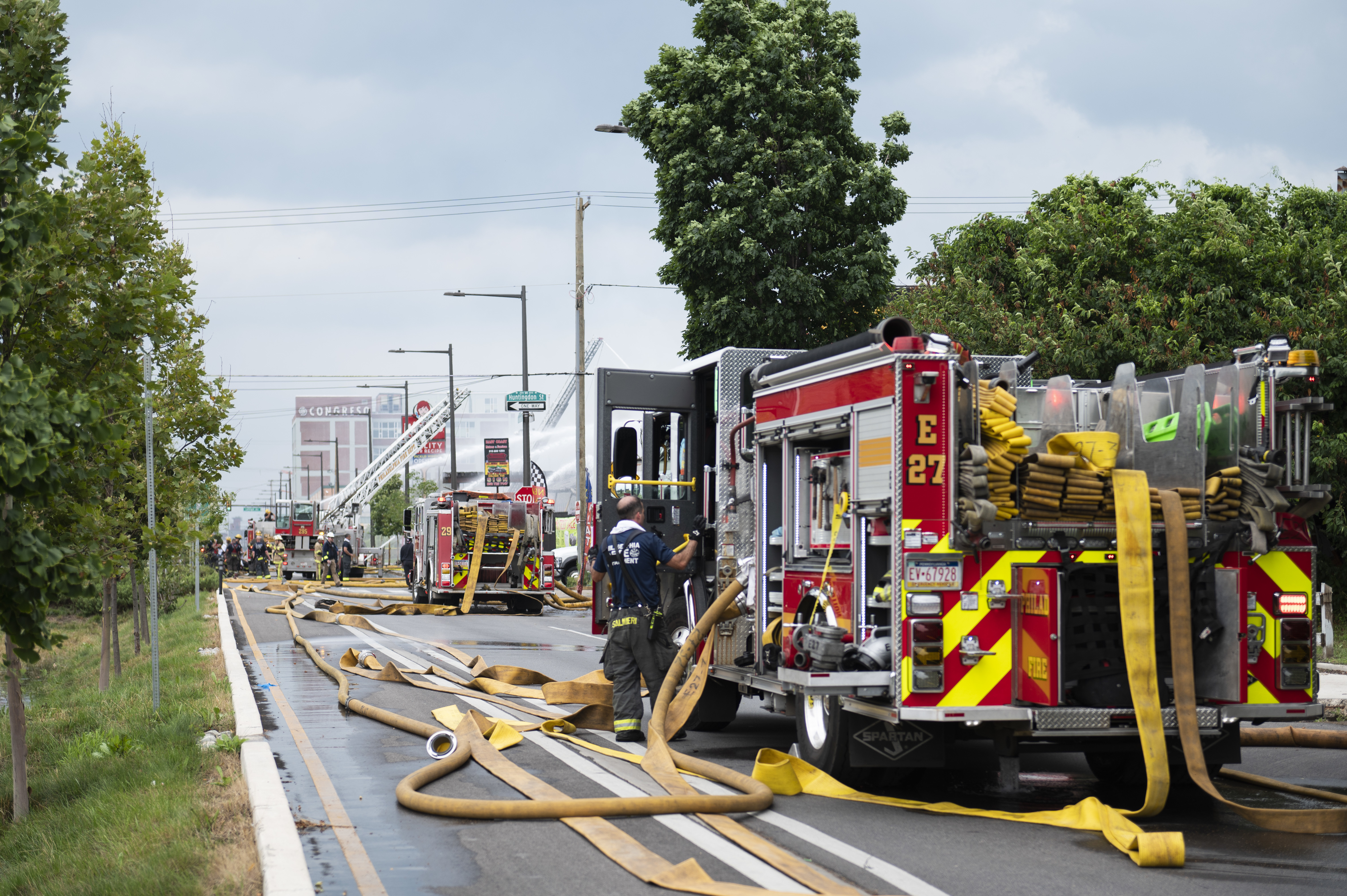
Federal prosecutors this week charged a former Philadelphia Fire Department supervisor with bribery in connection with what investigators described as a brazen overtime abuse scheme that involved her accepting cash from a colleague in exchange for approving fraudulent time sheets.
Marian Farris, 55, a former supervisor in the department’s payroll unit, faces one felony count of bribery and related theft charges. She was charged Tuesday by information, a process that is typically used when a defendant intends to plead guilty.
Attorneys for Farris, who resigned from the department in March 2025, did not immediately respond to a request for comment on the charges.
According to charging papers filed in the U.S. District Court of the Eastern District of Pennsylvania, Farris accepted multiple payments from a fire department employee that totaled more than $9,000 between 2023 and 2024. In exchange for those payments, prosecutors allege Farris made more than 300 fraudulent entries in the city’s payroll system amounting to more than $139,000 in payments to the employee.
Some of the overtime claims, according to prosecutors, were logistically impossible. Prosecutors wrote that Farris on 16 occasions credited the employee — identified only as “J.M.” in charging papers — with working 22 to 24 hours of overtime in a single 24-hour period. On other occasions, prosecutors wrote, the employee was credited with working overtime while she was vacationing in Bermuda, Cancun, and Las Vegas.
The Inquirer previously reported that Farris was under federal criminal investigation and that she was at the center of two tangled investigations into alleged misconduct at the fire department.
The city’s Office of the Inspector General led one investigation into the overtime abuse and found that Farris conspired with former paramedic Jacqulyn Murphy to defraud the city by abusing the system.
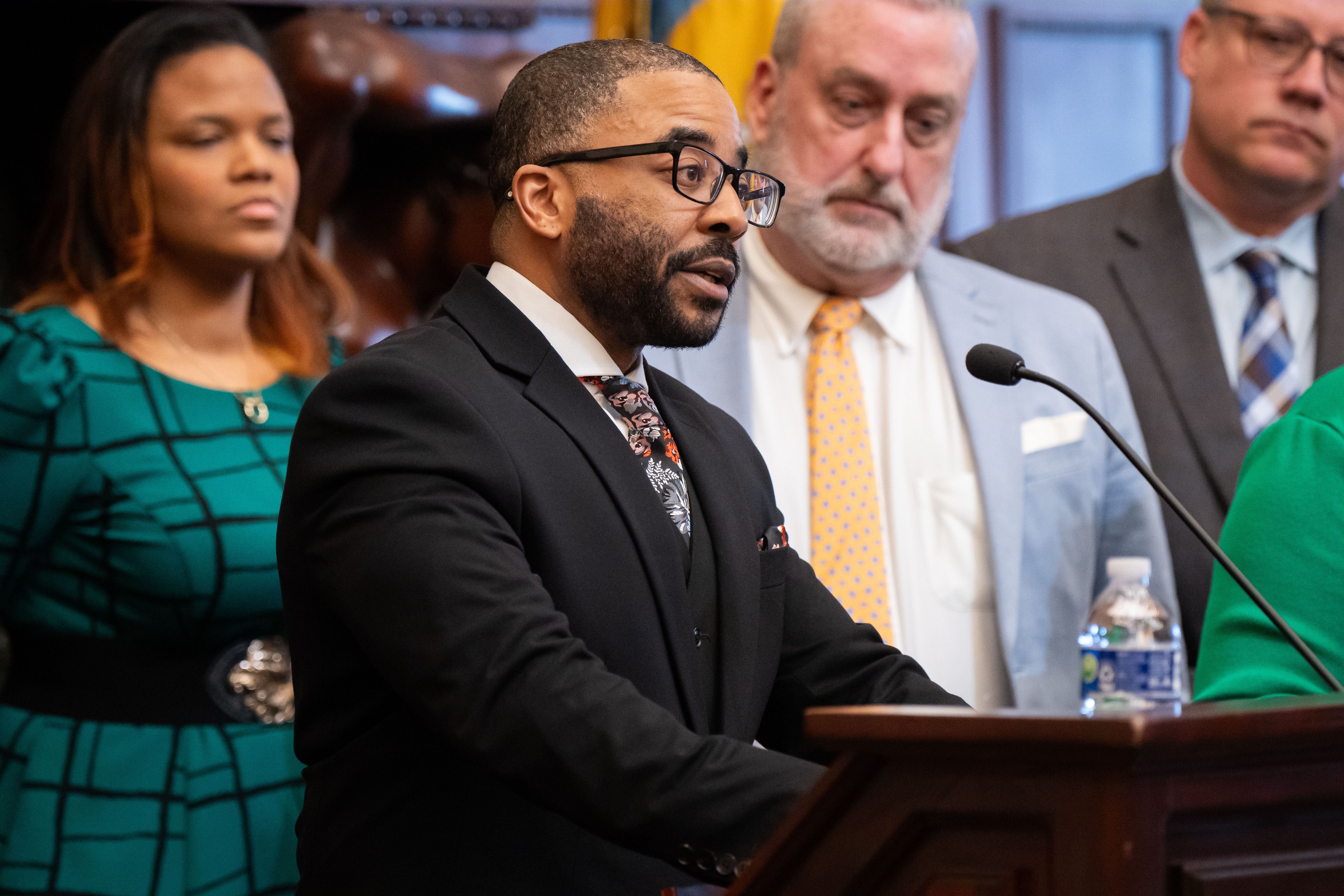
In a separate probe, the city retained a law firm to examine multiple sexual harassment allegations lodged by Murphy and other women against Anthony Hudgins, a former deputy commissioner and the department’s No. 2 in charge. According to court records, several women, including Murphy, told city investigators that Hudgins made sexual advances, including unwanted hugging and inappropriate comments.
Hudgins claimed that the harassment reports were orchestrated by Murphy only after he discovered the overtime fraud. In January, Hudgins sued the city and the women saying that he was defamed and subjected to a “bad faith” investigation that resulted in a demotion and a $75,000 pay cut.
Inspector General Alexander DeSantis had previously declined to publicly release the results of his investigation, citing an ongoing criminal investigation.
But Hudgins’ attorneys included the report in court filings related to his lawsuit, and the OIG investigation appears to confirm Hudgins’ timeline. The report stated that Hudgins had already conducted an overtime review before a November 2024 discrimination complaint was filed against him.
Those findings also align with a June 2025 report authored by attorneys at Campbell Durrant, the outside law firm that the city retained to investigate the sexual harassment claims. Hudgins’ attorneys included portions of that report in a recent court filing.
In the report, investigators reviewed some of the allegations brought by Murphy and her wife, who was also a paramedic in the Philadelphia Fire Department. The women told investigators that Hudgins had openly discussed his desire to engage in sexual activities with other women.
However, the conclusion of the report described the allegations brought by Murphy and her wife as “unsubstantiated” and lacking corroboration. It said that the “connection between the harassment complaints and the overtime investigation raises serious concerns about motive and credibility.”
The report said that the primary concerns regarding Hudgins were that he “has a habit of hugging employees and enforcing policies that are sometimes unpopular.” The investigators recommended that Hudgins receive a formal warning and be required to undergo harassment training.
A spokesperson for the city declined to release the full report on Friday, saying the city generally does not release reports of investigations into allegations of sexual harassment, and that the reports are only disseminated to the subjects of an investigation.
In the fall of 2025, shortly after Campbell Durrant completed its report, Hudgins was demoted from his role as a deputy commissioner to deputy fire chief, and he was reassigned to the Incident Safety Office.
Farris has not yet been scheduled to appear in court.
Staff writer Abraham Gutman contributed to this article.
This week’s column covers the ongoing Washington West Historical District saga, a 1,000 mayoral days, a City Council member who should retire, and an NFL coach who is a secret urban planning enthusiast.
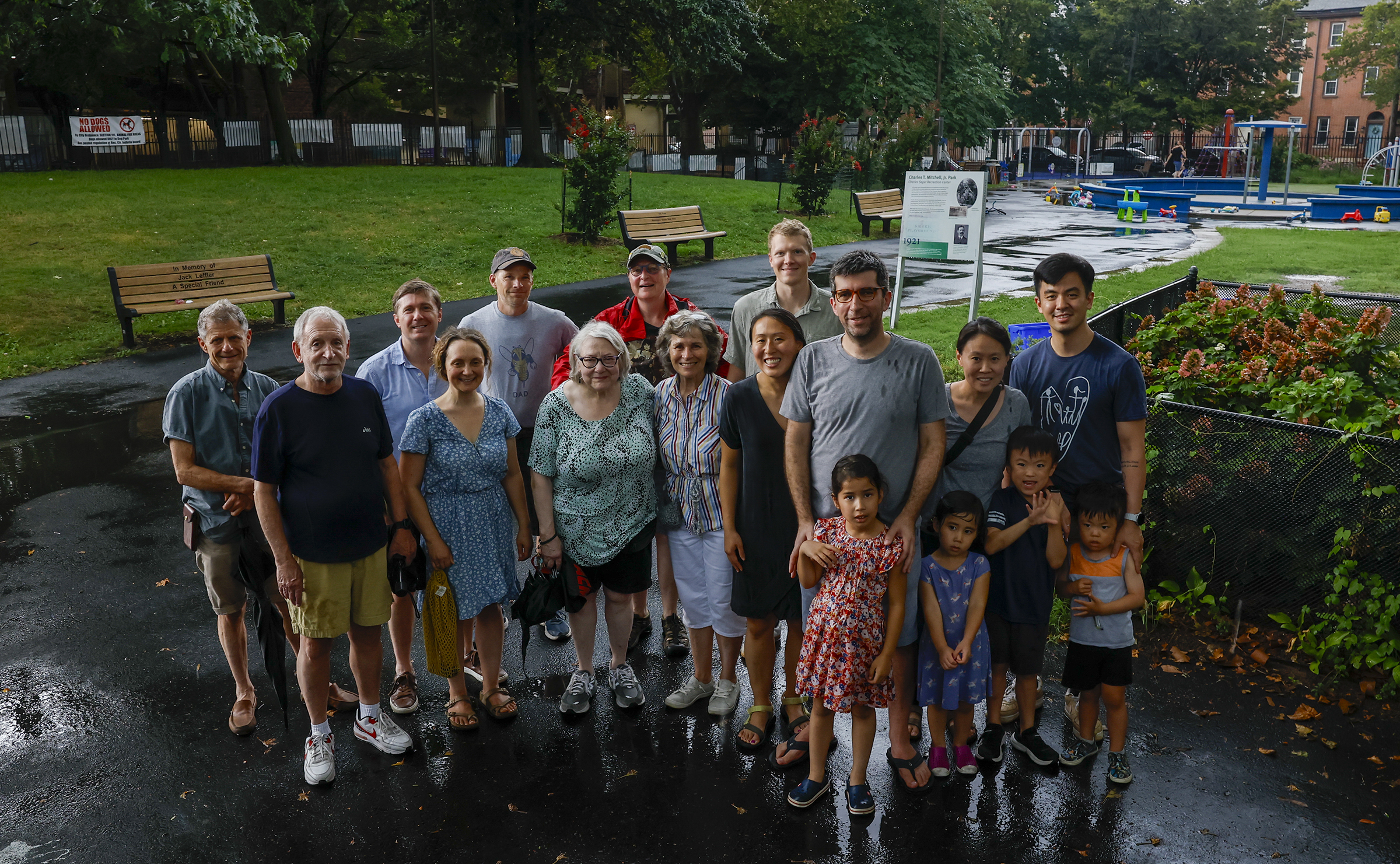
Members of the Philadelphians for Rational Preservation gather at Seger Park in the Washington Square West neighborhood in July 2025. The group opposes the Washington Square West Historic District designation.Yong Kim / Staff Photographer
People vs. preservation
In a City Hall courtroom, lawyers for the city and the preservation alliance sought to defend the designation of the Washington West Historic District against a coalition of homeowners who have claimed the decision has cost them time and money. The outcome could have significant ramifications for such districts across Philadelphia.
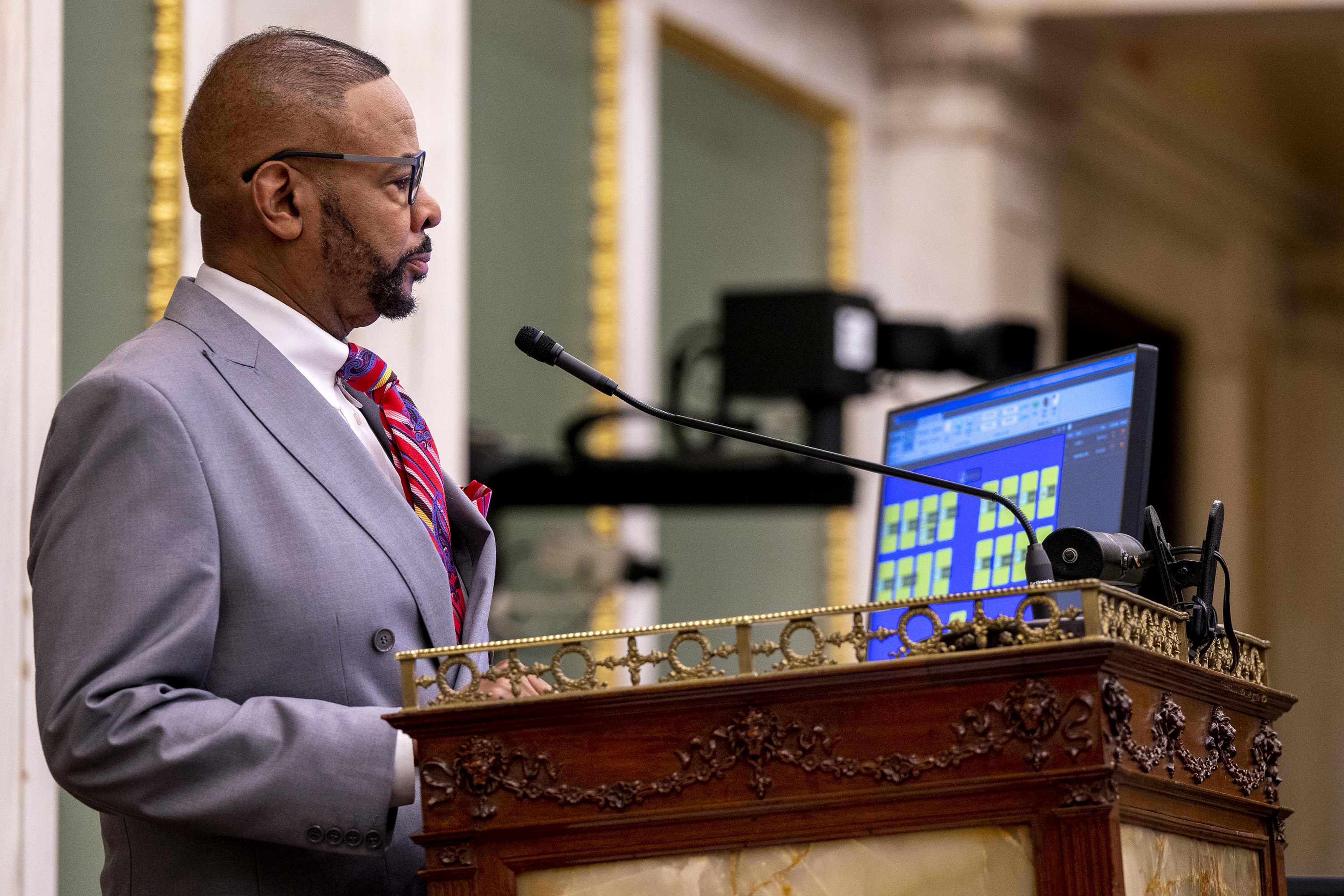
Dan Auerbach, a lawyer for the homeowners, says the district was created without sufficient evidence, and that a historic commissioner’s participation in drafting the document represents a conflict of interest. Attorneys Leonard Reuter and Paul Toner, who represented the defendants, took a different approach.
When Common Pleas Court Judge Christopher Hall repeatedly asked for evidence, beyond the nomination itself, for the district’s historic significance, Toner replied, “I don’t need to.” The commission’s decision to approve is apparently all that’s required. They also argued that historic designation does not impose significant costs on homeowners.
Hall seemed to take a skeptical view of these claims. As Auerbach pointed out, most pages of that document simply inventory the existing properties. Often, newly designated homes have no specific justification at all, or just a few words.
Personally, I also find the dismissal of the real costs imposed on homeowners to be unconvincing. According to evidence supplied by Philadelphians for Rational Preservation, the group that formed in opposition to the district, homeowners who have been added to the district are already seeing adverse impacts. Door and window replacements now require permits, for example, and homeowners must spend considerably more to acquire historically accurate versions. This costs real time and real money.
It may be that this district is simply too large and too broad. The period of significance covers nearly the entire history of Philadelphia, and many of the newly designated buildings are frankly unremarkable. While the city and the preservation alliance may feel the urge to appeal the matter to the Commonwealth Court, my suggestion is that they don’t.
While I am skeptical of this particular nomination, I do think historic districts have a role to play in our city. Many of them are popular with residents, or have existed for so long that most homeowners were aware of the restrictions before purchasing.
In the case of Washington West, however, the commission may simply have been too ambitious. The geographic range is just too large, the period of significance too extensive, and the residents themselves too strongly opposed.
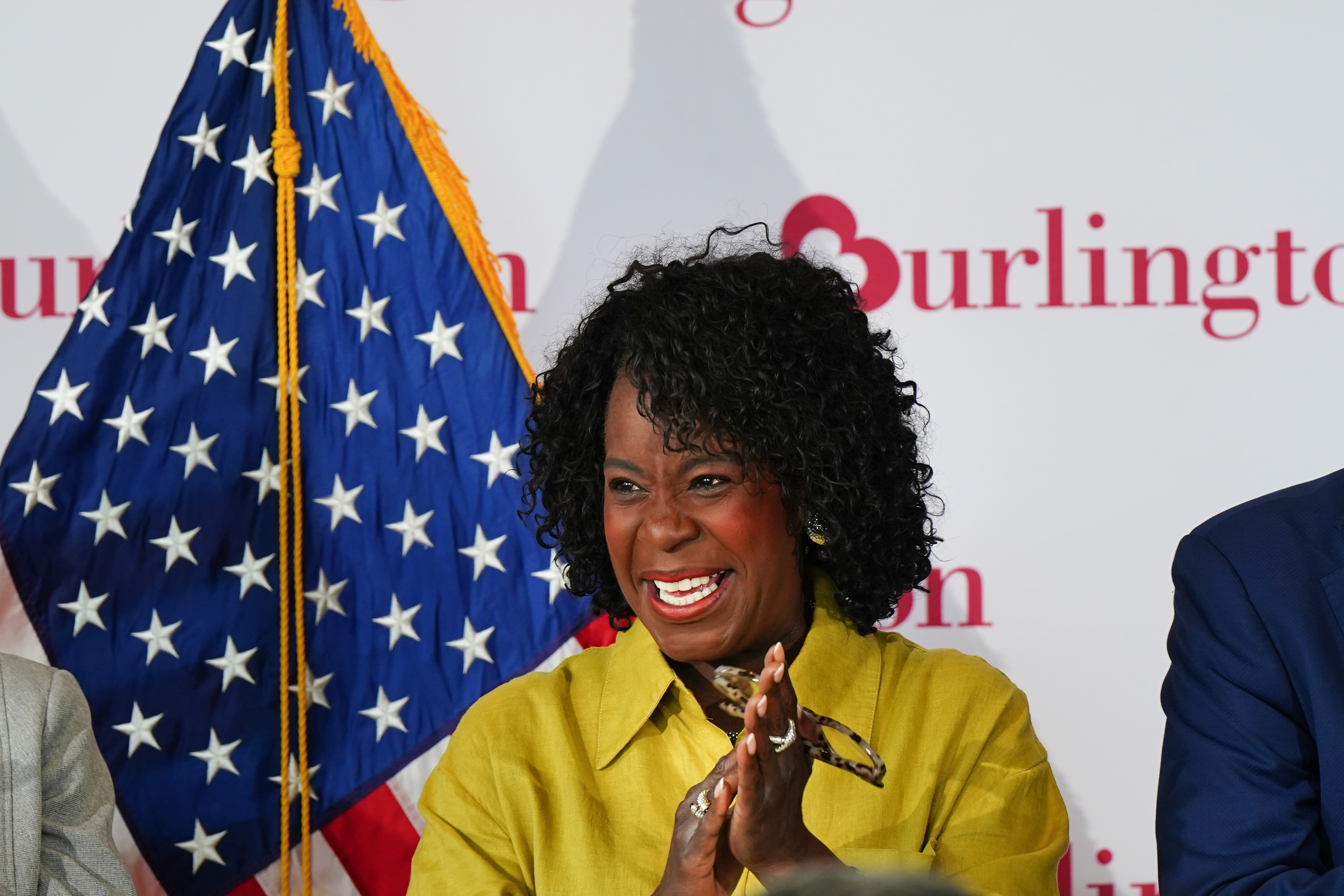
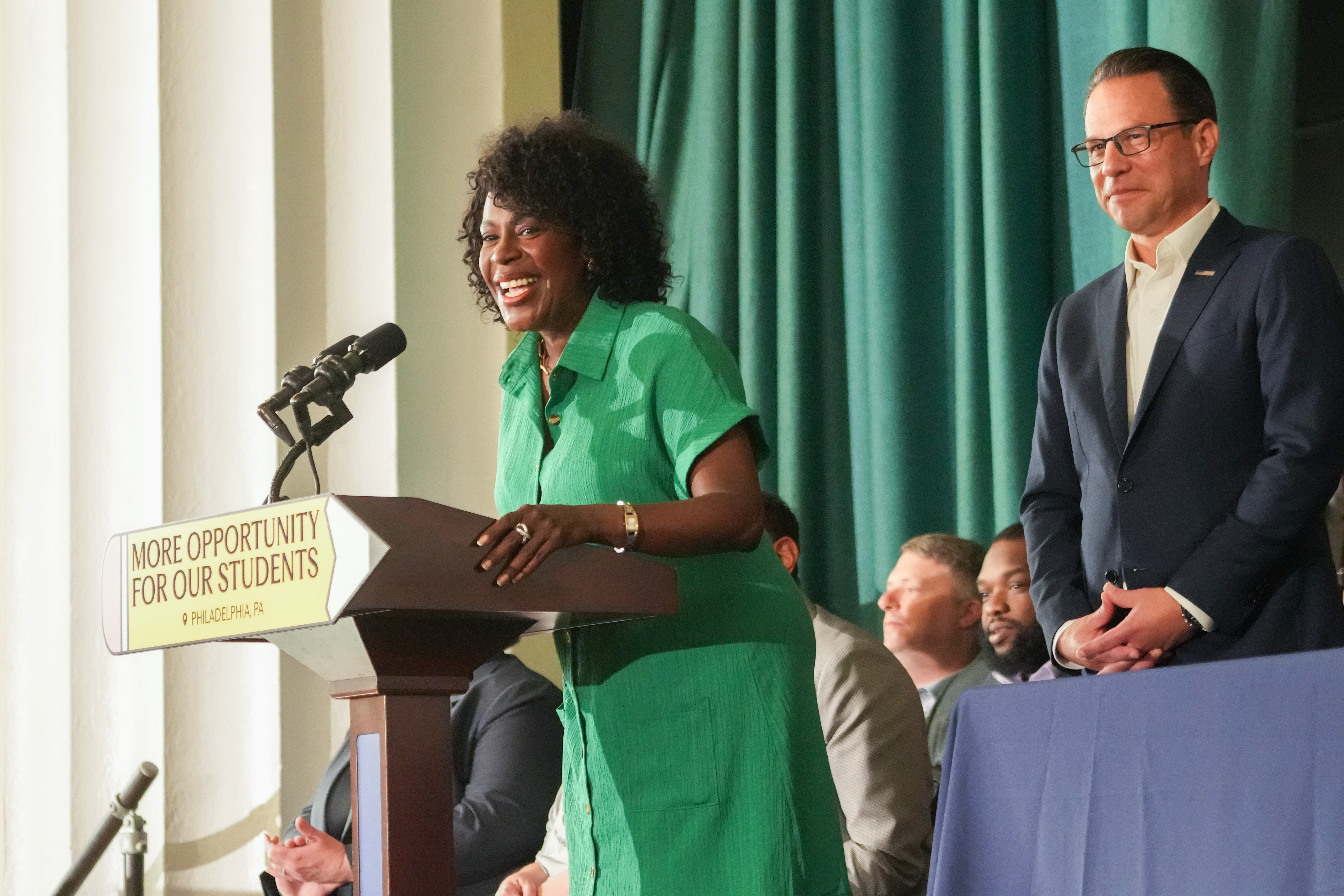
Mayor Cherelle L. Parker at a news conference in September.Jessica Griffin / Staff Photographer
Mayoral milestone
Mayor Cherelle L. Parker celebrated her 1,000th day in office earlier this week at McPherson Square Library in Kensington, which is set to receive a $21.7 million renovation. Parker has made investing in Kensington a priority in her administration, although some of her priorities have been contested.
She’s added police patrols to the neighborhood, sought to dismantle the drug market, and increased cleaning and greening efforts. She’s also come under fire from harm reduction advocates for eliminating funding for the nonprofit Prevention Point and city efforts to rein in a network of services built to alleviate the struggles of addiction, which some residents have blamed for the drug market’s continuing presence in their community.
In many ways, Kensington is a microcosm of Parker’s tenure.
Her administration has made genuine progress. Violent crime is at historic lows, with decreases in the city’s most dangerous neighborhoods driving the decline. Surveys suggest residents believe the city has gotten cleaner under her leadership. Yet discontent, some legitimate and some not, continues. Parker’s approval rating sits at 44%, a number that is likely high enough for reelection next year, but isn’t strong enough to give her the political capital she needs to take on and win fights with City Council.
The biggest factors in whether residents approve or disapprove of the mayor seem to be their age and race. Among Philadelphians of color and those older than 45, Parker is popular. For those under 45 and white voters, she’s not.
It is easy to say this divide is based on style. As Parker herself has said, she’s unapologetic about who she is and where she came from. To residents who may be fans of New York’s Zohran Mamdani, Parker may seem old-fashioned and unexciting. Of course, Mamdani also has a municipal budget of $126 billion at his disposal, while Parker makes do with just $7 billion.
But a lot of it has to do with substance. Small-business owners have lost a crucial tax exemption; her vaunted ability to work across the aisle has not resulted in sustainable transit funding or enabled the school district to avoid closing 17 schools; and Parker has shied away from the ambitious civic reformer causes embraced by predecessors like Michael Nutter.
If the mayor intends to reach 2,000 days in office without becoming yet another tired and unpopular chief executive, she’ll have to step up her game.
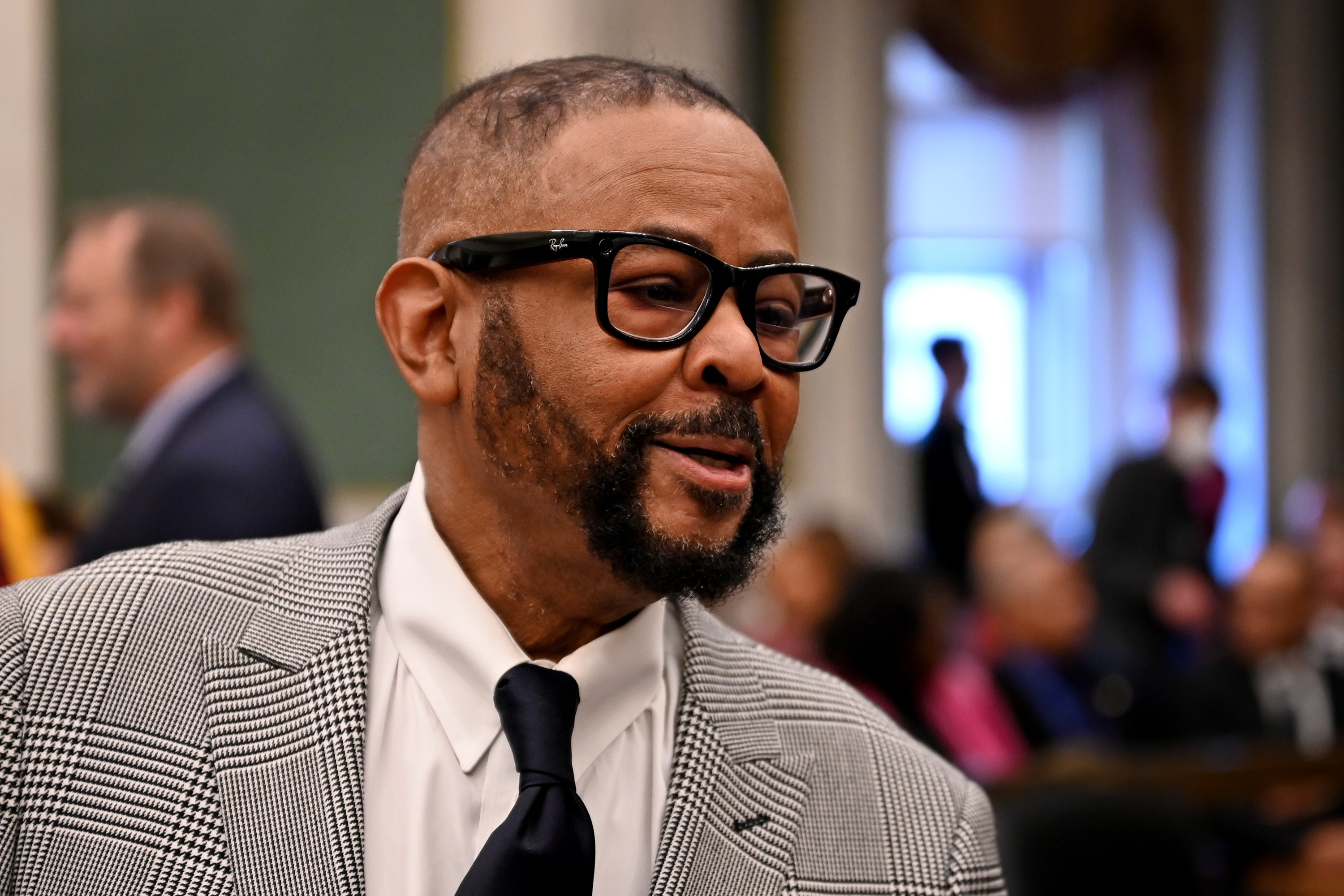
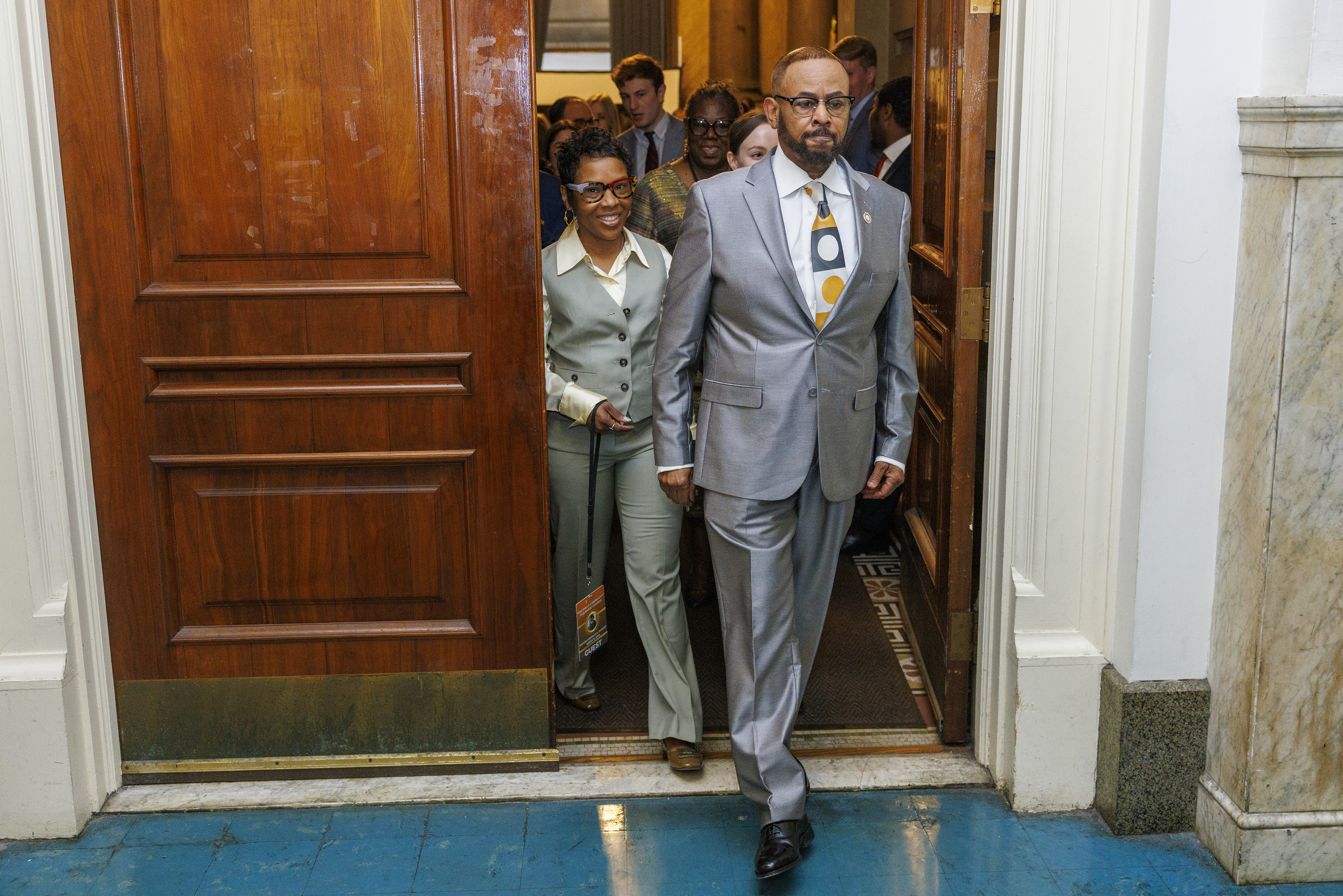
Councilmember Curtis Jones Jr. in chambers as City Council meets in December.Tom Gralish / Staff Photographer
Jonesing to stay
Fourth District Councilmember Curtis Jones Jr. has had a long and often laudatory career in public service. But it is now time for it to end.
Jones cited his ongoing health issues as justification to The Inquirer, saying he needed the money to pay for treatment. I certainly sympathize with anyone struggling to maintain their health. However, Jones represents a city where the median household income is just over $60,000. At 69 years old, he is also eligible for Medicare.
Retirement would also give Jones a chance to relax and focus on staying healthy. For his sake and ours, he should listen to his friends.
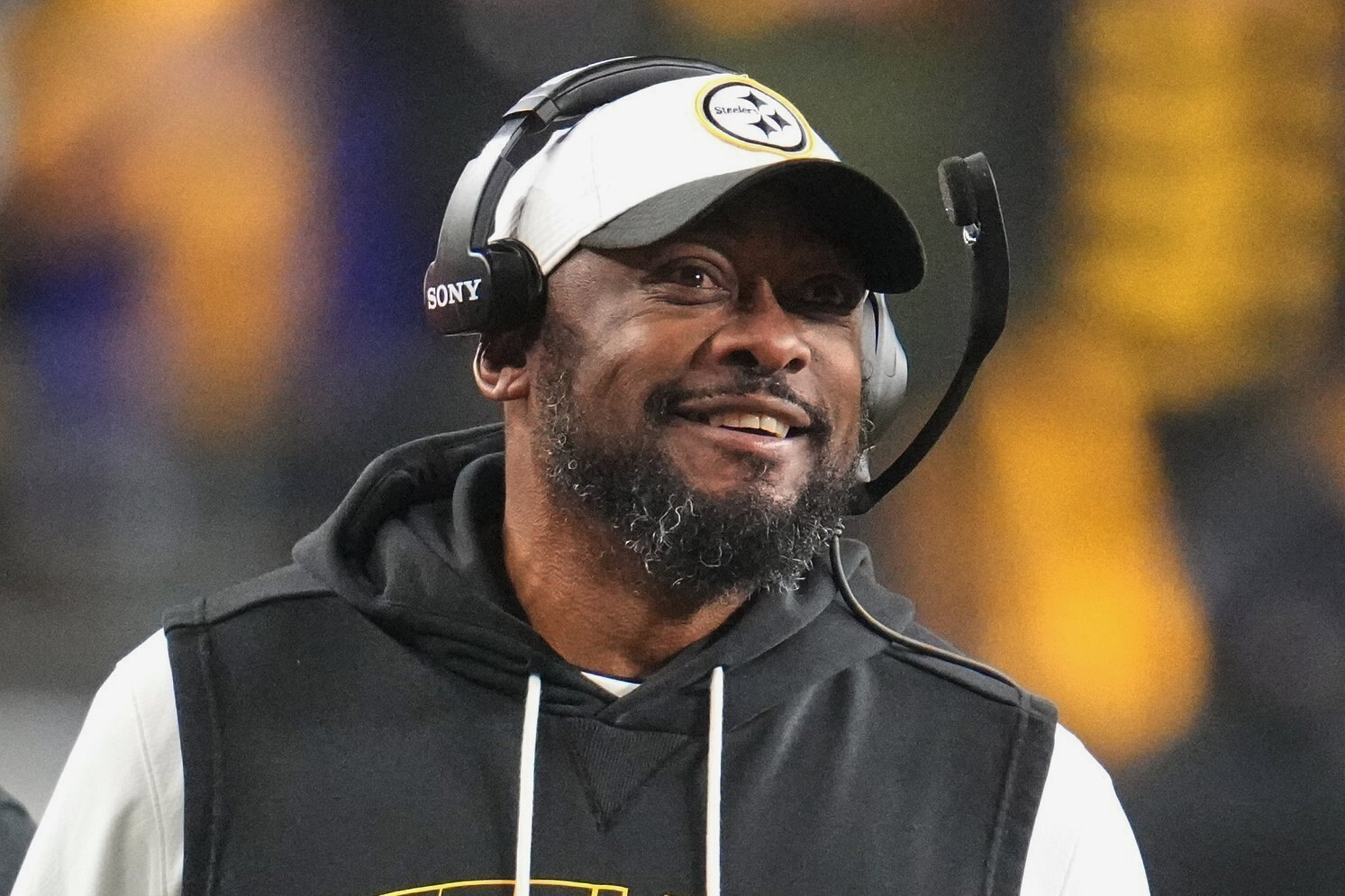
Pittsburgh Steelers head coach Mike Tomlin stands on the sidelines during the second half of an NFL football game against the Baltimore Ravens in Pittsburgh in January.Gene J. Puskar
Tomlintown
When you write frequently about transit and housing, you tend to hear from the small cadre of people who are extraordinarily enthusiastic about these issues. This week, I found out about a surprising member of their ranks: former Pittsburgh Steelers head coach Mike Tomlin.
Famous for his uncanny resemblance to actor Omar Epps and being the second Black NFL coach to win a Super Bowl, Tomlin used the game Minecraft to build his own fantasy city — a project that took place over a dozen years. He’s now giving the public a tour of his work.
Tomlin said he wanted densely populated buildings because of his interest in architecture, and went as far as creating interiors for each of his creations. His work is remarkably cognizant of genuine urban questions like lighting and viewsheds.
Like many gamers, he said his habit helped him “detach from the realities and the pressures of life.” We all need a way to unplug sometimes, but Tomlin’s impressive urban planning side project may have turned him into an unlikely urbanist hero.
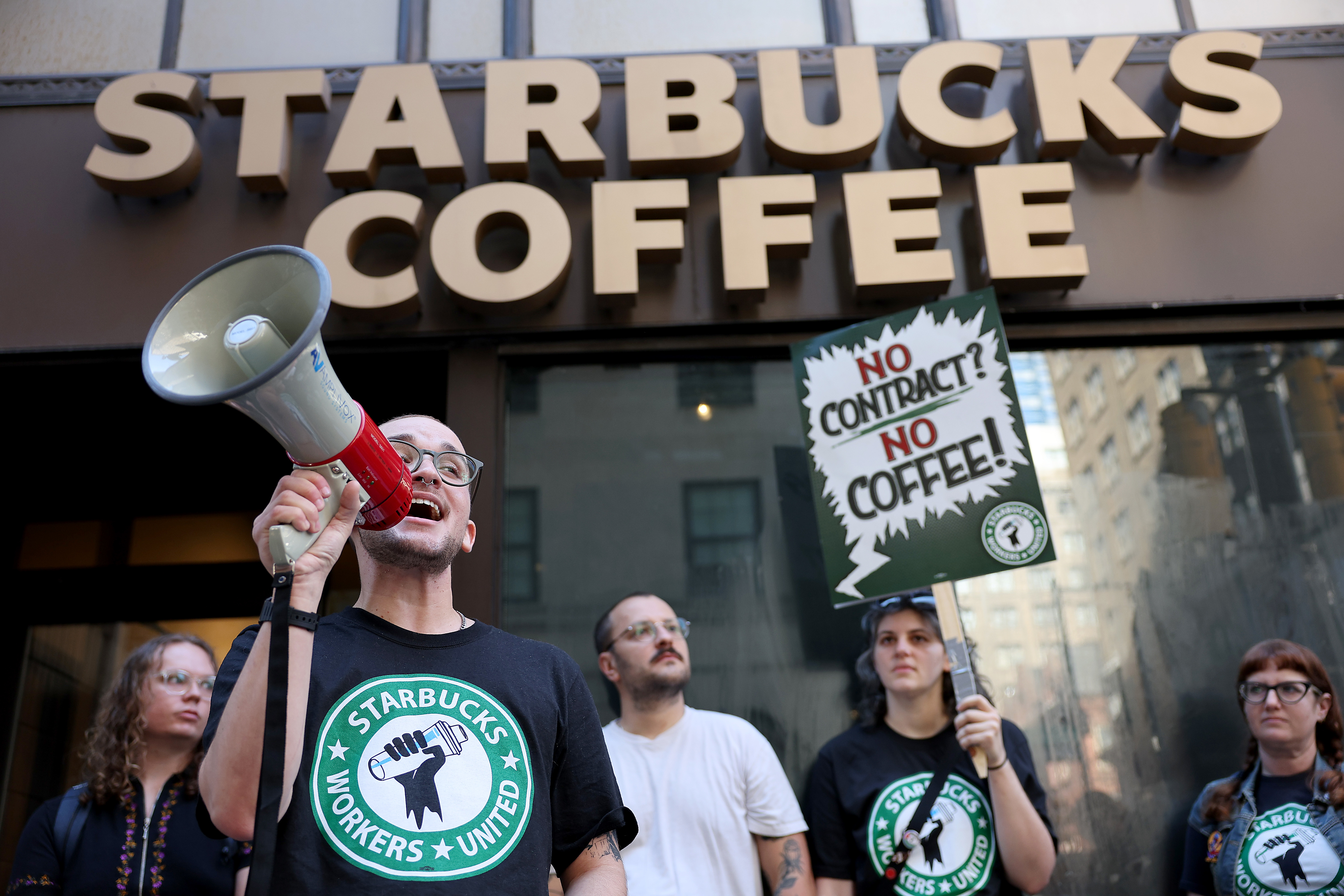
Just in time for pumpkin spice latte season, Philadelphia City Council members are giving up Starbucks — and they want you to do the same.
Council voted unanimously on Thursday to make Philadelphia one of the first cities in the country to explicitly endorse a nationwide boycott of Starbucks amid a unionization drive, and to pledge not to use city funds at the coffee chain until it reaches a contract agreement with its workers.
Also during Council’s session on Thursday: Councilmember Jamie Gauthier introduced controversial legislation to approve a contract with a trash incinerator that she doesn’t support. We’ll explain.
What was this week’s highlight?
Council puts Starbucks on ice: The expression of solidarity with Starbucks workers is a ceremonial resolution that does not carry the weight of law and does not require approval from Mayor Cherelle L. Parker.
Still, Council’s vote was a formal endorsement of the boycott orchestrated by Starbucks Workers United and targeting the world’s largest coffee chain, which is already reducing its footprint in the city. Starbucks closed six Philadelphia locations last year, and two additional branches — one at 2201 South St. in Southwest Center City and the other at 1018 N. Second St. in Northern Liberties — closed on Sunday.
The only other city to formally support the unionization effort is St. Louis, where last week the city’s board of aldermen approved a resolution to “express solidarity with Starbucks Workers United as they call for a boycott of Starbucks.”
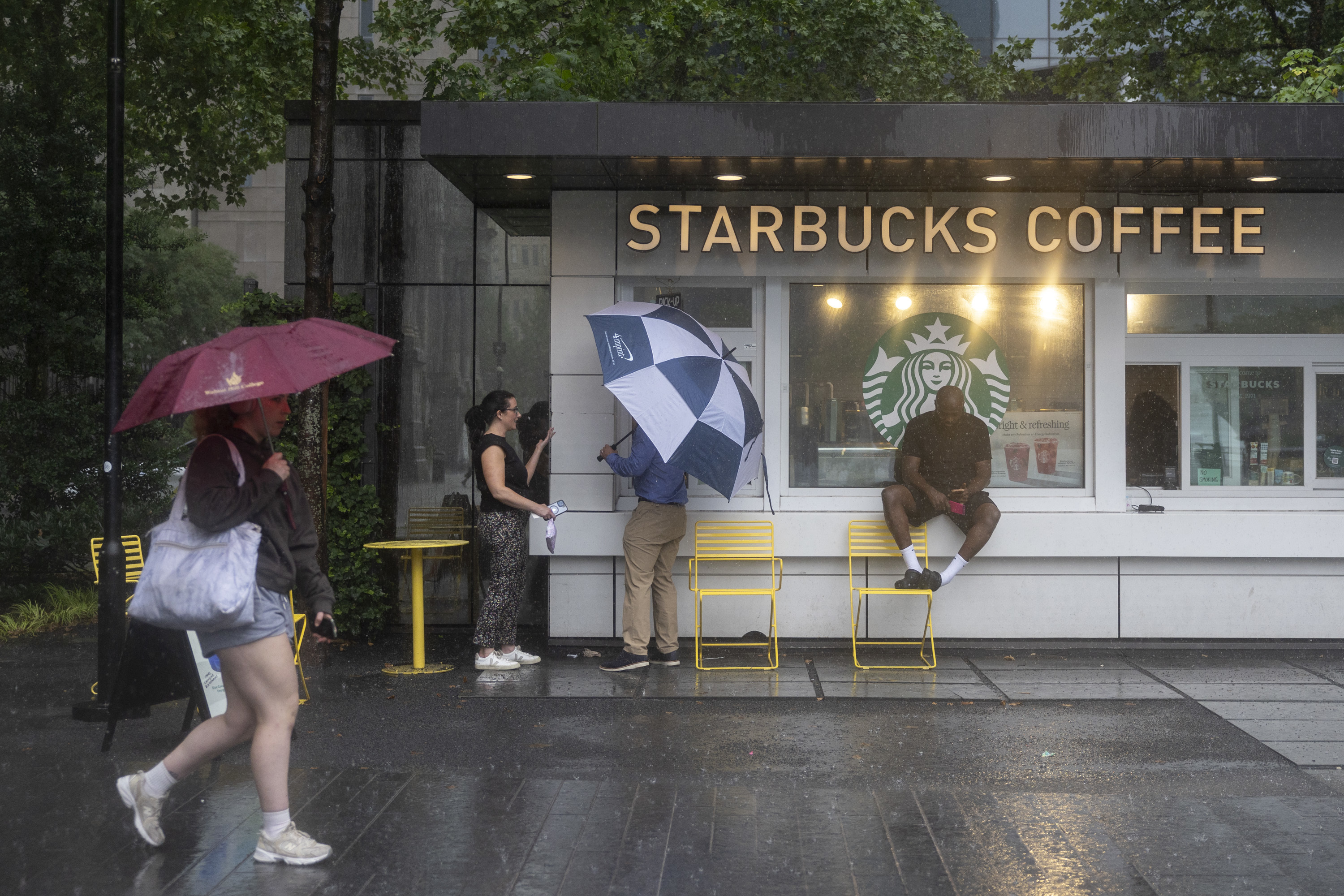
People staying dry at the Starbucks Coffee at Dilworth Park near City Hall in Philadelphia, Pa., on Thursday, July 9, 2026.Tyger Williams / Staff Photographer
Over the last five years, baristas have unionized at hundreds of individual Starbucks locations, but the company has not agreed to a nationwide contract that the union has sought. The union in August called for a nationwide boycott to last until an agreement is reached.
Councilmember Nicolas O’Rourke, a member of the progressive Working Families Party who represents the city at-large, authored the legislation and said its passage is “another affirmation of Philadelphia being a union town.”
“I am always interested in making sure that businesses in the city of Philadelphia and people are thriving,” O’Rourke said. “But my first priority is always to make sure that workers and workers’ conditions are right and that they are respected.”
Council is controlled by a supermajority of Democrats, and the body is largely supportive of organized labor.
Council President Kenyatta Johnson said he backs the Starbucks boycott, even though he is generally not a big coffee drinker.
“Unfortunately, they do have a vegan breakfast sandwich,” said Johnson, who follows a plant-based diet. “But I won’t be having those any time soon.”
A spokesperson for Starbucks said in a statement Thursday that the company is “committed to engaging in productive bargaining.”
What else happened today?
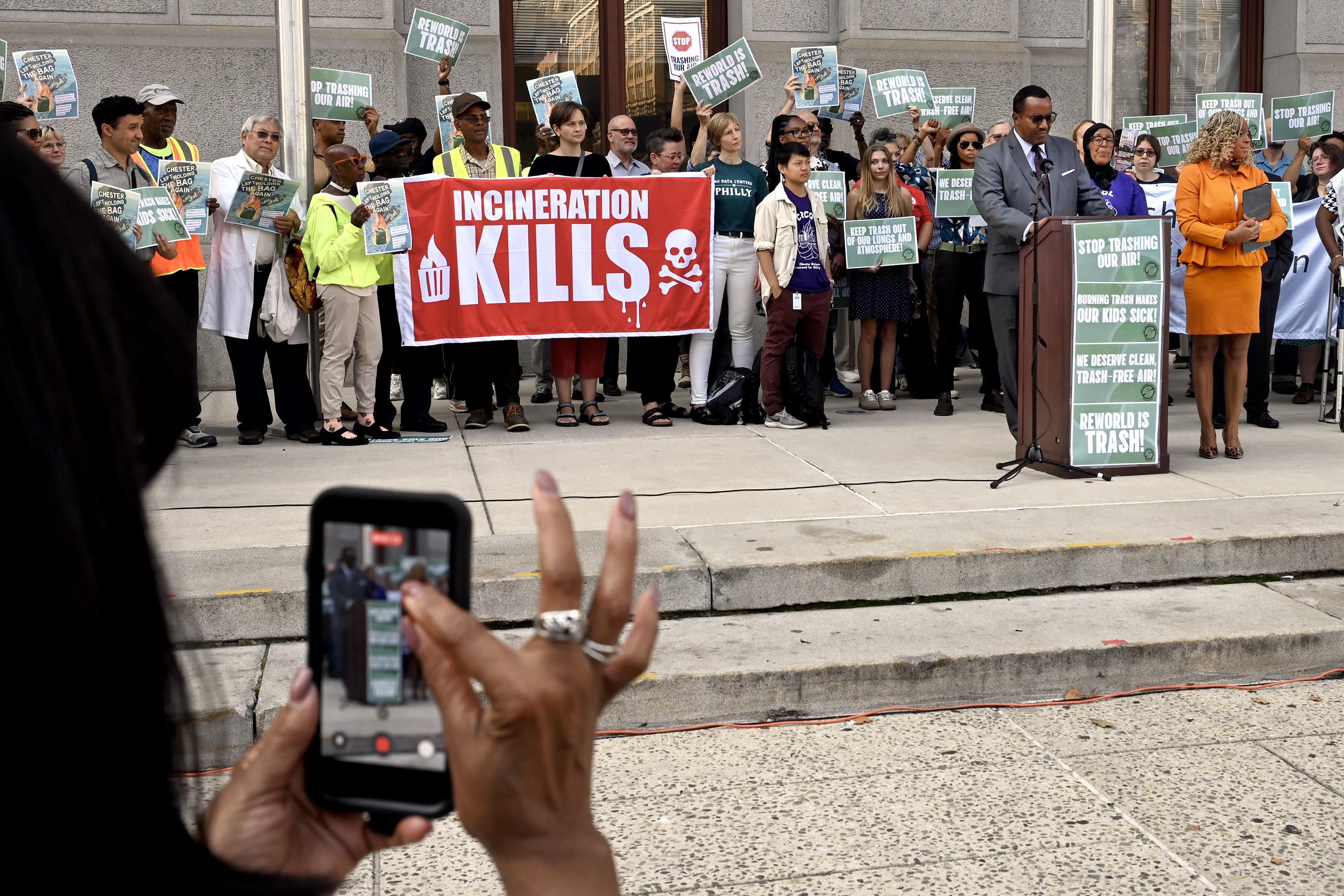
Introducing legislation she doesn’t support: Thursday’s meeting featured another twist in the long-running debate over a Chester trash incinerator and how Philadelphia gets rids of its garbage. Gauthier, a progressive Democrat who has advocated for the city to stop burning its trash, introduced legislation that would allow the city to continue doing so.
Here’s why: The Parker administration is looking to renew its long-held contract with Reworld, the Chester waste-to-energy facility where the city ships about one-third of its trash to be burned. (The rest of the trash is sent to landfills.)
In order to renew the multiyear contract, Council must approve authorizing legislation. Gauthier, who previously floated a bill to ban the city from incinerating trash but did not garner enough support to pass it, is asking her fellow lawmakers to vote against the contract renewal.
Chester Mayor Stefan Roots (at lectern) is joined by Philadelphia City Councilmember Jamie Gauthier (right) at a rally outside City Hall early Thursday morning Sept. 17, 2026.Tom Gralish / Staff Photographer
Although it may seem like a reversal of her position, Gauthier introducing the legislation herself — even when she does not support it — will allow her to have some say when a committee holds a hearing on the legislation. She hopes to amend it to strike Reworld from the deal so that the city processes all trash and recycling through landfills.
“It gives me and my coalition an opportunity to be at the table on something that we fought really hard on for more than a year now,” she said in an interview. “We’ve been working really hard to make sure that we’re protecting the health of folks in Chester and in Philadelphia, and protecting our environment.”
Johnson will decide which committee will hear the bill. He said Thursday that he is still reviewing the legislation.
Mamdani-fication: Create a Philly Medicaid Supplement Program. Expand access to programs that provide transit subsidies to low-income Philadelphians. Use city money to buy properties with expiring federal affordable housing subsidies.
These were some of the recommendations included in the Affordable Philly Now report, which was recently released by the Cost of Living Task Force.
O’Rourke, who convened the task force, held a committee hearing Wednesday examining the report’s findings, and he was not shy about noting that it was partly inspired by another progressive a few miles up I-95.
“You cannot deny the profound impact that … Mayor Zohran Mamdani has had,” O’Rourke said, praising the New Yorker for “mixing moonshot municipal goals with sewer socialism” and working to build a “protective hedge” of social safety net programs.
Nicolas O’Rourke, Philadelphia City Council member, during the mayor’s budget address on March 12.Alejandro A. Alvarez / Staff Photographer
Wednesday’s hearing was a meeting of the Committee on Global Opportunities and the Creative/Innovative Economy, which O’Rourke chairs. As a freshman and a member of a minority party, O’Rourke does not have a high-profile committee leadership post like some of the more senior Democratic lawmakers on Council. His committee was previously led by former GOP Councilmember David Oh and does not naturally align with O’Rourke’s progressive politics.
O’Rourke said at the committee hearing Wednesday — the first time he chaired a Council hearing — that he was shifting the panel’s work.
“The prior version of this committee revolved around corporate investment fitting into global value chains and making Philadelphia an international destination,” O’Rourke said. “In my reflection on the meaning of the committee, I have spent more time focusing on a part of the committee’s mandate that actually seems more in its merit — that is, to consider all matters related to making Philadelphia a world-class city. … And in some seasons, world-class cities show themselves by being bold in providing a protective hedge for its people.”
Quote of the week
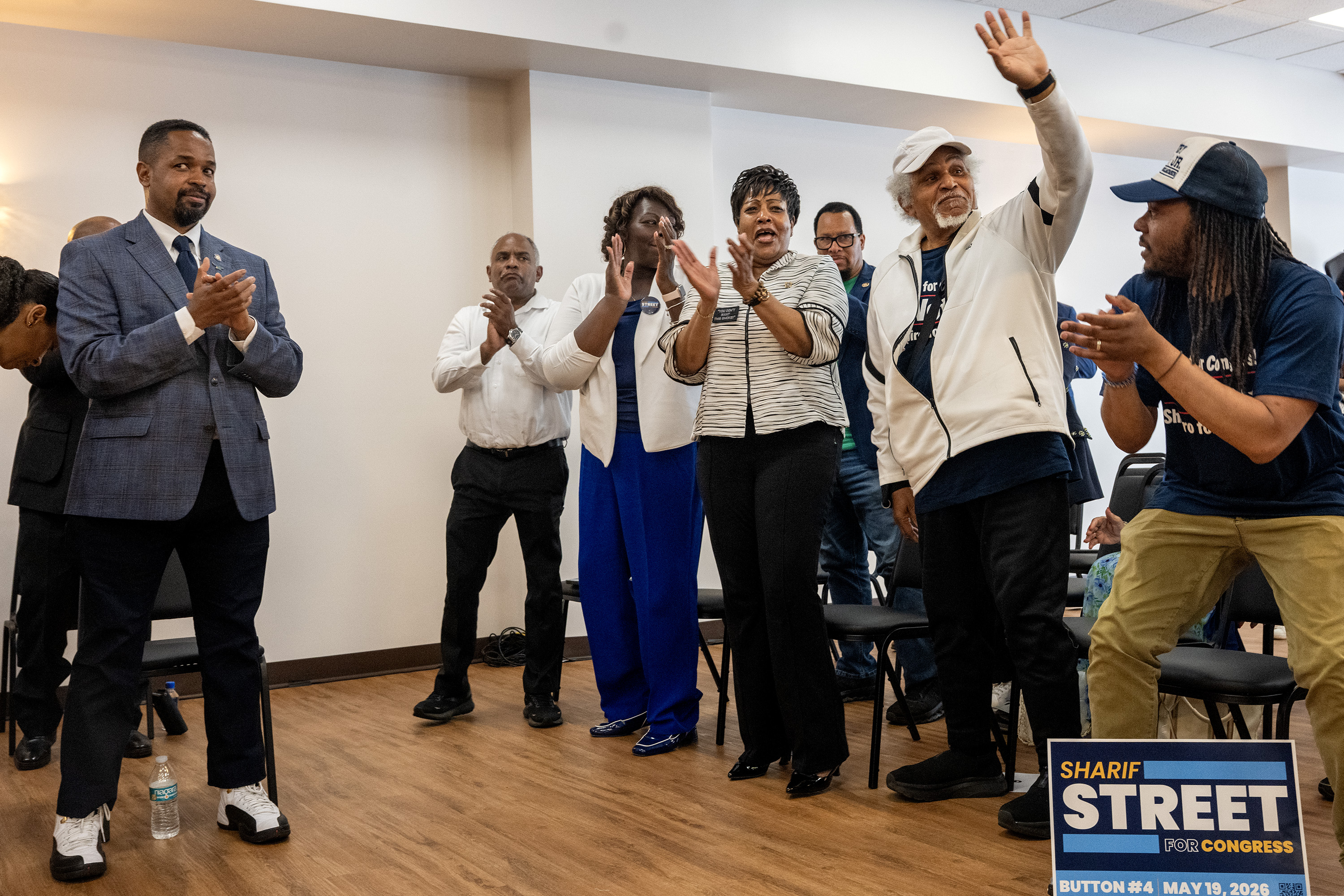
Former Mayor John F. Street (right) is acknowledged by supporters of his son, State Sen. Sharif Street (left), in West Philadelphia Monday, May 18, 2026.Tom Gralish / Staff Photographer
That was former Mayor John F. Street, the erstwhile City Council president, who returned to his old workplace Thursday to speak during public comment. He was testifying in support of a resolution to honor Philadelphia Police Lt. Greg Brown, who was, among other assignments, a member of Street’s security detail and is now retiring.
Street said Brown was one of the few people he never got to humiliate, because Brown “always got it right.”
“I never had a chance to put him on any list,” Street said.
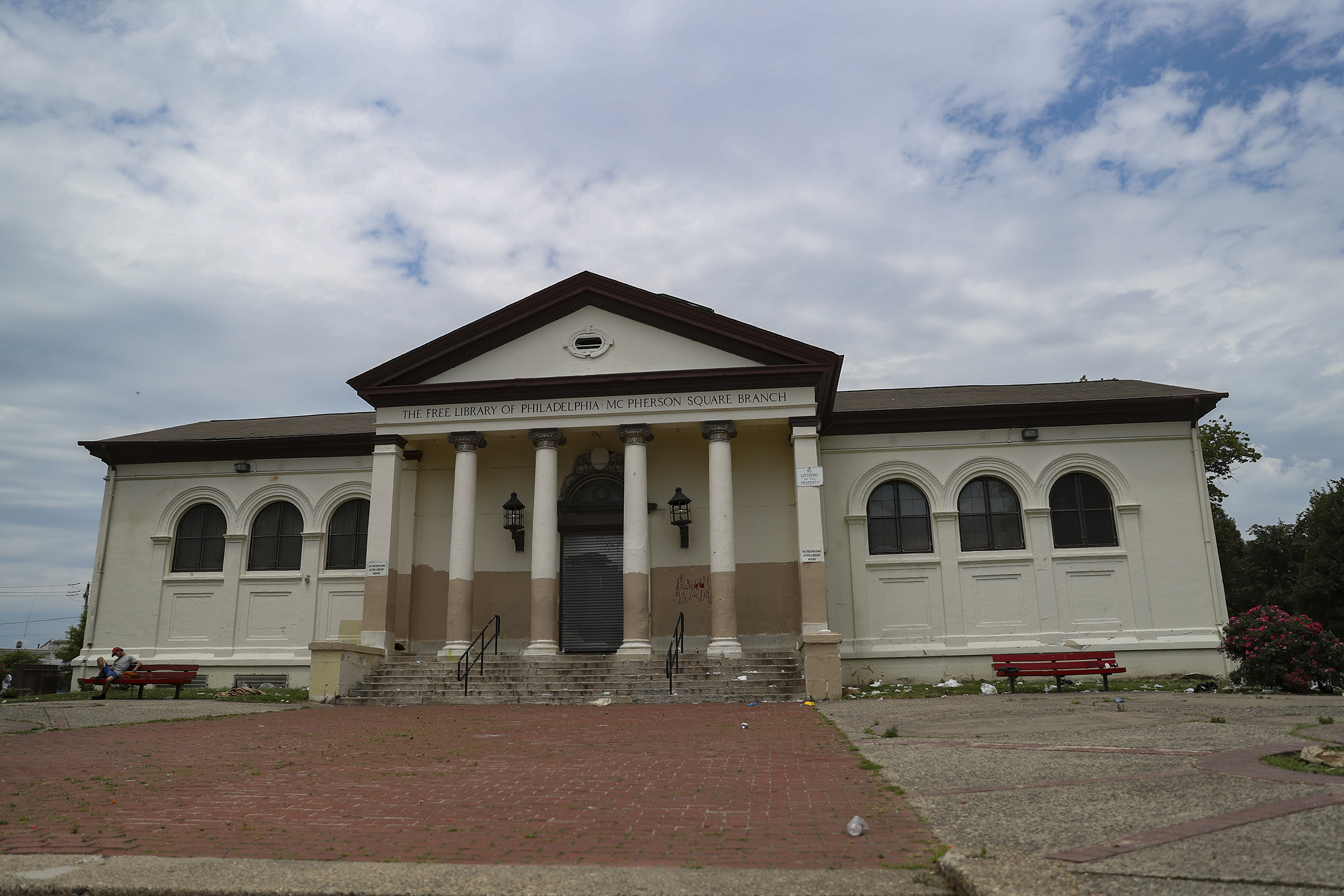
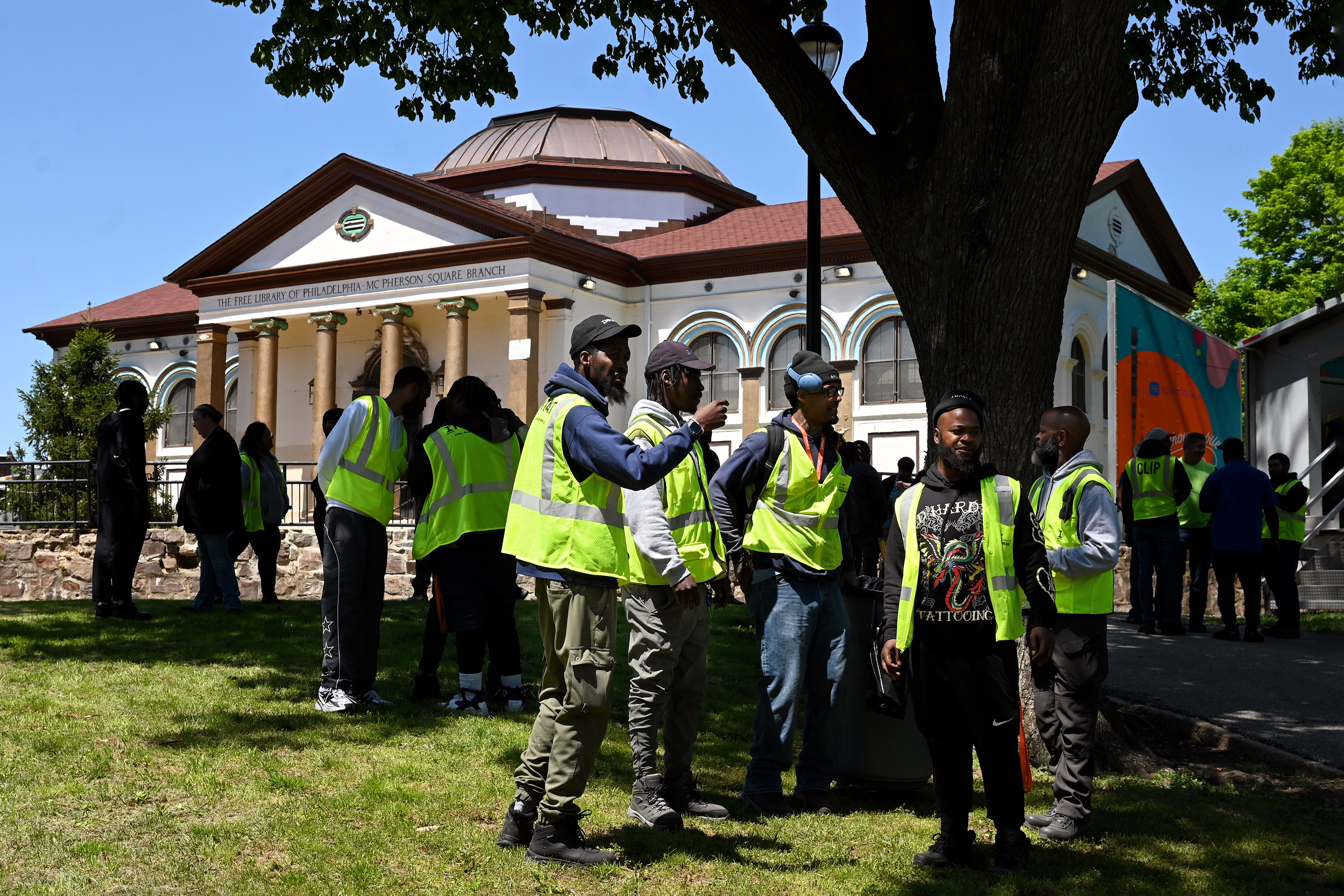
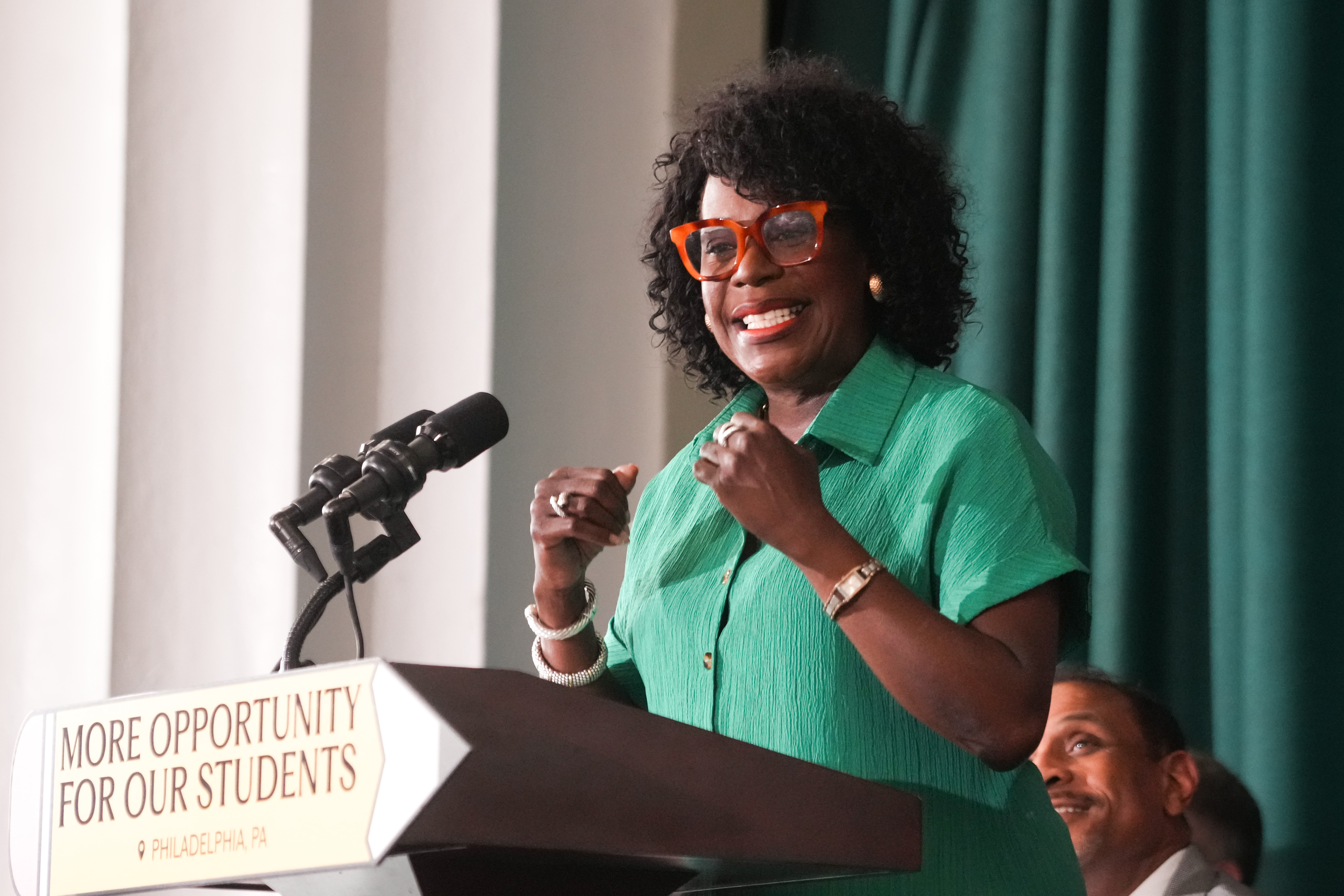
Mayor Cherelle L. Parker marked her 1,000th day in office by breaking ground on a $21.7 million improvement to the McPherson Square library, a symbol of the Kensington opioid crisis, to send the message that her administration’s “commitment to this community is firm.”
“The Kensington that I’m standing in today — this is not the Kensington that I walked in January of 2024. Quality of life is improving here,” Parker said at a news conference on Monday.
Although she did not focus on Kensington while campaigning for mayor in 2023, Parker has, since taking office, embraced the challenge of addressing gun violence and substance abuse in the neighborhood, which has made international headlines, and eradicating what is often referred to as the largest open-air drug market on the East Coast. She rode the El to an event at a Kensington middle school to mark her first 100 days in office.
The McPherson Square park and library became a highly visible marker of the crisis in the mid-2010s. People in addiction were a constant presence in the six-acre park, near Kensington Avenue and Orleans Street. Library staff learned how to administer Narcan, which reverses overdoses.
Philadelphia Mayor Cherelle L. Parker exits the Allegheny station before walking along Kensington Avenue on April 11, 2024. Parker took the El to attend an event marking her 100th day in office in the Kensington neighborhood in Philadelphia.Heather Khalifa / Staff Photographer
Parker ran on a tough-on-crime platform, and her approach to Kensington has featured a mix of police-focused tactics and novel strategies aimed at getting people off the streets and into recovery.
She cut city funding for syringe exchange services in her first budget, and her election effectively ended the city’s efforts to open a supervised drug consumption site, a priority of former Mayor Jim Kenney. The police department has doubled the number of officers who patrol the area, First Deputy Police Commissioner John Stanford said Monday.
Parker has also launched a Neighborhood Wellness Court program, which is designed to encourage alleged offenders to choose addiction services and avoid criminal proceedings, and she has launched the Riverview Wellness Village, a 20-acre recovery house in Northeast Philadelphia where more than 200 people live.
“People are beginning to see that we are at least trying to make a difference, and we are not acting as if we don’t see what’s happening,” Parker said. “We’re looking it straight in the eye and trying to figure out a way to make sure that we are solving a problem.”
Since Parker took office, the Kensington-based 24th Police District has seen a 48% decrease in violent crime, a 63% decrease in shootings, and a 47% decrease in homicides, Stanford said Monday.
After peaking in the wake of the onset of the COVID-19 pandemic, rates of violent crime and homicide have fallen across the country. This year, homicides in Philadelphia are on pace for a 60-year low.
People using drugs are still a common sight in Kensington, and crime rates in the neighborhood remain higher than the city as a whole, a reality Parker readily acknowledges. And her approach has drawn criticism from some harm reduction advocates and public health experts, who contend that heavy-handed policing can be counterproductive to saving the lives of people in addiction.
But few doubt Parker’s commitment to cleaning up the neighborhood, and the prospect of a revitalization of the dilapidated library, which was built in 1917 with a copper dome and classical columns, could be a potent symbol.
The renovation of the McPherson Square library is being funded through Rebuild, the parks and recreation center renovation program championed by Kenney and supported by Parker when she was on Council. Rebuild is one of three programs Kenney proposed while pitching the city’s tax on sweetened beverages, which was approved in 2016 and is more commonly known as the soda tax.
Workers set out to clean after the Office of Clean and Green Initiatives kicked off the summer edition of the One Philly, United City Citywide Cleaning Program in McPherson Park on May 4.Tom Gralish / Staff Photographer
The first phase of the library renovation, which included a new roof and a restored dome, was completed in 2025. Parker on Monday broke ground on the second phase, a “full-gut renovation” with “new HVAC, plumbing, electrical, fire alarm, and security systems” and many other improvements, according to the Philadelphia Capital Program Office.
The project will take two years. In the meantime, the Free Library of Philadelphia will set up a temporary location on Allegheny Avenue, said Kelly Richards, the library’s president and director.
City Councilmember Quetcy Lozada, whose 7th District includes much of Kensington, said she spoke to Parker about addressing the long-neglected neighborhood’s challenges in 2023, and recalled being “skeptical” that Parker would follow through on her promises as mayor.
“She made a commitment on that day that if she were to become the mayor of this city, that she would make Kensington and this community a priority,” Lozada said at the new ground-breaking, “and she has stood by that commitment and that promise.”
Staff writer Anna Orso contributed to this article.
Nearly a year after Mayor Cherelle L. Parker announced that Philadelphia would move away from using its long-held diversity goals in awarding public contracts, a City Council committee on Monday formally recommended that the city codify the change.
However, several corporate leaders who advised the special committee’s work testified during a hearing that the shift away from race- and gender-conscious contracting would set the city back.
Craig T. Williams, founder of the construction firm Pride Enterprises, said the city’s move to provide contracting advantages to businesses certified as “small and local” — instead of to businesses owned by women, minorities, and people who are disabled — will make it harder for Black-owned firms like his to grow.
“While the new terminology is intended to retain support for diverse businesses, it also removes the intentional mechanisms that once created predictable access for them,” Williams said. “The shift in terminology will likely result in an increase in opportunities for non-diverse firms, widening the disparity gap.”
And Michael Brown, CEO of The 360 Group, a consulting firm, said “minority businesses across Philadelphia are witnessing a catastrophic erosion of margins, pushing foundational enterprises to the brinks of collapse.”
He cited data showing that the state government awards only a small portion of its contracts to Black- and Hispanic-owned businesses.
“Philadelphia is slowly sleepwalking down the same exact destructive path,” he said.
Council’s Special Committee on City and Private Sector Diversity, Equity and Inclusion Policies, which is led by business community leaders, was convened in 2024 by Council President Kenyatta Johnson. The group was charged with drafting recommendations to strengthen the city’s DEI policies and address barriers faced by women, people of color, and people with disabilities who own businesses.
The city also stopped assigning participation “ranges” to publicly funded projects, meaning contractors are no longer given benchmarks for the amount of dollars that should go to subcontractors and suppliers owned by people of color, women, and people who are disabled.
Mayor Cherelle L. Parker speaks at Vare-Washington Elementary School in Philadelphia, on July 14.Jessica Griffin / Staff Photographer
The change came amid a broader dismantling of affirmative action-style programs at the federal level led by President Donald Trump’s administration. Parker said a new national legal precedent made the city’s practices vulnerable to court challenges, so the administration will now aim to give preference to businesses that are certified as small and local.
On Monday, Council’s committee agreed. Its report recommends the city move to a more legally defensible, race-neutral framework like the one Parker’s administration is already building. The committee also recommended that the city adopt more aggressive preferences to give those businesses clear advantages when they’re bidding for city dollars.
Still, members of the committee said Monday that they have concerns about implementation.
Michelle Flamer, a former longtime attorney for the city, said she is worried that the city will stop collecting demographic data on businesses that bid for contracts.
“We’re in a time period in this country of great distress, of really unbridled racist behavior, but this will not last forever, and we have to continue to collect this data so we will be prepared for a new day,” she said. “But if we don’t have it, we won’t be able to hold anyone accountable.”
And Harold T. Epps, the city’s former commerce director who co-chaired the committee, said he’s concerned that providing advantages to small businesses — which are defined as those which bring in less than $47 million over a three-year period — effectively puts a cap on how a business can grow.
“It seems the city has fallen into the same old trap of predetermining how large a business that has any elements of diversity can be,” he said.
Nadir Jones, the director of the city’s Office of Business Impact and Economic Advancement, said the Parker administration is exploring implementing a “middle market” program for companies that “graduate” out of the small-business classification.
City Councilmember Curtis Jones Jr. held a campaign fundraiser featuring Mayor Cherelle L. Parker at the Cobbs Creek Golf Course on Thursday night, a show of strength as he gears up to seek a sixth term in next year’s municipal election.
But that hasn’t stopped a whisper campaign among Philly’s political class about whether he’ll actually appear on the Democratic primary ballot next spring, with as many as four potential candidates said to be eyeing his seat representing parts of West and Northwest Philadelphia.
People close to Jones have recently encouraged him to reconsider seeking a new term and to clear the way for State Rep. Morgan Cephas to run to represent Council’s 4th District, according to a person with knowledge of the discussions who spoke on the condition of anonymity to discuss private conversations.
Other possible candidates include criminal justice reform advocate Celeste Trusty, ex-Service Employees International Union staffer Leigh Owens, and developer Ryan Spak.
The intrigue over Jones’ political future follows an Inquirer report in June that Jones and his wife, City Representative Jazelle Jones, who is a top official in the Parker administration, stand to reap up to $752,000 in payouts from the controversial Deferred Retirement Option Plan, or DROP.
Jones, who makes $165,000 per year, told The Inquirer in June that he may need the extra money from DROP to pay for medical bills in retirement because he is suffering from glaucoma, an incurable disease that Jones said has already caused him to lose 40% of his vision.
Councilmember Curtis Jones Jr. stands in for former Council President Darrell Clarke after he stepped away briefly during a Council meeting on Sept. 14, 2023.Tom Gralish / Staff Photographer
State Sen. Vincent Hughes, a West Philadelphia Democrat who said he has been friends with Jones for 44 years, said he will support Jones no matter what he decides, adding that “no election is automatic.” But Hughes also said he has encouraged Jones to consider his health when deciding how to proceed.
“I think the councilman has earned the opportunity to try to make an accurate determination as to what he wants to do for his future,” Hughes said in an interview Monday. “I have encouraged him to think about the personal side of this, the physical challenges.”
Hughes said he would like to see Cephas eventually succeed Jones in the 4th District. But if Jones decides that he can serve another term, Hughes said he will back his reelection.
“He’s been serving with this challenge, and he’s been serving well,” Hughes said.
Jones said Thursday that he intends to run for reelection and serve a full term.
ScreenshotSean Walsh
DROP allows city workers to “double-dip” by accumulating four years of pension payments, which is usually paid out in a lump sum upon their retirement, while they are still working and receiving their regular paychecks.
The Joneses’ enrollment in DROP is legal, but his use of the program resurrects a scandal from the early 2010s that ended the political careers of several prominent figures in City Hall.
Elected officials, who were not initially envisioned as being eligible for the program, took advantage of it by briefly retiring at the end of their terms, collecting lucrative DROP payouts, and then getting rehired at the beginning of their new terms.
As a junior Council member, Jones in 2010 voted for a bill banning future elected officials from enrolling in DROP. But the bill “grandfathered” in current elected officials at the time, he said, and Jones is now poised to become the first lawmaker to use the program in years.
Jones enrolled in DROP in August 2024, meaning his mandatory retirement date would be in August 2028, during the first year of the next Council term. He would be eligible to collect a $432,000 payout then, and upon retirement he will begin collecting his regular city pension payments.
But Jones in June said he plans to retire just before the start of the next Council term in January 2028, take a slightly reduced DROP payout, and then serve his entire next four-year term, if he is reelected. He has held the seat since 2008.
The person familiar with the discussions about Jones’ future said 4th District voters are unhappy about his enrollment in DROP and that speculation about his potential successor is becoming a “self-fulfilling prophecy.”
“This is a district that reads the newspaper and works to stay informed,” the person said. “And they don’t like what they’ve been reading and hearing.”
In June, Jones said he has had four eye surgeries and that he enrolled in DROP to ensure he can afford the healthcare he needs in retirement, “so that if I was blind, I wouldn’t have been without resources.”
He added that, due to his health challenges, he is grateful he was not elected Council president. He ran for the leadership post in 2023, losing to Kenyatta Johnson, a South Philadelphia Democrat.
“I am functional. My staff kind of helps to keep that good,” Jones said. ”I am thankful to God that I did not get elected [Council] president. Do you know how much reading they do? I could have not kept up with all of the numbers and stuff like that, so I know my limitations.”
Jazelle Jones, who has served in multiple mayoral administrations, enrolled in DROP in 2020 and was originally set to retire in 2024. Parker, however, has pushed through a series of exceptions to personnel rules allowing her to continue serving and collect a more lucrative DROP benefit of about $320,000. Those approvals were processed months after the fact, city records show, and the administration has not yet explained the gaps in paperwork.
Curtis Jones, 69, has also said he hopes that Cephas, 42, a West Philadelphia Democrat, will succeed him when he retires after his next four-year term, meaning she would run in the 2031 municipal election cycle.
State Rep. Morgan Cephas attends a get-out-the-vote rally for State Sen. Sharif Street at the Church of Christian Compassion in West Philadelphia on May 18, 2026, on the day before the Democratic primary election for the 3rd Congressional District. Cephas was a candidate for the same seat, but withdrew early in the race.Tom Gralish / Staff Photographer
Philadelphia politicians sometimes retire in the middle of their terms, triggering a special election in which Democratic ward leaders, and not primary voters, choose the party’s nominee, who usually ends up winning the seat thanks to Philly’s deep-blue electorate. That can sometimes allow outgoing politicians to handpick their successors.
But Jones has said he would not retire in the middle of his next term, and he instead plans to endorse Cephas to run in a Democratic primary in 2031.
Amid the heightened scrutiny over his retirement plans, some allies of Jones and Cephas, who both got their start in the West Philadelphia-based political organization previously led by former U.S. Rep. Chaka Fattah, are encouraging him to speed up the transition. That could prevent a worst-case scenario for Cephas: if Jones lost to another challenger in next year’s Democratic primary while Cephas sat out the race in deference to Jones.
Several other potential candidates are considering running for Jones’ seat, setting up what could grow into a crowded primary.
Spak — an affordable housing developer based in West Philadelphia who has in recent years been critical of some Council members’ more restrictive housing policies — is rumored to be considering a campaign. He declined to comment.
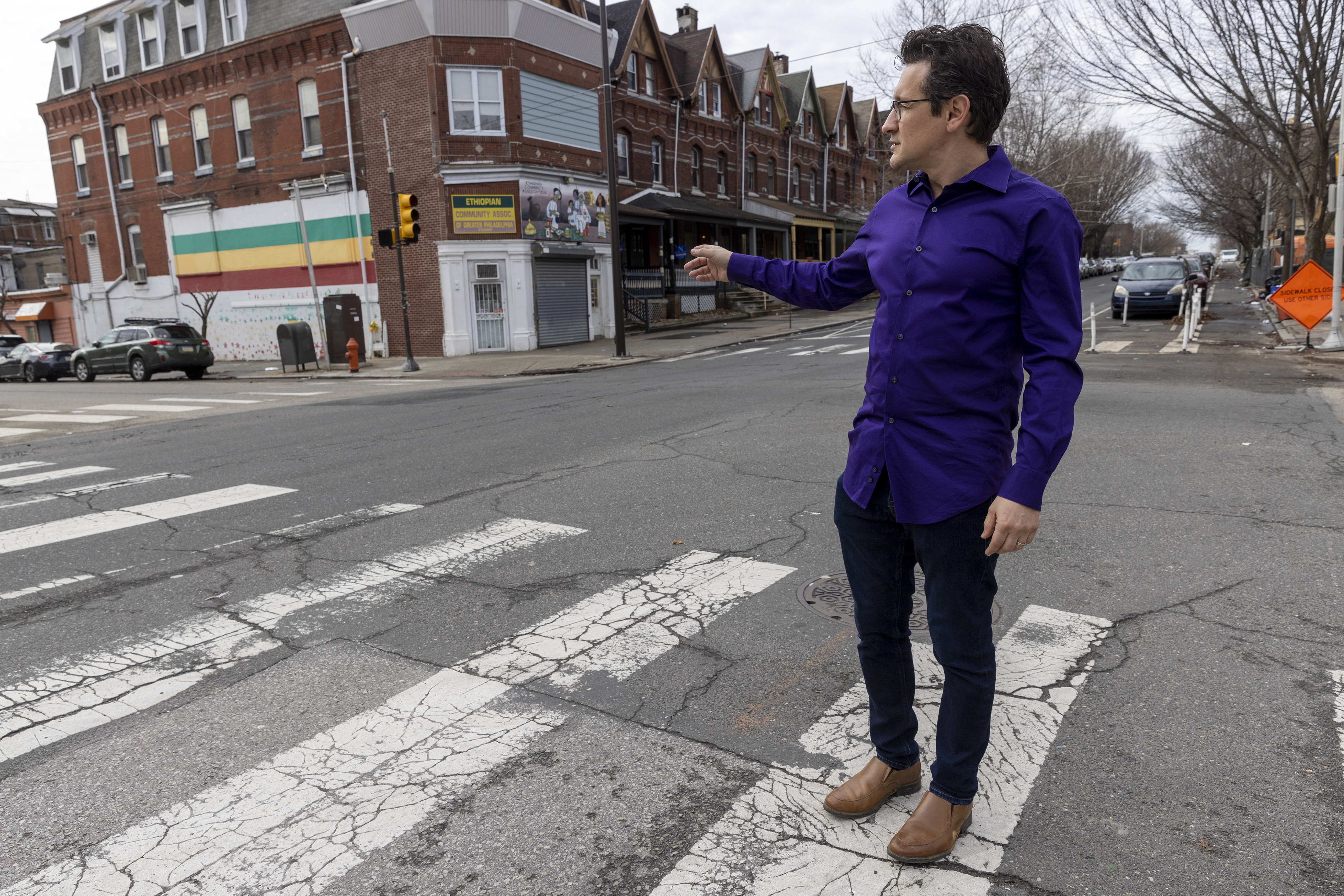
In this 2022 file photo, Ryan Spak is photographed at 44th and Chestnut Street near the Ethiopian Community Association. Spak’s work has included collaborating with West Philly residential and commercial property owners on rehab projects.ALEJANDRO A. ALVAREZ / Staff Photographer
In addition, the city’s progressive organizations are eyeing the district as a potential opportunity to grow their influence on Council. Candidates aligned with the left are already lining up to run against incumbents in at least two other districts.
Three sources close to that effort, who requested anonymity because they were not authorized to discuss the plans publicly, said Trusty and Owens, both criminal justice reform advocates, are considering getting in the 4th District race.
Trusty is the ex-secretary of the Pennsylvania Board of Pardons and has also worked with the national organization FAMM, formerly known as Families Against Mandatory Minimums. She declined to comment.
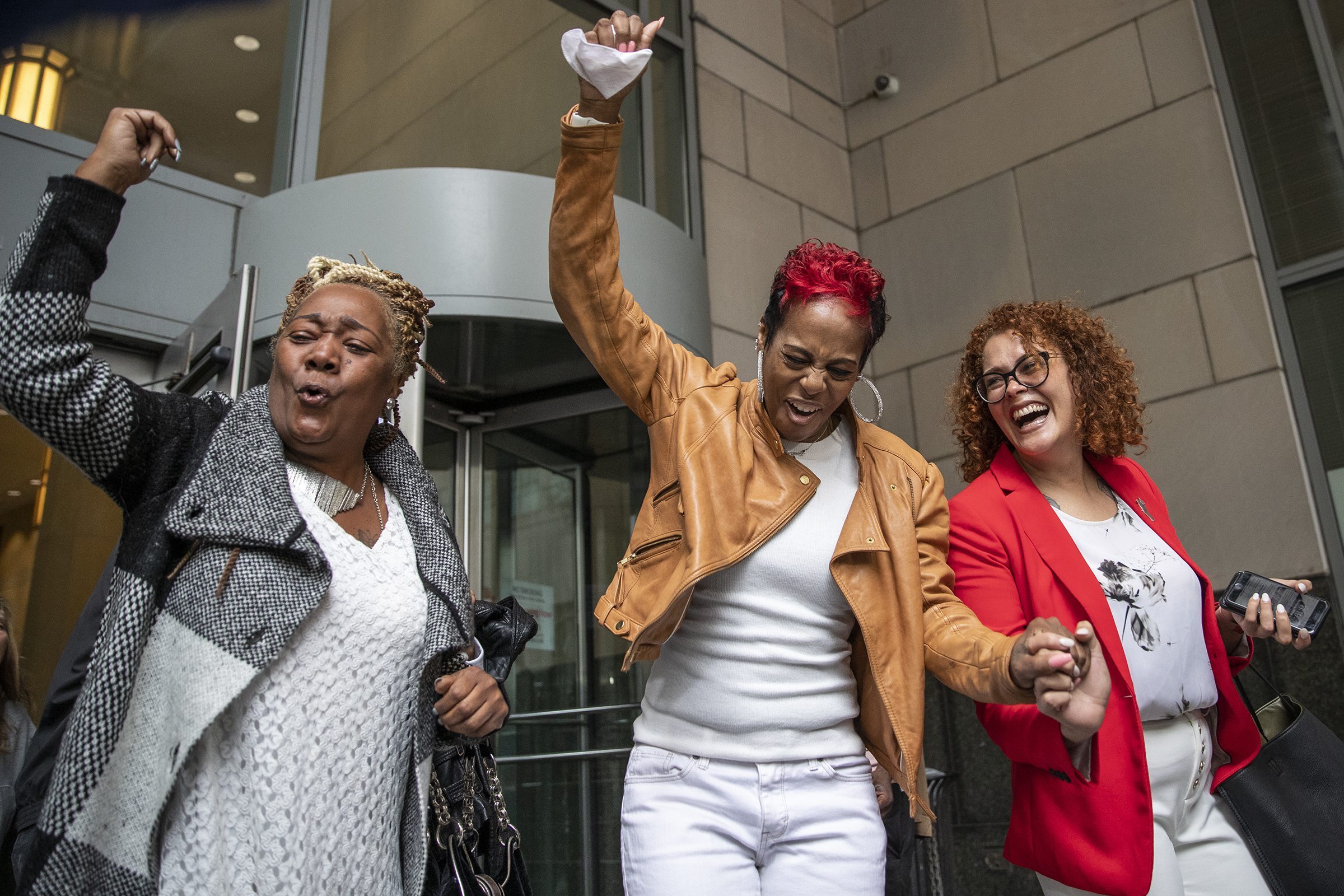
Celeste Trusty, of FAMM, is at right in this 2019 file photo. She is celebrating with Ketra Veasy (center), sister of Willie Veasy, who had been imprisoned for 27 years for murder and was exonerated.HEATHER KHALIFA / Staff Photographer
Owens, a former staffer at SEIU who was also a political aide to progressive ex-Councilmember Helen Gym, is now the education and advocacy director at the Pennsylvania Prison Society. He said in an interview that he has been considering running for Jones’ seat for about two years.
He said he is a native of the district, and sees an opportunity for new voices on Council to advocate for stronger public education and more affordable housing.
Owens, 46, said the revelations around Jones’ use of DROP made clear that it’s “time for the old guard to step down.”
“When I see what he’s doing with this DROP money and people using politics as a tool to line their pockets and stifle progress, it’s upsetting,” Owens said. “It’s time for people that really have the lived experience and who are doing this for the right reasons to get these seats. That’s the only way the city is going to be better: if our leaders care about the people and not their own interest.”
Staff researcher Ryan W. Briggs contributed to this article.
Correction: A previous version of this article incorrectly listed a candidate considering running for the 4th District seat. The potential candidates are Curtis Jones Jr., Morgan Cephas, Ryan Spak, Celeste Trusty, and Leigh Owens.
In the five years he spent researching his book Mobilization Politics, Haverford College political scientist Stephen J. McGovern interviewed former Mayor Jim Kenney and other Philadelphia elected officials, political activists, campaign consultants, labor leaders, and protesters.
The book, which covers events from the 2010s through Mayor Cherelle L. Parker’s victory in the 2023 election, uses Philly as a case study to examine the national rise of grassroots progressive politics over the last two decades. McGovern details how local activists employed bottom-up tactics to win major policy victories in areas like criminal justice reform, helping to decrease the jail population, and immigration, leading to Philly becoming a so-called sanctuary city.
The activists often used an inside/outside strategy, McGovern wrote, of leaning on officials they helped elect, like District Attorney Larry Krasner, and publicly pressuring more moderate ones, like Kenney.
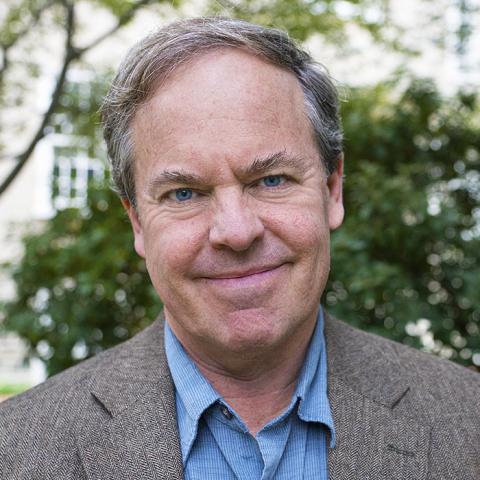
Haverford College political scientist Stephen J. McGovern authored the 2025 book “Mobilization Politics,” on grassroots activism in Philadelphia.Sean Walsh
McGovern also explores areas where progressives have fallen short of their goals, and the problems associated with a brand of politics driven by groups that tend to be more affluent and white than the city as a whole. Much of the new type of political organization has been driven by millennials born outside the city, McGovern found, leading to tensions over gentrification.
McGovern recently spoke with The Inquirer about his 2025 book, the rise of the local progressive movement, and what it all means during Parker’s administration. The interview has been lightly edited and condensed for clarity.
Your book describes how grassroots activists are really driving the agenda in Philadelphia City Hall, and, as you say, across the nation in local government. Is that an accurate summation of your thesis statement?
I think that’s fair, and what I want to call attention to is how significant that change is. There may be a lot of people today who assume, “Well, hasn’t that always been the case in city politics?” But no, for much of the mid- to late 20th century, city politics operated in a very different way. It was much more of a top-down phenomenon, and the shift towards more bottom-up politics has been a relatively recent one. And increasingly it’s pretty widespread throughout the United States. So as a scholar of urban politics, I was interested in trying to explain how and why that happened.
In the book, you describe various political science theories that have sought to explain urban politics in the past. Can you explain how your thesis is different from those previous schools of thought, such as “regime theory”?
Many scholars have argued that downtown-led regimes wielded a great deal of power over urban policymaking. Regimes were led by business leaders and their allies — law firms, accounting firms, mass media relations firms, and interest groups that had an interest in promoting growth, especially pro-growth labor unions, and, of course, public officials. Basically from 1970 on, every Philadelphia mayor headed a downtown-led regime in a relatively top-down fashion, in terms of governing style. So that’s the backdrop. My book is all about how that pattern began to change around the turn of the century, and then picked up in the 2010s with a burst of social movement activity. Occupy Wall Street really started things off, but then it picked up, especially with Black Lives Matter, the immigrant rights movement, and all of that social movement protest had a catalytic effect on grassroots organizing in cities with respect to a whole host of public policy issues.
As your book points out, much of the activism has been driven by millennial transplants who have moved into the city. Is it fair to say that trend is the main driver of this change, or one of several factors?
That is one of the main factors in explaining why there is this big shift. But there are also some underlying changes in the local political environment, what social movement scholars sometimes call the “political opportunity structure.” One of those changes is a decline in the organizing capacity of the downtown business community, which had been so dominant. It started to create a vacuum. Into that vacuum steps young people. Populations had been steadily declining in virtually all big American cities. They started to stabilize around 2000, and you see an influx of young people who are relatively well educated, more likely to be professional, more likely to be progressive, more likely to get involved in local politics. Some people call it the “back to the cities” movement.
What’s different about these newcomers compared with other left-leaning groups that have sought to impact city politics in the past?
In the past, a lot of young people tended to get involved in protest politics. People on the left were very wary about engaging in electoral politics. The folks who are moving into Philadelphia after 2000 increasingly are participating in more conventional politics, including electoral politics, and that’s a big change. That escalates when Bernie Sanders runs for president in 2016. One of the lessons learned for lots of people who volunteered for him is: This is something we can do at the local level.
As you note, the groups driving this style of politics tend to be more affluent, more educated, and more white than Philadelphia as a whole. That’s created a lot of friction. There’s a debate over whether this is a phenomenon that will be limited to gentrified areas, or whether it will grow into a cross-racial or cross-class coalition. Is it fair to say that’s the central question going forward?
Absolutely. So much of this is turf-oriented. The millennials and Gen Zers moving into Philadelphia tended to congregate in neighborhoods that attract a lot of white, middle-class people who were relatively well educated, and so those became significant bases of progressive politics. The challenge then becomes organizing in other neighborhoods. Some of the grassroots groups made impressive inroads. I’m thinking about campaigns for Larry Krasner, in particular, in lower-income, predominantly Black and brown neighborhoods, where a group like Reclaim Philadelphia or the 215 People’s Alliance were pretty effective. But in many cases, it was fairly difficult for a group like Reclaim Philadelphia to venture into neighborhoods beyond their comfort zones, if you will. They were mindful of some of the skepticism that residents of those neighborhoods felt towards the millennials and Gen Zers flocking into the city and contributing to gentrification. Somebody from Reclaim Philadelphia might be knocking on the door talking about the affordable housing crisis, and people answering the door might look at them and say, “You’re actually a big part of the problem here.” This tension between so-called new Philadelphians and old Philadelphians became more pronounced, and navigating those tensions becomes a real challenge.
Your book finishes with the 2023 mayor’s race, when Cherelle L. Parker defeated more progressive candidates and won the election with a “law and order” platform. So perhaps that was a surprising twist on your thesis at the end of your research.
She’s obviously fascinating. She’s a shrewd operator. In the primary election, two progressives split the vote. And being the only prominent Black candidate worked to her advantage. But since she’s been elected, she’s been very skillful about maneuvering in ways that have brought back a return of the traditional kind of urban politics — a top-down governing coalition led by a somewhat resurgent business community and pro-growth unions, the building trades unions, and a somewhat resurgent establishment-oriented Democratic Party, all of which is led by Parker. This is very reminiscent of standard politics of the mid- to late 20th century. So in some ways, Philadelphia is a bit of an aberration in that it’s moved backwards, if you will, recently. But I still see lots of evidence that bottom-up grassroots activism remains a force, and will become much more impactful in the next four years.
Mayor Cherelle L. Parker speaks at Vare-Washington Elementary School to highlight the historic education investments included in the 2026-27 state budget, in Philadelphia, July 14, 2026.Jessica Griffin / Staff Photographer
For what it’s worth, Parker herself seems to be mindful that grassroots politics are still relevant. We reported last year that she ordered a bunch of copies of a book called Performative Outrage: How Manufactured Fury Undermines Local Government and Public Service, and was handing it out to people. So I think it’s safe to say she isn’t a fan of the trends you described. You alluded to Parker returning to a “regime theory” style of politics. What’s an example of that?
The 76ers’ arena, for example. She was siding with the Sixers and other downtown-oriented interests that wanted to see the arena in Center City on East Market Street, and discounting the views of community groups, most prominently Chinatown. There’s a general mode of governance style associated with Parker that’s very uncomfortable with dealing with grassroots-oriented groups. That’s just not her style. She’s much more comfortable dealing with downtown business elites and people in the building trades unions. Her whole mindset is much more comfortable with the old ways of governing cities.
Parker won in 2023, when Joe Biden was president. Progressives in Philly and elsewhere seem to do better when Trump is in office. This spring Democrats just elected Chris Rabb, a progressive firebrand, in a high-profile primary for a Philly congressional seat.
Politics is cyclical. Donald Trump has had that effect of reinvigorating lots of activists. So there was a lull in progressive activism in the city for a while, but it’s on the rise again. But it takes time to regroup, especially on the activist side. Some groups last for a long time, but the norm is for groups to be quite ephemeral. New groups have to pop up, often involving activists who had been involved in the old groups. The transition costs are pretty steep. Somebody like Chris Rabb winning doesn’t surprise me at all. There will probably be more successes in the next two or three years. That said, progressive activists have lots of challenges. They’re in a holding pattern right now.
Thanks for your time. That’s all I’ve got. Is there anything I didn’t touch on that you want to include?
I’m an urban politics specialist. I wrote this book. I devoted five years of my life to it. But in the last year or two, I’ve been so fixated on what’s going on in national politics and Donald Trump and the threat that he and his administration pose to democracy. With that in mind, I just want to say that urban politics in general offers some hope for people who are increasingly demoralized. At the local government level, partisan polarization isn’t nearly as intense. We’ve got divisions between progressives and moderates, but that’s nothing like what we’re seeing in national politics. There’s real hope for city governments to address big problems and offer real solutions. There’s a path forward. One can make a case that right now, democracy in American cities is actually thriving.
A new zoning bill by City Councilmember Jeffery Young Jr. would restrict the redevelopment potential of the Academy of Natural Sciences museum after Drexel University this month announced plans to shutter the centuries-old institution.
Young, whose 5th District includes the museum property on the Benjamin Franklin Parkway, introduced the ordinance at Thursday’s Council session.
It would limit the allowed uses of the property and others around it to specific categories, including hospitals, government uses, libraries and cultural exhibits, and “community-supported” farms.
Under Young’s legislation, residential and commercial uses would not be allowed. The property is currently zoned to allow multifamily residential development, unlike the other museums on the Parkway.
Young said his legislation would simply change the museum’s zoning to reflect what has long been on the site.
“It’s always been a cultural and civic use, so [my bill] would match the land use with the actual zoning to allow only cultural and civic type uses,” Young said. “But it wouldn’t prevent the academy from closing.”
Councilmember Jeffery Young Jr. Elizabeth Robertson / Staff Photographer
Drexel did not immediately offer comment on Young’s legislation.
If the bill passes, it will make it much harder to convert the building to other uses. The owner would need to secure a variance from the Philadelphia Zoning Board of Adjustment, an often lengthy and costly process with no guarantee of success.
During that process, any prospective developer would also be required to meet with community groups in advance of a zoning board hearing.
Young said the purpose of his bill is to allow “the community some input on a site that has been a cultural use for centuries.”
Instead of changing the property’s zoning to match those of neighboring museums and libraries, Young has proposed adding the restrictions to what is known as a zoning overlay — a kind of hyperlocal patch of the code — that covers his district and allows him to precisely describe what he wants to restrict and allow.
Young said he is also considering changing the underlying zoning to match that of the Philadelphia Museum of Art, the Barnes Foundation, and other cultural institutions on the Parkway.
“We are looking to do that, but the issue is that the planning commission doesn’t work for me and so they’re not on my time,” Young said. “Ultimately, we had to do what we could do from our office’s standpoint.”
To become law, the bill would need to be approved first in the Committee on Rules and then by the full Council before heading to Mayor Cherelle L. Parker’s desk.
If Young pushes forward, the bill is likely to pass in Council thanks to a practice known as councilmanic prerogative, in which the rest of Council defaults to the wishes of the member whose district includes a property when it comes to land-use decisions.
Young, whose district includes parts of Center City and much of North Philadelphia, has abandoned zoning legislation that stirred controversy in the past, such as a housing ban around the former Hahnemann University Hospital campus.
But the closure of the Academy of Natural Sciences is unpopular, and the new legislation is likely to have broad support from Council members.
If enacted, the bill would take effect immediately.
A surprise closure
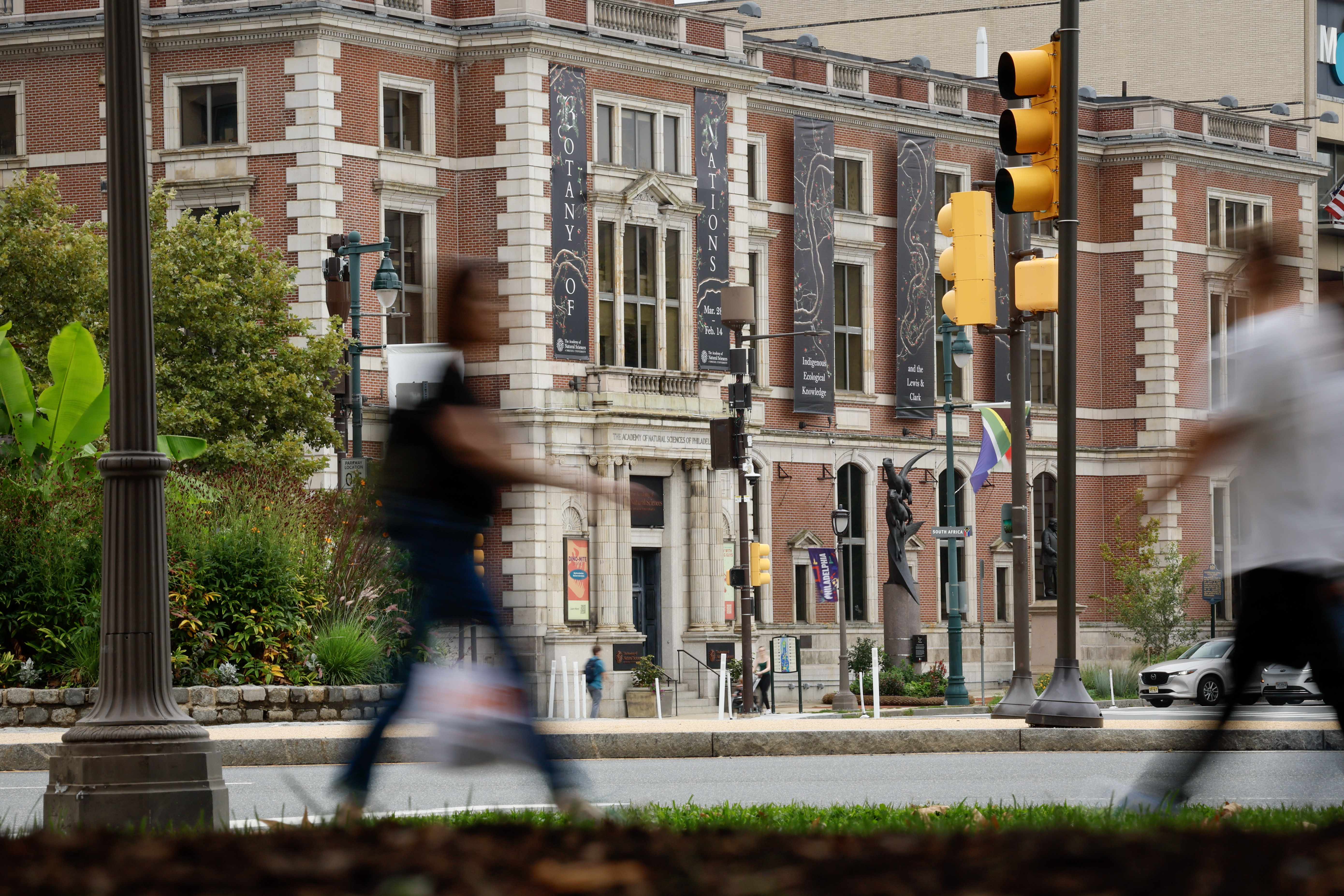
Founded in 1812, the Academy of Natural Sciences is the oldest institution of its kind in the nation, and its museum, which opened in 1828, is the country’s oldest natural history research museum. It houses 19 million biological specimens, including bones, carcasses, and plants.
Drexel announced earlier this month that it was closing the museum effective Sept. 27, citing a decrease in attendance since the COVID-19 pandemic and the university’s financial woes. The decision caused an immediate uproar, including a protest on the Parkway attended by hundreds. Young vowed to “protect and preserve” the building.
Matt LeBlanc, of Manayunk, and his wife, Alyssa, show their children, Miles and Clara, the Dinosaur Exhibit at the Academy of Natural Sciences of Drexel University earlier this month.Tyger Williams / Staff Photographer
Leaders of Drexel and the academy have said that the “collections and their use to advance scientific knowledge will be the focus of our work for the near future” and that no final decision had been made on the building’s future.
A source told The Inquirer the university’s ultimate aim is to relocate the collection and sell the building.
After the announcement, Deputy Mayor Patricia Wellenbach, a top official in Parker’s administration, was named the academy’s temporary leader, serving as senior adviser while on loan from the city.
Young and other members of Council have been attending rallies against the closure.
“This academy has been there for over 200 years. It’s dedicated to civic and cultural education, to science,” Young said in a speech during Thursday’s meeting. “If we take that away, how will our kids learn?”
Correction: An earlier version of the story inaccurately attributed plans to sell the museum building and relocate the academy’s collection.
Last November, Mayor Cherelle L. Parker announced with great fanfare that Philadelphia could create a property tax break to spur the conversion of derelict buildings, such as empty Center City office towers and vacant school facilities, into apartments.
She had worked with legislators in Harrisburg to change state law to allow Philadelphia to pursue the legislation, which would create a 20-year property tax abatement for conversions of “deteriorated” properties.
But 10 months later, no such legislation has been introduced in City Council, and Parker on Wednesday called on city lawmakers to consider her 20-year abatement idea for distressed properties.
“We have an affordability crisis here in the city of Philadelphia,” Parker told reporters Wednesday. “What if we marry that challenge with these persistently vacant buildings that have gone underutilized, and we put them to their best and their highest use to incentivize affordable housing?”
Parker’s administration, however, has not yet transmitted a draft of the bill to Council, which is typically the first step for lawmakers to consider legislation championed by the mayor.
“Tell them, ‘Send the bill over,’” Council President Kenyatta Johnson told reporters Thursday. “We haven’t seen any piece of legislation regarding 20-year tax abatement at this particular point in time.”
Asked about the delay, Tiffany W. Thurman, Parker’s chief of staff, said Thursday that city agencies “are collaborating to ensure the proposed legislation is legally sound and can withstand constitutional scrutiny.” She added that Parker “remains firmly committed to presenting City Council with a bill that incentivizes the development of affordable and workforce housing on vacant, publicly owned land.”
On Thursday, several members of Council questioned the lack of specifics from the mayor’s office, and others were less than enthused about the idea of approving a new tax break when the Philadelphia School District is facing a funding crisis.
“I continue to appreciate an effort to make sure that we have access to affordable housing in the city of Philadelphia,” Councilmember Nicolas O’Rourke said. “At the same time, I am very much so laser-focused and desirous of the city getting the revenue that it needs.”
A controversial policy
Property tax abatements have long been controversial in Philadelphia, with opponents contending that they starve the city and school district of needed revenue while favoring real estate developers.
Philadelphia’s 10-year abatement program, which was established in the 1990s, previously exempted owners from paying real estate tax on all new construction or improvements on any type of property for 10 years.
That program was long hailed as key to the city’s turnaround in the early 2000s. But concerns about its impact on neighborhood inequality and school funding grew over time, and Council in 2019 roughly halved the value of the tax break for new construction.
Parker argues that the idea behind her legislation is different: She wants to see a far more narrowly targeted bill that would only help developers who seek to redevelop large, derelict buildings.
“We’re talking about … persistently vacant school buildings that have been vacant from three up to 30 years,” Parker said Wednesday.
The mayor also noted that the development environment has worsened dramatically since Council cut the 10-year tax abatement’s power, with soaring interest rates and construction material inflation as factors that weigh heavily on complex and large-scale projects.
Still, many Council members are skeptical of tackling a potentially controversial measure that is seen to favor developers ahead of next year’s municipal elections, when all 17 city lawmakers will be on the ballot.
“I’d like to get more information on exactly what the plan is because the tax abatements are, as you know, hugely unpopular,” said Councilmember Cindy Bass, who represents parts of North and Northwest Philadelphia.
Bass said that while the abatement has spurred needed growth, she would need to see any expansion of it balanced with the needs of lower-income Philadelphians who are struggling with rising costs and property taxes.
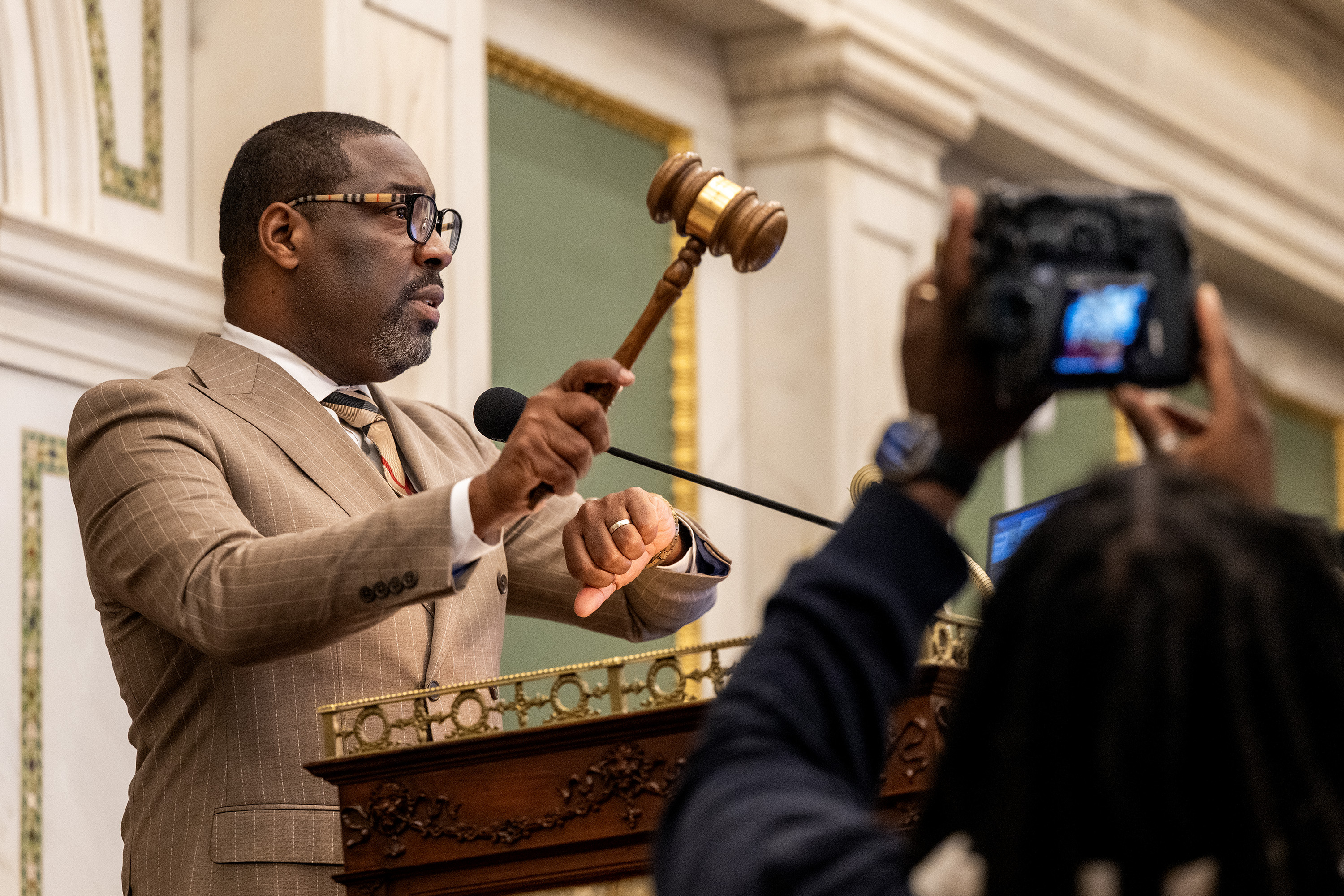
President Kenyatta Johnson checks his watch and gavels City Council into session on Sept. 17, as the body returns for start of its fall session.Tom Gralish / Staff Photographer
And Johnson on Thursday reiterated his comments from earlier this year that he would like to see the newly authorized 20-year abatement include a provision that requires an affordable housing component of the projects it enables.
“Any type of legislation like that should really focus on making sure that we’re providing a level of affordability, also senior housing,” he said. “Obviously, the devil’s always in the details.”
But it is not clear that state law would allow Philadelphia to mandate affordability in an abatement bill, and Parker cautioned against doing anything that would exceed the city’s authority.
“We have to make sure that whatever we are proffering, that it is directly connected to what has been enabled,” Parker said. “It has to pass legal muster for no one to question the constitutionality of what it is that we’re doing.”
Persistently vacant schools
A 20-year abatement would apply to empty office buildings in Center City and long-vacant industrial buildings. But Parker and administration officials have focused their pitch on revitalizing empty public schools.
“We need to pass it because it’s going to be extremely beneficial for challenging properties,” John Mondlak, chief of staff of the Philadelphia Department of Planning and Development, said Wednesday. “You think about schools in 10 years, 20 years — they are very difficult to reposition.”
That pitch, however, runs up against another policy issue festering between Parker and Council.
Thomas and other Council members vigorously protested the plan and are still pressing for the board to reconsider it.
“That’s our priority,” Thomas said Thursday. “I don’t want to have a conversation about schools that are vacant until we have a conversation about schools that are occupied.”
Private equity investor Gregory L. Segall, a Philadelphia Republican who was a key backer of Mayor Cherelle L. Parker’s 2023 campaign, has resigned from three city boards as he weighs other “civic engagement” opportunities, according to a copy of one of his resignation letters obtained by The Inquirer.
Parker, a Democrat, appointed Segall to the Philadelphia Gas Works board, the Philadelphia Tax Reform Commission, and the Mayor’s Business Roundtables. Segall resigned from all three effective Aug. 31. He also served as a vice chair of Parker’s transition committee when she was taking office.
“While I am stepping away from this role, I remain committed to civic engagement and intend to explore other ways to continue the journey I have been privileged to pursue over the last several years,” Segall, the chairman and CEO of Versa Capital, wrote in his letter resigning from the Mayor’s Business Roundtables, an advisory group convened by Parker.
Segall’s moves come as candidates are gearing up to run in next year’s municipal elections, when Parker and all 17 City Council members are up for reelection.
Candidates in the primary election have until early spring to decide whether they are running.
Claudia Vargas, a journalist who formerly worked for NBC10 and The Inquirer, reported this week that Segall was considering running for Council.
When contacted by The Inquirer, Segall, who lives in Chestnut Hill, said Wednesday he is “not running” for Council.
“People have suggested multiple forms of public service, including Council, and I have no plans or commitments at this time,” Segall, 63, said in an interview.
Segall said he continues to “strongly support Mayor Parker, and my highest and best hope is that my public service will be in aid of her continued success.”
Parker on Wednesday declined to comment on the report of Segall exploring a run for office.
From 2022 through 2025, Segall and his wife donated $37,300 to Parker’s campaign, according to campaign finance records. He also gave $150,000 to a super PAC backing her 2023 run, and $6,200 to her transition committee, the records show.
“The 2023 election took place at a time of crisis in the city, and getting the right leader was never more critical,” Segall said. “So the reason for my commitment to her was quite simple: Before I’m a Republican, I’m a Philadelphian.”
Gregory Segall, Chairman and CEO of Versa and Supporter of Mayor Parker, speaks at the Union League of Philadelphia Presidential Luncheon in Philadelphia, Pa., on Thursday, September 18, 2025.Tyger Williams / Staff Photographer
Citing Republican Party sources, Vargas reported that Segall was considering running for one of the two at-large seats on Council that are elected citywide and are set aside by the Home Rule Charter for minority-party or independent candidates.
Republicans held those seats for about seven decades until Councilmembers Kendra Brooks and Nicolas O’Rourke won them over the last two election cycles as members of the progressive Working Families Party.
Brooks is considering challenging Parker in next year’s mayoral election, sources previously told The Inquirer, which would require her to resign from her Council seat.
The Philly GOP has been strategizing ways to recapture the seats, and a run by Segall, a wealthy businessman who could potentially help fund his own campaign, could be a major opportunity for the party.
Segall donated $2,500 to the Republican City Committee last October.
GOP chair Vince Fenerty said he has met Segall and thinks he is a “nice and honorable man.”
“We’re a party that welcomes any potential candidate, and the decision to endorse would be up to our ward leaders,” Fenerty said in an interview Thursday.
Brian O’Neill, who represents the 10th District in Northeast Philadelphia, is currently the only Republican on Council. Democrats hold the remaining 14 seats.