Tag: Cherelle L. Parker

  • Philadelphia’s food-safety rules aren’t new. Why does it seem like restaurant inspections have intensified lately?

    Philadelphia’s food-safety rules aren’t new. Why does it seem like restaurant inspections have intensified lately?

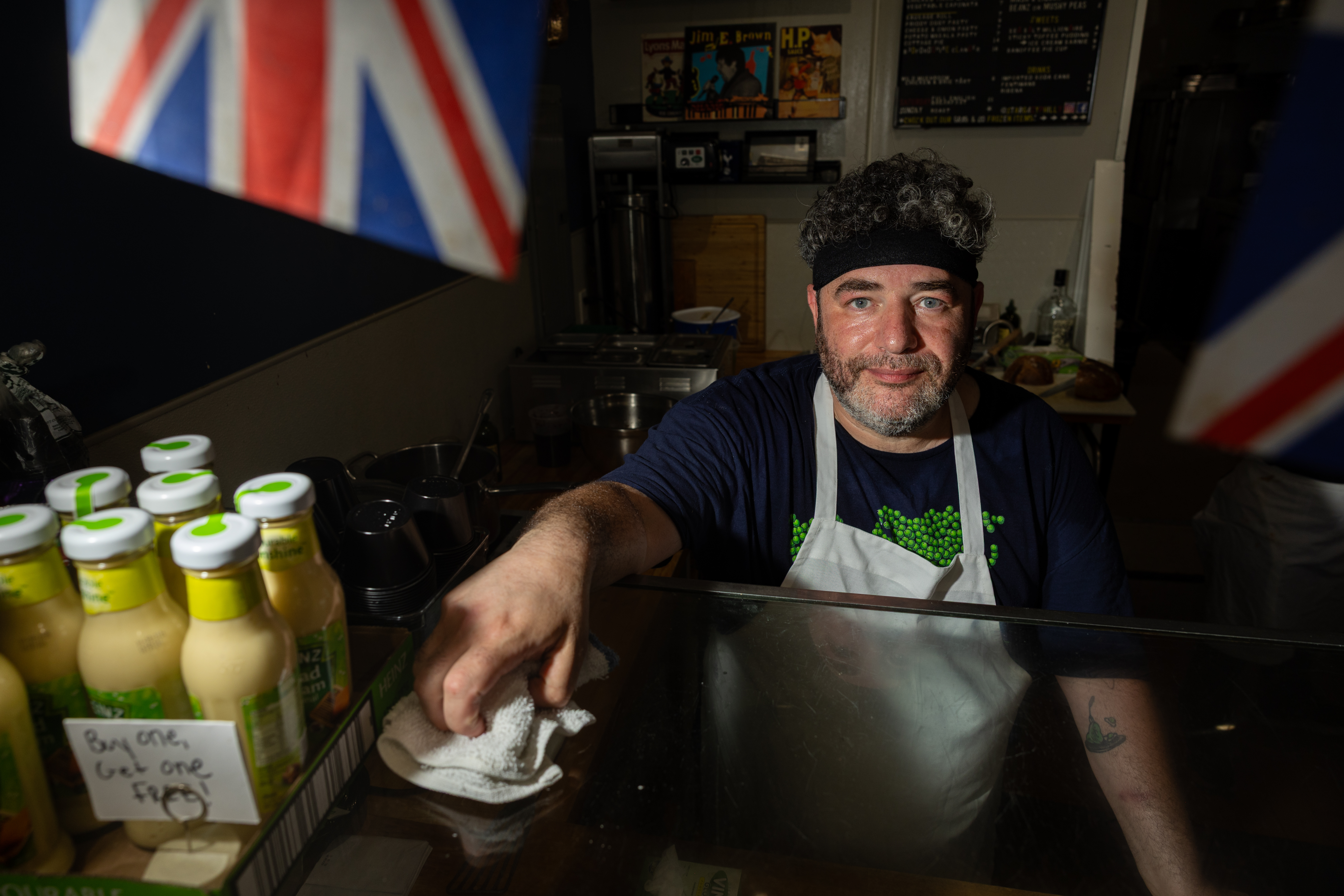
    For the last eight years, Fridays at Stargazy on East Passyunk Avenue meant fish and chips, a weekly tribute to chef-owner Sam Jacobson’s East London roots.

    That ended last month, when a city health inspection forced the English pie and mash shop to discontinue the special.

    Stargazy had been cited twice in 2024 for operating its electric double countertop fryer without proper mechanical ventilation. But on Aug. 14, the Philadelphia Department of Public Health went further, citing the fryers as “unapproved” equipment and requiring Jacobson to submit plans for review before they could be used again. Translation: He’d need to install ventilation for his fryer if he wanted to continue slinging fish and chips.

    The Friday fish and chips from Stargazy in 2021.Jenn Ladd / Staff

    For restaurant owners, the consequences of an inspection can extend beyond whatever corrective action the city requires. Reports of closures, cease-operations orders, or serious violations — especially at popular restaurants — spread on social media, where the conversation often turns to claims that enforcement is unfair or not uniformly applied.

    The health department disputes that contention, saying that there is no crackdown.

    It’s in the process of rolling out a new Food Safety Inspection Guide, but while the format of the guide has been streamlined, the department said the underlying rules have not changed.

    Inspections as a snapshot

    Last month at Heavy Metal Sausage Co. in South Philadelphia, a health inspector ordered owners Patrick Alfiero and Melissa Pellegrino to remove the shop’s eight indoor seats and stop preparing food in the basement. Inspectors determined that neither activity was consistent with the establishment’s plan review, approved in 2022.

    The order halted Heavy Metal’s prix-fixe trattoria dinners, which Pellegrino said accounted for more than half of the business’ revenue. The shop has remained open for daytime takeout.

    Heavy Metal had passed previous inspections, including one four months earlier, and its owners told The Inquirer the operation had not changed between the two visits.
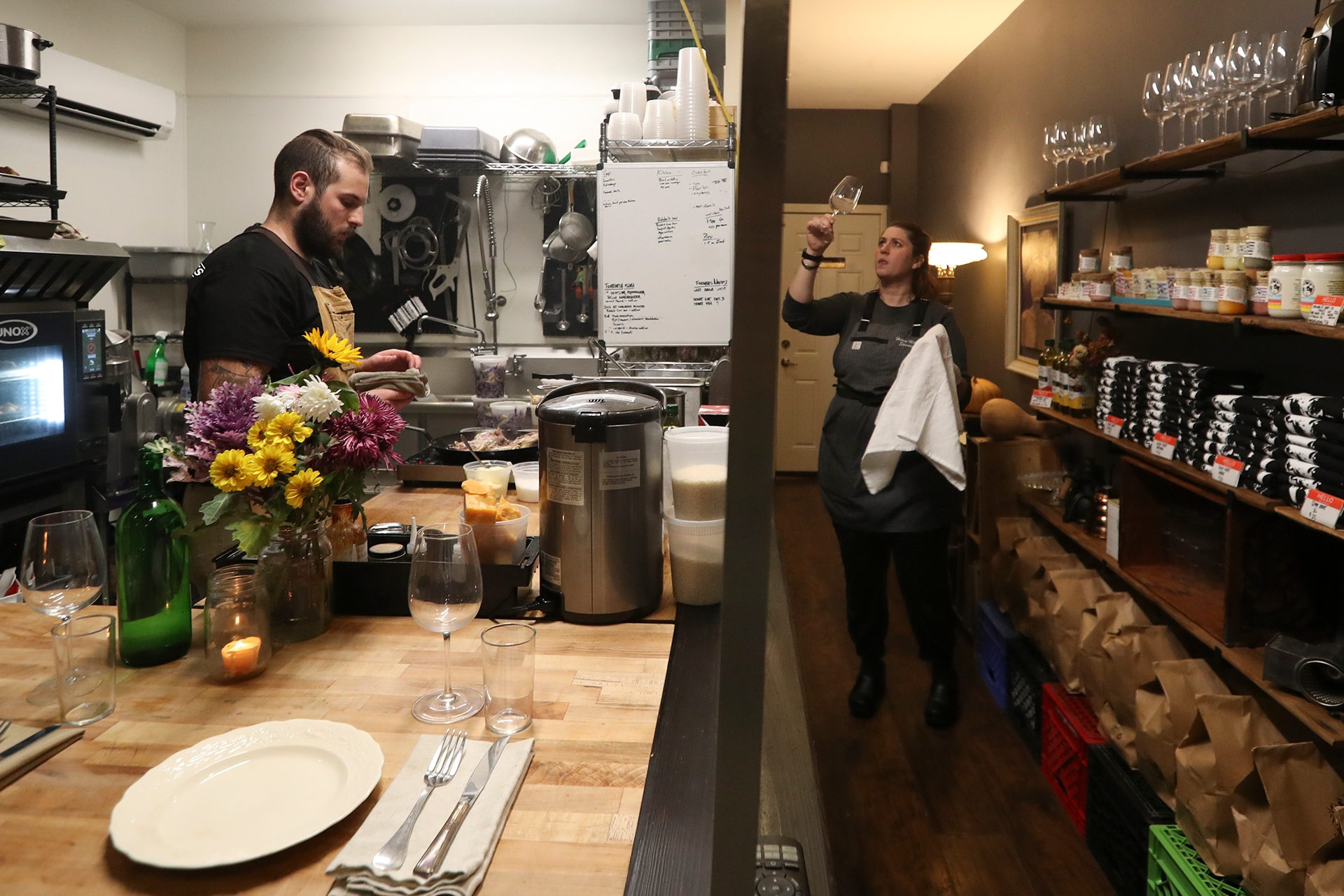
    Heavy Metal Sausage Co. owners Patrick Alfiero and Melissa Pellegrino preparing for a dinner in 2022.Yong Kim / Staff Photographer

    Health officials interviewed this month said the differing outcomes illustrate a basic principle of the inspection system: Each inspection reflects only a snapshot of what an inspector observes.

    During the April inspection, the department said, the inspector did not observe indoor dining or food preparation in the basement. On Aug. 21, both were taking place and could be cited.

    More broadly, officials said, the absence of a citation during an earlier inspection should not be interpreted as approval of a practice.

    Stargazy had been previously cited

    At Stargazy, the record is different. The fryer had been cited before.

    Jacobson was in England when the sanitarian — as the inspectors are known — arrived at Stargazy on the afternoon of Friday, Aug. 14. It was the same sanitarian who had cited the fryer during two inspections in 2024.

    Owner Sam Jacobson cooking at Stargazy on Sept. 18, 2026. Aidan T. Gallo / Staff Photographer

    “I did look back at sales reports for the day of the April 5, 2024, inspection and we had a good fish day — so the fryer was definitely on and in plain sight,” Jacobson said.

    Jacobson acknowledges that the inspector told him in 2024 that the fryers were “not approved.” That point is noted on the reports. But Jacobson said he did not understand that to mean he had to stop using them.

    The Health Department gave a different account to The Inquirer this month. Officials said Jacobson was verbally instructed in 2024 not to use the fryers because they lacked mechanical ventilation.

    When the sanitarian found the same fryer still in use at its next inspection more than two years later, the department said, Jacobson was told to install mechanical ventilation, which would require a plan review — a lengthy process. This time, Jacobson removed the fryer in response. (Historically, the health department does not levy fines, preferring that businesses correct violations.)

    Jacobson said Stargazy had never undergone a plan review when he opened in 2015 after taking over an existing bakery. He said a city employee advised him at the time to treat the opening as a change of ownership, and the restaurant passed its preopening inspection.

    “We never did any alterations or construction before opening,” Jacobson said. “I simply took over the lease of an existing bakery, gave it a lick of paint and some other cosmetic touches, and opened up.”

    Besides the fryer, he said the restaurant’s only substantive changes were moving the counter in 2019 to create more room in the dining room and installing a customer hand sink during the pandemic at the city’s direction.

    City says rules have not changed

    Health officials say the city’s underlying standards, based on the Philadelphia Food Code, have not changed recently. The department’s current inspection report guidelines date to 2019, while the code itself dates to 2008.

    Sanitarians have not received new instructions to interpret the code differently, the department said. The department said it has committed significant resources to uniformity training, intended to ensure that every inspector reviews the same conditions in the same way in all food businesses.

    Supervisors and managers also review inspection reports, and sanitarians are not supposed to exercise individual discretion in deciding whether a condition violates the food code.

    The new Food Safety Inspection Guide supports the department’s position that the underlying food-safety requirements are not new.

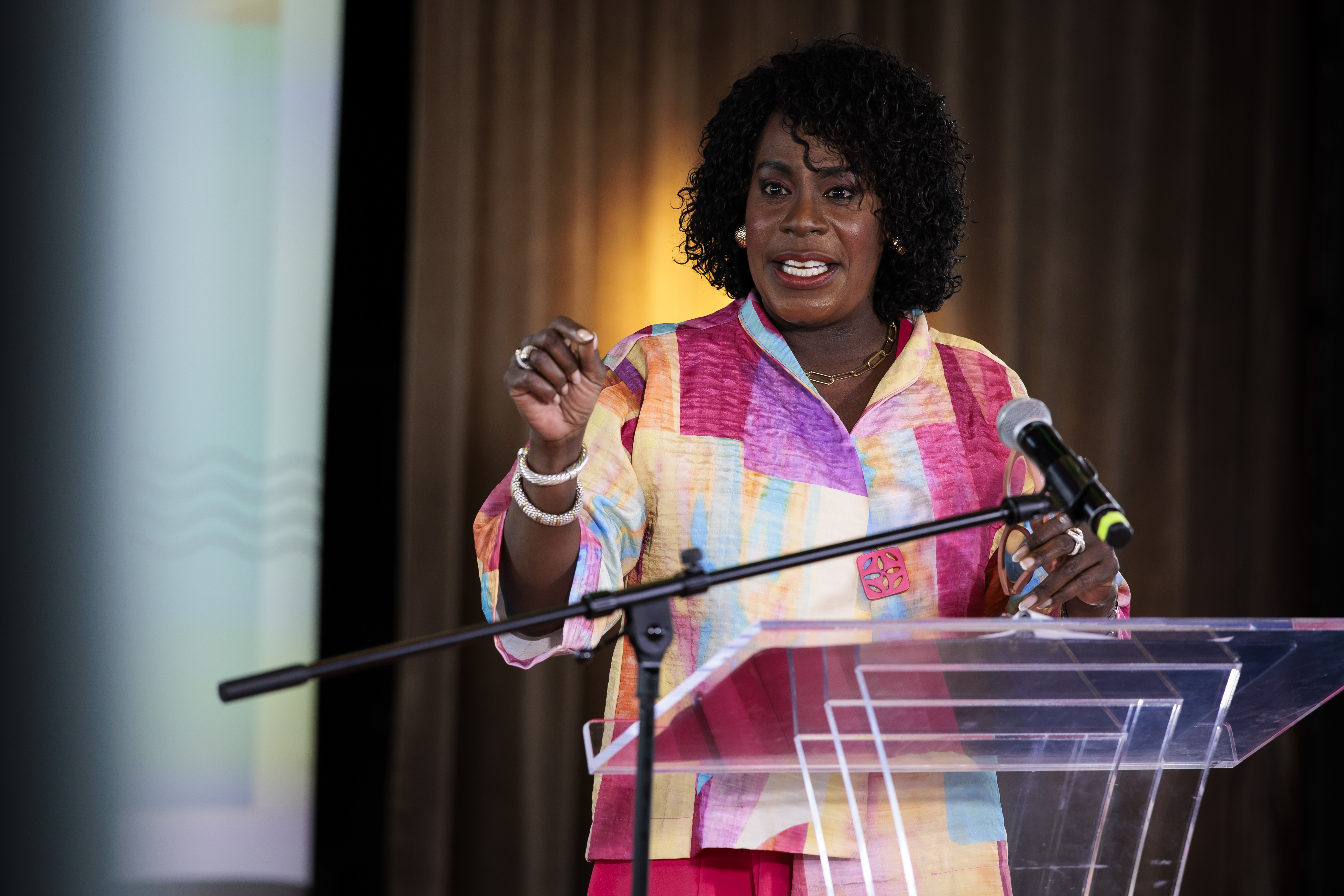
    Deputy Health Commissioner Dawn Kiesewetter said the guide has been under development for six or seven months with the Mayor’s Office of Policy Planning and Delivery, the Commerce Department, and business and community groups. It grew out of Mayor Cherelle L. Parker’s PHL Open for Business initiative, launched in April 2024 to simplify city permitting, licensing, and other requirements for businesses.

    Food businesses were an early focus. When Open for Business was announced, city officials said food businesses averaged nearly 24 government approval steps to open and operate. The administration subsequently developed multilingual food-safety materials and other guidance for operators.

    The Health Department said the inspection guide is still undergoing final review before being posted to the city’s website and formally announced, although copies have already circulated among industry and community partners.

    The city aims to inspect every food establishment once a year but does not always meet that target, the department acknowledged. About 60 Health Department employees are authorized to inspect Philadelphia’s 10,427 food establishments, according to the department. Reinspections follow violations, while complaint inspections and investigations of possible foodborne illness take place as needed.

    Staffing and complaint volume have remained relatively steady in recent years, officials said, while the number of food businesses remains below its pre-pandemic level.

    When a repeat problem is ‘new’

    Stargazy’s fryer was cited as a “new violation” in 2026, two years after its first citation. The department’s terminology on inspection reports can sometimes label a recurring violation as new. Health officials said that designation is automatically applied when more than a year has passed since the earlier violation.

    Jacobson said it would not make financial sense for him to install the ventilation needed to resume frying. A permanent hood would require construction, he said, while a freestanding ventless system could cost more than $20,000.

    Stargazy owner Sam Jacobson adding blackberry and fig sauce to his wild mushroom burrata toast, a substitution for his fish fry.Aidan T. Gallo / Staff Photographer

    Since removing the fryer, he is considering longer hours and fish-and-chips pop-ups elsewhere to replace some of the lost sales. On Fridays, he has been offering specials that do not require a fryer, including wild mushroom burrata toast.

    The city says one purpose of the new guide is to reduce the likelihood of surprises during an inspection.

    “The more they understand what they need to do, the more likely they’ll pass,” the Health Department said in a statement. “Our number one goal is to ensure that food businesses can stay open safely.”
  • These 10 Philly blocks will be the first to get $100,000 upgrades through Mayor Parker’s housing initiative

    These 10 Philly blocks will be the first to get $100,000 upgrades through Mayor Parker’s housing initiative

    Mayor Cherelle L. Parker’s administration on Wednesday announced the first 10 residential blocks that will each receive $100,000 in beautification upgrades as part of the city’s Curbside Appeal program.

    The program is part of Parker’s Housing Opportunities Made Easy, or H.O.M.E., initiative, which seeks to build or preserve 30,000 units of housing in the city.

    “Every Philadelphian deserves to live on a block they can be proud of,” Parker said in a statement, adding that the program “gives neighbors the resources to come together, improve their surroundings, and strengthen the sense of community that makes our city special.”

    The first 10 blocks set to receive services under the program, including debris removal, tree trimming, lawn restoration, and sidewalk repairs, are:

    • 1300 block of South Ruby Street
    • 1700 block of St. Paul Street
    • 1800 block of Hart Lane
    • 2200 block of South Sixth Street
    • 2500 block of North Marston Street
    • 3000 block of Titan Street 
    • 3200 block of North Howard Street
    • 5000 block of Newhall Street
    • First block of Hobart Street
    • First block of Wiota Street

    In May and June, residents were encouraged to nominate blocks for the program through their Neighborhood Advisory Committees or Neighborhood Community Action Centers, the so-called mini-City Halls Parker has established throughout the city to make services more accessible.

    The next round of nominations for the program will take place in the spring.

    “By partnering directly with neighbors, we’re helping transform blocks in ways that reflect the priorities of the people who live there while building stronger, more connected communities,” Jessie Lawrence, the city’s director of planning and development, said in a statement.

    Council approved the H.O.M.E. initiative, which is funded primarily through $800 million in city bonds, in June 2025. Lawmakers then clashed with the administration last fall over income thresholds for some of the housing programs it funds, with Council successfully pushing through changes that prioritize poorer residents.

    The city issued the first $400 million in H.O.M.E. bonds earlier this year, and is scheduled to issue the next tranche in 2027.

  • Philly City Councilmember Kendra Brooks is considering running for mayor, sources say

    Philly City Councilmember Kendra Brooks is considering running for mayor, sources say

    Kendra Brooks, a progressive who made history as the first third-party candidate to win a seat on Philadelphia City Council in 100 years, is considering challenging Mayor Cherelle L. Parker in the spring Democratic primary election, according to two sources familiar with her thinking.

    The sources, who were not authorized to speak about the matter publicly and did so on the condition of anonymity, said Brooks is mulling a campaign but has not yet made a decision. She declined to comment Friday.

    To run in the Democratic mayoral primary, Brooks would have to resign from her seat on Council. Under state law, she could remain a member of the Working Families Party or switch her party registration to Democrat..

    A bid for the mayor’s office would pit Brooks, the de facto leader of the city’s Working Families Party and democratic socialist faction, against Parker, a centrist who has long been aligned with the city’s Democratic Party establishment.

    Brooks, a longtime organizer from North Philadelphia and the minority leader on Council, got her start in politics as a public education advocate and has served on Council since 2020. Her most high-profile legislation this year was a package of bills that placed new restrictions on federal immigration enforcement in the city, and drew legal challenges from the Trump administration.

    She has been critical of Parker, especially with regard to the mayor’s strategy of largely sidestepping criticism of President Donald Trump’s administration. Brooks has said that officials who do not outwardly oppose the president’s mass deportation campaign are engaging in “complicity disguised as strategic silence,” and she accused the mayor of “caving” to Trump when the administration last year quietly abandoned race- and gender-conscious contracting goals.

    “People want to see leaders fighting for something,” Brooks said at the time, “and right now we don’t see our city fighting for anything.”

    Aren Platt, the executive director of the mayor’s political campaign arm, declined to comment.

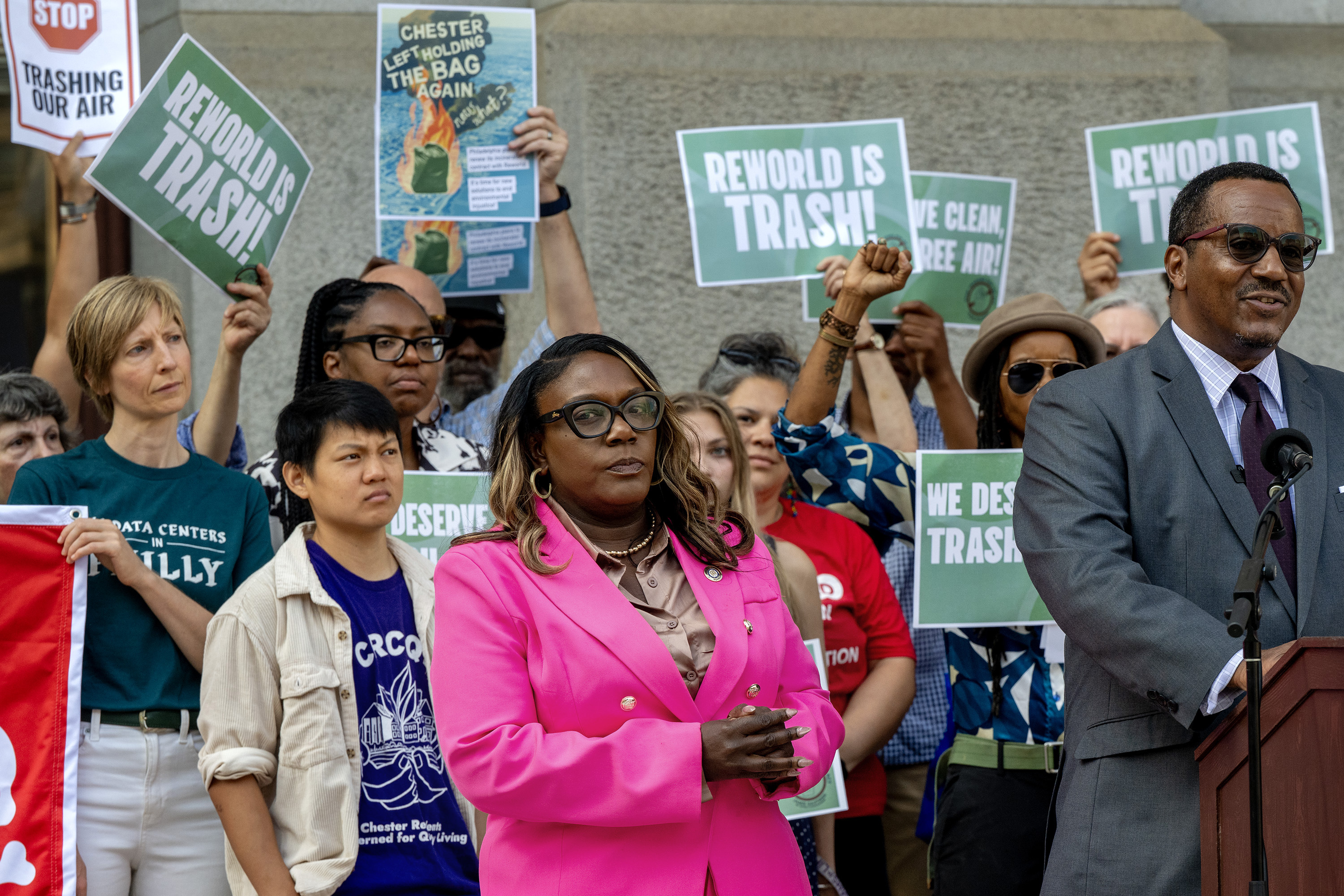
    City Councilmember Kendra Brooks joins Chester Mayor Stefan Roots (right) and protesters at a rally outside City Hall Sept. 17, 2026.Tom Gralish / Staff Photographer

    Brooks’ supporters see the mayor as potentially vulnerable as progressives have ascended nationally and notched wins over more traditional Democrats. That includes Mayor Zohran Mamdani’s victory last year in New York City and Abdul El-Sayed’s win in the Michigan Democratic primary for U.S. Senate.

    Closer to home, the left is emboldened by State Rep. Chris Rabb, who was backed by Brooks’ coalition and in May won the Democratic primary for a seat in Congress representing about half of Philadelphia. He toppled two centrist Democrats who were each supported by party leaders, big donors, and politically powerful labor unions.

    Despite the energy on the left, no progressive has officially launched a run for mayor ahead of the May primary election. Shania Bennett, the mayor’s former director of youth engagement, who has never run for office before, said this month that she will challenge Parker. Bennett said recently that she had not yet hired a campaign team or developed a policy platform.

    Any challenger to Parker faces significant hurdles. No Philadelphia mayor has lost reelection in modern history, and Parker would be backed by the city’s Democratic Party, which can now spend unlimited amounts of money in coordination with its chosen candidates under a new board of ethics policy.

    Parker will also be supported by the deep-pocketed building trades unions that boosted her in the crowded open mayoral primary in 2023.

    “We’re going to put all the resources, both financial resources and people resources, to bear to make sure that Mayor Parker has a second term,” said Ryan Boyer, the head of the Philadelphia Building and Construction Trades Council. “I want to be clear and vociferous that the Philadelphia Building Trades … are fully and completely behind Cherelle Parker.”

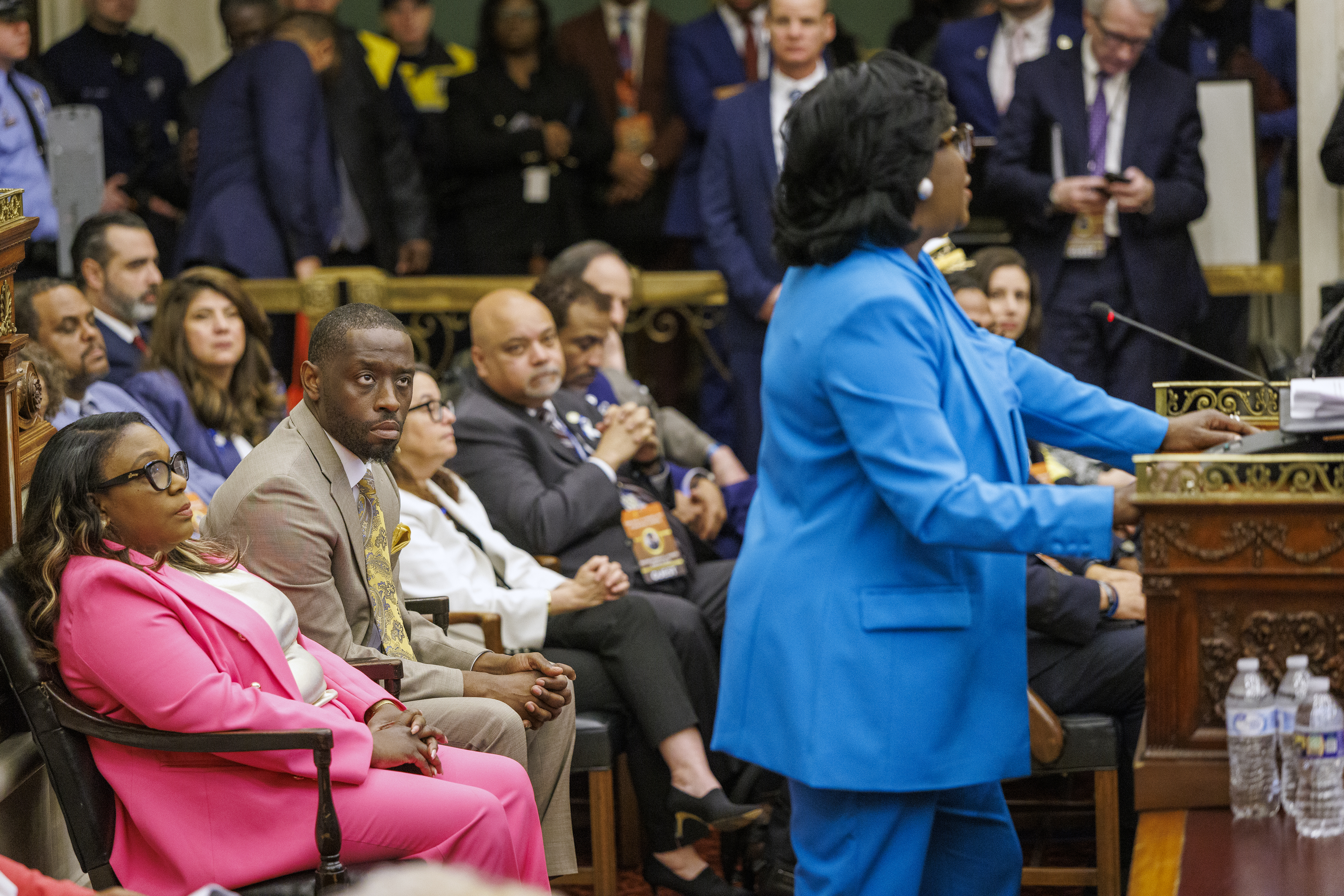
    In this March 2025 file photo, City Councilmember Kendra Brooks, left, listens to Mayor Cherelle L. Parker deliver her annual budget address.Alejandro A. Alvarez / Staff Photographer

    Parker is likely to see support from a super PAC bankrolled by city developers, and she also has her own massive war chest. Her campaign had $1.4 million in the bank as of May, according to the most recent campaign finance paperwork available. Brooks had $17,000 on hand as of her last report in January.

    But Brooks, who has won citywide election twice to represent the city as an at-large member of Council, could be a formidable opponent. She is one of the most prominent left-wing politicians in the city, and she is well-known in national progressive circles.

    The Working Families Party’s chapter in Pennsylvania recently commissioned a poll that showed Brooks as broadly popular with the city’s Democratic primary electorate but with much lower name recognition than Parker, according to polling documents obtained by The Inquirer.

    According to the survey of 900 respondents, 35% said they had a favorable view of Brooks, with just 4% saying they had an unfavorable view. Nearly 40% of respondents said they did not know who Brooks was.

    Nearly all of the respondents knew of Parker. Forty-eight percent said they had a favorable view of the mayor, and 40% said they had an unfavorable view. Those findings are similar to a June Suffolk University/Philadelphia Inquirer poll.

    Nick Gavio, a spokesperson for the Working Families Party, said in a statement that the organization often conducts polling on public opinion in the city and that the survey was “one test among a battery of others that we conducted in Philadelphia ahead of the 2027 elections.”

    “We are pleased that the Working Families Party and Minority Leader Brooks are so popular,” he said, “which we believe reflects our focus on the issues that matter to the working people of this city.”

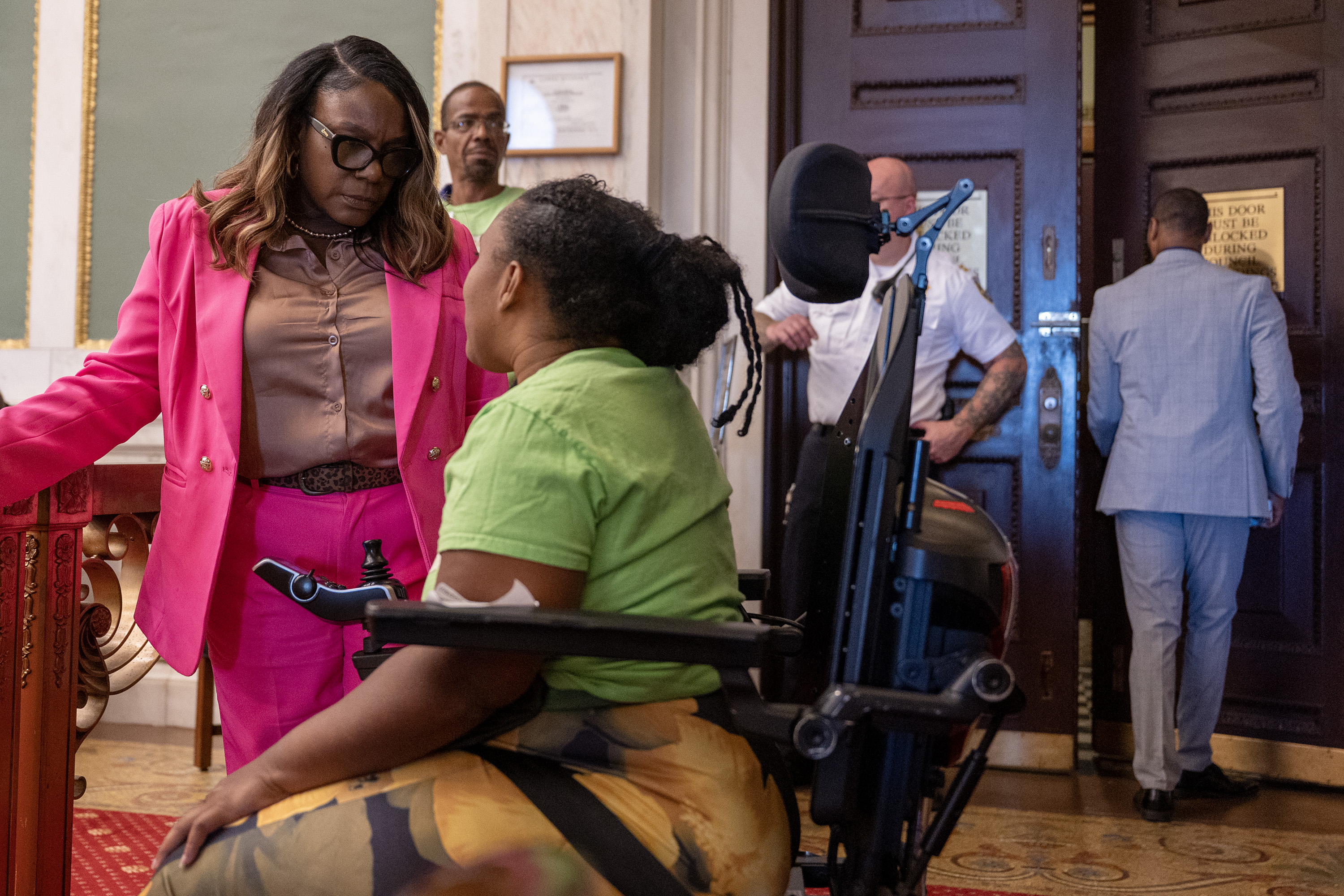
    City Councilmember Kendra Brooks talks with Dominique Howell (right) in chambers as City Council returns for its fall session Thursday, Sept. 17, 2026. Howell is a long-time constituent and was there with the non-profit Liberty Resources, part of the Philadelphia Coalition for Affordable Communities.Tom Gralish / Staff Photographer

    Several other leftist politicians in the city have been rumored to be considering running for mayor against Parker, but none have said publicly that they intend to launch a campaign.

    One is District Attorney Larry Krasner, the third-term prosecutor who is one of the most prominent progressive district attorneys in the country. Krasner has been increasingly critical of Parker, and in June said that he would not rule out the possibility of running against her.

    But the district attorney has recently faced significant scrutiny related to his handling of a complex post-conviction case. Last week, U.S. District Judge Paul S. Diamond said that Krasner may have committed federal crimes and that he had referred the matter to the Department of Justice for investigation.

    Krasner has denied wrongdoing.

    Correction: A previous version of this article incorrectly stated the steps Brooks would have to take to run in the Democratic mayoral primary. She could remain a registered member of the Working Families Party or switch her party registration.
  • DA Larry Krasner faces an uncertain political future as Democrats weigh what could come next

    DA Larry Krasner faces an uncertain political future as Democrats weigh what could come next

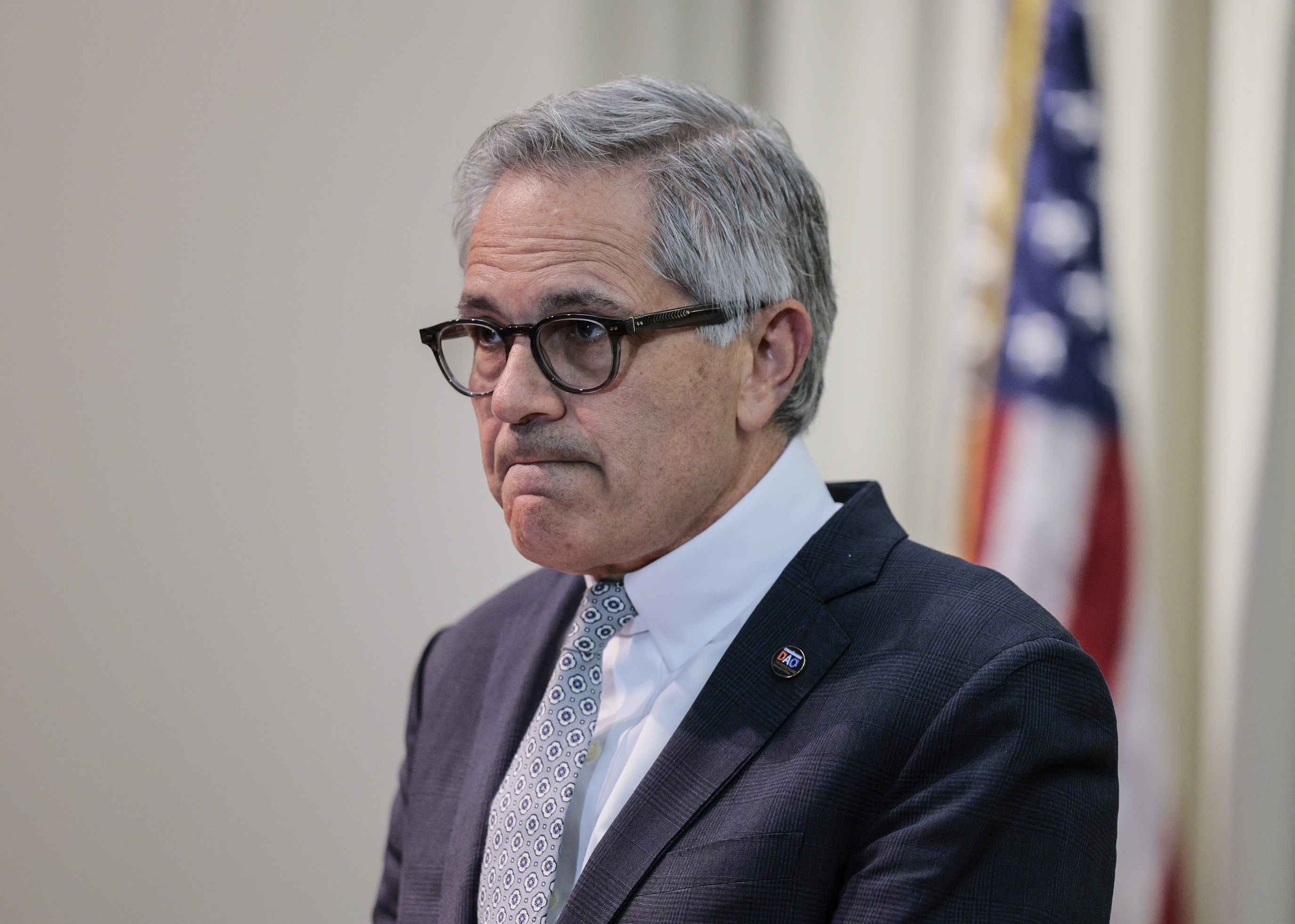
    After a federal judge said last week that Philadelphia District Attorney Larry Krasner may have committed federal crimes, questions quickly emerged about the prosecutor’s political future.

    Krasner, an outspoken Democrat and one of the nation’s most well-known progressive prosecutors, has recently entertained entreaties to run for higher office, including a possible bid for Philadelphia mayor next year.

    But in the week since U.S. District Judge Paul S. Diamond said he had referred Krasner and a top supervisor to the Department of Justice for investigation, Krasner has largely stayed quiet, and few elected Democrats have publicly come to his defense.

    Behind the scenes, many insiders asked: Could this episode damage Krasner too much for him to mount a campaign for another office?

    In a statement Tuesday, Krasner said he had already told another progressive considering a bid for mayor that he would defer to her.

    “I’m a big believer in Councilmember Kendra Brooks,” Krasner said, referring to the City Council member who The Inquirer reported is considering a run for mayor. “Prior to these accusations, I told her that if she runs for mayor, I will not consider running.”

    And he framed the legal conclusions by Diamond — a federal jurist appointed by former Republican President George W. Bush — as merely “accusations,” citing others who have been targeted for investigation by the Department of Justice under President Donald Trump.

    He referenced the New York attorney general, a former FBI director, and a DOJ employee who was charged after throwing a sandwich at a federal agent and has since become a symbol of resistance to Trump’s administration.

    “Ask Letitia James, James Comey, the ‘sandwich man’ or the guy who took peeling paint from the reflecting pool what they have to say about accusations,” Krasner said. “Or ask dozens of innocent people whose exonerations this DA’s office supported what they say about accusations.”

    Krasner’s statement Tuesday was one of the first public comments he has made regarding the case since Diamond’s criminal referral, aside from a brief statement last week saying that he disagrees with Diamond’s conclusions and could not comment further because the matter is pending in court.

    The uncertainty around Krasner also has some city Democrats contemplating a dramatic outcome: Could criminal charges or judicial discipline sweep Krasner from office before the end of his term in 2030?

    And if that happened, who would replace him as the city’s chief law enforcement officer?

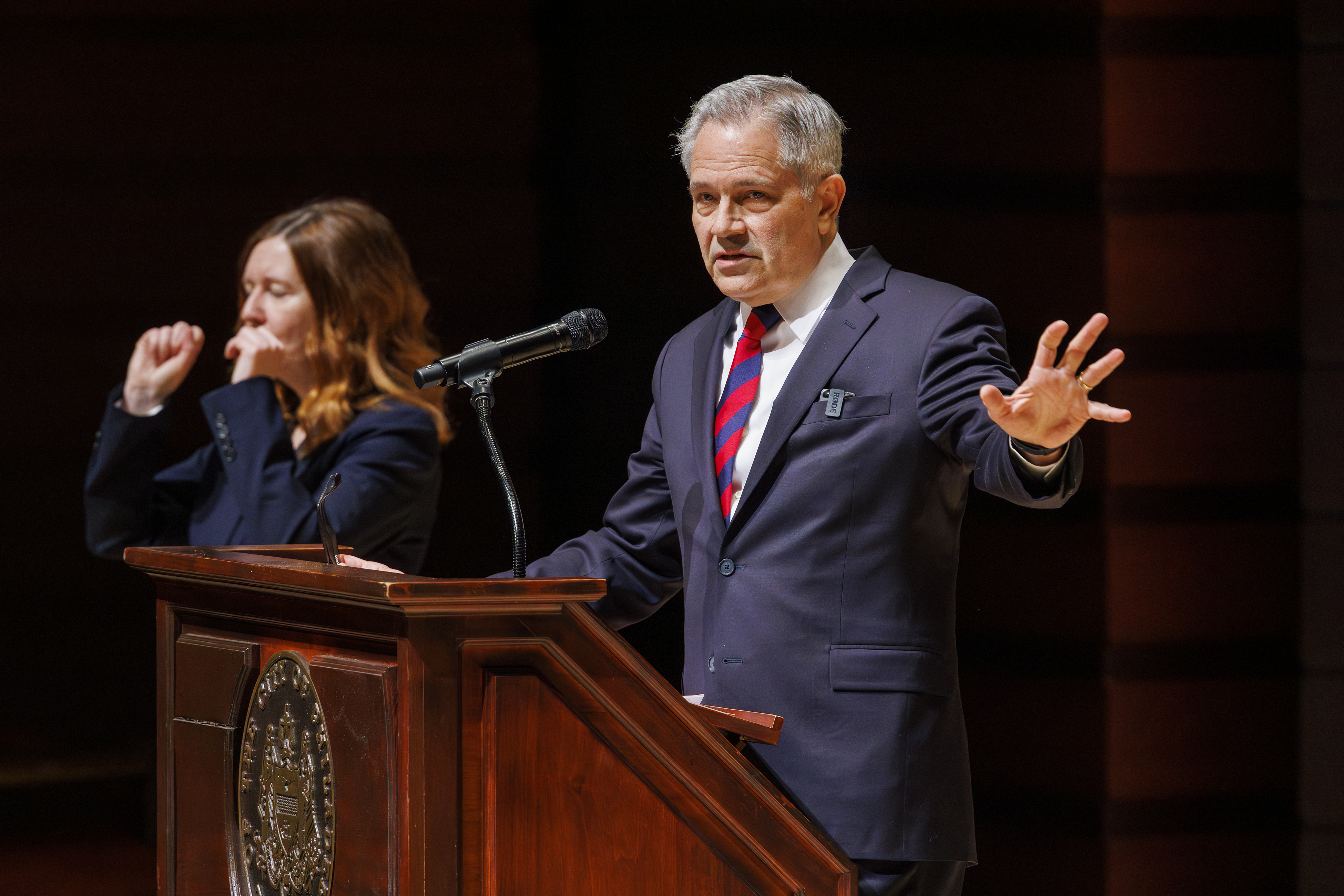
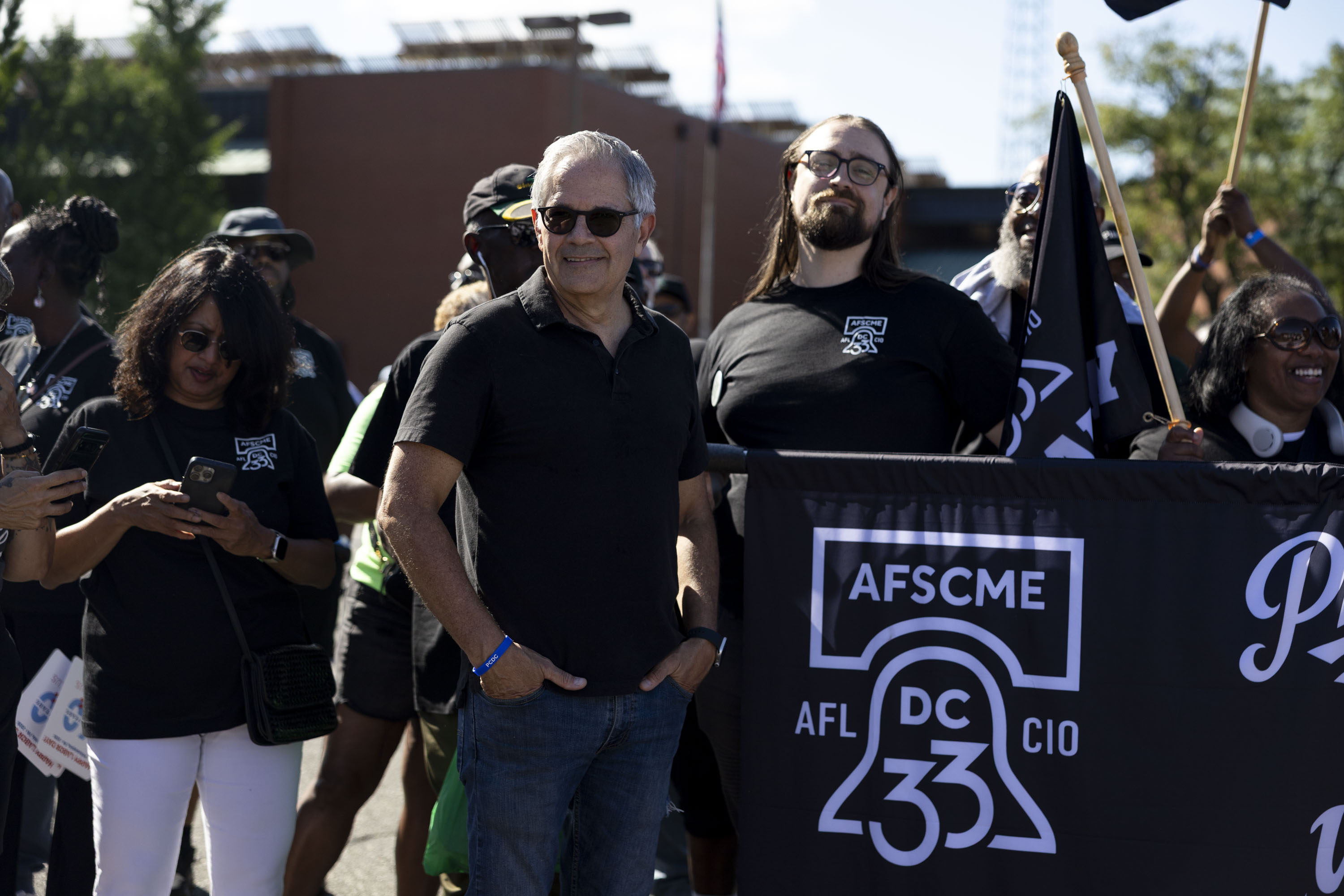
    District Attorney Larry Krasner standing with District Council 33, for the 39th Annual Tri-State Labor Day Parade on Sept. 7.Tyger Williams / Staff Photographer

    At least two elected Democrats have spoken to ward leaders about filling the district attorney’s role if Krasner were to be forced from office, according to sources familiar with the conversations who were not authorized to speak about them publicly.

    But some of Krasner’s allies say this is all much ado about nothing. They maintain that Diamond’s legal conclusions and the referral of the matter to the Department of Justice were politically motivated and that Krasner will weather it, as he has past tribulations.

    “They’re trying to do something that they’ve been trying to do for years, which is go after Krasner’s head,” said Sergio Cea, political director of the progressive group Reclaim Philadelphia, which has supported Krasner since his first run for office in 2017. “What they’re trying to do is roll back the gains that Philly voters pushed forward.”

    Silence from elected officials

    Krasner has always been something of a political outsider. He has never been endorsed by the city’s Democratic Party and has been critical of its leadership.

    Despite that, he maintained support among progressives and a significant contingent of Black elected officials last year when he prevailed over former Municipal Court Judge Patrick Dugan and skated to a third term in office.

    City Councilmember Nicolas O’Rourke, a member of the progressive Working Families Party and a longtime supporter of the district attorney, said in a statement Tuesday that he has confidence in Krasner’s ability to lead his office.

    “There’s no question,” he said. “DA Krasner can and should be doing the work that Philadelphians have tasked him with through their votes.”

    Aside from O’Rourke, most of the city’s top officials have declined requests for comment about Krasner’s recent legal jeopardy, including some of his ardent supporters.

    Some say that Krasner has not asked them to weigh in, and that they are hesitant to take a position on a complex legal issue. Others say they do not want to distract from a midterm election that is just six weeks away.

    Jack Inacker, a Democratic strategist based in Philadelphia, said he was not surprised that few elected Democrats have spoken on Krasner’s behalf.

    In recent months, Krasner called on former U.S. Rep. Bob Brady, the chair of the Democratic City Committee, to resign, and publicly confronted Ryan Boyer, the head of the politically powerful Philadelphia Building and Construction Trades Council, over campaign contributions.

    “You’ve got these major dustups all the time, it seems now,” Inacker said. “Krasner being so antagonistic to everyone doesn’t get him allies.”

    Inacker also said the courtroom allegations are “esoteric in nature,” making it challenging for elected officials to stake a position.

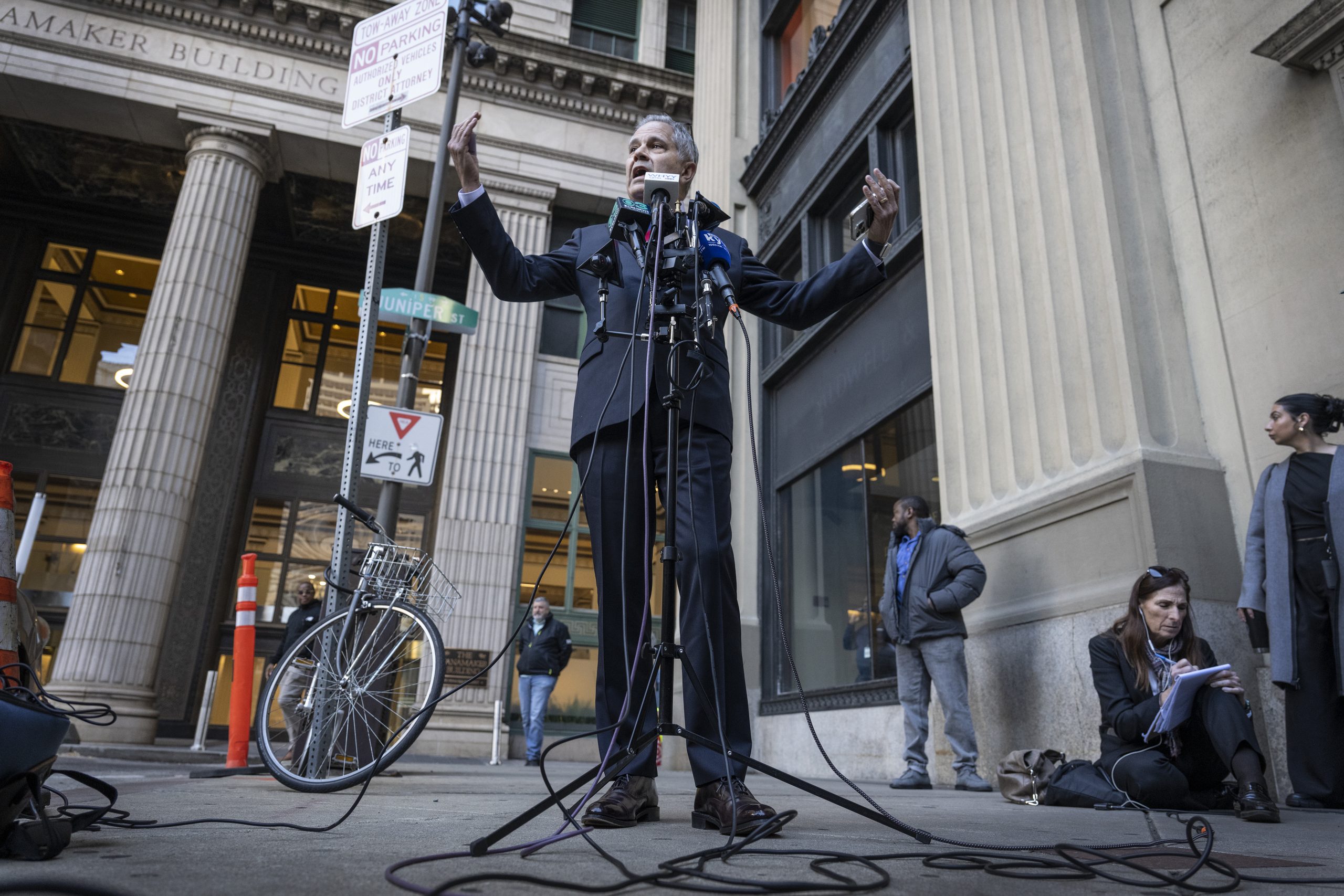
    Newly reelected District Attorney Larry Krasner speaks to reporters during a news conference outside the District Attorney’s Office on Nov. 5, 2025.Jose F. Moreno / Staff Photographer

    The case before the federal judge centers on Dennis Johnson, who has sought for more than a decade to have his 2009 murder conviction overturned. In 2022, a former assistant district attorney working for Krasner filed paperwork to support Johnson’s bid.

    But four supervisors in Krasner’s office later testified that they found errors in that 2022 brief, and that Krasner was involved in conversations about attempting to mislead the court to cast the former prosecutor as rogue.

    Krasner has denied wrongdoing.

    Brian Hart, a Democrat who has been critical of Krasner and served as a media adviser to Dugan’s campaign, said this episode is more fraught for Krasner than his 2022 impeachment.

    “The allegations aren’t coming from just Republicans,” said Hart, a public relations strategist. “They’re coming from testimony within his own office.”

    The mayor’s race question

    Some activists on the left wing of the city’s Democratic Party have said they feel emboldened to mount a serious challenge against Parker, who will be up for reelection next year. They cite recent wins by progressives both in the city and nationally.

    And eight months out from the May primary election, several prospective candidates, including Brooks, are mulling whether to launch a campaign.

    After earlier this year casting doubt on speculation that he could run for mayor, Krasner seemed open to the possibility in June.

    When asked then whether he might consider a future campaign for mayor — or even U.S. Senate — Krasner responded: “Do I have a plan to run for these offices today? No. But … it would be foolish for me to completely rule out those possibilities.”

    Philadelphia District Attorney Larry Krasner, seen here with Mayor Cherelle Parker at a news conference at Dilworth Park on Dec. 16, 2024.Alejandro A. Alvarez / Staff Photographer

    Larry Ceisler, a public affairs executive based in Philadelphia, said a federal criminal investigation of Krasner could pose a logistical problem if it was conducted while he was running for mayor.

    But politically speaking, Ceisler said, it might not be an impediment. An investigation by the Department of Justice under Trump — an entity many Democrats distrust — could rally progressive support.

    “I think he would probably run with it as a badge of honor,” he said.

    Ceisler pointed to former Mayor John F. Street, who in 2003 was locked in a tight race for reelection when police found an FBI bug in his office. Street blamed Republican President George W. Bush’s administration, and he went on to win the election a few weeks later.

    “When these things happen, everybody puts on their respective jerseys, so the Krasner people are going to say, ‘It’s political,’” Ceisler said. “I think to the Krasner constituency, especially if he wants to run for mayor, or do something else, I don’t think this fazes them.”

    Weighing a post-Krasner future

    It is unclear where any potential criminal investigation or disciplinary probe of Krasner and his office might lead, and legal experts have said that a hypothetical investigation would likely take months.

    But some Philadelphia Democrats are already contemplating what would happen if Krasner cannot finish the term that he began this year and that ends in 2030, with some quietly discussing contingency plans to fill the office.

    Under state law, in the event of a vacancy, the city’s Common Pleas Court judges vote by secret ballot to appoint a new district attorney. The appointed interim district attorney would serve until the next general election. Those elections take place in even-numbered years.

    The last time the process played out was in 2017, when the Board of Judges selected former city prosecutor Kelley Hodge to lead the office as interim district attorney. She replaced former District Attorney Seth Williams, who resigned shortly before pleading guilty to federal corruption charges in a case also overseen by Diamond.

    During the three-week gap between when Williams resigned and Hodge was appointed, the district attorney’s office was led by Williams’ first assistant district attorney, Kathleen Martin.

    Krasner does not have a first assistant district attorney. Robert Listenbee, who formerly held the role, retired in January, and the legally required position remains unfilled.

    Staff writers Chris Palmer and Ellie Rushing contributed to this article.

  • Jefferson CEO will chair Philadelphia region’s chamber of commerce

    Jefferson CEO will chair Philadelphia region’s chamber of commerce

    The CEO of Jefferson Health and Thomas Jefferson University will be the local chamber of commerce’s next chair, and he’s focused on a feeling of safety in the city.

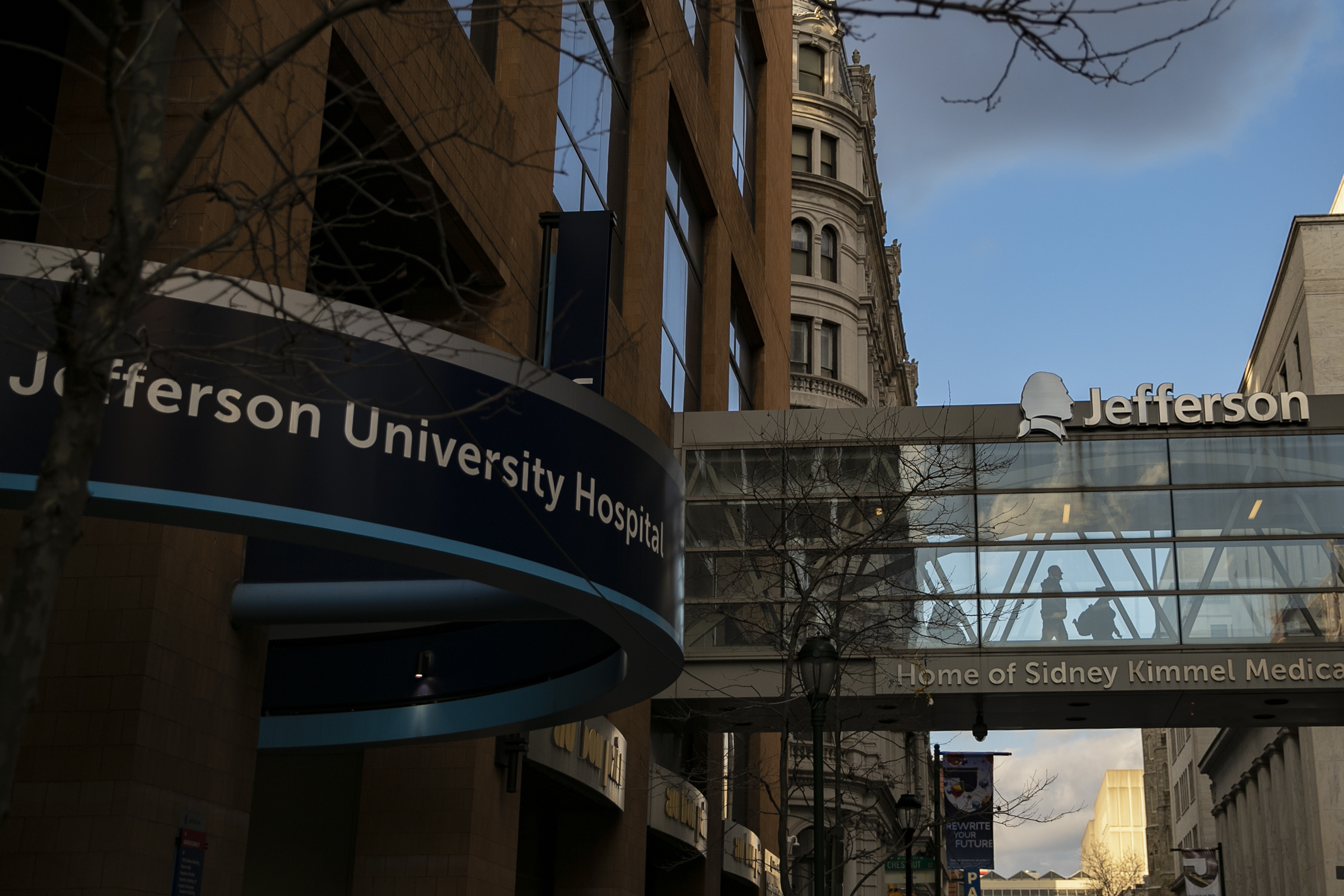
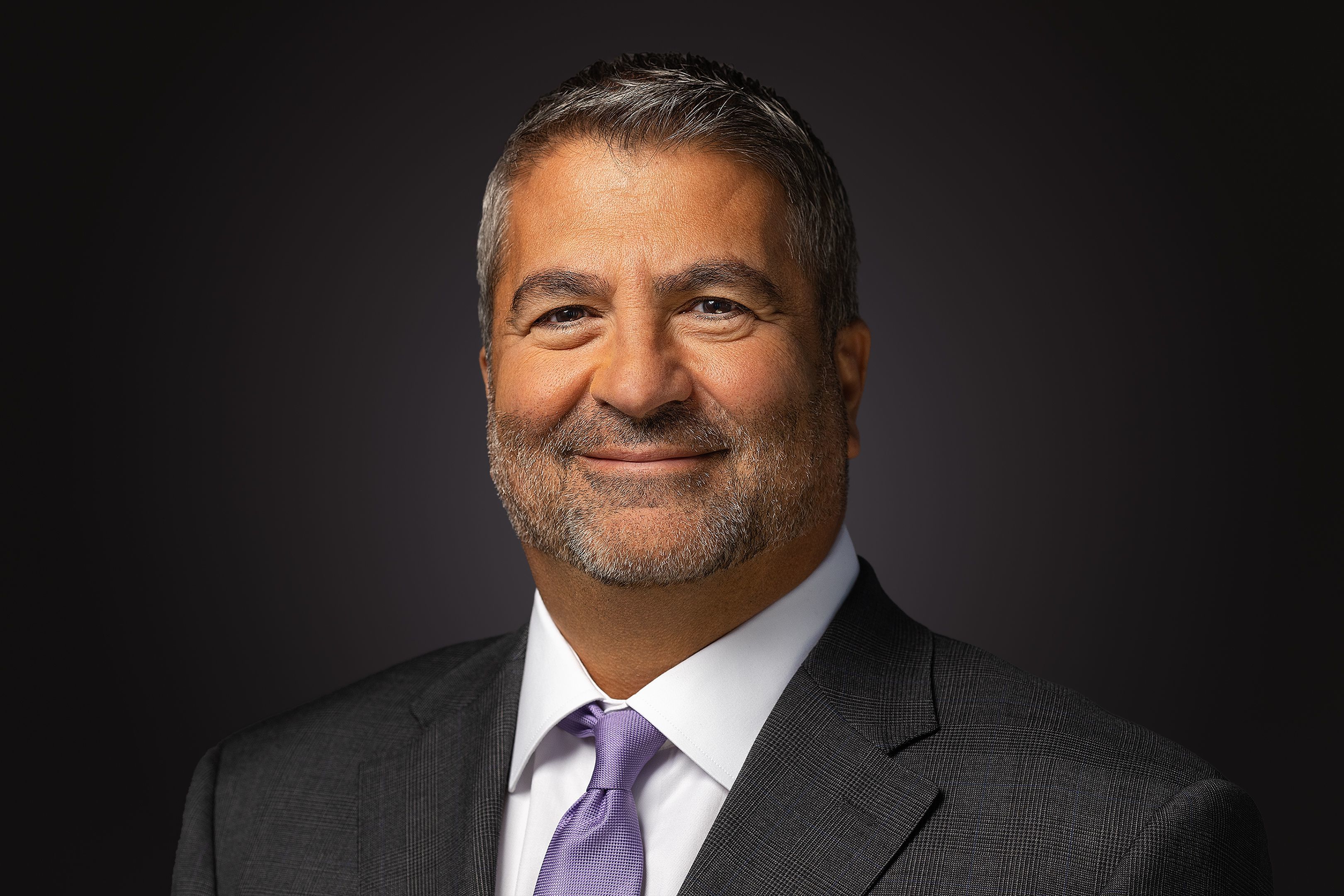
    Joseph G. Cacchione, Jefferson’s CEO since 2022, will chair the Chamber of Commerce for Greater Philadelphia’s board of directors beginning Oct. 15, the chamber announced Tuesday.

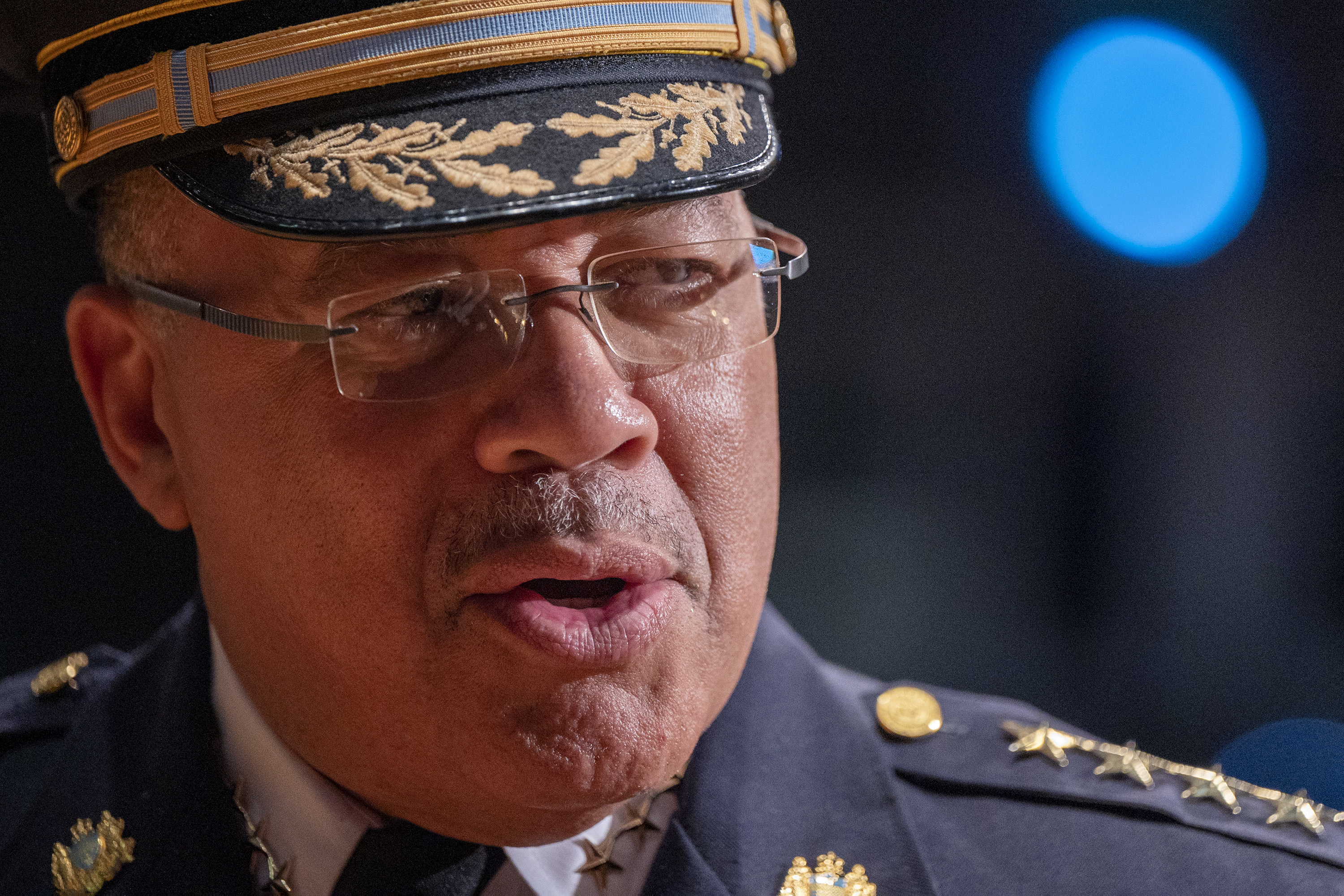
    The new role comes just a year after Cacchione said Jefferson could move its headquarters out of the city. But now he says that’s no longer on the table, crediting Mayor Cherelle L. Parker and the city’s police chief for making “great strides in improving safety.”

    “We’re here. We’re Jefferson. We’ve been in Center City for 200 years. We’re not moving,” he said in an interview Tuesday.

    Joseph G. Cacchione will begin his role as board chair at the chamber on Oct. 15.Thomas Jefferson University

    Cacchione says some of the region’s remaining challenges can be tackled through partnerships between business and government.

    “For me it’s about never standing back and watching but to actually roll your sleeves up and get in there and mix it up,” he said.

    Jefferson teamed up with the city police department and SEPTA transit police in one such partnership in June, launching a public safety hub in partnership in Market East.

    “East Market Street particularly has had challenges over the years,” he said Tuesday. “We saw an opportunity to have more visible police presence.”

    But recently, he said, the area has felt safer and more vibrant. He pointed to the pop-up businesses that opened along that corridor this year, as well as the pop-up plaza outside Reading Terminal Market.

    “We continue to need to work on that quality of life,” he said. “It’s not just East Market Street. It’s the entire city that we want to be safer.”

    More good jobs for the region

    Cacchione’s priorities also include supporting small and medium-sized businesses, continuing regional job growth, and improving access to healthcare.

    The chamber’s board of directors includes CEOs, presidents, and other leaders of area institutions such as CHOP, Aramark, Temple University, Comcast, Girl Scouts of Eastern Pennsylvania, and the Philadelphia Eagles.

    Its recent efforts include a new regional partnership to create good jobs in business software, biomedical engineering, and production, and specialized manufacturing, where business leaders see potential to grow. Jefferson Health and Thomas Jefferson University are early partners in the group.

    “We are at an inflection point for our region, and we have to make decisions to lean in so that we can continue to grow,” Chamber CEO Chellie Cameron said Tuesday. “I’m talking about attracting new businesses and growing existing businesses, creating jobs — not just any job, but opportunity jobs and pathways to those jobs.”

    Cacchione, as the leader of a very large employer in Center City, “gets it,” Cameron said, adding that he’s not just invested in the city, but the region as a whole.

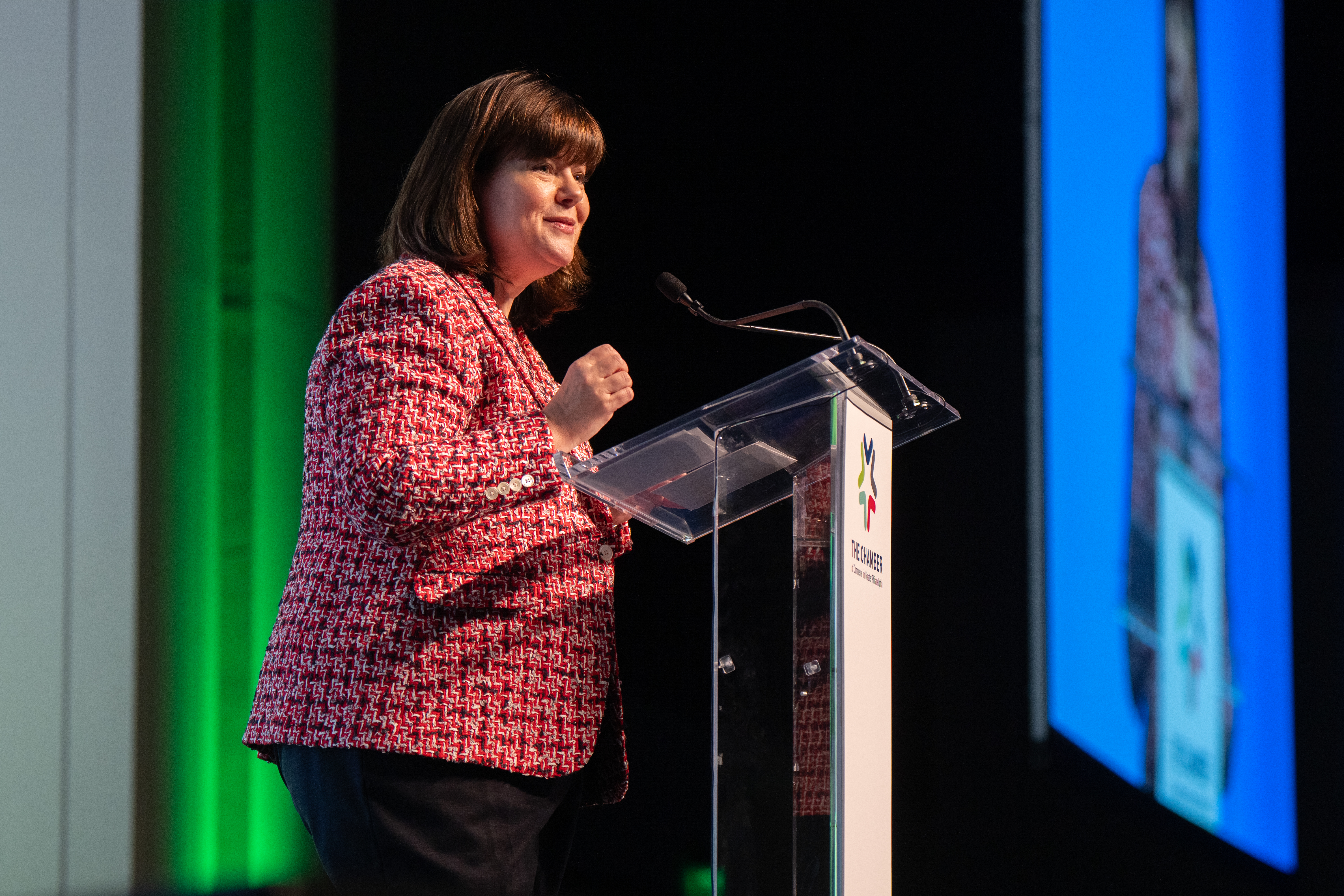
    Chellie Cameron, CEO of the Chamber of Commerce for Greater Philadelphia, at a chamber event in 2025.Jessica Griffin / Staff Photographer

    Cacchione added that AI will “change how we do business,” calling it an “enabler of business.” The chamber could help train workforces that don’t have experience with AI, he said.

    Jefferson employees have been adopting AI tools to improve efficiency. Nurses use it for note-taking, he said. By 2028, Jefferson aims to save over 10 million hours of clinician’s time by using AI — creating more time for “face-to-face” interaction with patients, Cacchione said.

    The hoped-for result, he said: “Our doctors are spending more time with patients and less time in front of a computer.”

  • Philly laws conflate drag shows with strip clubs. City Council wants to change that.

    Philly laws conflate drag shows with strip clubs. City Council wants to change that.

    A line in Philadelphia’s zoning code conflates drag performances with strip clubs, topless bars, and other adult cabaret venues. It’s a definition that City Council hopes to change.

    Councilmember Rue Landau introduced legislation on Thursday to remove references to “male or female impersonators” in a section of the zoning code that regulates “Adult Oriented Services.”

    As currently written, Philadelphia defines an adult cabaret as a place that “features topless dancers, go-go dancers, exotic dancers, strippers, male or female impersonators or similar entertainers … dancing, performing or acting in a lewd, sexually erotic, exciting or stimulating manner.”

    The distinction is similar to one found in a Tennessee law that prohibits so-called “adult cabarets” featuring “male or female impersonators” from being staged anywhere minors might see it. It also mirrors language used in similar drag bans struck down this year by judges in Texas and Montana, and one currently up for consideration by the Idaho Senate.

    If passed, Landau’s proposal would strike the provision regarding male and female impersonators.

    The bill will first be considered by City Council’s Rules Committee. The legislation has the support of Mayor Cherelle L. Parker’s administration, Landau said, and has also been shared with her colleagues in City Council, who Landau described as “supportive.”

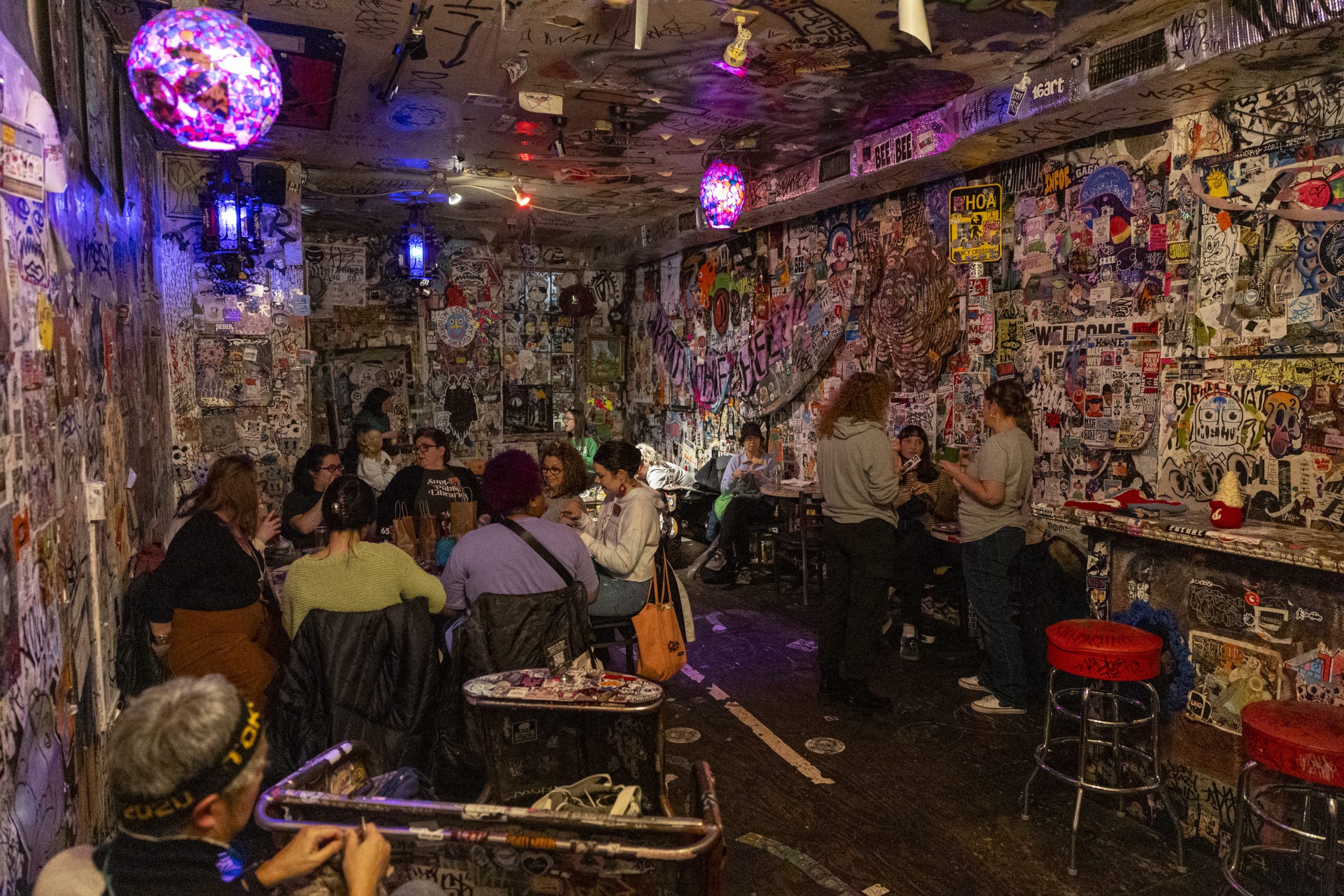
    Landau’s bill is inspired by recent events at South Street bar Tattooed Mom, which has long been a go-to venue for Philly’s LGBTQ+ artists, and particularly drag performers, in part because it doesn’t charge acts.

    A crowd fills Tattooed Mom. The popular South Street bar is unable to host events with music for the foreseeable future.Tyger Williams / Staff Photographer

    In March, the Department of Licenses and Inspections ordered Tattooed Mom to cease all events with music — including drag shows and karaoke nights — after a February inspection found that Tattooed Mom lacked the requisite special assembly license. The revelation forced the bar to cancel more than 30 drag, karaoke, and music events.

    Tattooed Mom owner Robert Perry told The Inquirer Friday that he brought what he called the “offensive and troubling language” to the attention of Landau’s staff, but was not involved in drafting the legislation.

    The incident “opened my eyes to actually reading the code and having conversations … I think the [language] is so antiquated that people don’t even realize it’s there,” Perry said. “We might have initially spurred the conversation, but Landau did all the heavy lifting.”

    Perry was initially instructed to seek an adult cabaret permit in addition to a special assembly license for Tattooed Mom, he told the Philadelphia Gay News in July. That same month, an L&I spokesperson told Philly Voice that the permit — which traditionally governs businesses such as strip clubs and adult theaters — is required to host drag and burlesque events.

    Perry now believes that his bar doesn’t need one upon further research, he said Friday.

    Regardless, Landau said Tattooed Mom’s predicament was the spark for her proposal. “They were cited in violation of this provision simply because they had a drag performance happening,” she said. “We don’t want that happening in Philly … A lot of folks rely on drag performances for their livelihood, and we just want to keep supporting them.”

    Landau is unaware of L&I citing other Philly venues for hosting drag or burlesque shows without a permit. “This is thankfully nothing that L&I is usually citing establishments” over, she said.

    A crowd looks at art inside the South Street bar Tattooed Mom.

    If passed, Landau’s legislation won’t green-light events with music at Tattooed Mom. All Philly establishments with an occupancy of 50 or more people that host music performances, dancing, or DJs are required to have a special assembly occupancy license, which costs $253 and must be renewed annually. To procure one, Tattooed Mom must first apply for a zoning exception.

    The process involves holding a public meeting for community feedback followed by a separate hearing in front of the Zoning Board of Adjustment. As of March 2026, the wait time for a hearing is 180 days — or roughly six months — according to a manual from the City of Philadelphia.

    Perry said he has yet to begin Tattooed Mom’s application.

  • Will a pedestrian death move Philadelphia police to step up traffic enforcement? | Shackamaxon

    Will a pedestrian death move Philadelphia police to step up traffic enforcement? | Shackamaxon

    This week’s edition of Shackamaxon looks at a crackdown on “smoke shops,” the Philadelphia police’s handling of traffic citations, how Harrisburg deadlines can be leveraged to fund transit, and what City Council forgot to talk about in its first session after returning from summer break.

    Up in smoke?

    An increasingly common frustration has been expressed across Philadelphia over the rise of what are known as “smoke shops,” which have proliferated in the city’s commercial corridors. Ostensibly operating as grocery stores, they are often locations where illegal drugs and drug paraphernalia are sold. They tend to operate late into the night and attract the ire of both residents and other business owners.

    That’s why it was refreshing to see someone make a substantive move to shut them down. State Rep. Amen Brown, whose district includes parts of West Philadelphia and Logan Square, has put together an initiative he’s called Operation Breezy. Working with both city and state law enforcement, and relying on the support of members of the community, Brown’s efforts have already shuttered 13 of the establishments.

    Brown’s approach uses confidential informants, many of whom come from the community itself. He told me that one of the now-closed shops had roughly 40 pounds of marijuana on the premises, the outlets routinely sell out-of-state cigarettes, and that firearms have been seized as part of the efforts. Residents who would like to help can send an email to OperationBreezy@gmail.com or a message to the effort’s Instagram page, @operationbreezy.

    Brown said he’d like to do more to stop the smoke shops, but that the best option requires action at the local level. Rather than enacting a broad-based curfew for all businesses, he’d prefer to target just the smoke shops. He says that might be possible by imposing restrictions on the operating hours of grocery stores that are smaller than 300 square feet. That’s a size below which, officials say, legitimate uses for a storefront become impractical.

    Official inaction

    Philadelphians were rightly outraged at the actions of a police officer who, in August, left a struggling pedestrian lying in the street, where he was later killed in a hit-and-run. Commissioner Kevin J. Bethel said he was “disgusted” by the patrolman’s behavior. City officials announced their intent to fire the officer. That’s the right call, even if the city’s cop-friendly arbitration process leads to 85% of officers getting their jobs back after alleged misconduct.

    Still, I couldn’t help wondering whether this incident is a natural outgrowth of the department’s policies. The Philadelphia police simply do not seem to take enforcing traffic laws seriously enough. Traffic citations have plunged over the last few decades. In the 1990s, officers regularly issued roughly half a million tickets per year. In 2023, about 45,000 tickets were handed out. These days, we celebrate an increase of a few thousand citations, even as overall stops remain at a fraction of the total pedestrian safety experts say is needed. Commissioner Bethel has said that enforcing traffic violations is a lesser priority.

    While many officers blame the city’s Driving Equality Law for this decline, that measure does not prevent officers from enforcing moving violations, which are the most dangerous offenses. Failing to do so is a choice the department has made on its own. The result of this lack of enforcement, traffic safety experts say, has been an increase in reckless and aggressive driving.

    Given that a city controller report called Philadelphia’s streets the most dangerous of any major U.S. city, this lack of prioritization must change. While speed cameras and other forms of automated enforcement have made a difference along high-traffic corridors like Roosevelt Boulevard and Broad Street, they can only enforce certain offenses in certain locations. Reckless driving is an issue almost everywhere.

    It is impossible to know what went through the mind of the officer who left Eugene Beauford in the street. The department has declined to publish his name, let alone make him available for an interview. But perhaps this horrific incident will prompt police brass to rethink the department’s strategy for enforcing traffic laws.

    Skill game shutdown

    Next month, Pennsylvania’s so-called games of skill will need to be unplugged. Oct. 13 marks the last day of the grace period the state Supreme Court gave the General Assembly to devise a taxation and regulatory scheme for the machines, devices that resemble slot machines and which are currently banned under state law. For years, legislators have debated where the machines can operate, and whether they should pay the same tax rate as existing slot machines.

    By pure coincidence, there’s another big deadline approaching: the authorization period for the state-appointed SEPTA prosecutor. I’d like to propose a potential compromise for both issues. Harrisburg should extend the SEPTA prosecutor’s authority by three years, agree to Gov. Josh Shapiro’s proposed shift in sales tax revenue to support public transit, and pay for it by legalizing skill games and taxing them at the same rate as slot machines. They should also pass regulations limiting the placement of the machines and creating penalties for owners who allow children to use them.

    Given District Attorney Larry Krasner’s recent struggles, extending the SEPTA prosecutor should be less politically contentious now than it was in years past. Lawmakers can also point to the significant decline in fare evasion and violent crime on the transit system over the last few years as justification.

    For Philadelphia lawmakers who may be reluctant to place limits on the authority of Krasner, who has been overwhelmingly elected by their constituents three times, that kind of middle ground can provide fiscal peace of mind for SEPTA, which has been subject to financial uncertainty for three years. While Democrats seem to be pinning their hopes for approving more state funding for SEPTA on winning control of the state Senate during this fall’s elections, that is hardly guaranteed. If a deal can be reached ahead of time, it reduces the risk of a collapse. It also does not preclude additional action next year.

    Finally, the need to act on skill games is clear. As it stands, it will be difficult for the commonwealth to shut down every location that houses the machines. We don’t even know how many exist. I am not a fan of these devices, which have a negative impact on the communities that host them. Regulation will make it easier to mitigate that damage and ensure Pennsylvanians see some benefit from the funds that flow through them.

    Council comeback

    After its three-month summer hiatus, City Council is back in session. All eyes on the second floor of City Hall will be trained on how Mayor Cherelle L. Parker will respond to a series of potentially contentious legislative proposals — from Councilmember Jamie Gauthier’s bill to stop burning trash to Councilmember Isaiah Thomas’ efforts to stop at least part of the school closure plan.

    Then there’s the matter of those city officials who deserve additional scrutiny, in particular Krasner and Sheriff Rochelle Bilal. Krasner has been referred for prosecution by a federal judge, while Bilal misled Council during her budget hearing earlier this year.

    City Council should hold investigatory hearings into both officials. Residents deserve better from their leaders than what both Krasner and Bilal have shown.

  • Philly City Council returns with dueling plans for the city’s trash | Council roundup

    Philly City Council returns with dueling plans for the city’s trash | Council roundup

    Philadelphia City Council members are considering dueling proposals over how the city eliminates its garbage, with one lawmaker leading an effort to immediately block the city from shipping its garbage to a trash incinerator and another taking a longer-term approach.

    Councilmember Mark Squilla on Thursday introduced legislation authorizing Mayor Cherelle L. Parker’s administration to, within three years, develop a plan to dramatically reduce the city’s reliance on both trash incineration and landfills over the next 20 years.

    Squilla’s proposal, which he drafted with input from Parker’s administration, is something of an alternative for lawmakers to consider as Councilmember Jamie Gauthier has for months pushed for a more aggressive approach to stop the city from incinerating trash this year.

    Both lawmakers hosted news conferences this week alongside their allies to rally support for their cause, part of a long list of events Council members hosted as the legislative body returned Thursday for its first meeting of the fall session.

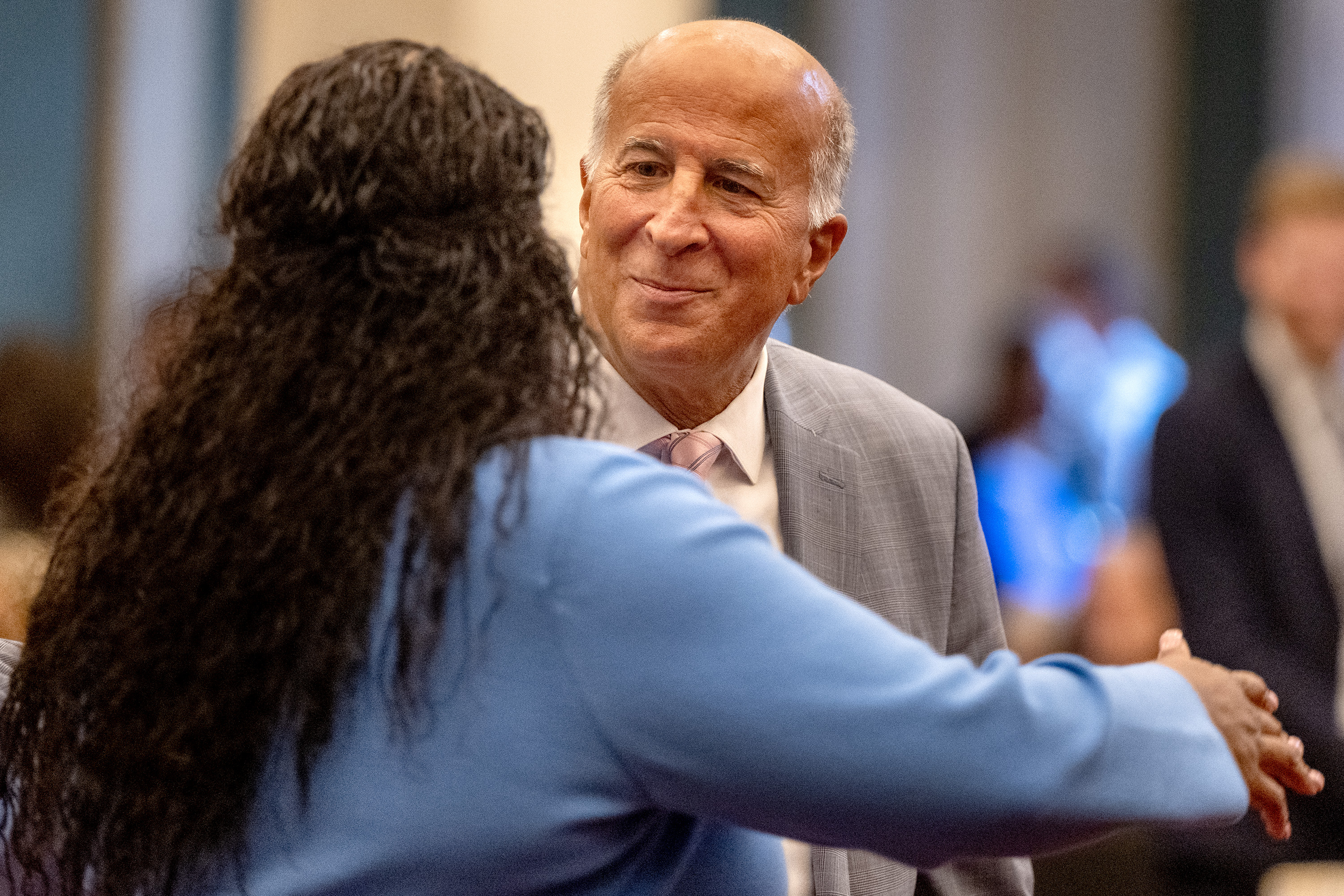
    Councilmembers Mark Squilla and Katherine Gilmore Richardson (back to camera) greet each other as City Council convenes for its fall session Thursday, Sept. 17, 2026.Tom Gralish / Staff Photographer

    The first meeting after the summer break typically has a jovial, first-day-of-school feel. But the mood briefly shifted Thursday when City Hall was evacuated and Council abruptly adjourned after a suspicious package was found on the floor where Council was meeting.

    Police cleared the package, and Council resumed its business Thursday afternoon.

    Here’s what else happened this week:

    What was this week’s highlight?

    Incinerator issue heats up: Gauthier has for months sought to pass legislation that would ban the city from continuing its long-term practice of sending about a third of its garbage to a trash incinerator in Chester, about 15 miles south of the city. She argues that incineration is bad for the environment and harms Chester residents’ health.

    Parker’s administration opposed the legislation, called the Stop Trashing Our Air Act, and Gauthier in the spring failed to gain enough support for it in Council.

    Now, Gauthier is trying to block the Parker administration from renewing its contract with Reworld, the incineration facility. The administration needs Council approval to enter into a new four-year contract with the firm.

    Gauthier has several members on her side, including three fellow progressive lawmakers, as well as Councilmember Isaiah Thomas, who is the Democratic majority whip.

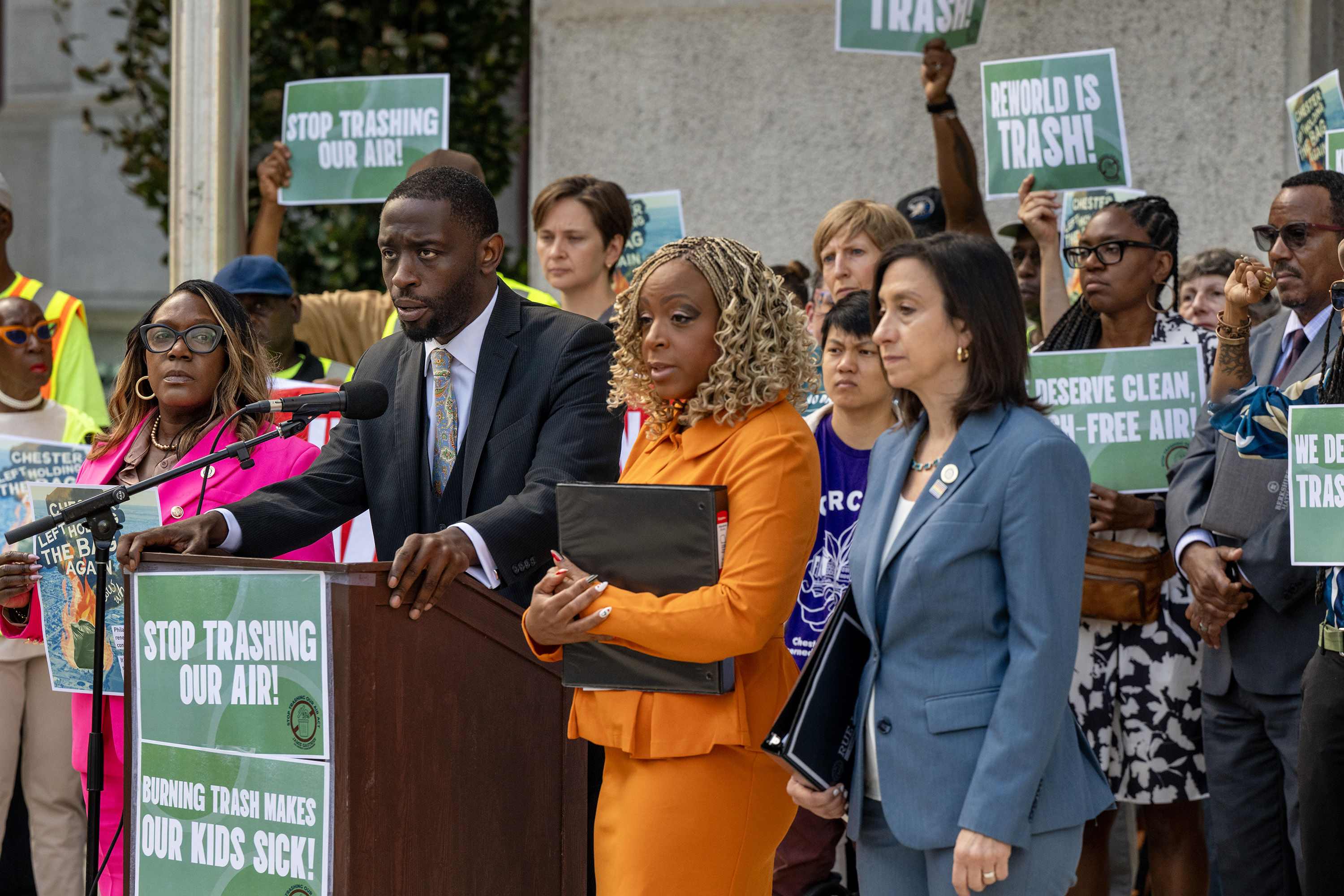
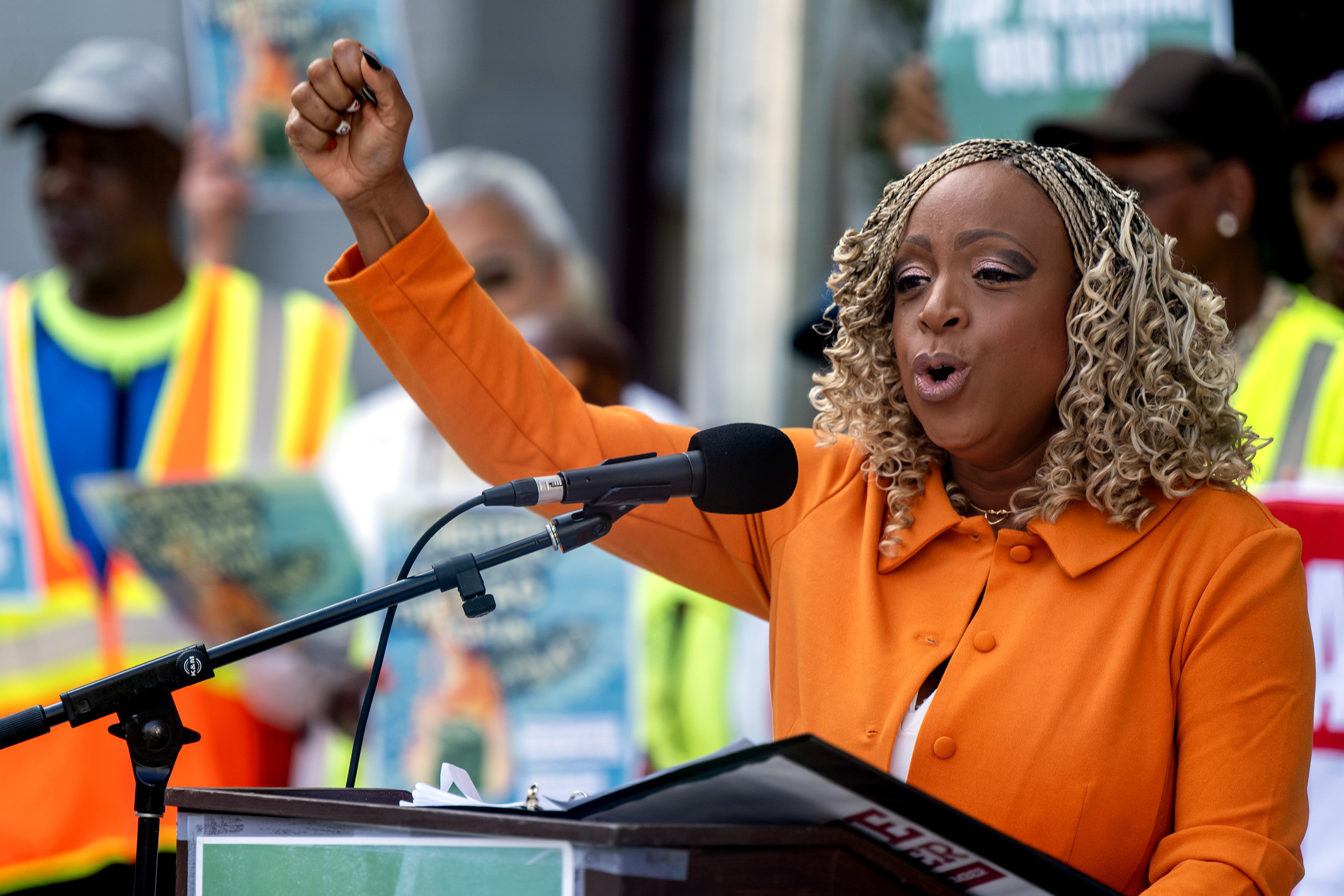
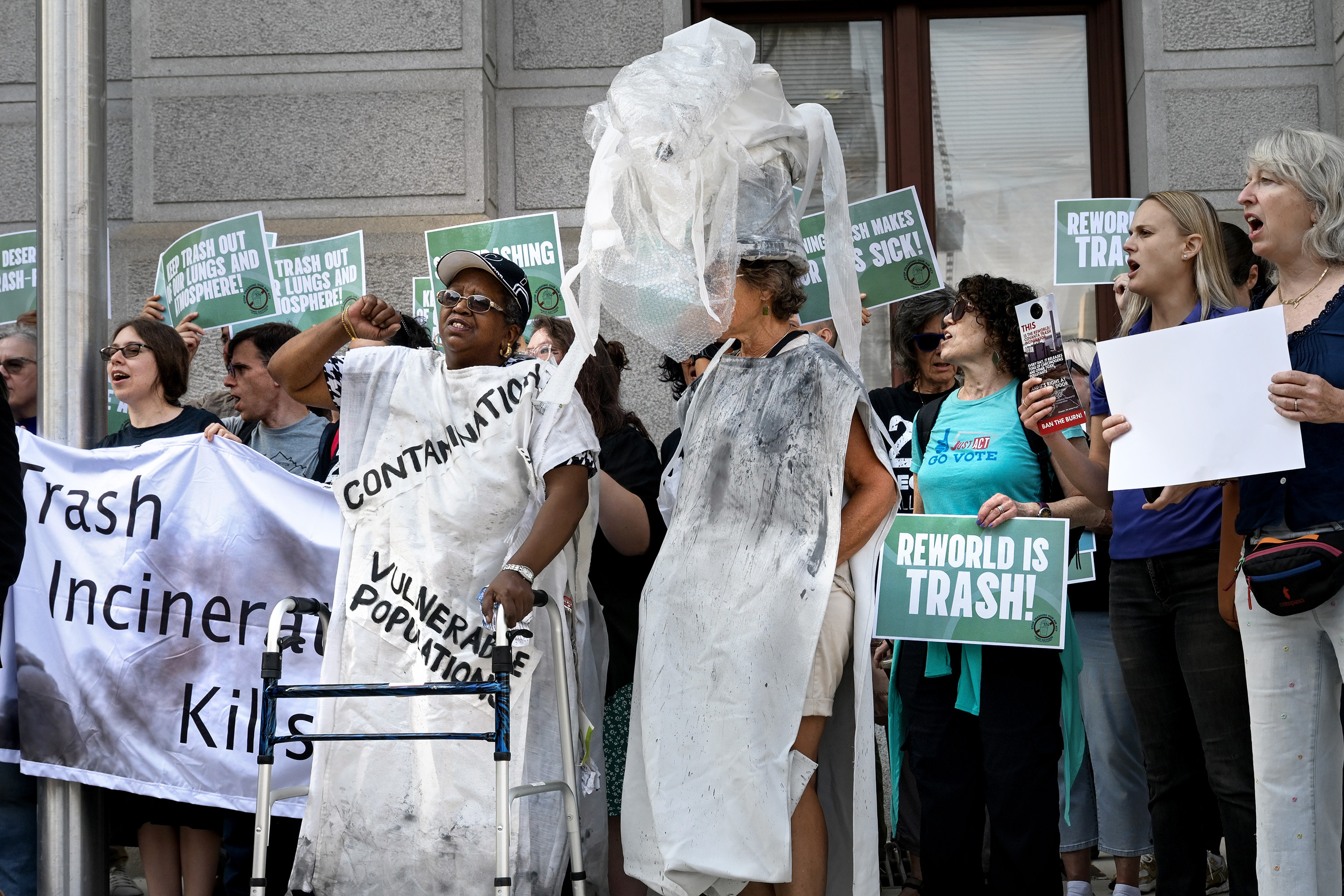
    City Councilmember Jamie Gauthier speaks at a rally outside City Hall early Thursday morning Sept. 17, 2026 where protesters called on Council to reject Mayor Cherelle L. Parker’s waste disposal contracts. A coalition of elected officials, health and climate experts, and advocates from Philadelphia and Chester gathered to oppose the city’s sending its trash to an incinerator in Chester.Tom Gralish / Staff Photographer

    Squilla’s proposal in some ways offers members an off-ramp. His bill calls for a “circular waste” system that includes new techniques for waste disposal, such as composting and “anaerobic digestion,” a process that breaks down organic waste.

    Managing Director Carlton Williams said Wednesday during a news conference with Squilla that the city is looking to build out an anaerobic digestion system within four years.

    Squilla said that while the administration is already working toward a more modern waste disposal system, passing a law would “codify what we had as plans and resolutions before.”

    Gauthier said that she supports Squilla’s goal of moving toward a more sustainable system, but that his legislation “is a plan to create a longer-range plan.”

    “It in no way changes the decision in front of Council,” she said. “We can move away from this practice right now.”

    What else happened this week?

    Severing the law department: The city law department serves as legal counsel for both the mayor’s administration and Council, a dynamic that can sometimes cause friction when the city’s elected officials disagree.

    Council on Thursday approved a resolution by Thomas to hold a hearing “to consider the separation of the [law] department’s functions between the administration and City Council.”

    The department is led by City Solicitor Monique Galloway, whom Parker appointed to the role in July.

    Thomas has clashed with Parker’s administration, and he said he became interested in looking at the department’s structure due to concerns that Council was not receiving independent legal advice on some issues.

    Lois Williams (left), dressed as a “sick person,” and Shari Hersh (right) in costume as a “smokestack,” join a rally outside City Hall early Thursday to call on City Council to reject Mayor Cherelle L. Parker’s waste disposal contracts.Tom Gralish / Staff Photographer

    He pointed to the Philadelphia School District’s controversial facilities plan, which involves the closure of 17 school buildings and was adopted by the school board in April over the objections of many Council members.

    And he said recent legal proceedings around the city’s business income and receipts tax were “part of the motivation” to hold a hearing on the law department.

    In 2025, after a Massachusetts company sued the city seeking to overturn a popular tax break program that primarily helped small businesses, the law department said it had determined the lawsuit was likely to succeed. The Parker administration eventually settled the case and persuaded Council to eliminate the tax break. Some Council members at the time complained that the city did not defend the tax break more vigorously.

    The department already silos off some of the work it does on behalf of Council from the rest of the administration, such as when it drafts bills proposed by lawmakers. Council also may hire outside legal counsel, but must pay for those services out of its own budget.

    A law department spokesperson did not immediately respond to a request for comment.

    Storage wars: Councilmember Mike Driscoll introduced legislation on Thursday that would ban new self-storage facilities from his district in lower Northeast Philadelphia.

    The storage industry boomed during the COVID-19 pandemic, as consumer spending shifted from services to goods, many families struggled to afford larger homes, and low interest rates juiced development.

    Northeast Philadelphia saw a particularly large boom in self-storage buildings because of its rich supply of properties zoned for industrial development. Driscoll said that advocates in the Tacony neighborhood felt their community had become oversaturated.

    “They want more affordable housing and [self-storage units] are taking valuable sites for that,” Driscoll said.

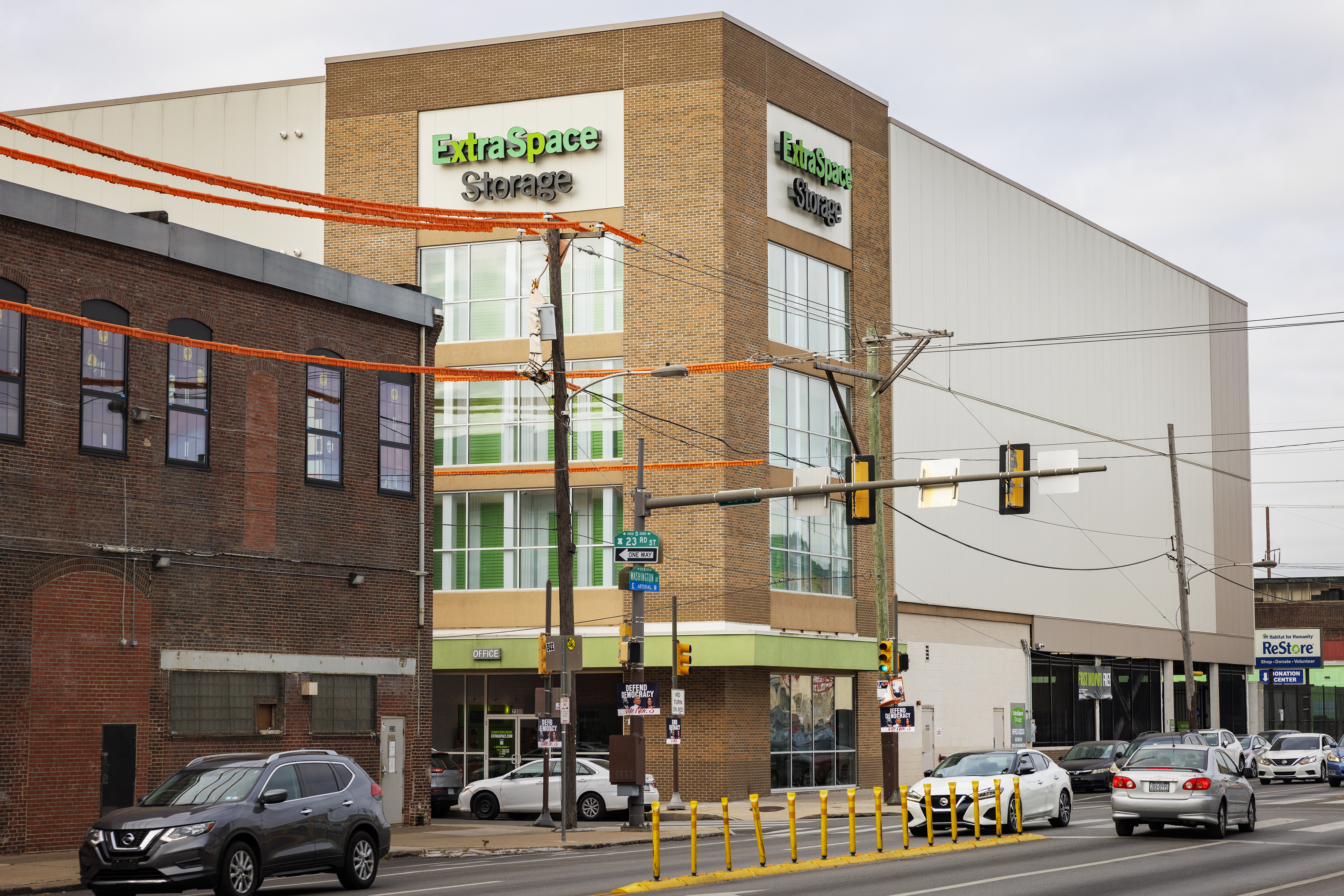
    ExtraSpace self-storage at Washington Avenue and S. 23rd Street, Philadelphia, Monday, November 4, 2024.Alejandro A. Alvarez / Staff Photographer

    Self-storage facilities are gold mines for developers. They suffer little wear and tear, they have few utility costs, and labor costs are low after construction.

    According to online industry search portal StorageCafe, Philadelphia has 89 self-storage sites containing more than seven million square feet of space. About a third of that has been built since 2019.

    Other municipalities have moved to limit the spread of self-storage facilities in recent years. New York City banned them from industrial areas to preserve jobs, and Denver blocked them from properties close to light rail lines. Providence, R.I., in 2023 banned new facilities from the city altogether.

    Driscoll said that he may further limit his legislation to the Tacony neighborhood.

    “I don’t want to hurt another part of my district that maybe wants these things,” he said.

    Embracing affordability: Multiple members of City Council said this week that tackling affordability is their primary objective this fall, including Councilmember Nicolas O’Rourke, whose office published a lengthy report outlining dozens of proposals aimed at reducing costs.

    Some may be more realistic short-term goals than others.

    The report, which was drafted by a Cost of Living Task Force made up of community advocates and industry leaders, recommended the city explore everything from opening municipal grocery stores to creating a local Medicaid supplement program.

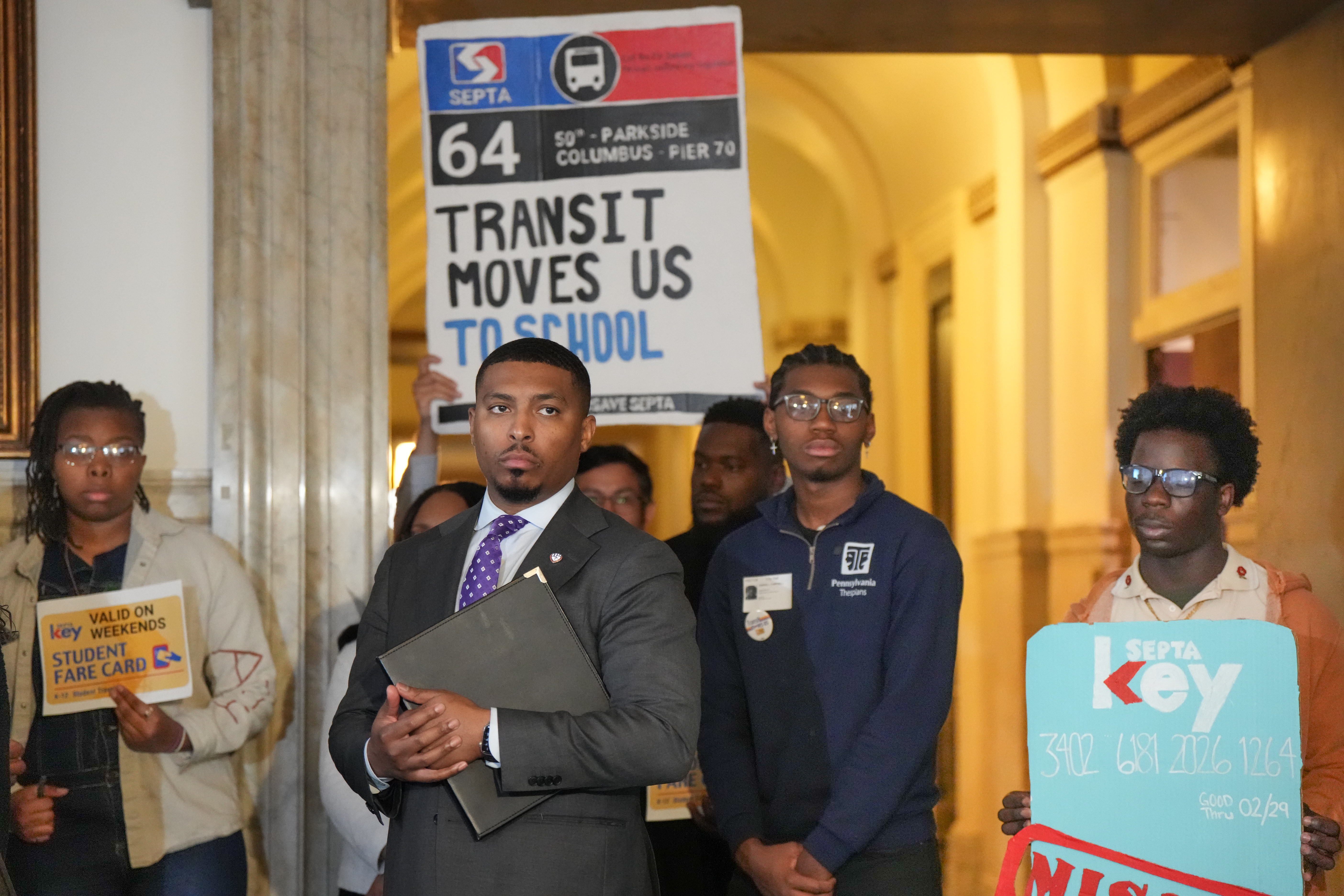
    Councilmember Nicholas O’Rourke with students and activists during a press conference about SEPTA in April.Jessica Griffin / Staff Photographer

    It also recommends restructuring existing housing programs to more aggressively target the poorest residents, and establishing a Transit Access Fund that would fund free or reduced-fare transit passes for low-income households.

    O’Rourke, a member of the progressive Working Families Party, plans to hold a committee hearing on the task force report this fall.

    Council President Kenyatta Johnson will also introduce an affordability measure this fall. He plans to bring forward legislation that would establish a permanent Food and Nutrition Security Coordination Office, he said in a statement.

    Quote of the week

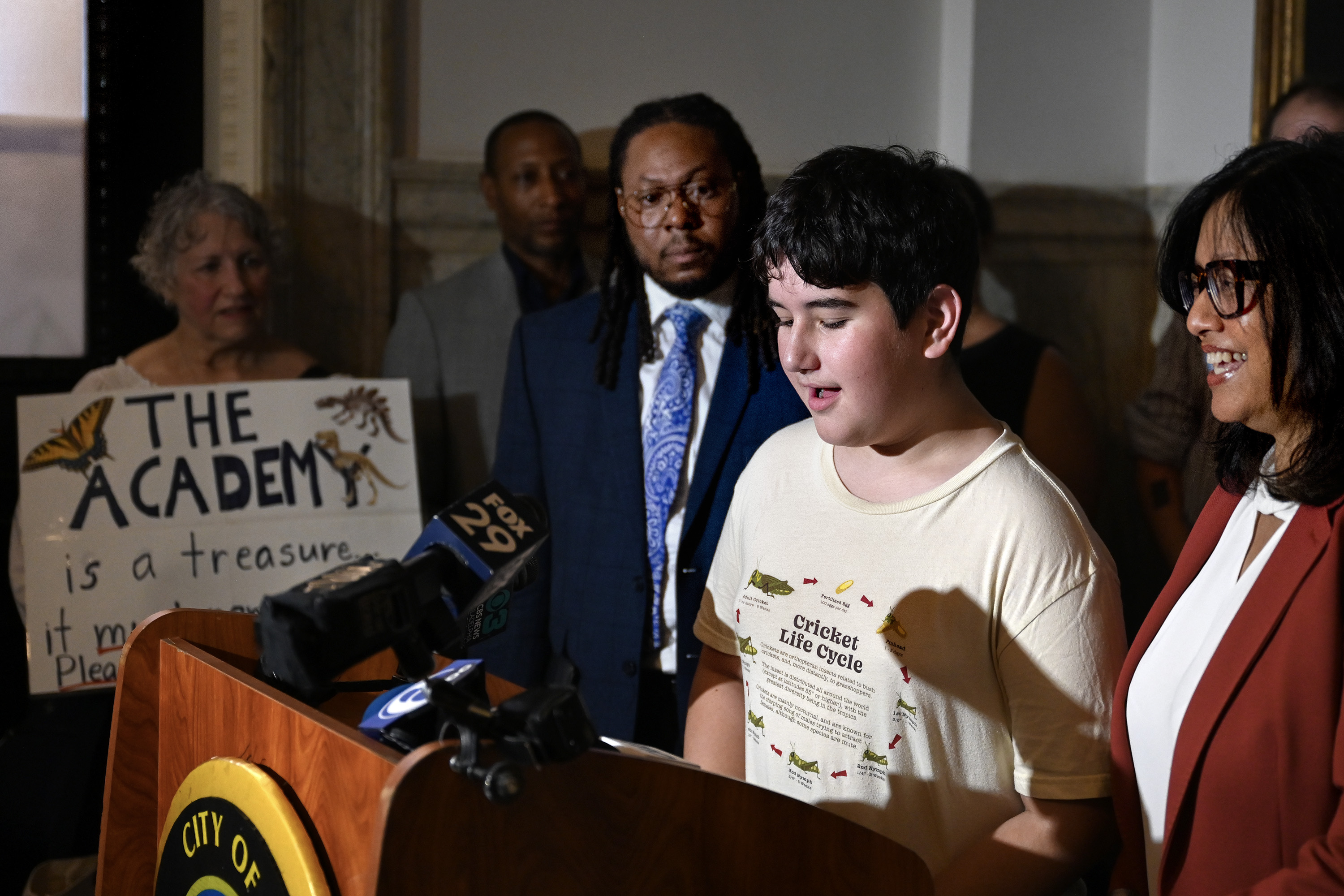
    Jeffery Young, Jr. (left) with twelve year-old Jack Erfer of Wynnewood and councilmembers and Nina Ahmad (right) in supporting the Academy of Natural Sciences of Drexel University before City Council resumes for its fall session Thursday.Tom Gralish / Staff Photographer

    No bones about it: That was Councilmember Jeffery Young Jr., who called for hearings on the planned closure of the Academy of Natural Sciences.

  • Mayor Parker has ordered a task force to study data centers in Philly and report back by June

    Mayor Parker has ordered a task force to study data centers in Philly and report back by June

    Philadelphia Mayor Cherelle L. Parker on Wednesday ordered a task force largely composed of members of her administration to explore whether the city should place new regulations on the construction of data centers — and to present her with its findings in about nine months.

    The mayor, a Democrat who has not staked a position on whether Philadelphia should host the controversial “hyperscale” data centers that power artificial intelligence, signed an executive order establishing the task force on Wednesday.

    In a video message posted to social media, the mayor said the issue is of “grave importance.” She said she has heard from residents who are concerned that a large data center in the city could hike utility bills and drive pollution.

    “This does not mean that a hyperscale data center is being built now; however, if a firm was to apply to the City of Philadelphia to build one of these hyperscale data centers, we want to make sure that we are fully prepared to know what the impact on Philadelphians would be,” Parker said. “We want the appropriate guardrails in place so that we do everything possible to protect our city.”

    The task force will be made up of members of Parker’s administration, as well as a representative from City Council President Kenyatta Johnson’s office. The group is charged with gathering information from neighborhood groups, unions that represent construction workers, environmental advocates, public health experts, and others.

    According to the executive order, the task force must present a final report to the mayor by June 30.

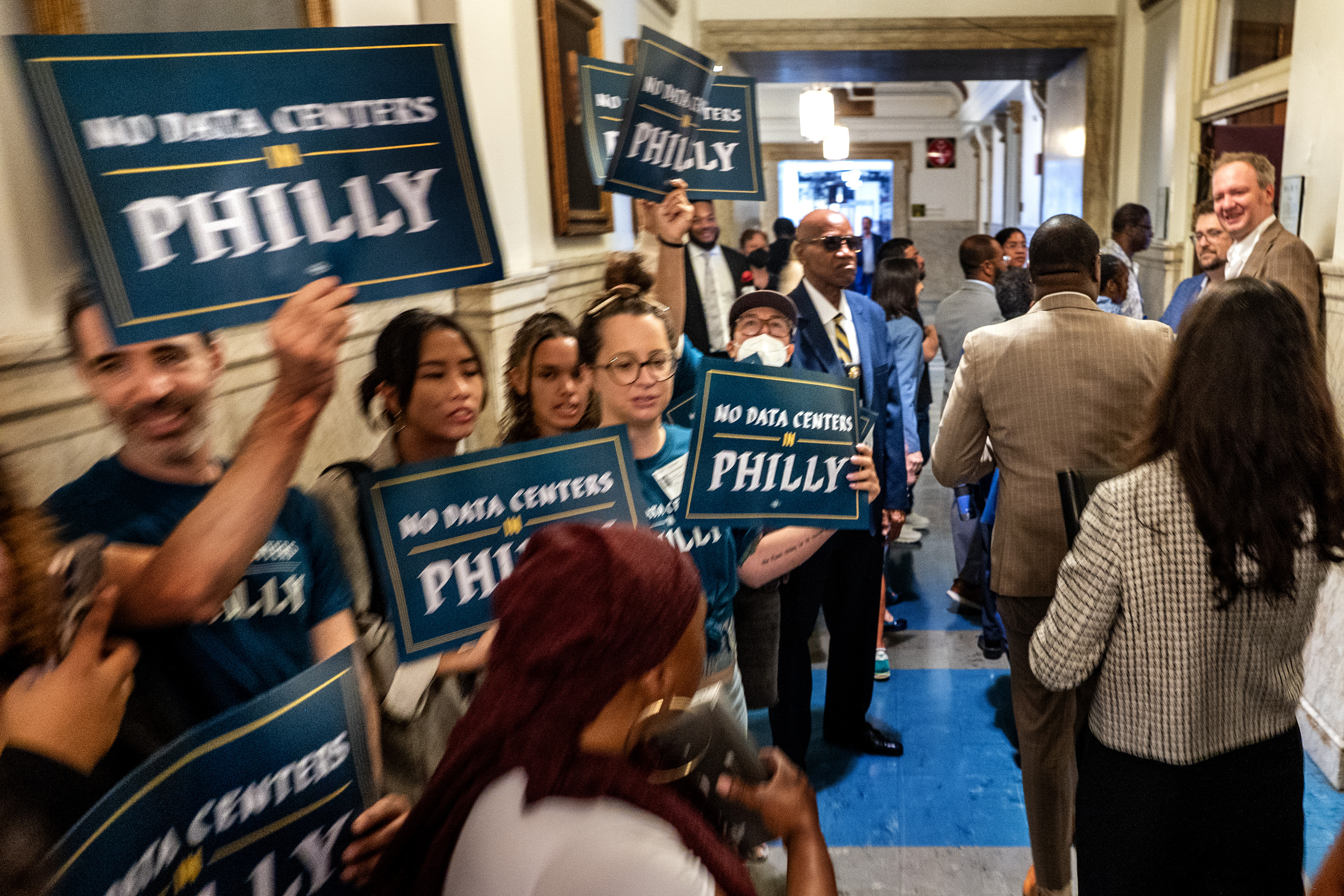
    The mayor’s move came just two days after dozens of activists held a rally outside City Hall calling on Parker and members of Council to pass a multiyear moratorium on the construction of data centers in Philadelphia. They vowed to make data centers an electoral issue ahead of the May primary election, when the mayor and every Council member will be on the ballot.

    The group, called No Data Centers in Philly, said in a statement Wednesday that Parker giving the task force until June to make its recommendations is too little, too late, and that “a task force does nothing to protect us now and takes time that we don’t have.”

    “Across the country, data centers have relied on dirty deals to get built, with NDAs, backroom negotiations, and massive tax handouts,” the statement read. “We can’t let that happen here. The communities who will see their health, homes, and wallets hurt by a data center need to be at the table.”

    President Kenyatta Johnson (right) is greeted by data center protesters in the hall while he heads toward City Council chambers Thursday, Sept. 17, 2026, as the body returns for start of its fall session.Tom Gralish / Staff Photographer

    Parker’s order also comes as talks of regulating artificial intelligence have gripped Washington after a handful of tech executives called for a global slowdown on the advancing technology. There has been bipartisan backlash across the country to the data centers that power AI; however, President Donald Trump has said the industry does not need new regulations.

    Last month, Gov. Josh Shapiro signed an executive order that effectively placed limits on data center construction in the state and required that the projects receive local backing before obtaining a state permit. It would also ban state agencies from using nondisclosure agreements.

    In Philadelphia, no member of City Council has said publicly that they would introduce legislation to place a moratorium on data center construction. Lawmakers are not currently considering any specific proposal to construct a data center.

    This summer, the city’s planning commission issued a report indicating that there are just two plots of land in Philadelphia that could accommodate a hyperscale data center: the former South Philly refinery site known as the Bellwether District and 2600 Grant Ave., a city-owned plot adjacent to Northeast Philadelphia Airport.

    However, building a data center in either of those locations would face hurdles.

    District Council members wield enormous power over land-use decisions in their districts, and the Council members who represent the two potential locations said they oppose a hyperscale data center in their jurisdictions.

    City Councilmember Mike Driscoll, a Democrat who represents the district where the Grant Avenue site is located, said in an interview Thursday that he “is a no, until we really figure this whole thing out.” He said he is concerned that a data center could drive higher utility bills for his constituents.

    “I think we have to participate to be competitive in the global economy,” he said. “But it’s ripe for some problems, and I think we have to sort that out at the federal level.”

    And Council President Kenyatta Johnson, who represents the area where the Bellwether district is located, said Thursday: “We don’t support any type of hyperscale data centers.” He cited concerns about environmental impacts and noise.

    “I haven’t gotten to the point that it should be a moratorium,” Johnson said. “But we are looking at regulations.”

    Bellwether district leaders have said no data center is currently in the works there.

    Mia Fioravanti, senior vice president of corporate affairs for the HRP Group/The Bellwether District, said earlier this week at the Economy League of Greater Philadelphia PAGE Real Estate and Construction Summit that there are no “data center users in our current project pipeline.”

  • Philly DA Larry Krasner faces legal and political uncertainty after a judge said he may have committed crimes

    Philly DA Larry Krasner faces legal and political uncertainty after a judge said he may have committed crimes

    A federal judge’s statement this week that Philadelphia District Attorney Larry Krasner may have committed crimes while running his office came as part of a lengthy battle in a complex post-conviction case.

    But the fallout is likely just beginning.

    The stunning remarks by U.S. District Judge Paul S. Diamond — that Krasner may be guilty of conspiracy or obstruction of justice, and that federal prosecutors should investigate — triggered uncertainty over the future of one of the city’s top elected officials, who is a nationally recognized leader of the progressive prosecutor movement.

    It amounts to the latest unprecedented episode of Krasner’s tumultuous tenure as the city’s district attorney — a stretch in which he has also been impeached by the state House, excoriated by the Pennsylvania Supreme Court, and seen two of his highest-ranking deputies face disbarment and suspension in federal court.

    Legal experts said Diamond’s decision to refer actions by Krasner and one of his supervisors to the U.S. Attorney’s Office would almost certainly lead to an inquiry of some kind. But the fate of any possible probe into Krasner not only was difficult to predict, they said, but could take months or longer to determine.

    Political repercussions could arise as well.

    While Krasner’s Republican enemies reiterated their long-held disdain for the reform-oriented prosecutor, no elected Democrats immediately came to his defense. And some Democrats in the city have quietly begun discussing potential contingency plans if Krasner is forced from office before the end of his third term in 2030.

    Krasner, for his part, has denied wrongdoing, and said in a statement that he planned to appeal Diamond’s ruling, in which the judge also disqualified Krasner and a lawyer in his office, Matthew Stiegler, from participating in the underlying case — a matter in which a man is seeking to have his murder conviction overturned.

    Here is a recap of what led to Diamond’s scathing filing, and what might be next for Krasner.

    What happened in the underlying case?

    The case at issue began in 2015, when Dennis Johnson — found guilty in 2009 of second-degree murder — filed a petition in federal court seeking to have his conviction overturned.

    For years, the district attorney’s office opposed Johnson’s bid for relief. But in 2022, then-Assistant District Attorney Jaclyn Mason filed a brief reversing course and agreeing that his trial counsel had been ineffective.

    This spring, while preparing for a hearing before Diamond about the case, Mason said, she reached out to new supervisors in the law division: Katherine Ernst, Steven Wildberger, David Napiorski, and Peter Andrews. And Ernst said when she reviewed Mason’s brief, she discovered it contained “significant errors,” and the supervisors decided they needed to try to withdraw it.

    Mason thought they were setting her up to take the blame, so she quit. And in her resignation letter, she said that Stiegler — her onetime boss — had forced her to file a faulty brief and that she would not lie or mislead the court to protect him.

    After that, the supervisors testified, Stiegler proposed an unusual path forward, effectively suggesting they find a way to cast Mason as a “rogue” prosecutor prone to making mistakes.

    Stiegler also shared his proposal with Krasner, the supervisors said, and the district attorney told them he thought it was a “really good idea.”

    But the supervisors rejected it, they said. Wildberger told Diamond he found the notion “tremendously inappropriate.”

    From internal disagreements to potential crimes

    Krasner ultimately did agree to let the supervisors try to withdraw Mason’s brief. But he and the supervisors then got into heated arguments about whether to refer the case to state prosecutors — something the supervisors thought was appropriate because of the internal drama consuming their office.

    As the referral debate raged on, the supervisors said, Krasner told them the case needed to stay in-house so someone could “protect the office” and “control the proceedings.” He also threatened “consequences” if any of them told Diamond about their discussions — which they took to mean being fired.

    Diamond, in his memorandum, said threatening people’s jobs when they are trying to tell the truth to a judge could amount to obstruction of justice, as could attempting to conceal the truth about Stiegler’s role in the drafting of Mason’s brief.

    He also said Krasner’s attempts to work with Stiegler to create a false narrative about Mason could amount to conspiracy.

    And while the judge said he found the supervisors and Mason to have testified credibly, he said Stiegler may have committed perjury, calling his testimony “often contradictory, evasive, or outright dishonest.”

    Will Krasner actually face charges?

    For those reasons, Diamond said, he sent the case to the U.S. Attorney’s Office to investigate if Krasner or Stiegler should be charged.

    Diamond, as a judge, does not have the power to prosecute the case himself. And how or if prosecutors decide to proceed remains an open question — and one that might remain unclear for some time.

    Legal experts said it is rare, though not unprecedented, for judges to refer potential wrongdoing to prosecutors. And any time that happens, they said, prosecutors take it seriously — reviewing any materials the judge disclosed, deliberating paths forward, and potentially empaneling a grand jury to begin calling witnesses.

    Still, full criminal investigations often take months or years to conduct. And such probes — conducted in secret — can go in unexpected directions. Sometimes that might mean a broader discovery of wrongdoing than was initially expected. Other times, investigations can close without charges.

    Also unclear is whether the local U.S. Attorney’s Office would oversee any potential investigation into Krasner — or if staffers from elsewhere in the Justice Department might be called on to handle it, since Philadelphia-based federal prosecutors often work on cases with lawyers in Krasner’s office.

    A spokesperson for the U.S. Attorney’s Office declined to comment on Diamond’s memorandum.

    Krasner has made no secret of his antipathy for President Donald Trump, and Trump, in his second term, has been unabashed about asking the Justice Department to prosecute political foes. It was not clear how or if that might influence prosecutors’ course of action in this case.

    Whatever might happen, experts said, one thing was generally clear: A referral from a federal judge targeting an elected district attorney was practically unheard of.

    “I really cannot think of an equivalent situation,” said Lauren Ouziel, a Temple University Beasley Law School professor and former federal prosecutor.

    Michael Levy, who worked as a federal prosecutor in Philadelphia for nearly 40 years before retiring in 2019, said: “For a judge to do this, it’s really unusual.”

    Could Krasner face other consequences?

    Even if Krasner and Stiegler are not criminally charged, they could still face additional consequences.

    If the case is referred to the federal court’s disciplinary committee, for example, a panel of judges could seek to determine whether any of the prosecutors involved behaved in a way that would warrant a suspension or disbarment from practicing in federal court.

    That would likely be detrimental to Stiegler, who has spent much of his career working on federal cases. But it would be even more problematic for Krasner — and could raise questions about whether he could continue to serve as the city’s district attorney.

    Still, similar to any criminal investigation, the disciplinary process — which is largely confidential — would also likely be lengthy. When some of Krasner’s deputies were disbarred or suspended in federal court in 2025, those outcomes came about three years after a federal judge said he was sending the case out for a disciplinary review.

    Diamond did not specify if he was referring the matter to the region’s chief federal judge, the first step in a potential disciplinary inquiry. Legal experts said prosecutors — if they investigate — would likely prefer to have their probe take precedent over any potential disciplinary proceeding.

    Will there be political fallout?

    Outside of the legal realm, Krasner, a Democrat, has faced political attempts to oust him before.

    In 2022, the Republican-led Pennsylvania House voted to impeach Krasner, saying he had not adequately enforced state laws and, by extension, had contributed to the city’s gun violence crisis.

    Krasner denied the allegations, and appellate courts — including the Pennsylvania Supreme Court — later agreed with various arguments he made describing the process as improper.

    State Rep. Martina White, a Republican from Northeast Philadelphia who led the impeachment drive against Krasner, on Wednesday called for him to resign, saying in a statement that “Philadelphia needs a reliable DA, not a defendant-in-waiting.”

    Few top Democrats defended Krasner.

    Mayor Cherelle L. Parker declined to comment this week, as did City Council President Kenyatta Johnson, who supported Krasner’s bid for reelection last year.

    Some activists on the progressive left said they still support Krasner and see Diamond’s referral as politically motivated. Diamond was appointed by former President George W. Bush, a Republican, in 2004.

    “This is unfortunately a continuation of the right’s assault on DA Krasner and the policies that he’s implemented,” said Robert Saleem Holbrook, executive director of the progressive political group Straight Ahead. “This is a judge using an internal conflict in the office to further the objective of removing Krasner from office.”

    Krasner has proved politically resilient over the years, winning three terms despite the impeachment drive and opposition from elected officials in his own party, said Sergio Cea, political director of the progressive group Reclaim Philadelphia.

    Krasner, he said, is “like Teflon.”

    “He is somebody that has consistently, without the Democratic establishment support, won primary after primary,” he said. “And that is because he is wildly popular with Philly voters who are tired of status quo district attorneys who are more focused on filling jails than achieving justice.”

    A ‘devastating’ environment

    Krasner, meanwhile, is not in the office this week, according to people familiar with his whereabouts. First he was on a recruiting trip in Washington, they said, then he was headed on a pre-planned personal trip to Ireland.

    Inside the office Wednesday, staffers said they were sharing feelings of dismay and fatigue from years of upheaval and political headlines under Krasner’s leadership. Several prosecutors, who spoke on the condition of anonymity to speak candidly about a sensitive matter, said they have endured the impeachment saga, mass firings, and the departure of veteran staffers.

    And although some said Diamond’s ruling was not entirely surprising — the judge had signaled at a previous hearing that he might refer the matter to federal prosecutors — they also anticipated that any investigation could stretch on for months or even years.

    One longtime prosecutor called the allegations “devastating” and said the reputation of the office “has been reduced to rubble.”