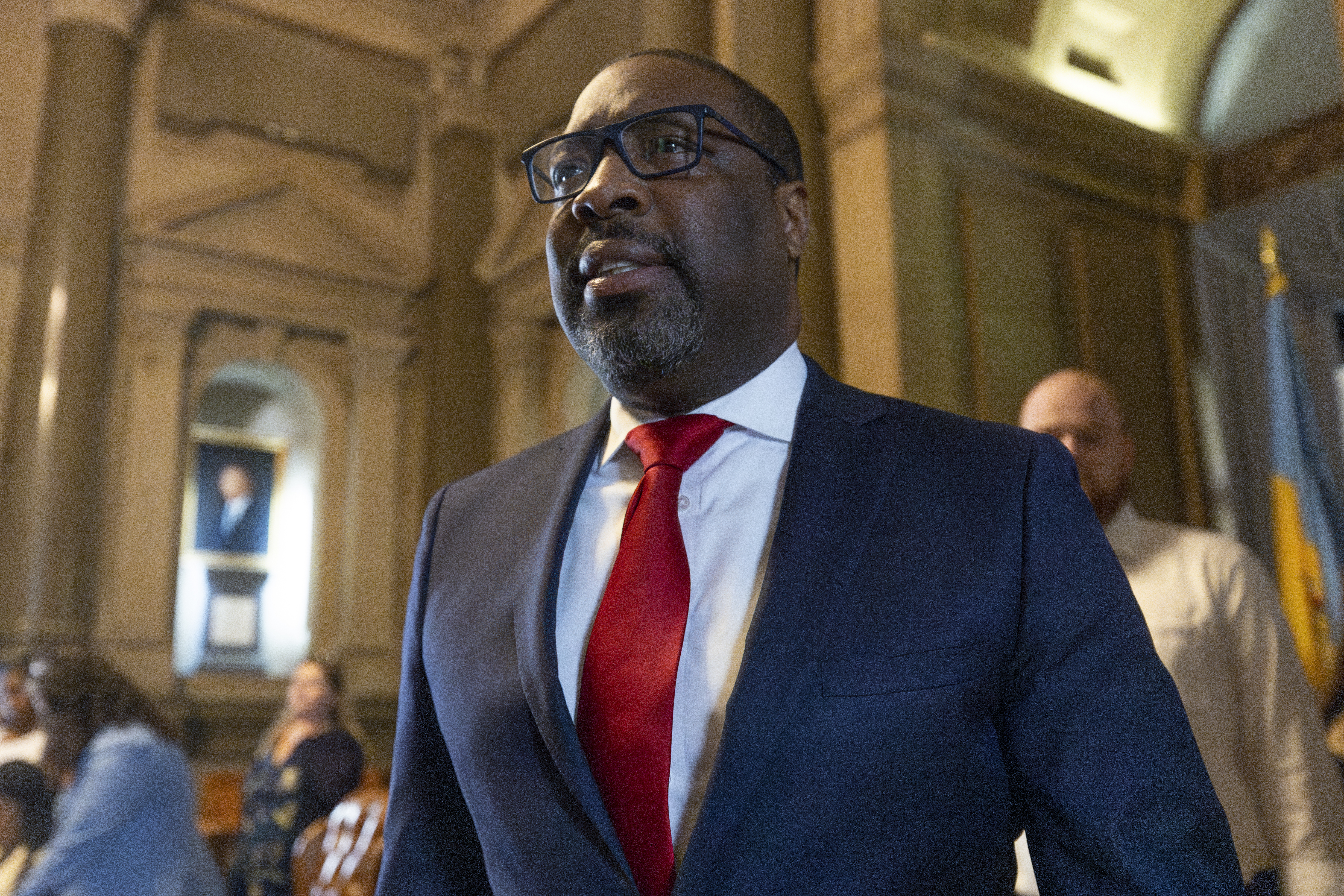
Tag: Cherelle L. Parker

  • After a messy budget fight, Philly City Council turns to its unfinished business: Trash, taxes, and a new arena

    After a messy budget fight, Philly City Council turns to its unfinished business: Trash, taxes, and a new arena

    One evening last week, City Council President Kenyatta Johnson stood on South Broad Street and greeted his fellow lawmakers as they arrived at Steak 48.

    Johnson had invited them to the swanky Center City steakhouse to “reconnect, share conversation, and enjoy each other’s company outside of City Hall,” according to an invitation for the Sept. 9 “members only” event obtained by The Inquirer.

    Council resumes for its fall session Thursday — and after the way things ended in the spring, the city’s legislators may have needed the opportunity to break bread together.

    When lawmakers last met in June, they approved a $7.1 billion city budget that left all sides feeling dejected. Council turned away a series of tax proposals from Mayor Cherelle L. Parker, including a $1-per-ride levy on rideshare companies like Uber and Lyft, and ended up passing a budget that omitted a number of members’ own priorities and left unanswered how the city will help the Philadelphia School District navigate its funding crisis in the long run.

    In addition to representing a new low in Parker’s relationship with the legislative body of which she was once a member, some Council members also questioned their own negotiating team’s handling of the ordeal.

    Councilmember Mike Driscoll noted last week that while he was not “pointing fingers,” Council could have added more money in the budget for line items requested by lawmakers, such as funding for community groups.

    “I’m disappointed and pissed off at the way it played out,” Driscoll, who represents parts of Northeast Philadelphia, said in an interview. “Our priorities weren’t analyzed in a more thoughtful [way]. … We do the amendments. [Parker] doesn’t. We could have put money in.”
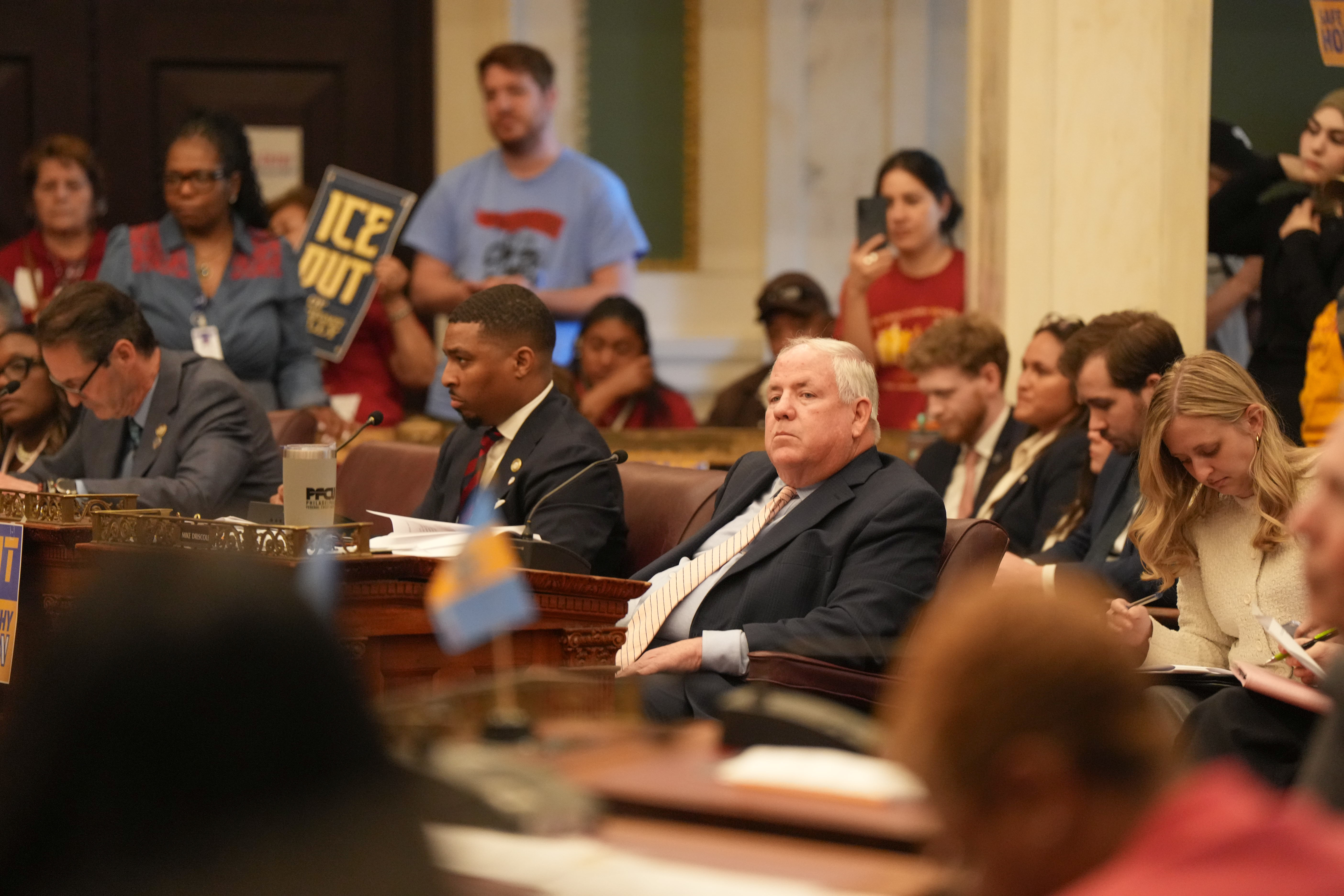
    Councilmember Michael Driscoll in Philadelphia on April 23, 2026.Jessica Griffin / Staff Photographer

    In addition to dealing with the aftermath of the budget, Council this fall is expected to revisit a tense debate over how the city disposes of its trash and a proposal by Driscoll to provide business tax relief to sole proprietors. It may also begin to consider legislation related to the proposed 76ers and Flyers arena in the South Philadelphia sports complex.

    An Inquirer reporter saw at least 11 of Council’s 17 members at the Steak 48 event, meaning a majority, or quorum, of Council was present. The Pennsylvania Open Meetings Act, or Sunshine Act, requires legislative bodies to notify the public if a quorum is present for a meeting at which official business is discussed.

    But Johnson said at the beginning of the dinner that would not be happening.

    “Tonight we do no official business,” Johnson said in an interview. “Just social. Welcome back to City Council. Eat and drink and be merry. No policy on the table. No legislation on the table. Just having a good time.”

    Johnson’s invite directed members to RSVP to a Council staffer’s city email address. Johnson said his campaign picked up the tab.

    Parker and all 17 Council members will be on the ballot in next year’s municipal elections.

    “Everyone facing reelection next spring knows they have to be able to point to real accomplishments on the important issues voters care about,” City Hall lobbyist John C. Hawkins said. “And this fall is their last opportunity for them to address the most pressing issues that were not fully resolved in the spring budget process.”

    Budget fight hangover

    When Council and the mayor in the spring failed to reach a deal over new tax revenue to plug a $48 million hole in the school district’s budget, Johnson said Council had helped identify one-time savings in the city budget to fill the gap for a year while vowing to explore new recurring revenue streams for the district.

    Johnson has not yet scheduled a hearing on schools funding, and Council’s dissatisfaction with the district appears to have been mounting.
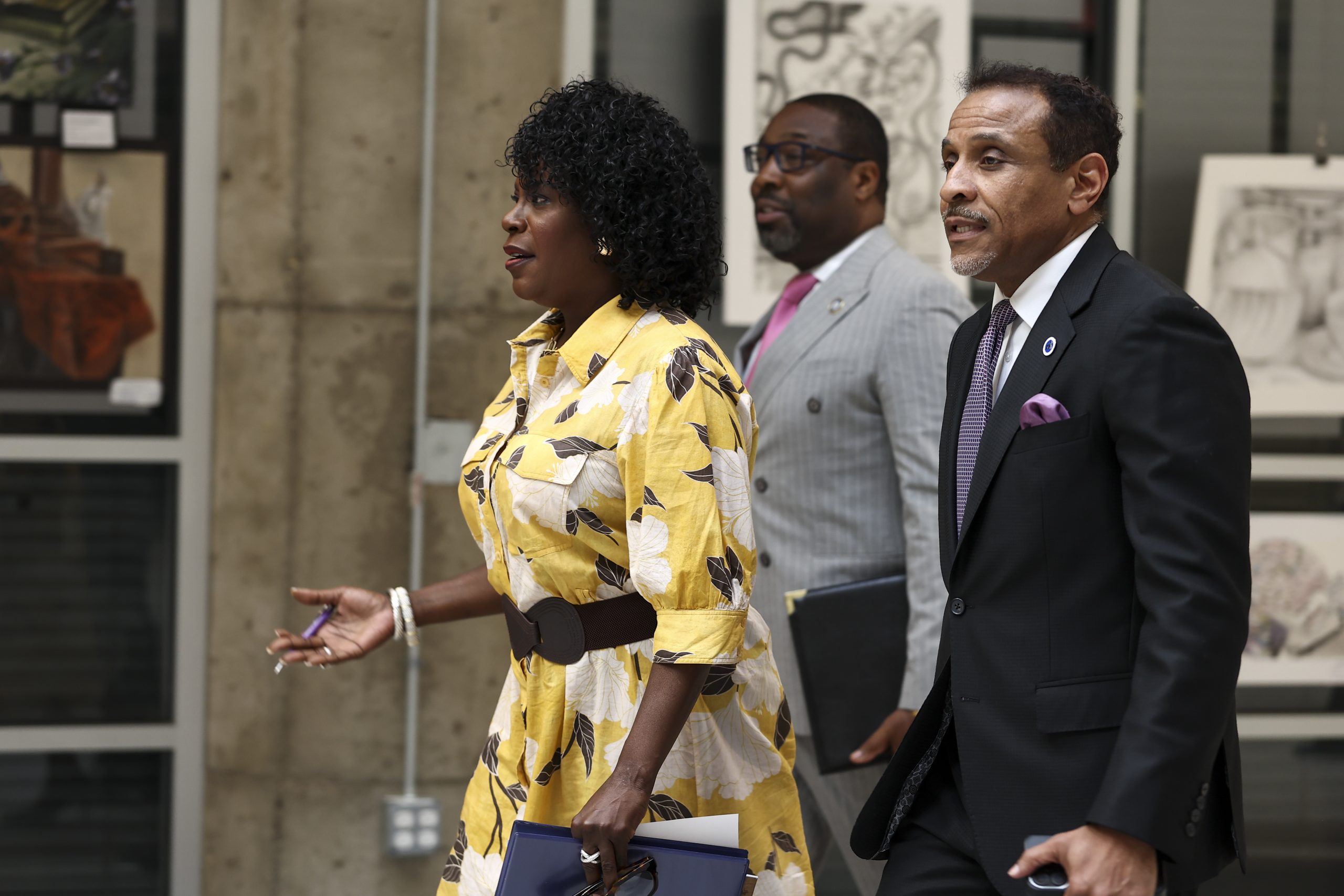
    Mayor Cherelle L. Parker, Council President Kenyatta Johnson, and Superintendent Tony B. Watlington Sr. arrive for an announcement at the School District of Philadelphia Headquarters on Wednesday, June 10, 2026 in Philadelphia. Monica Herndon / Staff Photographer

    He said in a statement this week that Council will honor its commitment, but also alluded to finding that money in the district’s own budget, despite school officials saying they are navigating a $300 million structural deficit.

    Johnson said Council is awaiting the results of a performance audit of the school district that is being conducted by City Controller Christy Brady. He said that report “will help Council identify any available funds to support recurring funding.”

    New arena, who dis?

    In the fall of 2024, Council was consumed by the debate over the 76ers’ proposal to build an arena in Center City.

    Lawmakers spent much of the session debating the economic benefit of the project, while opponents cried out that it would displace businesses and residents in nearby Chinatown.

    Despite Council approving it, that project was scuttled by the Sixers, who instead teamed up with Comcast, which owns the Flyers, to plot a different project: a joint venture that would bring a new arena to the South Philly sports complex. Earlier this month, they released the first renderings of what the Spectrum-inspired arena could look like.

    There will likely be spirited discussions about it all in Council — at some point. But don’t expect a redux this fall of the all-out brawl that was 2024.
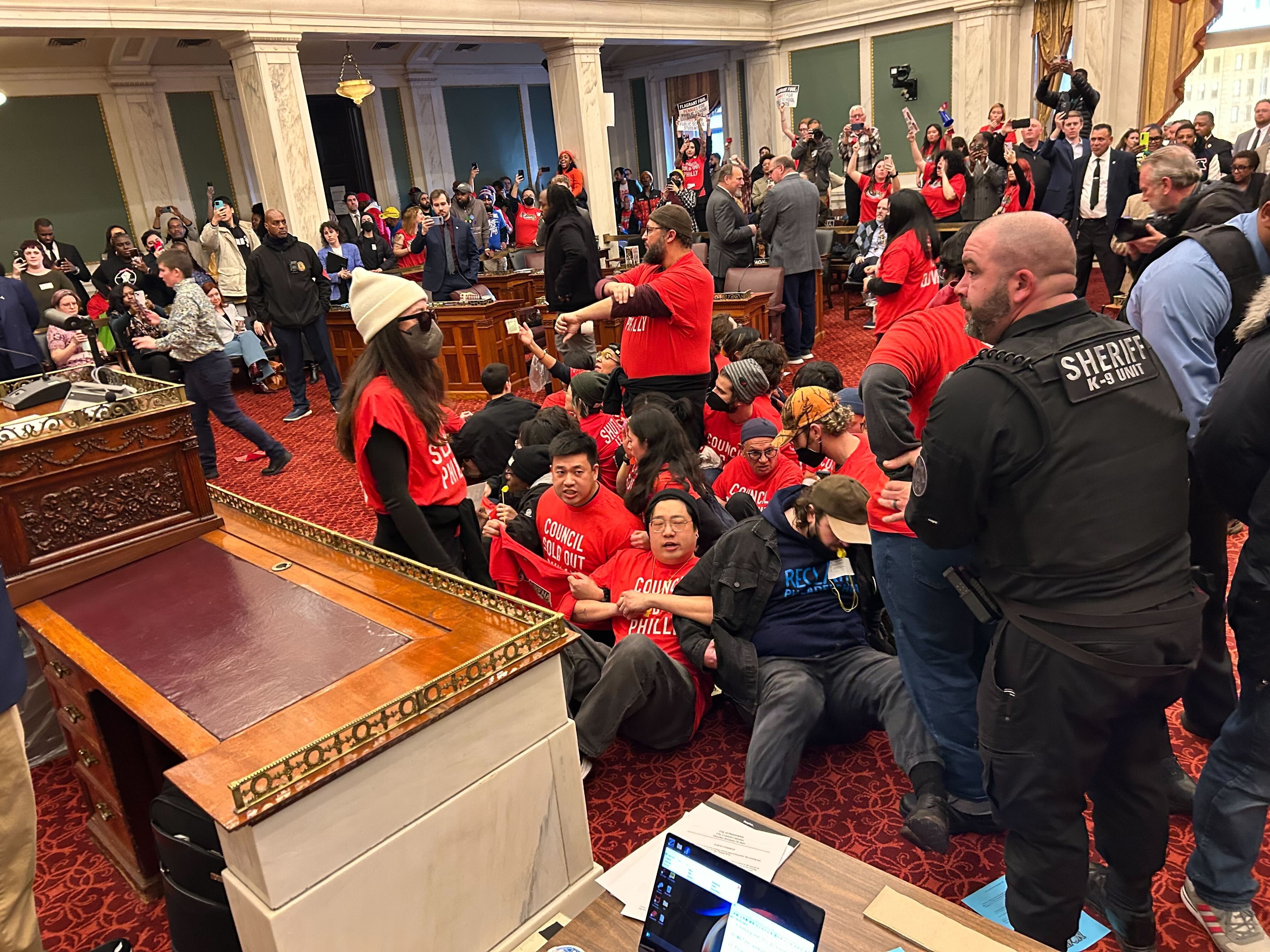
    Protesters link arms as sheriff’s deputies attempt to remove them from Philadelphia City Council chambers as the council is scheduled to vote on final approval for the Sixers’ proposed Center City arena on Thursday, Dec. 19, 2024.Sean Collins Walsh / Staff

    The stadium district falls in Johnson’s 2nd District, meaning it will be on him to introduce legislation that would green-light the project. And he has not been in a hurry to accommodate the Sixers’ timeline, which would be to approve the project as soon as possible so the venue can open by 2030.

    Johnson said in a statement that “no zoning legislation is scheduled for introduction,” and that he is working to find consensus with the Parker administration and other Council members before introducing any legislation.

    “I am focused on ensuring that any future legislation concerning the new arena addresses the interests and concerns of the community around the Stadium District and in Philadelphia,” he said.

    When that legislation is brought forth, it is unlikely to be anywhere near as controversial as the 76ers’ Center City proposal, which drew opposition due to its proximity to Chinatown, so long as the teams uphold their promise to not seek public subsidies.

    The Asian Pacific Islander Political Alliance, which led opposition to the Center City arena, released a statement earlier this month that signaled openness to the South Philly project.

    “The people of South Philly should have a meaningful voice in whether and how this project moves forward,” said Will Gross, an API PA member who is rumored to be considering a run for Council. “And if it does, it should mean good union jobs, a strong community benefits agreement, and real benefits for the people who live and work in the neighborhood.”

    Trash issue continues to burn

    Councilmember Jamie Gauthier has spent the better part of the last year trying to whip up support for a bill that would ban the city from shipping off its trash to be burned at an incinerator in Chester, a longtime practice she and others say is poisoning residents of the city to Philadelphia’s south.

    The Parker administration opposed the measure, saying it would limit the government’s ability to carry out its normal competitive bidding process and select the best-value contractor. Gauthier failed to get a majority of Council on her side, and she never called up the Stop Trashing Our Air Act for a vote.

    This fall, she will try a new tactic.

    Gauthier and her allies are attempting to kill the Parker administration’s effort to approve a new contract with Reworld, which operates the Chester waste-to-energy facility where the city sends about a third of its garbage. (The remainder is hauled off to landfills.)
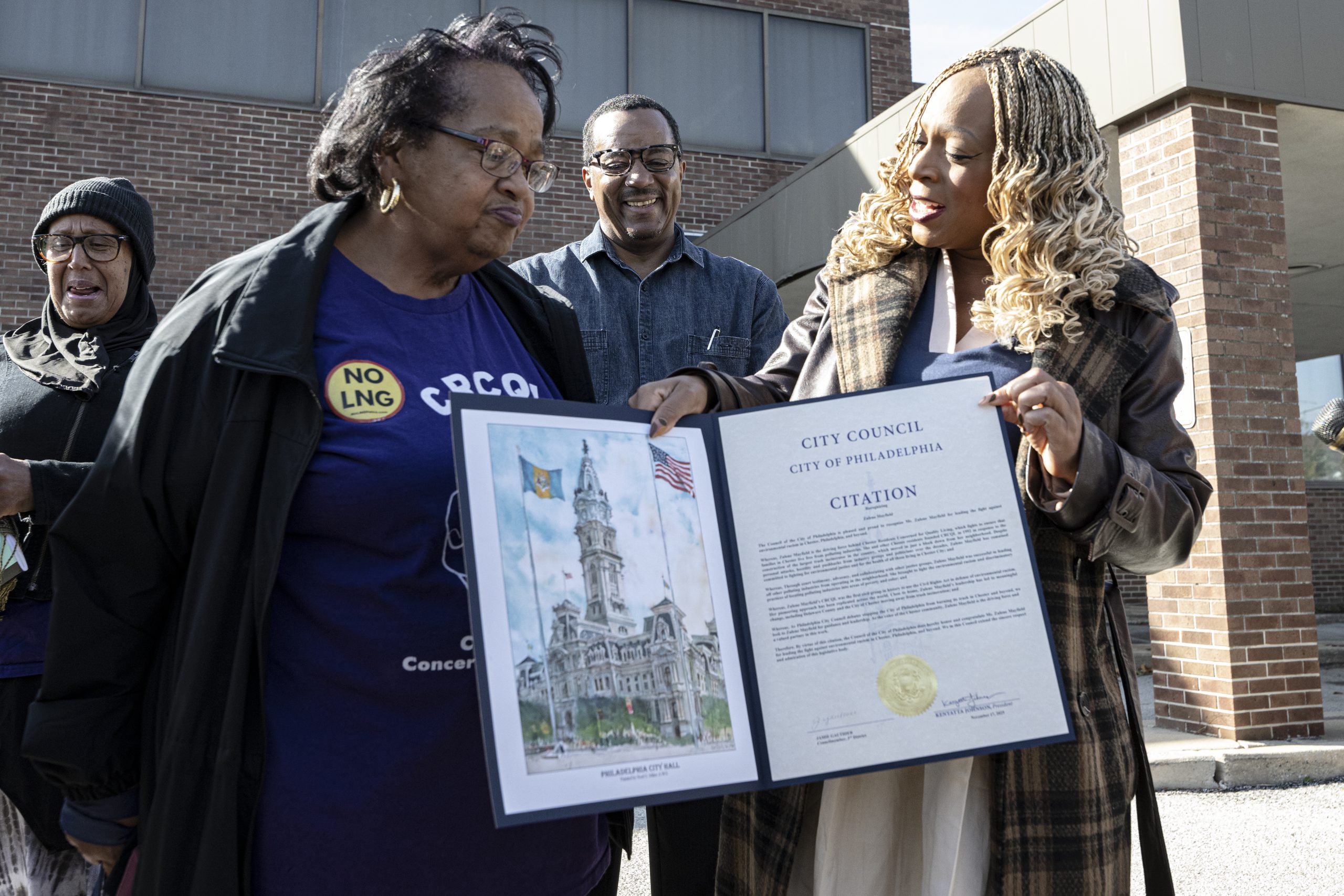
    Chester resident Zulene Mayfield, left, Philadelphia Councilmember Jamie Gauthier, right, and Chester Mayor Stefan Roots meet to discuss Gauthier’s “Stop Trashing Our Air Act,” which would ban the city from incinerating waste, during a visit with lawmakers and staff in Chester, Pa., on Friday, Nov. 7, 2025.Jose F. Moreno / Staff Photographer

    In July, the Parker administration announced that it intends to enter into a new four-year contract for waste processing and disposal with Reworld, as well as two landfill operators, Republic Services and Waste Management. The terms of those contracts have not yet been made public.

    Council must approve multiyear contracts, and Gauthier, who represents parts of West and Southwest Philadelphia, said she is planning a full-court press to get her colleagues to “block Mayor Parker’s dirty deal with trash incinerators.”

    The question is whether she can get eight other members on her side to reach a majority of Council. She is likely to find support from three fellow progressives, and she is expected to be joined by Councilmember Isaiah Thomas, the Democratic majority whip, at a Thursday news conference calling on the city to end its contract.
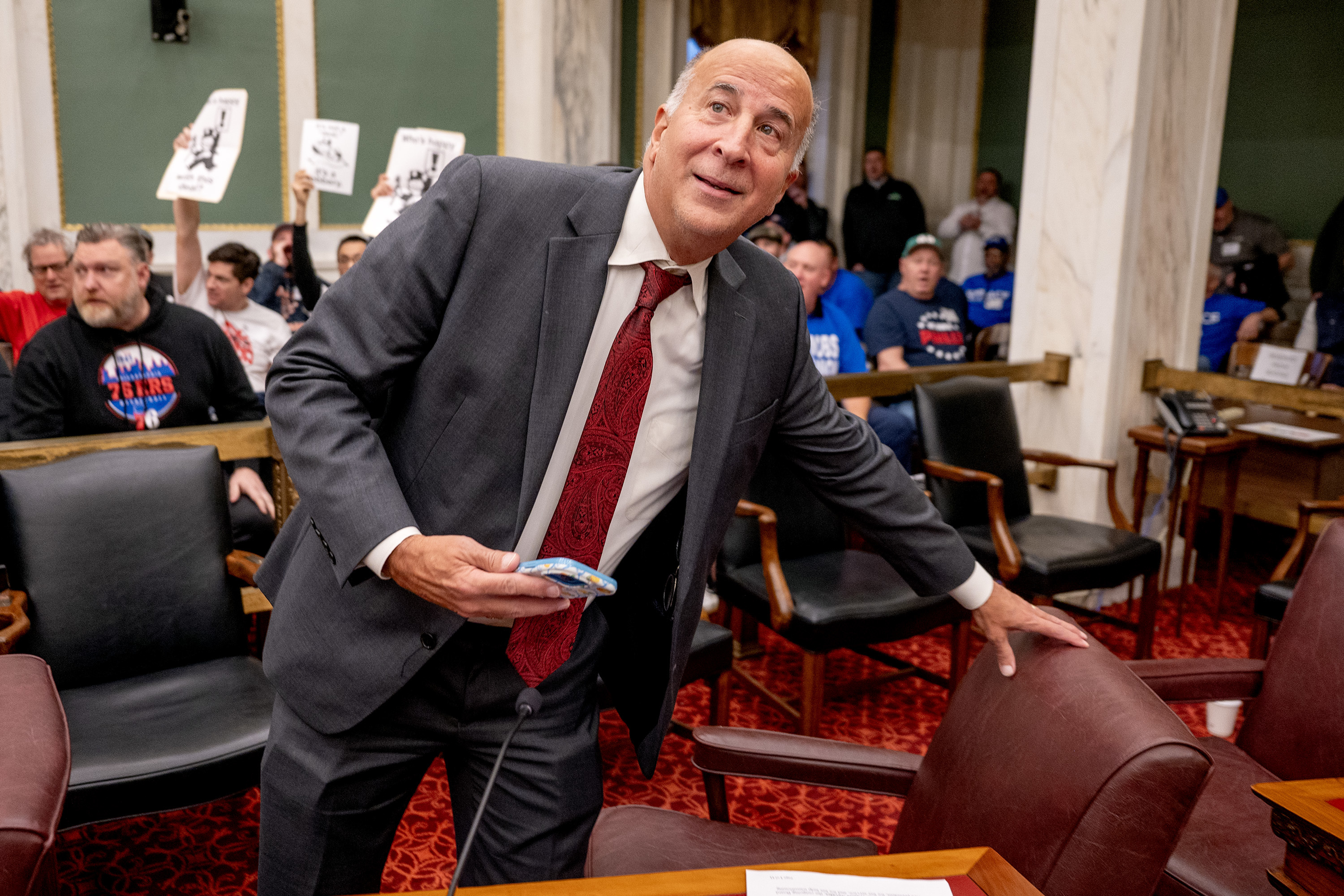
    Councilmember Mark Squilla takes his seat in chambers Wednesday, Dec. 11, 2024, before a scheduled committee vote on Sixers arena related legislation was postponed,Tom Gralish / Staff Photographer

    Meanwhile, Councilmember Mark Squilla said he has been working with the administration on a plan to build out a “circular waste” system that would replace incineration and landfilling over time with composting and waste “digestion.”

    “The incinerator bill …. doesn’t solve a problem we have: to reduce our waste,” Squilla, whose district includes parts of Center City, South Philadelphia, and the river wards, said in an interview. “If we can reduce our waste by going to composting and digestion and other forms, we then eliminate all of our trash. Therefore end up with the result of what the goal should be, [which] is to get as close as possible to zero waste.”

    Squilla’s proposal, which would involve “a long-term contract to attract providers to be able to build out a possible digester to decrease the amount of food waste,” could make it easier for Council members sympathetic to Gauthier’s goals but skeptical of her incinerator bill to approve the administration’s contract with Reworld while committing to a long-term solution.

    The business tax, revisited

    Separate from the school district revenue, some Council members are hoping to advance measures that would provide tax relief to businesses.

    Council two years ago approved a 13-year schedule of rate cuts that would dramatically reduce the business income and receipts tax. But at the same time, Parker moved to eliminate a tax break that primarily helped small businesses after its legality under the Pennsylvania Constitution was challenged in court.

    The elimination of the tax break — which excluded from taxation companies’ first $100,000 in revenue — has forced thousands of small firms and sole proprietors that make less than that threshold to begin paying a tax from which they had been effectively exempted.

    Driscoll worked with tax experts to find a workaround that could pass legal muster — exempting certain types of businesses, such as sole proprietors, from the tax entirely — and he is planning to call up for a vote his bill this fall.

    Thomas, meanwhile, said he will introduce a resolution Thursday to hold hearings this fall on the feasibility of reducing the net income portion of the business tax “much sooner” and more “aggressively,” meaning an acceleration of the tax cuts already scheduled.

    The measures are likely to spark opposition from more progressive members of Council and could be tricky to navigate for Parker, who wants to make Philly more business-friendly but may not want to forgo additional revenue.

    Members eye priorities as election looms

    With next year’s election looming — and all 17 members indicating they intend to seek new four-year terms — the fall session is also likely to see movement on a myriad of issues championed by individual legislators.

    Majority Leader Katherine Gilmore Richardson said she will propose bills to “protect communities from harmful nuisance businesses and improve processes around code violations,” continuing her efforts to crack down on businesses that neighbors say attract crime.

    Councilmember Rue Landau, who represents the city at-large, said she is “tackling the impact of emerging technologies, making Philadelphia more affordable for working people, and ensuring equity remains at the center of how we serve our LGBTQ+ communities.”

    Landau said she also plans to introduce a resolution calling on the state to ban automated license plate readers like Flock cameras.
    The Philadelphia Council members inside the caucus inside City Hall in Philadelphia, Pa on Thursday, June 11, 2026.Aidan T. Gallo / Staff Photographer

    And Councilmember Kendra Brooks will propose new protections for temporary workers and tenants facing eviction, according to her spokesperson, Kathleen Melville.

    Brooks, a progressive who represents the city at-large, will also fight for additional funding for reproductive healthcare providers, a priority of hers that was left out of the budget following Council’s impasse with Parker, Melville said.

    “That was her biggest focus going into the budget,” Melville said. “She had the same experience as every other Council member in that none of her budget priorities made it into the budget.”

    Several members have also said that they want to bolster the city’s property tax relief offerings after the administration this summer released its citywide assessments that will mean higher taxes for thousands of homeowners.

    The most likely move would be for Council to amend the city’s tax code to increase the popular homestead exemption, which currently exempts the first $100,000 from a home’s taxable value if the owner lives in the dwelling as their primary residence.

    Johnson said Council “will review all tax-relief options” this fall.
  • Philly still hasn’t announced its Hispanic Heritage Month events. Where’s the list, Mayor Parker?

    Philly still hasn’t announced its Hispanic Heritage Month events. Where’s the list, Mayor Parker?

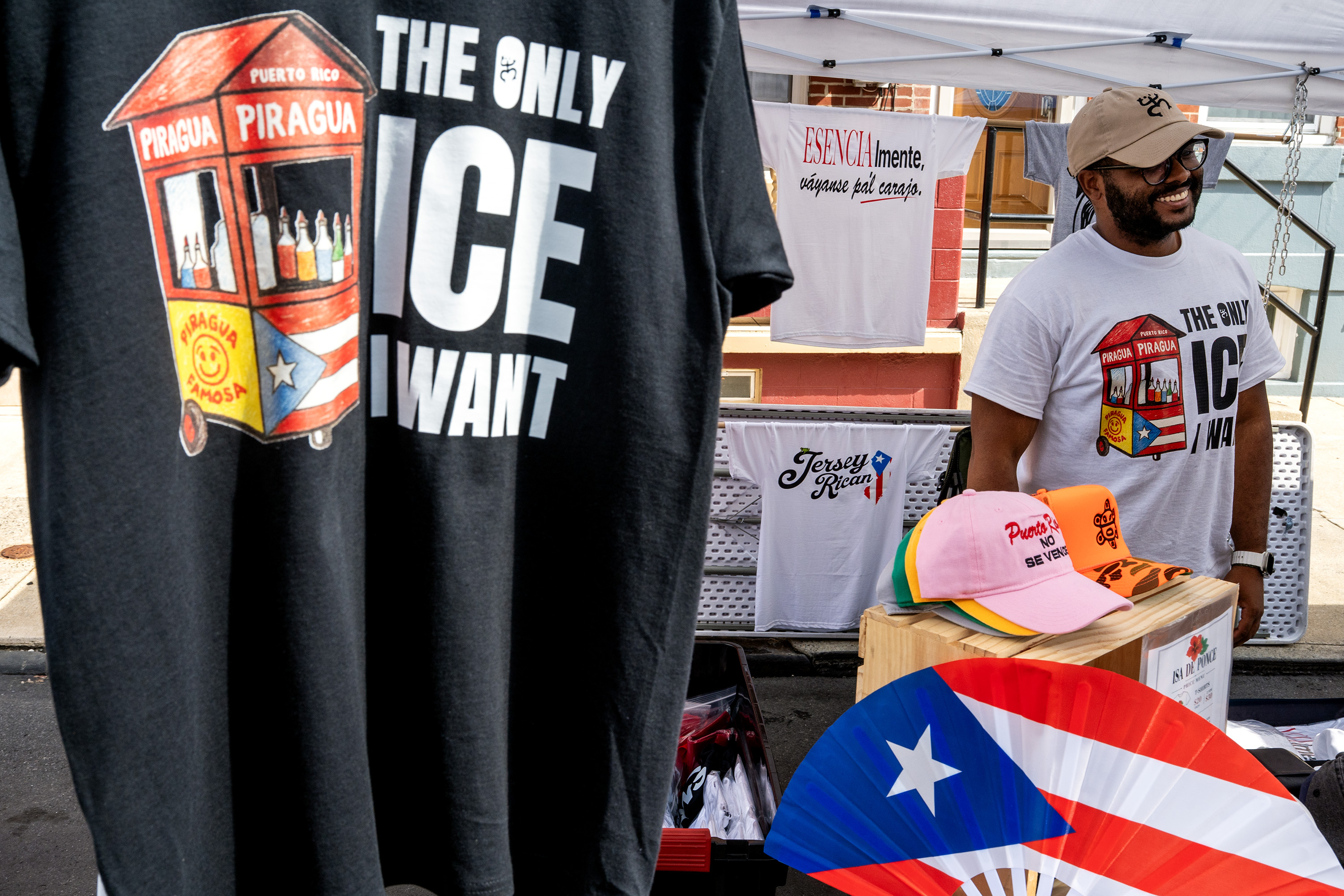
    Tuesday is the first day of Hispanic Heritage Month, which runs from Sept. 15 to Oct. 15. I’ve always had a bit of a love/hate relationship with this month, which purports to recognize and celebrate that Latinos have been a formative part of the nation since its early days. While the attention to the extraordinary individuals and myriad cultural heritages that comprise “Latinidad” in the United States is gratifying, it is, by its very nature and time limitation, a glancing and shallow attention.

    Even so, I always note the arrival of a mass email from the mayor’s office about the events the city has programmed to mark the month.

    This year, I’m still waiting.

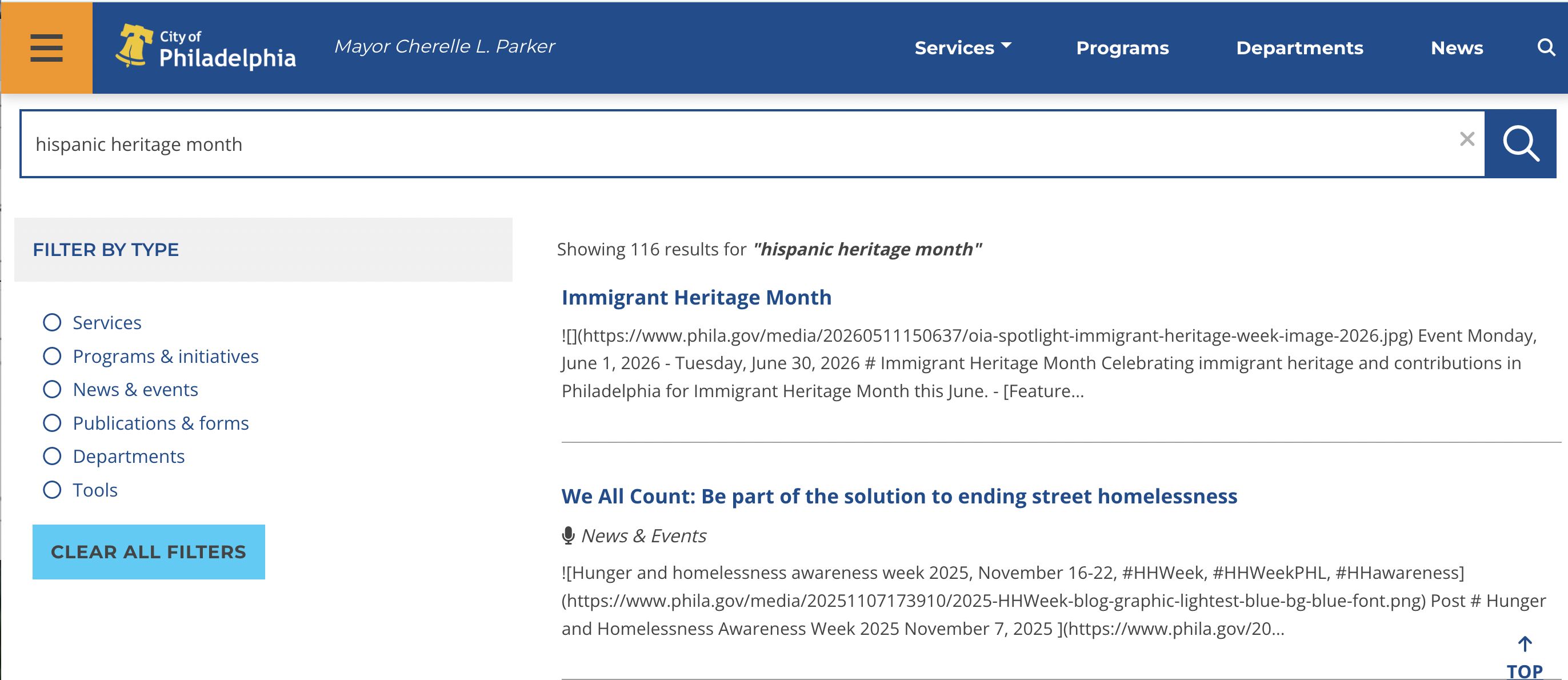
    As yet, there’s been no email from the city of Philadelphia announcing any special programming during Hispanic Heritage Month, and nothing when I search for that on phila.gov.

    Screen capture of a search for “Hispanic Heritage” month on the phila.gov website on Monday.Screen capture of phila.gov

    There aren’t even links to information about two signature events that took place this past Sunday: La Feria del Barrio (organized by Taller Puertorriqueño) and the Mexican Independence Day Festival (organized by the Mexican Cultural Center), nor even the unofficial culminating event in Philadelphia — the Puerto Rican Day Parade, which Concilio has been hosting for more than 60 years — on Sept. 27.

    While I’d like to say I’m completely surprised by the elision of Hispanic Heritage Month that the city is doing, I’m not.

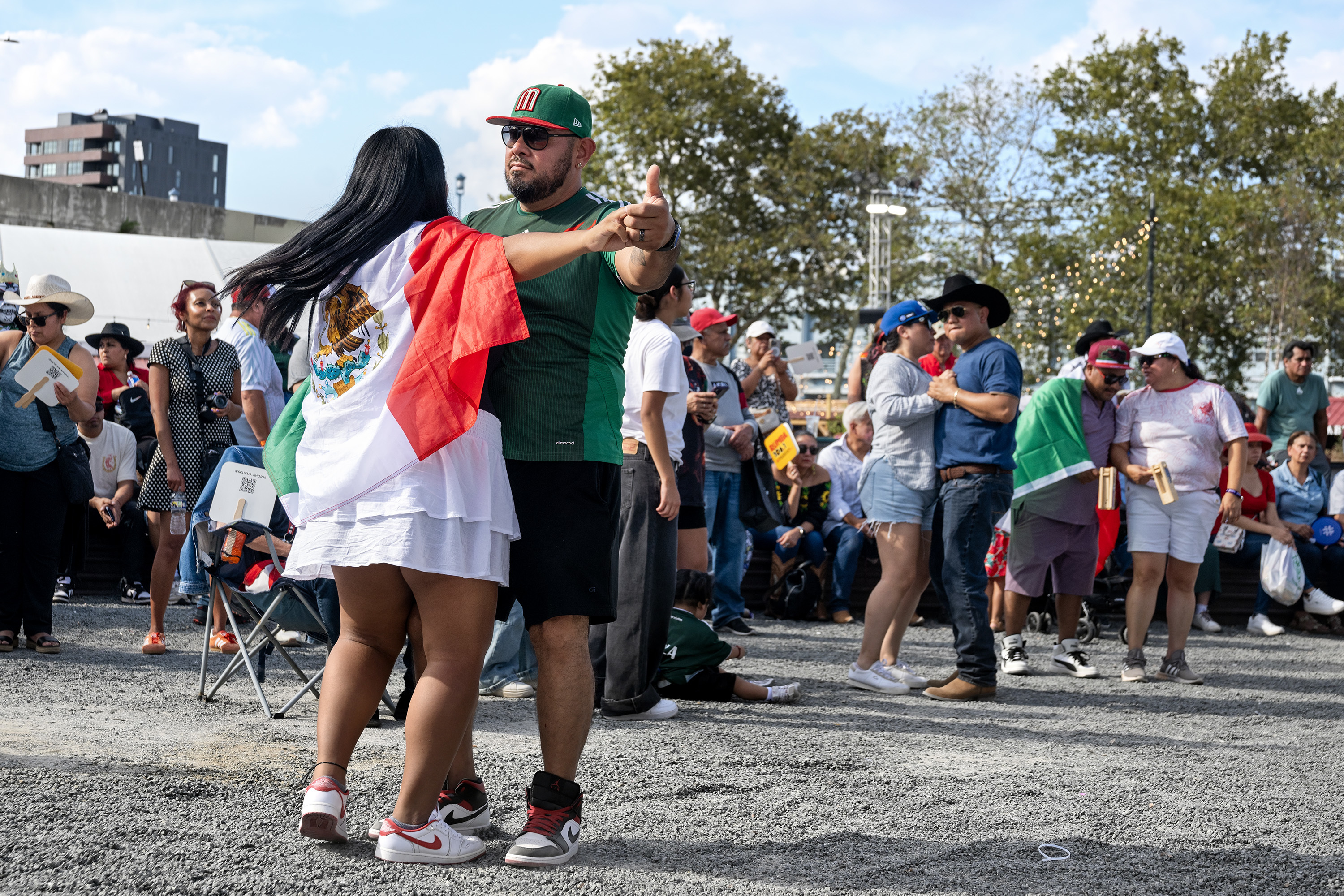
    Francisco Gonzales, of Lawrenceville, N.J., dances with his daughter Bianca, 17, near the stage as musicians perform at last year’s Mexican Independence Day Festival at the Independence Blue Cross RiverRink at Penn’s Landing.Tom Gralish / Staff Photographer

    Philadelphia’s Latino communities get surprisingly little respect — outside of the high regard for our undeniably wonderful food and dance moves — from our electeds, and have long been slighted by city government in far more significant ways.

    For me, nothing epitomizes that more than an example from 2015, when there was a Latino managing director and even so, then-Mayor Michael Nutter convened — at the behest of Attorney General Eric Holder and the U.S. Department of Justice — a Philadelphia roundtable about the imperative of improving police-community relations at which there wasn’t a single person from a Latino-serving organization at the table. In a city where our community was subjected to relatively high stop-and-frisk rates, experienced excessive force incidents (and still does), was historically targeted for extortion by police, and was (and still is) racially profiled by police and U.S. Immigration and Customs Enforcement.

    No. Latinos. At. The. Table.

    Is it simply that our political capital has been stagnant since the 1980s — or is there something else?

    We’ve had three Latino primary contenders for mayor (two in 2015 and one in 2023), but no substantive progress when it comes to the political power necessary to be taken seriously in Philadelphia.

    To wit, in 1983 Philadelphia elected its first Latino City Council member, and a year later it elected a Latino state legislator (the second in the city’s history). The census conducted in 1980 put Philadelphia’s Latino population at 3.9% of the city’s total. Fast-forward some four decades, and Latinos are now about 17% of Philadelphia’s total population, but we still have only one Latina City Council member, and just two Latino Philadelphia state legislators.

    The city has mostly relied on department-level appointments — back in the ’80s, it was the Office of Hispanic Community Affairs; now it’s the Office of Immigrant Affairs and the Office of Latino Engagement — to see to the concerns of its Latino residents, and to tout the communities’ contributions to Philadelphia.

    But departments and offices reflect the administrations they are part of, and Mayor Cherelle L.Parker has sent mixed signals to her Latino constituents.

    On the one hand, she has addressed issues in Kensington in concert with District 7 Councilmember Quetcy Lozada — who is a well-liked and respected Boricua leader. On the other hand, she had to be dragged, kicking and screaming, by City Council’s veto-proof “ICE Out” proposals into offering any public comment about ICE actions under President Donald Trump.

    Or maybe the offices that are meant to be in conversation with, and about, Philadelphia’s Latino communities aren’t up to the job?

    I’m willing to offer the benefit of the doubt: Maybe they are focusing on important work behind the scenes. But in my opinion, they have minimized Latino visibility — to our detriment, and to all of Philadelphia’s detriment.

    I was struck recently by the events the Office of Immigrant Affairs is publicizing as part of its Welcoming Week 2026 (from Sept. 10 to 25), for example. The focus this year is on the Caribbean, but in the publicity I’ve received (or dug up) about it, there seems to be nothing scheduled about or from the Spanish-speaking Caribbean. The thing is, this isn’t a zero-sum game — we can (and must) celebrate our significant Haitian and Jamaican communities, for example, and their incredible cultural contributions to Philadelphia, without ghosting our Dominican and Boricua ones.

    So, come on, send that Hispanic Heritage Month email, Mayor Parker. List those events and programs on the website. Latinos are here and doing amazing things in service of our city. We should celebrate that together.

  • Philadelphia faces calls for a data center moratorium amid spreading AI fear and talk of a slowdown

    Philadelphia faces calls for a data center moratorium amid spreading AI fear and talk of a slowdown

    The battle over data centers and the artificial intelligence they power has officially reached Philadelphia City Hall.

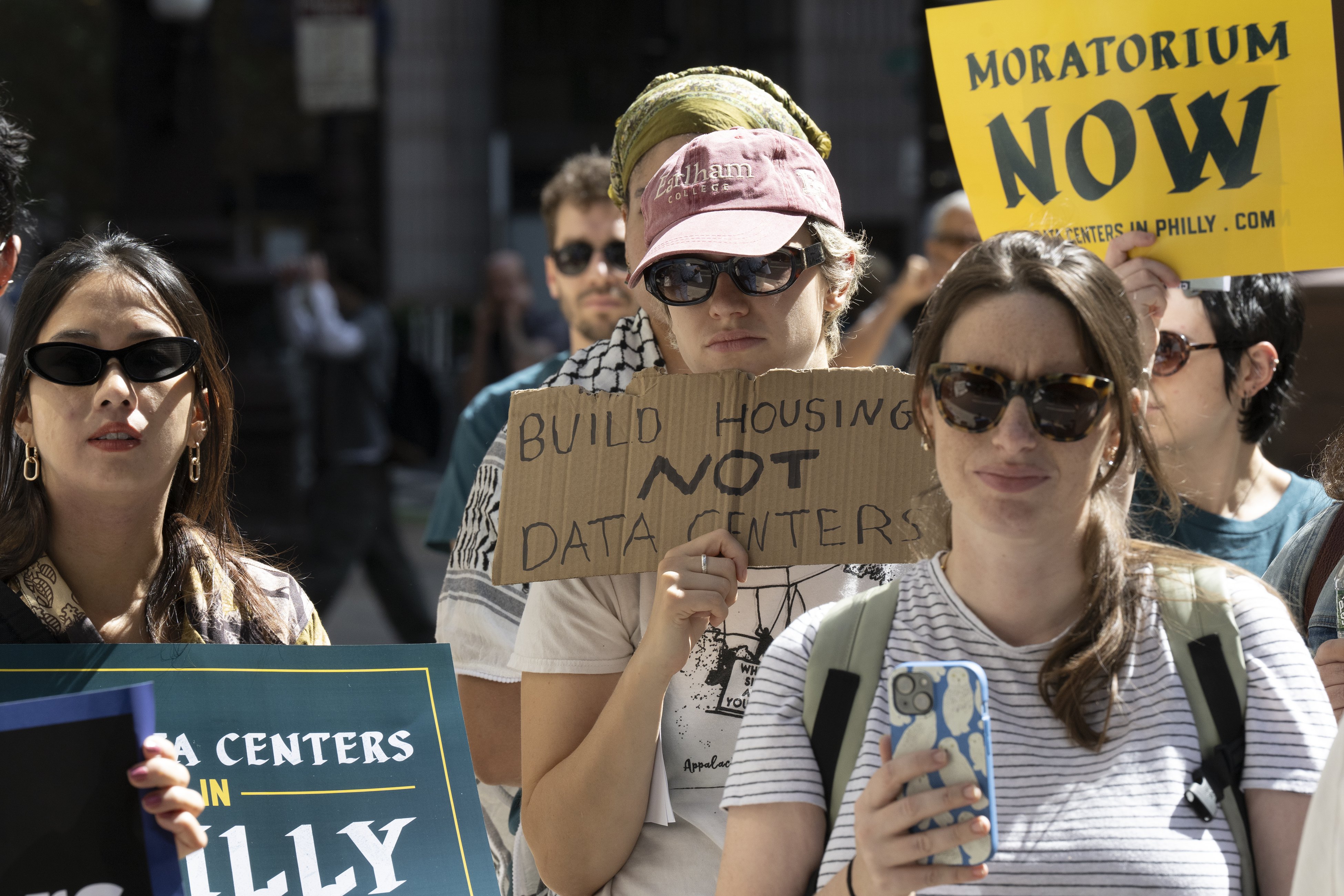
    A coalition of activist groups and environmental advocates gathered at City Hall Monday to call on local lawmakers to pass a moratorium on data center construction in the city, the opening salvo for the group’s public pressure campaign to oppose the projects that it says could hike energy rates and drive pollution.

    “There’s way too much at stake to let data centers expand without guardrails,” said Sonya Sanders, board president of Philly Thrive, an advocacy group for racial, economic, and environmental justice.

    The coordinated push could put Mayor Cherelle L. Parker and members of City Council in a politically tricky spot as they gear up to run for reelection in the spring. Data centers have proven deeply controversial and have drawn bipartisan backlash, but some unions that see job-creating potential support their construction.

    There is no specific data center proposal currently under consideration by City Council, and no member has said that they will introduce a moratorium bill. A spokesperson for Council President Kenyatta Johnson said that Council members and Parker’s administration are in “discussions on the future of data centers in the city.”.

    Any data center legislation would have to run through Parker, a centrist Democrat who has not staked a position on the issue. She is allied with the unions that represent construction workers and has generally been pro-development. However, she positioned herself as an opponent of Big Tech earlier this year when she advocated for new taxes on companies like Uber and Airbnb.

    Parker said in a statement Monday that she would sign an executive order this week to “formalize” a task force she convened over the summer to explore potential standards for data center development, and she vowed that the city would put “rigorous guardrails in place.” She did not specify a timeline.

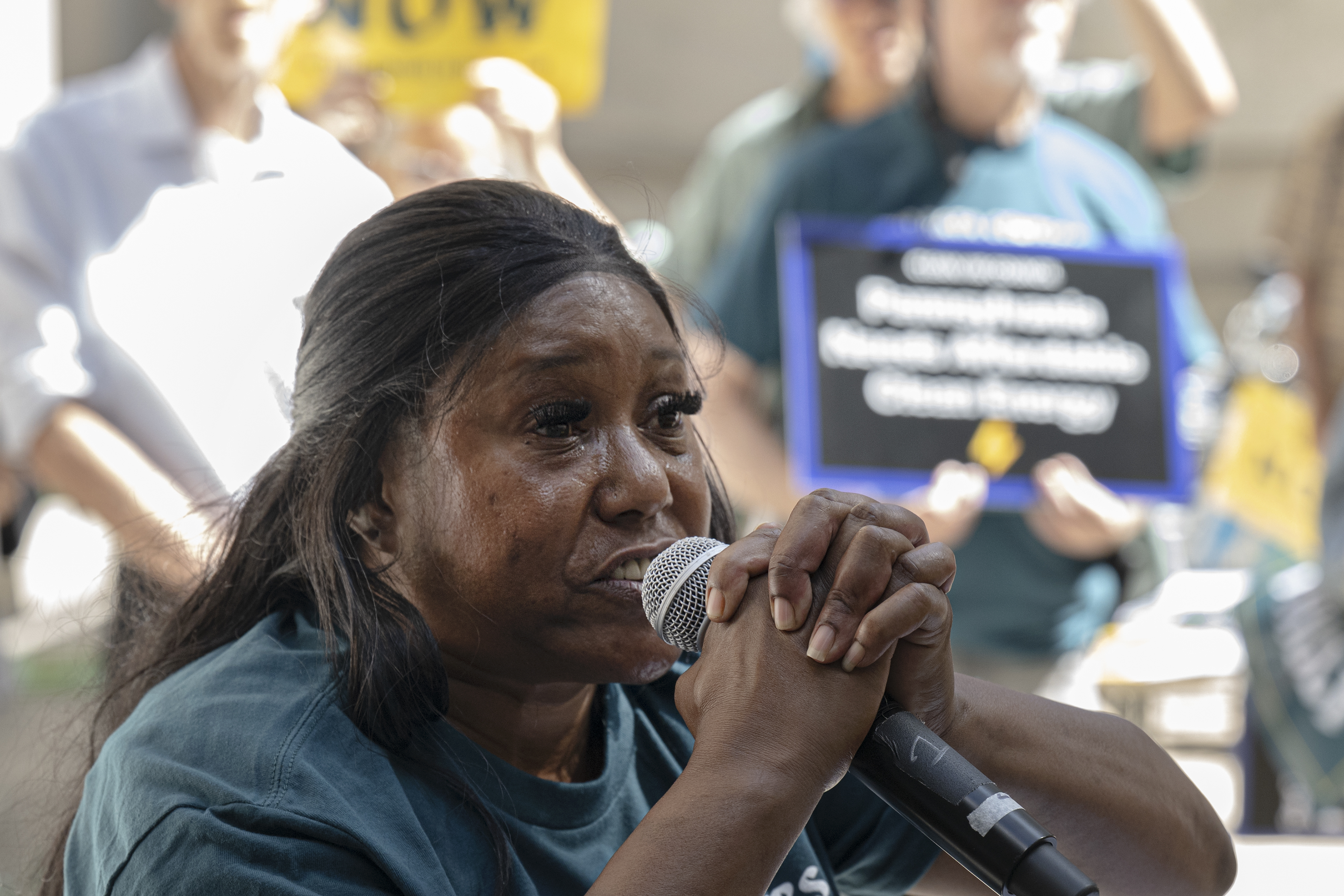
    Grays Ferry resident Sonya Sanders speaks during a rally at Philadelphia City Hall on Monday, calling on City Council to pass a citywide data center moratorium and kicking off the No Data Centers in Philly campaign.Jose F. Moreno / Staff Photographer

    The data center activists’ event in Philadelphia came as fear of AI’s rapid development and increasingly humanlike capabilities has spread substantially and as leaders of the nation’s largest AI developers over the weekend signaled support for a global slowdown.

    On Saturday, Anthropic chief executive Dario Amodei wrote that the technology is advancing more rapidly than leading companies can implement safeguards. Several of his top rivals, including Sam Altman of OpenAI and Elon Musk of SpaceX, endorsed his call for a slower pace of growth.

    Meanwhile, talks of regulation have gripped Washington, with lawmakers from both major parties drafting plans to rein in tech companies and add layers of oversight to AI development. Any proposal faces an uncertain future, as President Donald Trump has said the country should remove barriers to AI development and accelerate advancement in order to outpace China.

    On Monday morning, Trump posted on his Truth Social platform: “The only control or ‘guardrails’ that AI needs is a STRONG AND SMART (High IQ!) PRESIDENT, and the U.S.A. has that, in spades!”

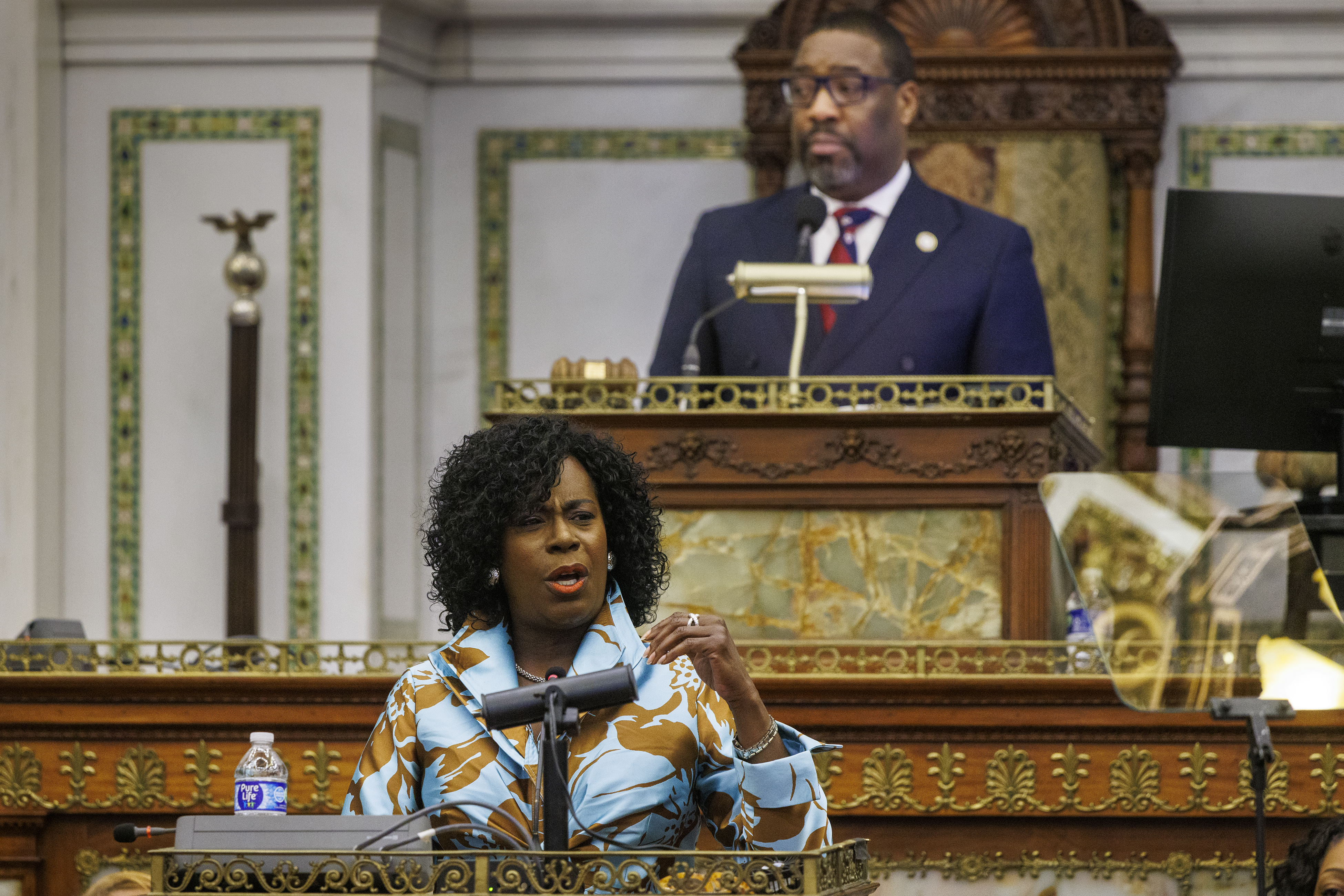
    Philadelphia Mayor Cherelle L. Parker start to make her budget presentation to City Council in Council Chambers on March 12. In the background is Council President Kenyatta Johnson.Alejandro A. Alvarez / Staff Photographer

    Inaction in Washington has left an opening for states and cities to regulate the construction of data centers, which produce the massive amount of computing power needed for artificial intelligence. They have become increasingly unpopular — a July poll found that 3 in 4 Pennsylvanians don’t want a data center in their backyard.

    Municipalities in Pennsylvania, including Philadelphia, now have more power than ever to slow or halt the development of data centers. Gov. Josh Shapiro, a Democrat who is considered a potential presidential contender and who had previously courted data center projects, last month signed an executive order requiring local approval for any project to receive a state permit.

    Philadelphia is already home to eight data centers that were constructed before the issue was widely controversial. The existing data centers are far smaller than the newer “hyperscale” projects that are meant to power AI and have faced opposition in communities across the country.

    In July, the city’s planning commission said there are only two locations in the city that could support an industrial-size data center: the former South Philly refinery site known as the Bellwether District and 2600 Grant Ave., a city-owned plot adjacent to the Northeast Philadelphia airport.

    Planning commission officials emphasized that they were not asked to consider a specific proposal to build a data center at either of those sites.

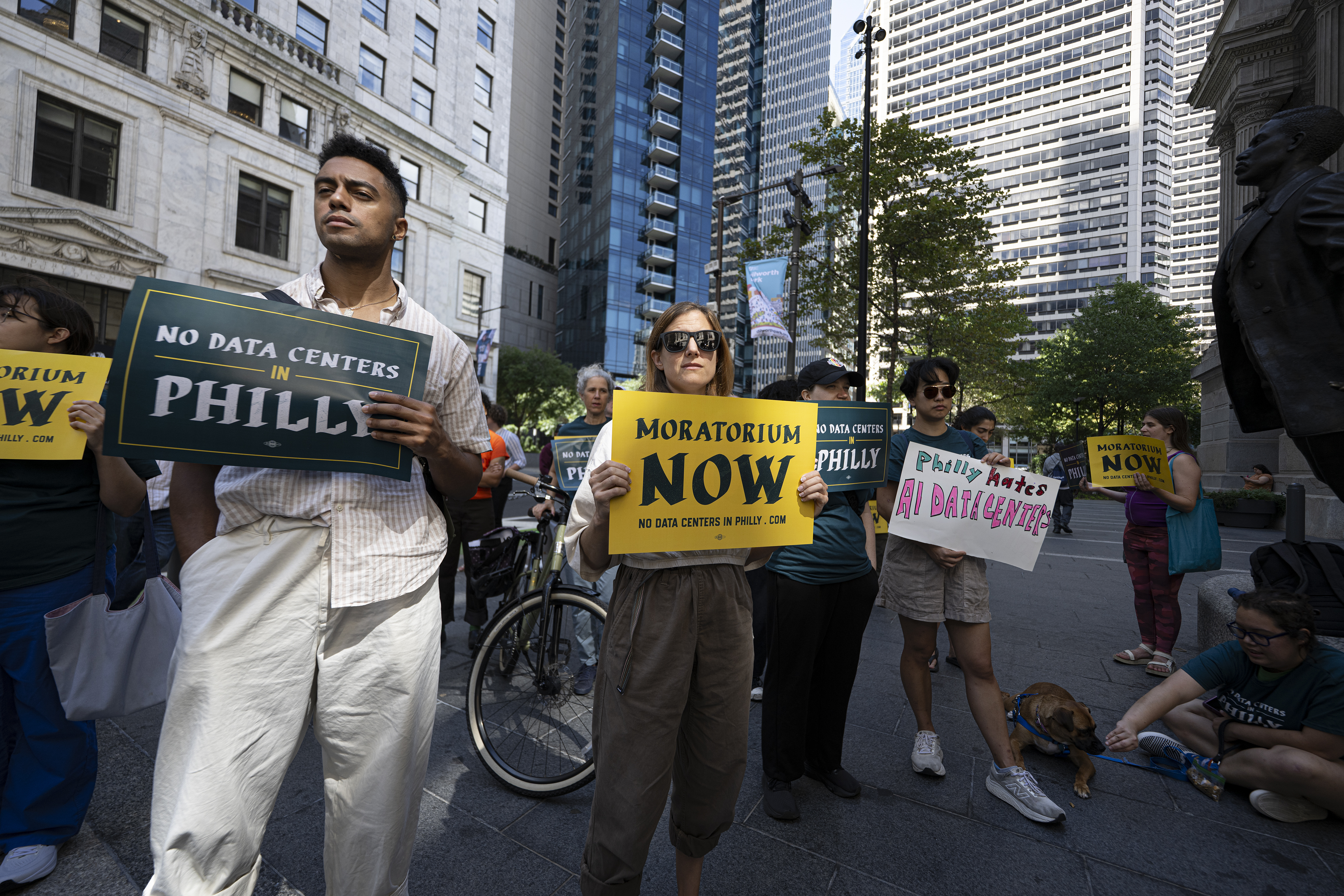
    People hold signs opposing data centers during a rally at Philadelphia City Hall on Monday, calling on City Council to pass a citywide data center moratorium and kicking off the No Data Centers in Philly campaign.Jose F. Moreno / Staff Photographer

    City Council has thus far not taken action on data centers, aside from passing a resolution authored by Councilmember Rue Landau earlier this year to hold hearings on the issue. A hearing has not yet been scheduled.

    Council, which is led by a supermajority of Democrats, will convene Thursday for the first meeting of the fall session. Members are unlikely to green-light a controversial data center project ahead of the primary election in May, when every Council seat will be on the ballot.

    But activists said Monday that city lawmakers must take proactive steps to ban data centers temporarily while they draft a regulatory framework and a system for considering public input on proposed projects.

    Shawmar Pitts, the managing co-director of Philly Thrive — which is rooted in the communities that surround the former South Philly oil refinery — said Council members are “on notice.”

    “Don’t put a moratorium in place, and your seat will be taken,” he warned.

    Senia Lopez, a Northeast Philly resident and an organizer with the advocacy group 215 People’s Alliance, said people in neighborhoods surrounding any future hyperscale data center would be saddled with higher utility costs and “increased threats to our health.”

    “City Council must chose whose interests it represents,” Lopez said. “It can side with Big Tech companies seeking to extract from our communities, or it can stand with the working people who have built and sustained them.”

  • These famous Philadelphia-adjacent folks are hosting Saturday Night Live this season

    These famous Philadelphia-adjacent folks are hosting Saturday Night Live this season

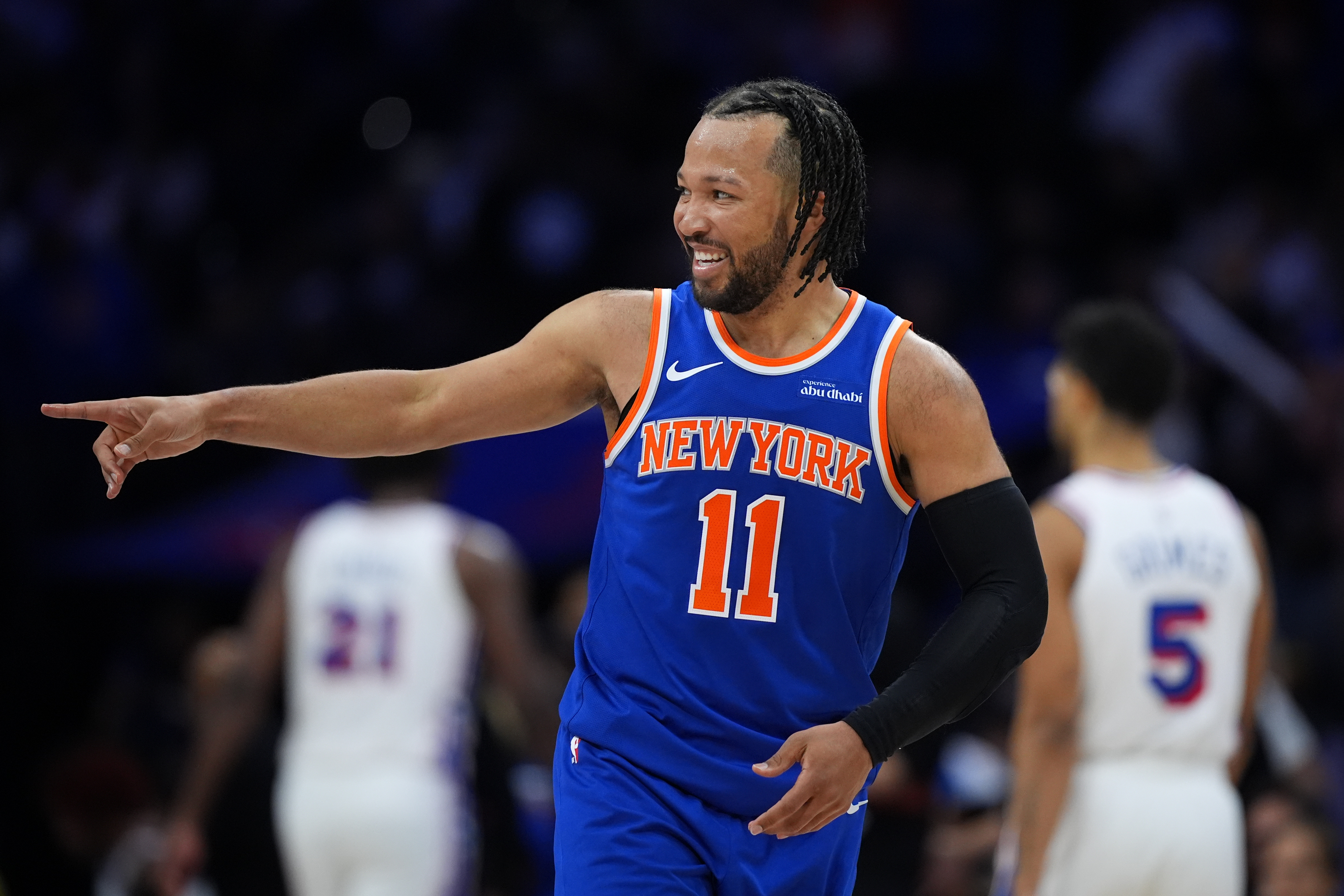
    If Jalen Brunson, who just won the NBA championship for the New York Knicks, and Shane Gillis, who broke two Guinness World Records for a one-night-only comedy show at Lincoln Financial Field, weren’t already having a good year — they’re now gracing the stage of Saturday Night Live’s 52nd season.

    Brunson, who is known to many locals as the Villanova superstar who brought home two NCAA national championships to the Philadelphia-adjacent school, will host the season premiere on Sept. 26 with girl pop group Katseye as musical guest.

    Gillis, a comedian from Mechanicsburg, Pa., who got his start in Philadelphia, will host episode three on Oct. 10 alongside Spanish singer-songwriter Rosalía. Gillis cocreated the West Chester-filmed Netflix series Tires, and was at one point hired and fired from SNL.

    SNL is charging forward after more than a half century in the American cultural zeitgeist, bringing celebs into 30 Rockefeller to flub, break, and laugh through the jokes.

    Pennsylvania showed up in a big way last season, too, with Quakertown’s Sabrina Carpenter, Downingtown’s Miles Teller, and West Philadelphia’s Colman Domingo (the latter of whom was honored by Mayor Cherelle L. Parker on July 4).

    Joining the first slate of episodes, announced on Wednesday, are actress Dakota Johnson with Baltimore rockers Turnstile on Oct. 3. Inde Navarrette, a breakout star from indie horror film Obsession, will host on Halloween, with Gracie Abrams as musical guest.

    SNL’s 52nd season will premiere Sept. 26 at 11:30 p.m. Philadelphia time on NBC. Stream episodes the day after they air on Peacock.

  • She was Mayor Parker’s director of youth engagement. Now, she’s planning to run against her former boss in 2027.

    She was Mayor Parker’s director of youth engagement. Now, she’s planning to run against her former boss in 2027.

    Shania Bennett was the director of youth engagement in Mayor Cherelle L. Parker’s administration until she resigned in May. The mayor, she said, once treated her as a protégé.

    Now, Bennett, 26, says she plans to run against Parker next year — the first candidate to publicly announce an intention to challenge the mayor’s reelection bid in next May’s Democratic primary.

    “Sometimes, you have to be willing to hold people you love accountable,” Bennett said in an interview Tuesday. “To be honest, I’m the change that I want to see. I think a lot of Philadelphians [are] waiting on it.”

    She released a video on social media Tuesday announcing her campaign with the slogan, “Leadership you can trust.”

    A Parker campaign spokesperson declined to comment.

    Bennett, who lives in her native South Philadelphia and graduated from Pennsylvania State University in 2020, said she resigned from Parker’s cabinet in May after realizing the administration would not give her office the budget or authority it needed to accomplish its mission.

    “My hands were tied. I couldn’t do anything on behalf of young people,” she said. “It was an opportunity for me to put all of my passion into something I really believed in, just to end up disappointed.”

    In July, she posted on social media that working for the administration was “the worst experience of [her] life” and that she had quit after “unprofessional harassment.”

    No Philadelphia mayor has lost reelection since the city’s Home Rule Charter was adopted in 1951, and Bennett has her work cut out for her if she wants to break that streak in her first run for office.

    Parker, 54, has spent 21 years in elected office, and her campaign had more than $1.4 million in the bank as of May 4, according to her most recent campaign finance report.

    Bennett said she has not yet put together a campaign team and is still ironing out her policy platform. She said she plans to conduct listening sessions so she can craft proposals that address Philadelphians’ needs.

    “Let me see the things you want me to talk about as a candidate,” she said. “I haven’t seen a candidate that really reflects the people’s choice in Philadelphia.”

    Bennett said she was alarmed by last weekend’s “teen takeovers,” when police officers arrested three people after confrontations erupted between large groups of teenagers who congregated near City Hall on consecutive nights.

    “It’s just young people acting out, and we have to get to the root cause,” Bennett said. “Is what we’re funding effective, and is it giving us the outcome that we want?”

    Parker, a moderate Democrat with strong support among the local party establishment, is seen by some as potentially vulnerable to a challenge from a progressive politician such as District Attorney Larry Krasner.

    Bennett said her platform will reflect the problems facing the city, not ideology.

    “Some of it might be progressive, but some of it might be: You have to put your foot down,” said Bennett, who founded the anti-violence nonprofit Reach4Peace as a teenager. “Philly has some unique challenges. It is not one party or one ideology that can fix them.”

    Mayor Cherelle L. Parker, speaks at the ribbon cutting for the newly renovated skate plaza at the Municipal Services Building in Philadelphia, Pa., on Friday, April. 17, 2026.Tyger Williams / Staff Photographer

    Bennett said she understands that many powerful politicians and deep-pocketed groups like labor unions are unlikely to endorse her challenge to Parker. But she is holding a launch event on Sept. 26 and hopes to gain momentum from there.

    “It’s still extremely early, but I’m hoping to announce early to do the hard work of fundraising and listening sessions,” she said.

    Parker took Bennett under her wing during the 2023 mayor’s race.

    Bennett had previously worked for State Rep. Jordan Harris and State Sen. Nikil Saval, both Philadelphia Democrats, but had no previous ties to Parker before showing up at a campaign office offering to help, she said.

    Bennett stood out as a hardworking volunteer as she knocked on doors and organized neighborhood canvasses, and she caught Parker’s eye.

    “Every time I saw her, she was hard at work,” Parker said when she appointed Bennett to lead the Mayor’s Office of Youth Engagement in early 2024.

    After leaving the administration, Bennett briefly worked for the Pennsylvania Democratic Party as a regional organizing director before resigning to launch her mayoral bid.

    “When you leave somewhere with your integrity intact, it’s like, ‘OK, you can do something about it,’” Bennett said. “I was just like, ‘Know what? I’mma press play.’”

  • Philly developers are planning a $1.5M campaign to protect City Council from progressive challengers

    Philly developers are planning a $1.5M campaign to protect City Council from progressive challengers

    Philadelphia real estate developers see the writing on the wall.

    As progressives have toppled centrist Democrats in nationally watched races, some local development interests are wary that the same trend could reshape Philadelphia City Council this spring, when every member is up for reelection. They see a growing progressive faction as a threat to business.

    Enter the incumbent protection plan.

    Nearly a dozen local developers are already pouring hundreds of thousands of dollars into Philly For Growth, a group that in the past two Council election cycles spent millions on advertising campaigns to back business-friendly Democrats, according to a source familiar with the planning.

    Philly For Growth is an independent expenditure group, also known as a super PAC. It can raise and spend unlimited amounts of money to influence an election, but there are rules barring super PACs from most forms of coordination with the candidates they support.

    In 2023, the group was the biggest special interest group involved in that year’s Council races, and it provided a substantial boost to its chosen candidates by outspending individual campaigns.

    Ahead of the May primary election, Philly For Growth plans to spend $1.5 million to support pro-business Democrats, most of whom are sitting Council members, according to the source, who spoke on the condition of anonymity because they were not authorized to discuss the plans. The group will not fund negative advertising about Council’s four incumbent progressives, the source added.

    Councilmember Kendra Brooks, of the progressive Working Families Party, speaks during a rally outside of the School District of Philadelphia headquarters in May. At left is Councilmember Rue Landau and at right is Councilmember Jamie Gauthier. All three are members of Council’s progressive faction.Monica Herndon / Staff Photographer

    The idea is to keep progressives from growing their power on Council instead of spending money to knock off the leftists who are already there. There are currently four reliably progressive votes out of the total 17 on Council, but some members may be more likely to vote with that faction as Democratic voters nationally revolt against incumbents.

    That’s a different strategy than in 2023, when Philly For Growth backed a slate of five candidates — two incumbents and three challengers. Both incumbents won, but all three challengers lost.

    Philly For Growth has previously been affiliated with the Building Industry Association of Philadelphia, an advocacy group for development interests. Mo Rushdy, the BIA’s former president who leads the organization’s political activity, declined to comment.

    The source said that Philly For Growth will fund advertising to support Council members Mark Squilla, whose 1st District includes parts of South Philly, Center City, and Fishtown; Cindy Bass, whose 8th District is based in North and Northwest Philadelphia; and Quetcy Lozada, whose 7th District includes much of North Philadelphia and Kensington.

    All three are seen as more centrist members and have said they intend to run for reelection. No challenger has officially launched a campaign against any of them, but candidates who are aligned with the city’s left-leaning political organizations are expected to emerge as the primary — still eight months away — draws nearer.

    The super PAC is making one exception when it comes to supporting incumbent district Council members, the source said. In the 5th District, currently represented by Councilmember Jeffrey Young Jr., the group will support a to-be-decided challenger.

    Councilmember Jeffery Young Jr. speaks to other members of Council during a 2025 session.Tom Gralish / Staff Photographer

    At least five people have said they are interested in running for the North Philly-based 5th District seat, and Young has drawn opposition from development interests for pushing proposals that would slow or halt some projects in his district.

    Young said in a statement that building “sensible, affordable housing” is one of his top priorities and that he has supported city programs like Turn the Key, which provides mortgage support to first-time homebuyers.

    “People are free to back those who share their values. These are my values,” Young said. “I am leaving it to the residents of the 5th to determine whose values best reflect them.”

    The super PAC will also fund advertising backing four incumbent members who represent the city at-large: Isaiah Thomas, Katherine Gilmore Richardson, Jim Harrity, and Nina Ahmad. That group doesn’t include progressive at-large Councilmember Rue Landau, but Philly For Growth doesn’t plan to oppose her, the source said.

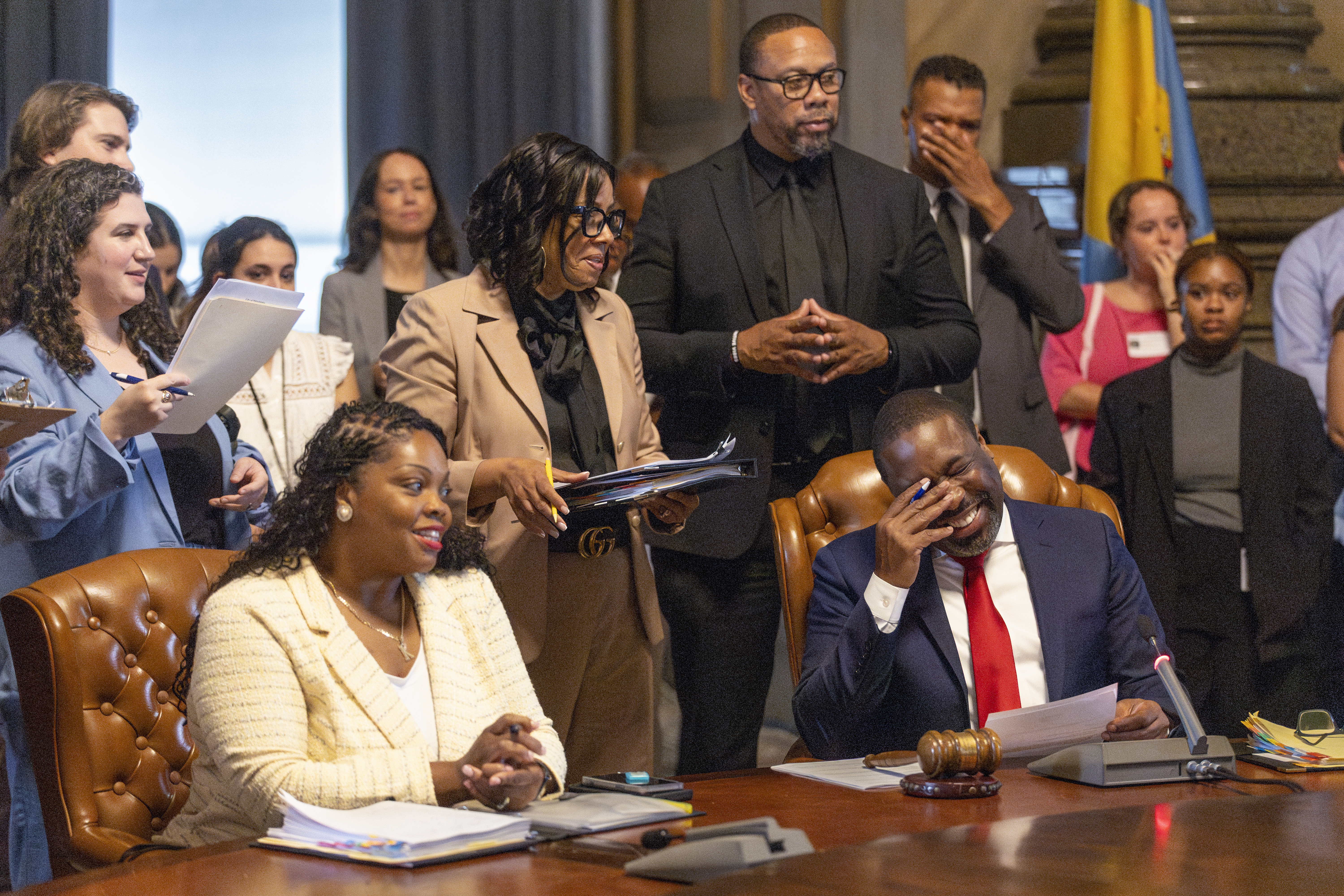
    Council President Kenyatta Johnson laughs inside the caucus inside City Hall on June 11.Aidan T. Gallo / Staff Photographer

    A spokesperson for Landau’s campaign arm said in a statement that the Council member “stands by her accomplishments for working people, small businesses and vulnerable communities in Philadelphia and looks forward to voters having the opportunity to make up their own minds next year.”

    It’s unclear just how competitive the at-large race will be, and candidates have until the spring to decide — nomination paperwork is typically due in March. Seven of Council’s members represent the entire city at-large, and two of those seats are effectively reserved for members of minority parties under the city’s Home Rule Charter.

    That has traditionally meant that five seats are held by Democrats, given the party’s massive voter registration advantage in the city. In recent years, Republicans and the progressive Working Families Party have battled for the remaining two seats during the fall general election, and the WFP currently holds both.

    Mayor Cherelle L. Parker, who is also up for reelection, and Council President Kenyatta Johnson, who insiders do not expect will see a serious challenger, will likely be on Philly For Growth’s slate, too, the source said.

  • Mayor Parker’s election put lobbyist William Dunbar at the center of Philly politics. Now he’s awaiting sentencing on tax fraud charges.

    Mayor Parker’s election put lobbyist William Dunbar at the center of Philly politics. Now he’s awaiting sentencing on tax fraud charges.

    When Mayor Cherelle L. Parker took office in early 2024, William F. Dunbar Sr. became one of the most important people in Philadelphia politics.

    A confidant of Parker who played an important advisory role in her 2023 campaign, Dunbar was also a registered lobbyist with a growing client list.

    When other key figures in Parker’s campaign took top roles in her administration, Dunbar stepped into an official, but unpaid, role managing People for Parker, the mayor’s political committee.

    Those dual roles created an unusual circumstance: Someone who raised money from donors for the mayor’s campaign was also a lobbyist whose clients paid him to influence her administration.

    And they were physically embodied in a 2,250-square-foot office in the Penn Center complex one block west of City Hall. Dunbar’s lobbying firm, Dunbar Public Affairs & Associates, rented the space in March 2024, and People for Parker paid half of the $3,750 rent through a sublease agreement, according to lease documents obtained by The Inquirer.

    But the heady days for Dunbar didn’t last. Parker let Dunbar go from her campaign in August 2024. Neither side has publicly explained what led to the separation. And last week, he pleaded guilty to federal tax fraud charges unrelated to Parker’s campaign.

    A plea agreement Dunbar signed allows U.S. District Court Judge Kelley B. Hodge to consider three instances of “additional misconduct” — separate from the tax fraud scheme — that did not result in charges when she decides his sentence in January.

    One instance stemmed from a dispute over the sublease agreement for the Penn Center office. (In the other incidents, prosecutors said Dunbar falsified a document for a mortgage application and submitted false financial information to receive additional financial aid at a private school.)

    In the plea agreement, Dunbar stipulated that he “falsely modified the terms of the lease agreement” to increase the notice the campaign was required to give him to terminate the lease, a move that could have resulted in the campaign paying him money he was not owed had it not been discovered.

    City law prohibits officials from using government resources, including City Hall office space, for political purposes. By renting space with Dunbar’s firm, Parker and her team could pop across the street and attend to political tasks without running afoul of ethics rules.

    In a letter from March 2025 that was obtained by The Inquirer, an attorney for Dunbar wrote that his firm “had no need for an office space that was close to City Hall other than to support the Mayor’s needs.”

    The dispute culminated in the final breakdown of their already-strained relationship, an exchange of emails between lawyers for Parker and Dunbar shows.

    “It has come to our attention that Mr. Dunbar has misrepresented that he continues to have relationships with People for Parker to current and prospective clients,” Timothy J. Ford, an attorney for Parker, wrote to Dunbar’s lawyer, Mark Jaffe, in March 2025. “Mr. Dunbar must cease and desist immediately from making incorrect statements of any affiliation with People for Parker, Mayor Parker in her political or personal capacity, or staff or consultants related to People for Parker.”

    Jaffe fired back.

    “Respectfully, my client asks that the Mayor cease and desist from contacting all donors and personal/business contacts that Dunbar Public Affairs supplied her immediately,” Jaffe wrote Ford in response. “It has come to Mr. Dunbar’s attention that the Mayor continues to misrepresent that Dunbar is still supportive of her efforts and that said relationships should still support her.”

    Dunbar asked for “a letter of formal apology from the Mayor [for] the harm she has caused as to his reputation and financial losses to his company.”

    Dunbar declined to comment for this story.

    From Lincoln to ‘kitchen cabinet’

    Dunbar, 42, first met Parker, 53, around 2005, when he was a student at Lincoln University, he said in a 2023 interview. Parker, a Lincoln alum, was a Pennsylvania state representative, and she visited her alma mater to speak to political science students.

    “She was a star to the folks at Lincoln then,” Dunbar said in the interview. “Cherelle is the big sister. She sometimes call me the big little brother. I’m very, very protective of Cherelle.”

    Both were elected student government presidents during their time at the historically Black university in Chester County.

    They maintained a connection over the years as they made their way up the ladder in local politics, Parker as an increasingly high-profile elected official and Dunbar as a well-connected operator.

    By the time Parker began preparing to launch her mayoral campaign, Dunbar had become a lobbyist for Comcast. He volunteered as part of her “kitchen cabinet” of informal advisers, and he made a key contribution by championing a strategy of Parker leaning into her life experience, from growing up in a household that needed public assistance to being a single mother.

    “I always would come back to that we need to continue to define Cherelle as the authentic Black woman working mom,” he said. “Cherelle is able to live with that every day, so I knew and believed that the message would always resonate more, in particular with Black women, who obviously are the No. 1 voting bloc in our city.”

    An unexplained separation

    When the top aides in Parker’s campaign joined her administration, preventing them from managing or being paid by a political group, the mayor turned to Dunbar to run People for Parker in 2024.

    Although Parker is not up for reelection until 2027, her campaign has remained active, raising and spending hundreds of thousands of dollars each year since she became mayor.

    Meanwhile, Dunbar’s lobbying practice grew: the School District of Philadelphia, which employed him a subcontractor, and an ATM company became clients in January 2024, according to the public records. (Dunbar is no longer representing the district because the primary contractor terminated their agreement, according to the district.)

    But his arrangement with Parker didn’t make it through the summer. Parker acknowledged the separation in an interview while she was at the 2024 Democratic National Convention in Chicago.

    “Will has been a valued friend to me, and let me just say that life is good right now [for Dunbar] and business is good and it’s growing,” she said.

    Dunbar said at the time: “I’m very much still an informal senior adviser but because of a different set of priorities, the mayor has decided to manage her politics herself. … My business has continued to grow as we work to support our clients.”

    In the March 2025 letter, Dunbar’s attorney said Parker in August 2024 had “agreed to continue a business relationship for public perception” after the split.

    The sublease dispute that unfolded over the next six months eliminated that possibility.

    Two documents, one lease

    The Inquirer has obtained two versions of the sublease agreement, one with a 30-day termination window and one lasting a year. Both versions include electronic signatures from Dunbar on March 2, 2024, and Gabrielle Cook-Frazier, on behalf of the campaign, on March 8, 2024.

    Parker’s attorney said it only ever had the version with a 30-day window. Federal prosecutors alleged Dunbar forged the version with a one-year window to squeeze more rent payments out of the campaign.

    “People for Parker is particularly concerned that Mr. Dunbar produced a different version of the Document containing a term to which People for Parker did not and never would have agreed,” Ford wrote.

    Ford said the campaign was willing to make rent payments through the end of 2024 to “soften” Dunbar’s separation, but not after. The campaign made rent payments totaling $22,850 to Dunbar Public Affairs between March 2024 and November 2024, according to campaign finance records.

    In the letter, Dunbar’s attorney suggests Parker’s aides could have violated city ethics laws by doing political work “on City time using said space for political meetings with the Mayor.”

    The Parker campaign declined to answer questions for this story, but sent a statement rejecting Jaffe’s assertion in the 2025 letter.

    “The allegation is patently false,” Ford said in a statement. “Neither the Mayor nor her team engaged in political activity on City time or using City resources.”

    It’s far from clear that the arrangement would be a violation of ethics rules. The top officials in Parker’s administration were salaried employees for the city who worked far more than 40 hours per week, making it difficult to assess when they were on the clock. They are allowed to participate in political meetings so long as they are not paid by the campaign and have only “minimal input” on strategy, communications, or finance, the city’s ethics regulations state.

    Despite the breakdown in their relationship, Dunbar held out hope for a reconciliation.

    “Notably, if the Mayor or her political team would ever like to reconcile and restore this relationship, my client would welcome that and he stands ready to continue to be a selfless supporter of the Mayor and her administration,” Jaffe wrote, adding that Dunbar would no longer seek additional rent payments.

    Weeks later, Dunbar learned that federal agents were investigating him for tax fraud.

  • Construction software giant based in Exton opens a new Philly office

    Construction software giant based in Exton opens a new Philly office

    Exton-based Bentley Systems International, the software company with the highest market capitalization in the Philadelphia area, has opened a Center City office as its new base for 150 engineers and other tech and business staff, replacing two smaller outposts in the city.

    The construction design and building software maker’s 22,000-square-foot hub in the Curtis Center building will replace Bentley’s 14-year-old office on Cherry Street and the 30-person 400 Market St. former headquarters of Cesium GS Inc., which Bentley acquired in 2024.

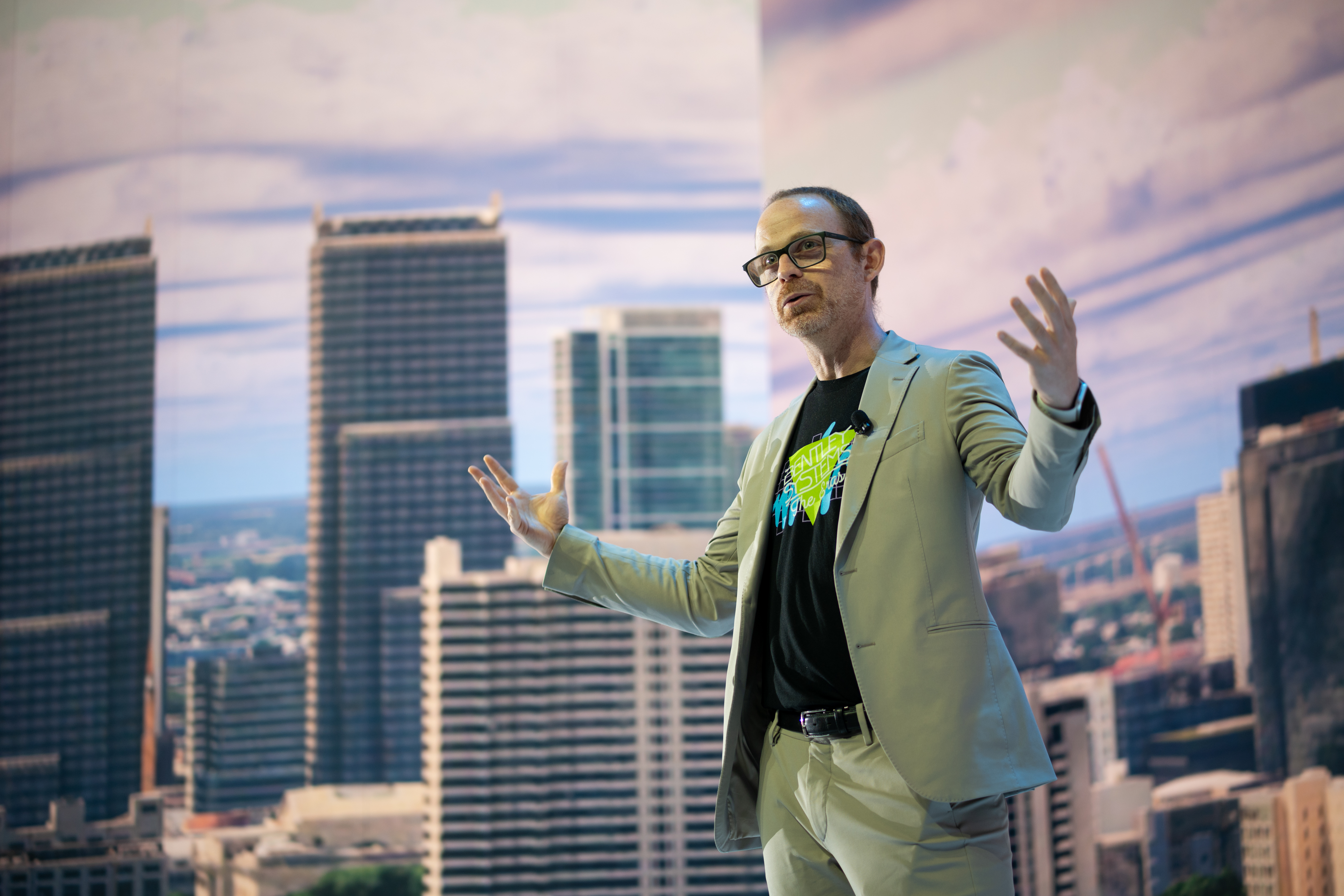
    Cesium founder and past CEO Patrick Cozzi is now Bentley’s chief platform officer and will head the new office, near Independence Hall.

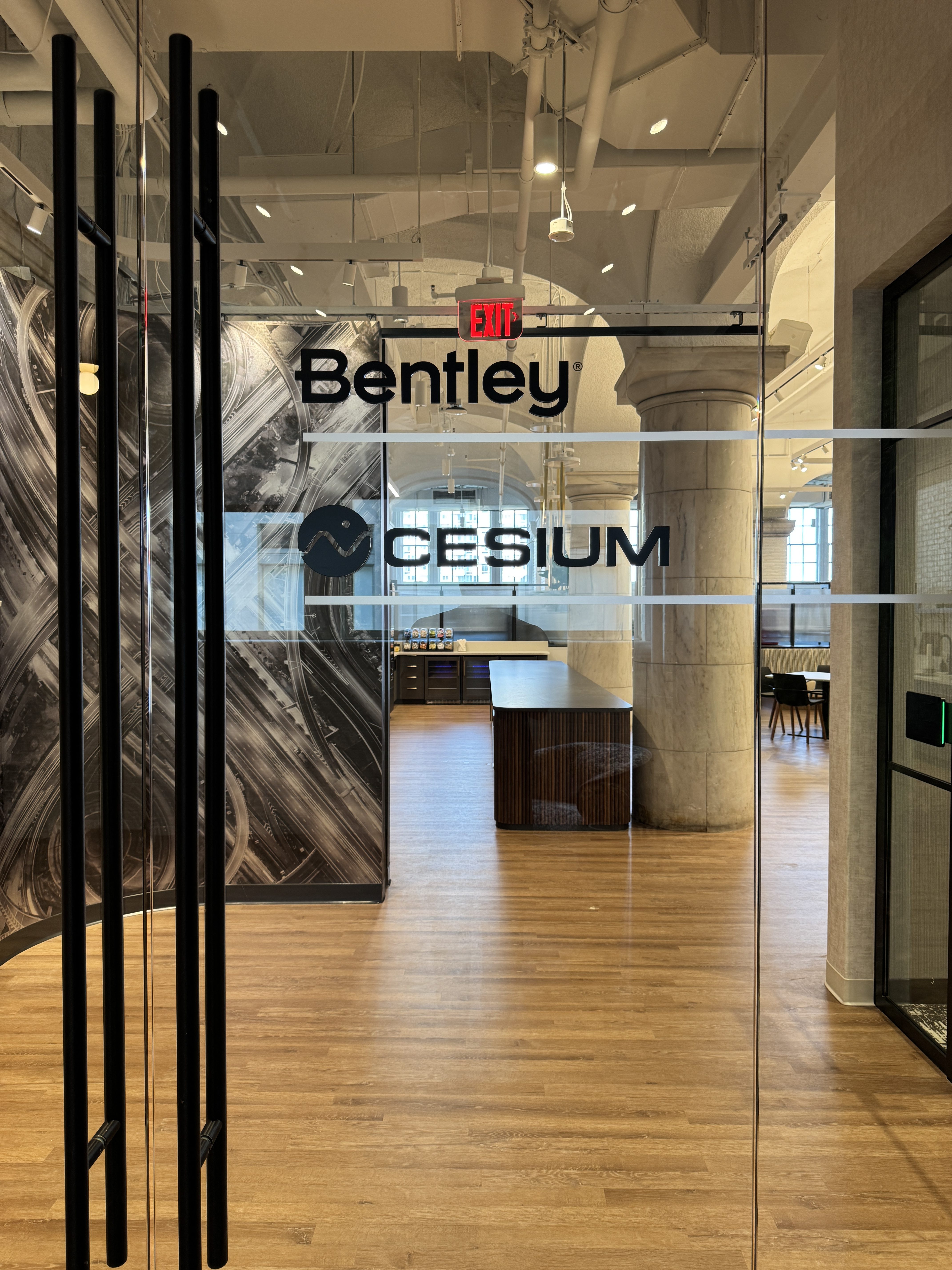
    At Bentley Systems’ new Philadelphia office, where the company’s Cesium team has its home, in the Curtis Center, 2026.Bentley Systems

    Bentley, founded by five brothers from Delaware in 1984, has sales totaling $1.5 billion last year.

    Cozzi set up Cesium as a geospatial-mapping applications unit of serial tech developer Paul Graziani’s Exton-based Analytical Graphics Inc. (AGI) in 2011 and spun Cesium off as an independent company in 2019.

    Bentley customers use what’s now its Cesium Ion mapping platform to show sites and buildings in complex detail on office computers and hand-held devices.

    A Penn State grad, who also earned a master’s and taught programming and architecture at the University of Pennsylvania, Cozzi says he sees Philadelphia as a “magical place” for tech companies.

    “When I was CEO raising capital on the West Coast, some of the investors told me the best tech entrepreneurs want to move to the [San Francisco] Bay area. I said no, we can build a great tech company in Philadelphia,” he said.

    Philadelphia was an early computing industry center. ENIAC, the pioneering system built at Penn to help plan World War II artillery attacks, and other early Philly-built computing systems relied on the vacuum tubes mass-produced for radio manufacturers in Philadelphia and Camden.

    But by the 1970s, the industry committed to far more efficient silicon-based microprocessors developed in California’s “Silicon Valley.” Investor-rich cities such as Boston, Seattle, and Austin also became important computer hardware and software centers. Few large tech companies are now based in the Philadelphia region.

    Cozzi says Philadelphia’s affordability is now an asset.

    “We have reasonable cost of living and fantastic schools, graduates who want to stay here, great restaurants and quality of life, it’s an awesome place for the tech community,” he said, as he prepared to welcome Mayor Cherelle L. Parker, State Rep. Jordan Harris (D., Phila.), and 200 other guests to the new space for a grand opening celebration Thursday evening.

    Cozzi said neither the city or state provided incentives for the new office.

    Invited guests at Thursday’s event include Bentley clients from Center City-based Pennoni Engineering; Ansys, the Pittsburgh-based owner of AGI, and Earthbrain, a Japanese construction equipment and computing joint venture, which uses Philadelphia as a U.S. base.

    Bentley went public in its 2020 IPO at $22 a share. The stock peaked in the low $60s the next year and ran almost as high last summer. It has lately traded around $35 a share.

    It employs more than 5,000 at offices in 42 countries. The company is worth nearly $11 billion on the Nasdaq stock exchange. That compares to around $6 billion for Newtown, Bucks County-based software-outsourcing provider EPAM, $2 billion for King of Prussia tax-accounting software maker Vertex Inc., and $200 million for Blue Bell legacy hardware and software provider Unisys.

    Bentley’s 10th-floor space in the Curtis Center includes a public-meeting area to host events.

    The building was built in 1910 for Curtis Publishing and its mass market magazines, led by the Saturday Evening Post and Ladies’ Home Journal. Curtis moved its press operations to Delaware County in 1949 and shut both Philadelphia offices and Delco operations by the time of its 1969 bankruptcy.

    The Curtis building’s owner, Keystone Development + Investment, has in recent years added apartments, biotech labs, and other specialized units to help fill the block-long complex.

  • Academy of Natural Sciences and Drexel University reach tentative terms on the Academy’s future

    Academy of Natural Sciences and Drexel University reach tentative terms on the Academy’s future

    After the threat of a possible split, the Academy of Natural Sciences and Drexel University reached a tentative agreement that will continue their affiliation and maintain Drexel’s financial support of the Academy, multiple sources confirmed Wednesday. It will also give the university control over its major decision-making.

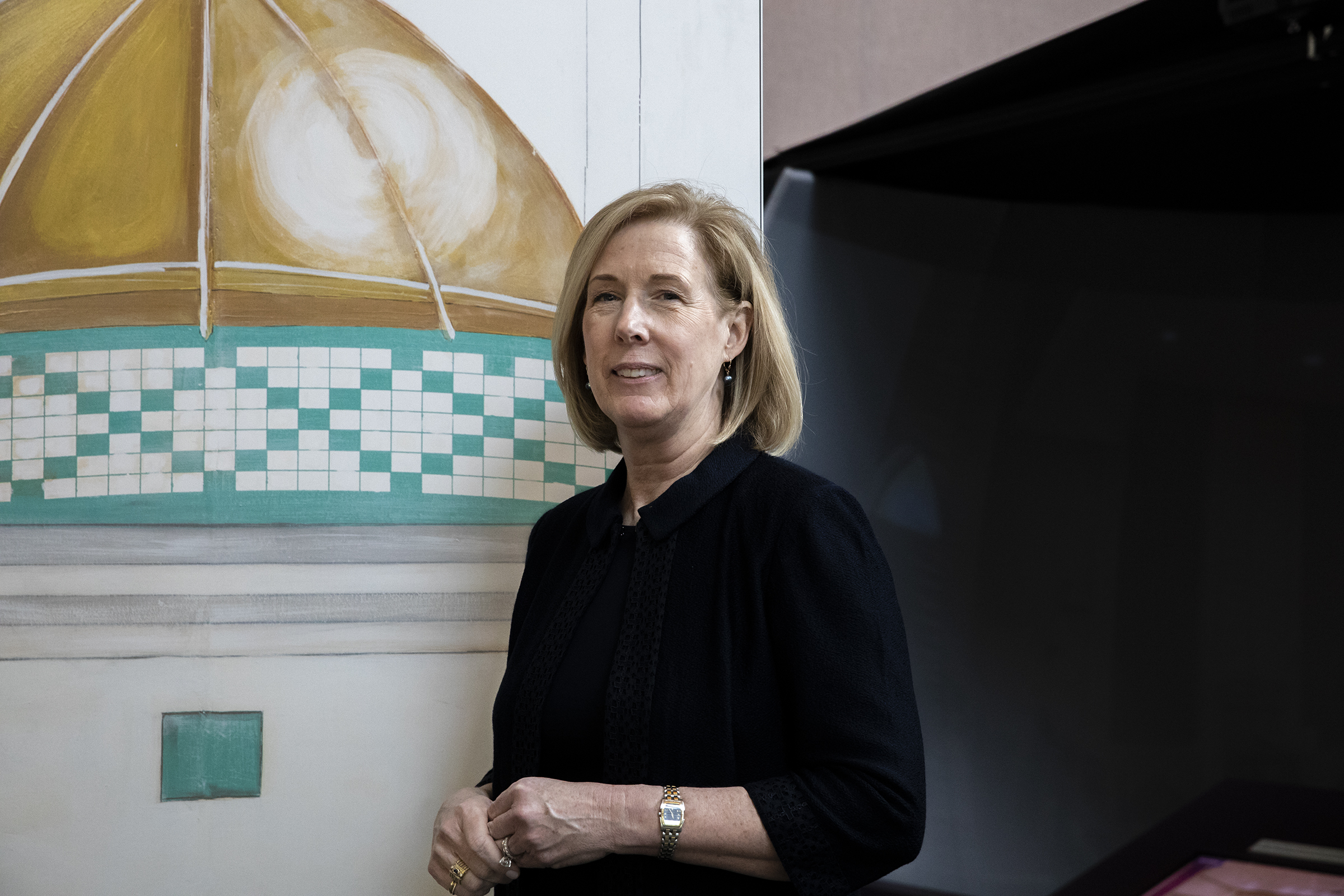
    Also on Wednesday, Drexel and the Academy appointed Patricia “Trish” Wellenbach to temporarily lead the Academy, serving as its senior adviser. She is deputy mayor to Philadelphia Mayor Cherelle L. Parker’s administration and previously president and CEO of the Please Touch Museum. Wellenbach is on loan from the city and will not receive any compensation from Drexel or the Academy for her new role.

    Drexel holds the reins

    The announcement comes one day after Drexel and the Academy said they would close the Academy’s museum effective Sept. 30 and that Academy CEO Scott Cooper would be stepping down immediately. Sept. 27 will be the last day the museum will be open to the public.

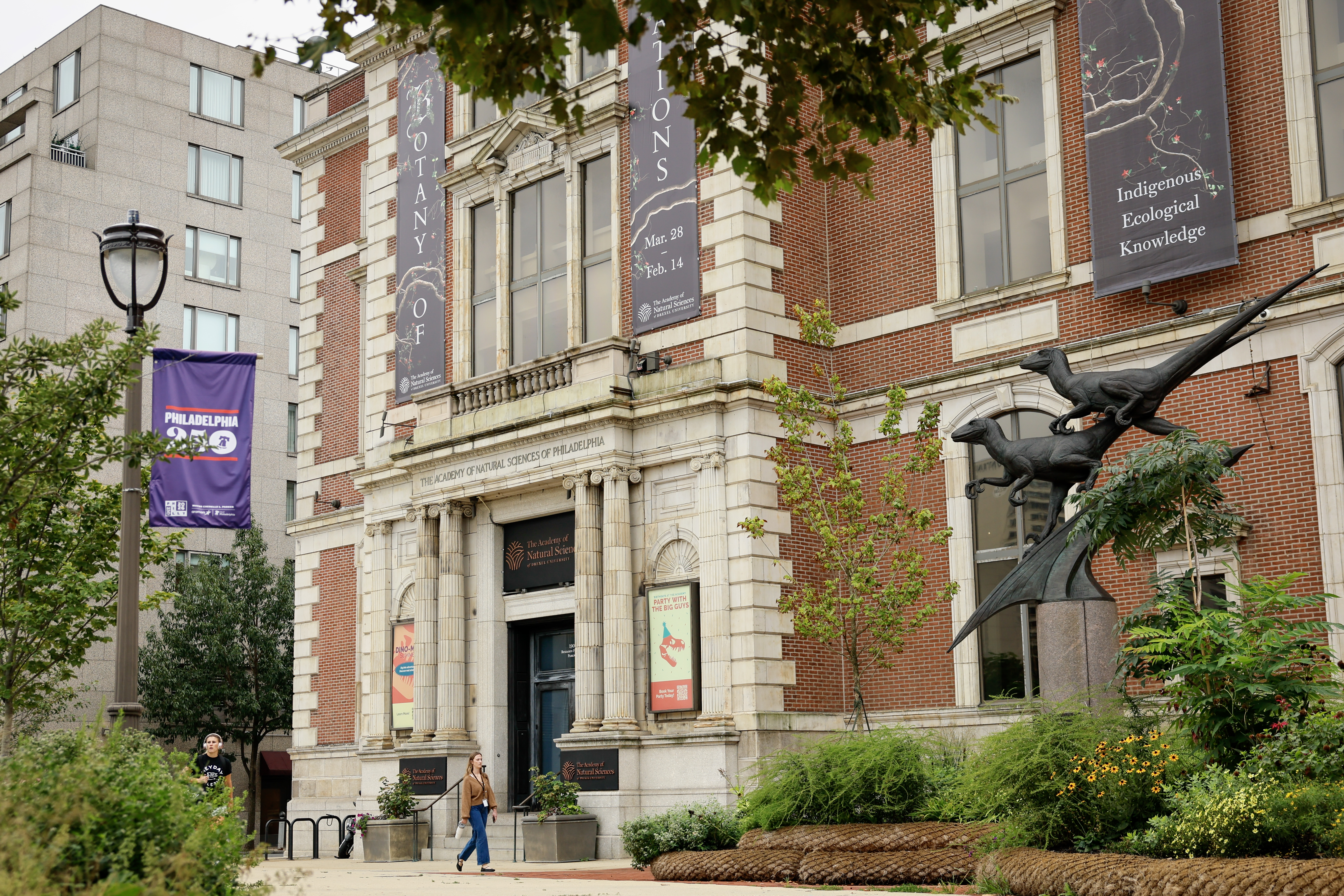
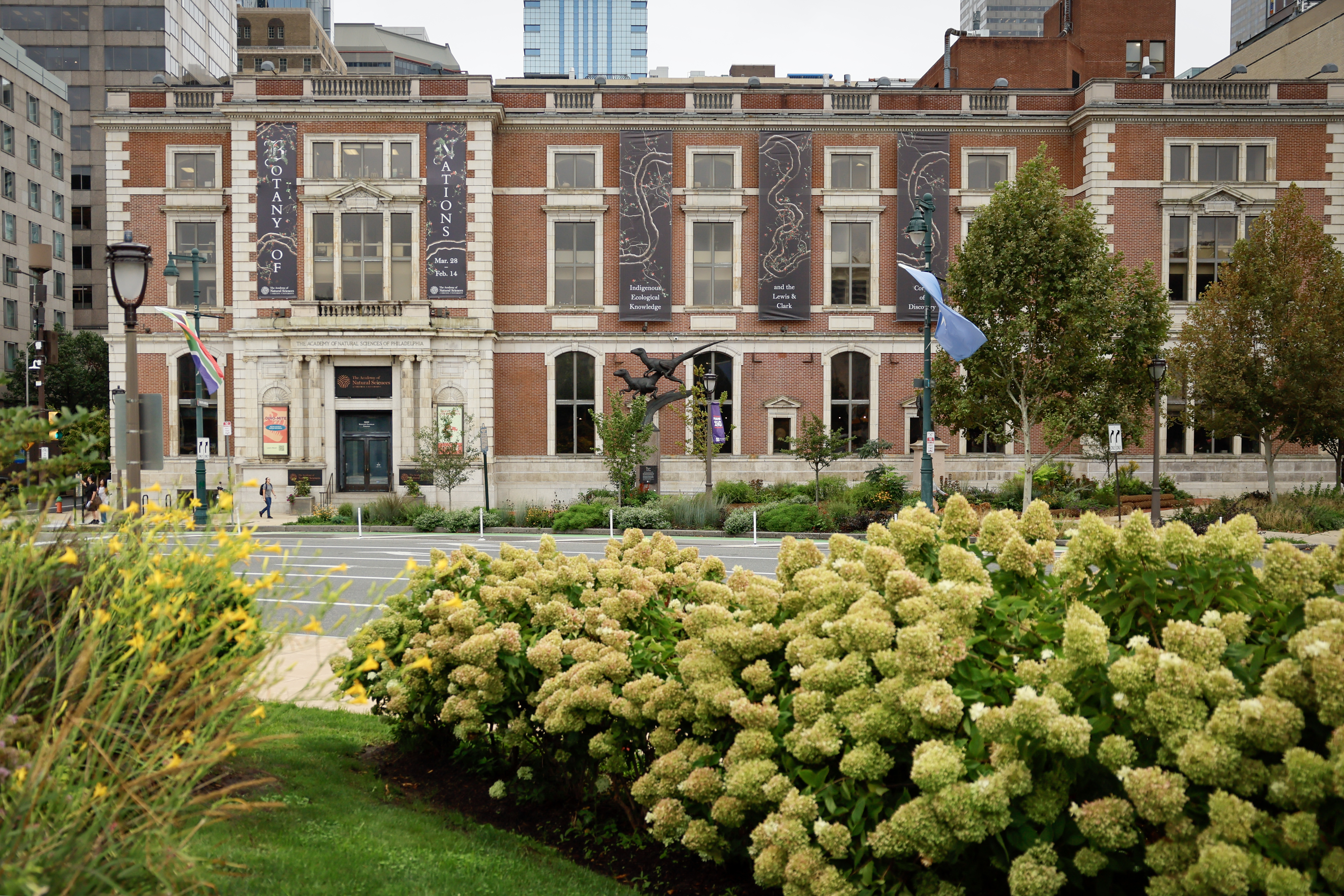
    Though not part of the new terms, the goal now is to relocate the Academy’s collections and sell its 1876 building at 19th and the Benjamin Franklin Parkway, which has numerous deferred maintenance needs, said a source close to the talks between Drexel and the Academy who asked not to be identified.

    The new “nonbinding” terms of the letter of intent maintain Drexel’s financial support of the Academy, modify the governance structure, and preserve the right of the Academy board to de-affiliate from Drexel and find a new partner or partners for its collections should it wish to do so.

    The terms cover issues such as selection of an interim leader and a permanent leader of the Academy and budgeting, according to a source close to the talks. While Drexel and the Academy will engage in a collaborative process to find a new leader, the final decision will rest with Drexel, the source said.

    Dinosaur Hall at the Academy of Natural Sciences on Wednesday, Aug. 5, 2026.Allie Ippolito / For The Inquirer

    “It’s fair to say all decisions of importance have to be approved by Drexel,” the source said, including the budget, which is about $25 million annually.

    Under the affiliation agreement in 2011, Drexel provided substantial financial support to the Academy and covered its deficits. That will continue, and Drexel also will cover the costs of relocation of the collection and other transition expenses, the source said.

    Academy board chair Suzanne Biemiller did not respond to messages seeking comment.

    A ‘solid’ but nonbinding resolution

    Of the new terms, another Academy board member said:

    “I’m hopeful that something positive will come of it. The goal is to find a way to keep the Academy in existence and achieve its mission, so I think it’s a solid resolution,” said the board member, who asked that their name not be used.

    Like most letters of intent, the agreement is nonbinding until the two sides come to a complete binding agreement, the source said.

    The Inquirer reported in April that Drexel was seeking to totally take over the Academy or end the partnership. The terms signed Tuesday were brokered by former Comcast executive and U.S. Ambassador to Canada David L. Cohen at the behest of Gov. Josh Shapiro.

    Sept. 27 is the last day the Academy of Natural Sciences of Drexel University will be open to the public.Elizabeth Robertson / Staff Photographer

    The leaders of Drexel and the Academy signed the terms sheet on Tuesday, Cohen said. But there are significant ongoing issues for the Academy and Drexel to work through, he added.

    “They include the responsible move of the collections, and a variety of other transition activities,” he said. “The Academy needs a senior representative, a senior voice in these ongoing discussions both to communicate internally at the Academy and with other stakeholders including Drexel.”

    That will be Wellenbach’s role, he said.

    She will have a voice in discussions on finding another location to display some of the collections, now that the museum will be closed, Cohen said.

    Patricia Wellenbach, former president and CEO of the Please Touch Museum.Heather Khalifa / Staff Photographer

    A temporary leader

    Wellenbach will be based at the Academy part of the week while also continuing in her city role. She will lead temporarily while Drexel and the Academy search for an interim leader.

    “Ms. Wellenbach has had a distinguished career spanning nonprofit leadership, healthcare, governance and public service,” said the announcement from Drexel president Antonio Merlo and Biemiller.

    Mayor Parker in a statement called the Academy “a critical, longstanding part of Philadelphia’s cultural and educational landscape” and said she was pleased to loan Wellenbach to the effort.

    “We are working collaboratively with Gov. Shapiro, Ambassador Cohen, the Academy and toward the outcome we all seek for the City of Philadelphia,” Parker said.

    The Academy museum is ending operations after nearly two centuries because of declining visitorship and rising expenses, according to the Academy and Drexel.

    “Over time, it became clear that these were not temporary pressures, but fundamental changes in the economics of the Academy’s operational model, costs that have imperiled the Academy’s ability to discharge its overall mission and preserve its legacy,” the two institutions said in a joint statement Tuesday.

    Biemiller and others have pledged to not abandon the Academy’s role in educating the broader public about the natural world.

    While it was “incumbent upon us to find places and ways” for the museum to continue, she said earlier this week, the exact form it would take has not been determined.

    While Drexel has the major decision-making power, the Academy board will continue to be the fiduciary board and decision-maker for the Academy’s endowment, though management of it has been delegated to Drexel’s investment office, according to the source close to talks.

  • A former confidant to Mayor Cherelle L. Parker tried to bilk campaign for rent money, court document shows

    A former confidant to Mayor Cherelle L. Parker tried to bilk campaign for rent money, court document shows

    William F. Dunbar Sr., a former confidant to Mayor Cherelle L. Parker who pleaded guilty this week to federal tax fraud charges, also sought to bilk a political campaign out of rent payments he was not entitled to, according to a court document filed Tuesday.

    The document does not name the campaign, but it appears to be Parker’s.

    Dunbar, 42, never actually received any ill-gotten funds related to the lease with the campaign, prosecutors said, and he was not charged in connection with the matter.

    But prosecutors said in court documents that he’s agreed to let a judge consider the episode and two other incidents of “additional misconduct” as she weighs his sentence for tax fraud.

    Dunbar, a Philadelphia lobbyist, was an unpaid but important adviser to Parker during her winning campaign for mayor in 2023. He officially joined her campaign, People for Parker, around the time she took office in January 2024.

    The mayor let Dunbar go from her campaign in July 2024 in a move that Dunbar at the time described as Parker’s decision.

    The campaign made a series of rent payments totaling $22,850 to his lobbying firm, Dunbar Public Affairs & Associates, between March 2024 and November 2024, according to campaign finance records. The address listed for the rent payments was an office in the Penn Center complex near Philadelphia City Hall.

    According to Dunbar’s plea agreement, in February 2025 he “falsified certain terms of a lease agreement for office space that [he] had entered as the lessor with a Philadelphia political campaign.”

    The city’s online database of campaign finance records shows People for Parker as the only campaign that has made rent payments to Dunbar’s firm.

    “The facts speak for themselves,” said Aren Platt, executive director of People for Parker, declining to comment further on Tuesday.

    Dunbar declined to comment.

    William F. Dunbar Sr., a lobbyist and a former informal adviser to Mayor Cherelle L. Parker.Courtesy of William F. Dunbar Sr.

    The plea agreement, which was signed by Dunbar and his attorney, said he “falsely modified the terms of the lease agreement” to increase the notice the campaign was required to give him to terminate the lease.

    Had the campaign not discovered the change, the agreement said, Dunbar would have received money he was not owed. “The defendant’s efforts in this regard did not result in his obtaining any funds, and he ceased making any efforts to obtain these funds before learning of the federal criminal investigation resulting in the charges in this case,” the agreement said.

    Dunbar on Monday pleaded guilty to filing false tax returns for himself and his wife between 2020 and 2025 and claiming substantial refunds when, in reality, they owed money. Prosecutors said in court papers that the tax loss related to the fraud was between $350,000 and $750,000. The charges carry a maximum sentence of 16 years in prison, plus supervised release and fines.

    Dunbar’s attorney, Brian McMonagle, said in a statement Tuesday that the plea agreement “reflects Mr. Dunbar’s acceptance of responsibility for his own conduct.”

    McMonagle said that the agreement “does not include any cooperation obligations” and that Dunbar is “not required under the agreement to provide information or testimony regarding any other individual.”

    The four charges to which Dunbar pleaded guilty are unrelated to his firm’s lease with the Parker campaign and the two other incidents of “additional misconduct” that Dunbar stipulated in the agreement. The other incidents involve falsifying a document for a mortgage application and submitting false financial information to receive additional financial aid at a private school.

    Although those episodes did not lead to criminal charges against Dunbar, U.S. District Court Judge Kelley B. Hodge will be able to consider them when determining his sentence. A sentencing hearing is scheduled for January.

    Staff writer Chris Palmer contributed to this article.