Welcome America Inc., the nonprofit behind Philly’s Wawa Welcome America festival, has named Philly public relations executive Nicole Cashman as its interim CEO.
The founder and CEO of communications firm Cashman & Associates, Cashman will follow Michael DelBene, who served as CEO since 2019 and grew the July Fourth festival and other large-scale events to new heights and a wider audience. DelBene left the organization earlier this year.
Cashman & Associates has worked with Welcome America Inc. for 25 years as its marketing and communications arm. This long-standing relationship and intimate knowledge of the organization led to the decision to name Cashman as the new CEO, officials said.
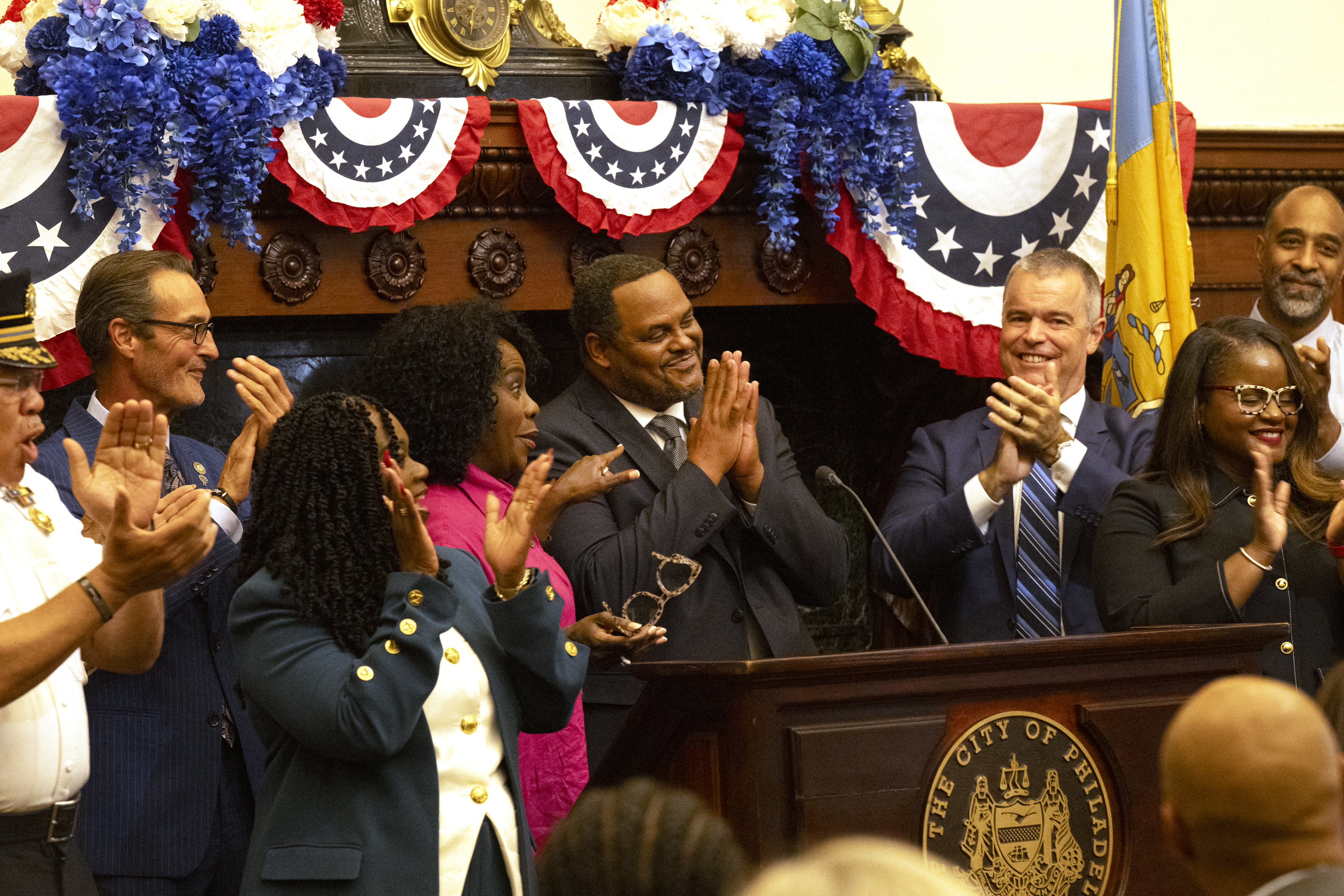
“Nicole has spent her career helping tell Philadelphia’s story and bringing people together around the experiences that make our city extraordinary,” said Mayor Cherelle L. Parker, who chairs the Welcome America board of directors. “Nicole understands the important role Welcome America plays in our city, creating moments that bring together our communities, welcome visitors, and showcase Philadelphia on a national and international stage.”
Fireworks over the Philadelphia Museum of Art and the statue of George Washington at Eakins Oval during the Wawa Welcome America Festival on July 4, 2023 following a free concert featuring Demi Lovato and Ludacris on the Benjamin Franklin Parkway.Charles Fox / Staff Photographer
Cashman founded her agency in 2001 and has accumulated a portfolio of some of the city’s high-profile agencies and events, including Comcast, Adventure Aquarium, and Philabundance. She has also served in leadership roles at Atlantic City Alliance and Visit Philadelphia.
The PR exec will join Welcome America as it transitions between CEOs and prepares for the coming year’s slate of celebrated civic events and cultural experiences. Welcome America is a public-private partnership that receives city and state funding as well as corporate sponsorships. Parker and City Councilmember Mark Squilla are board members.
“I have had the privilege of working alongside Welcome America for 25 years and have seen firsthand the extraordinary impact this organization has on Philadelphia and the region,” Cashman said. “… Welcome America means a great deal to me, and I’m excited to help guide it through this next chapter as we reimagine the organization for 2027 and beyond.”
Welcome America will look for a permanent CEO, Cashman said, as she will not fill the position long term, just during the period between DelBene and the nonprofit’s next executive leader.
“Michael set the bar high. He was great to work with and I have enormous respect for what he accomplished — I want to build on that success,” Cashman said.
Cashman could not say who would run 2027’s Fourth of July concert but did say Welcome America would surely be a part of the 16-day festival thrown each year.
Besides the Fourth of July festival, Welcome America also oversees the city’s official holiday tree in Dilworth Plaza. The 55-foot concolor firs, planted decades ago and brought into Philly each December, serve as a meeting place for holiday shopping and traditions, amid the Christmas Village and other attractions scattered around City Hall.
This holiday celebration is what Cashman and Welcome America are moving full steam ahead on, with planning already underway, she said.
“We know how important this level of programming around the holidays is to the city, our partners, the public, and visitors,” Cashman said. “So I’m really focusing on finalizing those plans, and that is our primary focus for the remainder of 2026.”
Mayor Cherelle L. Parker has seen more than twice as much turnover among top officials in her administration than her most recent predecessors had at the same point in their tenures, according to an Inquirer analysis of personnel moves.
Come September, when City Solicitor Renee Garcia’s resignation takes effect, more than half of Parker’s highest-level appointees will have departed in the two years and nine months since she took office in January 2024.
Following last month’s announcement that Managing Director Adam K. Thiel and Garcia would soon be leaving Parker’s administration, The Inquirer compared turnover at the top level of city government under Parker with former Mayors Jim Kenney and Michael A. Nutter. The analysis included chiefs of staff, deputy mayors, and the half-dozen other positions designated by the Philadelphia Home Rule Charter as part of the mayor’s cabinet.
The analysis found:
Of the 11 people Parker appointed to those jobs, six have already left the administration or are poised to leave by September. Kenney had lost three of his 11 top appointees by the same point in his tenure, and Nutter had lost two of the nine officials in comparable positions.
Most strikingly, Parker has lost three of the top four officials in her government: Chief Deputy Mayors Aren Platt and Sinceré Harris, the architects of her 2023 campaign, and Thiel, who oversaw most of the city’s operational departments. By this point, Kenney and Nutter both had lost two of the six people who held comparable roles in their tenures.
For the director of the Philadelphia Department of Labor, a cabinet position, Parker is on her third appointee, after her first two left city government after short stints leading the agency. (Parker has also had three directors of LGBTQ+ affairs, a non-cabinet position, after firing the first two people who served in that role.)
In another cabinet role, that of commerce director, Karen Fegely has been serving on an interim basis since May 2025, when Parker’s original appointee, Alba Martinez, resigned to produce a musical.
Tiffany W. Thurman, Parker’s chief of staff, said the turnover has not raised “any red flags or alarms internally.”
“It’s cyclical, and it’s part of the process,” Thurman said in an interview Thursday morning, after the initial publication of this story. “The work is continuing, and it’s strong and it’s good, and the vision hasn’t wavered despite the turnover, and so I’m very, very pleased with the team that we have right now.”
(function() { var l = function() { new pym.Parent( ‘parker-staff__graphic’, ‘https://media.inquirer.com/storage/inquirer/ai2html/parker-staff/index.html’); }; if(typeof(pym) === ‘undefined’) { var h = document.getElementsByTagName(‘head’)[0], s = document.createElement(‘script’); s.type = ‘text/javascript’; s.src = ‘https://pym.nprapps.org/pym.v1.min.js’; s.onload = l; h.appendChild(s); } else { l(); } })();
Although the top rung of Parker’s administration has seen high turnover, the analysis found that the next two tiers of city government leaders under Parker have seen less churn.
Of 18 key department heads not included in the charter-designated cabinet under Parker, three have resigned from or been forced out of city government. (A fourth, former Fire Commissioner Craig Murphy, stepped down as part of a scheduled retirement after Parker appointed him on an interim basis.)
Of the 76 additional political appointees, smaller department leaders, and deputies identified by The Inquirer — including all of the officials whose appointments Parker publicly announced as she filled out her administration — at least 12 have resigned, been fired, or moved to a new role in a discipline-related transfer. (Others have received promotions or switched roles to fill vacancies.)
Major officials who remain in the administration hold some of the most critical posts in city government, such as Police Commissioner Kevin J. Bethel, the first appointment Parker announced after her election, and Finance Director Rob Dubow, who has held his role since the start of Nutter’s administration in 2007.
While smaller in number, the departures among the second and third tiers of city government leadership under Parker have included losses in important positions, including Water Commissioner Randy Hayman, Licenses and Inspections Commissioner Basil Merenda, Chief Policy Officer Sophie Bryan, and Budget Director Robert McDermott.
(function() { var l = function() { new pym.Parent( ‘parker-staff2__graphic’, ‘https://media.inquirer.com/storage/inquirer/ai2html/parker-staff2/index.html’); }; if(typeof(pym) === ‘undefined’) { var h = document.getElementsByTagName(‘head’)[0], s = document.createElement(‘script’); s.type = ‘text/javascript’; s.src = ‘https://pym.nprapps.org/pym.v1.min.js’; s.onload = l; h.appendChild(s); } else { l(); } })();
There is always turnover in administrations, but it is often clustered around the end of mayors’ four-year terms. (There are exceptions: A majority of Philadelphia city solicitors since 1992, for instance, have served around two to three years, putting the length of Garcia’s tenure on par with her predecessors.)
Traditionally, deputy mayors and chiefs of staff work most closely with the mayor, and the posts have often been filled by people in the mayor’s inner circle or top campaign aides. They often do not have deep city government experience, which was the case for Harris and Platt, both of whom have since returned to politics.
Appointments for operational positions, such as managing director and police commissioner, usually go to people with experience in their fields. Thiel led the fire department and the office of emergency management under Kenney. Bethel was a former deputy police commissioner.
Parker, at the helm of City Hall, has said she has a demanding leadership style.
“With my team, am I always stretching and pushing and requiring that homework is done?” Parker said in a 2024 interview. “Yes, but I also believe I have the best and the brightest people with me. So naturally I have very high expectations for them because, quite frankly, they’re smart.”
Candi Jones, the administration’s chief human resources officer, said that Thiel and Garcia’s tenures are roughly in line with the average length of their predecessors’ over the last four administrations.
“Turnover is not turmoil,” Jones said Thursday during the interview with Thurman. “What is of most importance is that the city has an obligation for operational continuity. … Everyday, our operations are continuing to be managed daily, weekly, monthly. There has been no gaps in service.”
She also emphasized that key officials like Bethel, Dubow, and Thurman “since day one have been in place and really have been moving the government forward.”
The Inquirer attempted to reach all of the former administration officials mentioned in this article. Many declined to comment for this article or did not respond to interview requests. Attempts to reach several others were unsuccessful.
‘Big Three’ loses two
Even before Parker took the oath of office, intrigue over personnel matters became a defining aspect of her administration.
After winning the mayor’s race, Parker announced in late 2023 that she would appoint a “big three” of senior advisers to lead her administration, rather than a single “big mahoff,” an all-important aide who touches almost all major decisions, as had been the case in past administrations.
“No one like me has ever been elected mayor of our city, and no one has ever organized their senior staff this way,” Parker, the city’s first Black female mayor, said at the time.
Parker tapped City Hall veteran Vanessa Garrett Harley to fill Platt’s role, while Harris has not been directly replaced.
Despite Parker’s initial vision for a triumvirate of top aides, Thurman has by all accounts become Parker’s indispensable No. 2. Parker has referred to Thurman as her “chief air traffic controller.”
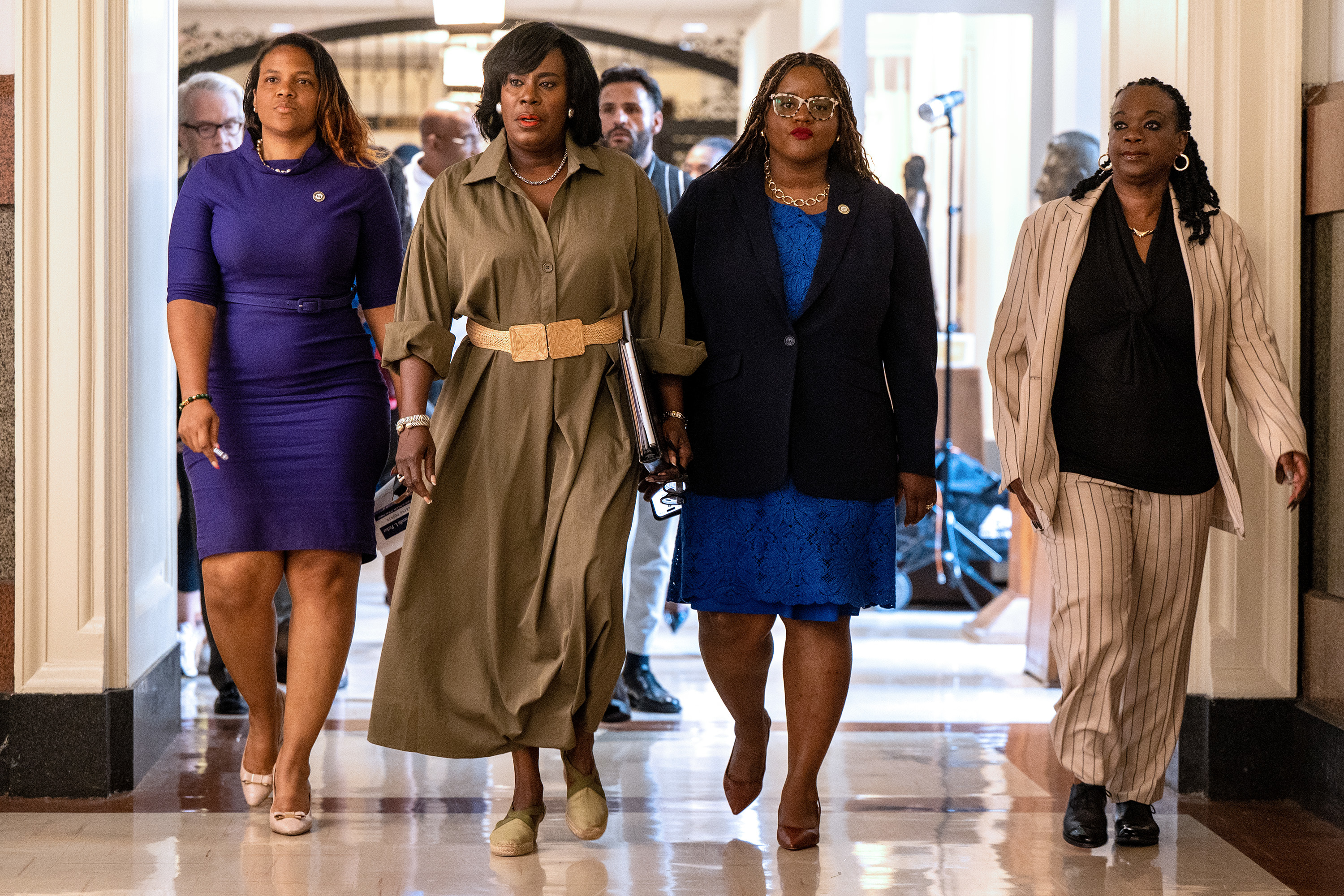
Mayor Cherelle L. Parker walks from her office at City Hall on Wednesday, Jul. 9, 2025, to speak hours after her administration struck a tentative contract agreement with District Council 33 leaders overnight, ending a workers strike. With her are: Chief Deputy Mayor Sinceré Harris (from left); Chief of staff Tiffany W. Thurman; and Chief Deputy Mayor Vanessa Garrett-Harley.Tom Gralish / Staff Photographer
Thiel’s tenure with the city, meanwhile, has been one of the most perplexing sagas of Parker’s first term. In the administration’s early days, he often appeared alongside the mayor at news conferences during emergencies and major announcements.
But his public role overseeing many of the city’s day-to-day operations faded over time, and his obligations outside City Hall grew. In addition to working as a high-paid consultant and adjunct professor — as he had since the start of the administration — Thiel joined the U.S. Army Reserve in 2024 and took multiple leaves from the city for military service, including during this winter’s prolonged snow and ice emergency.
In July, Parker announced Thiel’s resignation, noting that he is leaving to “reenter the private sector.”
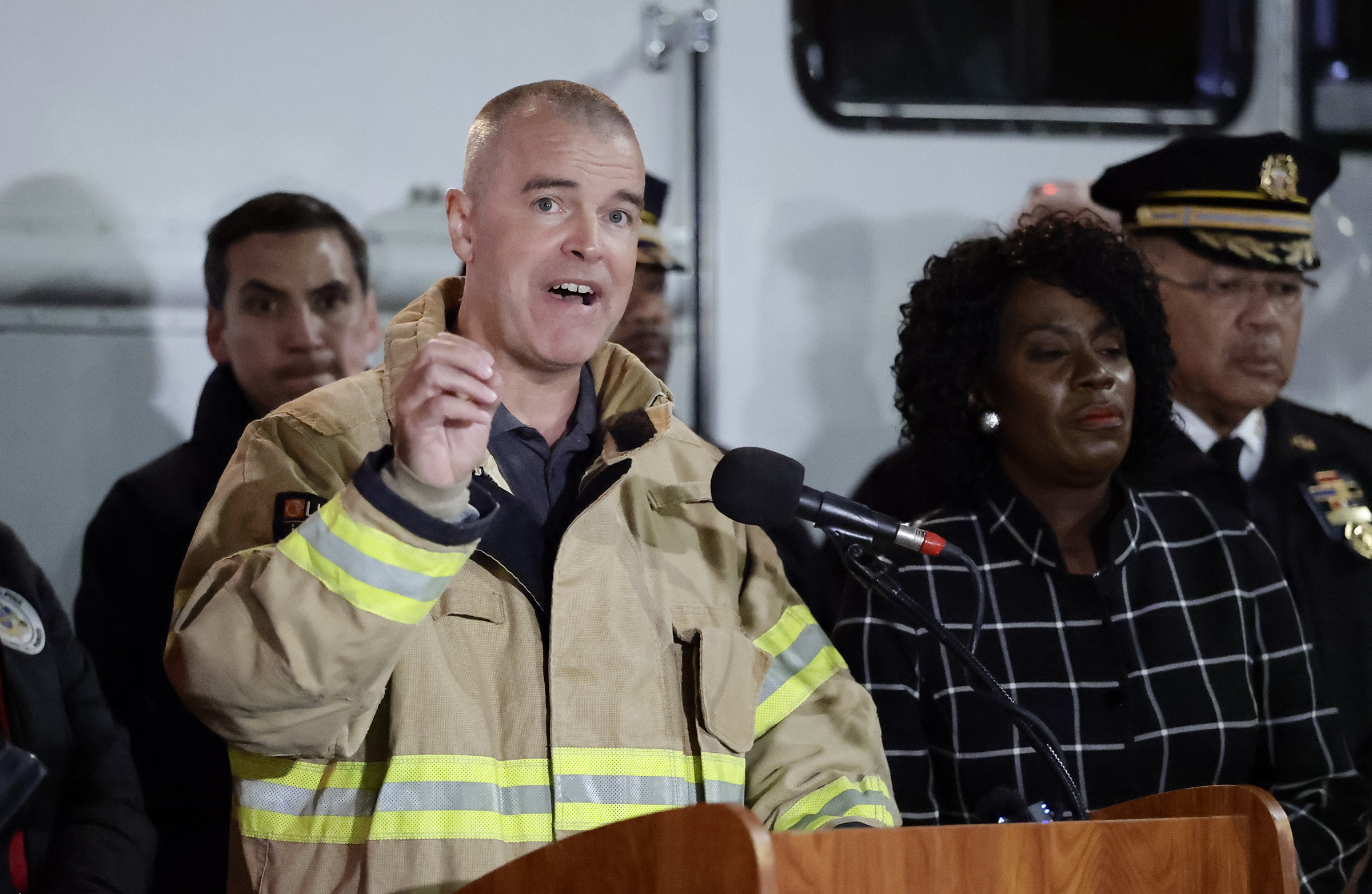
Philadelphia Managing Director Adam Thiel updates the latest from garage collapse at 30th and Grays Ferry with Mayor Cherelle L. Parker on Thursday, April 9, 2026.Yong Kim / Staff Photographer
New positions, new faces
Parker, who has also greatly expanded the mayor’s office staff and increased salaries, created numerous new roles after taking office. Several people left those positions shortly after becoming thefirst people to hold them.
Kafi Lindsay resigned as director of the Philadelphia Office of Strategic Partnerships just nine months after being appointed, according to her LinkedIn profile. Rachel E. Branson resigned as the director of the Philadelphia Office of Minority Business Success after a year and three months, according to her LinkedIn profile. And Hassan Freeman last fall was let go as director of neighborhood and community engagement after an altercation with Councilmember Isaiah Thomas outside City Hall.
Some signs of strain within the administration emerged during Parker’s second year in office.
Parker last summer fired Brandee Anderson, who was the chief diversity, equity, and inclusion officer, and Tyrell Brown, the director of LGBTQ+ affairs, amid a thorny personnel issue that also led to the deputy chief of staff, Chris Dailey, moving to the managing director’s office in a disciplinary transfer.
Last month, Anderson sued the city, alleging her termination was part of an effort to “suppress” DEI work in the administration. Around the same time, Shania Bennett, Parker’s former director of youth engagement, a non-cabinet position created by Parker, posted on social media that her time with the mayor’s administration was “the worst experience of [her] life” and that she resigned due to “unprofessional harassment” from a fellow staffer.
‘What’s the bench?’
George R. Burrell, a lawyer and former City Council member who held senior roles under two mayors, said the personnel churn under Parker will test the leadership skills of the behind-the-scenes city officials who have been elevated to fill vacancies.
“The question you have, when you have this kind of turnover, is, ‘Well, what’s the bench?’” said Burrell, who served in the administrations of former Mayors William J. Green III and John F. Street. “The question of what happens next and the quality of what happens next is the quality of the bench.”
Veteran city staffers now occupy four of the six top roles originally held by Parker appointees who have since left City Hall. Harris’ position was not directly replaced.
The exception is former Assistant U.S. Attorney Monique Galloway, a newcomer to Philadelphia government, who will replace Garcia as the city’s top lawyer next month.
Burrell said he expects longtime city bureaucrat Carlton Williams, who has replaced Thiel as managing director after serving as Parker’s director of clean and green initiatives, to succeed in his new role.
“I watched him evolve into what is a productive public servant,” Burrell said. “So I think that’s a bench member who is going to perform at the level that’s needed.”
Philadelphia Mayor Cherelle L. Parker announces Carlton Williams as the new Philadelphia Managing Director, replacing Adam Thiel during a news conference at City Hall in Philadelphia on Tuesday, July 28, 2026.Jose F. Moreno / Staff Photographer
Once in office, Parker took nearly a full year to fill out her administration with appointments to key positions. She did not announce her selection of Kehinde “Kenny” Solanke to lead the Philadelphia Department of Behavioral Health and Intellectual disAbility Services, or DBHIDS, until July 2025, a year and a half into her tenure.
During that process, Parker said she was seeking the “best and brightest” and conducted national searches for some roles. A vast majority of her appointees, however, had strong ties to Philadelphia.
In 2024, when Parker was filling out her administration, she said she attended a training for new mayors at Harvard University. Some leaders from other cities, she said, were interested in recruiting Hayman, who had been appointed water commissioner by Kenney in 2019.
When Parker took office, it was unclear if she would keep Hayman in command of the water department. She announced she was retaining him in March 2024, and relayed the Harvard anecdote to demonstrate how Philly already had some of the country’s top public servants.
“He’s not going anywhere,” Parker said at the time. “We were able to hold on to some of the best talent in the nation.”
In July 2025, Hayman left Philadelphia to become the executive director of the New Orleans Sewerage and Water Board.
Staff writers Ryan W. Briggs and Anna Orso contributed to this article.
“Confidence is shaky in the construction industry,” said Ed DeAngelis, founder and head of Bensalem-based EDA Contractors Inc., whose 450 union workers do outdoor construction— roofs, walls, sides, masonry, glass, waterproofing.
“First, we saw the architects starting to slow down,” he said. “Then we started to see developers financing, not from banks, but private credit, names we don’t know.” A few stopped payment as they waited for financing.
The Philadelphia region needs more towering cranes building homes and big office projects, he said. “But our margins are not high enough to afford your default. Even if you can still pay 50 cents on the dollar, it takes years for us to make up for that loss.”
In past years, a commercial slowdown meant falling back on “eds and meds” — college, hospital, and drug-company jobs.
The majority of the action this summer is industrial with Pennsylvania lenders and investors backing strategic metals, minerals, and manufacturing projects, of all sizes, including military contractors, said Dan Fitzpatrick, head of the Mid-Atlantic and Midwest regions for Citizens Bank, which operates the Philadelphia area’s largest branch network.
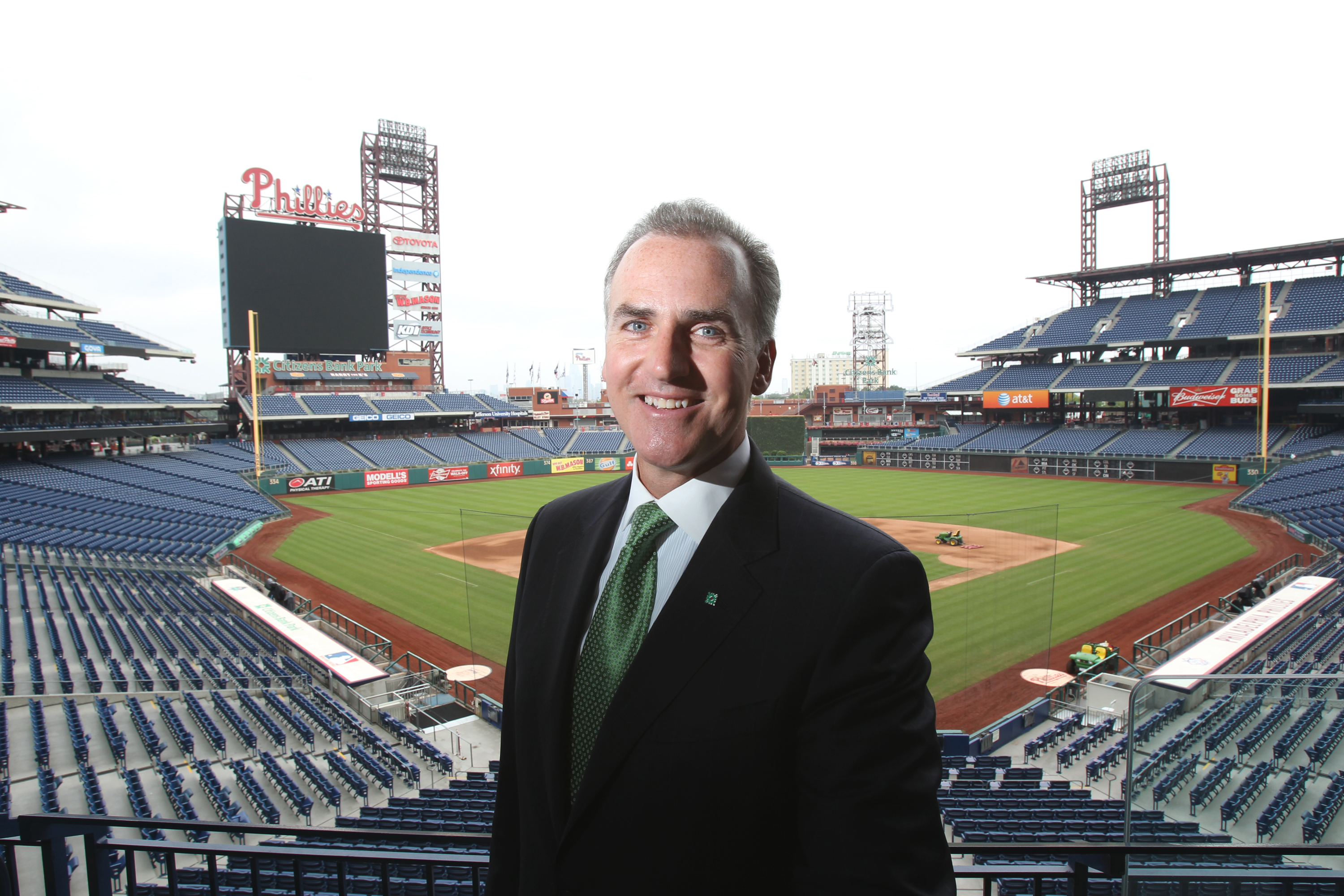
Dan Fitzpatrick, head of Mid-Atlantic and Midwest regions for Citizens Bank, shown at Citizen’s Bank Park in 2013.Photographer: CHARLES FOX
In residential development, “we are going through an adjustment period,” he said. Higher interest rates and higher fuel, materials, and labor prices have pushed up new home costs.
While “there’s now a bit of a glut of luxury homes, we have a shortage of more modest, $200,000 to $500,000 homes,” Fitzpatrick said. “But it’s tough for developers to build those right now with a reasonable return.”
Citizens has been funding more apartment construction since 2020, but there, too, “developers are hitting a pause.”
Turning to D.C.
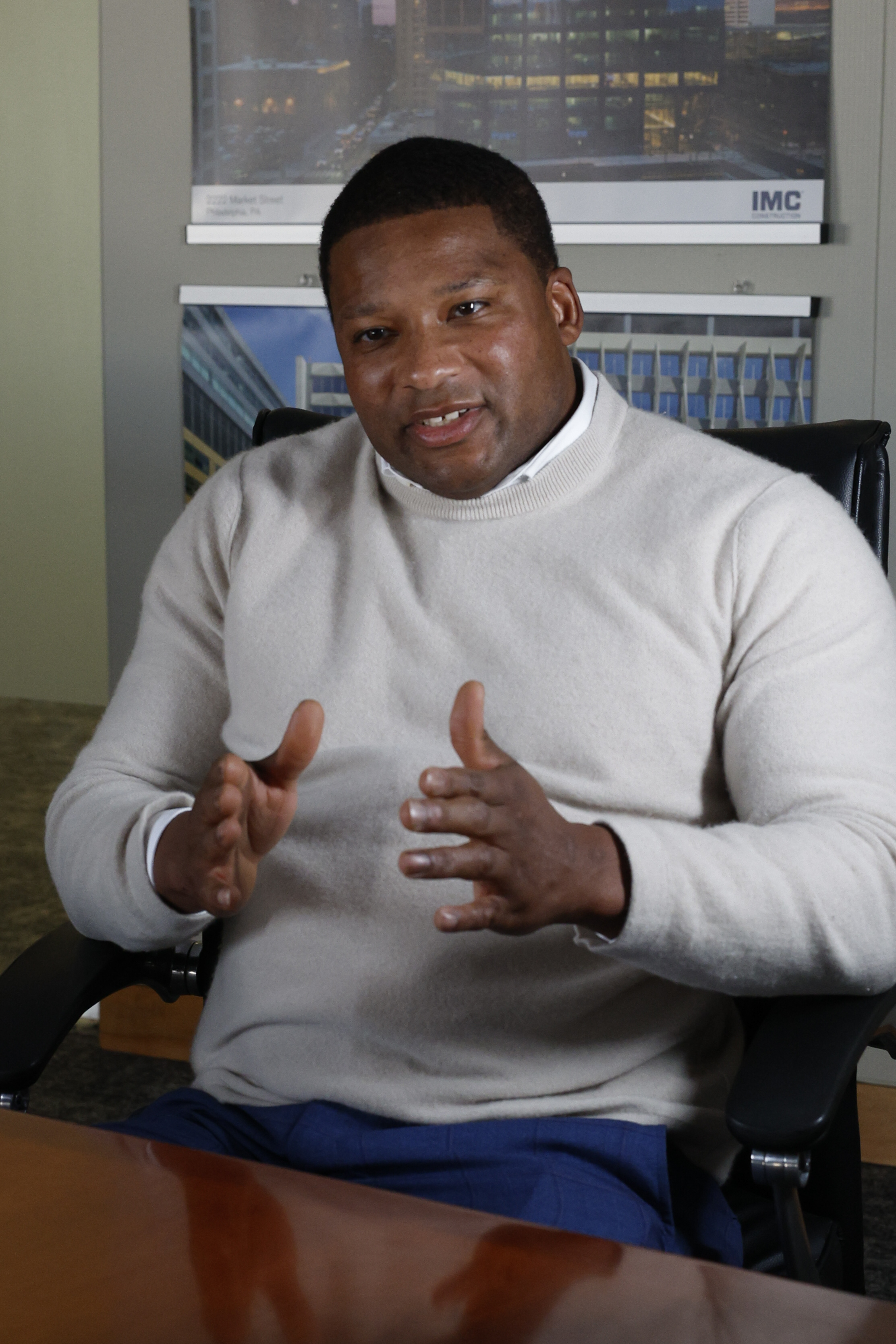
Mike Lloyd, CEO and owner of IMC Construction, at his Malvern headquarters.Steven M. Falk / For The Inquirer
One of the Philadelphia area’s largest builders, Malvern-based IMC Construction, is adding a Washington-area office because data and military contractors, anticipating next year’s record military budget, are hiring and growing there.
“Northern Virginia has been the data-center capital,” said Mike Lloyd, IMC’s CEO and owner. So much is going up — not just data centers, but commercial development that follows big capital investments — that some of the largest, multibillion-dollar national general contractors are overstretched.
A $100 million project used to be very attractive to big national firms, but “now it’s not large enough to put their best teams on,“ he said. ”And some of the traditional defense contractors are now busy with data center work. That has created a niche for firms like ours in the D.C. market.”
“With respect to the Philadelphia market more broadly, I’d say the only projects that can get financed right now are data centers, multifamily, and senior living,” Lloyd said.
He pointed to a Philadelphia-area life-sciences projecthe said has collected tenant commitments but still can’t attract financing. “You are seeing a crowding-out of other commercial sectors by the data-center hyperscalers.”
Philadelphia Mayor Cherelle L. Parker’s “Lower South Philly” program of speeding permits for defense, port, and industrial contractors acknowledges that capital is flowing into industrial development and jobs, he added.
“She’s understanding our competitive strengths and leaning into them,” Lloyd said. ”There are entire supply chains centered around defense projects, and contractors here are ramping up investment.” There’s still demand for Class A office space, but firms are still moving to smaller quarters.
To Lloyd, “the big question is, why does Pennsylvania still lag in data centers?” He was among the builders who went to Harrisburg in 2019 to testify in favor of a data-center sales-tax exemption, which passed.
Pennsylvania ranks with Texas as a source of natural gas for cheap power. Lloyd said that in his native Louisiana, communities are prospering from data center-funded job training and road improvements, but in much of Pennsylvania, residents have mobilized against the projects.
“There are ways to facilitate that growth in an equitable fashion that benefits all parties,” he said.
On the roads
Unlike colleges or healthcare, spending for federal transportation didn’t change with the Trump administration, said James Bilella, new CEO of Philadelphia-based Urban Engineers, which designs and advises cities and states on large public projects.
“We have not seen a drop off in federal transportationspending, especially in the rail and transit industry,” he said. “This administration is trying to be sharper, with quicker turnaround, more efficiency.”
Bilella said the Parker administration has pledged ongoing support for heavy industry, biotech, and military industries, while continuing to back popular infrastructure safety upgrades like the “Great Streets” project, which Urban helped design.
Bilella said he is excited by the prospects for Lower South. “It’s rare in a well-established city to have an opportunity to rededicate such a large area [two square miles] to industry and create jobs that can improve lives and attract new people.”
He added,“We still need to decide about the infrastructure that get people to work there easily. Can people walk in safety? Can they drive, bike, use the river? It’s the kind of project we hope to get involved with.”
Long-term investments
“Industrial, logistics, data center, and defense-related projects” are attracting capital because lenders and investors believe they’ll be in demand a long time, said Abe Ibrahim, regional president for the Philadelphia area at Dauphin County-based Mid Penn Bank, whose largest investor is the family of Cooper University Health Care board chairman George Norcross.
“It’s not that lenders are walking away from office or multifamily, as much as we’re seeing a return to disciplined underwriting,” Ibrahim said. “There are still plenty of opportunities for well-conceived projects to move forward.”
This story has been updated to correct the location of IMC Construction’s headquarters.
Mayor Cherelle L. Parker’s administration met formally for the first timeFriday with the owner of hundreds ofrental homes in West and Southwest Philadelphia whose federal affordability requirements are expiring and committed to working to preserve the homes.
Jim Levin of Neighborhood Restorations plans to sell 925 homes where tenants pay below-market-rate rents, and he wants to keep them affordable. But he needed assurance that the city plans to work with him, said Angela D. Brooks, Parker’s chief housing and urban development officer.
Brooks gave him that on Friday, she said, telling Levin “we’re in this, we’re going to be a good partner, and we’re going to move this forward.”
“We are committed to being part of the solution,” Brooks said in an interview Friday.
About 3,000 people live in the 925 rental units in West and Southwest Philadelphia. The homes were developed through the federal Low Income Housing Tax Credit program, which requires reduced rents at the properties for three decades.
The city’s initial focus will be on 225 of the homes: the 63 that are no longer required to be leased for below-market-rate rents or will lose the requirement by the end of the year, and the 162 homes where affordability requirements are set to expire within the next three years.
Agreements for reduced rents at the other 700 homes are set to expire between 2030 and 2040.
Across the city, Philadelphia is at risk of losing more than 7,500 subsidized rental homes during the next decade as federal affordability agreements expire, according to an analysis published last fall by the Housing Initiative at Penn.
When agreements end, property owners can choose to continue charging below-market rents, charge higher rents, or sell their properties in potentially lucrative deals to take advantage of the city’s rising property values.
Levin told tenants and city officials a year ago that he planned to sell the properties.
The city will not buy the homes, Brooks said, and it has not made a spending commitment toward its goal of keeping the properties affordable once they’re sold.
But a steering committee that began meeting at the end of last year and includes members of the administration, elected officials, and housing policyexperts recommended that the city provide $36 million over five years to help preserve Neighborhood Restorations properties.
Over the next few months, the committee plans to start evaluating the conditions of the properties and identifying funding sources, Brooks said.
Three days before Brooks’ meeting with the property owner, tenants who fear losing their reduced rents and their homes rallied at City Hall to push the administration to help save the properties.
Brooks said preserving all 925 homes could cost more than $260 million.
In a statement, Parker said, “There is no simple or immediate solution at this scale.”
“The city remains committed to doing our part and continuing the work,” she said. “But preserving these homes will require all of us, including strong intergovernmental support that includes resources from local, state, and federal government.”
Tenants have partnered with the grassroots social justice nonprofit OnePA to push the city to keep the homes affordable permanently and to give renters the opportunity to buy their homes for below-market prices.
In a statement, tenants thanked Parker and her administration “for making an initial commitment to saving our homes.”
“We know there is still a long way to go before our homes are safe, and we urge the city to act quickly before it is too late,” they said. “We look forward to working with Mayor Parker and others, and we will continue organizing until all 925 units are protected and no one is displaced.”
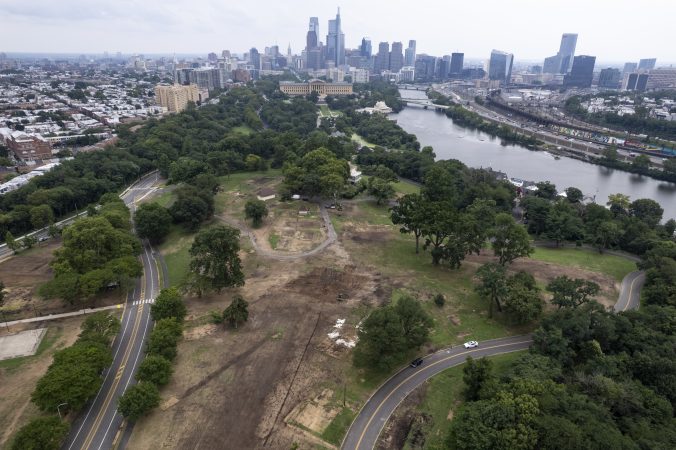
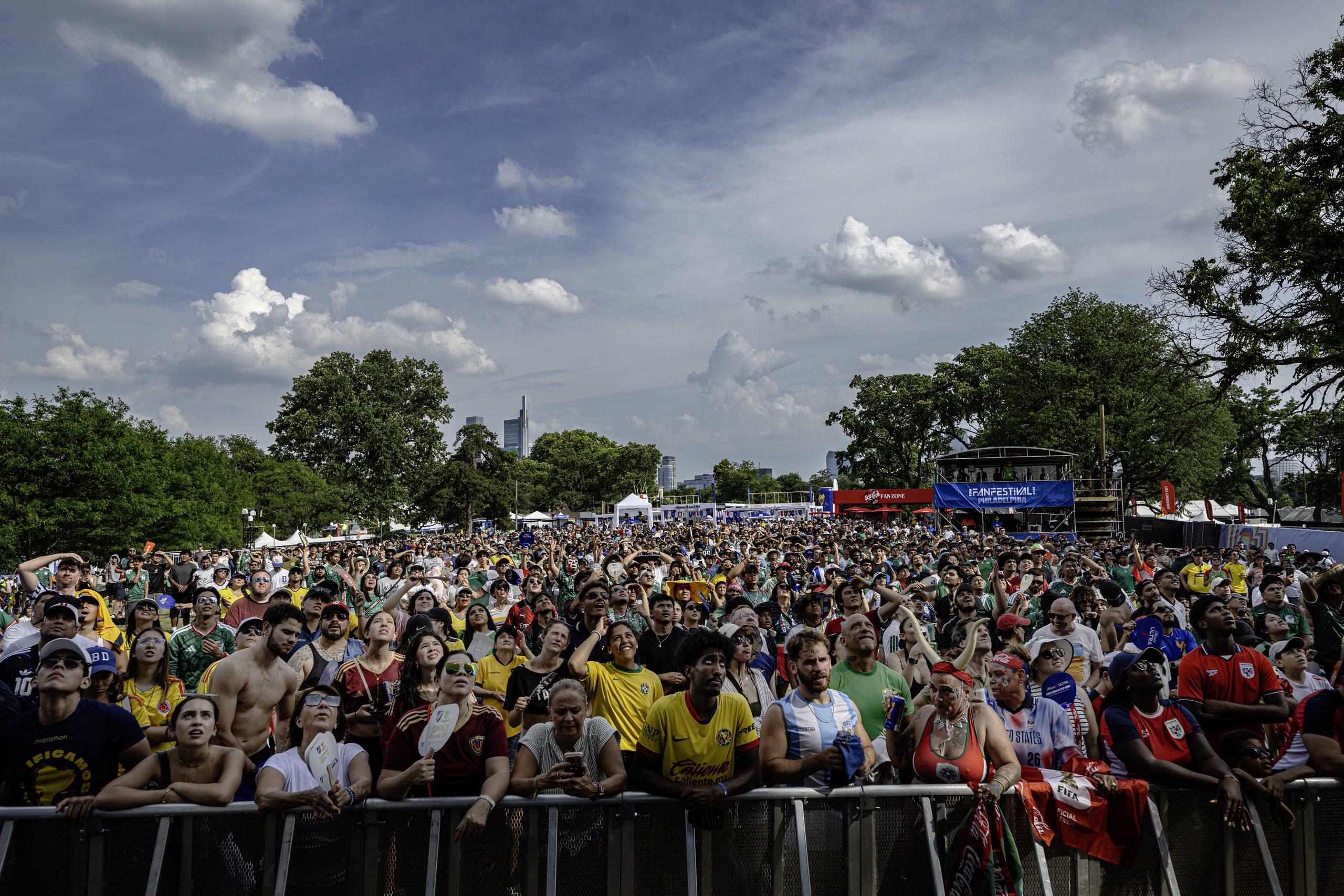
The marred fields of Lemon Hill Park are the remaining signs of the longest summer party the city has ever seen. Half a million people gathered in the park for 39 days straight, dancing to the All-American Rejects, cheering on World Cup matches, and sharing meals on blankets across more than a million square feet of the Fairmount park.
The FIFA Fan Festival, by most accounts from the city, tourists, and residents, was a resounding success, offering a premium World Cup experience at a sliver of the cost of attending a game. Philly’s fan experience was considered one of the most affordable and popular in the country.
Soccer fans gather to watch Mexico play South Africa on a giant screen during the opening day of the FIFA Fan Festival at Lemon Hill on June 11.Jose F. Moreno / Staff Photographer
Now that the party is wrapped, the caretakers of Lemon Hill and nearby residents are hoping the city makes good on a promise to restore the park to its former glory, if not better.
Philadelphia Soccer 2026, organizer of the FIFA Fan Festival, committed $4 million to park upgrades, from new picnic pavilions and a playground to safer sidewalks and traffic-calming measures at intersections. Additional funding will come from the city, but when asked, a city spokesperson declined to reveal the total budget and said more details will come during a groundbreaking celebration in September.
The city gathered input from the community across nine public engagement sessions beginning in 2024 that netted 350 comments from 200 participants that helped shape which improvements would be prioritized.
While residents and caretakers welcome park improvements, it is not lost on them that financial backing comes only after large companies use the space, though locals have been requesting help for years, said Shaun Cerborino, a co-organizer of Lemon Hill’s volunteer parks group. What’s more, without long-term maintenance funding, the upkeep of the park and its new upgrades will fall to caretakers once again.
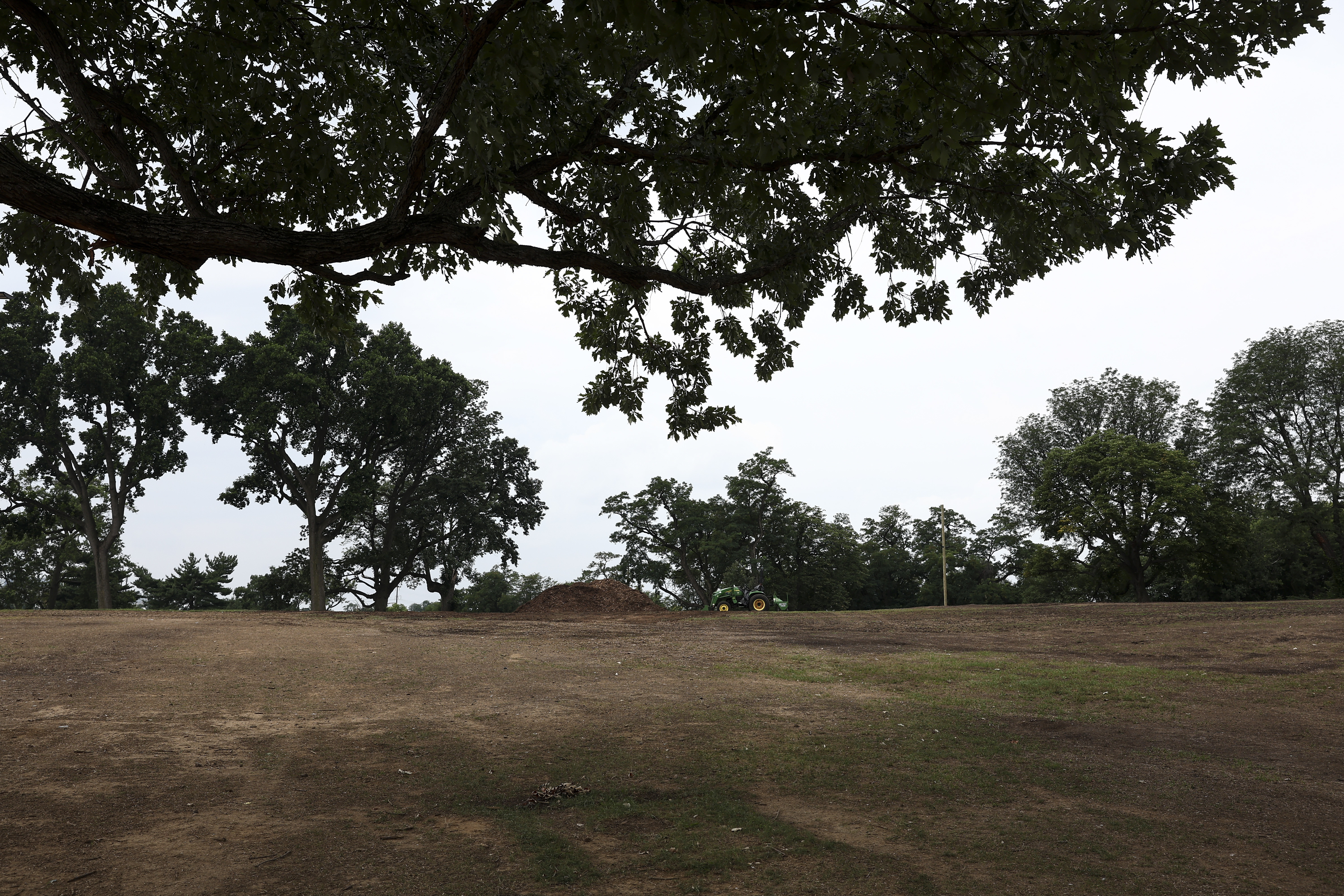
Large grass-less sections remain following FIFA Fan Festival at Lemon Hill on July 28. Fan Fest wrapped up on July 19.Monica Herndon / Staff Photographer
Deferred maintenance billed as ‘legacy projects’
A month after the World Cup ended, the largest Lemon Hill field thatstaged the festival is still mostly filled with dirt, patches of wilting grass, and the occasional leftover screw and other small construction waste. The city began aerating and preparing the soil for regrowth in July.
The grass will grow back, said Cerborino and Nissa Eisenberg, Fairmount residents and co-organizers of the Lemon Hill Neighbors Association, which provides regular volunteer maintenance to the park. But what caretakers truly are concerned about is long-term support after the city finishes its upgrades months from now.
Additionally, many of the improvements considered legacy projects are really “deferred maintenance” that had been requested for years, and came about only when corporations needed to use the park, Cerborino said.
Large grass-less sections remain following FIFA Fan Festival at Lemon Hill on July 28. Fan Fest wrapped up on July 19.Monica Herndon / Staff Photographer
“Instead of properly funding Parks and Recreation, the city looks toward private ventures to help keep the lights on and generate enough money to maintain — which we’re barely doing anyway,” Cerborino said.
In Philadelphia, there is no dedicated budget for parks and open space; instead, the city and volunteers rely on the Philadelphia Parks and Recreation budget to maintain parks. They also look to grants, private nonprofits, and thousands of volunteers who weed, fix, and maintain trails and park space as part of “Friends” groups. Philadelphia relies on volunteers at more than twice the national average.
Since taking office, Mayor Cherelle L. Parker has raised the parks and recreation department’s budget each year, doubling its spending from $53 per resident on parks in 2024 to $110 per resident in 2026. And while 97% of Philadelphians can walk 10 minutes and find a park, far exceeding the national average, Philadelphia still spends about half as much on its parks as the national average, according to the Trust for Public Land.
Improvements like upgraded sidewalks, lighting, signage, and recreation areas are standards that should already be met by the city, which is home to some of the highest-ranked parks in the country, Cerborino said.
Small holes line sections of the park, possibly following aeration, after FIFA Fan Festival at Lemon Hill on July 28. Fan Fest wrapped up on July 19.Monica Herndon / Staff Photographer
Residents may have their park back, but restoration is far from over
Fairmount residents are all but back to their usual park routines after the festival equipment was removed, but they say it is still a long way before Lemon Hill is back to normal.
Last month,Samantha Tartaglino was walking her German shepherd, Marley, through the flattened fields. Marley sprinted through swaths of dead, brown grass, unfazed by the patches. Tartaglino said Marley was just happy to be back in wide-open spaces, as the dog had to make do with a smaller park nearby for weeks.
Lemon Hill’s open fields are a key reason for why many move to this part of Fairmount, Tartaglino said, but even before the fan festival, residents felt the park was not being supported to its fullest potential.
“I feel like FIFA and World Cup put the city under pressure and kicked them into gear,” Tartaglino said.
The city has already put into place many of its legacy commitments, like new ADA-compliant sidewalks and ramps along Sedgley Drive, traffic-calming measures at the intersection of Sedgley and Poplar Drives, and additional lighting fixtures.
But the community’s request for permanent bathrooms, water fountains, and portable water stations has gone unanswered, Eisenberg said. The city says those things can happen only if there is an on-site park staffer due to concerns about maintenance and vandalism.
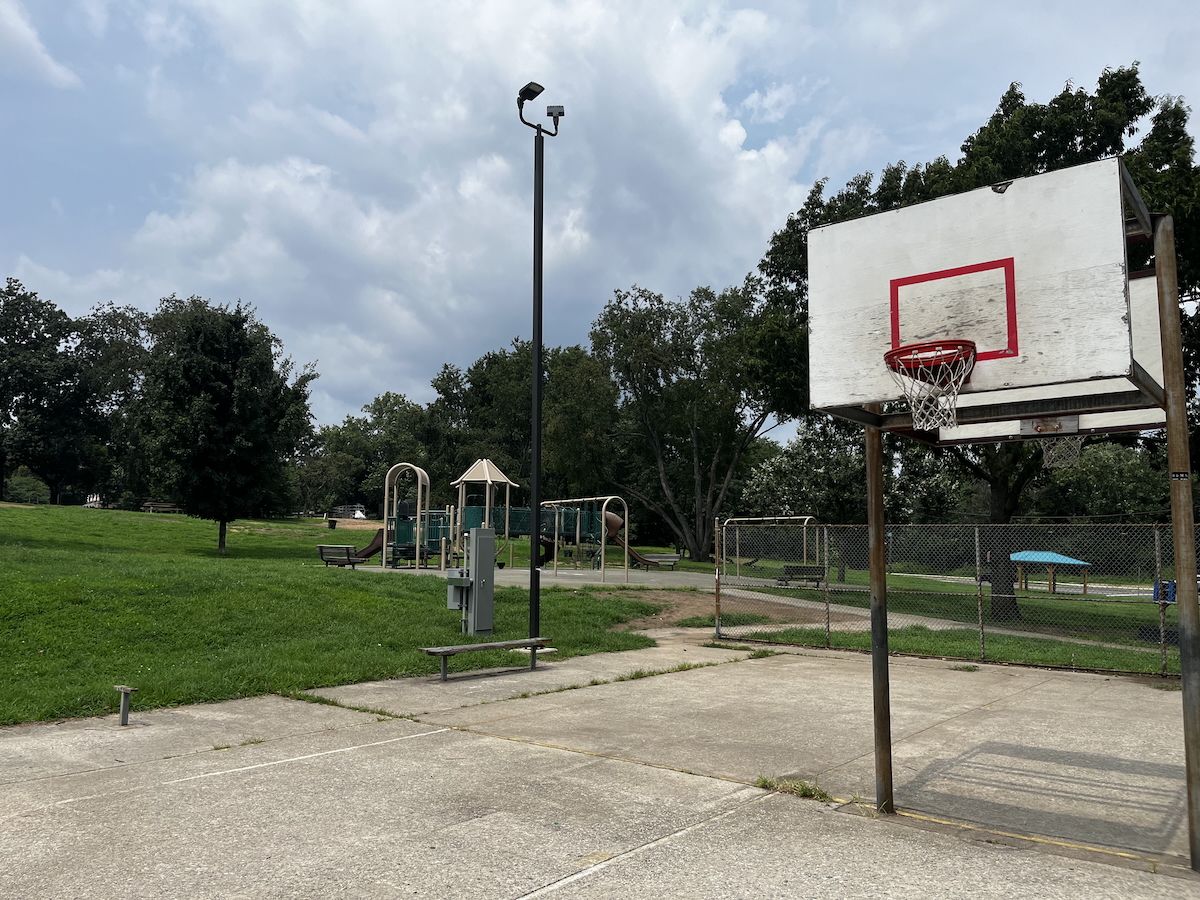
A project with a longer timeline will be a new 43,500-square-foot playground, with construction expected to stretch into April 2027, according to Philadelphia Soccer 2026 and the city. And while construction is underway, the playground and basketball courts will be closed.
Eisenberg lamented that. What was once presented as a plan for residents to give up park space for two months during the World Cup will now last much longer, she said, as grass fields will need to grow back and other amenities are closed for renovation.
“The basketball court is one of the most heavily used assets of the park, but they’re planning to use the court as a staging area for the construction,” Eisenberg said. “Which I get because it’s conveniently located, but you just put on this multimillion-dollar event; I’m sure you can find another area to stage construction materials so that at least the basketball court isn’t offline all winter.”
City officials say the plan is worth the wait.
“We expect the legacy improvements to be completed next spring and are excited for neighbors and future visitors to enjoy a renewed Lemon Hill … that builds on the excitement of this summer while serving Philadelphians for years to come,” acity spokesperson said.
The playground and basketball courts at Lemon Hill Park in the Fairmount neighborhood of Philadelphia. Since the 2026 World Cup has ended and the FIFA Fan Festival staged at the park has left, restoration efforts are underway with funding from various private and public stakeholders.Henry Savage / Staff
Lack of long-term maintenance funding
While projects such as renovating the playgrounds, basketball courts, and baseball fields are welcome, the Lemon Hill Neighbors Association fears that once city crews finish the work, the caretakers will be right back where they started — working off “love and duct tape” with little financial support.
This means park improvements come only after long periods of push and pull between Philadelphia Parks and Recreation staffers and volunteer park caretakers, leaving long-termmaintenance to fall to volunteer groups that dedicate their time and money to keeping parks usable.
“We understand that a lot of times Parks and Recreation is understaffed or underfunded, but then that means we’re going to have to pick up that role,” Eisenberg said. “We need help, and the Parks and Recreation budget needs to reflect it.”
Earlier this week, Temple graduate student Kyle McCurly was lounging in the undamaged grass surrounding the large field that just housed the festival. Having grown up in rural Georgia and recently back from a trip to Austin, Texas, McCurly said Philly’s parks could be so much more with long-term maintenance, and not just at Lemon Hill. Henoted that Austin invests twice as much money as Philadelphia does in its parks per resident, according to the Trust for Public Land.
“Everyone’s going to have different opinions on how the funding itself is created,” McCurly said. “But I think that it’s worth consistent investment to make green spaces more accessible and enjoyable in the city.”
Federal investigators last summer issued subpoenas for documents and financial records related to William F. Dunbar Sr., a Philadelphia lobbyist who was a close confidant of Mayor Cherelle L. Parker during her 2023 campaign, according to three people with direct knowledge of the probe.
Dunbar, who has extensive political ties, was a key member of Parker’s informal “kitchen cabinet” of unpaid advisers during her 2023 run, and he ran her campaign, People for Parker, for most of 2024, the mayor’s first year in office. He has also raised money for U.S. Sen. Cory Booker of New Jersey and members of Philadelphia City Council, and he co-chaired Gov. Josh Shapiro’s 2023 inaugural committee.
The sources, who spoke on the condition of anonymity to discuss a sensitive legal matter, said federal investigators in the summer of 2025 issued subpoenas to multiple associates of Dunbar’s, compelling them to produce records related to his business and political dealings. One source described the investigation as “fairly broad.”
None of the sources said they were aware of an investigation centered on Parker.
Dunbar, 42, declined to comment Thursday.
A spokesperson for the U.S. Attorney’s Office in Philadelphia declined to comment. No charges have been filed in relation to the probe.
A Parker campaign spokesperson declined to comment on her behalf.
Records show that Parker’s campaign increased its spending on legal services in 2025, around the time that the sources said the subpoenas were issued. The Inquirer reported this week that the campaign has paid its law firm, Dilworth Paxson, about $108,000 since the start of 2025, according to campaign finance reports. It paid the firm less than $15,000 during the 2023 election year and about $19,000 in 2024. People for Parker did not respond to a request for comment on what was driving the increased legal bills.
In 2024, Dunbar officially joined the campaign for the first time after Platt and Harris became chief deputy mayors in Parker’s administration. Both have since resigned from city government. Platt later returned to the campaign to serve as executive director of People for Parker.
Dunbar has never been personally paid by People for Parker, according to campaign finance records. The campaign made rent payments to his firm, Dunbar Public Affairs & Associates, totaling $22,850 from March 2024 to November 2024.
Parker’s campaign parted ways with Dunbar in late July 2024. Dunbar at the time said it was the mayor’s decision to take the campaign in a different direction.
“I’m very much still an informal senior adviser but because of a different set of priorities, the mayor has decided to manage her politics herself,” Dunbar told The Inquirer at the time. “My business has continued to grow as we work to support our clients.”
Parker added: “Will has been a valued friend to me, and let me just say that life is good right now [for Dunbar] and business is good and it’s growing.”
Dunbar, an Overbrook Park native who got his start in politics working for former U.S. Rep. Chaka Fattah (D., Philadelphia), has developed an extensive political network through fundraising and advising campaigns. He worked in government affairs for Comcast before expanding his lobbying portfolio after Parker’s victory in the 2023 election.
Dunbar in recent years registered as a city government lobbyist on behalf of several clients, including Comcast, the Philadelphia School District, the Chamber of Commerce for Greater Philadelphia, Jackmont Hospitality, and several other companies, according to public disclosures. Dunbar’s lobbying registration had been listed as “expired” in city records Friday, but was changed to “submitted” after the initial publication of this story.
Dunbar worked with the school district as a subcontractor for a Harrisburg lobbying firm, DT Firm.
“In June, the DT Firm informed the District [that] Mr. Dunbar was no longer a subcontractor with the firm,” district spokesperson Naima DeBrest said in a statement.
DeBrest did not respond to a question about whether the district received a subpoena. The DT Firm declined to comment.
Mayor Cherelle L. Parker’s campaign has spent about $108,000 on legal fees since the start of 2025, far more than it shelled out in any recent year, campaign finance records show.
For instance, in 2023, when Parker’s legal bills would have been expected to spike amid her winning campaign for mayor, the campaign paid about $14,900 in fees to its law firm, Dilworth Paxson, according to campaign finance reports. In 2024, Parker’s first year in office, the campaign sent Dilworth about $19,300.
But in 2025, payments to Dilworth more than quadrupled.
Aren Platt, executive director of the Democratic mayor’s campaign, People for Parker, did not respond to a request for comment on what was driving the increased legal bills.
“Our lawyers at Dilworth are an essential part of our team and it’s important that we are able to talk to them on a variety of strategic initiatives,” Platt said in a statement.
The campaign paid Dilworth about $88,700 in 2025, and an additional $19,700 between Jan. 1 and May 4 of this year, according to the most recent report.
“It’s an unusual number to see right now,” said Matthew Haverstick, a Philadelphia-based elections attorney who has primarily worked with Republican candidates. “There could be lots of prosaic or benign explanations for it, but it’s not normal.”
Election law gives campaigns wide latitude over how they spend money from donors. In addition to election-related expenses like advertisements or legal work on campaign finance compliance, campaigns can spend money on everything from constituents’ funeral expenses to airfare for candidates to attend political events. They can also support the candidates’ work in government.
Public records do not provide detailed information about campaign expenditures. After multiple requests from The Inquirer for the campaign’s legal expenses, Dilworth attorney Timothy J. Ford, who handles most of the campaign’s legal work, on Monday provided copies of invoices from 2023 through 2025.
The campaign told the Philadelphia Office of City Commissioners, which oversees elections and processed the request, that the delay was due to a mix-up involving an email address that is “not checked regularly.”
The invoices, which the commissioners said were “redacted for attorney-client privilege and client confidential information,” show Dilworth billed the campaign during that three-year period for four separate matters.
For “Matter 01,″ which included all the invoices during the election year of 2023, the firm billed the campaign for about $12,400, and almost all of the work appears to have been done by Ford. (The campaign spending reports and Dilworth’s invoices do not exactly align, due to the timing of payments and potentially other factors such as reimbursements.)
“Matter 02″ listed in the invoices lasted from February 2024 to March 2024, with Dilworth billing $2,300. Ford appeared to complete all the work.
The billings escalated with “Matter 03,” which began in March 2024, three months into Parker’s tenure, and lasted at least through October 2025, the period covered by the most recent invoice provided to The Inquirer. The firm billed about $62,100 for its work on that matter, and the invoices show that at least four people from Dilworth billed hours.
“Matter 04″ began in August 2025, and has resulted in $45,300 in billing with as of October 2025. Although most of the details are redacted, the invoices show extensive billing around an “interview” on Sept. 12, 2025. From Sept. 10 to 13, Dilworth billed nearly $7,800.
Additionally, the Parker Mayoral Transition and Inaugural Committee, which aided her transition into office and has since closed, paid Dilworth about $9,700 between December 2023 and March 2024, when it was active.
Parker’s campaign has been more active with fundraising during nonelection years than the campaigns of her recent predecessors. In 2025, she raised $1.7 million, more than any another second-year mayor since at least the early 2000s, according to her campaign.
People for Parker had about $1.4 million in cash on hand as of May 4 after raising about $241,000 and spending about $390,000 in the first four months of this year. Parker is up for reelection next year, and rumors have swirled about the potential of her facing a challenger backed by the progressive movement.
Earlier this year, Parker’s campaign donated $23,000 to the Pennsylvania Democratic Party and $25,000 to Pick Pennsylvania, a committee led in part by Parker to lure the Democratic National Convention back to Philadelphia.
Political consultant Jeff Sheridan, who helped lead a super PAC that was critical to Parker’s 2023 victory, was a public point person for the One Philly nonprofit. In March 2024, he said the group was formed to advance Parker’s governing agenda, not to get involved in politics.
One Philly, which is not required to disclose its donors, raised $658,500 in 2024, Parker’s first year in office, according to an annual return the nonprofit filed with the IRS. It spent $484,900 that year to “promote policies and actions championed by City leaders.”
The group also reported paying nearly $19,000 in legal bills that year, and listed its representative as the Ballard Spahr law firm.
In 2025, the group reported raising only $15,000 and spent all of its remaining money, according to its most recent disclosure, filed in May.
Sheridan did not respond to a request for comment.
Staff writer Anna Orso contributed to this article.
The ultracompetitive race to replace Philadelphia City Councilmember Jeffery Young Jr. is officially underway.
With nine months until next year’s primary election, two candidates are already taking steps to challenge the first-term incumbent Council member from North Philly — and more may be to come.
“We’ve spent the last two years meeting with different community organizations, speaking with different ward leaders, and community groups, and just everyday people,” Alexander said in an interview. “This is going to be a people-powered campaign that really is grassroots.”
And on Friday, Curtis Wilkerson, who was the chief of staff to former City Council President Darrell L. Clarke, announced that he’s forming an “advisory committee” to evaluate a prospective run for the seat. The group will host community roundtables and neighborhood listening sessions to collect policy ideas and feedback from residents.
Wilkerson, who campaigned for the seat four years ago but did not make it onto the ballot, said he’ll likely decide whether to launch an official campaign by September.
A third potential candidate, Democratic political operative Kellan White, has been having conversations with party officials and labor leaders about running. White is a former deputy city controller who has managed and advised campaigns, including physician Ala Stanford’s recent unsuccessful run for Congress.
At least two others have said they are considering launching campaigns for Young’s seat: Dustin Dove, the president of the Fairmount Civic Association, and Max Tuttleman, a philanthropist who in 2023 unsuccessfully ran for seat on Council representing the city at-large.
The recent moves by several prospective candidates are the latest sign that the 5th District is likely to be the most crowded Council race this spring, when all 17 members of Council will be up for reelection and are expected to seek another term. The 5th District, which includes parts of Center City, North Philadelphia, and Fishtown, is overwhelmingly Democratic, meaning whoever prevails in the May primary is all but certain to win the seat in the general election.
Fifth District Councilmember Jeffery Young Jr., during the Barber’s Hall community legacy celebration, a daylong celebration of music, history, and community in North Philadelphia on Aug. 1.Yong Kim / Staff Photographer
Young’s campaign did not respond to a request for comment. In an interview last month, he said he intends to run for reelection and sees facing challengers as a normal part of the process.
“People have a right to do what they want in a democracy,” he said. “But I’m focused on myself and what we can do as a leader of the 5th Council District and get the constituents to understand that every decision that we make is to improve their life.”
The freshman lawmaker is seen as Council’s most vulnerable member in the upcoming election, in large part because of how he got into office.
In 2023, several other candidates — including Wilkerson, who was Clarke’s preferred successor — were kicked off the ballot amid a series of legal challenges questioning the validity of their nominating petitions. Young ended up being the only Democrat on the ballot.
Since January 2024 when he was sworn in, Young’s tenure has been tumultuous. He has championed legislation that at times has sought to slow or halt housing construction in parts of the district, drawing the ire of developers. Constituent groups have loudly opposed Young, specifically over his controversial plans for a popular library branch in North Philly.
And he has publicly clashed with Mayor Cherelle L. Parker’s administration, including in 2024, when he took the rare step of introducing legislation to authorize Council to subpoena the mayor.
Jalon Alexander greets supporters and community members as he kicks-off his bid in the 5th Council District seat, at a campaign event in Fairmount on Saturday.Bastiaan Slabbers / For The Inquirer
Young, 40, an attorney by trade, has something of an independent streak. He has at times aligned with different political factions, and he does not fit neatly onto the Democratic ideological spectrum.
Neither do some of his opponents. Alexander, 33, said he has progressive views on workers’ rights and keeping homes affordable, and he has built relationships with some leaders of the city’s progressive political organizations.
But the tenor of Alexander’s campaign is pro-growth. He said he wants to cut the city’s business taxes with the goal of eventually eliminating the business, income, and receipts tax. And he said he’s committed to facilitating more development in the district, including through the city’s Turn the Key program that provides mortgage support to some first-time homeowners.
Alexander has been particularly critical of Young’s use of councilmanic prerogative, the unwritten rule that gives district Council members an extraordinary level of control over land-use decisions and construction projects in their district.
Young has used prerogative to attempt to obstruct projects he opposes, such as the redevelopment of the former Hahnemann University Hospital. He introduced legislation to ban residential housing development in the area, a move he said was to preserve the area’s job-generating capacity, but he did not advance the bill amid opposition from interest groups and Parker’s administration.
Alexander — who was born and raised in Strawberry Mansion and still lives in the neighborhood — said his campaign is targeting Democrats “all over the tent.”
“There’s room for progressives. There’s room for people who are loyal Democrats but feel let down by the establishment,” he said. “We’ve got one goal: We’re fully committed to removing and replacing Jeffery Young.”
Meek Mill’s newest single “Nightmares to Dreams” has a surprising cameo star: Pennsylvania Gov. Josh Shapiro.
The North Philly rapper calls it a “full circle Philly moment.”
Shapiro appears a little more than a minute into the music video, hugging and conversing with the rapper, with whom he’s built a friendship over the past decade.
The clip of Shapiro and Meek Mill is from a brief meeting the two had before Meek took the stage July 4 at the One Philly: Unity Concert for America, according to state officials.
The song is a spirited sequel to Meek’s 2012 anthem and title track of his debut studio album, Dreams and Nightmares.
The update features a similar melody as the original but with a more frenetic, more menacing instrumental on the song’s back half. Shapiro’s appearance in the song’s music video marks a convergence of some key themes in Meek’s life and music career.
“‘Nightmares to Dreams’ is about coming from North Philly, surviving everything that came with that, chasing a dream, and then using what I built to create opportunities and make change for other people,” Meek, also a criminal justice reform advocate, said in a written statement to The Inquirer.
With “Dreams and Nightmares,” the career of the rapper born Robert Rihmeek Williams began to take off. But he remained on probation with a decade of legal woes stemming from a 2008 drug and gun charge. Court-imposed restrictions disrupted his ability to travel and work, he said, and years of supervision limited his freedom and his musical ascension.
“I was selling out shows, taking care of my family, and representing my city, yet the system still controlled my life,” Meek said in the statement. “That probation nightmare followed me for years and sent me back to prison because of technical violations.”
Meek Mill closes day 2 of the Roots Picnic 2025 while performing on the Fairmount Park Stage at the Mann Center on Sunday, June 1, 2025.Yong Kim / Staff Photographer
In November 2017, the rapper was sentenced to two to four years in state prison following a string of nonviolent technical probation violations.
It was this court decision by former Common Pleas Court Judge Genece E. Brinkley that brought the incident to then state attorney general Shapiro’s attention.
“Meek got a real raw deal,” Shapiro said in an appearance on the Higher Learning podcast in March.
After Meek’s sentencing, Michael Rubin, founder and CEO of the sports platform Fanatics and a mutual friend of Meek’s and Shapiro’s, urged Shapiro to look closely into Meek’s legal battle.
The #FreeMeek campaign was launched soon after Meek’s sentencing and Shapiro urged Rubin to broaden the mission of the movement, he said on the podcast. The campaign became a national push for criminal justice reform for those who fell victim to systemic corruption.
Meek Mill in Amazon’s Free MeekAmazon
The Pennsylvania Supreme Court ordered Meek to be released from prison on bail in April 2018. In January 2019, he cofounded the nonprofit Reform Alliance, with Rubin, Robert Kraft, and Jay-Z. The aim was to mount a five-year campaign to overhaul Pennsylvania’s probation system.
“What happened to me wasn’t just my story,” Meek said. “It was happening to millions of people across this country. That’s why we created Reform Alliance. We wanted to turn one person’s experience into a movement that changes the system for everyone.
“Gov. Shapiro understood this issue was bigger than me” said Meek, “He told us to put a bill on his desk, and when we did, he kept his word.”
Shapiro signed Act 44 into law in December 2023. It creates new pathways for eligible Pennsylvanians to receive early termination hearings, finish probation after demonstrating sustained progress, and limits incarceration for technical violations of probation.
The act “created a more proportionate approach to technical violations, the same kind of noncriminal missteps that repeatedly sent Meek back to prison and derailed the progress of too many others,” Reform Alliance CEO Jessica Jackson said in a statement.
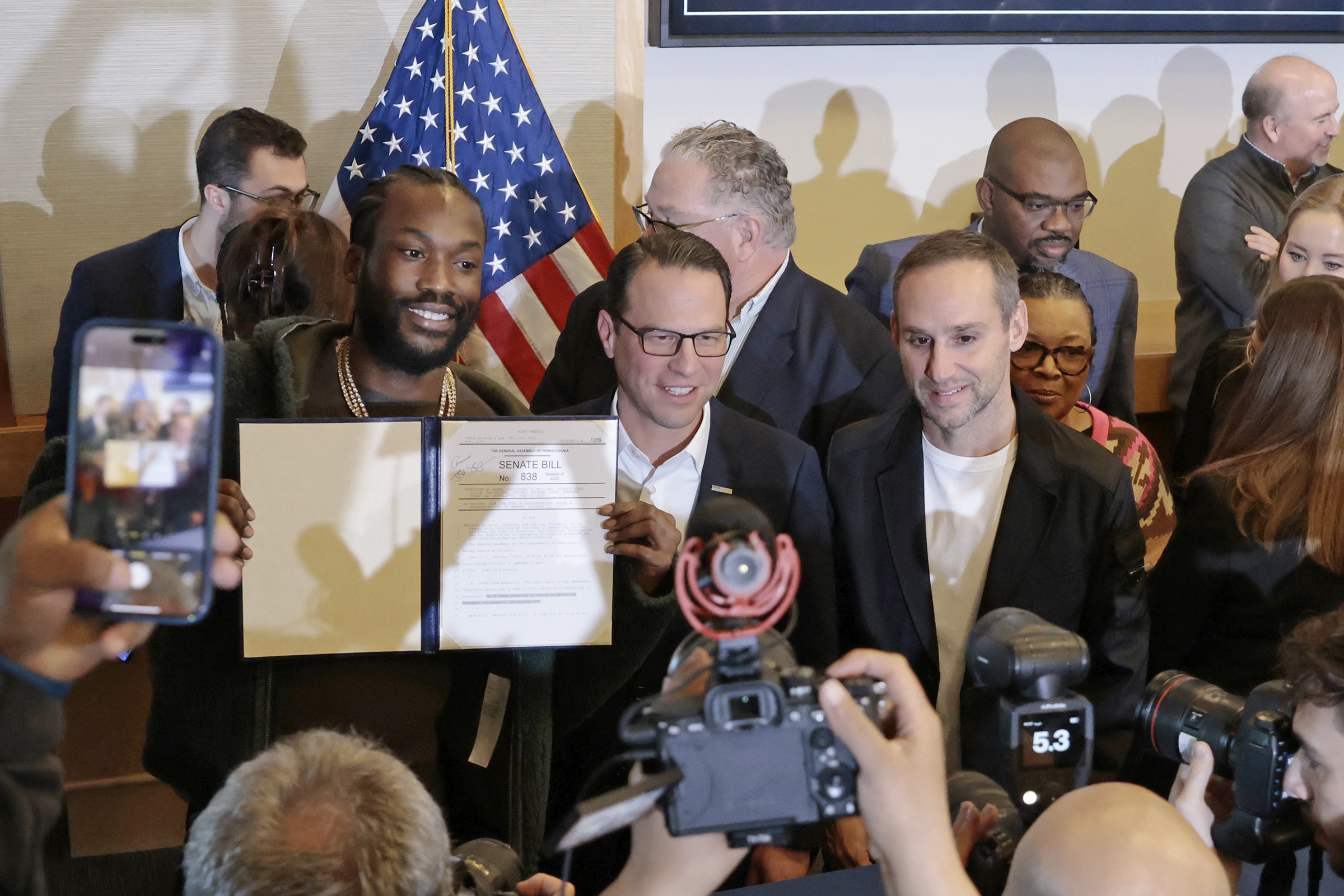
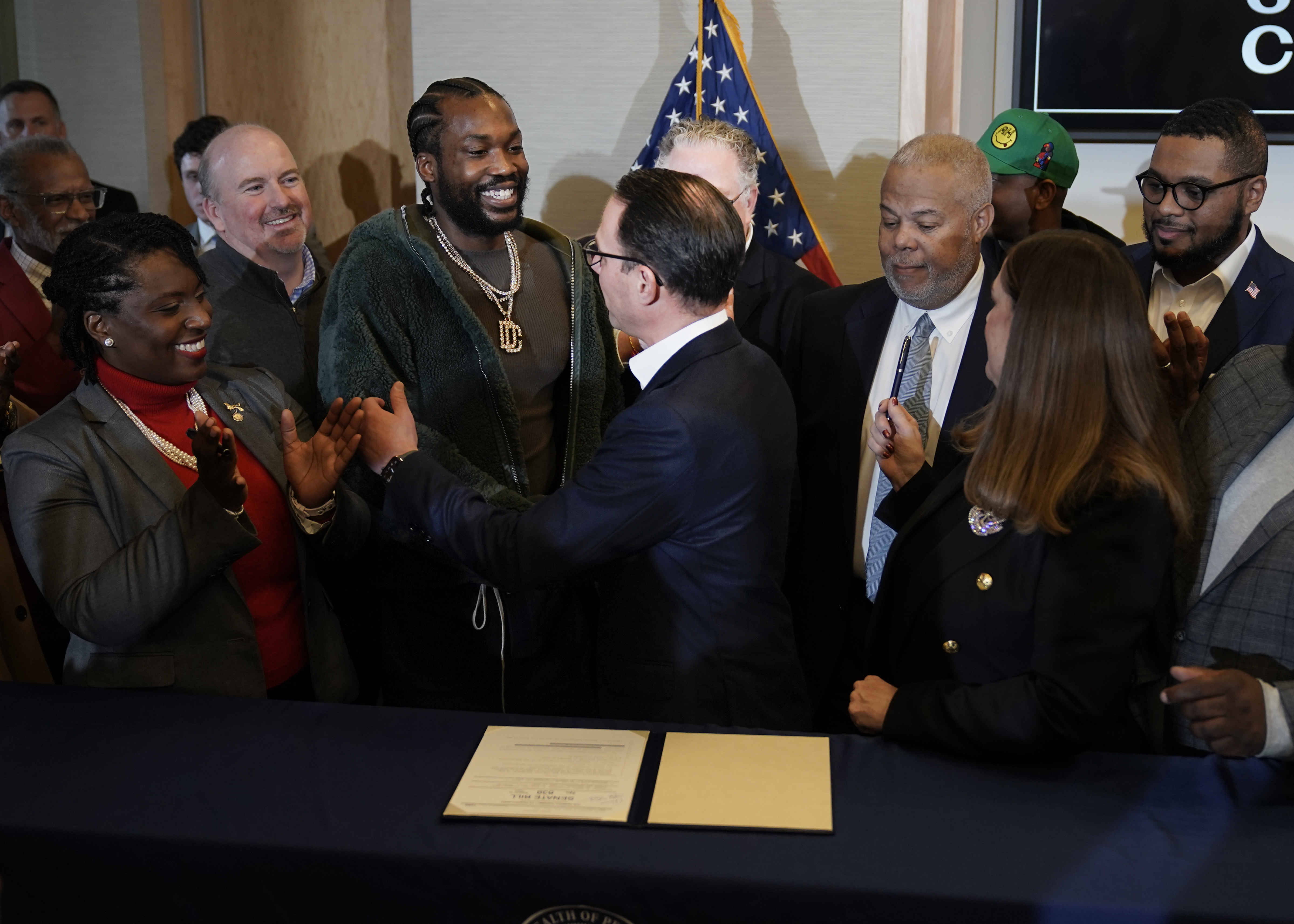
Rapper Meek Mill (center left) and Pennsylvania Gov. Josh Shapiro move to embrace during a ceremonial bill signing in Philadelphia, Friday, Dec. 15, 2023. More criminal records in Pennsylvania can be sealed from public view and fewer people might be kept on probation or in county jails, under legislation signed by Shapiro. (AP Photo/Matt Rourke)Matt Rourke
Shapiro commends Meek for opening his eyes to the failures of the Pennsylvania criminal justice system and for working to ensure others didn’t face the same barriers as him.
“I’m a more compassionate person and understanding person for what he’s taught me over the years. And I appreciate him,” Shapiro said to Higher Learning podcast hosts Van Lathan and Rachel Lindsay. “There are a whole lot of people who are no longer incarcerated, who shouldn’t have been incarcerated in the first place, because of policies I’ve changed in Pennsylvania, decisions I’ve made on pardons and clemencies because of lessons Meek has taught me.”
Meek has even informed his musical tastes, the governor said.
When they first sat down for a dinner at Rubin’s house, Shapiro admitted he wasn’t a fan of the rapper’s music. “I really find a lot of your music quite offensive,” Shapiro recounted telling Meek.
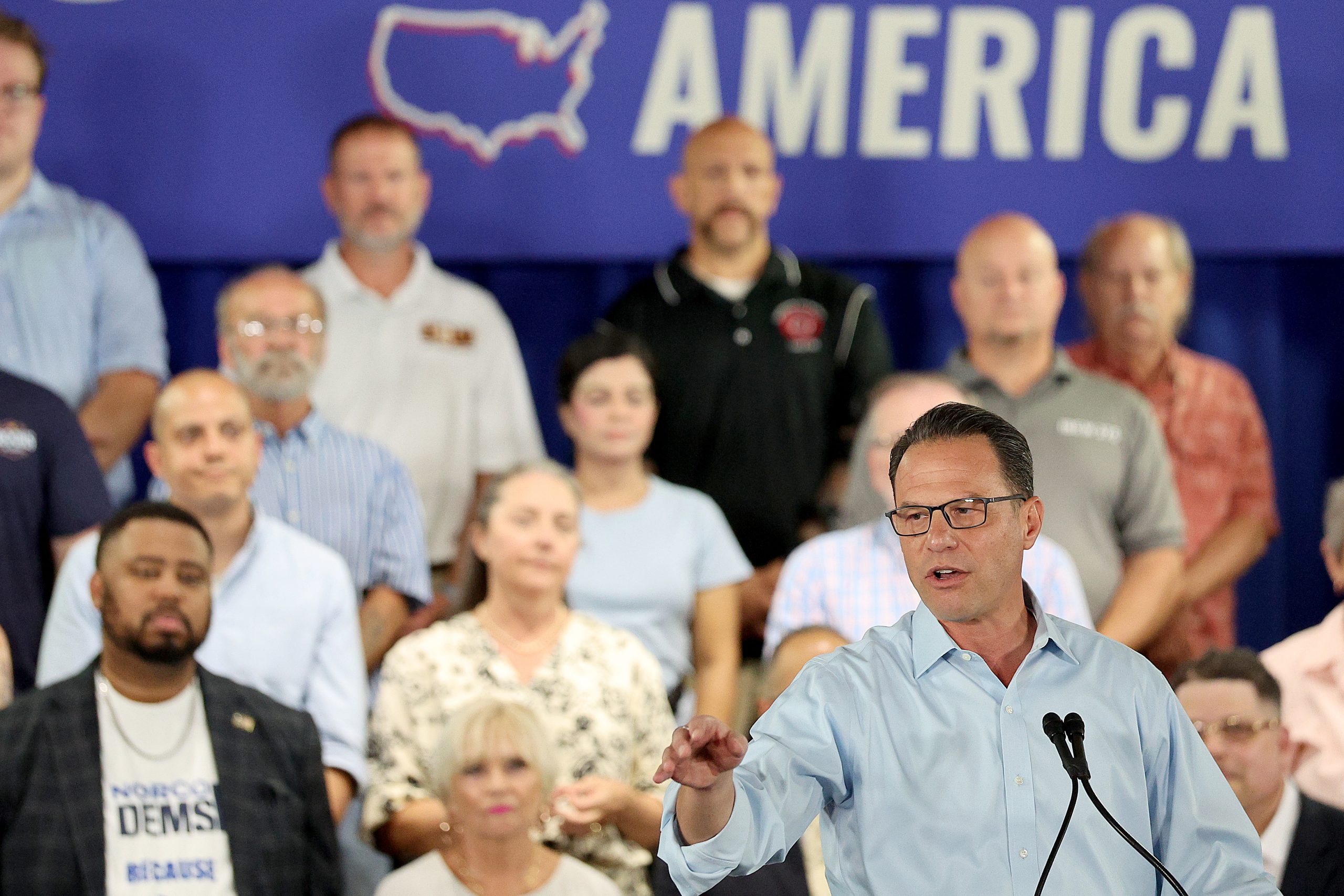
Pa. Gov. Josh Shapiro addresses the audience during a rally for Congressional candidate Bob Brooks at the United Steelworkers Union Hall in Bethlehem, Pa., on Sunday, July 26, 2026.David Maialetti / Staff Photographer
But after Meek played his songs and explained the meaning behind the lyrics, “it opened up my eyes a lot more into understanding his music, the way he thinks, the way he approaches things,” Shapiro said.
Years later, Meek said his music and circumstances have changed vastly.
That is what is reflected in the video to “Nightmares to Dreams,” which includes Philly landmarks and other high-profile cameos from the likes of Philadelphia Mayor Cherelle L. Parker and Million Dollaz Worth of Game hosts Wallo267 and Gillie da King.
It illuminates his North Philly roots, the distance he has traveled, and the change his advocacy has inspired.
What was once a nightmare is shaping up to be a dream, with a friendship with the governor to boot.
Philadelphia’s fiscal watchdog said this week that a recent city review identifying thousands of property owners cashing in on tax relief programs they are ineligible for may have only scratched the surface of the problem.
In a report released Wednesday, City Controller Christy Brady said investigators in her office had identified about 58,000 properties that are receiving the city’s popular homestead exemption tax break and may not be eligible.
That is far more than the 22,000 properties that Mayor Cherelle L. Parker’s administration reviewed in a two-year probe that officials said last week led to more than 13,000 property owners being kicked off tax relief programs in which they were fraudulently enrolled. The Philadelphia Department of Revenue said those owners will be charged back taxes totaling about $30 million in additional property tax revenue for the city and the cash-strapped Philadelphia School District.
But Brady’s report suggests the city could recover millions more in owed tax revenue. Her report says the city should review an additional 36,000 properties, an investigation that could double the money the city is owed annually to $60 million.
“Over a five-year budget, that’s a remarkable $300 million for our schools and vital city services,” Brady said in a news release.
Christian Crespo, a spokesperson for the revenue department, said in a statement that the agency’s tax benefit review unit conducts continuous compliance reviews to identify potentially ineligible properties.
Crespo cautioned that the controller identified thousands of properties with “potential risk factors,” which do not alone establish that a homeowner does not qualify for a tax exemption.
He said more than 8,000 exemptions in the administration’s initial review were deemed legitimate, meaning “a homeowner can have an indicator of potential fraud and still be eligible.”
“Revenue appreciates the Controller’s continued focus on program integrity and welcomes the opportunity to review the findings presented in the report,” he said.
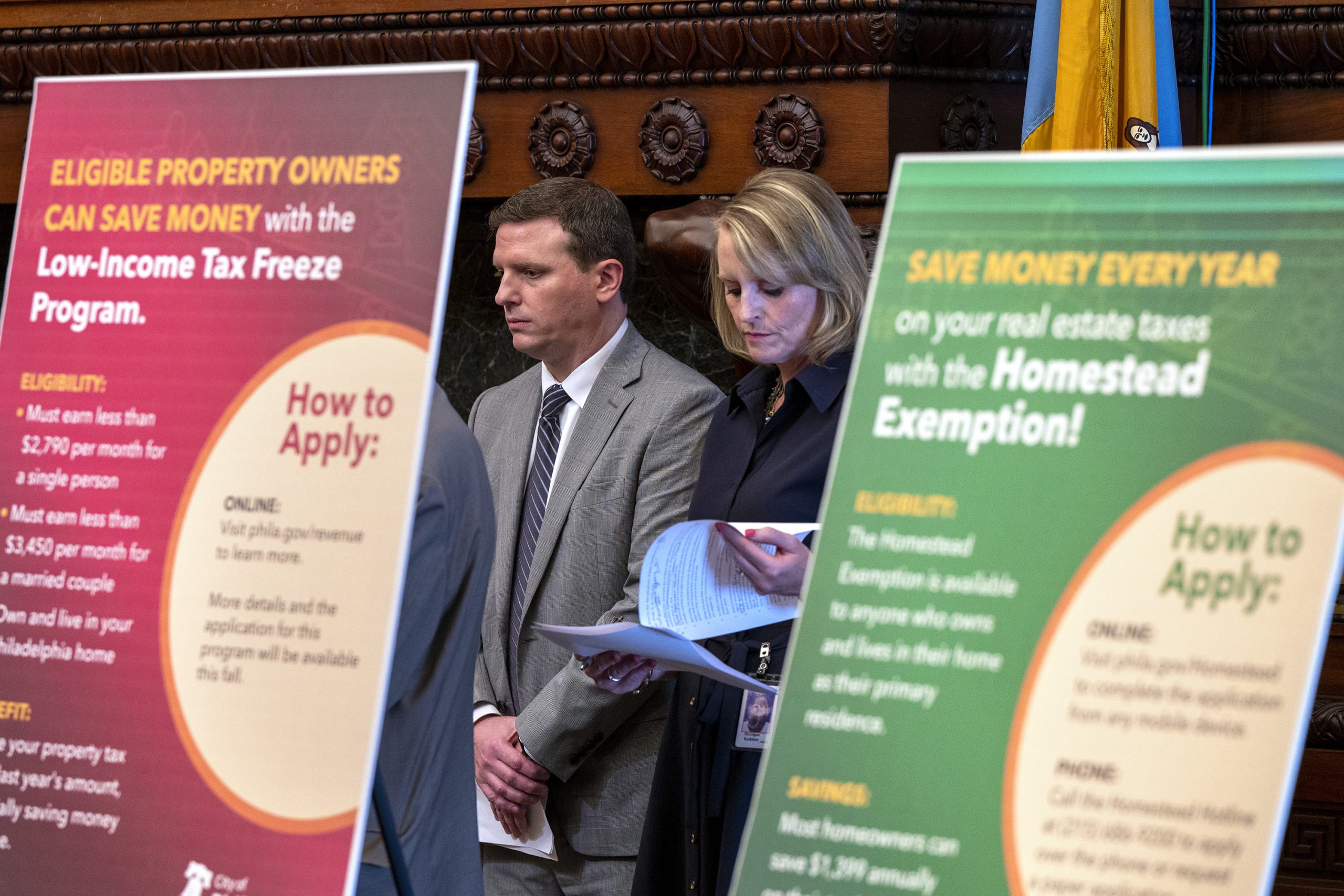
The city’s homestead exemption is by far the most popular tax break offered. The free program allows for property owners who live in their homes to deduct the first $100,000 from their property’s assessed value, saving homeowners up to $1,400 a year.
About 250,000 property owners receive the exemption, for which residents must enroll to take part. Investigators in the city controller’s office found that more than one in five participants may not be eligible, including some with mailing addresses differing from the address of the property receiving the tax break.
The review identified properties with other red flags, including more than 8,000 property owners receiving the exemption whose mailing addresses are listed as outside Philadelphia.
Some were even more brazen: For example, 67 properties legally deemed vacant were receiving the exemption, totaling nearly $100,000 in annual lost revenue, Brady’s office said. In another case, one business owner received an exemption on 15 different residential properties.
James Aros, Jr. (left), Chief Assessment Officer at the Office of Property Assessment, and Revenue Commissioner Kathleen McColgan (right) attend a Mayor Cherelle L. Parker press conference at City Hall on Monday Aug. 5, 2024, as her office prepares to release the first citywide real estate reassessment in two years.Tom Gralish / Staff Photographer
Parker administration officials have said that recovering lost revenue is a priority, especially given the school district’s financial position. The public school system is facing a $300 million structural deficit and the school board recently voted to close 17 schools.
The district is the only one in Pennsylvania that cannot legally increase taxes to generate revenue. Property tax revenue in the city is split, with 56% going to the school district and the remainder into the city’s accounts.
The current property tax rate is 1.3998% of assessed value.
Homeowners who were removed from the homestead exemption program as part of the city’s review were mailed two notices and provided an opportunity to produce evidence of their eligibility. They may still appeal the decision.