Editor’s note: This story was updated to include information from an interview conducted with Michael van der Veen and William Brennan after the story was published. van der Veen, Brennan, and their attorney, George Bochetto, did not responded to multiple interview requests in the days leading up to publication.
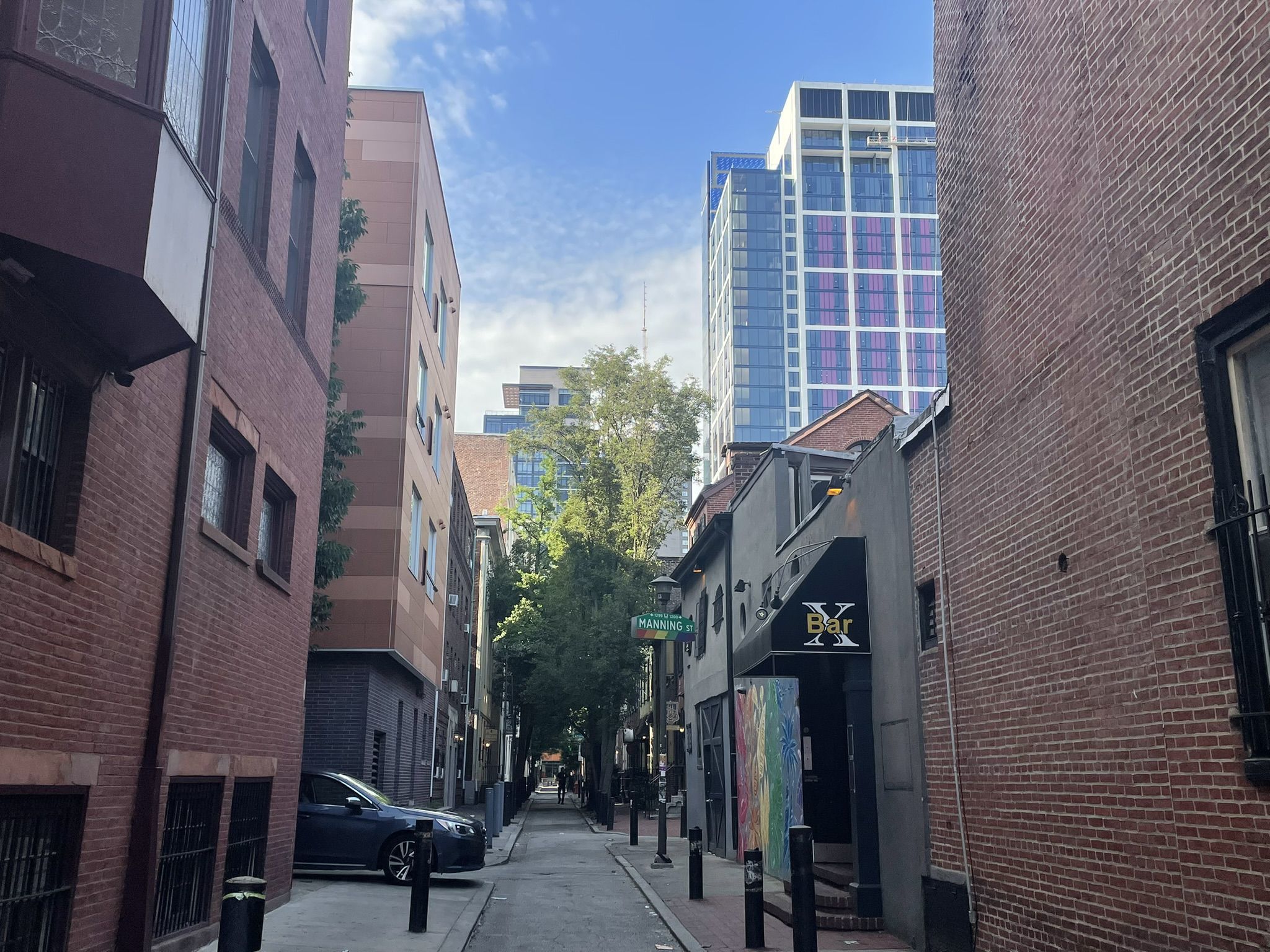
A newly formed local group sued the Gayborhood’s Bar X this month, alleging it is a public nuisance. The group wants to shutter the decade-old business, whose clientele is largely Black.
The lawsuit asks a Philadelphia Common Pleas Court judge to order the Camac Street bar to cease operations. It arrives at a time of increased police presence on the nightlife strip and heightened tension between the city’s Black LGBTQ+ community and police.
Bar X has “repeatedly generated excessive noise, disorderly conduct, disturbances, violence, public intoxication” and requires a constant police presence, the complaint says. It also claimed neighbors have observed “public displays of drunkenness and sexual activity” outside the bar.
The city failed by maintaining the establishment’s business license, the suit says, urging a judge to revoke it.
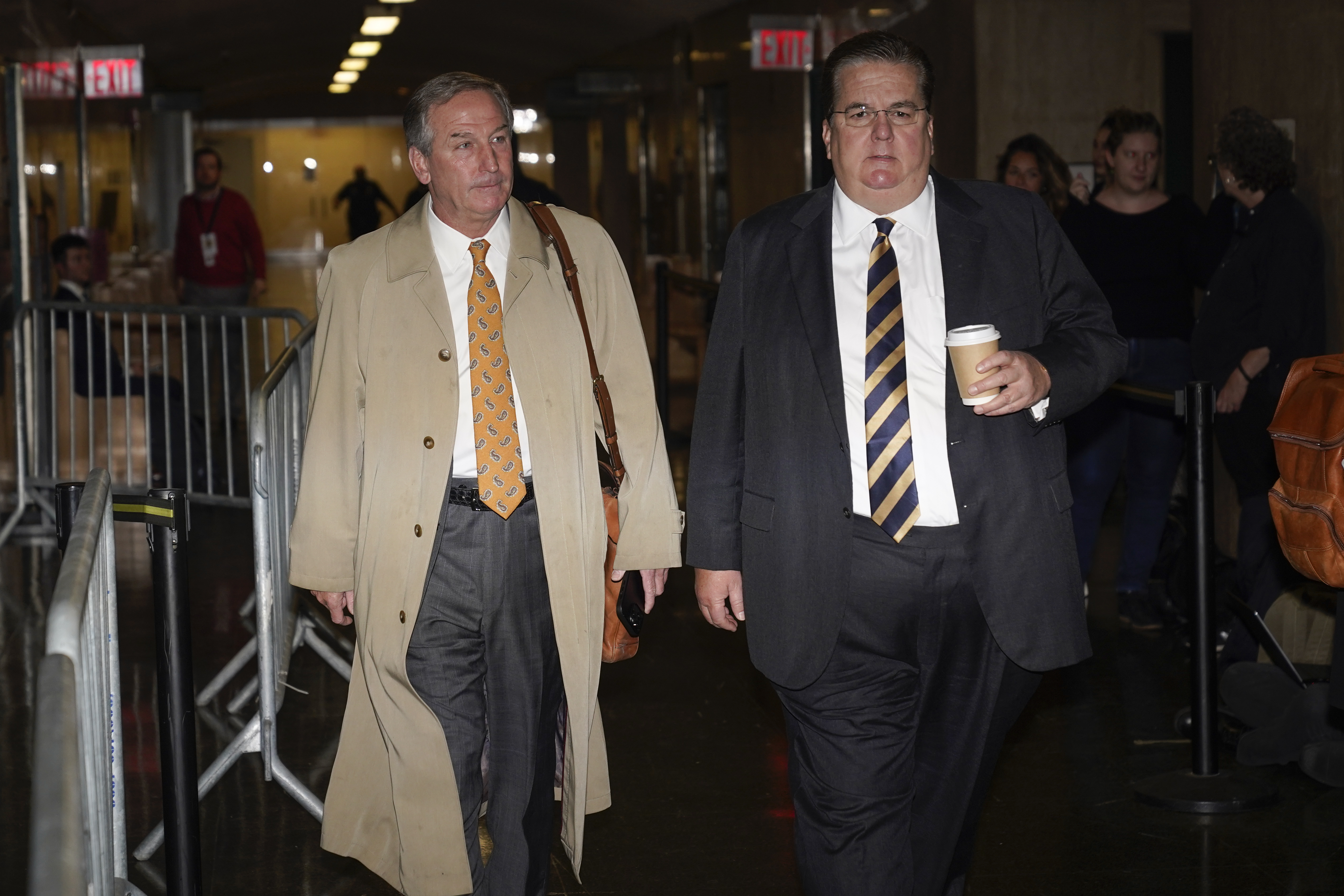
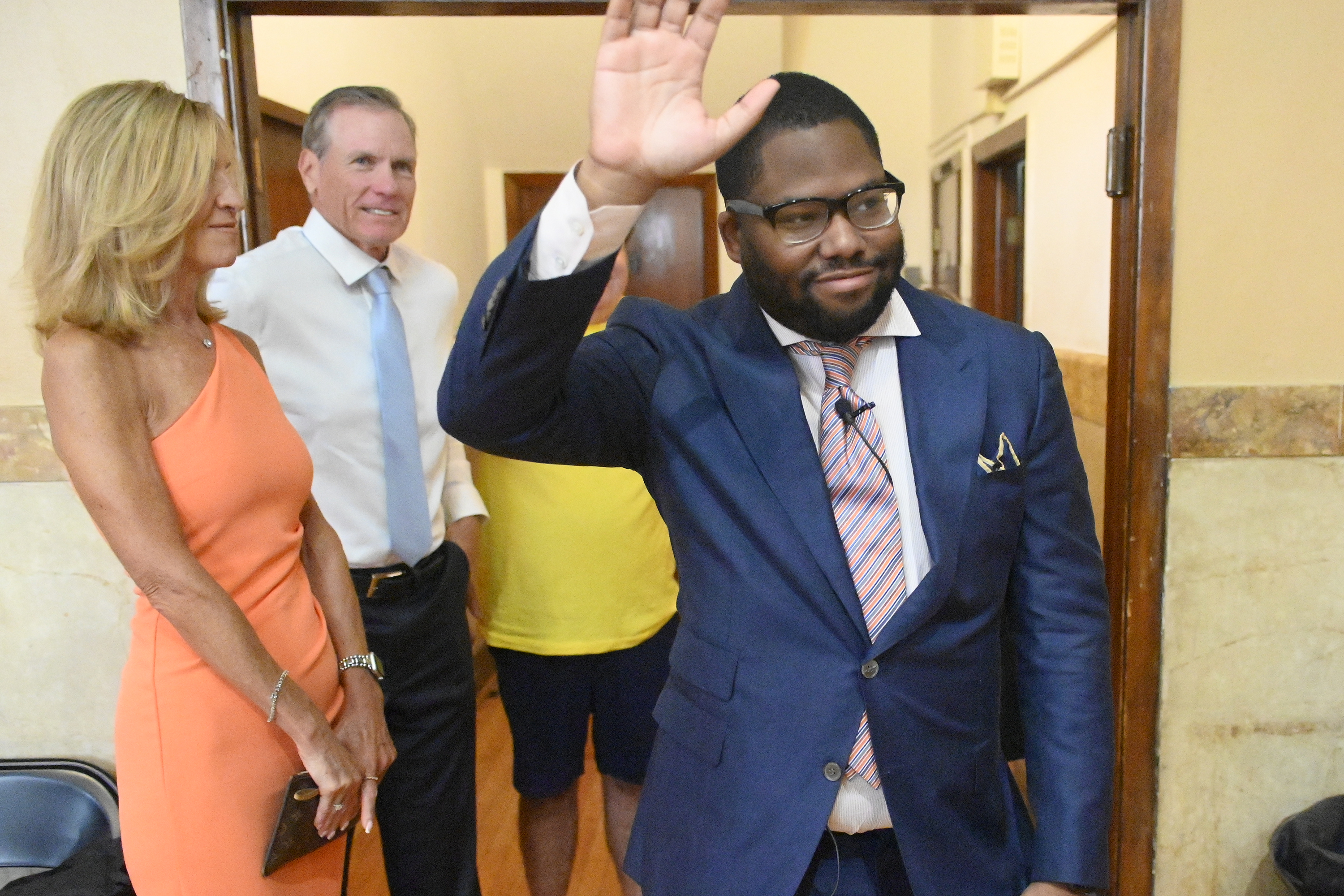
Behind the lawsuit is Michael van der Veen, a 62-year-old high-profile Center City lawyer whose office is in the building across from Bar X on Camac Street.
The bar has been using the office’s parking spot for years, van der Veen said, despite repeated requests to remain off the lawyer’s private property.
But things escalated in July when, according to van der Veen, he was assaulted while leaving his office around 9 p.m. at night.
“When I got jumped from behind and got coldcocked, I was done,” he said.
Days later, veteran criminal defense lawyer William Brennan incorporated Save Our Neighborhood for Tomorrow Inc., the group that filed the lawsuit against “the dive bar of the Gayborhood,” as Bar X pitches itself.
“This changed when passive-aggressive behavior became assaultive-aggressive behavior,” Brennan said. “It can’t be tolerated.”
Save Our Neighborhood for Tomorrow does not appear to have a website or social media presence.
Defense attorneys Michael van der Veen, left, and William Brennan arrive to criminal court in New York in 2022 for Trump’s tax fraud case. Seth Wenig
George Bochetto, the attorney who filed the lawsuit on behalf of the newly formed group, did not respond to repeated requests for an interview. Bochetto is also representing a different group of Pine Street and Spruce Street residents who won an injunction to pause safety upgrades to bike lanes.
The lawsuit against Bar X names owner Tony Tsang, business entities associated with the bar, the city, and the commissioner of the Philadelphia Department of Licenses and Inspections, Bridget Collins-Greenwald. The city did not respond to requests for comment.
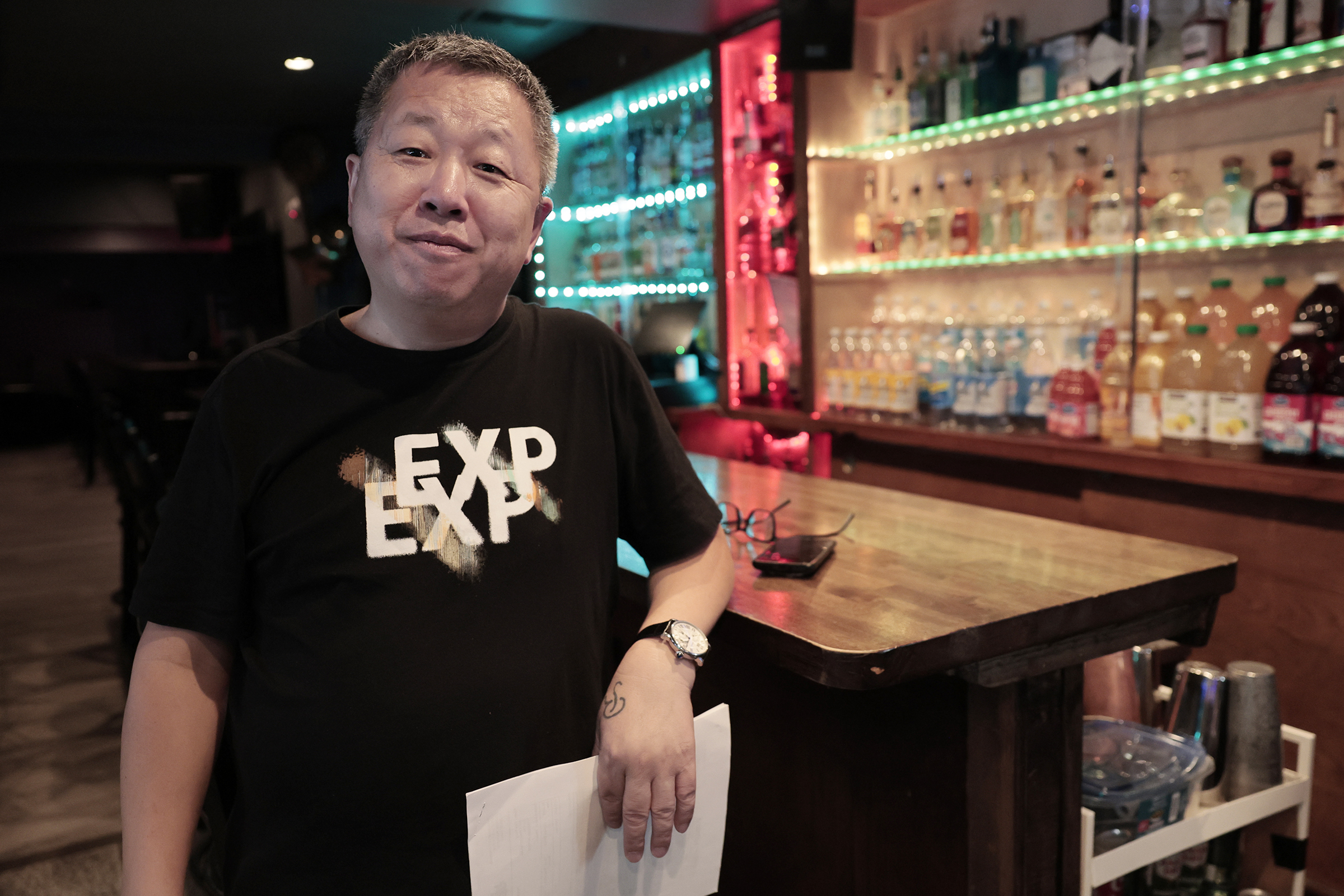
Tsang disputed the allegations of public drunkenness and sexual activity and said the bar is a longtime fixture of the block.
“You don’t like it, you like it quieter, how come you don’t move out of the city?” Tsang, 59, said in a recent interview at the bar. “One block, three bars, how come they’re only complaining about us?”
A ‘very homey’ gay bar
Bar X sits between Locust and Spruce on Camac, a narrow, 200-year-old street that is home to two other gay bars, Tavern on Camac and UBar. It is also around the corner from the bar 254, which replaced Tabu. Those three bars are all owned by the Tavern Group.
Tsang said the majority of his clientele is Black and suggested that the lawsuit had more to do with his identity and that of his patrons than the noise or disturbance allegations.
“To me, it’s the color. I’m Asian. My English isn’t too good. They want to play a game with me,” Tsang said.
Tsang opened his bar in 2016, naming it Bar X so it would be easy for people to remember. The bar’s exterior features a rainbow mural of tropical leaves; inside Tsang hung Ikea posters of Audrey Hepburn and James Dean. He said he stocks the bar himself, buying whatever club soda is on sale at the supermarket.
The bar has a large dance floor and a DJ booth that abuts the alley.
Joseph Ward, a part-time bartender at Bar X who also runs its social media and marketing, said the bar stands out because it’s “very homey,” with Taco Tuesdays and twice-weekly karaoke. (There’s also a male revue every Thursday night.)
Bar X owner Tony Tsang said he stocks the bar himself with whatever club soda is on sale at the supermarket.Elizabeth Robertson / Staff Photographer
“You [can] just chill and not have to worry about the hustle and bustle of a nightclub,” Ward, 36, said. He said the bar is one of the last minority-owned clubs in the Gayborhood and hosts a largely nonwhite crowd.
The lawsuit cites negative Google reviews from people purporting to be Bar X customers, including accounts of stolen phones and allegations that a bartender gave patrons drinks containing sedatives.
The remedy to the situation, the suit says, is for the city to shut down the bar.
Ward said that rumors of drugged drinks at the bar had gained traction online earlier this year, but that staff had not been able to verify any crimes, despite reaching out to those making the accusations. In response, the bar ordered covers for customers’ drinks.
“We take pride in it being a safe place in the Gayborhood,” Ward said, “so we obviously want to keep it that way.”
A new police deployment
Bar X’s block has seen an increase in crime incidents this year, according to Philadelphia Police Department public data.
The lawsuit claims that since last summer there have been nearly 70 crime incidents at the property, including “multiple reports of a person with weapons, assaults, robbery, and disorderly conduct.”
<iframe title="Crime Incidents On Bar X's Block" aria-label="Column Chart" id="datawrapper-chart-LCiYX" src="https://datawrapper.dwcdn.net/LCiYX/1/" scrolling="no" frameborder="0" style="width: 0; min-width: 100% !important; border: none;" height="477" data-external="1"></iframe><script type="text/javascript">(function(){function e(){window.addEventListener(`message`,function(e){if(e.data[`datawrapper-height`]!==void 0){var t=document.querySelectorAll(`iframe`);for(var n in e.data[`datawrapper-height`])for(var r=0,i;i=t[r];r++)if(i.contentWindow===e.source){var a=e.data[`datawrapper-height`][n]+`px`;i.style.height=a}}})}e()})();</script>
In April, the Washington Square West Civic Association hosted a meeting with residents, city officials, and Tsang in an attempt to address neighborhood complaints. Councilmember Mark Squilla, who represents the area and attended the meeting, estimated that more than 40 people attended.
In response, the city experimented with one-off street cleanings of Camac to address litter, Squilla said. Police also began clearing the street of people on weekend nights after 2 a.m., when the bar closes.
“We’ll continue to work on compliance and whatever else is needed there,” Squilla said.
A Philadelphia Police Department spokesperson confirmed there is currently a “bar/nightclub” deployment in the bar’s general area. The department has used similar deployments throughout the city for decades to respond to community concerns and public safety needs, Sgt. Eric Gripp said in a statement.
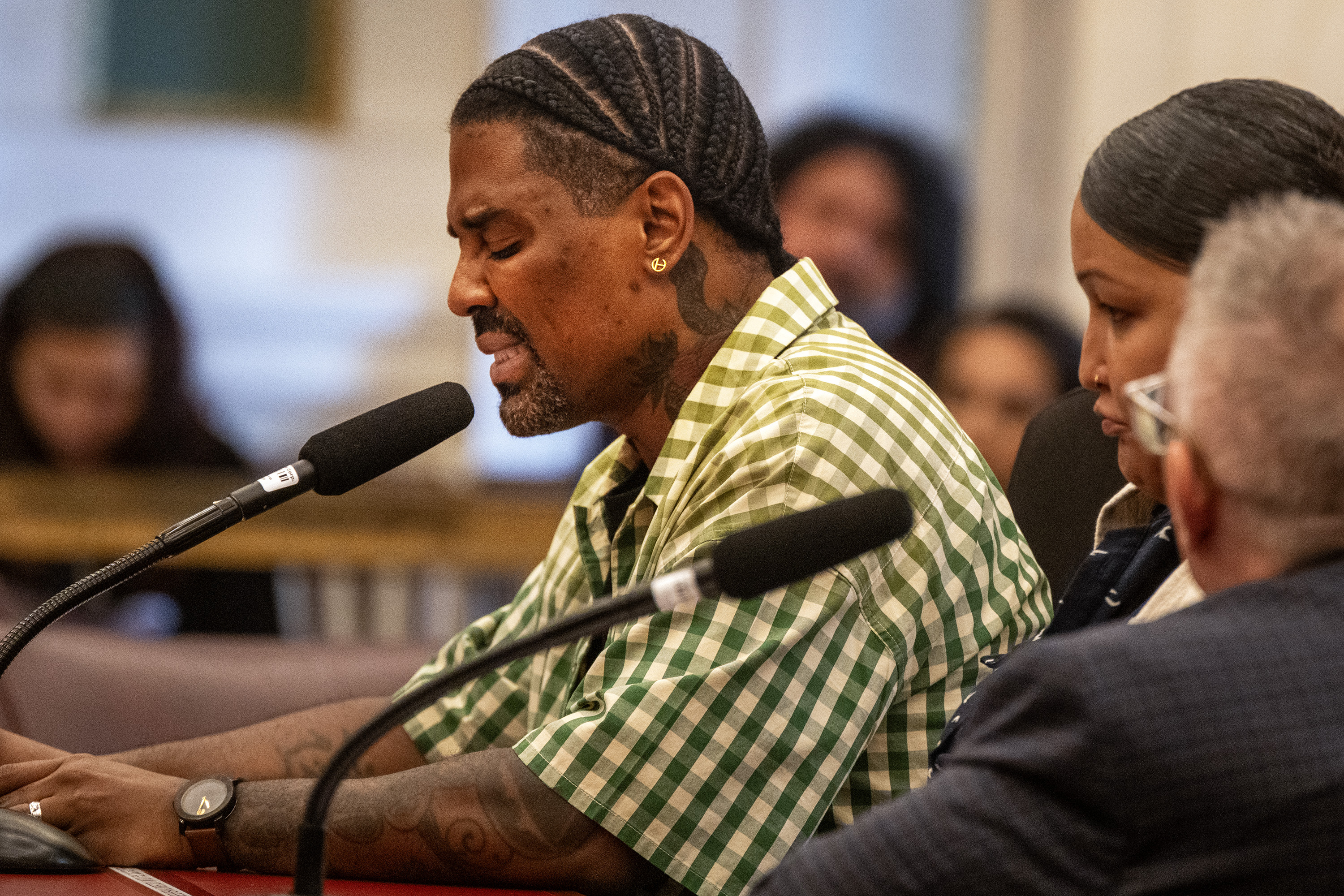
Jacen Bowman, president of Philly Black Pride, testified earlier this month at a City Council Committee on Legislative Oversight hearing into the Philadelphia Police tactics used during Pride celebrations in June.Tom Gralish / Staff Photographer
“Black and brown LGBTQ+ people are watched differently. We are approached differently. We are policed differently,” Jacen Bowman of Philly Black Pride said at the hearing. “Too often we are made to feel like visitors in a neighborhood that is promoted as the heart of Philadelphia’s LGBTQ+ community.”
The owners of two Port Richmond restaurants plan to open a moderately upscale Mexican restaurant in Old City, banking in part on the impact of the forthcoming Park at Penn’s Landing, which will cap I-95 and — they hope — send crowds to their doorstep.
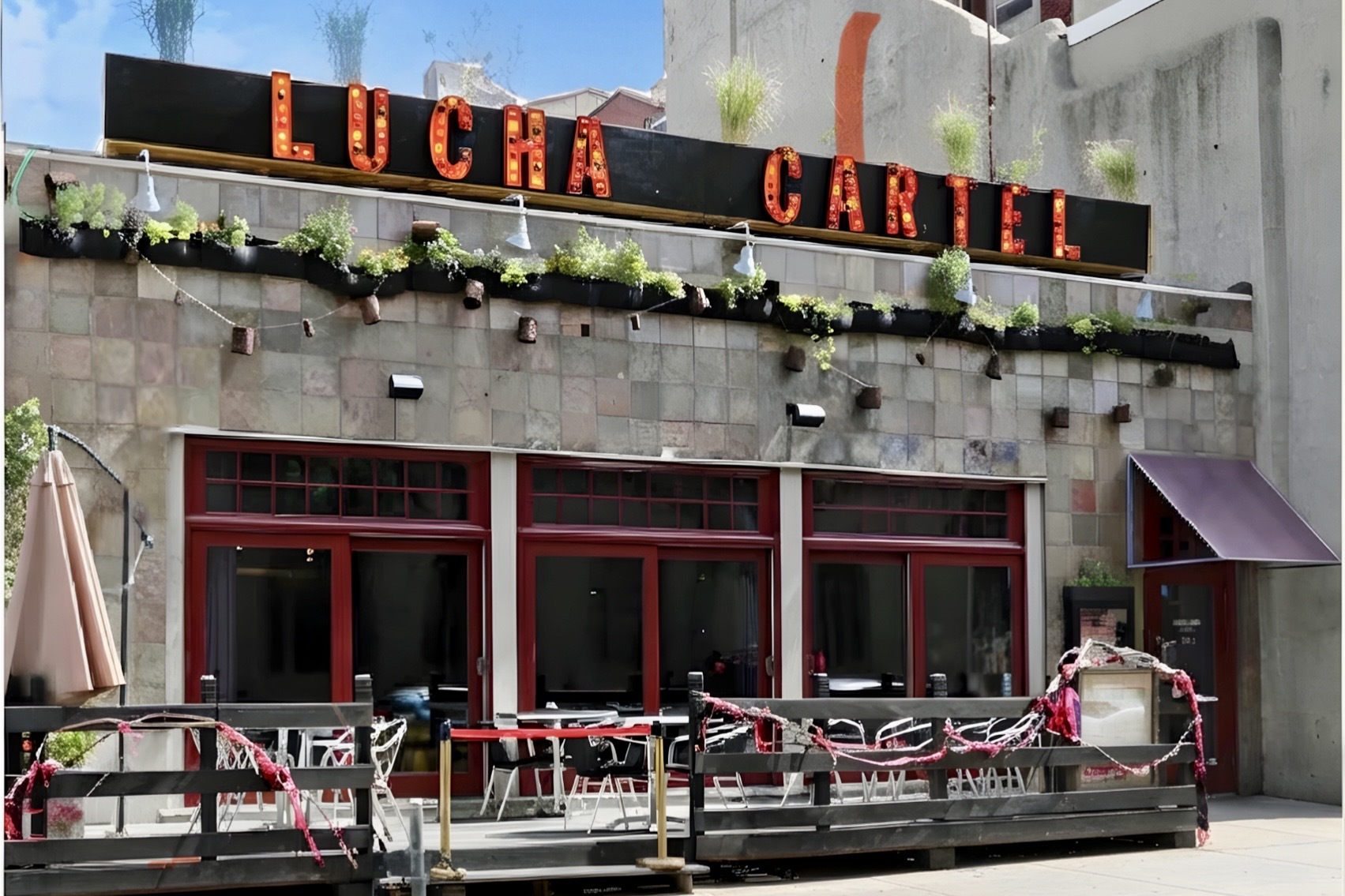
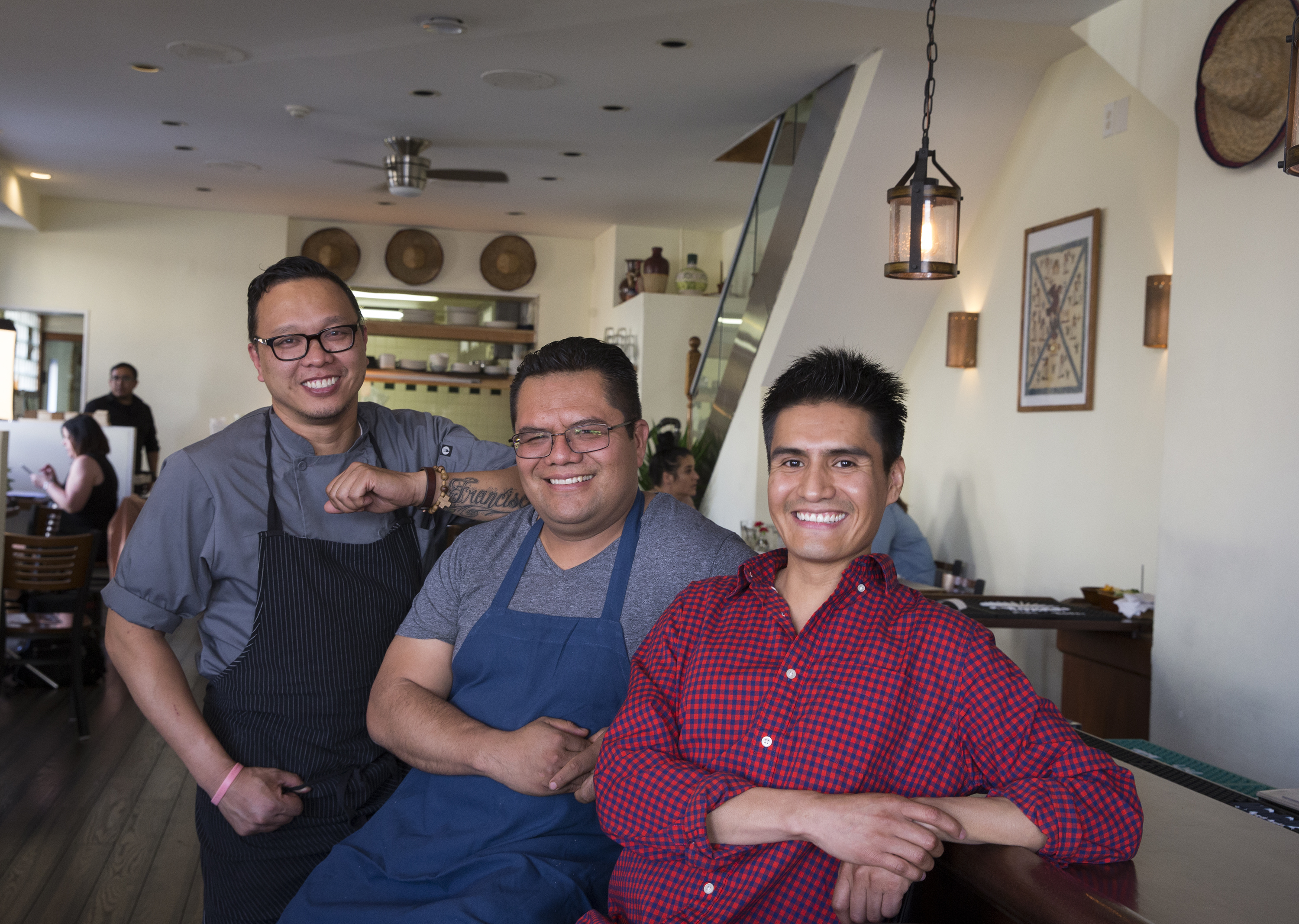
“It was an opportunity, and we decided to take a chance,” said chef Jesus García, a former executive chef at Lucha Cartel, which occupied the building at 207 Chestnut St. from 2013 until it closed last year. It was Philadelphia Fish & Co. from 1983 to 2009.
Chef Jesus Garcia (center) and Alejandro Fuentes (right) with Jasper Alivia at their restaurant Nemi in 2019. Charles Fox / Staff Photographer
García and Alejandro Fuentes, his partner in the Mexican restaurant Nemi and the cross-cultural La Roma, bought the property this week and plan to open a yet-to-be-named Mexican restaurant similar to Nemi, which Inquirer critic Craig LaBan has praised, particularly for its creative tacos.
Fuentes and García opened Nemi at Ann and Thompson Streets in 2018, and followed in 2022 with La Roma at Allegheny Avenue and Mercer Street, where the menu crosses Mexican, Italian, and other influences.
Their new restaurant will enter a pocket of Old City that already has several Mexican restaurants. La Catrachita Taqueria opened next door in May. Across Second Street, Buena Vista Mexican Restaurant & Bar opened last summer at 123 Chestnut St., while South Street’s Las Bugambilias moved to 15 S. Third St. in 2021.
Fuentes and García’s purchase of 207 Chestnut marks the end of a saga that had entangled the property in competing efforts to resurrect the name of Tun Tavern, considered the birthplace of the U.S. Marine Corps.
Montgomery Dahm, the Marine veteran who has operated a Tun Tavern in Atlantic City since 1998 and owns the trademark to the name, moved into Old City amid a trademark fight with the nonprofit Tun Legacy Foundation, which was planning its own historically accurate re-creation of Tun Tavern nearby.
In September, Dahm announced an agreement to take over Lucha Cartel at 207 Chestnut, about 400 feet from the foundation’s proposed site around the corner on Second Street. He told The Inquirer that he intended to spend $2.5 million to $3 million to turn the property into a Tun Tavern.
In November, Dahm added bunting and lightly renovated the restaurant for a party commemorating the Marine Corps’ 250th anniversary. Less than three months later, in February, Dahm and the foundation settled their trademark dispute. Dahm subsequently decided not to proceed with the Tun Tavern at 207 Chestnut, leaving the property available.
Billy Creagh of National Realty Commercial brokered the sale, whose terms were not immediately disclosed.
Fuentes and García’s timing coincides with one of the largest public-space projects in the city’s recent history. The Park at Penn’s Landing, being built over I-95 and Columbus Boulevard between Chestnut and Walnut Streets, will reconnect portions of Old City and Society Hill with the Delaware River waterfront for the first time since the 1970s. The project, anticipated to be completed in 2029, is expected to create nearly 12 acres of parkland and dramatically change the pedestrian approach to the waterfront.
For 207 Chestnut, the significance is geographic: The restaurant will sit only a few blocks from the new park, along one of the principal east-west streets connecting Center City and Old City with Penn’s Landing.
The Old City project will put Fuentes and García in a considerably different restaurant market from Port Richmond, with heavier tourist traffic, historic attractions, nightlife, and increasing competition for Mexican food.
“I think it’s a great neighborhood, even if sometimes it has some ups and downs,” Fuentes said. “But there are a lot of local customers, and there are also a lot of tourists who visit Old City.”
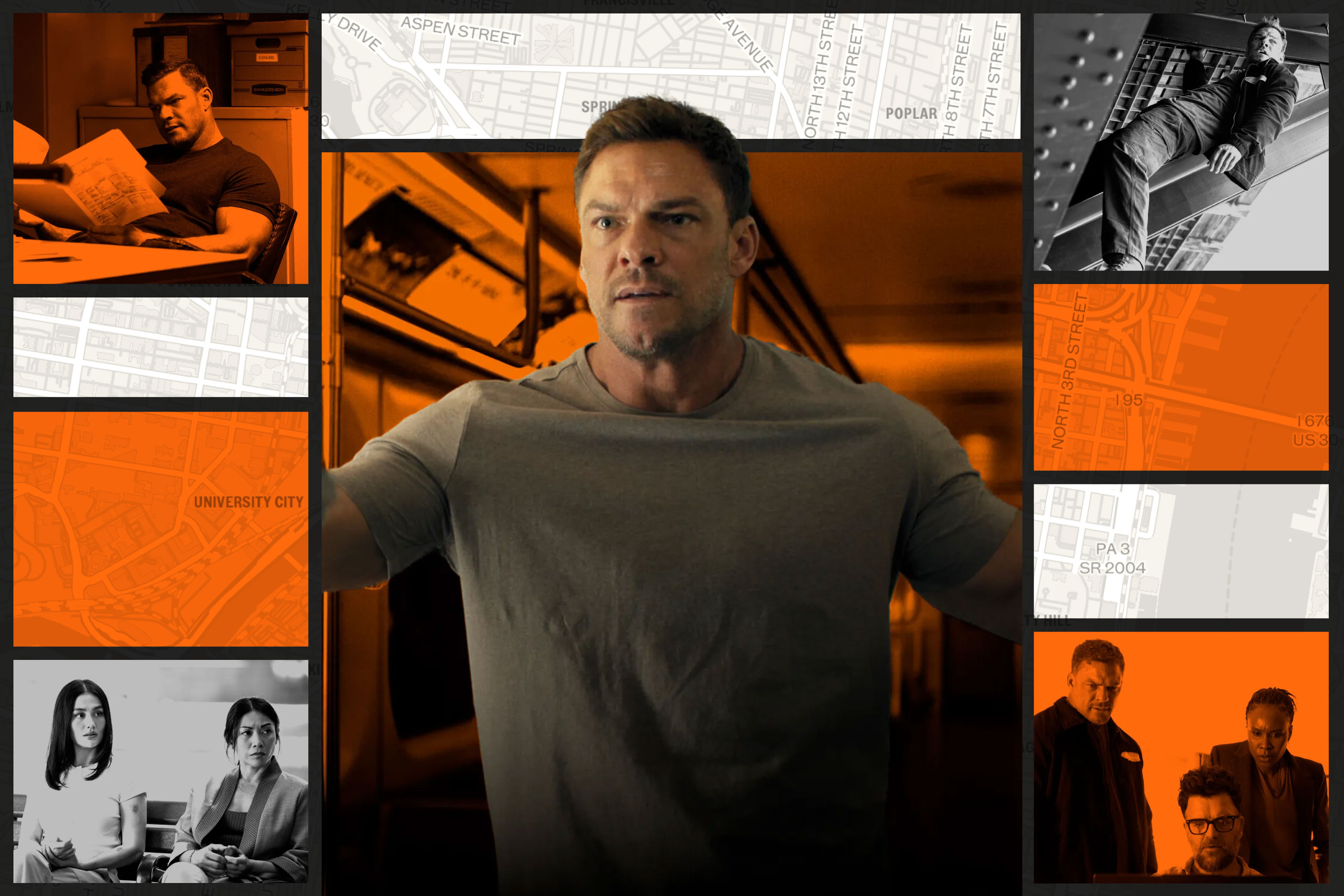
Philadelphia is the latest locale for vigilante Jack Reacher's shadowy dealings in season four of Reacher, streaming now on Amazon Prime. The show, which stars actor Alan Ritchson as the hulking retired Army investigator, was spotted filming around town last year.
Based on Lee Child's 2009 novel Gone Tomorrow, this season has Reacher facing off against the CIA, federal agents, and international mercenaries following a woman's suicide. And while much of the on-screen action appears to have been filmed elsewhere — namely Toronto, which looks a lot like Philly, but with space — the City of Brotherly Love does show up quite a bit.
Here, we'll be rounding up all the Philly spots we can identify this season. Check out the map below for where Reacher and his cohorts took them in the city.
story continues after advertisement
Loading…
Philadelphia
City Hall
Michael Bryant / Staff P
Reacher's fourth season immediately sets the scene with a shot of the William Penn statue atop City Hall as a nightscape of Center City shines in the background.
Philadelphia
Uptown Beer Garden
Erin Blewett / For The Inquirer
We catch our first glimpse of our hero, Jack Reacher (Alan Ritchson), as he exits Uptown Beer Garden, who walks out of the establishment silently with a beer in hand.
Philadelphia
LOVE Park
MICHAEL BRYANT / Staff Photographer
Reacher speaks for the first time this season, ordering a "wiz wit" from a nondescript food truck in Love Park.
Philadelphia
Avenue of the Arts
JESSICA GRIFFIN / Staff Photographer
Here, Reacher strolls down the sidewalk on the west side of Broad Street, chomping on his cheesesteak. Canonically, it is just after 2 a.m., and the street is deserted as he descends into the Walnut-Locust entrance B line, which runs along Broad Street.
Philadelphia
Walnut-Locust Station
Alejandro A. Alvarez / Staff Photographer
As he enjoys his cheesesteak, Jack Reacher (Alan Ritchson) heads down into the Broad Street Line at this Center City station. Several interior shots of the station are shown, including one in which a rat munches on a hot dog.
Philadelphia
Benjamin Franklin Bridge
Thomas Hengge / Staff Photographer
Philly is again shown off in all its nocturnal glory with a low-light shot of Center City from the Ben Franklin Bridge.
Philadelphia
Benjamin Franklin Parkway
For the first time in the season's first episode, the sun rises on Philadelphia. And it does so in this stunning aerial shot showcasing many of the Ben Franklin Parkway's gems — Logan Circle, the Philadelphia Museum of Art, the works.
Philadelphia
Parkway Central Library
Tom Gralish / Staff Photographer
We get a great glimpse of the exterior of the Parkway Central Library before heading inside, where Jack Reacher (Alan Ritchson) and Jacob Merrick (Christopher Rodriguez-Marquette) do research on Congressman John Sampson (Marc Blucas), a North Carolina representative who is launching a presidential bid.
Philadelphia
Parc
Courtesy of HughE Dillon
Parc briefly plays host to Reacher, Lila Hoth (Agnez Mo), and Jacob Merrick (Christopher Rodriguez-Marquette) as the trio settles in at an outdoor table to evade police.
Philadelphia
Walt Whitman Bridge
Tom Gralish / Staff Photographer
Reacher and his cohorts travel back into Philly via this bridge after escaping Washington, D.C. In the background, the old Southwark Generating Station is clearly visible.
Philadelphia
Schuylkill Expressway
Tom Gralish / Staff Photographer
As Reacher and his crew traverse Philly at night, the action leads to a shot of the west end of Center City near 30th Street Station from the Schuylkill Expressway.
Philadelphia
Schuylkill Expressway
Monica Herndon / Staff Photographer
Here, we get another nightscape shot of Philly's skyline, again from I-76 near 30th Street Station looking east. In the foreground, Locust on the Park is lit up green and is featured prominently.
story continues after advertisement
That was every location we could spot in the opening three episodes. Explore the map of all locations featured. Tap onHover overa pin to learn more.
Staff Contributors
Design and Development: Garland Fordice and Sam Morris
The ultracompetitive race to replace Philadelphia City Councilmember Jeffery Young Jr. is officially underway.
With nine months until next year’s primary election, two candidates are already taking steps to challenge the first-term incumbent Council member from North Philly — and more may be to come.
“We’ve spent the last two years meeting with different community organizations, speaking with different ward leaders, and community groups, and just everyday people,” Alexander said in an interview. “This is going to be a people-powered campaign that really is grassroots.”
And on Friday, Curtis Wilkerson, who was the chief of staff to former City Council President Darrell L. Clarke, announced that he’s forming an “advisory committee” to evaluate a prospective run for the seat. The group will host community roundtables and neighborhood listening sessions to collect policy ideas and feedback from residents.
Wilkerson, who campaigned for the seat four years ago but did not make it onto the ballot, said he’ll likely decide whether to launch an official campaign by September.
A third potential candidate, Democratic political operative Kellan White, has been having conversations with party officials and labor leaders about running. White is a former deputy city controller who has managed and advised campaigns, including physician Ala Stanford’s recent unsuccessful run for Congress.
At least two others have said they are considering launching campaigns for Young’s seat: Dustin Dove, the president of the Fairmount Civic Association, and Max Tuttleman, a philanthropist who in 2023 unsuccessfully ran for seat on Council representing the city at-large.
The recent moves by several prospective candidates are the latest sign that the 5th District is likely to be the most crowded Council race this spring, when all 17 members of Council will be up for reelection and are expected to seek another term. The 5th District, which includes parts of Center City, North Philadelphia, and Fishtown, is overwhelmingly Democratic, meaning whoever prevails in the May primary is all but certain to win the seat in the general election.
Fifth District Councilmember Jeffery Young Jr., during the Barber’s Hall community legacy celebration, a daylong celebration of music, history, and community in North Philadelphia on Aug. 1.Yong Kim / Staff Photographer
Young’s campaign did not respond to a request for comment. In an interview last month, he said he intends to run for reelection and sees facing challengers as a normal part of the process.
“People have a right to do what they want in a democracy,” he said. “But I’m focused on myself and what we can do as a leader of the 5th Council District and get the constituents to understand that every decision that we make is to improve their life.”
The freshman lawmaker is seen as Council’s most vulnerable member in the upcoming election, in large part because of how he got into office.
In 2023, several other candidates — including Wilkerson, who was Clarke’s preferred successor — were kicked off the ballot amid a series of legal challenges questioning the validity of their nominating petitions. Young ended up being the only Democrat on the ballot.
Since January 2024 when he was sworn in, Young’s tenure has been tumultuous. He has championed legislation that at times has sought to slow or halt housing construction in parts of the district, drawing the ire of developers. Constituent groups have loudly opposed Young, specifically over his controversial plans for a popular library branch in North Philly.
And he has publicly clashed with Mayor Cherelle L. Parker’s administration, including in 2024, when he took the rare step of introducing legislation to authorize Council to subpoena the mayor.
Jalon Alexander greets supporters and community members as he kicks-off his bid in the 5th Council District seat, at a campaign event in Fairmount on Saturday.Bastiaan Slabbers / For The Inquirer
Young, 40, an attorney by trade, has something of an independent streak. He has at times aligned with different political factions, and he does not fit neatly onto the Democratic ideological spectrum.
Neither do some of his opponents. Alexander, 33, said he has progressive views on workers’ rights and keeping homes affordable, and he has built relationships with some leaders of the city’s progressive political organizations.
But the tenor of Alexander’s campaign is pro-growth. He said he wants to cut the city’s business taxes with the goal of eventually eliminating the business, income, and receipts tax. And he said he’s committed to facilitating more development in the district, including through the city’s Turn the Key program that provides mortgage support to some first-time homeowners.
Alexander has been particularly critical of Young’s use of councilmanic prerogative, the unwritten rule that gives district Council members an extraordinary level of control over land-use decisions and construction projects in their district.
Young has used prerogative to attempt to obstruct projects he opposes, such as the redevelopment of the former Hahnemann University Hospital. He introduced legislation to ban residential housing development in the area, a move he said was to preserve the area’s job-generating capacity, but he did not advance the bill amid opposition from interest groups and Parker’s administration.
Alexander — who was born and raised in Strawberry Mansion and still lives in the neighborhood — said his campaign is targeting Democrats “all over the tent.”
“There’s room for progressives. There’s room for people who are loyal Democrats but feel let down by the establishment,” he said. “We’ve got one goal: We’re fully committed to removing and replacing Jeffery Young.”
Since it’s noontime on the first Thursday of the month, eight residents of Wesley Enhanced Living at Pennypack Park are chatting at the long table in the middle of the main dining room at Kelly’s Seafood in Northeast Philadelphia.
Back in the kitchen, twin brothers Brian and Brett Kelly and Brian’s son Tommy are knocking out the lunch orders. Crab cakes sizzle in sauté pans. Snapper soup bubbles in the kettles.
For the Wesley residents, this is the end of a longtime ritual.
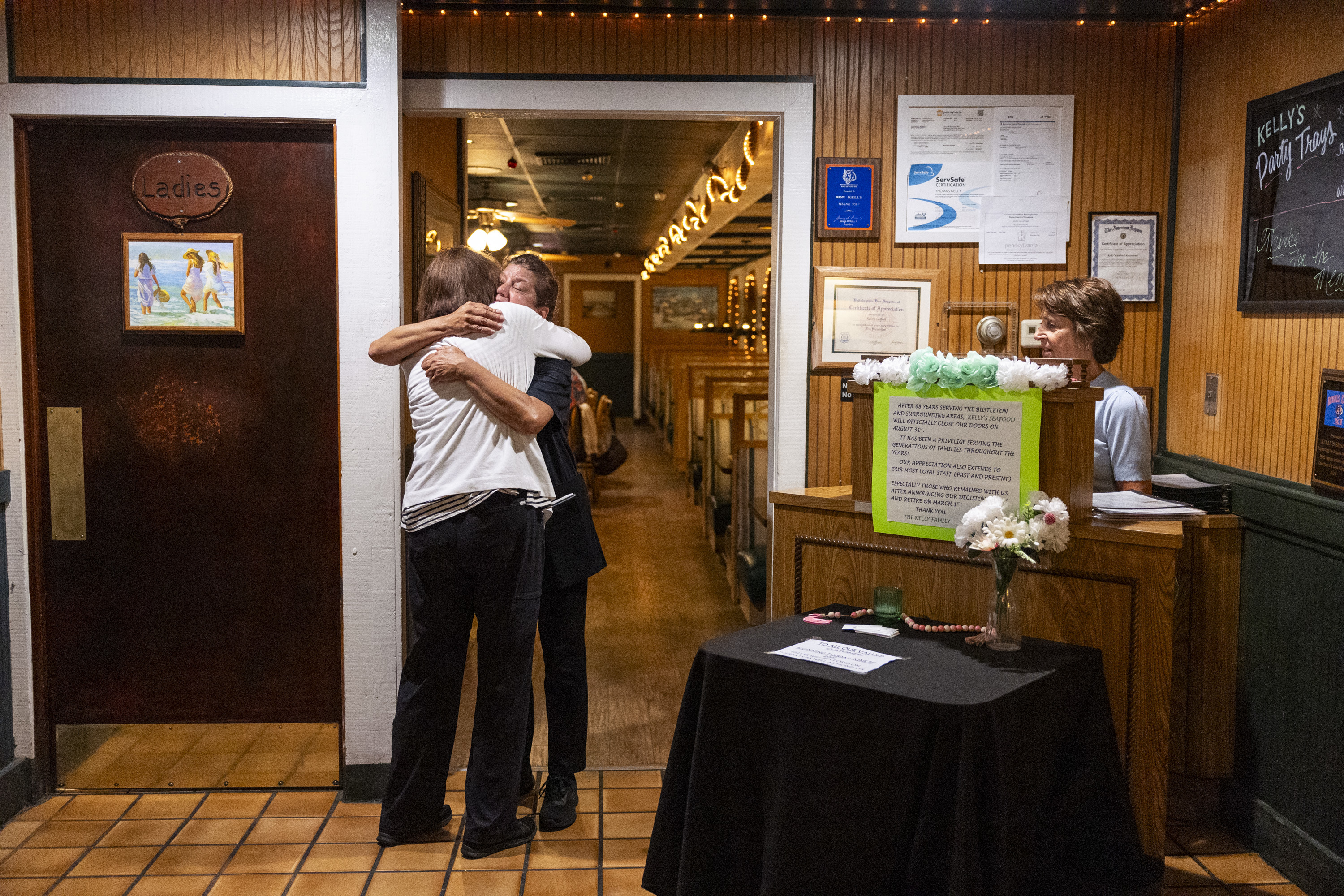
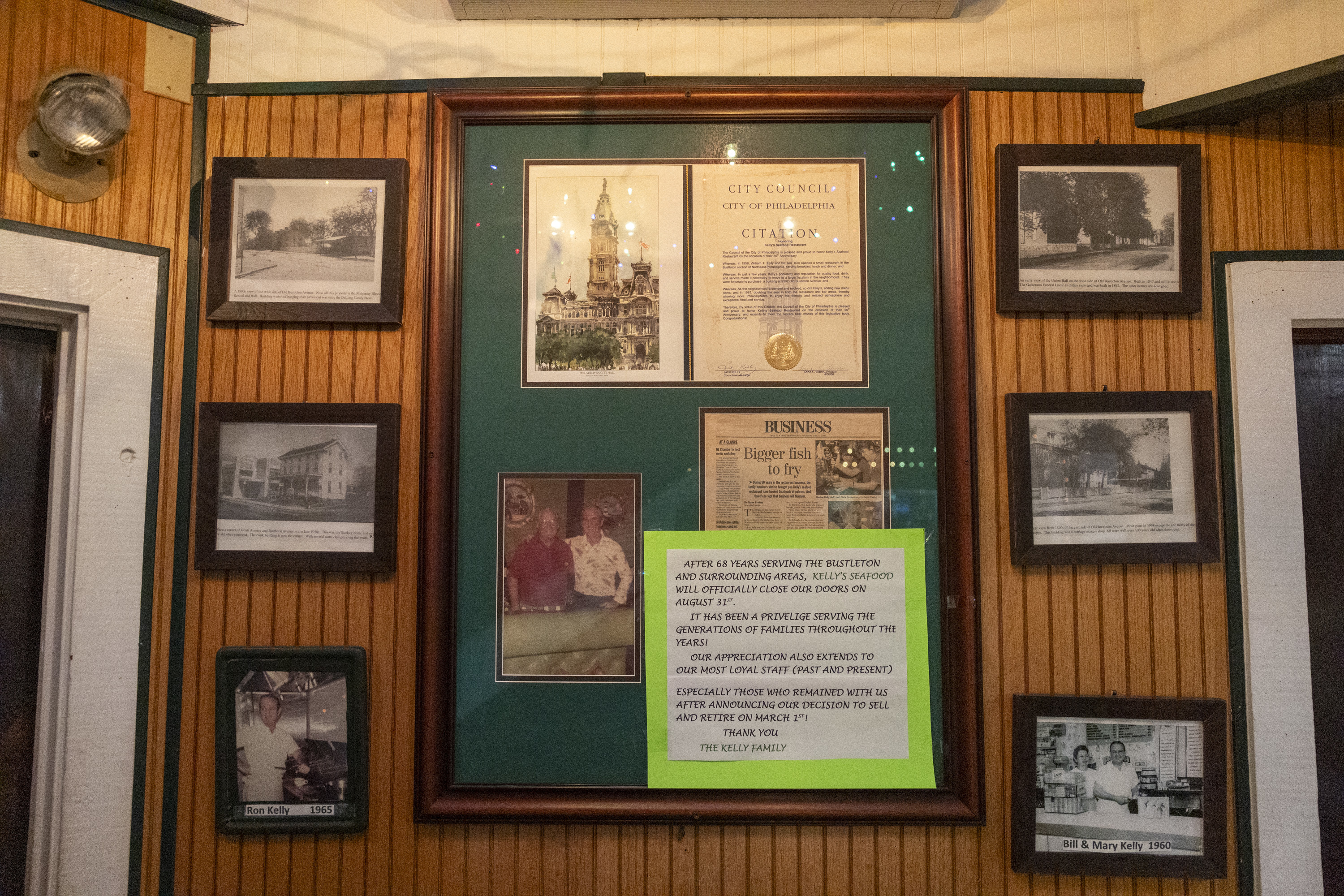
Kelly’s Seafood, whose history stretches back 68 years, will close Aug. 31.
“When they leave today, we’ll all be crying,” said server Chris Brown, who has worked at Kelly’s since 1988. The Kelly brothers’ sister, Denise Barreras, nodded.
A few minutes later, their checks paid, the residents rose from the table.
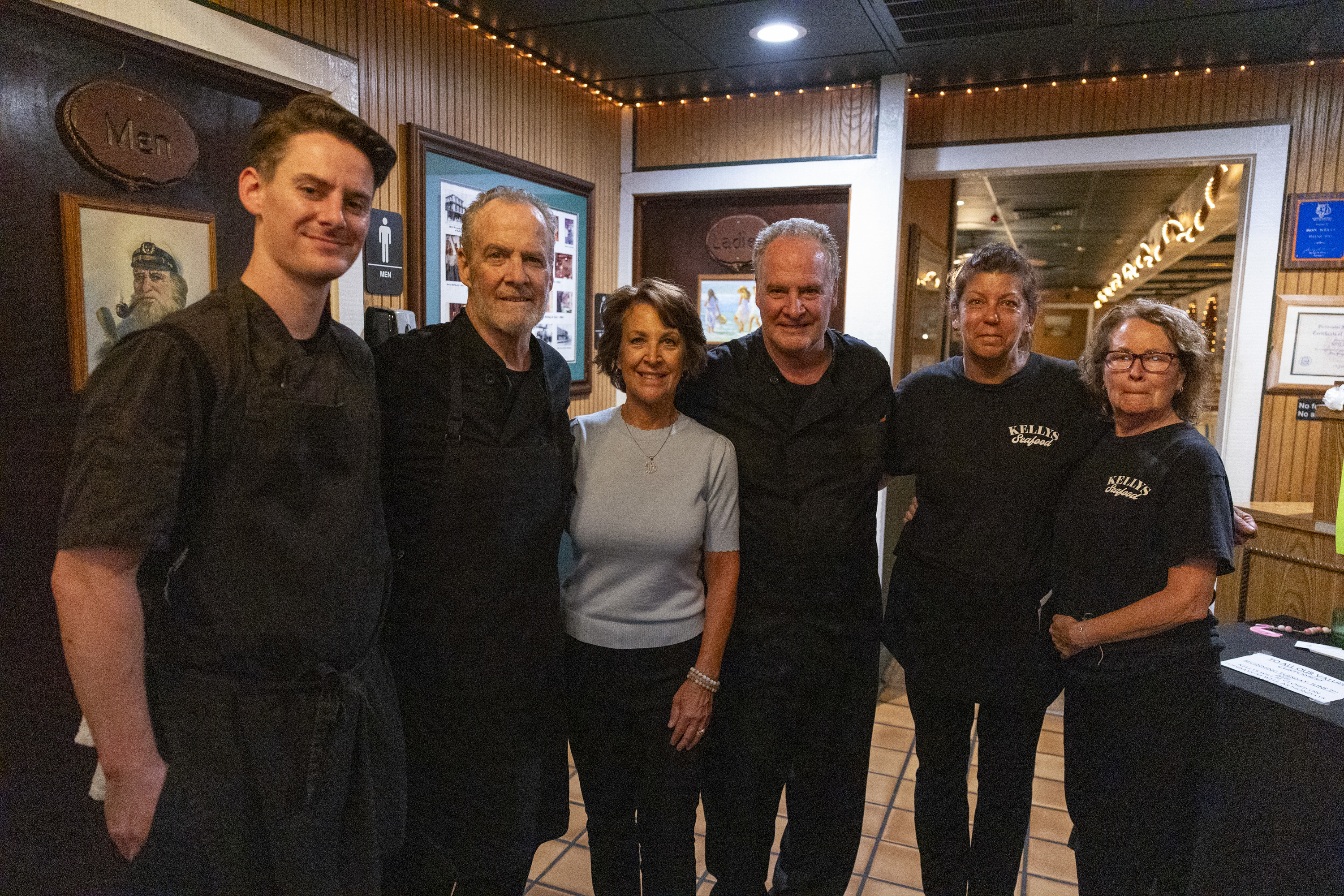
The crew at Kelly’s (from left) Tom Kelly, siblings Brian Kelly, Denise Barreras, and Brett Kelly, server Chris Brown, and bartender Cathy Sims.Tyger Williams / Staff Photographer
And just as Brown had called it: tears and hugs.
Where will September’s first-Thursday lunch be? They’re not sure.
Kelly’s, one of the last of the Northeast fish houses, has been the setting for countless rituals like theirs, a place where people who came as children later brought their own children.
“People my age are saying they’ve been coming here since they were 10 years old,” said Brian Kelly, 62, who has been reading customers’ recollections since the closing was announced. “They’re talking about christenings, baptisms, graduations. It really makes you realize how many people have come through these doors over the years.”
The Kellys had hoped to make it to 70 years. Instead, the family has reached the point where keeping the restaurant going would require more than they are willing — or able — to give it.
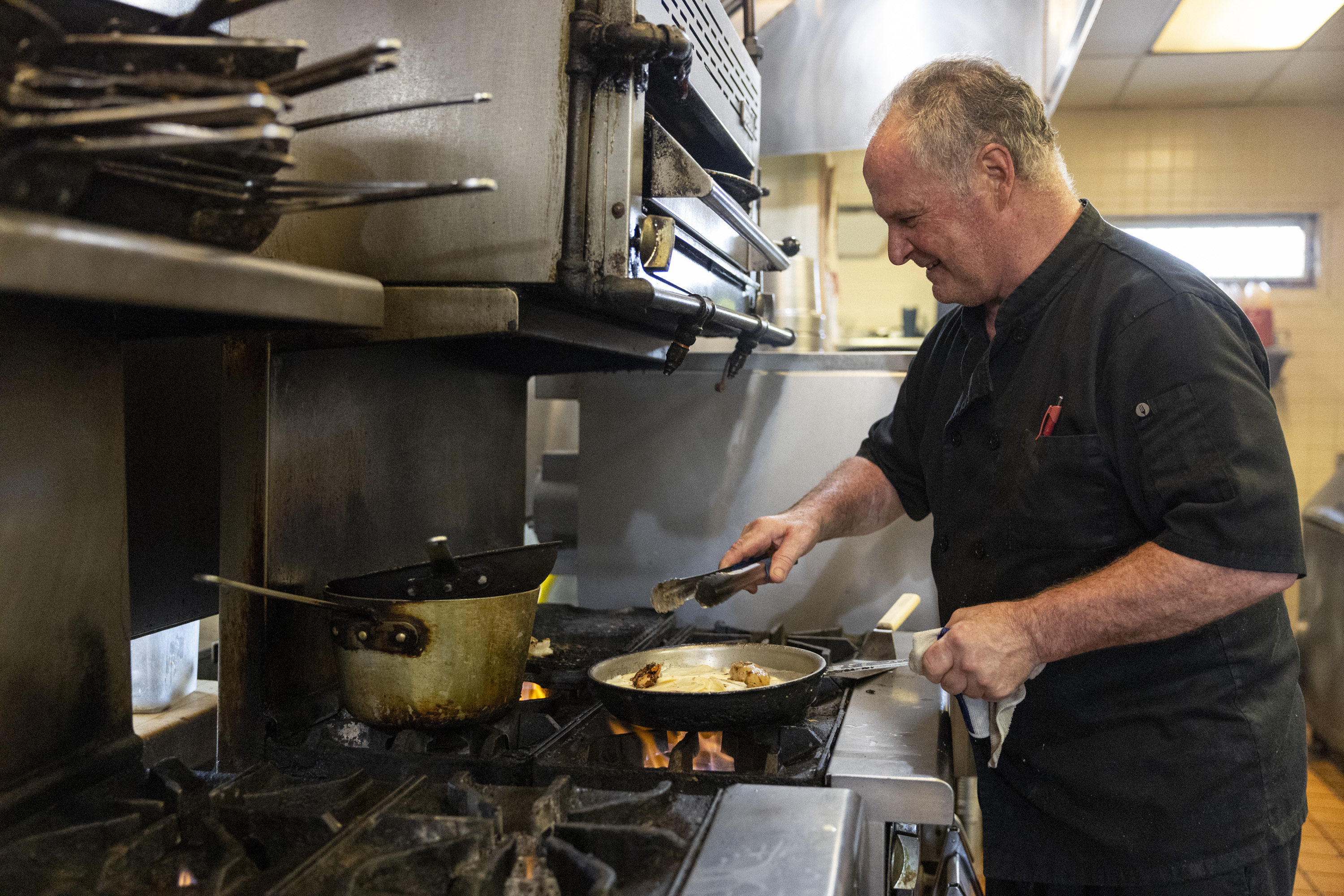
Brett Kelly working the stove at Kelly’s.Tyger Williams / Staff Photographer
Brian and Brett’s father, Ron, died in July 2023 at age 87. Of his nine grandchildren, only Brian’s son Tommy now works at the restaurant. An illness has sharply limited how much Brian can work, leaving Brett to pull double shifts since October.
The family announced on March 1 that Kelly’s was on the market, hoping to give employees and customers plenty of warning. In late July, with the restaurant still unsold, they decided that they needed to set an end date.
Kelly’s Seafood history
The story began in 1958, when Ron Kelly and his father, William T. Kelly, opened Kelly’s Grille, a luncheonette in a shopping center a few blocks from the current restaurant.
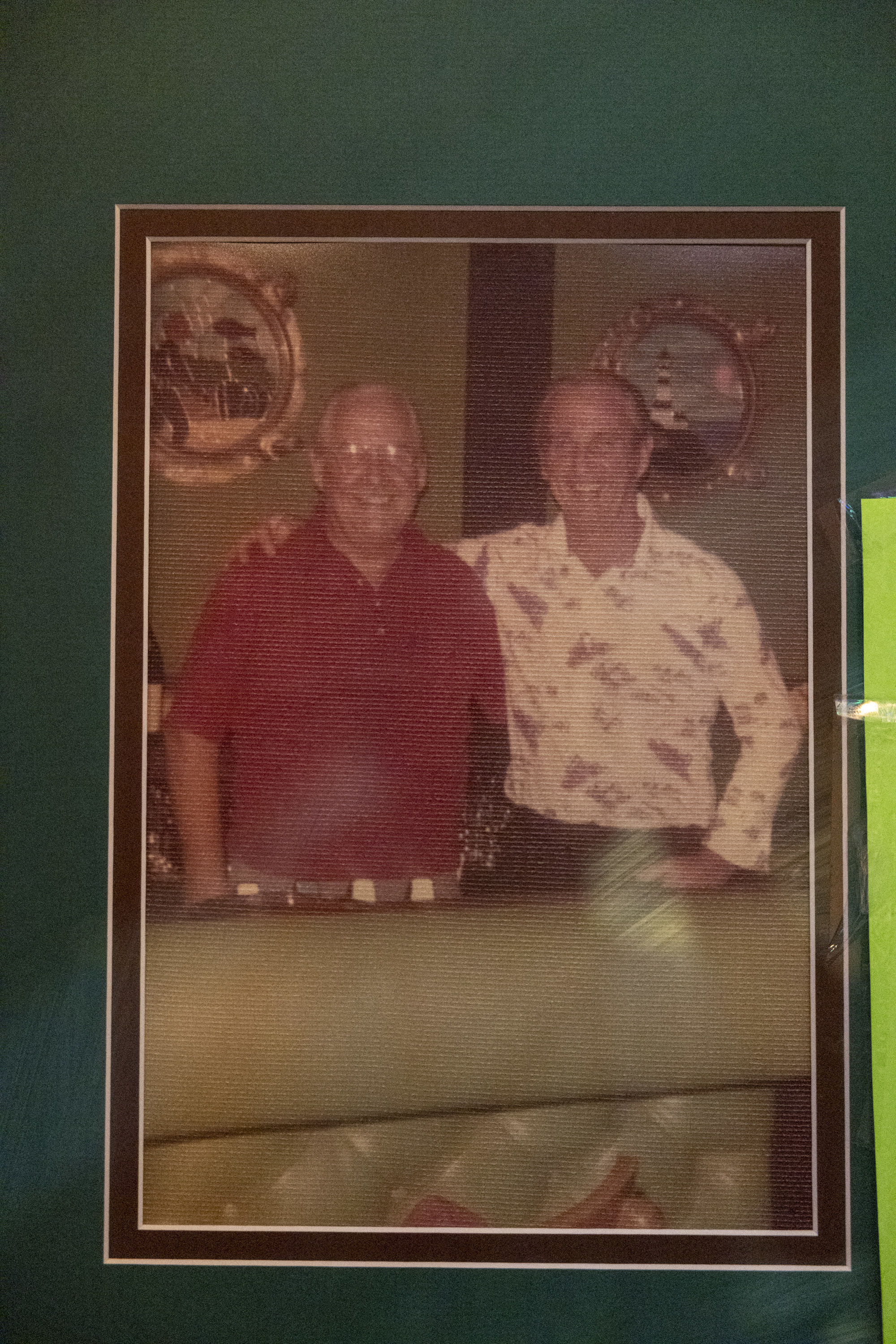
Founders William (left) and Ron Kelly, in a photo hanging at Kelly’s Seafood.Tyger Williams / Staff Photographer
William had worked on a milk wagon. Ron, newly out of military service, wanted to get into the restaurant business, and his father went along with him.
In 1964, they moved Kelly’s to 9362 Old Bustleton Ave., just off Bustleton Avenue and Welsh Road, and Kelly’s Seafood took shape. (It is unrelated to the long-ago Kelly’s on Mole Street in Center City.)
The family and restaurant became difficult to separate.
William lived in the apartment above Kelly’s and cleaned the bathrooms every morning. Ron and Jean Kelly’s four children — Denise, Tim, Brian, and Brett — all grew up working there.
Kelly’s Seafood lines its walls with memorabilia.Tyger Williams / Staff Photographer
Brian and Brett walked over after school and spent Wednesdays and Thursdays in the basement, which they called “the dungeon,” breading shrimp and other seafood.
“We were about 12 years old,” Brian said. “Today they’d probably shut us down for child labor. Back then it was just part of growing up in the family business.”
Their brother Tim, now 63 and living in Florida, also started young, walking over after school to help. Eventually, all nine of Ron and Jean’s grandchildren worked at Kelly’s in some capacity.
The restaurant itself looks as if it has been accruing memories for nearly seven decades.
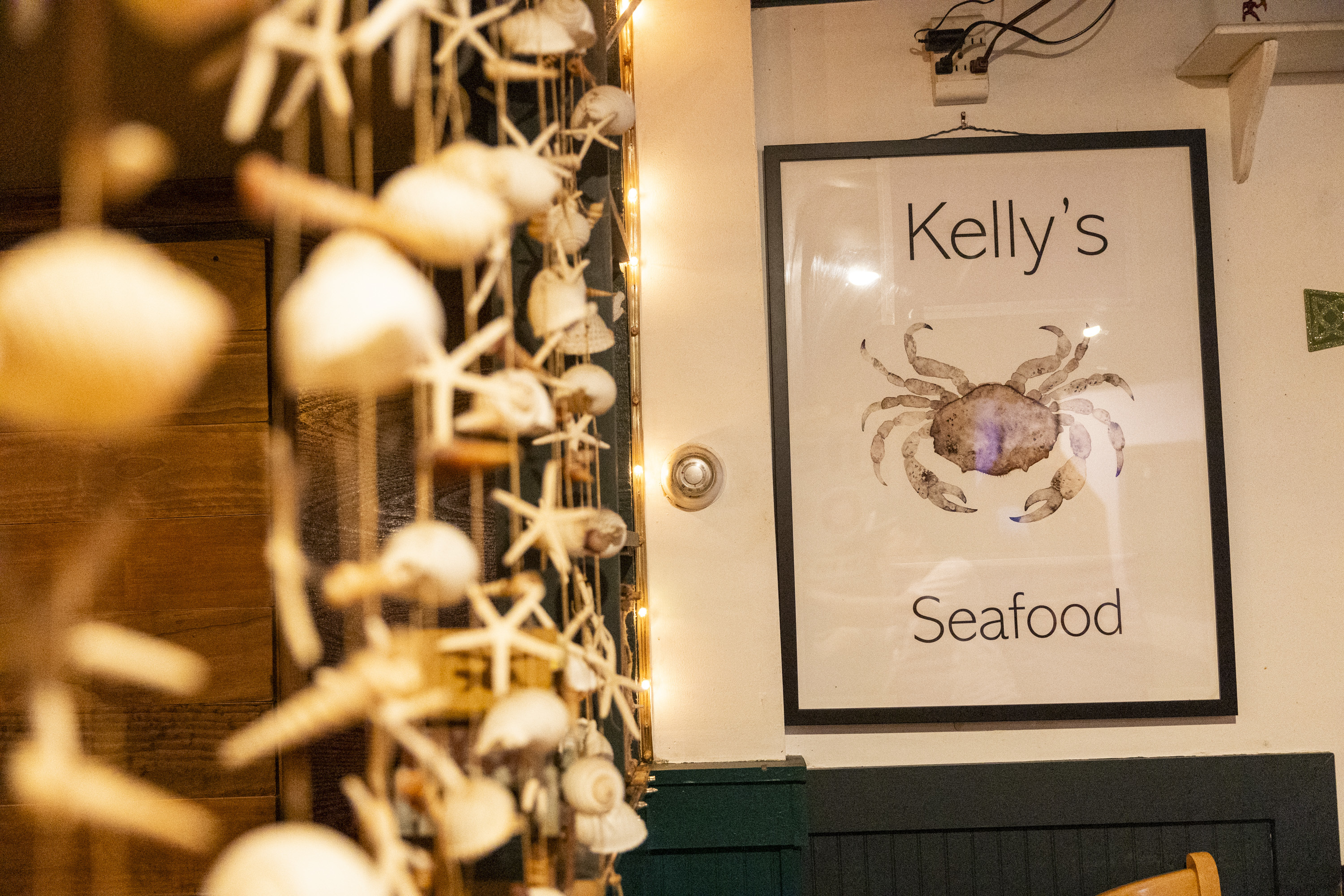
Seashells hang from netting at Kelly’s.Tyger Williams / Staff Photographer
The decorating scheme includes a decades-long accumulation of Shore-life artifacts — wood paneling, striped booths, fish prints, shells, ship models, string lights, and enough nautical memorabilia to outfit a small maritime museum.
The accumulation includes people.
Bartender Cathy Sims first came to Kelly’s as a customer, bringing her daughters here after their ring Mass at St. Hubert’s High. After she graduated from bartending school, Barreras hired her in 1997.
She never left.
“I love them,” Sims said. “They’re my best friends. And then I’ve got all my people who have been coming in for 20 years.”
Brown started waiting tables in June 1988 after a former Dunkin’ Donuts coworker told her that Kelly’s was hiring. “I came over, and the rest is history,” she said.
When the Kellys gathered the 25 employees in March to say the restaurant was for sale, they told them they would understand if anyone wanted to find another job.
Nobody left.
“They all said they’d stay through the end,” Brian said.
Preparing for the finale
The family wanted customers to have the same notice.
“A lot of restaurants close and all of a sudden there’s a note on the door, and sometimes even the staff doesn’t know about it,” Brett said.
The Kellys also wanted customers to have time to use their gift certificates. Brian said they have honored certificates dating to the mid-1990s and will reimburse anyone left with one after the closing.
But the March announcement caused confusion. Some customers thought Kelly’s had already closed.
Once the family set Aug. 31 as the final day, business surged again. One recent Wednesday was the busiest Wednesday Kelly’s had seen in three months.
“A lot of people are saying, ‘We’ve got to get the family out there one last time,’” Brett said.
And some are stocking up, especially on snapper soup.
Customers have been calling Brett to ask whether they can buy it by the quart and freeze it. He tried freezing a bucket during the pandemic and found that, aside from some crystallization, it held up well enough.
Now he is dispensing freezer advice along with soup.
One day last week, he thought he had made enough to get through the following day. That night, customers bought 10 quarts and nine pints. The Wesley group took six quarts. “They were lucky because I just made it,” he said.
Moving on
What Kelly’s cannot stockpile is another generation willing to take over the way the previous ones did.
Brett’s children worked here as teenagers, bussing tables, washing dishes, and doing whatever else was needed, but neither wanted the restaurant business.
“All the nieces and nephews worked here one way or another,” Brett said. “They all did their part here. But nobody wants to basically do what Brian and I did — be hands-on with it. So we knew it would probably end with us.”
Tommy works in the kitchen with his father and uncle, but he can’t run it alone. “Managing the business is a different world,” Brett said. “And we don’t have enough family coming in behind him to back him up.”
Brett has watched what the restaurant demanded of his own generation. “I think the best move for him is to go try something else and maybe enjoy life more than we did,” he said. “Now we’re going to enjoy life more.”
Brian’s illness hastened the decision. “I’m used to working all those hours, and I just can’t anymore,” Brian said. “I come in and help my brother when I can, but it’s not the same.”
The restaurant, meanwhile, keeps demanding attention, even now.
A month ago, an oven the Kellys had used for about 30 years died. It was too old to repair.
“I’m thinking, ‘Geez, I’ve got to get a new oven for, like, three months?’” Brett said.
They bought the oven.
The approximately 7,300-square-foot building — including its liquor license, equipment, furnishings, and attached apartment — is listed for $2 million. The Kellys say there are prospective buyers, though no deal has been completed, and they don’t know whether the next owner will operate it as a restaurant.
Nor do Brian and Brett know exactly what they will do after taking a well-earned break. They have kicked around the idea of someday opening something much smaller, perhaps selling Kelly’s staples such as snapper soup and crab cakes, or even operating a food truck.
Brown expects to find another job eventually. First, she plans to take some time off.
“I need to wrap my head around it,” she said.
After 38 years, she isn’t angry with the Kellys for their decision.
“I’m glad for them,” Brown said. “They deserve it. They deserve it.”
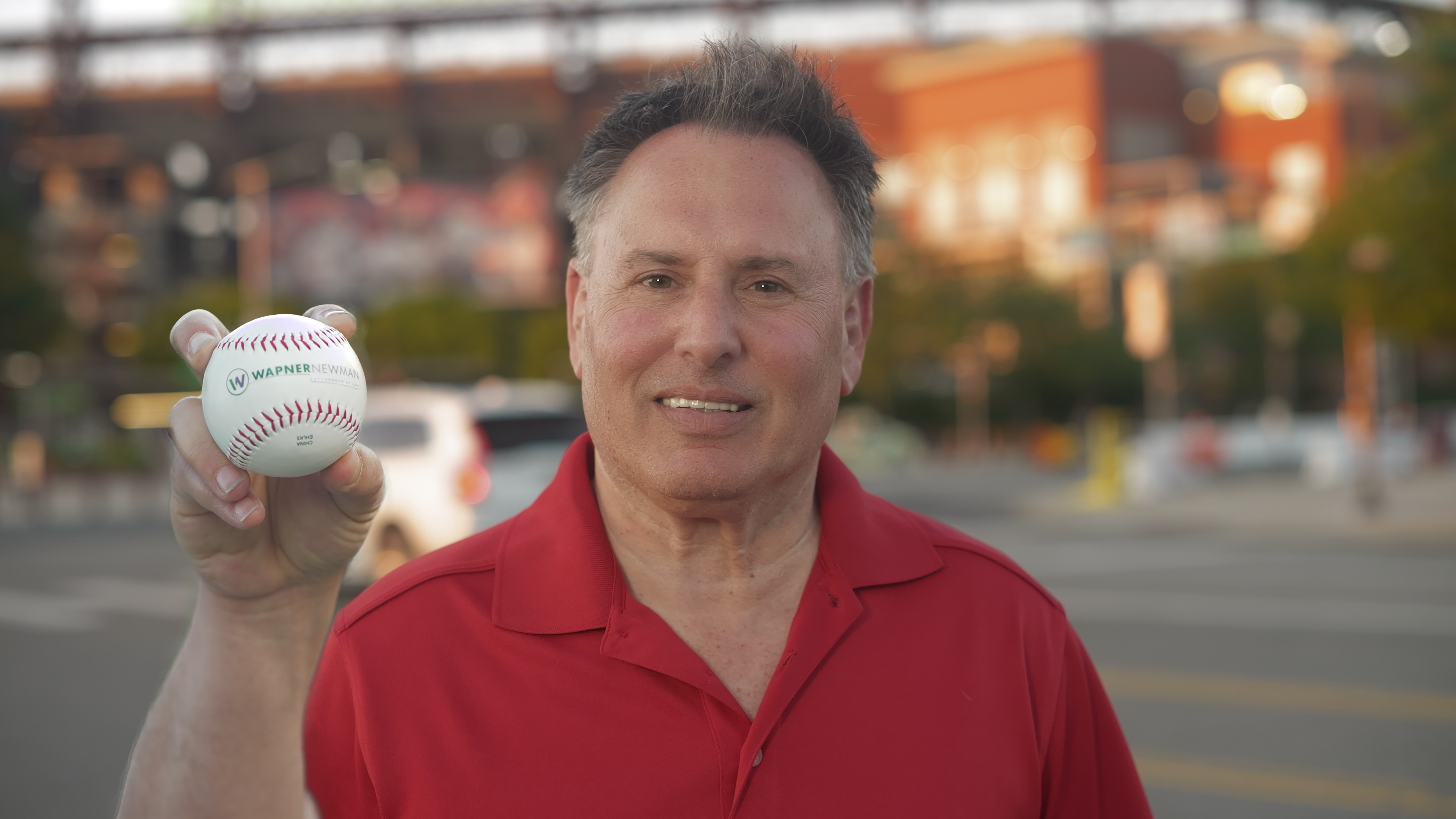
For Miller, managing partner at Wapner Newman law firm, it sparked an idea.
Heconnected with NBC Sports Philadelphia and made his pitch: Wapner Newman could pay to sponsor the closer’s walk-out and get the firm’s branding on a viral moment. And fans at home would be able to experience Duran’s intro — complete with images of spiders crawling through fire on the outfield walls — during every home game.
The lawyers figured “it’d be a fun thing for everybody that’s watching the game,” Miller recalled during a recent interview in his Center City office. And “we can help make this happen.”
A deal was inked, with terms Miller declined to disclose, and for nearly a year, Wapner Newman has enjoyed greater name recognition.
Potential clients sometimes mention the ads when they call the firm, Miller said, and occasionally, strangers on the street recognize him from the company’s midgame commercials. Miller said he is most heartened by the fact that more Philly fans now know about the personal-injury firm if they ever need legal help.
Robert Miller, managing partner at Wapner Newman, appears in the law firm’s ads that run on NBC Sports Philadelphia during Phillies games.Courtesy Wapner Newman
Brands “want moments of exclusivity, and that was the highest-profile opportunity,” said Bo Koelle, vice president of sales for NBCUniversal Local, which includes NBC Sports Philadelphia. “Everybody’s looking at when [Duran] is coming out” — and seeing Wapner Newman’s name on the screen next to him.
For dozens of local companies, advertising with the Phillies at Citizens Bank Park or with NBC Sports Philadelphia provides almost-unparalleled visibility in a rabid sports town like Philadelphia.
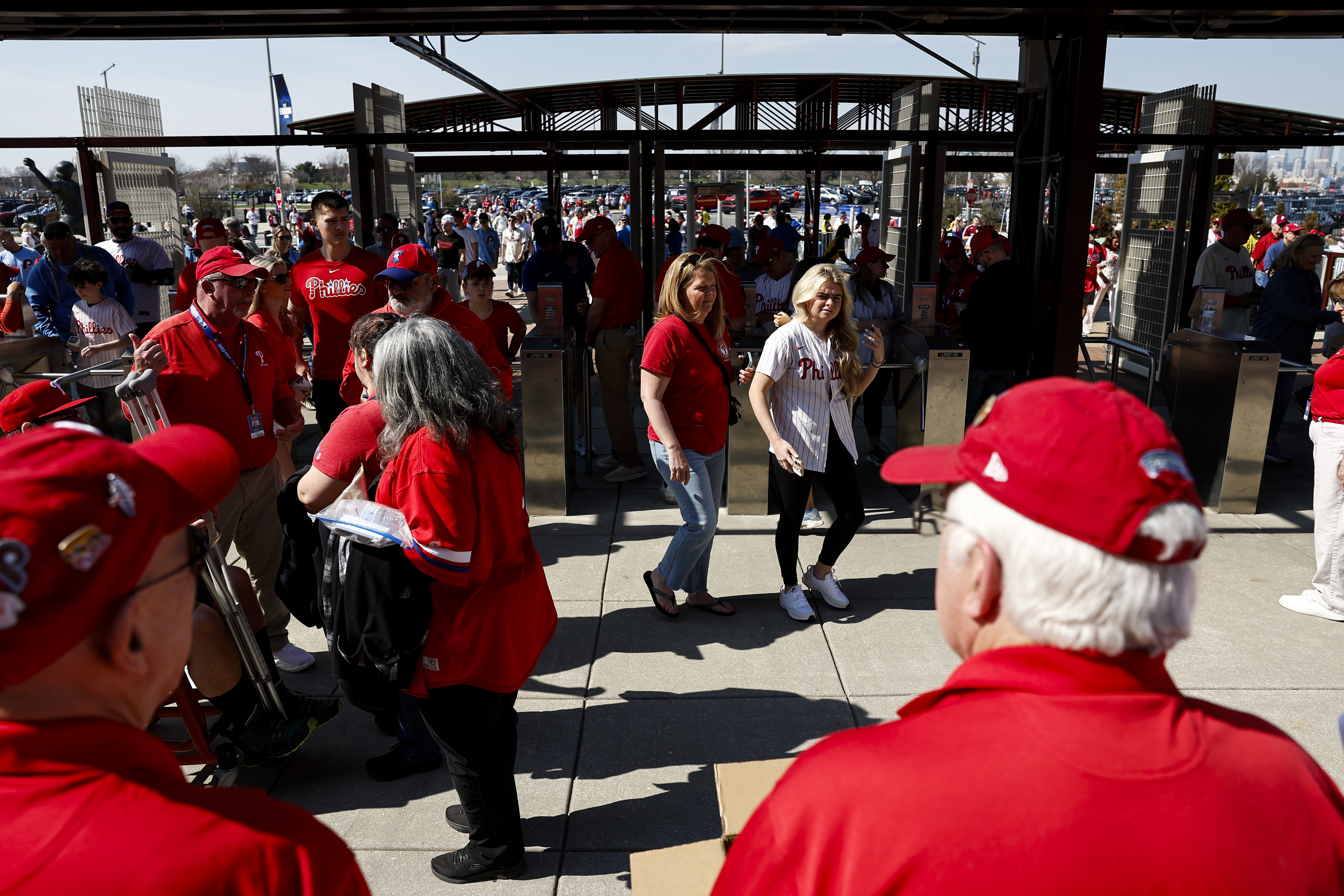
Phillies fans arrive at Citizens Bank Park for opening day in March.Monica Herndon / Staff Photographer
So how much does this visibility cost? Anywhere from $100,000 to several million dollars, according to executives from the Phillies and NBC Sports Philadelphia.
That range includes advertising in the ballpark,on social media, or on TV, where hundreds of thousands of fans tune into each game. All Phillies sponsors with whom The Inquirer spoke declined to discuss how much they paid for their advertisements, citing the terms of their contracts.
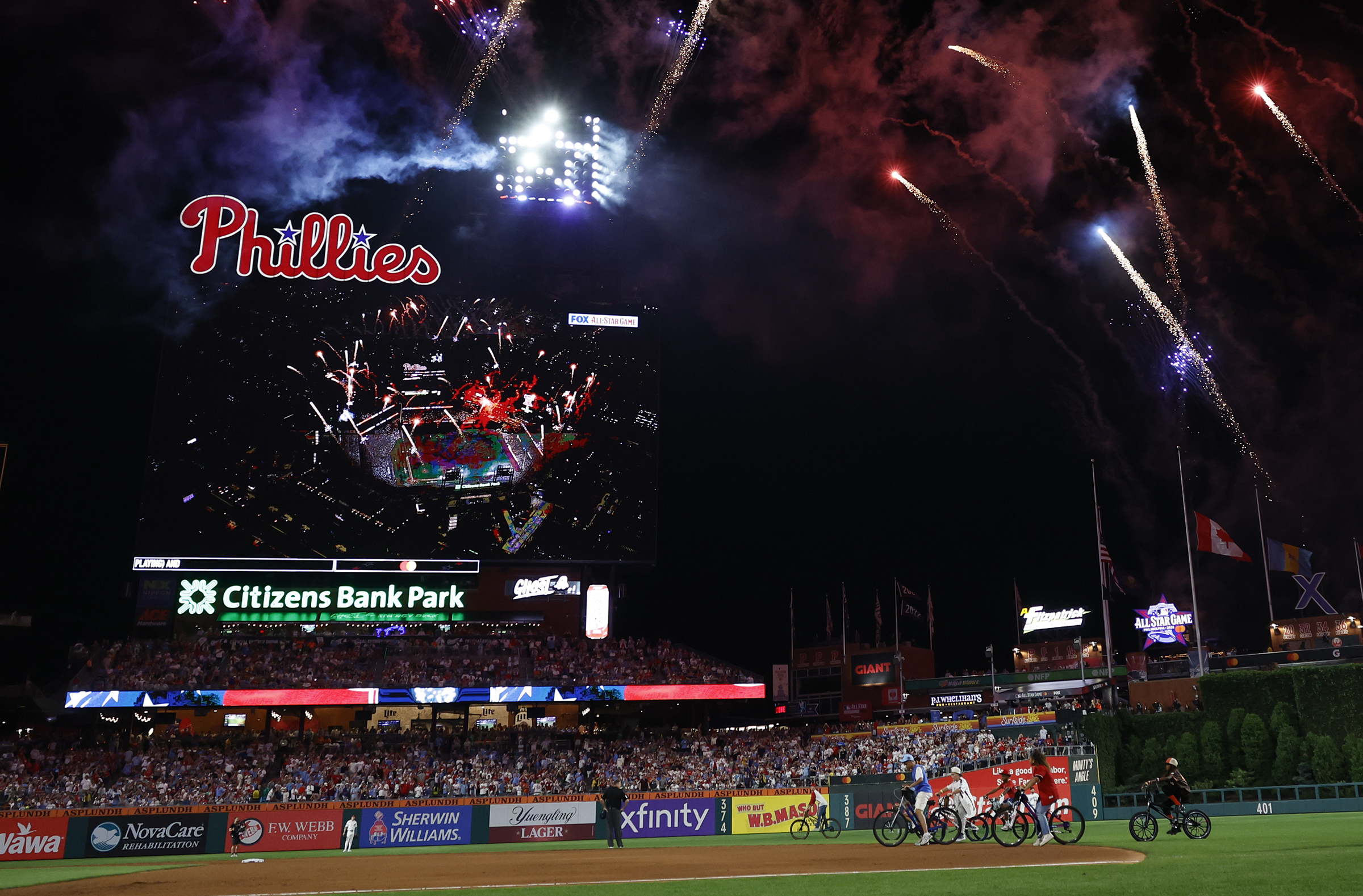
The MLB All-Star Game at Citizens Bank Park drew 8.7 million viewers.Yong Kim / Staff Photographer
But even in a normal year, the Phillies play many more home games than the city’s otherpro sports teams.
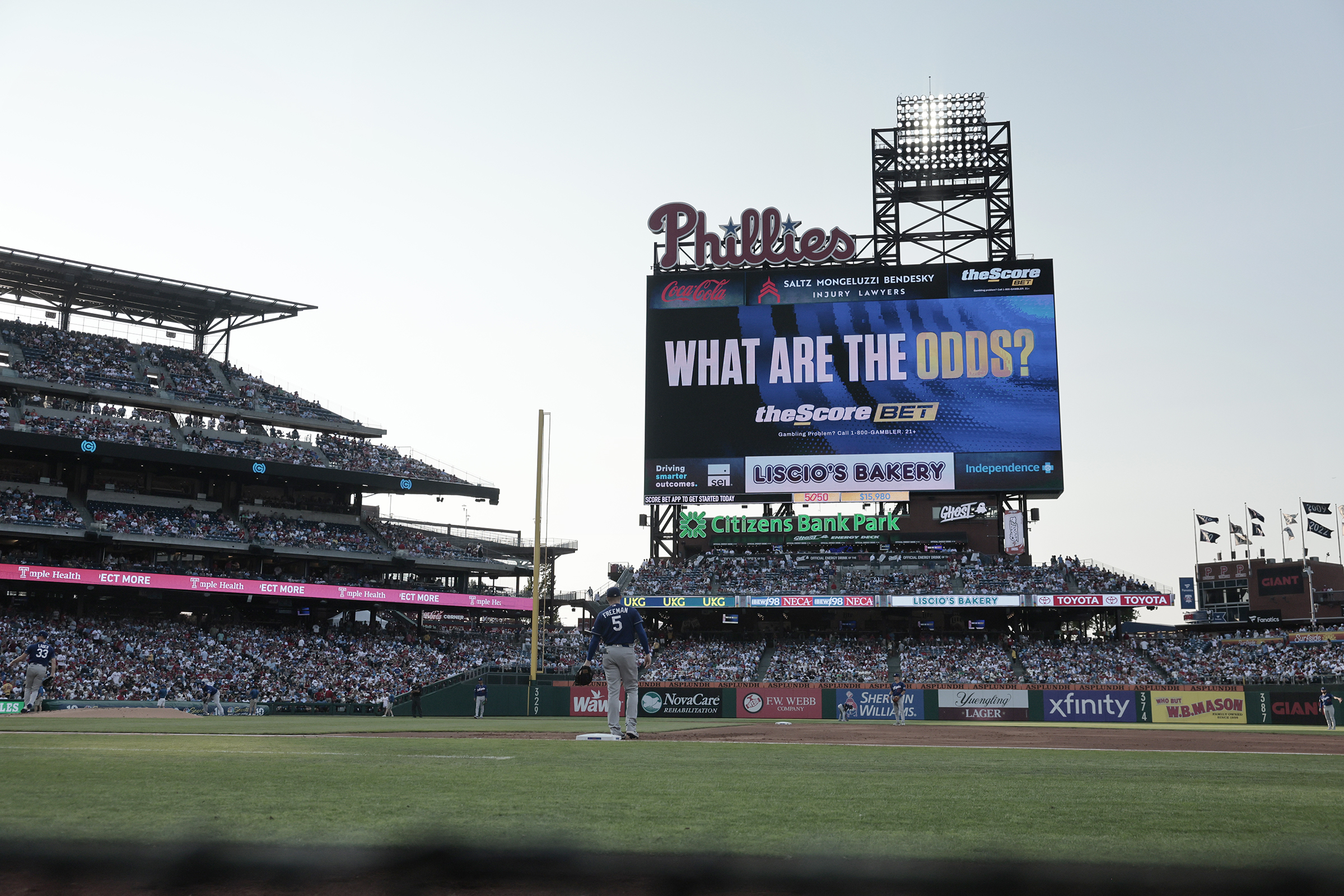
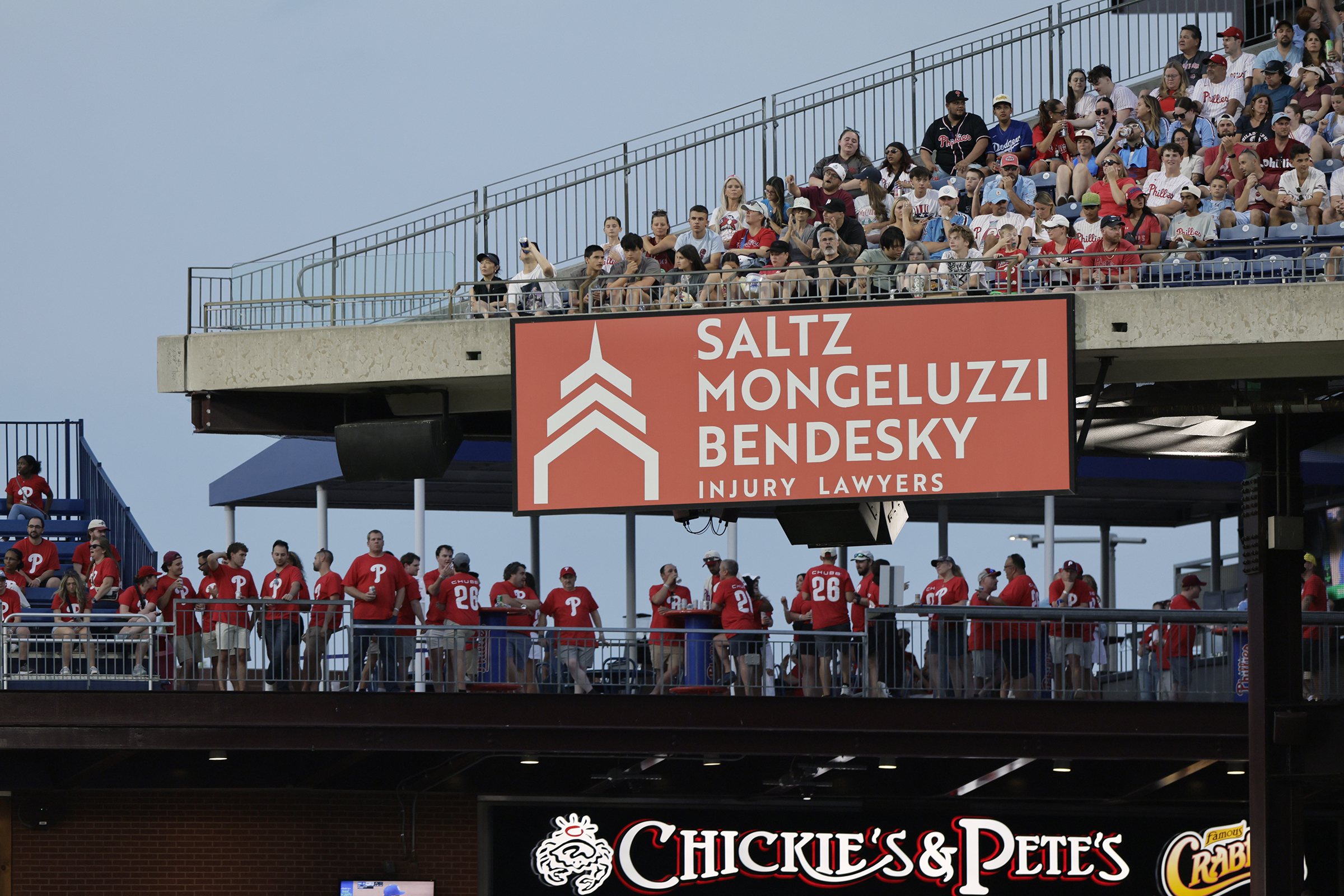
“We’ve concentrated on the Phillies because they have 81 home games and for our in-park advertising we thought we’d rather be seen more frequently,” said Bob Mongeluzzi, founding partner at Saltz Mongeluzzi Bendesky, which has several stadium ads including at the top of the scoreboard.
“I don’t think someone particularly chose us over any other lawyer just because we had an ad on the scoreboard,” Mongeluzzi said, “but it clearly reinforces our brand and keeps our name out there.”
Another Saltz Mongeluzzi Bendesky ad is pictured in right field at a July game.Elizabeth Robertson / Staff Photographer
Unique Phillies sponsorships drive revenue
Each season, the Phillies have between 75 and 100 sponsors who advertise everywhere — the ballpark’s giant scoreboard, the outfield walls, the premium seating sections — according to Brian Fling, the Phillies’ vice president of corporate partnerships. He said ad sponsors serve as a major revenue driver, supporting player payroll and ballpark upgrades.
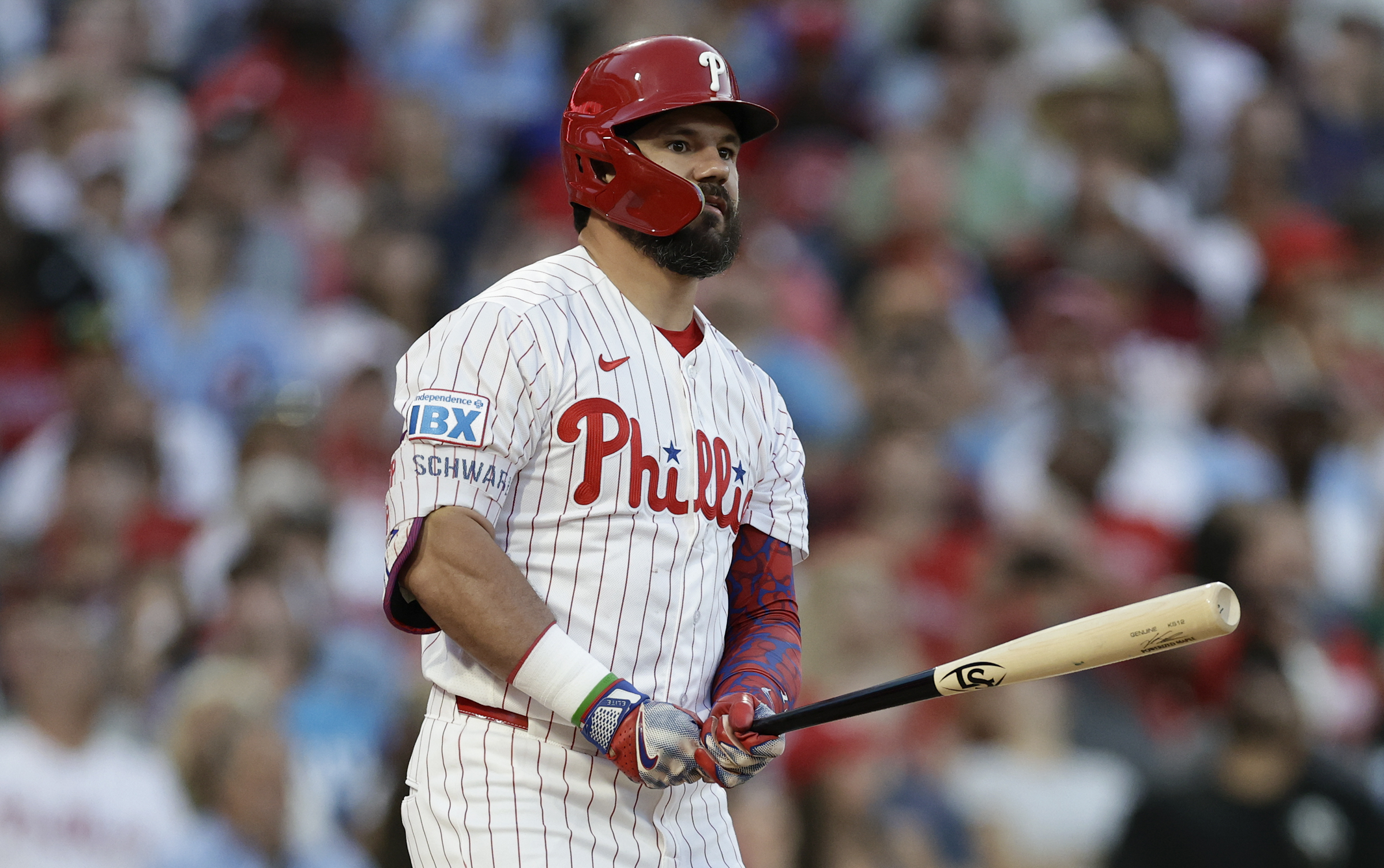
The blue Independence Blue Cross (IBX) sponsorship patch is seen on the arm of Kyle Schwarber during a June game.Yong Kim / Staff Photographer
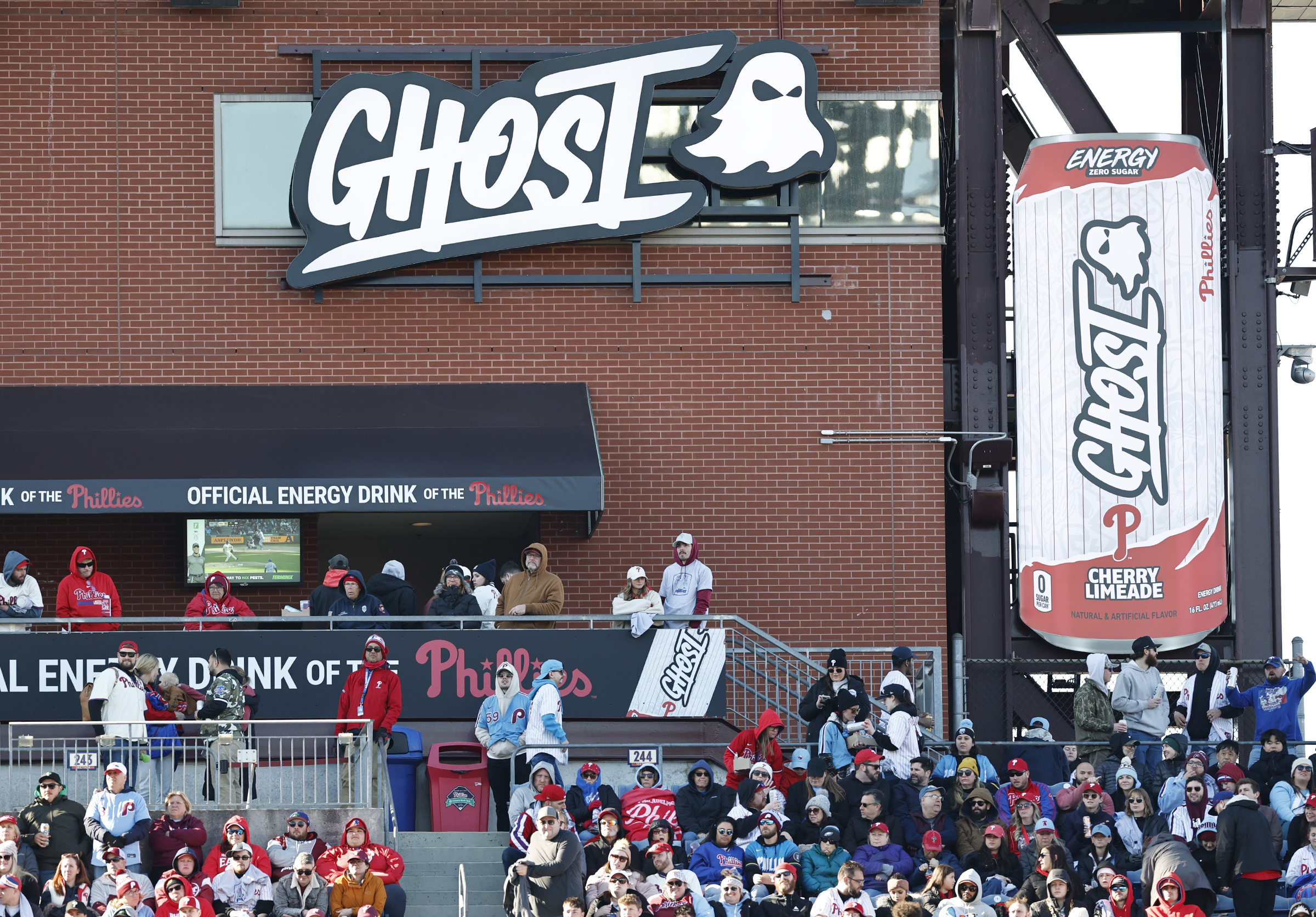
One recent ad deal stood out due to controversy. In March, Eileen Kalas, widow of legendary Phillies broadcaster Harry Kalas, said the organization “betrayed” her husband by selling the naming rights of Harry The K’s to Ghost Energy. The eatery under the scoreboard had been named for her husband since the ballpark opened in 2004.
At the time, Ghost Energy founder and West Chester native Ryan Hughes responded to fan criticism, saying, “We’re hoping to bring some new energy to the space while also never forgetting Harry Kalas and the legacy that he left.”
Ghost Energy did not return a request for comment for this article.
Fans at the Ghost Energy Deck, formerly Harry The K’s, during a March Phillies gameYong Kim / Staff Photographer
Whether a Phillies advertiser is a longtime sponsor dating to the Veterans Stadium days or a newer partner, they “align with the team’s goal — championship-level baseball in a first-class ballpark where everyone feels welcome,” Fling said.
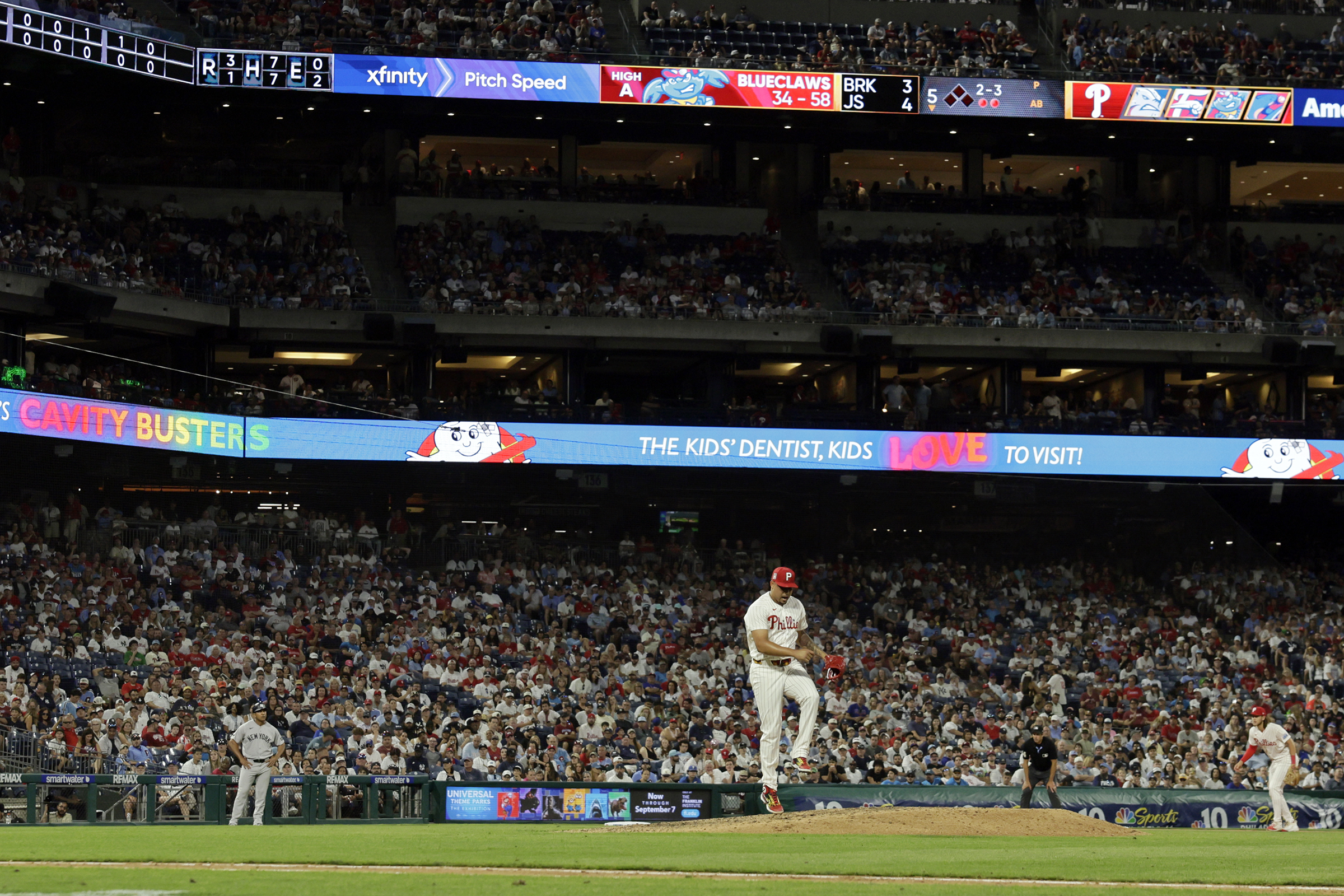
An ad for Doc Bresler’s Cavity Busters and the Xfinity pitch speed clock light up the ballpark behind Phillies closer Jhoan Duran.Elizabeth Robertson / Staff Photographer
“Pitch speed is one of the most closely watched real-time statistics in baseball, making it a strong fit for Xfinity’s focus on delivering fast, reliable connectivity for our customers,” Matt Lederer, Comcast’s vice president of brand partnership, said in a statement.
Executives with several Phillies advertisers said the goal is not necessarily to gain customers on the spot. Instead, they said, they want to increase brand awareness and get fans to associate their company with a beloved hometown franchise.
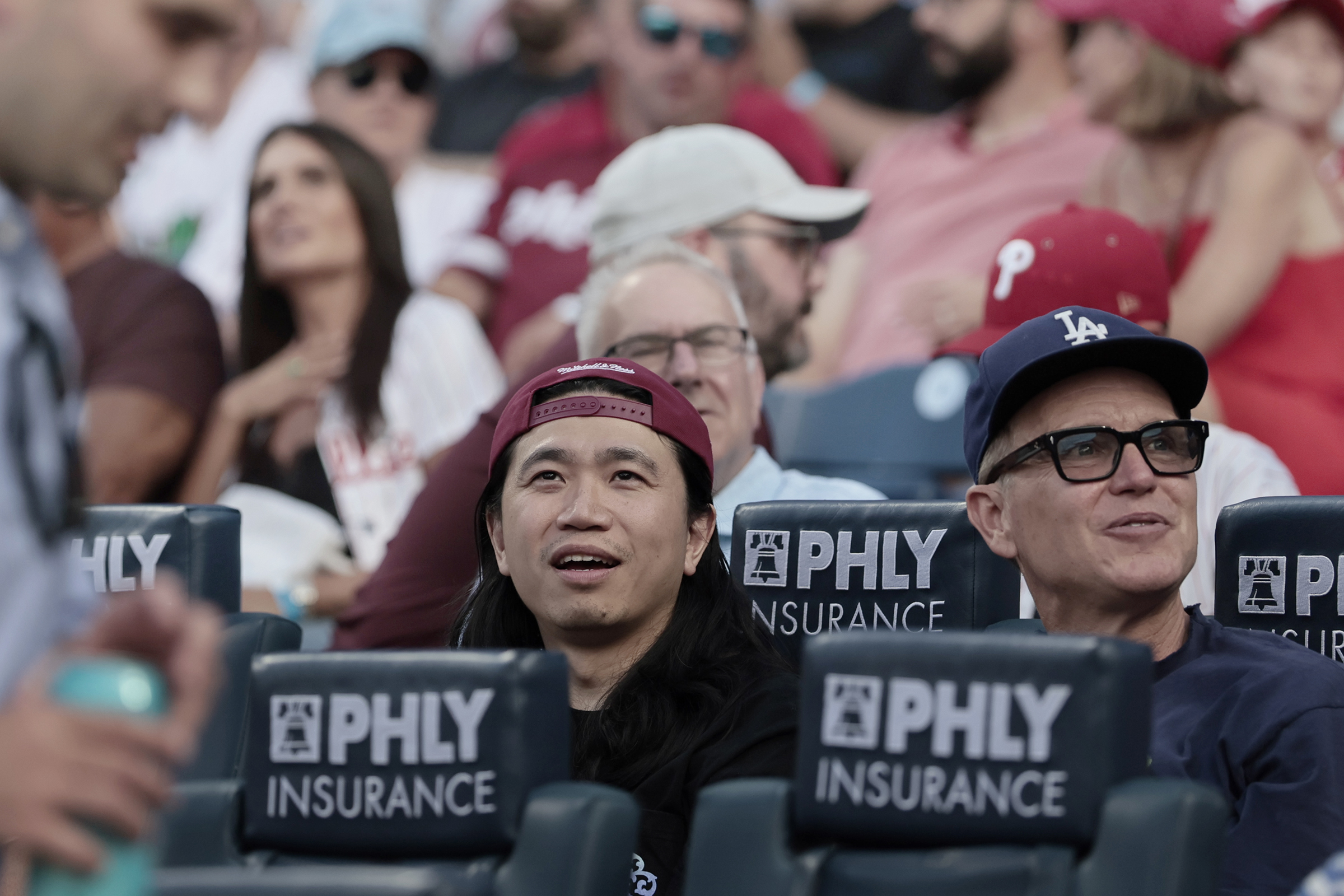
Some have seen tangible signs that this is happening. Philadelphia Insurance recorded a nearly 50% increase in website traffic since it started sponsoring the premium seating club, formerly known as the diamond club, earlier this season, said Brian O’Reilly, chief marketing officer for Philadelphia Insurance Cos. (PHLY).
As part of the partnership, the company’s name and Liberty Bell logo are emblazoned on the blue headrests behind home plate.
“It was amazing how many people texted and called me and said, ‘I saw Philadelphia Insurance during the Home Run Derby or All-Star Game,’” O’Reilly said.
The headrests in the Philadelphia Insurance Club behind home plate bear the company’s logo and the name of its website. Elizabeth Robertson / Staff Photographer
Philly sports ads create consumer ‘trust’
Some Philly companies sponsor multiple local pro teams.
Independence Blue Cross (IBX), the locally based health insurer, has been advertising with the Phillies for decades and has partnerships with all of the city’s major pro sports teams, many of the college teams, and NBC Sports Philadelphia, said IBX chief marketing officer Koleen Cavanaugh.
In addition to advertising, this also gets IBX the ability to host events at stadiums, offer ticket and merchandise discounts to IBX members, and collaborate on philanthropic partnerships, such as a back-to-school supply drive with the Jesús Luzardo Family Foundation last week.
The team “already reached out to us about season tickets and advertising,” said O’Reilly, of Philadelphia Insurance. “We were doing some business with them anyway, but maybe we’ll even do some more.”
At NBC Sports Philadelphia, conversations about Sixers ad partnerships are now underway, earlier than usual, Koelle said. As soon as James news broke, the value of SixersTV ads increased exponentially, Koelle said.
A challenge for the sports network now, Koelle said: Remaining loyal to companies who’ve sponsored Sixers broadcasts since the team’s rebuilding years — and not jack up those partners’ advertising rates.
”But for those that are new, they’ll certainly have to pay the new value,” Koelle said.
Usually, it’s not hard to convince local companies of the value of advertising with any Philly team, he said.
“If [advertisers] want to truly reach people — and reach them in a pipeline that is direct and meaningful — it’s professional sports in Philadelphia,” Koelle said. “If you want people to trust your brand immediately, it’s a great way of doing it.”
In a country-industrial stretch of Hammonton halfway between Philadelphia and Atlantic City sits a concrete-block maze of machine shops, where workers have built thousands of stainless-steel hot-sandwich and coffee carts and catering trucks.
This is the one-story home of Custom Mobile Food Equipment, which for 74 years has built these customizedportable kitchen-storefronts of varying sizes, and kept them on the road with extra helpings of customer support. They roll onto Jersey Shore boardwalks and Center City street corners, at weeklong public festivals and private events across America, and in fancy resorts and on military bases abroad.
It’s a South Jersey fixture, with Camden roots and deep Philly ties.
“We started small,” with hot dog carts cut to fit, not block, city sidewalks, said Custom vice presidentDavid Kyle. He said his family helped Philadelphia officials write the city’s street vendor ordinances, and made sure the carts fit.
Custom has outlasted food fashions and changes in the ways workers lunch. Kyle said he’s confident the enterprise will outlast recent inflation, global competition, and import tariffs: “A lot of our business is repeat business, and the big names we go after,” he said during a tour of the plant. “People rely on us to turn out a product that will last.”
From pony-cart produce to theme-park fixture
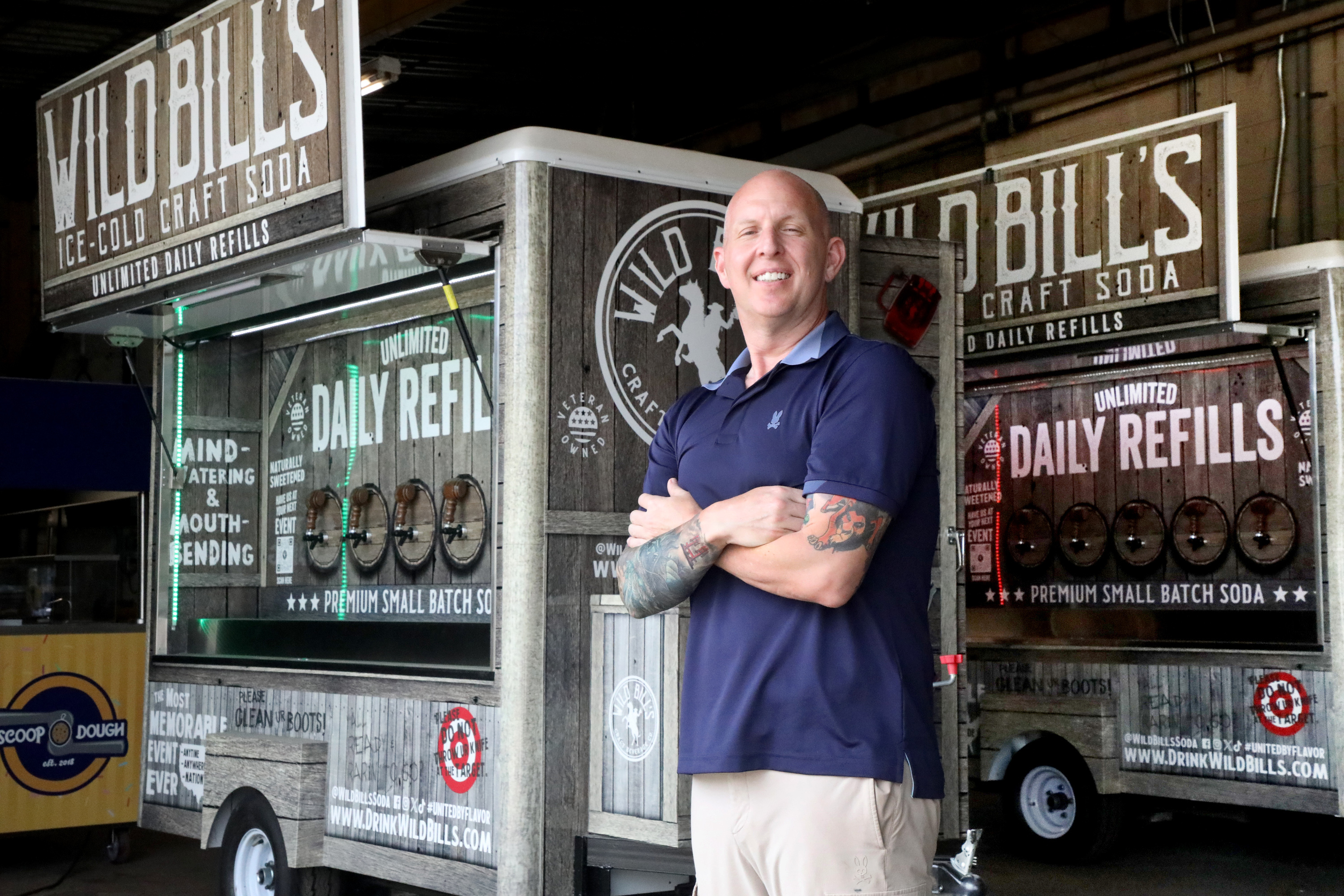
Lehigh Valley-based Wild Bill’s Craft Beverage Co. serves its old-fashioned sodas from kegs mounted in Custom vehicles of several sizes. They sell drinks at crowded motorcycle rallies in Gettysburg and Sturgis, S.D., the Ohio State Fair, the Great State of Maine Air Show in Brunswick, San Diego Comic-Con, and Schuylkill regattas.
“These are high-end, unique stands. We have 60 of them. We add a couple a year,” said Wild Bill’s chief executive, Mike Quilty. “One of our franchisees in Utah just drove one of Custom’s self-propelled Ford barrel wagons to Vancouver.”
To make trips like that, the equipment has to be built well, Quilty said, noting Custom’s “unlimited support” for when technical issues arise, which doesn’t require buying a service contract.
Custom’s late founder, William Sikora, developed the catering truck in the early 1950s as a kitchen on wheels installed on a Detroit-made chassis. Sikora as a grade-school kid in Camden had sold vegetables from a pony-drawn cart, then opened a grocery. He bought apartment buildings and diners, and became a top officer of First Peoples Bank.
Walking room to room past heavy presses and cutters on the Hammonton shop floor,Sikora’s grandson Kyle said 40 workers build more than 100 pieces of equipment a year — food trucks, trailers, catering wagons, specialty equipment with kitchen-sized stoves, refrigerators, freezers.
“We’ve sold to Disney World and SeaWorld, Sesame Place, and U.S. bases in Japan,” Kyle said on a muggy midsummer morning as room fans, metal-forming machinery, and new-cart test motors whirred. “We have 18 projects going right now.”
Custom built 32 commercial kitchens on caster wheels for Carnival Cruise Line’s Calypso Lagoon in the Bahamas, which opened last year,with rounded bull-nose counters instead of sharp industrial edges to accommodate peak work flow.
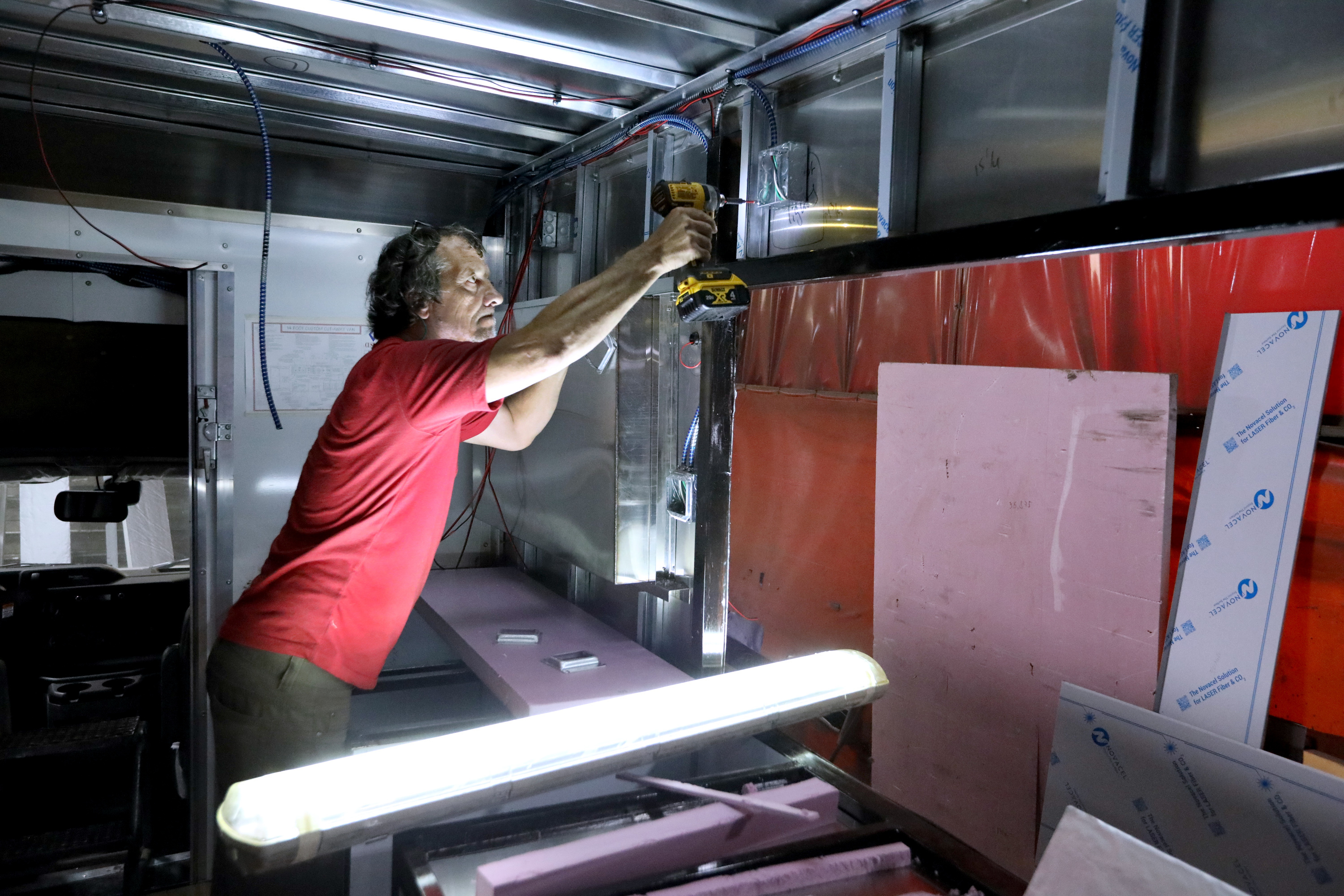
Paul McIlvaine, an electrician, works on the interior of a Chickie & Pete’s food cart at Custom Mobile Food Equipment, in Hammonton, Tuesday, July 21, 2026.Vernon Ogrodnek / For The Inquirer
How much does it cost to launch a kitchen cart?
Today, Custom’sbasic Model 525 carts retail for around $6,500. For that sum, plus storage, food, fuel, and licensing costs, “you’re in business serving food,” said Kyle.
“It’s rewarding, you get to meet so many kinds of people,” he added.
New catering trucks start at more than$125,000, like a high-end camper.
All the carts and trucks are built from stainless steel sides, stamped with Custom’s distinctive elongated-diamond pattern over tubular steel framing. The company uses multiple steel suppliers, including Allegheny Ludlum Steel Corp. in Pittsburgh. It was harder to find domestic steel when the U.S. auto industry demand was stronger, Kyle said. But now materials costs are much higher, often in response to higher tariffs.
“We try to use built-in-USA [materials], but some stuff you cannot get here,” Kyle said. Robertshaw Controls, for example, makes the only burner controls that fit Custom’s standards. They moved the operation to Mexico from Texas, so Custom now imports them.
Cart metal is just one inflating cost vendors face, said Christian Subashi, second-generation owner of Loudogs hot-dog carts in Sea Isle City. Refrigerators were 50% cheaper before last year’s new tariffs, he said, and sausage prices have “gone through the roof.”
Kyle said his company’s hot-dog cart price “has gone up $1,000 or $2,000 in 10 years,” lower than the general inflation rate. “We have to absorb some. It’s how you do business,” he said. He’s confident steel prices will stabilize eventually.
The future of food carts
The company has no plans to automate, Kyle said. “All our products are custom built — handmade and hand-fabricated. No two carts are exactly alike,” he said, noting that the company also retrofits and rehabs units as needed. “They can last forever.”
“Our pricing is more, but it lasts longer than assembly-line stuff coming in from Mexico or China at low cost.”
One once-robust market that has all but evaporated is carts for vendors who work construction sites. Custom employed over 100 during the building boom of the late 1990s. The company built a catering truck a day, on average, back then; now it’s closer to one a week.
“Wawa and DoorDash are delivering deli trays to jobs sites now. And Wawa has built out so many stores in their area, guys can just leave the job and run to Wawa. So that business is down for us,” said Kyle.
The focus now is on larger orders that can be built more efficiently. Plus it’s gotten harder, Kyle said, to hire skilled craftsmen.
But Custom is also very much “a national brand,” said James Evans, who runs the food-truck division for Ocean City-based Manco & Manco Pizza, including eight Phillies stadium locations.
Like Custom, Manco is a third-generation South Jersey business, and Evans said he wouldn’t have gone anywhere else to build stadium-ready trailers. The two firms cut a deal last February for Custom to build an initial “food truck you can drive, available for private parties, corporate functions, MLB events, anywhere we can take a truck.”
The first was delivered in July, with four propane-fueled Baker’s Pride deck ovens “to cook our pizzas to Manco standards.”
Custom faces a string of manufacturing challenges with any order, Kyle said.
But from Manco’s perspective the passage of his project from plan to delivery “was seamless,” said Evans.
“As we morph into their larger trucks, we will add wings and tenders,” he said. “If everything in business and life went that easy, it’d be great.”
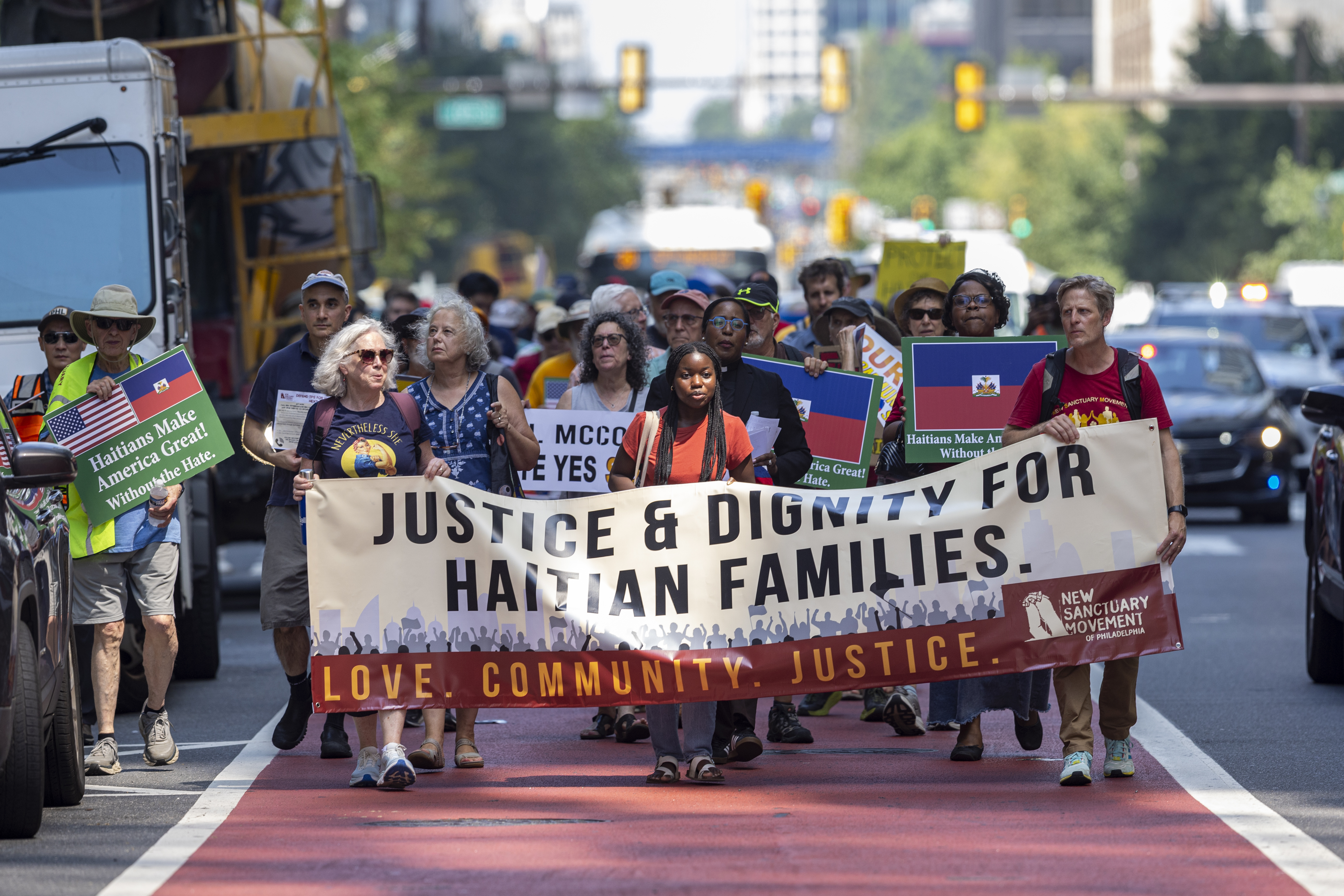
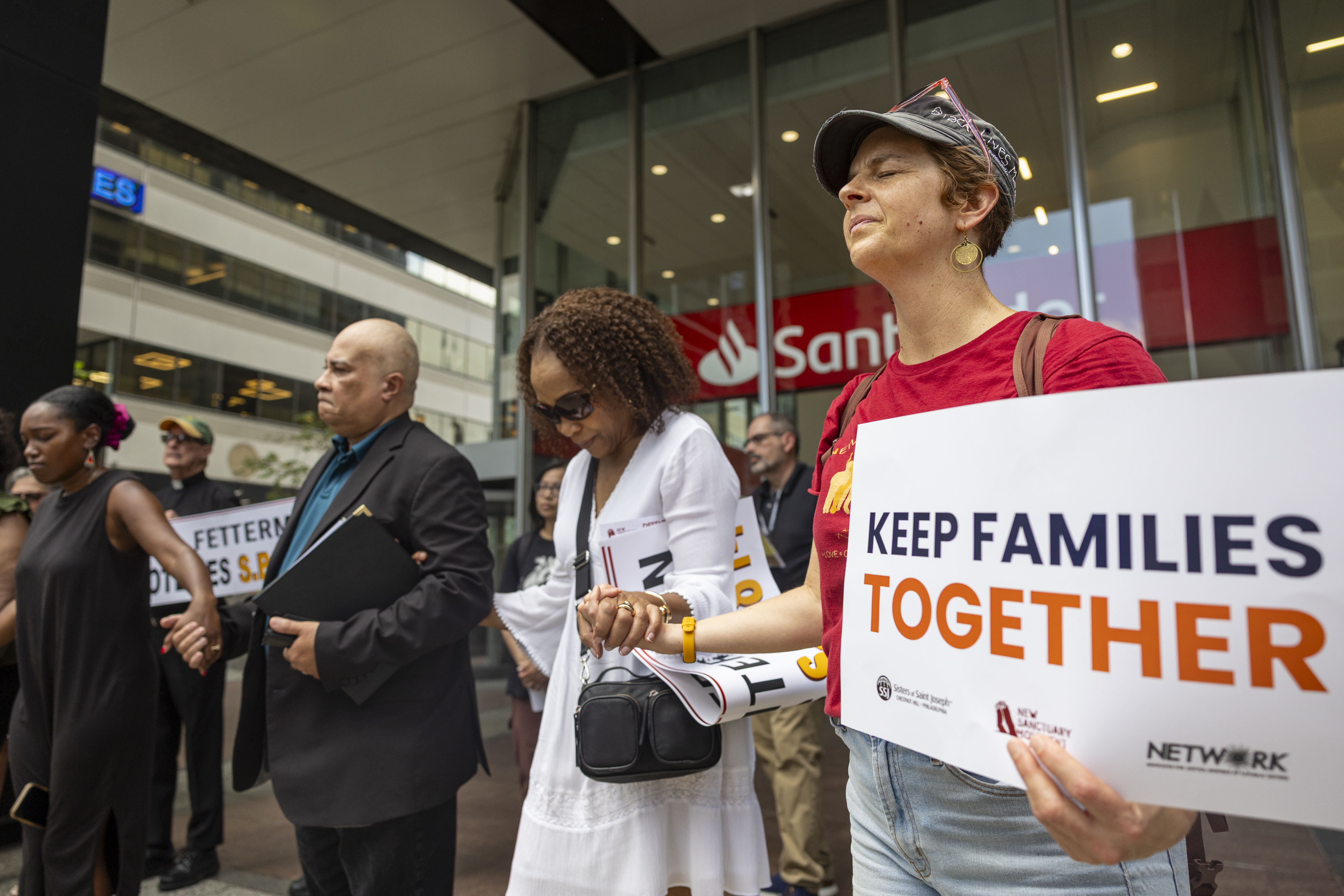
Dozens of Haitians, allies, and supporters rallied in Center City on Thursday, demanding that Pennsylvania’s U.S. senators help restore temporary protected status (TPS) for thousands now in danger of being deported to the shattered Caribbean nation.
They gathered outside the office of Republican U.S. Sen. Dave McCormick near 20th and Market Streets, then marched to the office of U.S. Sen. John Fetterman, a Democrat, near Second and Chestnut Streets.
People held up signs that said, “Our Haitian community is here to stay,” even as protections and work permits have ended for about 350,000 Haitians in the U.S. The Haitian community numbers about 11,000 in Philadelphia, and leaders say it seems everyone knows someone who had TPS or has it themselves.
Speakers said that TPS is more than an immigration status, that it is what allows neighbors, friends, and family members to live here, to work, pay taxes, and help build the country.
They called on the senators to help pass Senate Bill 4814, which would require the secretary of the Department of Homeland Security to designate Haiti for TPS through April 2029.
A spokesperson for McCormick said: “We respect everyone’s right to come together and voice their opinion. We appreciate the input.”
Efforts to reach a spokesperson for Fetterman were not immediately successful.
Pastor Kenel Stevenson said he knows of no local Haitians who have been taken into custody by U.S. Immigration and Customs Enforcement, or fitted with ankle monitors, as the ACLU says is happening elsewhere.
But the mood among his fellow Haitians is grim, he said.
“There is fear, fear of repatriation, of being returned to a place where there is no safety,” Stevenson said.
Nearly 100 people gathered before moving east toward Fetterman’s office shortly before noon, filling the breadth of Chestnut Street as police officers stopped traffic for the group to pass. Oppressive heat and humidity caused some older people to lag.
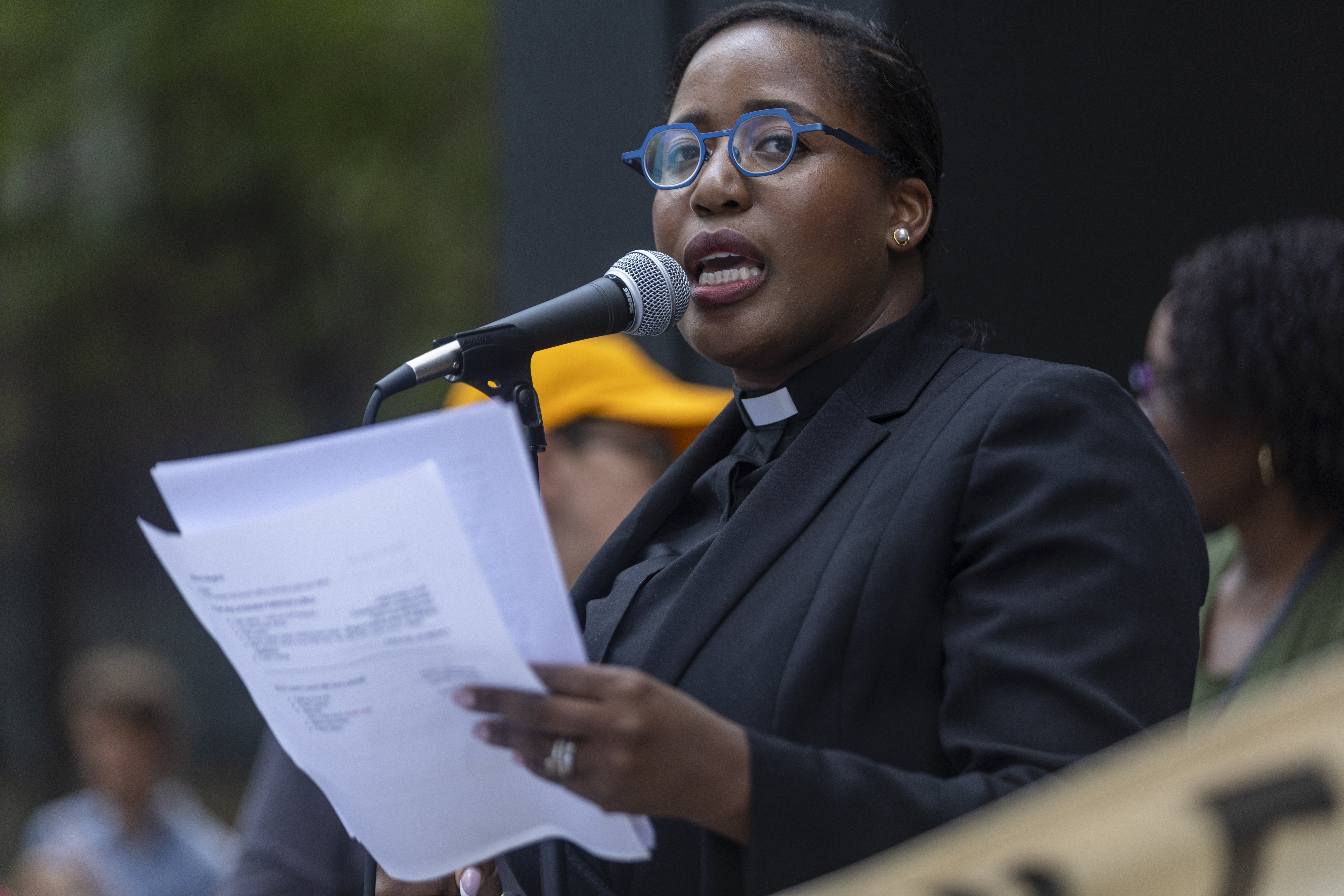
Reverend Jennifer Joseph of Zion Community Church in Delaware County addresses the crowd outside of U.S. Senator Dave McCormick’s office in Philadelphia on Thursday.Aidan T. Gallo / Staff Photographer
TPS has expired for an estimated 350,000 Haitians, ending their ability to legally work in this country and putting them at risk of deportation to a homeland riven by natural disaster and violent crime.
He searches himself to offer hope at a moment when people are desperate for some sense of tranquility.
“I had a mother called me the other day and asked if I could take custody of her child if she’s taken away,” Ulysse said.
Community leaders fear mass family separation, as Haitian nationals have married U.S. citizens and are raising American-born children.
“We are not criminals,” he said. “We have engineers, doctors, professors,” people who are eager to help and contribute.
“If people go back to Haiti, they will die, and if they stay as things are, they are in hiding, scared, and can’t leave their house,” he said, joining others outside Fetterman’s office.
Still, he said, he has not given up hope.
“America is a country of immigrants, and I believe they will stand with us,” Ulysse said. “Help us fight until the end!”
Hundreds of Haitian nationals have been told by immigration officials to appear at ICE offices to be fitted with ankle monitors, according to the ACLU.
Temporary protected status provides permission to live and work in the United States for people whose homelands are riven by war, natural disasters, epidemics, or other extraordinary circumstances.
Haiti suffered a massive earthquake in 2010 that led the Obama administration to announce that undocumented Haitian immigrants in the U.S. would be eligible for TPS. Thousands more would be welcomed over time under humanitarian programs and become eligible as Haiti grew mired in crisis ― a deadly cholera epidemic, hurricanes, the collapse of basic government functions, and the rise of armed gangs.
Reverend Katie Aikins, of West Philadelphia, prays for the Haitian people alongside faith leaders and community members before the march begins outside of U.S. Senator Dave McCormick’s office on Thursday.Aidan T. Gallo / Staff Photographer
Haitian American pastor Ketty Pointe-Jour said Thursday that her immigrant parents would not believe what is happening today.
They fled Haiti for their lives, she said, and “the U.S. opened its arms for them. The America they knew in the ’60s and ’80s is completely different from what we are seeing now.”
The Trump administration has sought to end TPS for Haiti and other nations. In June, the Supreme Court ruled that the administration could terminate temporary protected status for countries like Haiti and Syria.
More broadly, the ruling appears to make Department of Homeland Security decisions about TPS unreviewable by lower courts, creating deep uncertainty for the future. The White House has pledged to deport people who lose legal status, including those who had TPS.
Haitians are not the only population affected.
TPS is set to lapse for more than 170,000 people from El Salvador in September, and in October 100,000 from Ukraine face the same termination.
Advocates say the Trump administration’s promise of deportations will hurt families that include spouses and children who are American citizens.
What is more, immigration researchers and organizations say, the country will pay a financial price ― in lost taxes, wages, spending, and services, as large numbers of workers and dollars exit the U.S. economy.
The nation’s 1.3 million TPS holders work at higher proportions than the country as a whole, pay billions of dollars each year in federal and local taxes, and contribute to the solvency of a Social Security system from which they are unlikely to ever draw benefits.
Outside Fetterman’s office, Dottie Baumgarten said she came from her Cheltenham home to support the Haitian community. She hoped the presence of supporters helped immigrants feel less alone.
“The Haitian challenge is not just Haitians,” she said, “it’s immigrants in general, and we have to support them. We are destroying their families.”
Assistant District Attorney Alyssa Amoroso withdrew the charges the Philadelphia DA’s office had filed against Eugene Albert Horsch for illegal gun and drug possession Thursday morning, telling a city judge that the U.S. Attorney’s Office would instead handle the case.
Horsch, 44, has been in federal custody since June after a U.S. park ranger encountered him and another woman inside a black BMW near Independence Hall, acting suspiciously. Police said they searched Horsch — who was not allowed to possess guns because of felony convictions — and found a switchblade and a glass pipe in his pants, as well as two illegal guns, drugs, and a phony federal drug enforcement badge in his car.
And then, in an unsettling twist, the woman with Horsch presented a fake ID bearing the name of a woman, Blair Tonzelli, who had been reported missing in 2023.
Horsch was charged with illegal gun and drug possession after his June 19 arrest, and was held on $500,000 bail.
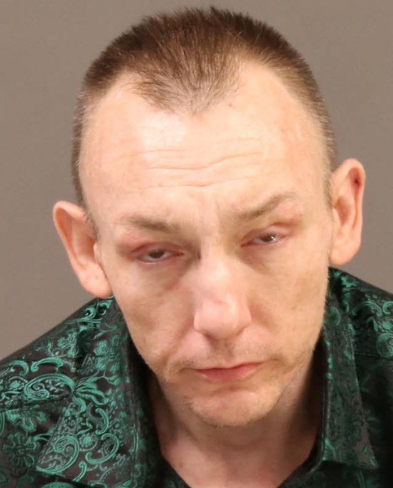
Eugene Albert Horsch, 44, of Philadelphia.Courtesy of Philadelphia police
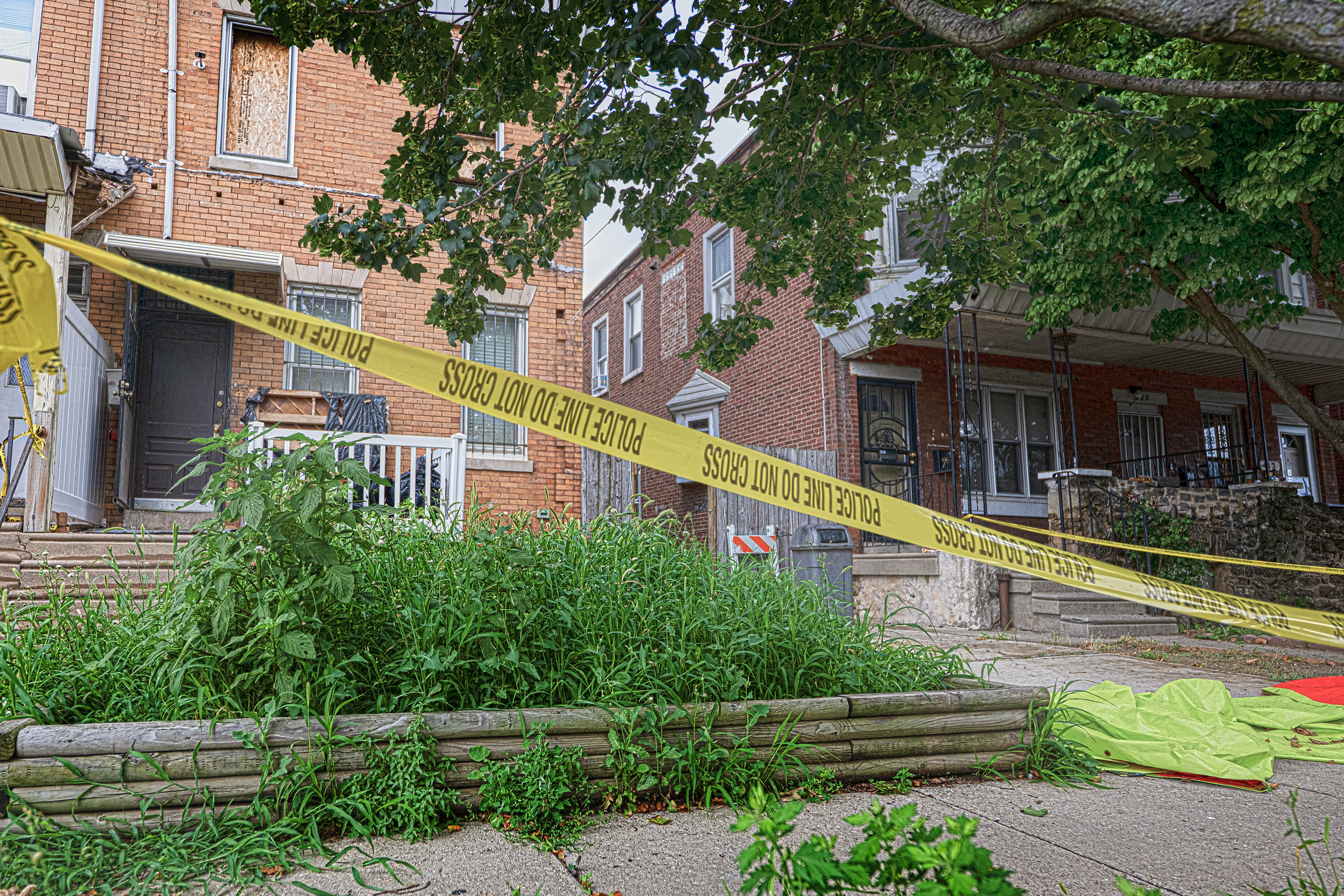
In the days after Horsch was arrested with the weapons in Center City, local and federal investigators searched his decrepit twin house on Chew Avenue and found another gun, as well as materials to grow marijuana.
They also discovered a trove of more concerning materials — barrels of chemicals in the basement, several urns holding cremated remains, supplies to make counterfeit IDs, documents tied to at least two women who have been missing for years, and a handwritten letter that described hurting people and mentioned the serial killer Ted Bundy.
A woman also told investigators Horsch had told her he knew how to use chemicals to melt bodies in the basement.
As officials investigated the whereabouts of Tonzelli, the woman whose name appeared on the ID handed to park rangers, they learned that she was reportedly last seen at the Chew Avenue house in late 2022.
They also found that another missing woman was last seen at the address. Amy McHale, the ex-wife of Horsch’s deceased father, Raymond “R.C.” Horsch, disappeared in June 2016.
In the months since the investigation began, police have repeatedly searched Horsch’s home, excavated its yard to recover pipes to test for DNA, and pored over hundreds of pieces of documents and Horsch’s devices in hopes of learning the fate of the missing women.
Law enforcement sources said none of the items recovered from inside the home — including what initially appeared to be significant amounts of blood — tested positive for blood or either woman’s DNA. It was not immediately clear if the tests of the excavated pipes have been completed.
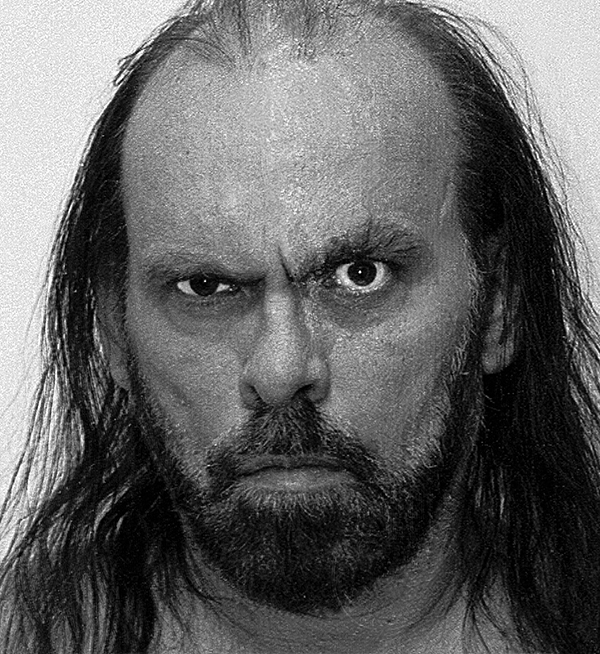
Raymond “R.C.” Horsch in 1999.S. E. Stokowski / Wikimedia
Raymond Horsch was a porn actor and director who produced films and self-published novels that often featured women in addiction in violent fantasies — including some that depicted various ways to kill women. He cast himself in some of the stories as an “empathetic” serial killer who preyed on addicted women to end their suffering, and billed the books as stories that combined real details from his life story with his fantasies.
Investigators have since found themselves working to sort fact from fiction in discerning whether anything more sinister happened inside the home, or if it was just a den for troubled drug users.
Eugene Horsch’s lawyer, Jerome Brown, has said his client did nothing wrong. Brown did not attend Thursday’s hearing.
Horsch, too, did not appear in court. He remains in federal custody as Philadelphia homicide detectives and federal officials continue to investigate.
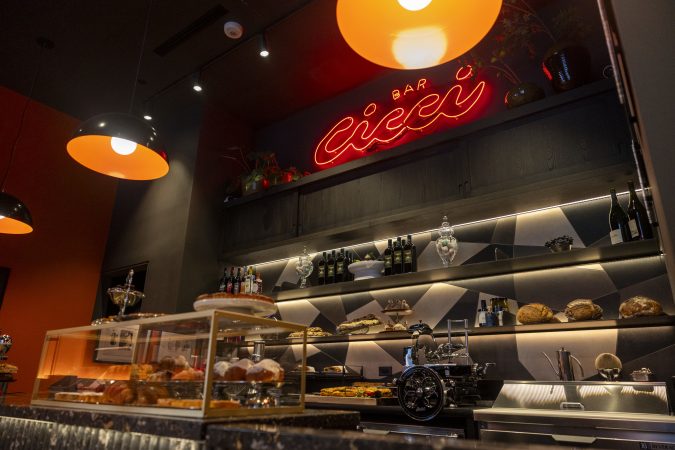
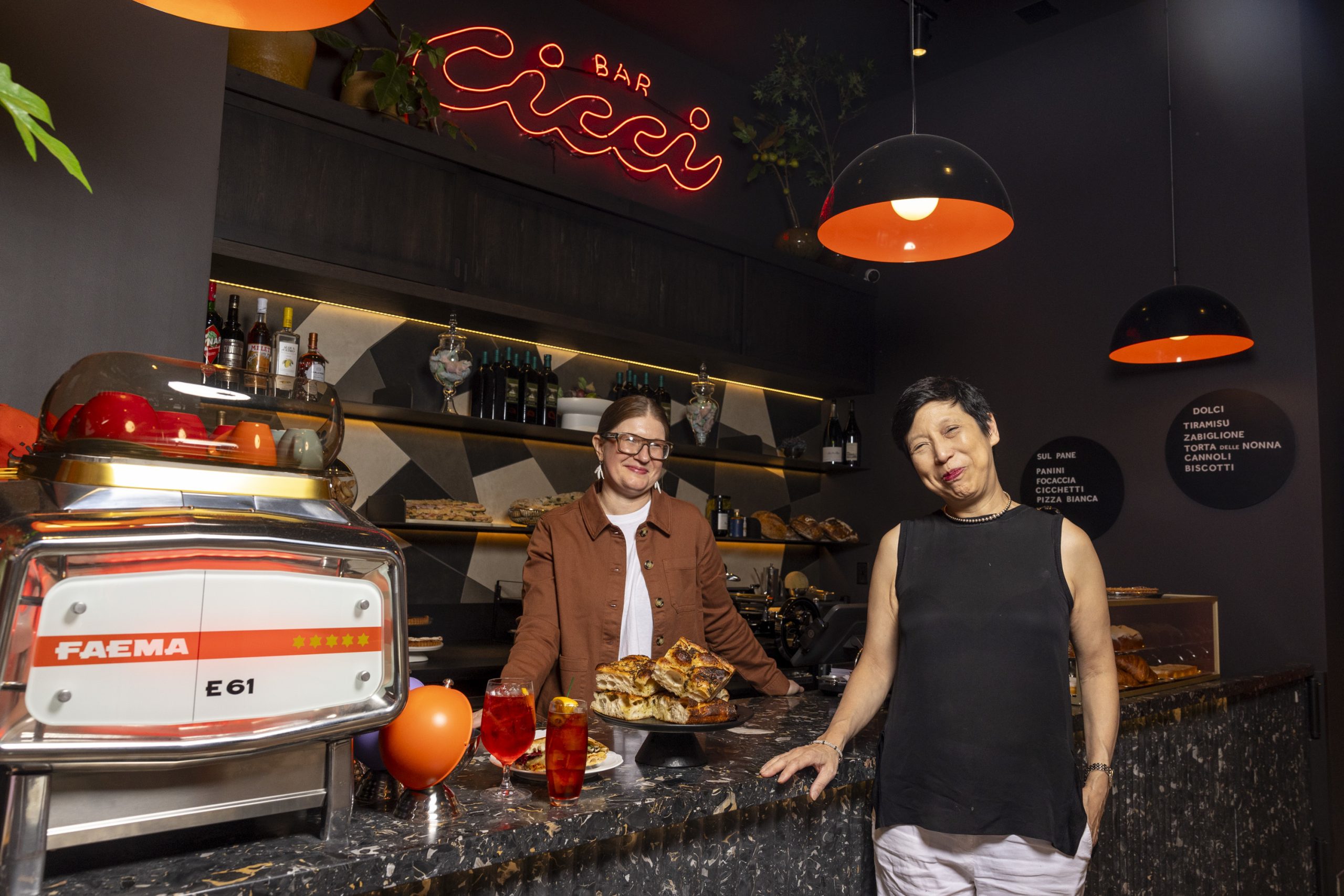
High Street Hospitality founder and James Beard Award winner Ellen Yin is just about ready to hit Rittenhouse with Bar Cicci, an all-day drop-in for espresso and pastries by morning, sandwiches by day, and spritzes, cicchetti, and small plates by night. Join Beatrice Forman on Sansom Street for your first look.
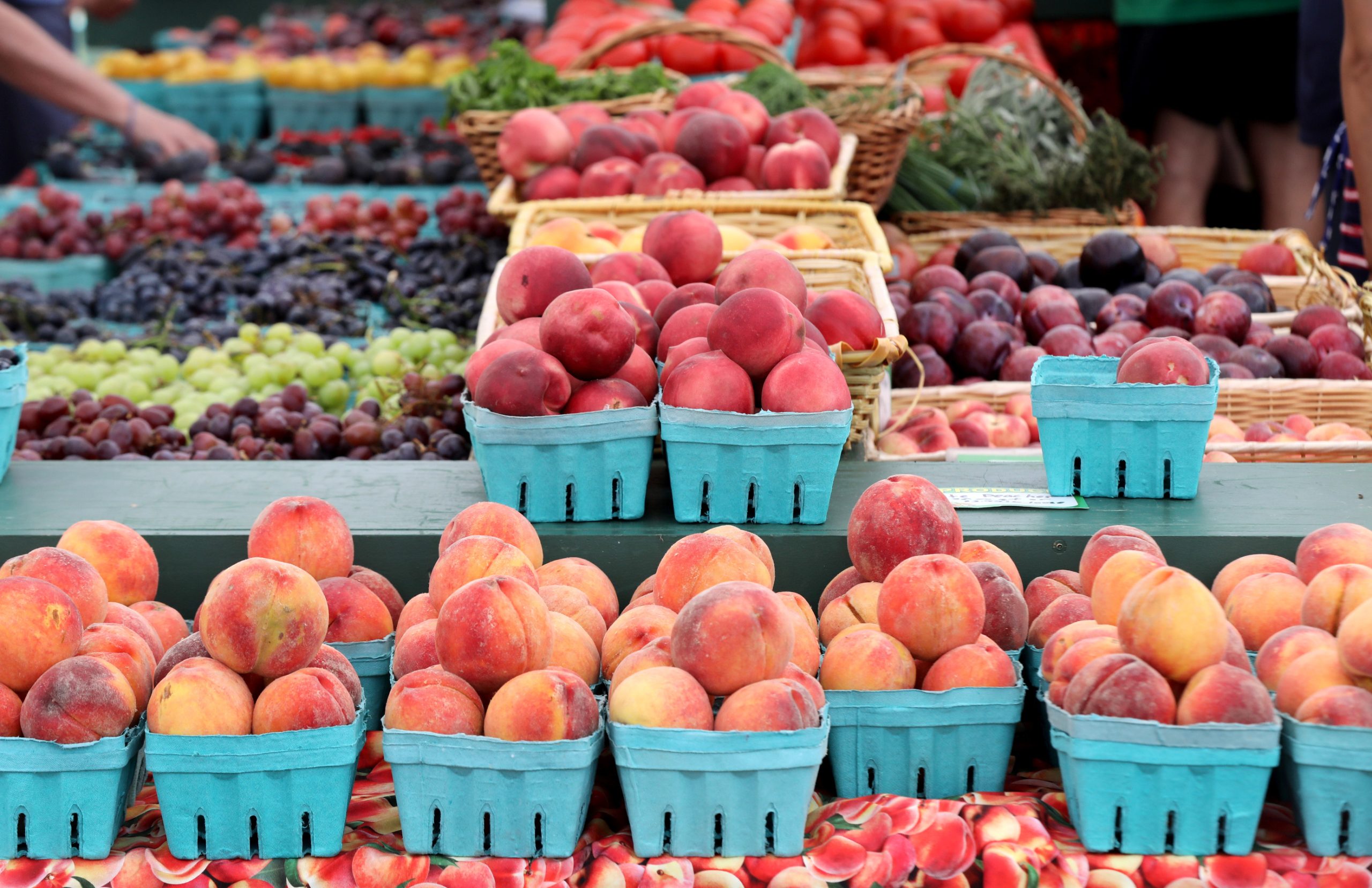
Shore season isn’t done yet, and neither are farmers markets, which have seen an uptick in business locally in the midst of a cyclospora outbreak. Hira Qureshi maps out where you can buy local produce, baked goods, and more at markets down the Shore.
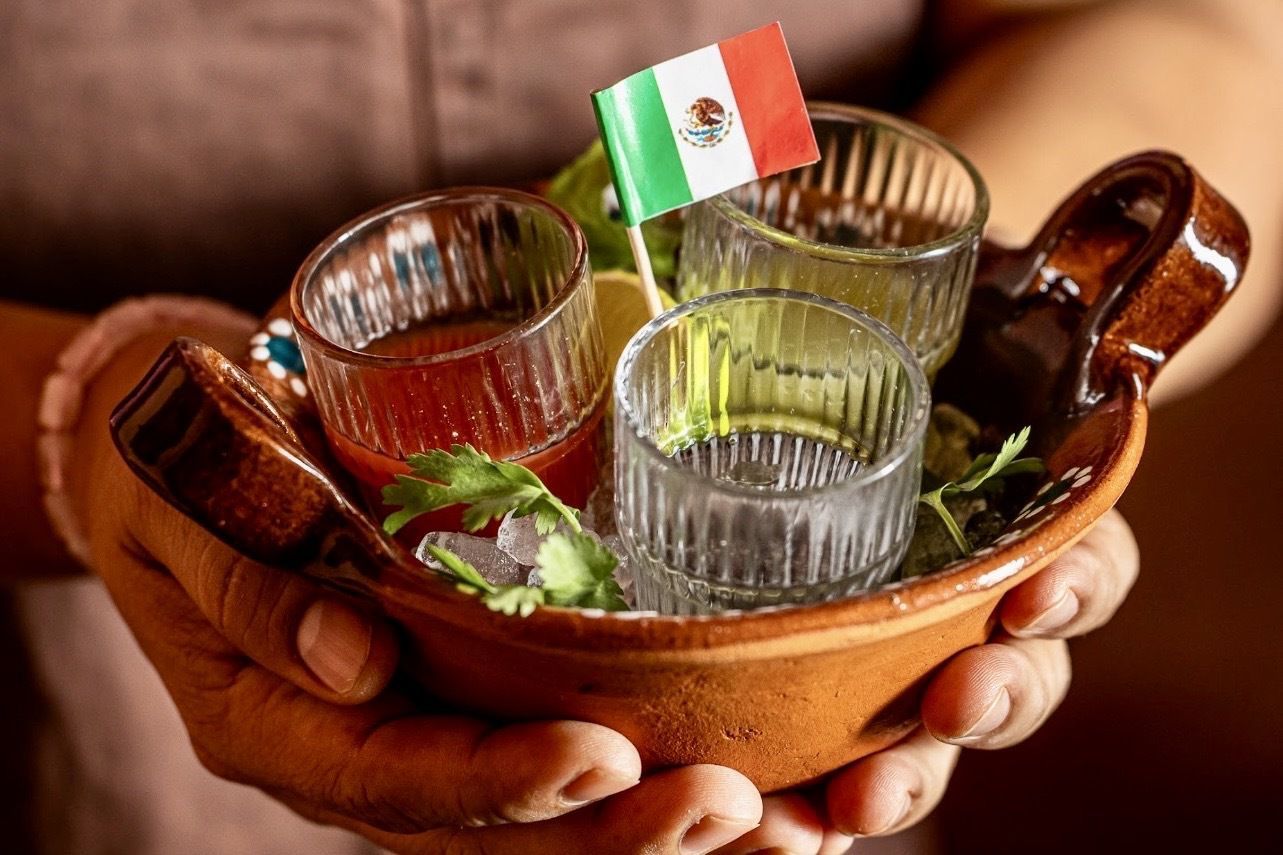
Besides Bar Cicci, a half-dozen new restaurants are on tap this month, including Recipe Philly in Center City, Cecilia in Bridgeport, and Mixteca in East Kensington, where the red, white, and green of la bandera figures into the signature cocktail.
Lancaster Avenue in Ardmore, one of the Main Line’s busiest commercial strips, is now home to two new dessert shops. Denali Sagner explains that one specializes in tea, cakes, and buns, while the other celebrates the mango.
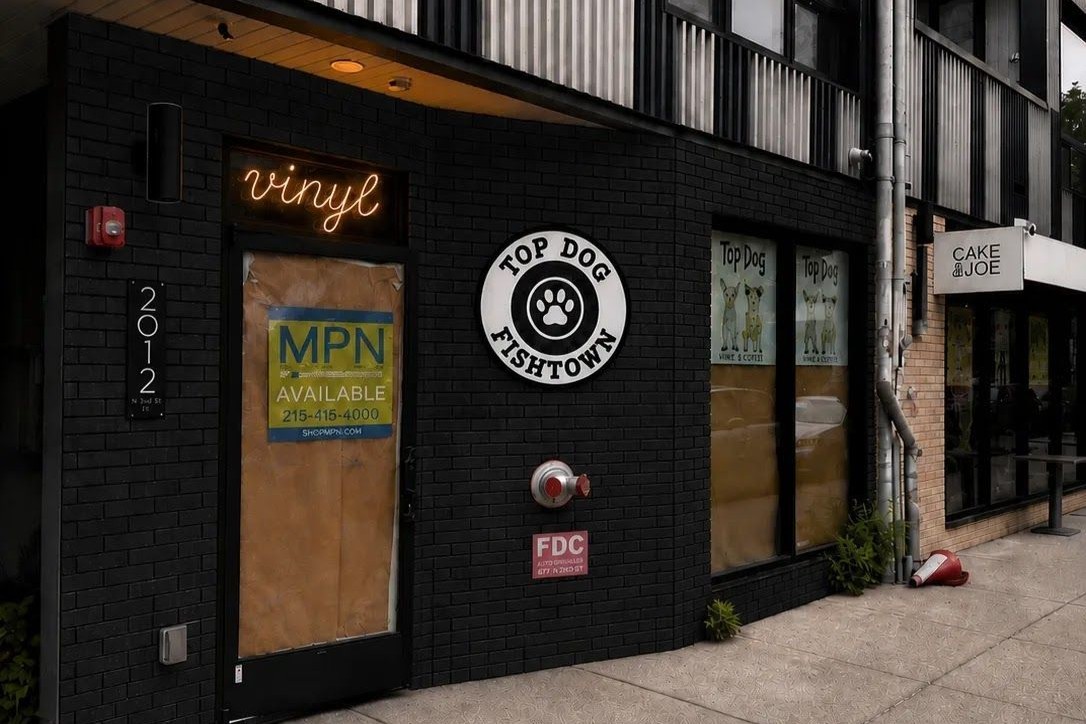
Canned-cocktail brand Top Dog is setting up listening rooms in Kennett Square and Fishtown, embracing the Japanese jazz kissa model — a music cafe or bar that’s focused on listening to vinyl records. Brooke Schultz chatted up Top Dog’s Ken Smukler, who aims to deliver an “analog feel in a digital world.” The Fishtown location is tiny. It used to be an ATM.
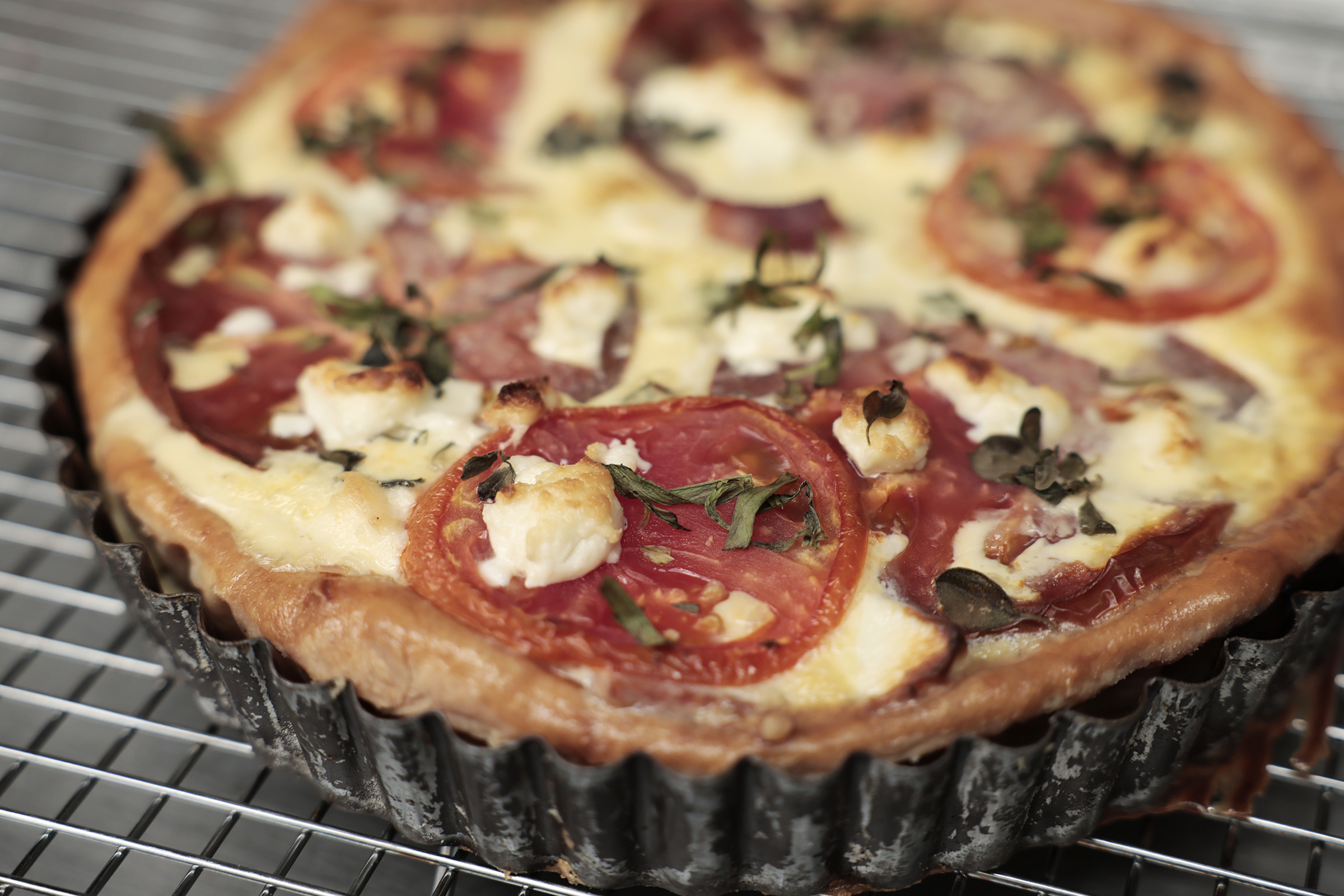
The handmade tarts from Market Day Canelé layer summer tomatoes over a corn custard with cremini and button mushrooms, herb-roasted cotto ham, eggs, and Gruyère in a flaky crust. Kiki Aranita says you have to act fast to snap one up.
Scoops
Two chefshave made big professional strides from their roots in Roxborough, and now they’re coming home to Manayunk to take over the Winnie’s space with a “punk French” eatery.
Aldar Bistro in Bala Cynwyd is giving way after 34 years to a white-tablecloth Southern Italian restaurant called Bruzi.
Does a spateof restaurant-closing announcements — such as Hiroki, Federal Donuts & Chicken,and the Lodge by Two Robbers — portend industry doom? No, and I’ll explain why not.
Restaurant report
Gabriella’s Vietnam in South Philadelphia is counting down to closing in mid-December as the new owner of her building is planning a restaurant of their own. Chef-owner Thanh Nguyen told Kiki Aranita that she is looking for a new spot.
Side Eye, the Queen Village bistro, gets a bit of side eye from critic Craig LaBan, who likes the vibe and pricing but thinks the execution could be sharper.
New drive-thru coffee option: The syndicated 7 Brew has opened at 4000 Woodhaven Rd. in Northeast Philadelphia’s Knights Road Shopping Center.
More bagels are coming round: Central Florida-based Jeff’s Bagel Run — schmeared with private-equity investment — has cinched a franchisee for 10 stores from the Harrisburg area east through Reading and the Lehigh Valley to suburban Philadelphia. No leases have been signed, the company announced in a press release.
Briefly noted
Cantina la Martina’s fourth annual Cemita Festival returns from 11 a.m.-4 p.m. Sunday at the Garden Center across from Mural City Cellars (1825 Frankford Ave). Six restaurants will each serve interpretations of Puebla’s iconic cemita sandwich for $16: Cantina la Martina, Gilda, Bolo, Vientiane Bistro, Cinteotl Tamalli, and Los Cuatro Soles Restaurant. Also: beverages from Mural City Cellars, DJ Cali Rumba, dance performances by Danza Tonantzin Cultura, face painting, and artisan vendors. It’s pay-as-you-go. Some cemita vendors are cash only.
Post Haste in East Kensington will become Philadelphia’s only participant in the inaugural Global Pay What You Can Day on Aug. 26, joining restaurants from Mexico City to Mumbai in a one-day effort to make dining more accessible. Guests can order whatever they’d like and pay what they can (excluding alcohol), building on chef Ari Miller’s weekly pay-what-you-can program launched earlier this year. (Miller is married to Inquirer staff writer Kiki Aranita.)
The Fishtown Pickle Project is taking its annual pickle-themed dinner outside of Fishtown for the first time. The Aug. 27 edition will have founders Niki Toscani and Mike Sicinski in Rittenhouse to collaborate with Uchi on a nine-course, pickle-centric tasting menu (e.g. oysters with giardiniera, yellowtail with pickled peach, salmon with pickled enoki, and a dessert featuring pickle jam). Seatings: 6 and 8:30 p.m. Tickets: $125 per person, plus tax and gratuity.
Chef Chaz Brown, in partnership with Forman Arts Initiative, will present the third annual Oxtail Collective from 1-5 p.m. Aug. 30 at the Substation in Kensington. Titled “The Hercules Posey Celebration” — after George Washington’s enslaved chef — the event will bring together Black chefs, historians, artists, and entrepreneurs to explore the intersections of food, culture, business, and history while serving as an early public introduction to Forman’s future 100,000-square-foot arts campus. Participating chefs include Chad Williams of Friday Saturday Sunday, Omar Tate and Cybille St. Aude-Tate of Honeysuckle, and Shola Olunloyo of Studiokitchen. PBS NewsHour’s Geoff Bennett will moderate panels, and the program also includes tastings from 15 chefs, cooking demos, and a marketplace featuring Black-owned businesses. Tickets ($92.55, including fees) are on sale.
Delicious City Philly Podcast’ssecond annual Hoagie Throwdown has a date: Sept. 27, from noon-4 p.m., at Other Half Brewing in Fishtown, drawing 20 chefs, restaurants, delis, and sandwich makers to compete. There will be unlimited hoagie samples, beer/soft drinks, and pro wrestlers grappling. (Last year’s outing was a scene: The Inquirer’s Craig LaBan, in a Zorro mask and big hat, went through hoagie-making boot camp.) The podcast has made 500 tickets available and early pricing starts at $55.
❓Pop quiz
Which Pennsylvania farm crop is in the crosshairs of the U.S. Department of Commerce?
What is going on at 117 Chestnut St.? The restaurant 117 is closed already and it just opened. — Chris D.
Old City restaurant 117, which opened only last November, posted a note on Instragram last week that it had closed “due to circumstances beyond our control.” According to Philadelphia court records, the restaurant was evicted over back rent.
The space’s previous occupant, the Avery, also had a very short run last year. Previous occupants had better luck: 2nd Story Brewing Co. closed in 2024 after a decade and was the last to use the brewing equipment installed by Triumph Brewing Co. for its own run from 2007 to 2014.
Adding intrigue now is the liquor license application that was filed at 117 Chestnut St. last week in the name “Finish Your Champagne LLC.” Finish Your Champagne is the name of the long-in-the-works Columbus Boulevard cocktail bar project from Kevin Dolce, owner of Center City’s Taste Cheesesteak Bar and Savù. Dolce declined comment.
📮 Have a question about food in Philly? Email your questions to me at mklein@inquirer.com for a chance to be featured in my newsletter.
By submitting your written, visual, and/or audio contributions, you agree to The Inquirer’s Terms of Use, including the grant of rights in Section 10.