The developer of a controversial apartment project at 106 Jamestown Ave. in Manayunk requested that the Zoning Board of Adjustment delay its Wednesdayhearing.
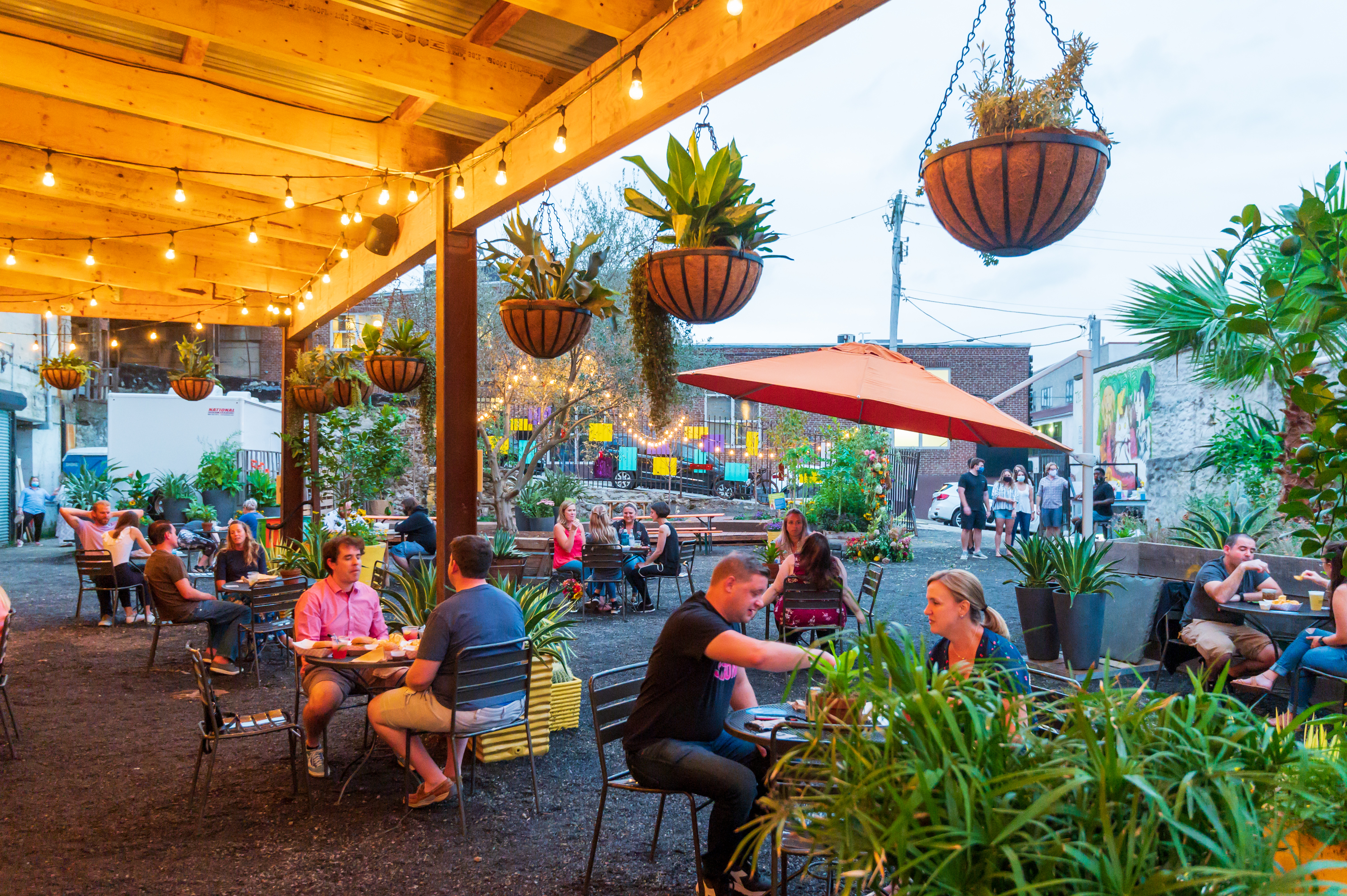
The six-story, 73-unit building would replace the Pennsylvania Horticultural Society’s pop-up beer garden that currently leases the space.
Neighborhood backlash against the project from developer Dan Greenberg has been intense.
Critics say the project doesn’t provide enough parking; offers no commercial space; and would eliminate the beer garden, a popular community gathering place.
“It was prudent that he postponed,” said Councilmember Curtis Jones Jr., who represents the area and recently came out in opposition to the project.
Jones’ opinion is relevant because the project is seeking to build taller and denser than current zoning rules would allow, and the zoning board heavily weighs the opinions of neighborhood groups and the district City Council member. (The project is 60 feet tall, above the height limits imposed by the Main Street Manayunk overlay.)
Greenberg also needs permission to build apartments in an area that is not zoned for residential development.
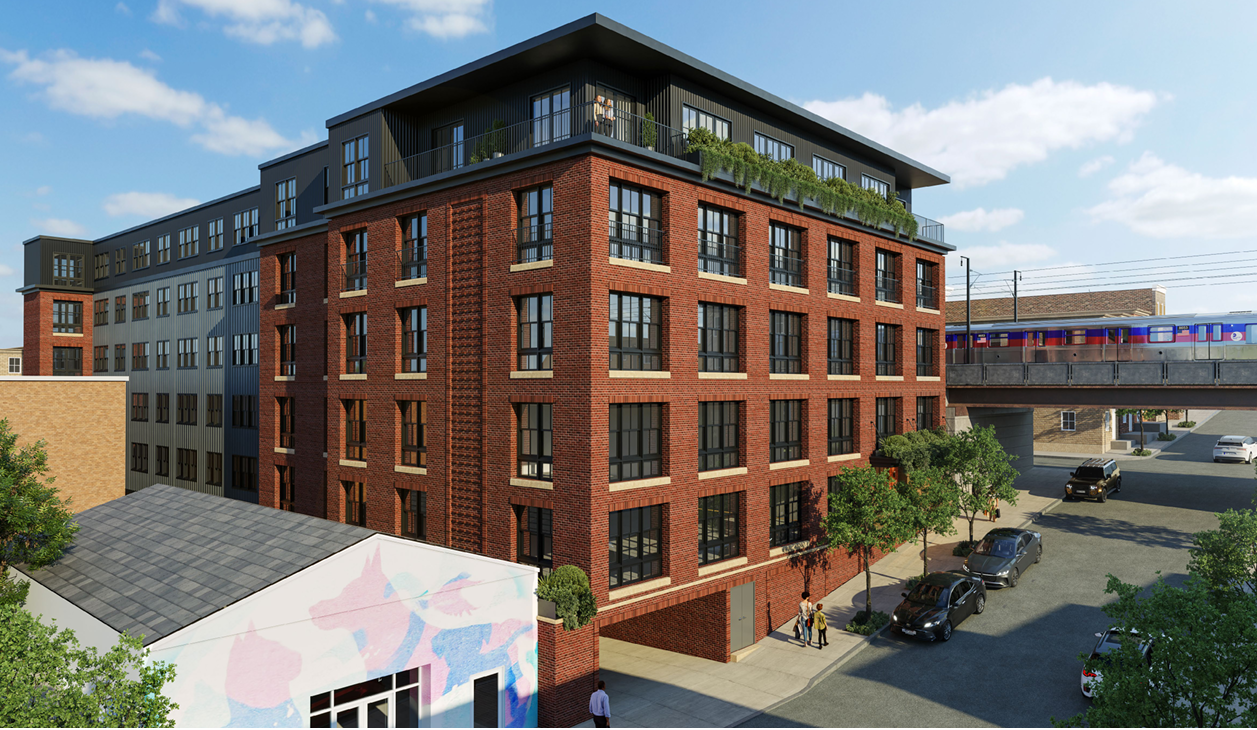
A rendering of the proposed 73-unit apartment building for 106 Jamestown Ave. in Manayunk.Barton Partners
“Fortunately for him, he’s not finally purchased it yet because zoning is an essential part of the sale,” said Jones. The delay “gives them the opportunity to talk to the community, but as it stands, I cannot support it.”
Greenberg’s team declined to comment, but a city staffer confirmed that Wednesday’s delay stemmed from the real estate company. A new hearing is not yet scheduled.
“This means that the applicant will contact us to reschedule the next hearing date,” wrote Ian Hegarty, a Planning Commission staffer who advises the zoning board, in a message to a questioner on the board’s Zoom on Wednesday.
The Manayunk Neighborhood Council led opposition to the project, submitting a petition against it to the zoning board with more than 500 signatures.
A community meeting earlier this year attracted 200 attendees, 97% of whom were opposed to the project, according to the neighborhood council.
“Even we are a little surprised at the universal opposition,” said John Hunter, the council’s zoning chair, in an email.
The Jamestown Avenue proposal also faced criticism from the Civic Design Review committee, an advisory-only city body.
In a June meeting, the board asked the developer to consider adding commercial space, criticism of the project also raised by the neighborhood council.
A rendering of the paused 73-unit apartment development from under the railway bridge. Barton Partners
At that meeting, Hunter criticizedthe plan’s 36 parking spaces, arguing that the standard in Manayunk is one parking space for every housing unit. The notoriously hilly neighborhood is less walkable and has fewer transit options than neighborhoods closer to Center City.
The developer’s team has repeatedly declined to speak publicly, but at a meeting in June, lawyers for the project indicated that compromise is possible.
“There have been, and there still can be [modification to this project],” Adam Laver, a land-use attorney with Blank Rome who represents the developer, said at the June design committee meeting. “This team remains very interested … in hearing your feedback and continuing to make this project, which we believe in, as good as it can possibly be.”
For now, the beer garden will remain in place until the end of the season. Although PHS says it does not yet have a final closing date, the organization typically ends its outdoor pop-ups in October.
PHS declined to comment further on the future of the beer garden in light of the project’s delay. Itopened the garden in 2020 as a temporary pop-up.
“He should consider if he can reduce the scope of the project to preserve the garden,” said Jones.
The project is part of a wave of apartment development on and around Main Street in Manayunk, with 1,800 units in the pipeline. That includes more than 800 homes slated for Venice Island, the flood-prone spit of land next to Manayunk in the Schuylkill.
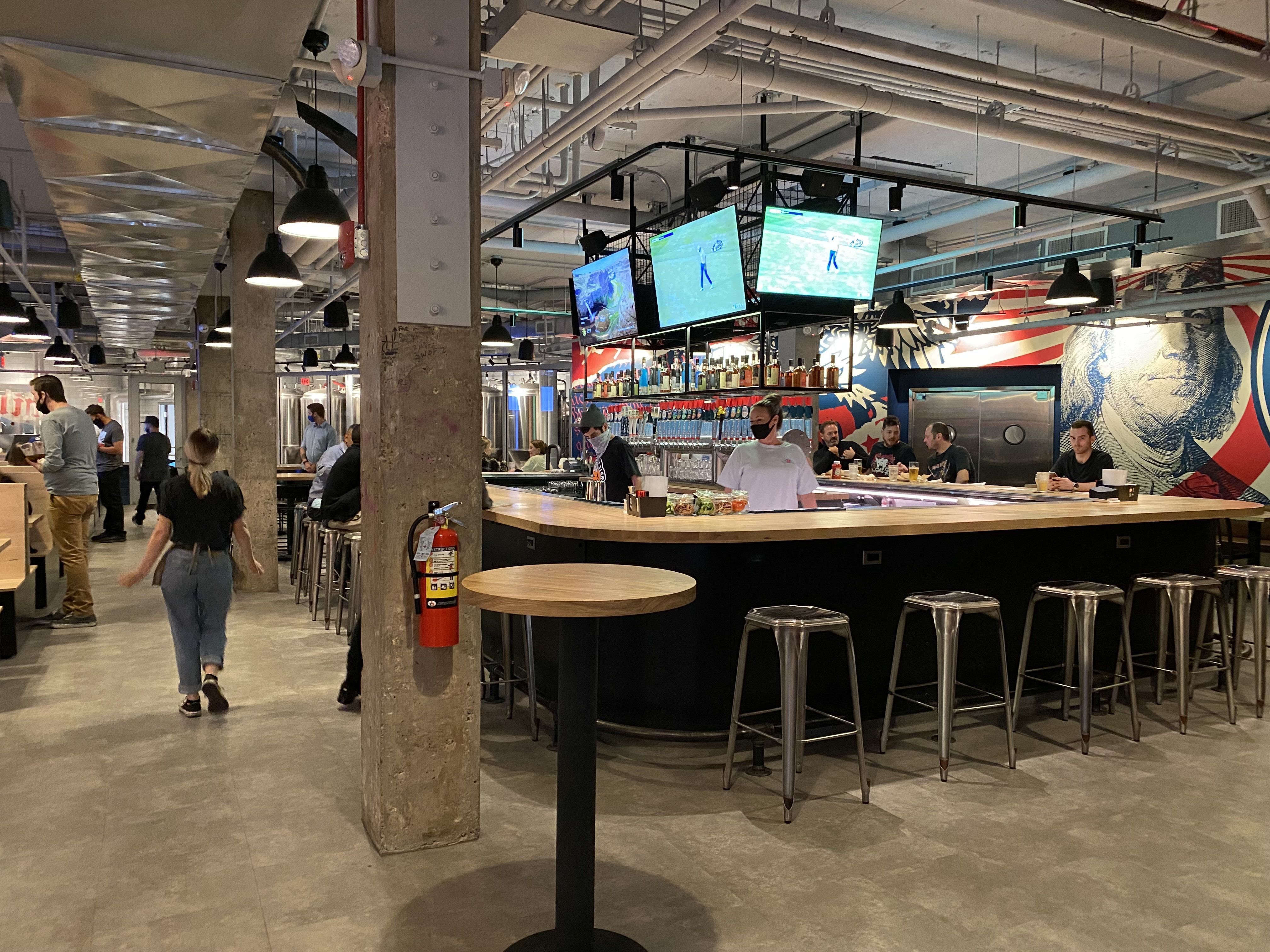
Victory Brewing Company’s Philadelphia taproom was ordered to cease operations over a series of “imminent health hazards” following a Department of Public Health inspection Tuesday.
The Downingtown-based brewery’s three-level bar at 1776 Benjamin Franklin Parkway was ordered to close at 3:20 p.m. Tuesday after a health inspector documented 26 health-code violations.
Among the findings: live roaches, flies, and mice in the first floor bar and prep areas alongside mouse droppings littered throughout the nearly 14,000-square-foot space.
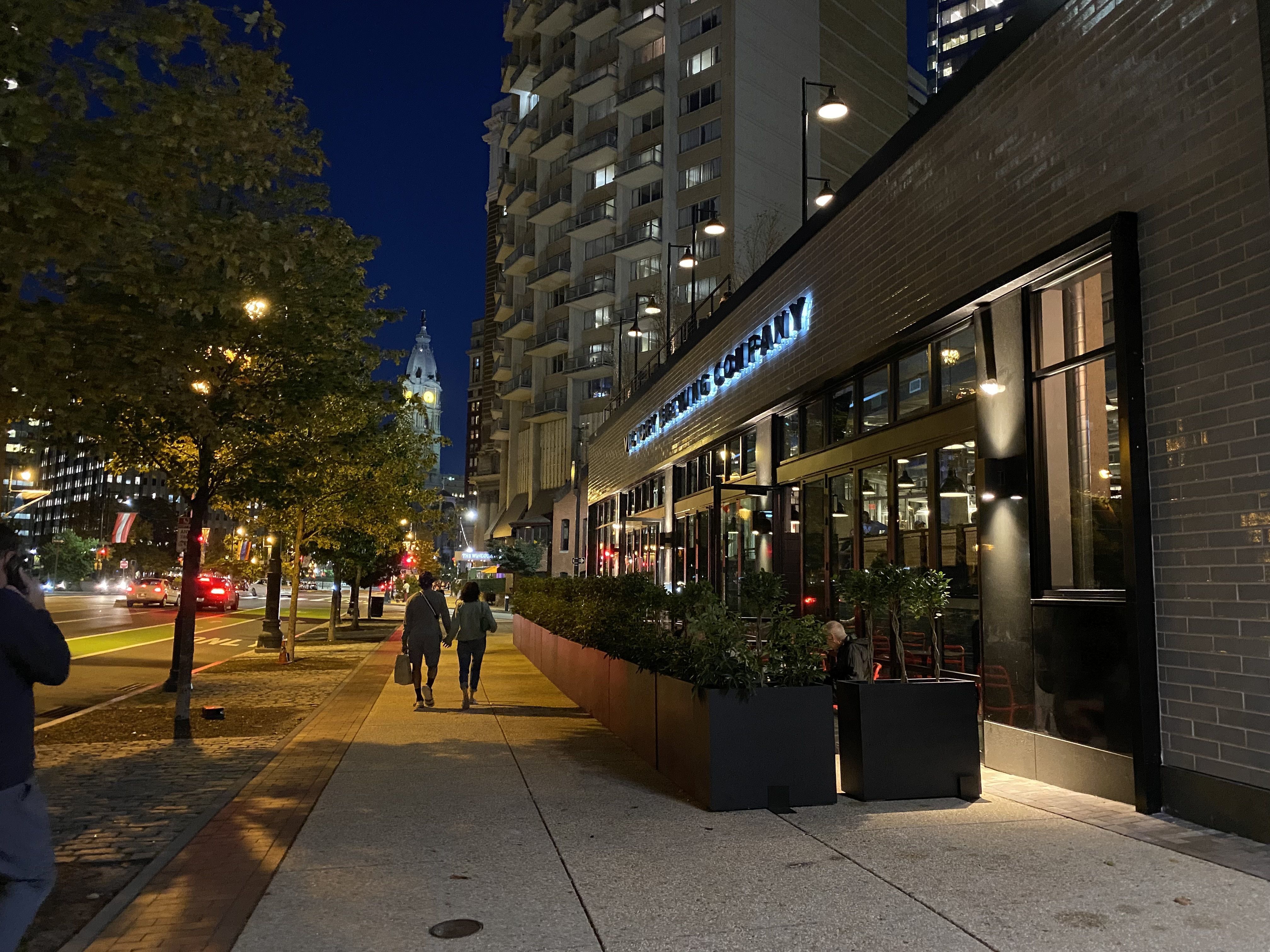
Victory Brewing Co.’s taproom replaced the TGI Friday’s at 1776 Ben Franklin Parkway.Michael Klein / Staff
No soap was available at several sinks throughout the brewery at the time of the inspection, the report stated, and employees were observed working without washing their hands. Black specks and orange residue had accumulated inside the ice machine, while several soda guns were “not clean to sight,” the report said.
Victory Brewing must remain closed for at least 48 hours and cannot reopen until it pays a $315 fine and passes a new health inspection. The bar announced via Instagram that it would be closed Wednesday with plans to reopen Thursday.
“The cleanliness and safety of our taproom are of paramount importance to us. They are ingrained in our daily routines and reinforced by the professional partners we work with. We have always been in compliance with the health department since opening, which is why we take this week’s report extremely seriously,” Matt Reimold, the area operations manager for Victory Brewing, wrote in response to an Instagram comment asking about the closure. “We are taking immediate action to resolve all issues and will reopen only when they have been fully addressed.”
A pest control service is “on site” to address the vermin-related violations, Reinhold wrote. Victory Brewing has maintained regular pest control service throughout doing business, Reimold wrote in the comment.
Health inspections are typically viewed as snapshots in time and may not necessarily reflect an establishment’s day-to-day conditions. That hasn’t stopped at leastone corner of the internet from fixating on Victory Brewing’s violations — which, to some, feel like taproom sins.
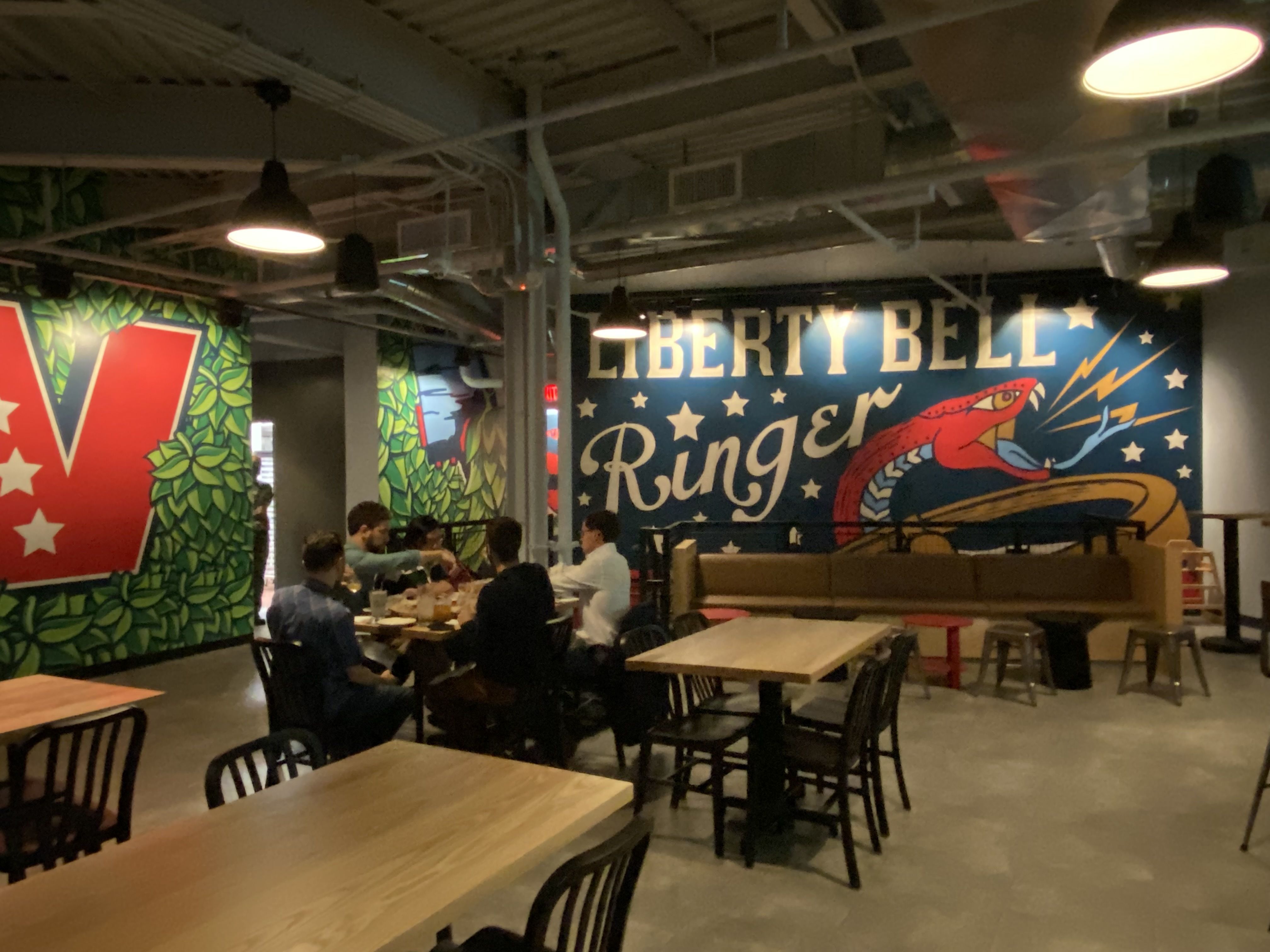
The first floor bar at the center of Victory Brewing Co.’s Philadelphia taproom, which opened on the Benjamin Franklin Parkway in 2021.Michael Klein / Staff
“A brewery not cleaning their own lines. What a trip,” read one Reddit comment on a post about the cease operations order in the popular subreddit R/PhiladelphiaEats.
Cofounded in 1996 by Bill Covaleski and Ron Barchet in the old Pepperidge Farm factory in Downingtown, Victory Brewing has grow into a national craft beer brand known best for its IPAs and easy-drinking Golden Monkey tripel.
The brewery opened its sole Philadelphia location on the Parkway in 2021, and runs two other taprooms in region in Downingtown and Kennett Square. Those remain open.
Frank Spagnuola, 85, formerly of Philadelphia, one of the original American Bandstand dancers, 1957 Chalypso dance champion, longtime interior designer, and gourmet home cook, died Monday, Aug. 17, of congestive heart failure at the Complete Care at Court House nursing center in Cape May Court House.
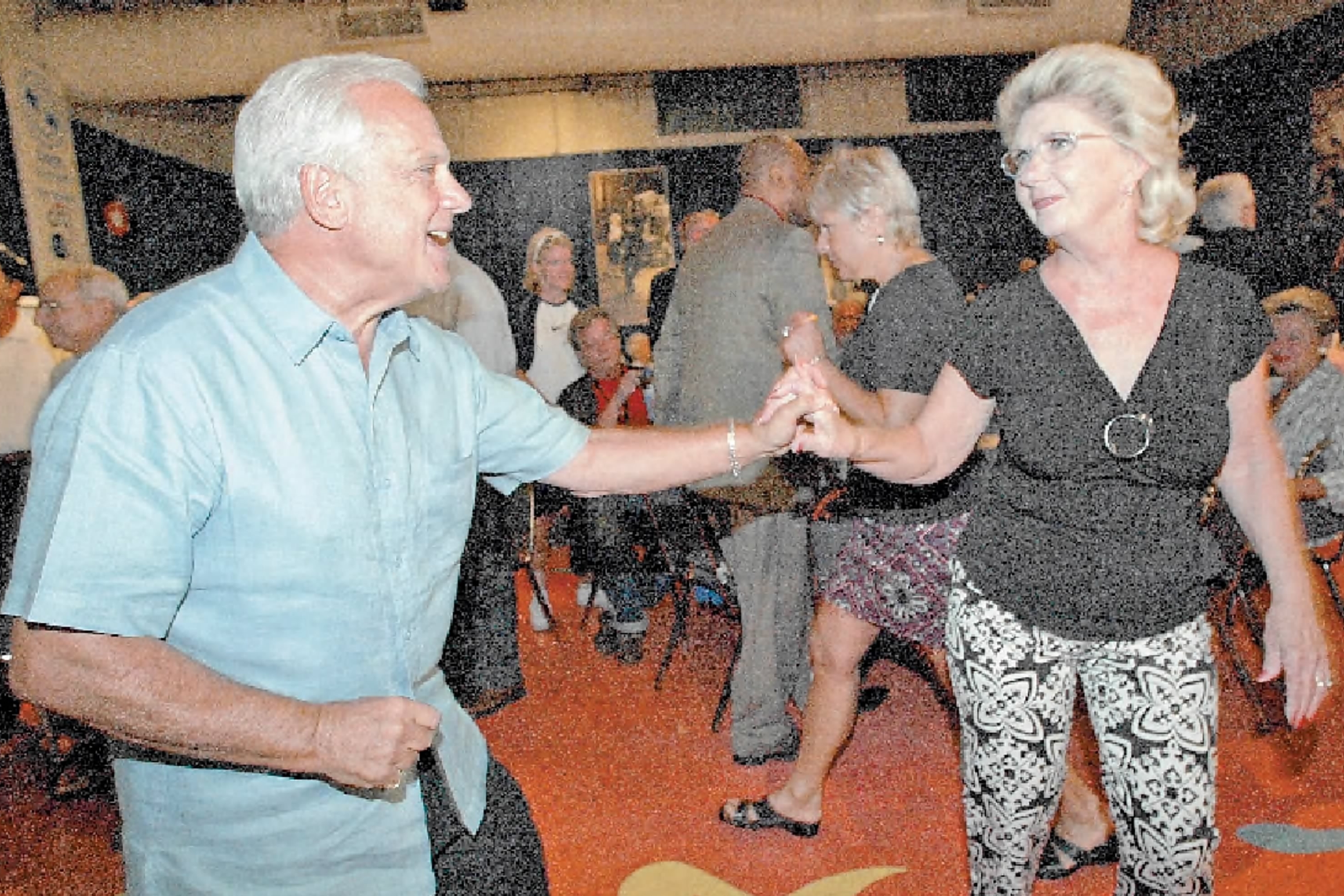
Born and reared in South Philadelphia, Mr. Spagnuola was lifelong friends with performers Bobby Rydell, Frankie Avalon, Fabian Forte, James Darren, and Jerry Blavat, and dozens of other singers, dancers, musicians, and disc jockeys from the neighborhood. He enjoyed socializing as well as music and dancing, and, at 15, became one of the original dancers when the old WFIL-TV station hosted Bandstand and then American Bandstand in the 1950s and ’60s.
The TV station invited local teens to dance to the latest hits in its Studio B on Market Street in West Philadelphia, and Mr. Spagnuola did just that on many afternoons from 1955 to 1963. In 1957, he and partner Dottie Horner finished first in American Bandstand’s first Chalypso contest, spotlighting an original Philly dance that combines the cha-cha and the calypso.
“We would cut classes” to dance on Bandstand, Mr. Spagnuola, a graduate of the old Bishop Neumann High School, said in a 2017 video interview. “We had eight or nine classes, and we would leave, like, the sixth class. Father would say, ‘Where are you going?’ Well, you know where we’re going, Father. The priests watched the show. I mean, everybody watched the show.”
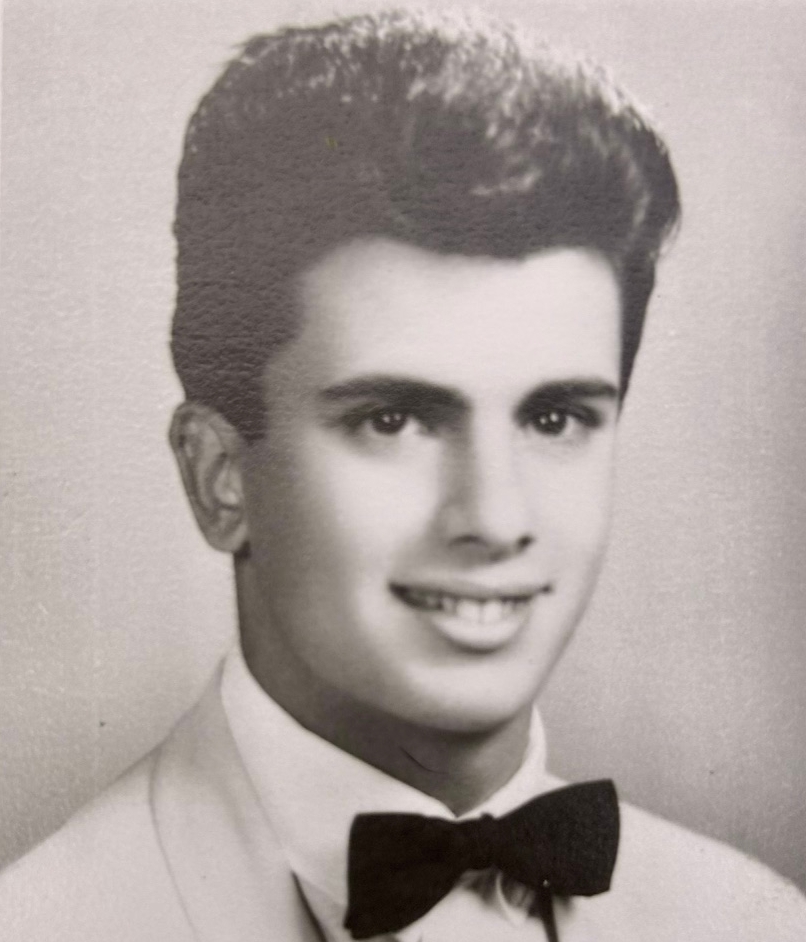
Mr. Spagnuola graduated from the old Bishop Neumann High School in 1958.Courtesy of the family
It was downstairs at Studio B, Mr. Spagnuola said, that he encountered Bandstand guest stars Pat Boone, Bobby Darin, and Sal Mineo. As a teen in the neighborhood, he performed in local skit shows with Rydell and played football and double-dated with Fabian.
On Facebook, Fabian called Mr. Spagnuola “a gentleman and talented dancer,” and said: “Frank Spagnuola was one of the most popular and beloved regular dancers on Dick Clark’s American Bandstand during the show’s iconic Philadelphia era.”
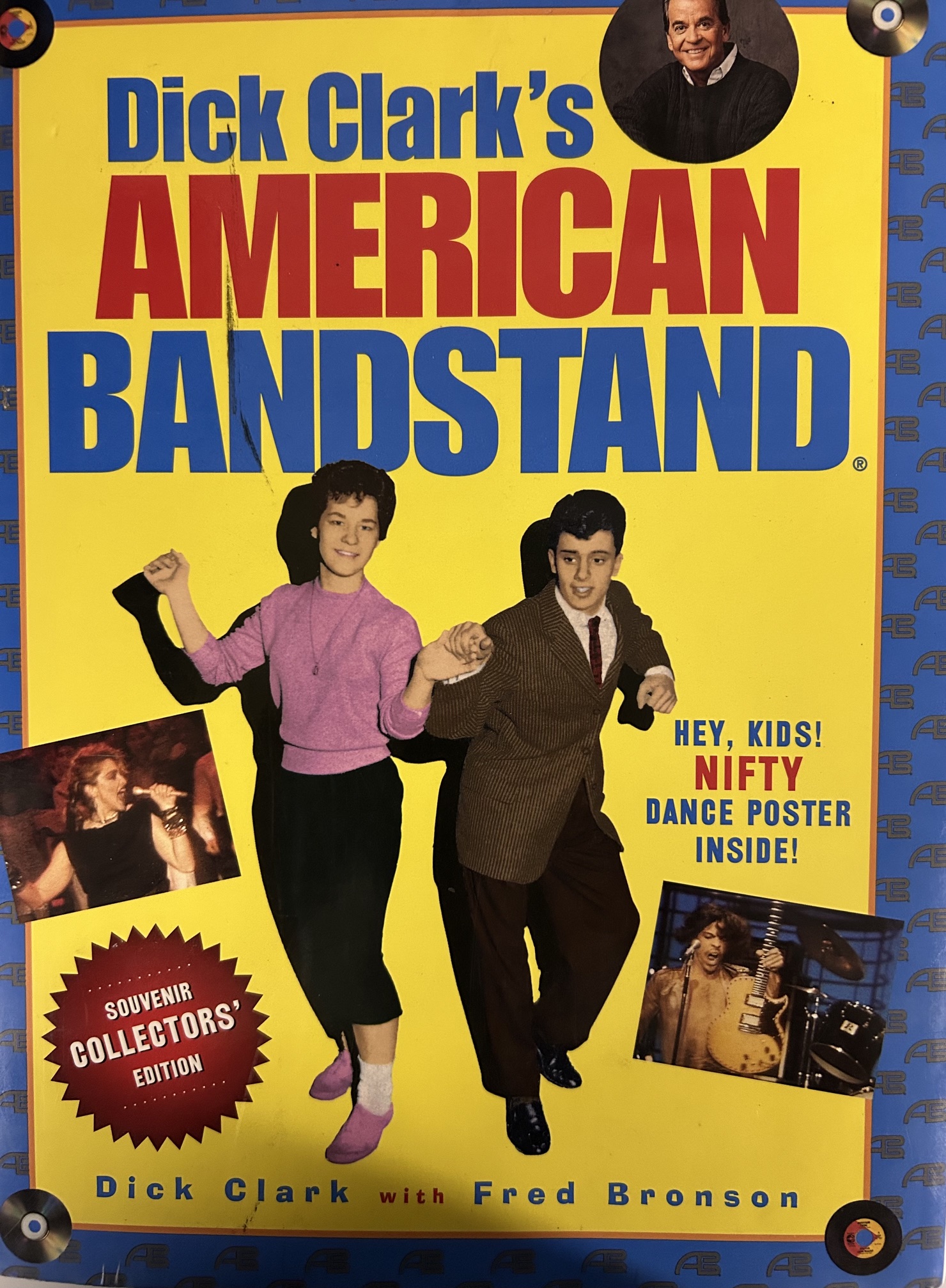
Mr. Spagnuola is profiled at history-of-rock.com and bandstand.cafex.biz, and he and Dottie Horner are on the cover of the 1997 Dick Clark’s American Bandstand souvenir collectors’ magazine. He is featured in the 1997 New Jersey Network documentary Bandstand Days and called the show “part of American history.”
Over the years, as Bandstand’s popularity ebbed and flowed, he routinely reconnected with other original dancers — they were called the Bandstand Regulars — at reunions, public events, and celebrations in the region. American Bandstand went off the air in 1989.
Mr. Spagnuola and his dance partner, Dottie Horner, were on the cover of this 1997 souvenir collectors’ magazine. Courtesy of the family
“Everybody loved Frank,” said longtime disc jockey and music director Tommy McCarthy. “He had an infectious smile. He was a guy you just liked.”
Friends on Facebook called Mr. Spagnuola “movie star handsome,” “a rock & roll soldier,” “a Bandstand pioneer,” and “one of the nicest gentleman you could ever meet.” One said: “Wonderful dancer, wonderful person, wonderful friend.”
After graduating from Bishop Neumann in 1958, Mr. Spagnuola worked in a high-end carpet store, studied interior design, and earned an associate’s degree at the old Philadelphia College of the Arts. He became an interior designer, worked for Sears at the Moorestown Mall for 25 years, and was active with the American Society of Interior Designers.
On his own, he did private design work for Muhammad Ali, former Eagles assistant coach Jon Gruden, and other local notables. “He cultivated an eye for beauty and design,” his family said in a tribute, “shaping spaces with elegance and functionality.”
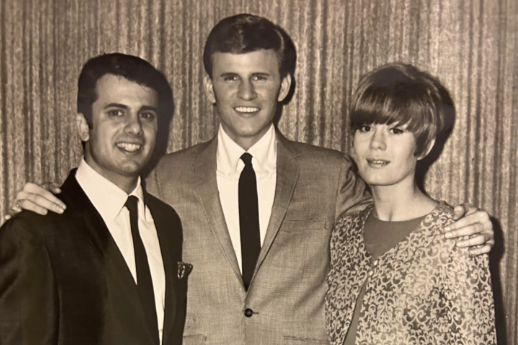
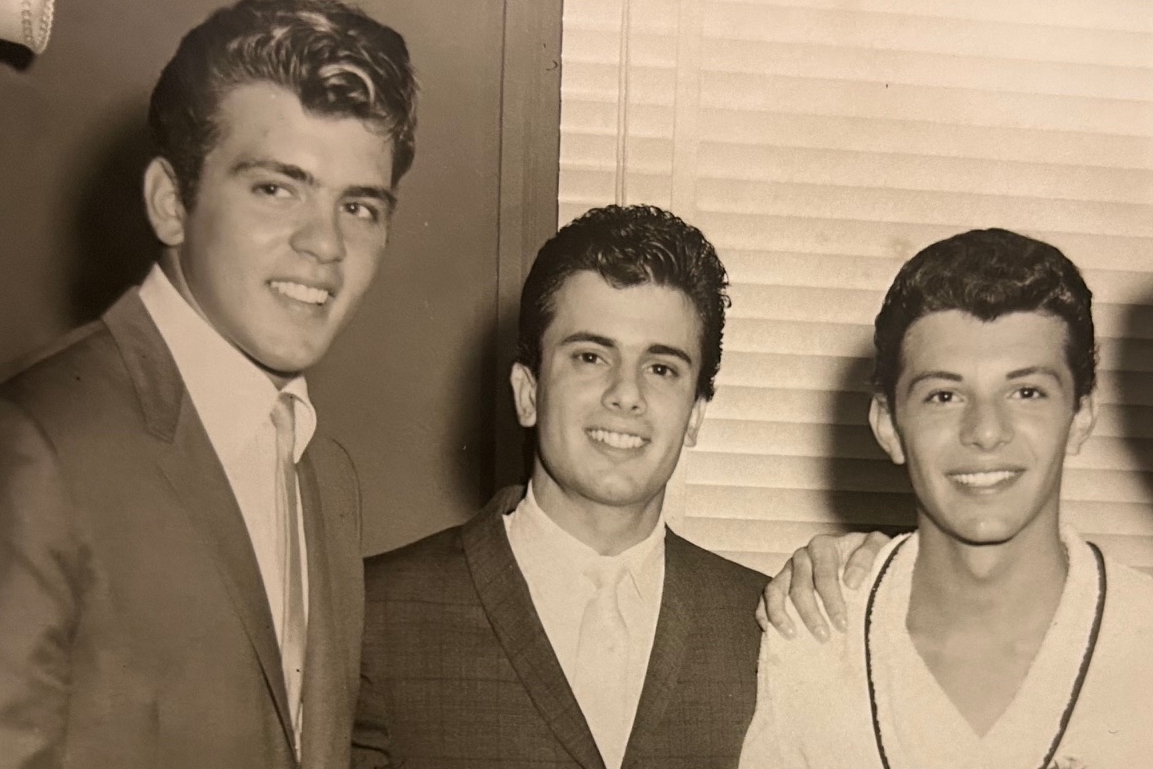
Mr. Spagnuola (left above) stands with his wife, Janet, and Bobby Rydell. Below, he is flanked by Fabian (left) and Frankie Avalon.Courtesy of the family
Francis Michael Spagnuola was born Nov. 2, 1940. The oldest of three brothers, he liked to hang out at the Jersey Shore and dine on Italian food.
He married Janet Moretti, and they had a son, Stephen, and a daughter, Carrie, and lived in South Philadelphia and Center City. His wife died in 2005.
Mr. Spagnuola moved to Cape May later, became an accomplished home cook, and was known for his crab salad dip. He was passionate, upbeat, and funny, everyone said, and his children called him “a steadfast anchor and a lifelong source of support.”
His family said: “He leaves behind a memory as warm and enduring as the summer shore and the Wildwood days he so dearly cherished.”
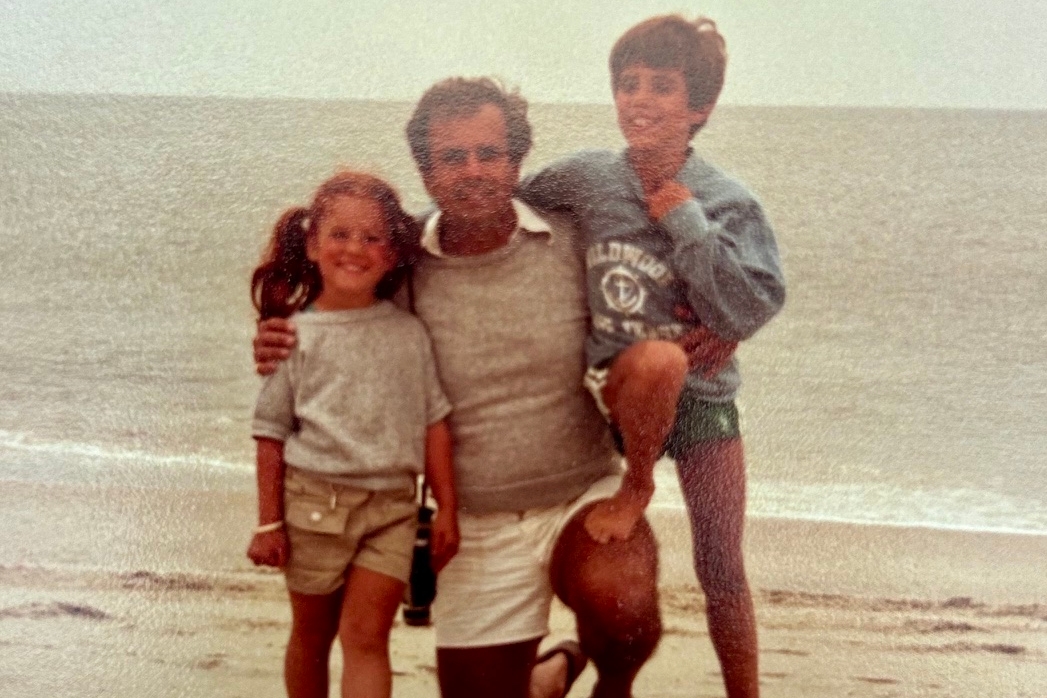
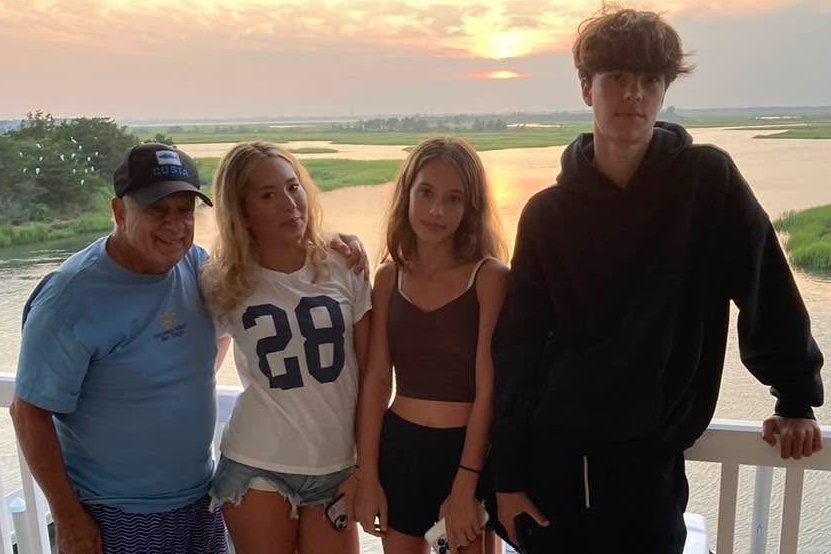
Mr. Spagnuola enjoyed time with his children (above) and grandchildren (below).Courtesy of the family
His son said: “He loved life. He loved people. He loved characters.”
In addition to his children, Mr. Spagnuola is survived by three grandchildren and other relatives. Two brothers died earlier.
A day after U.S. marshals captured the man accused of menacing pedestrians in Center City while wearing a Chucky-style mask, Philadelphia District Attorney Larry Krasner urged victims to come forward, saying prosecutors are eager to pursue additional charges against the man whose antics terrorized people and went viral.
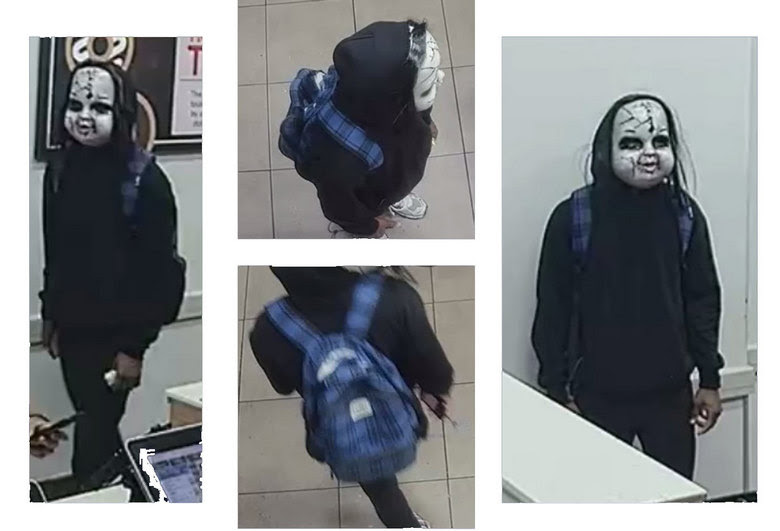
Zymire Hughes, 22, was taken into custody on Tuesday night in Las Vegas by marshals who tracked him across the country. Authorities said Hughes wore a frightening mask to harass and scare more than a dozen people, including a woman he approached while she was jogging near City Hall earlier this month and asked, “Are you ready to die?”
As the 40-year-old woman ran from him, Krasner said, she fell and suffered injuries that required hospitalization and weeks of recuperation.
Hughes faces aggravated assault and other charges in connection with that incident, the district attorney said, and prosecutors are reviewing as many as 15 other reported incidents involving the masked man that same morning.
“If more victims are identified,” Krasner said, “we look forward to prosecuting him in other cases as well.”
He added: “Who’s scared now?”
Authorities have not identified most of the people who appear to have been confronted or frightened by the masked man. But in a widely publicized incident, Jameka Wilson, a 25-year-old actress, told several news outlets that a man wearing a similar mask approached her on her way to an exercise class near City Hall and that she kicked him in the chest.
Philadelphia police said that Hughes did not display a weapon during the incidents and that the woman who fell was the only person known to have been injured. Investigators have said they believe he may have been frightening people to create social media content.
On Wednesday, Krasner dismissed the idea that Hughes could characterize the crimes as online entertainment.
“You can’t just say, ‘I’m an influencer,’ and commit crimes,” he said. “You can’t just terrorize people, terrorize a community, because the reaction of someone who believes she might die at any second, you find funny.”
Hughes remained in custody Wednesday in the Clark County Detention Center in Las Vegas, court records show, and was scheduled for a court hearing Thursday.
After Hughes is extradited to Philadelphia, prosecutors will seek “very high bail” in an effort to keep him in custody while the case proceeds through court, Krasner said.
“One of the questions that bail answers is: Will this person run?” Krasner said. “I mean, yes. Obviously, he already has. … Running away is the ultimate way to high bail.”
Hughes’ extradition could take as little as a week or stretch into months, depending largely on whether he contests his return, Krasner said.
Hughes’ flight from Philadelphia took him from New Jersey to Florida and then Nevada, authorities said.
He left the Philadelphia area Aug. 19 from Trenton-Mercer Airport in Ewing, N.J., according to the U.S. Marshals Service. He flew to Orlando and then to Las Vegas.
Philadelphia and Las Vegas deputy marshals began working together Friday, said Robert Clark, a supervisory deputy U.S. marshal, and spent the weekend trying to locate him.
Investigators eventually tracked Hughes to an apartment complex in southeast Las Vegas, where they believe he had been staying for about five days, Clark said.
Marshals arrested Hughes about 8 p.m. Tuesday. Clark said Hughes tried to pull away from his handcuffs and had to be subdued by deputy marshals.
Hughes’ arrest followed a week of intense public attention after Philadelphia police released images of him and asked residents for help in finding him. The case had already gone viral because of photographs and videos showing a man wearing a cracked, baby-faced mask resembling the horror character Chucky from the movie Child’s Play.
Prosecutors are continuing to review evidence, Krasner said, and “will be pursuing all charges that apply.”
Anyone who was approached or menaced by the masked man can contact the district attorney’s office at 215-686-8000.
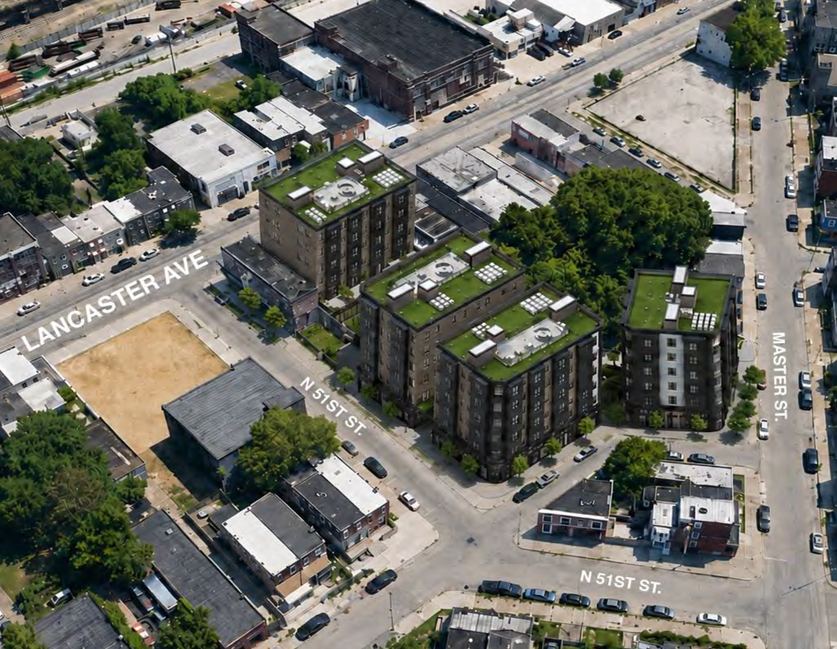
Haverford Square Properties wants to transform an industrial stretch of Lancaster Avenue into a residential and small-business hub, with 420 apartments and more than 30,000 square feet of commercial space across three projects.
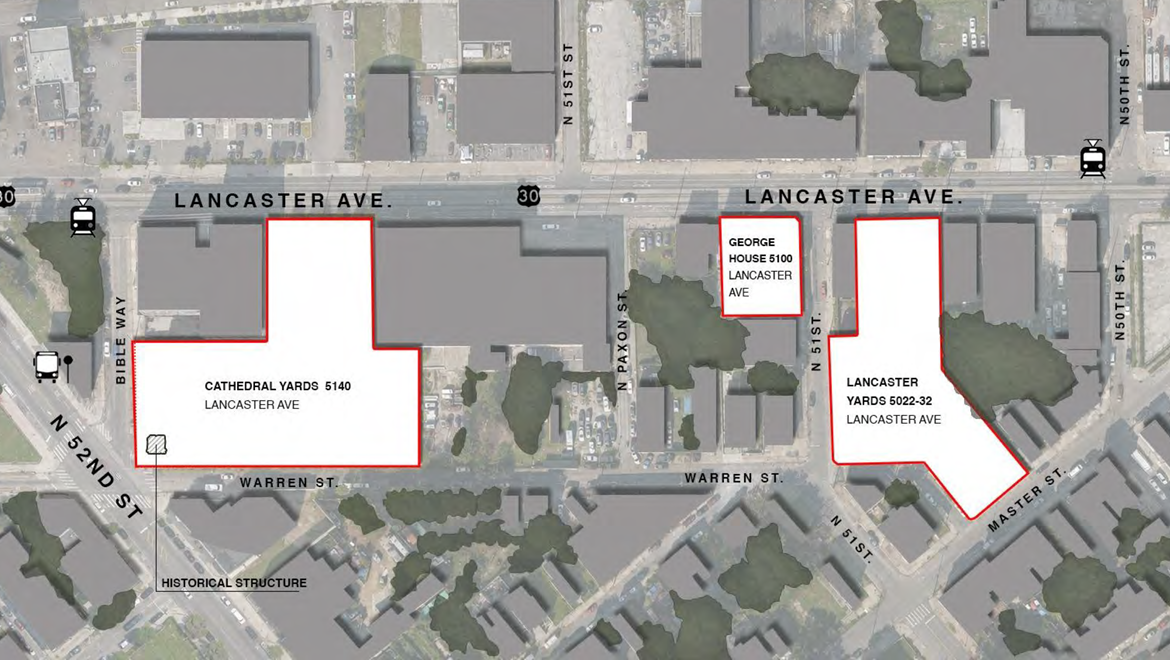
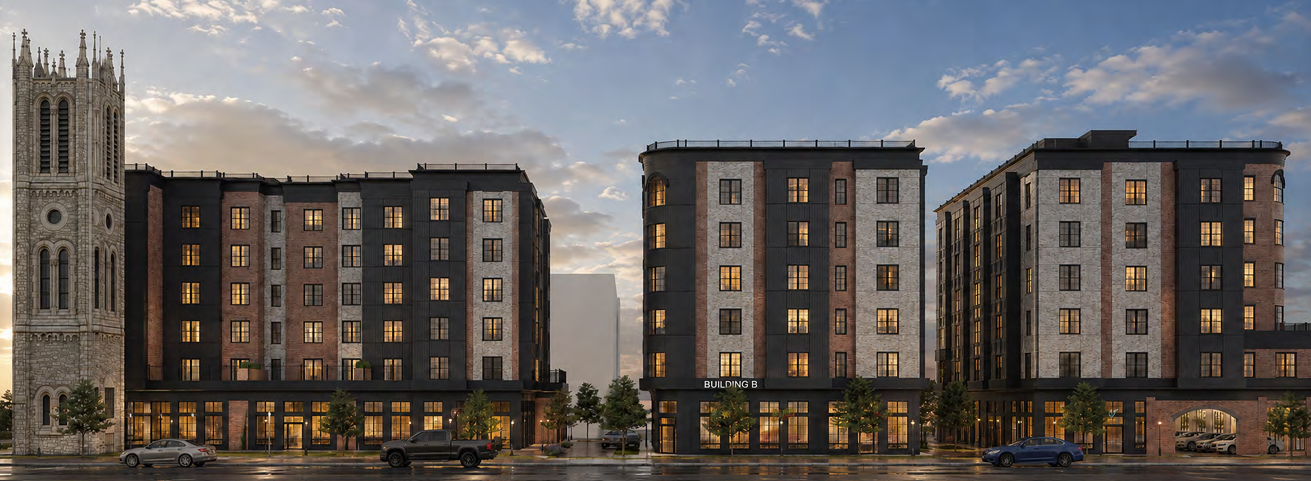
The ambitious plan would unfold between 50th and 52nd Street, with the 215-unit Cathedral Yards at 5140 Lancaster Ave. to the northwest and the 160-unit Lancaster Yards to the southeast at 5022-32 Lancaster Ave. Cathedral Yards would take the place of the Greater Bible Way Temple, a church that burned down in 2019.
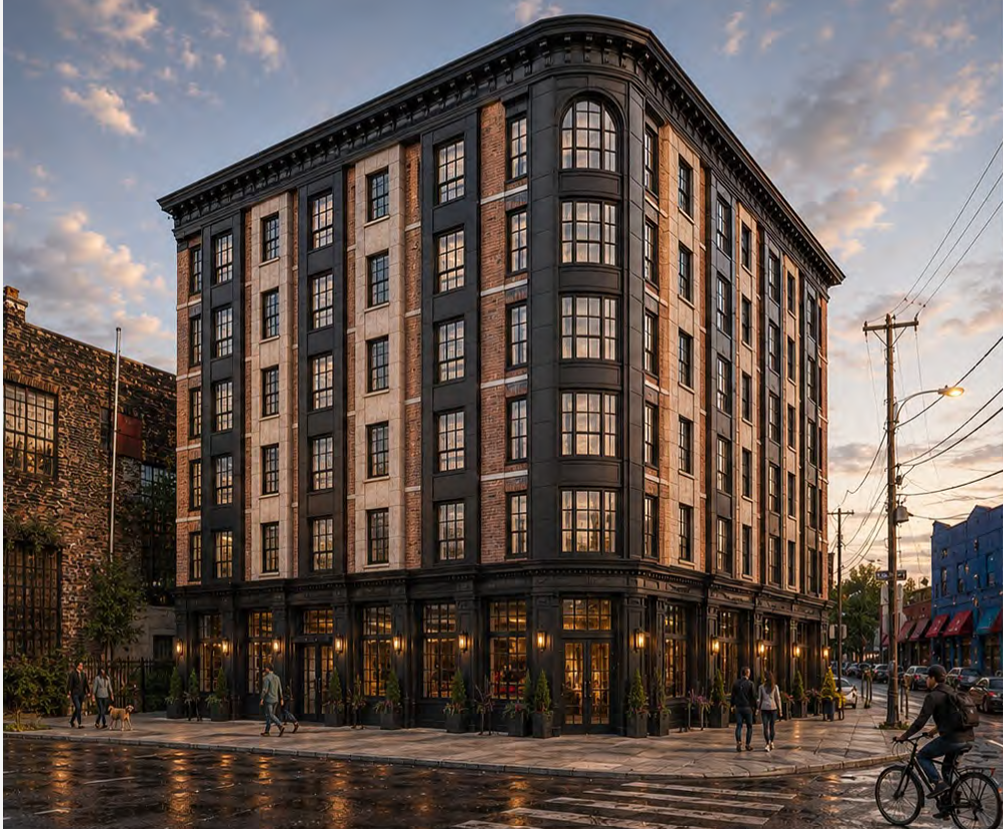
The two complexeswould comprise four connected six-story buildings, with roof decks and commercial space on the ground floors. A smaller building at 5100 Lancaster Ave. would include 45 mostly two-bedroom apartments, and Haverford Square’s headquarters.
On Tuesday, the Cathedral Park Community Development Association held a meeting about the project. Attendees shared a variety of concerns, but the chief issue was parking. The project has 65 parking spaces for more than 400 units.
“That building is gorgeous, but it has an issue and that issue is parking,” said Kim Fuller, a neighborhood leader. Haverford Square noted that because the project sits directly on a trolley line, and enjoys frequent bus service, parking is less necessary.
Rents will be kept relatively low for new construction, with a one-bedroom unit priced under $1,650 and two-bedroom units under $1,900. Sixty percent of the 420 units will be one-bedrooms, and the rest two-bedrooms.
Haverford Square will offer “workforce rents for, like, a SEPTA driver or city worker,” said German Yakubov, president of the development group.
“[Households] making between 12 and 16 bucks an hour that have two incomes can easily afford a brand new apartment with amenities that they wouldn’t otherwise be able to afford in Center City or Northern Liberties,” he said.
A map of Haverford Square Properties’ three proposed projects along Lancaster Avenue.Wisdomtree Group
“We’re able to control a lot of the costs,” said Yakubov, because Haverford Square has its own construction company and in-house architecture. “And because we’re able to build in other places, we’re able to negotiate better pricing for a lot of our material.”
For this project, low rents are also manageable because the company purchased the land for the three properties for $4.5 million, relatively cheap.
Ten percent of the apartments in Lancaster Yards and Cathedral Yards will have affordable rents as part of Philadelphia’s Mixed Income Housing Bonus program, which allows developers to build denser projects than zoning wouldtypically allow — as long as they include affordable units.
Those 42 units will be available to people making less than 50% of area median income, or under $42,000 a year for a one-person household.
Yakubov says the commercial space is key to the project, and Haverford Square plans to seeksmall businesses in the neighborhood, such asfood truck operators who want to move into a brick-and-mortar space.
“We’re really targeting businesses that have a following already, but don’t have the financial means to open up a brick-and-mortar location,” said Yakubov.
“We don’t anticipate opening any bars. We’re not going to have any places to serve alcohol or smoke shops or sell cigarettes or anything that would be a negative impact to the neighborhood,” he said.
An overhead rendering of Haverford Square’s 160-unit Lancaster Yards proposal, at 5022-32 Lancaster Avenue.Wisdomtree Group
Parking wars
At a Tuesday evening meeting, residents pushed back on the project, some saying the proposed buildings were too tall and others sharing fears of displacement.
But the most significant and frequent feedback was about parking.
Haverford Square proposed 65 parking spaces at Cathedral Yards, and none at Lancaster Yards, highlighting nearby bus and trolley routes.
“Please take it into consideration to eliminate that bottom row [of the building] and put parking in. Parking is so important,” said Fuller, an employee of Councilmember Curtis Jones Jr., who represents the area.
Audible groans rang out when Yakubov noted that many of his company’s tenants do not own cars — partly because they often have rental vouchers that are reserved for lower-income residents.
“No one bought it,” said Mark Harris, of the Cathedral Park Community Development Association, in an email following the meeting.
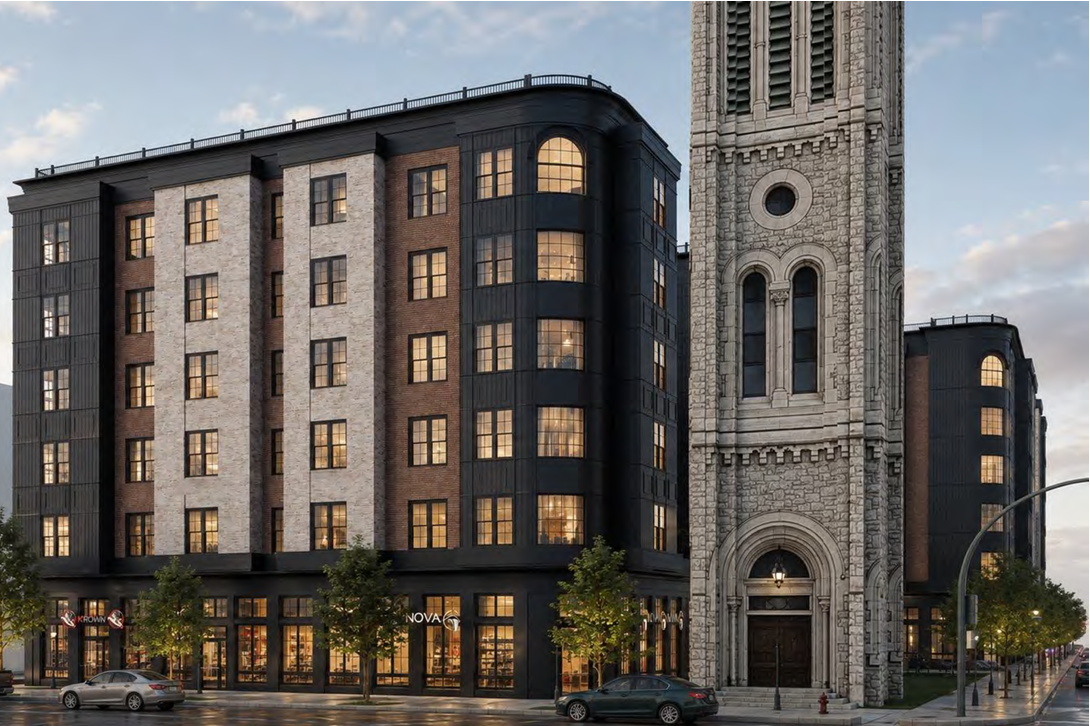
A rendering of Cathedral Yards, with the remnant tower of Greater Bible Way Temple at the left.Wisdomtree Group
At the end of the meeting, 21 attendees voted to oppose the project before the zoning board, while four were in support. Comments on Zoomwere more supportive of Haverford Square’s plans, compared with the in-person attendees.
Yakubov said on Tuesday that he would consider adding more parking in place of some commercial space.
Zoning approvals
Neighborhood support could be important for Haverford Square’s plans. Although the Philadelphia-based developer already owns the three properties on Lancaster Avenue, they need permission from the Zoning Board of Adjustment to move forward on this project. The board takes community feedback into consideration.
As currently proposed, the project exceeds the allowed number of units and is taller than existing land-use regulations allow.
Yakubov says additional height is needed to accommodate commercial space with high ceilings.
He argues that the zoning board hasrecently given other projects permission to build above height limits along Lancaster Avenue, so he is optimistic.
Although the Haverford Square project does not have many immediate residential neighbors, the nearby One Art Community Center is critical of the developer’s plans. The nonprofit organization sought to buy the Greater Bible Way Temple property to expand their services.
Greater Bible Way Temple sold to Haverford Square properties instead. In advance of Tuesday’s meeting, One Art sent an email to its supporters criticizing Yakubov.
A rendering of one of the many six-story apartment buildings Haverford Square Properties has proposed for Lancaster Avenue between 50th and 52nd Streets.Wisdomtree Group
“We’re concerned about the increased traffic. … We have questions around the increased pollution and parking issues, sanitation issues, and the rise of the cost of living for the current residents,” said Malaika Gilpin, co-director of One Art, at the Tuesday night meeting.
In response to the group’s concerns, Yakubov suggested bringing One Art programming into the commercial space in the proposed project.
Yakubov said zoning board support is not essential to the project. If the project does not get approval, Haverford Square will move forward with a smaller version of the project without commercial space.
“If for whatever reason the wheels fall off and we’re not able to get zoning relief, we’re ready to proceed,” said Yakubov. But, he added, “I think that the commercial component it would be a huge boost to the community and to the city.”
Editor’s note: This story has been edited to update the number of units in the proposed development.
There are ghosts rumbling through the rafters at Mr. Edison. And I’m not sure they’re happy.
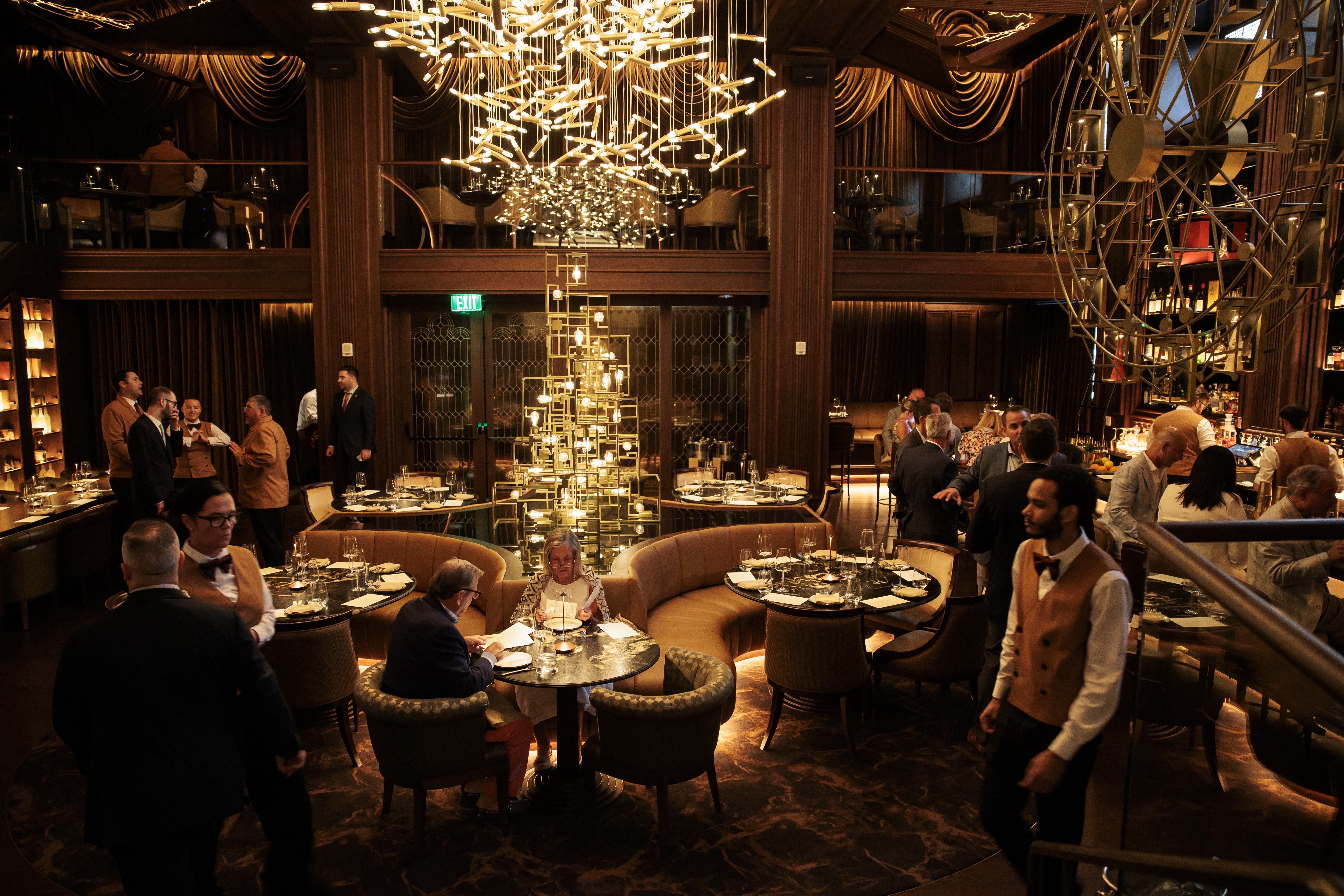
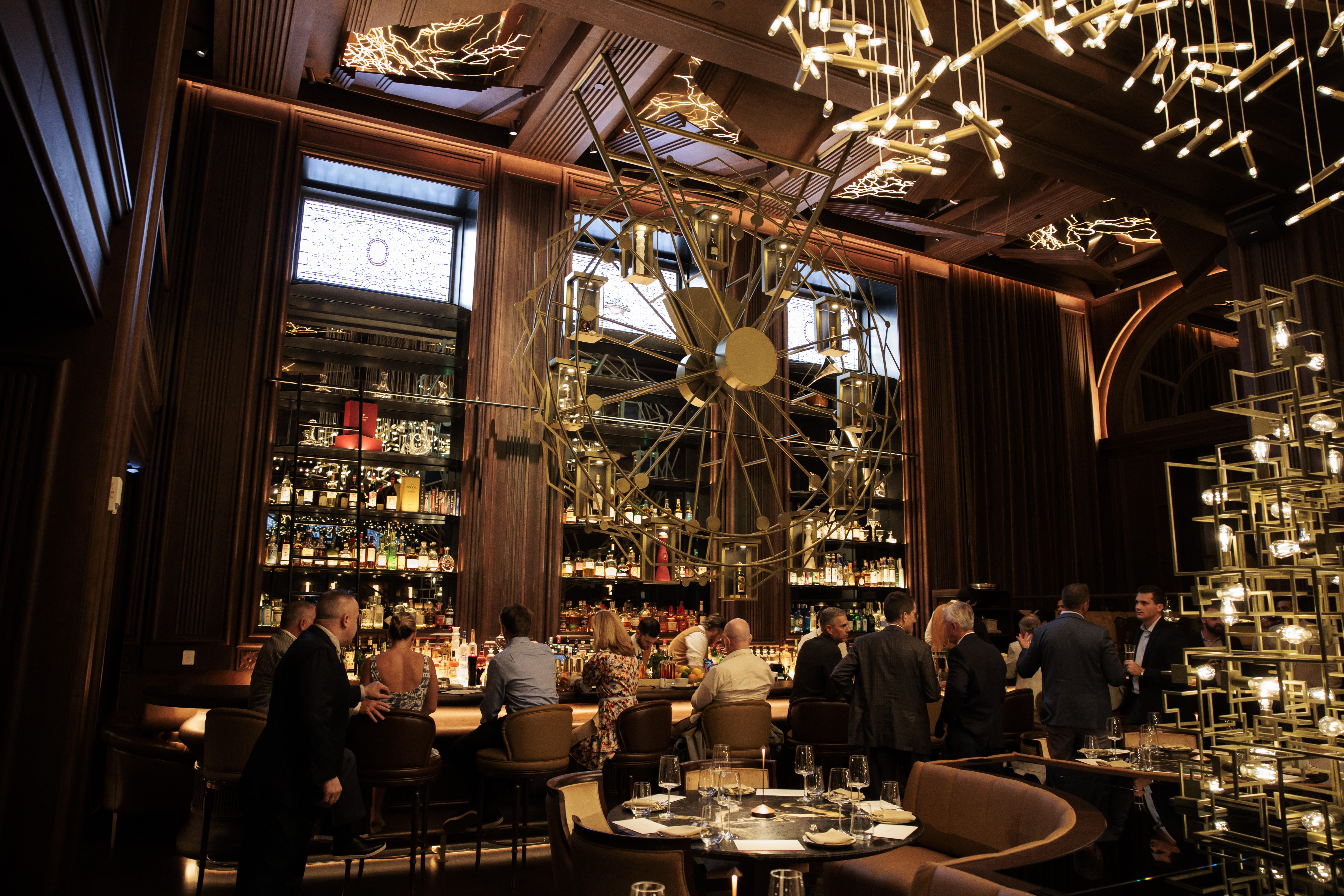
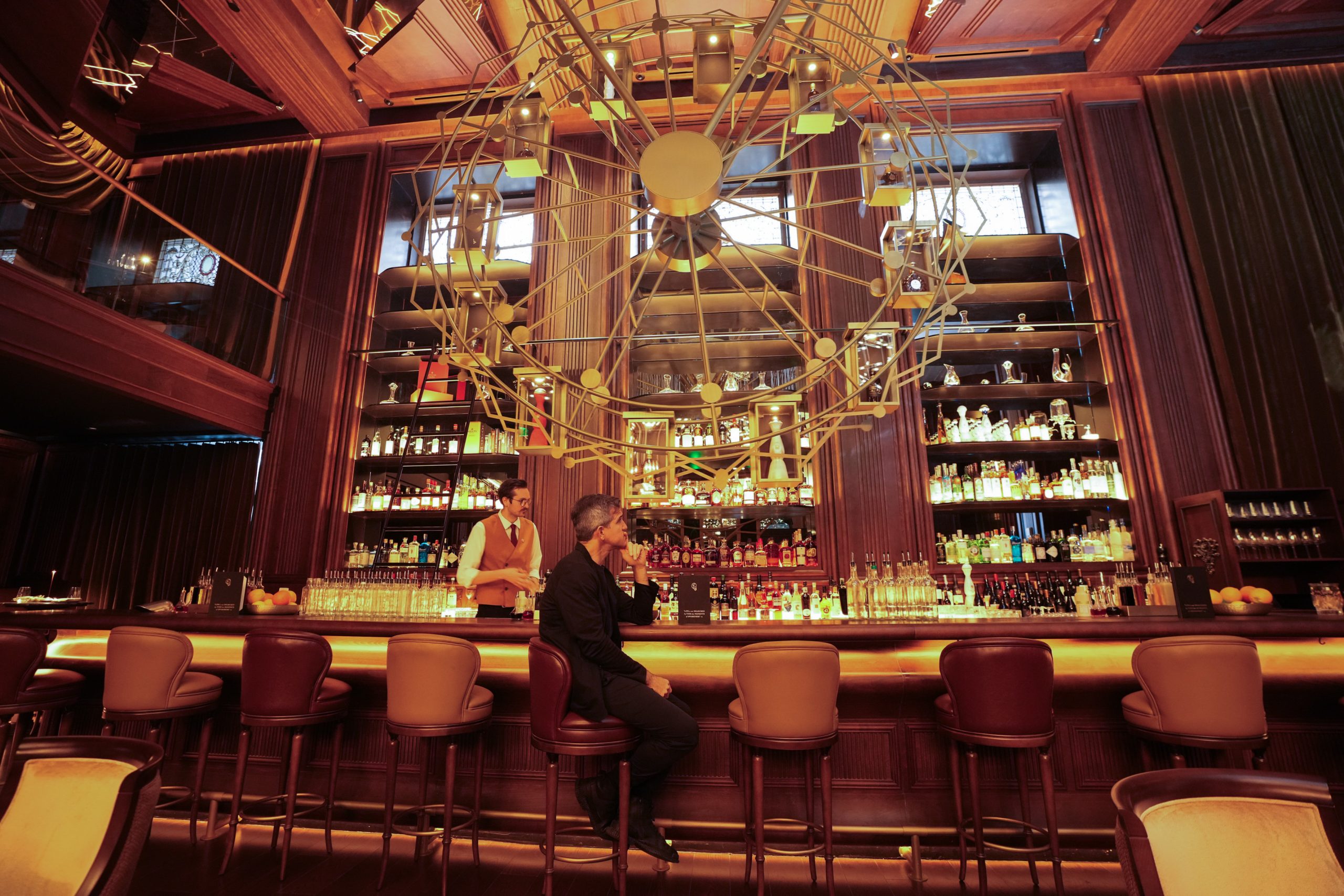
So much energy — both living and remembered —pulses through this dramatic two-story restaurant inside the landmark Bellevue hotel that, as we follow a hostess in what looks like silk pajamas up the long staircase to our table on the mezzanine, the ceiling panels appear to explode with a mirrored tableau of reflected lightning bolts. A chandelier of suspended Edison bulbs showers the plush booths below in a cascade of frozen sparks while a 12-foot brass Ferris wheel nearby cycles slowly over the bar, dangling some of the world’s most extravagant bottles of booze in its hydraulic glass cages.
Am I the target audience for a $350 pour of the Louis XIII “on rotation”? Definitely not. But Mr. Edison has obviously found them, given its guests supposedly go through a bottle a week of the famed cognac (which retails in Pennsylvania for $5,300).
The bar at Mr. Edison in the Bellevue Hotel on Tuesday, Aug. 18, 2026 in Philadelphia.Monica Herndon / Staff Photographer
This carnival of pomp and perpetual motion is overwhelming to take in all at once, along with a live jazz band playing to a crowd tightly cinched into formalwear and glittering jewels. The spirit of Thomas Edison, who in 1904 helped electrify this grand old hotel, would no doubt be moved by this namesake tribute from owner Jeffrey Chodorow, the pioneering restaurateur with a hand in more 60 restaurants, including China Grill and Asia de Cuba.
While those two stars of late 20th-century dining in New York (and Miami) were trendsetters for the eater-tainment fusion movement, Mr. Edison is a decidedly nostalgic throwback to a 1940s-style supper club. It’s built around updates to classic Philly foods, from fried oysters and chicken salad zapped with kimchi to more dutiful re-creations of cakes from Old Original Bookbinder’s and Frog.
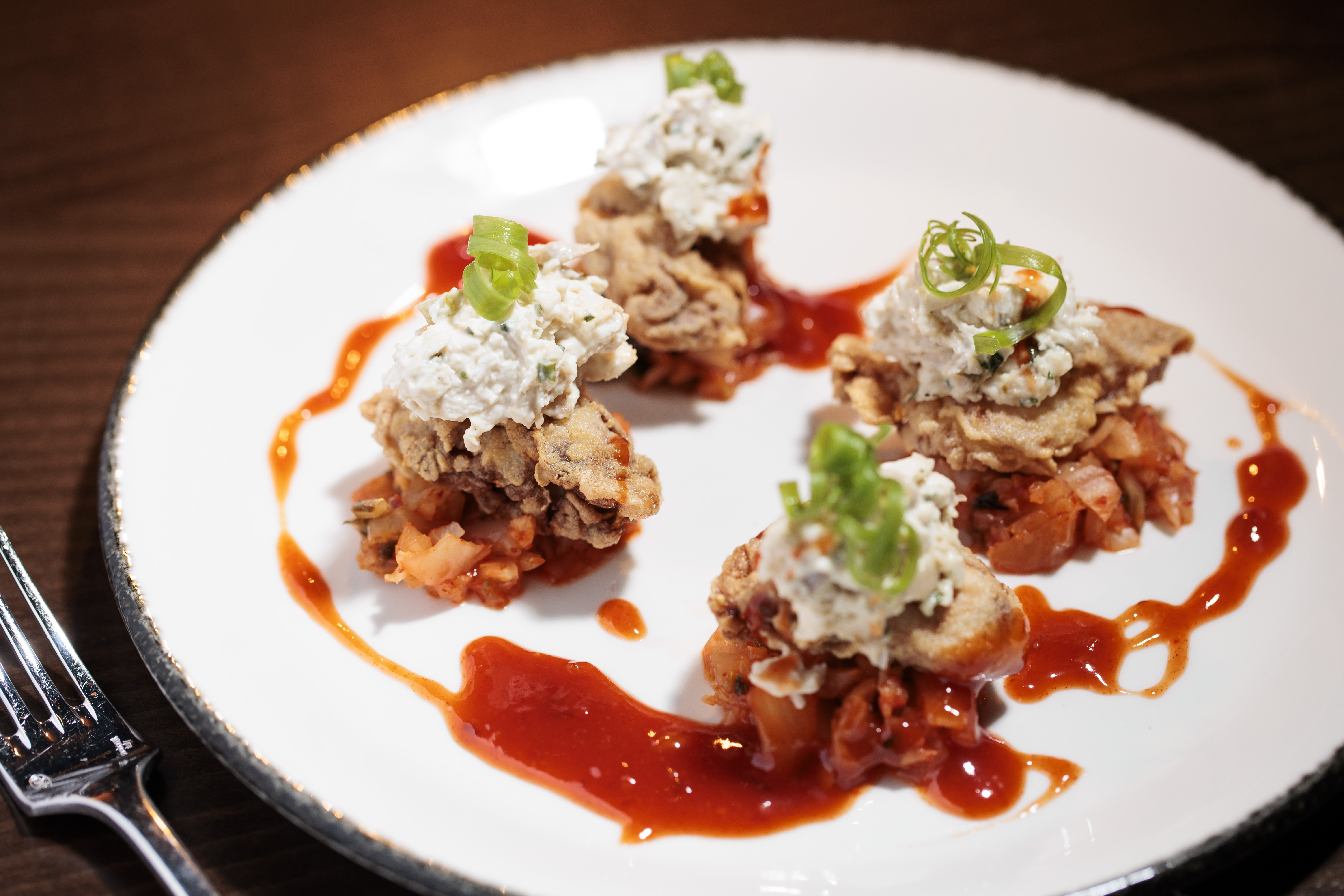
The Korean fried oysters at Mr. Edison in the Bellevue Hotel on Tuesday, Aug. 18, 2026 in Philadelphia.Monica Herndon / Staff Photographer
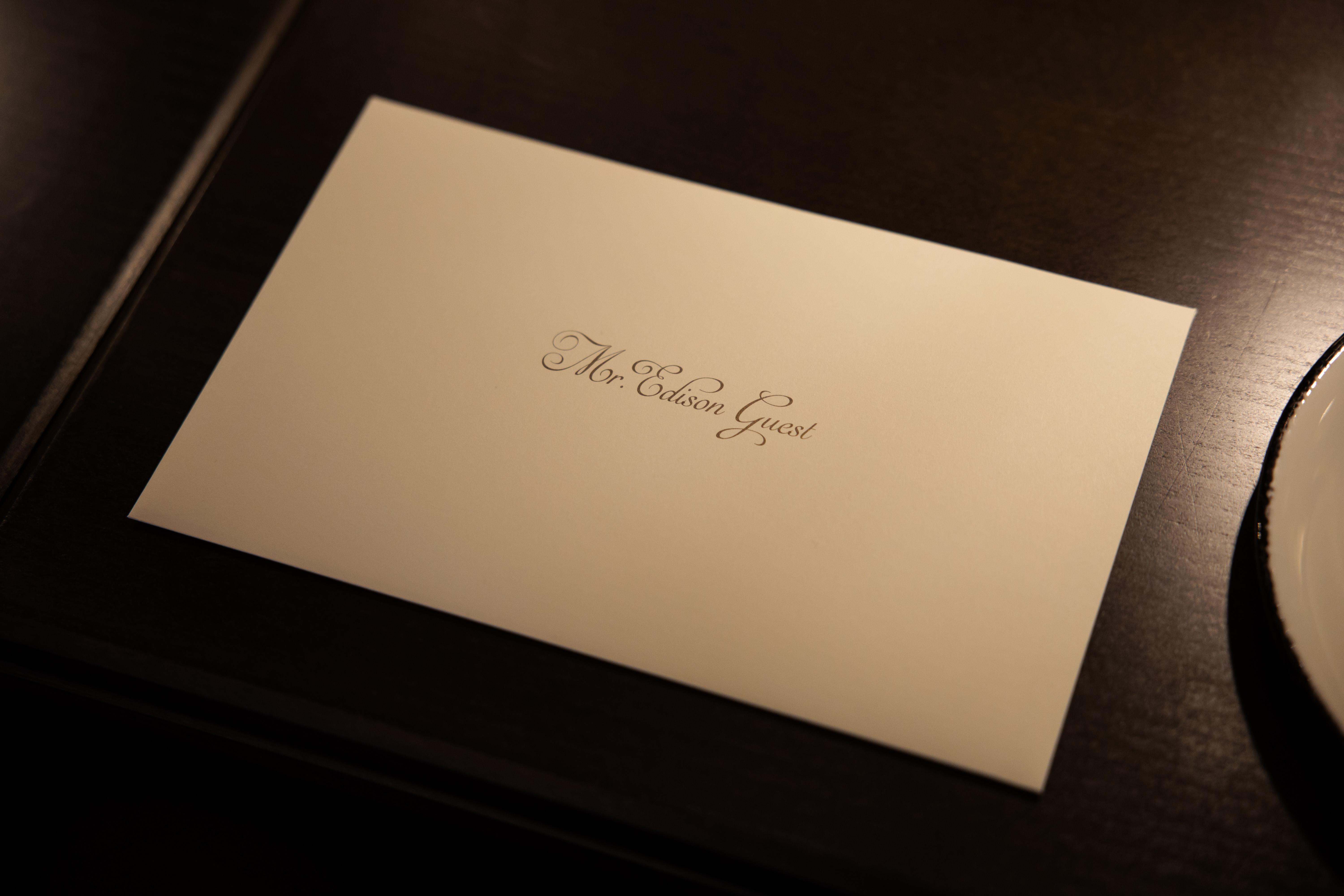
For Chodorow, 76, who studied at Wharton, Mr. Edison’s food is a love letter to legends of the 1970s restaurant renaissance, whichhe enjoyed while practicing law here in the early 1980s. Names like Le Bec-Fin, Le Panetière, and Jimmy’s Milan are invoked like wishful spells across the menus, which arrive tucked inside a souvenir envelope like wedding invitations. (Chodorow, not coincidentally, threw an elaborate engagement party for his wife at the Bellevue in 1982.)
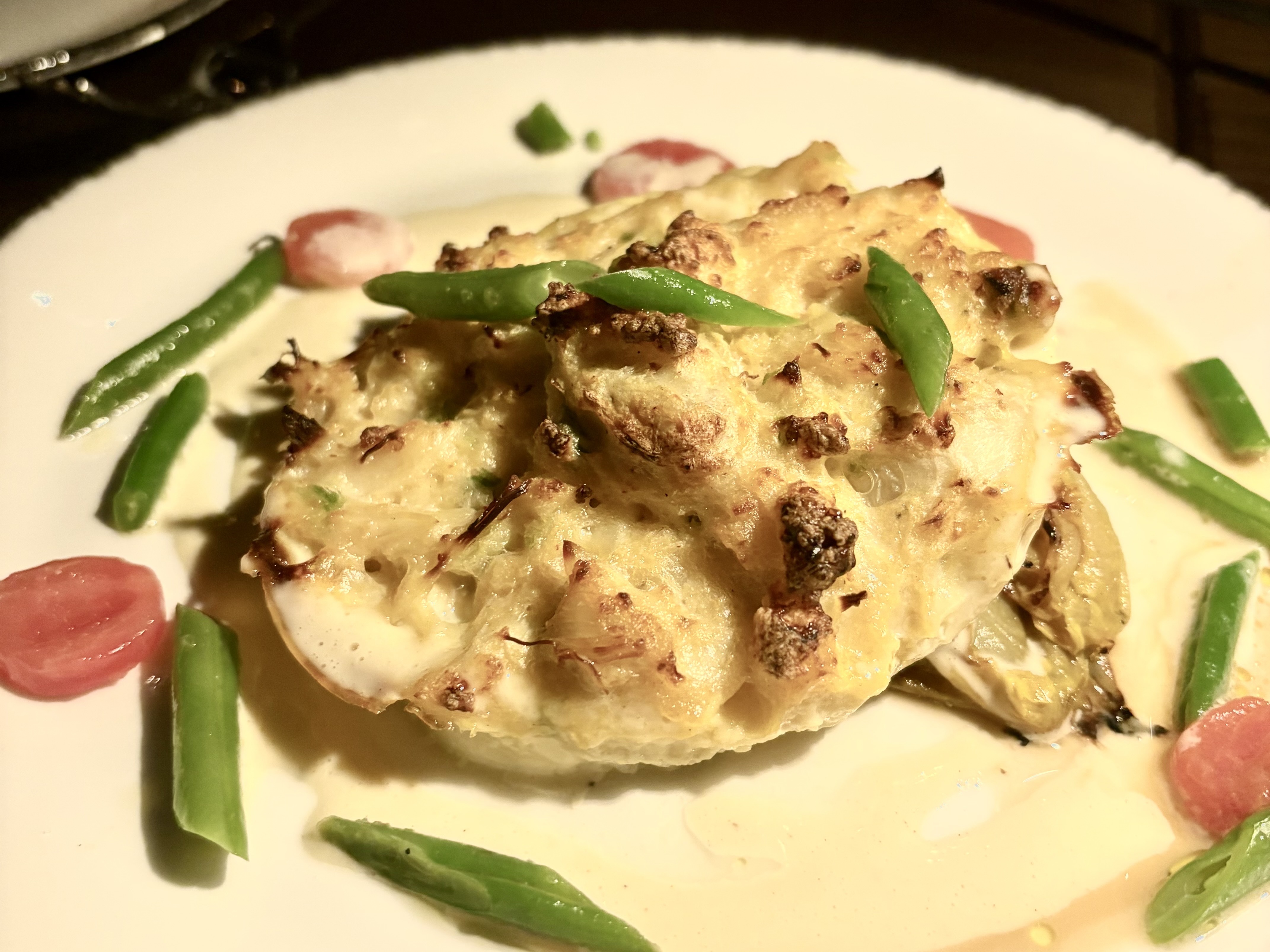
If the Ghosts of Philly Restaurants Past have indeed answered their summons, they might be frowning down on these plates with dismay. The galette de crabe “Le Bec-Fin,” known for its use of seafood mousse to produce a delicately puffy soufflé jeweled with sweet crab, arrived here so deflated and overcooked it tasted like a fishy frittata.
“Chef [Georges Perrier] would probably lock the doors and burn the place down,” replied one of Le Bec’s longtime former chefs after I texted him a picture of my gruesome galette.
Mr. Edison’s rendition of Le Bec-Fin’s crab galette is a far cry from the original.Craig LaBan / Staff
In fact, Mr. Edison’s culinary director, Matt Levin, 53, also cooked at Le Bec-Fin early in his career, which subsequently saw him burst onto the scene in the early 2000s at New Hope’s Moonlight and Lacroix at the Rittenhouse before going solo with Adsum and Square Peg, then eventually landing in the catering world. Most recently, he cooked at the Pineville Tavern in central Bucks County. While his recipe might be the same, Levin’s decision to jettison Perrier’s ring mold for a shallow panwas a fateful miscue. The galette evolved by my second meal into a soggy sponge, still not ideal for $45.
Fewer diners today recall Le Panetière, where Chodorow remembers first tasting Perrier’s food in the late 1960s. But anyone would realize upon one bite of this duck à l’orange tribute that the meaty breast, although still medium-rare, was inexplicably dry and as tough as a chew toy.
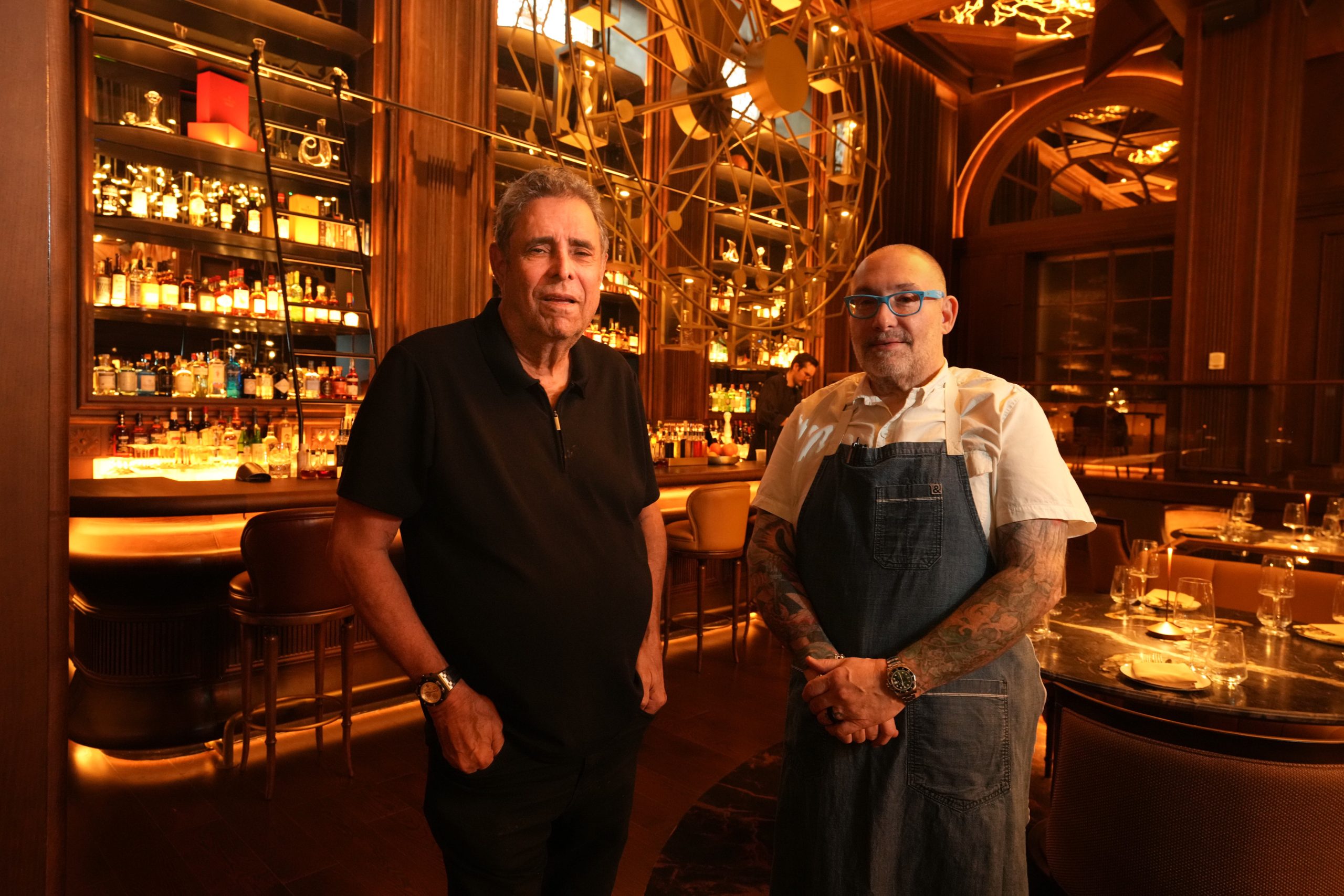
Jeffrey Chodorow (left) and chef Matt Levin, at Mr. Edison, the new restaurant at the Bellevue, in Philadelphia, on June 23, 2026.Jessica Griffin / Staff Photographer
If only I could have found the frequently absent captain overseeing our table on the mezzanine before the two-hour-plus mark of our glacially slow meal, when he finally asked us, too late and far too smugly, “Did that hit the spot?”
“Not very well,” I replied honestly with a detailed report, noting we’d hardly eaten this $90 sharing splurge as a result. He shrugged a faint reply, then handed us our bill with not even the slightest gesture of apology, though I was not surprised. He’d also forgotten so much as a candle for our dessert after we told him upon arrival (after he asked) that we were celebrating a birthday.
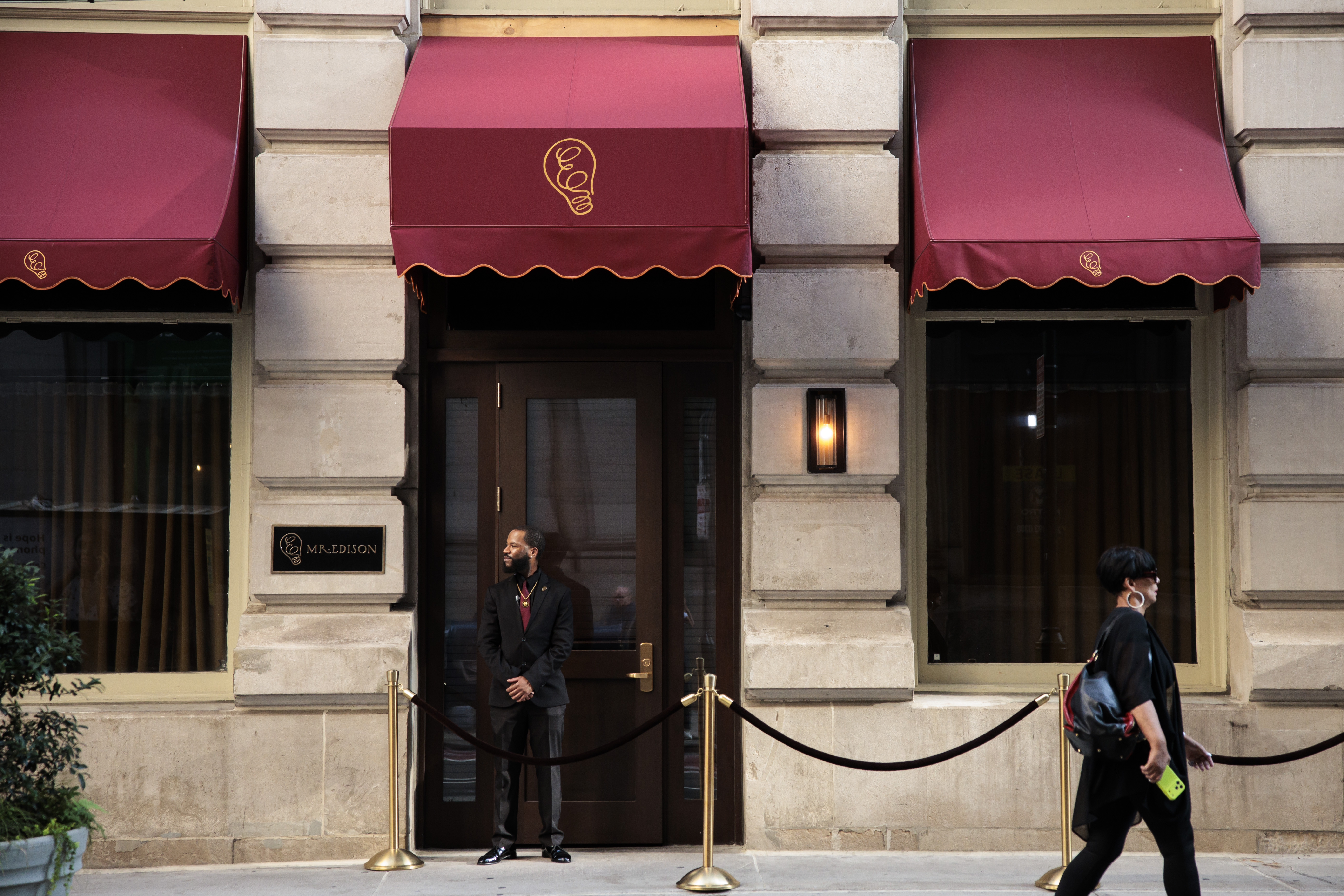
An envelope at each seat holds the menus at Mr. Edison in the Bellevue Hotel on Tuesday, Aug. 18, 2026 in Philadelphia.Monica Herndon / Staff PhotographerThe exterior of Mr. Edison in the Bellevue Hotel on Tuesday, Aug. 18, 2026 in Philadelphia.Monica Herndon / Staff Photographer
As a restaurant romantic, I value grand ambitions such as those that shaped Mr. Edison, a $10 million makeover of the former Polo store that recalls the showplace splendorof Walnut Street’s Restaurant Row in the late 1990s (Striped Bass, Susanna Foo, Brasserie Perrier) more than the DIY quirkiness of the restaurant renaissance that preceded it. It’s far preferable to the cookie-cutter chains that otherwise populate South Broad Street. But executing that ideal in a 133-seat room in 2026 — when, as chef Levin noted, people can make more working for food-delivery apps than actually cooking the food — is a challenge. With check averages of $120 (before tip and tax), no customer wants to hear excuses.
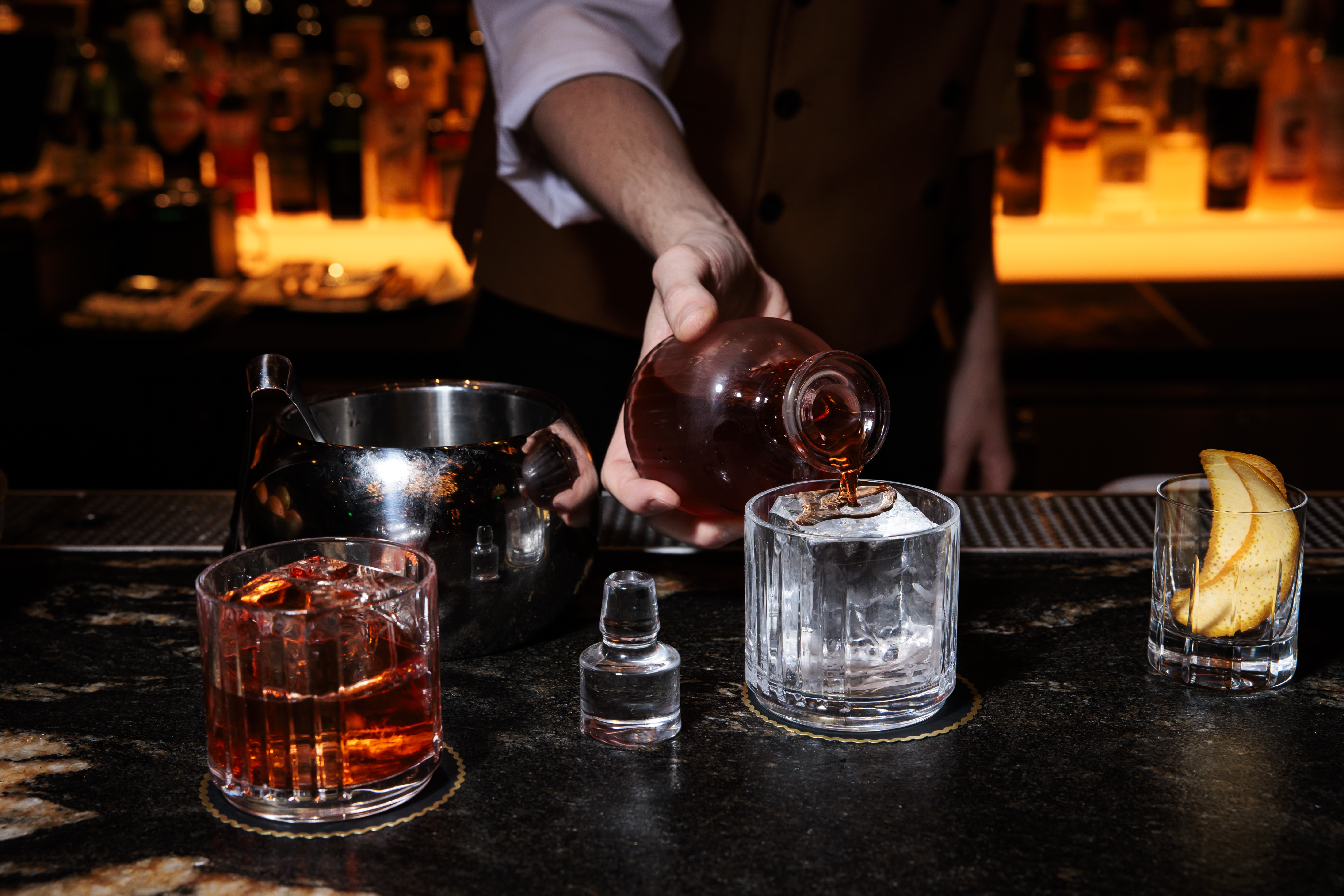
Improvement is within reach. We were seated at my following visit on the daisy wheel banquette that anchors the downstairs dining room, and the service there was much sharper. We had a perfect vantage to hear Drew Nugent & the Midnight Society swing onstage and to drink this bar’s outstanding cocktails, including the large carafe of a superb Negroni (this variation blending Cocchi di Torino and Punt e Mes) poured tableside over giant ice cubes. At $57 for the equivalent of three-plus cocktails, it’s one of Mr. Edison’s best values.
Bartender Michael Chukinas pours the tableside house Negroni at Mr. Edison in the Bellevue Hotel on Tuesday, Aug. 18, 2026 in Philadelphia.Monica Herndon / Staff Photographer
I’d definitely return for a seat at the titanium granite bar to enjoy the well-curated lineup of live music, sip other cocktail hits (the white coffee-infused Wizard or tropical 30 Minute Nap), and graze on some of the small plates.
The Korean fried oysters with kimchi and chicken salad was an intriguing riff on one of my favorite historical Philly food oddities, the spice and fermented funk of the cabbage cutting through the clubby richness. Waffle chips to scoop paddlefish caviar from fancy French onion dip was an accessible alternative to the far pricier sturgeon caviar service. The quail yolk-dotted beef tartare ringed by fried beef tendon puffs was irresistible, while a petite portion of seared filet mignon fanned over a creamy au poivre sauce with morels tapped another red-meat craving without the steakhouse clichés.
The Jimmy’s Milan salad — essentially crunchy lettuce tossed with bacon, big shrimp, hard-boiled eggs, and a zesty Russian-Italian hybrid dressing — is proof that some vintage pleasures don’t need to be reinvented to be appreciated. The restaurant’s $48 baked potato, stuffed with nearly half a pound of sweet lump crab au gratin, was the most memorable thing I ate at Mr. Edison, a super spud splurge that could hit yet another level with a $40 “blackout” addition of caviar.
A couple of the small plates fell short. A meaty flap of tuna carpaccio was not pounded thin enough. The corn-encrusted soft-shell crabs over mole verde were not soft enough, leaving me with a mouthful of shells.
Updating classics is a tricky prospect, and often Levin’s contemporary reworking drifted too far afield for its own good. The baked “Edison meets Rockefeller” oysters were so underdressed, with splashes of Mornay and fines herbes butter replacing the typically lush green puree, it lacked the indulgence to suit its name, even with a crispy nugget of guanciale. A $110 rendition of lobster Thermidor was not simply unrecognizable; without the full shell, into which it is typically stuffed and gratinéed, it was one-dimensional and boring.
The grilled lamb chops spiced with vadouvan curry with Thumbelina carrots were the most satisfying of the “Grand Plates” for two, while the butterflied whole dorade over chimichurri and the buffalo milk ricotta ravioli were safe bets for the unadventurous.
The lamb chops at Mr. Edison in the Bellevue Hotel on Tuesday, Aug. 18, 2026 in Philadelphia.Monica Herndon / Staff Photographer
Too many other big dishes stumbled over the basics of seasoning — like a veal chop Milanese that cradled a handful of flaky salt atop its breaded crust. The brick chicken was so salty that my gums ached until the end of the meal.
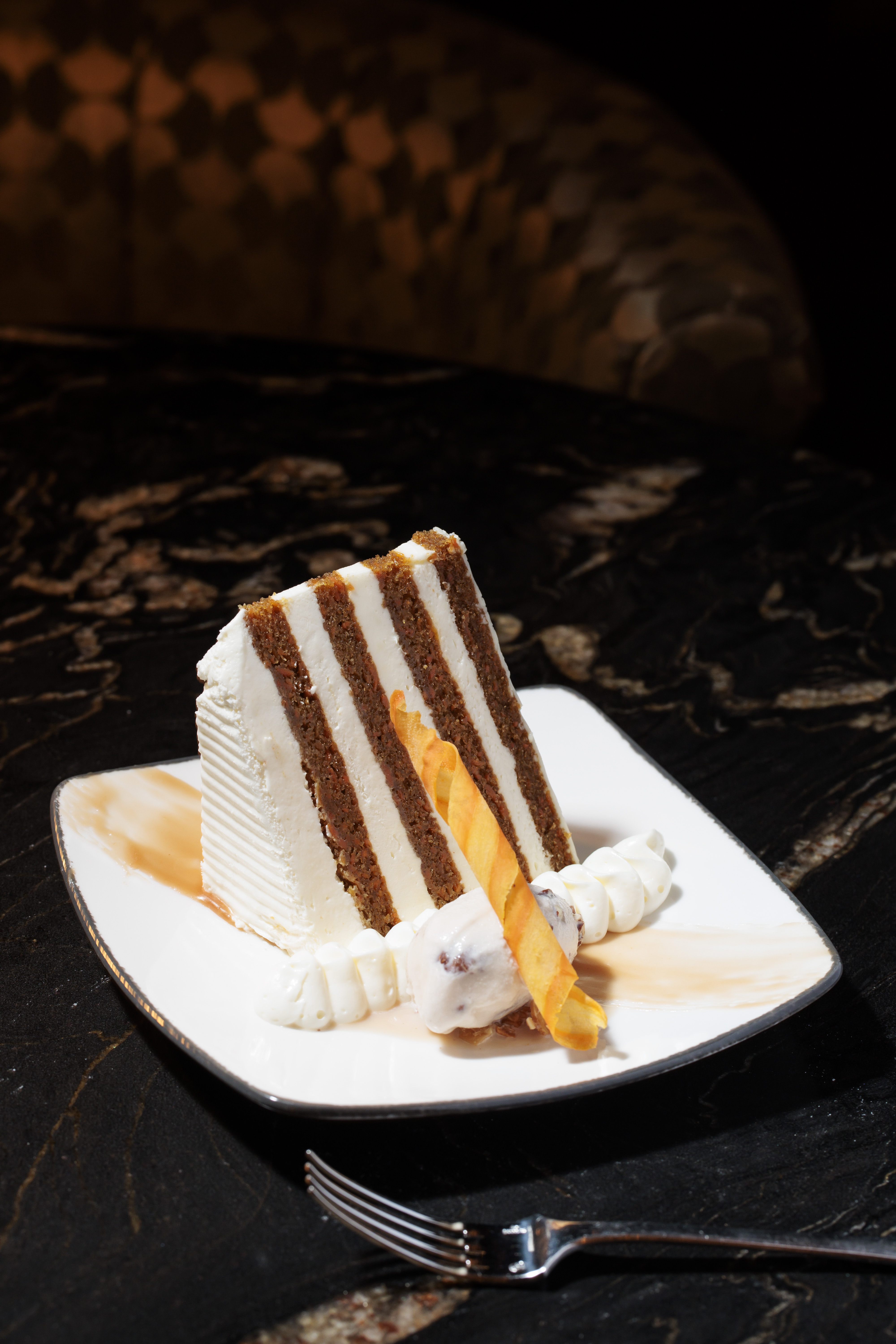
Tucked into the stuffiest far corner of the mezzanine behind the bar for this final visit, I’d hoped an old-fashioned dessert would offer enough sweetness to counter that salty bird. I considered one of the winners I’d already enjoyed at previous visits: a re-creation of the coconut cake from Old Original Bookbinder’s, a tasty nod to Frog’s legendary carrot cake with butter pecan ice cream, or the dense chocolate-and-peanut-butter tart.
I opted for the crème brûlée to keep it easy, only to find its caramel crust — ideally torched to order and still warm — was cold by the time it ascended to our second-floor perch beneath the lightning-bolt rafters. I looked down toward the bar’s Ferris wheel as it cycled up toward us and couldn’t help but imagine the Ghosts of Philly Restaurants Past riding along with those glass cages, so hopeful for their comeback moment. Rising then falling, again and again, they sent shrugs of disappointment in my direction as they rolled away.
The carrot cake at Mr. Edison at the Bellevue Hotel on Tuesday, Aug. 18, 2026 in Philadelphia.Monica Herndon / Staff Photographer
Mr. Edison
Dinner Sunday through Thursday, 5 to 11 p.m.; Friday and Saturday, until midnight.
Small plates, $19-$45; Sharing plates for two, $58-$115.
Fully wheelchair accessible to all parts of the restaurant, including two wheelchair accessible seats at the bar.
Gluten-free: At least half the menu is either gluten-free or can be modified, including items cooked in a gluten-free fryer.
Menu highlights: Caviar dip; Jimmy’s Milan salad; Korean fried oysters; filet au poivre; baked potato with crab gratin; buffalo ricotta ravioli; lamb chops; carrot cake.
Beverage program: Don’t let the ostentatious bling bottles on the Ferris wheel fool you. The bar is Mr. Edison’s strong suit, with well-crafted and thoughtful updates to classic ideas using modern techniques and quality ingredients. The tableside Negroni towers are worth it, along with other cocktail highlights. The wine list is more predictable.
Mr. Edison, the new restaurant at the Bellevue from Jeffrey Chodorow, in Philadelphia, June 23, 2026.Jessica Griffin / Staff Photographer
The people who built 3.0 University Place, an eight-story lab and office complex that covers a landscaped block of West Philly, had a problem: During the biotech slump after their 2023 opening, security costsescalated faster than occupancy.
“We had 80 Siemens cameras in there,” remotely monitored from a suburban surveillance office, and were “paying more than $150,000 a year for guard shifts,“ said Anthony Maher, the University Place Associates president.
But the building’s New York owners were still getting midnight calls for nonevents. Meanwhile the human video watchers missed incidents of concern — the stranger who had taken to sleeping on a tenant’s canopy at night, the fired contractor who sneaked back into the building one weekend.
Investors pressed them for a better way.
Maher and his partner, Scott Mazo, went hunting for an artificial-intelligence solution — an AI-era automated security system to collect and analyze camera, physical, and human-observed surveillance data; rank threats; sort out false alarms; open or shut locks; and quickly notify law enforcement, emergency services, management and owners’ groups as needed.
They rang an entrepreneur they’d met five years earlier at a Drexel University pitch meeting: Matias Klein, founder of Manayunk-based Kognition AI.
Kognition specializes in what Klein calls “cyber-physical threat detection systems,” which link and analyze digital security video, activate remote locks and sensors, load key data into formulas matching clients’ priorities and requests, sort and sharecommunications to alert the right people and agencies, and update responses based on results.
“You hang the cameras; we network the building systems,” as Klein puts it.
100 North American buildings
At 3.0 University Place, “Matias’ system gave us full access to the best 25 cameras, every floor, all times,” said Maher. The system caught incidents, routed them to the right people, and suggested simpler warning paths.
“They keep teaching us to manage the building, telling us, for example, about our people coming in when they didn’t really need to,” he said.
It worked so well “we told the owners to take the security-guard line-item out of the budget,” though they still use guards on occasion. It helps that the building’s big new tenant is the city police forensics unit: “We have a lot of cops coming here,” Mazo added, laughing.
More than 100 North American properties use Kognition AI, from Scotia Plaza, one of the largest office buildings in Toronto; to Pa.-based Benco Dental locations in several states.
A growing sector
Kognition, founded by Klein in 2017, was one of a handful of Philadelphia-area AI start-ups that presented to local investors at a June gathering. Investors included Osage Capital, MissionOG, and Susquehanna International Group’s SIG Growth Equity Fund.
“The AI landscape is changing so fast, it’s hard to tell what will be supplanted in a few months,” said Ellen Weber, who runs Robin Hood Ventures, and attended the meeting.
Robin Hood is a Philadelphia investors’ group whose members include start-up veterans. Members’ portfolio of local AI-dependent start-ups include Center City-based Deepwave, which makes laser weapons guidance systems for Air National Guard jets and other military projects; University City-based GreenIRR, which uses AI to speed carbon-emissions detection for truckers; and Proscia, which digitizes biotech images for fast diagnosis and pharmaceutical drug trials.
Thomas P. Dwyer, a partner at the law firm Troutman Pepper Locke who organized the June meeting, said Philadelphia trails other AI hotbeds.
“Philly has a lot of potential and opportunity here, especially if some of its larger companies get involved, as they do in Silicon Valley,” he said.
AI, he noted, is still seen as a threat by many local companies. They worry, “Can someone armed with Claude overtake your business, duplicate your software, and compete with you immediately — without having to hire people?”
And veteran investors are “gun shy” about AI profitability, he said.
Which, he added, leaves opportunity to those investors who make the “leap of faith” to promising AI start-ups
Operating on ‘the edge’
“An AI product makes itself better” the more it is used, said Kognition AI founder Klein.
Some of the best-known (and most-feared) AI image-and-data applications are based on giant AI companies’ mass sorting of millions of individuals’ information into ever-improving, readily searchable central databases at big new data centers — raising familiar privacy worries, as seen in the recent controversy over the alleged misuse of Flock digital camera data that police have used in attempting to quickly identify drivers.
By contrast, Kognition is one of the firms that operates at the “edge” of big networks, Klein said in an interview at his firm’s Manayunk meeting space. “We don’t send customers’ data throughout our network, and we don’t preload that information,” he said. “We don’t flow data back to a central monitoring station.”
Rather, the goal is “to give people control over the spaces where they live or work or worship, so they can get into a defensive posture fast, if they ever need to.” Custom, localized, focused solutions are “a big area of value creation” for AI start-ups, according to Klein.
Customized experiences
Kognition AI’s custom sharing limits and options are part of its appeal to Ravi Kalidindi. He was tasked by leaders of Bharatiya Temple, a Jain and Hindu religious congregation inMontgomery County, with setting up a system “that gave us control of our doors” without intimidating visitors or compromising members’ private information.
Kalidindi turned to Kognition as a locally based provider.
The system at Bharatiya starts with security cameras at the main entrance and stairways, integrated into a software and communications platform. “They check if our doors are closed. They tell us where there is human traffic. We can let the cleaning crew in without a key. It has mobile device control. It can even work on fobs,” Kalidindi said.
Kognition also has capabilities the temple has not used: “It has a weapons-detection system we have not enabled. It has additional sensors that can ID what people are carrying. It can tell us if we are seeing an above-average or above-expected crowd, make a note of the faces of people who are entering for the first time, and trigger an alert.”
There is a sense of user control of the AI systems that Kalidindi finds reassuring: ”We want to enhance the sense of security, that our facilities are being monitored, but also that everyone with good intent is allowed to enjoy the premises.”
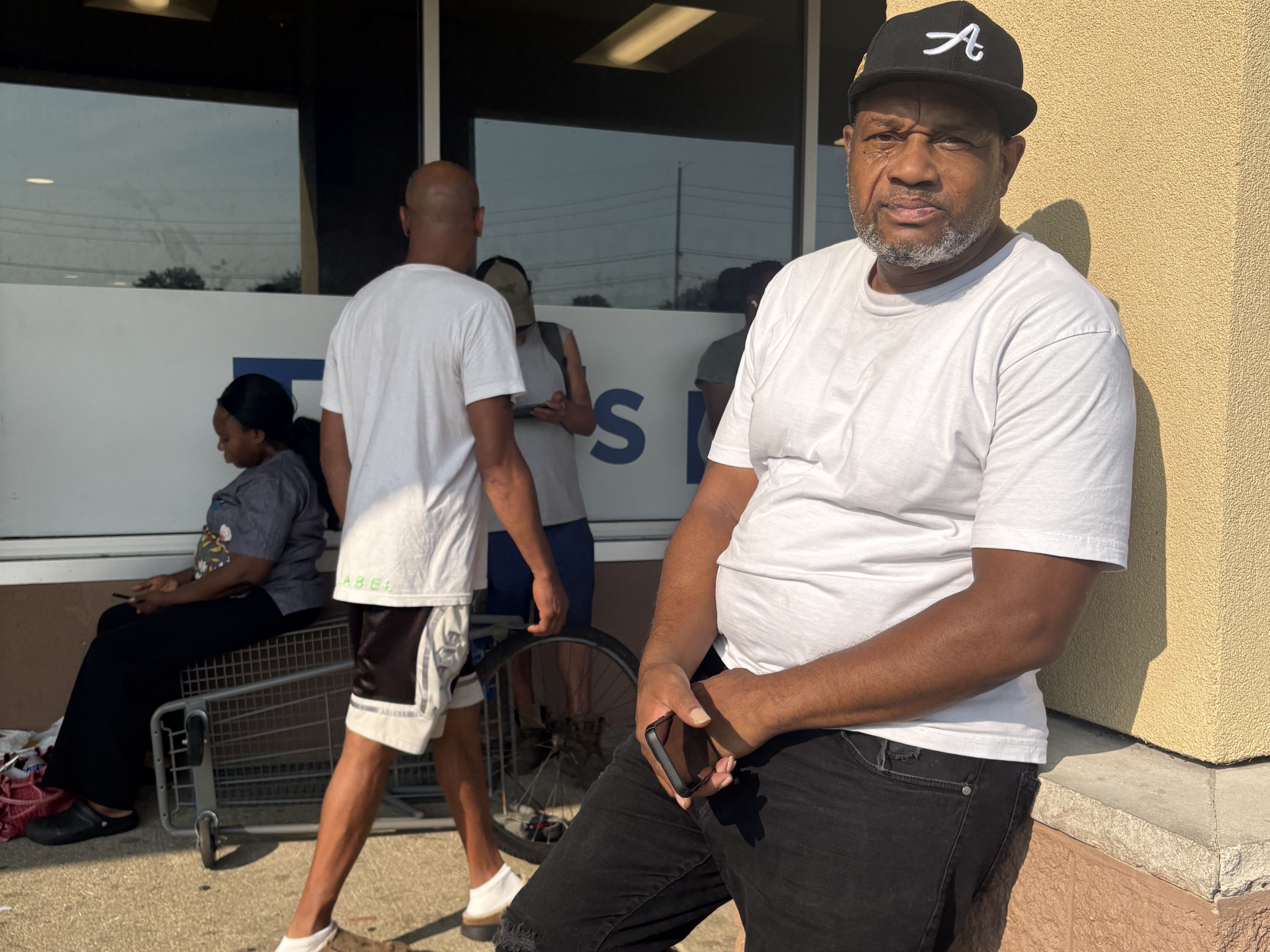
Maleka Evans waited outside Octapharma Plasma in South Jersey at 8:30 on a recent sweltering morning, sweat beading on her face. A dozen other prospective donors had arrived before her, and the line was still growing a half hour before doors opened.
One woman sat on an overturned shopping cart pilfered from the nearby Walmart. Another brought her own folding chair. A man held a bicycle tire, removed to protect his bike from being stolen once he was inside and hooked up to a machine that extracts antibody-rich blood plasma needed for medical treatments.
Every Monday and Friday for the last three years, Evans has trekked to the Audubon strip mall for what she considers her second job. She takes a 45-minute bus ride from her Willingboro home to Camden, then walks another 45 minutes to the donation site with a slogan posted in its window: “When it pays to give hope. That’s plasmagic.”
The 37-year-old single mom has noticed the lines growing in the last year, as others are seeing at donation sites elsewhere in the Philadelphia region and across the nation. The for-profit business is booming as more and more Americans, both poor and middle class, struggle to straddle the gap between stagnant wages and increased living costs.
Evans relies on the $50 that she typically earns for each plasma donation — loaded onto a prepaid debit card — to help with bills that she cannot cover with her $18-per-hour job packing boxes at a warehouse.
“Prices for everything — food, rent, transportation, electricity — are just getting higher and higher,” Evans said. “You have to work two jobs to make ends meet, and you’re still living paycheck to paycheck.”
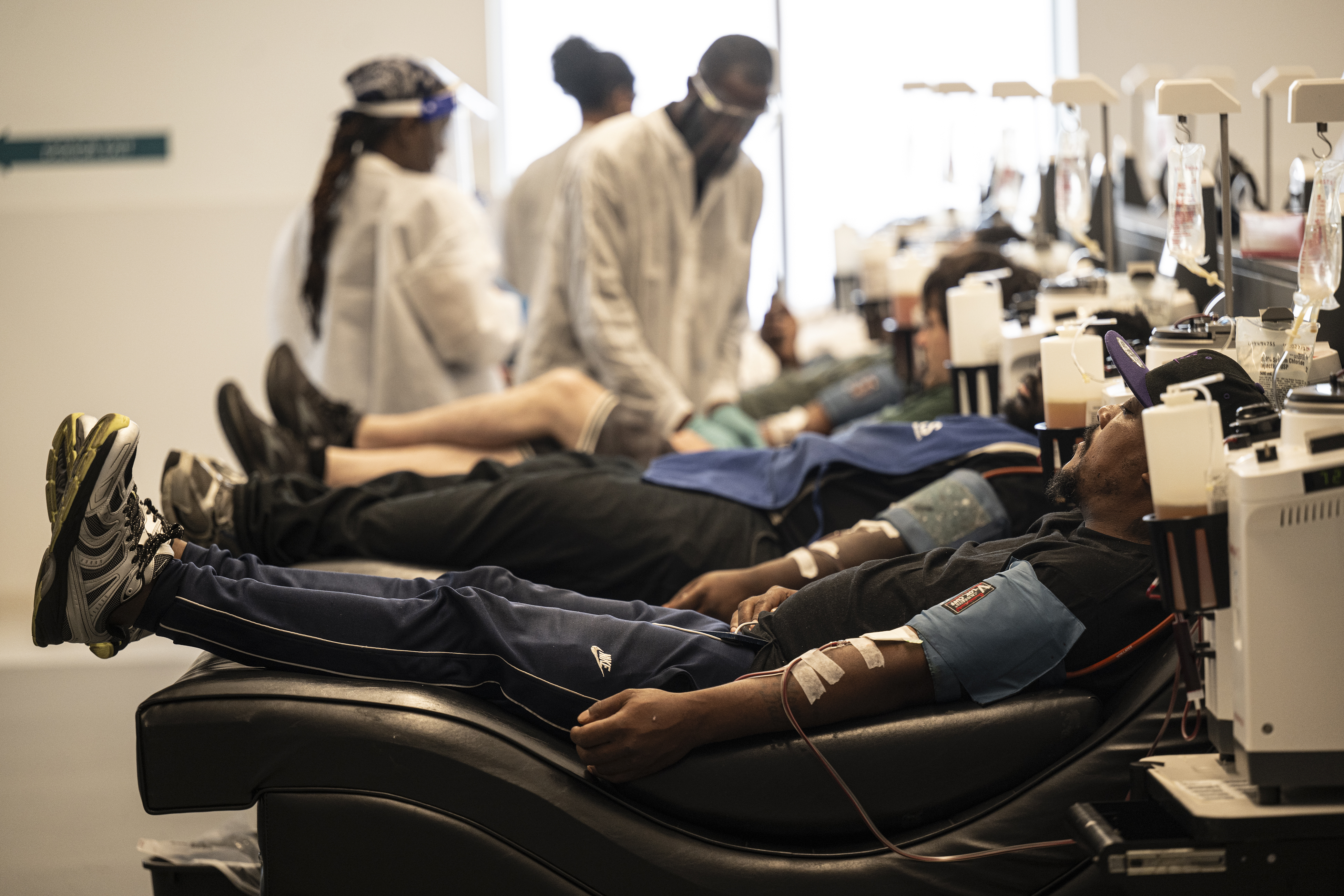
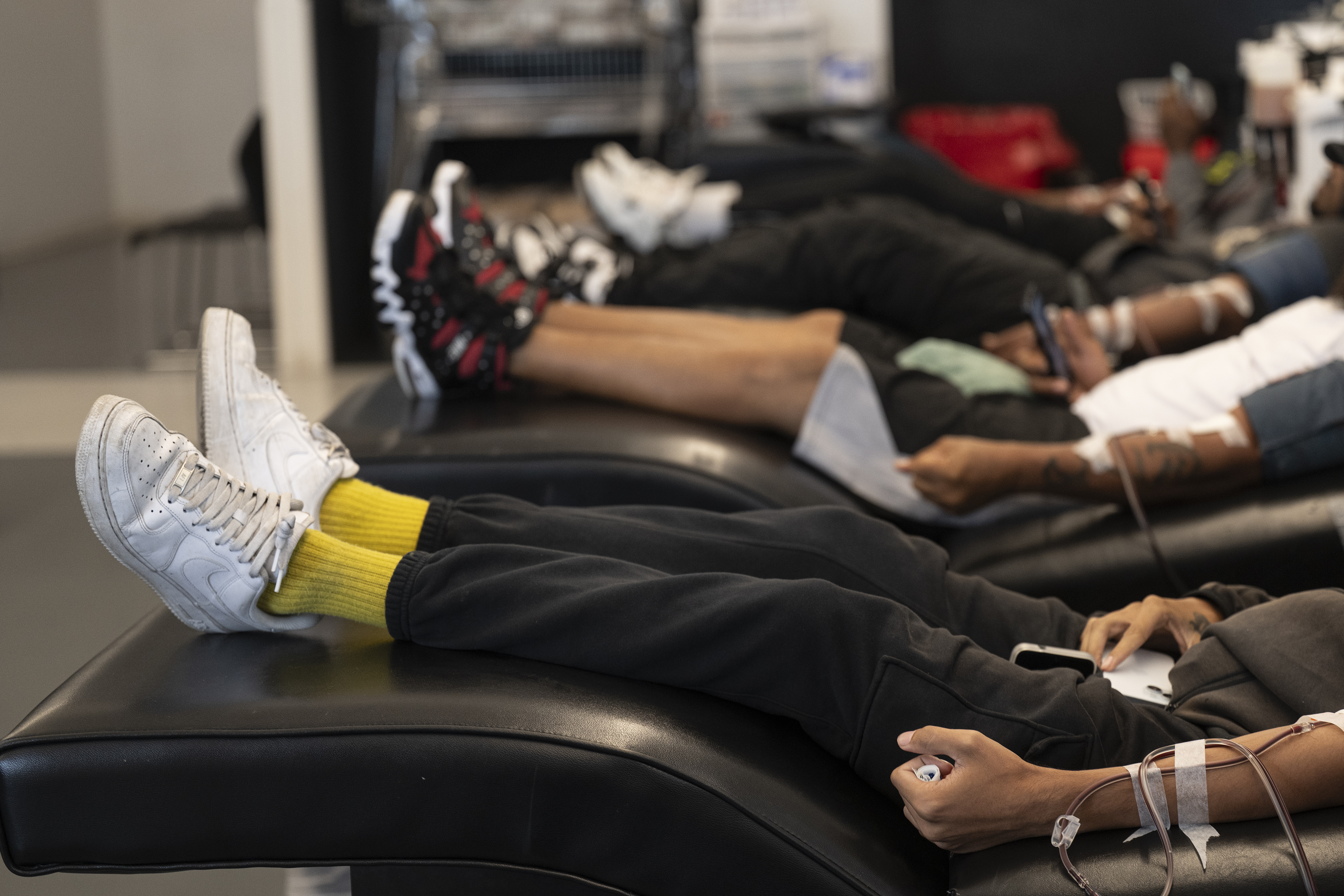
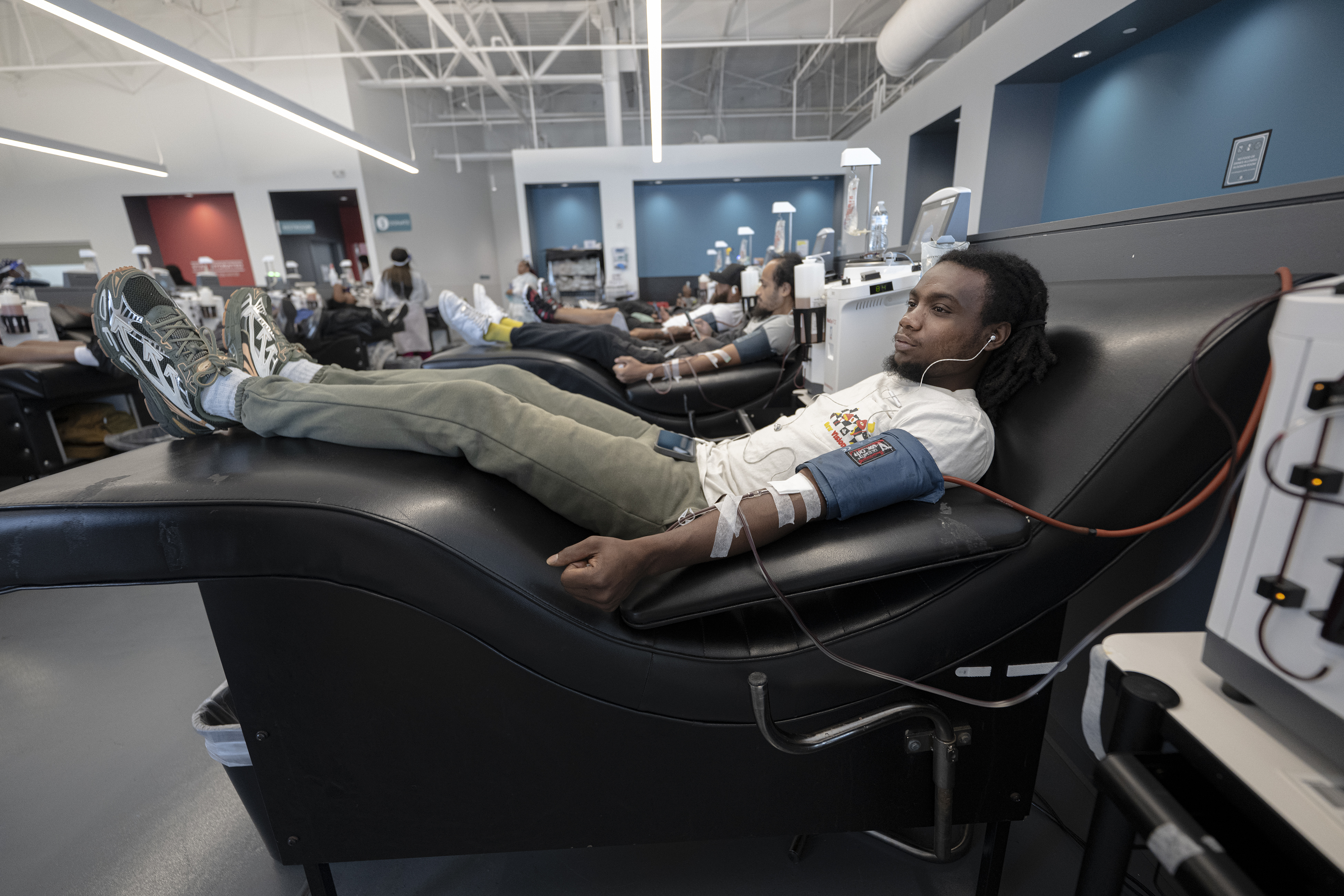
An increasing number of people in the Philadelphia region are selling their blood plasma for money. Here, local donors sit in recliners with needles in their arms at B Positive Plasma in Montgomery County.Jose F. Moreno / Staff Photographer
The U.S is one of about a dozen countries where it is legal to pay donors for plasma. It is among only three countries where people are allowed to donate two times over seven days, though not on back-to-back days, per U.S. Food and Drug Administration regulations.
Nearly 70% of the world’s plasma comes from donors in America, fueling a multibillion-dollar global industry. Plasma, a straw-colored liquid in blood, contains antibodies and other proteins used for treating a wide range of patients with immunodeficiencies, neurological conditions, kidney disease, and bleeding disorders.
Last year, U.S. donors produced 62.5 million liters of plasma — the highest volume ever collected and an 8% increase from the previous year. That trajectory has continued into this year, according to Georgetown University professor Peter Jaworski.
“When the price of most staples goes up, so does the amount of plasma donations,” Jaworski said. “If I fell on hard times, the very first thing I would do is become a regular plasma donor.”
Donating plasma is widely considered low-risk, with millions of people doing it each year without reported health problems. However, the long-term health effects of donating twice weekly for years have not been well-studied. Safety concerns raised by the deaths of two people in Canada who had recently donated at for-profit clinics run by the healthcare company Grifols haveprompted an investigation there.
In the U.S., an FDA investigation into 34 deaths of people who had donated plasma between 2016 and 2020 did not find a link between donations and fatalities.
Some donors experience lightheadedness, fatigue, bruising, bleeding, or dehydration. Drinking water and eating foods high in iron and protein can help alleviate those side effects, according to U.S. health guidance.
Security guard Danny Morales of North Philadelphia said he feels “tired” after donating. But that has not deterred him from heading to CSL Plasma in the city’s Olney neighborhood twice a week, as soon as he finishes his overnight shift at 6 a.m.
Morales can earn $520 a month donating plasma, which helps to offset rising expenses that have the 35-year-old father feeling ever more drained: The cost to fill up his Honda Civic’s gas tank jumped from $30 to $80 in the last year; a package of ground beef increased by $8; and even the brand of mac and cheese that his 8-year-old daughter and 2-year-old son enjoy costs about $1 more, he said.
“It’s just getting worse and worse,” said Morales, whose plasma donations supplement his $18 hourly security job wage. “Stuff is just getting so expensive. Groceries are ridiculous.”
CSL opens at 6 a.m., but a line starts to form around 4:30 a.m. In late July, it snaked past the building, wrapping around the corner. The sight caught the attention of nearby Olney resident Tony Reed.
“There’s always a line there, especially toward the end of the month and definitely on Monday mornings,” Reed said. “People are broke.”
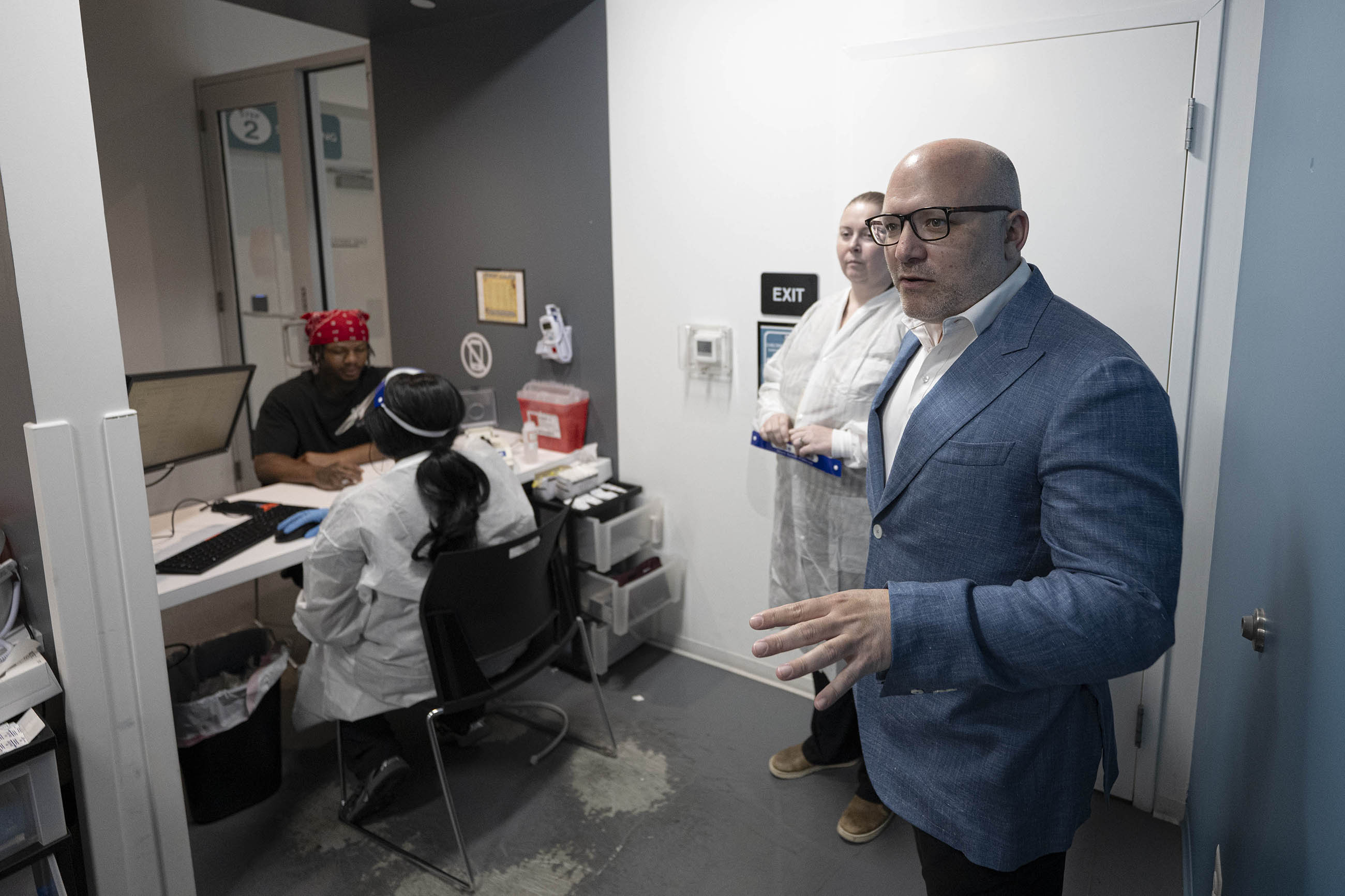
Ben Ruder, CEO and founder of B Positive Plasma, and Pearl Dixon, an assistant manager and phlebotomist, explain the donor intake process. Each donor fills out an extensive health questionnaire, undergoes a medical exam, and gets a finger prick to test their blood for iron and protein levels. Jose F. Moreno / Staff Photographer
Inside the booming industry
On a recent Wednesday afternoon at B Positive Plasma in Montgomery County, a steady stream of donors checked in at kiosks in the lobby.
After filling out an extensive health history questionnaire, each new donor undergoes an on-site medical exam by a licensed practical nurse. Repeat donors must get annual exams. At each visit, a medical tech checks their vitals, including blood pressure, pulse, and temperature, and performs a finger prick to test their blood for protein and iron levels. Donors must weigh at least 110 pounds.
“We make sure they’re healthy and well,” said Ben Ruder, founder and CEO of B Positive Plasma, noting that the plasma itself is tested for HIV and hepatitis B and C before being sold.
Next, plasma donors are hooked up to a machine that draws out blood, spins off the plasma, and then returns the red blood cells back to the donor, a process that typically takes 45 minutes to an hour.
At 2 p.m., 18 of the 24 cushioned recliners at the Wyncote location on Cheltenham Avenue were occupied by donors, each with a needle in one arm. They included a Philadelphia police officer who had donated more than two dozen times since May 2025; a casino cleaner who earns $120 a week donating to support his young daughter; and a home health aide who donates twice a week to help cover his $750 monthly apartment rent.
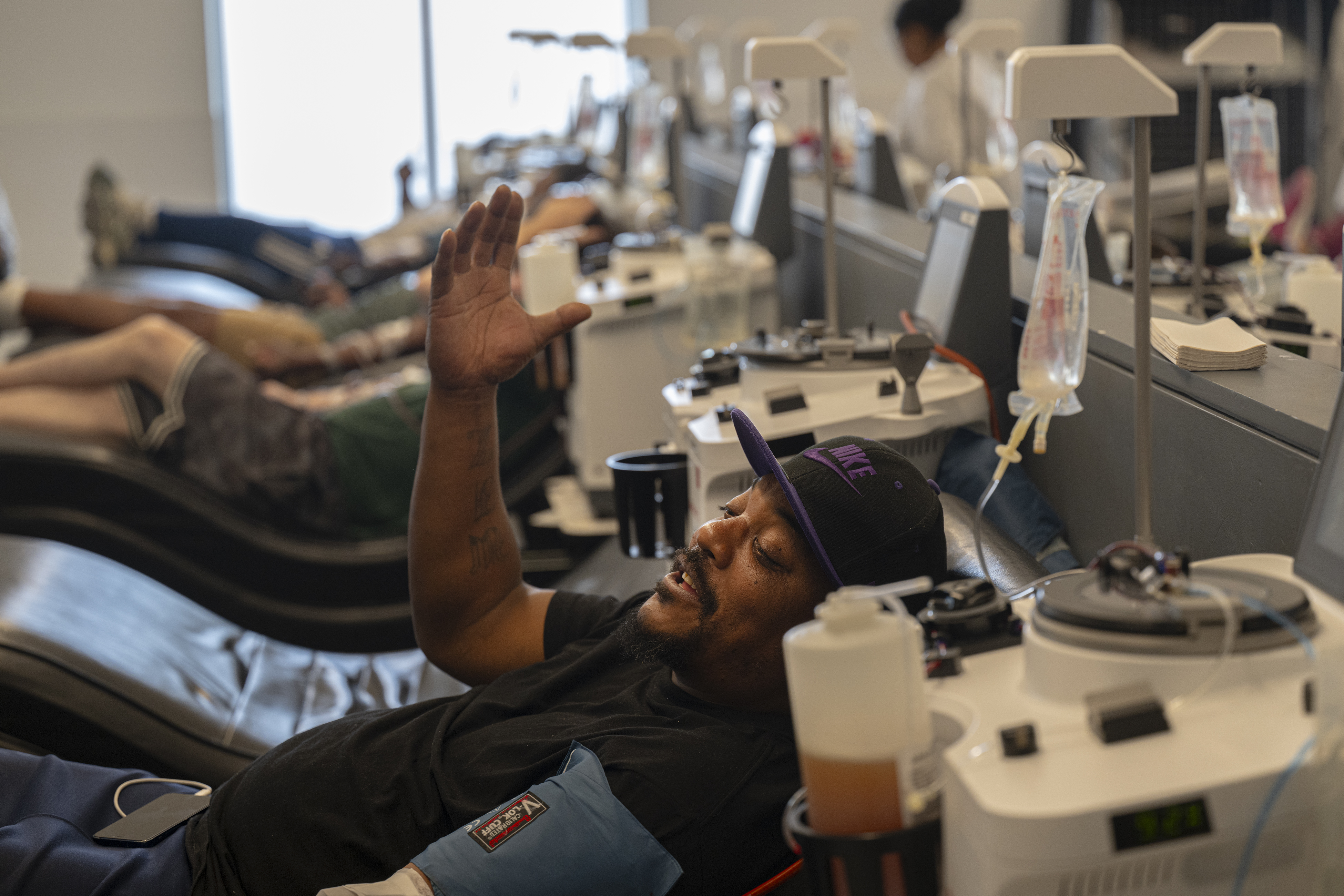
Jason Johnson, 29, of East Mount Airy, has donated plasma 68 times at B Positive Plasma in the past two years. He makes an extra $120 a week donating twice weekly. The money helps supplement the $17.80 an hour he earns as a cleaner at Live! Casino & Hotel Philadelphia. “In the beginning, I was doing it for the extra money, but once I learned that I’m helping people out in their life, it made me want to come back even more,” Johnson said. Jose F. Moreno / Staff Photographer
Plasma donation differs from whole blood donation, a faster process that relies on unpaid volunteers who can donate only once every 56 days in the U.S.
B Positive Plasma is on track to see a record year, with 180,000 donations, peaking this holiday season, when people need extra money for gifts. Last year, the company saw 150,000 donations at about 1 liter per person.
Ruder, 42, who lives in Center City, opened his first plasma donation center in Cherry Hill in 2012 and rapidly expanded to 12 locations in New Jersey, Pennsylvania, and Delaware. He plans to open two more sites in Maryland next year and another in Allentown later this year.
B Positive Plasma, like other plasma companies, structures payments to incentivize twice-weekly donors. For instance, donors whose weight and physical health yield the maximum amount of plasma — 1,001 to 1,200 milliliters — will receive $45 for the first visit and another $90 if they return that same week. Plus, the company offered a $50 bonus for anyone who donated eight times in August.
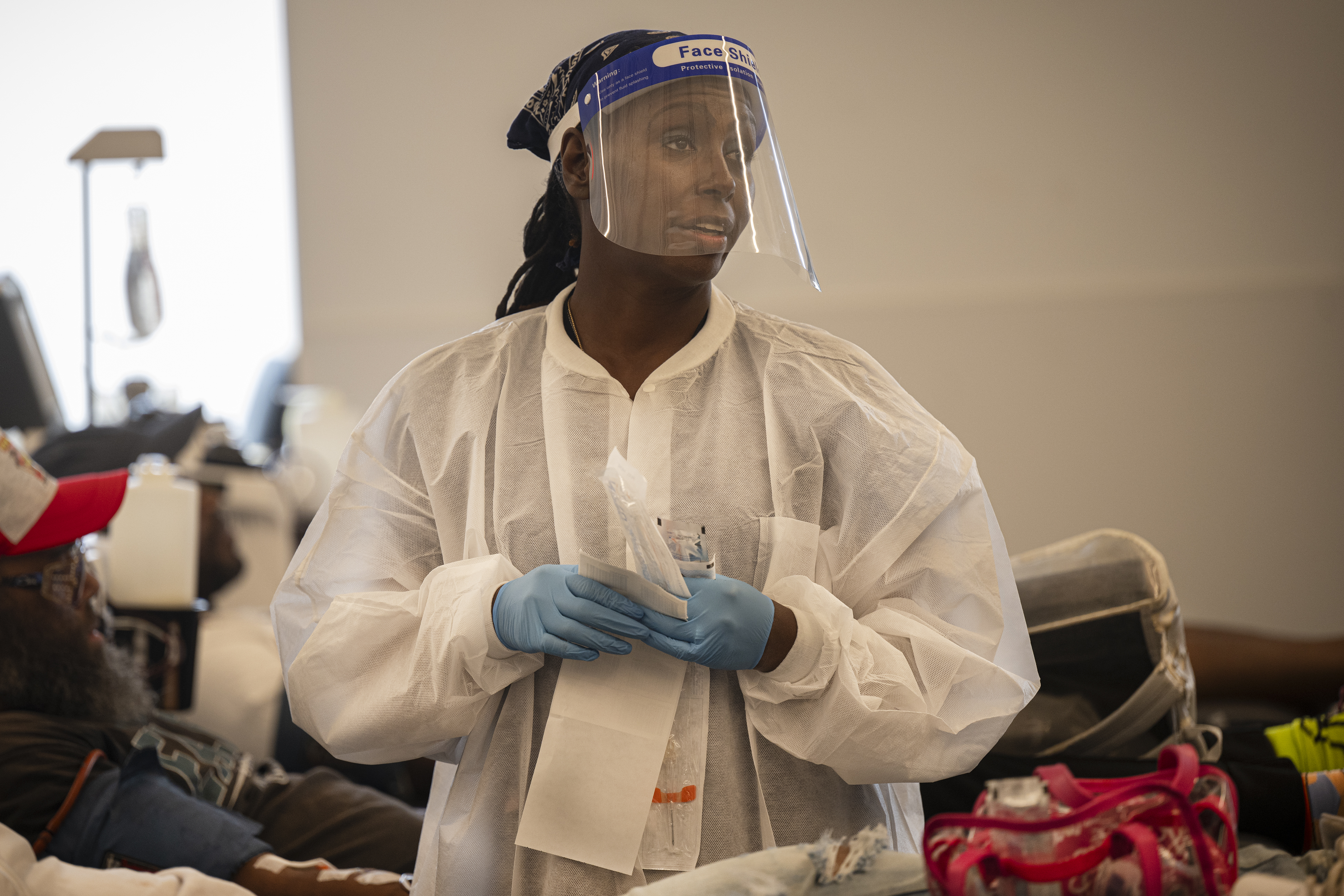
Donyele Wilkins, 48, a phlebotomist and medical assistant, works in the donation room at the B Positive Plasma in Montgomery County. She suffers from lupus, a chronic autoimmune disease for which she receives plasma-derived infusions to control her symptoms.Jose F. Moreno / Staff Photographer
Phlebotomist Donyele Wilkins works 12-hour shifts, four days a week, at B Positive Plasma.
For Wilkins, the paycheck is not the only benefit of working there.
The 48-year-old Northeast Philadelphia resident suffers from lupus, an autoimmune disease in which the body’s immune system attacks its own tissues and organs. Wilkins said she relies on plasma-derived medication, infused through an IV every four to five months, to help control symptoms like inflammation and joint pain.
Knowing how plasma is processed makes her feel “safe,” she said. She also likes getting to know “the regulars” who donate.
“It makes me feel like I know exactly where it’s coming from, and I know the people who are doing it,” Wilkins said. “A lot of them really need the money, so they’re helping me, on top of me helping them.”
‘Blood money’
Paying donors for plasma has sparked ethical debate, with some accusing the industry of exploiting poor people.
In her 2023 book, Blood Money: The Story of Life, Death, and Profit Inside America’s Blood Industry, Kathleen McLaughlin, a Montana-based journalist, found that donors in many U.S. regions are disproportionately Black and brown people.
McLaughlin, who has a rare autoimmune disease treated withmonthly plasma-derived infusions, said today’s rise in donations is “a symptom of our broken economic system.”
While the FDA regulates health safety at plasma centers, the pay rate is set by the companies, McLaughlin found. She thinks donors should be paid more and the amount should be standardized.
“Right now, it’s a capitalist free-market system, where the pricing isn’t transparent,” McLaughlin said. “The profit margins are crazy for these plasma companies, and it’s gamified to make you donate twice a week, every week, in perpetuity.”
Jaworski, the Georgetown University professor, said donors are compensated fairly. A donor whosits for an hour and a half makes “significantly more than” New Jersey’s $15.92 minimum hourly wage and Pennsylvania’s $7.25. Plus, he stressed, donors save “hundreds of thousands of lives.”
Wallace Smith, 45, of Upper Darby, prides himself on making an honest living. He earns $15 an hour as a home health aide. He makes an extra $130 a week selling his blood plasma. The money helps cover cigarettes, rent, and his phone bill. Jose F. Moreno / Staff Photographer
Recently published research suggests that communities can benefit when a new plasma center opens, because fewer young people take out high-interest payday loans and area crime drops, mostly driven by decreases in property and drug-related offenses.
“It helps you from having to do something wrong,” plasma donor Wallace Smith said.
When Smith was in his late 20s, he got arrested for selling drugs. Now 45, he is still struggling to find a job that pays a living wage, he said.
Smith, of Upper Darby, works three days a week, earning $15 an hour, as a home health aide. He earns $130 a week donating plasma, which helps pay for cigarettes, his phone bill, and rent, he said.
Like many donors, Smith said he likes the win-win of earning extra cash and helping patients who depend on plasma.
“They say there’s a job’s out here for everybody, but when you become a person who made mistakes in life, then they look at your background, so there’s only certain jobs you can do,” Smith said as his blood flowed into a spaghetti-thin clear tube at B Positive Plasma.
“With that being said, you don’t go back to your old ways,” he said. “You find better resources like this.”
On a hot August morning, donors line up outside Octapharma Plasma in South Jersey to sell their blood plasma for money. They arrive before the doors open at 9 a.m. to beat the wait. Donor Carl Davis, 56, of Camden, donates every Saturday and Monday, earning $70 each time. The extra money helps supplement his $900 monthly Social Security Income disability check. “I get SSI disability, but it’s not enough at all to pay my bills and buy food,” Davis said.Wendy Ruderman
Beach boardwalk fun
At Octapharma Plasma in South Jersey, the wait time can be as long as three hours, donors said. When a sewer pump broke and bathrooms stopped working earlier this year, the company trucked in a row of porta-potties to accommodate donors and staff.
On a recent August morning, Brittany Barr, 36, and her three sons — 5-year-old twins and a 6-year-old — waited outside Octapharma as her husband donated. The family had walked roughly two miles from their Gloucester City home.
When Barr learned her friend had kidney failure and needed plasma infusions, she wanted to help. Barr was unable to donate plasma because she is anemic, so her husband agreed to do it.
In the month since Barr’s husband started donating, the family has earned more than $500. It has helped with groceries and their phone bills to supplement her husband’s income as a shipping manager.
“With only one income, money is tight these days,” Barr said. “Everything is messed up.”
The boys, clad in their bathing suits, climbed up on Barr as she sat on a tipped-over shopping cart. They were headed next to Atlantic City for a beach day.
“This week, the money is going toward fun. They’re going to play arcades and have ice cream or whatever their little hearts desire,” Barr said. “Next week, it’s going to school supplies.”
Brittany Barr, 36, seated with her boys (from left) Cooper, Cannon, and Colton, waits outside for her husband to finish donating plasma at Octapharma Plasma in Audubon, N.J. The family from Gloucester City was next headed down the Shore, where they planned to spend the extra money earned from donating plasma on arcade games and ice cream.Wendy Ruderman / Staff
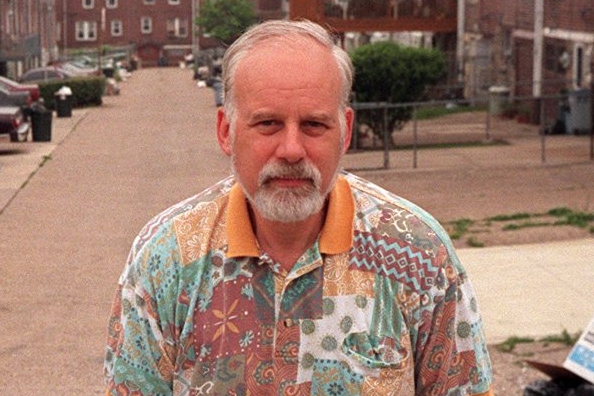
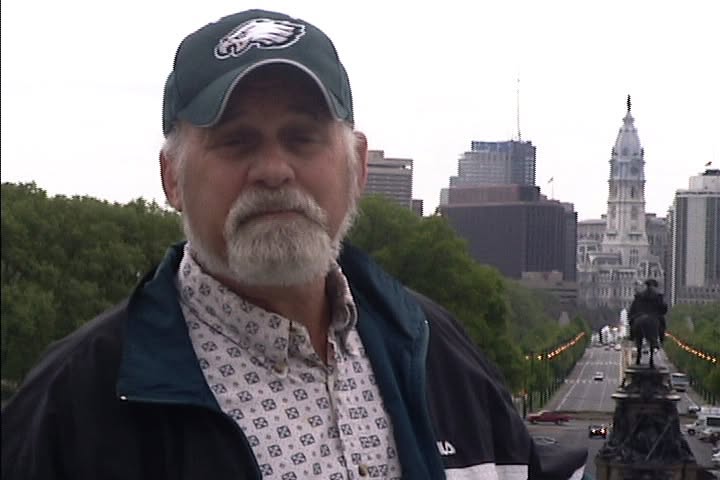
Ron Avery, 85, of Philadelphia, retired eclectic reporter and columnist for the Daily News, Philadelphia historian, volunteer city tour guide, author, high school history teacher, veteran, and canoe enthusiast, died Sunday, Aug. 2, of complications from amyotrophic lateral sclerosis at his home in East Falls.
Reared in Fairmount, Mr. Avery graduated from Thomas Edison High School and earned a bachelor’s degree in history at Pennsylvania State University. He was assigned to the ship newspaper in the Navy after college, found a creative niche in journalism, and went on to work for more than 30 years at the Associated Press, the Bucks County Courier Times, the Courier-Post in South Jersey, and the Daily News.
He wrote for the Daily News as a correspondent in 1981, joined the staff in 1982, and, until his retirement in 2000, wrote thousands of stories about crime, casinos, war orphans, historic houses, the MOVE bombing, local notables, and other subjects. His columns, “Poor Ronald’s Almanac” and “One of Us,” hammered away at local issues and featured everyday people doing exceptional things.
“He covered every nook and cranny of the city,” said his son Serge. “That burning curiosity sustained him till his last days.”
He wrote three books about Philadelphia, including A Concise History of Philadelphia in 1999. He produced a series of video guides he called the Urban Explorer for local TV in 2004 and posted blogs about the city from 2017 to 2019 on a website called Philadelphia Cracks Me Up.
“Like all cities,” he said in a 1995 Daily News column, “Philadelphia is honeycombed with hidden spaces and forgotten places.” In a 1997 review of his book, City of Brotherly Mayhem: Philadelphia Crimes and Criminals, The Inquirer’s Thomas Brady said: “The book … is decidedly a fun read.”
Alex Strang, his director on the Urban Explorer videos, called Mr. Avery an “unforgettable legend” and “a walking encyclopedia of the city’s history and eccentricities” in a Facebook tribute. Other former colleagues said he was “a clever journalist” and “a true Philadelphian.”
Longtime Daily News colleague Robin Palley said on Facebook: “He had an amazing knack of finding quirky people with fascinating skills or habits and making them come to life on our pages.”
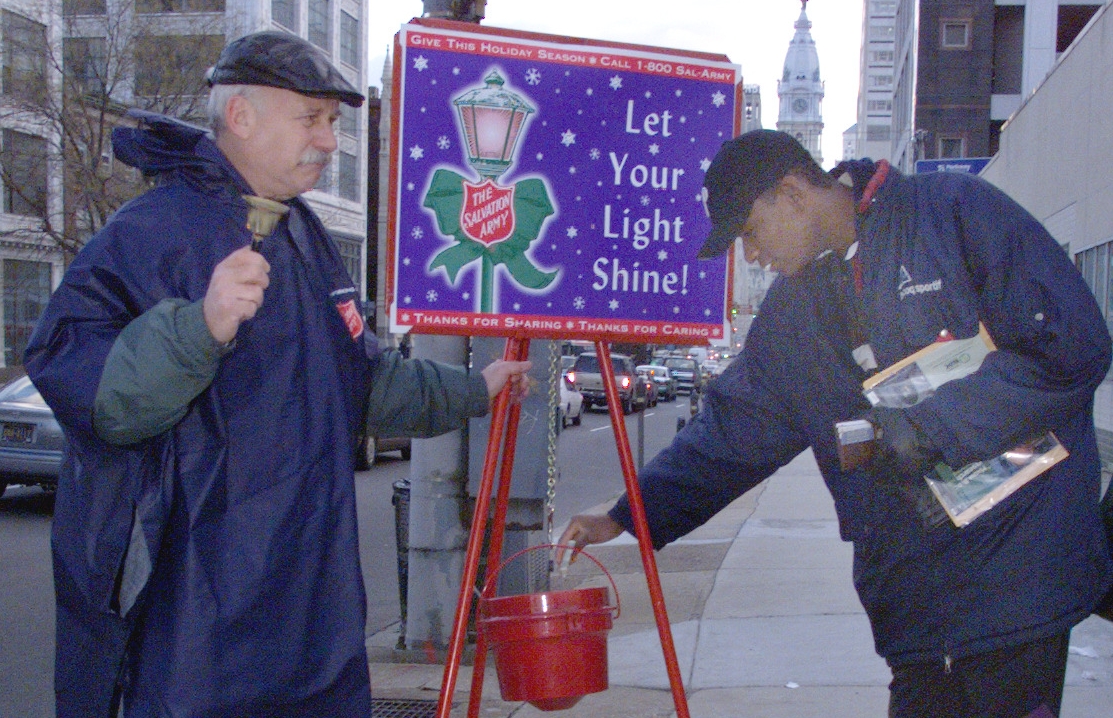
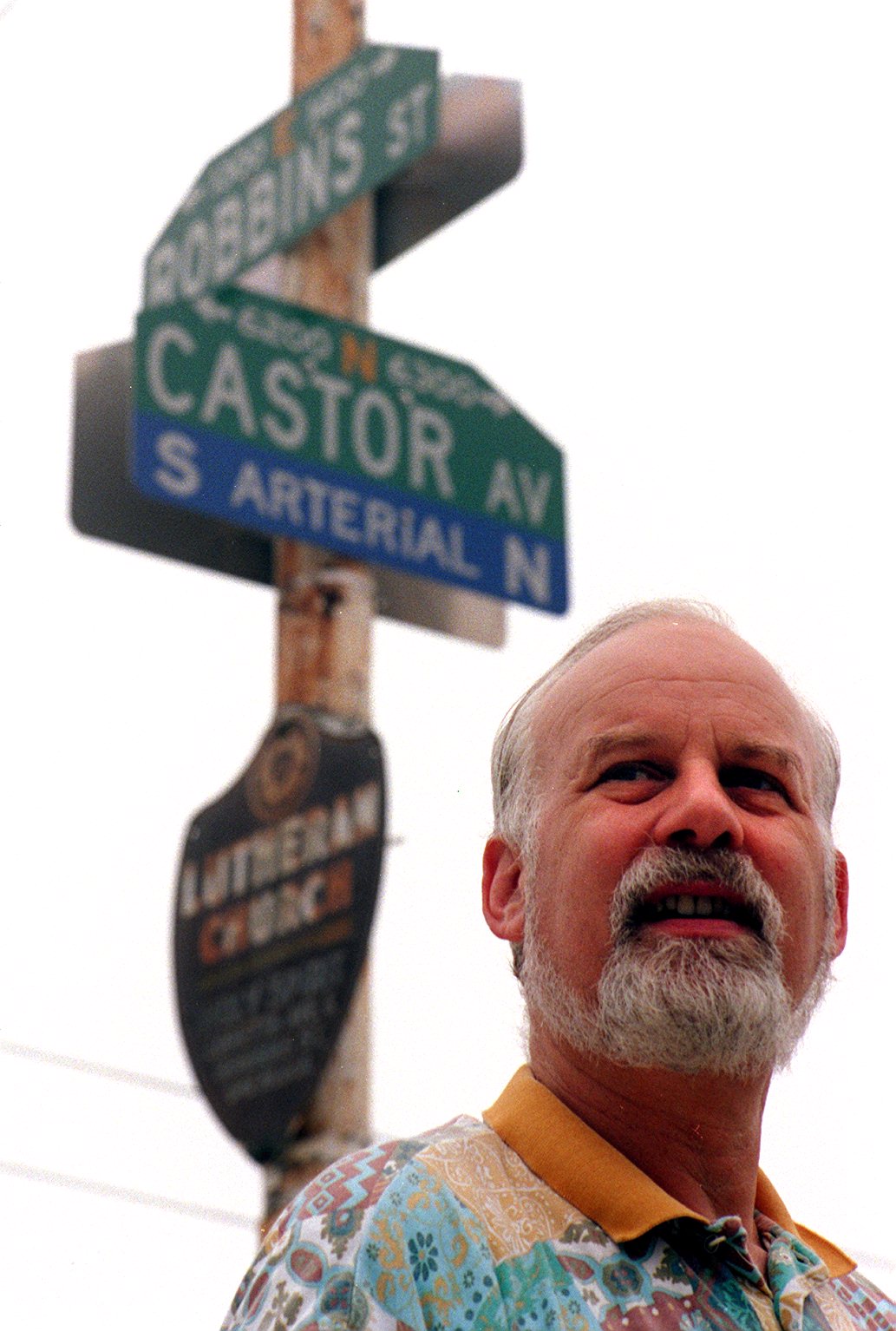
Mr. Avery (left) mans a Salvation Army donation kettle in 1999.Steven M. Falk / Staff Photographer
Before the Daily News, Mr. Avery wrote news and feature stories for the Courier-Post in the 1970s, and the Courier Times and the AP in the 1960s. He moved to Israel for six months in 1972 but returned to work for the Courier-Post in 1973.
He also wrote freelance pieces for the Hidden City Daily, PhillyHistory.org, UShistory.org, and op-eds later for The Inquirer and Daily News. He served in the Navy from 1964 to 1966, joined the Philadelphia Canoe Club later, and led water trips in the New Jersey Pine Barrens and elsewhere.
Knowledgeable, energetic, and naturally affable, he was a tireless promoter and volunteer guide in Philadelphia. He led walking tours throughout the city for students, civic groups, and other organizations, and his explanatory video tours featured cobblestone alleys, urban gardens, museums, statues, and other features of city life.
He was a stickler for details and historical accuracy, and he helped spur City Council to pass an ordinance in 2008 to educate and certify paid Center City tour guides. “They score high as Philadelphia ambassadors of good will,” he said in a 1995 column about uneducated guides, “but as historians they often flunk out.”
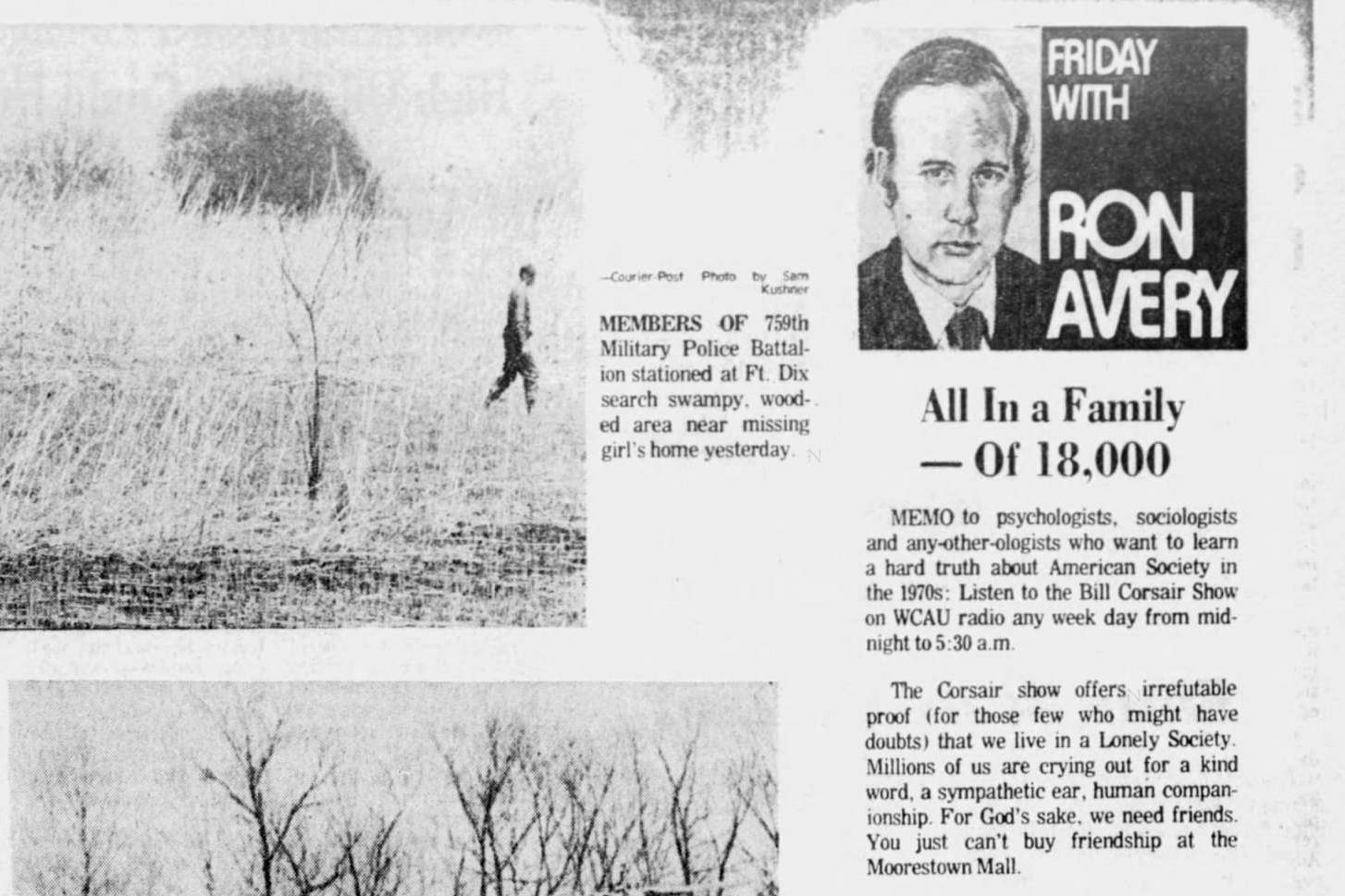
Mr. Avery wrote a column for the Courier-Post in 1974.Newspapers.com
Ronald Avery was born June 10, 1941, in Strawberry Mansion. He joined the Boy Scouts, earned his bachelor’s degree at Penn State in 1963, and taught history at Bensalem High School for a year.
He was a boxer in college and, mesmerized by the sport, later worked as a referee for amateur matches.
He met Suzet Habif in Israel in 1967, and they married in 1968. They had sons Serge and Ben, and lived for years in a rowhouse in Oxford Circle.
Mr. Avery cared for his wife during her long illness in the 1980s and ’90s. She died in 1993.
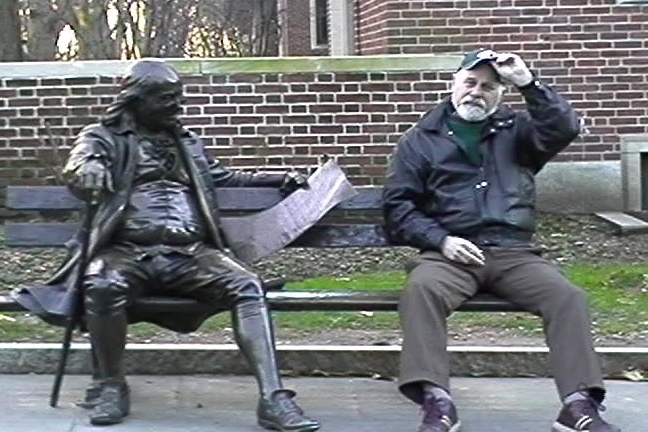
Mr. Avery liked to hang out with Benjamin Franklin and other historic figures. Alex Strang
He lived later in Pennsport and East Falls, was diagnosed with ALS in 2015, and proudly outlived its average life expectancy of 18 months by nearly a decade. “He defied that diagnosis and did not let it define him,” his son Serge said. “He always said he had a lot to live for.”
Mr. Avery was an avid reader and street photographer. He liked poetry, wrote limericks on birthday cards, and posted hundreds of his photos on flickr.com. One of his photos won a contest and was displayed at the airport.
He enjoyed jazz and jokes, led the prayers at family gatherings, and gave Yiddish quizzes to his two grandsons. He shared favorite recipes with Daily News colleagues and whipped up memorable homemade soups, especially white bean.
“I’ll greatly miss his endless anecdotes about all things Philadelphia,” said his daughter-in-law, Rebecca Houlding, “the stories about the local criminals, and his love of his family and friends.”
Mr. Avery wrote about his life in Northeast Philadelphia for the Daily News in 1997.Alejandro A. Alvarez / Staff Photographer
His son Serge said: “He loved chasing the stories from the back alleys and driveways, highlighting the working people of our town.”
In addition to his sons, daughter-in-law, and grandsons, Mr. Avery is survived by other relatives. A sister died earlier.
Masked men armed with handguns and what appeared to be an AR-15-style rifle robbed three men early Sunday morning in Center City, forcing at least one of the victims to his knees at gunpoint, according to police.
The victims — ages 27, 35, and 36 — were talking on the sidewalk around 3 a.m. on the 1500 block of Locust Street when three robbers stepped out of a gray Hyundai sedan and demanded the men’s belongings, said 9th District Capt. Anthony Ganard.
Two of the men complied, police said, but the third resisted, and one of the robbers hit him in the face with a handgun. He was taken to an area hospital with injuries that were not life-threatening, Ganard said.
The assailants took cell phones, watches, car keys, wallets, driver’s licenses, and cash, police said.
No arrests have been made.
Surveillance video reviewed by investigators shows one of the victims on his knees on the sidewalk as two of the robbers pointed guns — including what appeared to be an assault rifle — at his head. The video shows the victim handing over cash and the watch on his right wrist before the robbers ran back toward the Hyundai, Ganard said.
“It’s always concerning, any type of robbery involving a firearm, [but] especially when you have a high-powered-style firearm,” Ganard said at a news conference Monday.
Police believe a fourth man acted as the getaway driver and remained in the Hyundai during the robbery.
The Hyundai had been circling the area for about three hours before the robbery, Ganard said. It was unclear Monday whether the men were targeted or victims of a random crime, he added.
The sedan, which police recovered early Monday morning, had been stolen from Cheltenham Township on Wednesday, Ganard said. He declined to say where the car was found.
Detectives are examining the vehicle for evidence and searching for additional surveillance footage that may have captured the robbery. Investigators have not linked the men to any other similar robberies, Ganard said.
The investigation remains active, police said.
Anyone with information is encouraged to contact investigators at the department’s tip line, 215-686-8477 (TIPS).