Tag: Center City

  • How a Michelin-starred Philly restaurant secured a $1.5 million state grant to take over the rowhouse next door

    How a Michelin-starred Philly restaurant secured a $1.5 million state grant to take over the rowhouse next door

    One of Philly’s most prominent fine-dining restaurants received a state grant to create an even higher-end establishment. The project promises to create 100 jobs and help cement Philly’s place as a culinary hot spot. It drew criticism over the use of tax dollars.

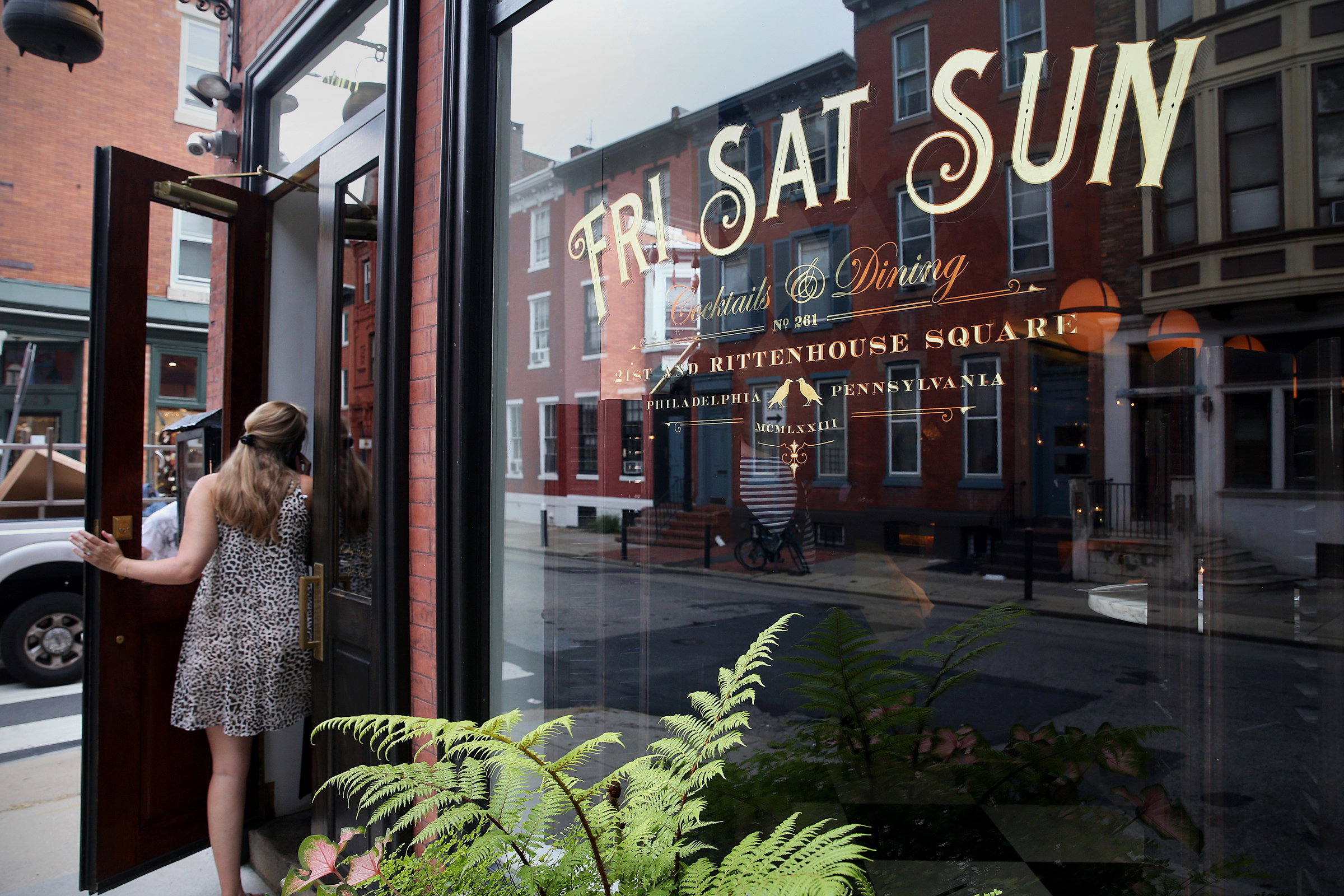
    The Weekend Restaurant Group, which owns the acclaimed Rittenhouse Square restaurant Friday Saturday Sunday, was awarded $1.5 million from the state’s Redevelopment Assistance Capital Program in July to help finance the expansion of the Michelin-starred restaurant. The grant will cover only a fraction of the project’s multimillion-dollar budget.

    The endeavor will be the “first minority-owned restaurant of its kind” in the United States, wrote Friday Saturday Sunday chef-owner Chad Williams, who is Black, in the restaurant group’s application.

    The undertaking involves connecting Friday Saturday Sunday with a neighboring rowhouse that will eventually be transformed into a three-story dining destination with an 18-seat chef’s counter, private dining rooms, and a post-dinner sweets lounge.

    Williams runs Friday Saturday Sunday with his wife, Hanna. Together, they announced plans to grow their award-winning restaurant at 261 S. 21st St. last summer, after entering an agreement to buy the adjoining property at 2048 Rittenhouse Square. Neighbors enthusiastically endorsed their ambitious plan, which came five months before the restaurant earned a Michelin star.
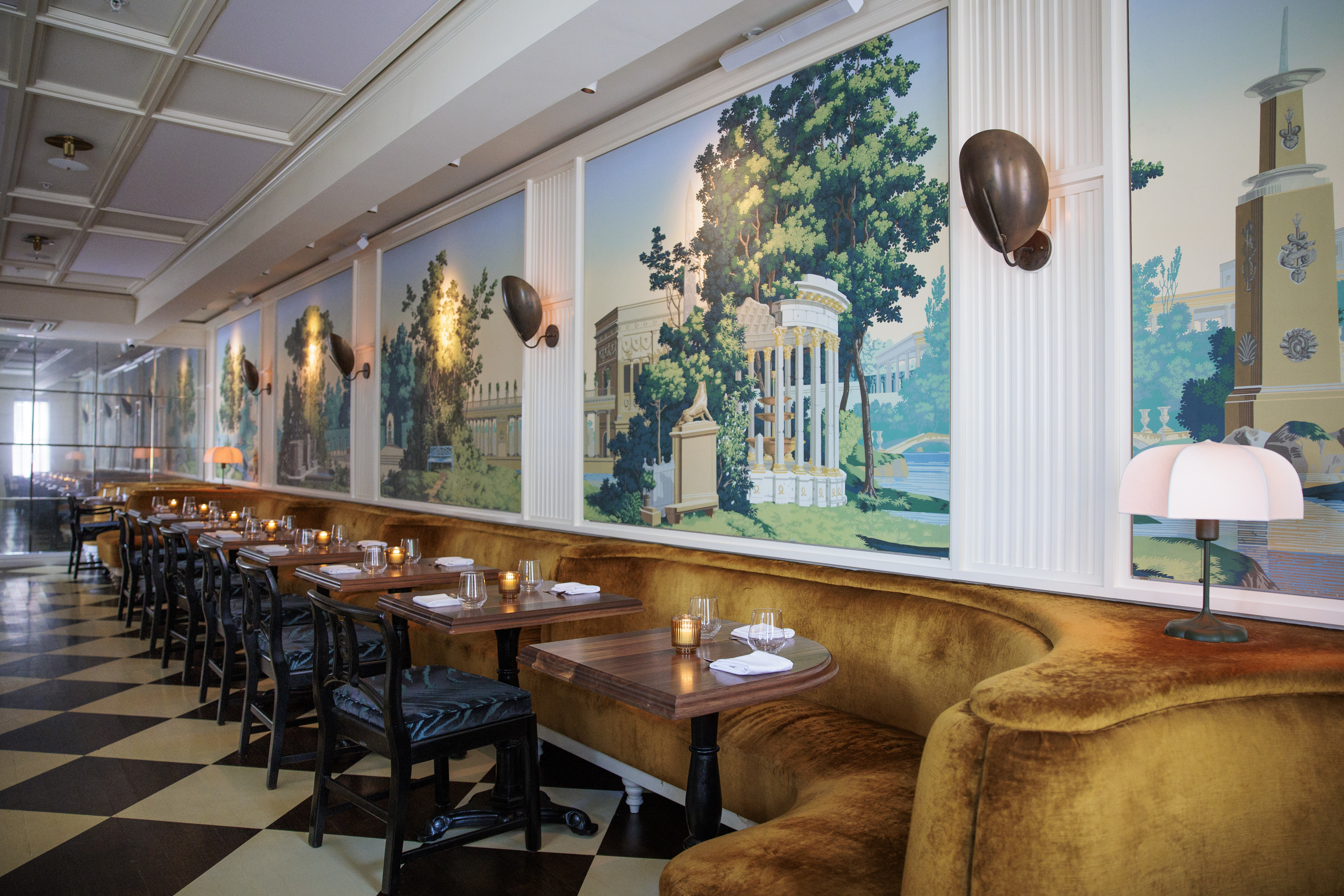
    The interior of Friday Saturday Sunday’s upstairs dining room, which offers a $205-per-person tasting menu.Monica Herndon / Staff Photographer

    In the state grant application, Williams wrote “the project will generate significant cultural impact [by] retaining and creating high-quality jobs, attracting visitors from the region and beyond, and raising Philadelphia’s profile.” Renovating the storied Philadelphia restaurant “demonstrates a long-term to commitment to the city, with the scale and ambition to be a generational anchor in its neighborhood.”

    Yet when news of the grant spread on social media last month, it was met with critics who were angry that taxpayer dollars were funding a fine-dining restaurant.

    “Luxe restaurant getting a grant to become more luxe? … WTF?” one person wrote under an Instagram post about the grant with over 100 comments, many of which were critical.

    “Give it to the schools” instead, wrote another.
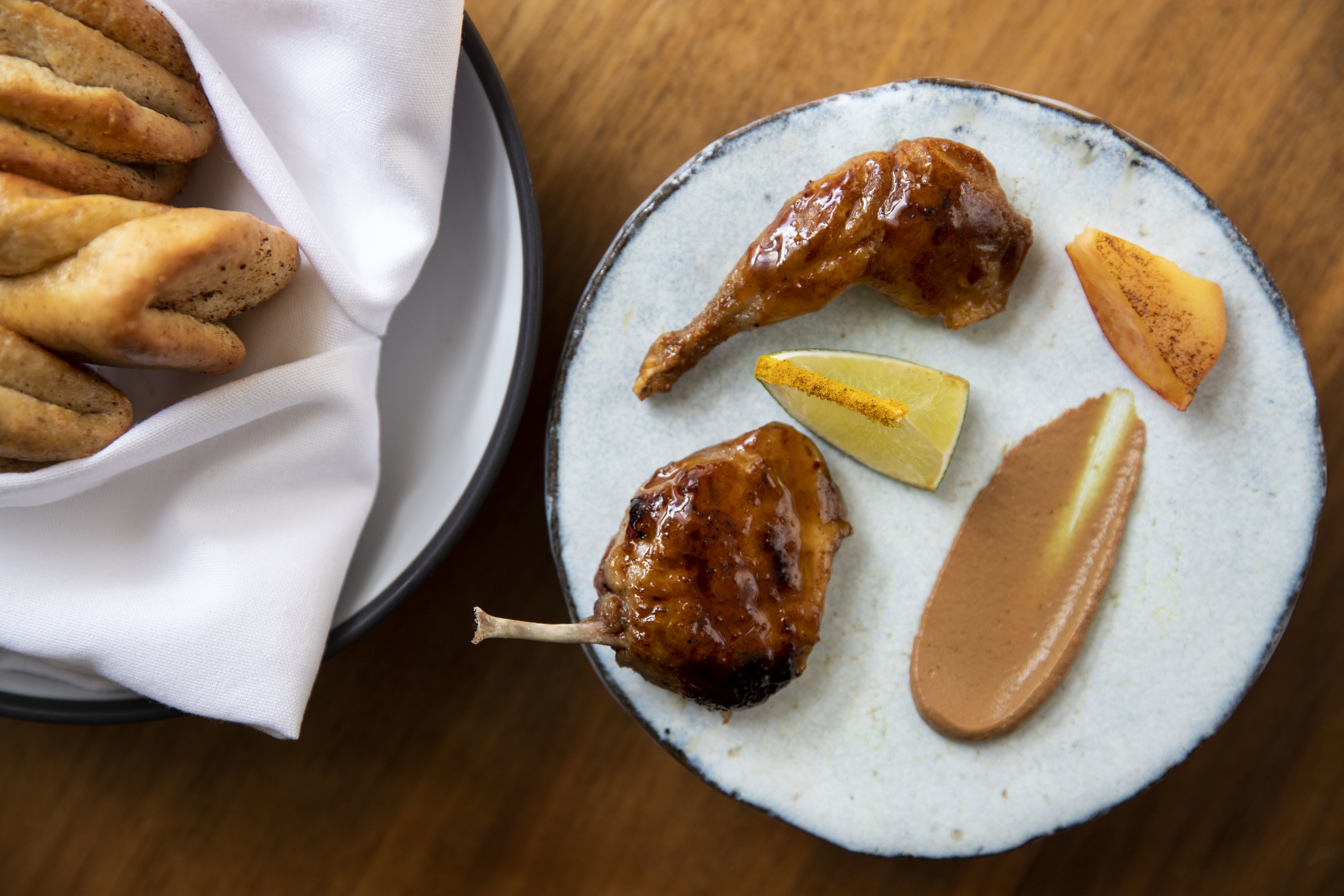
    The grilled quail with coco bread at Friday Saturday Sunday, photographed in 2022.MONICA HERNDON / Staff Photographer

    Williams says the grant money — which is from a fund for construction projects that would benefit the state culturally and economically — is a win for the city, not just Friday Saturday Sunday.

    “I was born here. I left, learned all that I could, and came back. What we want to do is push the culture forward and, with that, hopefully [bring] economic benefits for everyone in the city,” Williams said.

    “There’s going to be tax revenue and jobs that come back in a very real way.”

    A much-debated grant program

    Better known as RACP, the Redevelopment Assistance Capital Program defrays the cost of construction-ready projects across Pennsylvania that stand to generate substantial economic growth. The fund has stirred controversy in the past.

    The program was launched in 1986 to support construction and real estate projects that intend to create jobs, boost tax revenue, or have significant cultural and civic impact. Eligible projects must cost at least $1 million and secure at least half of their funding from other sources.
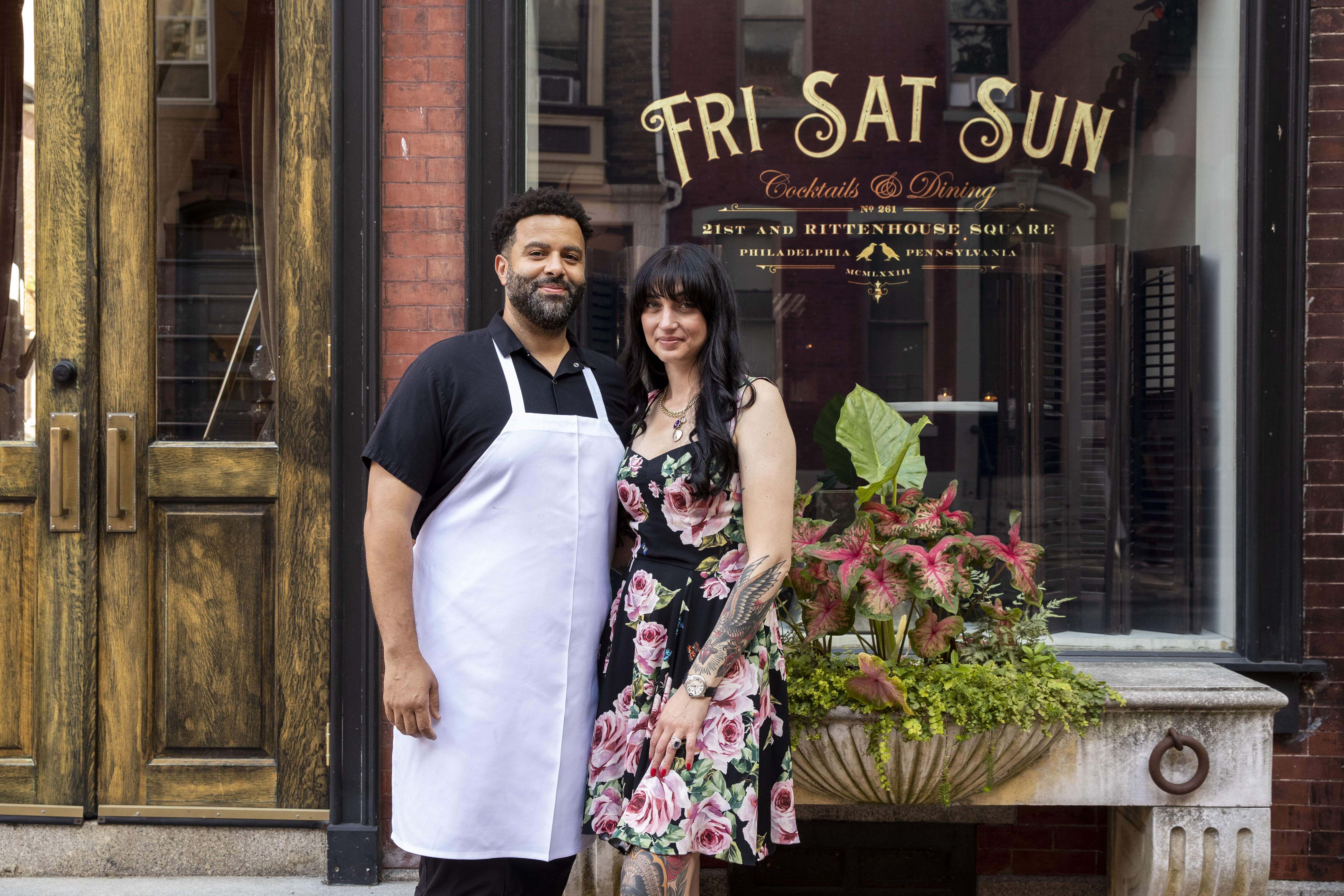
    Chef Chad Williams and Hanna Williams at their restaurant Friday Saturday Sunday.Monica Herndon / Staff Photographer

    Because grants are decided at the governor’s discretion, the program has previously been criticized for a lack of transparency and glad-handing.

    RACP was overhauled in 2012 after an audit found that the Gov. Tom Corbett administration did not adequately disclose or document why projects were awarded grants. Similar accusations cropped up again in 2020, when critics alleged Gov. Tom Wolf and state legislators were misusing the program for political favors.

    This July, Gov. Josh Shapiro’s administration allocated $445 million in RACP grants to 356 projects across the state. Recipients range from private real estate developments and public parks to affordable housing and renovations of schools, hospitals, and community centers. The program was particularly competitive in Philadelphia: 170 projects applied. More than half were rejected.

    (function(){function e(){window.addEventListener(`message`,function(e){if(e.data[`datawrapper-height`]!==void 0){var t=document.querySelectorAll(`iframe`);for(var n in e.data[`datawrapper-height`])for(var r=0,i;i=t[r];r++)if(i.contentWindow===e.source){var a=e.data[`datawrapper-height`][n]+`px`;i.style.height=a}}})}e()})();

    Friday Saturday Sunday’s expansion is projected to cost $7.5 million overall, according to the grant application. Once complete, Williams told The Inquirer, it will add 100 front- and back-of-house jobs to the Weekend Restaurant Group’s payroll. (The group currently has 40 employees, according to the application.)

    Not all RACP hopefuls are awarded the full amount of funding they applied for. Friday Saturday Sunday’s expansion was one of 12 Philly projects awarded the full amount requested.

    Other fully funded recipients include Rhoads Industries, a defense contractor awarded $4 million to build a new shipbuilding facility in the Navy Yard, and Comcast Spectacor, which received $1.4 million to build a traffic operations center at the sports complex, as well as Philadelphia Youth Basketball, the Community College of Philadelphia, and the Steamfitters Union. (The Philadelphia Eagles also received $4 million grant to renovate their training complex; the team applied for $7.725 million.)

    (function(){function e(){window.addEventListener(`message`,function(e){if(e.data[`datawrapper-height`]!==void 0){var t=document.querySelectorAll(`iframe`);for(var n in e.data[`datawrapper-height`])for(var r=0,i;i=t[r];r++)if(i.contentWindow===e.source){var a=e.data[`datawrapper-height`][n]+`px`;i.style.height=a}}})}e()})();

    A spokesperson for the Shapiro administration told The Inquirer over email that the Weekend Restaurant Group’s proposal “is fully consistent with the purpose and authorized uses of the RACP program and represents an appropriate use of RACP funds.”

    Building on a legacy

    Chad and Hanna Williams bought Friday Saturday Sunday — already a Philadelphia dining institution — in 2015, transforming the space into a cozy, first-floor bar and an elegant upstairs dining room. They reopened the restaurant in 2017, serving a tasting menu rich with Caribbean, Asian, and soul-food influences. Local and national praise has been steady ever since. Friday Saturday Sunday routinely earns a spot in Craig LaBan’s annual Top 10 and The Inquirer’s annual 76. It won the James Beard Award for Outstanding Restaurant in 2023 and was named on the World’s 50 Best in North America two years in a row. The first-floor Lovers Bar has also been twice-nominated by the James Beard Awards’ Outstanding Bar.
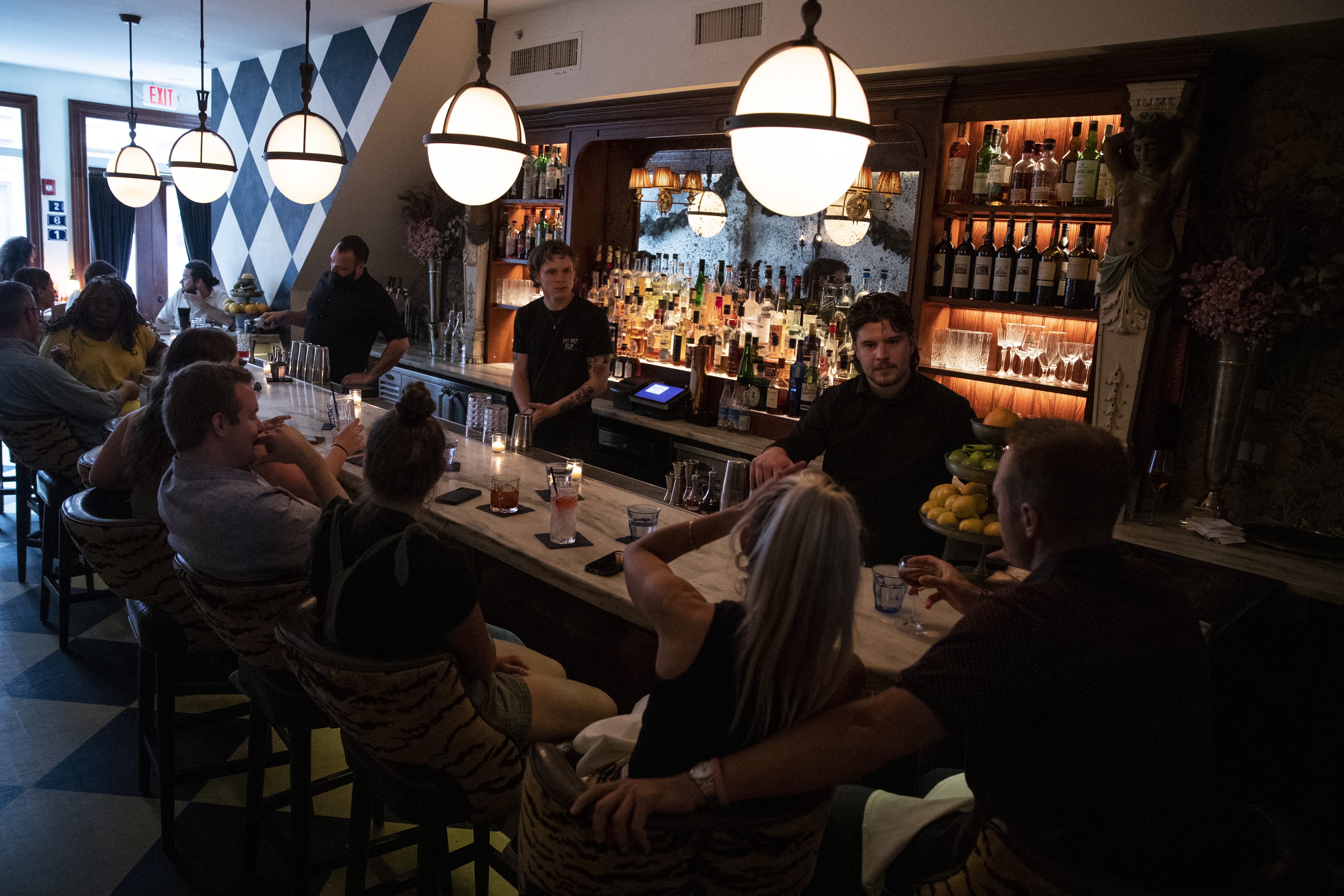
    The downstairs Lovers Bar at Friday Saturday Sunday is a two-time James Beard Award nominee.Monica Herndon / Staff Photographer

    Receiving the RACP grant was a relief, said Williams, who said he is funding more than half of the $7.5 million project with loans.

    Taking on the financial liability is “not a rosy story necessarily,” Williams said, “but it’s a risk we’re willing to take.”

    Williams envisions the 3,500-square-foot rowhouse at 2048 Rittenhouse Square as a chance to create an old-school fine-dining experience inspired by the likes of Le Bec-Fin and Vetri Cucina. Guests will start with welcome drinks on the ground floor before moving upstairs for an intimate meal at a chef’s counter helmed by Williams. Diners will finish the meal on the third floor in a designated dessert space, Williams said.
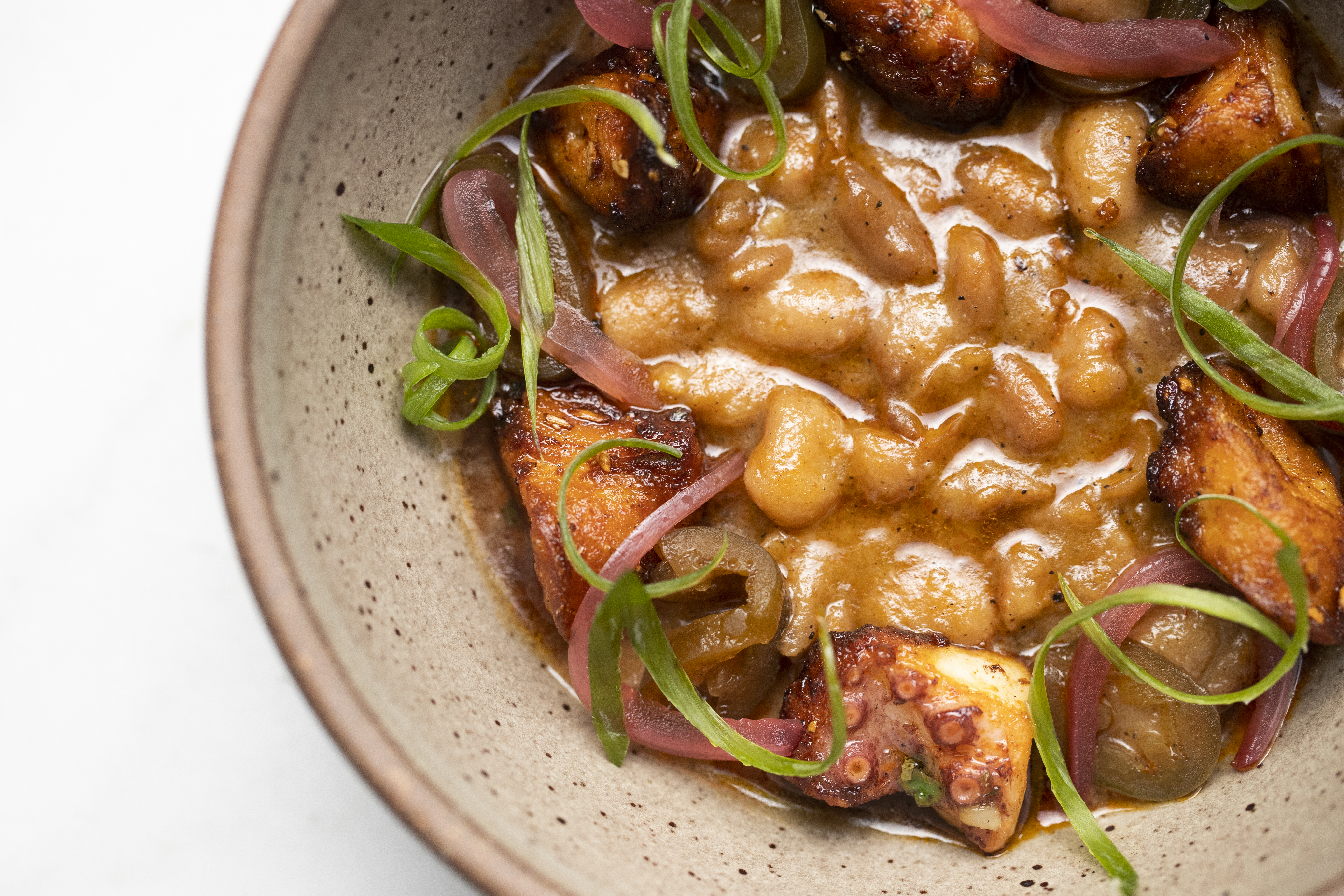
    The octopus and beans from the bar menu at Friday Saturday Sunday, photographed in 2023.Monica Herndon / Staff Photographer

    The concept will extend the Friday Saturday Sunday brand and render the original tasting menu into a “less formal” affair that is more in line with “what neighbors and regulars want,” Williams said. The connected properties will also enable Friday Saturday Sunday to serve large parties and potentially open seven days a week. The expanded hours will allow for more staff, Williams said

    Williams said the project could break ground in October. He’s optimistic about a September 2027 opening.

    He framed Friday Saturday Sunday’s expansion as a moonshot. “To be frank, for a Black chef to have this opportunity and do it is a big deal,” Williams said.

    “Having a chance to practice our craft at this level is extremely rare.”

    ‘We need all the help we can get’

    Williams decided to apply for RACP funds after exhausting more traditional financing routes.

    “Without state support, the project would face a significant financing gap,” he wrote in the application, “as private funds alone cannot absorb both the acquisition and essential structural work.”

    Despite his restaurant’s extremely successful track record, the chef found the process similar to the original financing of Friday Saturday Sunday — which required the Williamses to sell their home and submit paperwork to “14 different banks” before finding one that would take a chance on them.
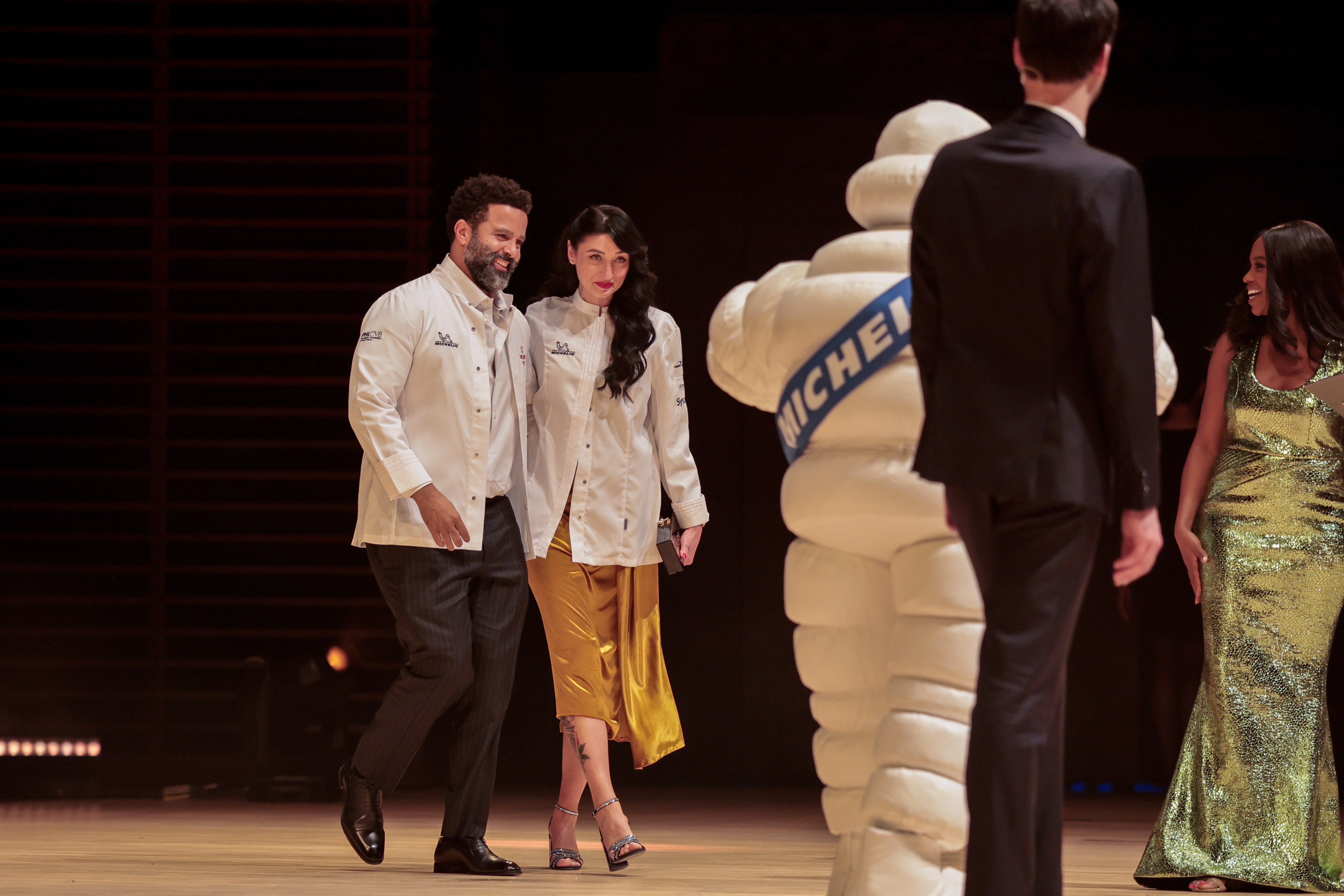
    Friday Saturday Sunday, run by chef Chad Williams and his wife, Hanna, earns a Michelin star at the Kimmel Center on Nov. 18, 2025.Elizabeth Robertson / Staff Photographer

    It’s a struggle many Black entrepreneurs know well: Several studies have found that Black-owned businesses are discouraged to apply, denied, and offered inferior loans at higher rates than white counterparts, even when appearing more creditworthy.

    “We’ve put in our work here, had some success and won some things, but it did not make [financing] any easier,” said Williams. He was attracted to RACP because it was described to him as a “colorblind grant” by other BIPOC entrepreneurs who encouraged him to apply.

    Friday Saturday Sunday is not the first Philly restaurant to receive state funding through RACP. North Philly’s Caribbean Feast was awarded $750,000 in 2022 for construction costs associated with renovating their kitchen facilities to support other Caribbean-owned food businesses through a commissary model. The program also awarded $500,000 to FringeArts in 2014 for creating a Delaware River waterfront restaurant and $1.5 million to Yards Brewing Co. in 2019 for its Spring Garden brewery and taproom build-out.
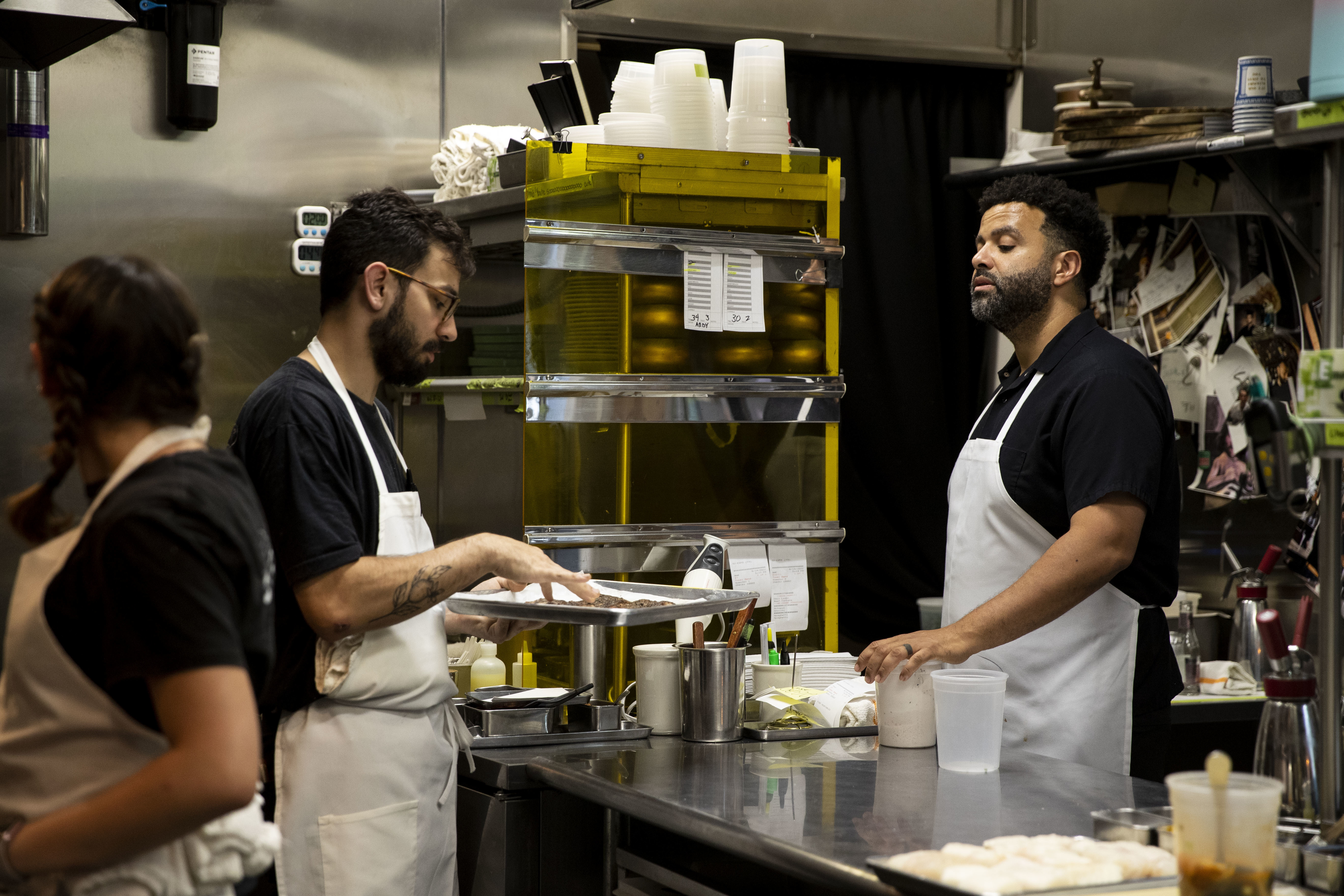
    Chef and co-owner Chad Williams (right) in the kitchen at Friday Saturday Sunday on Aug. 14, 2022.Monica Herndon / Staff Photographer

    Williams is hopeful that other restaurants will consider applying for RACP after seeing his success.

    “If I wouldn’t have done the research, I would’ve never known this was possible,” he said. “We need all the help we can get.”
  • Construction software giant based in Exton opens a new Philly office

    Construction software giant based in Exton opens a new Philly office

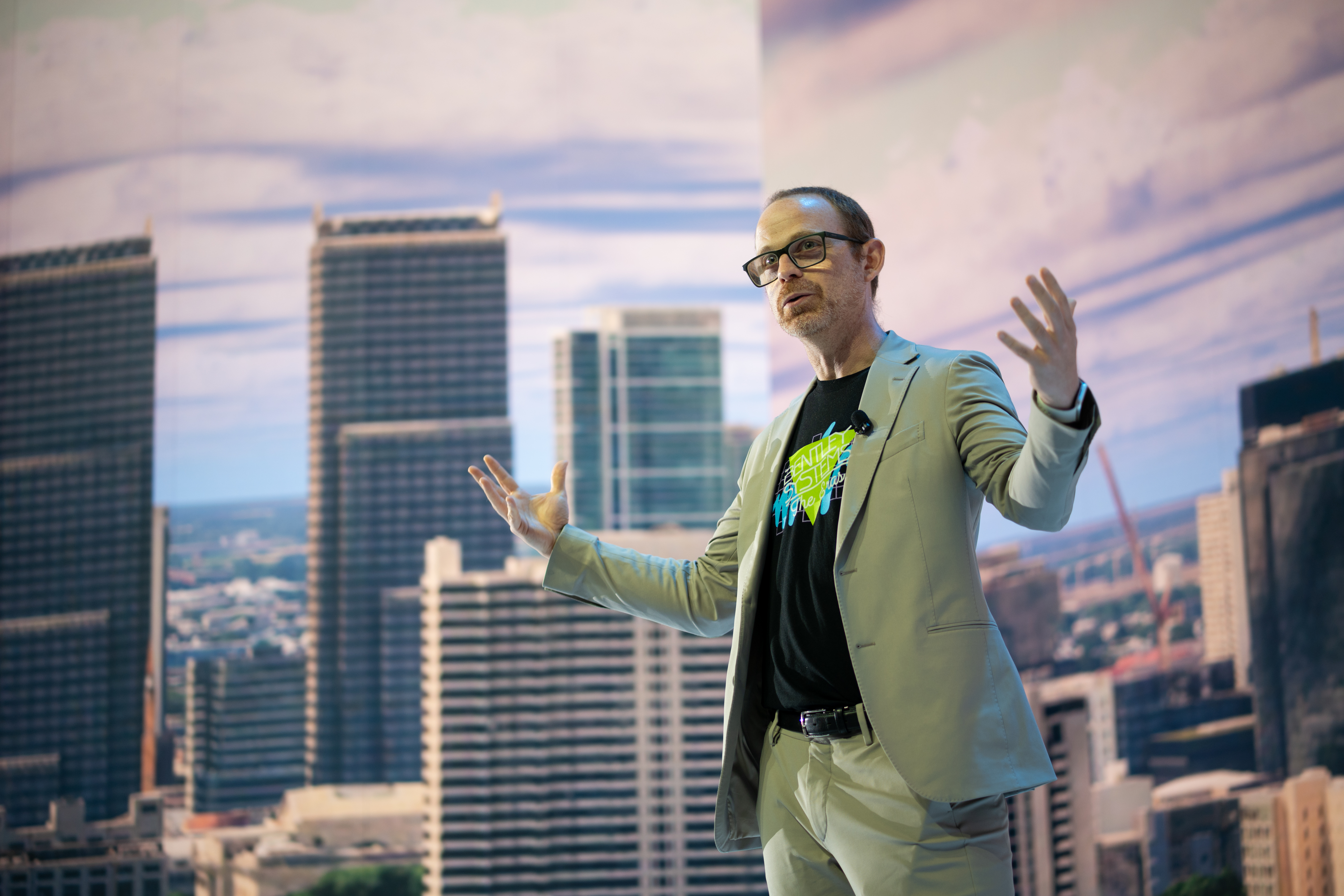
    Exton-based Bentley Systems International, the software company with the highest market capitalization in the Philadelphia area, has opened a Center City office as its new base for 150 engineers and other tech and business staff, replacing two smaller outposts in the city.

    The construction design and building software maker’s 22,000-square-foot hub in the Curtis Center building will replace Bentley’s 14-year-old office on Cherry Street and the 30-person 400 Market St. former headquarters of Cesium GS Inc., which Bentley acquired in 2024.

    Cesium founder and past CEO Patrick Cozzi is now Bentley’s chief platform officer and will head the new office, near Independence Hall.

    At Bentley Systems’ new Philadelphia office, where the company’s Cesium team has its home, in the Curtis Center, 2026.Bentley Systems

    Bentley, founded by five brothers from Delaware in 1984, has sales totaling $1.5 billion last year.

    Cozzi set up Cesium as a geospatial-mapping applications unit of serial tech developer Paul Graziani’s Exton-based Analytical Graphics Inc. (AGI) in 2011 and spun Cesium off as an independent company in 2019.

    Bentley customers use what’s now its Cesium Ion mapping platform to show sites and buildings in complex detail on office computers and hand-held devices.

    A Penn State grad, who also earned a master’s and taught programming and architecture at the University of Pennsylvania, Cozzi says he sees Philadelphia as a “magical place” for tech companies.

    “When I was CEO raising capital on the West Coast, some of the investors told me the best tech entrepreneurs want to move to the [San Francisco] Bay area. I said no, we can build a great tech company in Philadelphia,” he said.

    Philadelphia was an early computing industry center. ENIAC, the pioneering system built at Penn to help plan World War II artillery attacks, and other early Philly-built computing systems relied on the vacuum tubes mass-produced for radio manufacturers in Philadelphia and Camden.

    But by the 1970s, the industry committed to far more efficient silicon-based microprocessors developed in California’s “Silicon Valley.” Investor-rich cities such as Boston, Seattle, and Austin also became important computer hardware and software centers. Few large tech companies are now based in the Philadelphia region.

    Cozzi says Philadelphia’s affordability is now an asset.

    “We have reasonable cost of living and fantastic schools, graduates who want to stay here, great restaurants and quality of life, it’s an awesome place for the tech community,” he said, as he prepared to welcome Mayor Cherelle L. Parker, State Rep. Jordan Harris (D., Phila.), and 200 other guests to the new space for a grand opening celebration Thursday evening.

    Cozzi said neither the city or state provided incentives for the new office.

    Invited guests at Thursday’s event include Bentley clients from Center City-based Pennoni Engineering; Ansys, the Pittsburgh-based owner of AGI, and Earthbrain, a Japanese construction equipment and computing joint venture, which uses Philadelphia as a U.S. base.

    Bentley went public in its 2020 IPO at $22 a share. The stock peaked in the low $60s the next year and ran almost as high last summer. It has lately traded around $35 a share.

    It employs more than 5,000 at offices in 42 countries. The company is worth nearly $11 billion on the Nasdaq stock exchange. That compares to around $6 billion for Newtown, Bucks County-based software-outsourcing provider EPAM, $2 billion for King of Prussia tax-accounting software maker Vertex Inc., and $200 million for Blue Bell legacy hardware and software provider Unisys.

    Bentley’s 10th-floor space in the Curtis Center includes a public-meeting area to host events.

    The building was built in 1910 for Curtis Publishing and its mass market magazines, led by the Saturday Evening Post and Ladies’ Home Journal. Curtis moved its press operations to Delaware County in 1949 and shut both Philadelphia offices and Delco operations by the time of its 1969 bankruptcy.

    The Curtis building’s owner, Keystone Development + Investment, has in recent years added apartments, biotech labs, and other specialized units to help fill the block-long complex.

  • SEPTA had ‘better-than-expected financial performance’ this year

    SEPTA had ‘better-than-expected financial performance’ this year

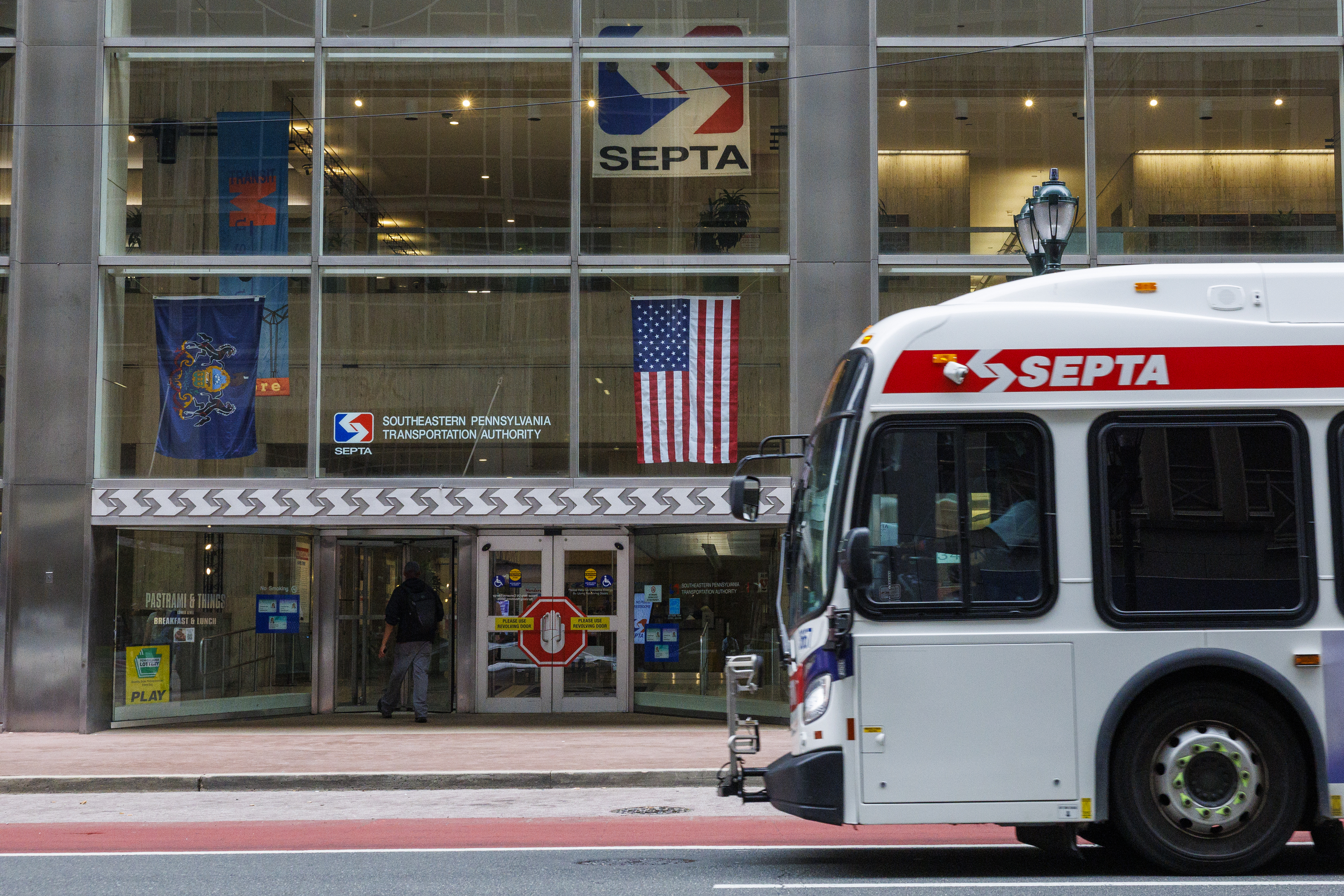
    Moody’s Ratings has upgraded SEPTA’s outlook to stable from negative, one year after the transit authority was cutting service to help close a budget deficit and paying for emergency safety inspections and repairs for 223 decades-old Regional Rail cars.

    The revised outlook “reflects SEPTA’s better-than-expected financial performance” in fiscal 2026 that leaves it with enough liquidity to pay the bills while continuing to try to solve a structural budget gap, Moody’s said in an Aug. 28 statement.

    “Our hope is that this external validation supports the message we want to send to our stakeholders in Harrisburg that SEPTA is a sound investment and that we are good stewards of taxpayer dollars,” assistant treasurer Michael Kendall said in an interview.

    At this time last year, Harrisburg lawmakers and the Shapiro administration had failed for the third straight year to agree on a steady source of new state funding for SEPTA and other transit agencies. Moody’s also downgraded the authority’s fiscal outlook to negative.

    In early September 2025, PennDot redirected $394 million in state capital assistance funds to help cover two years of operating expenses. Later, Gov. Josh Shapiro sent an additional $219.9 million for safety and urgent repairs on both the Regional Rail cars and the trolley tunnel in Center City.

    SEPTA managers pivoted to an increased focus on controlling costs, finding new revenue from advertising, parking, and real estate, and service improvements, Kendall said.

    The transit agency says it has found about $30 million in annual savings, as well as increased income from advertising, parking, and real estate. Ridership remained steady and spiked during the summer’s World Cup games, celebrations of America’s 250th birthday, and the Major League Baseball All-Star Game.

    Overall, SEPTA says its structural budget deficit dropped from $213 million a year to $192 million.

    The credit rating for authority bonds remains good, as they are backed by reliable federal and state income streams, not passenger revenue, which can fluctuate.

    SEPTA has a $501 million bond for asset improvement and a $42 million bond in the Public Transportation Assistance Fund. Moody’s gave both one of its highest ratings, Aa3. Moody’s also affirmed the A3 ratings on the authority’s $138 million in bonds issued against federal capital grants it has been awarded.

    Still, Moody’s warned, “over the long-term, SEPTA’s sizable structural budget gap will be difficult to resolve without further financial support from the commonwealth or significant adjustments to operations.”

  • A 118-unit apartment tower is proposed for 23rd and Walnut Streets, replacing a Rite Aid

    A 118-unit apartment tower is proposed for 23rd and Walnut Streets, replacing a Rite Aid

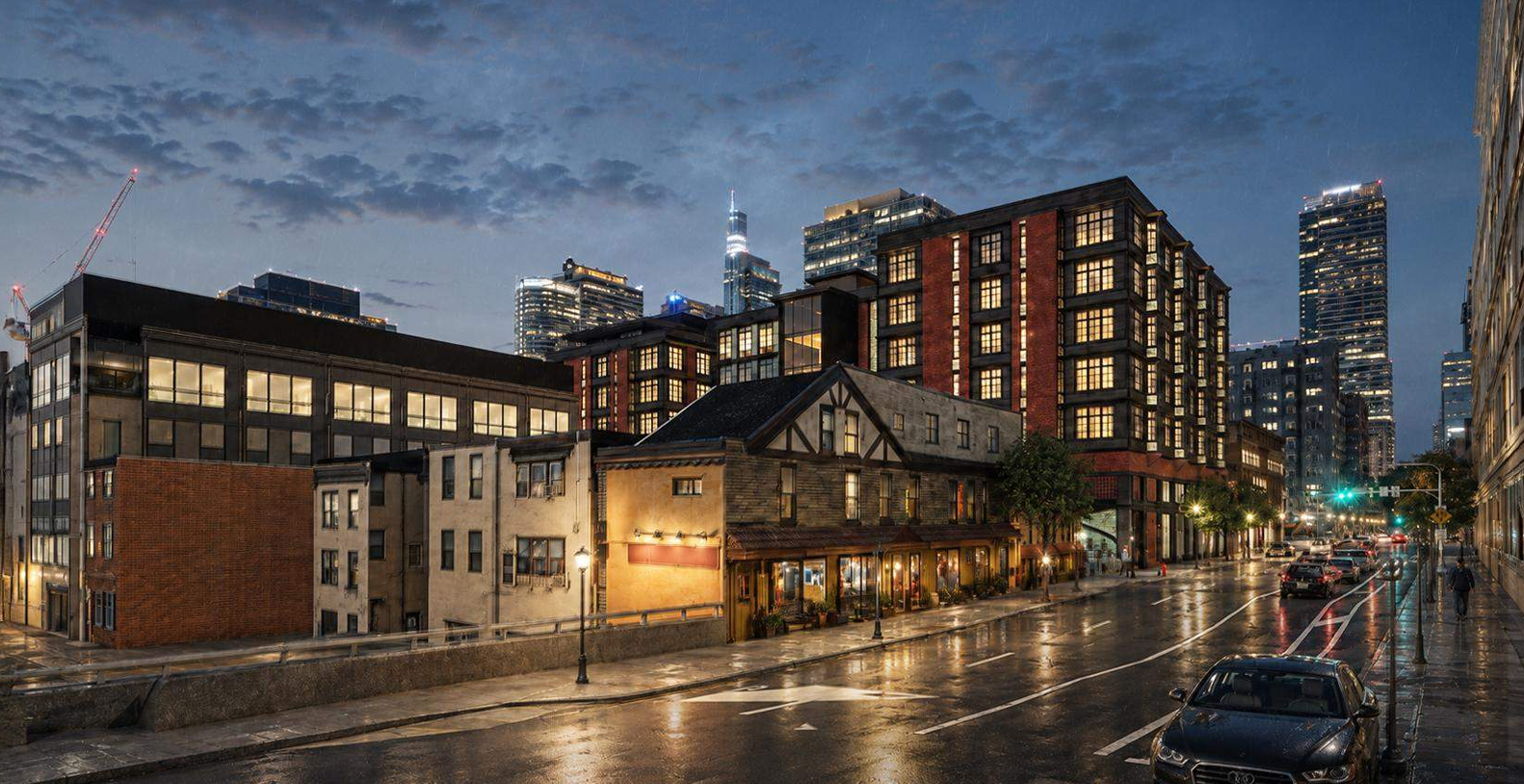
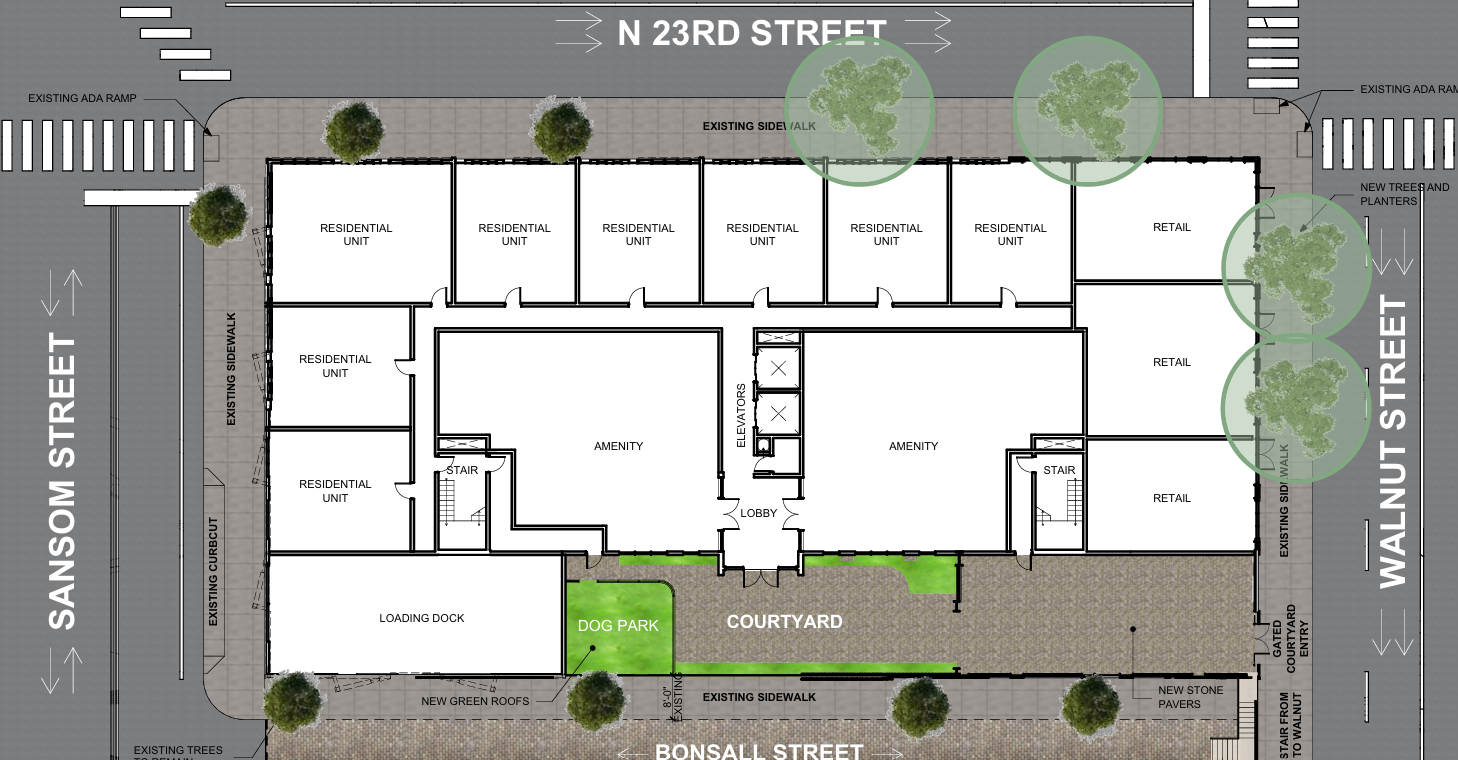
    An 118-unit apartment building at 2301-11 Walnut St. received a warm welcome from a city-designated panel of architects and planners at Tuesday’s meeting of the Civic Design Review committee.

    The eight-story proposal is slated for land that once housed a suburban-style Rite Aid and its surface parking lot.

    The new building would include 46 underground parking spaces, 2,750 square feet of retail on Walnut Street, and 5,675 square feet of amenity space facing an interior courtyard.

    The property has long been held by Patriot Development Associates, a company that owns and operates parking facilities throughout Center City.

    In 2022, developer Trammel Crow Co., based in Dallas, proposed a 172-unit tower on the site, but the project was scuttled when interest rates began rising sharply.

    The new plans show Patriot developing the property themselves. The president of the company, Richard Zeghibe, did not respond to requests for comment.

    Philadelphia-based Boxwood Architects is designing the project. The firm is known for high-end restaurant and bar design, as well as multifamily projects.

    The architect plans a variety of plant life features, including new street trees, a green roof, and a garden in the courtyard facing Bonsall Street, as well as design detailing on the side of the building.

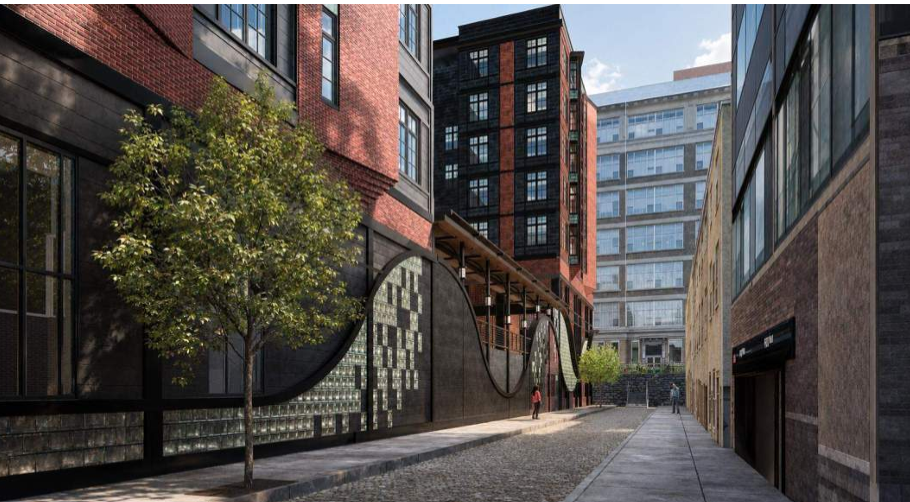
    “We introduced an artistic gesture on Bonsall Street, inspired by the movement of the Schuylkill River, to activate the streetscape and connect the courtyard to the neighborhood through brick screens and sculptural metal railings,” said John Weckerly of Boxwood.

    The detailing on Bonsall Street is “inspired by the movement of the Schuylkill River,” according to the project architect.[Box]wood Architects

    “Gardens and green spaces are situated throughout the project to reduce the heat island effect and create a more welcoming experience for residents and neighbors,” Weckerly said.

    The overwhelming majority of the project is comprised of one-bedroom units, with only 13 two-bedrooms.

    The proposal does not require any breaks from zoning law, so the developer only had to meet with the local community organization — the Center City Residents Association (CCRA) — in advance of Tuesday’s advisory-only meeting.

    “[We] welcome the addition of housing to the neighborhood, additional residents, and retail opportunities for more businesses,” Alex Roederer, head of CCRA’s zoning committee, said at the Tuesday meeting.

    He noted that Patriot Development had expanded the bicycle room in response to the neighborhood’s feedback and that the company was considering a Community Benefits Agreement as well. Details are not yet available.

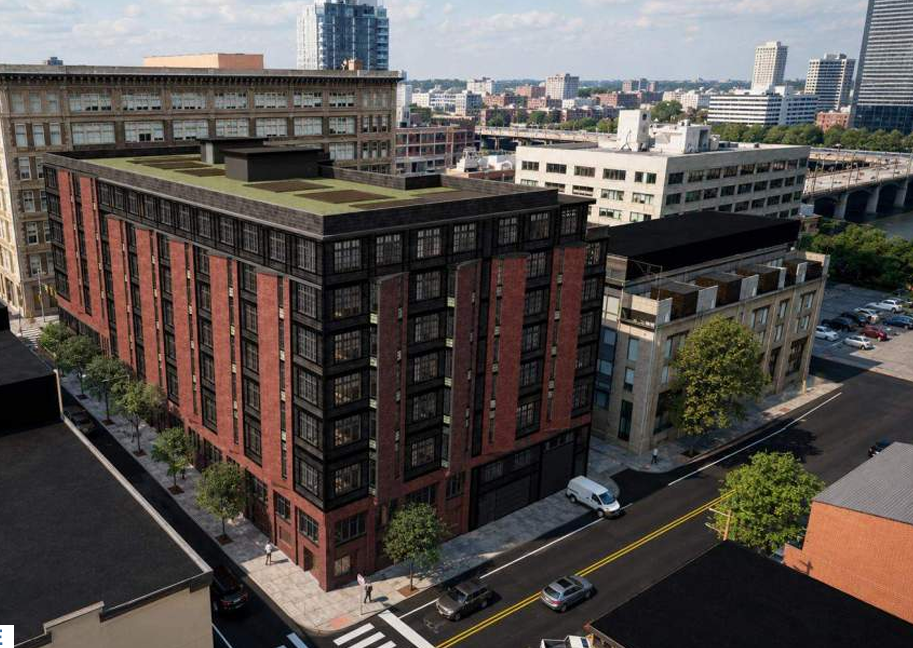
    A close-up rendering of Patriot Development’s proposed building, with the green roof visible.[Box]wood Architects

    The Civic Design Review committee generally praised the aesthetics of the project and its potential to enliven Walnut Street as it approaches the Schuylkill.

    Multiple street-level businesses in the blocks of Walnut Street leading up to the river have shuttered since 2020.

    Some members of the CDR committee encouraged the developer to add more street-level commercial space — currently only the Walnut Street side features room for retail — and others urged the architects to bring more definition to the existing street frontage.

    Alternatively, they suggested wrapping amenity space, such as a gym, around to Walnut. (Currently, the space faces the courtyard, with residential units lining Sansom and 23rd Streets.)

    A map of the ground floor of the proposed building, which unusually has apartments on the ground floor.[Box]wood Architects

    “I would just love to see how you can … make this more special because right now I’m afraid it’s just a glass surface on the sidewalk,” said Ximena Valle, an architect who chairs the committee. “If they remain empty, which they might, it’s really quite ominous. It would be more of what’s already there” — vacant space.

    When asked about specific amenities — beyond a dog park — Weckerly of Boxwood noted that those details have not been fleshed out.

    Neither have potential retail offerings, with committee members noting that the current configuration did not appear to have the back-of-house space needed to sustain a restaurant.

    However, the committee on the whole praised Boxwood and Patriot Development’s design, a contrast with the reception of Trammell Crow Co.’s project in 2022.

    “Sometimes we have developers come in, and they do the absolute minimum to make an apartment, and this is more than that,” said Dan Garofalo, an architect who is the committee’s vice chair.

    This is the second major development recently announced this summer on the western edge of Walnut Street. A 372-unit building from PMC Property Group is planned just to the west at 200-10 S. 24th St.

    “I was excited to see the project come through. It provides a great opportunity of connecting West Philly and the east side of the Schuylkill,” Valle said. Right now, “I think that pedestrian experience, pre-bridge, heading west is pretty miserable.”

  • 12 new restaurants you may have missed this summer | Let’s Eat

    12 new restaurants you may have missed this summer | Let’s Eat

    Simple and fancy, lavish and chill. Here are 12 new restaurants that opened over the summer.

    💡 Come back next week for an exclusive rundown of the dozens of restaurants due to open this fall.

    Also in this edition:

    • Do you even roll, bro: Sushi chefs let us watch their workout.
    • A landmark bakery: New owner, old recipes.
    • Go apple picking: Galas, winesaps, and Golden Deliciouses await.
    • Intel: Read on for first word on restaurants coming to the Main Line and East Market.

    — Mike Klein

    If someone forwarded you this email, sign up for free here.

    12 new restaurants you may have missed

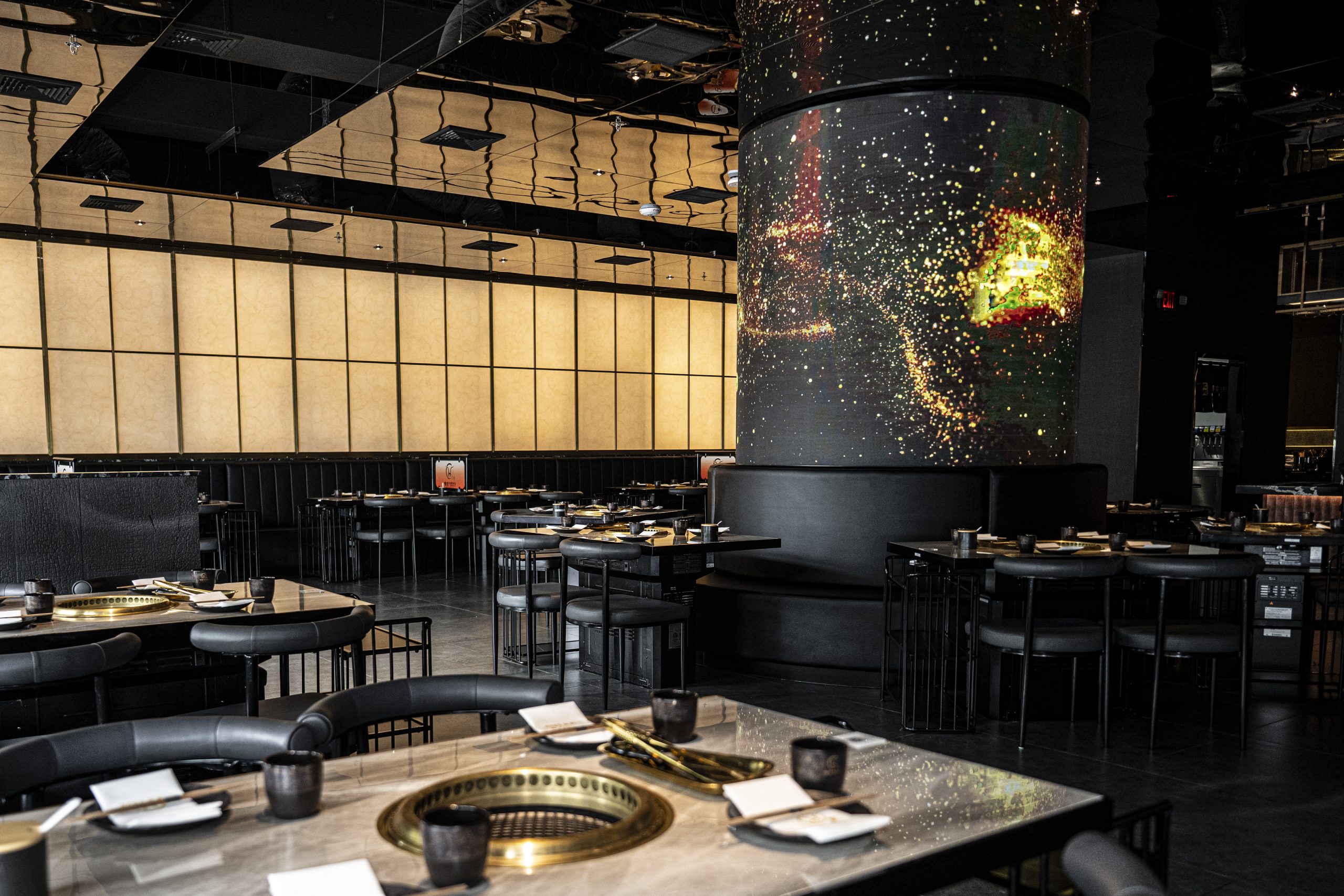
    In our quest to keep you up to date on the restaurant scene, here are 12 spots that opened in the last few months. One example is Ogyu (shown above), which took over Ardmore’s former Iron Hill Brewing. It’s a grill-it-yourself Japanese steakhouse from the owner of the nearby Osushi.

    Strong drinks and Iberian small plates

    Two reviews from critic Craig LaBan:

    BAR ilu and Grace & Proper deliver Spanish tapas and Portuguese bifana sandwiches that are a natural fit in today’s bar scene.

    Mr. Edison is flashy and ambitious, Craig finds, but as for the rest …?

    Pumping tuna: How sushi chefs stay in shape

    You have to be in shape to lug around 100-pound salmon and tuna. Kiki Aranita found a group of sushi chefs who routinely lift weights. As they say in the maki game: no pain, no grain.

    Beer, wine, and matcha in the news

    A couple didn’t want their local drinking spot to shut down for good. Sarah Nicell writes that they found a solution: They bought it.

    The lines are long, and the branding is adorable. Kiki Aranita visits Kyo Matcha in Chinatown.

    Pinot grigio is wildly popular for a good reason, and wine writer Marnie Old explains where the best ones come from.

    Poe is expanding

    Sandwichmeister N.A. Poe will expand the hours of his kitchen operation at Poison Heart next week while preparing to open a new Poe’s Sandwich Joint location by the end of the year.

    Starting Tuesday, Poe’s will operate seven days a week out of Poison Heart, 931 Spring Garden St., where he’s run the cocktail bar’s kitchen since last September. Daytime service will be pickup, takeout, and delivery only; Poison Heart itself will not open for daytime bar or dine-in service.

    Poe, the nom de plume of Richard Tamaccio Jr., is not disclosing the new joint’s location or opening date. “We look forward to the freedom to do things our way without interference or apologies,” he said.

    The move follows Poe’s split with Human Robot Brewing Co., where he had operated since 2019. His last day at Human Robot’s Kensington location is Thursday. Cantina La Martina will take over Human Robot’s kitchens at both Kensington and Brewerytown. Poe also parted company with the Monto, a new Old City bar.

    At Poison Heart, Poe’s will operate from 11 a.m. to 9 p.m. Sunday through Tuesday and 11 a.m. to 6 p.m. Wednesday through Saturday. Poison Heart’s regular Wednesday-through-Saturday evening service will continue, with Poe’s classics and specials added to the menu.

    The best thing we ate last week

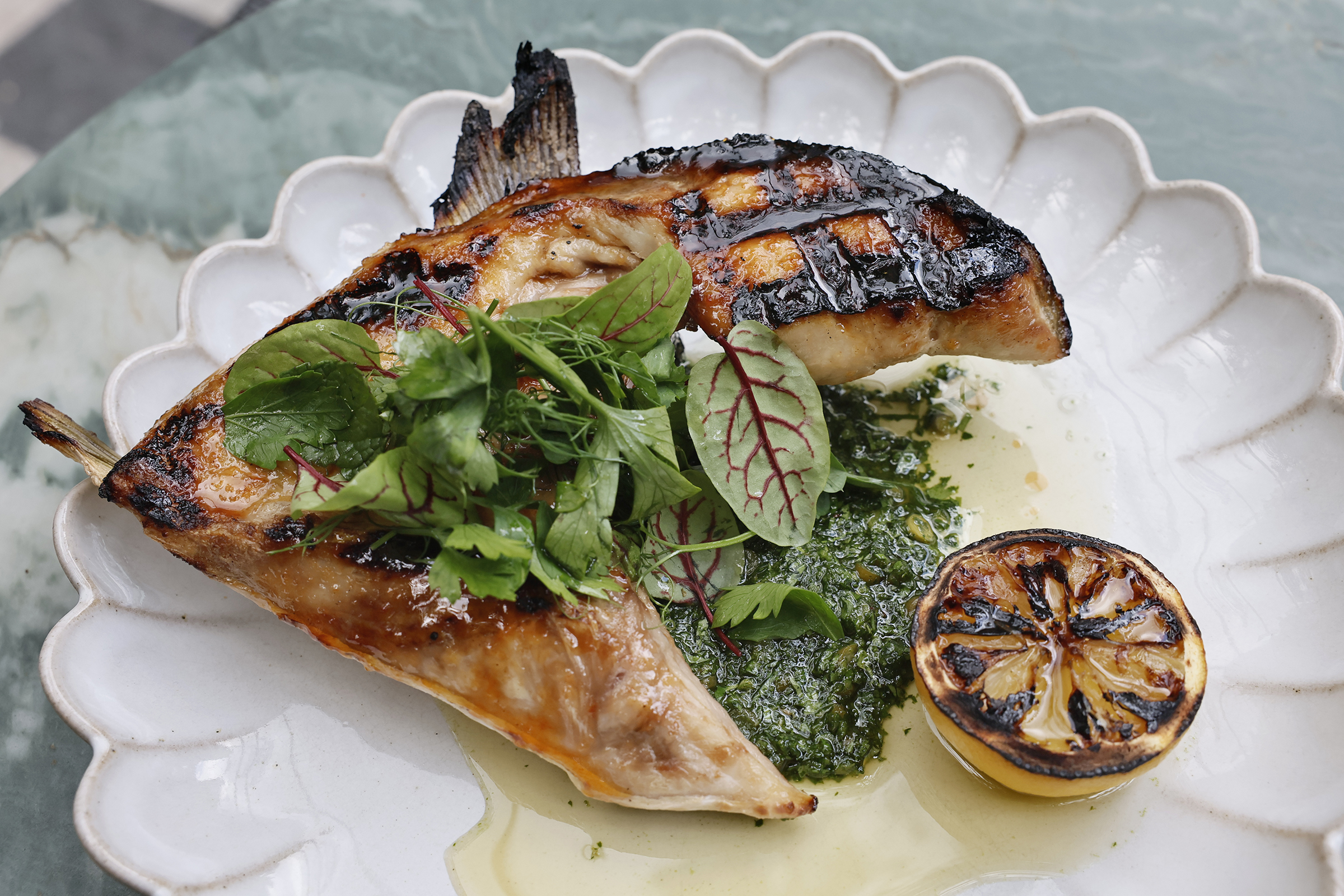
    Two tasty bright spots of a staycation for Emily Bloch and her boyfriend included hamachi collar and poolside swordfish skewers. In other words: There’s great fish to be had in Fishtown.

    Scoops

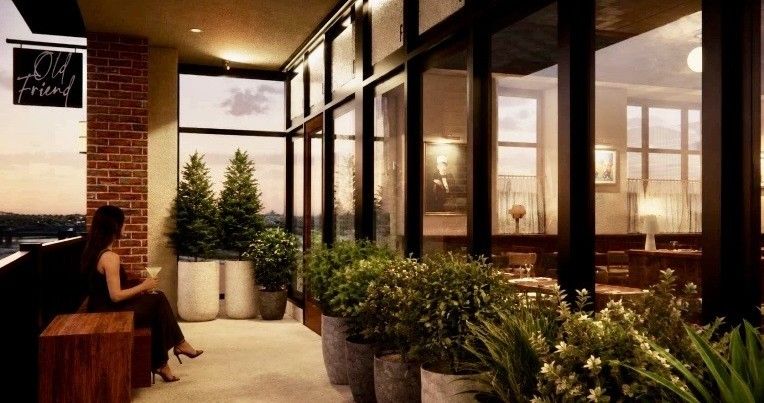
    Old Friend, an upscale restaurant with a wood-fired grill and a chef with a Center City pedigree, is coming to the Main Line later this year.

    Corte, on its way to the former East Market home of Mulherin’s Pizza, will have an Italian backbone, focusing on handmade pasta and cooking from the wood-fired oven. If that sounds like University City’s Corio, that’s because the same crew is behind it.

    Big Charlie’s Saloon, the nationally known Kansas City Chiefs-theme bar in South Philadelphia that closed with the owner’s death last December, is under agreement of sale. The buyers’ plans don’t include NFL memorabilia.

    Restaurant report

    We’re in a New York state of mind:

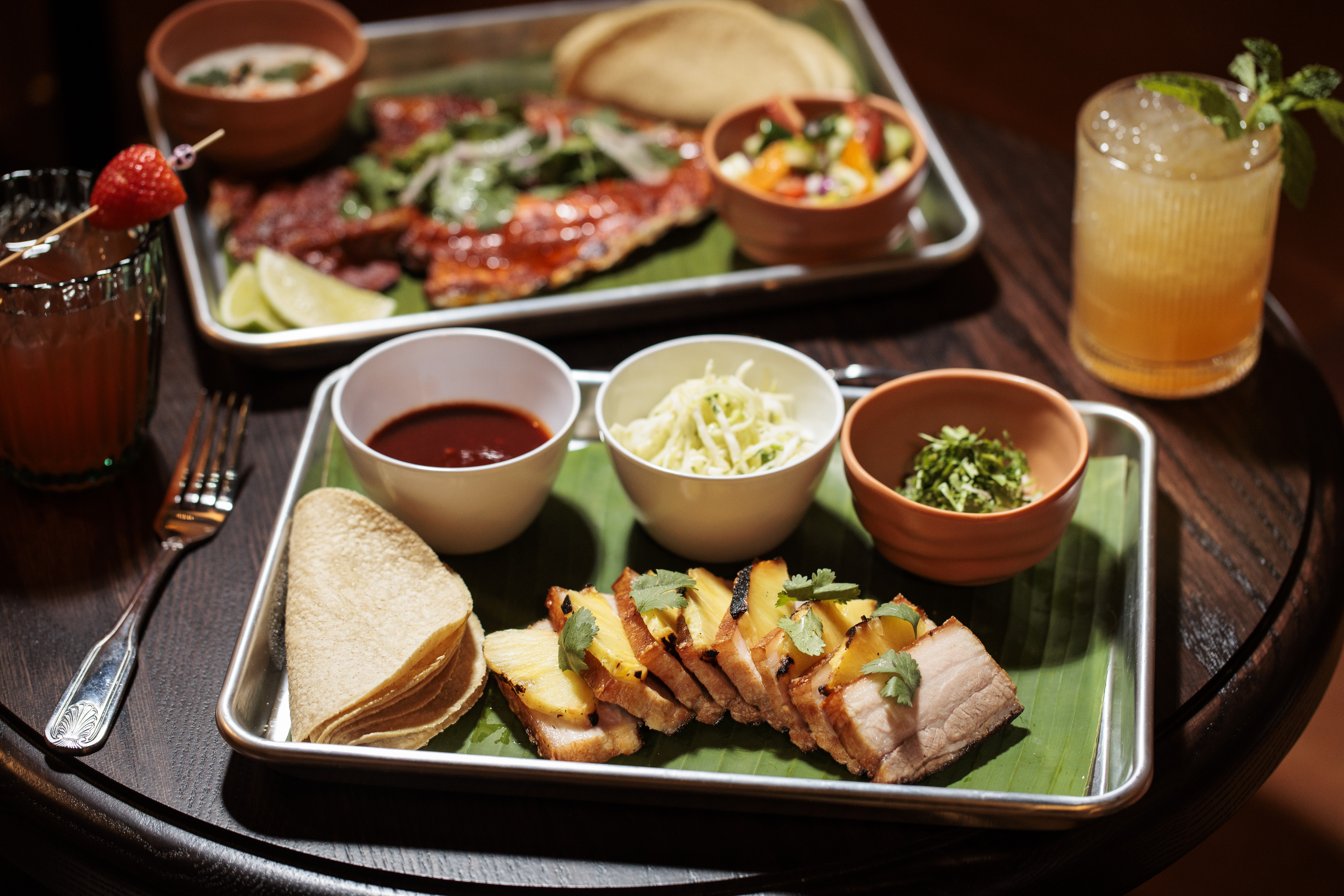
    Dorade asado and pork belly al pastor (shown above) are two dishes offered at the new Mixteca, the Kensington offshoot of a Manhattan agave-focused coctelería from two James Beard Award-winning bartenders. Beatrice Forman heads to the former Martha for a look around.

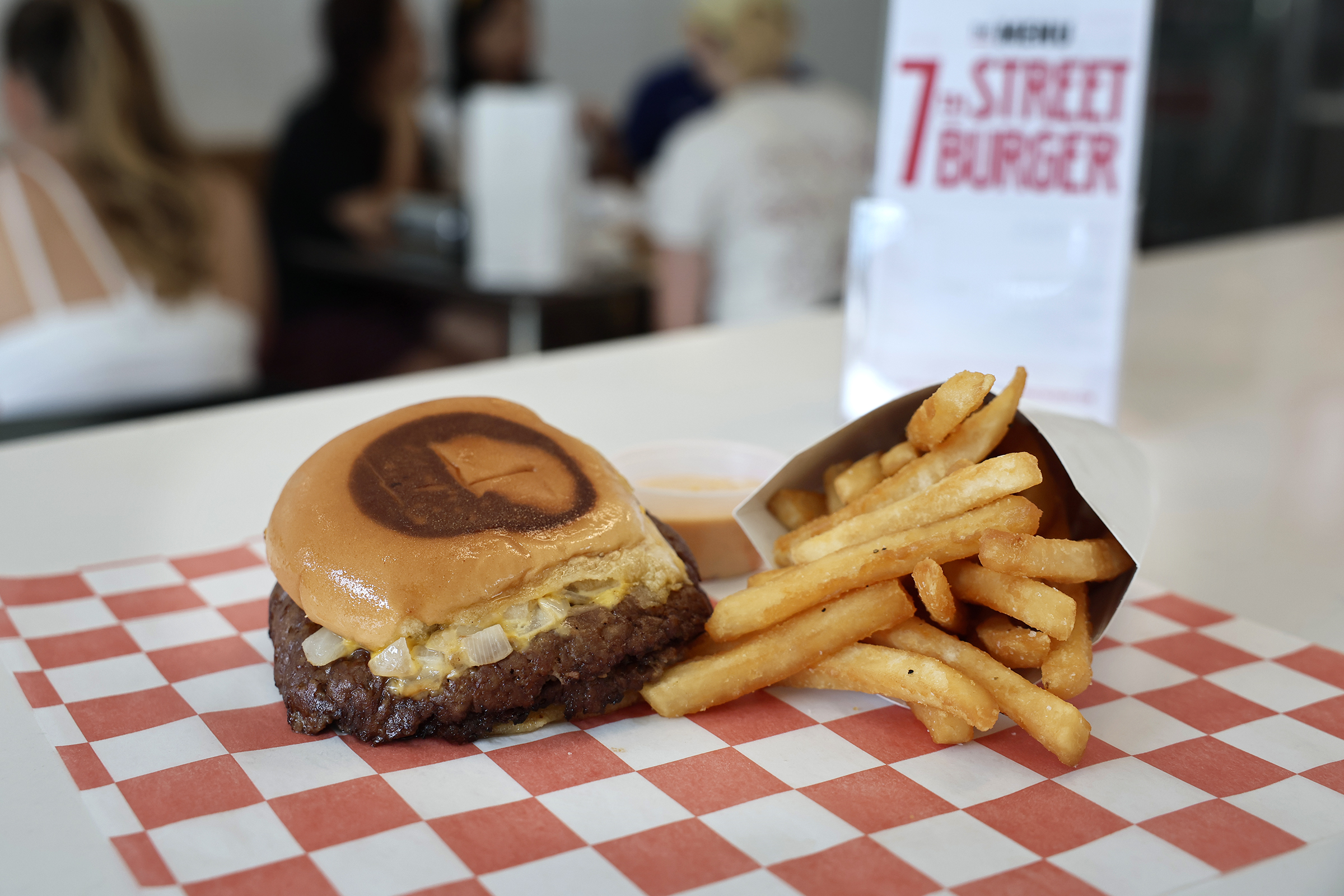
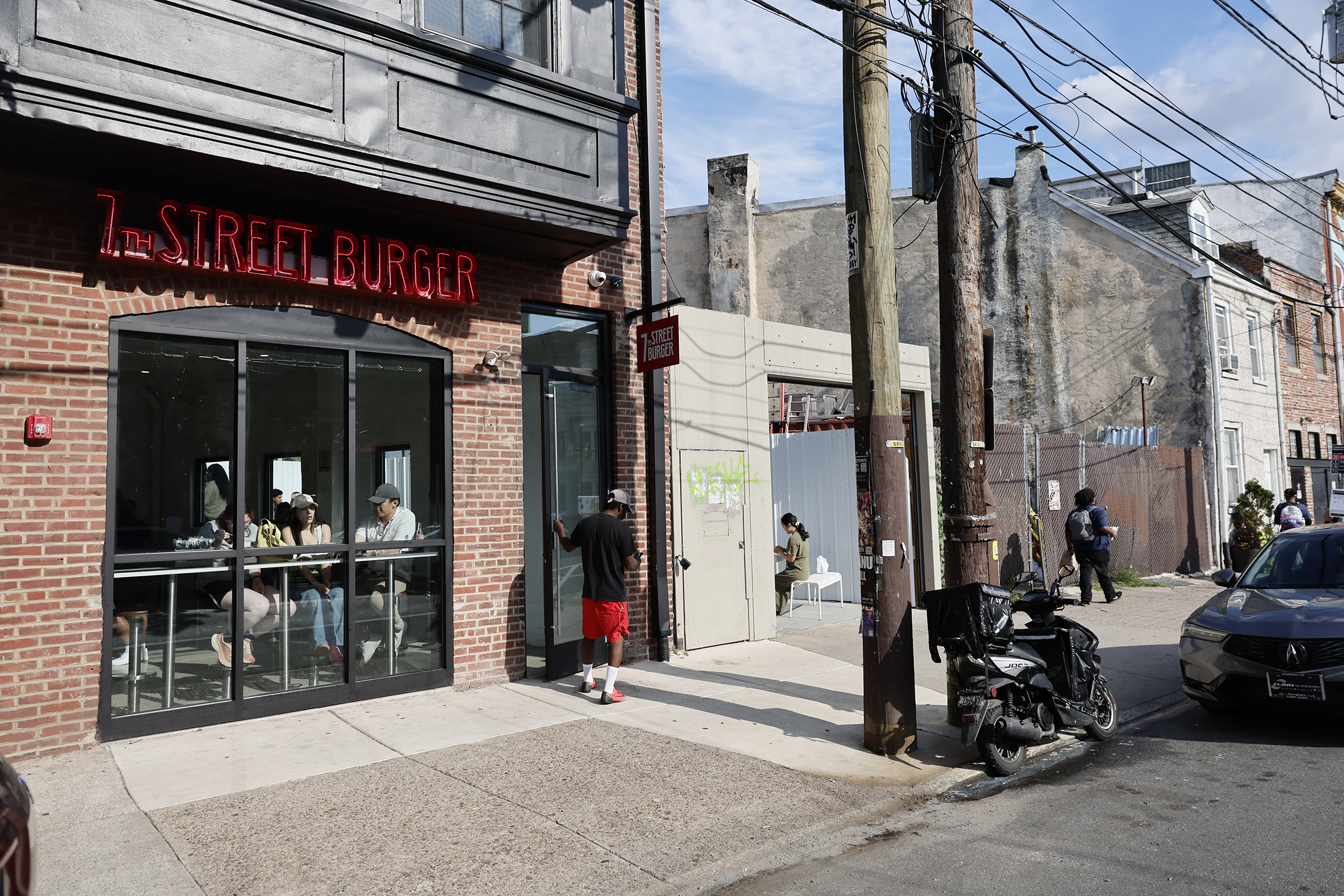
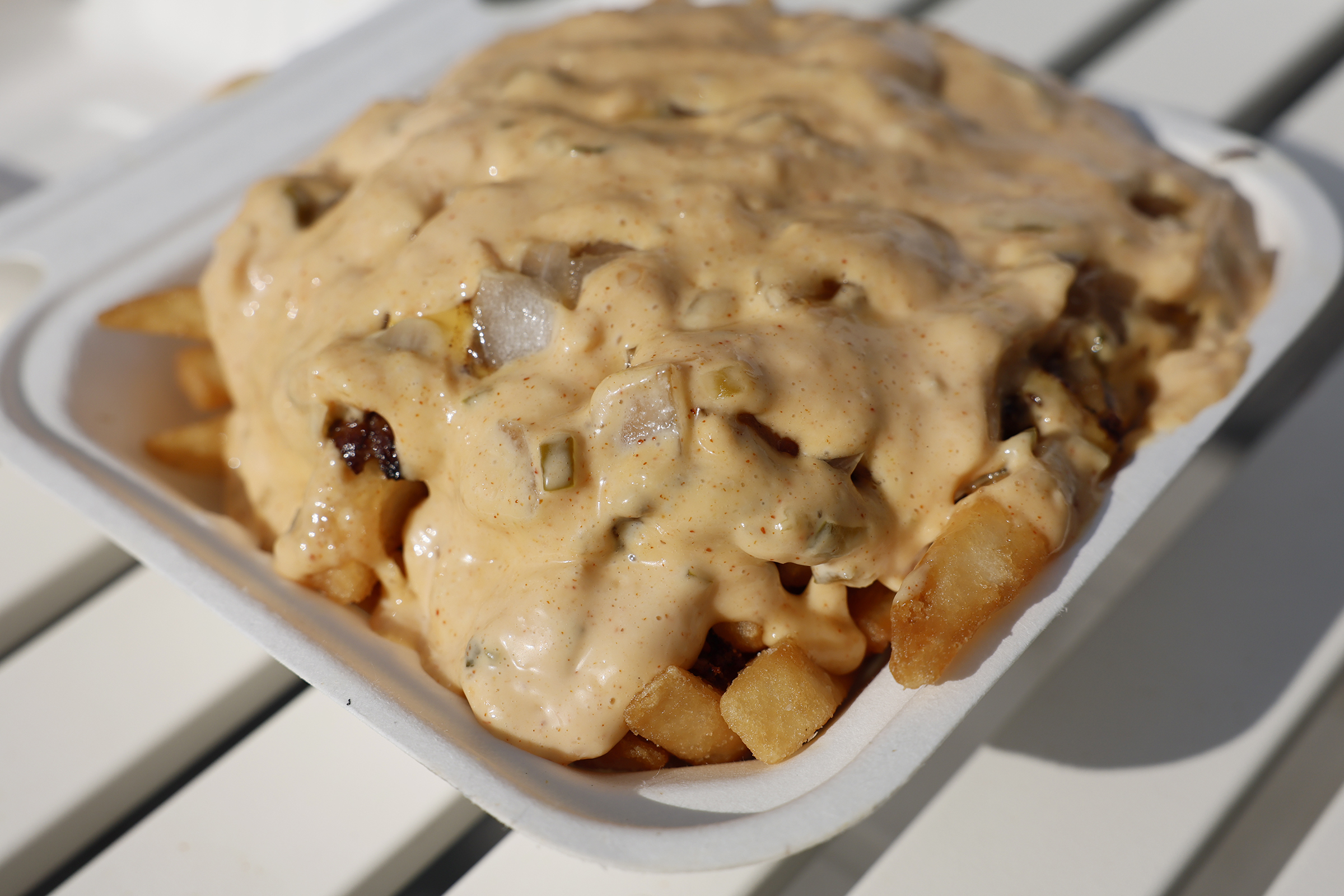
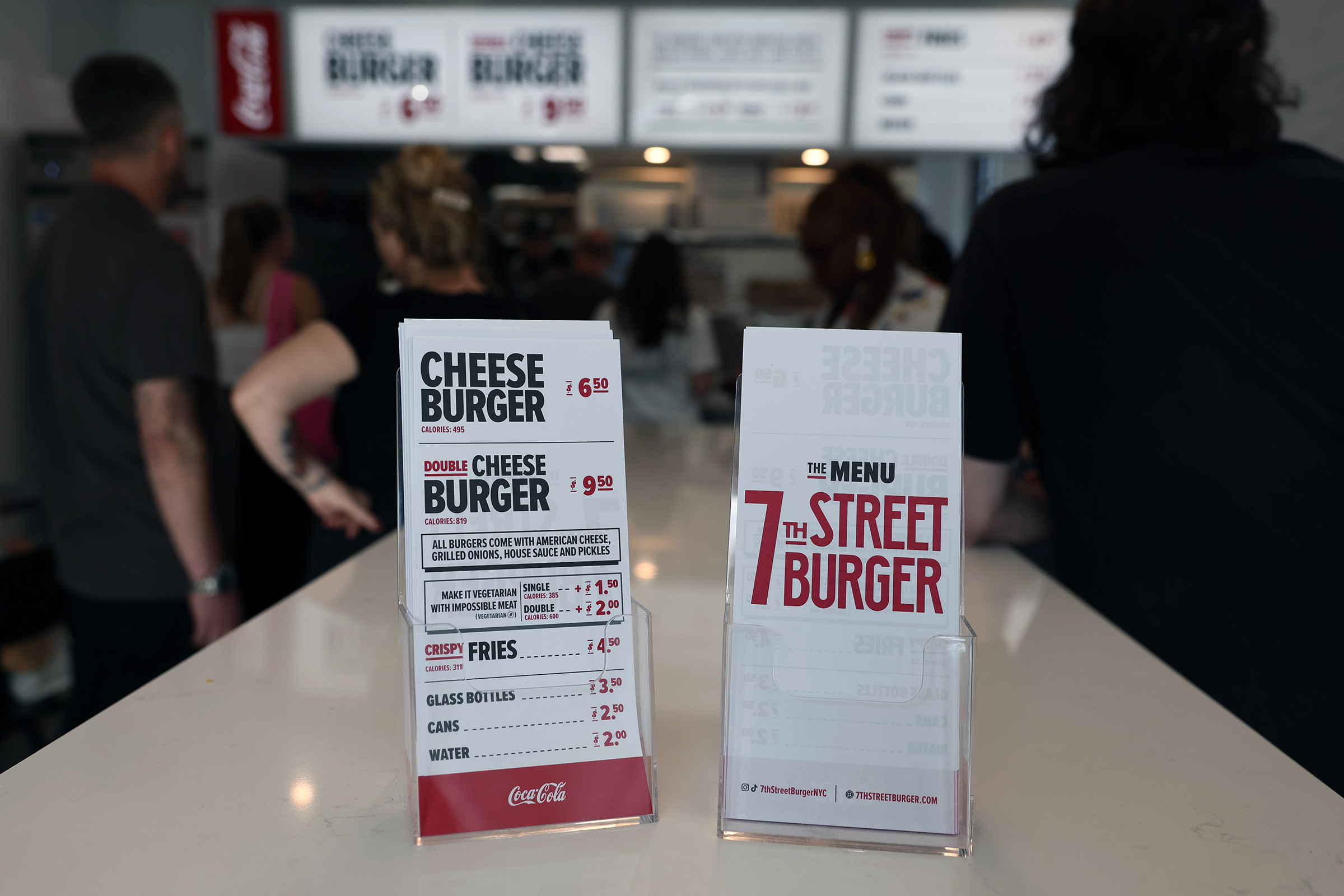
    Smash burgers and fries are the hook at 7th Street Burger, a fast-growing Manhattan-based burger chain that just opened the first of four Philadelphia-area locations in Fishtown. Kiki Aranita takes a bite.

    Briefly noted

    Jose Pistola’s 19-year run in Center City has ended. Its related bars in Fishtown and South Philadelphia are unaffected.

    Mount Masala Himalayan Cuisine (300 White Horse Rd., Voorhees) will host a Nepal disaster-relief fundraiser on Thursday, Sept. 10 from 5 p.m. to closing under the auspices of South Jersey Food Scene. It’s a $25 buffet of Nepali-Himalayan dishes for dine-in or takeout, with all sales donated to the Nepalese government for flood relief.

    The shuttered McMillan’s Bakery in Haddon Township has opened as Del Buono’s. If the doughnuts look familiar, that is no accident.

    Fishtown Pickle Project plans to invest $2 million in a new production facility and a pickle tasting room. This is kind of a big dill.

    Where to pick apples? We’ve found seven farms near Philadelphia.

    Horsham Township Restaurant Week, with 13 restaurants, is Sept. 13-18. Details are here.

    Conshohocken Restaurant Week, with 16 restaurants, is Sept. 21-27. Details are here.

    ❓Pop quiz

    According to legend, this will happen if Collingswood lifts its ban on the sale of alcoholic beverages:

    A) the High-Speed Line stop shuts down

    B) the borough secedes from Camden County

    C) Knight Park becomes available for development

    D) liquor stores in neighboring Haddon Township create an alliance

    Find out if you know the answer, provided by The Inquirer’s Lacey Latch.

    🥂 New Jersey has permanently allowed the sale and delivery of to-go alcoholic beverages in towns that permit it.

    Ask Mike anything

    Did Philip Korshak ever open his store, Korshak Picnic Provisions? — Joan M.

    Back in February, Phil Korshak, the poet-baker who left town in 2023 after closing his cult-favorite Korshak Bagels, thought he’d open his quirky corner store at 13th and Reed Streets by May. However, “you have no idea how many contractors, electricians, and plumbers go to Europe and Japan in the summertime,” he told me in June. This week, Korshak said the store — now called Korshak Parkside Provisions — is in the health department inspections queue and he’s expecting equipment deliveries. “Let’s call it October,” he told me.

    📮 Have a question about food in Philly? Email your questions to me at mklein@inquirer.com for a chance to be featured in my newsletter.

    By submitting your written, visual, and/or audio contributions, you agree to The Inquirer’s Terms of Use, including the grant of rights in Section 10.

  • Strong drinks and small plates set BAR ilu and Grace & Proper apart in Philly’s buzzy bar scene

    Strong drinks and small plates set BAR ilu and Grace & Proper apart in Philly’s buzzy bar scene

    There are few Spanish bar snacks as satisfying — or so hotly debated — as a properly made tortilla Española.

    If you’re lingering in the hot southern cities of Andalusia, where the iconic potato-and-onion omelet is typically served room temperature or cold, the eggs are fully set.

    “But from Madrid north to Basque Country, it’s traditionally made to order and served warm and custardy,” says Patrick Iselin, 50, the co-owner of BAR ilu, who spent half his childhood in Spain and now splits time between Philadelphia and the Madrid apartment once owned by his grandmother, Iluminada “Ilu” Prellezo Inchausti.

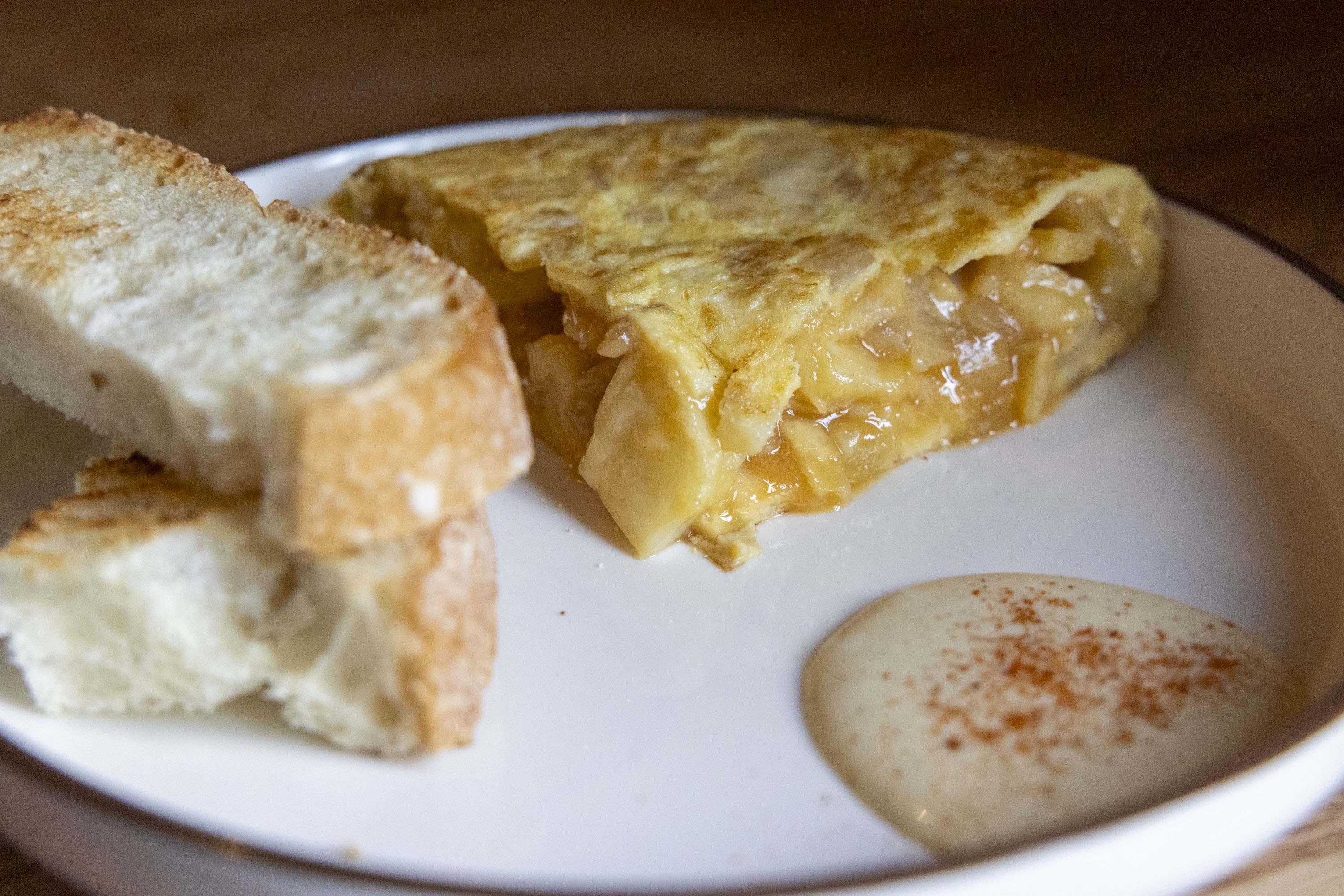
    So it follows that the eponymous new corner bar at Dauphin and Martha Streets — which happen to share the 40th parallel north with Madrid — serves its tortilla Española with a loose and edgy Kensington flair: “runny af,” as noted on the menu. Served as a wedge, with olive oil-fried potato chunks and sweet onion laces bulging from its glossy middle, a warm forkful of this eggy wonder is as transporting as it gets.

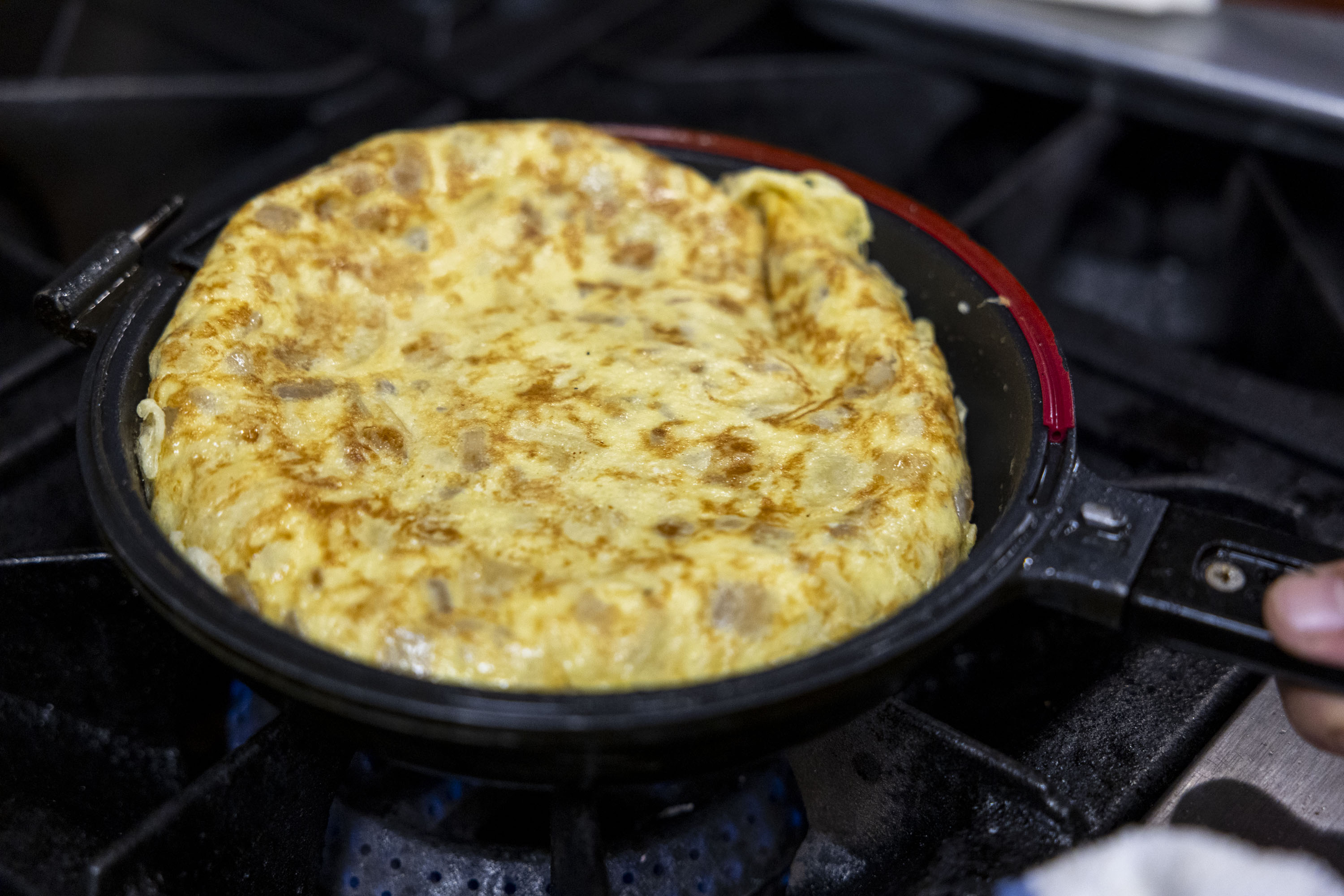
    Andrew Butler, chef de cuisine at BAR ilu, making the tortilla Espanola.Tyger Williams / Staff Photographer
    The tortilla Espanola at BAR ilu.Tyger Williams / Staff Photographer

    Wash it down with a bracingly crisp glass of La Gitana Manzanilla sherry on draft, plus a fistful of crunchy Marcona almonds, a forkful of tangy boquerones, and a crock of olives warmed with orange zest and herbs, and it’s hard to deny that BAR ilu is an appealing development for this rapidly changing corner of Kensington. It is perhaps also a little dissonant for those who know the neighborhood history. This stylish Euro concept, complete with its undulating circular bar and foam-topped glasses of vermouth, has landed in a space previously occupied by the Old Philadelphia Bar, one of the last unreconstructed dive bars from what co-owner Scott Coudriet calls Kensington’s “pre-hip-storic” days.

    Coudriet, who owns Fishtown’s Lloyd Whiskey Bar, is also partnered with Iselin at nearby Cormorant bar. Their other partners in ilu are Salvatore D’Amato and Jason Evenchik, whose Vintage Syndicate hospitality group operates Vintage, Starbolt, Time, Bar, three Garage locations, and the Goat Rittenhouse.

    This veteran team is keenly aware of the sensitive dynamics of change at longstanding bars. That’s why Iselin was adamant about keeping prices reasonable for Kensington locals — no more than $14 a plate, and $16 for distinctive cocktails that would easily cost a few dollars more in Center City — while building this tribute to Spain in his adopted city.

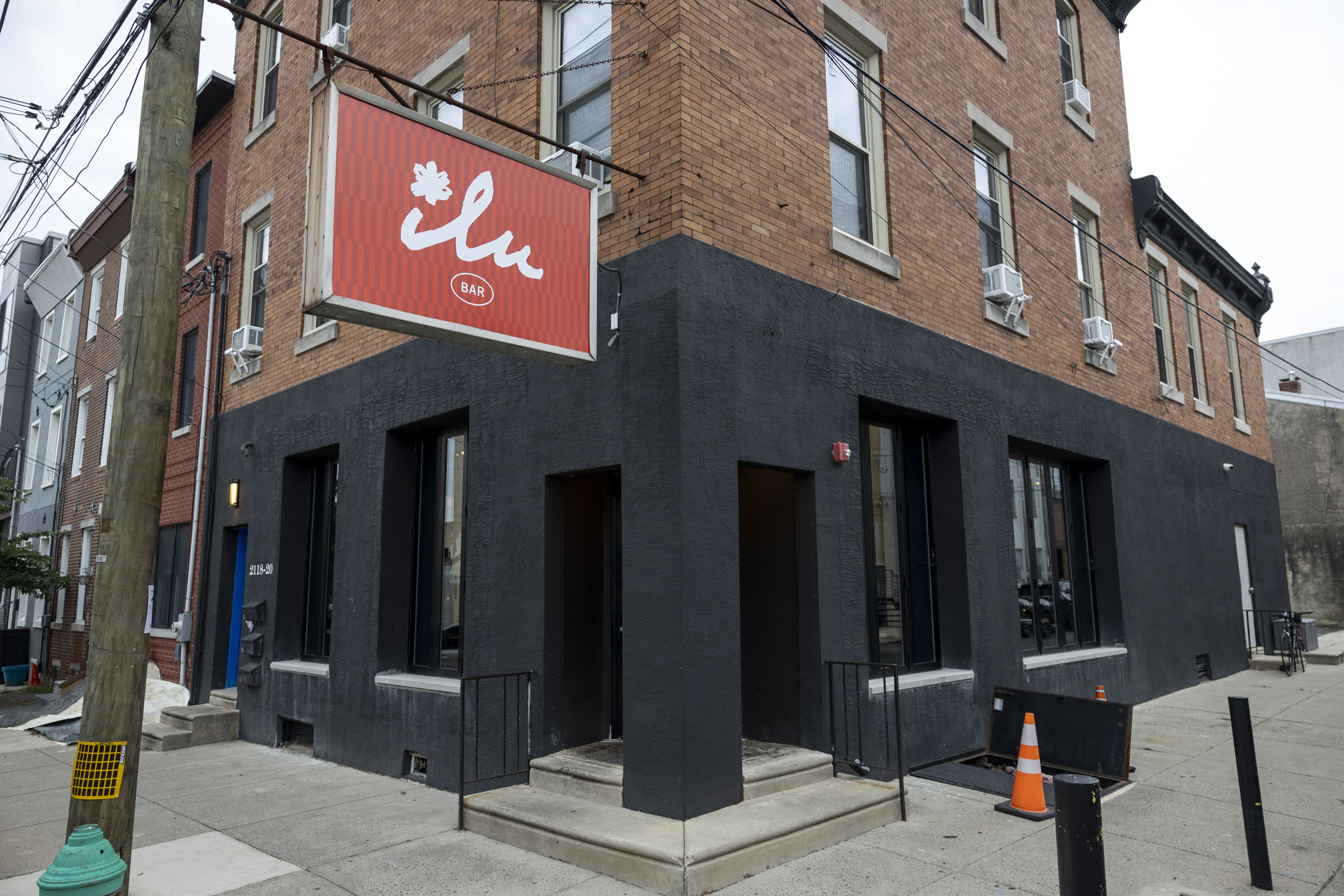
    The outside of BAR ilu on Thursday, Aug. 20, 2026, in Philadelphia.Tyger Williams / Staff Photographer
    The back bar area at BAR ilu on Thursday, Aug. 20, 2026, in Philadelphia.Tyger Williams / Staff Photographer

    Iselin wanted to craft this 40-seater with as few clichés as possible (no hanging hams, no toro horns, no sangria), but rather the feel of a modern tapas bar he might frequent in Madrid today. He had no idea he was also tapping into the latest evolutionary trend for the Philadelphia bar.

    Twenty years ago, the smoky old taverns of yore were being replaced by the gastropub movement of the early aughts, where local craft beers flowed and house charcuterie and pickle programs anchored ambitious seasonal menus that gave a cool new vibe to the neighborhood restaurant. In some cases, they helped redefine the neighborhoods themselves.

    Philly’s bar scene is now officially in its grazing phase, with curated drink menus centered around culinary cocktails, natural wines, and nonalcoholic drinks with food offerings often so limited that a hungry fellow like me might need to order three-quarters of the menu to make a meal. Supérette, the charming French wine bar beside East Passyunk’s Singing Fountain, captured this development perfectly in 2025. Owners Chloé Grigri and Vincent Stipo described these snack-centric bars as a “generational thing” for 30-somethings who want a stylish place to hang for in-between meals with friends without committing to an entire evening.

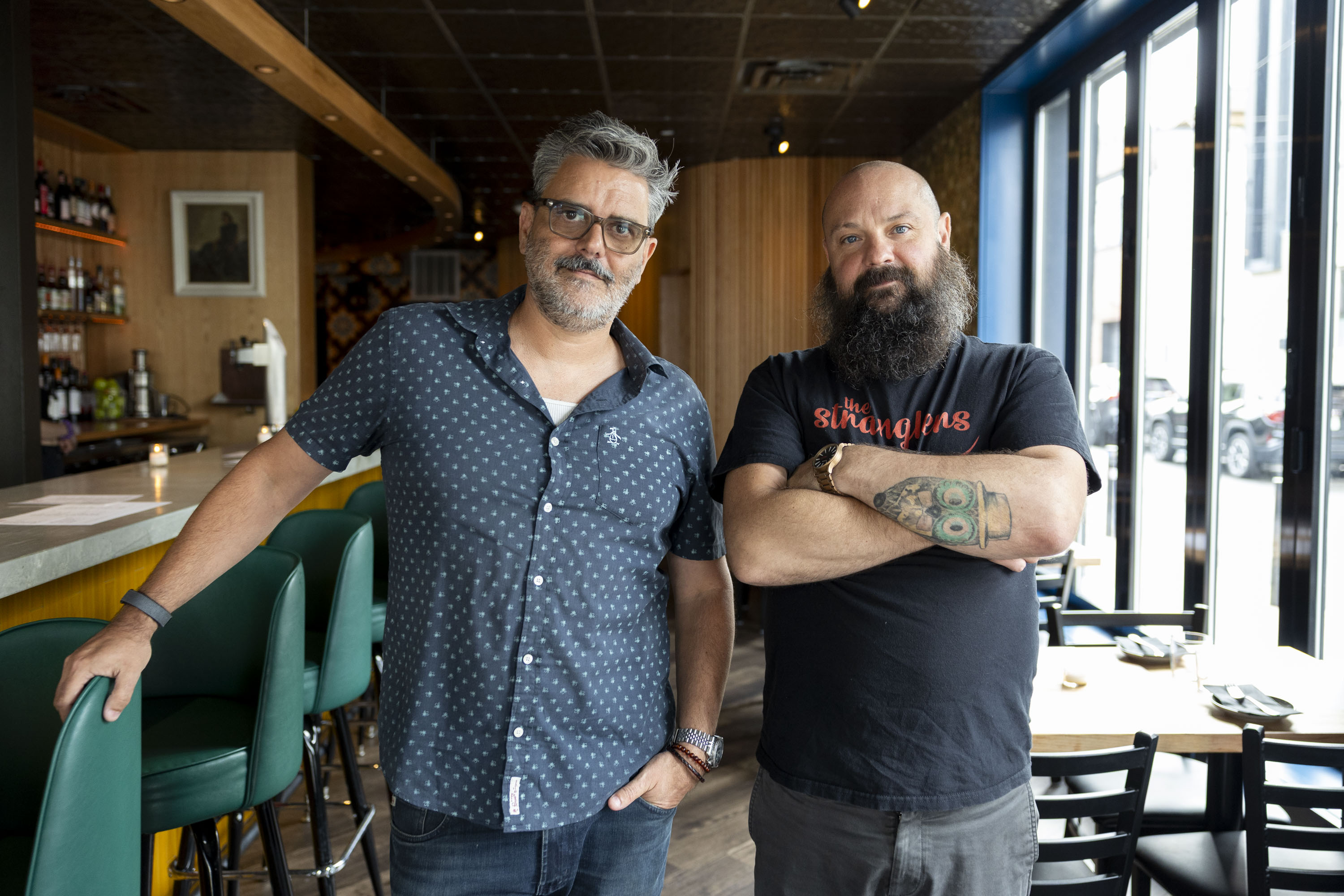
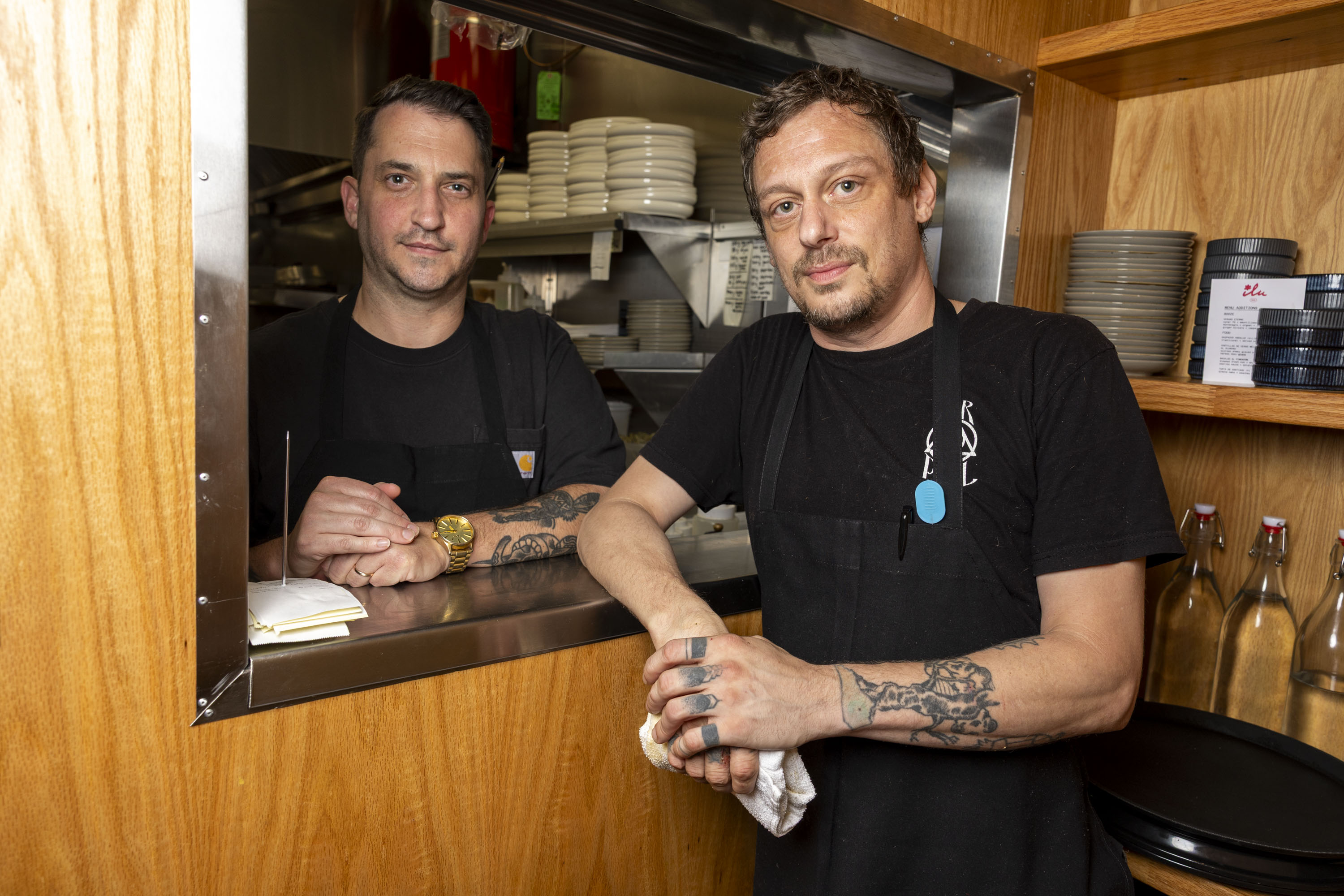
    Co-owners Patrick Iselin and Scott Coudriet of BAR ilu, pose for a portrait together on Thursday, Aug. 20, 2026, in Philadelphia.Tyger Williams / Staff Photographer
    The La Gitana Manzanilla Sherry at BAR ilu on Thursday, Aug. 20, 2026, in Philadelphia.Tyger Williams / Staff Photographer

    A similar approach is at work through a Japanese lens at Almanac, the cutting-edge Japanese cocktail bar (with Wagyu hot dogs and kombu-cured celery sticks) above the omakase room at Ogawa. The food menu at Chris Kearse’s new cocktail bar in Washington Square West, Known Associates, lists only a dozen items, counting the cool ranch freeze-dried peas. Same with the recently opened Lillian’s Bar in Point Breeze. As Chris Fetfatzes told me about Grace & Proper, the Portuguese-inspired bar with “tasca” nibbles he debuted in 2022, this template — a distinctive drink program bolstered by a small menu that can be produced with limited service and light kitchen investment (i.e. no hood) — makes perfect business sense in the post-COVID era.

    Of course, the Spanish have been doing this for centuries with tapas, a light-bite evening repast that reflects their cultural preference for a larger meal earlier in the day. And yes, Amada has been serving tapas here for 20 years, but always alongside a much broader menu with large plates and paellas.

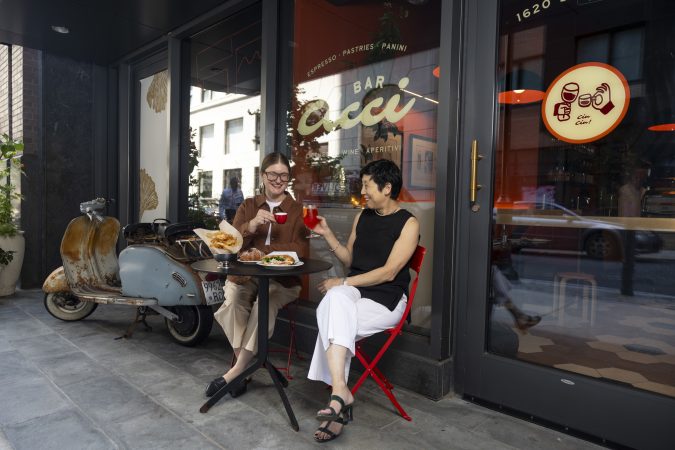
    Considering all the new small-plate projects that have come online recently, including Bar Cicci, Ellen Yin’s all-day aperitivo bar, Philadelphians may have finally embraced the concept on its own snacky terms.

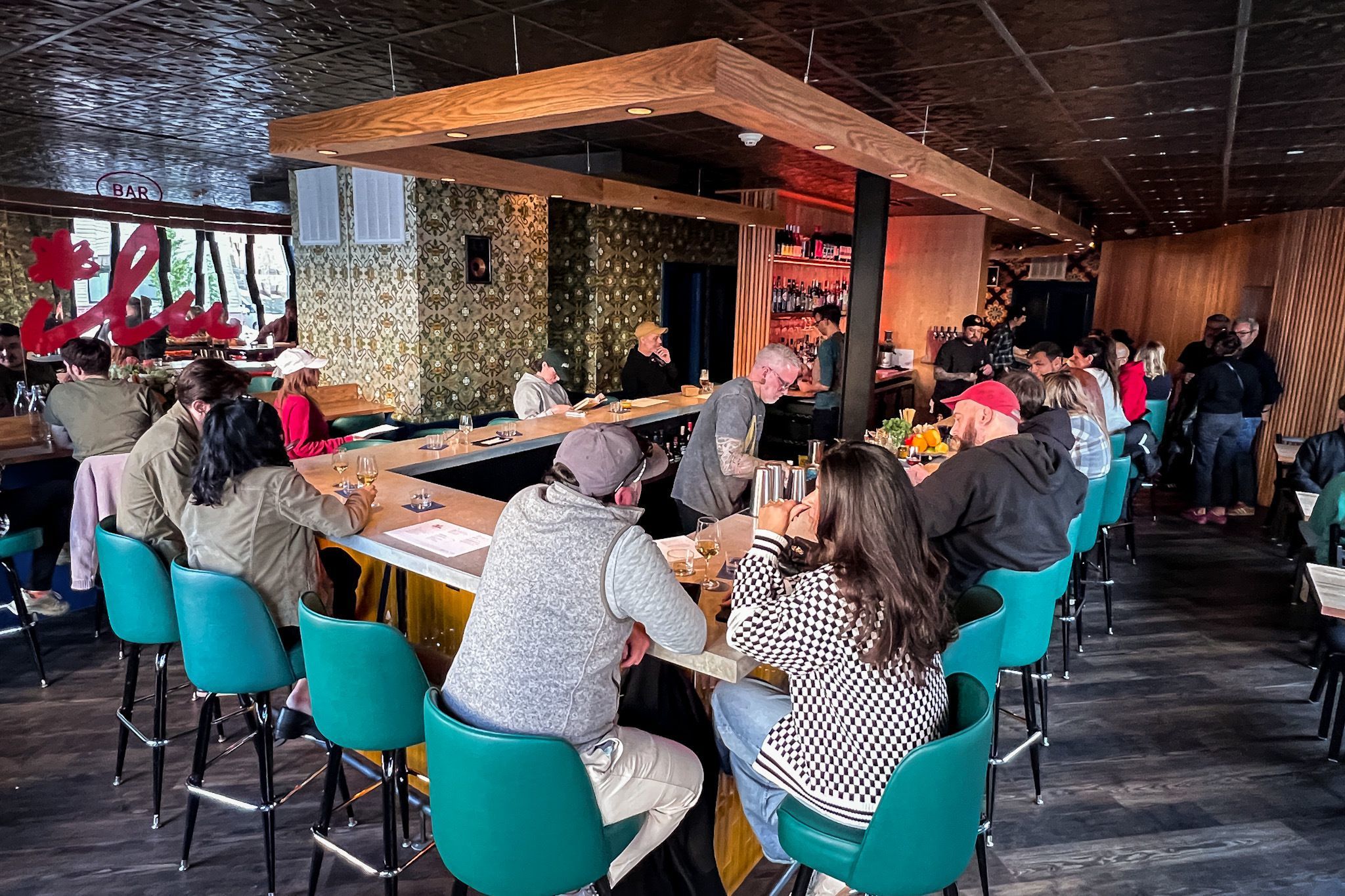
    The front bar at BAR ilu, 2118 E. Dauphin St.Michael Klein / Staff
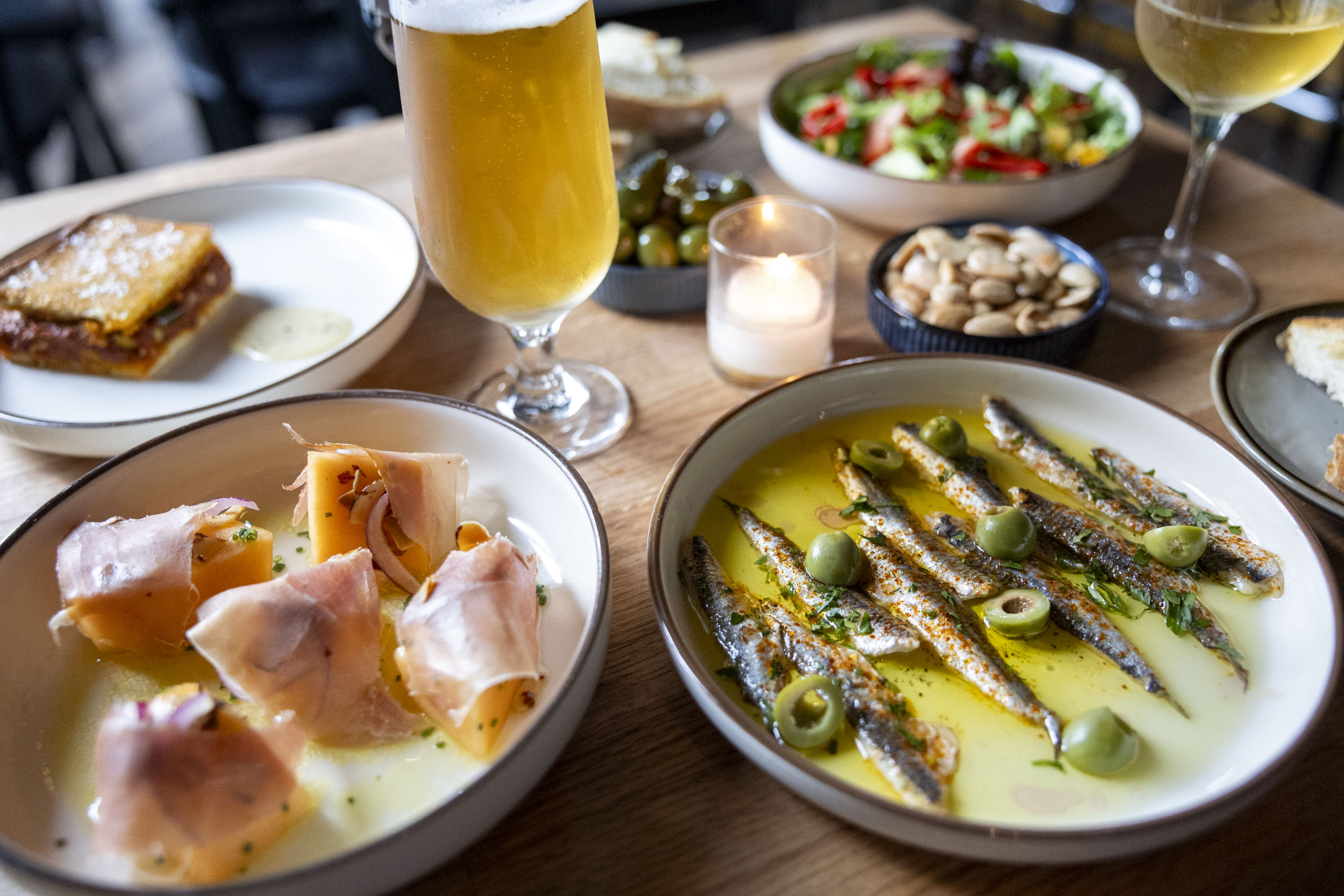
    The various plates including The Boquerones, Melon with Ham, the Tuna Empanada, Tomato Salad, Almonds, and Olives at BAR ilu on Thursday, Aug. 20, 2026, in Philadelphia.Tyger Williams / Staff Photographer

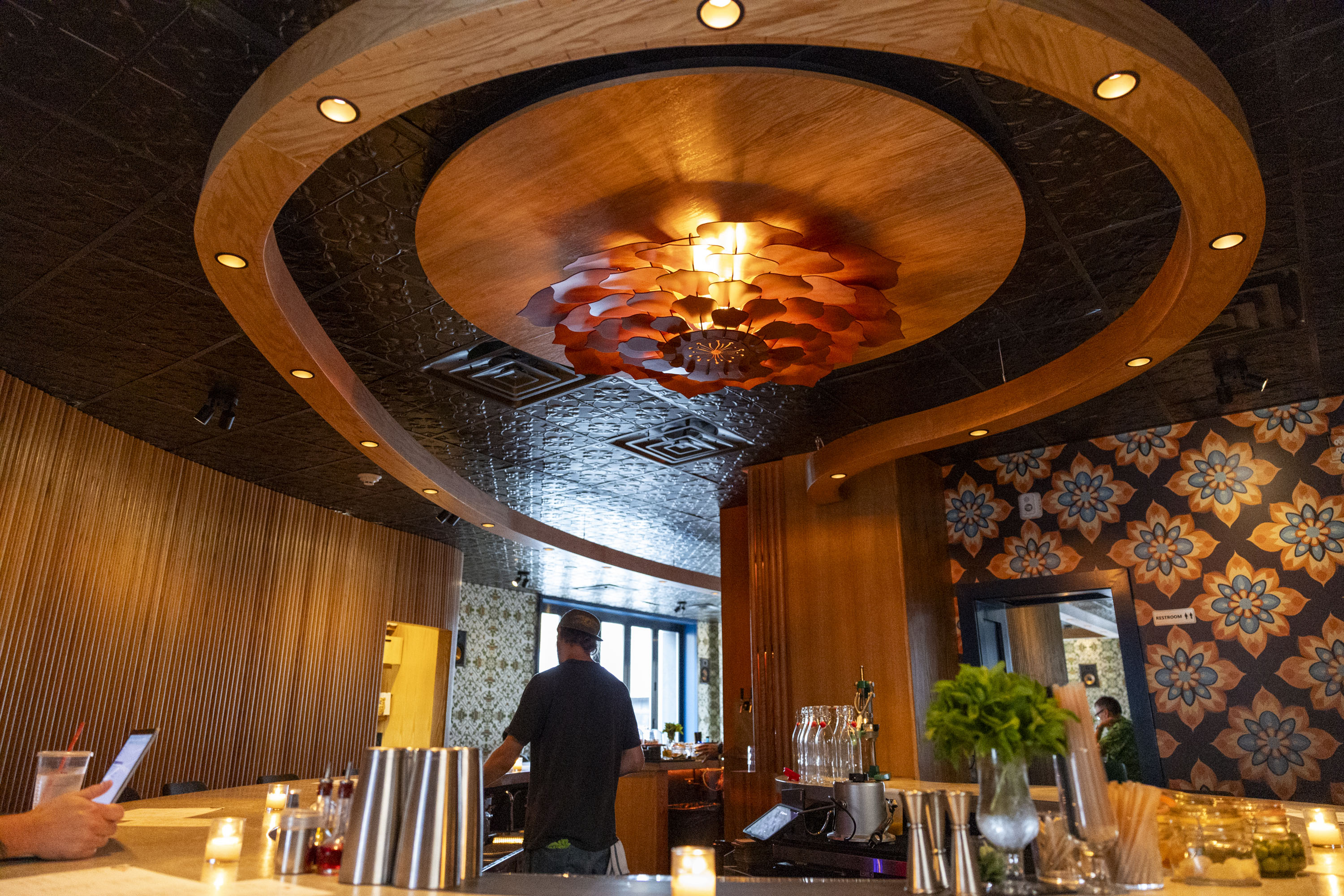
    BAR ilu has a slightly more substantial food menu than most. And part of its appeal is the natural ease with which it blends a Kenzo vibe (see the mismatched thrifter style of its floral-print wallpaper, black tin ceiling, and teal barstools) with an inventive drink program and classic Spanish plates lightly updated by chef Andrew Butler.

    Fig leaf oil adds a shade of coconut-vanilla to a familiar pairing of juicy cantaloupe with shaved serrano ham. Smoked olive oil brings a whiff of earthiness to ripe summer tomatoes with cucumbers and piquillo peppers. A juicy burger topped with Manchego cheese, pickled red onions, and aioli firmly anchors the menu with one can’t-miss comfort option that even the least Spanish-inclined customer will embrace.

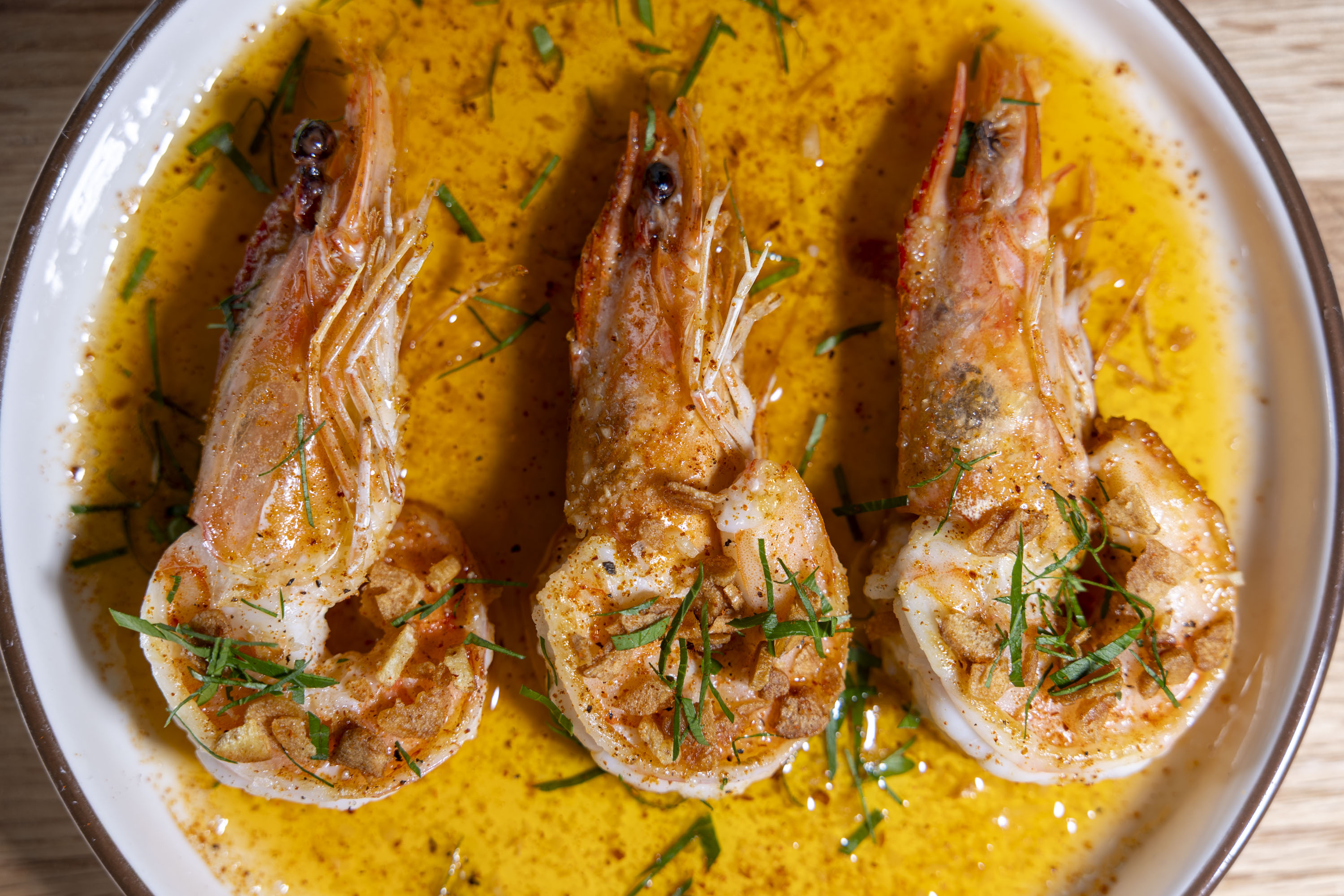
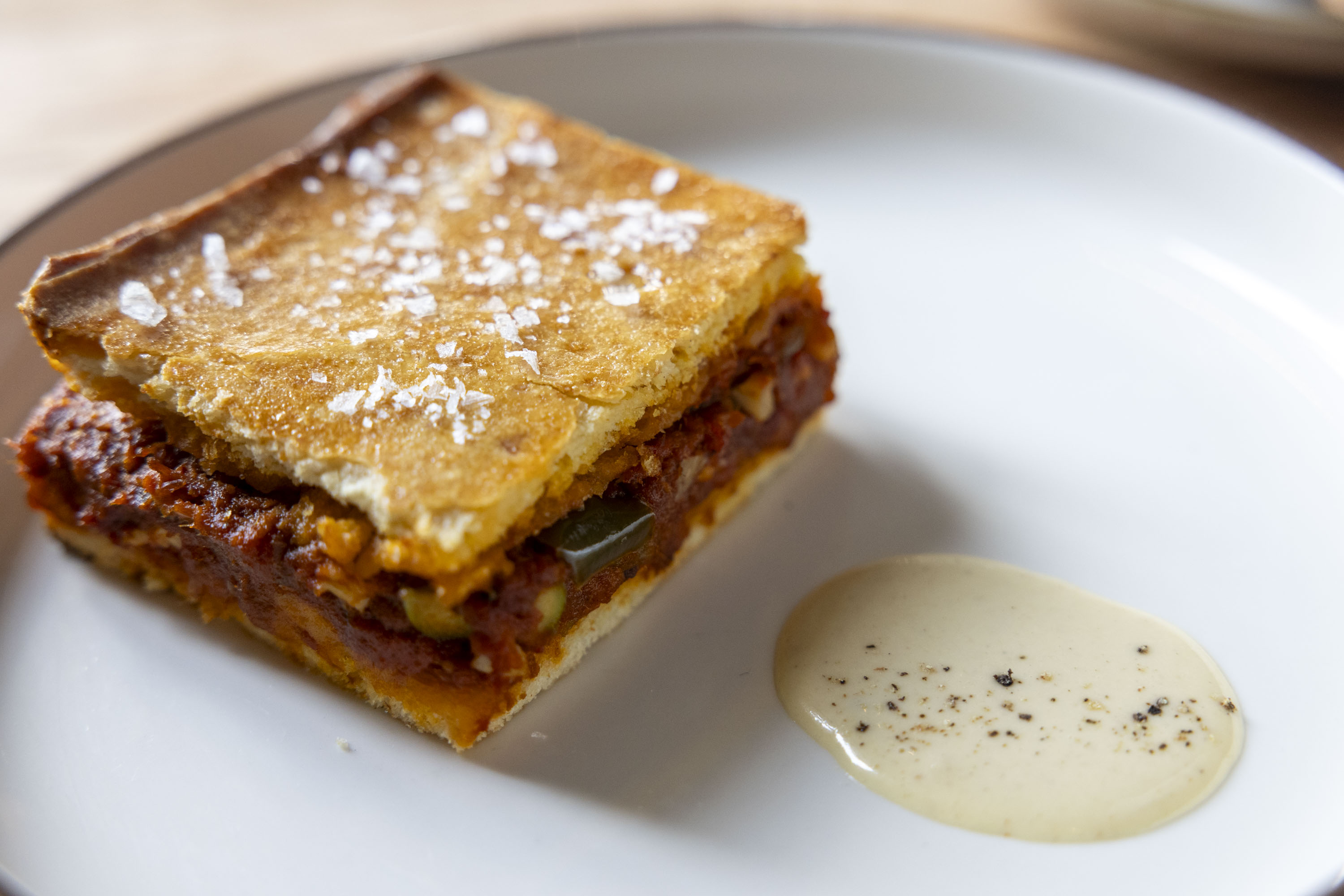
    But the Spanish flavors, both on the plate and in the glasses, are what have me hooked. Aside from the tortilla, there’s a double-crusted Galician-style empanada stuffed with tuna and cooked-down tomate frito. Plump head-on gambas al ajillo take on a flicker of chili oil heat. Crisp spheres of perfectly fried croquetas harbor lusciously creamy béchamel centers flecked with serrano ham or, my favorite, salty flakes of bacalao.

    A Tuna Empanada at BAR ilu on Thursday, Aug. 20, 2026, in Philadelphia.Tyger Williams / Staff Photographer
    Pat Szoke, culinary director, and Andrew Butler, chef de cuisine, at BAR ilu.Tyger Williams / Staff Photographer

    There were a few misfires. The patatas bravas were pale and lacking crisp. The flattened confit artichoke heart was mushy. The seared mushrooms were oversalted. But these were minor complaints compared to winners like the crusty bocadillo sandwich overstuffed with paprika-fried baby squid drizzled with lemony aioli and more tomate frito. Along with some tiny olives stuffed with briny anchovy, every morsel seemed deliberately calibrated to stoke a thirst.

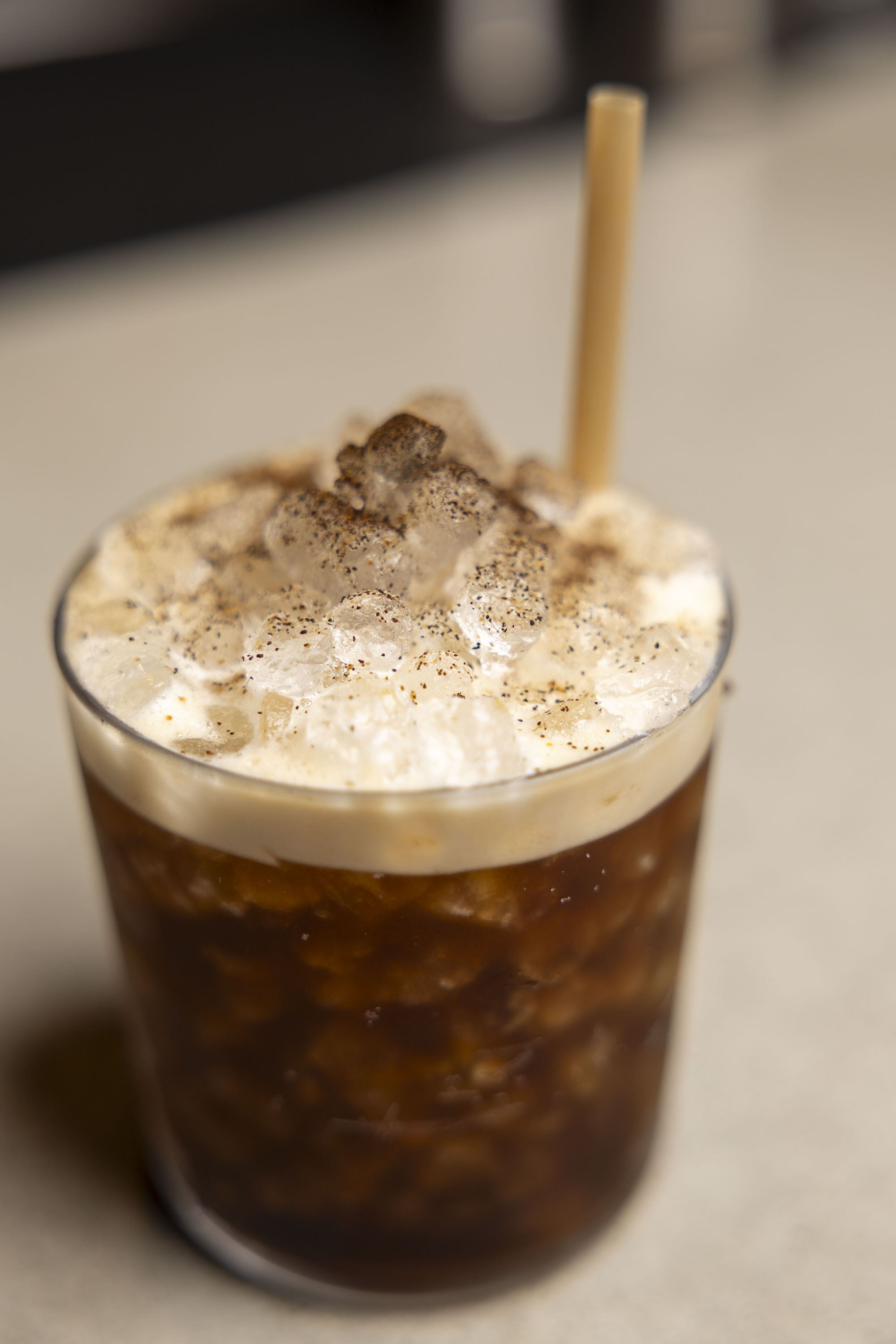
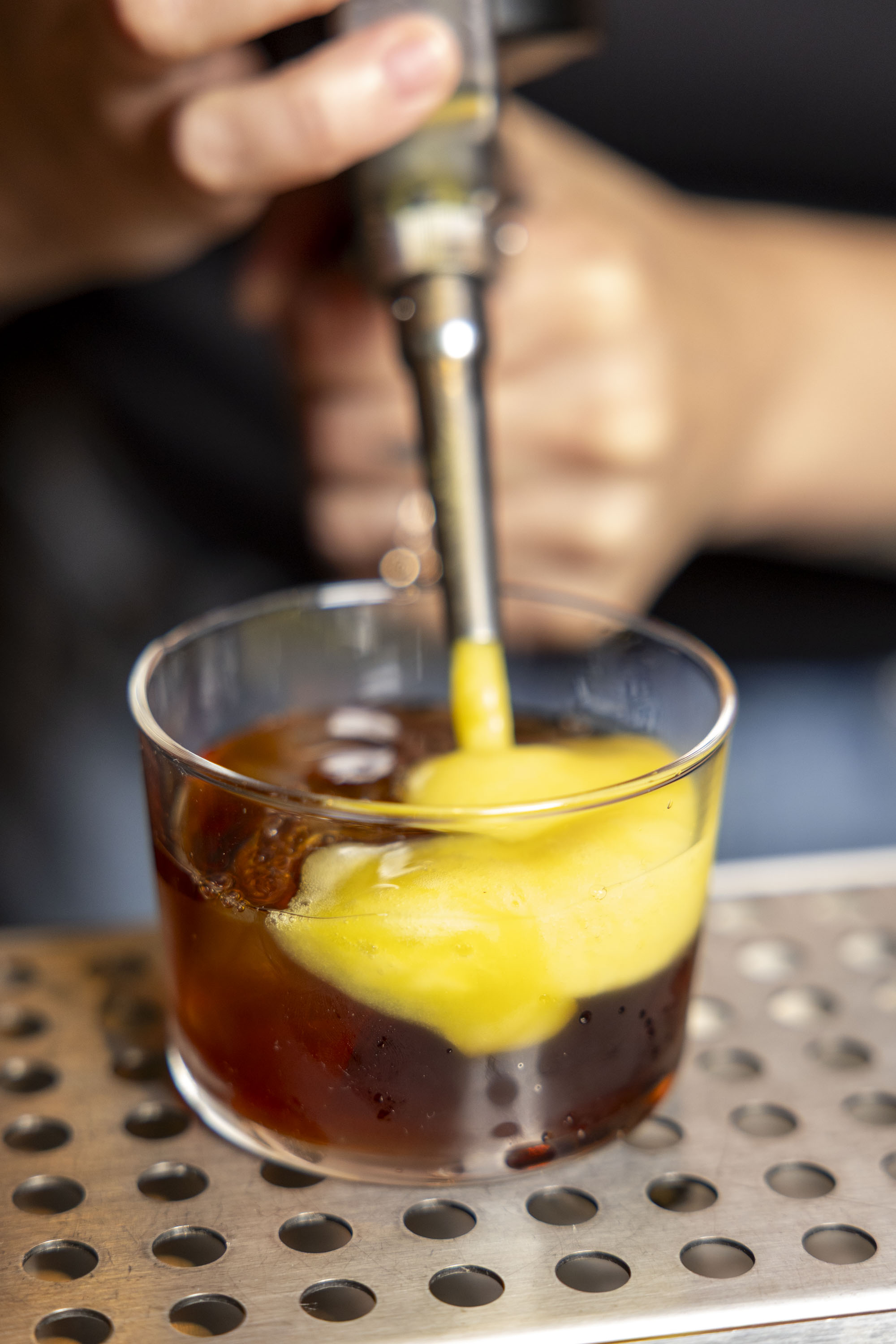
    I especially enjoyed BAR ilu’s creative approach to sherry and vermouth, both in cocktails and poured neat. A crisp Manzanilla, already one of my favorite predinner quaffs in summer, added a bracing dryness to Cynar amaro and gin for Remember the Alimony. Vanilla-scented Licor 43 from Spain pairs with chilled Cafe Bustelo for a carajillo whose pebble ice is dusted with coffee-orange powder, and is now one of my top five coffee cocktails in the city.

    The Carajillo at BAR ilu on Thursday, Aug. 20, 2026, in Philadelphia.Tyger Williams / Staff Photographer

    The Fire Drill is a refreshing tropical blast of passion fruit swirling in mezcal smoke, with an herbal whiff of Lo-Fi gentian amaro to counter the fruity sweetness. A whole Granny Smith apple is juiced to order for the simple Booze & Juice, paired with the spirit of your choice (make it mezcal).

    Meanwhile, unless you order a glass of dark, sweet-tangy Pedro Ximenez to cap your meal, try the Barquero vermut on draft and top it with orange foam, a combo that tastes like flat Coke dolloped with an orange-creamsicle cloud. There is actual dessert here, too: a perfectly fine almond cake with macerated peaches and cream. But that foamed vermouth was satisfyingly herbal, sweet, and mysterious — and one of the best things I drank all summer.

    The Vermouth with Orange foam at BAR ilu on Thursday, Aug. 20, 2026, in Philadelphia.Tyger Williams / Staff Photographer
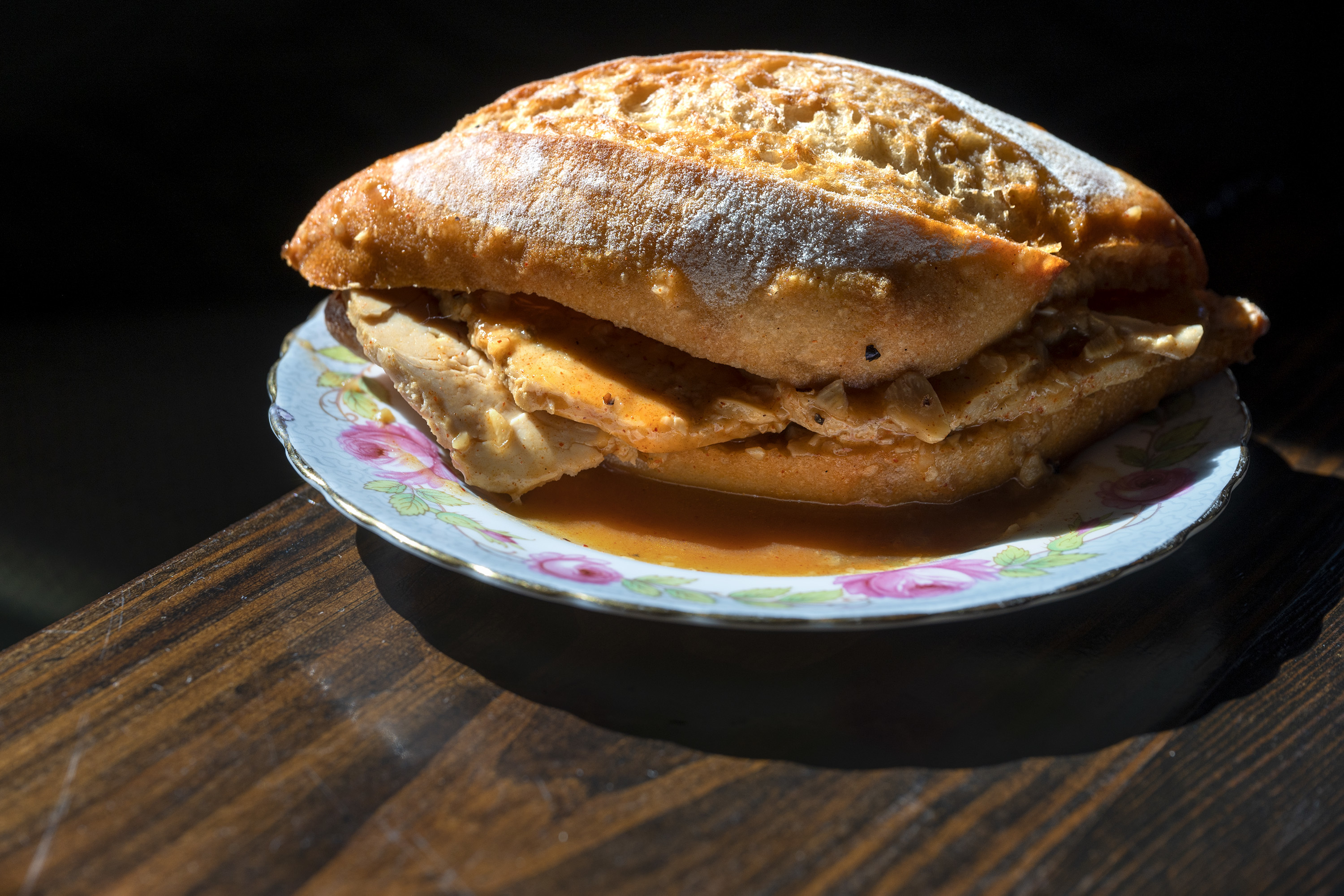
    The Bifana sandwich as served at Grace & Proper in Queen Village Wednesday, Mar. 8, 2023.Tom Gralish / Staff Photographer

    Grace & Proper

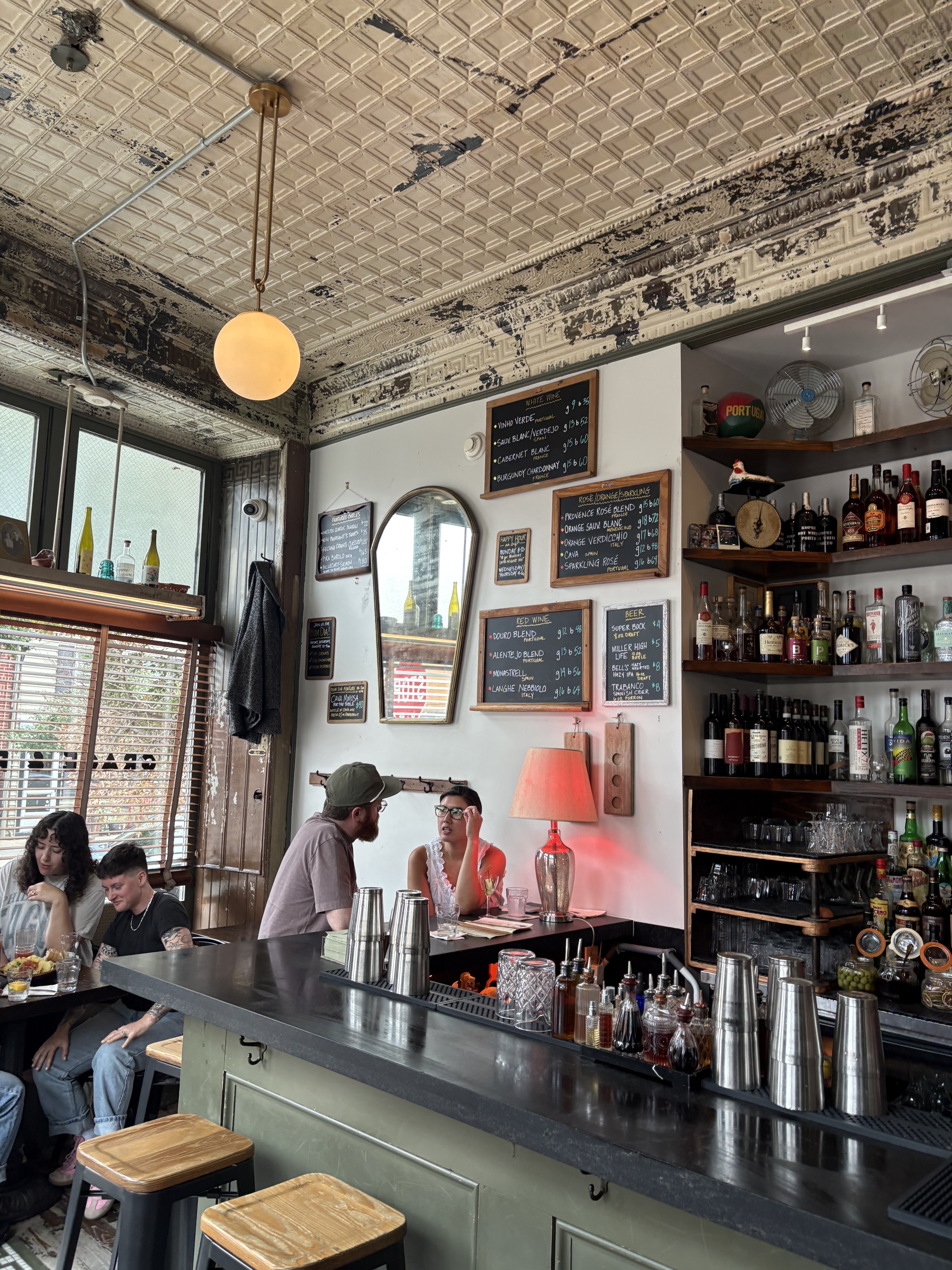
    If BAR ilu represents a modern interpretation of tapas culture in Philly, the vintage vibes at Grace & Proper’s Italian Market space reflect a different take on Iberian bar culture, this one influenced by the Portuguese roots of co-owner Chris Fetfatzes’ family.

    Fetfatzes, his wife, Heather Annechiarico, and their Happy Monday Hospitality partner Susan Freeman, who also own Wine Dive and Sonnys Cocktail Joint, leaned into the antique charm of the distressed tin ceiling, tiled floor, and exposed brick walls that were uncovered during renovations of the old pharmacy (and Italian deli) that once occupied this corner space at Eighth and Carpenter. Fetfatzes was hoping to create the cocktail counterpart to Fountain Porter, the 14-year-old craft beer destination in East Passyunk known for its $7 burgers and pickles that, perhaps, helped mark the beginning of the minimalist-nibble bar.

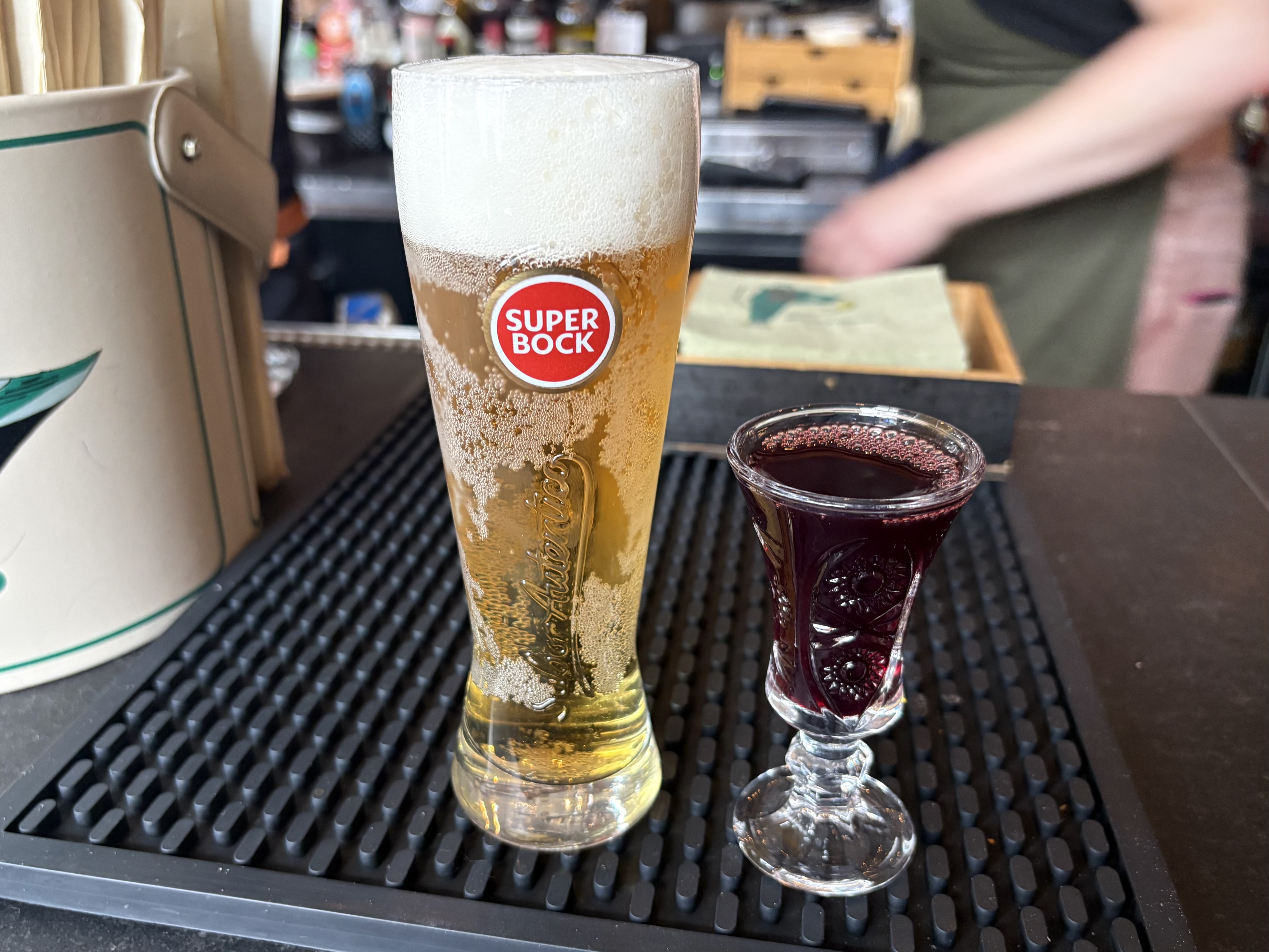
    Given Grace & Proper’s compact space, with just 15 barstools and 26 table seats sidled into window banquettes (plus 30 more outside in fair weather), it’s amazing how its 200-bottle collection of amari, vermouths, ports, whiskeys, Madeiras, sherries, agave spirits, and indie Euro wines somehow fits into the tall shelves behind the bar. If you’re a fan of funky Asturian cider, there’s a proper porrón carafe to stream it directly into your mouth from an arm’s length away, ideally while watching Premier League or MLS soccer. Or try the Philly-Portugal Lisbon Wide hybrid, a draft of Super Bock Portuguese lager paired with a shot of ginjinha, a house-made cordial steeped from Morello sour cherries harvested in Northeast Philadelphia.

    The Lisbon Wide is Grace & Proper’s Portuguese twist on a Citywide, pairing Super Bock beer with housemade Ginjinha sour cherry liqueur.Craig LaBan / Staff
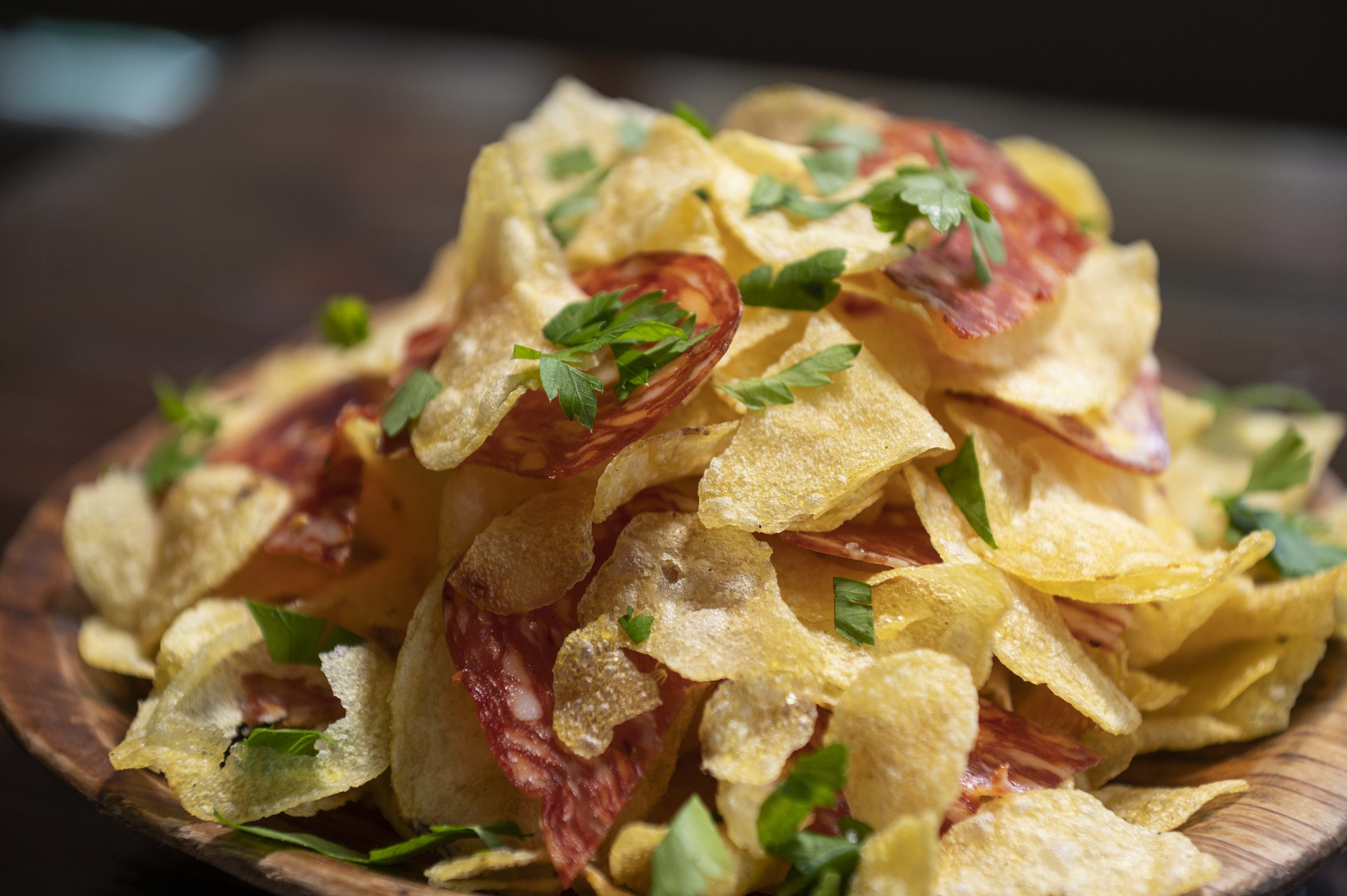
    The Meat & Chips at Grace and Proper on Thursday, Aug. 3, 2023.Allie Ippolito / Staff Photographer

    Grace & Proper doesn’t post a food menu online, but it’s substantial enough to anchor your table for a couple hours of snacking, from an irresistible pile of truffled potato chips feathered with spicy Calabrese salami to soulful onion soup infused with port and lardo, a crock of white bean stew with kale and breadcrumbs, piri piri-spiked Buffalo chicken dip, and sweet-tart-smoky bacon-wrapped prunes with black garlic aioli.

    I didn’t care for the overly firm meatballs and their unbalanced blackberry romesco or, for that matter, the presentation of cheeses as crumbled nuggets. But these are all quibbles. Because there is really a single essential reason to visit Grace & Proper: the bifana, a classic sandwich of wine-marinated roast pork on a molete roll from Teixeira’s Bakery in Newark that comes perched over a paprika-orange pool of zesty gravy. Equal parts lemony, garlicky, winey, and scented with bay, that roasted pork essence is so good, the gravy is also offered as a chaser to the Piggy Back shot (oloroso sherry and Armagnac).

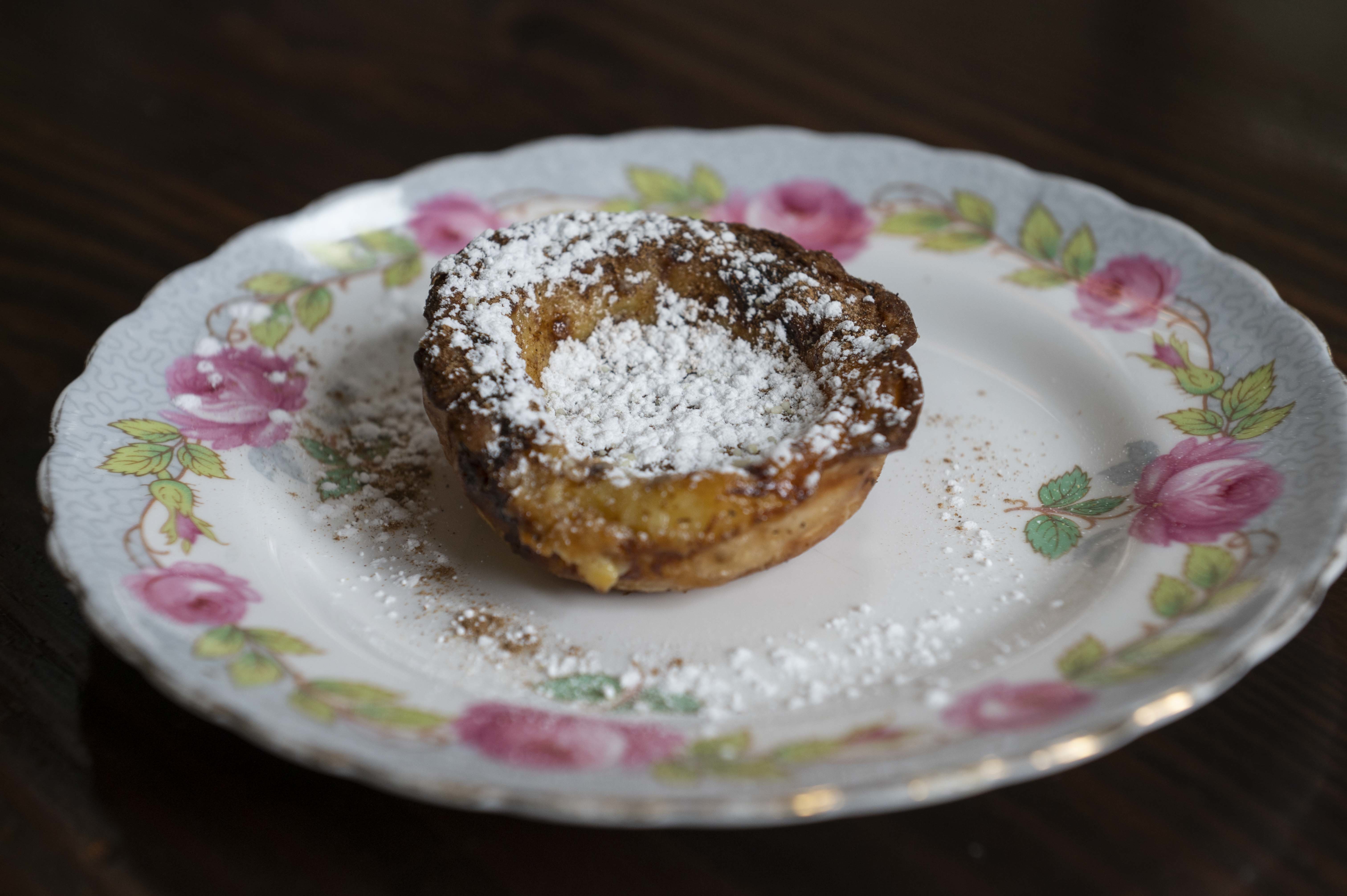
    All you’ll need after that is a custardy sweet pastel de nata (also baked by Teixera’s, according to G&P’s recipe) and what might well be the best crema-topped shot of espresso at any bar in Philly. Grace & Proper is one of the precious few that actually adds fresh-pulled coffee to its espresso martinis, but I still prefer this coffee solo. I value the energy boost because, in these days of no-commitment sip-and-nibble bars, I’ve still got places to go.

    The Pastéis de Nata at Grace and Proper on Thursday, Aug. 3, 2023.Allie Ippolito / Staff Photographer
    Vintage details of the former pharmacy and Italian deli have been preserved to add character to the bar at Grace & Proper.Craig LaBan / Staff

    BAR ilu

    2118 E. Dauphin St., 267-807-2466, iluphl.com

    Menu available 4 to 11 p.m. Sunday, Tuesday through Thursday; 4 p.m. to midnight Friday and Saturday. Bar is open 4 p.m. to midnight Sunday, Tuesday, Wednesday; 4 p.m. to 1 a.m. Thursday through Saturday.

    Plates, $4-$14.

    Dining room is wheelchair accessible via a ramp off rear of building off Martha Street. Bathrooms are not accessible.

    Not ideal for gluten-free diners, aside from some small snacks.

    Menu highlights: croquetas (ham and bacalao); anchovy-stuffed olives; serrano ham and chips; tortilla Española; ham and melon; cheeseburger; gambas al ajillo.

    Drinks: Cocktails built around sherry and vermouth are the most distinctive opening move, while straight fortified wines on draft, including La Gitana Manzanilla or Barquero vermut with orange foam, are also highlights. There are also 10 affordable Spanish wines by the glass.


    Grace & Proper

    941 S. Eighth St., graceandproper.com

    Menu served 4 p.m. till midnight Monday, Wednesday, Thursday; noon to midnight Friday through Sunday. Bar is open till 1 a.m. on Friday and Saturday.

    Plates, $7-$15.

    Not wheelchair accessible.

    About 40% of the menu is gluten-free or can be modified.

    Menu highlights: bifana; bacon-wrapped plums; salami and truffled chips; Porto lardo onion soup; pasteis de nata.

    Drinks: The vast 200-bottle collection is a sipper’s delight, from amari to fortified wines, extensive whiskies, and a surprising agave spirits collection. Don’t miss creative cocktails made with the company’s new house-distilled spirits, including a Chartreuse-inspired “Green Monk” or the ginjinha cordial, steeped from Northeast Philly sour cherries, served in the Lisbon Wide as a sidecar to a draft of Super Bock.

  • How Carlton Williams rose from a scandal-plagued department to one of Philadelphia’s most powerful government positions

    How Carlton Williams rose from a scandal-plagued department to one of Philadelphia’s most powerful government positions

    Eleven years ago, Carlton Williams was, to some, a symbol of government dysfunction.

    He was leading the troubled Philadelphia Department of Licenses and Inspections, an agency engulfed in controversy over safety lapses and staffing issues following the deadly 2013 Market Street building collapse. The city controller called on Williams to resign, and Jim Kenney, then a candidate for mayor, promised that he’d get rid of him.

    And yet Williams remained.

    In July, he was named Philadelphia’s managing director, one of the most powerful positions in city government, second only to the mayor. He is assuming responsibility for L&I again, plus dozens of other agencies and thousands of employees who carry out the day-to-day operations that make the city run.

    It is perhaps an improbable outcome for a longtime city employee who absorbed a level of scrutiny that could have easily ended his career.

    But Williams proved durable, cycling through leadership positions across several departments while establishing himself as a City Hall insider. He has politically powerful allies and a reputation among City Council members as someone who will quickly act on their needs. That goes a long way with 17 politicians who value responsiveness and omnipresence, traits that they did not see in Williams’ predecessor, Adam K. Thiel.

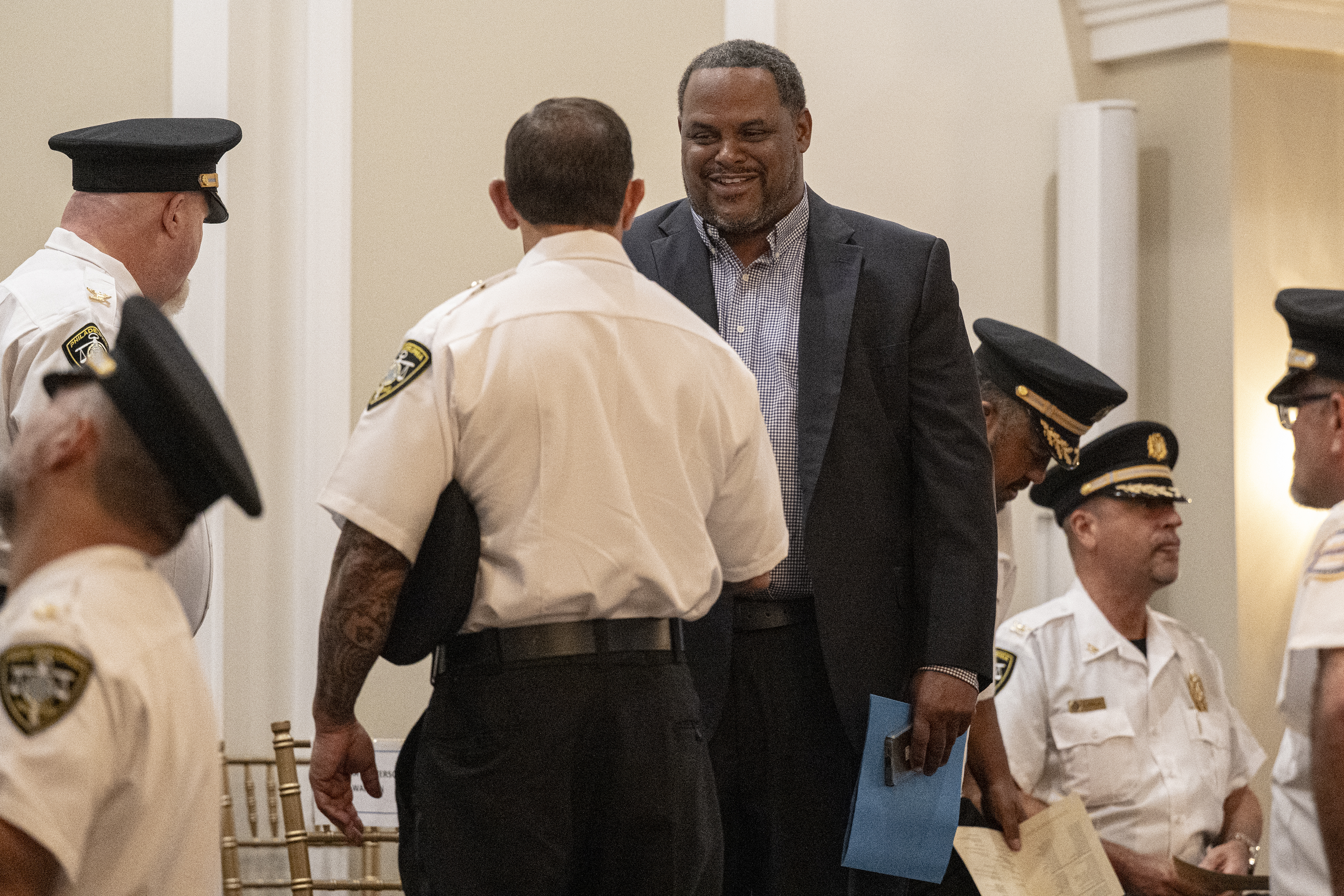
    Newly appointed Managing Director Carlton Williams interacts with city officials during a correctional officer graduation ceremony at FOP Lodge 5 in Philadelphia on Friday.Jose F. Moreno / Staff Photographer

    Perhaps most importantly for Williams’ ascent: he is all-in on Mayor Cherelle L. Parker.

    The ties between Parker, 53, and Williams, 57, stretch back to their childhoods in Northwest Philly — he played football for the Oak Lane Wildcats, and she was a cheerleader. The team remains a part of both of their identities: Williams has led the Oak Lane Youth Association for 20 years, and the mayor often says proudly that she is a “Wildcat for life.”

    Later in life, both found allies in the storied Northwest Coalition, a powerful political family. Williams said that he has known for 20 years that Parker would one day sit atop City Hall. And he most recently led Parker’s Office of Clean and Green Initiatives, overseeing the implementation of some of her key campaign promises.

    “I’m bringing the ‘One Philly’ brand to the managing director’s office,” Williams said in an interview, echoing the mayor’s oft-used slogan. “Not to say it wasn’t being done under my predecessor. But I want to make sure it’s completely aligned with the mayor’s goals, because I believe in that vision.”

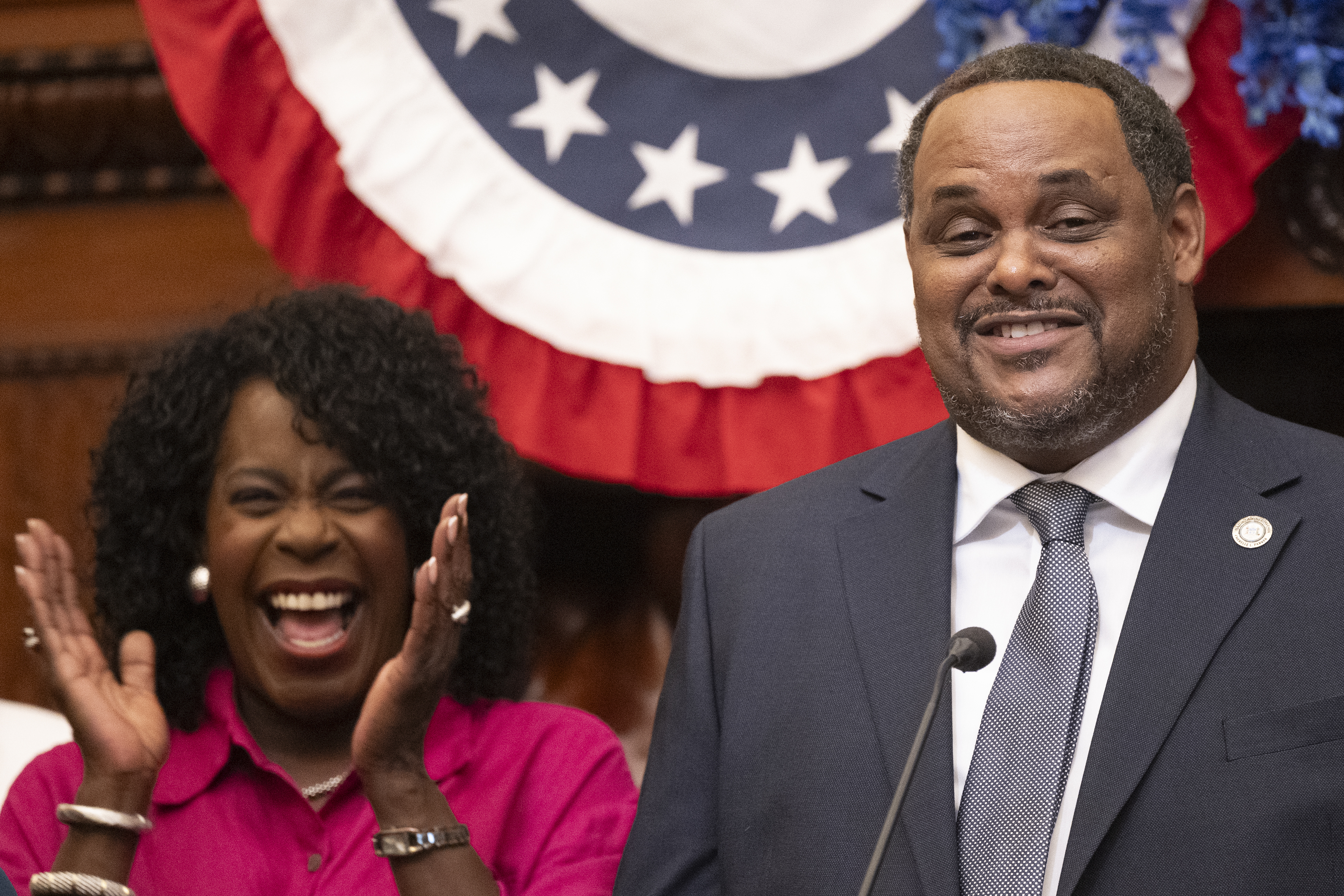
    New Philadelphia Managing Director Carlton Williams speaks at the podium after being announced by Philadelphia Mayor Cherelle L. Parker during a July 28 news conference at City Hall.Jose F. Moreno / Staff Photographer

    His appointment as managing director marks a new stage for the Parker administration that has seen significant turnover at its highest levels. And it is indicative of what Parker values in her inner circle: vast institutional knowledge and loyalty.

    For the mayor, trust in Williams’ ability to operate within the bureaucracy and advance her priorities may outweigh his mixed record of management.

    “Whenever we had a crisis of any kind in this city, he has been on my speed dial,” Parker said when she announced Williams’ appointment last month. “No matter who’s been leading, I’ve always called him for his counsel.”

    Overseeing ‘a very broken’ L&I

    Parker’s bet on Williams would have seemed almost unimaginable a decade ago.

    A year after Williams was appointed to lead L&I, an excavator demolishing a wall on Market Street in Center City toppled the building onto an adjacent Salvation Army store, killing six people and injuring a dozen more. The inspector responsible for the demolition project died by suicide a week later.

    Calls for reform abounded and questions swirled about whether the city’s agencies were responsible. There were multiple investigations launched and commissions convened to probe the disaster, and within days, Council members were pressing Williams to institute reforms that would bolster safety on private construction sites.

    In response, Williams sought to hire more inspectors, increase their training, raise demolition standards, and create new specialized units within L&I.

    Today, he says the collapse on Market Street was “one of the saddest moments” of his time in government.

    “You have to lead through some tough challenges when you’re a leader,” he said. “You don’t get to pick and choose when you lead.”

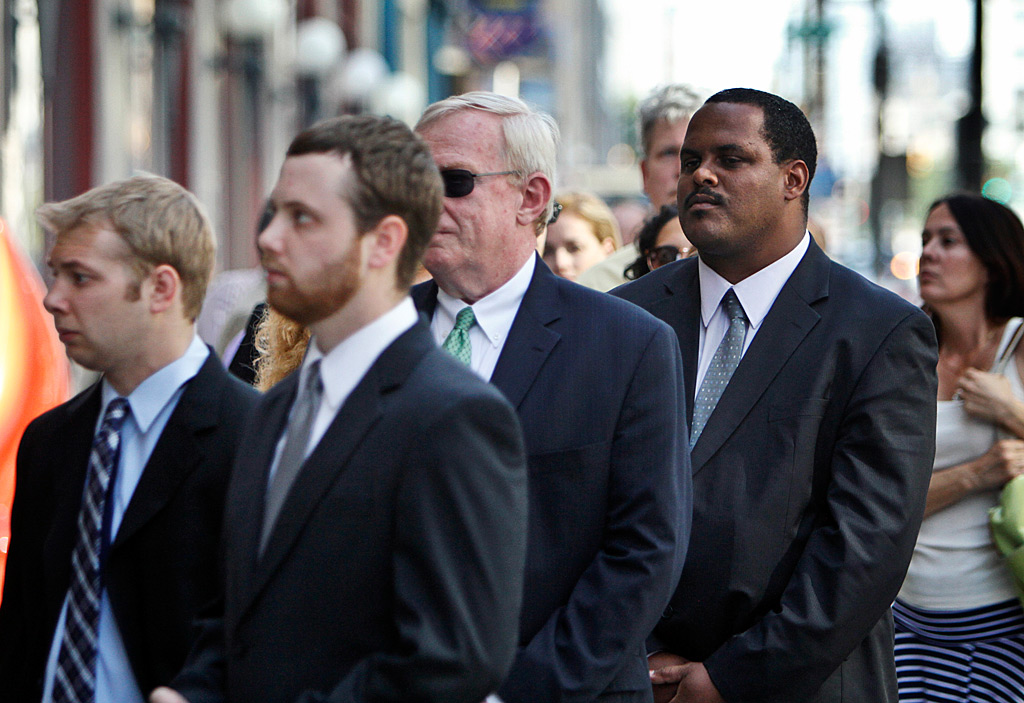
    In this June 2013 file photo, then-Philadelphia Commissioner of the Department of Licenses and Inspections Carlton Williams (second from right) waits in line to attend a memorial service for Anne Bryan, who was among the victims of the Market Street building collapse.JOSEPH KACZMAREK / Associated Press

    But it was not the only controversy he faced.

    The Inquirer reported that, in 2014, Williams personally intervened in the demolition of a Point Breeze building and allowed it to proceed without the requisite permits.

    And in 2015, L&I was forced to reorder hundreds of inspections after sending unlicensed and unqualified inspectors to examine unsafe buildings across the city.

    By fall 2015, then-City Controller Alan Butkovitz was calling on Williams to be fired. He said at the time that L&I had long been troubled, but that his office’s audit of the agency found that Williams had not made enough improvements.

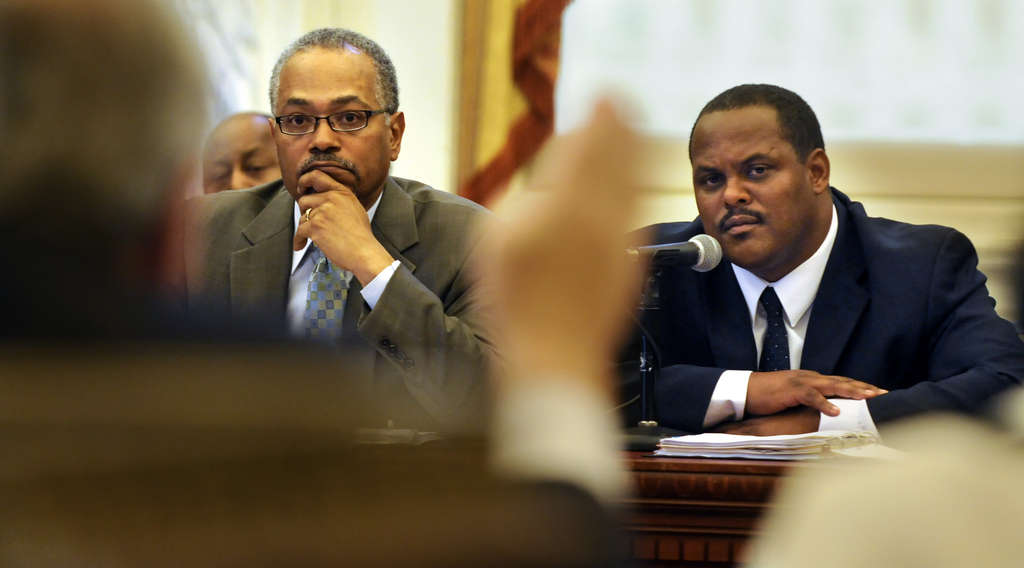
    In this 2013 photo, then-Deputy Mayor Everett Gillison (left) and then-Commissioner of Licenses and Inspections Carlton Williams listen to members of City Council during a hearing.TOM GRALISH / Staff Photographer

    Butkovitz now says that he blames former Mayor Michael Nutter instead, and that Williams was “caught between the mayor and me.” He said Williams had promised to provide the controller’s office with documents to assist in an audit, and then did not.

    “I took it out on Carlton Williams at the time,” Butkovitz said. “His inclination was to cooperate with me, but at the time, it looked to me like duplicity. And I don’t think it was. I think he was overridden by higher authority.”

    Nutter did not respond to a request for comment.

    Estelle Richman, a former Philadelphia managing director who has held a variety of roles in local, state and federal government, said L&I is “one of the most difficult city departments.” She noted that past agency leaders have been pushed out, fired, indicted, and jailed.

    “We can go back and say ‘maybe [Williams] should have done this or that,’ but the reality is it was a very broken department,” she said. “I think he did more to try to get it restabilized and back on track than any other commissioner at that time could have done.”

    ‘You have to be accessible’

    Before taking the helm at L&I, Williams was a career bureaucrat.

    Born in North Philly and raised in West Oak Lane, Williams started with the city at age 19, working in Fairmount Park as one of the first-ever members of the Philadelphia Ranger Corps. The program paid for part of his tuition to attend Temple University and marked his foray into public service.

    Jeffrey Montague, who led the Philadelphia Ranger Corp. and has been a mentor to Williams for decades, said that at a young age, Williams showed potential.

    “He didn’t try to fit in. He always stood out on his own independence,” Montague said. “He wasn’t trying to fit into a crowd.”

    After working as a ranger, Williams spent three years running a Harrisburg youth program for AmeriCorps — the first and last time Williams lived outside the city.

    He returned to Philadelphia to work for the Parks and Recreation Department, rising to become a deputy commissioner in both the recreation and streets departments.

    Then came the four-year stint leading L&I, and when Kenney took office in 2016, he moved Williams back to his old job as a deputy in the streets and sanitation department.

    But it didn’t last. Five months after Kenney took office, the streets commissioner was arrested for assault. Williams ascended to the role, and suddenly, the person who Kenney said he wouldn’t retain to lead L&I was in charge of one of Philadelphia’s most visible departments, overseeing transportation and sanitation operations citywide.

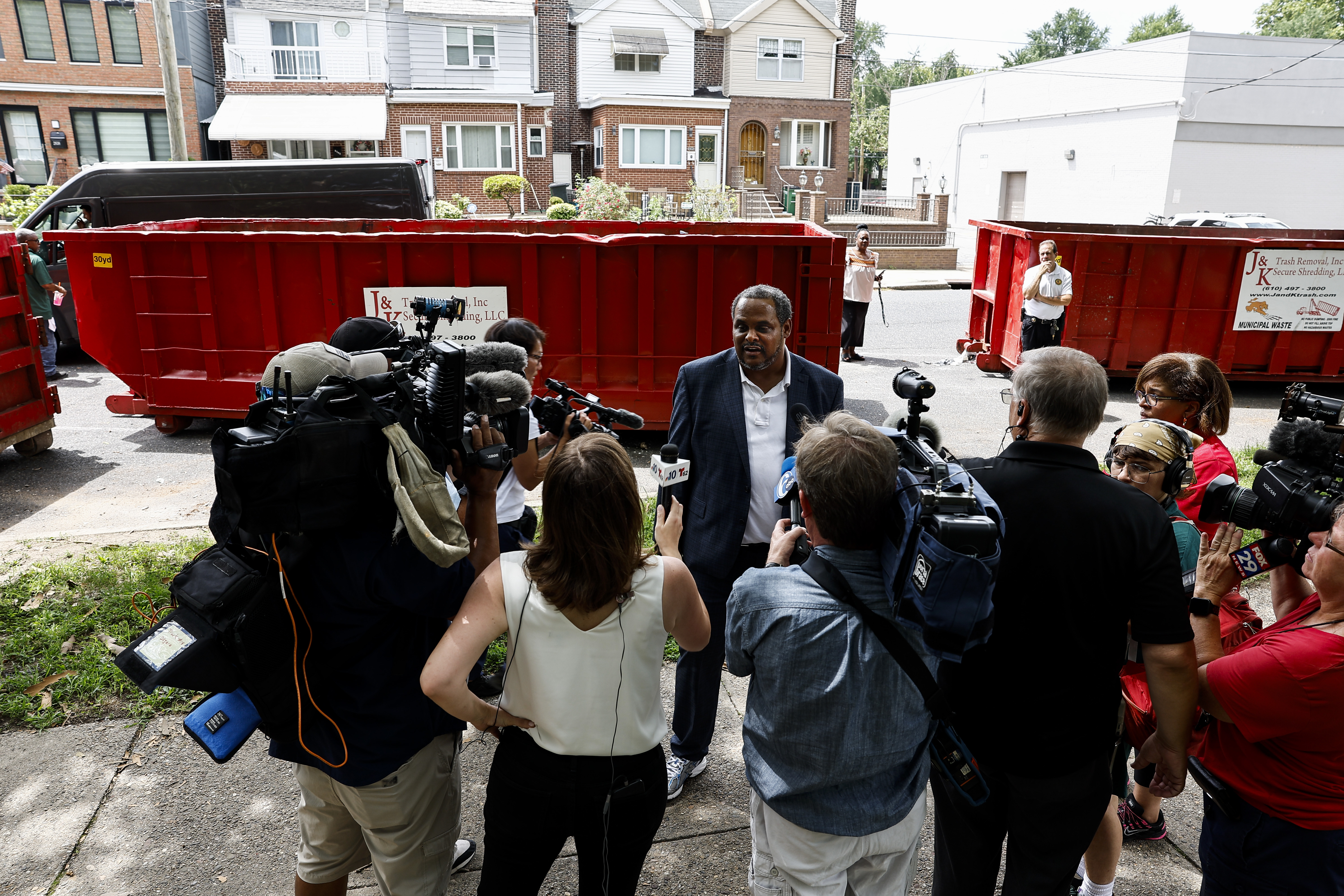
    Carlton Williams, then the director of the Office of Clean and Green Initiatives, speaks during a news conference at Bigler and South 15th Streets on July 7, 2025.Monica Herndon / Staff Photographer

    It was there where Williams solidified himself as a City Hall fixture. He said that as an administration staffer, he has “one primary that I listen to” — the mayor — but he has always tried to be attentive to Council.

    That may be a key difference between Williams and Thiel, his predecessor. Thiel was the former fire commissioner and a nationally recognized expert in emergency management who was seen as a skilled behind-the-scenes operator.

    But Council members said that Thiel did not foster close relationships with members of the city’s legislative body who are often conduits between residents and the mayor’s administration.

    In addition, Thiel was often absent during major events in the city and he was frequently on leave — he joined the Army Reserve eight months into his tenure, and held several jobs outside city government, including as a consultant and professor.

    That was a departure from prior administrations, when the managing director was often the public face of city operations.

    On several occasions during the Parker administration, it was Williams who was in the spotlight. As director of the Office of Clean and Green Initiatives, he played a key coordinating role during the eight-day municipal worker strike that halted city services — most visibly, trash pickup.

    And he oversaw the city’s response to a severe winter storm earlier this year that left much of the city encased in ice, despite weather emergencies typically falling under the managing director’s purview.

    New Philadelphia Managing Director Carlton Williams (left) stands near the former director, Adam Thiel, before an introduction by Philadelphia Mayor Cherelle L. Parker during a July 28 news conference at City Hall.Jose F. Moreno / Staff Photographer

    City Councilmember Anthony Phillips, whose district includes Northwest Philadelphia, said that prior to Thiel’s resignation, members of Council were “gravely concerned” about his frequent leave. Some members said that, in Thiel’s absence, Williams was their primary contact among Parker’s top staff.

    “You can’t get certain things done and you can’t expect an efficient and effective city when you’re not present,” Phillips said. “Carlton is going to be the complete opposite of that.”
    Williams said that his role as managing director is his only job aside from volunteering.

    “It’s a full-time, 24-hour, seven-day-a-week job,” he said. “You have to be accessible.”
    Williams’ coziness with elected officials has also drawn criticism.

    A former city employee who previously worked for Williams said his relationships with Council amount to a “favor machine.” The staffer spoke on the condition of anonymity in order to preserve relationships.
    “There is this cycle of Council getting calls from constituents, like ‘there’s a pothole,’ and then they get it fixed, and that’s the main work,” the former staffer said. “It’s not actually setting up systems that are solving the problems. It’s reacting to them.”

    But Williams said some of his proudest achievements have resulted in systemic change: he led the installation of some of the first spraygrounds in the city, overhauled the recycling program, had BigBelly trash cans placed throughout Philadelphia, and started the annual Philly Spring Cleanup.

    “He is probably one of the most well-prepared managing directors that the city has had,” Richman said. “He knows not only how operations work within the city departments, he knows the political structure of the city. And I believe a managing director has to know both.”

    Testifying in the Johnny Doc trial

    Williams’ close relationship with a Council member also came under a microscope in a federal courtroom in 2021.

    John Dougherty, the former leader of the politically powerful Local 98 of the International Brotherhood of Electrical Workers, and his ally, ex-Councilmember Bobby Henon, were on trial for bribery and other corruption charges. Prosecutors accused Henon of taking official actions as a Council member at Dougherty’s behest in exchange for a salaried, no-show job with the union.

    One of the schemes prosecutors presented during the trial focused on efforts by union officials in 2015 to halt the installation of an MRI machine at the Children’s Hospital of Philadelphia, a project that was being completed with nonunion labor. Williams, at the time, was at the helm of L&I.

    Department of Streets Commissioner Carlton Williams exits federal court on Oct. 12, 2021, after testifying in the John Dougherty and Bobby Henon bribery trial.Thomas Hengge / Staff Photographer

    During the 2021 trial, Williams was called to testify. He told the jury that Henon called him in August 2015 to report that an unlicensed contractor was working at CHOP, and that he dispatched an inspector to investigate.

    The inspector, Williams testified, issued a stop-work order on the construction of the MRI machine. But he insisted that he did not direct the inspector to do so, and told the jury that responding to complaints from Council members was a routine part of his job.

    Ultimately, L&I reversed the stop-work order, and the MRI machine was built.

    Prosecutors said Dougherty paid Henon to be his “man on the inside” in City Hall and used the episode at CHOP to establish evidence of a corrupt agreement between the two.

    “You heard what happened,” Assistant U.S. Attorney Frank Costello told the jury during closing arguments. “Henon contacted Carlton Williams, Carlton Williams sent inspectors out and they issued orders — they issued orders to shut the job down.”

    But defense attorneys said one public official asking another to take action doesn’t constitute a crime.

    “Carlton Williams was the recipient of information just passed on to him about the MRI and the unlicensed contractor,” said defense attorney Brian McMonagle. “That ain’t a crime.”

    Dougherty and Henon were both convicted. Henon was released from prison last year, and Dougherty remains incarcerated.

    Carrying out Parker’s vision

    During the 2023 mayoral campaign, when a half-dozen Democrats could have plausibly won the party’s nomination, Williams nearly left the city.

    He said he got a job as the public works director in San Francisco, but before he accepted, Parker won the primary election. Williams decided to stay.

    “I wanted to work for Cherelle Parker,” he said. “I believed in her vision.”

    Mayor Cherelle L. Parker is applauded by members of her administration at City Hall on July 9, 2025, hours after reaching a tentative contract agreement with District Council 33 leaders overnight, ending the workers’ strike. At left is Carlton Williams, director of the Office of Clean and Green Initiatives. Chief Deputy Mayor Sinceré Harris is behind the mayor at right.Tom Gralish / Staff Photographer

    Parker took office in 2024 and created a new role: director of the Office of Clean and Green Initiatives. Williams would carry out her campaign promise to rid the city of its “Filthadelphia” moniker by implementing twice-weekly trash collection, an expansion of illegal dumping enforcement, and a biannual citywide program to clean every block.

    As managing director, Williams’ portfolio will grow substantially. He will be responsible for the city’s response to public health and homelessness, as well as overseeing large agencies like the fire department and the prisons.

    He will also coordinate the city’s strategies in Kensington, the beleaguered neighborhood and the site of an open-air drug market that the Parker administration has spent more than two years working to shut down. Williams said there is inherent pressure that comes with being responsible for addressing such long-entrenched issues.

    “But I work best under pressure, and so I take that as a badge of honor,” he said.

    Williams said he intends to prioritize communication with residents because they “understand that everything can’t get fixed at one time.”

    “But at least we can say what needs to be done, when it’s going to [be] fixed, what’s the timeline,” he said. “I manage through the eyes of everyday citizens. I want what they want.”

  • How to give up your car (sometimes), save money, and save the planet

    How to give up your car (sometimes), save money, and save the planet

    If you have ever considered giving up your car, now is the time.

    There’s the price of gasoline, which has shot up by more than 35% since President Donald Trump launched the war against Iran in February. Even if you never start the ignition, simply owning a car will now set you back an average of $8,000 a year in insurance, maintenance, and loan payments.

    And those are just the immediate costs. As a major source of greenhouse gases, cars contribute significantly to climate change, which is already pushing up the price of food and everyday purchases.

    So, let’s say you’re ready to ditch your money pit on wheels. Then what?

    I’ve been struggling with this question since I moderated a panel this spring with Sarah Goodyear and Doug Gordon, the duo from the popular podcast The War on Cars, who just published a rousing call to arms, Life After Cars: Freeing Ourselves from the Tyranny of the Automobile. The event, held at the capacious Resurrection Philadelphia church in Center City, was sponsored by Philly Bike Action and 5th Square Advocacy, two groups dedicated to promoting alternatives to driving.

    Resurrection’s sanctuary was packed — with the converted. When Goodyear and Gordon asked the audience who had traveled to the event by car, only a few sheepish hands went up.

    While their book does a great job of detailing the ways cars “ruin everything,” there is little in it to help the car-dependent kick the habit. The problem is, most people have no idea where to start.

    Even in the Philadelphia region, which has better-than-average transit and cycling infrastructure, the prospect of living without a car can seem a little like trying to swim without arms and legs. How will you take the kids to sporting events, look after elderly parents, and buy groceries without a vehicle? Our local transit services — SEPTA, NJ Transit, and PATCO — don’t serve every nook and cranny of the region and don’t run as frequently as they should.

    Like everything else in America these days, the debate over the role of cars in our daily lives tends toward extremes. Philadelphia urbanists can sometimes come off as unsympathetic, as if they expect people to go cold turkey and swap their vehicles for bikes and SEPTA. Meanwhile, the pro-car lobby keeps insisting, against the evidence, that the car-free life is not practical outside a few transit-rich neighborhoods, like Center City.

    But who says it has to be all or nothing?

    ‘Habituate walking’

    My advice: Keep your car — for now, at least — but look for opportunities to get around by other means. Walk to the grocery store. Ride a bike to dinner at a nearby restaurant. Think of these excursions as a trial run. Once you feel comfortable, take the train or bus to work. You may never give up your car permanently, but you will save a bundle on gas and maintenance, reduce congestion, and boost your step count.

    That’s how Jane Murray started weaning herself from the car. The Ardmore resident, who now runs a popular Instagram account called @Janewalksardmore, first began taking long walks as a way to experience her Main Line town on a deeper level. To give shape to her Instagram project, she decided to visit every block in Ardmore and document her travels.

    Jane Murray walks along Lancaster Avenue in downtown Ardmore, as part of a project to to walk every street in the Main Line town.Alejandro A. Alvarez / Staff Photographer

    The more she walked, the more comfortable she felt leaving her car at home. She now wheels a “granny cart” to Trader Joe’s, a 15-minute walk from her house. Not long ago, she hopped a SEPTA bus to meet friends for quizzo in a pub a few towns away. At the end of the night, she took an Uber home.

    Murray’s kids still have to take a bus the four miles to their middle school and she drives them to distant sporting events, but makes a conscious effort to “habituate walking” into her routine. Before leaving the house, she checks her transit apps to see if she can get to her destination without driving. Sometimes, she mixes it up: When she’s running errands, she’ll drive part of the way, then walk the last few blocks. Her Instagram has inspired her neighbors, who pepper her for tips about safe walking routes.

    A mobility menu

    Living in America without a car is often portrayed as a hardship, something that people on the margins are forced to endure. But, for me, living without a car has been a joy.

    I didn’t know what to expect when I impulsively decided to get rid of my aging clunker 30 years ago after being presented with an expensive repair bill. Before then, I had rarely taken taxis or splurged on Amtrak to visit family in New York. Since I would no longer have to pay for car insurance, I promised to allow myself those indulgences. My husband and I were living in Center City, which certainly made our experiment more doable. (I should mention that I was pregnant at the time. I took a taxi to and from the hospital.)

    Besides saving a lot of money, not having a car has liberated me in ways I never could have imagined. Bike lanes were virtually nonexistent in Philadelphia in the ’90s; today my bicycle is my main form of transportation. Thanks to the city’s mostly flat terrain, I can easily cycle to interviews and events in far-flung neighborhoods. My ride is equipped with side baskets, allowing me to do my grocery shopping by bike. When my destination is beyond biking distance, or when I have to look presentable, I’ll take SEPTA or reserve a Zipcar from the local car-sharing company. In a pinch, I can always summon an Uber, a Lyft, or a taxi. I still walk a lot, and it’s no exaggeration to say I run into people I know on every outing.

    The key here is to think of mobility as a menu of options, rather than a car/no-car binary. While low-speed electric bikes have made it easier to cover long distances, not everyone can, or wants to, bike. Even transit can be daunting for a novice. The fear of crime also deters some people from using SEPTA, even though serious incidents have fallen dramatically in the last decade.

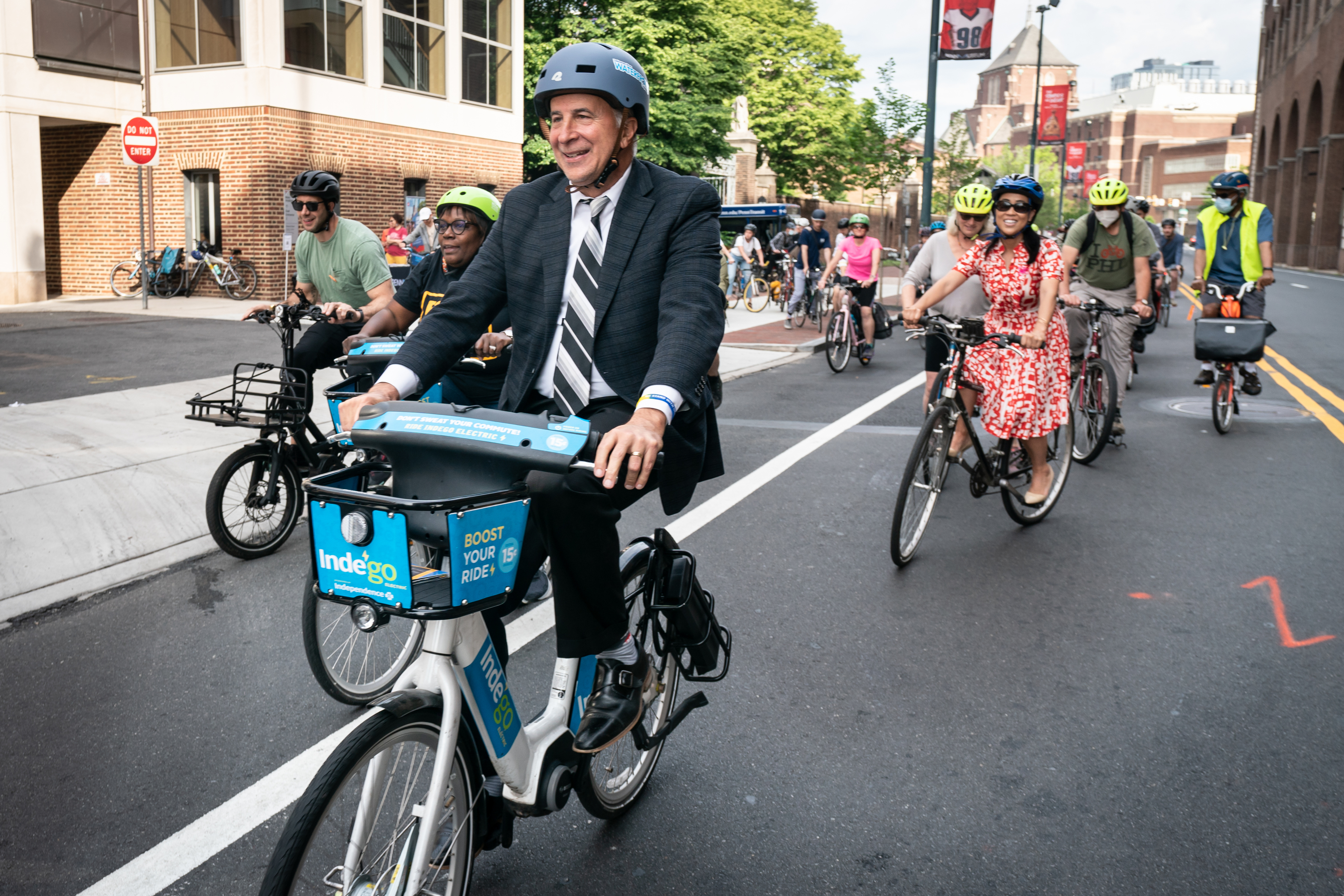
    In 2022, Councilmember Mark Squilla (center), former Eagle Connor Barwin, Councilmember Kendra Brooks, and Councilmember Helen Gym took part in a Bike to Work Day event sponsored by the Bicycle Coalition of Greater Philadelphia to promote cycling as a means of transportation.JESSICA GRIFFIN / Staff Photographer

    Eden MacDougall vividly remembers his trepidation when he started commuting from Langhorne, in Bucks County, to Temple University on SEPTA’s Regional Rail. “I kept thinking, how will I know it’s my stop?”

    By the time MacDougall graduated in 2022, he was a super-commuter. To get to his new job at Mastery Charter School, where he is an AmeriCorps reading instructor, he had to use three forms of transportation: He started his day by biking two miles from his home to the Langhorne station. After taking a SEPTA train to Fern Rock, he changed to the Broad Street subway, getting off at Erie. The trip took an hour and 45 minutes, but MacDougall, who never learned to drive, loved it. “I’d open up my book and read the whole way.”

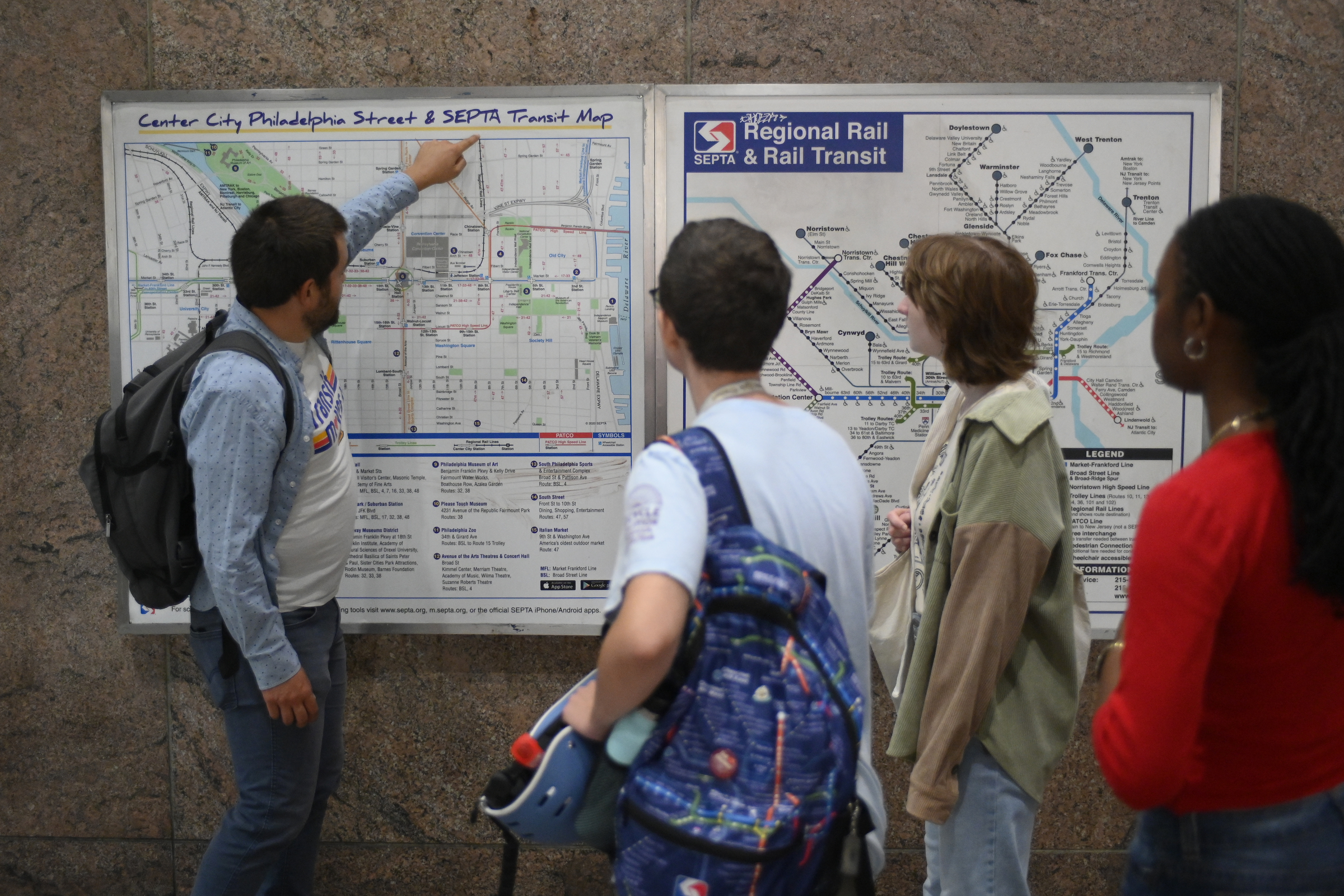
    Stephen Bronskill, coalition manager for Transit Forward Philadelphia, shows incoming Temple University students how to navigate SEPTA during a tour organized at the start of the new semester. Bastiaan Slabbers / For The Inquirer

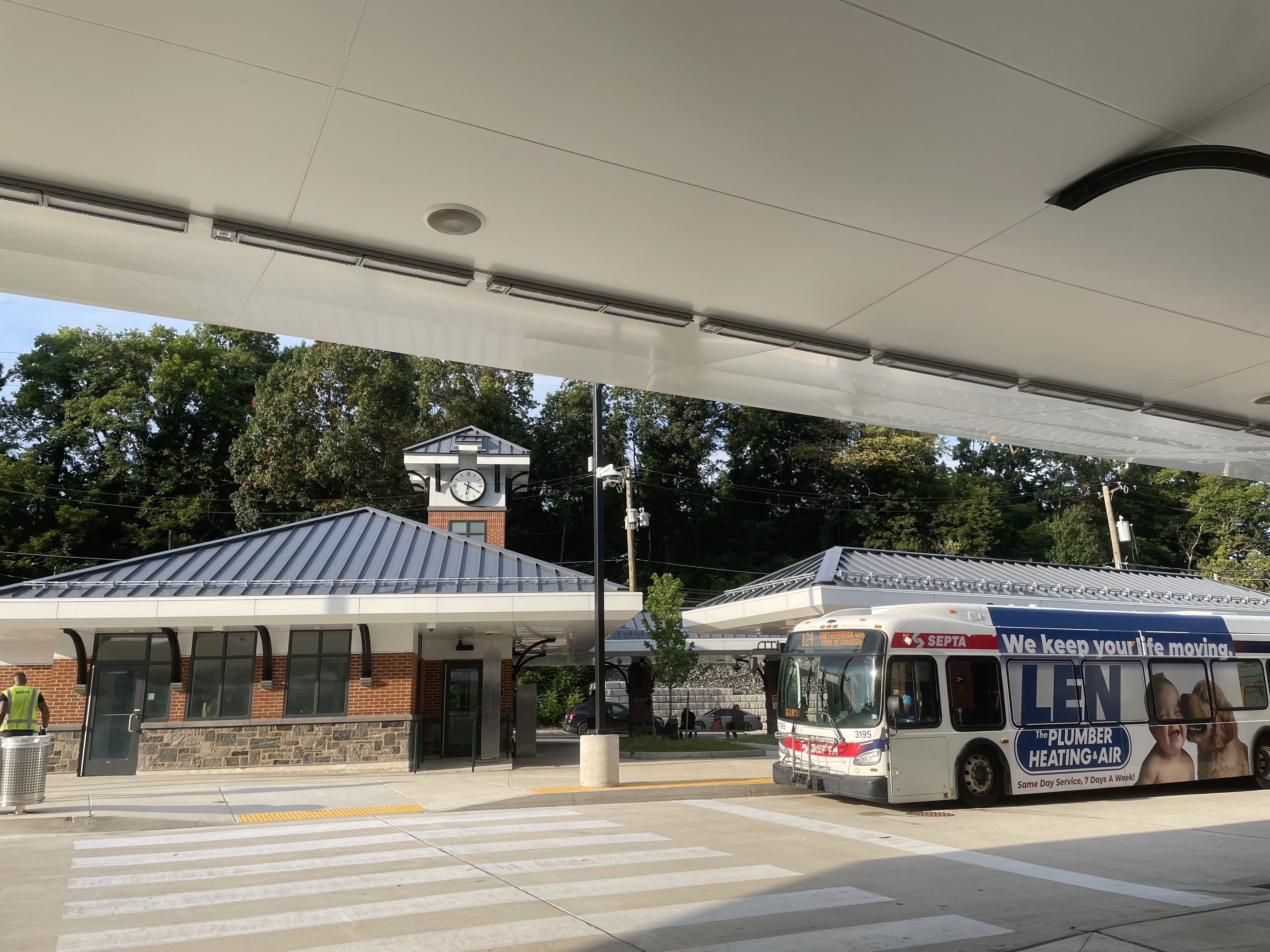
    Now he lives in Philadelphia and volunteers as an instructor for Transit Forward Philadelphia and the Bicycle Coalition of Greater Philadelphia, which run Saturday tours to help people feel more confident riding SEPTA. Although the events provide practical advice, like how to use a transit app, they’re intended to be fun excursions. MacDougall recently shepherded a group from Roxborough to the Clark Park farmers market, showing them how to change from the Route 9 bus to a West Philadelphia trolley. Along the way, the group got to see SEPTA’s efficient new Wissahickon Transit Center on Ridge Avenue, where 11 bus routes converge.

    The two groups, which have been lobbying the state legislature to help SEPTA secure much-needed state funding, started the Saturday tours as an extension of their advocacy work. They believe the exposure to SEPTA’s system can help reset public perceptions.

    SEPTA’s new Wissahickon Transportation Center on Ridge Avenue in Manayunk is a major upgrade for the city’s bus riders. The sprawling, $50 million station opened in January 2026 and allows 5,000 passengers a day to switch between 11 bus lines. (photographeed Aug. 2026)Inga Saffron / For The Inquirer

    “People had a lot of negative experiences during the pandemic,” Julio Rodriguez, the Bicycle Coalition’s policy director, told me. So, when SEPTA announced it was implementing its long-awaited schedule changes this summer, the transit advocates saw a chance to change the conversation.

    Helping SEPTA boost ridership isn’t their only goal, however. Because they believe fewer cars will make Philadelphia a safer, more livable city, they’re organizing similar outings to get people comfortable with bike commuting.

    Changing habits

    Even while these advocates are gaining adherents, many skeptics remain convinced people will never give up their cars.

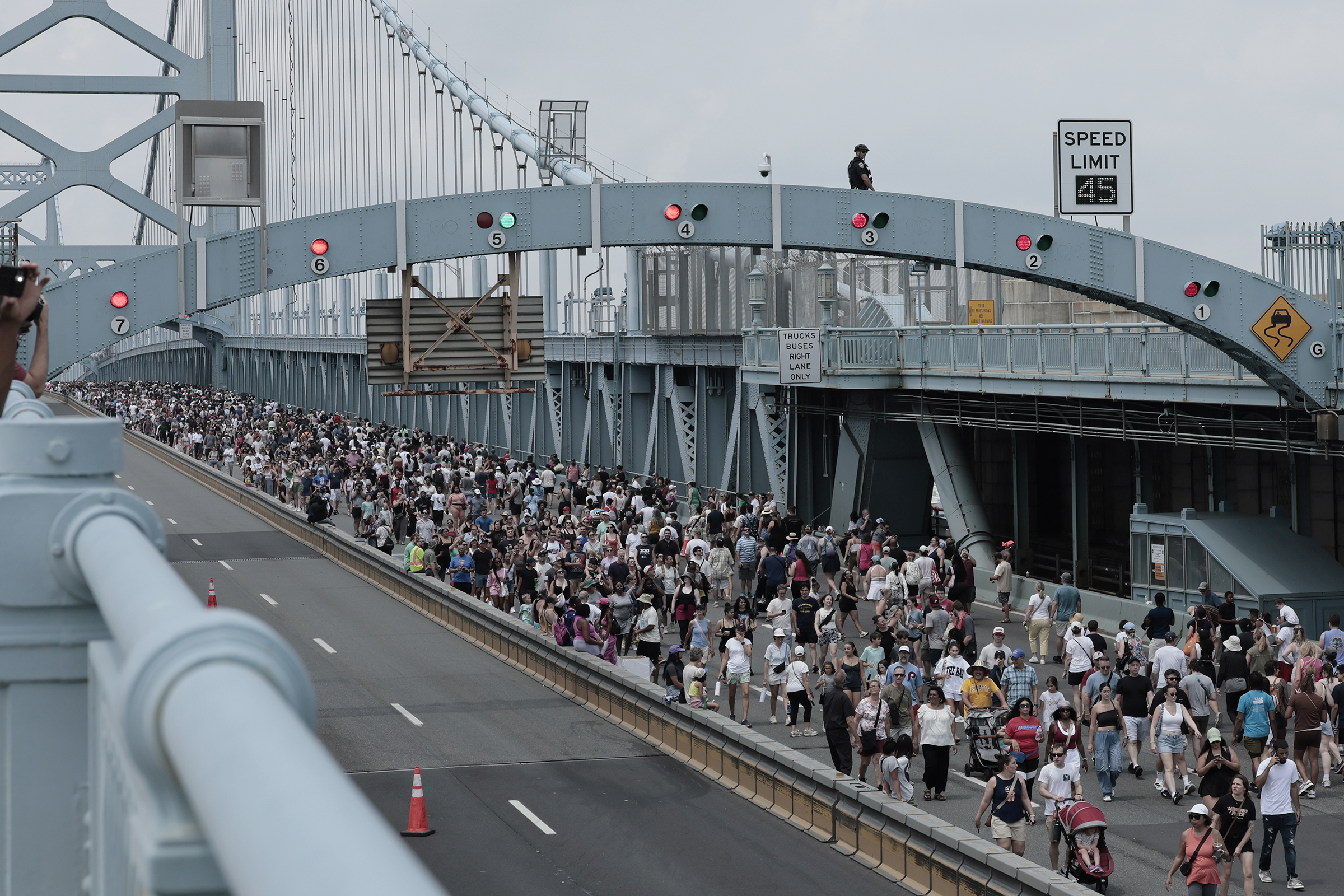
    But the public’s cheerful response to this summer’s car-free celebrations around Philadelphia suggests that habits can change. Almost 600,000 people converged for World Cup watch parties at Lemon Hill in Fairmount Park during the 39-day FIFA Fan Festival — even though parking was banned. After the games ended, I saw hundreds of people streaming along the Schuylkill River Trail to 30th Street Station, a distance of 1.5 miles. Thousands took transit, rode bikes, or walked to the Ben Franklin Bridge to celebrate its centennial in July.

    Thousands of people took transit, biked, or walked on July 11 to parade across the Ben Franklin Bridge to celebrate the 100th anniversary of its opening.Elizabeth Robertson / Staff Photographer

    For people who switch to alternative forms of transportation, the payback is immediate. But Philadelphia and the region also have much to gain from having fewer cars racing through the streets: cleaner air, less noise, more casual social encounters with neighbors, and less wear-and-tear on infrastructure

    The impact on climate change is a different story. Individual actions can only do so much to slow the dramatic shifts in global weather. It’s also a frustrating chicken-and-egg situation. People won’t see car-free living as truly feasible until there is intensive government investment in transit, bike infrastructure, and pedestrian safety.

    Until that happens, carry a fare card, sign up for car-share, install a transit app on your phone — and don’t forget to wear a helmet.

  • Center City bar Jose Pistola’s has closed after 19 years

    Center City bar Jose Pistola’s has closed after 19 years

    A distinctive stretch of 15th Street in Center City has lost both of its longtime bars within a year.

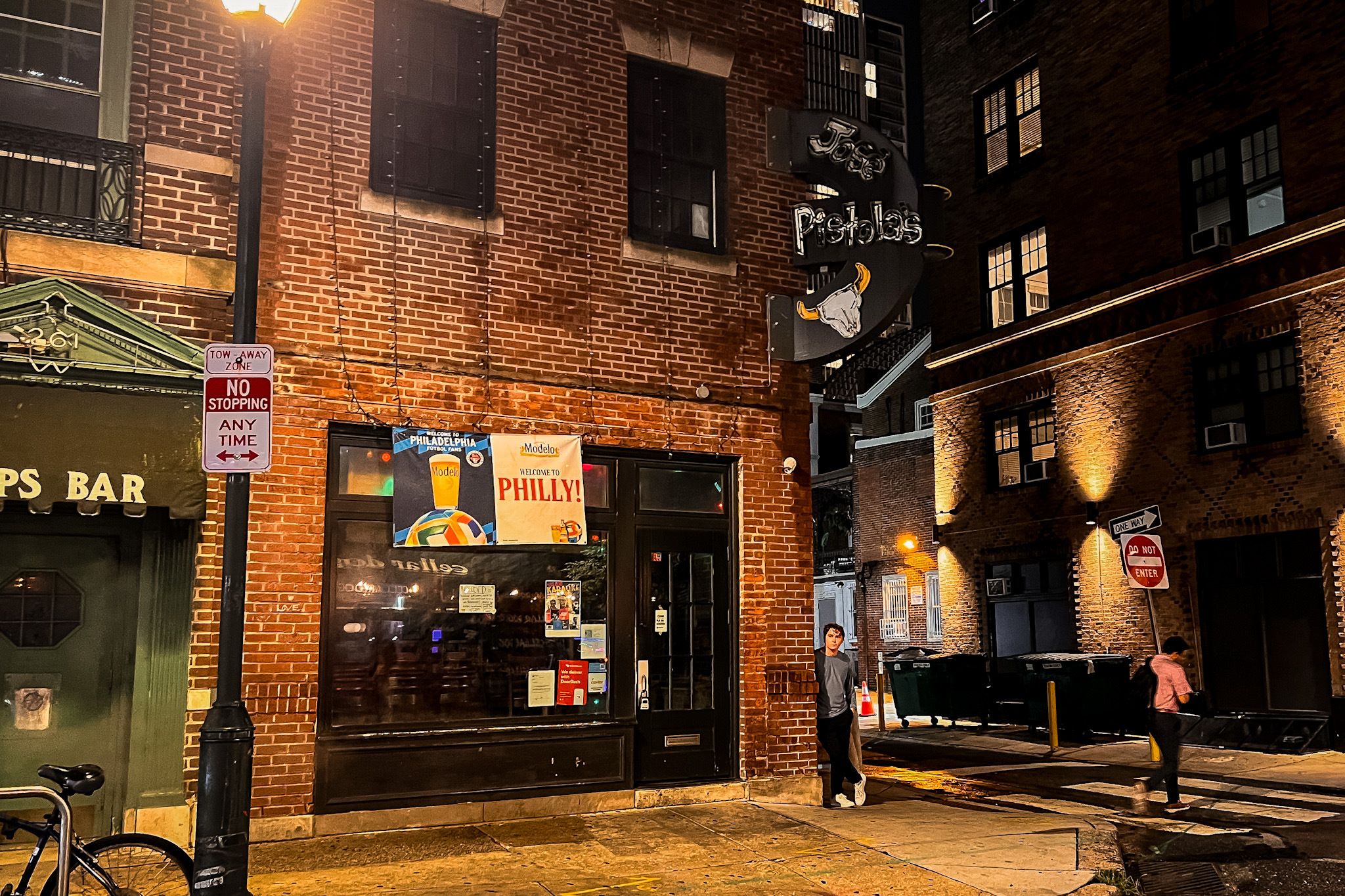
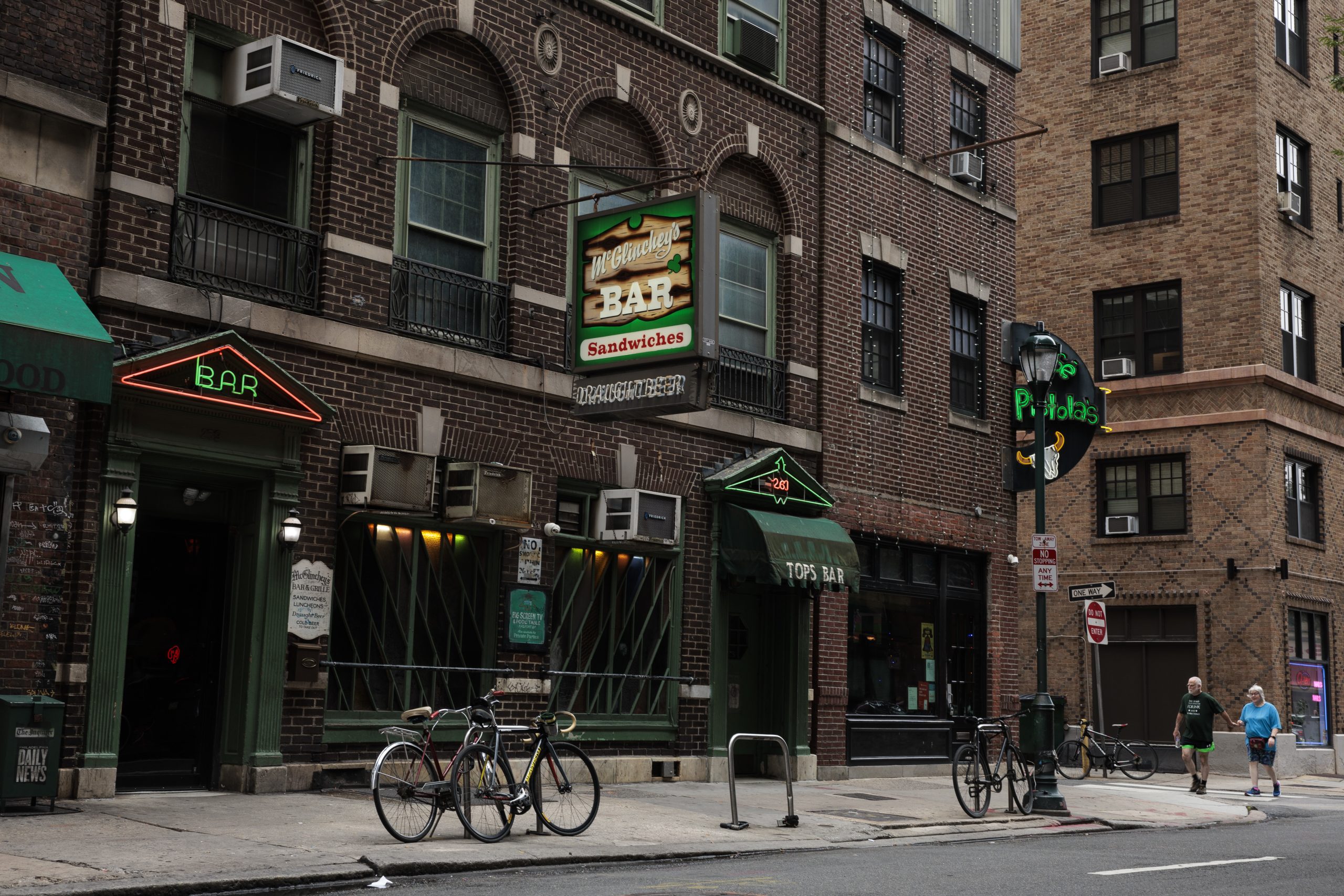
    Jose Pistola’s, the Mexican-inspired craft beer bar at 263 S. 15th St., has closed after 19 years, following last August’s closing of its next-door neighbor, McGlinchey’s.

    The closing of Jose Pistola’s came abruptly Tuesday amid a number of factors, including the Philadelphia Gas Works’ cutoff of its gas service. Although co-owner Joe Gunn said the business had made payments and was trying to resolve the issue, he said PGW would not restore service for three more days. . “That was the straw that broke the camel’s back,” Gunn said.

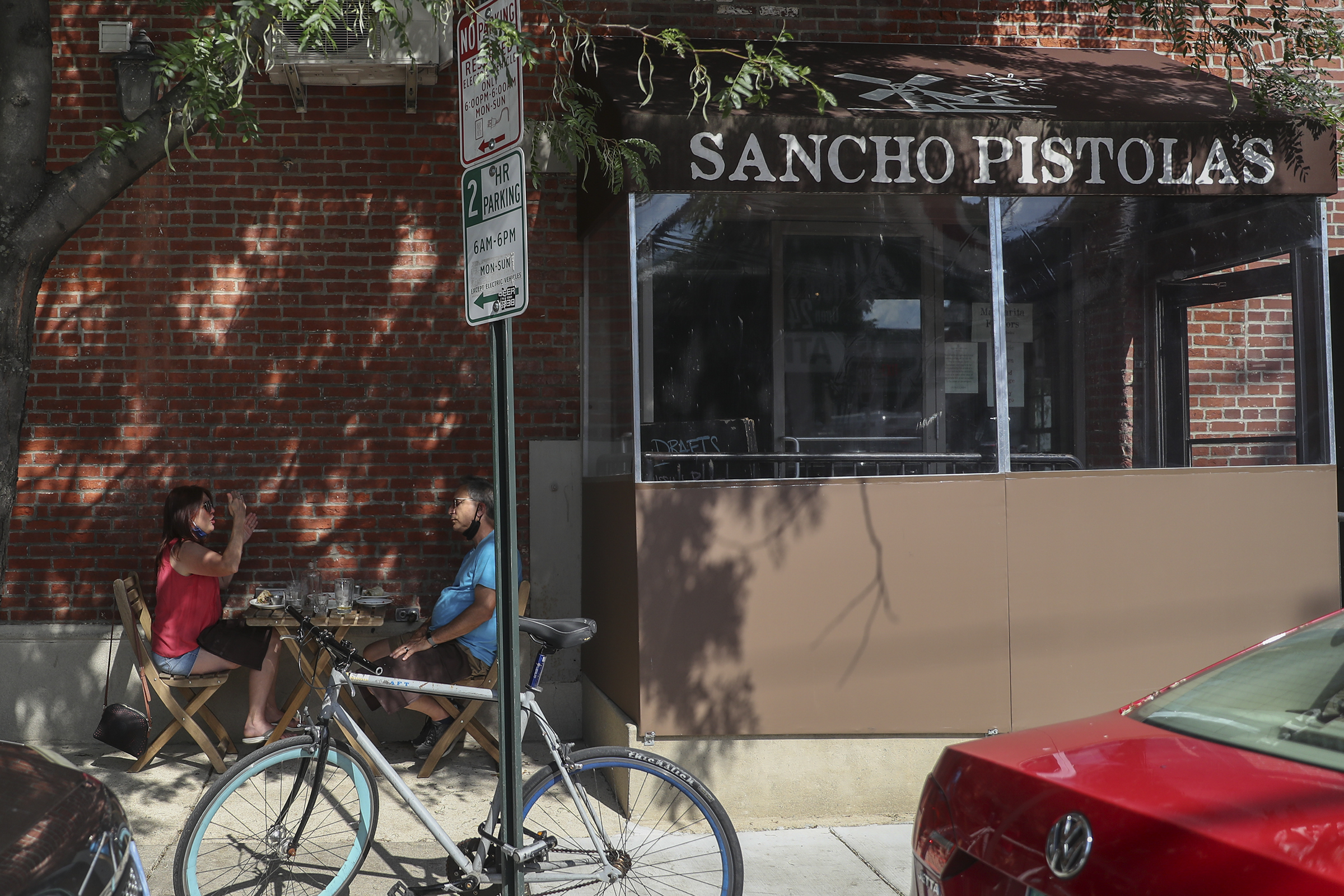
    Sancho Pistola’s in Fishtown, which opened in 2014, is not affected by the Center City closing.Heather Khalifa / Staff Photographer

    The closing does not affect Sancho Pistola’s on Girard Avenue in Fishtown, which opened in 2014, or Pistola’s Del Sur on East Passyunk Avenue in South Philadelphia, which opened in 2017. They are doing well, Gunn said. “They’re in no danger of going anywhere.”

    In 2009, court records show, the City of Philadelphia, which owns PGW, obtained a judgment of nearly $48,000 against Jose Pistola’s. According to a 2025 court docket entry, the judgment was never satisfied. A PGW spokesperson on Friday declined to comment, saying it does not share information about individual accounts.

    Gunn, saying that he did not want to blame PGW, said the interruption forced a decision that he and business partner Casey Parker had already been contemplating.

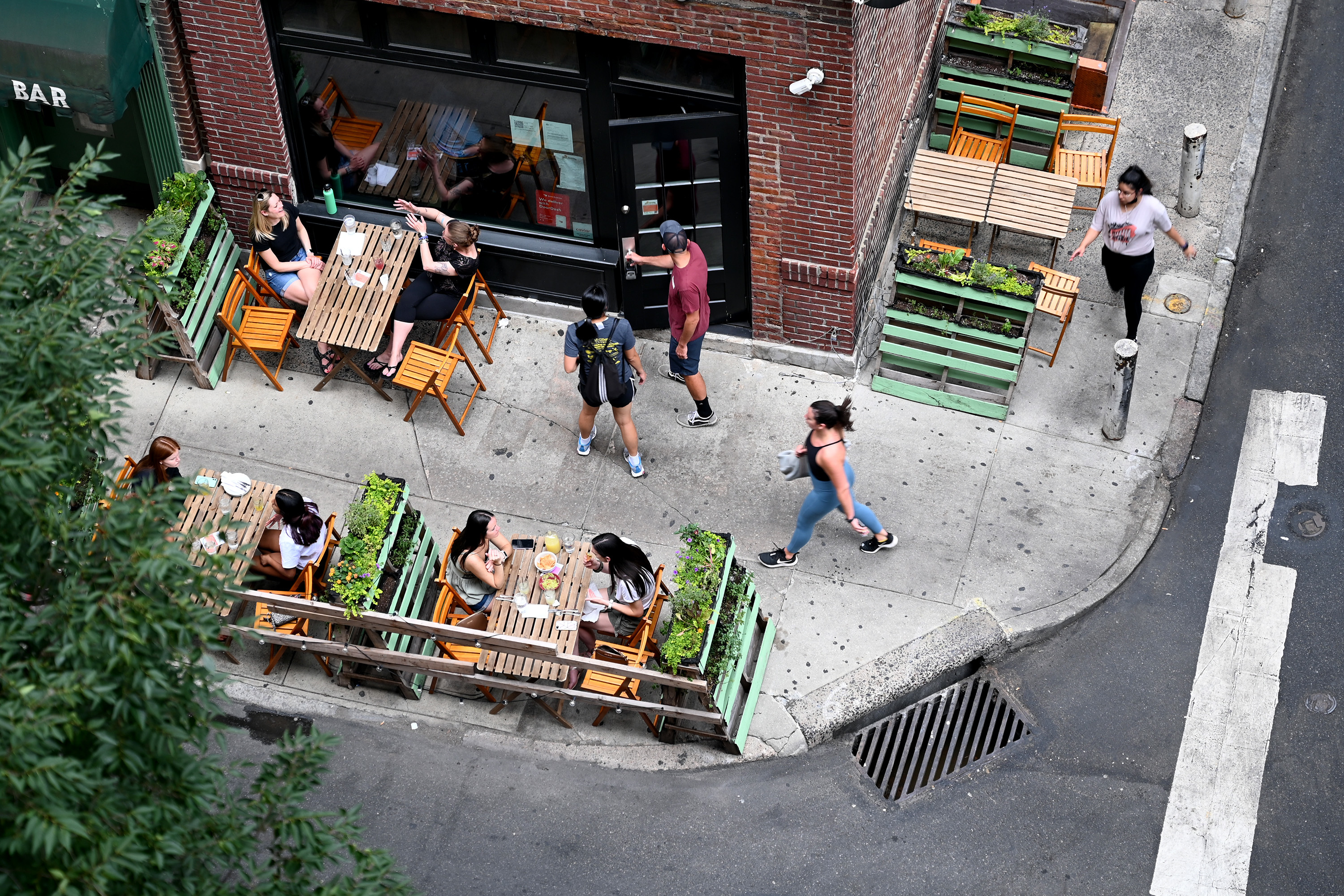
    A view of Jose Pistola’s pandemic-era outdoor seating at 15th and Manning Streets in 2021. Tom Gralish / Staff Photographer

    Gunn said they had about a year remaining on their lease and had been discussing a five-year renewal with their landlord. But with both Gunn and Parker now 51 and their children getting older, he said another long commitment seemed increasingly daunting. “It takes a lot of energy to play that game,” Gunn said.

    The numbers were difficult, too. As other bar and restaurant owners have lamented, higher food and operating costs had squeezed the business, while the late-night trade that once helped sustain bars like Pistola’s has diminished.

    “Frankly, [the bar] just never fully recovered from COVID,” Gunn said. “Coming out of COVID, the world was a different place — the price of goods, the cost of everything, and people don’t go out as much late. These younger generations are too smart to drink their life away.”

    “It’s always been tight, but everything changed,” Gunn said. “And then people just don’t drink as much.”

    About 25 people worked at Jose Pistola’s. Gunn said they had little warning because the owners themselves had not decided to close until the last minute. He said he and Parker are trying to place employees at their other restaurants or with friends in the industry.

    “We’ll absorb what we can, obviously, in the other two places,” Gunn said. “We have a lot of friends in the business, so we’re aggressively trying to help them.”

    Jose Pistola’s bar, as decorated in 2019 for its annual Jose Pistola’s Christmas Smackdown Bar Crawl.Tom Gralish / Staff Photographer

    Jose Pistola’s — its name a loosely licensed Spanish rendering of Gunn’s first and last names — opened Aug. 29, 2007, taking over the longtime Copa, Too! space. Gunn and Parker were both veterans of Fergie’s Pub; Gunn had worked there for about seven years before leaving to open Pistola’s, while Parker had moved on by then.

    The bar quickly established itself through its combination of craft beer, Mexican-inspired food, and an irreverent neighborhood-bar atmosphere. It became particularly associated with Philadelphia’s burgeoning craft beer movement and the early years of Philly Beer Week.

    Its food grew more ambitious after Puebla-born chef Adán Trinidad joined the operation and eventually became a partner. Trinidad, whose resumé included El Vez and Alma de Cuba, brought to the menu such dishes as tortilla soup, goat sopes, carnitas-filled steamed buns, and Brussels sprout tacos that caught the attention of Inquirer critic Craig LaBan.

    The partners later expanded the Pistola’s name to Fishtown and East Passyunk. Trinidad died after a fall in October 2021 at age 39.

    Adán Trinidad was chef-partner until his death in an accidental fall in 2021.Rachel Delsurdo / Courtesy of Jose Pistola's

    For most of Jose Pistola’s run, its next-door neighbor offered a study in contrasts.

    McGlinchey’s — now on the market — was a cash-only dive bar known for low prices, dim lighting, smoke in the air, and an eclectic clientele. It endured by barely changing, while Jose Pistola’s brought craft beer and more ambitious food to an equally unpretentious neighborhood-bar sensibility.

    The two businesses were nevertheless close.

    “We had a great relationship with them,” Gunn said. “We loved them because of how funny they were. They were just kind of cranky, and they put up with us.”

    McGlinchey’s, as seen in August 2025, was next door to Jose Pistola’s.Monica Herndon / Staff Photographer

    Gunn said the McGlinchey’s closure was part of a broader change he has watched on this stretch of 15th Street between Locust and Spruce Streets.

    “The whole corridor used to be more vibrant,” he said. “I think COVID wiped out a lot of those places. It changed everything for us.” The block is also home to Cellar Dog and Garage Rittenhouse.

    As recently as Thursday, Gunn said, he and Parker were “still fighting to figure out a way to [save] it. But it just, I think, ran out of steam.”

  • 7th Street Burger, an NYC-based chain, opens its first Philly location

    7th Street Burger, an NYC-based chain, opens its first Philly location

    You’d be forgiven if you walk into any 7th Street Burger and think that the burger chain has been around forever. Its spare, almost bare-bones menu of smash burgers and fries is more classic than innovative, but perhaps its austerity is part of what is fueling its growth.

    The chain is growing at a breakneck pace. The New York-based chain opened its 35th location in Fishtown (1215 Frankford Ave.) earlier this week. It has three more Philly-area locations that are slated to open by the end of this year, in University City, Center City, and Conshohocken.

    On a Wednesday at 4 p.m., squarely between regular lunch and dinner hours, it was packed with people of seemingly every demographic, waiting in line for burgers.

    It was first opened on its namesake East 7th Street in New York’s East Village in May 2021 by entrepreneurs Kevin Rezvani and Paras Jain who “maxed out” their credit cards in order to do so. The burger joint took off. They quickly opened another location in Greenwich Village within a year. Venture capital firm Left Lane Capital invested in 7th Street Burger in 2023, and since then, the brand has been on an opening spree up and down the East Coast.

    Philly’s first location took nearly a year to open, from when the chain first took possession of the previously empty space in October.

    7th Street Burger at 1215 Frankford Ave.Elizabeth Robertson / Staff Photographer

    All 7th Street Burger locations serve the same menu (at the same prices) consisting of a cheeseburger ($6.50), double cheeseburger ($9.50), and crispy fries ($4.50). Cheeseburgers and double cheeseburgers can be made vegetarian with Impossible Meat for an additional $1.50 and $2, respectively. Only Coca-Cola, Sprite, and water are available as beverages. All burgers are served on Martin’s potato rolls with American cheese, grilled onions, a mayonnaise-based house sauce that manager Frank Perez declined to give any other ingredients of, and pickles. There is a secret menu of Cajun fries and loaded fries that isn’t posted at any of their restaurants, but is rather written with a Sharpie on a takeout box at the register. Loaded fries are topped with the same ingredients as the burgers, with options to make them spicy (with a ghost pepper sauce and jalapeños).

    The loaded French fries at 7th Street Burger.Elizabeth Robertson / Staff Photographer
    The menu is limited and the same from location to location.Elizabeth Robertson / Staff Photographer

    Hours will likely change, as 7th Street Burger learns the Philly market’s demands and that of their locations’ surrounding neighborhoods. “For late night, we’ll probably extend Friday and Saturday to be closer to our New York shops,” said Perez. In New York, the locations are open until 3 a.m.

    Since opening, Philly’s 7th Street Burger has sold hundreds of burgers (Perez declined to state how many hundreds) but did note that they have sold far less Impossible Meat burgers here than in any other markets.

    7th Street Burger is at 1215 Frankford Ave. 877-428-2693, 7thstreetburger.com. Hours: 11 a.m. to midnight every day. Hours may change depending on demand.