A coed bathhouse is opening in Philly. Its business model involves choreographed sauna rituals and Bitcoin-heated pools.
Bathhouse opens on Friday, Sept. 25, at 1418 Walnut St., transforming the Bellevue Hotel’s defunct basement food court into a sprawling facility with three saunas, three pools, a steam room, and appointment-only massages. The 36,000-square-footspace is the largest standalone wellness complex in Philly. It’s also the latest in a gambit to rebrand sweating as an activity that is simultaneously sexy and productive.
“Our business is technically a 7,000-year-old business,” said Travis Talmadge, a certified sauna master and Bathhouse’s cofounder. “People have been building hot rooms to sweat in forever, and pools aren’t a new concept … All we’re doing is bringing the best-in-class” versions of both.
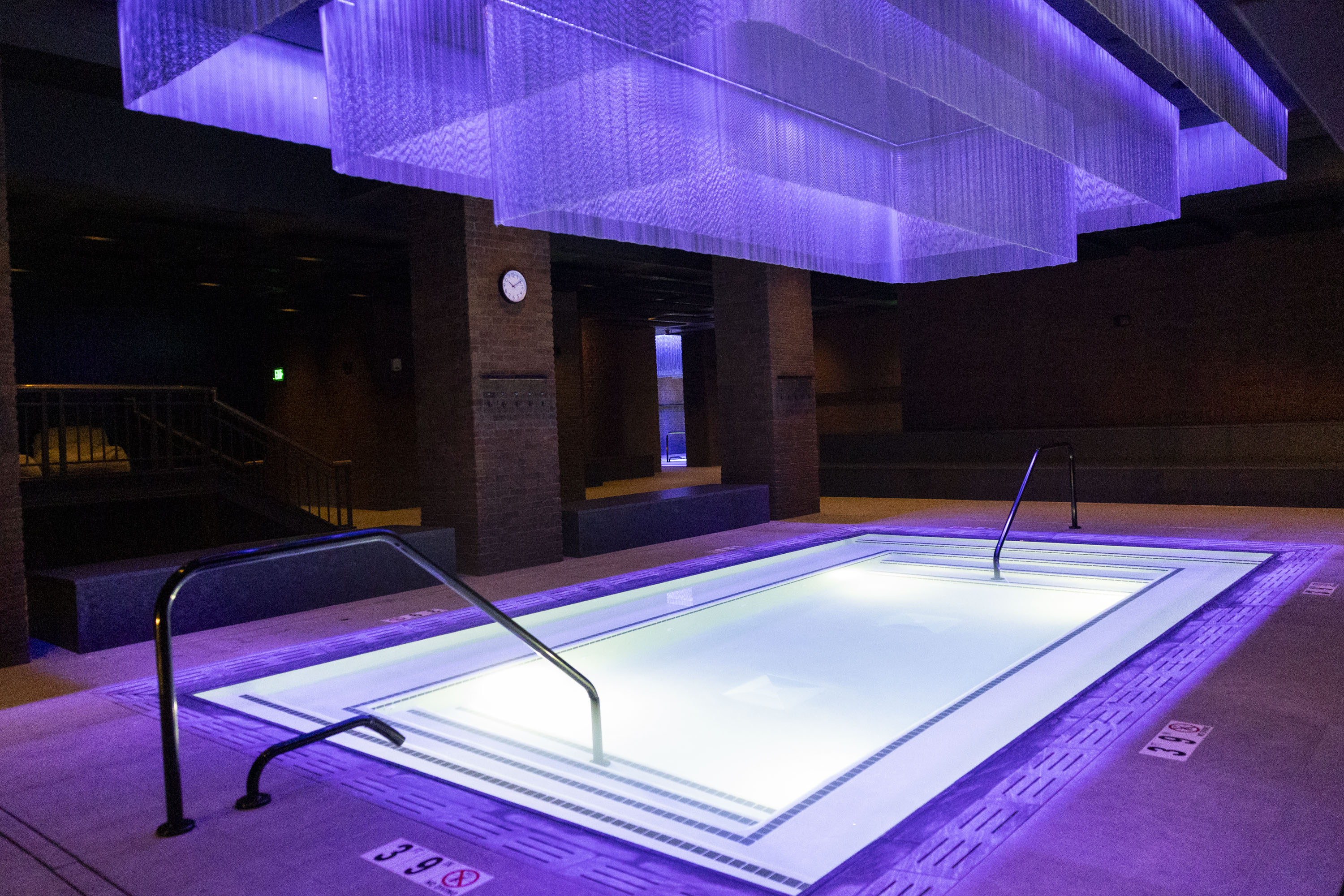
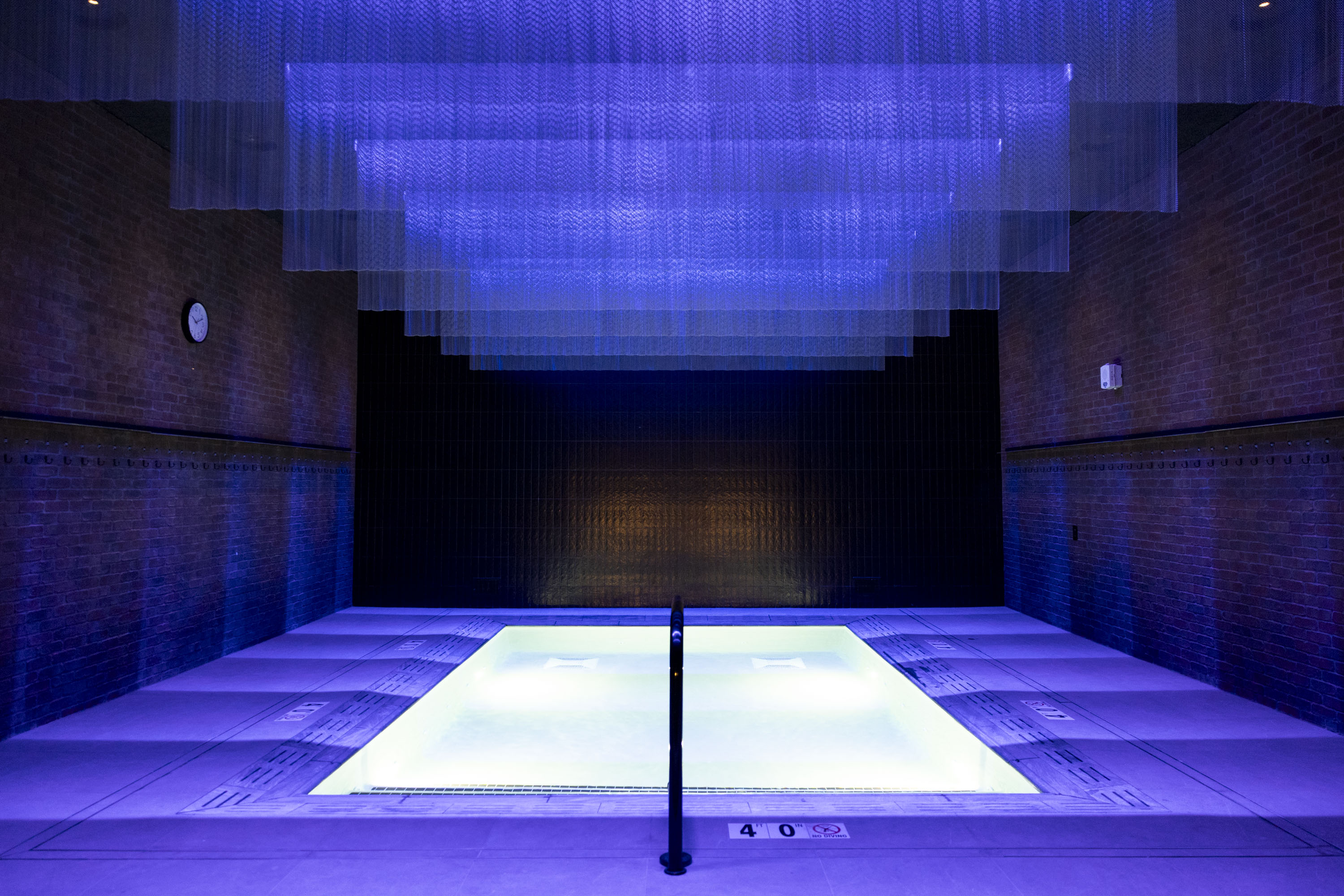
The cold plunge inside Bathhouse’s 36,000-square-foot location in the basement of the Bellevue Hotel.Tyger Williams / Staff Photographer
After opening another New York City location in 2024, Bathhouse received a $35 million investment from Imaginary Ventures, the investment firm that previously backed beauty brands such as Glossier, Kosas, and Alix Earle’s Reale Actives.
Now, Bathhouse is on an expansion tear. Philly’s location will be the first outside of NYC, with other outposts planned for Chicago, Nashville, Los Angeles, Minneapolis, North Jersey, and Connecticut.
Roughly 1,000 people pass through each of the company’s now three NYC locations per day, Talmadge estimated. Most, he said, are focused on decompressing before or after work. Others, he said, use it in place of happy hour with friends. Some are even on dates. None, Talmadge stressed, want a spa.
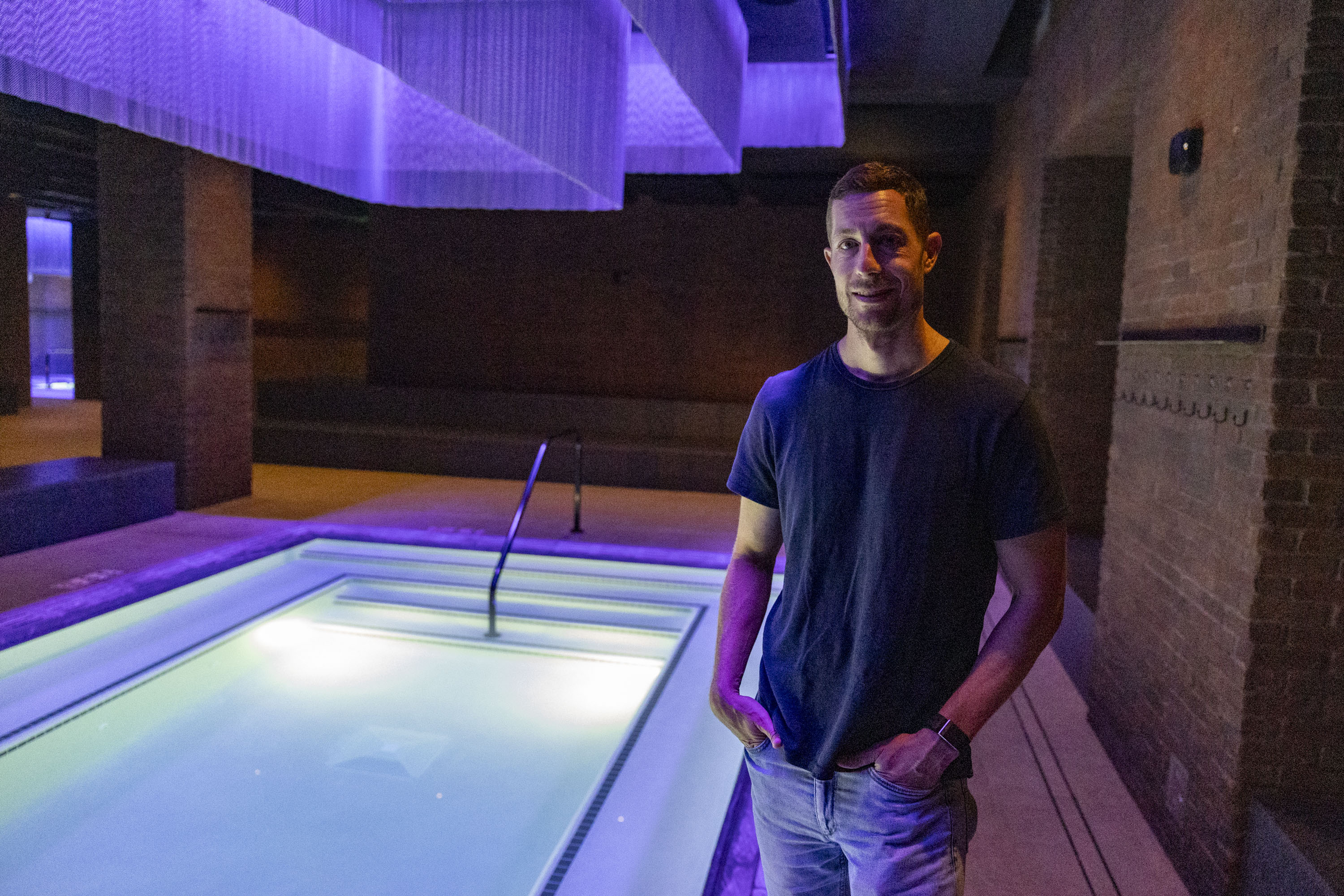
Bathhouse cofounder Travis Talmadge is a certified sauna master who also hosts aufgusses, a traditional German sauna ritual.Tyger Williams / Staff Photographer
“Spas really focus a lot more on relaxation and pampering,” he said. “There’s really no pampering [here]. There’s nothing relaxing about sitting in a 200-degree room or a 45-degree pool.”
The amenities
Bathhouse draws on Russian, Turkish, and German bathing rituals to create a distinct wellness experience.
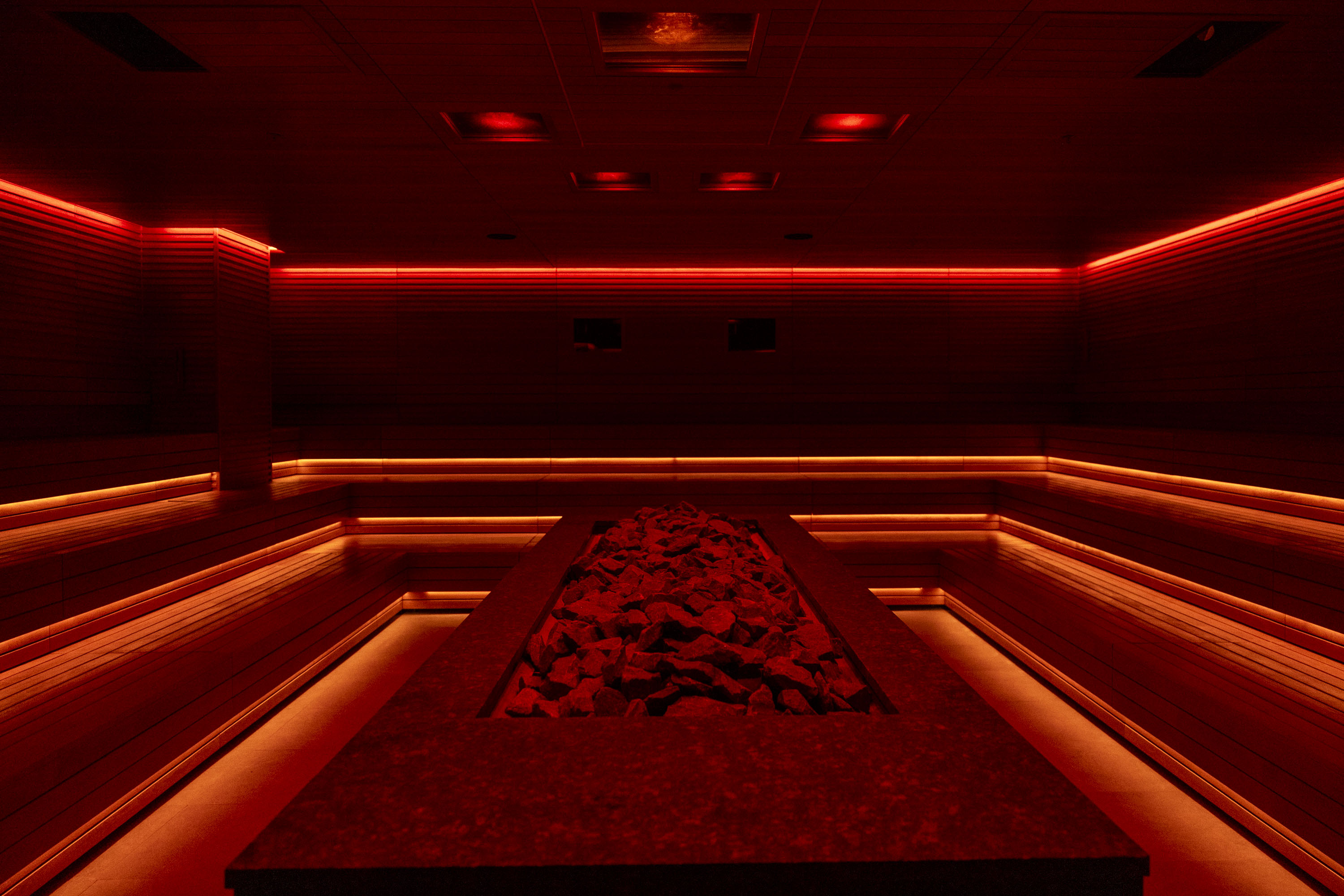
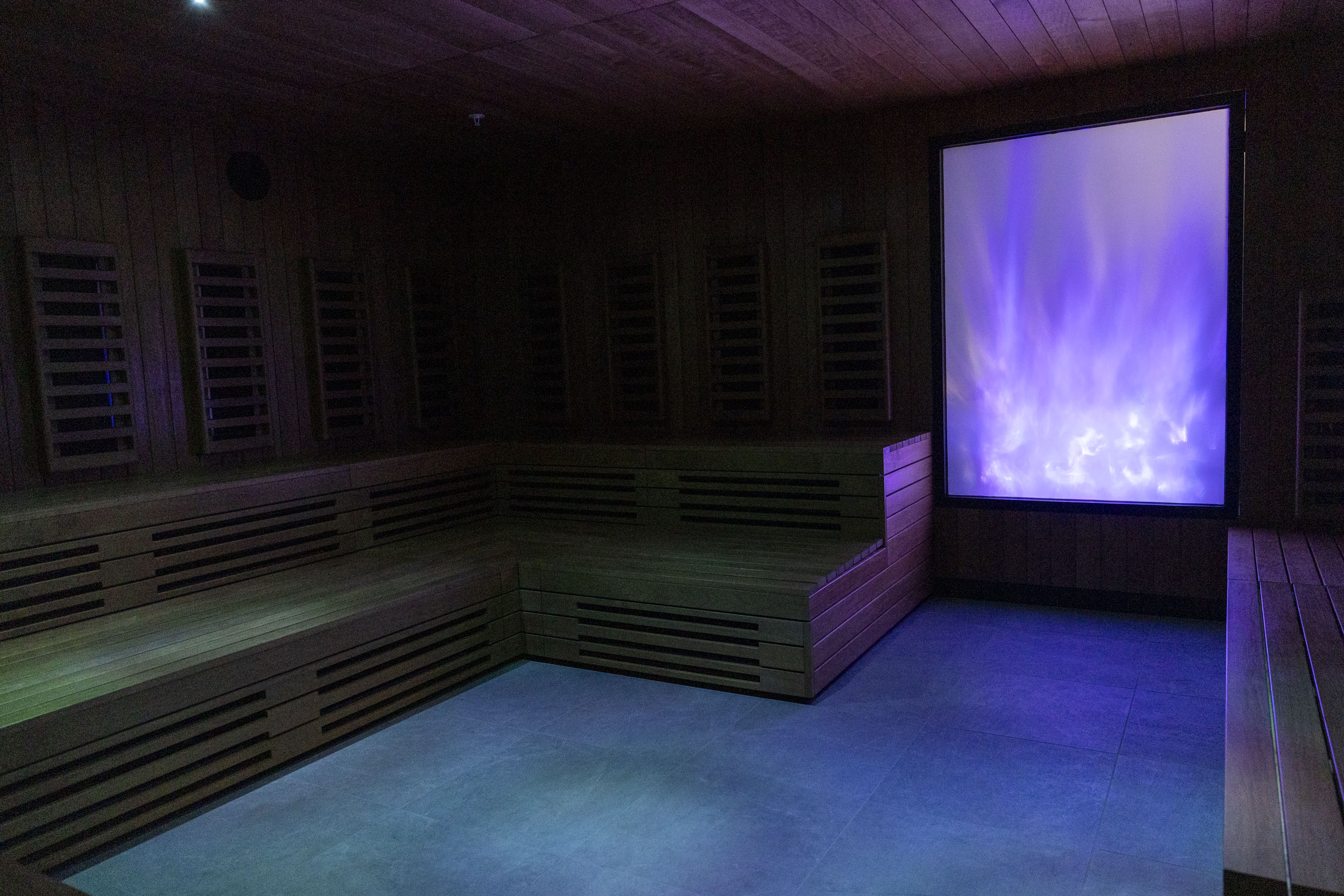
The Philly location is launching with a steam room and three saunas: a 140-degree infrared one; a 190-degree traditional Russian banya heated by a wood stove; and a large dry room warmed to 180 degrees that Talmadge repeatedly referred to as the “event sauna.” Its lights have “the capabilities of a nightclub,” Talmadge said, and can change color to match the beat of the music during Bathhouse’s regularly scheduled sauna rituals.
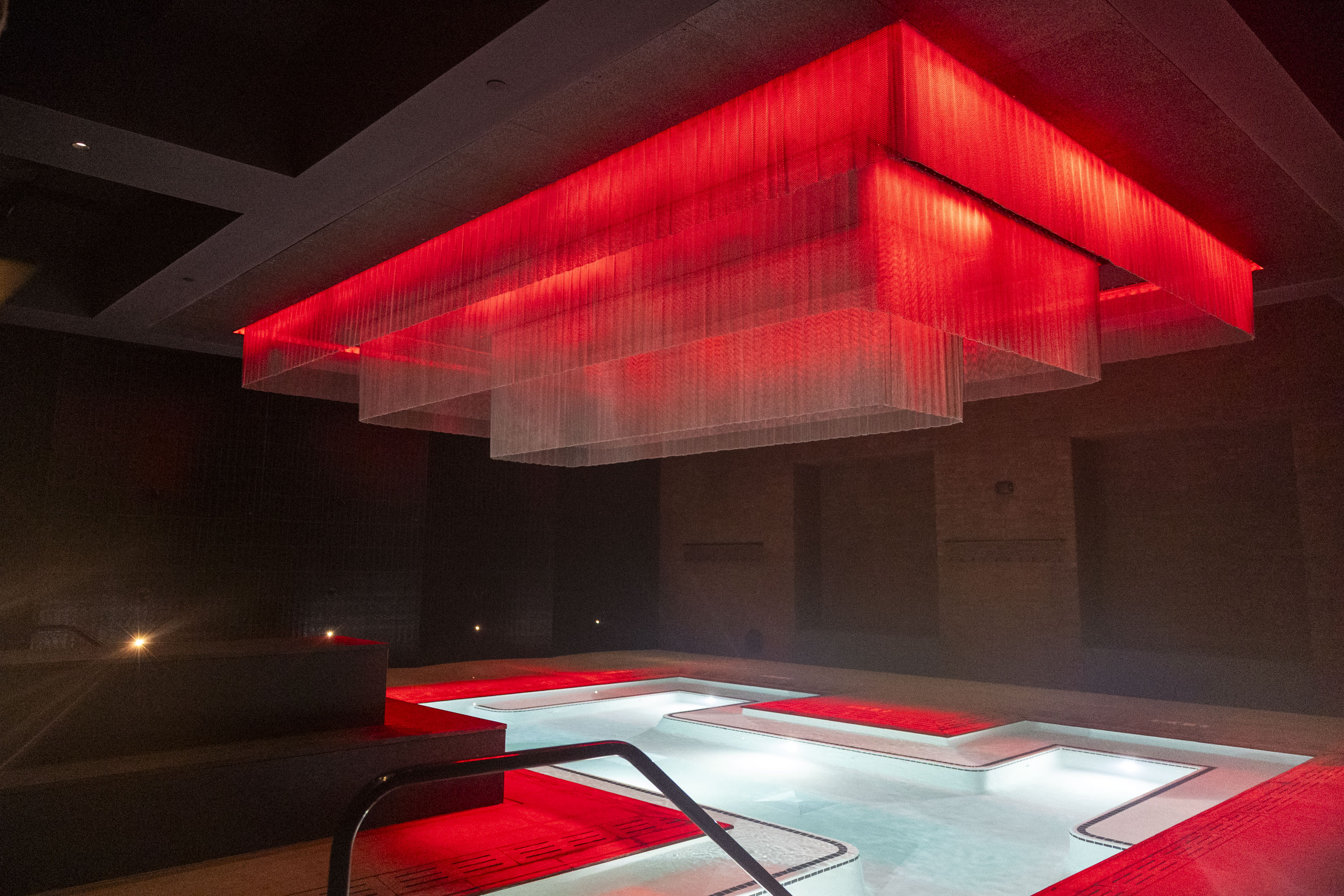
The space also has hot and neutral pools alongside a traditional cold plunge, plus private rooms for full body massages and an on-site cafe for smoothies, beer, natural wine, and light bites. (A rooftop pool and sauna will open in May, Talmadge said.)
The dry “event” sauna room at Bathhouse heats to 180 degrees Farenheit. It’s also where sauna masters perform aufgusses — German sauna rituals — for guests.Tyger Williams / Staff Photographer
Zach Seidman, head of marketing for the Bellevue, called Bathhouse “a complement” to the Sporting Club’s fitness-first offerings. “There’s nothing like it in Philadelphia,” he said.
The infrared sauna at Bathhouse is the gentlest of the Philadelphia location’s three saunas.Tyger Williams / Staff Photographer
In theory, Bathhouse is the cheapest of them all. Day passes at the Philly location start at $29 but are subject to change based on demand and time of day.
Talmadge said Bathhouse tries to avoid trends. Instead, they are singularly focused on hosting aufgusses, a theatrical German ritual wherein a sauna master melts essential oil-doused snowballs on a bed of hot stones. To circulate the scents, the sauna master then whips towels around the room like helicopter blades.
The hot pool at Bathhouse Philadelphia. Located at 1418 Walnut St., it is the brand’s first location beyond New York City.Tyger Williams / Staff Photographer
In Philly, Bathhouse will likely host aufgusses every 90 minutes in — naturally — the event sauna, lead by certified sauna masters. Talmadge, who earned the title in 2021, said each sauna master has their own playbook of tricks meant to evoke a smile, if not some sort of spiritual experience. (His is a double-towel spin mixed with a bit of catch-and-release.)
“Some people really love the aromatherapy and want to see how the scents hit their nervous system,” Talmadge said. “Other people love watching the show and are in it for the tricks … Everyone has their own experience.”
The Bitcoin
What, exactly, is powering your Bathhouse experience? Bitcoin, in part.
Since its 2019 founding, Bathhouse has used small on-site data centers of Bitcoin miners to warm its pools and heated seats, extracting excess energy from the machines via pipes. The practice, Talmadge said, has helped significantly cut Bathhouses’ electricity bills while allowing them to make back some money, even as returns from the cryptocurrency have slowed.
“It’s like a rebate,” said Talmadge with a shrug.
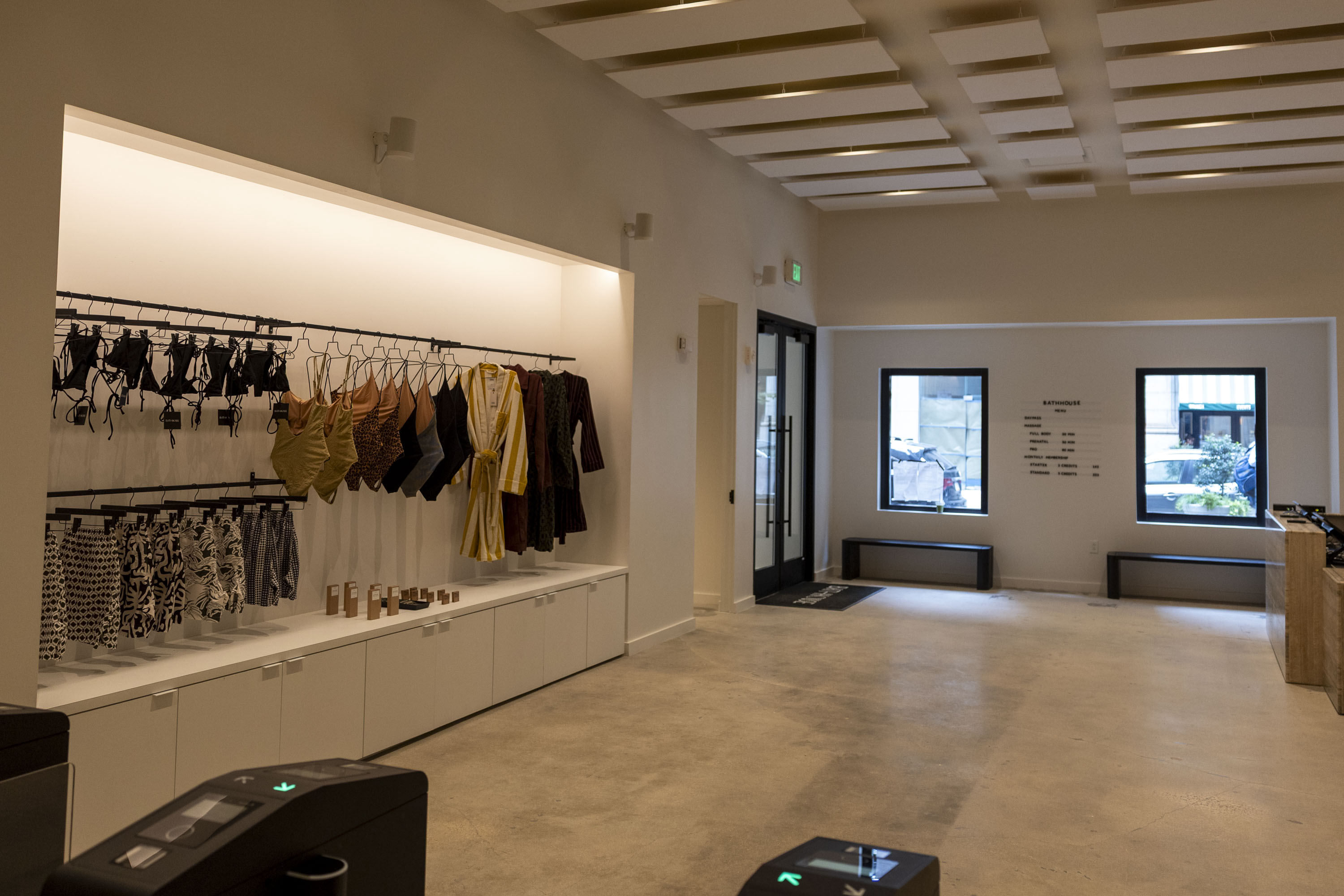
The entrance area at Bathhouse Philadelphia, 1418 Walnut St.Tyger Williams / Staff Photographer
If Philadelphians can get past the Bitcoin miners lurking in the background, Talmadge recommends first-timers start with 15 minutes in the gentler infrared sauna. They should also hydrate constantly.
Those looking to maximize their sweat should lay on the top row of the Russian banya, which becomes the hottest point in the bathhouse as the heat rises.
“That’s your belly of the whale,” Talmadge said. “The goal with the saunas is to eventually try to push yourself.”
Austin Turnbull loves the idea of making necessary improvements in an older home but retaining its true character.
He found Philadelphia to be fertile ground for such projects and fell in love with the city despite his original intent to stay only a few years. He renovated and sold a house in Fairmount and now plans to sell his home in Graduate Hospital so he can do it a third time in Rittenhouse.
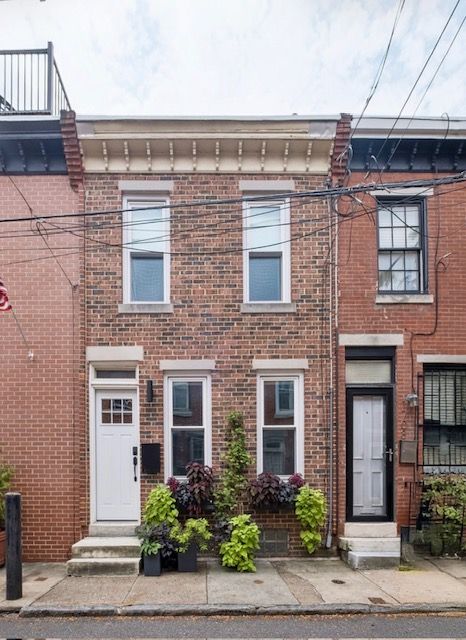
The exterior of the house at 1706 Webster St. in the Graduate Hospital neighborhood. Powelton Digital Media
“I like the concept of being a steward of history,” said Turnbull, a nurse, who does some of the work himself — “painting, demolition, light plumbing, stuff like that” — while contracting out larger jobs like electrical.
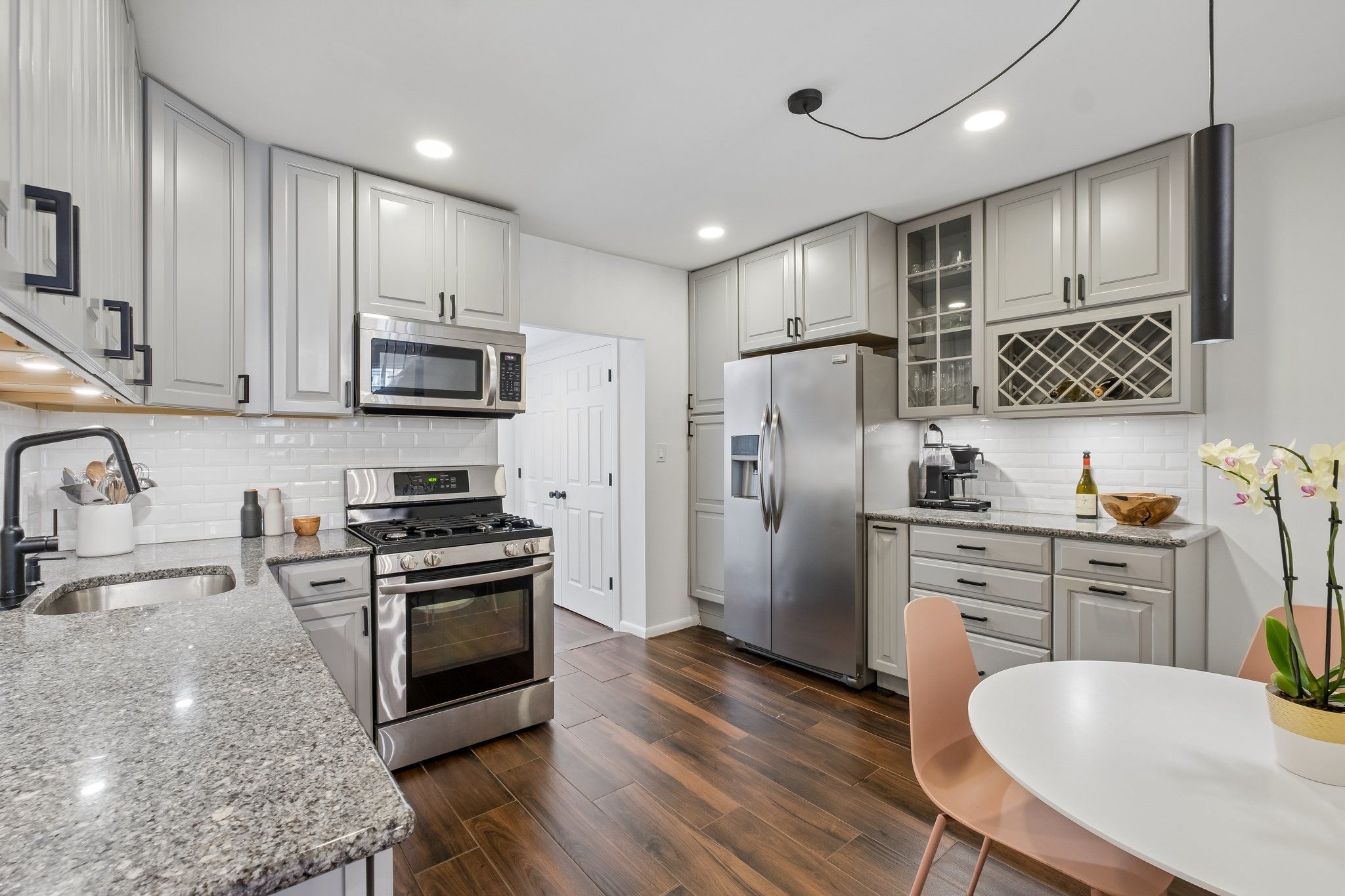
The kitchen has granite countertops.Powelton Digital Media
Turnbull bought the 874-square-foot Graduate Hospital house in 2022, struck by, among other things, a staircase going up the center of the two-bedroom, 1½-bathroom home. Plus it was close to his work.
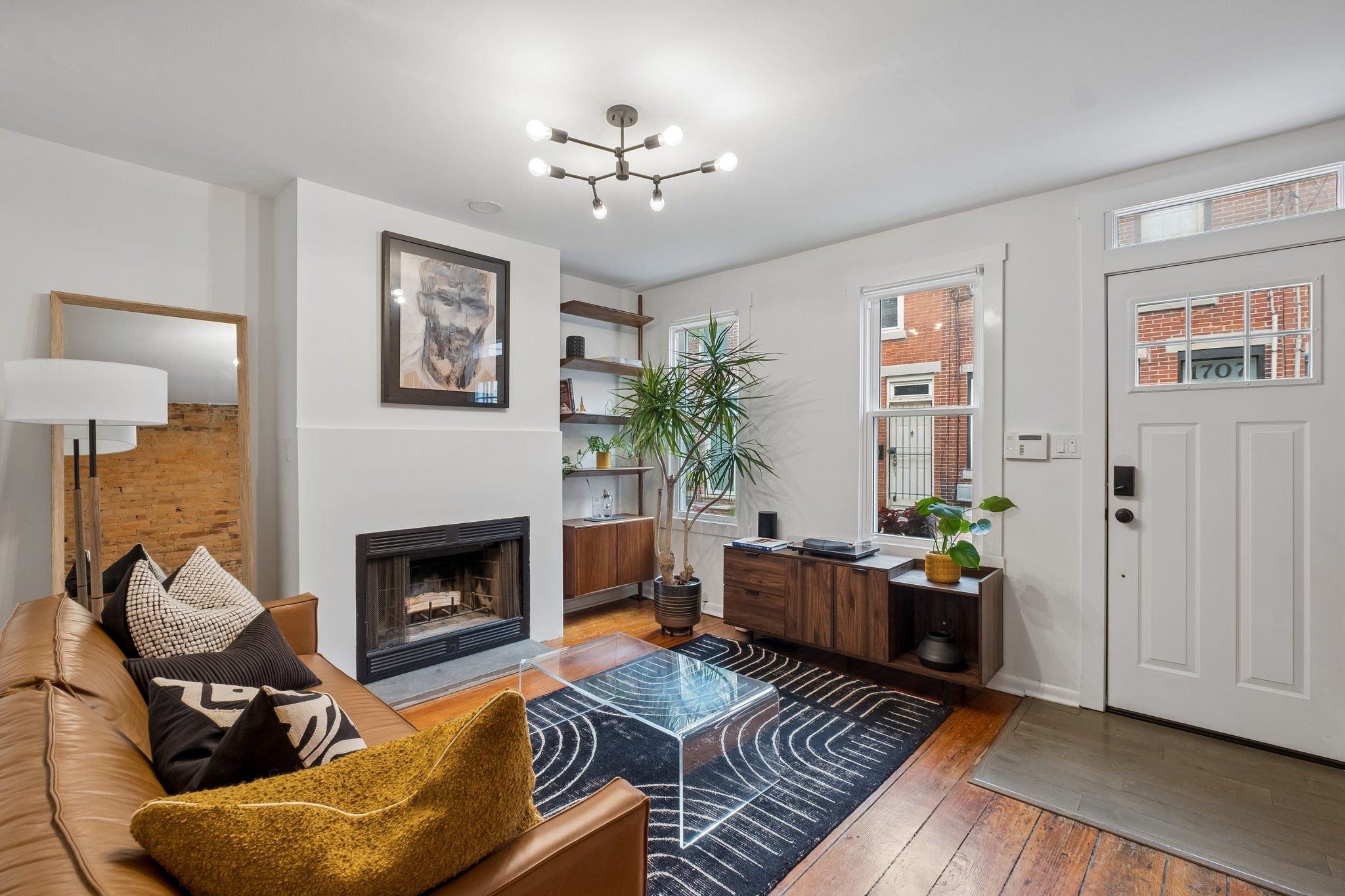
The first floor has an open layout with the living room and a kitchen with granite countertops, a laundry room, a half-bathroom and the door to a back patio and barbecue area.
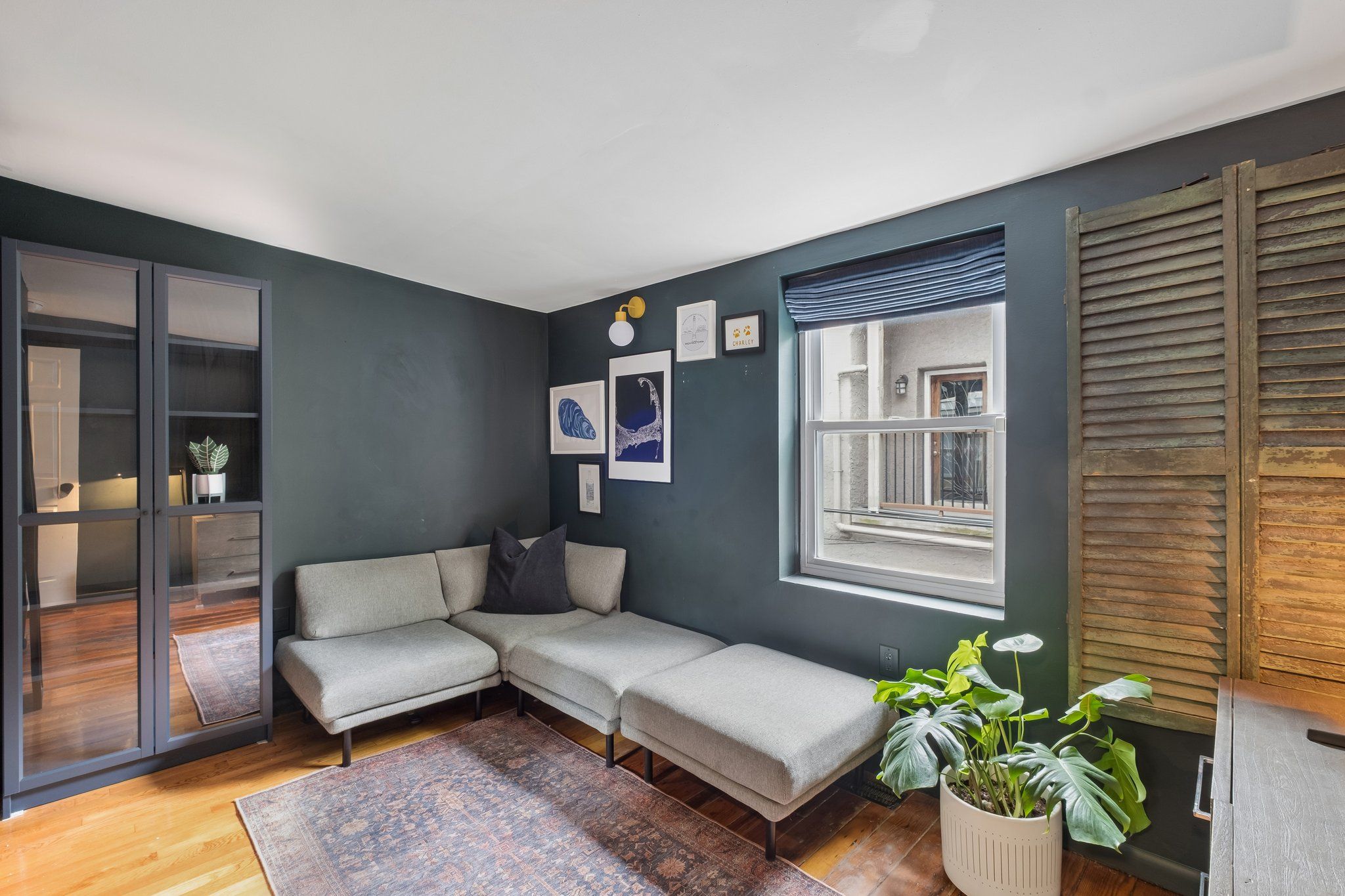
The second bedroom, which is being used as a TV and entertainment area.Powelton Digital Media
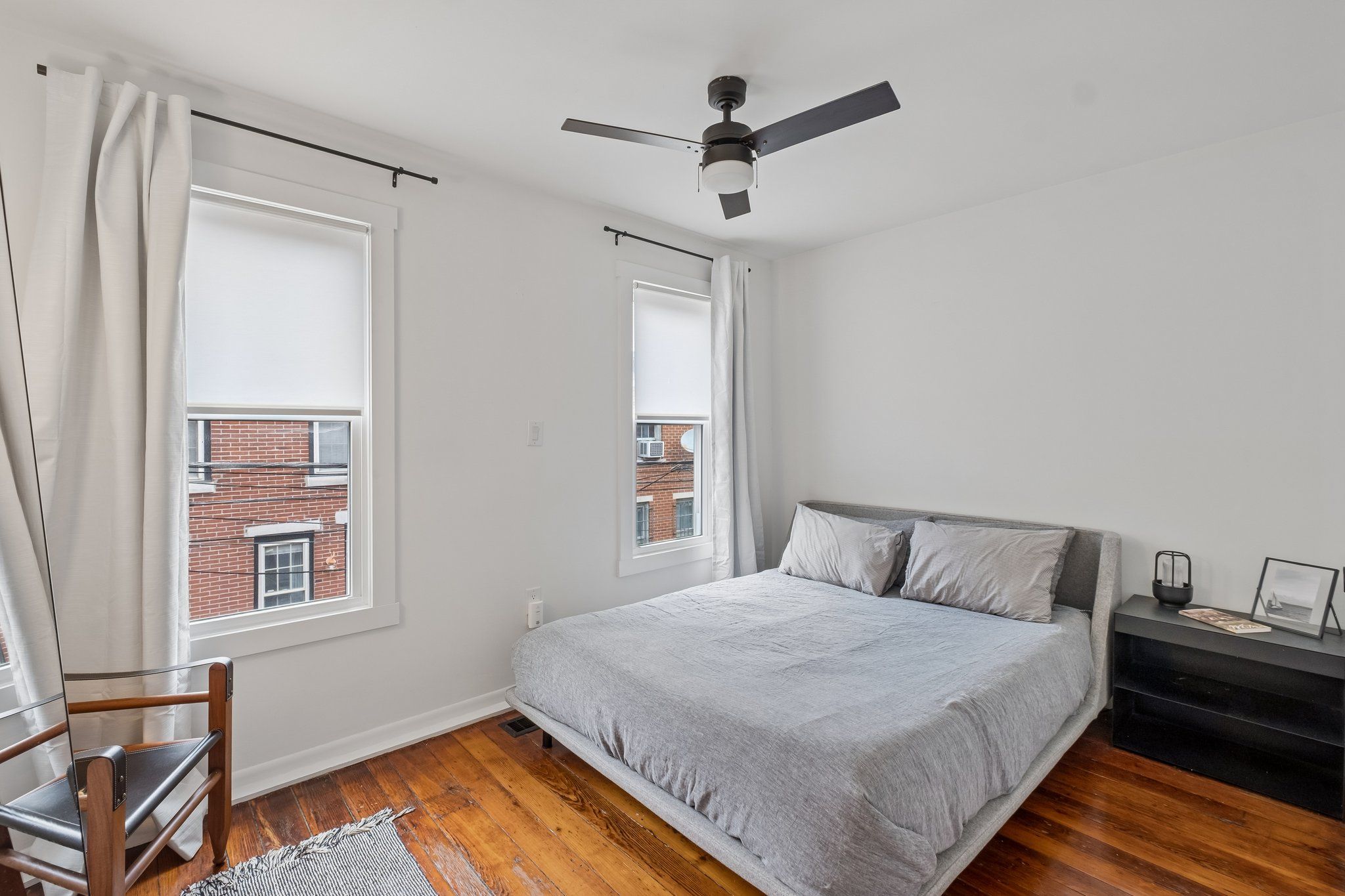
The second floor has the bedrooms, conjoined by a Jack-and-Jill bathroom with a claw-foot tub. Turnbull has used the second bedroom as a TV and entertainment area.
The primary bedroom.Powelton Digital Media
The house has an unfinished basement with storage space.
It is a walkable distance from Rittenhouse Square and Schuylkill River Trail and an easy commute to University City.
It is listed by Pamela Rosser-Thistle of BHHS Fox & Roach at the Harper Rittenhouse Square, for $485,000.
The back patio of the house.Powelton Digital Media
More than 4,000 homes were built in greater Center City — defined by the business improvement district as the area from Girard Avenue to Tasker Street and from the Schuylkill to the Delaware River — between Jan. 1, 2025, and June 30. Over this period, more than 10,000 homes were completed citywide.
(function() { var l = function() { new pym.Parent( ‘cc-housing__graphic’, ‘https://media.inquirer.com/storage/inquirer/ai2html/cc-housing/index.html’); }; if(typeof(pym) === ‘undefined’) { var h = document.getElementsByTagName(‘head’)[0], s = document.createElement(‘script’); s.type = ‘text/javascript’; s.src = ‘https://pym.nprapps.org/pym.v1.min.js’; s.onload = l; h.appendChild(s); } else { l(); } })();
Greater Center City represents 6% of Philadelphia’s land area. But one in eight Philadelphians — more than 206,000 — lived there in 2025.
“It’s not an accident,” said Prema Katari Gupta, Center City District’s president and CEO. She said the area’s concentration of housing reflects deliberate policy choices, the development industry’s willingness to build there, and strong demand for walkable and transit-accessible communities.
“This matters for the whole city, not just for the downtown,” she said. “When Center City and the neighborhoods around it keep adding supply, it takes pressure off rents elsewhere.”
The city’s housing, especially downtown, “has been a source of strength and resilience since the pandemic and beyond and has allowed our city a recovery and renewal that I think a lot of other cities would envy,” she said.
Recent housing construction was spurred byCenter City’s flexible land-use code and developers’ desire to start projects before the full 10-year tax abatement for new construction ended.
And the area has the capacity for much more housing to be built, said Clint Randall, Center City District’s vice president of economic development.
“Center City still has the potential to continue to be this real engine of housing production for the city at large,” he said.
New homes built
Last year was the second-most productive year for housing construction this decade, behind record-breaking 2024. In 2025, 3,175 homes were completed, compared with 3,811 in 2024.
(function(){function e(){window.addEventListener(`message`,function(e){if(e.data[`datawrapper-height`]!==void 0){var t=document.querySelectorAll(`iframe`);for(var n in e.data[`datawrapper-height`])for(var r=0,i;i=t[r];r++)if(i.contentWindow===e.source){var a=e.data[`datawrapper-height`][n]+`px`;i.style.height=a}}})}e()})();
Since the start of Mayor Cherelle L. Parker’s administration in 2024, greater Center City has added more than 7,800 homes — 26% of the mayor’s goal to build or preserve 30,000 homes during her first term.
More than 1,300 homes currently have active construction permits in greater Center City.
Housing construction has slowed as interest rates remain elevated, costs for labor and materials remain unpredictable due to federal policies, and developers complete projects that were part of the flood of permits issued before the end of the full 10-year tax abatement for new construction.
Most of the housing construction in core Center City, defined as Vine Street to Pine Street, were units in office-to-residential conversions.
The L&I data used in Center City District’s report does not distinguish between homes built as rentals and those for ownership. But downtown, most homes constructed last year and the first half of this year were in multifamily buildings, where renting is common.
More housing supply helps moderate rent growth and keep wealthy residents from pushing into more affordable sections of the city.
Compared with downtown Boston, for example, core Center City added a higher share of apartments over the last decade, and rents didn’t grow as much. Rents grewmore slowlyin greater Center City than in Philadelphia and the region.
Future housing growth
Randall said “the most meaningful thing Center City can do” to make housing more affordable for residents “is just be a place where as much housing gets built as possible.”
Core Center City has a concentration of the city’s highest-density zoning districts, but many parcels don’t have as much housing as allowed or don’t have any housing, including surface parking lots.
Center City’s core could accommodate 15,000 to 25,000 more housing units in areas where construction is already allowed, according to Center City District.
The report says: “The density that makes certain pockets of Center City so vibrant and lively can be extended to underutilized and sometimes barren blocks, allowing more people to live in amenity-rich and walkable areas.”
The business improvement district celebrated recent legislation that eliminated parking minimums — a major cost barrier to development — in high-density mixed-use zoning districts.
Downtown demand
Core Center City’s population grew by roughly 5% in 2025, according to anonymized cell phone data from Placer.ai. In the zip codes immediately to the north and south, the population grew by just over 3%. By comparison, Philadelphia’s population grew by 1.7%.
Center City’s population density of more than 24,500 residents per square mile is more than double the citywide average density.
(function(){function e(){window.addEventListener(`message`,function(e){if(e.data[`datawrapper-height`]!==void 0){var t=document.querySelectorAll(`iframe`);for(var n in e.data[`datawrapper-height`])for(var r=0,i;i=t[r];r++)if(i.contentWindow===e.source){var a=e.data[`datawrapper-height`][n]+`px`;i.style.height=a}}})}e()})();
Households in greater Center City are smaller and make more money than households across Philadelphia or in the Philadelphia metropolitan area.
A Center City District survey of apartment residents last year found that 44% of respondents moved to Philadelphia’s downtown core from outside the region, and 41% moved downtown from other parts of the city.
Strong demand has helped fill the influx of homes that have hit the market in recent years. In core Center City, 92% of homes are occupied. In the zip codes directly to the north and south, 88% of homes are occupied.
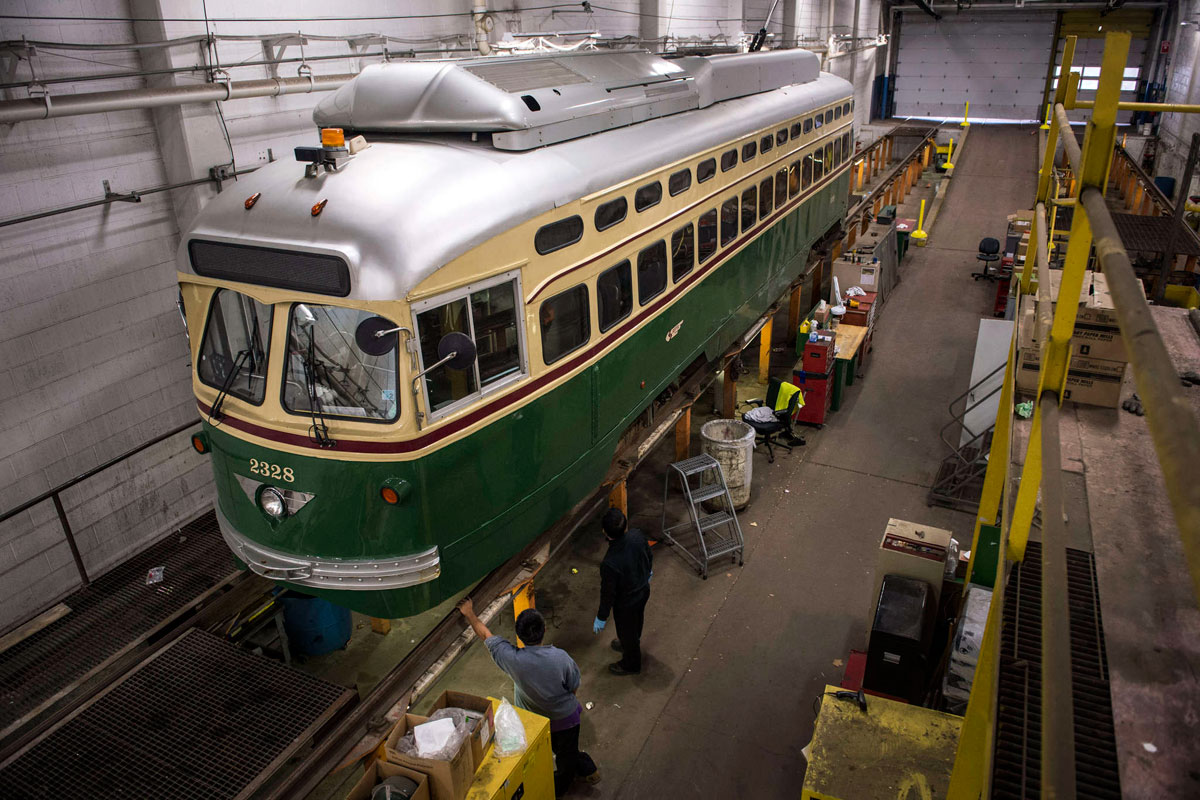
A federal transit agency has awarded SEPTA $80 million to make three stations in the Center City trolley tunnel accessible to people with disabilities, officials said Monday.
New elevators, raised platforms, and other improvements will make the 22nd Street, 33rd Street, and 36th Street stations fully accessible, officials said, bringing them into compliance with the Americans with Disabilities Act of 1990.
Built in 1955, the stations are currently only accessible by stairs.
“Ensuring that every customer can access transit service that is safe, clean and reliable is a core part of SEPTA’s mission,” SEPTA board chair Kenneth E. Lawrence Jr. said in a statement.
Lawrence said Pennsylvania’s congressional delegation worked to secure the grant, which was made available under the Federal Transit Administration’s All Stations Accessibility Program. The program was established by the 2021 Infrastructure Investment and Jobs Act.
SEPTA was awarded an earlier $56 million grant in 2022 through the same federal program. That funding was designated for elevators, ramps, and other enhancements at five subway stations on the Broad Street and Market-Frankford Lines. SEPTA began construction last month on one of those projects at the 11th Street Station.
SEPTA officials said the accessibility project was part of its $2 billion plan to modernize its eight trolley lines — an initiative that includes longer vehicles that hold more passengers, new on-street stations, and proposed line extensions.
This fall’s restaurant openings reflect an industry hedging its bets: established operators expanding into the suburbs and repurposing familiar spaces, and newcomers pursuing narrowly drawn concepts built around omakase, caviar, Korean barbecue, cocktails, and live-fire cooking.
I count about five dozen restaurants in the region’s pipeline, with Italian concepts (no surprise), all-day service, and experience-driven dining recurring throughout the list. In addition to 60 restaurants opening between now and late December, two other restaurants are expanding: Lovat Square in Chestnut Hill is adding dinners and Palm Vintage across from City Hall is adding nighttime sushi service.
By comparison, last year’s fall roundup covered 53 restaurants. All of those opened except for three that are now a full year behind schedule: Adda in Fishtown is shooting for October, Ayat near Rittenhouse Square is aiming for November, and Brunch Bulls in Point Breeze is targeted for December. (Although this year has seen its share of closings, especially among longstanding restaurants, each of last fall’s restaurants is still open.)
Brand new and notable
Aogami (4343 Main St.): Underground sushi is coming to Manayunk as chef Tom LoMonte joins chef Moon Krapukthong to offer a 16-course omakase in a 20-seat BYOB setting beneath Krapukthong’s Yanako and neighboring Chabaa Thai Bistro, starting Sept. 25. LoMonte — a veteran of Zama, Izakaya by Yanaga, Pod, and Yanaga Kappo Izakaya — will lead the omakases at 6 p.m. Fridays and Saturdays; reserved sushi-bar seatings will run Wednesdays, Thursdays, and Sundays alongside hand rolls and à la carte service. LoMonte describes the atmosphere as energetic and less formal than typical omakase counters. Upstairs, Yanako will continue serving rolls, sushi platters, udon, tempura, and yakitori.
The Buttery (1099 Germantown Ave.): Malvern-based bakery and cafe the Buttery is preparing a Philadelphia location at Piazza Alta in Northern Liberties, near Scusi and Terra Grill. It recently opened a Bryn Mawr location and expanded its original Malvern operation into dinner service with Neapolitan pizza and shareable plates. An opening date has not yet been shared.
Nick & Nora’s Oyster Dive (560 Stokes Rd., Medford): Michael and Jeniphur Pasquarello (La Chinesca, Piccolina) are bringing a raw bar and American kitchen to a corner space with a large deck at Ironstone Village. The broader menu will include steak frites, burgers, fish, vegetables, and small plates, says Michael Pasquarello, who hopes to open in 60 to 90 days.
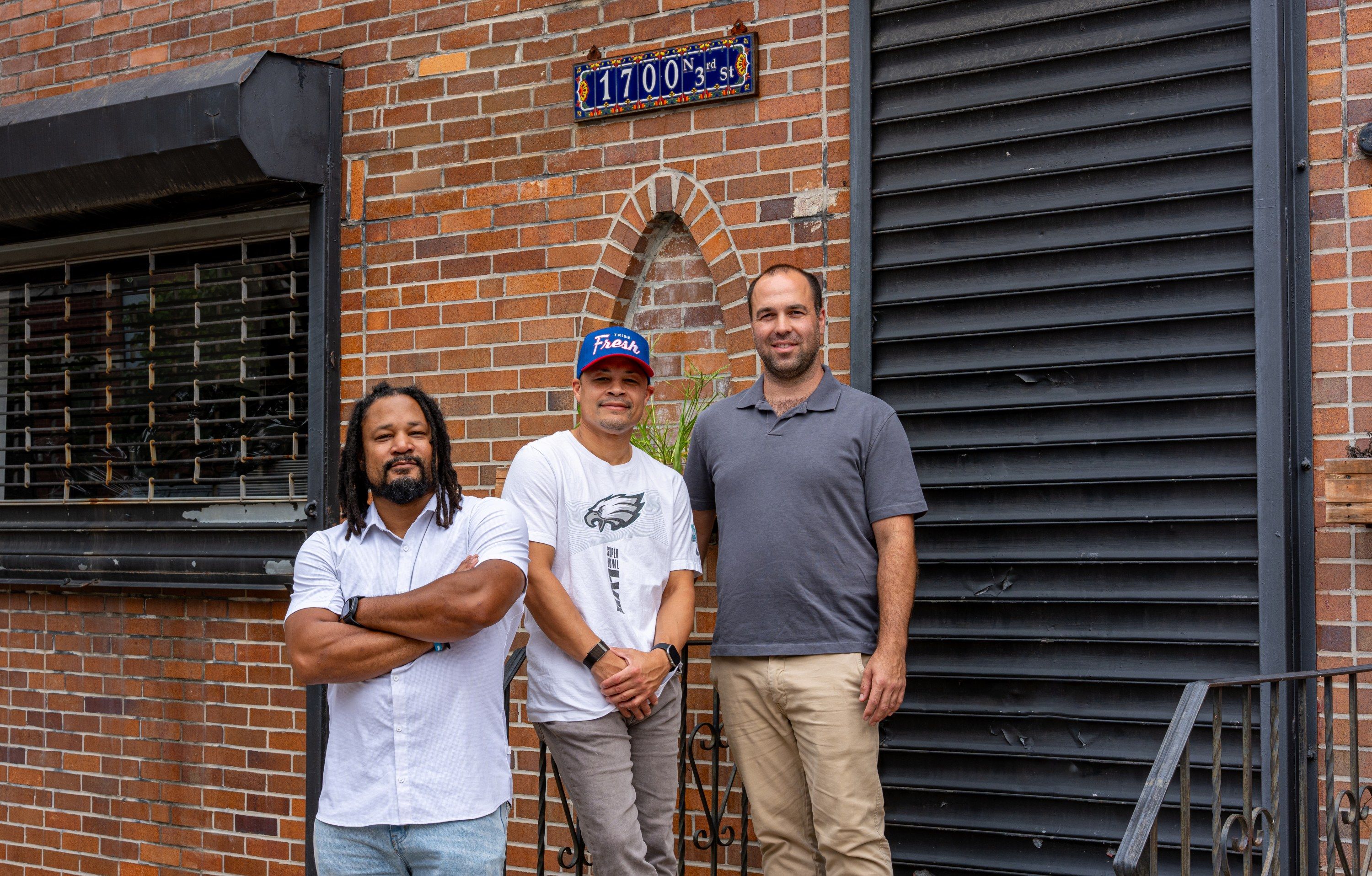
Chef Chaz Brown (left) is partnered with his brother Clifford Brown (center) and John Skeele in Rumblefish, 1700 N. Third St.Mike Prince
Rumblefish(1700 N. Third St.): Chef Chaz Brown is targeting November for this 900-square-foot, fast-casual Caribbean fish-fry restaurant at Third Street and Cecil B. Moore Avenue. Brown — a Trinidadian American chef whose resumé includes Nobu, Le Bec-Fin, Fatty Crab, and television’s Top Chef — will focus on invasive species such as lionfish, snakehead, green crab, and Chesapeake Bay blue catfish when available. (The catfish turned heads at the recent Oxtail Exchange at Forman Arts Initiative.) Brown uses gluten-free corn flour with Trinidadian spice blends and serves the fish on po’boy-style rolls baked by Angelo’s Bakery in Conshohocken. The mostly takeout operation will have counter seating, a 25-seat covered patio, slaws, fries, sea-moss drinks, and Solo Kola Champagne.
Pennsylvania suburbs
Alessandro’s Enoteca (915 W. Lancaster Ave., Bryn Mawr): Alex Fiorello’s third restaurant will bring a bar-focused Italian concept to the former Enoteca Tredici space in Bryn Mawr Village in mid-to-late October. Fiorello and culinary director Matt Arcomone, whose resumé includes Osteria, Vetri, and Palladino’s, are planning house-made pastas, wood-fired pizzas, live-fire cooking, and dry-aged meats. It’s intended to have a stronger evening and bar scene than Fiorello’s Wayne restaurants.
Bruzi (281 Montgomery Ave., Bala Cynwyd): Two couples with Calabrian roots plan to open this Southern Italian restaurant in the former Aldar Bistro in late fall. Expect house-made pastas and Calabrian dishes such as fusilli with slow-cooked meat sauce, baked lamb, and grilled tuna, plus cocktails and an opening list of about 100 Italian wines.
Capperini (137 S. Easton Rd., Glenside): Eastern Montco will get an upscale Italian-Mediterranean destination with a liquor license from Ilya Vorobey and partners including members of the team behind Capri in Queen Village. Vorobey is aiming for October or November.
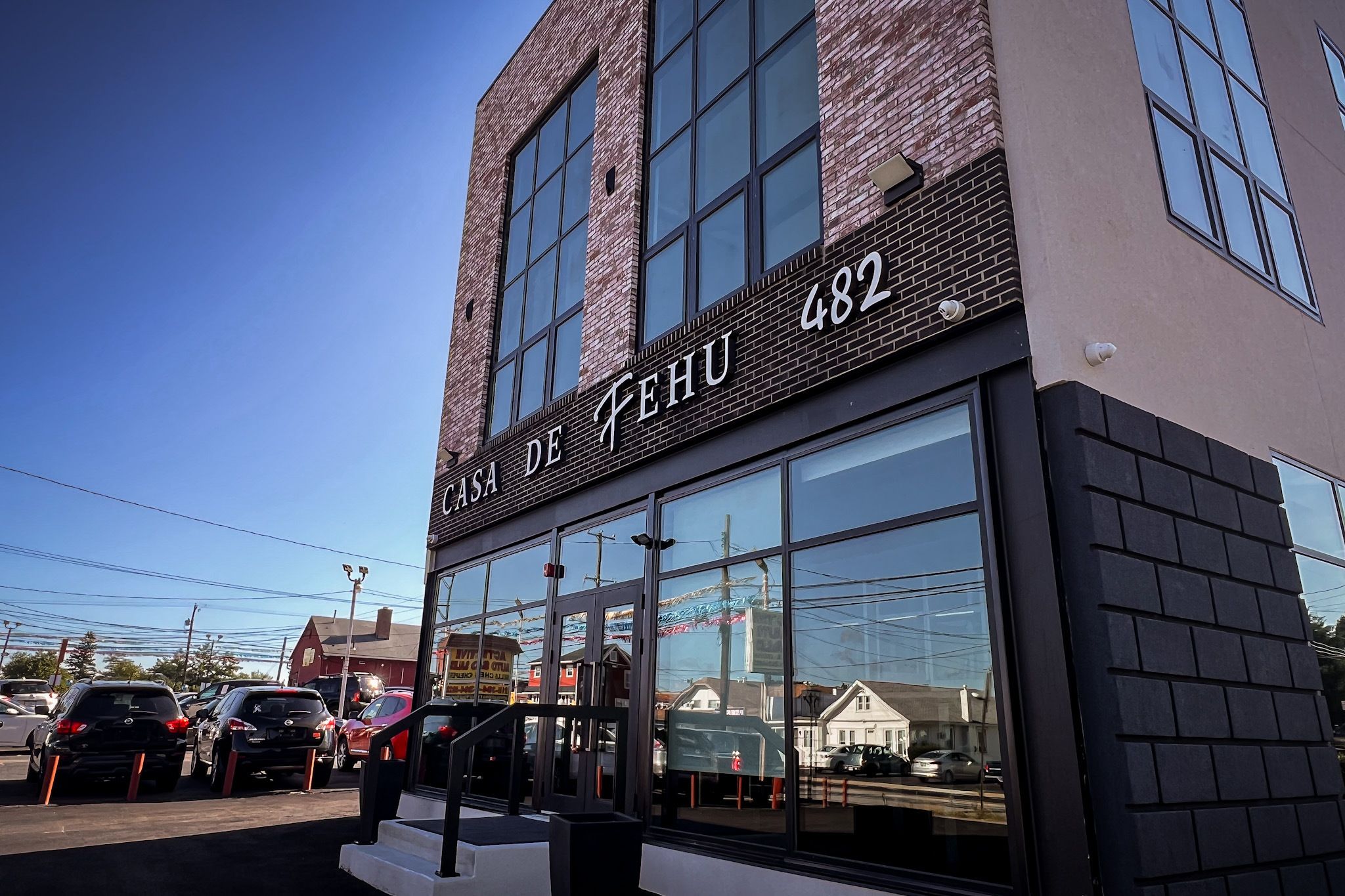
Casa de Fehu, 482 Jacksonville Rd., Hatboro.Michael Klein / Staff
Casa de Fehu (482 Jacksonville Rd., Hatboro): Hatboro couple Anthony Shalamov and Anastasia De Roy are developing this polished restaurant with European-inspired cooking and an upscale atmosphere, possibly with a tie-in to a local brewery that would allow alcoholic drinks. Shalamov is targeting an October soft opening.
Cecilia (266 E. Fourth St., Bridgeport): The team behind Blue Bell Inn and the Copper Crow is just about ready to open this contemporary American bar-restaurant in the extensively renovated former Taphouse 23. The roomy property includes a large patio and a wood-burning oven. The menu emphasizes familiar American dishes, positioning this as an all-purpose neighborhood destination.
Donatelli’s (1 Washington Ave., Newtown): Restaurateur Habib Troudi, who owns Panache and Ristorante Castelloin Blue Bell, is behind a top-to-bottom overhaul of the former Rocco’s at the Brick in downtown Newtown. He said he is hoping to open the Italian steakhouse in October.
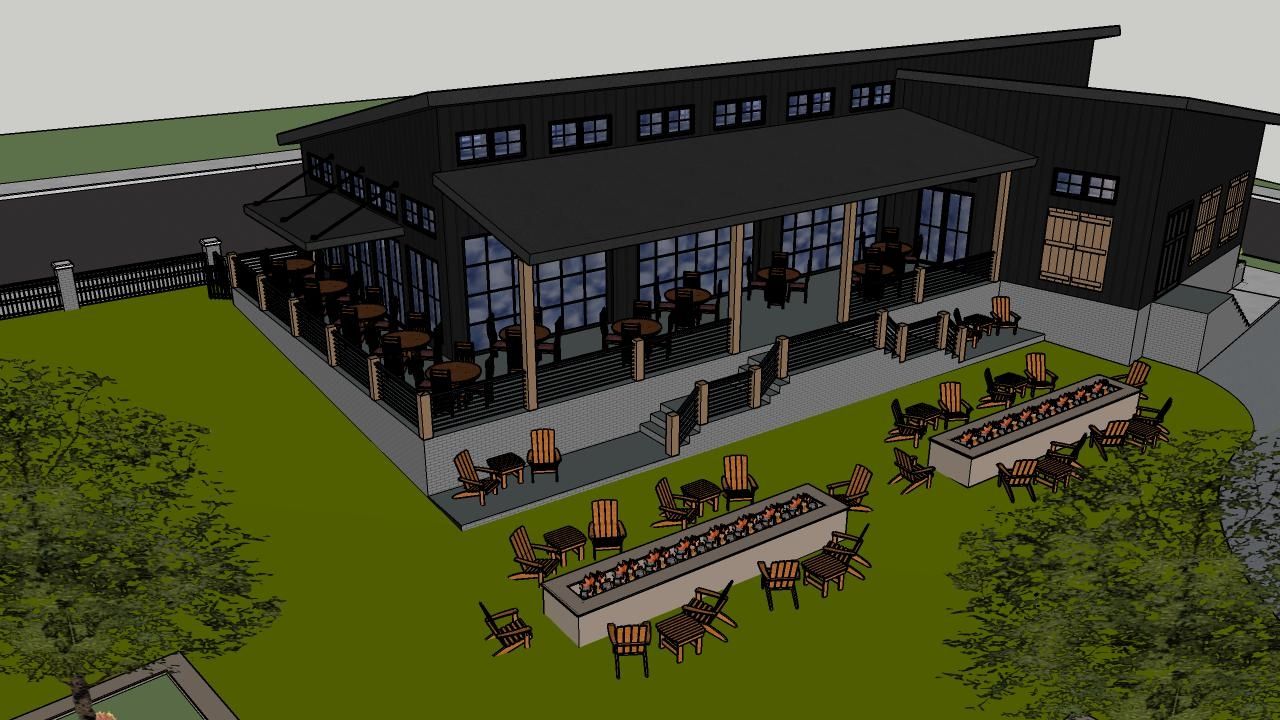
Rendering of the Garden by Pieri Winery, 127 E. Elm St., in Conshohocken.Courtesy of Christina Pieri
The Garden by Pieri Winery (127 E. Elm St., Conshohocken): Winery owner Christina Pieri and restaurateur Brian Pieri (StoneRose, Bar Lucca, Cerdo) are targeting a mid-October opening of their year-round indoor-outdoor restaurant beside the Schuylkill River Trail, an offshoot of Christina’s Coopersburg winery. A wood-fired kitchen will serve seasonal American food, including brick-oven pizzas, focaccia sandwiches, salads, steaks, and fish, at lunch and dinner Tuesday through Sunday. The property will include a covered patio, fire tables, a turf area, and pickleball and bocce courts.
The Hungry Hub (11 S. Orange St., Media): Media native Cassidy Moretti and her mother, Glenda, are taking over the former Rivalry Cafe with a family-run breakfast and lunch operation. The Hungry Hub also plans later hours and a late-night menu, broadening its role beyond that of a conventional daytime cafe. An Oct. 1 opening has been announced.
The Iron Oven (58 S. York Rd., Hatboro): Alex Nalbandian’s Southampton bar-restaurant — known for an expansive American menu, cocktails, craft beer, brunch, and dishes ranging from wings and burgers to flatbreads and entrees — is adding a second location in eastern Montco: the former Ross & Co. He’s aiming at November.
Lazy Dog(160 N. Gulph Rd., King of Prussia): The California-based bar, known for Rocky Mountain lodge imagery and a broad American menu, is targeting late 2026 at the King of Prussia Mall.
Luna (129 E. Butler Ave., Ambler): FineLine Hospitality, which recently opened Academy Grill in Fort Washington, is behind a stylish revamp of Dettera in downtown Ambler. Chef Marie Lavizzo-Mourey will base her menu on the 20-plus countries bordering the Mediterranean. The project is on track for fall.
Martini & Roz(523 W. Lancaster Ave., Wayne): Fearless Restaurants is turning Wayne’s former Bertucci’s into an ambitious, 300-seat Southern Italian restaurant named for founder Marty Grims’ parents, Martin and Roslyn. Menu will include crudo, oysters, steaks and chops, wood-fired pizzas, house-made pastas, and charcuterie. It will feature two open kitchens, a cheese cave, a tasting counter, and extensive outdoor seating.
Maru (2922 Conestoga Rd., Glenmoore): David Backhus and the team behind the former Oori restaurants are in the early days of a fast-casual Korean-inspired restaurant at their former Collective Coffee & Bakery. Think Korean fried chicken sandwiches, wings, and tenders, supplemented by mochi doughnuts and specialty Collective coffee.
Nudy’s Cafe (122 Park Ave., Willow Grove): Prolific suburban breakfast-and-lunch operator Ray Nudy hopes for late September for his latest diner, across from Marshalls in Willow Grove.
Old Friend (166 E. Lancaster Ave., Wayne): Childhood friends Larry Kagan and Chas McFeely are behind this contemporary American grill, with former Fork executive chef Sam Henzy leading the kitchen. The 86-seat restaurant will center on live-fire cooking in a Josper oven, with dry-aged fish, poultry, and larger proteins intended for sharing. Its compact wine list will be closely tied to the food. A late-fall opening is planned in the Apartments at Wayne Station.
Opus (201 Birch St., Kennett Square): Square Roots Collective will open this 125-seat New American restaurant Sept. 11 in the former temporary home of Hank’s Place, next to the Artelo hotel. Executive chef Matthew Anderson, formerly of Longwood Gardens and Winterthur, plans seasonal dishes, such as Kennett Square mushroom bisque, butternut squash agnolotti, herb gnocchi, and dayboat scallops. The two-story space includes a cocktail lounge, terraces, and work by local artists. Profits will support community projects and nonprofits.
Salt (840 W. Lancaster Ave., Devon): Rich Kim of North Wales’ acclaimed Salt predicts late December for his redevelopment of Devon’s former La Jonquille and Shiraz property into a second Korean barbecue concept, followed in 2027 by Yugo, a carousel sushi restaurant, upstairs.
The Still on State (18 W. State St., Doylestown): Only days open at the Doylestown Inn, this Irish pub-inspired bar/restaurant fills the former Hattery Stove & Still space; it’s paired with an on-site microdistillery called the Tilted Brim.
Taco Heart (120 Coulter Ave., Ardmore): Nano Wheedan is bringing his South Philadelphia breakfast-taco shop to the Ardmore Farmers Market, its first expansion beyond its East Passyunk-area home. Expect Austin-style flour tortillas and breakfast tacos built around eggs, potatoes, beans, bacon, brisket, and house salsas. Opening is set for Oct. 5.
Top Dog Cocktails (110 E. State St., Kennett Square, and 2012 Frankford Ave., Fishtown): Ken Smuckler’s cocktail company plans two vinyl listening rooms this fall inspired by Japanese jazz kissas. Kennett Square’s 750-square-foot space partners with local music venue Kennett Flash, while Fishtown’s 350-square-foot flagship — arguably the neighborhood’s smallest bar — will feature a 15-seat bar, two-turntable DJ station, and retail.
Tusk (50 N. Main St., Doylestown): Mike and Joy Grafenstine, owners of Roberts Block in Glenside and Bonnet Lane Family Restaurant in Abington, are taking over the former Water’s Edge wine bar, combining the martini-and-wine-bar airs of Roberts Block with approachable upscale American comfort food. Target is October.
Vintner’s Table (24 Cricket Ave., Ardmore): Andrea and Marco Folino, behind Kutztown’s Folino Estate Winery, are opening a third location of their Italian-inspired wine bar, salumeria, and lifestyle boutique in downtown Ardmore in October.
New Jersey suburbs
Akira 70 Omakase (249 Marlton Pike, Cherry Hill): Ming “Frank” Zheng is expanding his Japanese holdings — he owns Akira Sushi in Voorhees and Moorestown — with an omakase experience in a former fur salon.
Banjara Indian Bistro (687-689 Berlin-Cross Keys Rd., Sicklerville): Vaneet Chopra, whose family operates Cross Culture in Haddonfield and previously ran Banjara in Chestnut Hill, is bringing the Banjara name to Sicklerville; its dine-in starts Thursday.
Freckled Jawn Brewing(1003 N. Evergreen Ave., Woodbury): Woodbury residents John Wagner and Colleen Gibson are taking over the former Eight & Sand Beer Co., which closed in June after 10 years. Targeting the first week of October, the brewery will introduce new branding and a fresh lineup of approachable beers, emphasizing natural and locally sourced ingredients when possible.
Irishtown Steaks (155 S. Burlington St., Gloucester City): Donkey’s Placealumnus Dave Murphy is targeting Halloween for his steak shop, joining recent Gloucester City entries Lillo’s and Pudge’s Pub. Murphy will use rolls from Boaggio’s, which has a bakery in town.
Penny’s Bagels (212 Kings Highway East, Haddonfield): Chris Fetfatzes and the Happy Monday Hospitality Group (Wine Dive, Grace & Proper) are developing this long-delayed bagel shop in downtown Haddonfield, now with an October target.
Pizzeria Cusumano (872 Haddon Ave., Collingswood): Announced back in September 2021, this passion project from South Jersey’s Sal Cusumano is finally about to start offering his Roman-inspired squares and neo-New York rounds, but “I don’t want to box myself into a certain style.” Cusumano, a third-generation pizzaiolo, is planning a small shop with limited seating. This week, he said it will open in October for sure.
Philadelphia
Adda (1700 Frankford Ave.): New York’s Unapologetic Foods — behind Dhamaka, Semma, and the original Adda — is bringing its energetic Indian cooking to Fishtown, across from the 19125 post office. Expect regional dishes in an informal setting, continuing the restaurant group’s practice of pushing beyond familiar Indian American standards. Originally expected in fall 2025, the Philadelphia location is now targeting an October opening.
Ayat (2021 Sansom St.): Abdul Elenani’s New York-based Palestinian restaurant — first announced in spring 2024 — is looking at a November opening in the former Roxy Theater near Rittenhouse Square. Ayat is known for generous portions of mansaf, maklouba, mezze, grilled meats, and other homestyle Palestinian dishes.
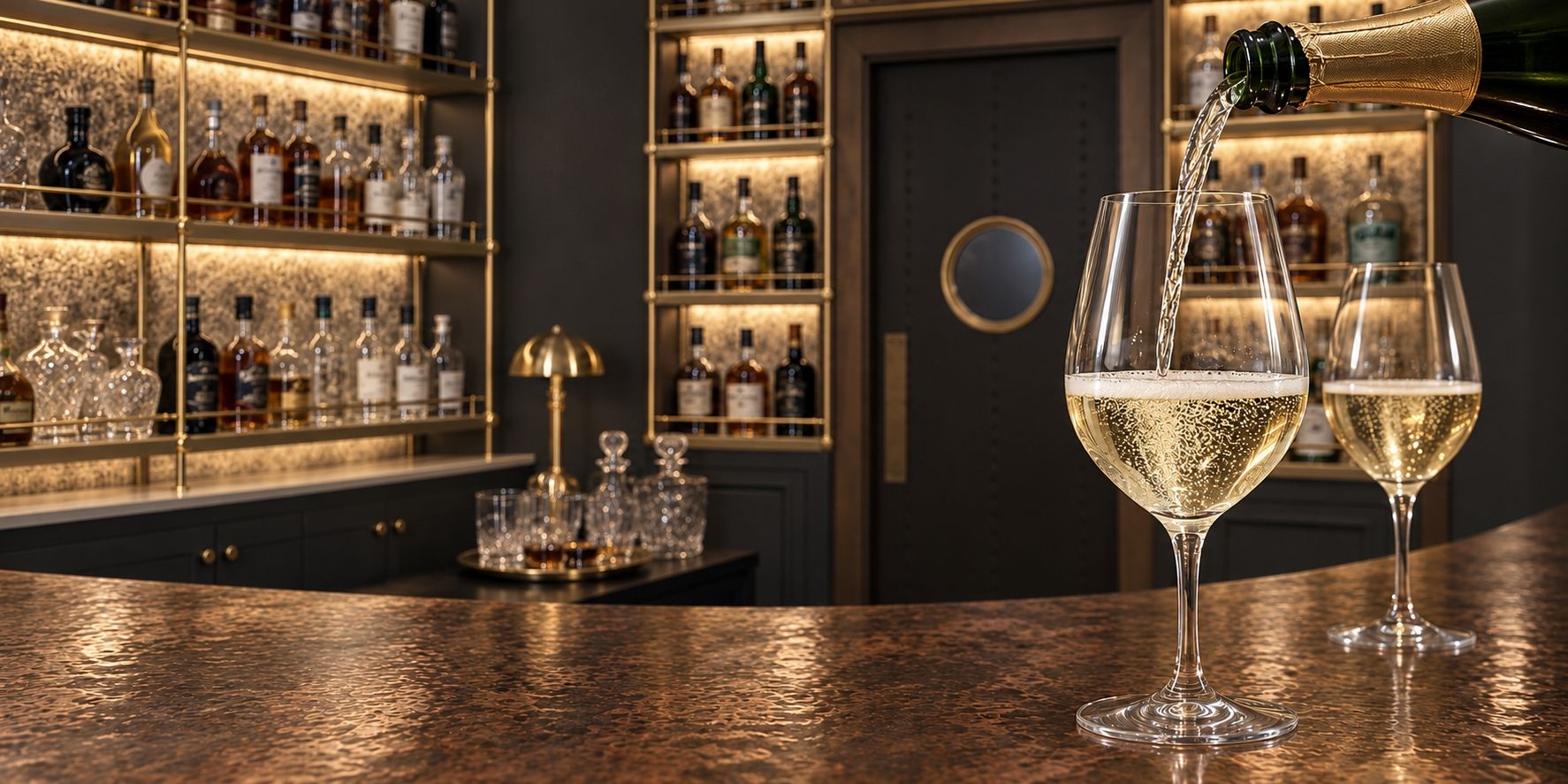
The bar at Bar Caviar, 256 S. 16th St.Kenneth Schutz
Bar Caviar (256 S. 16th St.): Opening in early October in the Dwight D Hotel in Rittenhouse, this bar will pair caviar and seafood with 50 varieties of Champagne and a full wine program in a setting that’s more neighborhood than hushed luxury lounge. Executive chef Greg Vassos’ contemporary American menu, informed by classical French technique and Japanese precision, will feature raw-bar selections, caviar-focused dishes, and seasonal small plates. The restaurant also will operate Parallel, a caviar program emphasizing careful sourcing and extended maturation. In 2027, Vassos plans to follow with Fall Line, a Mid-Atlantic-focused tasting-menu restaurant.
Brunch Bulls (1638 W. Passyunk Ave.): Brothers Derrick “Dee” Long and Jarrick “Jakk” Long are behind this all-day brunch/dinner/dessert restaurant in Point Breeze. They say they’ll be open by December.
Call Your Mother (262 S. 19th St., 1500 Frankford Ave., 12th and Sansom Streets): The lively, Washington-based “Jew-ish” bagel chain is making a three-location push into Philadelphia, starting this week with its Fishtown debut. Menu includes bagel sandwiches, schmears, latkes, coffee, and deli-inspired specials.
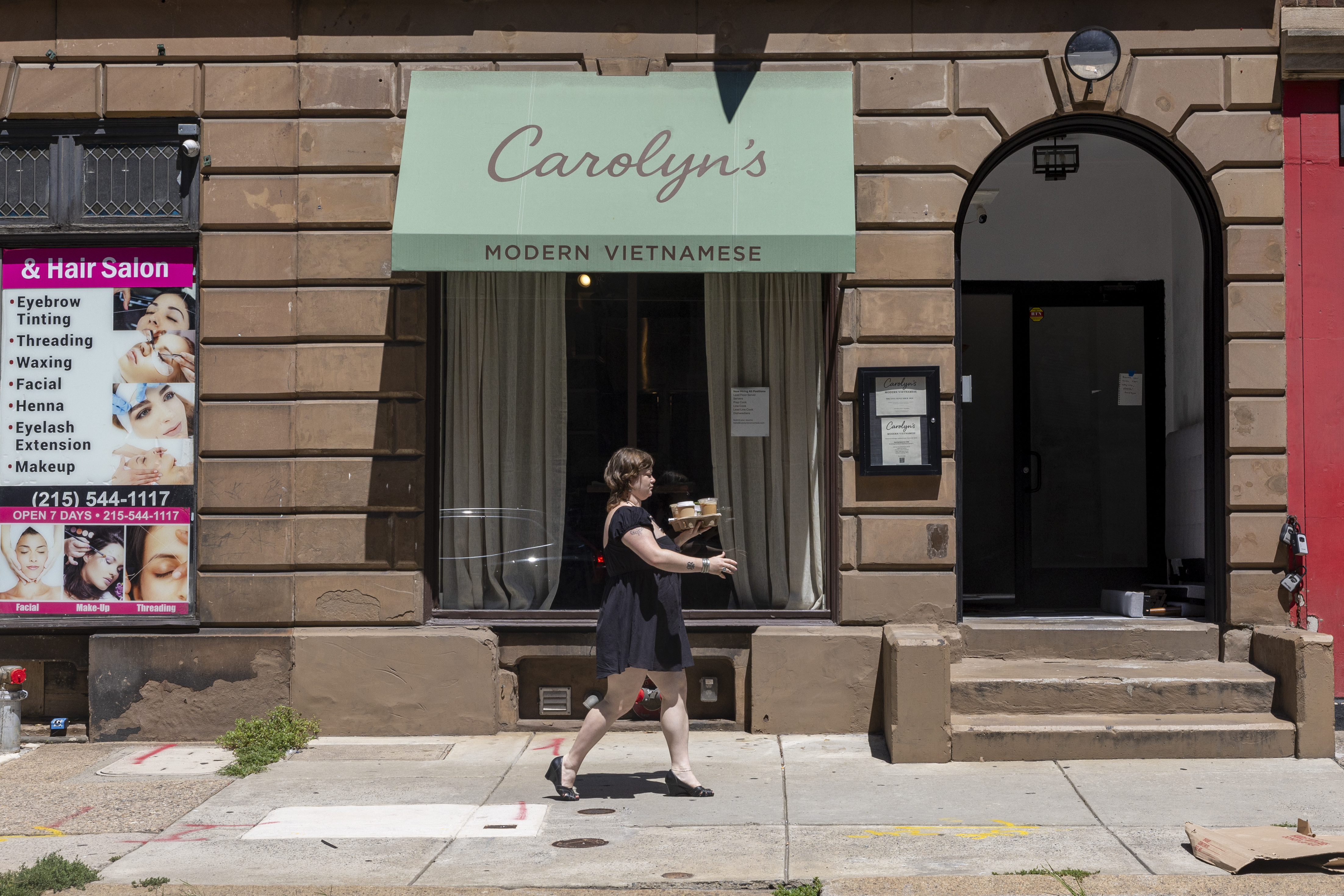
Carolyn’s Modern Vietnamese (2015 Walnut St.): This week, chef Carolyn Nguyen opens her deeply personal successor to Revolution Taco, which she co-owned in the space for a decade. Her menu brings together her family’s Vietnamese cooking, the seafood boils and Southern food of her Louisiana childhood, French culinary technique, and the freewheeling flavor combinations that defined her earlier ventures. The 33-seat restaurant serves dinner, and alcohol, in a spare, contemporary dining room.
Corte (1175 Ludlow St.):Corio partners Ryan Mulholland, chef David Feola, and James Smith are taking over the former Mulherin’s Pizzeria at East Market, between Iron Hill Brewery and Mi Vida. Feola will lead a menu built around house-made pastas plus proteins, vegetables, and small plates cooked in the large Mugnaini wood-burning oven. Mulholland will oversee daily operations and oversee an Old World-leaning wine list and cocktails inspired partly by forgotten recipes from century-old books. The dark-wood, earth-toned restaurant is targeting a fall opening.
DiDi (3748 Lancaster Ave.): DanDan owners Kevin and Catherina “Cat” Huang say they are “within a month or two” of opening their fast-casual pan-Asian concept at the Triad apartment building in Powelton Village. DiDi will join Kabobeesh, Karak Cha House, Shibam Coffee, Two Locals Brewing, and other businesses in the growing complex at 38th and Lancaster.
Divers Club (733 S. Fourth St.): Queen Village is in line to get a neighborhood wine bar from Susan Freeman, Chris Fetfatzes, and Heather Annechiarico (Grace & Proper, Wine Dive) in a former hair salon that sits on the same stretch as Famous 4th Street, Southwark, Ambra, and Fitz on 4th. Fetfatzes describes the mood as “dark, scrappy, and European — somewhere between a Paris backstreet wine bar and a graffitied Berlin hangout.”
Eggcetera Haus (625 S. Sixth St.): Husband-and-wife team Rey Tamaka and Vina Kencana soon will turn the former Redcrest Kitchen into an all-day bar-restaurant. Tamaka, previously the chef at an Old City brunch restaurant, plans breakfast, lunch, and dinner, moving from specialty coffee and morning dishes into pastas, steaks, cocktails, and comfort food at night. The couple expects daily service, giving the Queen Village-Bella Vista border another full-day neighborhood option.
Field Day (923 N. Second St.): James Beard Award-winning bartender and author Danny Childs and his wife, Katie, have a fall opening targeted for their casual regional cocktail bar in Northern Liberties, next to Cescaphe Ballroom. Childs’ drinks will use locally farmed, foraged, and fermented ingredients. Executive chef Melissa McGrath, known for her work at the idled Sweet Amalia Market & Kitchen, will offer Pennsylvania Dutch-inspired snacks, sandwiches, and tomato pies. Highballs, house-made sodas, boozy gelati, and walk-in seating will help keep the mood informal.
Habibi Supper Club (1515 E. Passyunk Ave.): Miled Finianos is giving his itinerant Lebanese dinner series a permanent home on East Passyunk — possibly by the end of year — serving late breakfast and lunch before he offers ticketed, multicourse suppers.
HYO (1222 Walnut St.): Nightlife veteran Justin Jordan plans an October opening for this Korean tabletop barbecue restaurant behind Hearsay, his indoor-outdoor sidewalk bar and listening lounge. Guests will enter HYO through a phone booth inside Hearsay. The restaurant is part of Jordan’s multilevel entertainment complex, which also includes Celine and the forthcoming Chancellor Room event space and karaoke lounge.
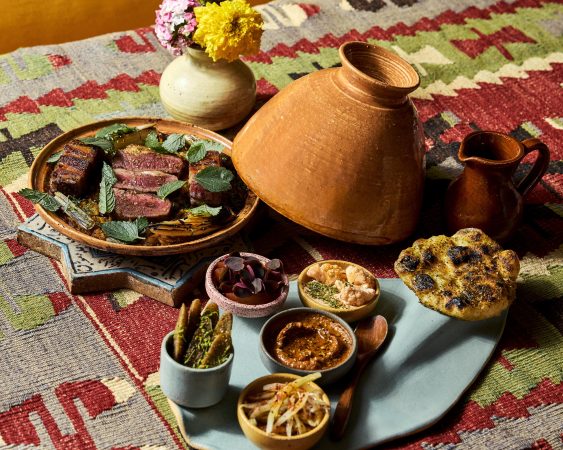
Jean (161 W. Girard Ave.): Emmett chef Evan Snyder and partner Julian van der Tak are going upstairs with a 15-seat tasting menu restaurant opening this fall. Snyder and chef de cuisine Antonio Pizzo will prepare a 12-course menu centered on a 7-foot wood-burning hearth, drawing on Algeria, Tunisia, coastal Morocco, and the southern Mediterranean for culinary influences. A tagine will roast throughout dinner before being served family-style.
Kato (1832 Frankford Ave.): Mei Meichef-owner Jay Ho is taking over the former Izakaya Fishtown space for a restaurant inspired by his Taiwanese father and the food Ho grew up eating. Influences from Korean, Thai, and Vietnamese cooking will broaden the menu. Ho, who hopes to open in late fall, plans to retain the front bar while replacing the rear sushi counter with additional seating that can double as a private dining area.
Lovat Square(184 E. Evergreen Ave.): Former Four Seasons sommelier Damien Graef and journalist Robyn Semien opened this Chestnut Hill wine shop and tasting room in February, offering small-production bottles, wines by the glass, and light fare. The couple, who also own Brooklyn’s Bibber & Bell wine shop, will debut a full dinner menu by the end of September.
Macaluso’s (3101 S. 13th St.): Realtor Joel Gruenke and restaurateur Mark D’Andrea, long-ago roommates at Valley Forge Military Academy, are looking at an early October opening of this white-tablecloth Italian restaurant at 13th Street and Packer Avenue, near the sports complex. D’Andrea’s family owns RoadHouse in Staten Island, N.Y. Gruenke says the moderately priced menu will stick to traditional Italian cooking and offer a full bar. Parking will be available across the street.
Mylar Bar (1636-38 S. Ninth St.): Hospitality veterans Liv Arterbridge and Gina Piccari are turning the former Dino’s Party Center into a festive neighborhood bar inspired by the building’s history. They promise something nostalgic, playful, and deliberately unserious. Drinks will include martinis, punches, classics, and draft beer. Chef Colin White, formerly of Sally and Emmett, will oversee shareable “party snacks,” larger plates, and desserts available late.
Nippy’s on South (1312 South St.): Nurse and first-time restaurateur Nikia Peterson has purchased the former Ms. Tootsie’s building for an ambitious restaurant and bar. Peterson plans a polished setting with seafood towers, steaks, Asian and Caribbean influences, a substantial happy hour, and weekend brunch. The project will revive a prominent South Street property that had remained closed since restaurateur KeVen Parker’s death in 2021.
O’Morrey’s (1720 Sansom St.): Chefs Biff Gottehrer and Kenjiro Omori are developing a cocktail bar on the former site of Genji, the Japanese restaurant created by Omori’s father. The name is a cheeky rendering of the Omori family name. Plans call for a comfortable neighborhood bar in the spirit of the Ripplewood, where both chefs work, with cocktails and a serious food component. Their second joint project, Tako Taco, is months away at the former Bing Bing Dim Sum in South Philadelphia.
Palm Vintage (1414 S. Penn Square): Houston Yang and Mike Beja, who opened this day-to-night cafe and cocktail bar across from City Hall in the Residences at the Ritz-Carlton, are close to expanding into a nighttime scene with cocktails, sushi, oysters, caviar, and light food in a lush, tropical-inspired room meant to offer an escape from Center City.
Panco (2300 S. Croskey St.): Chef Ryo Igarashi, whose background includes Tokio Global and Maru Global (noted for its takoyaki balls), is behind a corner shop in West Passyunk whose menu will focus on Japanese cutlets. He says it’s opening soon.
Philly Curio (2240 Frankford Ave.): Tattoo Arts Convention founder Troy Timpel is creating an intimate Kensington restaurant-bar around his private collection of curiosities (think tribal masks, skeletal displays, taxidermy, and glass-topped tables containing preserved animals). Inspired partly by Savannah’s Alligator Soul, Timpel has discussed a Cajun-Creole menu with small plates and unconventional proteins such as rattlesnake. Drinks are expected to include cocktails, wine, bottled beer, and limited drafts. Target is November.
Philly Po’Boy (102 W. Berks St.): Brothers Chris and Greg Lynch are bringing a taste of New Orleans to the storefront beneath the Berks station of the Market-Frankford Line. Chris spent years cooking in New Orleans, while Greg’s Philadelphia background includes Starr Restaurants and LMNO. Plans call for classic powdered-sugar-dusted beignets, gumbo, and a mix of classic and specialty po’boys like fried shrimp, oysters and roast beef “debris,” plus fries, Creole potato salad, and café au lait from coffee roasted by Applied Arts in New Orleans.
Santé Social(1546 E. Passyunk Ave.): Sommelier Daniel Solway is giving his roving dinner series a permanent home across from the Singing Fountain. The approximately 30-seat space will function less like a conventional restaurant than a flexible hospitality venue, hosting wine dinners, tastings, classes, collaborations, private events, and some walk-in service. Cocktails are being developed with Danny Childs of Slow Drinks and Field Day, while changing chefs and collaborators may shape the food programming.
Somedays Bakery (1601 Walnut St.): Hand-laminated croissants are the foundation of this Queens-rooted bakery, which deals in sandwiches, salads, soft serve, and coffee. It’s targeting the end of the month.
Thalassa (918 N. 28th St.): Matt Maltepes is looking at late October or early November for his Greek-inspired cafe in Fairmount that will serve baklava, croissants, and house-made ice cream in flavors that change weekly. Savory offerings will include small plates such as feta grilled cheese with honey, avocado toast, and bagels with cream cheese. The drinks menu will feature European-style coffee preparations, including frappes and Freddo espresso.
Looking ahead
Two major projects are now on the docket for January, as the owners don’t want to compete with the holiday-season madness:the Pelican Club, Stephen Starr’s flashy Greek-themed restaurant taking shape in the former Devon Seafood Grill on Rittenhouse Square, and the yet-to-be-named “punk French” restaurantthat chefs Justin Bogle and Arthur Cavaliere are creating at the former Winnie’s Manayunk.
The long-closed Mermaid Bar in Mount Airy will retain its name under the new ownership of pizzaiolo Dan Gutter and business partner Alex Carbonell of Circles & Squares and Pizza Plus. The project, announced earlier this year, is aiming at a summer 2027 rollout.
Paoli/Thorndale outbound trains from Center City were suspended this morning right before morning rush hour and again Tuesday evening because of wire problems, a SEPTA spokesperson said.
“We are having significant delays on the Paoli/Thorndale Line due to downed wires near 37th and Mantua. Amtrak is working on it, but we expect the delays will last through the evening,” SEPTA spokesperson Andrew Busch said in a 6:45 p.m. email.
Service also was disrupted Tuesday morning on both the inbound and outbound Cynwyd Line, but that service has since resumed.
Amtrak reported at least one train delay earlier in the day.
Damage to overhead catenary wires at an Amtrak railway junction near the Philadelphia Zoo, which some SEPTA regional rail services like Paoli/Thorndale and Cynwyd share, delayed and suspended some rail service across the region, Busch said earlier on Tuesday.
An Amtrak spokesperson said crews responded and restored service in both directions by approximately 7:25 a.m.
Philadelphia real estate developers see the writing on the wall.
As progressives have toppled centrist Democrats in nationally watched races, some local development interests are wary that the same trend could reshape Philadelphia City Council this spring, when every member is up for reelection. They see a growing progressive faction as a threat to business.
Enter the incumbent protection plan.
Nearly a dozen local developers are already pouring hundreds of thousands of dollars into Philly For Growth, a group that in the past two Council election cycles spent millions on advertising campaigns to back business-friendly Democrats, according to a source familiar with the planning.
Philly For Growth is an independent expenditure group, also known as a super PAC. It can raise and spend unlimited amounts of money to influence an election, but there are rules barring super PACs from most forms of coordination with the candidates they support.
In 2023, the group was the biggest special interest group involved in that year’s Council races, and it provided a substantial boost to its chosen candidates by outspending individual campaigns.
Ahead of the May primary election, Philly For Growth plans to spend $1.5 million to support pro-business Democrats, most of whom are sitting Council members, according to the source, who spoke on the condition of anonymity because they were not authorized to discuss the plans. The group will not fund negative advertising about Council’s four incumbent progressives, the source added.
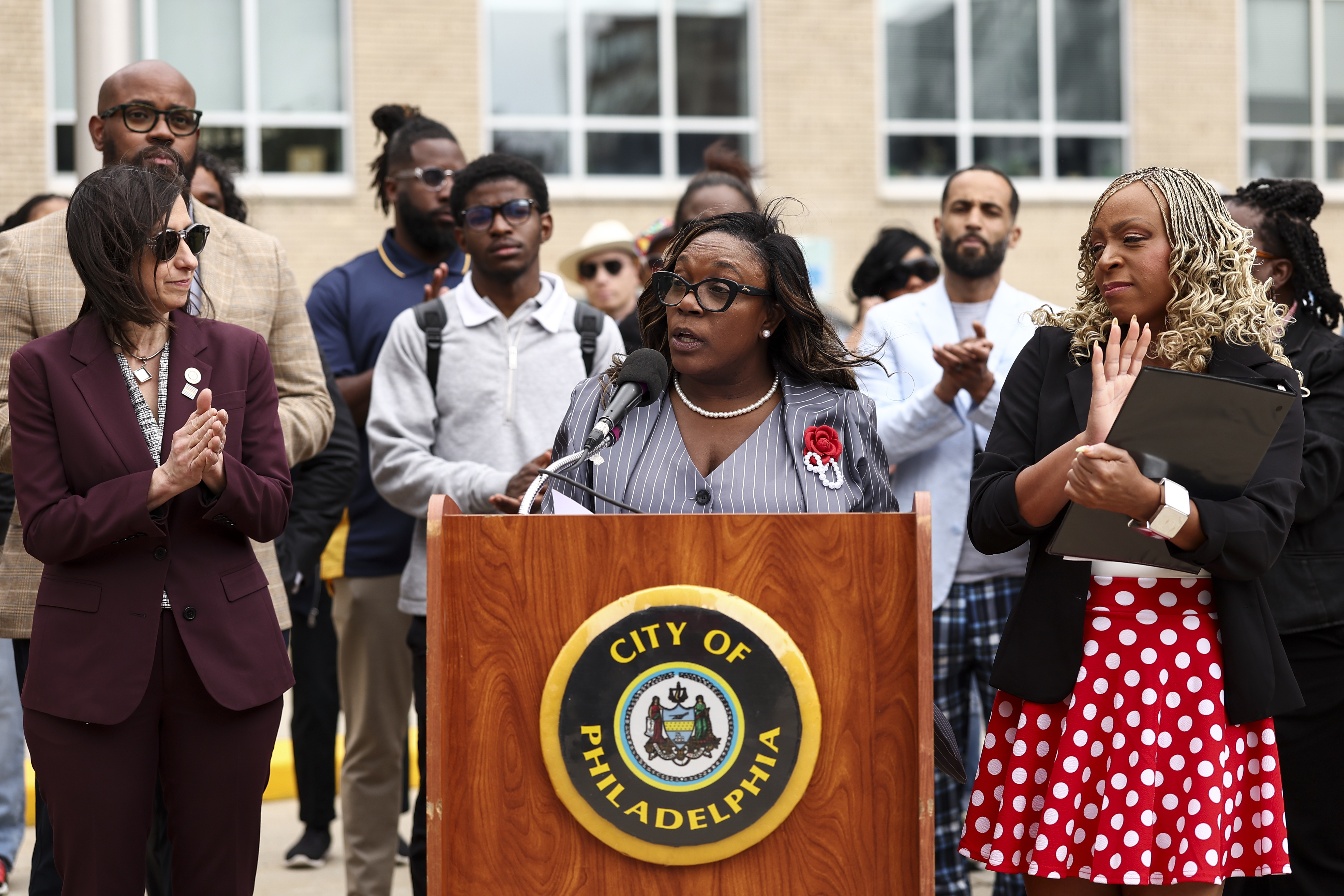
Councilmember Kendra Brooks, of the progressive Working Families Party, speaks during a rally outside of the School District of Philadelphia headquarters in May. At left is Councilmember Rue Landau and at right is Councilmember Jamie Gauthier. All three are members of Council’s progressive faction.Monica Herndon / Staff Photographer
The idea is to keep progressives from growing their power on Council instead of spending money to knock off the leftists who are already there. There are currently four reliably progressive votes out of the total 17 on Council, but some members may be more likely to vote with that faction as Democratic voters nationally revolt against incumbents.
That’s a different strategy than in 2023, when Philly For Growth backed a slate of five candidates — two incumbents and three challengers. Both incumbents won, but all three challengers lost.
Philly For Growth has previously been affiliated with the Building Industry Association of Philadelphia, an advocacy group for development interests. Mo Rushdy, the BIA’s former president who leads the organization’s political activity, declined to comment.
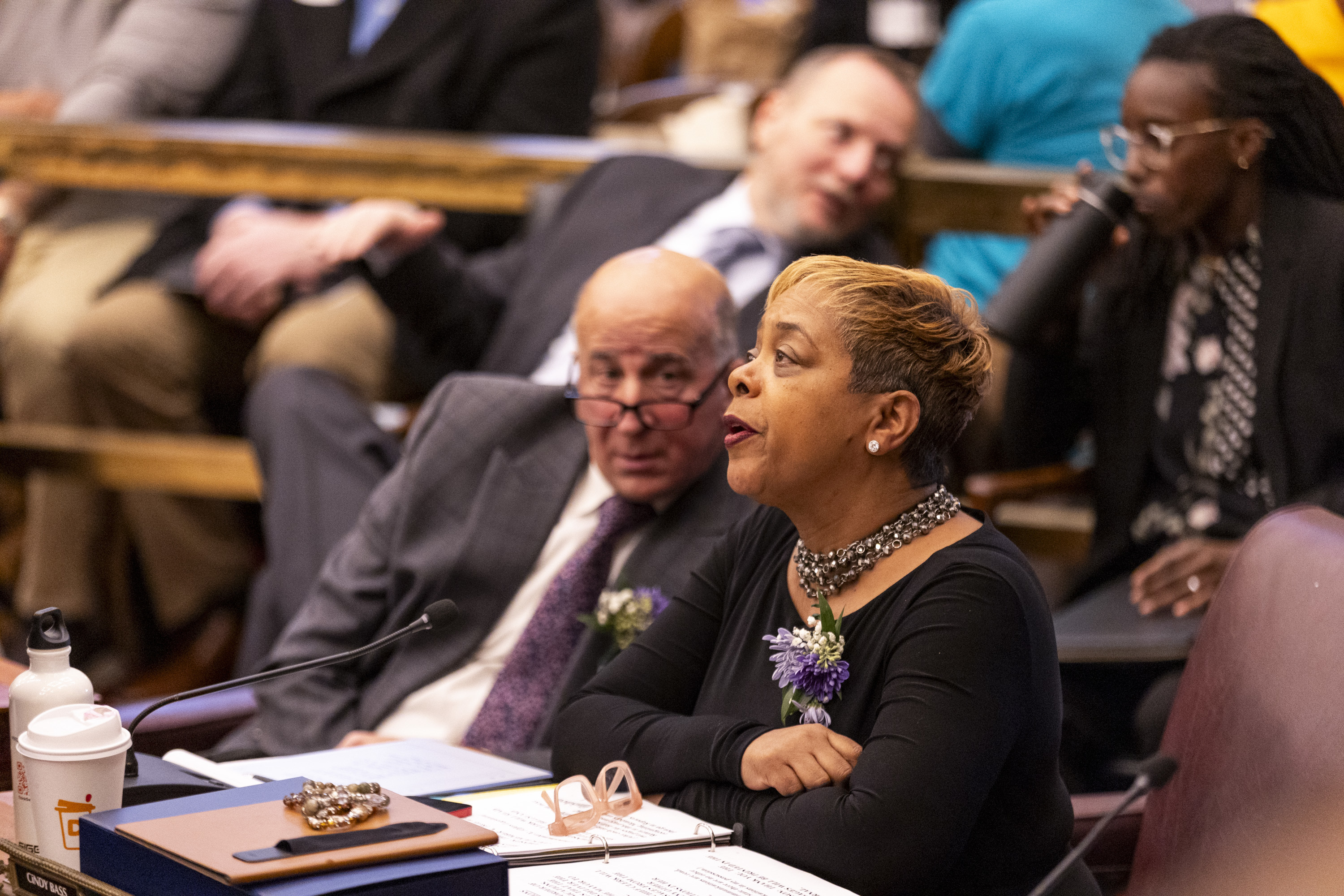
The source said that Philly For Growth will fund advertising to support Council members Mark Squilla, whose 1st District includes parts of South Philly, Center City, and Fishtown; Cindy Bass, whose 8th District is based in North and Northwest Philadelphia; and Quetcy Lozada, whose 7th District includes much of North Philadelphia and Kensington.
All three are seen as more centrist members and have said they intend to run for reelection. No challenger has officially launched a campaign against any of them, but candidates who are aligned with the city’s left-leaning political organizations are expected to emerge as the primary — still eight months away — draws nearer.
The super PAC is making one exception when it comes to supporting incumbent district Council members, the source said. In the 5th District, currently represented by Councilmember Jeffrey Young Jr., the group will support a to-be-decided challenger.
Councilmember Jeffery Young Jr. speaks to other members of Council during a 2025 session.Tom Gralish / Staff Photographer
At least five people have said they are interested in running for the North Philly-based 5th District seat, and Young has drawn opposition from development interests for pushing proposals that would slow or halt some projects in his district.
Young said in a statement that building “sensible, affordable housing” is one of his top priorities and that he has supported city programs like Turn the Key, which provides mortgage support to first-time homebuyers.
“People are free to back those who share their values. These are my values,” Young said. “I am leaving it to the residents of the 5th to determine whose values best reflect them.”
The super PAC will also fund advertising backing four incumbent members who represent the city at-large: Isaiah Thomas, Katherine Gilmore Richardson, Jim Harrity, and Nina Ahmad. That group doesn’t include progressive at-large Councilmember Rue Landau, but Philly For Growth doesn’t plan to oppose her, the source said.
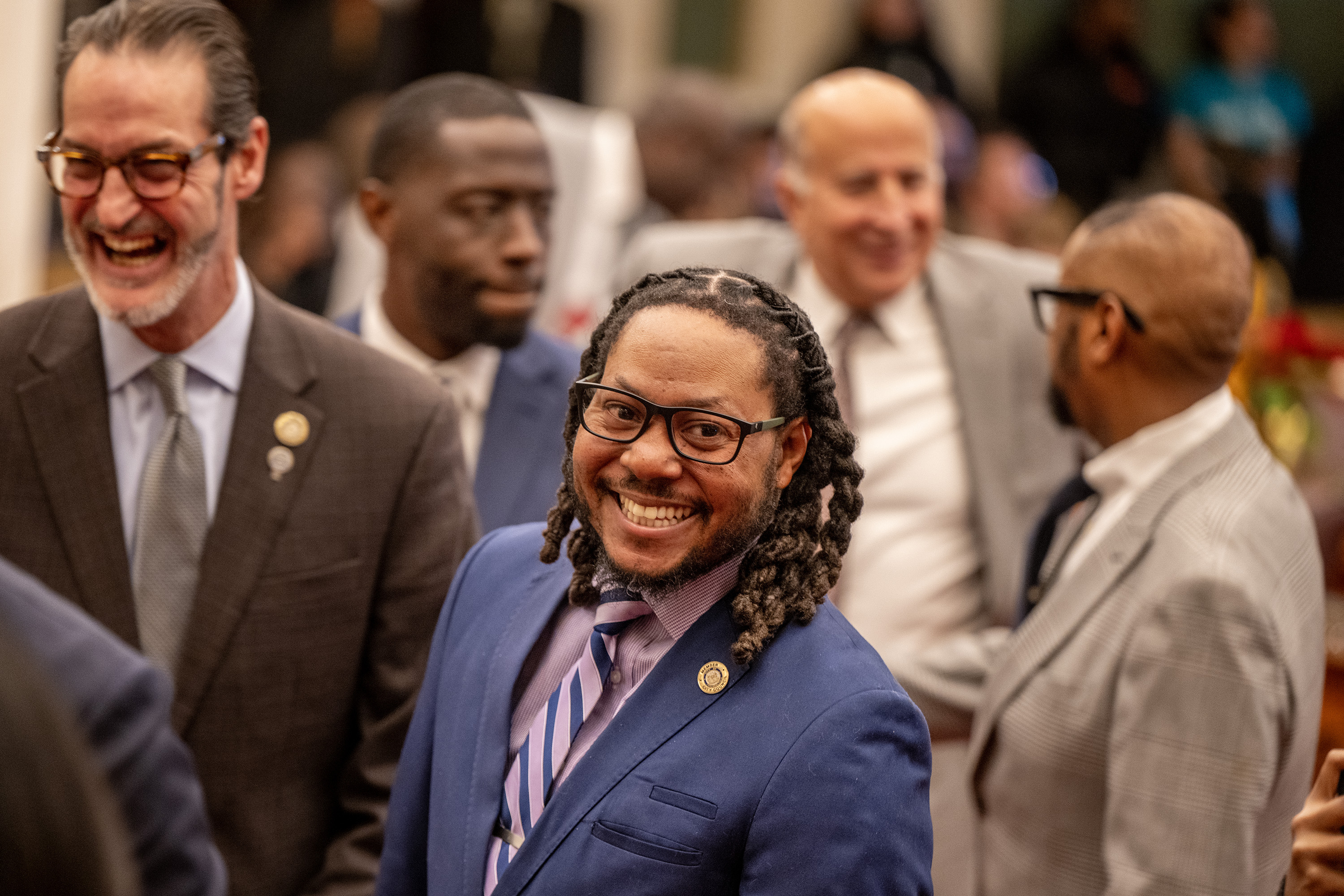
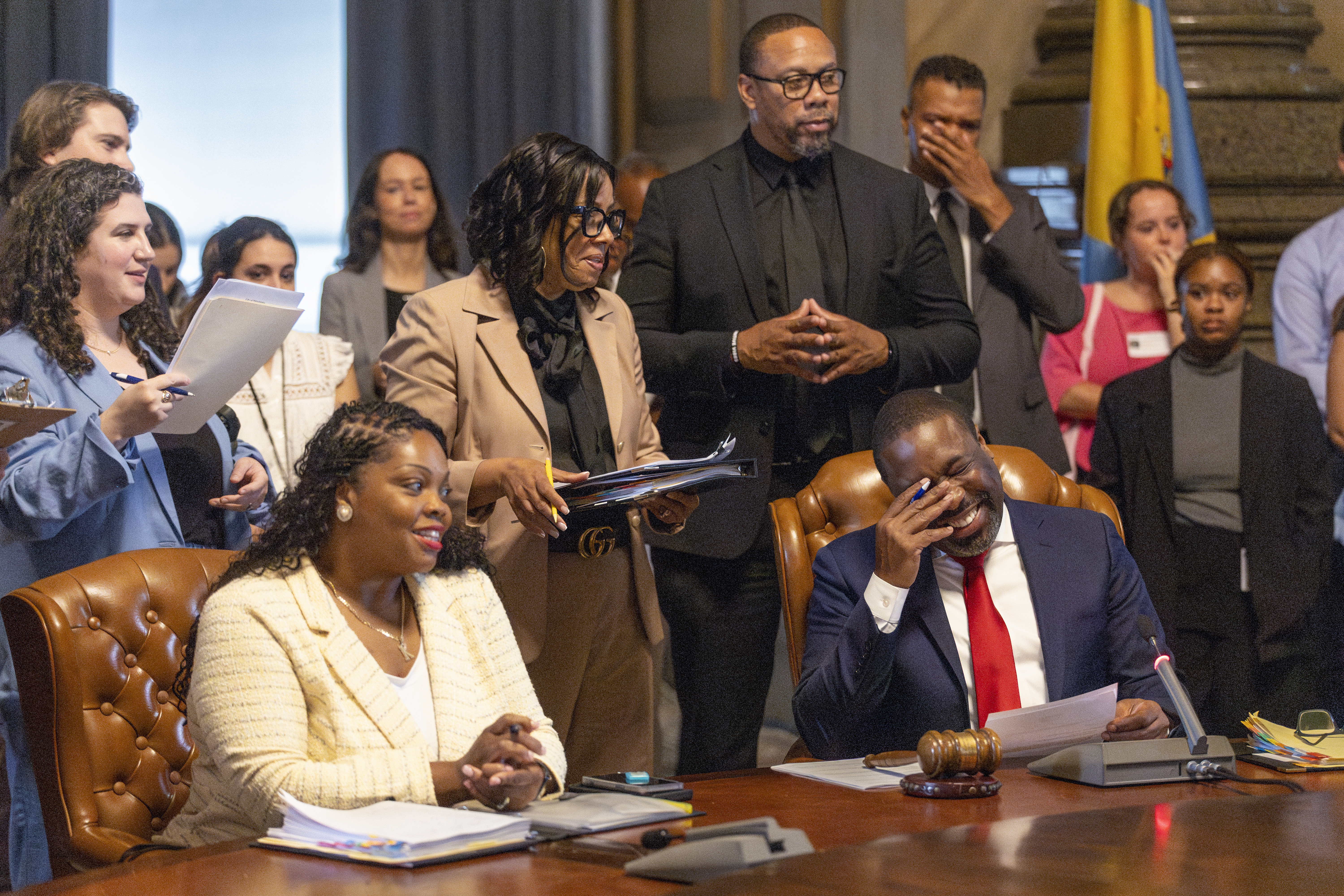
Council President Kenyatta Johnson laughs inside the caucus inside City Hall on June 11.Aidan T. Gallo / Staff Photographer
A spokesperson for Landau’s campaign arm said in a statement that the Council member “stands by her accomplishments for working people, small businesses and vulnerable communities in Philadelphia and looks forward to voters having the opportunity to make up their own minds next year.”
It’s unclear just how competitive the at-large race will be, and candidates have until the spring to decide — nomination paperwork is typically due in March. Seven of Council’s members represent the entire city at-large, and two of those seats are effectively reserved for members of minority parties under the city’s Home Rule Charter.
That has traditionally meant that five seats are held by Democrats, given the party’s massive voter registration advantage in the city. In recent years, Republicans and the progressive Working Families Party have battled for the remaining two seats during the fall general election, and the WFP currently holds both.
Mayor Cherelle L. Parker, who is also up for reelection, and Council President Kenyatta Johnson, who insiders do not expect will see a serious challenger, will likely be on Philly For Growth’s slate, too, the source said.
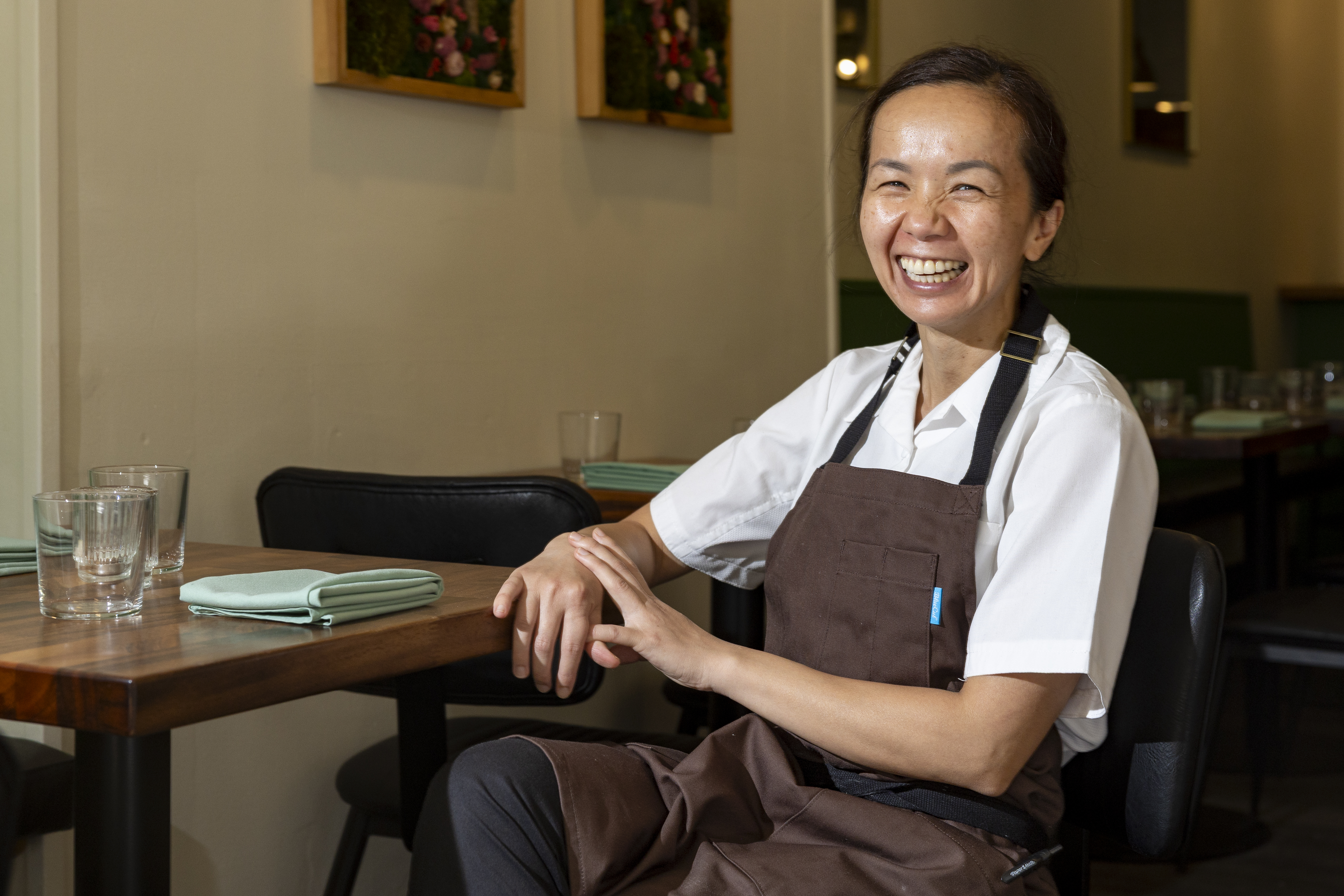
After 20 years of cooking other people’s food around the region, Carolyn Nguyen is finally telling her own story.
Carolyn’s Modern Vietnamese opens Wednesday at 2015 Walnut St. with a menu that draws from Nguyen’s personal history: the Vietnamese and Louisiana foods Nguyen grew up eating, the French techniques she learned in culinary school and restaurant kitchens, and the freewheeling combinations that defined her food trucks and Revolution Taco, the fast-casual restaurant she co-owned in the space for a decade.
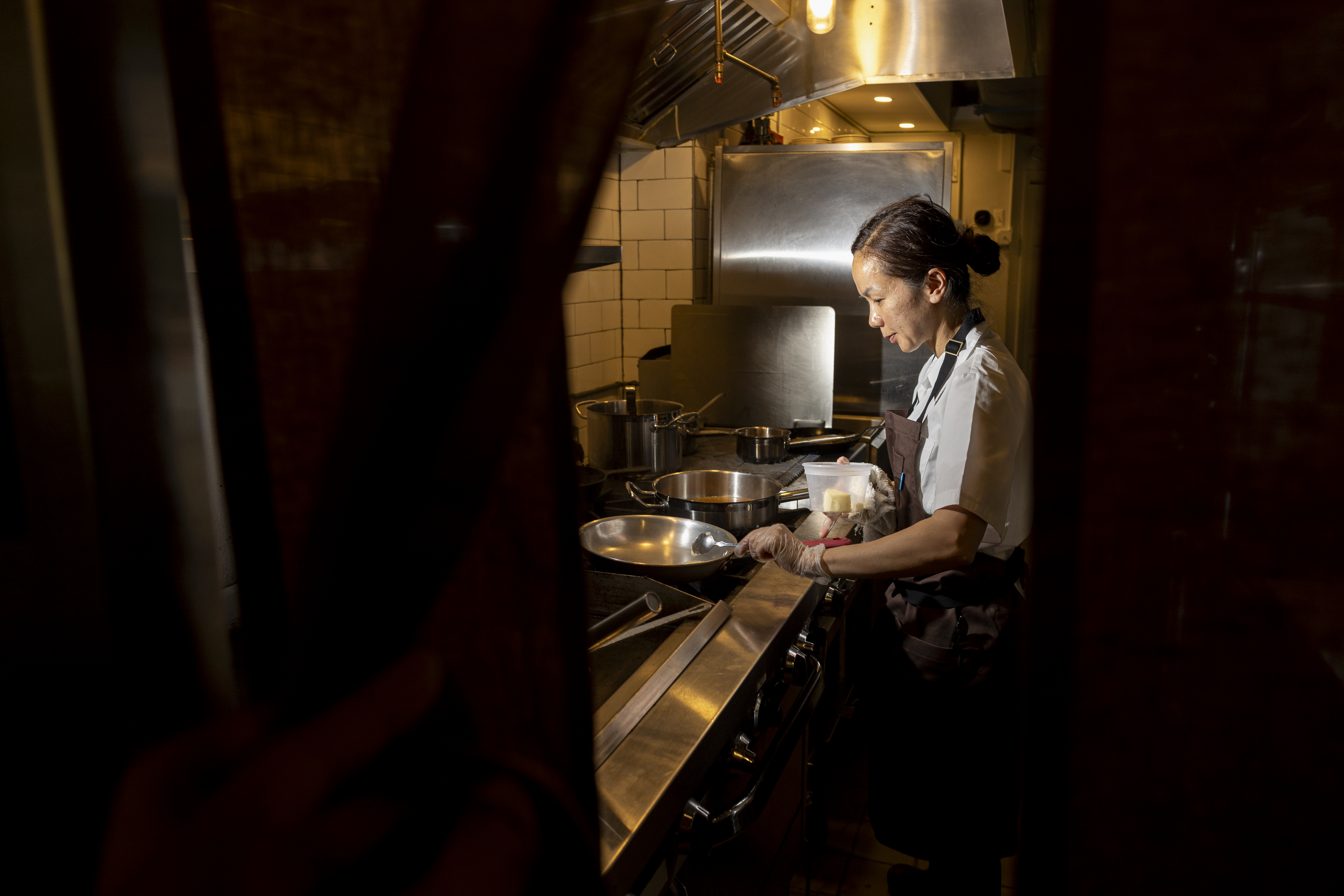
Chef Carolyn Nguyen adds butter to a pan while cooking curry duck potato gnocchi.Aidan T. Gallo / Staff Photographer
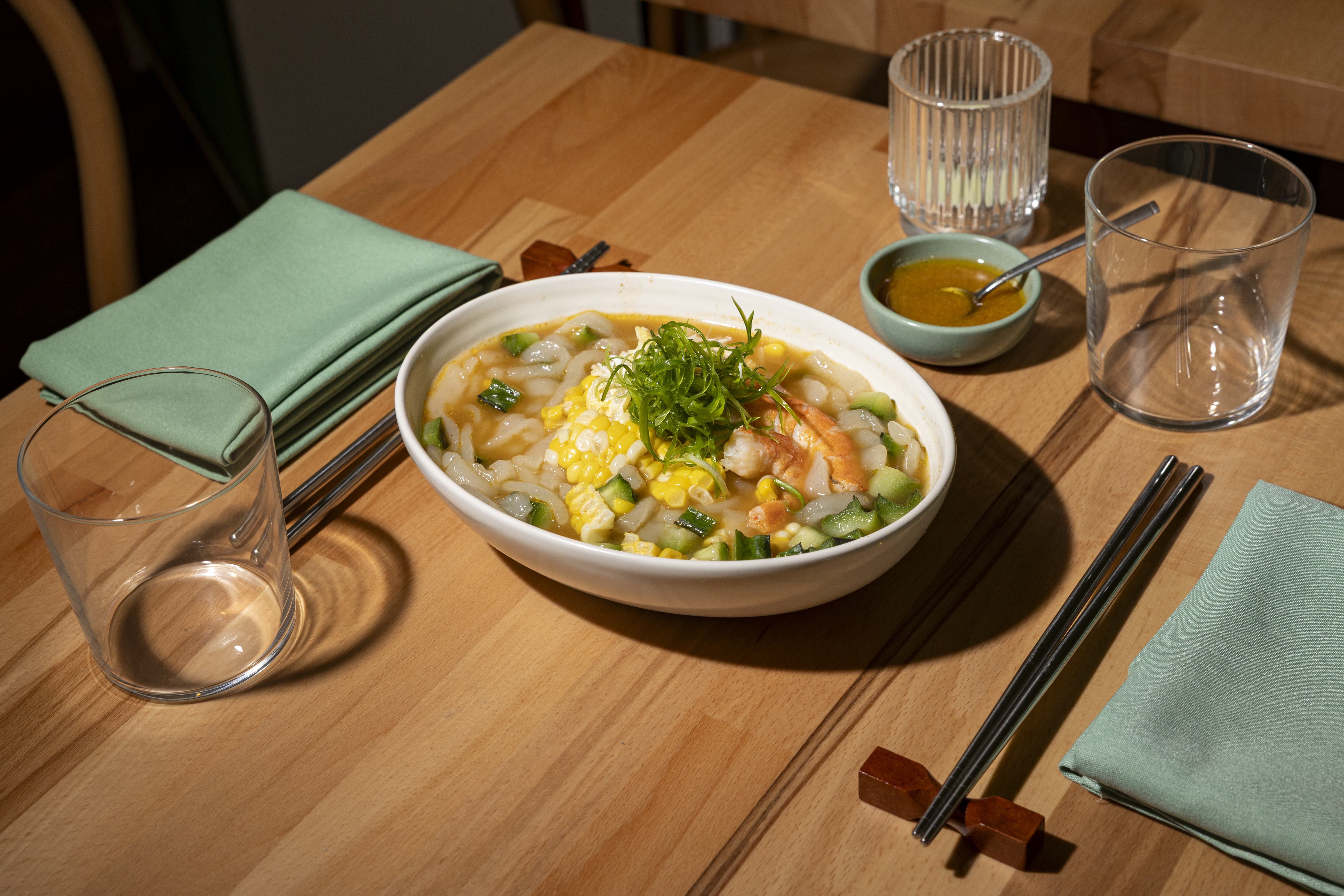
Bánh canh, a thick Vietnamese noodle soup, is presented as a seafood boil with poached shrimp, mussels, fried potatoes, and scallions. Thịt kho tàu, a Vietnamese braised pork dish, becomes slow-cooked grits topped with pork belly, a soft egg, and pickled vegetables. Hoi An chicken comes with ginger dirty rice, braised collards, and herb remoulade.
Other large plates include lemongrass smoked beef short rib with fish sauce-caramel jus, warm potato salad, and cabbage slaw; corn and crab congee with crispy shallots, and herbs; and a salt-and-pepper cornmeal-crusted whole fish with ginger sauce.
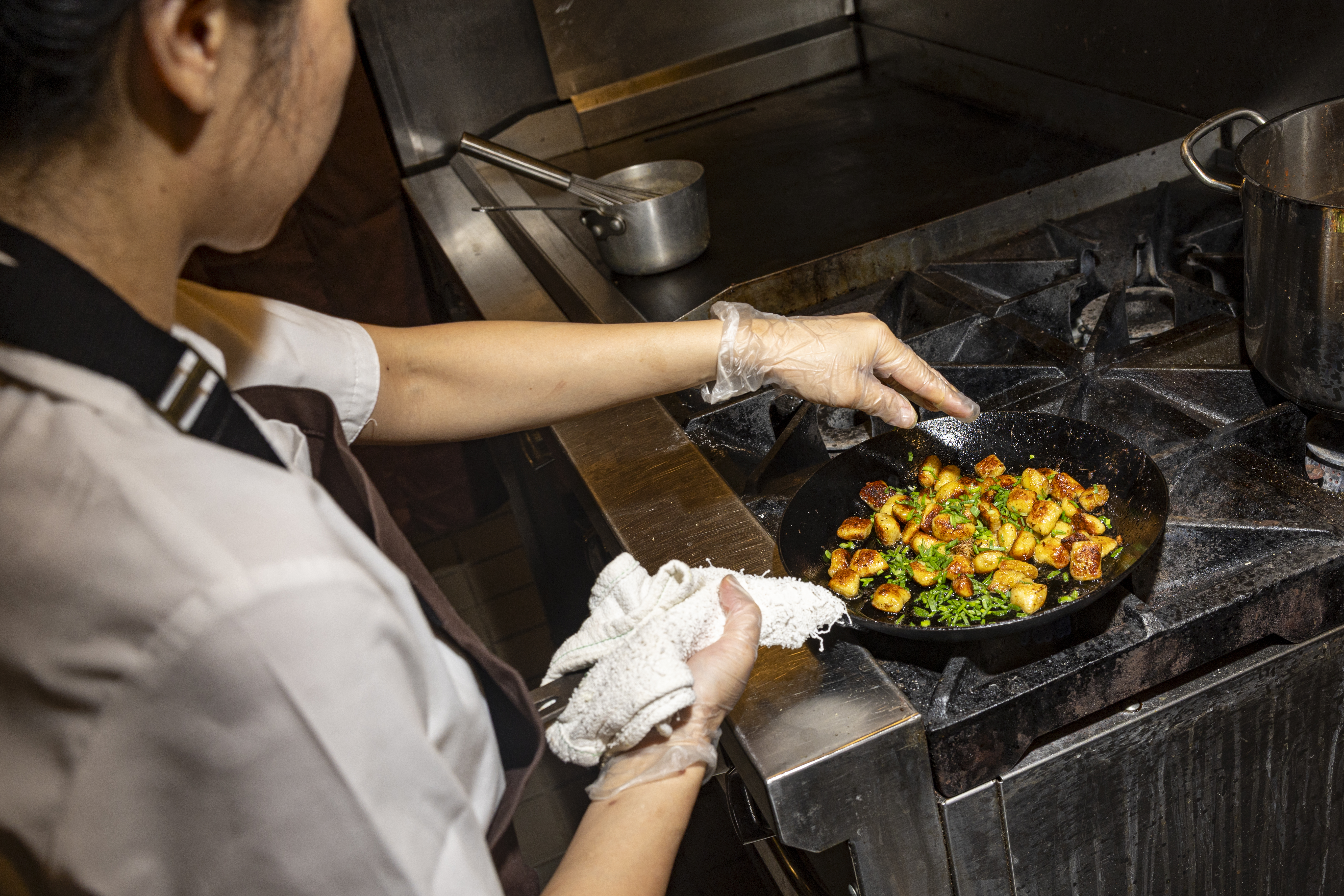
Carolyn Nguyen sprinkles Chinese chives onto her potato gnocchi.Aidan T. Gallo / Staff Photographer
Curry duck potato gnocchi with Thai basil pesto carries a memory from Nguyen’s time at Old City’s Fork, where she worked for chef Terence Feury. At midday, she said, they would stop and make gnocchi together.
The small plates ($12 to $22) include tofu hummus, mushroom and leek dumplings, polenta-daikon fries, dry aged beef in betal leaves, chicken liver mousse, and tasso-crab spring rolls.
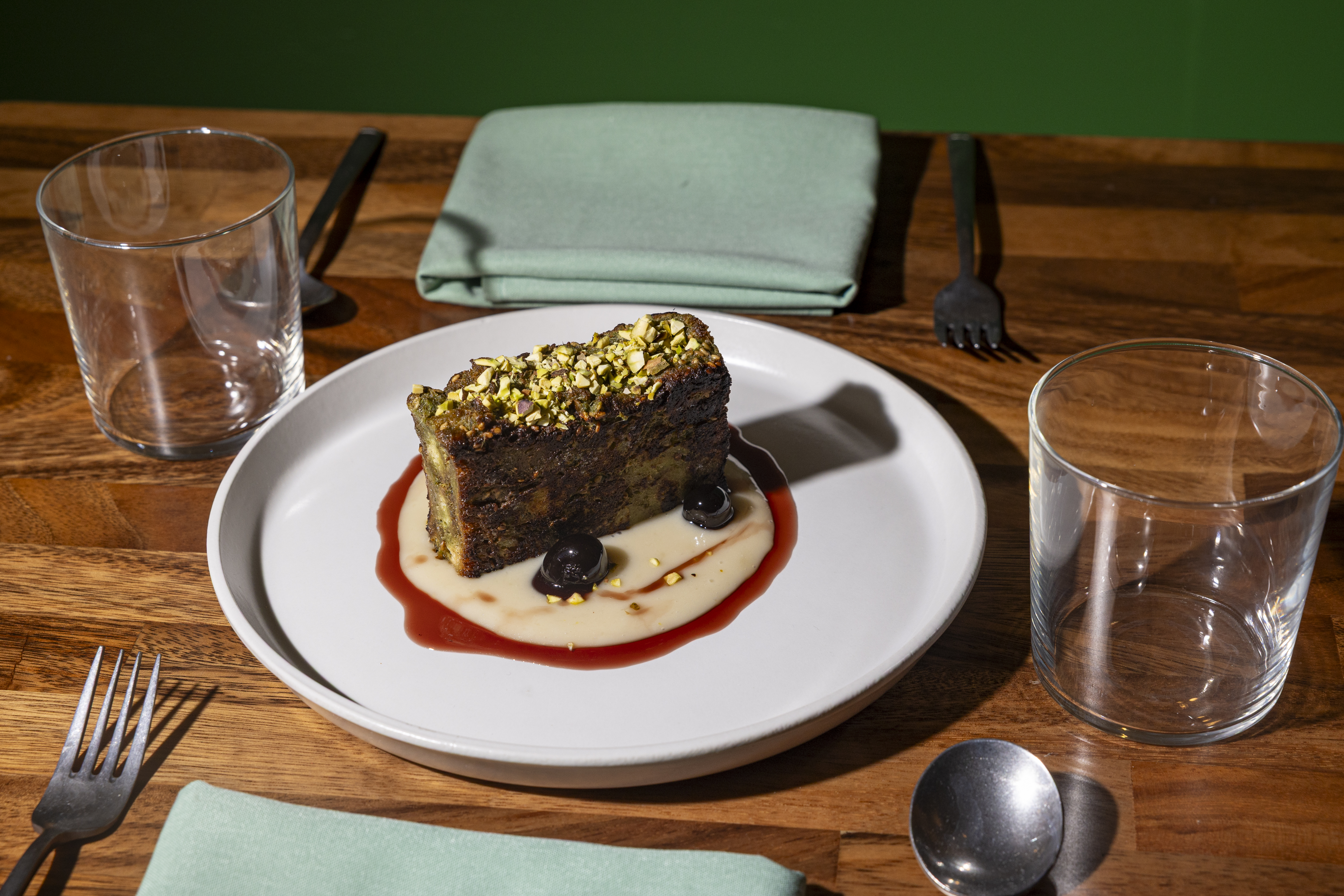
Pandan bread pudding dessert at Carolyn’s Modern Vietnamese.Aidan T. Gallo / Staff Photographer
Large plates are priced from $24 to $46, plus a market-price whole fish. Desserts include coconut rice pudding with bananas Foster sauce and pandan bread pudding with coconut sauce.
“It’s both coming home to the food that I grew up with and then the food that I’ve cooked and learned how to cook,” she said. “It’s food that I love.”
Nguyen was born and raised in Amelia, in Louisiana’s St. Mary Parish. Her parents, Paul and Mai Nguyen, were born in Vietnam but met in the United States. Her father arrived in the late 1960s and later helped Vietnamese refugees settling around New Orleans. He met Nguyen’s mother while driving her to appointments. The family moved to South Carolina when Carolyn was 16.
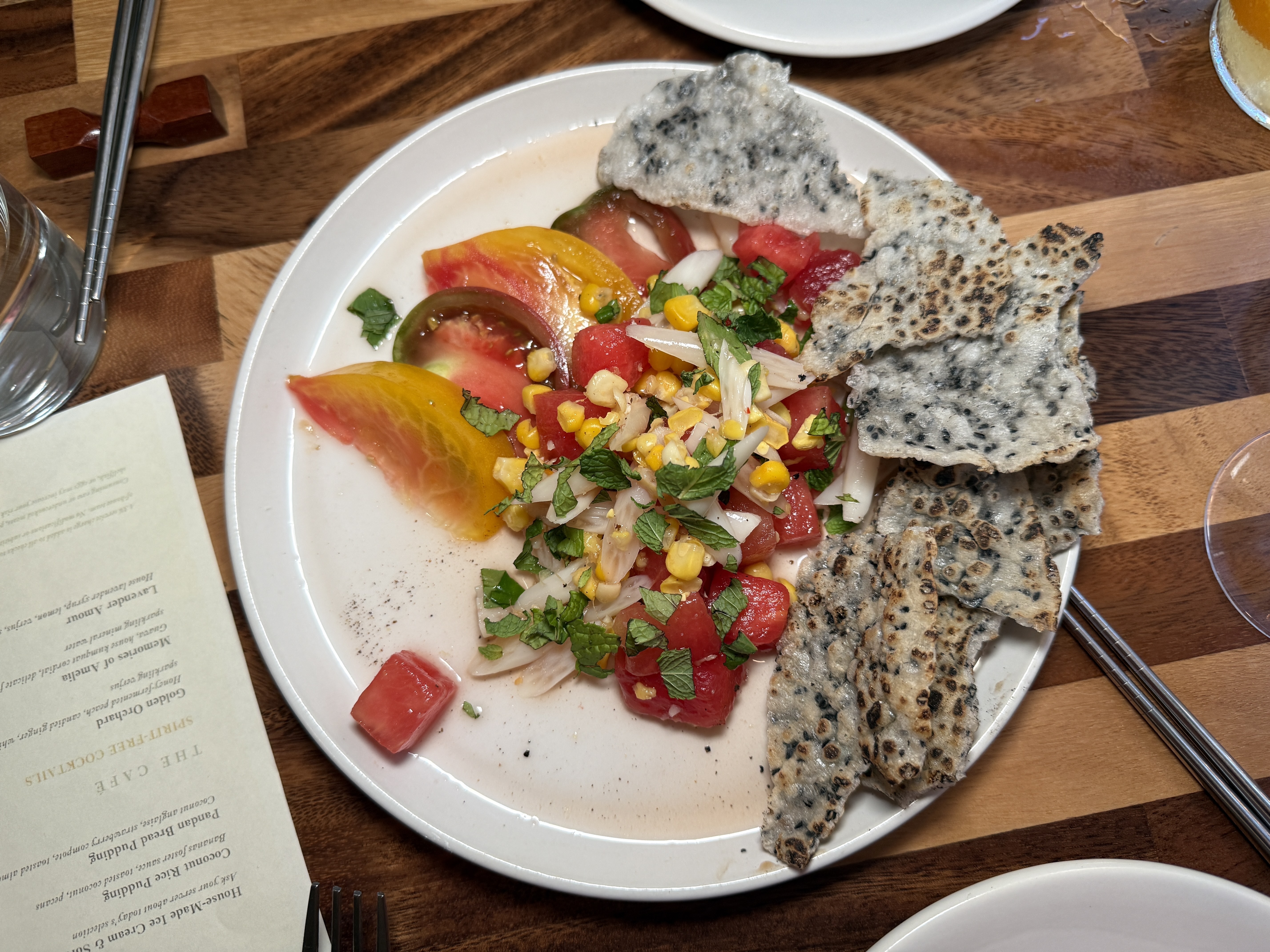
Lotus root salad with watermelon, corn, heirloom tomatoes, and Thai basil as served at a preview for Carolyn’s Modern Vietnamese.Kiki Aranita / Staff
“I always knew I wanted to pursue cooking,” she said. “Unfortunately, in South Carolina, there wasn’t really any fine-dining environment.” When her sister moved to Philadelphia to go to dental school around 2005, Nguyen moved north with her and enrolled in the culinary school at the Art Institute of Philadelphia. The goal was working in New York, “but I fell in love with Philadelphia because of the food environment,” she said.
Her first restaurant job was as a cook at Susanna Foo on Walnut Street. Besides Fork, she later worked at such restaurants as Nectar in Berwyn (also with Feury), Maia in Villanova, and Russet in Center City. At Peachtree & Ward catering, she met her initial business partner, Michael Sultan.
Chef Carolyn Nguyen in her dining room at Carolyn’s Modern Vietnamese.Aidan T. Gallo / Staff Photographer
In 2012, Nguyen and Sultan entered the food-truck business with Street Food Philly. Taco Mondo followed, and in January 2016, Nguyen, Sultan, and Alan Krawitz opened Revolution Taco, whose taco fillings included pork belly, duck, beef tongue, Korean fried chicken, smoked mushrooms, and curried cauliflower.
The other partners moved on, but Nguyen still owns the Revolution location at the Comcast Center’s concourse. Eight months ago, she closed the Walnut Street location but kept the lease, figuring that converting its counter-service format into a full-service experience would be “easy-peasy – maybe a month.”
Instead, the concept and design evolved as Nguyen worked through permitting and paperwork, much of which she handled herself. Carolyn’s has 28 seats at tables and along a banquette, plus five at a counter.
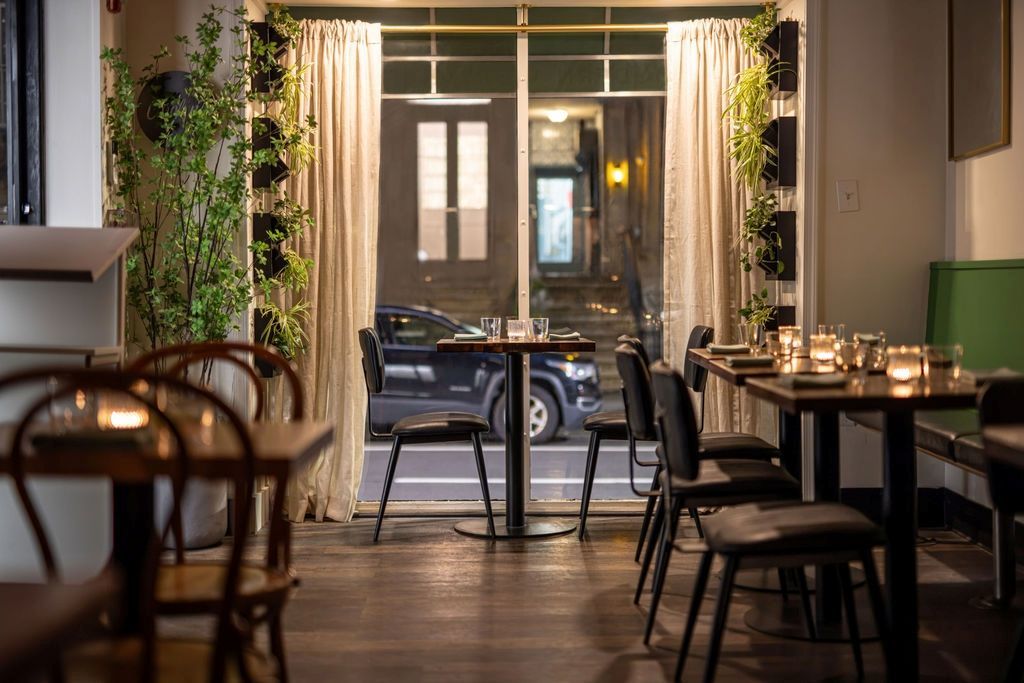
The dining room is spare and contemporary, with cream-colored walls, butcher-block-style tables, black upholstered chairs, and a deep-green banquette. An arched brass-framed mirror and two narrow pieces of preserved-moss botanical art soften the black track lighting.
Carolyn’s Modern Vietnamese, 2015 Walnut St., replaces Revolution Taco.Gab Bonghi
Pale-green cloth napkins, metal chopsticks, and wooden rests carry the palette to the tables. The Louisiana connection extends to the soundtrack, with ragtime- and blues-inflected New Orleans jazz by early figures such as King Oliver and Buddy Bolden.
Nguyen wanted the room to feel relaxed and unhurried. Green “represents growth and new beginnings for me,” she said.
The bar will emphasize locally produced wines and spirits. Two cocktails are inspired by Nguyen’s parents: a tropical Mama Mai Tai for her mother and the Ông Xuyên (Mr. Xuyen) for her father, an avid gardener who grows dozens of plant varieties and keeps chickens at the family home.
Her father once returned from a shrimping trip with fish bones and used them to make fish sauce in a barrel. Nguyen plans to put a small amount of house-made fish sauce in his namesake cocktail for a savory undertone.
Carolyn’s Modern Vietnamese, 2015 Walnut St.Aidan T. Gallo / Staff Photographer
Carolyn’s will start with dinner Wednesday to Saturday. Nguyen eventually hopes to add Tuesday dinner and a more casual lunch or brunch, potentially with more traditional Vietnamese dishes.
For anyone who noticed I was gone, I’m back. It was a weird two weeks of flex time — half vacation, including jaunts to a couple of Jersey Shore points (see below) and an OG family reunion in the Hudson Valley, and half working on my biggest investigative reporting project in several years. It’s coming very soon. Stay tuned.
On the 25th anniversary of 9/11, anti-Islamic hate is getting worse
Amina Barhumi (center), the advocacy and policy lead of the Muslim Civic Coalition, prays with members of the Council on American-Islamic Relations outside the Will County Courthouse in Joliet, Ill., where a jury found defendant Joseph Czuba guilty of murder and hate crime charges in February 2025.Nam Y. Huh
The footprints of the World Trade Center’s twin towers are now a memorial attached to a well-attended museum. Osama bin Laden is dead, and the last U.S. combat troops finally left Afghanistan five years ago. But there is one thing that spiked immediately after the attack and never really went away.
In fact, anti-Islamic hate is a bigger force in our politics than it ever was. Republicans, desperate to cling to power in an election when all the cards — including another “dumb war” in the Middle East and sky-high gas prices — are stacked against them, are frantically waving the bloody shirt of 9/11 and the Islamophobia it inspired.
You can see it in Lower Manhattan, where the man who was New York City’s mayor in 2001, Rudy Giuliani, is now saying that the idea of the current mayor — Zohran Mamdani, the first Muslim American to hold the post, who was only 9 years old on the morning of the attack — attending the 9/11 memorial ceremony “offends me.” His comments were part of a bigger racist diatribe that somehow tied Mamdani to a Muslim plot aimed at “taking over certain parts of America and certain parts of Europe.”
You can see it in Michigan, where a wave of anti-Muslim hate has surged after an Islamic doctor and public health expert, Abdul El-Sayed, won the Democratic primary for U.S. Senate. This includes events like “the Christian Crusader March” organized by the Donald Trump-pardoned Jan. 6, 2021, insurrectionist Jack Lang, which flooded the city council of majority-Muslim Dearborn with anti-Islam placards and even a Nazi flag.
And you can read all about it when a sitting congressman like Tennessee’s Andy Ogles has no problem taking to the cesspool of Elon Musk-owned X last March to write that “Muslims don’t belong in American society.” The fact that the fanatically pro-Trump Ogles lost his GOP primary a couple of months later could have been a warning to his fellow Republicans to dial it back, but few seem to have gotten the memo as Sept. 11, 2026, arrives.
To be clear, I don’t believe Islamophobia is the only permanent scar from the day the United States was attacked by four planes and their 19 hijackers who were followers of bin Laden’s Islamist brand of extremism. It’s been five years — although it feels like yesterday — since the 20th anniversary of the attacks, when I wrote that the fear and loathing of the 9/11 aftermath hadn’t evaporated but instead metastasized.
I could write that exact same column today … so I won’t. The role the attack played in pointing America toward fascism hasn’t changed, but it is striking after five more years that while many overt symptoms of a 9/11 hangover have subsided over the years, the virus of Islamophobia has only grown more persistent.
Prejudice toward Muslims existed, of course, yet it exploded after the attacks on the World Trade Center, the Pentagon, and the fourth jetliner that crashed in Shanksville, Pa., in ways both large and small.
Large: On Sept. 15, 2001, a Dallas-area neo-Nazi killed a Pakistani immigrant working in a convenience store — the same day a Sikh native of India was also murdered at a Mesa, Ariz., gas station by a man who believed the victim was Muslim. Smaller but not insignificant: Islamic schoolchildren from coast to coast were bullied and slurred by classmates who called them “terrorists” or just “Osama.”
At the highest levels of the U.S. government, there was schizophrenia. Many recall that the president, George W. Bush, visited the Islamic Center of Washington, D.C., to insist that U.S. Muslims “love America as much as I do,” had no connection to the foreign extremists, and that “Islam is peace.”
Less well-remembered is the federal operation that targeted thousands of Muslims and South Asians — especially men under the age of 45 — in the weeks immediately after the attacks. They were detained, interrogated, fingerprinted, or subjected to deportation proceedings.
In a new piece, the “war on terror” historian Spencer Ackerman chronicled how agents went through a Brooklyn neighborhood known as Little Pakistan, dropping cards under doors with instructions such as: “This is the FBI. This is the INS. This is the NYPD. We need to talk. I have questions. Call me. ASAP.” It’s believed that thousands found the post 9/11-climate so hostile that they left Little Pakistan … and the United States.
Islamophobia has managed to both persist and change over the last quarter century. Certainly one can’t imagine Trump going to a mosque and acknowledging that Islam is a peaceful religion; the man who entered national politics by calling for — and partially enacting — a “Muslim ban” just last month labeled Democratic candidates in the midterms as “jihadists.” Today, the fish stinks from the head, and those middle-school punks who called their classmates “terrorists” are all grown up and running for office in November.
To some extent, it’s one step up and one step back for American Muslims. The stunning success of Mamdani, who’s more popular than ever after eight months in City Hall, and the rise of El-Sayed and other mostly progressive young Muslim American politicians is a next chapter of immigrant success that seems to have rattled the ancient U.S. hierarchies around race and religion.
But mostly it feels like Republicans — seeing that the crowd doesn’t want to hear the new stuff like the Iran war or data centers — have reverted to playing the hits, like railing against “men in women’s sports” in a desperate bid to get an unearned encore.
That’s pathetic yet predictable, but one thing I find appalling is that a news media that ought to know better keeps going along with this malarkey. That includes grilling every Democrat who appears on TV about what they think about a Turkish American Twitch streamer named Hasan Piker, even as most voters have never heard of Piker while some subjects of these inquisitions have never met him.
Last week, CBS News — purchased by a pro-Trump billionaire who put the over-her-head conservative opinion writer Bari Weiss in charge — ran one of the most irresponsible pieces of journalism I’ve ever read, implying there was something sinister about El-Sayed’s anodyne early 2020 social media comments that America should take the coronavirus seriously because it had killed (at that time) as many people as died on 9/11. One CBS staffer told the website Status that the dubious hit piece on El-Sayed was “shameful,” adding, “The racism is overt.”
The staffer was being kind.
Someday — hopefully in my lifetime — there’ll be a U.S. president who won’t only call Islam a religion of peace, but will also stop dropping bombs on Muslim countries. Until then, demagogues are going to demagogue, but the media needs to be calling out the racists, not empowering them. If we keep giving in to our worst instincts, then — as folks used to say 25 years ago — the terrorists will have won.
Yo, do this!
One reason my two-week hiatus passed so quickly was that I immersed myself (and thus finished too quickly, perhaps) in this month’s riveting audiobook, Housewives of the Underground: The Untold Story of the Women Who Made the JFK Assassination Our Most Enduring Mystery by the Atlantic writer Kaitlyn Tiffany. The book tells the story of how the majority of Americans came to doubt the Warren Commission’s official story of John F. Kennedy’s 1963 murder in Dallas through the persistence of very average citizens — including the three middle- or nearing-middle-age women of the 1960s at the center of Tiffany’s compelling narrative. This is not “another Kennedy assassination book,” but rather a robust and much-needed tale about regular folks successfully challenging their government to do better that resonates in the Trump era.
I did somehow find time to make the short drive (90 minutes from Center City Philadelphia) to Long Branch, N.J., for a Bruce Springsteen pilgrimage centered on a visit to the new and impressive Bruce Springsteen Center for American Music. It was just our luck that our tickets were for the day afterthe Jersey rock icon stunned fans with a surprise visit there (and also popped on stage that night at Asbury Park’s Stone Pony). But the collection of artifacts — amplified by a film and listening booths, and illuminating not only Springsteen’s 60-year career, but the artists from soul, country, and early rock ‘n’ roll who inspired a legend — is well worth the trip. Augment the day, as we did, with a trip to Asbury Park’s revived boardwalk and a drive-by of Bruce’s childhood homes in nearby Freehold. Bonus: Springsteen’s remarkable “Land of Hope and Dreams” show that wrapped up his 2026 tour at Philadelphia’s Xfinity Mobile Center in May was recorded for a full-length film that begins streaming Wednesday!
Ask me anything
Question: Given the current outbreak of measles in Pennsylvania and the start of the school year, how long will it be until the first case of polio is diagnosed? — @mcsween66.bsky.social via Bluesky
Answer: Hopefully a long time, or never, although polio has not been completely eradicated and there was a case earlier this year in Rockland County, N.Y. (here’s a good explainer of how that happened and what it means). Experts are right to be worried if low U.S. vaccination rates persist. But right now I’m more worried about something else that your question hints at: a stunning lack of information about the measles outbreak in Lancaster County, which seems to have caused two deaths, and which I know much more about from reading an article in the Atlantic than from our public health officials. At the core of this seems to be the politics of a Democratic governor in Josh Shapiro and a Trump-y GOP, including the elected county coroner in Lancaster County as well as in Washington. Public health is way too important to get tangled up in political spin.
What you’re saying about …
My question from late August about transgender politics in the November election drew a spirited response from readers, most of whom agree with me that Democrats should openly embrace transgender rights and not either run away or equivocate on the issue. The most passionate response came from Zoë Sparks, a transgender woman, who wrote it would be best for Dems if they “stood up boldly, made it an issue of civil rights, pointed out that history, statistics, science, and medicine are all on our side and MAGA has only fake history, fake statistics, pseudoscience, and quack medicine in their favor …” But Arlene Stach argued that it’s commonsense politics to support keeping transgender athletes who were born with male biology out of women’s sports. She wrote, “If the Democrats think this will win for them, they are mistaken!”
📮 This week’s question: The passage of Labor Day means it will be Election Day in what will feel like the blink of an eye. Democrats seem all but certain to gain at least the handful of seats needed to retake the House, but the Senate is up for grabs. Do you think Dems will win at least 51 Senate seats, and why? What are the key races? Please email me your answer and put the exact phrase “a Democratic Senate” in the subject line.
Backstory on the mysterious masked men of Dover
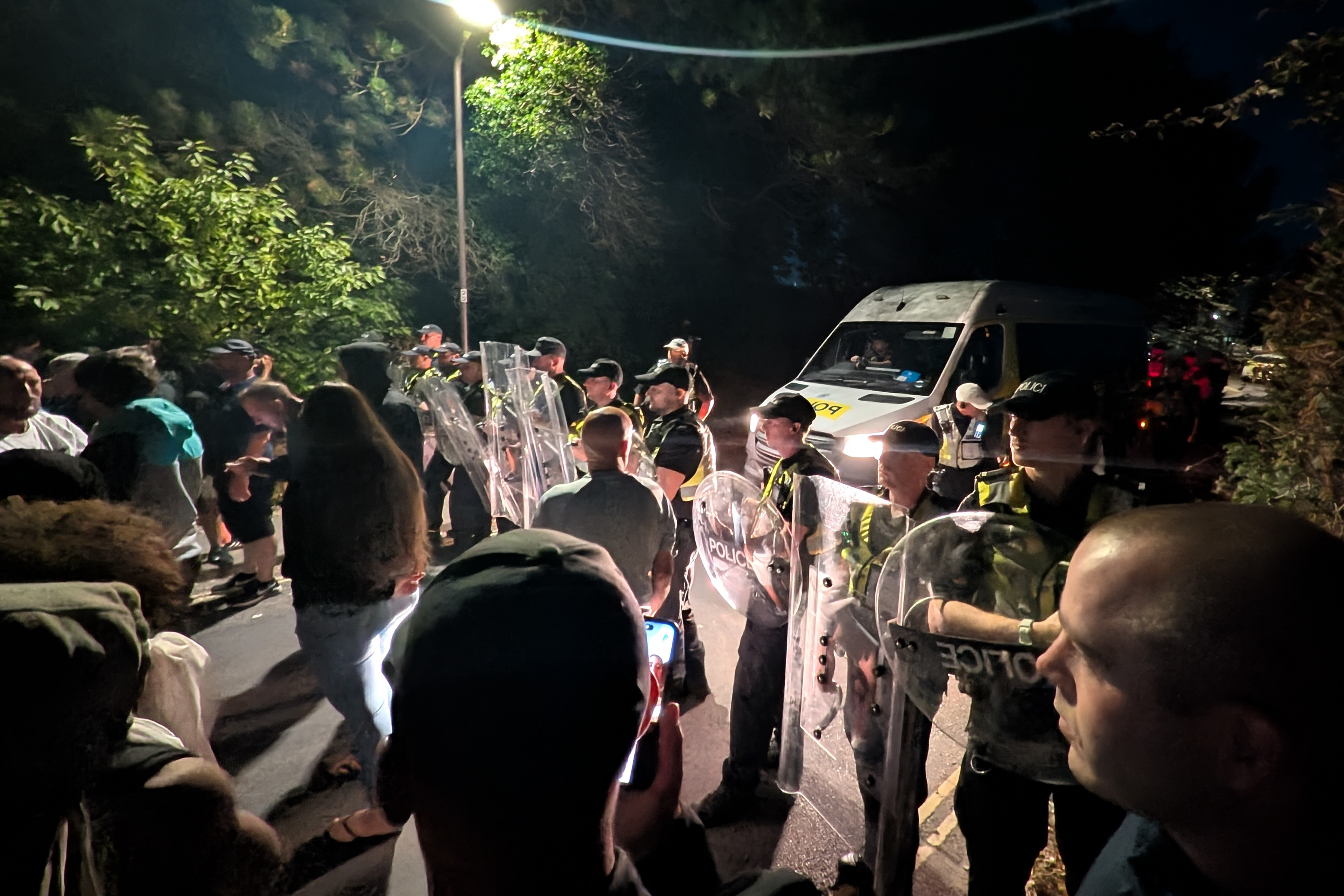
Police officers form a line to block protesters near Eastney Beach, in Portsmouth, England, on Sunday.PA
The myth that nothing ever happens on Labor Day weekend was punctured repeatedly in 2026, including the gruesome Miami crash of a cargo jetliner that killed five people on the ground and an armed man lunging at Ohio Democratic gubernatorial candidate Amy Acton at a campaign event. But the weekend’s most puzzling and arguably most alarming news was barely covered on American television: the sudden appearance in two British port cities — Dover and Portsmouth — of hundreds of black-clad, right-wing male protesters, their heads covered in balaclavas, there to cause chaos and protest the arrival of migrant boats.
The mysterious men — eventually tied to a self-proclaimed Christian group called the Patriot Platform, led by a former associate of the anti-Islamic, far-right political activist Tommy Robinson — attempted to block lifeboats carrying migrants from landing, and also tried to blockade their buses once on shore, while snarling local traffic as Dover’s famed white cliffs loomed in the background. The protests were a dramatic public illustration of the rising tide of right-wing reaction — much of it xenophobic rage over refugees — that has increasingly roiled politics in the United Kingdom, posing a threat to the milquetoast, inept Labour government.
But, in the spirit of the U.K.’s most famous fictional detective Sherlock Holmes, the real mystery along the British seacoast was the dog that did not bark. Although police did eventually restore order in the two port cities, the authorities were painfully slow to respond to such a large-scale civil disturbance, and few or no arrests were made. That’s in stark contrast to the frequent images over the last year of grandmothers and other peaceful, placard-carrying protesters getting dragged away by British bobbies when protesting for a free Palestine.
The reaction from the government of new Labour Prime Minister Andy Burnham was equally languid. A Burnham spokesperson, pressed by a reporter for a political response, would only call the shocking protests “an operational matter for the police to set out their response to the protests on the ground. So I will leave them to respond to that.” Winston Churchill, who (despite his many flaws) famously promised to fight fascists “on the beaches,” must have been spinning in his grave.
Speaking of Nazis, the protests and the sudden police embrace of pacifism coincided with a regional victory in a battered former industrial corner of eastern Germany for the extreme right AfD (Alternative for Germany) Party, the unholy heirs to Adolf Hitler’s legacy. This weekend’s echoes of Western Europe’s failed appeasement of the Nazis in the late 1930s are almost as troubling as the thuggish extremism itself. The coddling needs to end, or else we are condemned to repeat the absolute worst of our past.
What I wrote on this date in 2016
The protests in South Dakota, led by its Indigenous people, against the Dakota Access oil pipeline that erupted in the late summer of 2016 were a peak moment of 2010s political activism, and a lost cause (the pipeline opened the following year, after Donald Trump became president) that was totally worth fighting for. On this date 10 years ago, I was crusading — also unsuccessfully — for the Pennsylvania State Employees’ Retirement System (PSERS) to drop its roughly $192 million investment in the pipeline owner. I wrote, “Pennsylvania doesn’t have a great track record of environmental leadership — but there’s no reason why that history can’t be altered.”
I’ve mentioned it before in this space, but no one has done more to keep the tradition of the great American sports columnist alive than The Inquirer’s Mike Sielski. Last week he published a remarkable — and remarkably timely — deep dive into the case of a then-19-year-old from Pennsylvania Amish country whose addiction to online sports gambling and social isolation led him to make a bomb threat against the U.S. Open tennis tournament. The case was hardly an isolated incident, but the hallmark of an alarming trend: the growing number of threats not just against major sporting events but individual athletes, as more and more people — especially vulnerable young men like the one Sielski chronicles here — get addicted to the ubiquitous, heavily advertised betting sites. The piece is a reminder that great storytelling doesn’t need to be a dying art — but also that in-depth journalism requires time and your support. You provide that — and get some great reads in return — when you subscribe to The Inquirer.
By submitting your written, visual, and/or audio contributions, you agree to The Inquirer’s Terms of Use, including the grant of rights in Section 10.
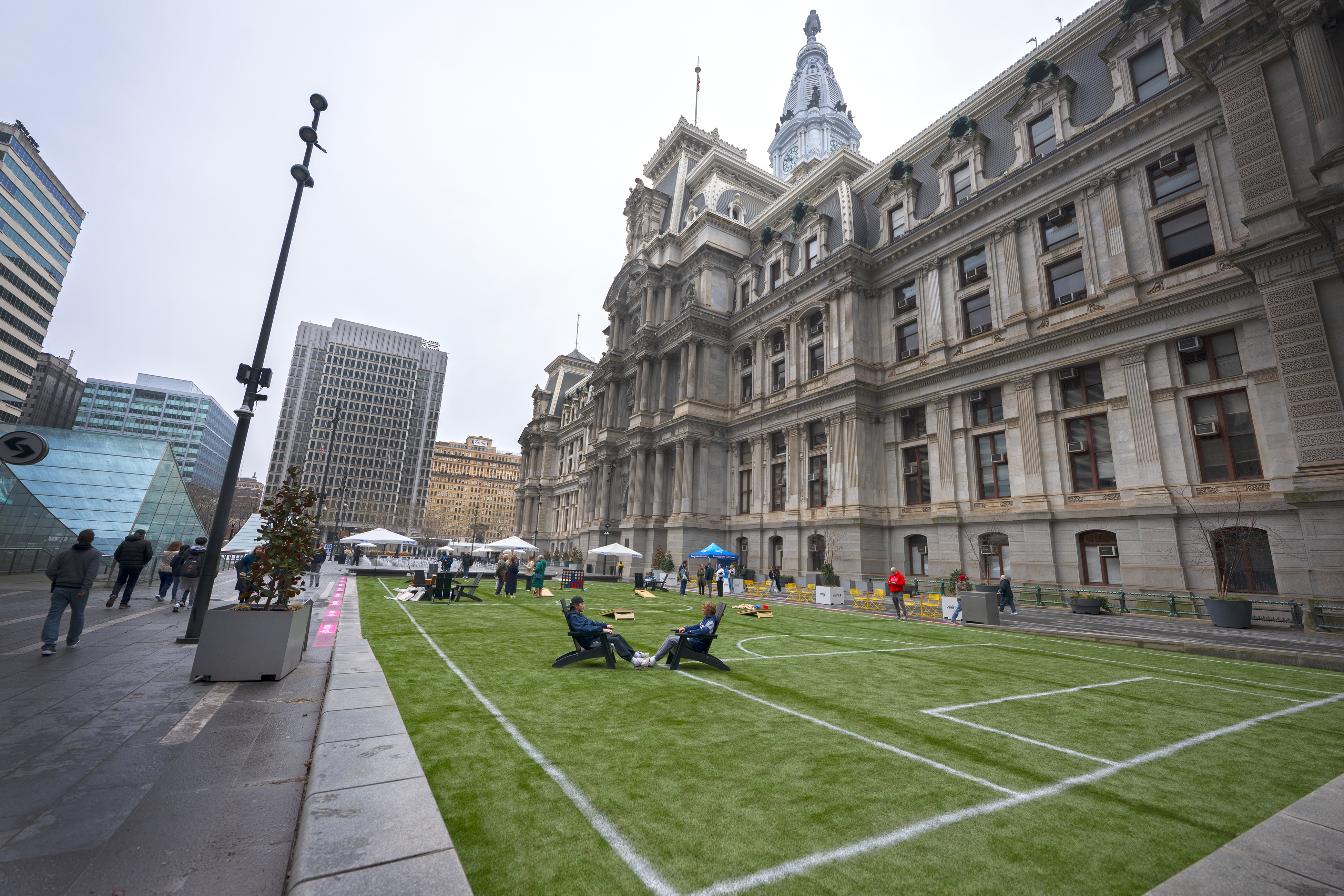
Confrontations between large groups of teenagers and Philadelphia police made for a tense scene in Dilworth Park outside City Hall over the holiday weekend and led to at least three arrests.
On Sunday, Philadelphia police issued seven citations for disorderly conduct, a spokesperson said. In addition, three people were arrested, one for robbery, another for disorderly conduct, and a third for violating gun laws.
In addition, an Inquirer reporter observed police detaining several young people on Monday evening as police sought to keep teens from reconvening inside the park. In one of the incidents, an officer appeared to sustain a bloody nose while tackling a young woman.
Philadelphia police spokesperson Corporal Jasmine Colón-Reilly said she did not have information about what led police to respond to the scene Sunday, nor the extent of any injuries. She said she did not have information about the Monday evening incident.
Videos shared on Instagram appear to show a hundred or more young people gathered in the park on Sunday, before police rush into the park to detain a person. In one of those incidents, a young man appeared to be assaulted by others in the crowd. Another video showed an apparently injured person collapse in the street. It was not clear from the videos whether the person was part of the crowd.