Category: Washington Post

  • This type of compassion brings us the most benefit, new study shows

    This type of compassion brings us the most benefit, new study shows

    Studies have long suggested that helping others can make us feel happier, and this extends to caring about animals too — as anyone who volunteers can attest.

    But a new study about compassion offers a window into how it relates to mental health, and it turns out that one type of compassion has more impact than you might think: How we care about and treat ourselves.

    “What came out of the study is that if someone reported high compassion for others but low compassion for themselves, they tended to have anxiety, depression and low well-being,” said Bassam Khoury, lead researcher in the study and clinical psychologist and professor at McGill University in Canada.

    People who struggle with self-compassion, Khoury said, tend to describe themselves in harsh terms.

    “I have many patients saying, ‘I hate myself,’” he said.

    He offered an example of a daughter who takes her aging parent to every appointment but tells herself she’s not doing enough. Or a nurse who covers others’ shifts but misses her own doctor’s appointment.

    “It’s inhuman to care for everyone and not yourself,” Khoury said. “It will fail at some point.”

    Khoury said he sees this pattern often in his practice — and his latest study suggests that having compassion for others while having low compassion for yourself can harm your mental health.

    In the study, published last month in the journal Personality and Individual Differences, Khoury and colleagues surveyed more than 1,200 Canadians online. Participants answered detailed questionnaires about their sense of compassion — how considerate and caring they are toward themselves, toward others and toward animals — as well as their stress, anxiety and depression, emotional regulation, and overall well-being.

    A group of about 200 participants repeated the self-reported survey a few months later, so researchers could determine whether people’s compassion levels remained consistent over time.

    Khoury said self-compassion has four main components: thinking about yourself without judgment, actively taking care of yourself, feeling love and respect for yourself, and accepting comfort or help from others when you need it.

    Paul Gilbert, a clinical psychologist who created the Compassion Focused Therapy method, said compassion is about being considerate of someone’s suffering — including your own — and hoping to ease it. Gilbert was not a part of Khoury’s study.

    “Compassion really is the courage and wisdom to address suffering, whether it’s within you or other people,” Gilbert said. “Compassion is the way we deal with the mutual suffering of all of us.”

    On difficult days, Khoury said, someone with low self-compassion is far more likely to do something harmful to themselves than something kind.

    “This is a population that is much more at risk for mental health challenges,” he said.

    In Khoury’s study, the researchers sorted respondents into six groups based on their answers. Some groups had high compassion for people and animals, or only for animals, but also had low self-compassion. Despite their kindness and consideration toward others, these two groups reported more stress, anxiety and depression than the other groups.

    “If you do things for others but you still don’t take care of yourself, it doesn’t protect you,” Khoury said, noting that those who don’t practice self-compassion are more susceptible to compassion fatigue or burnout. “You can be the best caregiver, but at the end of the day, if you don’t love yourself, you will start resenting others.”

    Another group that had both high self-compassion and high compassion for others and animals reported the least anxiety and depression and the highest sense of well-being of any of the six groups.

    “It’s about balancing; being able to have self-compassion while having compassion for others,” Khoury said.

    Christopher Germer, a clinical psychologist and lecturer at Harvard Medical School who was not involved in Khoury’s study, said the pattern Khoury found is in line with other research on self-compassion. Germer, who studies self-compassion, recently wrote the book Self-Compassion for Shame.

    “Self-compassion is associated with just about every measure of psychological well-being that’s been studied so far,” Germer said. “To grow our compassion for others, it’s important to grow our compassion for ourselves.”

    Khoury cautioned that his study has several limitations, including that the sample skewed heavily female, and most participants were English-speaking Canadians. Khoury said he hopes to expand his research to larger, more diverse samples across different countries. Still, he said he’s confident the core findings will remain.

    One obstacle to self-compassion, he said, is the misconception that it is selfish or self-indulgent.

    “It’s actually the opposite,” he said. “There’s no ego in it. You’re taking care of yourself so you can be an even more loving person.”

    Germer said the simplest way to practice self-compassion is to actually put a hand over your heart (some research suggests it may help reduce the stress hormone cortisol) “as a reminder that we, too, matter; we, too, are in the room; and we, too are suffering,” he said.

    He recommended asking yourself: “What do I need right now? That could be physically, emotionally, relationally, spiritually,” he said. “Then do it for yourself.”

    For those looking to build self-compassion, Khoury suggested a few starting points:

    Carve out time each day that belongs to only you. Take a walk, watch television, have a bath — anything that is done for you and not for someone else.

    Try meditation. Khoury said loving-kindness meditation is one of the most effective tools for cultivating self-compassion.

    Accept help from others. This is what people struggle with the most, Khoury said, but letting others take care of you is part of taking care of yourself.

    Consider therapy. If someone is holding negative beliefs about themselves, talking things through with a professional, Khoury said, is itself an act of self-compassion.

    “Anyone can get better at it,” Khoury said. “You just need to put some work in.”

    Building self-compassion doesn’t require you to sacrifice compassion for others. If anything, Khoury said, they are connected.

    “If you take more time for yourself, you are also helping others in a way,” he said.

    But self-compassion isn’t a quick fix. It takes practice.

    “We are all like a flower,” Khoury said. “If you water it every day, it will be much better than if you do nothing and hope it survives.”

  • Pollution spikes after Trump halted global air-monitoring efforts, report says

    Pollution spikes after Trump halted global air-monitoring efforts, report says

    Air pollution in dozens of cities around the world rose after U.S. embassies and consulates stopped monitoring air quality readings last year, according to a study published Monday.

    The Trump administration halted the program that published independent air quality data at more than 80 U.S. diplomatic sites in March 2025, citing budget constraints.

    Later that year, local air pollution levels increased by between 24% and 33% in 46 of those cities, according to Monday’s study, published in the Proceedings of the National Academy of Sciences.

    “This is such a big loss,” said Zoey Zhou, an assistant professor of climate at Columbia University and one of the study’s authors. “Not only for the data, but also for the health impacts and also for accountability.”

    The State Department’s program had been linked in a previous study to lower air pollution levels in the cities where it was active. Its pullback came amid other moves the administration has made to curtail climate change research and regulations on air quality. The Environmental Protection Agency repealed limits on greenhouse gas emissions for coal and natural gas power plants on Monday.

    The State Department did not respond to a request for comment on the recent findings and on whether the monitoring program will resume.

    The program originated in 2008 when the U.S. Embassy in Beijing began to share air quality information from a monitor installed on its roof. The readings, which sometimes topped the Chinese government’s reported levels, drew local anger and pressured Chinese officials to act.

    A 2022 study of 50 cities where U.S. embassies began monitoring air quality found that it led to significantly lower air pollution and increased local Google searches for terms like “air quality.”

    “The US Embassy monitoring program provided high quality and credible information to the public about the state of their air, often where there were no other sources of such information,” Andrea La Nauze, an associate professor of economics at Deakin University in Australia and one of the authors of the 2022 study, wrote to the Washington Post. (La Nauze was not involved in the most recent report.)

    Experts said the monitoring was valuable in cities and countries where local governments did not provide air quality information or offered inaccurate reports.

    “This has been very valuable to the citizens of those countries to be able to understand what are the levels of air pollution, and how much trust should they place in the numbers that are published by the national government or by the city or region,” said Kristie Ebi, a professor at the Center for Health and the Global Environment at the University of Washington. “And that has been useful then for people to take action.”

    Monday’s study investigated whether air quality gains would continue when that information disappeared, the authors wrote. They used satellite imagery to estimate air pollution levels in 46 cities where U.S. embassies and consulates halted monitoring in March 2025.

    By September that year, the aerosol optical depth — a measure of particles in the air derived from satellite imagery that is correlated with levels of PM 2.5, pollutants small enough to enter the bloodstream — around those cities had increased by about 33%. By November 2025, pollution levels had decreased but were still around 24% higher than before monitoring stopped.

    A 33% increase in aerosol optical depth corresponds to an increase of about 2 micrograms per cubic meter of PM 2.5, according to the study. The World Health Organization’s global air quality guidelines recommend that average PM 2.5 levels not exceed 5 micrograms per cubic meter each year.

    Grouped by region, the largest average increases in aerosol optical depth appeared at sites in Southeast Asia, sub-Saharan Africa, and South Asia, according to Zhou, the study co-author. She cautioned that the number of sites in each region was small and that the study was not designed to isolate particular countries or cities, where readings could have been affected by other local factors.

    Zhou wrote that the reduction in air pollution between September and November 2025 could suggest that other sources of air pollution information gradually filled the gap after U.S. embassies stopped their monitoring. But she said the pullback by American diplomatic missions, which issued highly visible and trusted air quality reports, was still a large loss.

    Zhou added that her study did not perform a full cost-benefit analysis of the air quality monitoring program for the U.S. embassies involved.

    Ebi of the University of Washington, who was not involved in the new study, said that the U.S. embassies’ data was also invaluable to researchers investigating other climate trends affected by air pollution, such as the spread of wildfire smoke and heat waves.

    “As a scientist, I don’t understand why there is such a strong focus on removing information,” Ebi said. “Of moving to a situation where people are more ignorant, less knowledgeable about the harms they may be facing … and what actions to take to help reduce those harms.”

  • Trump’s planned sale of controversial bombs to Israel is largest in years

    Trump’s planned sale of controversial bombs to Israel is largest in years

    The Trump administration is preparing a multibillion-dollar sale of 2,000-pound bombs to Israel in the largest single sale of the controversial munition in recent years, a U.S. official told the Washington Post.

    The $2.8 billion package, which would be purchased with U.S. taxpayer dollars, includes 40,000 bombs that weigh 2,000 pounds each, including 20,000 MK-84s and 20,000 BLU-117s, said the official, who like others spoke on the condition of anonymity to discuss military matters. The sale also includes 20,000 I-2000 Penetrator warheads.

    Among the most destructive munitions in Western military arsenals, an MK-84 explosion sends metal fragments in every direction for thousands of feet, can rip through metal and thick concrete, and often creates large craters in the earth.

    The pending transaction has been informally notified to congressional committees, setting up a potential litmus test for Democrats as frustrations with Israeli Prime Minister Benjamin Netanyahu have created unprecedented strain in the U.S.-Israel relationship.

    Though described as a sale, the transaction is financed through a mechanism known as Foreign Military Financing, in which the United States provides the money that Israel uses to buy the weapons.

    When asked about the humanitarian concerns, a senior administration official said: “All foreign arms sales are moving through the appropriate process. We do not comment on pending sales.”

    The Israeli Embassy did not respond to a request for comment.

    The size of the package eclipses previous sales of 2,000-pound munitions to Israel during the Biden administration and the Trump administration, including a controversial $2.04 billion sale in 2025 that bypassed the normal congressional review process.

    The 2,000-pound bombs have been employed by Israel on hundreds of occasions in Gaza and Lebanon, playing a significant role in the death toll of those conflicts. Israel has drawn criticism for routinely dropping MK-84s in zones it designated as safe for civilians in Gaza.

    “They do like to use them a lot when they’re trying to target any building,” said Trevor Ball, a former explosive-ordnance-disposal technician for the U.S. Army. “If Hezbollah or whoever is in a building, an MK-84 will bring down the whole building.”

    Nicknamed the “hammer” by U.S. pilots in the first Gulf War, it is the only munition that President Joe Biden’s administration stopped sending to Israel during the Gaza war out of concern about the killing of Palestinian civilians. That involved suspending a single shipment of the munitions in the spring of 2024. The policy was immediately reversed by President Donald Trump in January 2025, his first month back in office.

    “Given the way Israel conducted its air war in Gaza and, to some extent, in southern Lebanon, there are real concerns about how such weapons would be used in densely populated areas,” said Brian Finucane, a senior adviser at the International Crisis Group. “That’s assuming that you have valid military targets to start with because there are concerns about what Israel deems to be valid military targets.”

    U.S. support for the sale comes despite several areas of tension between Israel and the Trump administration, including over the violent attacks on Palestinians by Israeli settlers in the West Bank, and ongoing concerns about Israeli military operations in Lebanon and Syria. Israelis also have spurned Trump’s peace plan for Gaza, which involves Hamas disarming in exchange for a withdrawal of Israeli forces.

    When the Trump administration struck a short-lived deal with Iran aimed at ending the war there, allies of Netanyahu harshly criticized the agreement and attacked Vice President JD Vance for negotiating it.

    As the conflict has dragged on ahead of the midterm elections, Trump and his aides have grown increasingly frustrated with Netanyahu, who pushed for the war on the promise of a quick and decisive victory.

    Though the delivery time for such orders can be multiple years, approving such sales sends a broader signal about the bilateral relationship.

    “If the Trump administration’s goal is to calm things down in the Middle East, the timing of this is unusual,” Finucane said. “Whether they intend to or not, it sends a vote of confidence to Israel.”

    The Trump administration is pressing the leaders of the Senate Foreign Relations Committee and the House Foreign Affairs Committee to approve the sale.

    Republican and Democratic leaders historically have backed such sales, but they are starting to face resistance from rank-and-file members regarding U.S. support for Israel stemming from the unpopularity of the wars in Gaza and Iran.

    Polls consistently show most Americans oppose the war in Iran, which has raised energy costs and increased inflation. In July, more than 100 House Democrats voted to end all U.S. aid to Israel, signaling a historic shift in the party’s opposition to the country.

    Republicans are more unified in their support for Israel, but a growing number of conservative commentators, including Megyn Kelly, Tucker Carlson, and Candace Owens, have questioned Washington’s steadfast backing and the $3.8 billion of aid the U.S. sends to Israel every year.

    Besides the MK-84, the sale includes I-2000s, a penetrating bomb body used to attack hardened structures, and BLU-117s, a variant of the MK-84 that has thermal protective coating to make it safer for naval storage.

  • Iranian strikes have damaged hundreds of structures at U.S. bases, watchdog says

    Iranian strikes have damaged hundreds of structures at U.S. bases, watchdog says

    Iranian strikes have damaged or destroyed hundreds of buildings and other structures at U.S. bases across the Middle East, and caused about $184 million worth of damage at U.S. diplomatic facilities, according to a Pentagon watchdog report.

    The inspector general’s report to Congress on Operation Epic Fury — the Trump administration’s name for the war with Iran — also details the extent of U.S. munitions shortages, in the first comprehensive public accounting of the war, which is now in its seventh month.

    The report, released Monday, covers operations through June 30. It contains input from the departments of Defense and State and other agencies to provide the most complete picture yet of the cost and military impact of the ongoing conflict.

    Buildings and other structures at U.S. bases in Kuwait, Bahrain, Qatar, UAE, Saudi Arabia, Iraq, Oman, and Jordan were damaged or destroyed in the war, the report stated, adding that U.S. diplomatic facilities in Iraq, Kuwait, Saudi Arabia, and the United Arab Emirates also sustained damage.

    The mounting costs of the war and impact on U.S. munitions stockpiles has already come under scrutiny. In July, Defense Secretary Pete Hegseth told a Senate hearing that the war has cost $37.5 billion and defended the administration’s request for a further $67 billion to restock the Pentagon’s arsenal and avoid looming budget shortfalls.

    The latest report details how the war has “resulted in strategic inventory shortfalls” of munitions and “revealed industrial base bottlenecks for munitions resupply.”

    It said the Defense Department is working to “streamline” procurement and production processes, as well as stockpile critical materials, components, and munitions to mitigate the shortage. But while these efforts have begun, the defense industrial base requires “significant lead time” to expand production.

    “The most persistent bottlenecks remain in the production of solid rocket motors, the availability of high-grade explosives and propellants, and the recruitment of skilled manufacturing labor,” it states.

    The expenditure of U.S. munitions is increasingly worrying U.S. allies and Pentagon officials in the Indo-Pacific region who fear the war in Iran could undermine readiness for a potential conflict with China. The weapons drain has become a source of tension between President Donald Trump and Hegseth, though Trump has denied U.S. weapons are running low.

    On Monday, Trump touted U.S. weapons stockpiles in a post on Truth Social, saying he had received a report noting the U.S. is producing “more Exquisite and Elite Weapons than at any time in our History” that were being delivered to U.S. forces.

    “A primary focus of this production has been Patriots, THAAD Systems, Tomahawks, and other Standard Missile Systems, of which we already have large numbers in stock,” he said.

    The Pentagon and the White House did not immediately reply to requests for comment early Tuesday.

    The Washington Post reported in May that the U.S. had depleted much of its inventory of advanced missile-defense interceptors, using up roughly half of the Pentagon’s total inventory of Terminal High Altitude Area Defense, or THAAD, interceptors. The U.S. military also fired more than 850 Tomahawk cruise missiles in the first four weeks of war, a rate that has alarmed some Pentagon officials.

    The extent of the munitions the U.S. has used during Operation Epic Fury illustrates the “magnitude and complexity” of the challenge posed by Iran, the report said, noting Iran’s large armed forces, extensive underground facilities, and decades of building a domestic defense industry.

    The U.S. launched Operation Epic Fury on Feb. 28 in joint strikes with Israel that killed Iran’s leader at the time, Ayatollah Ali Khamenei. The war has now entered its seventh month, with Iran retaining leverage over the Strait of Hormuz, a critical waterway for oil and gas flows from the Persian Gulf. A recent lightning offensive by Houthi rebels in Yemen, supported by Iran, has threatened to further imperil shipping through the Bab al-Mandab Strait.

    Dozens of U.S. aircraft have been damaged or destroyed during the operation, including four F-15E fighter jets, one F-35A damaged in enemy fire over Iran, and several other aircraft and helicopters, the report said.

    More than 50,000 U.S. service members have been deployed throughout U.S. Central Command’s area of responsibility in support of the operation, the watchdog report said. A total of 18 have died, the report said, including several in July. It said 417 service members were wounded between Feb. 28 and June 30.

    The State Department has also incurred around $113 million in costs, including nearly $80 million responding to events such as the evacuation of U.S. citizens and State Department personnel, the report said, adding that about 9,000 Americans have left the region on charter flights and buses.

    The war has also had an “immediate negative impact” on U.S. assistance across the Middle East, including agriculture, food, health, nutrition, and water sanitation, because of the departure of embassy staff, the report said.

  • U.S. poverty rate drops slightly, but experts fear worse ahead

    U.S. poverty rate drops slightly, but experts fear worse ahead

    The U.S. poverty rate fell slightly last year as Americans’ incomes rose alongside rising prices, according to new census data published Tuesday. But the data from 2025 did not reflect cuts to social assistance this year that experts fear will cause a rise in poverty soon.

    Just over 1 in 10 Americans lived below the poverty line in 2025, the Census Bureau found, a half-percentage point drop since 2024.

    The median American household income rose more than 2% in inflation-adjusted terms, to $87,460. And the numbers reflected a narrowing of the income gap between men and women: Women’s earnings from full-time, year-round work rose about 3%, while men’s earnings remained mostly flat, meaning the average full-time female worker went from earning about 80% as much as an average man to about 83% as much.

    Officials touted the lowest official poverty rates on record for children and for Hispanic Americans, at about 13% of both groups.

    But advocates for people in poverty warned that the gains might be short-lived.

    The report reflects the number of people in poverty in America last year, before significant changes to the social safety net, passed by Congress in 2024 as part of a major tax and spending bill, took fuller effect this year. Experts who reviewed Tuesday’s numbers said they expect next year’s census data to show a substantial increase in poverty, due largely to cuts to the food stamps program.

    “The nature of an annual statistic might mask some of the volatility that families already started to experience,” said Megan Curran, a poverty expert at Columbia University. “We know the reality on the ground is going to be looking quite different from what the numbers were” a year ago.

    “This was the situation that families were in on the eve of the full implementation of these major changes to the safety net,” she said. “But it’s not reflecting what life is like for families who rely on SNAP and programs like that in September of 2026.”

    The Center on Budget and Policy Priorities found that 5 million people lost SNAP benefits between July 2025 and May 2026 as a result of the new legislation, which strengthens work requirements for food stamps and eventually shifts much more of the cost of the program onto states. In the first five months of this year, the organization found, the number of people receiving assistance fell in all but three states, and by as much as 20% in Arizona.

    This year’s Supplemental Poverty Measure — a more sophisticated method that takes into account families’ expenses and government benefits, rather than just marking whether their income falls above or below the poverty line — remained basically unchanged since last year, designating about 13% of Americans as impoverished. Advocates said they expect the SPM to rise next year as well, as government benefits decrease.

    Chastity Lord, president of an anti-poverty program for single mothers and their children, said rising prices have pushed women to take on more work this year to support their families, as reflected in the rising female income numbers. Overall, the average income for full-time, year-round work stayed flat this year while overall household income rose, reflecting more income from other sources including gig work, as well as retirement benefits and other inputs.

    “You’re talking about rising gas prices, rising food prices, rising utility prices. Those are baseline expenses that when they don’t get paid, the engine doesn’t run of life, and folks are having to do what they need to do,” said Lord, whose organization — Jeremiah Program — supports working mothers in nine cities around the country. “Where you’re really seeing supplement around that employment is the gig economy. We call it the ‘survival economy.’”

    She predicts a substantial increase in the SPM next year, when that gig work won’t be enough to replace widespread cuts to food stamps.

    Tuesday’s data also showed that 92% of Americans had health insurance for some or all of the year, a near-historic high that has held fairly steady for the past decade.

    But on health insurance, too, the 2025 numbers don’t reflect changes already underway this year. Substantial subsidies for people who buy their health insurance on the Affordable Care Act marketplace expired on Jan. 1, and the healthcare group KFF predicted that as many as 5 million people could lose marketplace coverage in 2026, either because high premiums deterred them from signing up or because they failed to make payments during the year.

    Meanwhile, premiums for employer-sponsored insurance spiked this year and are set to climb more next year, leading more people to choose to go without insurance.

    Tuesday’s data comes from the annual Current Population Survey, a sample conducted by the Census Bureau early each year. The full decennial census that counts every American will next run in 2030. Last week, the Trump administration proposed both adding a question about citizenship to the 2030 Census and leaving immigrants without permanent residency status out of the count.

  • Trump says he likes Flock license-plate cameras amid growing backlash

    Trump says he likes Flock license-plate cameras amid growing backlash

    President Donald Trump expressed his support for a fast-growing surveillance tool opposed by many Americans, saying he likes Flock cameras “because of law enforcement.”

    “I sort of like them because of that, because of law enforcement, but some people don’t,” Trump told reporters aboard Air Force One on Sunday in his first public comments endorsing the technology. “They think it’s an infringement. I like them.”

    Trump has previously sidestepped questions about his stance on the artificial intelligence-powered license-plate readers that have provoked broad privacy and surveillance concerns. Asked about them in the Oval Office last month, he said: “It’s being studied right now. We’ll have an answer … as to our views on it over the next couple of weeks.”

    Trump’s new comments on Flock came shortly after he rejected calls from top AI leaders to limit the pace of development of artificial intelligence models. “We’re leading China in AI, we’re the most sophisticated country in the world, and frankly I want to keep it that way,” he said on the sidelines of the Irish Open golf tournament. “Whoever wins AI, wins.”

    Atlanta-based Flock has a network of more than 120,000 cameras across the U.S. The cameras record 20 billion license plate scans every month, the company says, which have helped officers investigate 1 million crimes a year.

    The surveillance systems had broad support as recently as last year, but an August survey by YouGov of approximately 20,000 U.S. adults found that 46% said they oppose the technology being used in their communities, compared with 38% support.

    The same month, an investigation by the Washington Post found dozens of law enforcement officers have been charged with or accused of misusing the plate-reading technology. Soon after, Flock announced changes to its platform to prevent the camera network from being abused by police officers, including a requirement for every search to be labeled with a criminal case number.

    But the technology has increasingly become a topic of political debate ahead of the midterm elections, with candidates from both parties outlining their opposition to them.

    “Do you ever feel like you are in a cage, kind of stuck, being watched?” U.S. Senate candidate Abdul El-Sayed asked in a video posted last month. “Well, that is because you are,” the Michigan Democrat continued, before criticizing what he called the “mass proliferation of” Flock cameras across the country.

    Rep. Keith Self, a Republican running for reelection in Texas, mentioned the cameras in a social media post, saying: “Big Brother has NO place in the Lone Star State.”

    Florida Gov. Ron DeSantis (R) last month said the cameras are “out of control.”

    “I don’t want to have this become a surveillance state,” he added.

  • Trump Jr. wedding celebrations were sponsored by powerful Russian businessperson

    Trump Jr. wedding celebrations were sponsored by powerful Russian businessperson

    Some of the festivities for Donald Trump Jr.’s intimate wedding celebration on two private Bahamian islands in May were paid for by a wealthy Russian who does business with the state.

    Umar Kremlev is the president of the International Boxing Association, a Switzerland-based sports league financed by Russian state energy giant Gazprom. He recently accompanied Russian President Vladimir Putin on a delegation to China, and he is under Ukrainian sanctions that describe him as a “close friend of the head of Putin’s security service.”

    Kremlev hosted two nights of celebrations after Trump Jr.’s wedding ceremony, the bride, Bettina Trump, said on Instagram on Monday.

    “It was an extraordinarily generous wedding gift from a friend, and something for which we were and remain incredibly grateful,” she wrote alongside photos from the festivities showing the couple and other Trump family members.

    Kremlev’s contribution was first disclosed by the investigative news website ProPublica, which reported that it cost hundreds of thousands of dollars and included event planning, a fireworks show, and rental of one of the private islands where guest slept. The payments came from a Dubai entity affiliated with the boxing agency, the website reported, citing records reviewed and interviews with three people.

    Bettina Trump denied any sinister or political motive. “Generosity doesn’t automatically come with an agenda,” she wrote on Instagram. “Sometimes a wedding gift is simply a wedding gift.”

    President Donald Trump did not attend the wedding. “It’s going to be just a small little private affair,” he told reporters at the time. “This is not good timing for me. I have a thing called Iran and other things.”

    In response to questions, the White House referred to Bettina Trump’s Instagram post.

    Kremlev did not immediately respond to a request for comment through the boxing association. He met Trump Jr. several years ago and speaks limited English, according to ProPublica.

    Kremlev has a criminal record under a previous name, the Washington Post reported in 2024. As head of the Russian Boxing Federation, Kremlev awarded Putin a diamond boxing glove, and Putin gave Kremlev a prestigious state honor known as the Order of Merit to the Fatherland. In April, Putin awarded Kremlev another honor, the Order of Friendship.

  • Putin warns Europe of war if peacekeeping troops are deployed to Ukraine

    Putin warns Europe of war if peacekeeping troops are deployed to Ukraine

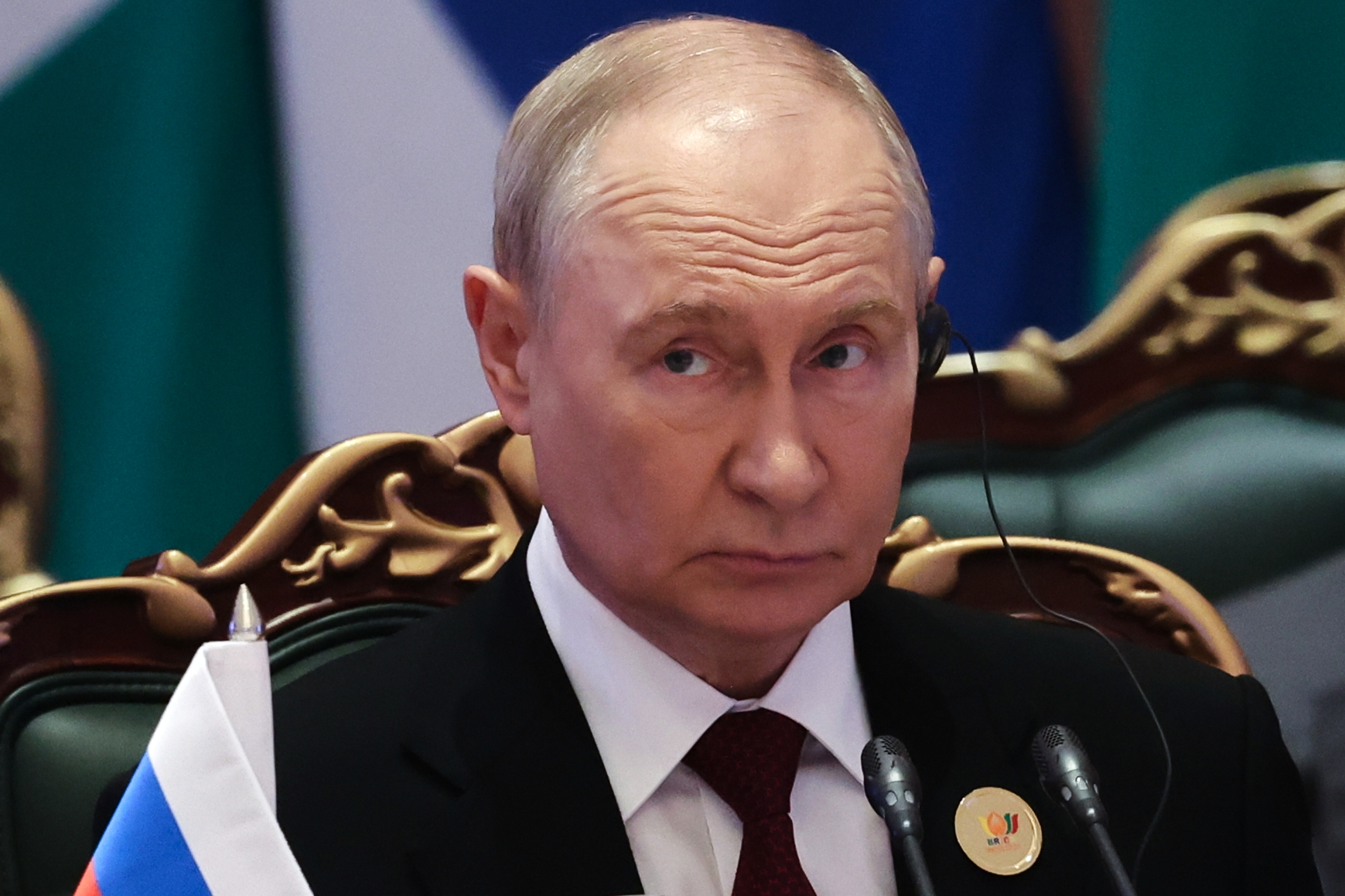
    Offering a grim assessment of Russia’s relations with the West, President Vladimir Putin pointedly warned European governments not to deploy any troops, including peacekeeping forces, to Ukraine, saying it would mean “war.”

    “They speak of contemplating the dispatch of troops to the territory of Ukraine,” Putin said, following his participation Friday at a summit of leaders of the BRICS bloc of nations in New Delhi. “This would mean war with Russia.”

    Putin lashed out at what he called systemic errors committed by the “West’s globalist circles,” insisting that Russia posed no danger to European countries, which he said “seek to frighten their populations with a mythical Russian threat.”

    He also insisted that the West was to blame for the war in Ukraine by seeking to expand NATO. “They directly supported separatism in the Caucasus and sought to break up Russia; this is a matter of fact. Furthermore, today’s crisis in Ukraine was likewise instigated by them.”

    As if to put an exclamation point on Putin’s remarks, a Russian drone strike hit passenger rail infrastructure in western Ukraine as many Western diplomats, officials, and experts, including former CIA Director David Petraeus, former British Prime Minister Boris Johnson, and former Swedish Prime Minister Carl Bildt were leaving the country after attending the annual Yalta European Strategy conference in Kyiv.

    Passengers on at least one train were evacuated, but no deaths or injuries were reported from the strike.

    German Defense Minister Boris ​Pistorius called the drone strike a calculated escalation to fuel fear in Europe.

    “It is ​all the more important that we ⁠remain levelheaded, that we do not ​allow ourselves to be provoked, but ​that at the same time we leave no doubt that we are capable of defending ​ourselves,” Pistorius told reporters. “What Vladimir Putin is doing is dangerous. He knows that, and that is ​why he ​is doing ⁠it.”

    The rail line attack further alarmed European officials who have been warning that Russia could attack near Ukraine’s border crossings with NATO countries or could intensify sabotage operations inside Europe to discourage Western leaders from further aiding Ukraine.

    “These coming weeks and months will be a time of very intensified actions on the Russian side, and unfortunately we cannot rule out that this escalation will also affect our territory,” Polish Prime Minister Donald Tusk said Sunday following a government security briefing.

    The Trump administration in recent days has renewed its efforts to jump-start peace negotiations between Russia and Ukraine, including with trips by presidential envoys Steve Witkoff and Jared Kushner to Moscow and Ukraine.

    Following those talks, Kushner said that Washington had already drafted most of the peace agreement but that it was being held up by Ukraine’s reluctance to make territorial concessions to Russia, which now occupies about one-fifth of Ukraine’s sovereign territory.

    Putin has demanded that Ukraine surrender all of its eastern Donbas region, and Russia has claimed, illegally, to have annexed four Ukrainian regions, even though militarily it does not control all of that land.

    “President Putin laid out his position regarding what he wants to achieve,” Kushner said at the YES conference. “If Ukraine wanted to retreat to that line, we would have already prepared and agreed on the remaining terms of the deal. Currently, Ukraine does not want to do this.”

    Ukraine has repeatedly said that ceding land that Russia failed to capture militarily is a nonstarter, arguing that withdrawing from fortified cities in Donbas would only expose the country to future attacks.

    Kushner and Witkoff said they were pushing for trilateral negotiations. And Ukrainian President Volodymyr Zelensky said he is willing to meet Putin at the Group of 20 summit scheduled for mid-December at Trump’s resort in Doral, Fla.

    The Kremlin immediately ruled out such a meeting, calling it “impossible” and saying that Putin would only meet Zelensky in Moscow. Kyiv repeatedly has dismissed the offer of a meeting in Moscow as the Kremlin playing games.

    Putin’s spokesperson Dmitry Peskov said that the talks on Ukraine probably would resume in October, after Russia holds a key parliamentary election this weekend.

    The potential deployment of a European peacekeeping force has been discussed as one potential way to provide Ukraine with “security guarantees.” But any such step would first require the signing of a durable truce between Kyiv and Moscow.

    Britain and France previously had agreed to deploy forces in Ukraine if the country reaches a peace deal with Russia, with then-Prime Minister Keir Starmer and President Emmanuel Macron signing a “declaration of intent.”

    But as negotiations stalled, with Washington focused on its own war in Iran, the proposals to send European troops to Ukraine have also gone quiet.

    Europe, because of its increasing role in Ukraine’s capability to launch strikes against Russian territory, is becoming “Moscow’s central strategic problem, overshadowing the United States, Ukraine, and, to some extent, even NATO,” Tatiana Stanovaya, a senior fellow at the Carnegie Russia Eurasia Center, wrote on X.

    “This will shape the nature of negotiations with and about Ukraine, as well as the outcome of any settlement, far more than it did a year ago,” Stanovaya added. “It is likely to dominate European geopolitics for decades.”

  • National Security Agency launches historic restructuring

    National Security Agency launches historic restructuring

    The National Security Agency is set to undergo its most extensive internal restructuring in at least a decade, according to current and former officials briefed on the emerging plan.

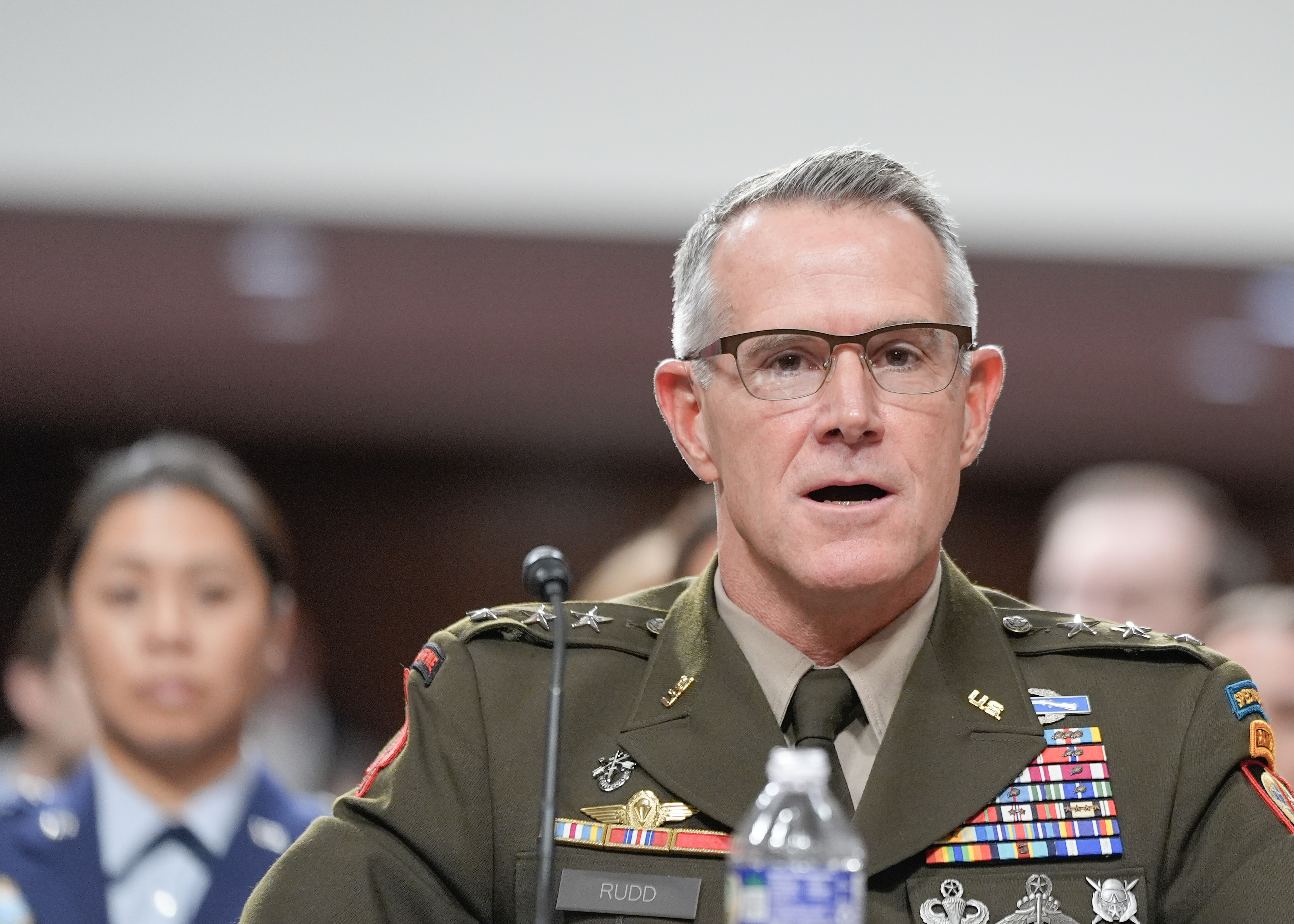
    The new design for one of the most powerful U.S. intelligence agencies, which was announced to senior NSA leaders last week, is the brainchild of Army Gen. Joshua M. Rudd, the NSA director, these officials said.

    Rudd’s initiative calls for the creation at NSA’s Fort Meade, Md., headquarters of five new organizations inside the agency, in artificial intelligence, China, cybersecurity, combat support or warfighting, and global intelligence. Each will be led by a newly elevated “mission director,” according to former officials.

    This new organizational configuration will better reflect NSA’s current and future priorities, Rudd believes, according to current and former officials. NSA, the U.S. intelligence community’s premier global eavesdropping arm, specializes in digital espionage.

    The mission heads will have the “effective” authorities of an NSA deputy director, according to one former official familiar with the plan. This former official, like others in this article, spoke on the condition of anonymity to discuss sensitive information about the agency, whose operations are highly classified.

    The NSA did not respond to a request for comment.

    It was not immediately clear if the five new organizations will replace existing divisions within NSA or be superimposed atop the agency’s existing structure. The NSA is believed to employ more than 30,000 people, both military and civilian, and has a larger workforce than the CIA.

    Rudd told senior NSA officials that the heads of the five new mission centers might be selected from outside the agency, unnerving NSA insiders, according to the former officials.

    “They are begging people to come back, especially leaders,” said the first former official, referring to NSA personnel who have left.

    A second former official said Rudd is considering candidates for the new mission director posts. It is unclear whether any have been chosen yet.

    The elite hacking unit known as Tailored Access Operations (TAO), reconstituted in recent months by Rudd, will fall under the purview of the mission director for global intelligence, according to a current and former official.

    The TAO is set to receive a significant budget increase in the new federal fiscal year, which begins Oct. 1, the second former official said.

    Founded in 1997, TAO is among the most secretive parts of the NSA, devoted to compromising — and sometimes attacking — the hardest-to-reach digital targets worldwide. The unit name was retired in 2016, and its members spread across different NSA components.

    Rudd, who was confirmed in March, is both director of the NSA and head of U.S. Cyber Command, one of the Pentagon’s combatant commands. In his dual-hatted role, he reports to both Defense Secretary Pete Hegseth and Director of National Intelligence Jay Clayton.

    Before assuming the NSA directorship, Rudd’s military career mostly focused on special operations.

    The NSA, generally believed to be the biggest and most-well-funded arm of the U.S. intelligence apparatus, focuses on the large-scale collection of signals intelligence, including communications and other electronic information. It also manages and secures U.S. encryption systems to prevent foreign actors from penetrating sensitive coded U.S. government communications and networks.

    The timeline for the NSA restructuring is aggressive. The new mission directors will be expected to provide Rudd their organizational redesigns by the end of the month, according to a former official. Rollout is expected in mid-October, with the target for “full operating capacity” slated for mid-January 2027, said a current and former official.

    Rudd “admitted that they don’t know how they are going to do it, so they are going to rush into reversible decisions, in case it is wrong,” said the first former official. NSA personnel are still unclear whether the new mission directors will merely be grafted atop preexisting bureaucracy or will oversee more fundamental structural shifts inside Fort Meade.

    Since becoming NSA director in March, Rudd has been focused on AI-related advancements, according to former officials. The NSA has rolled out a new desktop AI tool called “Ask Mary,” purportedly named for the head of the division leading the agency’s AI-related integration efforts. The agency has been keenly interested in working with commercial AI labs, even circumventing a Pentagon ban against Anthropic to employ the firm’s advanced Mythos model.

    Rudd has been a frequent visitor to the White House, according to a former official, with AI-related issues dominating his conversations there. The administration has proposed a massive, multibillion-dollar budget increase for investments in IT and computing capability, according to former officials. Approved by Congress as part of the “black budget,” NSA’s funding levels are a tightly held secret.

    The last major agency restructuring, known as NSA 21, was initiated in 2016 under then-Director Mike Rogers. That effort, which divided NSA into six directorates, was given a two-year runway for its rollout and still remains unfinished, the first former official noted.

  • The new threat election officials fear: Trump’s federal government

    The new threat election officials fear: Trump’s federal government

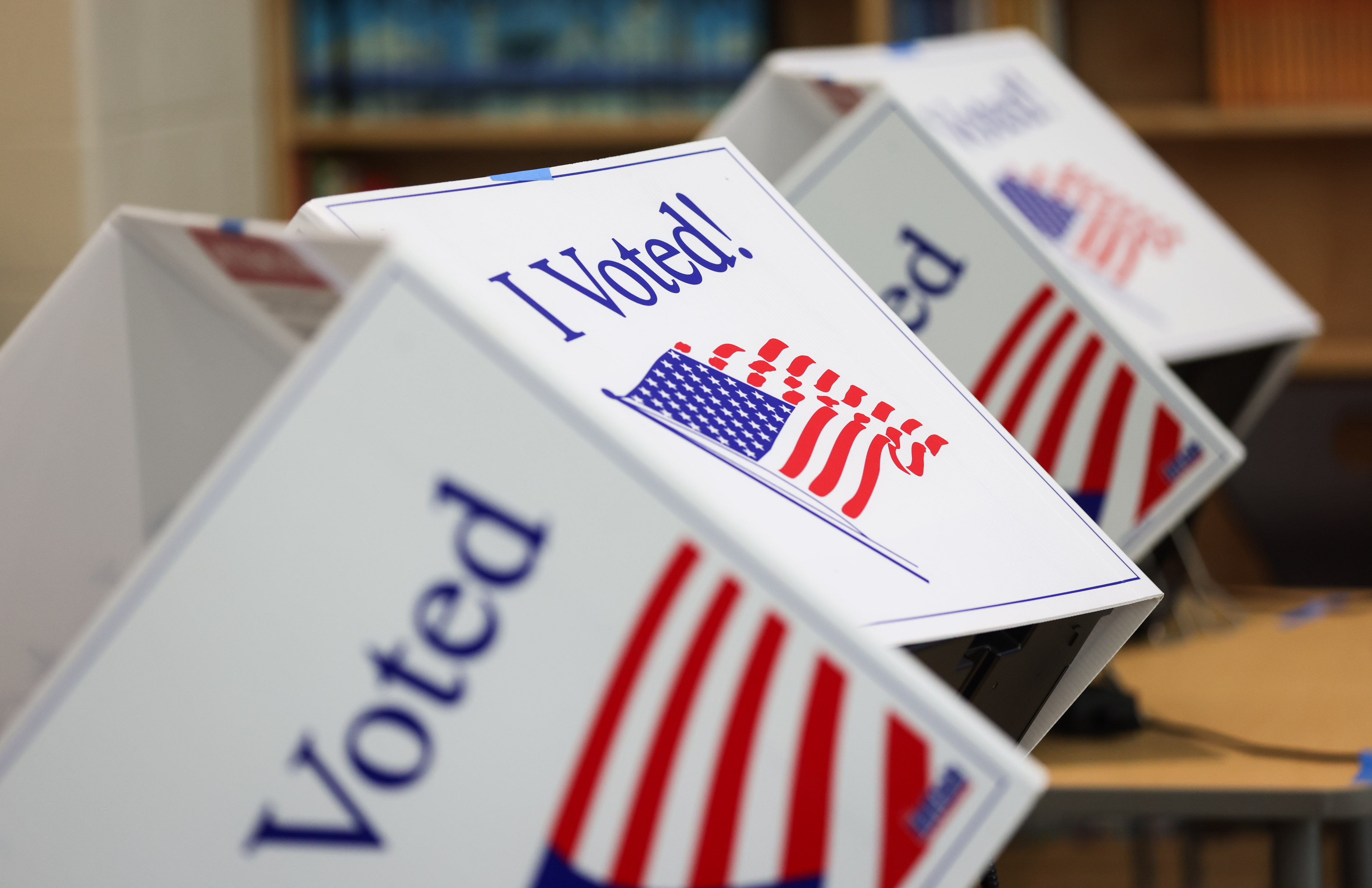
    The activists staking out the ballot drop boxes in suburban Phoenix wore body armor and face coverings. With guns at their sides, they recorded residents as they deposited their votes during the last midterm elections.

    Voting-rights groups sued, and a federal judge put a stop to them, ruling they had to stay at least 250 feet away while armed to ensure voters were not intimidated.

    Four years later and 100 miles to the south, Pima County Attorney Laura Conover is treating the 2022 incident as a lesson on the importance of moving quickly this fall if anyone — including Immigration and Customs Enforcement agents — tries to interfere with the election’s administration. For her county along the U.S.-Mexico border, Conover has drawn up court papers so she can immediately file litigation to protect the vote.

    “When it comes to preparing for elections, we are on overdrive,” she said.

    In 2022, one of the greatest threats to elections came from activists like the armed men and women looming near drop boxes and questioning America’s voting procedures. This year, Conover and other officials across the nation are preparing for the possibility that the most serious risks may come from President Donald Trump, his agencies, and allies — including many now in power at the federal, state, and local levels. Election officials are contemplating ideas that once sounded outlandish, such as troops seizing voting machines, the president dictating last-minute election rules, or rogue officials blocking the certification of results.

    For the last year and a half, Trump and his administration have disparaged long-standing voting practices, dismantled federal agencies that protect elections, impounded ballots from past elections, amplified conspiracy theories, threatened to prosecute election officials, tried to limit mail ballots, and pushed to require proof of citizenship to register to vote.

    Their efforts have touched on nearly every stage of voting and could affect control of Congress, as Republicans try to retain their slim majority. A Democratic takeover of the House would stall Trump’s agenda, block funding for his initiatives, trigger a flood of investigations, and mire his administration in congressional hearings.

    The high stakes seem top of mind for the president. “I’m going to be impeached,” he warned supporters at a South Carolina rally last month.

    With seven weeks until Election Day and some ballots already in the mail, the White House and election administrators are clashing over nearly every aspect of the midterms, from who is eligible to vote to whether absentee ballot envelopes must have barcodes on them.

    Agents, troops, and monitors

    Last month, former Trump adviser Stephen K. Bannon told the audience of his popular MAGA podcast that the president should send an “up-armored ICE presence at these polling booths.”

    Critics might call that intimidation, Bannon said, and they would be right. “It’s an intimidation if you’re a foreigner,” he said. “It should be intimidating.”

    In Maine, the Republican nominee for governor also said he’d ask the administration to send ICE agents to the polls. Georgia’s Republican gubernatorial nominee spoke favorably of using National Guard troops. The GOP candidate for governor in Michigan said he’s talked to the head of the FBI about agents having a presence in the state ahead of Election Day. All three states are key in determining which party will control Congress and, after 2028, the presidency.

    Federal law makes it a felony to station troops or armed agents where an election is being held. But the statute carves out an exception for repelling enemies of the United States, and Trump’s critics worry he could invoke that provision by arguing without evidence that noncitizens could try to vote.

    Even a brief appearance by troops at the polls — and the inevitable online clips of them there — could dissuade voters from casting ballots, election officials and experts worry.

    The talk of troops and federal authorities at the polls has pushed local officials into preparation mode. This year, 10 Democratic prosecutors from around the country, including Conover in Arizona’s Pima County, formed a group to push back on the administration on elections and other matters.

    They call their group Fight Against Federal Overreach — or FAFO, after the slang term for messing around and finding out. They trade tips every two weeks on video calls.

    “With this president, you have to prepare for anything and everything,” Conover said.

    Mary Moriarty, the top prosecutor in Minnesota’s Hennepin County, which includes Minneapolis, said she’ll be watching for ICE agents at the polls.

    “They certainly know we’ve charged two ICE agents already and that we take this seriously,” said Moriarty, a member of FAFO who filed charges against agents for incidents during the federal agency’s enforcement surge in the Twin Cities.

    Most worrisome to local leaders is the possibility that federal officials could seize ballots or voting equipment.

    They don’t consider the prospect theoretical. In January, Trump told the New York Times he regretted not having troops take possession of voting machines after he lost the 2020 election. The FBI later took 2020 ballots in Georgia and obtained electronic images of 2020 ballots in Arizona. And the MAGA-aligned sheriff of Riverside County, Calif., confiscated ballots from a 2025 redistricting referendum.

    The military’s top officer said last month that the administration has no plans to send troops to polling places in November.

    “I have neither received nor anticipate receiving any unlawful order concerning the role of the Joint Force in the upcoming November 2026 midterm elections,” Gen. Dan Caine, chairman of the Joint Chiefs of Staff, wrote in a letter to Sen. Elissa Slotkin (D., Mich.).

    He said the military has no plans to use troops to seize ballots, voting machines, or other election material.

    Homeland Security Secretary Markwayne Mullin has been less categorical, but said this month that ICE would go to polling places only if agents were looking for someone or to respond to a threat. “If we’re serving a warrant, we will be where we need to be,” he said.

    The Justice Department said it will beef up its plans to send election monitors to polls this fall. A top department official has said she would deploy as many as 1,000 of them, but hasn’t said where they will go.

    The approach has drawn objections, including from Republicans. Wyoming Gov. Mark Gordon (R) called the conduct of Justice Department attorneys who monitored primaries in his state last month “aggressive” and “irregular” after a county clerk said they asked to examine voting machines.

    “I don’t like the federal government coming in and taking our votes,” Gordon said.

    Rushing to rewrite mail voting rules

    Inside the U.S. Postal Service this summer, software engineers and policymakers scrambled to build something new: a verification system that, according to an anonymous whistleblower, could hold up an untold number of ballots.

    By late August, members of the team realized the rushed schedule would leave them just four days to test the full system. When a member raised concerns about the technology’s quality and the lack of testing, a senior Postal Service official gave little guidance other than saying, “We cannot fail.” The official said everything must work perfectly and there was no other choice, according to the whistleblower disclosure that a federal official submitted to Congress two weeks ago.

    As the deadline approached, multiple officials used profanity to describe the plan as a disaster, calling it a “s— show,” according to the disclosure. The Postal Service was scheduled to launch the technology on Sept. 1, but so far it hasn’t been made available.

    Under the Postal Service plans, election officials would upload lists of voters through an online portal. They would then submit their mail ballots to the post office, sometimes in batches of thousands at a time. If postal clerks found any mismatches — including for voters who moved or got married and changed their names — they would reject the entire batch, according to the whistleblower.

    The Postal Service moved fast, but it did not compromise its work, Postmaster General David Steiner said in a statement. “We stand behind both the rigor of our process and the resulting system,” he said.

    Whether any of the Postal Service’s changes will take effect is unsettled. Trump signed an executive order telling the Postal Service in March to review ballot envelopes and limit who could receive mail ballots. A federal judge blocked the order in June, but last month the Supreme Court cleared the way for it to temporarily go into effect when it found states had sued prematurely. After the Postal Service formally announced its new rules, the judge — hearing the challenge again — blocked those plans. The administration is now again asking the Supreme Court to give it the green light, and a decision is expected soon.

    White House spokesperson Lauren Bis said Trump will keep fighting in court for what she called “common-sense measures to protect the security of mail-in ballots and ensure only Americans vote in American elections.”

    Time is running out. Local officials in North Carolina and Wisconsin started mailing ballots to voters early this month under existing policies. Other jurisdictions are set to do the same soon.

    “It’s the potential for complete chaos,” said Gerry Cohen, a Democrat on the Board of Elections for Wake County, N.C.

    A recent incident in Leon County, Fla., brought a preview of the confusion Trump’s last-minute rules could bring. The county elections supervisor submitted his ballot envelope to the Postal Service in case the new rules go into effect — only to have the Postal Service reject it because the return address was 0.014 inches too close to another line of text.

    The Postal Service later relented and accepted the envelope, but Mark Earley, Leon’s elections supervisor, said Friday that the incident was a taste of the nationwide “chaos and confusion” possible if the rules go into effect.

    Hunting for noncitizen voters

    Trump’s executive order in March also directed the Department of Homeland Security to assemble a list of citizens for states to check their voter rolls against. And it instructed the attorney general to prioritize prosecuting state officials who issue ballots to ineligible people.

    His plan is premised on debunked claims that voting by noncitizens is rampant. Voting-rights advocates and election officials warn Trump’s agenda could lead to a raft of uncounted ballots from eligible voters.

    The federal government’s citizenship data is often flawed. Anthony Nel of Denton, Texas, learned that last year when he faced the prospect of losing his right to vote.

    Nel, a 29-year-old higher education administrator who said he leans liberal, received a letter telling him he would soon be kicked off the voter rolls because state officials weren’t sure whether he was a citizen. Nel, who was born in South Africa and became a U.S. citizen in his teens, didn’t have time to renew his expired passport before officials removed him from the rolls. He reregistered once he updated his passport but worries voters with less time and money could lose their right to cast ballots.

    Trump’s plans are “being described as voting security,” Nel said. “From what I am seeing, it looks more like voter suppression.”

    Trump continues to spread unsupported claims that voting by noncitizens is partly to blame for his 2020 loss. But court records and independent reviews show noncitizens rarely register to vote or try to cast ballots. Georgia officials determined noncitizens accounted for about 0.002% of the state’s registered voters and a study of voting in 42 jurisdictions in 2016 found one potential noncitizen vote for every 783,000 ballots.

    That hasn’t stopped Trump and his allies, who have pointed to a software glitch in New Jersey that led to the state motor vehicles division inadvertently registering about 6,600 noncitizens in 2023 and 2024. They say that error shows the need for more scrutiny of voter rolls.

    The administration’s approach is meant to protect elections and “ensure states’ voter rolls are accurate, up-to-date and do not include aliens who are not eligible to vote or to be registered to vote,” said Zach Kahler, a spokesperson for U.S. Citizenship and Immigration Services.

    The push for emergency powers

    Since Trump returned to office last year, his backers — including Bannon and a lawyer close to Trump — have pressed the president to declare a national emergency that they say would unlock powers for him to rewrite election rules.

    The idea resurfaced last month, when Trump appeared on a Real America’s Voice program hosted by Wayne Allyn Root. With election legislation stalled in the Senate, Root pressed Trump to declare an emergency that he said would allow him to limit mail ballots and require people to prove their citizenship to register to vote.

    “Let me just say that stranger things have happened, OK?” Trump responded. “I’ll leave it at that.”

    Peter Ticktin, a lawyer and longtime Trump friend who has spent months urging the president to declare an election emergency, called Trump’s answer “definitely a shift.”

    “I’m feeling good about my prospects,” Ticktin said.

    The White House did not answer questions about whether Trump is considering declaring an emergency.

    On legal grounds, the theory that the president can claim power over elections by declaring an emergency is laughable, said Hofstra University law professor James Sample. But Sample is treating it as deadly serious.

    In the weeks after Trump lost the 2020 election, lawyers backing him came up with another theory Sample viewed as preposterous: that Vice President Mike Pence could reject some states’ electoral votes and let Trump claim victory. Pence refused, but the theory set the stage for the Jan. 6, 2021, attack on the U.S. Capitol.

    The Constitution gives states and Congress authority over elections, not the president. A national emergency declaration triggers greater powers under federal law, Sample said, but none of them affect elections.

    The risk, he said, isn’t whether the notion would survive in court. It’s that Trump could use it to take sweeping actions while voting is ongoing and before courts can respond.

    “The idea is simply to do first and say, ‘So what?’” Sample said. “So much of Trump 2.0 is to outrun and outpace the courts.”

    When officials refuse to certify

    Perils lurk even after votes are cast.

    In 2022, commissioners in New Mexico’s Otero County listened as an attorney insisted they were obligated to certify that year’s midterm results.

    This kind of motion was normally a drama-free event. But the three commissioners didn’t see it that way, and they delivered their votes in rapid succession: “Nay,” “Nay,” “Nay.”

    Among other issues, they cited debunked conspiracy theories about Dominion Voting Systems machines that had circulated in MAGA circles since Trump refused to accept his 2020 defeat.

    “I have huge concerns with these voting machines, I really do,” said Commissioner Vickie Marquardt.

    After the attorney told the commissioners that a court would likely force them to certify, Marquardt laughed. “So then what? They’re going to send us to the pokey?” she responded, using another word for jail.

    Certification is the final stage of an election, when local and state officials sign off on vote tallies so the winners can take office. But in recent years, officials in pockets of the country have tried to block results by refusing to certify them — 35 of them in eight states from 2020 to mid-2024, according to Citizens for Responsibility and Ethics in Washington, a research and advocacy group that has sued the Trump administration over its election policies.

    Those efforts have failed. The Otero County standoff, for example, ended when a court ordered the election certified and Marquardt and another commissioner relented.

    Marquardt doesn’t know what she will do this November. She said she still has “huge concerns” about the security of mail ballots, voting machines, and drop boxes.

    “I would do it again if I felt strongly about it because I don’t think it’s right to certify something you don’t think is right,” she said.

    A refusal to certify results creates legal uncertainty and, even if it fails, can undermine faith in how elections are run. Some fear those who block certification could try to prevent the winners from taking office in Congress. Disputes must be settled quickly because the winners are slated to take office in early January.

    In Nevada’s Washoe County, Commissioner Jeanne Herman has voted against certifying every election since 2020, including her own reelection. Those elections were certified with the approval of others on the commission.

    “Elections need to be fair and honest, and until they are, I’m not going to lie and say this election was great,” she said.

    Similar clashes could emerge elsewhere, with potential hot spots in Arizona, Georgia, Michigan, and Texas, according to the nonpartisan Voting Rights Lab.

    Once local officials question their own results, “the damage has already been done in terms of public confidence,” said Charley Olena, a senior vice president with the nonprofit group.

    One ballot at a time

    Whatever the courts decide, and no matter the moves Trump makes, November’s election will largely depend on thousands of local jurisdictions and the hundreds of thousands of workers staffing them.

    On a recent August afternoon in Madison, Wis., three of them sat around a table to decide whether one person’s vote should count.

    The ballot had come in an envelope that was partially unsealed. Poll workers hadn’t counted it on the night of the gubernatorial primary, citing the possibility that someone could have tampered with it. Now the city’s Board of Canvassers examined the envelope, passing it back and forth and running their fingers along its edge. One corner of the flap wasn’t sealed. The rest of it was.

    “I don’t think you can grab the ballot out,” said Lydia McComas, the city clerk.

    The board counted the ballot and moved on to other quirks and anomalies. At least one voter’s ballot was not counted because of a jam in a voting machine. Another voter was given a ballot for the wrong ward. And one voter was inadvertently issued a ballot in the name of another person with the same name.

    For more than two centuries, officials across America have been carrying out this painstaking work.

    In recent years, Madison — a Democratic bastion in a swing state — has come under fire for mistakes. McComas’s predecessor resigned last year after 193 ballots went uncounted in 2024. In this spring’s contest for a state Supreme Court seat, workers failed to transport 23 absentee ballots to counting sites before polls closed, nearly preventing them from being tallied.

    Local officials make mistakes, McComas said, but they learn from them to make future elections run more smoothly. It’s important to let the public scrutinize their work at every stage, she said, from testing machines to tallying results.

    “If the public’s not confident in our work,” she said, “they’re not confident in democracy.”